

After World War II, Americans were hungry for something new. That energy showed up in some unexpected places — including the bicycle. While cruisers and colorful paint jobs were popular, a small group of tinkerers in Chicago took things much further. They built bikes that defied logic, safety, and sometimes gravity itself.
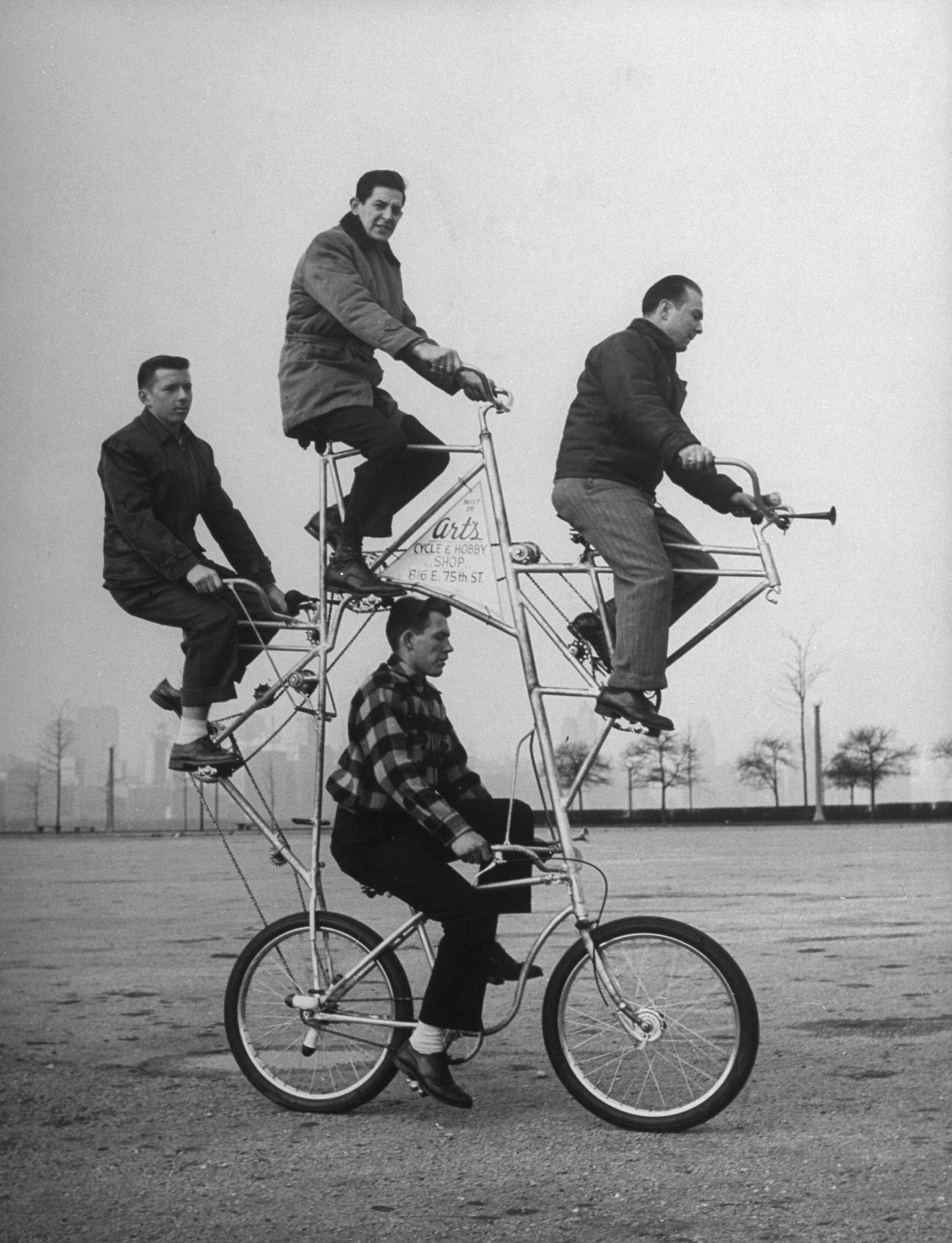
Art Rothschild’s four-man bicycle was one of the most ambitious builds of the era. Powered by five chains and braked on both wheels, it required serious teamwork to operate — and a high pain tolerance. Rothschild broke three ribs just learning to ride it. That kind of stubborn dedication was common among 1940s bicycle inventors.

Maurice Steinlauf connected his bike’s rear frame to its front wheel using only springs — no rigid joint, no conventional fork. The front wheel effectively roamed free, making every ride an exercise in balance and nerve. His son Dave took a different approach to bicycle engineering.
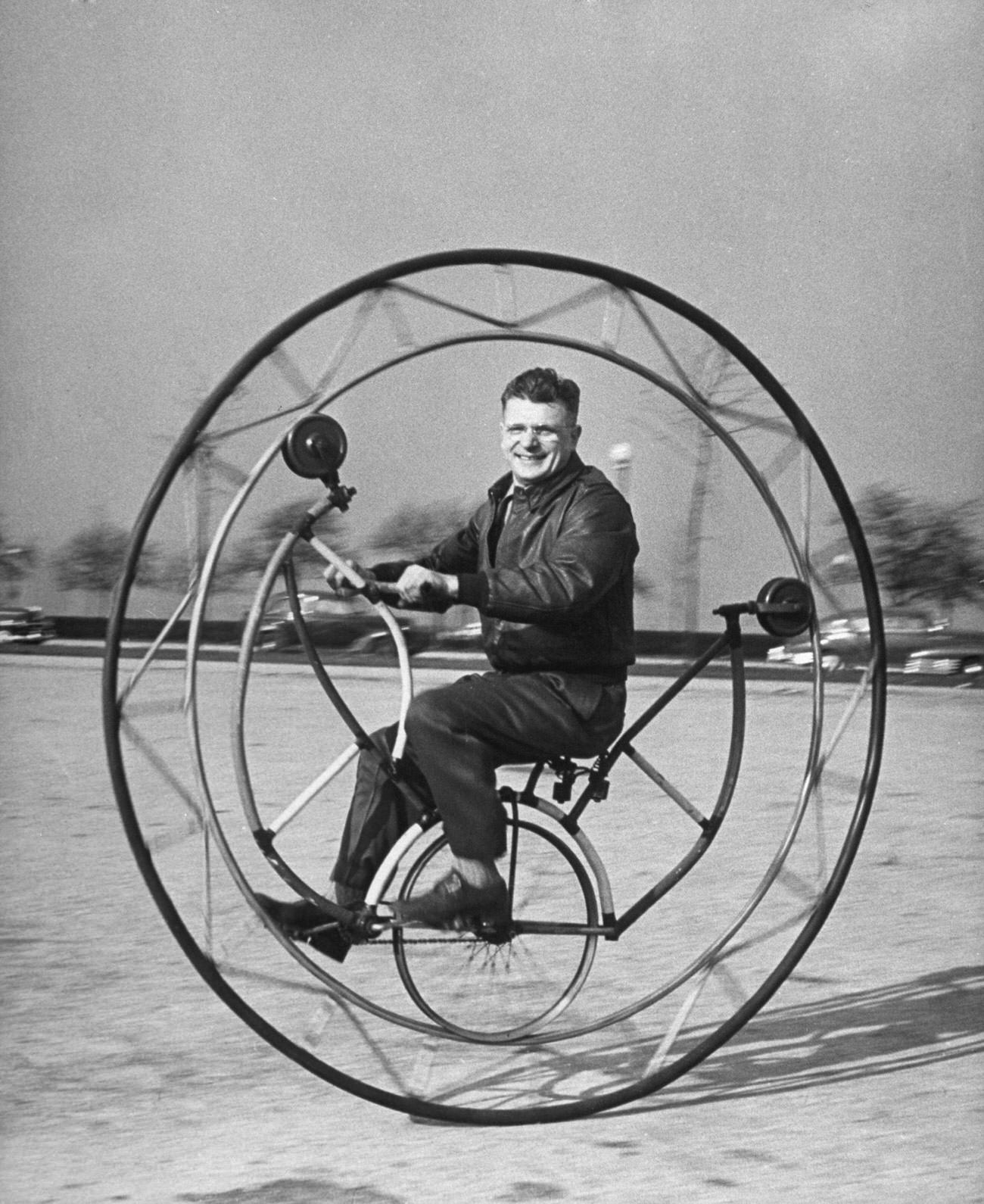
The Uno-Wheel placed the rider inside a single enormous wheel. Braking suddenly caused the whole machine to spin, taking the rider with it. It was less a bicycle and more a controlled hazard. These inventors weren’t deterred by danger — they treated it as part of the design process.
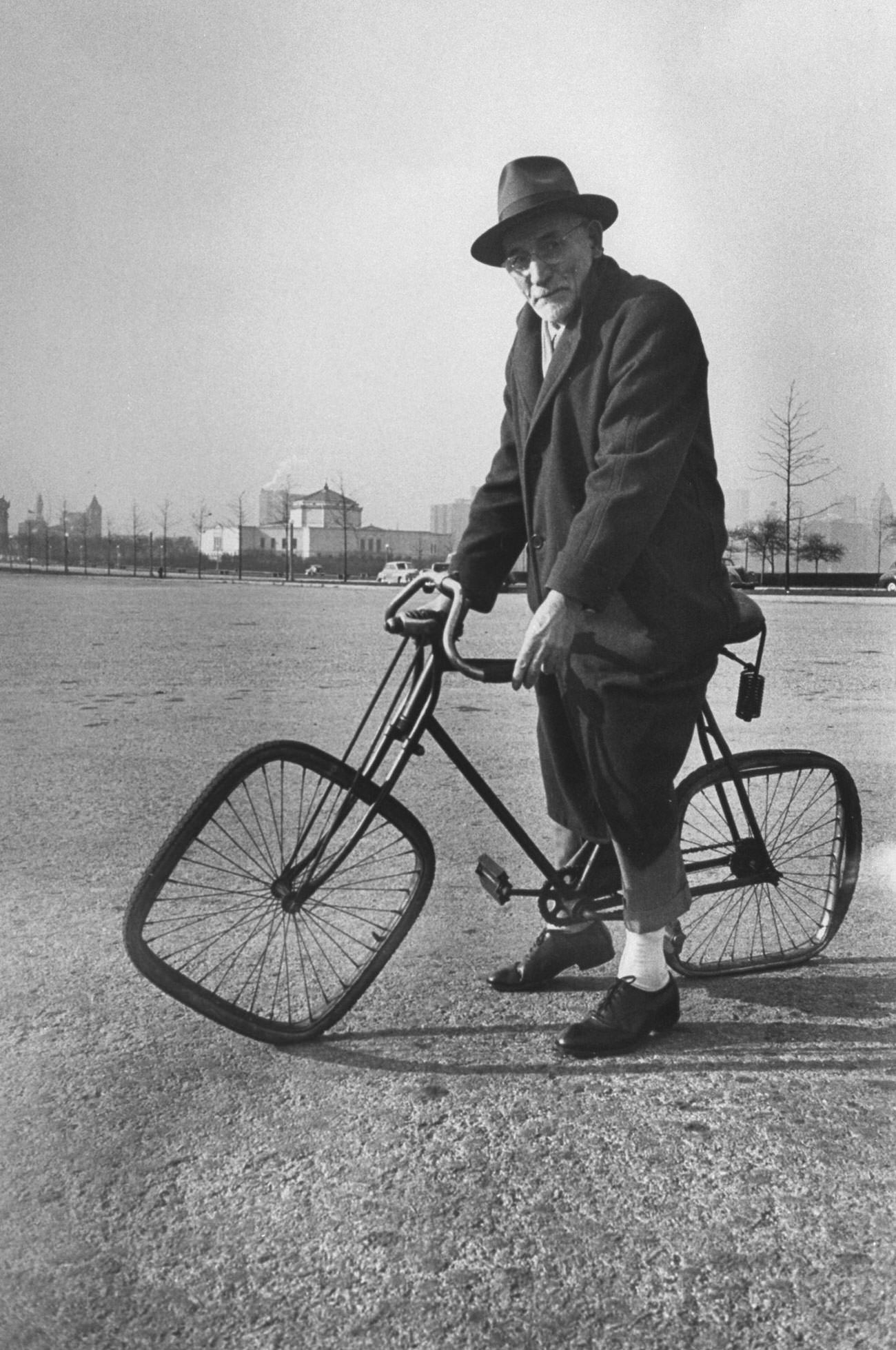
Dave Steinlauf built his square-wheeled bicycle after witnessing a crash. His logic: square wheels can’t roll away from you after a fall. It’s hard to argue with that reasoning, even if the ride itself was predictably rough. Across Chicago, these eccentric machines were drawing crowds.
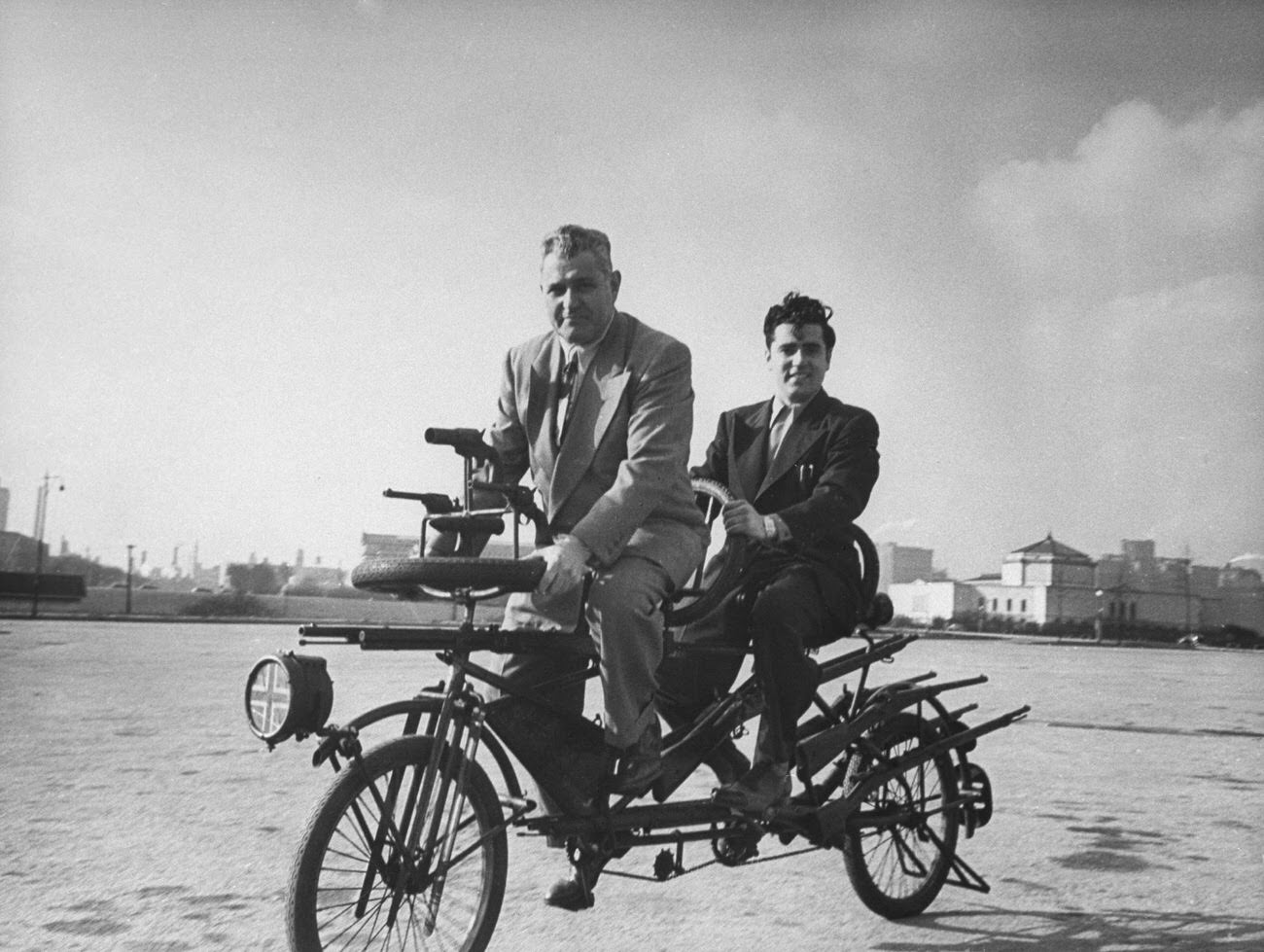
The Gangbusters Bike was in a category of its own. It carried 13 shotguns, two revolvers, six bayonets, and a flare gun. It wasn’t built for war — it was built to turn heads. Chicago in 1948 was a city where bicycle showmanship had become a genuine pastime.
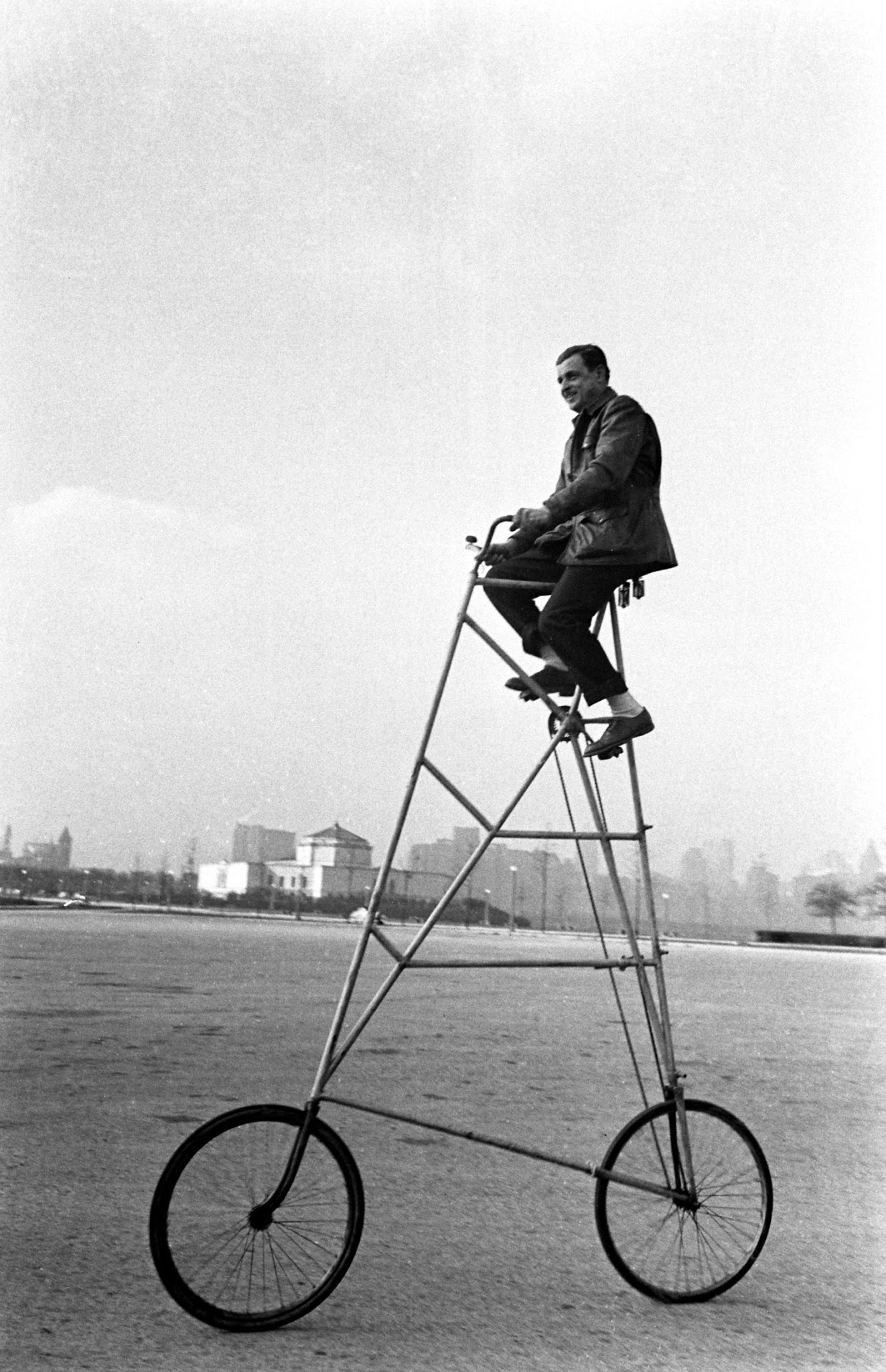
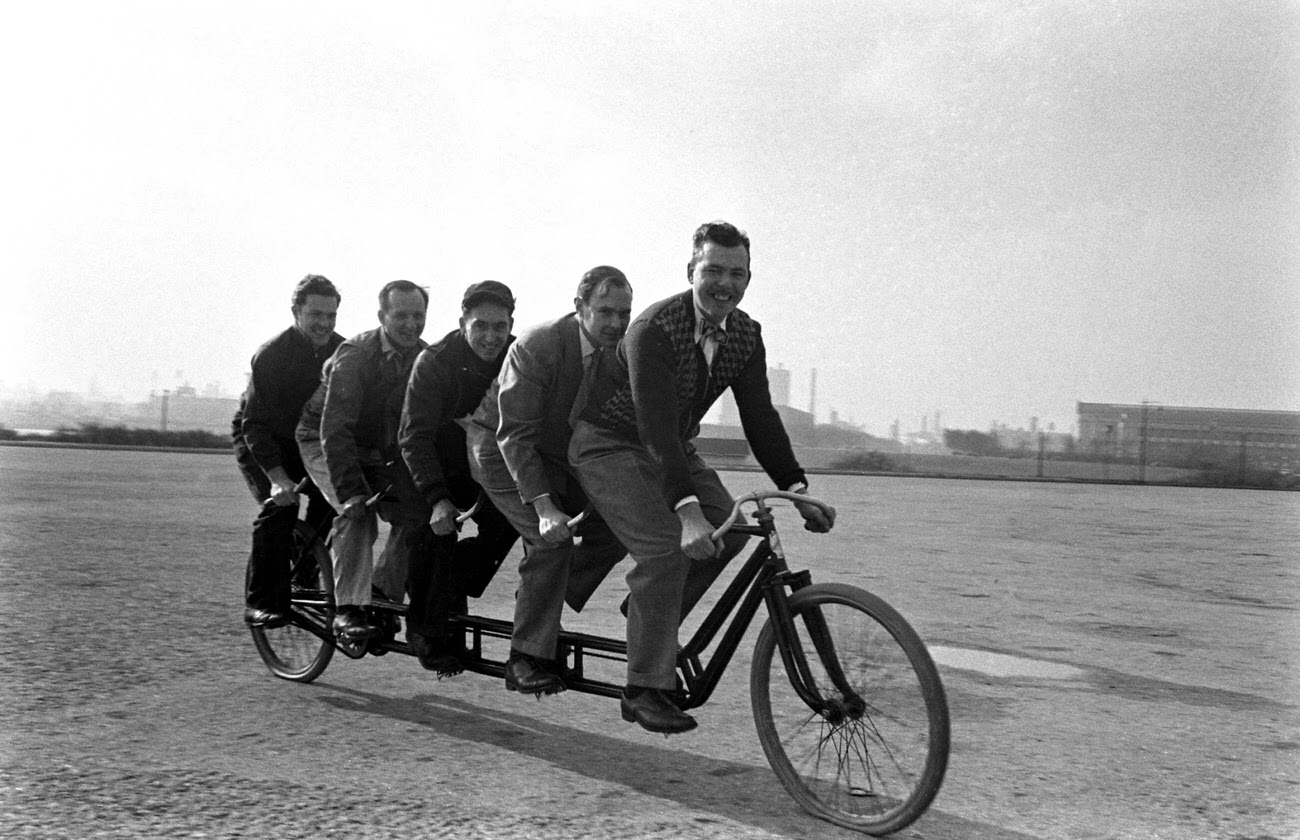
Group rides on oversized or multi-person bikes were a common sight in Chicago that year. Riders stacked themselves onto machines that had no business carrying more than one person, grinning through every wobble.
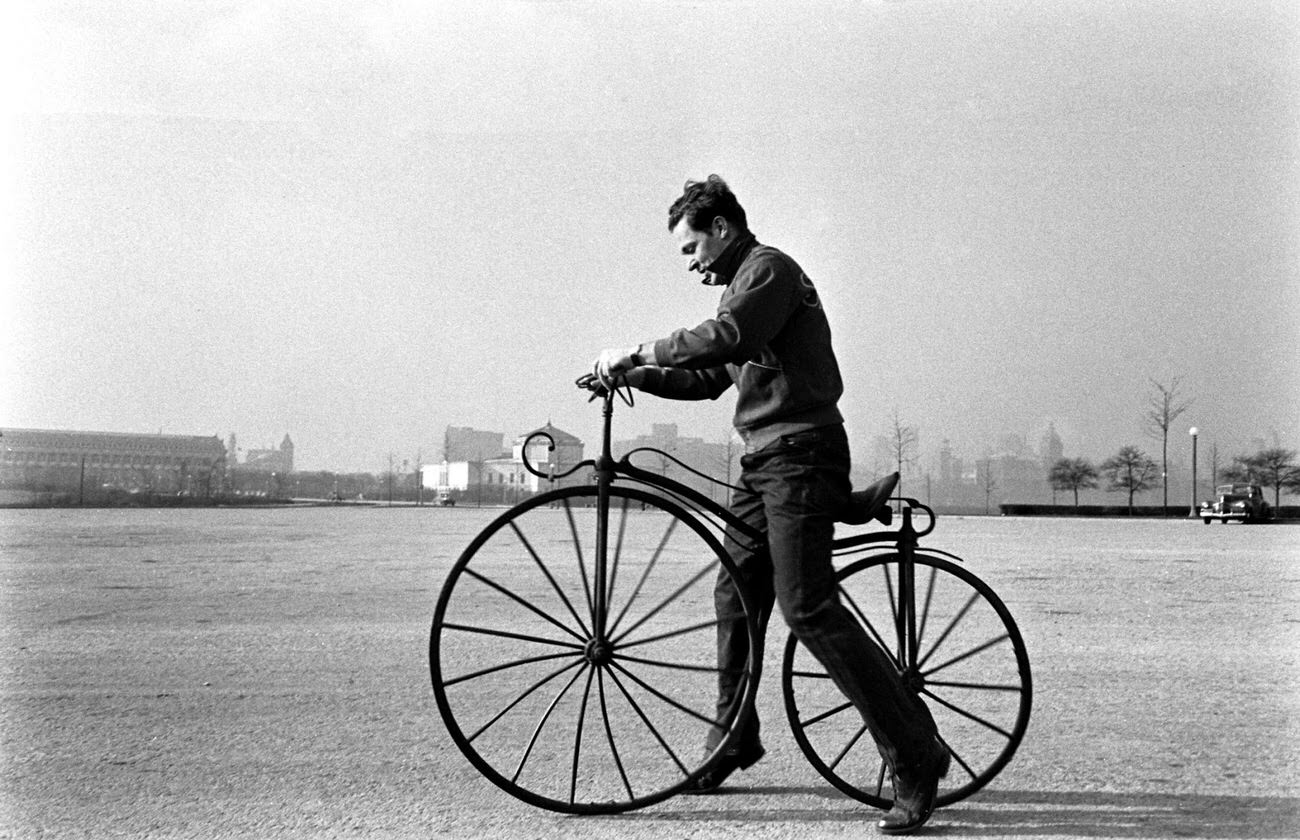
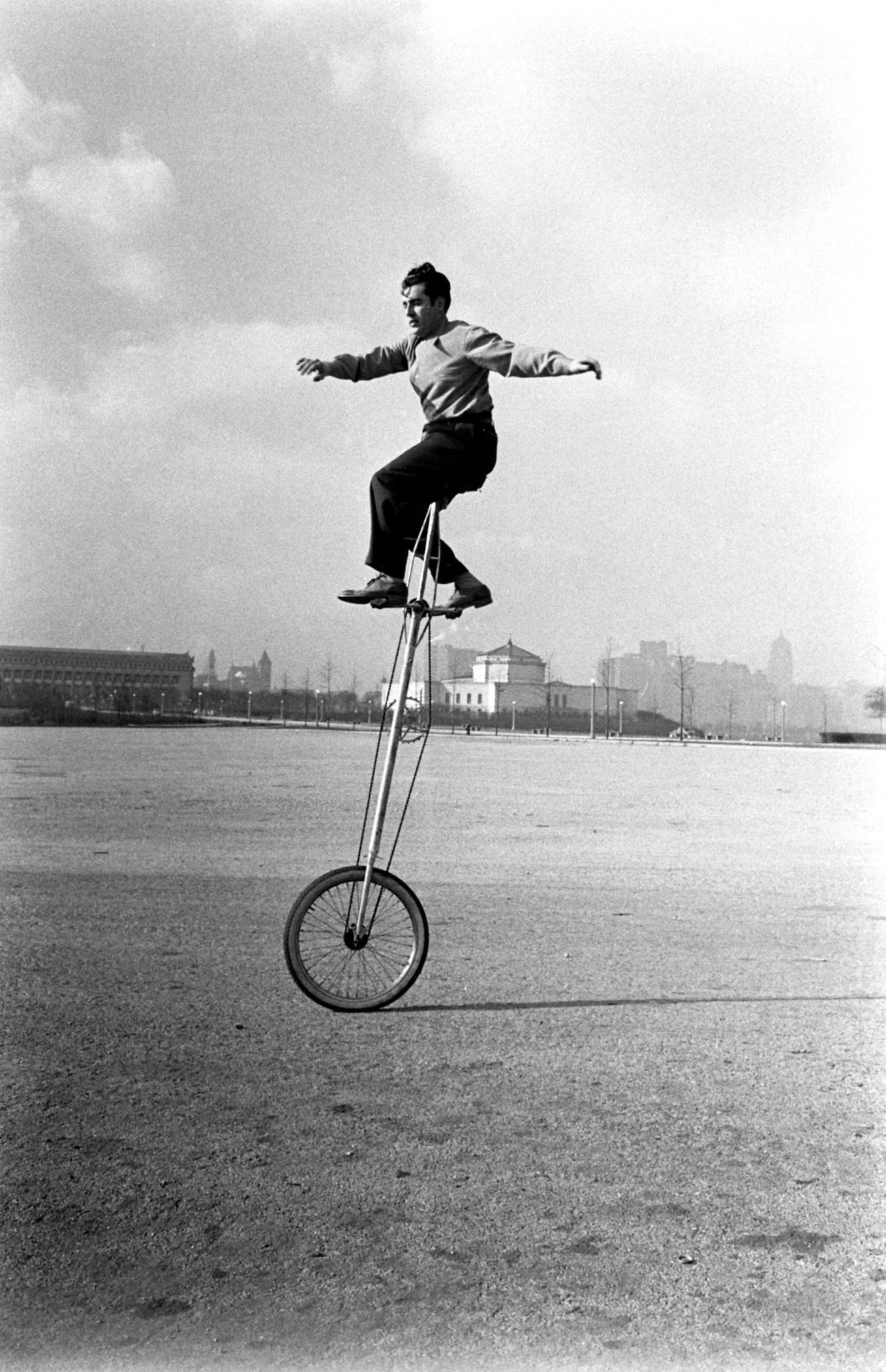
Unicycles also made appearances in the Chicago scene. Stripped down to a single wheel, they demanded total balance and offered zero margin for error. Riders who mastered them earned instant respect from the crowd.
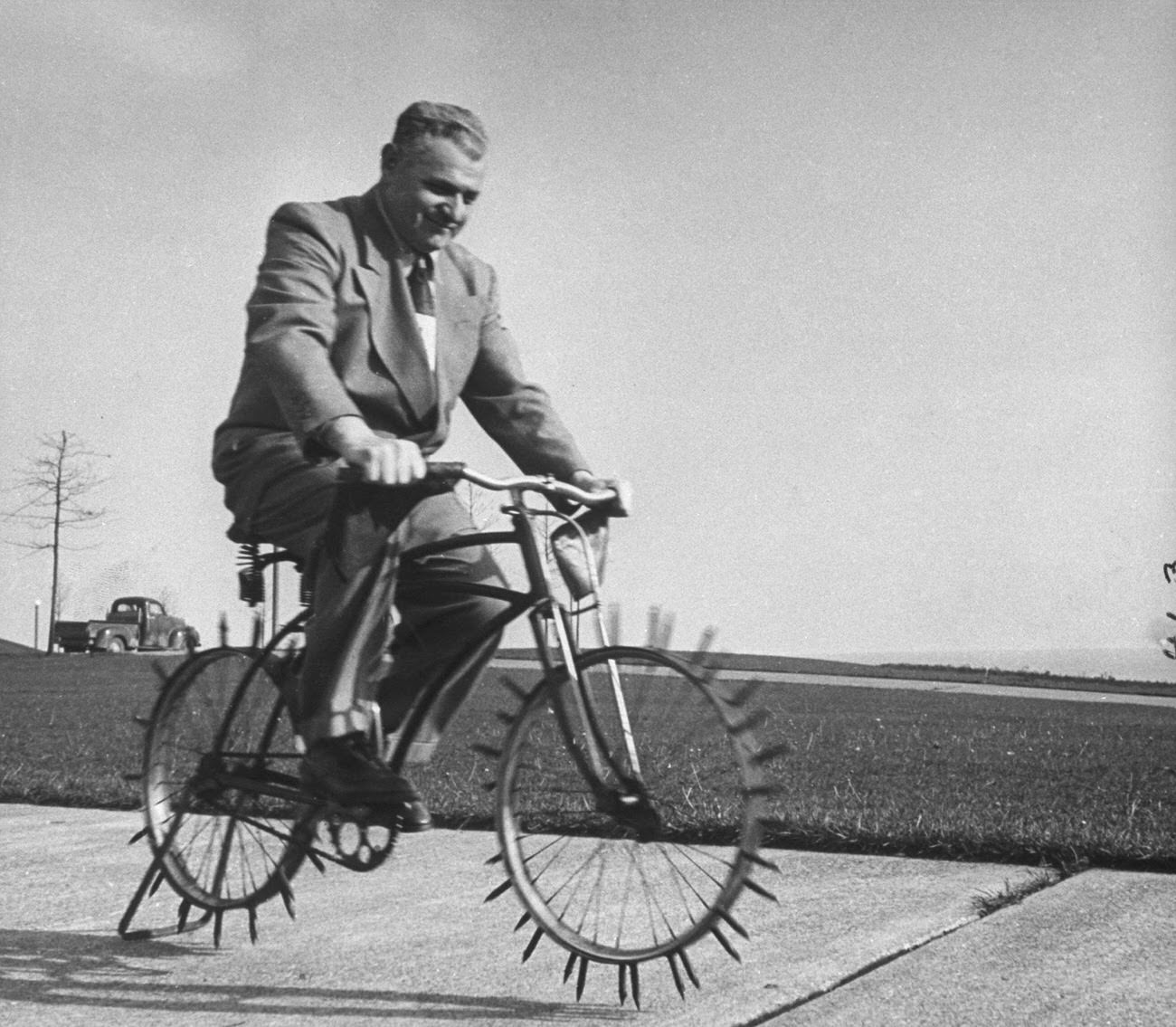
Joe Steinlauf was particularly prolific. His Ice Bike featured mittens fixed directly onto the handlebars, designed specifically for Chicago’s brutal winters. He solved a real problem with a handmade fix — which was exactly the spirit driving all of these builds.
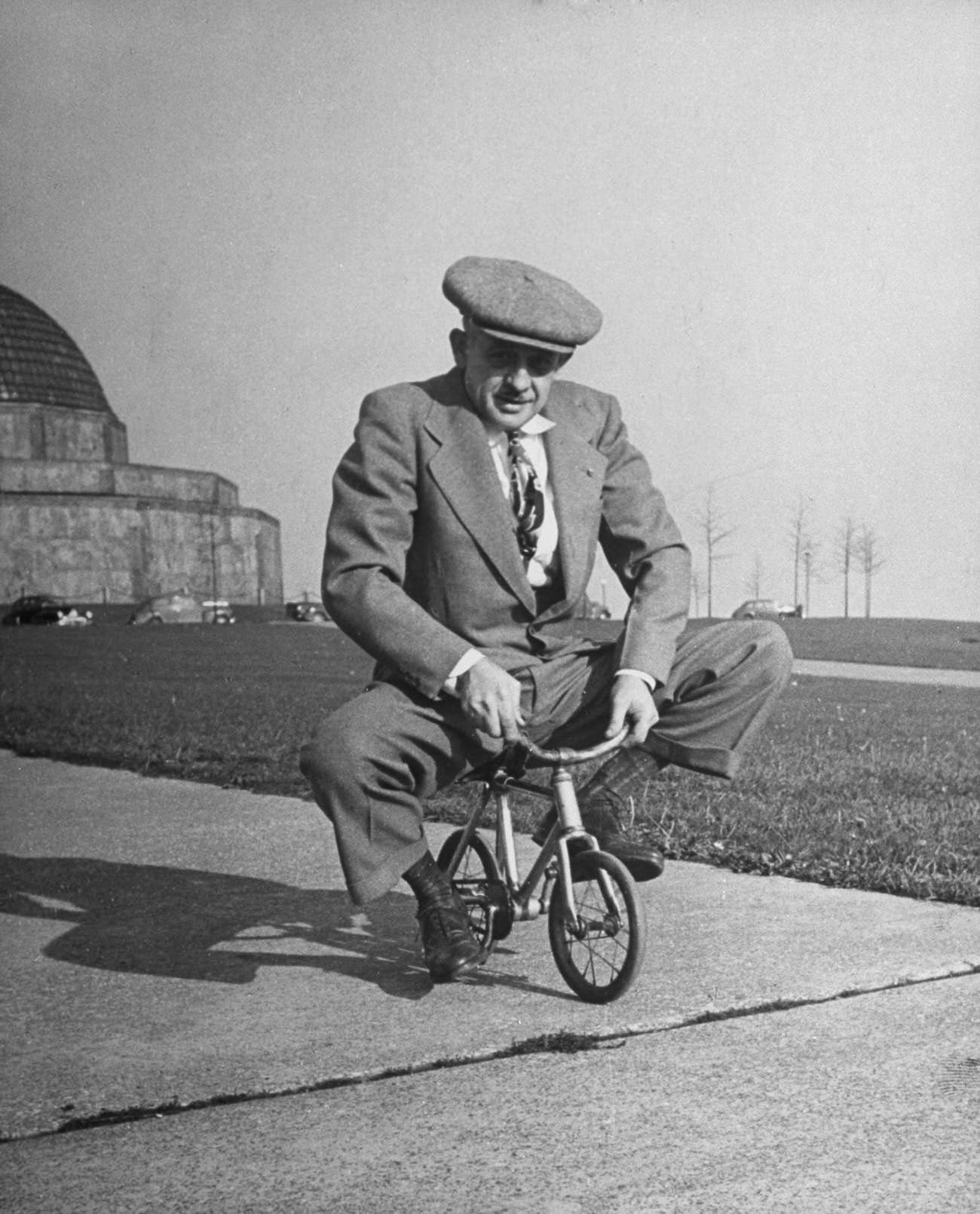
Not all the unusual bikes came from backyard workshops. Chicago bicycle dealer Andy Koslow rode a tiny bike built by a former vaudevillian performer. The theatrical world and the cycling world overlapped more than you’d expect in 1940s Chicago.
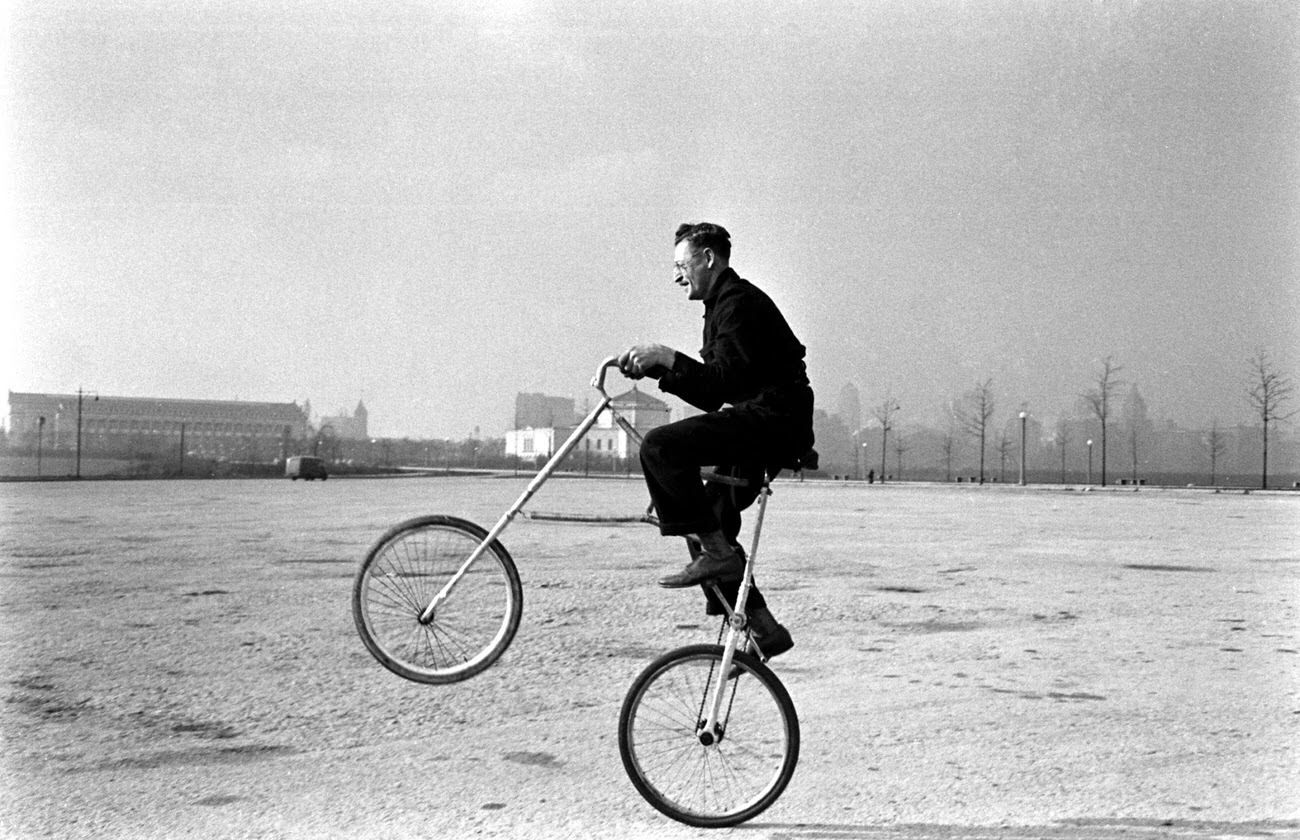
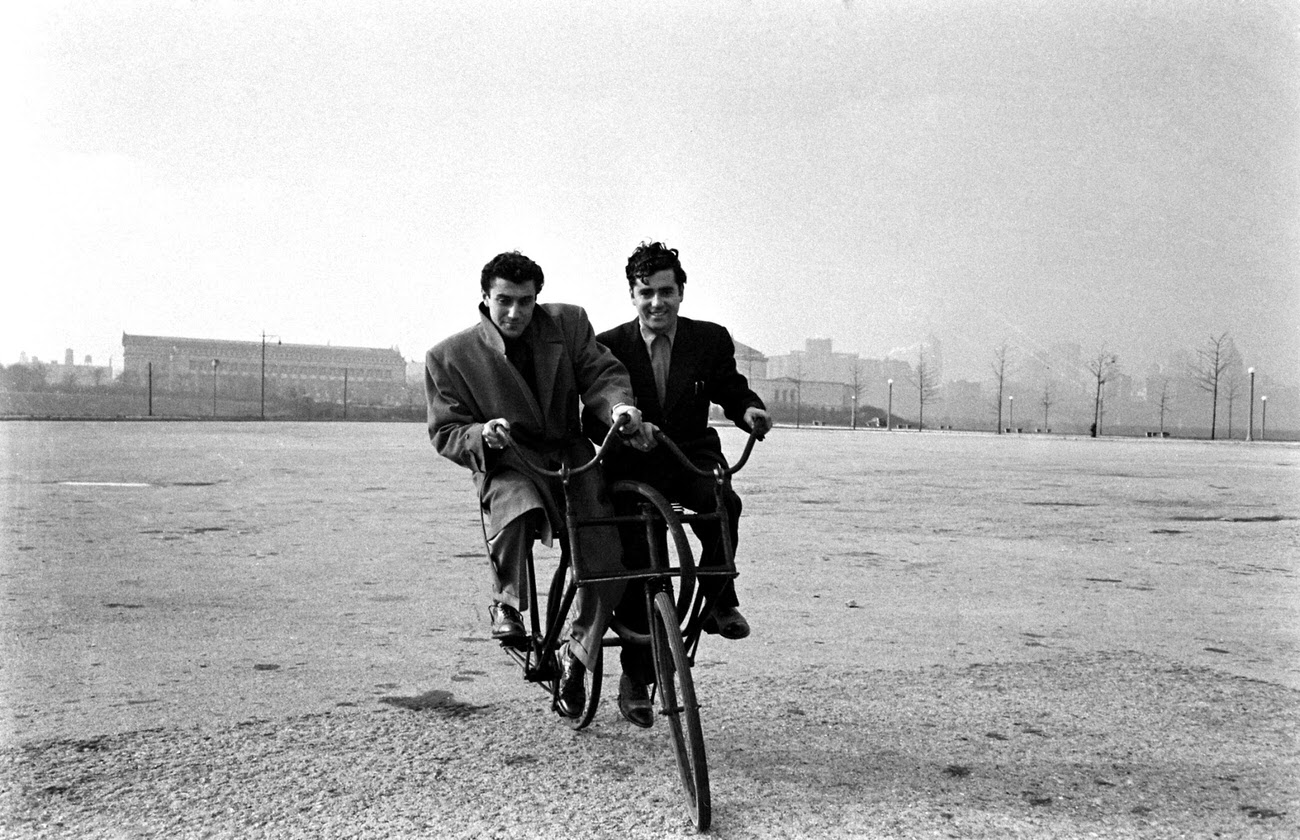
Some builds prioritized spectacle over comfort entirely. The rough rides documented in 1948 show cyclists bouncing over uneven frames and mismatched wheels, laughing through every bump.
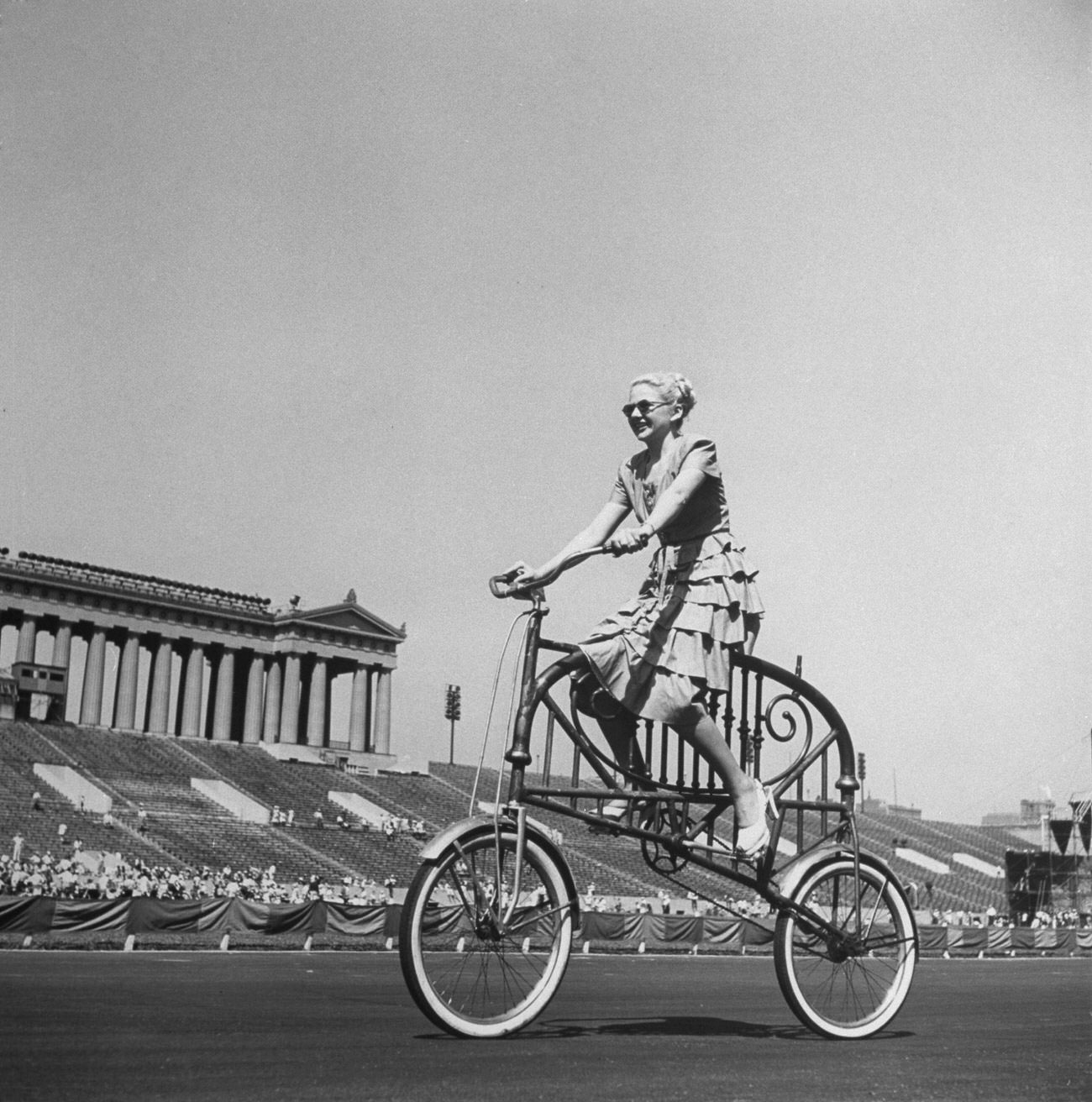
Joe Steinlauf’s final contribution was the Bedstead Bike — a bicycle built around an actual bed frame, conceived while he was lying in bed one morning. It’s the perfect summary of the 1940s DIY cycling spirit: if you can think it up, you can bolt it together and ride it down the street.

Guy never heard of tall bikes?