In 1885, the Congo Free State was carved out of central Africa and handed to a single man — King Leopold II of Belgium. It was not given to Belgium as a nation. It was his personal property, registered under his name at the Berlin Conference, where European powers divided Africa among themselves without the consent of a single African people. Leopold sold the world a story about humanitarian missions and the spread of civilization. The reality was a ruthless extraction operation built on terror.
The Congo’s forests held two things Leopold wanted above all else: rubber and ivory. Global demand for rubber was surging in the late 19th century, driven by bicycle tires, industrial machinery, and eventually automobiles. Leopold set strict rubber quotas for every village. Men were sent into the jungle to harvest wild rubber vines, a physically brutal process that required cutting into the vines and collecting the sap — often by smearing it across their own bodies and peeling it off once dried. Villages that failed to meet their quotas faced violent punishment.
Leopold’s enforcers were the Force Publique, a colonial army made up of African soldiers commanded by Belgian officers. These soldiers were granted sweeping power over the civilian population. They raided villages, took women and children hostage to force men to work, and burned homes when communities resisted or failed to produce enough rubber. The Force Publique operated with almost no accountability. Reports of abuses were either ignored or actively suppressed by Leopold’s administration in Brussels.
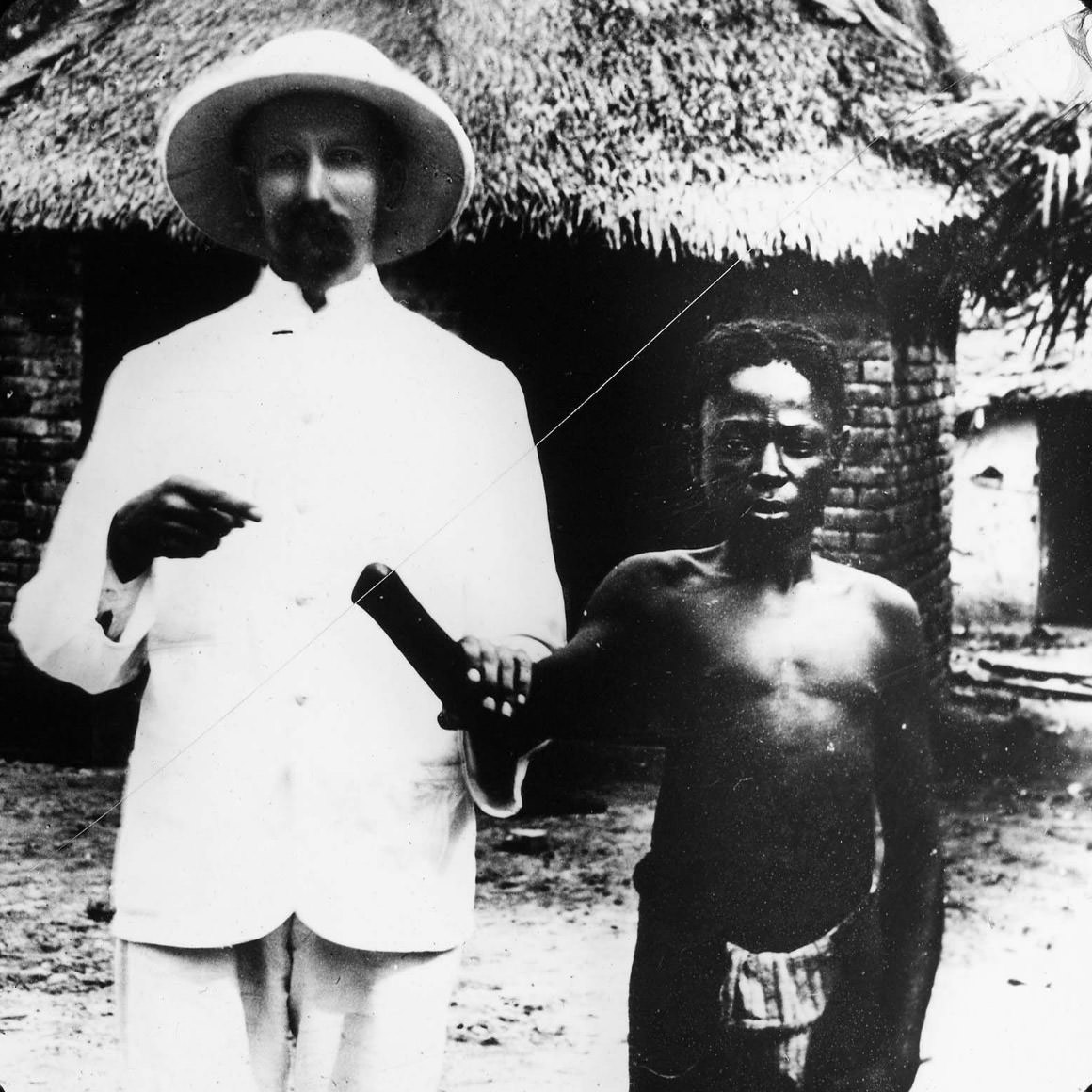
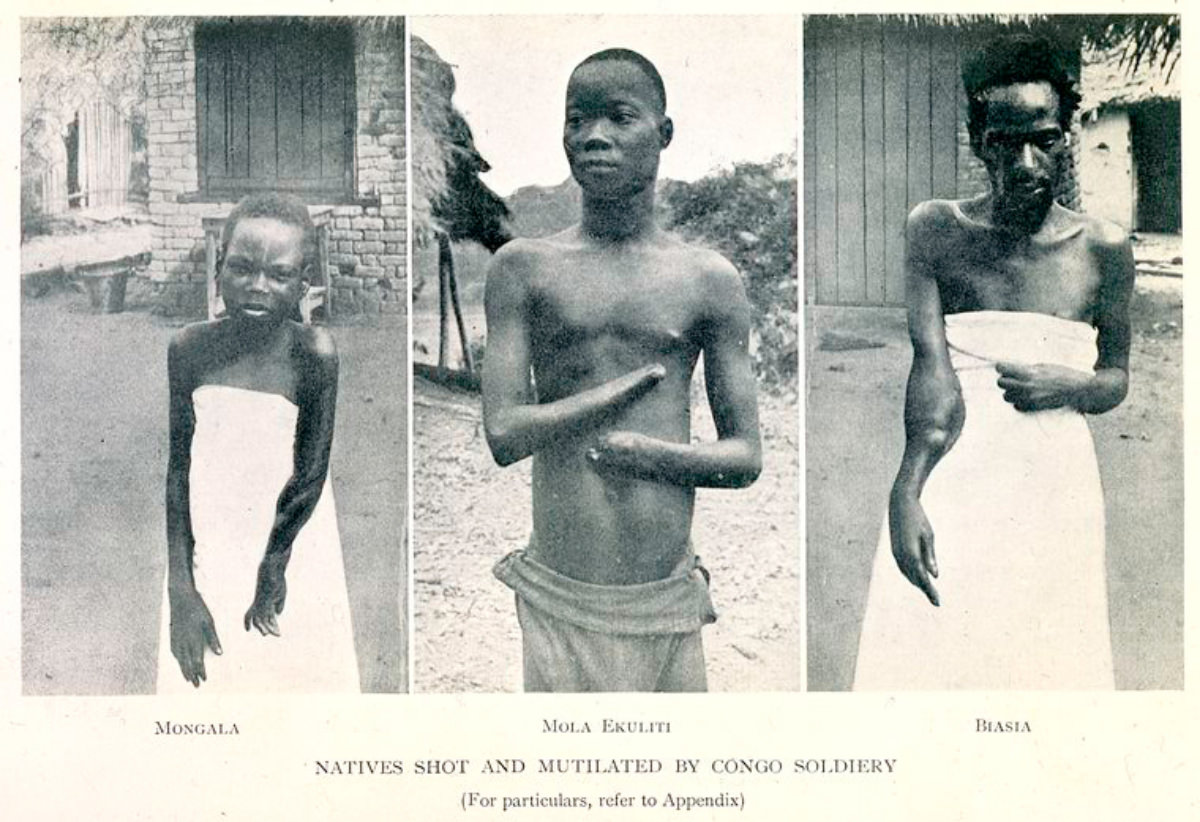
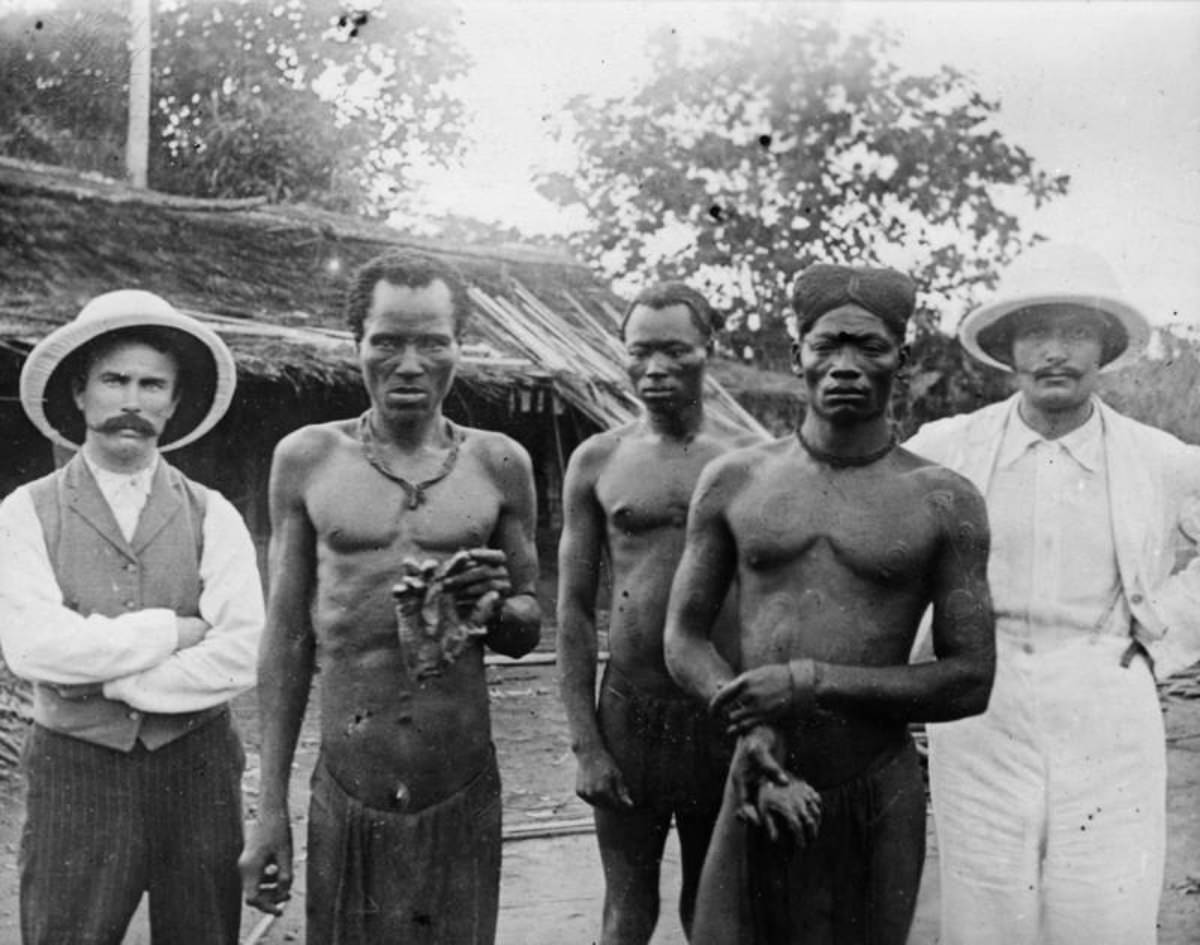
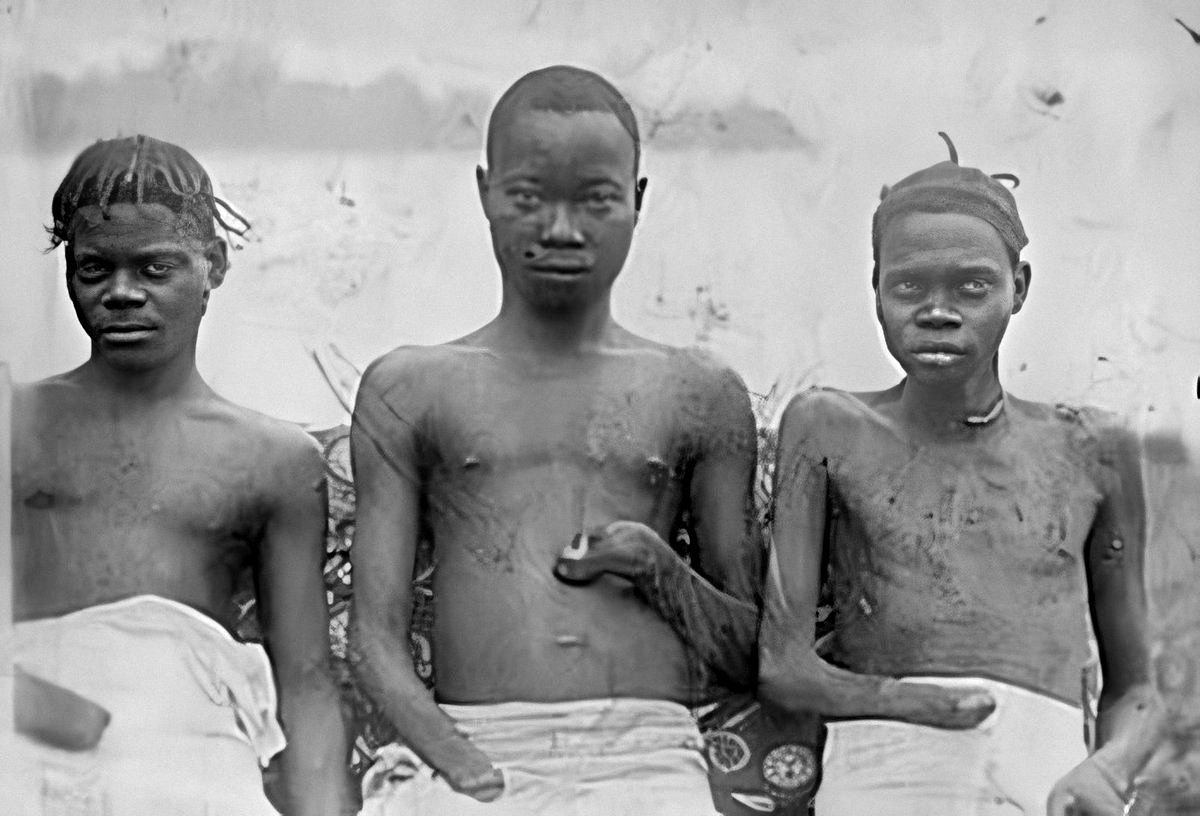
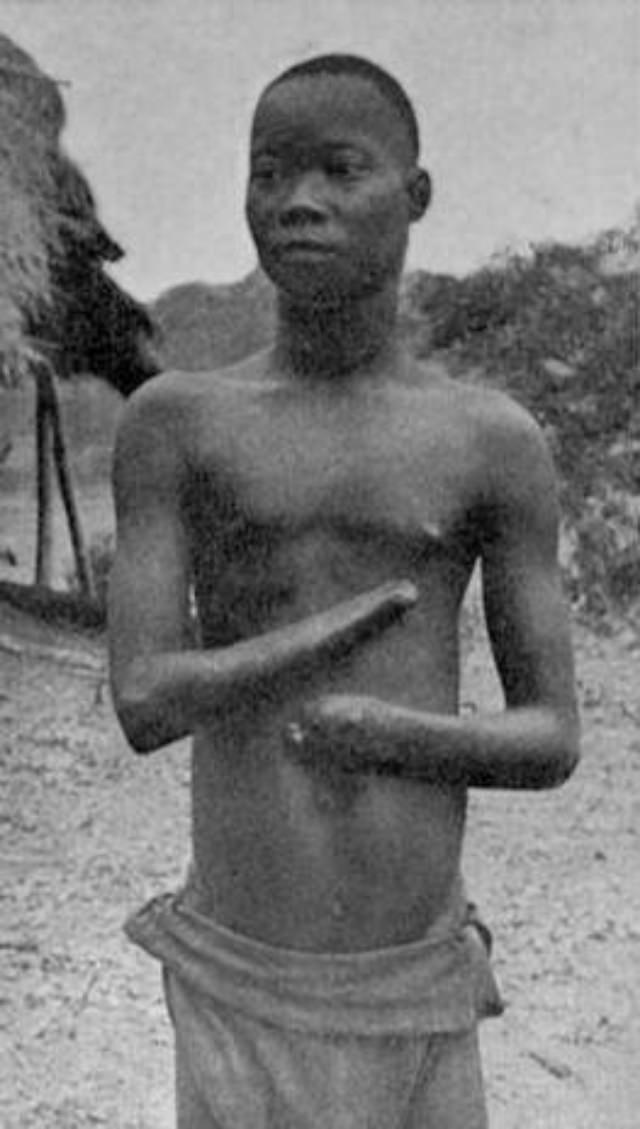
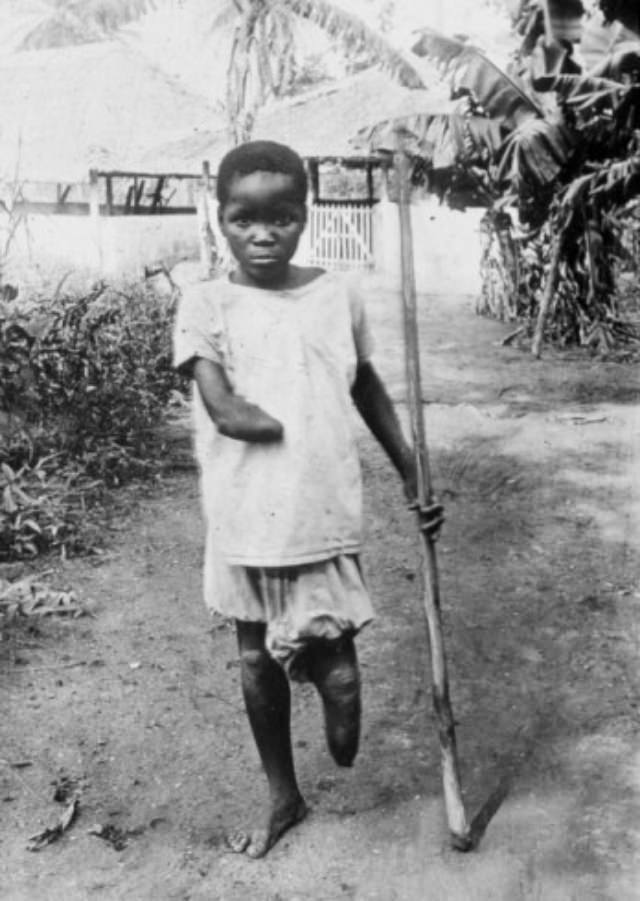
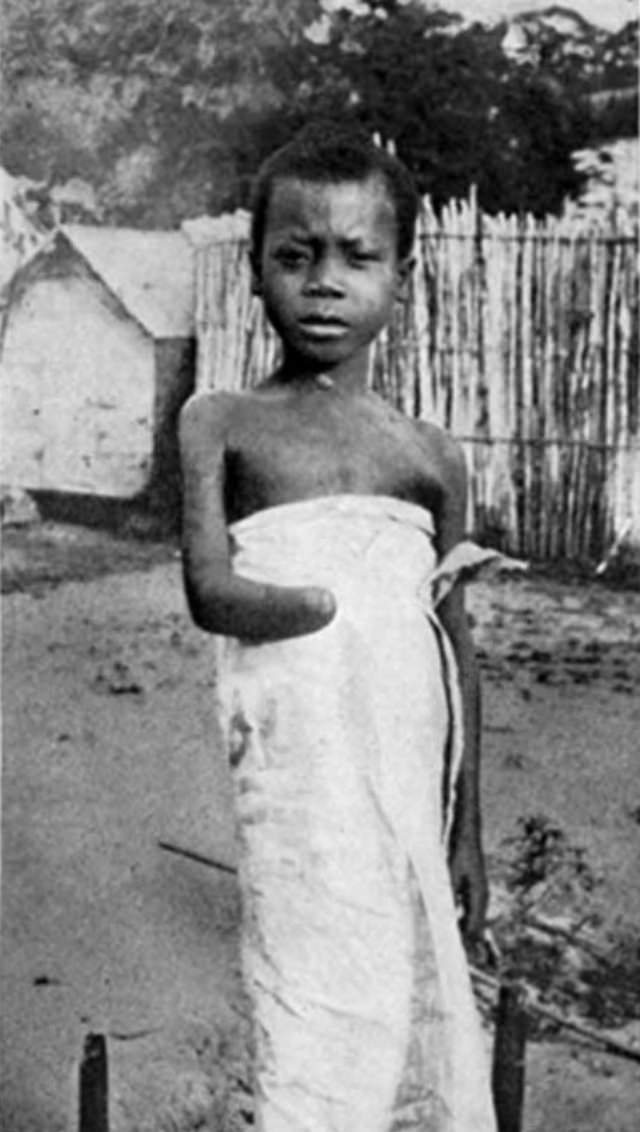
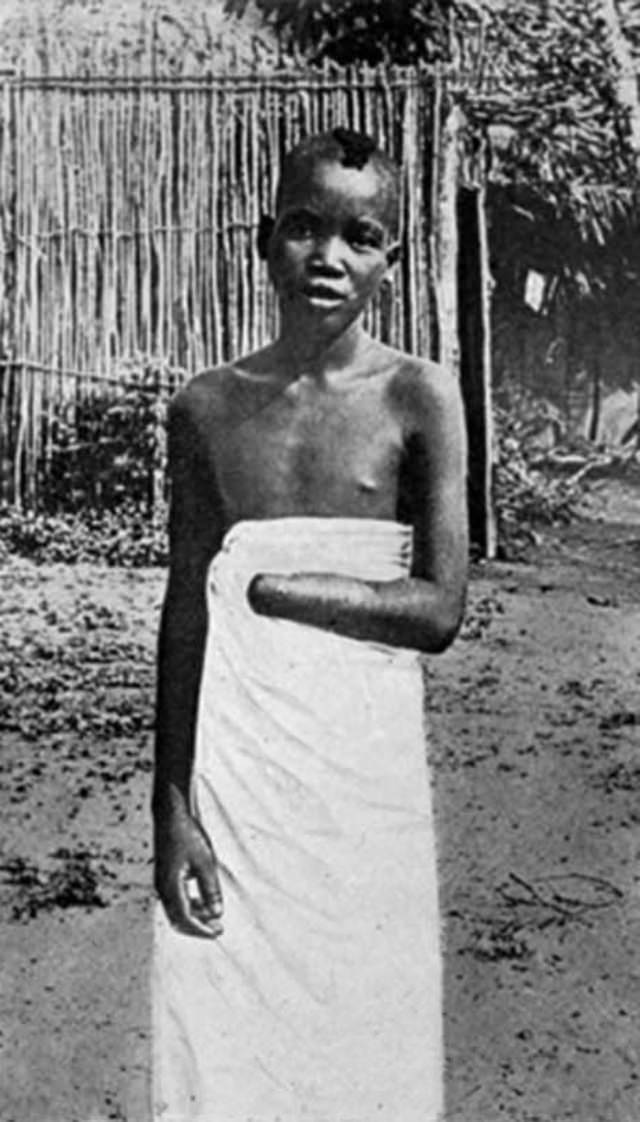
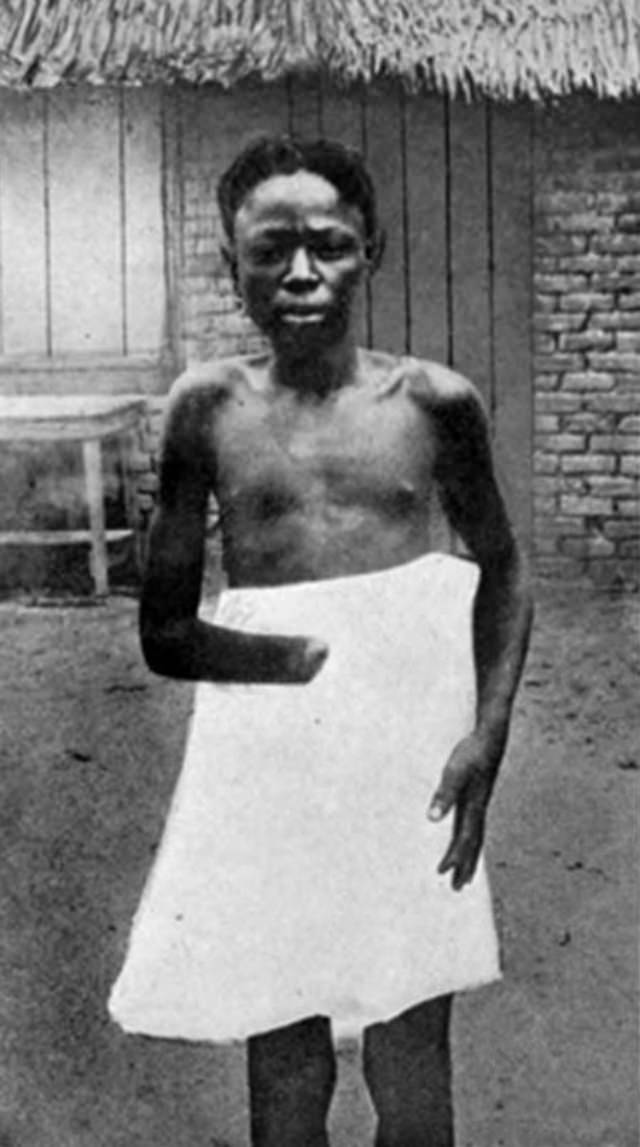
One punishment became the defining symbol of Leopold’s Congo: the amputation of hands. When rubber quotas were not met, soldiers cut off the hands of men, women, and sometimes children. The act served two purposes. It was a punishment designed to terrorize entire communities into compliance. It was also used as proof — soldiers were required to account for every bullet they fired, and a severed hand was accepted as evidence that a bullet had not been wasted. The result was a systematic collection of human hands across the territory.
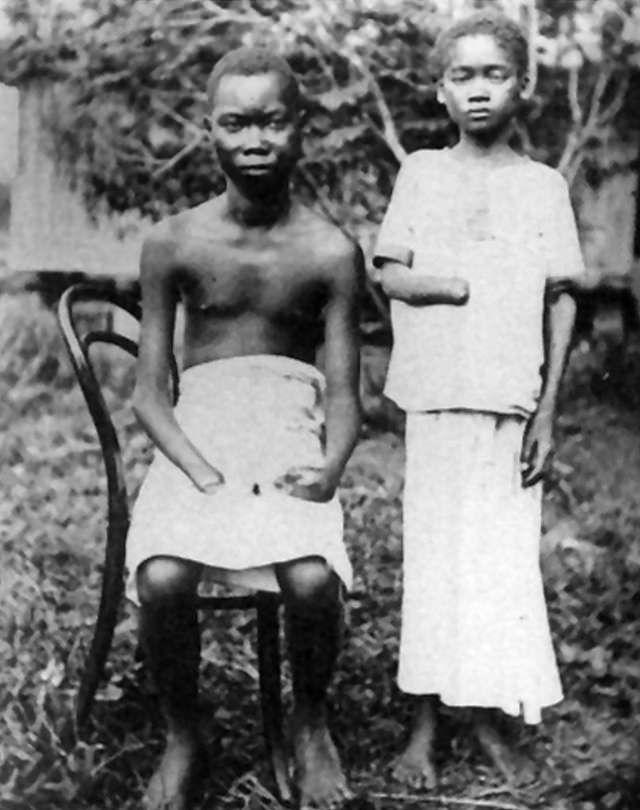
Soldiers presented baskets of severed hands to their superiors. Photographs taken by missionaries and investigators in the early 1900s documented Congolese people, including children, with their hands or forearms amputated. One of the most widely circulated images showed a father named Nsala staring at the severed hand and foot of his five-year-old daughter, killed and mutilated by Force Publique soldiers after his village missed its rubber quota. That photograph reached international audiences and became a turning point in public awareness.
The scale of death and suffering in the Congo Free State was enormous. Historians estimate that the population of the Congo fell by approximately 10 million people between 1880 and 1920, through a combination of killings, starvation, disease, and a collapsing birth rate driven by the violence and displacement of the rubber regime. These numbers were not the result of natural disaster. They were the direct consequence of a system engineered for profit at any human cost.
International pressure to expose Leopold’s Congo came largely from journalists and activists. British journalist E.D. Morel noticed that ships returning from the Congo carried only rubber and ivory, while ships heading there carried weapons and ammunition — not trade goods. This meant the Congolese were not trading freely; they were being coerced. Morel founded the Congo Reform Association in 1904 alongside British diplomat Roger Casement, who had personally investigated and documented the atrocities on the ground.
American writer Mark Twain published a scathing satirical pamphlet in 1905 titled “King Leopold’s Soliloquy,” mocking the king’s public claims of benevolence while laying out the documented record of violence. Missionary societies published photographs and eyewitness testimony. The combined pressure from reformers, journalists, governments, and church groups became impossible for Leopold to deflect. His carefully maintained image as a philanthropist had collapsed.
In 1908, the Belgian parliament forced Leopold II to transfer control of the Congo Free State to the Belgian government. The territory was renamed the Belgian Congo. Leopold received a substantial financial payment for the handover and never faced criminal prosecution for the atrocities carried out under his authority. He died in 1909, having spent the final years of his life defending his record and using his rubber profits to fund grand construction projects across Belgium.
The transition to Belgian state rule brought some reforms, but forced labor and exploitation continued in modified forms for decades. The Congo did not gain independence until 1960. The photographs, testimonies, and records from Leopold’s era remain among the most documented cases of colonial violence in history — a detailed, evidence-backed account of what happens when a private authority is granted total control over a land and its people, with no external oversight and no legal protection for those living under it.