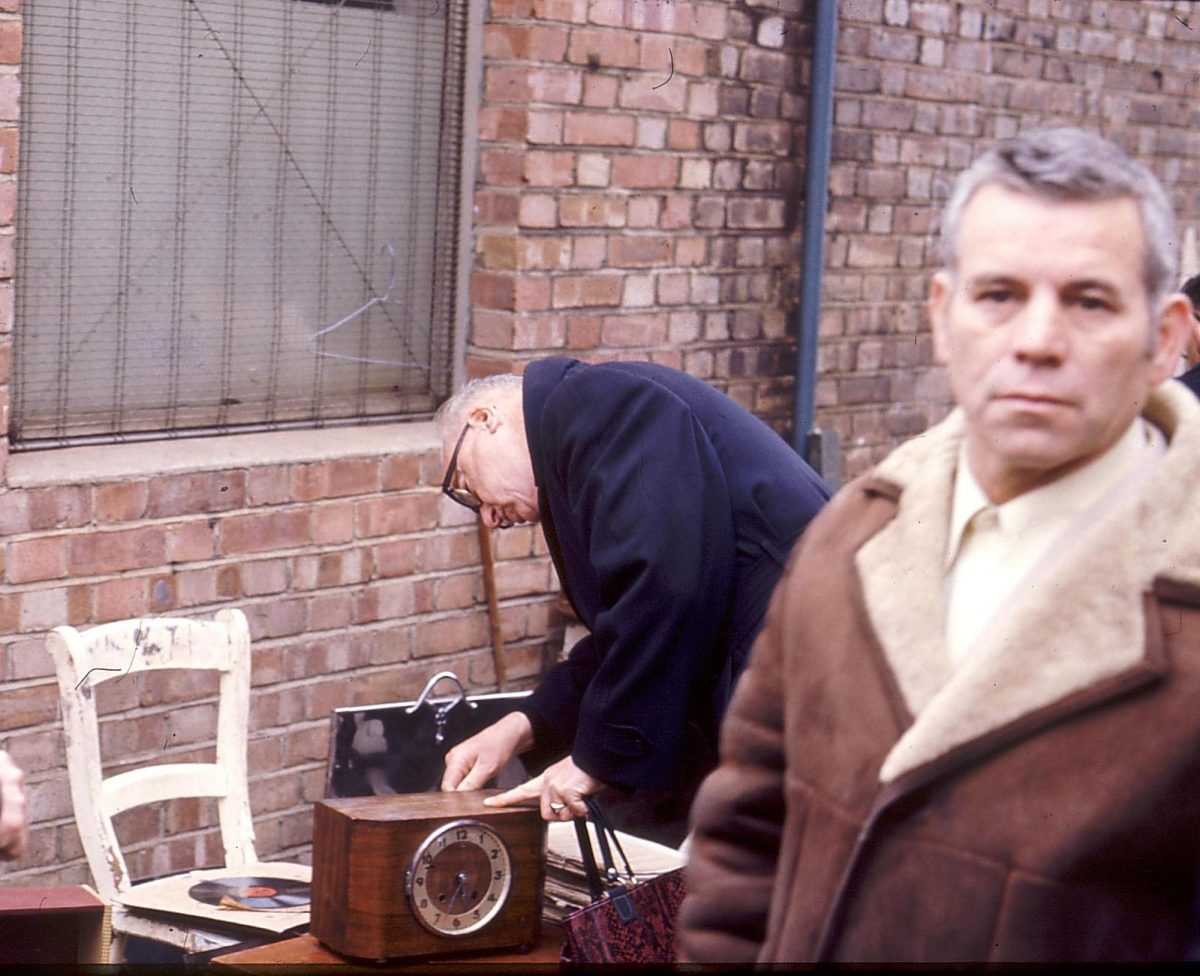
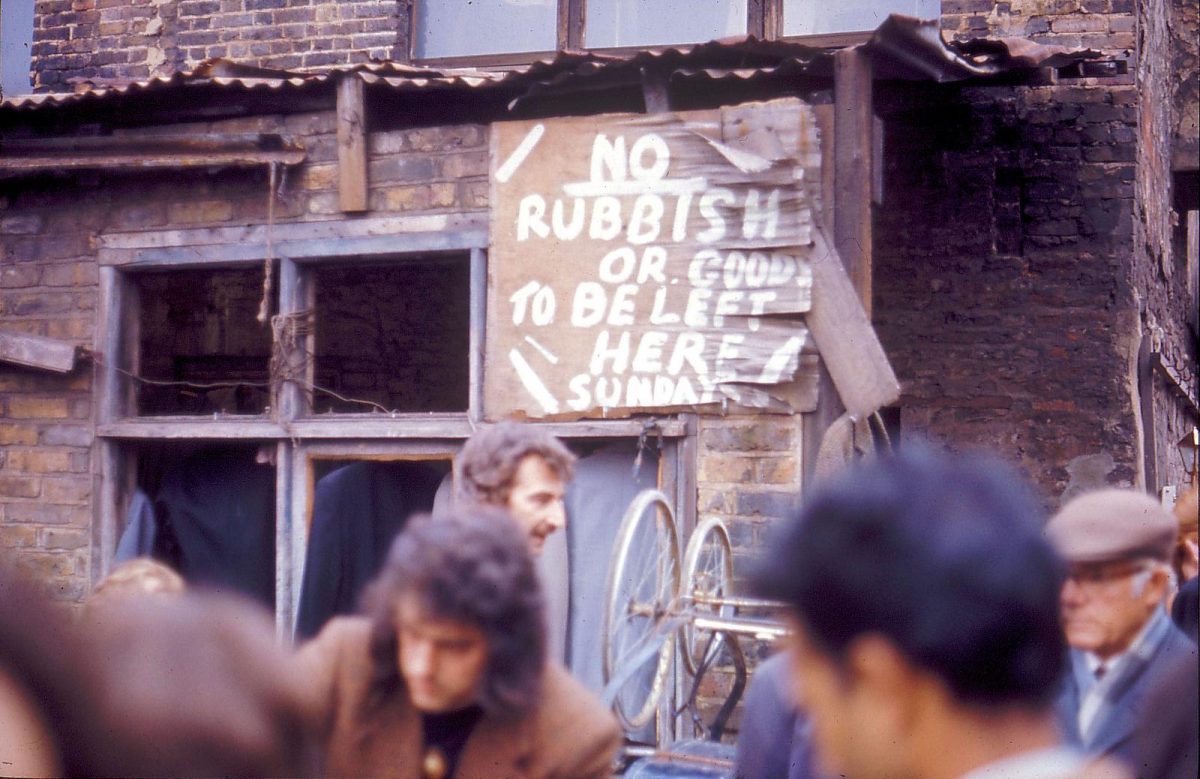
Cheshire Street runs through the heart of London’s East End, linking three of its most storied neighbourhoods — Brick Lane, Bethnal Green, and Whitechapel. Every Sunday, the street came alive with traders and shoppers, turning the road into one of the area’s busiest open-air markets. In October 1973, photographer Jonathan Baker spent a Sunday morning there, camera in hand, documenting the people who bought and sold along this well-worn stretch of East London.
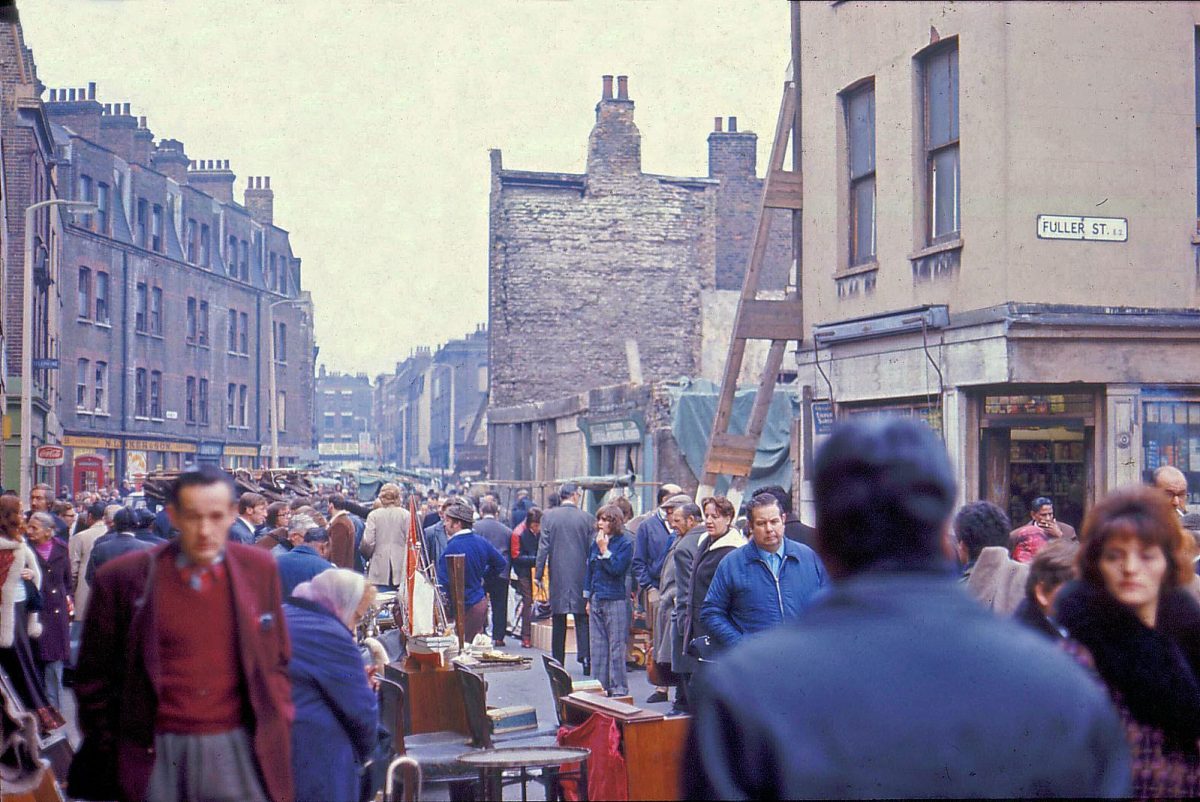
By 1973, Cheshire Street carried the visible marks of decades of dramatic change. German bombing raids during the 1940s had levelled large sections of the Victorian terraces that once lined the road. What the Blitz had spared, slum clearance programmes of the late 1960s and early 1970s finished off. Whole rows of 19th-century buildings were torn down, leaving gaps in the streetscape that had never been filled.
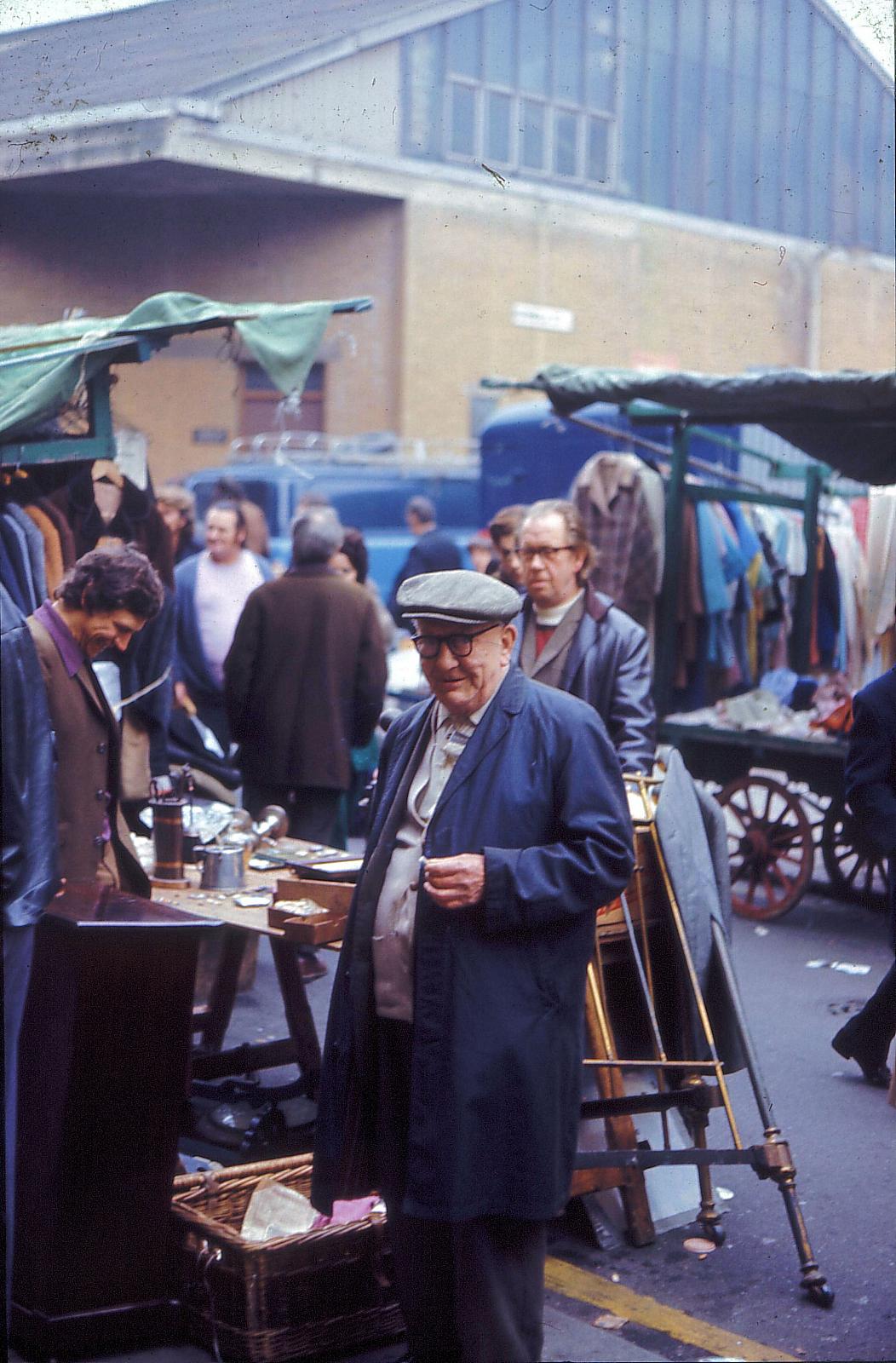
A handful of original buildings survived both the bombs and the bulldozers. The Carpenters Arms pub, the Repton Boxing Club, and Wood Close School still stood on or near the street, rare survivors of the neighbourhood’s Victorian fabric. They gave Cheshire Street a patchy, uneven character — stretches of open ground and post-war infill sitting beside the occasional older structure.
The United Workmen’s and Wlodowa Synagogue on Cheshire Street was another survivor at the time Baker visited. The building reflected the area’s deep Jewish history — waves of Eastern European Jewish immigrants had settled across Bethnal Green and Whitechapel from the late 19th century onward, and synagogues like this one served as anchors for those communities. The synagogue would continue operating until 1987, when it finally closed its doors.
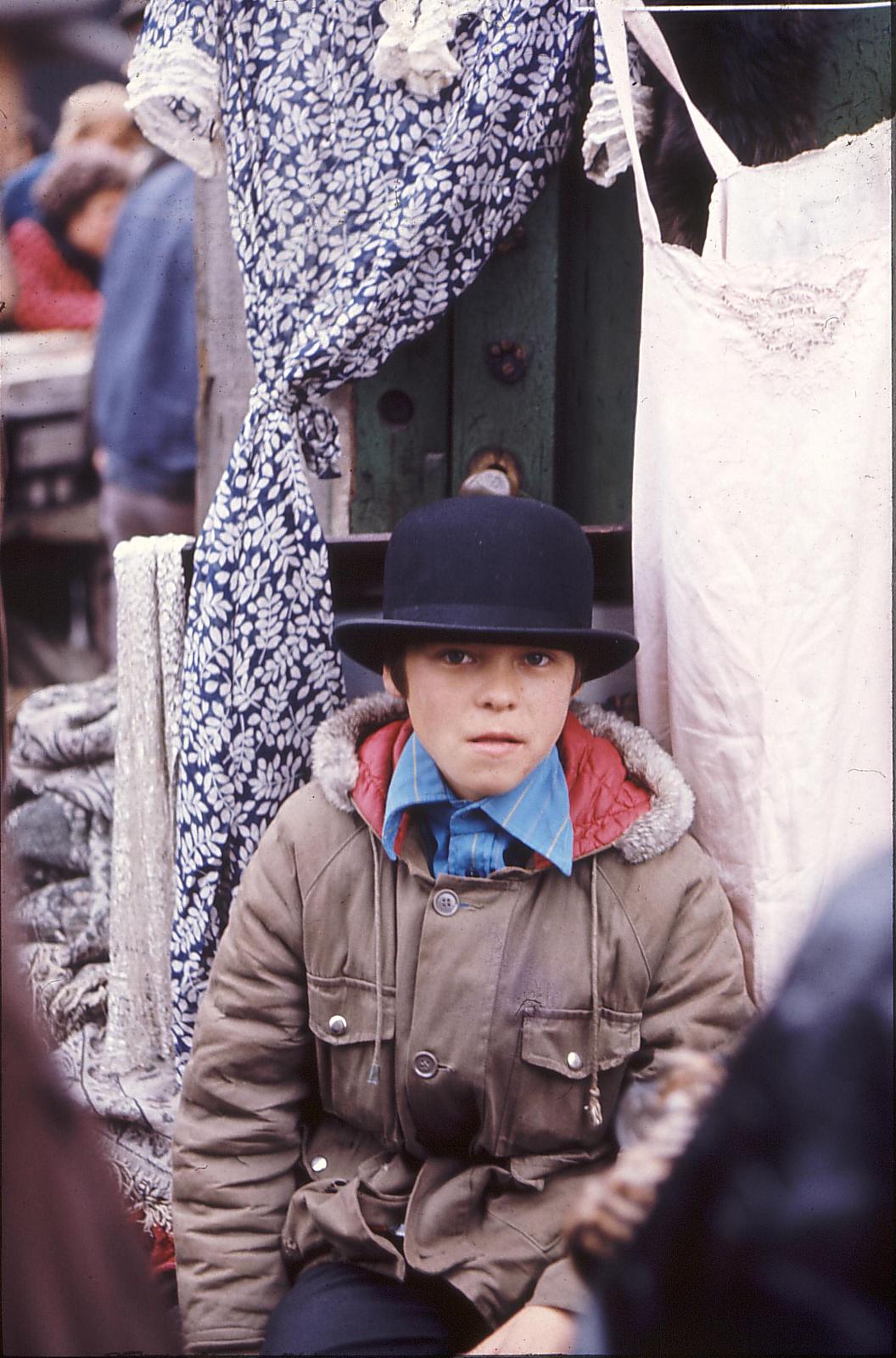
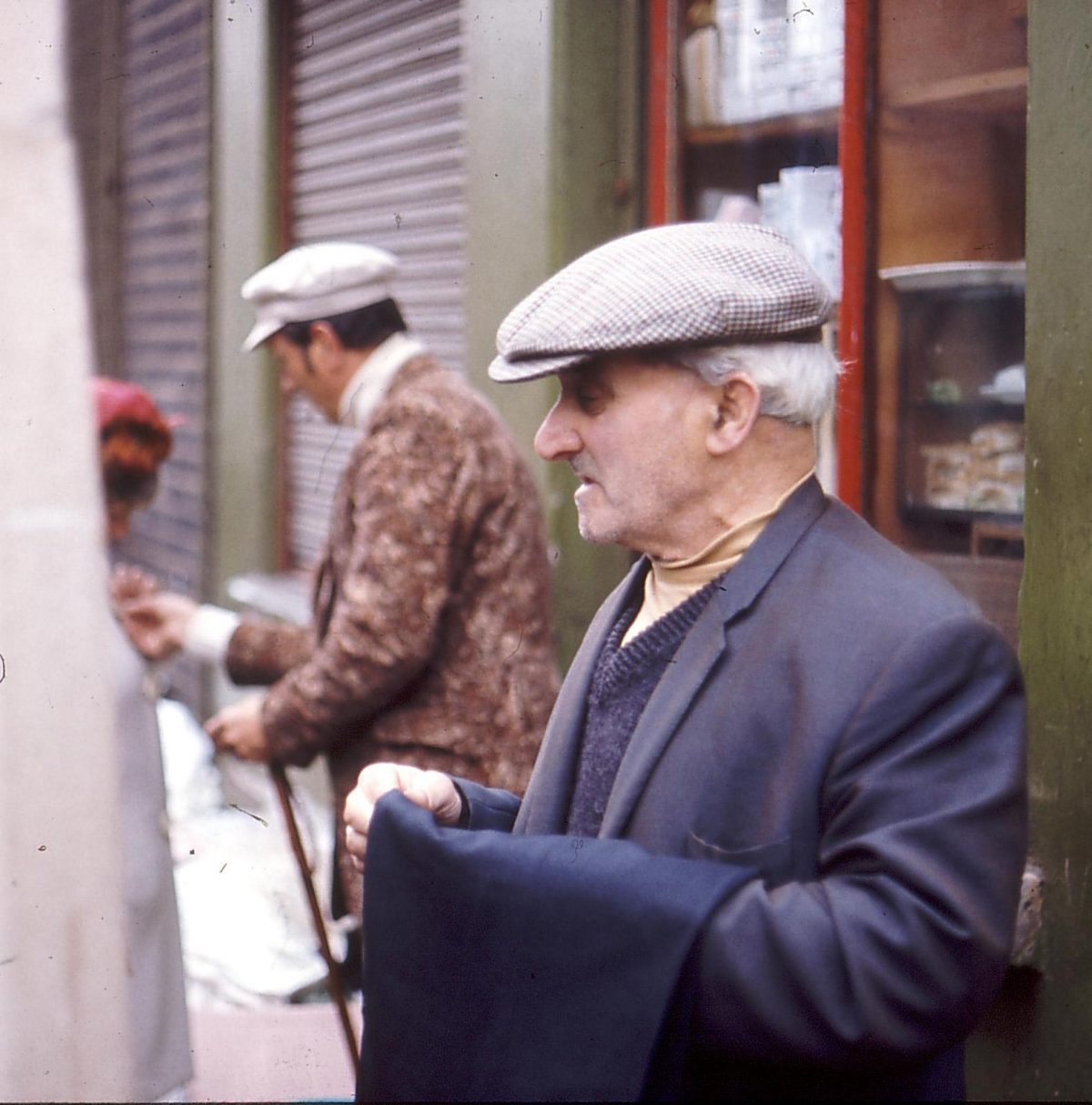
On a Sunday morning in October, the market drew a mixed crowd. Stallholders set out their goods along the street — clothing, hardware, second-hand items, and everyday household goods piled on trestle tables or spread across the pavement. Shoppers moved between the stalls, picking things up, examining prices, haggling where they could.
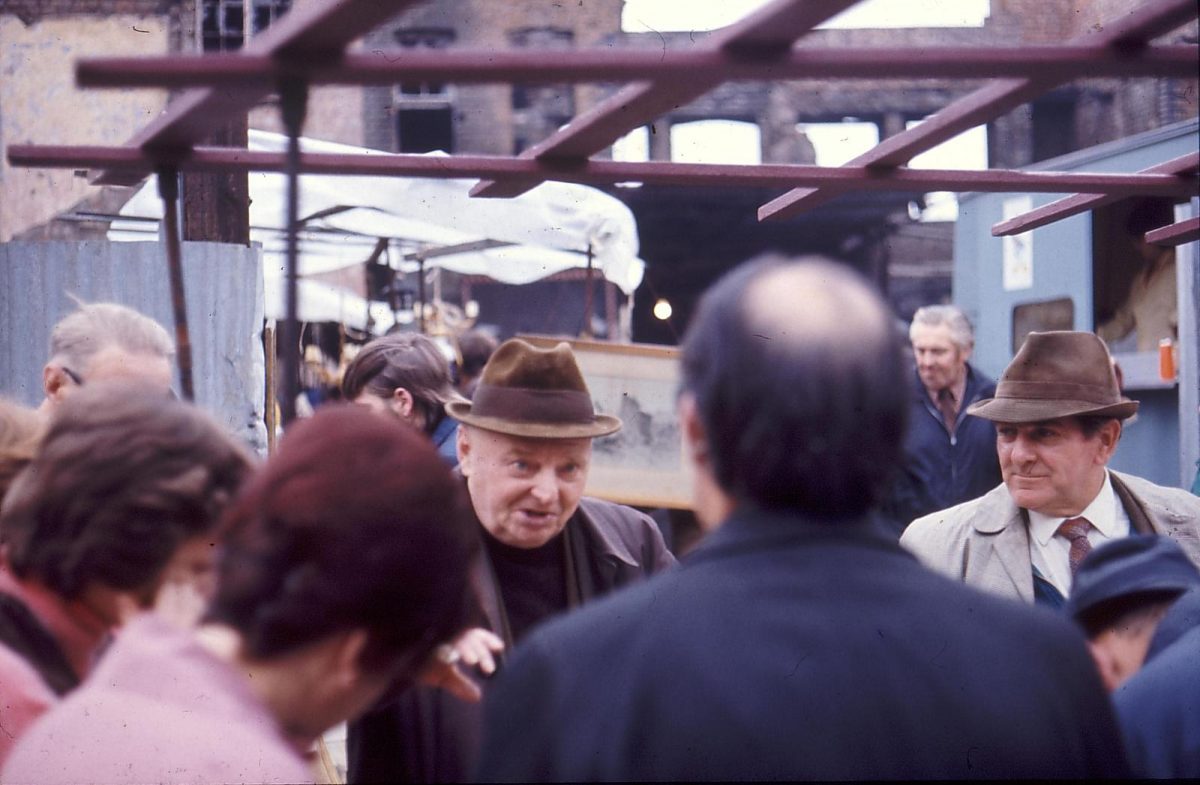
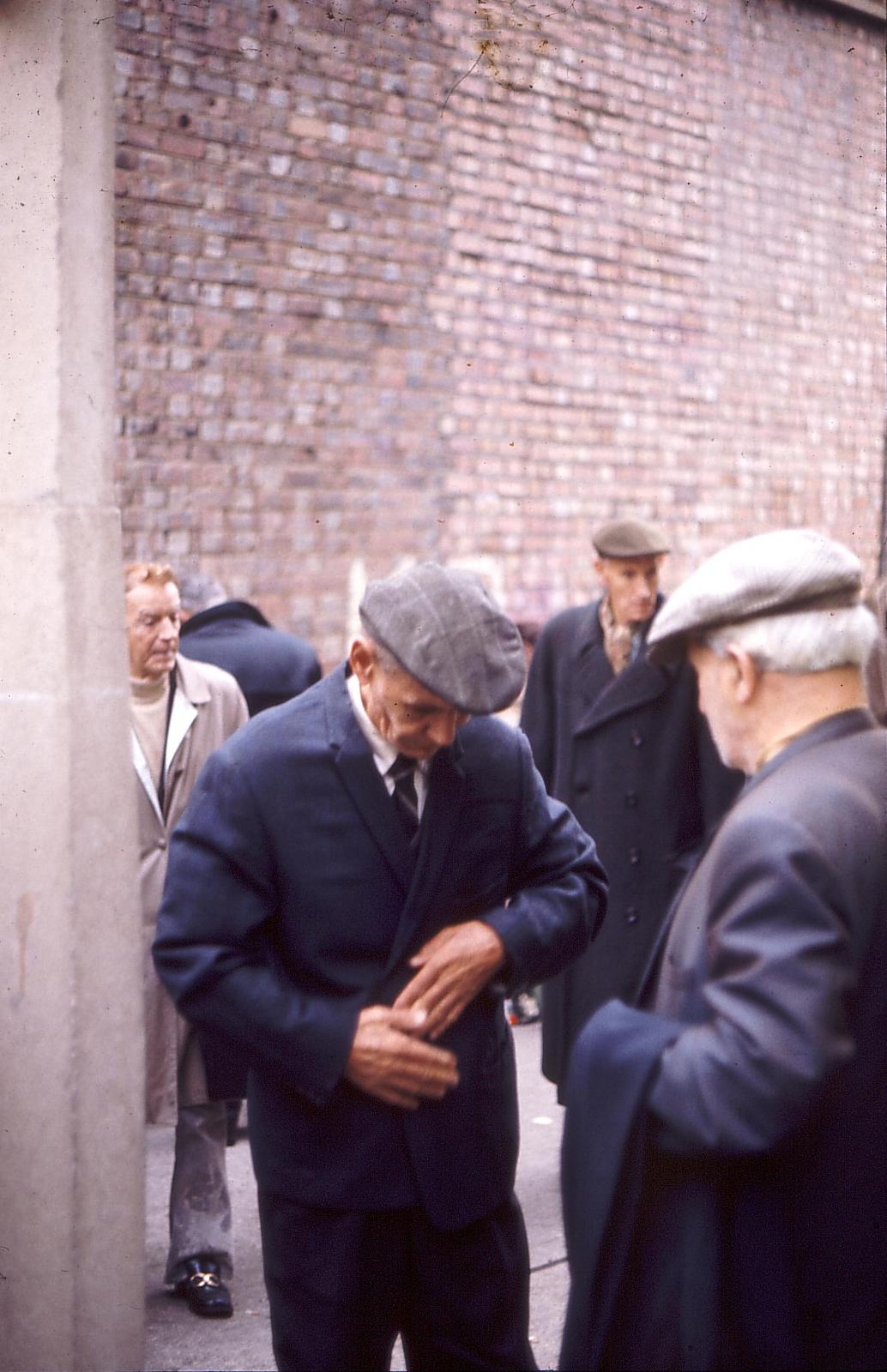
Baker’s photographs capture the ordinary rhythms of working-class East End life. There was nothing staged about the scenes he recorded. People dressed practically for a cool autumn morning — coats, flat caps, headscarves. Children stood close to parents. Older residents moved slowly along the stalls, taking their time. The market was as much a social occasion as a commercial one.
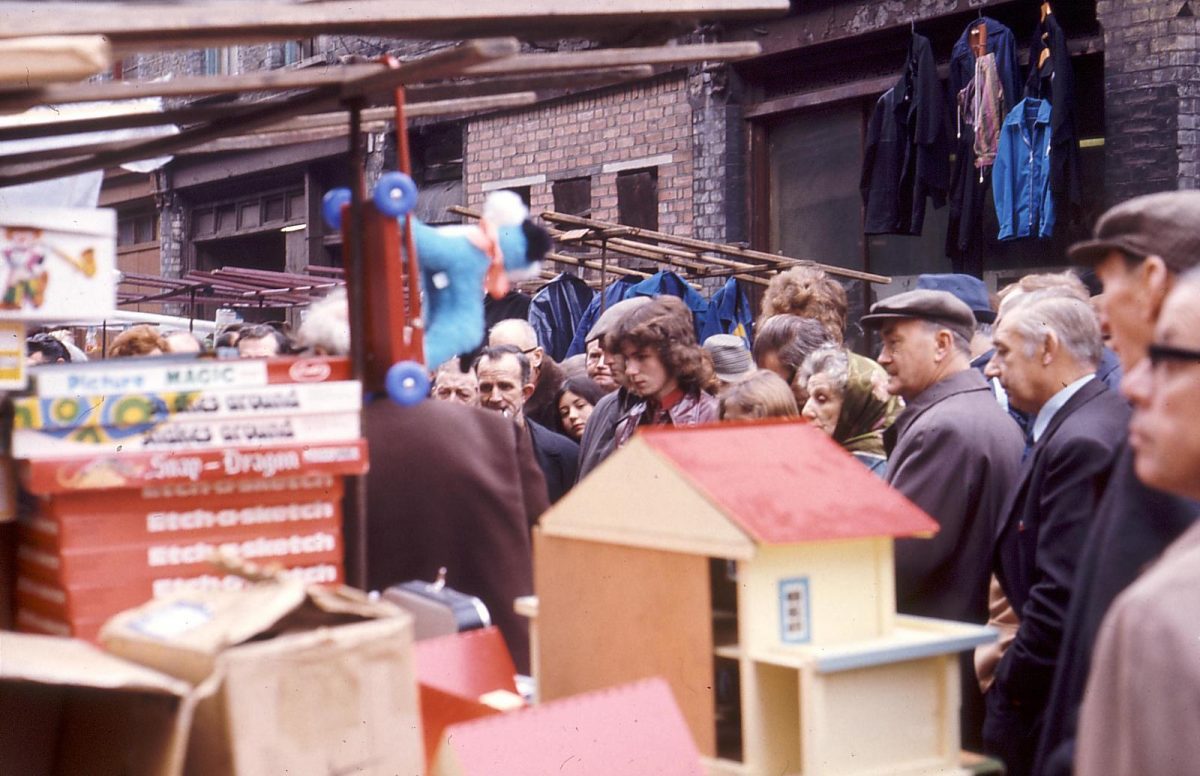
Street markets like Cheshire Street played a practical role for people living in the surrounding streets. Goods here were cheaper than in shops, and for families on tight budgets, that difference mattered. Second-hand clothing, spare tools, and discounted produce were all part of what traders offered. The market operated in the informal economy that the East End had always depended on.
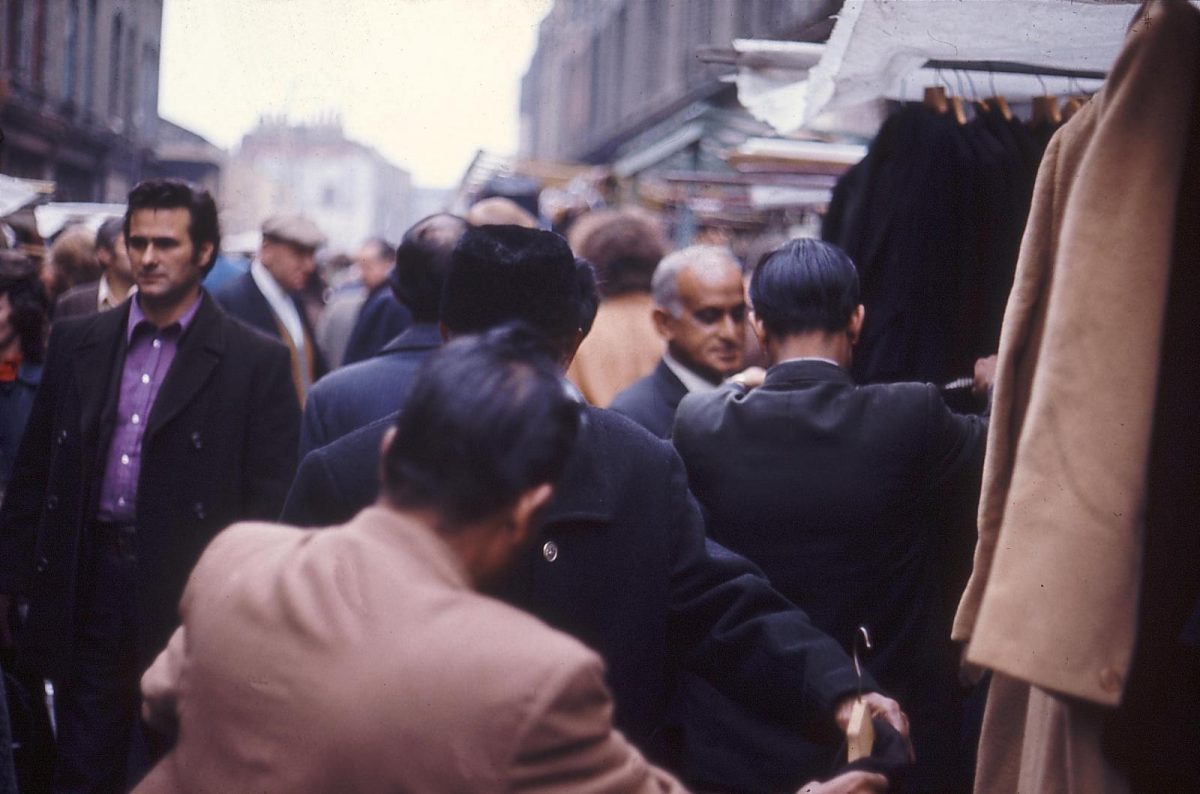
The neighbourhood around Cheshire Street in 1973 was still largely working class, though it was beginning to shift. The destruction of Victorian housing had pushed many long-term residents out into council estates further from the city centre. Those who remained lived in a district that was physically fragmented — blocks of new council housing sitting alongside vacant lots and a few stubborn Victorian remnants.
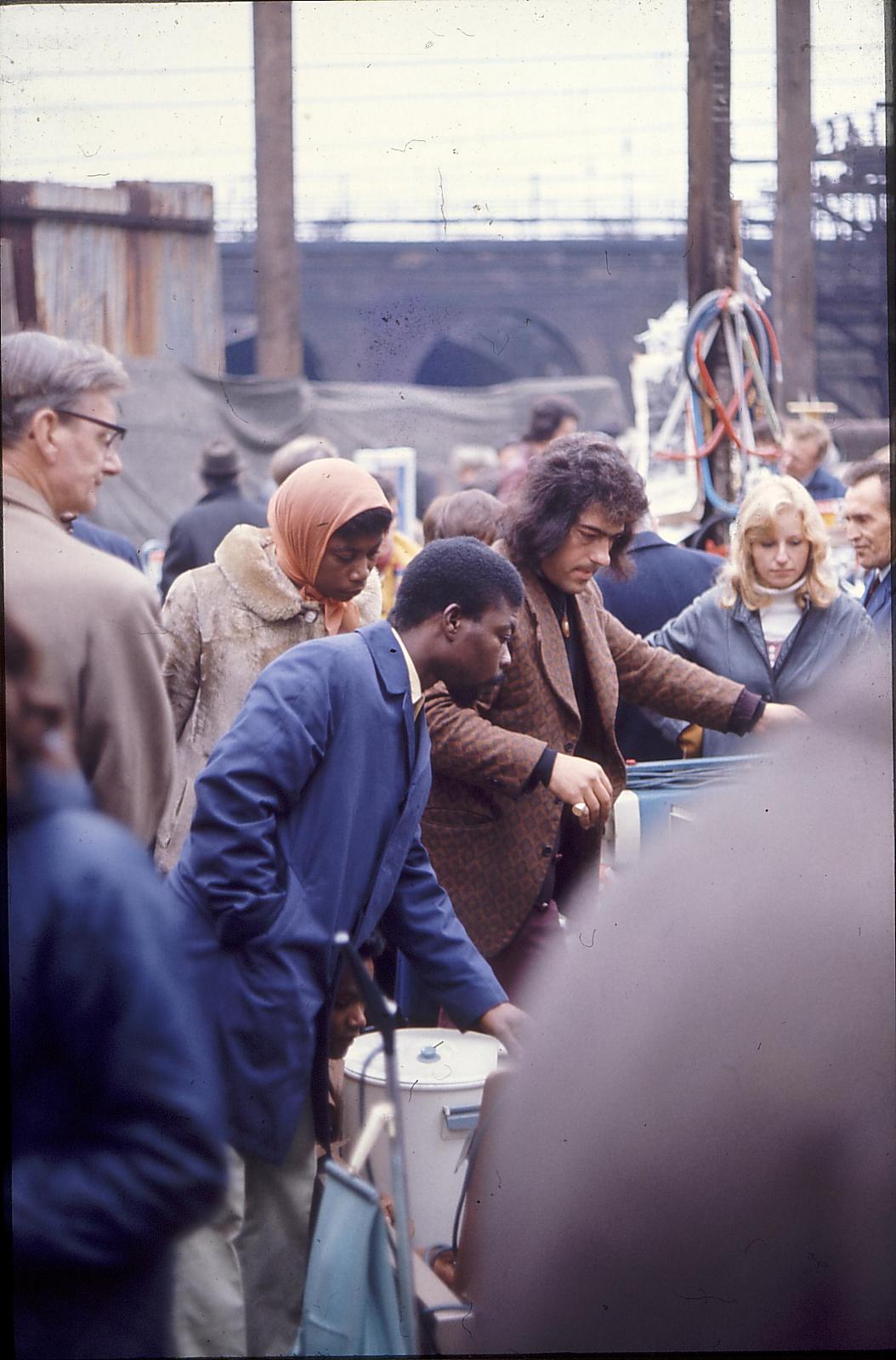
Baker photographed stallholders as well as shoppers. The traders were a constant presence on the street — setting up early in the morning, packing down in the afternoon. Some were regulars who had worked the same pitch for years. Their familiarity with the street and with each other gave the market a community feel that set it apart from formal retail.
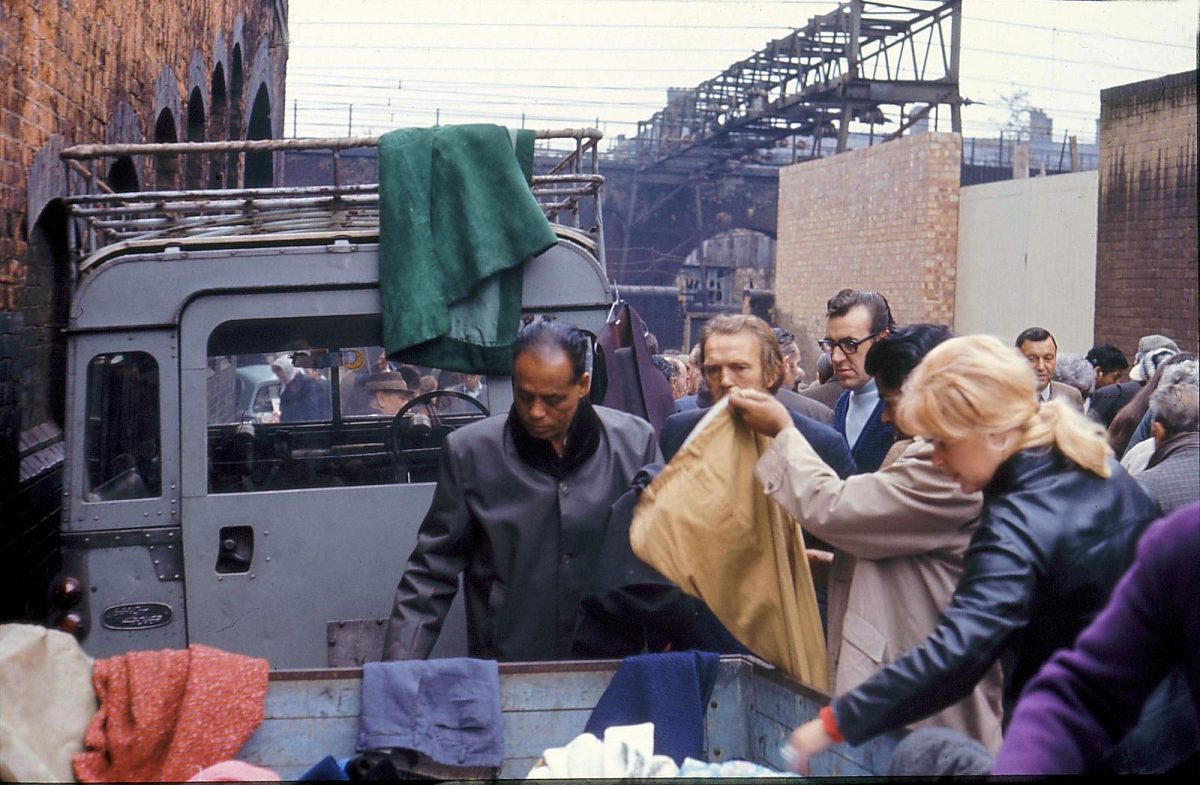
Brick Lane, running parallel and connecting to Cheshire Street at its western end, was already well known for its own Sunday market. The two streets drew overlapping crowds on a Sunday, and shoppers often moved between them. Cheshire Street’s market was quieter and less well documented, which makes Baker’s photographs from October 1973 an especially specific record of a place and a day that would otherwise have gone unrecorded.