George Silas Duntley wore many hats. He was a trained surgeon, a World War I officer, and a dedicated photographer who spent the early 1900s documenting life in Bushnell, Illinois, and the surrounding region. The photographs he left behind are a rare window into a world that has long since changed — small-town storefronts, working farms, railroad yards, and everyday people living their lives in rural Illinois.
Duntley’s photographs survived because of his son, who took on the painstaking work of restoring them from dry plate glass negatives. Dry plate photography was common in the late 19th and early 20th centuries. The glass plates were fragile and prone to damage over time, which makes the quality of these surviving images all the more remarkable. Together, they form a collection that spans from 1899 to 1918 — nearly two decades of community life.
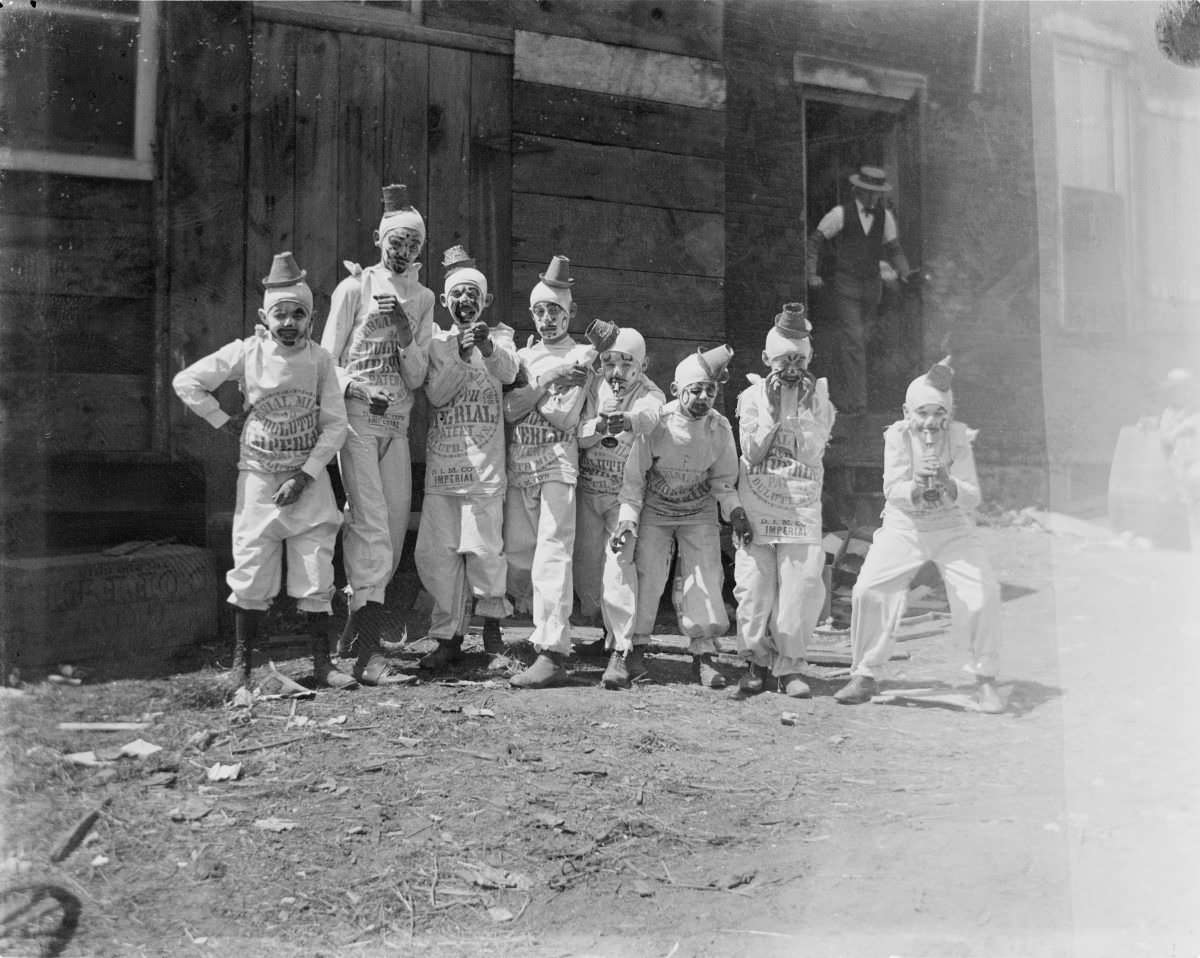
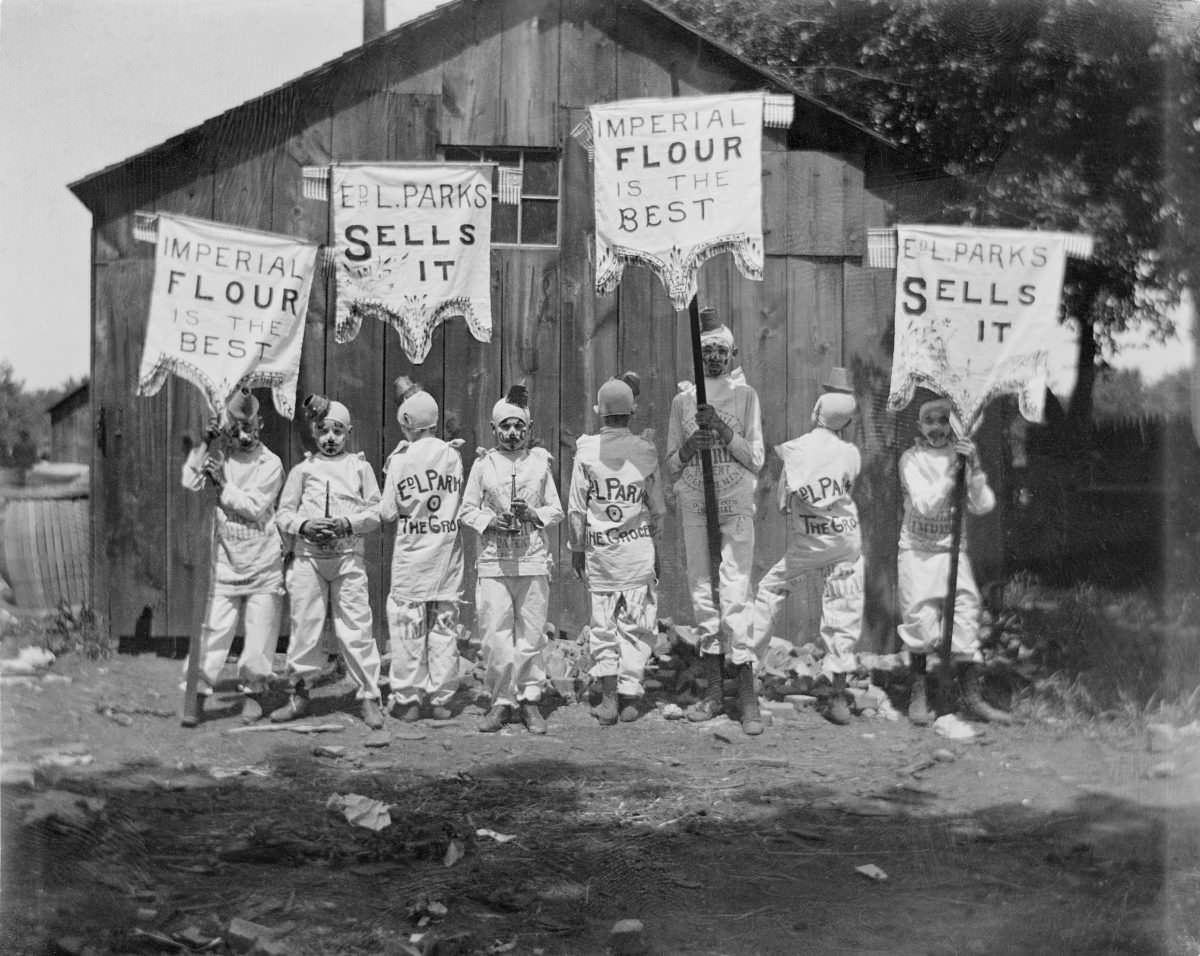
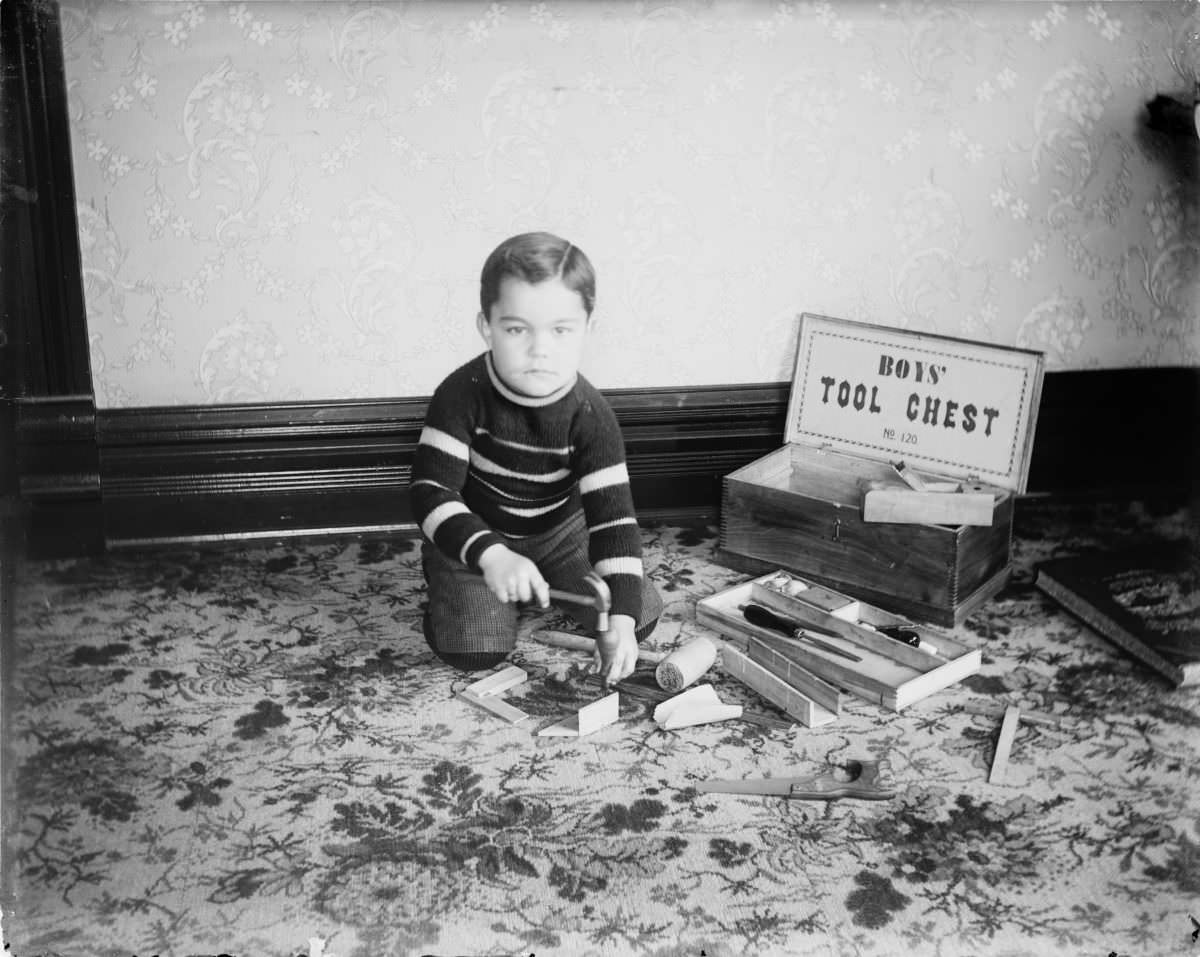
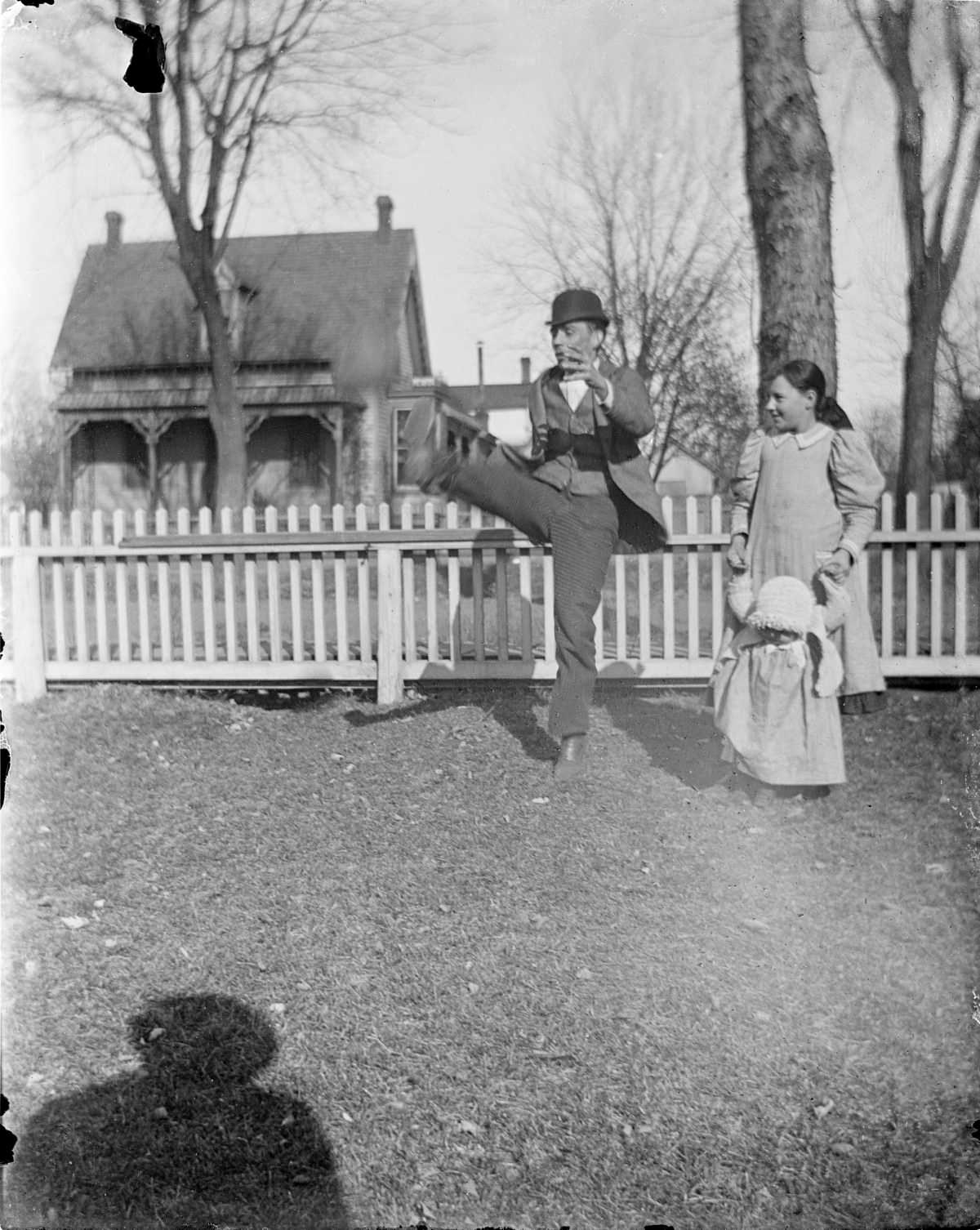
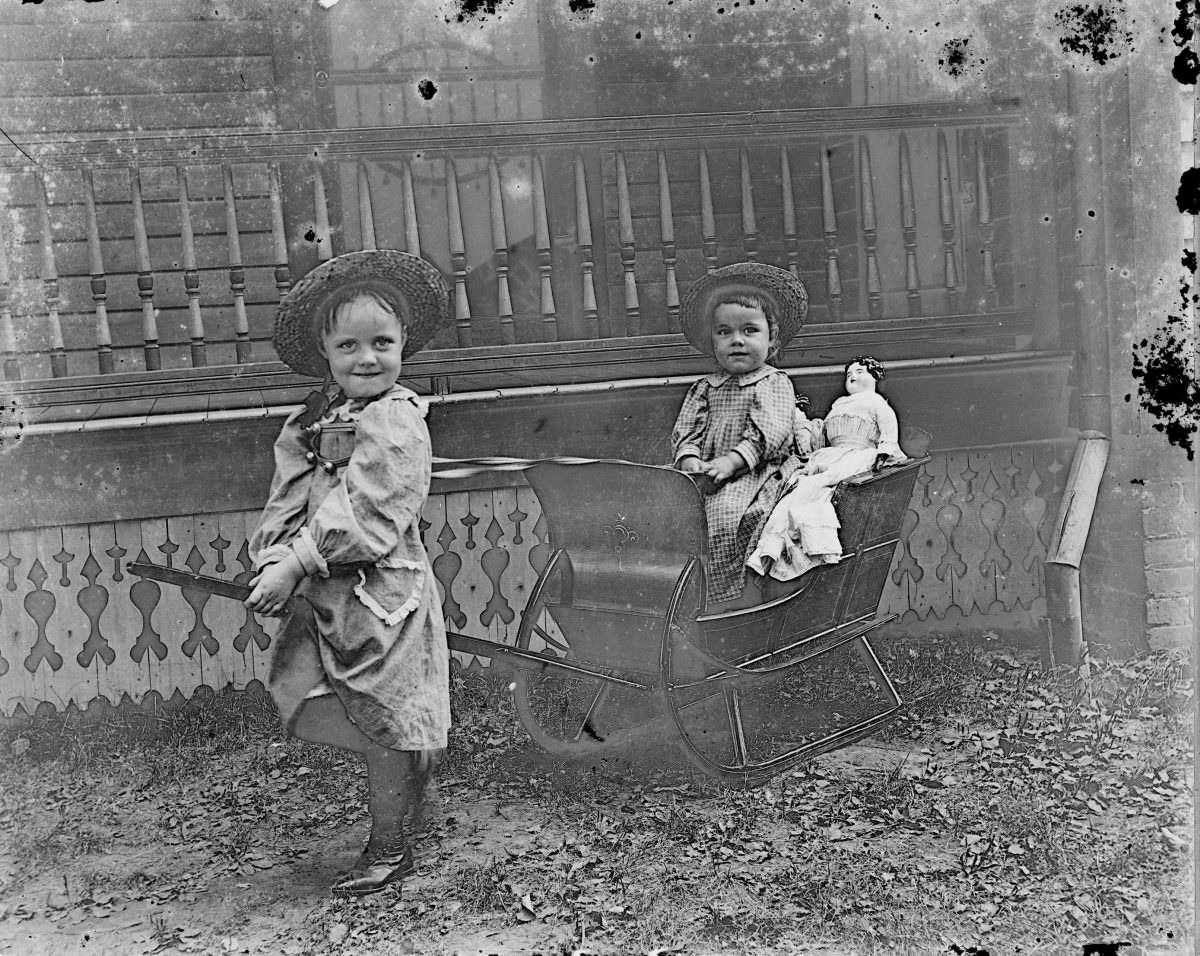
Children in the collection appear dressed in feedsack clothing — a common practice among rural families during this era. Fabric from flour and animal feed sacks was repurposed into everyday clothing, a clear sign of the resourcefulness that defined working-class life in rural Illinois at the time.
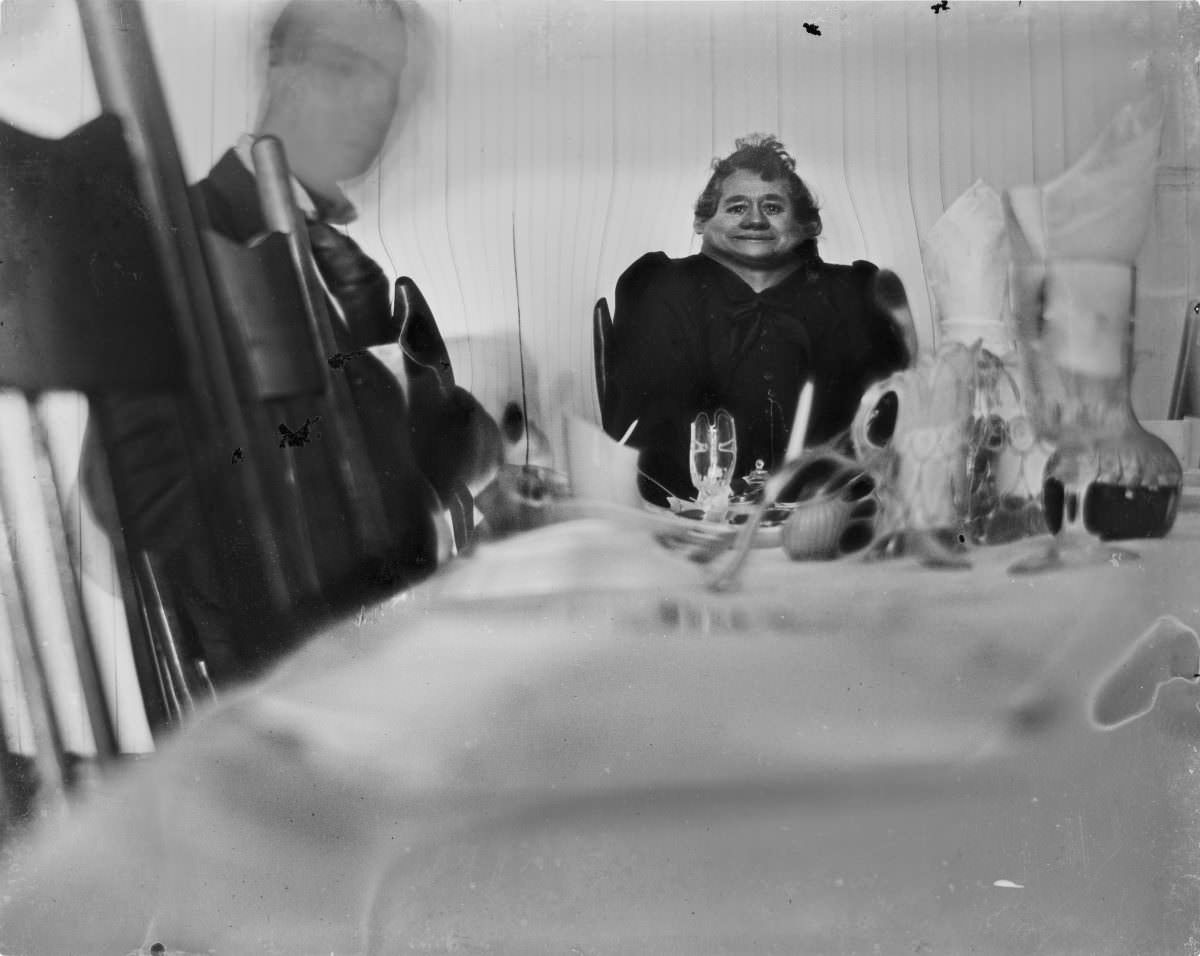
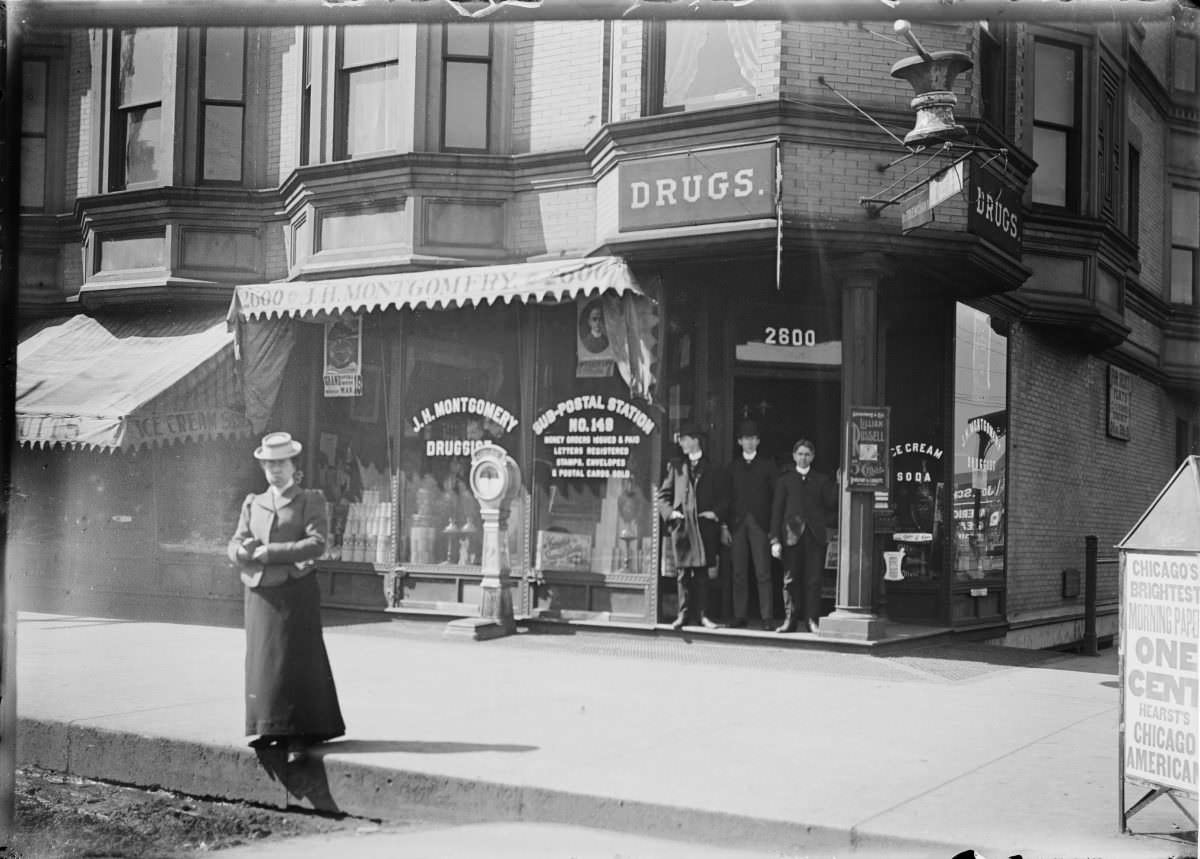
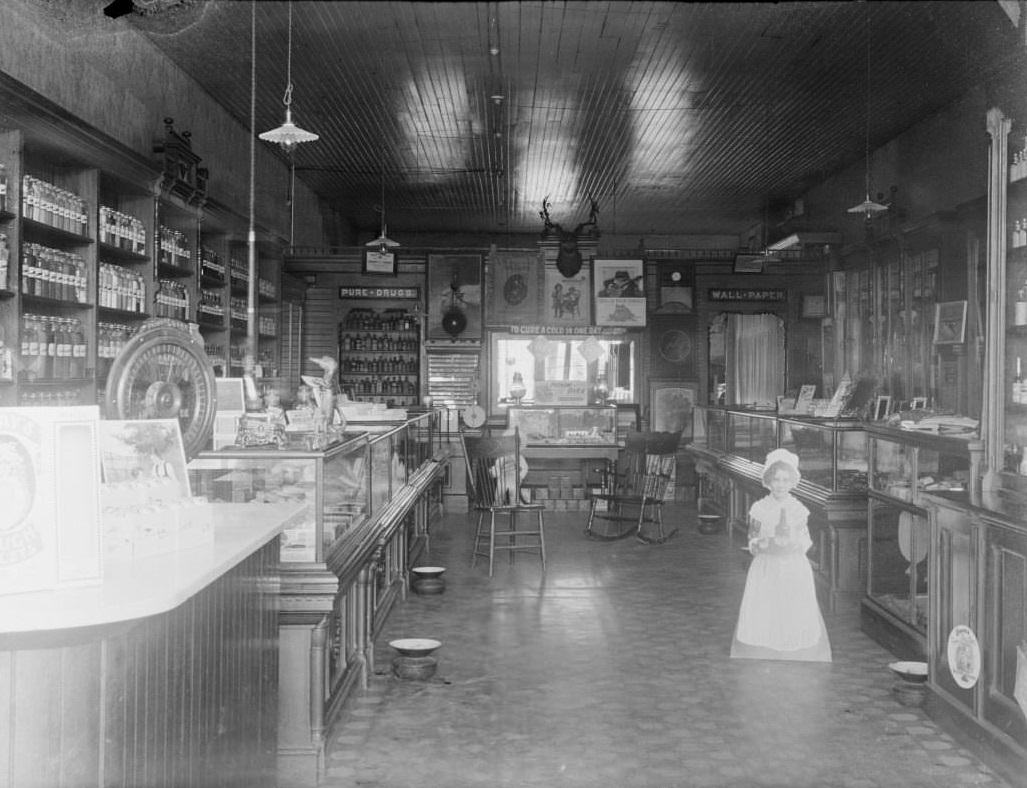
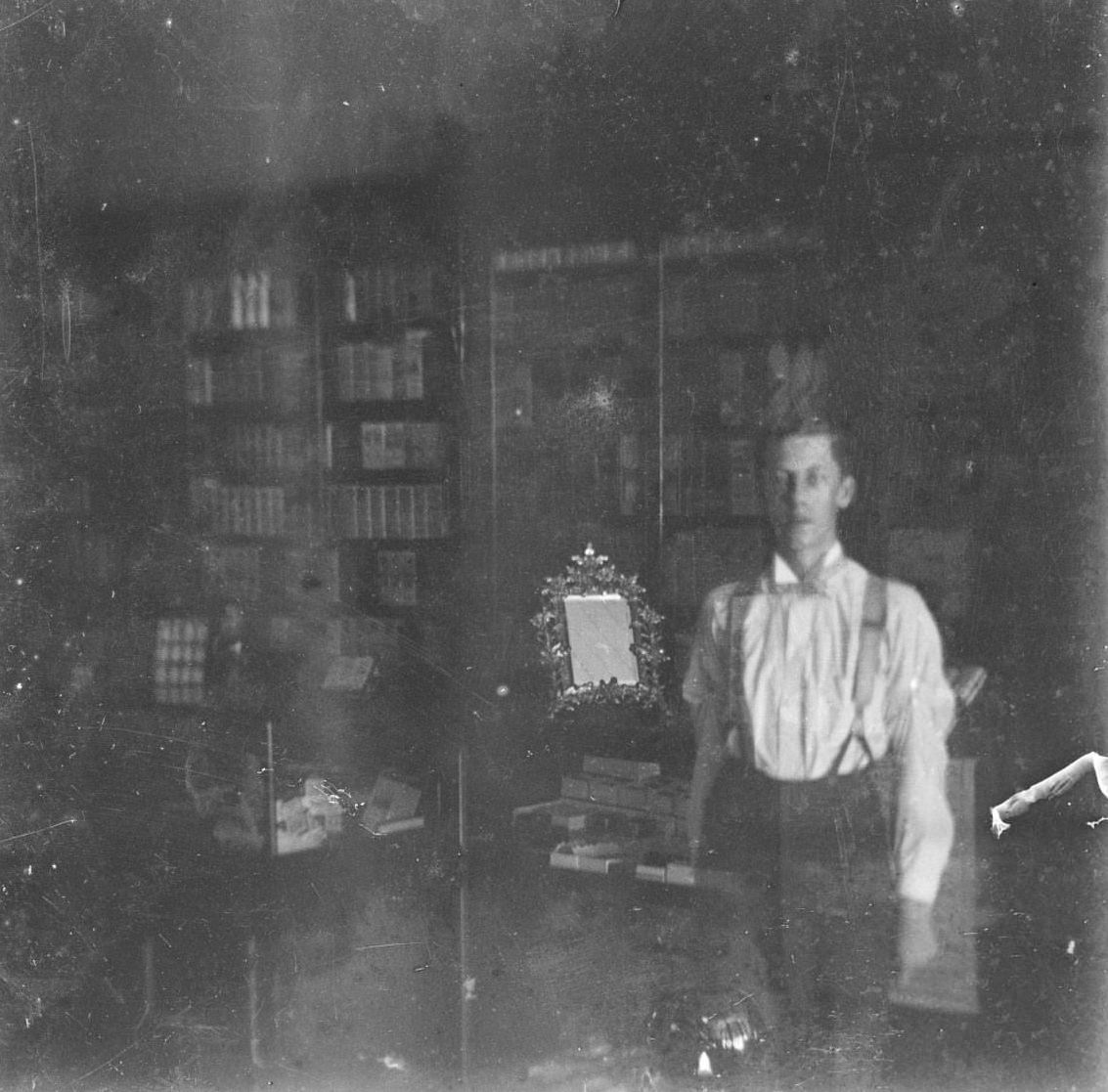
Duntley’s lens also captured the commercial side of Bushnell. Local businesses appear throughout the collection — drug stores, jewelers, and small shops that made up the backbone of rural commerce. One image shows J.H. Montgomery Drugs, which also served as a sub-postal station, giving the store a dual role in the community.
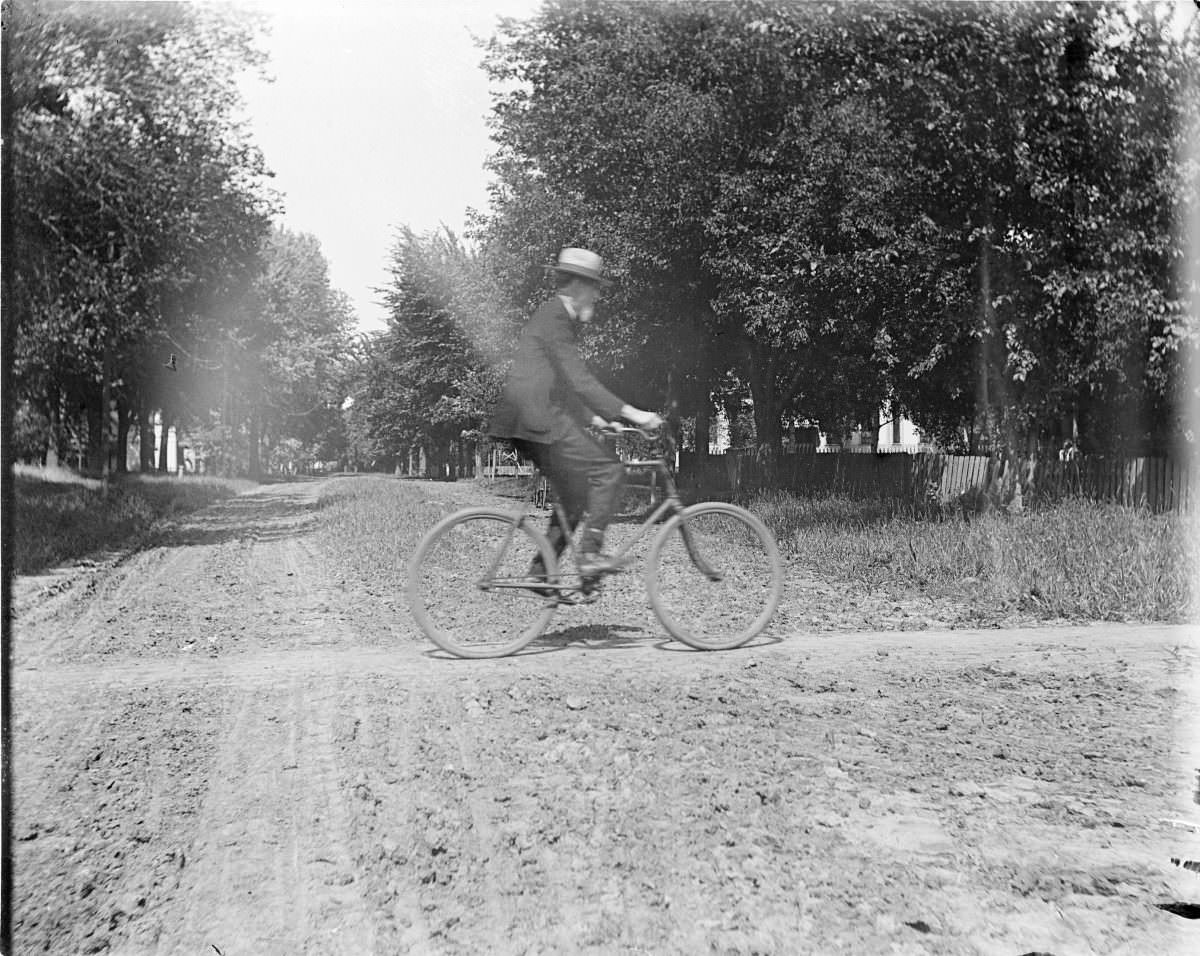
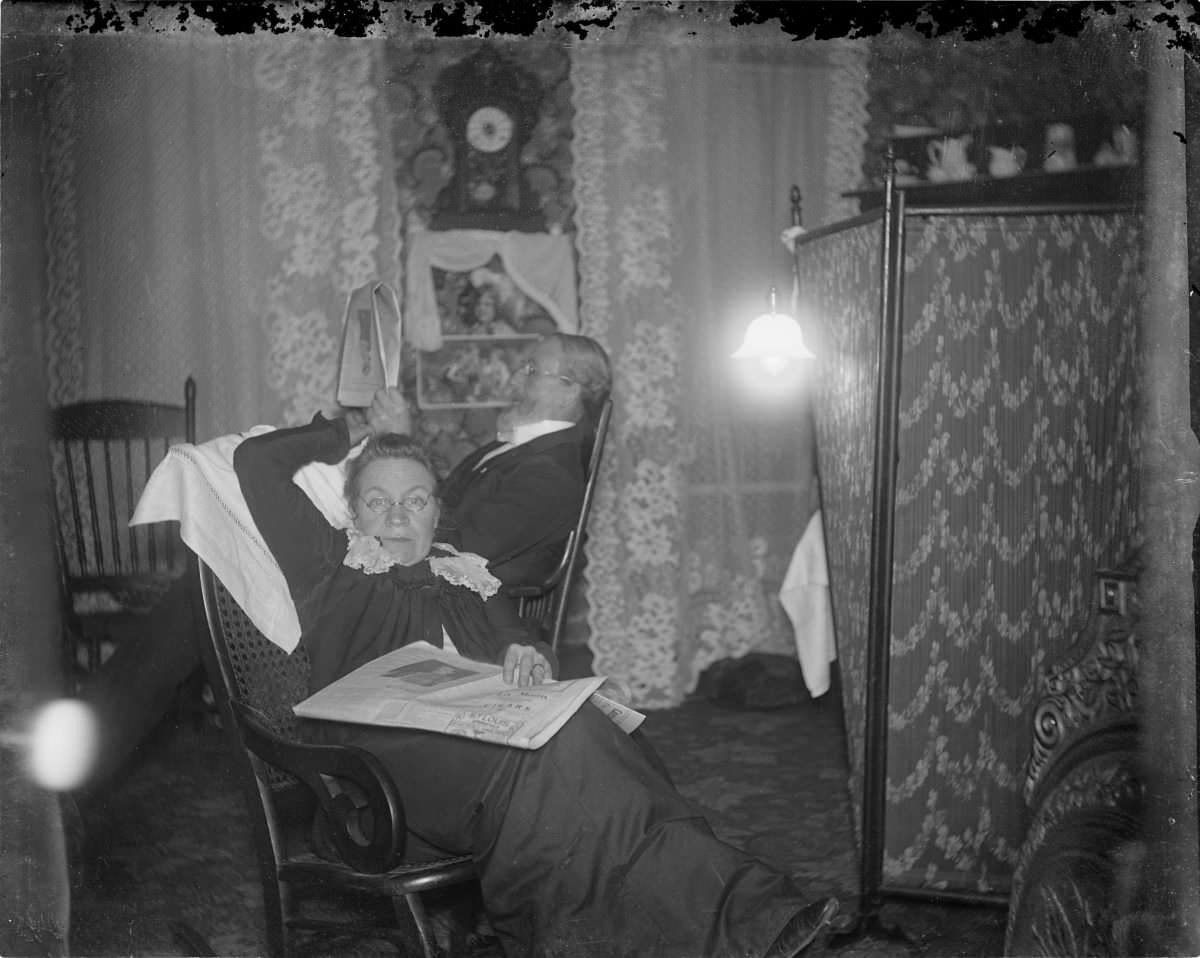
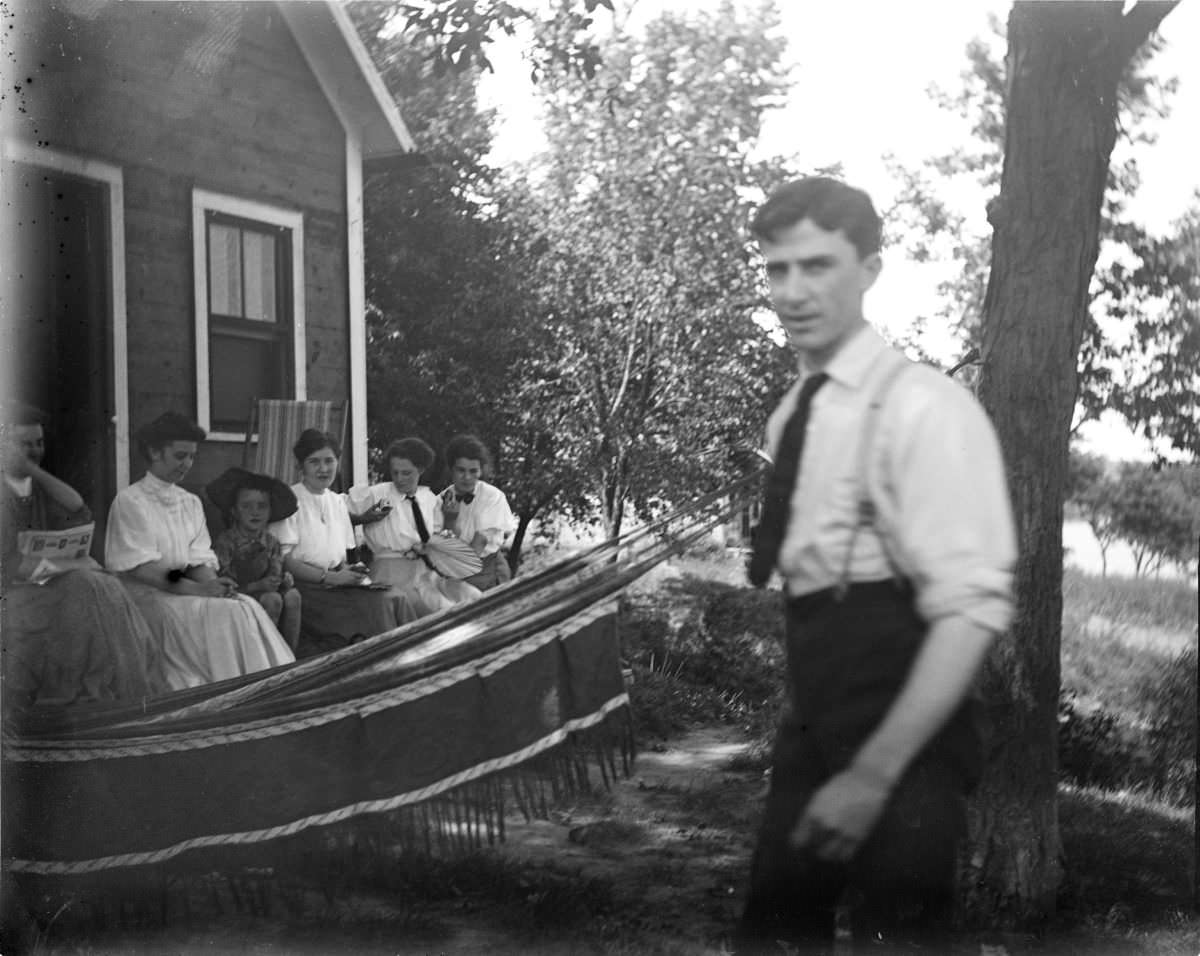
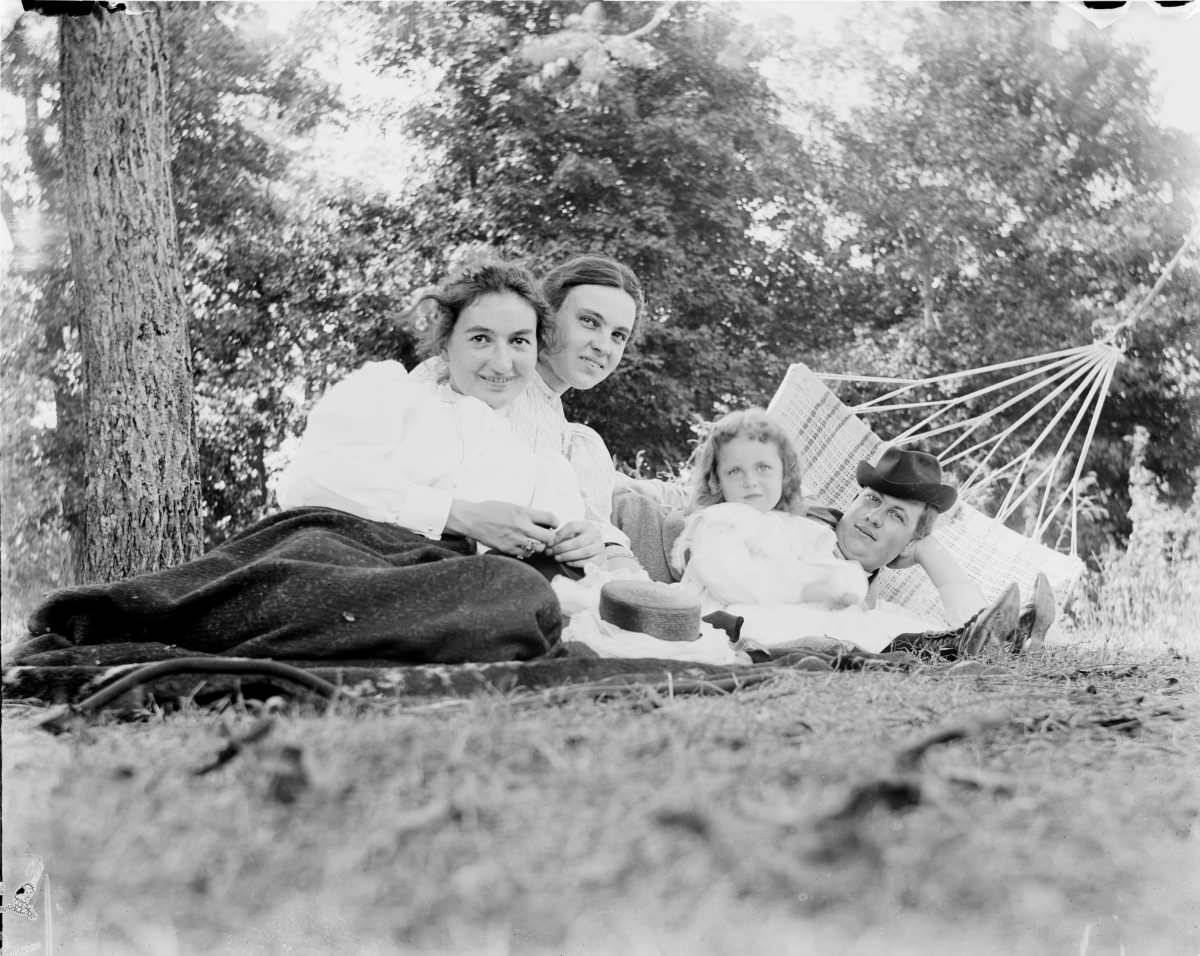
Duntley didn’t just photograph public life. He also turned his camera toward quieter, domestic moments. Images of people at rest, reading, or simply sitting together show a photographer who was just as interested in the private rhythms of daily life as in the bustle of the town square.
Storefronts in the collection carry advertising that speaks directly to the era. Signs promising to cure a cold in one day and promoting pure drugs reflect the culture of patent medicines that was widespread in America before modern pharmaceutical regulation took hold.
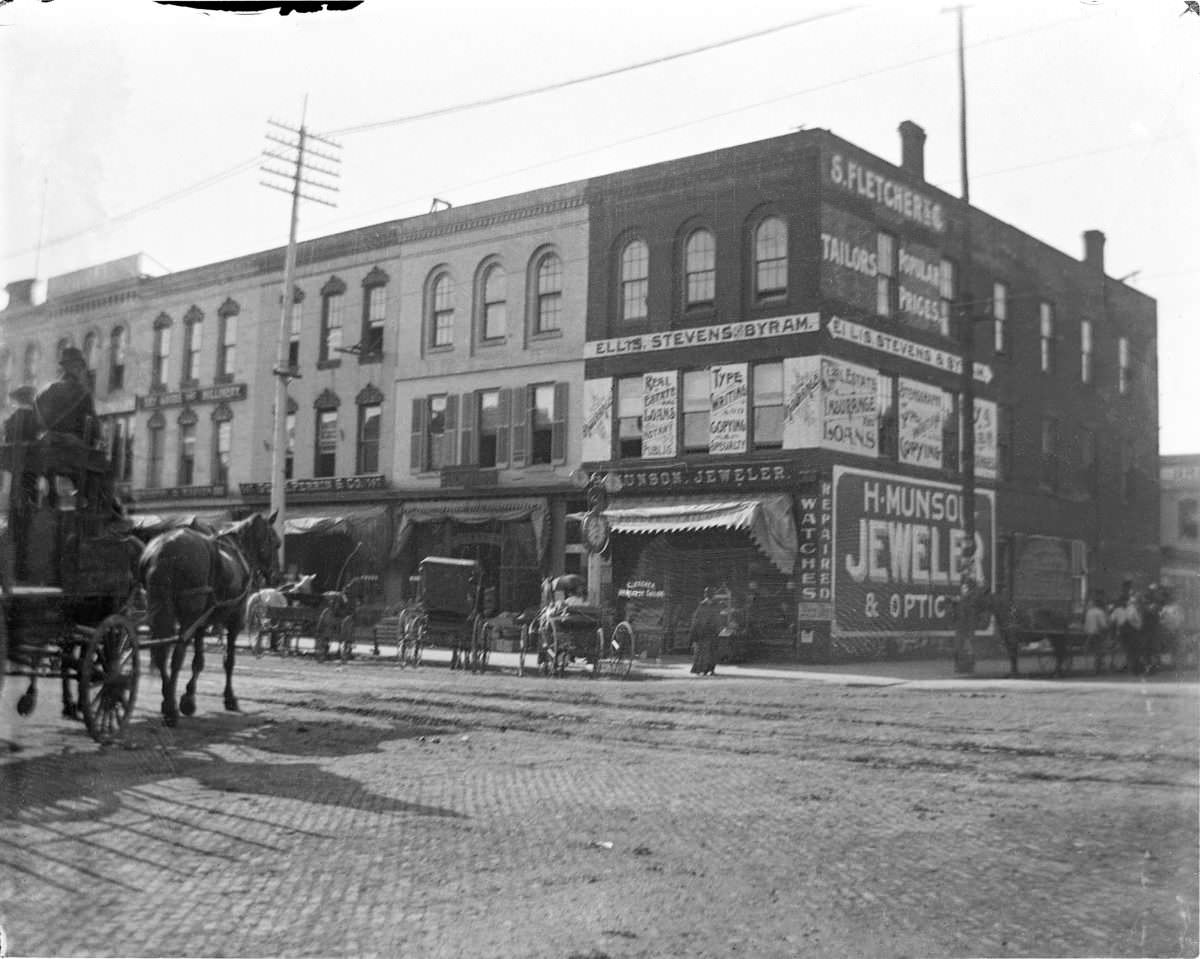
The town’s commercial streets appear in several photographs, showing two-story brick buildings, wide unpaved or early-paved roads, and businesses clustered at corners. One image captures H. Munson Jeweler and Optics on a street corner — the kind of specialty shop that served the needs of a small but connected community.
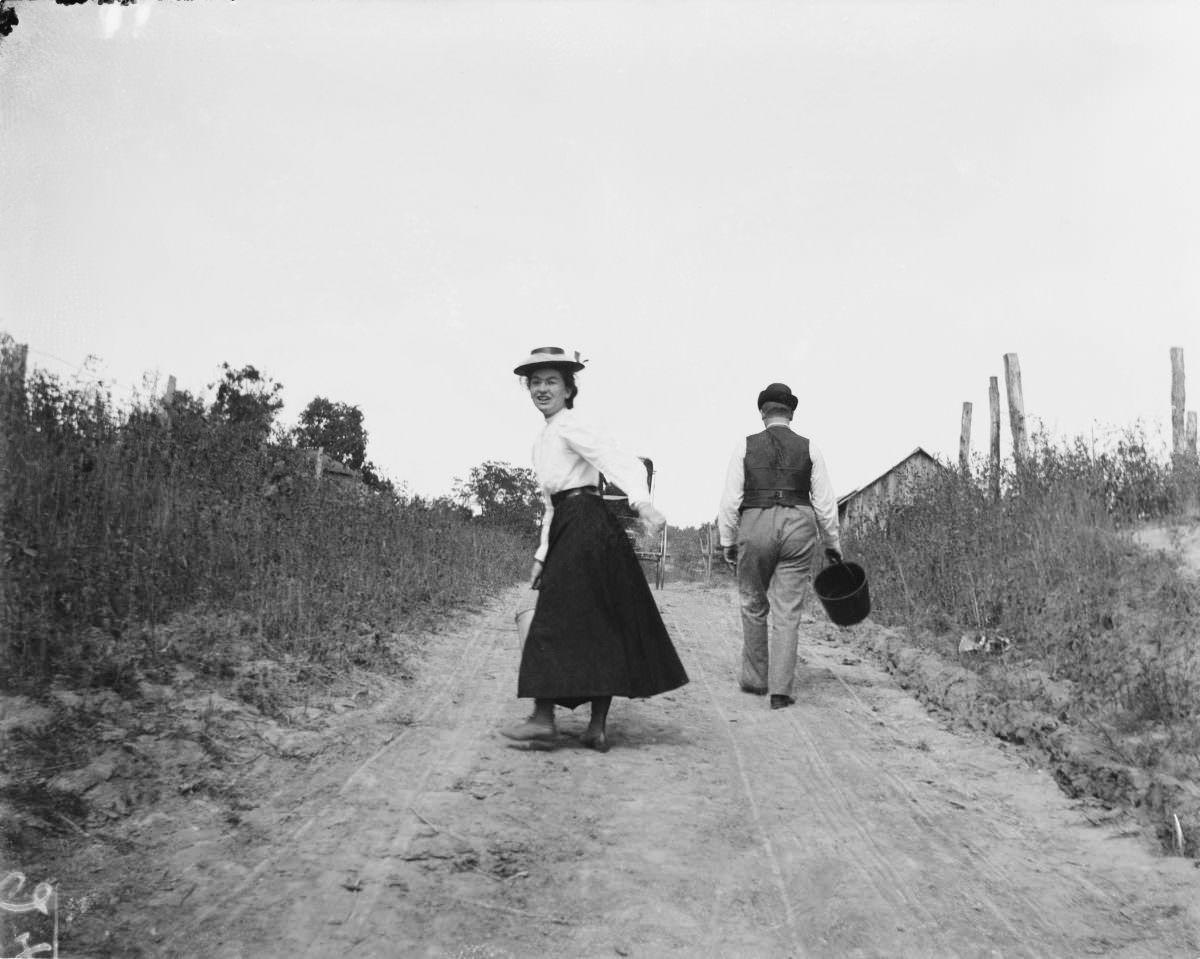
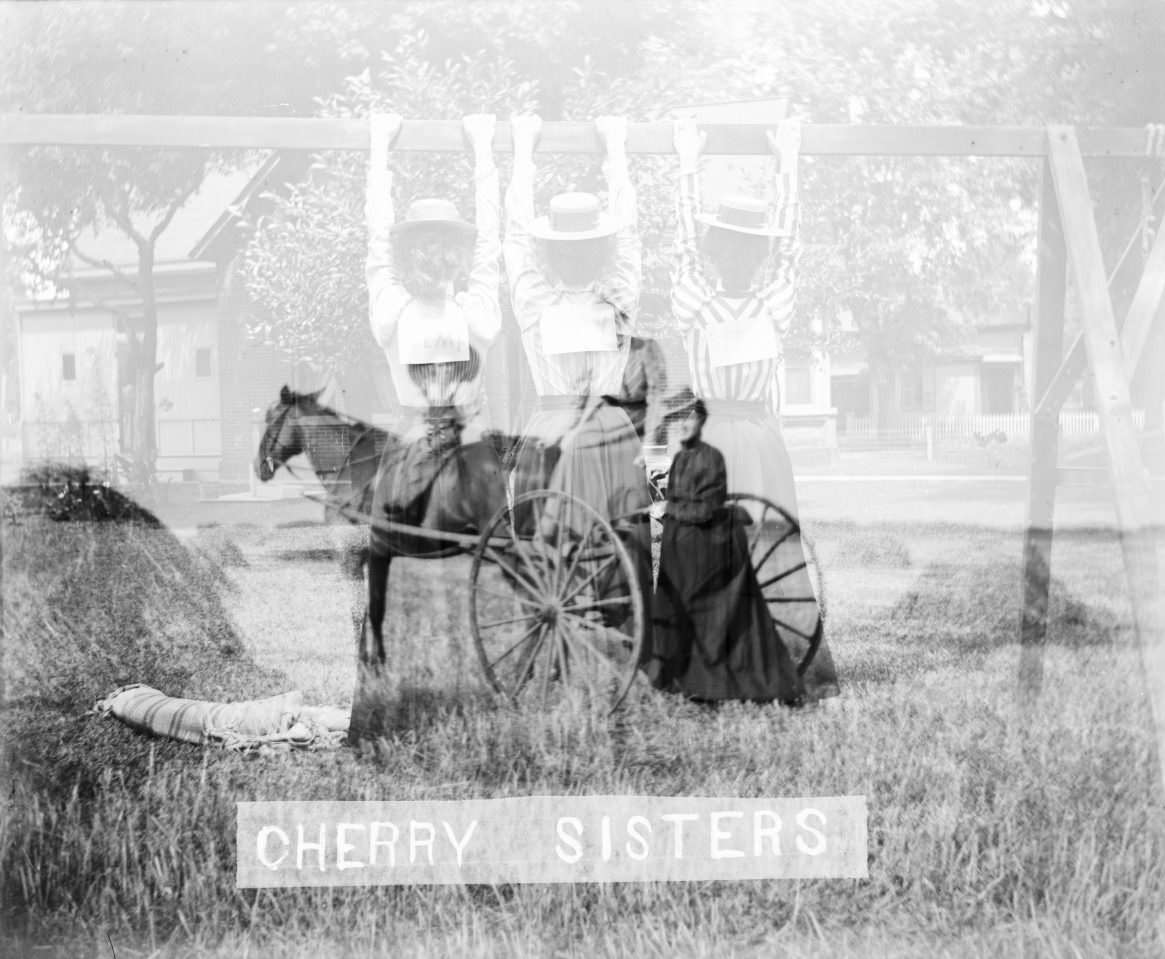
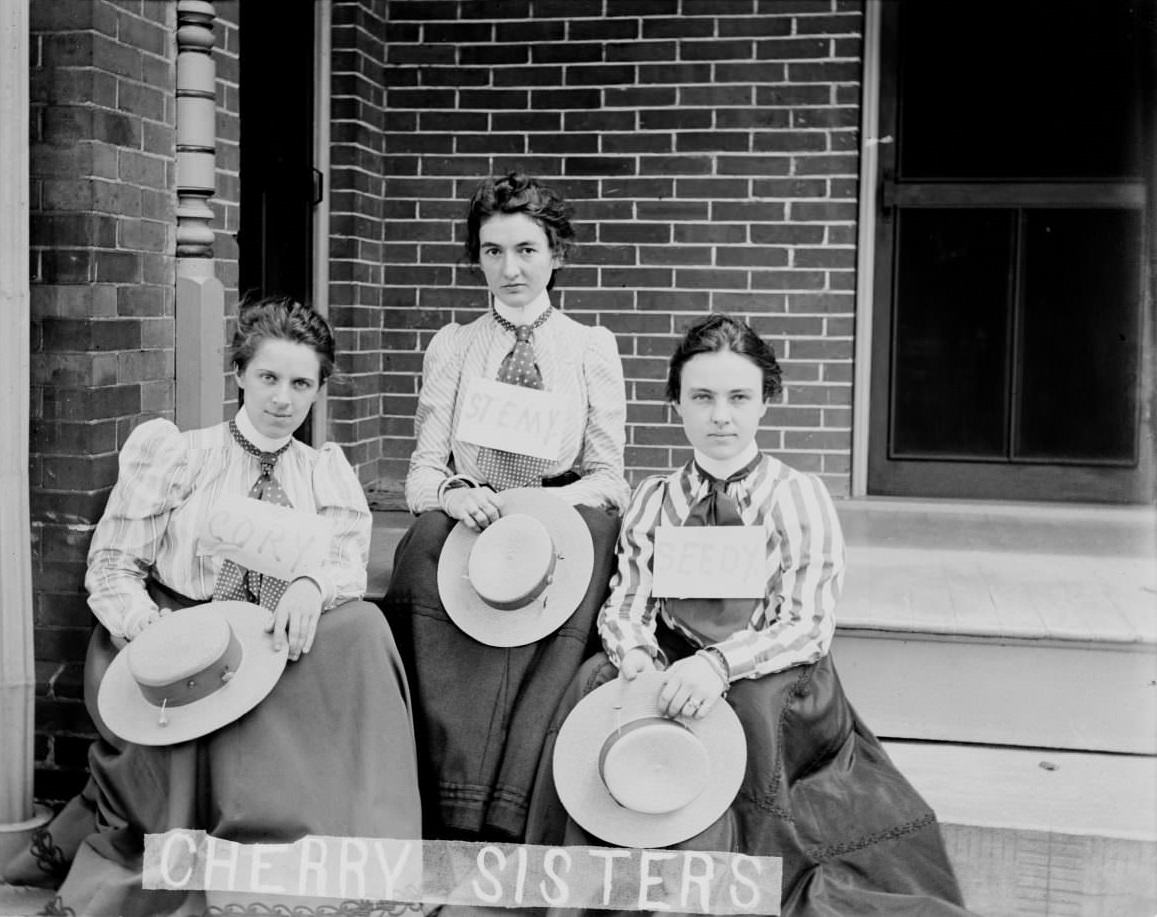
Farm life also figures prominently in the collection. The Cherry Sisters appear in at least two photographs, including one that shows a horse-drawn vehicle in a hay field — a common sight on working Illinois farms of the period.
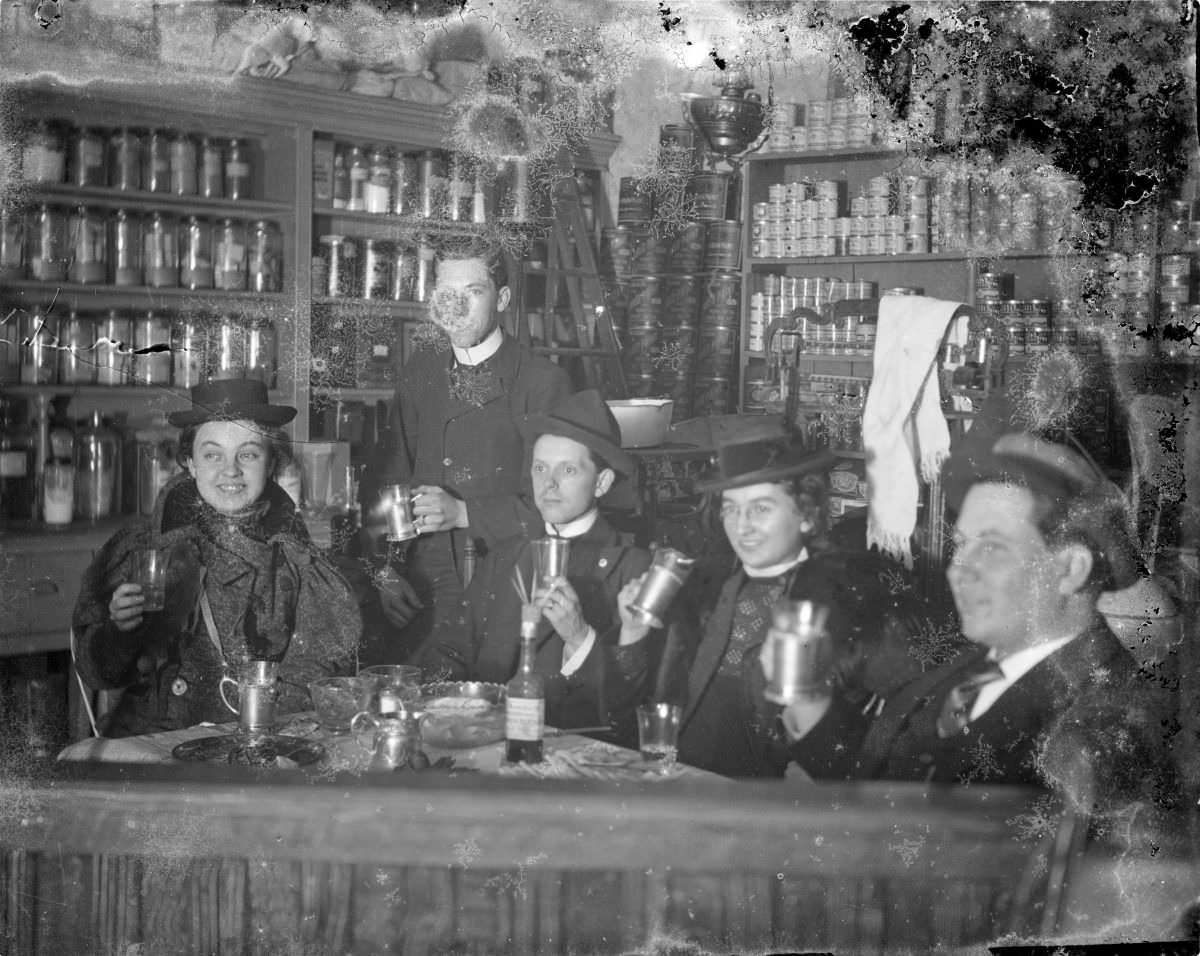
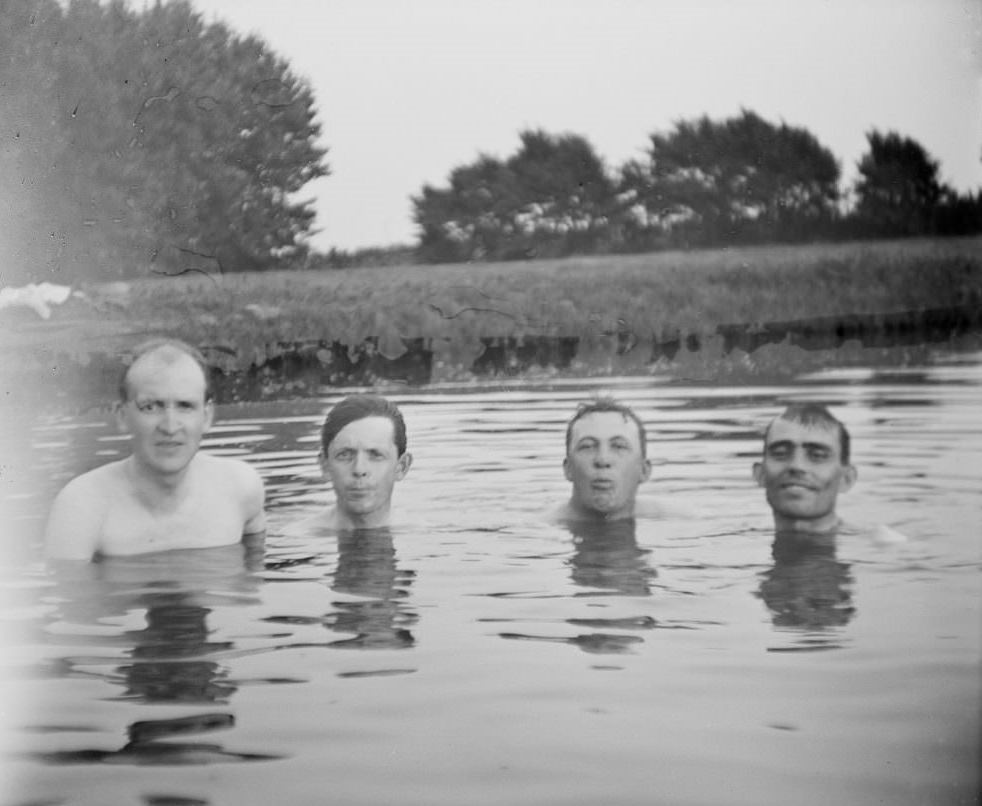
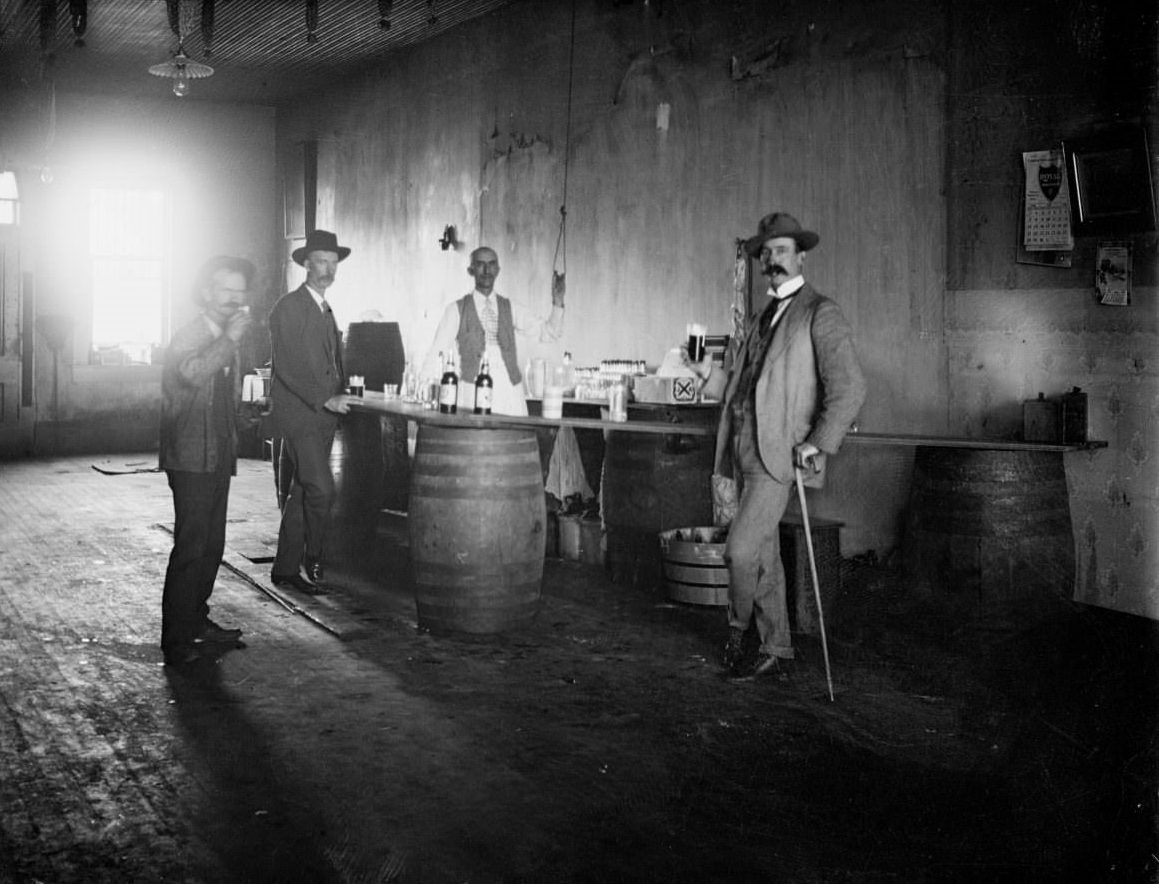
Social gathering spots also appear in the photographs. Groups of people drinking inside shops and bars suggest Duntley was comfortable photographing in social settings, capturing unguarded moments of community life that more formal photographers might have avoided.
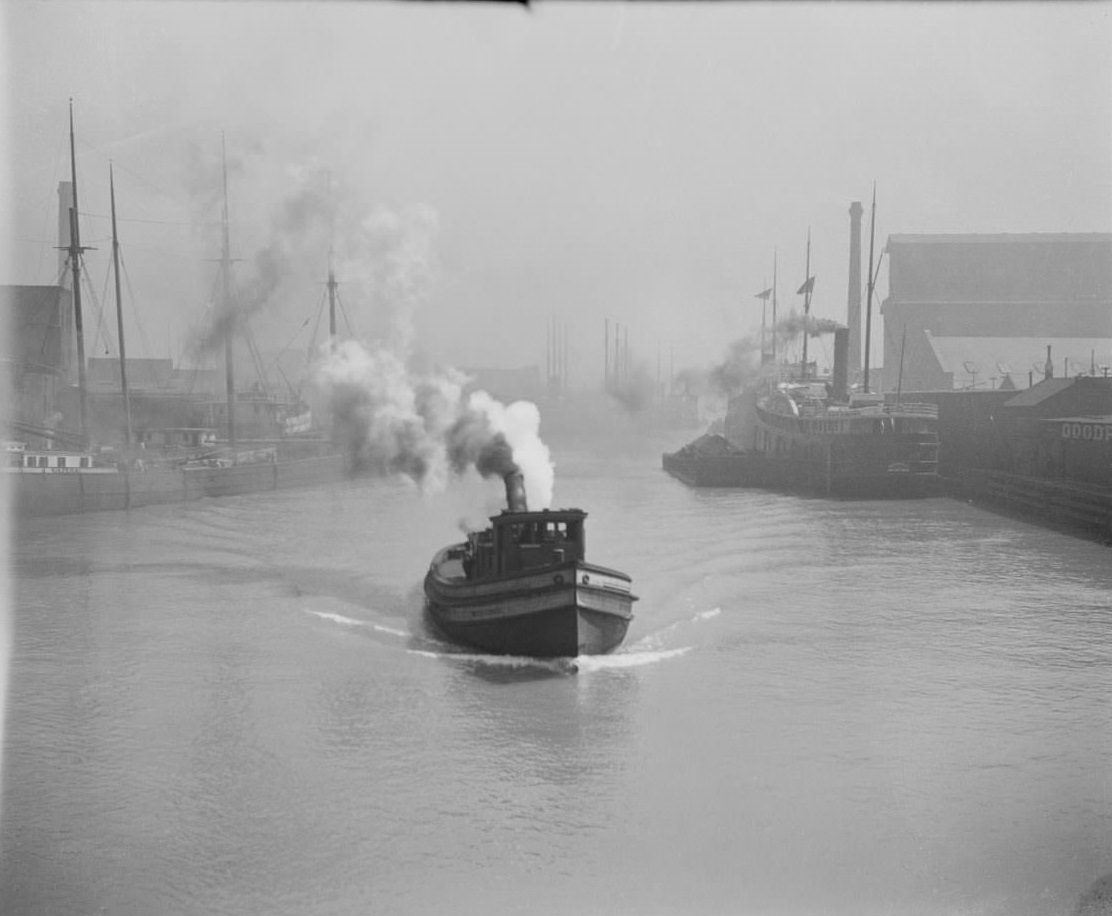
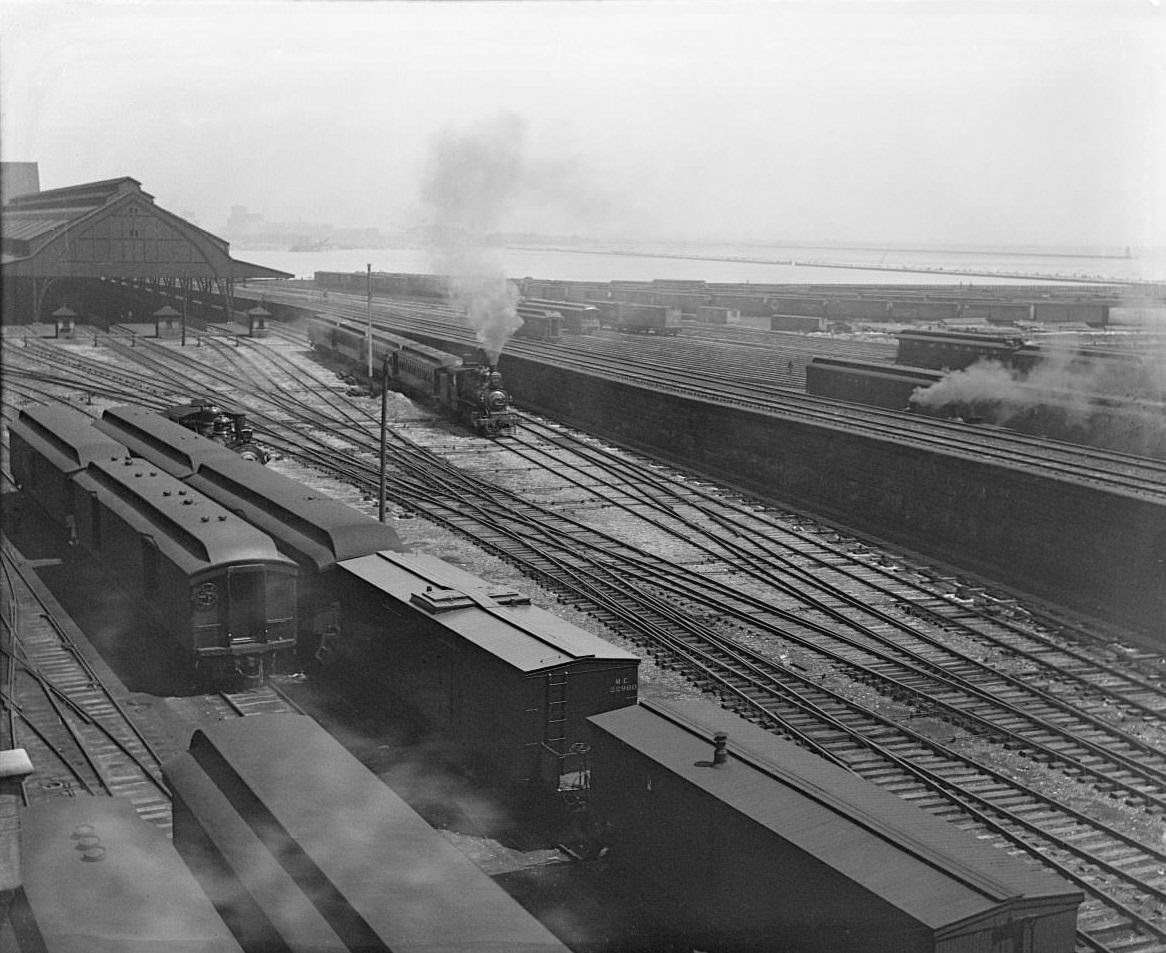
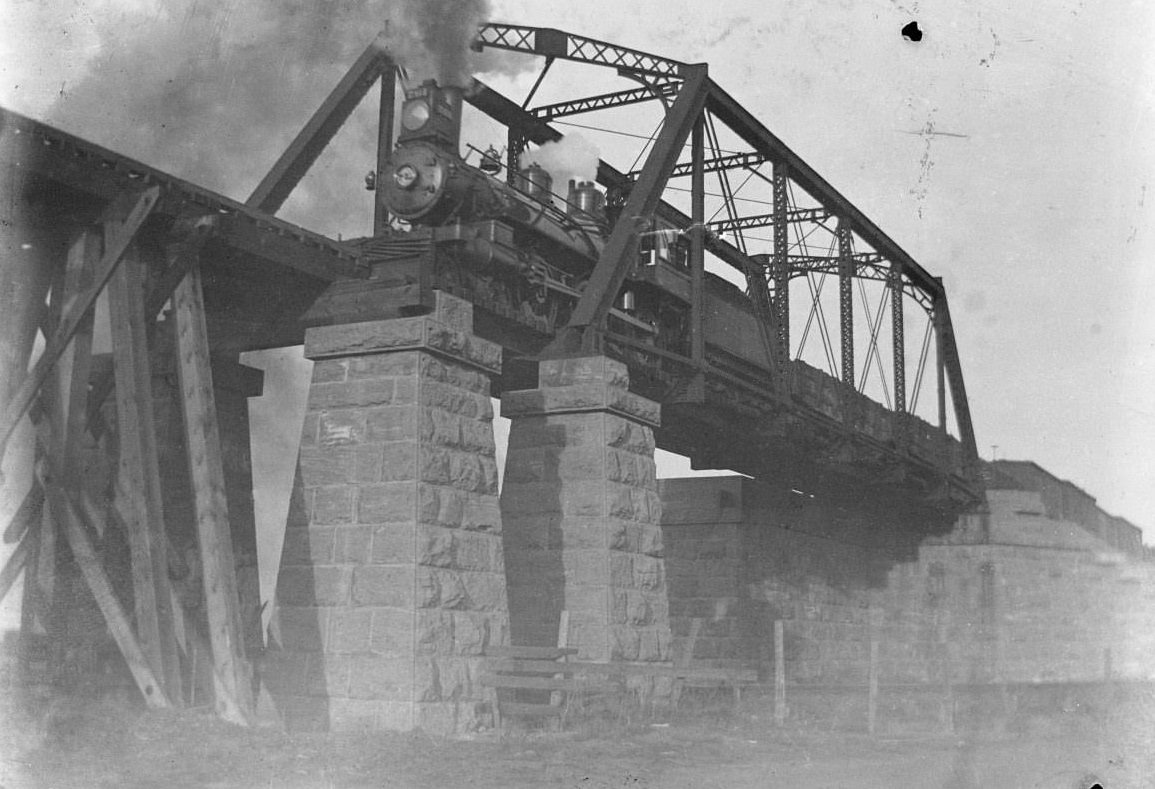
Duntley’s eye extended beyond Bushnell. The Illinois Central Railroad features in the collection, with images of the large rail yard and a trestle running parallel to Lake Michigan. The railroad was a vital economic artery for Illinois during this period, and Duntley clearly recognized its place in the larger story of the region.
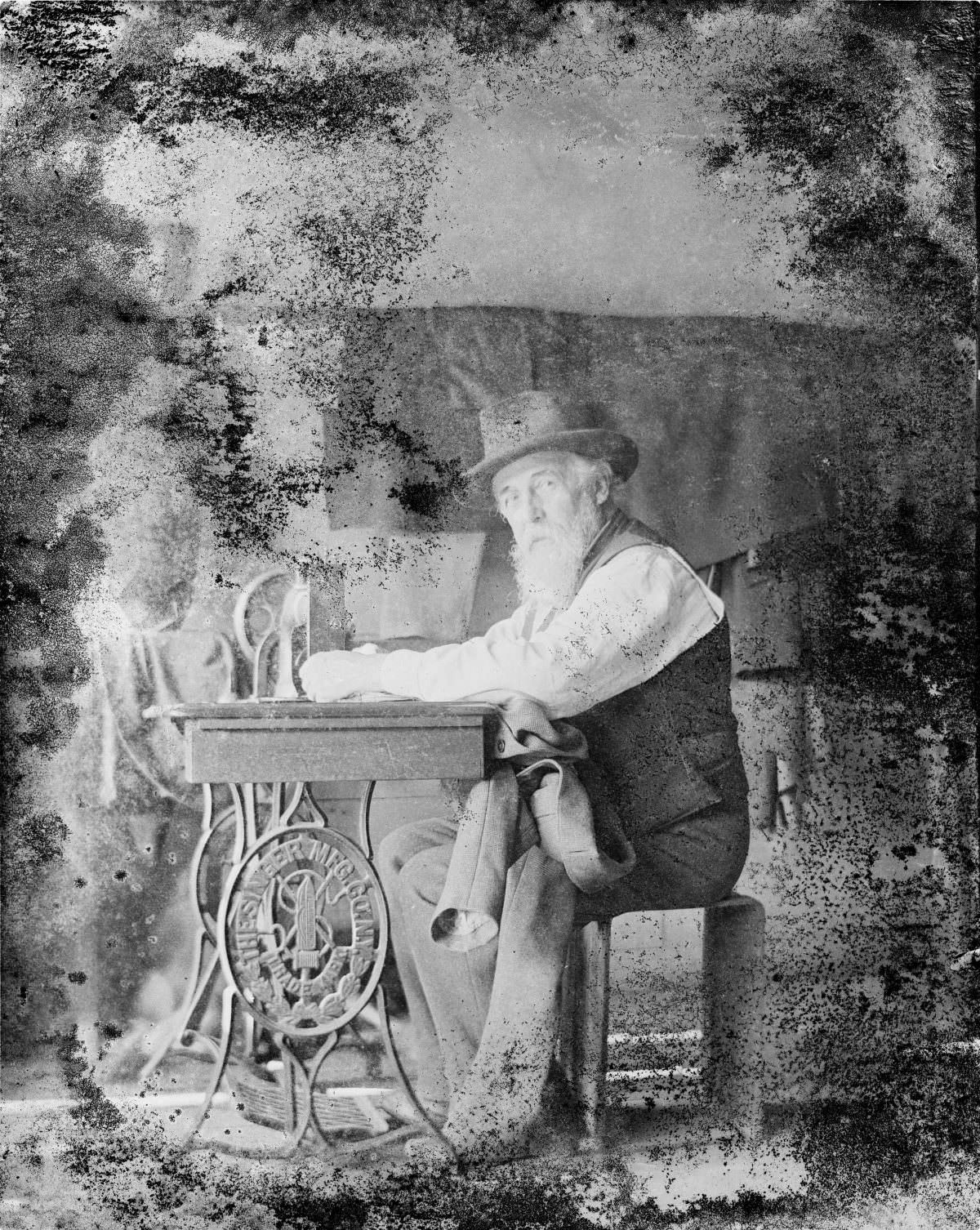
Interior scenes round out the collection. One photograph shows a man working at a sewing machine — a glimpse into a domestic or small-business workspace of the time.
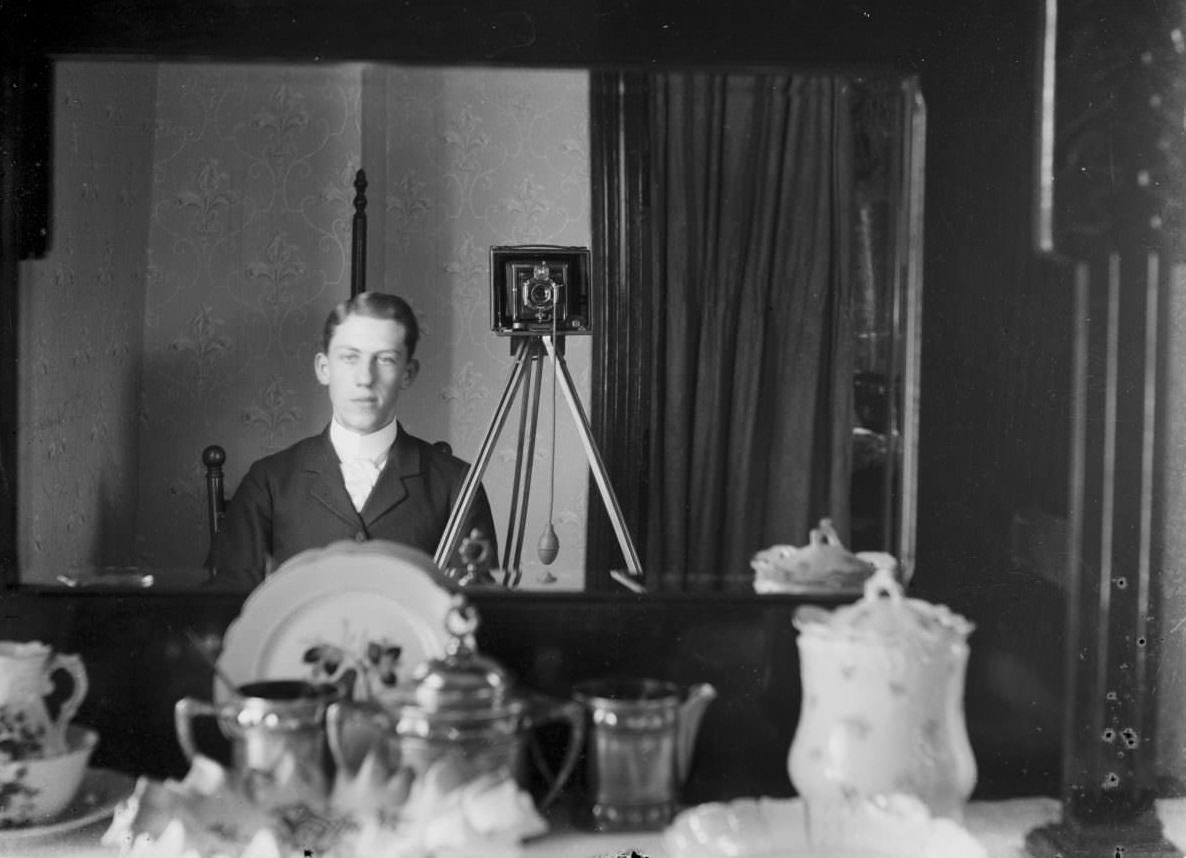
Duntley also photographed himself. A self-portrait attributed to him survives in the collection, offering a rare look at the man behind the camera. As a surgeon, he operated in both clinic and field settings. He reportedly removed his own tonsils and performed eye surgeries for patients across rural Illinois. Many of those patients were poor farmers who had little money to pay for medical care. His son recalled that the family ate a great deal of chicken as a result — a practical currency in a cash-poor rural economy.
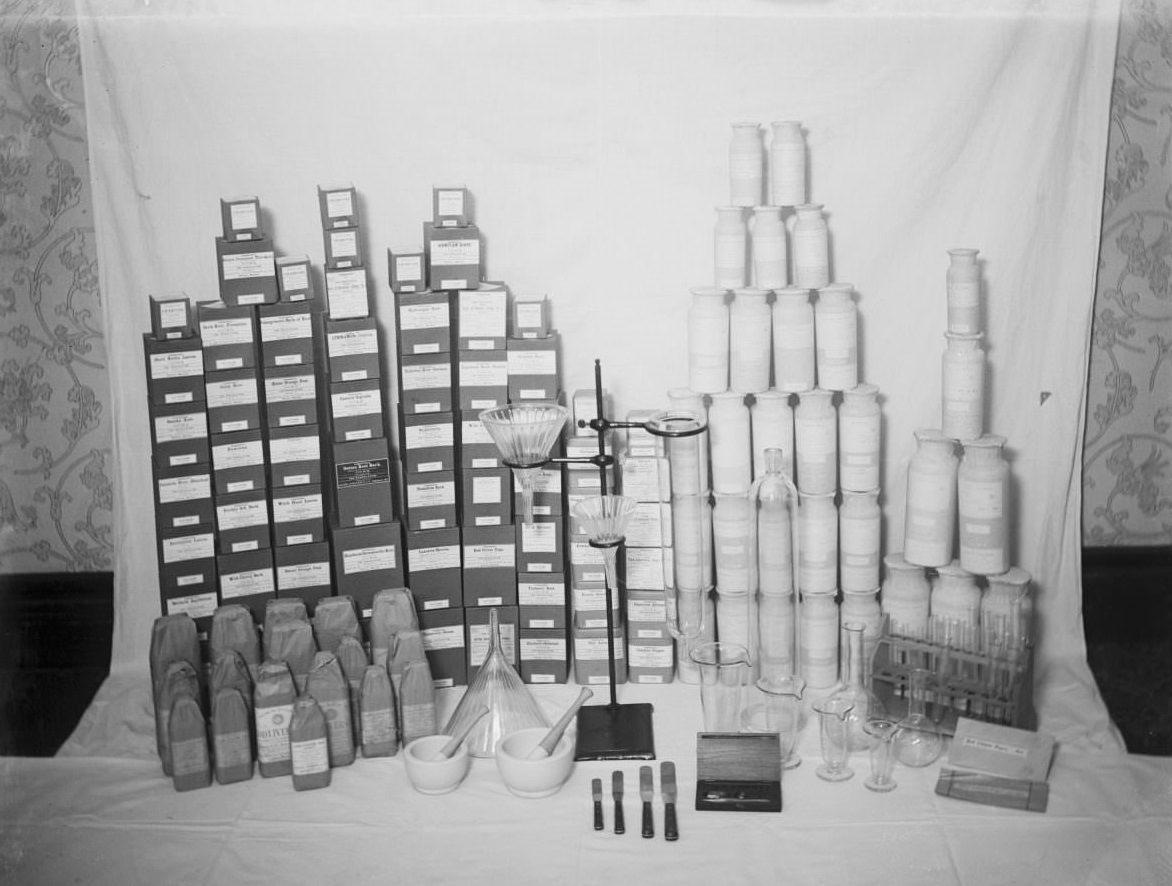
The collection also includes images of medicinal ingredients — a detailed list that reads like an apothecary’s inventory, featuring willow charcoal, bitter orange peel, cinnamon, eucalyptus leaves, wild cherry bark, and several other botanical compounds. These materials reflect the herbal and natural medicine traditions that many rural doctors still drew upon in the early 20th century.
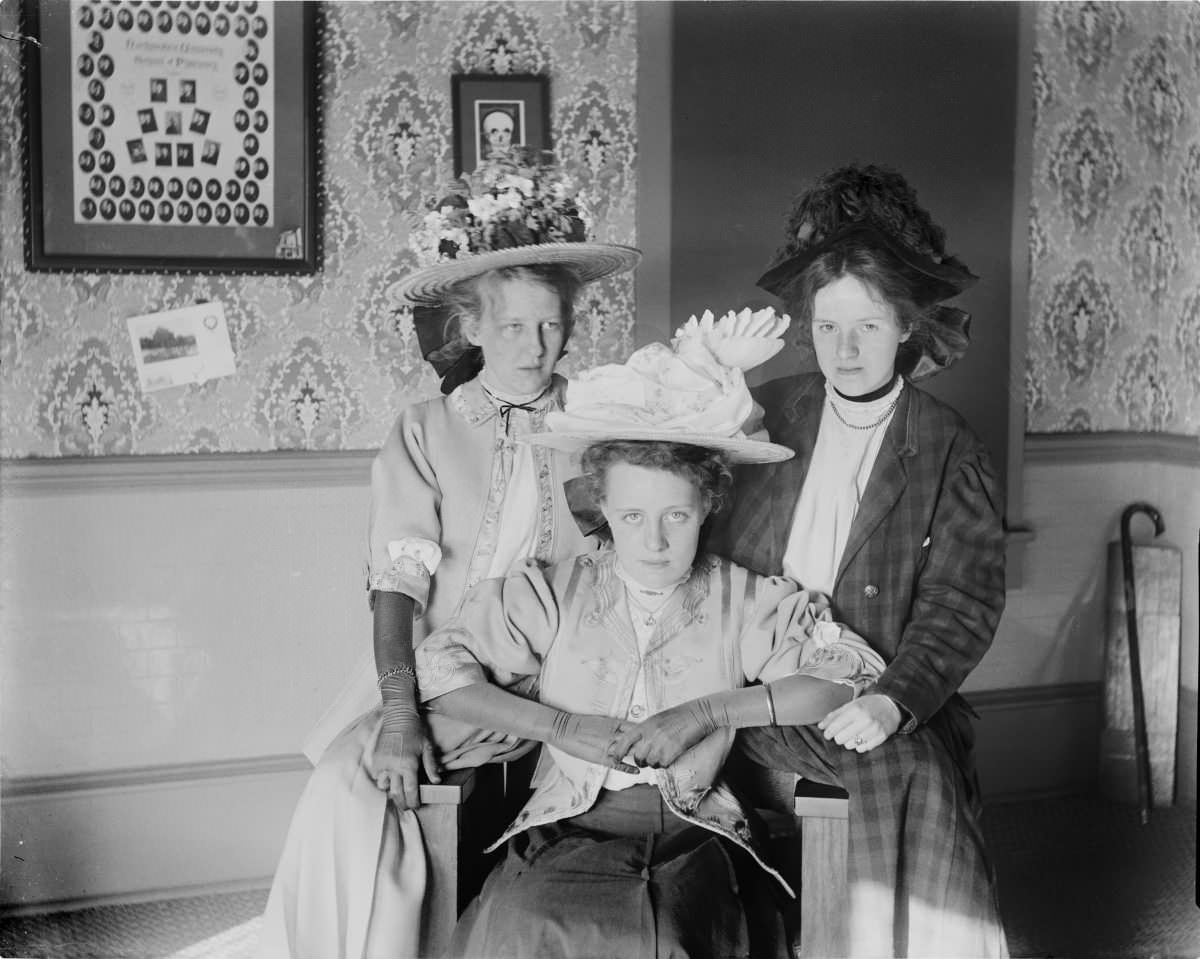
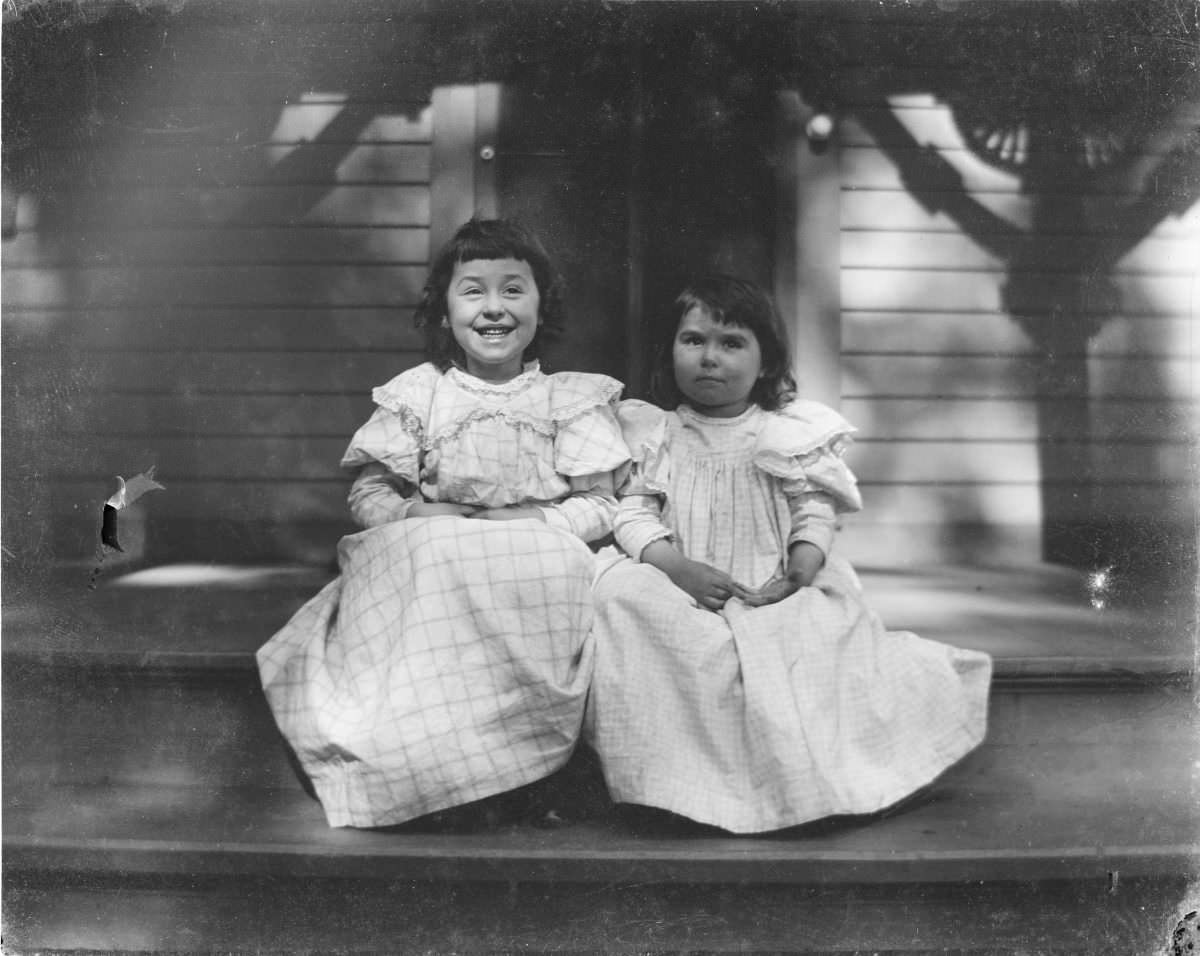
The Cherry Sisters appear again in a portrait photograph, further suggesting they were a notable presence in Duntley’s social circle or community. Another image — labeled simply “Elba, Clara B., Joe & Bess” — points to the personal relationships Duntley maintained with the people he photographed, many of whom were likely friends, neighbors, or patients.
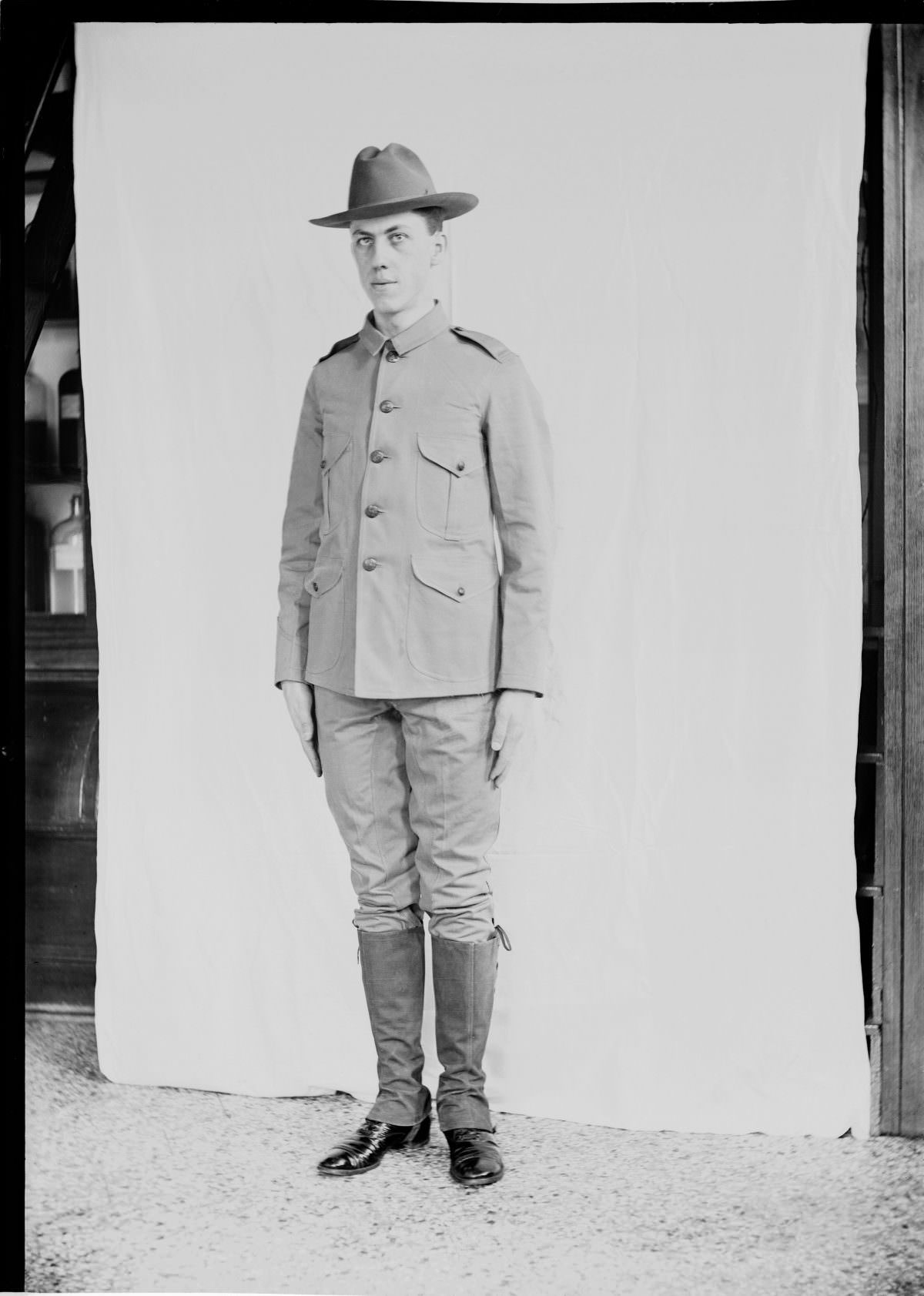
When the United States entered World War I, Duntley served as an officer. A formal portrait of him in uniform survives in the collection, a stark contrast to the quiet rural scenes that make up most of his photographic work.
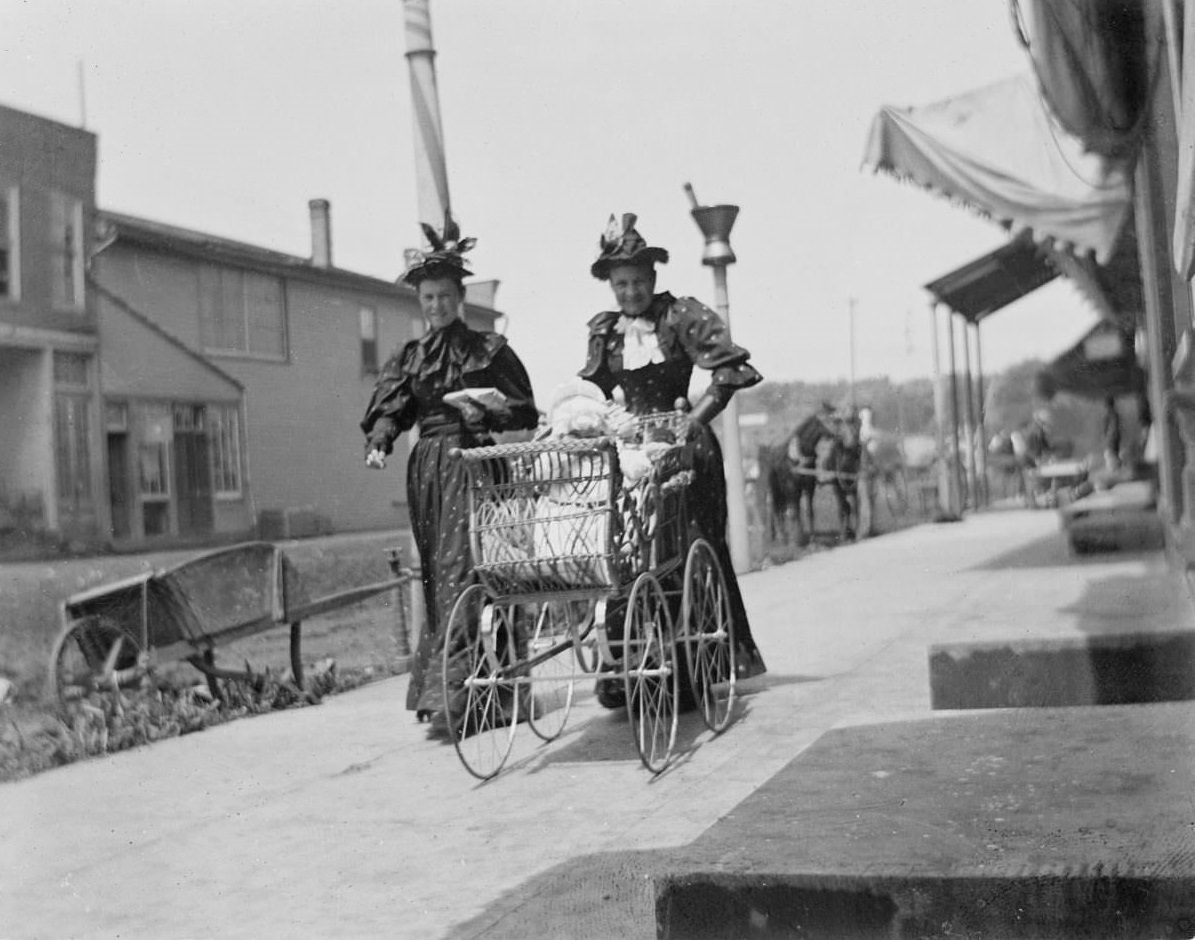
Social scenes continued to draw his camera. Additional photographs of men drinking in bars and women with young children show the full spectrum of community life — the social, the domestic, and the public all captured with the same steady hand.
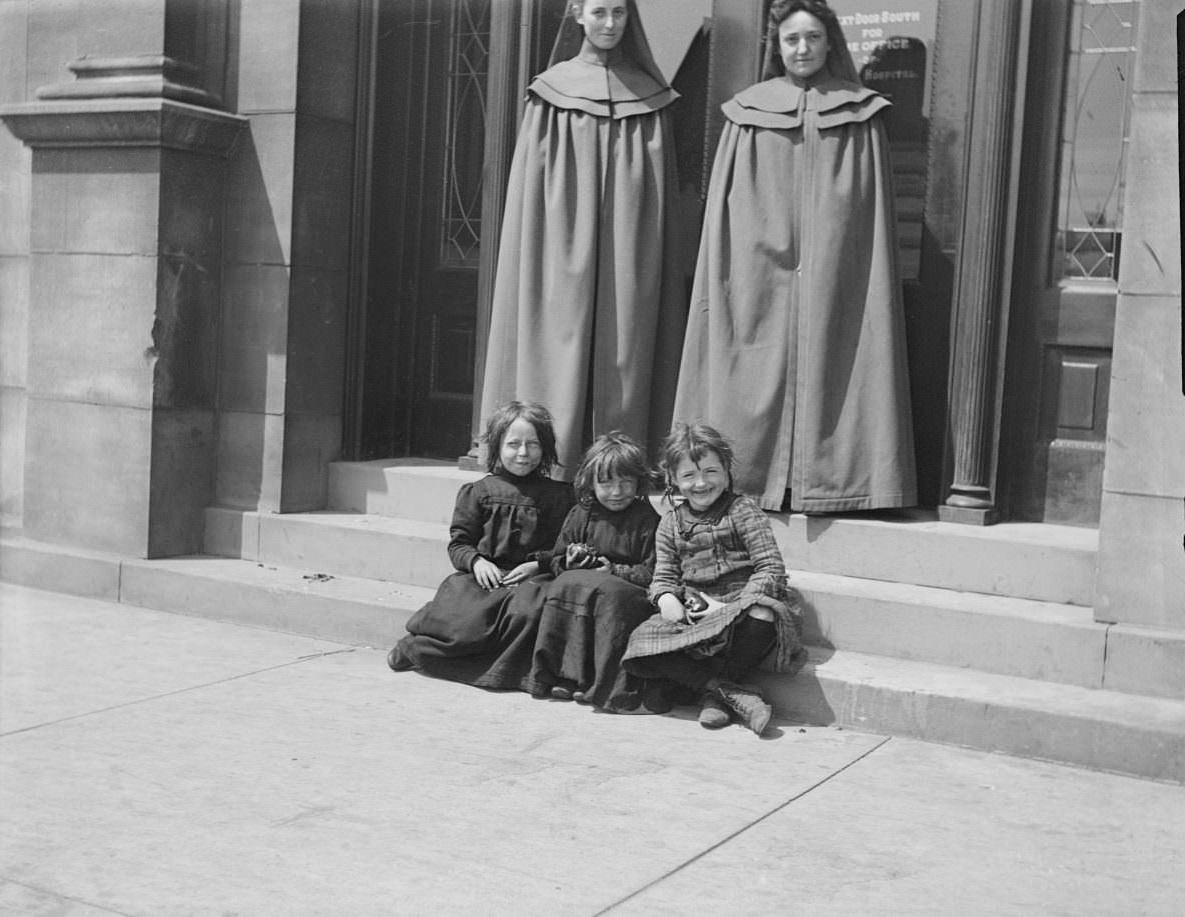
Healthcare facilities also appear in the collection. A photograph of St. Luke’s Hospital, with two women and three girls seated in front of it, ties directly to Duntley’s professional world as a surgeon working in the region.
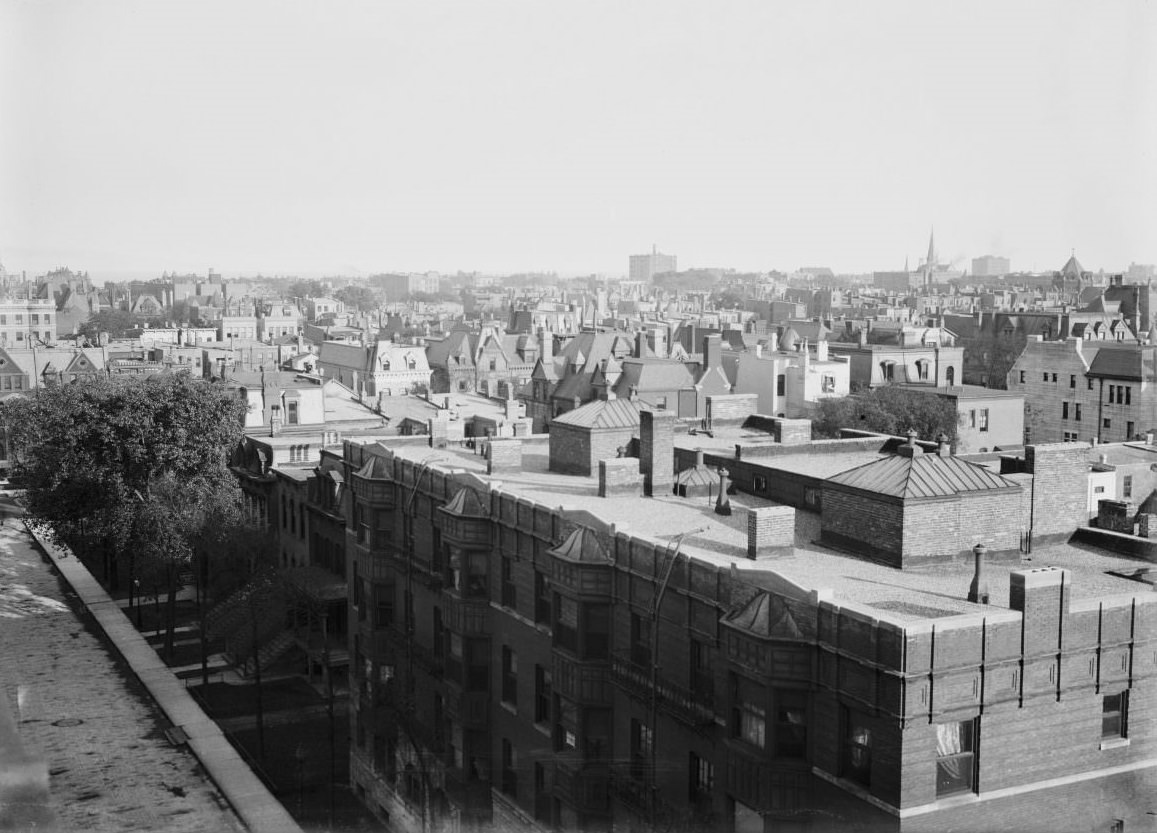
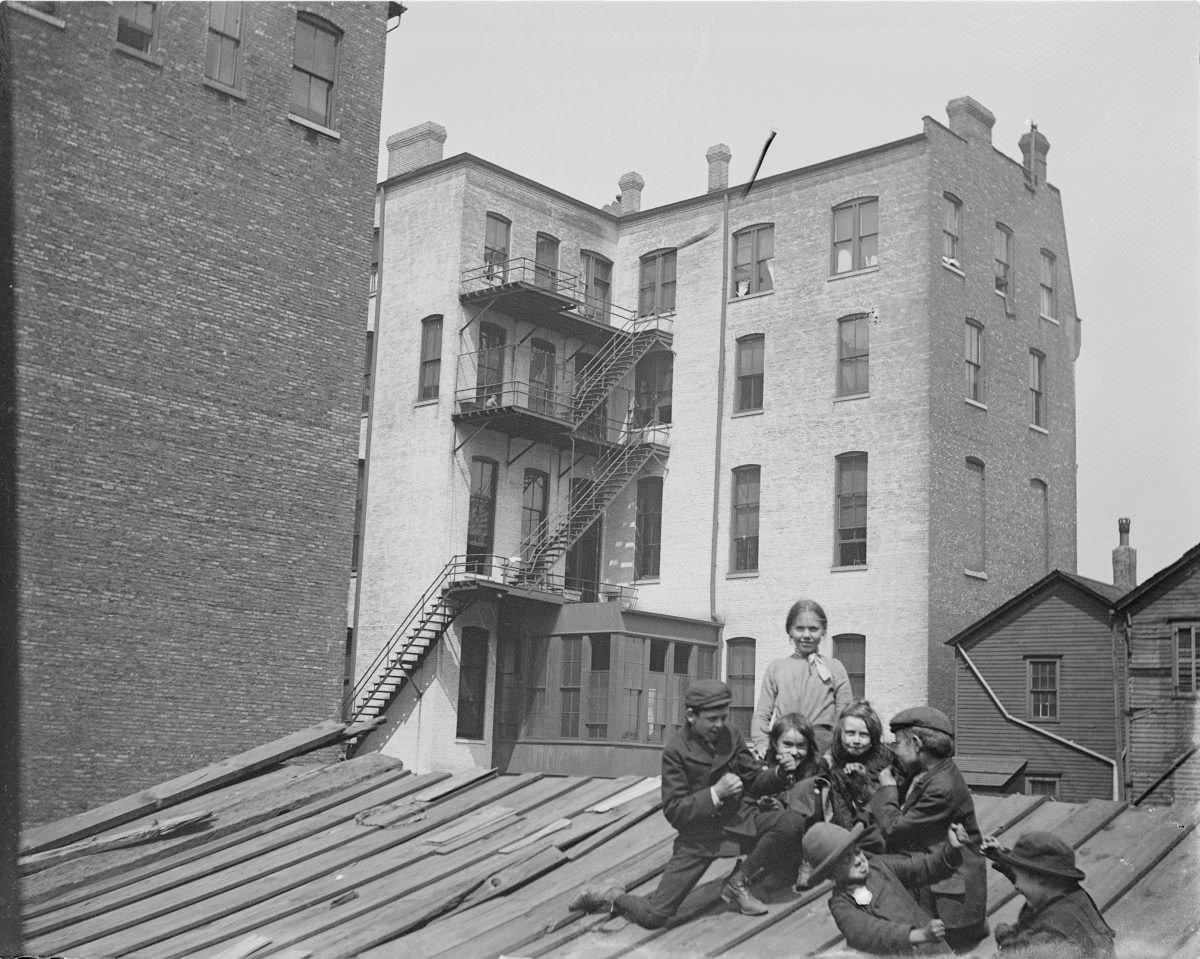
Duntley’s travels took him beyond rural Illinois. A rooftop view of Chicago’s skyline appears in the collection, showing the city’s dense urban landscape — a world away from the small-town streets and hay fields that dominate the rest of his work. The Chicago photograph is a reminder that Duntley moved between different worlds: the rural communities he served as a doctor and the broader state he documented as a photographer.