Hey There! Before You Go. 😧
Get the best vintage content straight into your inbox!

Don't worry, we don't spam

Breastypes! What’s Yours? A Ridiculous 1940’s Pocket Comic Book that Labeled Different Shapes and Sizes of Woman’s Breast

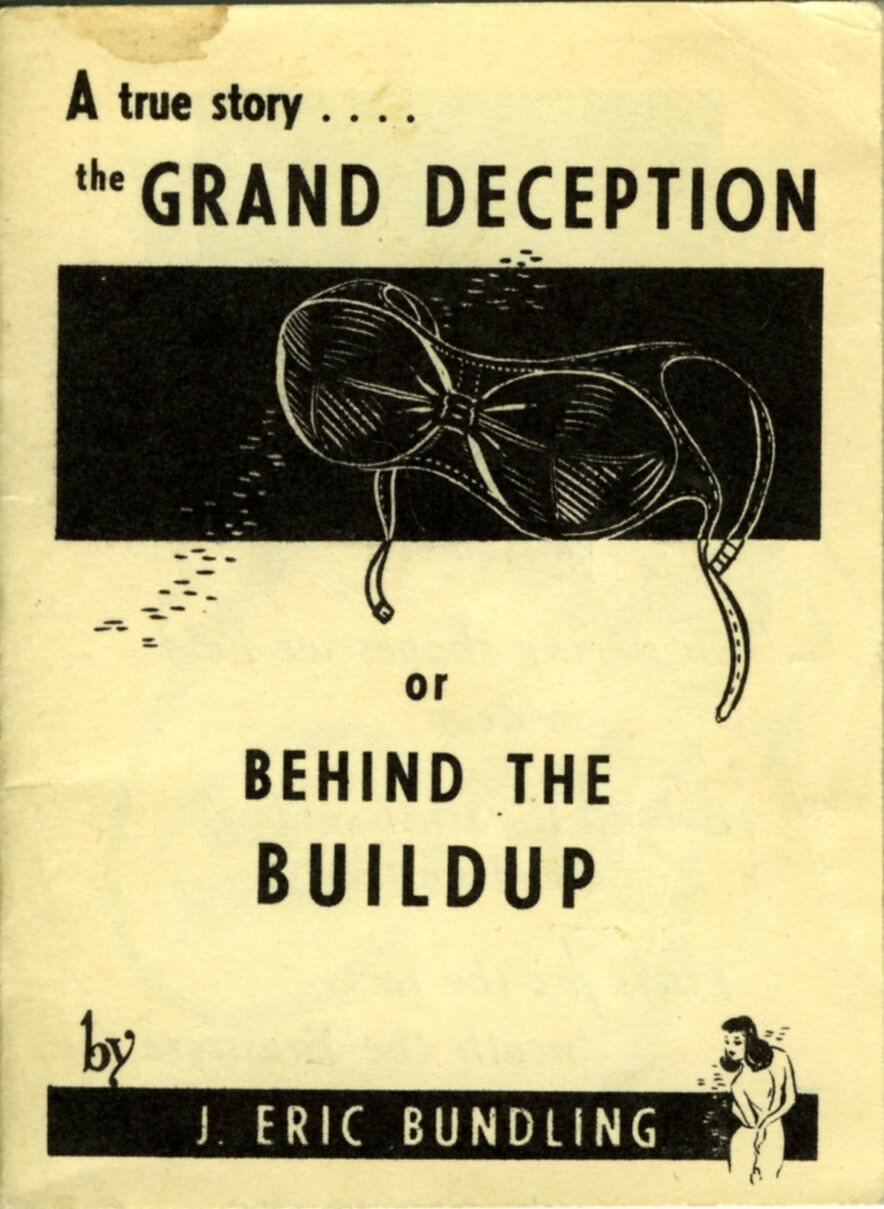
Few artifacts capture the crude humor of mid-20th century American burlesque culture quite like this small, flimsy pocket comic book from the 1940s. Cheap to produce and meant to be passed around for laughs, it classified different shapes and sizes of women’s breasts using a series of ridiculous and often offensive nicknames. Names like “Heavy Artillery,” “Spaniel Ears,” “Bee Stings,” “Full Moon,” and “Rock in Sock” were printed alongside cartoonish illustrations, turning the female body into a punchline.

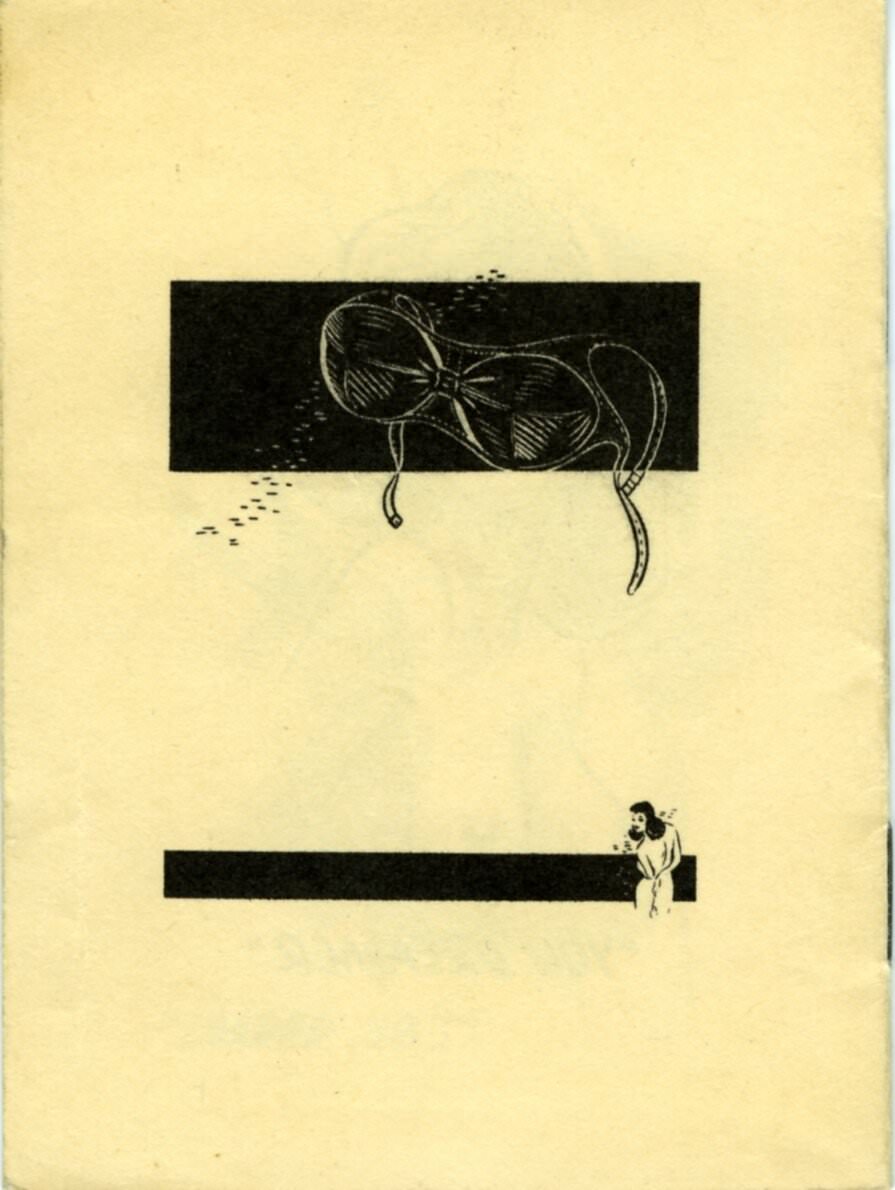
Front cover of the book

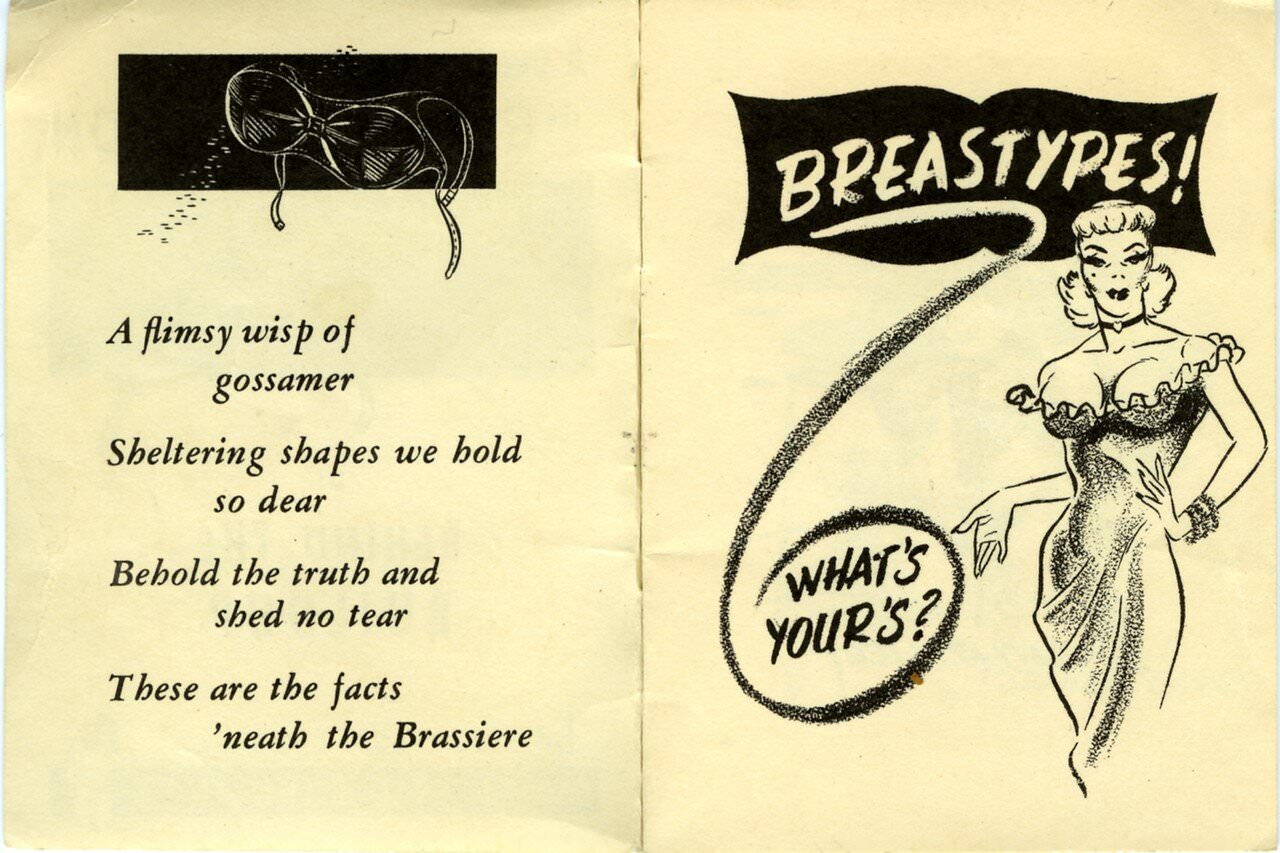
The booklet opens with a verse that sets the tone immediately: “A flimsy wisp of gossamer / Sheltering shapes we hold so dear / Behold the truth and shed no tear / These are the facts ‘neath the Brassiere.” That introduction alone tells you everything about the audience this was made for — men attending ribald comedy shows or burlesque theaters, looking for a souvenir to pocket on the way out.

Breast types! Whats yours?

This booklet almost certainly originated as a souvenir item sold at a burlesque theater or a similar adult entertainment venue. These kinds of venues were enormously popular in the United States during the 1930s and 1940s. They featured striptease performers, slapstick comedians, and off-color humor aimed squarely at working-class male audiences. Cheap printed novelties like this one were part of that world.

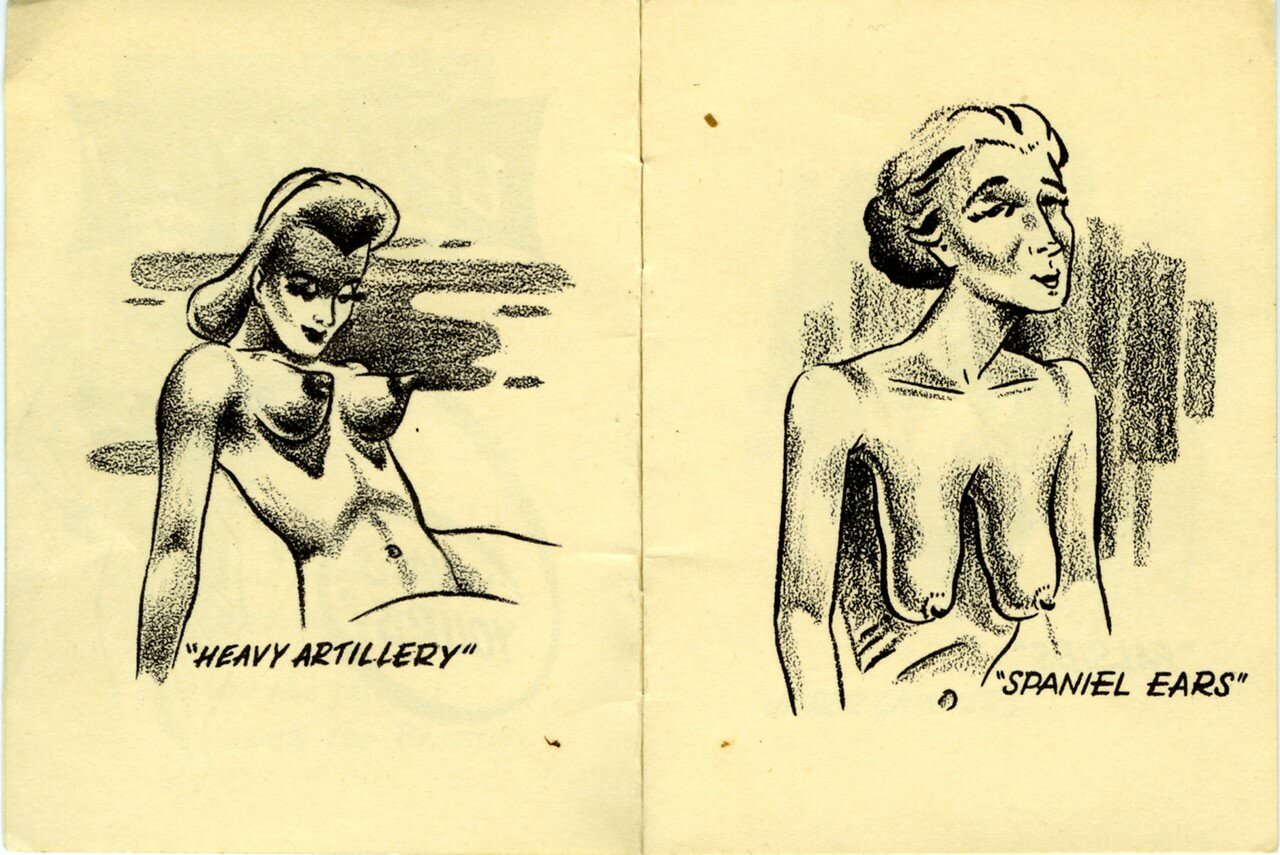
Heavy Artillery or Spaniel Ears
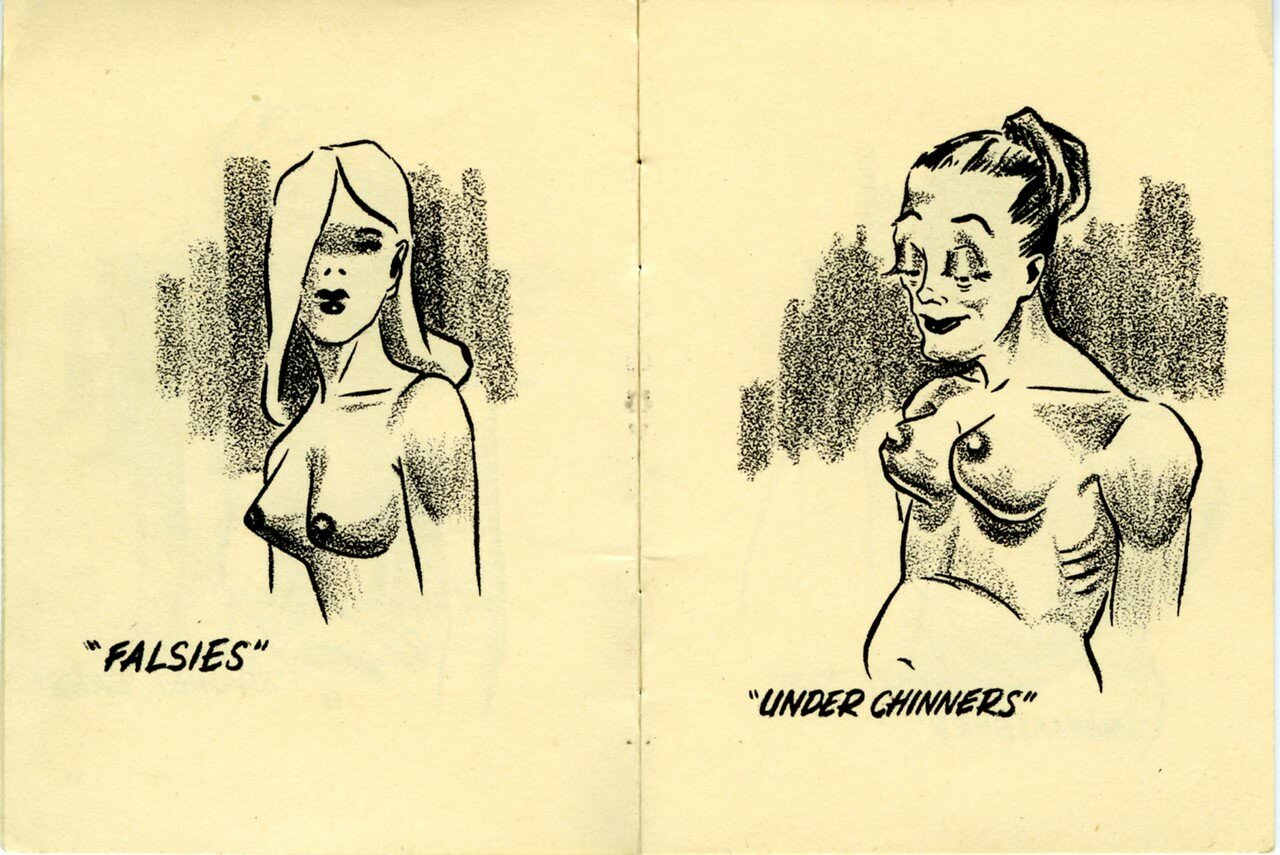
Falsies or Under Chinners

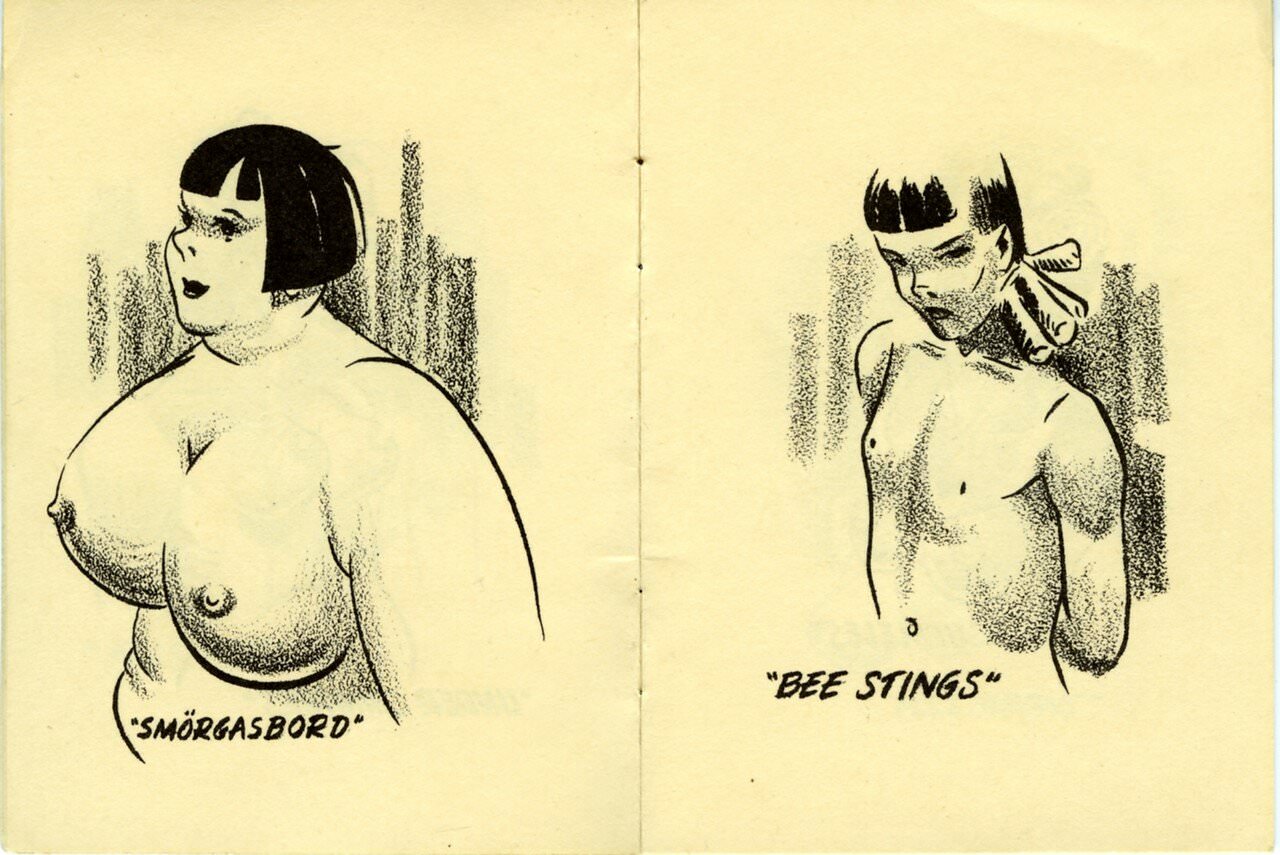
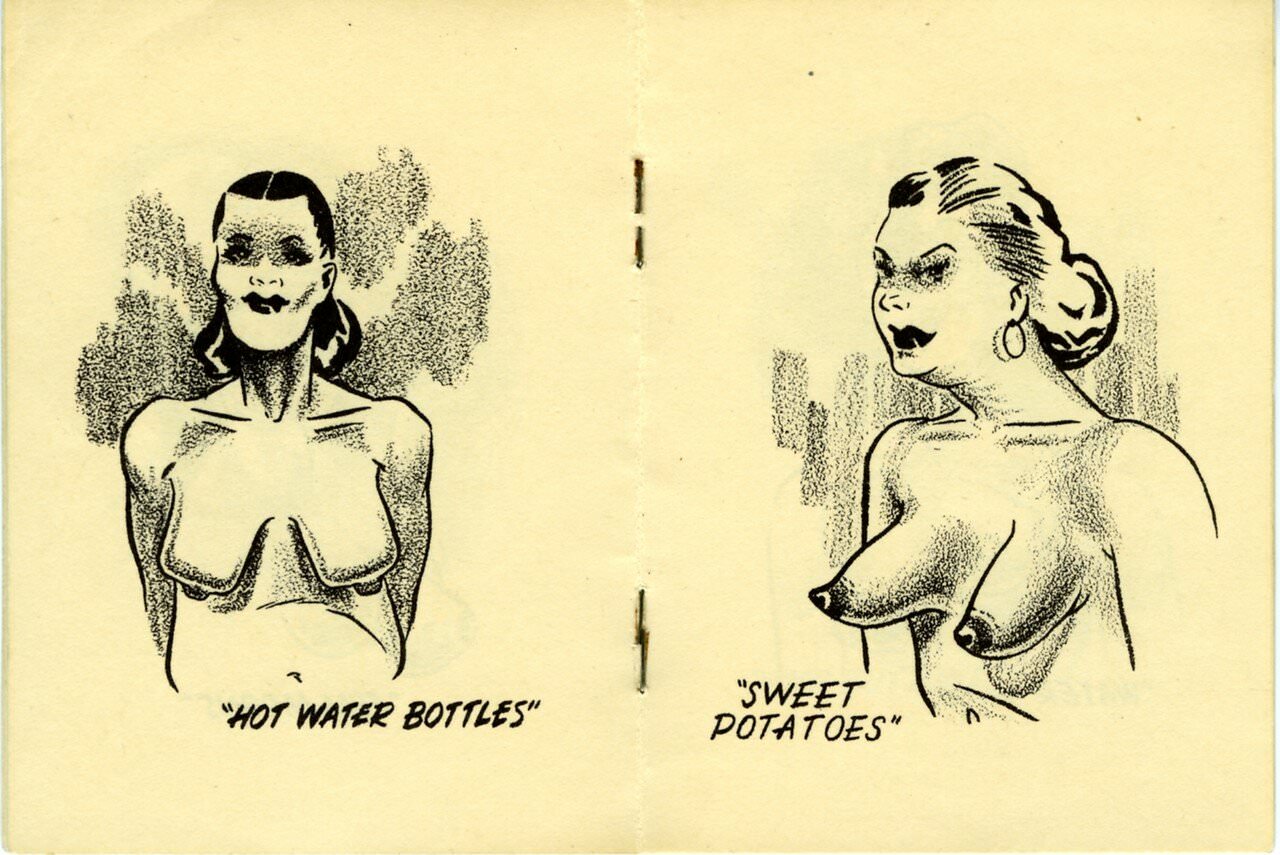
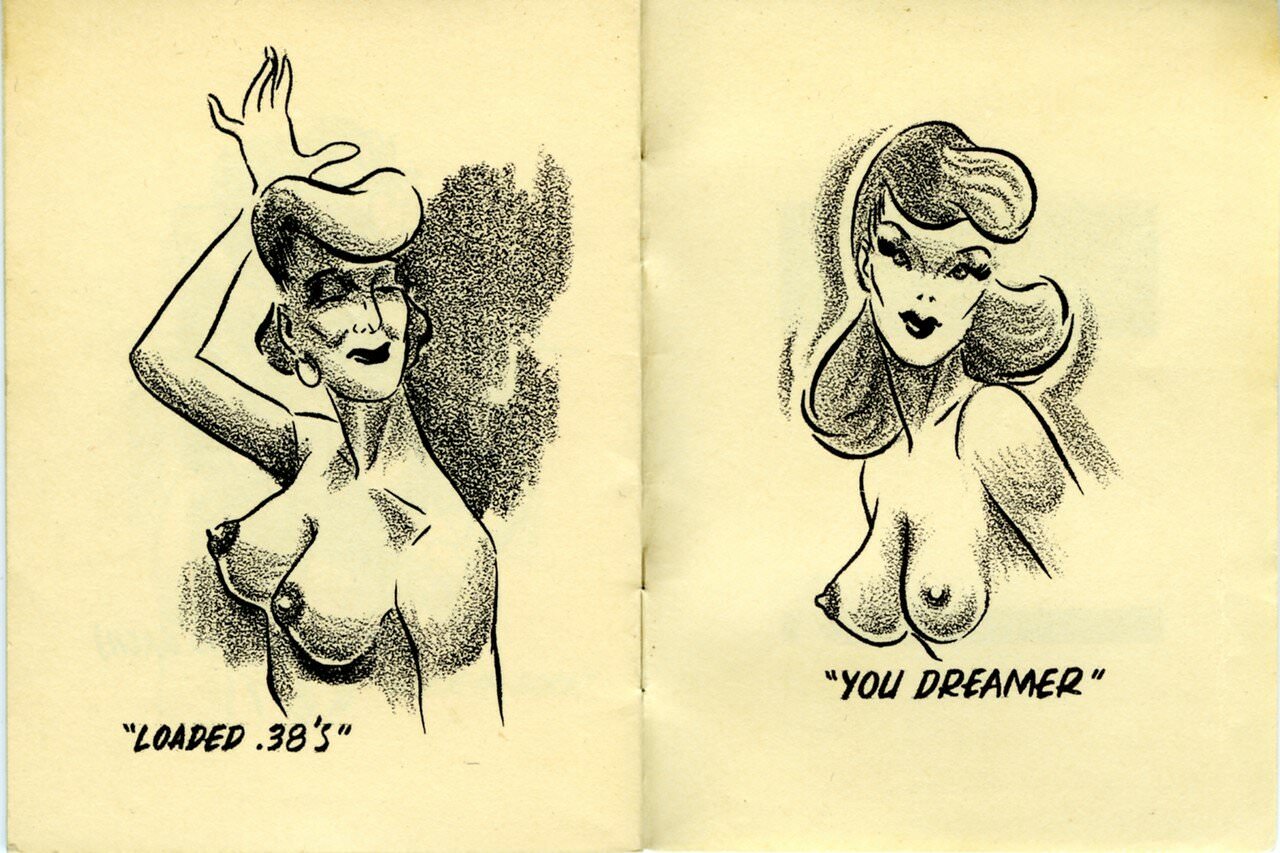
Each page of the comic presents a new “type,” giving it two name options as if offering the reader a choice of insults. “Falsies or Under Chinners,” “Smorgasbord or Bee Stings,” “Hot Water Bottles or Sweet Potatoes” — the naming system is relentless and follows a consistent pattern of comparing women’s bodies to food, household objects, or animals. The humor is blunt and deliberately lowbrow, which was entirely the point.

Smorgasbord or Bee Stings
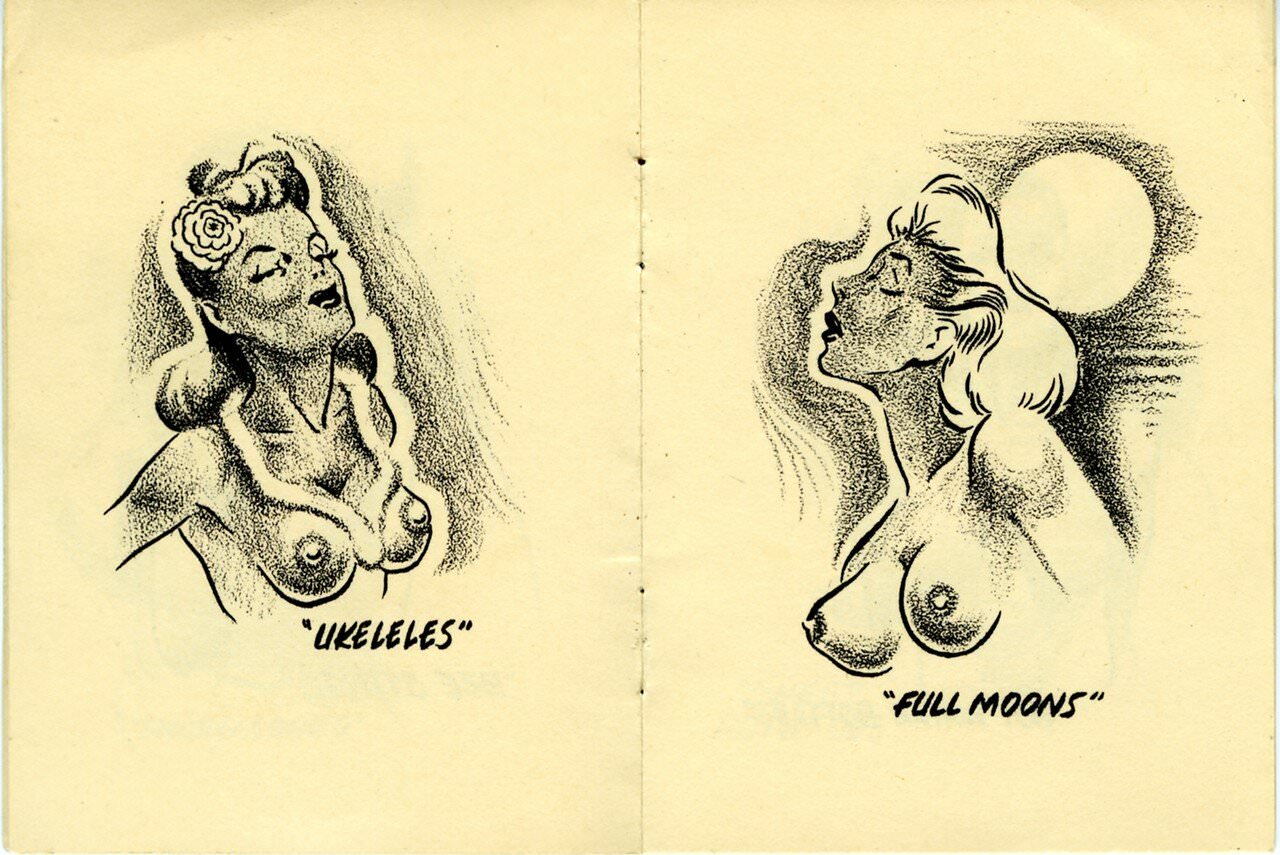
Ukuleles Full Moons
Ukuleles Full Moons

The booklet’s illustrations are cartoonish and exaggerated, drawn in the rough style typical of cheap novelty print runs of the era. There was no artistic ambition here. The goal was a quick laugh in the pocket of a man leaving a show. Similar items — gag cards, dirty joke books, and novelty photographs — were sold widely at tobacco shops, newsstands, and backstage at burlesque halls across the country.

Hot water bottles or Sweet Potatoes
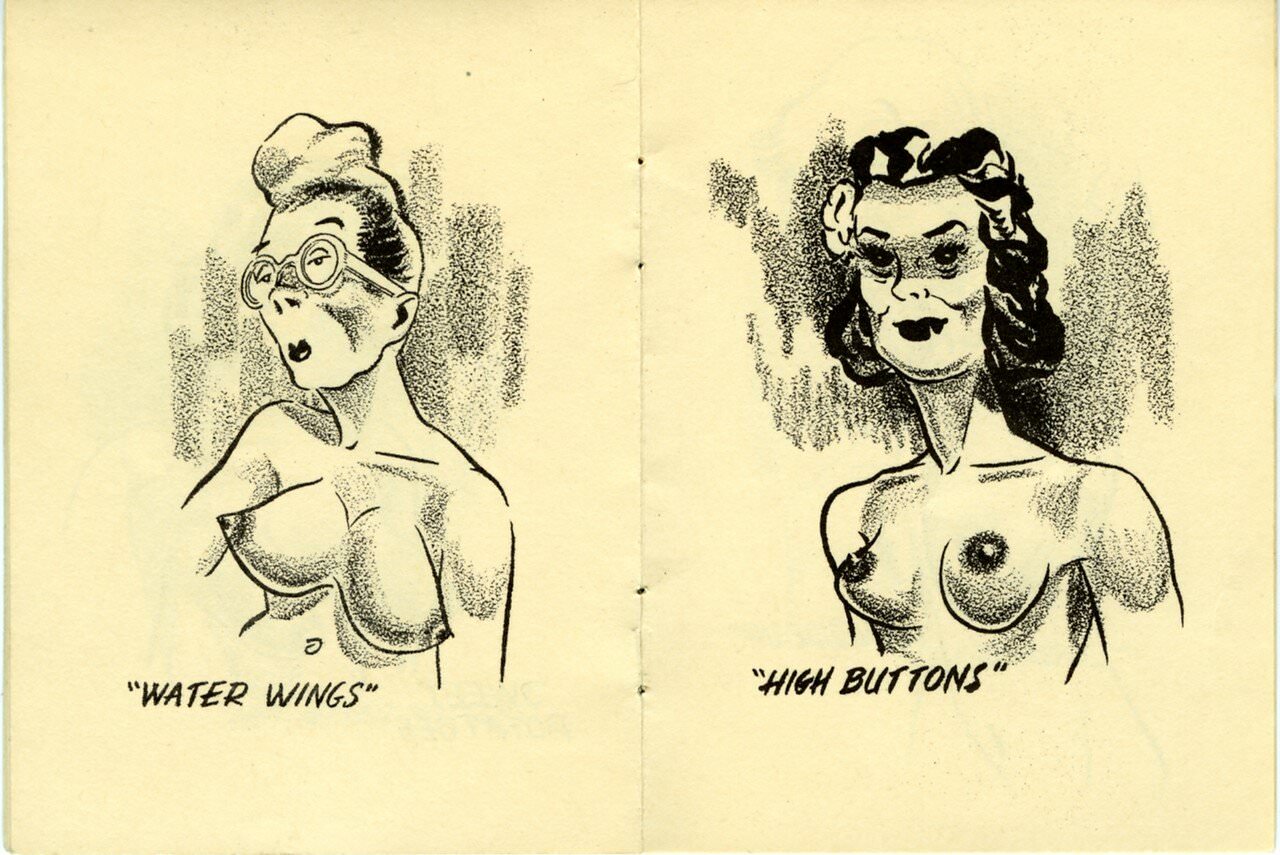
Water wings or High Buttons

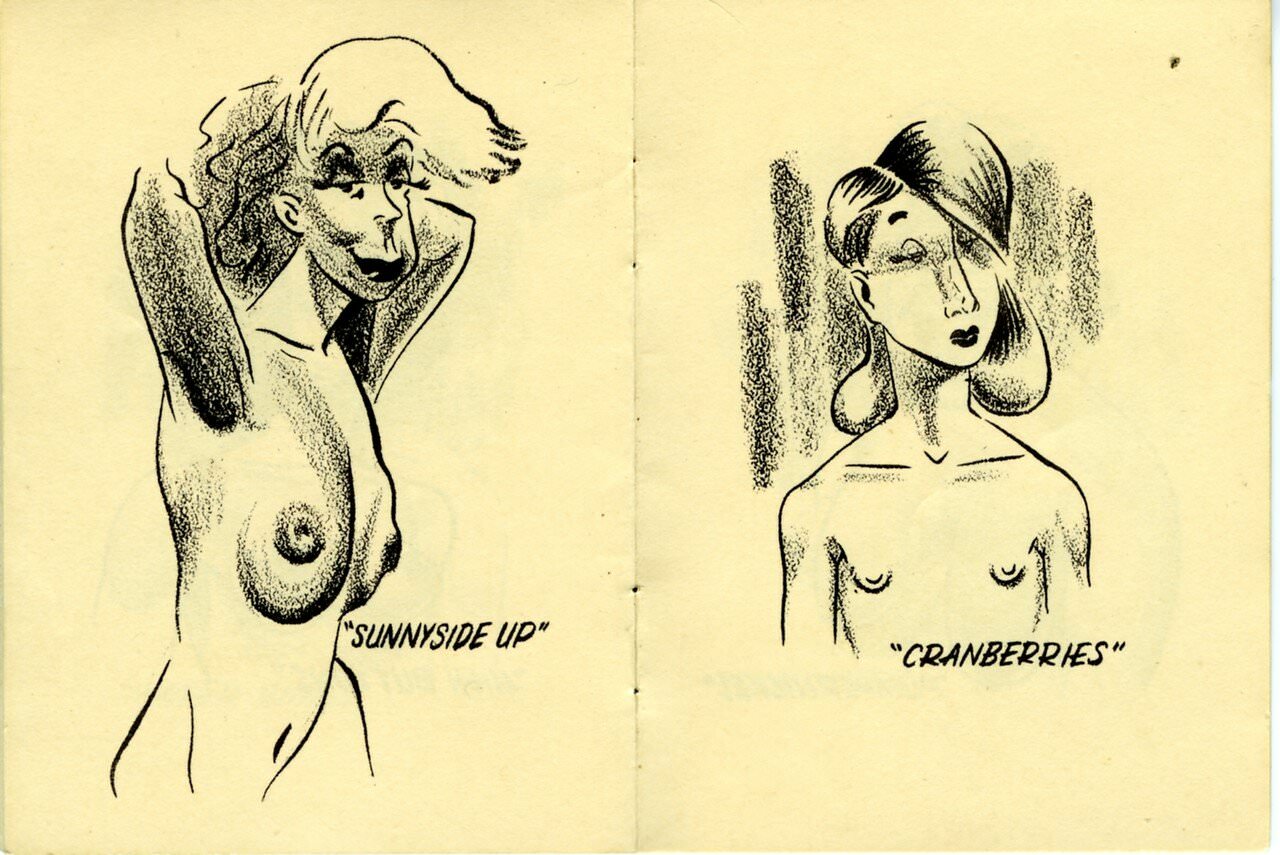
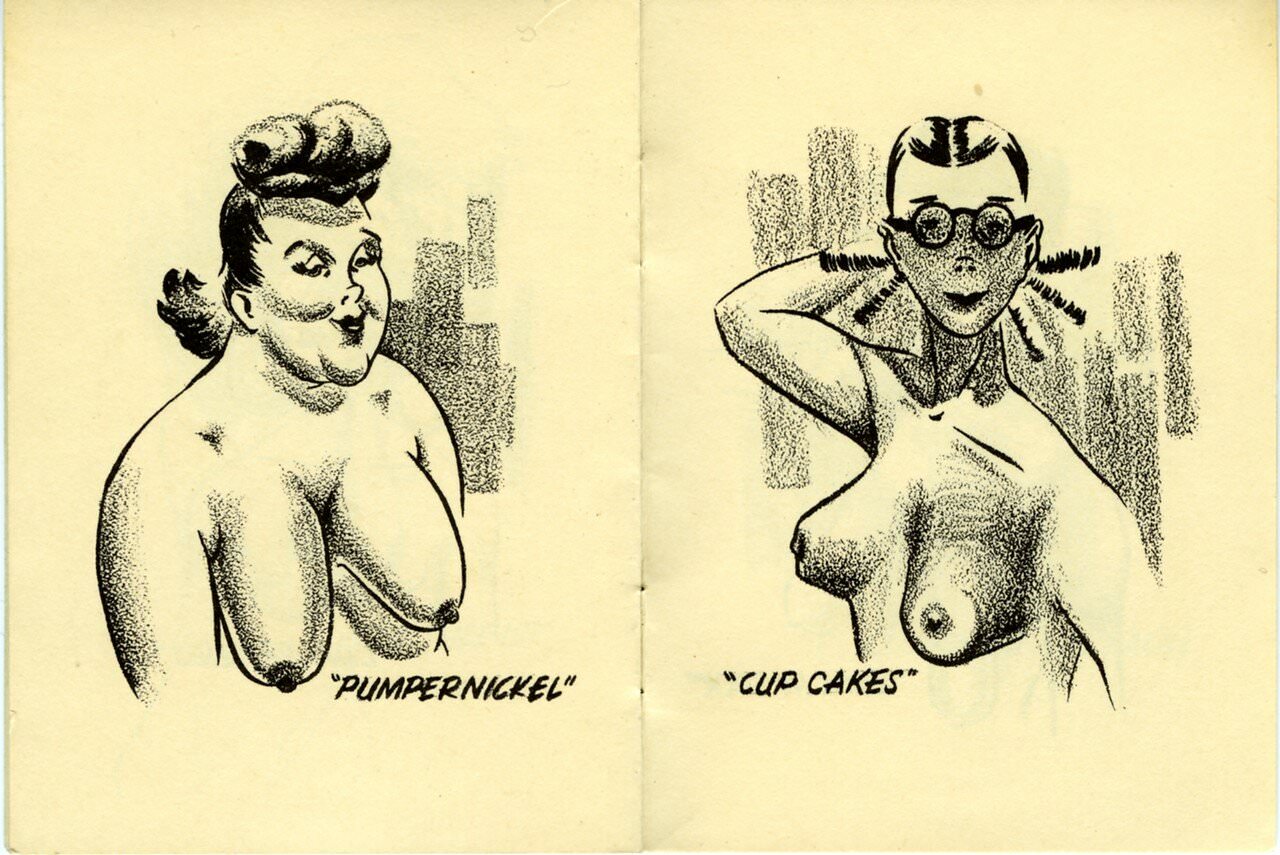
The categories keep coming: “Water Wings or High Buttons,” “Sunnyside Up or Cranberries,” “Pumpernickel or Cupcakes.” Each pairing offers a large version and a small version of the same label concept. Size is the constant obsession throughout the booklet, and no size escapes mockery. The joke works in both directions — too large, too small, everything in between gets a name.

Sunnyside up or Cranberries
Pumpernickel or Cup cakes

The booklet also takes aim at female “types” more broadly, not just body shapes. It reflects a wider mid-century comedy tradition of classifying and stereotyping women for male amusement — a style that ran through vaudeville, burlesque, early television, and pulp magazine humor. As a historical document, it is straightforwardly sexist by modern standards, and it was designed to be provocative even by the standards of its own time.

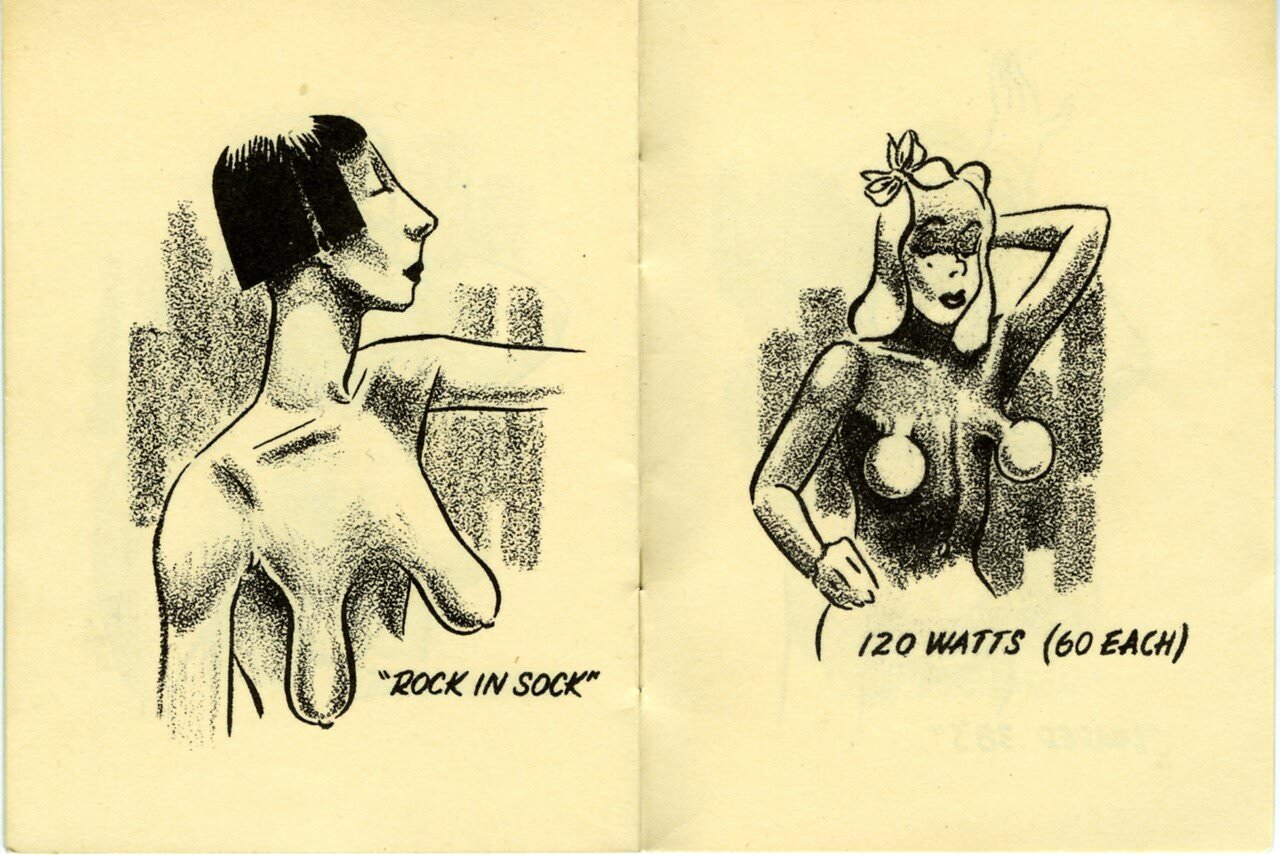
Rock in Sock or 120 Watts (60 each)

What survives today is a genuine artifact of 1940s popular culture — crude, mass-produced, and utterly disposable by design. The fact that copies still exist is a small historical accident. Most were thrown away or worn to pieces. This one made it through the decades intact, offering a clear and unfiltered window into a specific strain of mid-century American humor that was widely consumed and rarely questioned at the time.

Back cover of the book
Enjoyed this post? Get new ones in your inbox.

Leave a Comment

Your email address will not be published. Required fields are marked *

11 Comments

Share this Post 🥺

Please take a moment to share this content. Your support is greatly appreciated! 🙌🙏

Share this Post 🥺

Please take a moment to share this content. Your support is greatly appreciated! 🙌🙏
Scroll to Top
 
Hey Friend, Before You Go.. Please like & follow for more interesting content