
Bergen is a municipality and town in the Dutch province of North Holland. It sits close to the North Sea coast, with the seaside village of Bergen aan Zee just 3 kilometres away. Together, the two settlements offered visitors in the early 20th century a rare mix: sandy beaches, dense dune landscapes, and a lively cultural scene all within a short walk of each other. Thousands of tourists made the trip each year to enjoy the coast, the fresh air, and the natural surroundings that made this corner of North Holland so distinctive.
One of Bergen’s most recognisable landmarks was its ruined church, sitting at the heart of the village. The church was damaged in two separate episodes — once in the 16th century and again in the 18th century — leaving only the exterior walls standing. Those walls still gave a clear sense of how large the original building had been. By 1914, the ruin had become one of the most-photographed sites in the area.
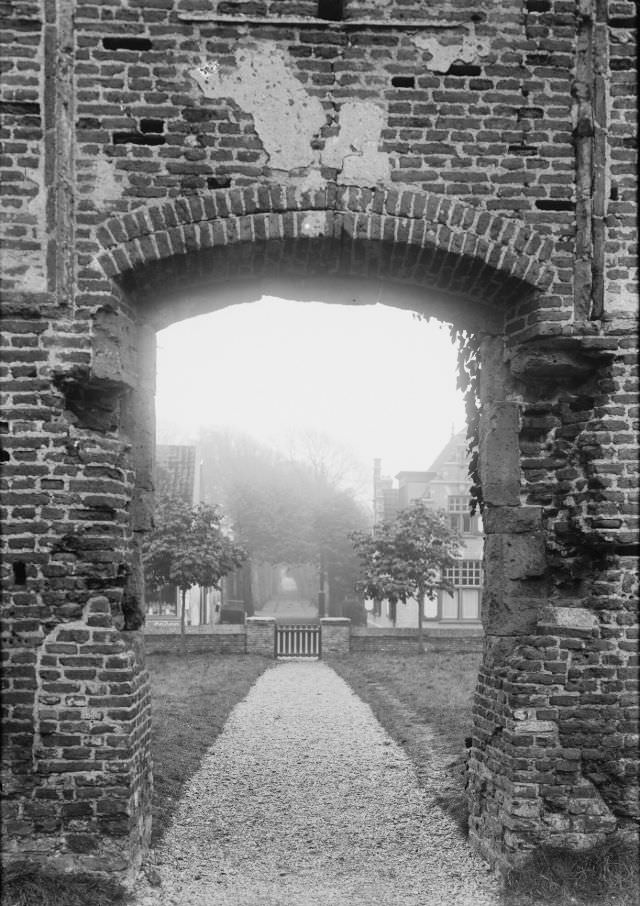
The photographs collected here were taken by local photographer A.J. Bonda, whose work is preserved in the Archief Alkmaar Commons. Bonda documented Bergen and its surroundings throughout the 1910s with careful attention to everyday life — streets, buildings, businesses, and the people moving through them. His images form one of the most complete visual records of the town from this era. The ruin church appears in his work more than once, showing how central it was to Bergen’s identity.
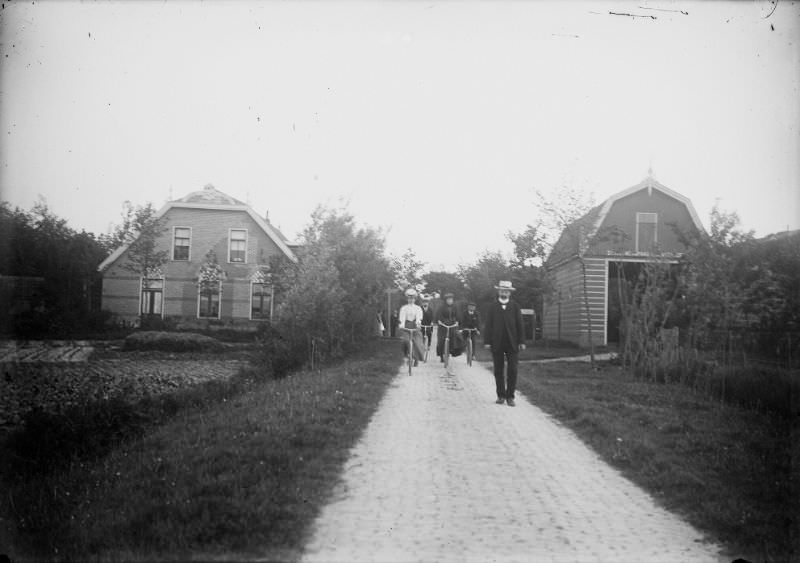
Along the Herenweg, café-lodging establishments like Duinzicht catered to the steady flow of visitors arriving by bicycle or on foot. Cycling was a common way to travel between Bergen and the coast in this period, and businesses along the main routes adapted to serve that traffic. These stops offered food, rest, and sometimes overnight accommodation for travellers exploring the dunes.
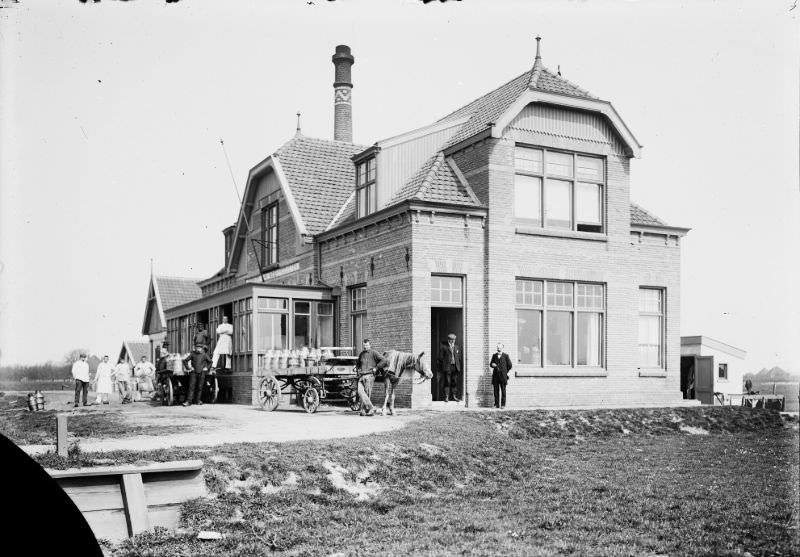
Bergen was not only a tourist town. Local industry played a role in the community’s daily life, and the Wilhelmina dairy factory was one example of the working infrastructure that kept the town running alongside its hospitality trade.
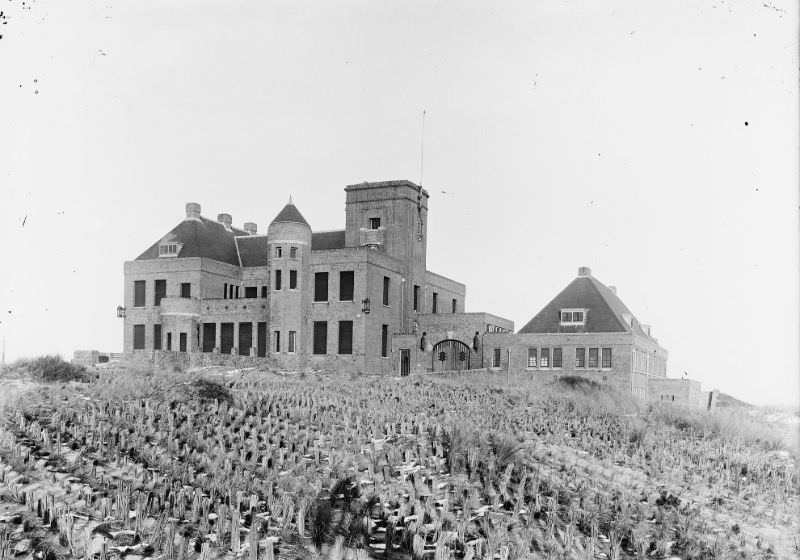
Wealthy residents and visitors built grand country houses in Bergen, drawn by the same natural setting that attracted artists and tourists. House Russenduin on the Elzenlaan was one such property — a substantial estate with a stable building and a driver’s house, commissioned by August Janssen and constructed in 1916 and 1917. Bonda photographed it in 1914, capturing the site before or during its early planning stages.
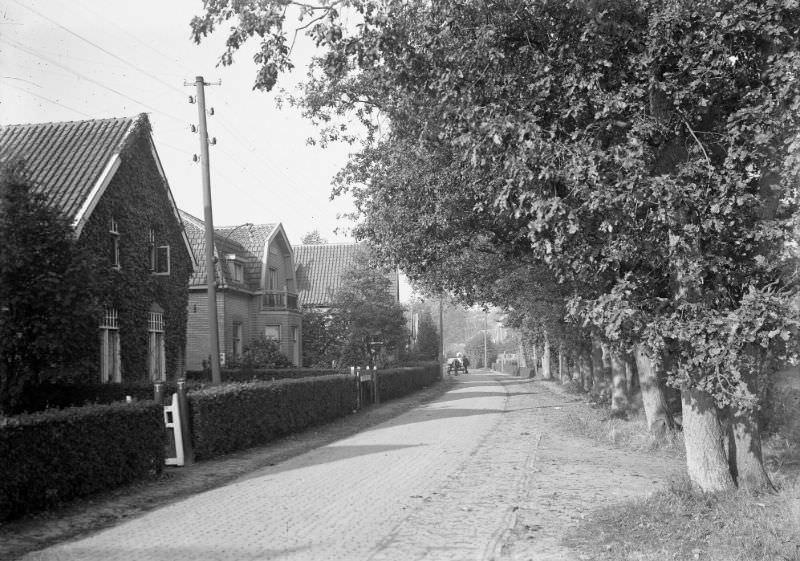
Bergen’s streets in 1914 were quiet and tree-lined. The Karel de Grotelaan, seen here looking west, shows the residential character of the town — wide lanes bordered by vegetation, with few vehicles in sight. The pace of life was slow, and Bonda’s photographs reflect that calm.
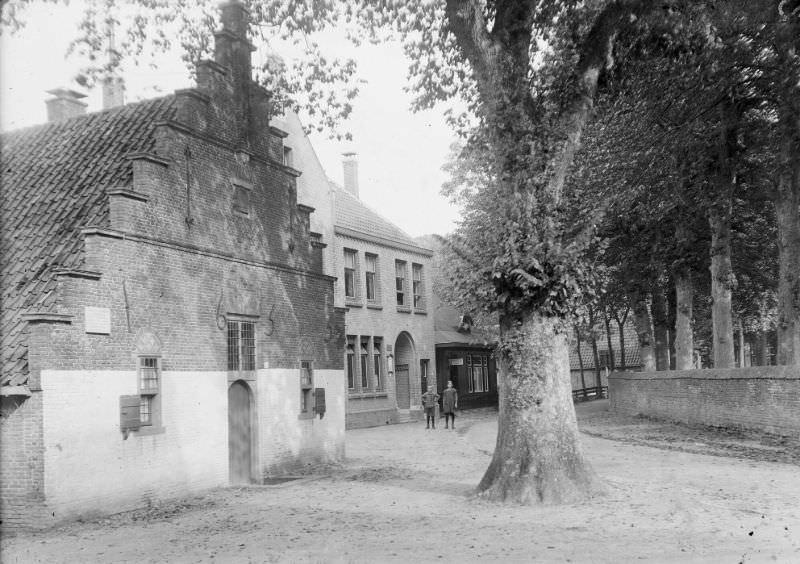
The Oude Prinsweg was one of Bergen’s busiest streets in terms of civic and commercial life. Museum Het Sterkenhuis, the post office, and the tourist office all sat along this road, making it a hub for both locals and visitors. The tourist office itself reflects how seriously Bergen took its role as a destination — organised tourism infrastructure was already well established by 1914.
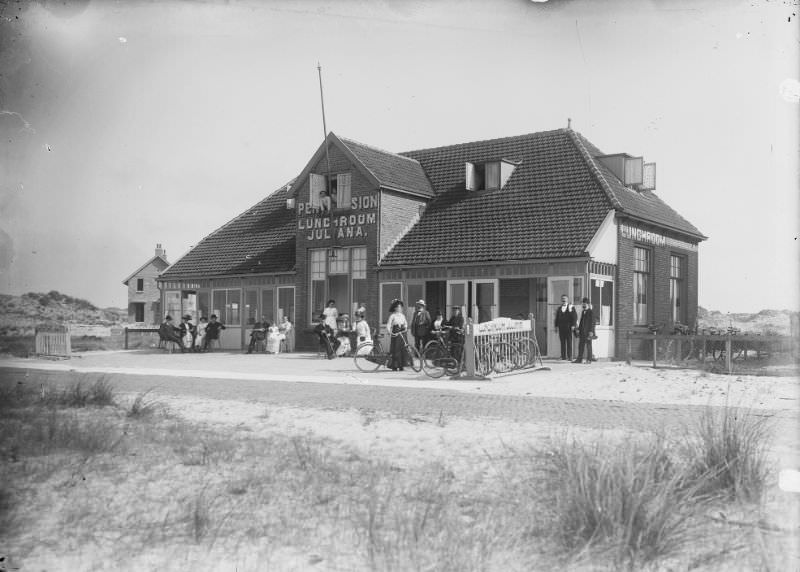
The Zeeweg — literally the sea road — connected Bergen to Bergen aan Zee and was lined with lodgings and eating establishments that served the tourist trade. Pension-Lunchroom Juliana was one of the better-known stops along this route, offering meals and rooms to travellers heading toward the coast.
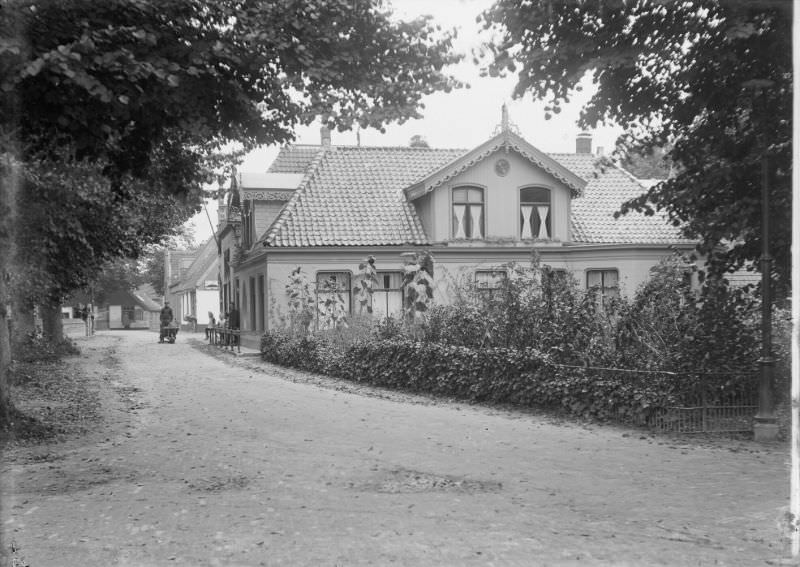
The Raadhuisstraat ran through the centre of Bergen and included notable civic buildings. The Doctor Dekkerhuis, visible in this 1914 photograph, later became the Village House — a change in function that reflected how the town evolved over the decades following these images.
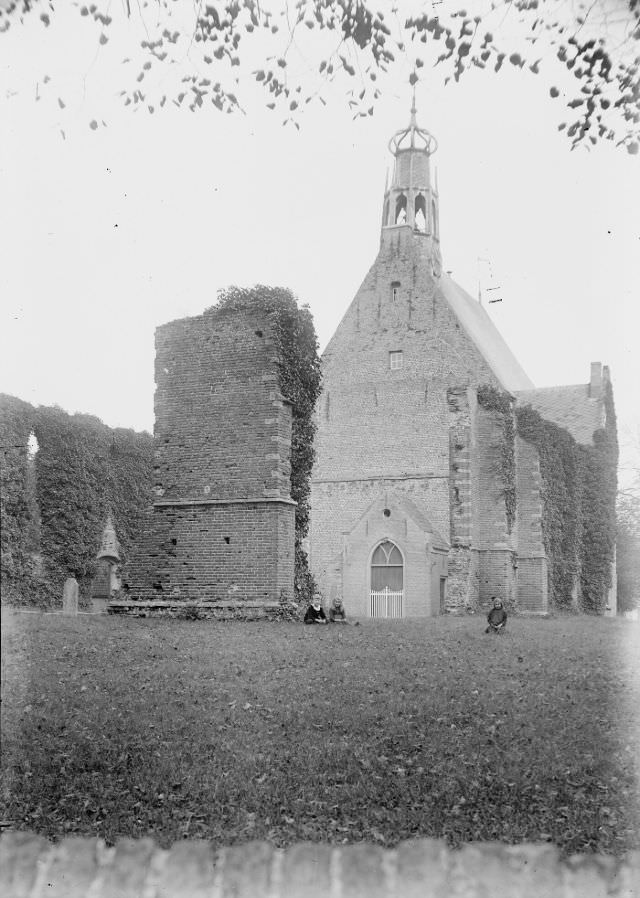
Bonda returned to the ruin church more than once with his camera. This second view shows the structure from a different angle, giving a fuller sense of the remaining walls. The church ruin was not a neglected or forgotten site — it was actively visited and had become part of what defined Bergen to outsiders.
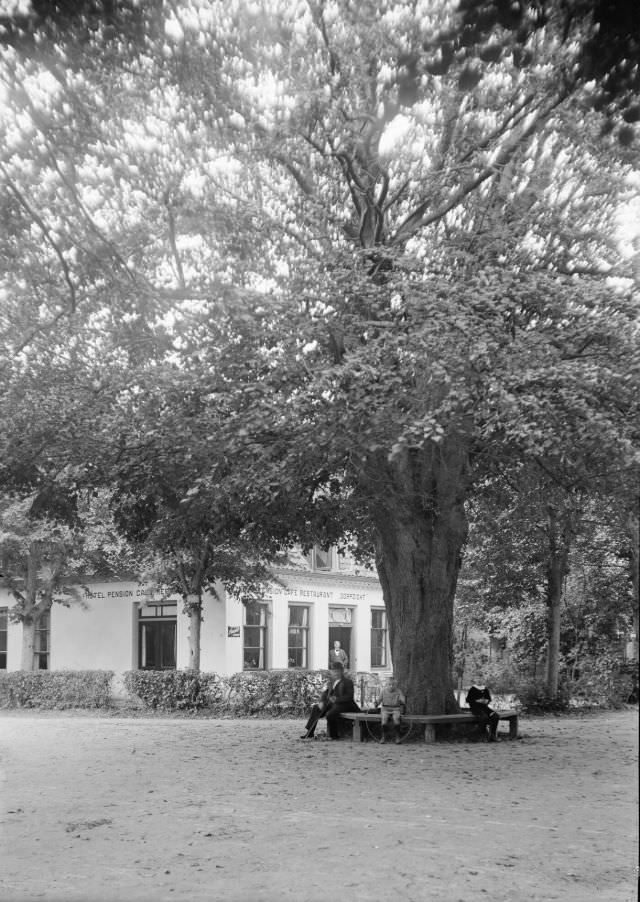
On the Hoflaan stood one of Bergen’s most beloved landmarks: a large, ancient lime tree known locally as the ‘big tree’ or the ‘old lime tree.’ Hotel Dorpszicht sat beside it, and the tree served as a natural meeting point in the village. It was the kind of landmark that residents would have used to give directions — a living fixture of the town’s identity.
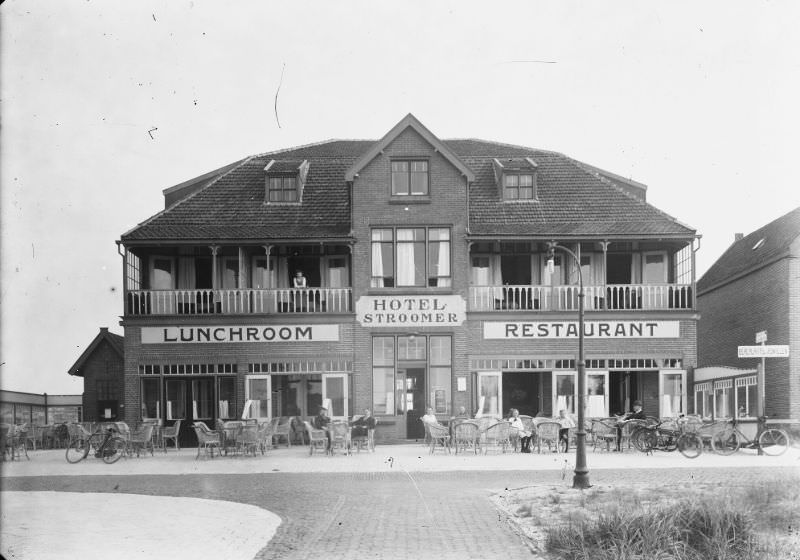
The Juliana building on the Zeeweg underwent renovation and was relaunched as Hotel Stroomer. Bonda photographed it after the change, documenting how the town’s hospitality businesses were actively upgrading to meet growing visitor demand in the years before the First World War reshaped travel across Europe.
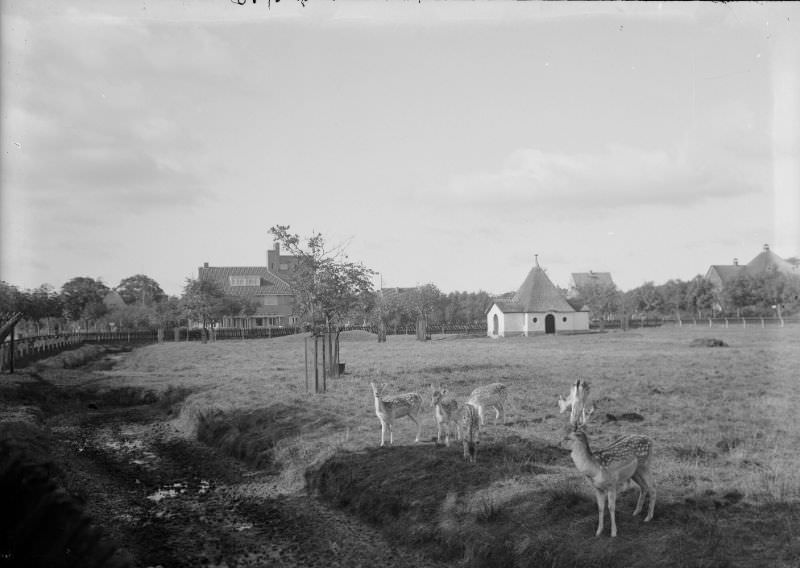
The Deer Camp area, seen here looking west, sat on the edge of Bergen’s natural landscape. Hotel Deer Camp in the background hints at how the dune and woodland areas around the town had been developed to accommodate visitors who wanted to stay close to nature while still having access to comfort.
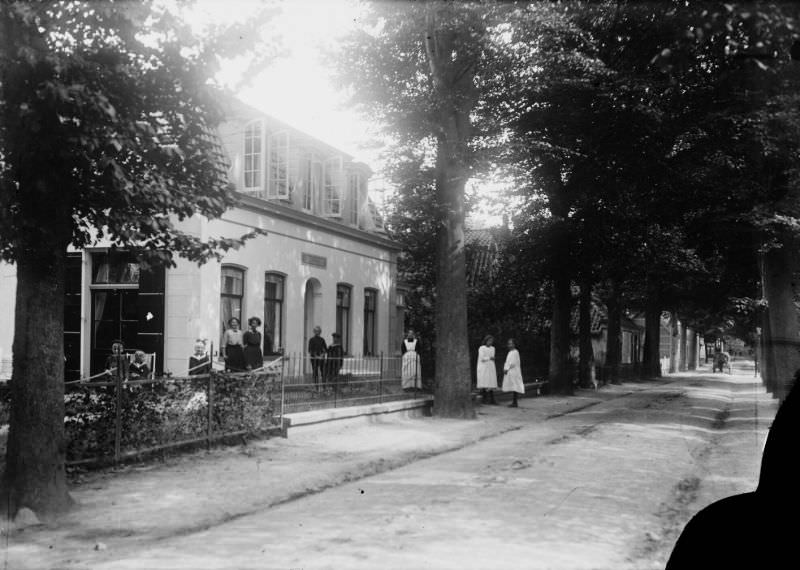
The Dorpsstraat was Bergen’s main village street. Bonda photographed it multiple times from different vantage points, building a detailed record of its shops, buildings, and the people who moved through it. In 1914, the street had a commercial energy — signs, storefronts, and pedestrians all visible in his frames.
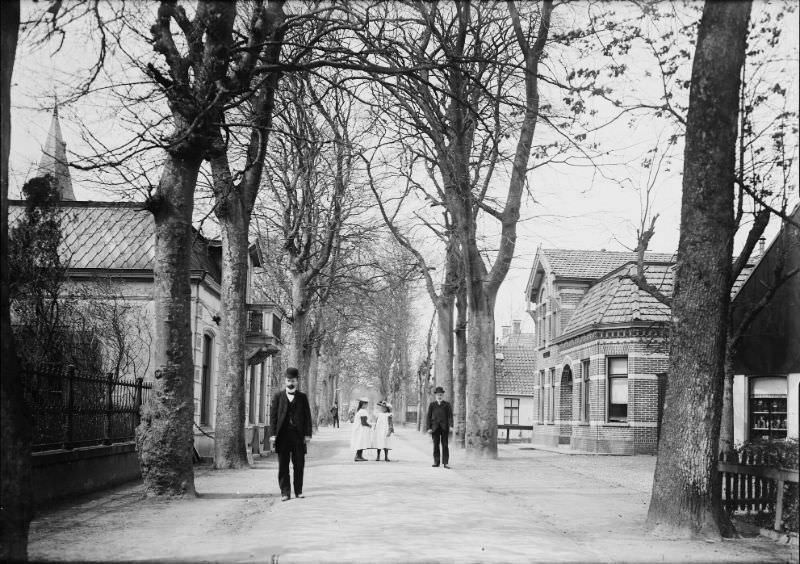
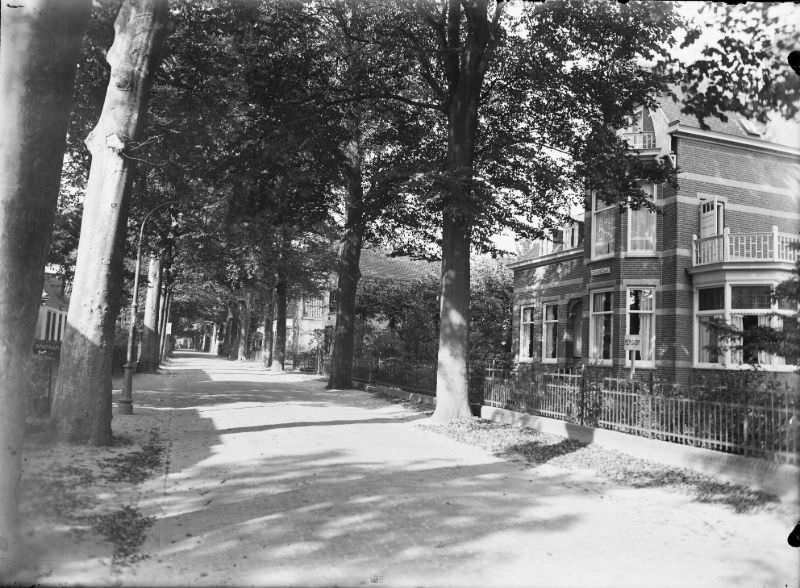
Pension Theresia, visible on the right side of this Dorpsstraat view, was one of several pensions that lined Bergen’s main street. These smaller guesthouses were an affordable option for visitors compared to the larger hotels, and they were woven directly into the fabric of the village streetscape.
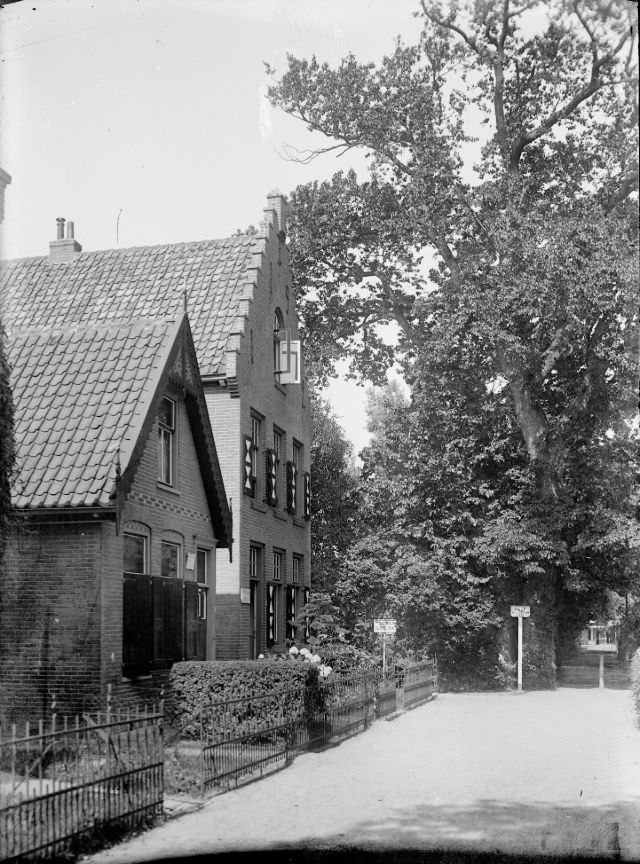
Off the main roads, narrow paths wound through Bergen’s wooded areas. This path featured guest house Greta alongside a tree locals had named the ‘Adam and Eve tree’ — a detail that shows how residents gave personal names to natural features, treating the landscape as an extension of community life.
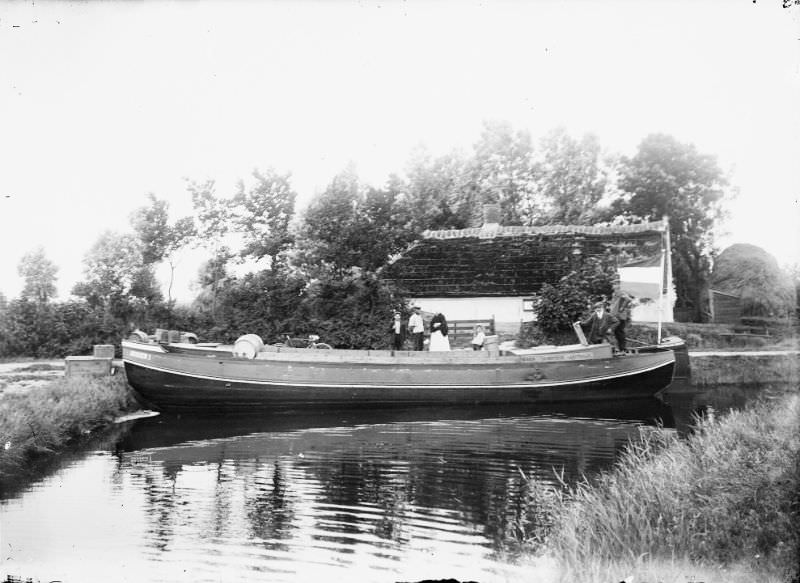
The Schermersloot was a local waterway, and Bonda captured it with skipper Kleverlaan’s barge sitting on the water. The canal system in North Holland was essential for transporting goods, and scenes like this one were ordinary parts of daily life that Bonda preserved without fanfare.
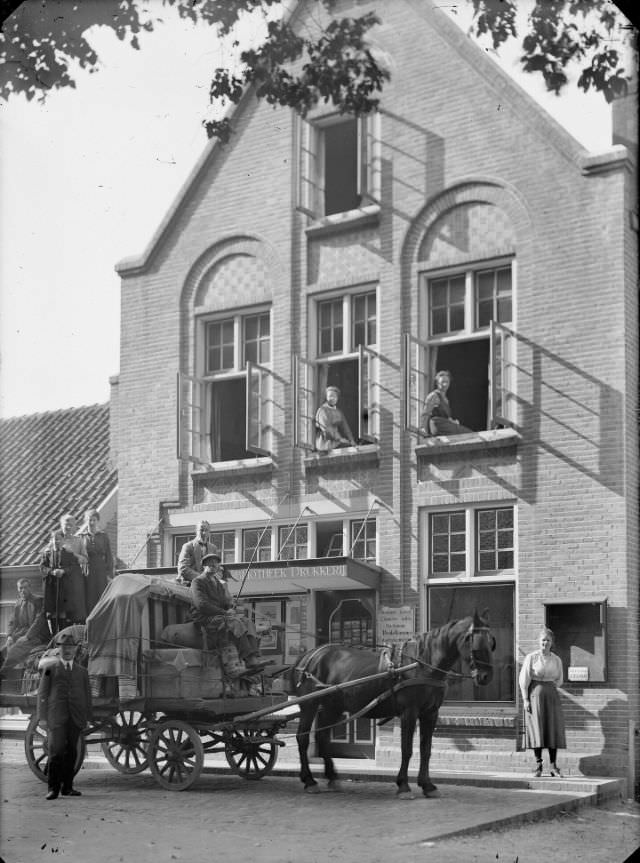
Among Bonda’s photographs is one of his own shop at Oude Prinsweg 11 — a self-documenting move that places the photographer himself within the town he was recording. His studio sat on the same civic street as the museum and post office, establishing him as a recognised professional in the community.
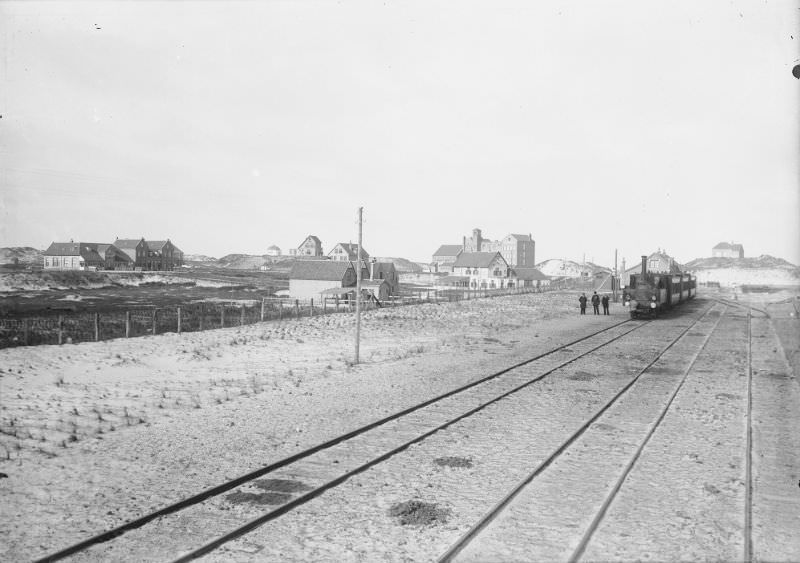
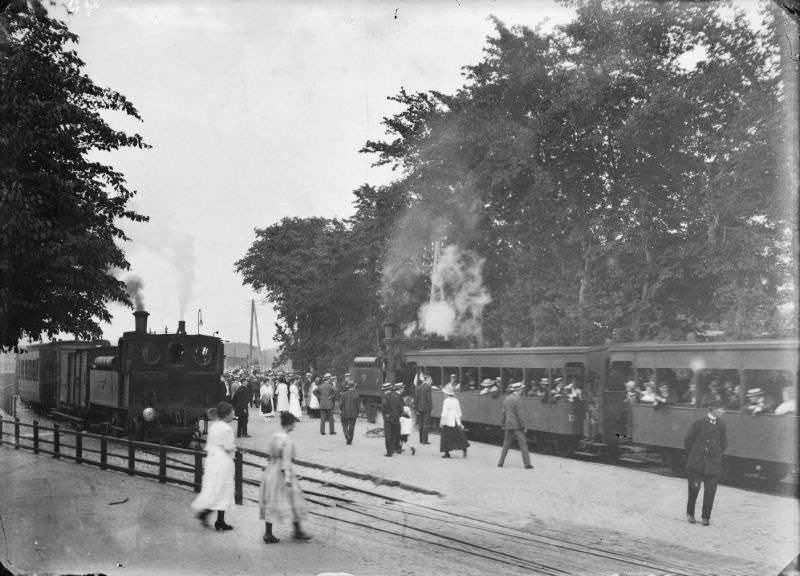
Bergen aan Zee had its own station yard, served by steam trams that connected the seaside village to Bergen and the wider rail network. The station yard was a busy point of arrival and departure, with hotels including Prins Maurits and Nassau Bergen visible nearby, ready to receive guests stepping off the tram. Bonda photographed the scene with a steam tram prepared for departure.
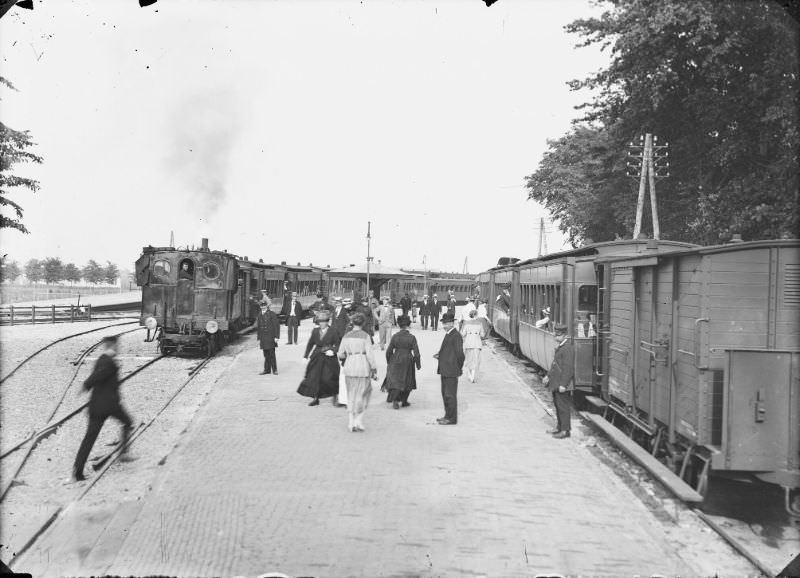
At Bergen station, Bonda captured two steam trams in operation — photographed from the platform looking east, with a locomotive reversing in the direction of the coast. Steam trams were the primary public transport link for this stretch of North Holland, carrying tourists, locals, and goods between settlements.
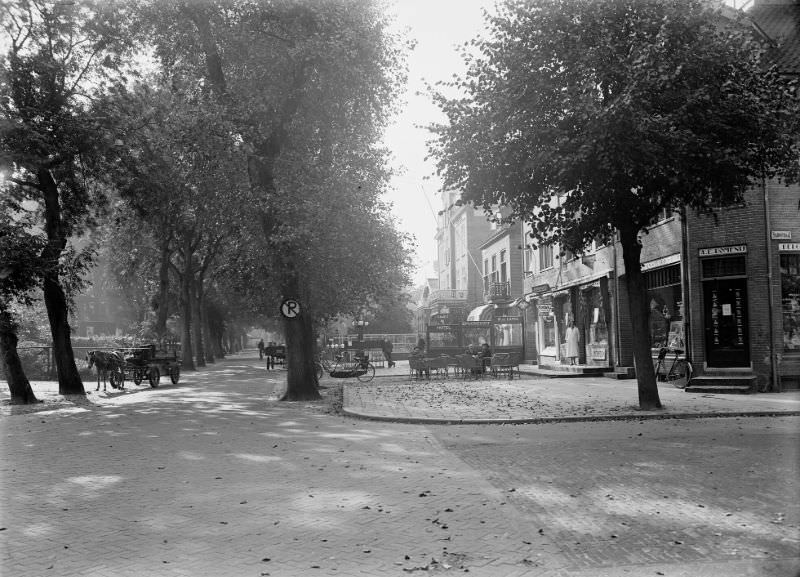
The Breelaan was one of Bergen’s broader streets, and this photograph shows its junction with the Stationsstraat — the road leading to the station. By 1916, the Breelaan would take on a very different character, becoming home to one of the internment camps established during the First World War.
The Netherlands remained neutral throughout the First World War, but the conflict still touched Bergen directly. German soldiers who crossed into Dutch territory were interned under international law rather than returned to the fighting. Bergen housed a number of these German internees, and Bonda documented their presence in and around the town during 1916.
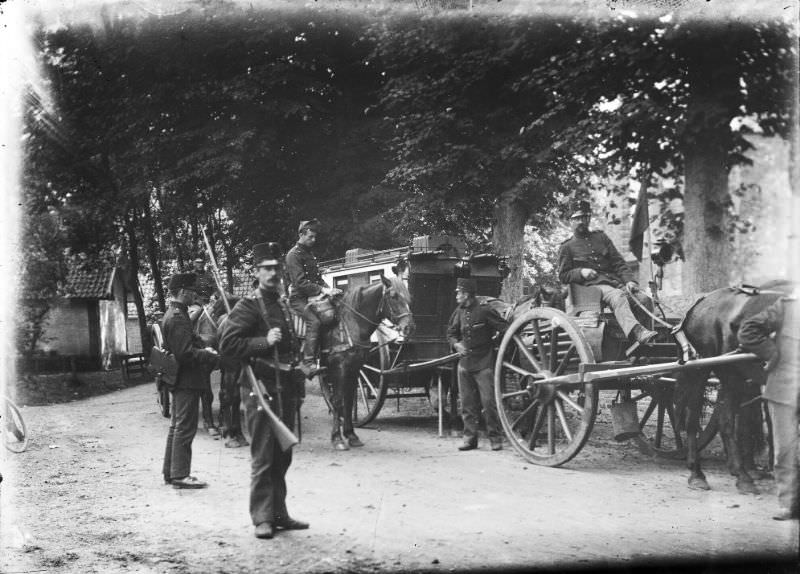
By 1916, soldiers and military equipment had become a visible part of life on Bergen’s streets. This photograph shows a group of soldiers with wagons on the Oude Prinsweg — the same road where the tourist office and Bonda’s own shop stood just two years earlier.
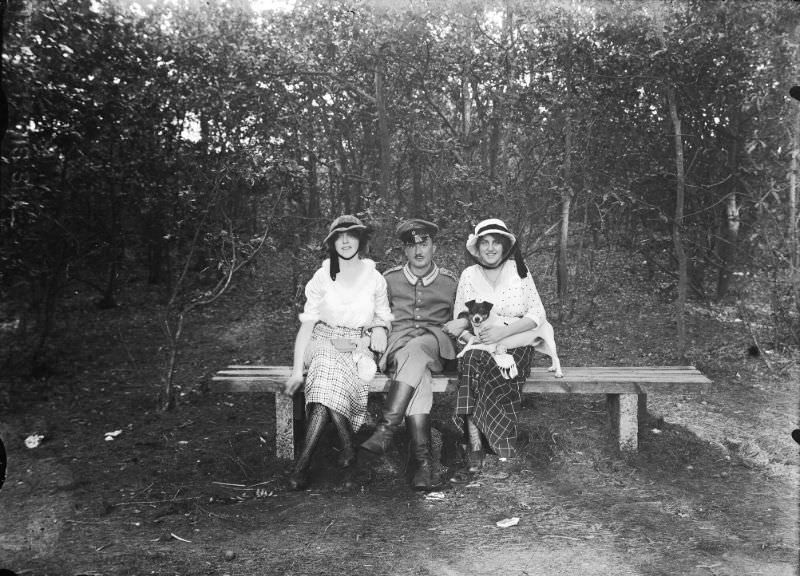
The interned German soldiers were not confined to barracks at all times. Bonda photographed one soldier seated on a bench in the woods, flanked by two women — one holding a dog on her lap. The scene shows the relatively relaxed conditions of internment in neutral Holland compared to the active war zones from which these men had come.
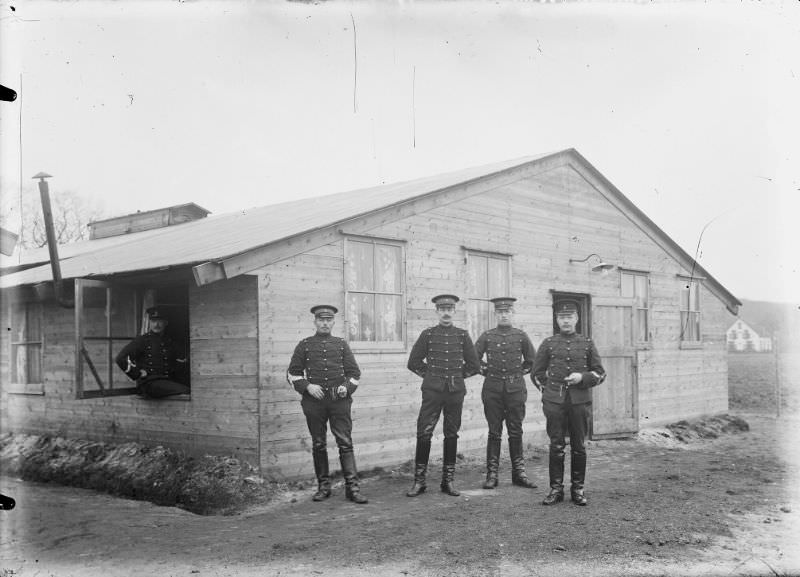
Five non-commissioned officers posed for Bonda outside a barracks building, with the guest house Johanna on the Vinkenbaan visible in the background to the right. The use of existing civilian buildings as military accommodation was common during this period, blending the wartime presence into the familiar landscape of the town.
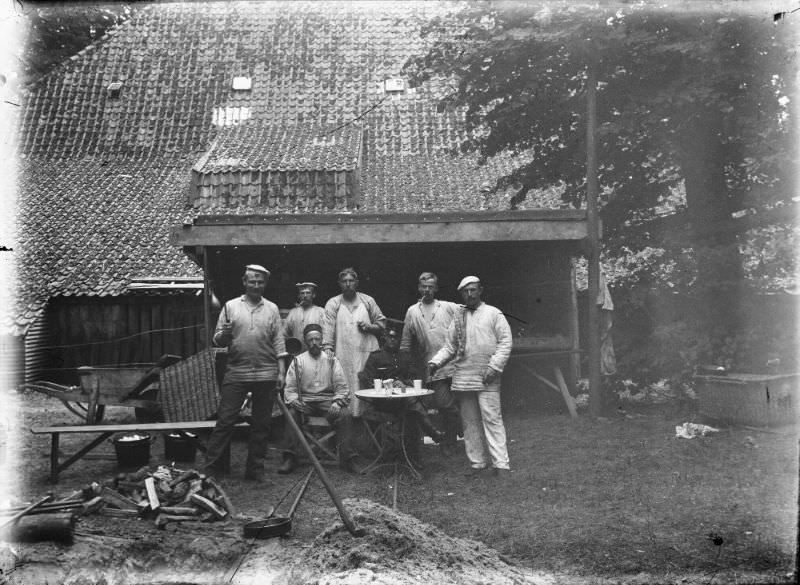
This group photograph, likely taken in front of the farm known as Rampen on the Meerweg, shows another gathering of men associated with the wartime presence in Bergen. Bonda documented these moments with the same matter-of-fact approach he applied to tourist scenes and street views.
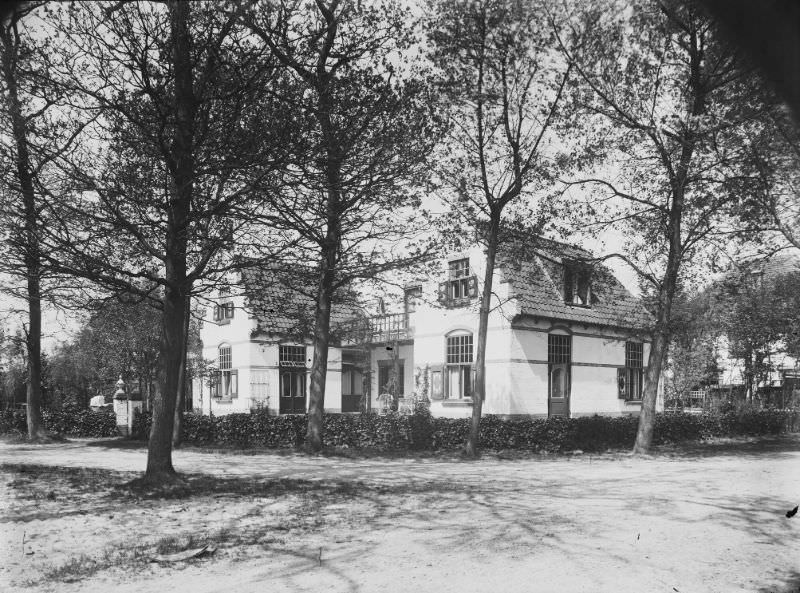
Guesthouse Holland on the Studler van Surcklaan continued to operate during the war years. Many of Bergen’s guesthouses and pensions took on new roles during this period, sometimes housing soldiers or support personnel rather than leisure tourists.
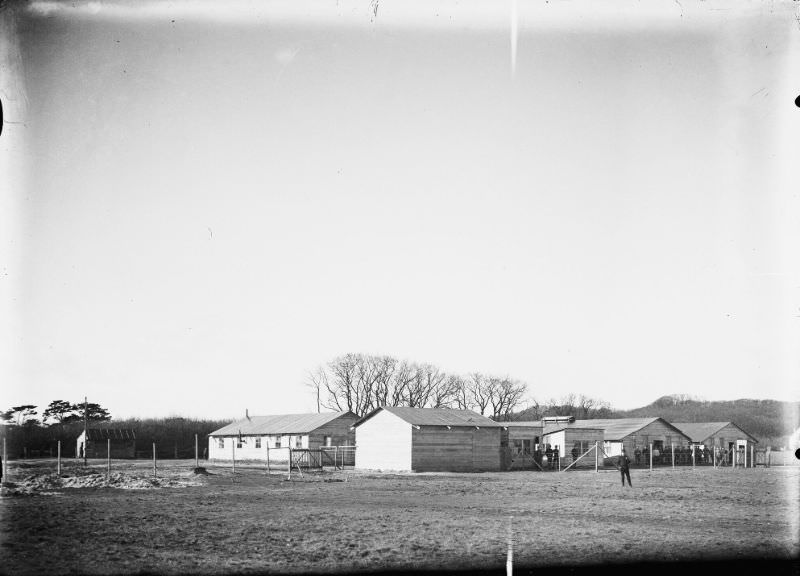
The internment camp on the Breelaan is photographed here looking northwest. The camp occupied a street that Bonda had documented two years earlier as an ordinary residential and commercial thoroughfare. The transformation shows how quickly the war altered the physical and social landscape of even a neutral country town.
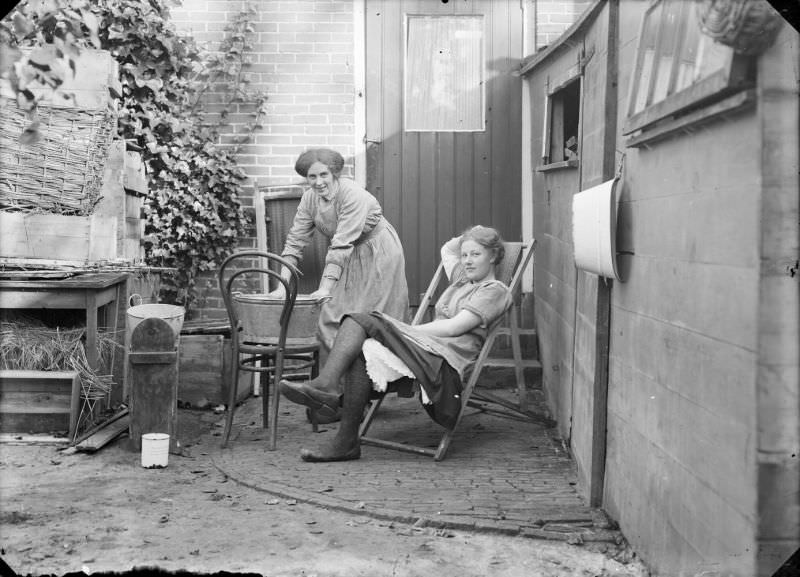
Not all of Bonda’s 1916 photographs focused on soldiers. This image shows two women behind a house — one doing laundry in a zinc tub, the other resting in a deck chair. Domestic life continued alongside the military presence, and Bonda recorded both with equal attention.
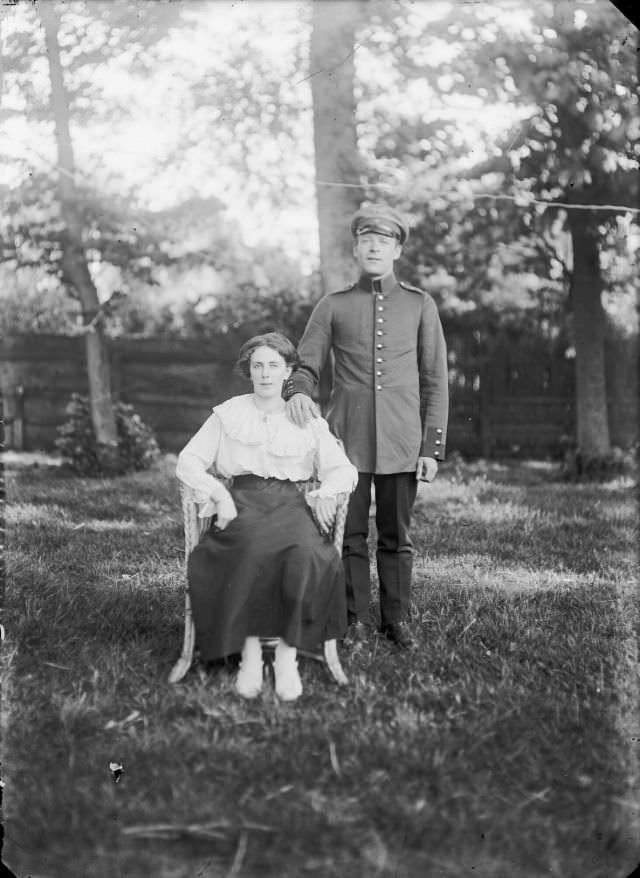
This final photograph shows a woman seated beside a man in the uniform of the German internees from the Breelaan camp. The informal, domestic setting of the image — two people posed together outside — reflects the degree to which the internees had become part of the social fabric of Bergen during the war years. Bonda’s complete body of work from this decade, held today in the Archief Alkmaar, remains a precise and unfiltered record of a Dutch town navigating tourism, community, and a world war within the space of just a few years.




