
Beijing in the 1980s was a city caught between two worlds. Ancient temples and centuries-old hutong alleyways stood alongside newly poured concrete and rising apartment blocks. For most of the past eight centuries, Beijing had been China’s political center, home to emperors, dynasties, and the seat of national power. By the time the 1980s arrived, it was entering a new kind of transformation — one driven not by dynasties, but by economic reform.
China’s economic reforms, launched in the late 1970s under Deng Xiaoping, picked up serious speed throughout the 1980s. Beijing felt the changes almost immediately. New shopping centers opened across the city. Residential buildings went up in neighborhoods that had seen little construction for decades. High-tech industrial parks were established, particularly in the suburbs, pulling workers and resources away from the old inner city. City planners advised the government that Beijing would no longer be a hub for heavy industry — the historical core would develop slowly and carefully, preserving the relics concentrated there while growth pushed outward.
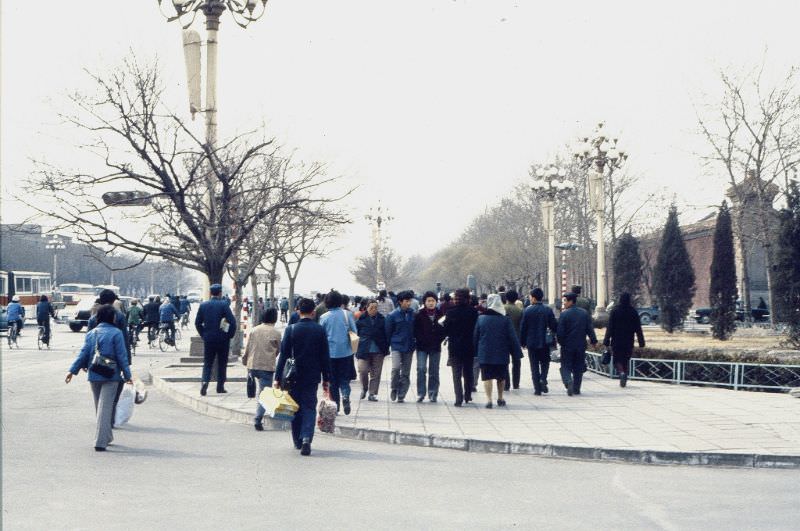
The most visible sign of that outward growth was the ring road system. The 2nd Ring Road was completed in 1981, tracing the rough outline of the old city walls. The 3rd, 4th, 5th, and 6th Ring Roads followed in the years and decades after, each one expanding the urban footprint further into what had once been farmland and villages. The city’s geography was being redrawn in real time.
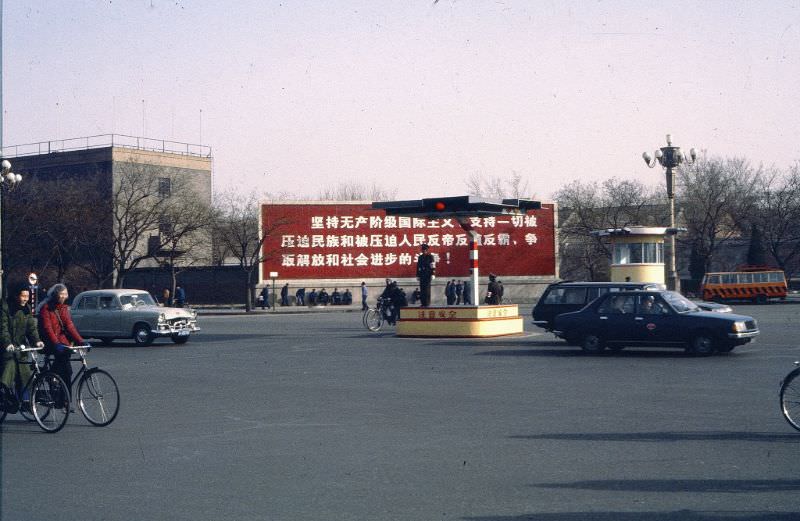
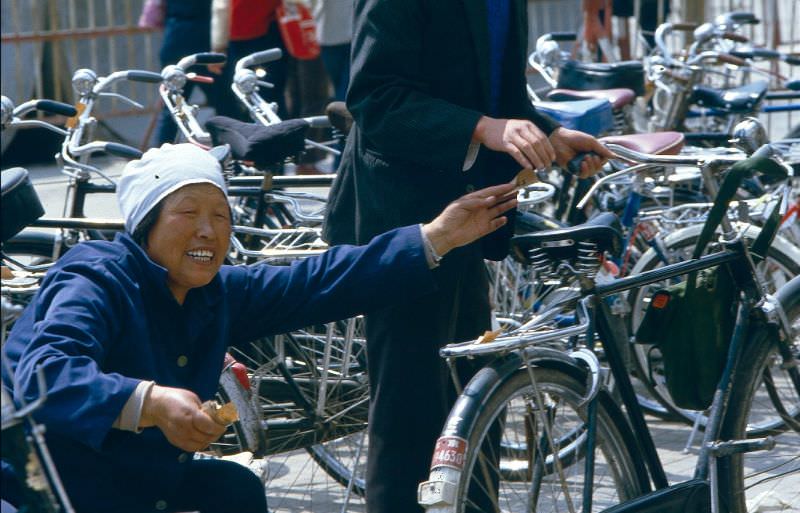
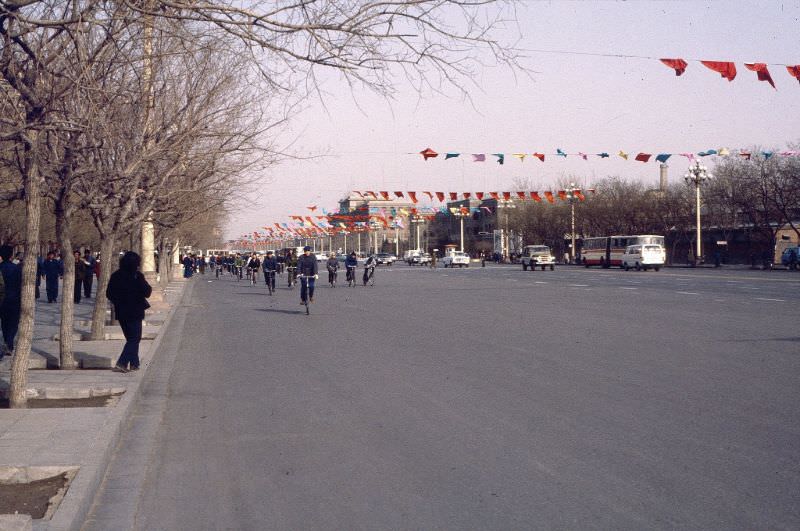
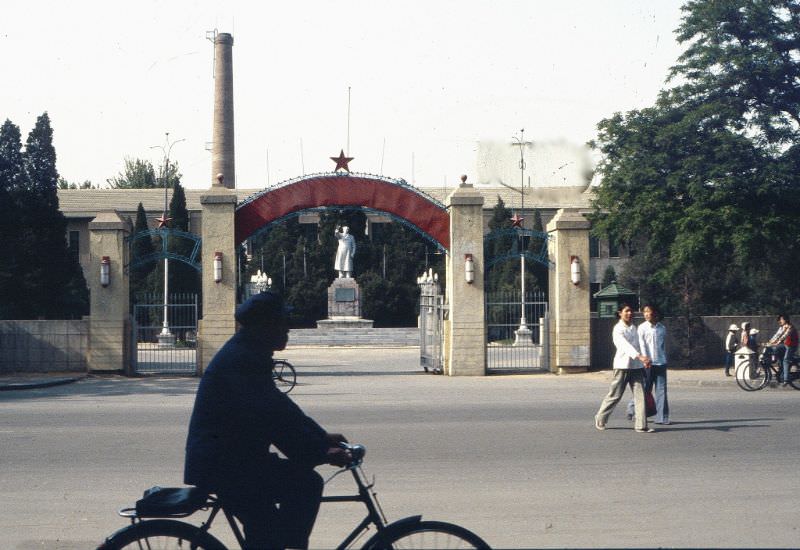
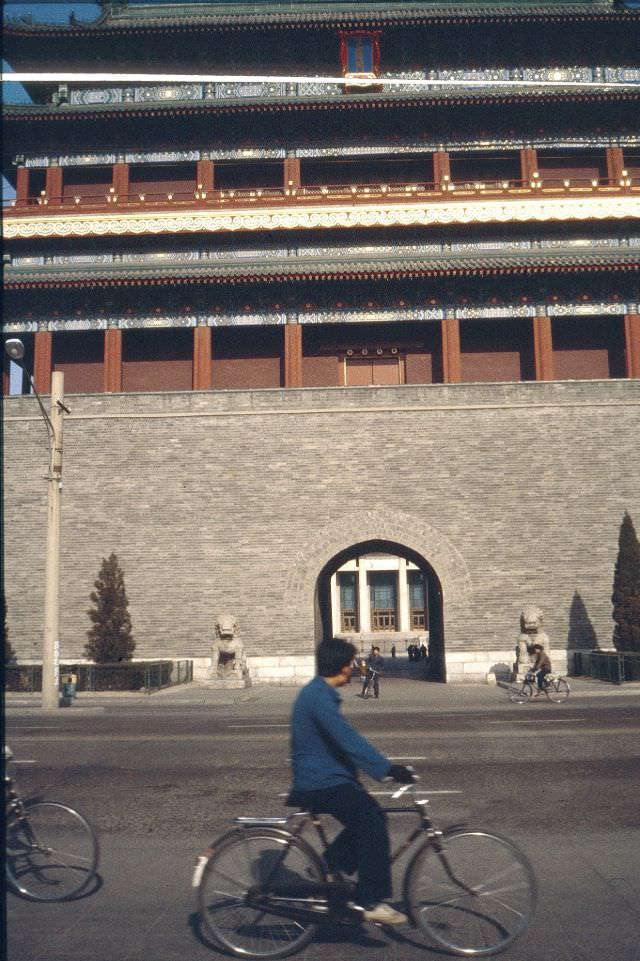
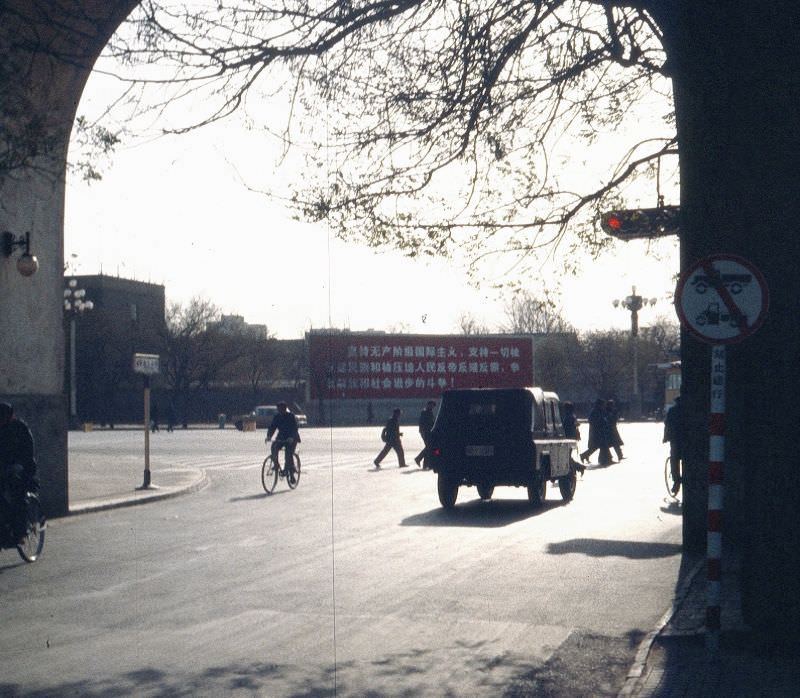
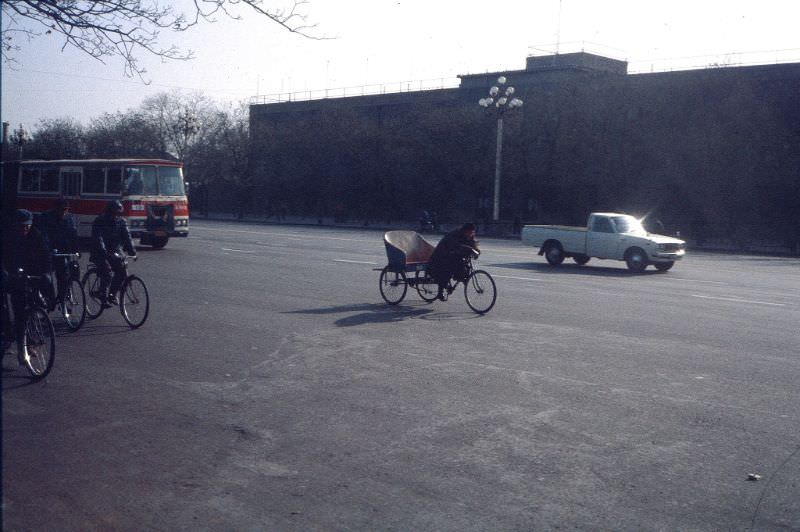
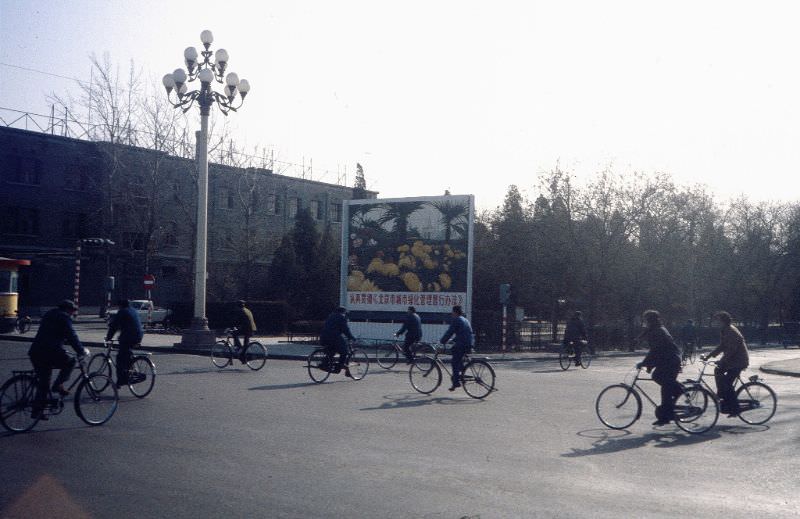
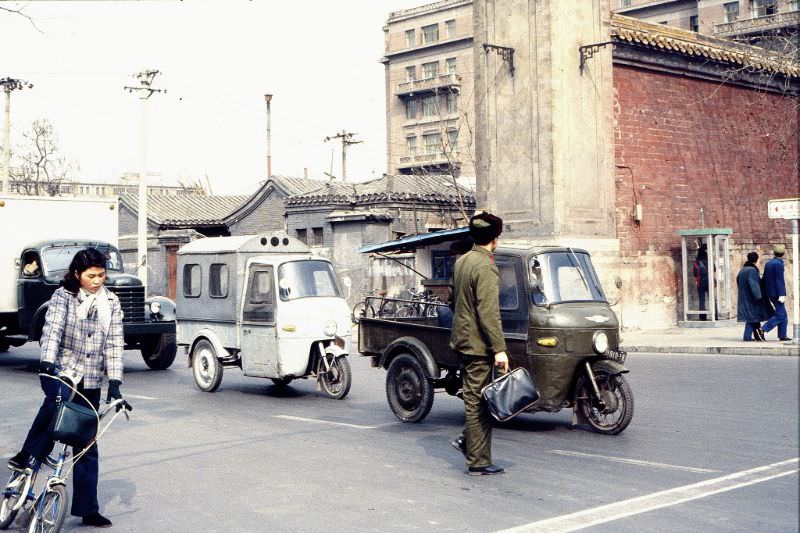
On the streets, bicycles were everywhere. They were the dominant form of transport for ordinary Beijingers — practical, affordable, and deeply embedded in daily life. Dedicated bicycle storage areas appeared near major landmarks and transit points, and the sight of thousands of cyclists moving together down wide boulevards was one of the defining images of the city in this era.
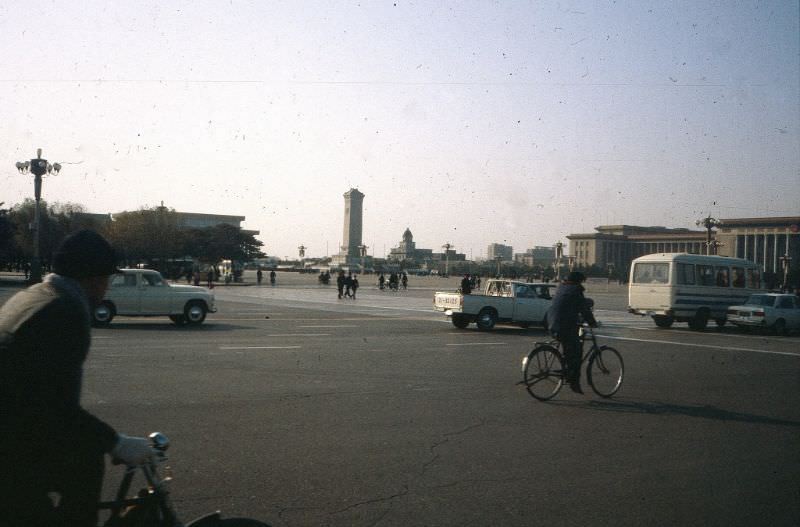
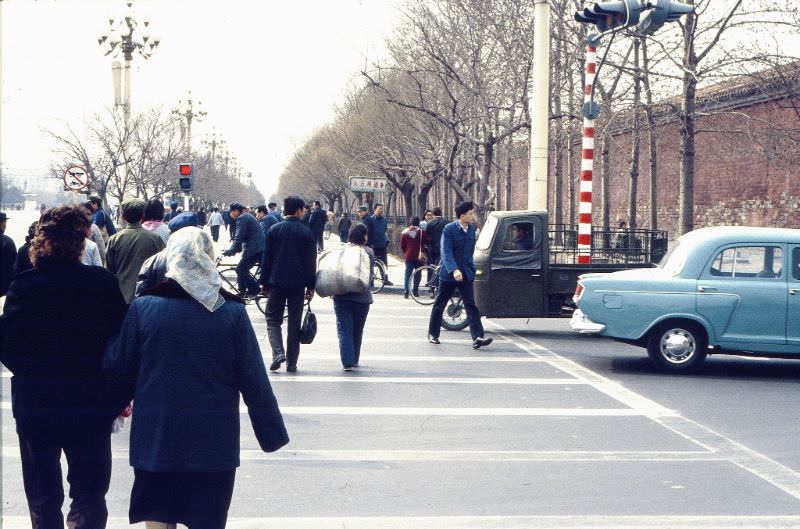
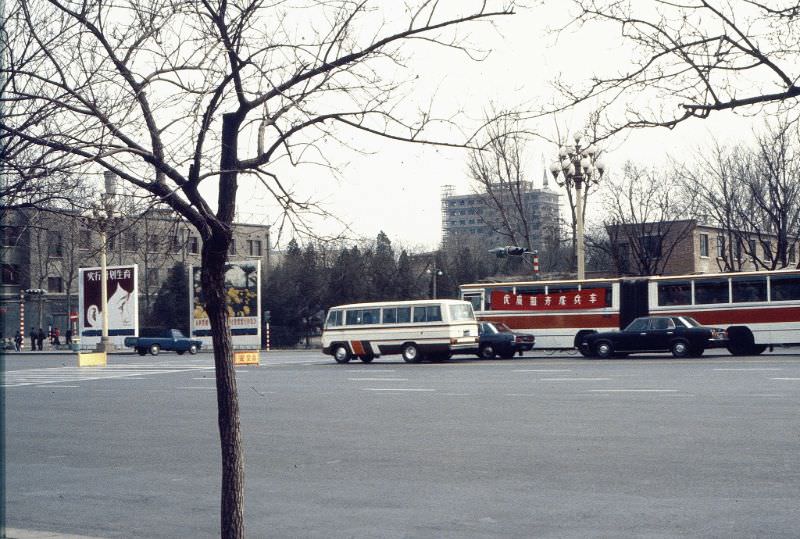
Chang’an Avenue — the Avenue of Eternal Peace — cut straight through the heart of the city, running east to west past Tiananmen Square and the Forbidden City. In the 1980s, it was lined with a mix of government buildings, hotels, and the occasional hawker setting up a stall along its wide sidewalks. Army trucks rolled past tourists and locals alike. The Beijing Hotel, one of the most recognizable landmarks along this stretch, served as an anchor point for visitors navigating the city.
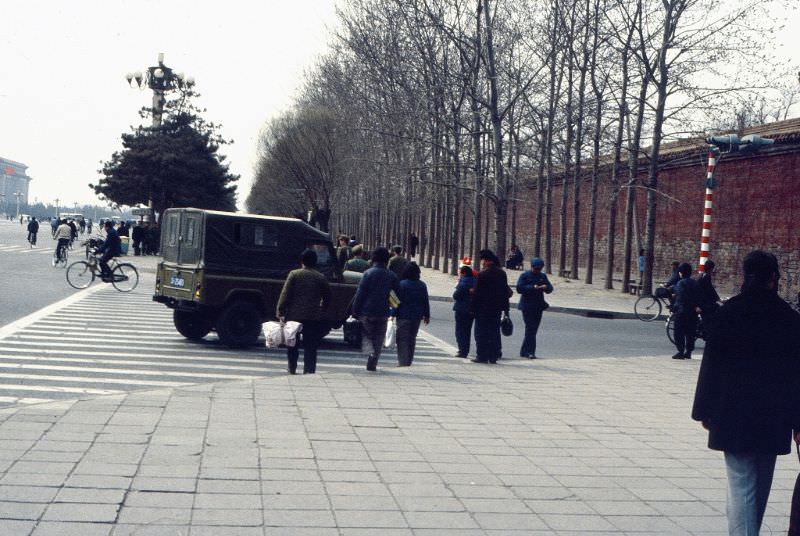
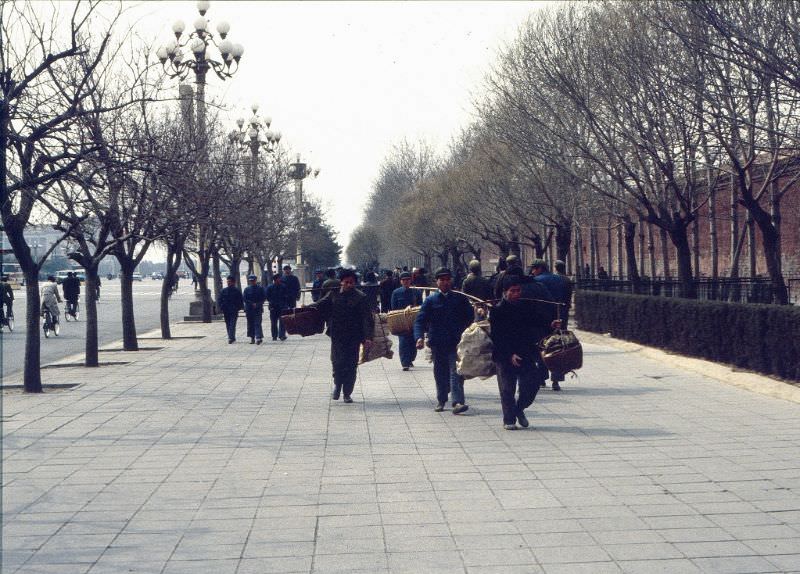
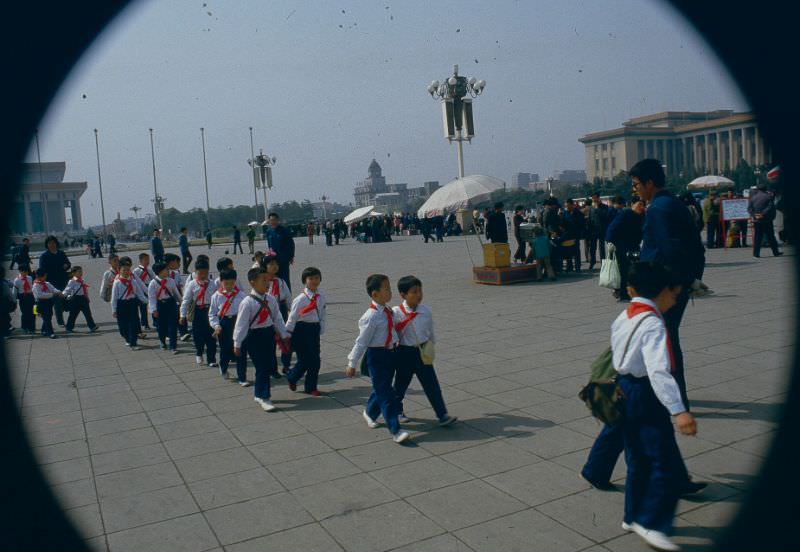
Tiananmen Gate, with the massive portrait of Mao Zedong hanging from its facade, drew crowds of passersby throughout the day. The square and its surroundings were a natural gathering point — for tourists, for residents out on a walk, and for the Young Pioneers, the youth organization whose members were a common sight in their red scarves and neat uniforms.
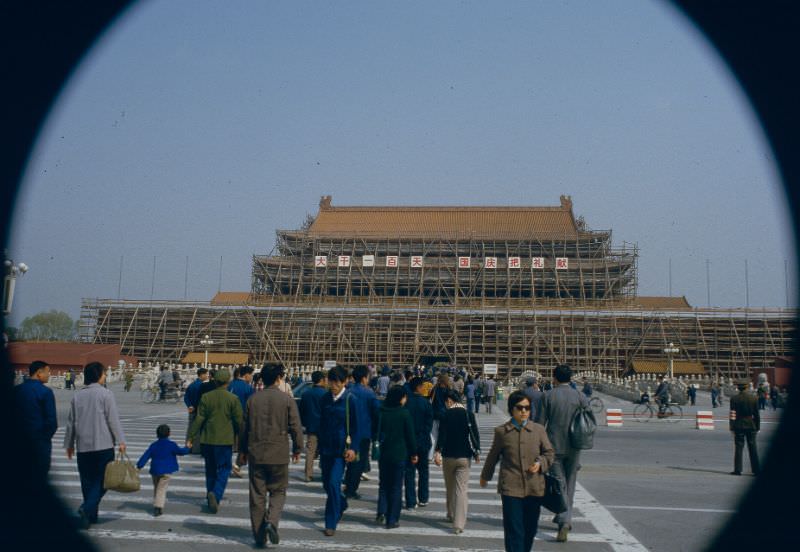
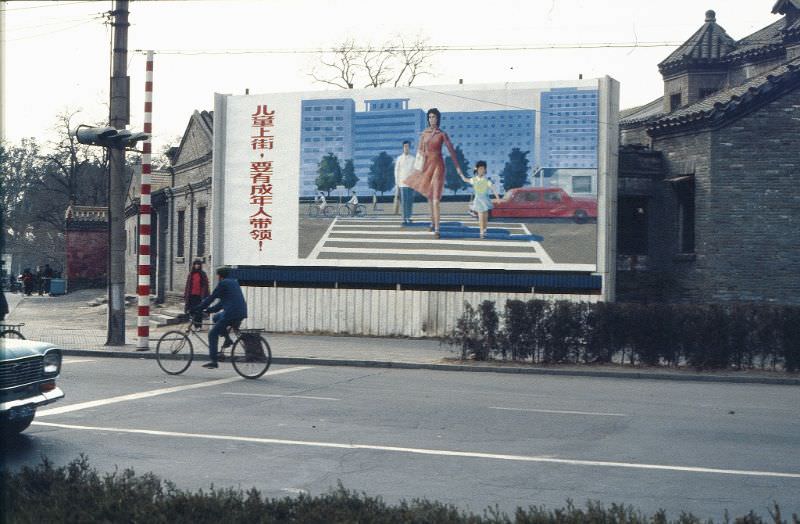
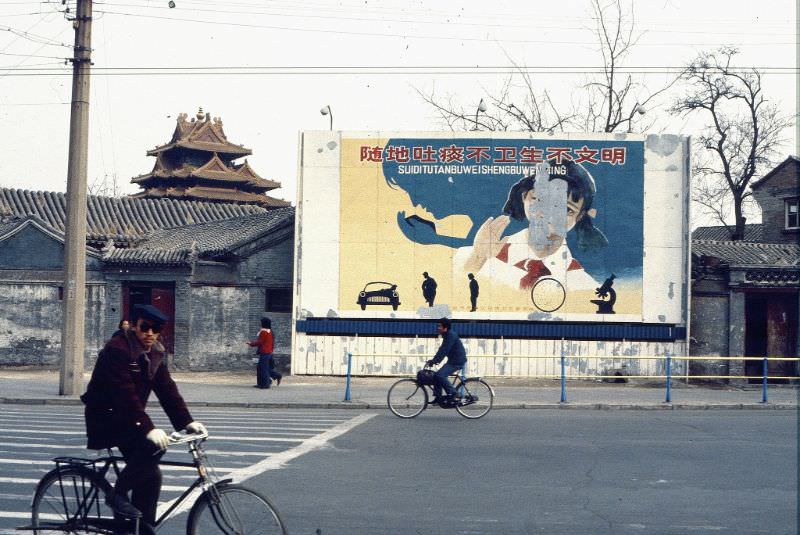
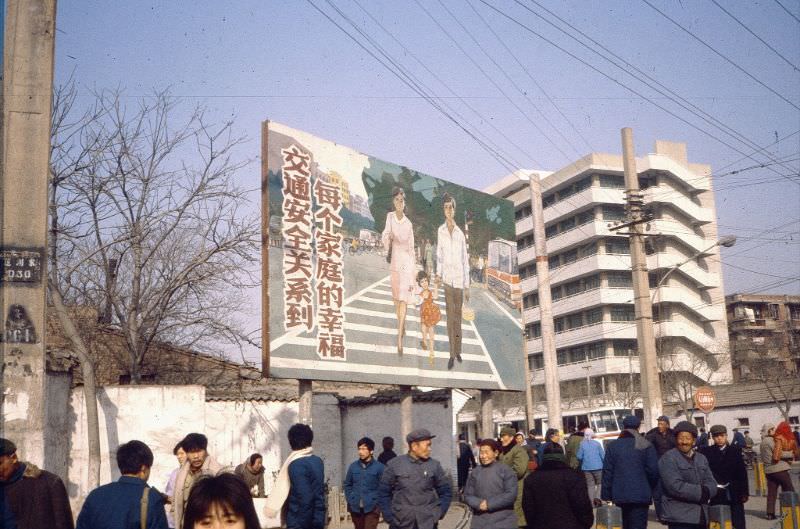
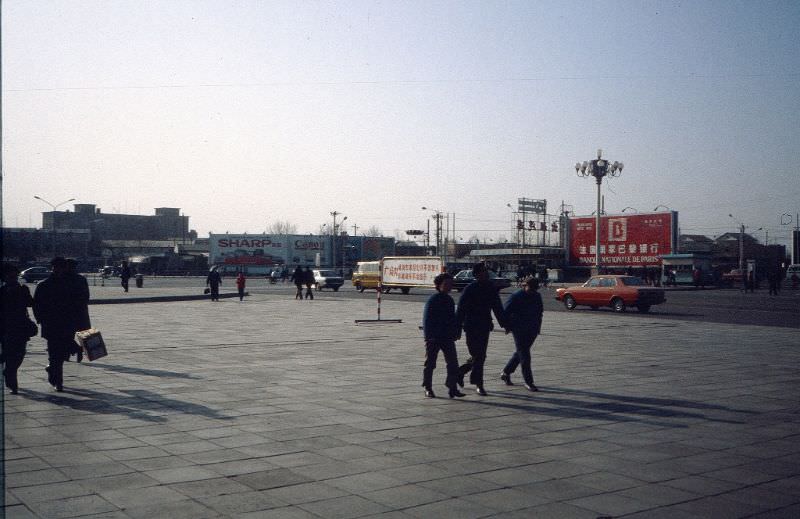
Public signage was a major feature of city life in 1980s Beijing. The government used large propaganda boards and public notices to communicate social campaigns directly to residents. Population control was one of the most prominent messages of the decade. China’s One Child Policy, introduced in 1980, was actively promoted through banners and billboards urging citizens to keep the national population within 1.2 billion by the year 2000. Signs against spitting in public were also common, part of broader hygiene campaigns aimed at modernizing public behavior.
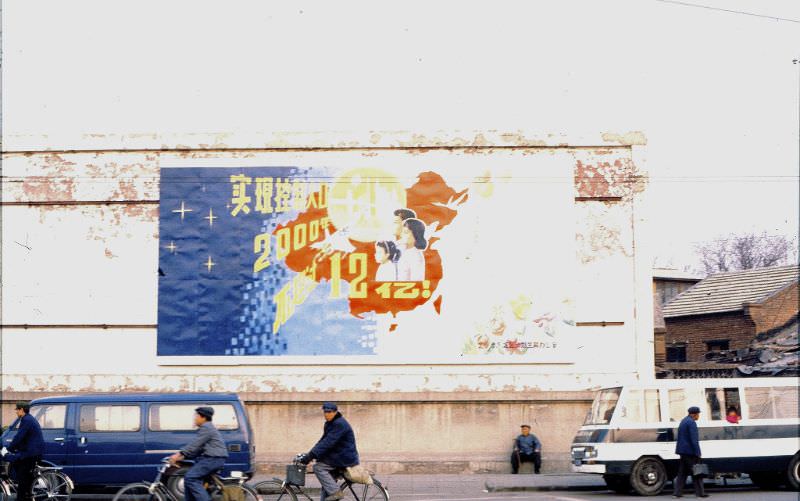
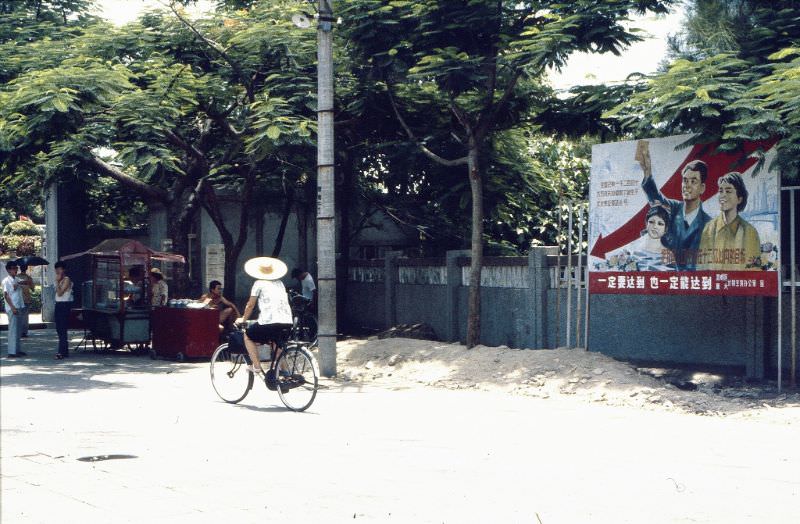
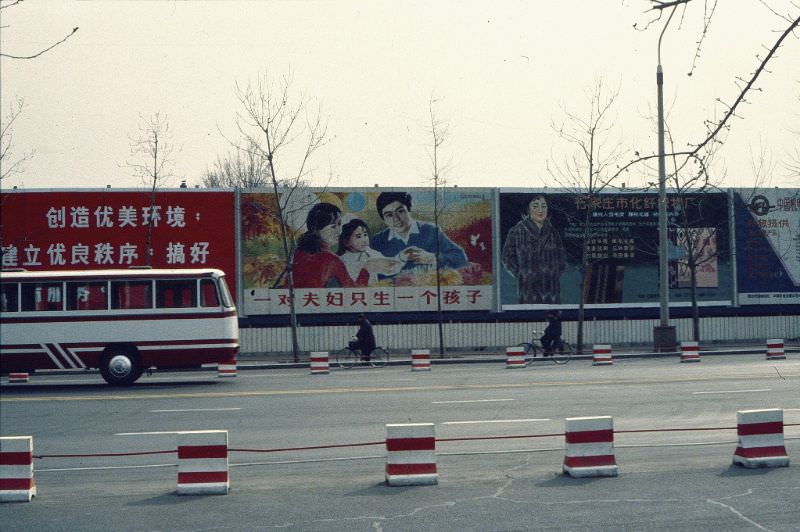
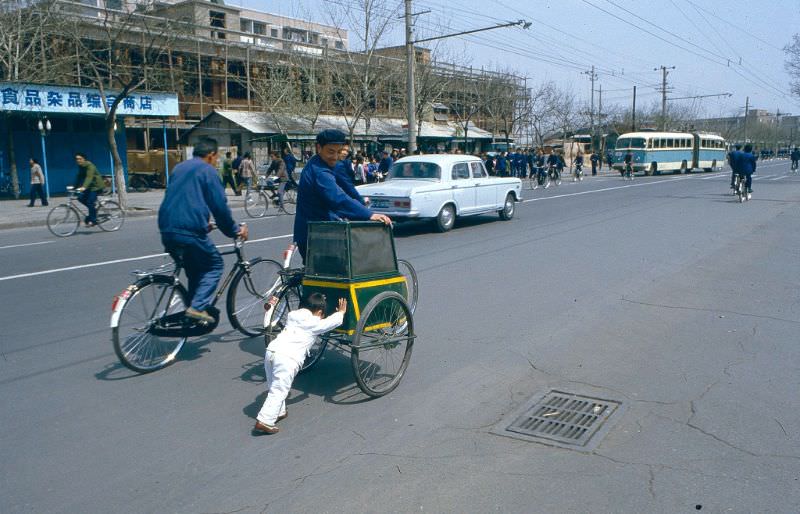
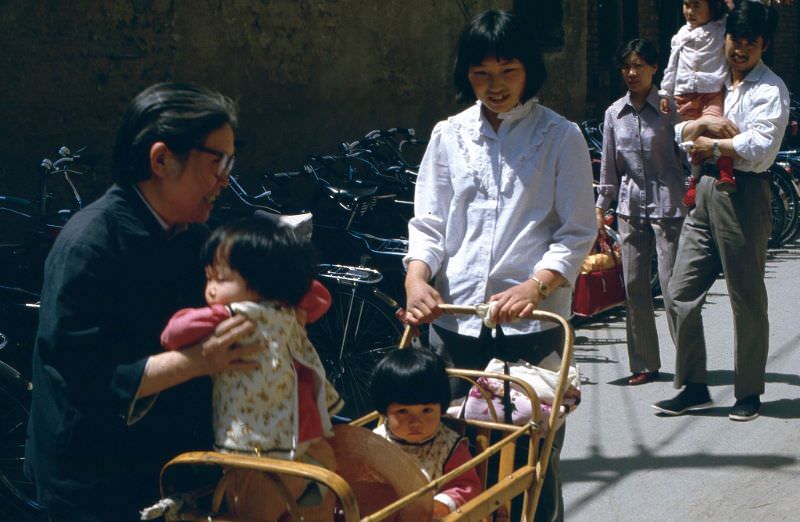
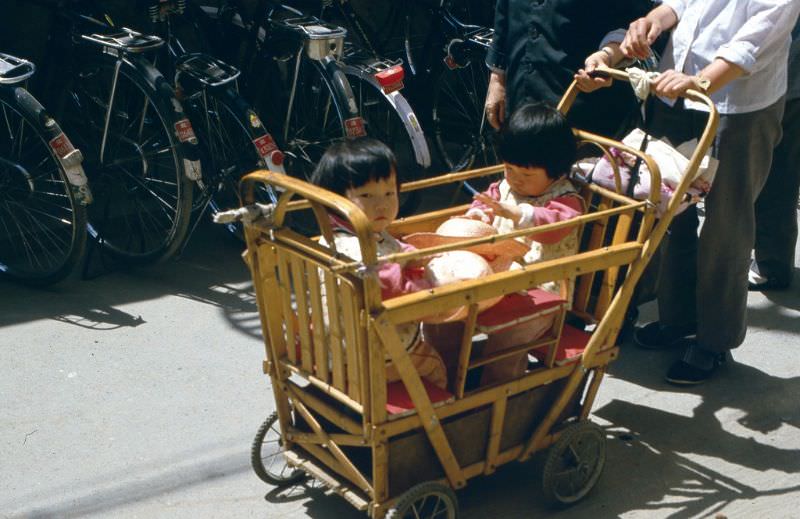
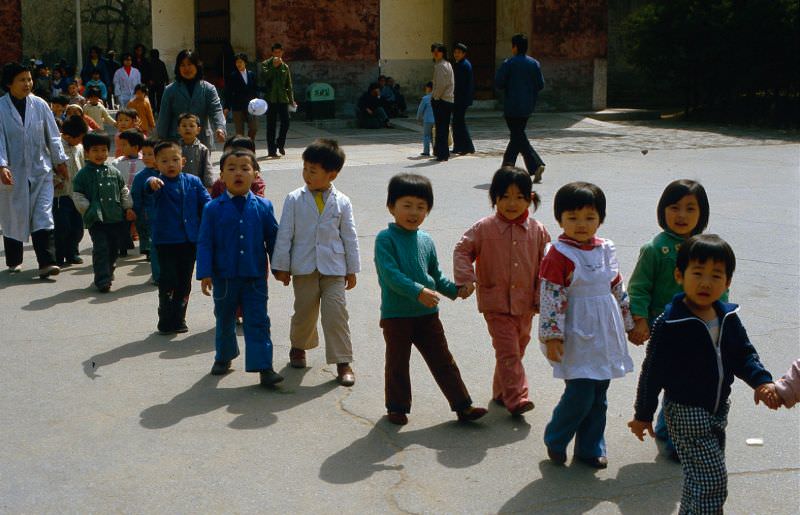
The effects of the One Child Policy were visible on the streets. Young children, often the sole child in their family, were bundled into the small seats mounted on the backs of bicycles — a fixture of family transport across the city. The occasional set of twins drew attention, a proud exception to the single-child norm.
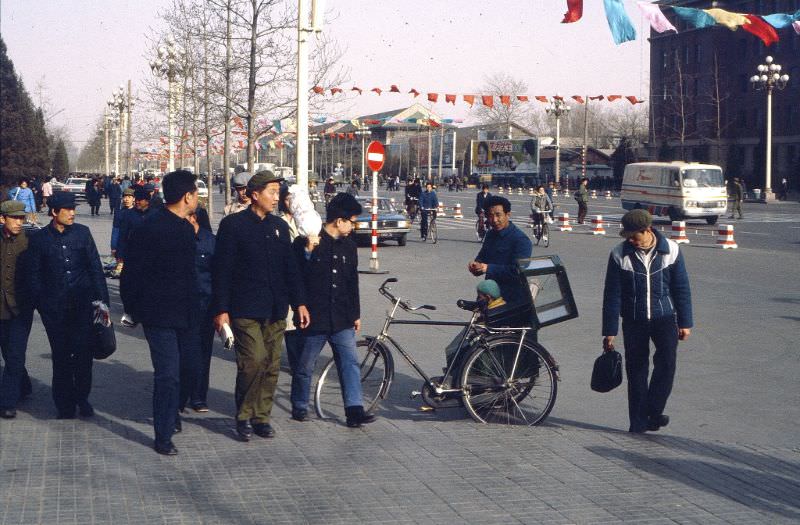
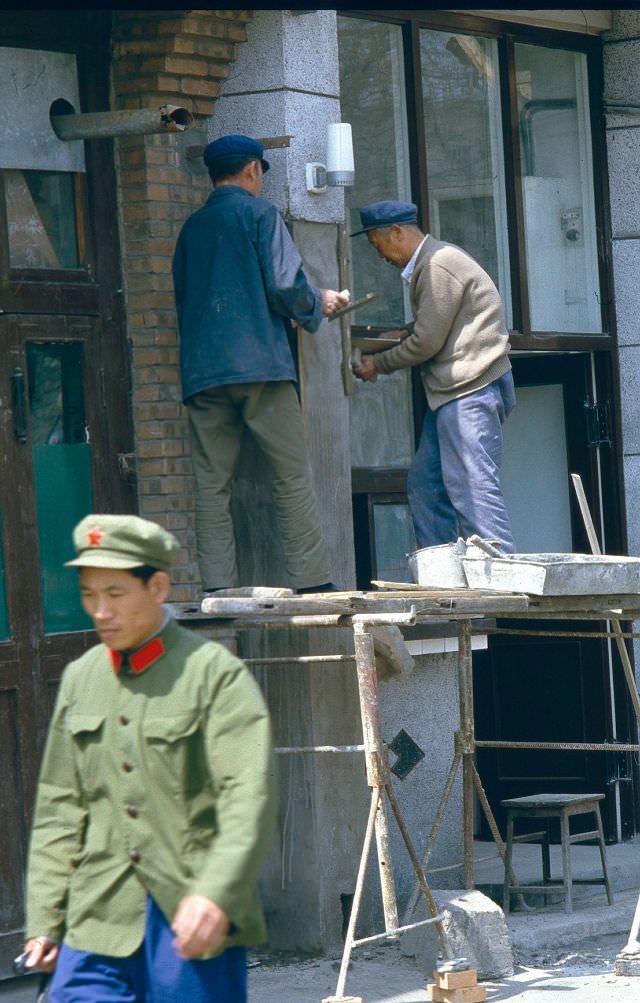
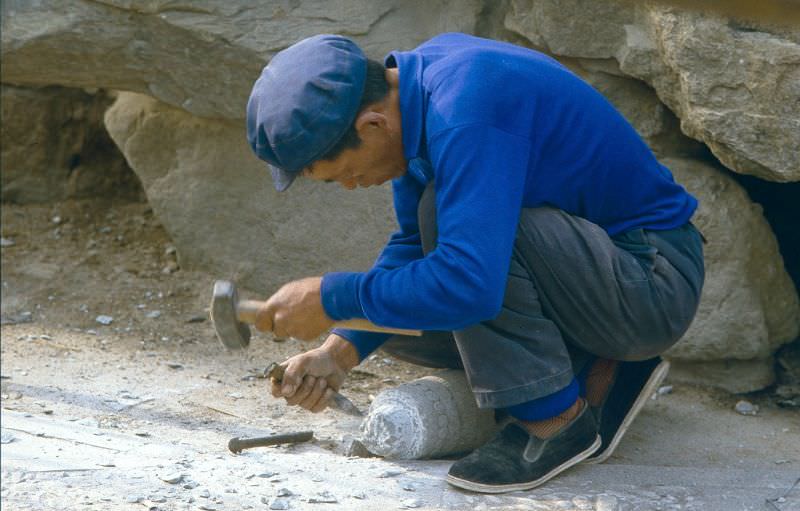
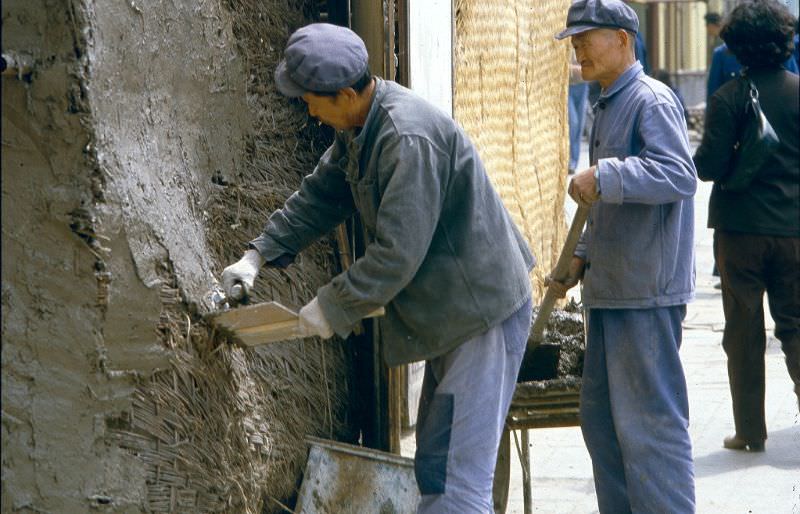
Construction was constant throughout the decade. Workers applied cement and plaster by hand, chiseled stone pillars using manual tools, and built the physical infrastructure that the city’s rapid growth demanded. The Institute for Iron and Steel represented the industrial ambitions that still existed on the city’s edges, even as planners pushed to redirect Beijing’s economic identity away from heavy manufacturing.
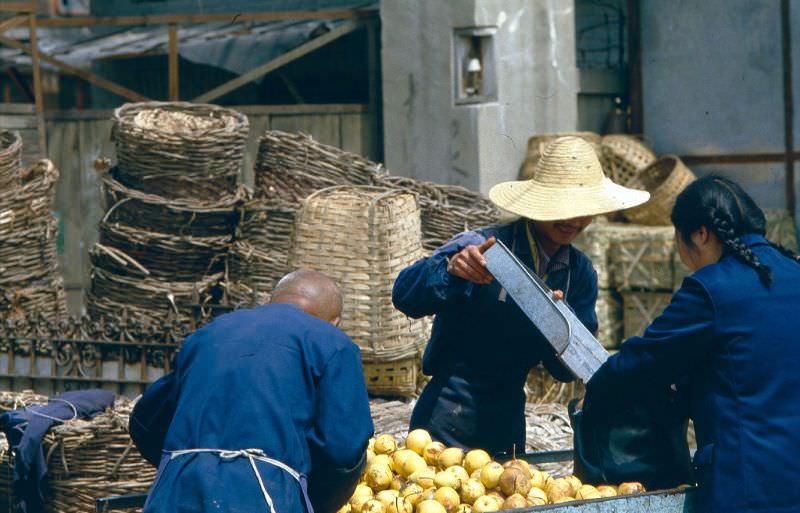
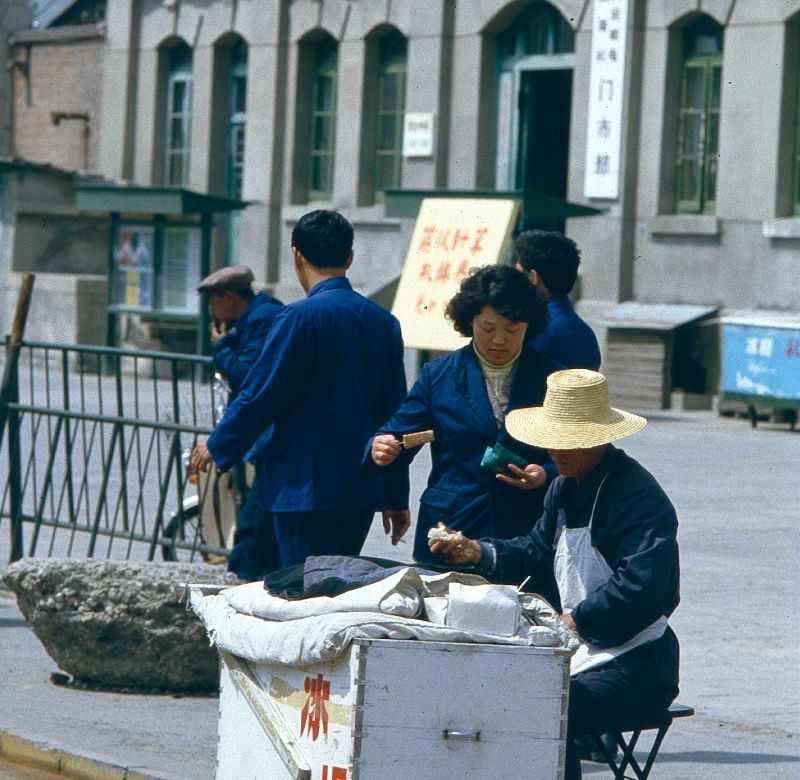
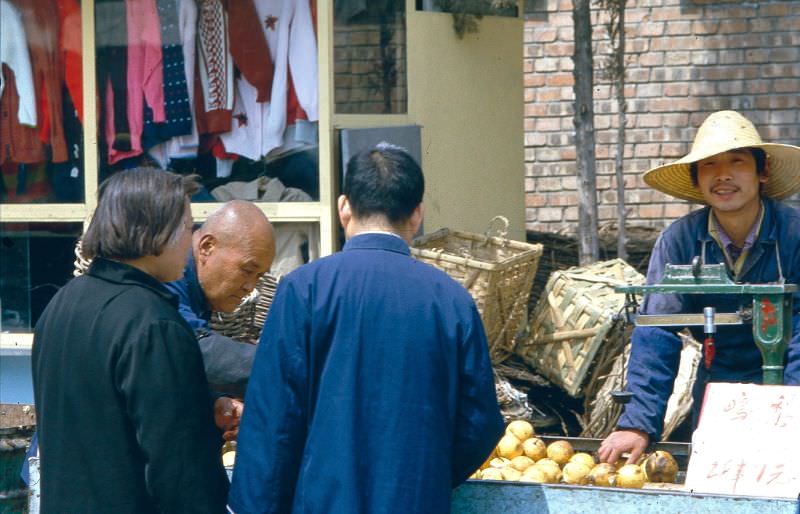
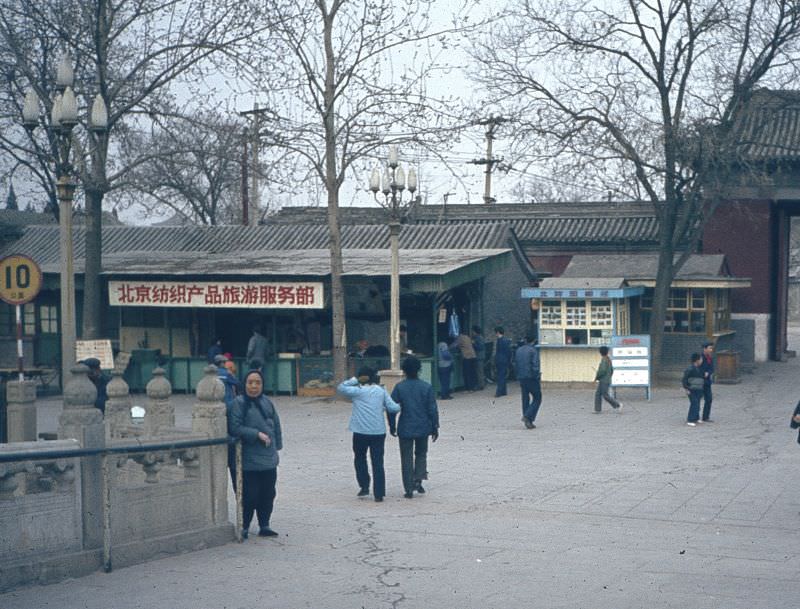
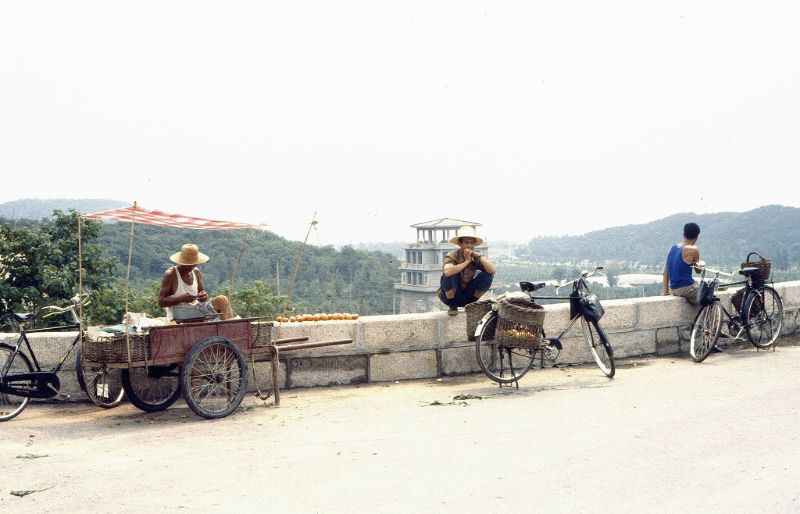
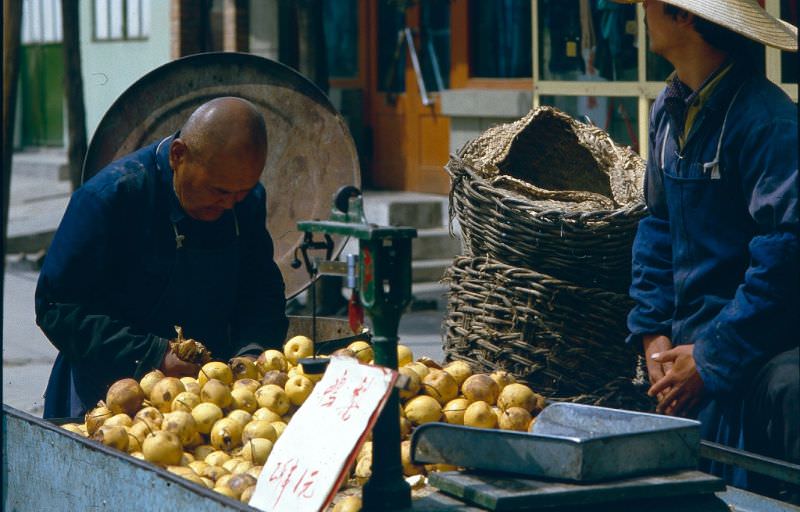
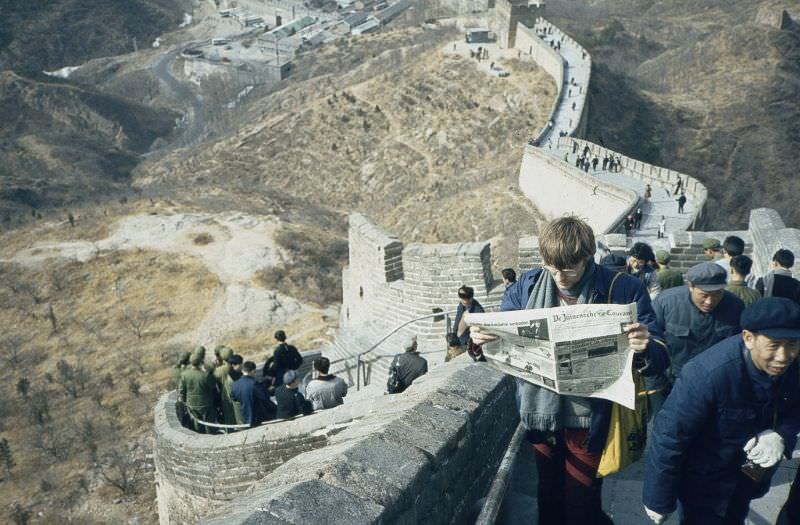
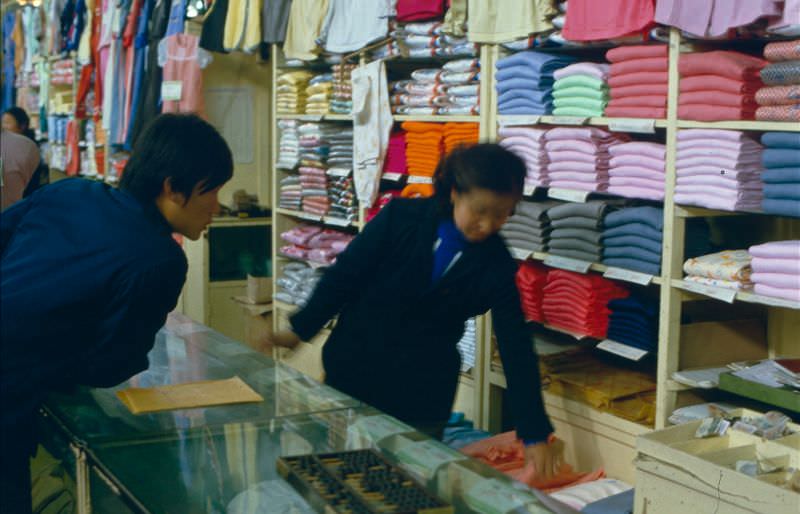
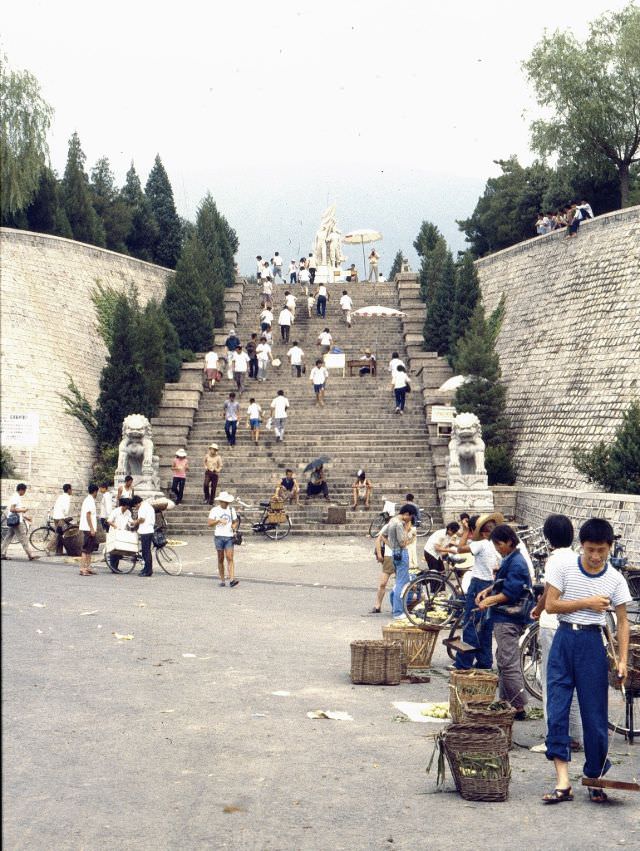
Street commerce was lively and informal. Fruit stalls selling pears and other produce were common sights near busy intersections and tourist sites. Vendors near the road leading to the Ming Tombs and the Great Wall at Badaling sold to travelers passing through. Ice cream vendors worked the warmer months, and hawkers set up wherever foot traffic was reliable. Wangfujing, Beijing’s most famous shopping street, was home to the Lantian department store — one of the key destinations for clothes shopping in the city.
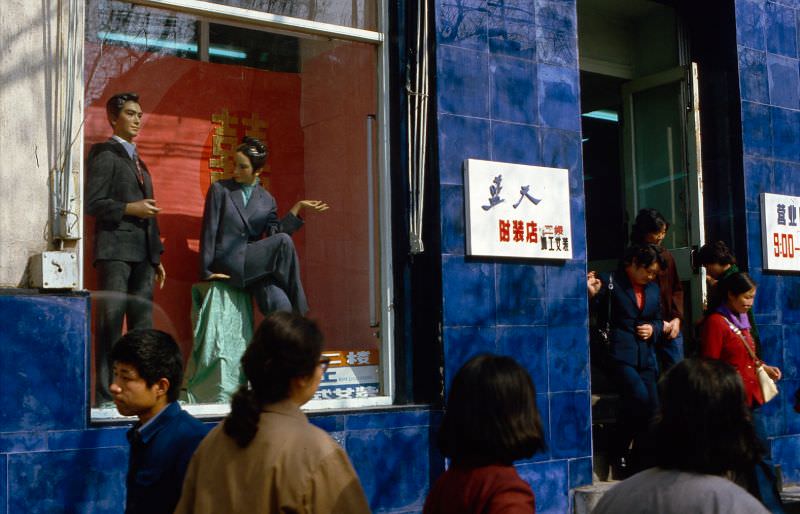
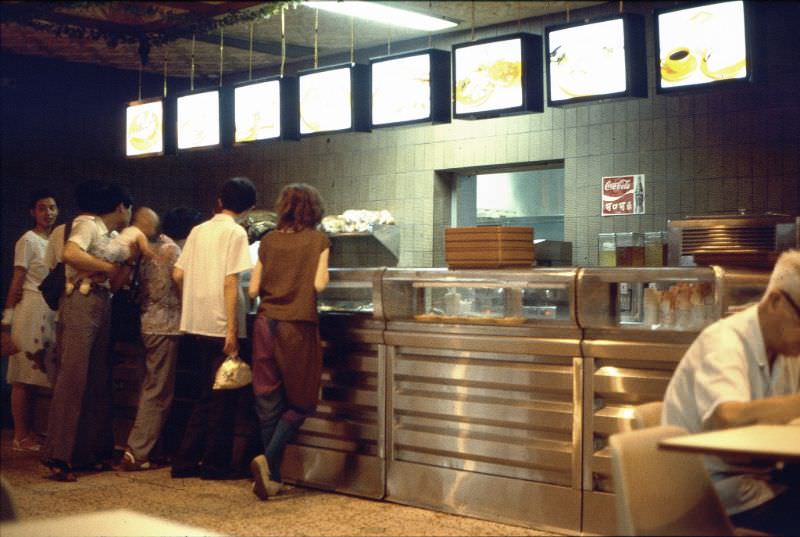
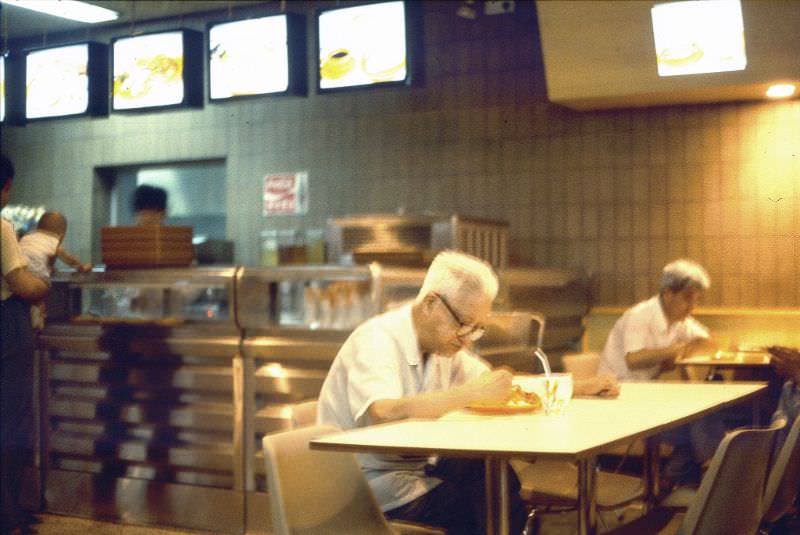
Fast food was just beginning to make its mark. A handful of early fast food restaurants appeared in the city during this period, some carrying branding that loosely resembled Western chains — including one described at the time as having a logo similar to Donald Duck. These spots were novelties, drawing curious Beijingers who had little prior exposure to this style of eating.
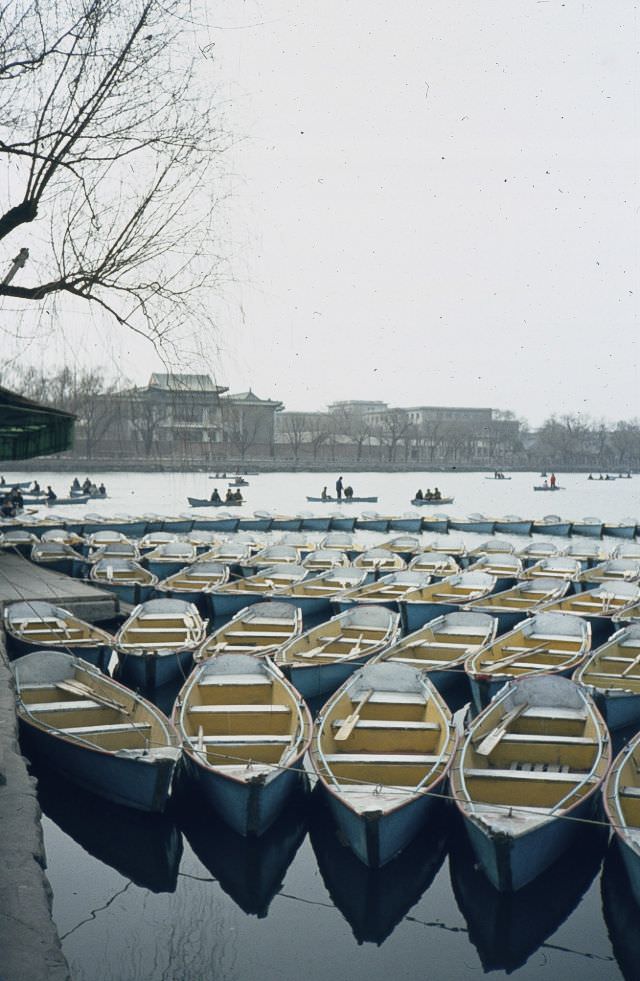
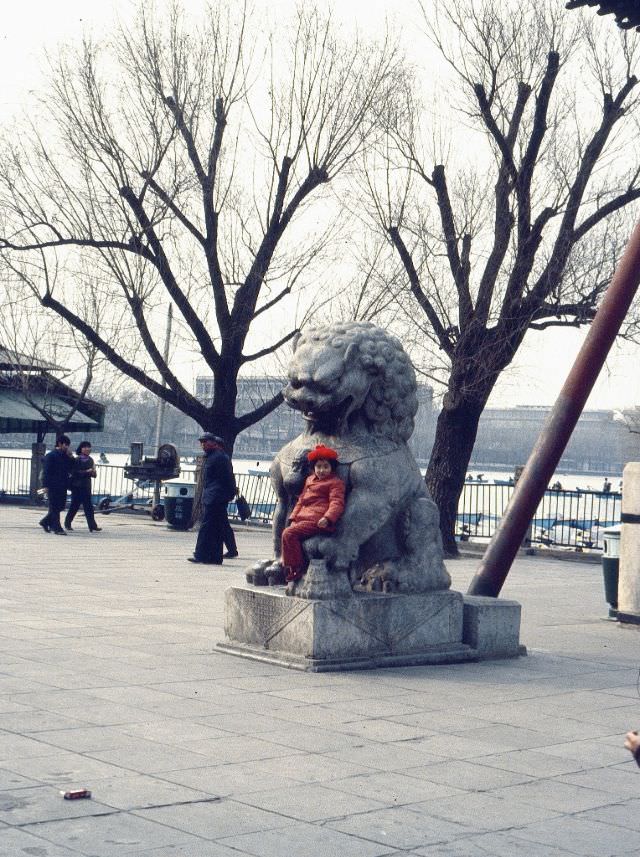
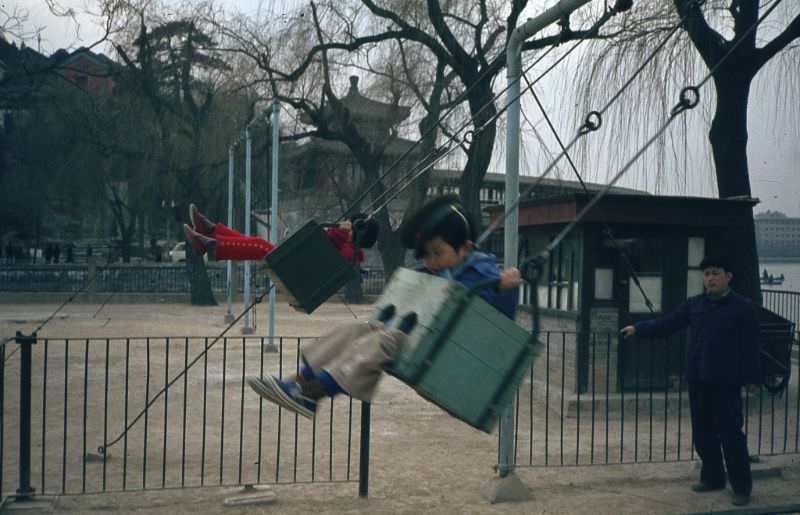
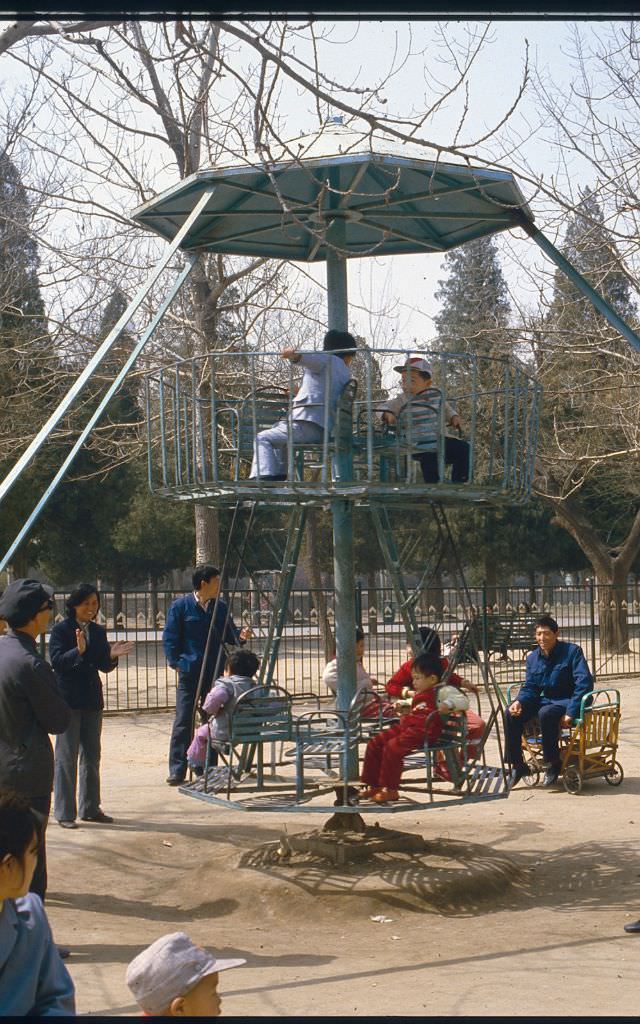
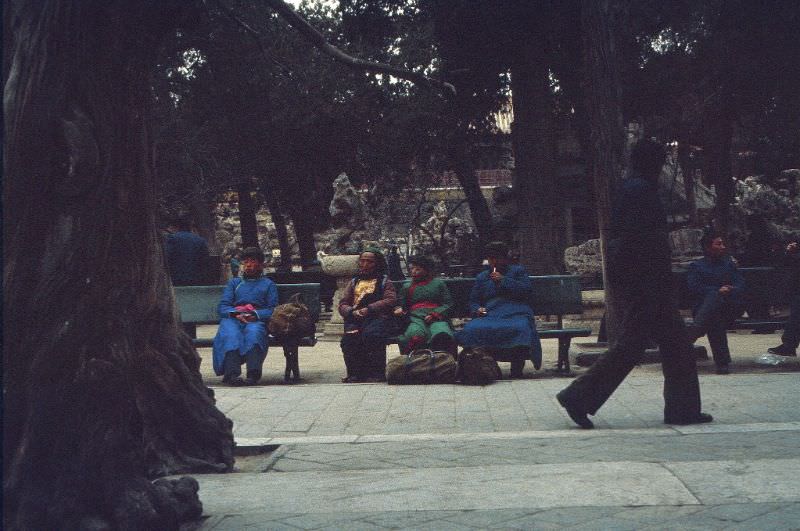
Beihai Park, one of Beijing’s oldest imperial gardens, remained a beloved public space. Residents rowed boats across the lake, elderly women sat watching the world go by, and children climbed on the stone lions placed throughout the grounds. The park offered a slower pace — a contrast to the busy streets outside its walls.
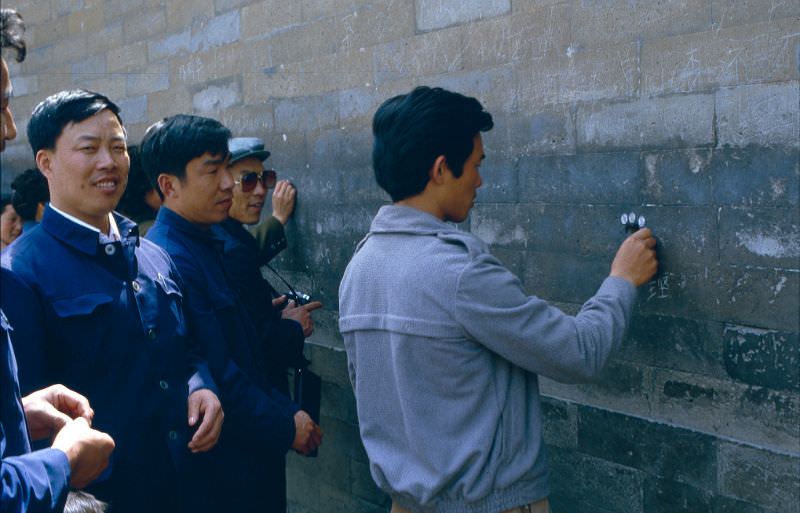
The Temple of Heaven complex drew visitors to its famous Echo Wall, where tourists pressed coins against the curved surface as a kind of ritual. Nearby, the roundabout at Tiantan Park directed the modest but growing flow of motor vehicles through the area. Private car ownership was still rare — the cars that did appear on Chang’an Avenue were notable enough to photograph.
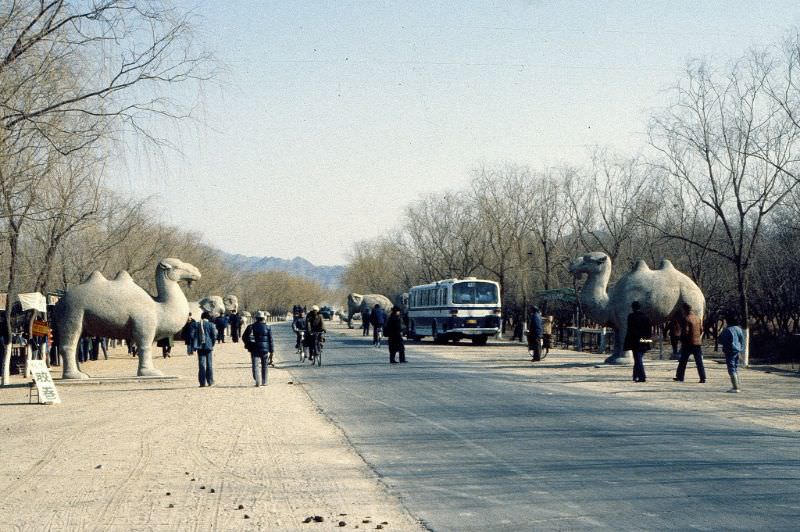
Outside the city, the road leading to the Ming Tombs passed through the Sacred Way — a long stone-paved path flanked by large statues of animals and officials, leading to the burial grounds of thirteen Ming Dynasty emperors. Fruit vendors worked the tourist routes nearby, setting up wherever travelers stopped to rest or take in the views.
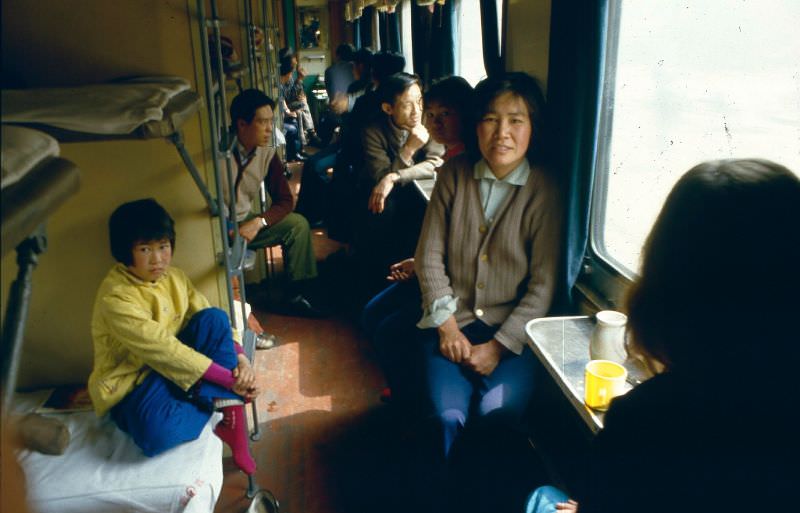
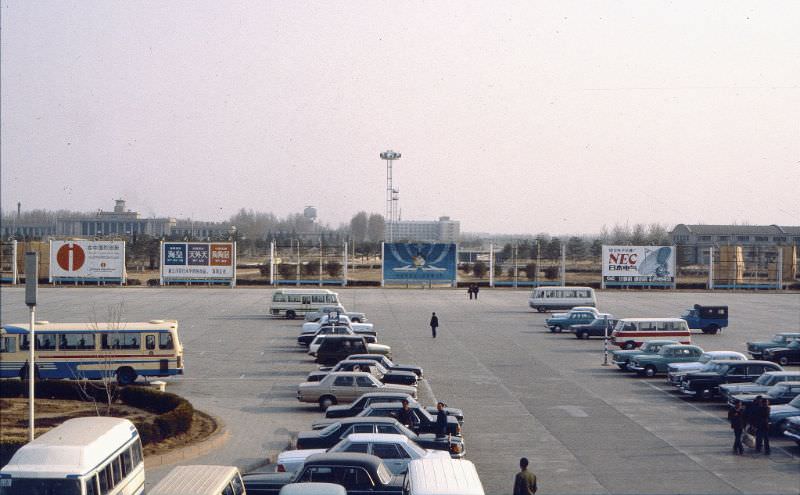
Rail travel connected Beijing to the rest of the country. The hard sleeper carriages on trains to cities like Xi’an were packed with passengers — a practical and affordable option for long-distance travel in an era when air travel remained out of reach for most people. Beijing Capital Airport, meanwhile, was beginning to see more traffic as the country opened up, its parking lots a visible indicator of the slow rise in aviation.
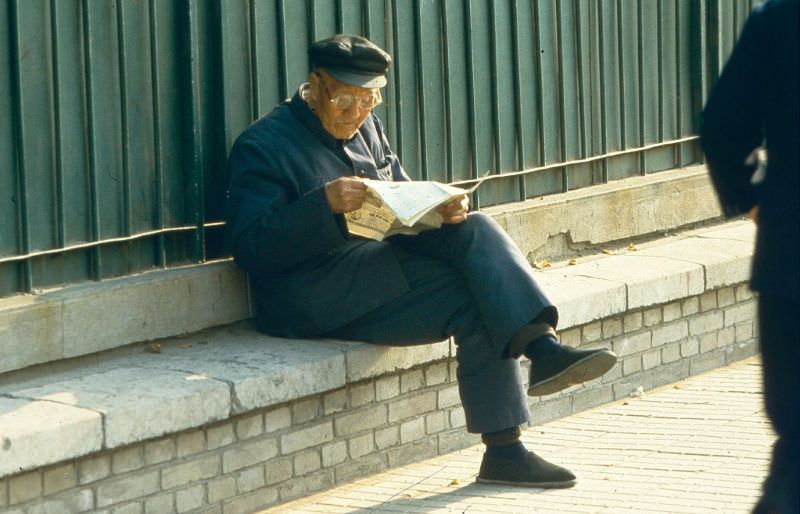
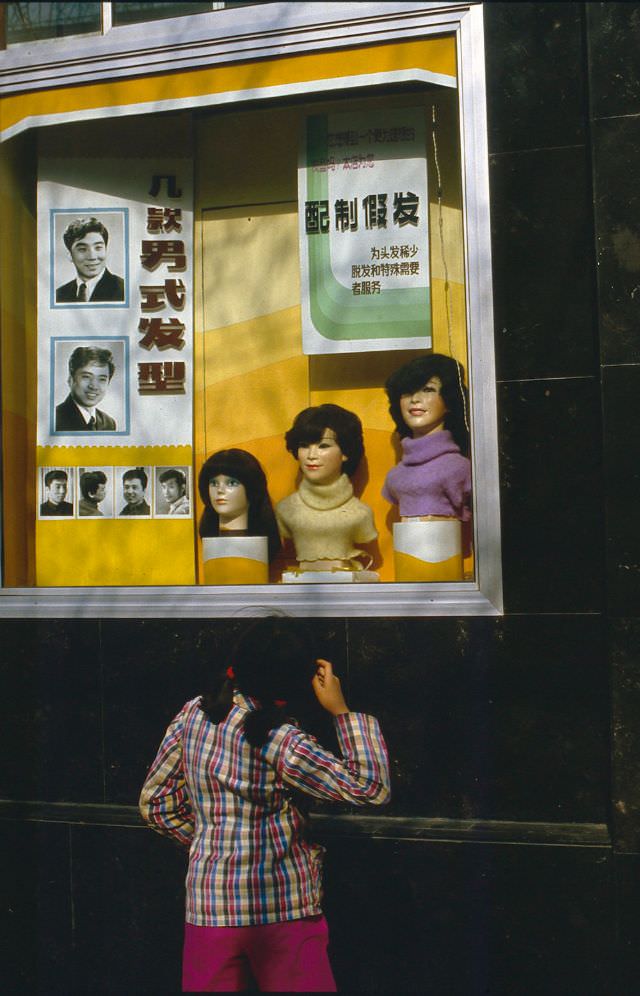
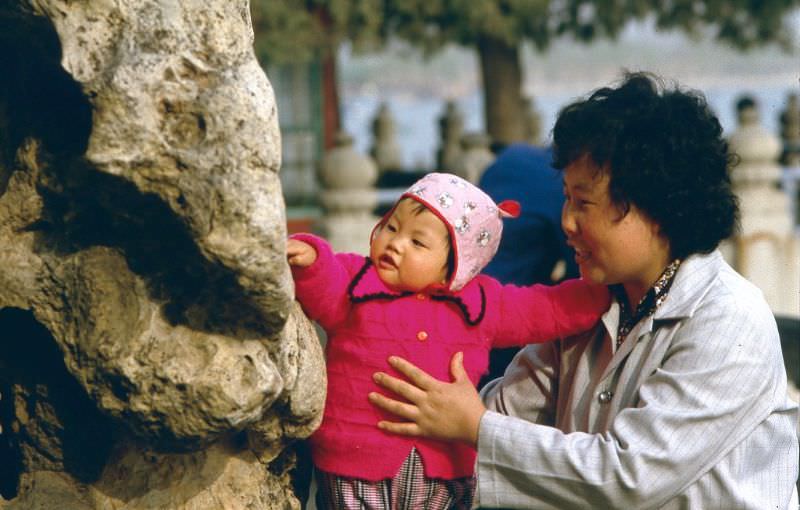
Daily life played out in small, vivid details across the city. An old man read quietly in the open air. A girl paused in front of a barbershop display, touching her own hair as she studied the haircut models in the window. A mother walked with her young daughter. Vendors and buyers negotiated over produce. These were the ordinary rhythms of a city that, for all its political weight and historical grandeur, was still very much a place where people lived ordinary lives.
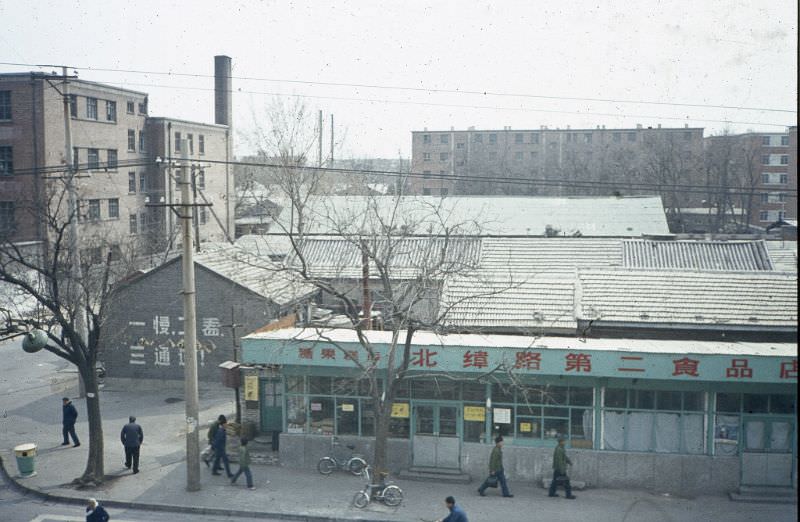
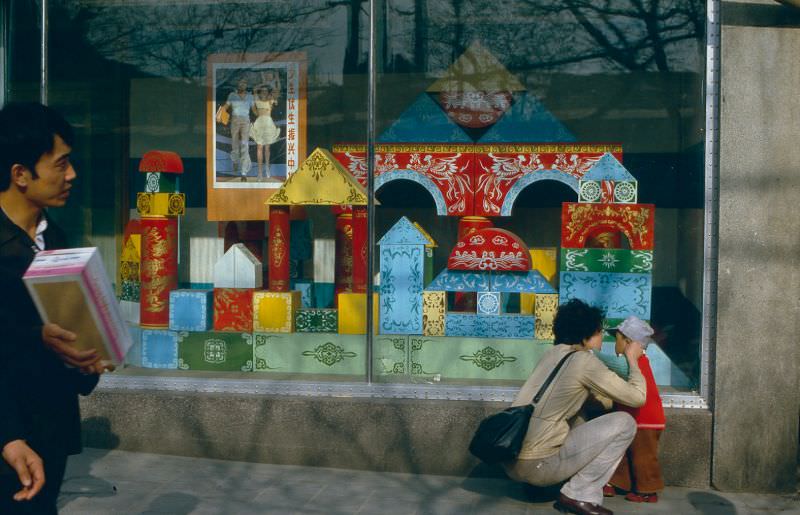
Qianmen, the historic gate just south of Tiananmen Square, anchored one of the city’s busiest commercial districts. The streets around it — including Beiwei Street — were filled with shoppers, cyclists, and workers. Toy stores, newspaper sellers, and small shops lined the pavements. The Beijing Hotel, visible from multiple directions across the central city, served as a landmark for both foreign visitors and locals alike.
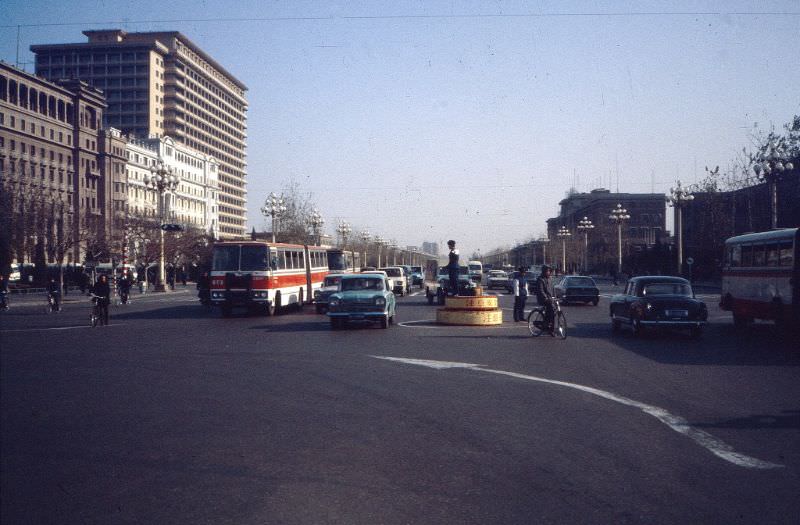
Traffic safety was a growing public concern as more vehicles appeared on roads that had been designed primarily for pedestrians and cyclists. Government signs reminded residents that road safety affected every household. The warning was well-founded — the mix of bicycles, army trucks, buses, and the first wave of private cars created a chaotic new dynamic on streets that were still learning to manage it.





Spitting is not hygienic, ROFL!
Pretty drab.