Austin, Texas, in the 1960s was a city on the move. Construction cranes dotted the skyline, new roads cut through old neighborhoods, and the population was growing fast. The University of Texas brought students, ideas, and energy to the city. State government, local commerce, and a thriving arts scene all fed into a place that felt, at the time, like it was being built from scratch. These historical photographs capture Austin street by street, building by building, and moment by moment across a decade that reshaped it permanently.
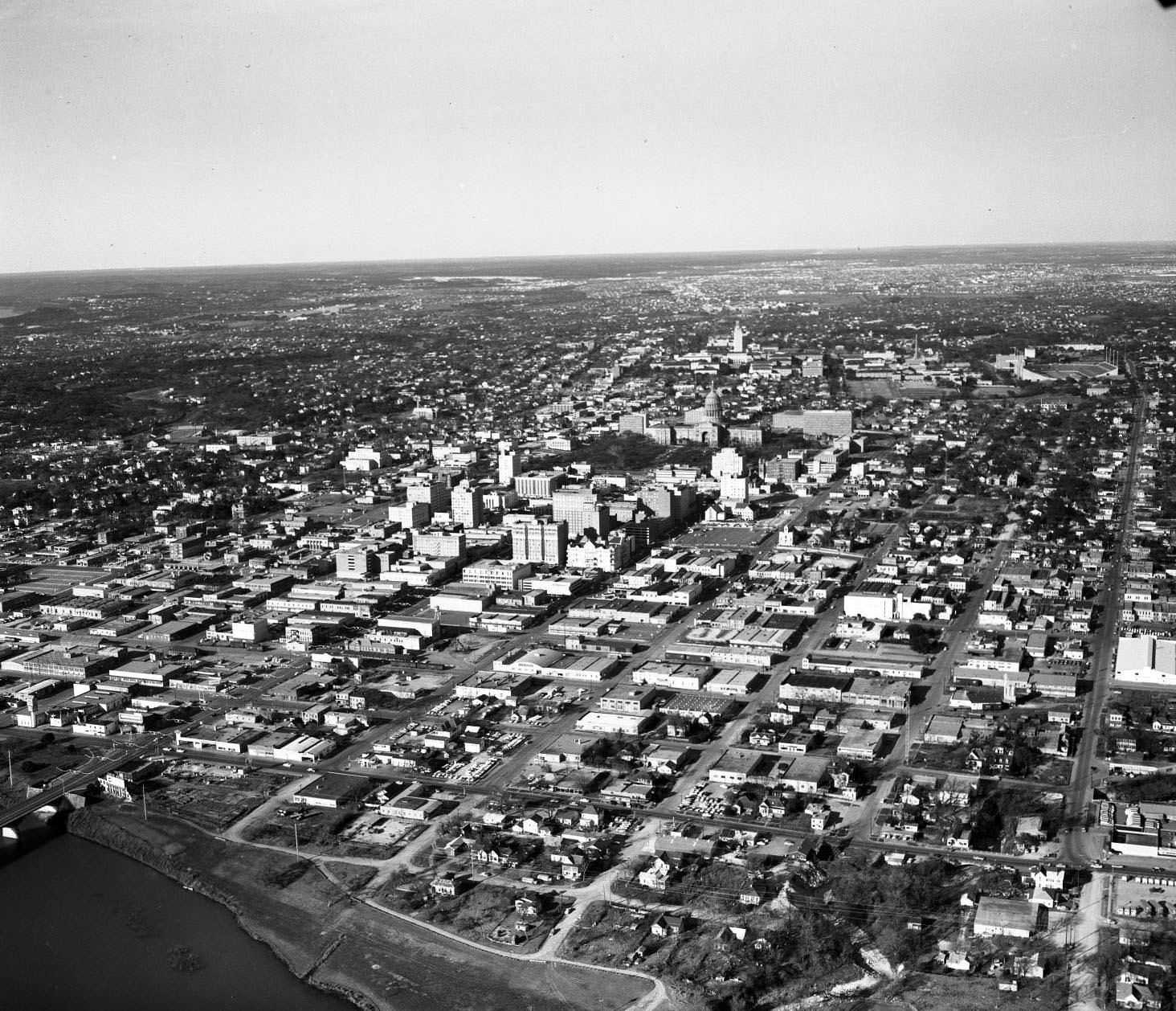
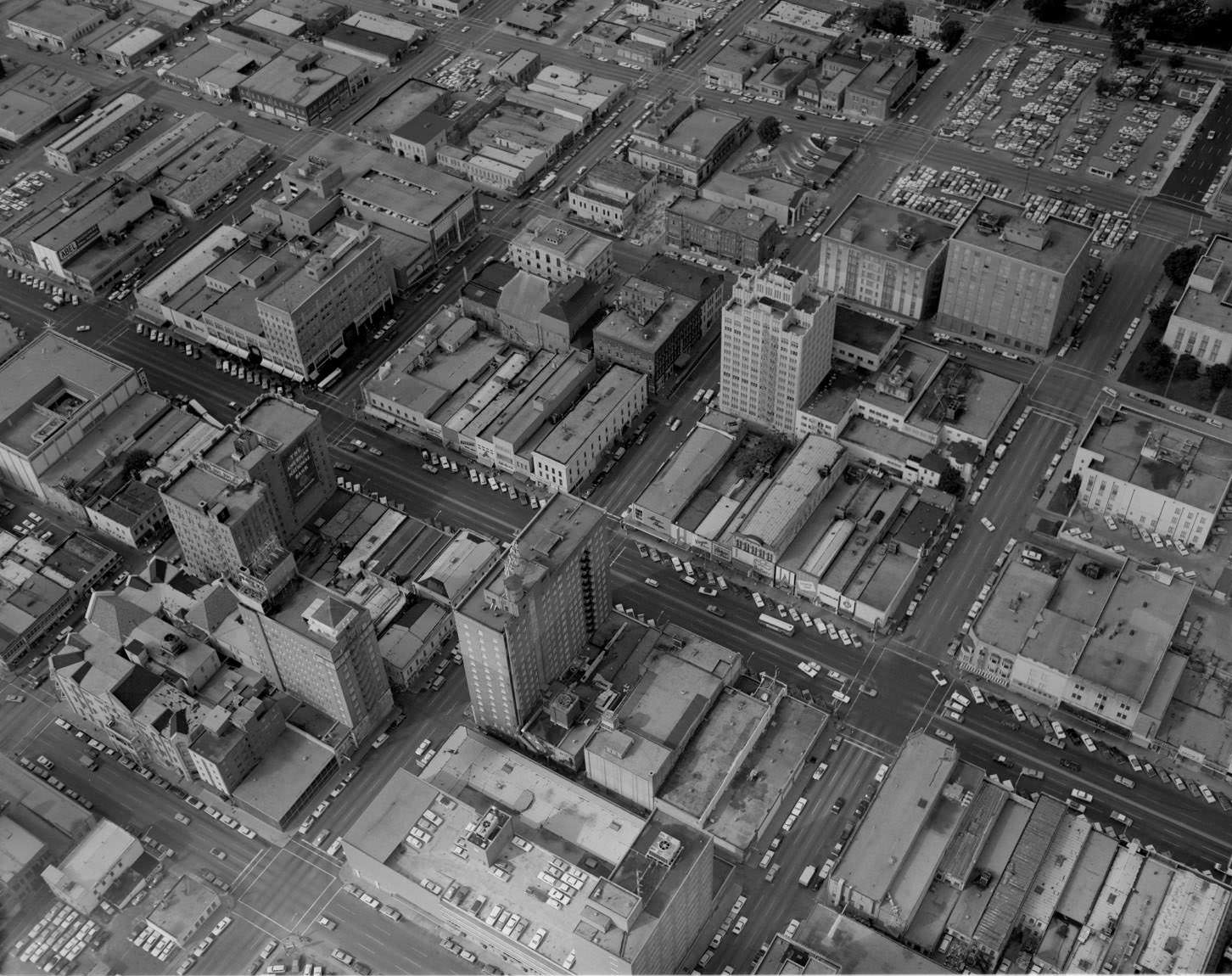
Aerial photograph of downtown Austin, 1963
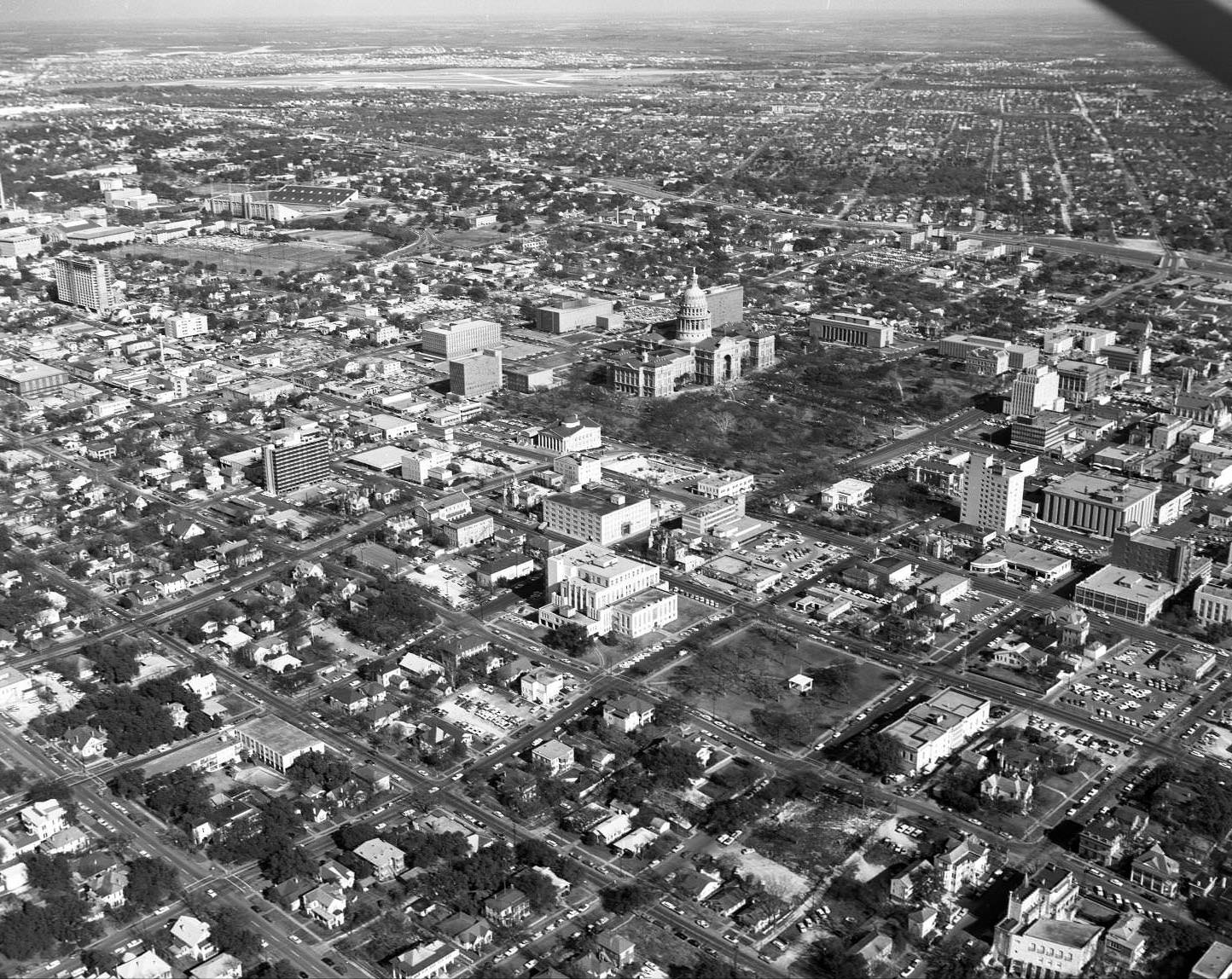
From the air, downtown Austin in the early 1960s showed its bones clearly. Congress Avenue ran like a spine straight toward the Texas State Capitol, flanked by banks, department stores, and government buildings. The Colorado River curved to the south, and the surrounding streets were lined with a mix of mid-century commercial buildings and older structures from decades past.
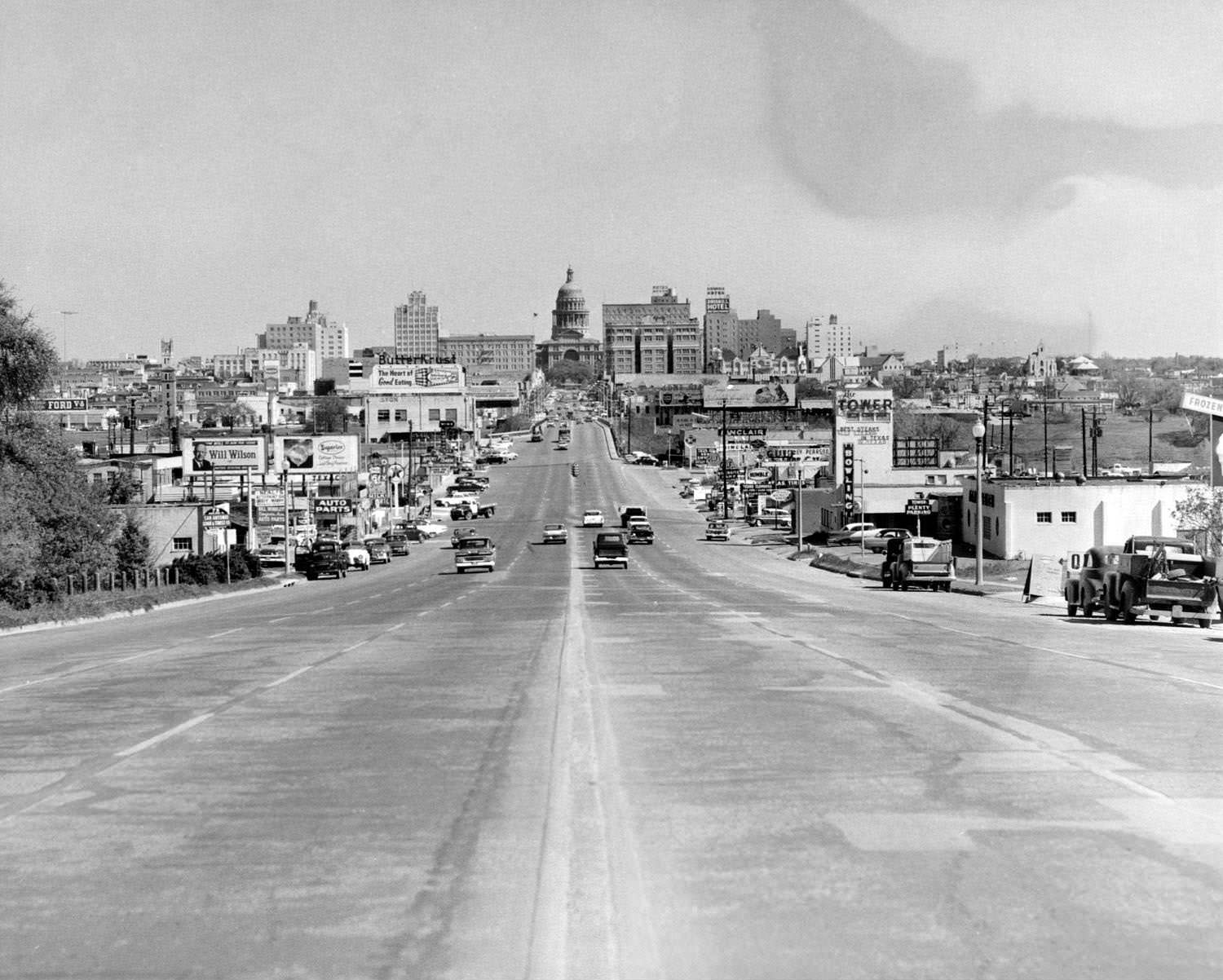
View of Congress Avenue to Capitol, 1961.Looking north on Congress with Capitol in view. 1961.
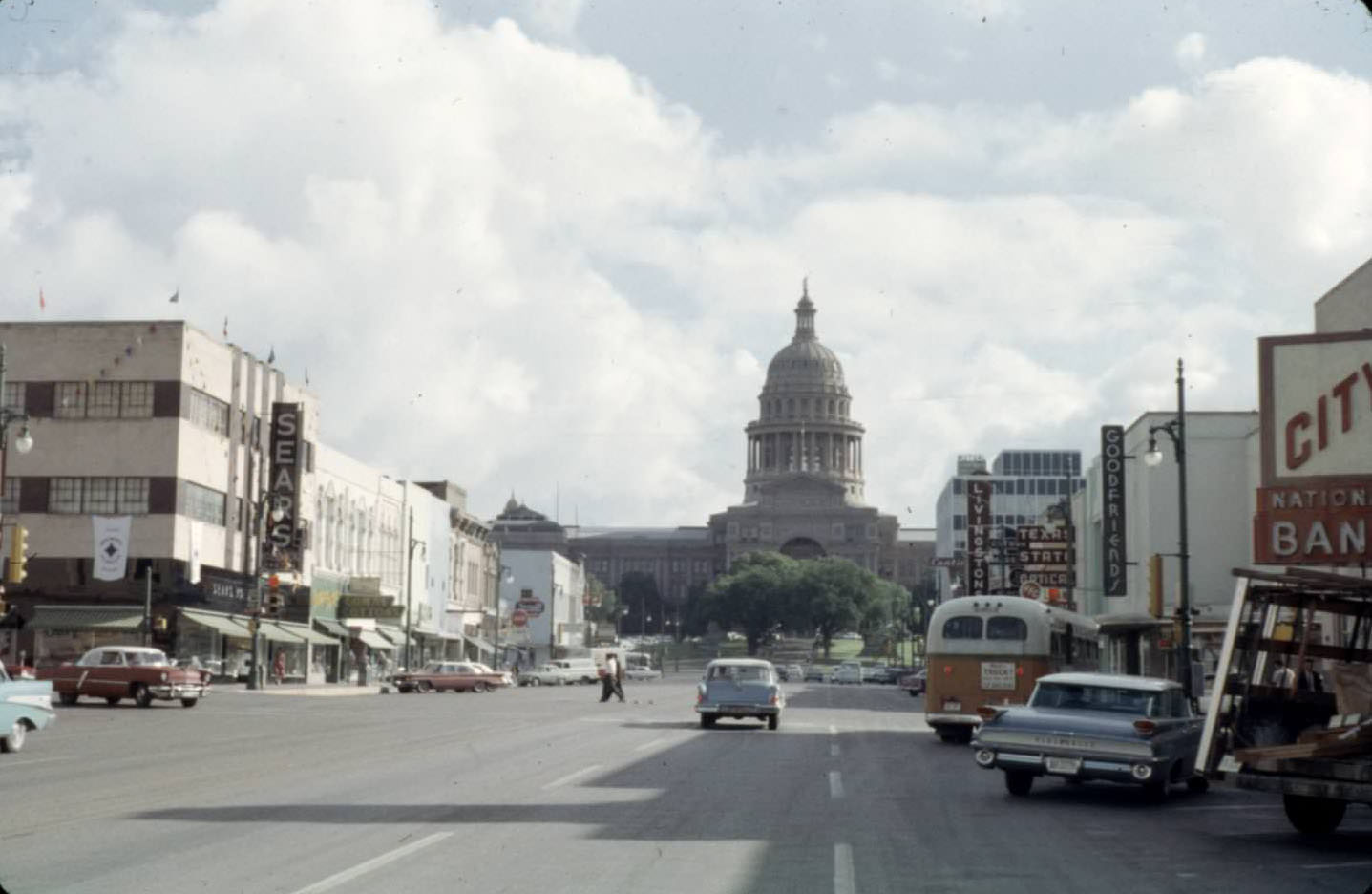
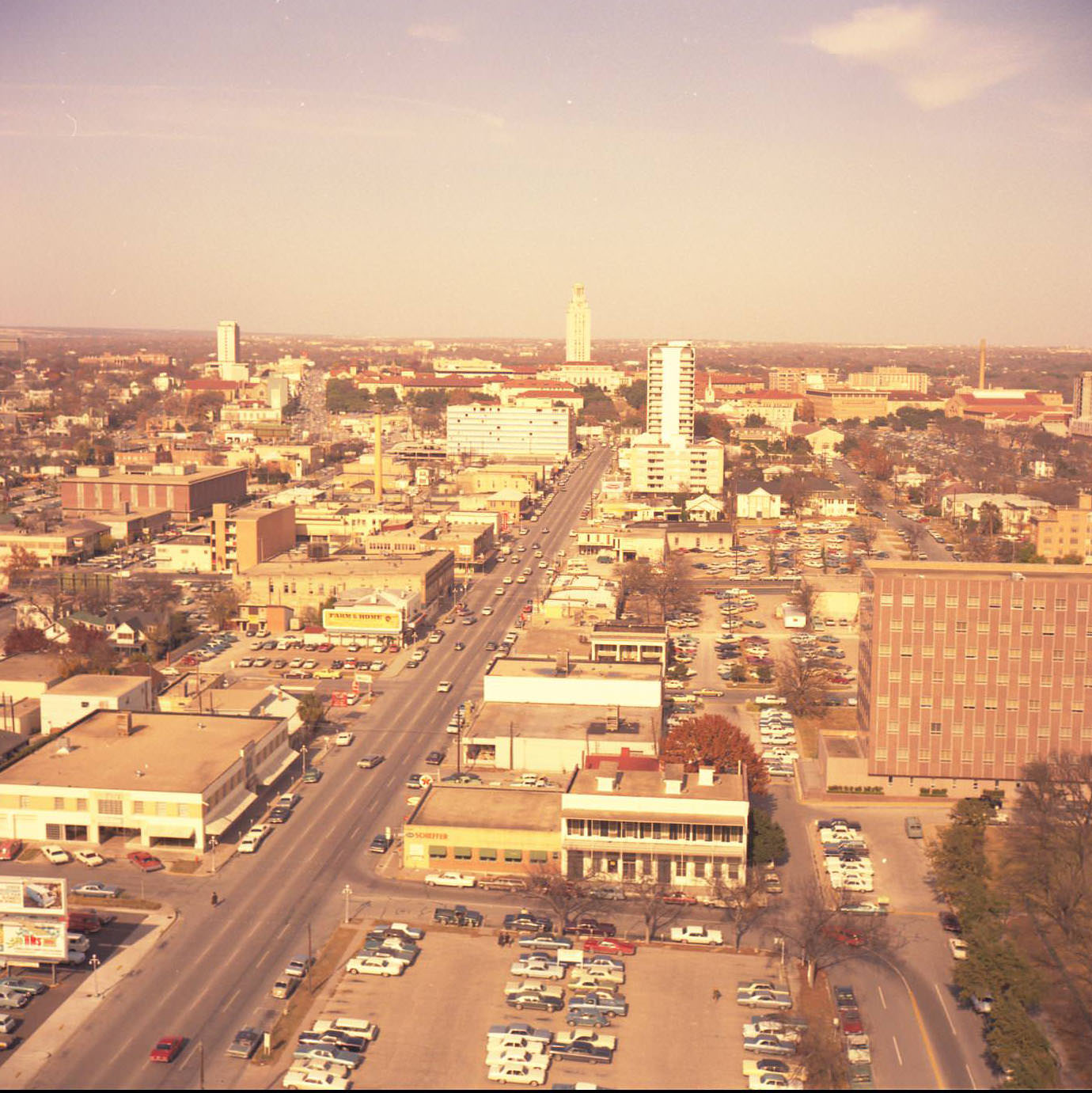
Congress Avenue was the commercial and political heart of the city. Looking north from anywhere along the street, the Capitol dome dominated the view. Cars from the late 1950s and early 1960s filled the lanes, and storefronts lined both sides of the wide boulevard. The street was a gathering point for Austin residents heading to work, shopping, or city business.
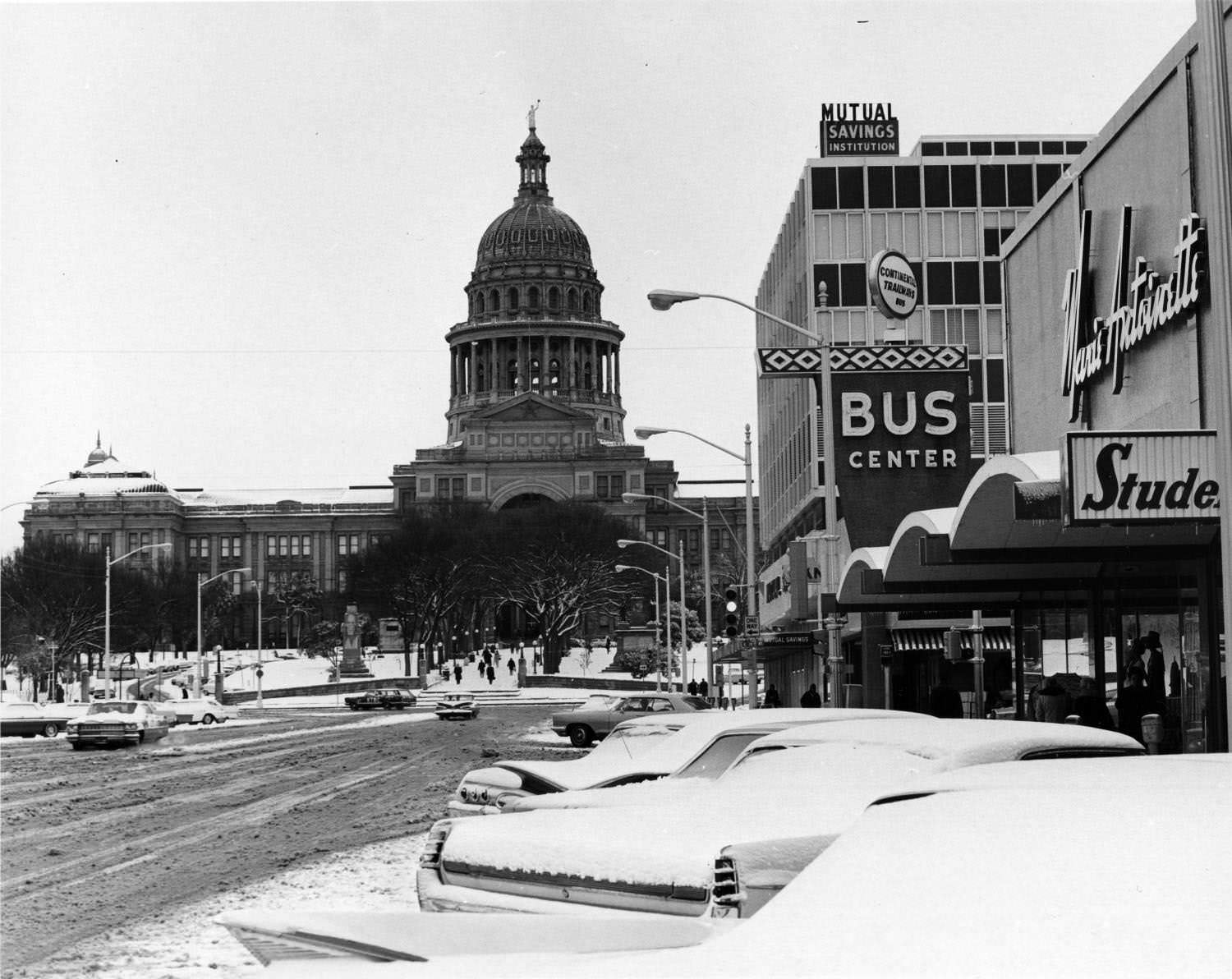
Congress Avenue with Capitol in snow, 1967. The street is slushy with dirty snow that hasn’t been plowed, and cars parked along the side of the streets are covered in snow.
Winter occasionally brought unusual scenes to central Texas. In January 1967, a snowfall blanketed Congress Avenue, leaving parked cars buried and the street thick with slush. For Austin, snow was a rarity, and the city had little equipment to handle it. Drivers and pedestrians moved carefully through the mess while the Capitol stood, as always, at the far end of the street.
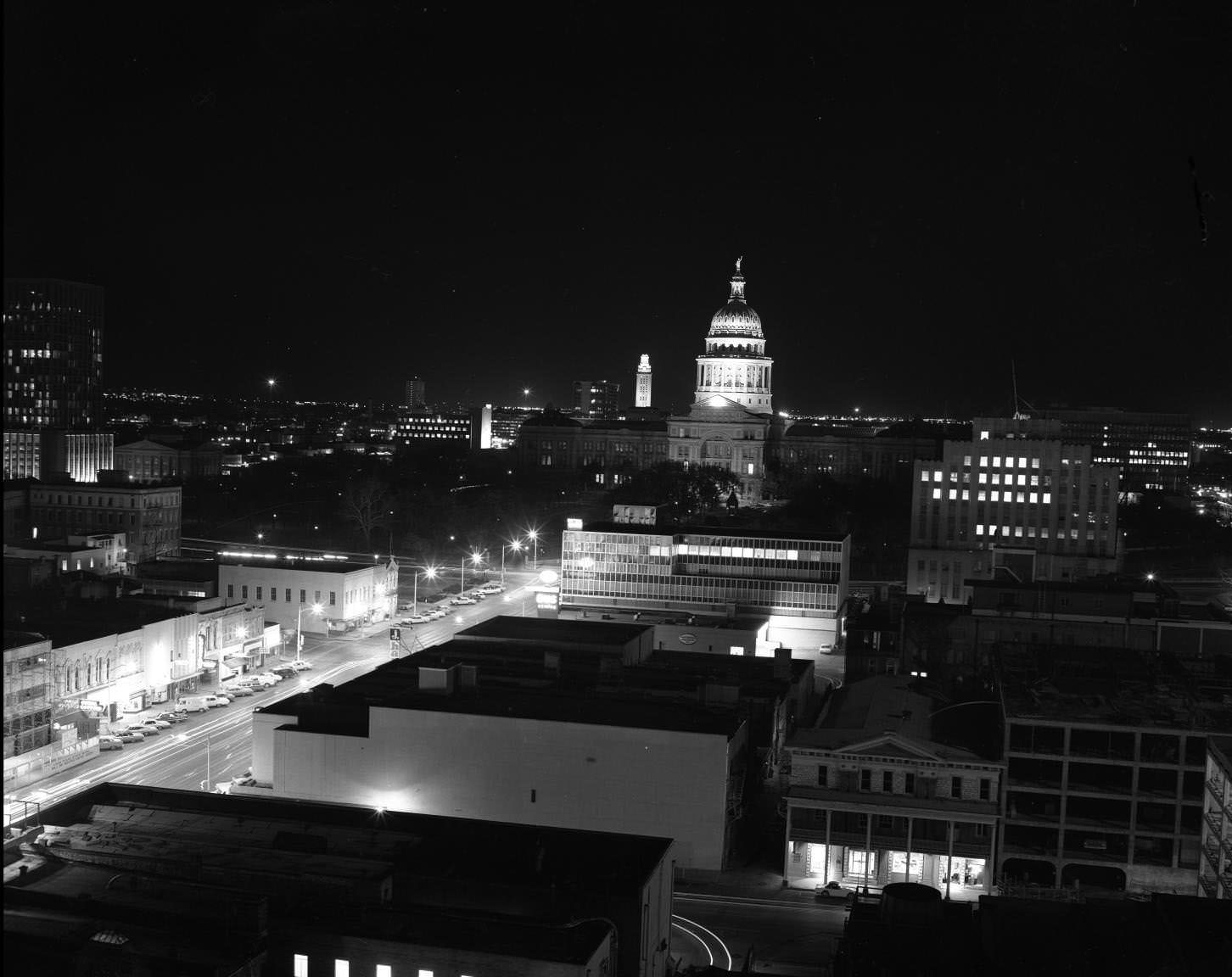
Austin, Texas shot from downtown on South Congress showing the State Capitol lit up at night, 1968
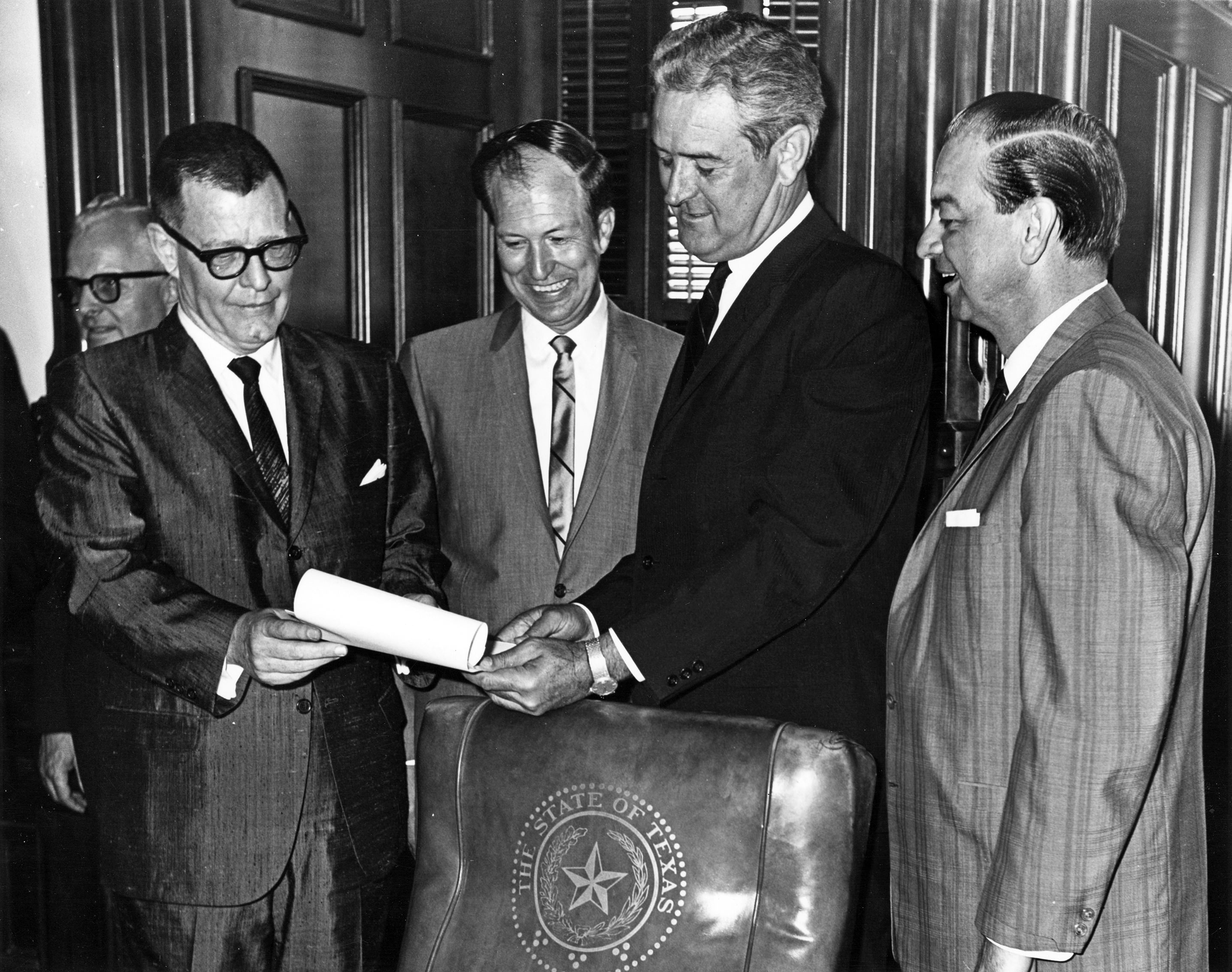
The Texas State Capitol was more than just a landmark. It was the center of state politics during a turbulent decade. Governor John Connally, who occupied the nearby Governor’s Mansion through much of the 1960s, signed major legislation during his tenure, including a 1965 bill transferring Arlington State College into the University of Texas System.
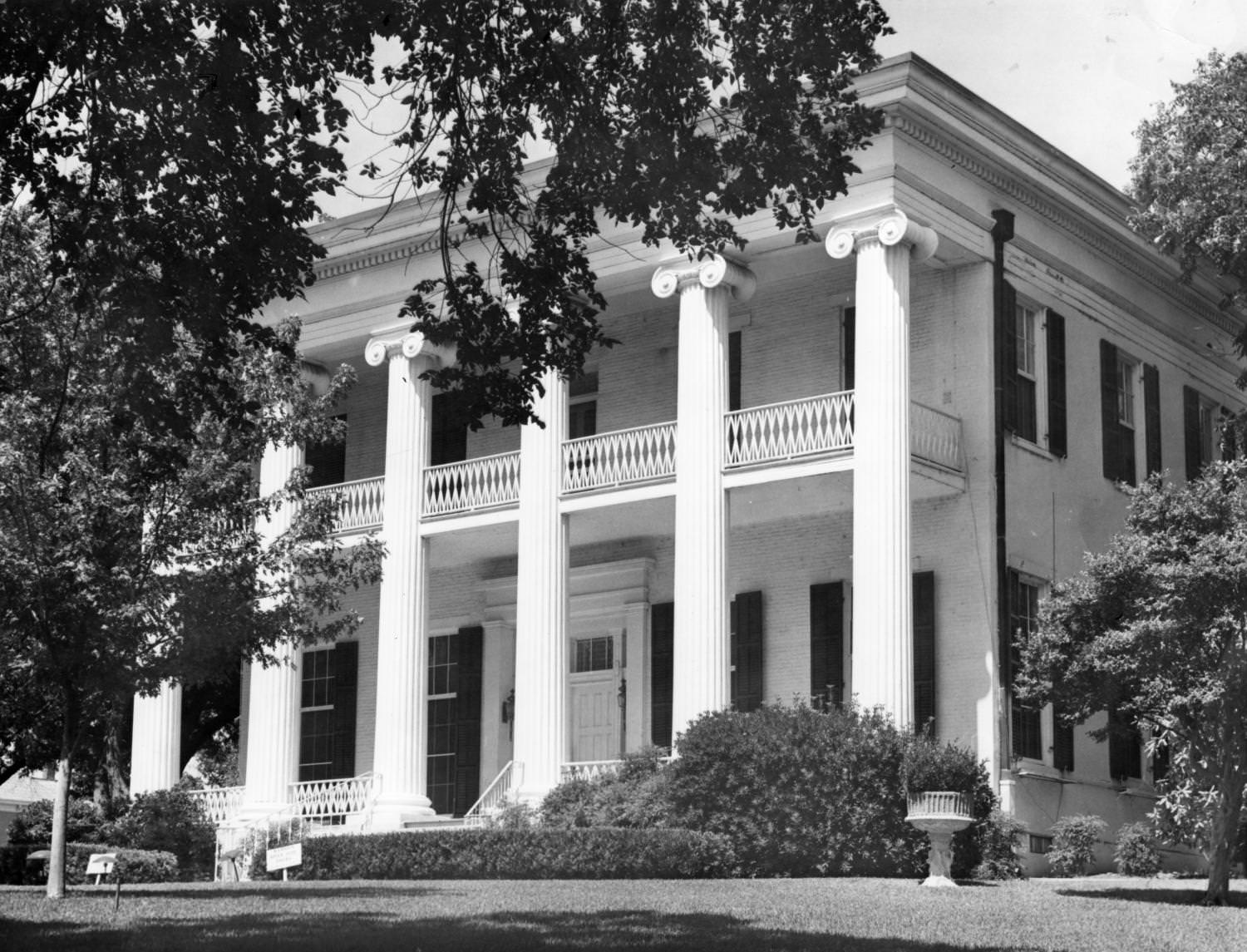
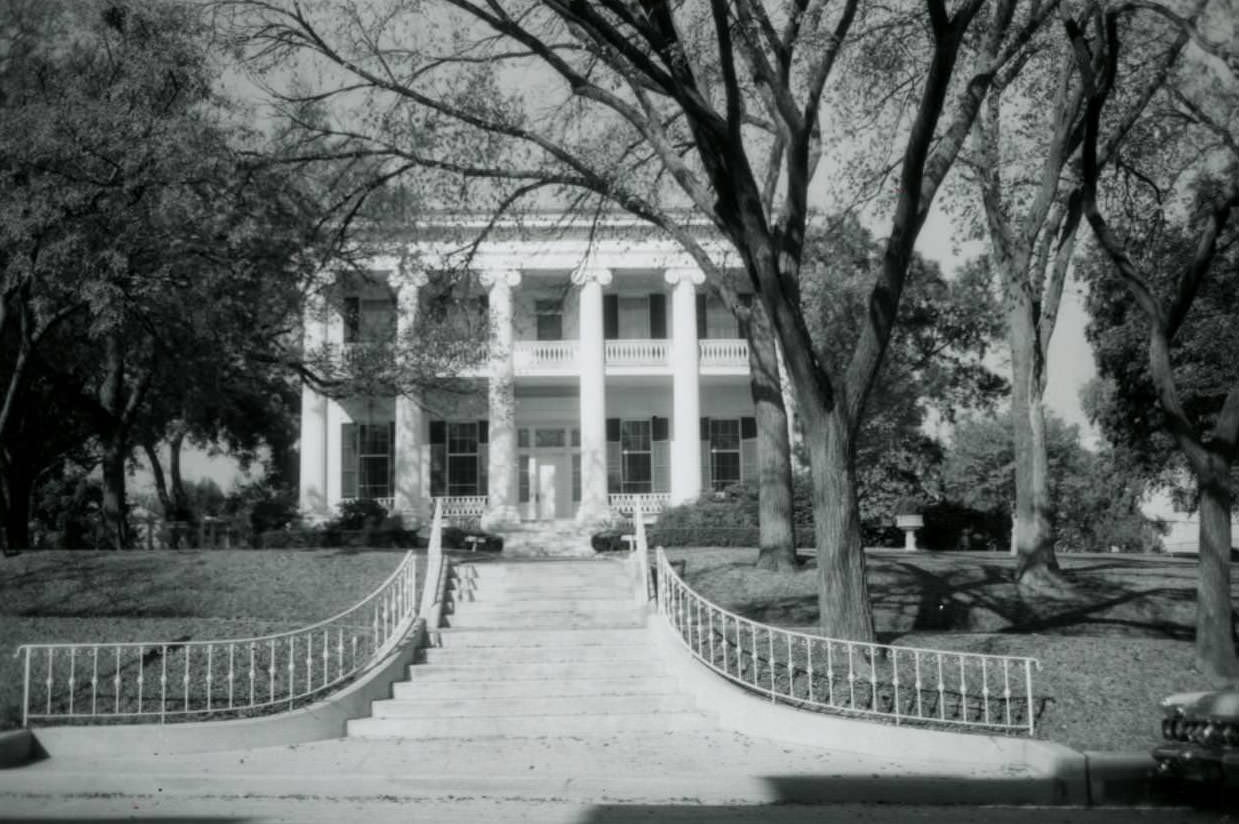
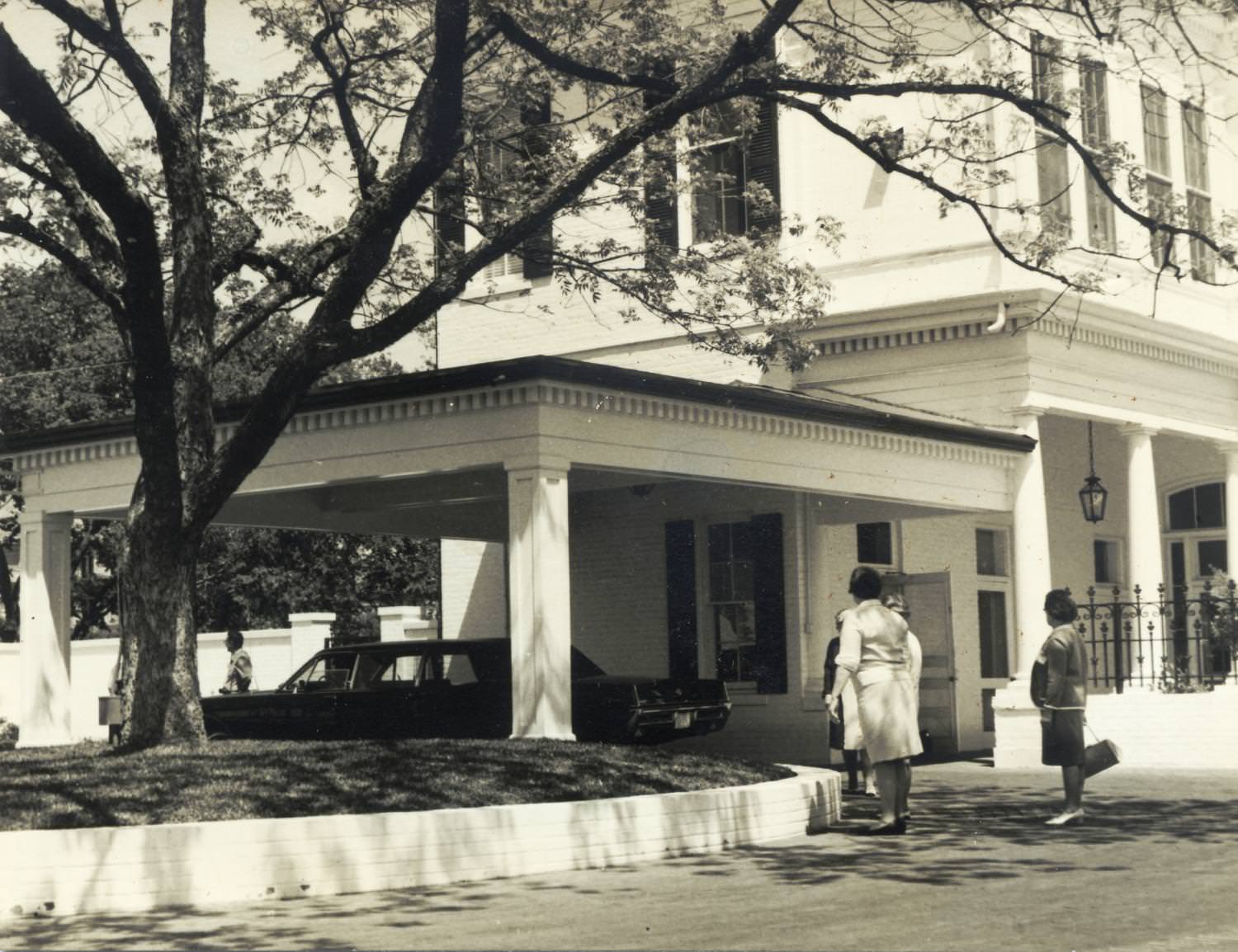
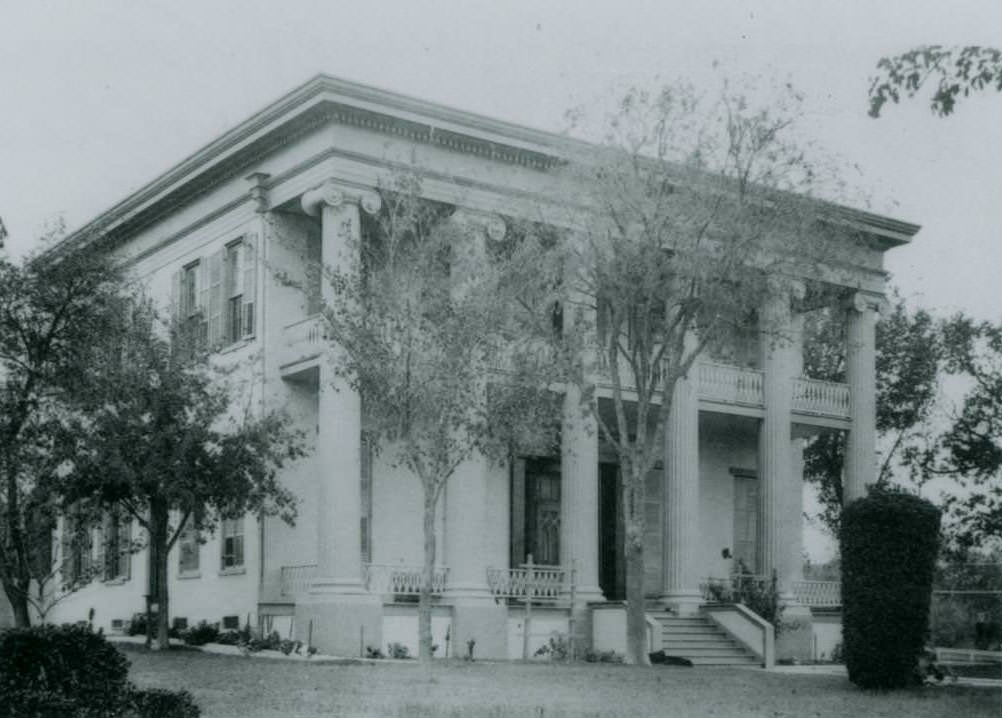
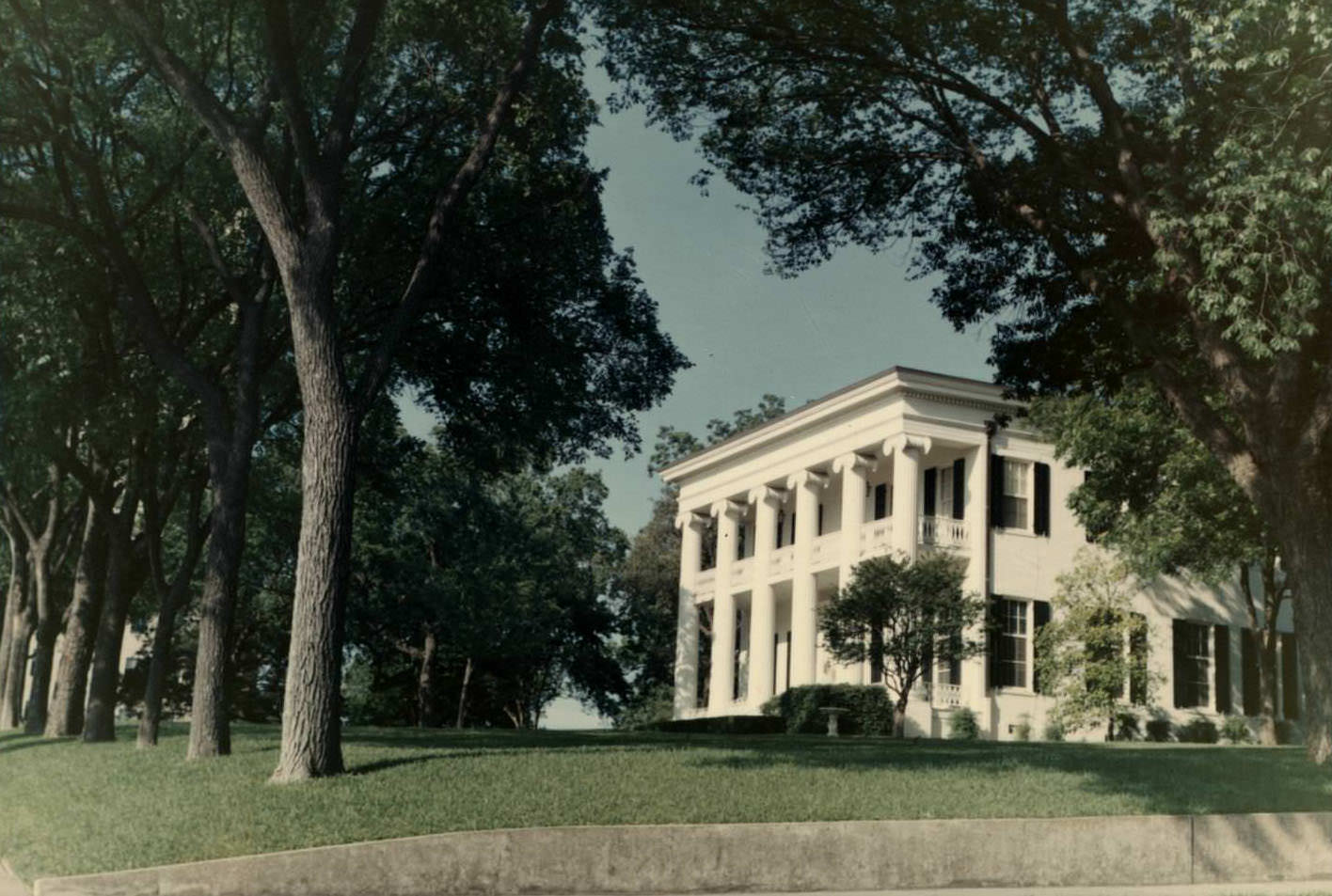
Front exterior of Governor’s Mansion, 1967The entrance to the Texas Governor’s Mansion at 1010 Colorado Street, 1964Texas Governor’s mansion with limousine underneath attached carport, 1965Governor’s Mansion. d1964Governor’s Mansion, 1967.
The Governor’s Mansion, built by Abner Cook in 1855 and continuously occupied since 1856, was declared a Texas historical landmark in 1962. John Connally lived there during his time as governor. The building at 1010 Colorado Street was one of the most photographed in the city, its Greek Revival columns and formal grounds a constant presence near the Capitol complex.
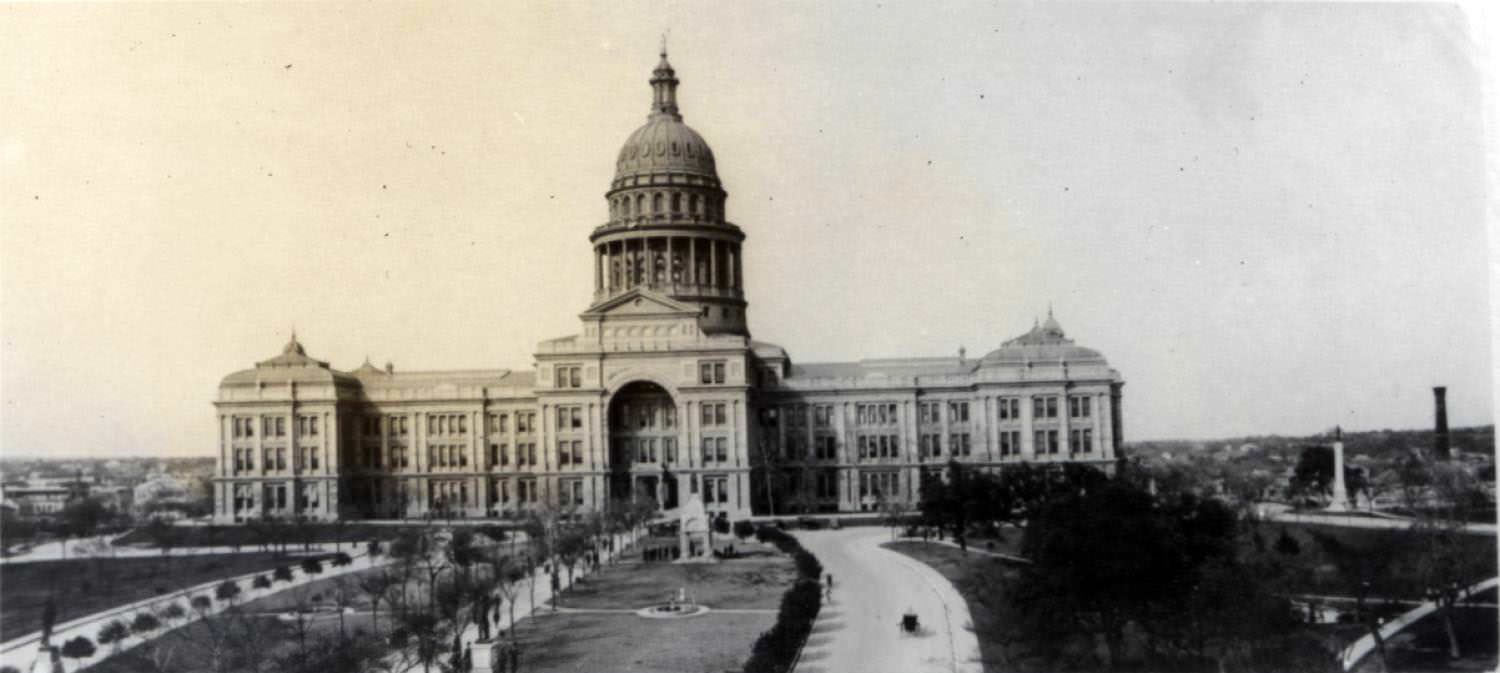
Governor John Connally holding bill for transferring Arlington State College to the University of Texas System, 1965Copy of Photograph of 1919 Texas State Capitol, 1967.
The Capitol itself was a subject of civic pride. Archivists and photographers documented it from multiple angles throughout the decade. A copy photograph taken in 1967 preserved an earlier image of the building from 1919, showing just how deliberately Austinites worked to maintain a visual record of their city’s most important structures.
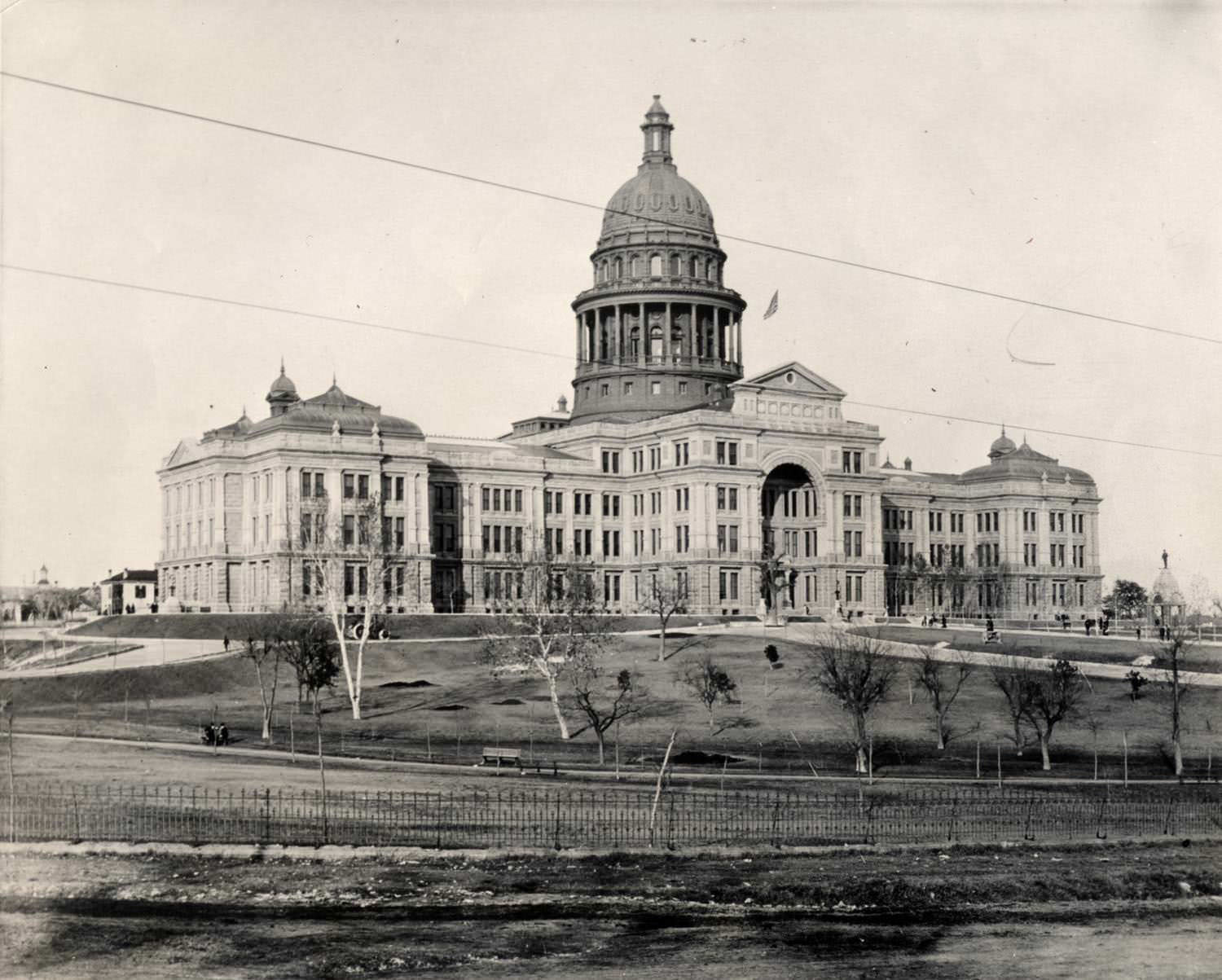
The Texas State Capitol building in the late 1890s or early 1900s taken from the balcony at 1006 Congress Avenue, 1962
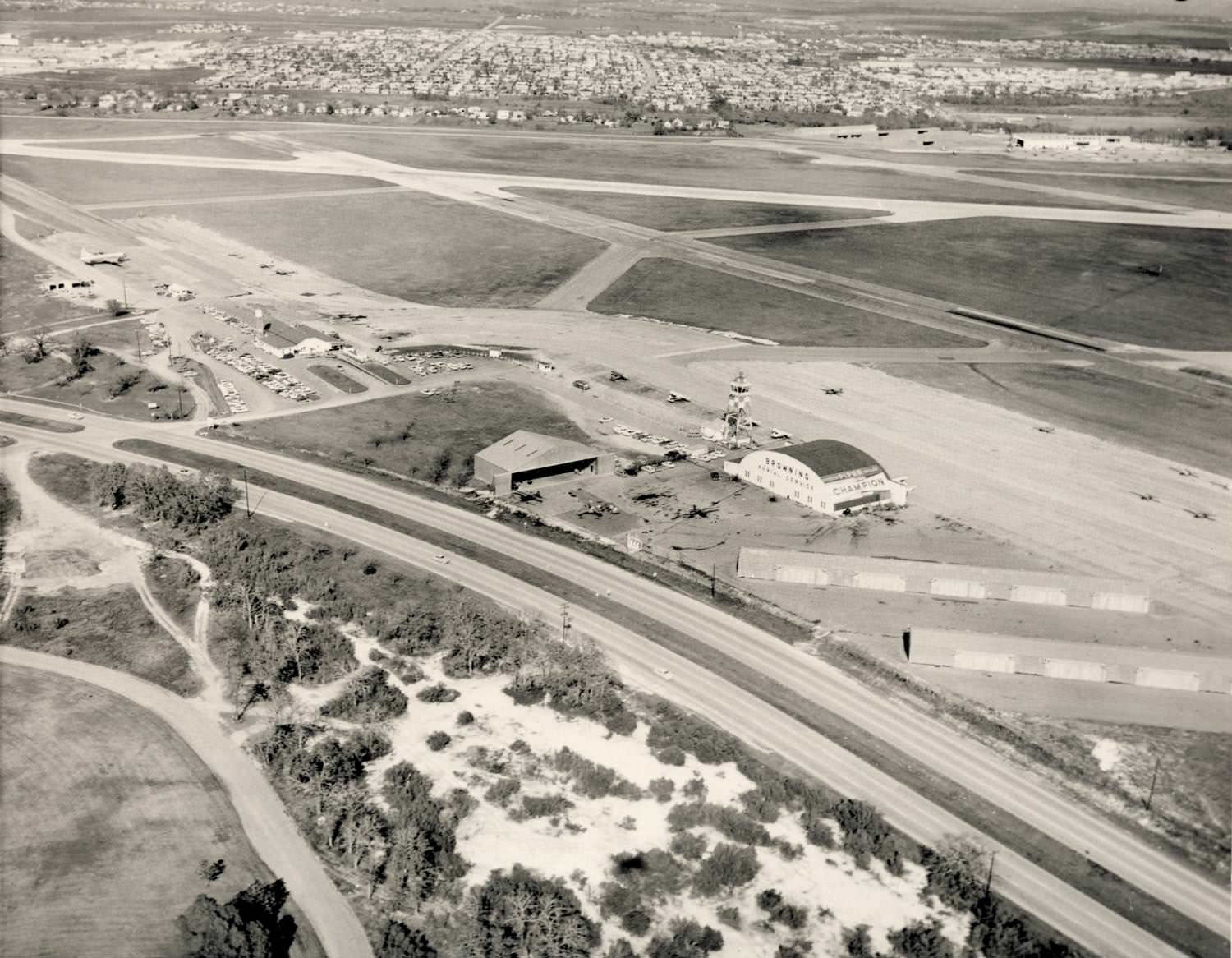
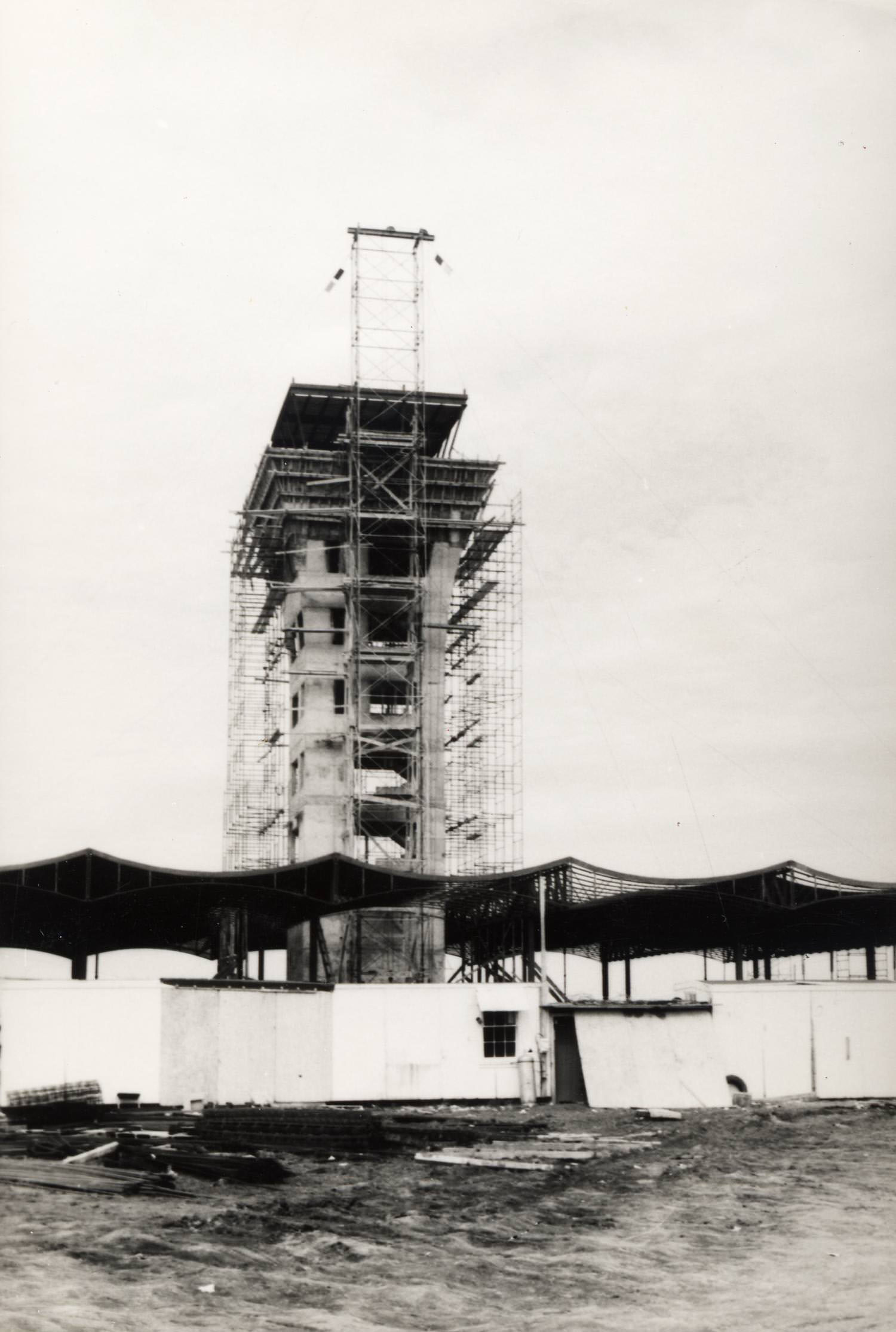
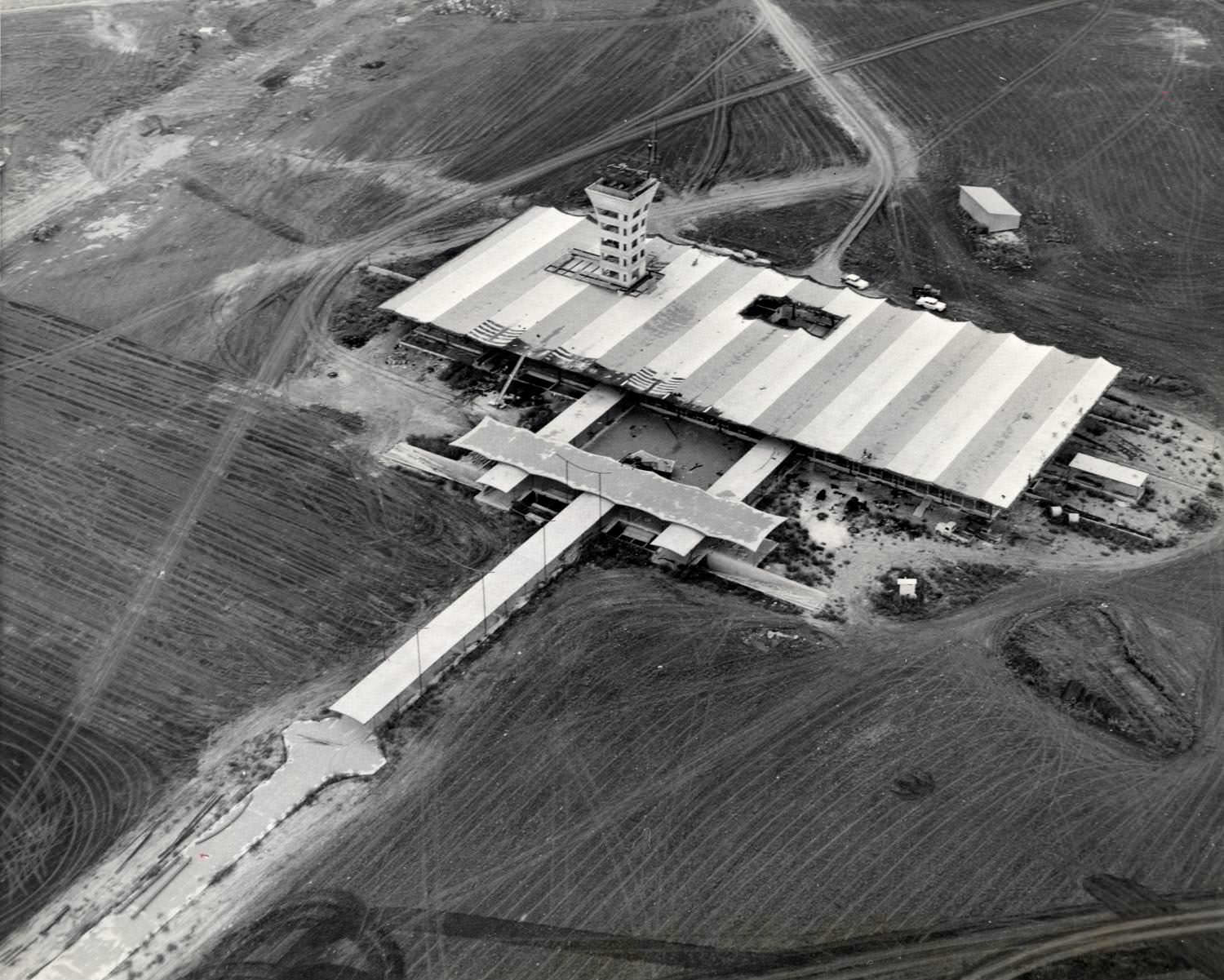
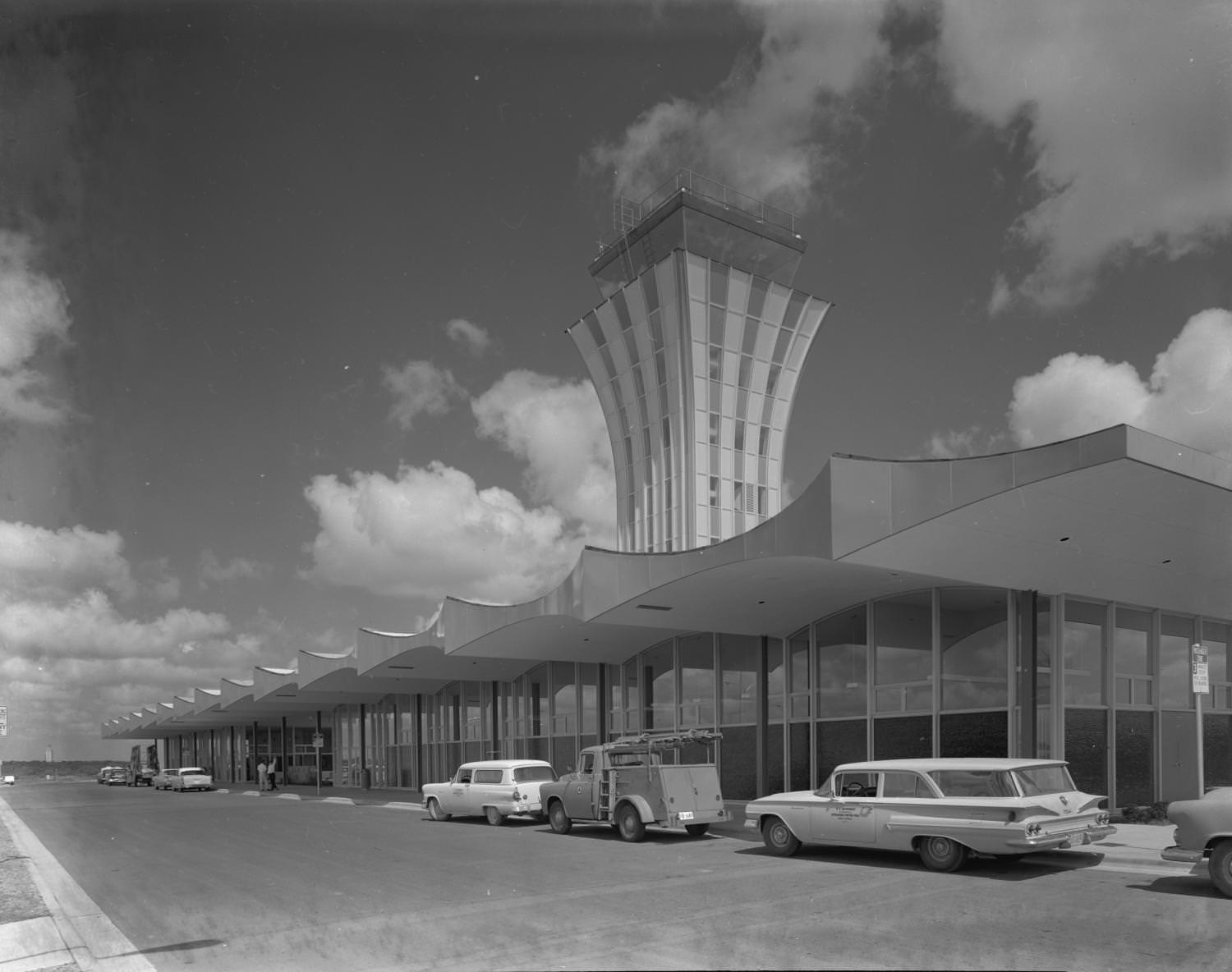
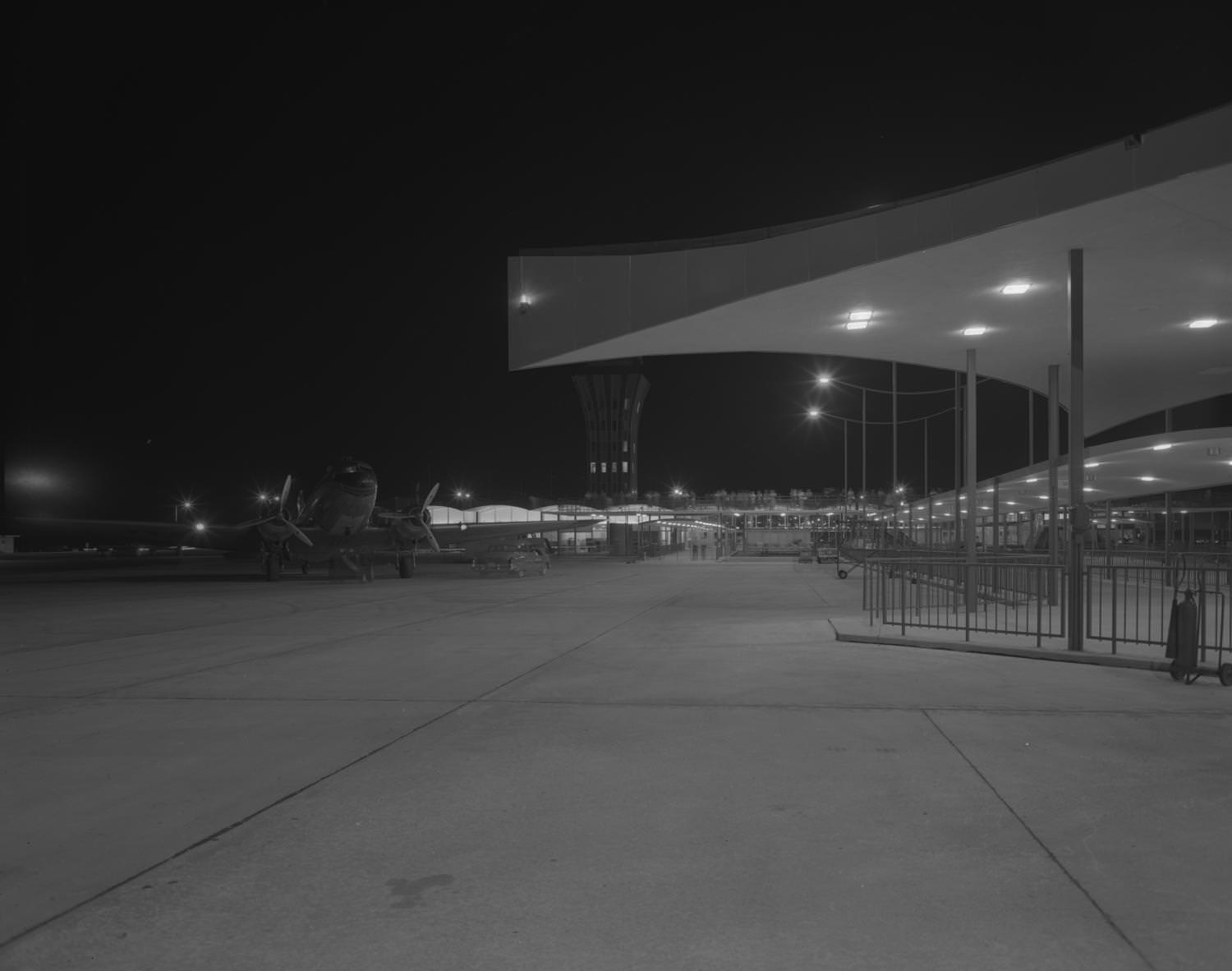
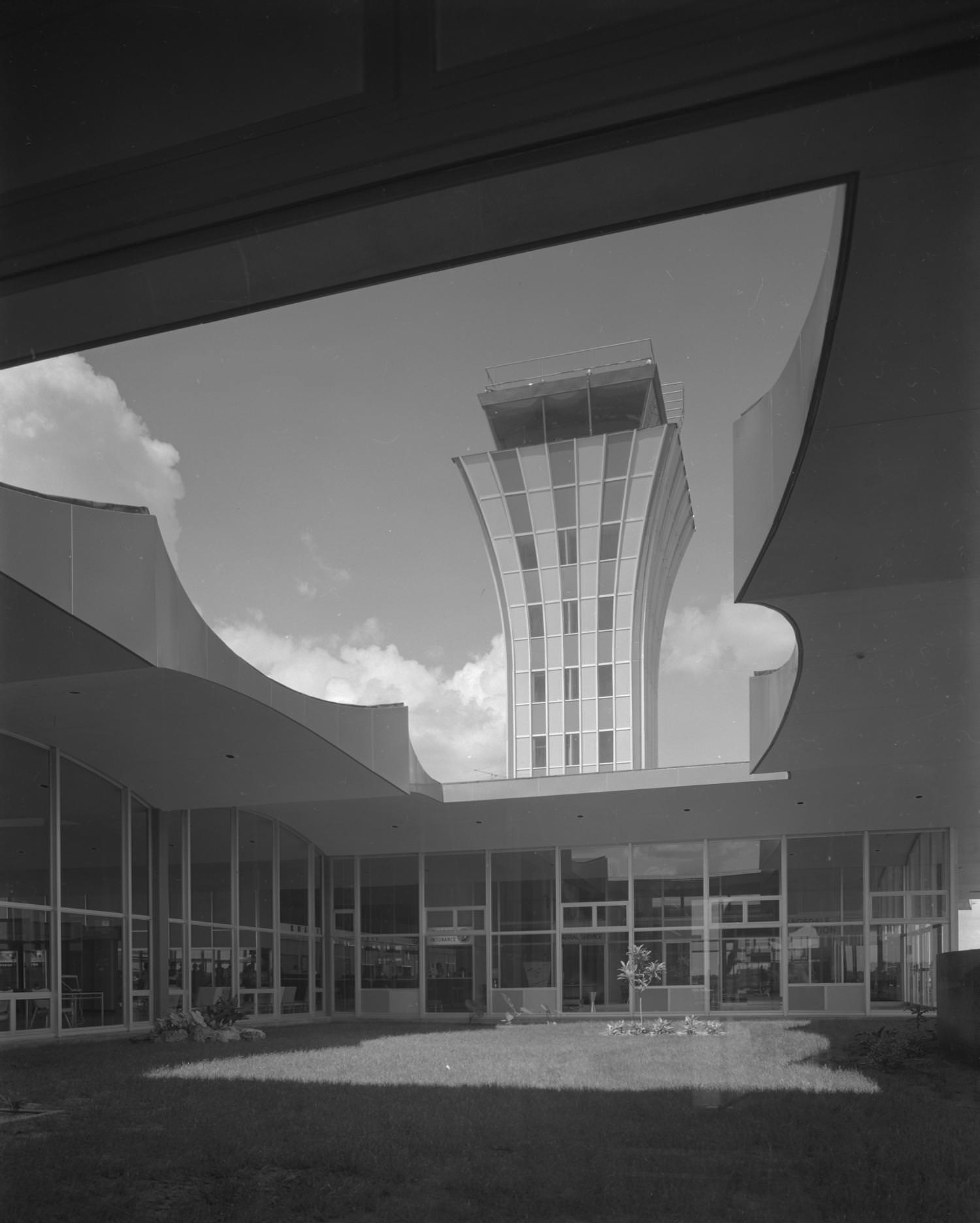
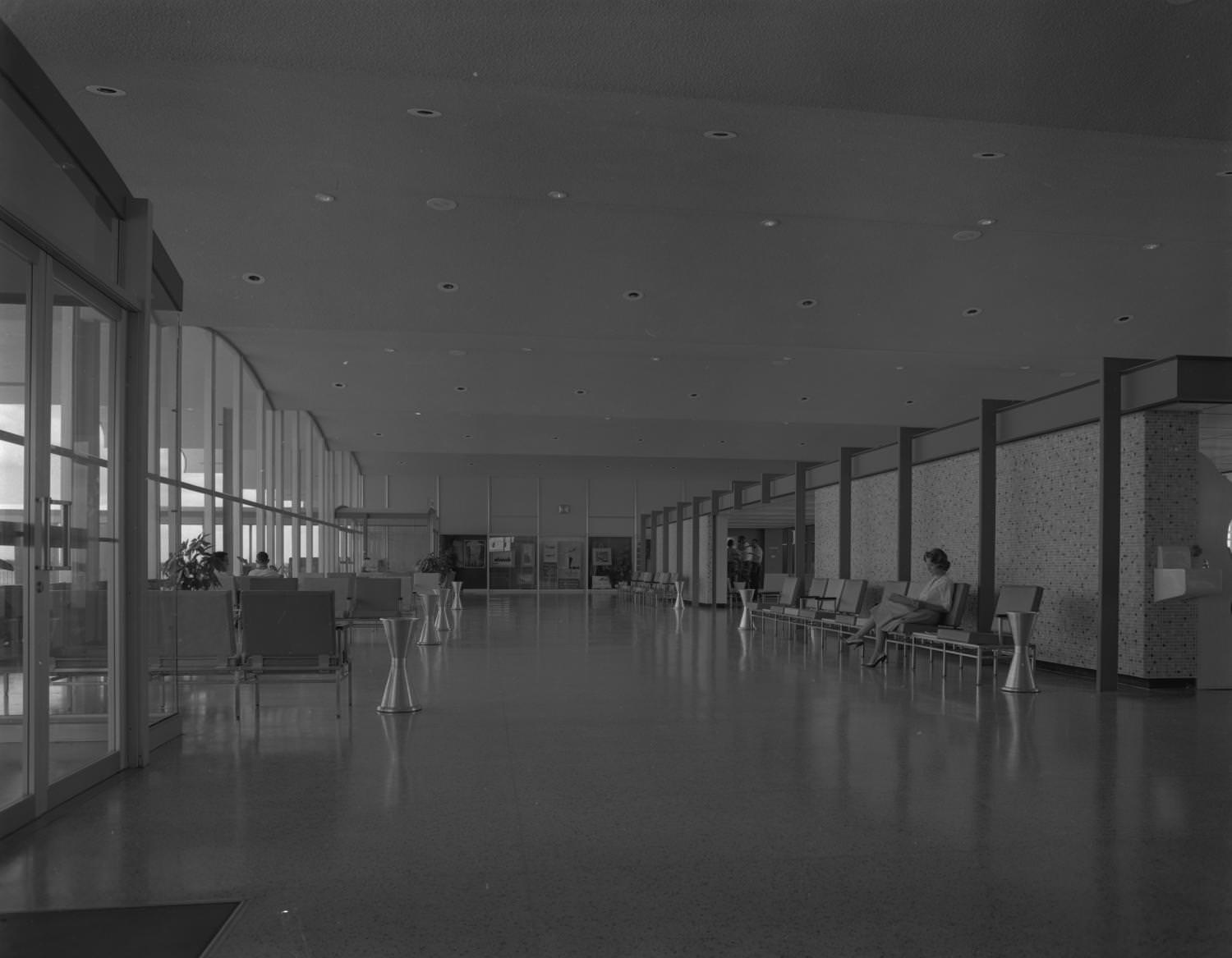
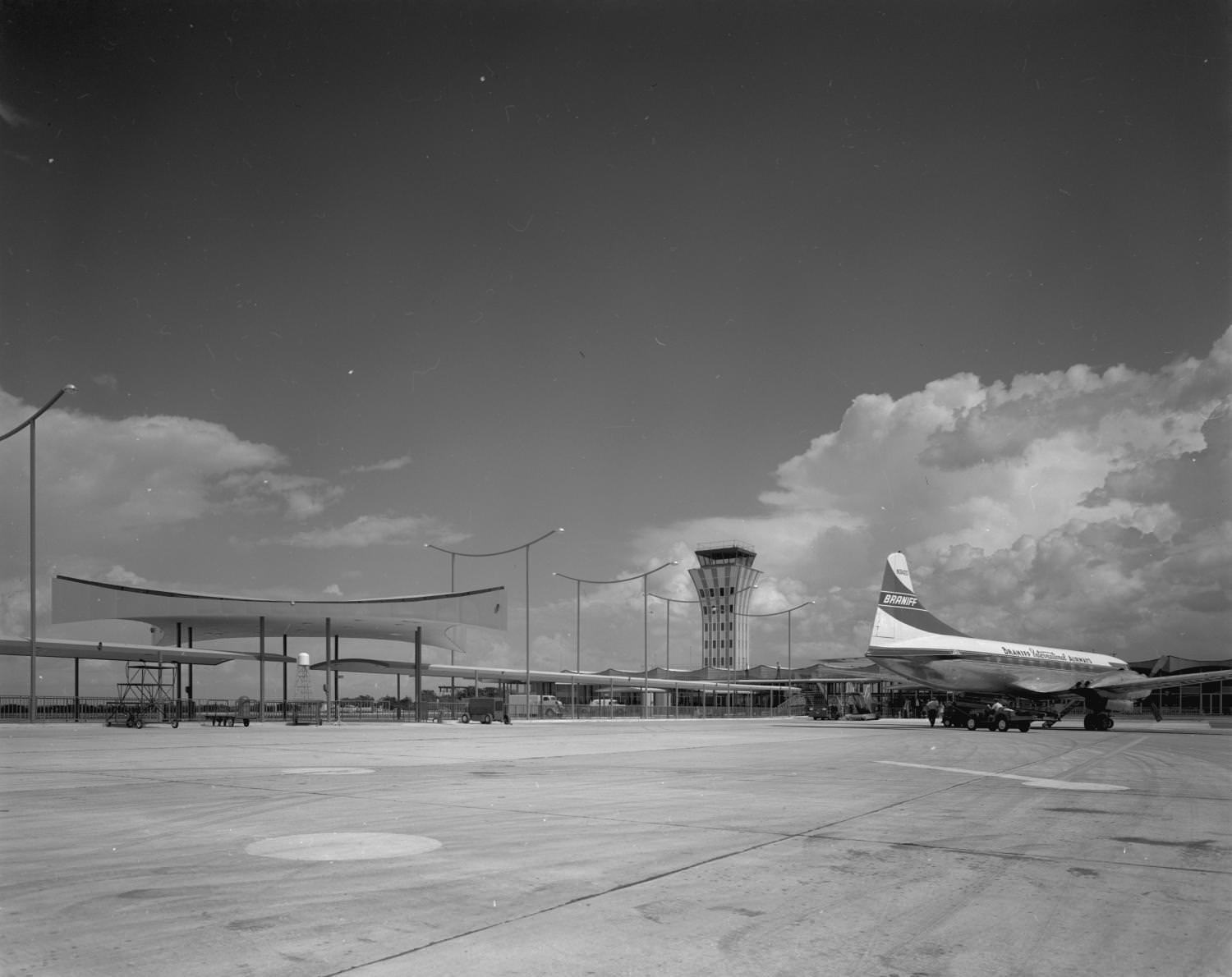
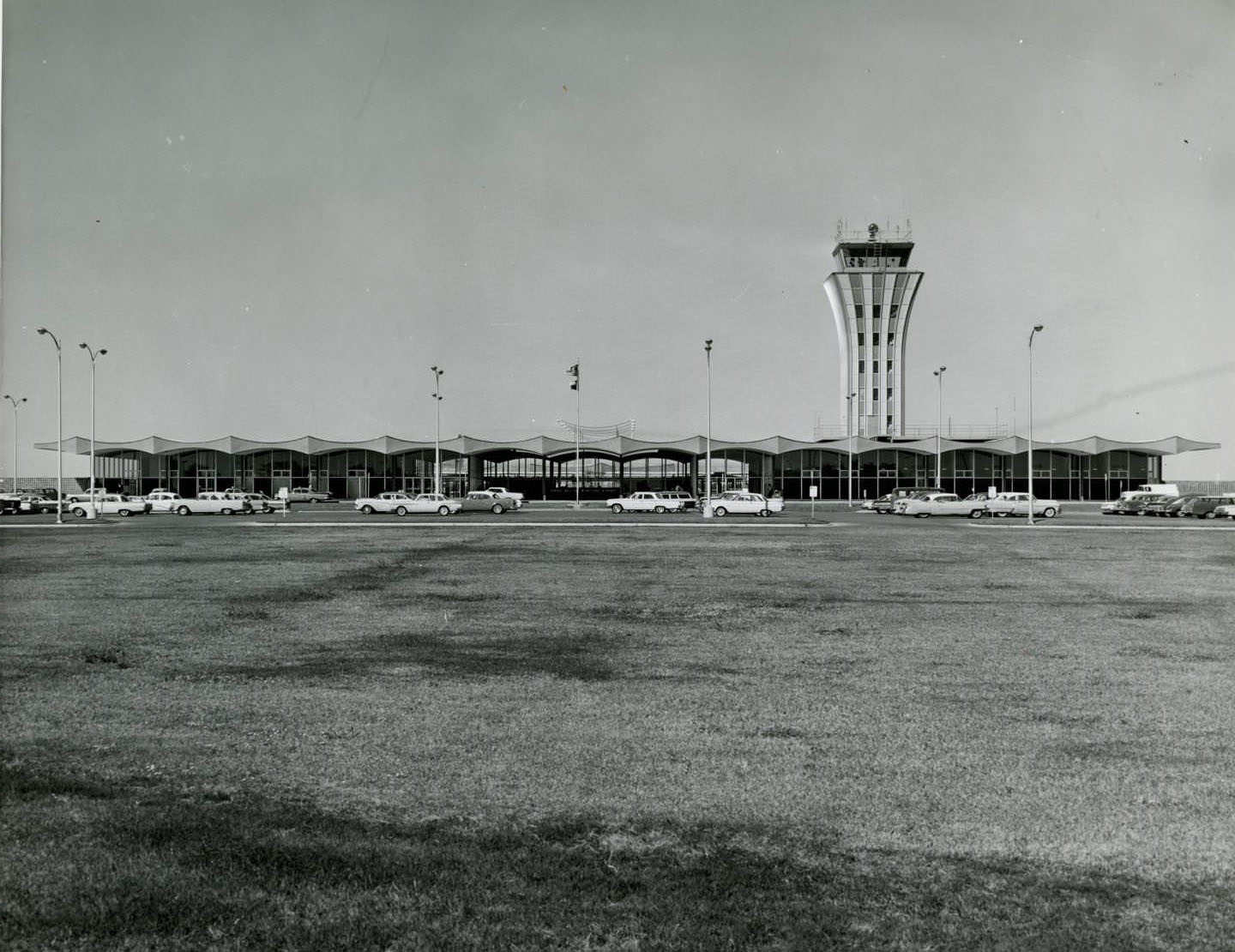
Austin’s airport was a major construction story in 1960. Mueller Municipal Airport, located on Berkman Drive, was being expanded and modernized. New runways, a new terminal, hangars, and a control tower all went up simultaneously, transforming what had been a modest facility into something fit for a growing state capital.
Construction of Austin Municipal Airport, 1960.Construction of the control tower at Mueller Municipal Airport in Austin, Texas, 1960Aerial View of Municipal Airport, 1960.Austin Municipal Airport, 1961Austin Municipal Airport at Night, 1961Austin Municipal Airport Courtyard, 1961Interior of the Austin Municipal Airport where an open corridor can be seen with seating areas to the left and right, 1961Austin Municipal Airport terminal taken from the tarmac, 1961Austin Municipal Airport, 1962
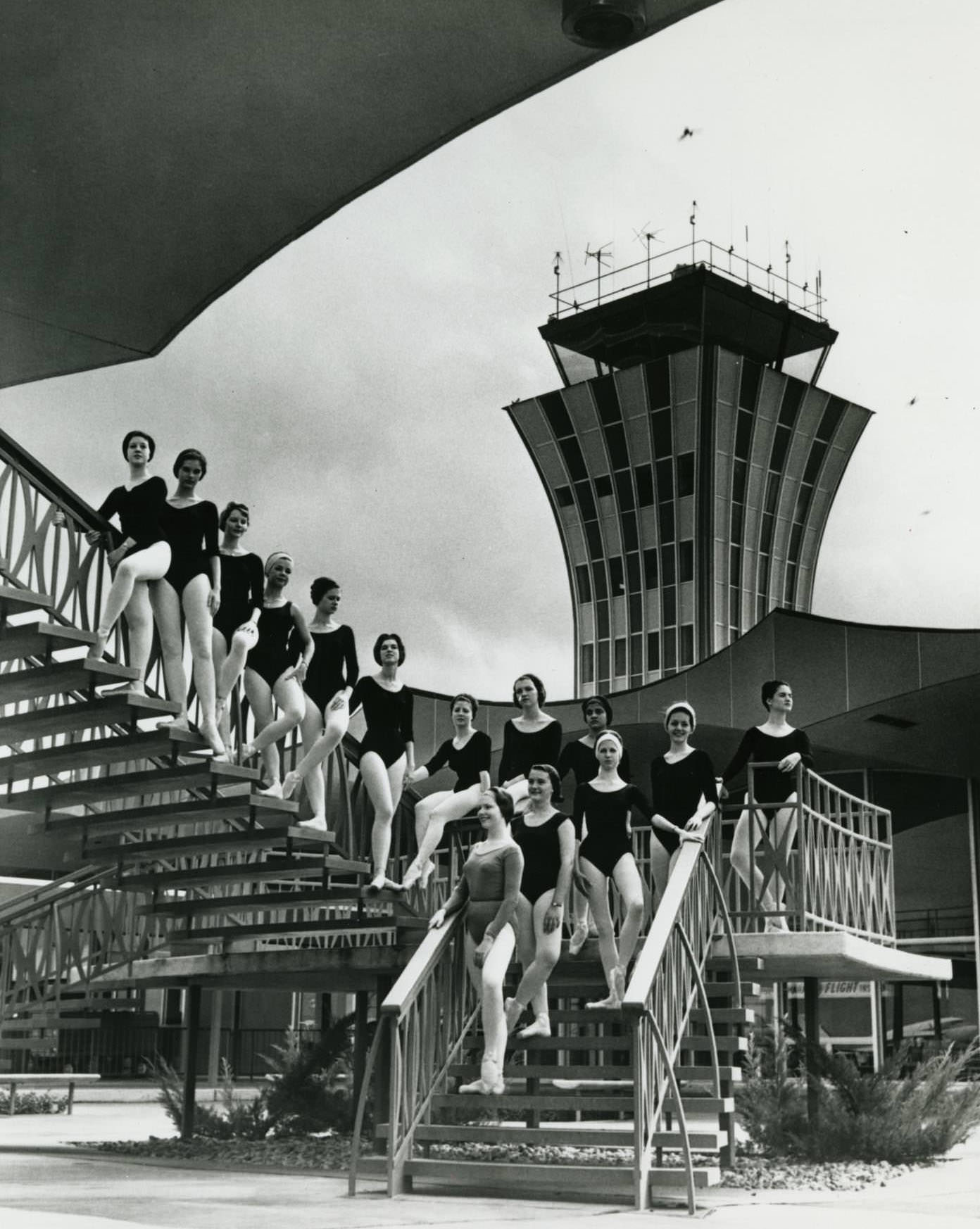
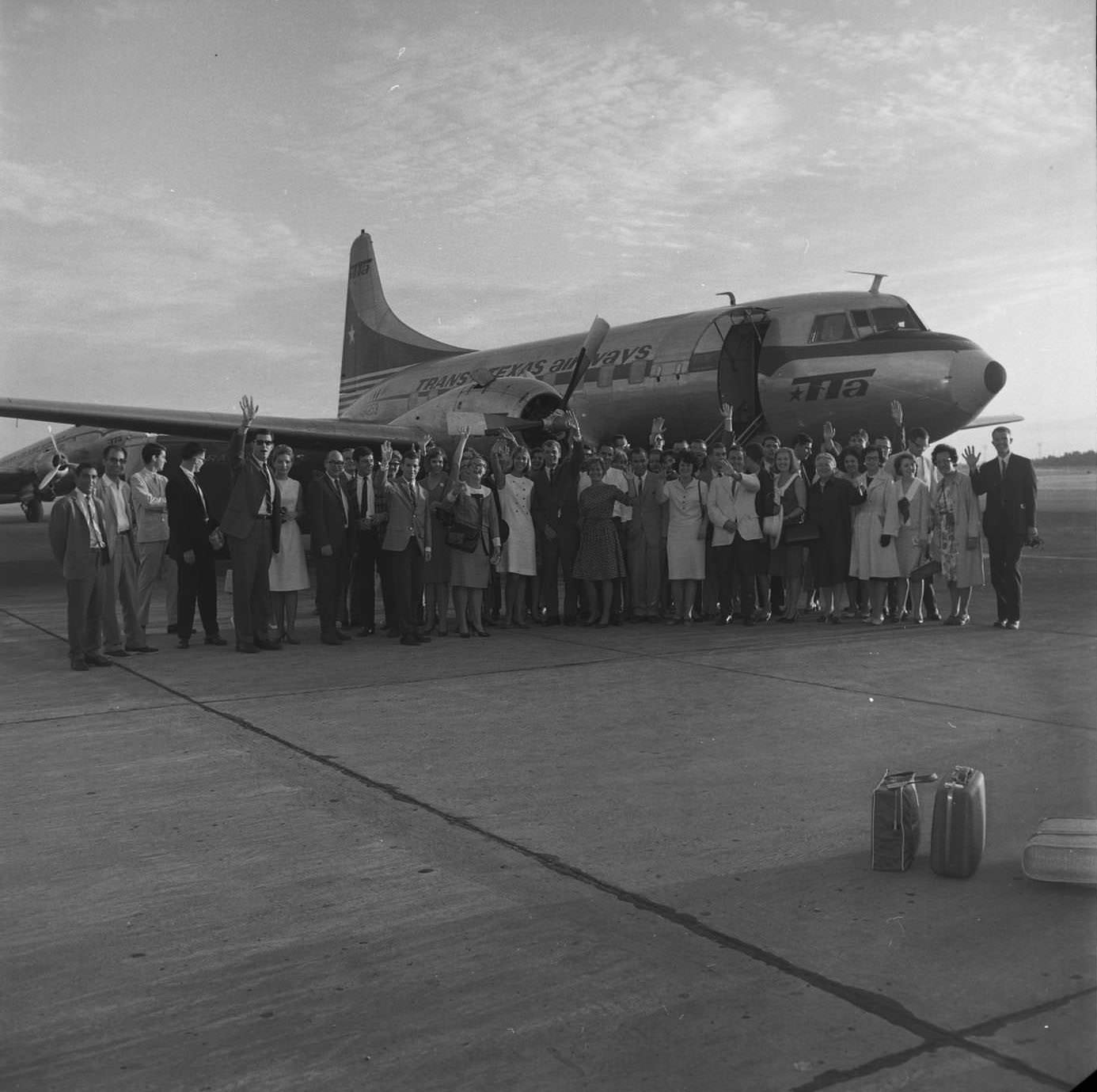
By 1962, the Austin Ballet Society was already using the airport as a backdrop for publicity photos, a sign that the arts community was active and visible in the city’s daily life. Travelers departing from Mueller in 1966 could wave goodbye on the tarmac beside propeller aircraft, just as passengers had done for decades.
The Austin Ballet Society at the Municipal Airport, 1962.Passengers and crew wave goodbye on the tarmac before departure at Mueller Airport. Plane is Convair 240. TTA DC-3 in left background, 1966
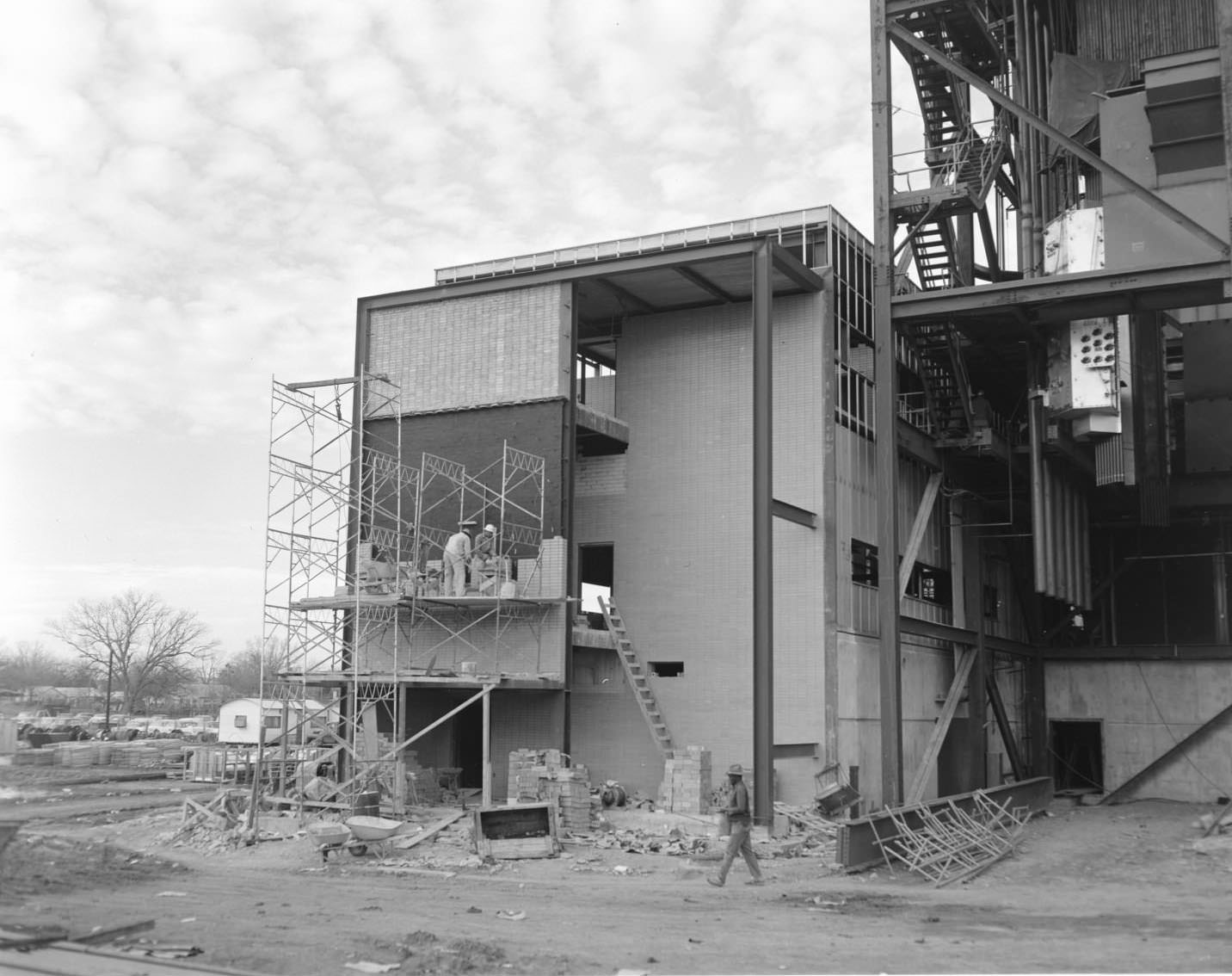
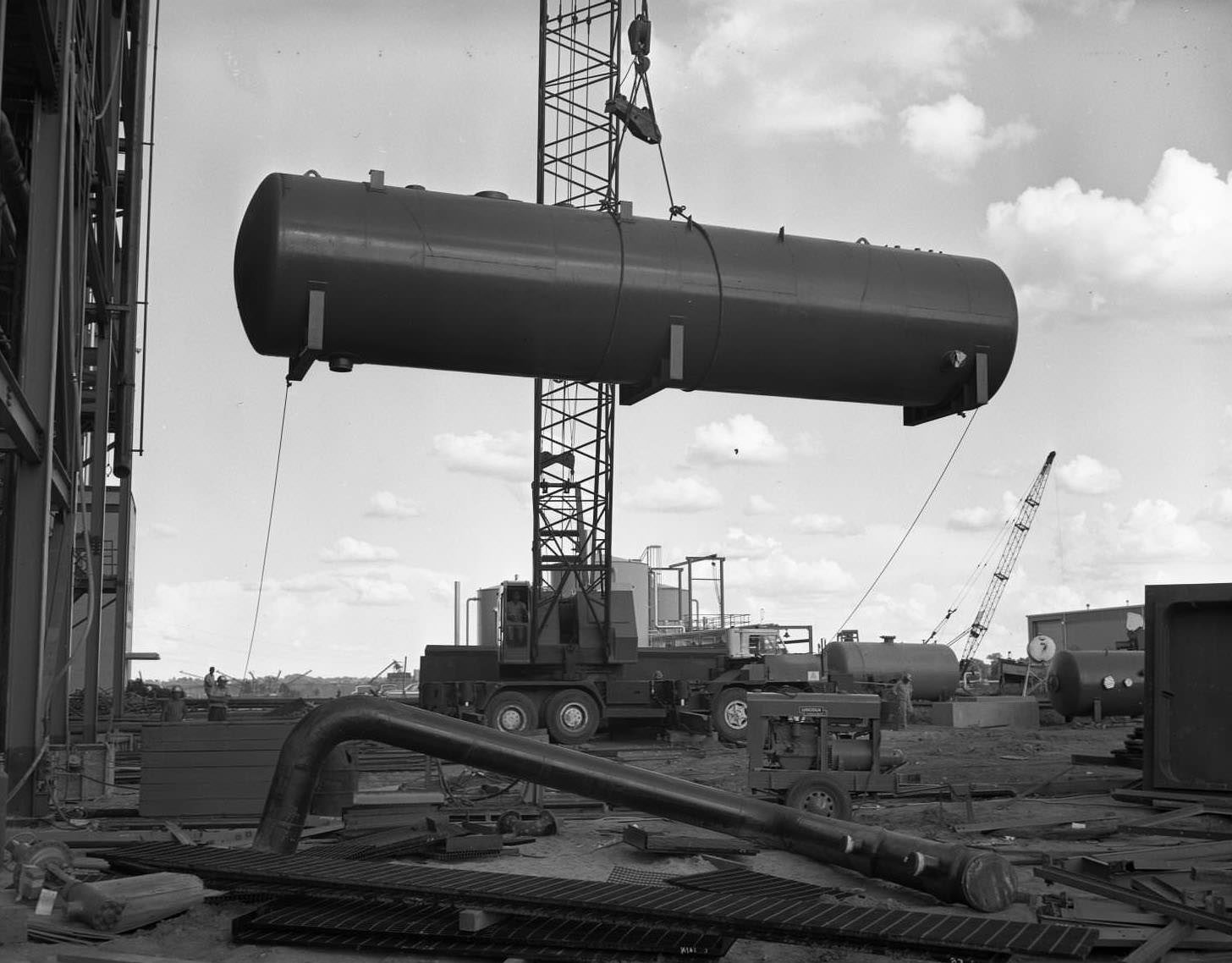
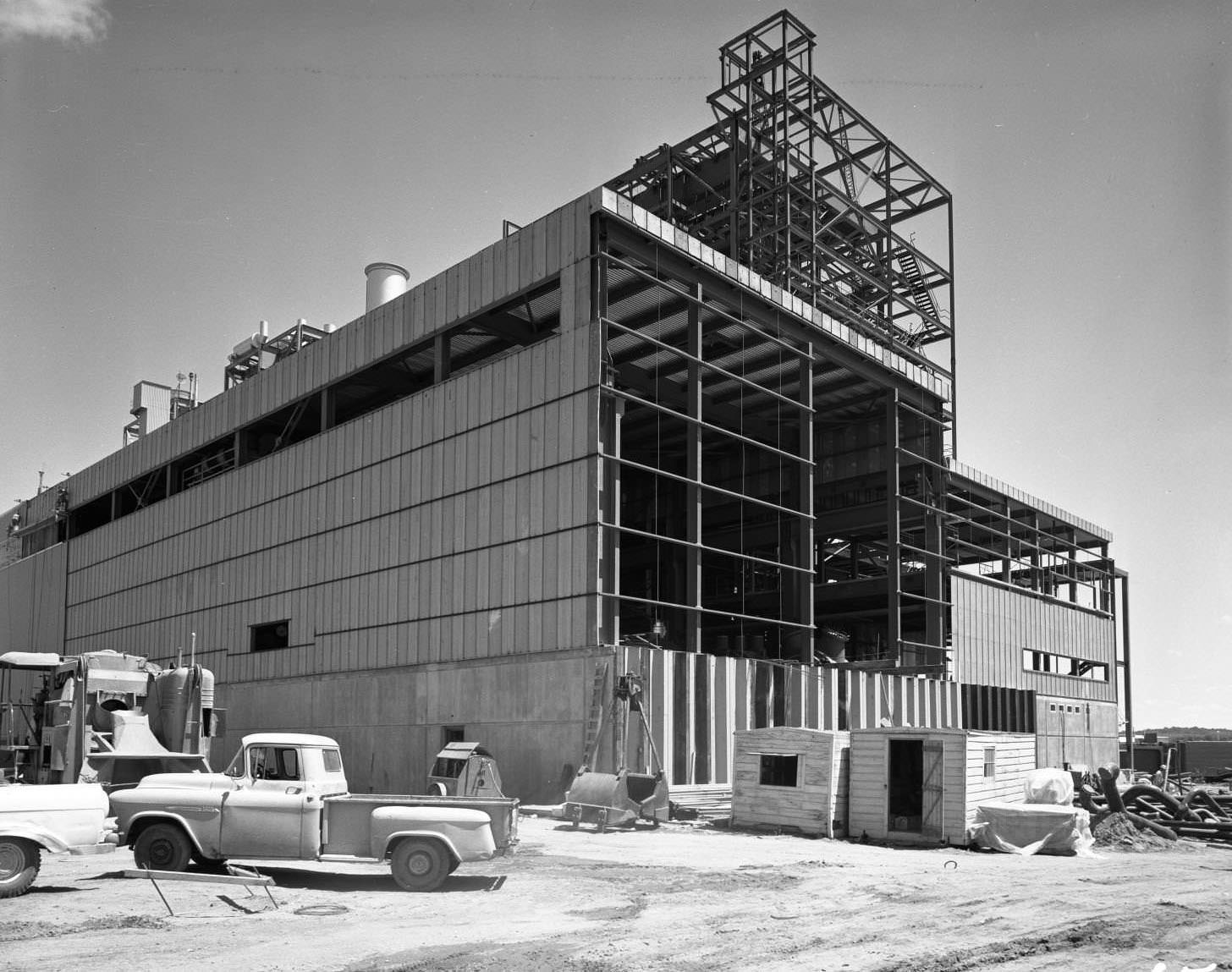
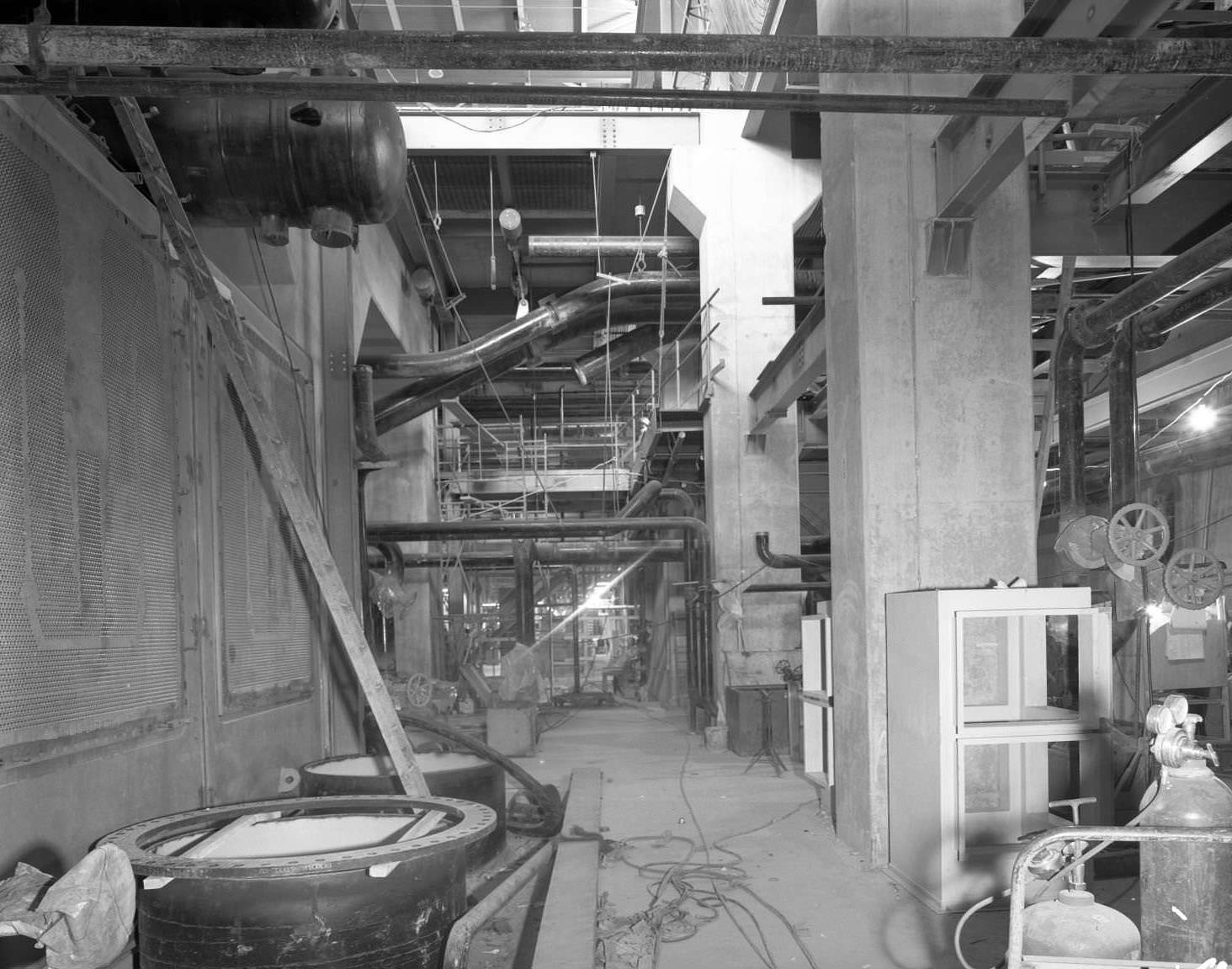
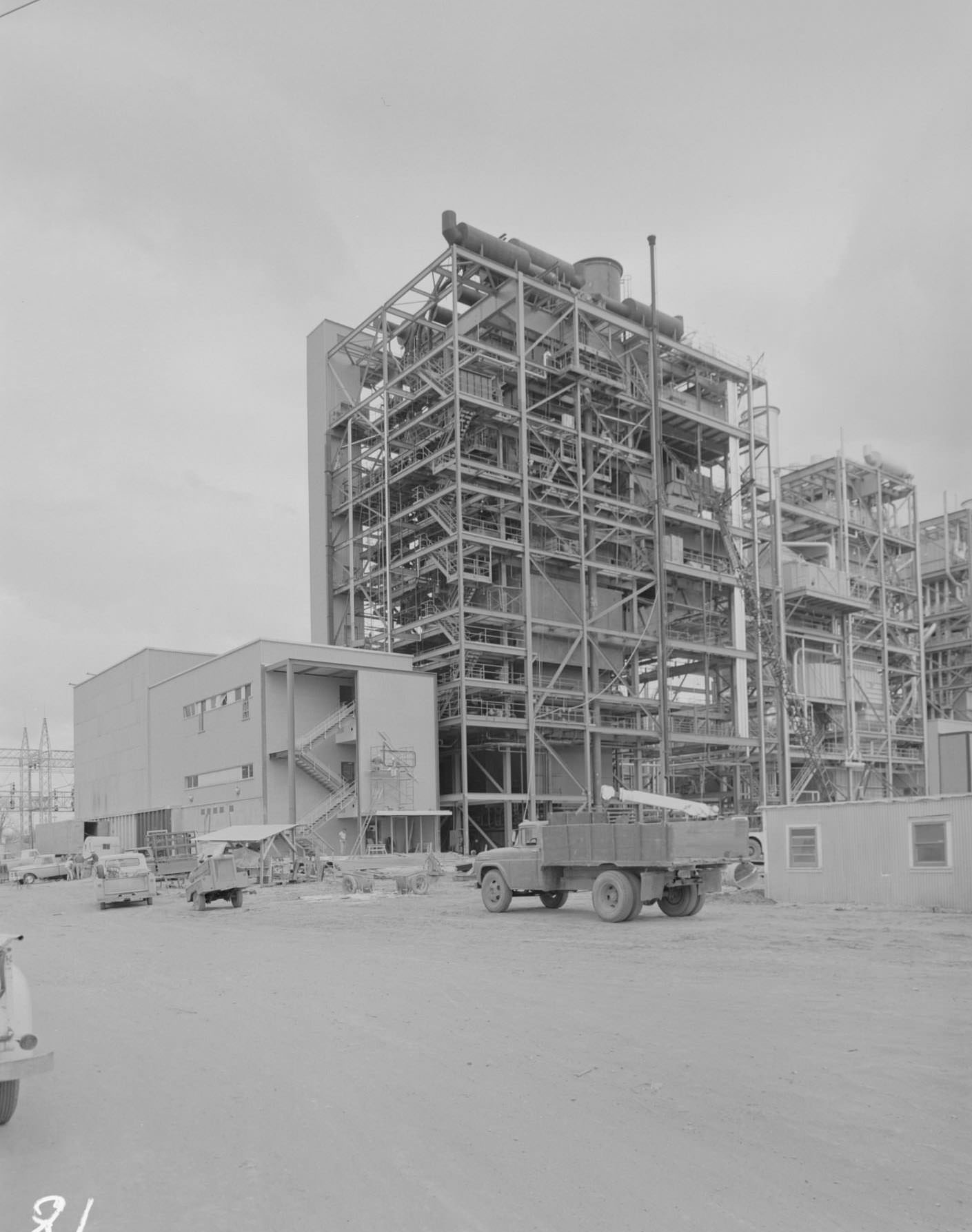
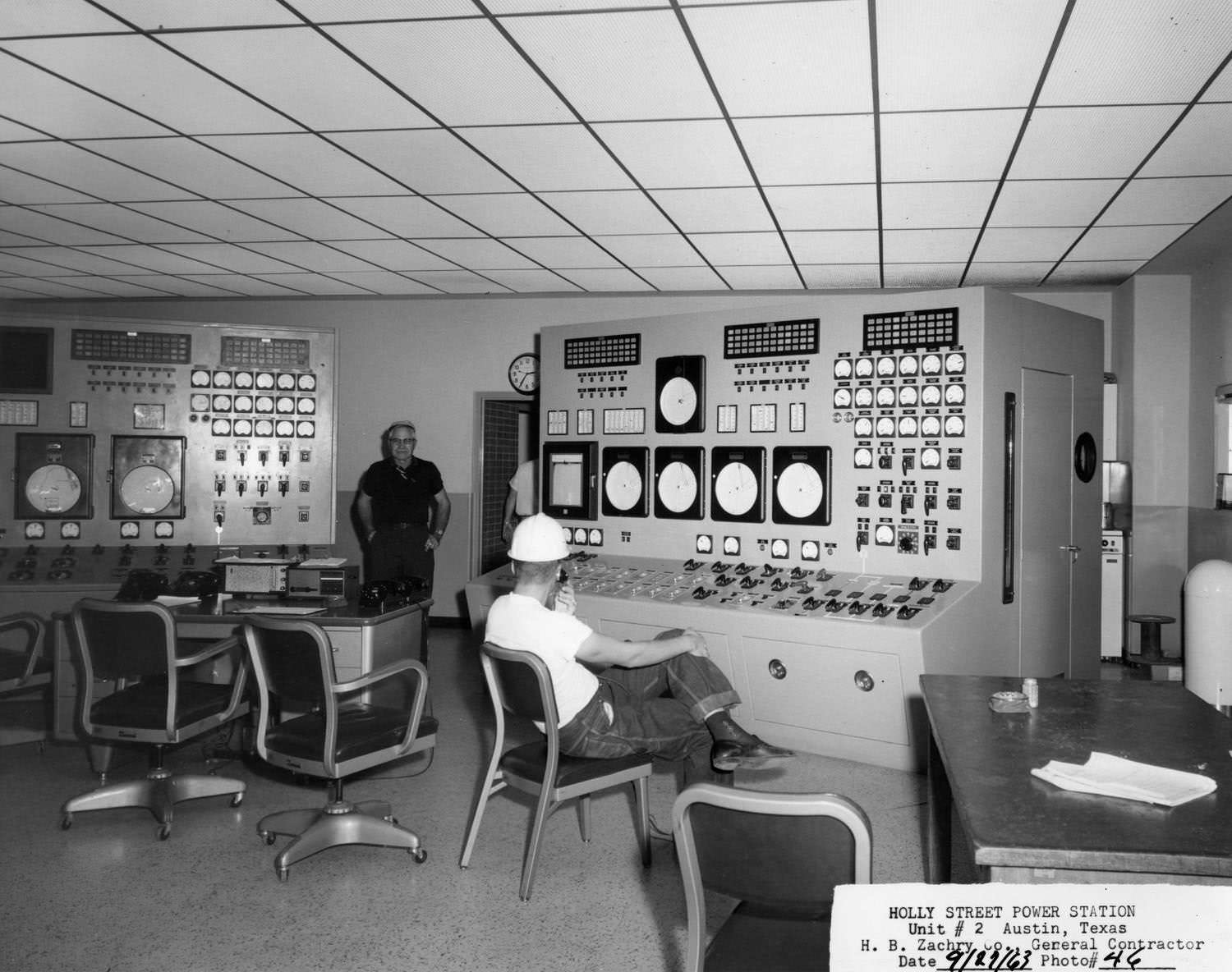
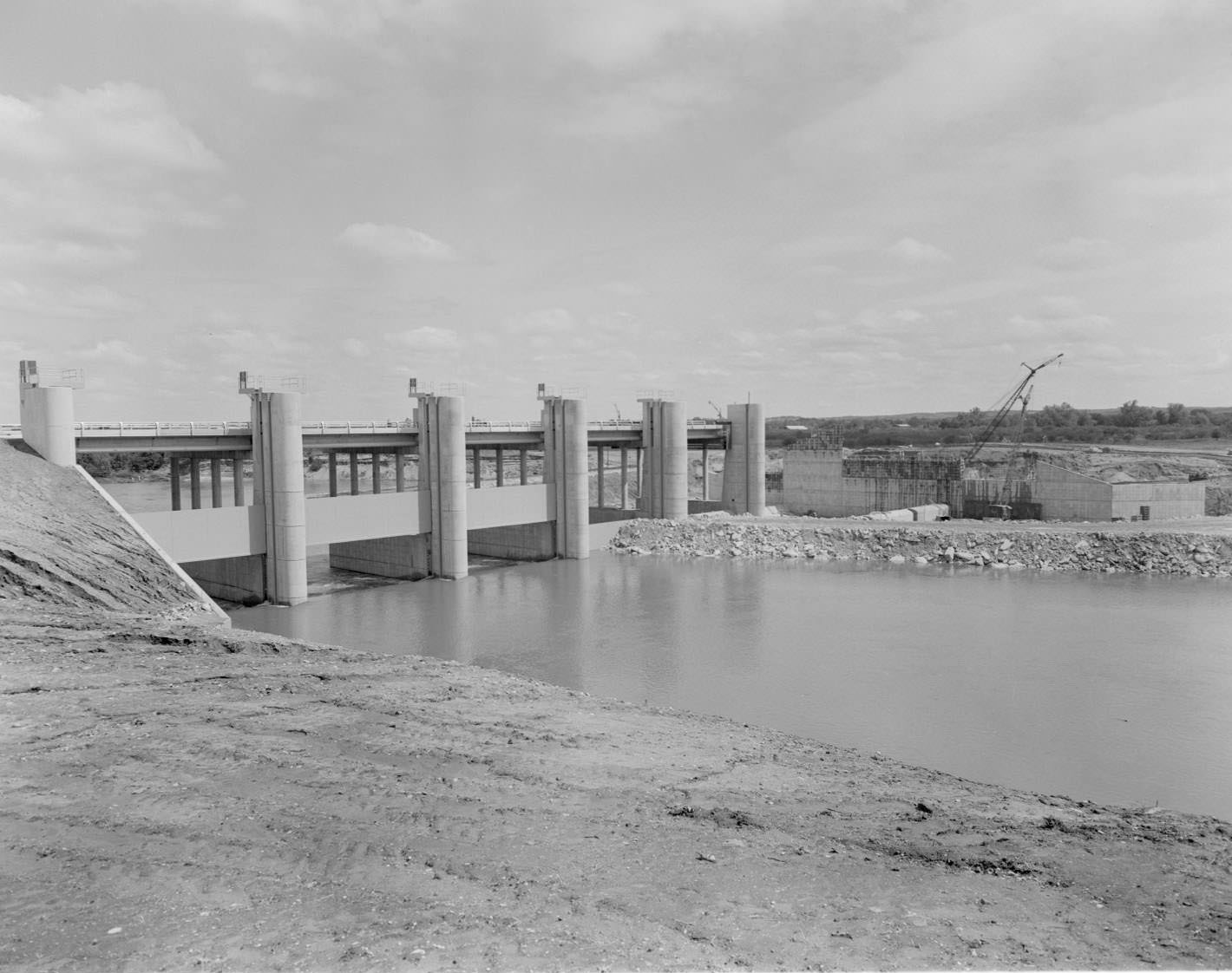
Power infrastructure was expanding right alongside the city. The Holly Street Power Plant on the Colorado River was under construction throughout the mid-1960s. It was built to supply electricity to Austin’s growing population, and Longhorn Dam on Pleasant Valley Road was constructed specifically to provide it with cooling water.
Construction on exterior of power plant power. Austin, Texas, 1960Construction of the Holly Street Power Plant in Austin, Texas, 1965Holly Street Power Plant, Austin, 1965Holly Street Power Plant, 1965Construction site of Holly St. Power Plant, Austin, 1966Two men in the control room of the Holly Street Power Plant, Austin, Texas, 1963Longhorn Dam, looking southwest, Austin, 1966. Pleasant Valley Rd. crosses the dam which was built to provide water for Holly Street power plant.
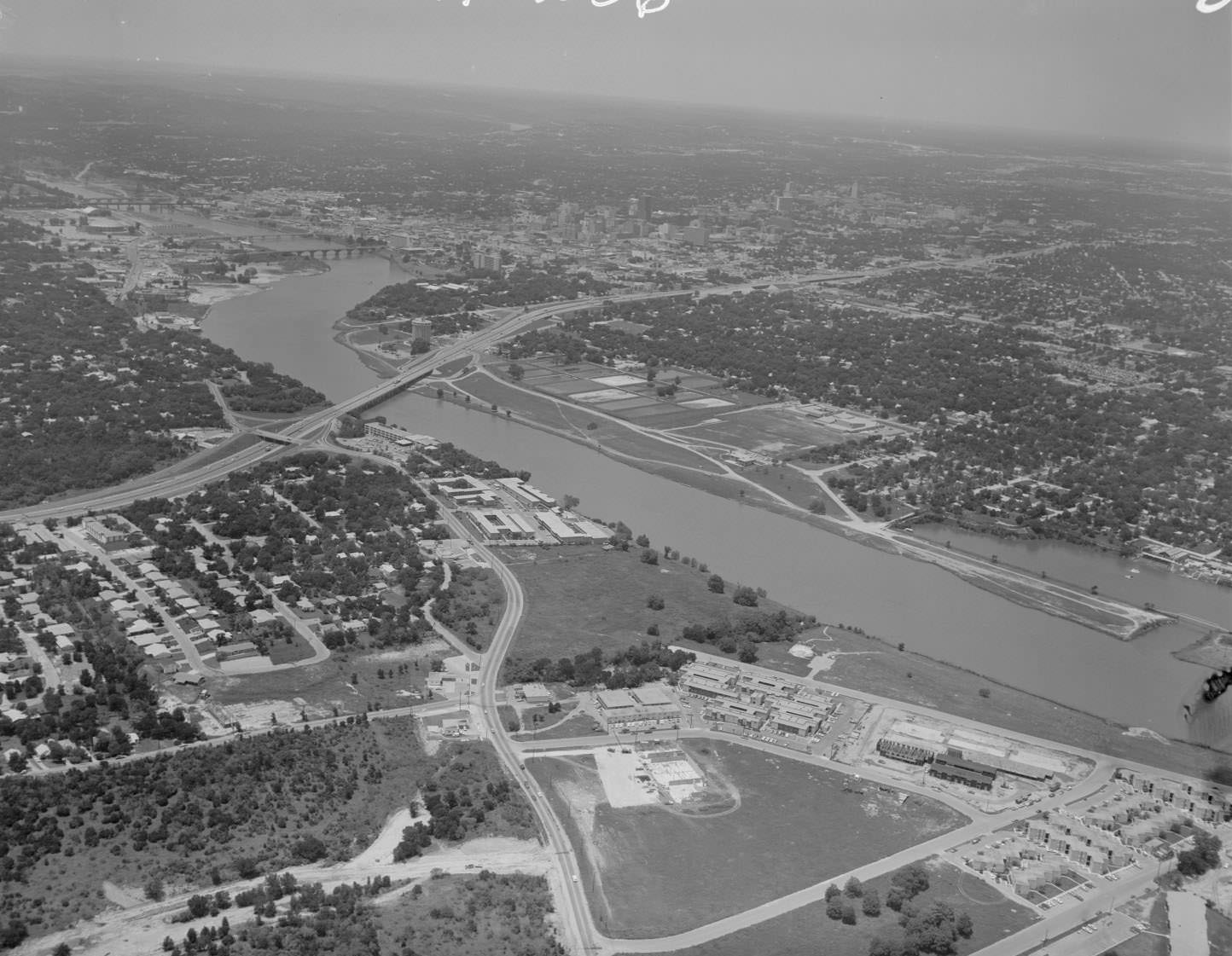
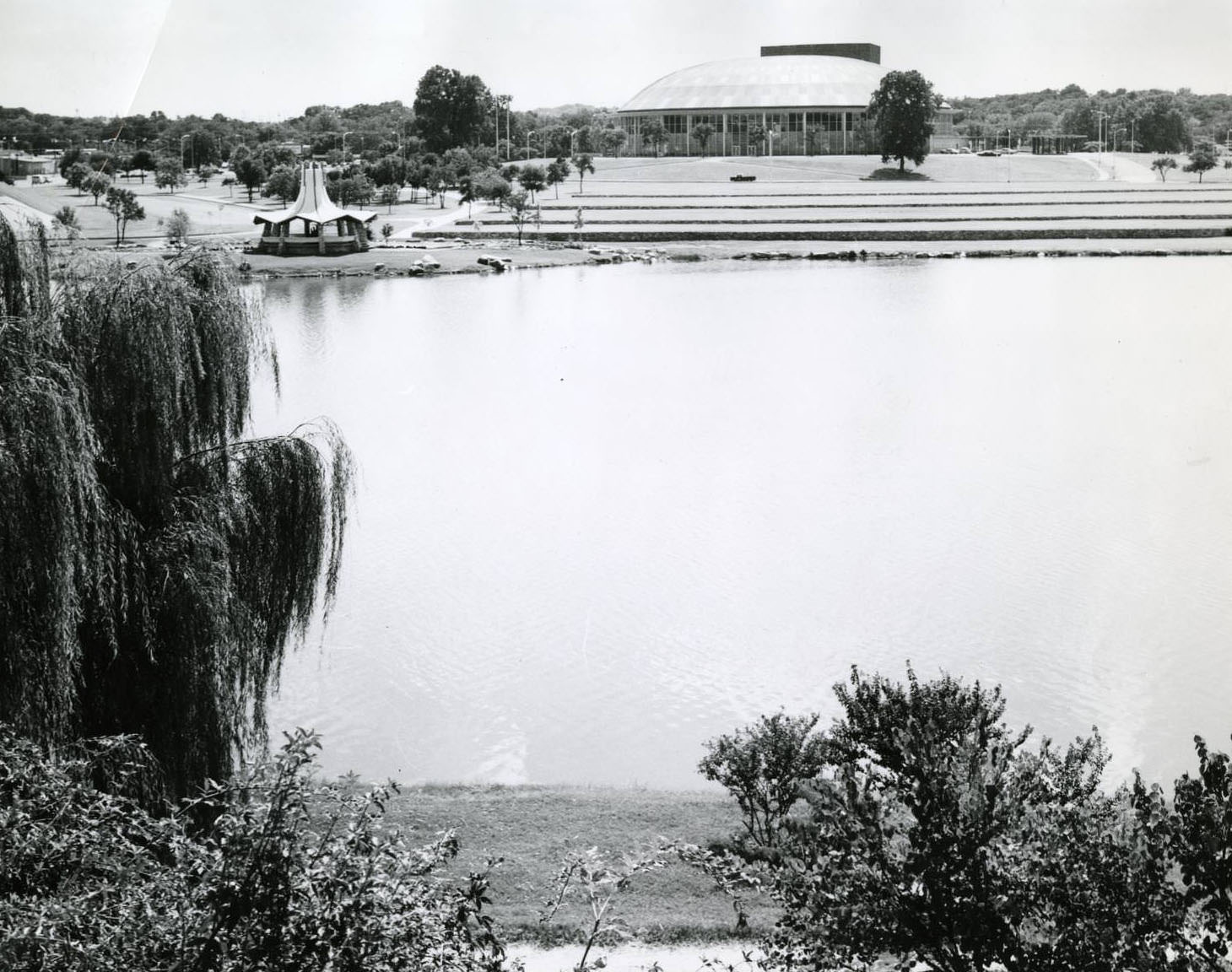
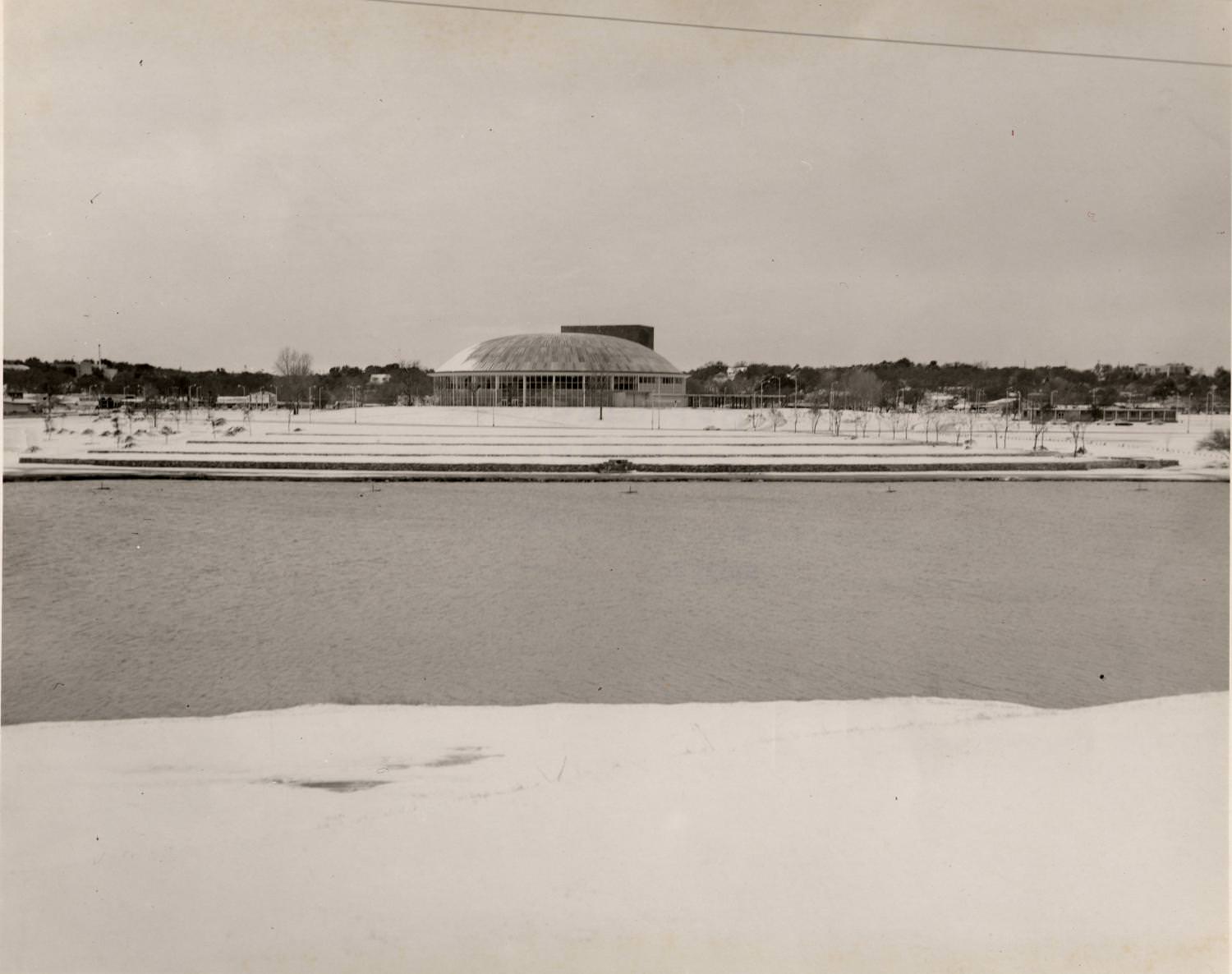
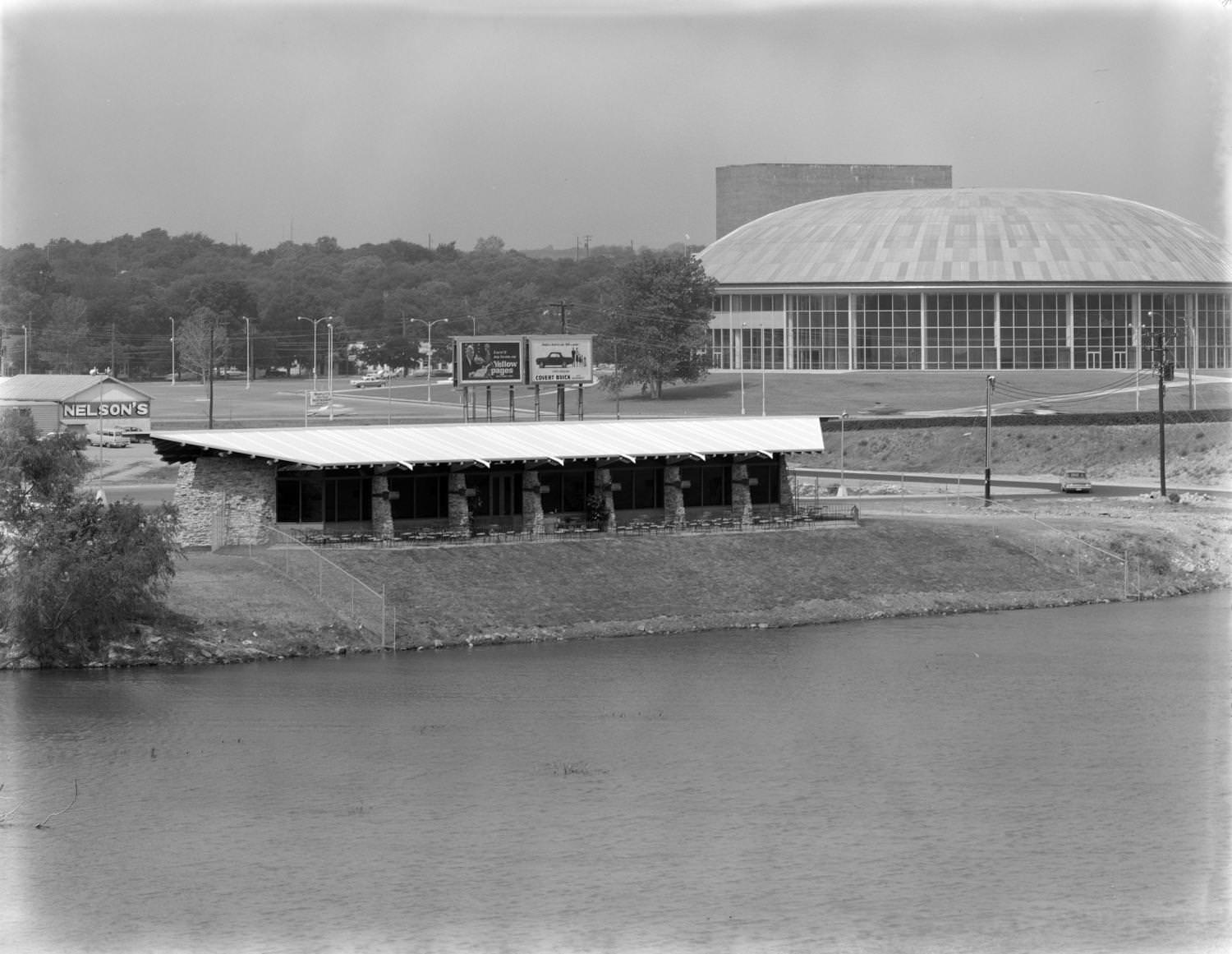
Town Lake, the stretch of the Colorado River running through the heart of the city, was a defining geographic feature of Austin. By the late 1960s, aerial photographs showed it curving through downtown, with the Municipal Auditorium sitting on its north bank. The auditorium, designed by Austin firm Jessen, Jessen, Millhouse & Greeven, had opened in January 1959 and served as a major venue throughout the decade.
Aerial View of Town Lake.1968Aerial view of Town Lake looking northwest, 1968View of Municipal Auditorium from across the Lake, 1969City of Austin Auditorium, 1967.
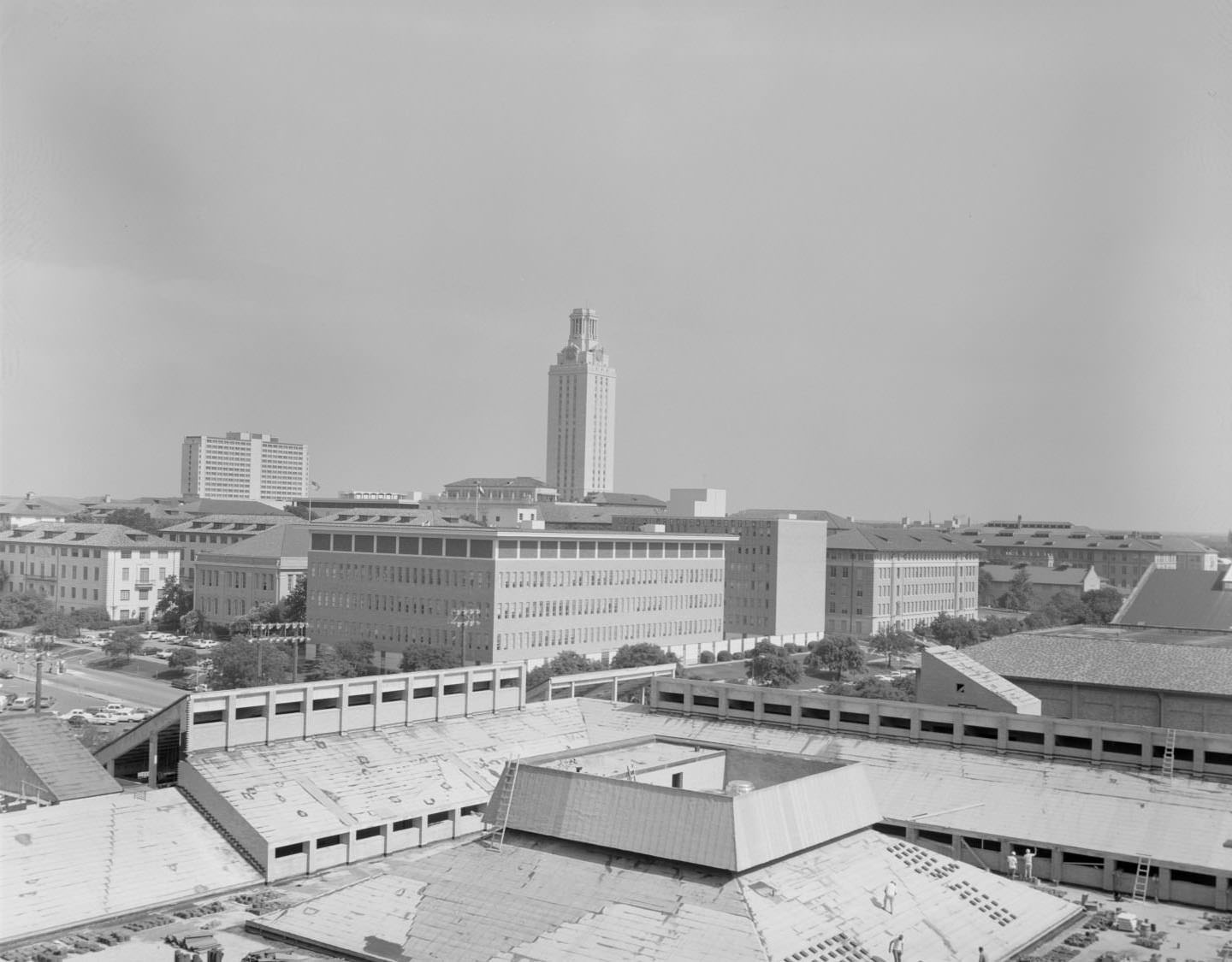
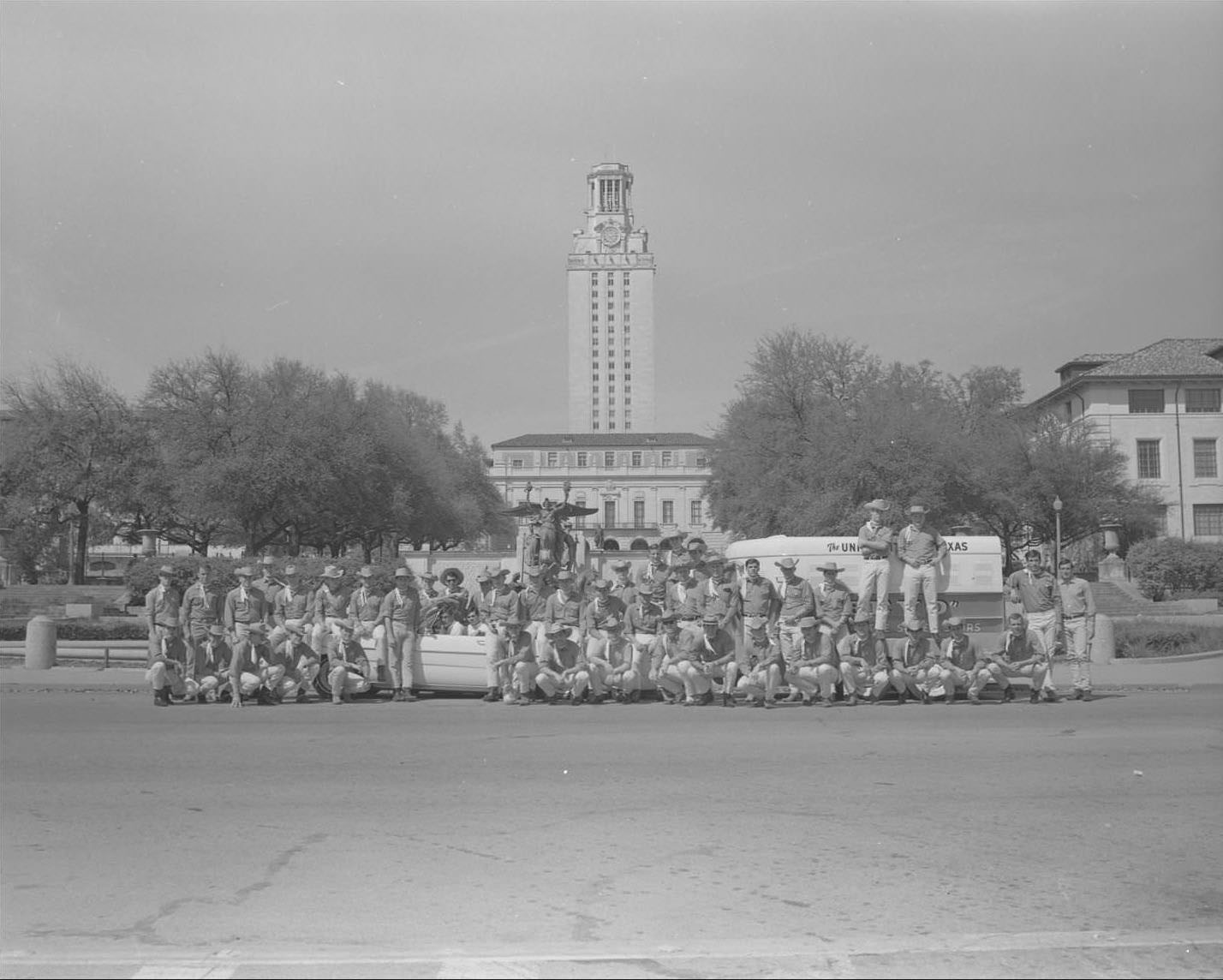
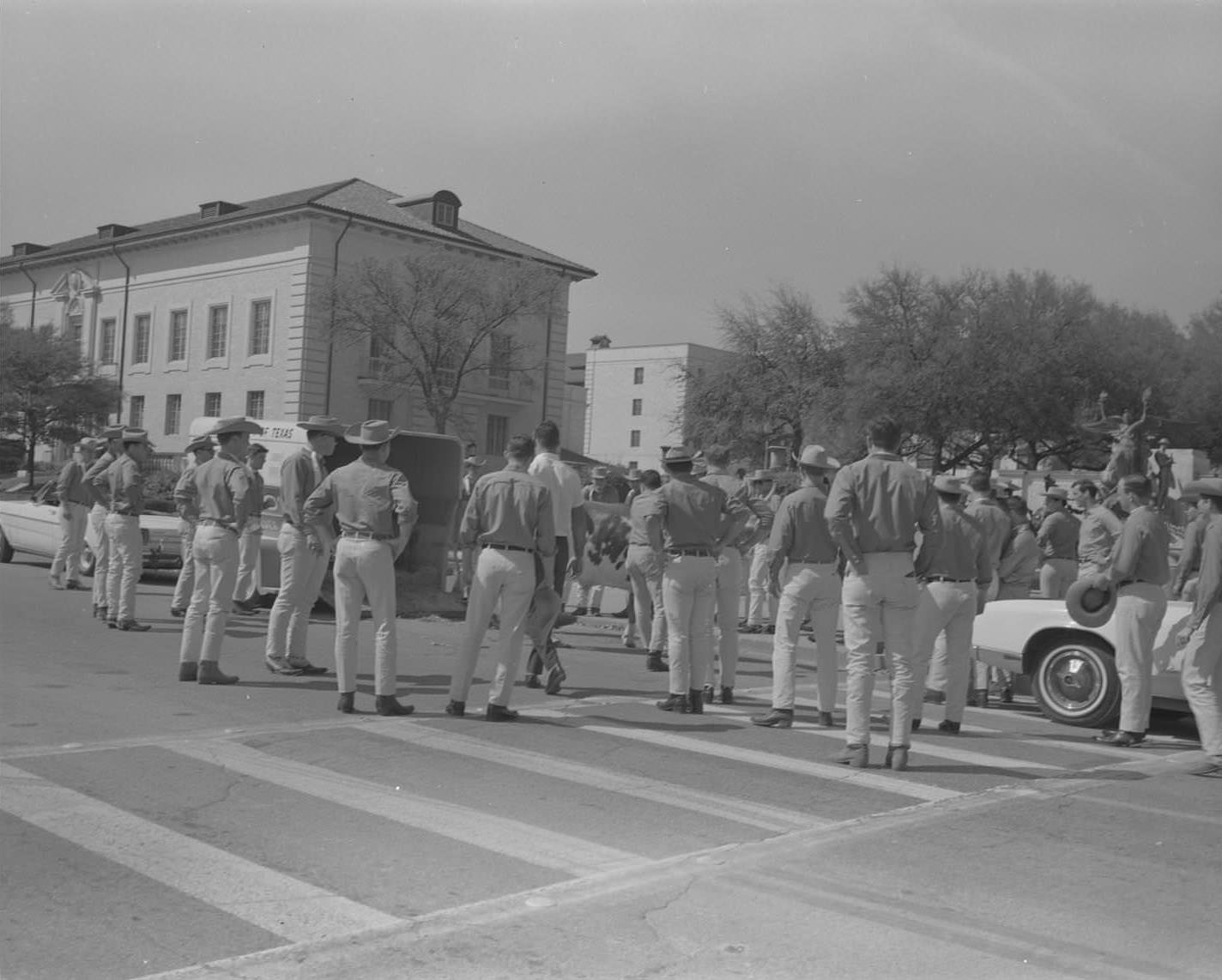
The University of Texas was an engine for culture and commerce in Austin. Its tower was the most recognizable structure on the campus, rising above Littlefield Fountain and the surrounding academic buildings. The Silver Spurs, a UT student service organization, posed at the fountain in 1965 in their distinctive Western attire, a ritual that tied student life to the traditions of Texas.
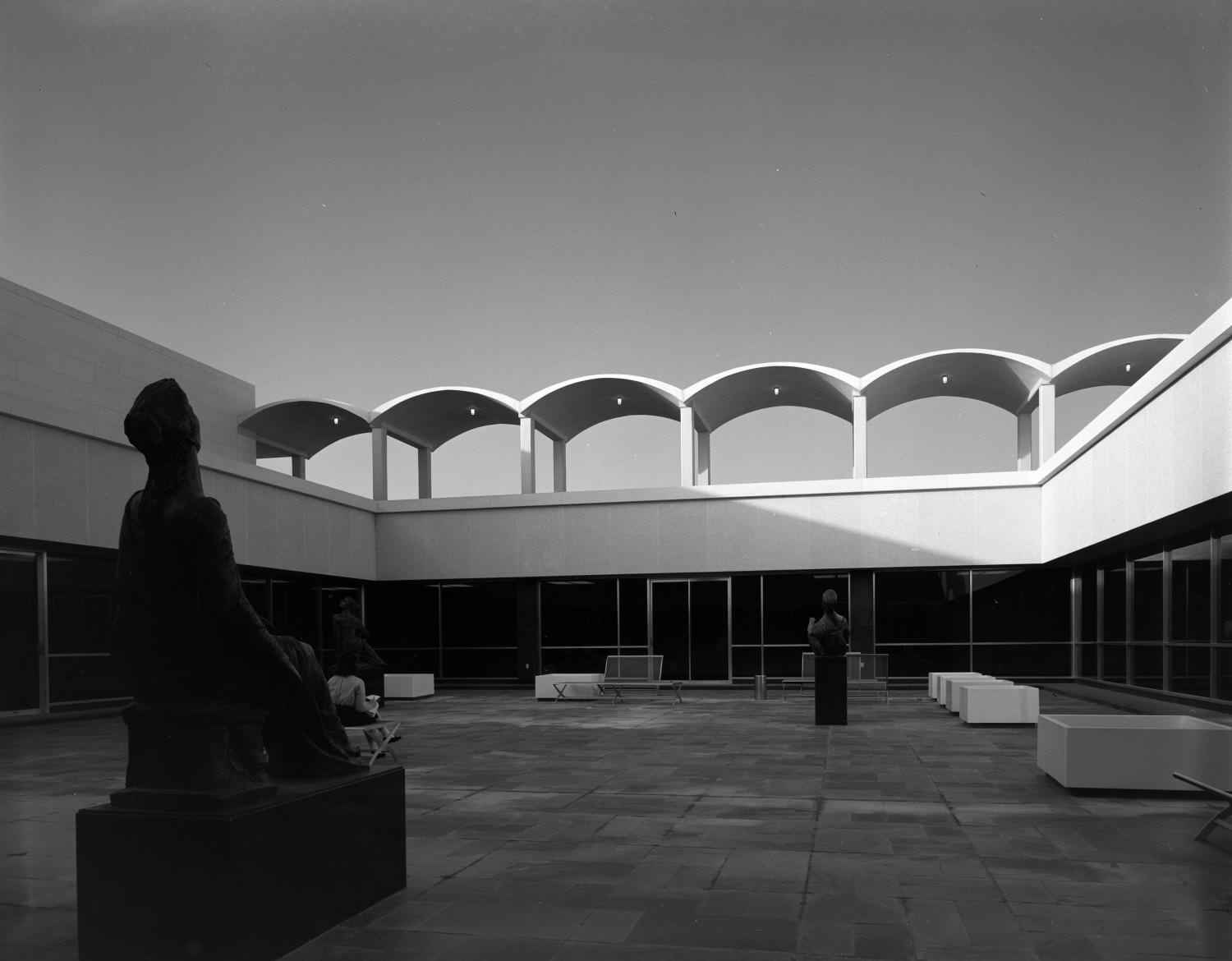
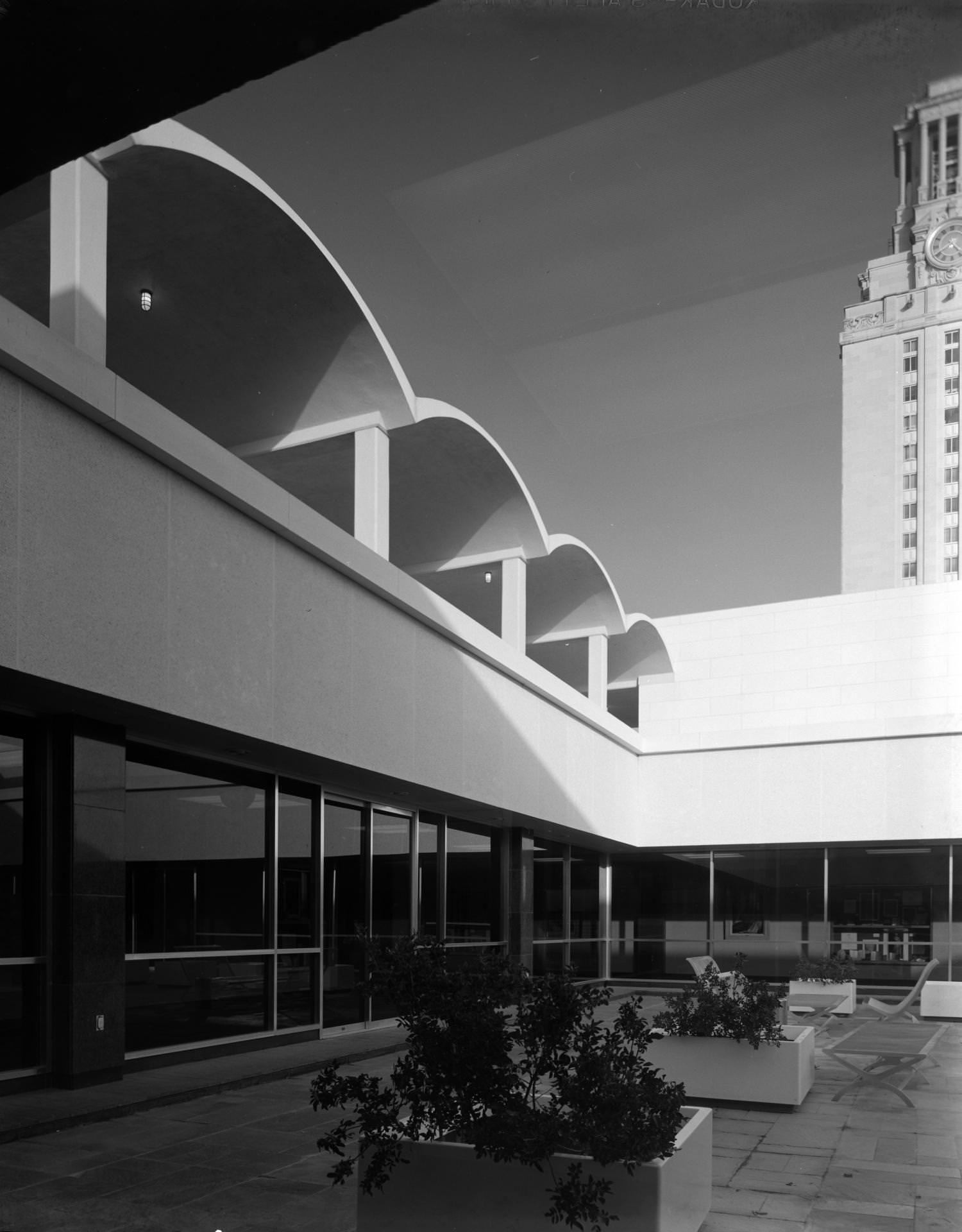
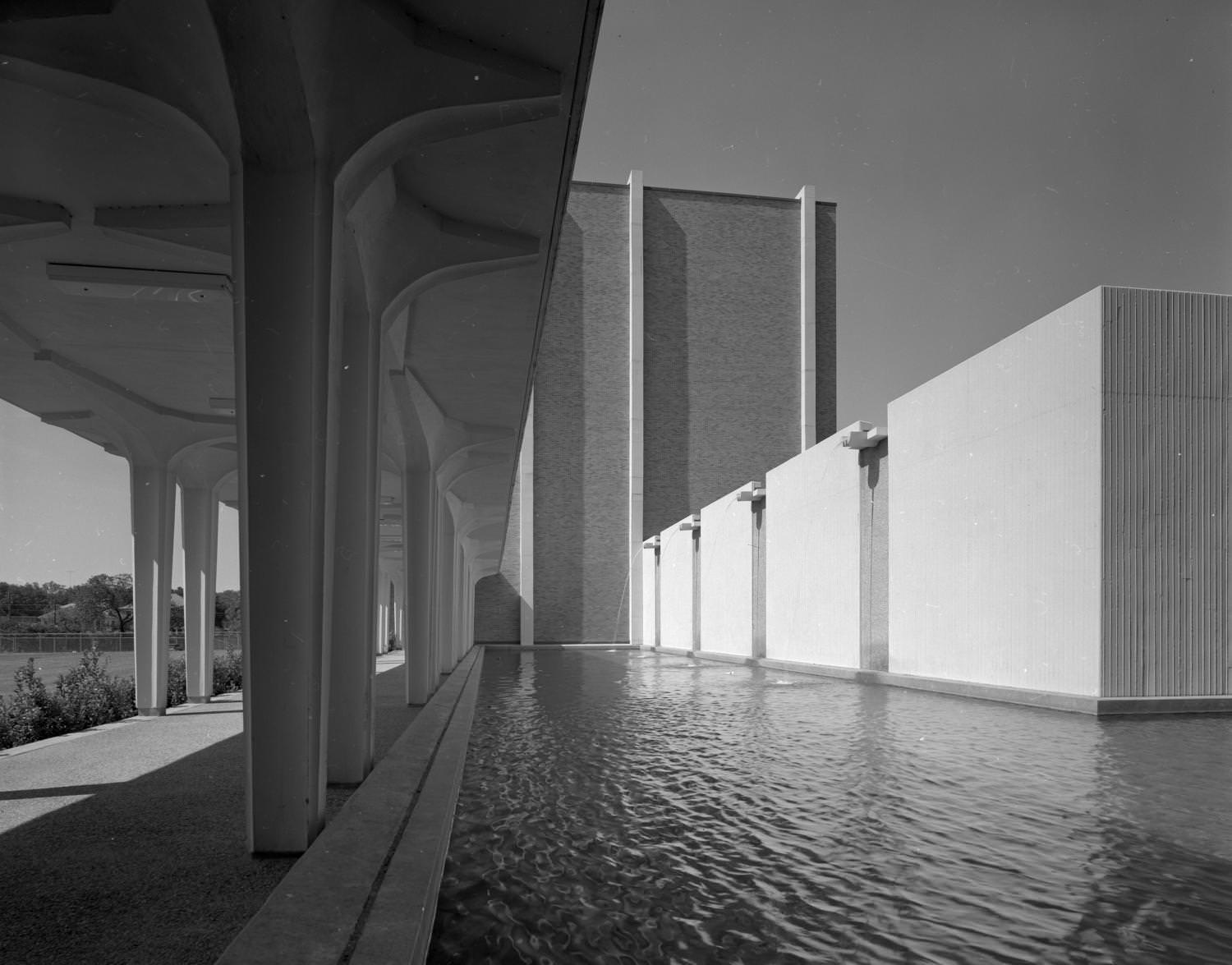
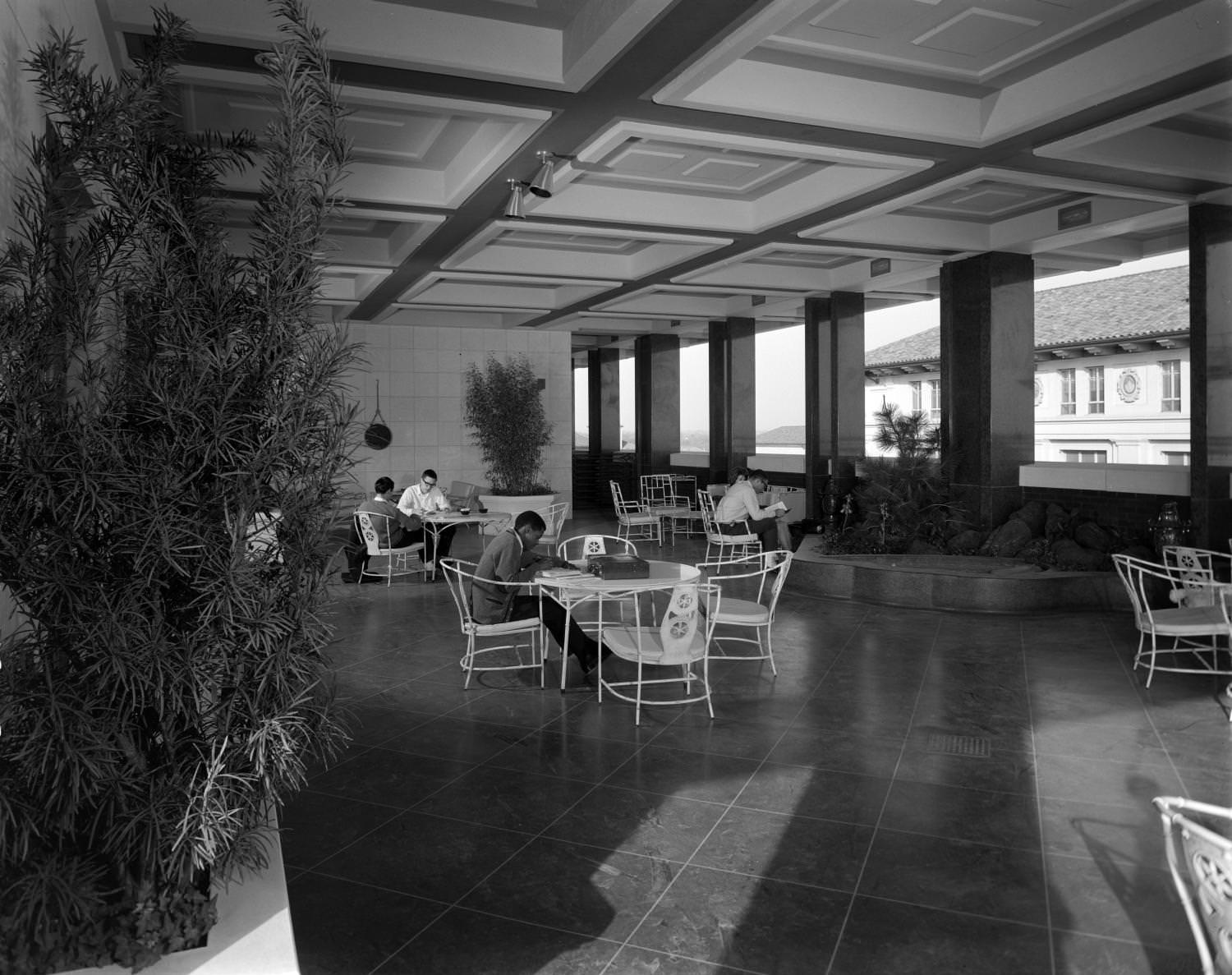
University of Texas Tower, 1969UT Silver Spurs group poses in front of Littlefield Fountain and UT Tower, 1965UT Silver Spurs stand facing the Littlefield Fountain and UT Tower on 21st Street at the UT campus, 1965Peter T. Flawn Academic Center roof courtyard, 1964The roof courtyard of the Peter T. Flawn Academic Center. The UT Tower is visible on the right side, 1964A shallow fountain pool at University of Texas’s engineering science building, 1967
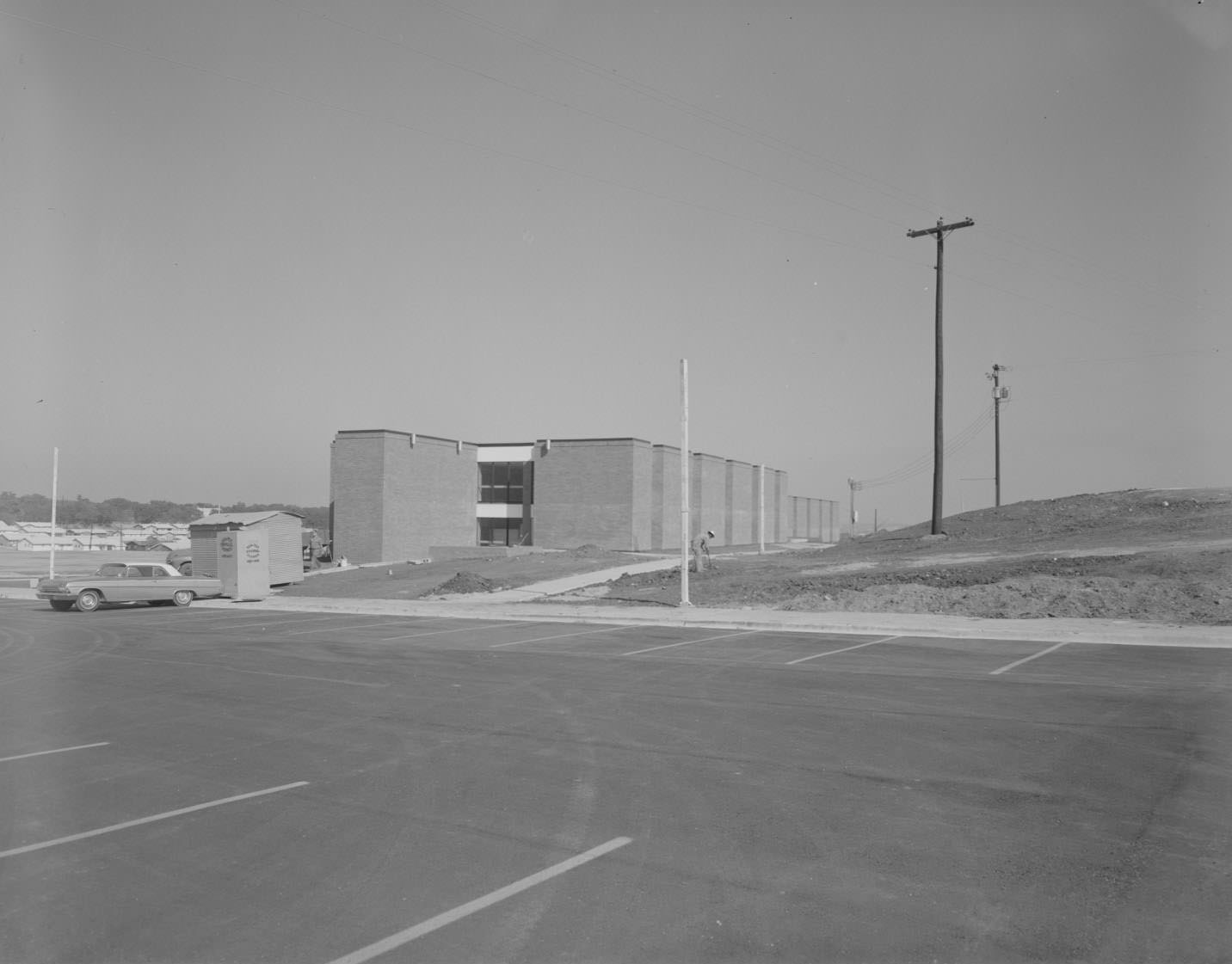
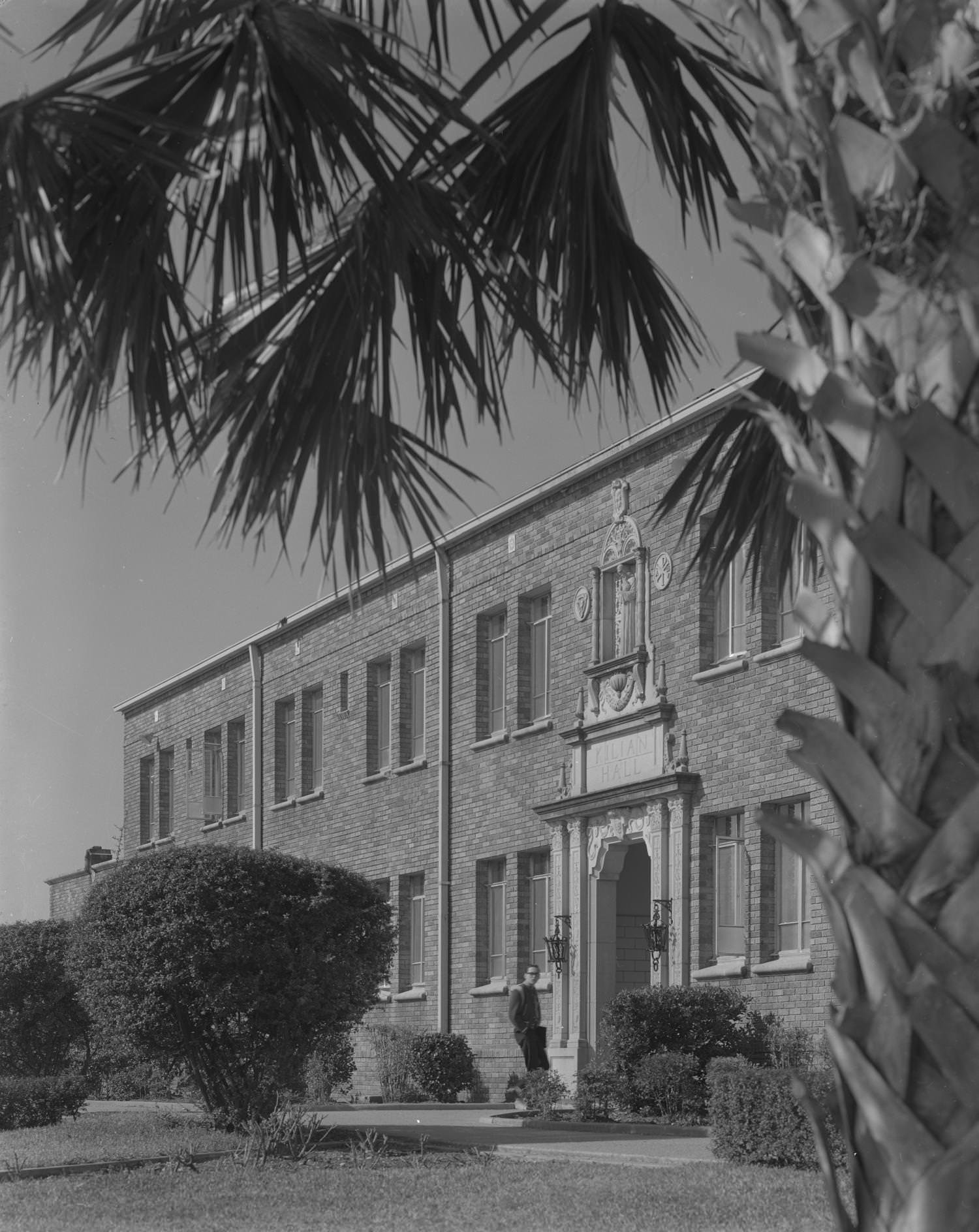
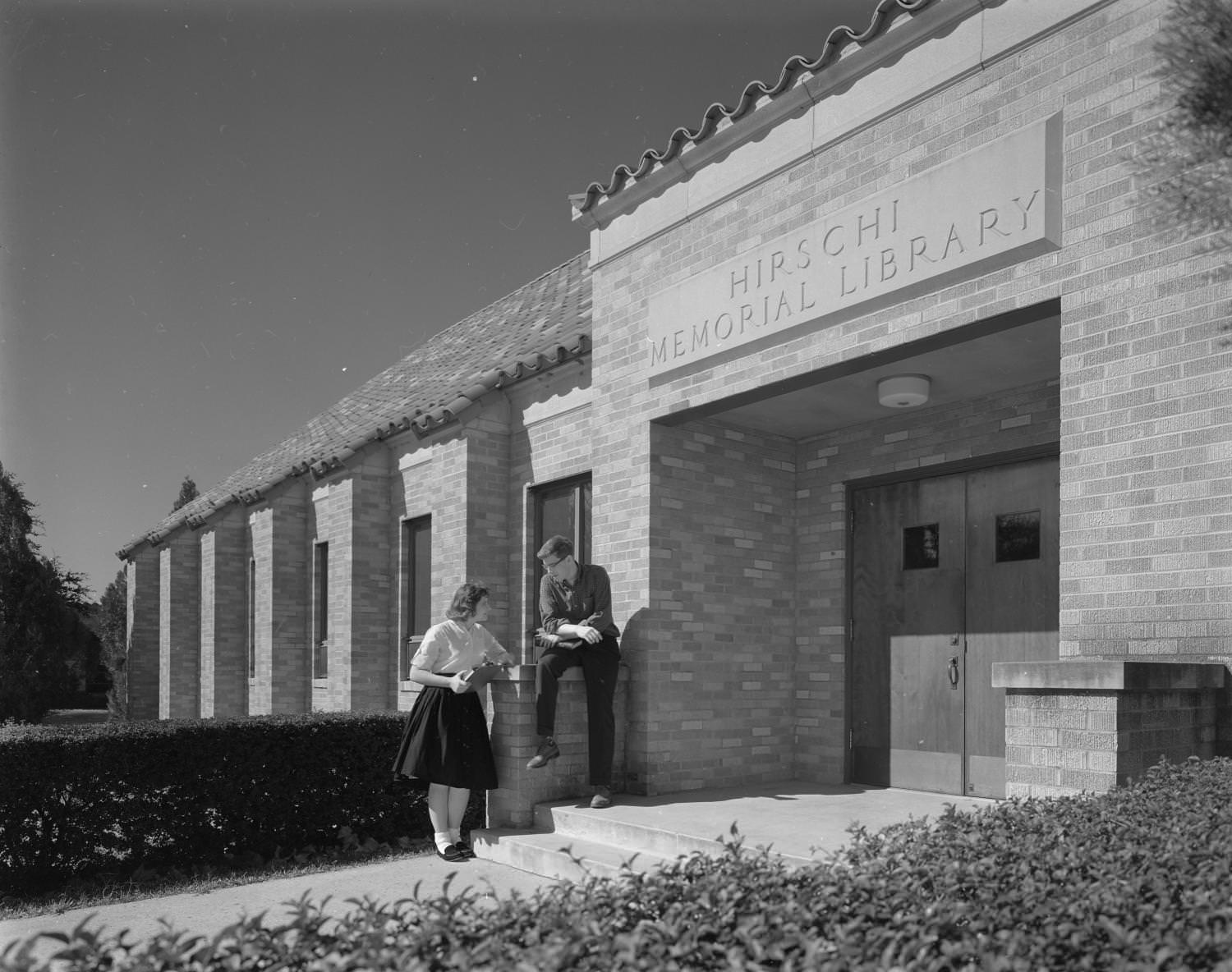
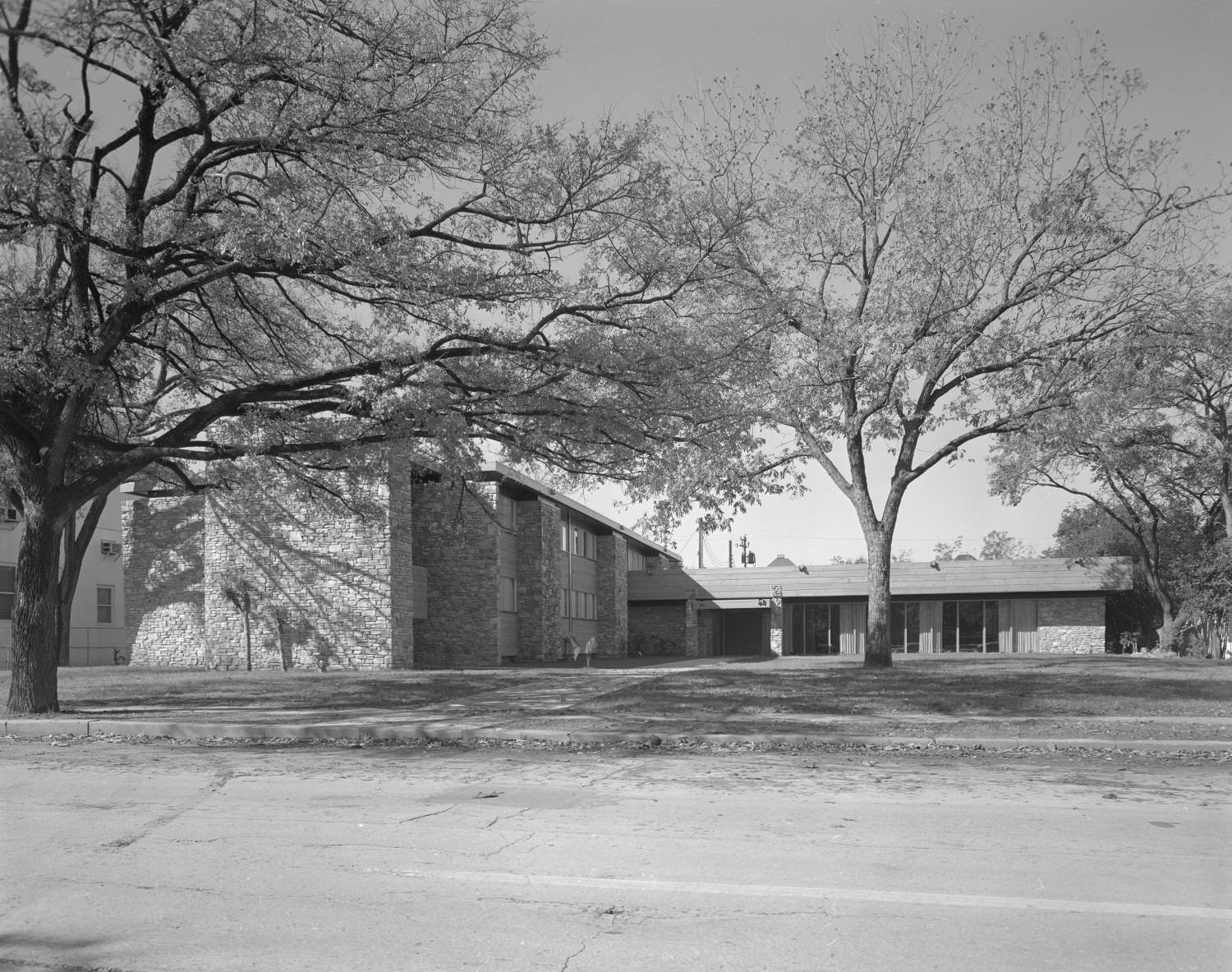
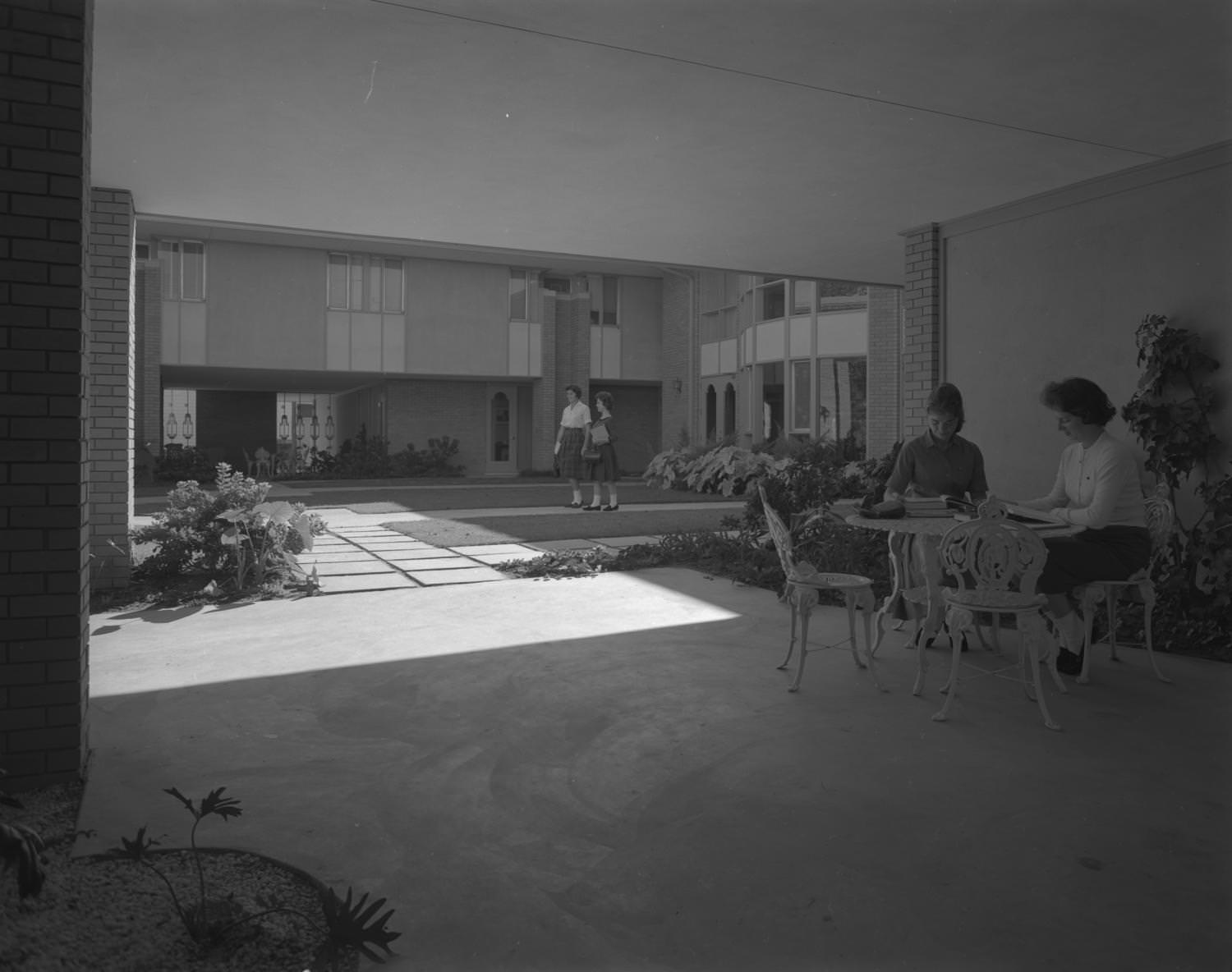
Other colleges in Austin were also expanding during the 1960s. St. Edward’s University was building new residential and academic facilities, with construction visible at Thomas Residence Hall in 1966. Concordia Lutheran College at 3400 East Avenue had its own stone and brick buildings. Huston-Tillotson College, a historically Black institution, maintained a visible presence on the east side of the city.
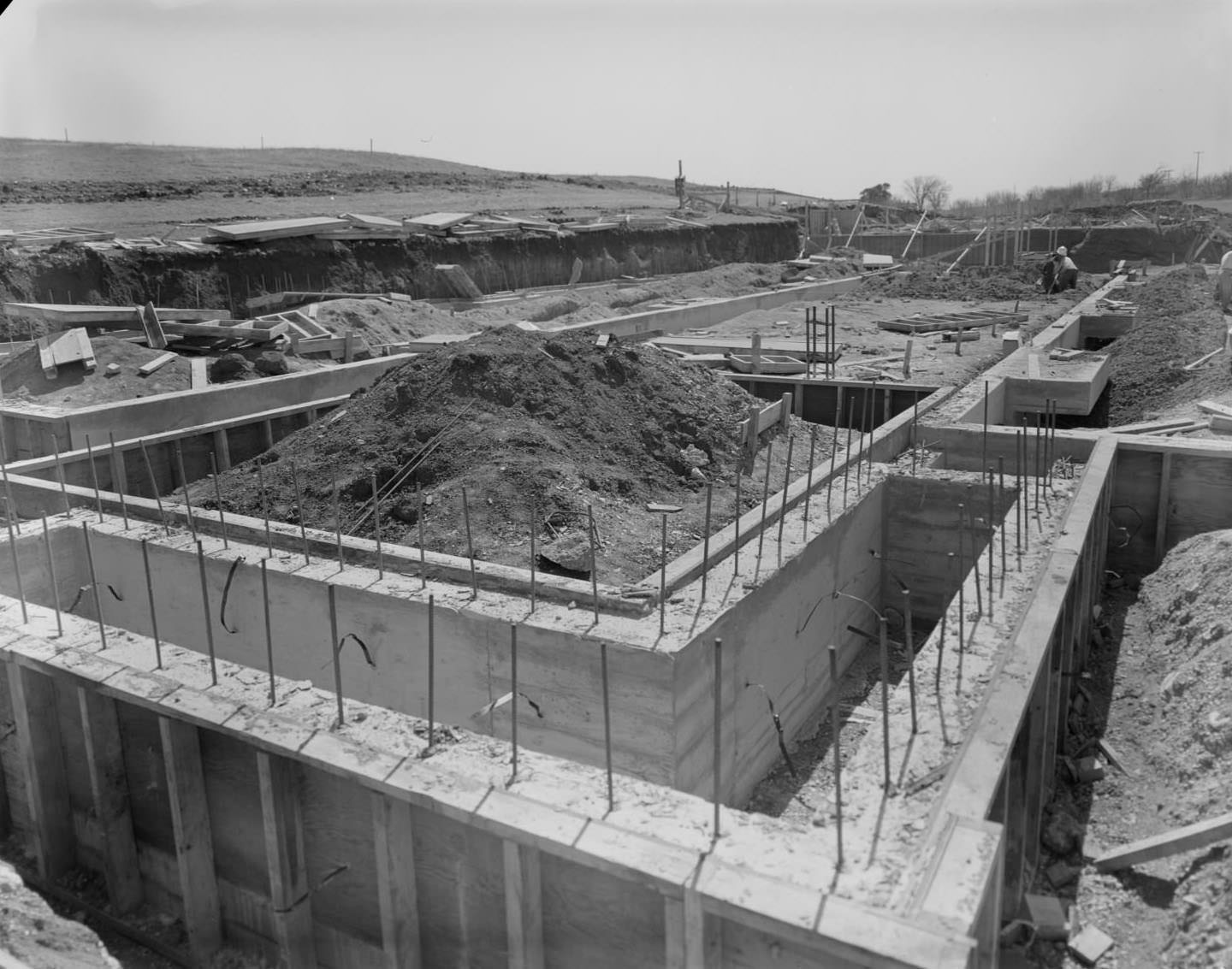
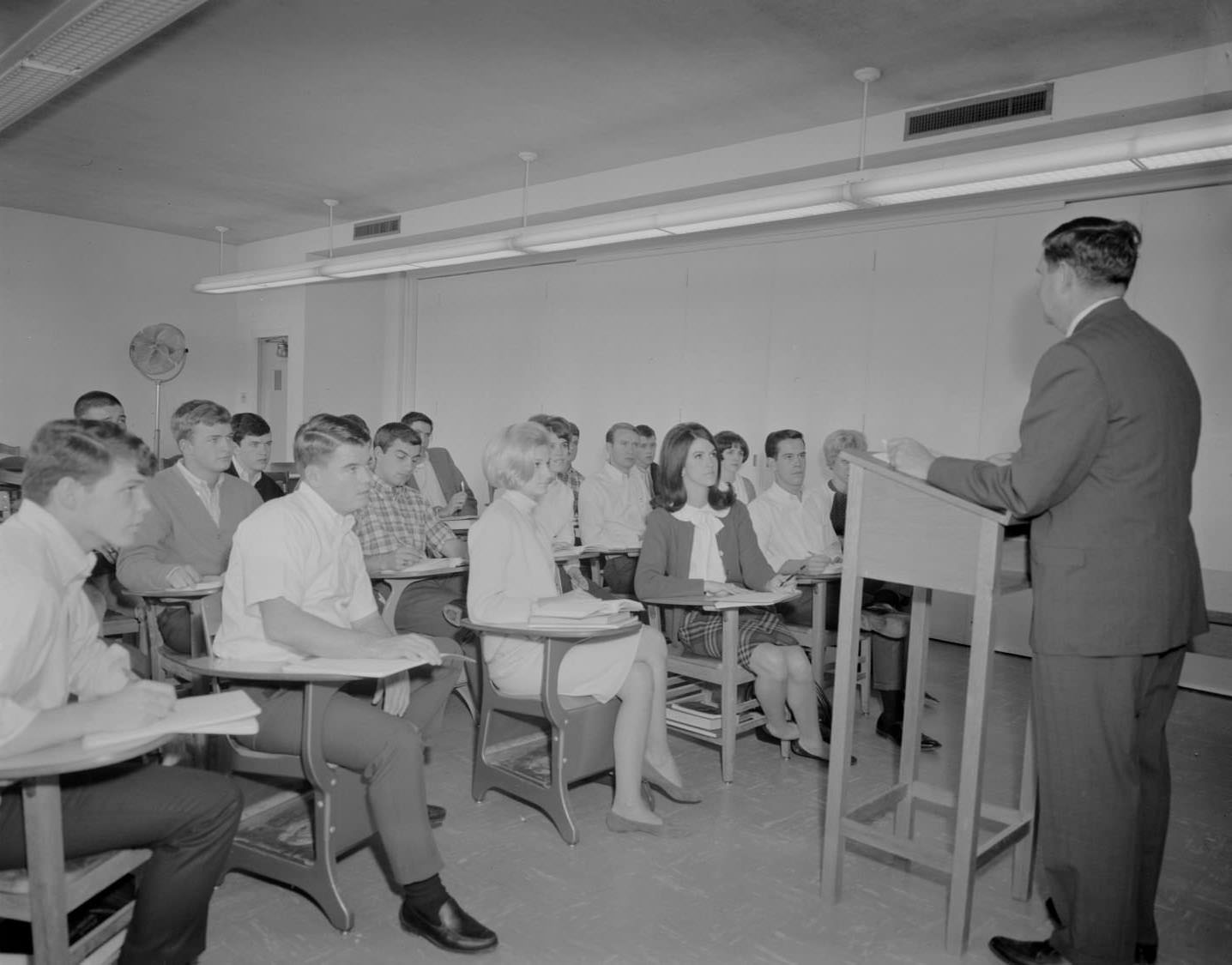
Thomas Residence Hall under construction at St. Edwards University, 1966Students sit in desks looking at a man, presumably a lecturer, who is standing behind a wooden podium and speaking in an unknown room at St. Edwards University, 1966St. Edwards University Girls Dormitory, 1966.The exterior of a decorative stone and brick building at Concordia Lutheran College, located at 3400 East Avenue, Austin, 1961Students on the steps of a library located on 3400 East Avenue at Concordia Lutheran College, 1961Huston-Tillotson Student Union Exterior, 1963.
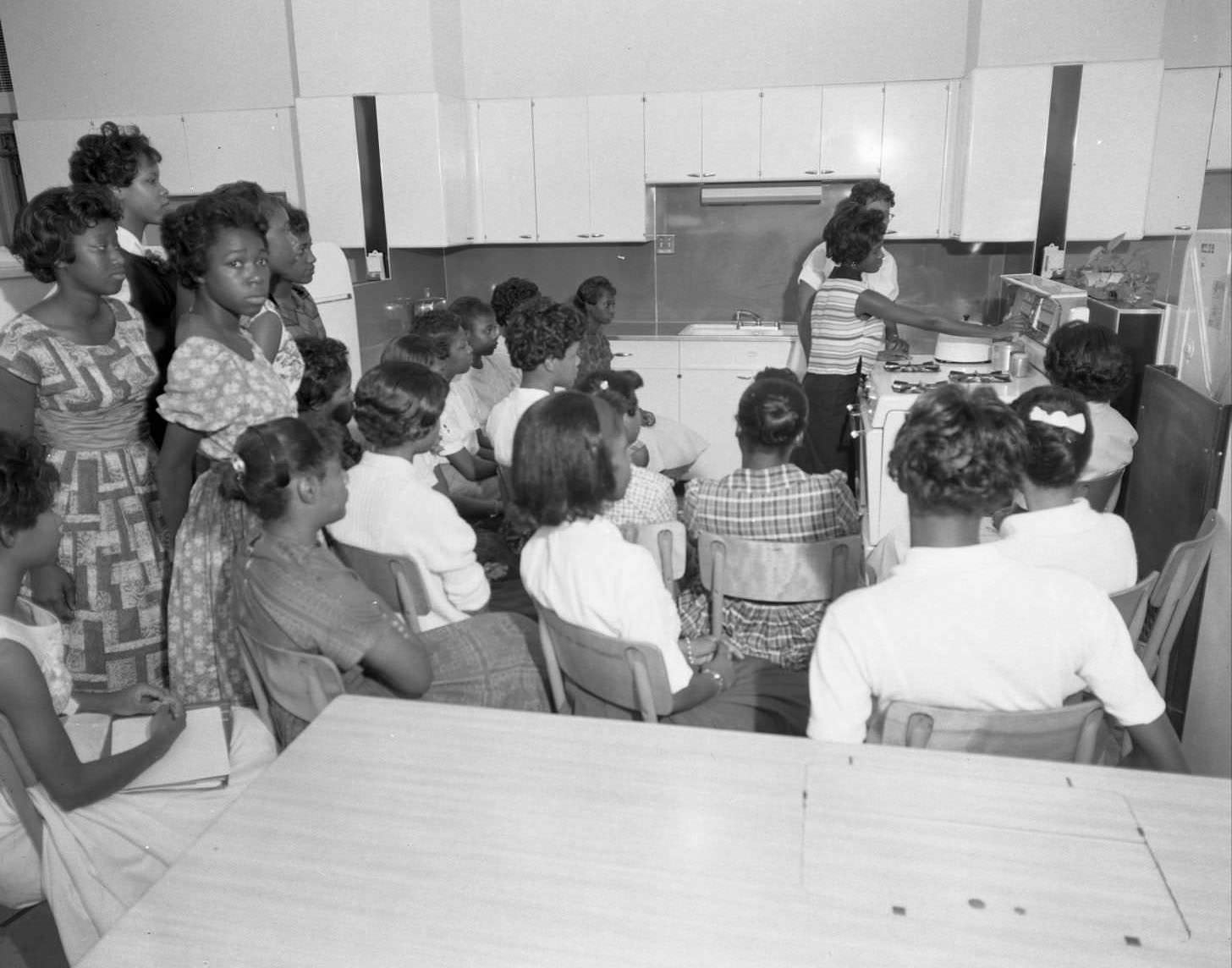
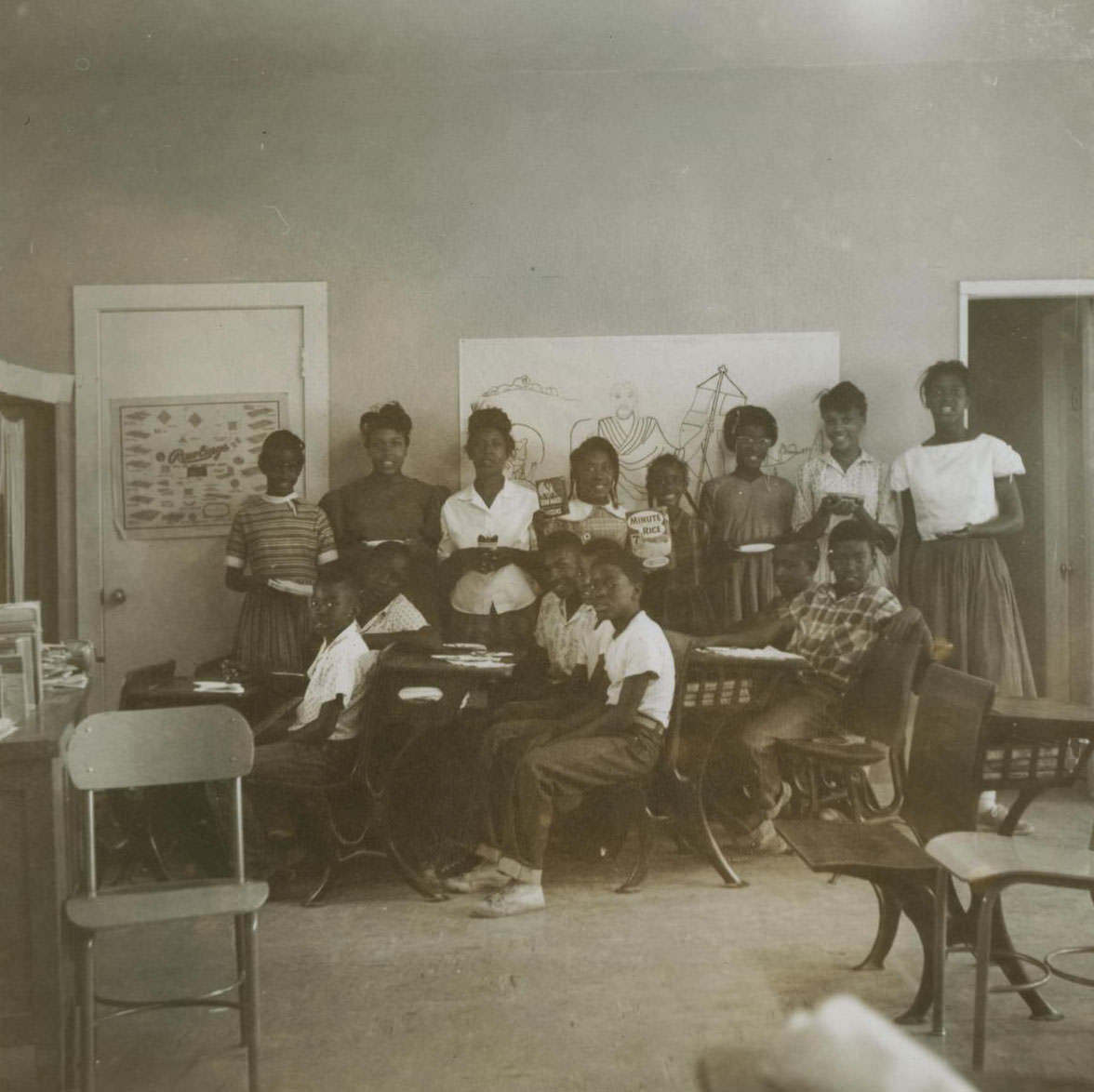
The civil rights movement reached Austin in the early 1960s. Student-led sit-ins targeted segregated lunch counters, restaurants, and movie theaters. Organizations like the Austin chapter of the NAACP and the Austin Youth Council pushed for equal access to education, housing, and public facilities. Anderson High School, on the east side of Austin, was the city’s main high school for Black students during the era of segregation. After the Civil Rights Act of 1964 outlawed racial discrimination in public accommodations, formal barriers in those spaces began to fall. Discrimination in employment and housing persisted well beyond the Act’s passage.
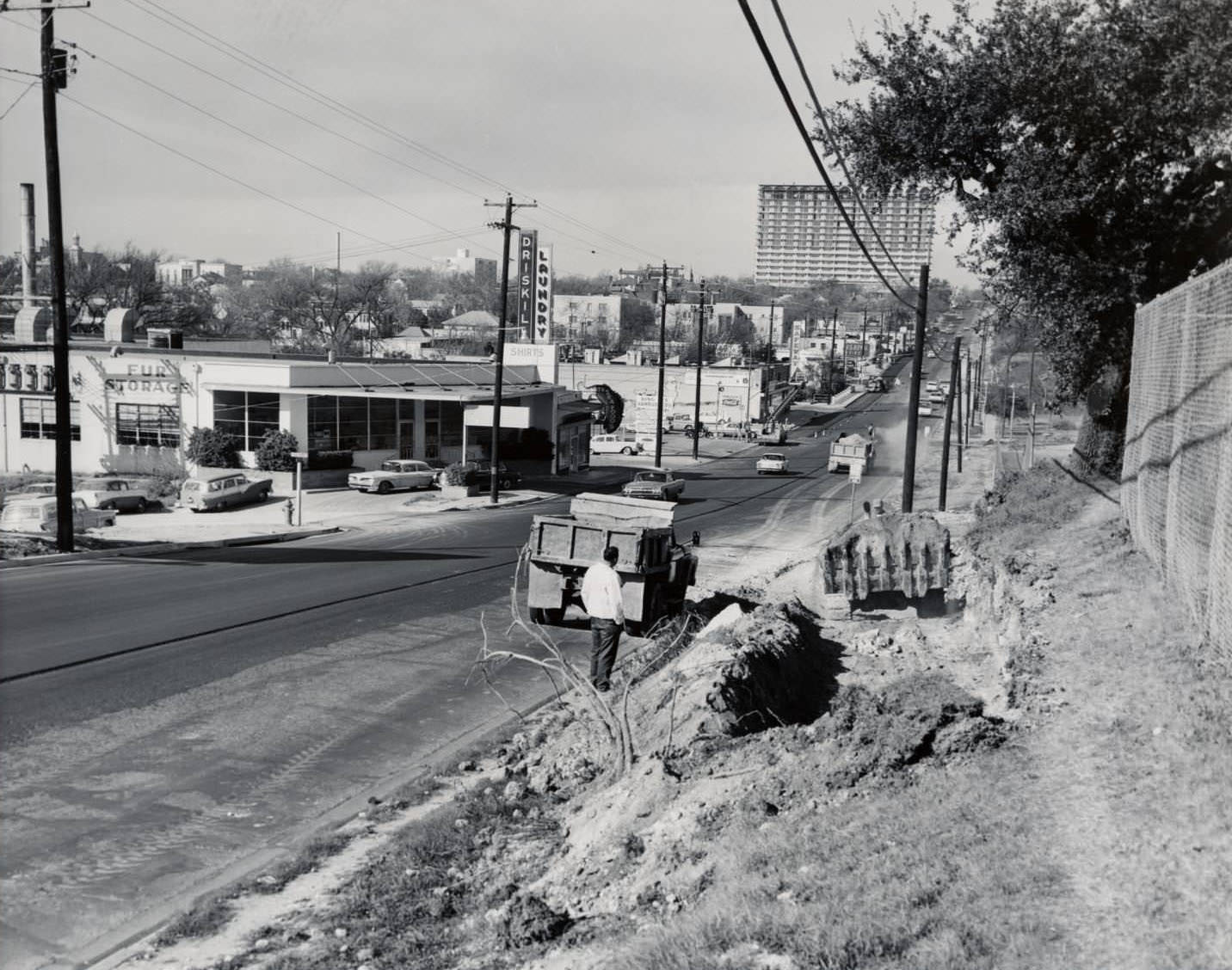
Young female students observing a kettle in a cooking class at Anderson High Schoolm, 1960The 19th Street (now Martin Luther King Jr Blvd.) looking west from about Trinity, 1960 .Buildings line the left side of the street and construction vehicles and workers are on the right side.
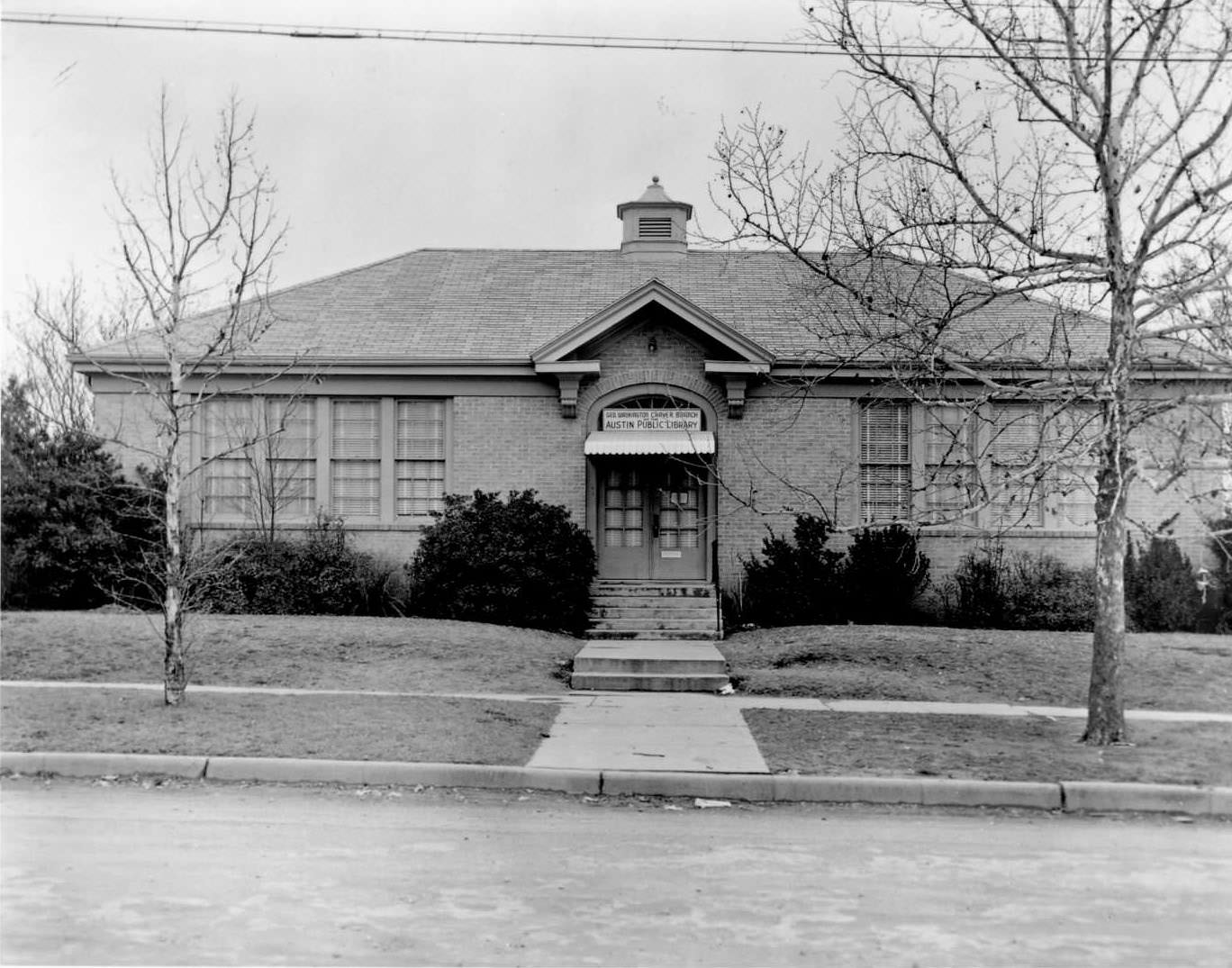
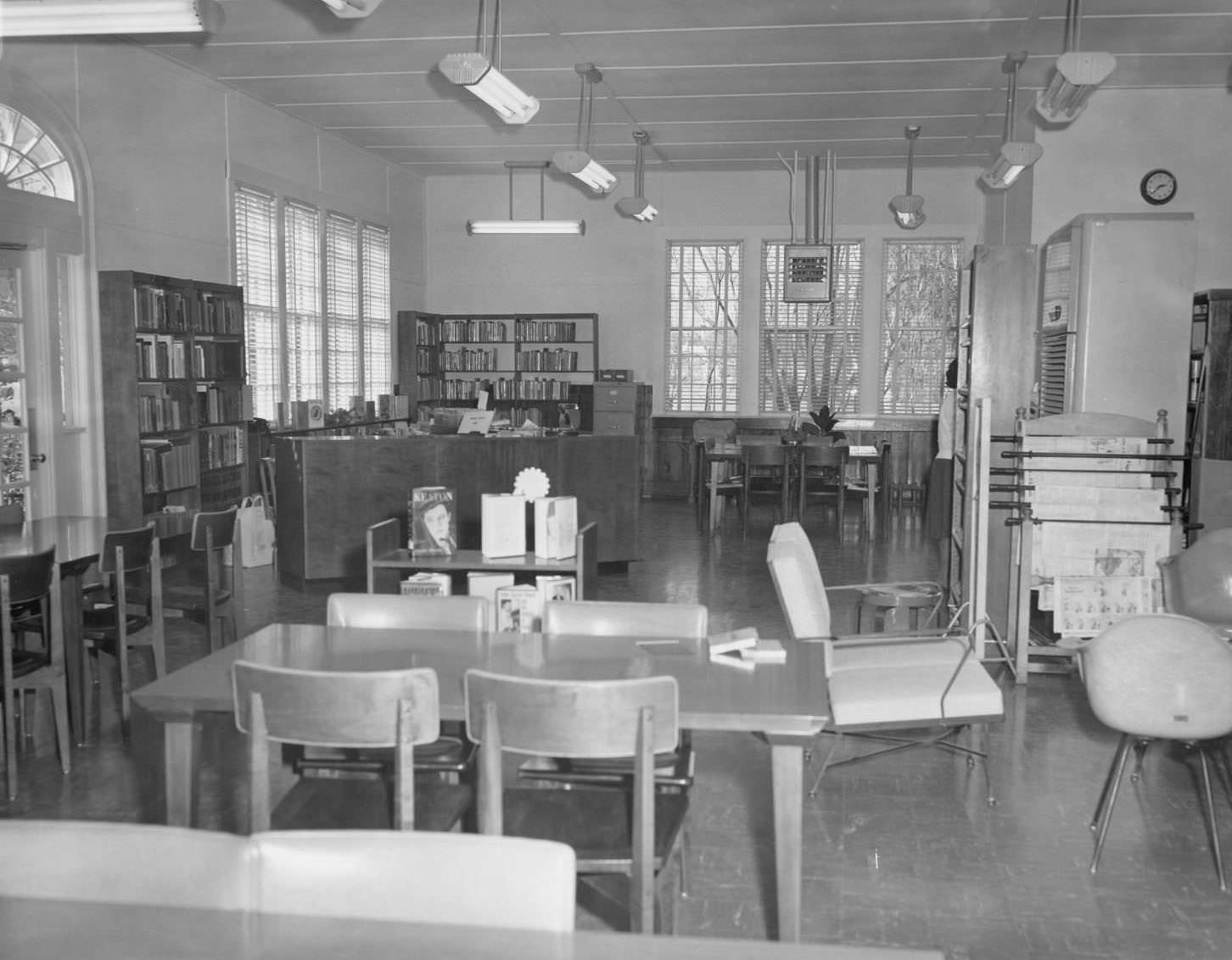
In 1968, African Americans won a seat on the Austin school board, and by 1971, a seat on the city council. The Carver Branch Library on the east side served the Black community and later became part of the Carver Museum. It was a community anchor at a time when access to public institutions was still unequal.
Exterior view of the Carver Branch Library, later part of the Carver Museum, 1960Interior of the Carver Branch Library, 1967
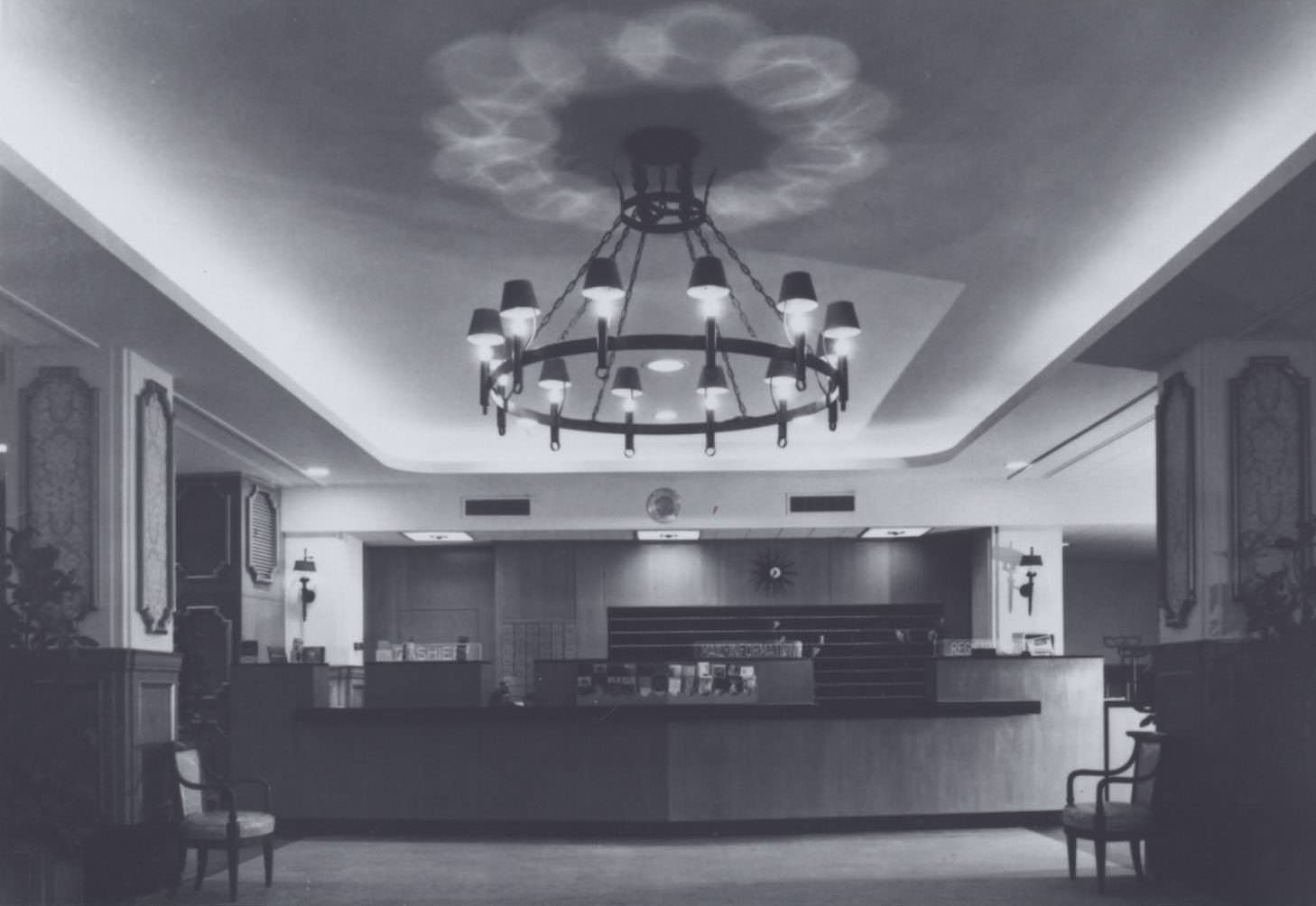
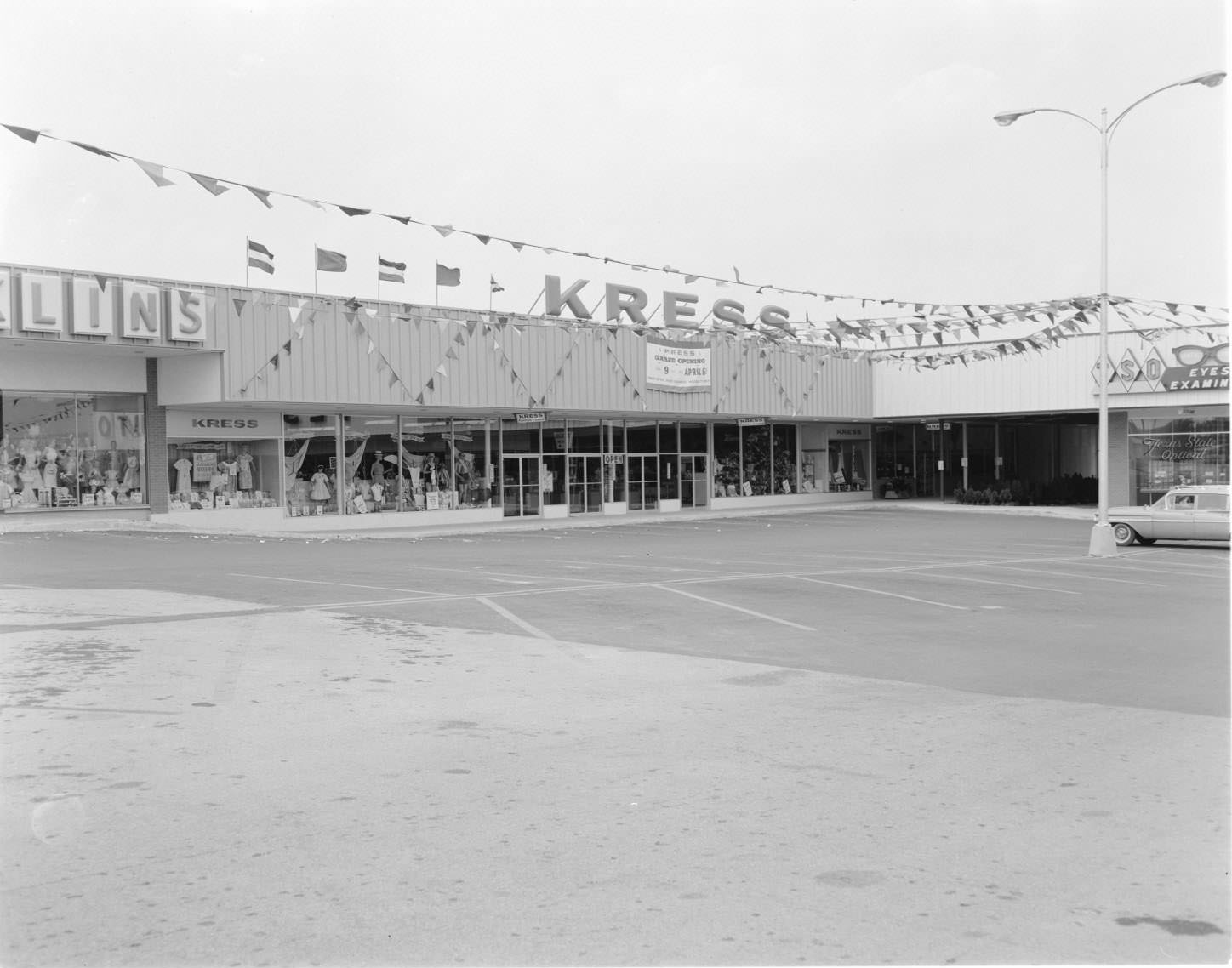
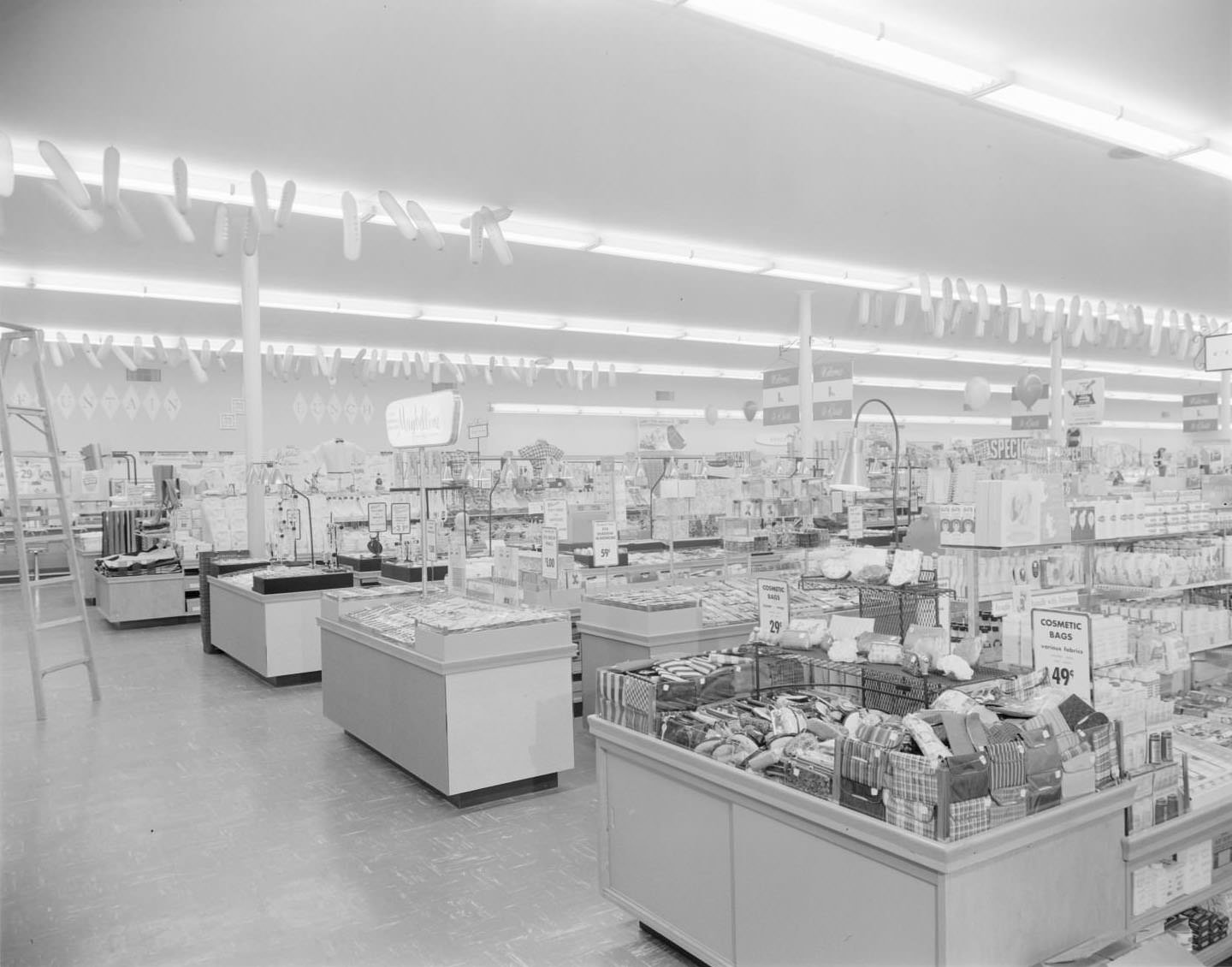
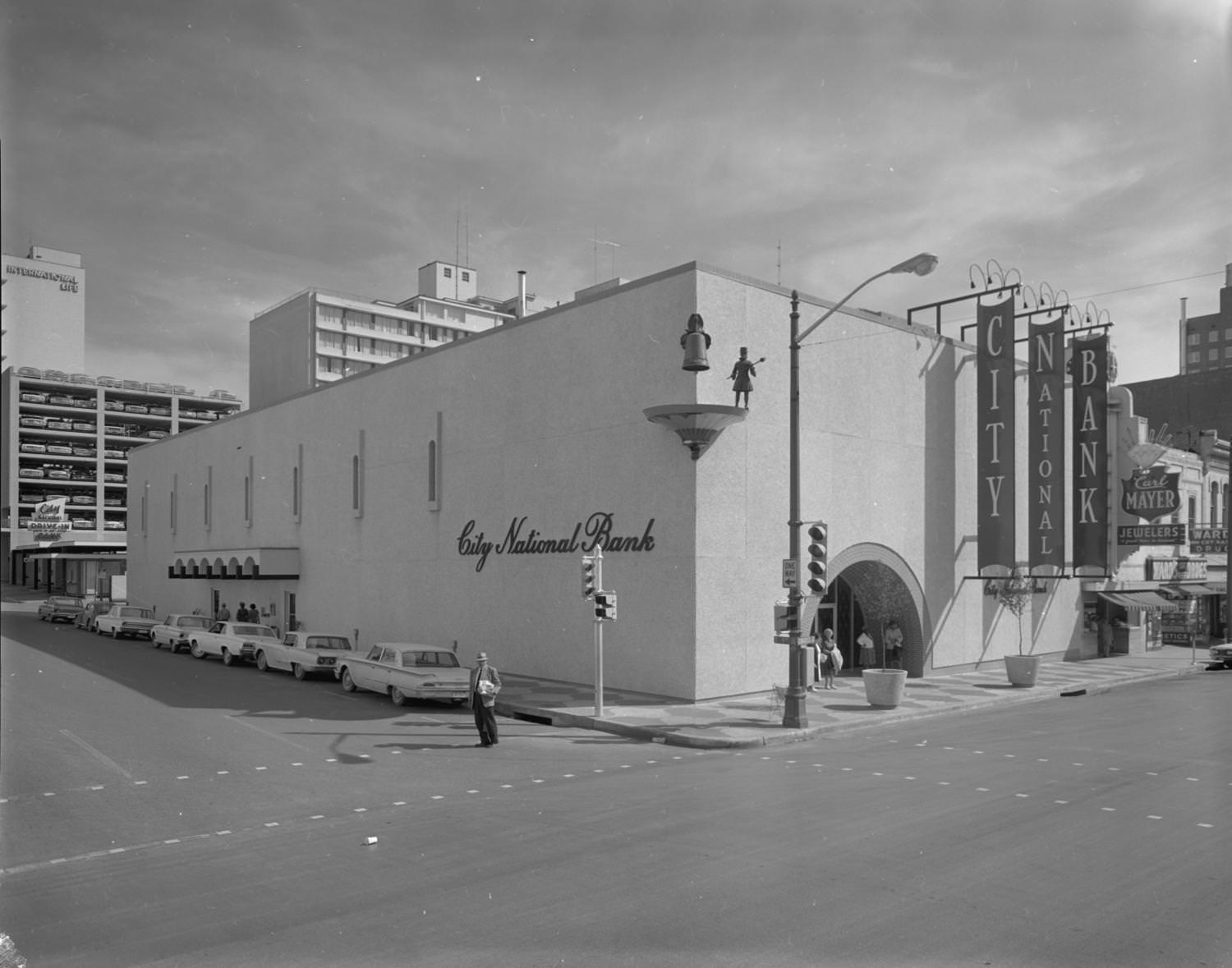
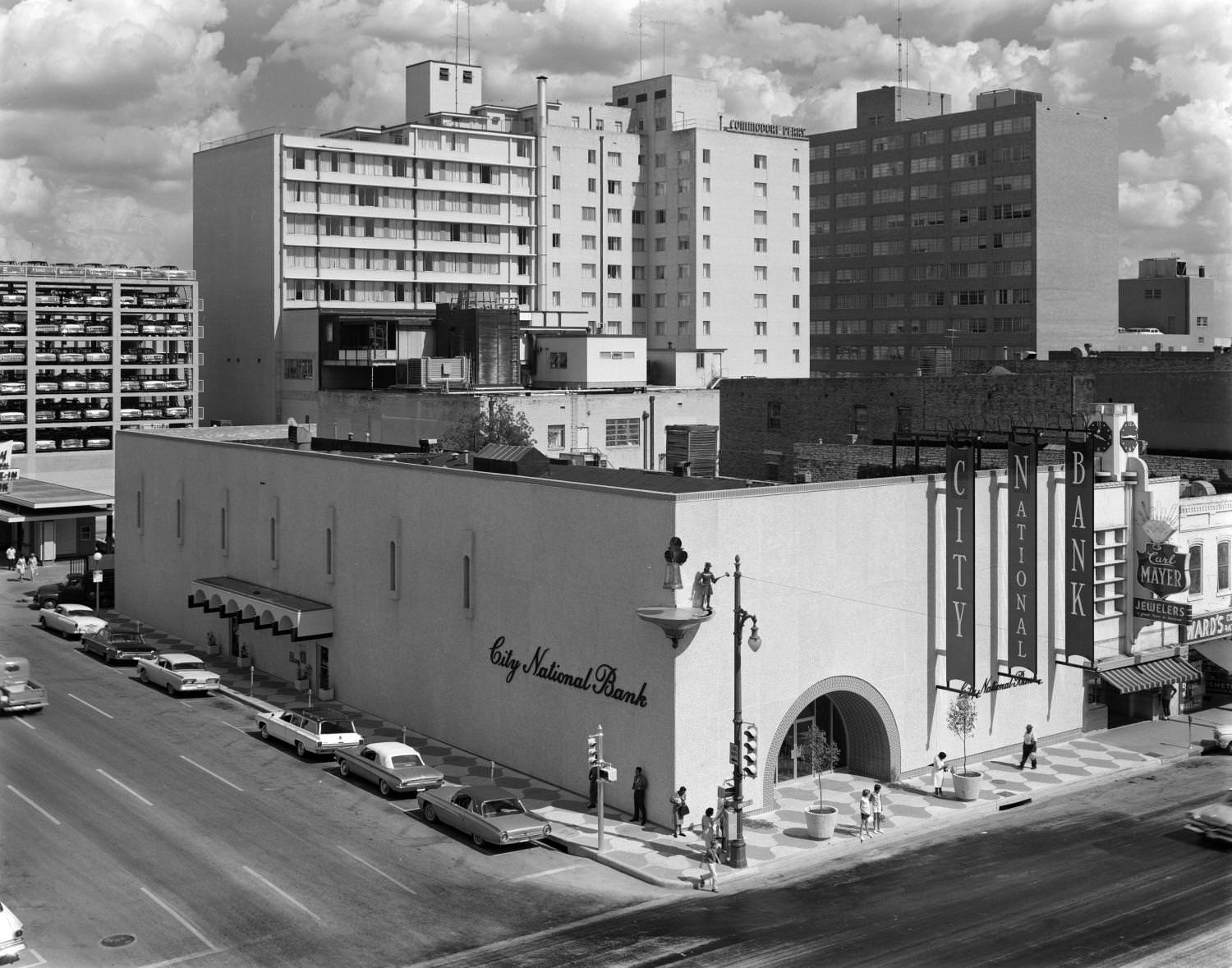
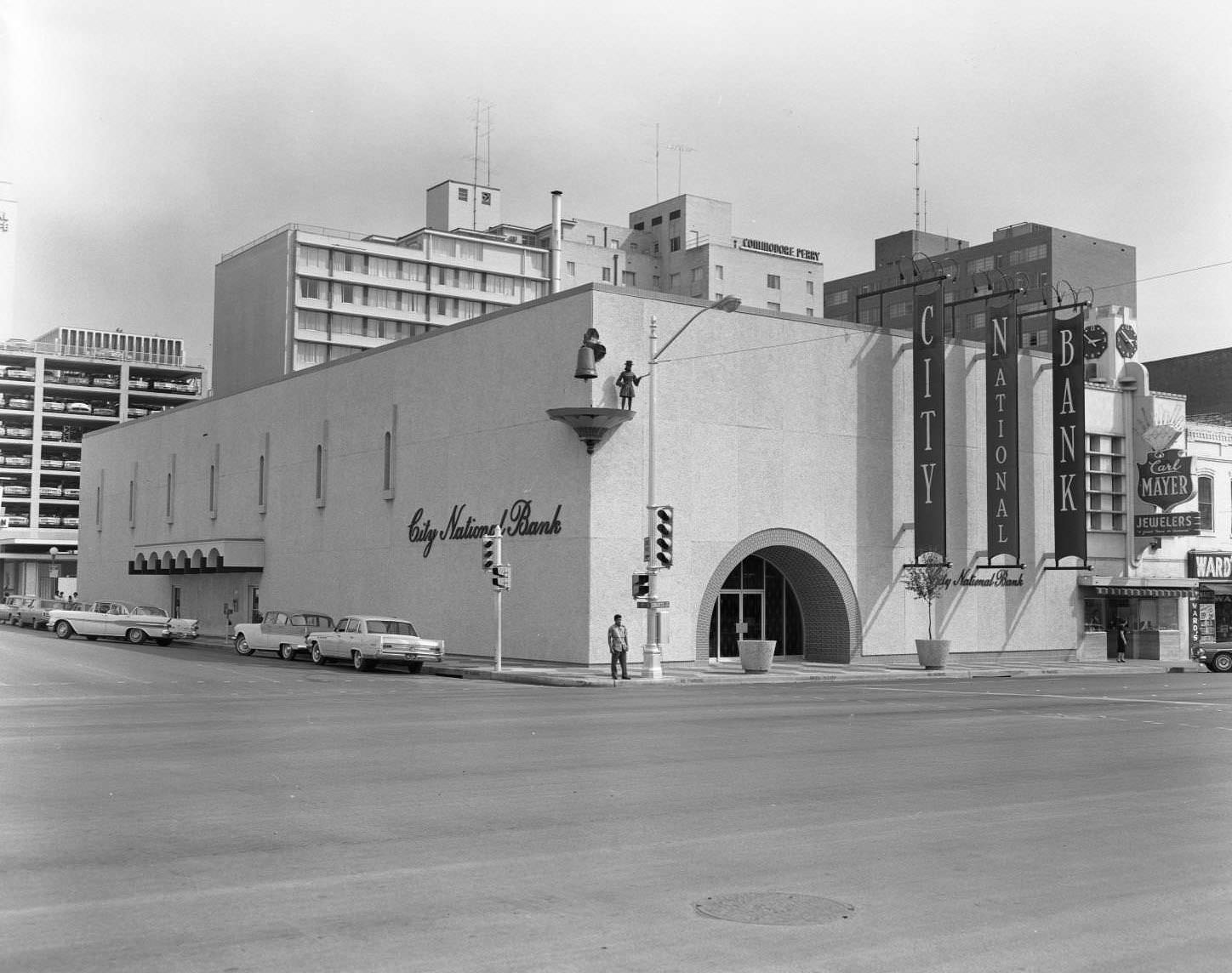
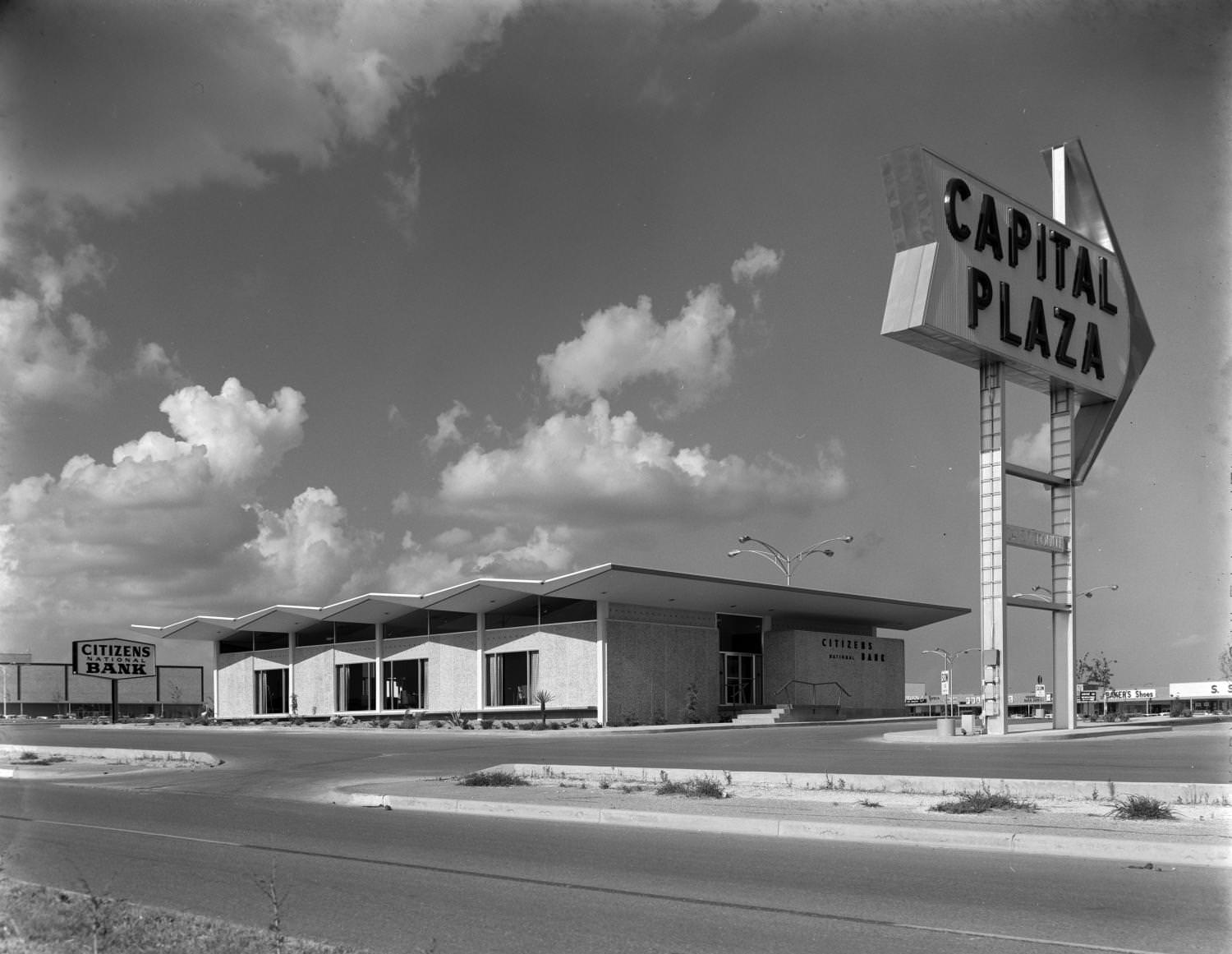
Austin’s commercial streets were busy throughout the decade. Congress Avenue was home to banks, department stores, and hotels. The Stephen F. Austin Hotel at 701 Congress Avenue had an ornate lobby that drew guests and locals alike. The Kress store, a five-and-dime chain popular across the South, had a location in Austin with a busy interior that reflected everyday shopping life in the early 1960s.
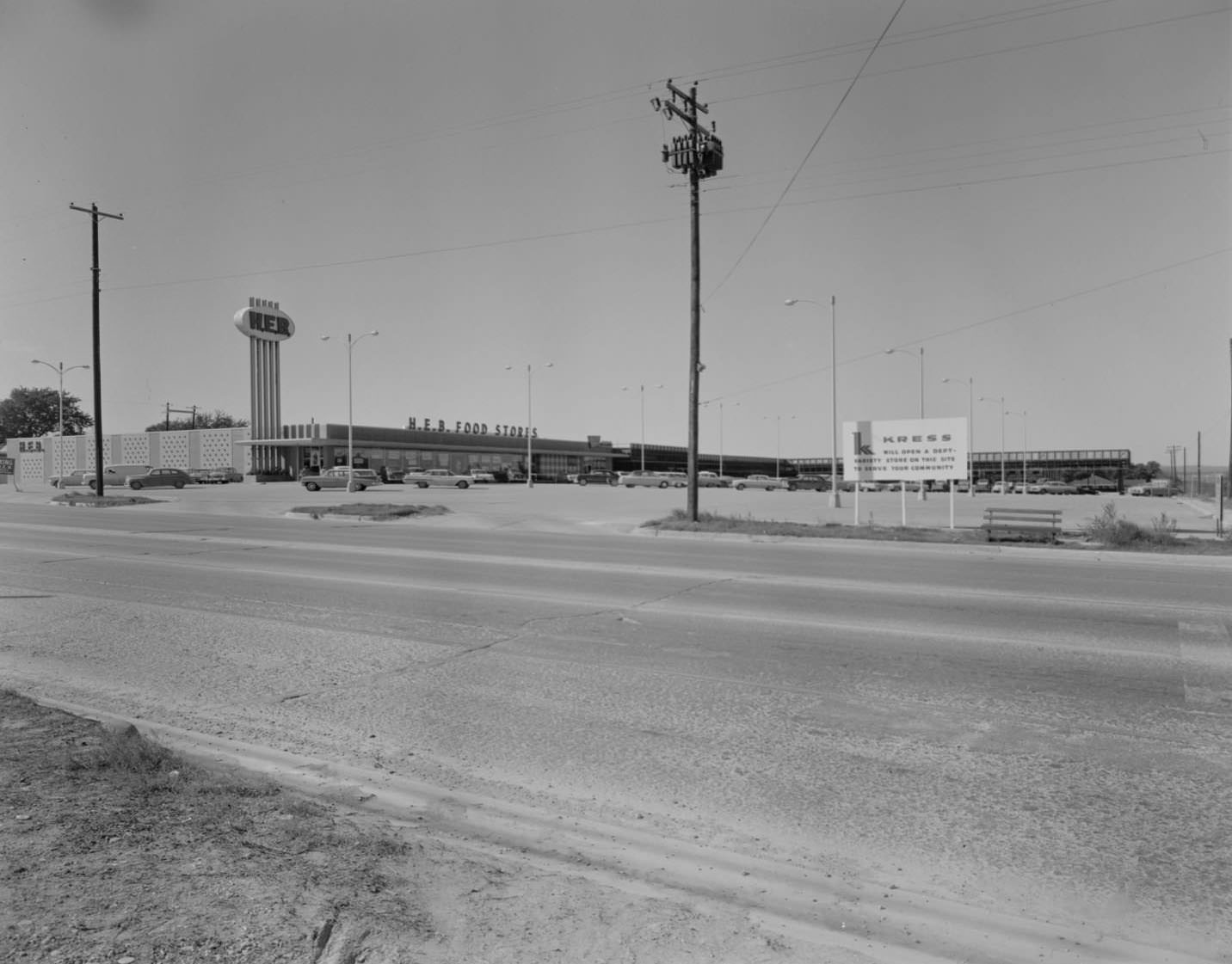
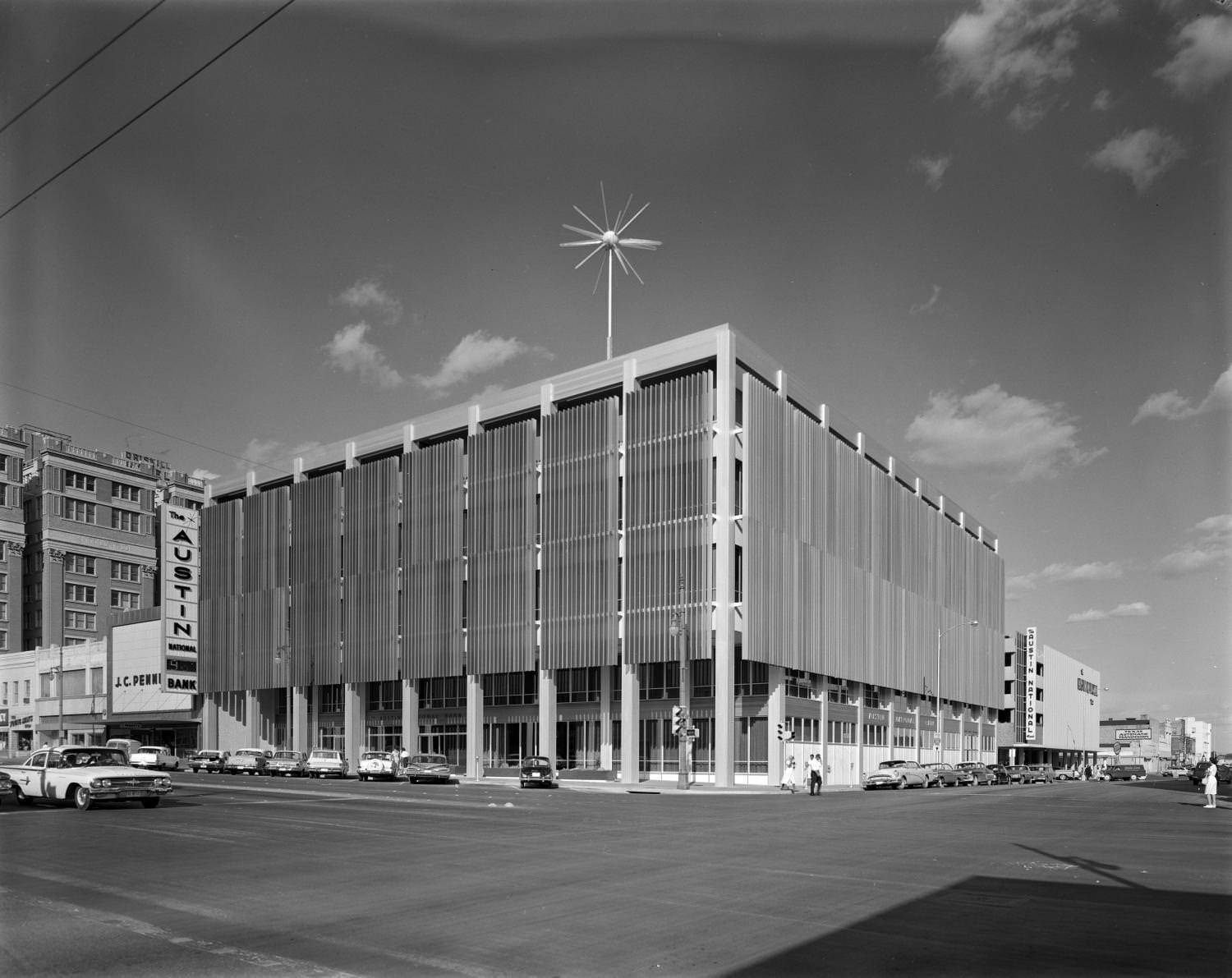
Lobby at the Stephen F. Austin Hotel, located at 701 Congress Avenue in Austin, 1960The Kress store, Austin, 1961The interior of the Kress store, 1961.H.E.B. next to the construction of Kress. Austin, Texas, 1960Austin National Bank, 1963The since demolished City National Bank, located on 819 Congress Avenue, 1964The City National Bank building at 823 Congress Avenue, Austin, Texas, 1963First City National Bank, Austin, 1964Citizens National Bank at Capital Plaza in Austin, Texas, 1961
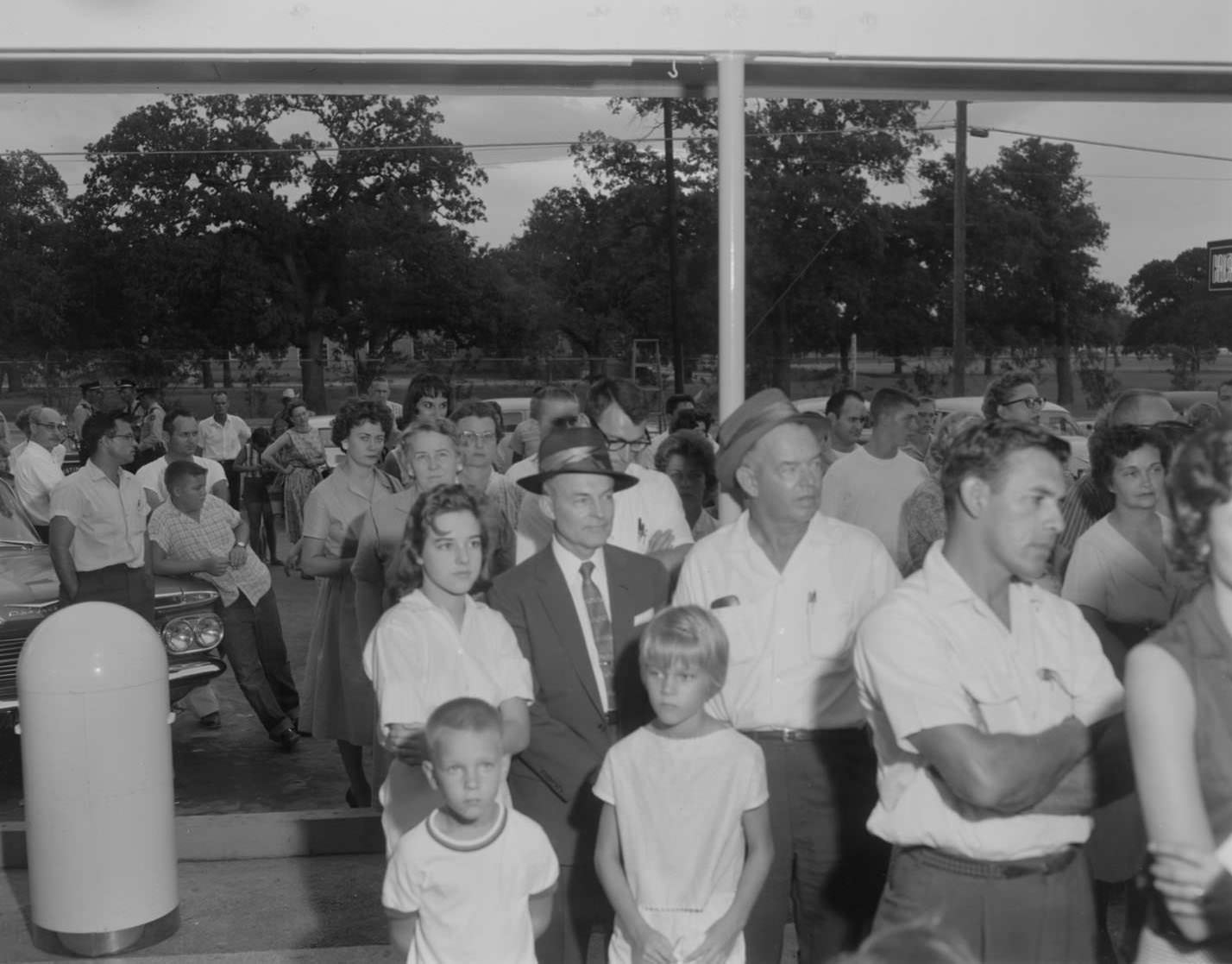
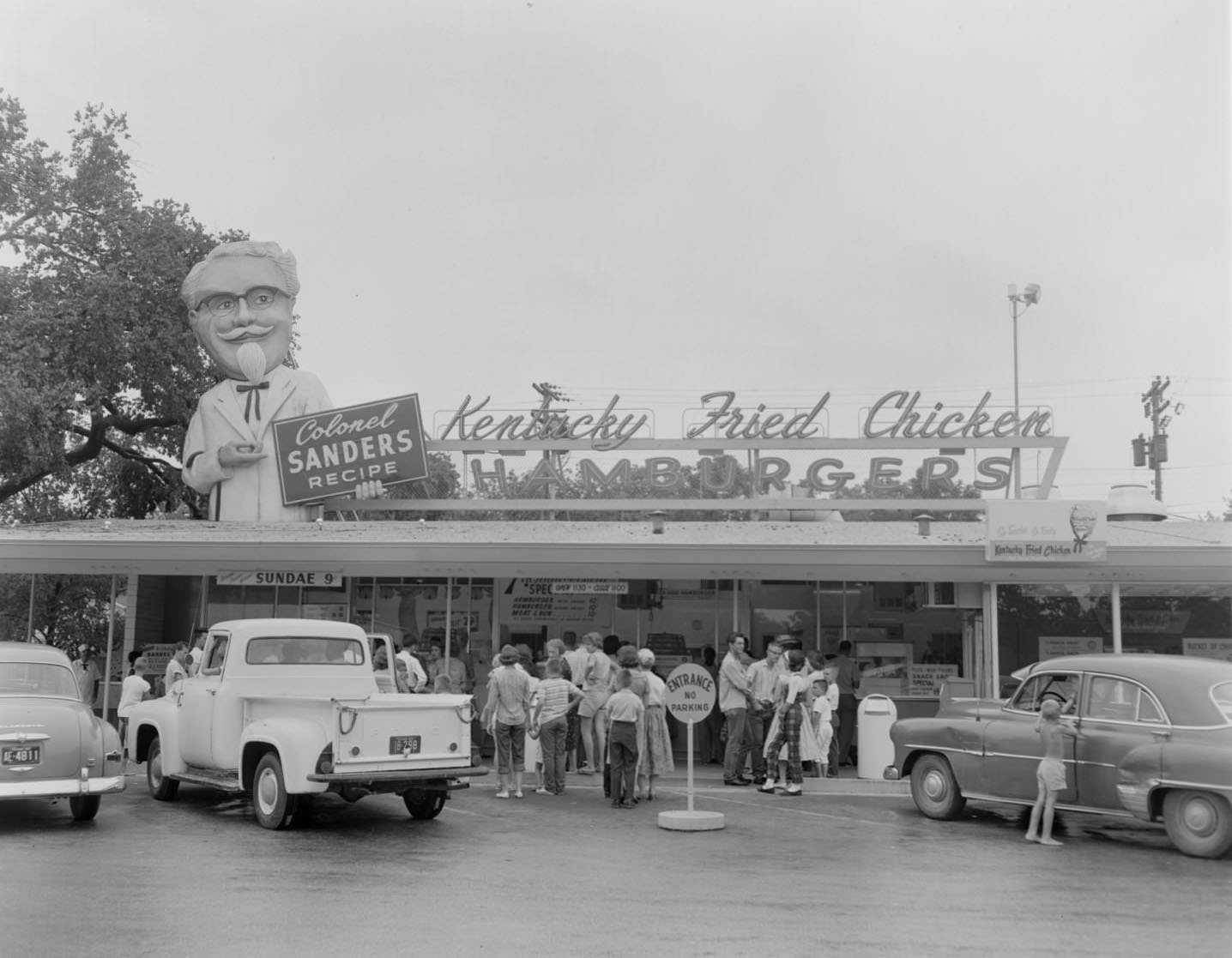
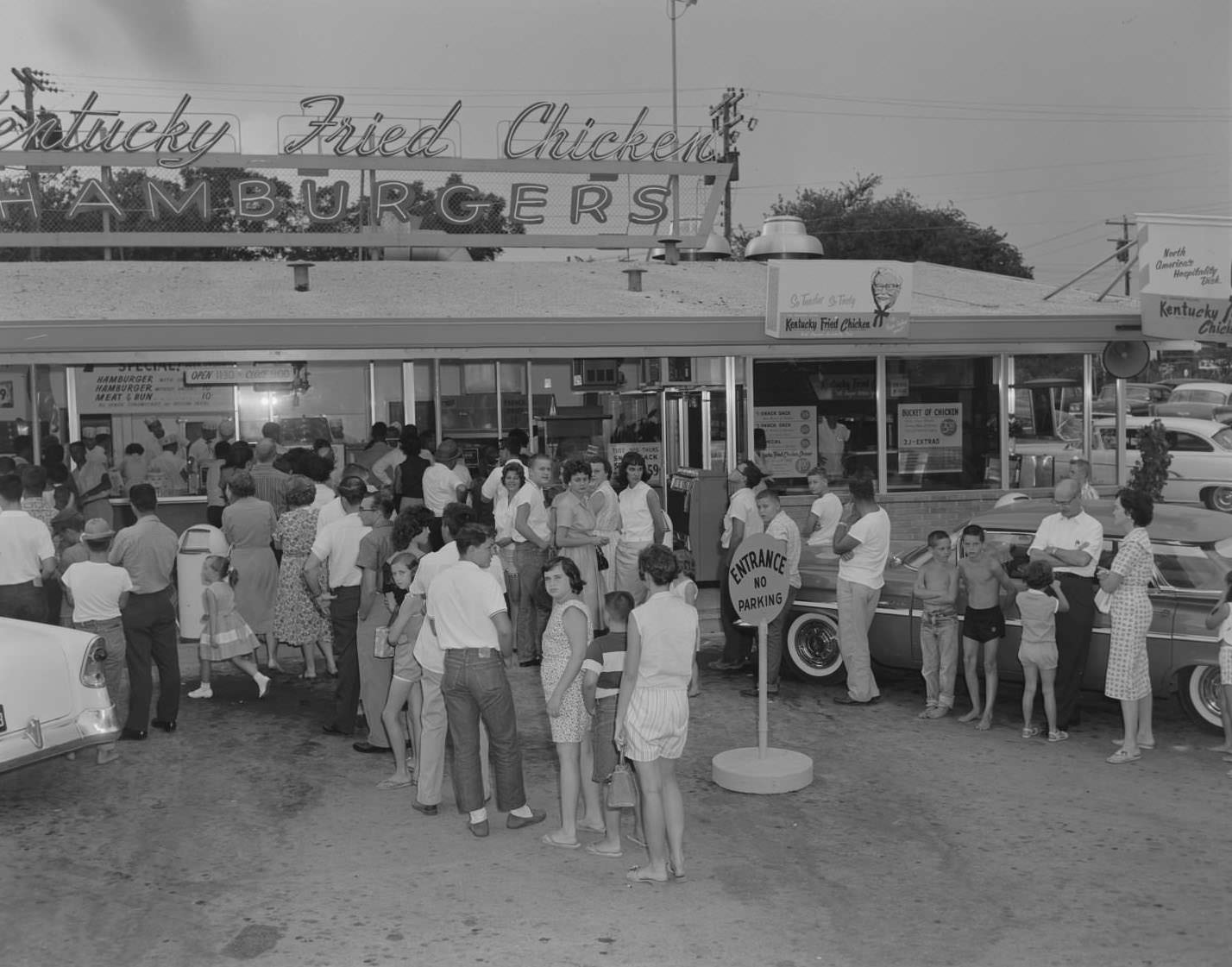
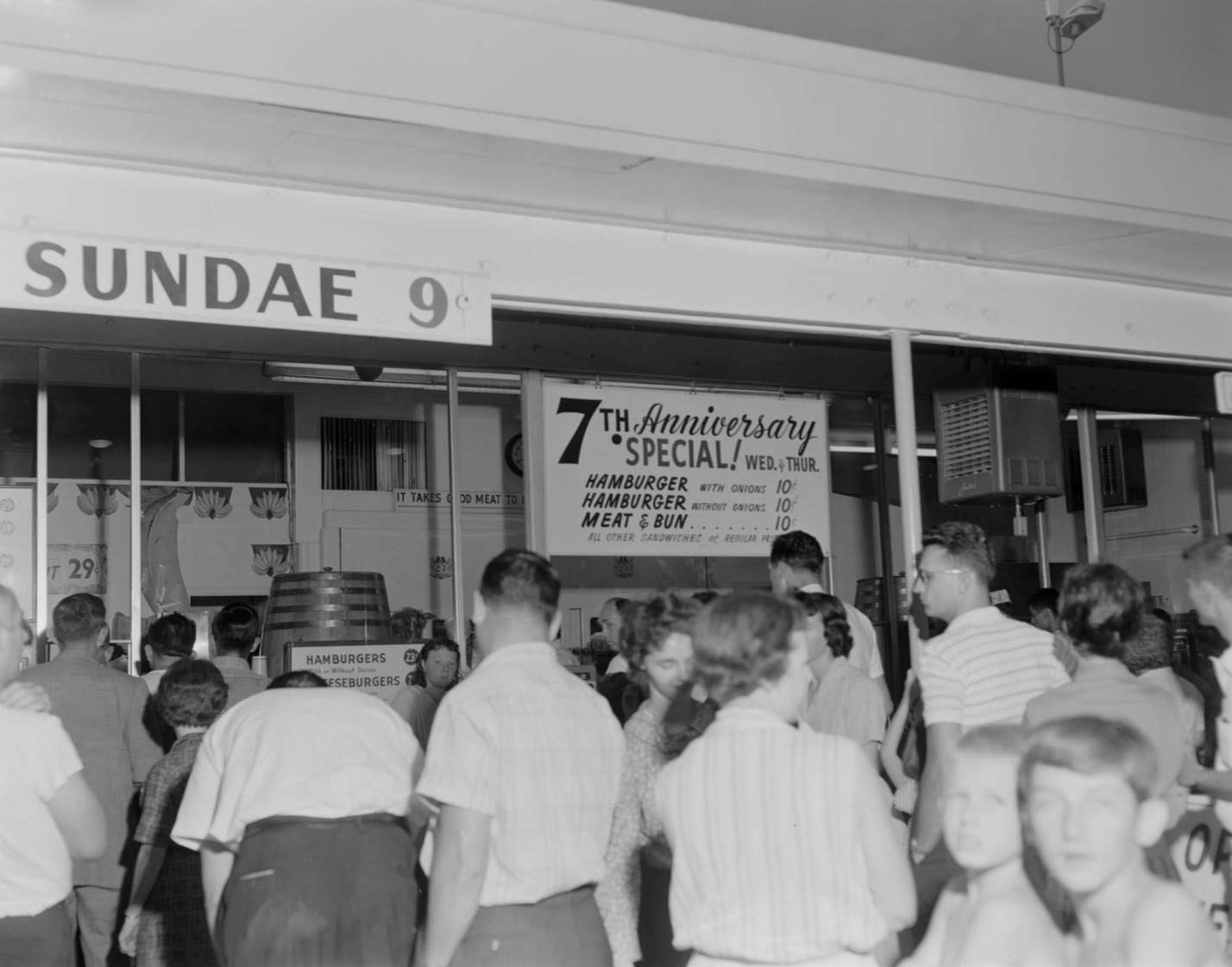
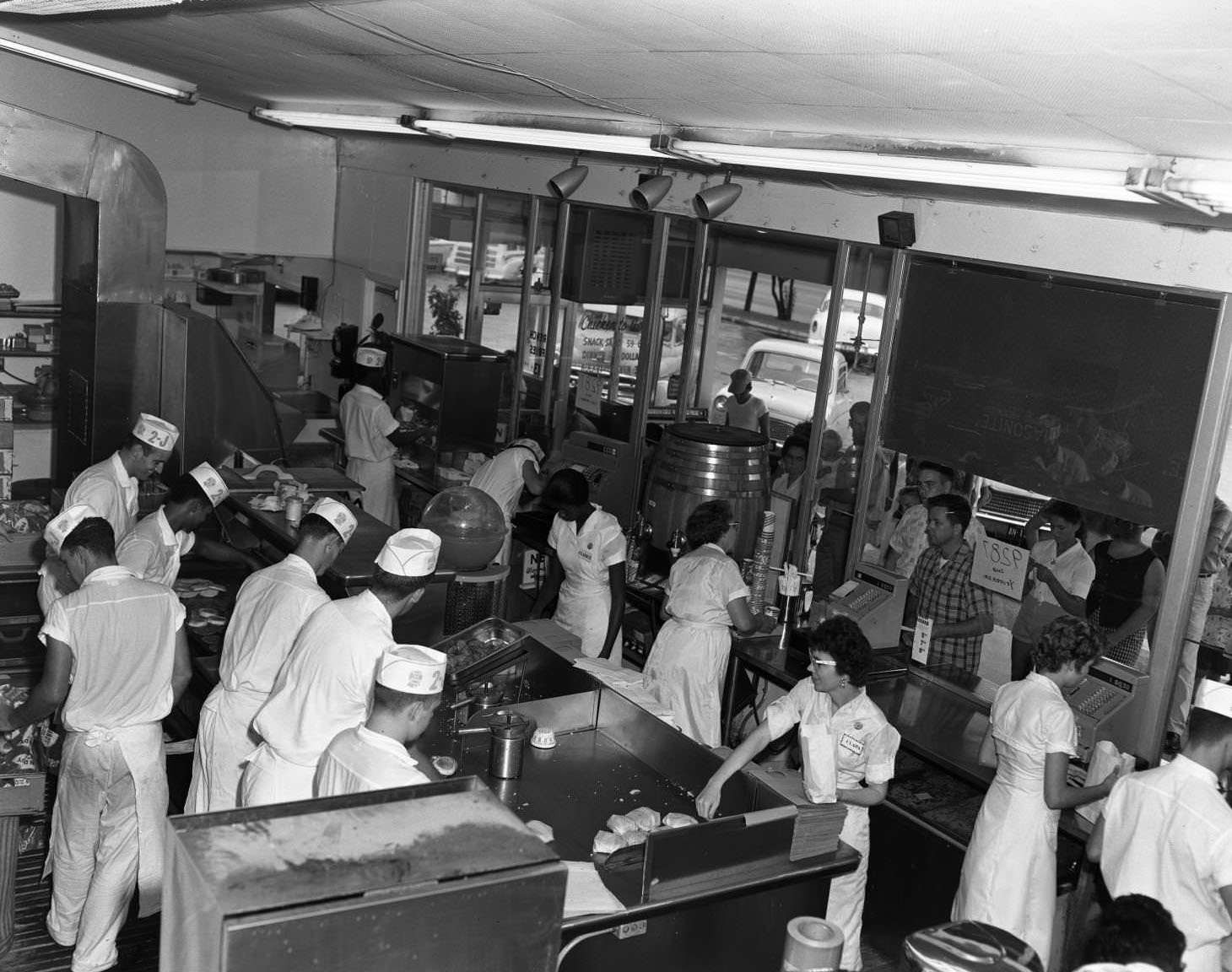
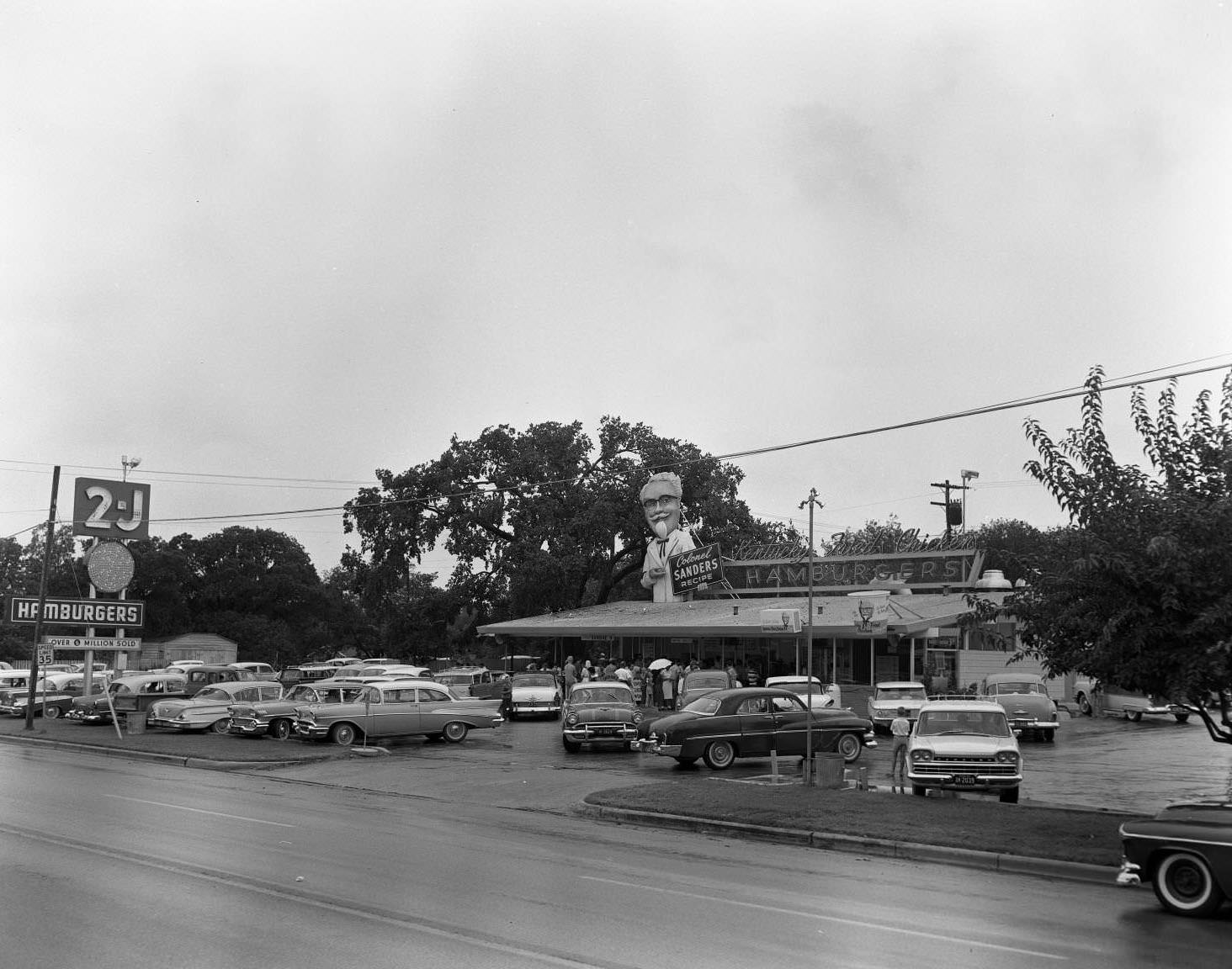
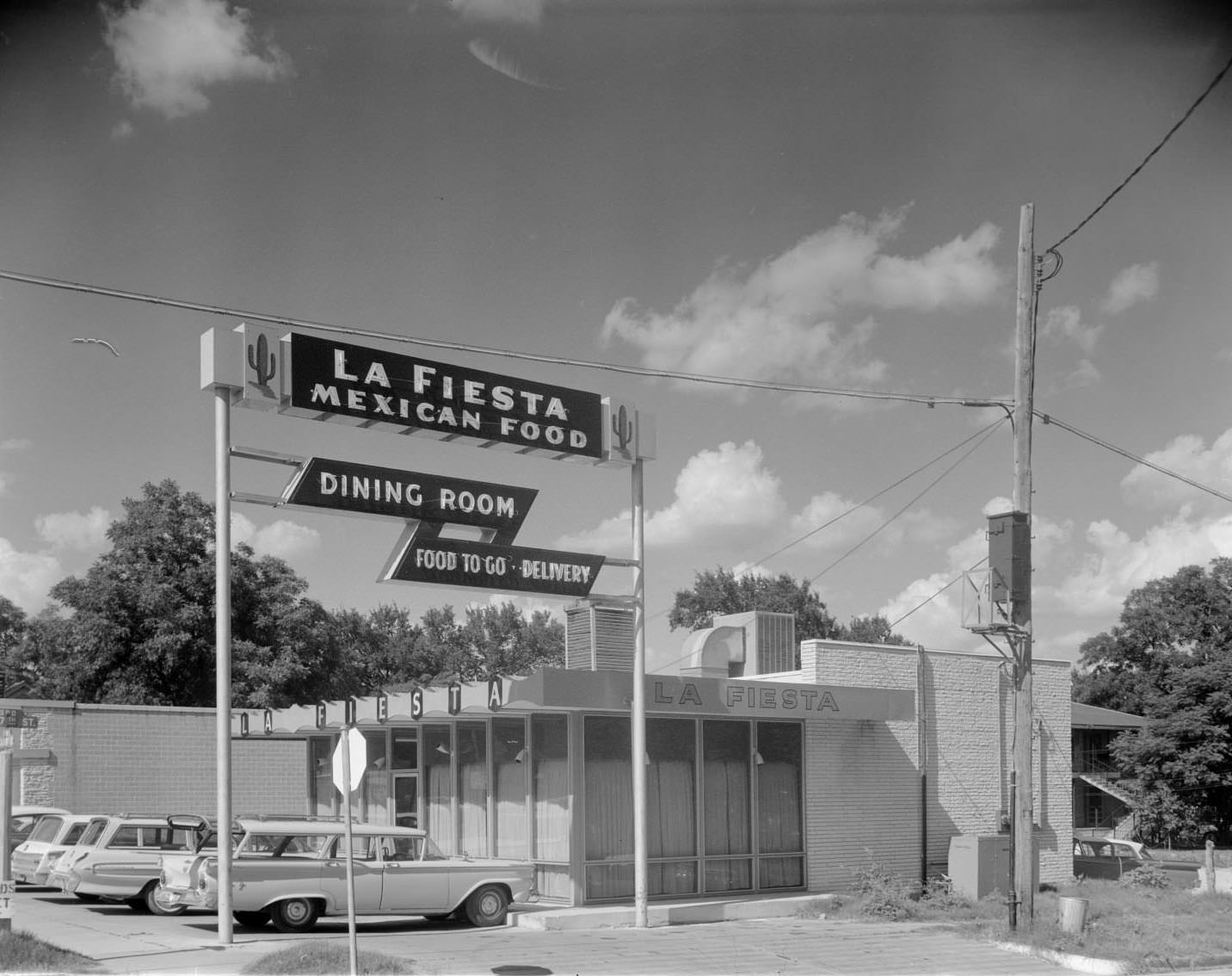
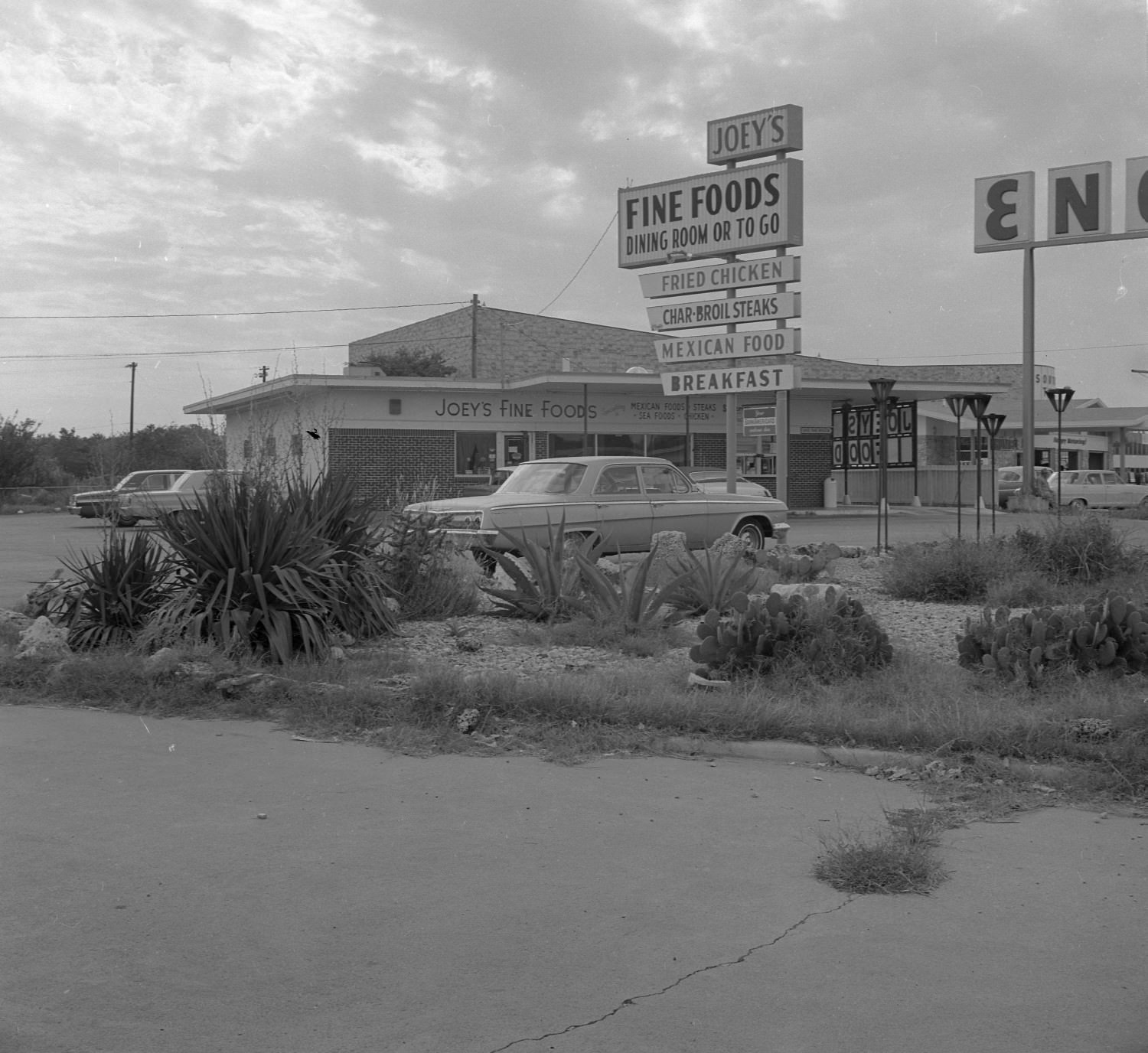
Eating out in 1960s Austin ranged from fast food stands to sit-down Mexican restaurants. Kentucky Fried Chicken drew crowds at its Austin location in 1960. The 2-J Hamburger stand at North Lamar and 40th Street ran an efficient kitchen with male workers in white uniforms on one side and female cashiers in white dresses with name badges on the other, all visible from above through a single overhead photograph. La Fiesta offered a Mexican dining room experience, and Joey’s Fine Foods on Ben White Boulevard served customers until the building was demolished in 1969.
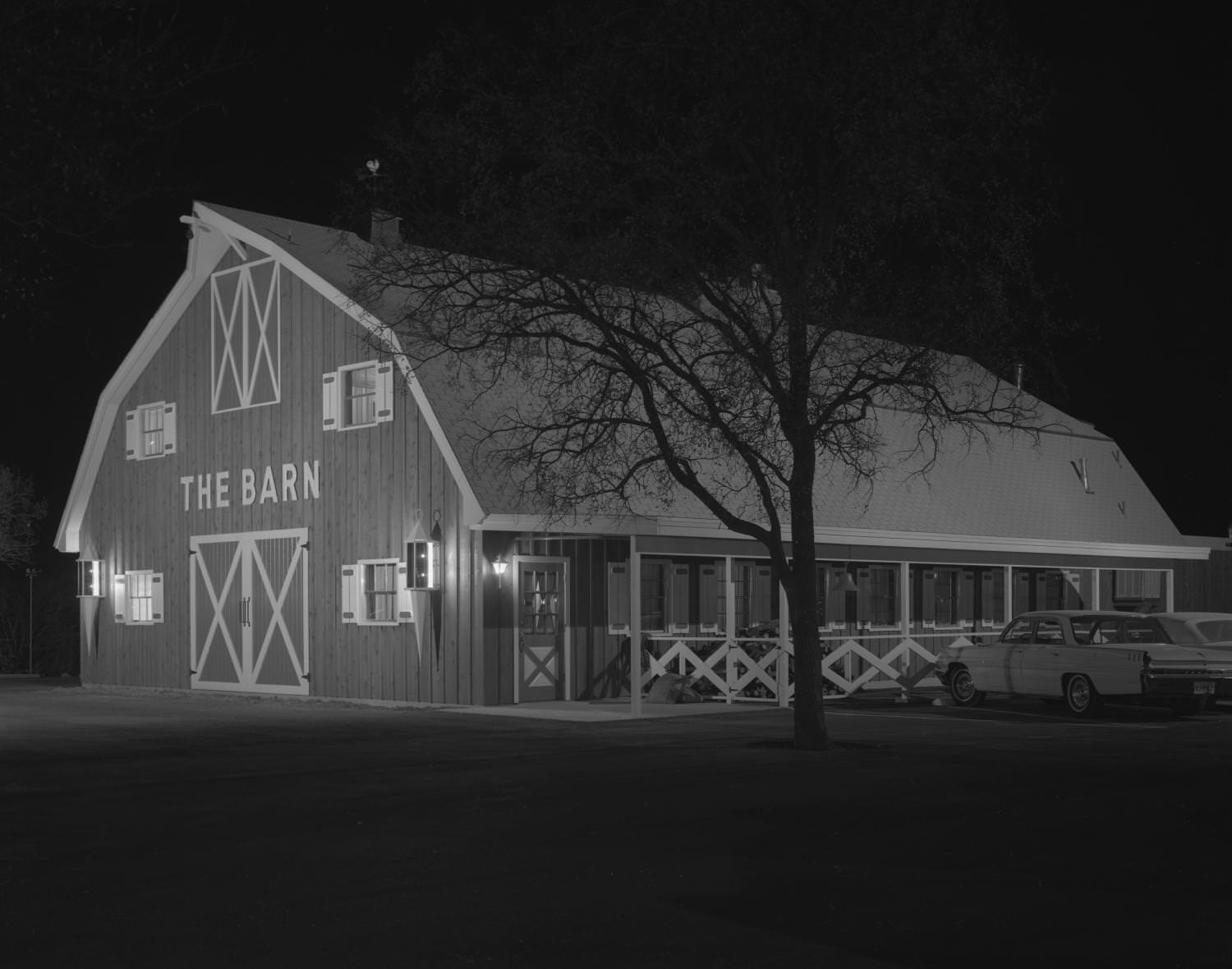
Crowd standing in front of Kentucky Fried Chicken stand, Austin, 1960Customers and parked cars in front of Kentucky Fried Chicken stand, Austin, 1960Customers standing in front of Kentucky Fried Chicken stand, Austin, 1960Customers standing in front of Kentucky Fried Chicken stand, Austin, 1960Interior of 2-J Hamburger at North Lamar and 40th streets in Austin, Texas, 19602-J Hamburgers in Austin, Texas, 1960La Fiesta Mexican Food Dining Room, Austin, 1962Joey’s Fine Foods restaurant at 1411 W. Ben White Blvd. There are cacti in the foreground. Demolished, 1969The exterior of a rustic, country themed restaurant called, The Barn, located at 8611 Balcones Drive, 1963
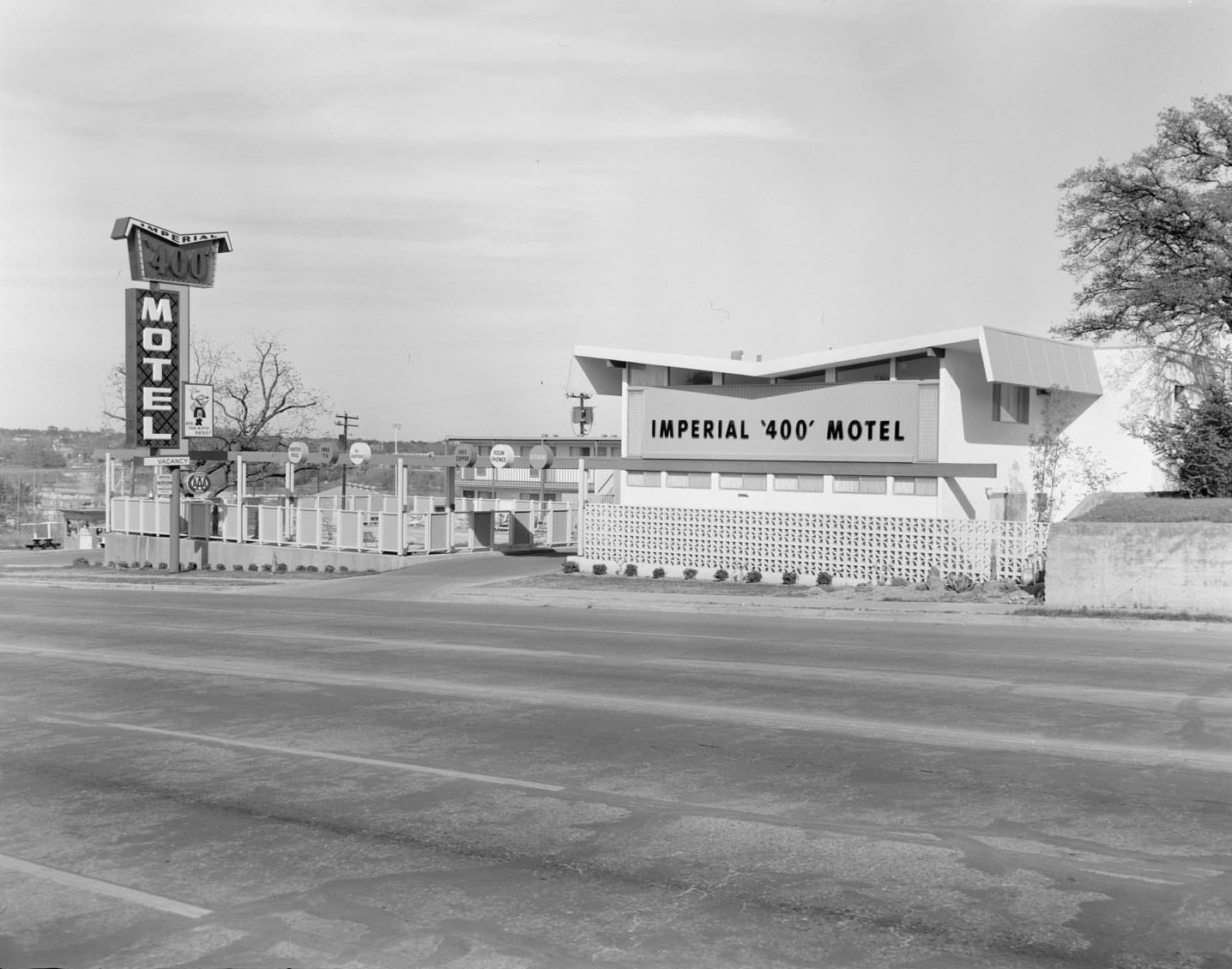
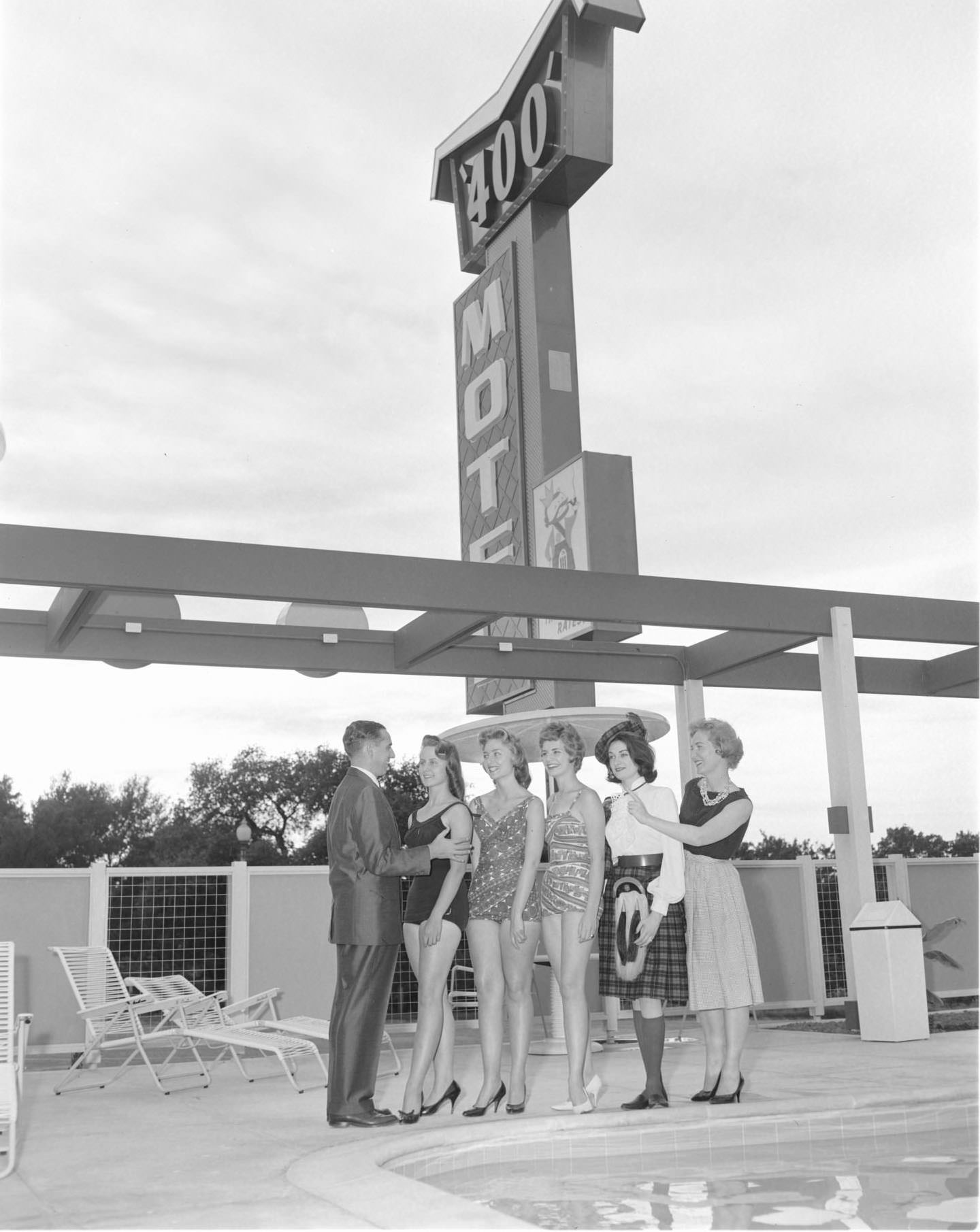
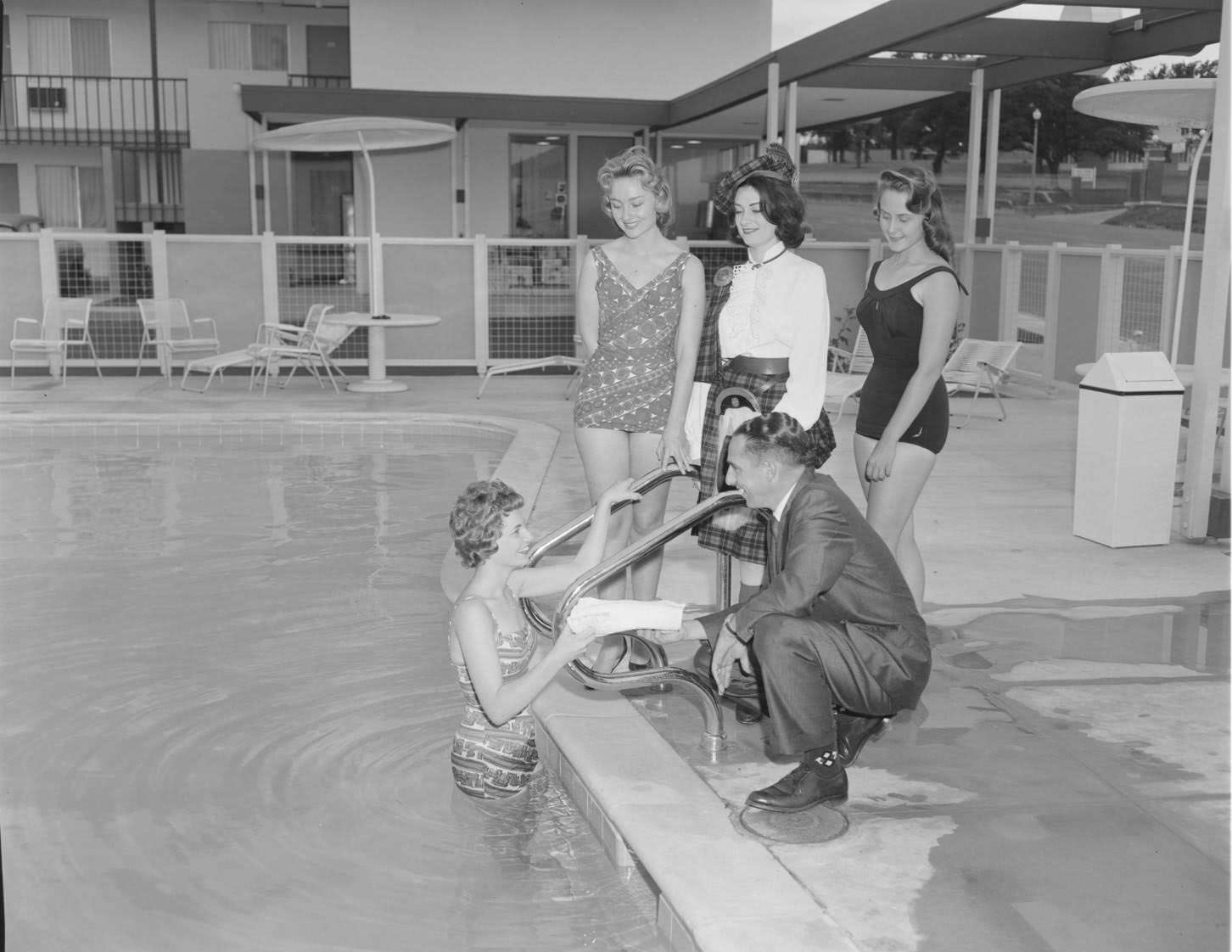
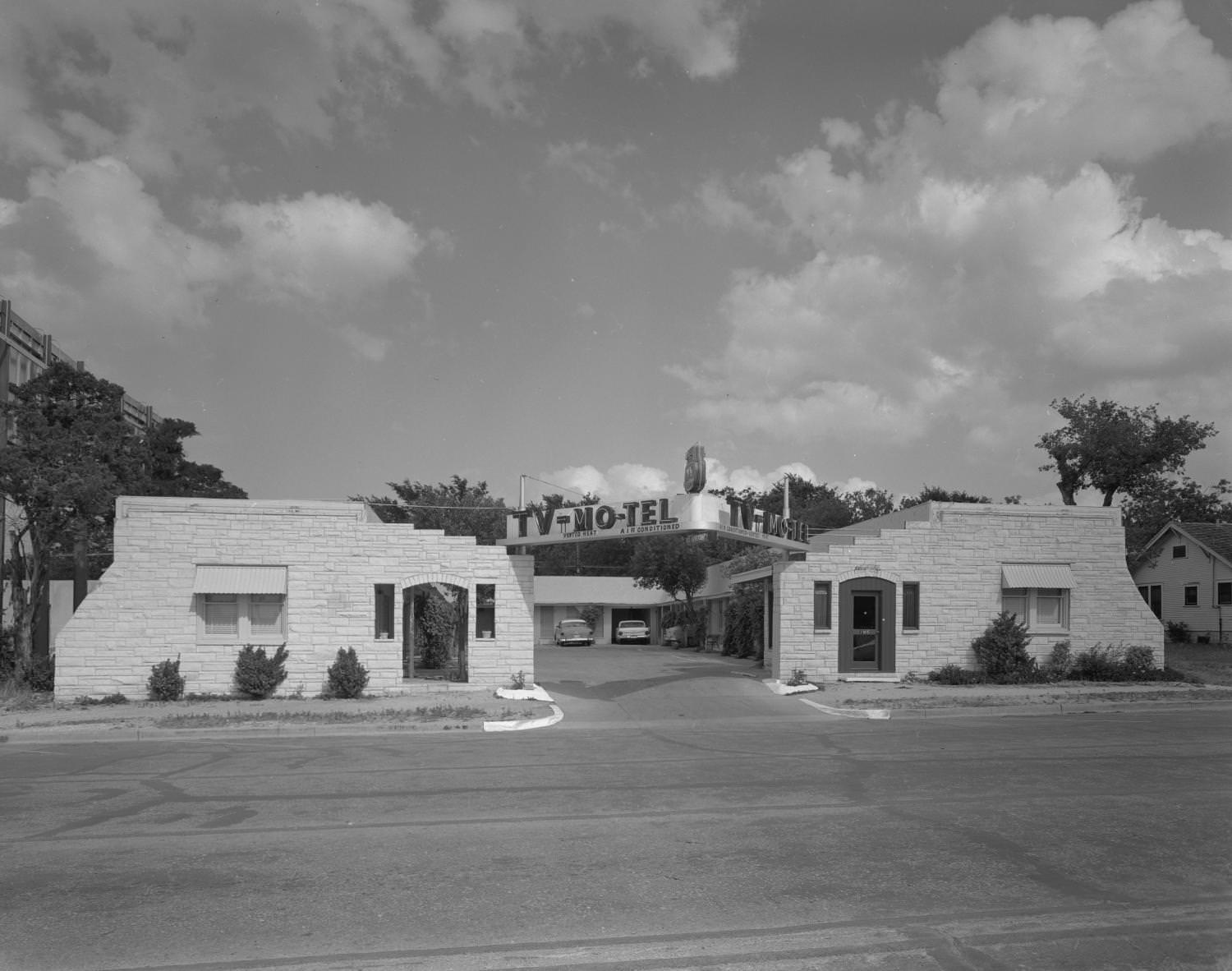
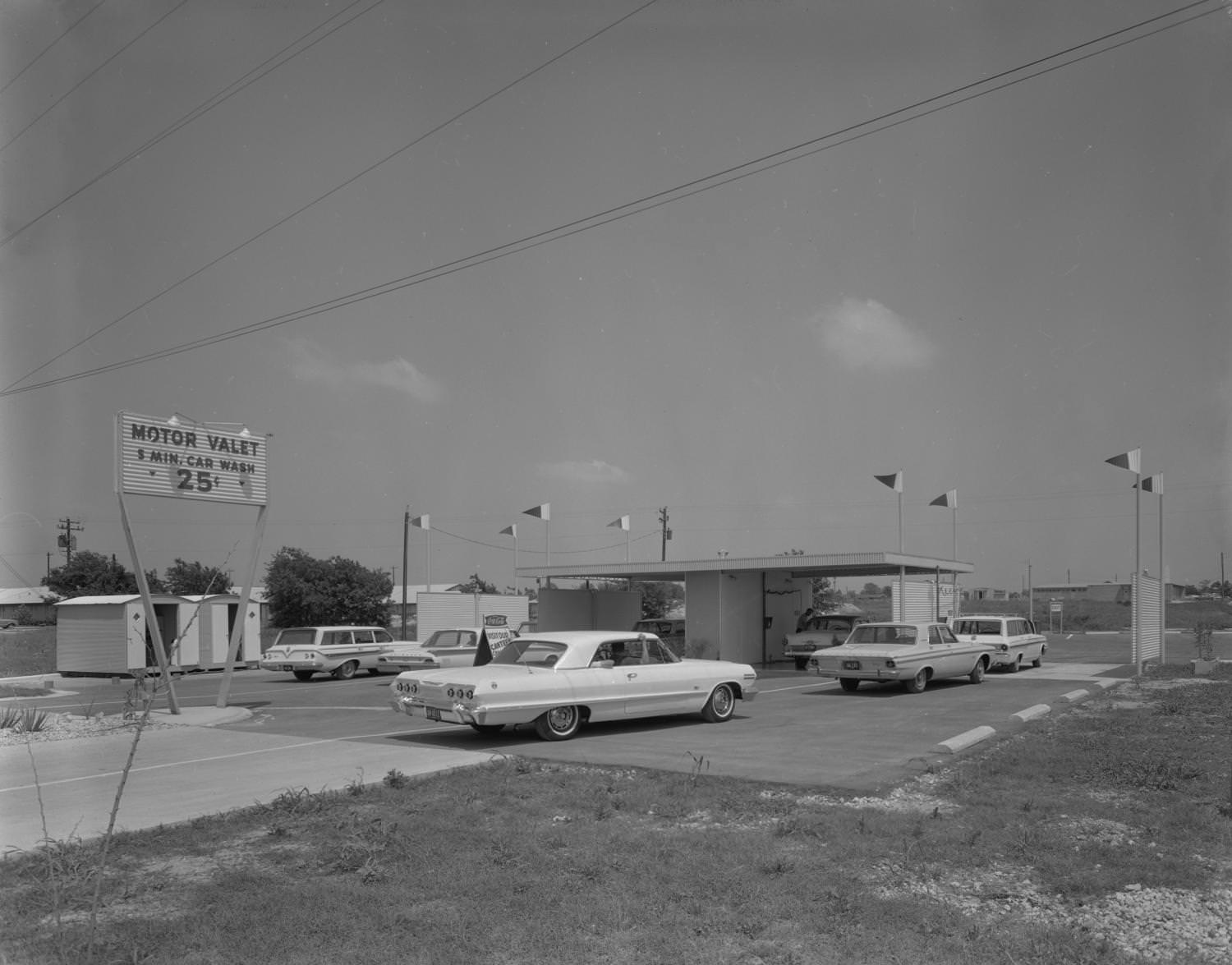
South Congress Avenue had its own commercial personality. The Imperial 400 Motel at South Congress offered a swimming pool and modern accommodations for travelers passing through. The TV Motel, also on South Congress, was a smaller roadside option. Motorists on that stretch of road could pull into the Motor Valet, a self-service car wash where they handled the job themselves under an open-air awning.
Imperial ‘400’ Motel. Street in foreground is South Congress, Austin, 1961A man and five women near the pool of the Imperial 400 Motel, 1962.A man wearing a suit standing with four women at the pool at Imperial 400 Motel, 1962The TV Motel, located at 1905 South Congress Avenue, Austin, 1961A self-use car wash station called the Motor Valet, 1964
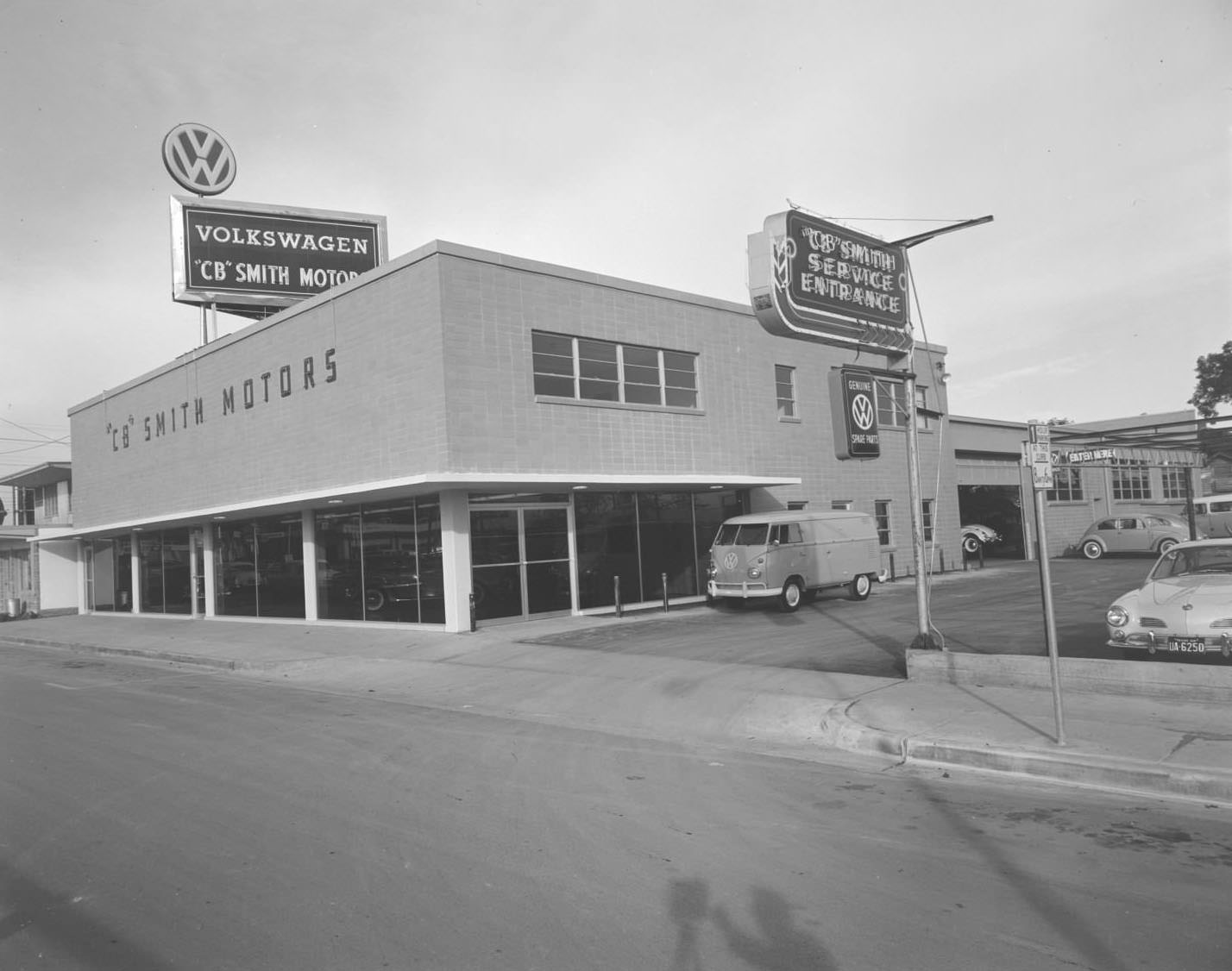
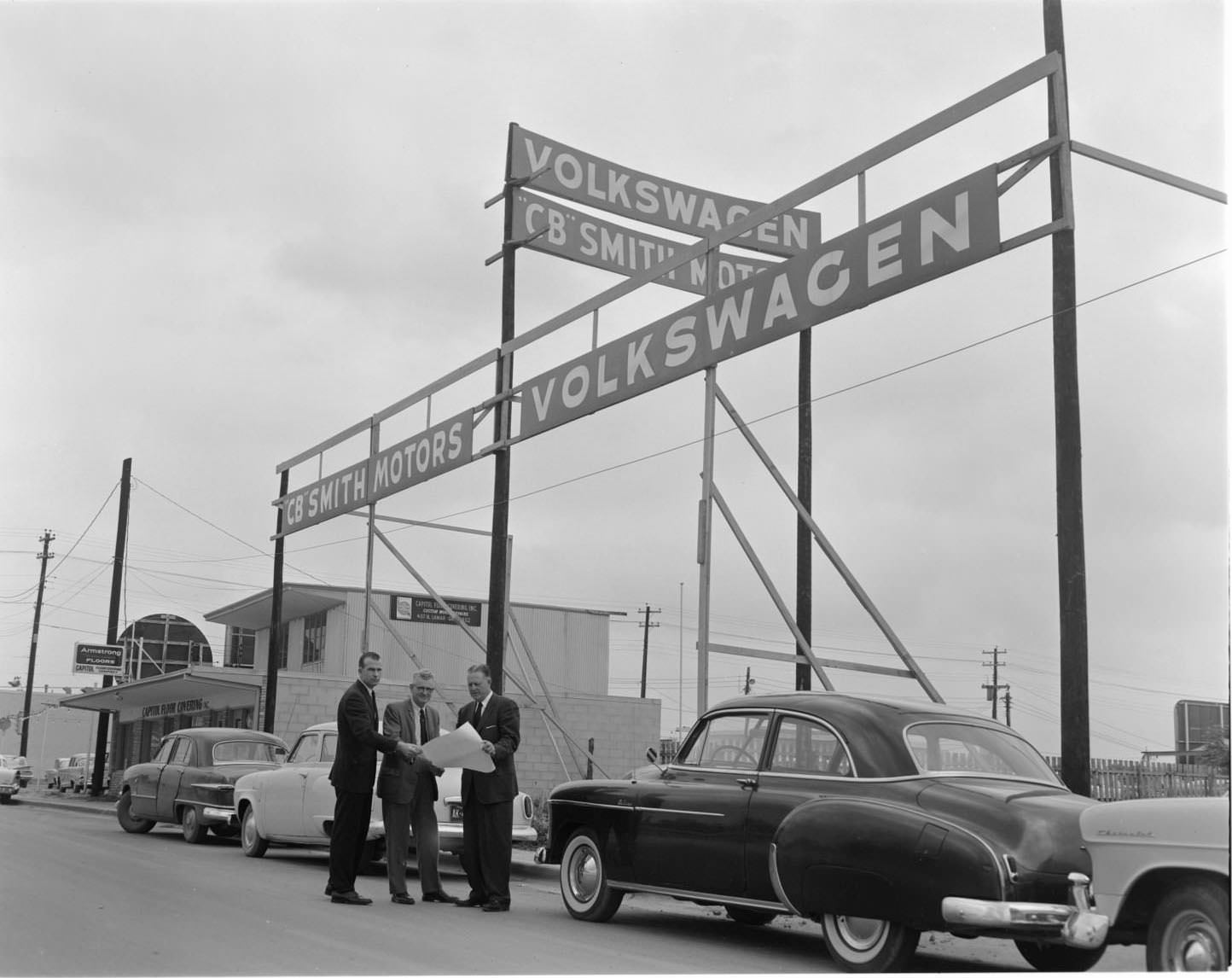
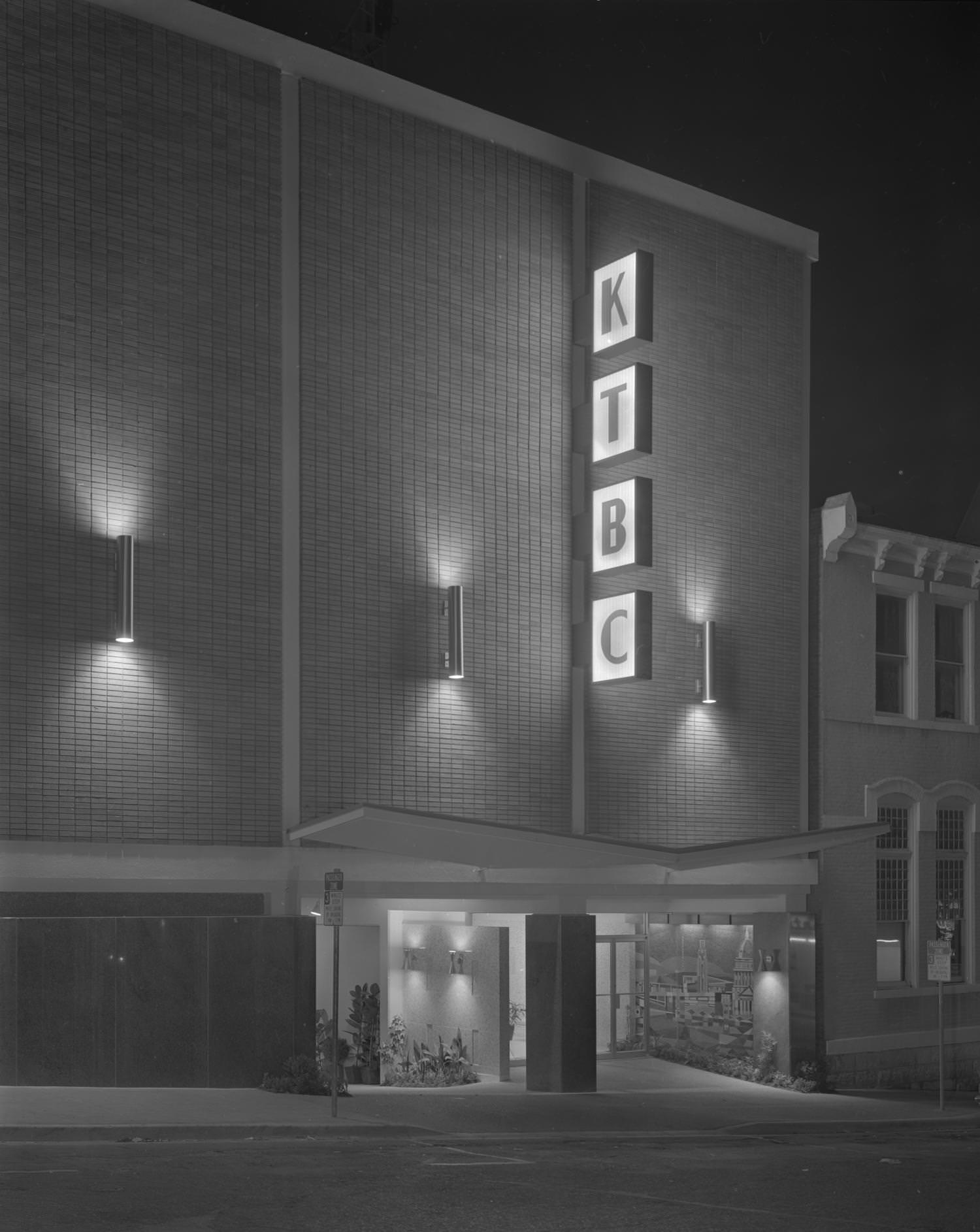
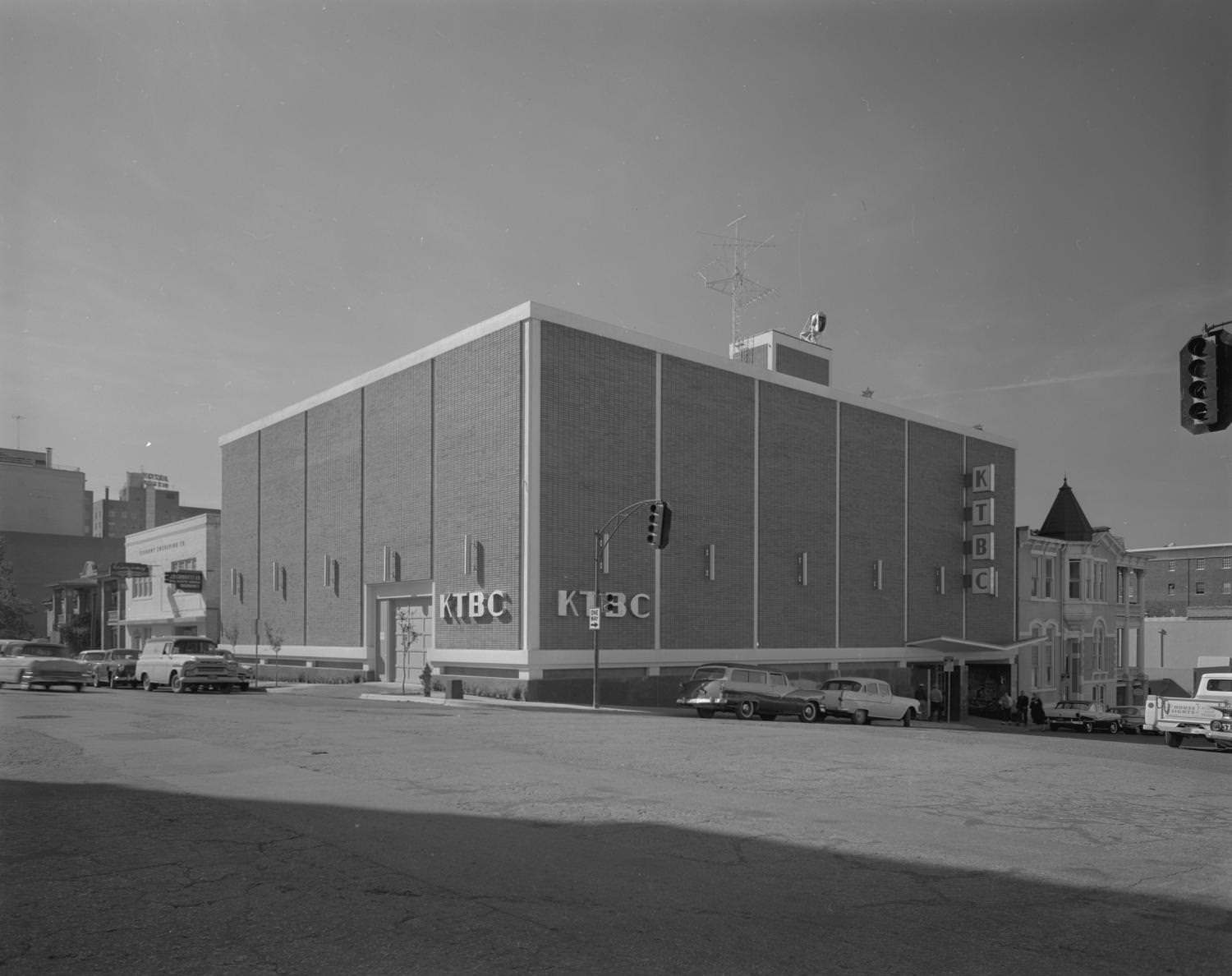
Technology was beginning to plant roots in Austin during the 1960s. IBM broke ground on a plant at the corner of Burnet Road and Kramer Lane in 1968. The facility was built to manufacture Selectric typewriters. CB Smith Volkswagen Motors operated on the west side of the city, where suited salesmen stood outside beneath the dealership sign. KTBC, the television and radio station associated with Lady Bird Johnson, had a prominent studio on a street corner downtown.
IBM plant still under construction, located at Burnet Rd. and Kramer Ln. This plant originally built Selectric typewriters, Austin, 1968Exterior of C.B. Smith Motors, Austin, 196The exterior of CB Smith Volkswagen Motors, Austin, 1960. There are a few cars parked next to the sign advertisement. All three of the men are wearing suits.KTBC Station Entrance, Austin, 1960KTBC Studio on a street corner with traffic lights for an intersection seen in the foreground, and cars seen both driving and parked on each street, Austin, 1960
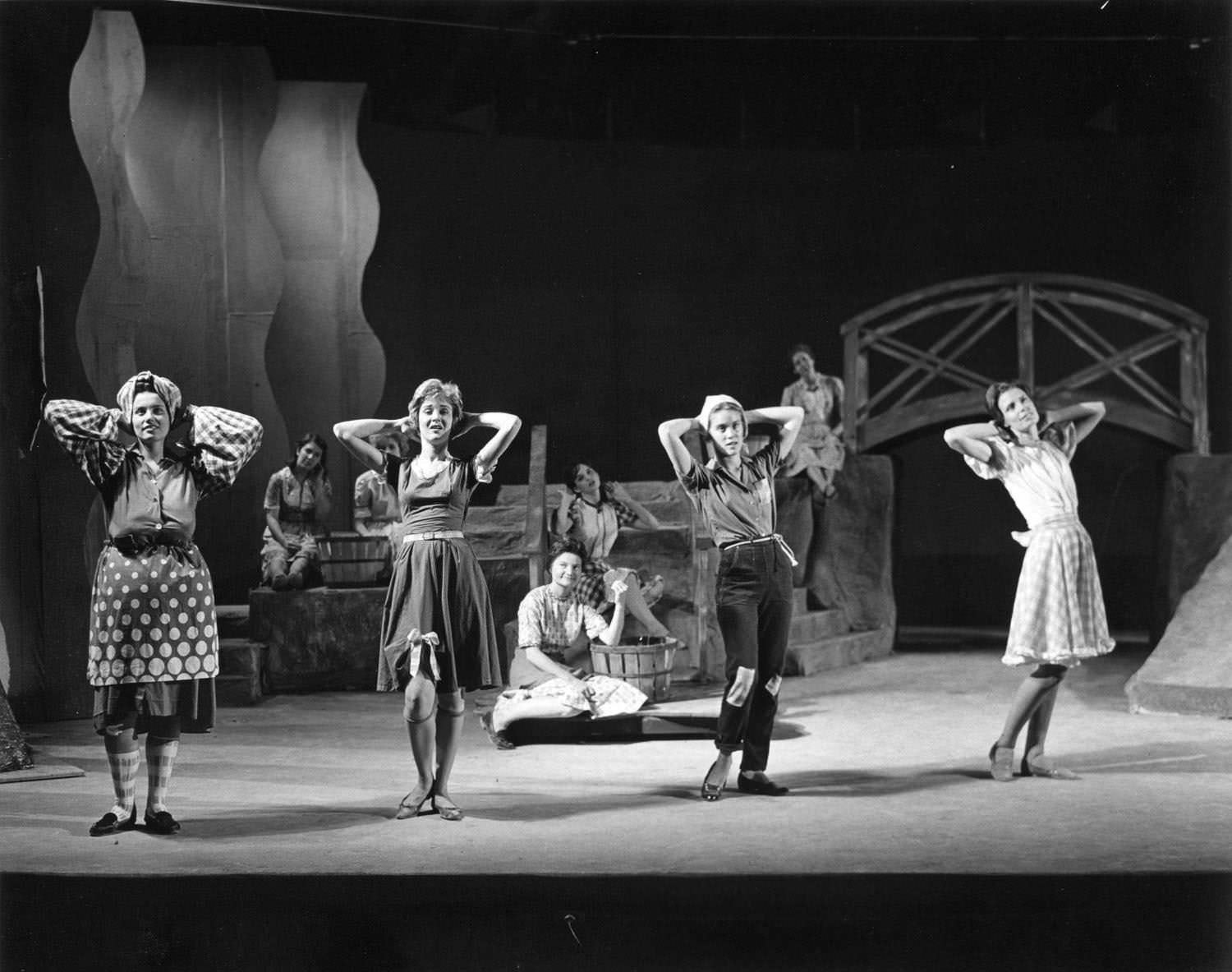
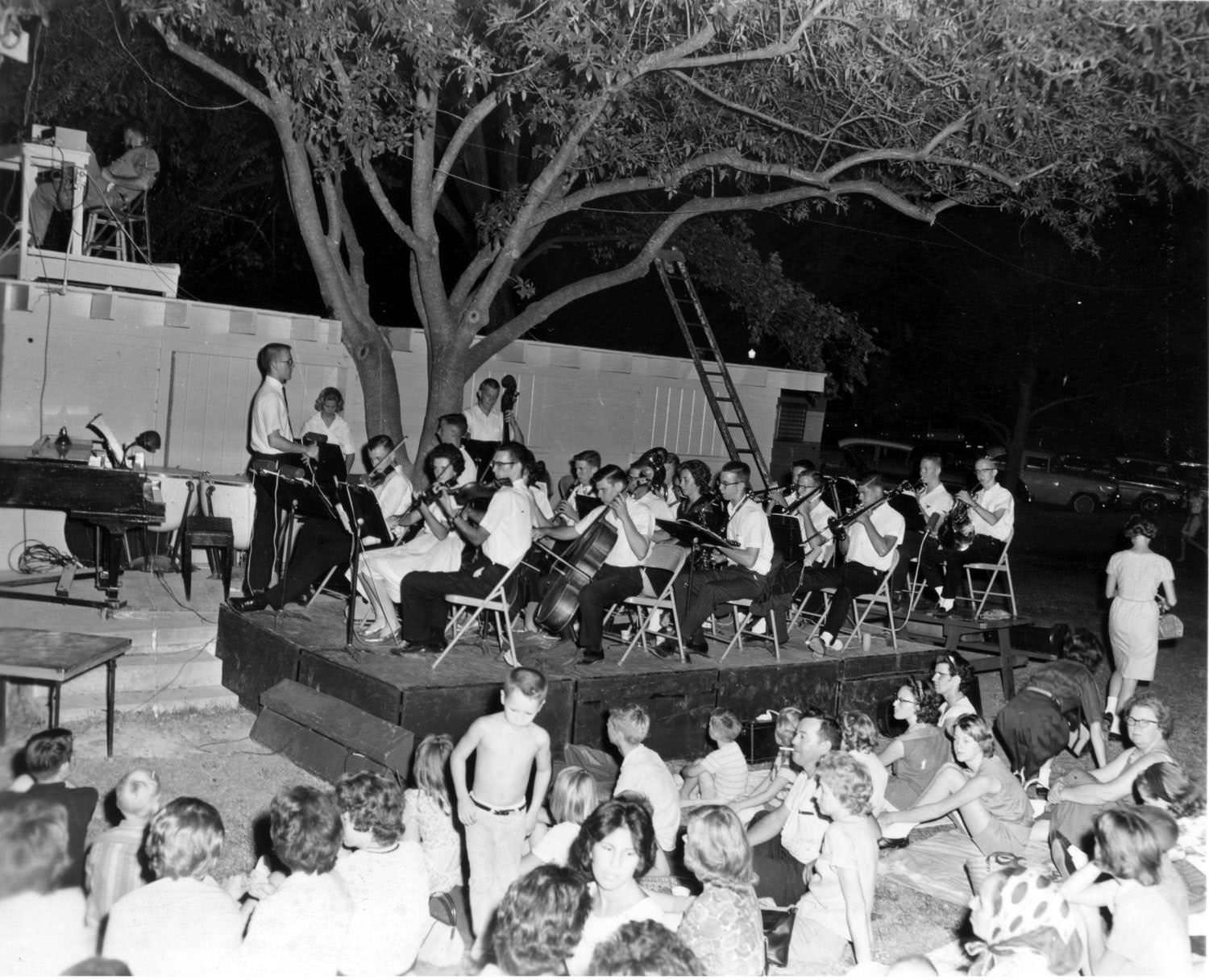
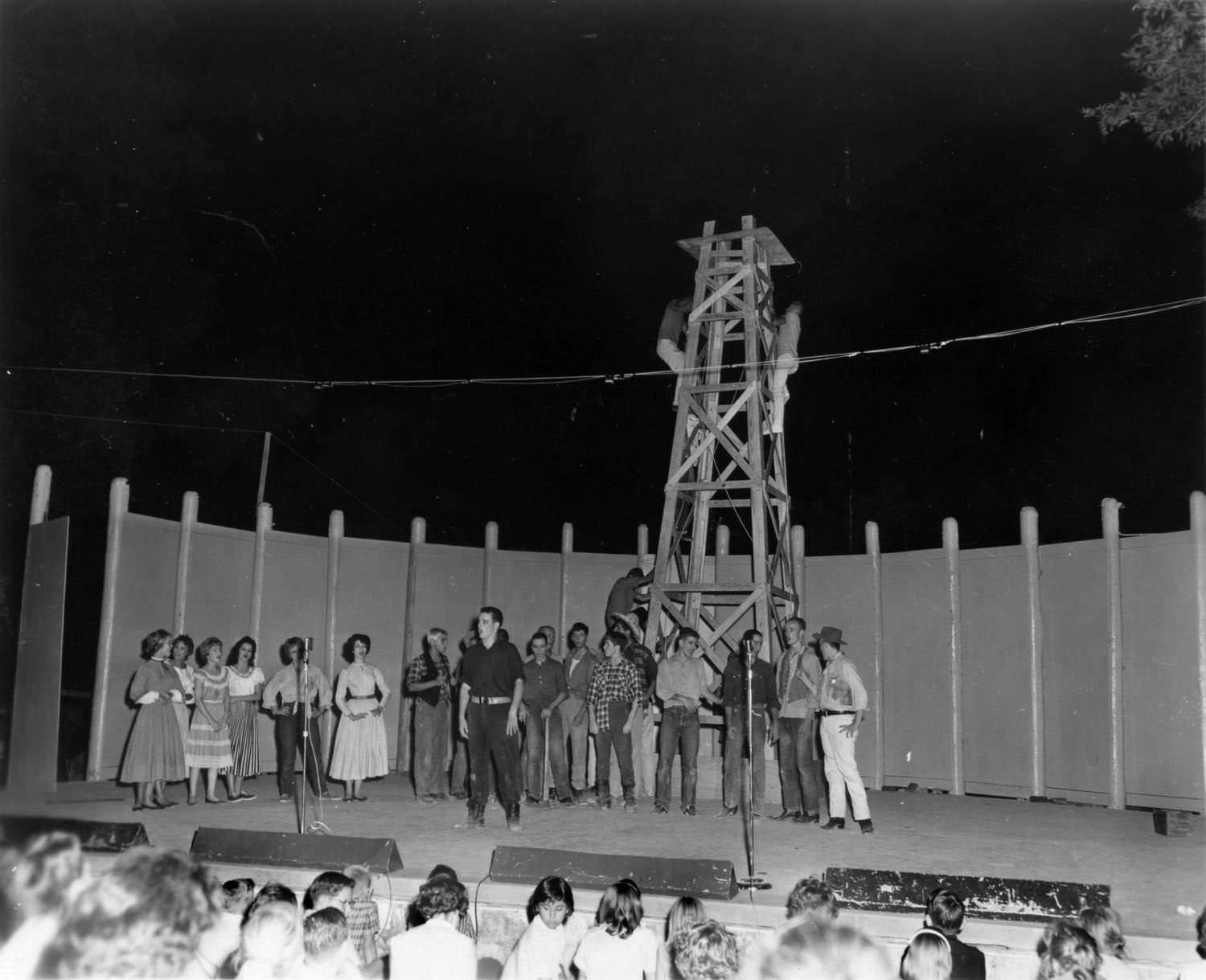
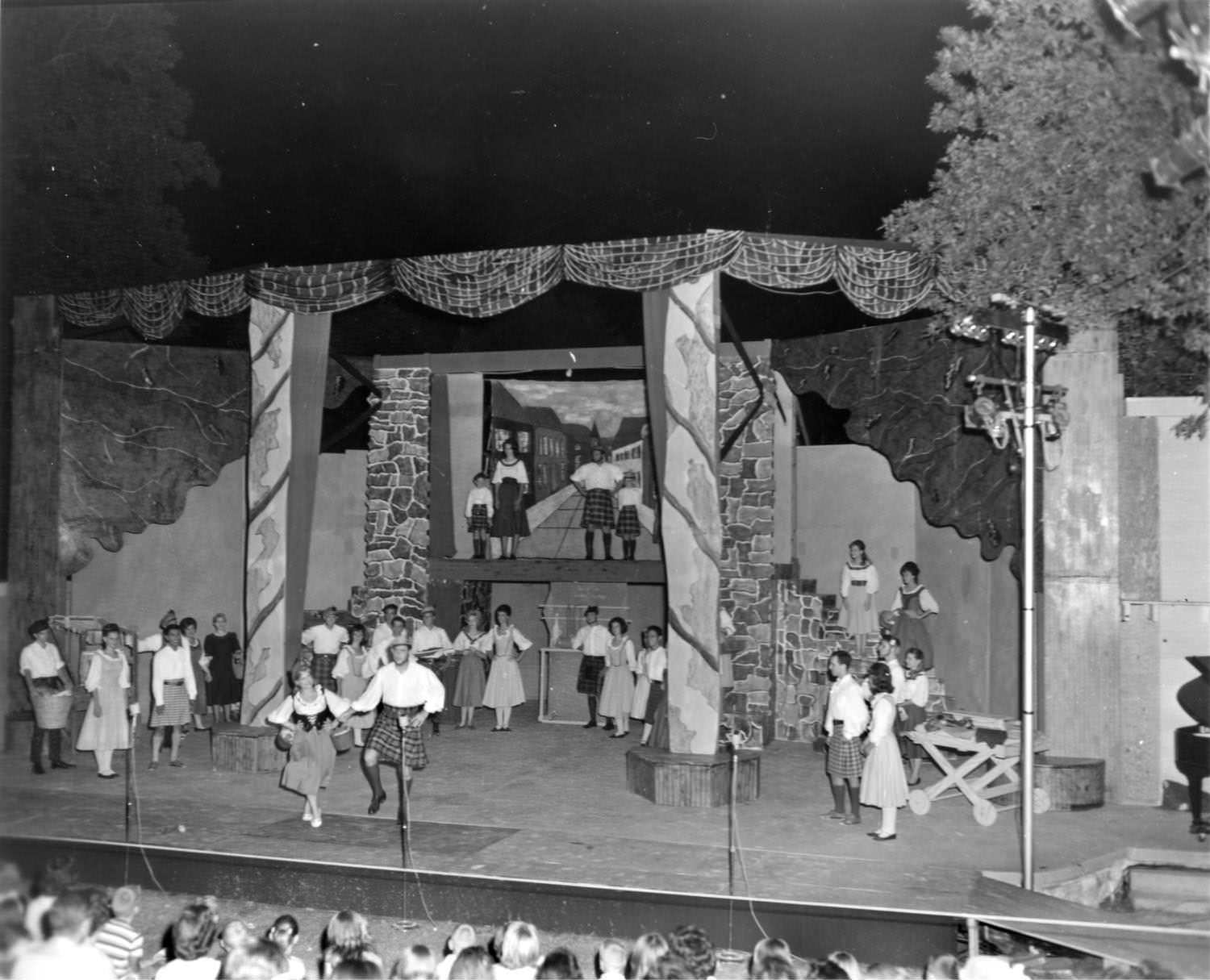
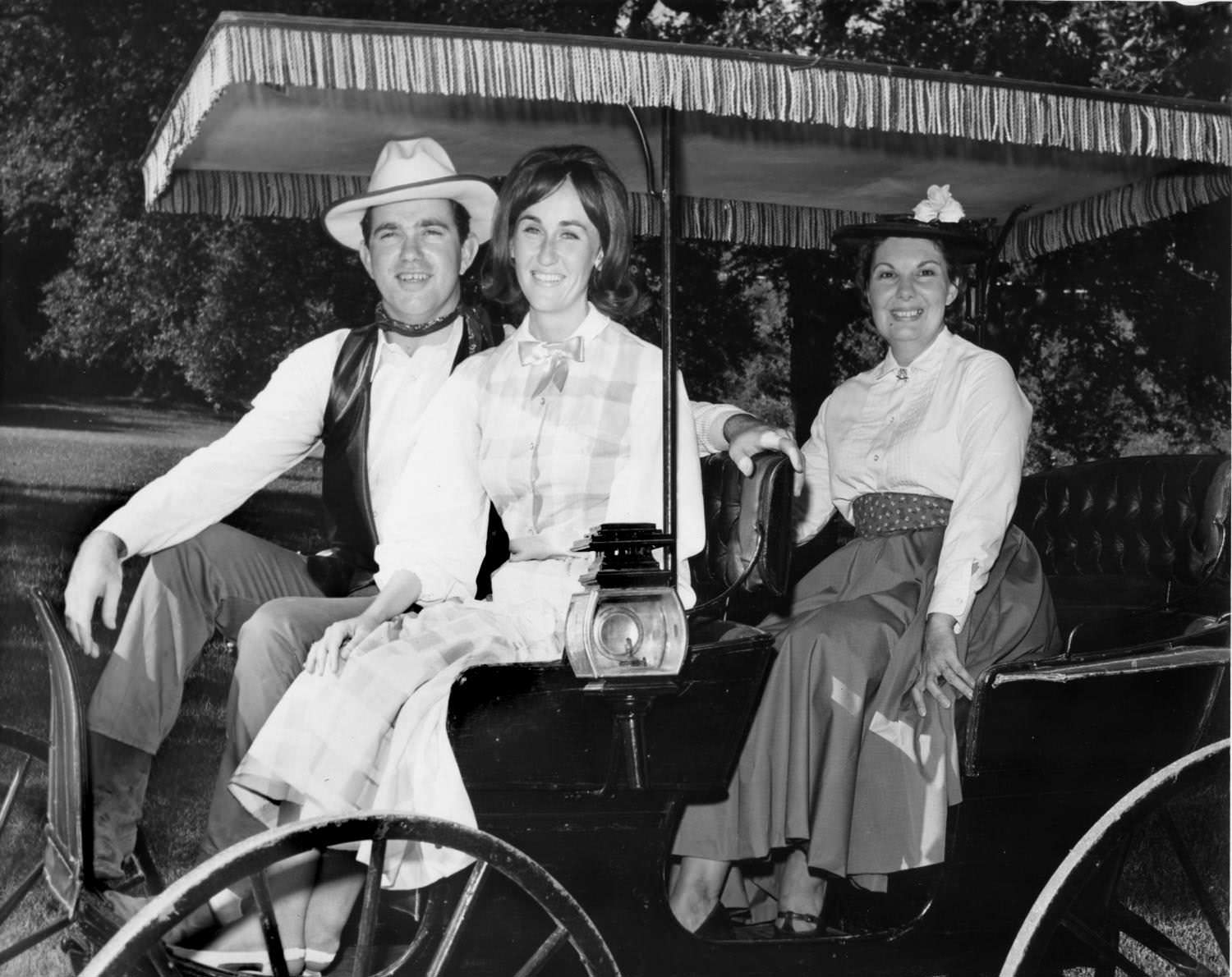
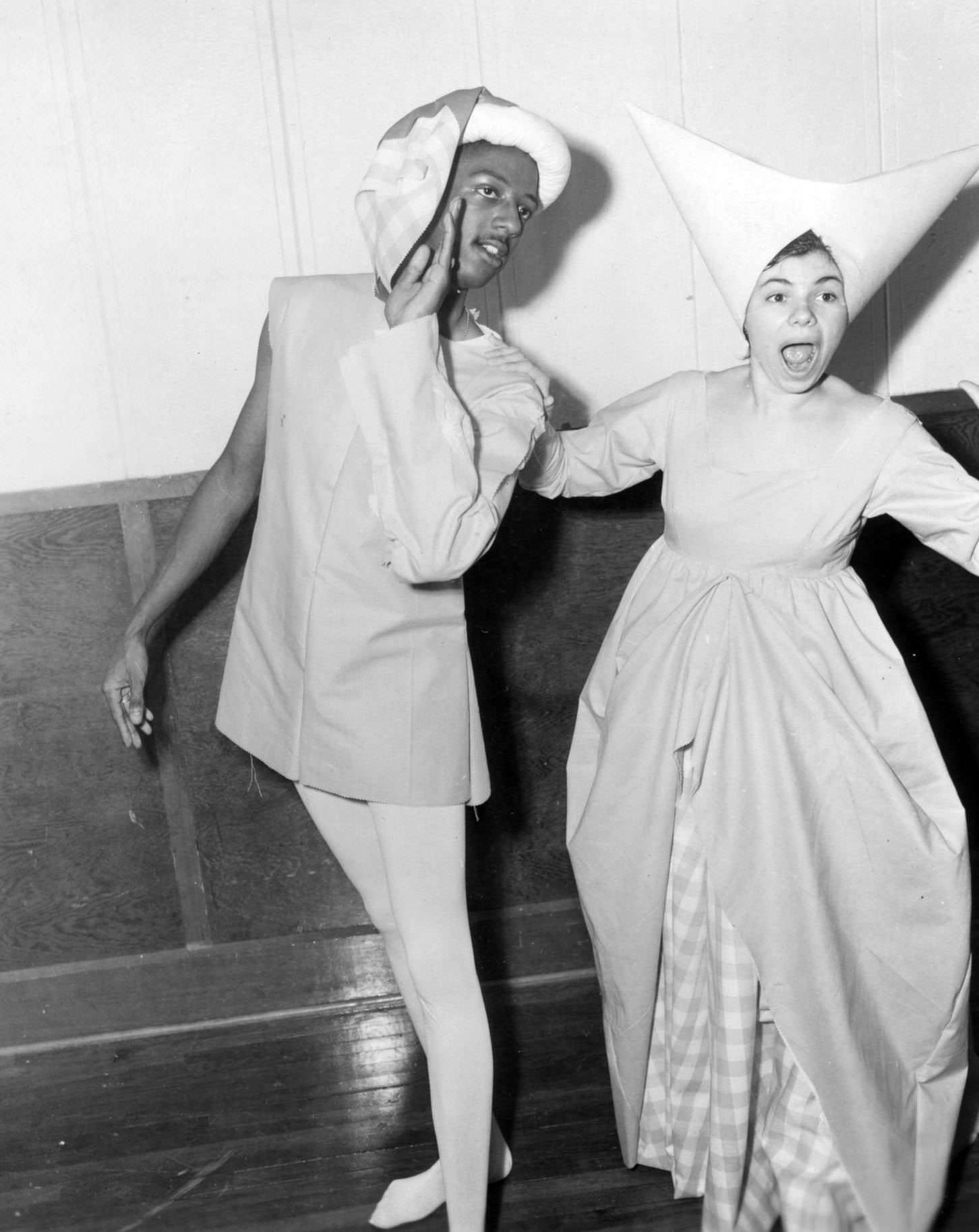
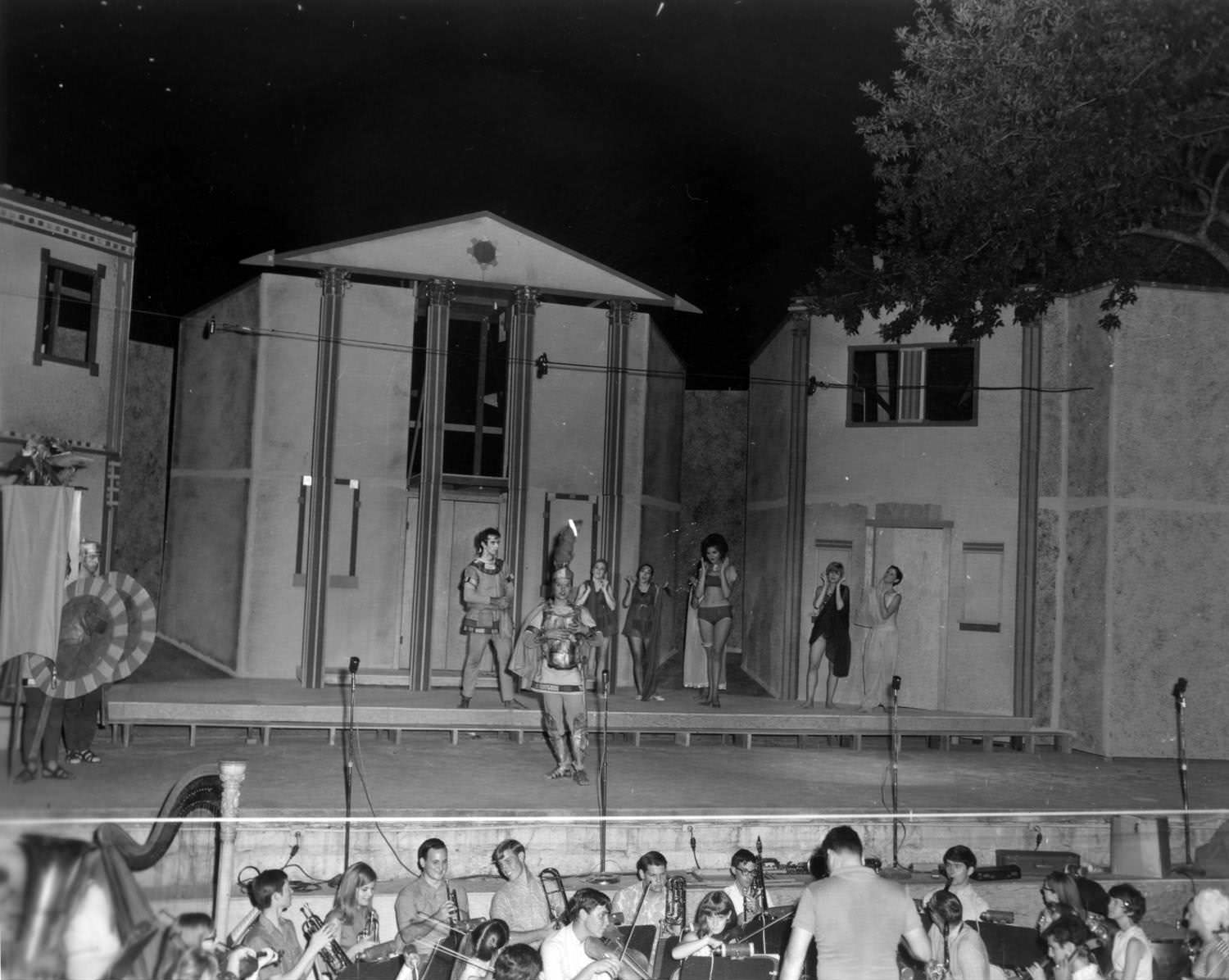
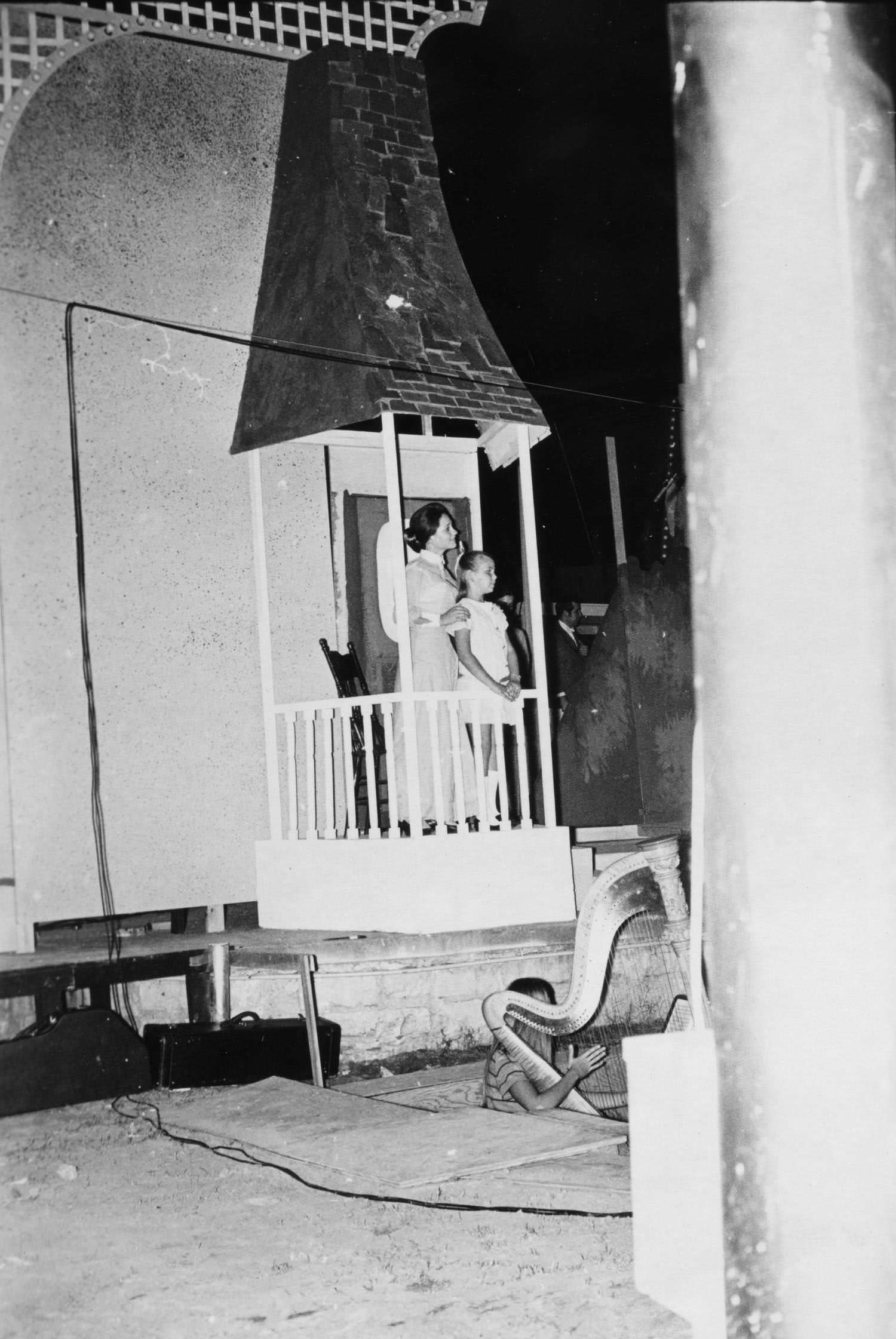
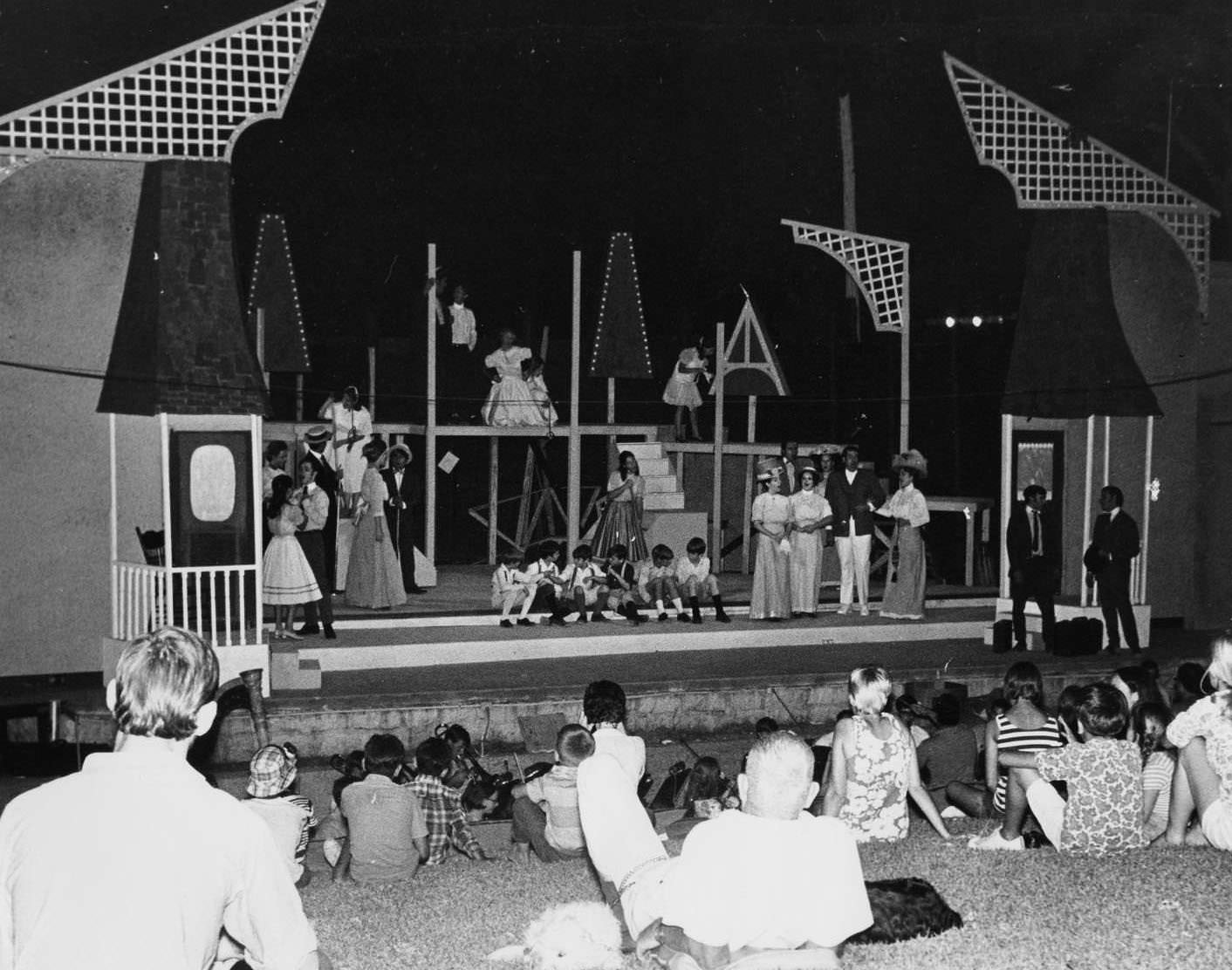
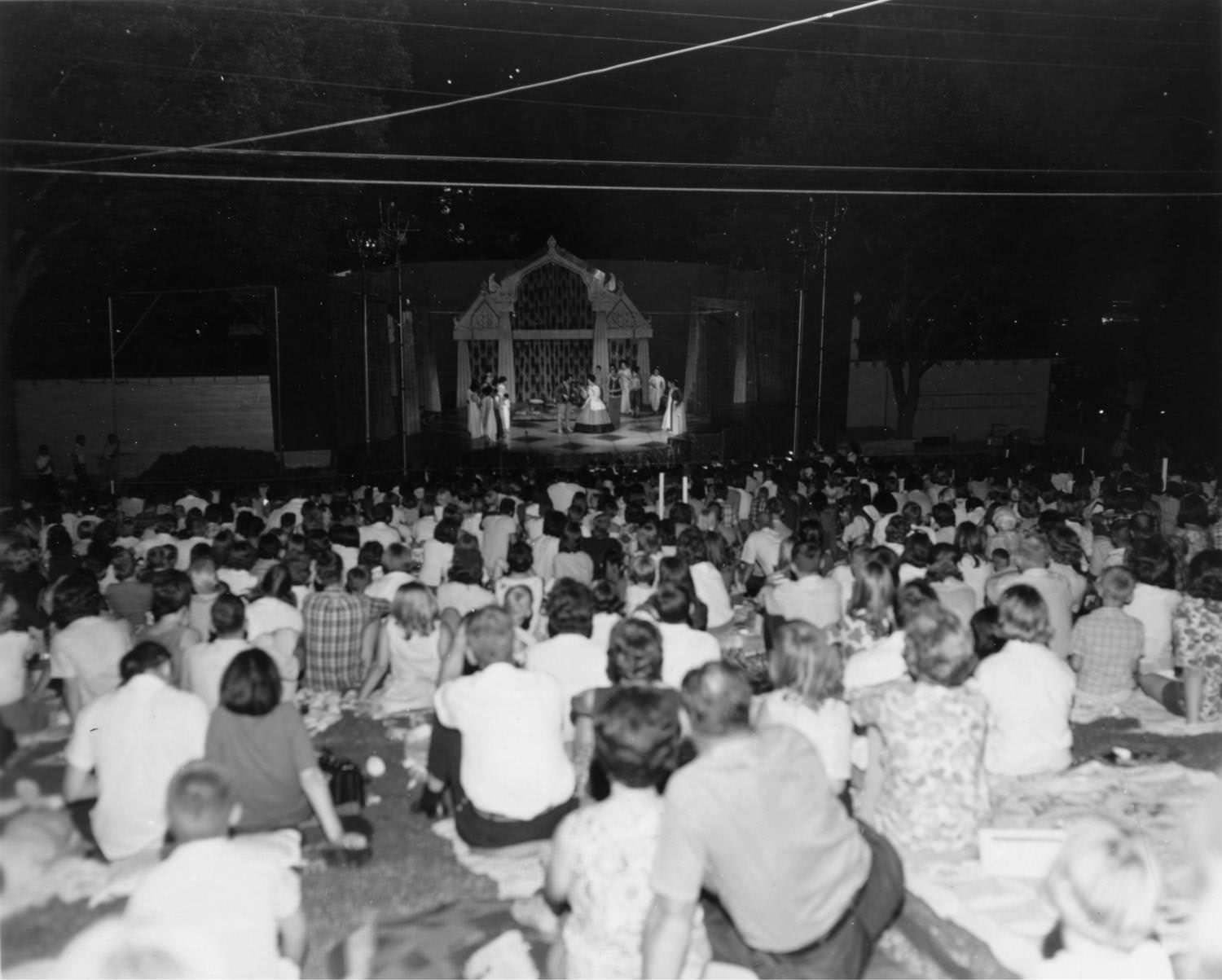
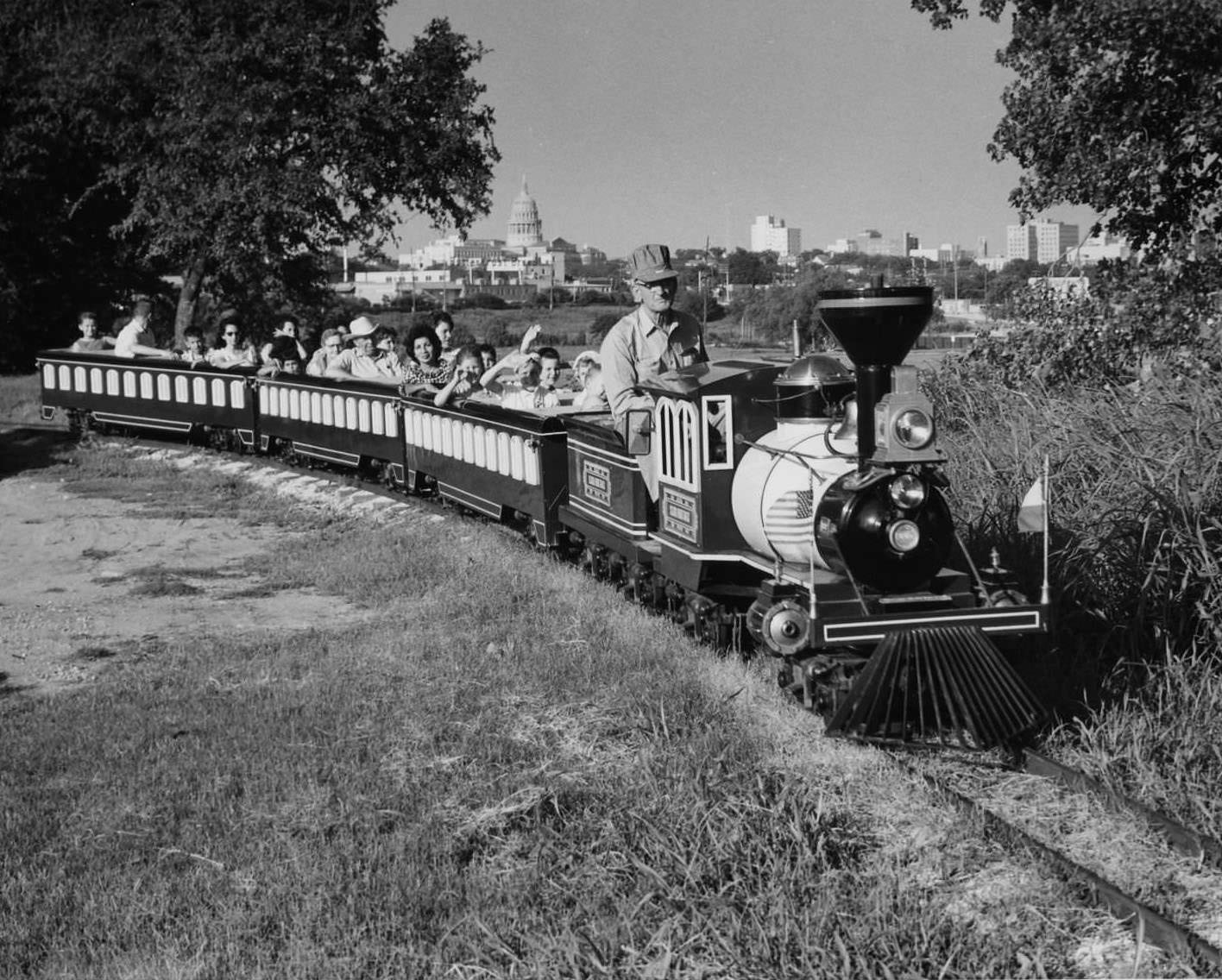
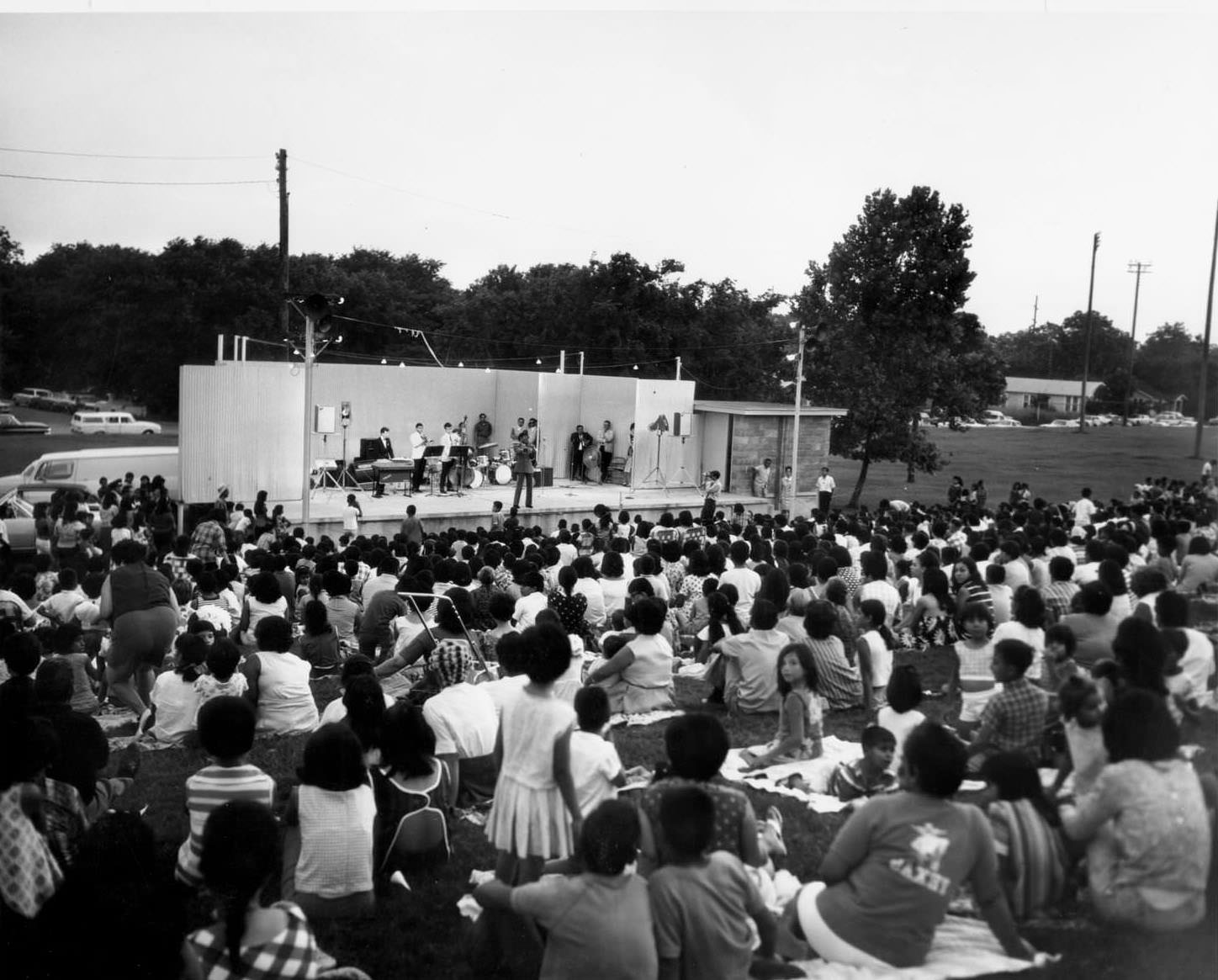
Zilker Park was one of Austin’s most active public spaces throughout the decade. The Zilker Hillside Theater hosted summer productions that drew large crowds to sit on the grass hillside. Shows like Brigadoon in 1964, The Music Man in 1969, and Once Upon a Mattress in 1967 brought community theater to a wide audience. The Zilker Zephyr, a miniature train, carried children and parents through the park with the Capitol visible in the distance.
Performance at the Zilker Hillside Theater, 1963Wildcat Orchestra at Zilker Hillside Theater, 1962Wildcat performed on stage at Zilker Hillside Theater, 1962The cast of actors performing Brigadoon as the summer drama at the Zilker Hillside Theater in Austin, 1964“Oklahoma!” Cast Members, 1965.An actor and actress in costume for a production of “Once Upon a Mattress” at Zilker Hillside Theatre, 1967A Funny Thing Happened on the Way to the Forum, 1968Two actresses on stage during a theatrical production of “Music Man” at Zilker Hillside Theater, 1969The Music Man at Zilker Hillside Theater, 1969.Crowd at Zilker Hillside Theater Production, 1966.Children and parents riding the Zilker Zephyr miniature train through Zilker Park. Downtown Austin and the Capitol building are visible in the background, 1960s
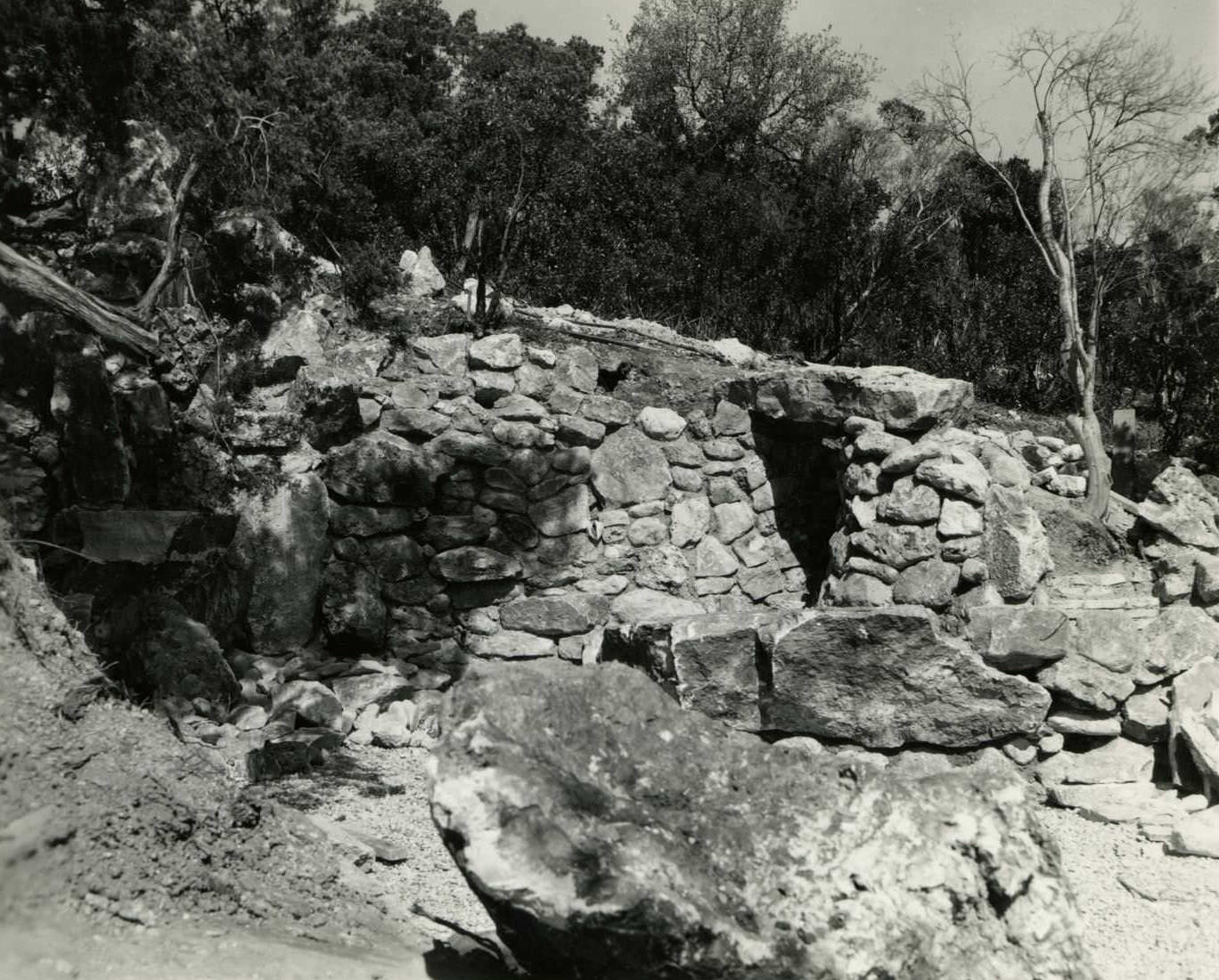
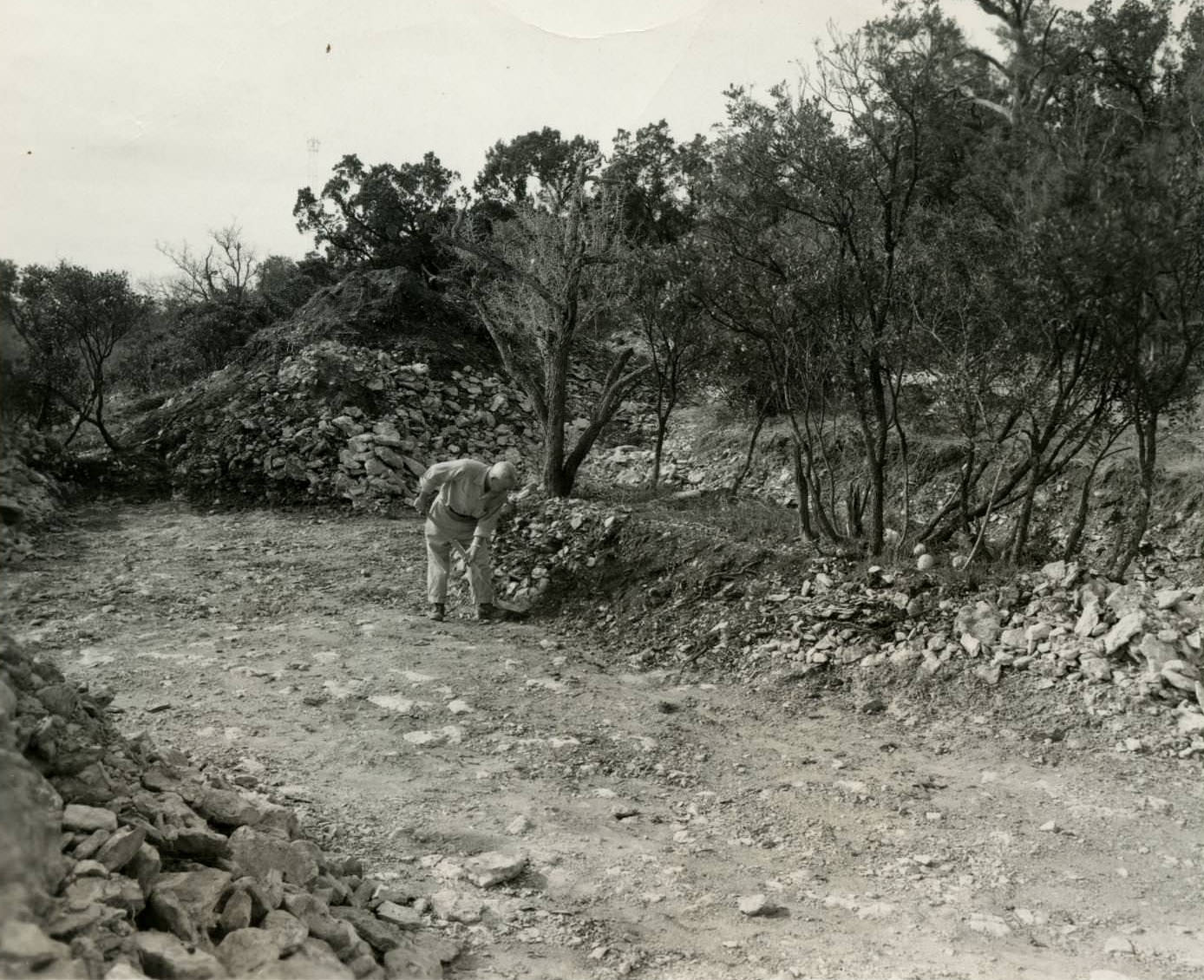
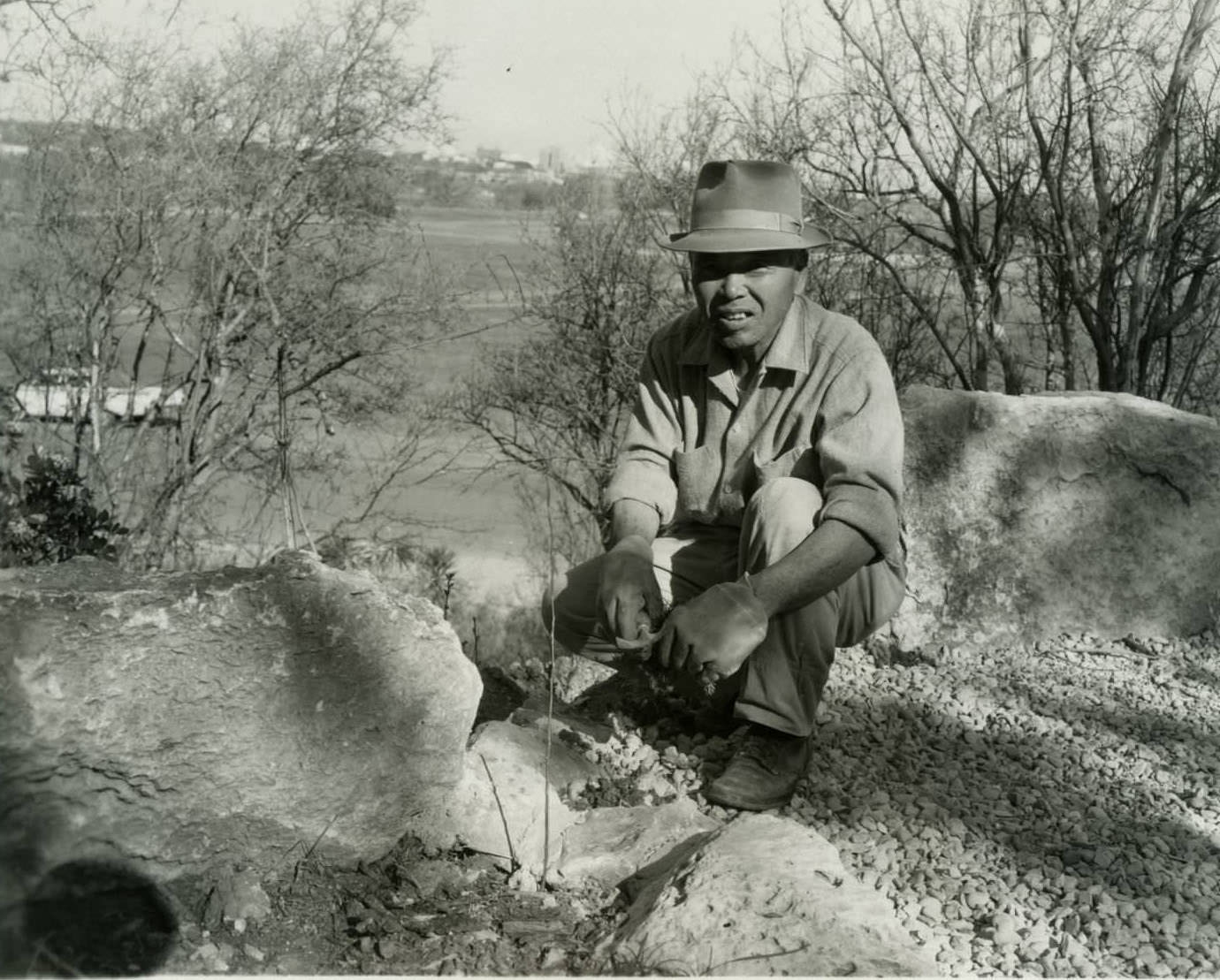
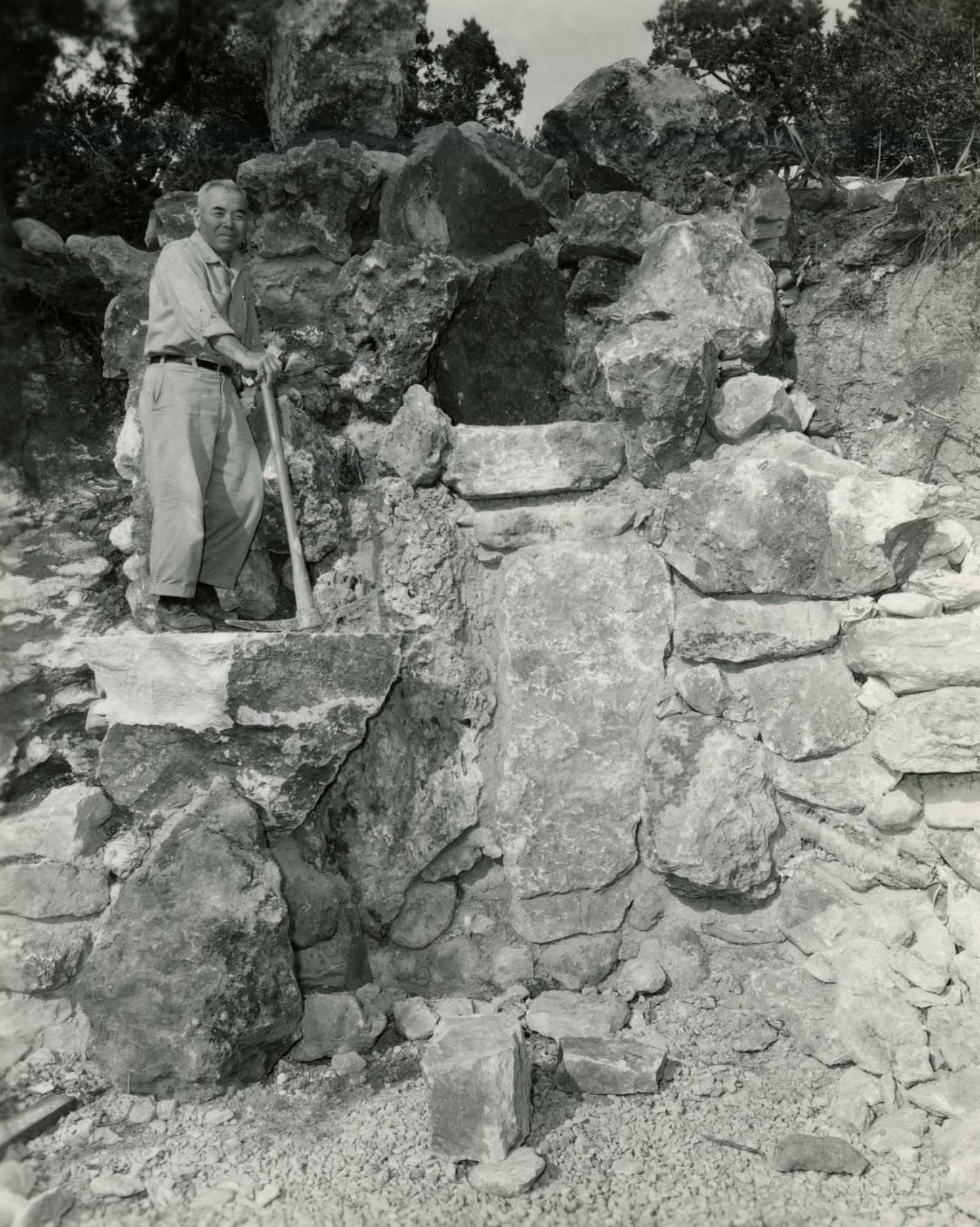
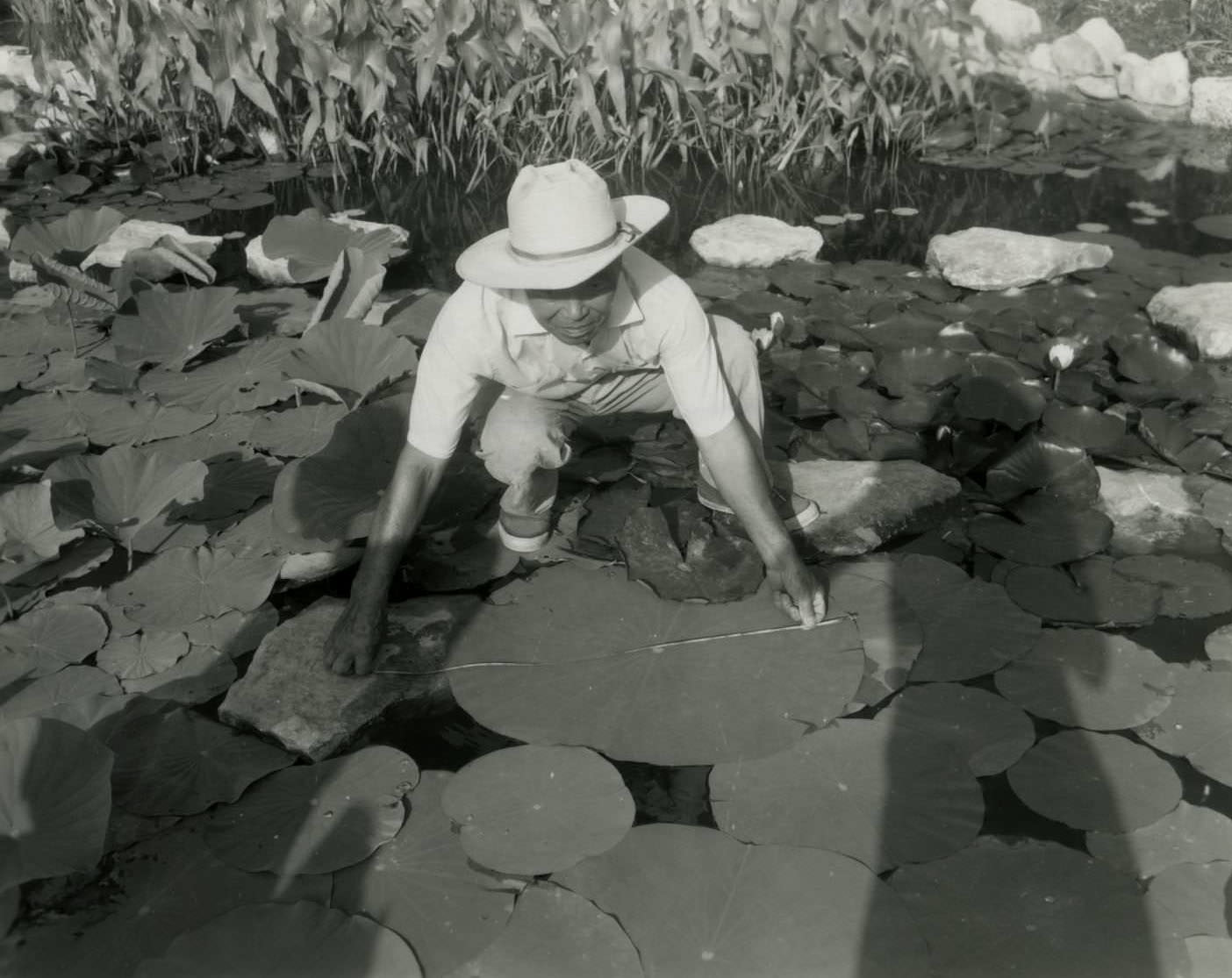
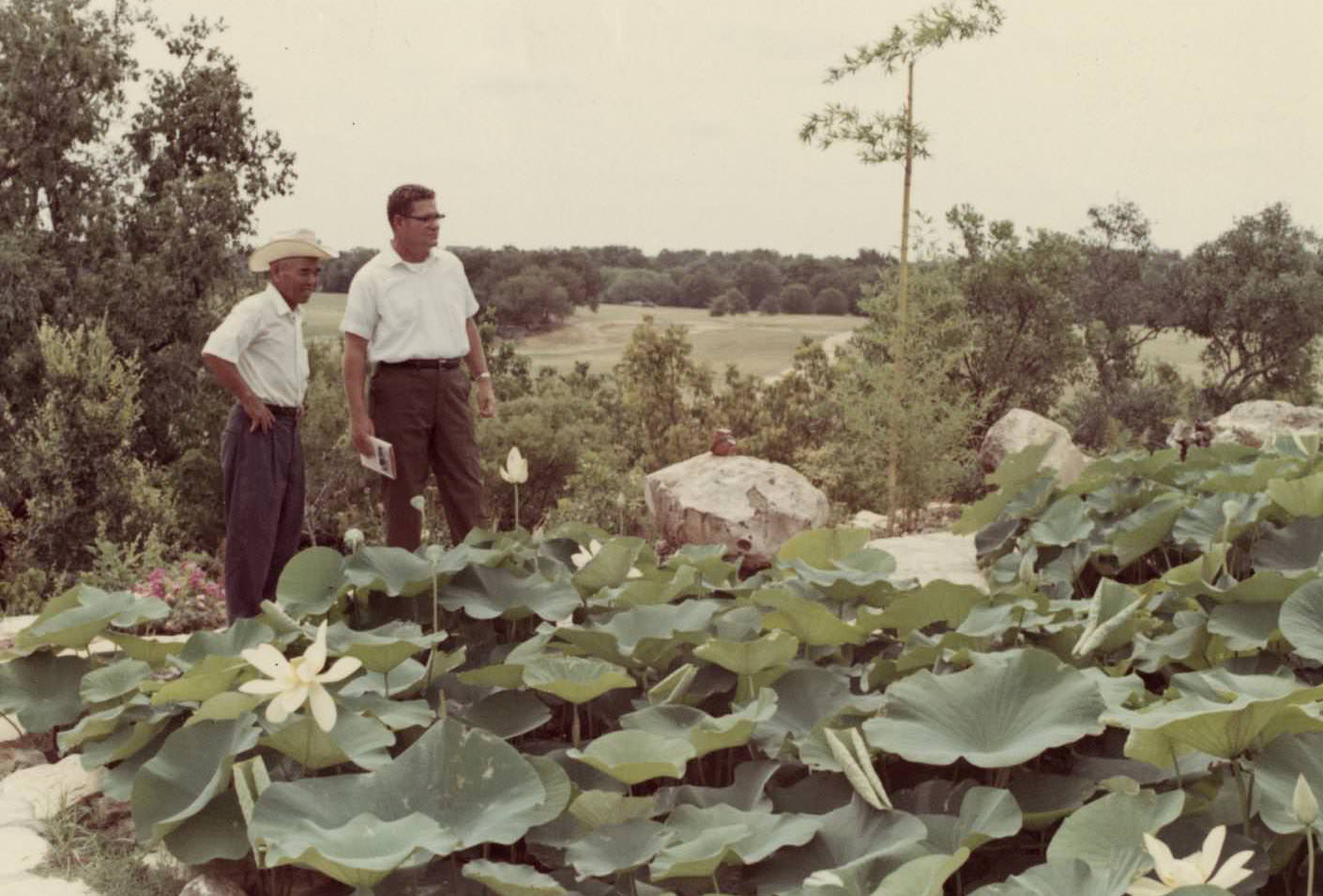
Also within Zilker Park, landscape architect Isamu Taniguchi built the Oriental Garden by hand. Working without pay, Taniguchi began the project in 1969. He shaped the rocks, paths, and plantings himself, creating a Japanese-style garden that became one of Austin’s most unusual public spaces. Photos from 1968 and 1969 show Taniguchi kneeling among the stones, working out the details of the design with quiet precision.
Oriental Garden – Zilker Gardens, 1968.Oriental Gardens – I. Taniguchi, 1968Garden architect and builder Isamu Taniguchi kneeling at Oriental Garden, 1968Garden architect and builder Isamu Taniguchi posing on the rocks at Zilker’s Oriental Garden, 1968Isamu Taniguchi at Oriental Gardens, 1969.Mr. Taniguchi and Mr. Robinson in the Oriental Garden, 1969.
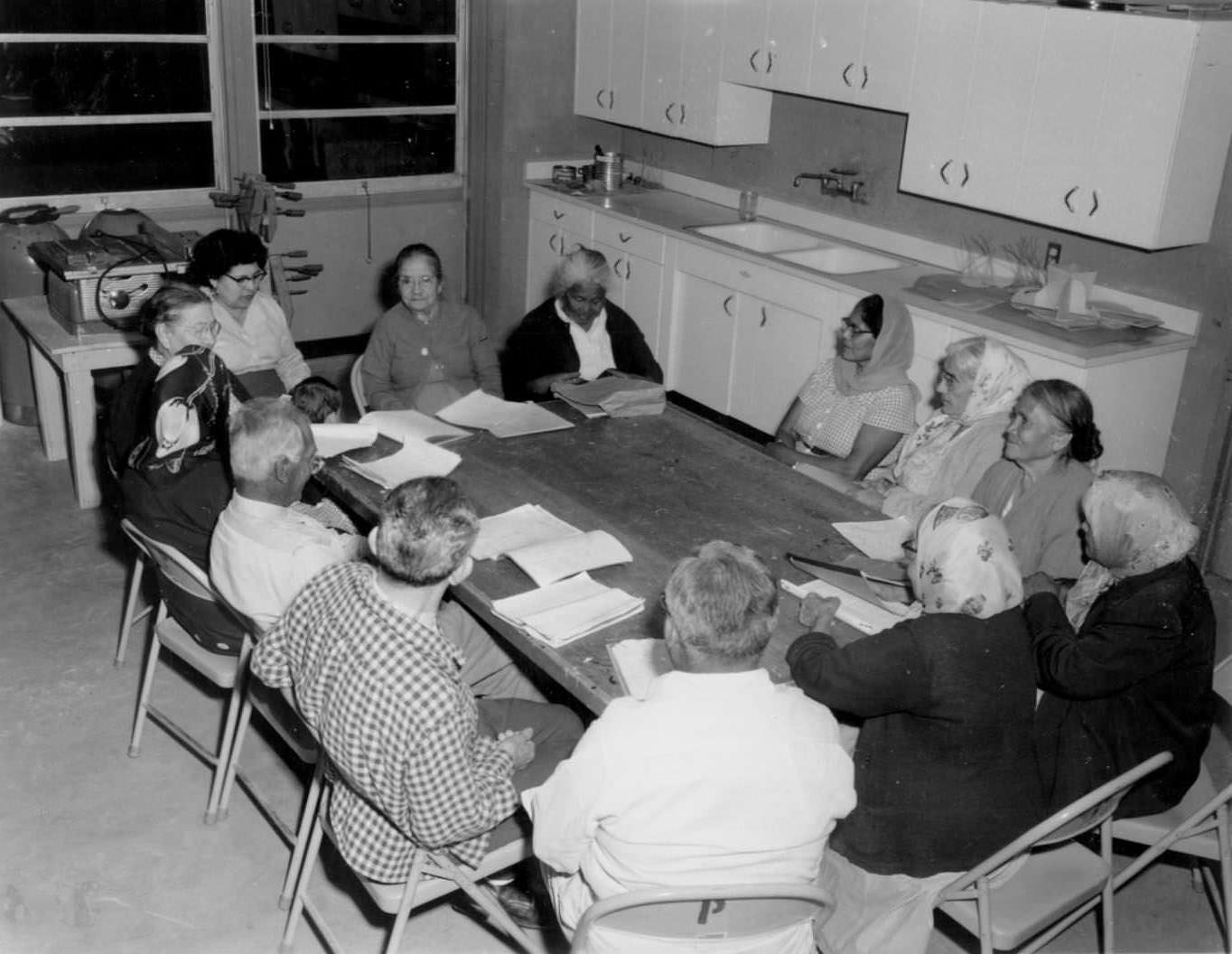
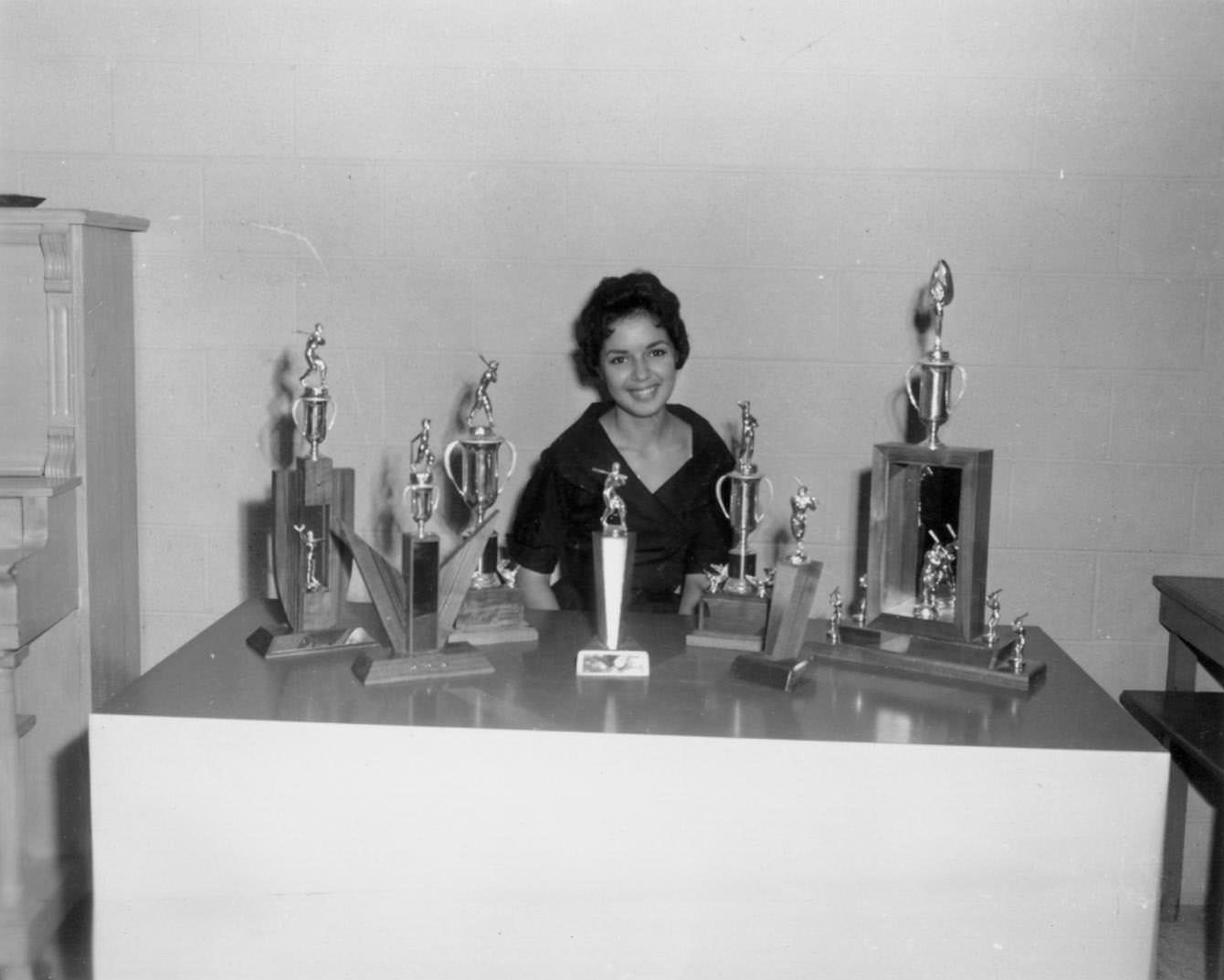
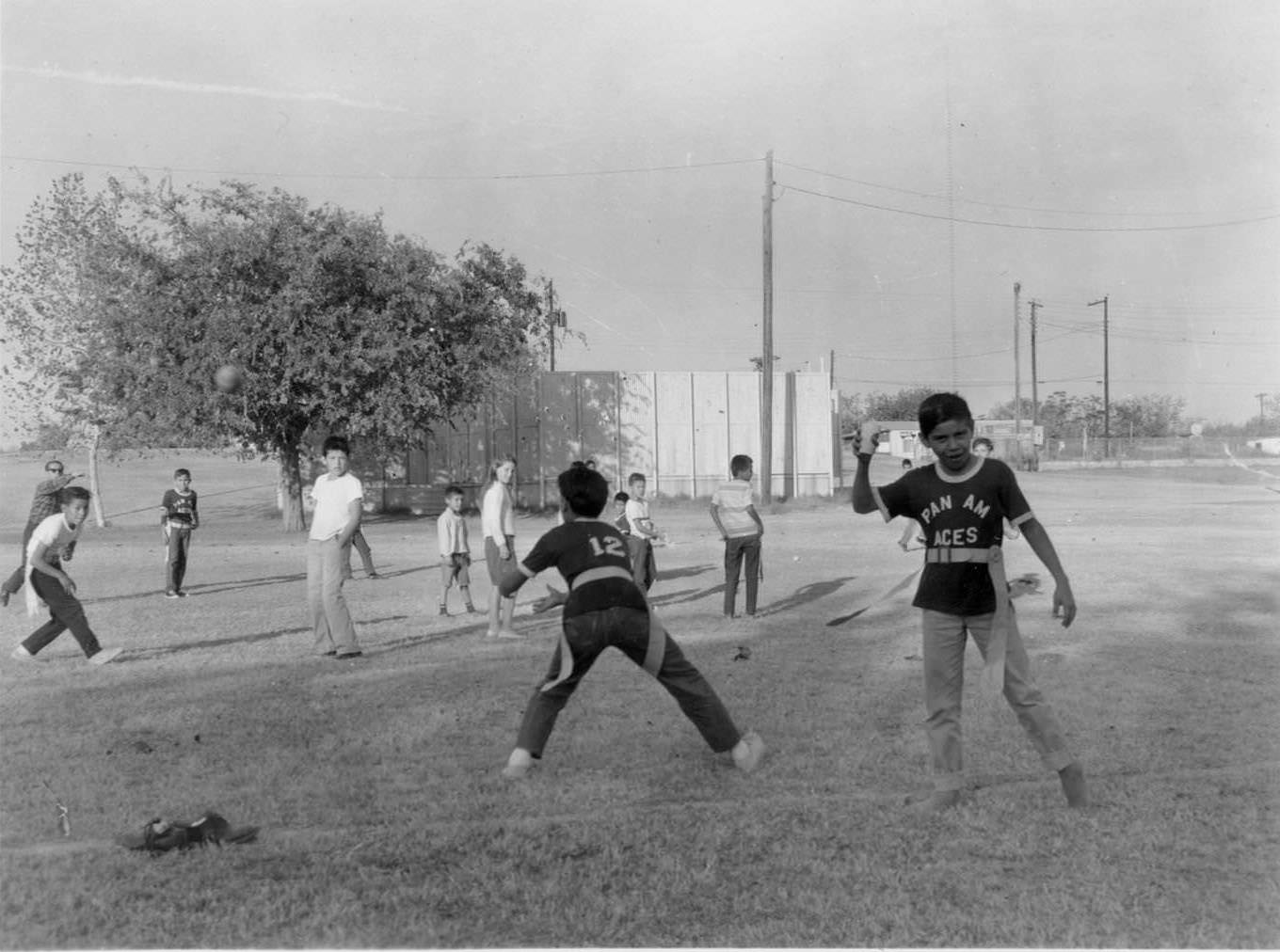
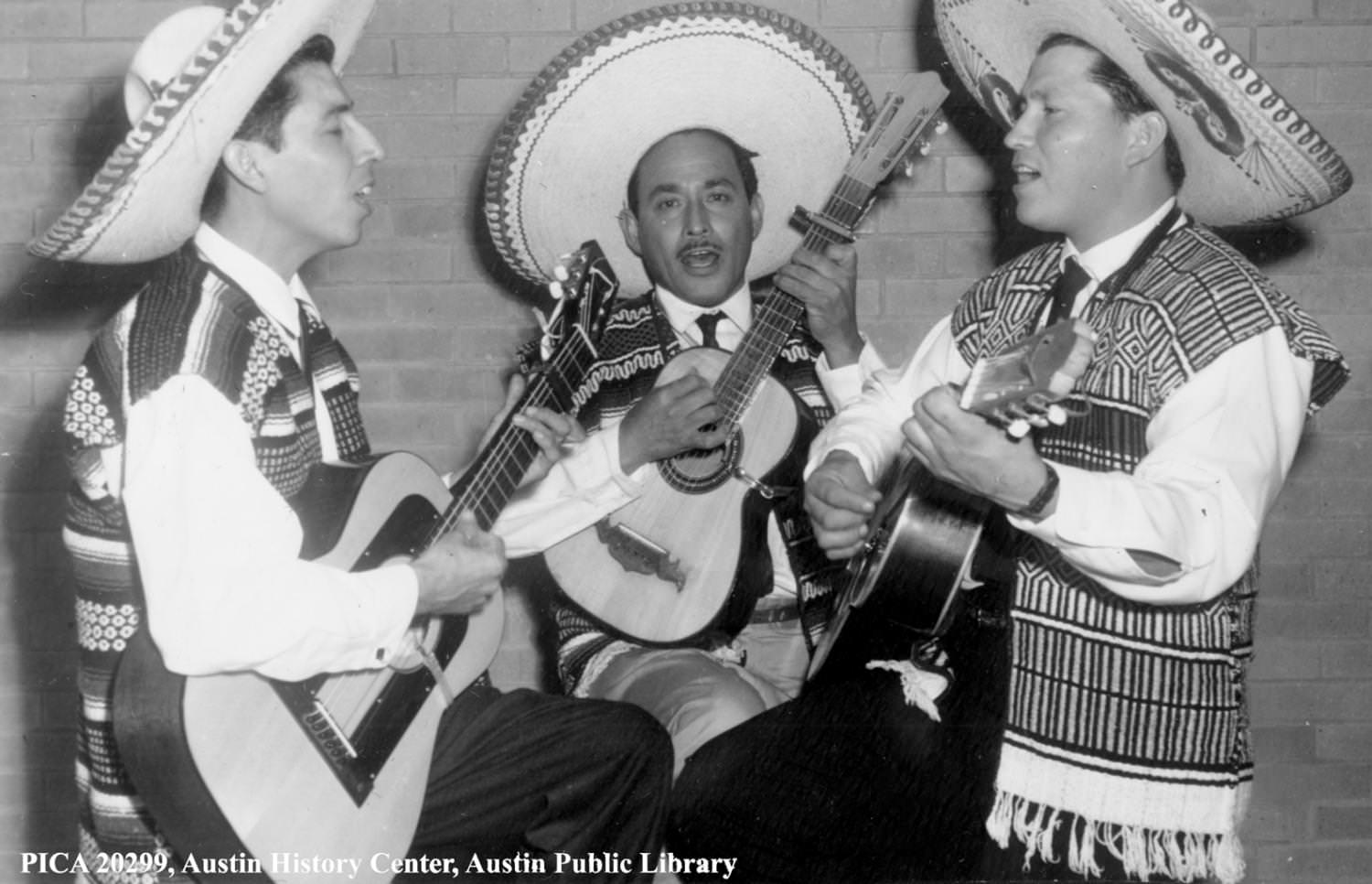
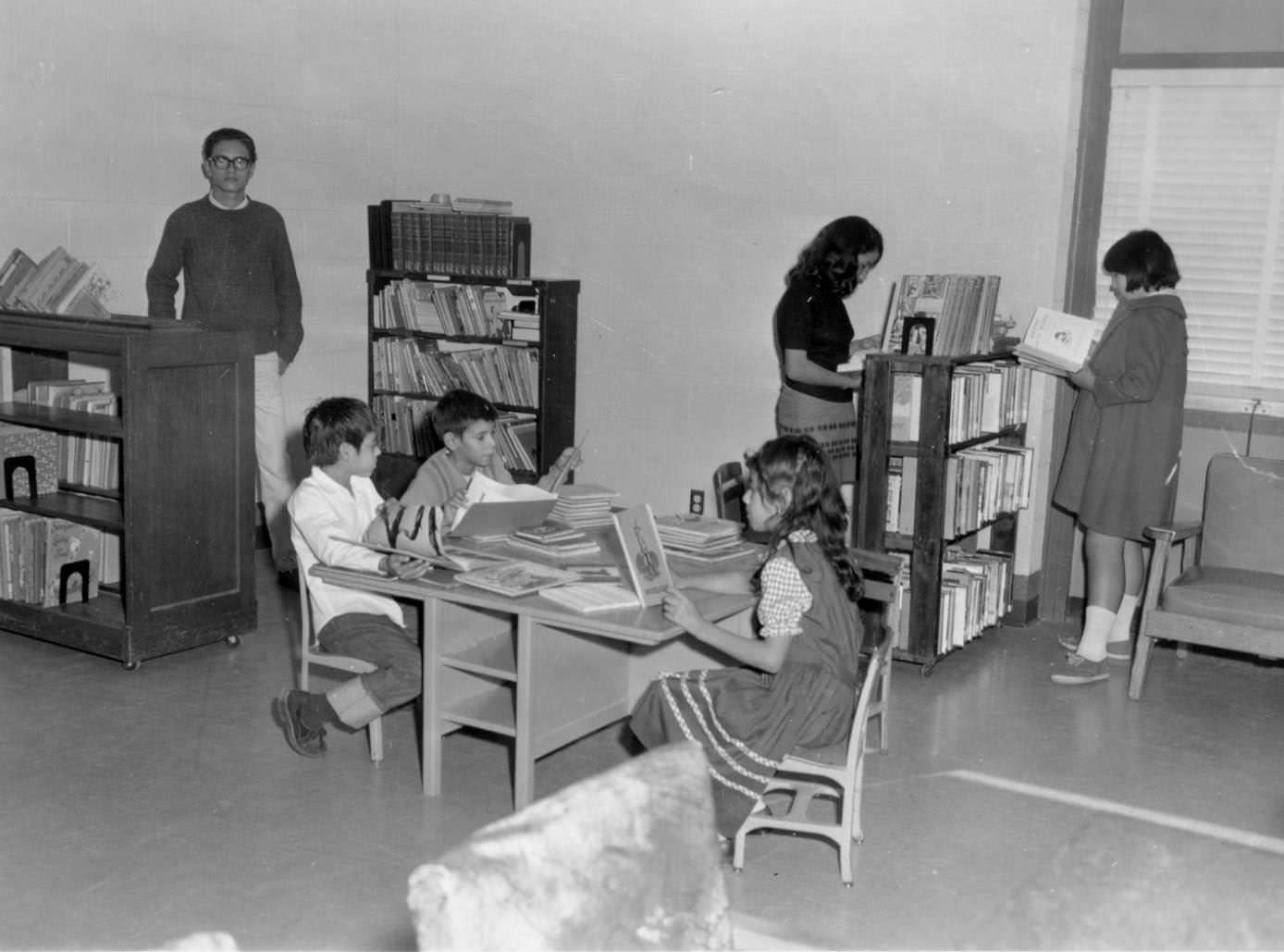
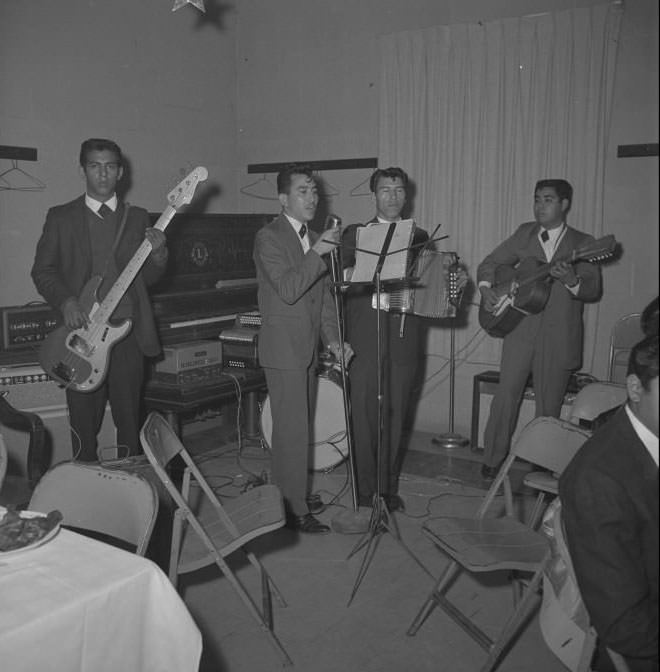
Austin’s recreation centers served as community hubs for people of all backgrounds. The Pan American Recreation Center, opened in 1942 as the first Latin American recreation center in Austin, hosted citizenship classes, softball tournaments, flag football games, and cultural events. A trio of mariachi musicians performed there in 1965, dressed in sombreros and patterned ponchos, playing guitar and vihuela for the crowd. Children at the center used a small library stocked with books, and Tiny Tot programs took young kids on outings to local farms.
Pan American Citizenship Class, 1961.Sweetheart Pan American Invitational Softball Tournament, 1961.Children, aged about 10-13 play flag football at the Pan Am Recreation Center, 1966A trio of Mexican mariachi musicians at the Pan American Recreation Center, 1965Children reading at the Pan Am Rec Center library, 1966. Three children sit at a child’s table with books covering the tabletop in front of them.Pan American Recreation Center] Tiny Tot trip to Hillcrest Farms, 1968.Pan American Hillside Program, 1968.
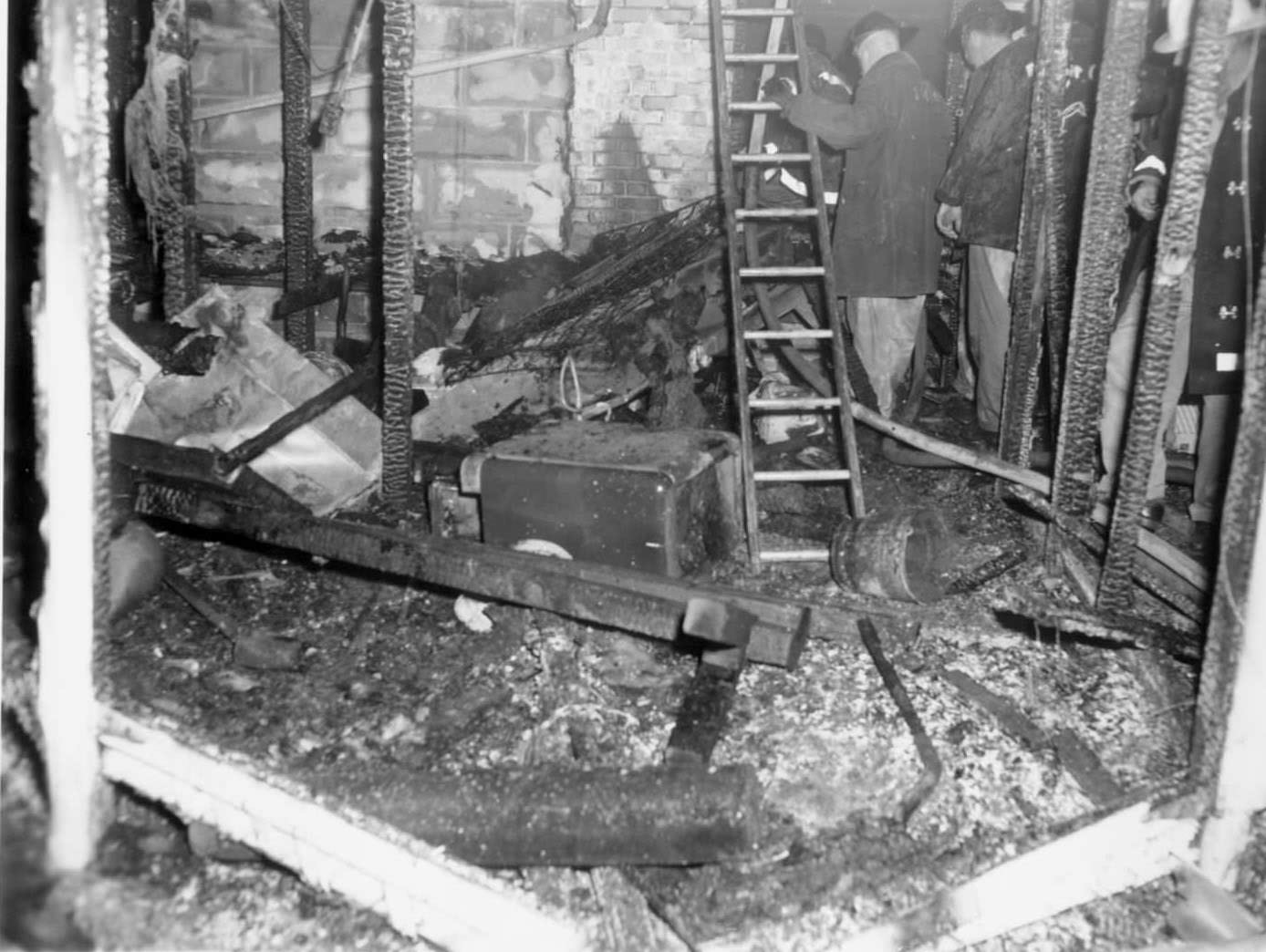
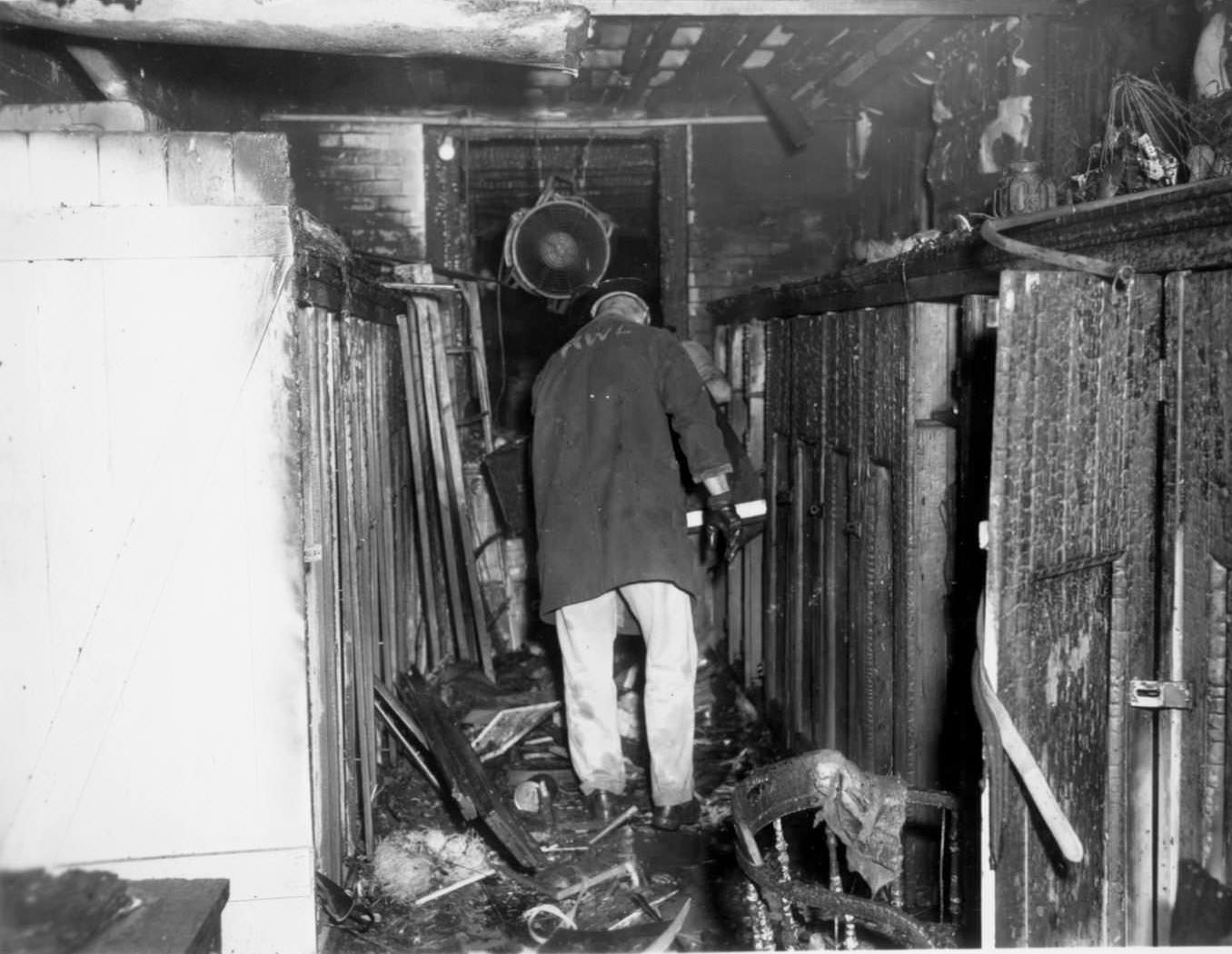
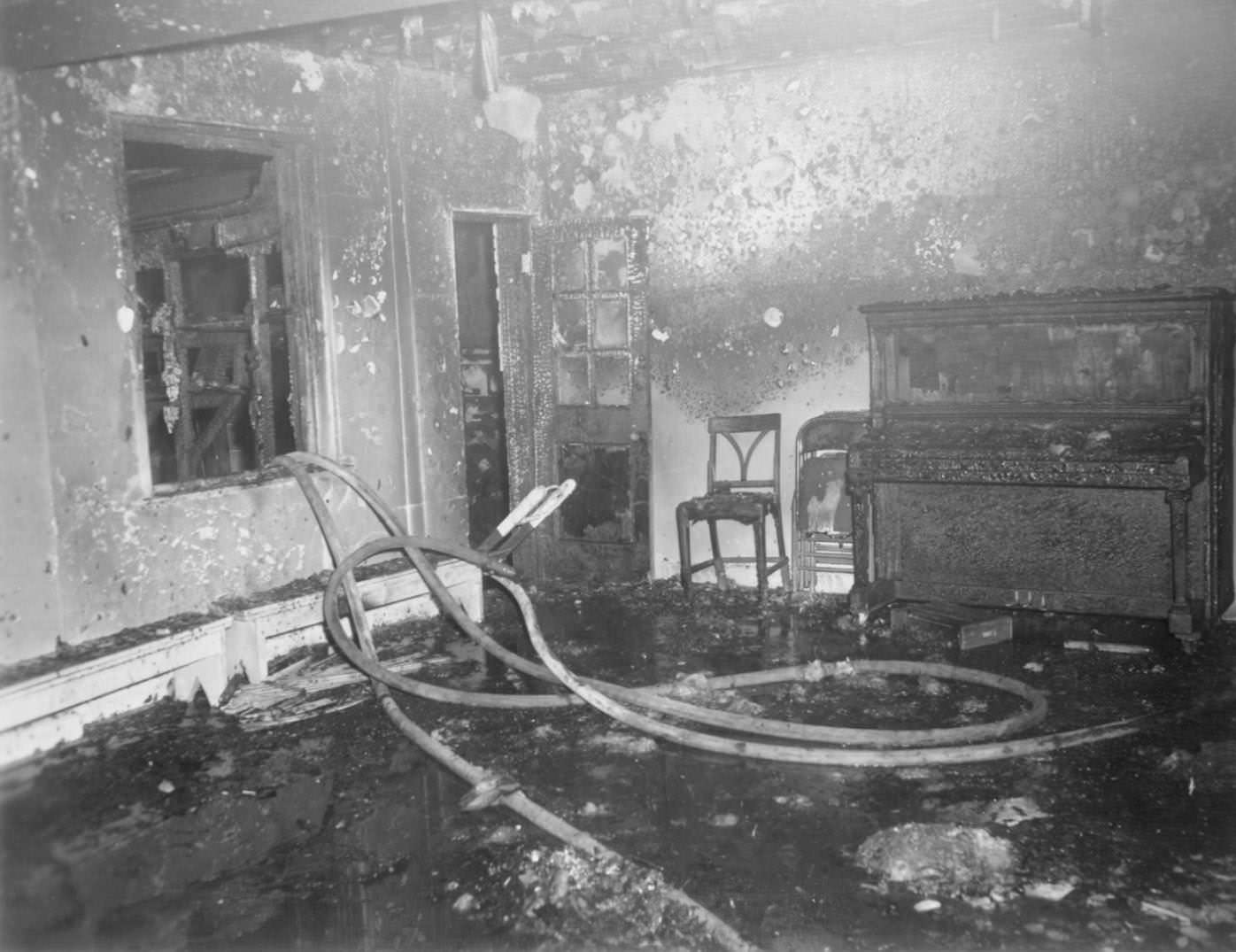
The Hancock Recreation Center served a different part of the city. In 1965, a fire tore through the facility, leaving the locker room in ruins. Two men picked through the charred rubble afterward, surveying the damage. The center was not the only public facility to face disruption during the decade, but the fire stood out as one of the more dramatic events in the city’s parks department history.
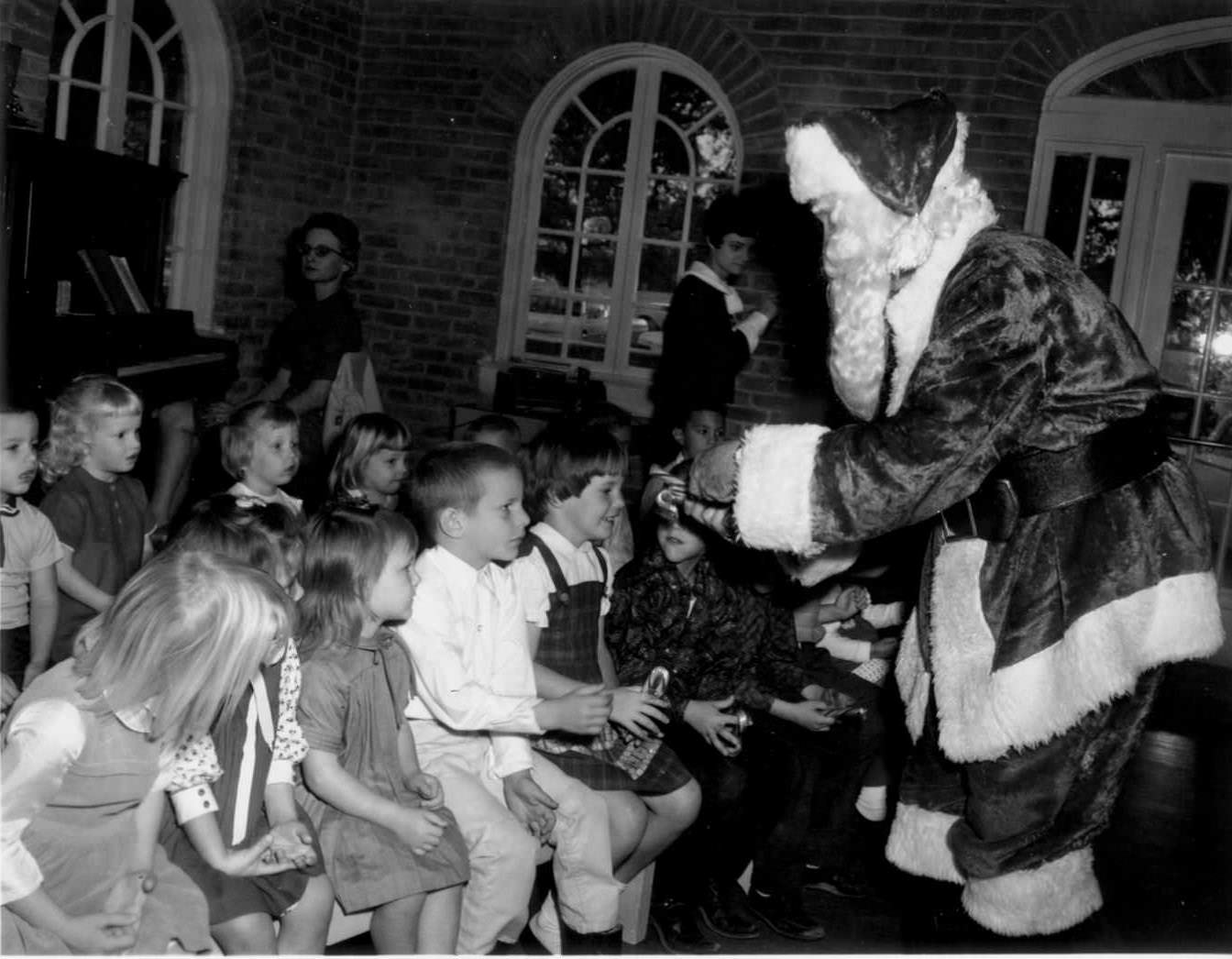
Aftermath of Fire at Hancock Recreation Center, 1965.Two men surveying rubble in the locker room of Hancock Recreation Center, in the aftermath of a fire, 1965Aftermath of Fire at Hancock Recreation Center, 1965.A Tiny Tot Christmas Party at Hancock Recreation Center. Santa Claus hands out candy canes to a group of children, 1966
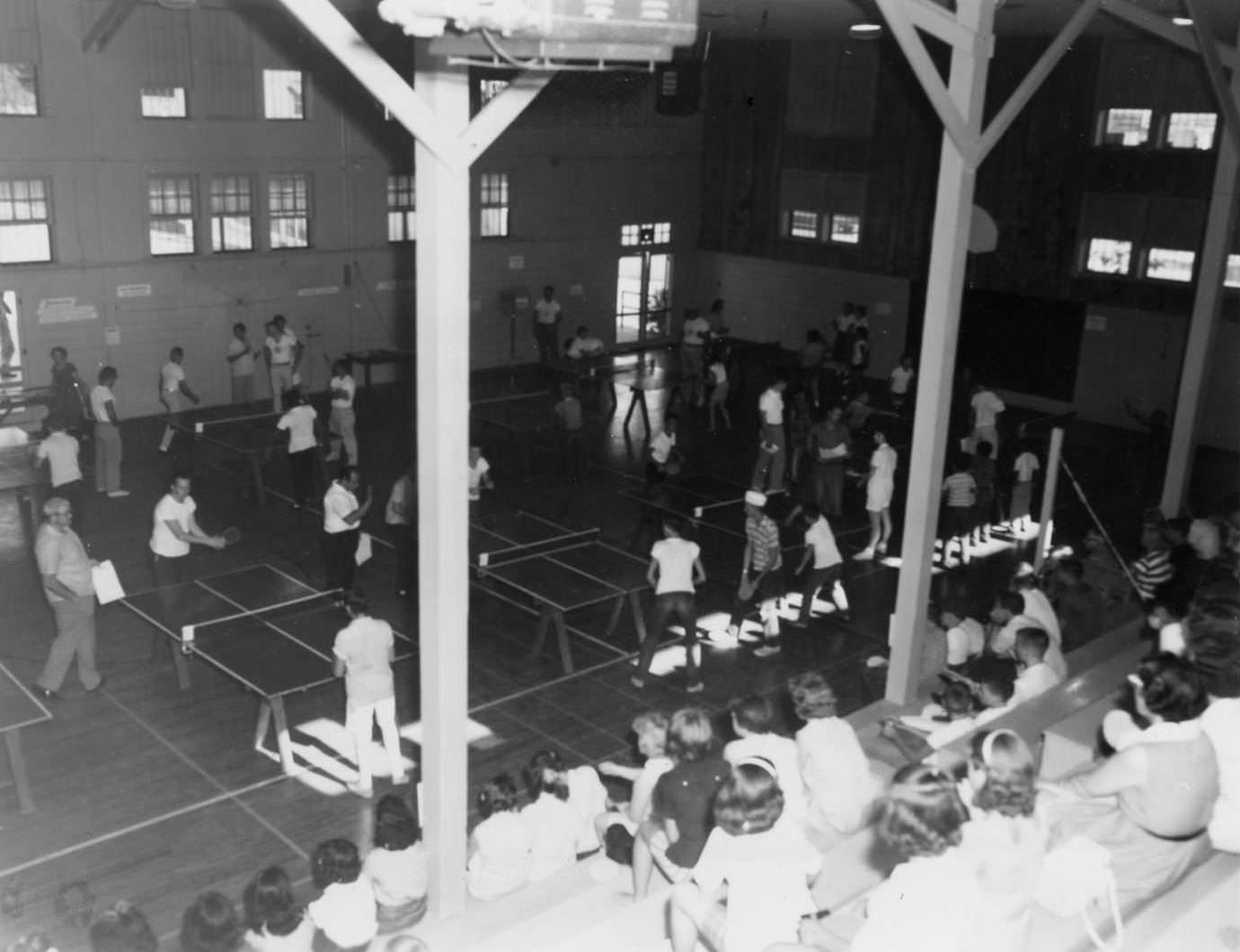
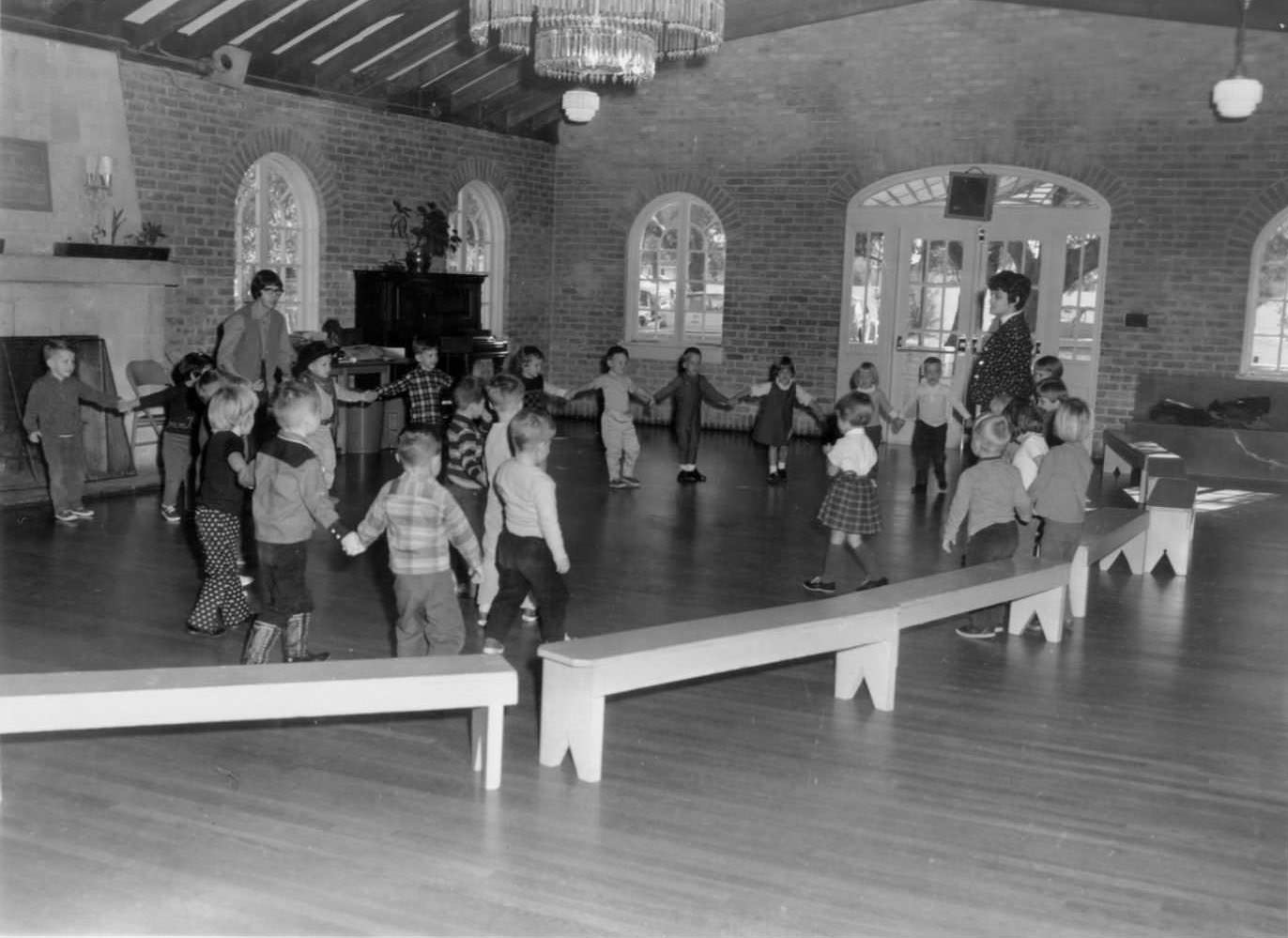
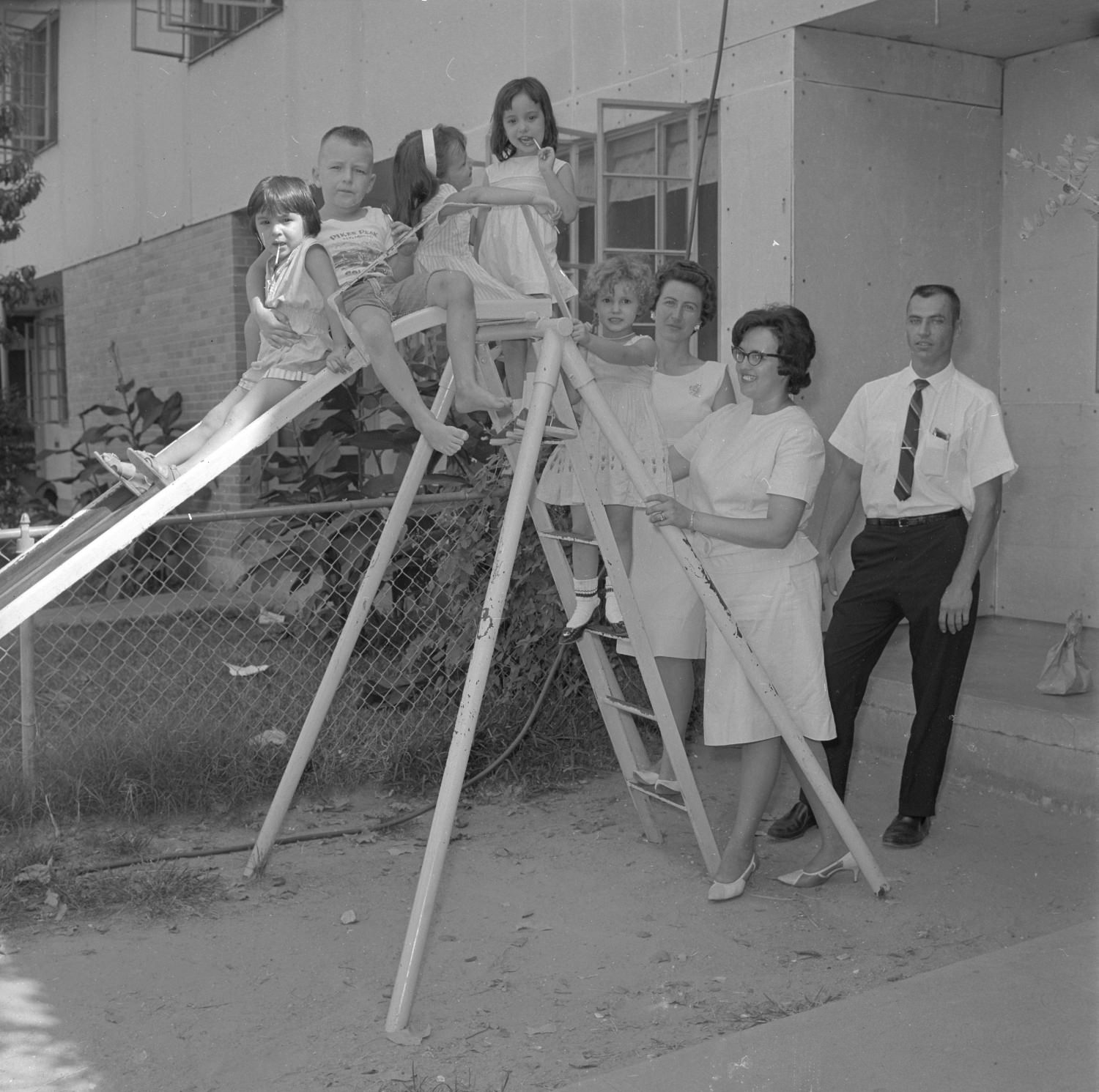
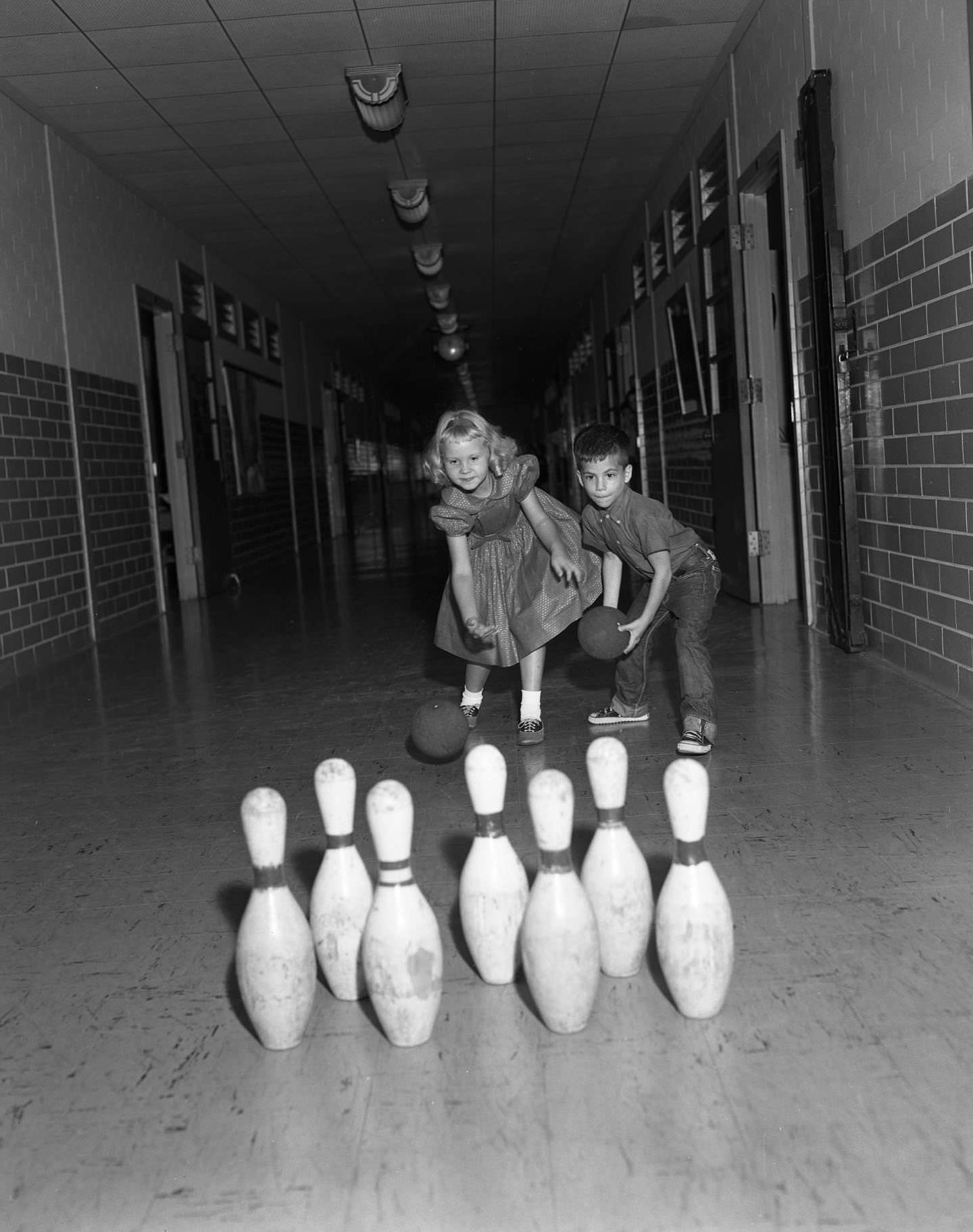
The Austin Athletic Center, known earlier in its history as the Austin Athletic Club, held an inter-playground table tennis tournament in 1961. Bleachers filled with women and children watching the competitors. The building had started as a privately owned club built by William T. Caswell in 1923, sold to the City of Austin in 1931, and officially renamed the Austin Recreation Center in 1970.
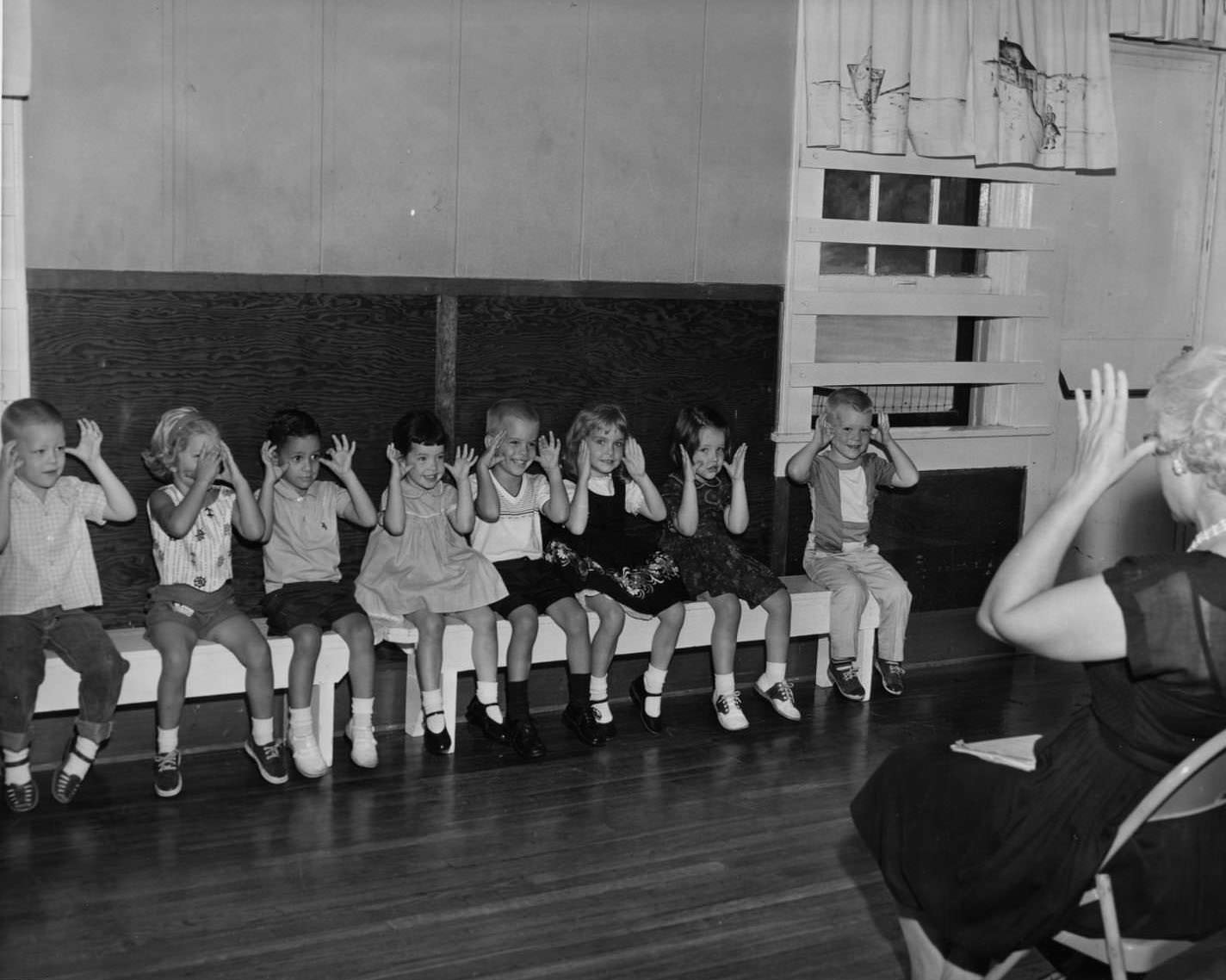
Inter-playground table tennis tournament at Austin Athletic Center, 1961.Tiny Tots – Austin Athletic Club, 1963A group of children playing a game. They are in a large circle, holding hands, with two adult instructors, 1966Children on Slide, 1965.Two children bowling in a school hallway, 1961
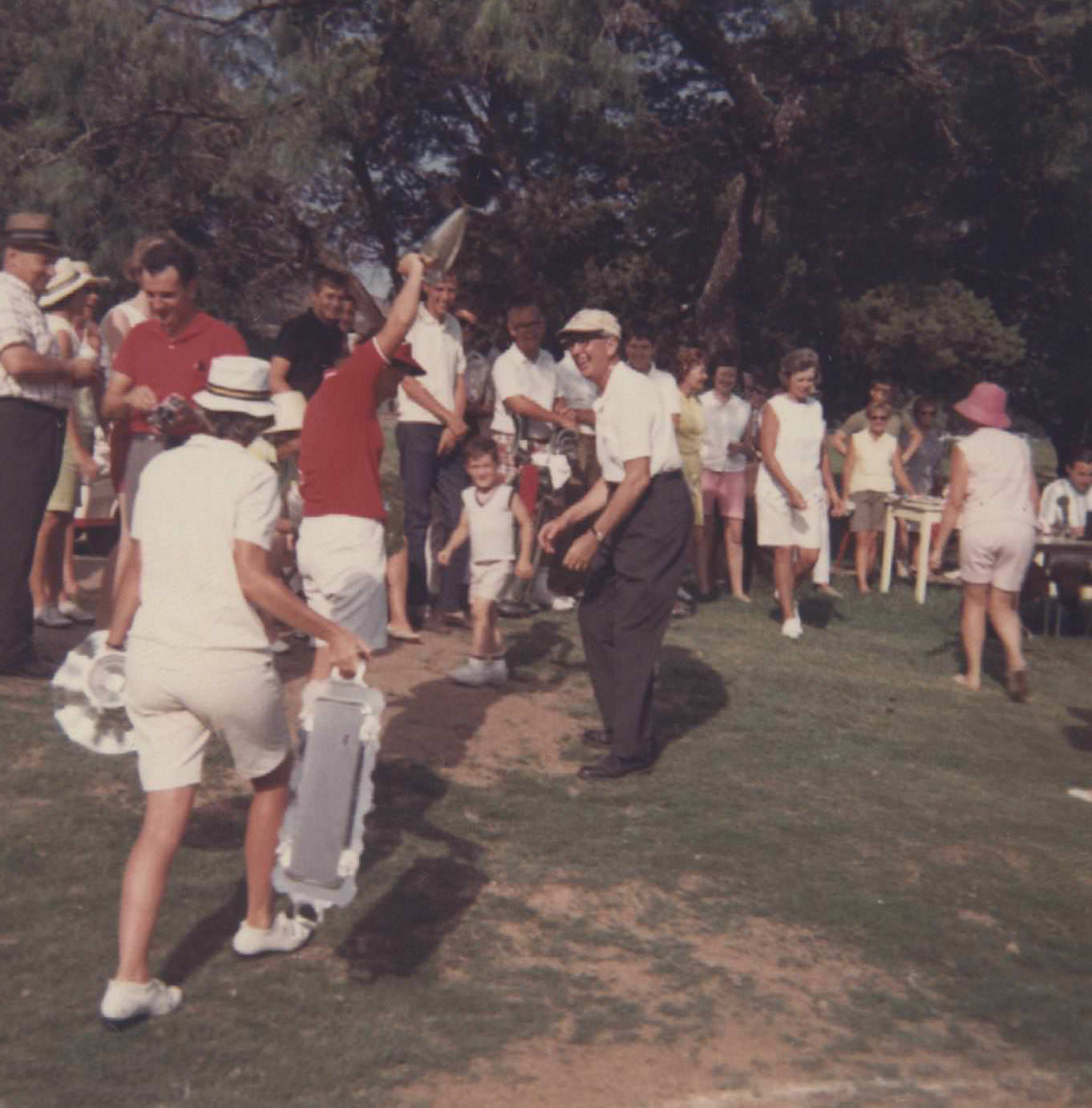
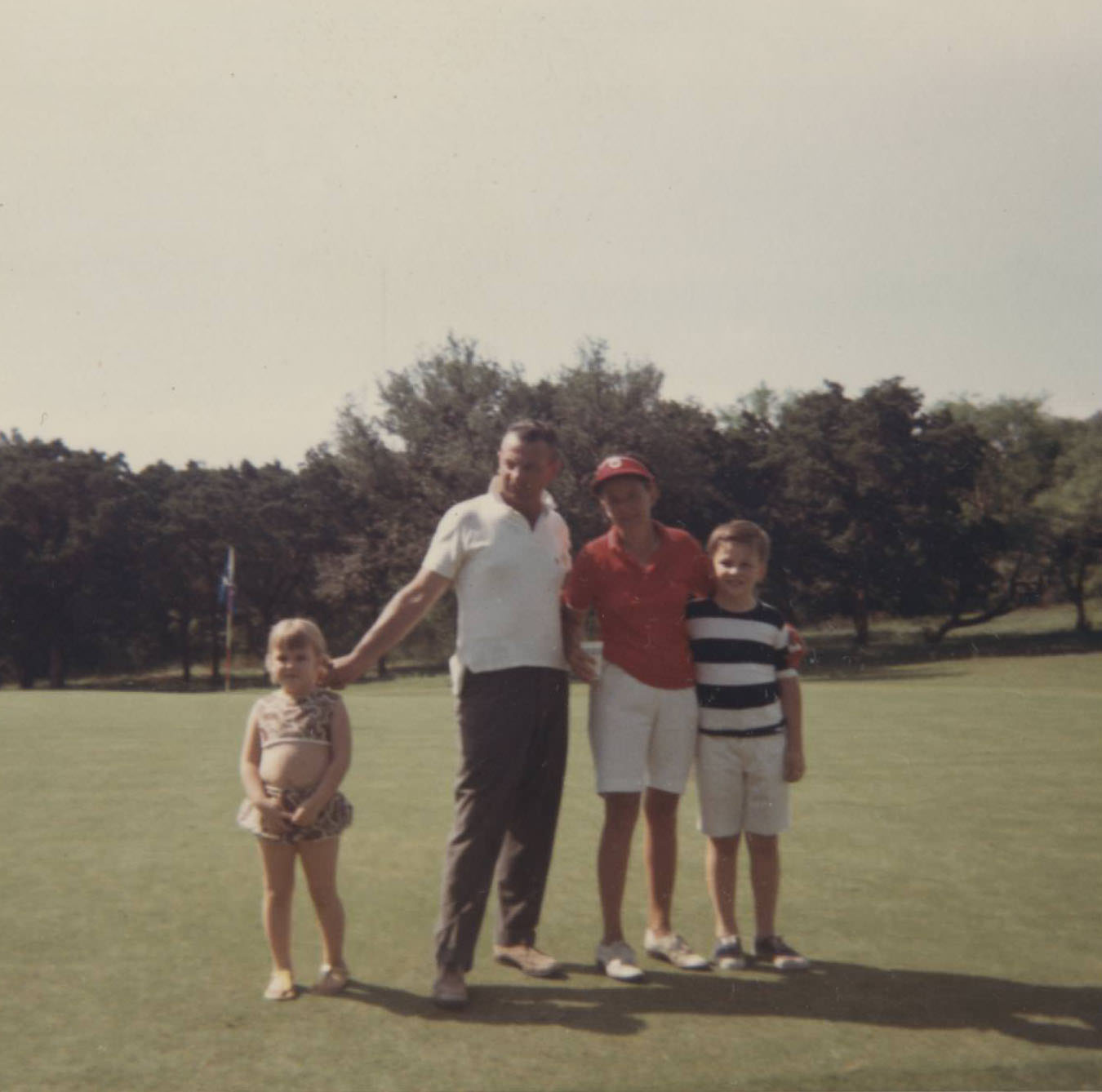
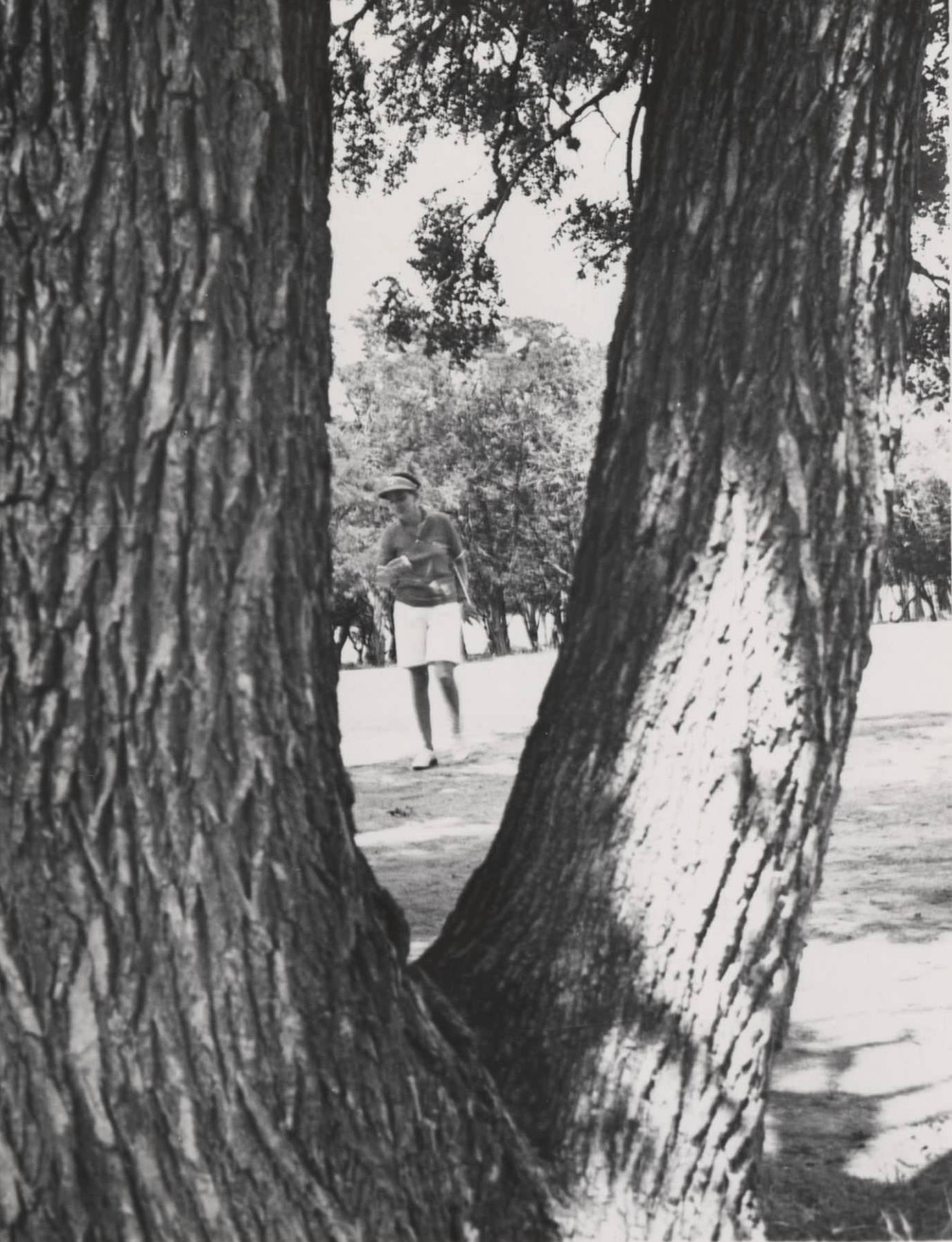
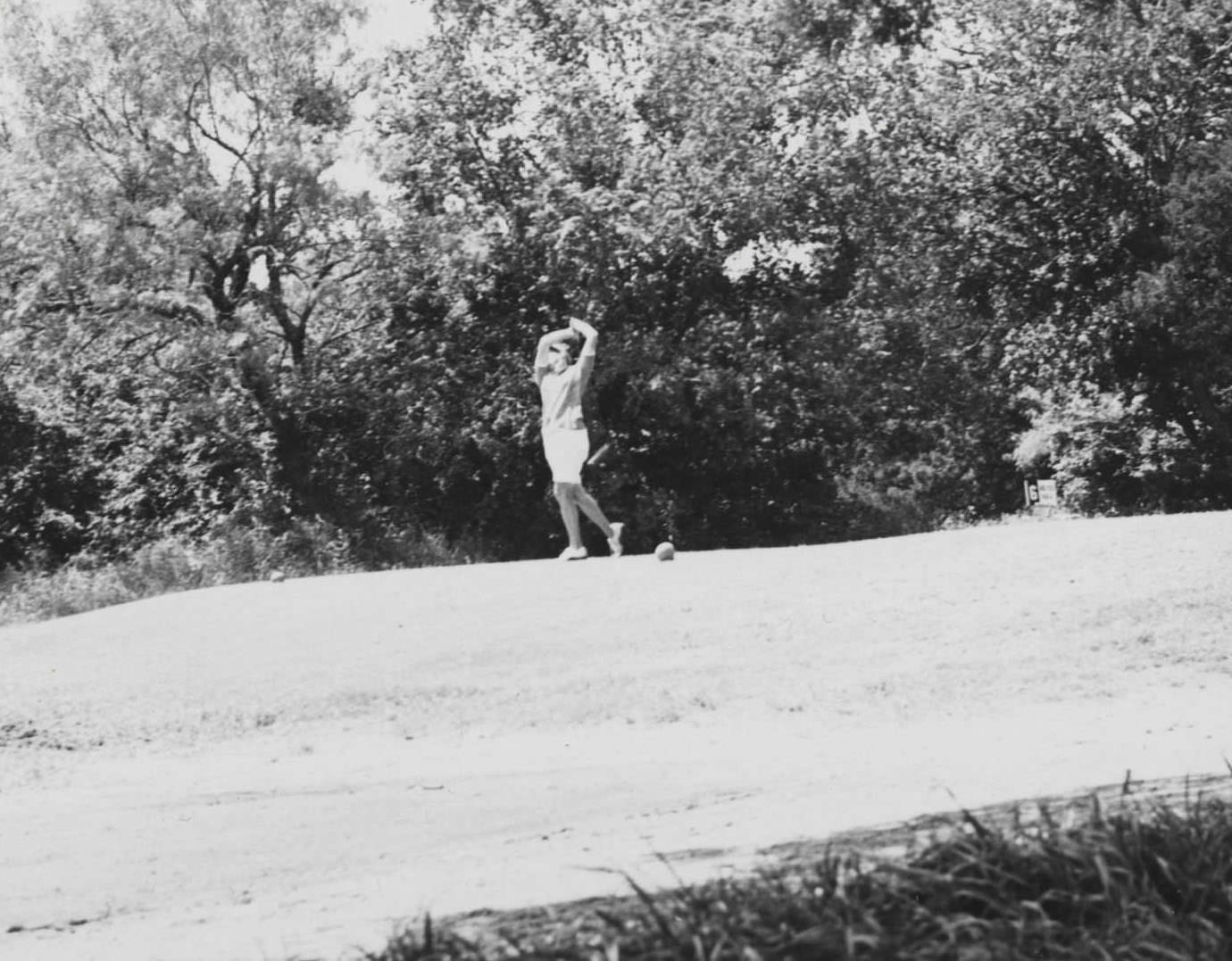
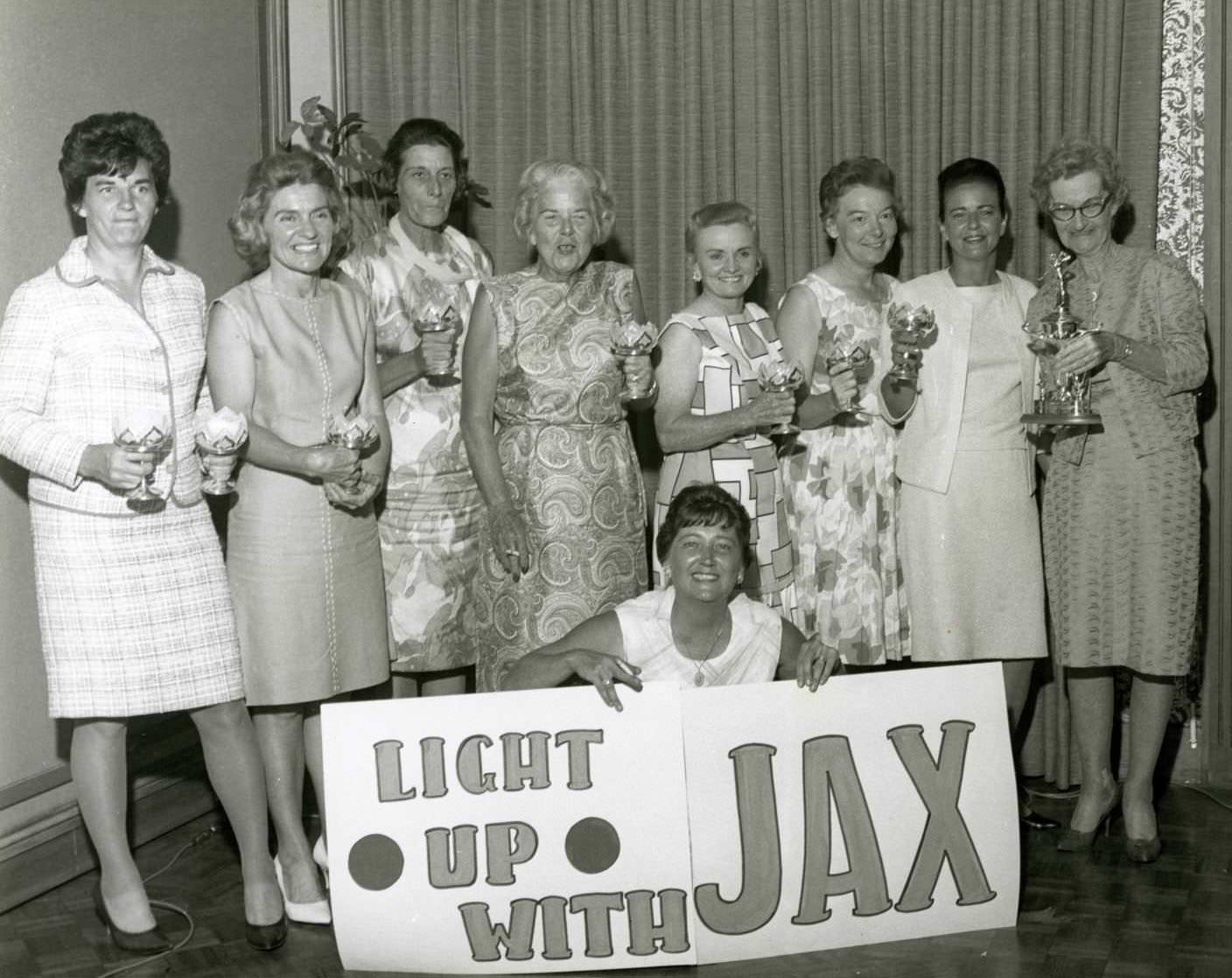
The Municipal Golf Course on Enfield Road had a long history in Austin. Originally constructed by the Lions Club in 1928 and donated to the city in 1936, it had been a community resource for decades by the time the Austin Women’s Public Links Golf Association held its annual tournament there in 1966. Women competed on the course and posed together for group portraits, representing a side of Austin’s recreational life that rarely made the front pages.
Austin Women’s Public Links Golf Association at Municipal Golf Course. 1966.Austin Women’s Public Links Golf Association golfer and family at Municipal Golf Course, 1966Austin Women’s Public Links Golf Association golfer at the Municipal Golf Course tournament, 1966.A golfer swinging on a drive at the AWPLGA tournament at the Austin Municipal Golf Course, 1966Group portrait of ladies from the Austin Women’s Public Links Golf Association, 1960s
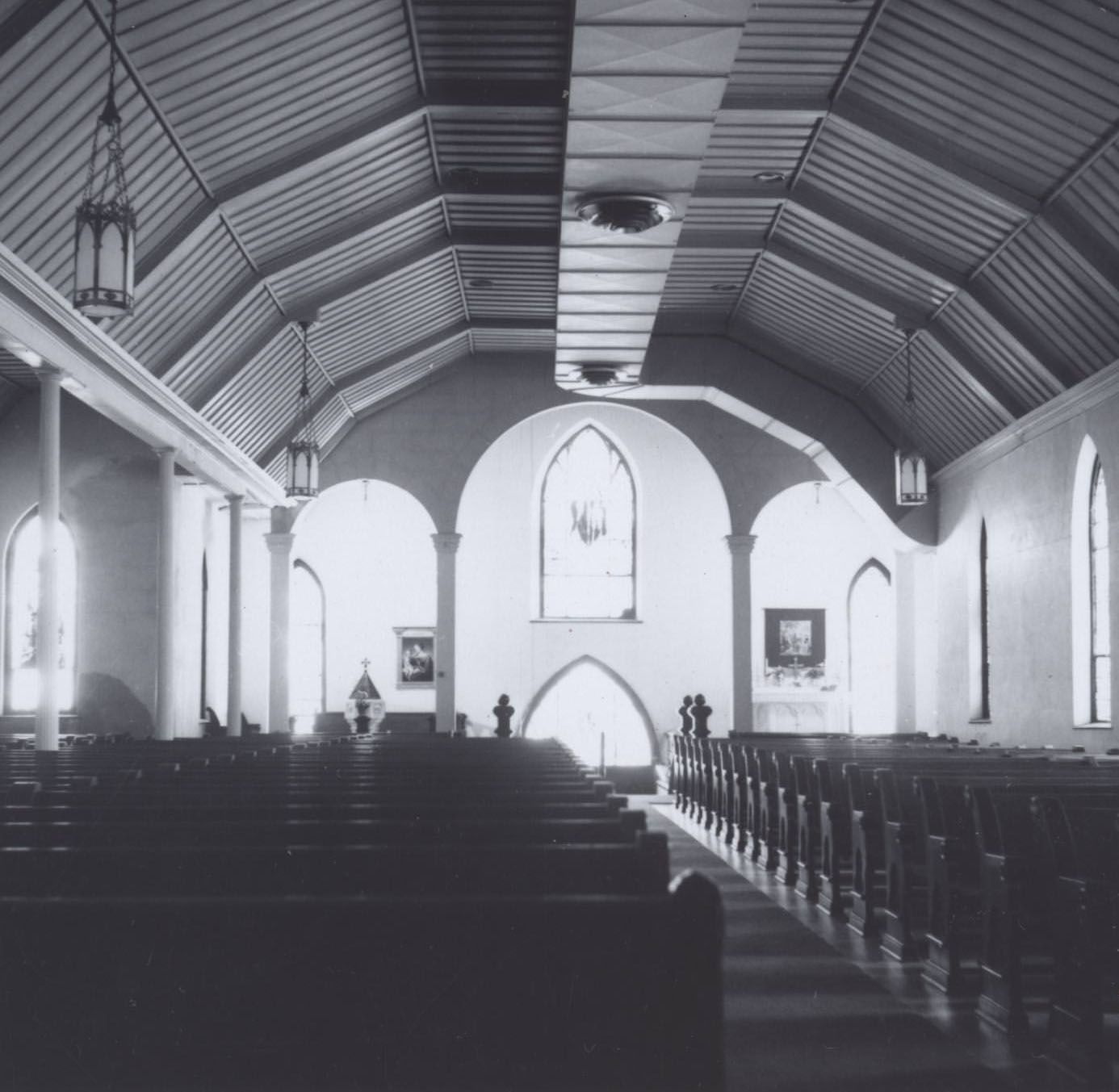
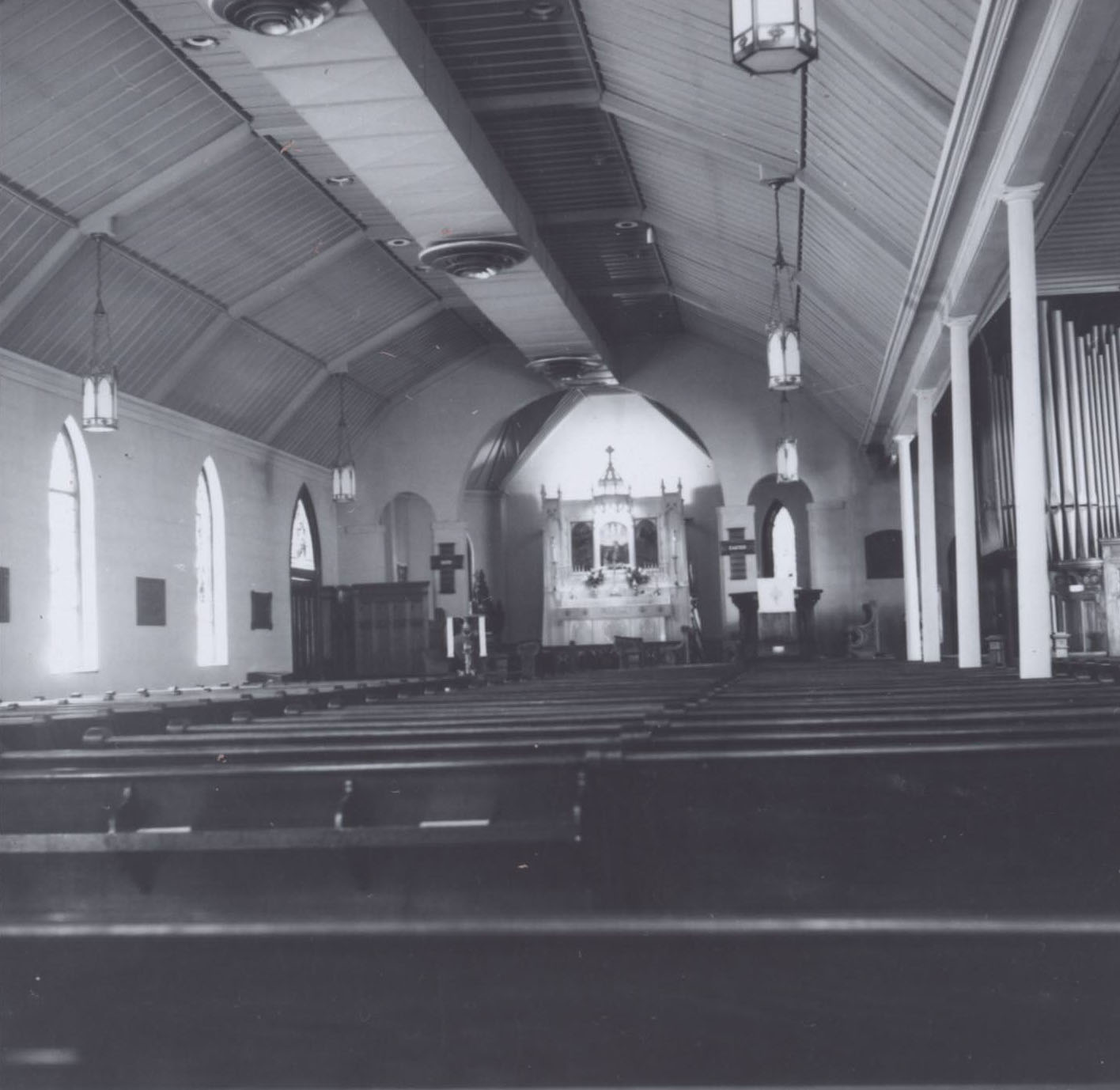
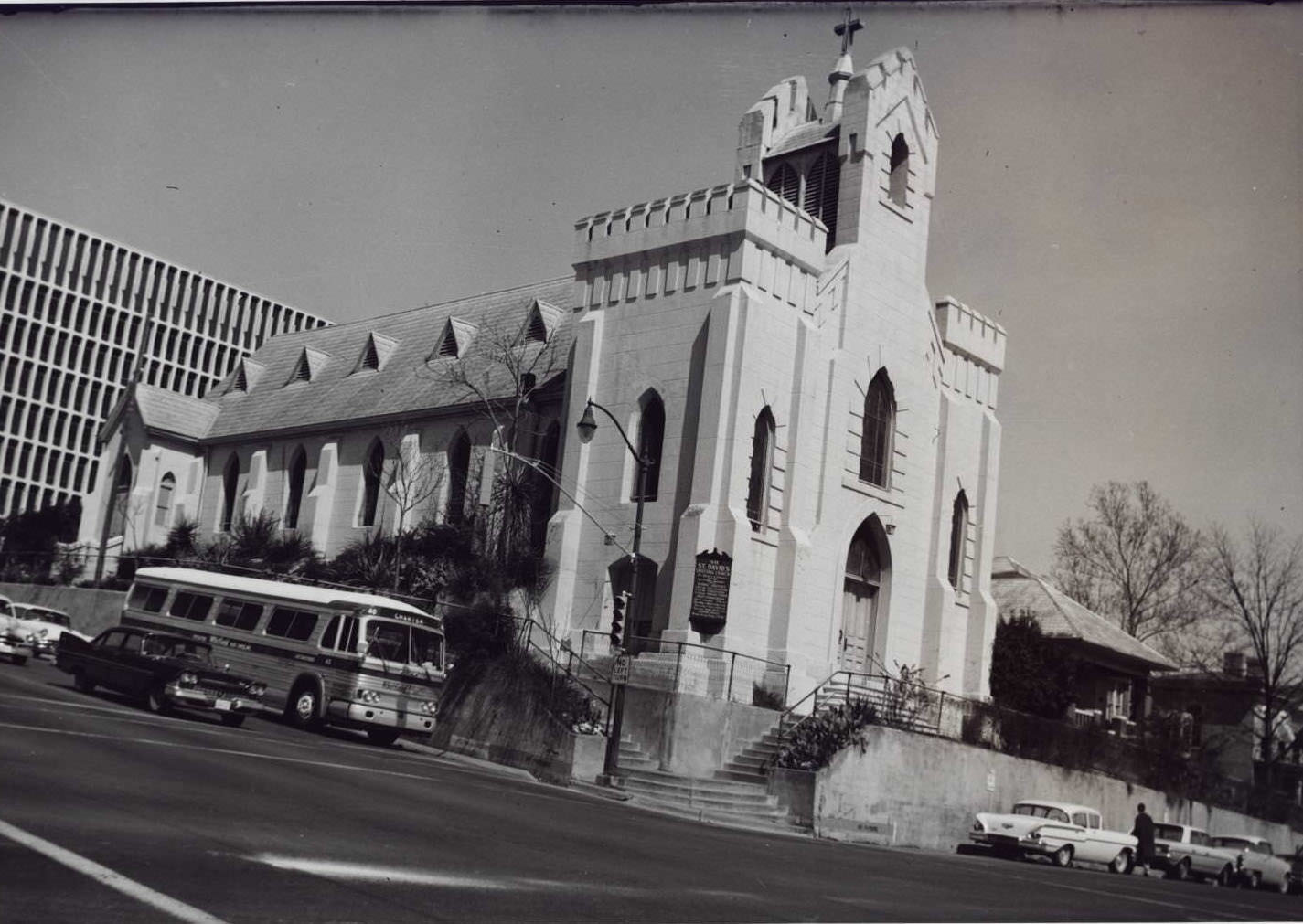
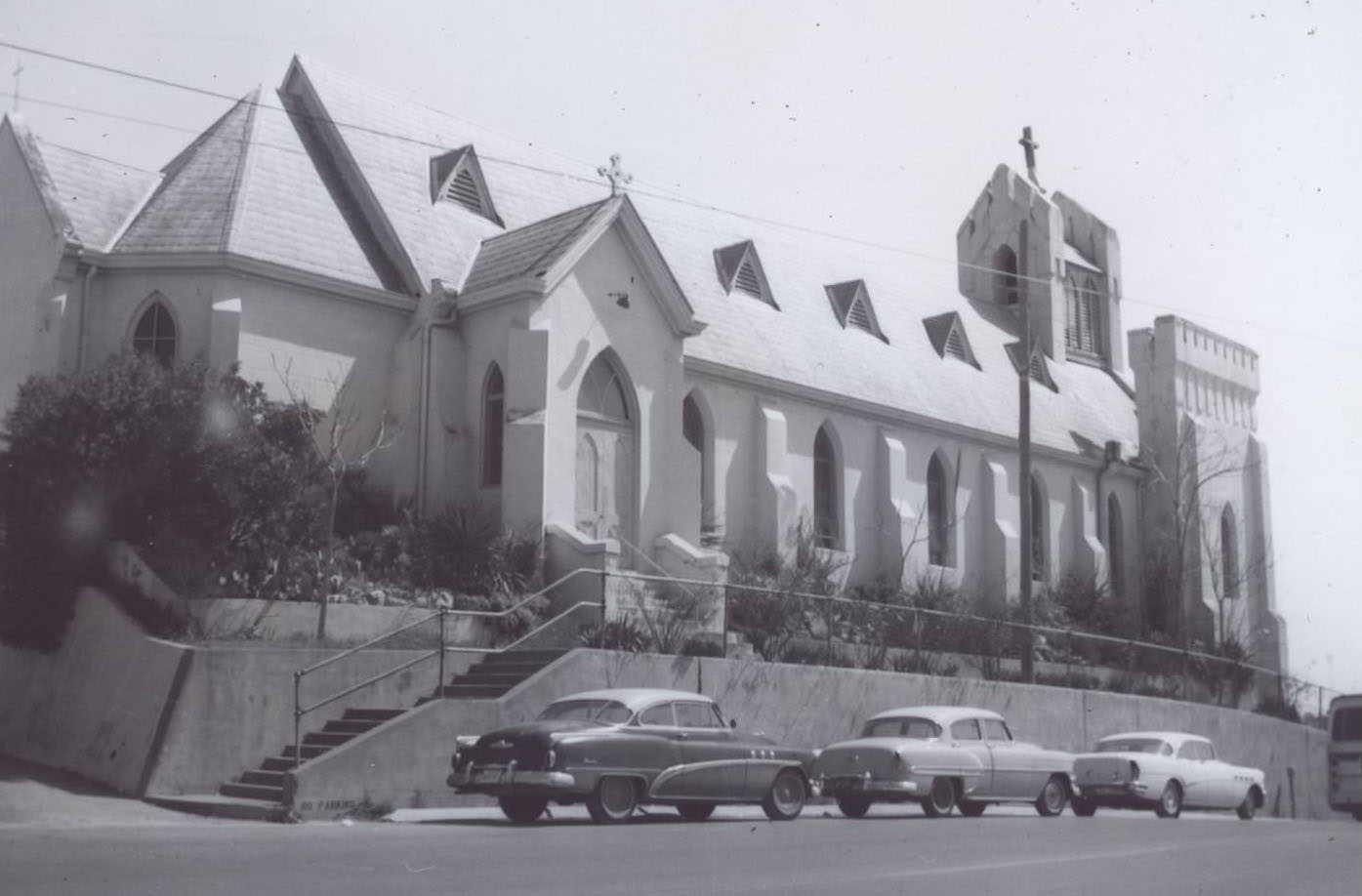
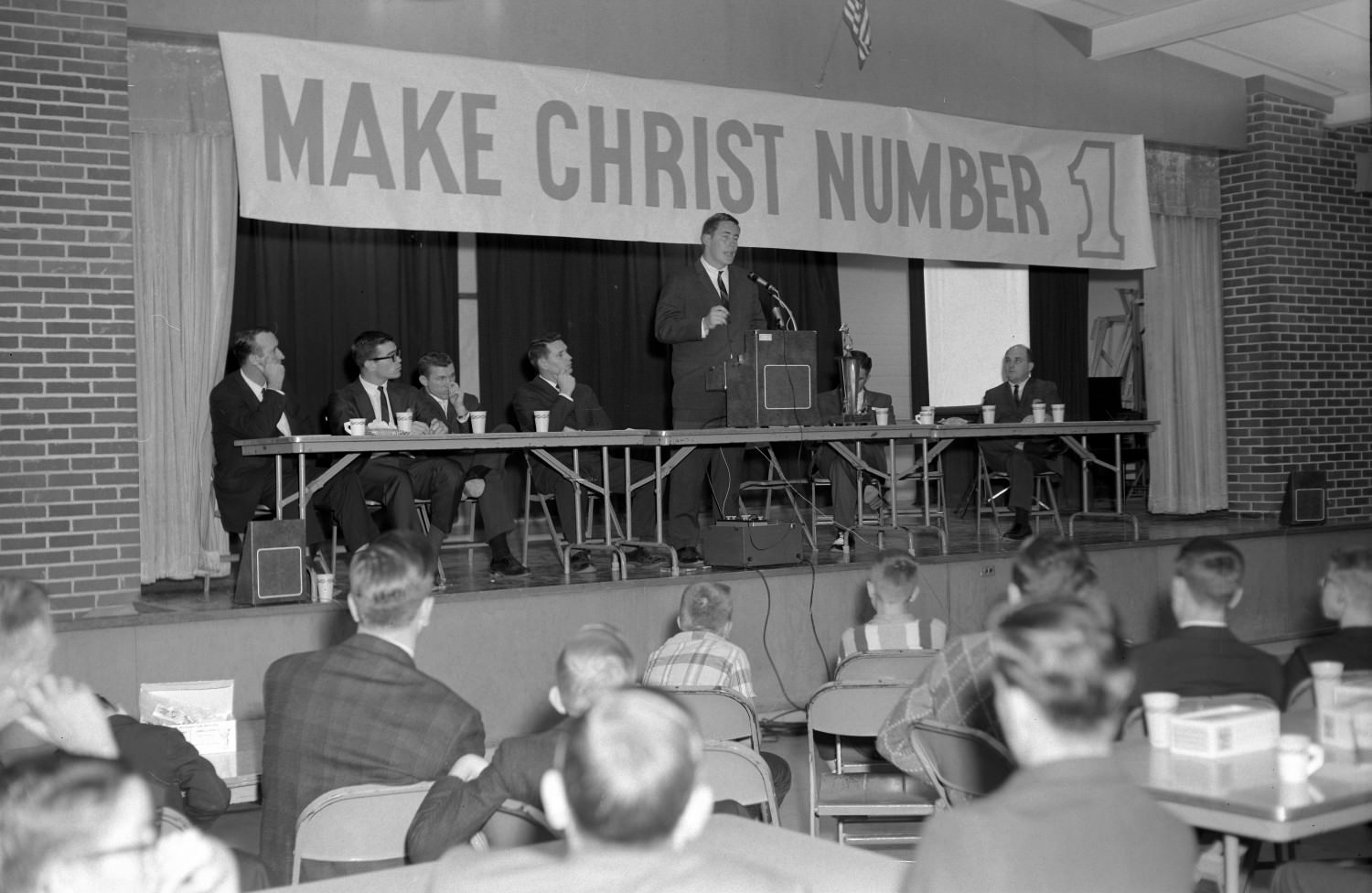
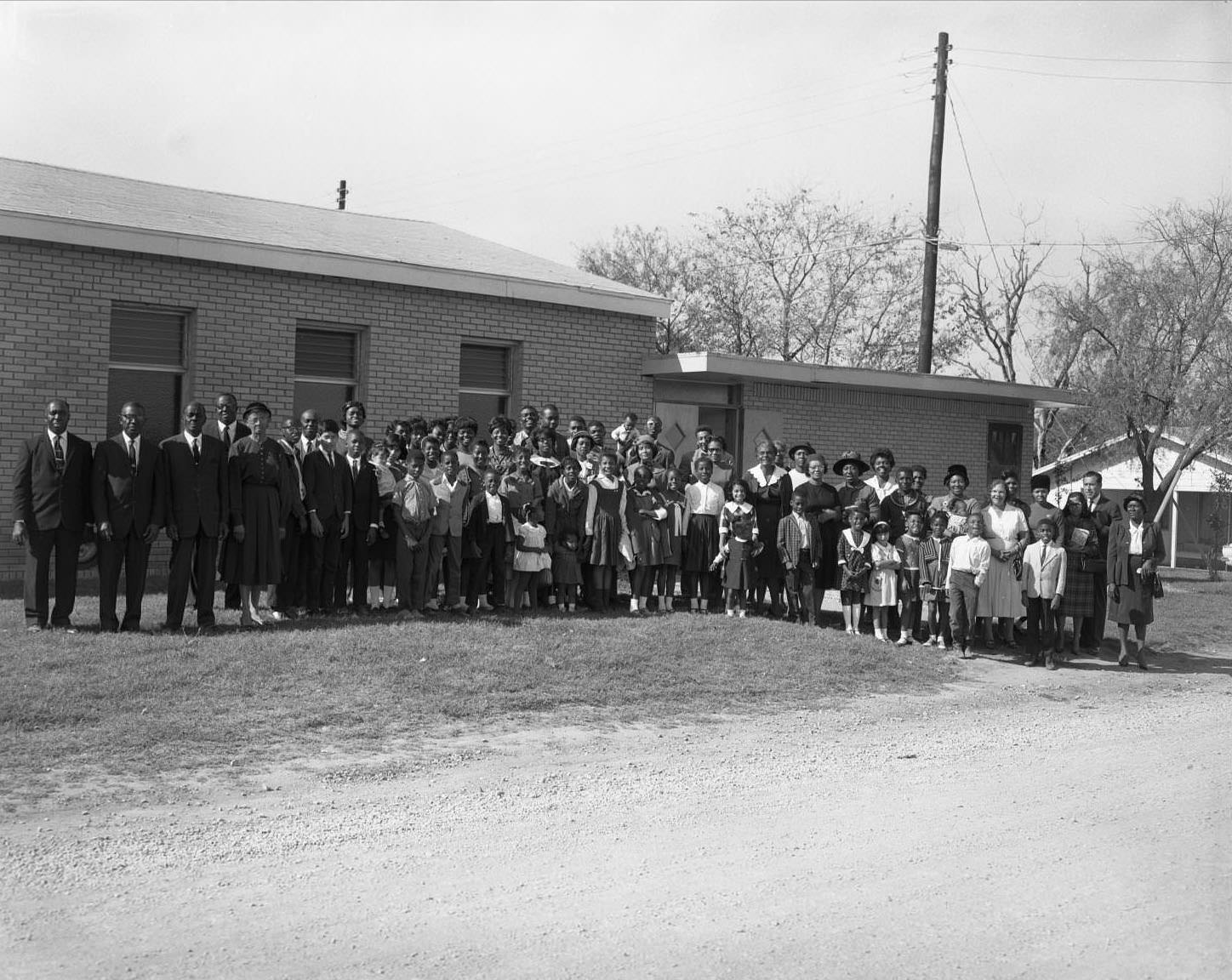
Austin’s faith communities were deeply woven into daily life. St. David’s Episcopal Church at the corner of San Jacinto and East 7th Street was among the most photographed congregations of the era. Its stone exterior and richly decorated interior appeared in multiple images from 1963 and 1965. Hyde Park Baptist Church, the Seventh Day Adventist congregation, St. Martin’s Lutheran Church, and a Third Baptist Church building in Gildon Creek all documented their communities during the decade.
Interior of St. David’s Episcopal Church, 1963.St. David’s Episcopal Church looking towards the altar, 1963Exterior of St. David’s Episcopal Church taken from across the street at the intersection of San Jacinto and East 7th, 1965St. David’s Episcopal Church, 1965.Unidentified man giving speech in the Fellowship Hall at Hyde Park Baptist Church, Austin, 1966Entire congregation of the Seventh Day Adventists pose together outside church, 1965
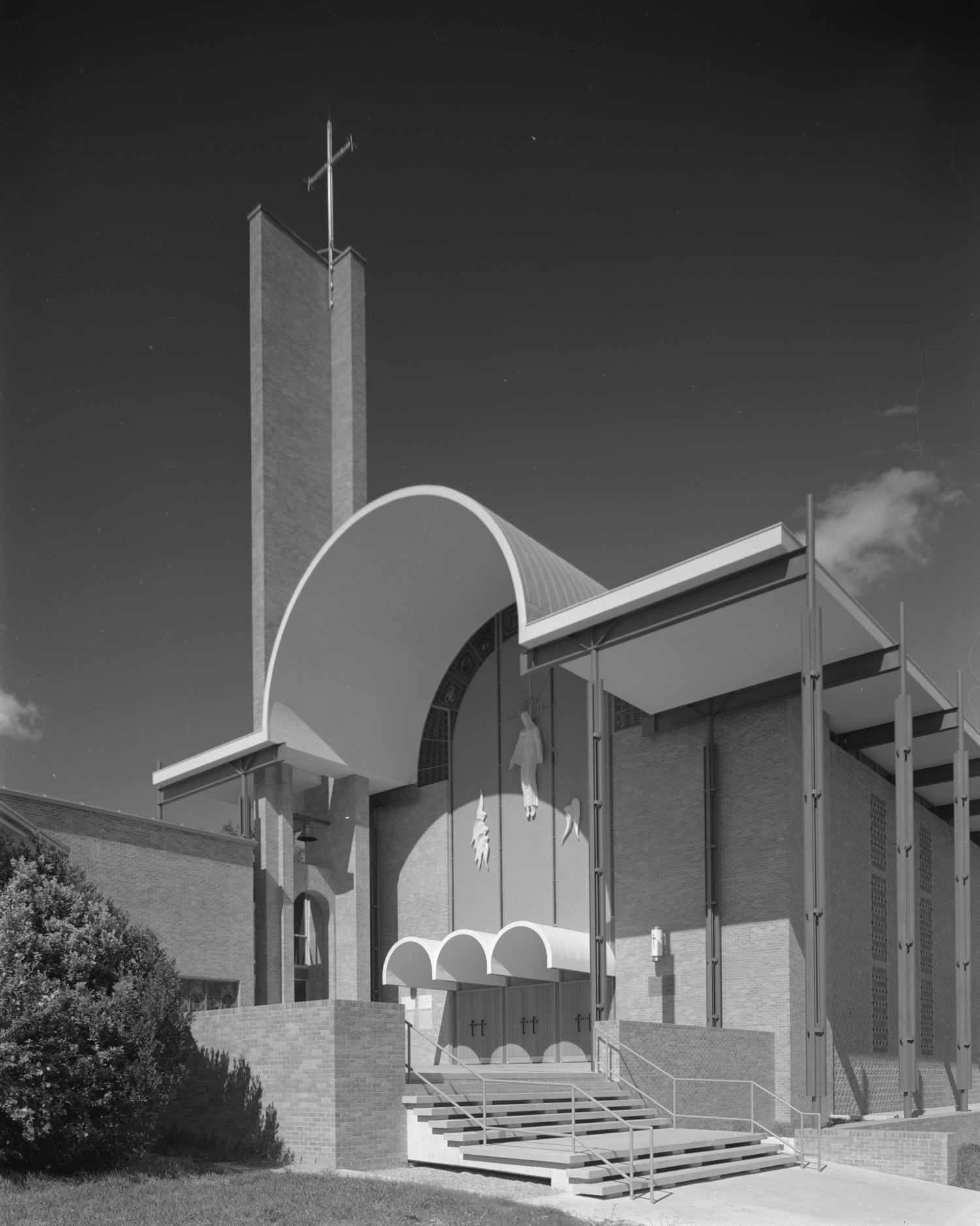
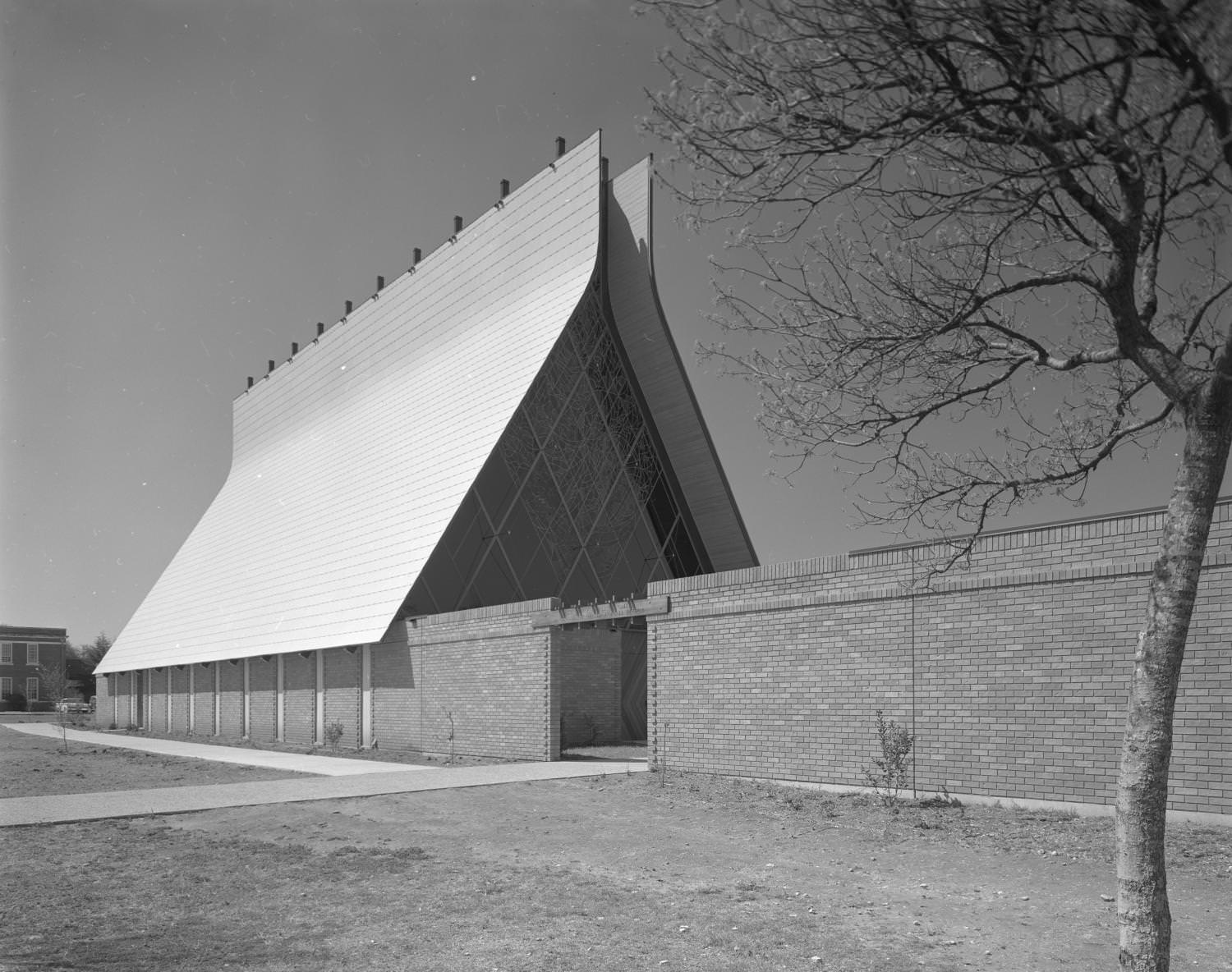
The exterior St. Martin’s Lutheran Church that features and arched, geometric roof line a wide set of steps seen in the foreground, 1960
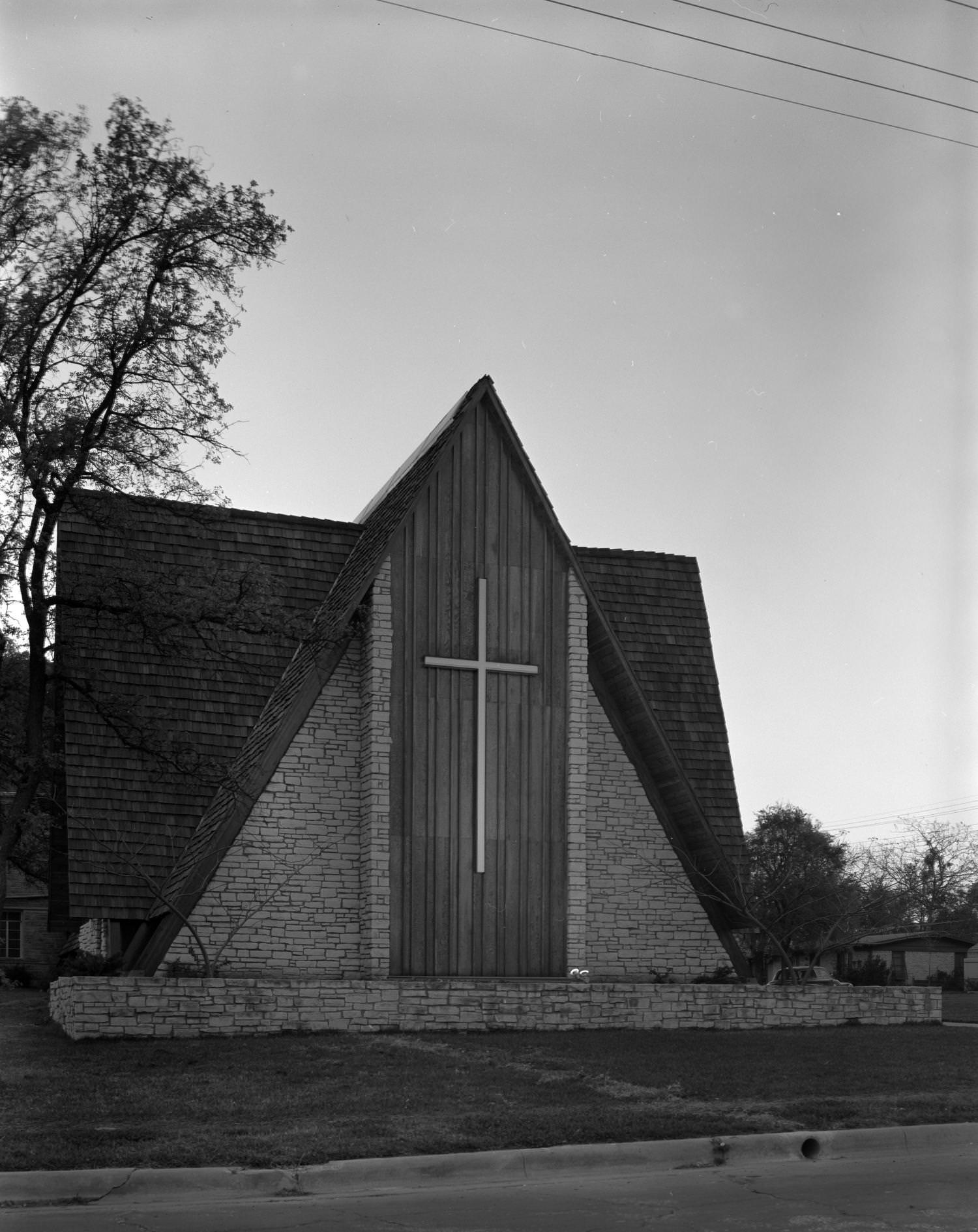
A church made from stone, with large, sloping roofs. On the building’s front is a large cross, 1961
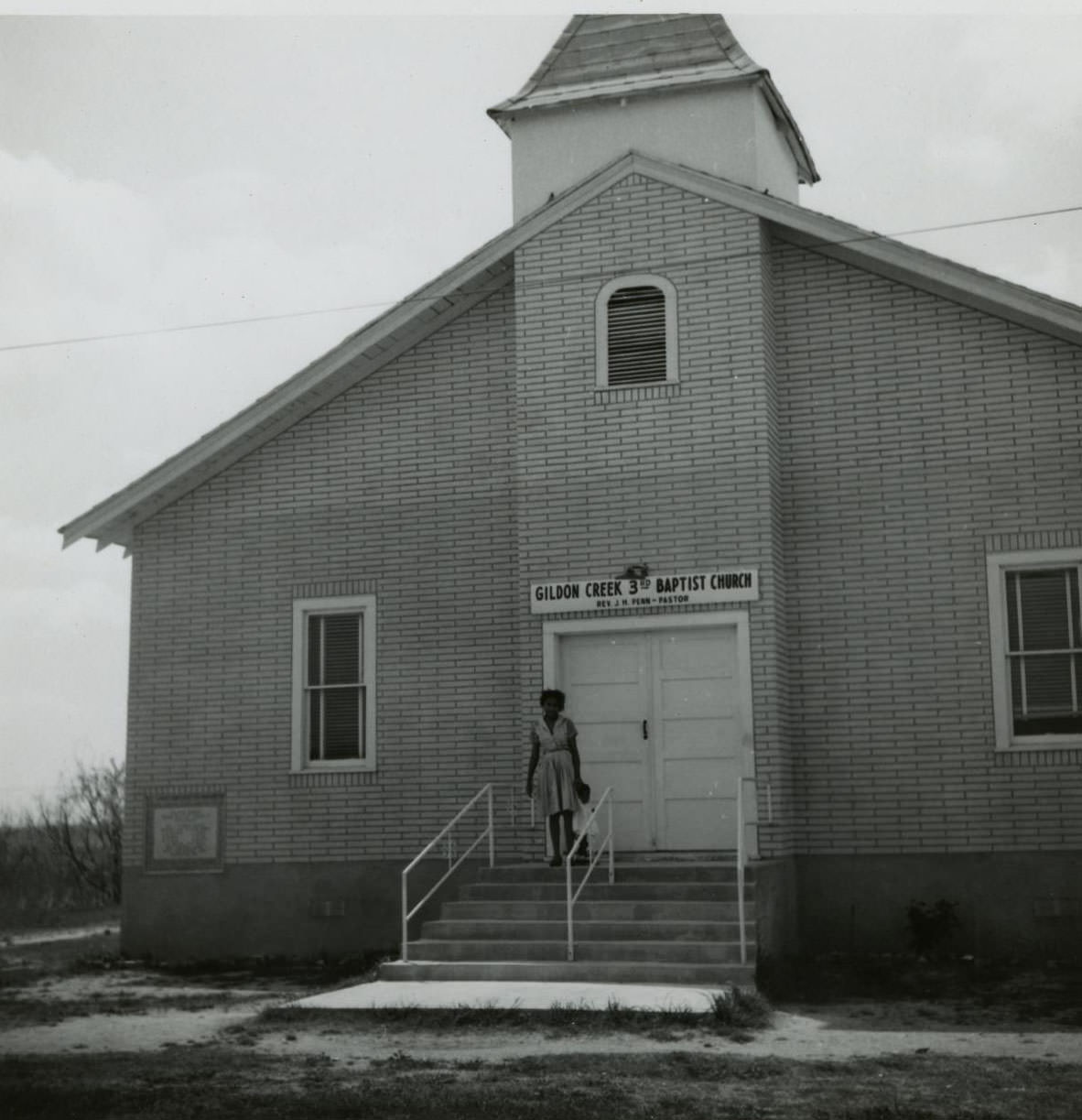
A steep roofed chapel located at the Austin State Supported Living Center, 1962A woman standing on the front steps of the Gildon Creek Third Baptist Church building, 1962
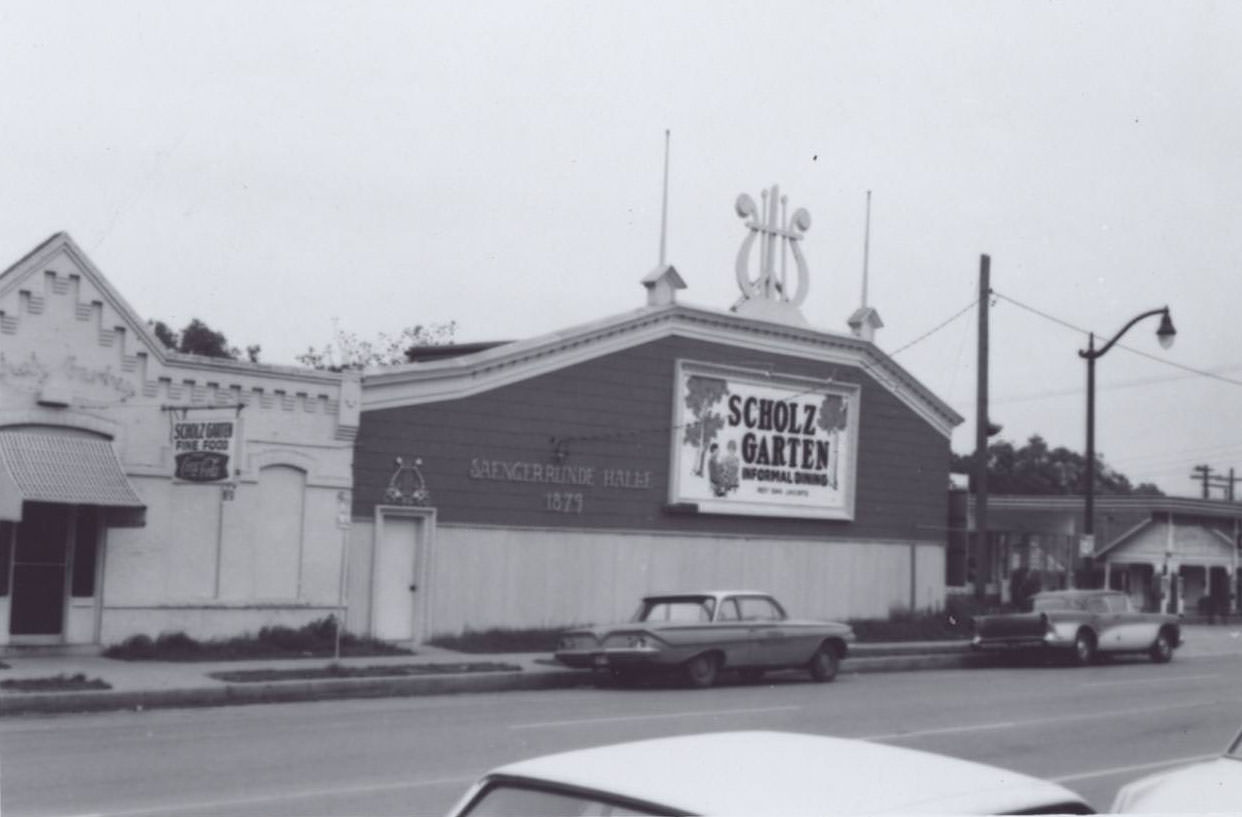
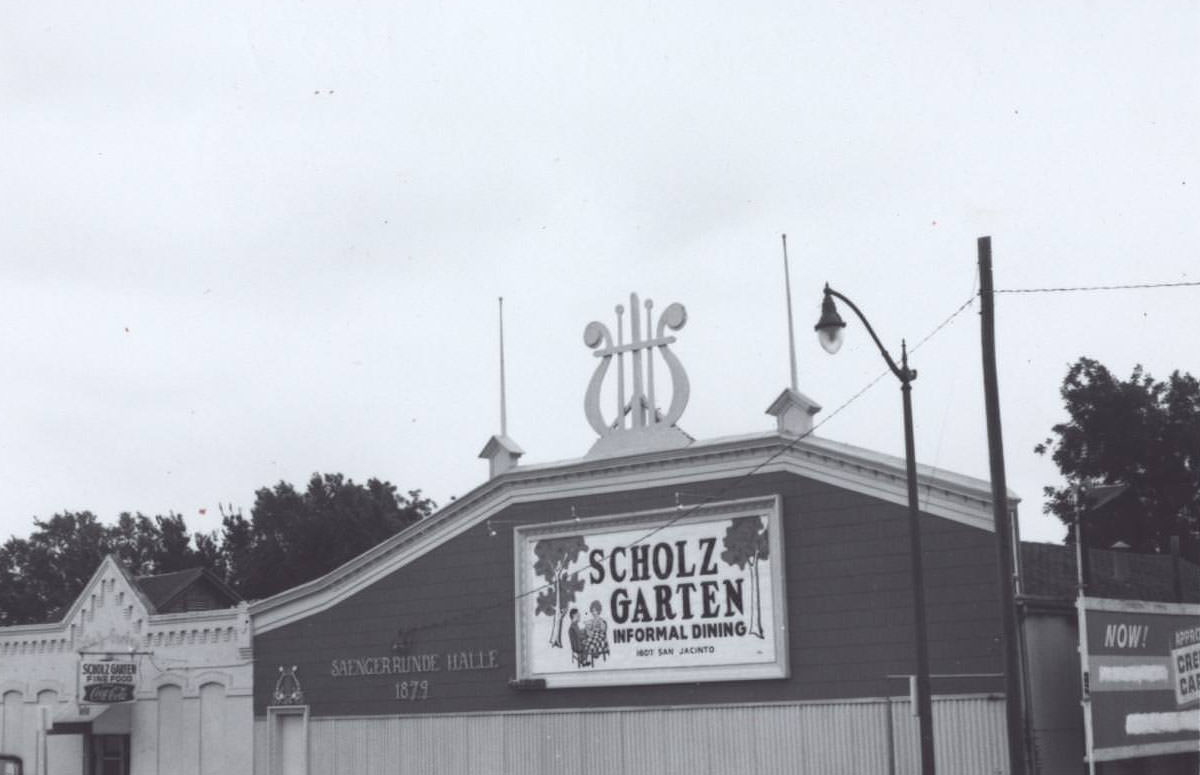
Scholz Garten at 1607 San Jacinto, Austin’s oldest operating business, anchored the city’s German heritage. The beer garden and Saengerrunde Hall next door offered outdoor socializing in the warm Texas evenings. The space was a well-known gathering point for University of Texas crowds and political figures alike.
Saengerrunde Halle and Scholz Garten, 1965.Saengerrunde Halle and Scholz Garten beer garden at 1607 San Jacinto, 1965
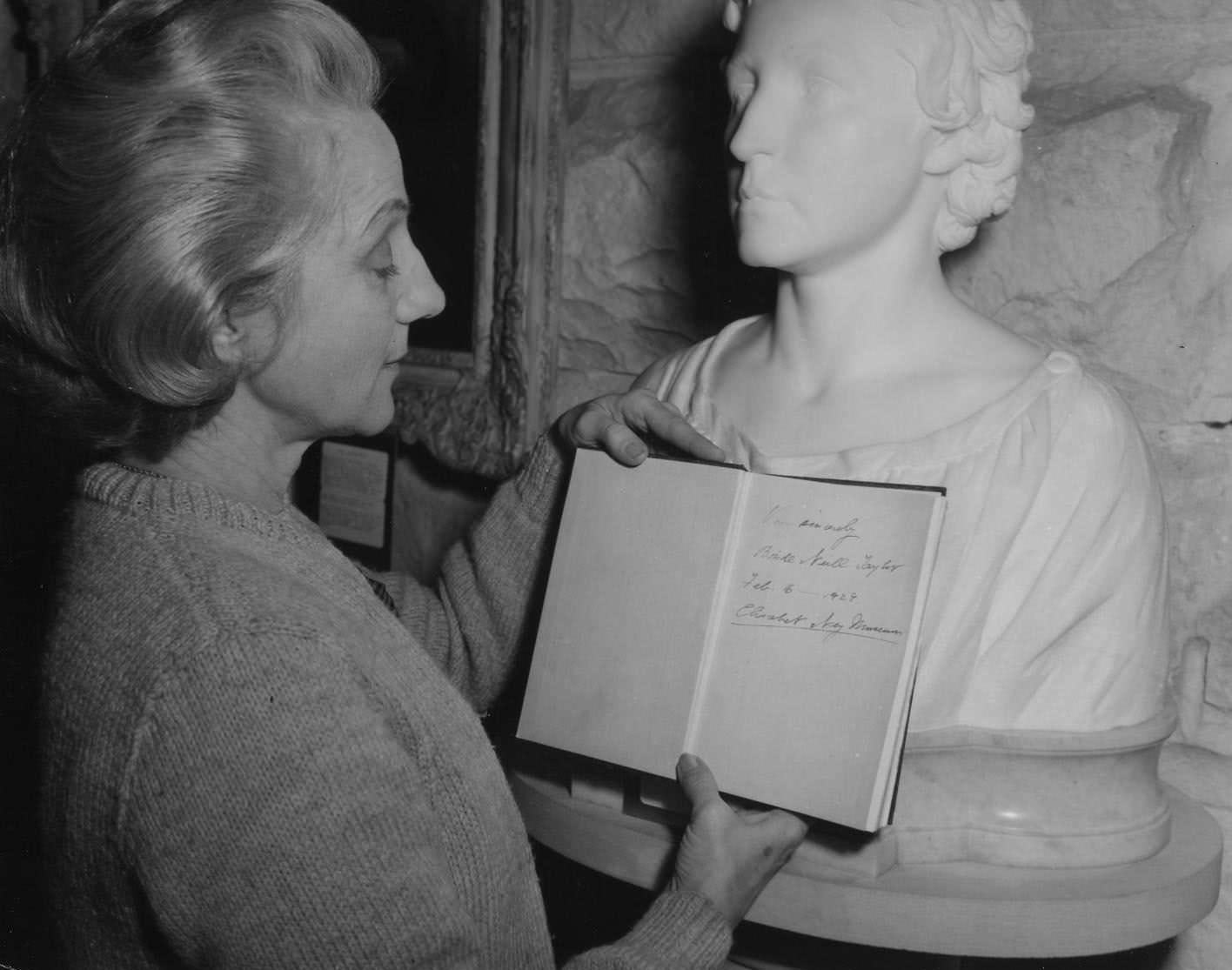
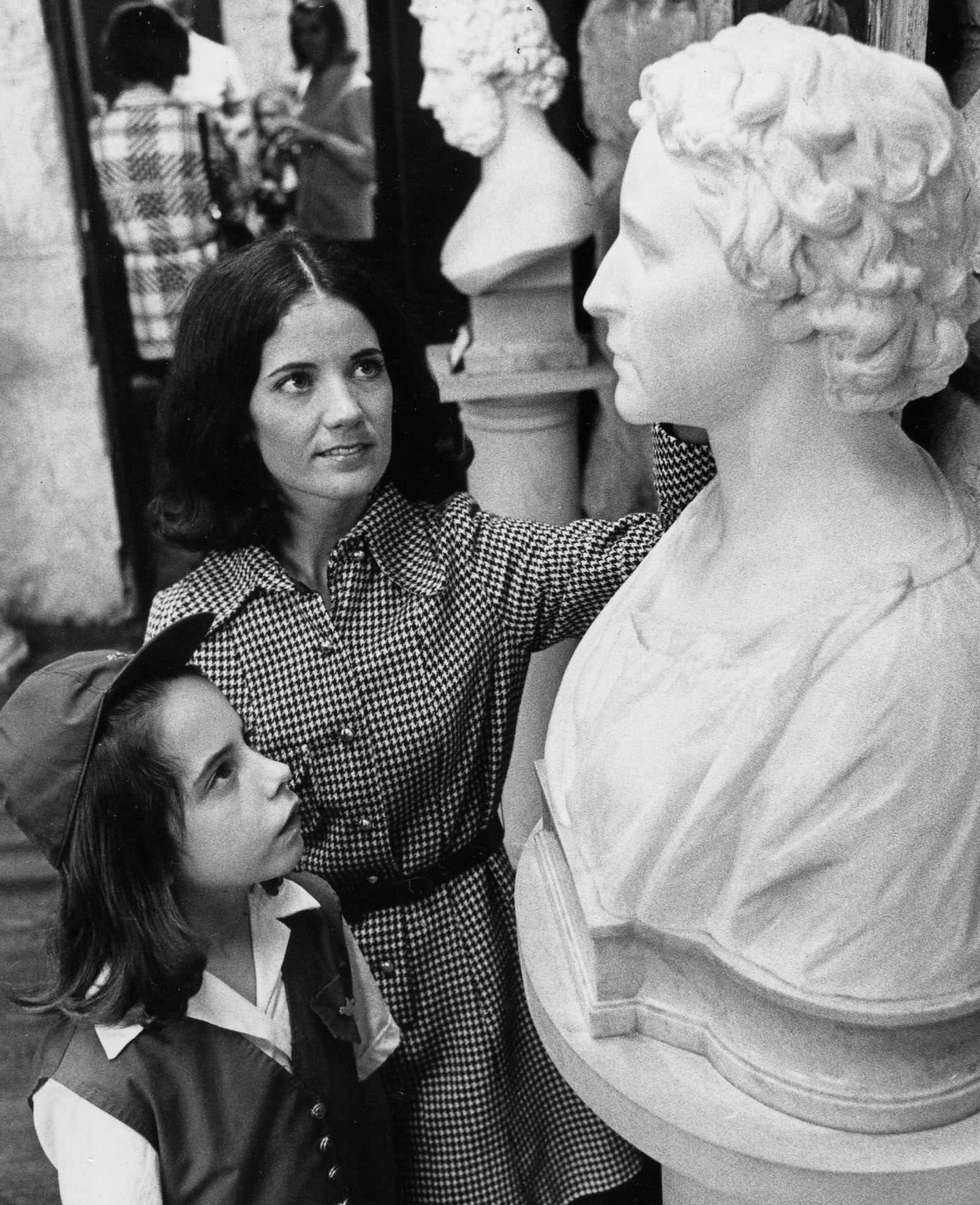
The Elisabet Ney Museum preserved the studio of German-born sculptor Elisabet Ney, who had lived and worked in Austin. In 1968, a woman named Mrs. Mary Anne Joseph visited the museum, and the following year a group of visitors gathered around a bust created by Ney herself. The museum kept her work and memory alive for Austin residents who might not otherwise have encountered her sculptures.
Mrs. Mary Anne Joseph at Elisabet Ney Museum, 1968Visitors and bust of Elisabet Ney at the Elisabet Ney Museum, 1969
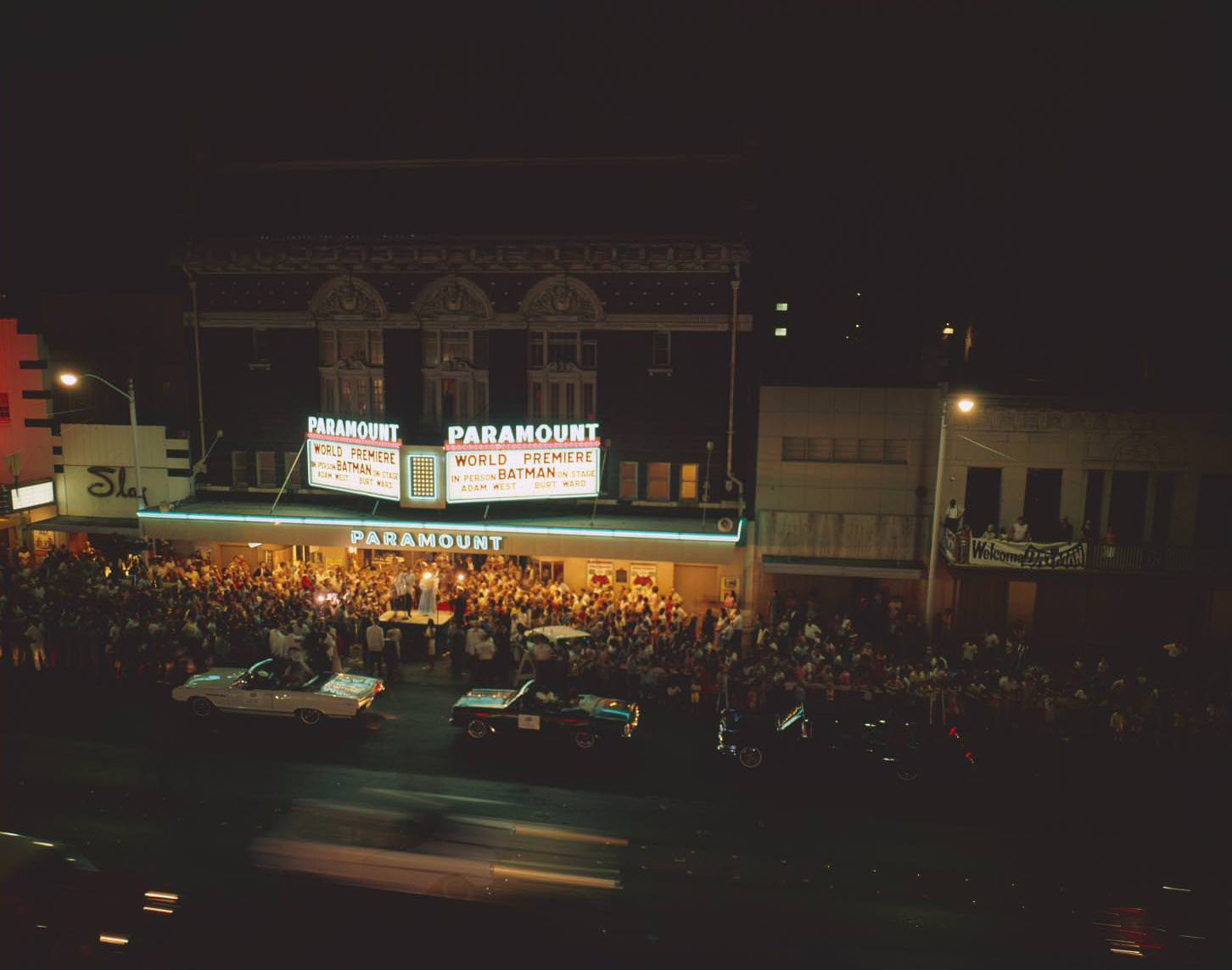
The movie Batman had its Austin premiere at the Paramount Theater in 1966. Adam West and Burt Ward appeared live on stage in front of the theater, drawing a crowd so large it spilled down both sidewalks. It was the kind of event that drew Austinites out of their neighborhoods and into the shared public space of downtown.
The premiere of the movie Batman at the Paramount Theater in Austin, 1966
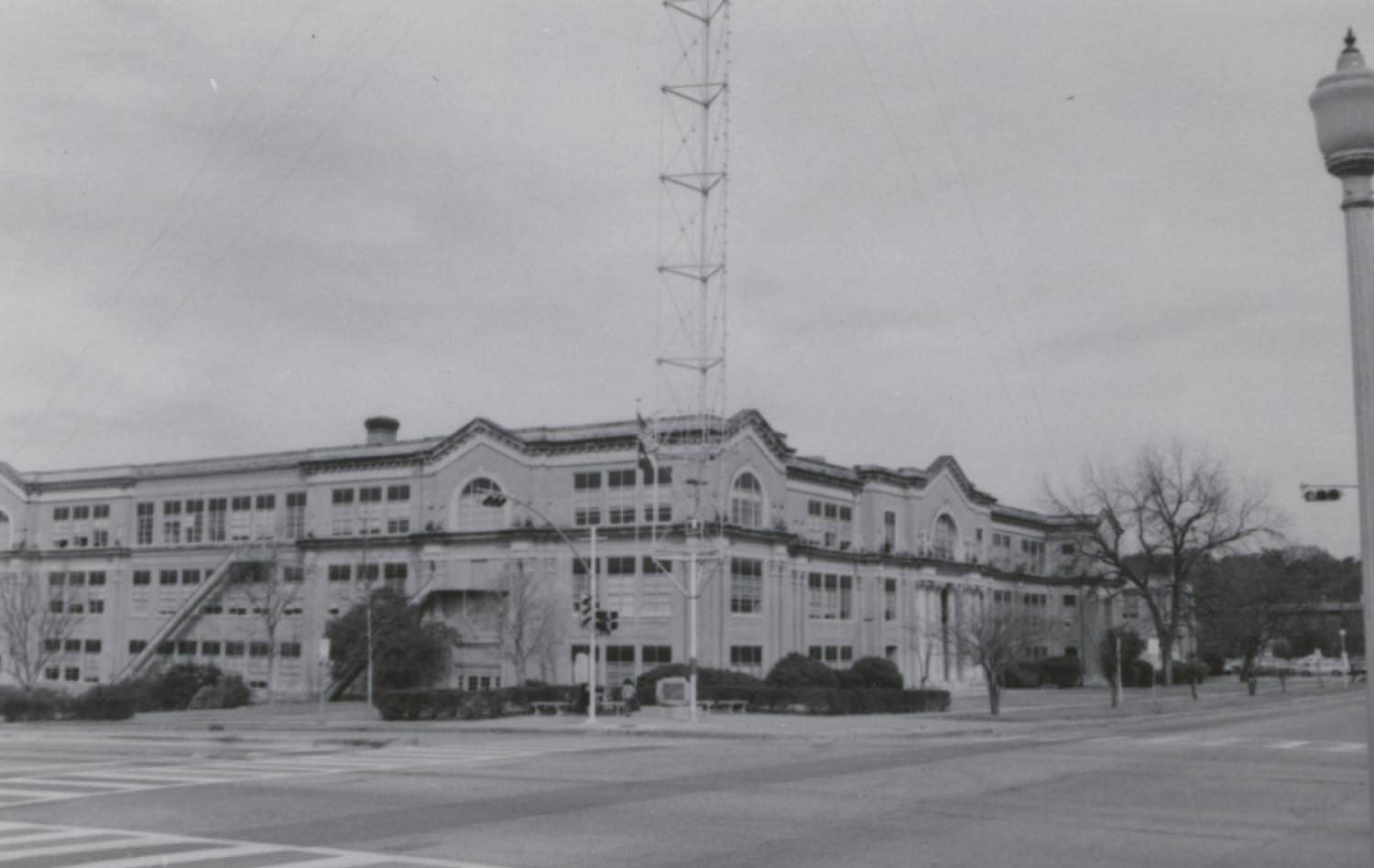
Austin High School kept up its own traditions. The ROTC program was active in 1968, and the Rio Grande campus on 12th Street stood beneath bare winter trees and a moon tower, one of the many carbon arc street lamps that remained in Austin from their installation in the 1890s.
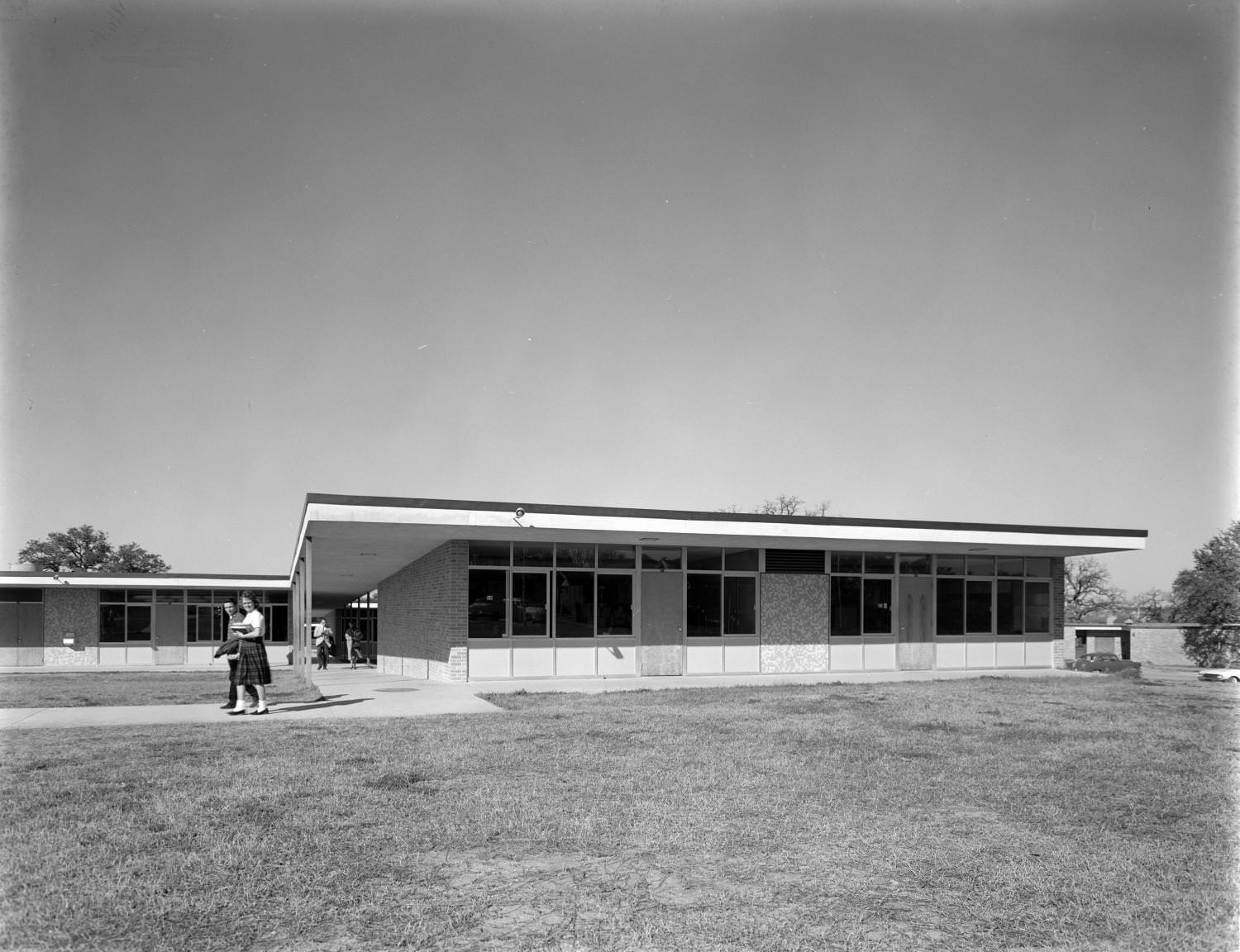
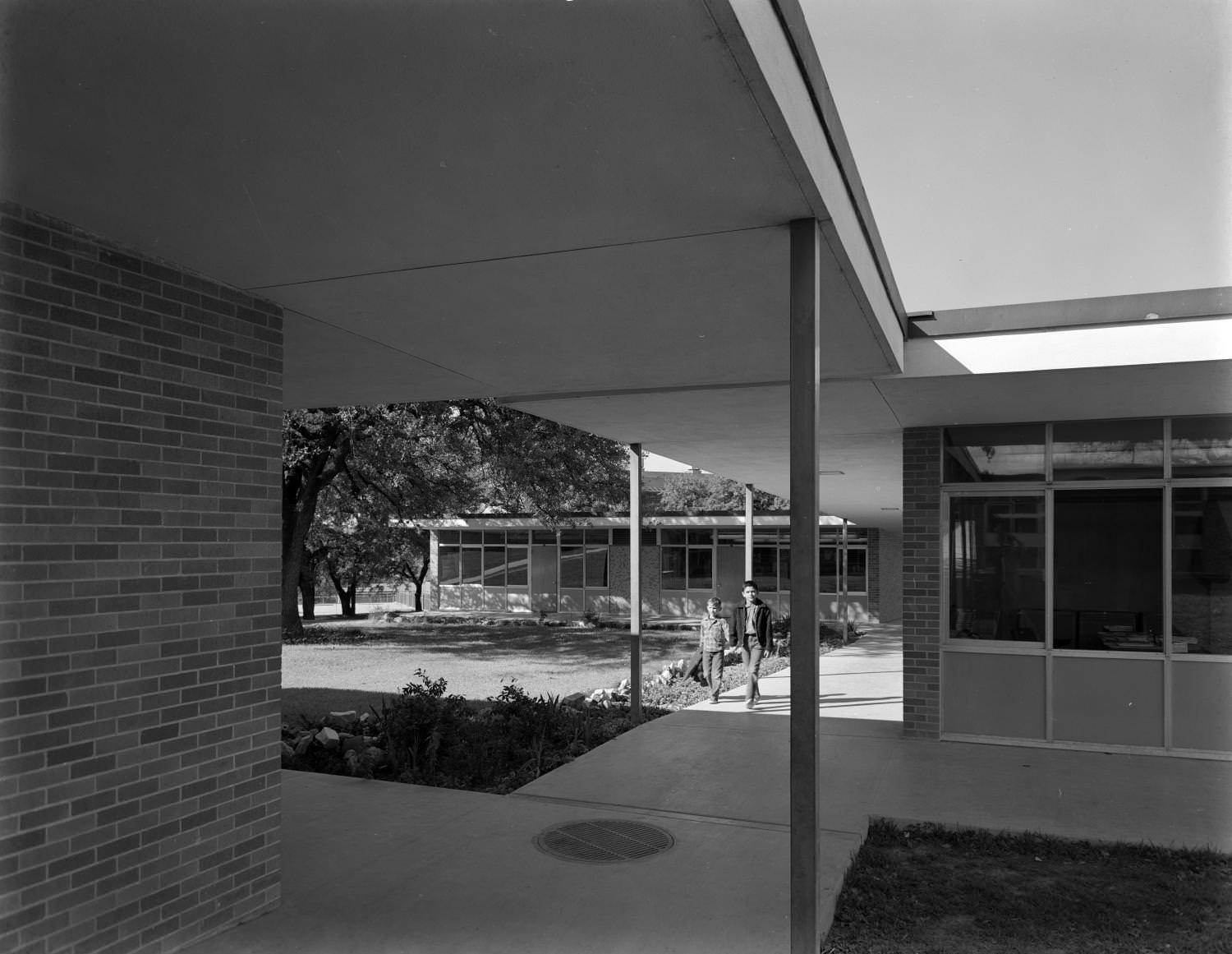
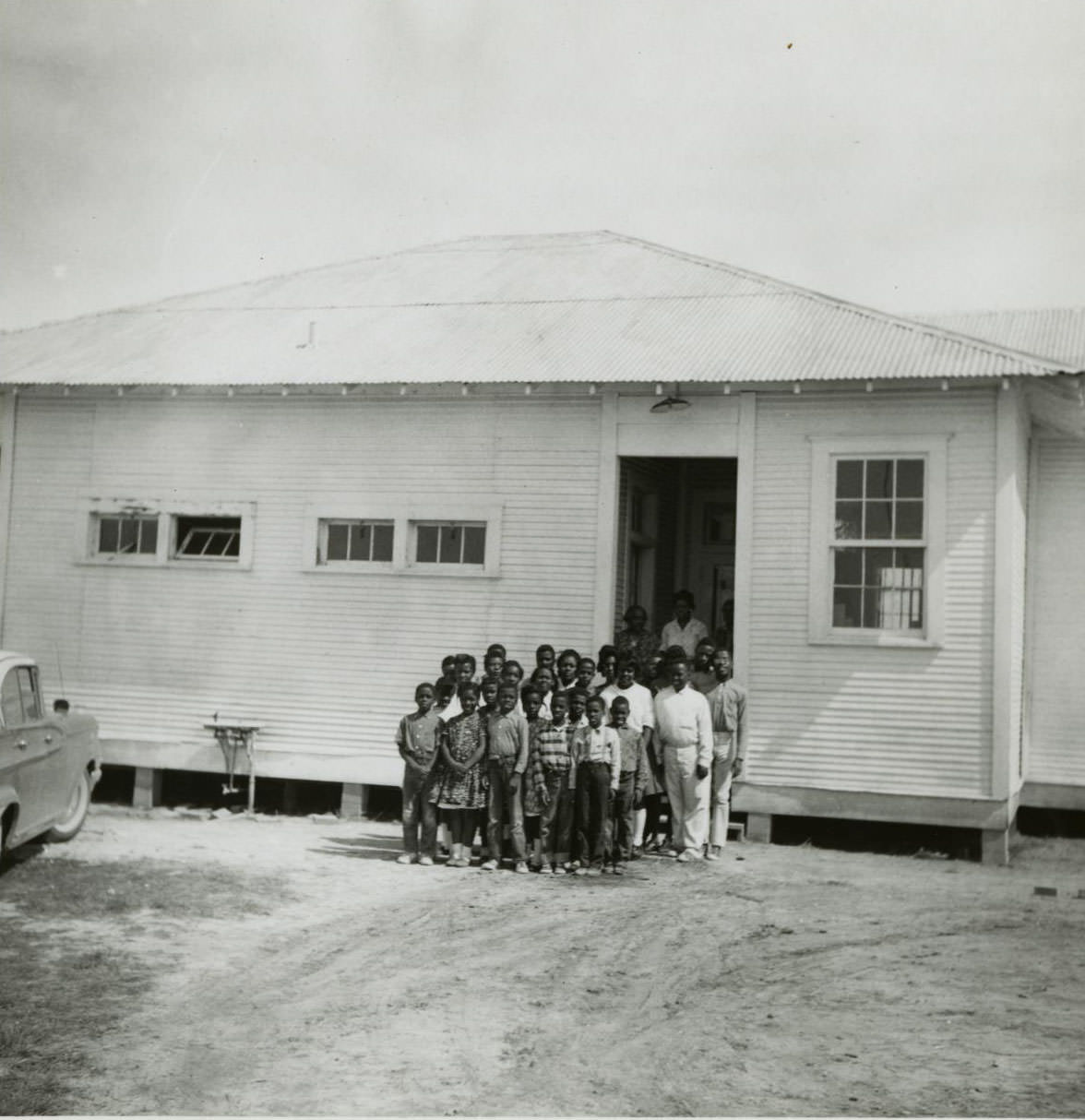
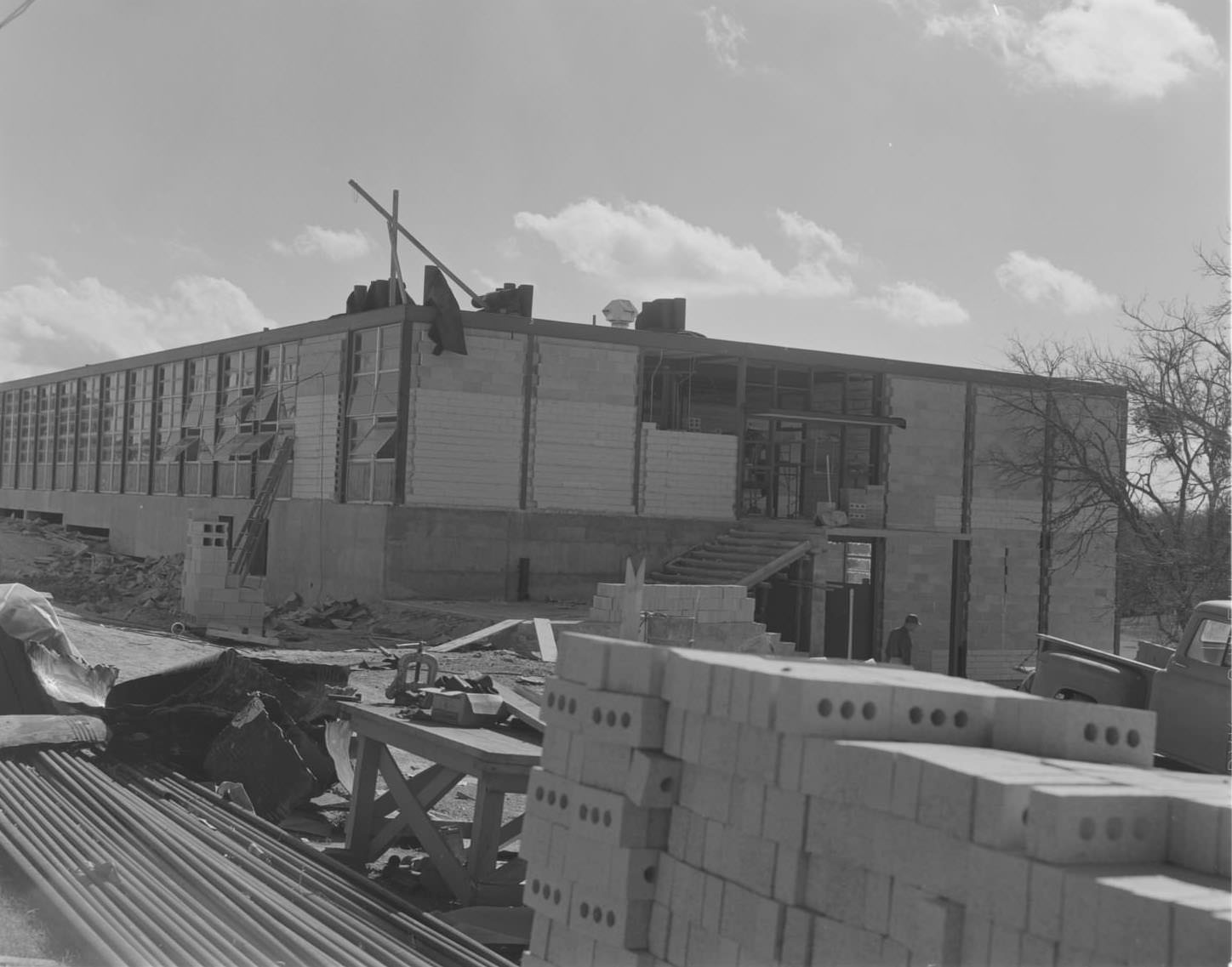
Austin High [School] R.O.T.C., 1968Austin High School Rio Grande Campus from the corner of 12th Street and Rio Grande Street looking north, 1960sStudents at School Building, 1961Two boys walking down a covered sidewalk at school, Austin, 1961A group of students in a classroom, 1962 Boys sit at desks and girls stand against a wall behind them.A class of students standing outside of their school building, 1962Bricks in front of the construction of Pearce Jr. High School, 1961
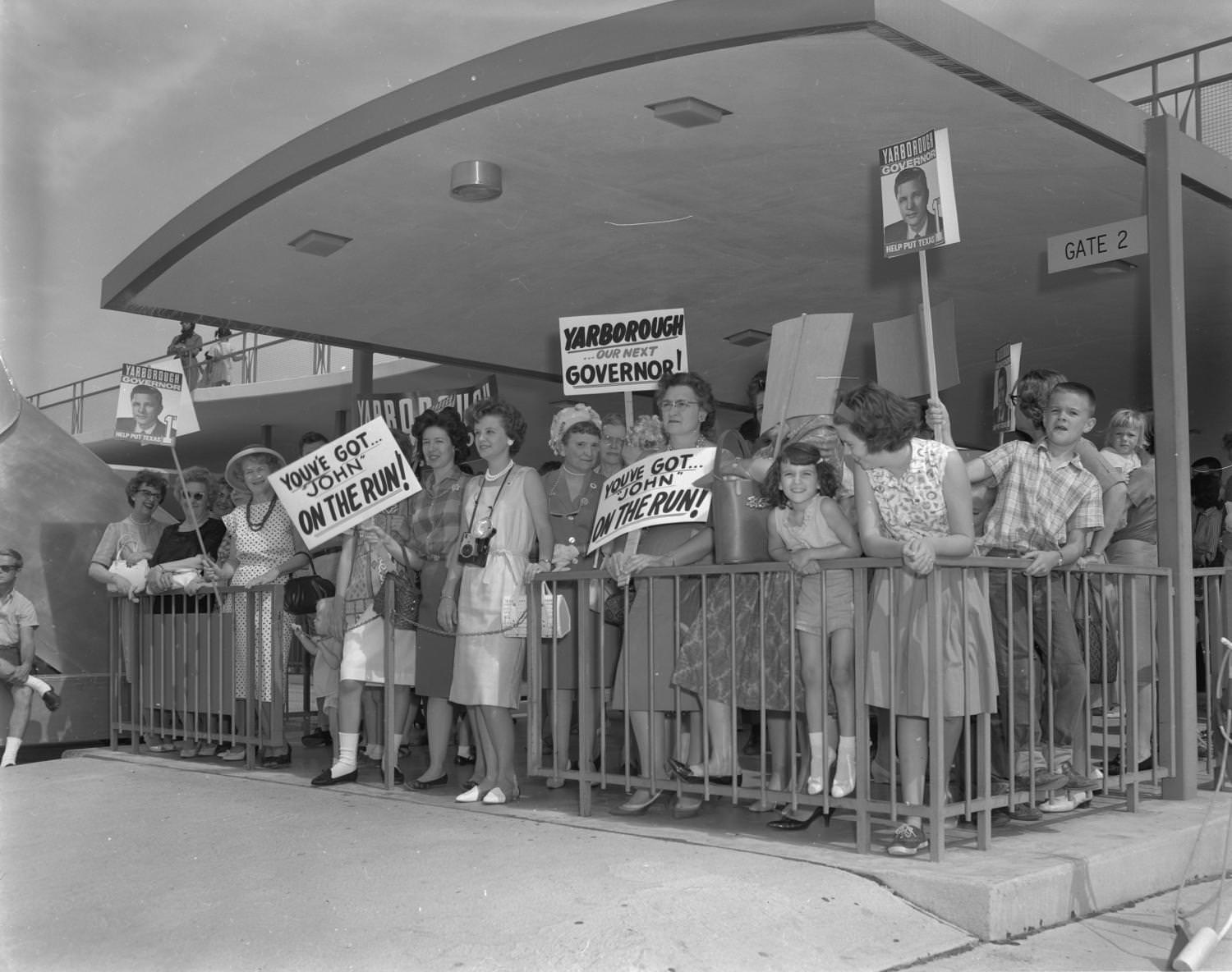
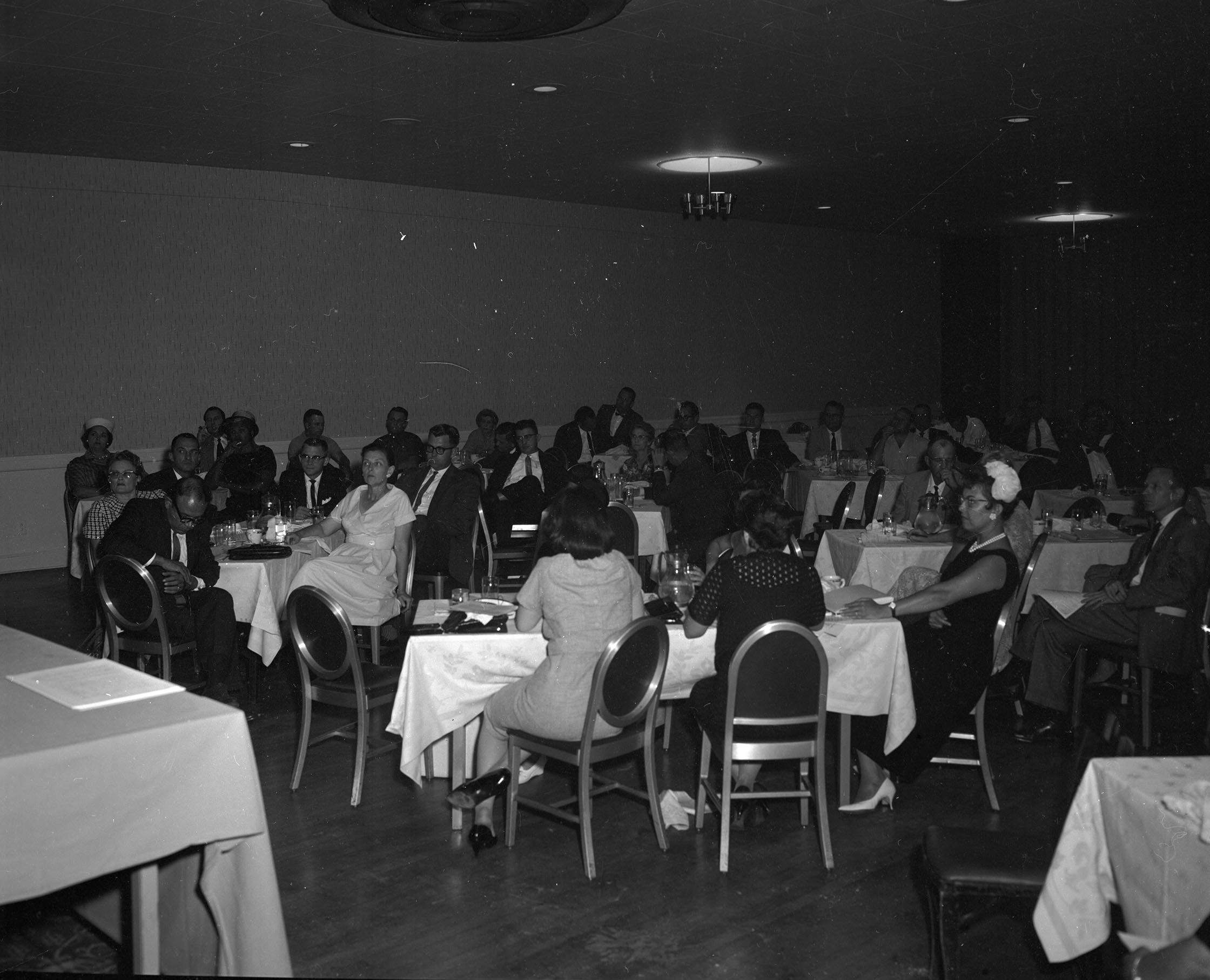
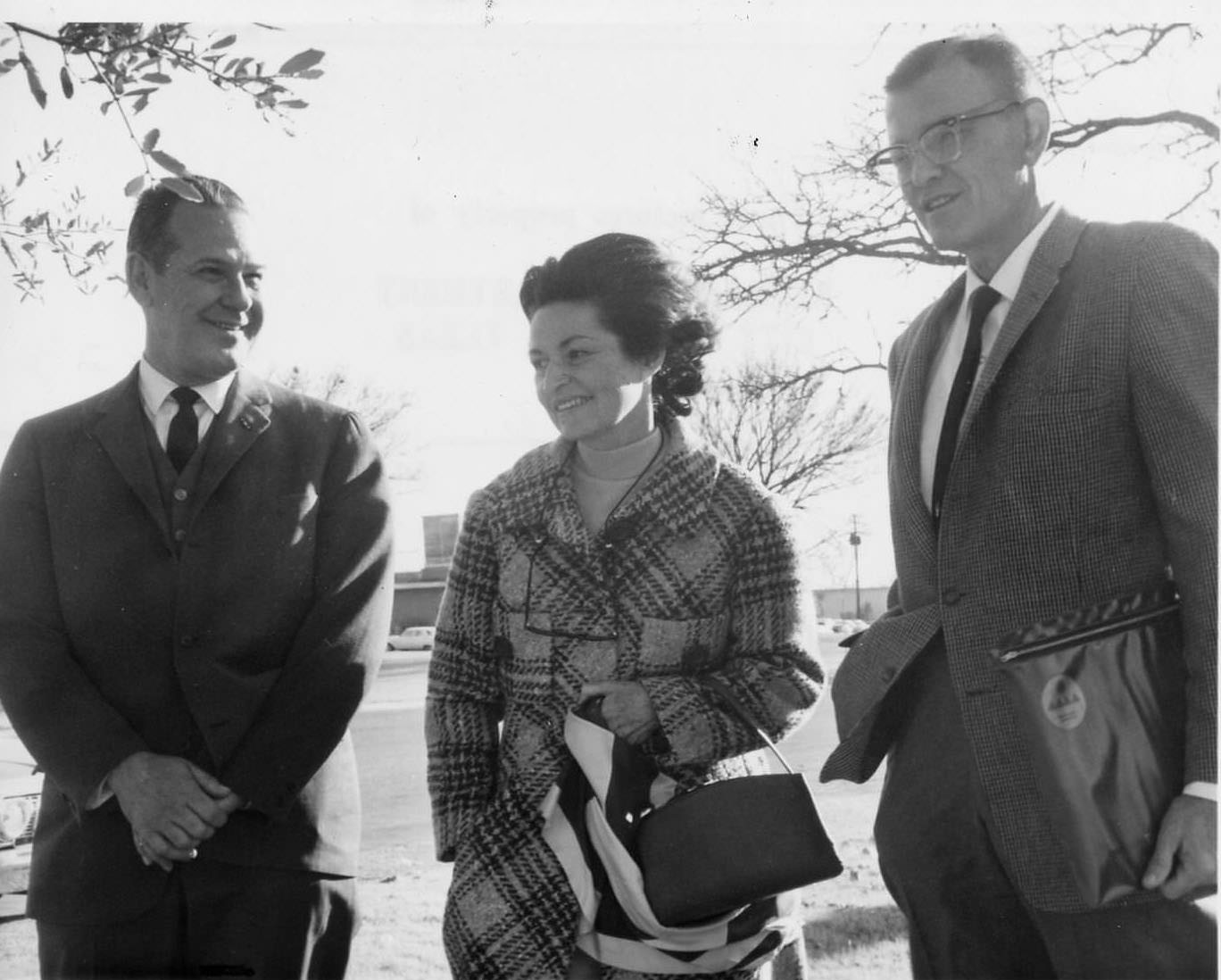
Political life moved through Austin constantly. Democratic Party supporters stood with signs backing gubernatorial candidate Don Yarborough in 1962. A Democratic coalition met in the city in 1961. Lady Bird Johnson appeared in a photograph with W.T. Williams and Beverly Sheffield in 1966, one of many moments that tied the city to national political figures during a decade shaped by Lyndon Johnson’s presidency.
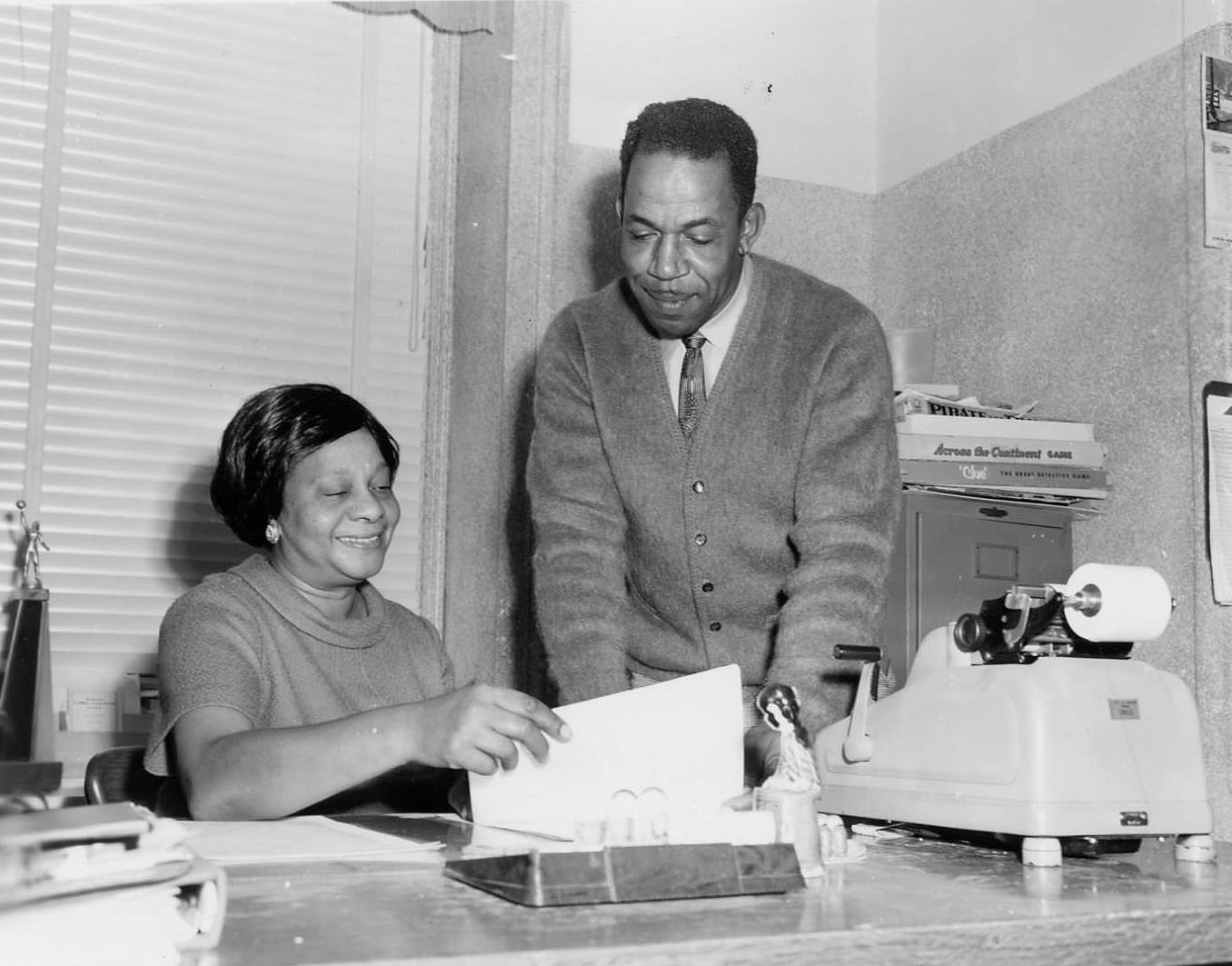
Supporters of gubernatorial candidate, Don Yarborough, standing with signs in a fenced area, 1962Democratic coalition meets in Austin, Texas, 1961W.T.Williams, Ladybird Johnson, and Beverly Sheffield, 1966.Catherine Lamkin and Howard Norris in Office, 1967.
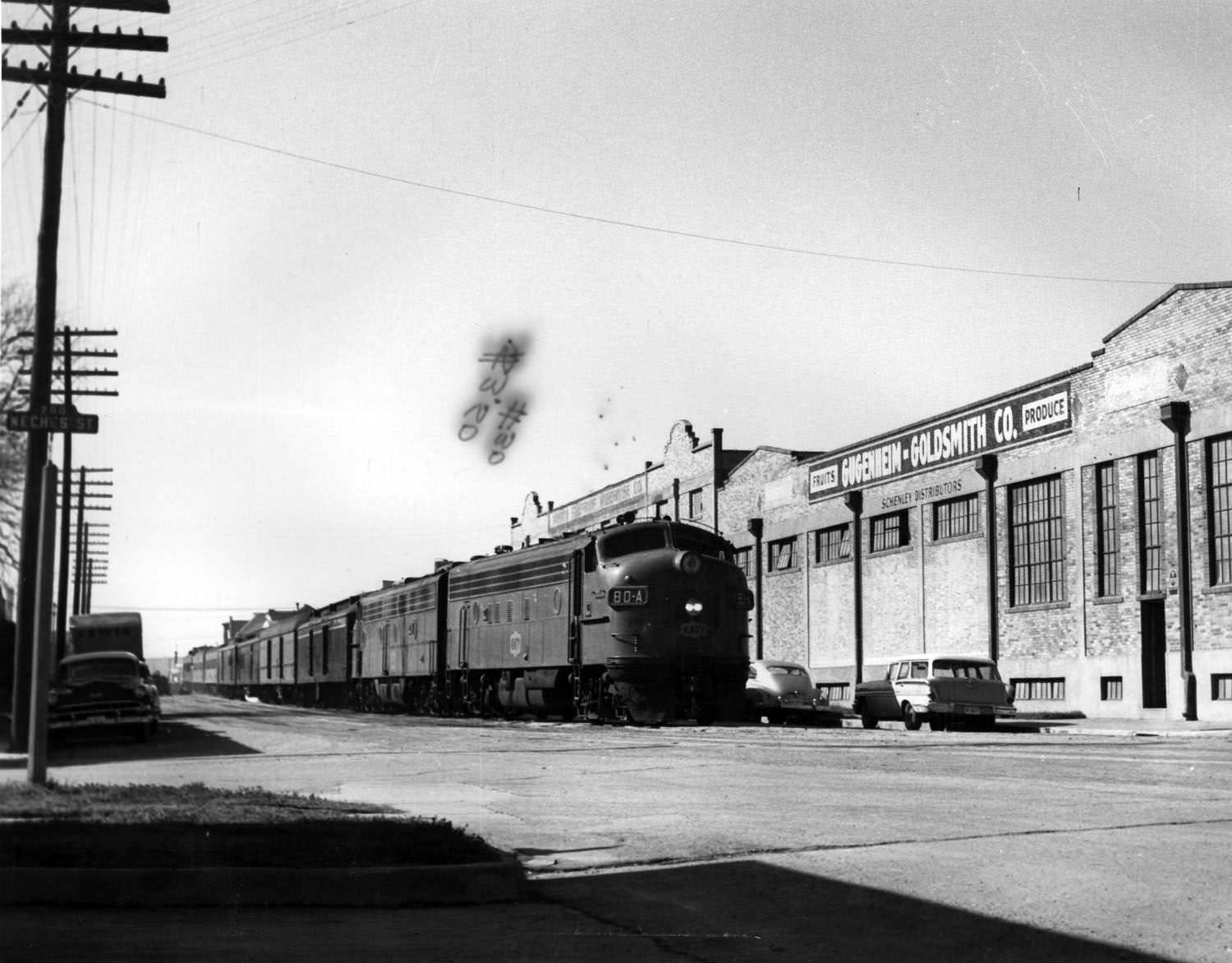
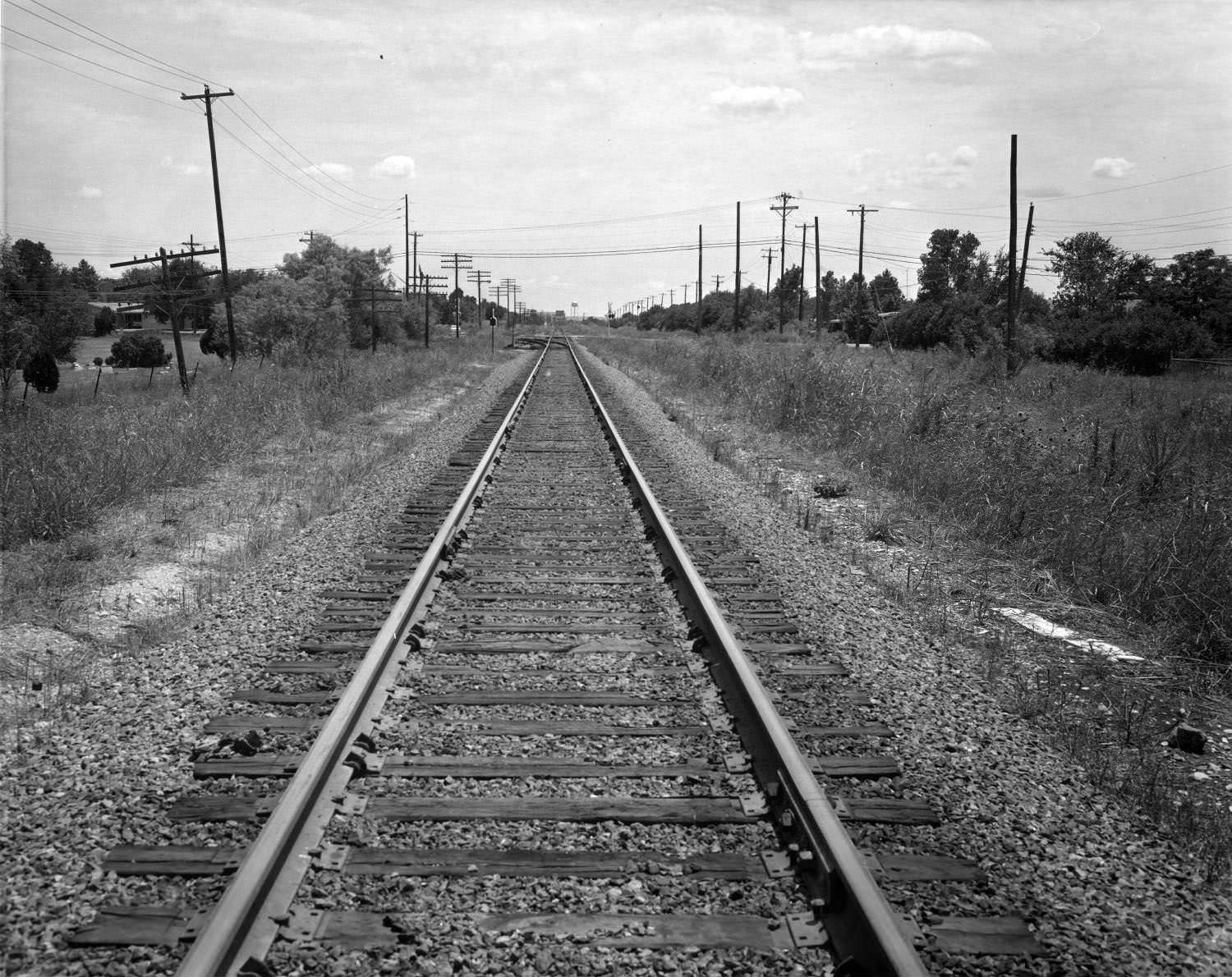
Austin’s rail lines were still in use during the 1960s. The MKT Texas Special ran north through the city in 1965, and railroad tracks near the outskirts of town cut through neighborhoods marked by telephone poles, brush, and a water tower visible in the far distance. The Fiskville Stage Stop served travelers passing through on older routes.
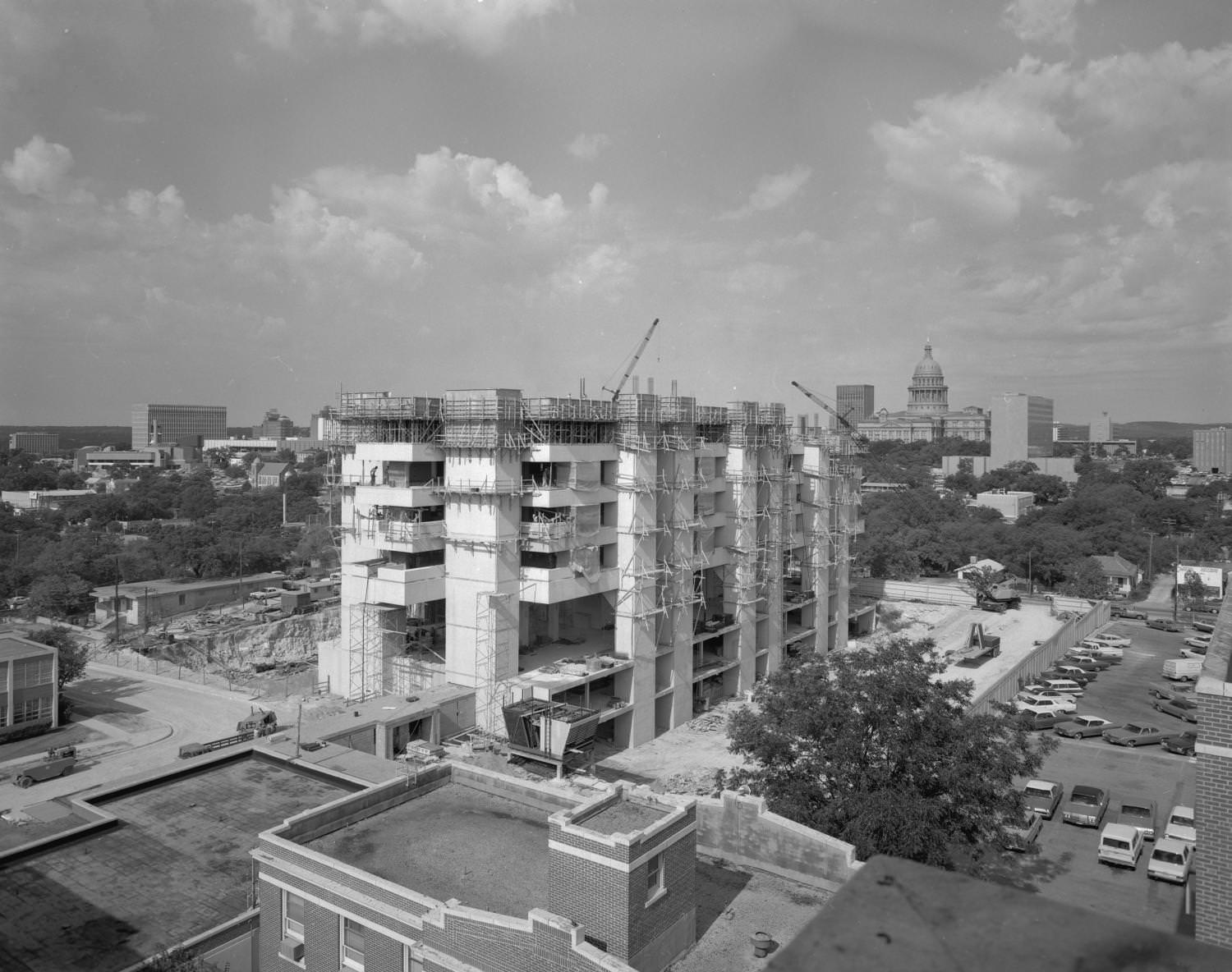
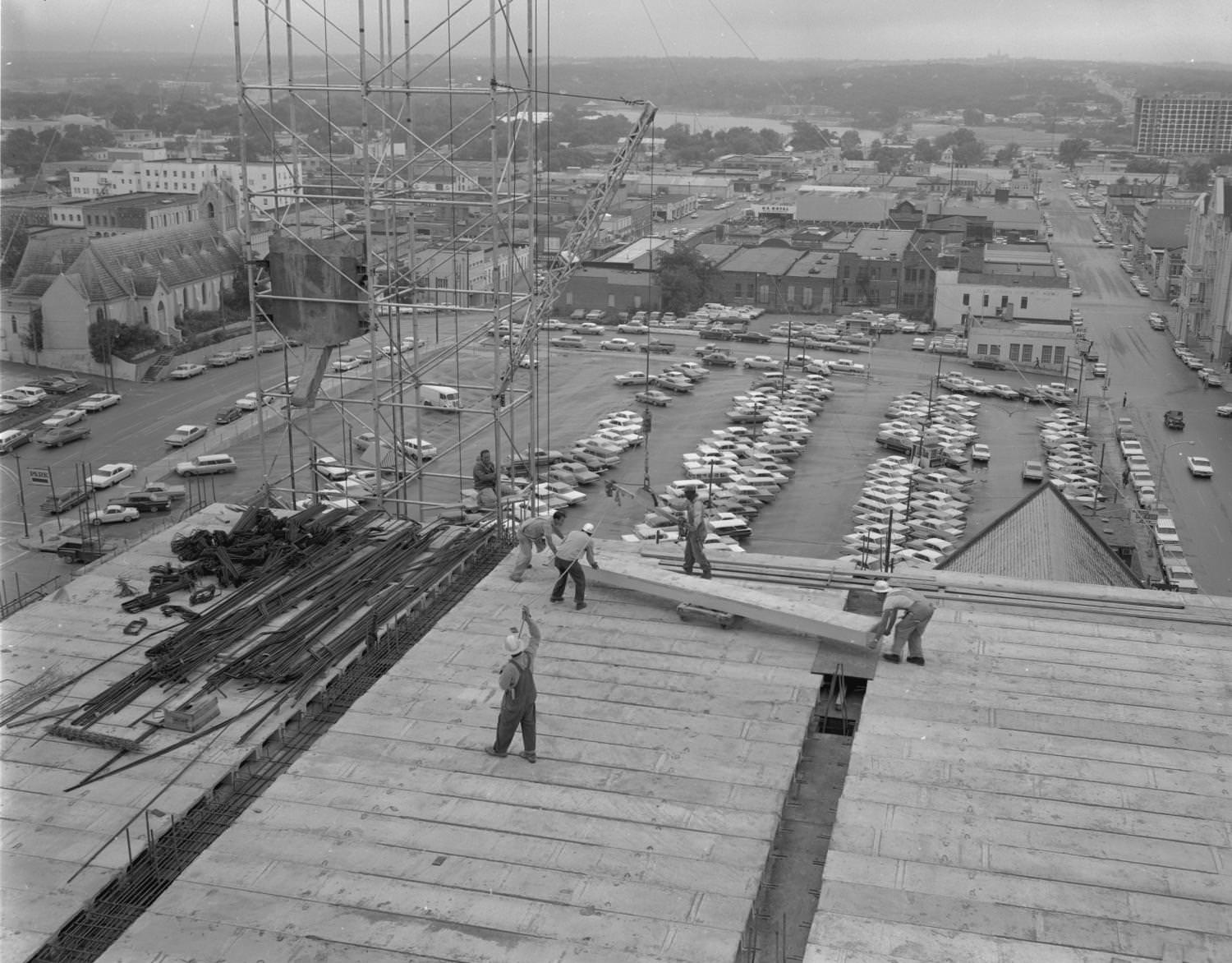
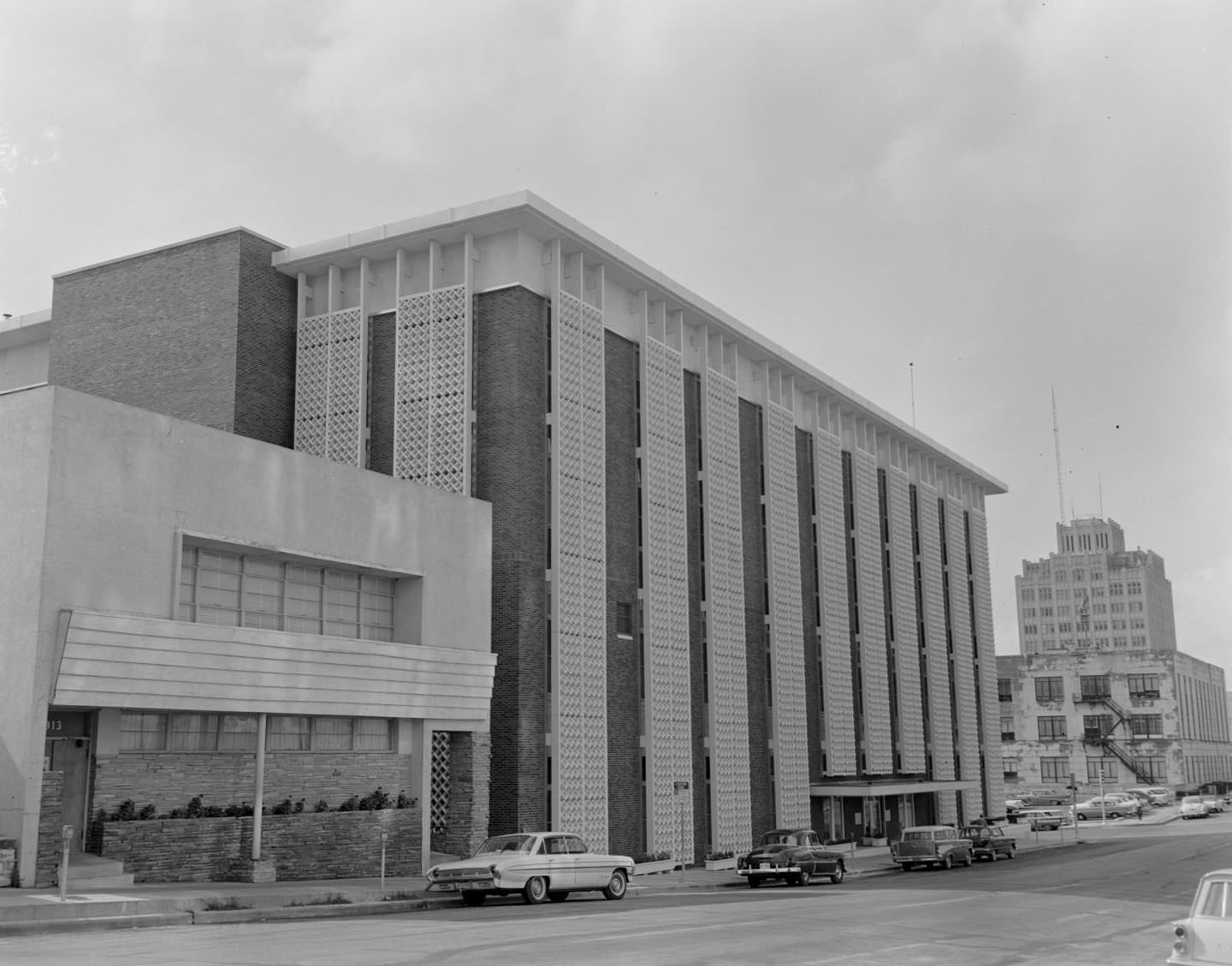
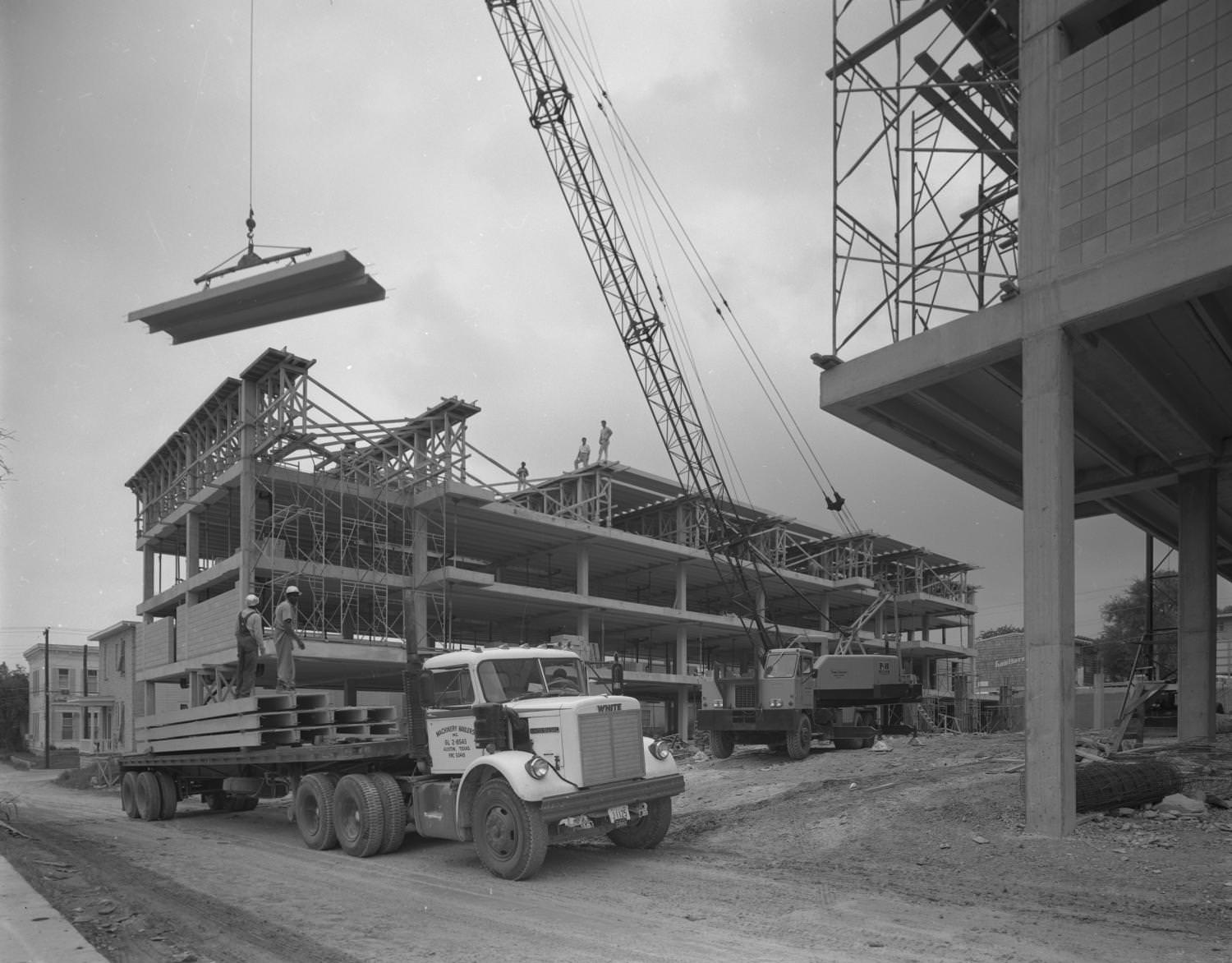
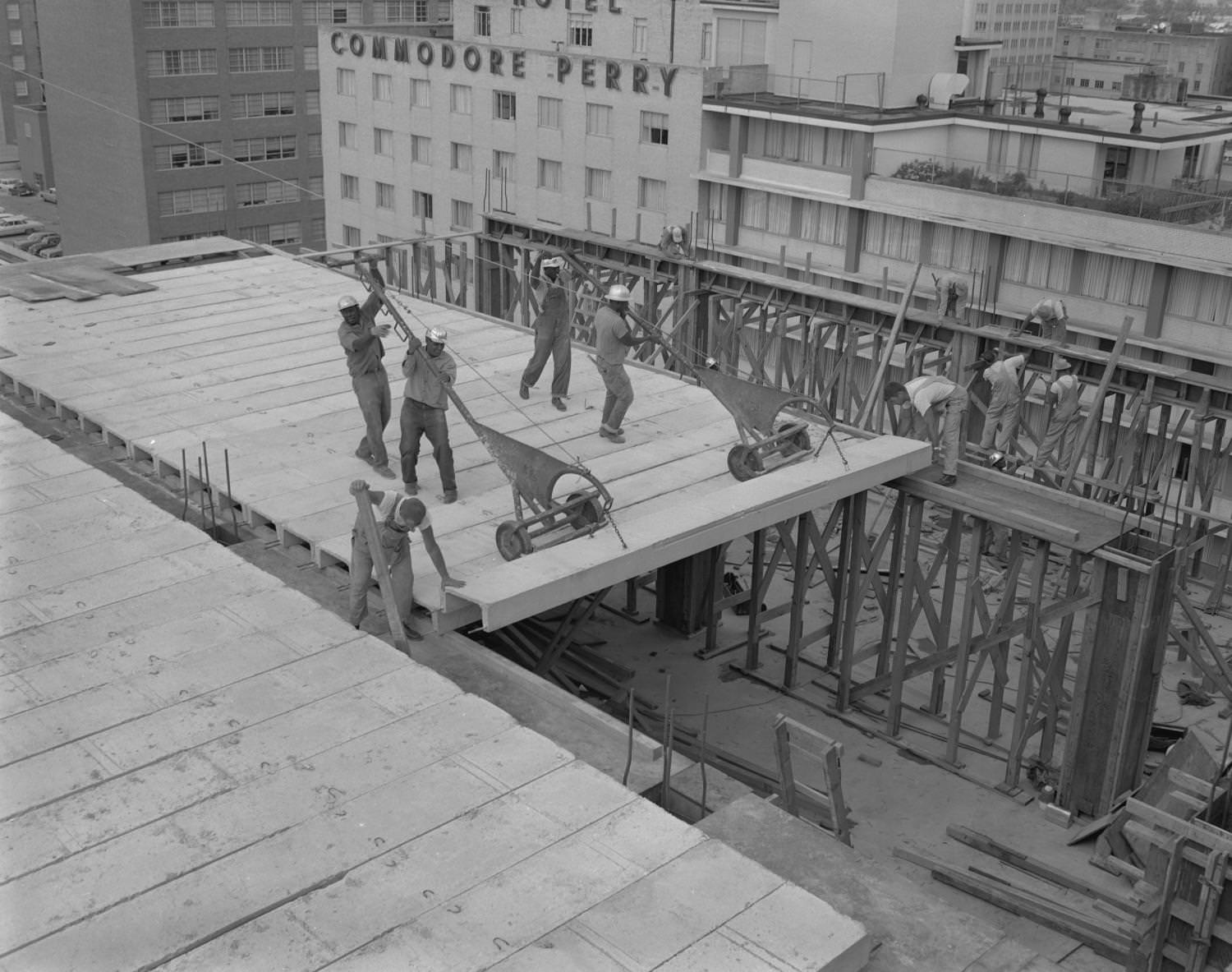
New construction went up across the city throughout the decade. Brackenridge Hospital broke ground on a new building in 1969. The Vaughn Building was being framed in steel in 1965, its rooftop workers placing large beams overhead with St. David’s Episcopal Church visible in the background below. The Southwestern Bell Telephone building stood completed by 1961 next to the Norwood Towers.
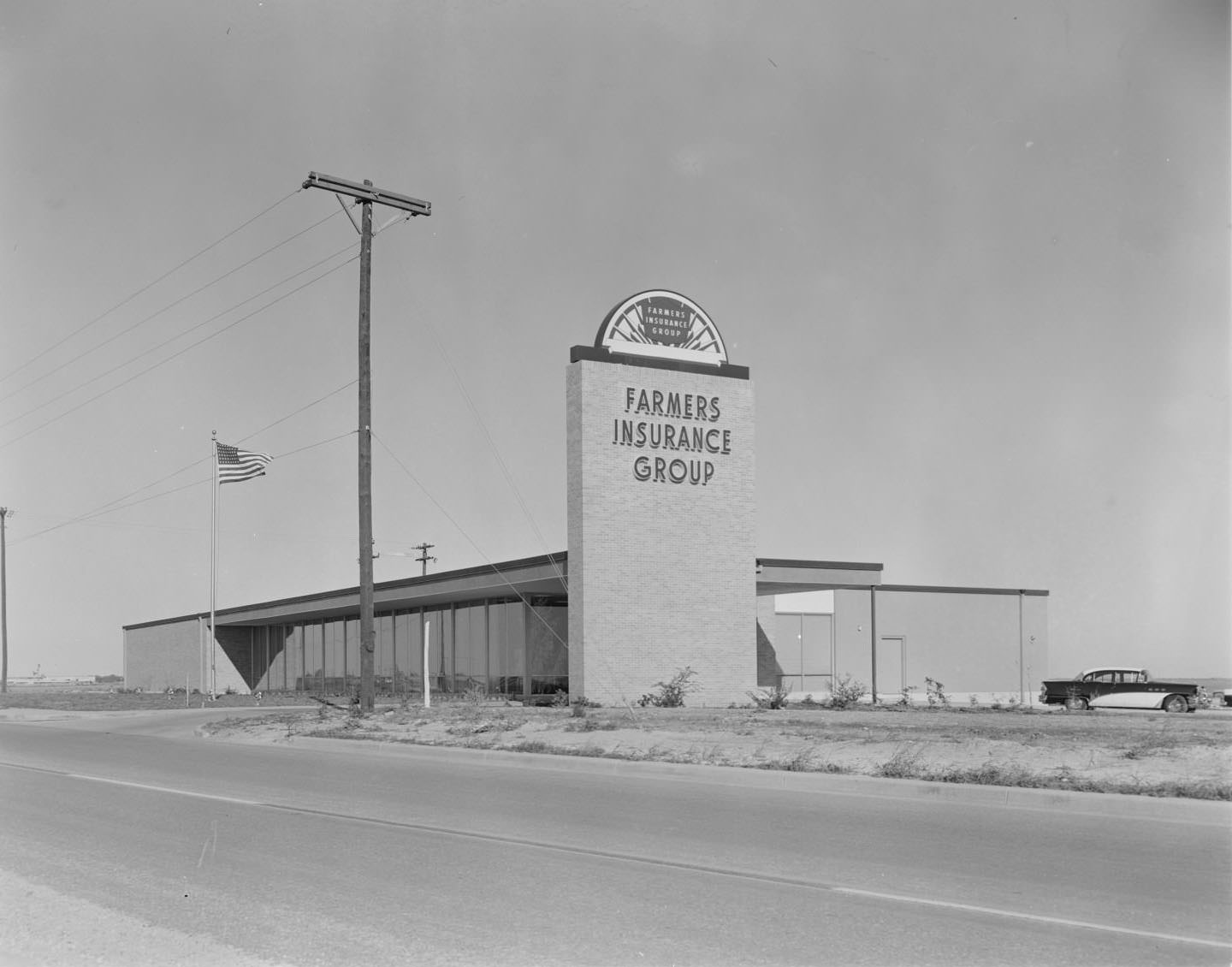
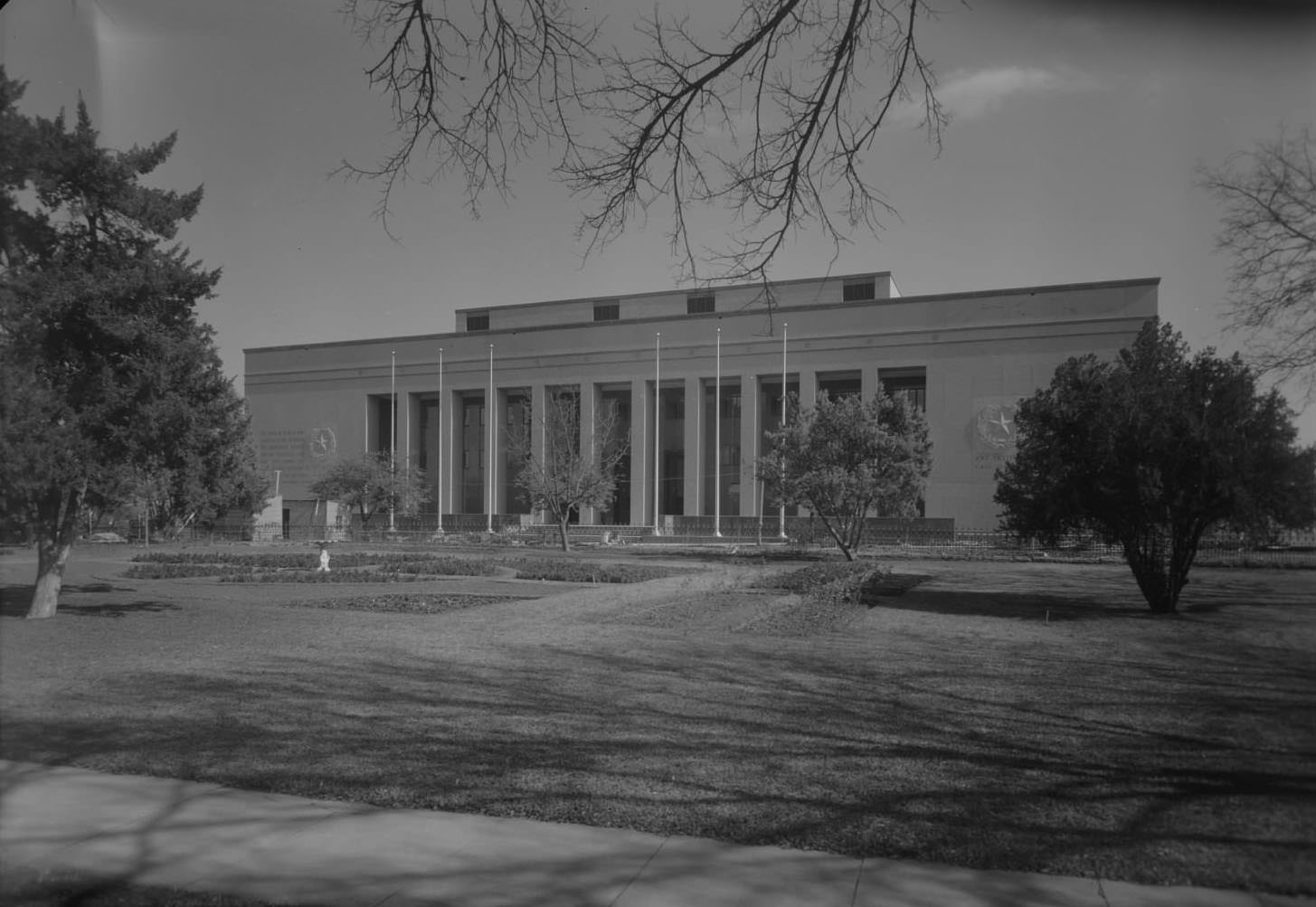
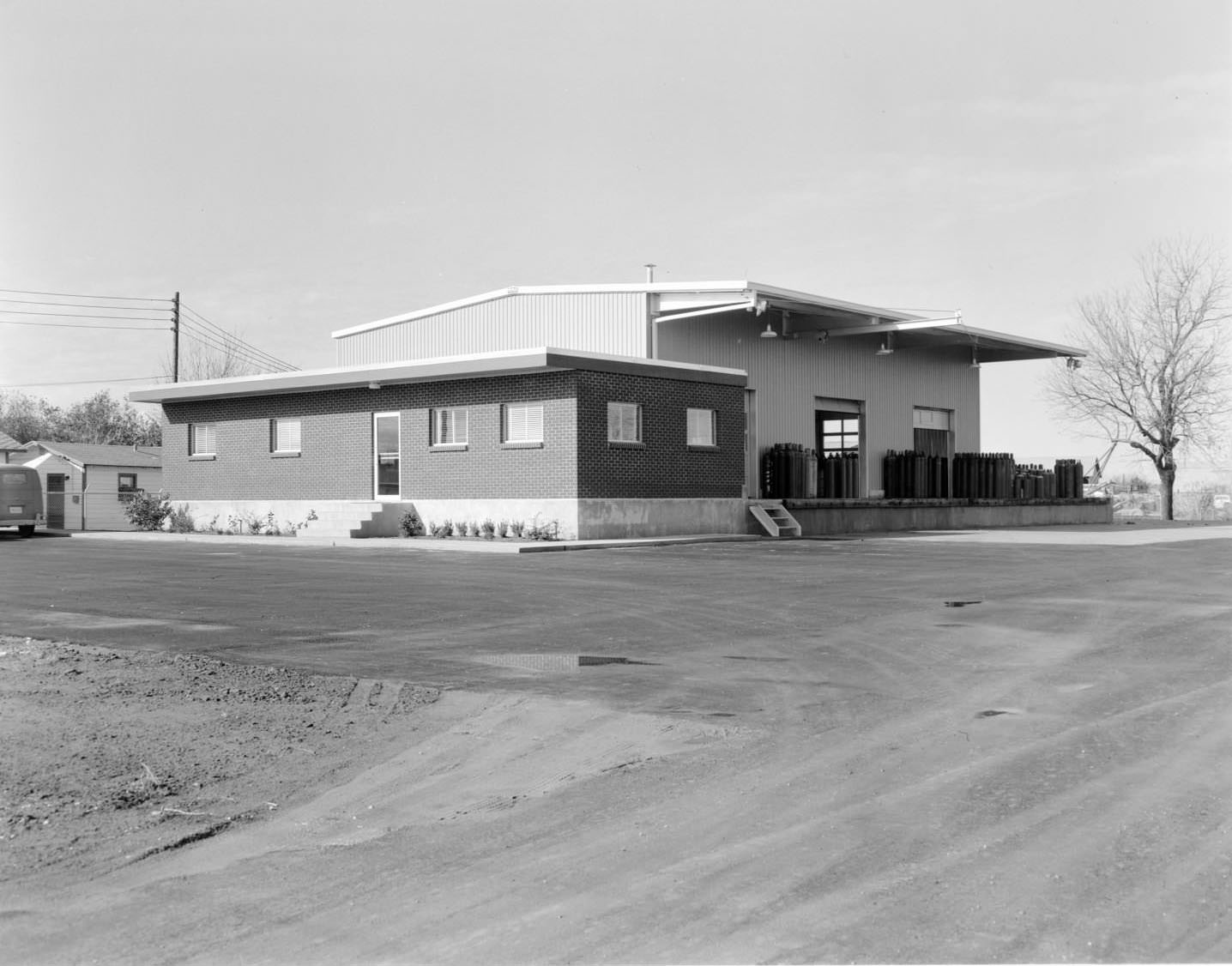
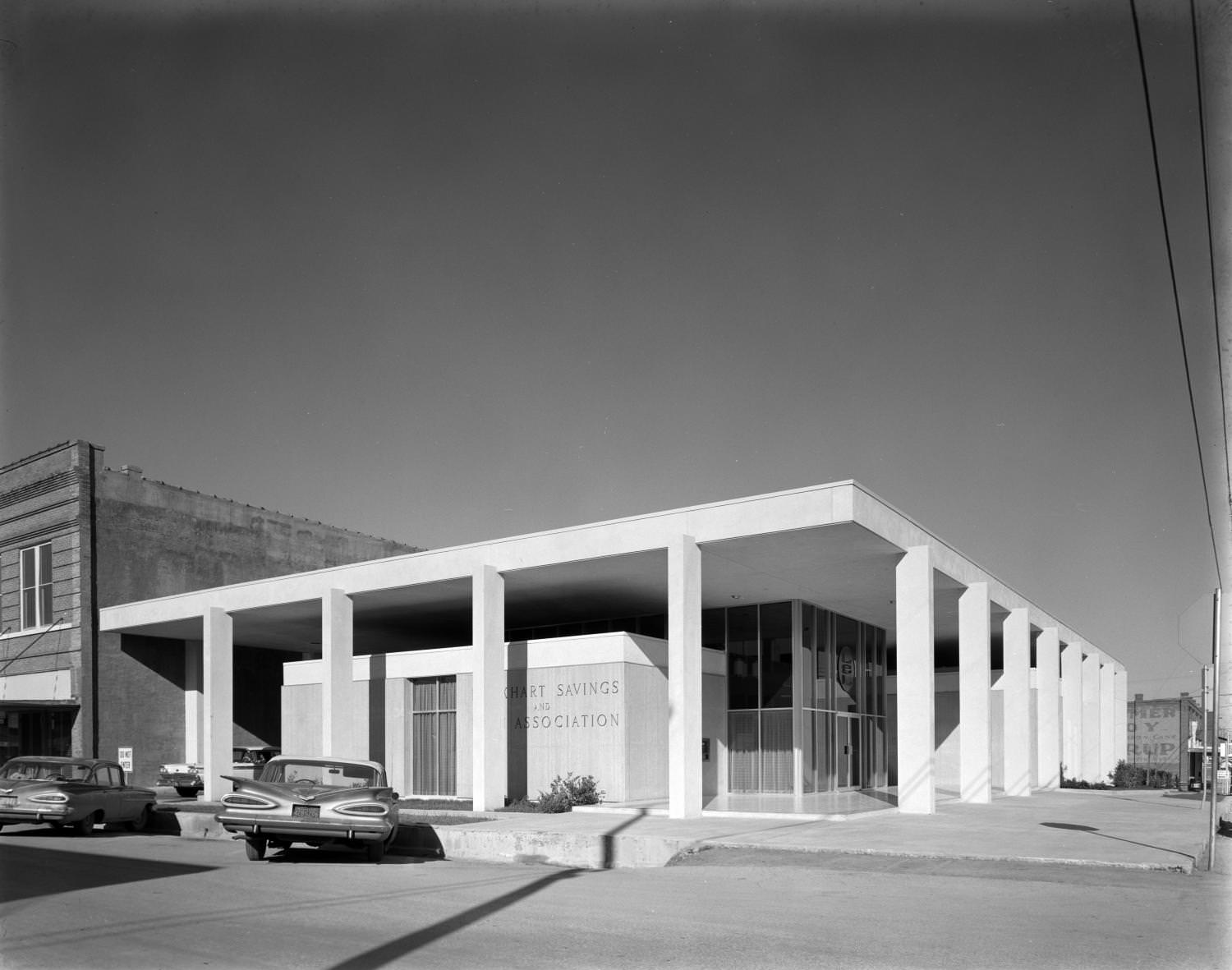
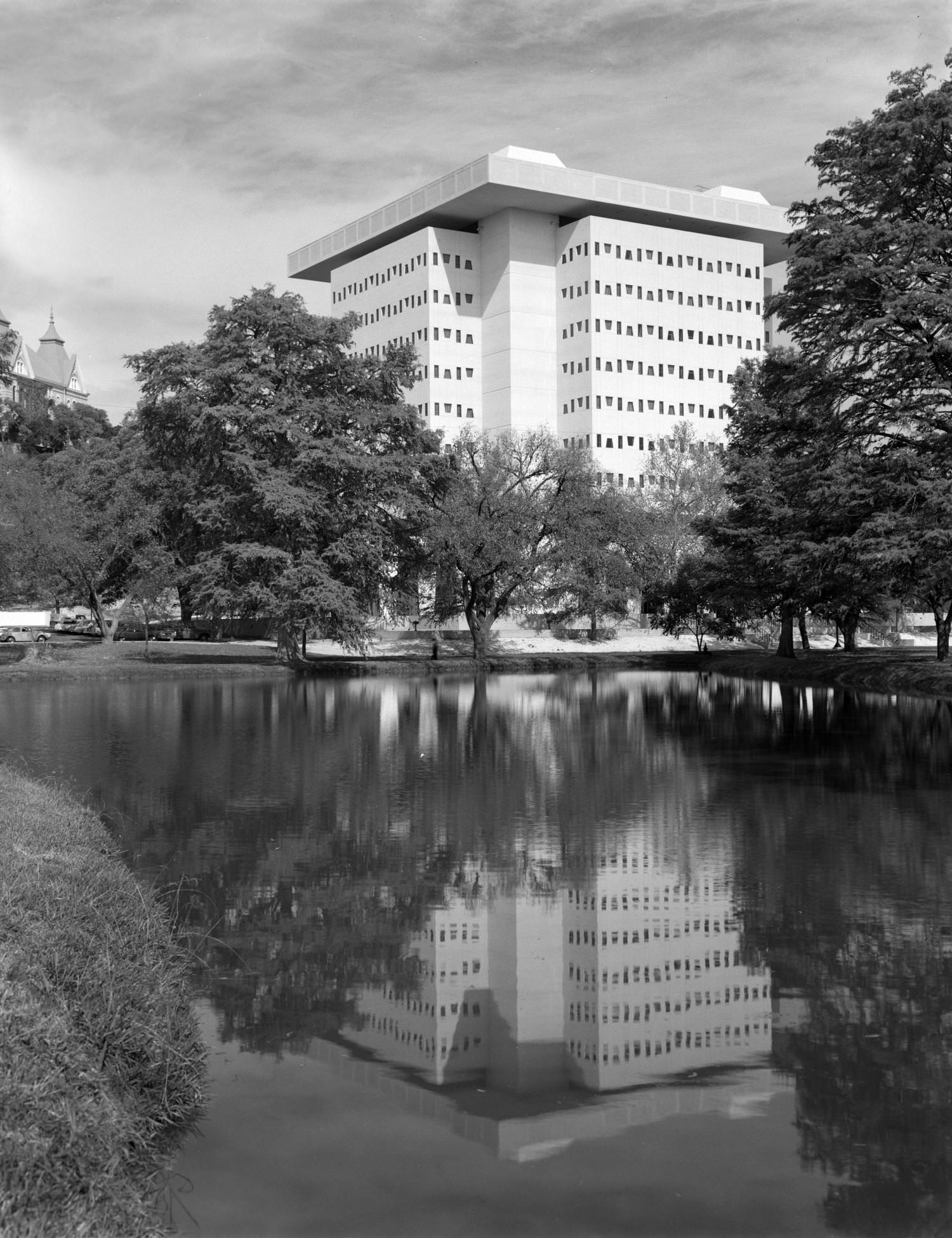
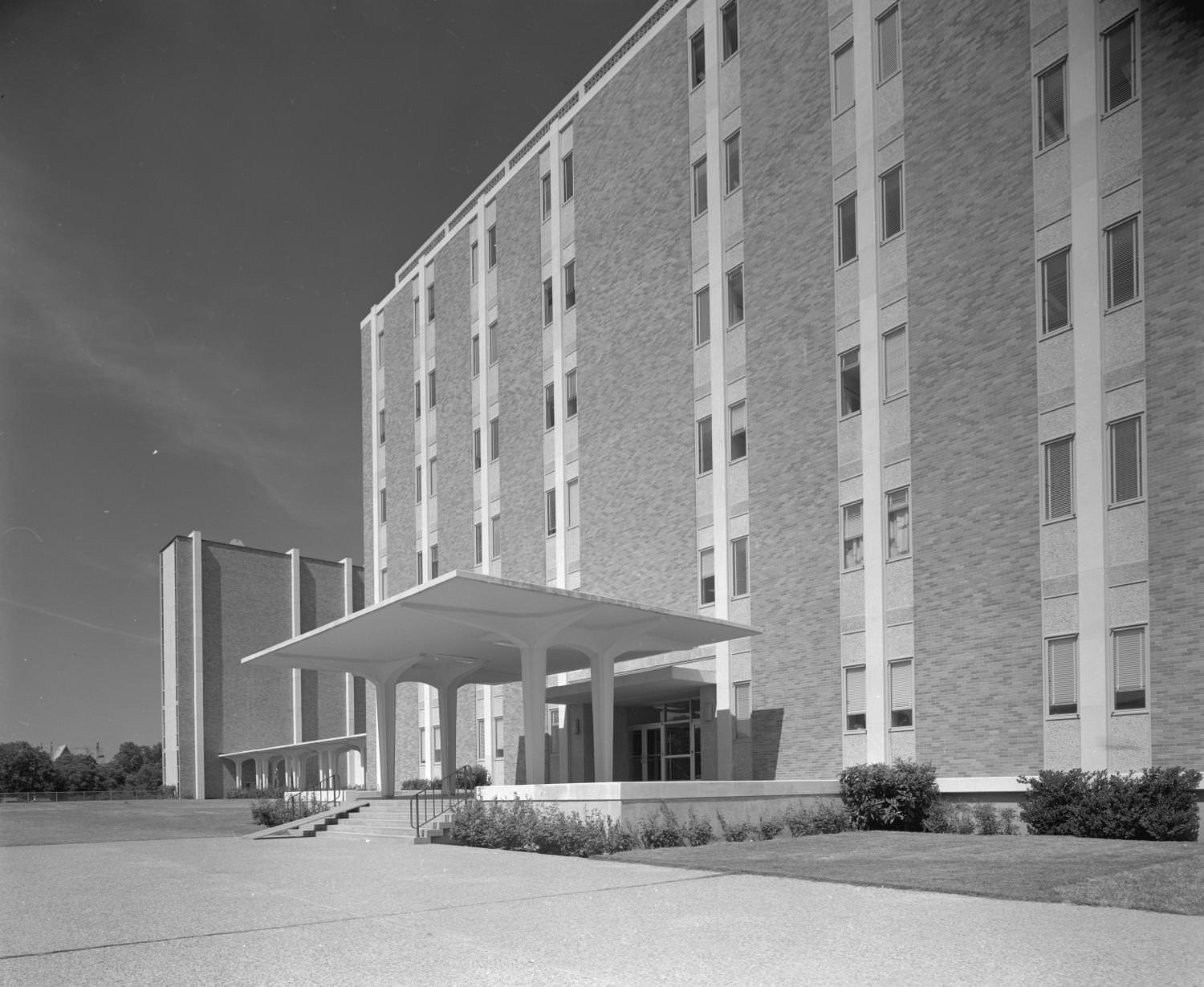
Brackenridge Hospital Construction, 1969.The Vaughn building under construction, Austin, 1965Exterior view of completed building, 1961. Southwestern Bell Telephone building with the Norwood Towers building in the right.A steel beam framed building under construction, 1965Workers on Platform, 1965Farmer’s Insurance Group Building, Austin, 1963State Archives Building and landscaping in front, Austin, 1961Big Three Welding Co. building view, 1964.Hart Savings and Association Building, 1961Internal Revenue Service, 1965.An office building located at 2816 Hemphill Park, designed and owned by Jessen, Jessen, Millhouse, and Greeven, 1960Building on the Colorado River and Palmer Auditorium, 1963An aerial view of 51st Street and Interegional Highway, 1963Aerial shot of Downtown Austin, State Capitol, and in particular the Lowich Building, 314 W 11th St., 1965Aerial show of Lavaca St. looking north, Austin, 1960sAustin, TX taken from the southeast. US-81 and the Holly St., 1967
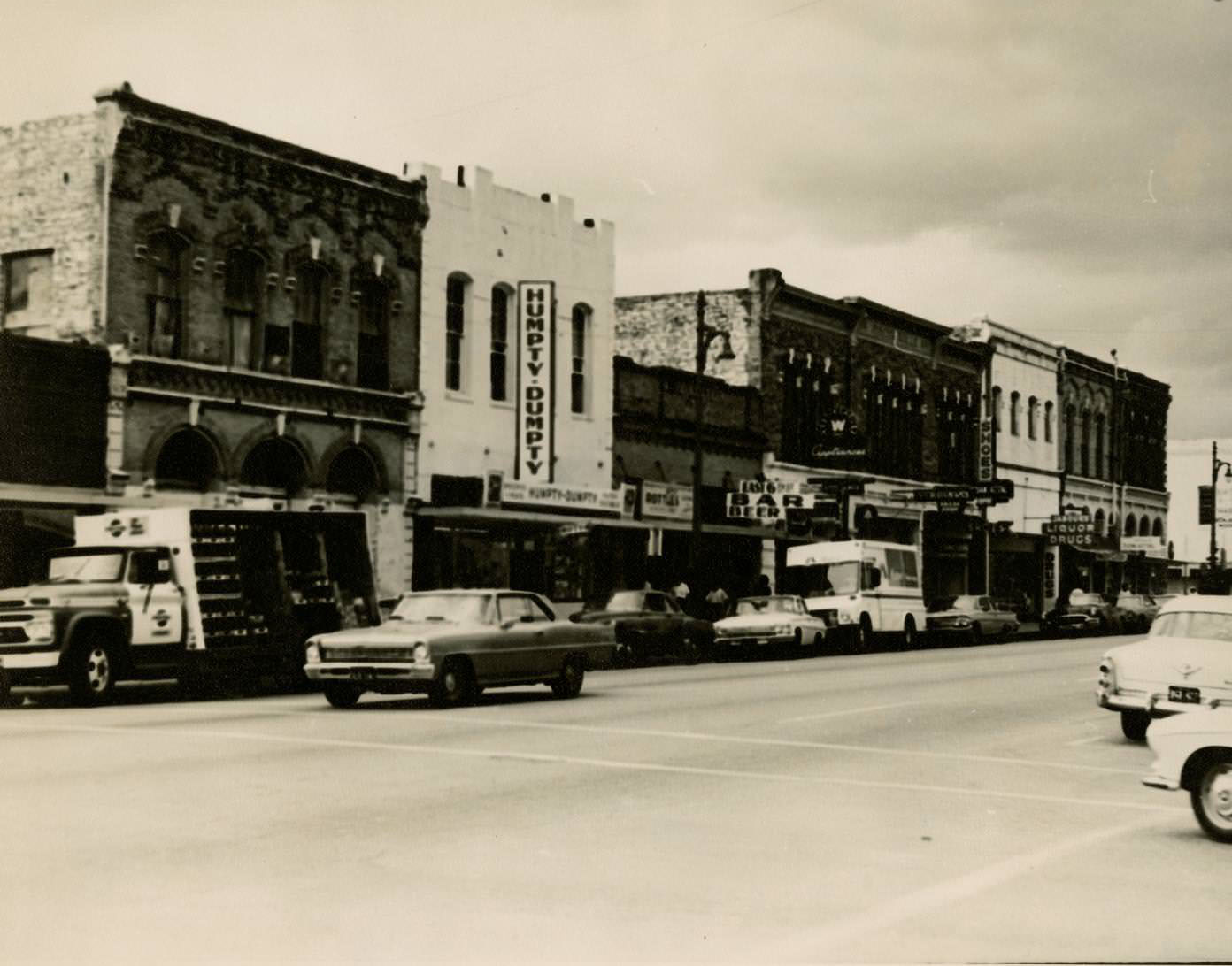
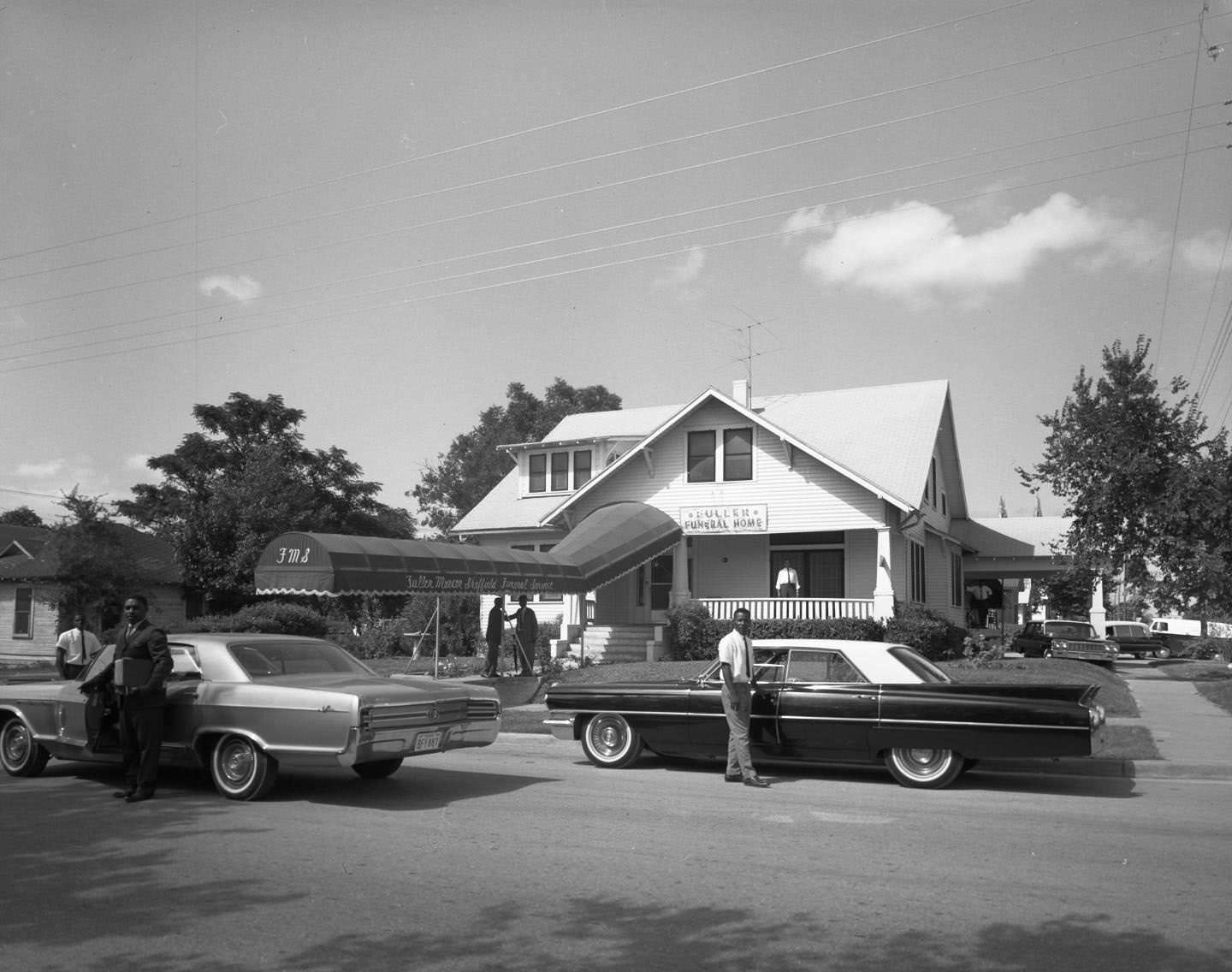
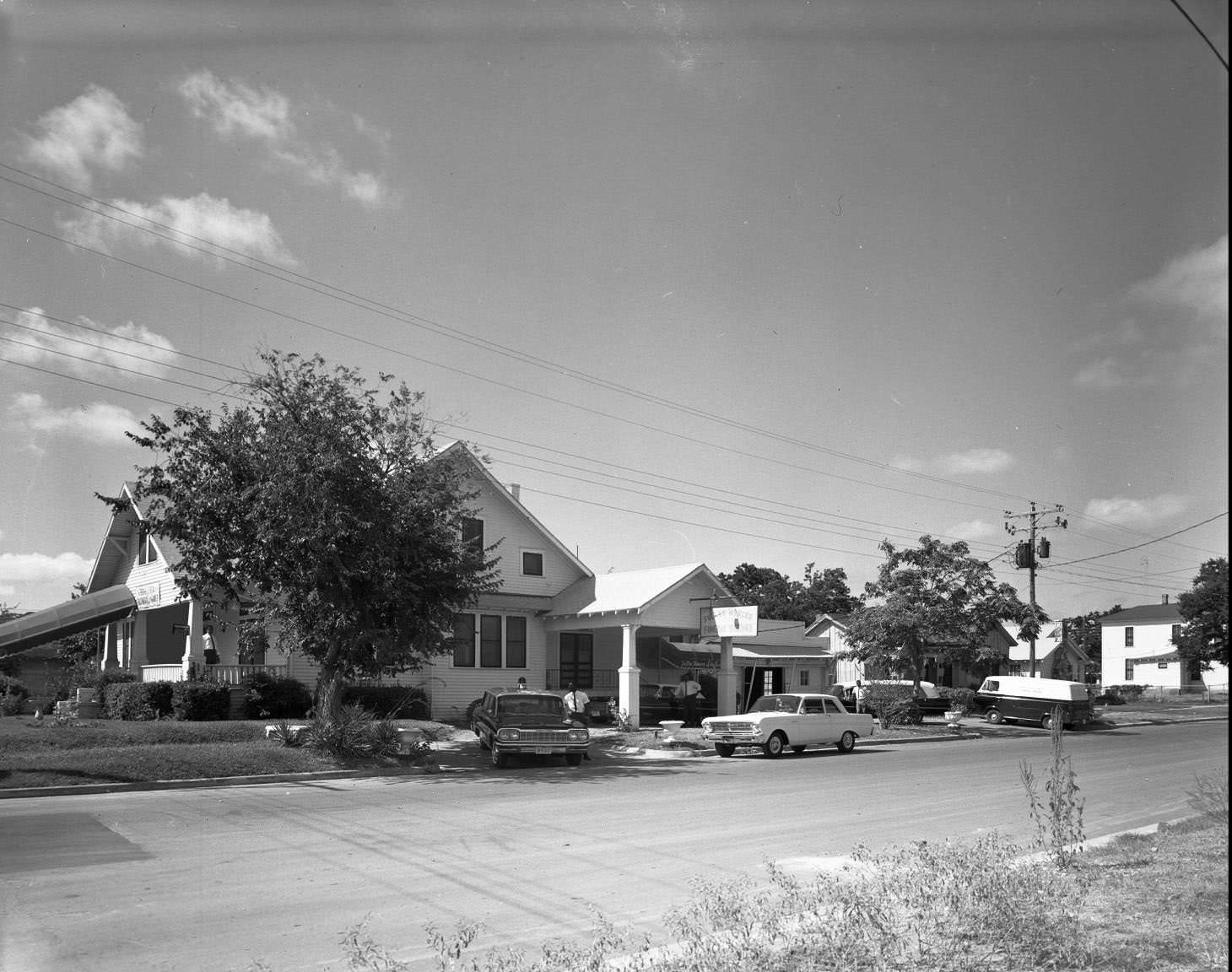
East 6th Street in 1968 showed the character of a neighborhood commercial block. The Humpty Dumpty Grocery at 419 East 6th stood at the corner of Neches, a neighborhood store serving the residents around it. Nearby, a funeral home on Angelina Street operated quietly in a single-story building, photographed from the front and the side in 1964.
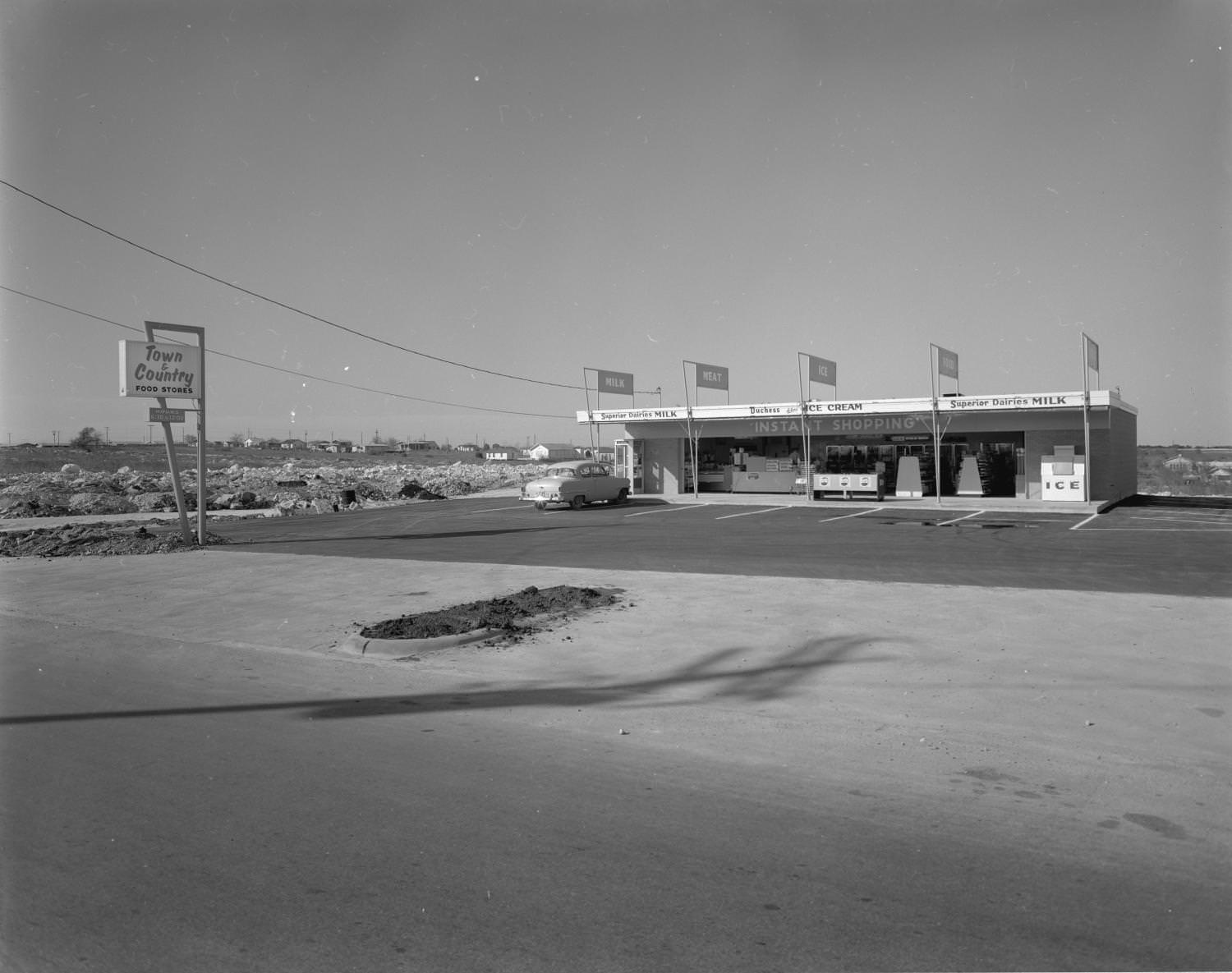
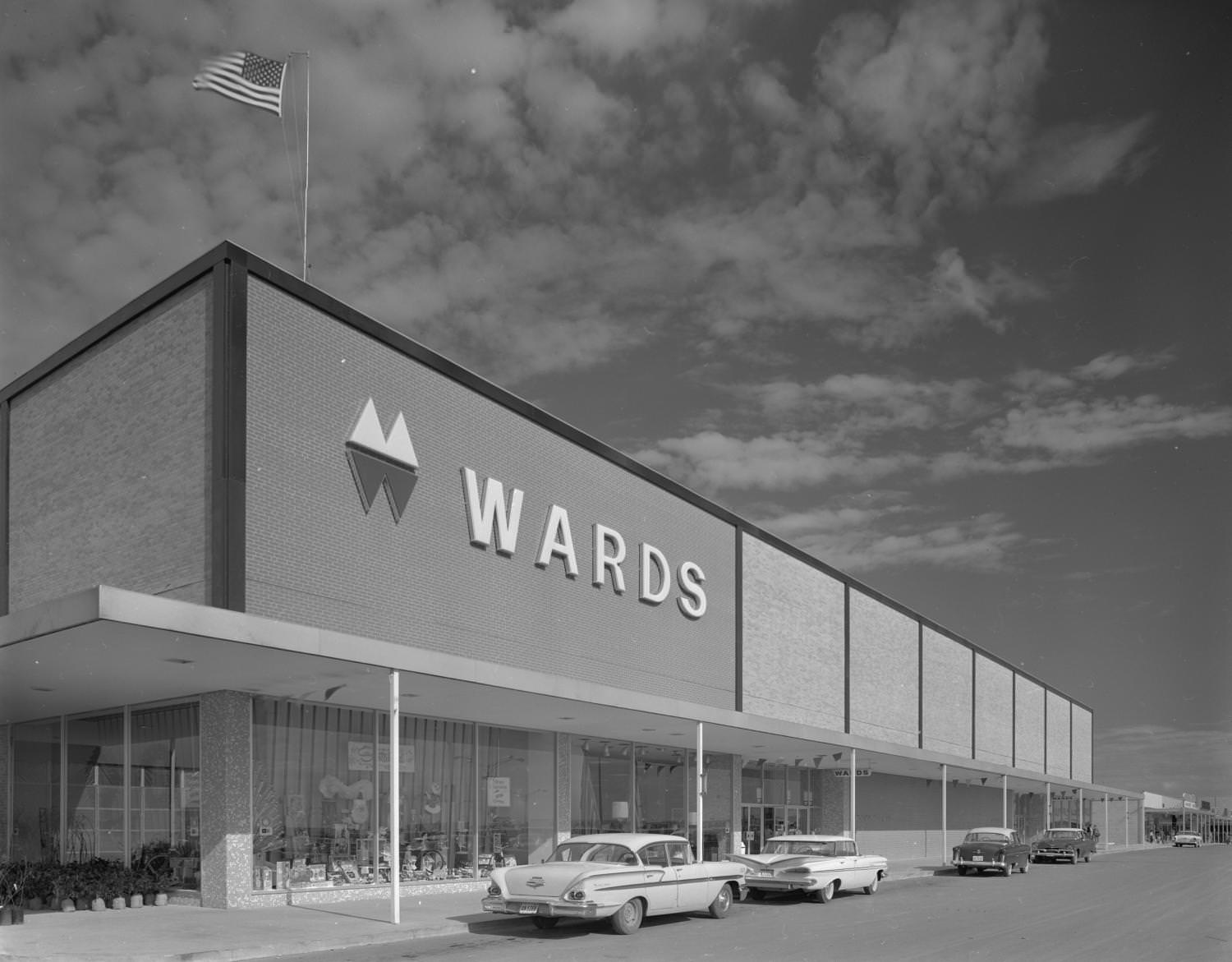
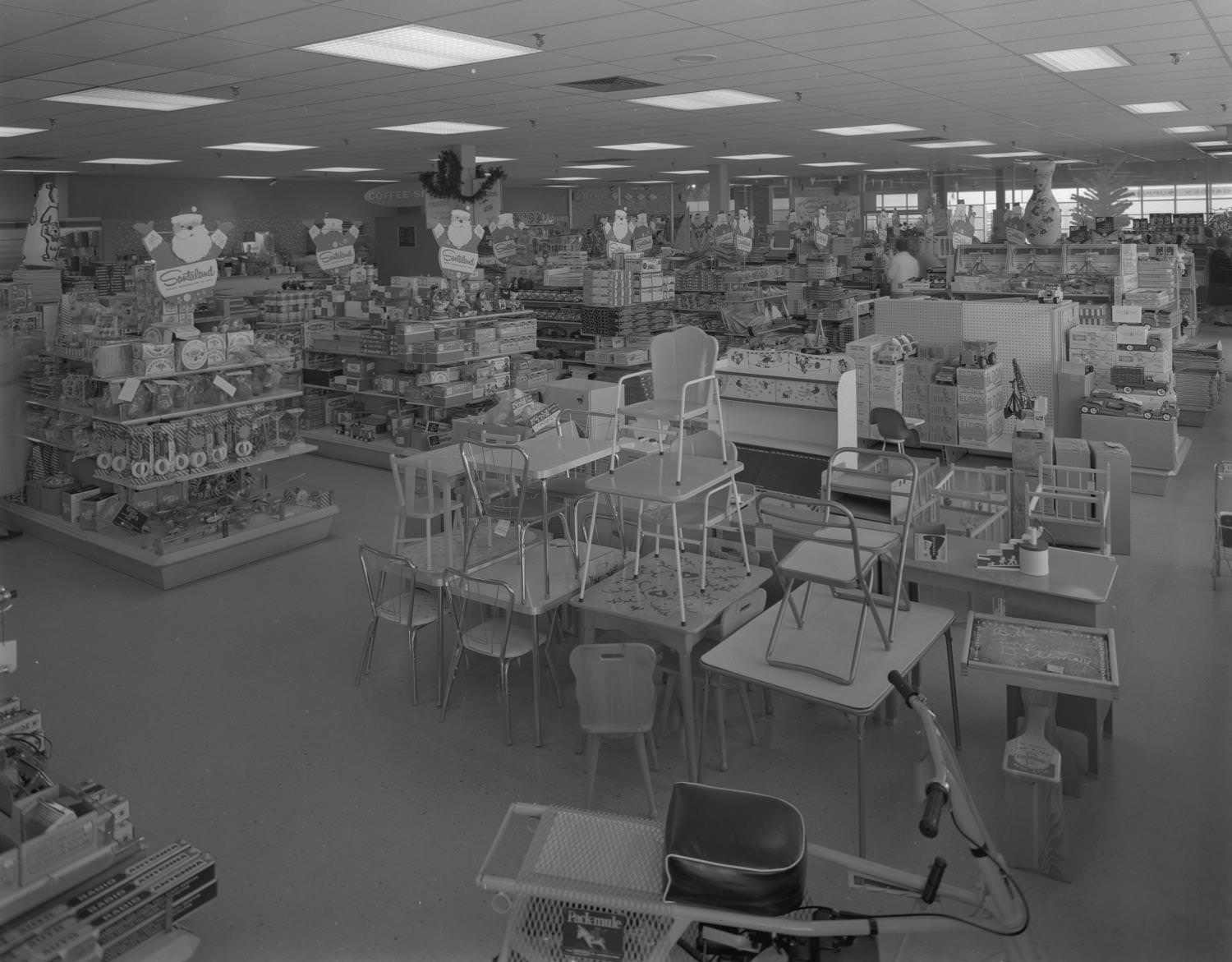
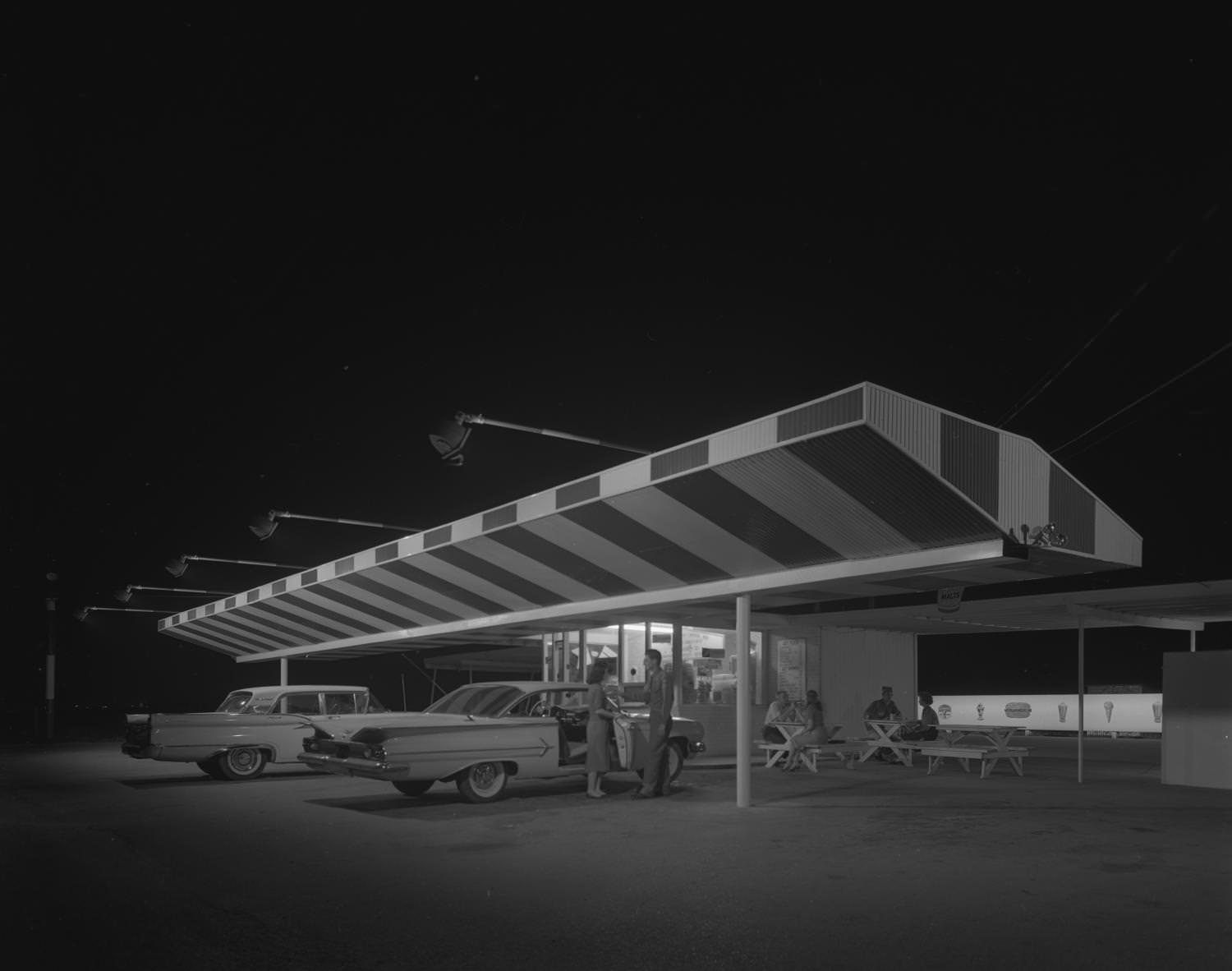
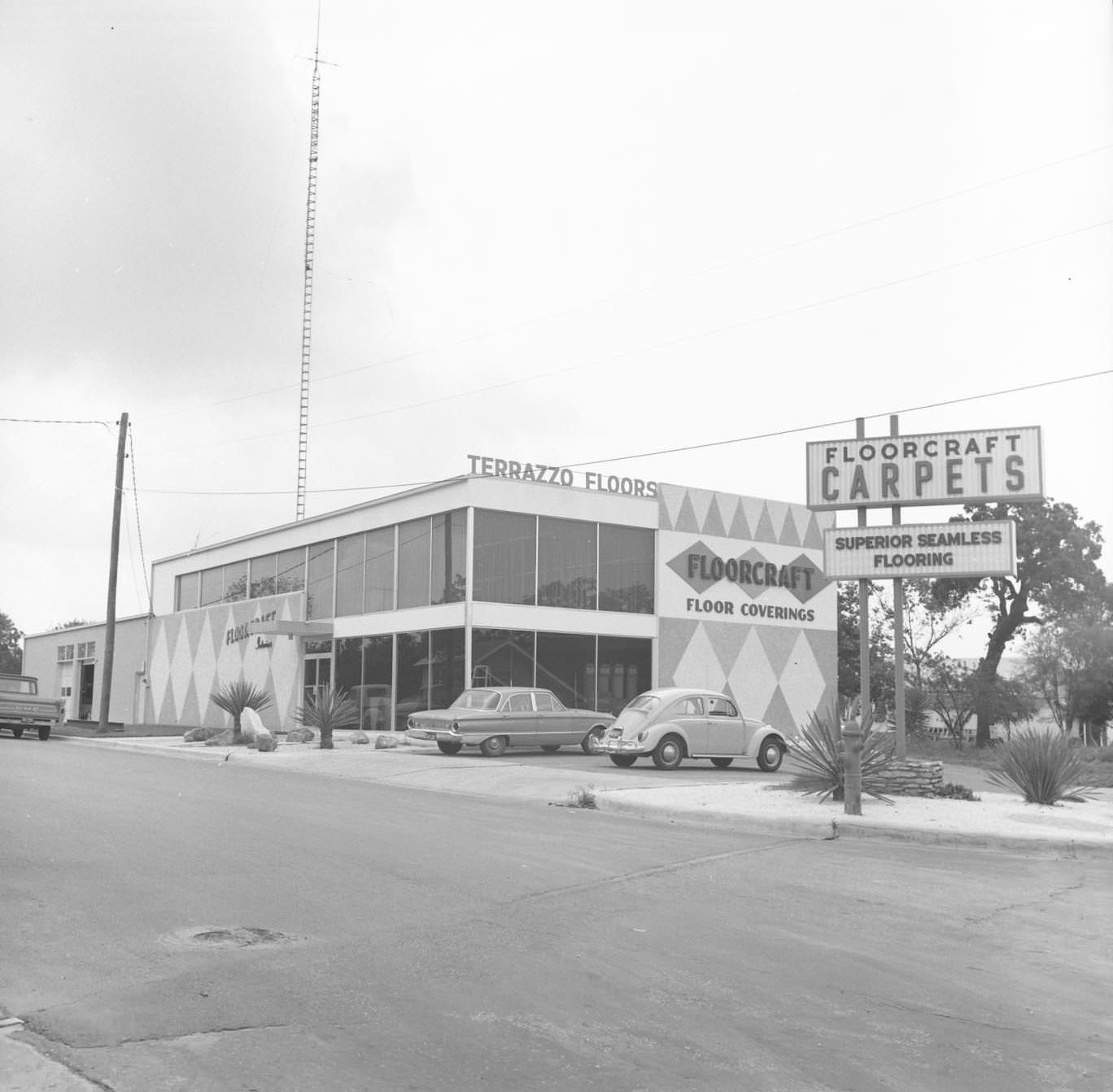
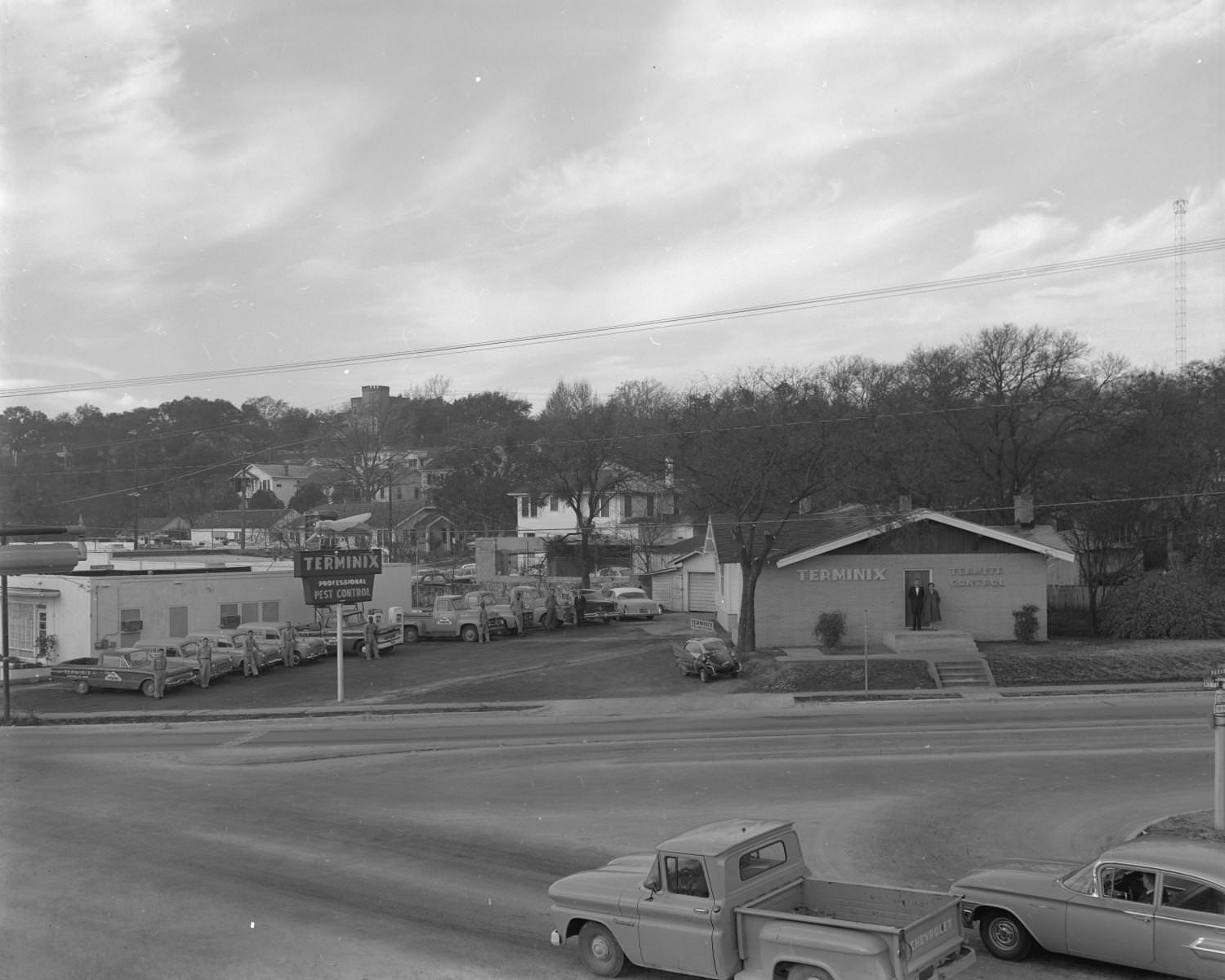
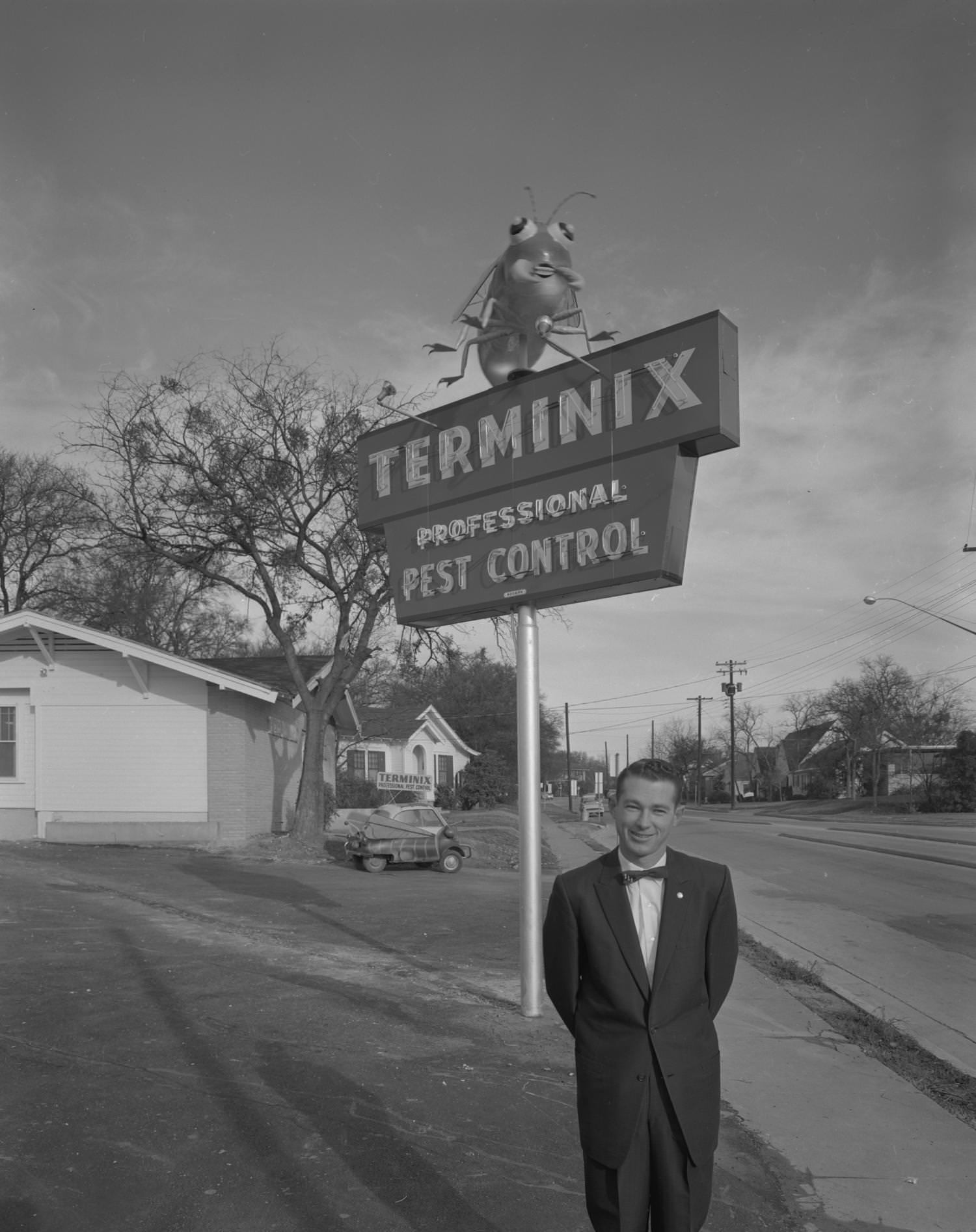
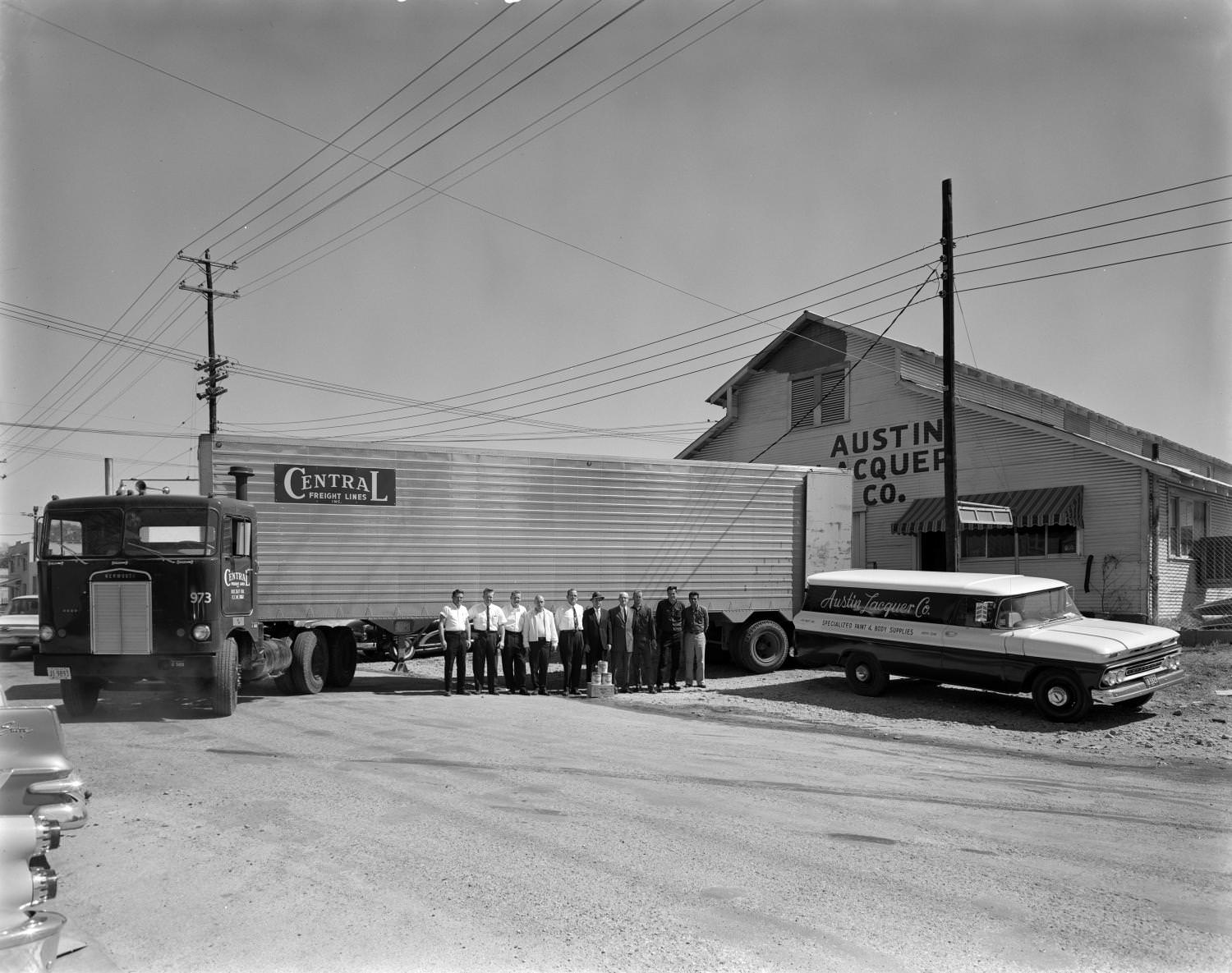
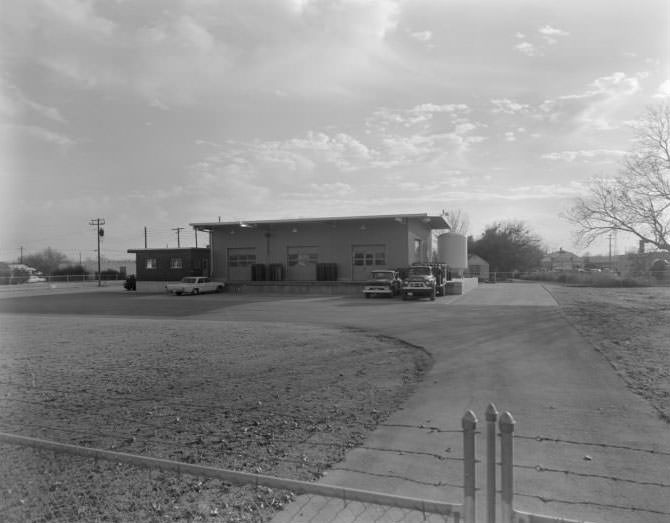
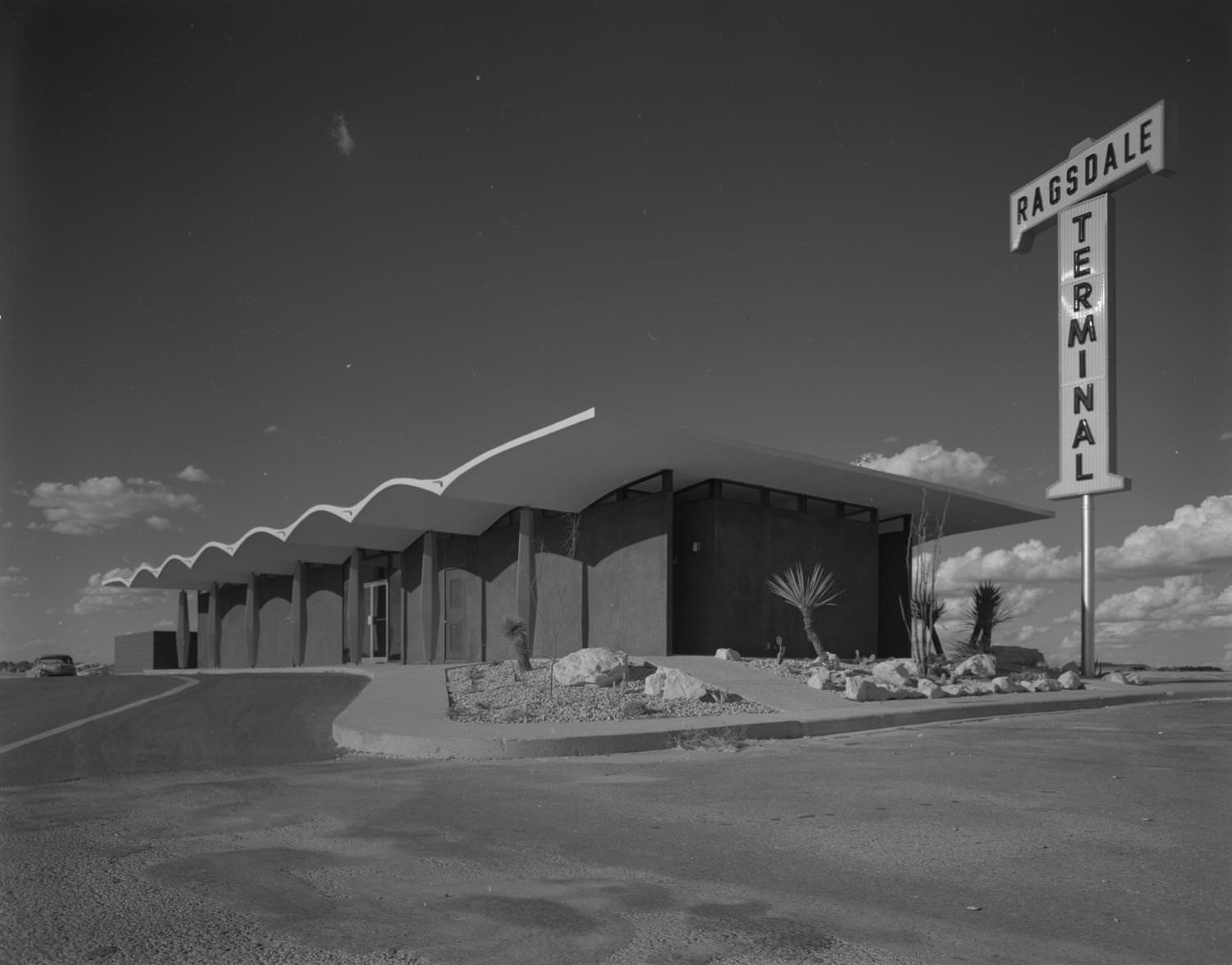
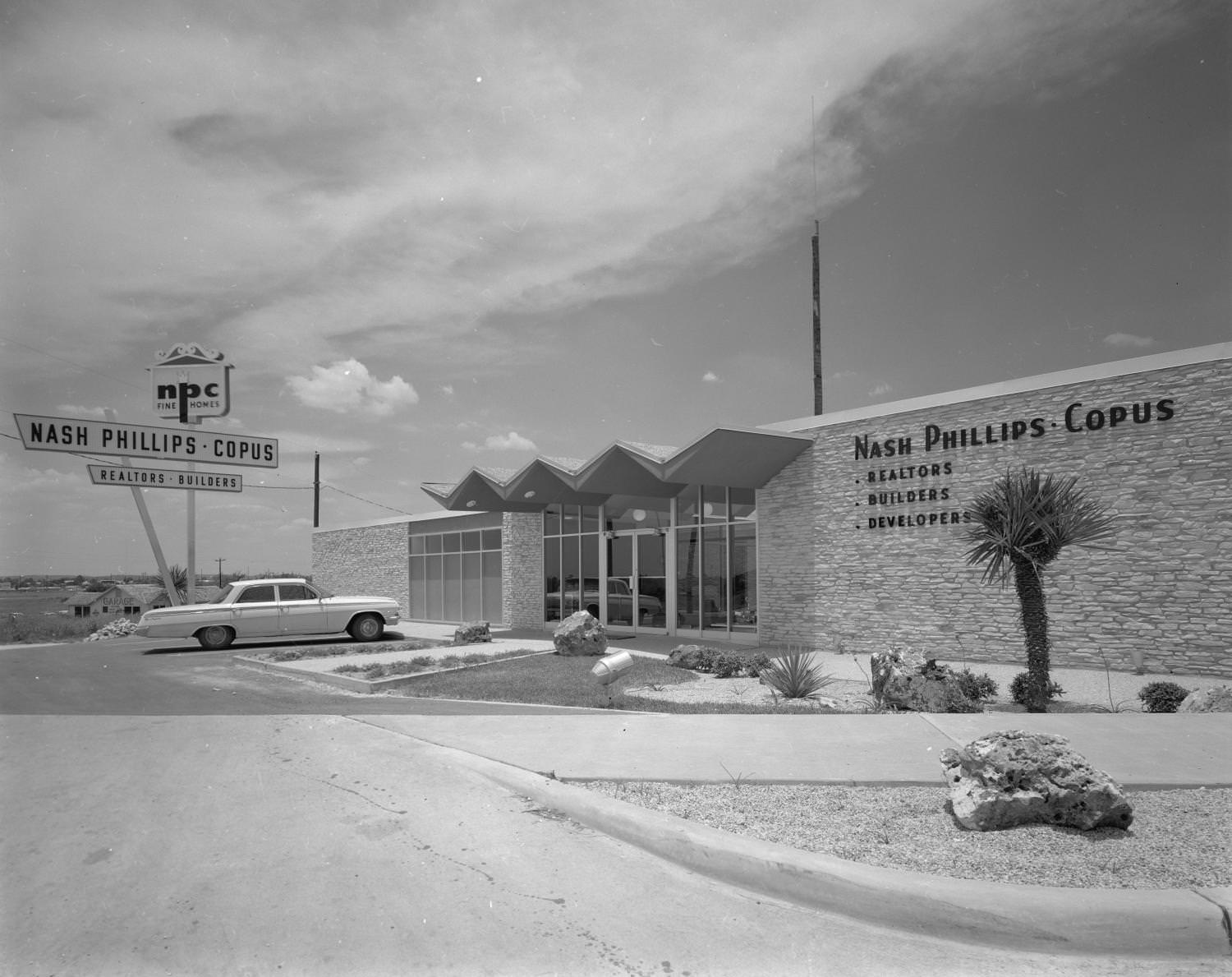
East 6th Street at Neches, 1968. Humpty Dumpty Grocery at 419 East 6th is shown in the photoDirect head on exterior shot of funeral home, 1164 Angelina St., Austin, 1964Exterior shot of funeral home, 1164 Angelina St., Austin, 1964A grocery store called Town and Country, located on St. Johns Avenue, Austin Texas, 1963Wards Department Store, 1961.Department Store Interior, 1961.Drive Up Food Stand, 1961.Floorcraft Carpets, 1105 West 41st Street, Austin, 1964Terminix Pest Control, 1961Bill Youngblood in Front of Terminix Sign, 1961.Truck at Austin Lacquer Company, 1963Exterior view of building with loading dock. 2 trucks and 1 car parked in front of dock, 1962Ragsdale Terminal with an exterior facade that is dark with matching dark columns that can be seen on the left wall, along with a glass door entrance, 1962The exterior of the Nash Philips-Copus realtor office, since demolished, on 6010 Brooks Street, 1964
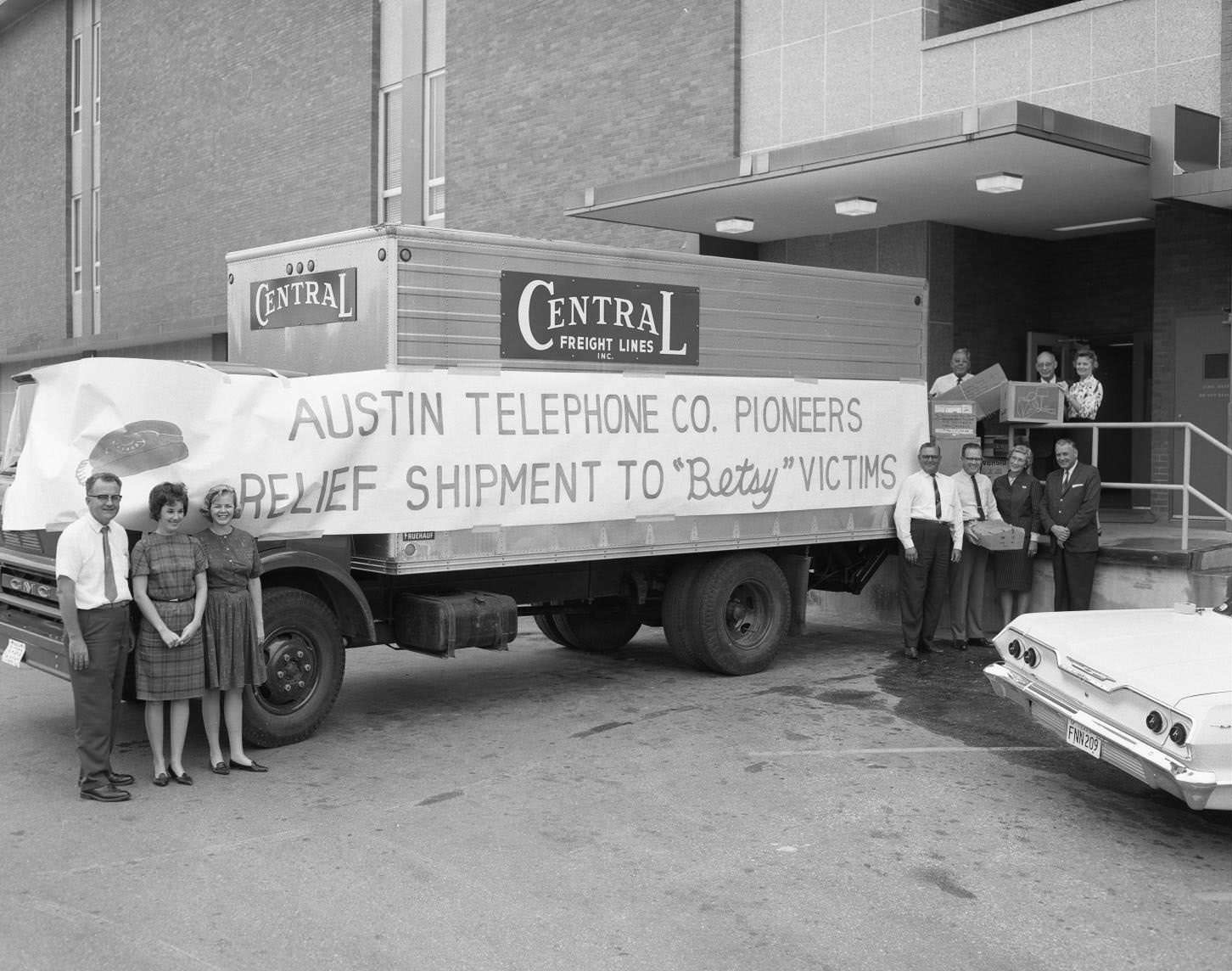
Austin telephone workers showed community solidarity in 1965 when the Austin Telephone Company Pioneers sent a relief truck loaded with supplies to New Orleans after Hurricane Betsy struck the Gulf Coast. Workers stood outside the truck for a photograph before sending it off, a small but telling moment of city-to-city support.
Austin Telephone Co. Pioneers stand outside relief truck, seeing off goods to the victims of Hurricane Betsy in New Orleans, 1965
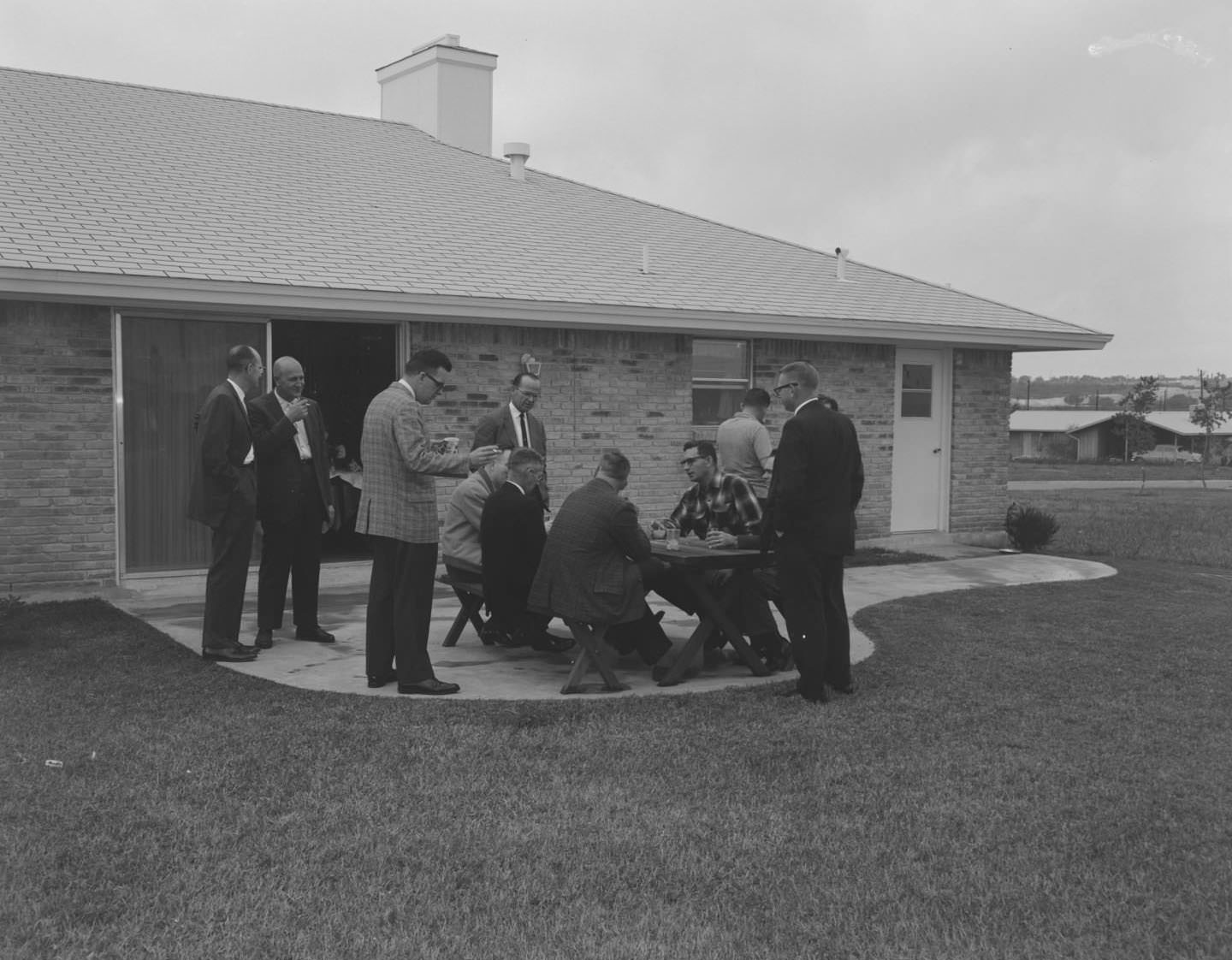
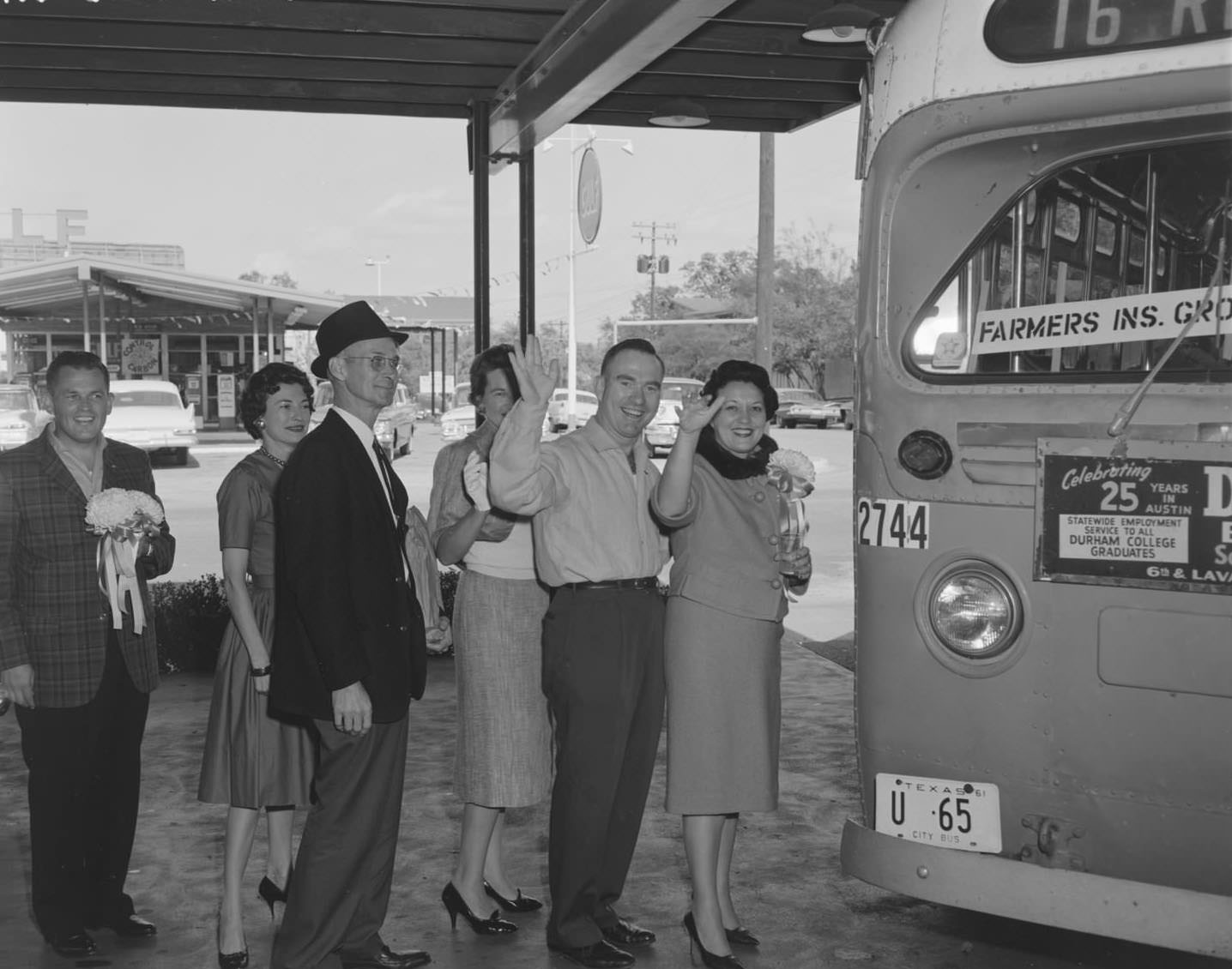
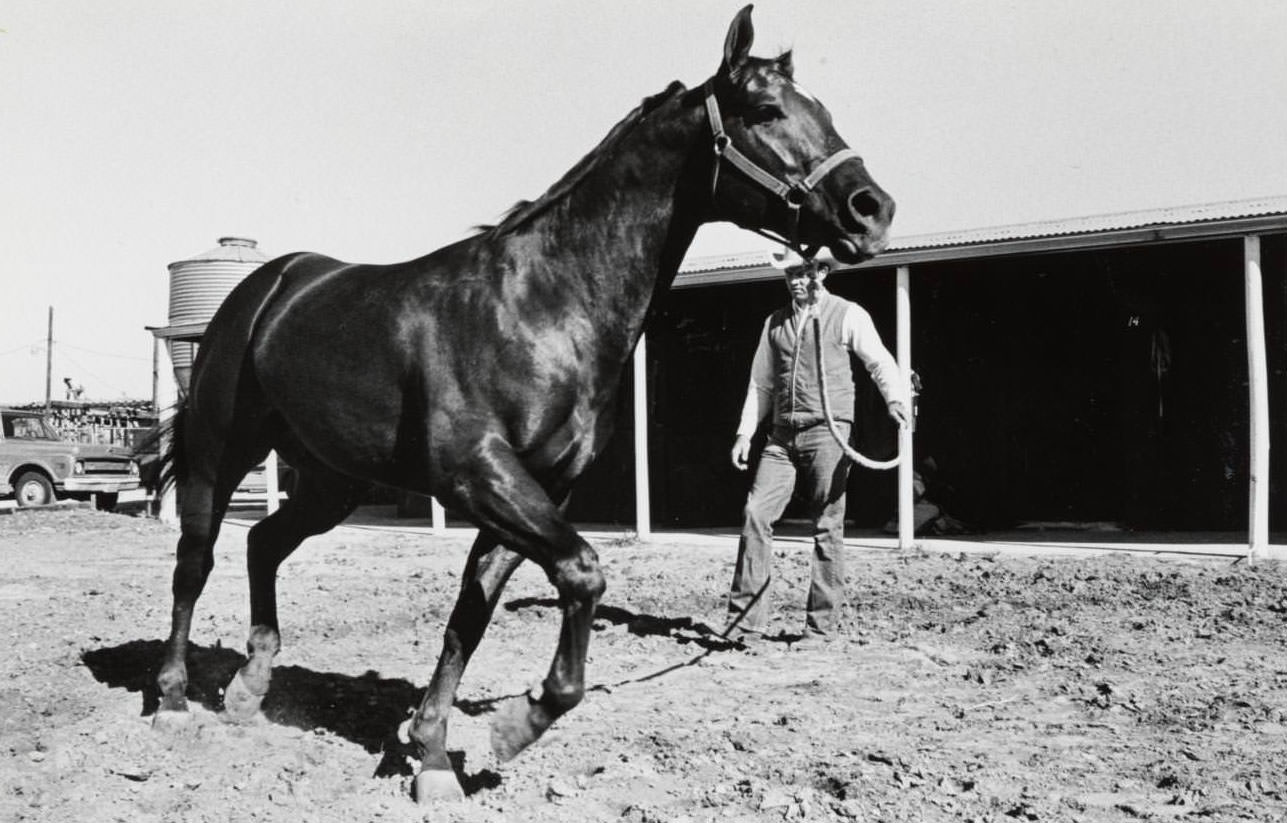
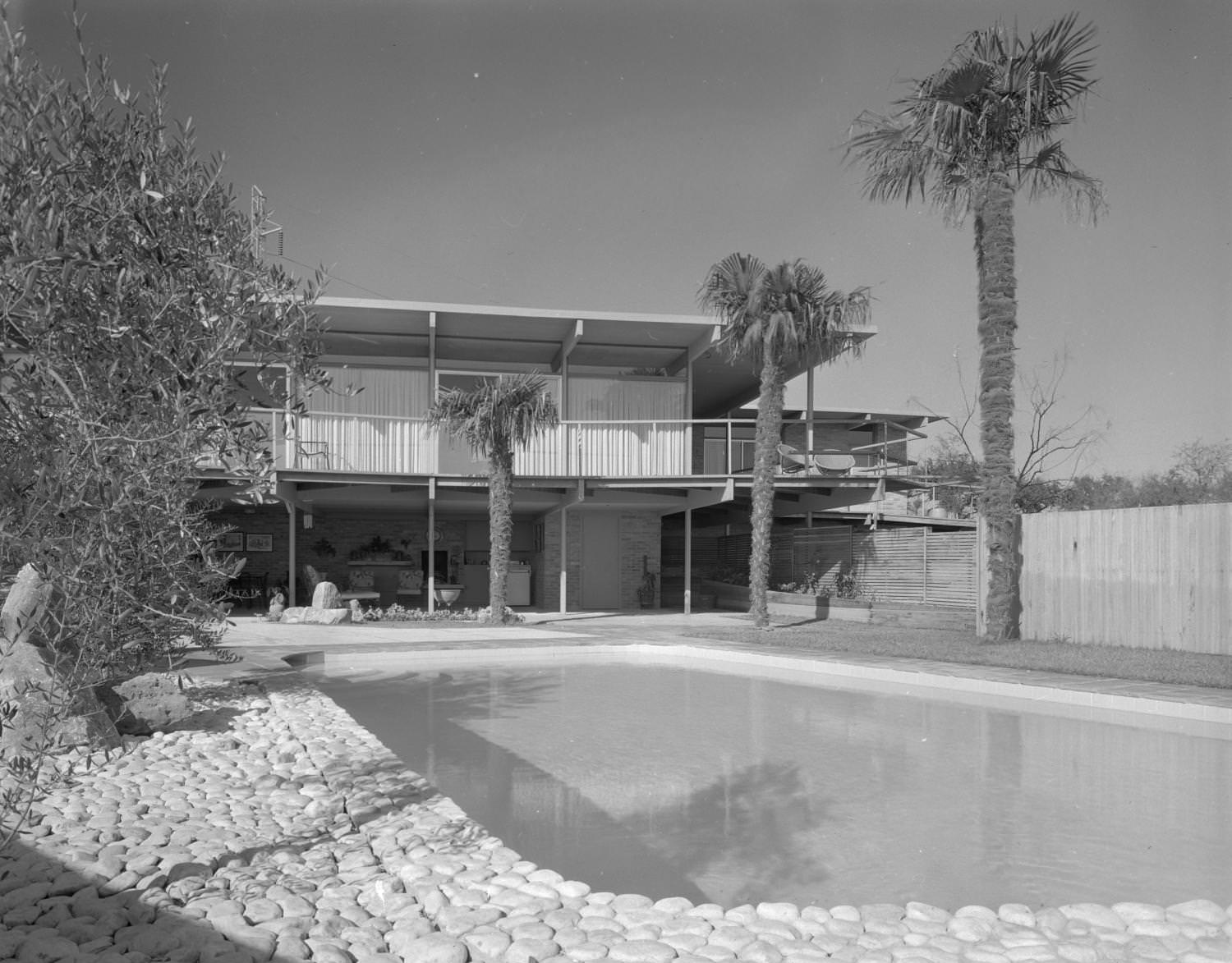
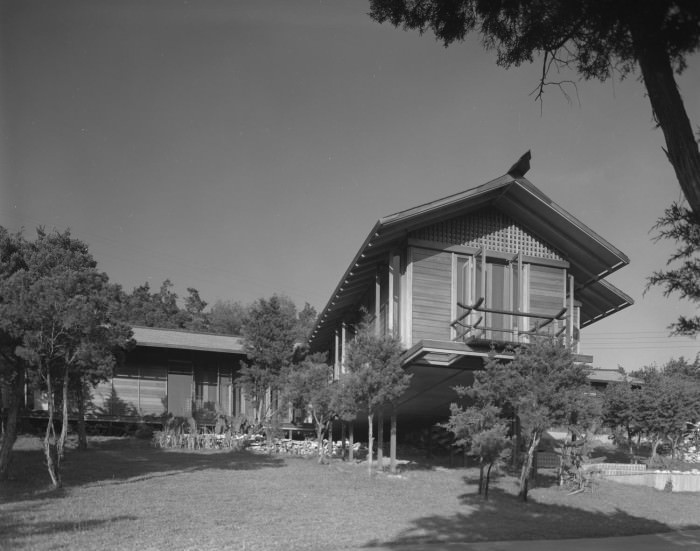
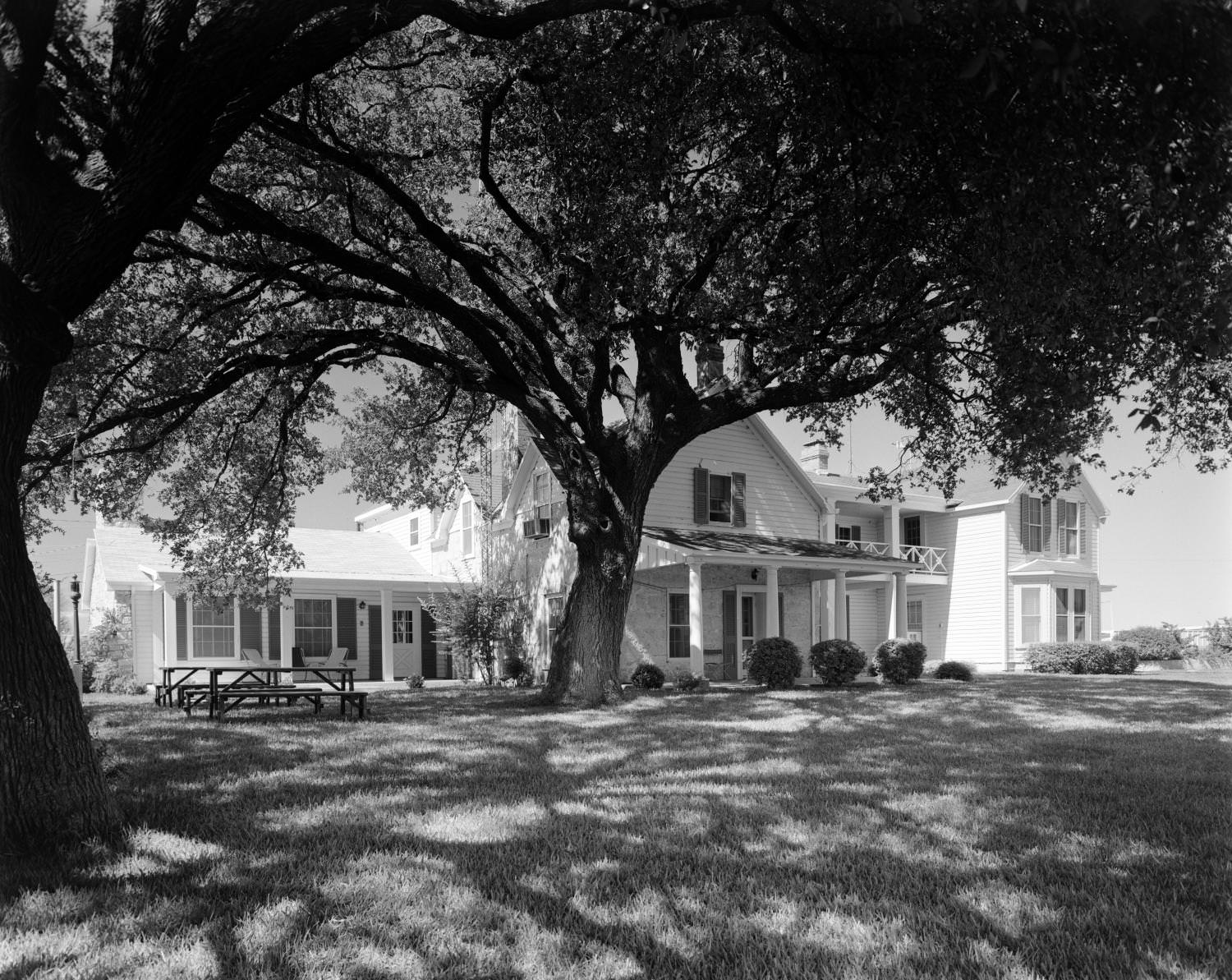
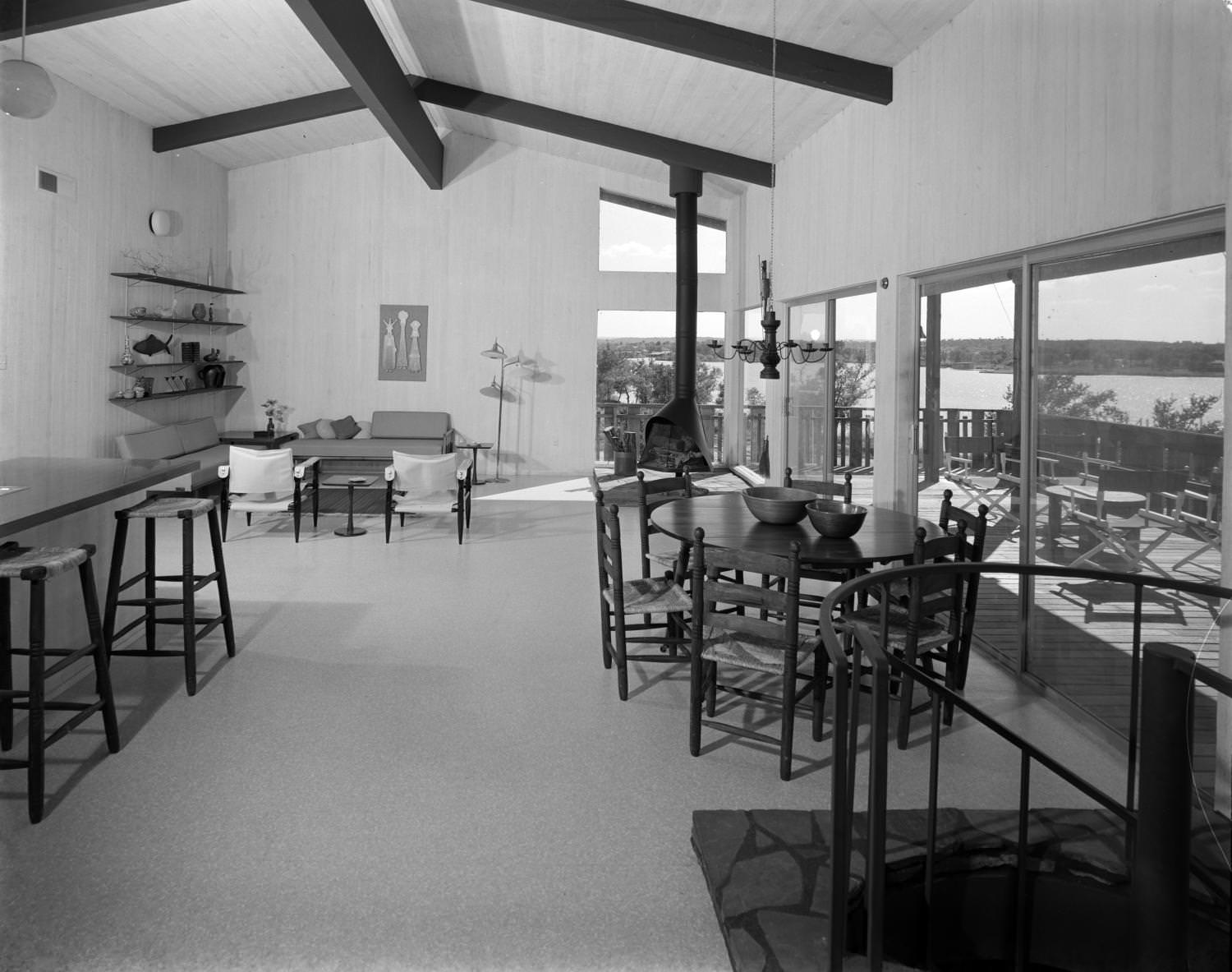
Private and social life in 1960s Austin left its own photographic record. Friday night cocktail parties drew groups of well-dressed Austinites who boarded buses with flowers in hand. Residents posed at home beside pools. Couples and families lived in mid-century modern houses on hillsides and in quiet neighborhoods. At Manor Downs, men worked with horses along a track east of the city.
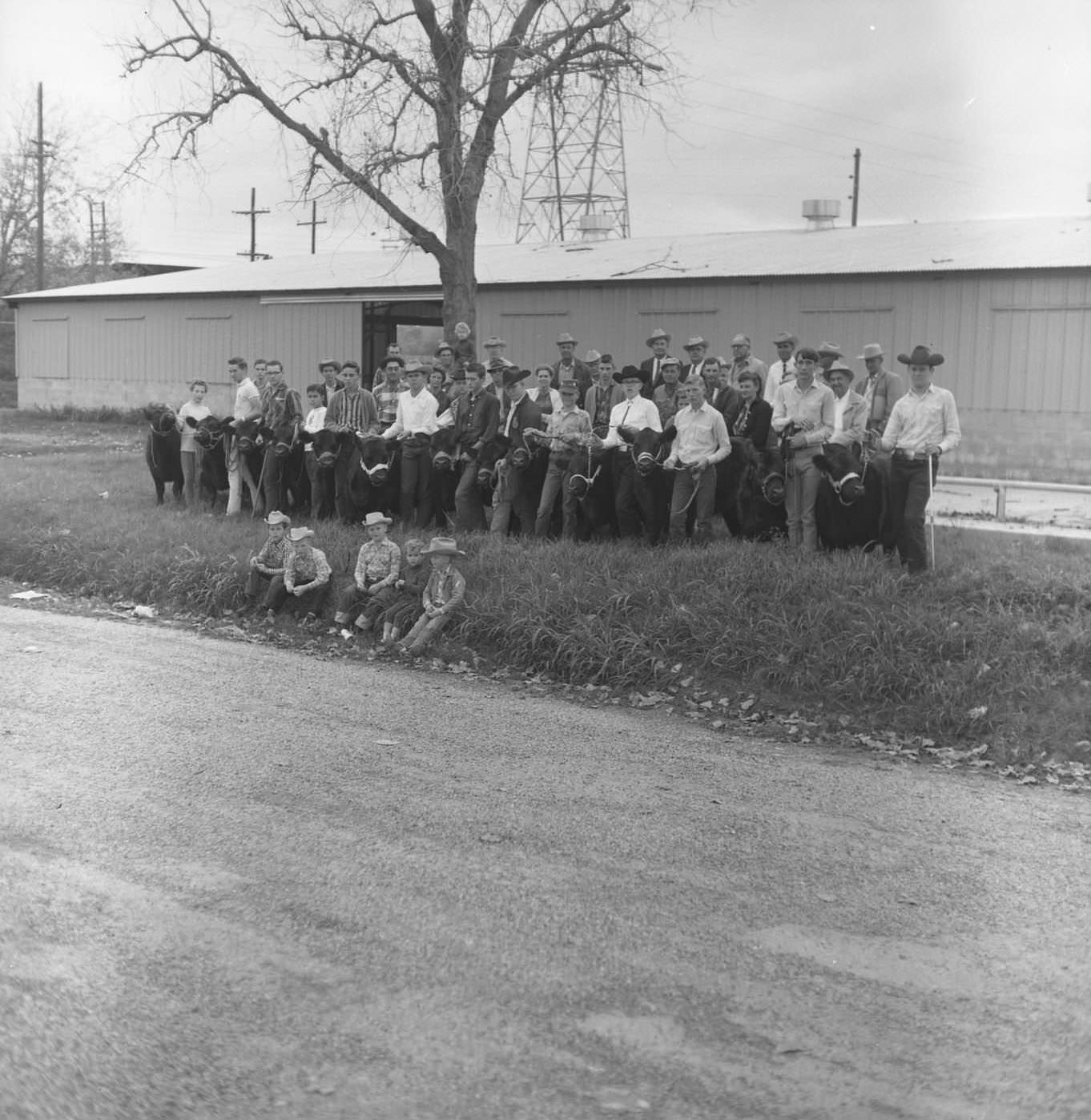
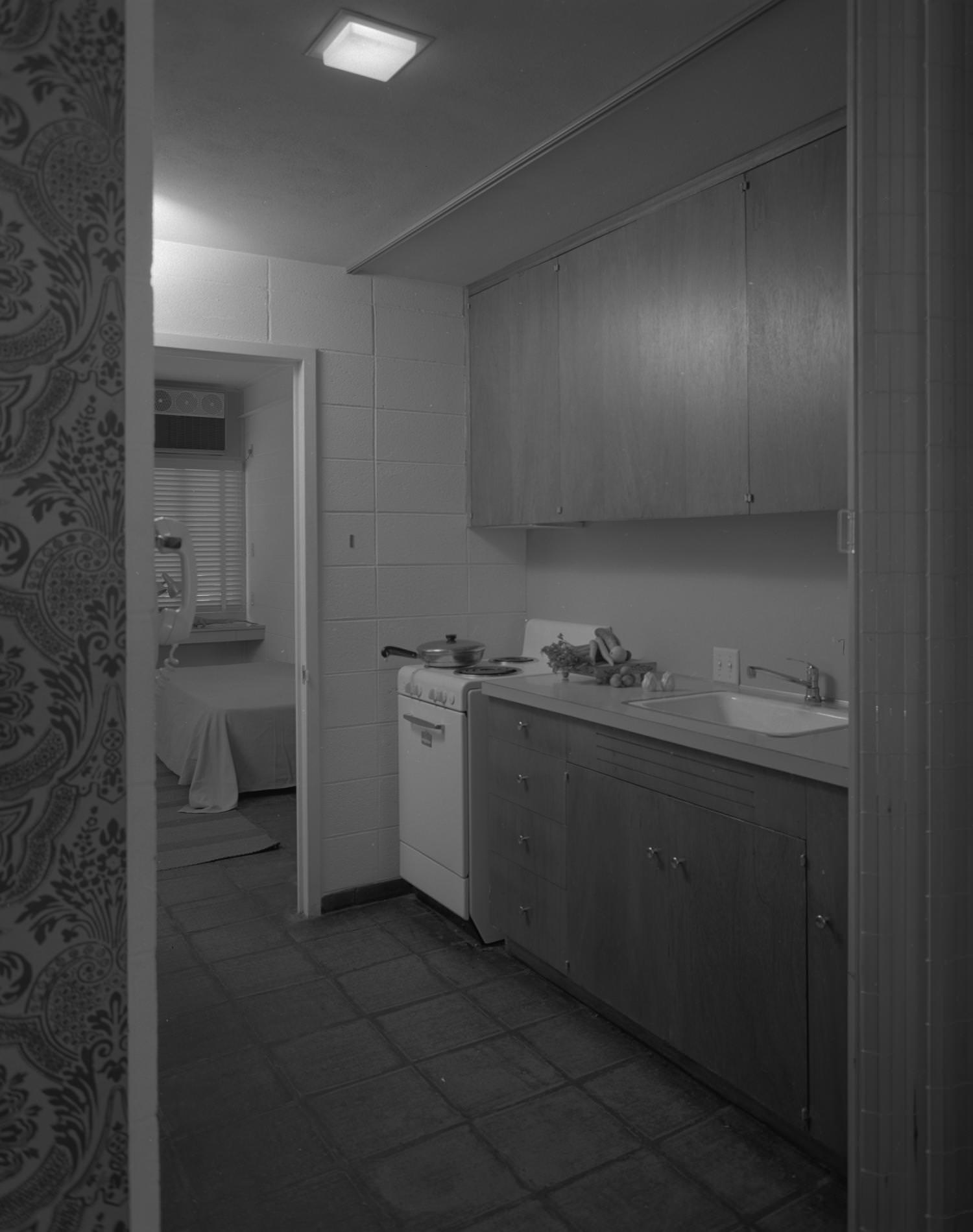
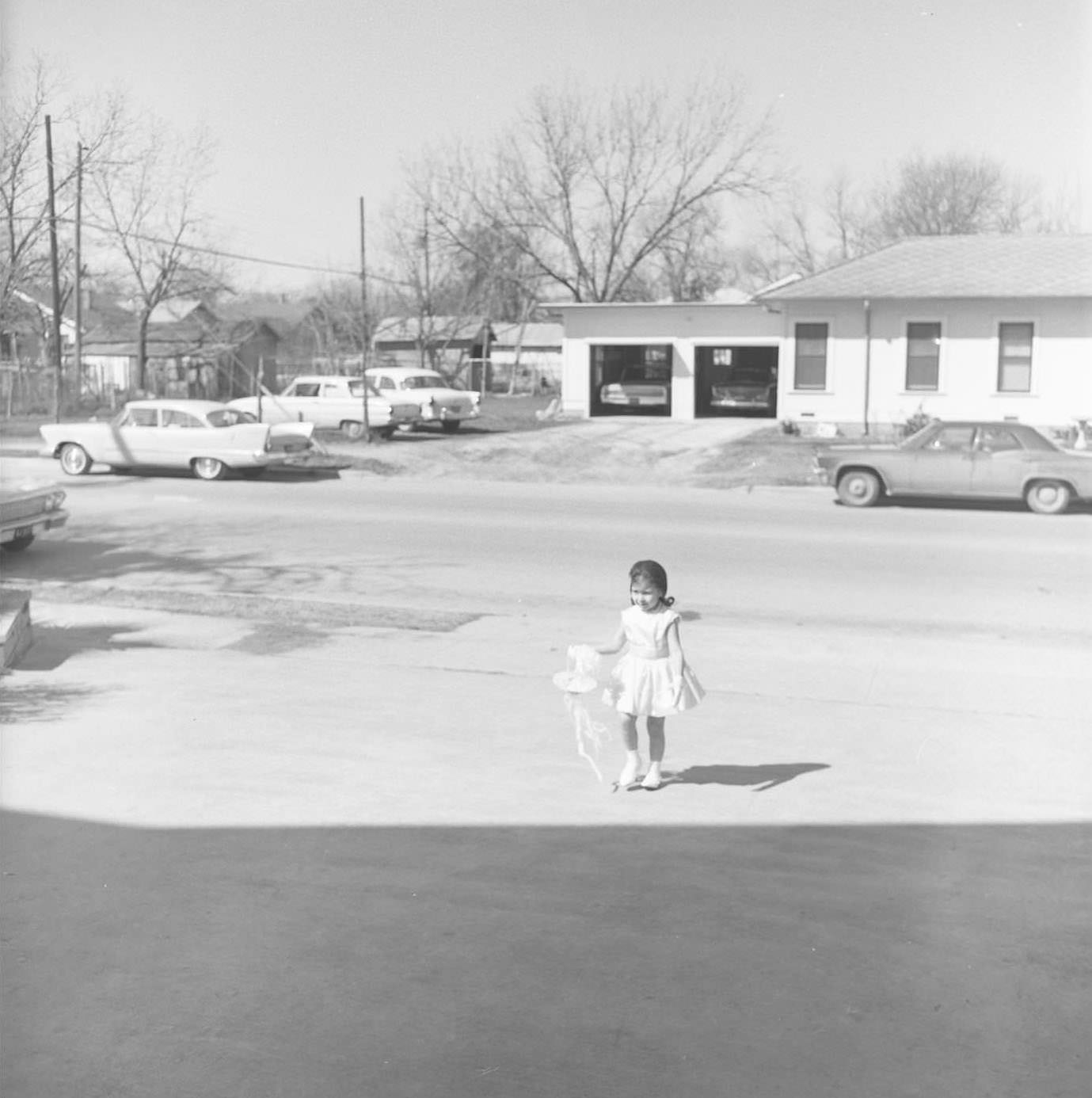
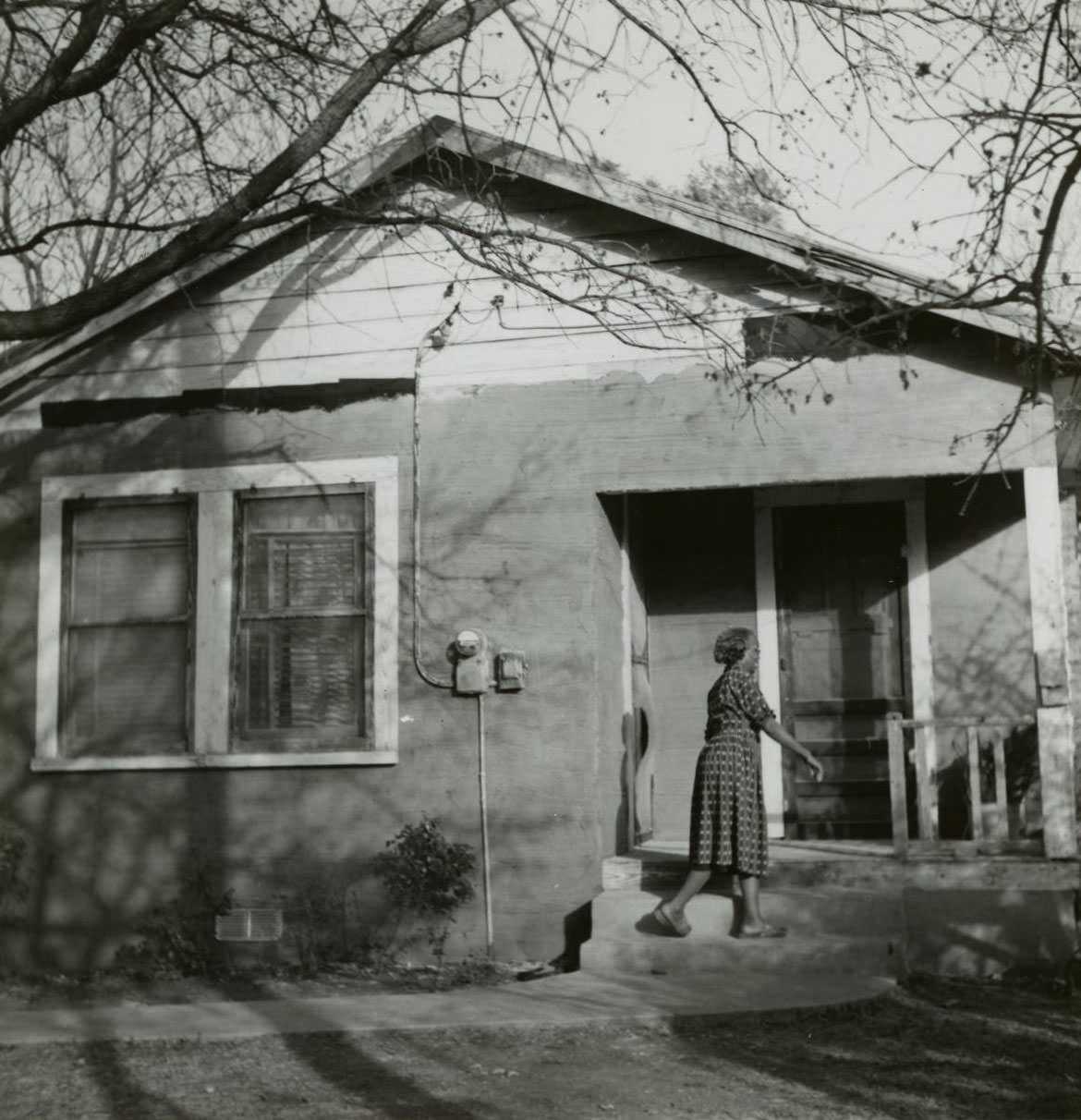
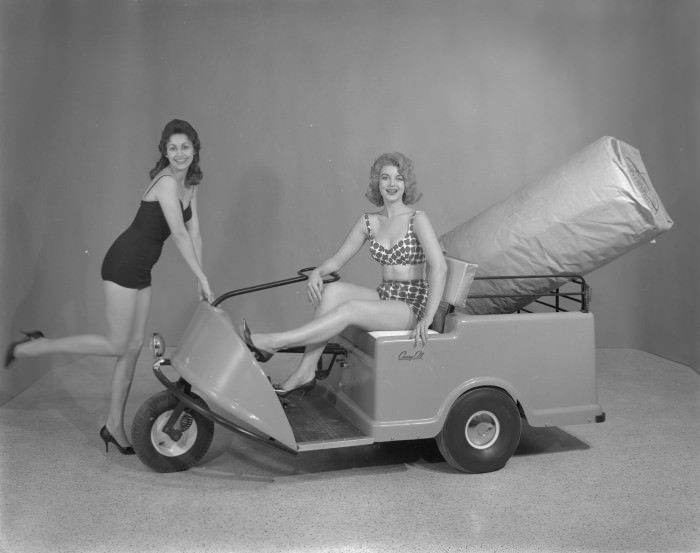
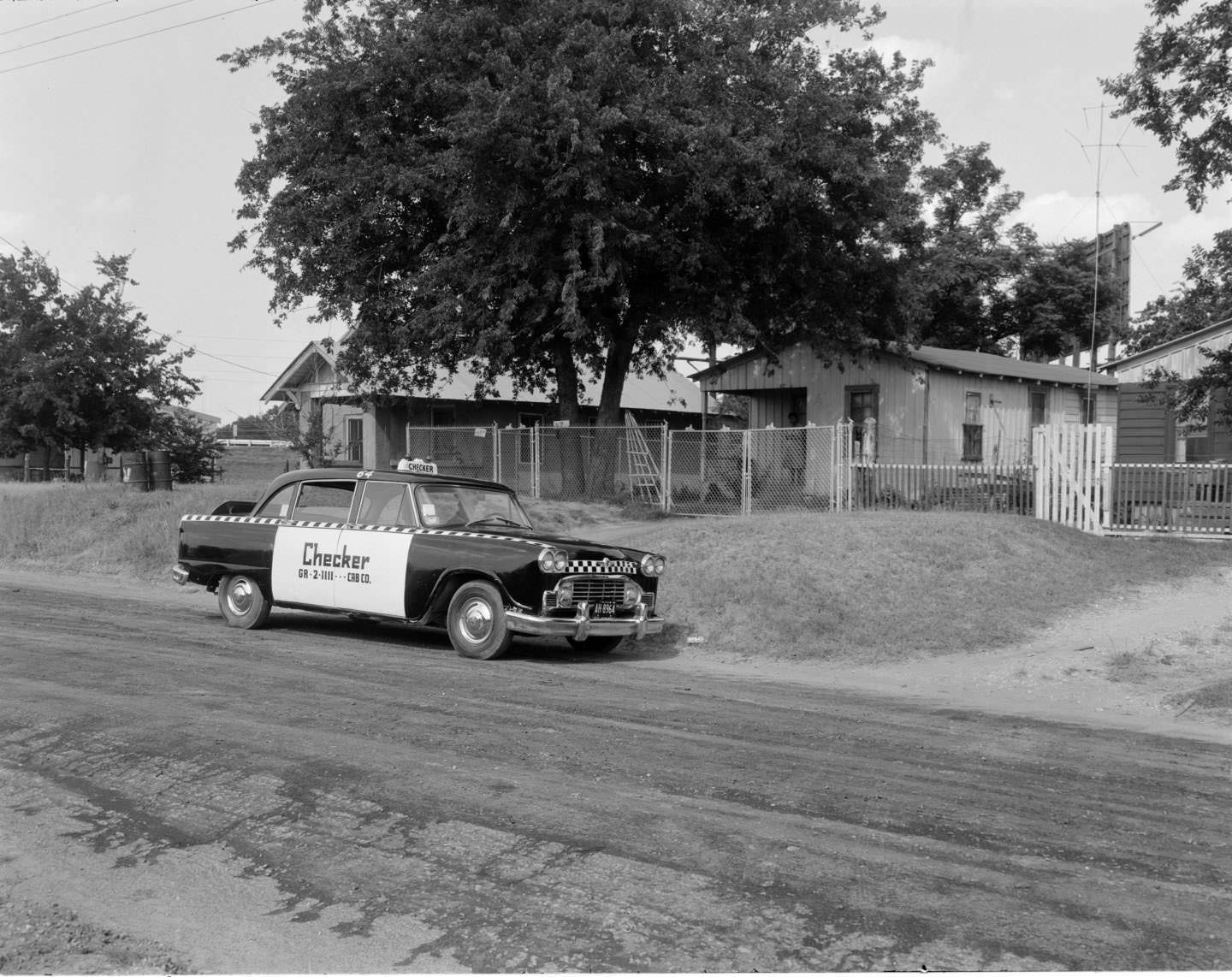
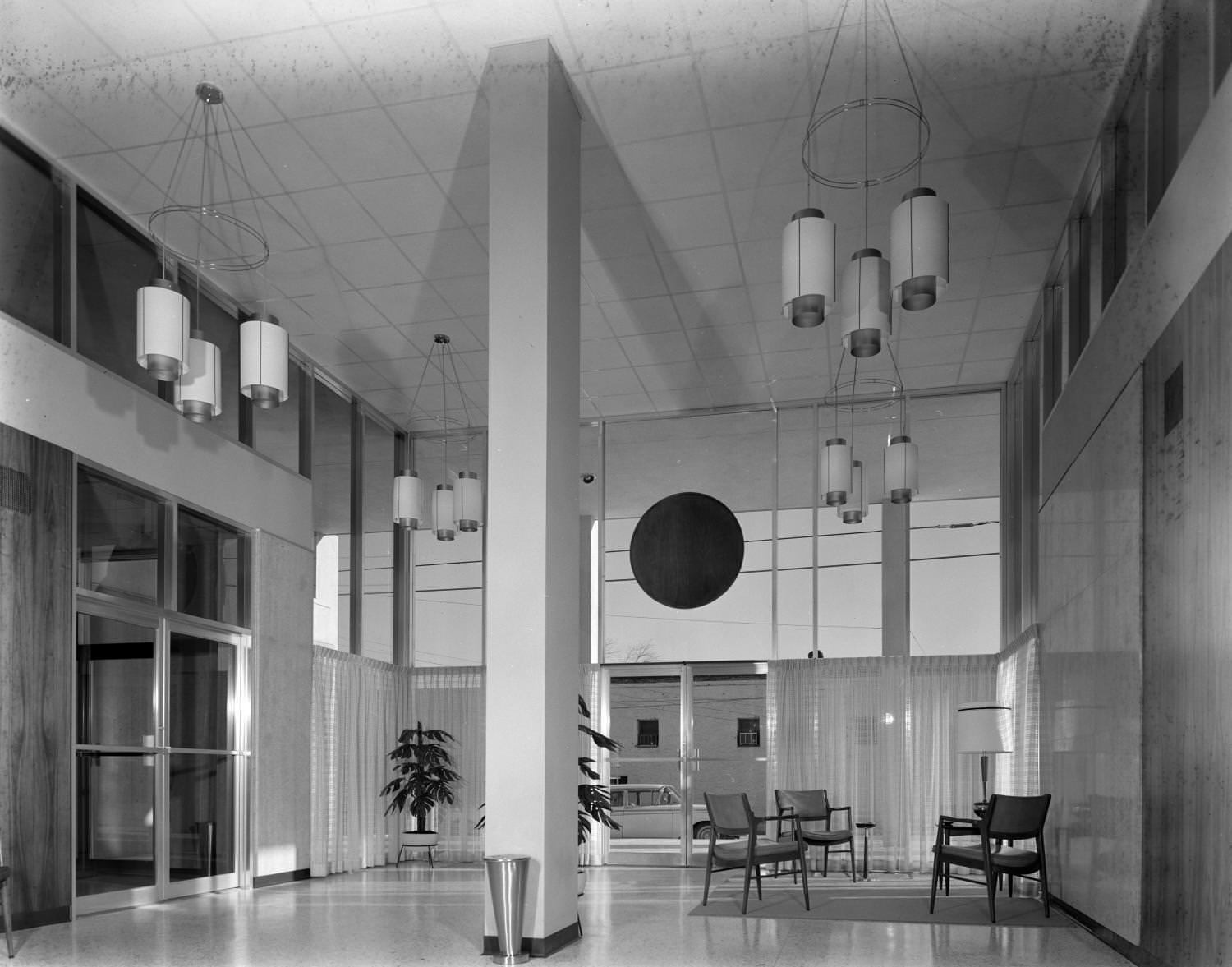
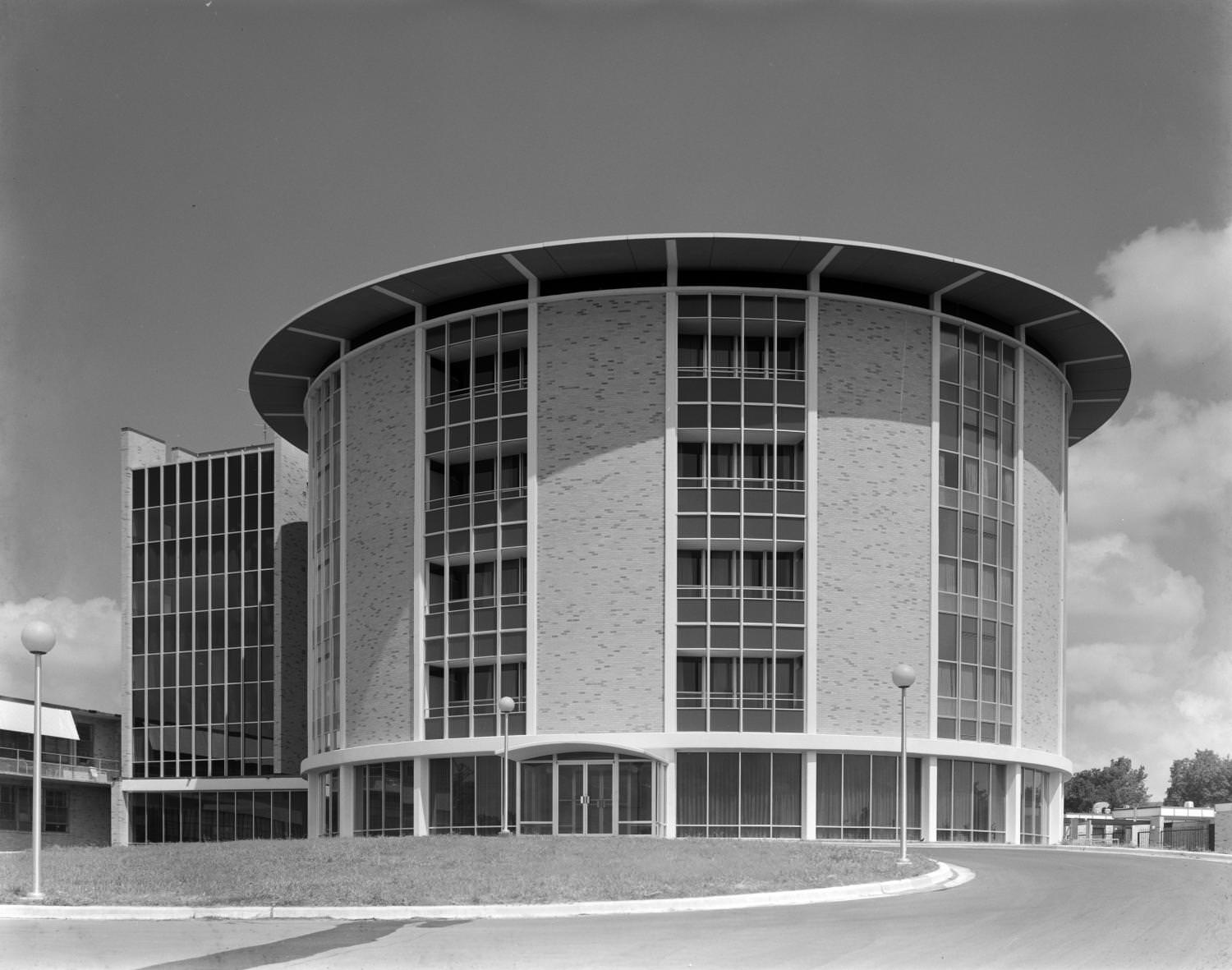
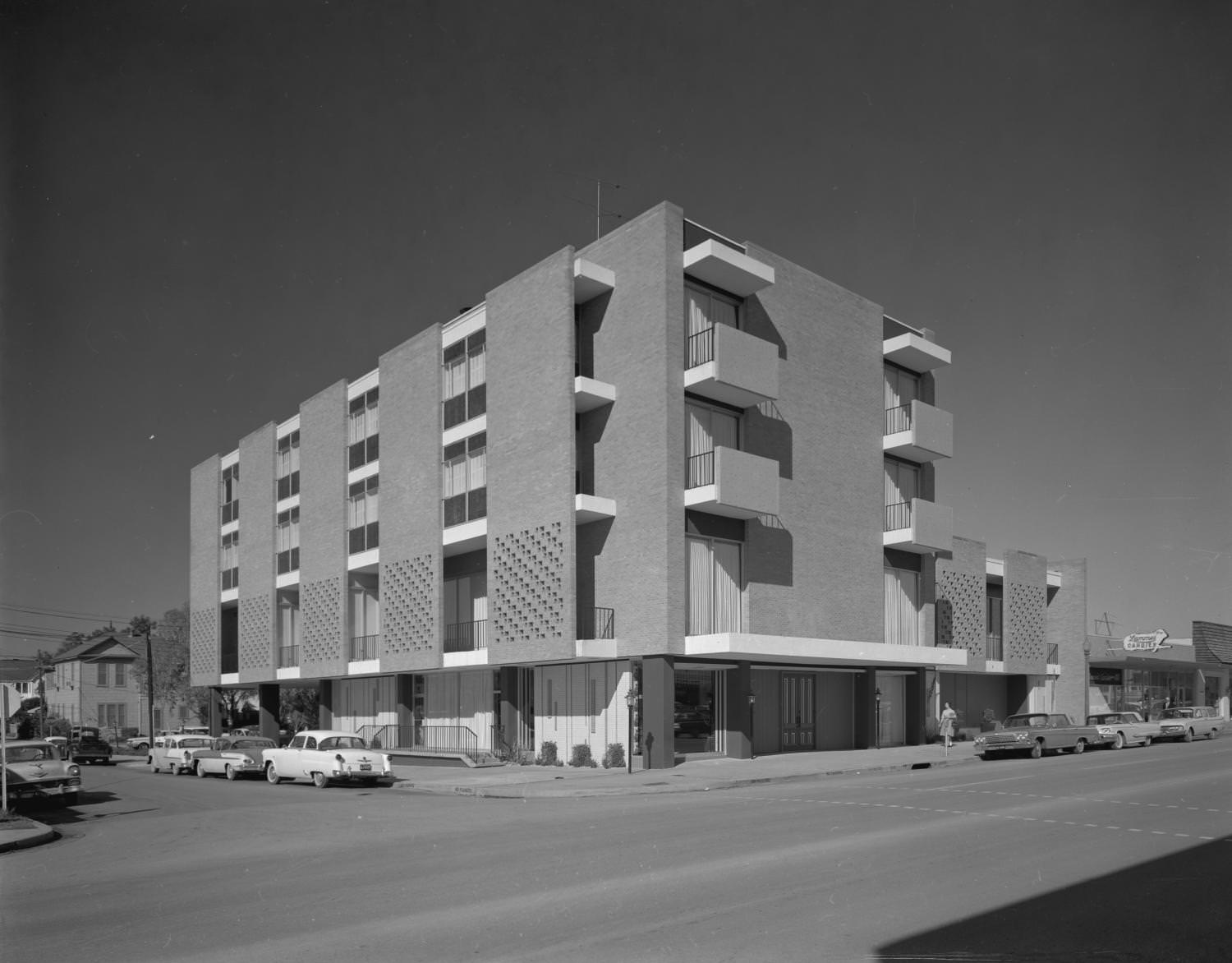
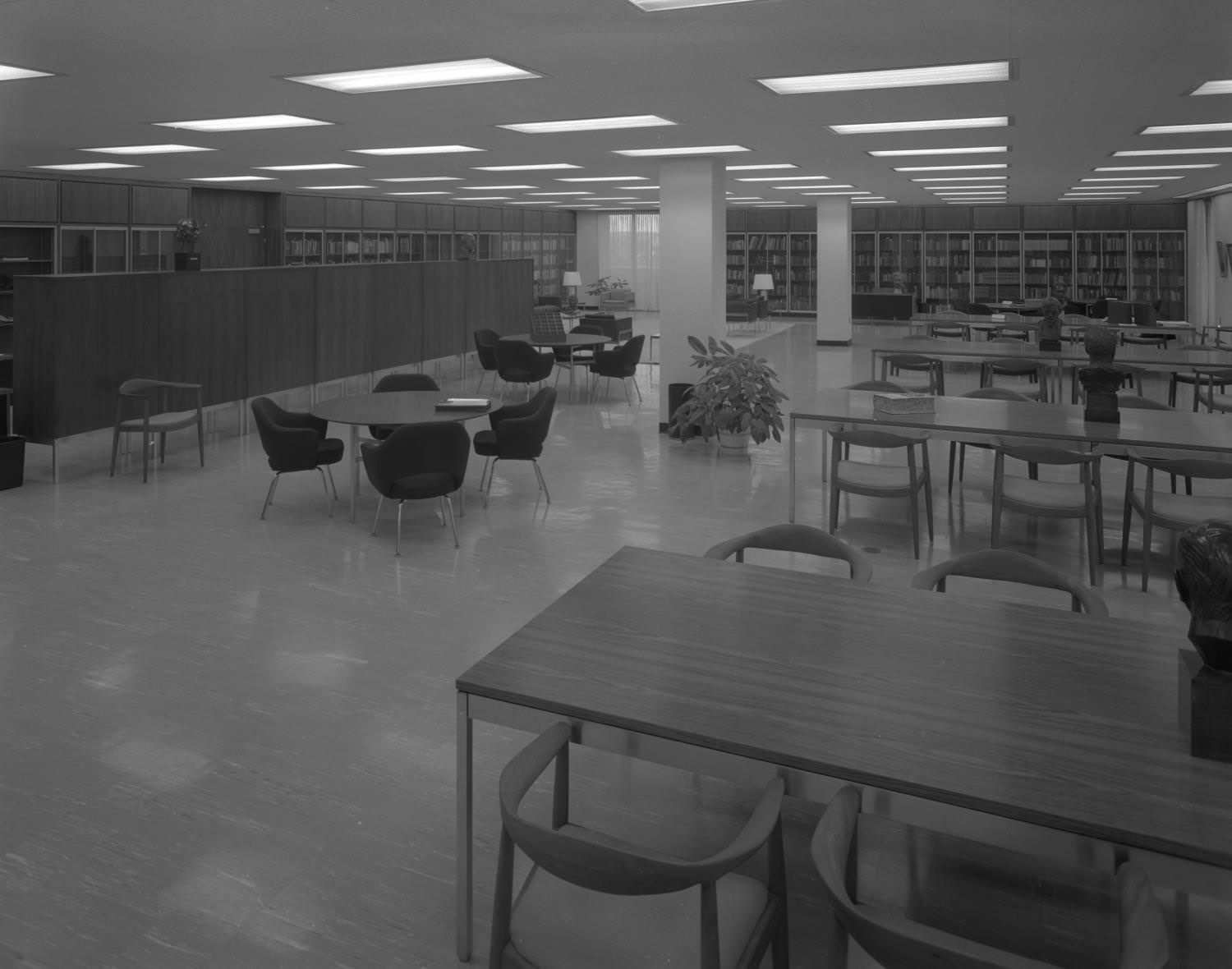
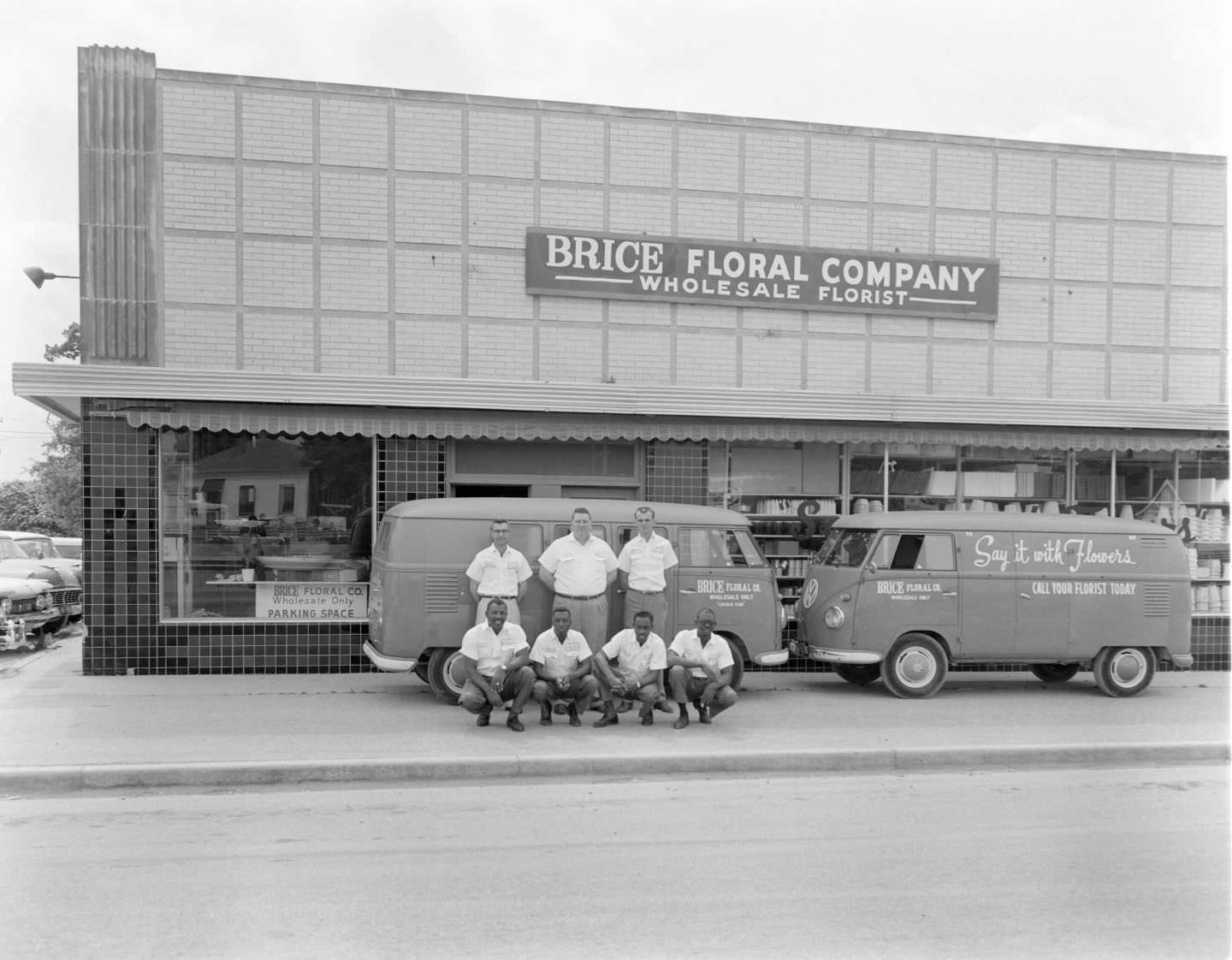
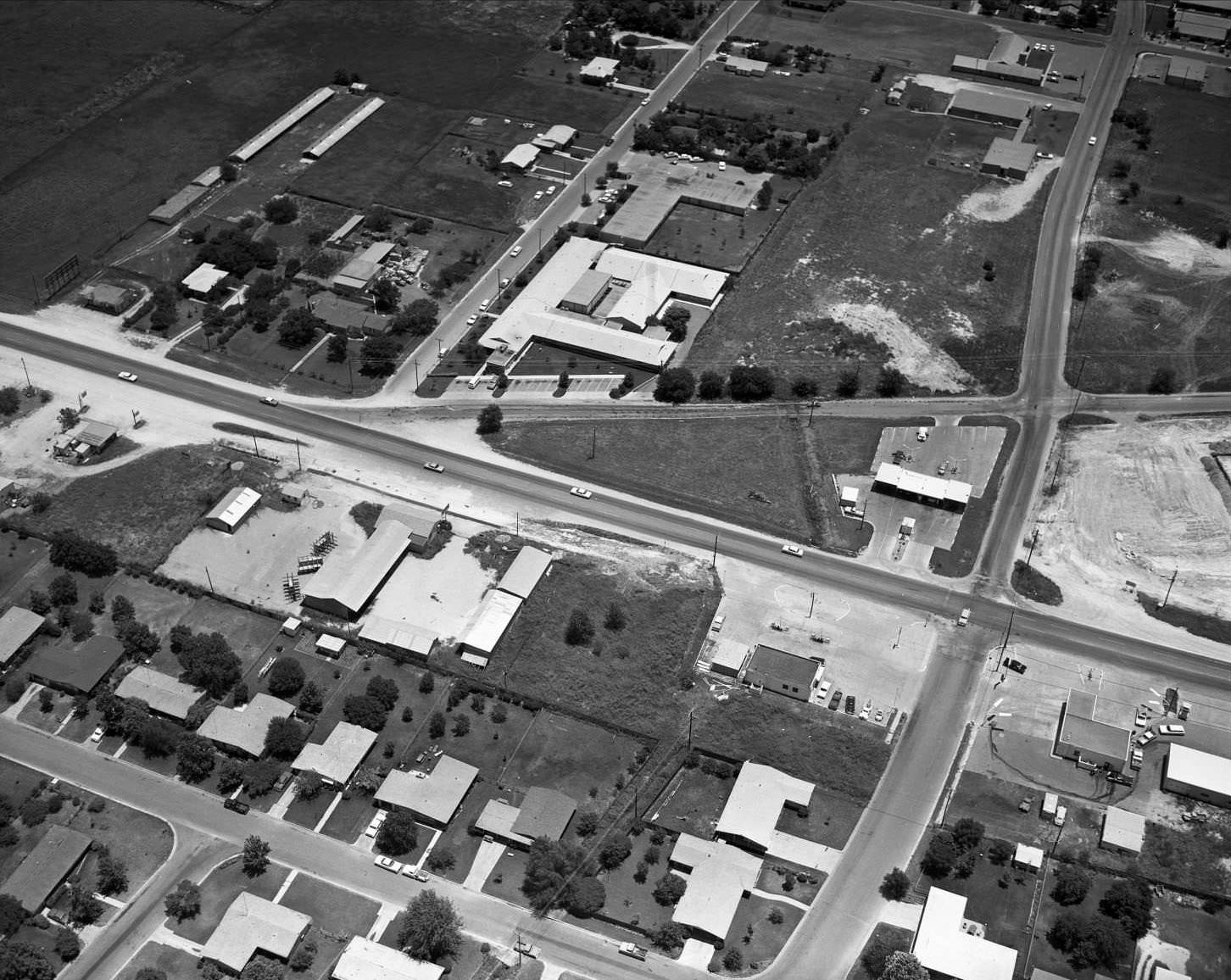
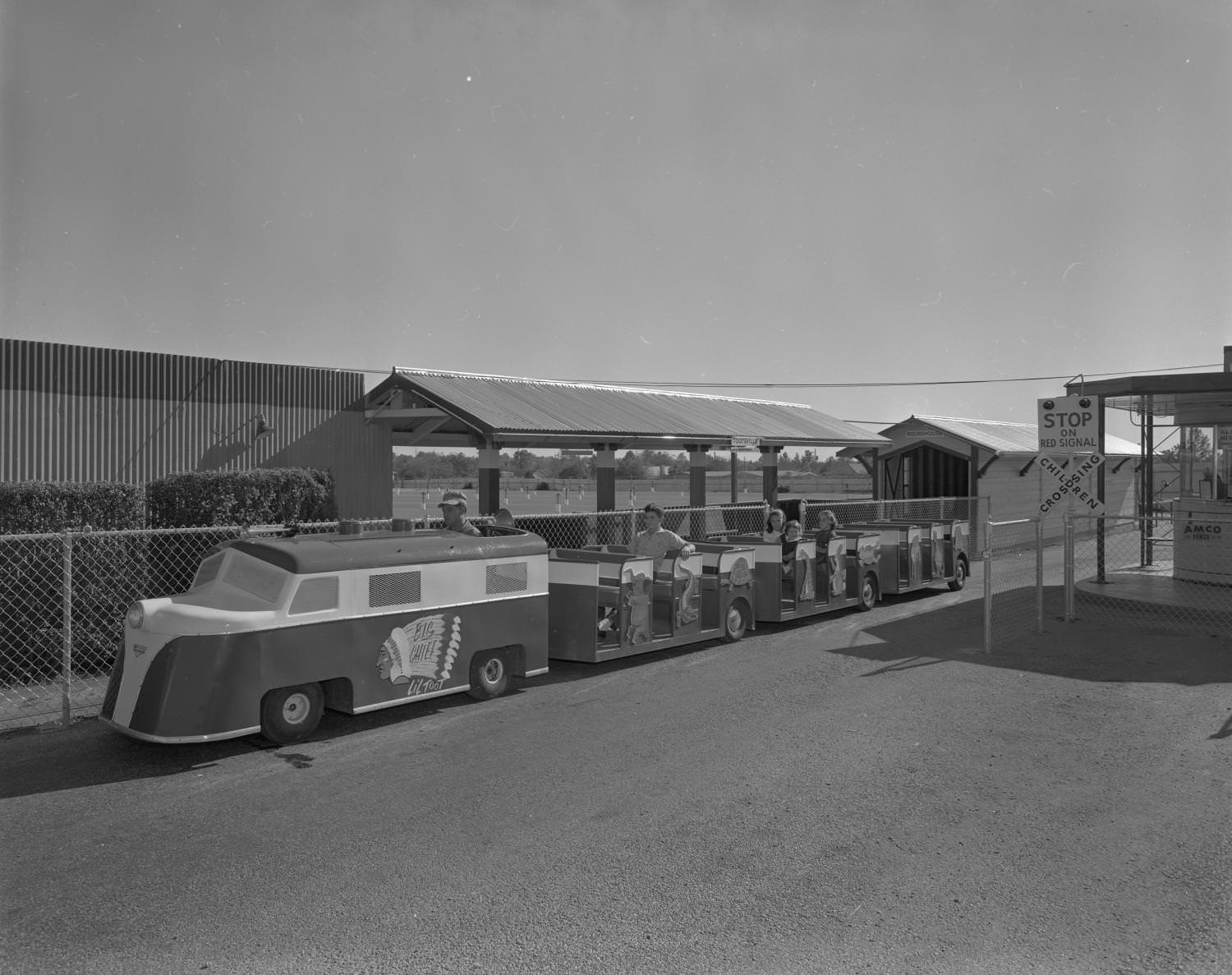
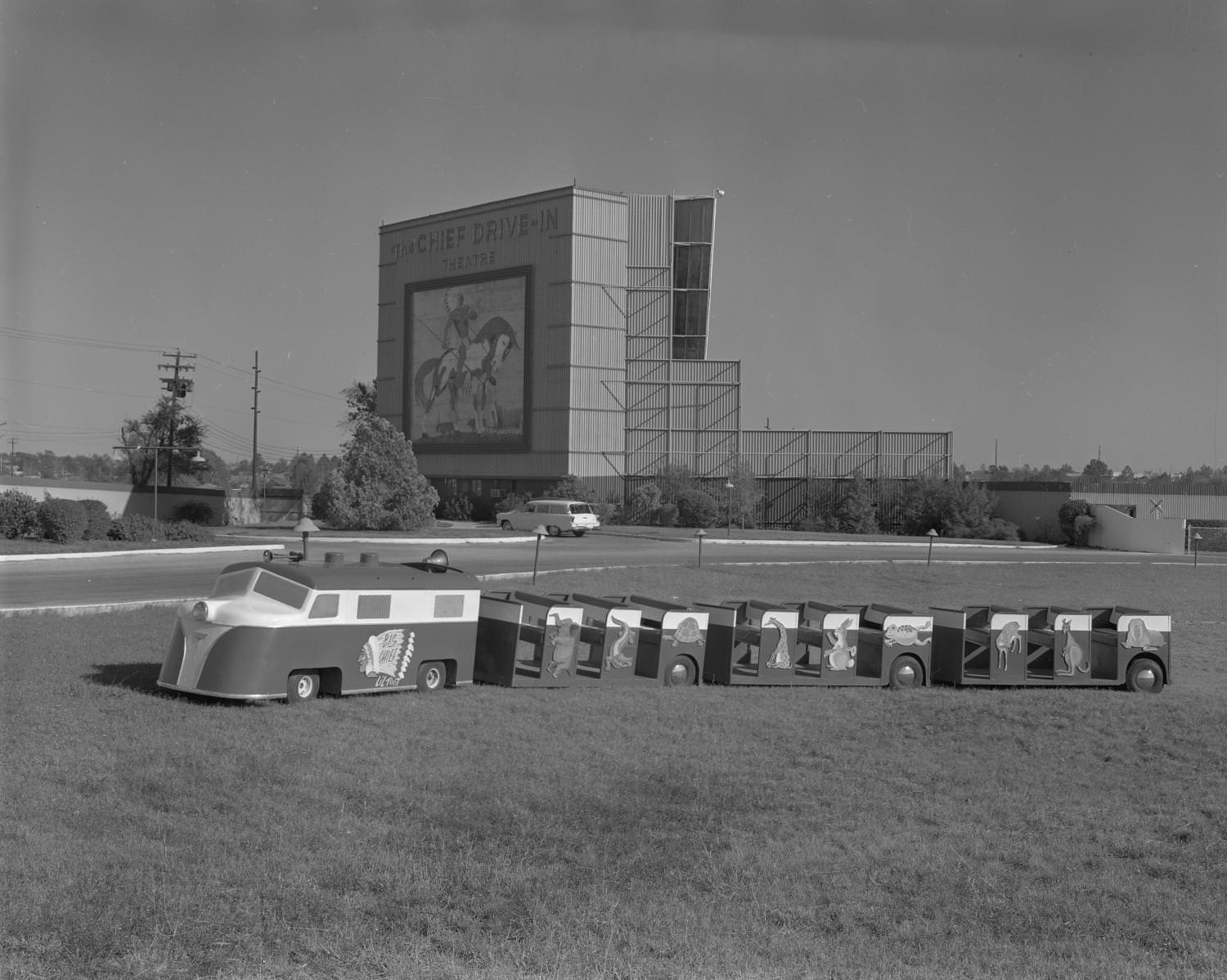
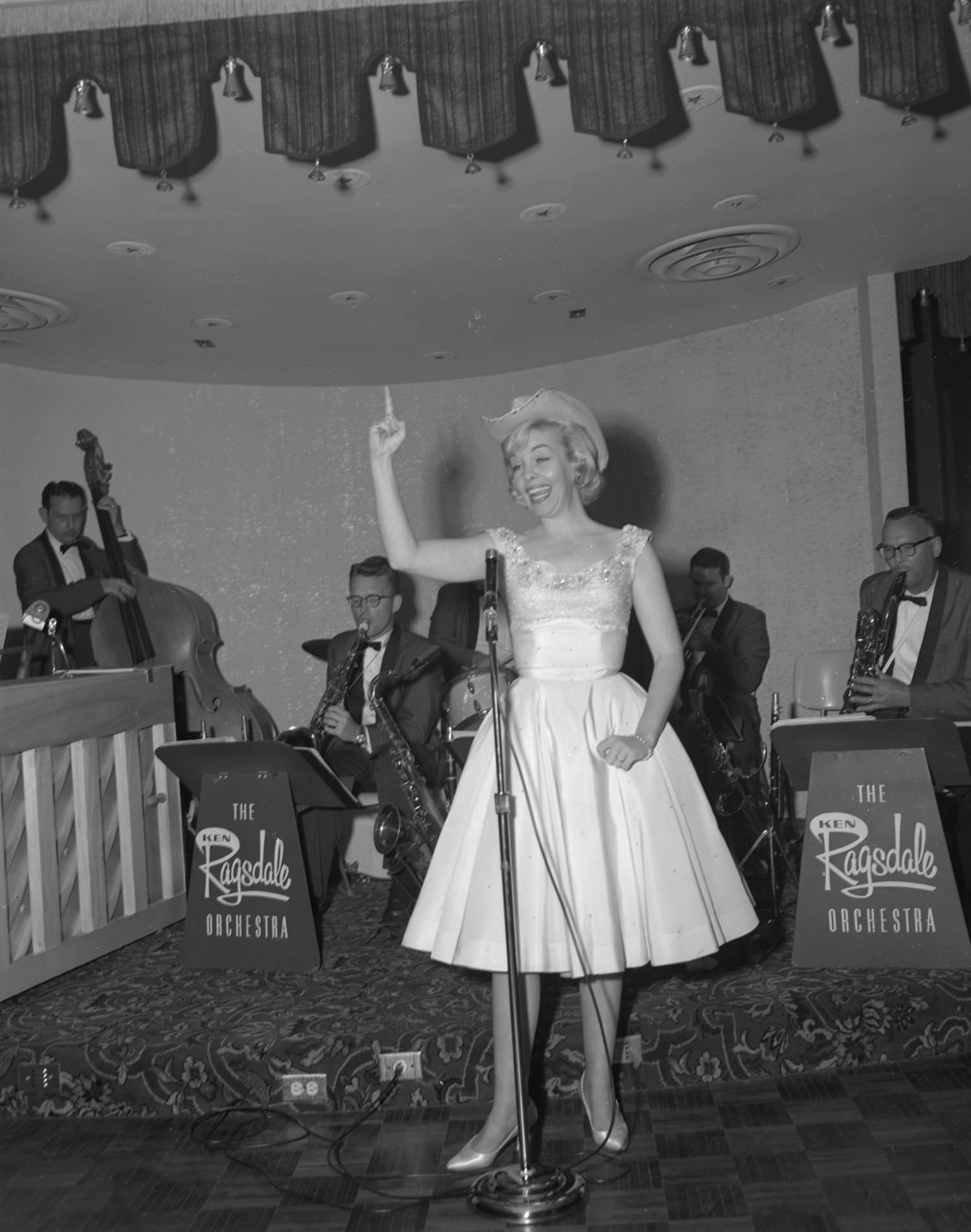
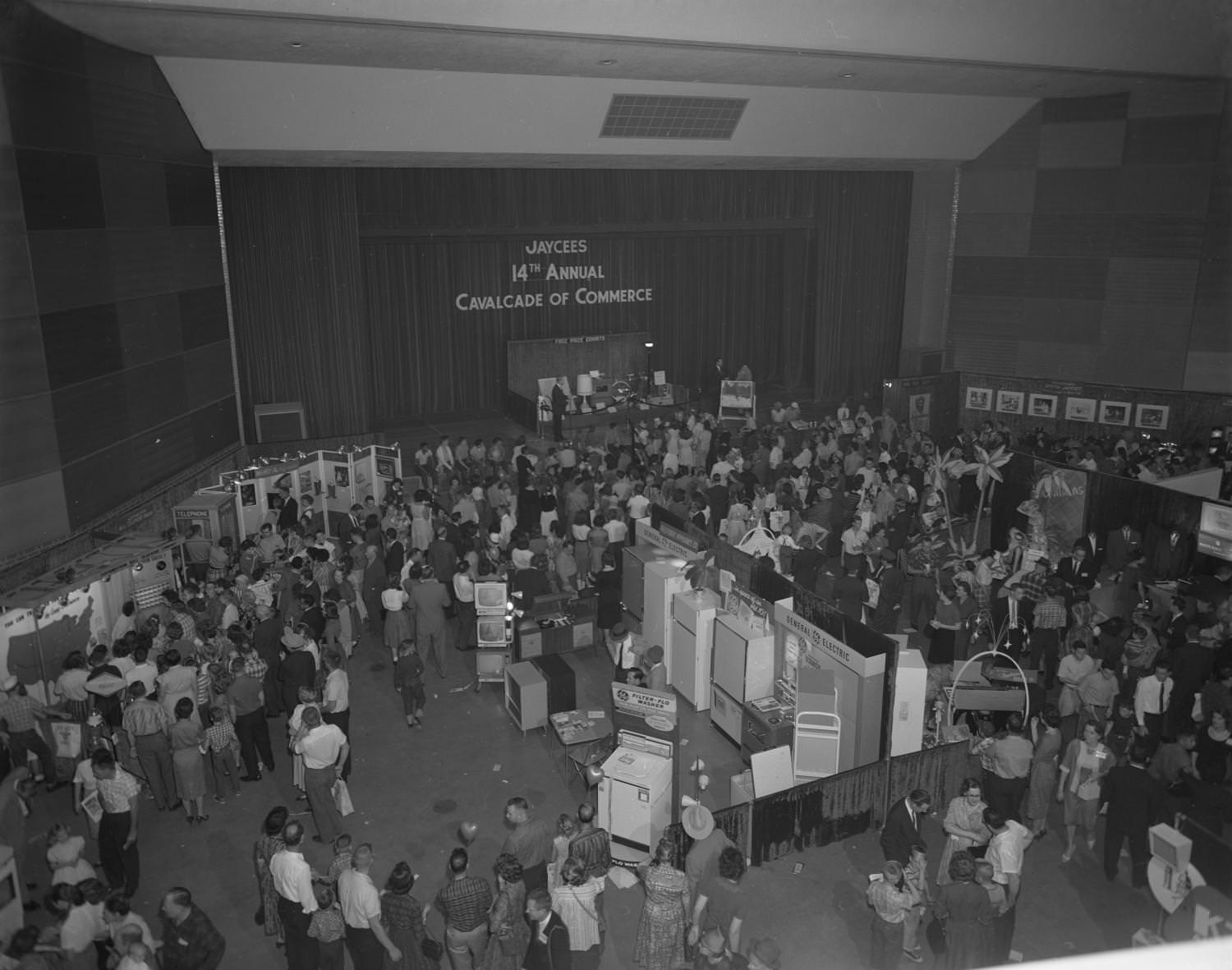
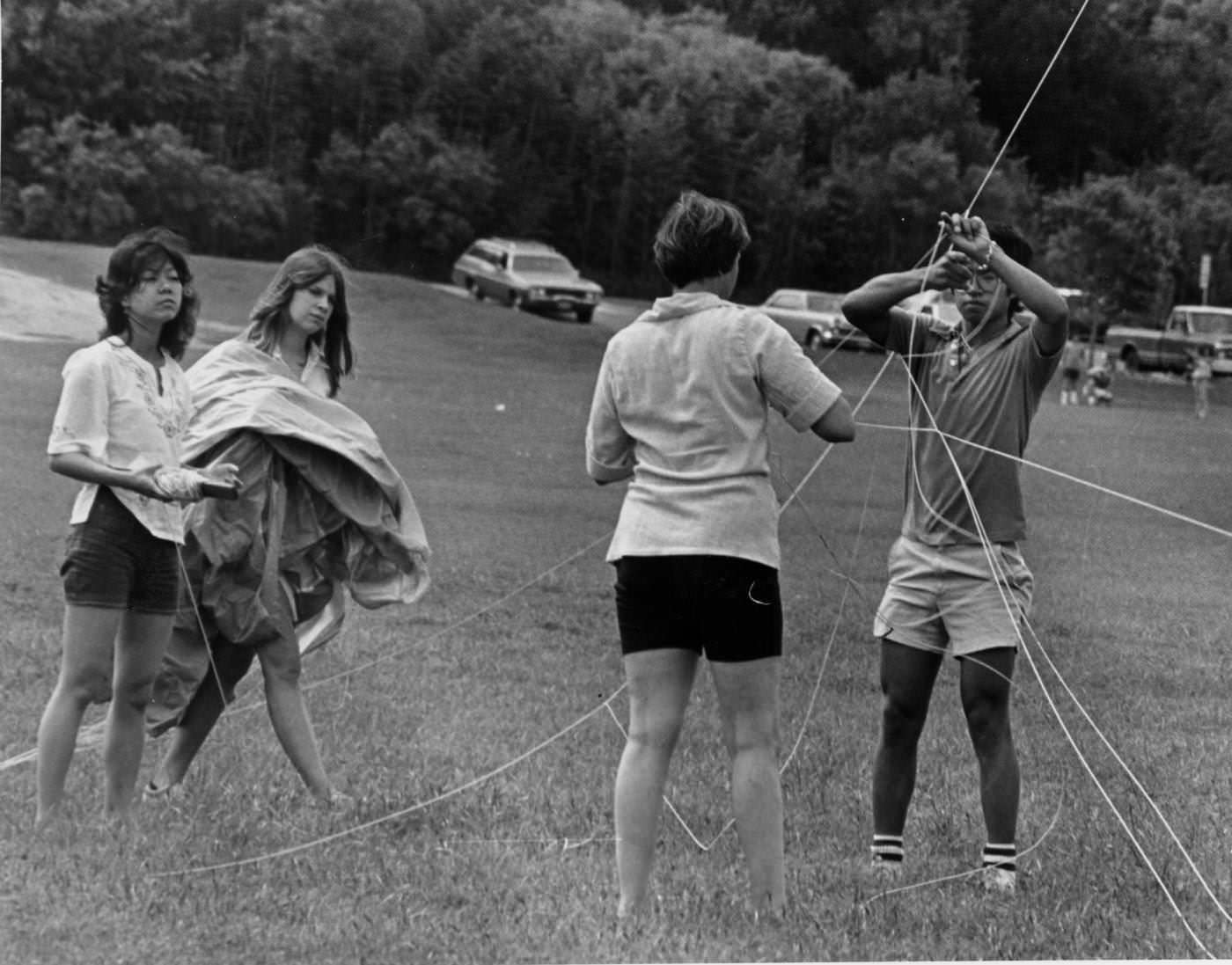
A group of men around a picnic table at a Friday night cocktail party, Austin, 1961A group of people boarding a bus for a Friday night cocktail party.1961.El Matamoros: Wedding Reception, 1965.A man at Manor Downs holding a lead for a dark horse who is trotting in front of him, 1967Young men display their competing cattle side by side in front of a barn, 1965Home with Pool, Austin, 1960The exterior of a home perched on a hillside, Austin, 1961A large, two-story, white house in a late-nineteenth/early-twentieth century American style, Austin, 1960Living Room by Deck, 1964A small apartment kitchen area, 1960Child of couple stands with bow in a driveway, 1965Woman on a Porch, 1962.Two women posing to advertise a motorized cart for Powered Products of Texas, 1960Checker cab parked on a residential street, Austin, 1962A foyer in a modern, postwar building, 1961A round five-story building of a modern, postwar design, 1965Exterior View of Postmodern Building, 1962A pond surrounded by trees near a tall, postwar building, 1969University Building Exterior, 1967.Men Reading at Tables, 1964Academic Study Area, 1964Fraternity Exterior, 1961The courtyard of the Gamma Phi Beta sorority building located at 2622 Wichita Street, 1960The Greek revival styled interior of the Gamma Phi Beta sorority house located at 2622 Wichita Street, 1960Neal Douglass – Studio, 1965.Men posing in front of vans with Brice Floral Company in background. Austin, 1930Aerial shot of CB Francis Rest Home, 6909 Burnet Rd. Burnet Road running left to right in center, 1965A mini train for children at theater located at 5601 North Lamar Boulevard, 1961A mini children’s’ train parked in front of a Trans-Texas Theater that was located at 5601 North Lamar Boulevard, 1961A performer on stage during the opening night of Club Caravan, located at 2360 North Interstate 35, 196114th Annual Calvacade of Commerce, 1961Andrews Day, 1966All Tied up on Zilker Kite Field, 1969
Taniguchi wanted to give the city of Austin a gift of an oriental garden. It would be his gesture of gratitude to the city that had provided an education for his two sons. The Parks and Recreation Department in conjunction with the Austin Area Garden Council agreed that such a generous gift could not be ignored. There was no contract, no design, and no blueprints of any kind because–as Taniguchi explains–gardens are not created by such methods. Instead, the plans for the Oriental Gardens existed only in Taniguchi’s mind, in his soul and in his heart. He died in 1992.

![Pan American Recreation Center] Tiny Tot trip to Hillcrest Farms, 1968.](https://www.bygonely.com/wp-content/uploads/2022/12/Austin_1960s_76.jpg)
![Austin High [School] R.O.T.C., 1968](https://www.bygonely.com/wp-content/uploads/2022/12/Austin_1960s_3.jpg)
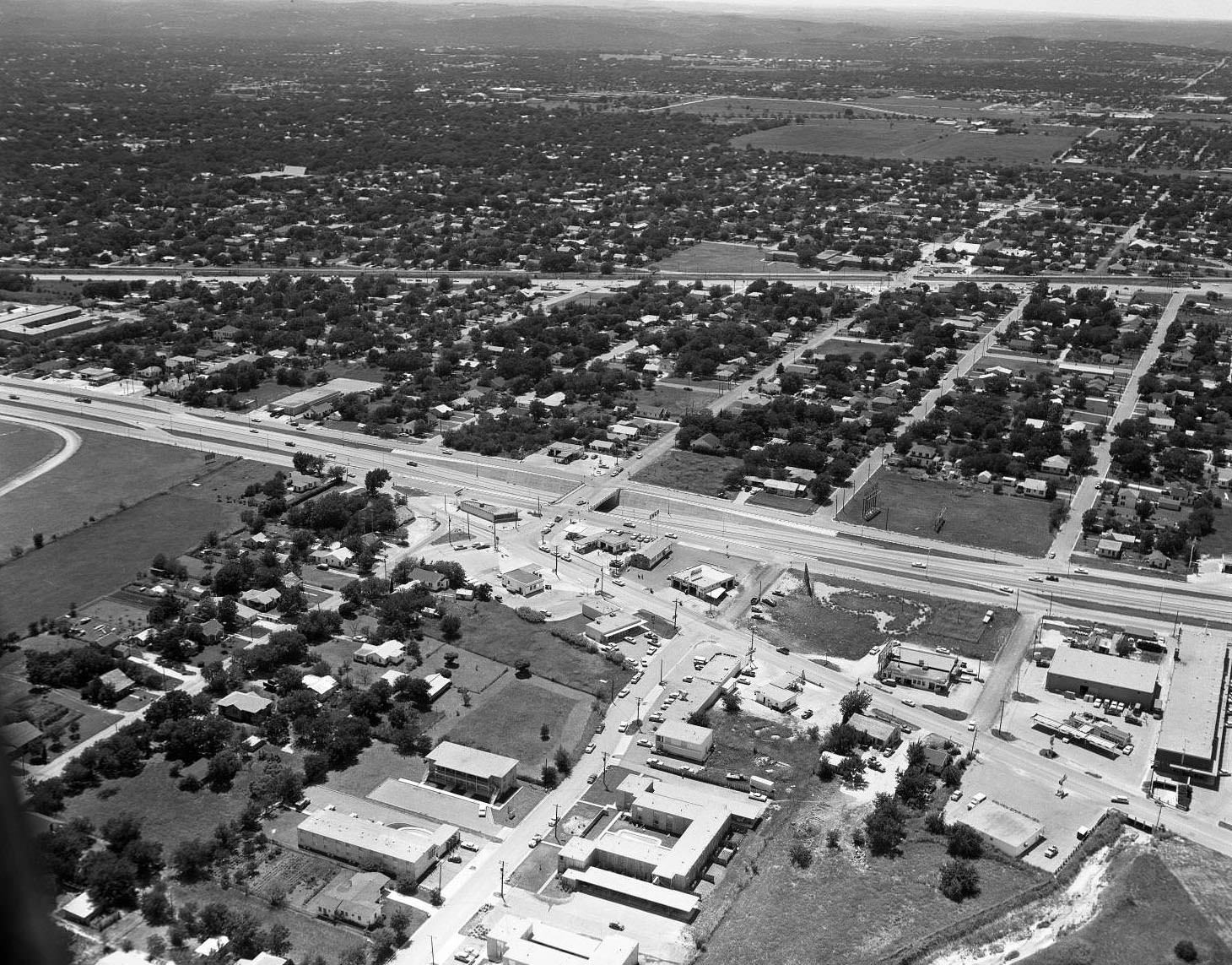
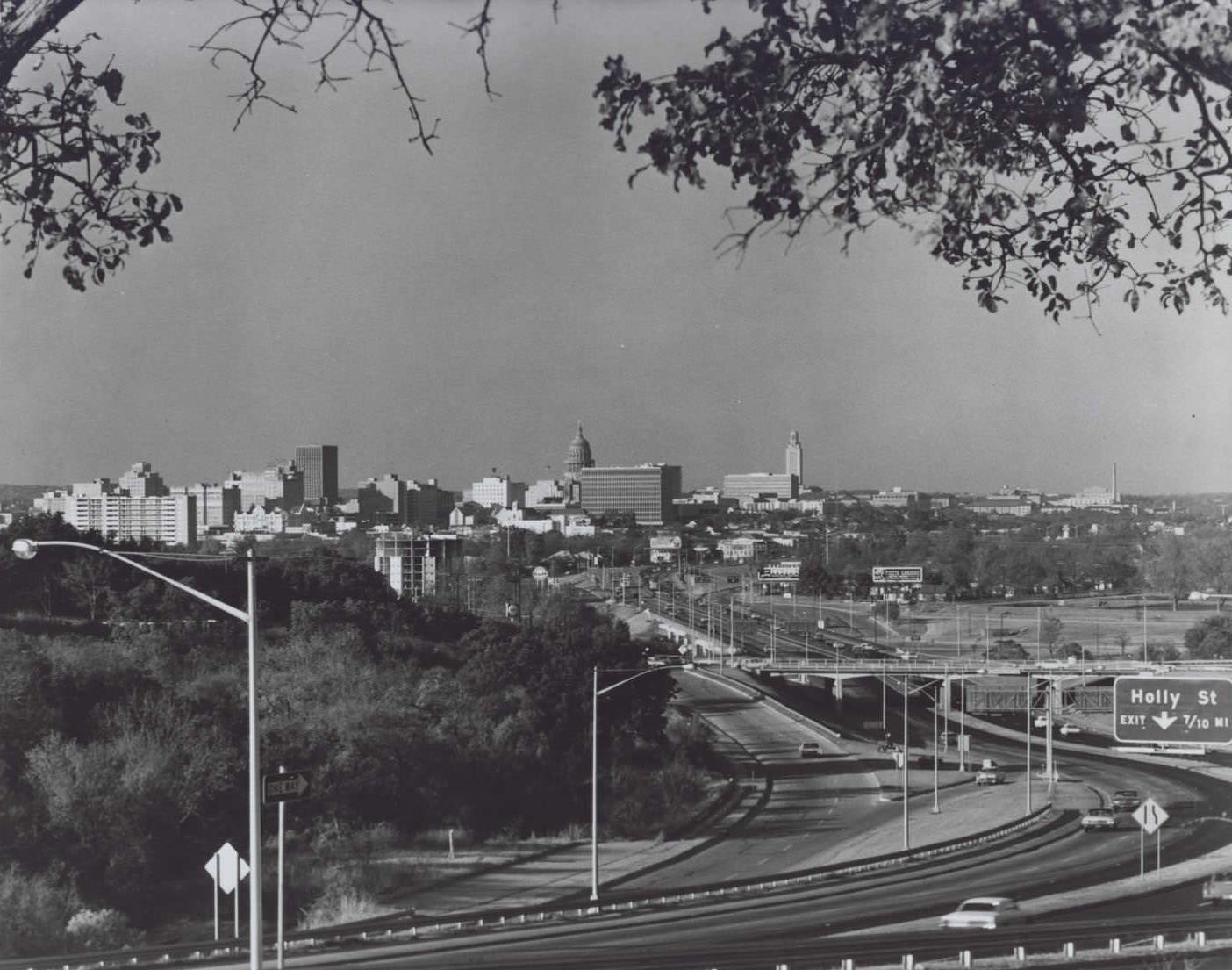





Where was us-81?
My parents were just kids when these photos were all taken.
It looks like home…
Lot’s of photo’s of Isamu Taniguchi.
Isamu Taniguchi
Taniguchi wanted to give the city of Austin a gift of an oriental garden. It would be his gesture of gratitude to the city that had provided an education for his two sons. The Parks and Recreation Department in conjunction with the Austin Area Garden Council agreed that such a generous gift could not be ignored. There was no contract, no design, and no blueprints of any kind because–as Taniguchi explains–gardens are not created by such methods. Instead, the plans for the Oriental Gardens existed only in Taniguchi’s mind, in his soul and in his heart. He died in 1992.
This is one of my favorite things in Austin, it’s pretty magical.
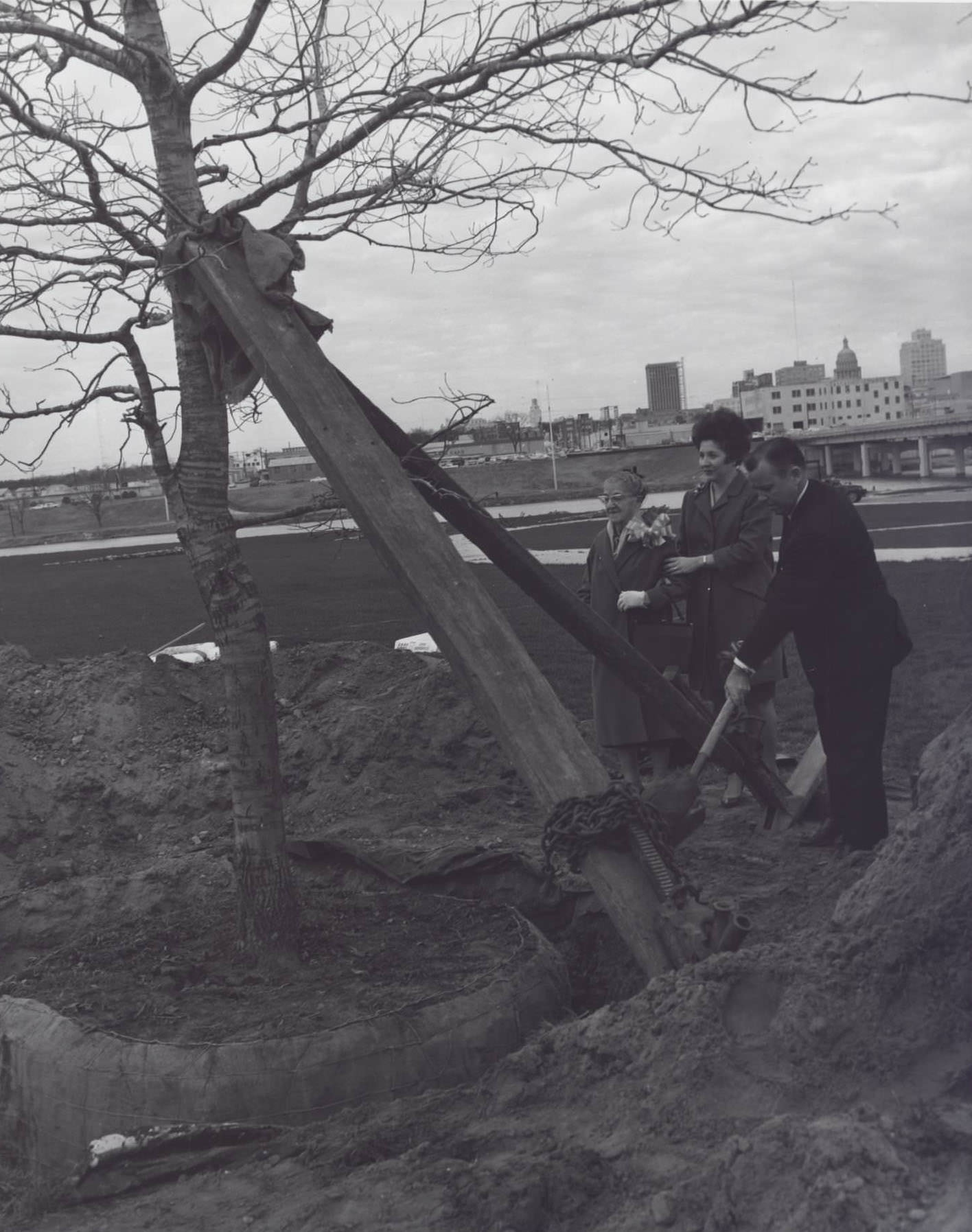
I still think it’s completely wacky that there were no trees around Lady Bird Lake (Towne Lake) until the 1960s. Thanks, Lady Bird!
Man was the city ugly as hell.