
On July 16, 1969, Apollo 11 lifted off from Kennedy Space Center carrying astronauts Neil Armstrong, Buzz Aldrin, and Michael Collins toward the moon. Four days later, Armstrong and Aldrin became the first humans to walk on the lunar surface. More than half a billion people around the world watched the moment Armstrong stepped off the Eagle lander and said, “That’s one small step for (a) man, one giant leap for mankind.” On July 24, the crew splashed down safely about 812 nautical miles southwest of Hawaii, completing President Kennedy’s challenge to land men on the moon and return them home before the decade was out.
While the world celebrated from afar, three families in Houston, Texas lived through every second of the mission with a personal weight that no broadcast could fully capture. Janet Armstrong, Joan Aldrin, and Pat Collins waited, watched, and held themselves together as their husbands did the impossible. These photographs document what that looked like — not from Mission Control, but from living rooms, backyards, and the decks of boats.
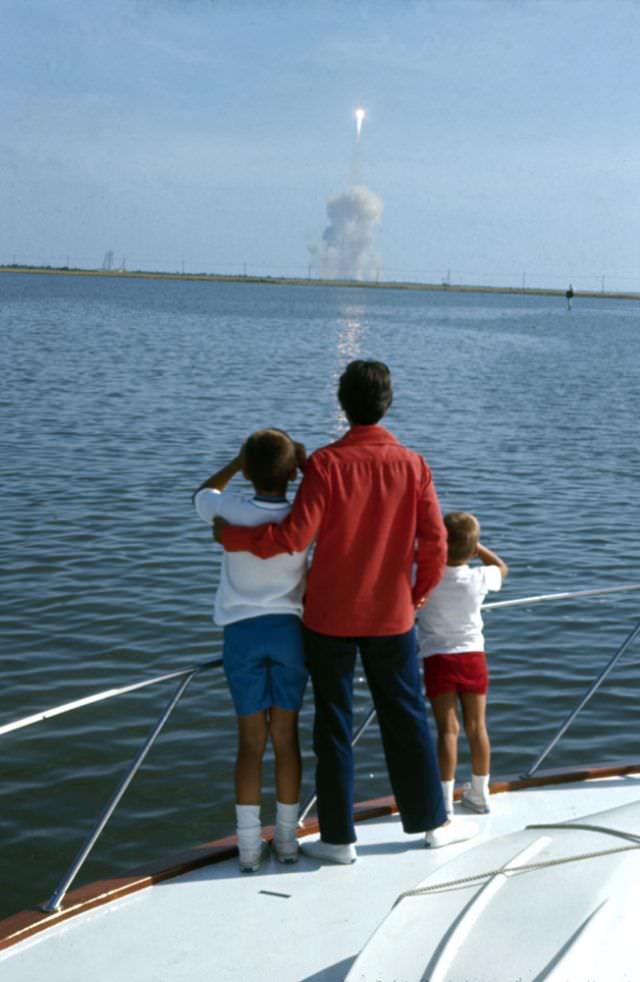
Janet Armstrong watched the launch from the water with her two sons, Mark and Rick. It was a moment of pride and dread at the same time. The Saturn V rocket carrying her husband produced 7.6 million pounds of thrust at liftoff — a spectacle visible for miles. But for Janet, the sky held something far more personal than spectacle.
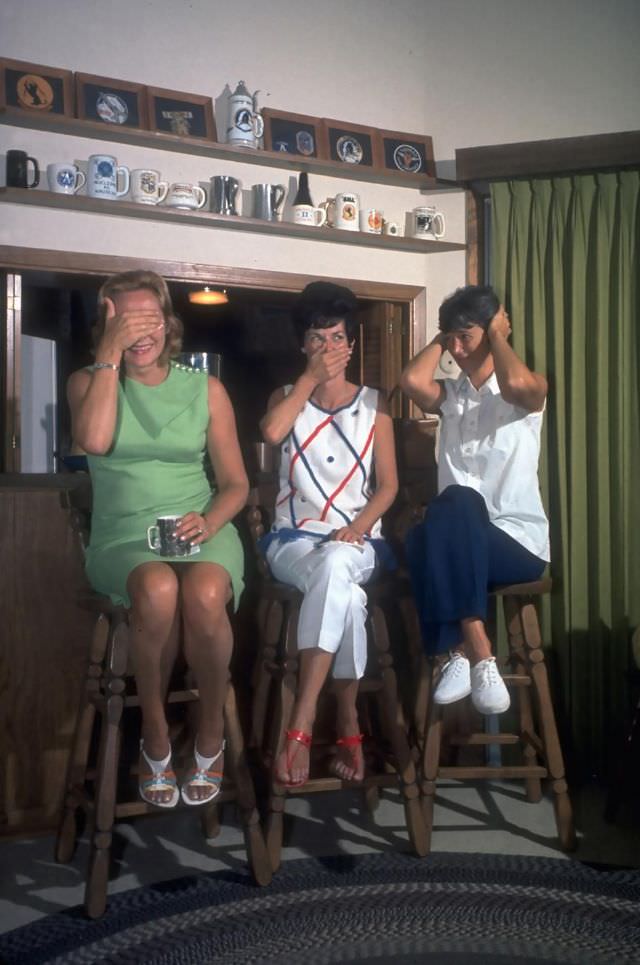
The three wives spent much of the mission together, leaning on one another through the long stretches of waiting. In one now-famous photograph taken at the Aldrin home, all three posed in imitation of the Three Wise Monkeys — hands over eyes, mouth, and ears. It was a rare moment of humor amid an enormous amount of tension.
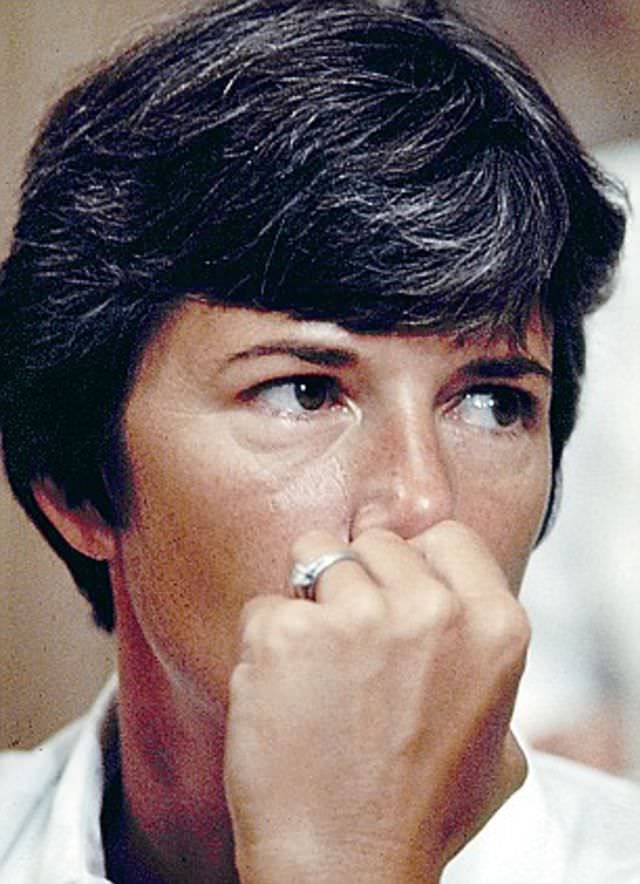
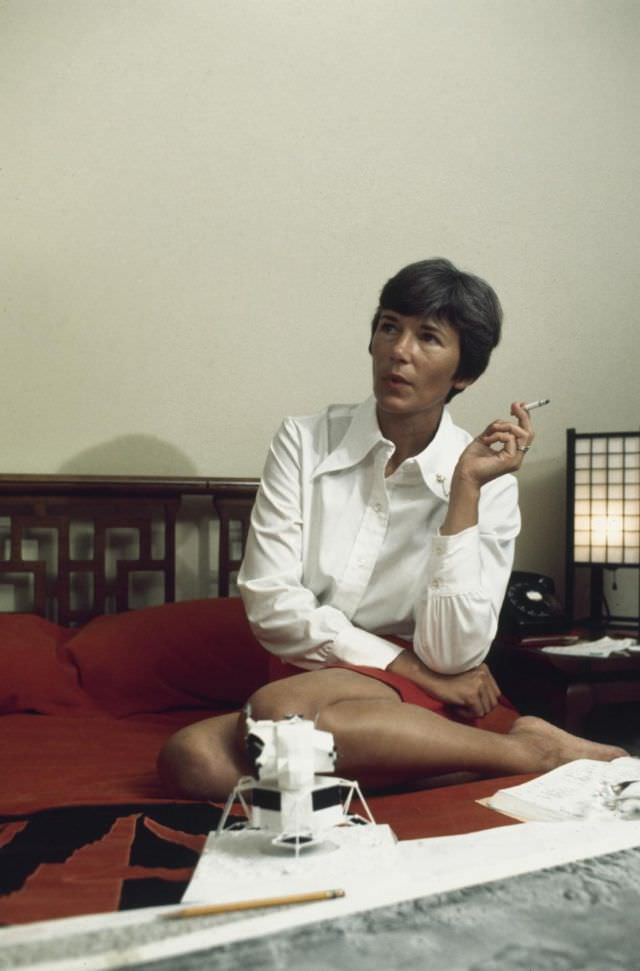
The television became the lifeline for all three families. Every update from Mission Control, every static-filled transmission, every image beamed back from space was watched with fierce attention. Janet Armstrong’s body language in photos from those days tells its own story — clenched fists, a tight jaw, eyes locked on the screen.
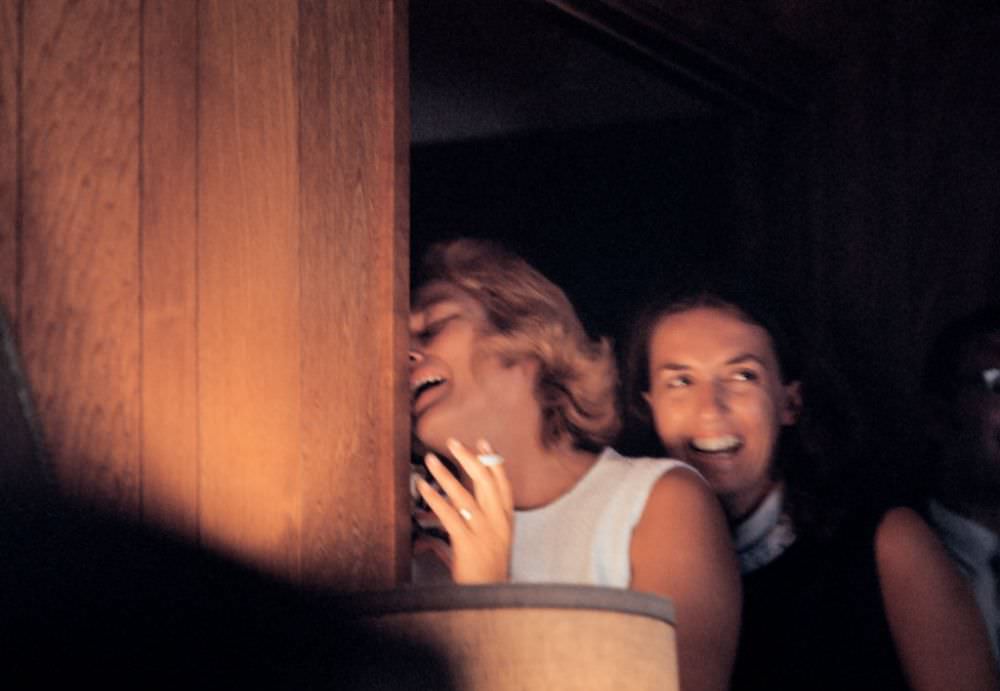
When the lunar module touched down safely on July 20, the relief was immediate and visible. Joan Aldrin’s expression in photographs from that moment says everything words cannot. The tension that had been building for days released all at once. For the families, the landing wasn’t an achievement in the abstract — it meant their husbands were still alive.
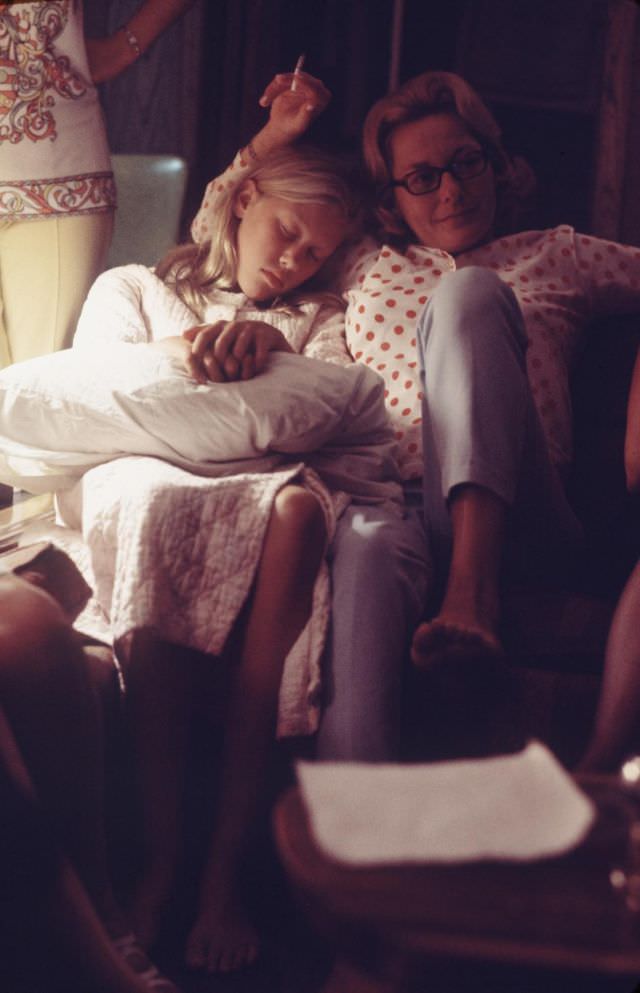
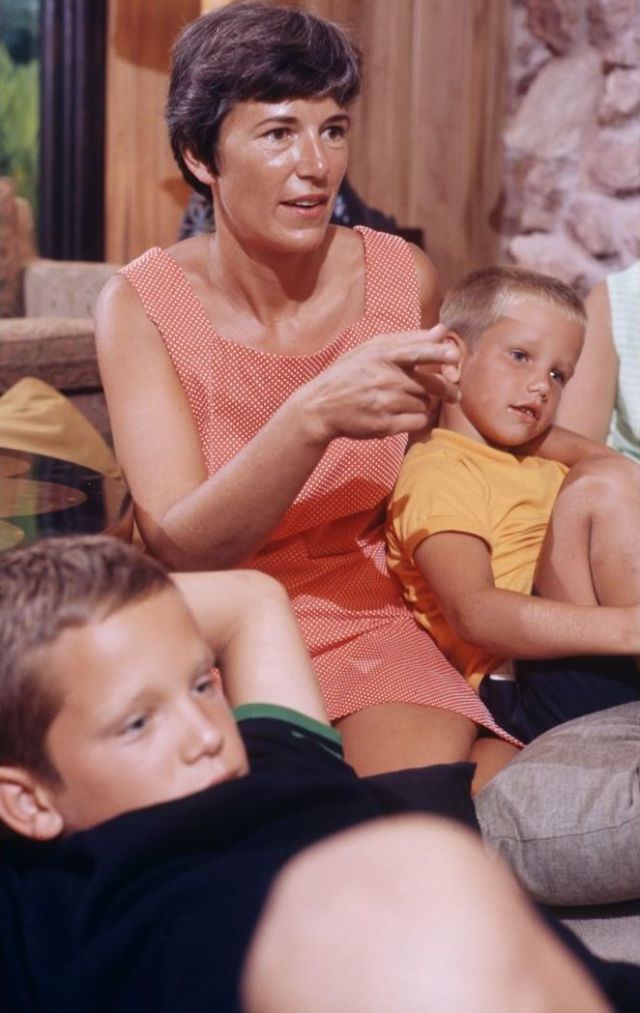
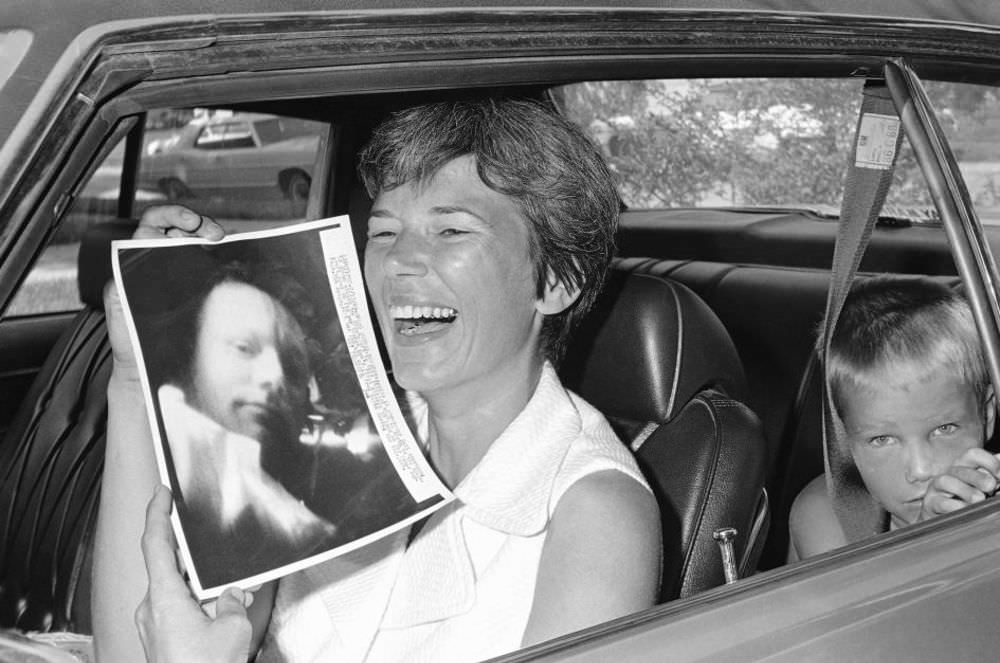
The children of the Apollo 11 crew experienced the mission in their own way. Some fell asleep during late-night broadcasts. Others sat wide-eyed on the floor next to their mothers, watching a grainy black-and-white screen show their fathers walking on another world. Six-year-old Mark Armstrong sat in the back of a car as his mother reacted to a live telecast image of his father on July 18.
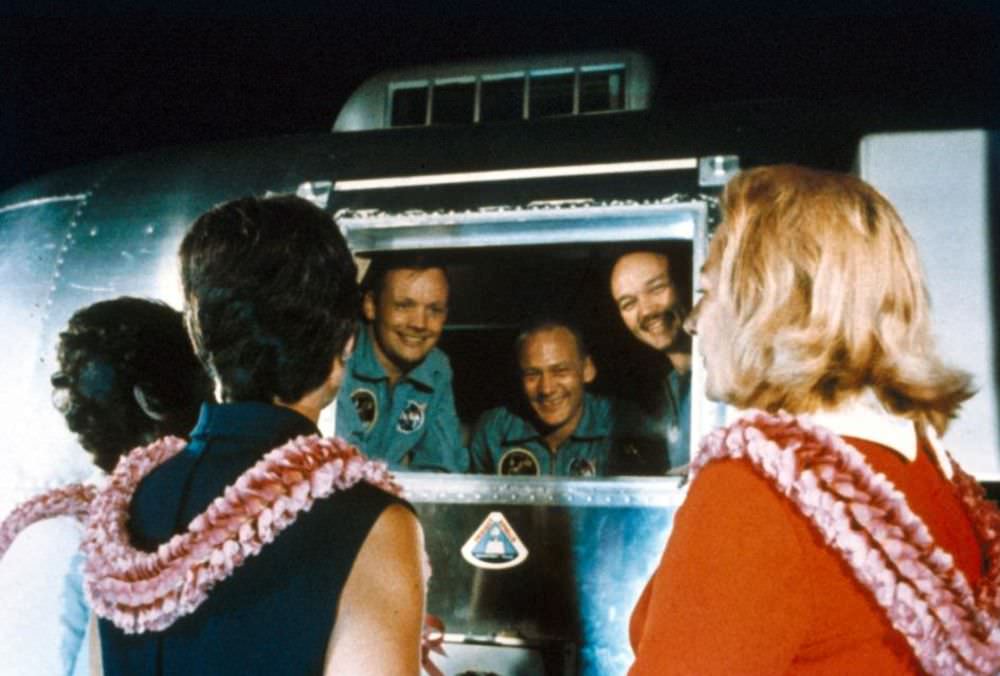
After splashdown on July 24, the crew was recovered by the U.S.S. Hornet — but the reunion with their families was not immediate. NASA placed all three astronauts in the Mobile Quarantine Facility as a precautionary measure to prevent any potential spread of lunar microorganisms. The wives could see their husbands through a window, but physical contact was off the table.
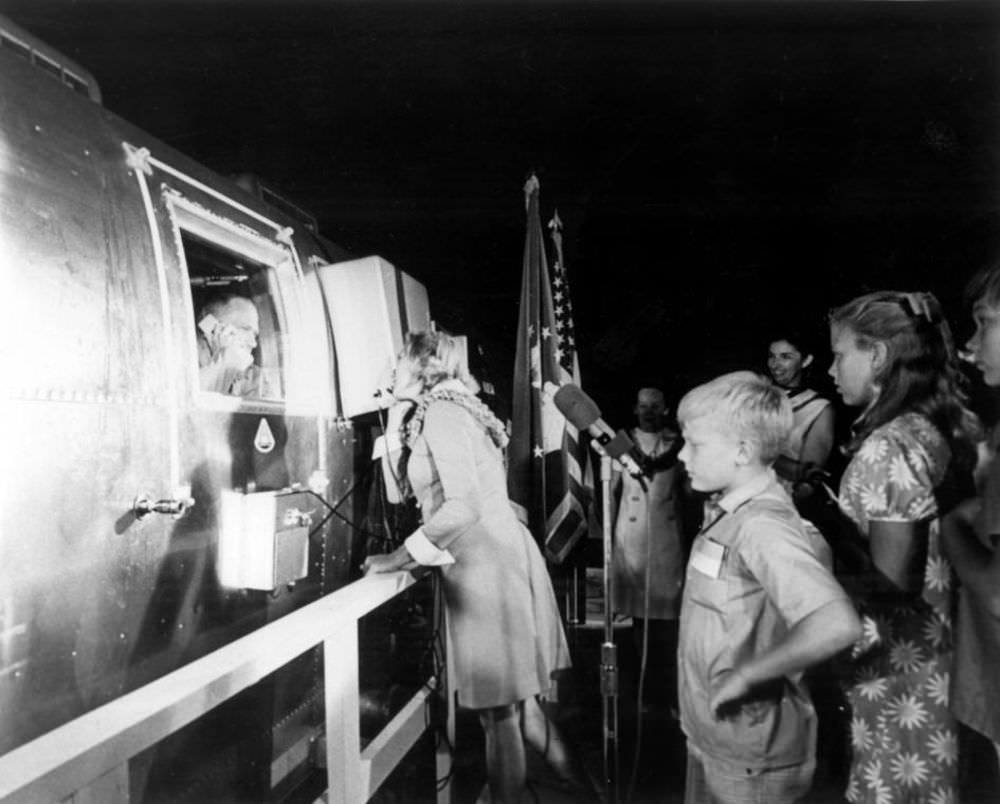
The astronauts remained in quarantine for 21 days after returning to Earth. Joan Aldrin spoke to Buzz by phone while he looked out through the facility window. Scientists ultimately determined the precaution was unnecessary — the moon showed no signs of life — and the quarantine protocol was dropped after the Apollo 14 mission in 1971.
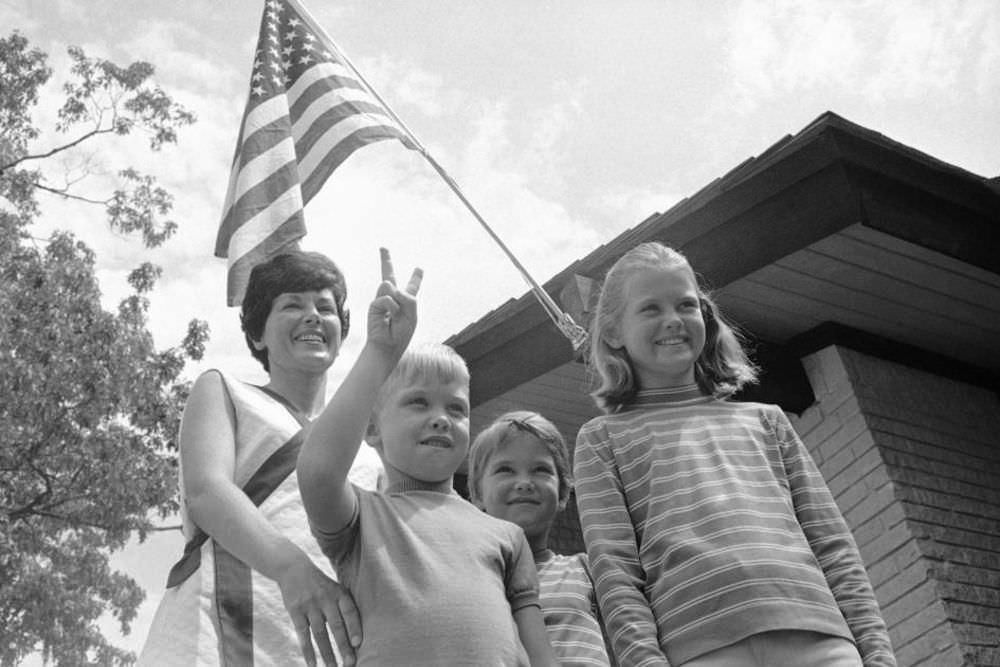
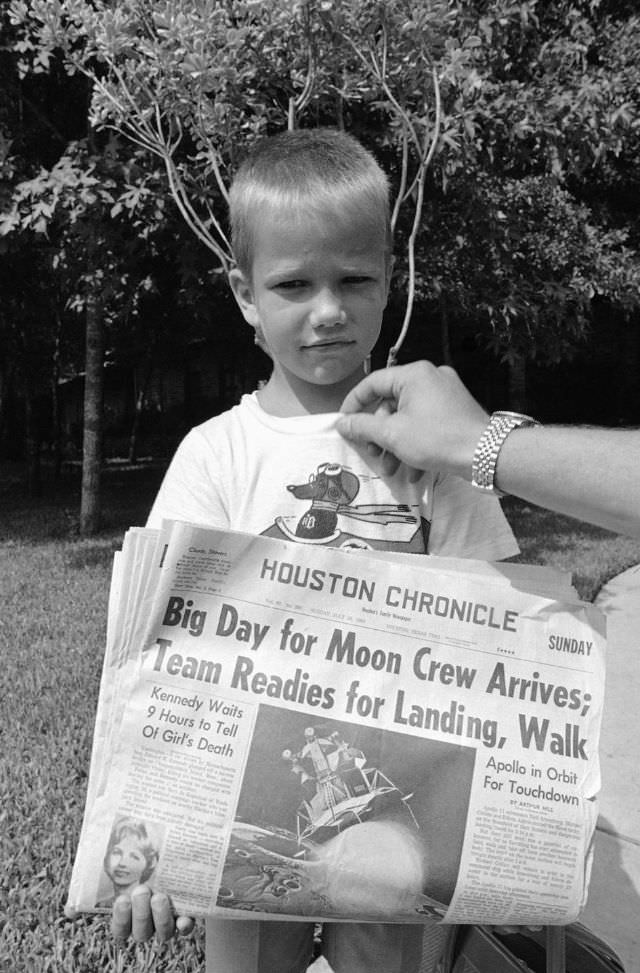
On the morning of July 20 — the day of the lunar landing — six-year-old Mark Armstrong stood outside the family home in Houston holding a newspaper whose headline announced what was about to happen. His father’s name was already in the headlines before the most important moment of the mission had even occurred.
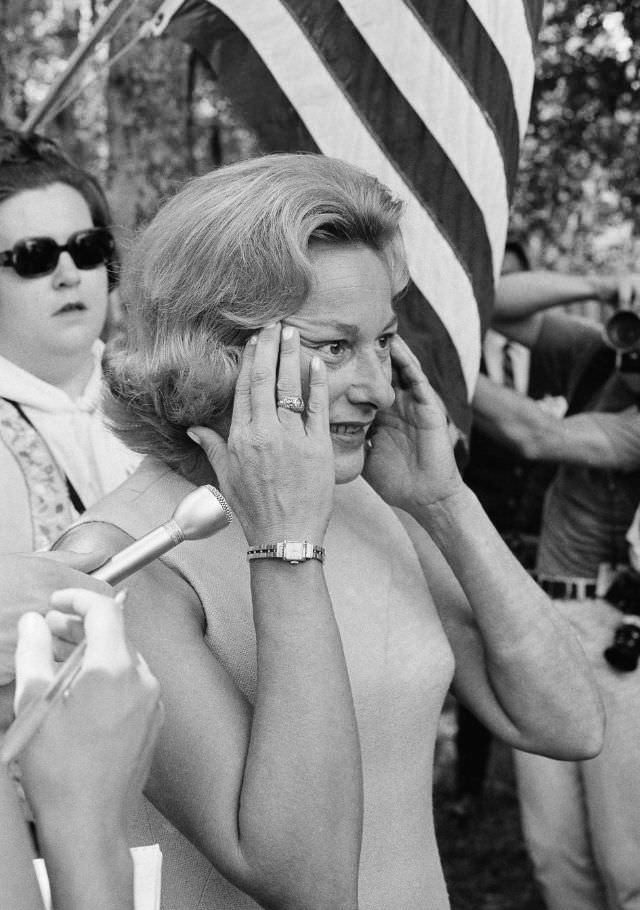
The day after launch, Joan Aldrin spoke with reporters outside her Houston home. Media attention on the families was intense throughout the mission. The wives fielded interviews, hosted crowds of friends and neighbors, and managed their households — all while tracking a mission that could have ended in disaster at any stage.
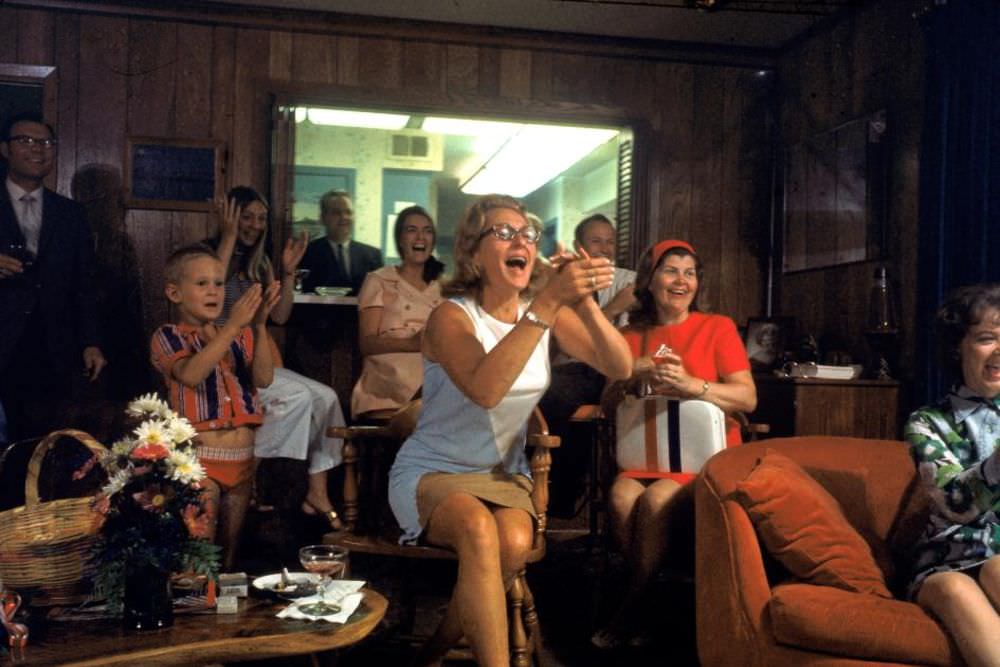
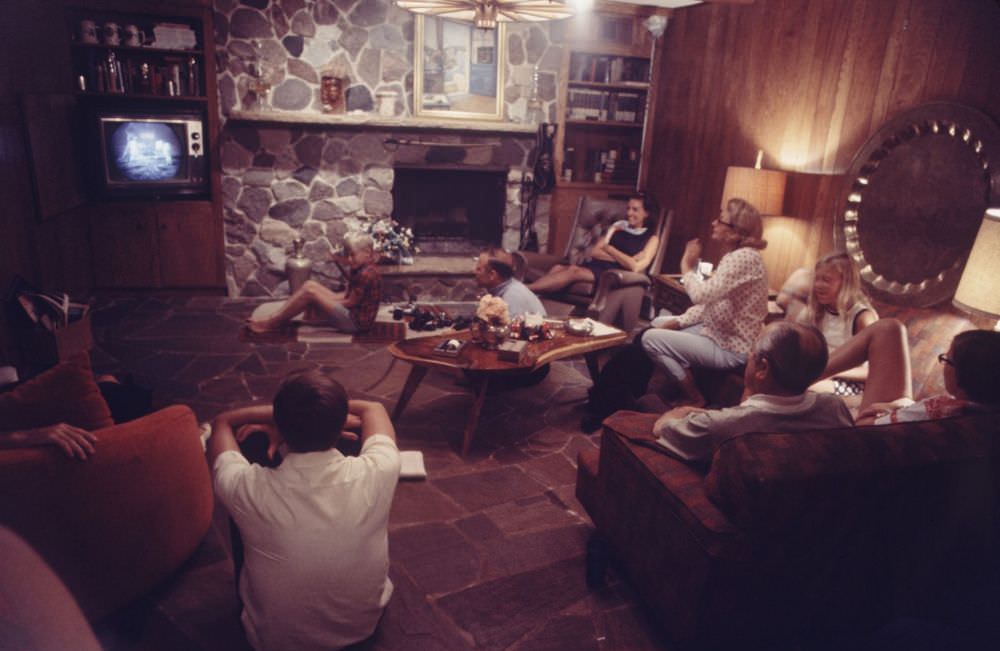
None of these families waited alone. Friends, neighbors, NASA staff, and extended family packed into Houston homes throughout the mission. Living rooms became informal watch parties where every transmission was shared and every update greeted with either relief or renewed anxiety.
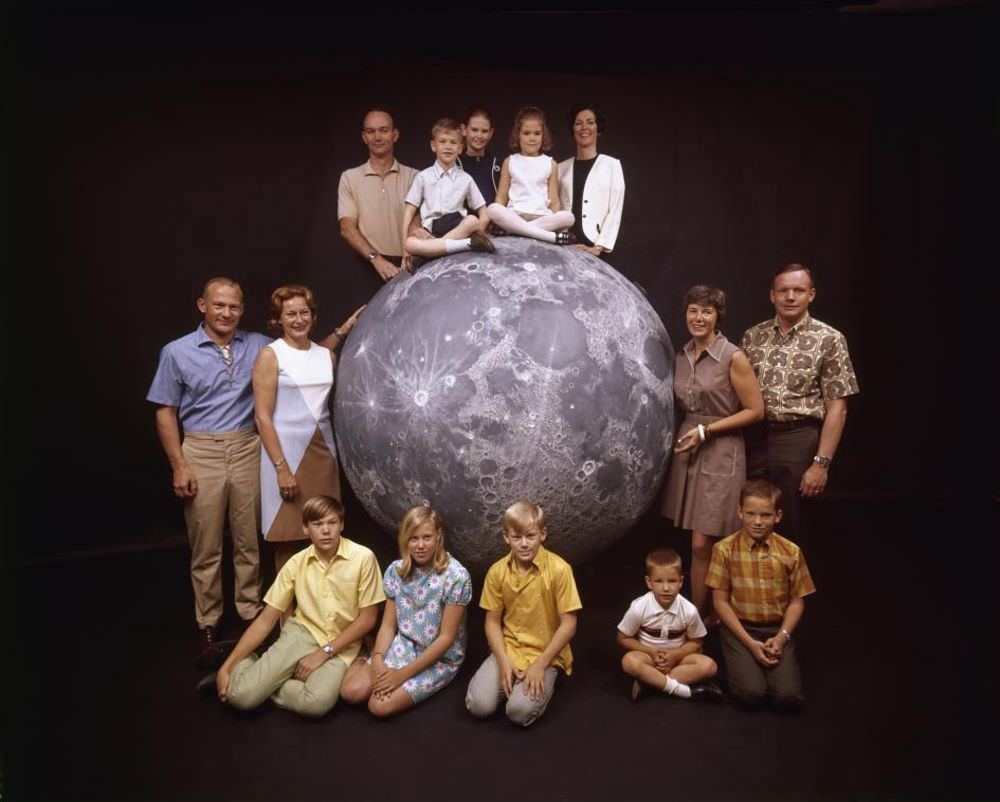
Four months before launch, all three crews gathered for a photograph on a model of the moon. The Collins family — Michael, Pat, and their children Mike, Kate, and Ann — posed at the top. The Aldrins — Buzz, Joan, and children Mike, Jan, and Andy — stood to the left. The Armstrongs — Neil, Janet, and sons Ricky and Mark — were positioned to the right. It was a carefully staged image, but the families behind it were very real.
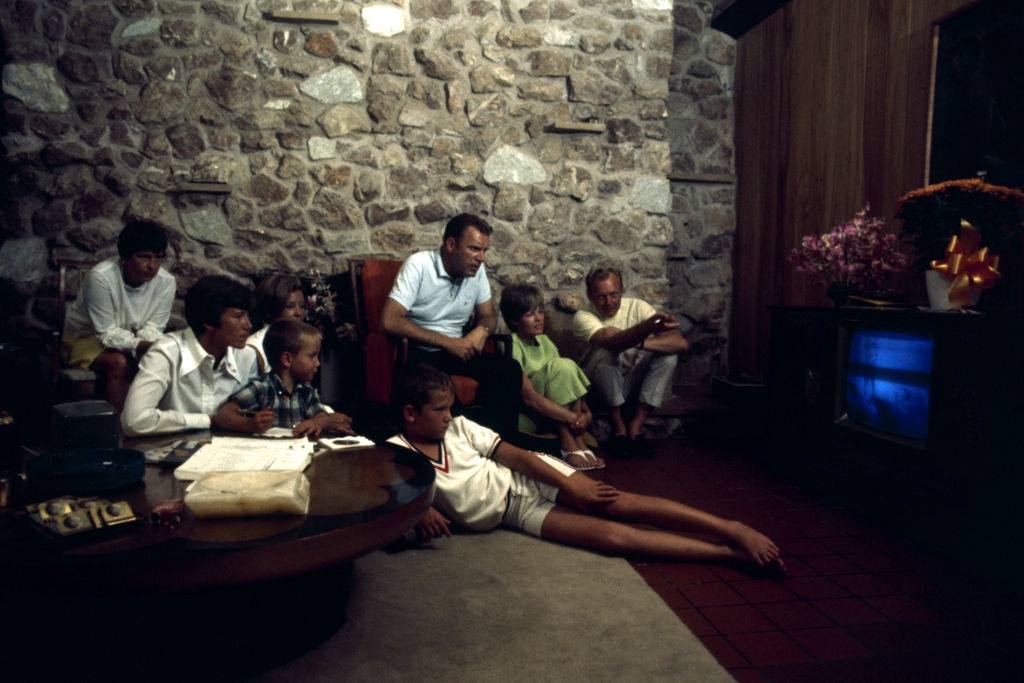
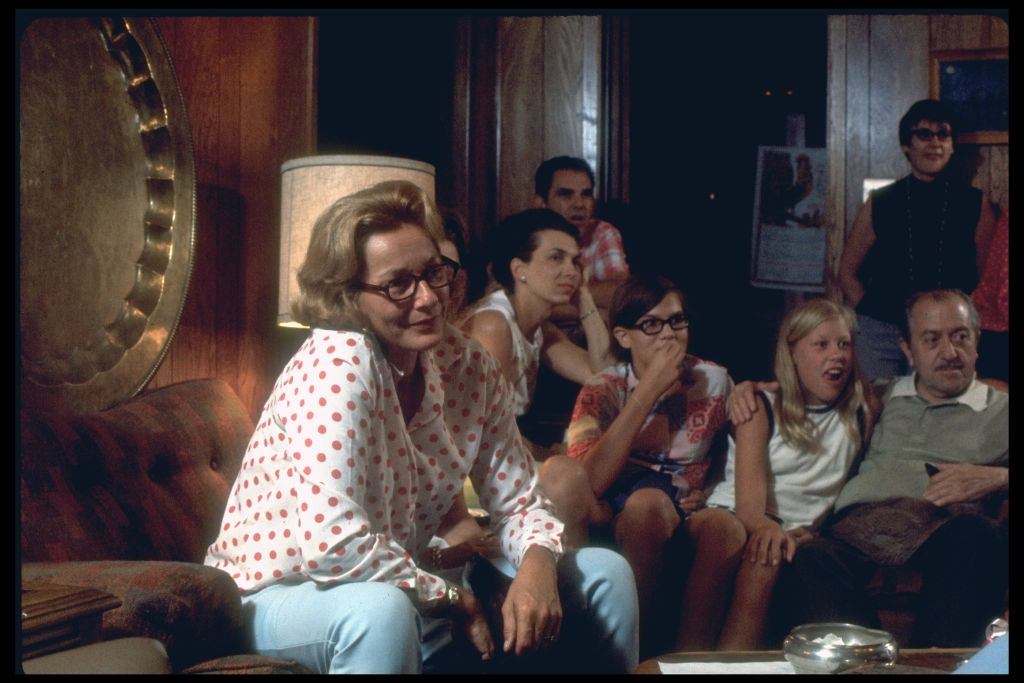
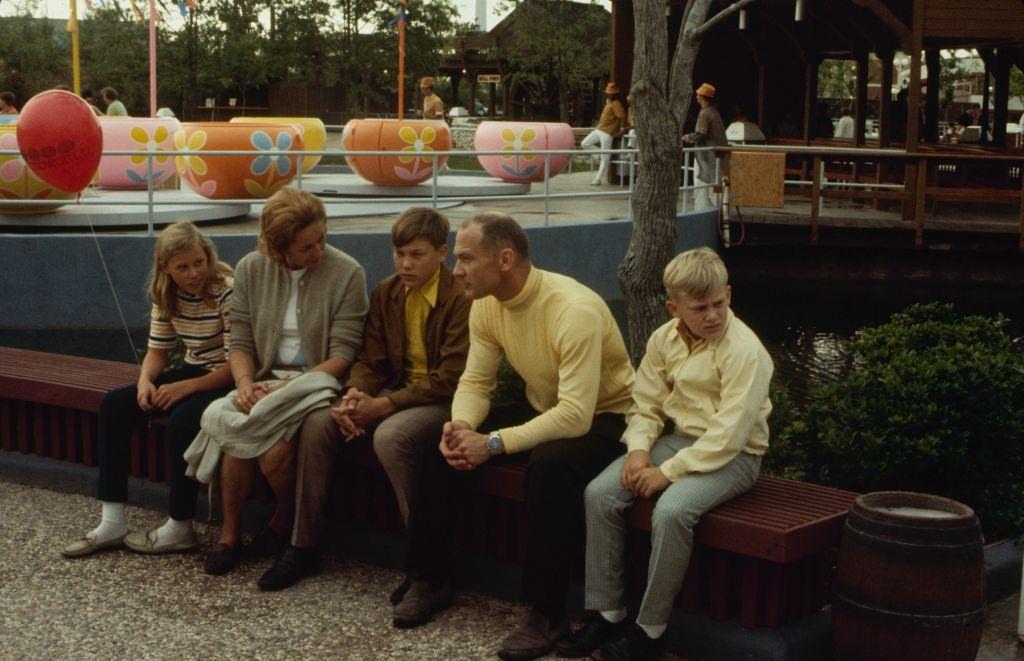
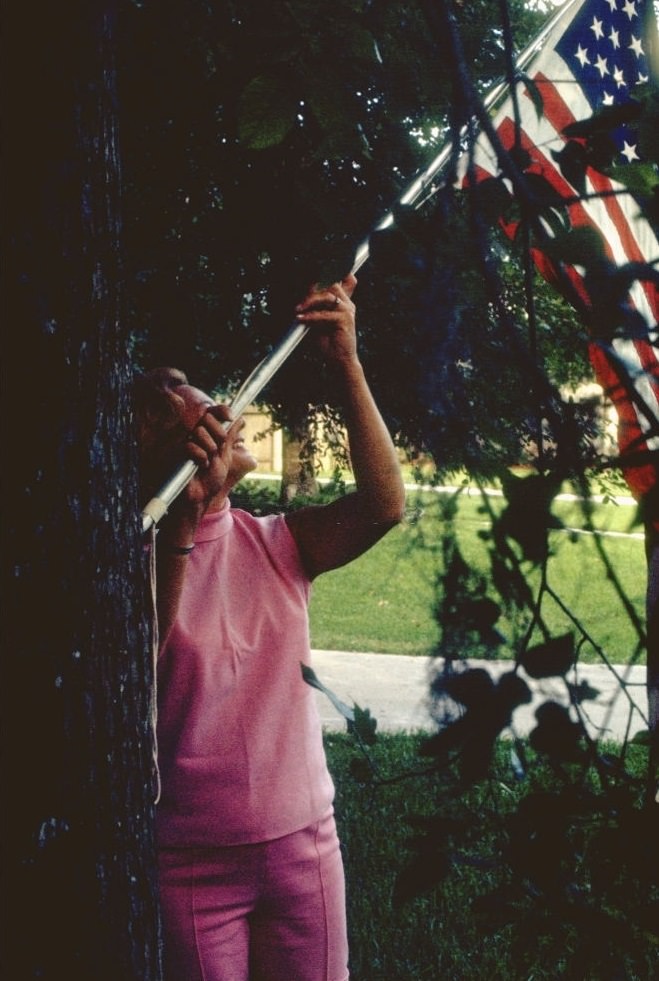
As celebrations broke out across Houston and around the world, the families of Apollo 11 let out what they had been holding in for days. Flags were raised. Neighbors cheered in the streets. After eight years of the American space program pushing toward this single goal, the families who had lived closest to the risk were finally able to exhale.





Other countries have royal families. We’ve got astronaut families
I had forgotten how common it was with cigarettes and ashtrays in those days.
Among all the extraordinary events portrayed I couldn’t help noticing Mrs Aldrin about to drop a long cigarette ash on her 11 y/o daughter. I’m from pretty much the same time and there was no such thing as a car ride without my dad lighting up. TV in the living room – dad was there with his full ashtray.
Lol, I noticed those two inches of ash as well.
That’s an unimaginable level of anxiety, an unprecedented amount of unknowns. Very tough for the moms to get through the anxiety while shielding the kids from it as much as possible.