By the mid-1950s, science fiction films had a well-worn formula: a rubber monster, a terrified crowd, and a city in flames. Forbidden Planet threw that formula out entirely. Released on March 3, 1956, the MGM production offered a story that worked on multiple levels — part philosophical drama, part action thriller, and part Shakespearean reimagining set among the stars.
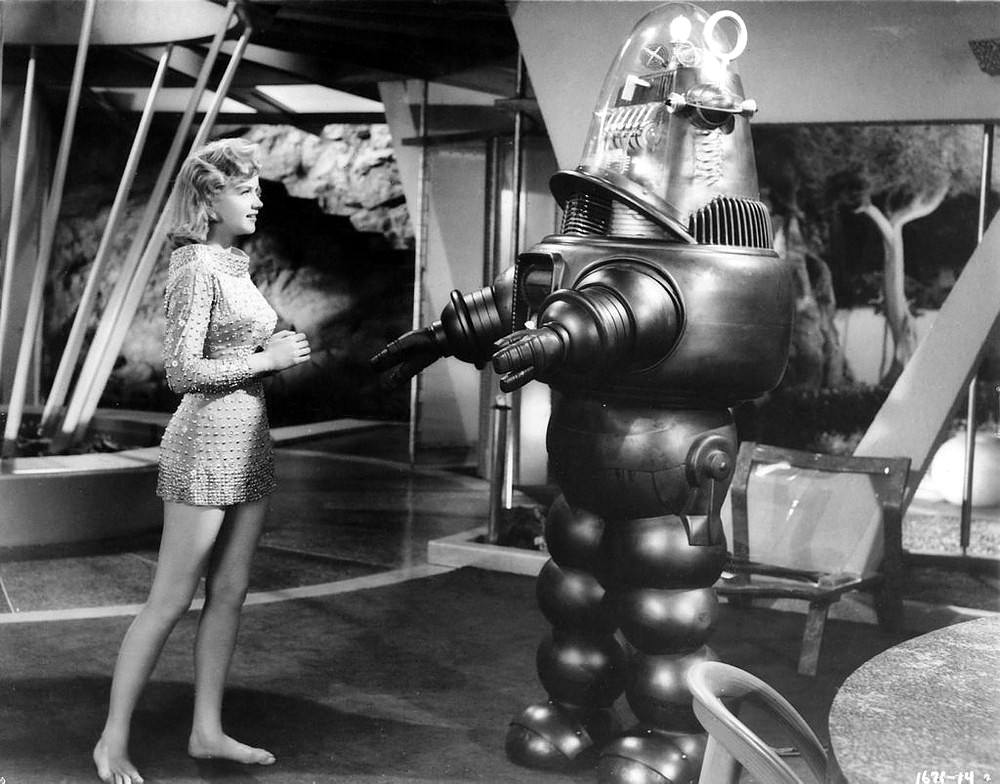
Many critics and film scholars draw a direct line between Forbidden Planet and William Shakespeare’s The Tempest. The parallels are clear: a powerful, isolated man living on a remote world with his daughter and a strange, obedient servant. Here, that servant is not a spirit but a machine — the now-legendary Robby the Robot.
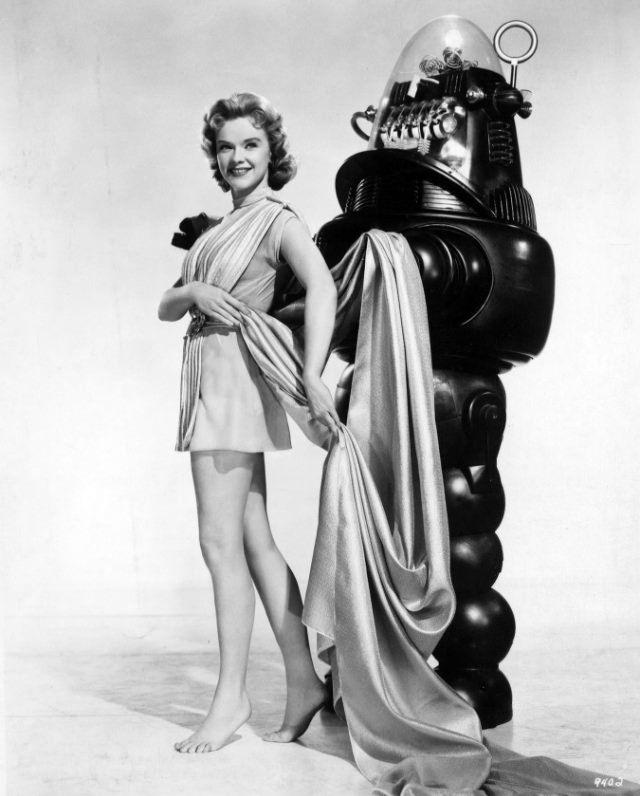
The story takes place in the 23rd century. A crew of astronauts travels to the distant planet Altair IV to find out what happened to an earlier expedition that went silent. When they arrive, they find only two survivors: Dr. Morbius, played by Walter Pidgeon, and his daughter Altaira, played by Anne Francis. Robby the Robot serves them both.
Morbius explains that an unknown force killed the rest of the original settlers. He then leads the new arrivals into the underground ruins of the Krell — an ancient, highly advanced civilization that once inhabited Altair IV but has since been wiped out. The Krell left behind vast machinery designed to amplify the power of the mind.
Morbius has been using that Krell machinery on himself. The experiments unleash something terrifying: a monster born from his own subconscious. The creature is invisible, and it begins attacking the astronauts. The horror of the film is not something from outer space — it comes from within a human mind.
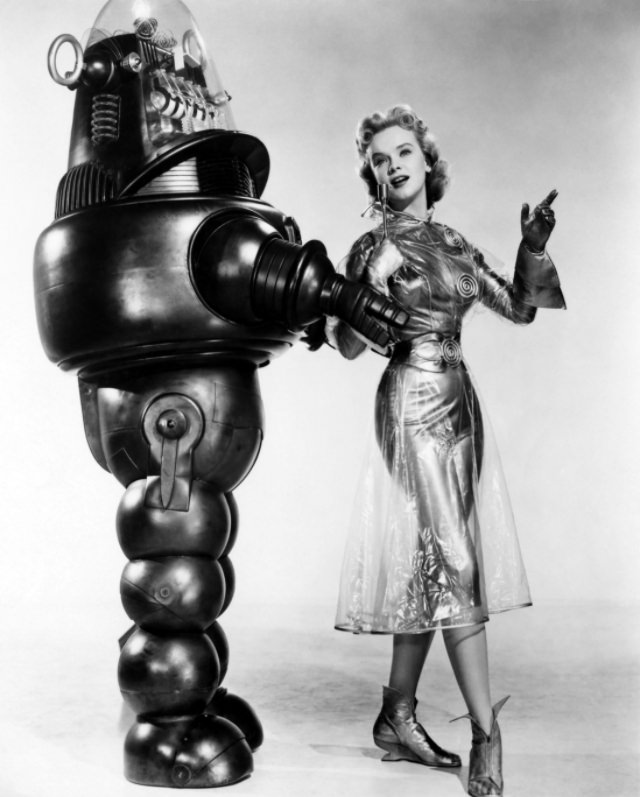
Anne Francis played Altaira with a mix of innocence and curiosity. Her character had grown up entirely on Altair IV, isolated from the rest of humanity. The arrival of the astronauts is her first real contact with the outside world. Francis brought a naturalness to the role that made Altaira feel genuinely believable despite the film’s fantastical setting.
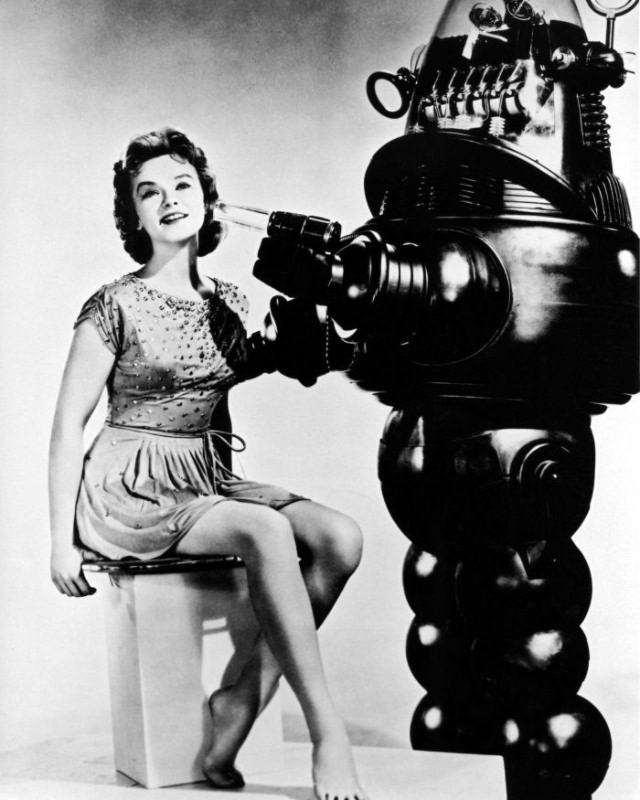
Among the many things that set Forbidden Planet apart from other films of its time, Robby the Robot stands out most. Unlike the clunky, mindless mechanical figures that had appeared in earlier science fiction stories, Robby had a distinct personality. He spoke, he reasoned, and he played an active role in the plot. He was not a prop — he was a character.
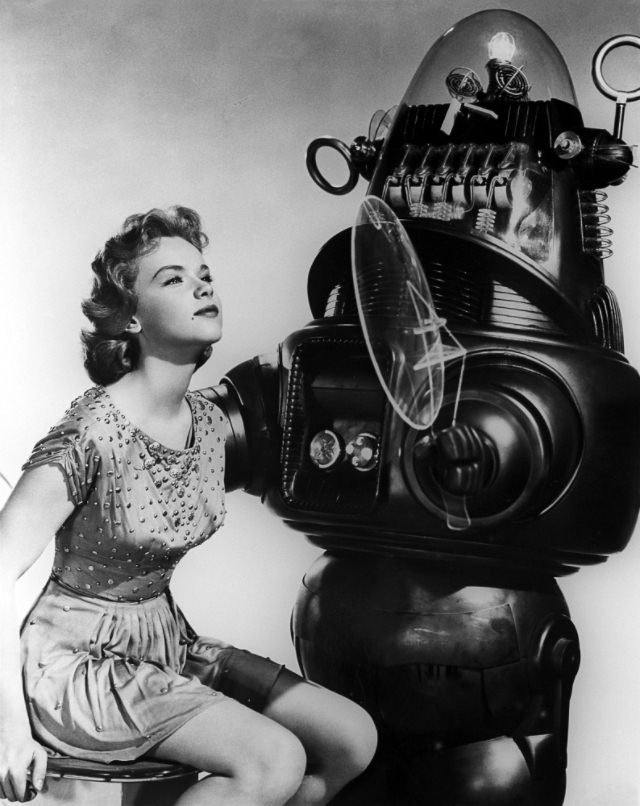
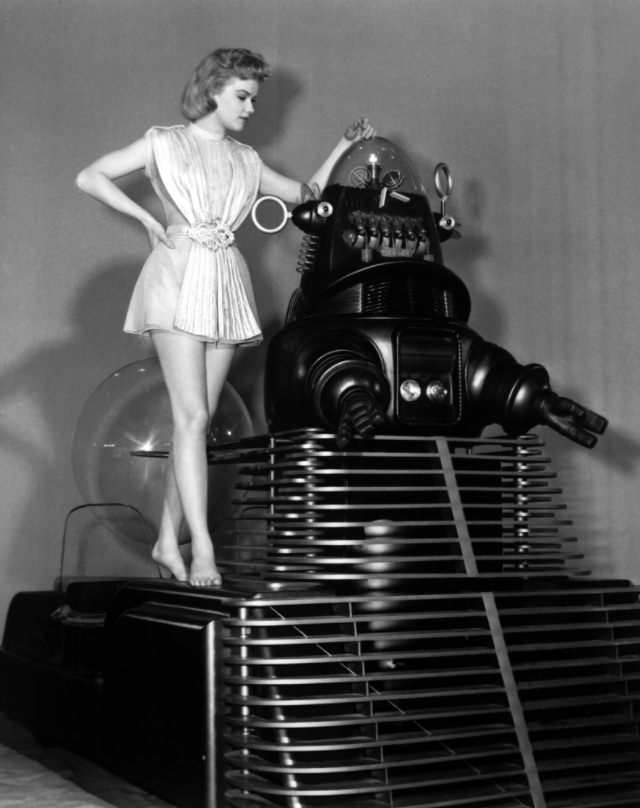
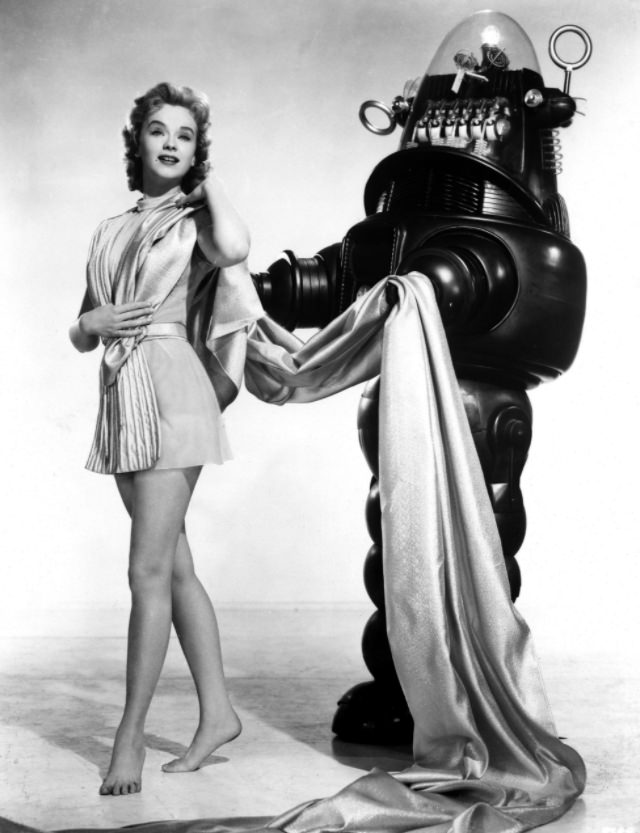
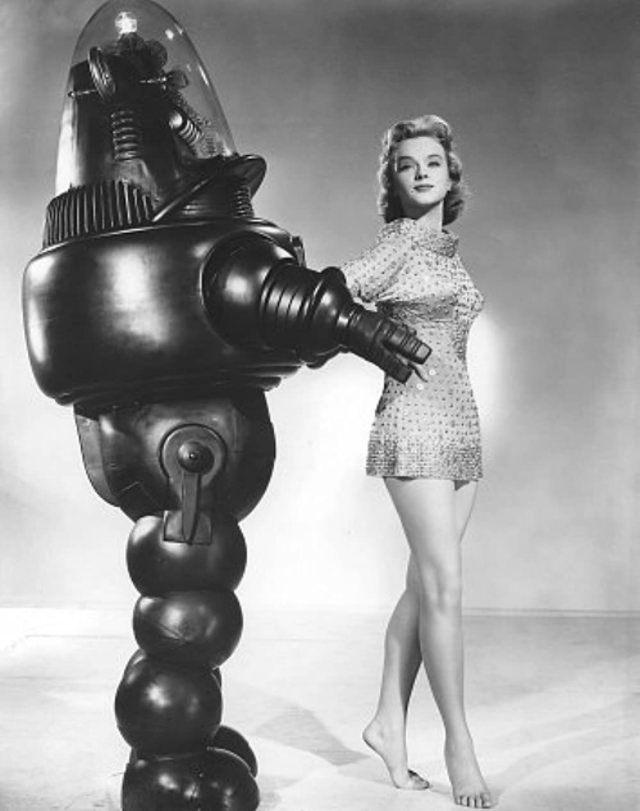
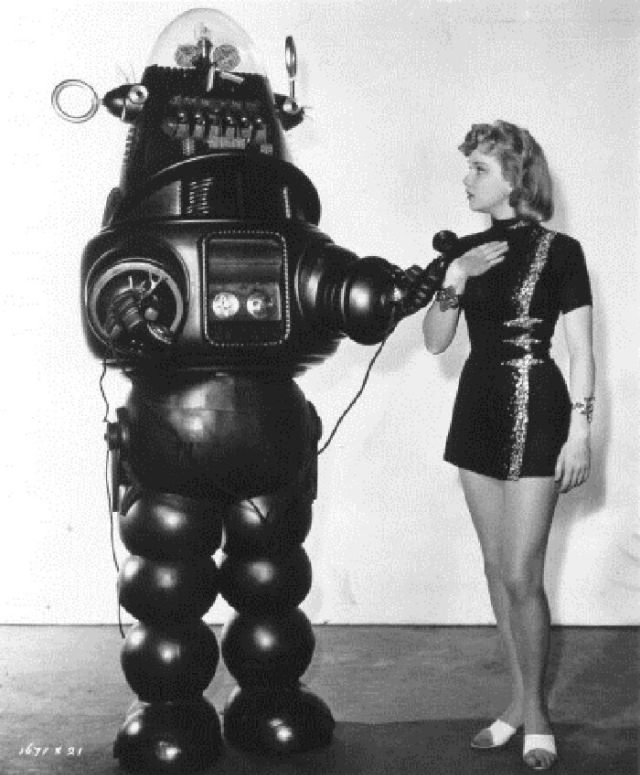
Robby was also a technical achievement. The robot costume was elaborate and required skilled operators to bring to life on set. His design — transparent dome head, rotating mechanisms, and articulated arms — became one of the most recognized images in science fiction history. Photos taken during filming show just how physically imposing the costume was beside the actors.
All of the exterior scenes set on Altair IV were filmed entirely on controlled studio stages at MGM’s Culver City lot. Nothing was shot on location. The production team used painted matte backdrops, constructed sets, and visual effects to sell the idea of an alien world. Every landscape the audience saw was a carefully built illusion.
Art directors Cedric Gibbons and Arthur Lonergan designed the sets. Gibbons was already one of Hollywood’s most celebrated designers, with dozens of major productions behind him. The work on Forbidden Planet pushed the boundaries of what a studio set could accomplish, creating environments that felt genuinely alien rather than simply theatrical.
Forbidden Planet also carried two significant firsts. It was the first science fiction film to depict humans traveling aboard a starship capable of faster-than-light speed. It was also the first film in the genre set entirely in interstellar space, with no scenes taking place on or near Earth.
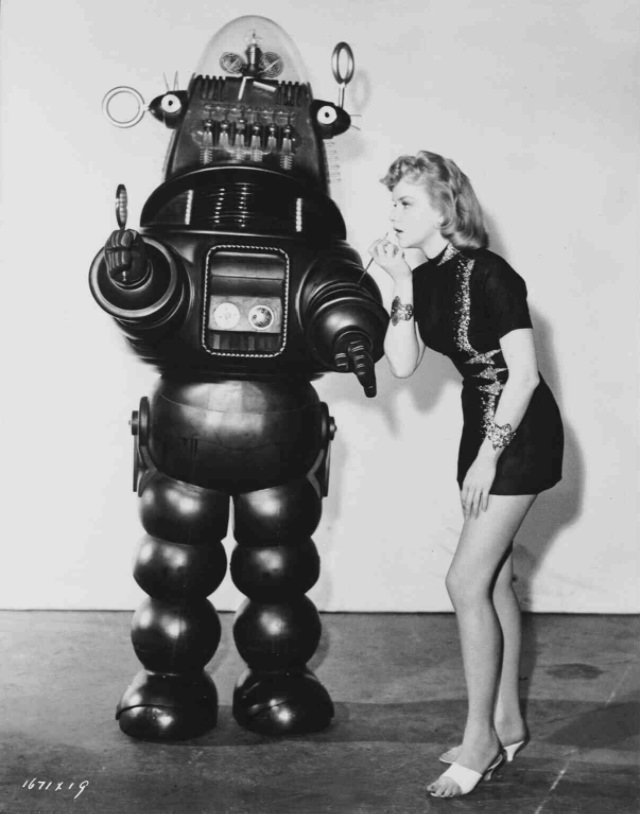
Those two details mattered more than they might seem. Earlier sci-fi films were almost always grounded near Earth — rockets going to the Moon, aliens invading American cities. Forbidden Planet moved the action to a completely different star system. That shift gave the film a sense of true cosmic scale that was rare for Hollywood at the time.
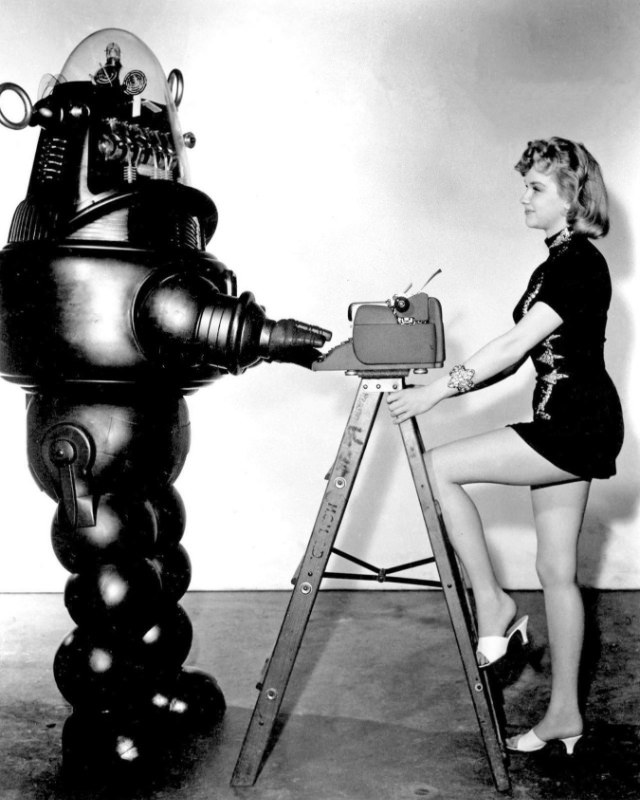
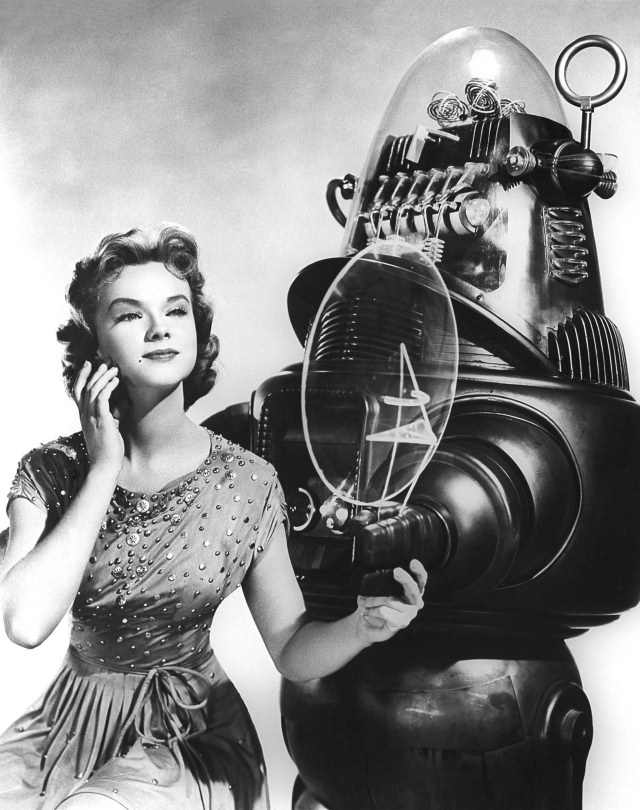
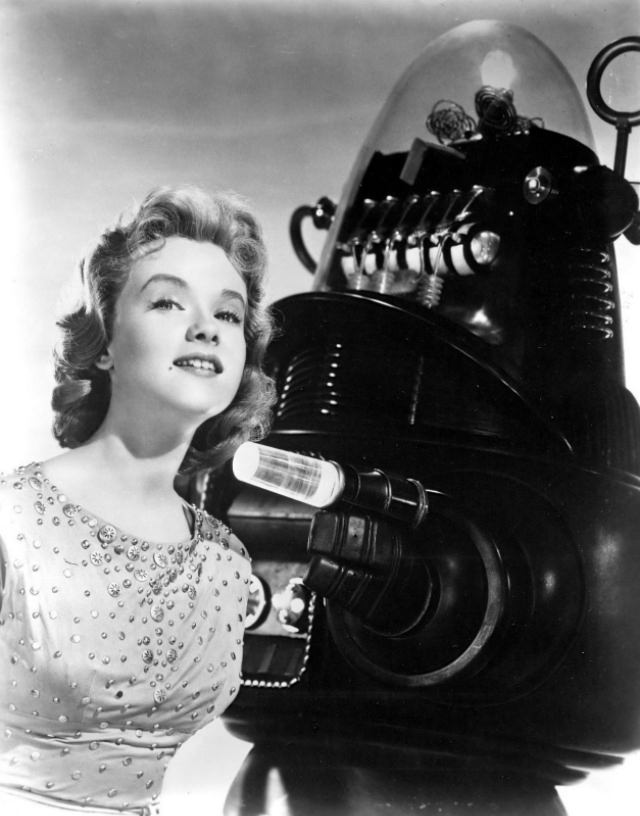
The photographs taken during production capture something that the finished film cannot quite show on its own: the sheer physical reality of Robby beside Anne Francis. On screen, the editing and camera angles fold everything into a seamless story. Behind the scenes, the contrast between the human actress and the towering mechanical costume is immediate and striking.
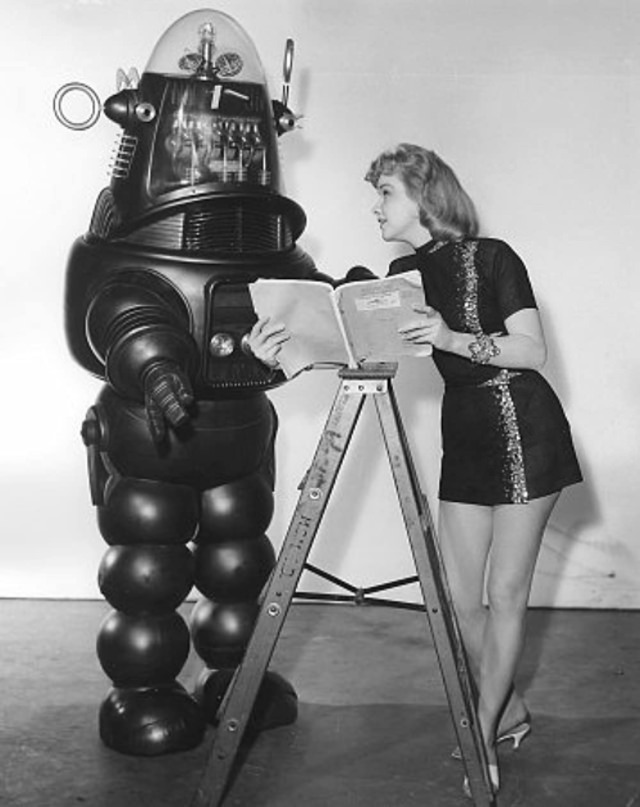
Francis and Robby appeared together in a number of scenes throughout the film. Their dynamic — a young woman comfortable around a robot that would terrify most people — said a great deal about Altaira’s upbringing. She had known Robby her entire life. To her, he was simply part of home.
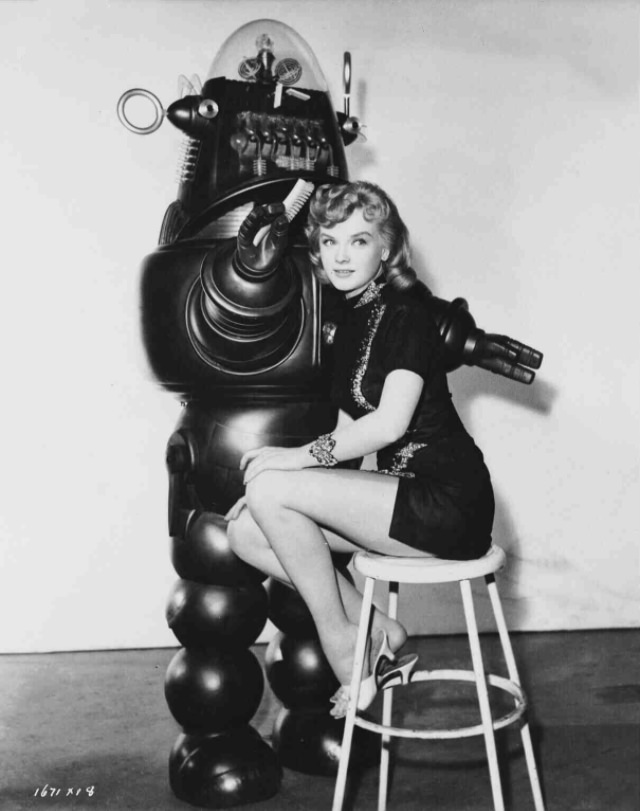
MGM committed serious resources to the production. The studio treated Forbidden Planet not as a cheap genre picture but as a prestige project, complete with full set construction, professional art direction, and effects work that was ambitious by any standard of the era. The finished product reflected that investment.
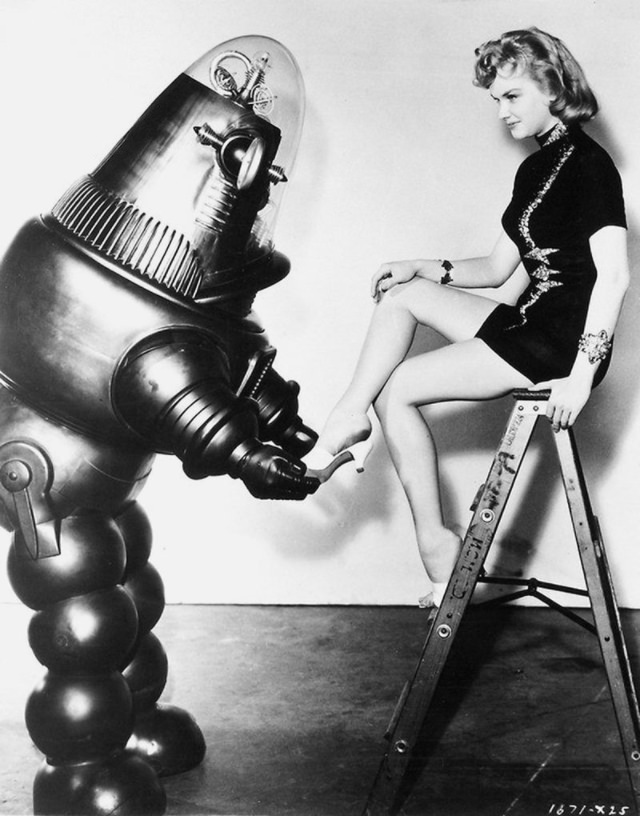
Behind-the-scenes images from the production give us a rare look at how the film was actually made — the crew on the sound stages, the sets up close, and the actors alongside the enormous Robby costume. These photographs document a moment in Hollywood history when a studio took a bold swing at a genre that most of the industry still treated as disposable.