Hey There! Before You Go. 😧
Get the best vintage content straight into your inbox!

Don't worry, we don't spam

Fascinating Vintage Photos of America in the 1950s Show How Different Life Was Before

The 1950s were a turning point for the United States. World War II had left the factories and industries of both rivals and allies in ruins, and American manufacturers stepped in to fill the gap. The economy boomed. Jobs in industry and agriculture were plentiful, and roughly one-third of the entire workforce belonged to labor unions. Wages rose, families grew, and the country expanded in nearly every direction.

At the same time, life was not without tension. The Cold War cast a long shadow over daily life, and the threat of nuclear conflict was a real part of the public conversation. Still, Americans built suburbs, bought cars, and tuned into their new televisions in record numbers. Teenagers had more freedom and spending power than any generation before them, and a new youth culture — built around music, movies, and independence — was taking shape.

Most photographs from this era are in black and white. Color film existed, but it was expensive and not widely used by everyday families. That makes the collection you’re about to see especially rare. These vivid color photographs were taken by Walter Reed during travels across the country throughout the 1950s, and were later shared by his son, Leon Reed. Together, they form a remarkable visual record of a nation at its most energetic.

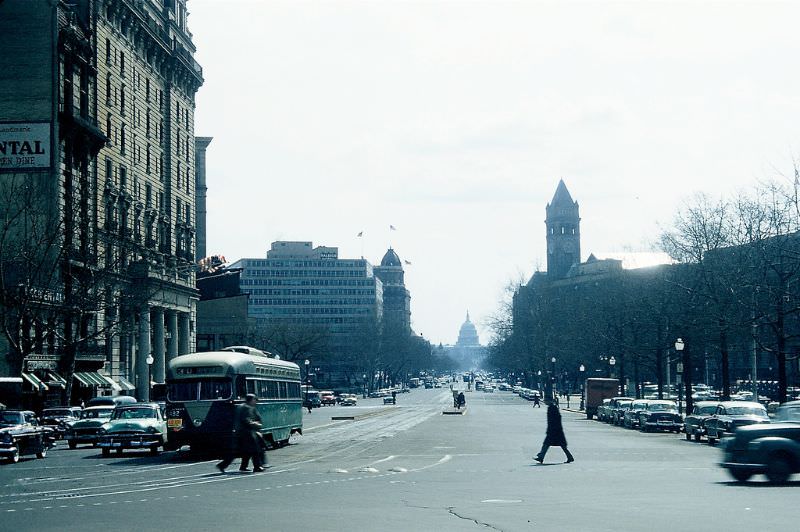
Washington, D.C. was a natural starting point for a patriotic road trip in 1956. Pennsylvania Avenue, the grand ceremonial boulevard connecting the Capitol to the White House, looks strikingly open and unhurried compared to today.

Pennsylvania Ave. Washington, D.C., May 1956

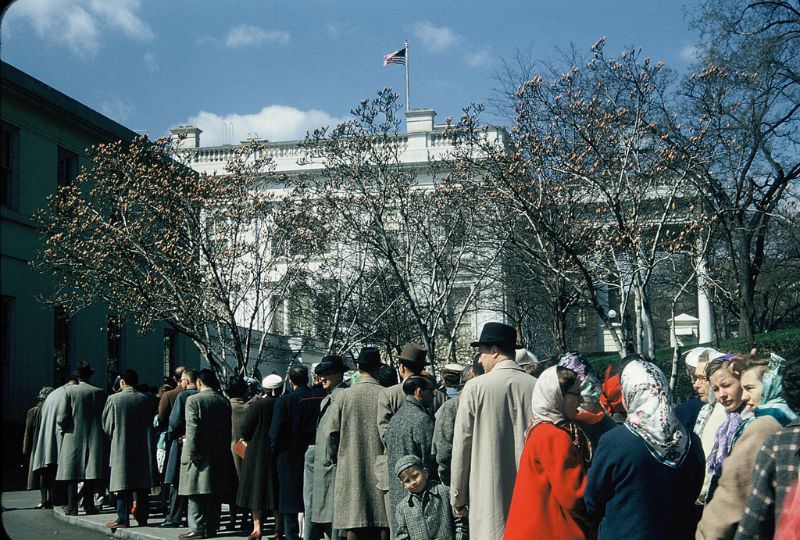
Touring the White House was a popular activity for visiting families. Lines formed regularly outside the gates, made up of everyday Americans eager for a glimpse inside the president’s home.

Crowd lined up for White House tour, Washington, D.C., May 1956

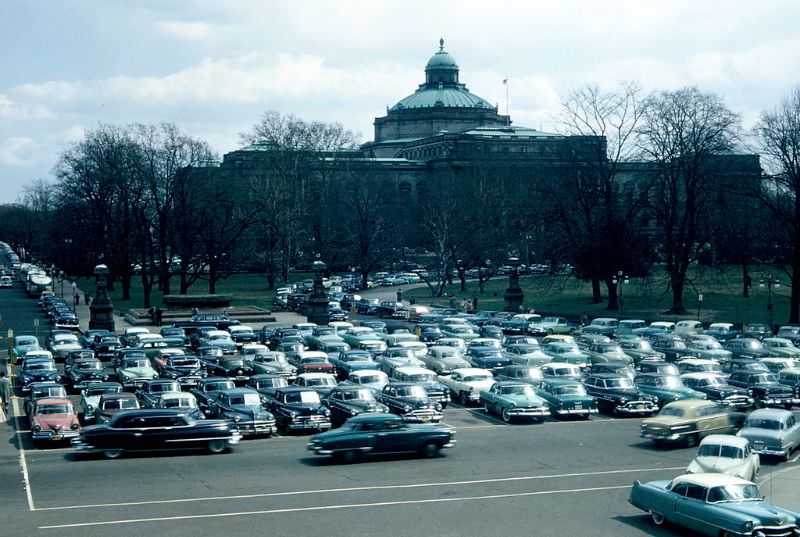
From the East Front of the U.S. Capitol, the Library of Congress and the sprawling Capitol parking lot were both visible — a reminder that even the most historic parts of the city had to make room for the automobile age.

Library of Congress and Capitol parking lot from East Front of US Capitol, Washington, D.C. May 1956
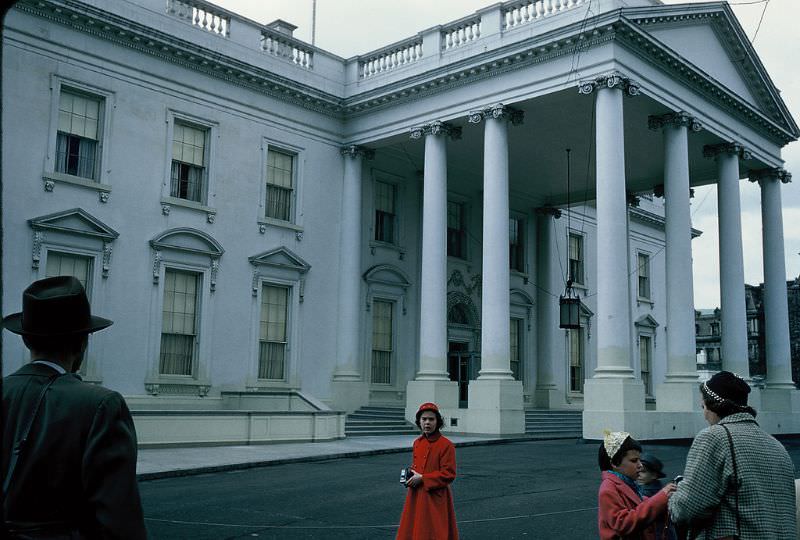
White House,Washington, D.C. May 1956

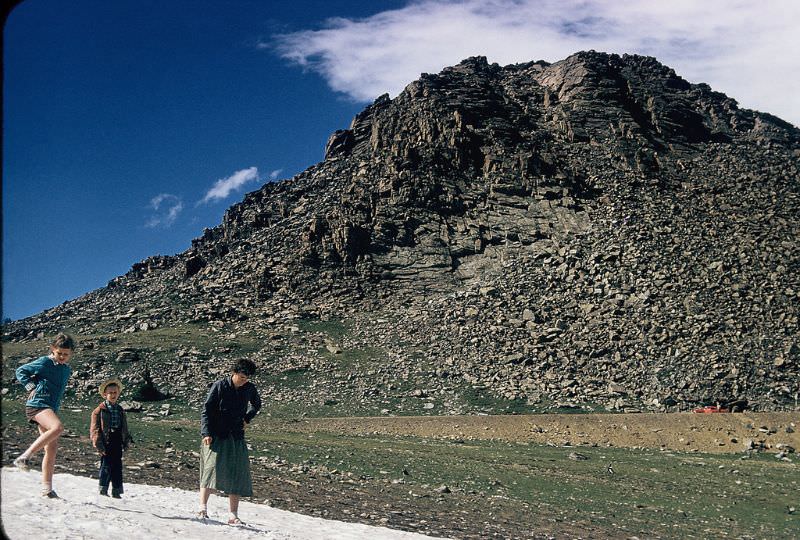
The western leg of the trip brought Reed to Wyoming, where even a June visit could mean snow at altitude. At Powder River Pass — sitting at over 9,600 feet in the Bighorn Mountains — snow on the ground in early summer was perfectly normal, and it made for an irresistible playground.

Playing in the snow at Powder River Pass, Wyoming. June 1956

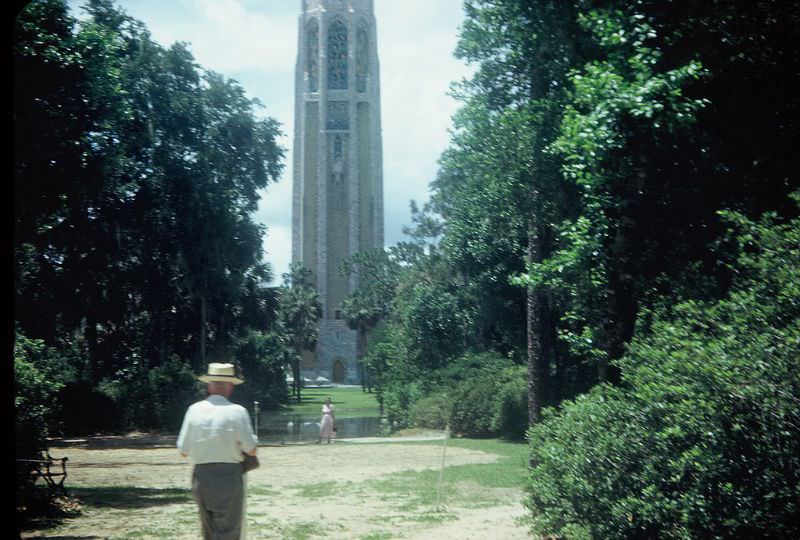
Florida offered a very different kind of scenery. Bok Tower, a 205-foot carillon tower built in 1929 and set within a lush garden sanctuary near Lake Wales, was already a well-known destination by the early 1950s.

At Bok Tower, Florida. May 1952

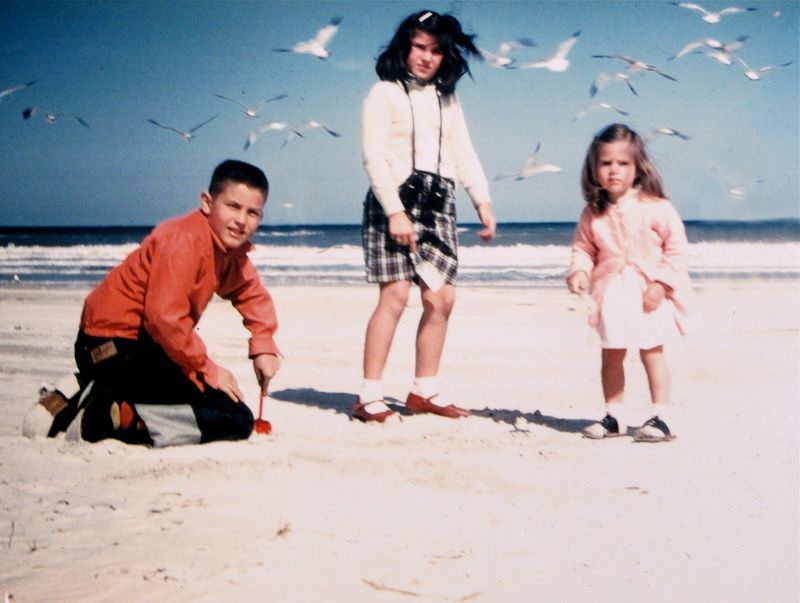
Florida’s beaches drew visitors from across the country. With postwar prosperity putting more money in American pockets, seaside vacations became increasingly common for middle-class families.

On the beach, Florida. May 1956

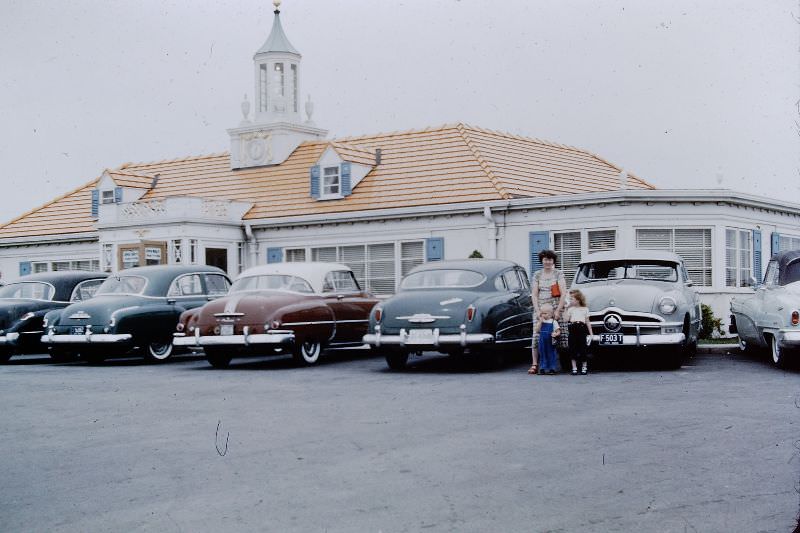
Howard Johnson’s restaurants were fixtures along American highways throughout the 1950s. With their distinctive orange roofs and turquoise trim, they offered reliable, affordable meals to road-tripping families at a time when the interstate highway system was just beginning to take shape.

In front of Howard Johnson's at Ft. Wayne, Indiana. May 1951
In front of Howard Johnson’s at Ft. Wayne, Indiana. May 1951

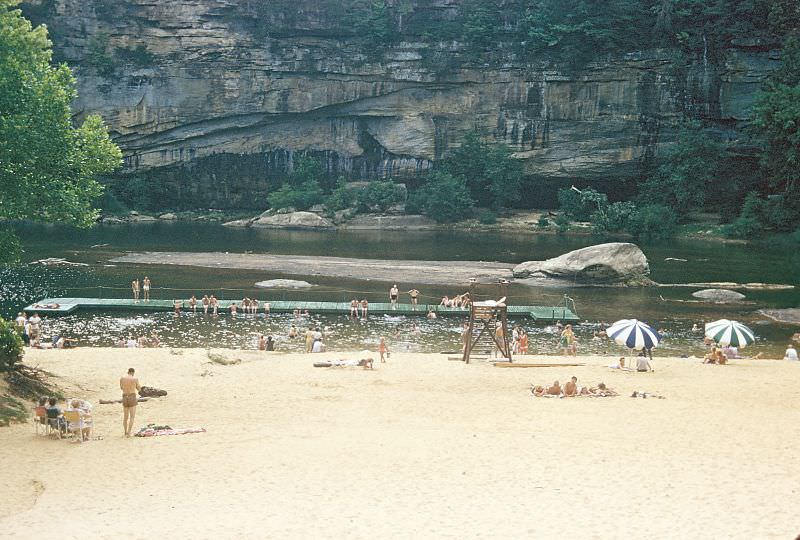
Kentucky’s Cumberland Falls State Park offered natural beauty year-round. In April, the river and its surrounding beaches drew visitors looking to enjoy the early spring.

Beach at Cumberland Falls State Park, Kentucky. April 1954

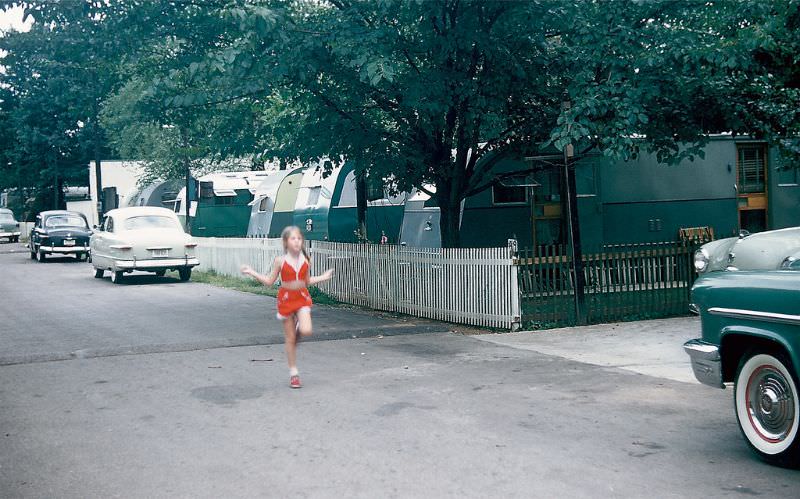
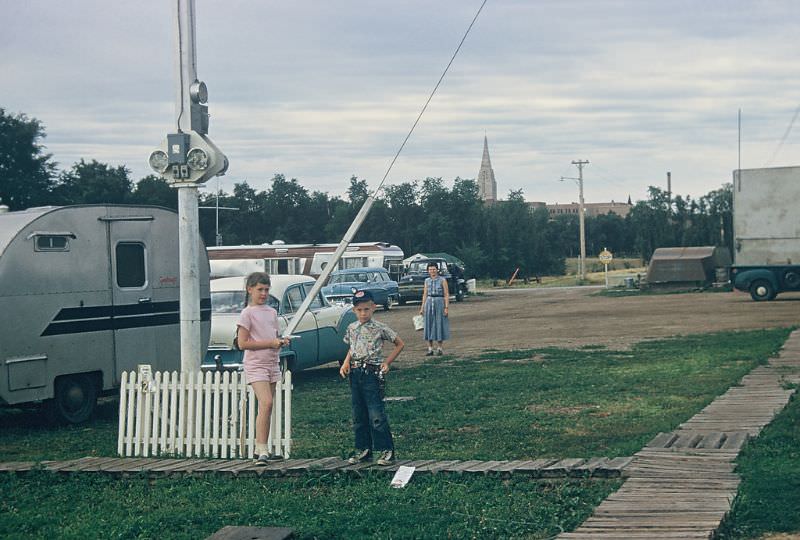
Life in a trailer park in Lexington, Kentucky looked much like life anywhere else in 1950s America — children played outside, neighbors knew each other, and the pace was unhurried. A child jumping rope captures the simplicity of everyday childhood in this era.

Jumping rope, trailer park in Lexington, Kentucky. April 1954

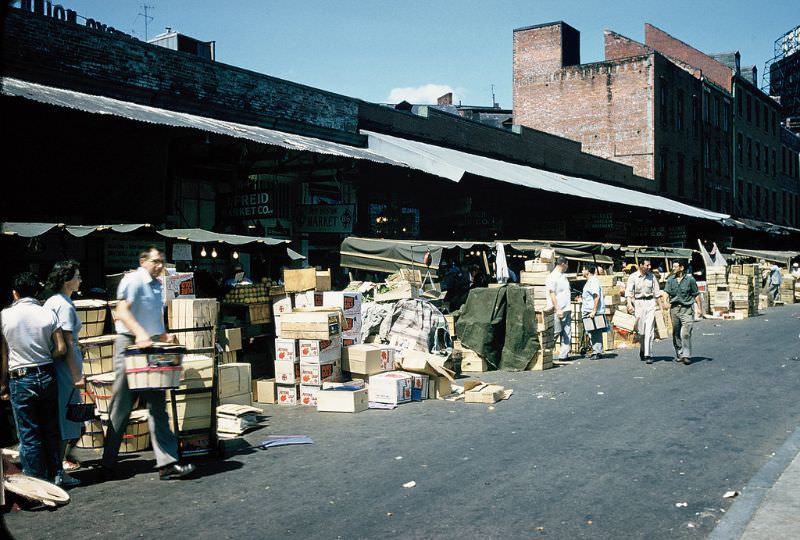
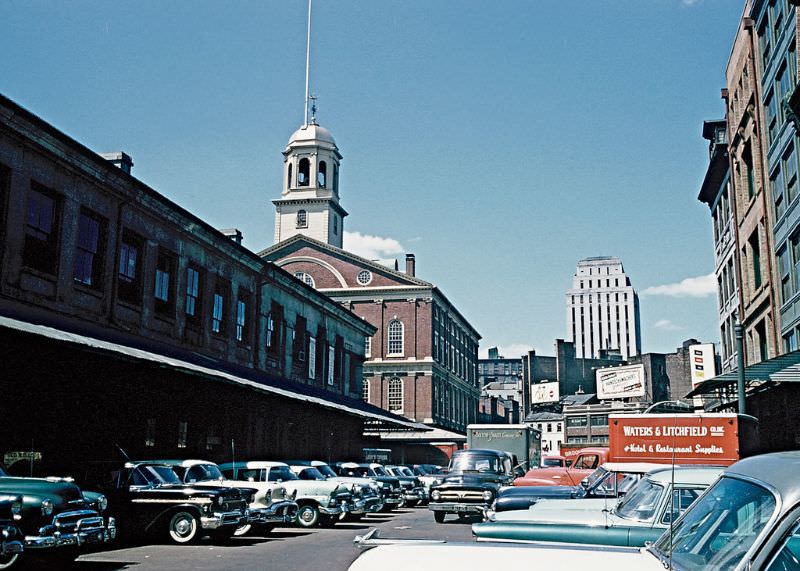
Boston’s Faneuil Hall Market was one of the oldest commercial districts in the country. By the late 1950s, it was still a working marketplace filled with vendors, shoppers, and the sounds of an active urban economy.

Faneuil Hall Market, Boston, Massachusetts. June 1957
Faneuil Hall, Boston, Massachusetts. June 1957

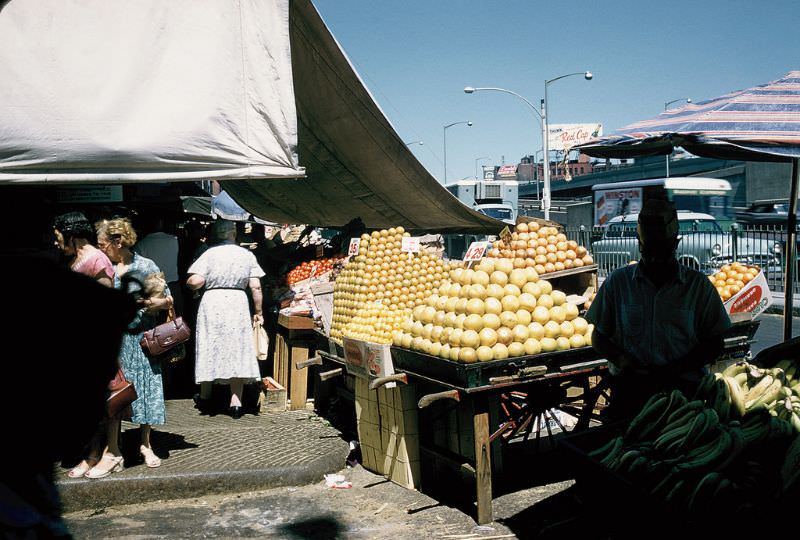
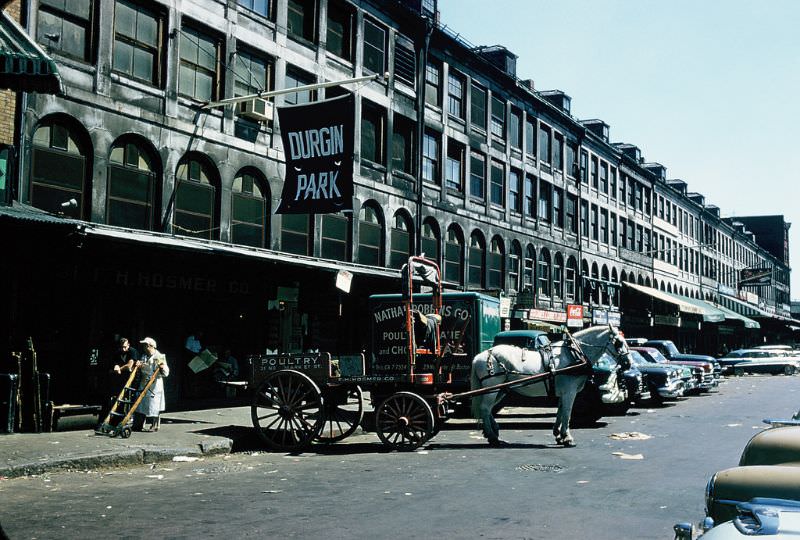
The meat and produce shops of downtown Boston give a clear picture of how Americans bought food before supermarkets fully took over. Specialty shops lined city streets, each selling a particular type of goods. The signage, the storefronts, and the street-level activity are a world apart from modern retail.

Meat and produce shops in downtown Boston, Massachusetts. June 1957

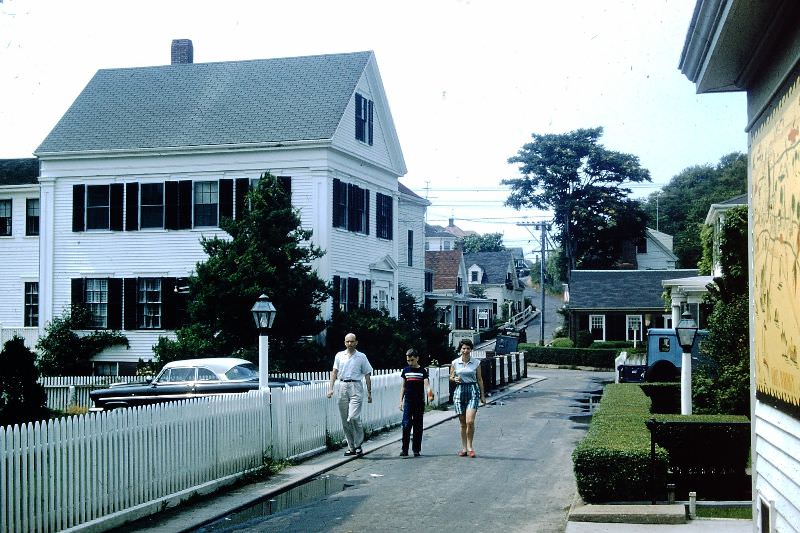
Provincetown, at the tip of Cape Cod, had a character all its own — an arts colony and fishing village that attracted visitors and creative types alike. Its narrow streets and tight-knit architecture made it unlike anywhere else in New England.

Street scene in Provincetown, Massachusetts. June 1957

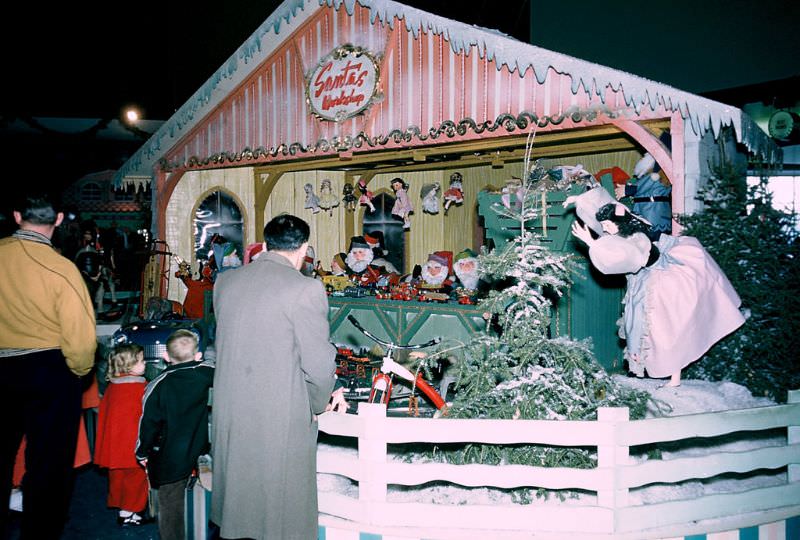
Michigan was home to some of the most visited industrial attractions of the era. The Ford Rotunda in Dearborn was one of the most-attended tourist sites in the entire country during the 1950s. Its annual Christmas exhibit drew massive crowds each winter season.

Christmas exhibit at Ford Rotunda, Michigan. June 1955

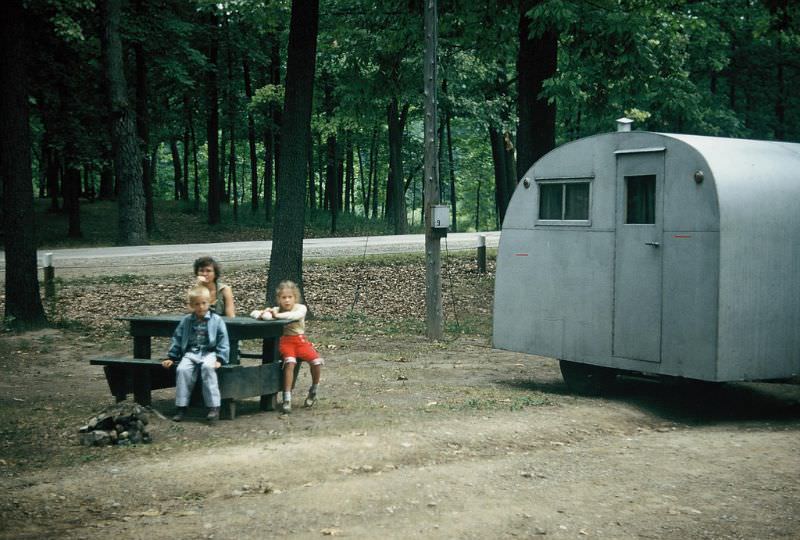
Camping was a beloved family activity in the 1950s, made easier by improved roads and affordable cars. Hayes State Park in Michigan offered families a place to set up camp, cook outdoors, and step away from the routines of suburban life.

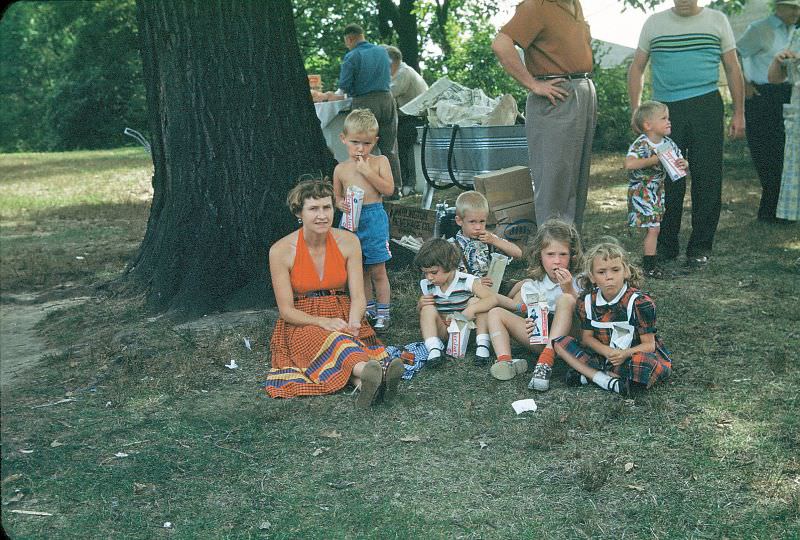
Family at campground, Hayes State Park, Michigan. June 1954

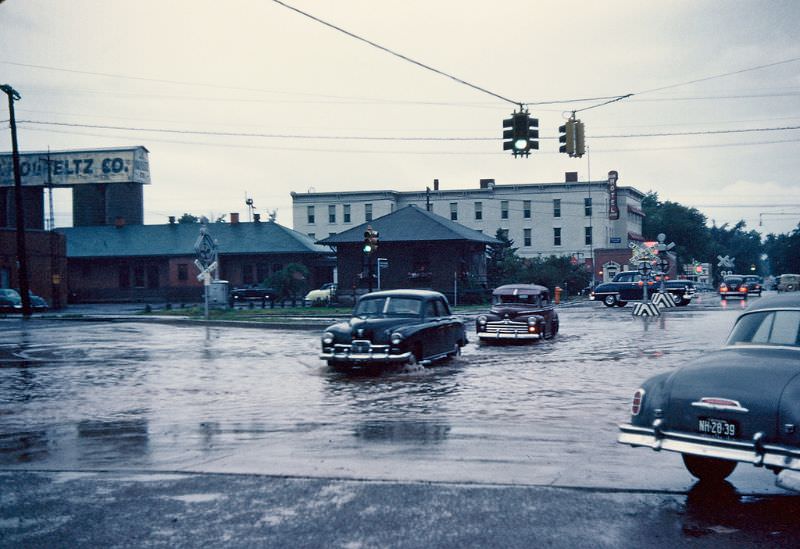
Not every photograph captures leisure. A flooded street in Iron Mountain, Michigan in November 1951 is a reminder that infrastructure challenges were a real part of life in smaller American cities.

Flooded street, Iron Mountain, Michigan. November 1951
Ford Rotunda, Dearborn, Michigan. December 1955

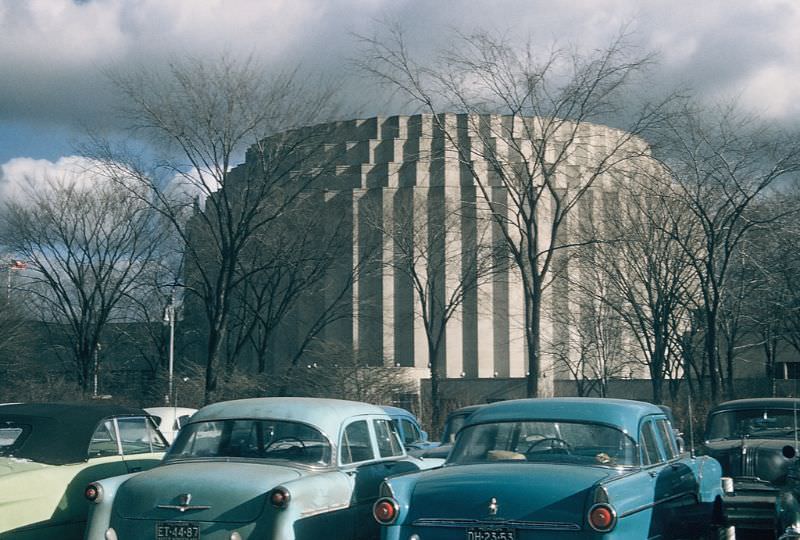
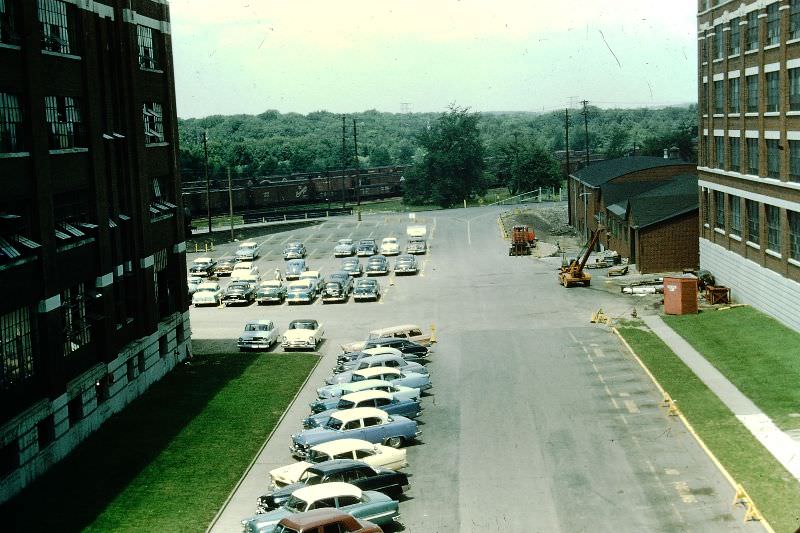
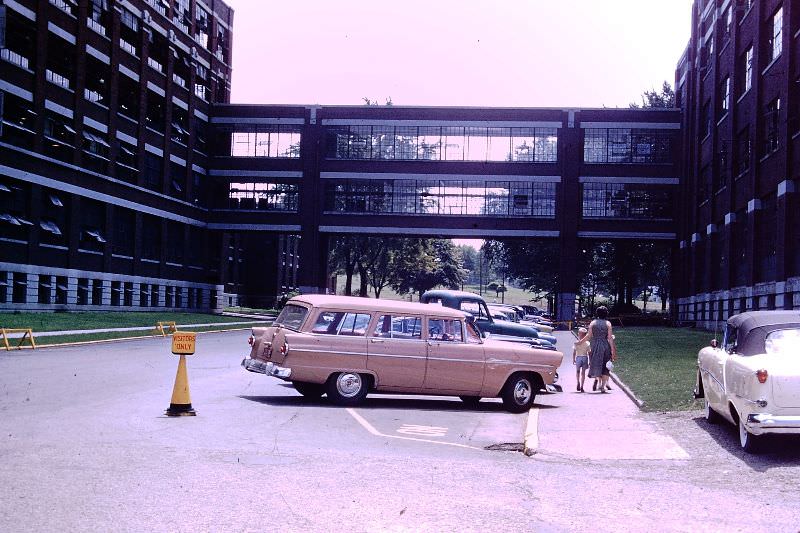
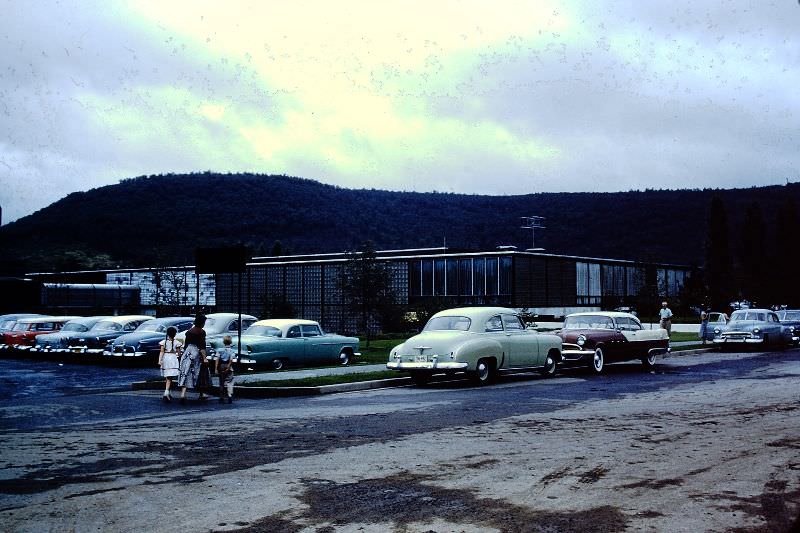
The Kellogg’s cereal plant in Battle Creek, Michigan was not just a factory — it was a tourist destination. The company offered public tours, and the parking lot filled with visitors who came to see how their breakfast was made.

Kellogg's parking lot, Battle Creek, Michigan. May 1955
Kellogg’s parking lot, Battle Creek, Michigan. May 1955

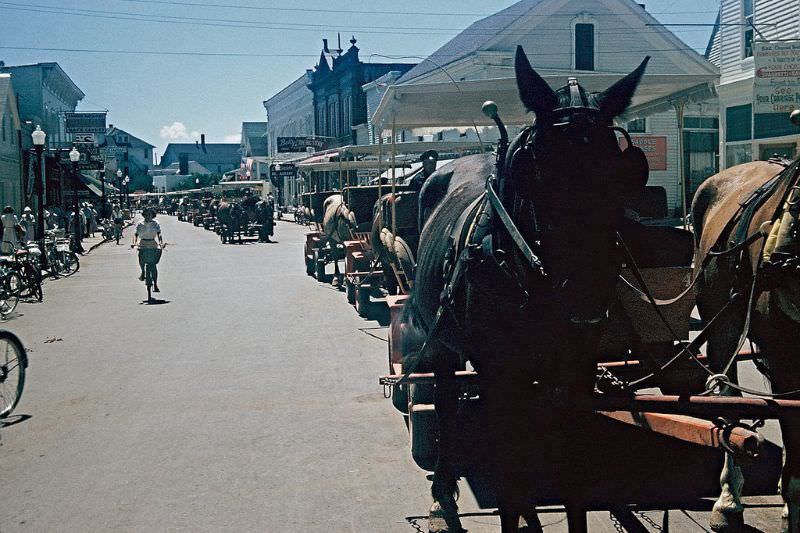
Mackinac Island operated — and still operates — without motor vehicles. In the 1950s, horses and carriages were the standard mode of transport, giving the island a pace of life that felt removed from the rest of the decade.

Lineup of horses and carriages, Mackinac Island, Michigan. May 1959

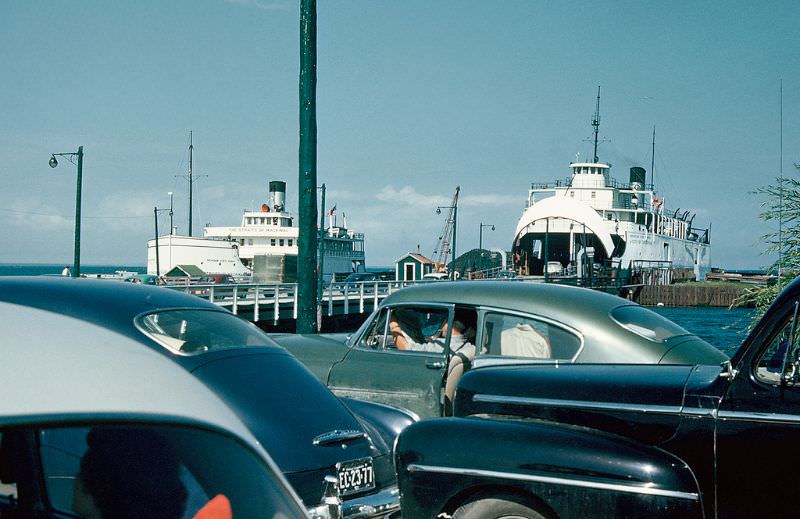
Reaching Mackinac Island required a ferry from St. Ignace before the Mackinac Bridge opened in 1957. The crossing was part of the experience for the many families who made the trip each year.

Mackinac Island ferry, St. Ignace, Michigan. May 1951

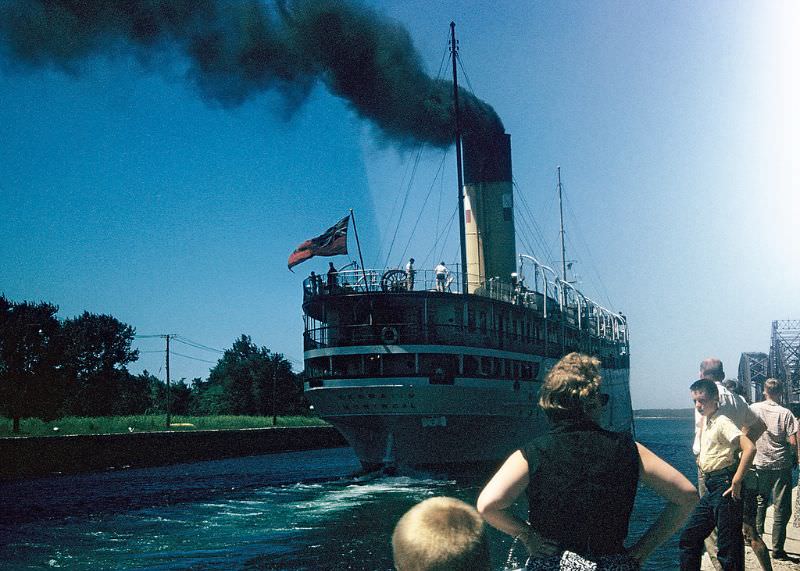
Sault Ste. Marie’s locks connected Lake Superior to Lake Huron, allowing massive freighters to navigate a 21-foot difference in water levels. Watching ships pass through the locks was a popular activity for visitors to the Upper Peninsula.

Ship in locks, Sault Ste. Marie, Michigan. June 1959

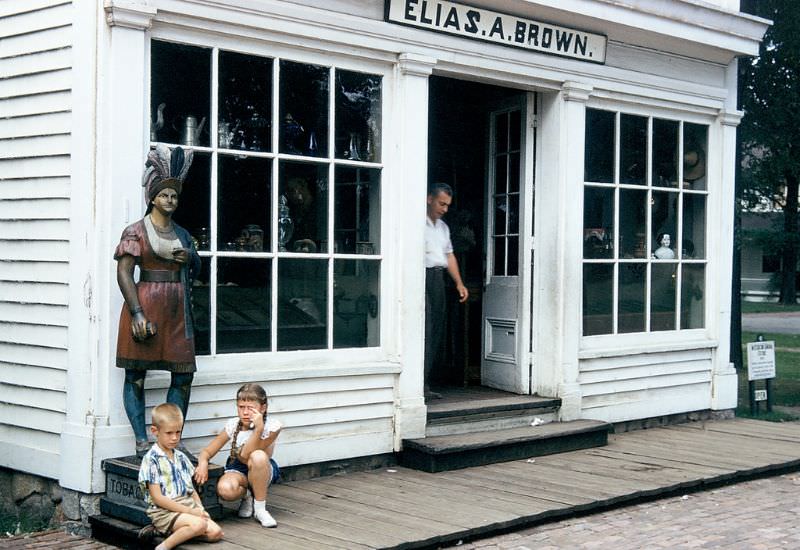
Greenfield Village, Henry Ford’s outdoor history museum in Dearborn, recreated historic American buildings and storefronts. The wooden Indian figure in front of the store was a common sight outside tobacco shops and general stores throughout American history.

Store and wooden Indian, Greenfield Village, Michigan. June 1955
Walking toward tour area, Kellogg Cereal, Battle Creek, Michigan. June 1955

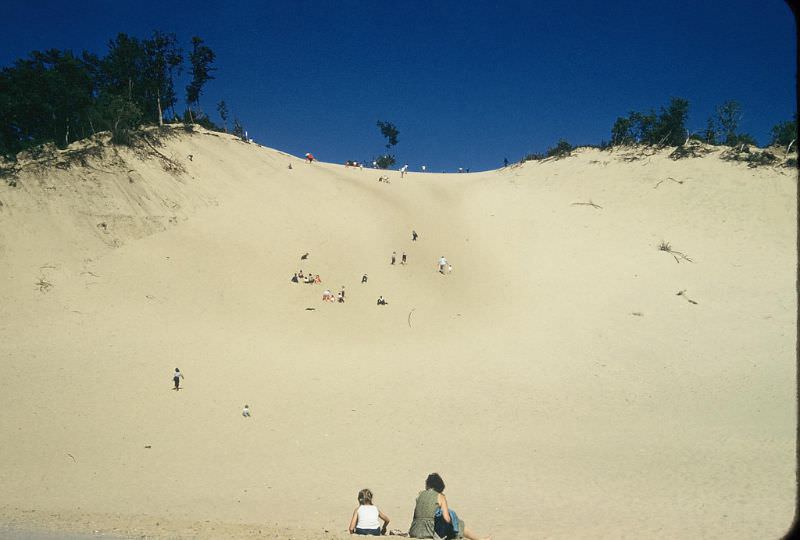
Warren Dunes, rising along the eastern shore of Lake Michigan, offered a dramatic landscape that drew beachgoers and hikers from across the Midwest. In summer, the dunes were a favorite destination for families from nearby Chicago and Detroit.

Warren Dunes, Michigan. June 1954

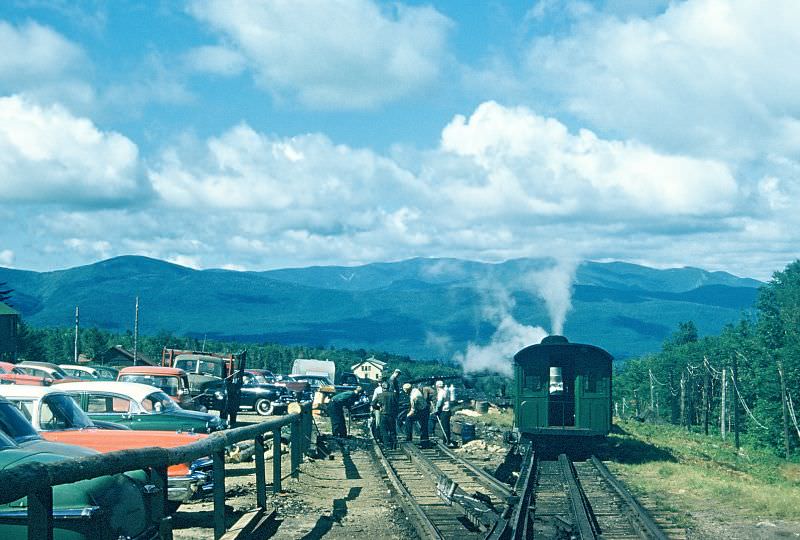
New Hampshire’s Mount Washington holds the record for the highest surface wind speed ever recorded at a weather station — 231 miles per hour in 1934. By the 1950s, a cog railway carried tourists to its 6,288-foot summit, making it one of the most dramatic scenic rides in the Northeast.

Railway up Mount Washington, New Hampshire. July 1957

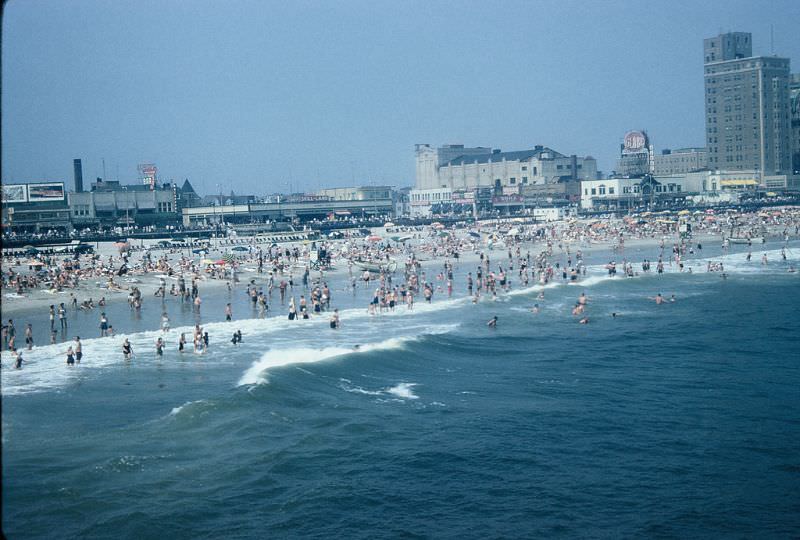
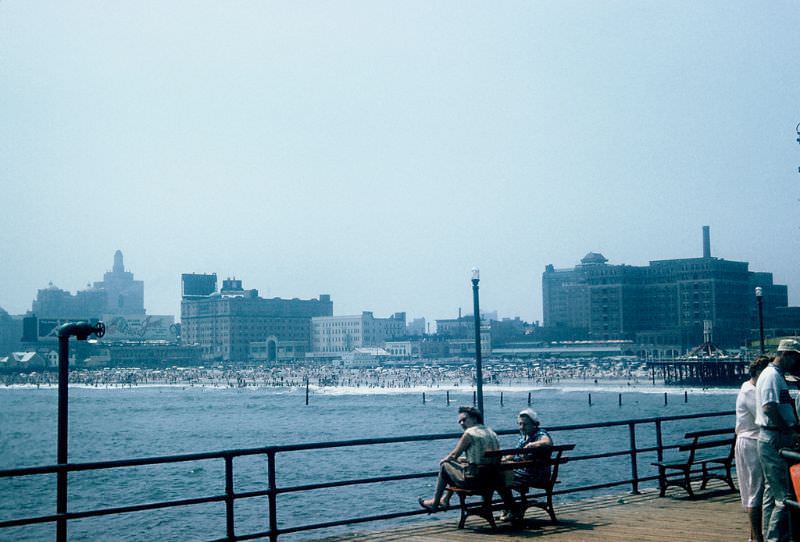
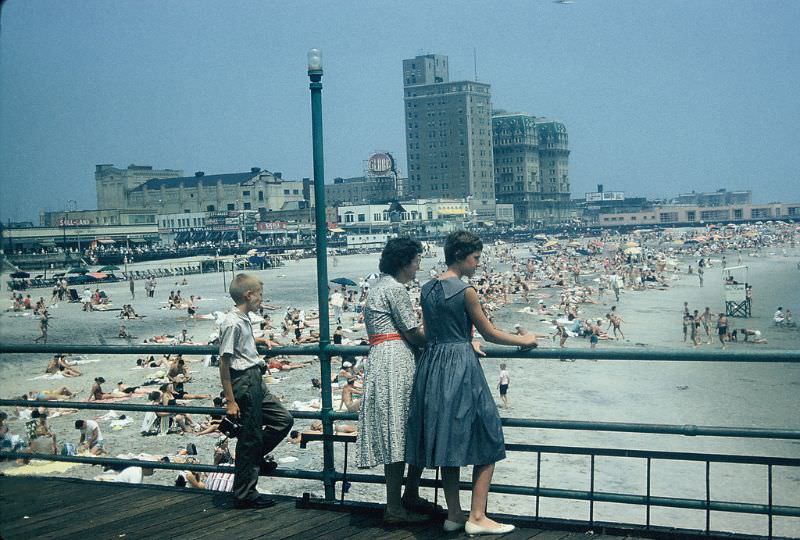
Atlantic City in the late 1950s was one of the premier resort destinations on the East Coast. Its famous boardwalk, built in 1870, stretched for miles along the Jersey Shore and was lined with shops, amusements, and hotels.

Atlantic City beach and waterfront, New Jersey. July 1959
Atlantic City boardwalk and beach, New Jersey. July 1959
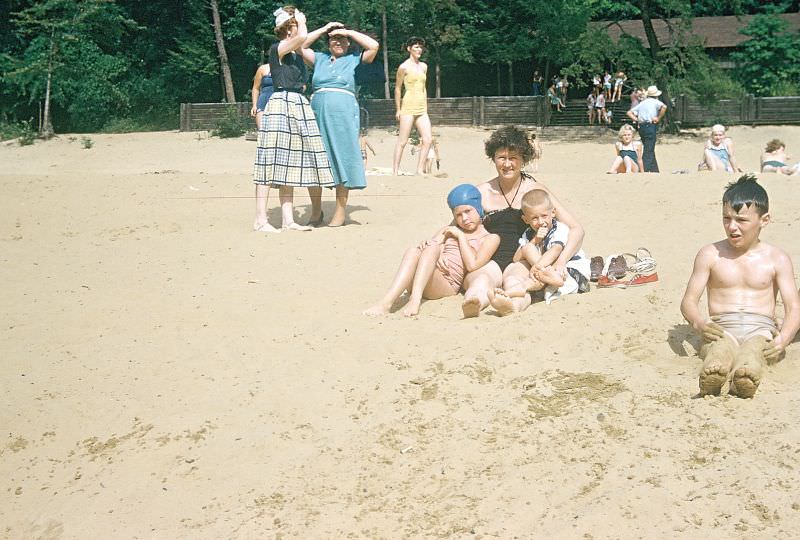
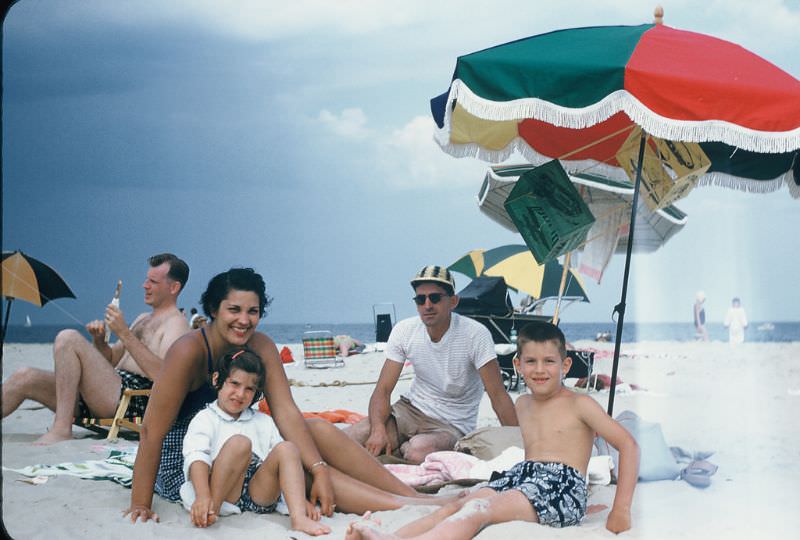
Family at beach, New Jersey. July 1955
Looking at beach in Atlantic City, New Jersey. July 1959

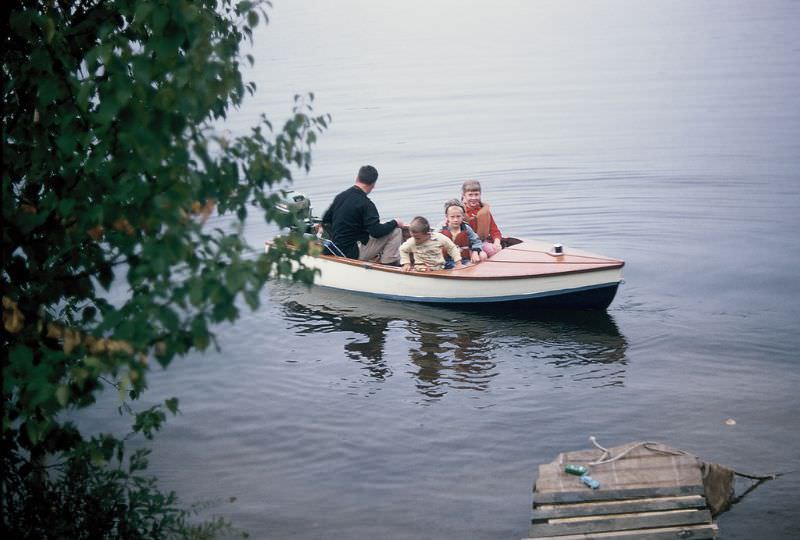
New York State offered tremendous variety, from the quiet wilderness of the Adirondacks to the roaring center of Manhattan. A boat ride on Fish Creek Pond near Saranac Lake was a peaceful contrast to the energy of the city.

Boat ride on Fish Creek Pond, New York. November 1955
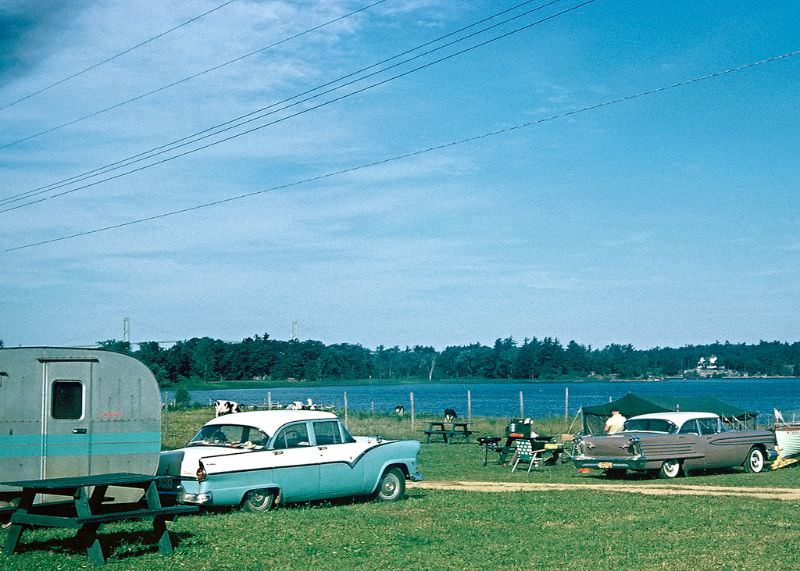
Campsite along St. Lawrence River, Alexandria, New York. July 1959

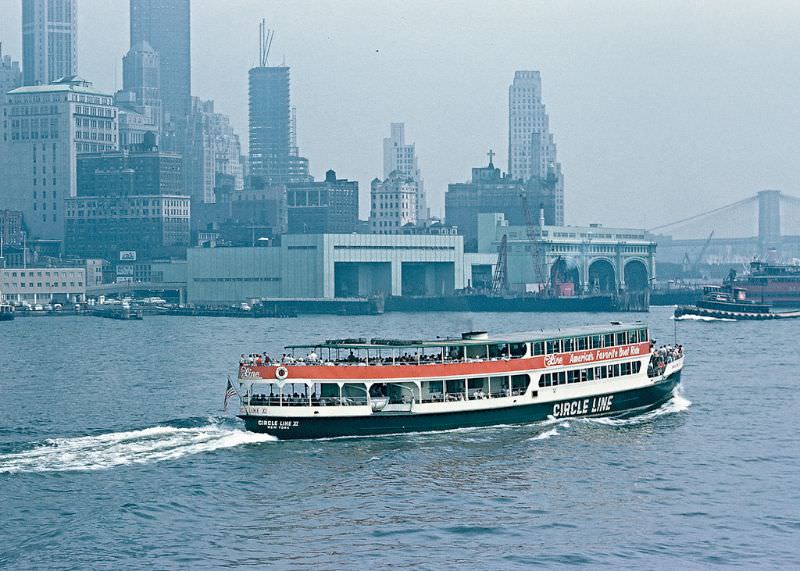
From the Staten Island Ferry, the view of lower Manhattan and the Brooklyn Bridge in 1959 shows a skyline still dominated by early 20th-century architecture, years before the Twin Towers would change it forever.

Circle Line boat, lower Manhattan, and Brooklyn Bridge, from Staten Island Ferry, New York. March 1959
Corning Glass Center, New York. March 1955

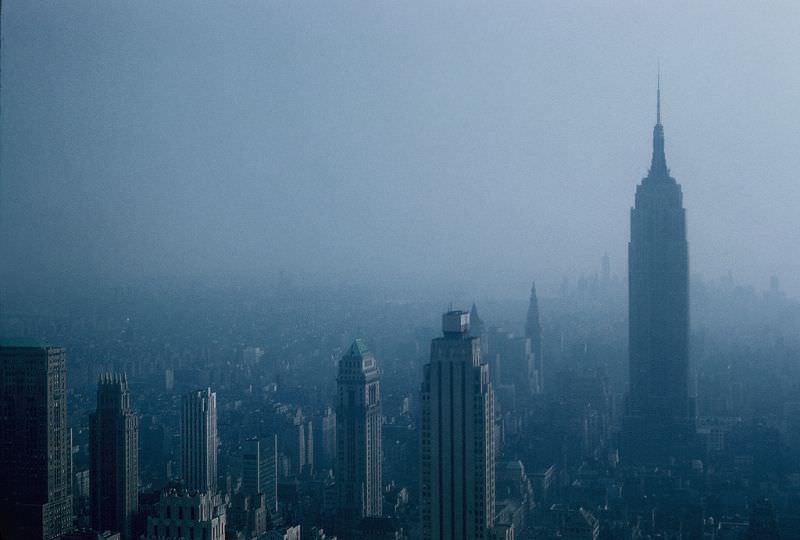
The view from the top of Rockefeller Center looking toward the Empire State Building puts the scale of mid-century Manhattan into perspective. Both structures were landmarks of American ambition, and by 1959 they had become essential stops for any visitor to the city.

Empire State Building from the top of Rockefeller Center, New York. November 1959

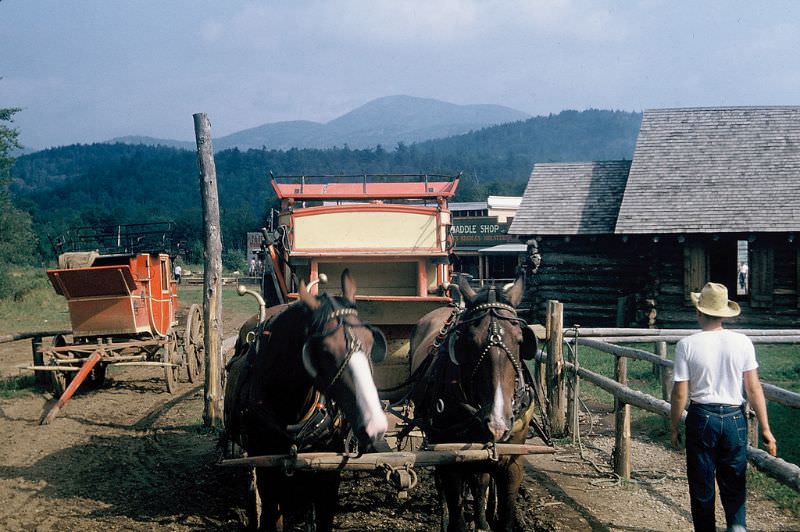
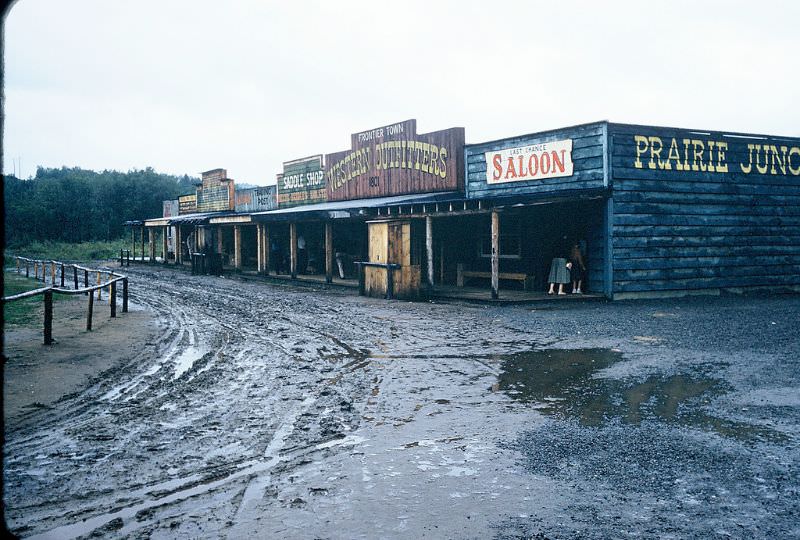
Frontiertown was a theme attraction in the Adirondacks that leaned into the mythology of the American West. Stagecoaches, frontier costumes, and mock gunfights drew families looking for entertainment in the years before large-scale theme parks became the norm.

Frontiertown in the rain, New York. August 1955
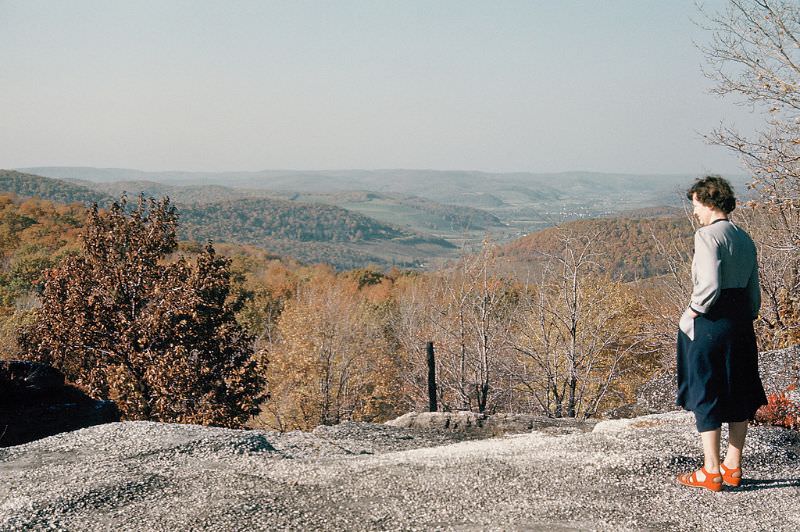
Mom looks off overlook at Rock City, New York. November 1951

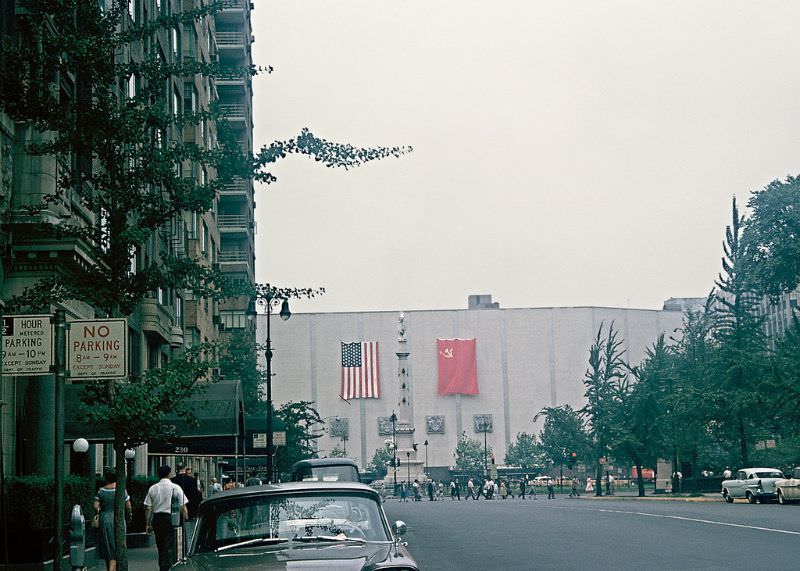
In November 1959, the New York Coliseum hosted a Soviet Cultural and Economic Achievement Exhibition — a direct product of the Cold War’s cultural dimension. American and Soviet officials were actively competing for global prestige, and cultural exchanges were one arena where that competition played out on domestic soil.

New York Coliseum and Soviet Cultural Exhibit, New York. November 1959

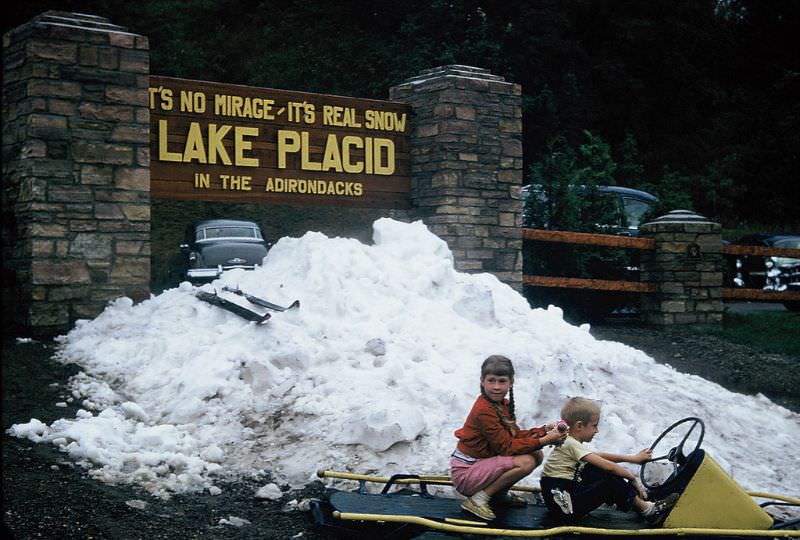
Lake Placid, nestled in the Adirondacks, had hosted the 1932 Winter Olympics and remained a hub for winter sports throughout the 1950s. A toboggan run offered family-friendly thrills at a fraction of the cost of a ski trip.
On a toboggan at Lake Placid, New York. November 1955
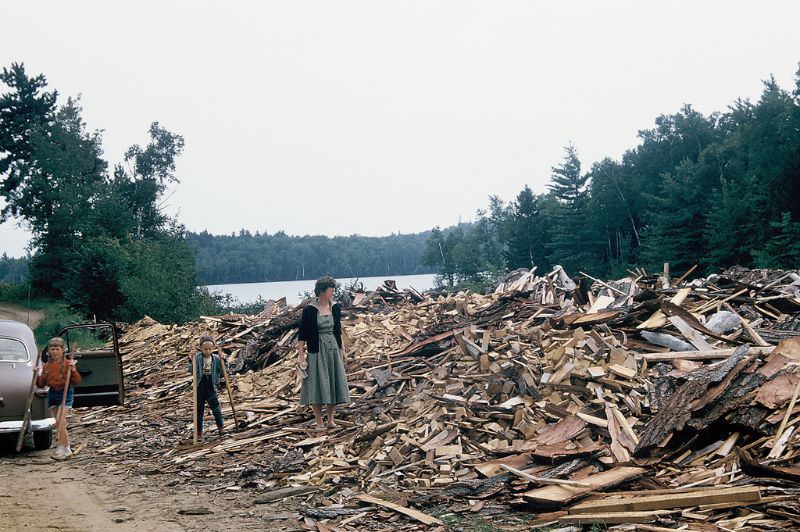
Pile of firewood, Adirondacks, New York. November 1955
Stagecoach, Frontiertown, New York. November 1955

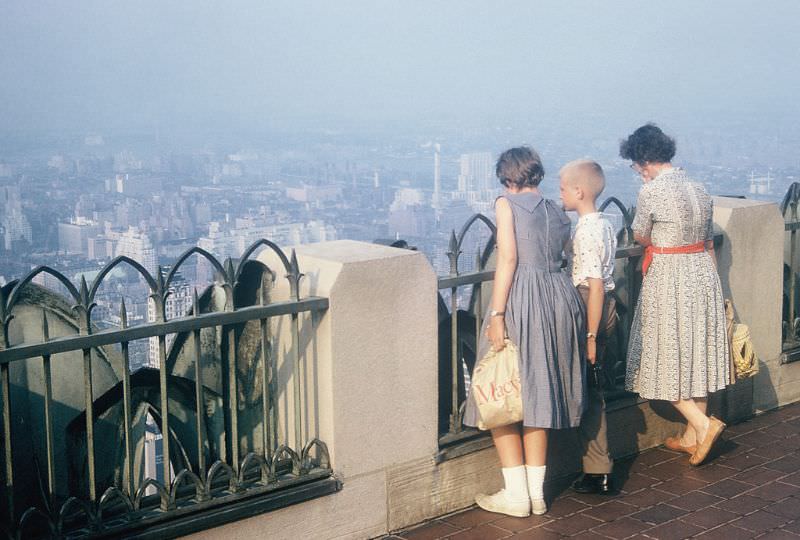
The view from the top of the RCA Building at Rockefeller Center offered one of the best panoramas in New York City. On a clear day, visitors could see across the boroughs and far into the surrounding states.

Standing on the top of the RCA Building, Rockefeller Center, New York. November 1959

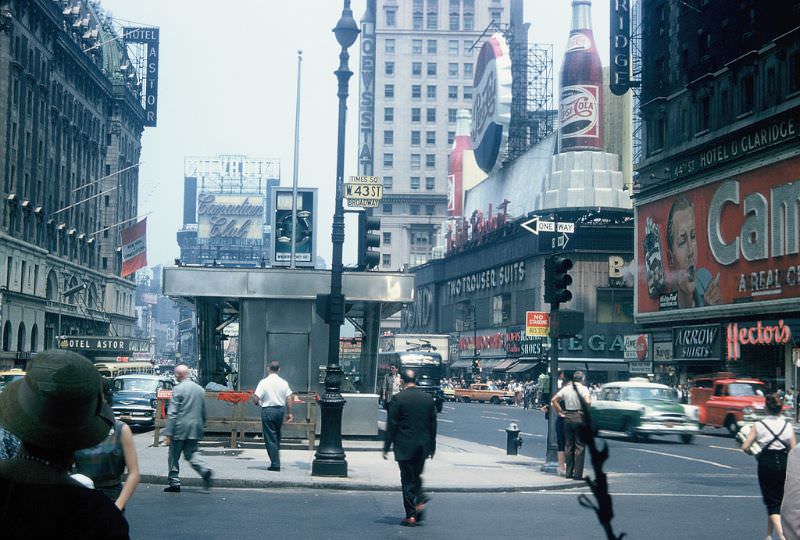
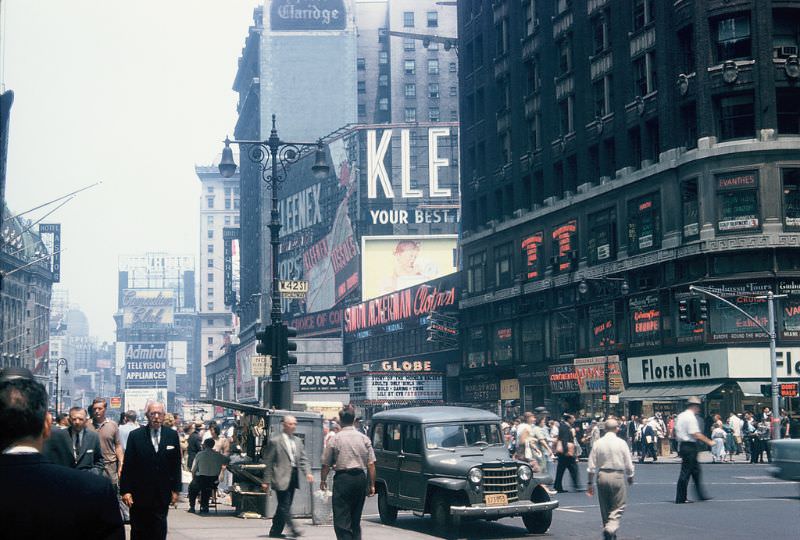
Times Square in 1959 was nothing like the sanitized tourist hub it later became. It was a dense, busy, neon-lit district packed with theaters, bars, and all manner of street life. The photographs Reed took there capture it in full mid-century form.

Times Square, well before the cleanup, New York. November 1959

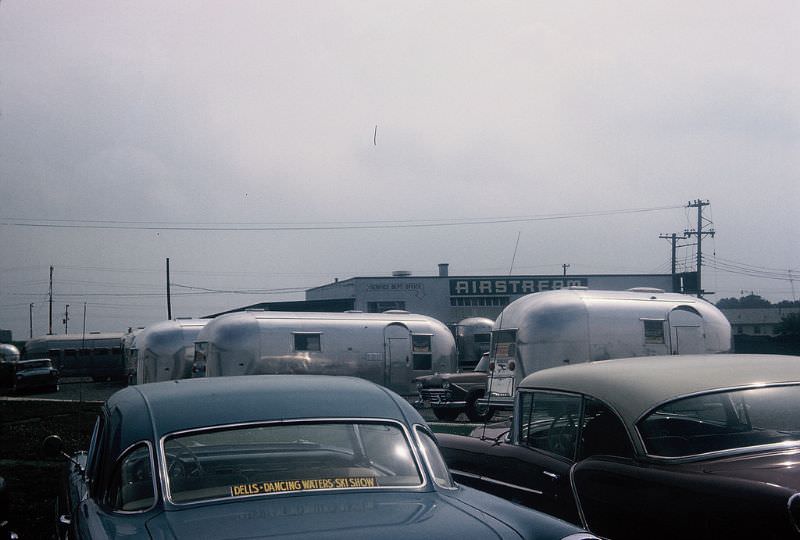
Ohio appears throughout this collection in many forms. The Airstream factory in Jackson Center produced the aluminum travel trailers that became one of the defining symbols of postwar American road culture. Airstream trailers represented freedom, mobility, and the open road — values that resonated deeply in the 1950s.

Airstream factory, Jackson Center, Ohio. December 1959

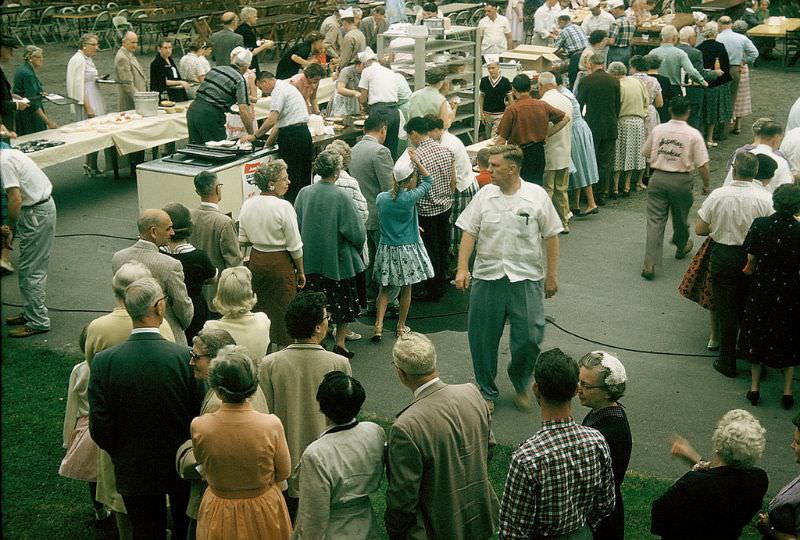
Community events like church strawberry festivals were a central part of small-town Ohio life. They brought neighbors together, raised money for local causes, and reinforced the social fabric that defined the era.

Central Christian strawberry festival, Ohio. 1955

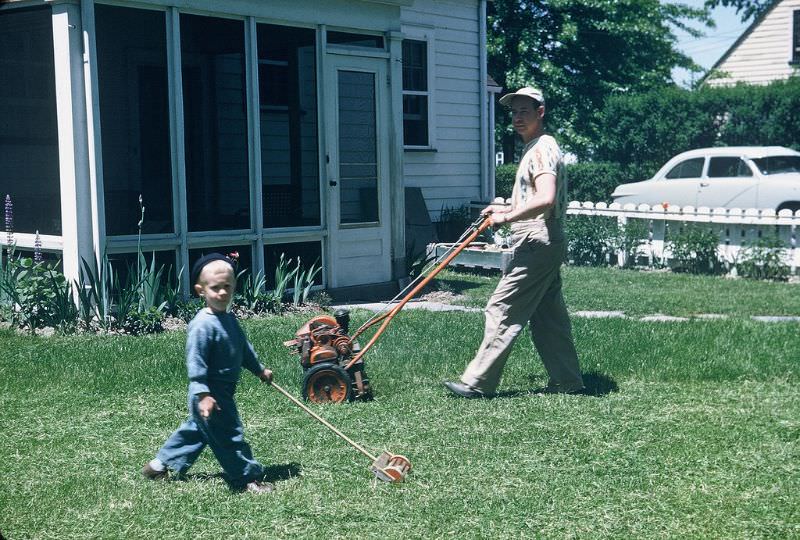
Suburban life in Ohio meant well-kept lawns and neighborhood routines. A child helping their father mow in May 1951 is a small but telling detail of the postwar domestic ideal that millions of American families were actively living out.

Helping dad mow the lawn, Ohio. May 1951
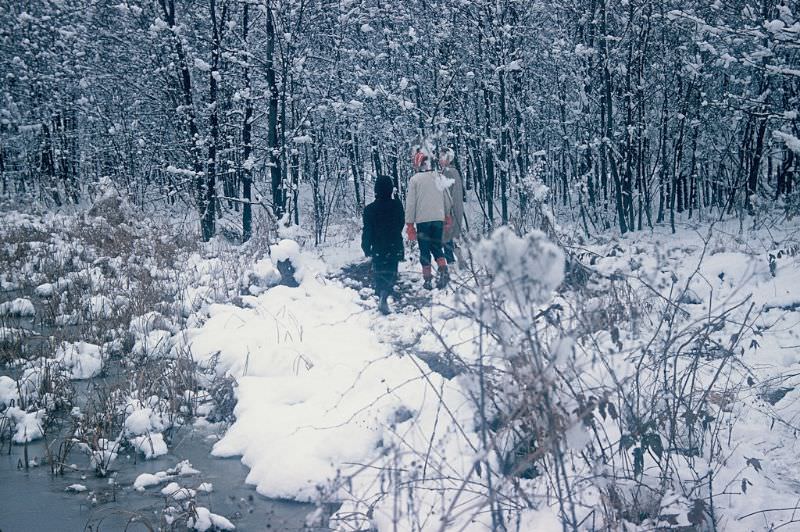
Hiking in the snow at Bullhead Pond, Warren, Ohio. December 1959

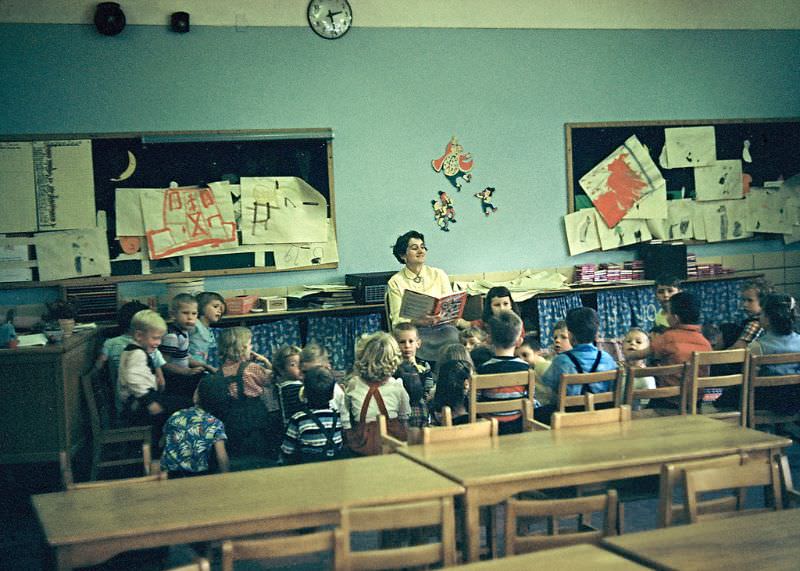
A kindergarten class at Emerson School in Ohio in 1954 shows young children in the early years of the Baby Boom generation — the massive wave of births that followed World War II and would go on to reshape American society for decades.

Kindergarten class at Emerson school, Ohio. December 1954
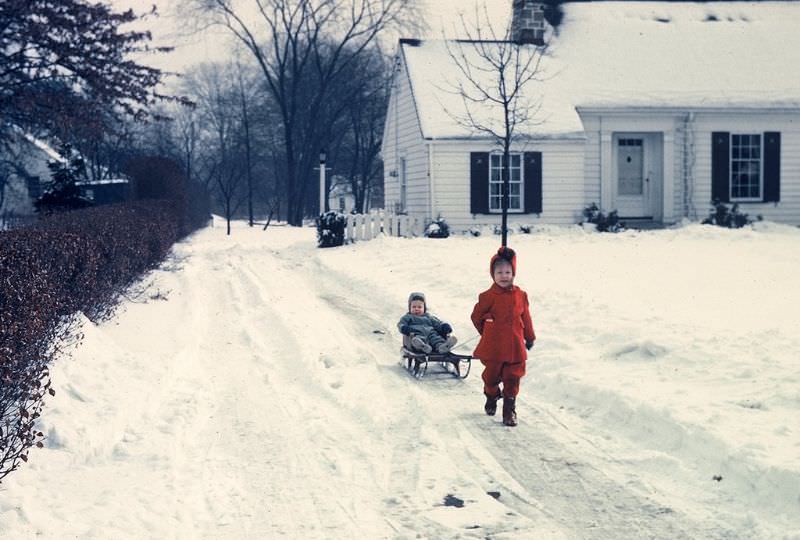
Playing in the snow in the driveway, Ohio. December 1951
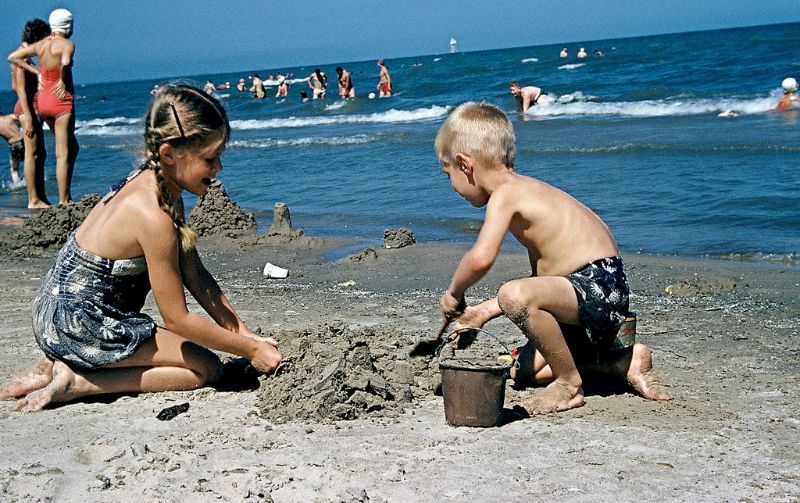
Playing on the beach at Cedar Point, Ohio. December 1954
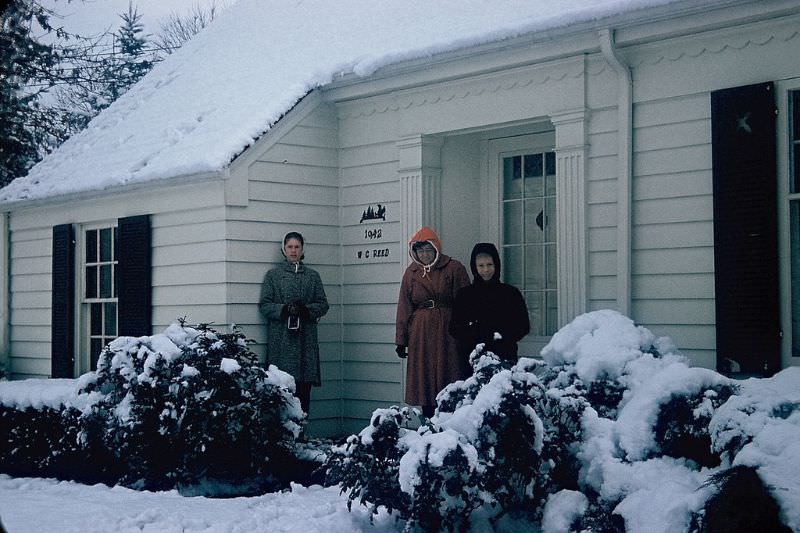
Posing in front of the house, Ohio. December 1959

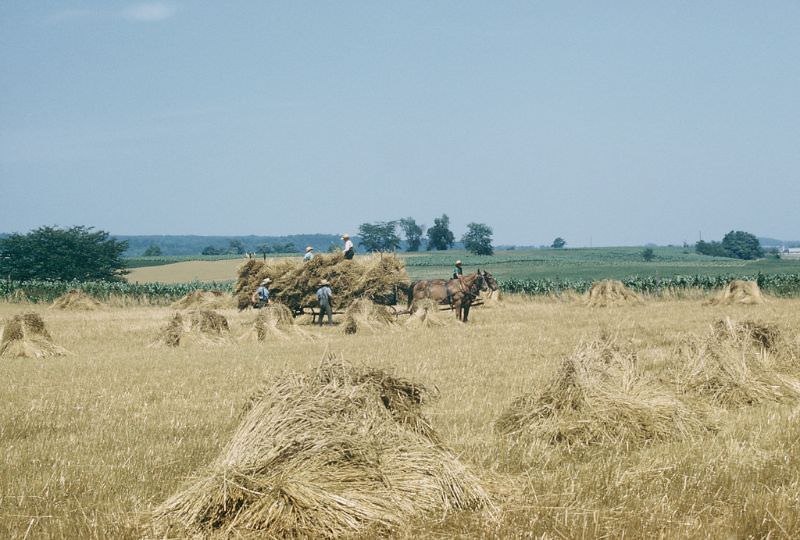
In Lancaster County, Pennsylvania, the Amish community continued farming with horse-drawn equipment long after the rest of the country had mechanized agriculture. Harvest scenes like this one were a stark visual contrast to the industrial world surrounding them.

Amish harvest, Lancaster Co., Pennsylvania. July 1957

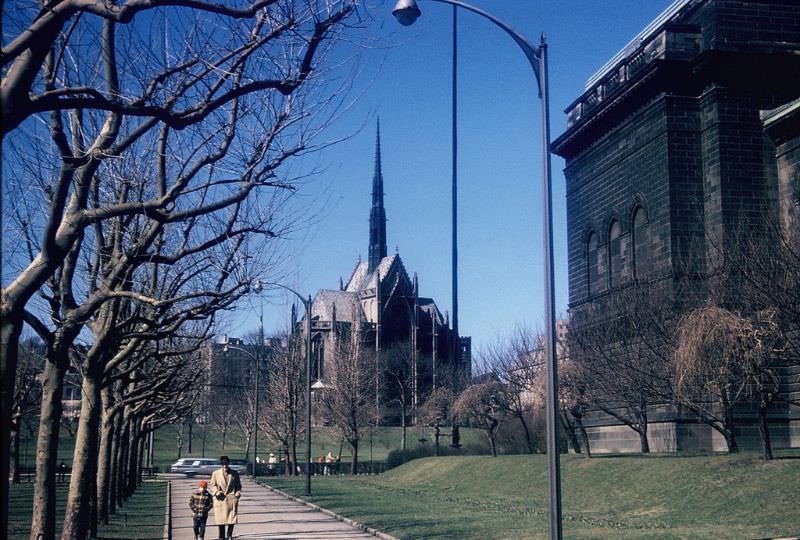
Pittsburgh in the 1950s was still a steel city, but its cultural institutions — including the Carnegie Museum — gave it an intellectual identity alongside its industrial one.

Carnegie Museum and church, Pittsburgh, Pennsylvania. March 1959

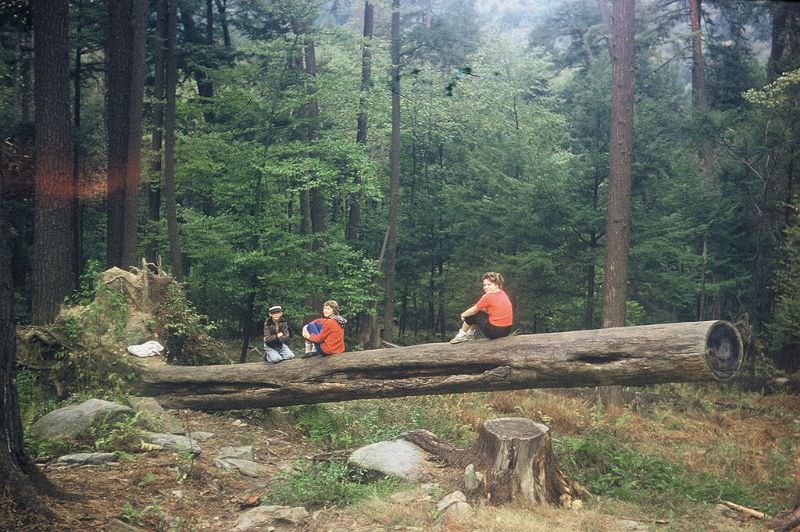
Cook Forest State Park in Pennsylvania contains some of the oldest and tallest white pine and hemlock trees in the northeastern United States. Its Cathedral of the Pines — a stand of old-growth trees so tall and dense they create a cathedral-like canopy — was a well-known natural attraction.

Cathedral of the Pines, Cook Forest, Pennsylvania. July 1959

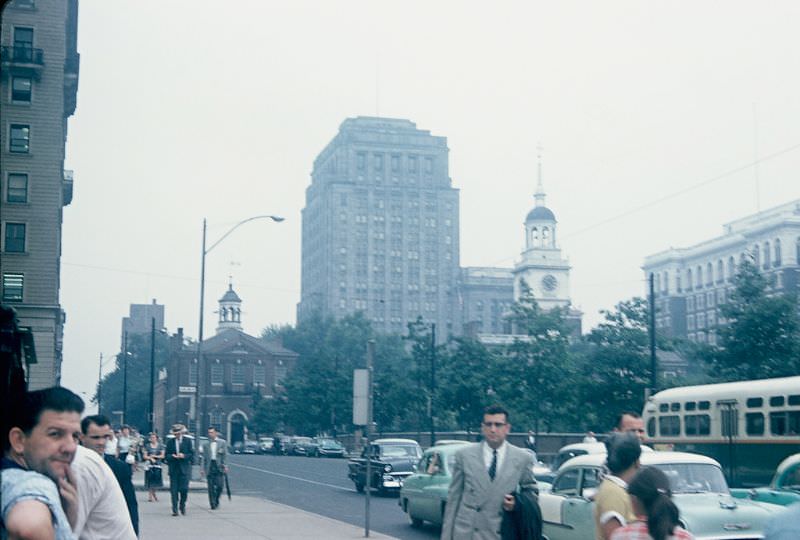
Independence Square in Philadelphia held deep historical weight. It was the site of Independence Hall, where both the Declaration of Independence and the U.S. Constitution were debated and signed. For American families touring the country’s history, it was a required stop.
Independence Square, Philadelphia, Pennsylvania. July 1959

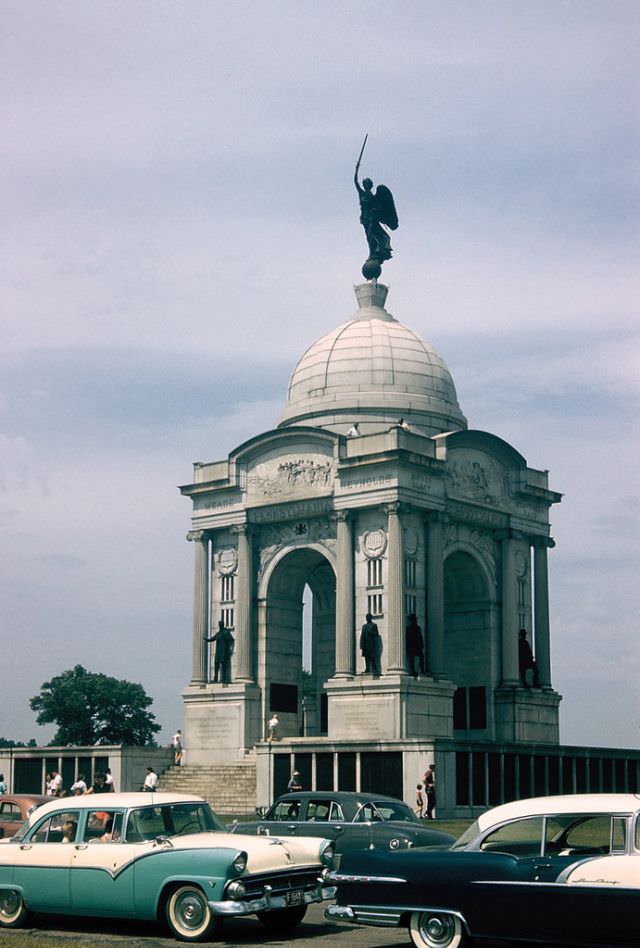
Gettysburg remained one of the most visited Civil War sites in the country. The Pennsylvania Monument, the largest monument on the Gettysburg battlefield, honored the more than 34,000 Pennsylvania soldiers who fought there in July 1863.

Pennsylvania Monument, Gettysburg, Pennsylvania. July 1957
At Carnegie Park, Pennsylvania. May 1952

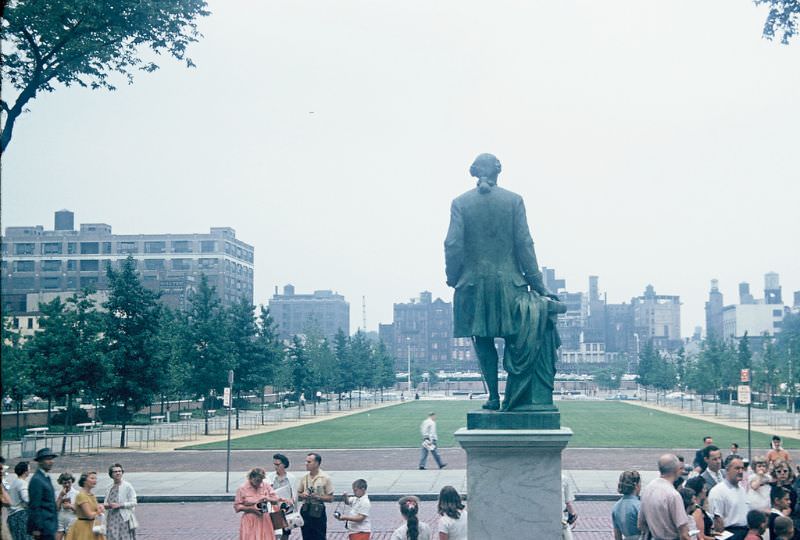
Philadelphia’s Benjamin Franklin Parkway, modeled after the Champs-Élysées in Paris, was lined with museums and cultural institutions. The statue of Franklin near the mall honored the city’s most famous native son and one of the founding figures of American intellectual life.

Statue of Ben Franklin and Mall, Philadelphia, Pennsylvania. May 1959
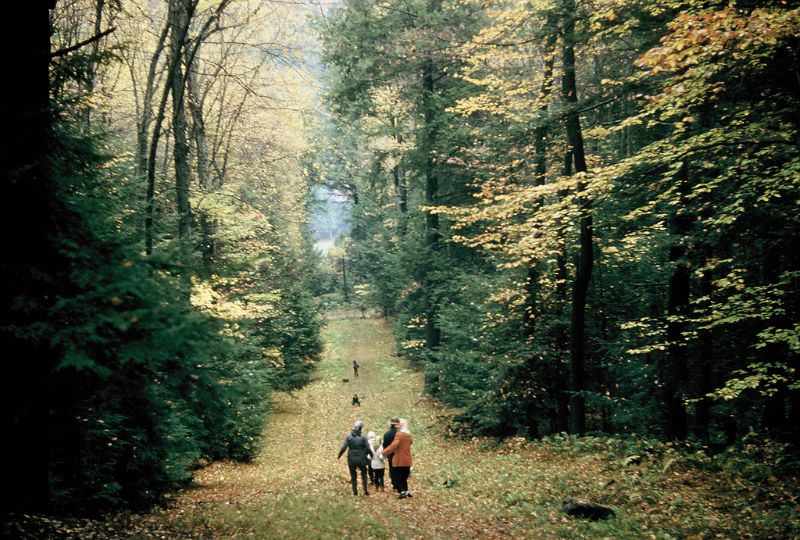
Trail at Cook Forest State Park, Pennsylvania. May 1955

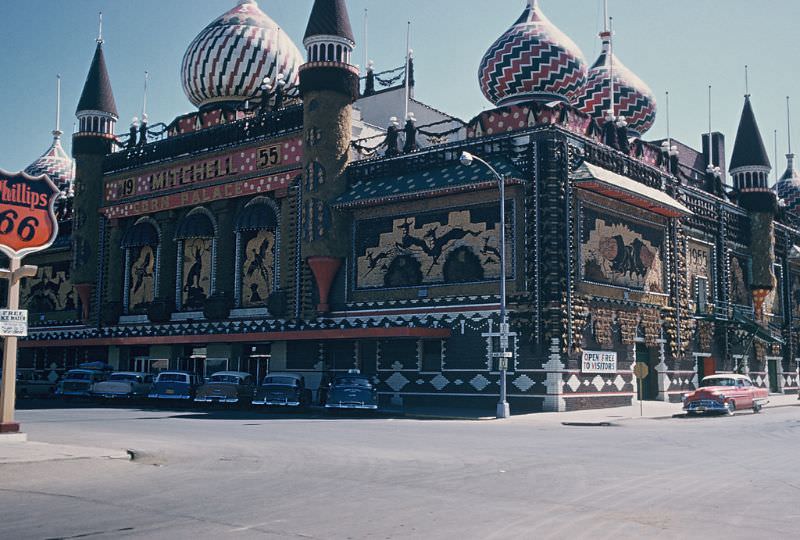
The Corn Palace in Mitchell, South Dakota is exactly what it sounds like — a large public building covered entirely with murals made from corn and other grains. New murals are created each year, and by 1956 it had been drawing curious visitors for decades.

Corn Palace, Mitchell, South Dakota. June 1956

Yankton, South Dakota, sitting along the Missouri River, greeted travelers with a wooden boardwalk that set the tone for the western stretches of the Reed family’s road trip in the summer of 1956.

First boardwalk of the trip, Yankton, South Dakota. June 1956

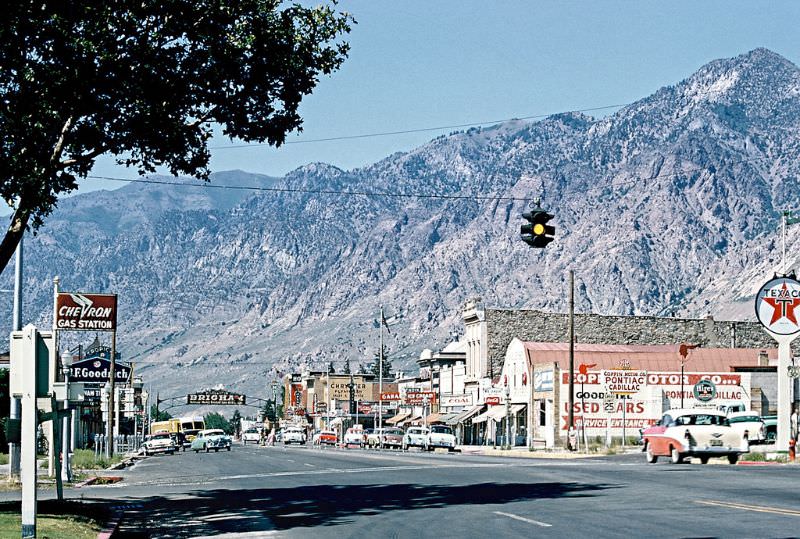
The main street of Brigham City, Utah shows the pattern of mid-century American small-town commercial life — storefronts lined up along a wide road, built to accommodate both foot traffic and the growing number of automobiles.

Main street, Brigham, Utah. July 1956

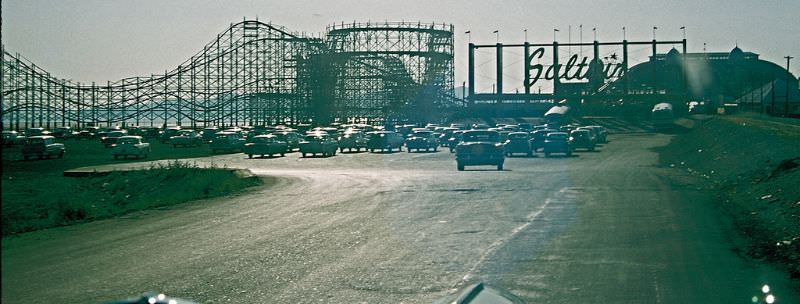
Saltair, on the southern shore of the Great Salt Lake, was one of Utah’s most popular resort destinations in the first half of the 20th century. By the 1950s, its famous roller coaster and lakeside bathing still drew large summer crowds.

Parking lot and roller coaster at Saltair Park, Utah. July 1956

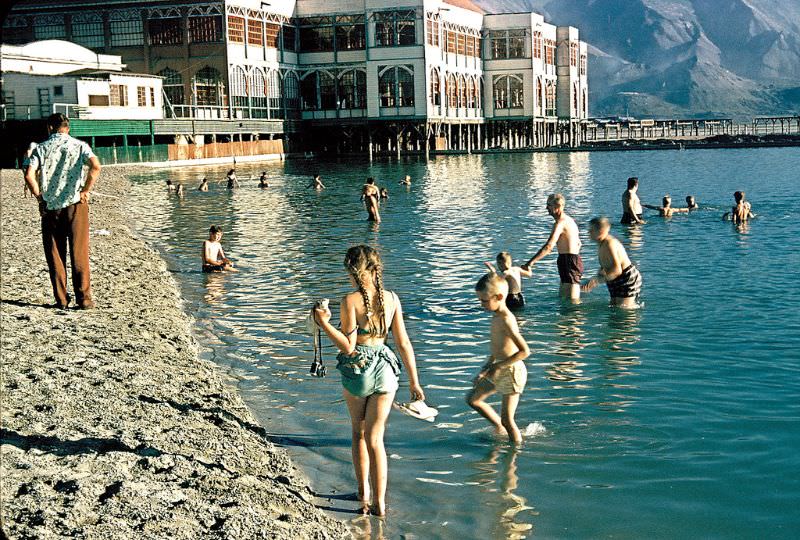
Swimming in the Great Salt Lake at Saltair was a unique experience. The lake’s extreme salinity — several times saltier than the ocean — made it nearly impossible to sink, and bathers floated effortlessly on the surface.

Swimming in the Great Salt Lake at Saltair resort, Utah. July 1956

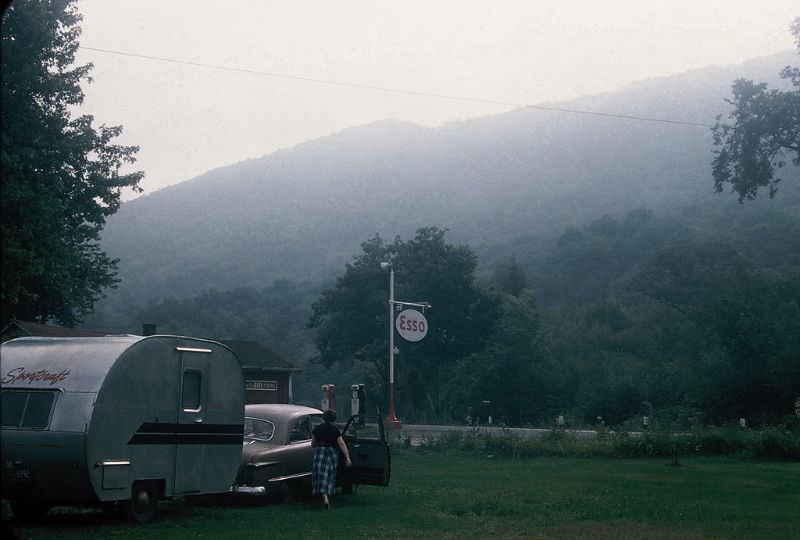
Vermont offered a quieter, more rural pace. A campsite near an Esso filling station at Mount Bromley in August 1955 shows how road travel and outdoor life were tightly connected — gas stations and campsites were both essential stops along any extended journey.

Campsite with Esso station at Mount Bromley, Vermont. August 1955

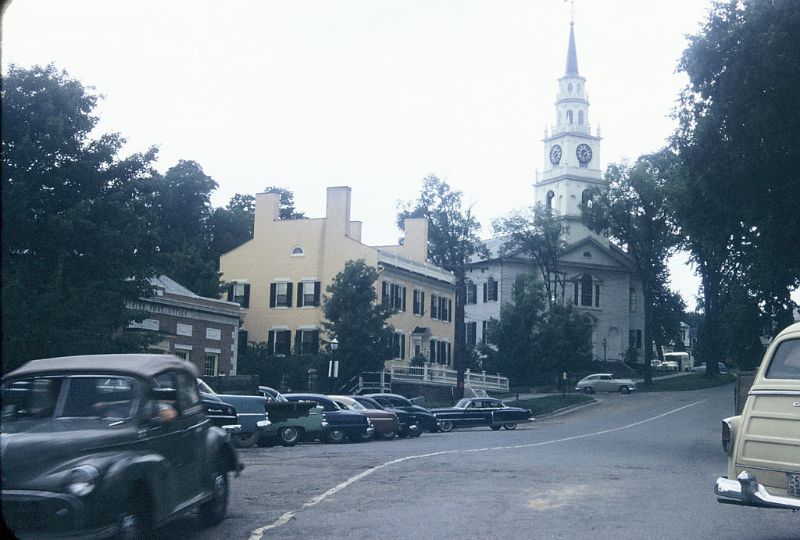
Middlebury, Vermont was a classic New England college town, defined by its white-steepled church, its town green, and its historic streetscape. A photograph of its main street in 1955 looks like it could have been taken fifty years earlier — some places in America changed slowly.

Street scene with church, Middlebury, Vermont. August 1955

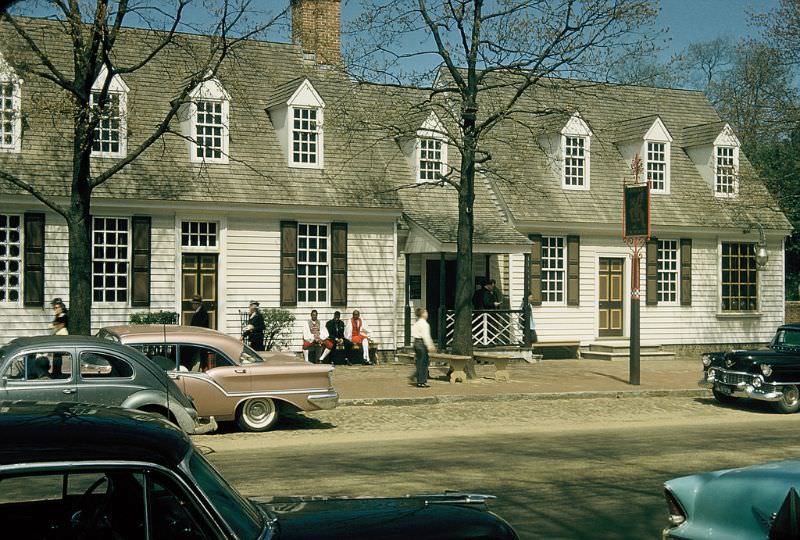
Colonial Williamsburg in Virginia had been meticulously restored since the 1930s with funding from John D. Rockefeller Jr. By the late 1950s, it was one of the most visited living history sites in the country, drawing Americans who wanted a direct connection to the nation’s colonial past.

Colonial Williamsburg, Virginia. July 1957
Enjoyed this post? Get new ones in your inbox.

Leave a Comment

Your email address will not be published. Required fields are marked *

Share this Post 🥺

Please take a moment to share this content. Your support is greatly appreciated! 🙌🙏

Share this Post 🥺

Please take a moment to share this content. Your support is greatly appreciated! 🙌🙏
Scroll to Top
 
Hey Friend, Before You Go.. Please like & follow for more interesting content