
Ambridge, Pennsylvania, sits in Beaver County along the Ohio River, and its entire identity was shaped by one company. In 1901, the American Bridge Company — a subsidiary of United States Steel — purchased 2,500 acres of land from the Harmonists, a religious communal society that had farmed the area for decades. The company didn’t just buy land. It built a town, naming it after itself: American Bridge became Ambridge.
Word spread quickly across Europe and beyond. Thousands of immigrants poured into Ambridge in the early 20th century, drawn by steady work in the mills. Poles, Slovaks, Greeks, Italians, and other nationalities settled into tightly packed neighborhoods, turning the borough into a dense, working-class community. By the 1930s and 1940s, Ambridge had grown into a worldwide leader in producing steel for bridge construction. The photographs below, taken mostly between 1938 and 1941, capture the town during that era — its workers, its streets, and the everyday lives of the people who kept it running.
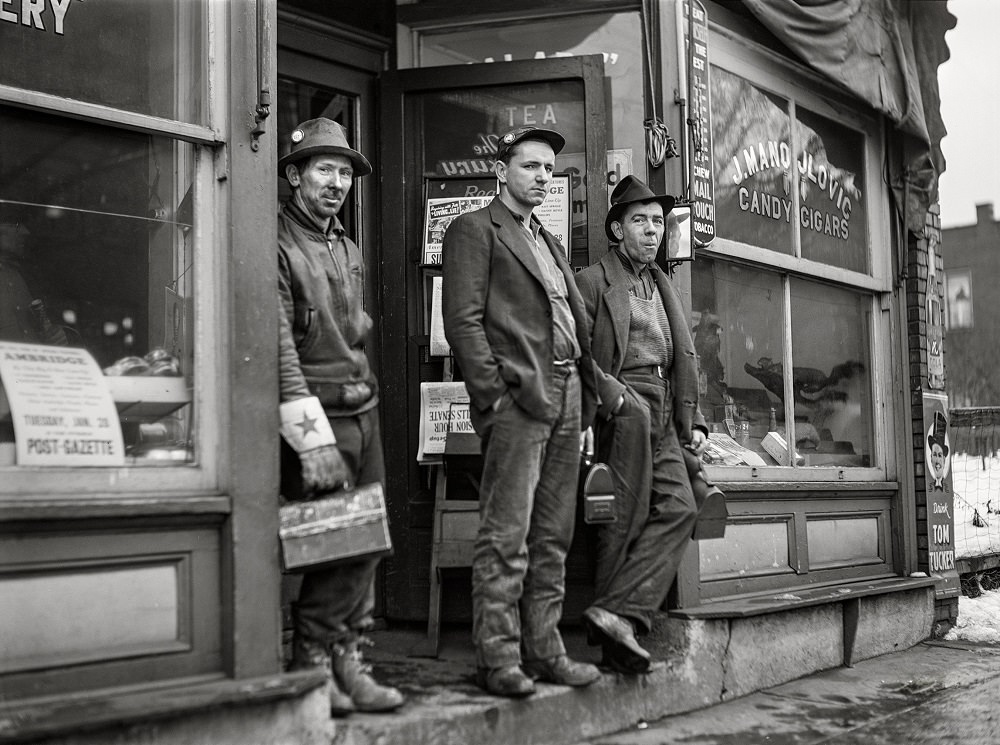
The American Bridge Company was the heartbeat of the borough. Shift workers filled the streets at the same hours every day, and bus stops became familiar gathering places. The plant operated on a massive scale, producing structural steel that went into bridges across the United States and around the world. For the men who worked there, the job was physically demanding and often dangerous, but it paid wages that supported entire families and funded the local economy.
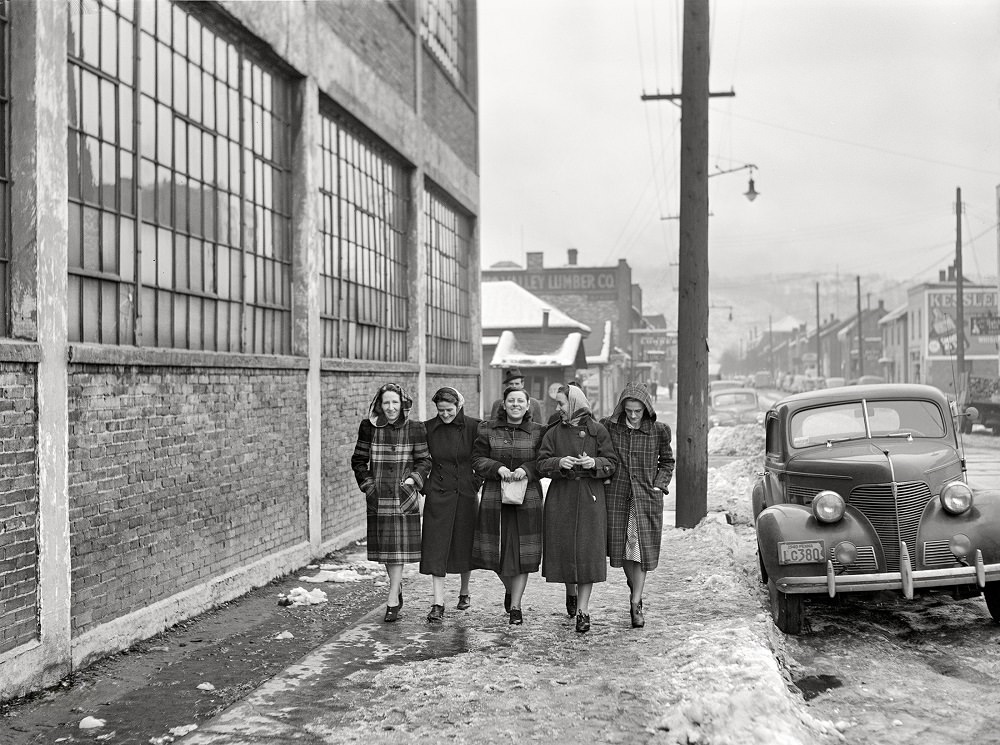
The main streets of Ambridge bustled with activity. Shops, taverns, and small businesses lined the commercial district, catering to a population that worked hard and spent locally. January in western Pennsylvania brought bitter cold, but the streets stayed busy. The town had a compact, urban feel unusual for a borough its size — a direct result of how quickly it had been built up to house and serve a large industrial workforce.
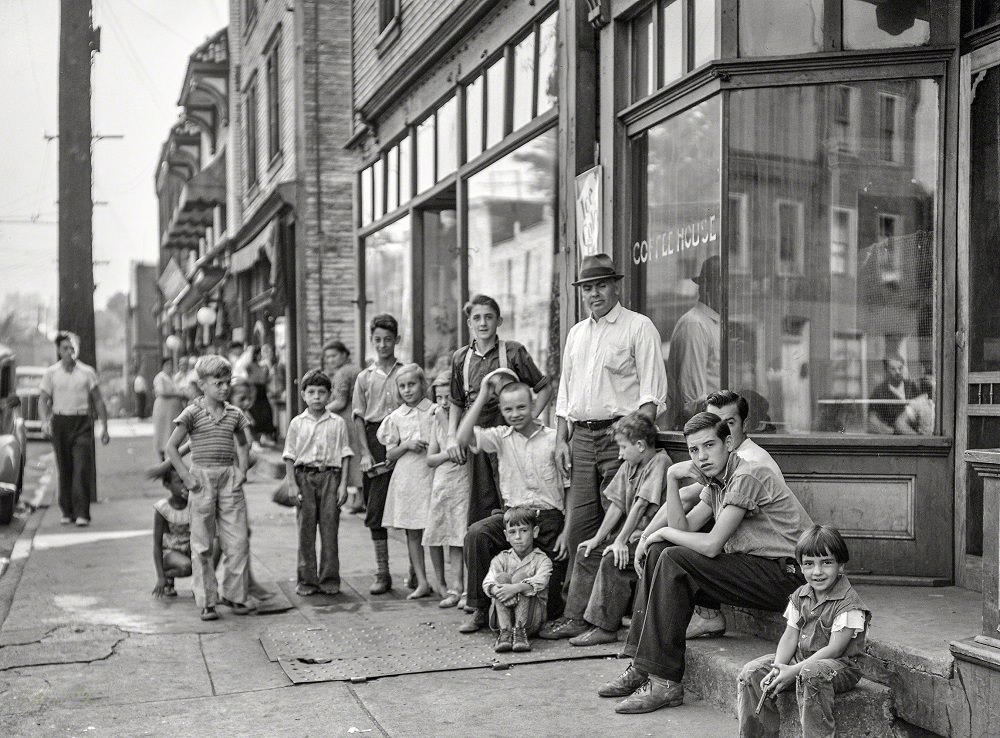
Coffee shops and small diners were social anchors in immigrant neighborhoods. They served as places where workers gathered before and after shifts, where news was exchanged, and where the languages of the old country were still spoken freely. Many of these establishments were owned and run by immigrant families who had arrived in Ambridge just a generation before.
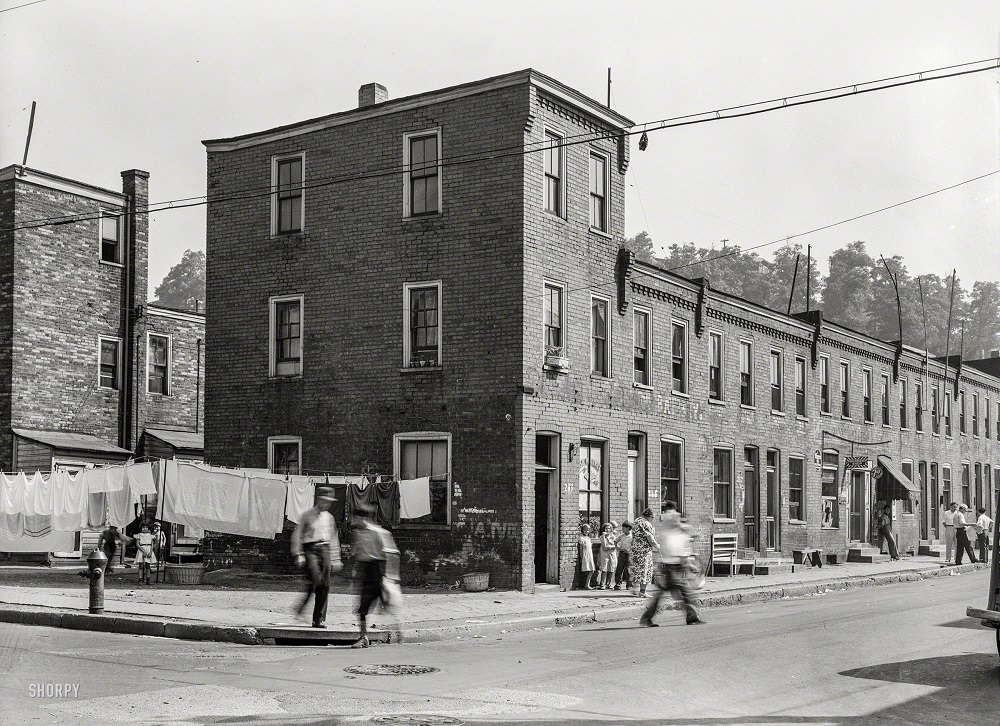
Housing in Ambridge told a clear story about how the town was built — quickly and densely. Rowhouses and worker cottages were packed close together, often sharing walls and small rear yards. Conditions varied widely depending on the block and the landlord. Some homes were well-kept; others showed the strain of overcrowding and limited maintenance. The photographs taken in 1938 and 1939 documented these conditions in detail, giving a ground-level view of how steelworkers and their families actually lived.
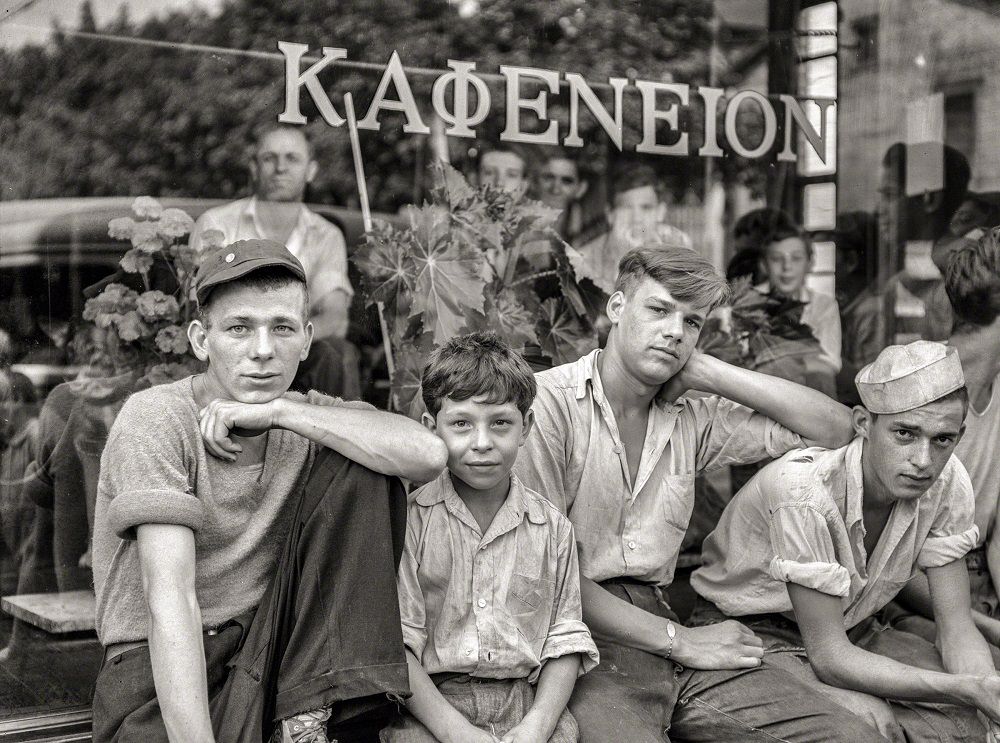
Greek immigrants were among the many groups who established a visible presence in Ambridge. Greek-owned coffee shops became neighborhood fixtures, and the community maintained strong cultural ties even as younger generations grew up fully American. Children born in Ambridge in the 1920s and 1930s grew up in neighborhoods where multiple languages were spoken on the same block.
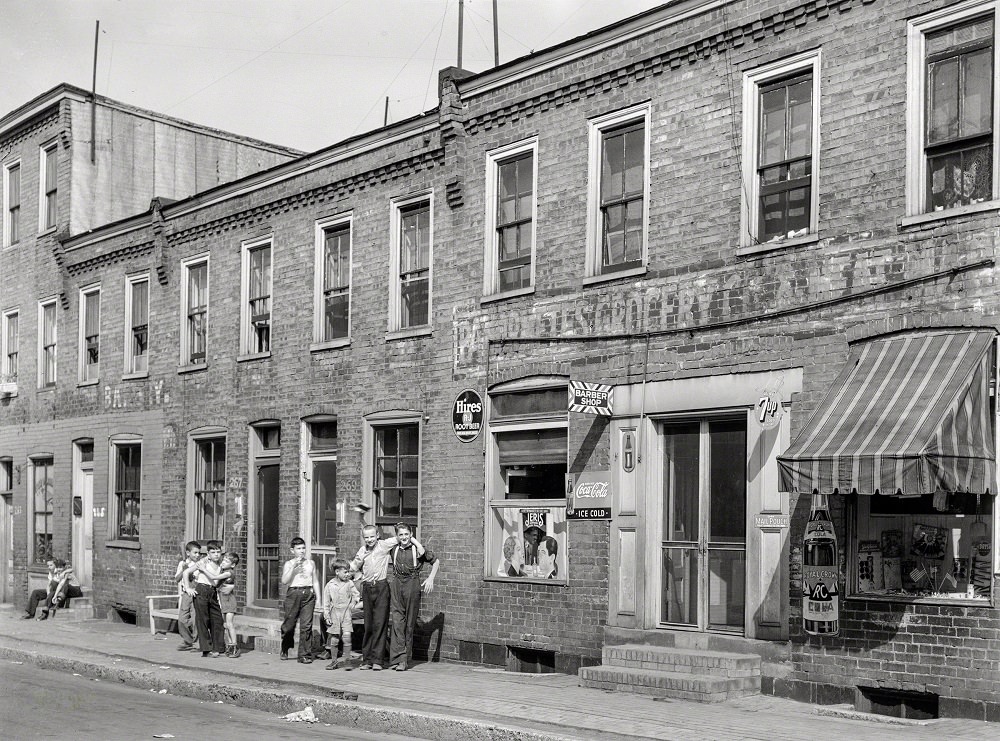
Streets and alleys served as playgrounds for Ambridge’s children. With little open green space in the densely built borough, kids claimed whatever flat ground they could find. The summer months brought them outside in large numbers — the sons and daughters of steelworkers, playing in the same neighborhoods where their fathers punched time cards at the mill.
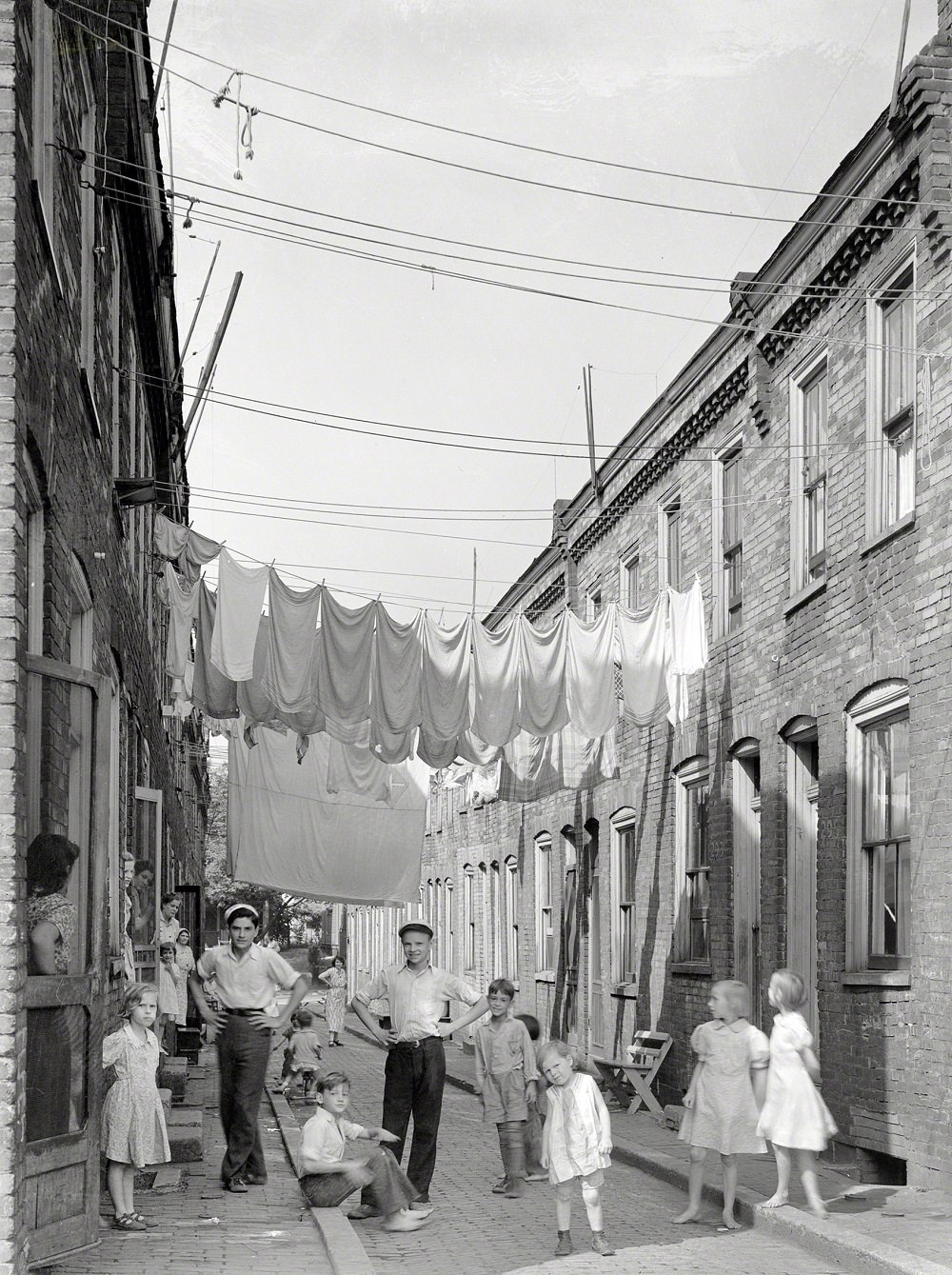
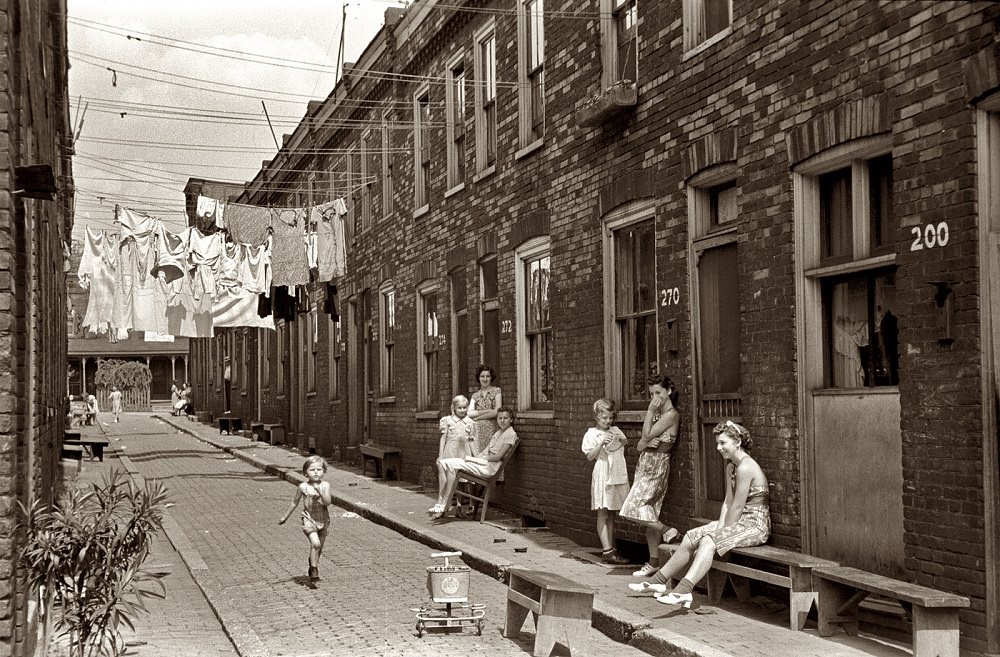
Many of the homes in Ambridge were built rapidly in the early 1900s to accommodate the surge of workers arriving at the mills. By 1938, some of that housing stock was already several decades old and showing its age. Back alleys revealed the realities of working-class life — laundry lines, weathered siding, and homes built for function rather than comfort.
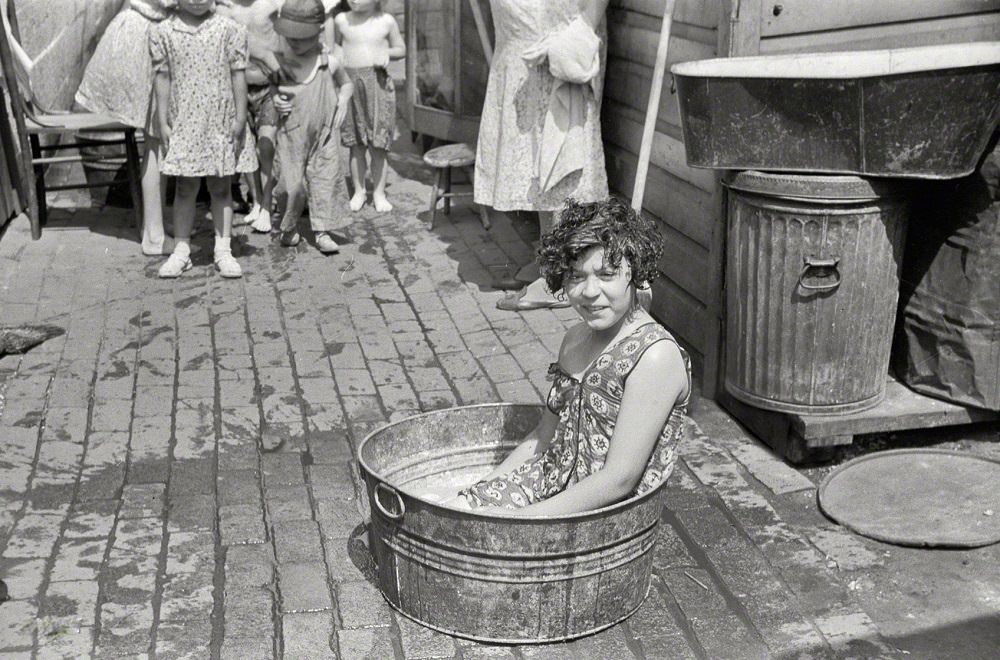
The east side of Ambridge was home to some of the borough’s more densely packed residential blocks. Alleys cut between rows of houses, used for deliveries, trash removal, and informal socializing. These narrow corridors offered a different perspective on the town than its main commercial streets — quieter, more personal, and more revealing of daily life.
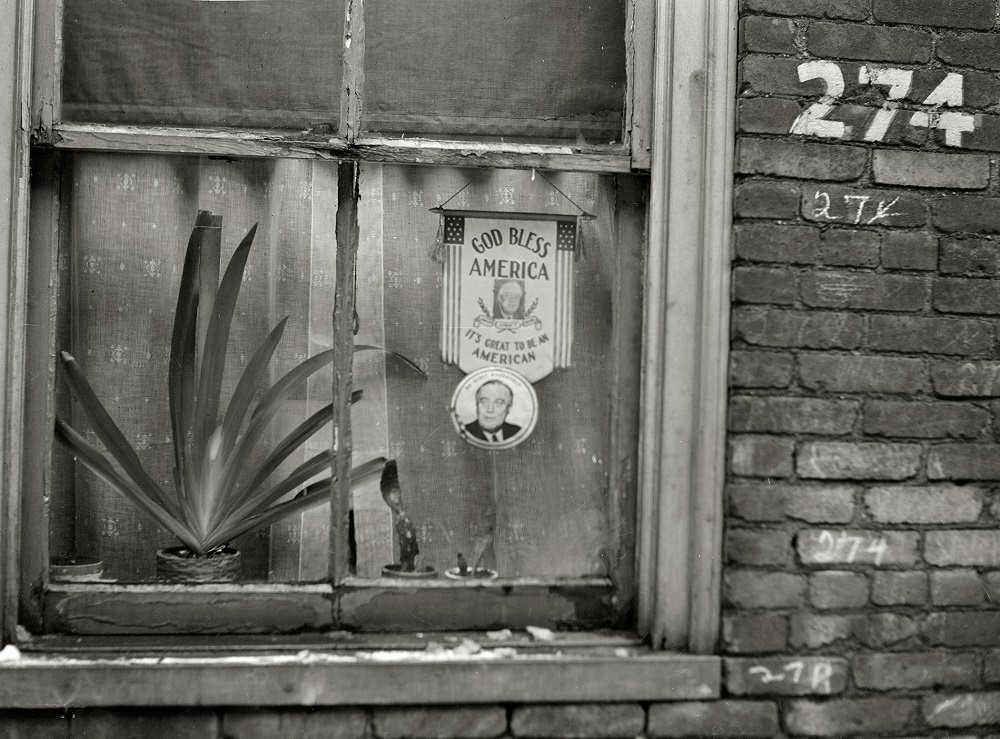
Not everyone in Ambridge had steady work in 1941. The Great Depression had hammered the steel industry through the 1930s, and while production was beginning to recover — partly driven by wartime demand — unemployment still touched many households. A window in an unemployed steelworker’s home captured something quiet and specific: the gap between the town’s industrial power and the economic fragility of the men who built it.
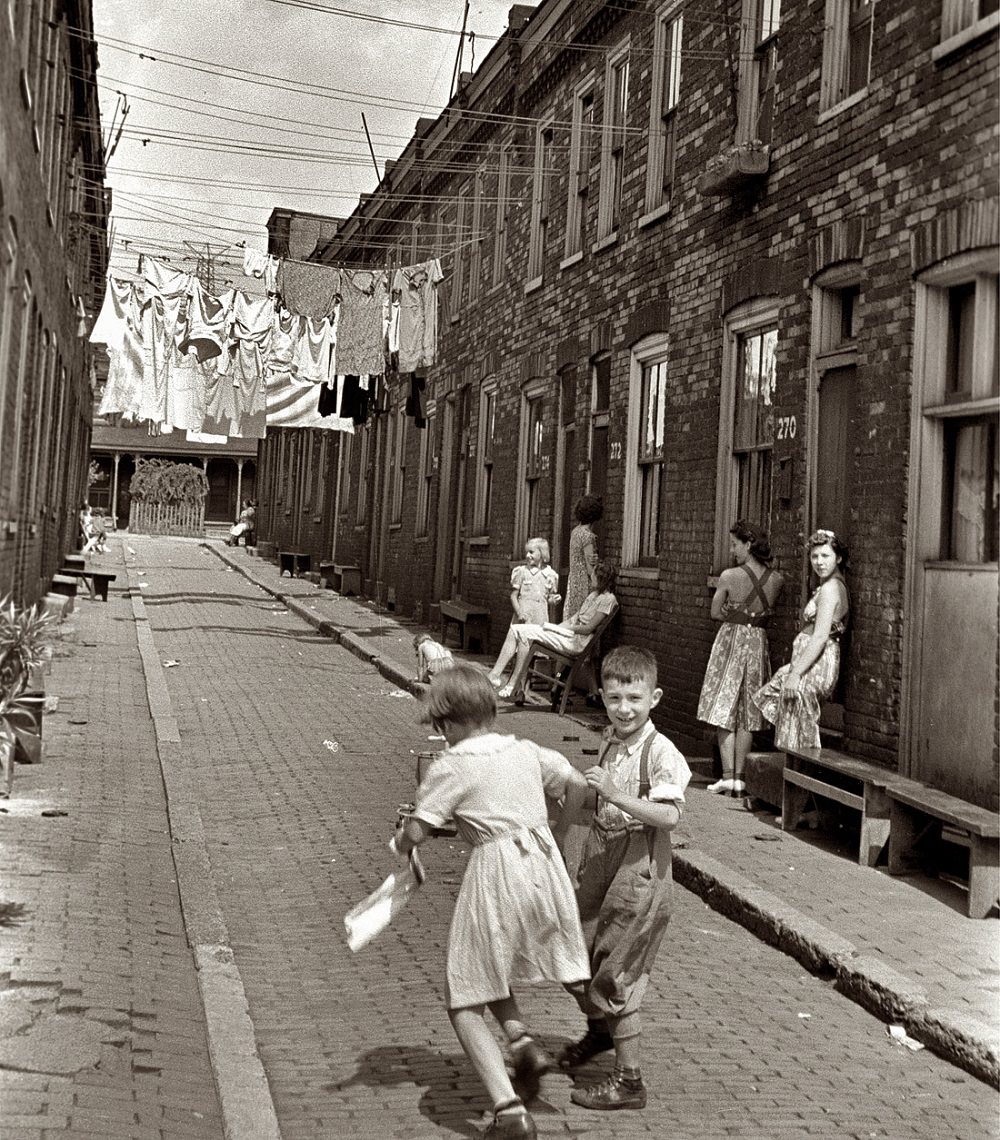
Rowhouses defined the residential landscape of Ambridge. Built side by side in long uniform lines, they maximized the number of families that could live within walking distance of the mills. Many were rented from landlords who owned entire blocks, while others were purchased by families who had saved enough from years of mill wages to buy their own place.
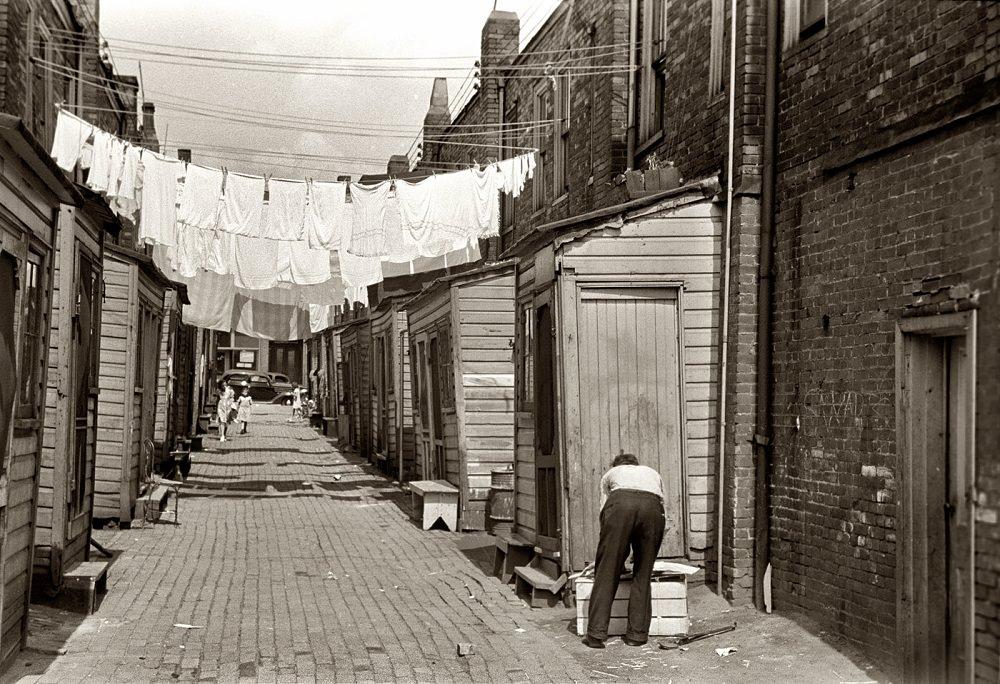
The back alleys of Ambridge’s residential neighborhoods provided an unfiltered look at how the working class lived. These spaces behind the houses were practical and unglamorous — utilitarian areas that reflected a community focused on work and survival rather than appearance. Photographers documenting Ambridge in the late 1930s made a point of capturing these less visible corners of town.
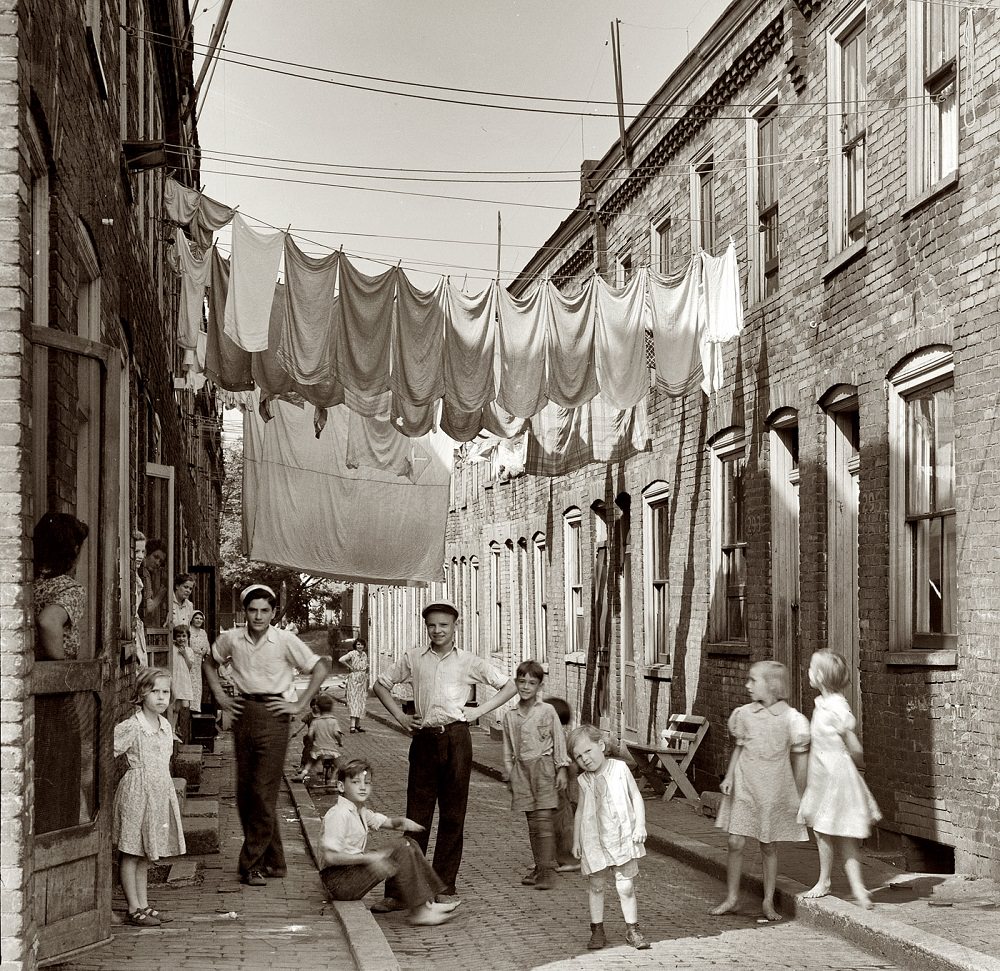
The American Bridge Company’s footprint in the borough extended beyond the mill itself. Company-owned properties and facilities were woven throughout the town, a reminder that the corporation hadn’t just brought jobs to Ambridge — it had created the place from scratch. The relationship between the company and the community was total in a way that few modern towns experience.
By 1938, Ambridge had been a functioning borough for nearly four decades. Its streets carried the rhythm of a town built around shift work and immigrant ambition. The American Bridge Company’s works would continue operating for another four and a half decades before finally closing in 1984. Steel pipe manufacturing carried on after the bridge works shut down, keeping at least a portion of the town’s industrial identity alive into the modern era.





Very cool! Thanks!
Does anyone know the streets the pictures were taken on?
Marshall Alley, First Street
great pic of 1st st lookin west/ pretty sure. the one boy in white shirt near center looks like johnny G. an AHS 1950 grad. he & his whole family are in these famous old pics of 1st str. he was held back in school 2 yrs. i talked w/his sister about a year or so ago. & she recalled me . on 1st str & in AHS., the same su=is that is in the wash tub bathing w/all family around. she grad 1947 & her sis grad 47 & john shud of grad 48,
Cool pics. I’ve heard stories of how bustling Ambridge used to be. At one point there were over 20,000 people in the town.
When I was a child in the 1960s I lived out in the country in Marshall Township. In those days it was REALLY the country. Ambridge was bustling back then. To me, Ambridge was the Big City.
My grandma would have been about 20 years old then living down on Maplewood.
Looks like one of Natasha’s ancestors went for the Greek vibe coffee shop in photo 4. And it’s nice to see Joe and Bert hanging around outside the shop in photo 1.