In the early 20th century, the women of Alsace — the region along France’s border with Germany — wore some of the most distinctive traditional dress in all of Europe. Their costumes blended German fashion with French style, creating a look that was bold, structured, and deeply tied to local identity. Today, these outfits are rarely worn as everyday clothing, but they remain one of the most recognized symbols of Alsatian culture.
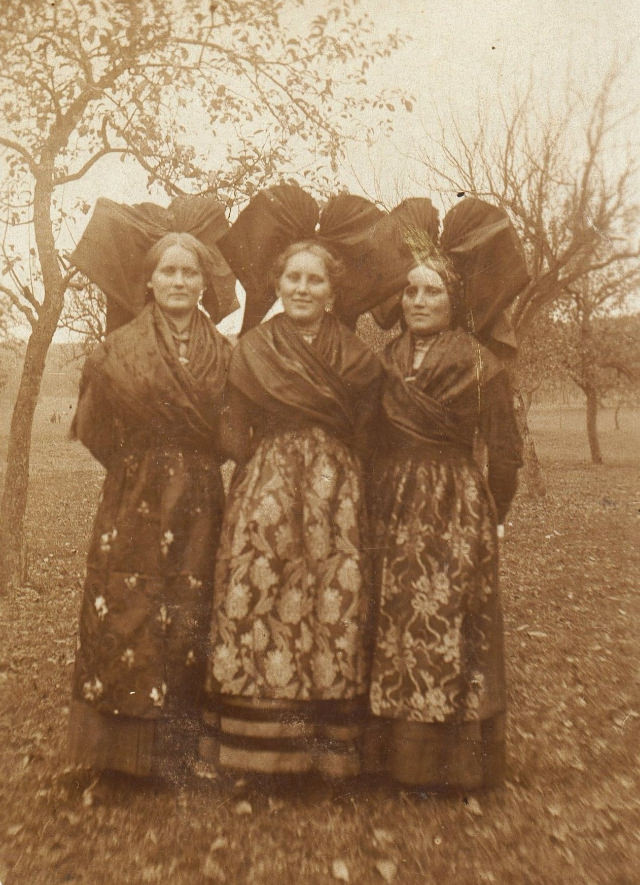
The basic outfit consisted of a colored skirt, a white blouse, and a black apron. Simple in its base form, the costume became far more complex once religion entered the picture. Catholic and Protestant women dressed differently from one another, and those differences were immediately visible to anyone who knew what to look for.
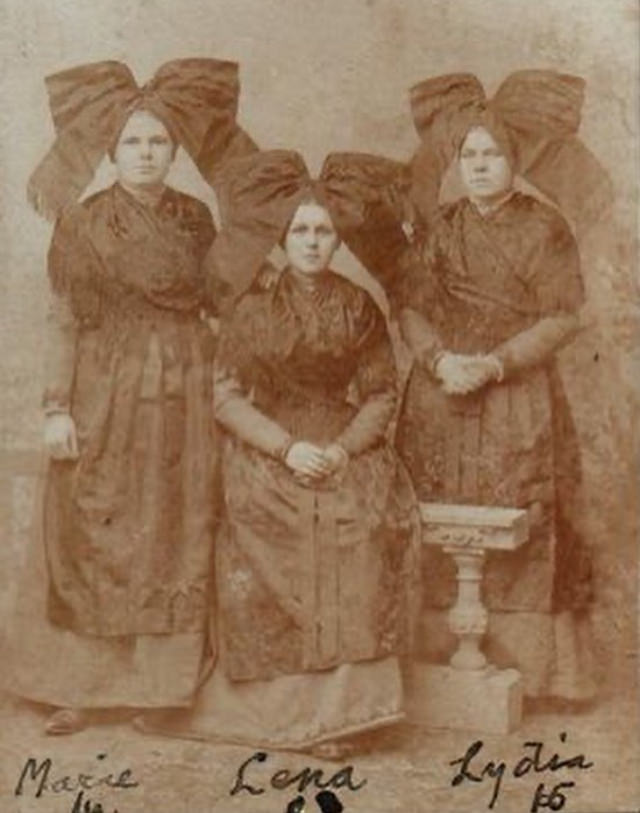
Catholic Alsatian women wore a garment called the “Kutt” — a long red skirt tied to the liturgical calendar. Protestant women wore the “Rock,” a shorter skirt that came in green, blue, red, or purple. The choice of color and length was not personal preference. It was a public statement of faith, worn with pride and precision.
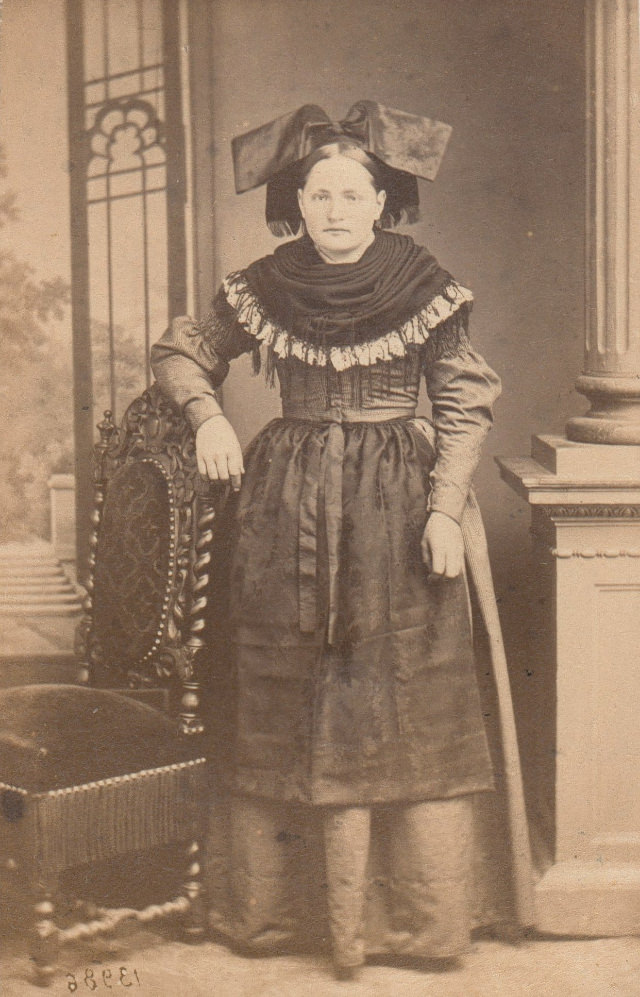
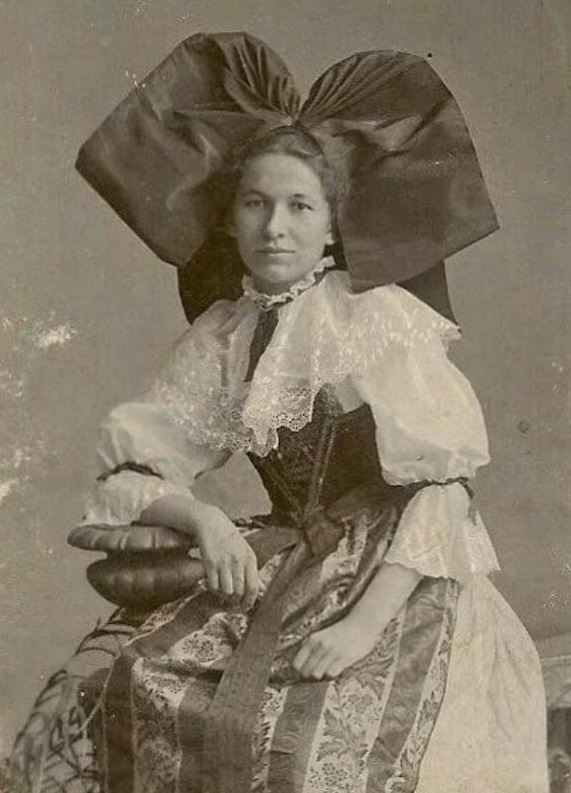
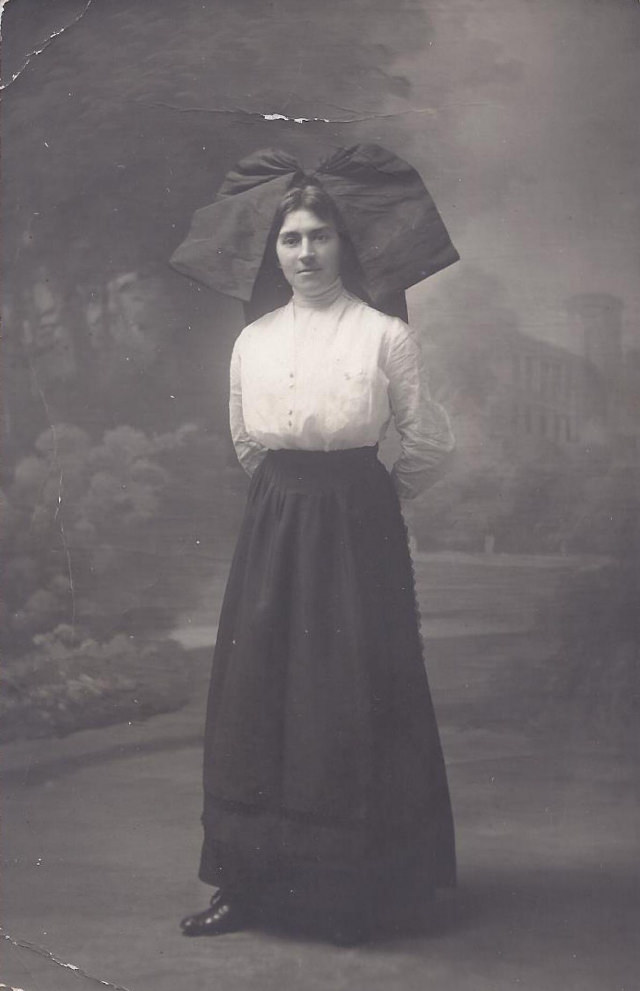
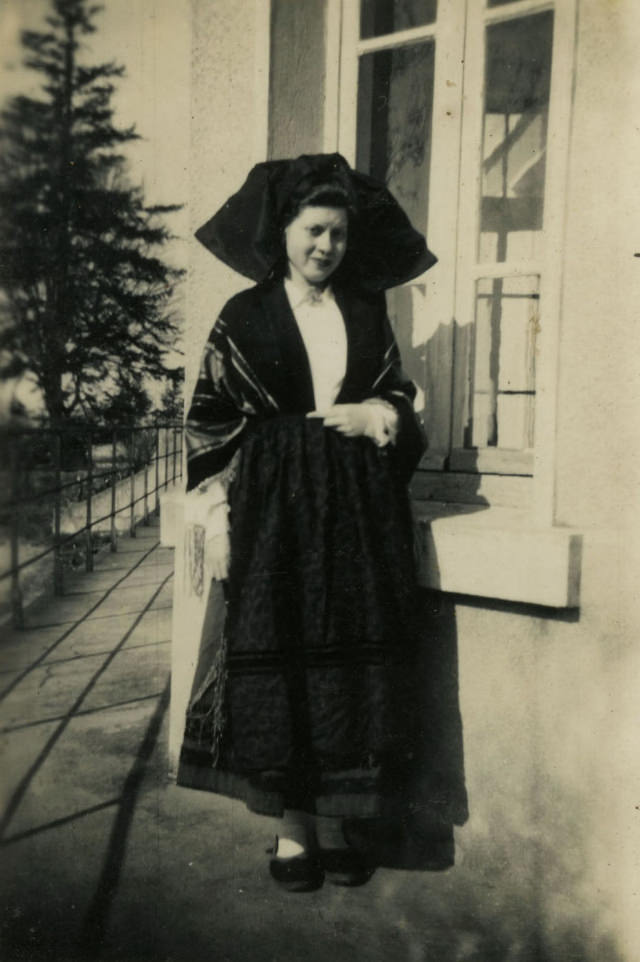
No part of the Alsatian costume drew more attention than the headdress. The large bow cap — known for its dramatic, oversized knot — sat at the top of the head and varied significantly between religious groups. Catholic women wore headdresses with long side panels that reached all the way down to the waist. Protestant women wore black knots with shorter sides that stopped at shoulder height.
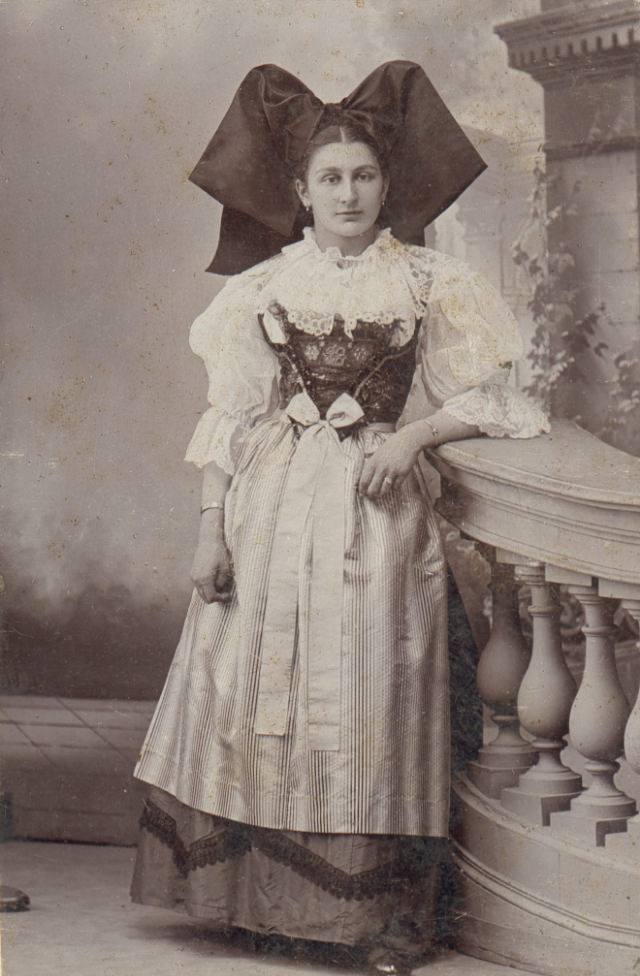
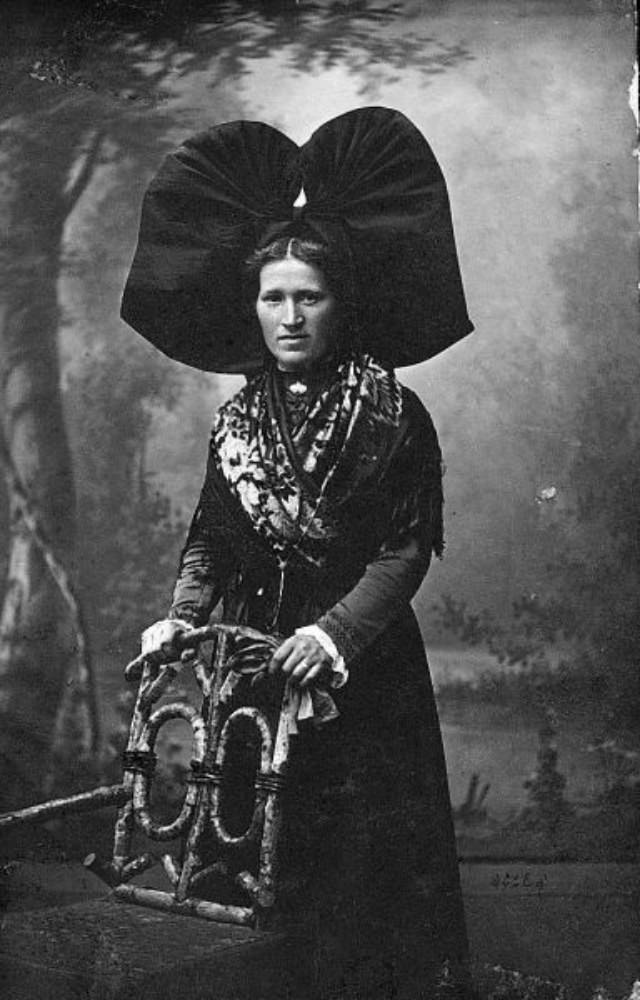
Unmarried girls had their own version of the headdress. They wore bows decorated with fancy ribbons, setting them apart from married women at a glance. Every detail of the costume communicated something — age, religion, and social status all read through fabric and form.
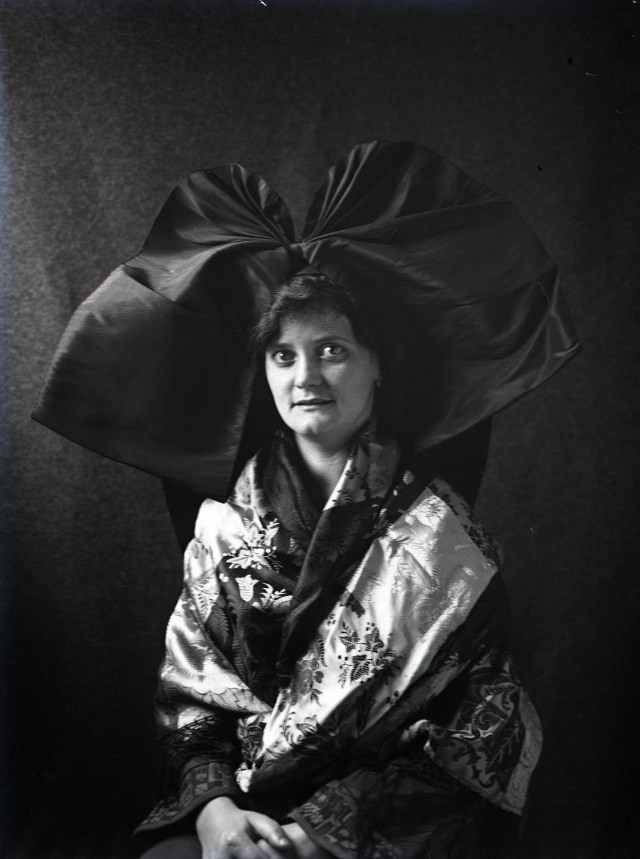
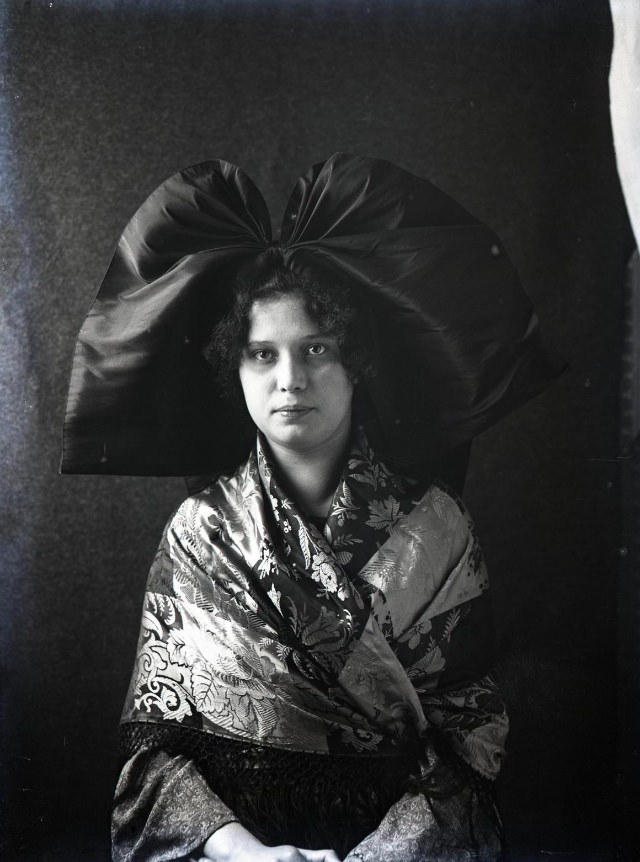
The photographs from this era capture the costume in remarkable detail. The stiff, wide bows of the headdresses frame the faces of these women with an almost architectural quality. The bow itself could be enormous — sometimes stretching wider than the wearer’s shoulders — made from silk or fine ribbon, carefully starched and shaped.
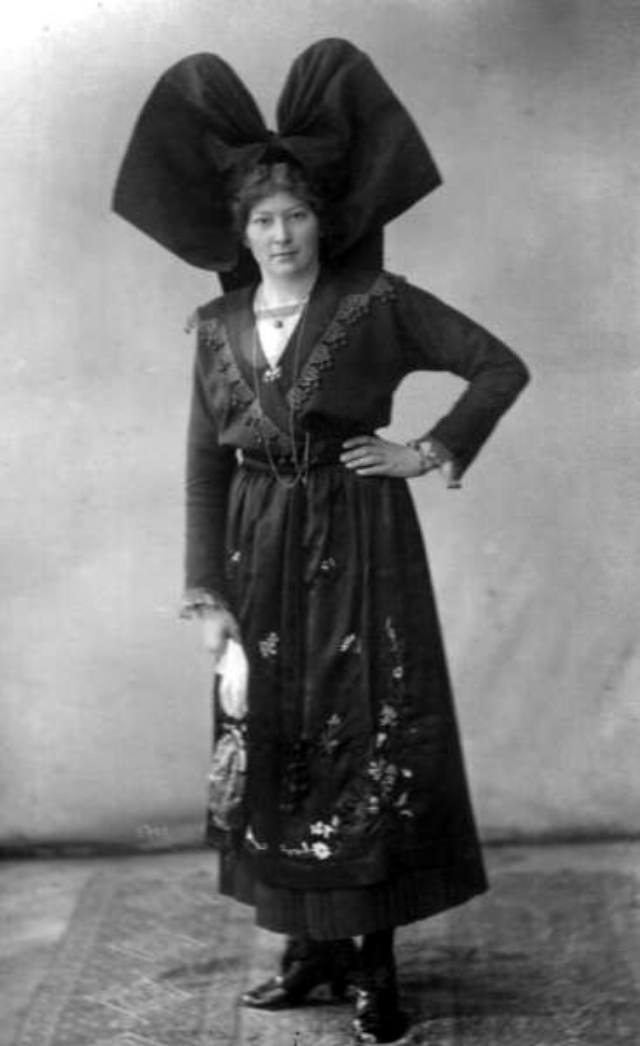
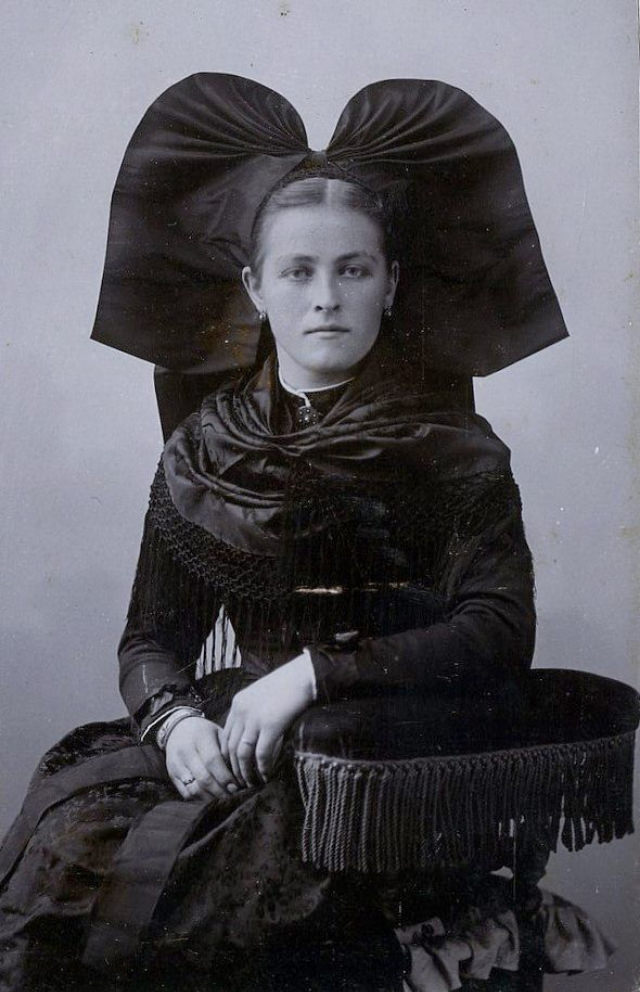
Alsace’s position between France and Germany gave its culture a layered character unlike anywhere else. The costume reflects that tension and fusion perfectly. The structured, formal quality of the dress leans German, while the attention to color and decorative detail feels distinctly French.
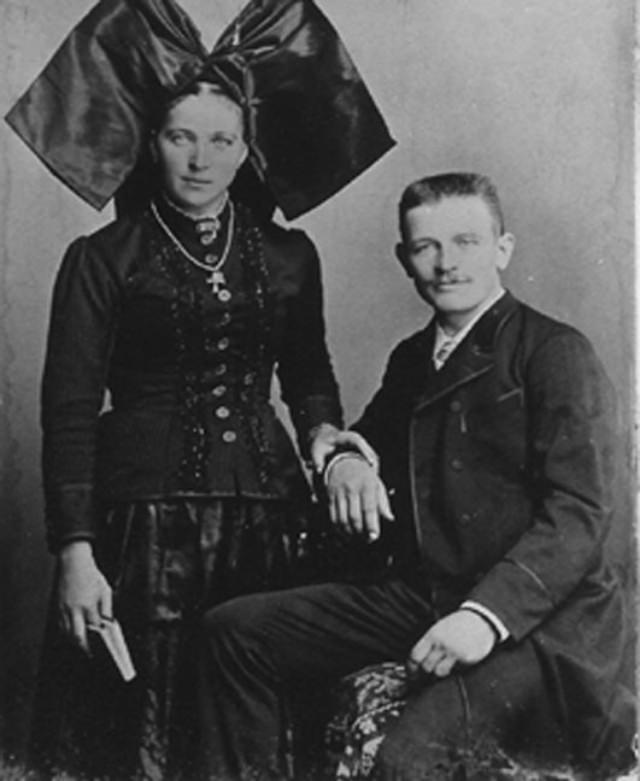
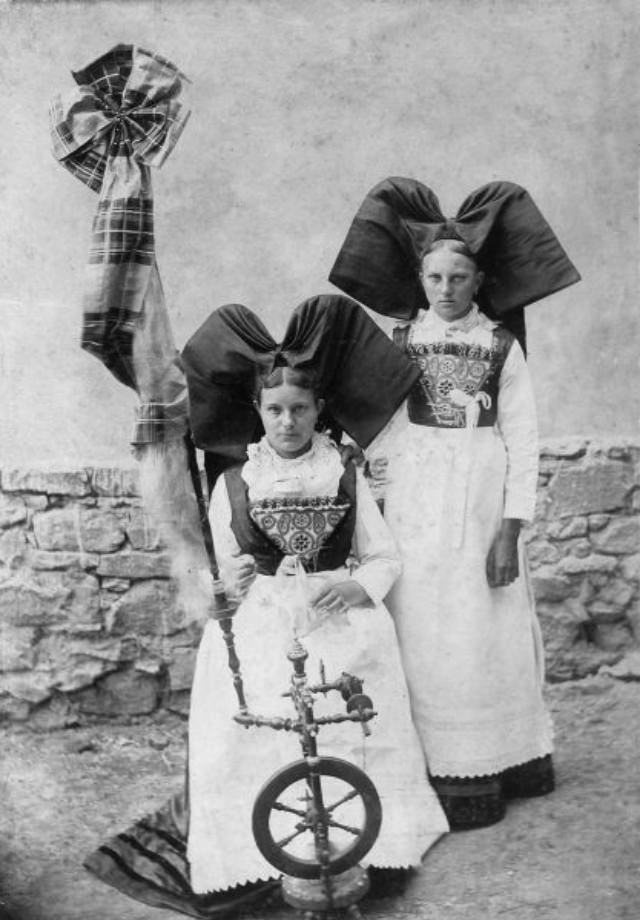
Village festivals and folk-dance performances kept these costumes visible throughout the region in the early 1900s. Women dressed in full traditional attire for these events, turning public gatherings into living displays of regional heritage. Tourists who passed through Alsatian towns during this period often encountered these scenes firsthand.
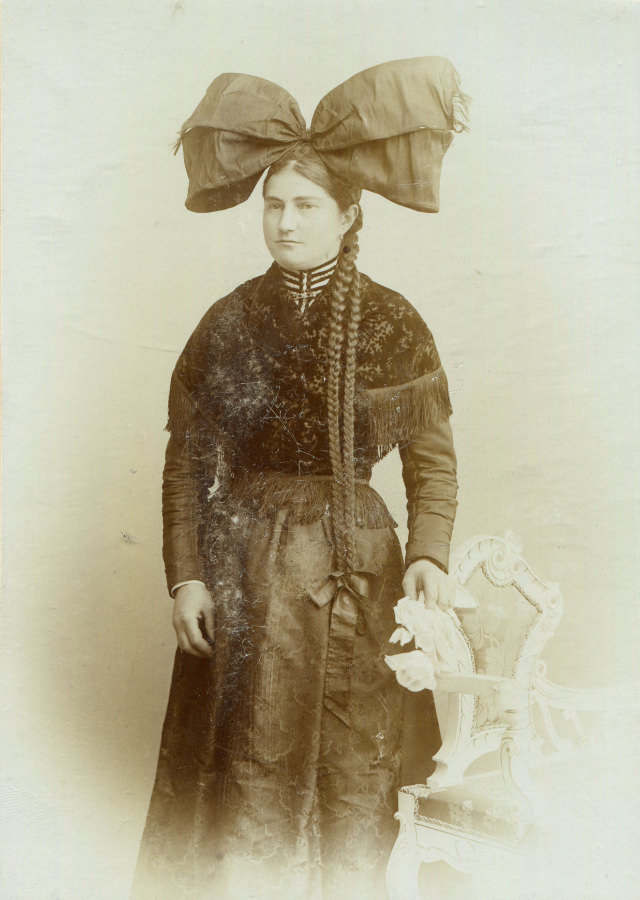
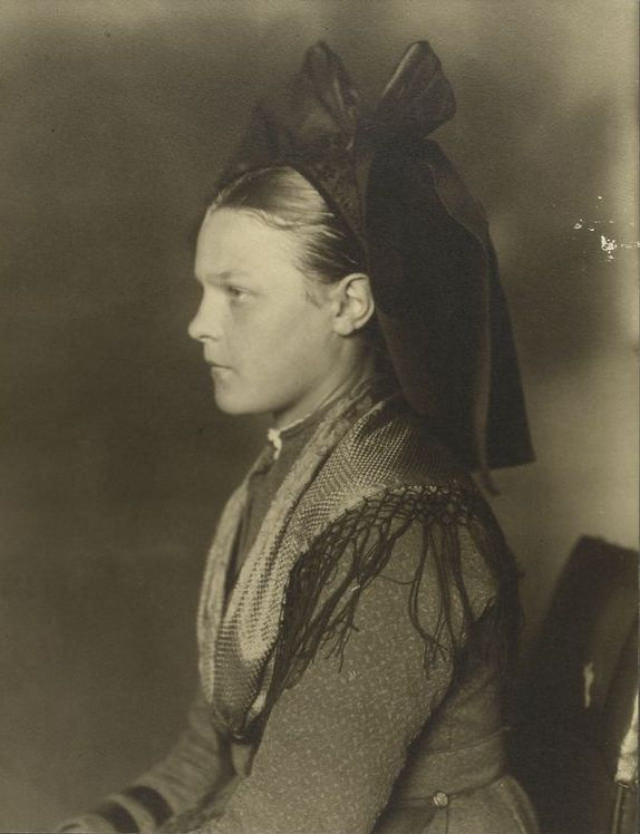
The skirts themselves were layered and full, designed to move well during dancing. Beneath the apron and outer skirt, women wore multiple petticoats that gave the silhouette its rounded, substantial shape. The blouses were typically plain white, allowing the colored skirt and dramatic headdress to dominate the overall look.
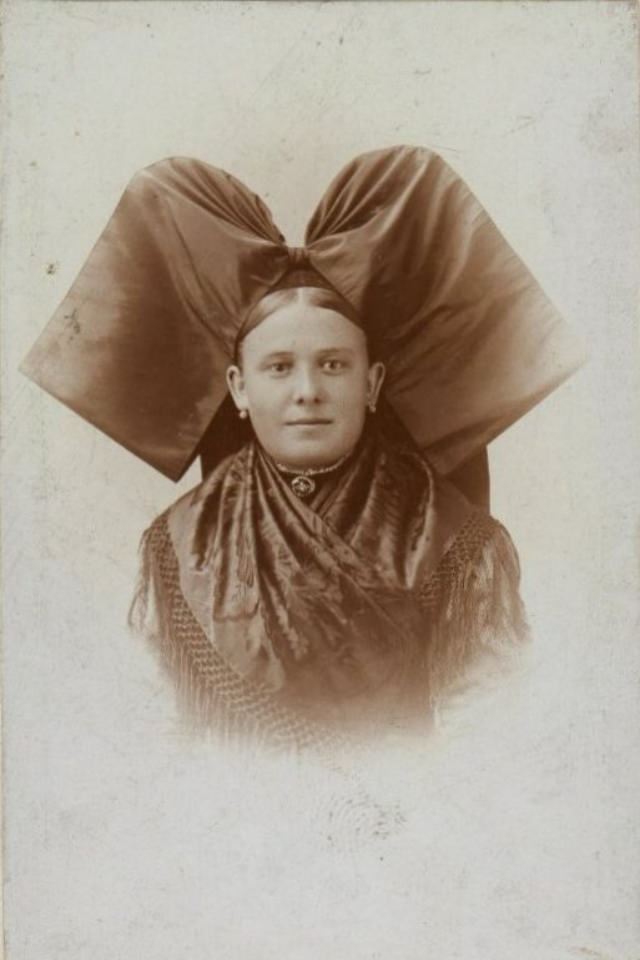
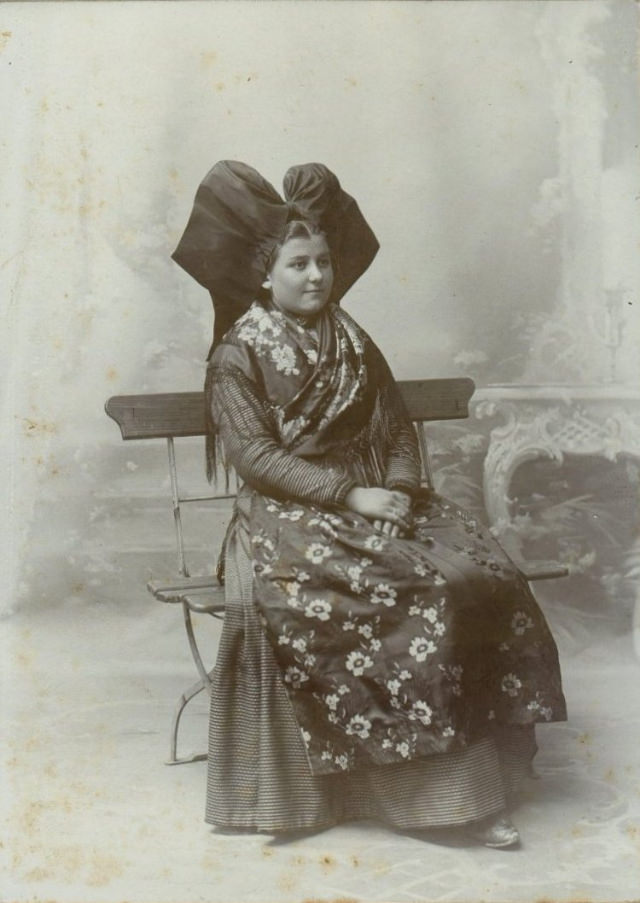
Even within each religious tradition, small variations existed from village to village. A trained eye could often identify not just a woman’s faith, but her specific hometown, based on subtle differences in trim, bow size, or skirt shade. The costume functioned almost like a local passport, worn on the body.
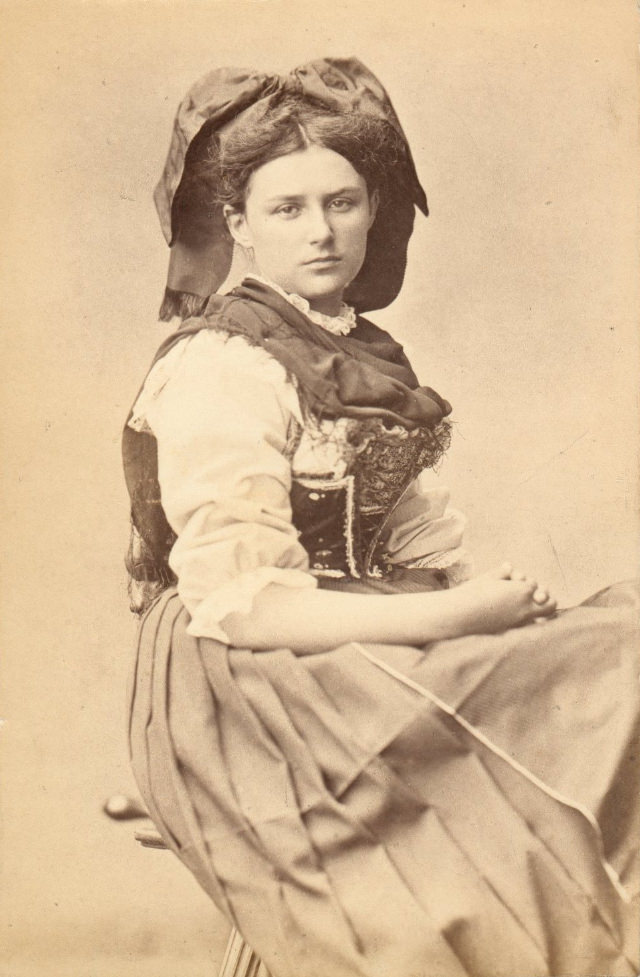
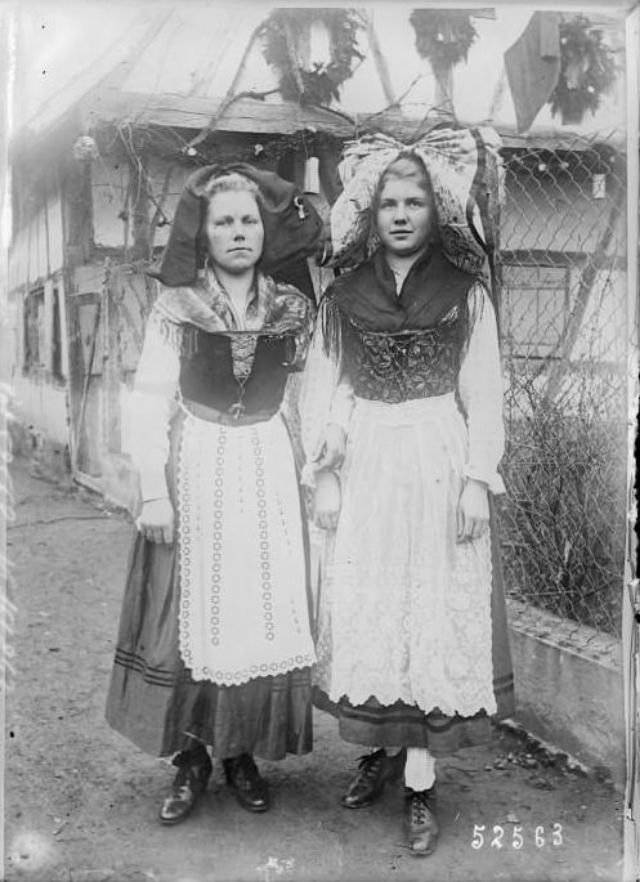
These early 20th century photographs preserve a tradition that was already beginning to fade by mid-century. The women pictured here wore these costumes as part of daily or ceremonial life — not as performance, but as identity. The care taken in each outfit, from the precisely tied bow to the choice of skirt color, reflects a culture where dress carried real meaning.