
New Zealand’s first human settlers were Polynesian voyagers who arrived roughly 700 years ago. By the 1800s, the islands were drawing explorers, missionaries, traders, and sailors from across the globe. The country built a reputation for forward-thinking policy early on — it was the first nation in the world to grant all women the right to vote, and it pioneered state housing and pensions for workers. On 26 September 1907, the British Empire granted New Zealand self-governing dominion status, though the country remained a loyal and active member of the empire. During both World Wars, New Zealand sent thousands of troops to fight alongside British forces.
The early 20th century was a time of both growth and hardship for New Zealand. After World War One, the economy struggled badly. Unemployment rose, farmers were hit hard, and key industries — meat freezing works, woolen mills, and dairy factories — all fell into decline. The Great Depression deepened those wounds. In January 1933, the New Zealand Pound was devalued by 14 percent against sterling. Recovery came slowly, shaped by policy changes and the gradual rebuilding of trade. The photographs below capture New Zealand across that entire arc — from the quiet domestic scenes of 1905 to the bustle of city life in the late 1950s.

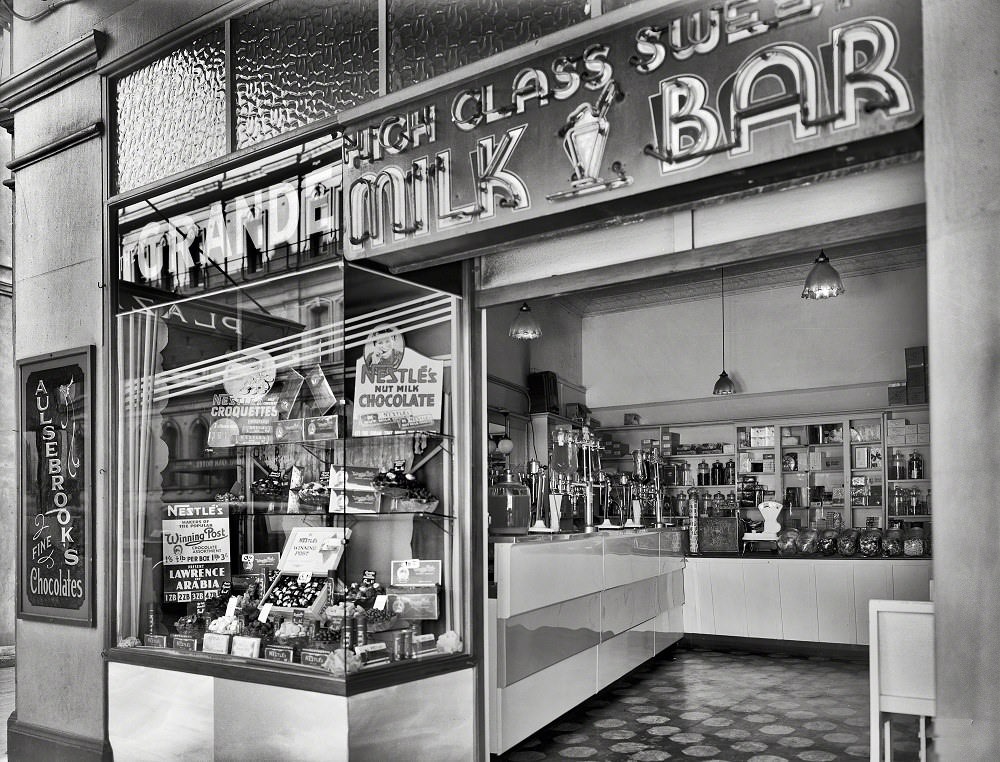
Wellington’s Manners Street was a lively commercial strip in the mid-1930s. Milk bars like this one at the Opera House were popular gathering spots, offering affordable refreshments during the lean years of the Depression era. They served as casual social spaces in a time when entertainment options were limited for many families.
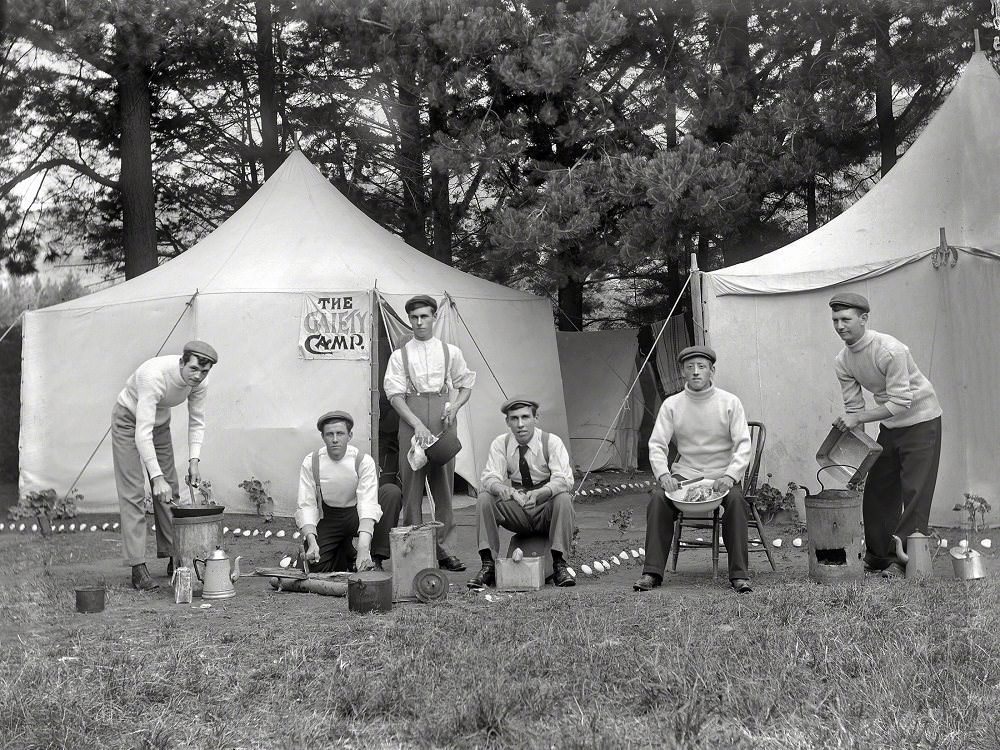
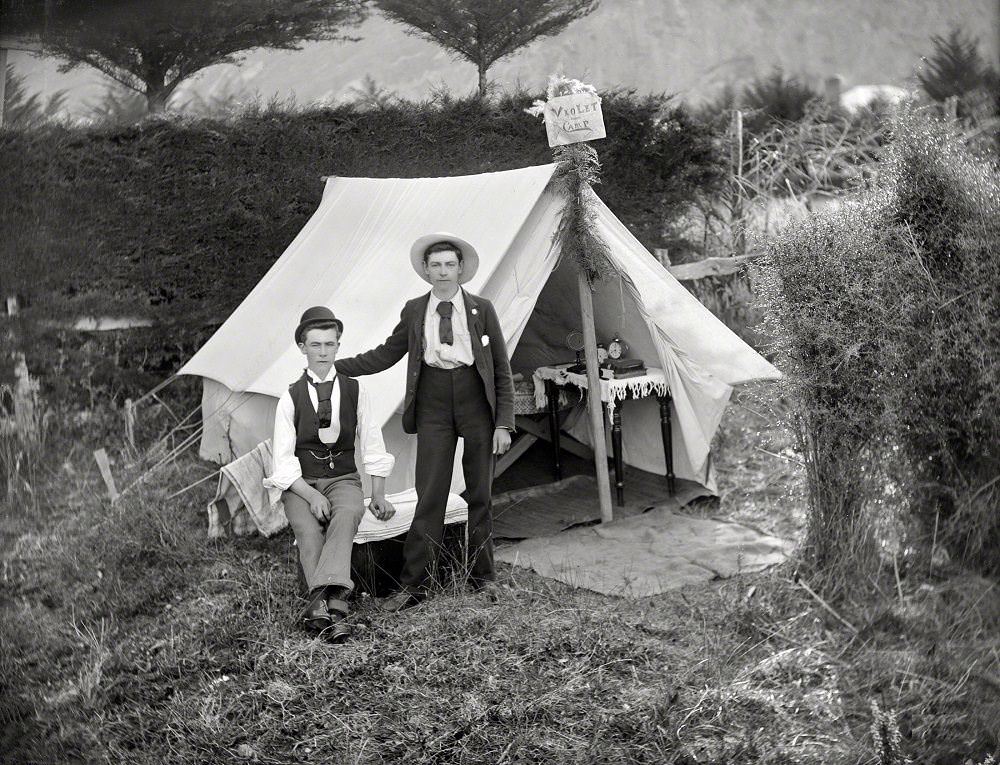
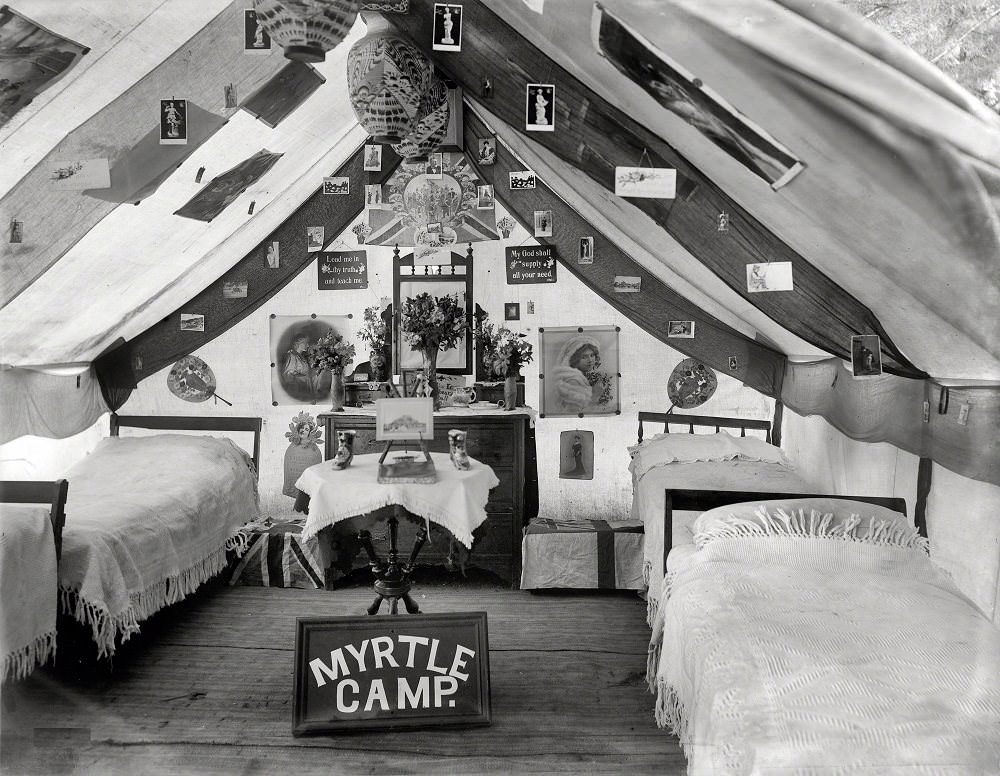
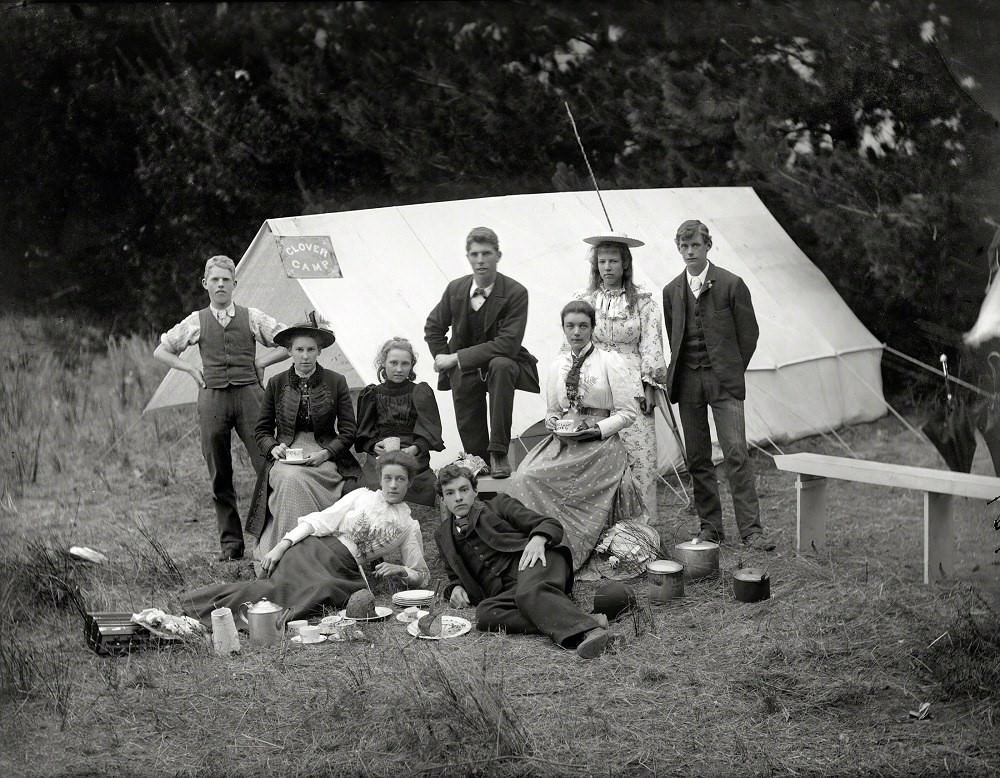
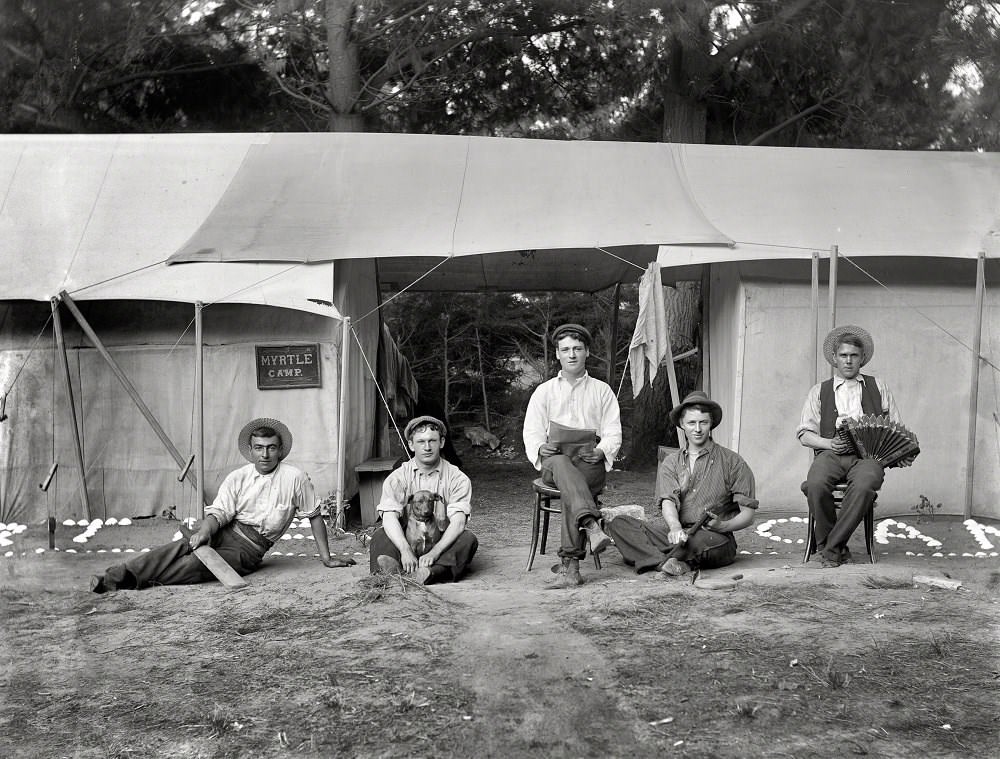
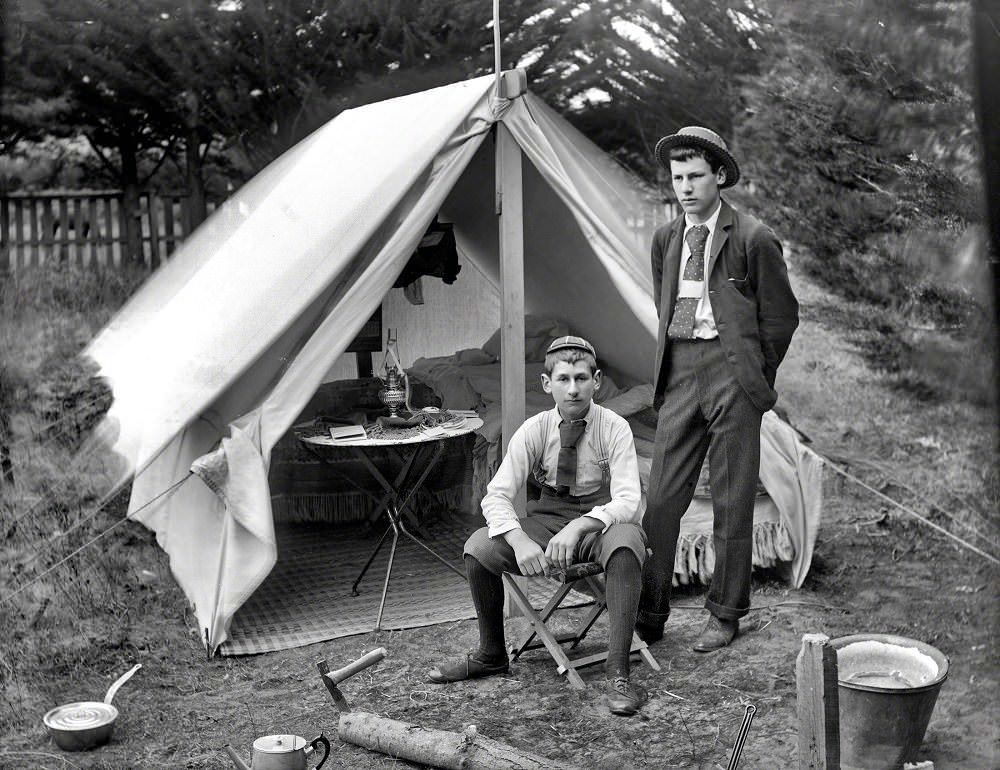
Tent camping was a widespread leisure activity in the Christchurch district in the early 1900s. Groups of men and young people regularly set up named camps on the outskirts of the city, often photographing themselves in staged and humorous scenes. These camps had names like ‘The Gaiety Camp,’ ‘Violet Camp,’ ‘Myrtle Camp,’ and ‘Clover Camp,’ and the photographs they produced give a vivid picture of how ordinary New Zealanders spent their free time.
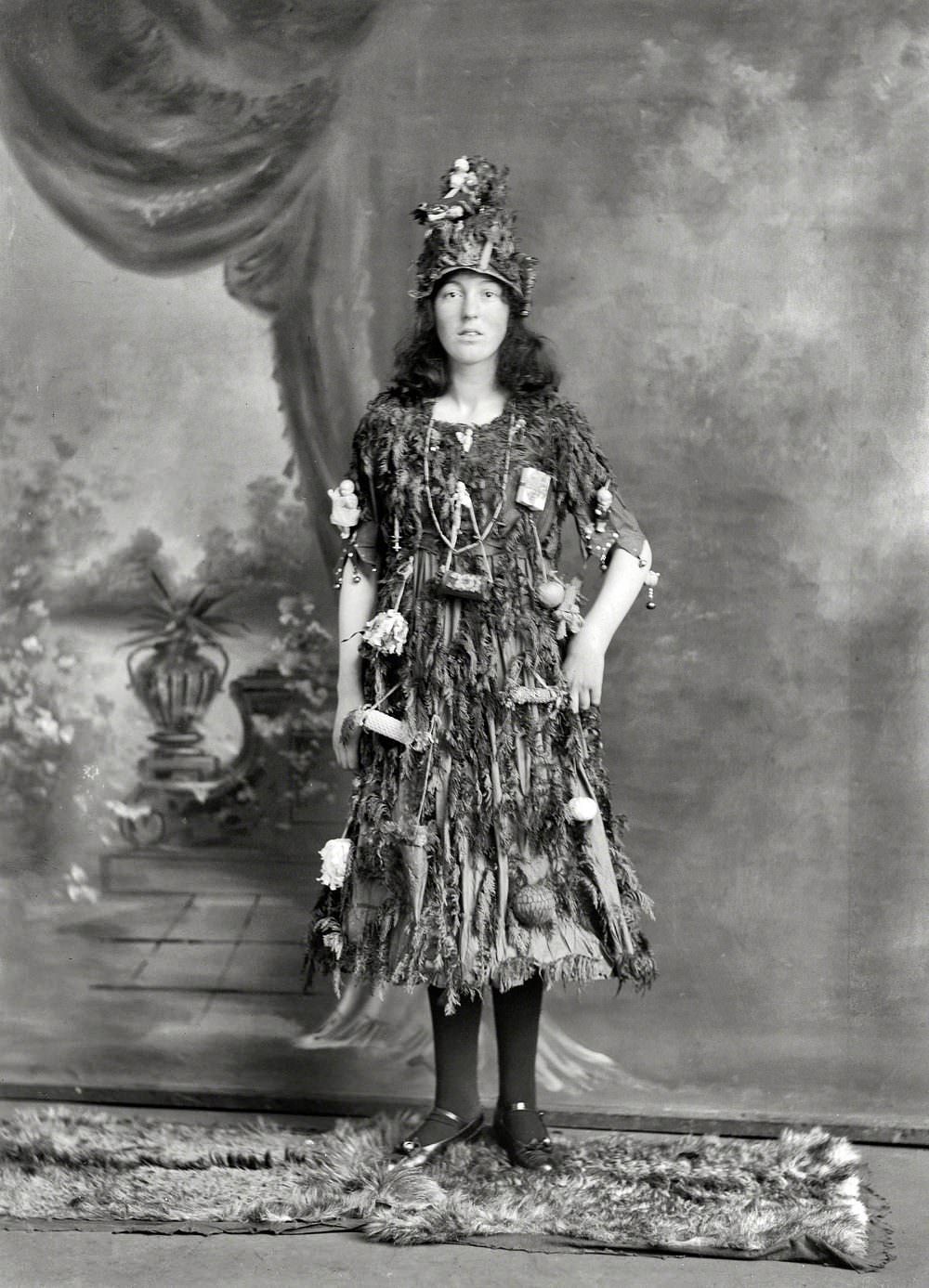
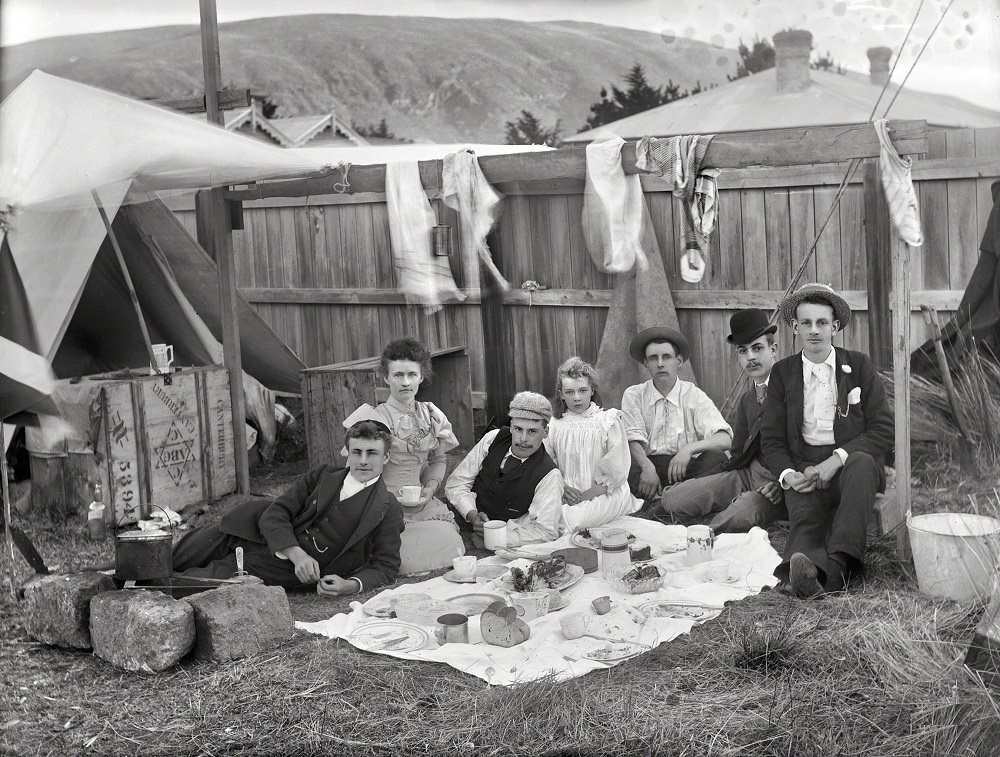
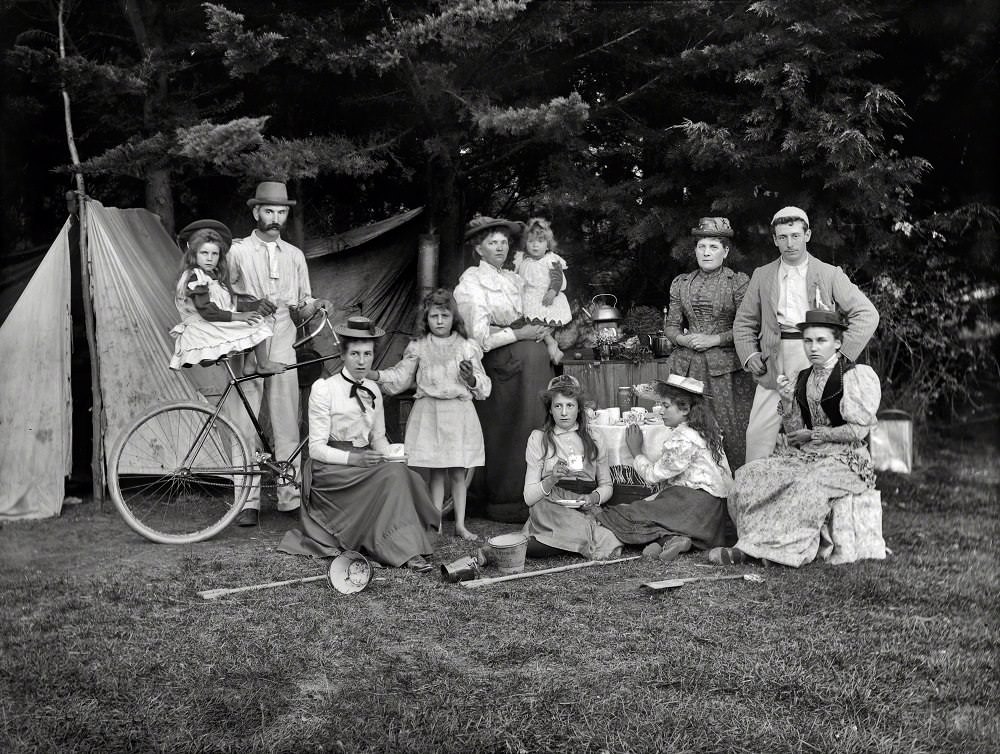
Fancy dress events and outdoor gatherings were common social occasions in Edwardian New Zealand. A young woman dressed as a Christmas tree in Christchurch around 1910 shows the playful creativity people brought to costume celebrations. Backyard picnics outside canvas tents, like the one captured around 1905, were equally typical — informal, relaxed, and very much a part of community life in the early decades of the century.
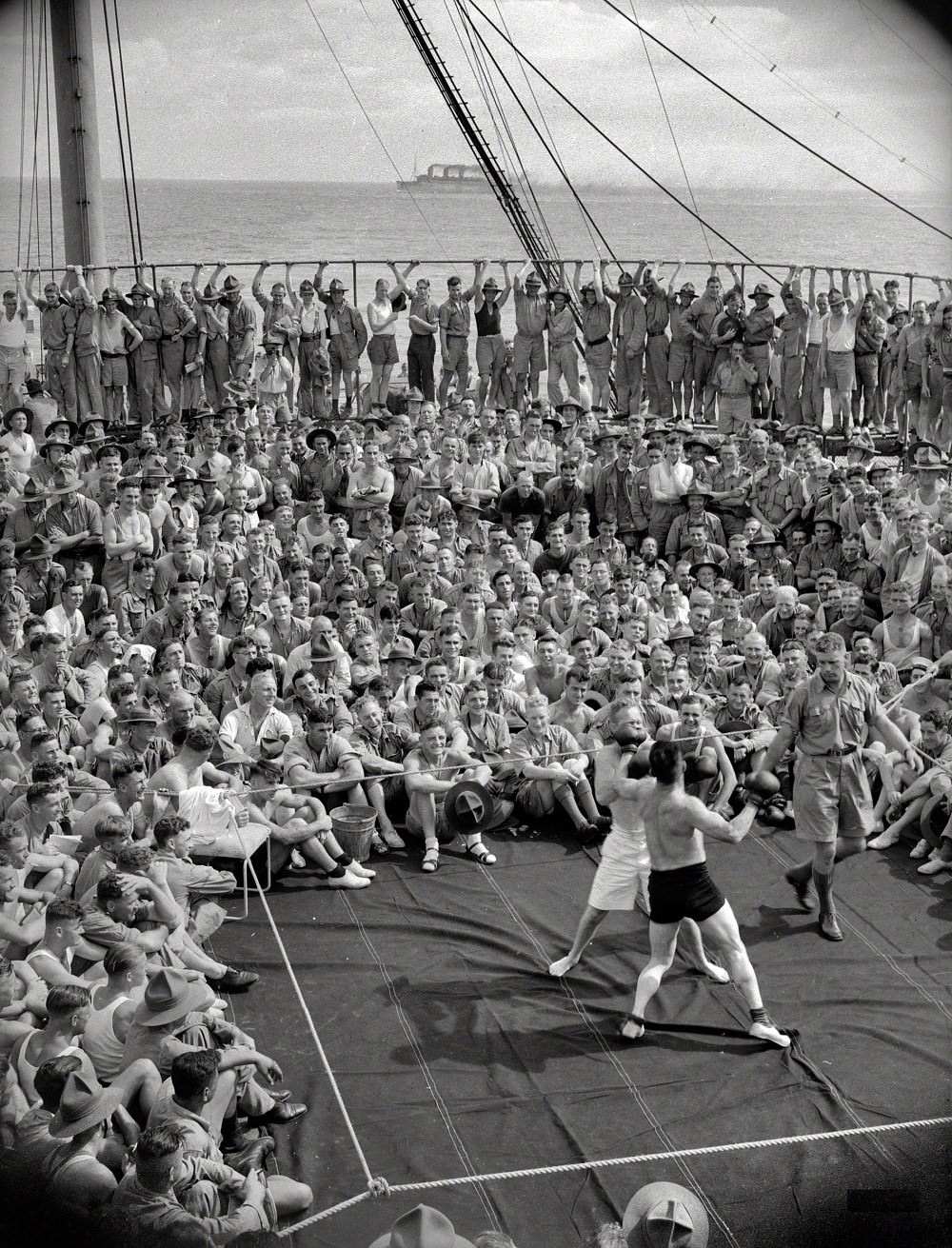
When New Zealand entered World War Two, troops were transported across long ocean routes to reach the front. On board the troopship Dominion Monarch in 1940, soldiers passed the time with boxing matches on deck. It was a way to stay fit, maintain morale, and break the monotony of long sea voyages. New Zealand’s military contribution in both world wars was significant relative to its population.
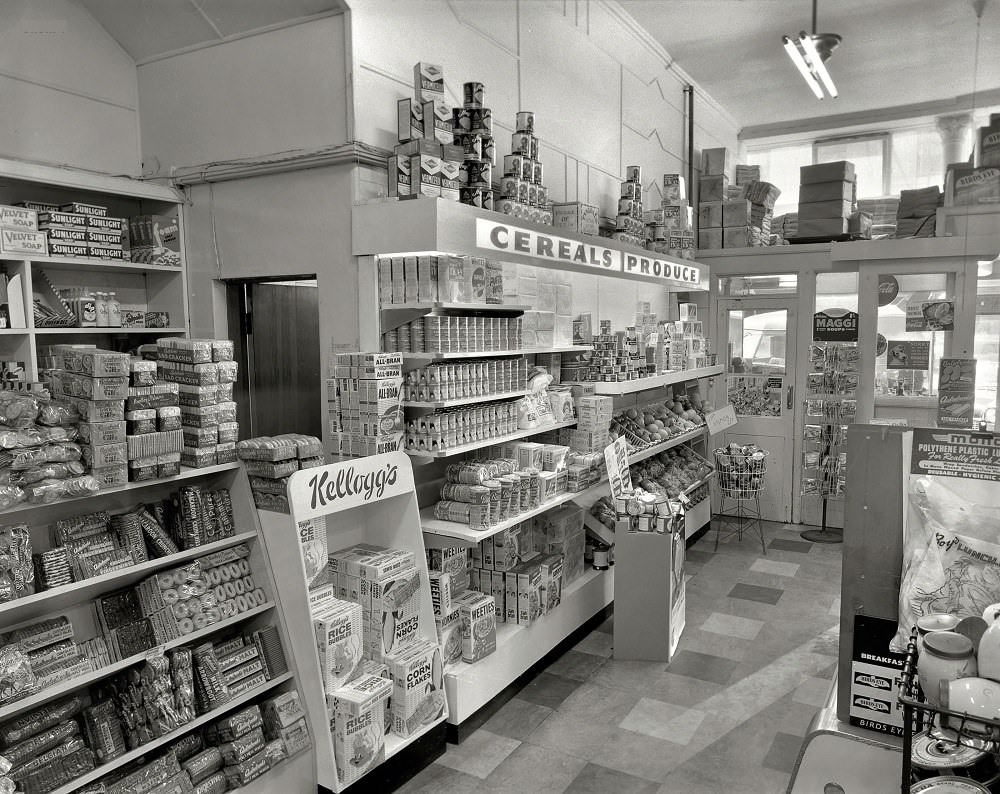
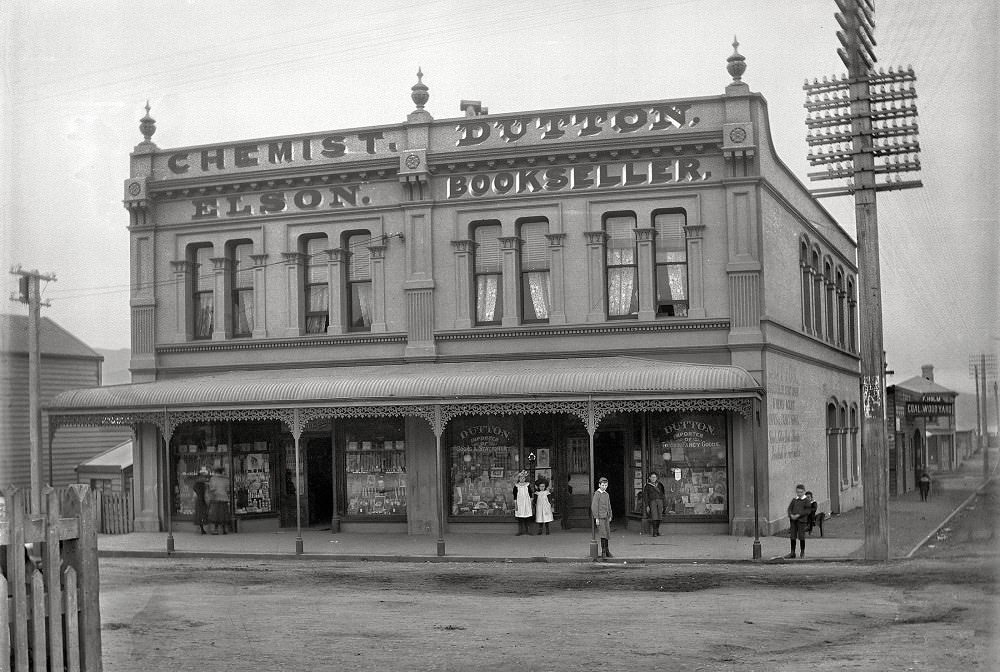
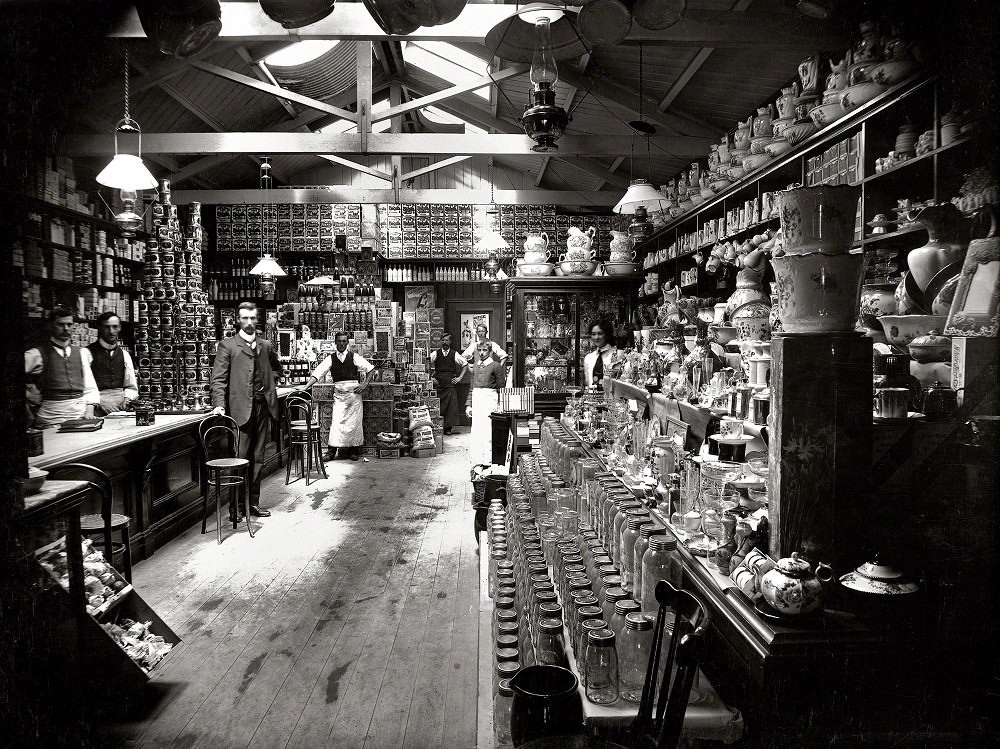
New Zealand’s retail landscape changed significantly from the 1890s to the late 1950s. Courtenay Place in Wellington already had established chemists and bookshops by 1896. By the mid-20th century, grocery stores like Hill Bros were stocking modern fittings and branded hardware displays. Commerce in New Zealand’s cities was maturing steadily throughout this period.
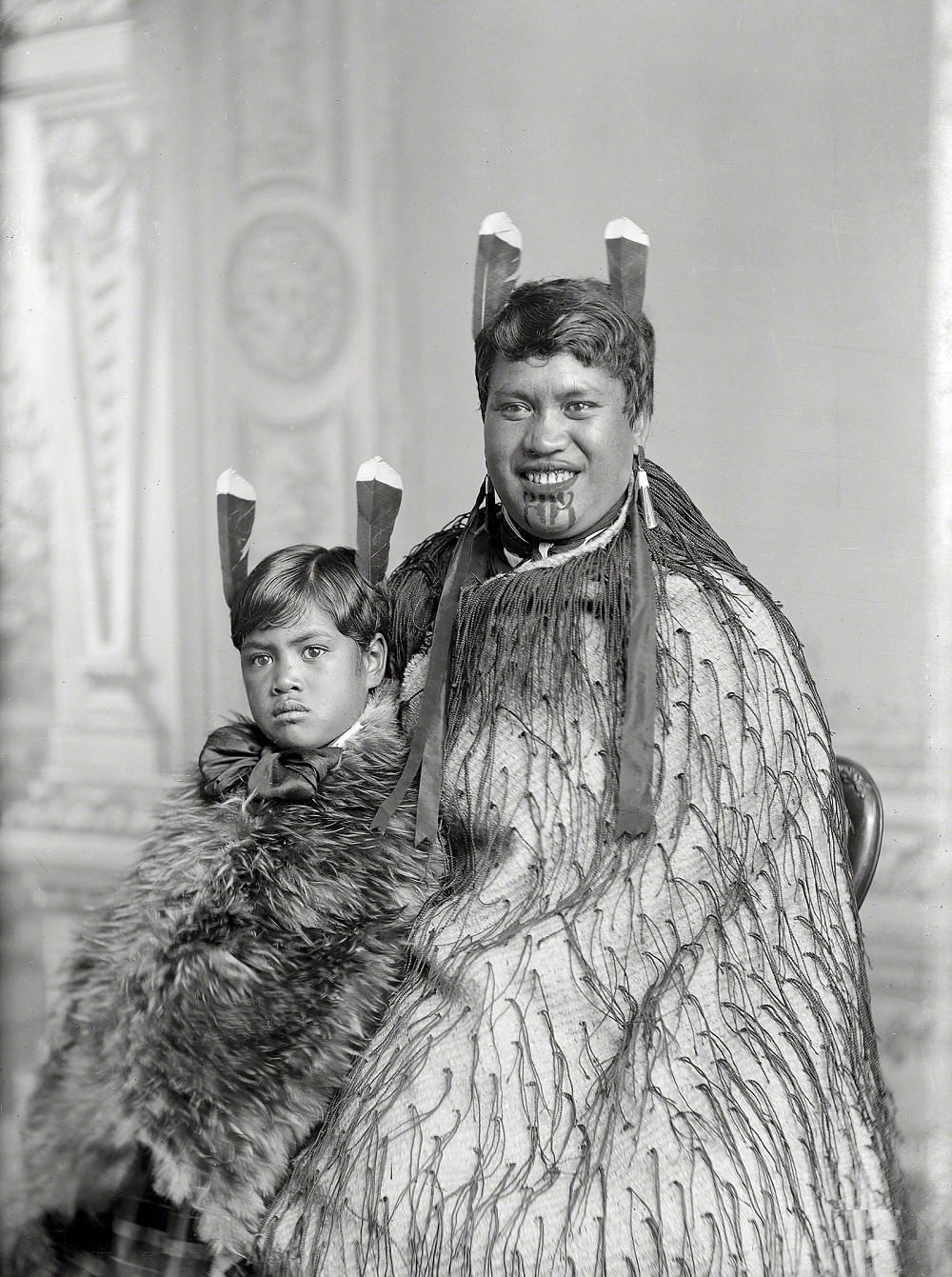
Māori people are present throughout the photographic record of New Zealand, though often through the lens of Pākehā (European) photographers. A formal carte de visite portrait of a Māori woman and child from Hawkes Bay in the 1890s reflects the Victorian practice of studio portraiture that had spread to New Zealand. These small card-mounted photographs were collected and exchanged widely, and this image is one of many that document Māori life during a period of significant change.
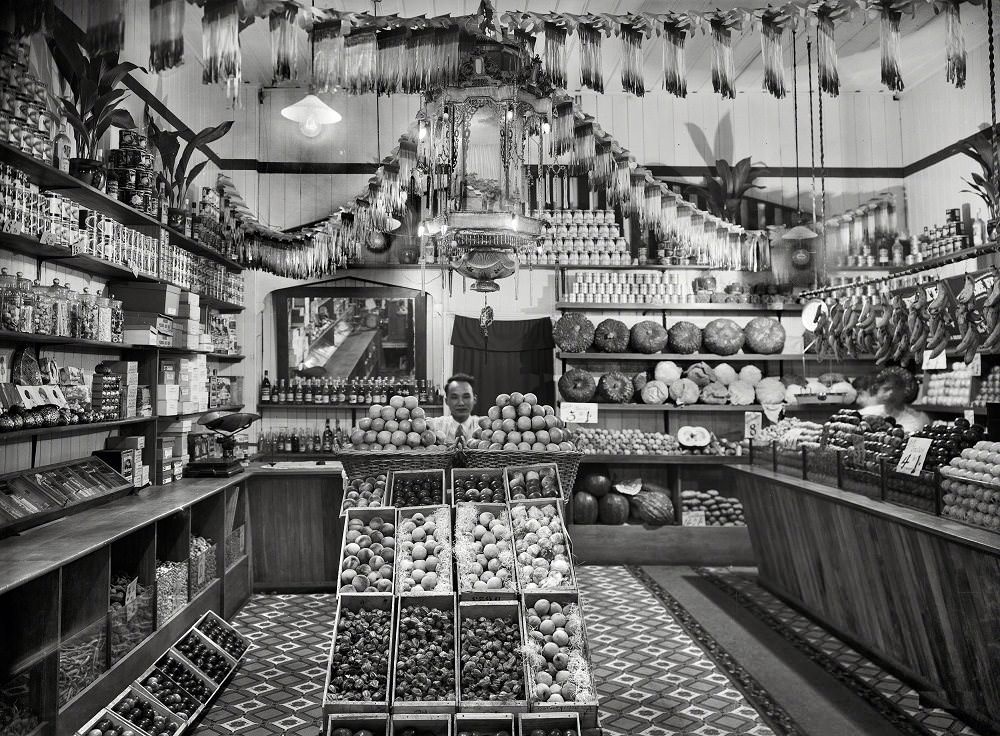
Chinese migrants played an important role in New Zealand’s small business economy. This 1920s photograph from the Taranaki region shows a Chinese greengrocer surrounded by baskets of apples, peaches, and cape gooseberries. Chinese shopkeepers operated fruit and vegetable stores in many towns across New Zealand despite facing significant legal discrimination, including a poll tax that had been in place since 1881.
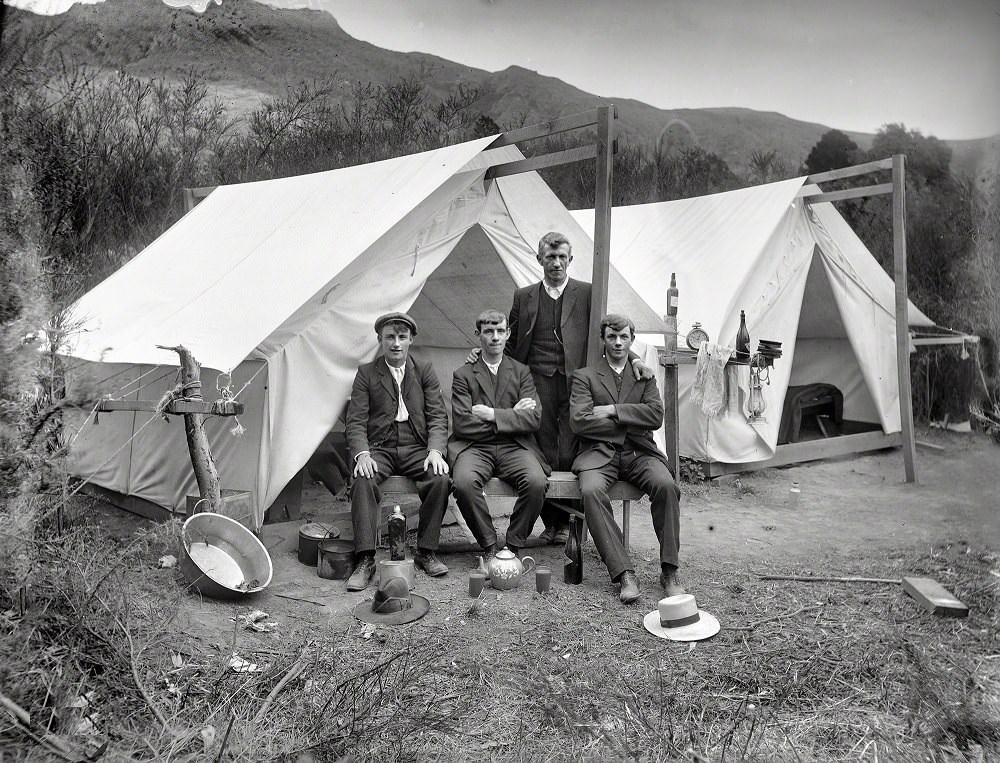
The interior of a grocery store in the 1890s shows staff posed among shelves of goods — a snapshot of retail New Zealand before refrigeration and self-service shopping changed the industry. Meanwhile, men photographed at campsites in 1915 posed with teapots and washbasins, reflecting how familiar and routine outdoor camping had become even in wartime years.
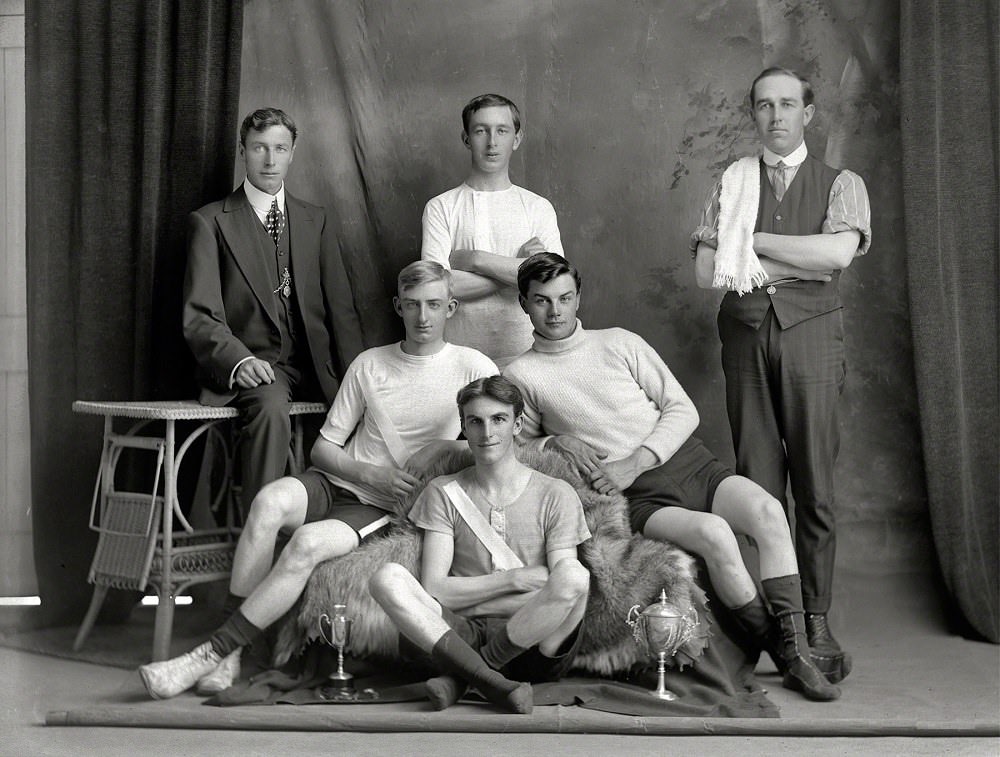
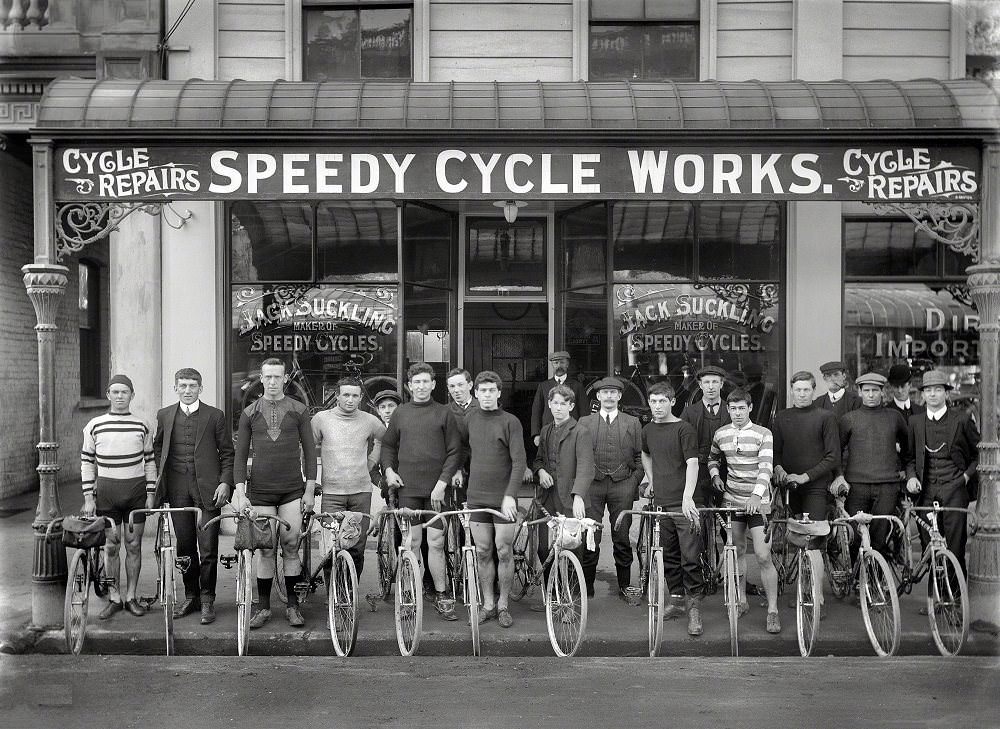
Cycling was a serious competitive sport in New Zealand by the early 1900s. This Christchurch bicycle road racing team around 1910 shows four young men in proper riding gear, proudly holding their trophies. Cycle shops in both Auckland and Christchurch were well-established businesses by this time, and the sport attracted participants from across the country.
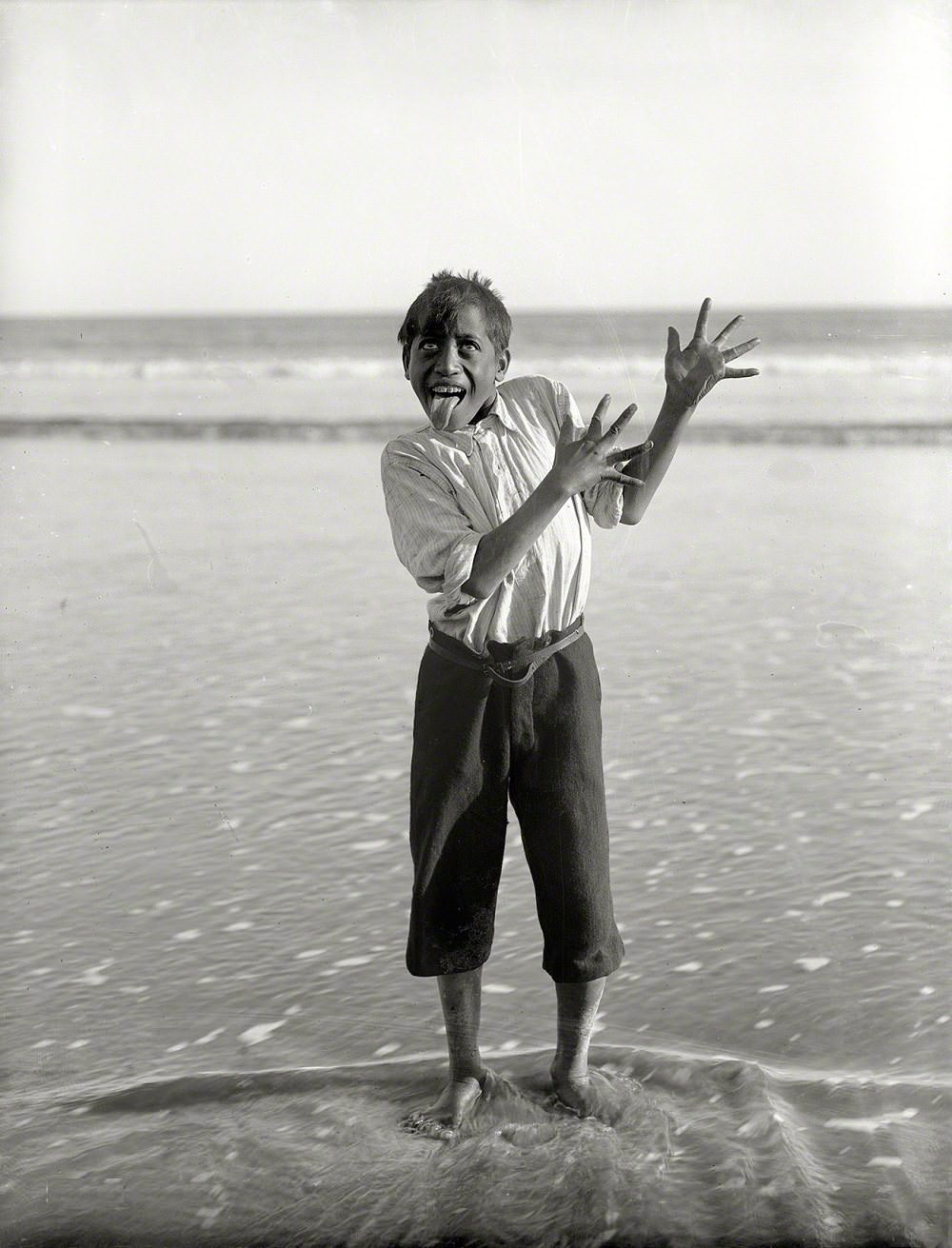
A Māori boy performing a haka on a Northland beach in 1913 is one of the most striking images in this collection. The haka is a traditional Māori ceremonial dance used to welcome guests, mark important occasions, or challenge opponents. In the early 20th century, Māori communities in Northland maintained their cultural practices, even as the broader political and social pressures of colonial New Zealand continued to reshape their daily lives.
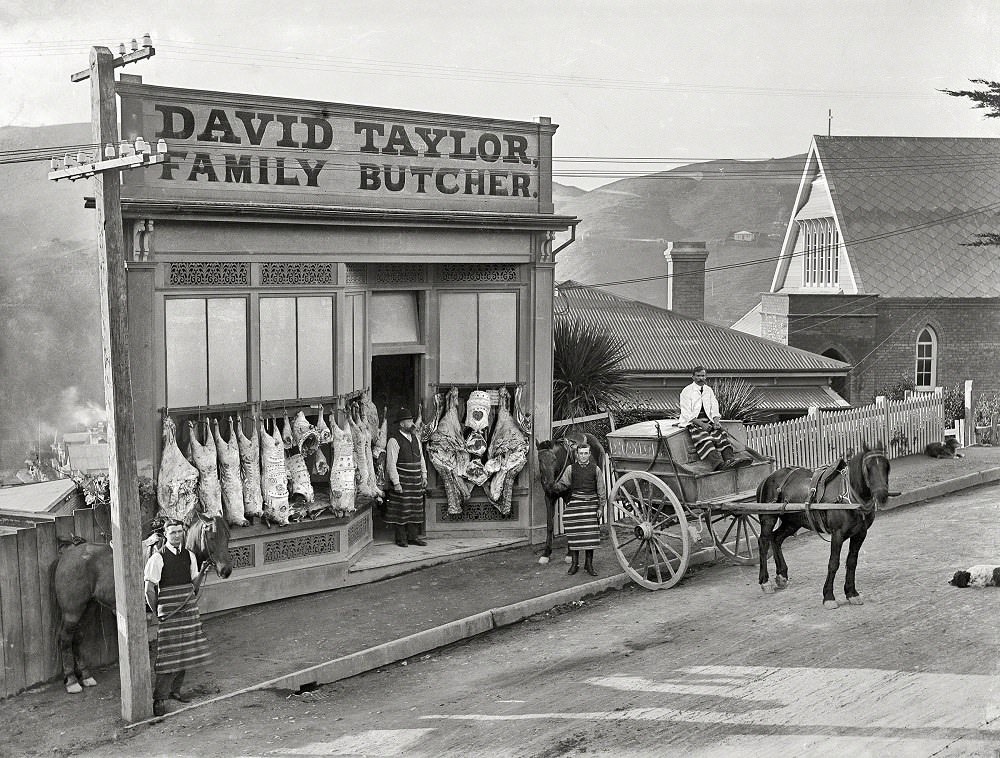
New Zealand’s economy in the early 20th century was deeply tied to agriculture and meat production. David Taylor’s butcher shop in Wadestown, Wellington, in 1910 shows decorated carcasses hanging in full display and a horse-drawn delivery cart parked outside — a common sight in the days before refrigerated trucks. Meat was one of New Zealand’s major export products, and butcher shops were central to local food supply.
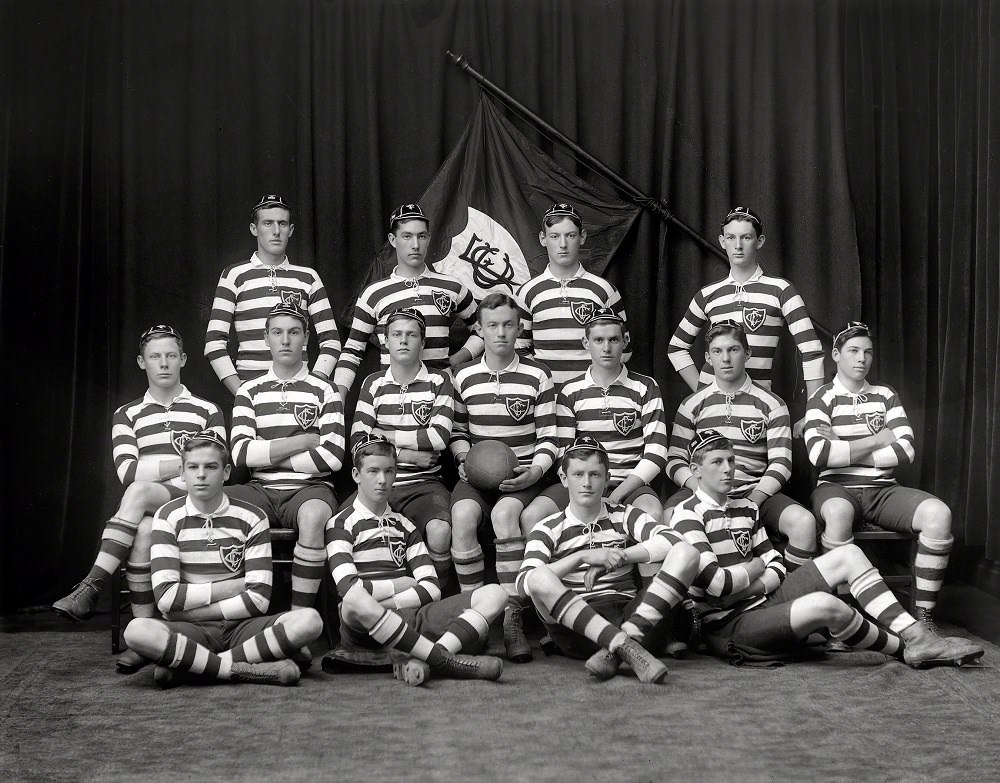
Rugby was already deeply embedded in New Zealand’s national identity by 1911. Christ’s College’s First XV team photograph from Christchurch that year reflects how seriously secondary schools took the sport. The All Blacks had made their first international tour in 1905, and rugby’s place in New Zealand culture was firmly established. School teams like this one fed directly into the club and provincial structures that shaped the national game.
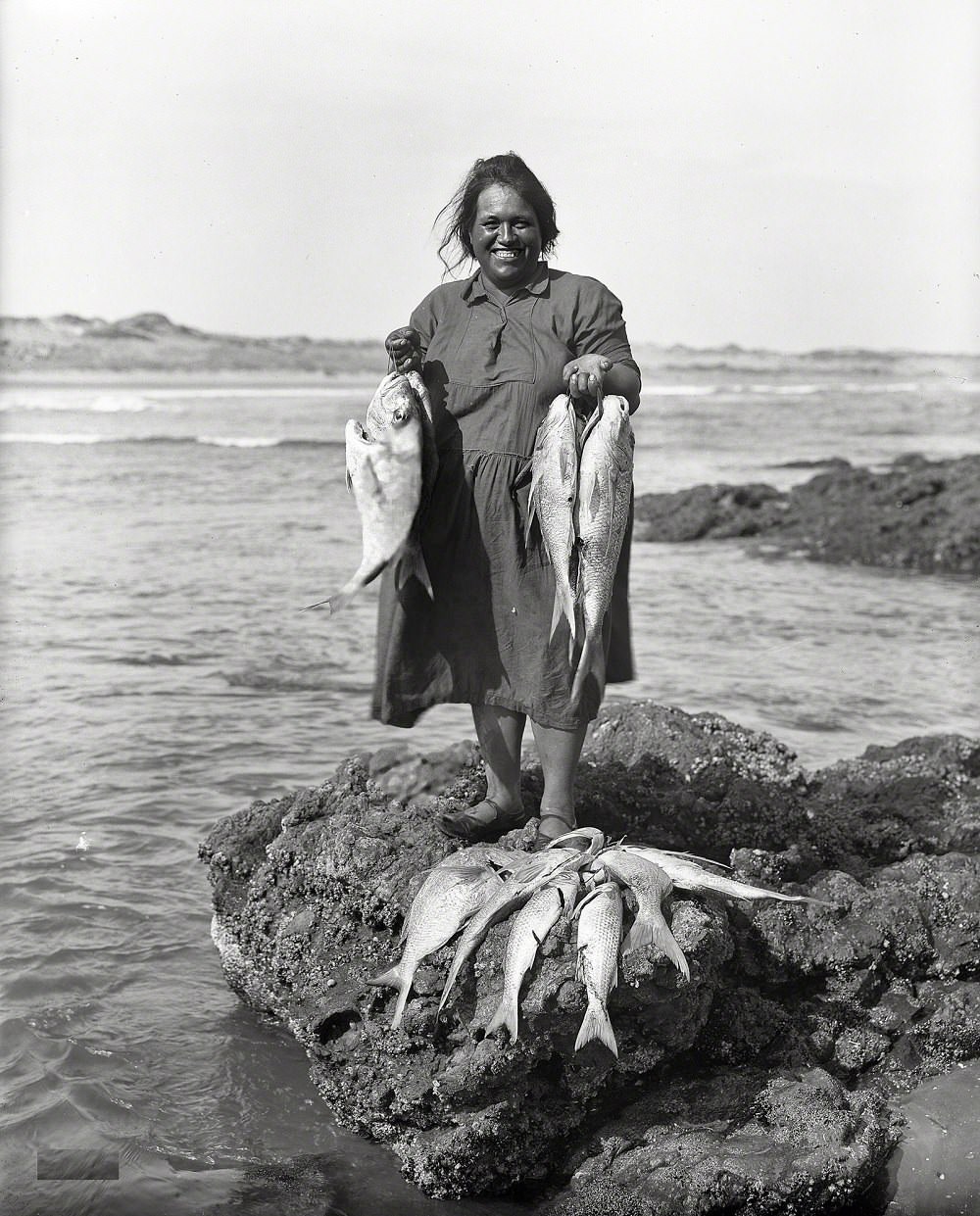
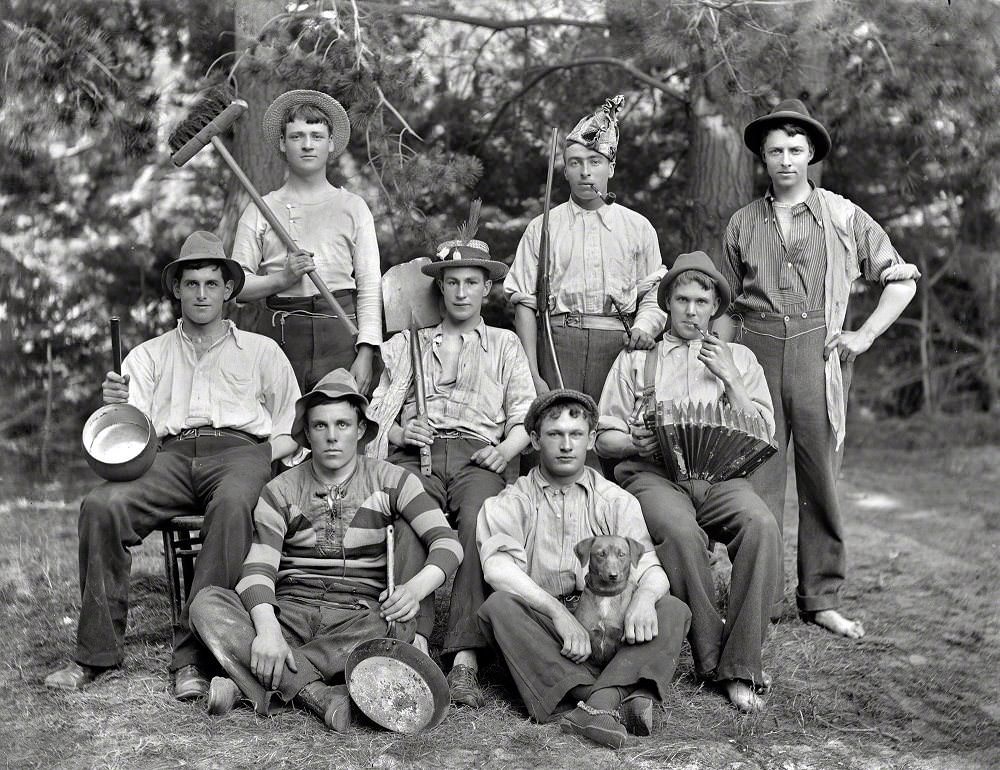
Fishing remained a vital source of food for Māori communities along the Northland coast in 1910. A photograph of a Māori woman with a large catch of fish reflects a way of life that had sustained coastal communities for centuries. In contrast, a group of young men photographed in Christchurch around the same time assembled in deliberately ragtag clothing with a motley assortment of props — a accordion, pipes, broom, shovel, and a dog — showing the lighter side of Edwardian New Zealand social life.
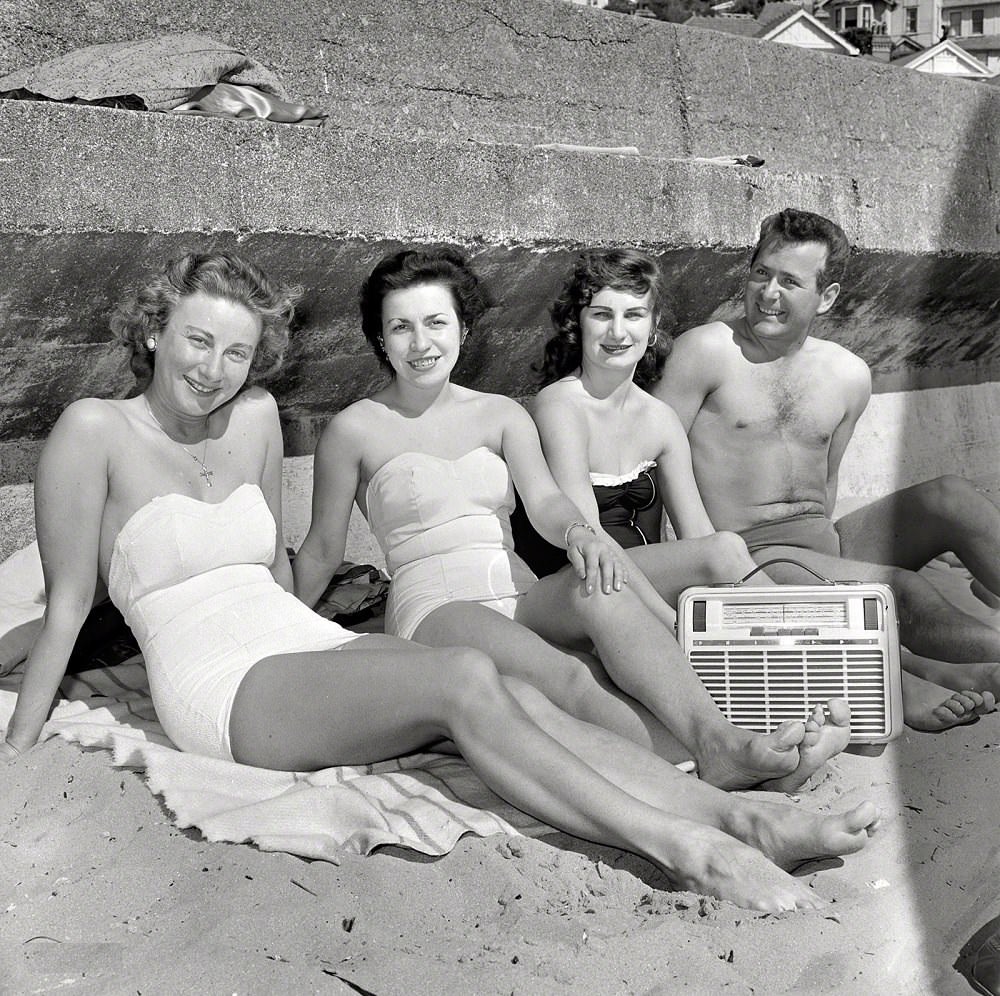
By 1958, Wellington’s Oriental Bay Beach had become a modern leisure spot where swimmers relaxed and listened to the radio. This was a far cry from the more formal outdoor gatherings photographed fifty years earlier in Christchurch. The shift captures how New Zealand’s social life had evolved — more casual, more connected to mass media, and more comfortable in public spaces.
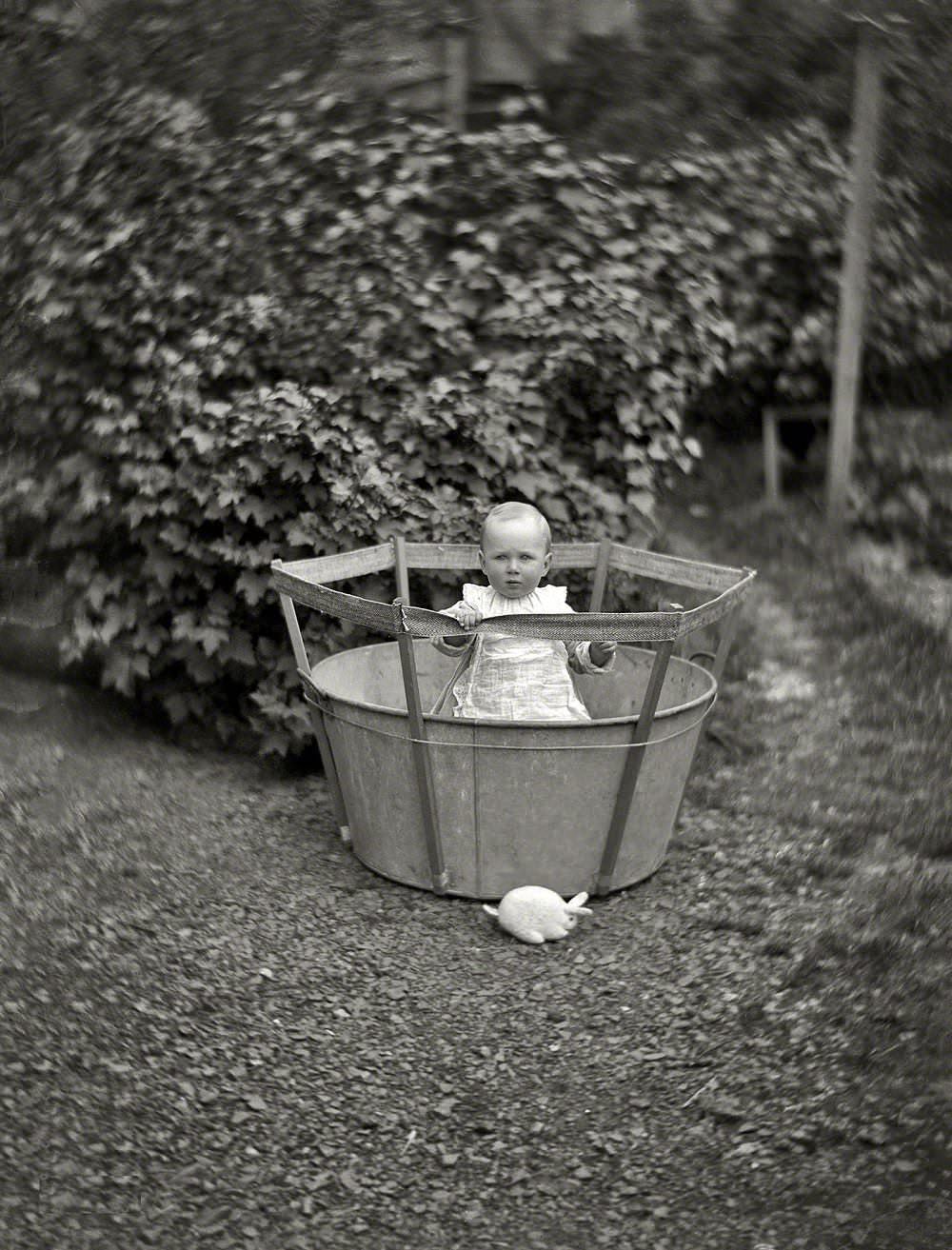
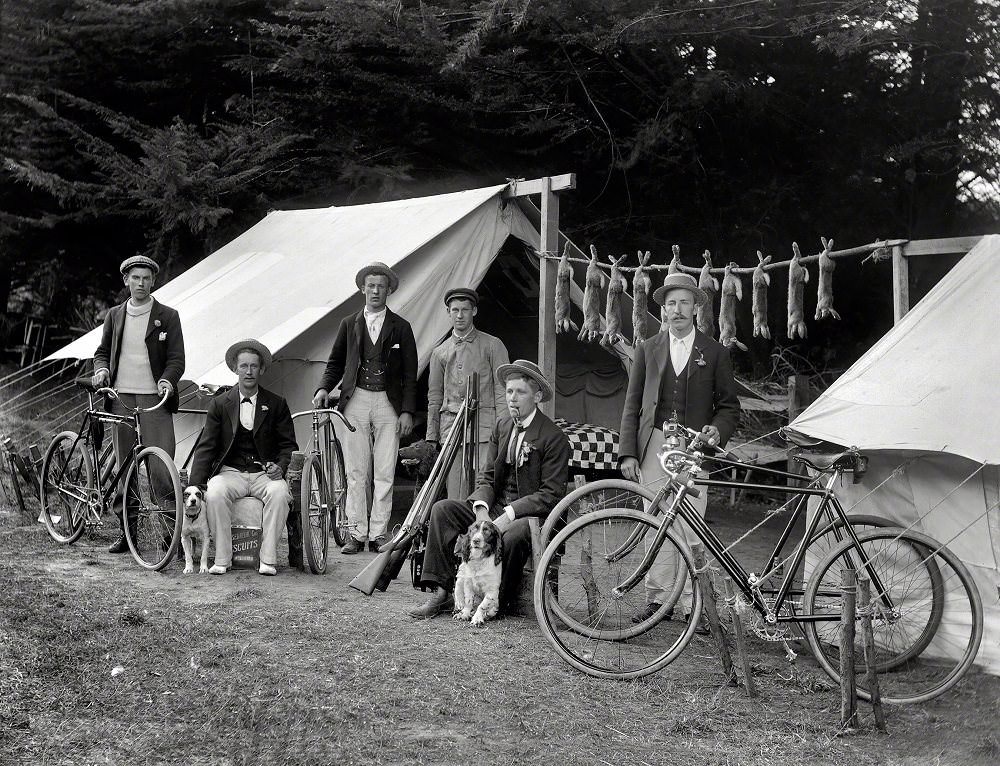
Rabbits appear in this photographic collection in two very different contexts. A studio portrait of infant Edgar Richard Williams sitting in a play pen tub with a toy rabbit in 1890s Dunedin is a charming domestic image. Quite different is the 1910 photograph of a rabbit-hunting party in Christchurch — six men with bicycles, guns, and dogs, with rabbits strung up between tents. Rabbit populations were a major agricultural pest in New Zealand during this period, and hunting parties were both a practical necessity and a social outing.
Gordon Burt’s Wellington studio in 1960 represents the professional photography scene in New Zealand at the dawn of a new decade. Photography had evolved from the stiff formal portraits of the 1890s to a thriving commercial industry. By contrast, the amateur tent camp photographs from Sumner and Christchurch fifty years earlier show how accessible camera technology had become to ordinary New Zealanders even in the Edwardian era.
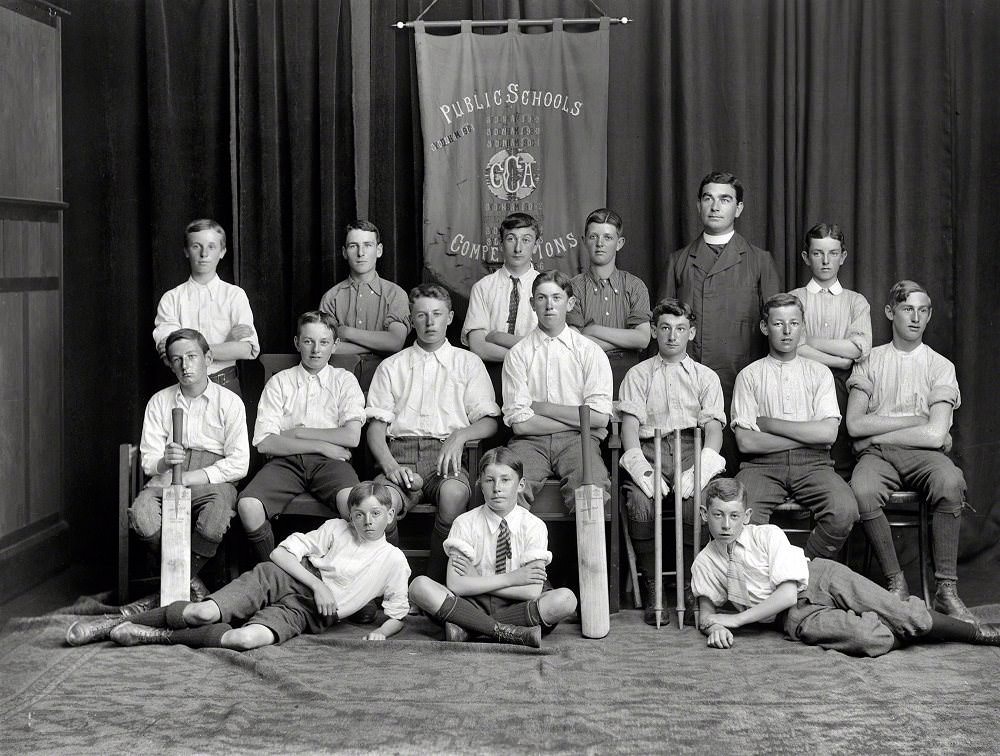
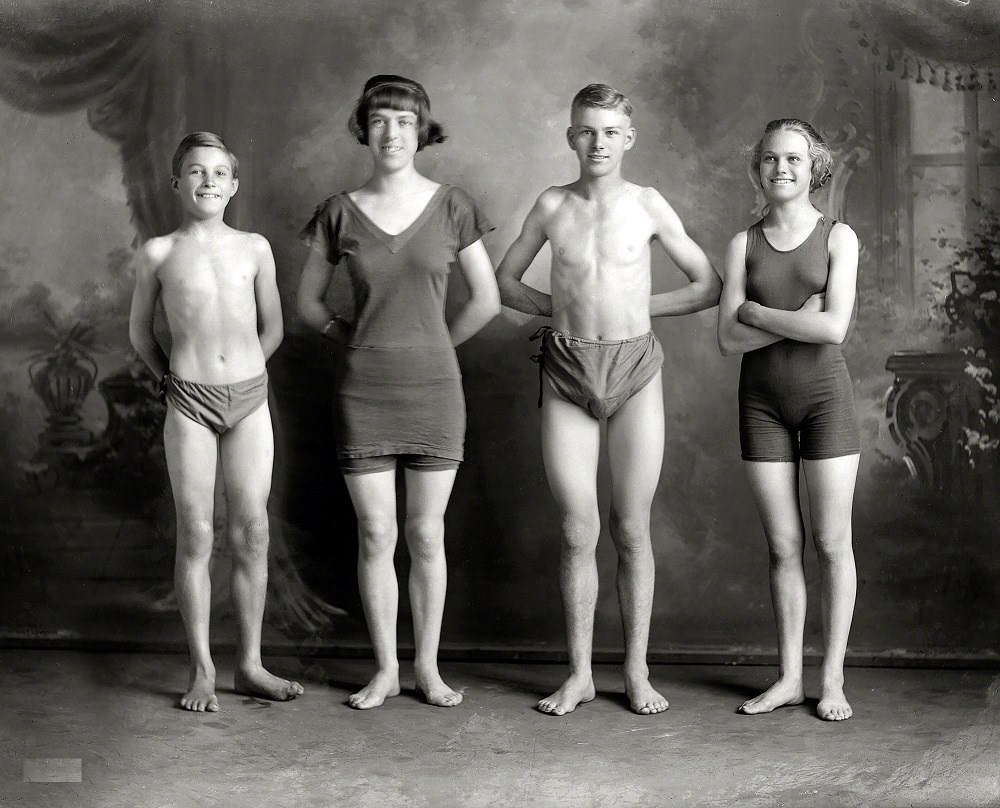
Cricket was another sport with deep roots in New Zealand’s institutional life. The Marist Brothers cricket team in Christchurch in 1913 shows how Catholic schools maintained active sporting programs alongside their academic ones. By 1920, young people in Christchurch were photographed in swimming costumes — reflecting both changing attitudes toward mixed-gender recreation and the growing popularity of swimming as a leisure activity.
The interiors of these named camps near Christchurch were often elaborately decorated. Myrtle Camp in 1905 had a tallboy, mirror, trunks draped with flags, lamps, and walls covered in posters and picture postcards. This was not rough bush camping — it was an organised social event with real domestic comforts. At Clover Camp the same year, young people sat down for tea and cake in front of their tent, dressed neatly and photographed as if at a garden party.
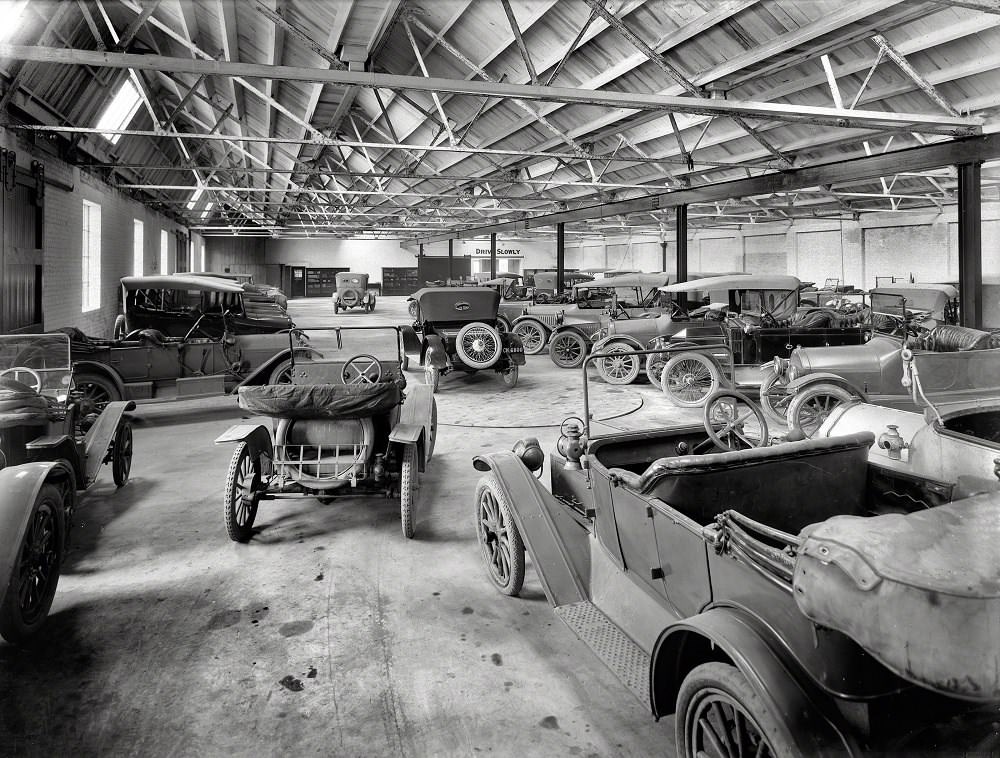
Motor vehicles arrived in New Zealand in the early 1900s and spread quickly across the country. The New Zealand Farmers Co-Op Garage photographed in 1917 shows a building already well-stocked with cars. By 1908, garages in Christchurch were already housing Wolseley and Cadillac models. The transition from horse-drawn transport to motorised vehicles happened rapidly, reshaping both commerce and everyday travel.
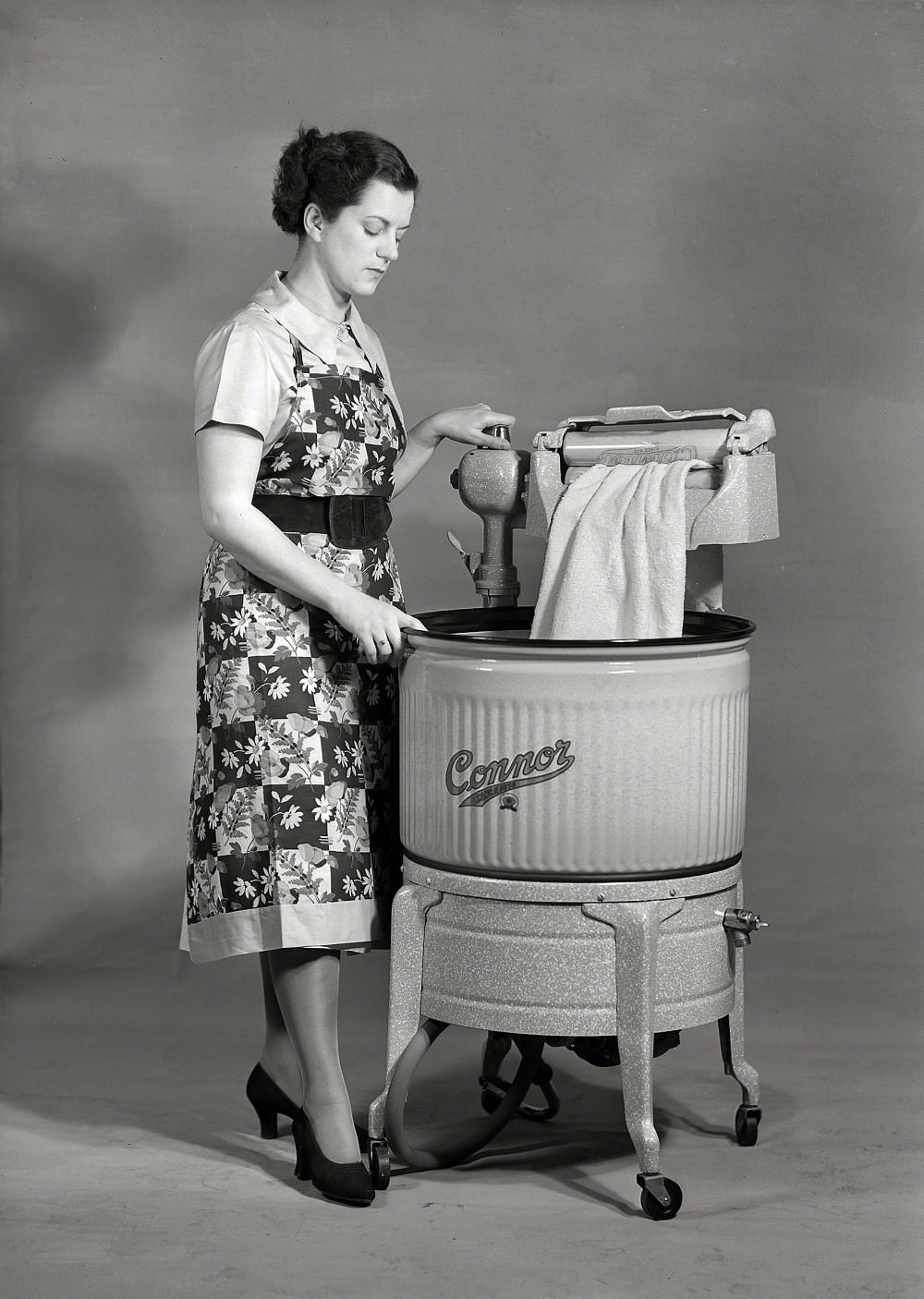
The coastal suburbs of Christchurch in 1905 show a city beginning to spread outward in an organised way — houses with modest gardens, wide streets, and the open landscape of the Canterbury Plains behind them. Half a century later, Wellington households were acquiring motorised wringer washing machines like the Connor model photographed around 1950, a sign of the domestic modernisation that reshaped New Zealand homes after World War Two.
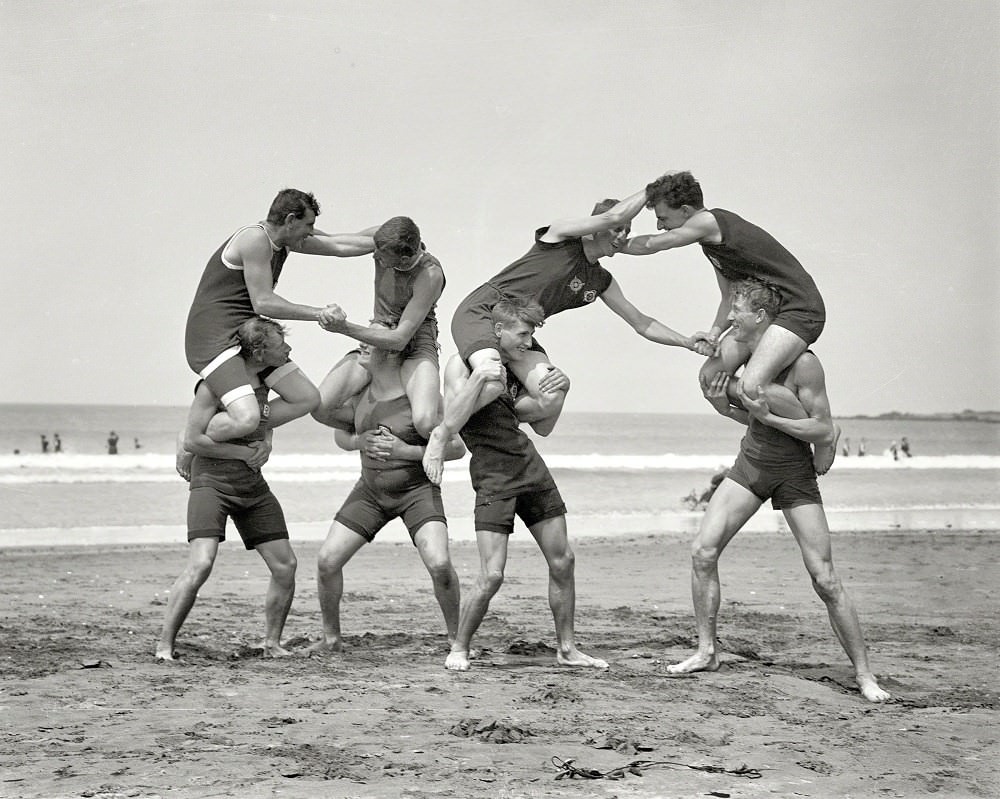
Surf life saving clubs were active in Wellington well before World War One. The Maranui Surf Life Saving Club at Lyall Bay in 1914 shows members engaged in a competitive rooster fighting game on the beach — a balance-and-strength contest where participants tried to knock each other over. These clubs combined serious water safety training with a strong culture of athletic play and team competition.
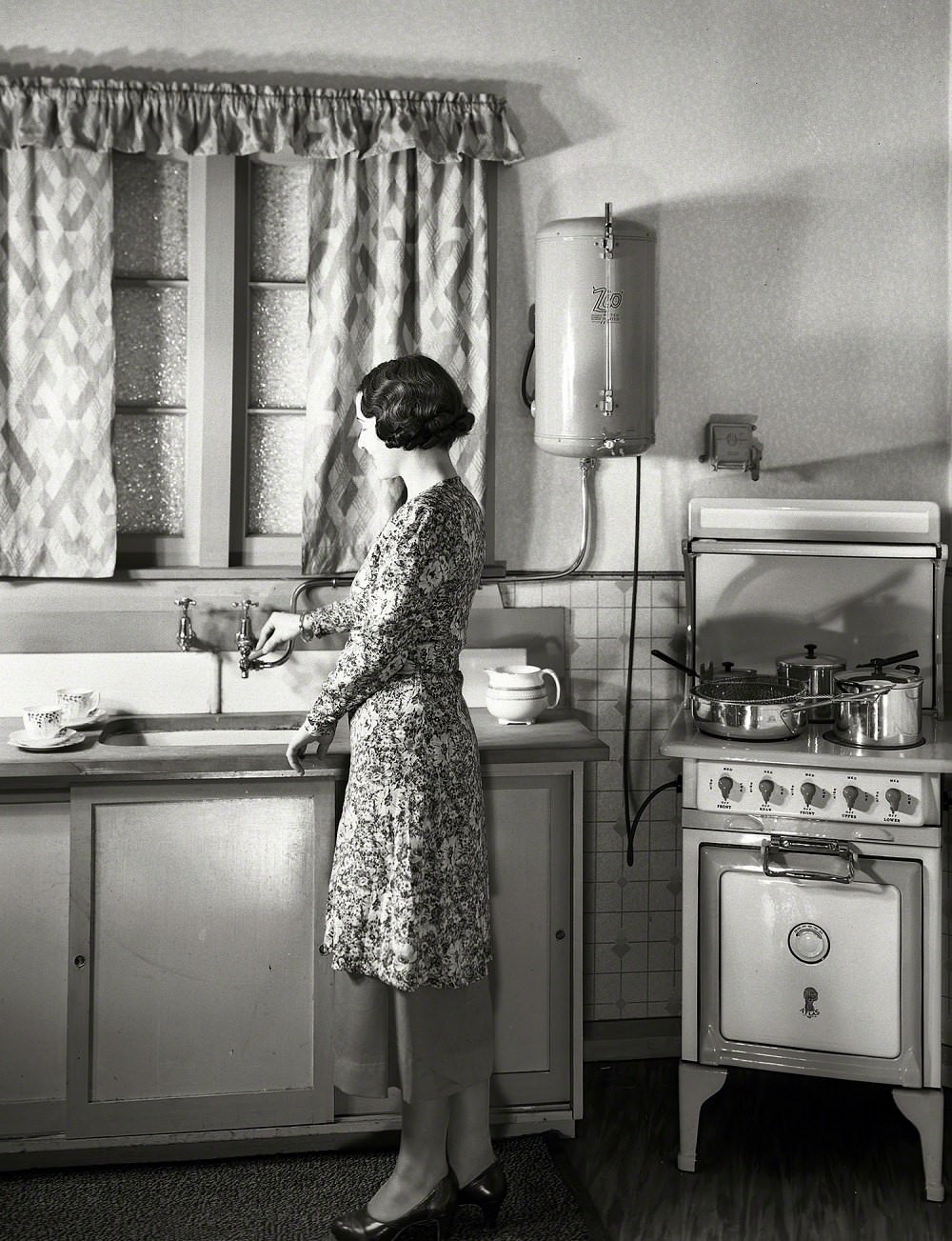
Christchurch around 1913 was a well-developed provincial city with brick buildings, trams, and busy commercial streets. The city had grown steadily since its founding in the 1850s and served as the main centre for the Canterbury region. By the 1930s, Wellington kitchens were being kitted out with modern appliances. A promotional photograph showing an Atlas electric stove and Zip water heater installed at a kitchen sink captures how electricity was transforming domestic life in New Zealand’s homes.
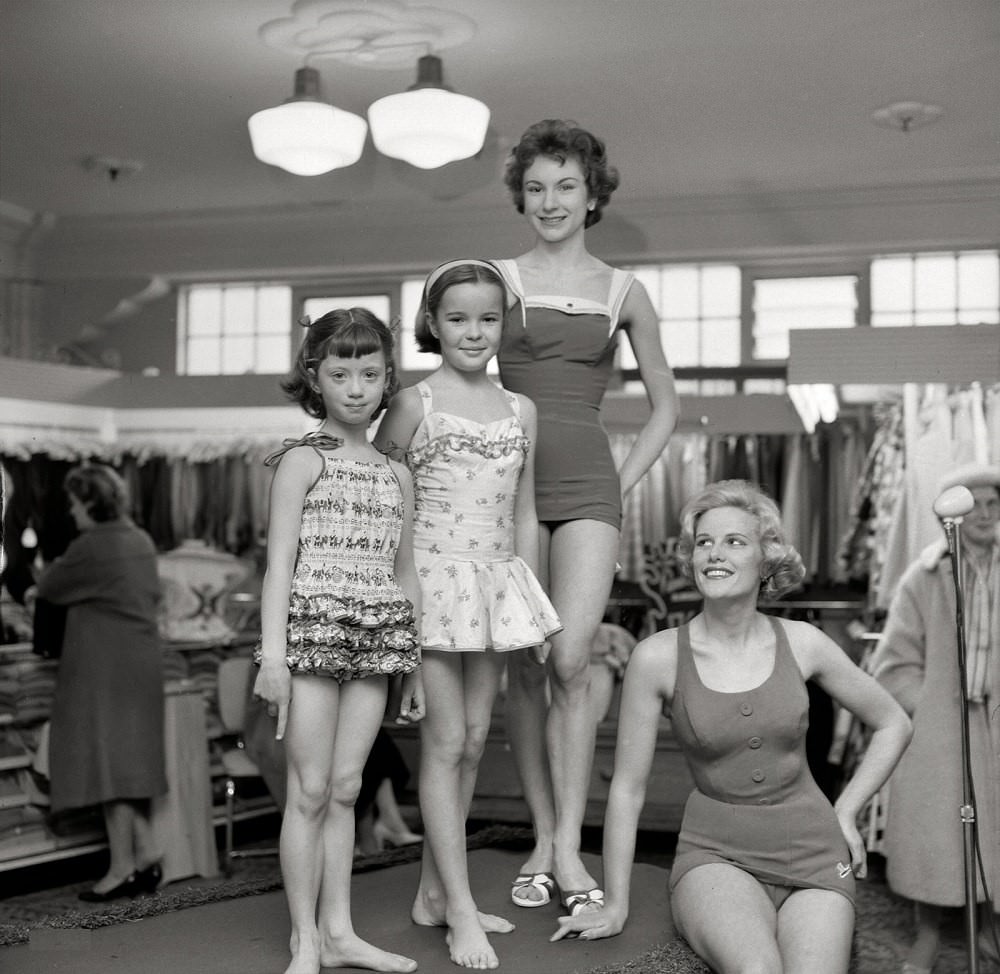
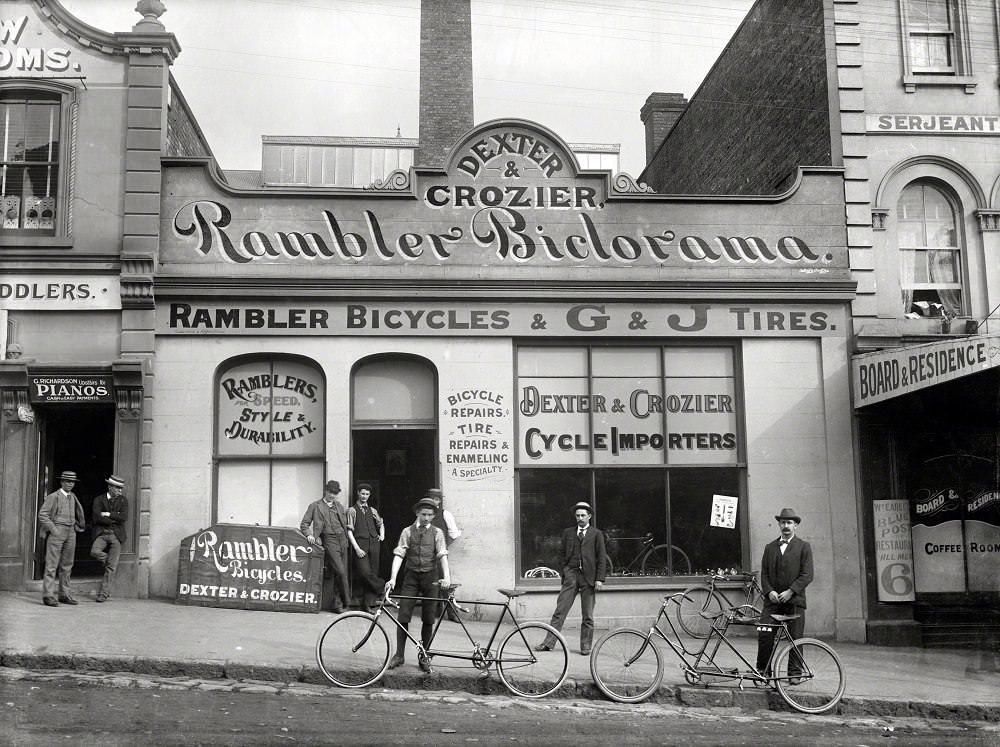
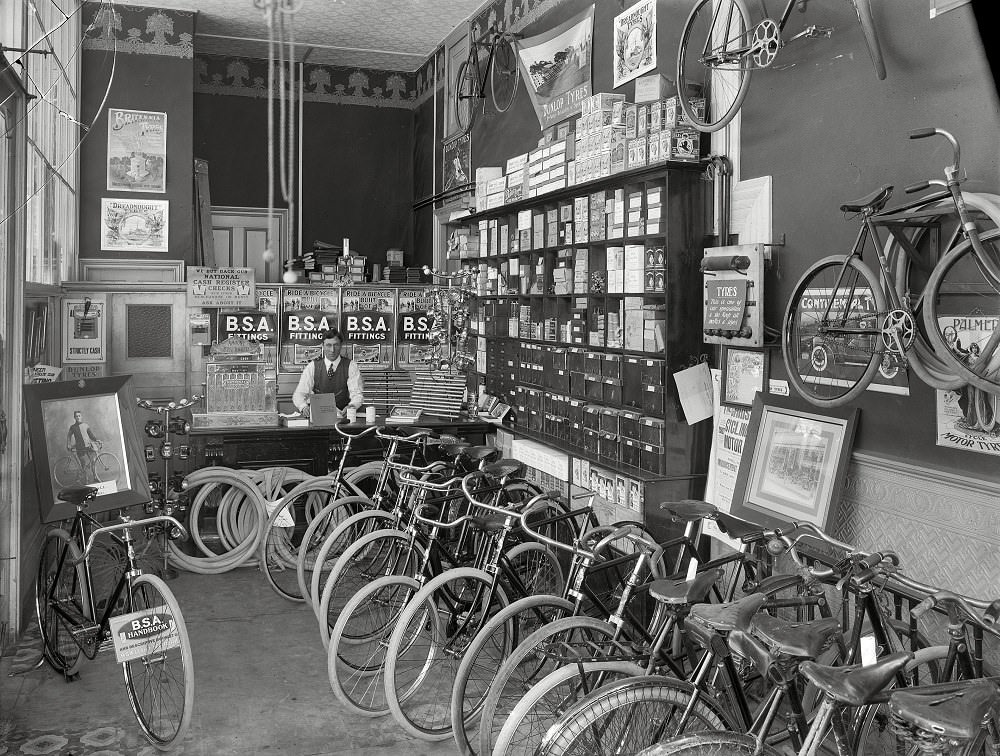
Retail fashion in New Zealand had become sophisticated enough by 1959 that James Smiths Ltd in Wellington was staging swimsuit fashion shows for customers. That contrast with the Dexter & Crozier cycle import shop photographed on Victoria Street East in Auckland in 1902 shows how much the commercial world had changed in just over five decades. The bicycle shop, packed with imported machines, reflected the cycling craze of the Edwardian era.
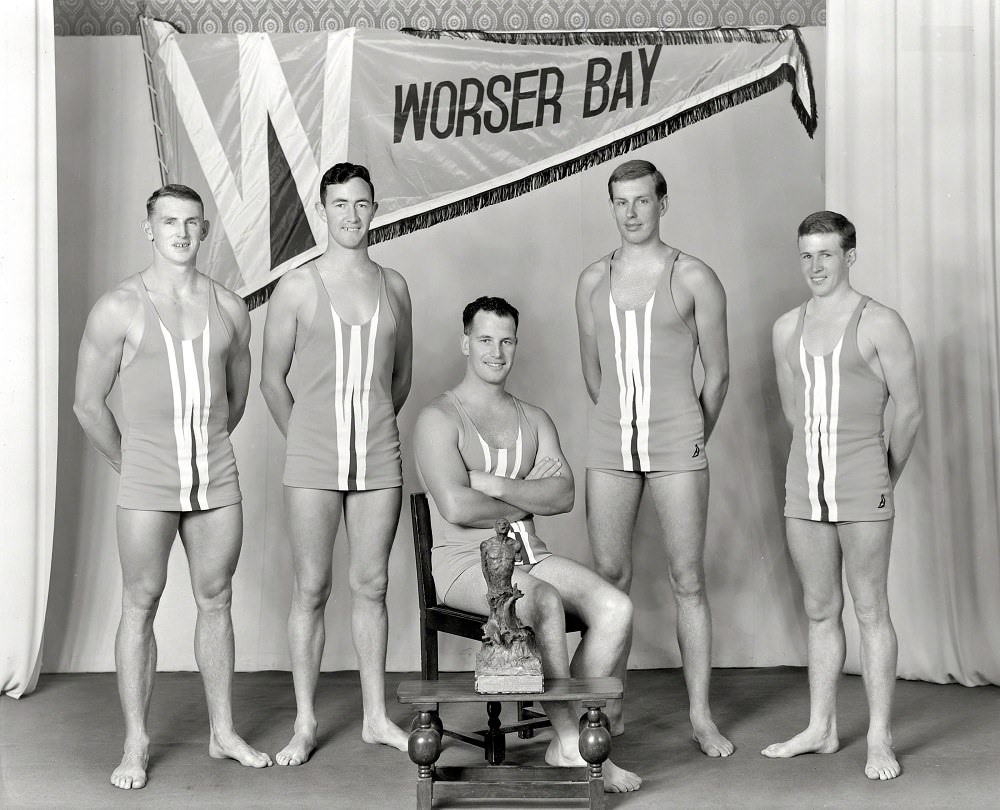
Cycle shops in Christchurch in 1910 were well-stocked retail spaces, selling bicycles, parts, and accessories to a public that used them for both work and sport. The Worser Bay Surf Life Saving Club team photograph from 1962 in Wellington shows a different side of outdoor New Zealand — athletic young men organised into a formal club structure, trained in ocean rescue, and proud of their place in a national movement that had been growing since the early 1900s.
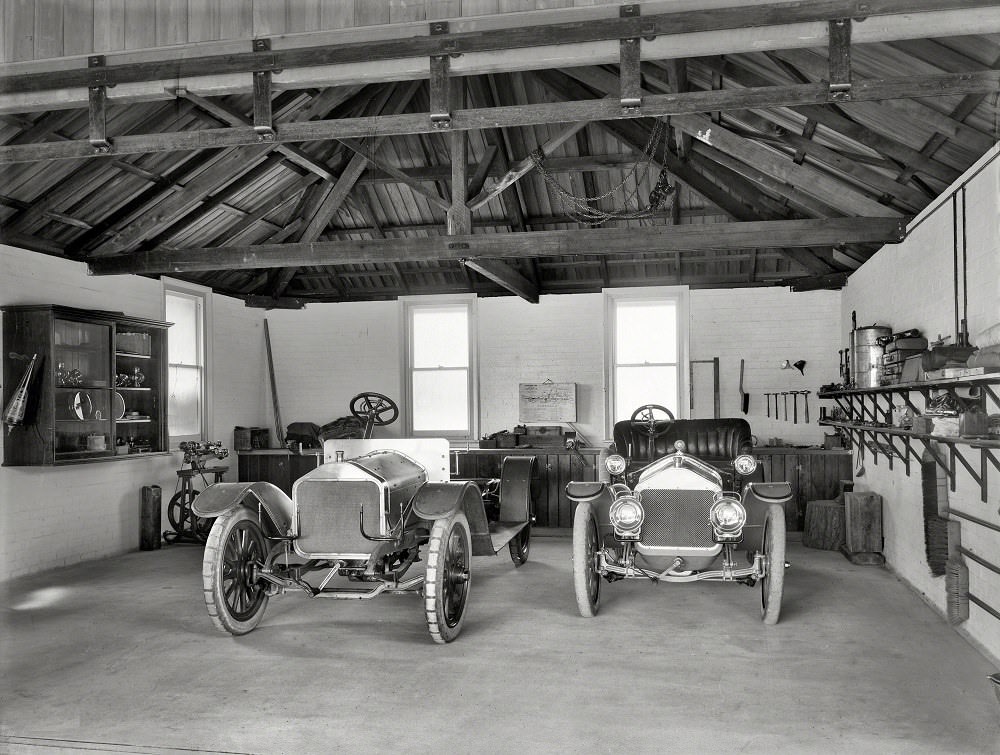
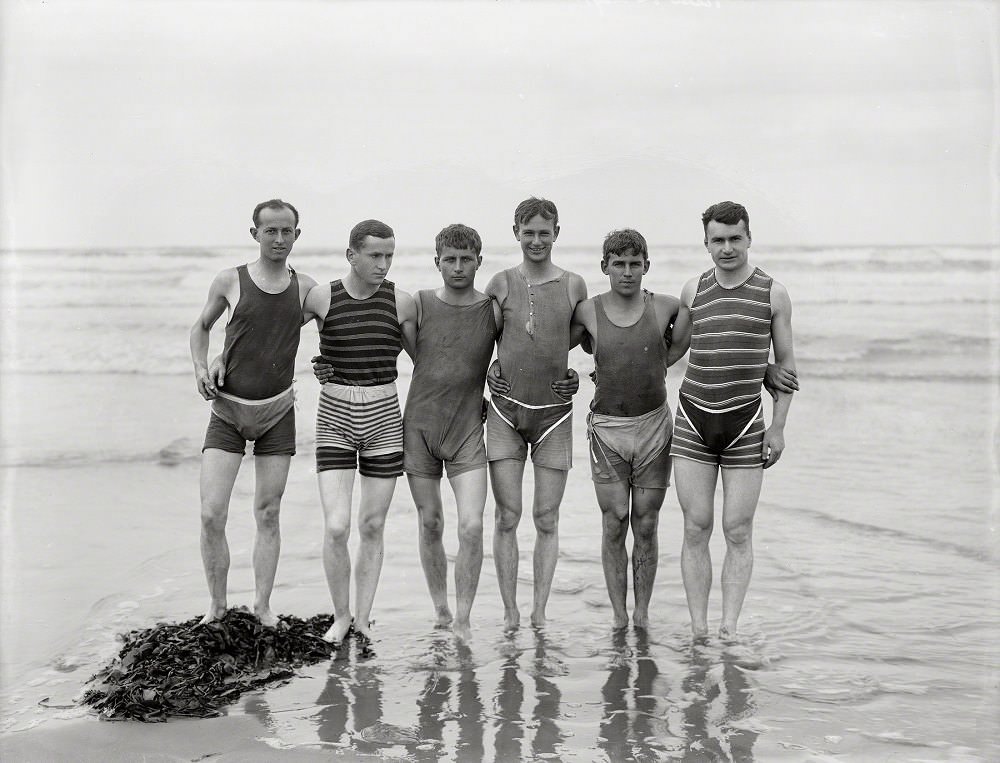
Motor cars were a luxury item in New Zealand in 1908. A Christchurch garage housing both a Wolseley and a Cadillac around that year shows how quickly imported European and American vehicles had reached the country’s wealthier residents. Around the same time, bathers photographed likely near Christchurch were wearing the full-coverage wool swimwear typical of the Edwardian period — very different from the swimsuits on display in Wellington stores fifty years later.
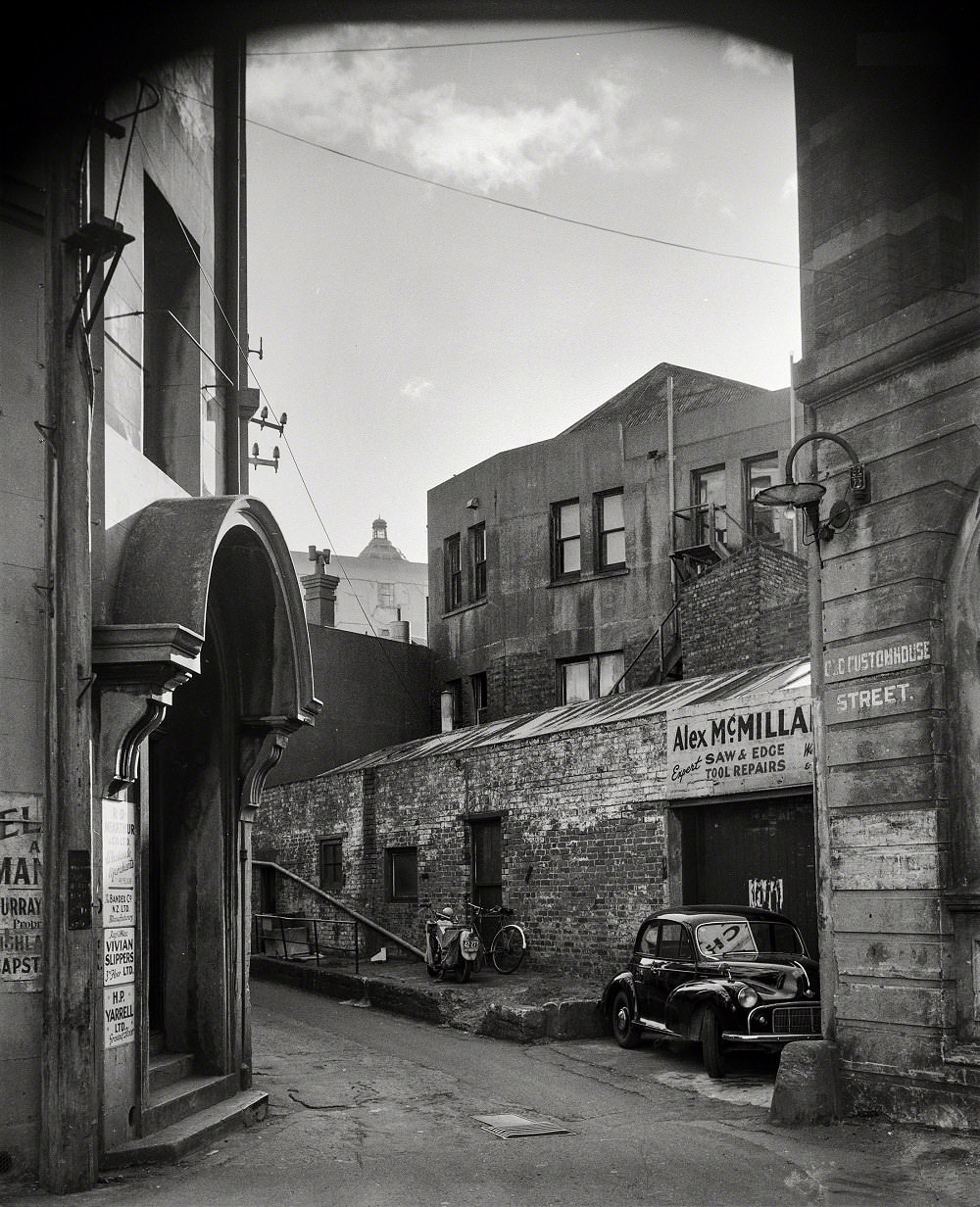
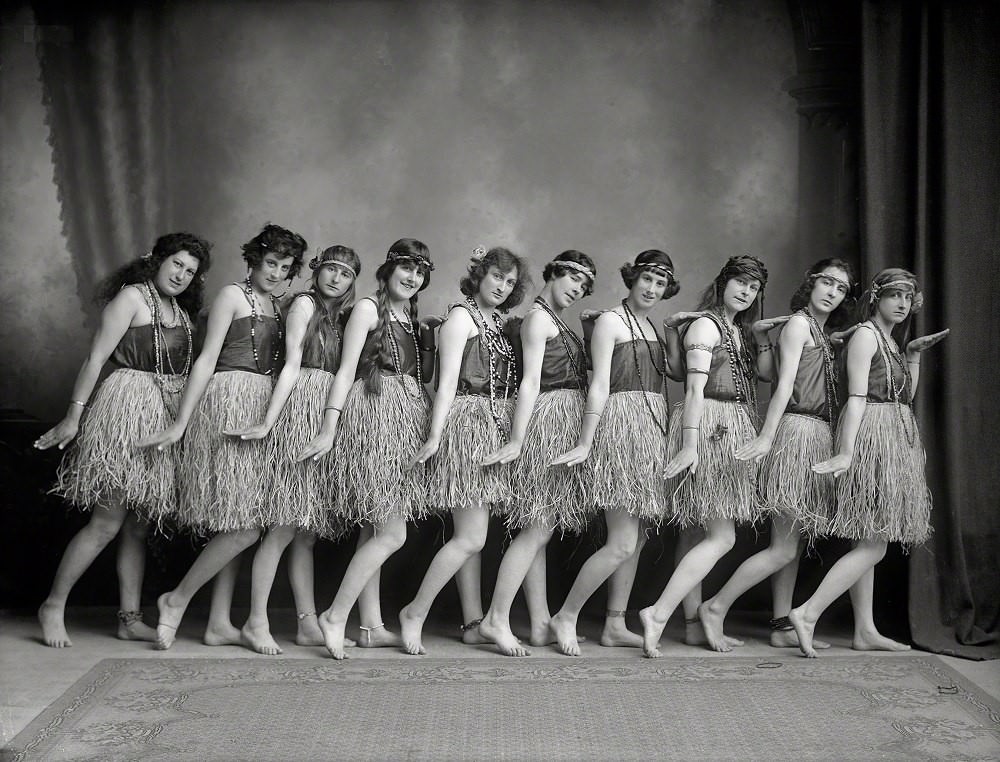
Wellington’s Bond Street in 1957 shows a mid-century city street lined with businesses and pedestrians going about their daily lives — cars parked along the kerb, signage competing for attention, and the urban fabric of a growing capital city. Three and a half decades earlier, in the Nelson District in 1920, music hall dancers posed in costume in a very different kind of public performance — barefoot, wearing headbands, and photographed in a dance pose that reflected the era’s taste for theatrical entertainment.
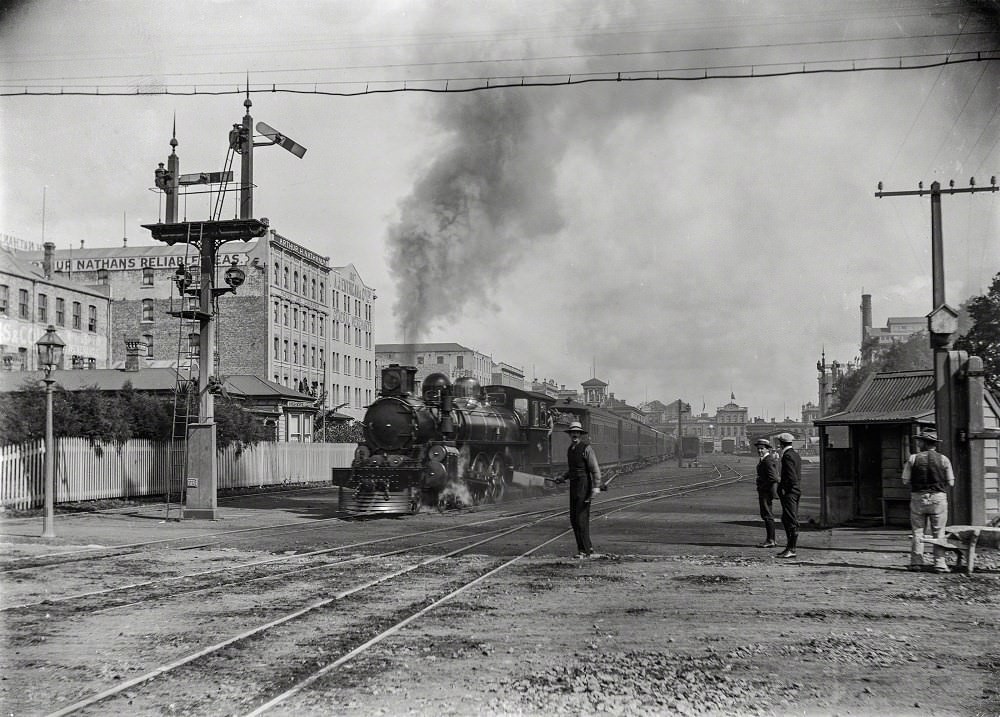
Rail travel was a central part of New Zealand’s transport network in the early 20th century. The Rotorua Express leaving Auckland in 1909, photographed alongside Customs Street East, shows a steam locomotive pulling out of the city — a regular service connecting Auckland to the thermal region of Rotorua. The New Zealand Railways built up an extensive network across both the North and South Islands, and the Alexander Turnbull Library alone holds more than 2,000 glass negatives documenting that history.
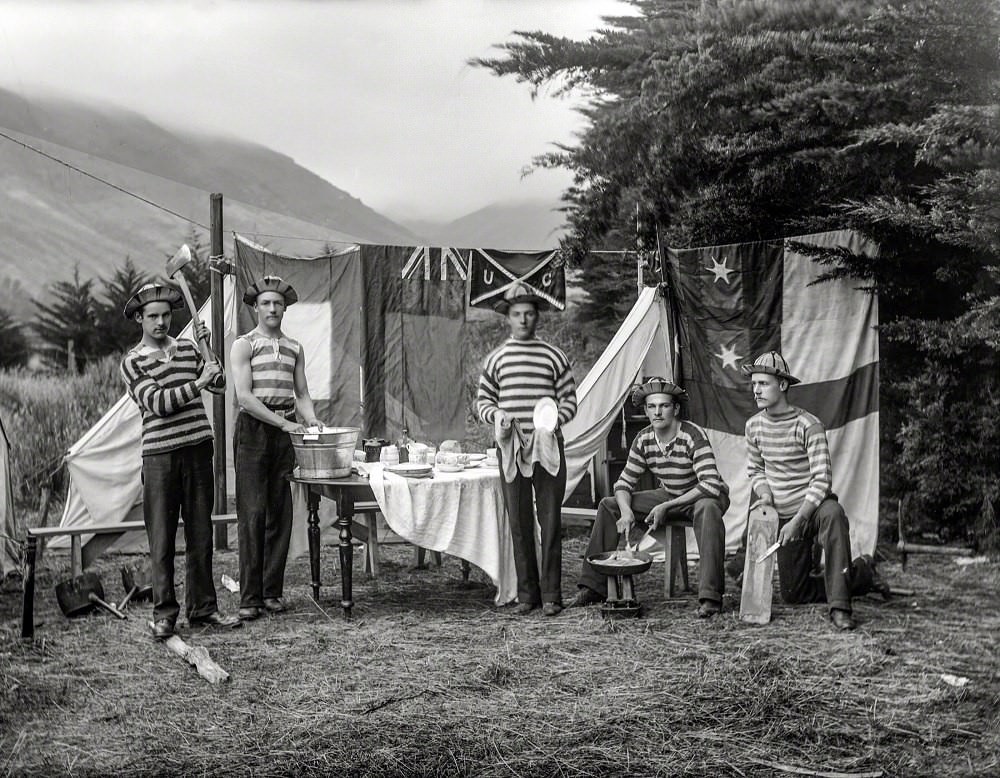
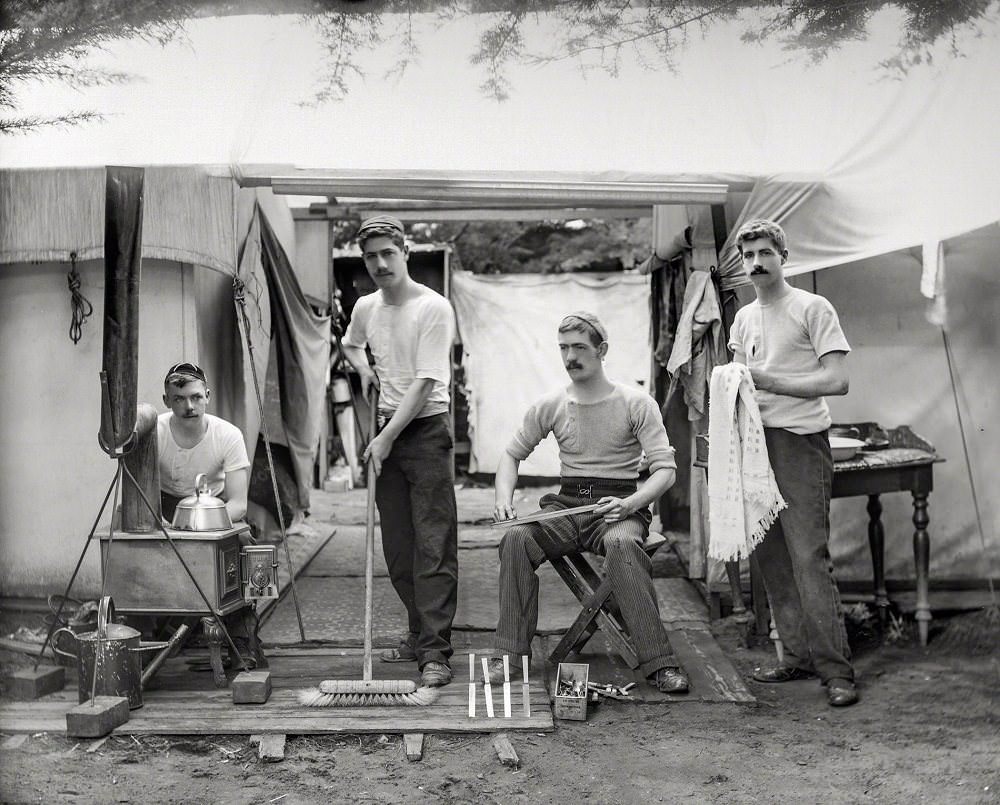
The camp culture around Sumner and the broader Christchurch district produced dozens of photographs in the early 1900s. Men in matching striped tops doing chores at their campsite, and young men washing up beside their tent — these images show how much social effort went into these outings. They were not spontaneous trips but organised events with assigned roles, named camps, and enough shared identity that participants dressed alike for photographs.
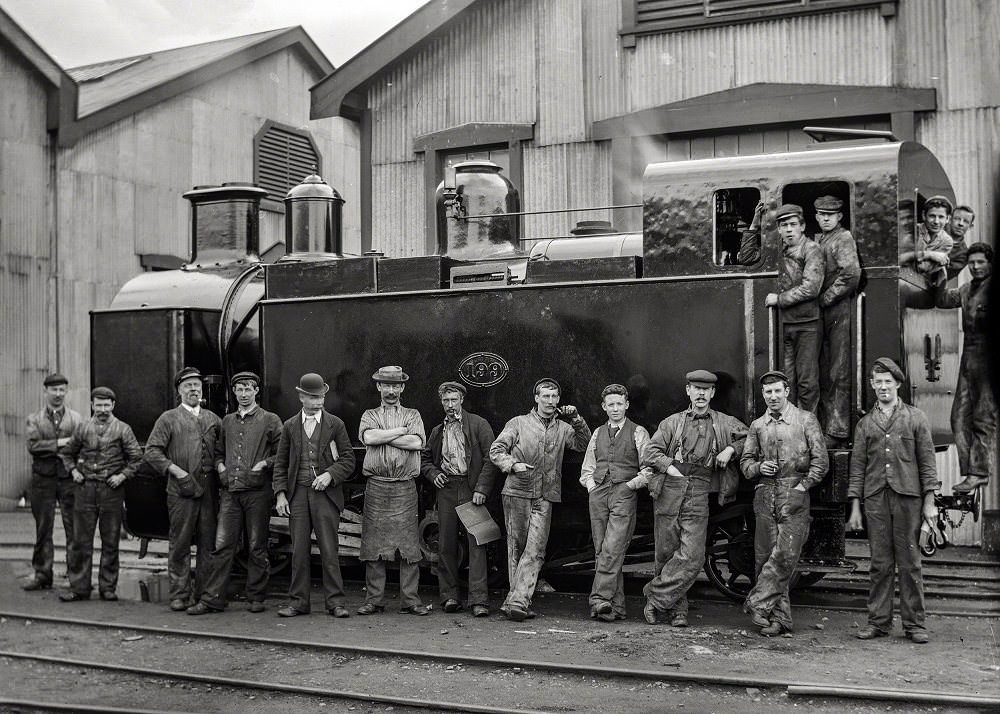
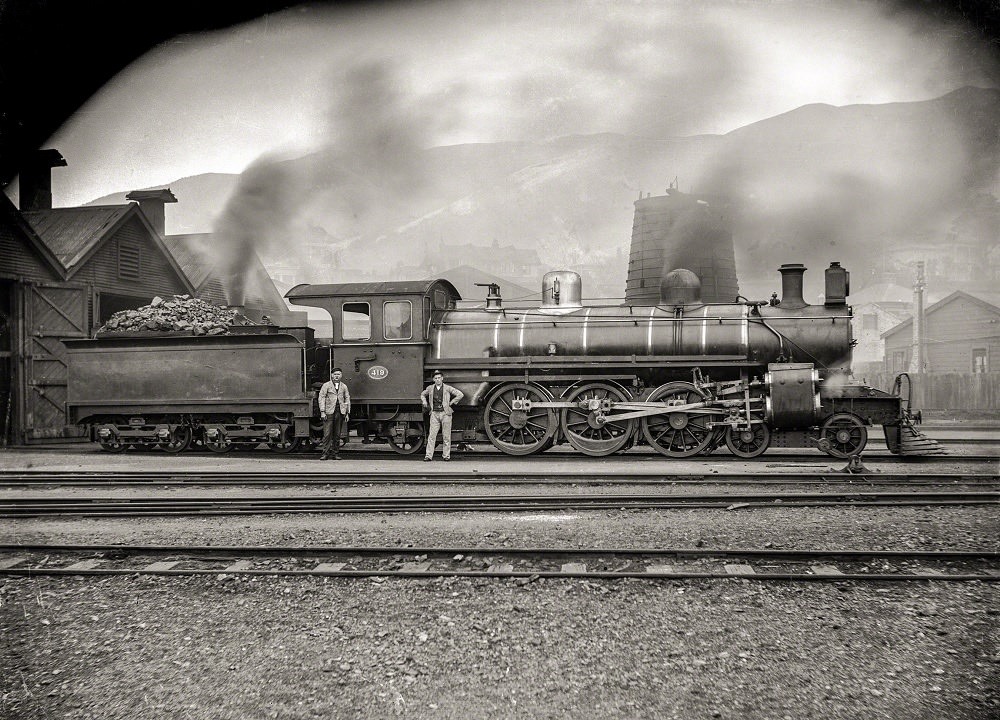
The Petone Railway Workshops near Wellington were among the most important engineering facilities in New Zealand in the early 20th century. Class A locomotive NZR No. 419, photographed there around 1909, represents the steam era that powered the country’s expanding rail network. By 1949, New Zealand Railways was still producing extensive photographic documentation of its operations, a collection that now forms a significant part of the Alexander Turnbull Library’s archive.
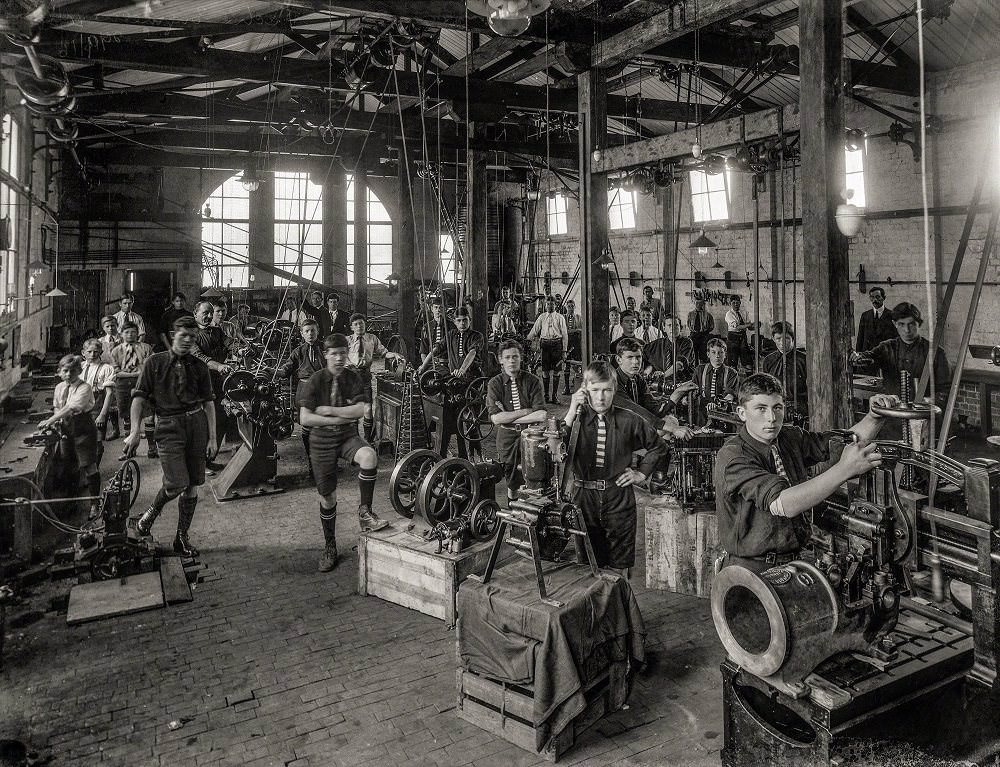
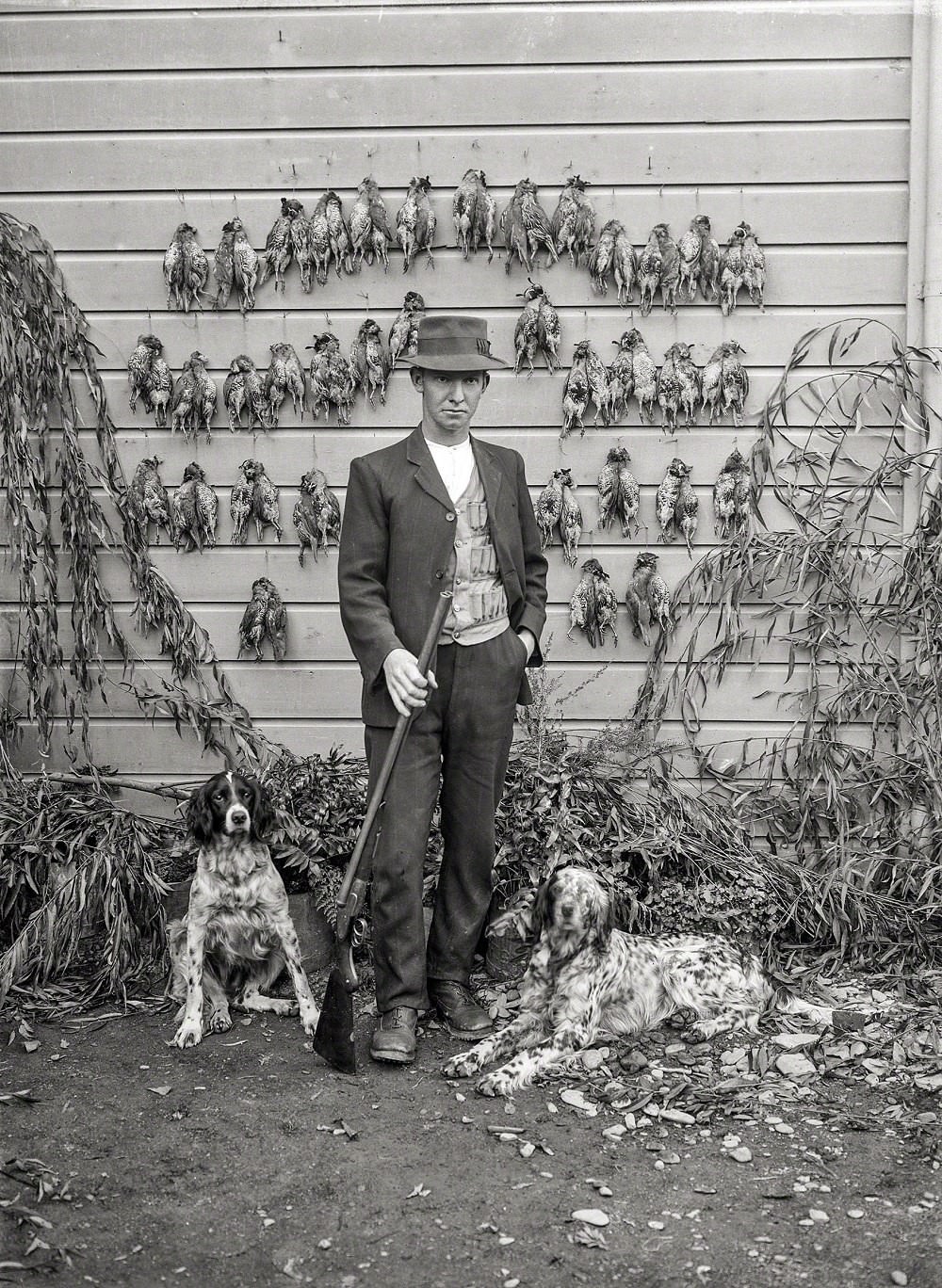
Technical education was a priority in New Zealand’s secondary schools during the First World War. Boys at Wanganui Technical College in 1916 were receiving hands-on engineering training at a time when industrial skills were in demand both at home and on the front. Hunting was a separate thread of New Zealand outdoor life. A hunter photographed with quail in 1920 reflects the abundance of introduced game birds that had spread across the country’s farmland and bush margins by that time.
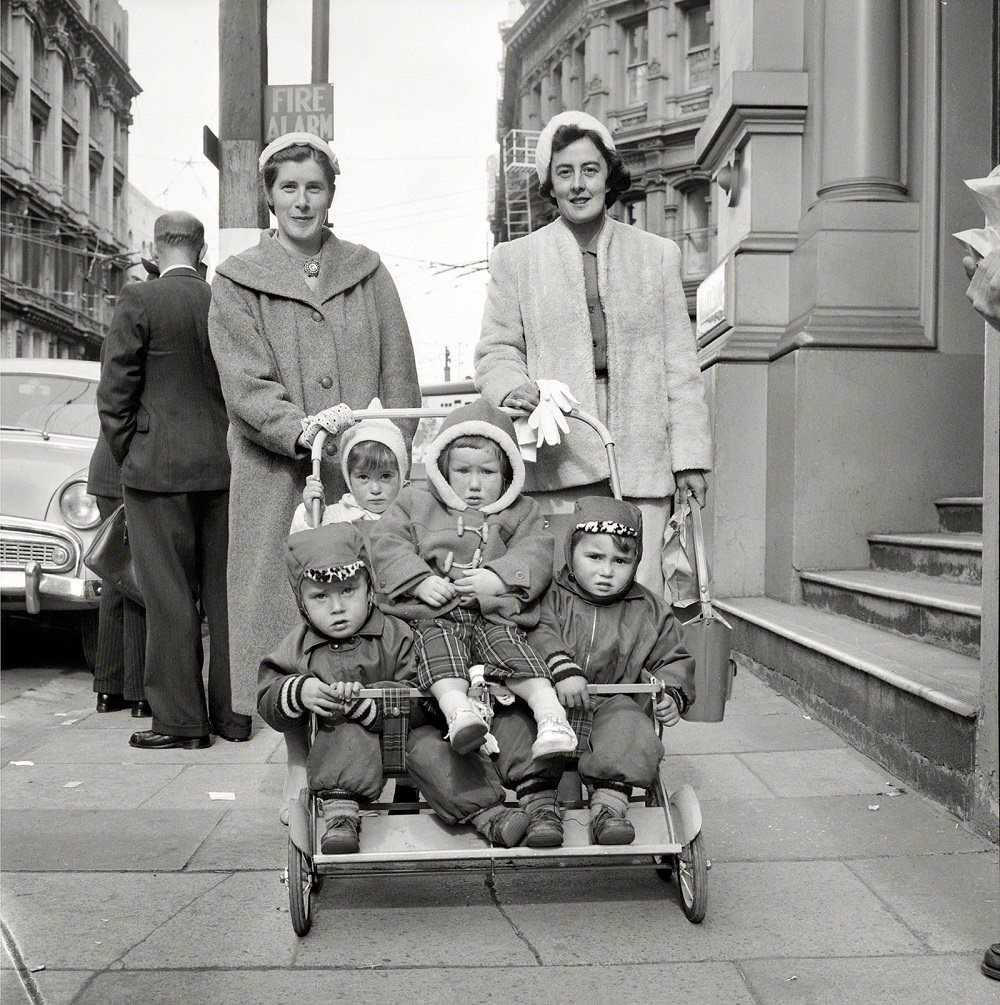
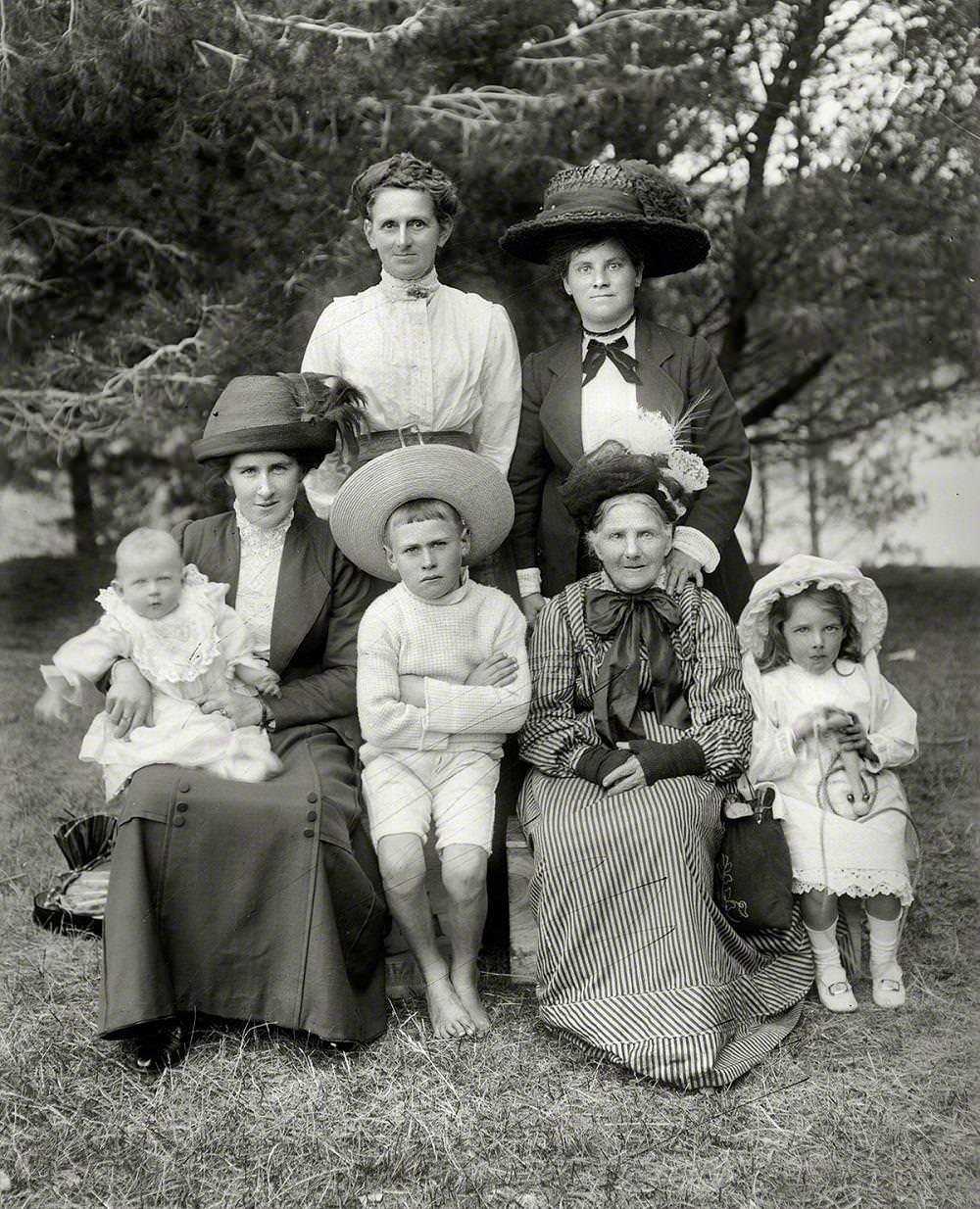
Family life runs as a quiet thread through this entire photographic collection. An outdoor family portrait from the Christchurch district around 1902 shows the formal, carefully arranged style of photography common in the Edwardian period. By 1959, two women and four small children photographed on a Wellington city street look entirely relaxed and unselfconscious — a candid moment in a modern city that bears little resemblance to those stiff garden portraits from half a century before.
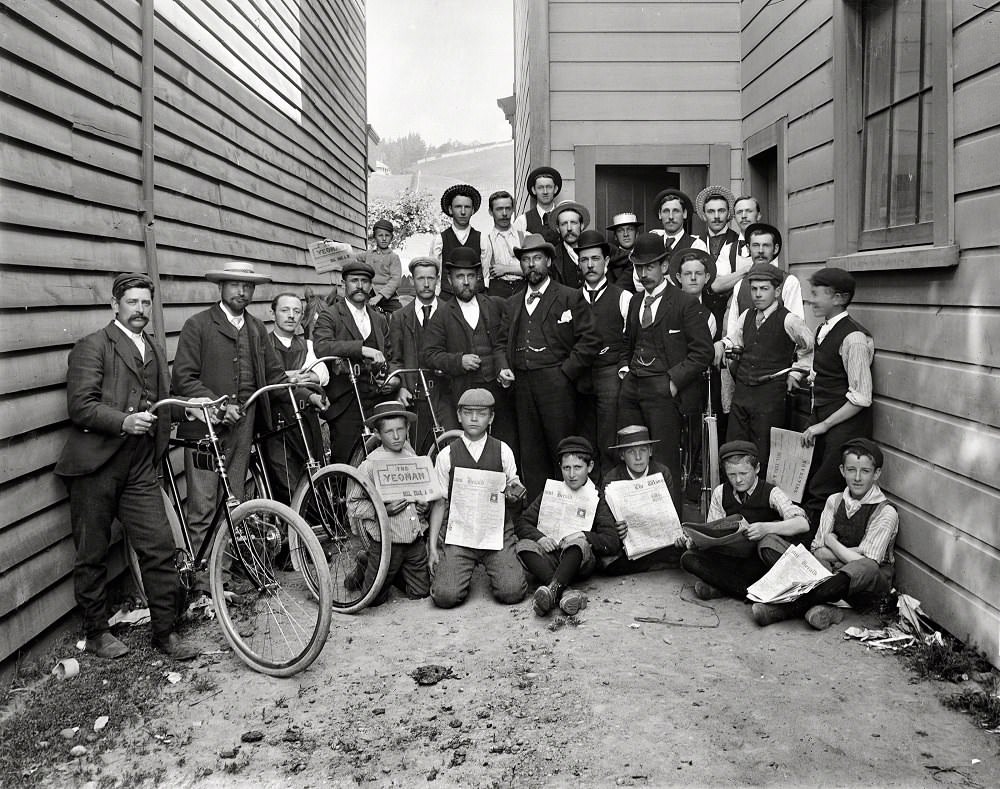
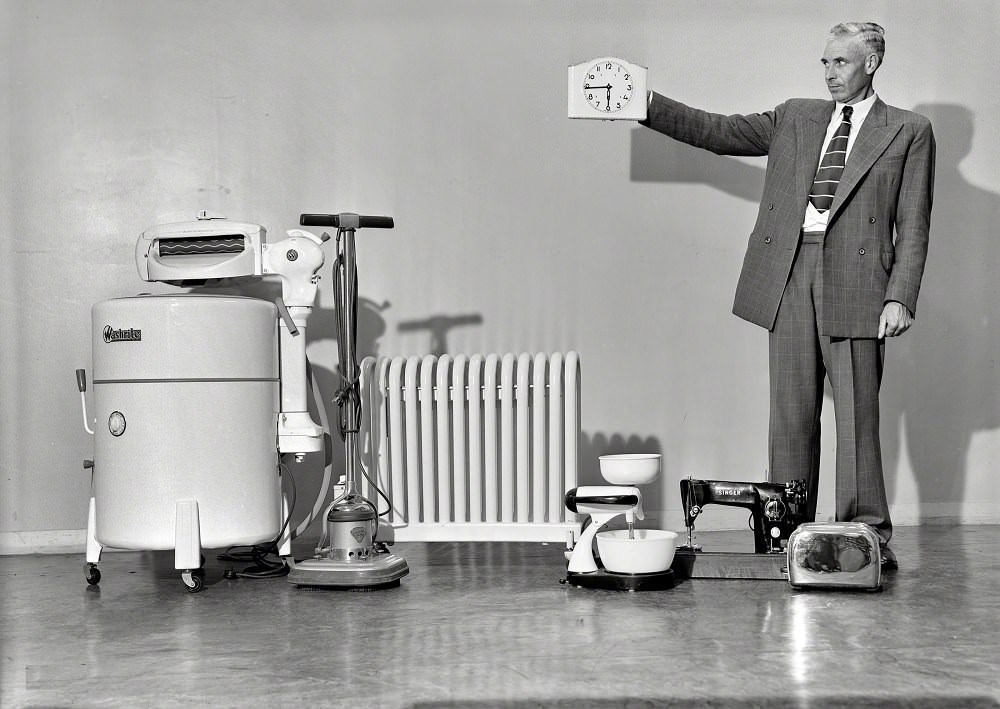
The staff of the Wanganui Herald photographed with their bicycles in 1907 shows how newspapers in New Zealand’s provincial towns operated — bicycle-riding reporters and delivery workers were the backbone of local journalism. By 1950 in Wellington, a single promotional photograph could display an entire catalogue of household appliances — washing machine, sewing machine, mixer, toaster, polisher, and heater — showing how thoroughly consumer goods had entered New Zealand’s domestic economy.
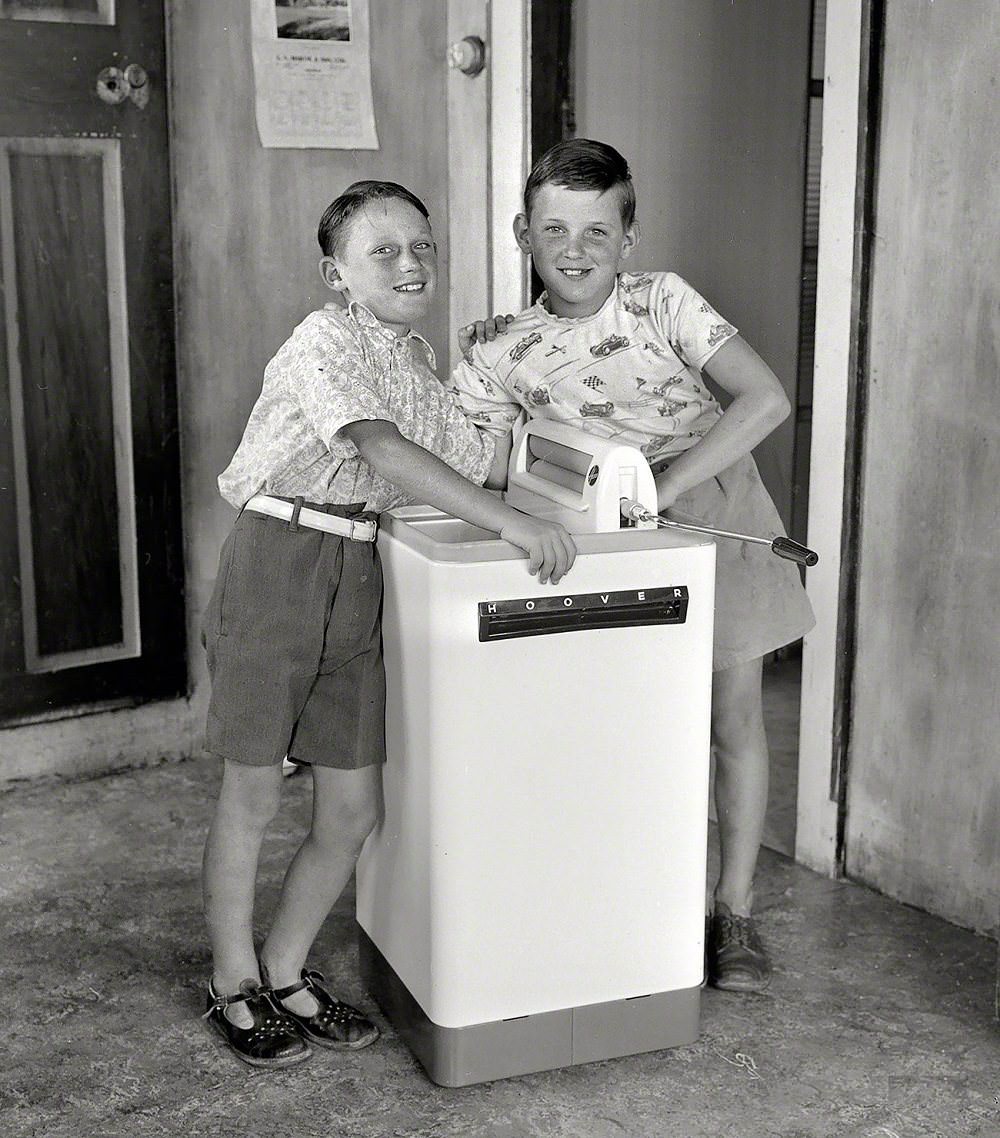
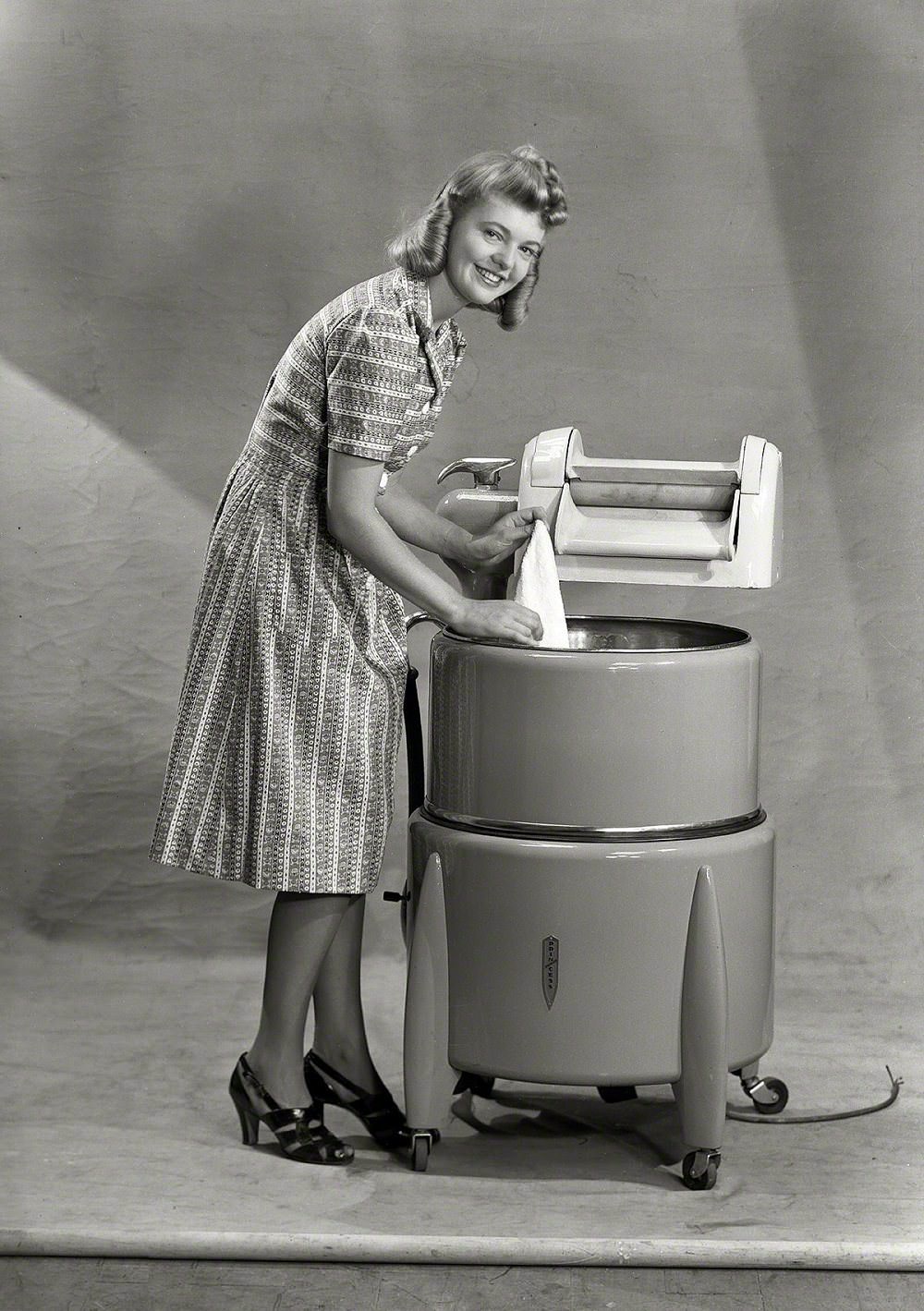
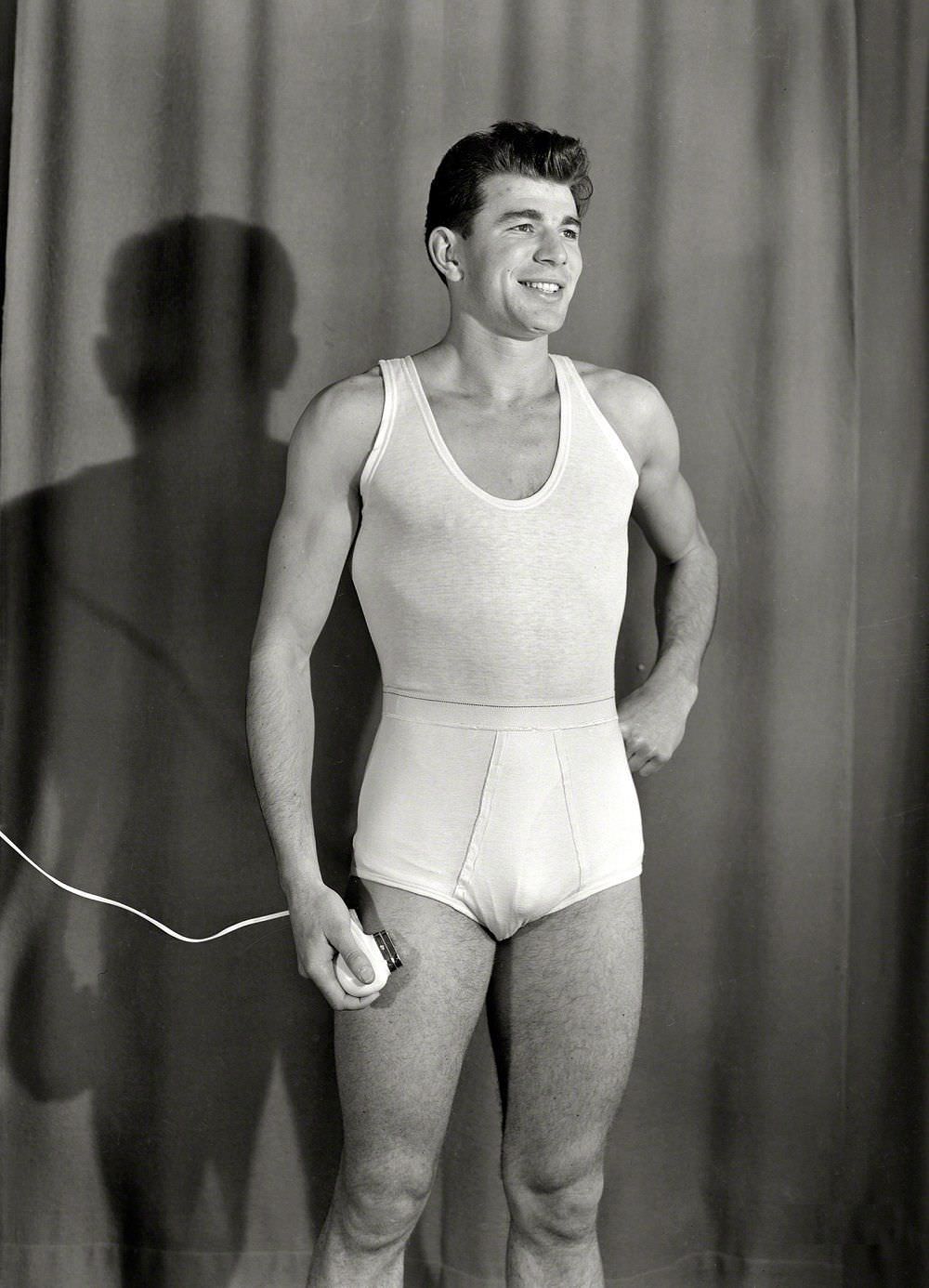
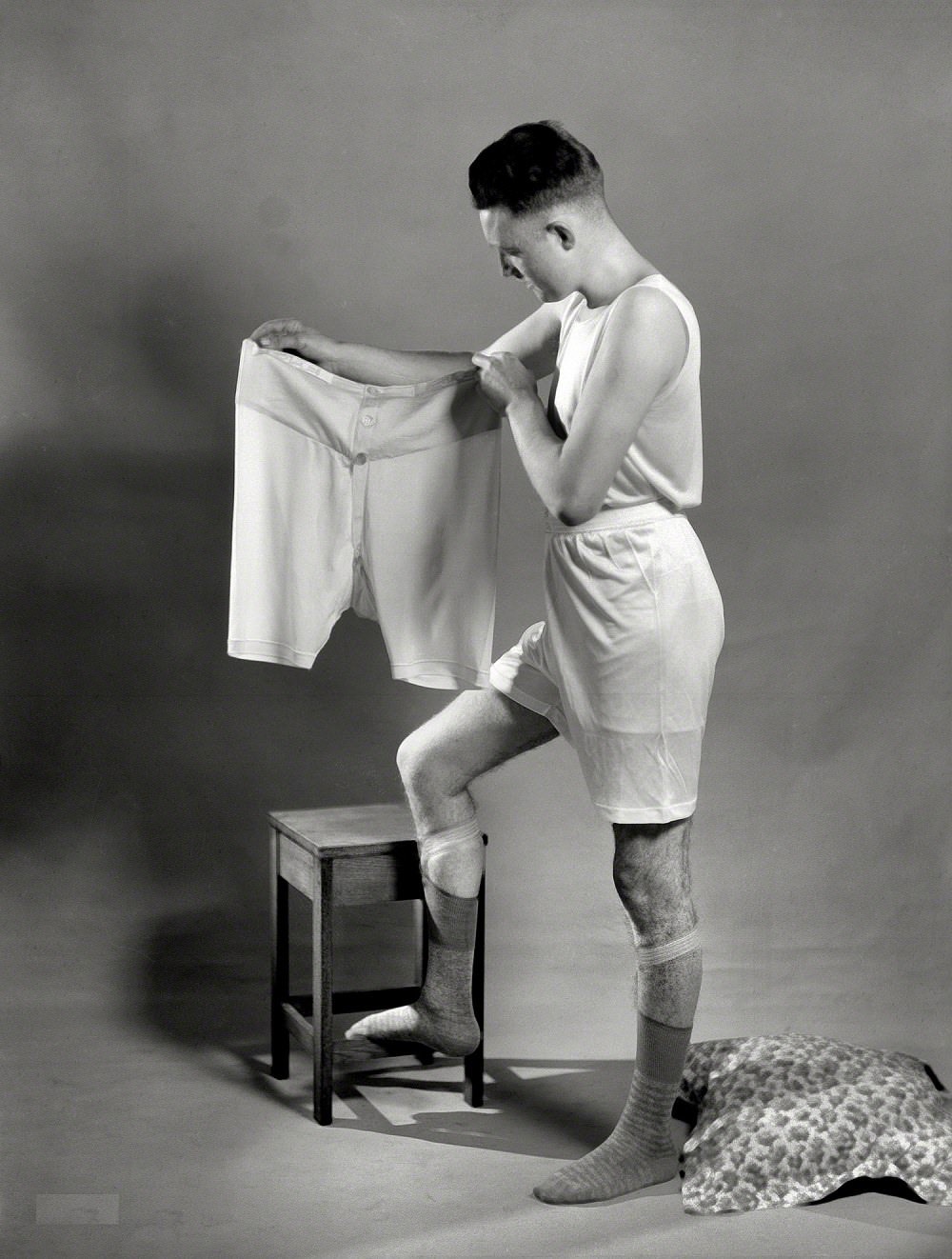
The washing machine appears repeatedly in New Zealand’s photographic record of the 1950s — as a promotional object, a household status symbol, and a measure of domestic progress. Anthony and Paul Banks posing with a Hoover machine in Wellington in 1956, and a model photographed with a wringer washing machine around the same time, both reflect how manufacturers marketed labour-saving appliances directly to New Zealand households during the postwar consumer boom.
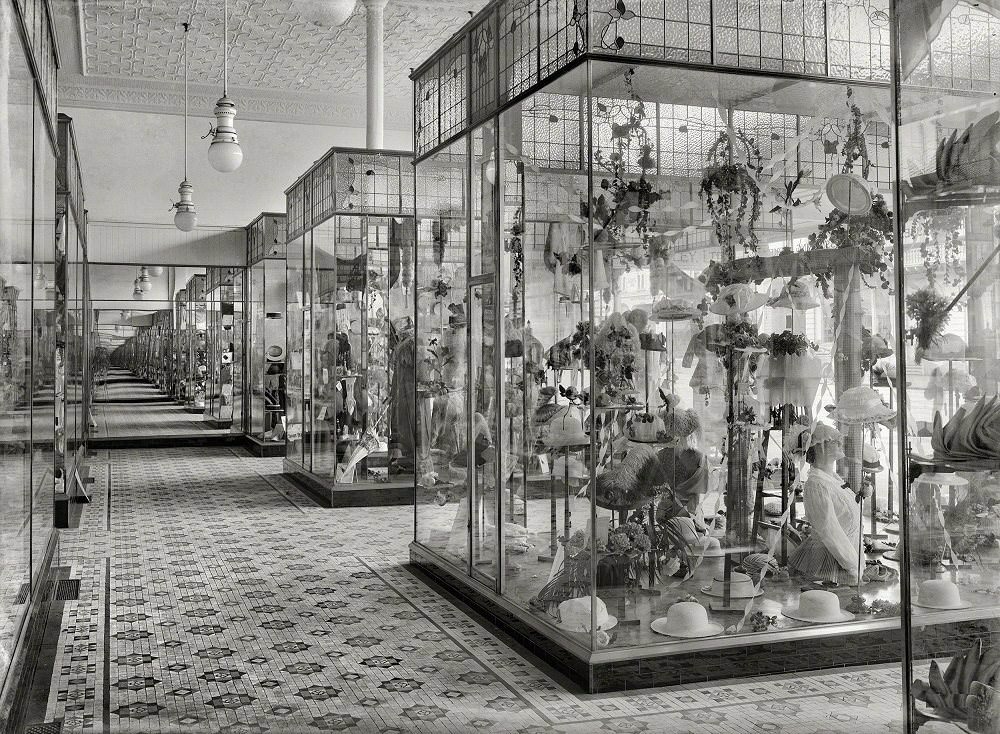
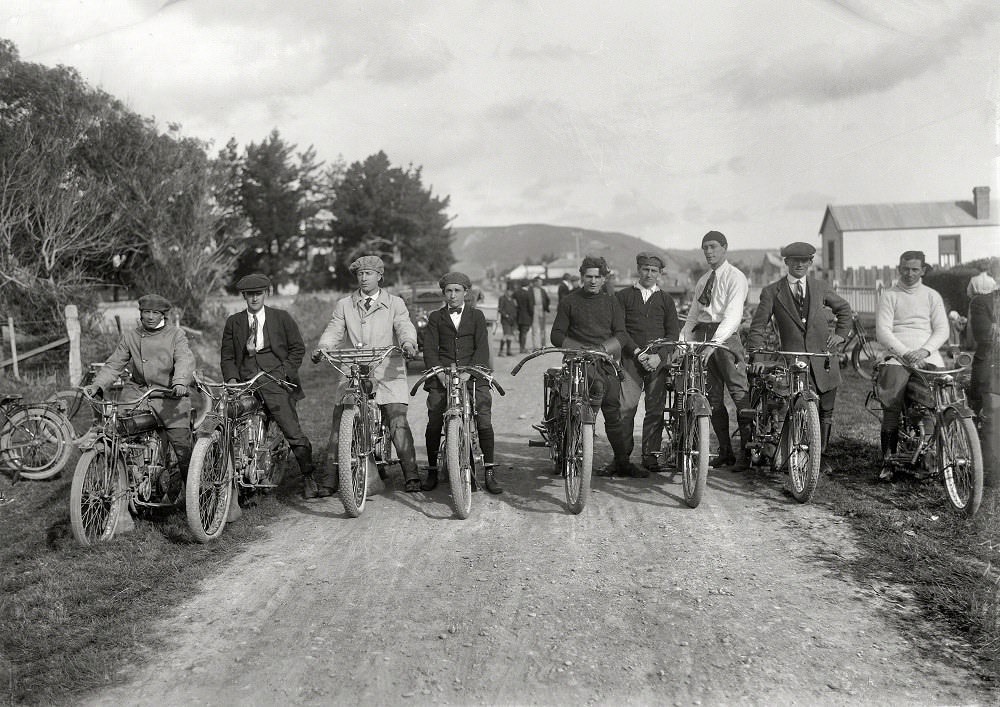
Wanganui was a thriving commercial centre in the early 20th century. The Economic drapery store in 1915 had glass display cases filled with fabrics and goods, showing a level of retail sophistication typical of larger provincial towns. By 1920, young men in the Wanganui region were photographed on motorcycles — the two-wheeled machines that had arrived as a faster alternative to bicycles and were rapidly becoming a symbol of independence and speed.
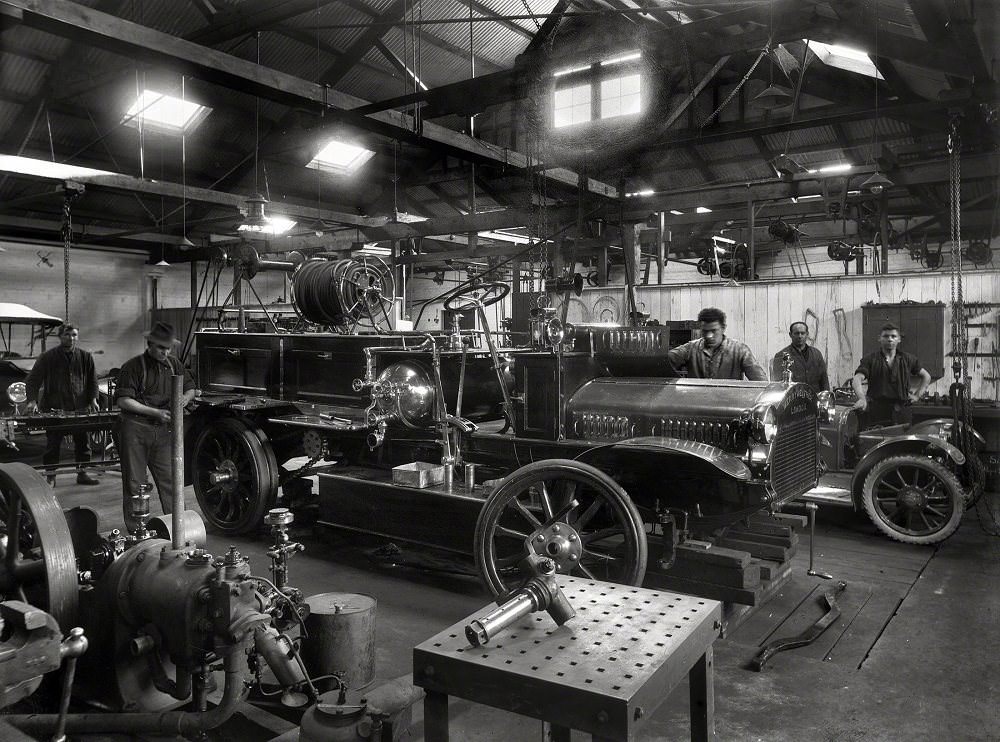
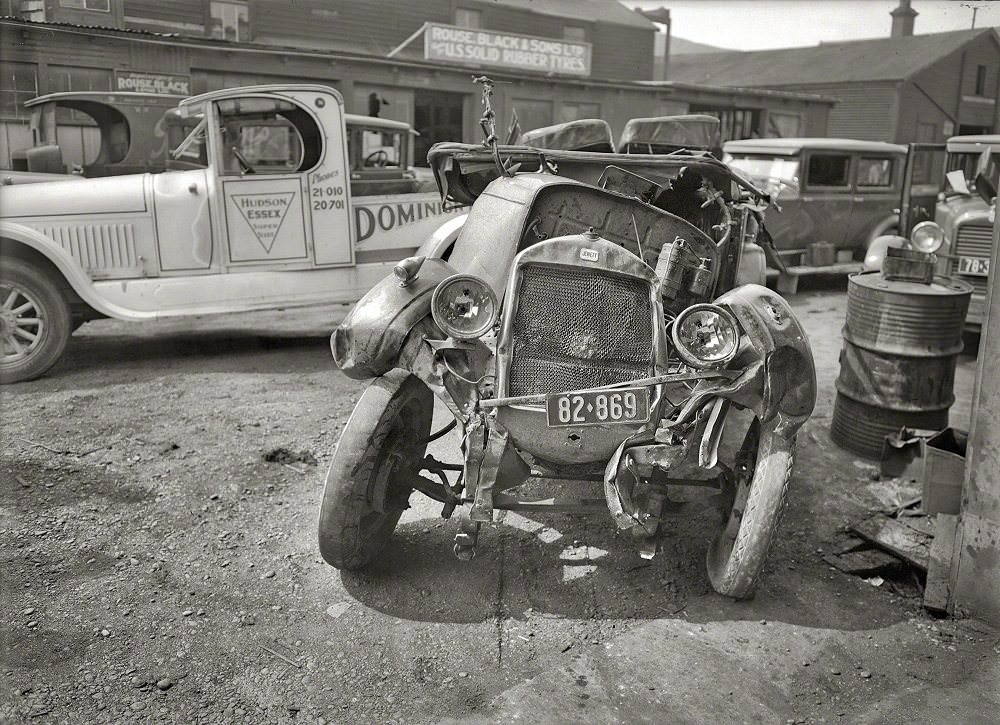
As motor vehicles spread across New Zealand, so did the infrastructure to maintain and repair them. The Wanganui Fire Brigade’s Merryweather fire engine photographed on blocks in Chavannes Garage around 1921 shows fire services transitioning from horse-drawn to motorised equipment. The risks of motoring were real — a car wreck photographed in Wellington around 1928 shows the damage that early road accidents could cause, at a time when roads, traffic rules, and vehicle safety were all still being developed.
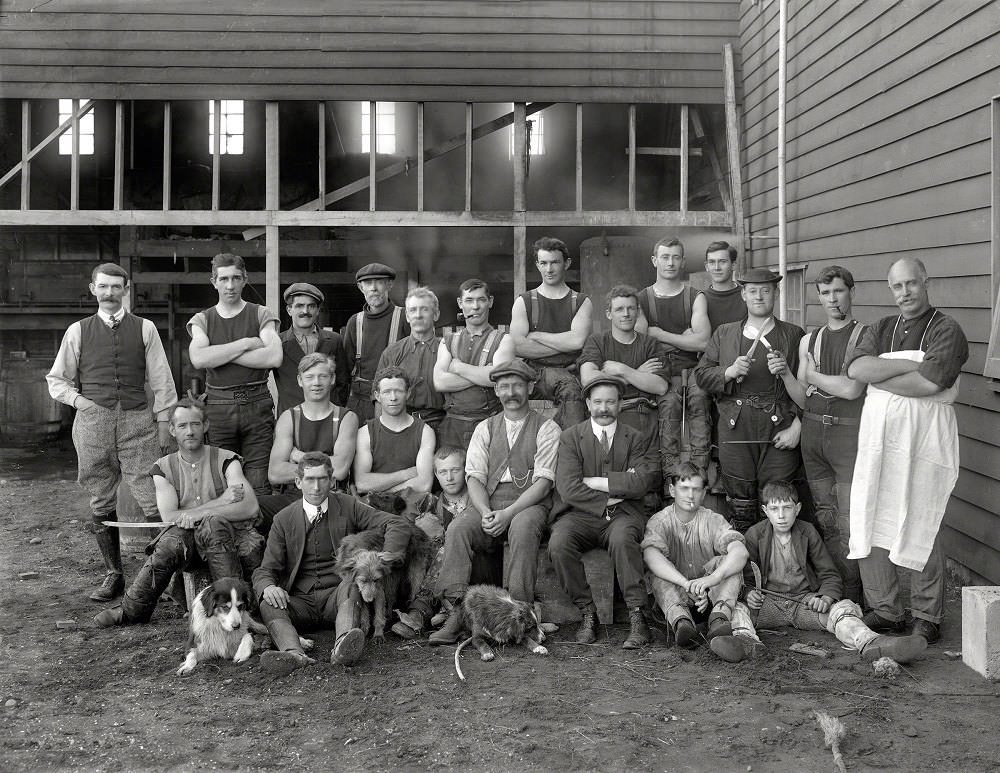
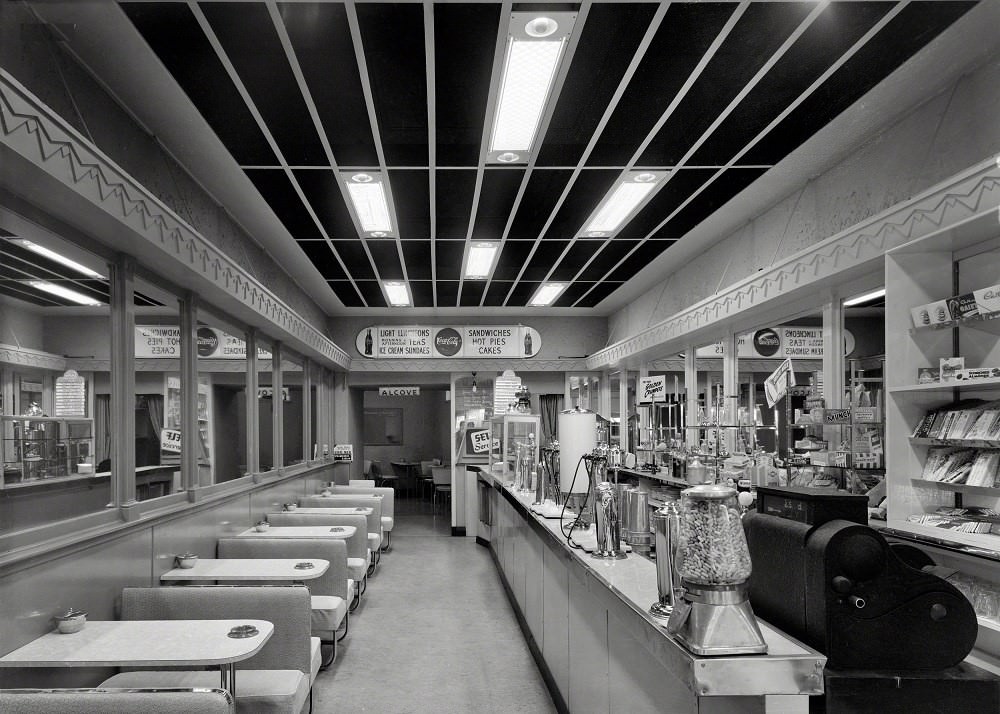
The employees of Thomas Mitchell Ltd, photographed together in Whanganui in 1914, represent the organised workforce of a medium-sized New Zealand business on the eve of World War One. By 1950, the same city had the Sunshine Milk Bar — a modern diner-style space with booths lining the walls, a far more relaxed commercial environment than the formal workplace portraits of thirty-six years earlier.
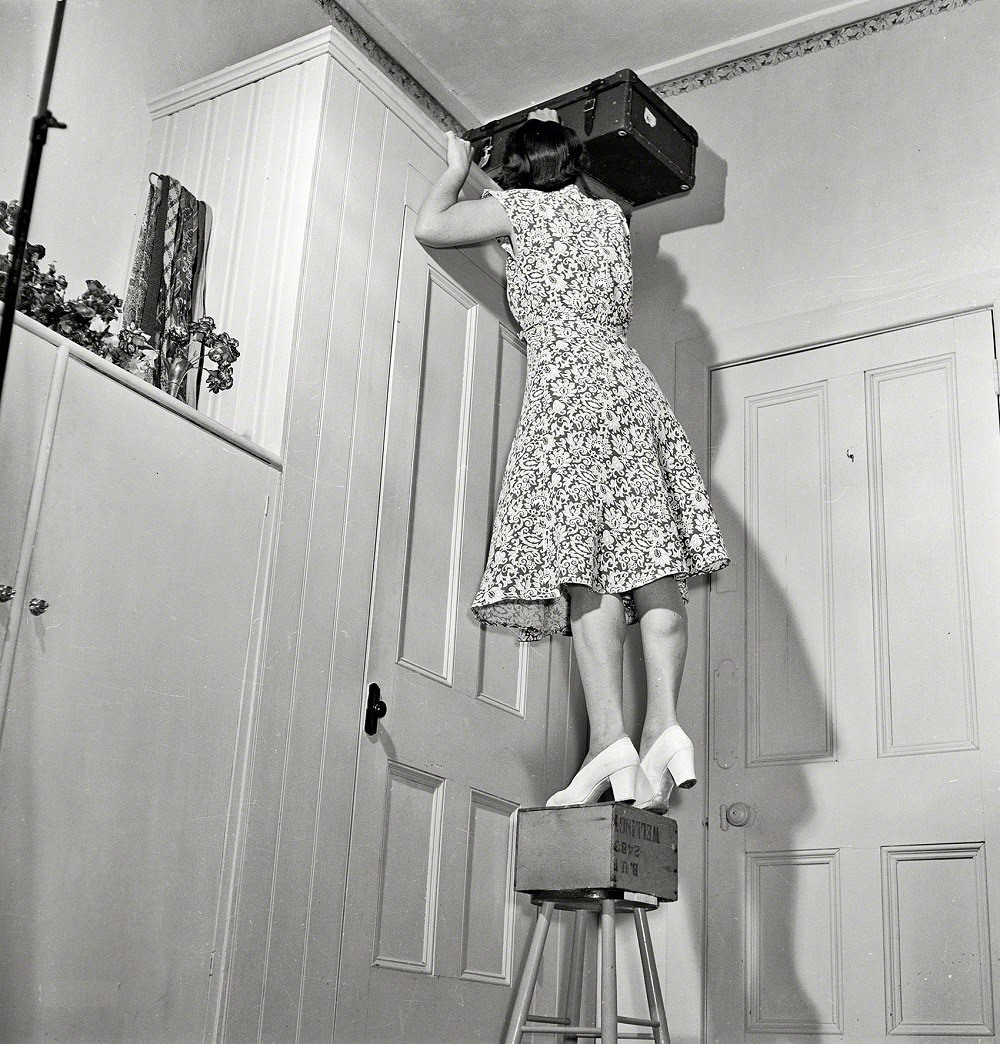
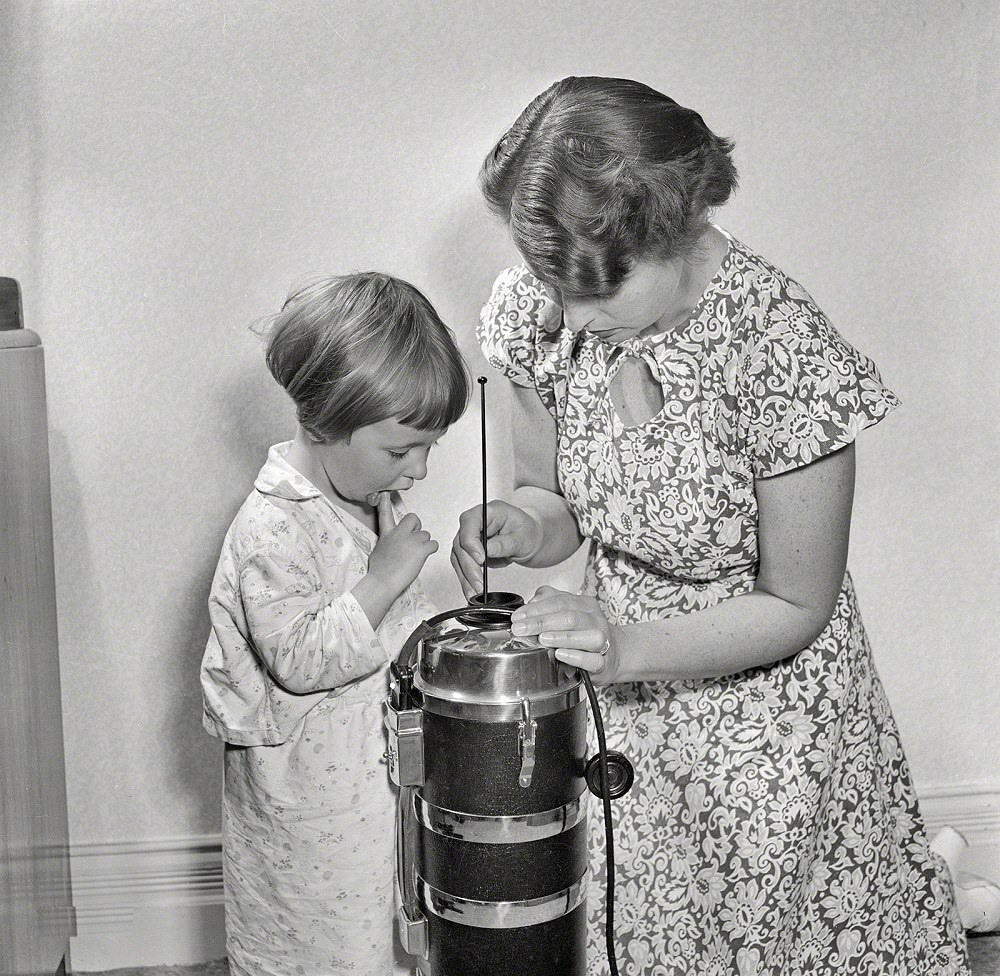
Wellington in 1951 produced two photographs with deliberately ambiguous or humorous captions. One reads ‘The Accident Lady is back. Have a nice trip!’ and the other is described as ‘a sentiment open to a number of interpretations.’ Both point to the dry, understated humour that ran through New Zealand public life — a culture that dealt with absurdity and misfortune with deadpan wit rather than alarm.
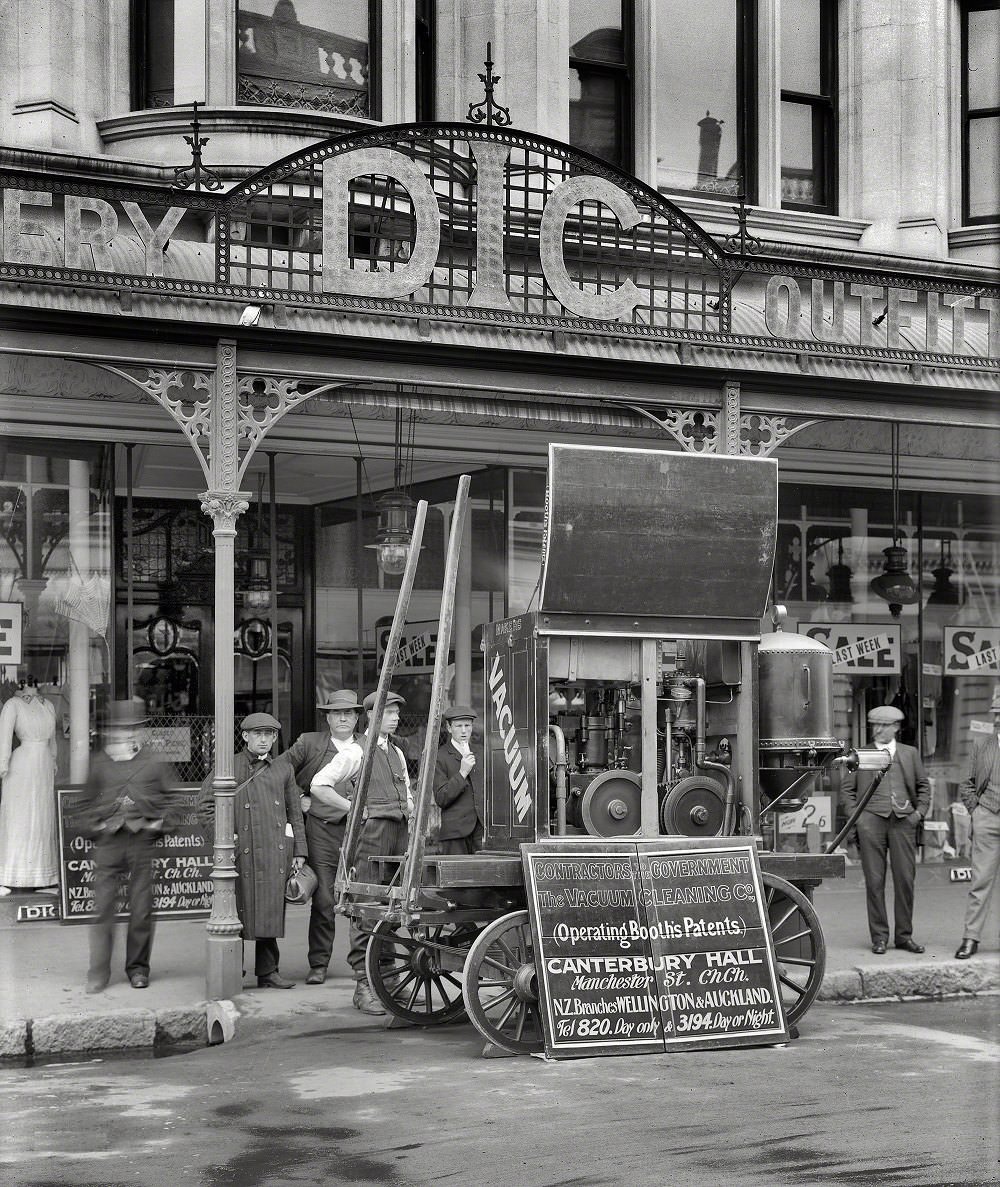
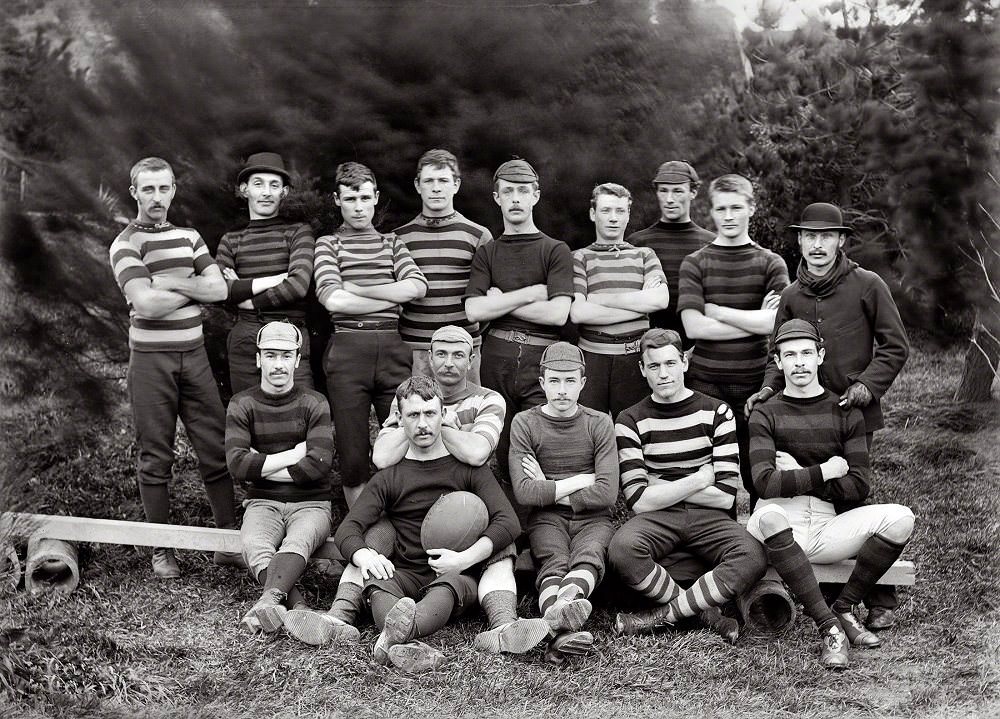
The DIC store in Christchurch was one of the city’s major department stores, and around 1910 it was demonstrating a Vacuum Cleaning Company machine — a novelty that drew customers with the promise of effortless housekeeping. Twenty years earlier, the Post and Telegraph Department’s football team in Wellington were photographed in their rugby kit in 1890, part of a long tradition of government departments and businesses forming sports teams as a way of building workplace identity.
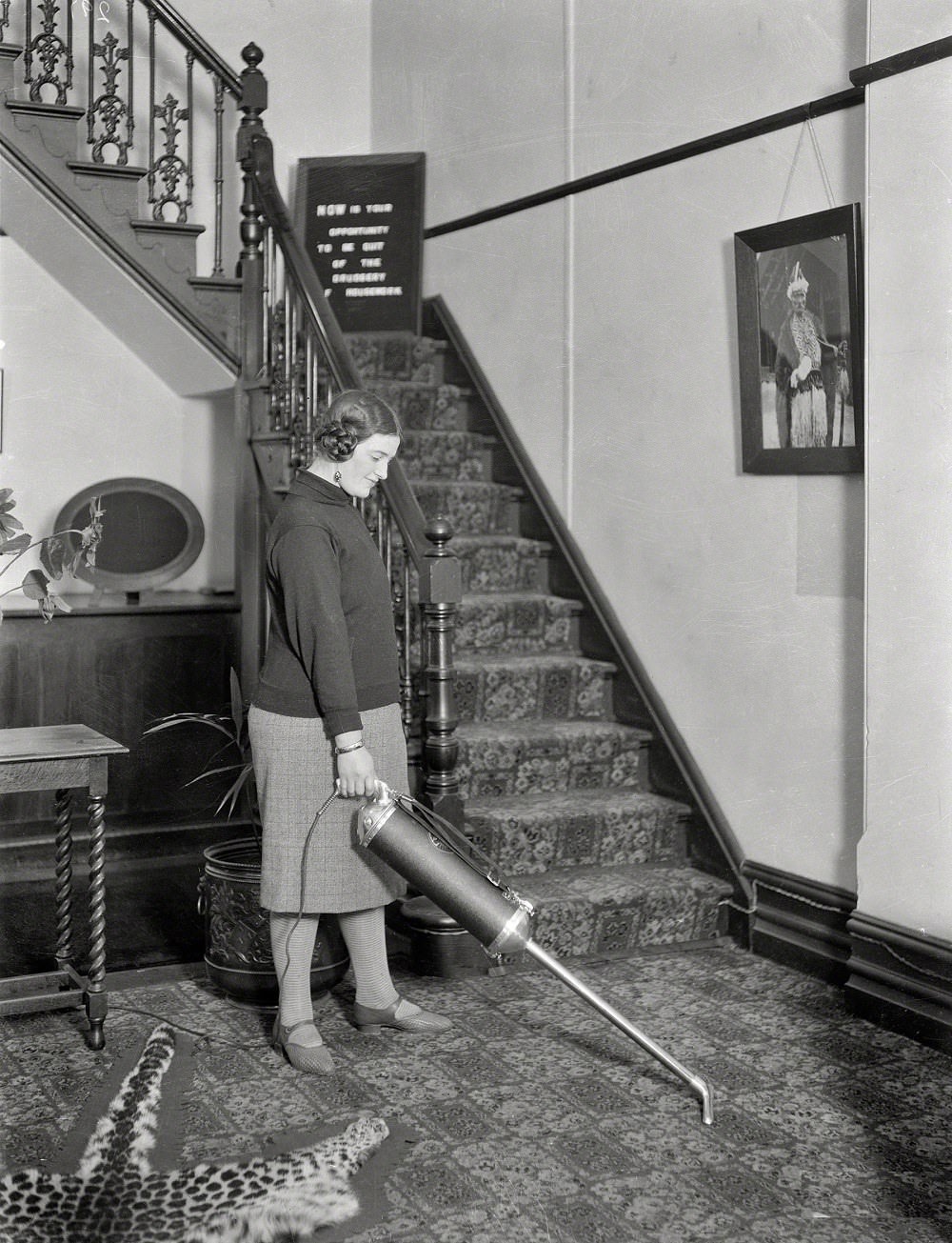
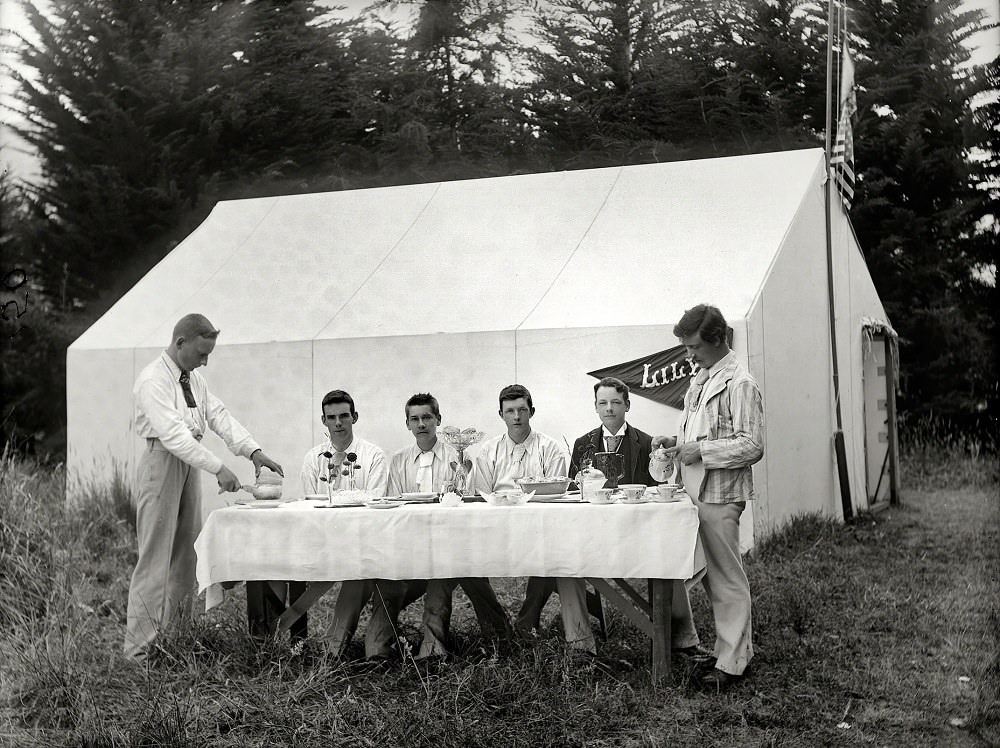
The vacuum cleaner appears as a recurring symbol of domestic modernisation in New Zealand’s photographic record — from the department store demonstration around 1910 to a Wellington woman using one in a hallway. At Sumner near Christchurch in 1910, young men set a full table for a meal beside their tent called ‘Lily,’ dressed in formal wear for the occasion. The contrast between these two images — modern technology in a hallway and a white-tablecloth dinner beside a canvas tent — captures the range of New Zealand life in the early 20th century.
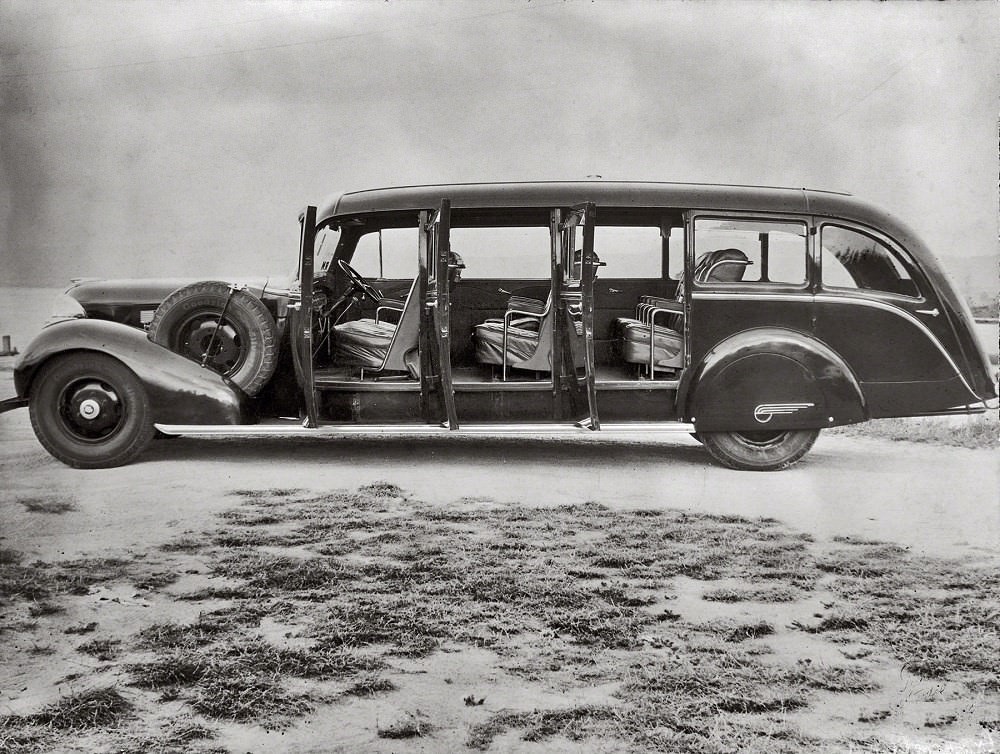
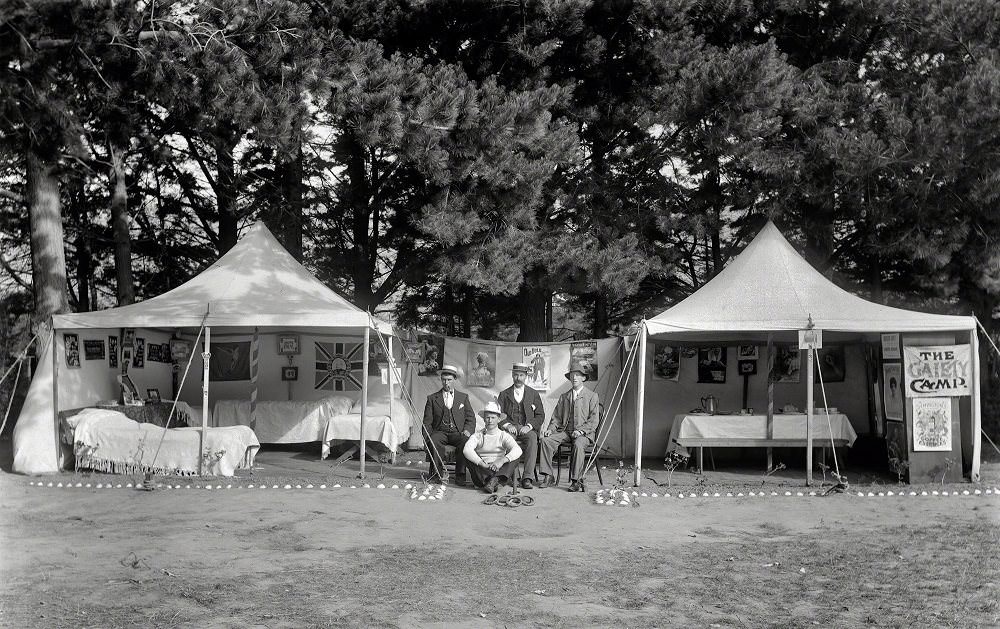
A Cadillac 353 V8 service car operated by Rotorua Motors in Wellington in 1938 shows how American luxury vehicles had become part of New Zealand’s commercial fleet by the late interwar period. The service car industry connected cities and tourist destinations across the country. That same year, the Depression that had gripped New Zealand since the early 1930s was finally easing, and businesses were gradually restoring confidence. The tented campsites of 1910, with their beds, pictures, and flags arranged between canvas walls, feel like a world from a completely different era.





The technical quality is great because they shot everything 8×10” and and in natural light, but by god, they knew their composition too.
This is insanely fascinating! Thanks for sharing.