

Naples is one of the oldest continuously inhabited cities in the world. Founded around 600 BCE by Greek settlers, it quickly grew into a thriving center of Greek culture. The city’s mild climate and coastal beauty made it a favored retreat for Roman emperors and wealthy citizens for centuries. It sat at the crossroads of Greek and Roman civilization, blending both cultures in ways that shaped its identity for generations.
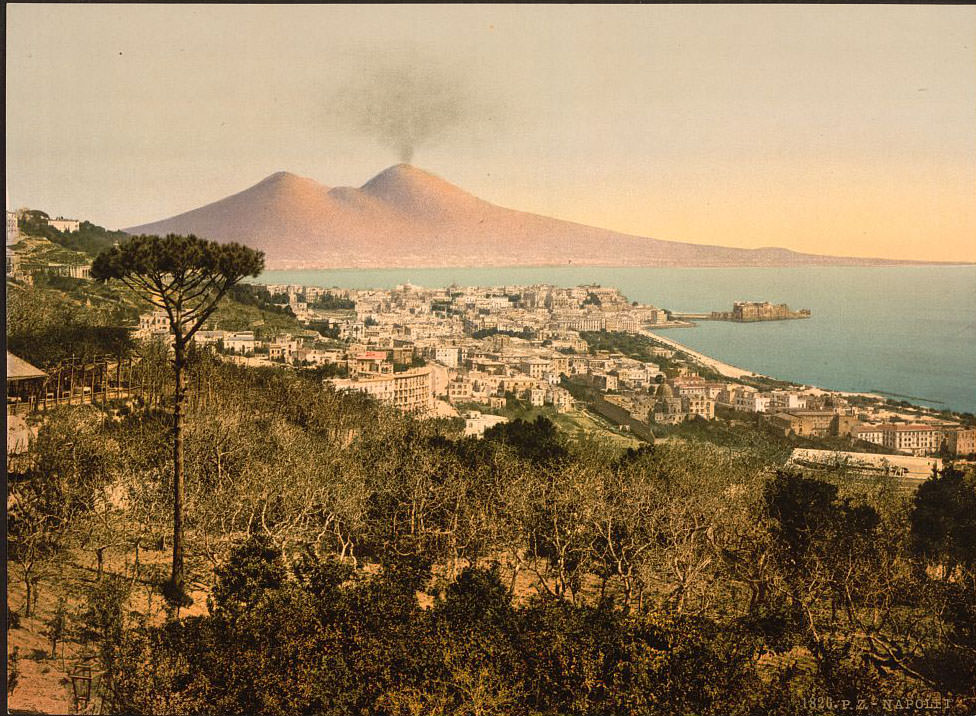
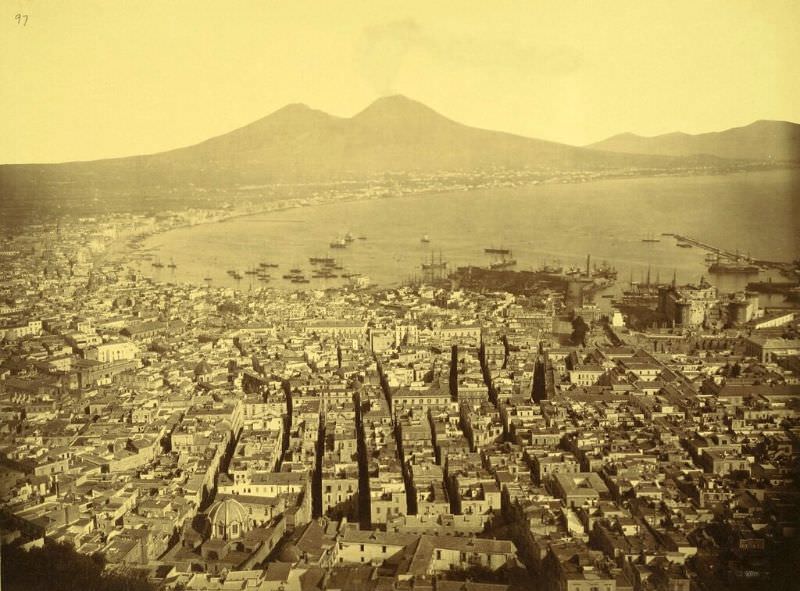
The view from Mount Vesuvius captures just how dramatically Naples was positioned — a dense urban sprawl pressed against the Bay of Naples, with the volcano looming over it all. The city’s geography was both a gift and a threat. Vesuvius had already destroyed Pompeii and Herculaneum in 79 CE, yet Naples continued to grow in its shadow, century after century.
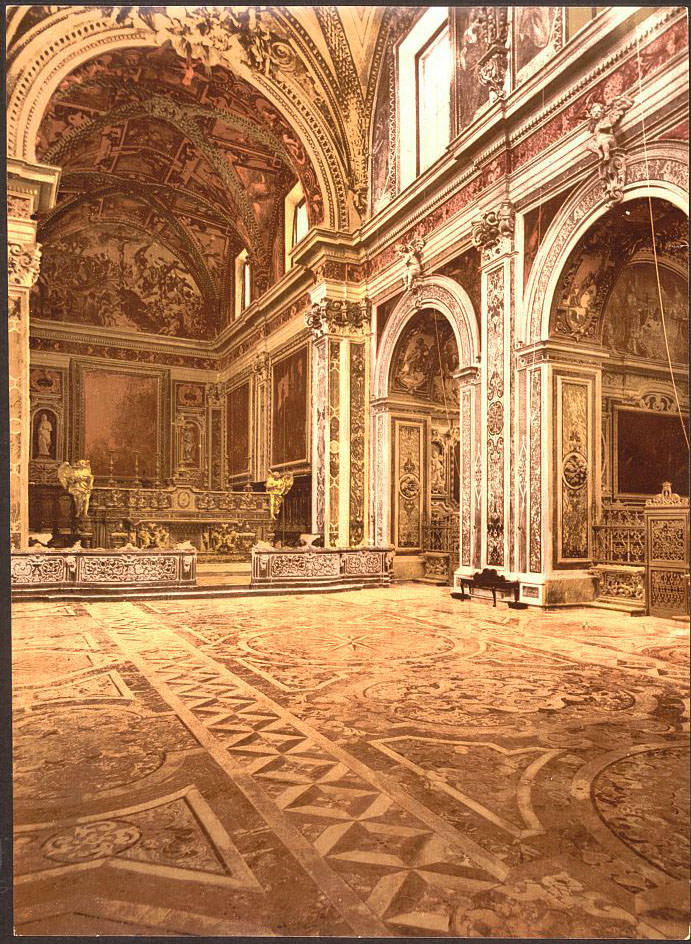
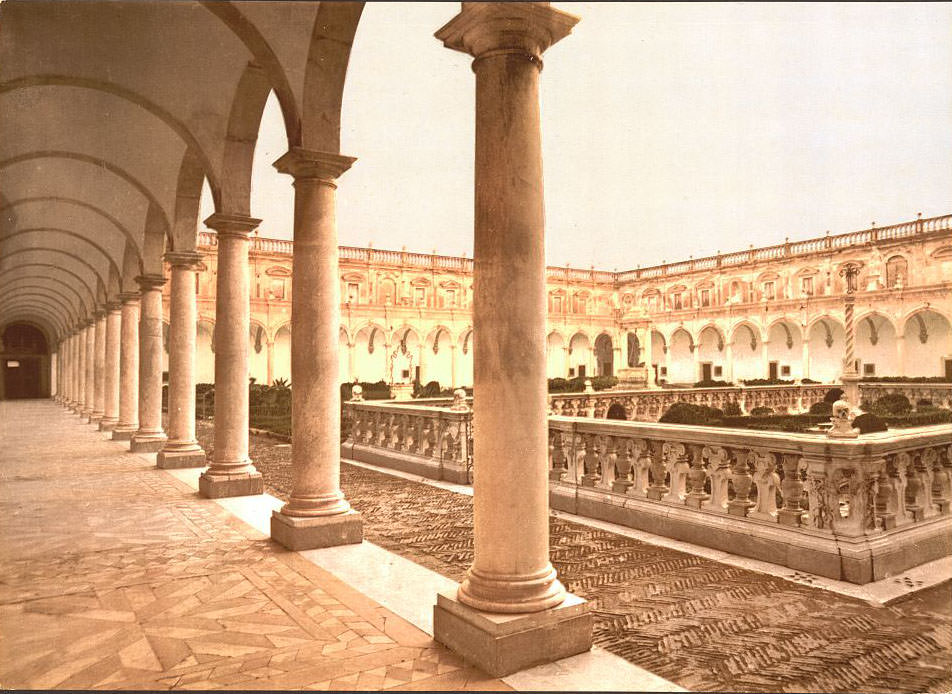
The Certosa di San Martino, a grand Carthusian monastery perched on the Vomero hill, was one of Naples’ most commanding landmarks. Its church and convent overlooked the entire city and bay. The burying ground attached to the convent was a solemn reminder of just how central religious institutions were to Neapolitan life — both in living and in death.
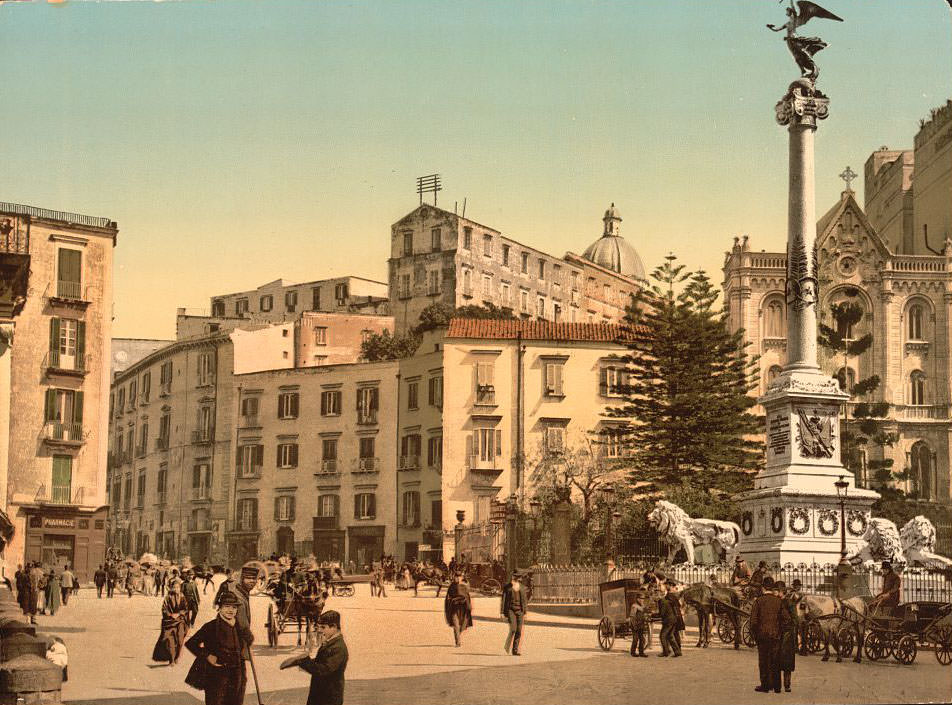
By 1861, Naples had become part of the newly unified Kingdom of Italy. The unification brought significant political change, but for most ordinary residents, daily life remained hard. Poverty was widespread, and public infrastructure struggled to keep up with a growing and densely packed population. The Piazza dei Martiri, named in honor of those who died in the revolutionary uprisings, stood as a quiet monument to a turbulent political past.
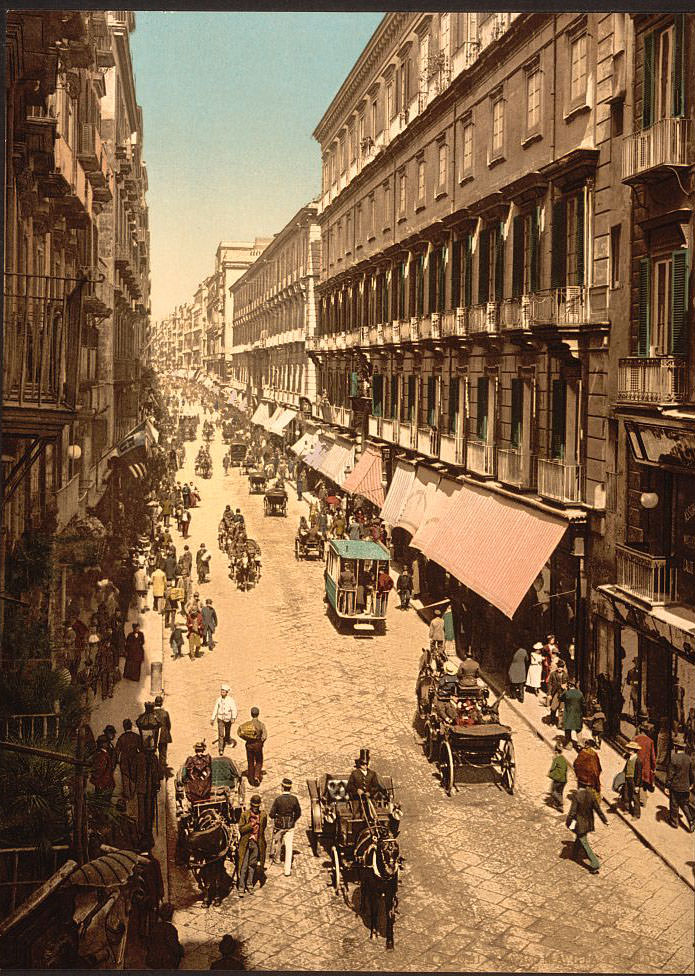
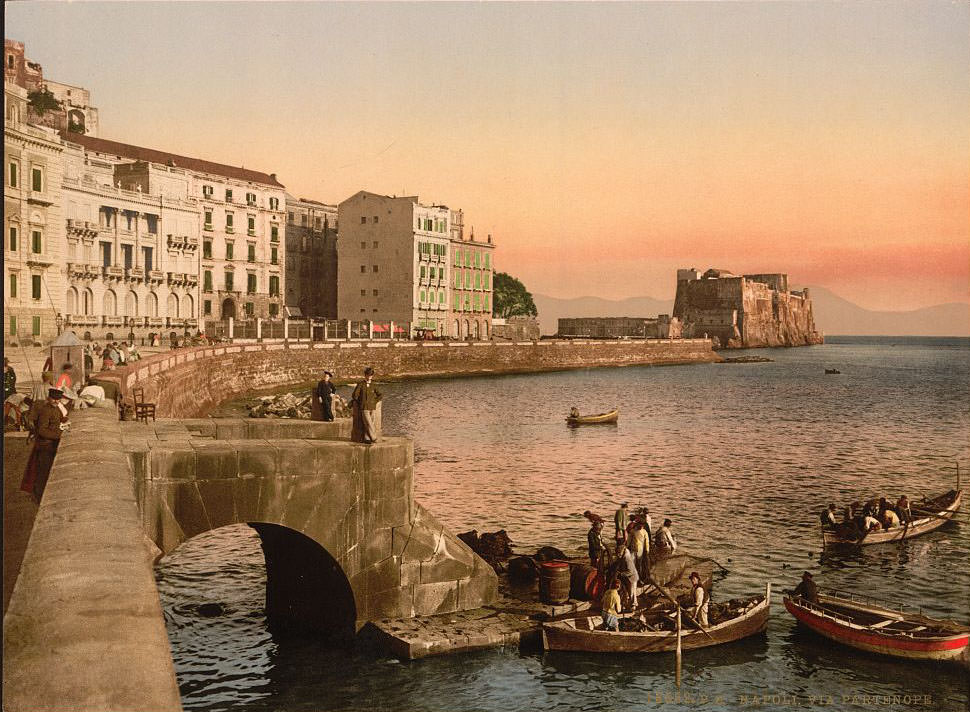
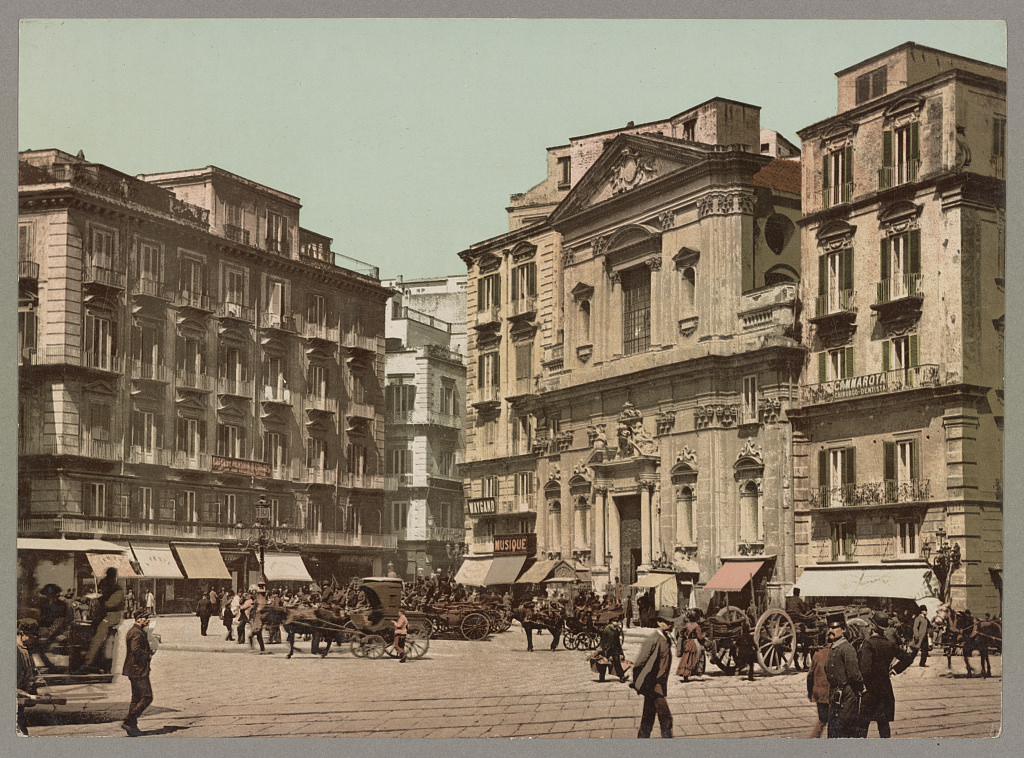
Via Roma was the main commercial artery of the city, lined with shops, carriages, and pedestrians. Named after the capital of the new unified nation, the street reflected Naples’ ambitions to modernize. Partenope Street, running along the seafront, offered a very different kind of scene — quieter, more residential, with views across the bay.
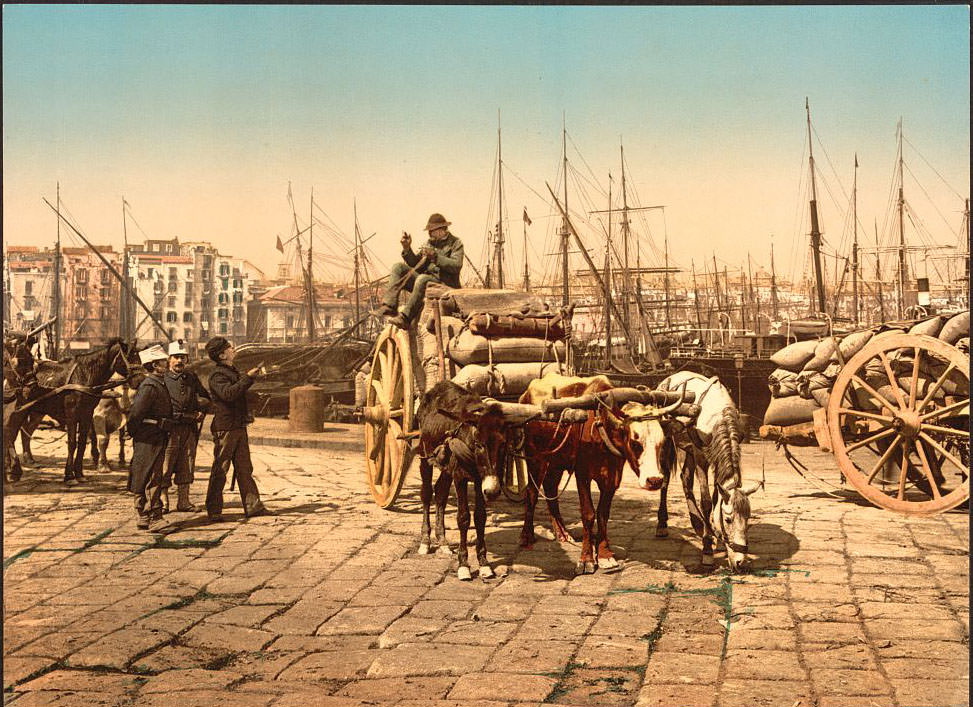
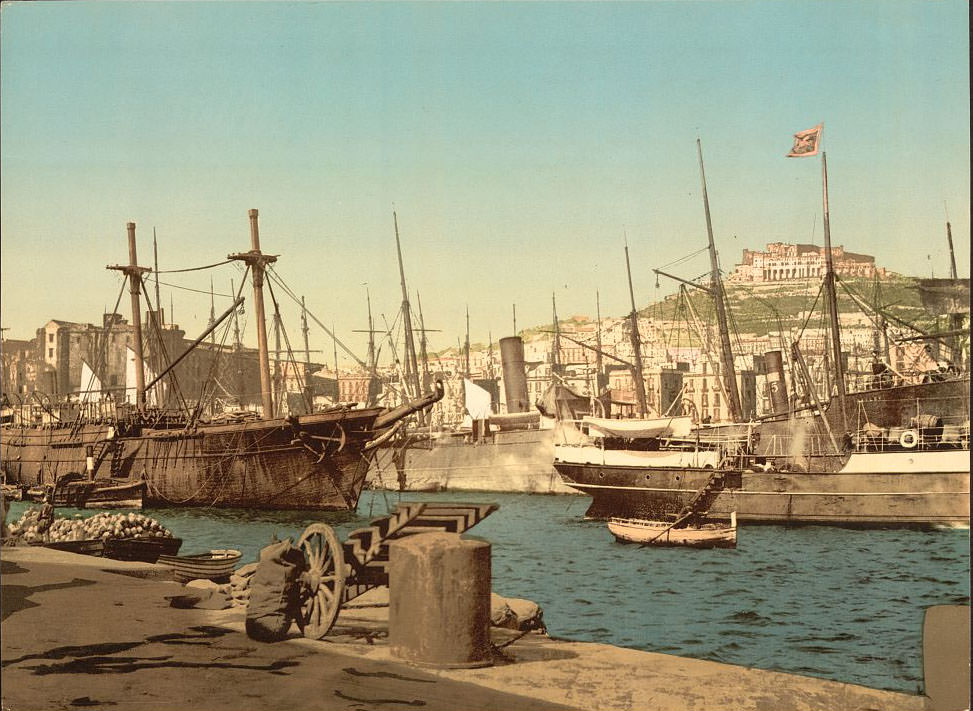
The port of Naples was the economic engine of the city. Goods, passengers, and emigrants passed through its wharves constantly. After unification, emigration surged dramatically. Millions of people left Naples and the surrounding region, driven out by poverty, unemployment, and disease. Many boarded ships at this very waterfront, heading to the Americas or northern Europe in search of better lives.
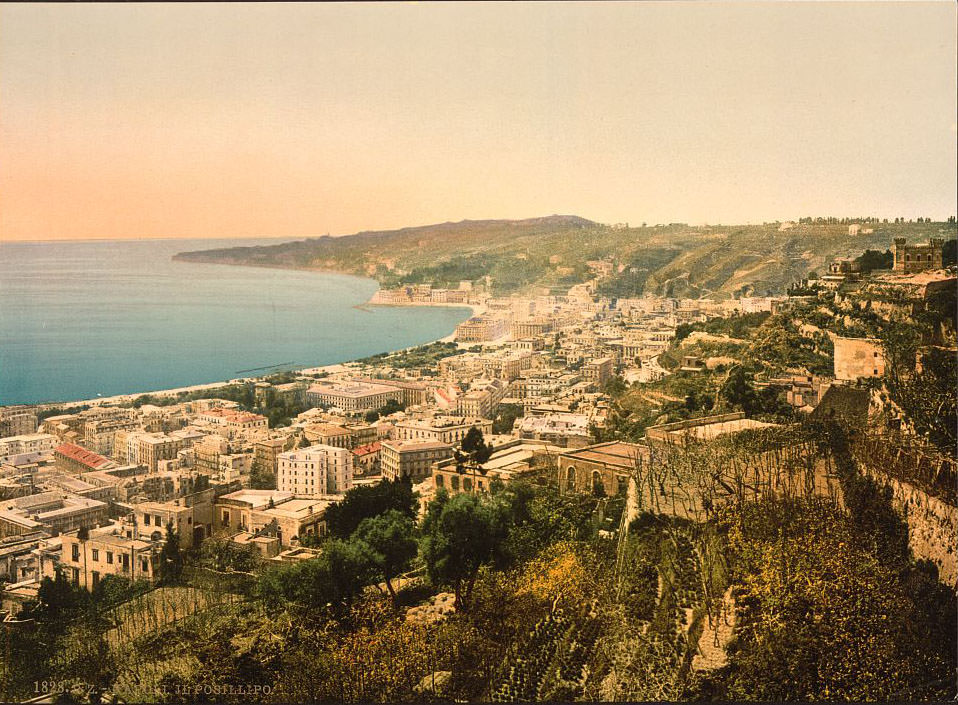
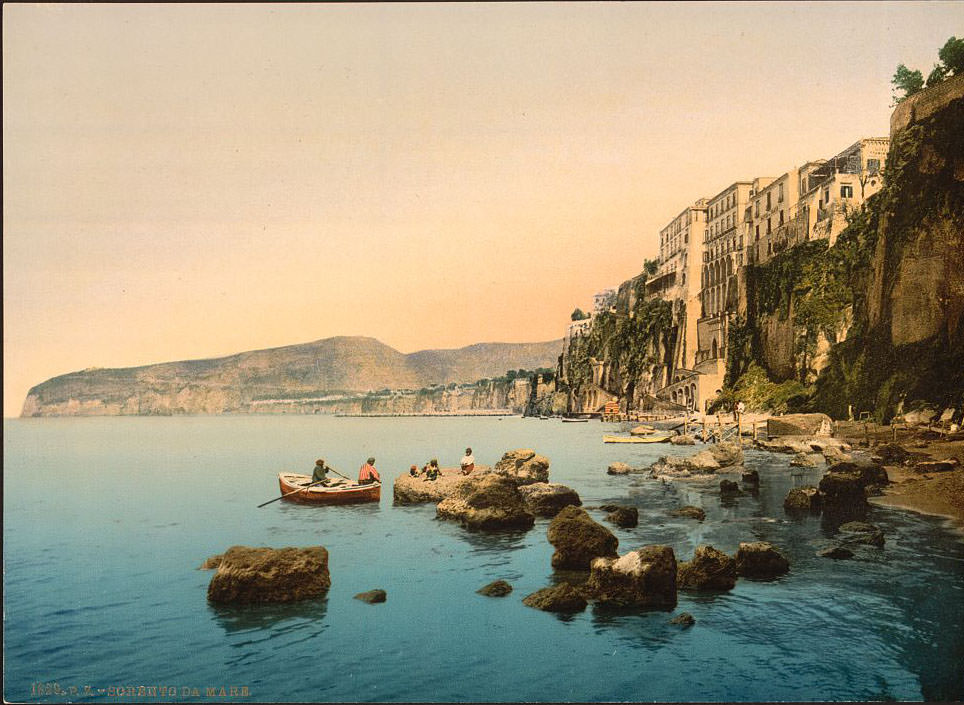
The Posillipo headland and the Sorrento coast represented a Naples that stood in stark contrast to the crowded slums of the city center. These coastal areas attracted the wealthy and the well-traveled. Villas clung to cliffsides above the blue water, and the scenery drew tourists from across Europe throughout the 19th century.
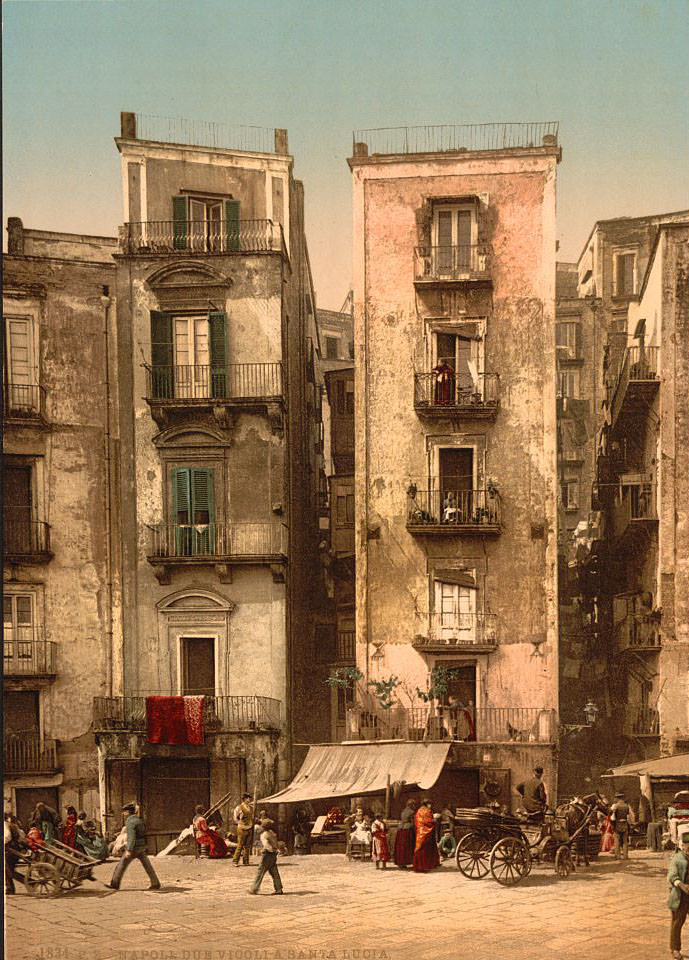
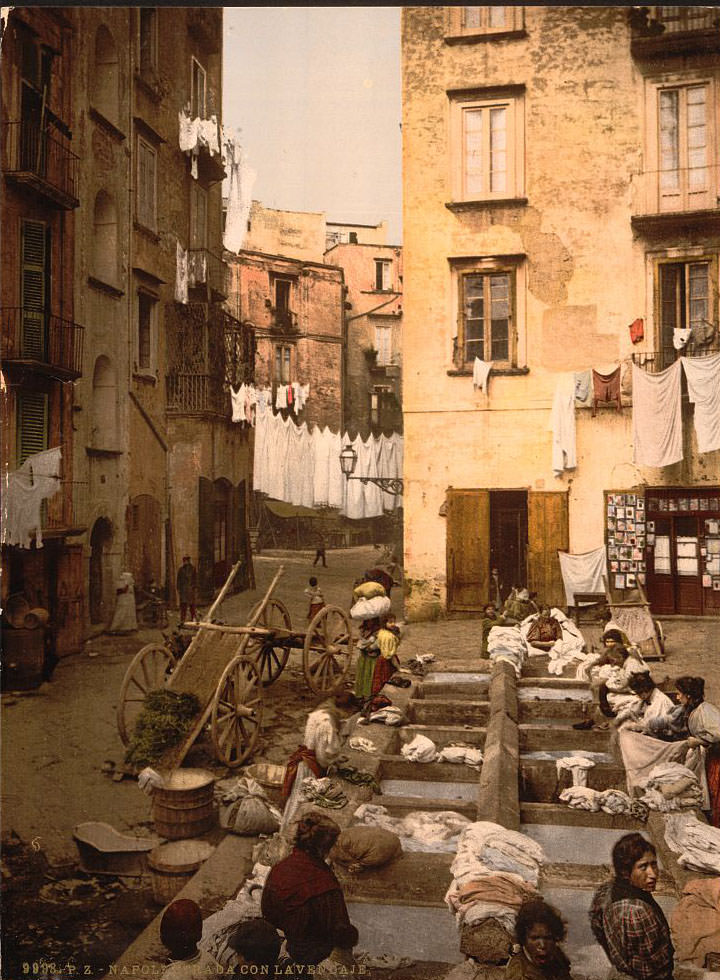
The narrow streets of Naples — known locally as the ‘bassi’ neighborhoods — were dense, dark, and overcrowded. Laundry hung between buildings, blocking out the sunlight. Washerwomen worked in the streets, as most residents had no running water indoors. These conditions made the spread of disease almost impossible to contain. Between 1834 and 1884, Naples suffered twelve outbreaks of cholera and typhoid fever, killing more than 48,000 people in just fifty years.

Street food was a fundamental part of Neapolitan life. Vendors sold macaroni directly from carts in the open air, and locals ate standing up in the streets. Pasta was cheap, filling, and widely available — a staple for the working poor. Naples was, in fact, one of the birthplaces of the pasta-eating culture that would later become synonymous with all of Italy.
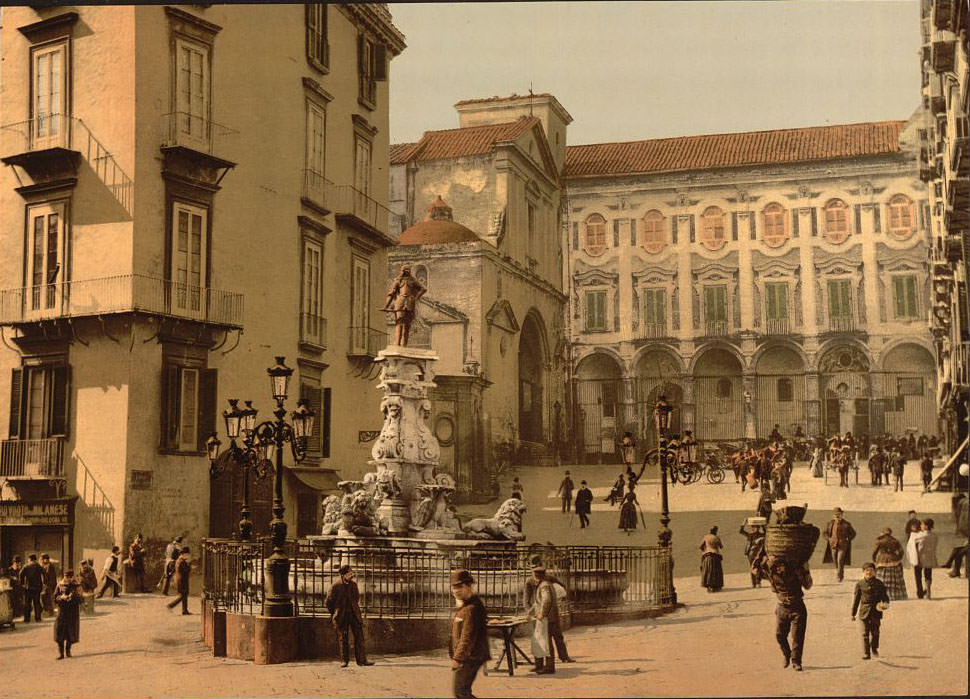
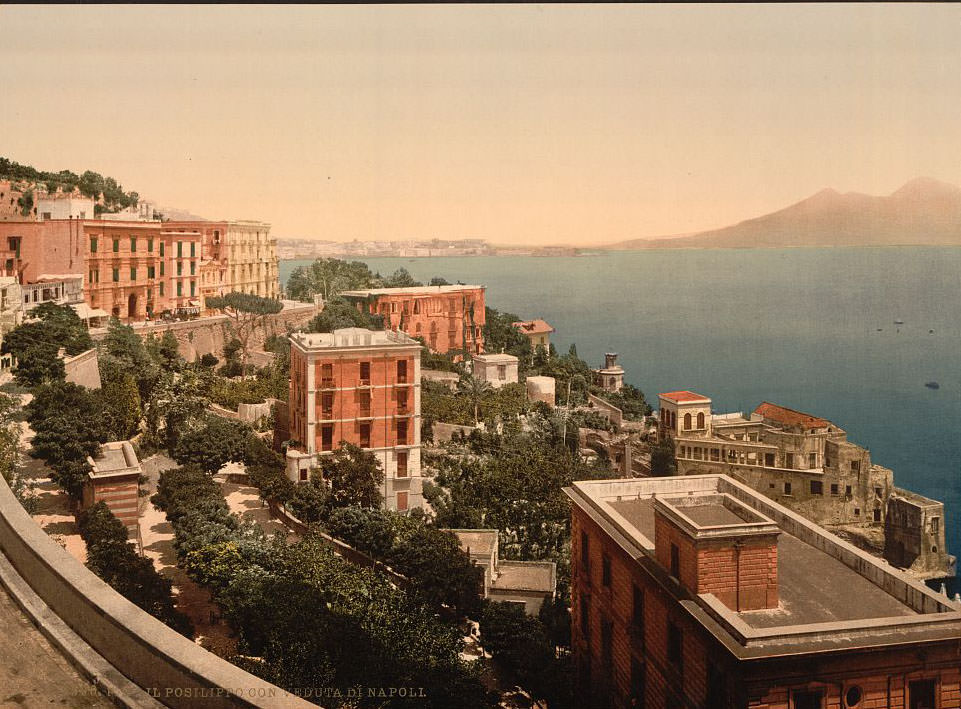
The small piazzas scattered throughout the city served as gathering places for residents of every class. Monteoliveto was one such square, surrounded by historic churches and civic buildings. Meanwhile, the Posillipo waterfront stretched along the western bay, offering a scenic escape just outside the city’s most congested districts.
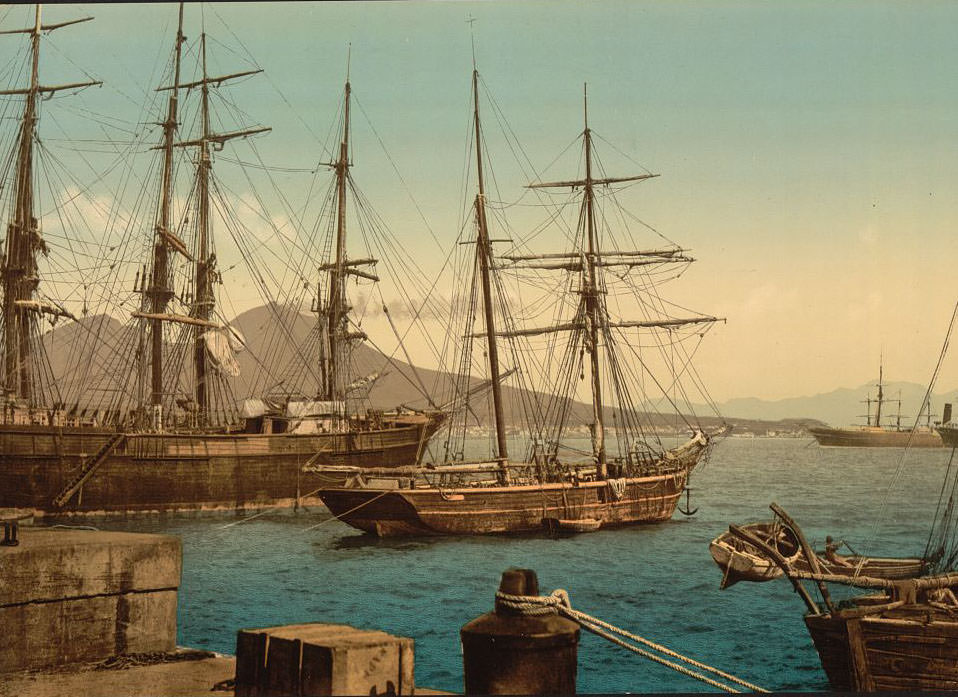
The harbor teemed with activity throughout the 19th century. Sailing ships and early steamships crowded the docks, loading and unloading cargo from across the Mediterranean. Naples was a major southern European port, connecting Italy to North Africa, the Middle East, and beyond. The harbor was also the departure point for the flood of emigrants leaving southern Italy during the late 1800s.
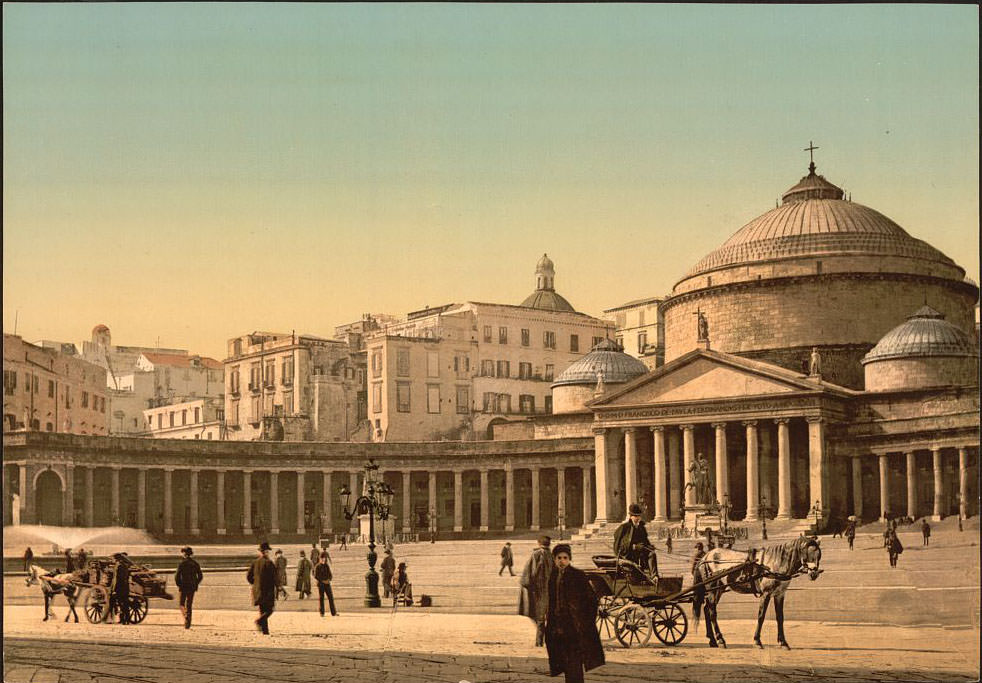
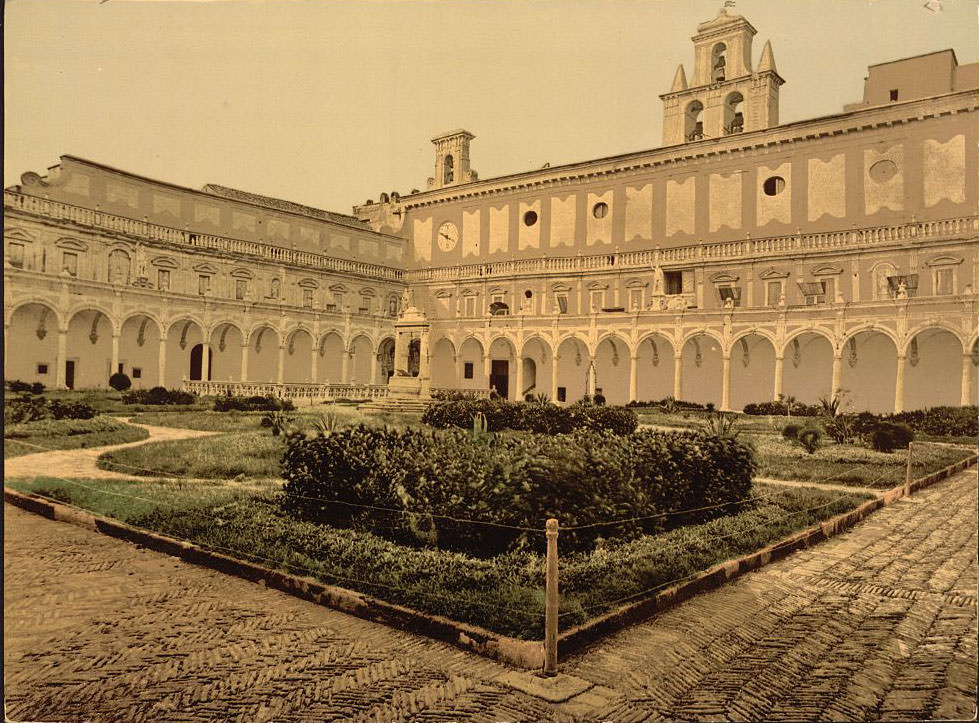
The Piazza del Plebiscito, dominated by the neoclassical church of San Francesco di Paola, was one of the grandest public spaces in southern Italy. Built in the early 19th century, it was modeled loosely on the Pantheon in Rome. Behind the grand facades, however, lay crowded courtyards where multiple families shared small apartments and limited sanitation.
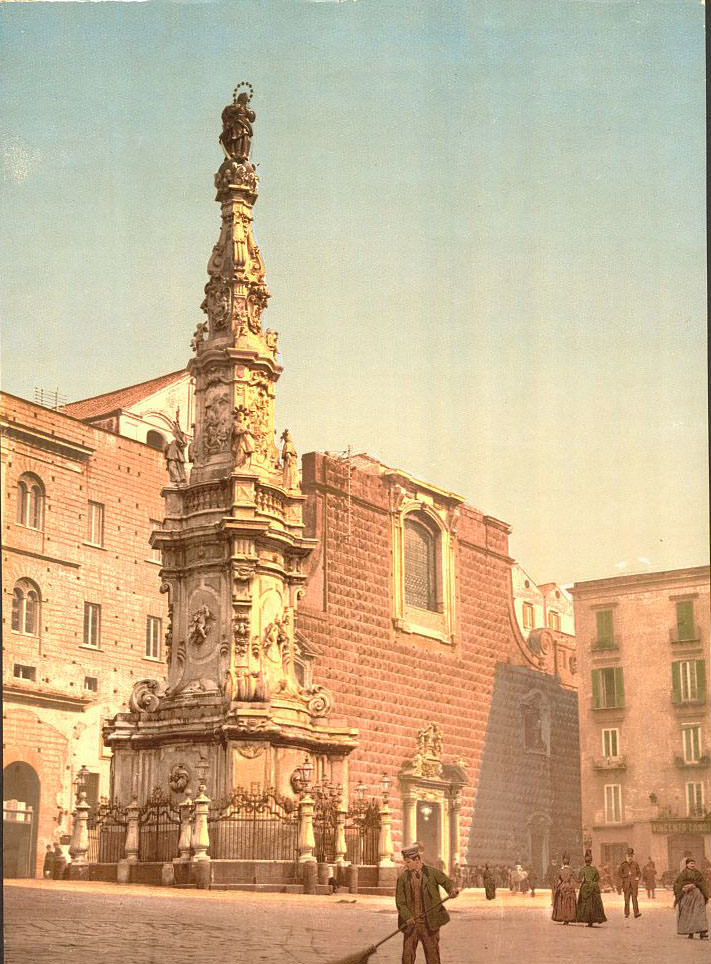
The Column of the Virgin in Piazza Trinità Maggiore was a deeply symbolic monument in the heart of Naples. Religious devotion was woven into the fabric of everyday life for most Neapolitans. Churches, shrines, and processions were constant features of the city’s streets, providing community and comfort in a place where poverty and disease were ever-present realities.
The 1884 cholera epidemic proved to be a turning point. The outbreak was catastrophic, spreading rapidly through the city’s inadequate sewage system. The Italian government could no longer ignore the state of Naples’ infrastructure. In the years that followed, major urban renewal projects were launched — new roads were cut through the oldest and most overcrowded neighborhoods, a modern sewer system was installed, and large sections of the city were rebuilt from the ground up.
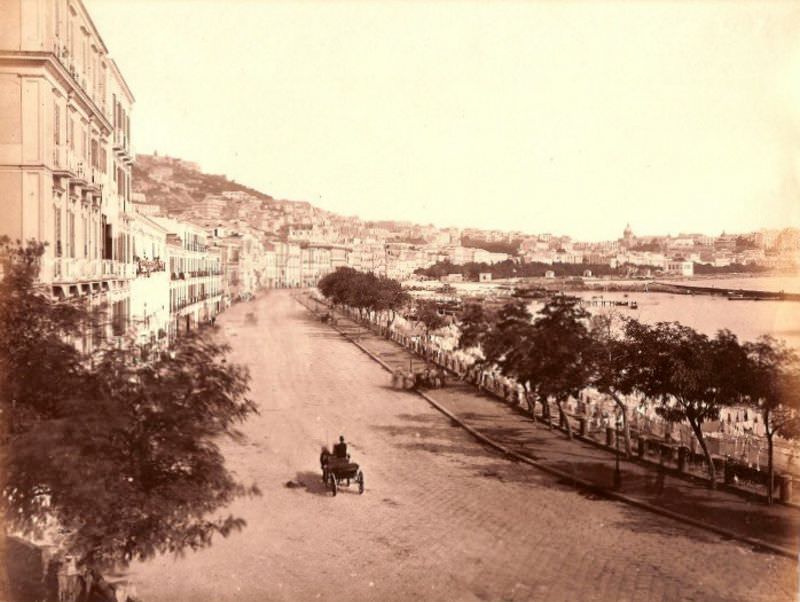
These photographs from 1865 show Naples just four years after unification. The Riviera di Chiaia, a fashionable promenade along the bay, was already a popular spot for the city’s upper classes. Yet just a short walk inland, conditions were vastly different. The gap between Naples’ elegant boulevards and its poorest slums was visible and stark.
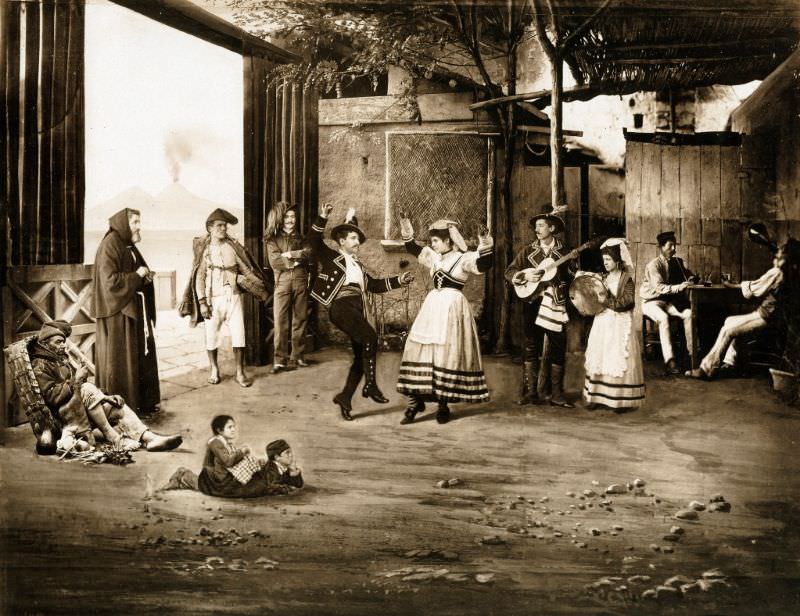
Despite poverty and disease, Neapolitan street culture was vivid and expressive. The tarantella — a fast-paced, energetic folk dance — was performed at festivals, weddings, and spontaneous gatherings throughout the city. By 1875, when this photograph was taken, the tarantella had already become closely associated with Neapolitan identity both inside Italy and abroad.
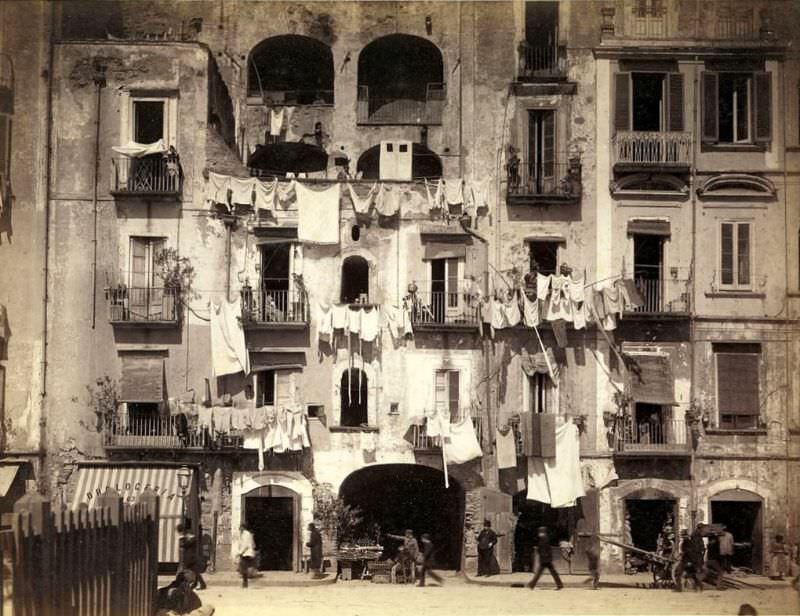
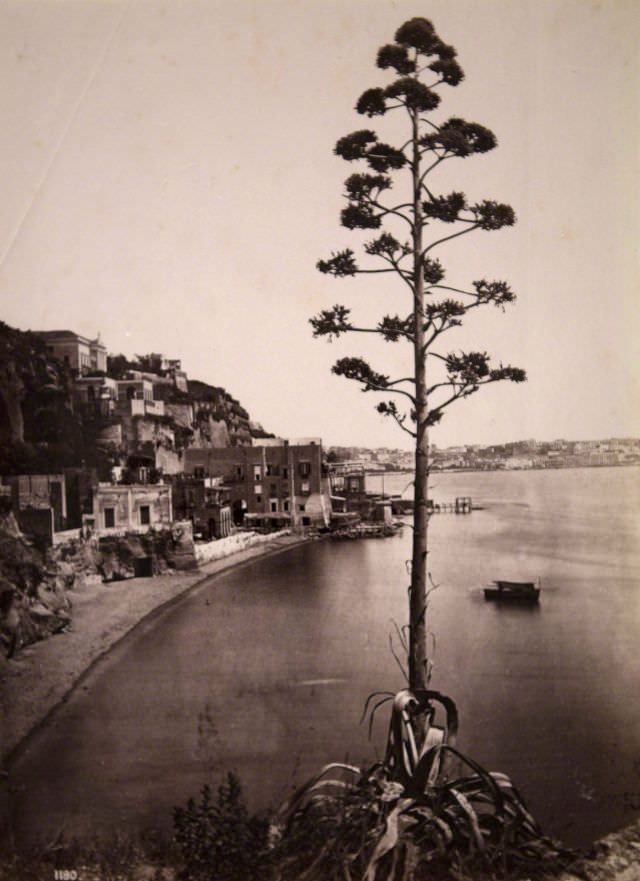
The Santa Lucia neighborhood, built along the waterfront, was one of the most photographed areas of 19th-century Naples. Its facades, packed tightly together above the fishing boats, became iconic images of the city. By 1880, Naples had a population pushing toward half a million people, making it one of the largest cities in Europe at the time.
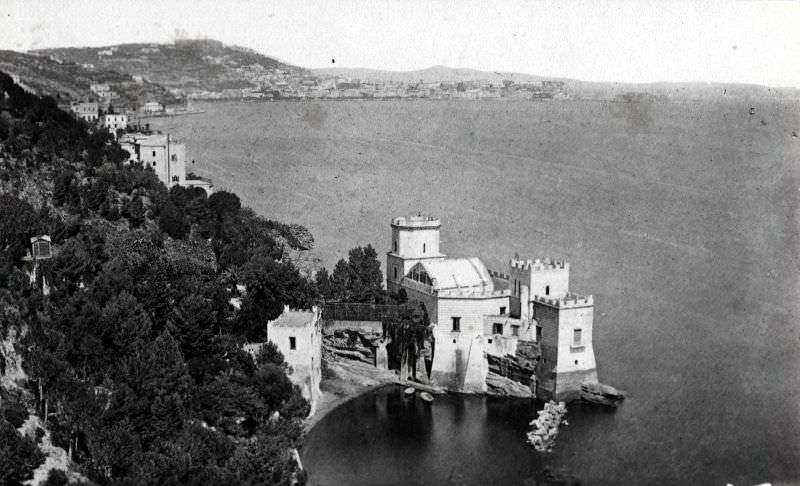
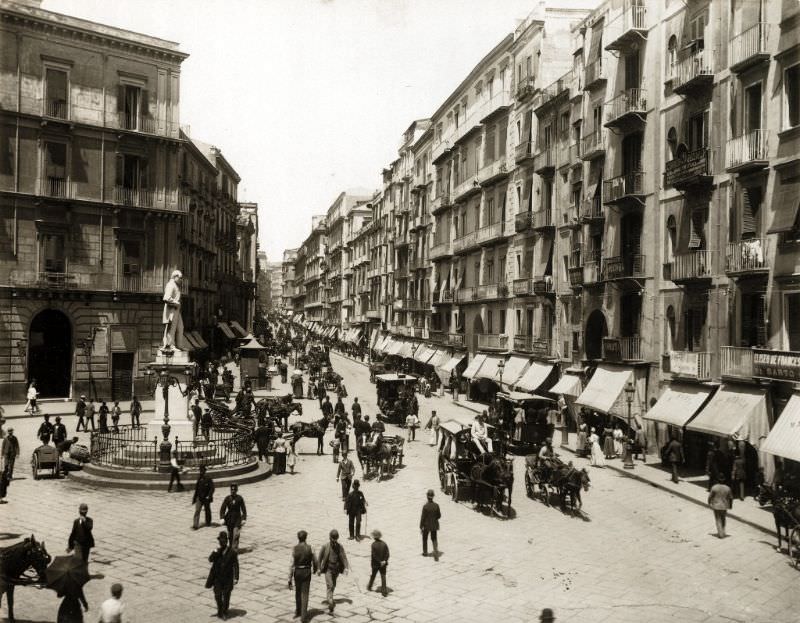
Via Roma in 1880 shows a city already beginning to modernize its main thoroughfares, with wider pavements and a growing number of carriages moving through the streets. Posillipo remained quieter and more residential, a stretch of coastline that offered relief from the noise and congestion of the city center.
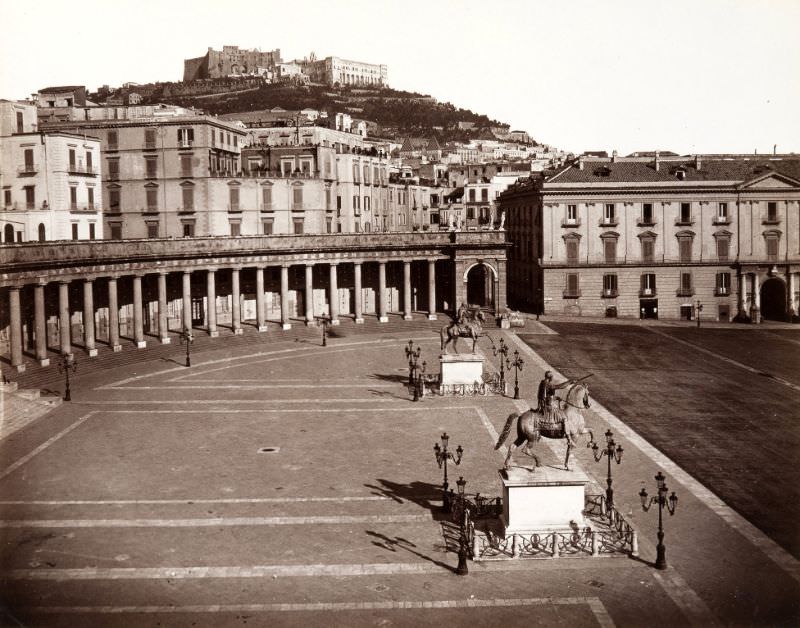
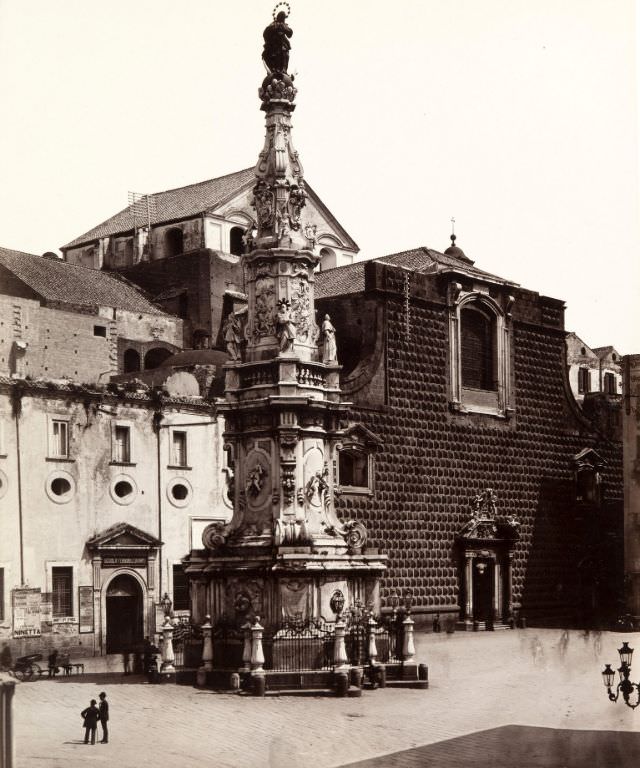
By 1888, the pressure on the Italian government to reshape Naples was at its peak. The 1884 cholera outbreak had killed thousands and exposed just how broken the city’s sanitation systems were. These photographs, taken just a few years after that epidemic, capture Naples at a pivotal moment — still largely unchanged in its layout, but on the brink of sweeping reconstruction.
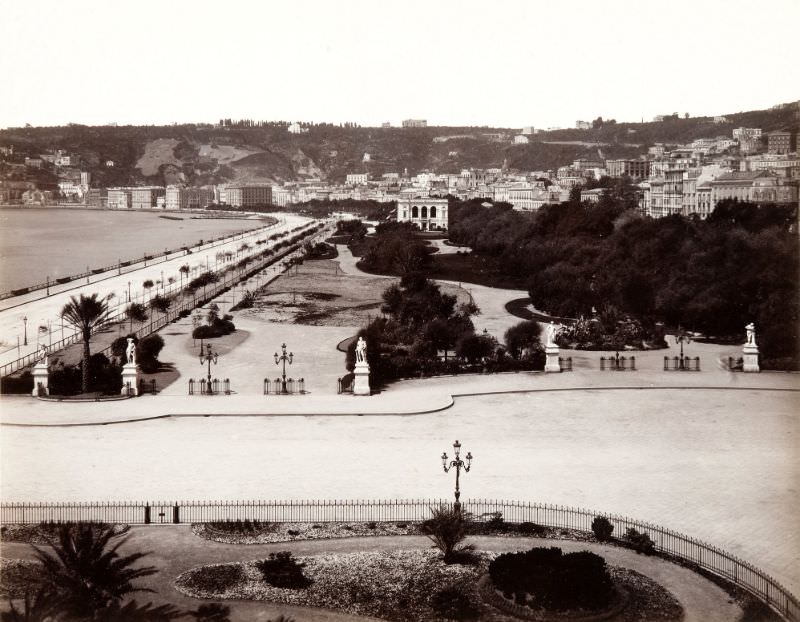
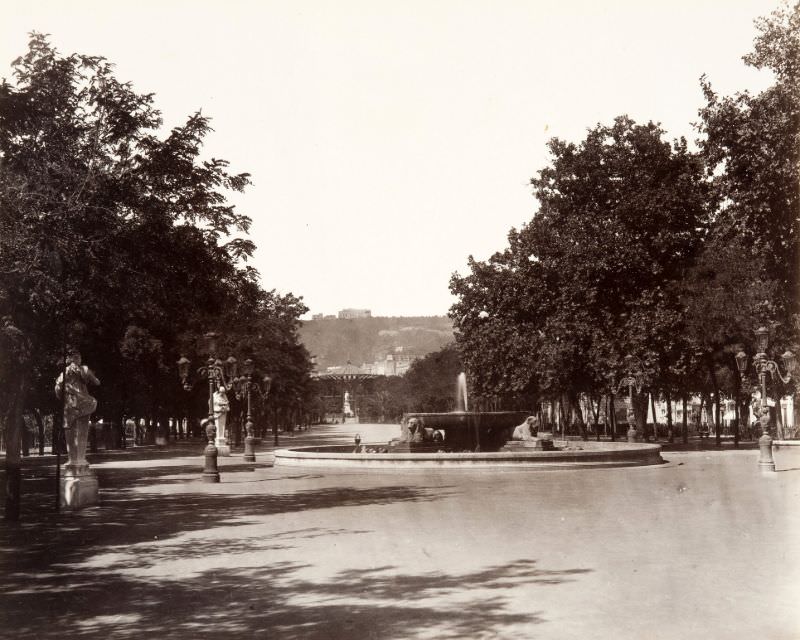
The Villa Nazionale — also known as the Villa Comunale — was a public garden stretching along the seafront between Chiaia and Posillipo. Laid out in the 18th century, it offered one of the few green public spaces in the city. By the late 1880s, it had become a popular gathering place for residents of all classes, a rare shared space in a city deeply divided by wealth and poverty.
