By the time the 1960s arrived, Paris had put the worst of World War II behind it. The city was entering a decade of real change — politically charged, culturally alive, and physically transforming. Streets that had once been quiet with postwar exhaustion were filling up again with movement, fashion, and ideas. These photographs capture that exact moment, when Paris was both honoring its past and racing toward something new.
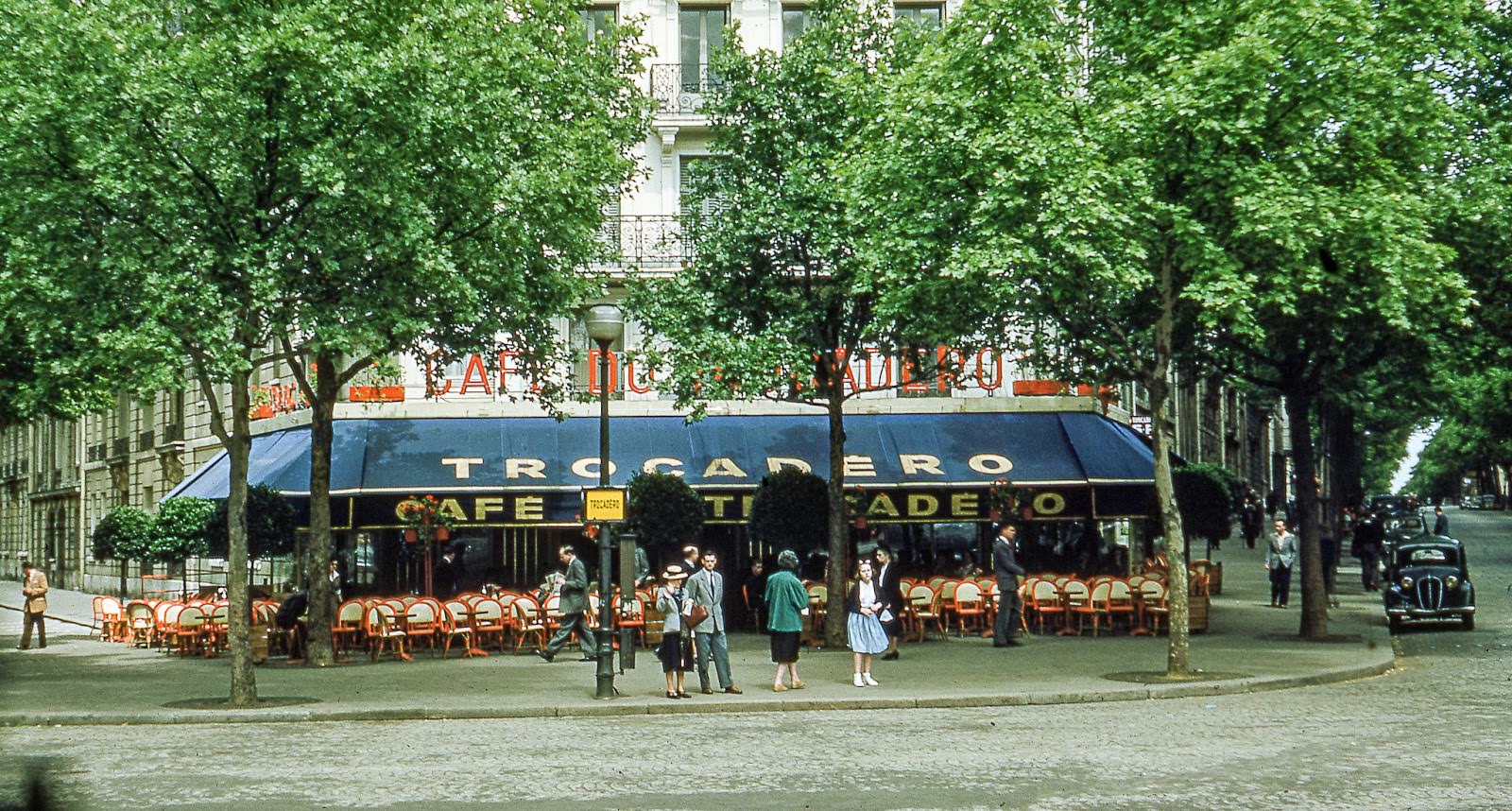
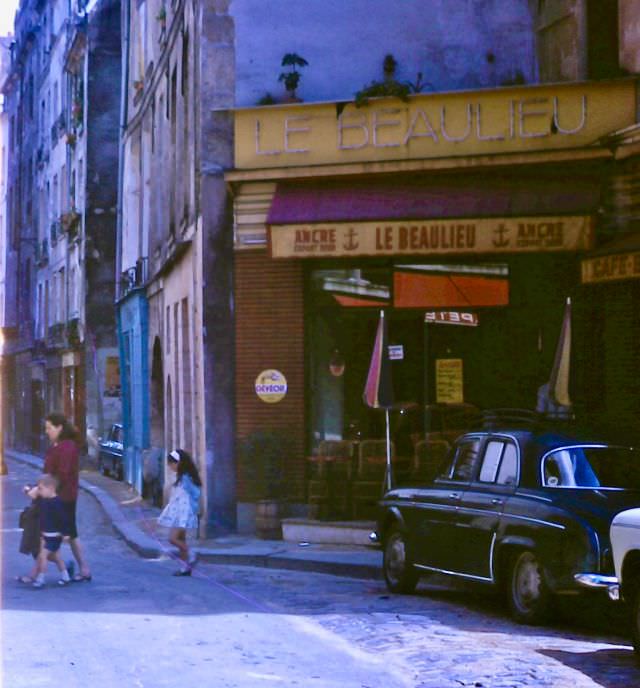
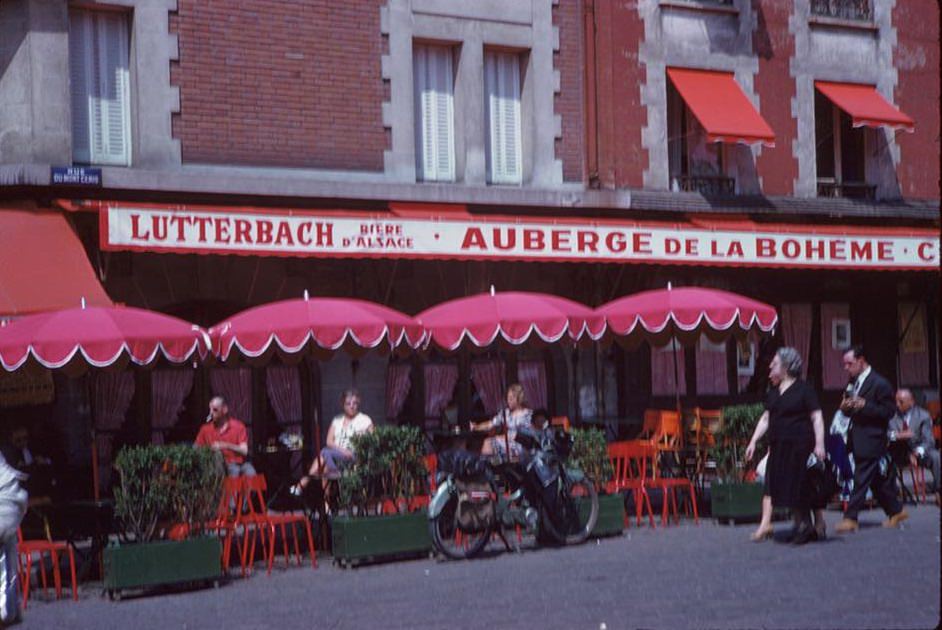
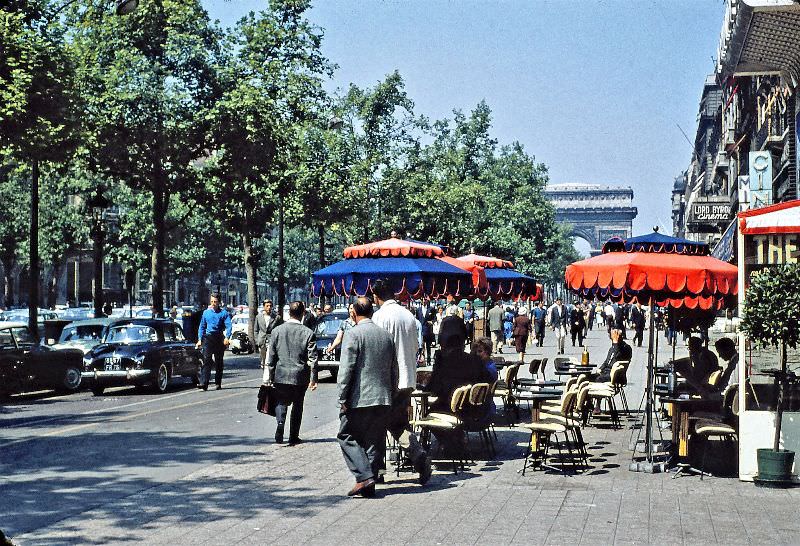
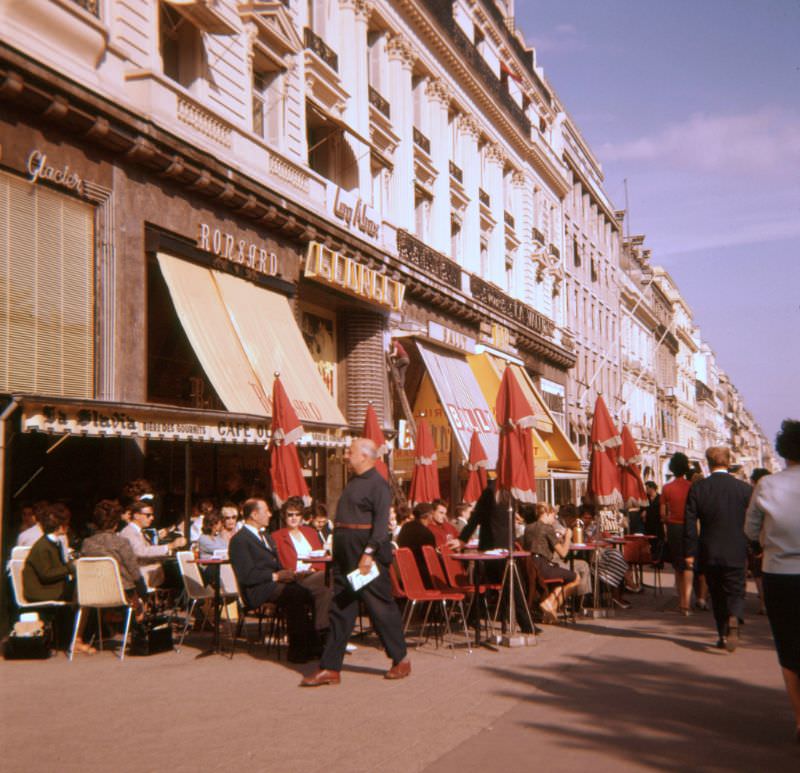
The café was the heartbeat of Parisian daily life. Locals gathered at sidewalk tables to read, argue, and watch the world pass by. The Café du Trocadéro, like dozens of others scattered across the city’s arrondissements, was a place where workers, students, and artists shared the same small tables. This culture of public conversation would become especially important as the decade wore on and political tensions began to rise.
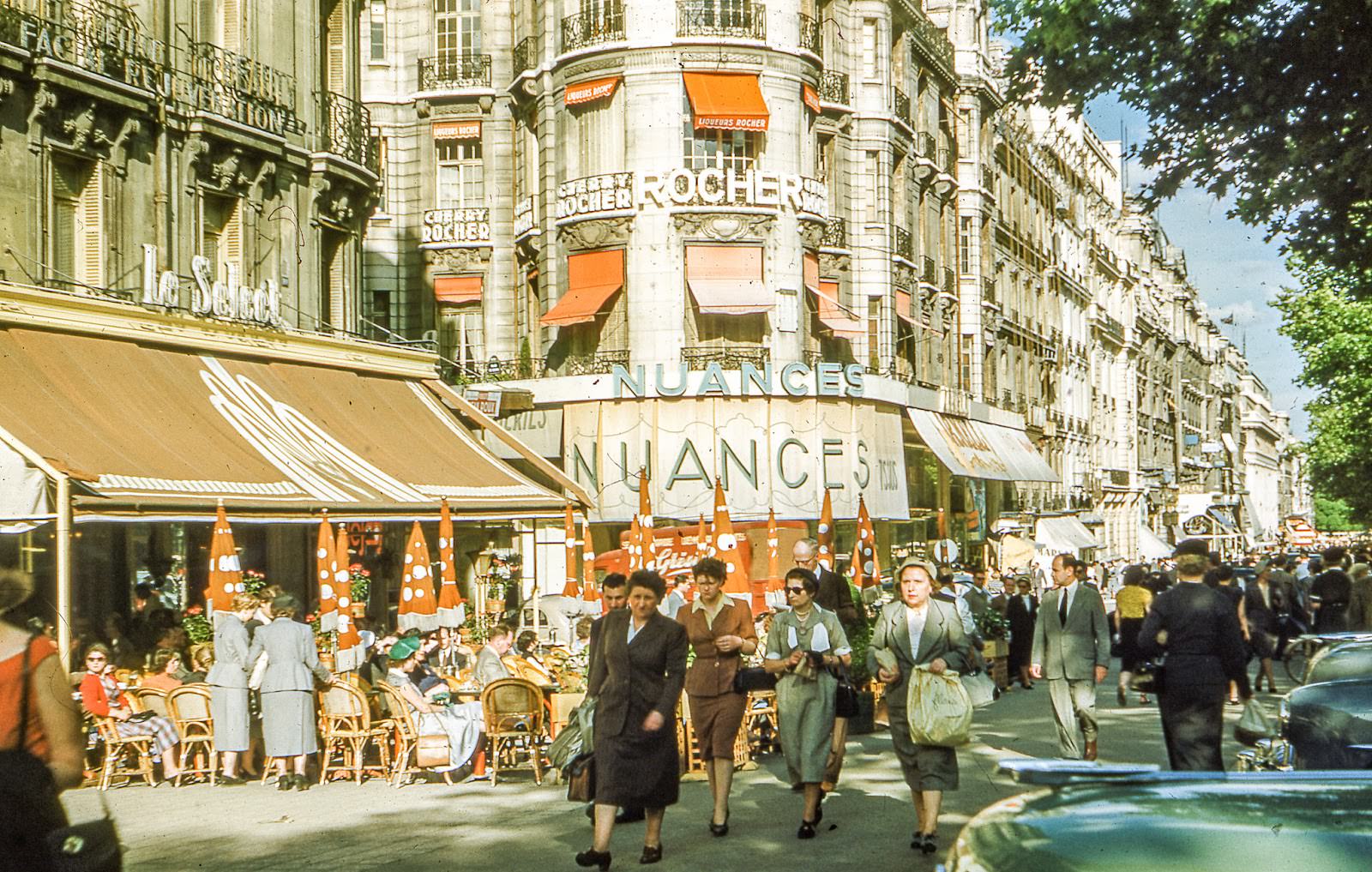
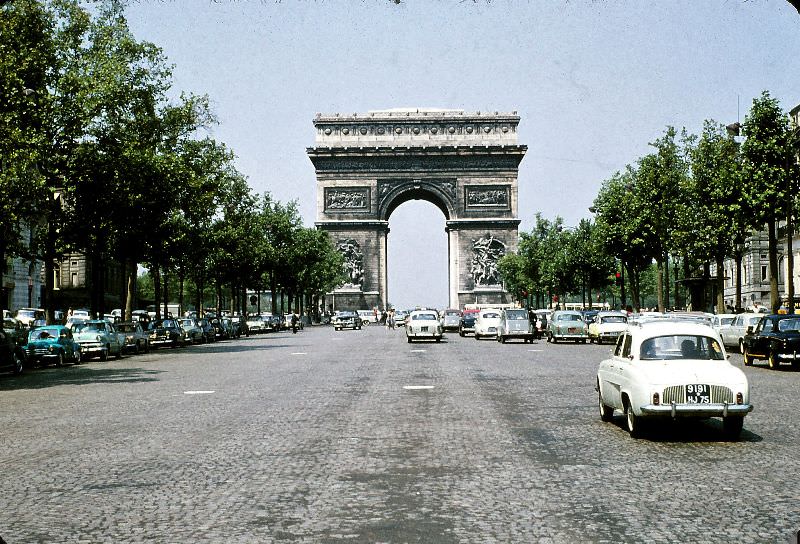
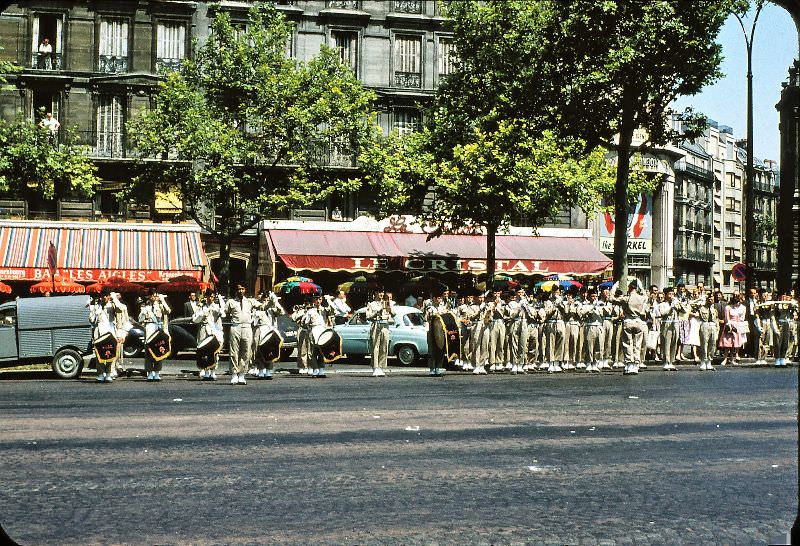
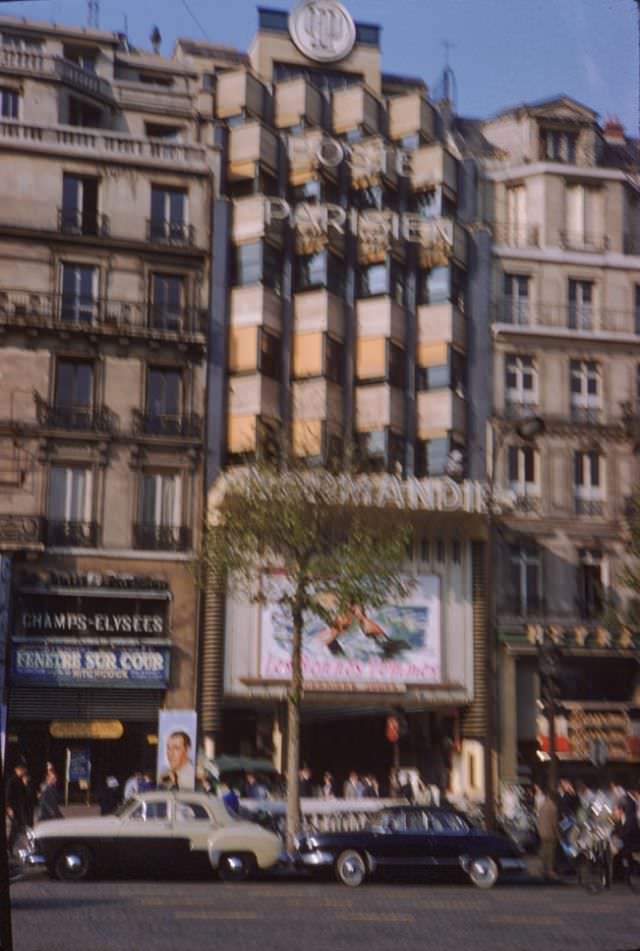
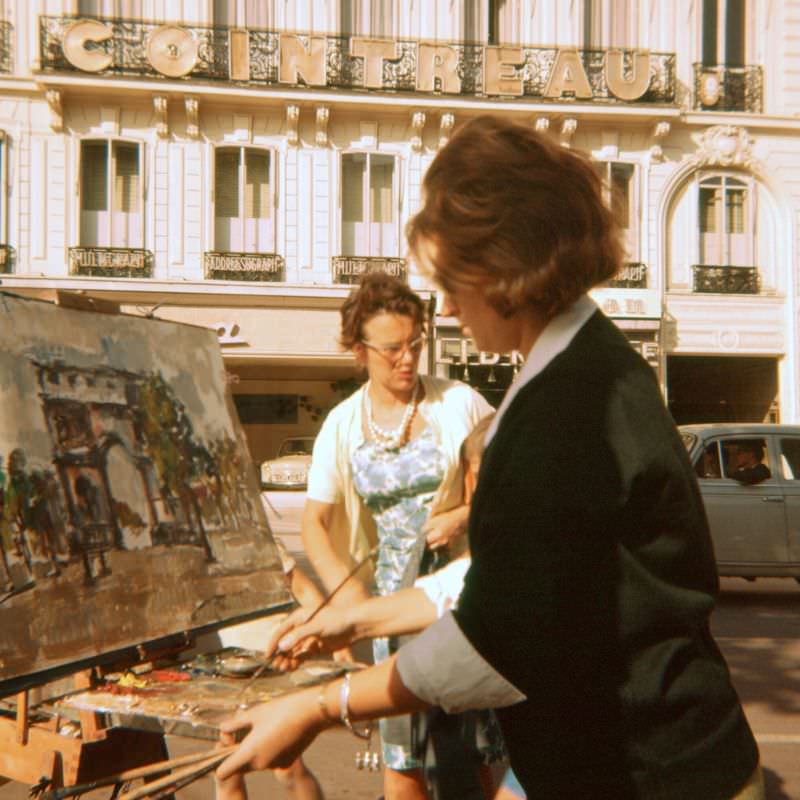
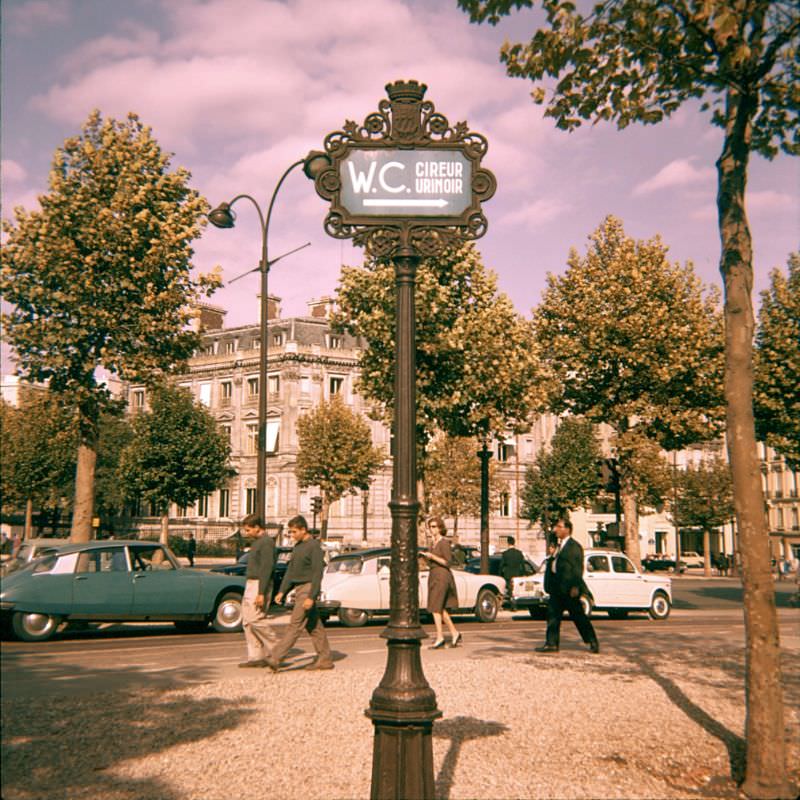
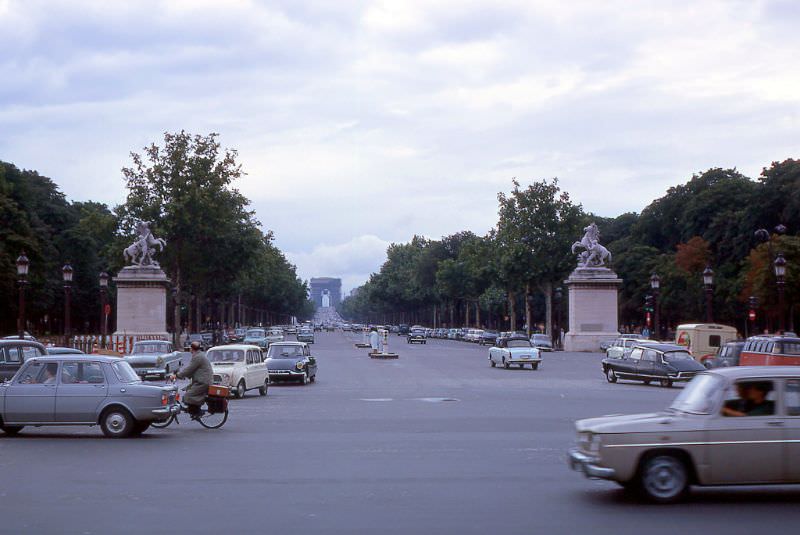
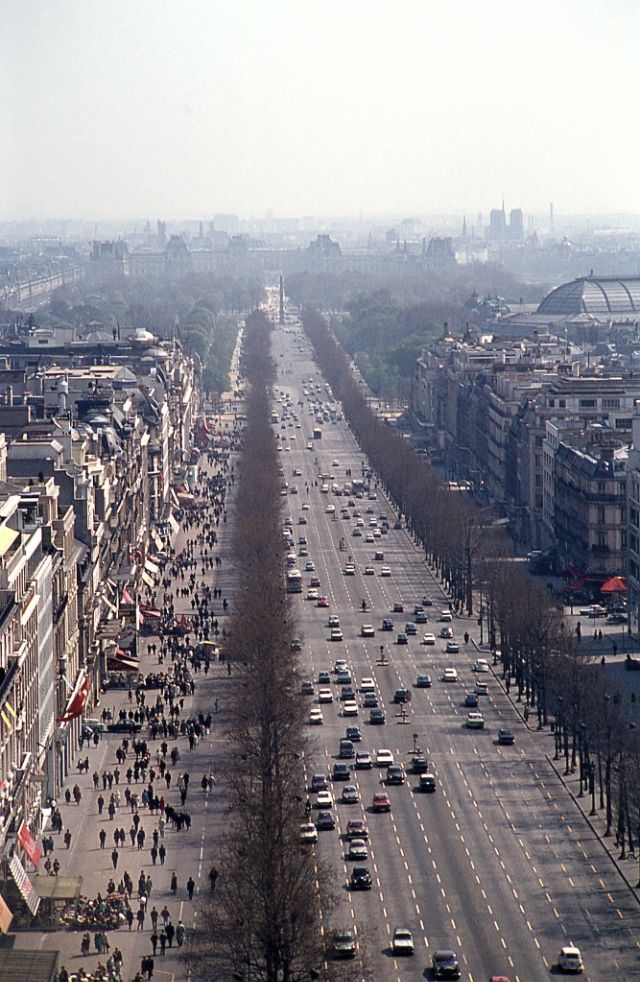
The Champs-Élysées was already one of the most recognized streets in the world by 1960, and it showed. Lined with shops, cinemas, and cafés, the avenue drew Parisians and tourists alike. Cars — many of them small, boxy French models — filled the lanes while pedestrians moved along the wide sidewalks. The street functioned as both a commercial hub and a civic stage, hosting military parades and public celebrations throughout the decade.
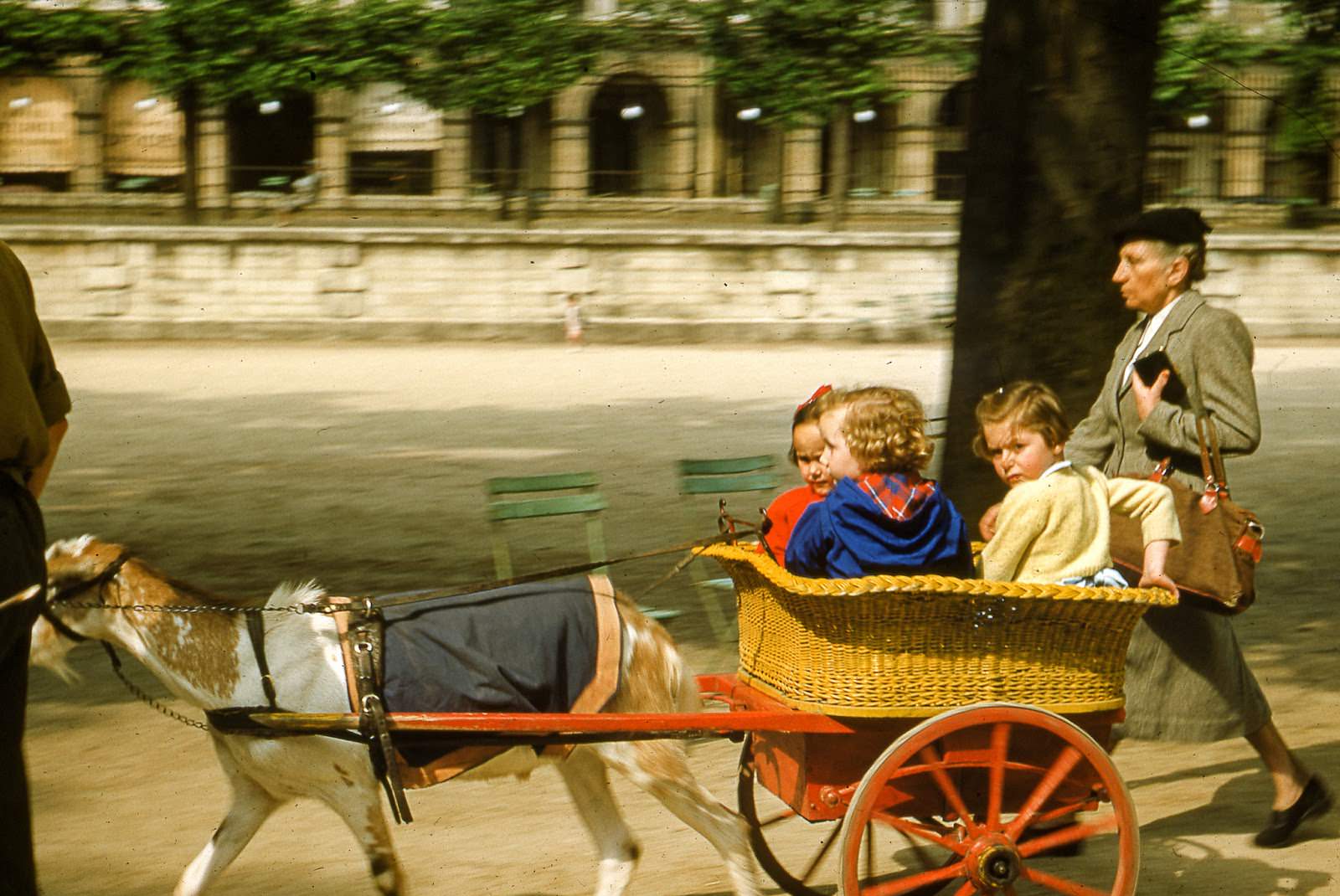
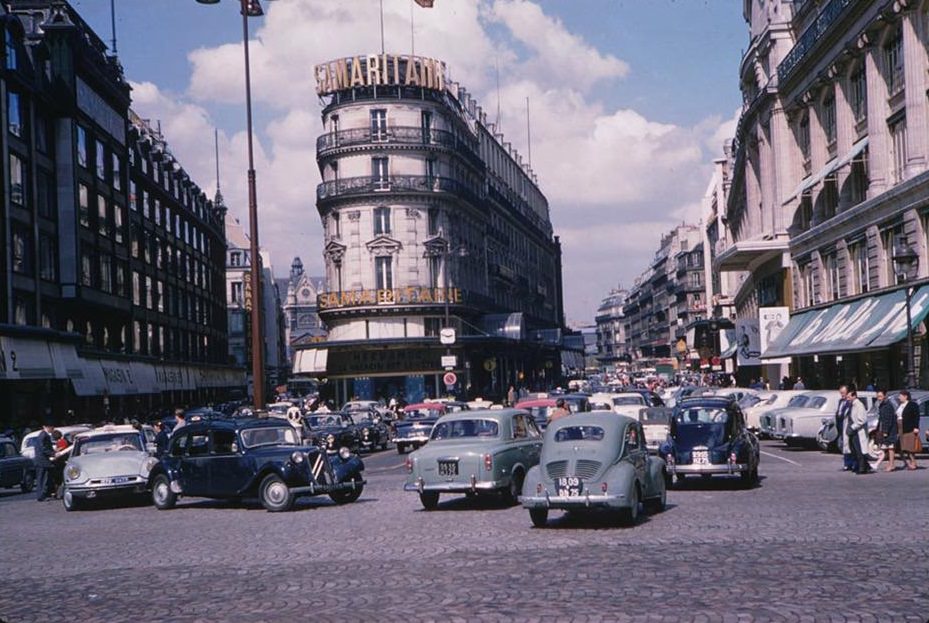
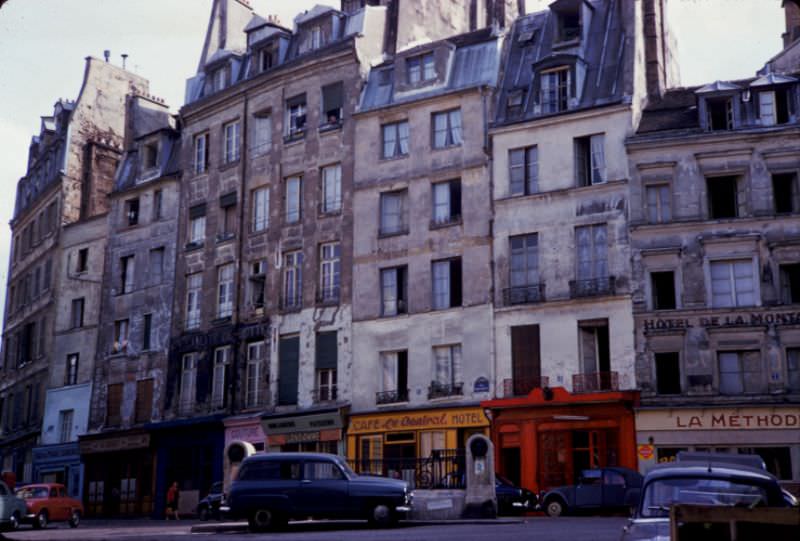
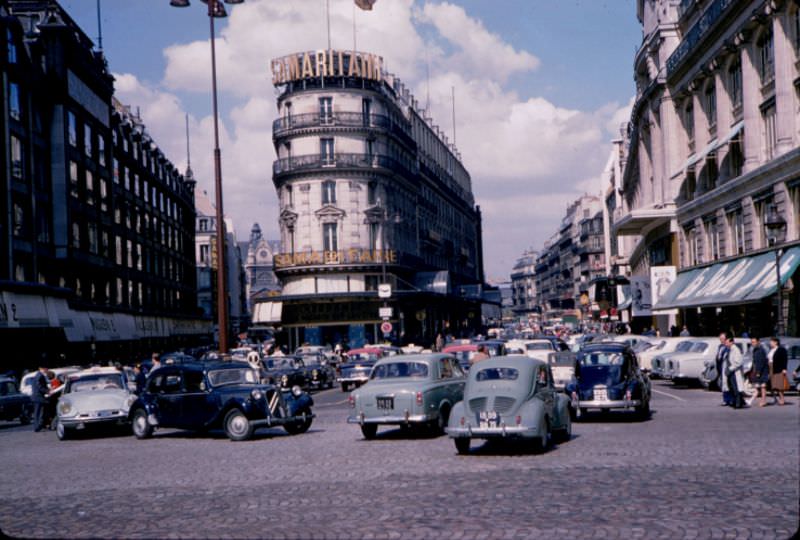
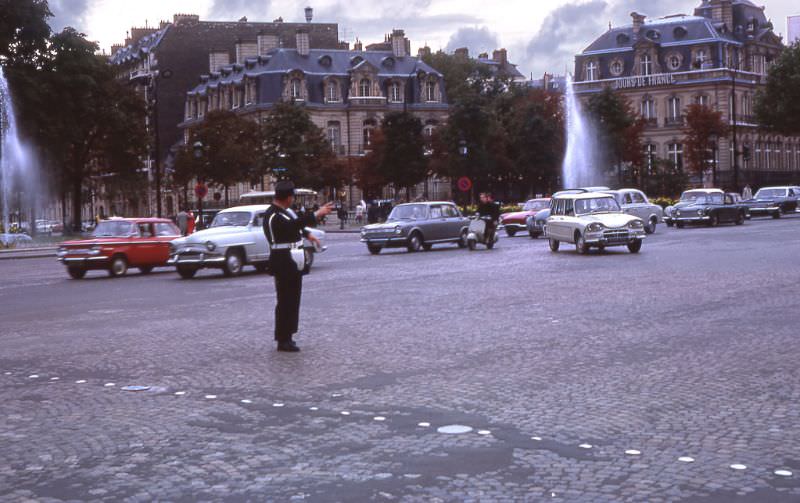
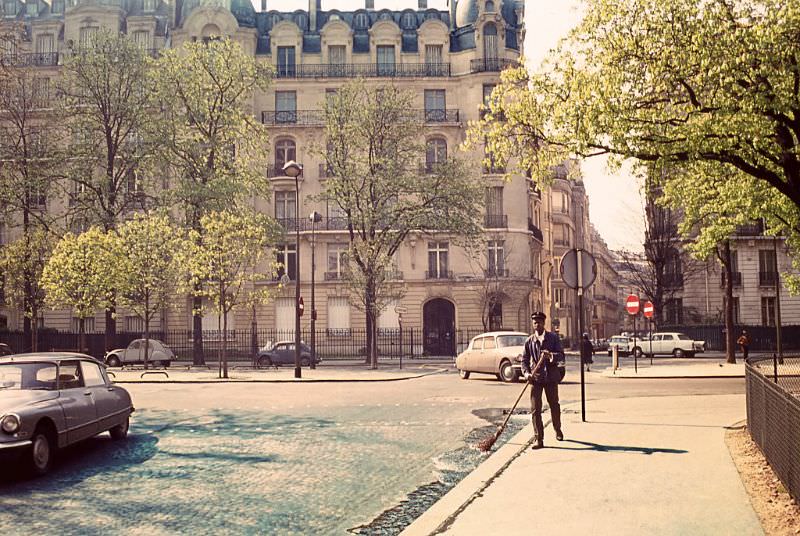
Paris in the early 1960s was governed under the firm hand of President Charles de Gaulle, who had returned to power in 1958 and shaped the Fifth Republic. His government pushed for French modernization and national pride. The wide boulevards and grand avenues that Haussmann had carved through Paris in the 19th century now carried 20th-century traffic — but the bones of the old city remained unmistakably intact.
Fashion was undergoing a significant shift during this period. The postwar dominance of haute couture — made-to-measure garments for wealthy clients — began to give way to ready-to-wear clothing that ordinary people could actually afford. Designers like Yves Saint Laurent and Pierre Cardin were leading this change, offering sharp, modern silhouettes to a broader audience. In 1966, Saint Laurent debuted ‘Le Smoking,’ a tailored tuxedo suit designed for women. It broke with convention directly and without apology.
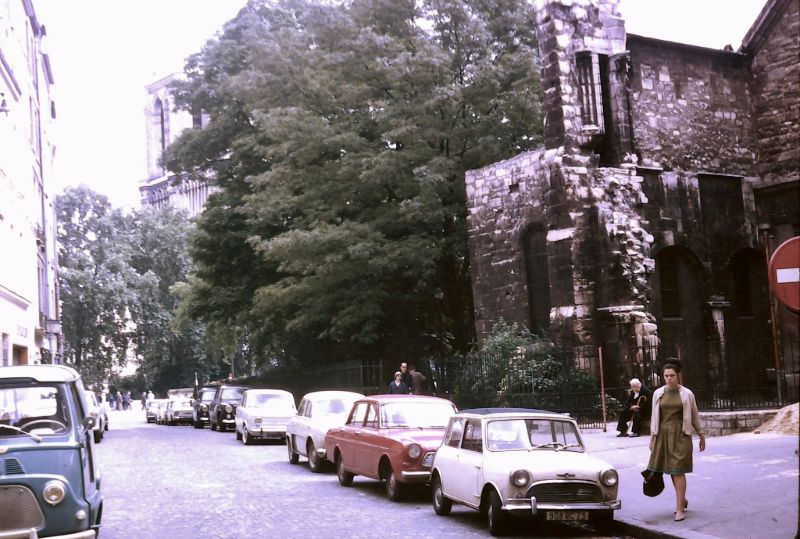
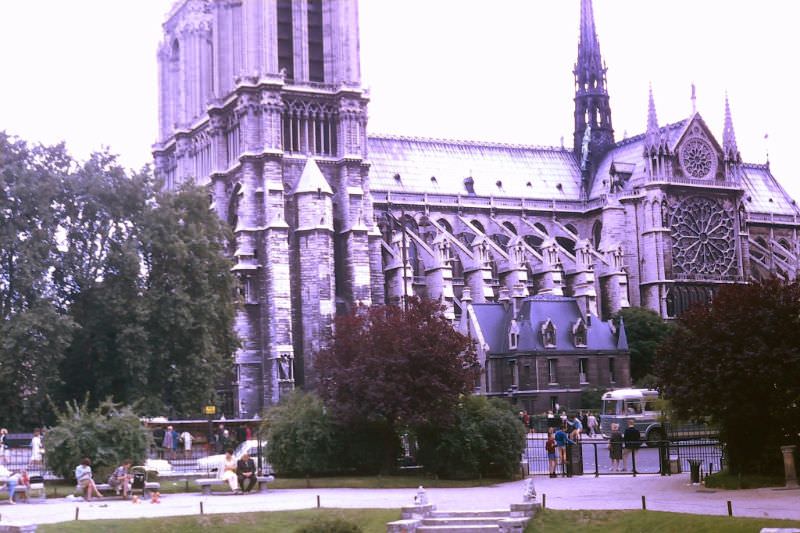
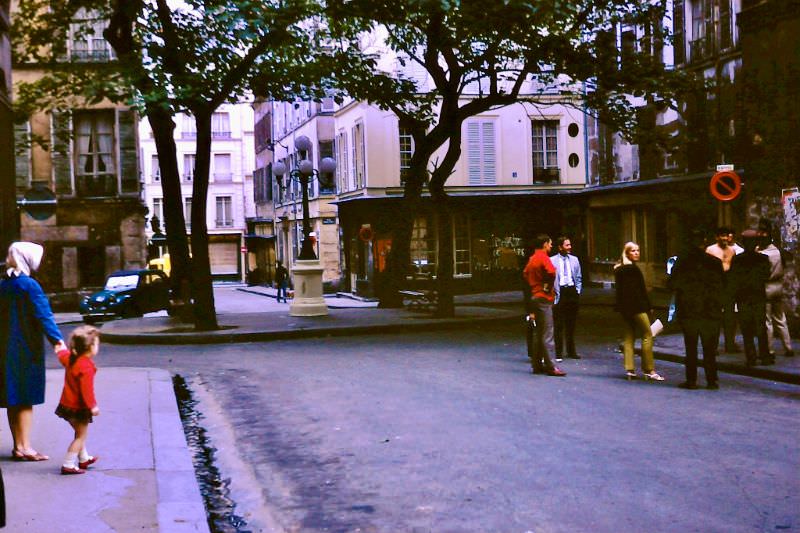
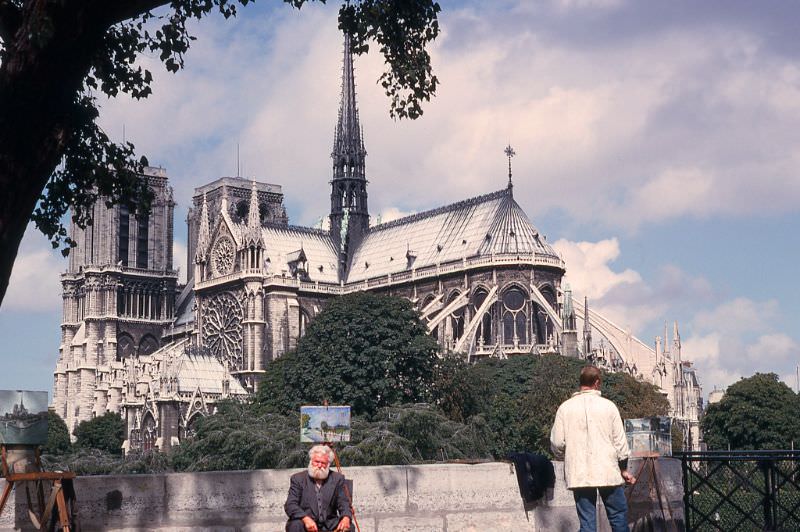
Notre-Dame de Paris stood as it had for centuries, rising from the Île de la Cité with its Gothic towers reflecting off the Seine. In the 1960s, the cathedral was a functioning church and a major tourist draw. Visitors came from across the world to see it. The surrounding streets — narrow, cobbled, and lined with old stone buildings — gave the island neighborhood a density of history that few places on earth could match.
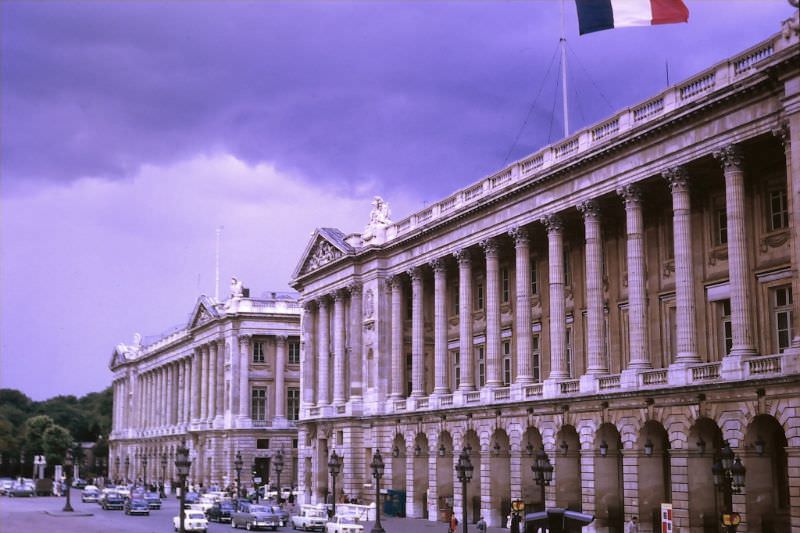
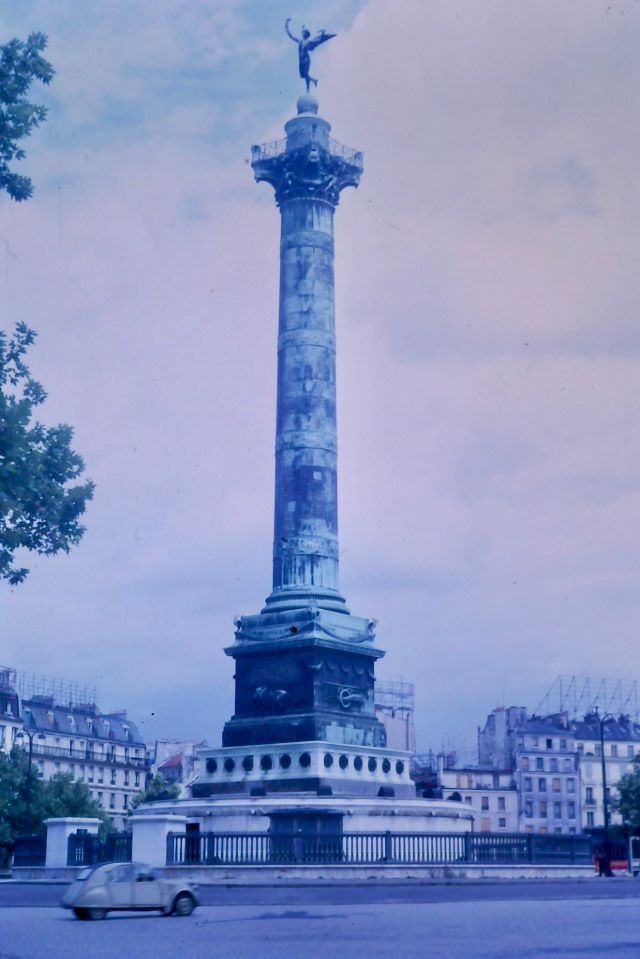
The Place de la Concorde, with the Luxor Obelisk rising from its center, connected the Tuileries Gardens to the Champs-Élysées. It was one of the largest public squares in Europe and a natural gathering point for the city. On ordinary days, traffic swirled around it in organized chaos. On significant days — national holidays, military parades, civic events — it became a stage for the whole nation.
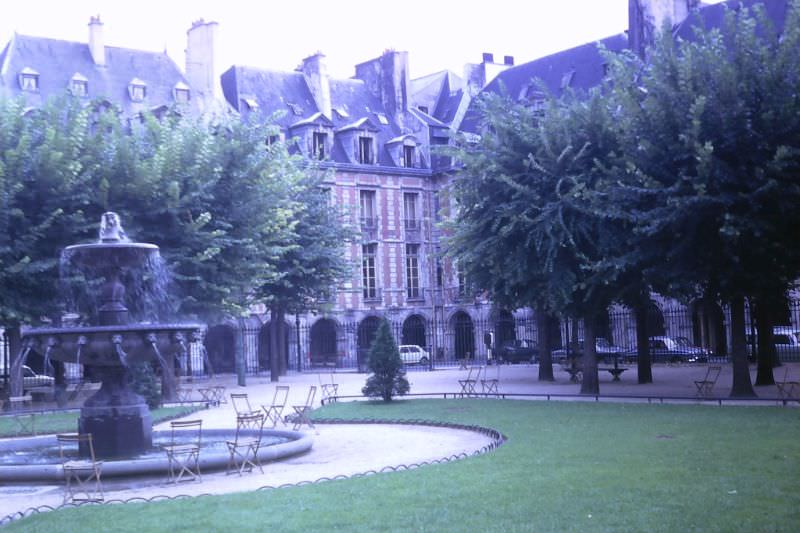
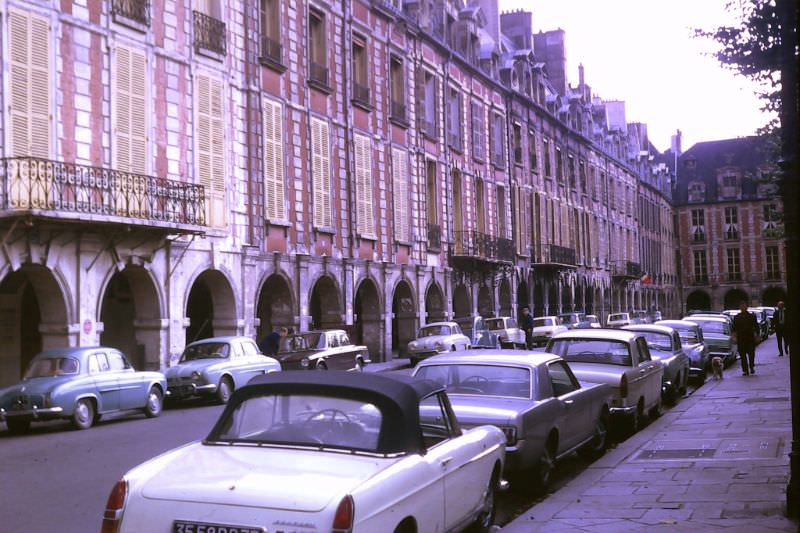
The Place des Vosges, tucked into the Marais district, was one of Paris’s oldest squares. Built in the early 17th century, its symmetrical red-brick buildings and ground-floor arcades had changed little over the centuries. By the 1960s, the Marais was a working-class neighborhood, its grand architecture aging but still standing. Residents hung laundry from windows that once looked out over royal processions.
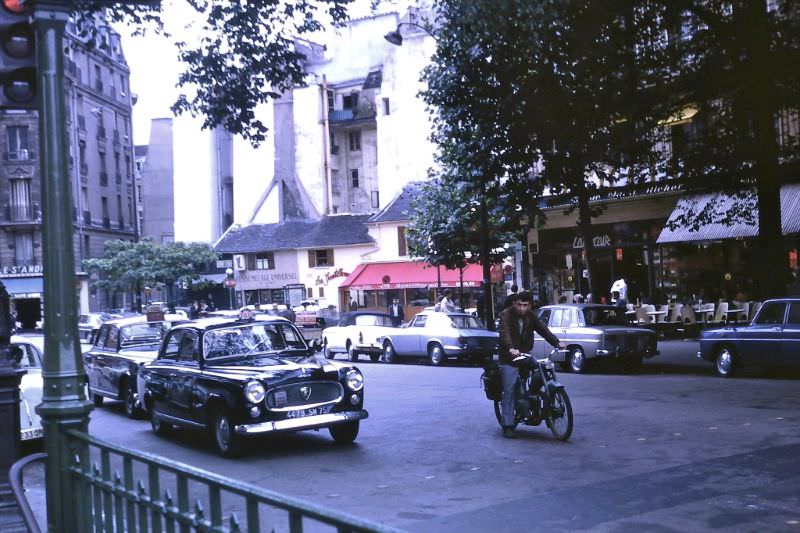
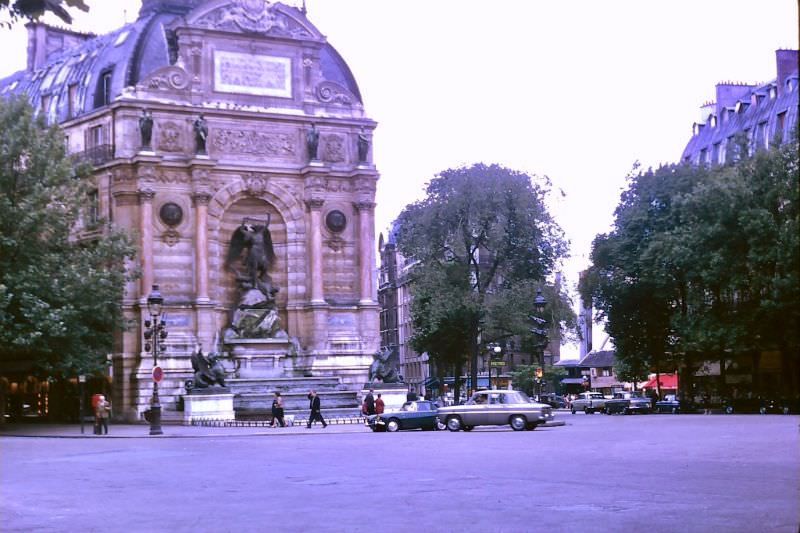
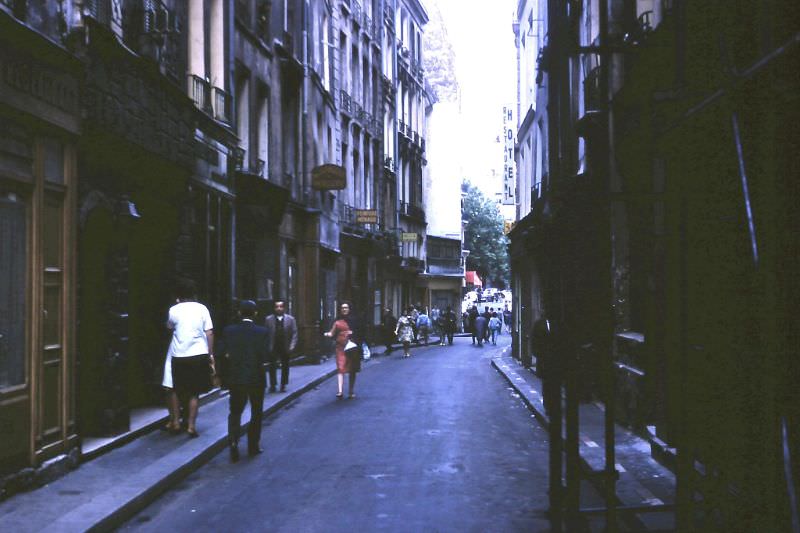
The Latin Quarter, on the Left Bank, was the center of student life in Paris. The Sorbonne and other universities drew tens of thousands of young people to its narrow streets. The Place Saint-Michel, with its famous fountain, was a meeting point for students, intellectuals, and artists. This was also the neighborhood that would become the epicenter of the May 1968 uprising — the student protests that shook France to its core.
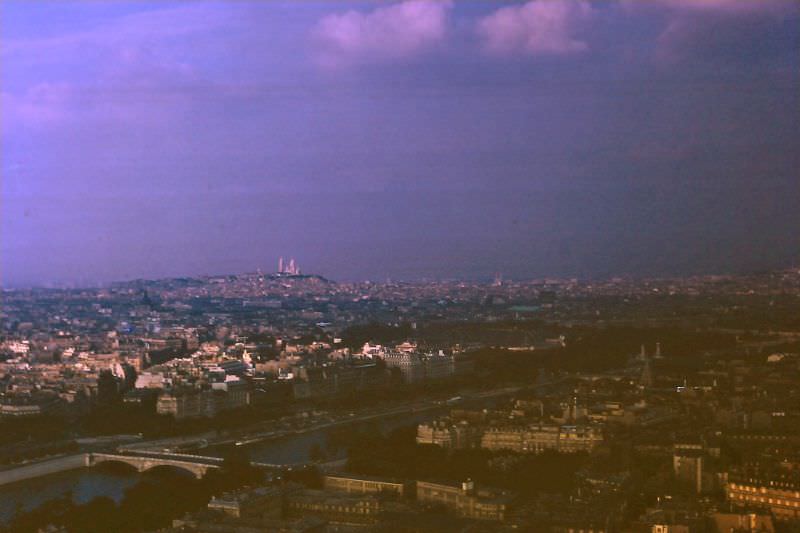
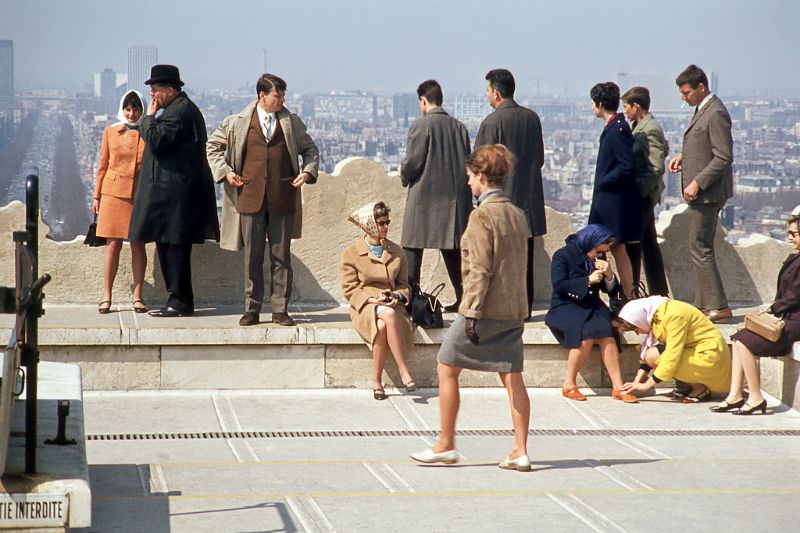
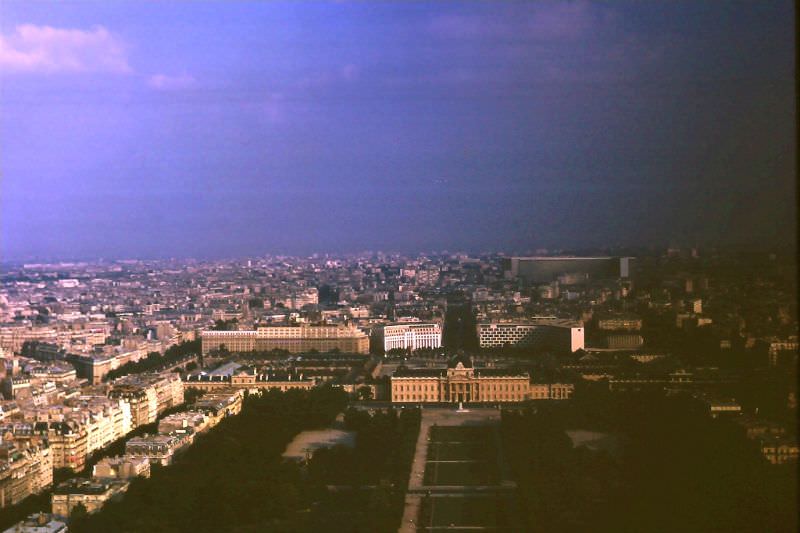
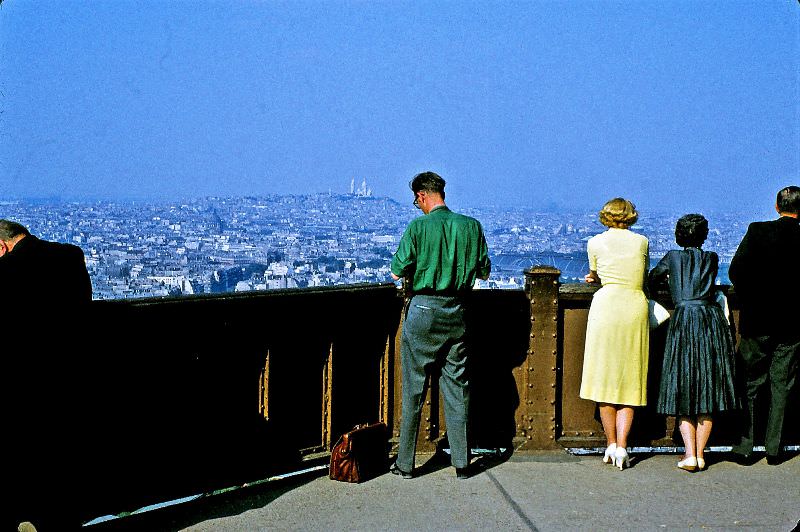
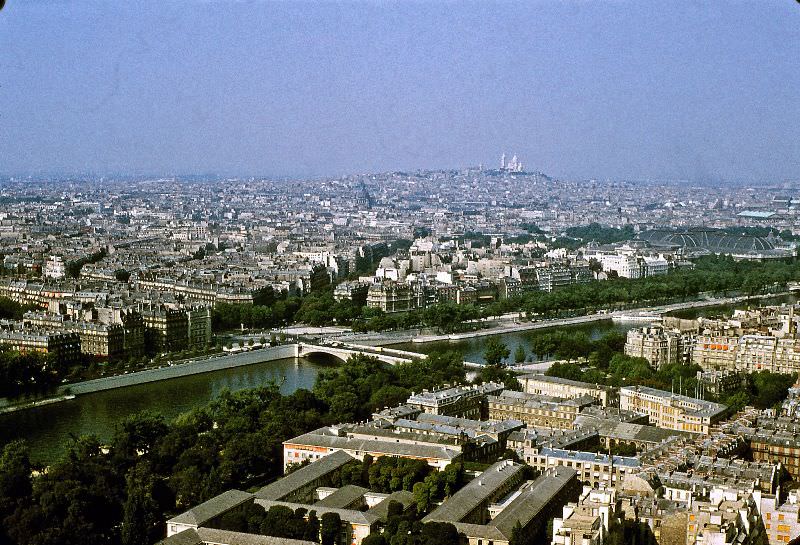
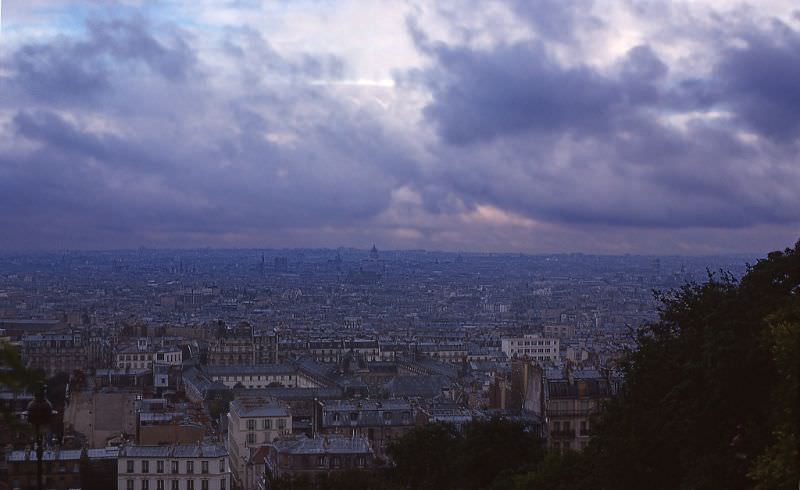
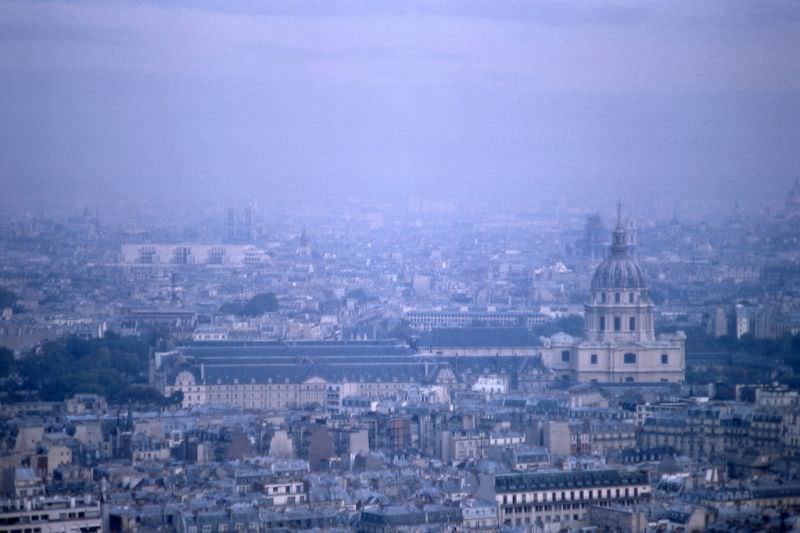
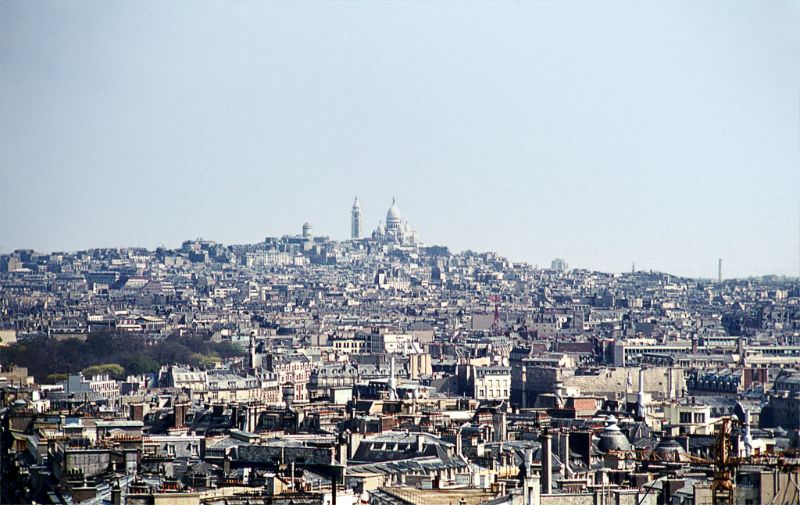
Seen from the top of the Eiffel Tower, Paris in the 1960s looked remarkably low and horizontal. Strict building height limits kept most of the city at rooftop level, broken only by the towers of Notre-Dame, Sacré-Cœur, and a handful of other monuments. This was about to change. Construction of the Tour Montparnasse — which would become one of the tallest buildings in France — began later in the decade, and its presence sparked a debate about the city’s skyline that lasted for years.
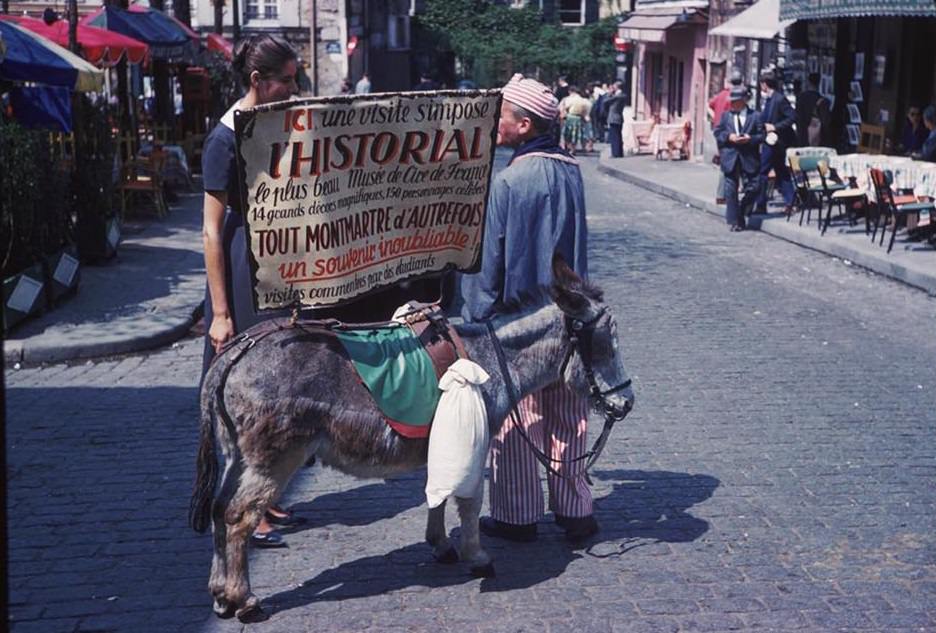
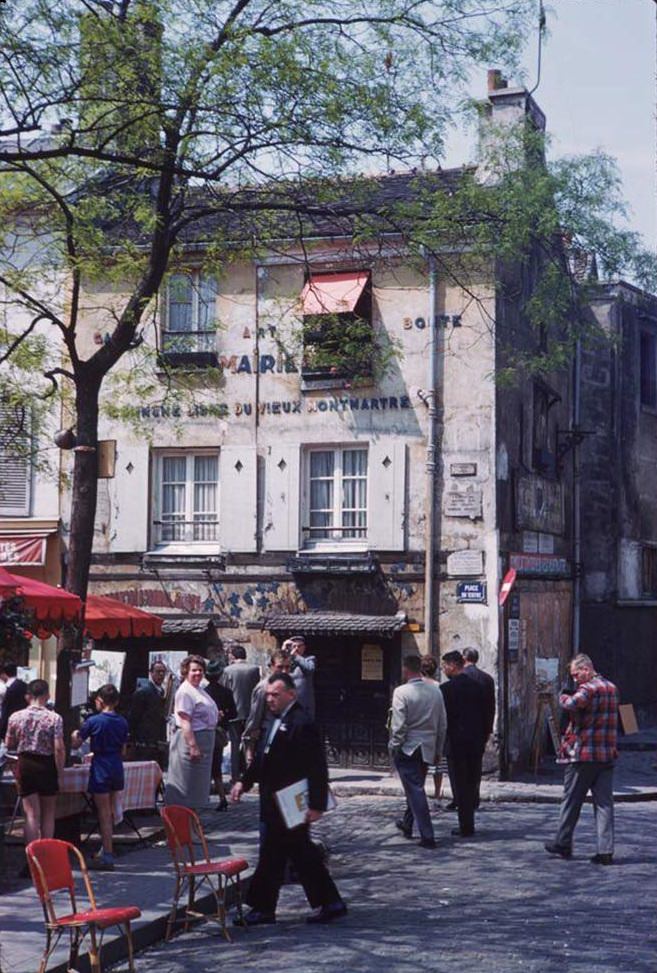
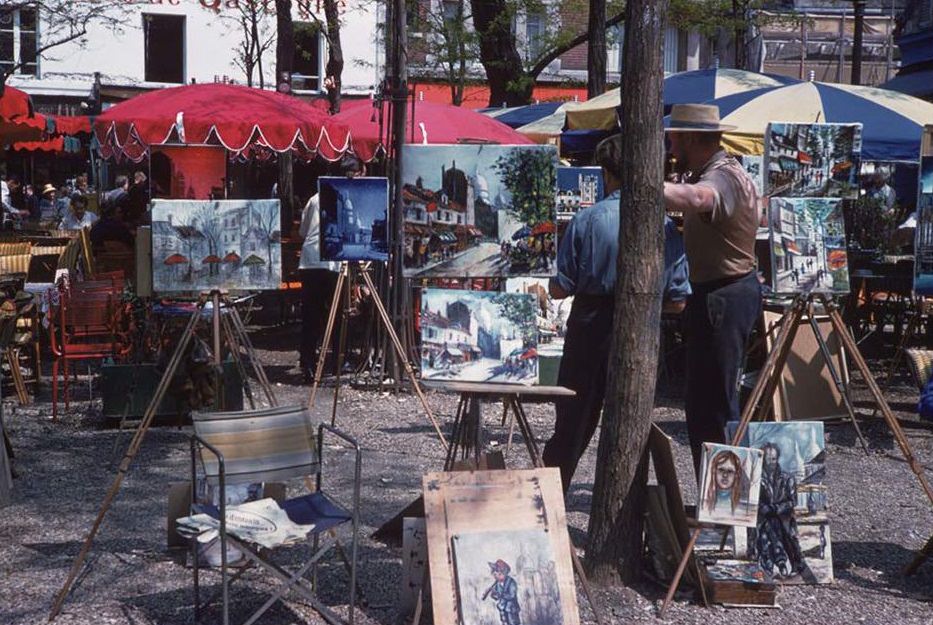
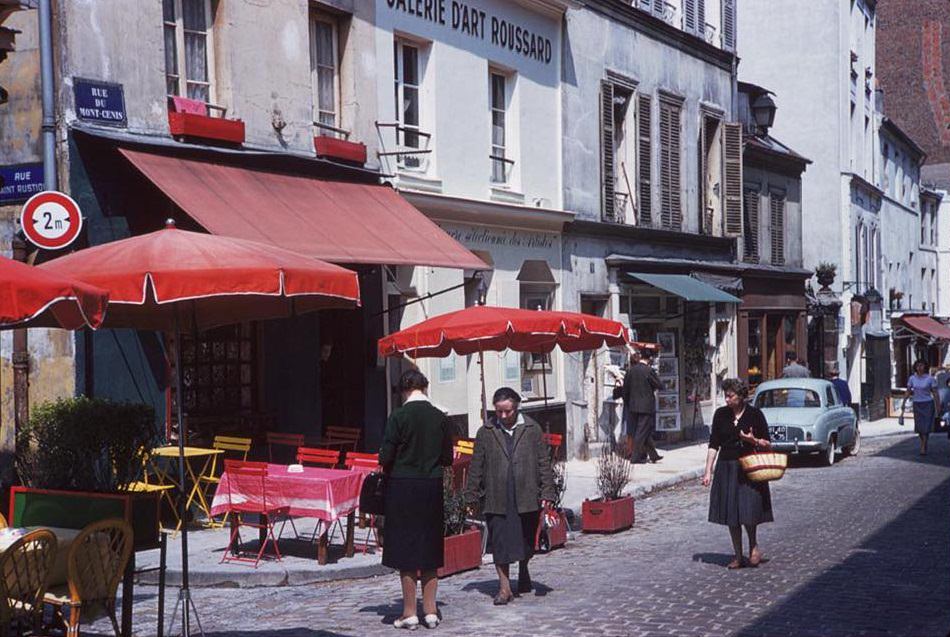
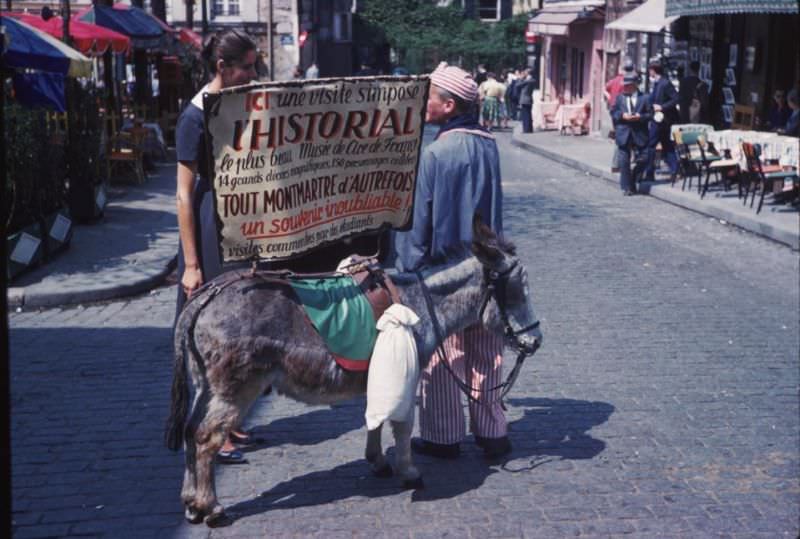
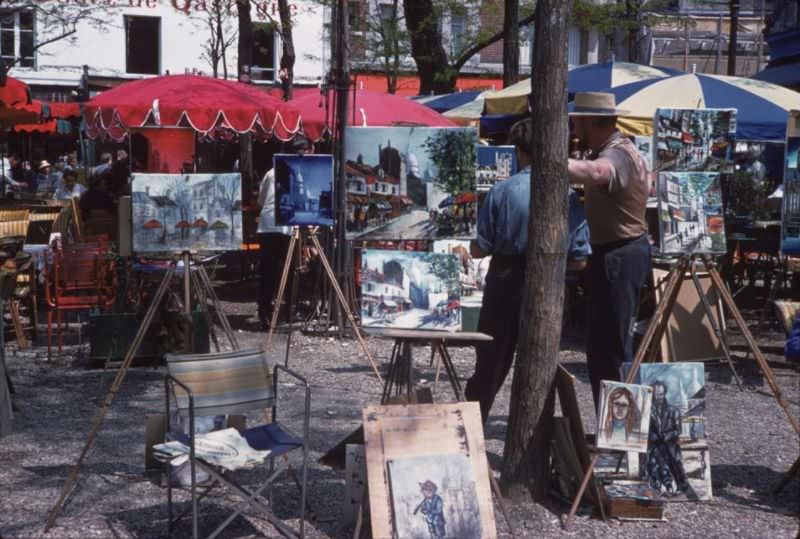
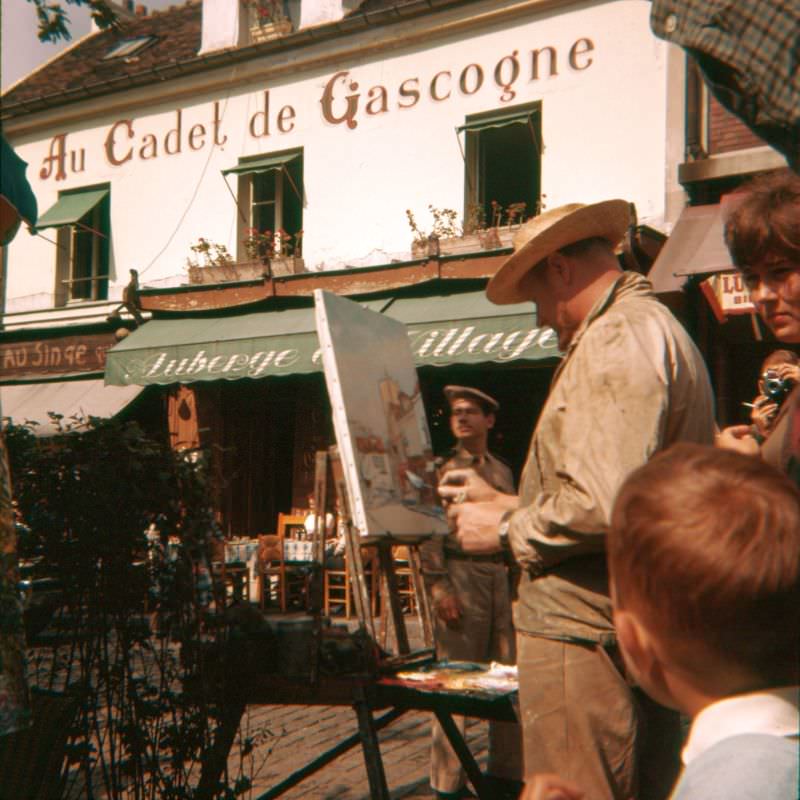
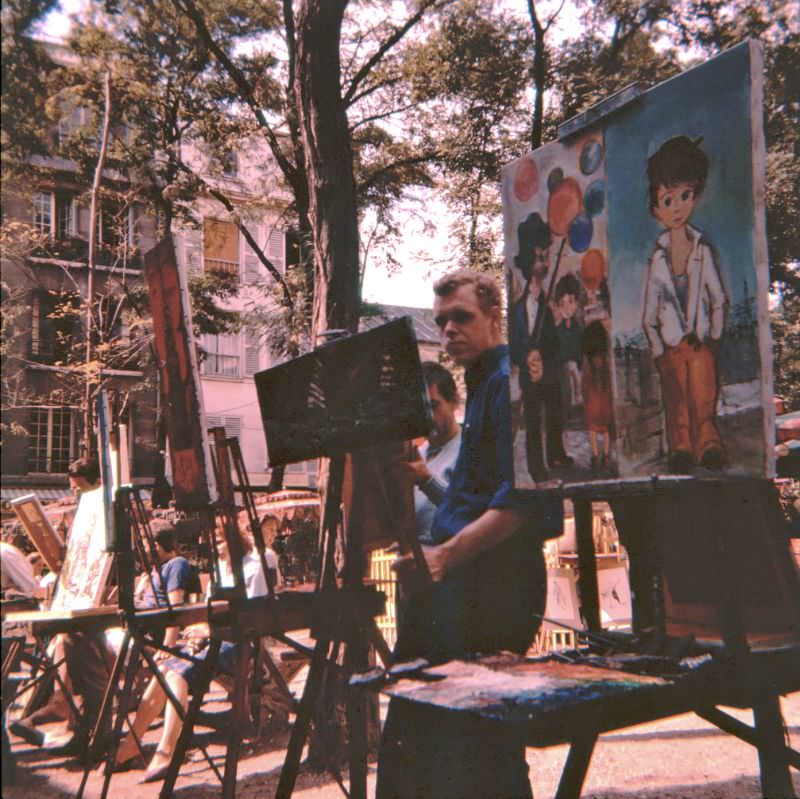
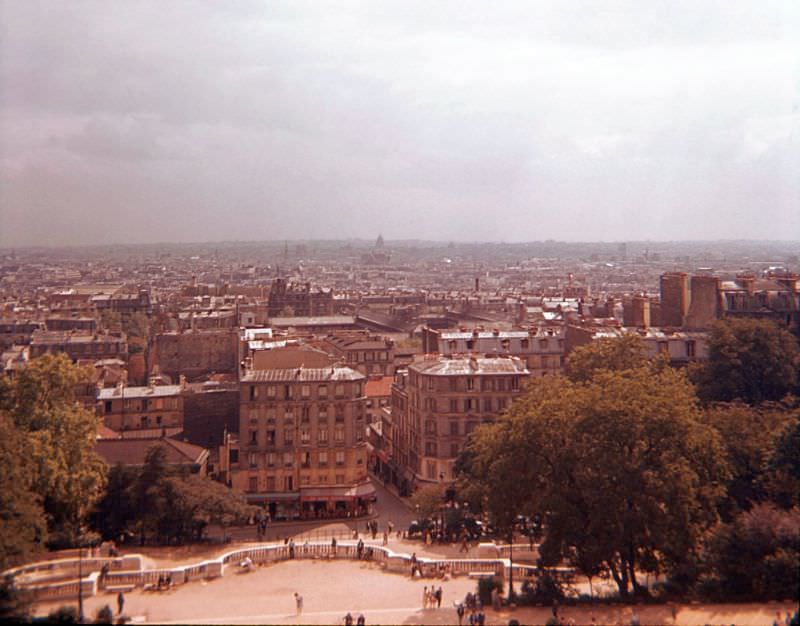
Montmartre, perched on its hill in the north of the city, had been an artists’ neighborhood since the 19th century. By 1960, it still drew painters and tourists, though much of its bohemian edge had softened into something more commercial. The Place du Tertre was filled with portrait artists offering quick sketches to visitors. The streets around it — steep, winding, and lined with old buildings — remained largely unchanged from decades earlier.
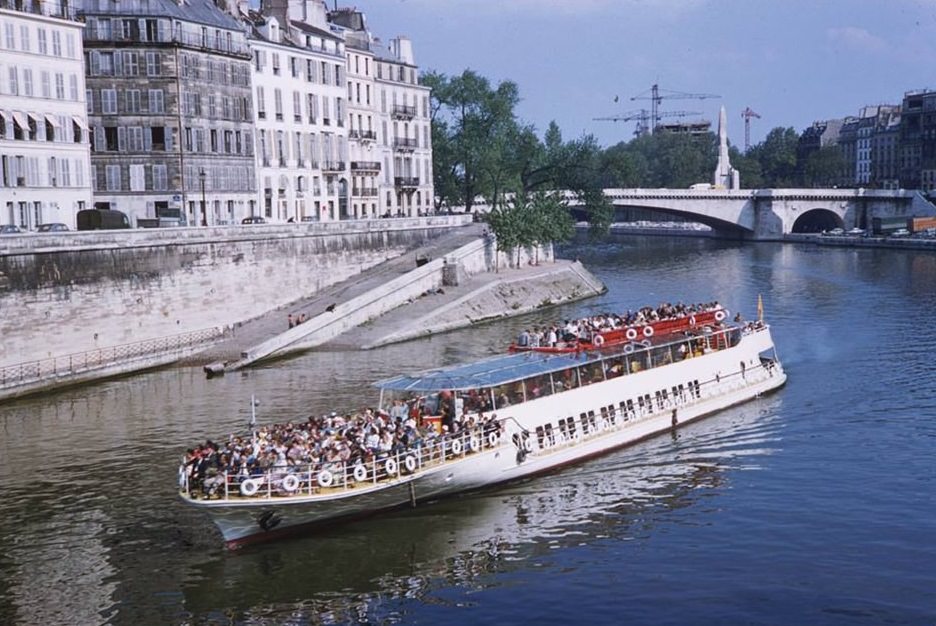
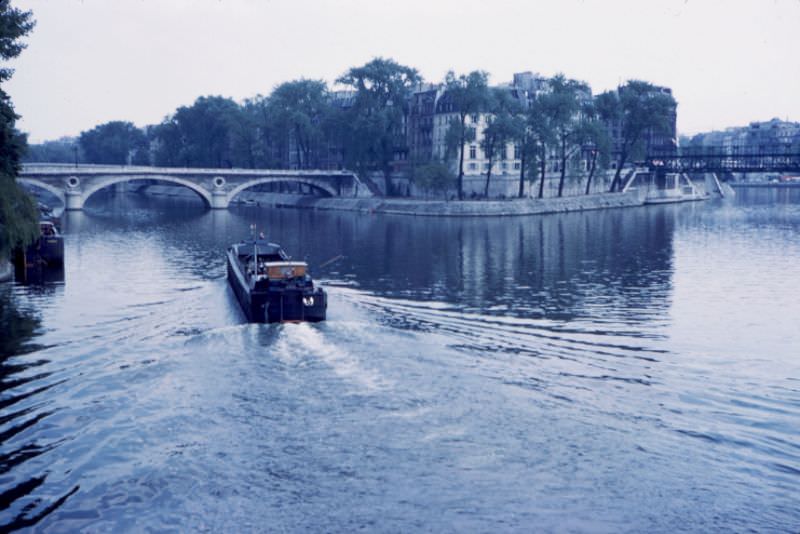
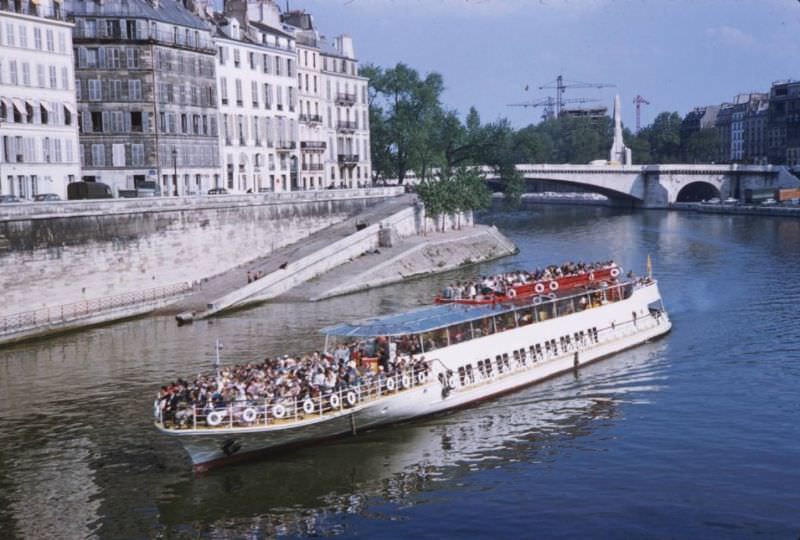
The Seine was not just a backdrop — it was a working river. Barges carried freight through the city, passing under its dozens of bridges. Sightseeing boats also operated along the river, giving tourists a view of the city from the water. Looking up from the Seine, the Île de la Cité rose steeply, its buildings crowding the banks right down to the waterline.
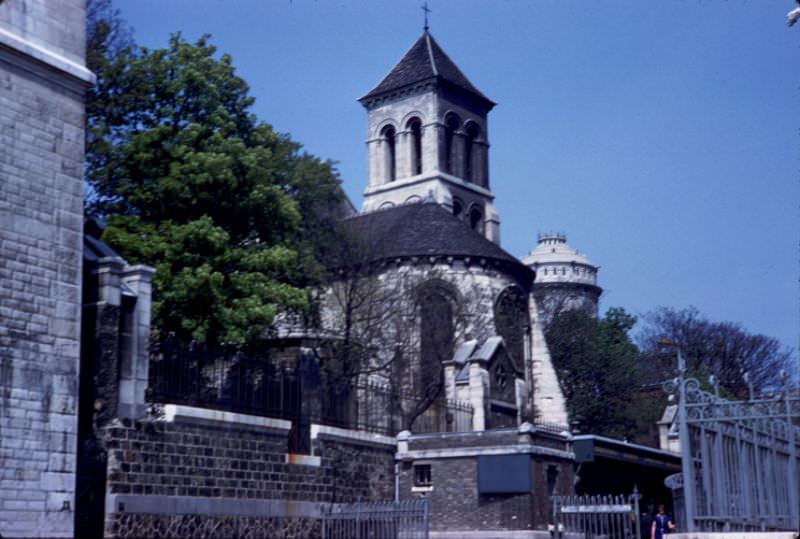
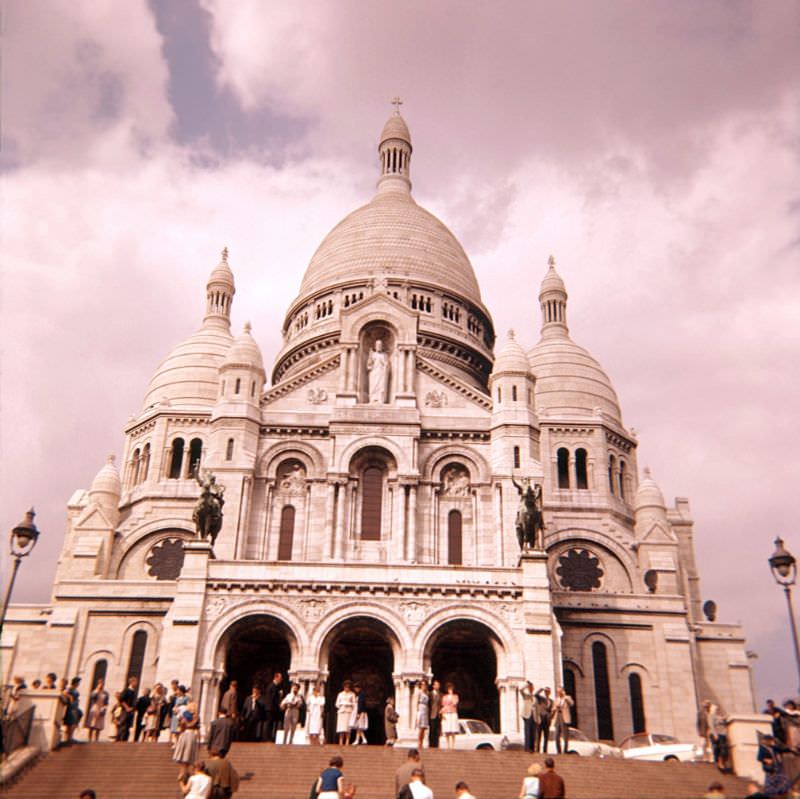
The Sacré-Cœur Basilica, completed in 1914, presided over Montmartre from the very top of the Butte. Its white stone, which naturally bleaches itself when it rains, stood in sharp contrast to the gray and ochre tones of the city below. The steps leading up to it were a popular gathering spot — for locals, for tourists, and for the young people who increasingly defined the decade’s mood.
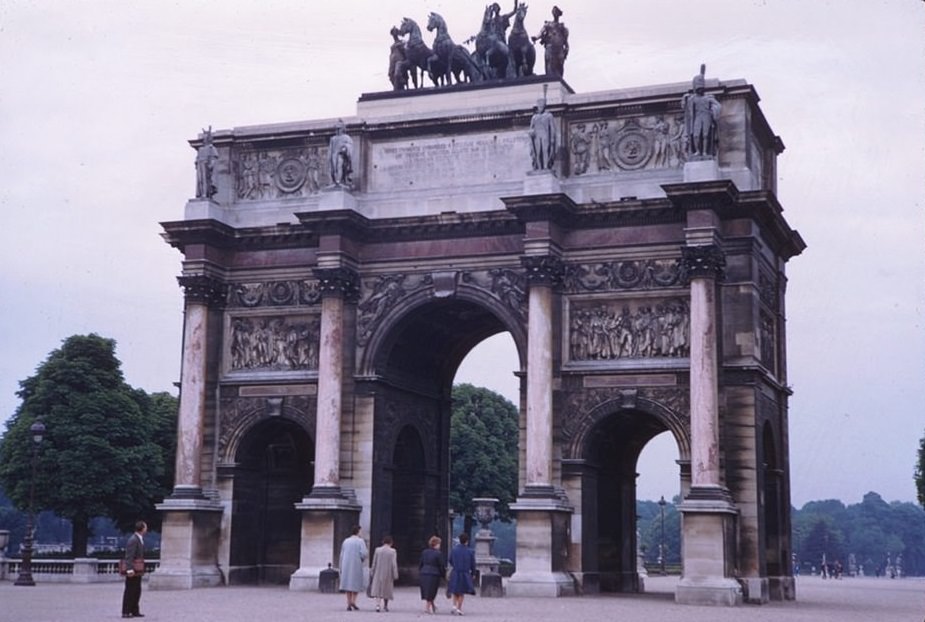
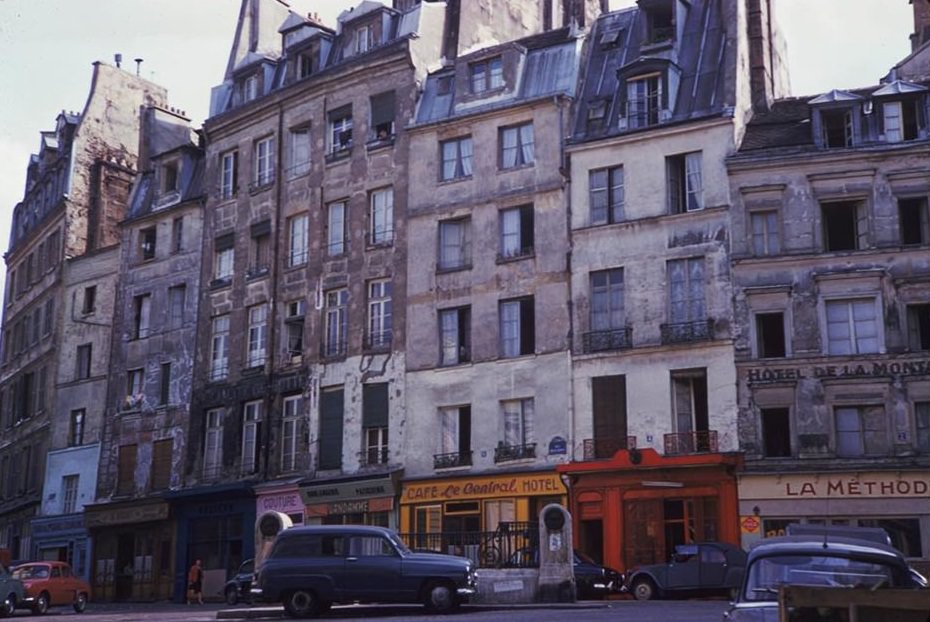
The Pont Neuf, despite its name meaning ‘New Bridge,’ was actually the oldest standing bridge in Paris, built in the late 16th century. From its span, you could look north along the Seine and take in the full width of the city. Photographs taken from this vantage point in 1960 show a city that still felt deeply rooted in its centuries-old structure — stone quais, tree-lined banks, and the familiar silhouette of Paris that painters had been drawing for generations.
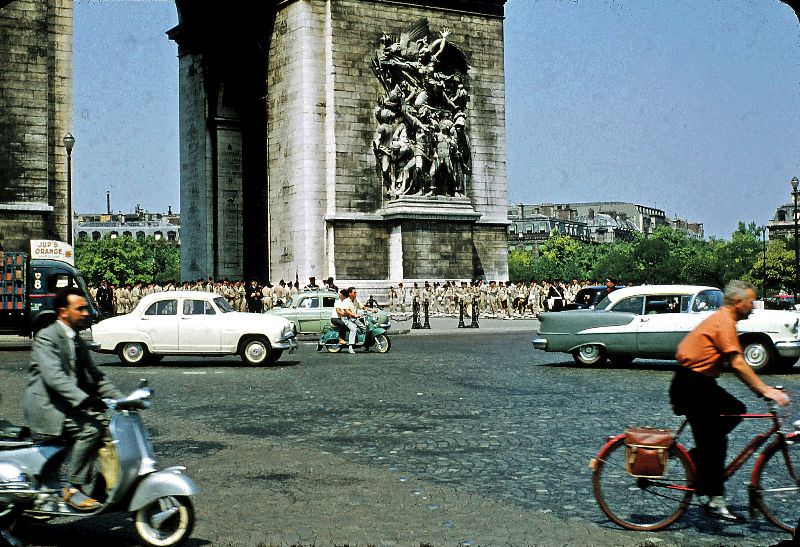
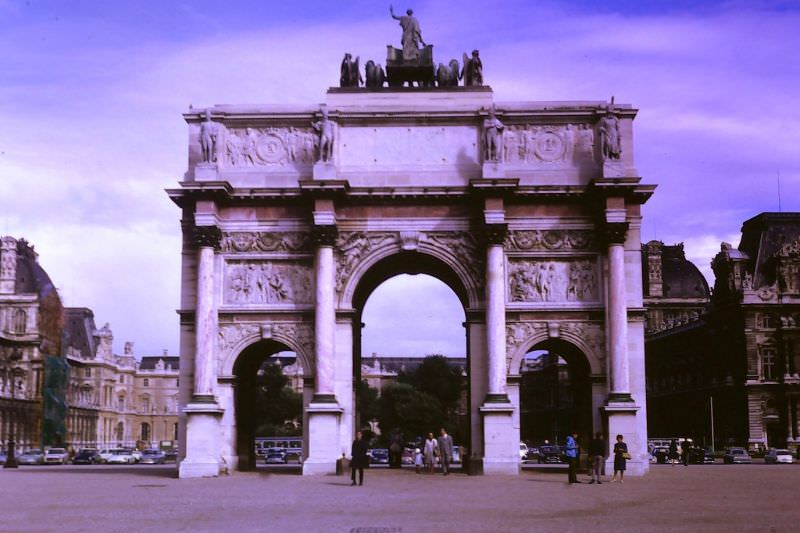
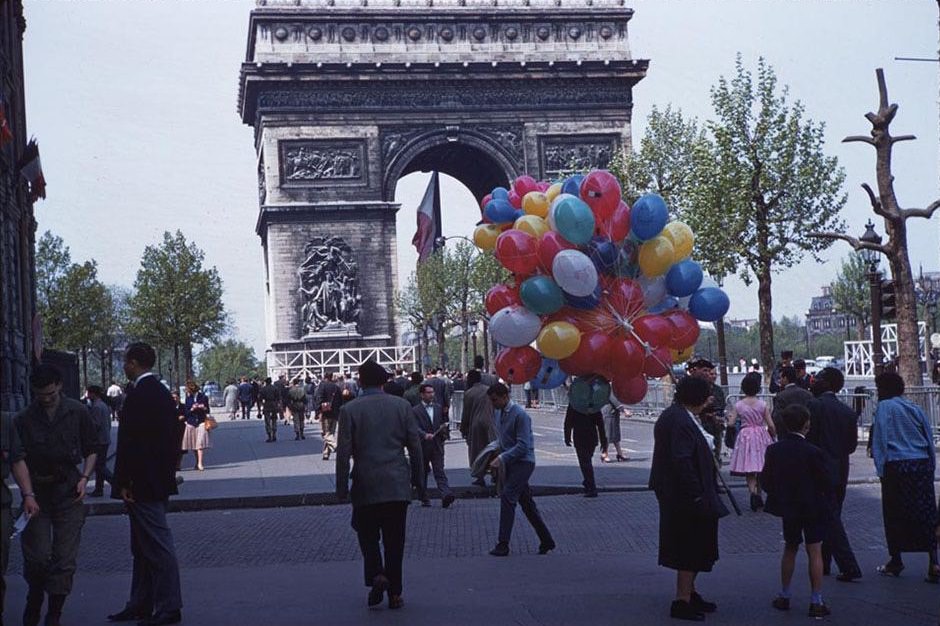
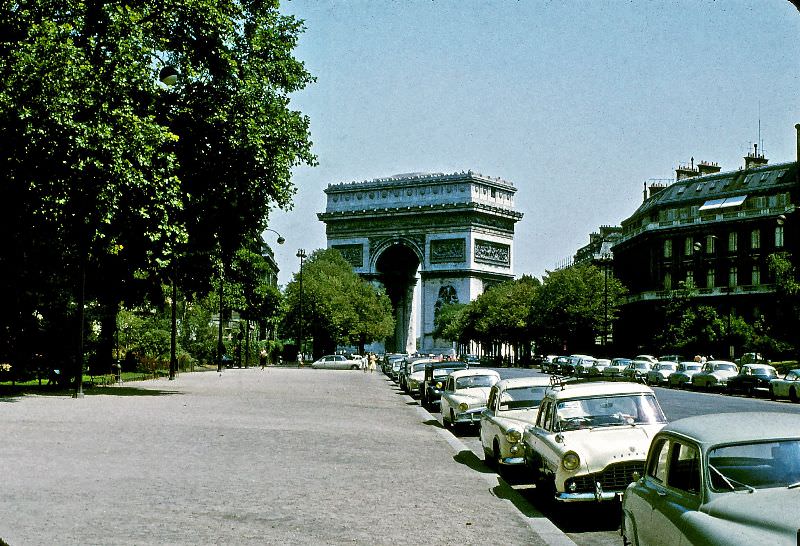
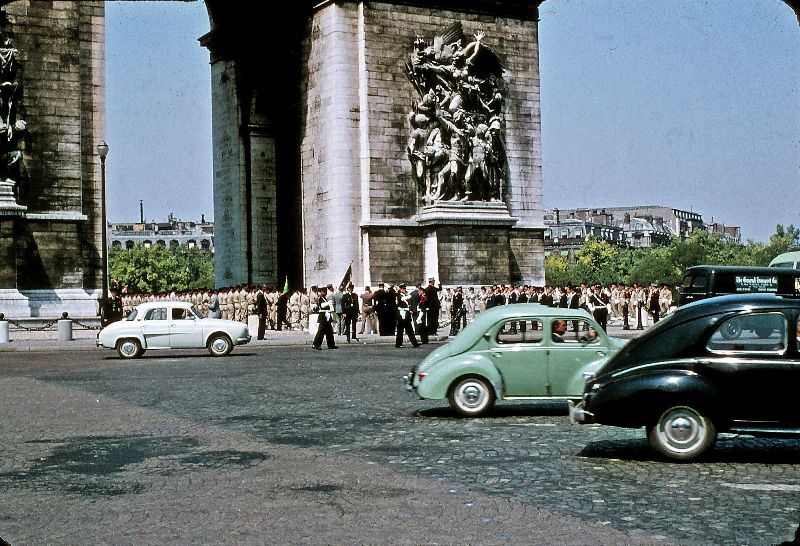
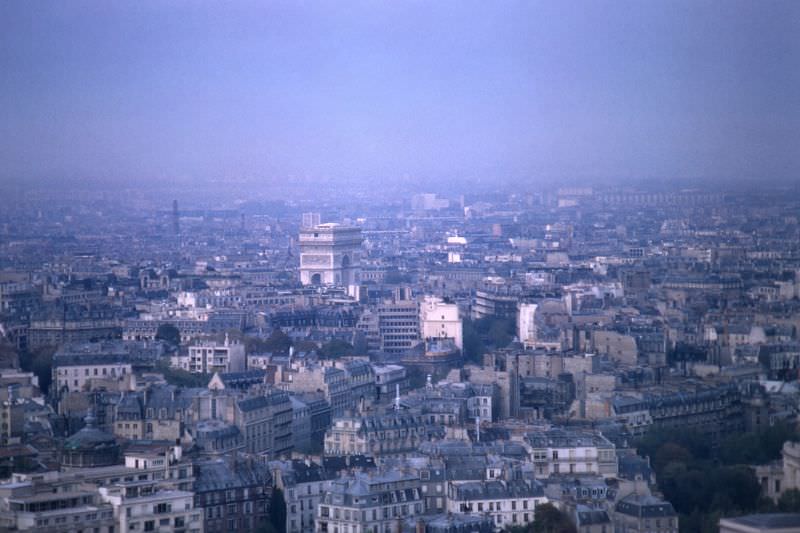
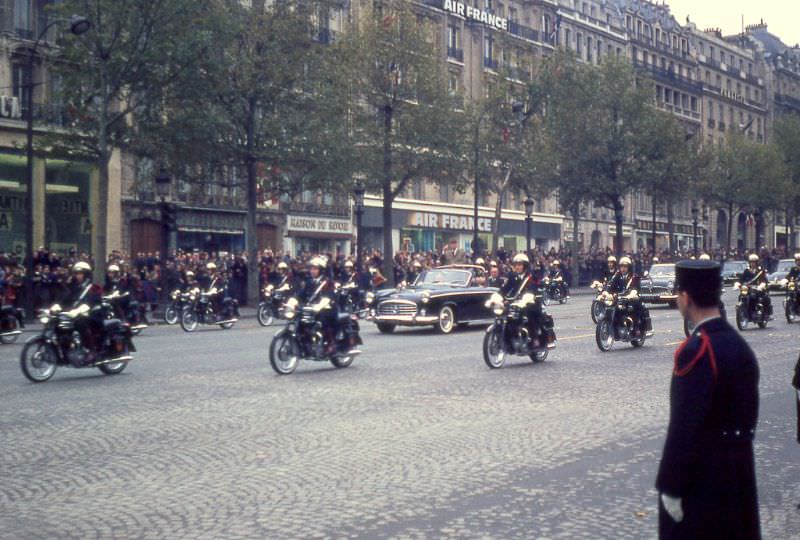
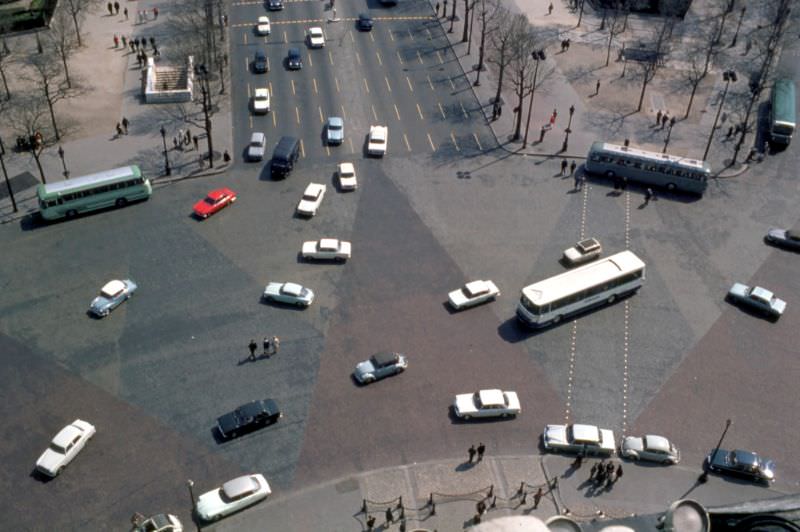
The Arc de Triomphe stood at the center of twelve radiating avenues, the most famous of which was the Champs-Élysées. Napoleon had commissioned it in 1806 to honor the French army, and it remained the city’s most powerful symbol of national identity. Military parades regularly passed beneath it. In November 1967, Charles de Gaulle himself led a procession down the Champs-Élysées for an Armistice Day commemoration — one of the defining images of the decade.
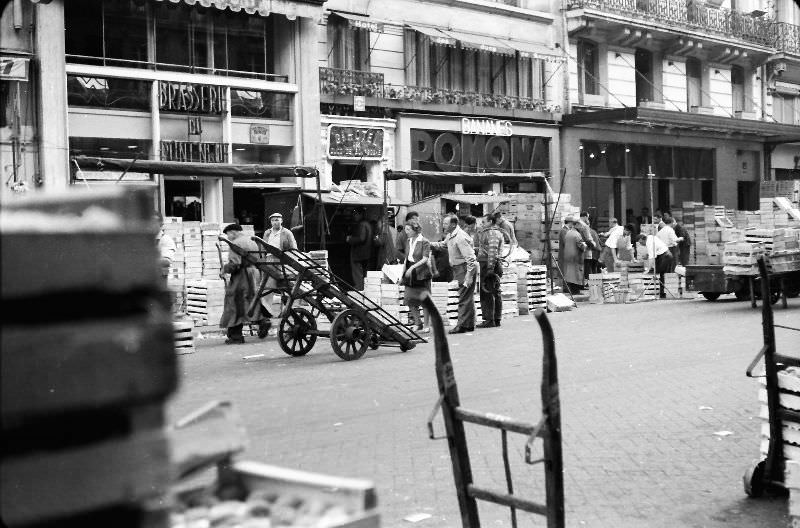
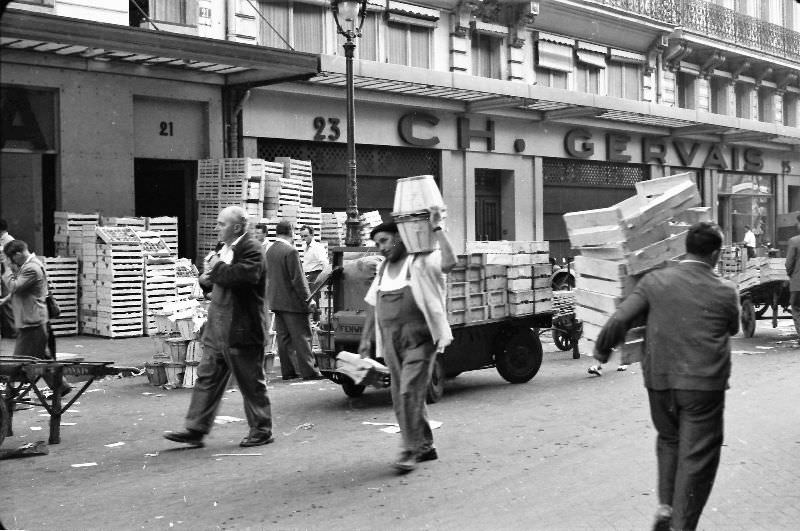
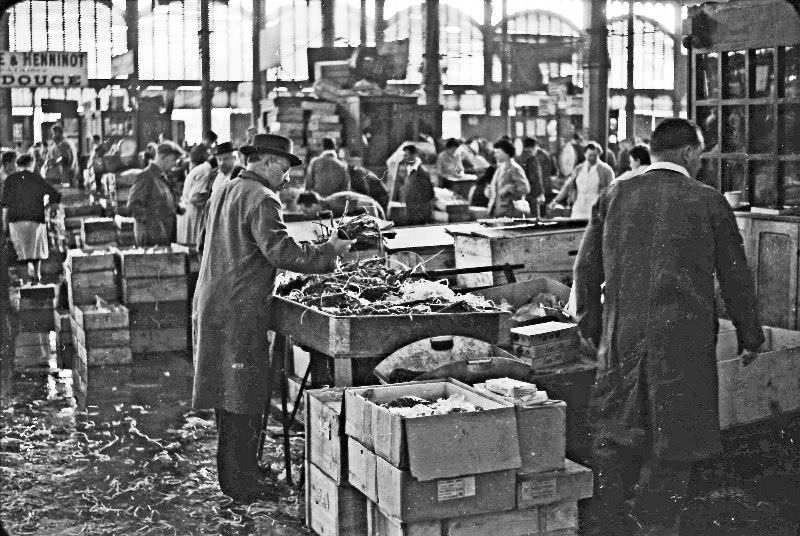
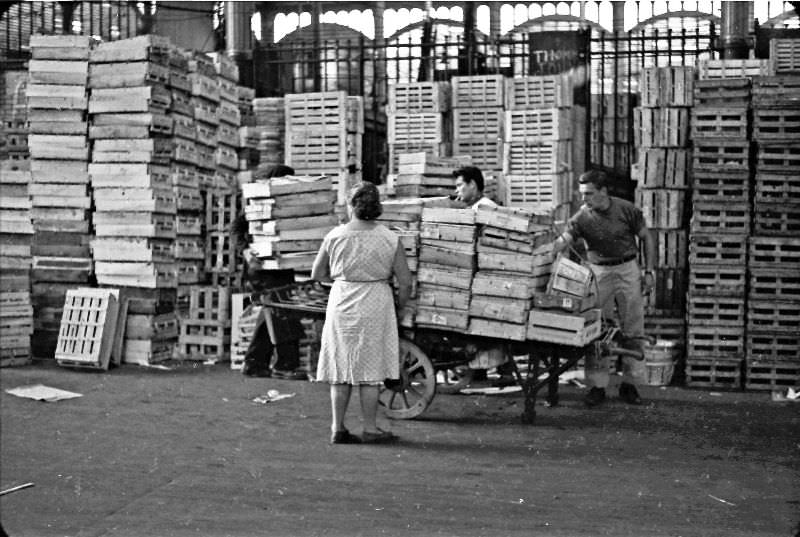
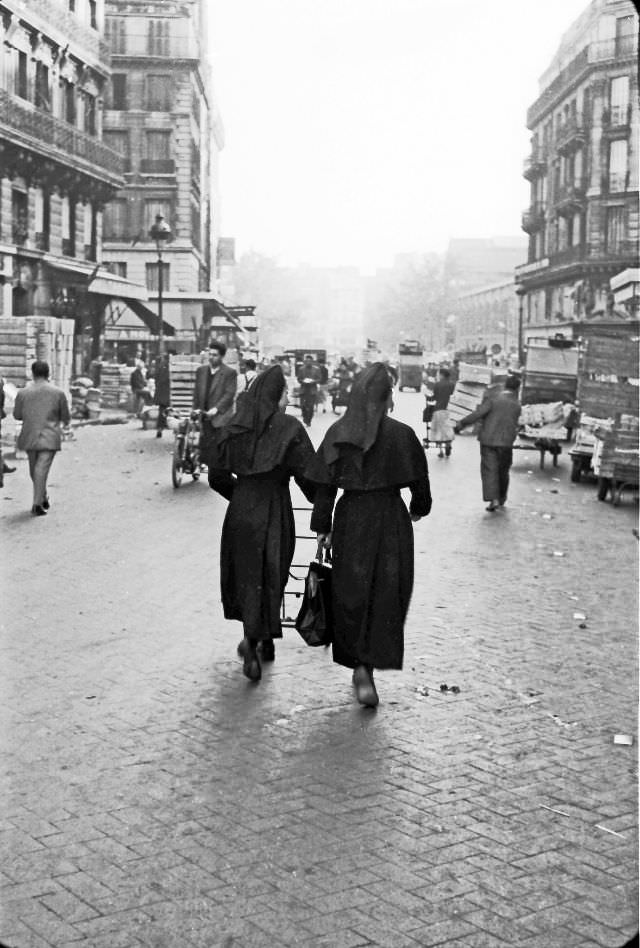
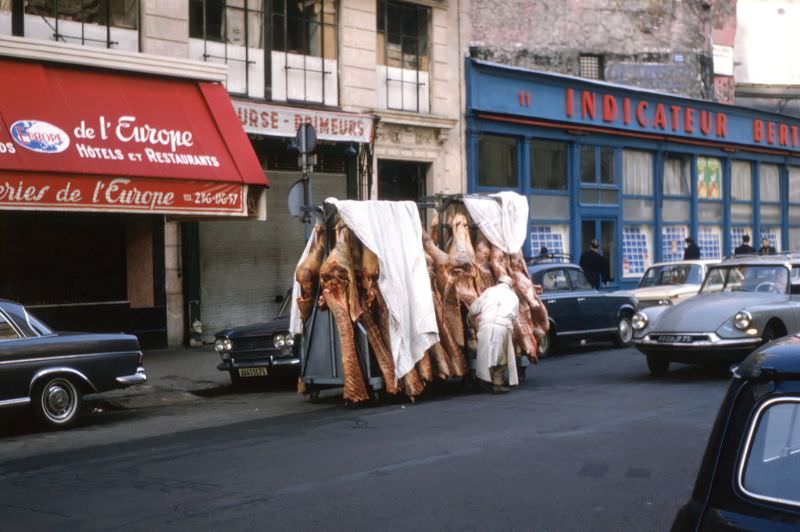
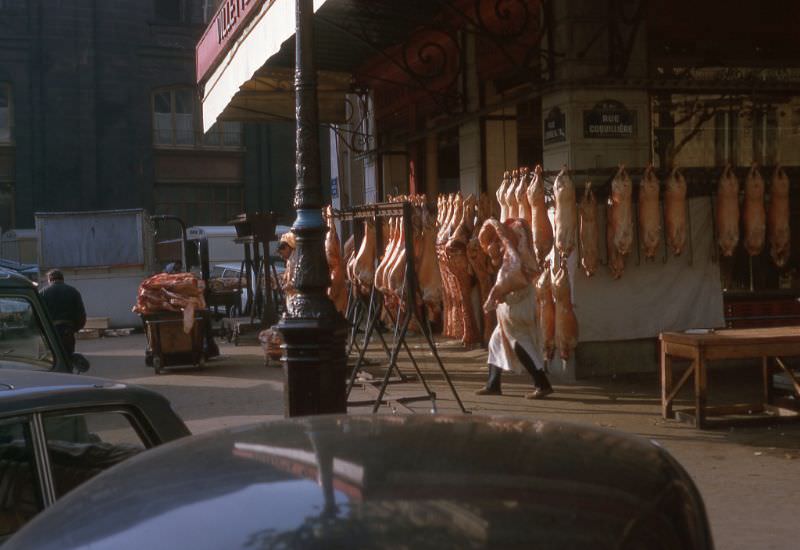
Les Halles was Paris’s central food market, operating in the heart of the city since the 12th century. By the 1960s, it occupied a massive complex of iron-and-glass pavilions near the Louvre. Every morning before dawn, butchers, fishmongers, vegetable sellers, and cheese vendors filled its stalls. Restaurants nearby stayed open through the night to serve market workers. The whole district smelled of produce, livestock, and coffee. The market was demolished in 1971, but in the 1960s it was still fully alive.
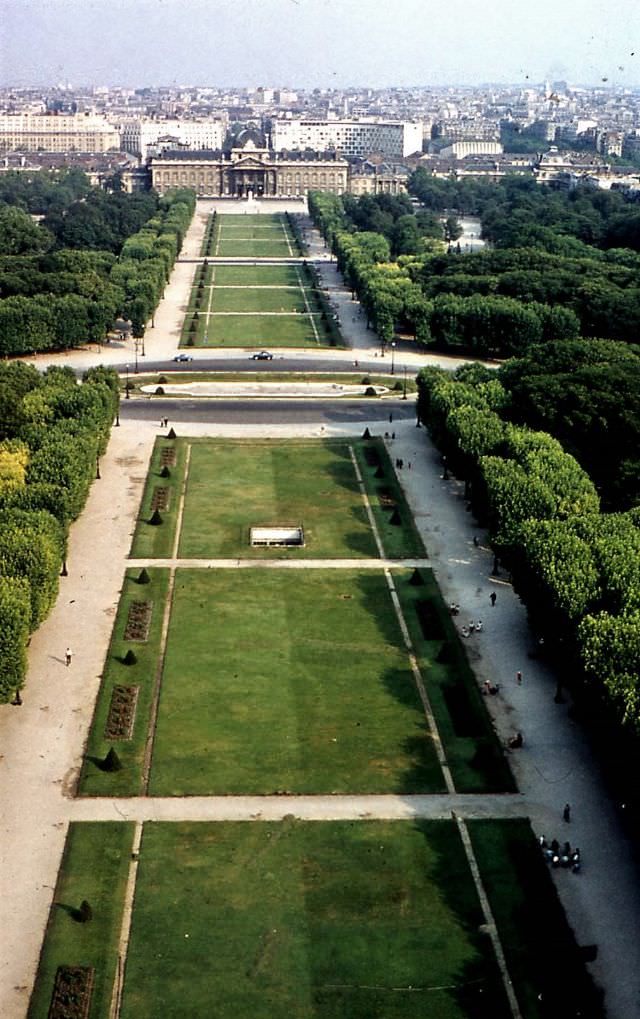
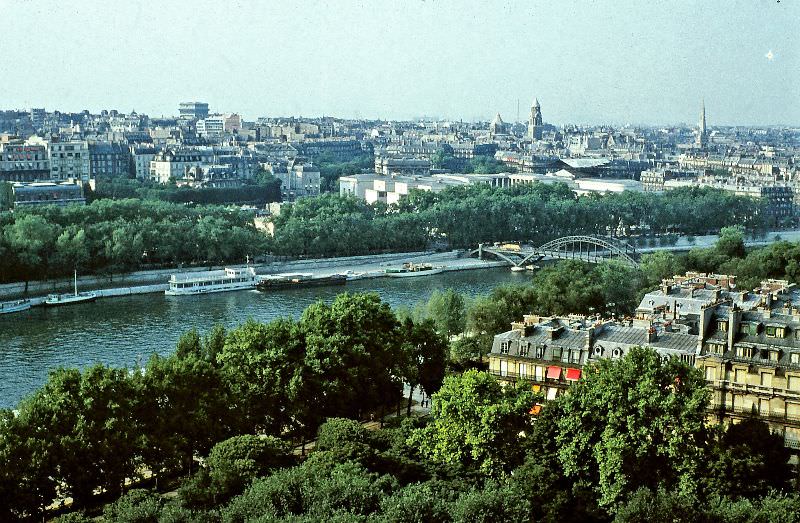
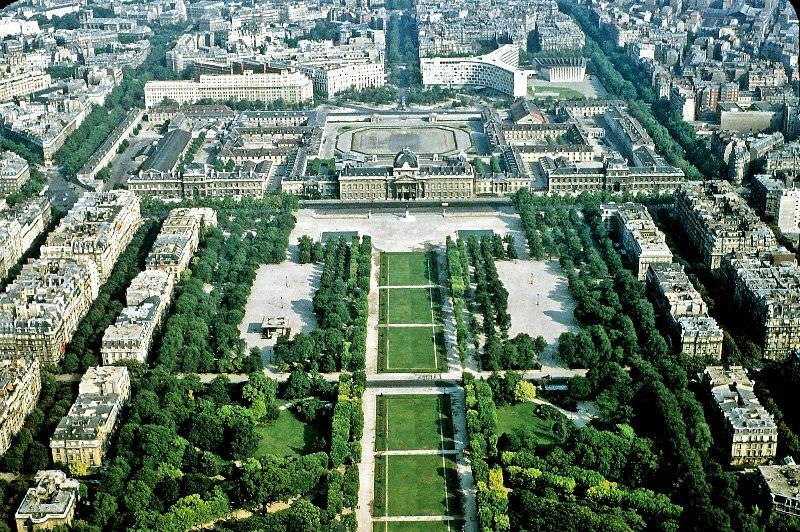
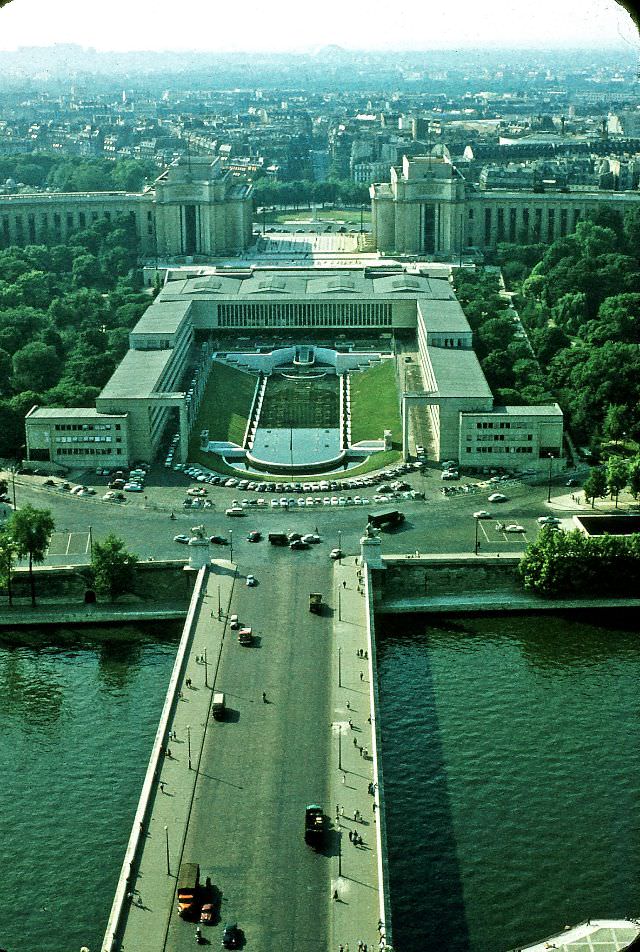
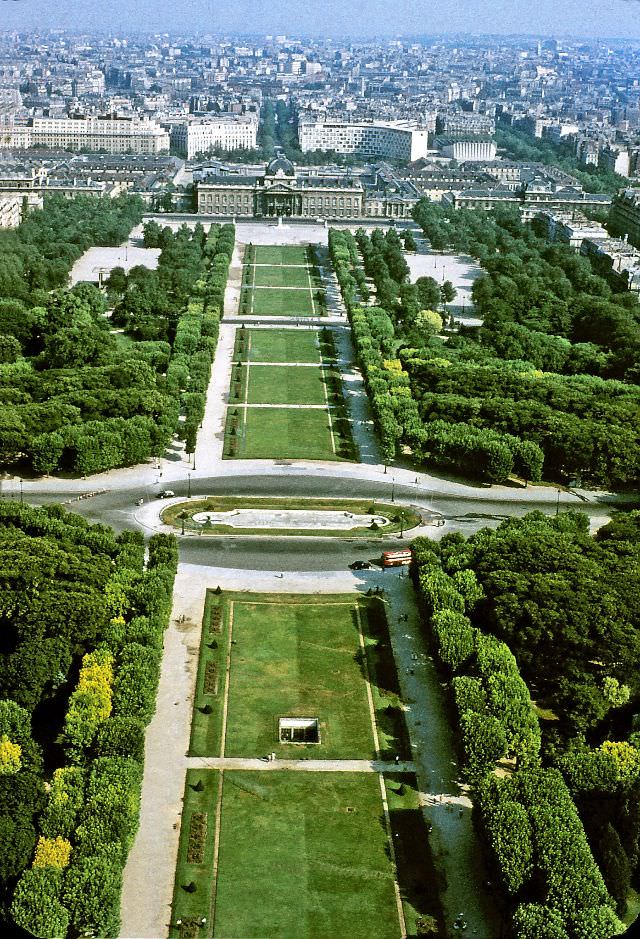
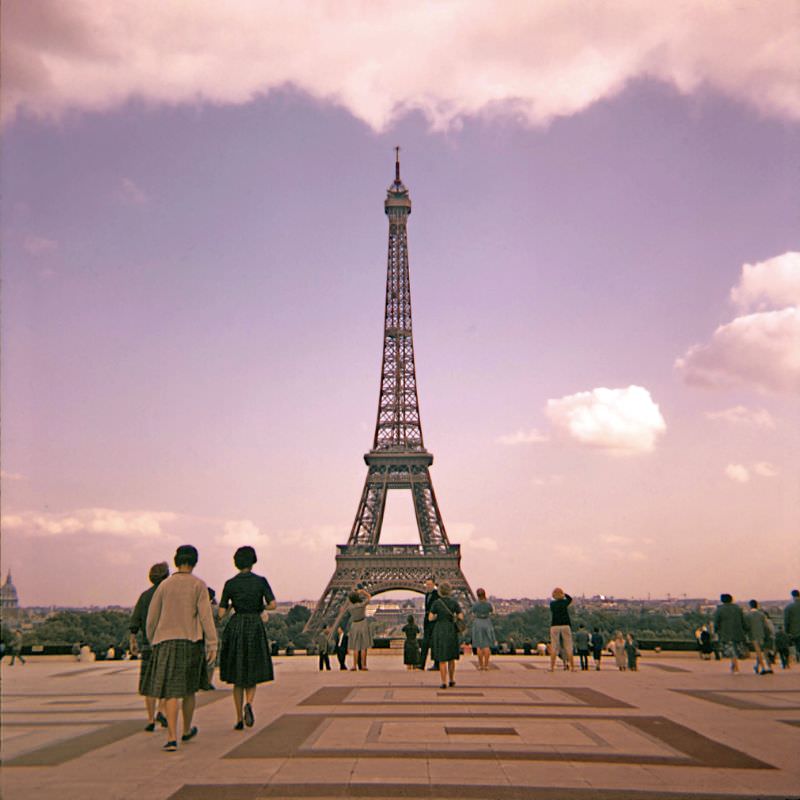
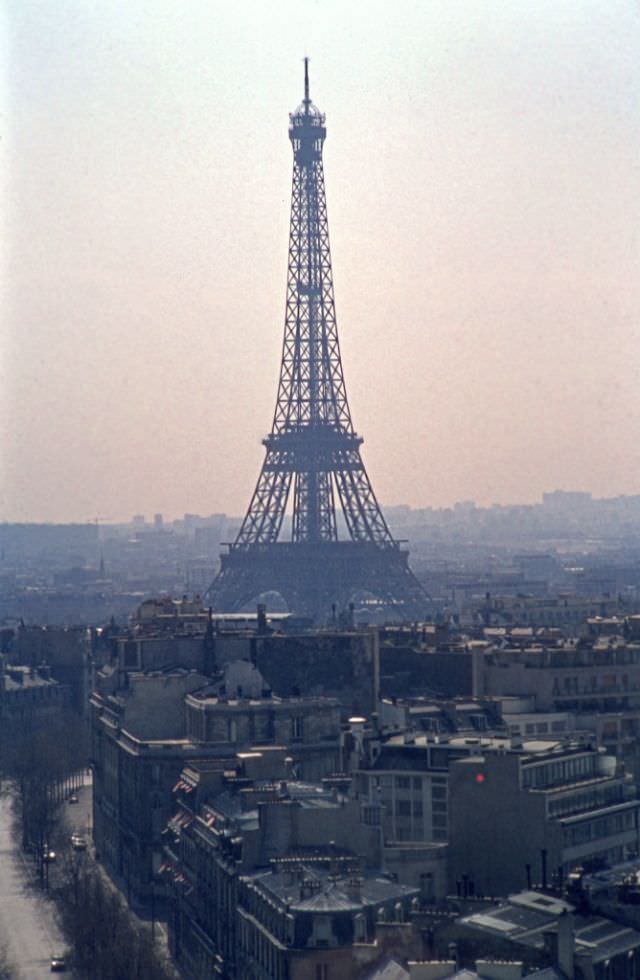
The Eiffel Tower, built for the 1889 World’s Fair, had long since become the defining symbol of Paris. From its upper platforms, the city spread out in every direction — a vast, low canvas of Haussmann-era buildings, church spires, and green parks. These aerial views from 1966 show a city that was dense but ordered, with the Seine cutting a clear diagonal through the frame.
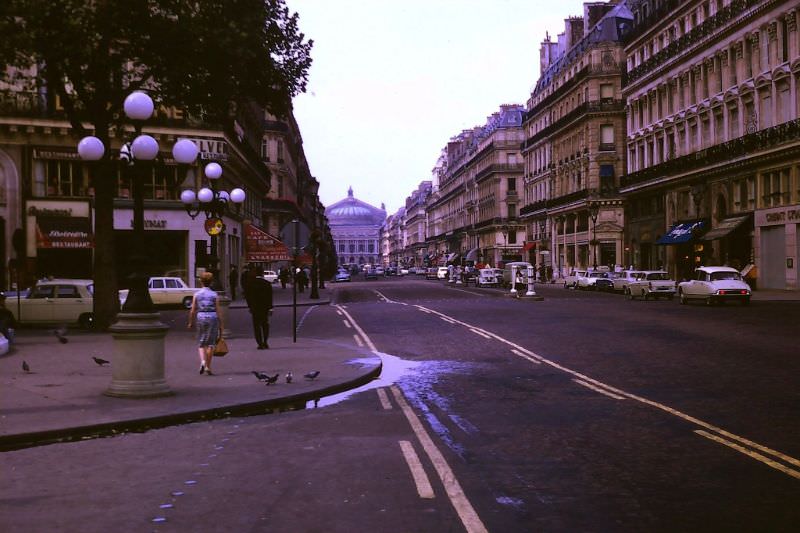
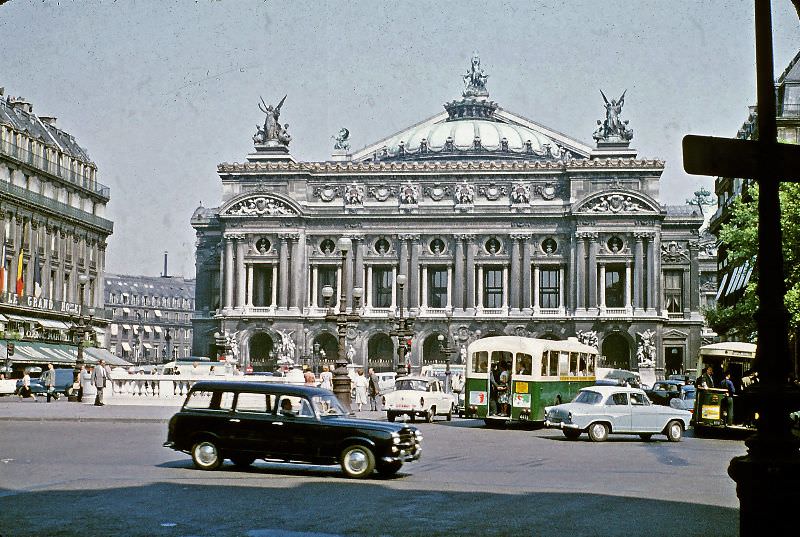
The Palais Garnier — Paris’s grand opera house — anchored the ninth arrondissement with its ornate façade and gilded detail. Designed by Charles Garnier and opened in 1875, it was one of the most elaborate buildings in Europe. In the 1960s, it continued to host ballet and opera performances, drawing formal audiences through its sweeping staircases and chandelier-lit foyers. The avenue leading up to it gave a clear sightline straight to the building from blocks away.
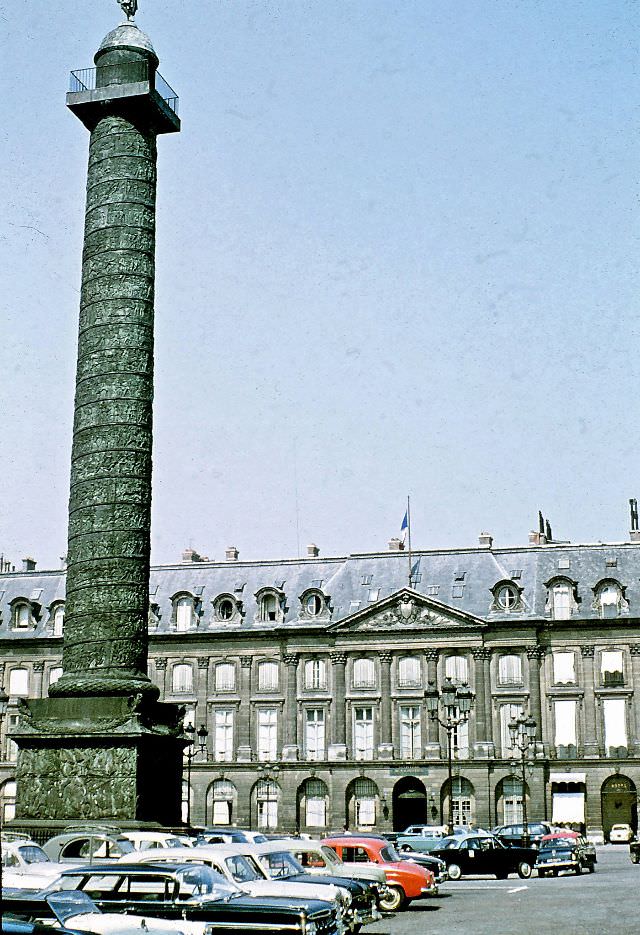
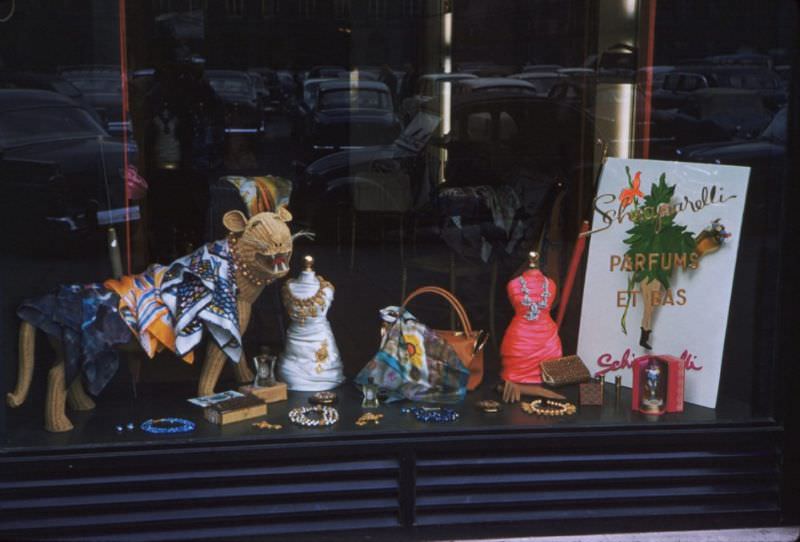
The Place Vendôme, with its tall central column topped by a figure of Napoleon, was Paris’s address for luxury jewelers and high-end hotels. Schiaparelli, one of the great names in 20th-century fashion, had her boutique on the square. By the early 1960s, the original house had closed, but the building remained — a reminder of the era when couture houses defined European style from this single, polished square.
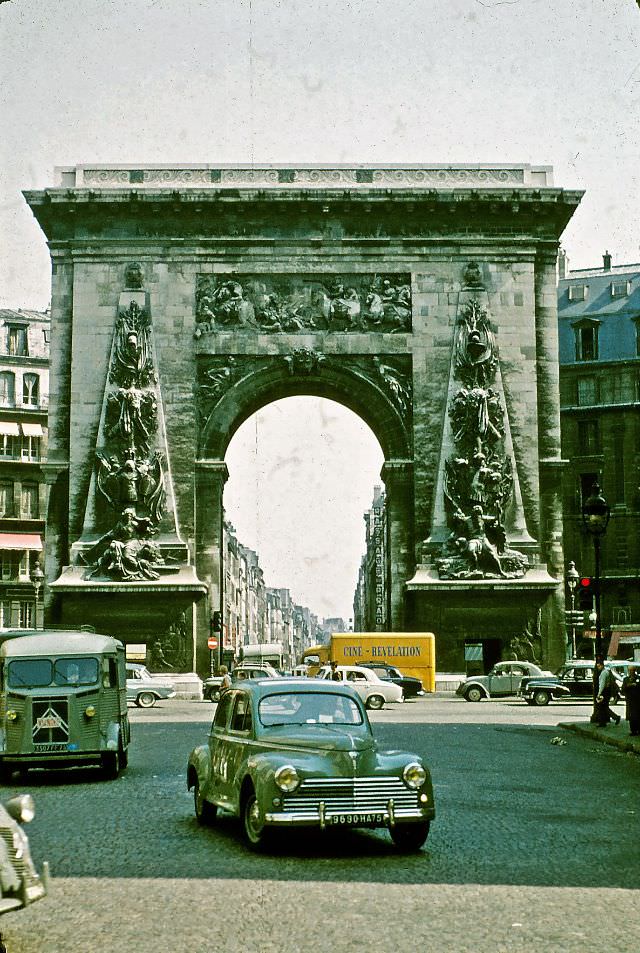
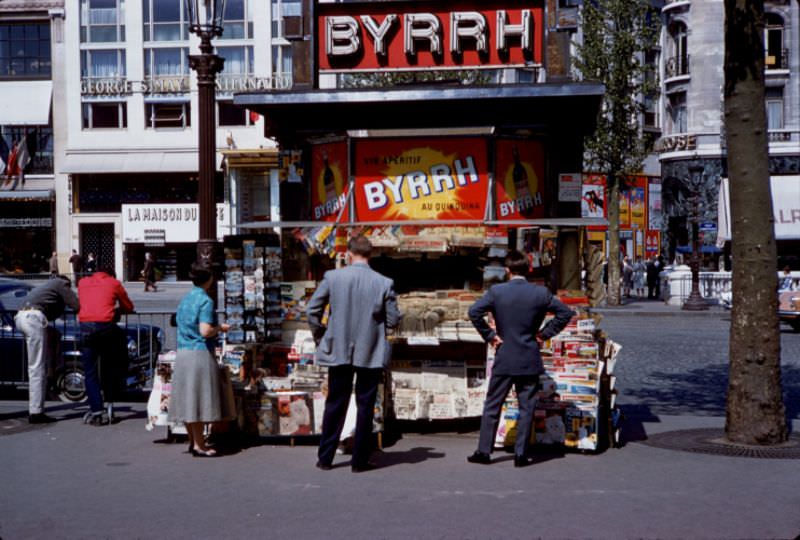
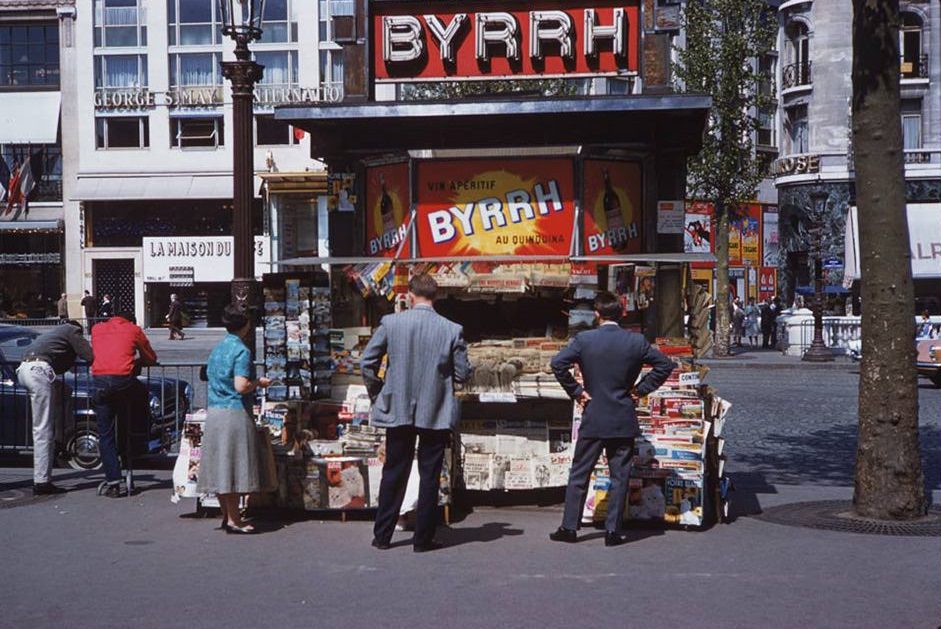
Street newsstands — kiosks painted dark green and loaded with newspapers, magazines, and postcards — were fixtures on nearly every major Paris corner. Before television became common in French homes, print media was how most people followed current events. A stop at the kiosk in the morning was part of the daily rhythm. The one at the corner of Rue Marignan and the Champs-Élysées sat at one of the busiest intersections in the city.
Cinema was one of the defining art forms of 1960s Paris. The French New Wave — Nouvelle Vague — emerged in the late 1950s and fully hit its stride in the early 1960s. Directors François Truffaut and Jean-Luc Godard rejected the polished conventions of mainstream filmmaking. They shot on location, used natural light, cast unknown actors, and allowed the camera to move in ways that felt spontaneous. Films like Truffaut’s ‘Jules and Jim’ (1962) and Godard’s ‘Breathless’ (1960) were seen as revolutionary at the time — and still are.
Music was changing just as fast. French pop — known as yé-yé, named for the ‘yeah yeah’ sounds of American rock and roll — took hold among young Parisians in the early 1960s. Françoise Hardy, with her quiet, melancholy style, became one of the decade’s most recognizable voices. Serge Gainsbourg pushed further, mixing jazz, pop, and provocative lyrics into something distinctly French. Their music played on radios, in cafés, and from open apartment windows across the city.
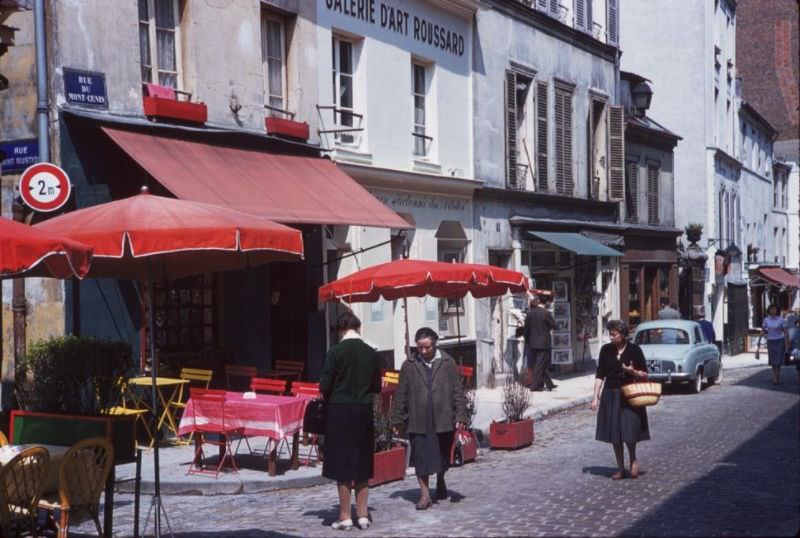
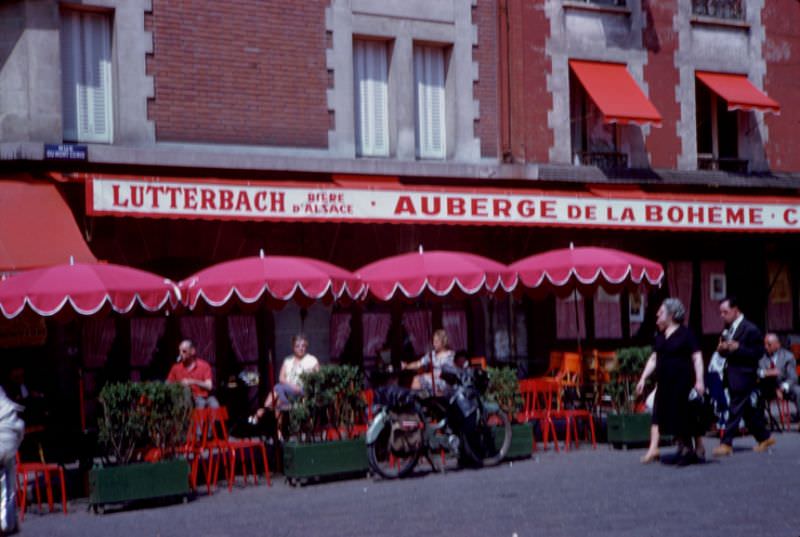
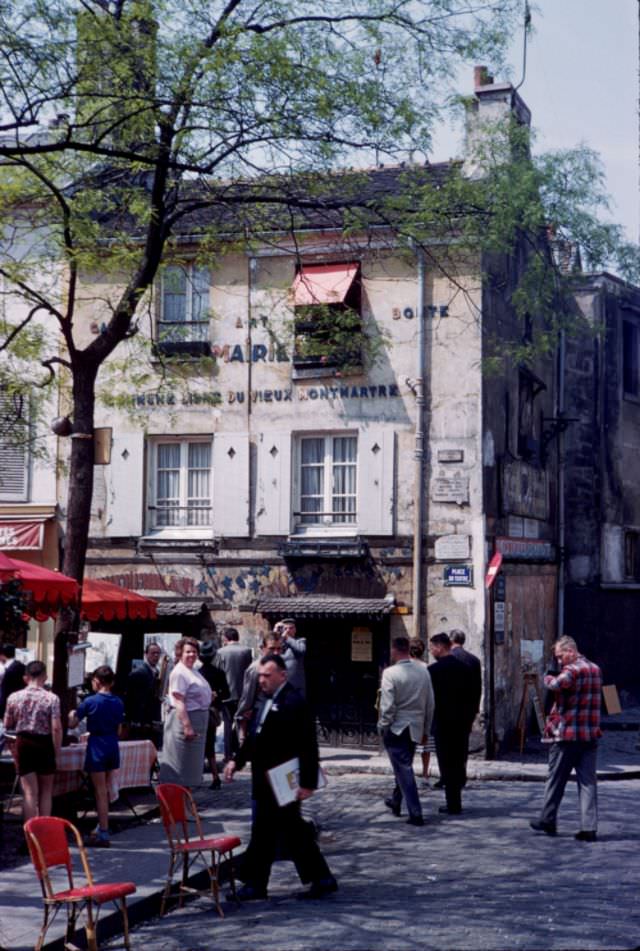
Place du Tertre in Montmartre was where artists set up their easels and worked in full view of the public. It had been a gathering spot for painters since the 19th century, and that tradition held through the 1960s. Portrait artists competed for tourist commissions. Landscape painters turned their canvases toward the rooftops and the distant city below. The square was small, uneven, and almost always crowded — a living illustration of the neighborhood’s long relationship with making art in public.
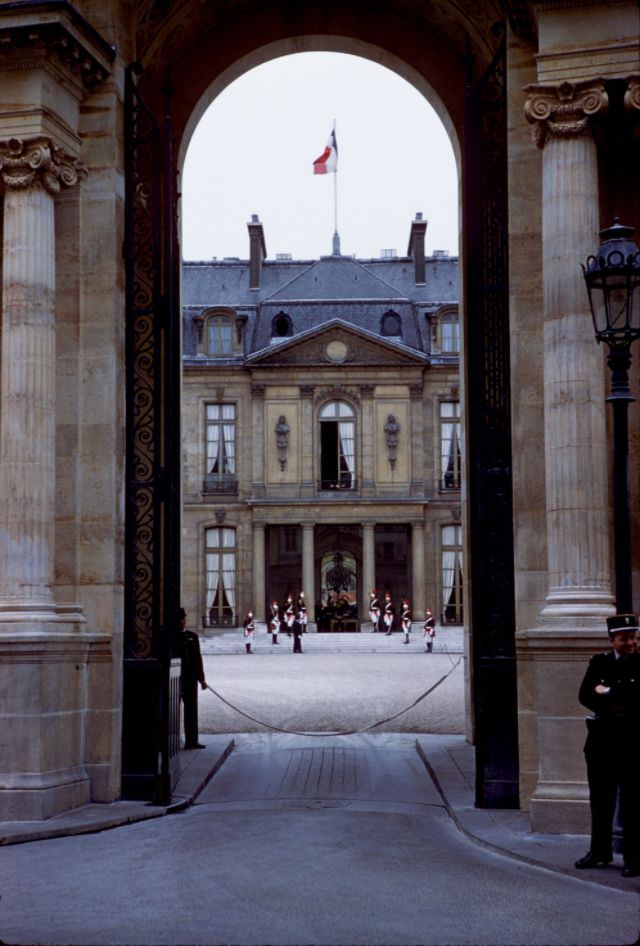
The Palais de l’Élysée on the Rue du Faubourg Saint-Honoré was the official residence of the French president. In 1960, that president was Charles de Gaulle, whose tall, formal presence defined French political life throughout the decade. His government handled the end of the Algerian War in 1962, which brought hundreds of thousands of settlers and refugees back to metropolitan France. That wave of new arrivals reshaped several Paris neighborhoods and added new layers to the city’s already complex identity.
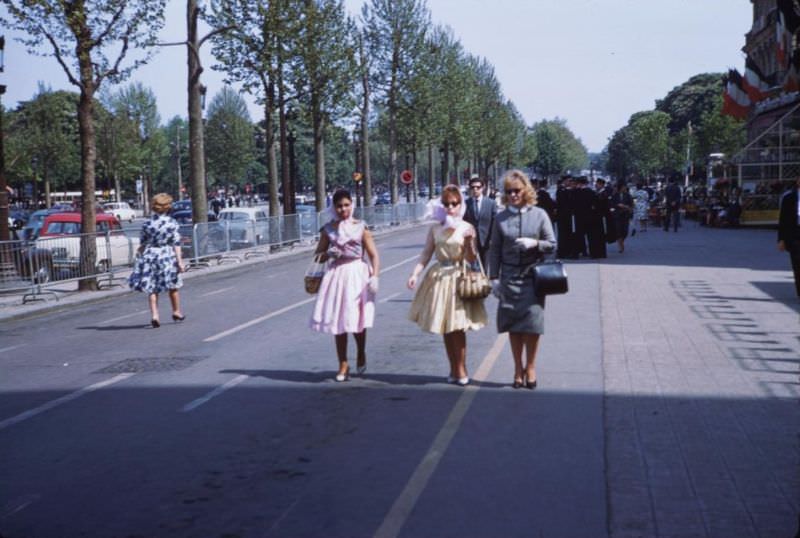
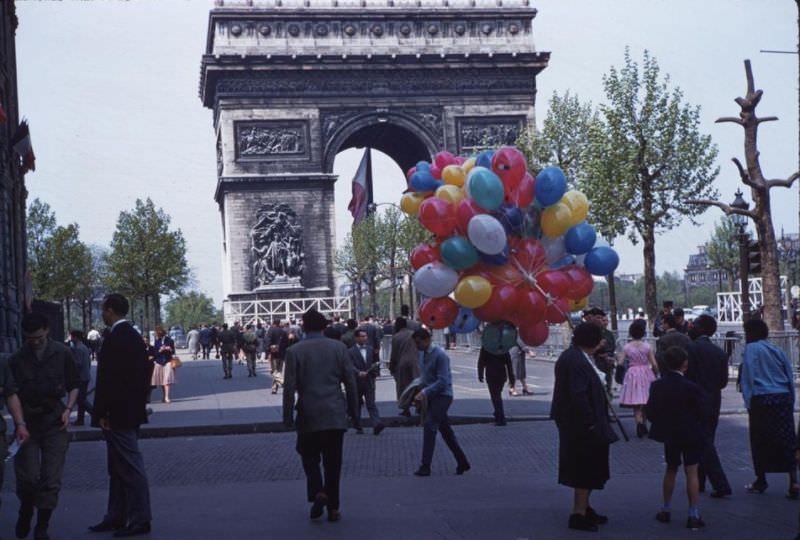
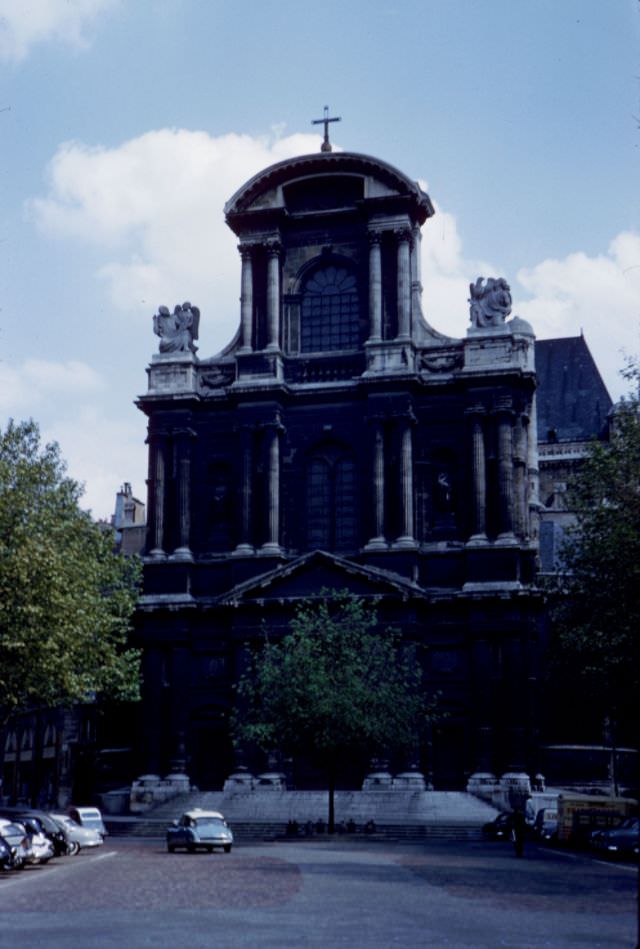
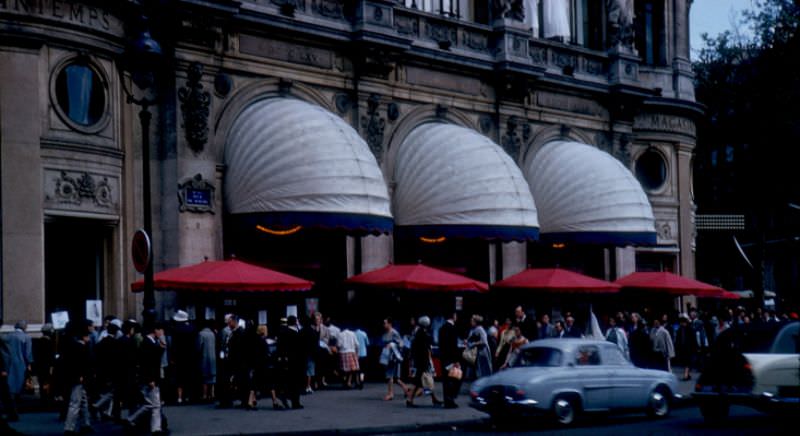
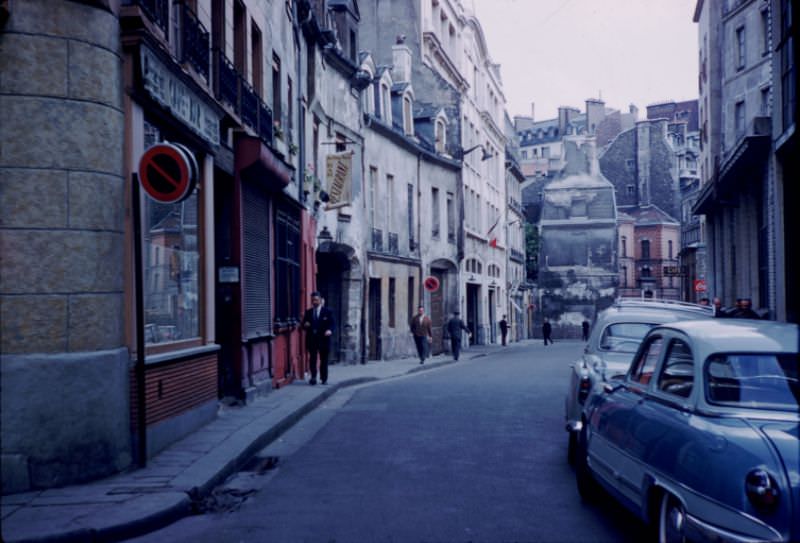
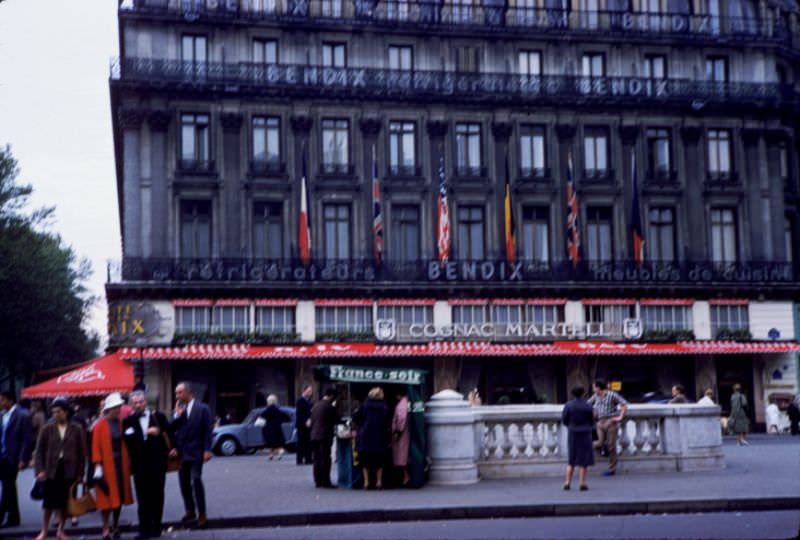
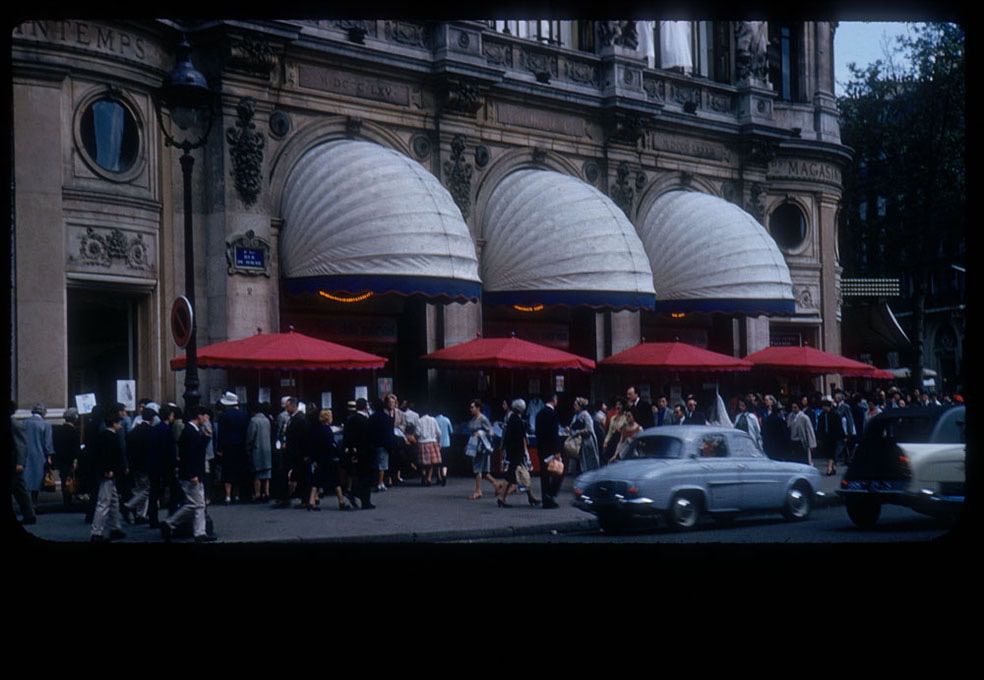
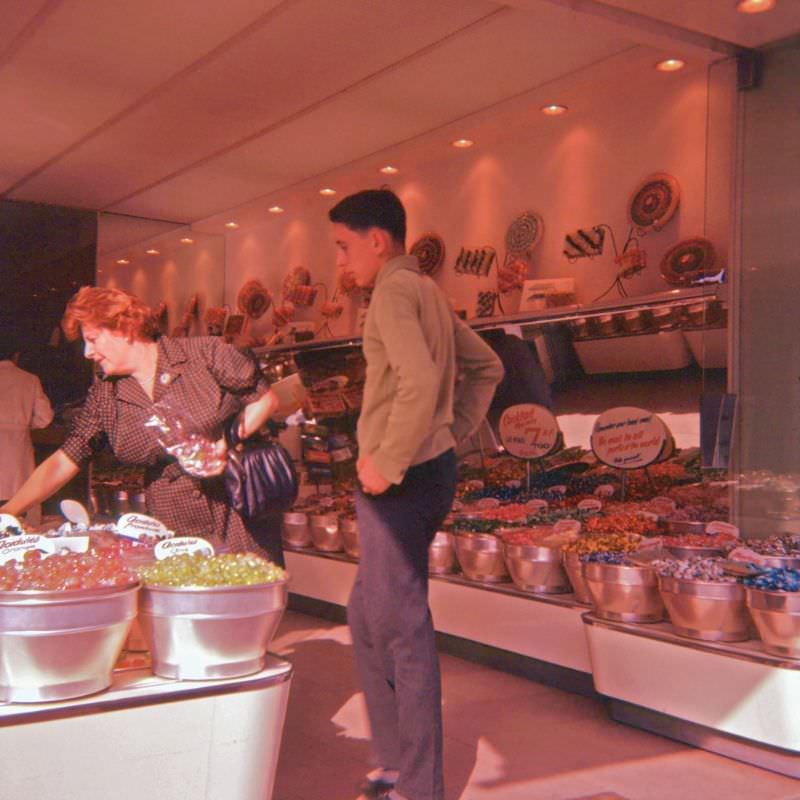
In 1961, the Champs-Élysées was already showing the visual mix that would define it for decades — luxury shops next to candy stores, formal architecture above busy street-level commerce. The Arc de Triomphe anchored the western end of the avenue as it always had, but the people walking beneath it were younger, more casually dressed, and increasingly shaped by the international pop culture flowing in from Britain and the United States.
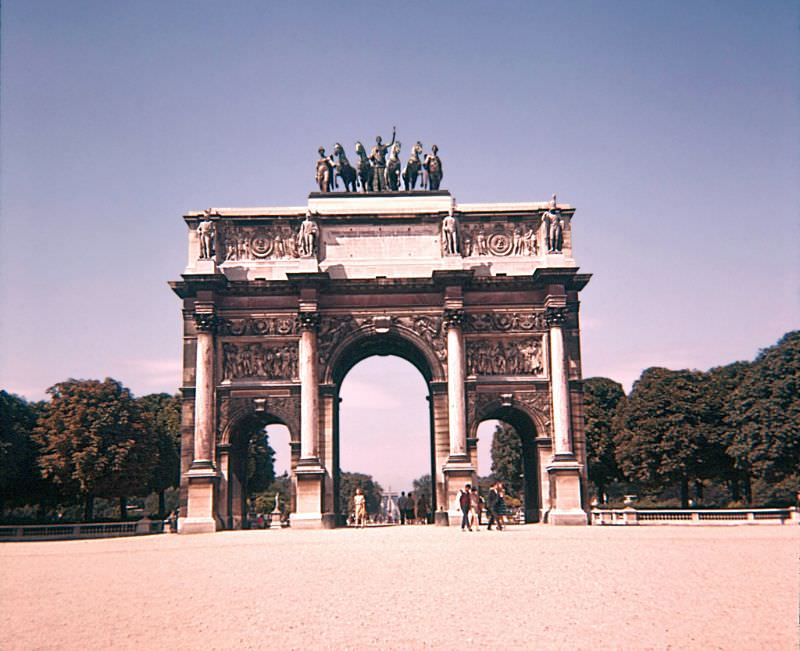
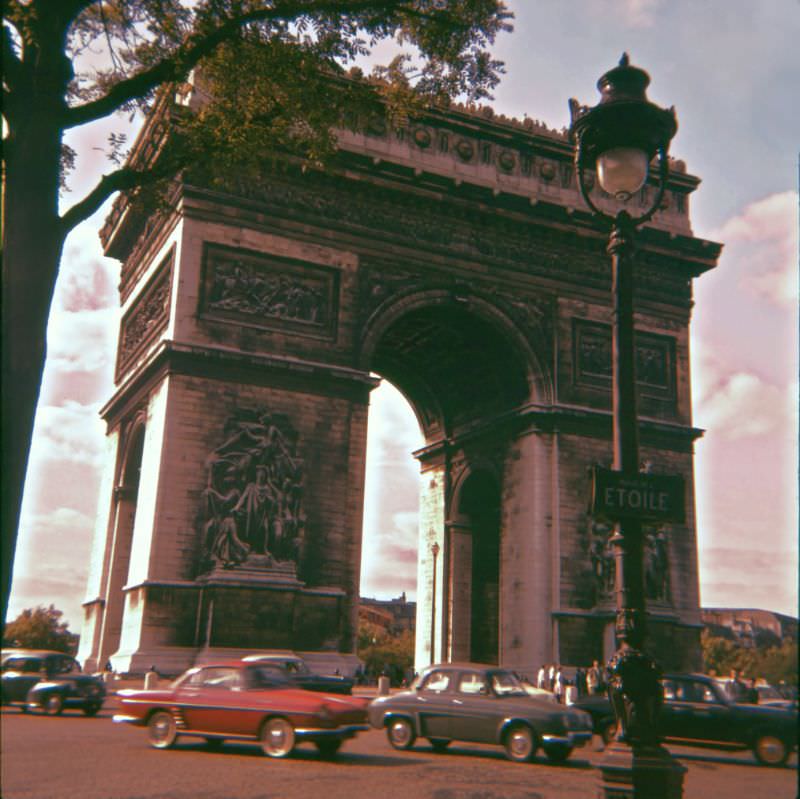
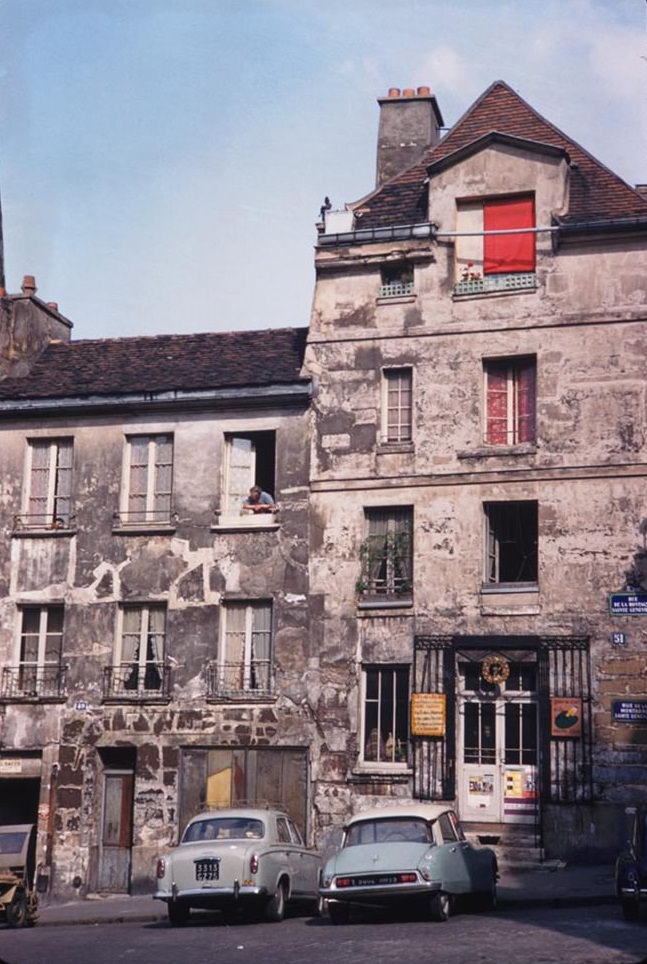
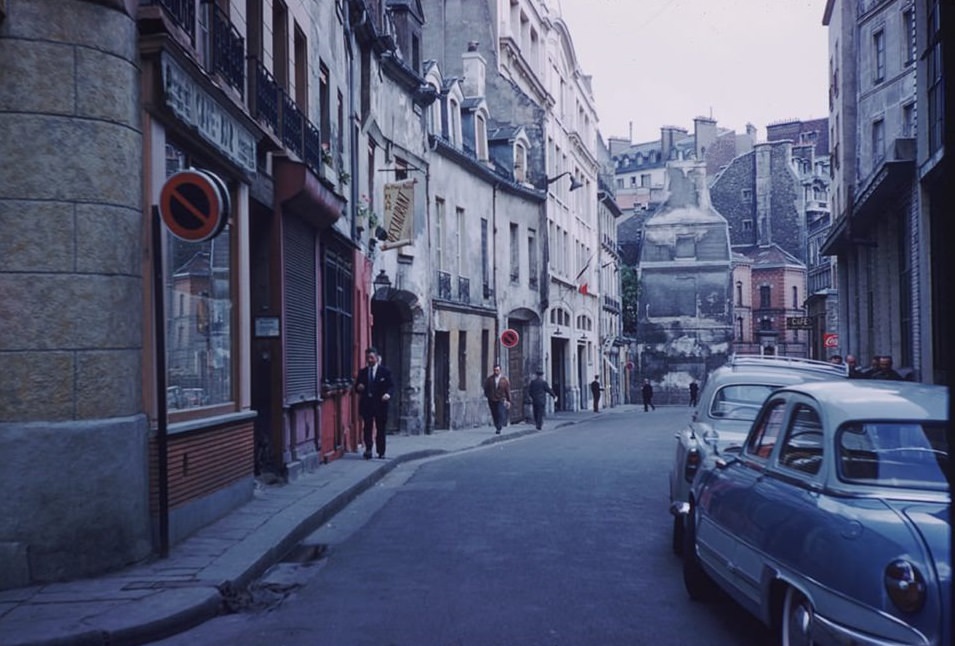
Montmartre in 1961 still had the feel of a village within a city. The steep streets, the low buildings, and the mix of local residents and visiting artists gave the neighborhood a texture that was different from the formal boulevards below. The Sacré-Cœur Basilica drew pilgrims and tourists, but the streets around it belonged to the people who lived there — shopkeepers, students, and the painters who had made the hill famous in the first place.
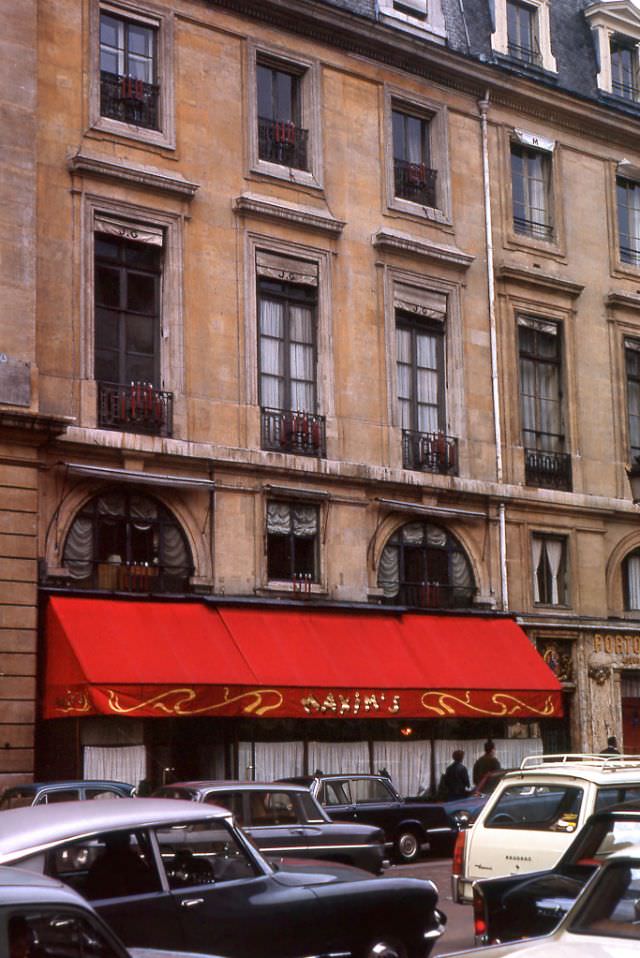
By the mid-1960s, Paris’s restaurant culture was thriving. Maxim’s on the Rue Royale was one of the city’s most famous dining rooms — an Art Nouveau landmark that attracted politicians, celebrities, and wealthy travelers. A few streets away, Notre-Dame continued to draw visitors by the millions. The contrast between the ancient cathedral and the glittering social world of Paris’s restaurants and bars illustrated just how many different cities existed within the same city.
Les Halles in 1966 was in its final active years as Paris’s central food market. The iron pavilions designed by Victor Baltard in the 1850s still stood, still full of vendors and buyers, still producing the nighttime noise and energy that had defined the district for over a century. Within a few years, the debate over what to do with the aging complex would result in demolition. The photographs from 1966 are among the last records of it functioning at full capacity.
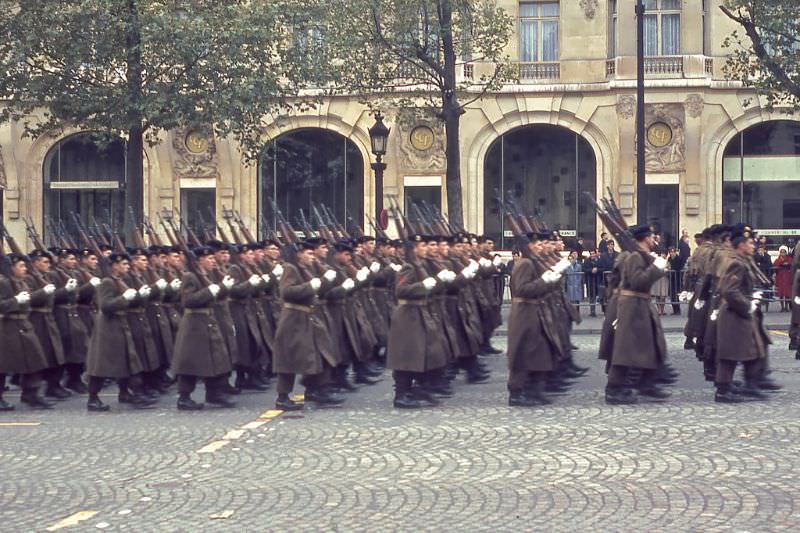
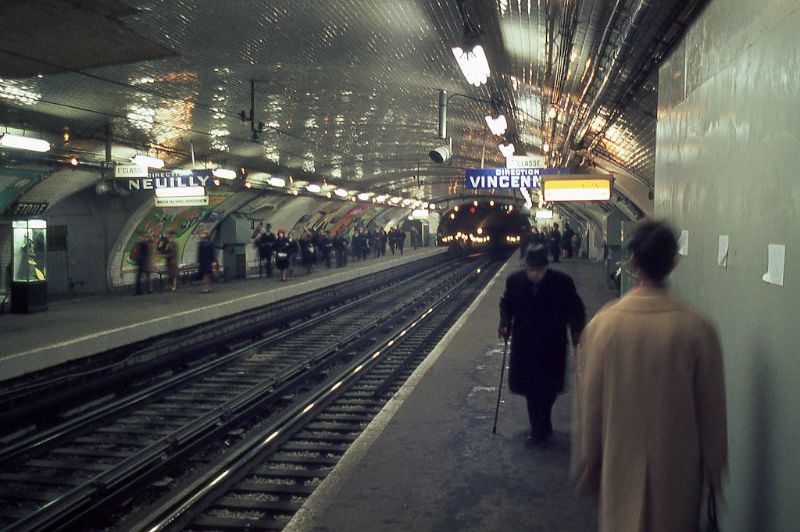
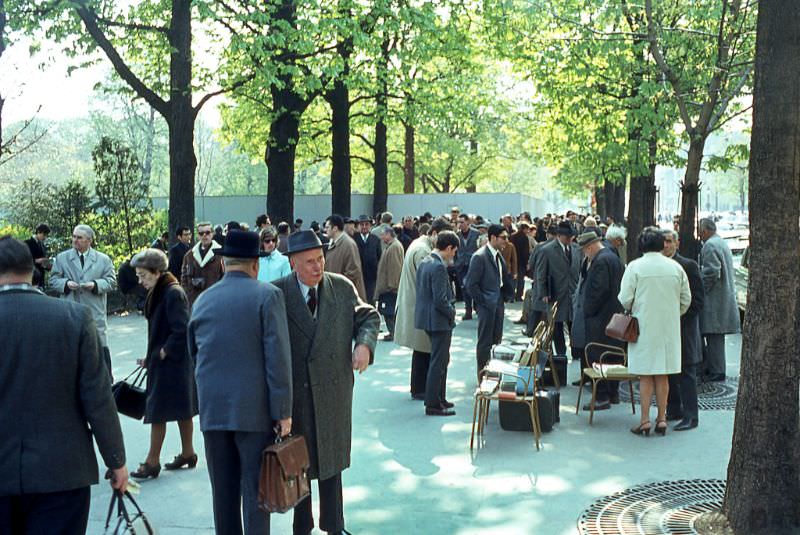
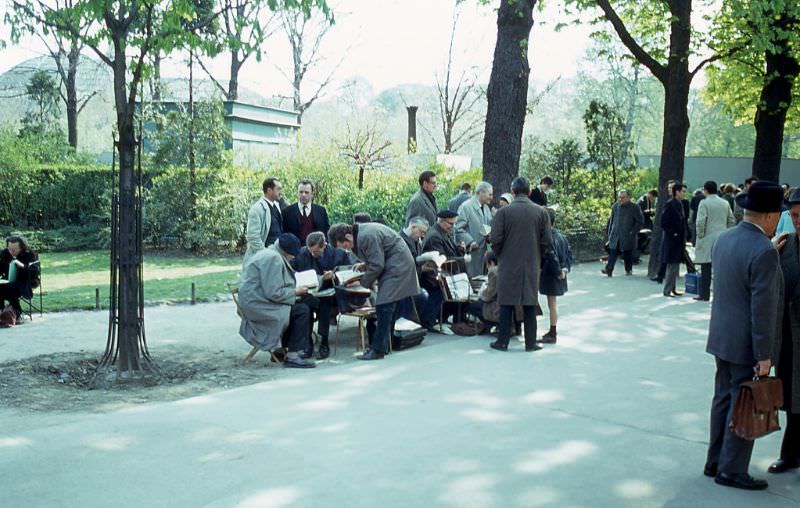
November 1967 brought the annual Armistice Day parade down the Champs-Élysées. Charles de Gaulle, then 77 years old, rode in the procession — a familiar and commanding figure against the backdrop of the avenue’s chestnut trees and stone facades. The Paris Métro that same year was carrying millions of passengers daily through its network of underground lines, many of them still running on original Art Nouveau station designs by Hector Guimard. Stamp collectors gathered along the Champs-Élysées on Sundays, spreading their collections on portable tables and trading with other enthusiasts.
In May 1968, what began as student protests at the University of Nanterre rapidly spread to the Sorbonne and then into the streets of Paris. Students erected barricades in the Latin Quarter, fighting police with cobblestones. The protests grew into a general strike that eventually involved ten million workers across France — the largest strike in French history. Paris ground to a halt. Factories stopped. Petrol stations ran dry. De Gaulle briefly fled the country before returning to dissolve the National Assembly and call new elections. The photographs from 1968 show a city that was simultaneously ordinary and on the edge of something historic.
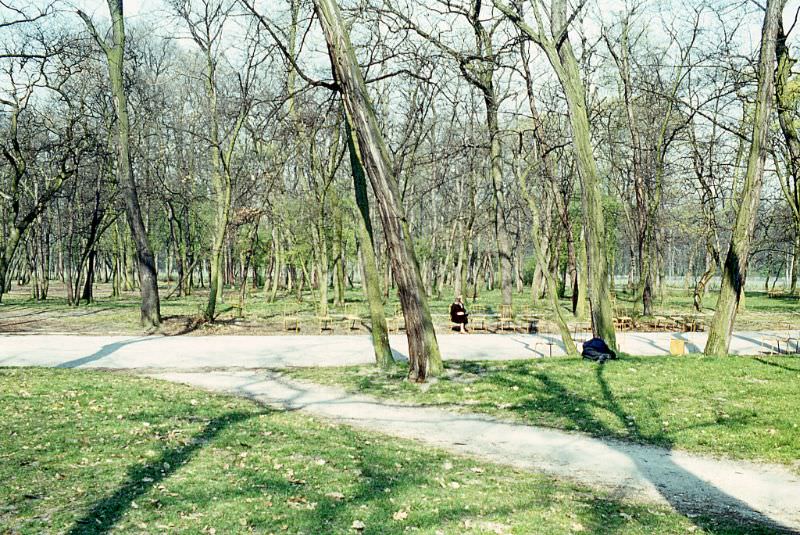
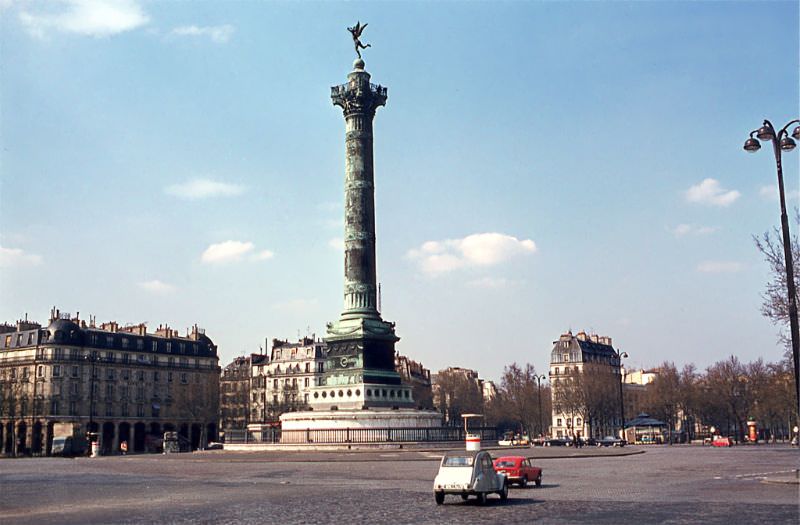
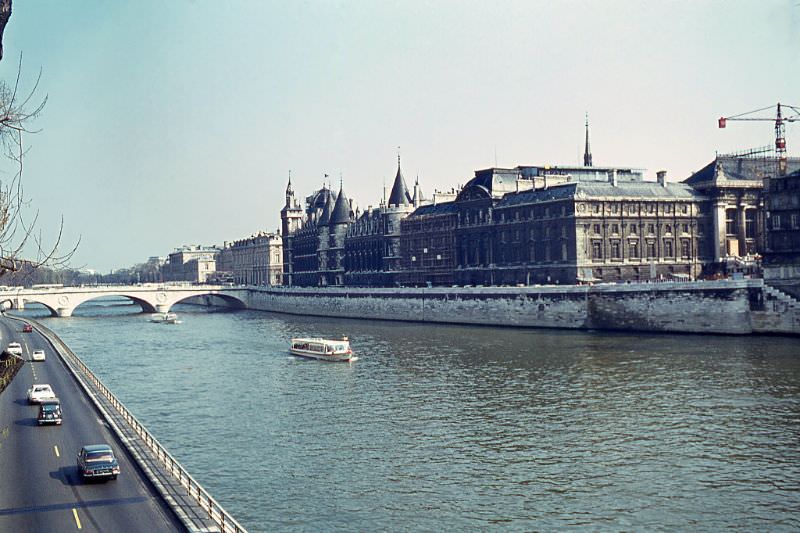
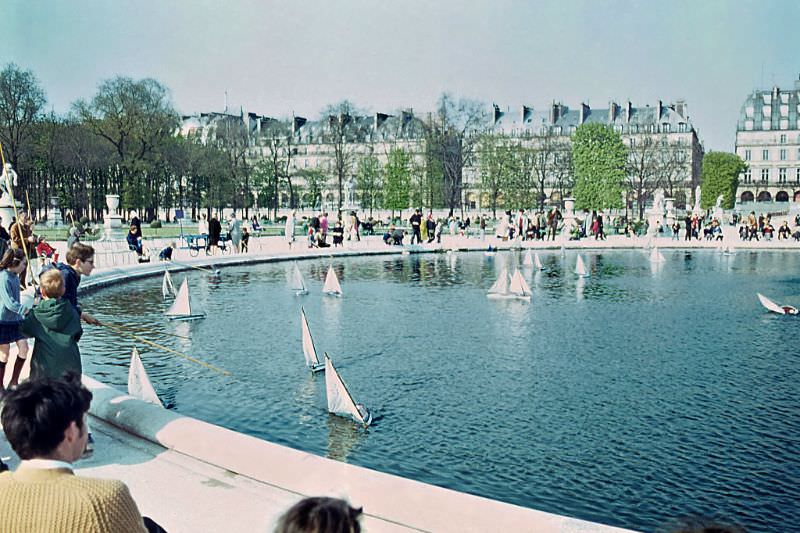
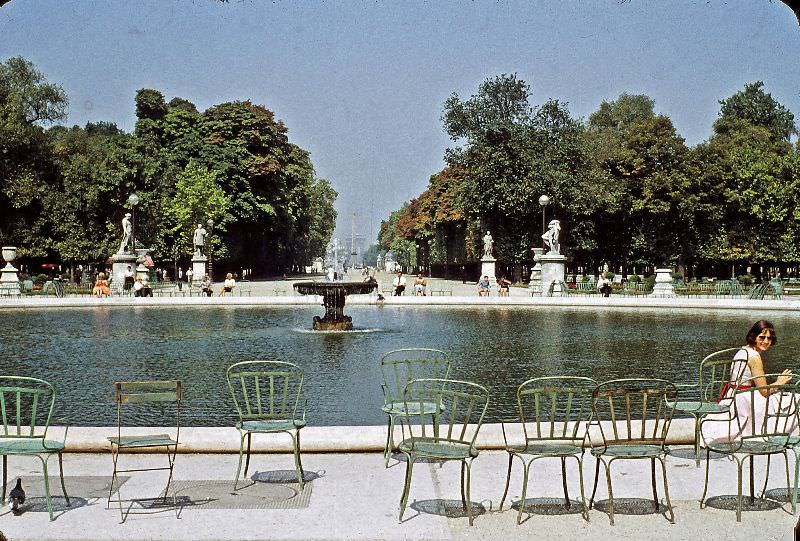
Even in the middle of political upheaval, daily life in Paris continued. Children sailed model boats on the pond in the Jardin des Tuileries, as they had for generations. The Bois de Boulogne offered Parisians space to walk, ride horses, and escape the city’s density. The Conciergerie, once a royal palace and later a prison during the Revolution, stood on the Île de la Cité as it always had — a stone reminder of how many different eras Paris had already survived.