
At the turn of the 20th century, New York City was one of the fastest-changing places on earth. Its population stood at roughly 3.4 million in 1900, and the city was being reshaped from the ground up — new bridges, elevated rail lines, expanded streets, and towering buildings were all going up at once. By 1920, more than 2 million of the city’s residents were foreign-born immigrants, making up over one-third of the total population. The streets were alive with dozens of languages, pushcart vendors, and the constant noise of construction.
The photographs in this collection were produced by the Detroit Publishing Company using a technique called the photochrom process — a method that applied color to black-and-white photographs through lithographic printing. The results are striking. Streets that most people assume existed only in shades of gray suddenly appear in warm golds, deep blues, and earthy reds. These images offer a precise visual record of what New York looked and felt like at the exact moment it was becoming a modern city.
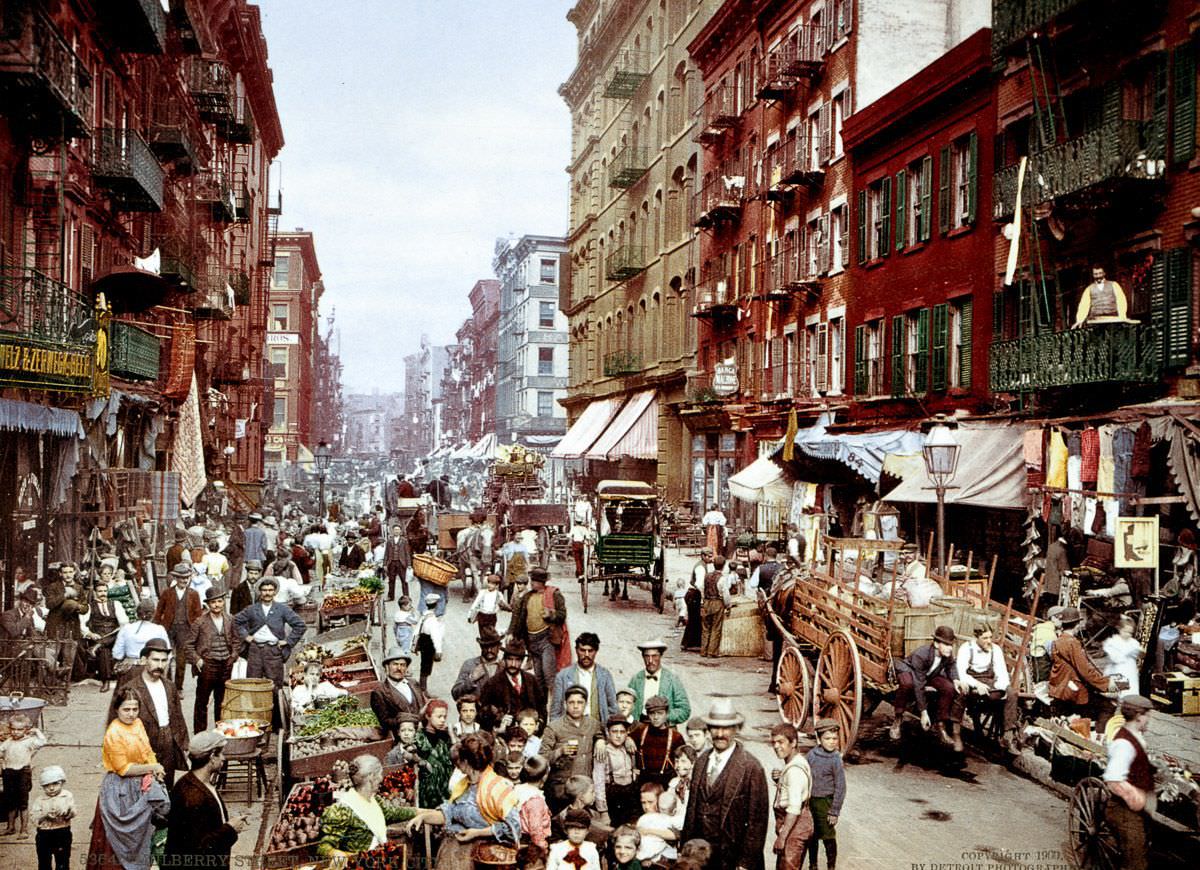
Mulberry Street in lower Manhattan was one of the most densely packed streets in the city at this time. It sat at the heart of the Italian immigrant neighborhood in the area known as Little Italy. The street was lined with tenement buildings, storefronts, and vendors selling everything from bread to clothing. On any given day, the sidewalks were so crowded that walking in a straight line was nearly impossible.
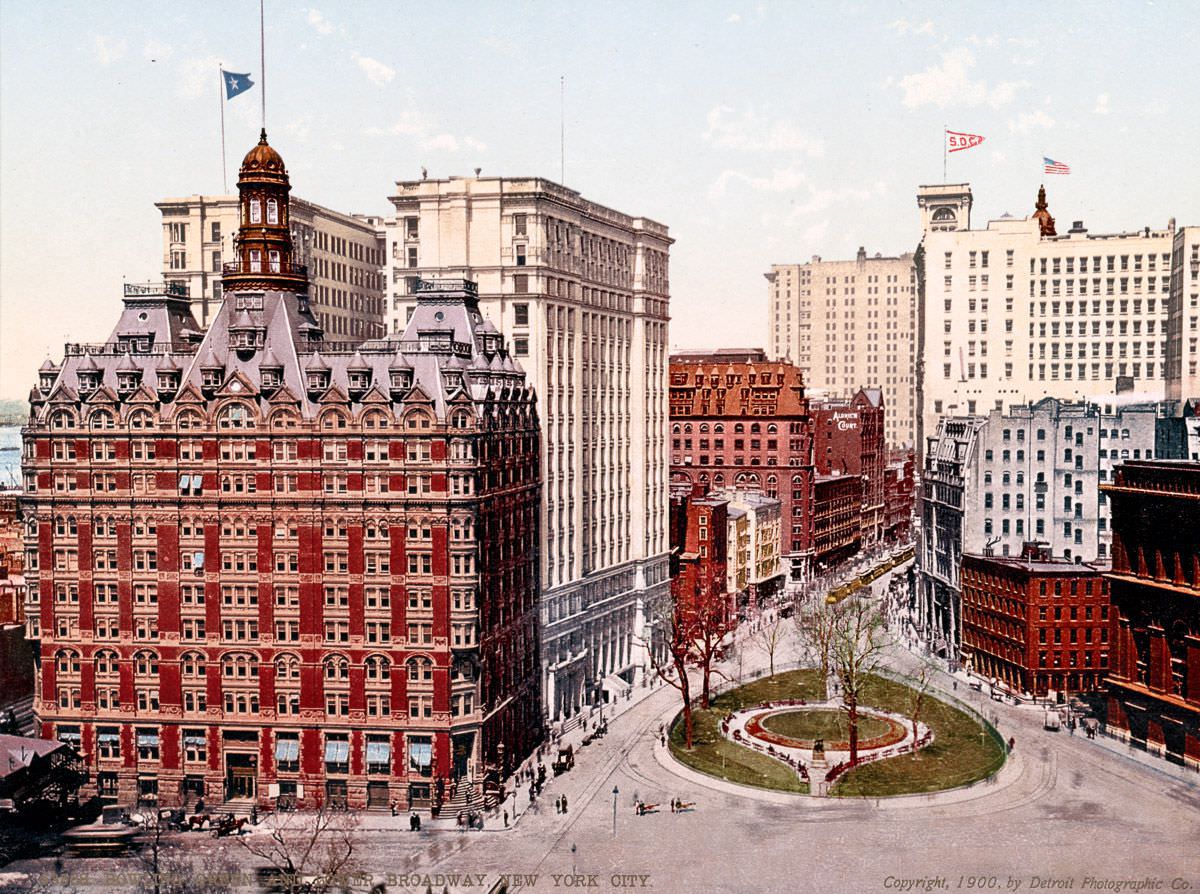
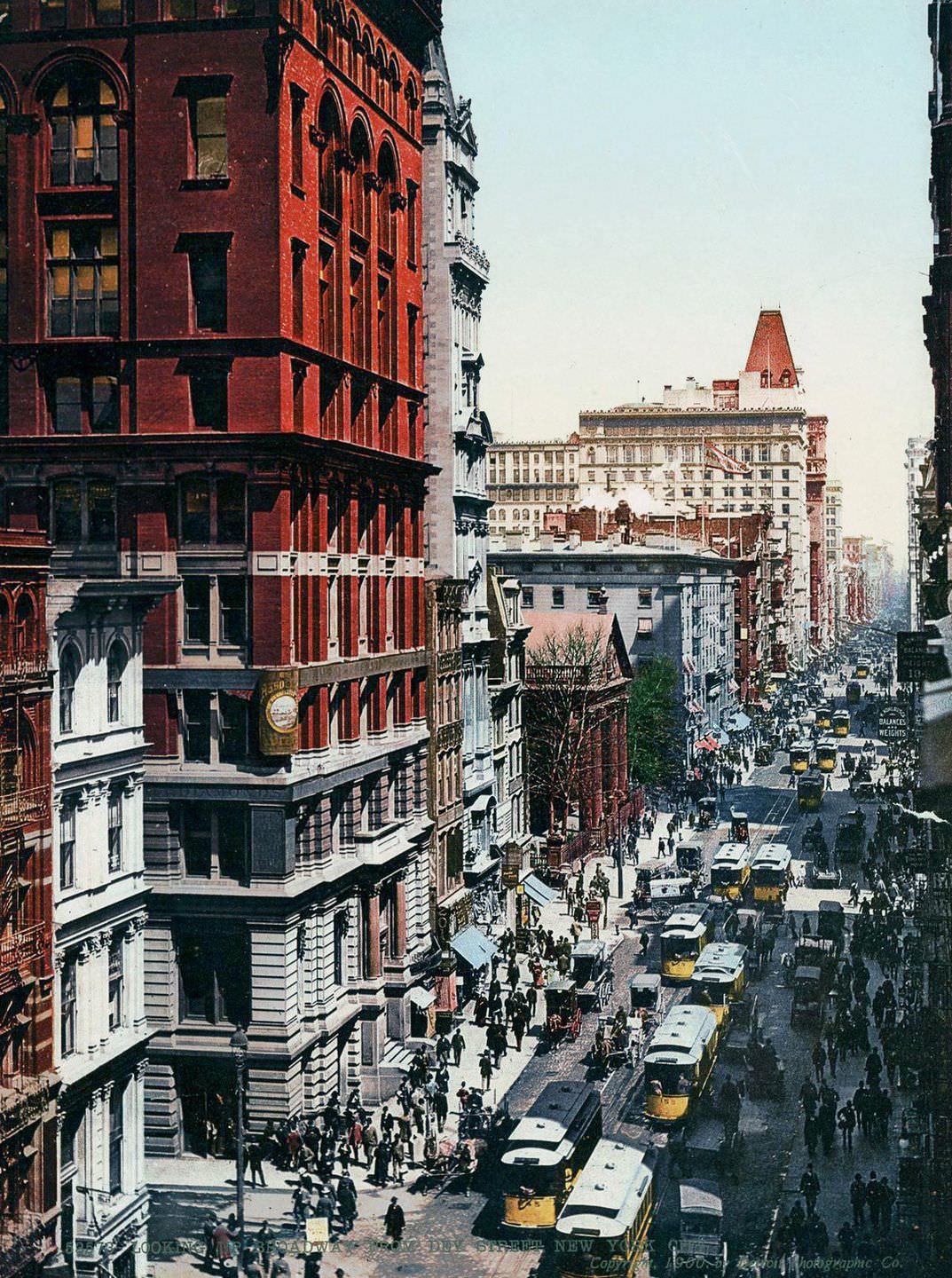
Lower Broadway was the commercial spine of the city. Bowling Green, at its southern tip, is the oldest public park in New York, and by 1900 it was surrounded by financial institutions and office buildings that signaled the city’s growing economic power. Horse-drawn carriages still shared the road with early electric streetcars, creating a transition-era street scene that would not last long.
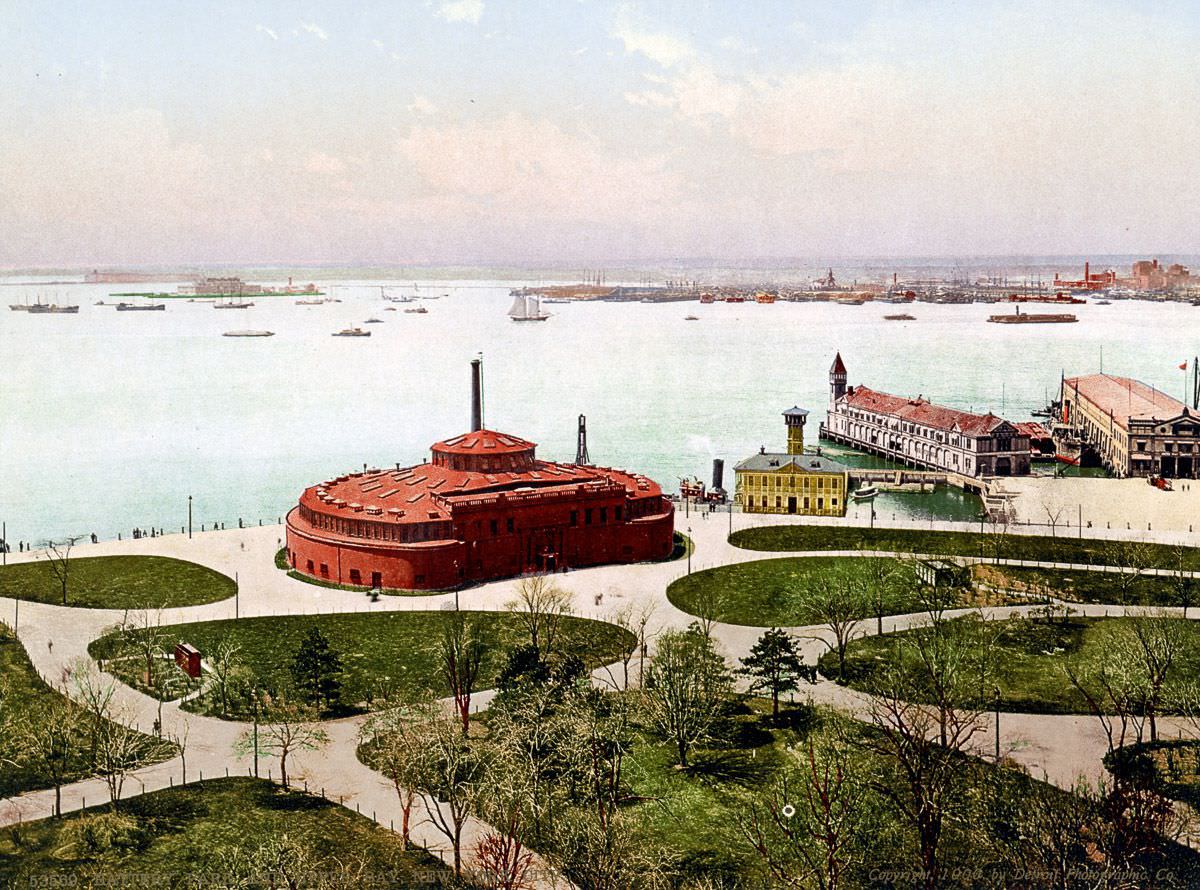
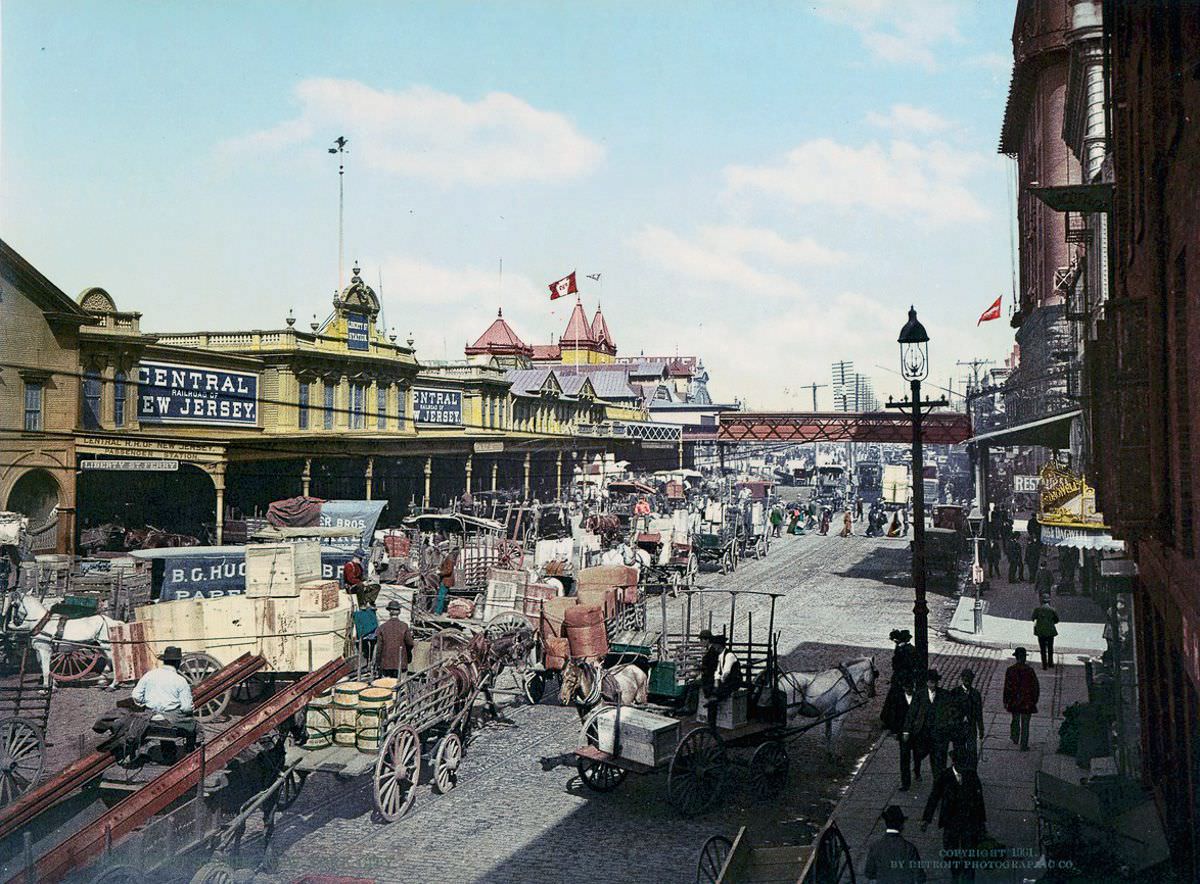
West Street ran along the Hudson River waterfront, where shipping, commerce, and immigration all converged. Freight wagons, longshoremen, and ferry passengers moved through it constantly. The docks along the Hudson were among the busiest in the world, connecting New York to ports across Europe, South America, and beyond. The harbor itself was the gateway through which millions of immigrants first glimpsed the city.
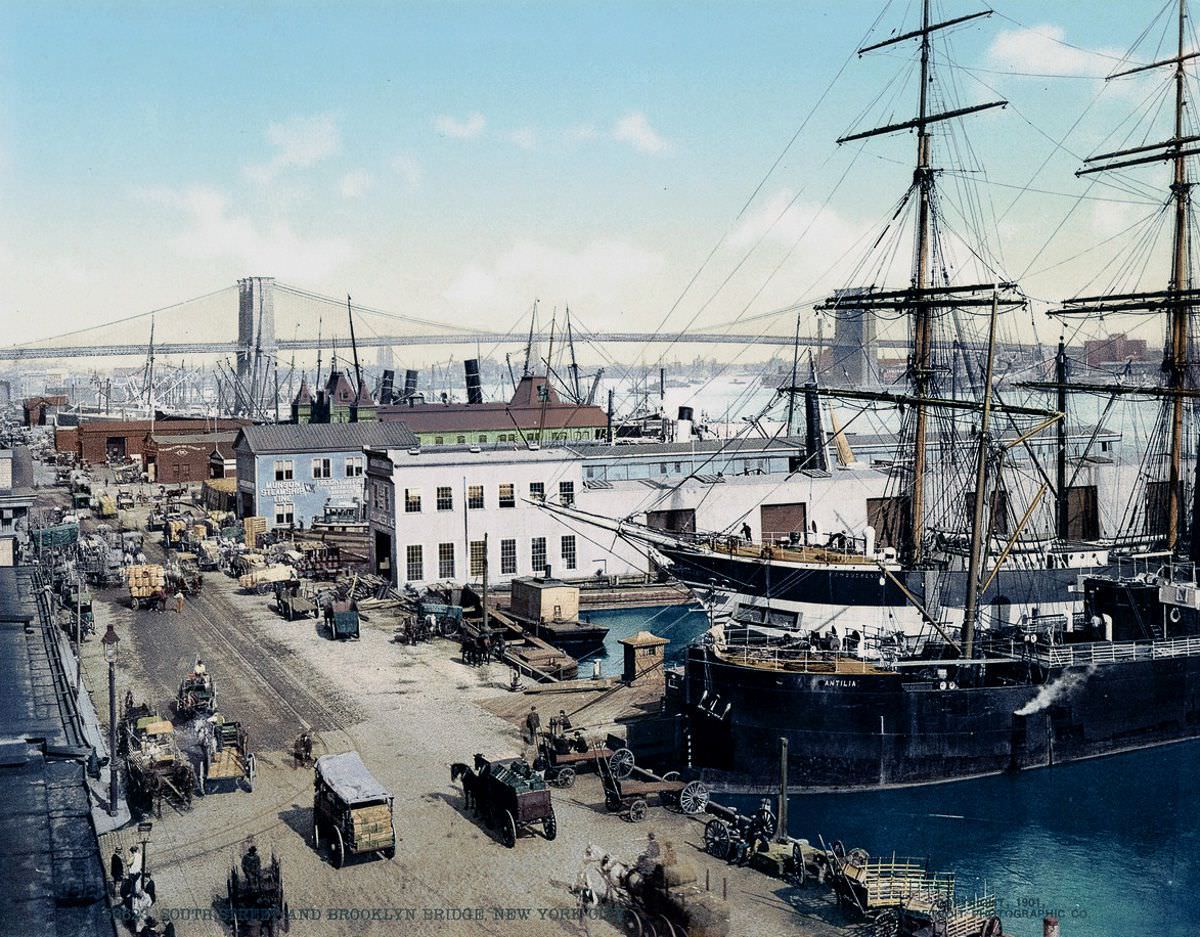
The Brooklyn Bridge had opened in 1883, and by 1900 it had already become one of the defining symbols of New York. From South Street along the East River waterfront, the bridge loomed over the fish markets and piers below. The area around it was thick with the smell of salt water and fish, and the sounds of ships unloading cargo filled the air from early morning to dusk.
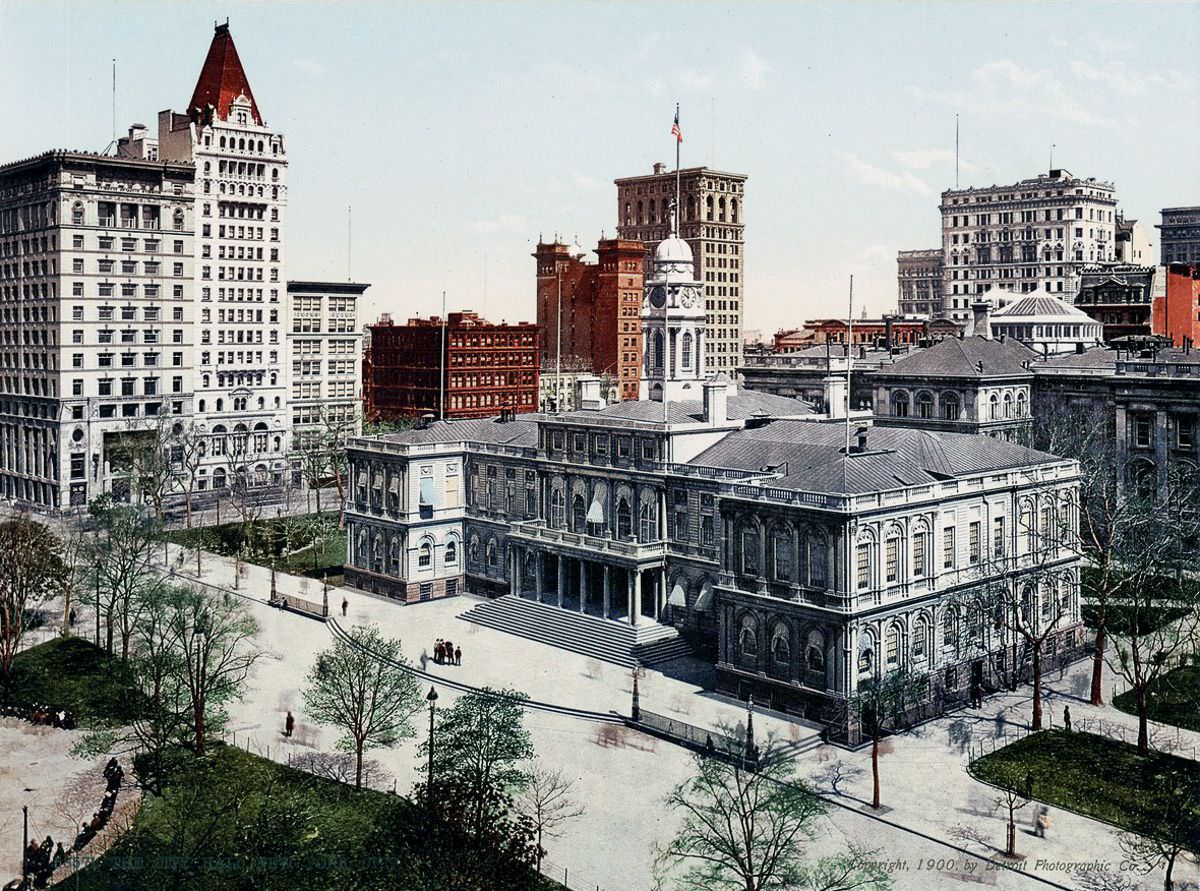
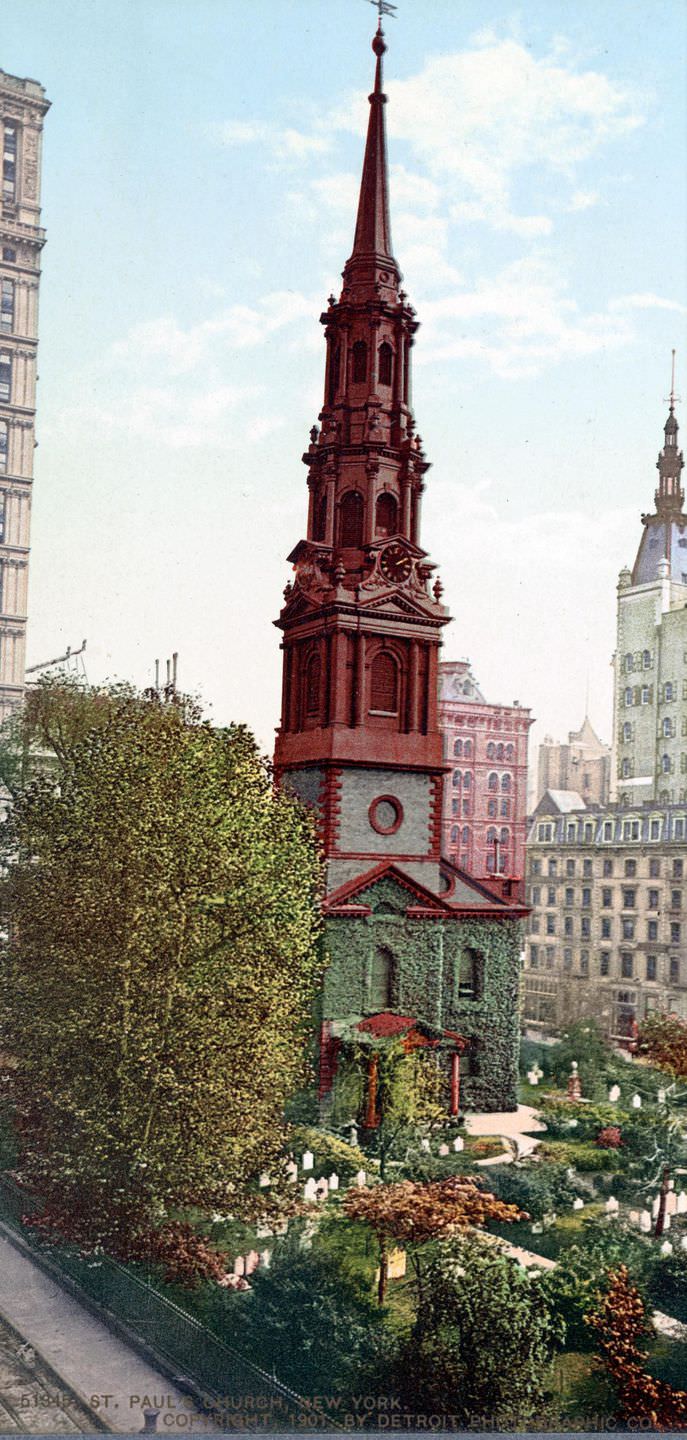
St. Paul’s Chapel, completed in 1766, was already well over a century old by the time this photograph was taken. Located on Broadway in lower Manhattan, it was the oldest surviving church building in the city. Its Georgian architecture stood in sharp contrast to the newer, taller buildings being erected around it. City Hall, nearby, was the seat of municipal government and one of the few buildings from the early 19th century still functioning in its original role.
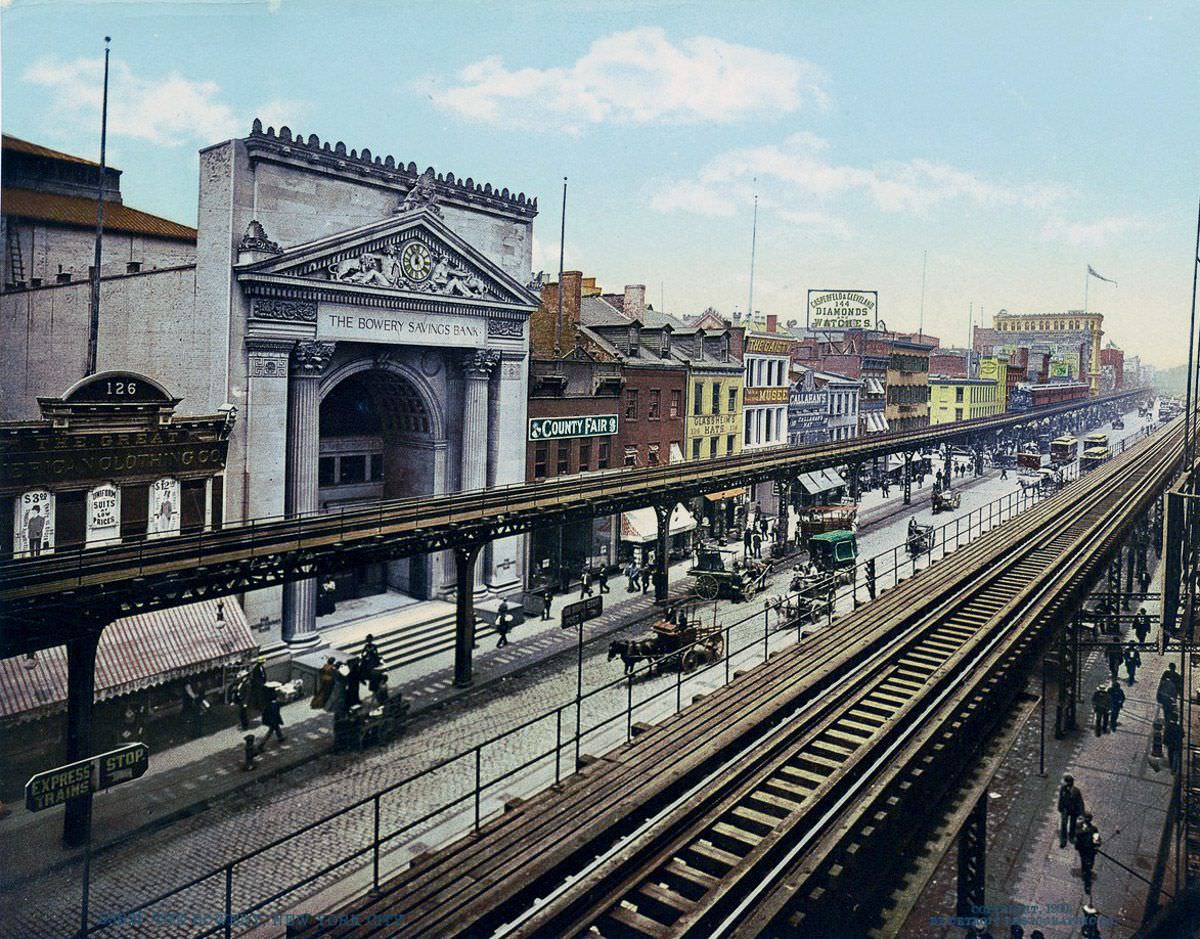
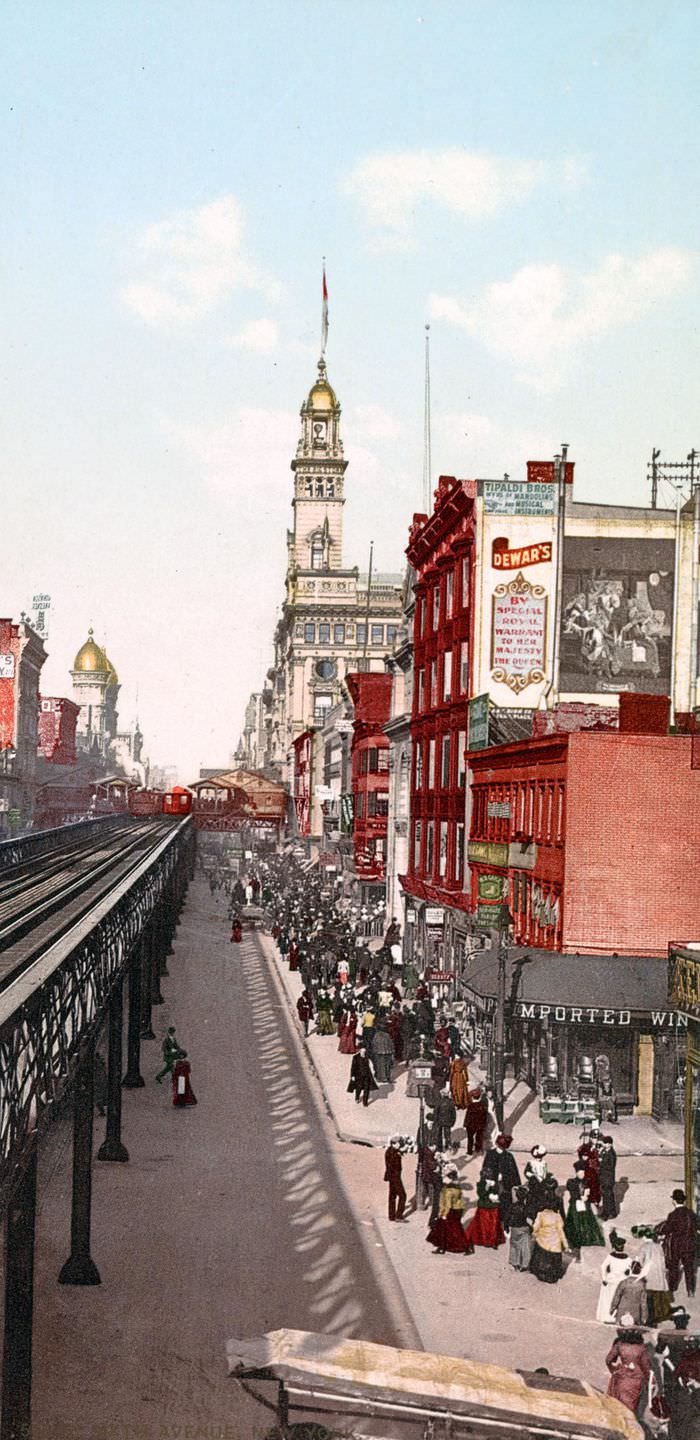
The Bowery had a complicated reputation. Once a respectable thoroughfare, by 1900 it was known as a street populated by flophouses, saloons, theaters, and pawnshops. Elevated train tracks ran directly above it, casting the street below into near-constant shadow. It was also a place of genuine working-class life — cheap entertainment, cheap food, and cheap lodging for those who needed it.
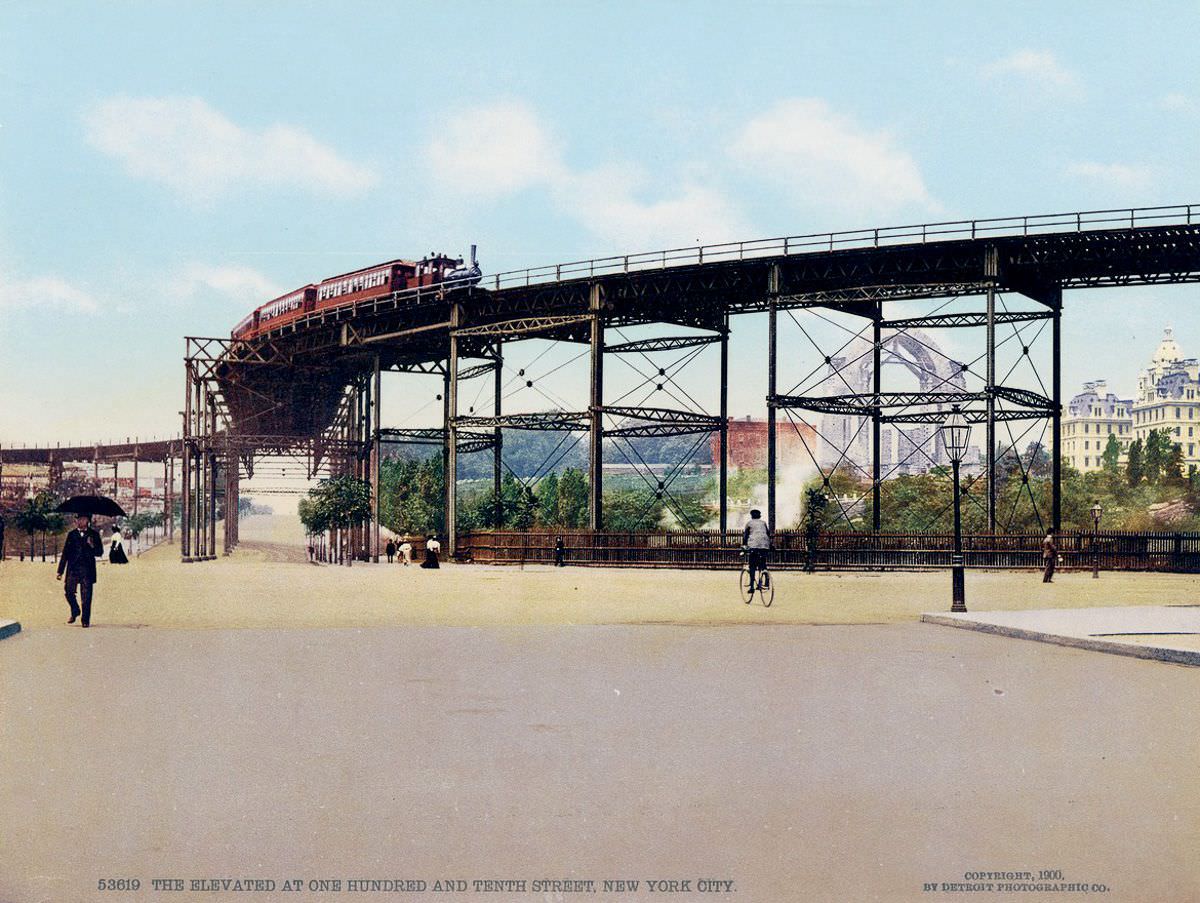
Many of Manhattan’s early transit lines ran on elevated tracks rather than underground tunnels. These “els,” as they were called, were loud, dirty, and fast — they rattled windows, dripped grease, and threw sparks onto the streets below. But they were also essential. They connected uptown and downtown, carrying workers, shoppers, and immigrants to every corner of the island. The city’s first underground subway line, the IRT, didn’t open until 1904.
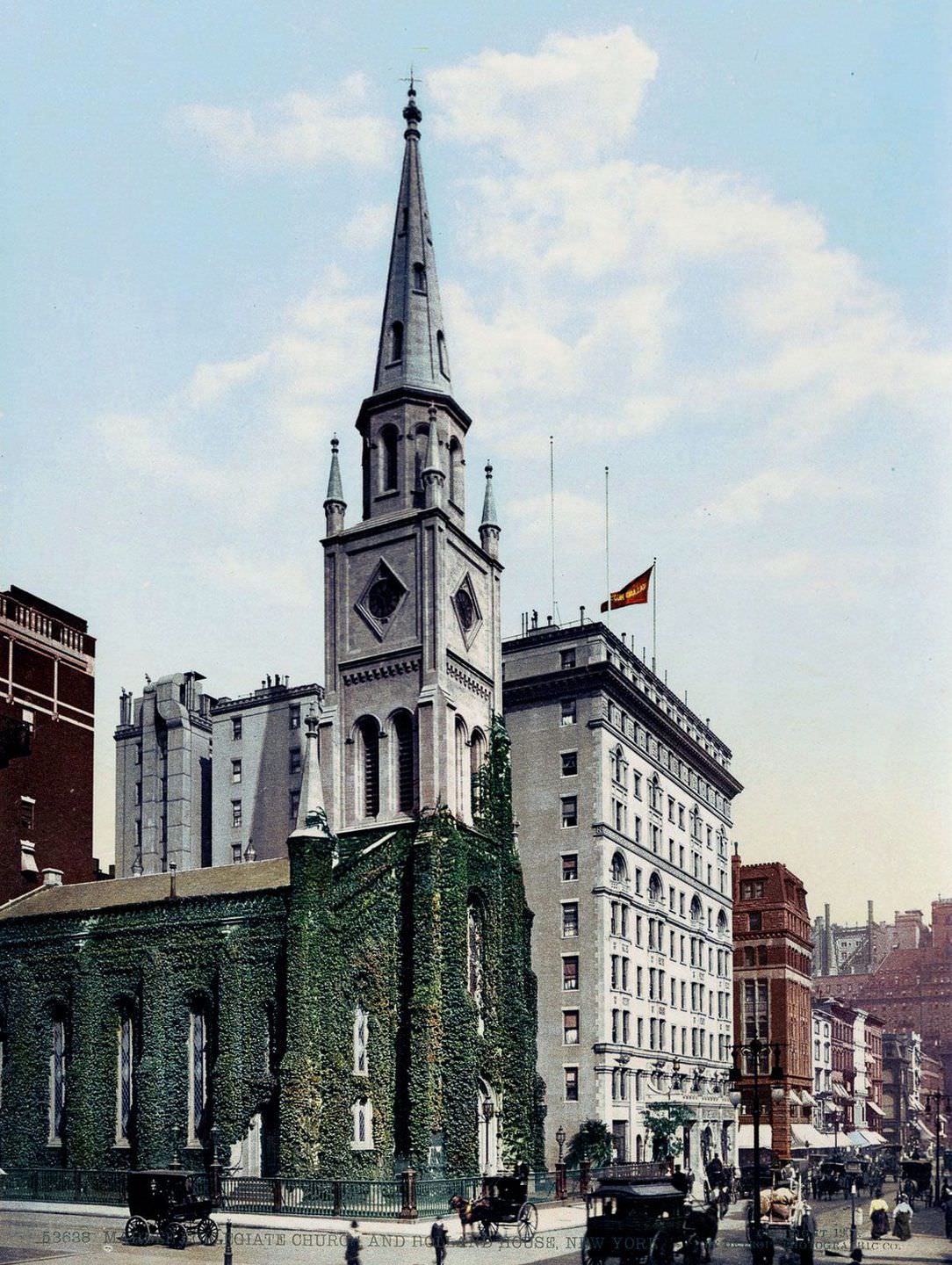
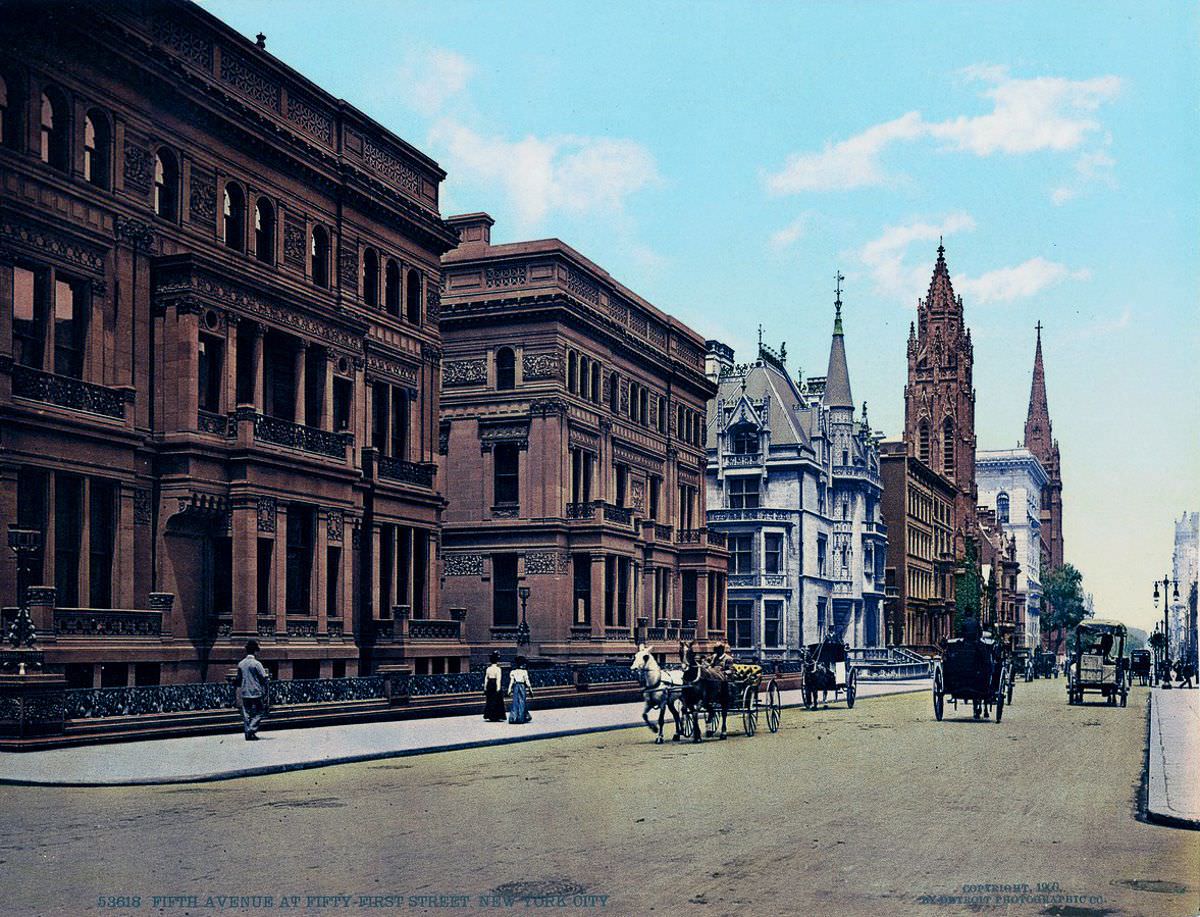
Fifth Avenue in the early 1900s was already establishing itself as the city’s most prestigious address. At 51st Street, St. Patrick’s Cathedral dominated the block, while wealthy mansions and luxury hotels lined the avenue on either side. The contrast with streets like the Bowery or Mulberry Street was total — same city, completely different world.
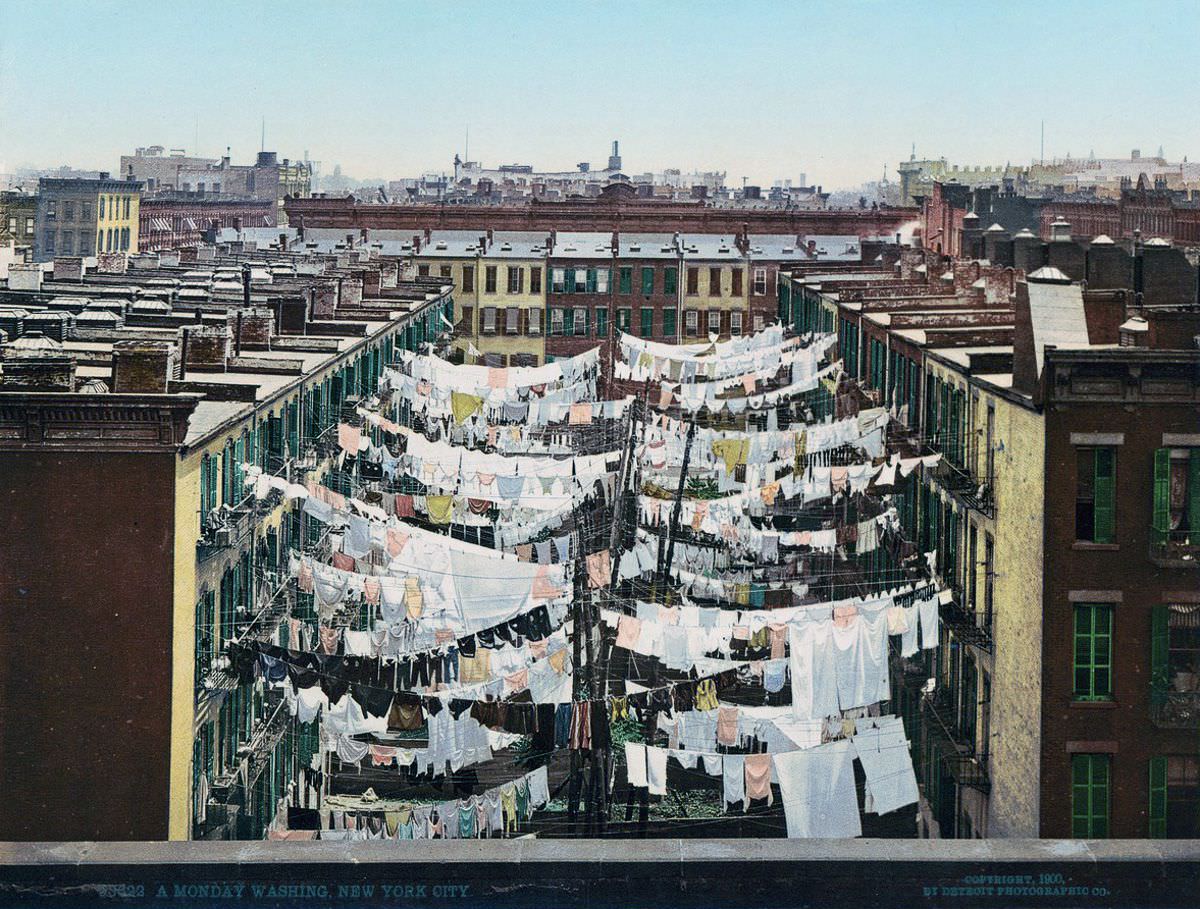
Monday was laundry day in most working-class New York neighborhoods, a tradition so common it was simply known as “Blue Monday.” Wet clothing hung from lines stretched between tenement windows, sometimes several stories up. With no indoor plumbing in many buildings, women carried water up the stairs, scrubbed clothing by hand, and strung the laundry out to dry in whatever air was available between the buildings.
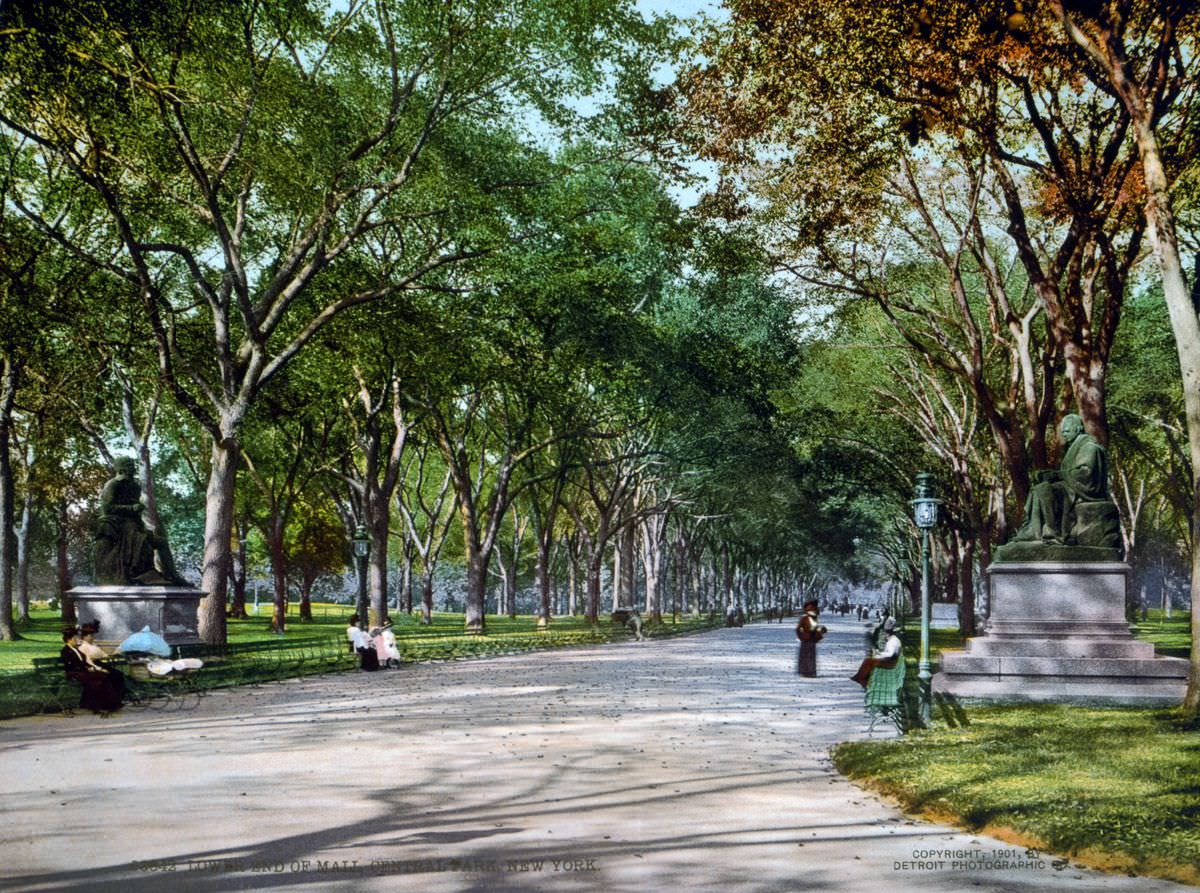
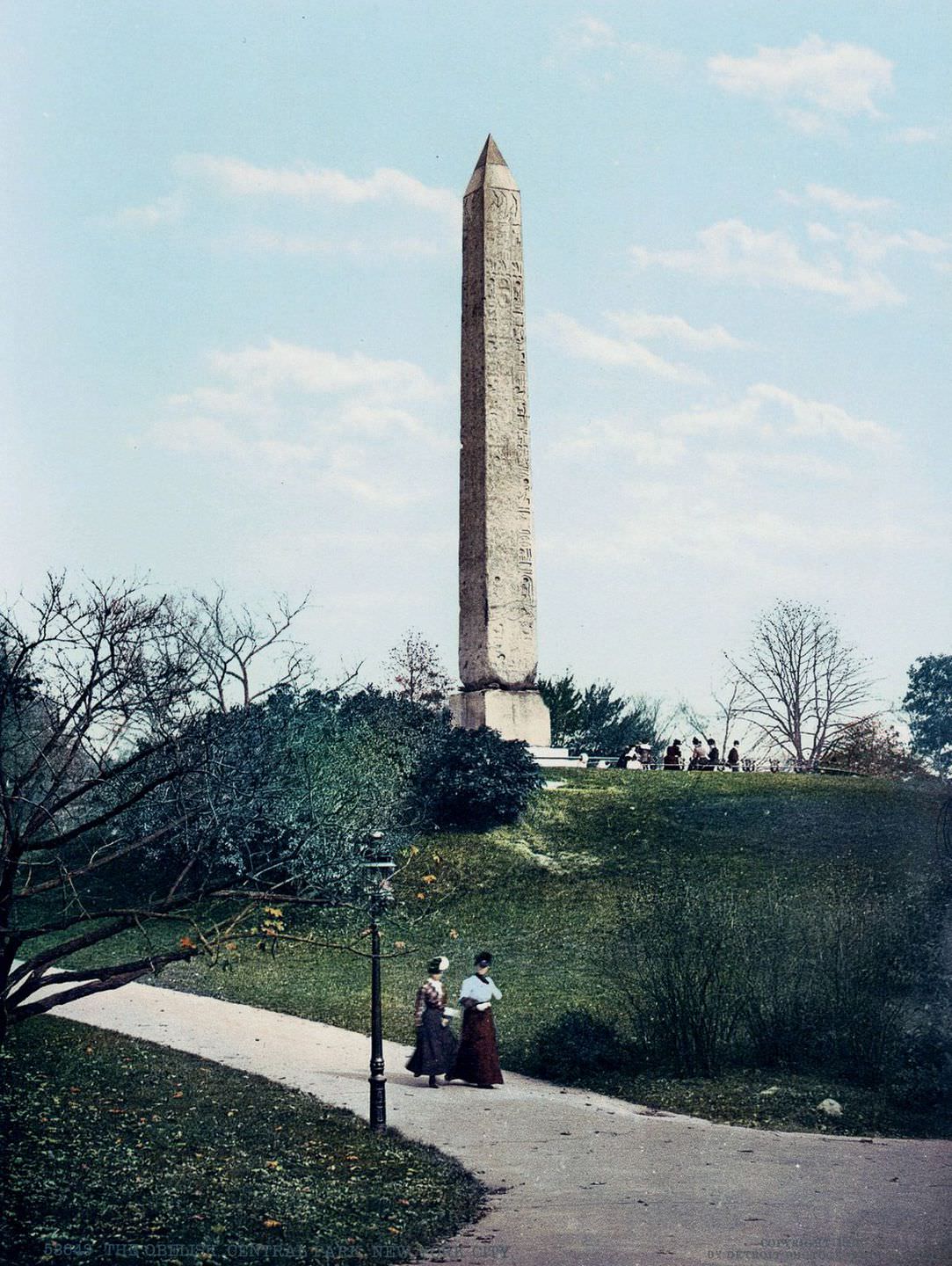
Central Park offered the city’s residents a rare escape from crowded streets and noise. The Mall, a straight, tree-lined promenade, was a popular gathering place for all classes of New Yorkers. Nearby stood the Obelisk — a 3,500-year-old Egyptian monument known as Cleopatra’s Needle — which had been installed in the park in 1881 as a gift from Egypt. It remains there today.
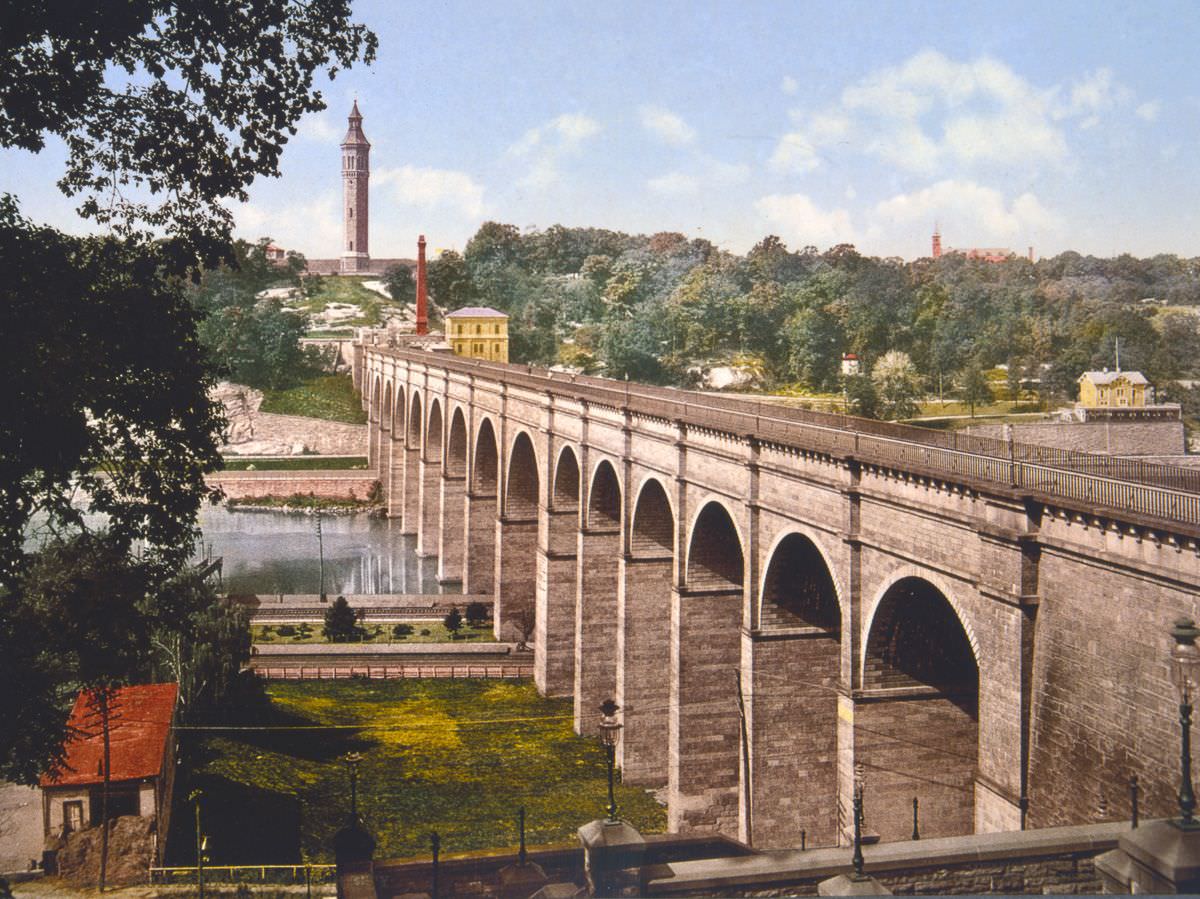
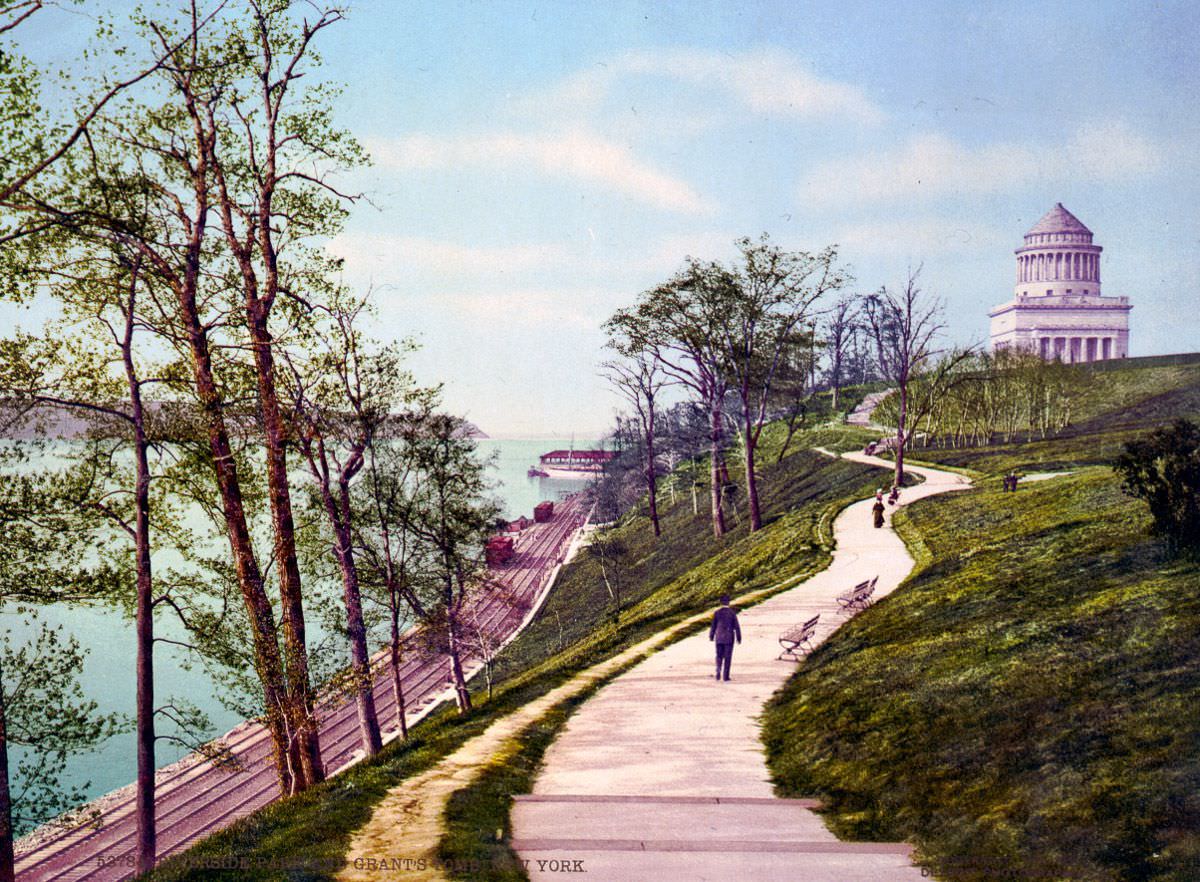
Grant’s Tomb — formally the General Grant National Memorial — was completed in 1897 and was the largest mausoleum in North America at the time. It held the remains of President Ulysses S. Grant and his wife. Situated in Riverside Park overlooking the Hudson River, it drew large numbers of visitors in the early 1900s and was considered one of the most important sites in the city.
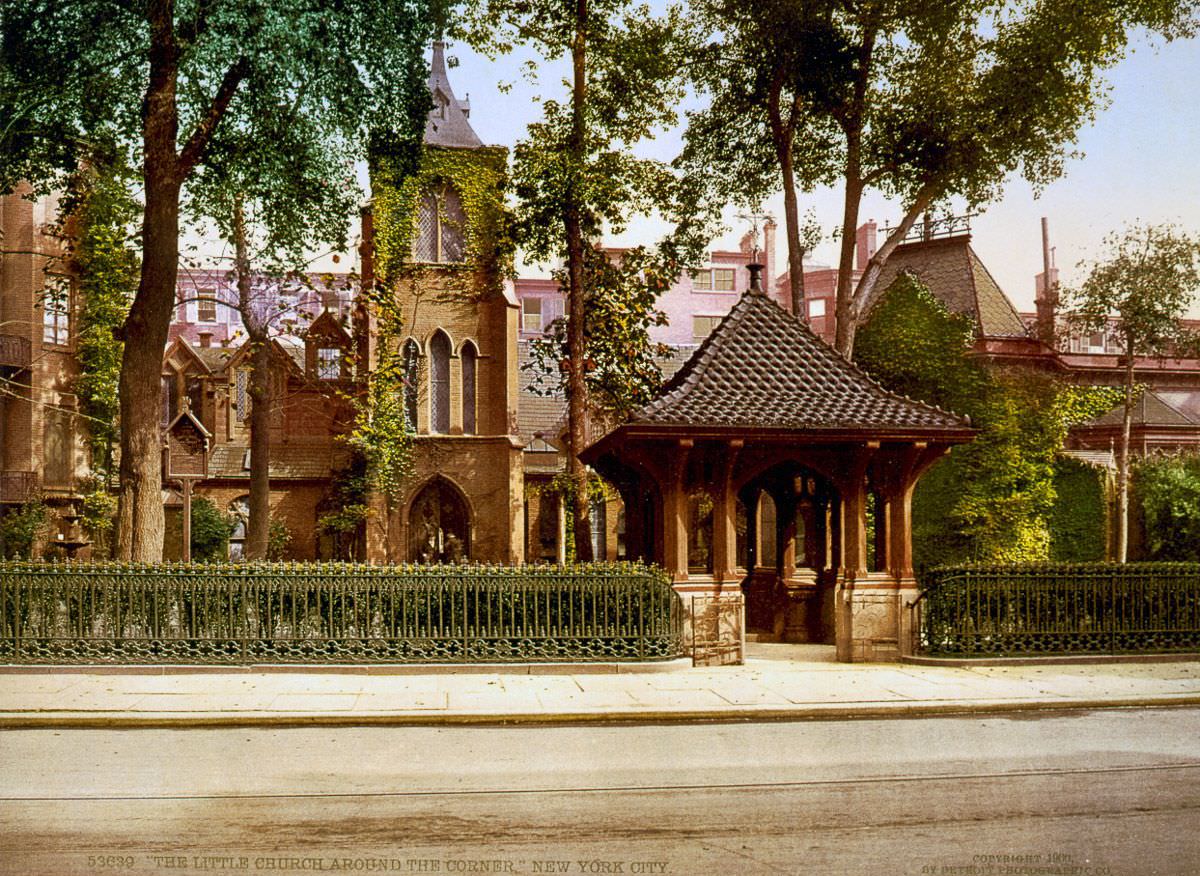
The Church of the Transfiguration on East 29th Street earned its nickname, “The Little Church Around the Corner,” in 1870 after another church refused to hold a funeral for an actor. The phrase stuck, and by 1900 the church had a strong connection to New York’s theatrical community. It became one of the most beloved small churches in the city, known for its welcoming attitude toward artists and performers.
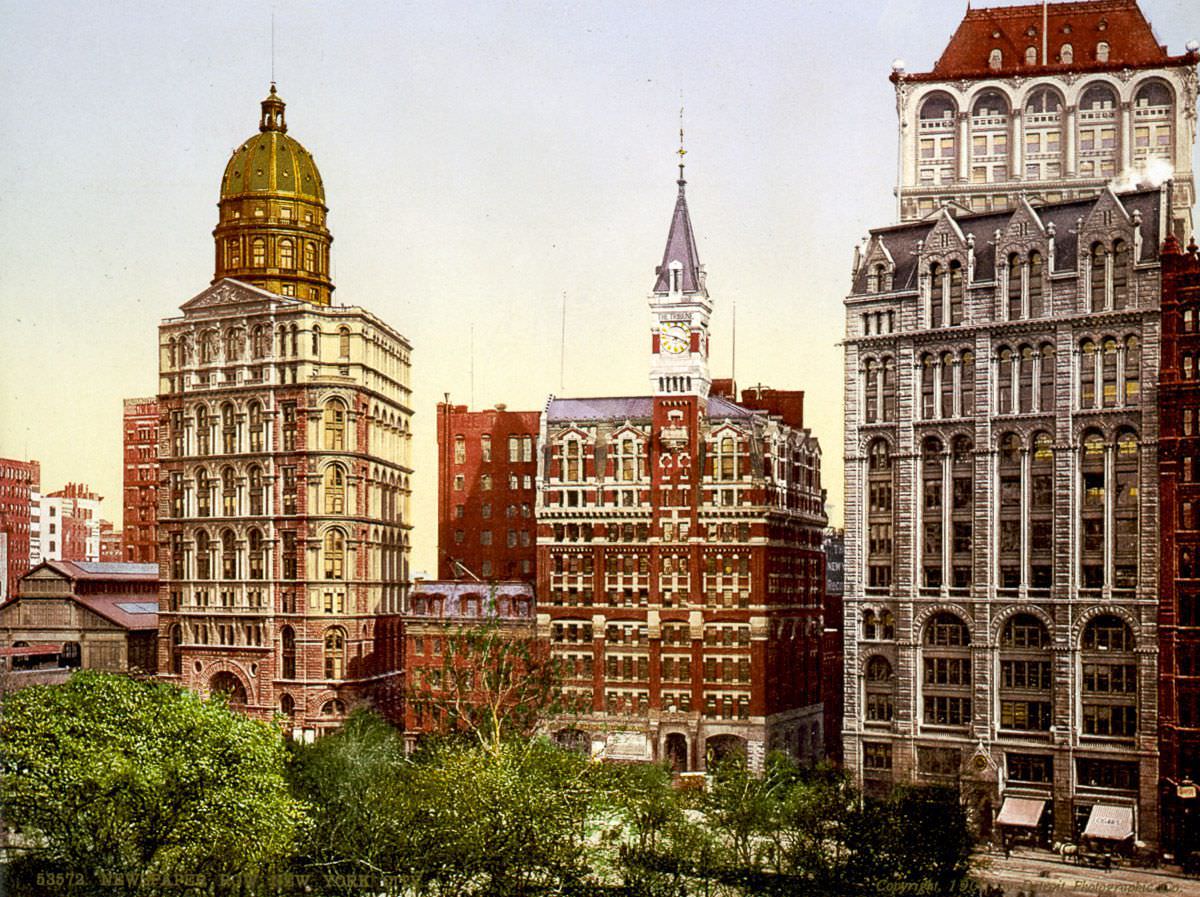
Newspaper Row along Park Row in lower Manhattan was the media capital of the country. At its peak, it housed the offices of nearly every major New York newspaper, including the New York Tribune, the New York Times, and the New York World. The streets around it were thick with paper boys, reporters, telegraph messengers, and the constant rumble of printing presses running through the night.
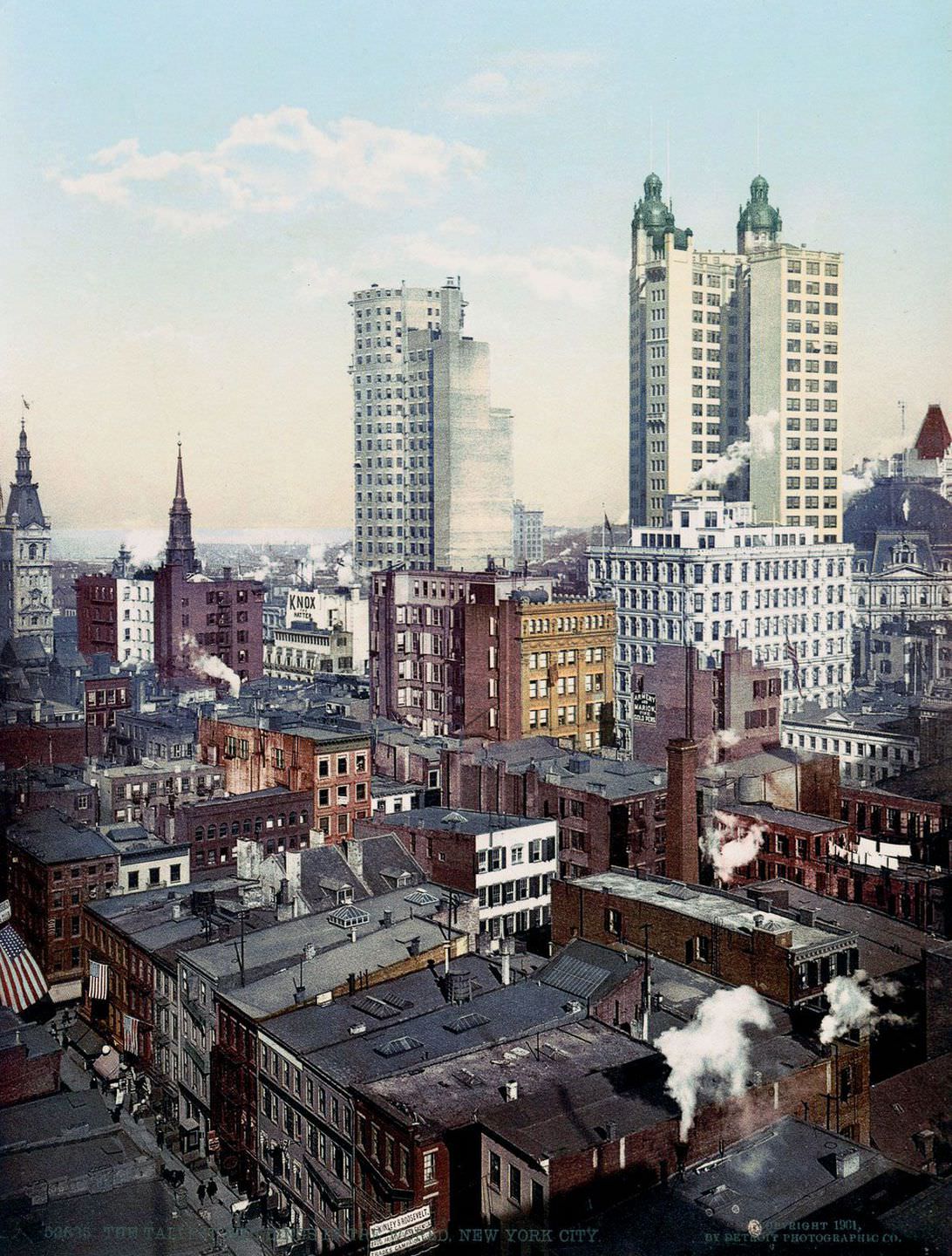
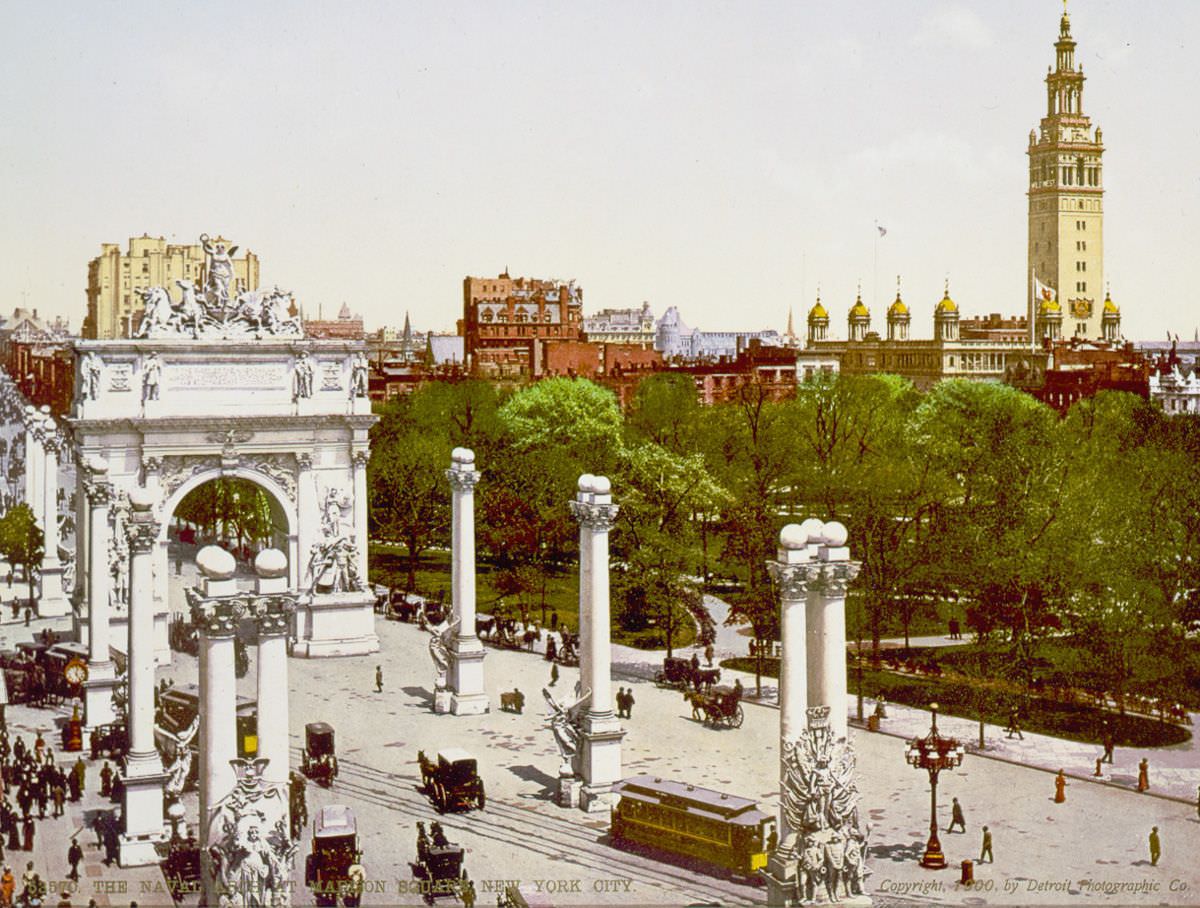
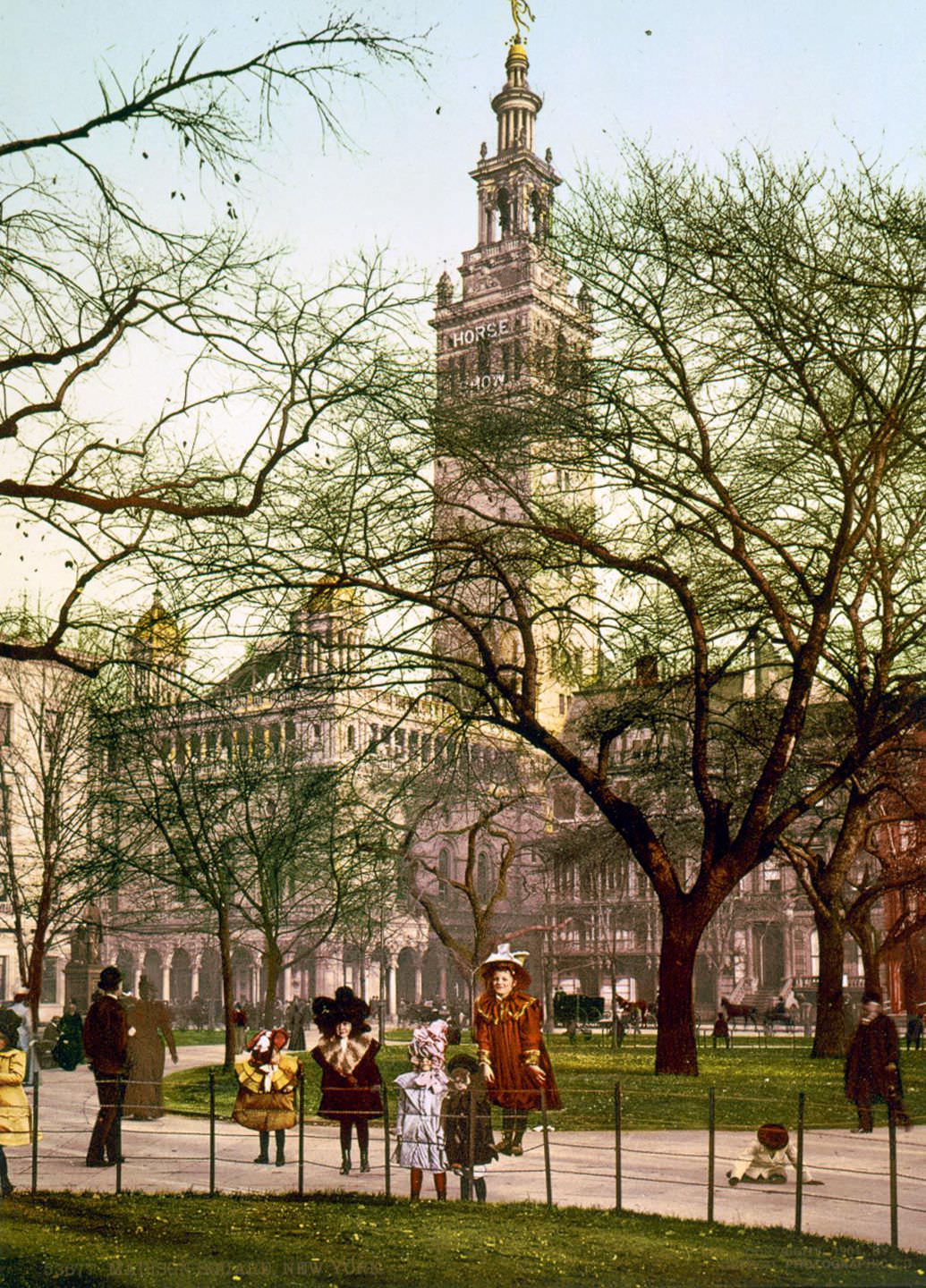
New York was already engaged in a quiet competition to build higher than anyone had before. In 1900, the city was home to some of the tallest structures on earth, and the skyline was changing every few years as new towers surpassed the last. The Naval Arch at Madison Square was a temporary triumphal arch built in 1899 to celebrate the return of Admiral George Dewey after the Spanish-American War. It stood as a symbol of American military confidence at the turn of the century.
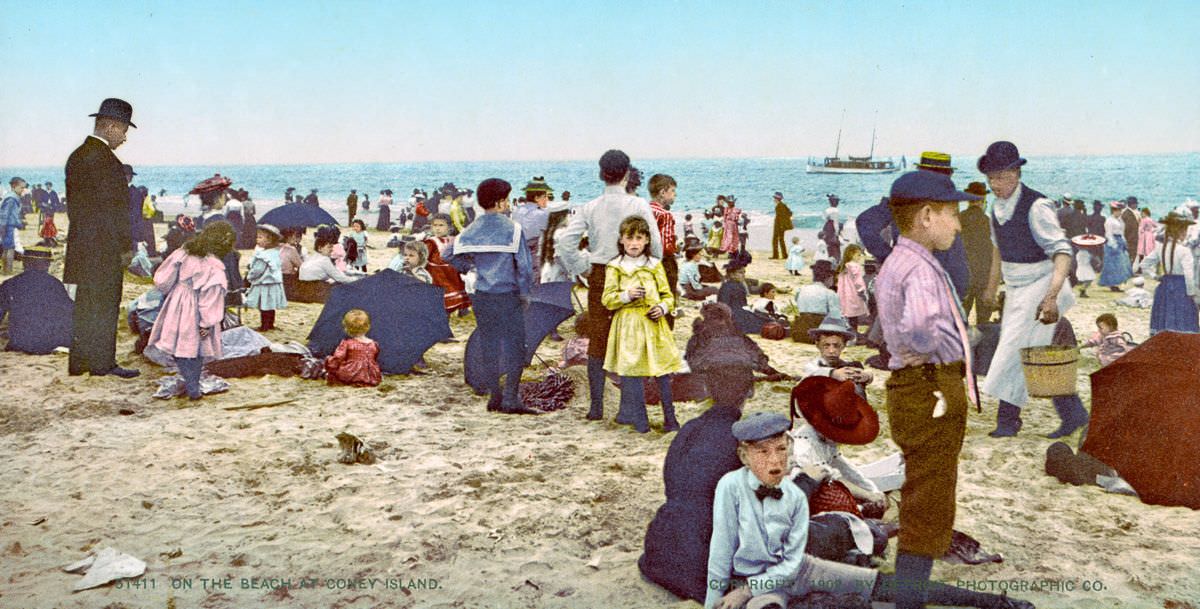
Coney Island in Brooklyn was the working-class playground of New York. On summer weekends, hundreds of thousands of people flooded its beaches and amusement areas by train. The beach was crowded from waterline to boardwalk, with families, couples, and children all packed tightly together. Admission to the beach was free, making it one of the few leisure spaces truly accessible to the city’s poorest residents.
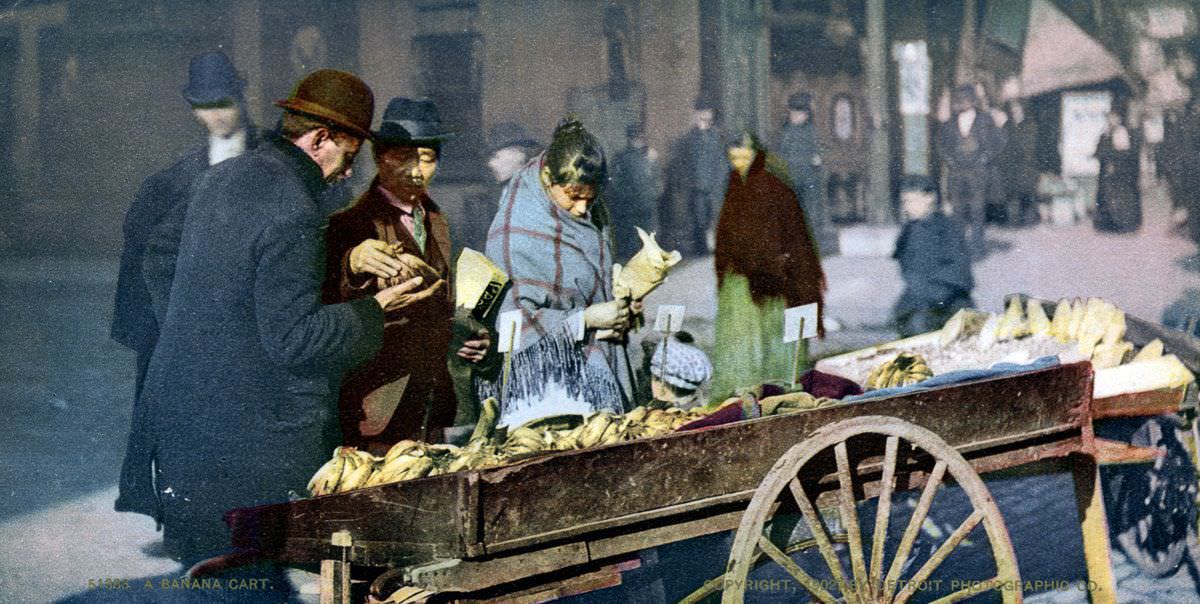
Street vendors were a constant presence across New York’s neighborhoods. Pushcart merchants sold fruit, vegetables, fish, clothing, and household goods from the streets. Bananas, which had become widely available in the United States by the 1880s, were a common and affordable item sold by cart vendors across the city. These carts were often run by recent immigrants who were working their way into the city’s economy one sale at a time.
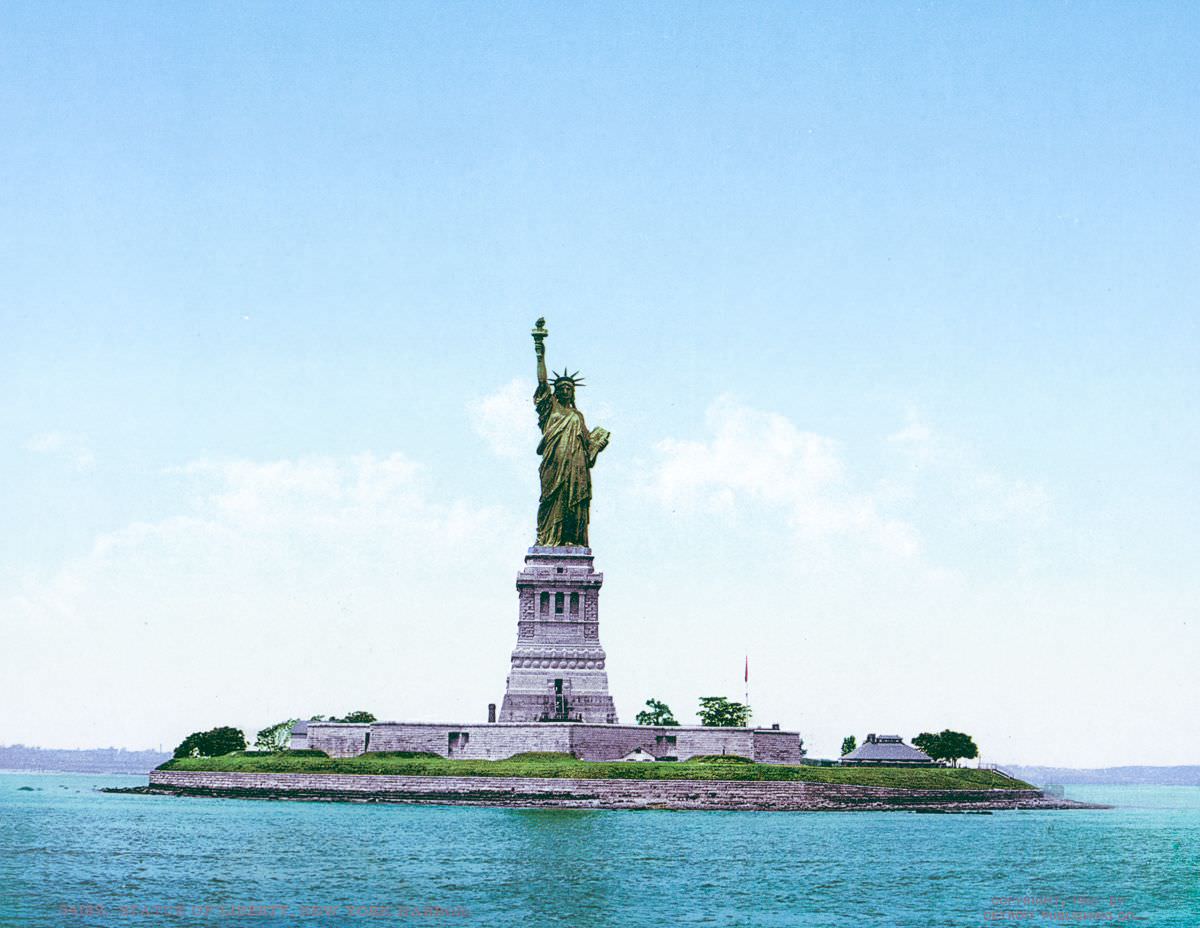
The Statue of Liberty had been in New York Harbor since 1886. By 1900, the original copper surface was actively oxidizing, and the statue showed patches of both its original reddish-brown color and the blue-green patina that would eventually cover it entirely. For millions of immigrants passing through the harbor, it was the first major American landmark they ever saw — visible from the decks of incoming ships long before the Manhattan skyline came into full view.
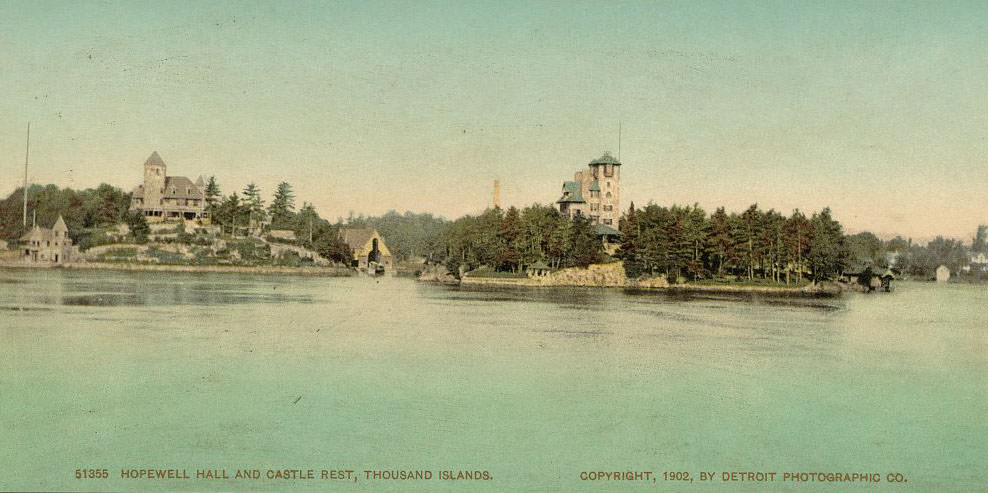
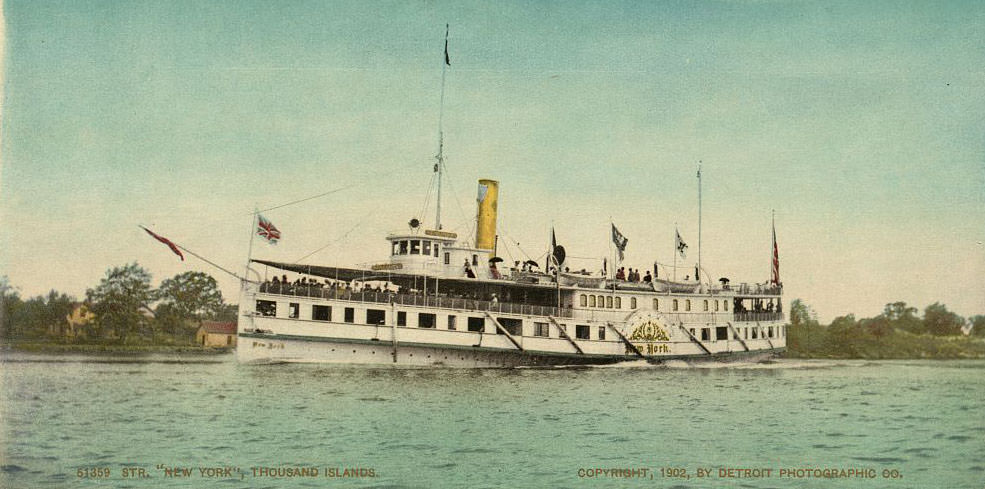
Beyond the city itself, the Detroit Publishing Company documented much of New York State in the same vibrant photochrom style. The Thousand Islands region along the St. Lawrence River was a popular retreat for wealthy New Yorkers, dotted with grand estates and resort hotels. Steamboats like the one seen here carried passengers across the state’s many rivers and lakes, connecting communities that roads and rail couldn’t easily reach.
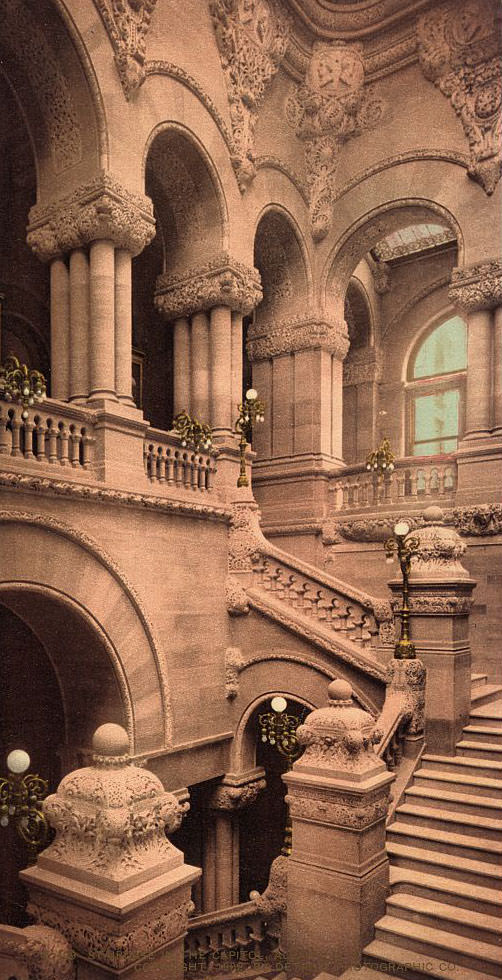
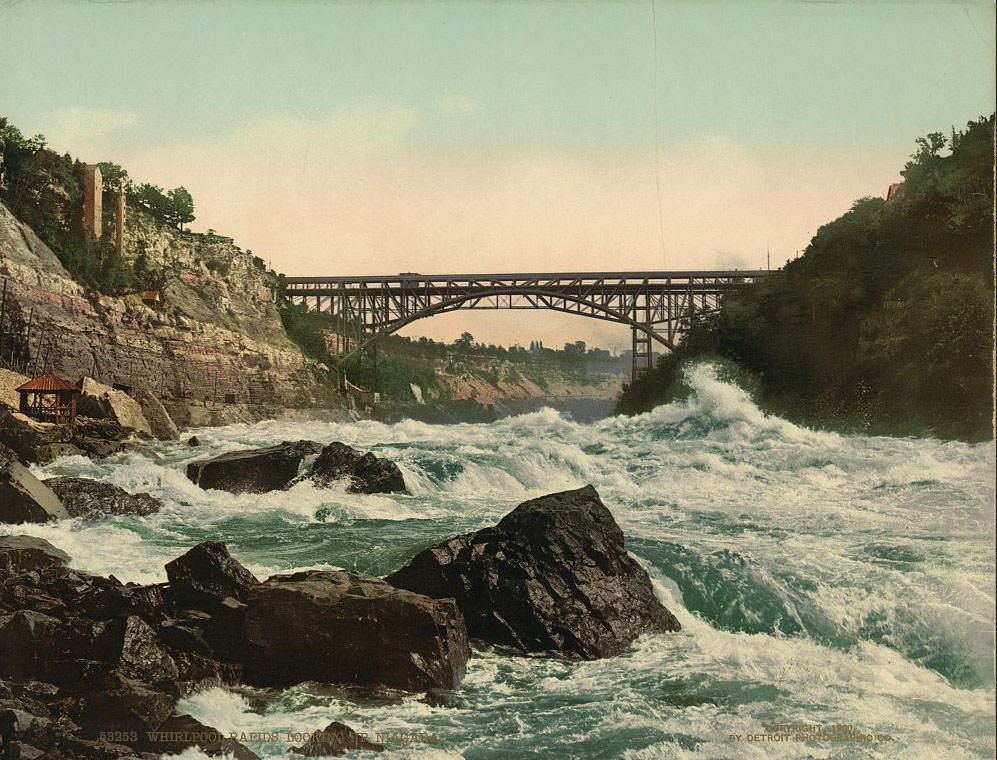
The New York State Capitol in Albany featured one of the most elaborate interior staircases in the country — the Great Western Staircase, sometimes called the “Million Dollar Staircase” for its cost. Niagara Falls and the churning Whirlpool Rapids below it were already major tourist destinations. Visitors came from across the country and from abroad to see the falls, and the surrounding area had developed a full industry of hotels, observation points, and guided tours.
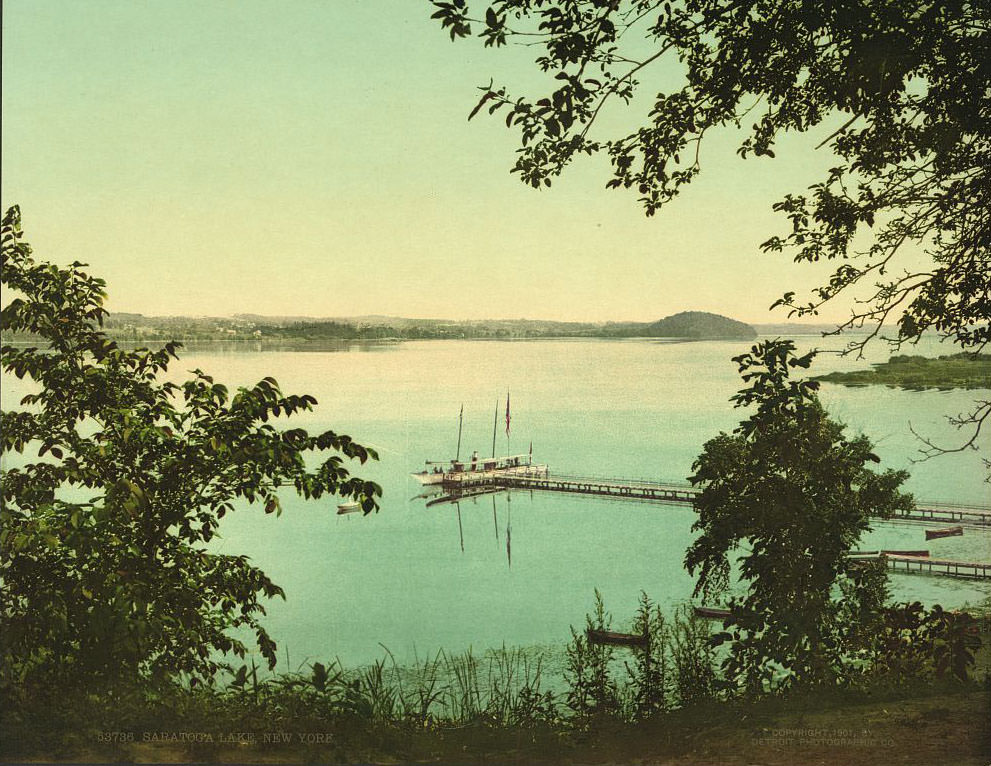
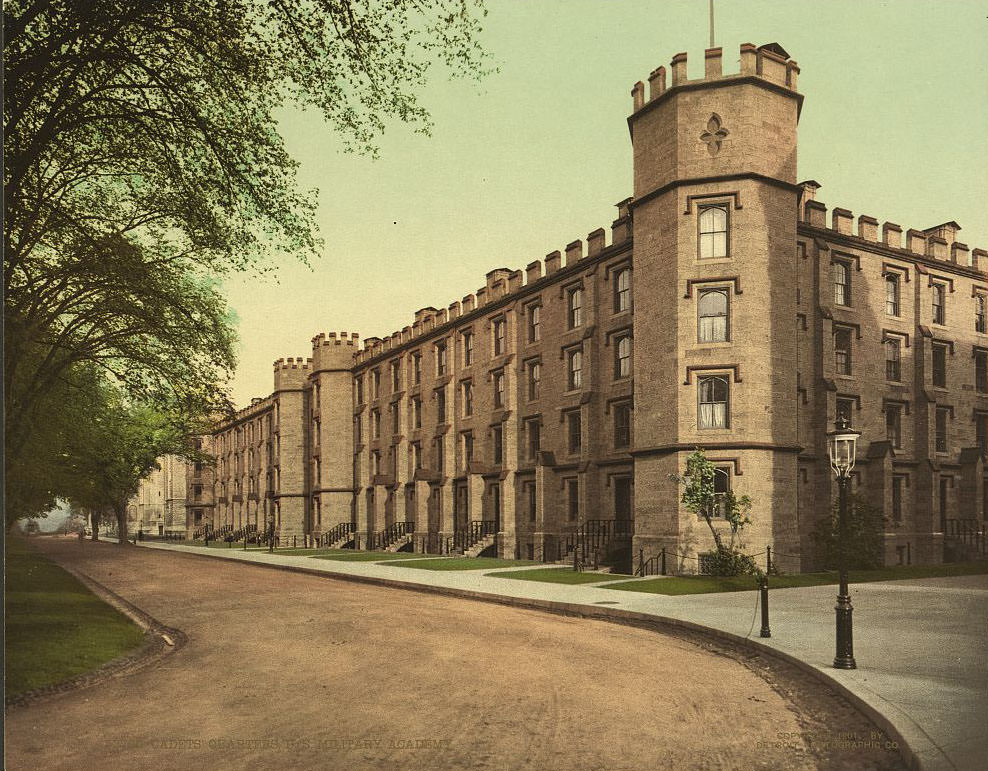
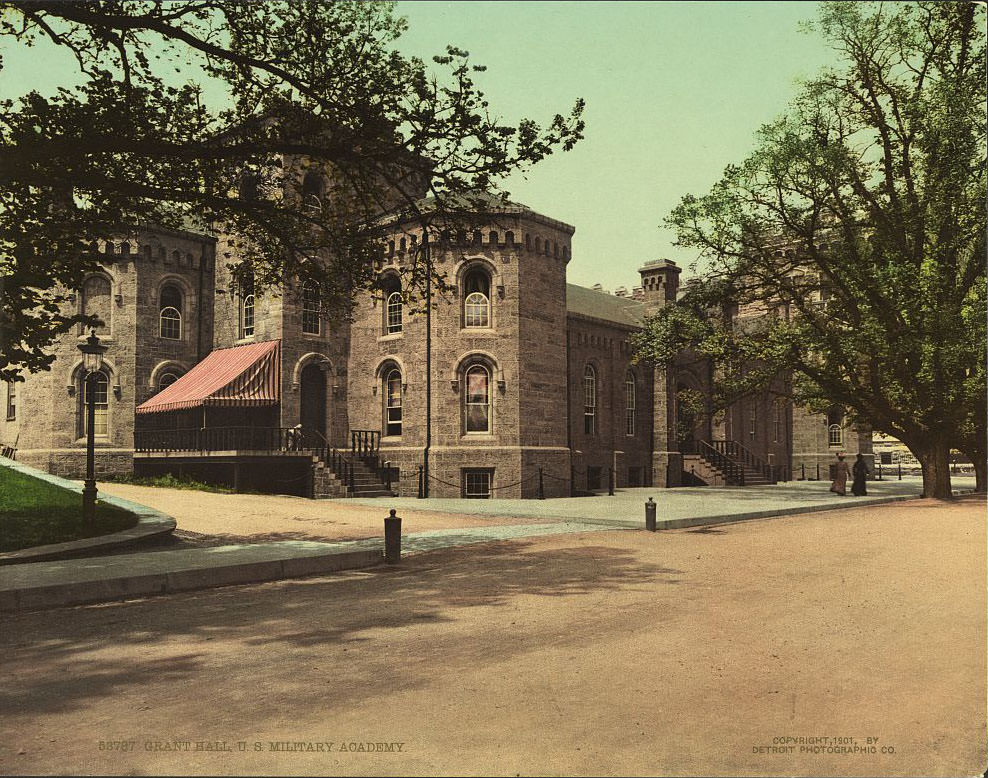
The United States Military Academy at West Point sat on the western bank of the Hudson River, about 50 miles north of New York City. Its stone buildings and formal grounds made it one of the most photographed institutions in the region. Saratoga Lake to the north was a quieter destination — a retreat for boating and fishing, far from the crowds of Saratoga Springs itself.
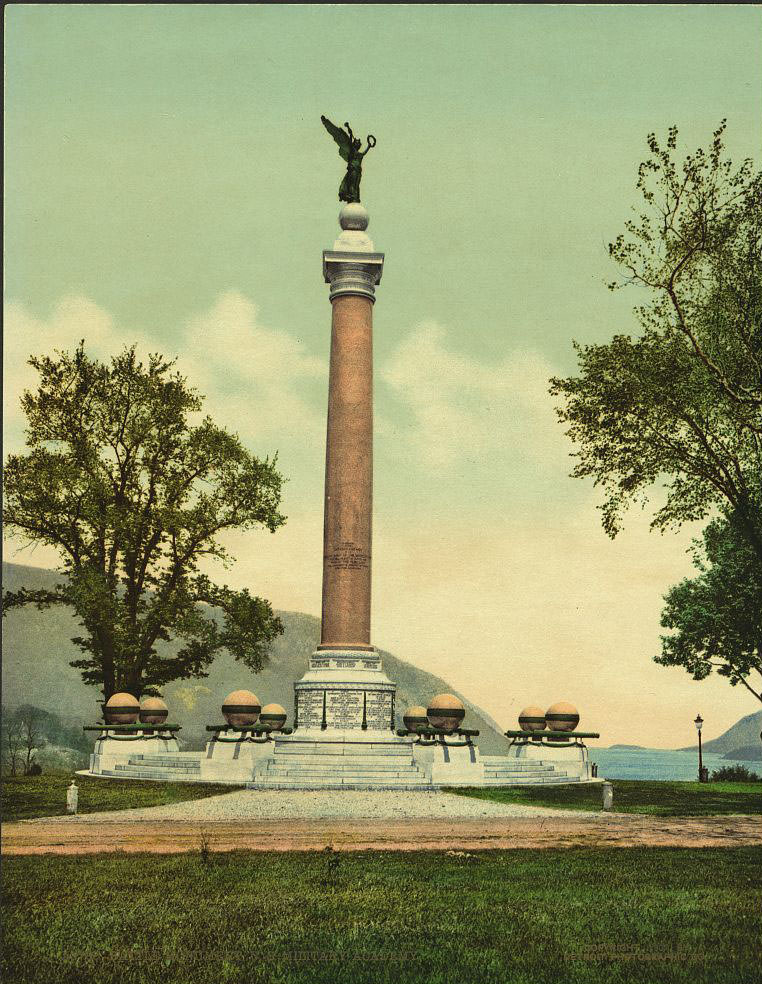
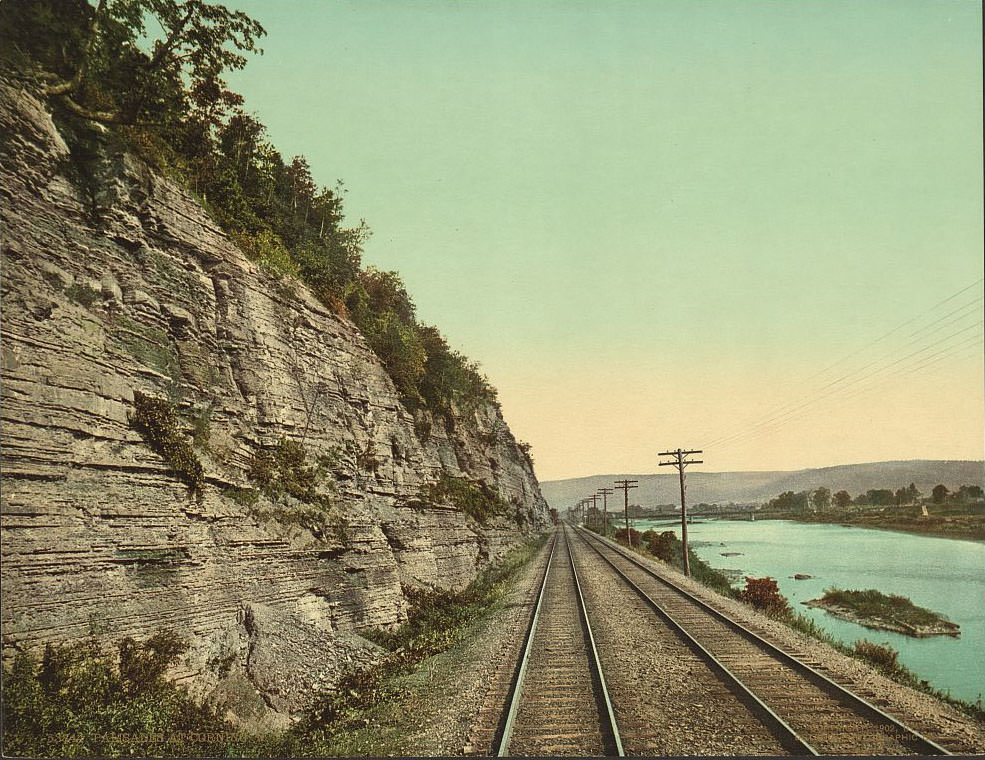
The Palisades — the dramatic basalt cliffs that line the western shore of the Hudson River in New Jersey — were visible from Manhattan and were a familiar part of the New York landscape. By the early 1900s, they were under threat from quarrying operations, and a preservation campaign eventually led to the creation of the Palisades Interstate Park in 1900. The Battle Monument at West Point, completed in 1897, was a granite column honoring the soldiers of the regular U.S. Army who died in the Civil War.
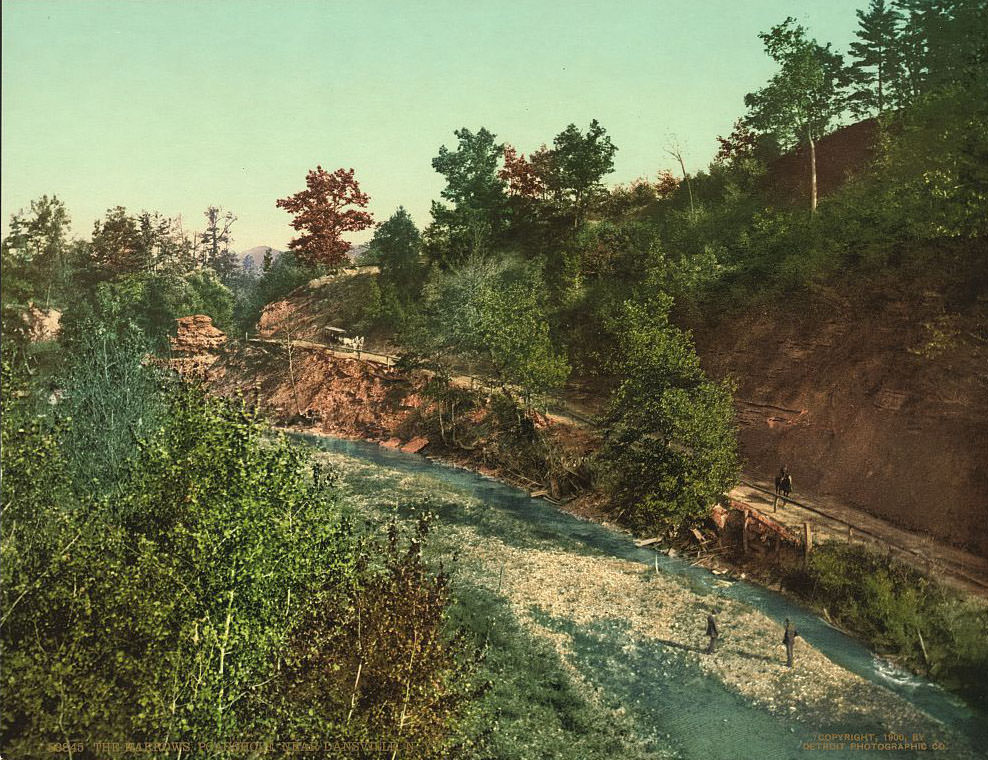
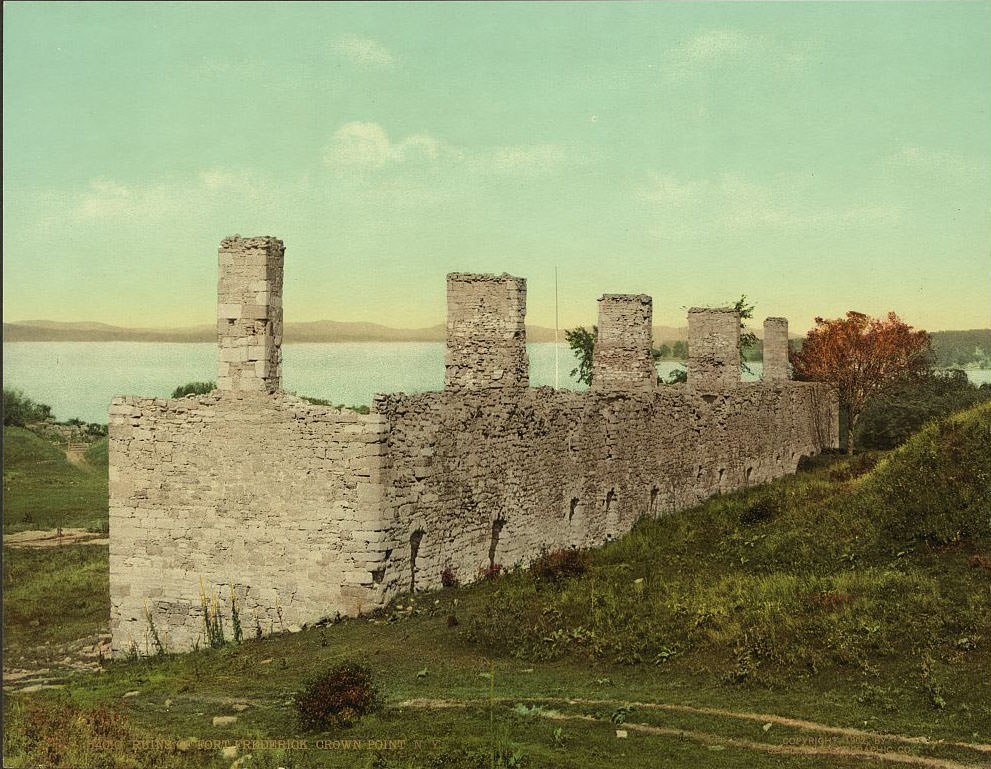
Fort Crown Point on Lake Champlain was originally built by the French in the 1730s and later captured and expanded by the British. By 1900, it lay in ruins — crumbling stone walls and overgrown earthworks on the edge of the lake. It stood as a physical reminder of the colonial wars fought on American soil more than a century earlier. The Narrows near Dansville in western New York offered a very different kind of landscape — a quiet, wooded gorge with little connection to the urban world of the city.
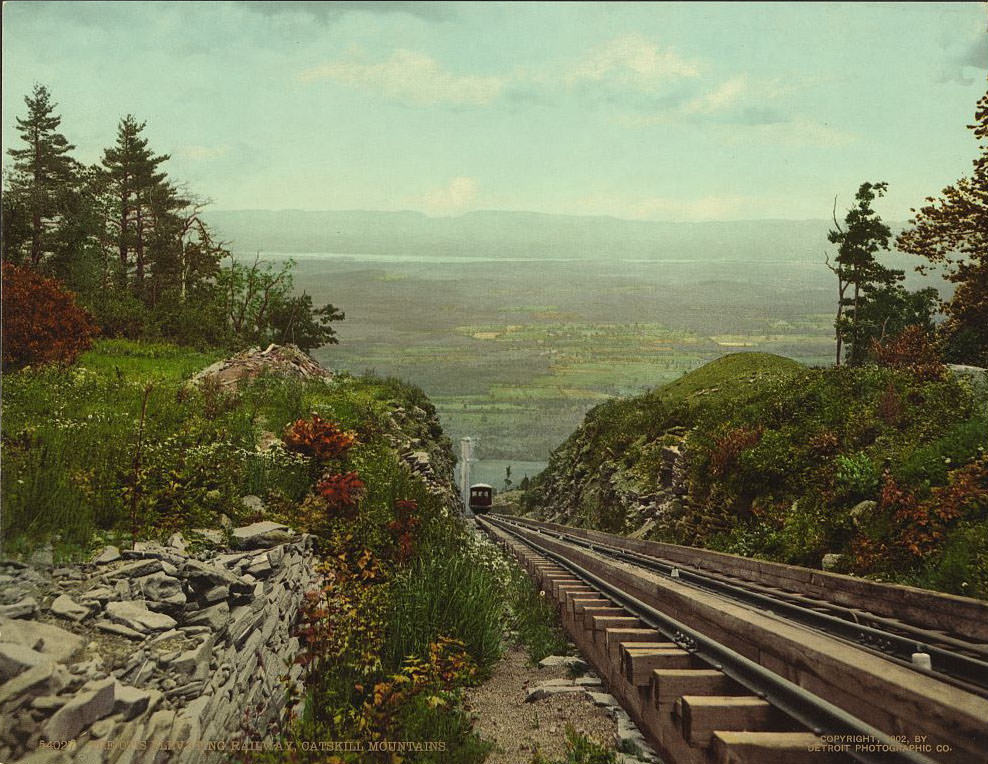
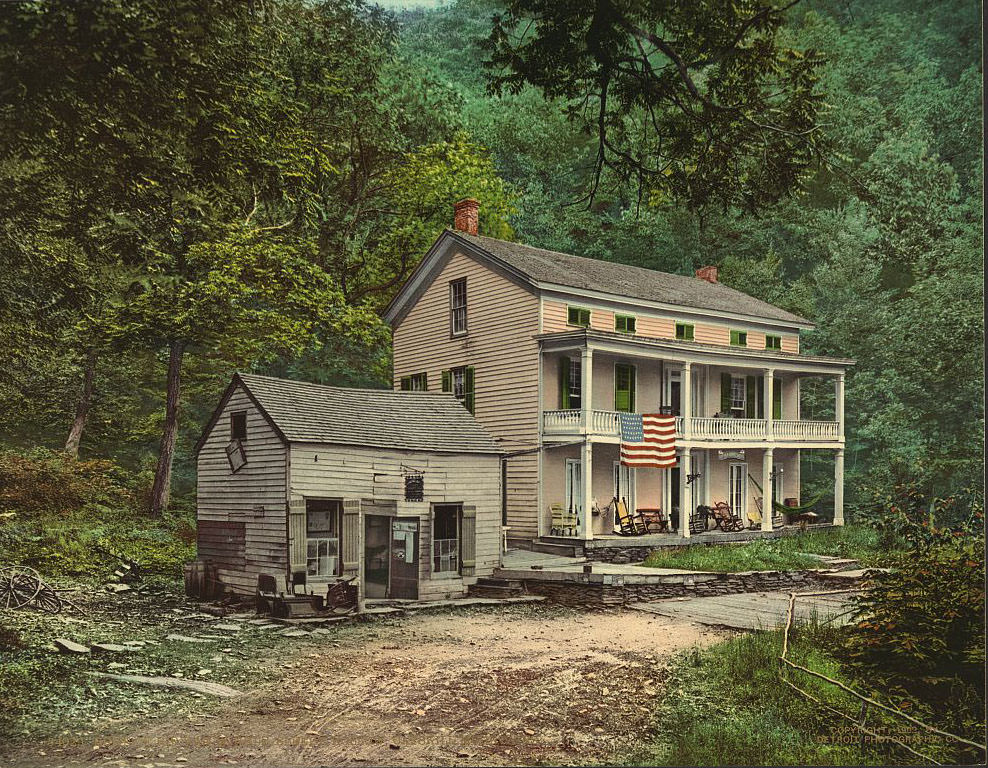
The Catskill Mountains were a favorite getaway for New Yorkers, just a few hours from the city by train. The Otis Elevating Railway was a cliff railway that carried visitors up the steep face of South Mountain to the Catskill Mountain House hotel, one of the most famous resorts in 19th-century America. The area was also rich in literary history — Washington Irving’s “Rip Van Winkle” was set in the Catskills, and tourist sites leaned into that connection.
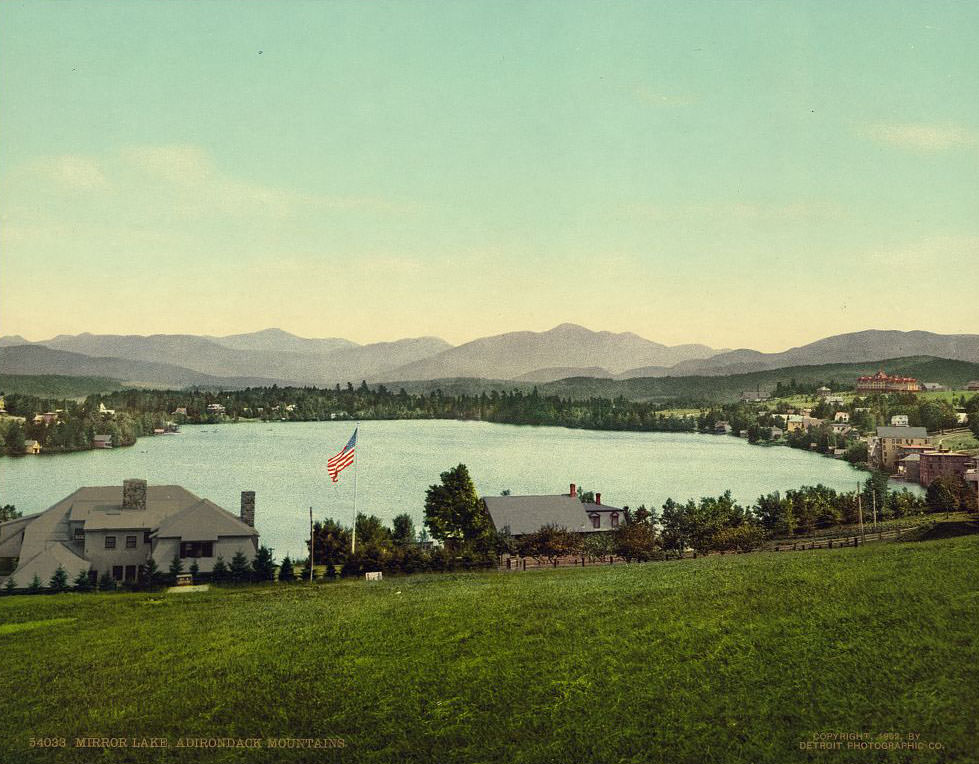
Mirror Lake in the Adirondacks near Lake Placid was known for the stillness of its water, which reflected the surrounding mountains and trees with exceptional clarity. The Adirondacks had become a major destination for wealthy New Yorkers building camps and lodges in the wilderness, a movement that blended outdoor recreation with rustic luxury.
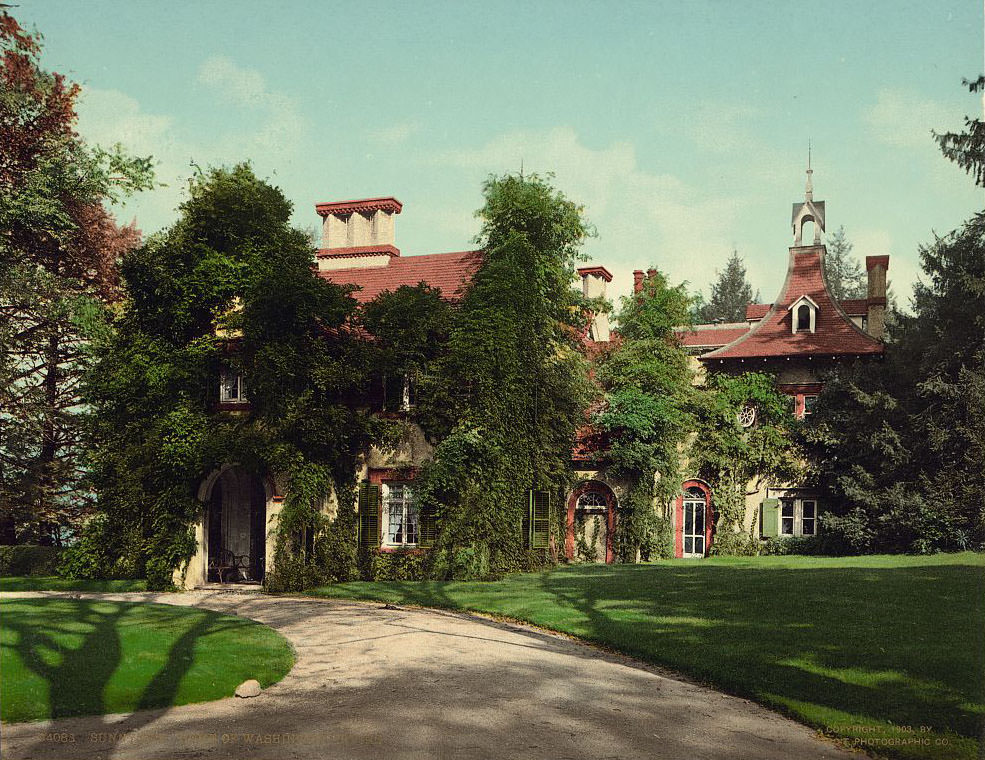
Sunnyside, the Hudson Valley home of Washington Irving — the author of “The Legend of Sleepy Hollow” and “Rip Van Winkle” — was a popular landmark by the early 1900s. Irving had lived there from 1835 until his death in 1859, and the estate retained its distinctive Dutch-influenced cottage style. Visitors made the trip from New York City specifically to see the home of the man who had defined so much of the region’s folklore.
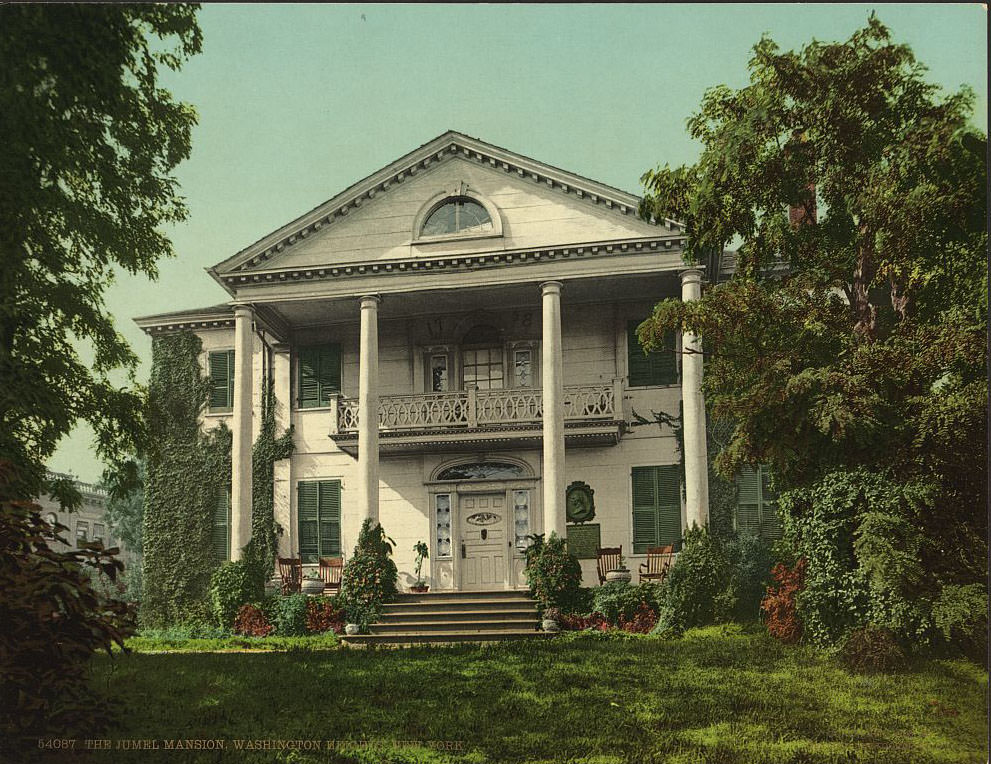
The Jumel Mansion in Washington Heights is the oldest surviving house in Manhattan. Built in 1765, it served as George Washington’s headquarters during the Battle of Harlem Heights in 1776. By 1903, it was already being treated as a historic site, preserved against the rapid development overtaking the rest of the island. It remains open to the public today as the Morris-Jumel Mansion.
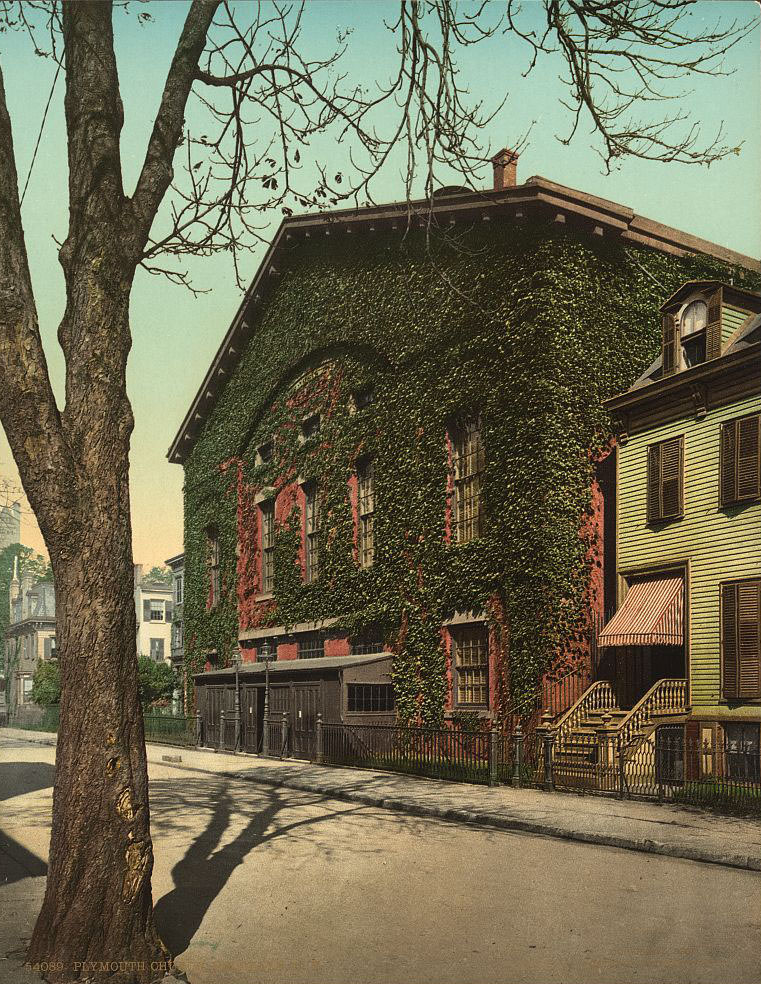
Plymouth Church in Brooklyn Heights was one of the most famous churches in America by the early 1900s. It had been led by the abolitionist minister Henry Ward Beecher before the Civil War and had served as a stop on the Underground Railroad. Abraham Lincoln visited and worshipped there in 1860. By 1904, it was still an active congregation drawing visitors who came as much for the building’s history as for the services.
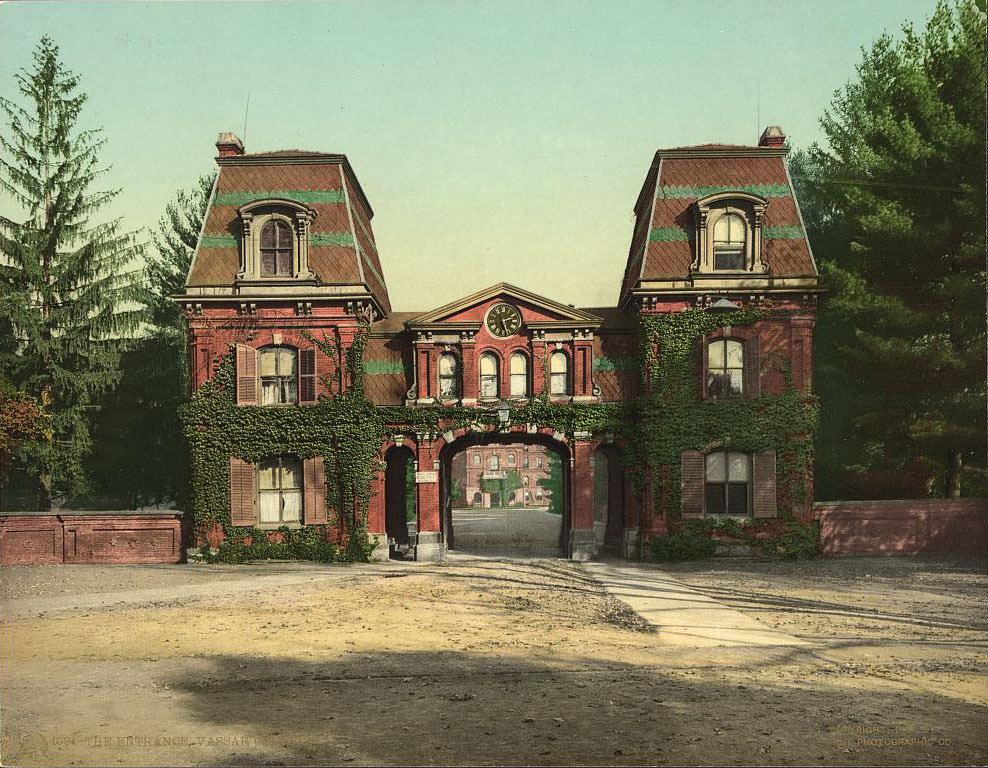
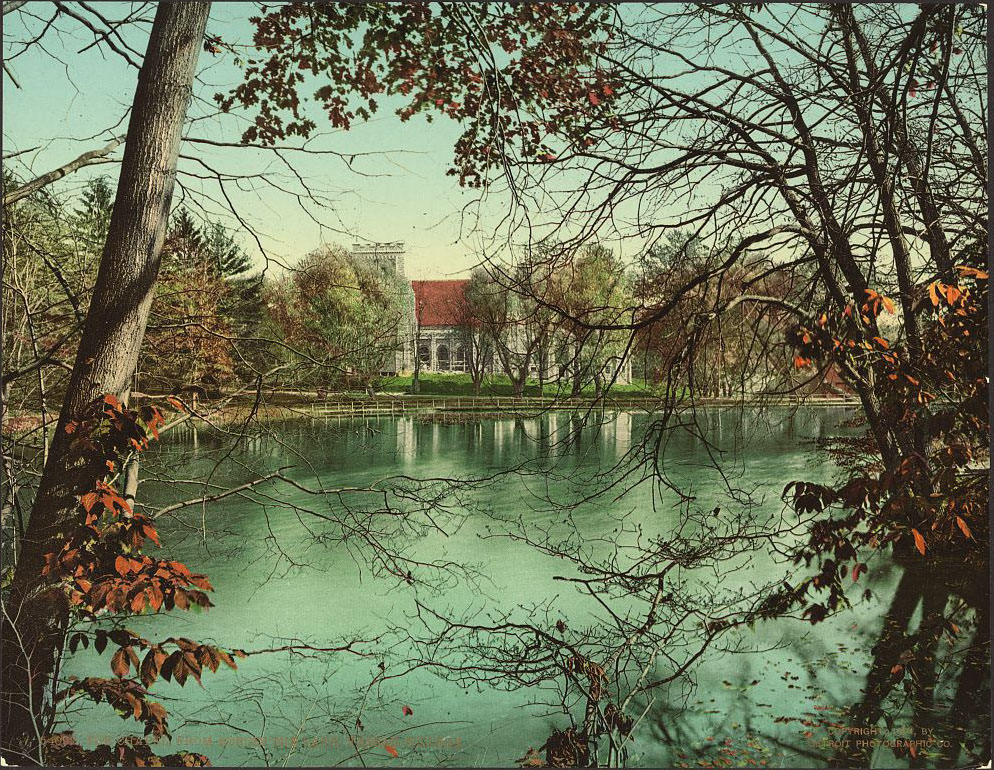
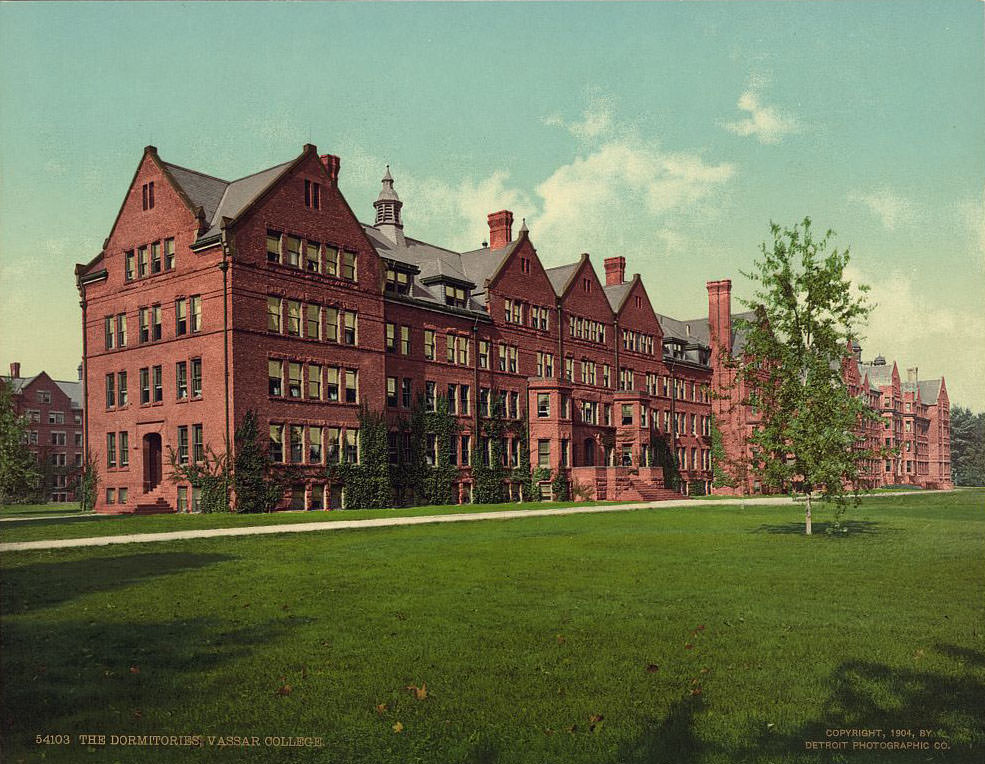
Vassar College in Poughkeepsie, founded in 1861, was one of the leading women’s colleges in the country by 1904. Its campus was carefully designed, with a man-made lake, a formal chapel, and dormitory buildings set across spacious grounds. The college was educating women at a time when most American universities would not admit them, and its graduates went on to careers in education, science, medicine, and the arts.
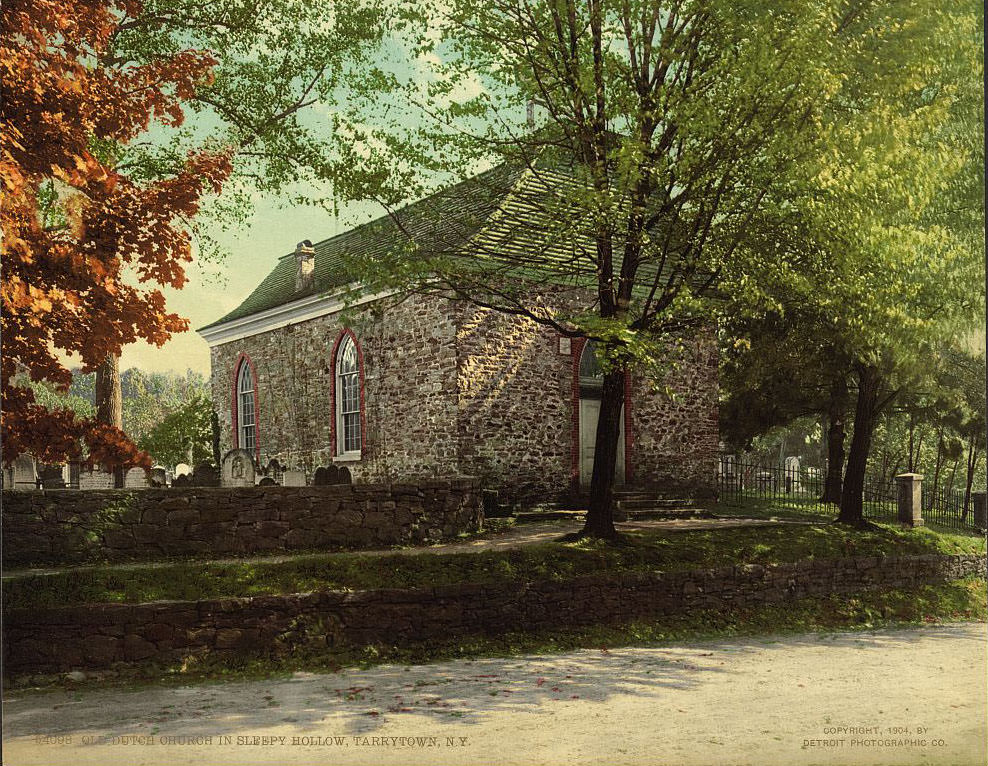
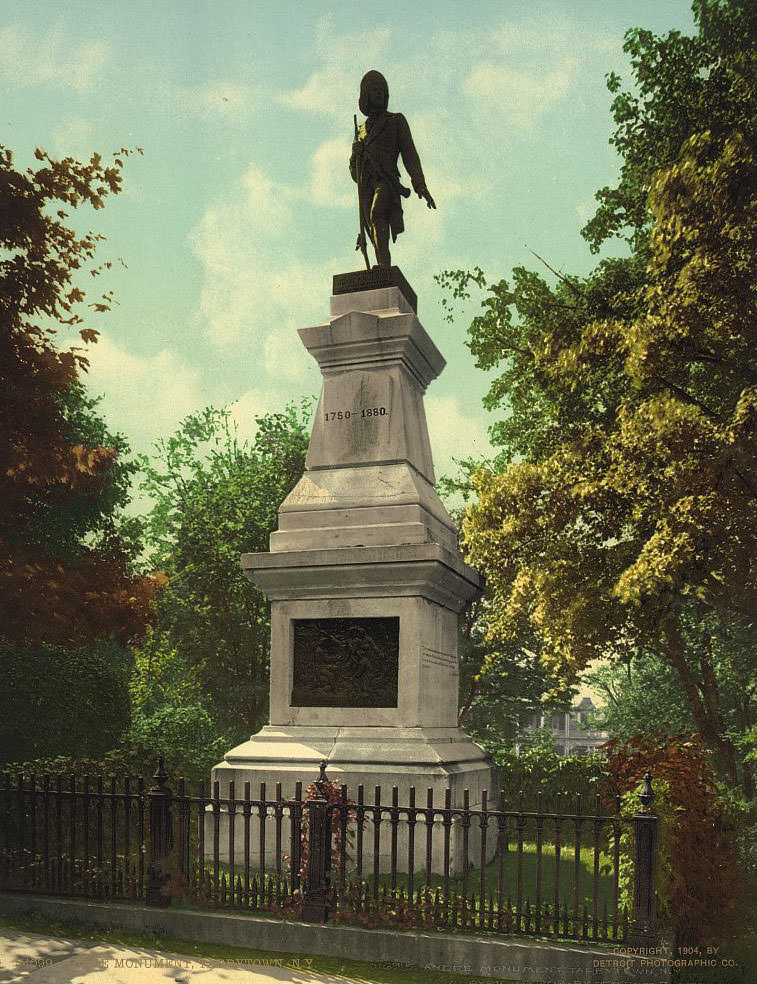
Tarrytown in the Hudson Valley carried layers of history in a small area. The Old Dutch Church of Sleepy Hollow, built in 1685, was the oldest church in New York State still holding regular services. Adjacent to it was the Sleepy Hollow Cemetery, where Washington Irving was buried. Nearby, the André Monument marked the spot where British spy Major John André was captured in 1780, an event that unraveled Benedict Arnold’s plot to surrender West Point to the British.
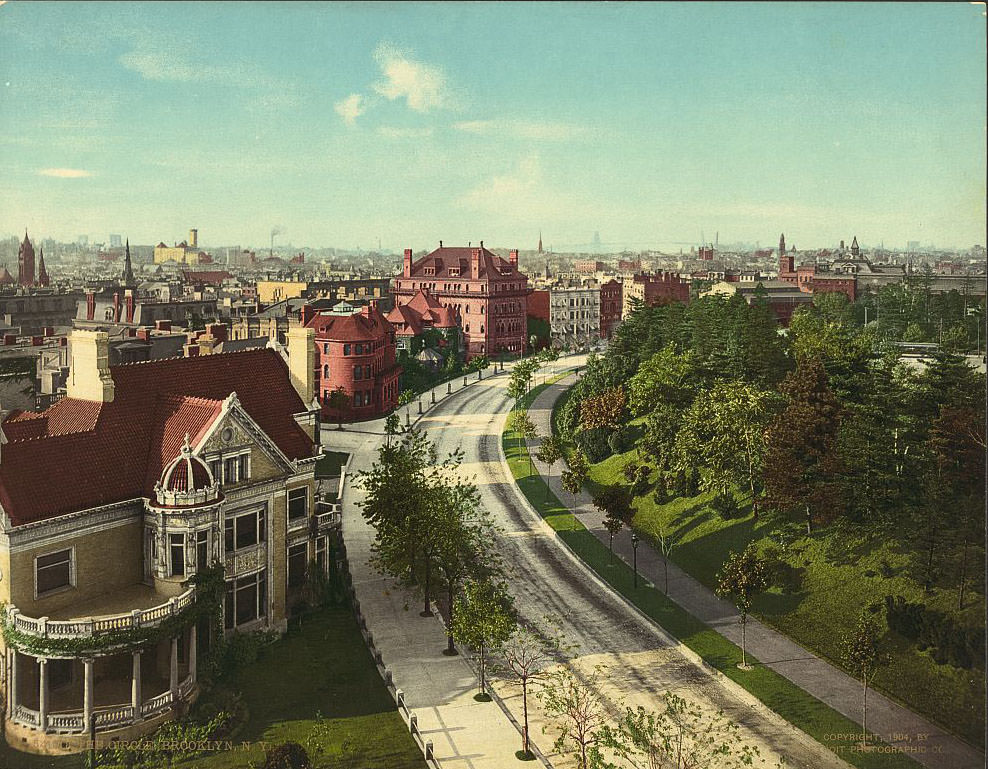
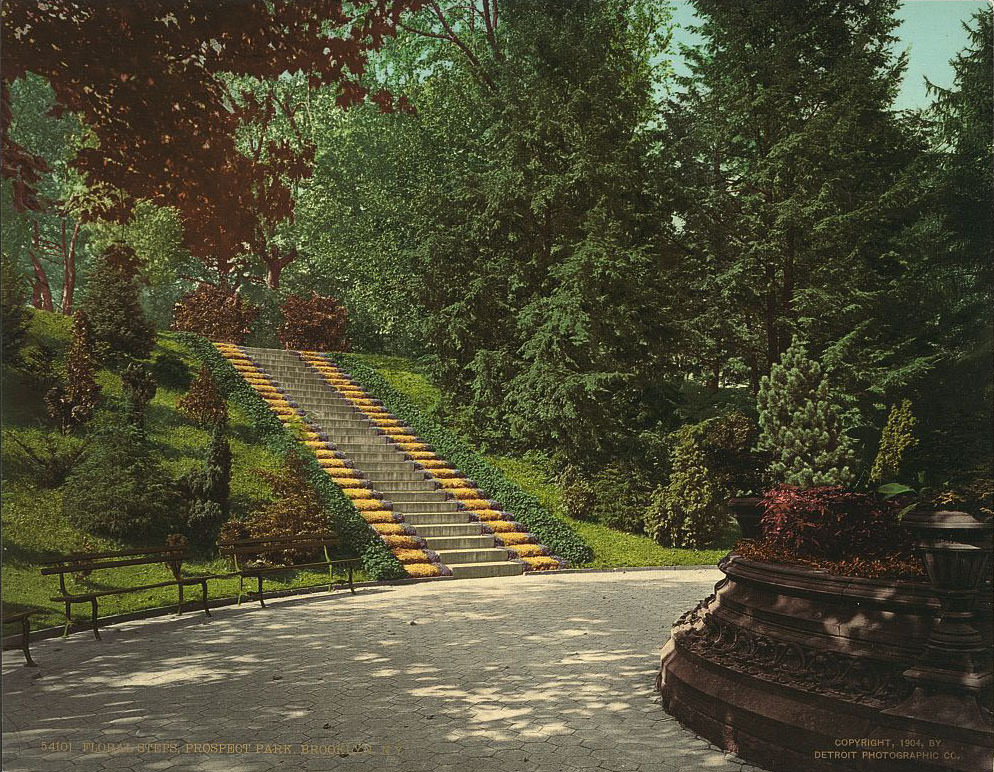
Prospect Park in Brooklyn was designed by Frederick Law Olmsted and Calvert Vaux — the same team behind Central Park in Manhattan. By 1904, it was fully developed and widely used by Brooklyn’s growing population. The park featured meadows, a lake, a formal music grove, and ornamental plantings throughout. Brooklyn itself had only been consolidated into New York City in 1898, and its residents were still adjusting to their new status as part of the world’s second-largest city.
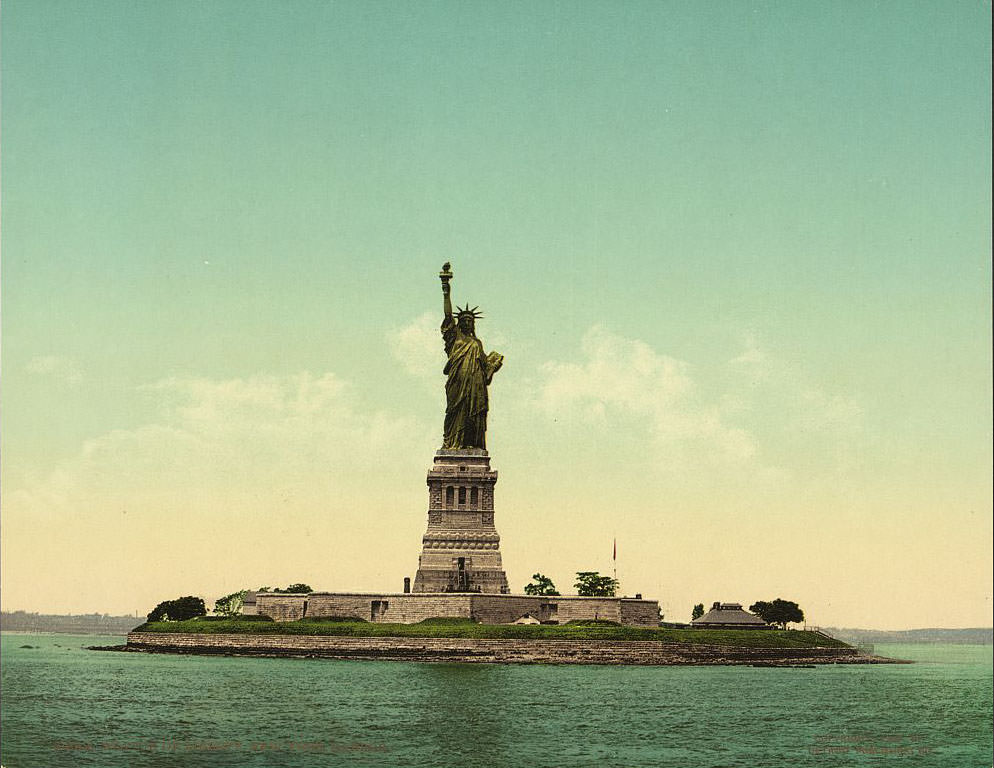
By 1905, the Statue of Liberty’s copper surface had moved further toward the blue-green patina that now covers it completely. The transformation happened gradually over decades of exposure to salt air and rain. In these photographs, taken just years apart, the difference is visible — a monument in the middle of changing from one color to another, much like the city it stood watch over. New York in the early 1900s was itself caught between two eras, shedding the last of the 19th century while rushing headlong into the 20th.




