Hey There! Before You Go. 😧
Get the best vintage content straight into your inbox!

Don't worry, we don't spam

A Photographic Journey Through the Bustling Saloons of the Wild West, from the Late 19th Century

When settlers pushed west across the American frontier in the 1800s, towns grew fast and rough. Among the first buildings to go up in any new settlement was the saloon. Before churches, schools, or courthouses took shape, the saloon was already open for business. It was the social hub of frontier life — the one place where nearly every kind of person eventually showed up.
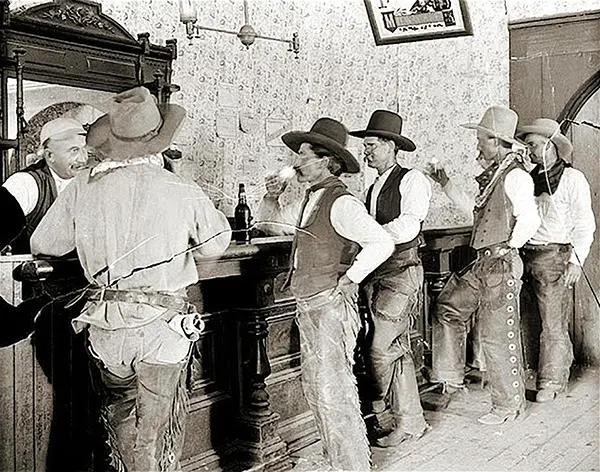
Cowboys enjoy drinks at the Equity Bar in Old Tascosa, Texas, 1907.

The first American saloon is believed to have opened in Brown’s Hole, Wyoming, in 1822. It served fur trappers who needed somewhere to rest, drink, and talk after weeks in the wilderness. As westward expansion picked up speed, saloons multiplied across the frontier. They went by many names — “watering troughs,” “bughouses,” “shebangs,” “cantinas,” “grogshops,” and “gin mills” — but they all served the same basic purpose: a gathering place.
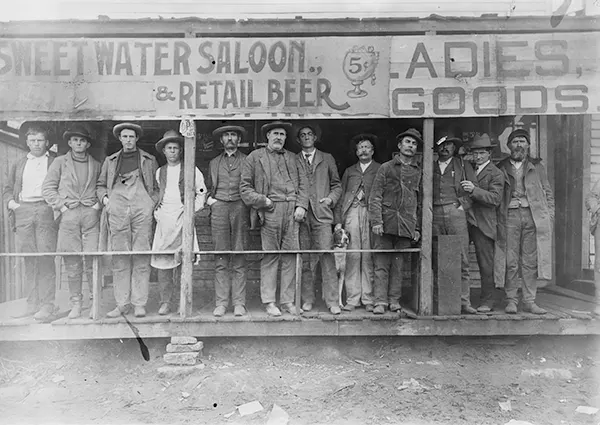
Men gather outside the Sweetwater Saloon in Texas.

Early saloons were built from whatever materials were at hand. Some were cut from sod, others were built inside the hull of an old ship, and some were simply dug into a hillside. A wood-burning stove was often the only source of heat in winter. The interior was bare — a plank of wood across two barrels could serve as the bar.
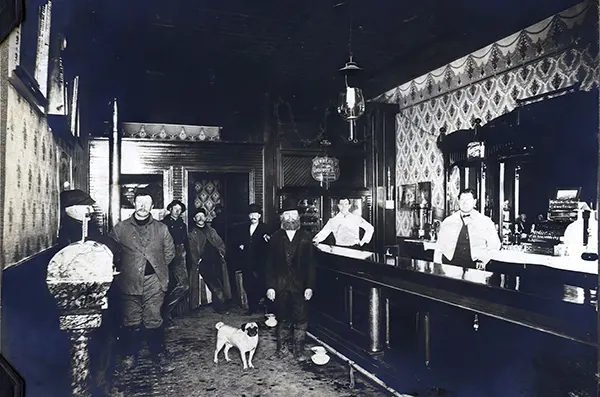
Several men, and a dog named Peggie, stand in John Powell's Saloon in Plainfield, Illinois, 1910s.
Several men, and a dog named Peggie, stand in John Powell’s Saloon in Plainfield, Illinois, 1910s.

As towns grew and money flowed in, saloons upgraded. Bartenders took pride in their establishments, investing in better furnishings, decorated bars, and a wider selection of drinks. One of the most iconic features to emerge was the “batwing” door — a pair of swinging half-doors mounted on special hinges, covering a patron from chest to knee. They became one of the most recognized symbols of the Wild West.
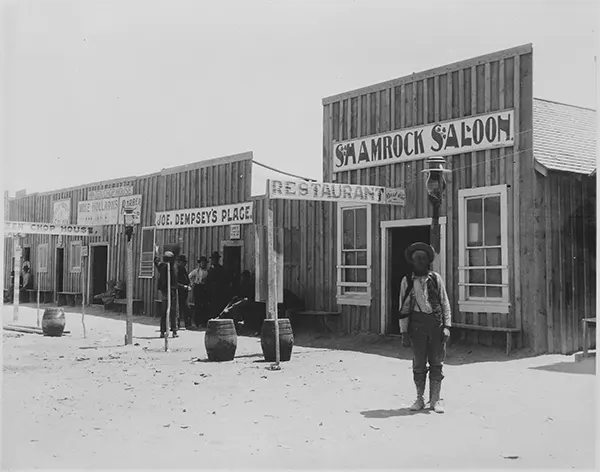
The "Shamrock Saloon" in Hazen, Nevada, 1905.
The “Shamrock Saloon” in Hazen, Nevada, 1905.
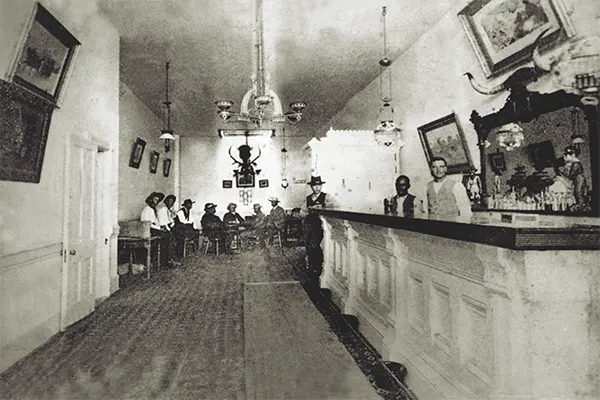
The interior of the Long Branch Saloon in Dodge City, Kansas.

The crowd inside a saloon on any given night was a cross-section of frontier life. Cowboys came in after cattle drives. Miners spent their wages at the bar. Soldiers, lumberjacks, gamblers, lawmen, and outlaws all drank side by side. Some of the most famous figures of the era were regulars. Wyatt Earp, the legendary lawman, even co-founded his own saloon in Tonopah, Nevada, in 1902.
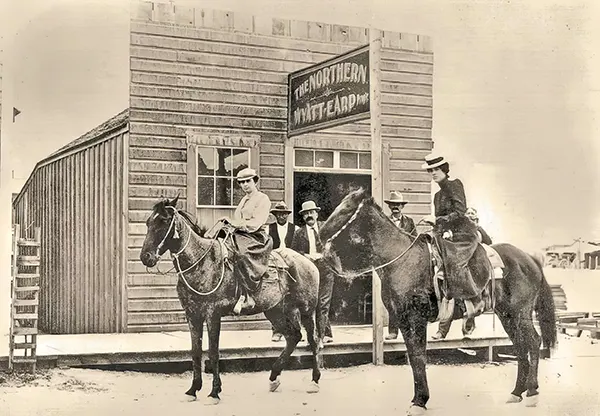
The Northern saloon in Tonopah, Nevada, co-founded by the legendary lawman Wyatt Earp, 1902.

Women had a complicated place in the saloon world. Respectable women were generally kept out. Those who were present worked there — as dancers, entertainers, or in the brothels that many saloons housed in back rooms or upper floors. Some establishments, particularly dance halls, blurred the line between saloon and entertainment venue.
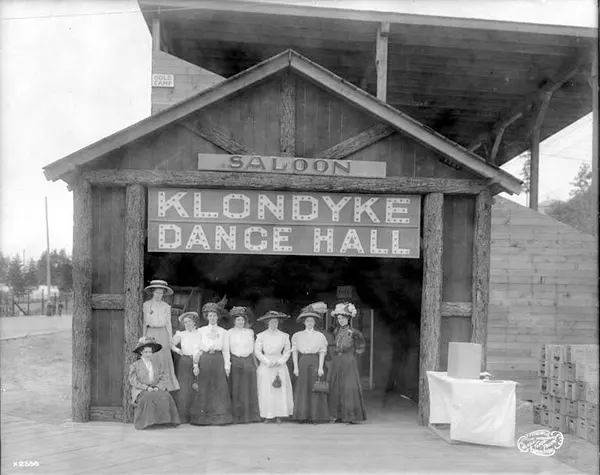
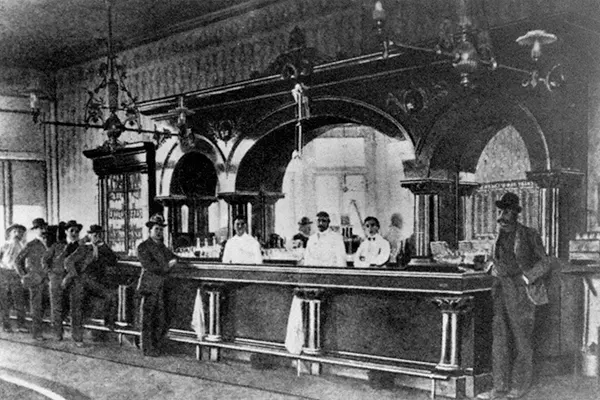
Women outside of the Klondyke Dance Hall and Saloon in Seattle, Washington, 1909.
The Crystal Palace Saloon in Tombstone, Arizona, 1885.

Whiskey was the drink of choice across the frontier, but saloons also served beer, wine, and stranger concoctions depending on what was available. Entertainment ranged from card games and gambling to live music, comedy performances, and dancing. By the 1880s, a city like Leavenworth, Kansas, had around 150 saloons operating at once, plus four wholesale liquor dealers supplying them.
The White Elephant in Fort Worth, Texas, stood among over 60 Wild West saloons in the city by the late 19th century.
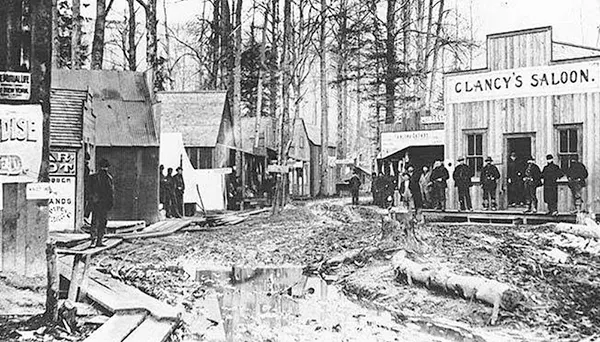
Clancy's Saloon in Skagway, Alaska, 1897.
Clancy’s Saloon in Skagway, Alaska, 1897.

Violence was a constant undercurrent. Cheating at cards triggered brawls. Disputes that started at the bar spilled into the street. Law enforcement was thin in many frontier towns, and gunfights were a real and documented outcome of saloon conflicts. Photographs from the period capture moments of tension that hint at how quickly an evening could turn dangerous.
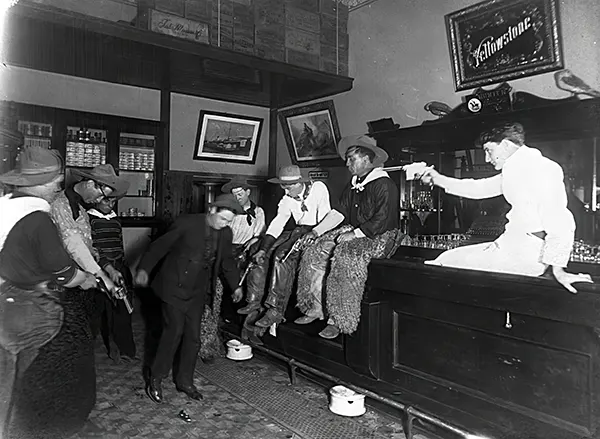
At an unspecified saloon, possibly in Wyoming, patrons are seen apparently compelling a man to "dance" by pointing their guns at his feet, 1880s.
At an unspecified saloon, possibly in Wyoming, patrons are seen apparently compelling a man to “dance” by pointing their guns at his feet, 1880s.
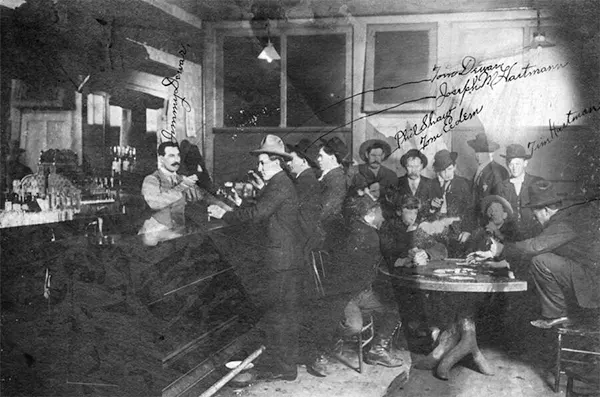
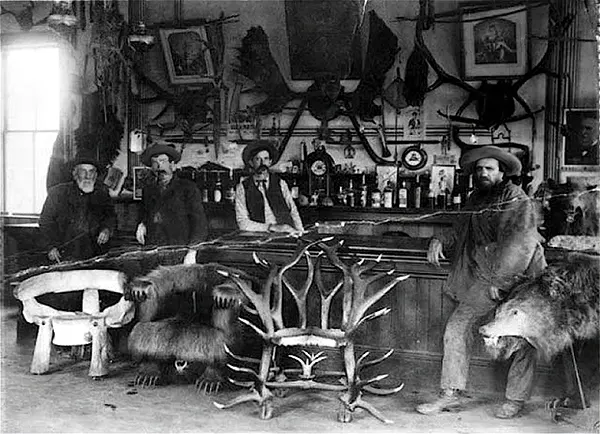
Unique furniture fills the Table Bluff Hotel and Saloon in Table Bluff, California, 1889.

The bartender was far more than a drink-pourer. He was a mediator, a confidant, and often one of the most respected men in town. Keeping rowdy customers in line required toughness and a calm head. A good bartender knew his regulars, settled arguments before they became fights, and kept the money flowing — which meant keeping the peace.
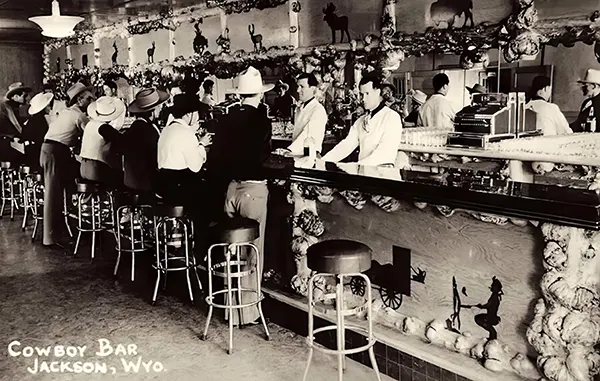
The Cowboy Bar in Jackson, Wyoming, 1908.

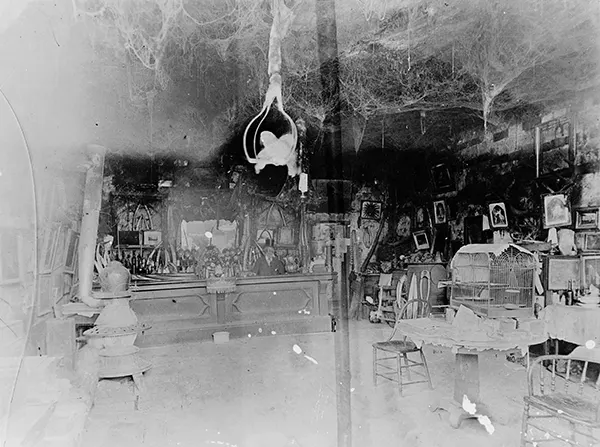
Not every saloon looked the same. Some were rough wooden shacks. Others were elaborate buildings with mirrors, chandeliers, and stage areas. Abe Warner’s Cobweb Palace in San Francisco was one of the most eccentric — Warner allowed spiders to spin webs freely throughout the entire establishment, covering the walls, ceiling, and fixtures in layers of cobwebs.
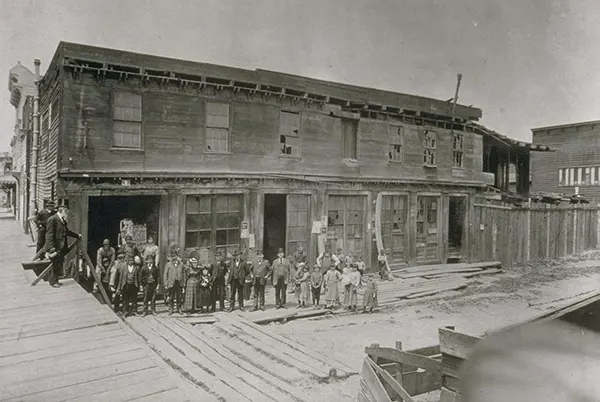
The exterior of Abe Warner's Cobweb Palace in San Francisco, California.
The exterior of Abe Warner’s Cobweb Palace in San Francisco, California.
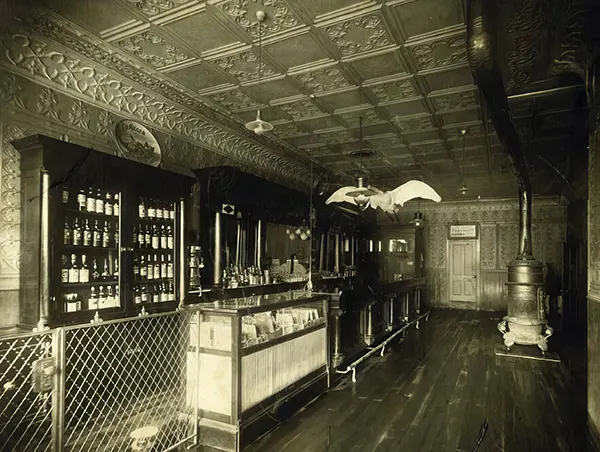
The interior of Cobweb Palace, known for its eccentric owner Abe Warner, who allowed spiders to spin countless webs throughout the establishment.

Saloons also served practical civic functions. In towns where no official buildings existed yet, the saloon doubled as a courthouse, a meeting hall, or a polling place. Judge Roy Bean famously held court inside his own saloon, trying cases — including horse theft — from behind the bar.
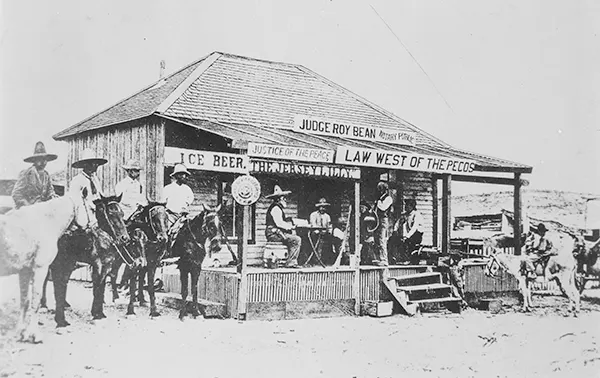
Saloons, among the largest and newest buildings in Wild West towns, often served multiple purposes. The Judge Roy Bean Saloon, depicted in 1900, doubled as a
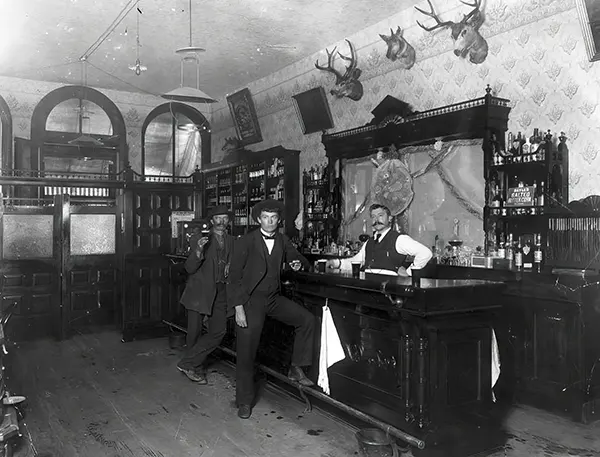
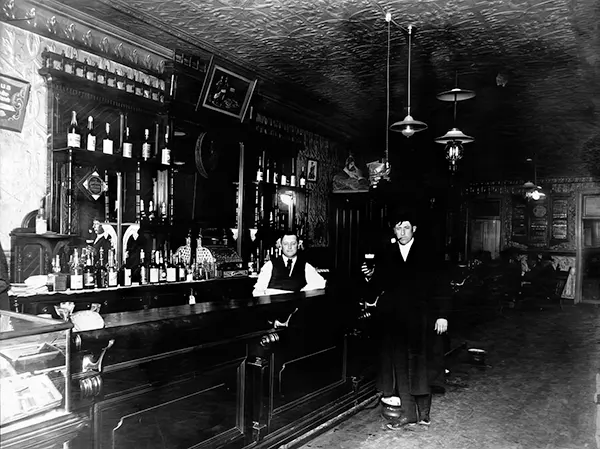
A Wild West saloon, 1890s.
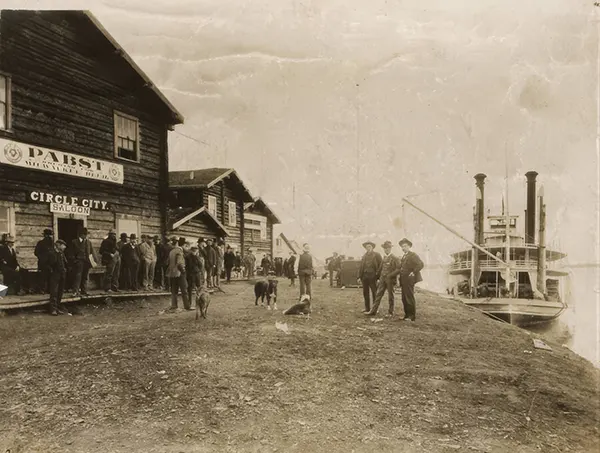
Circle City Saloon in Nome, Alaska, 1902.

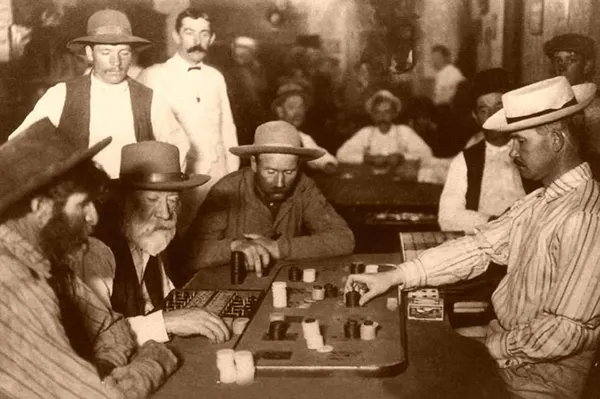
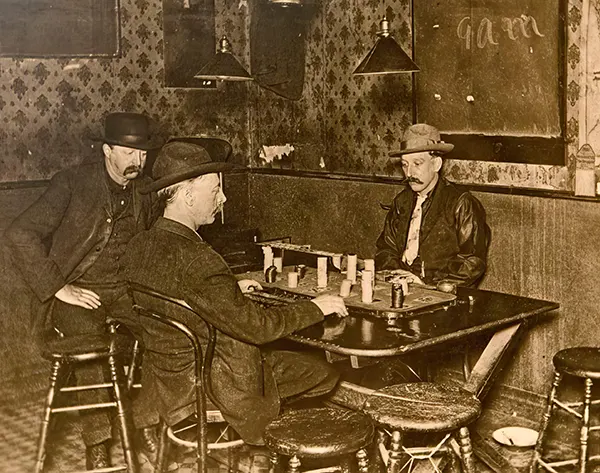
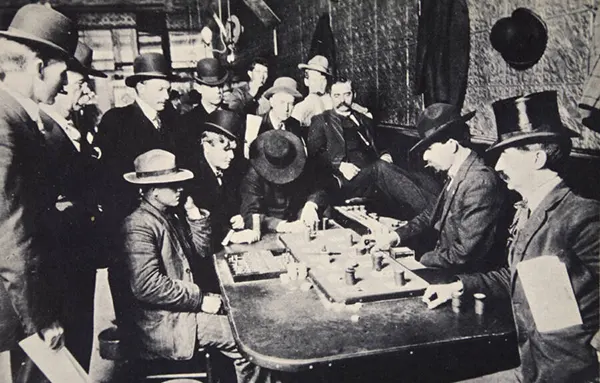
Gambling was one of the most popular draws. Faro was the game of choice across many frontier saloons — a fast-paced card game that attracted serious gamblers and casual players alike. Stakes were high, tempers ran short, and accusations of cheating were common.
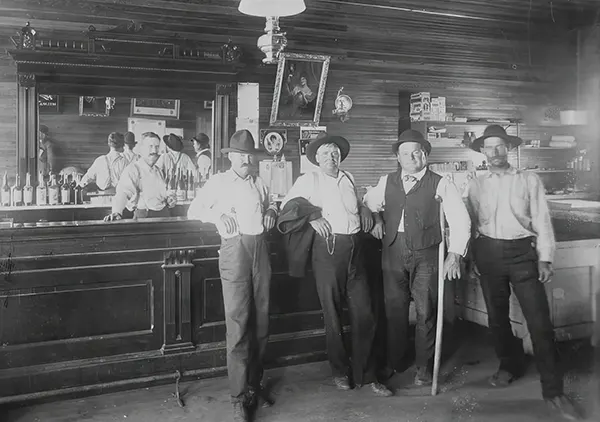
Men pose in a Wild West saloon.
Men playing Faro at the Orient Saloon in Bisbee, Arizona, 1903.
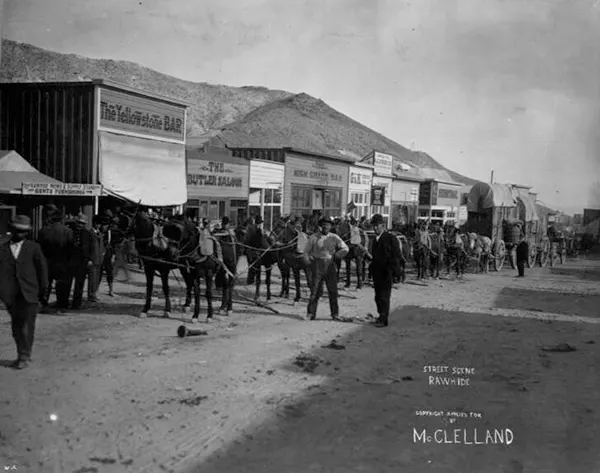
Saloons and wagons line the streets of this frontier town.
A saloon in Pierre, South Dakota, 1890s.
The Toll Gate Saloon in Black Hawk, Colorado, 1897.
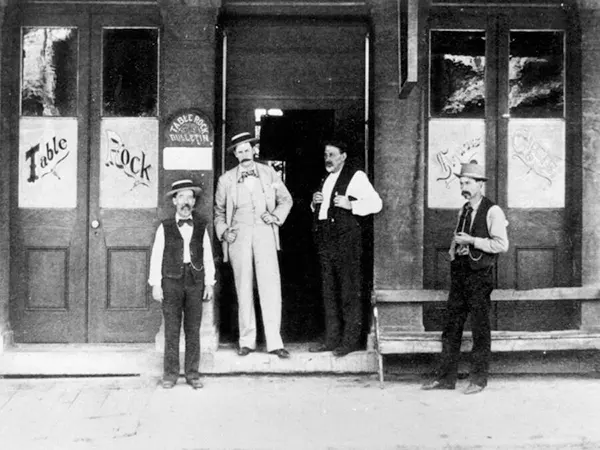
Men standing in front of a saloon called "Table Rock", 1890s.
Men standing in front of a saloon called “Table Rock”, 1890s.
Dewar's Saloon in Zortman, Montana, 1905.
Dewar’s Saloon in Zortman, Montana, 1905.
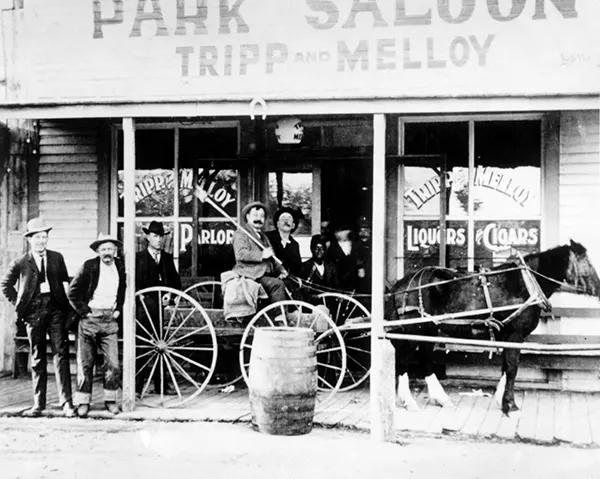
Park Saloon/Tripp and Melloy in Gardiner, Montana.

Some photographs from the era capture moments that seem almost impossible to believe. Inside a saloon in Castle Dale, Utah, one patron brought a horse indoors and posed with it beside the bar. In a Fort Worth saloon in 1898, a man pulled a gun — and the camera caught it. These images are not staged illustrations; they are records of real moments in real places.
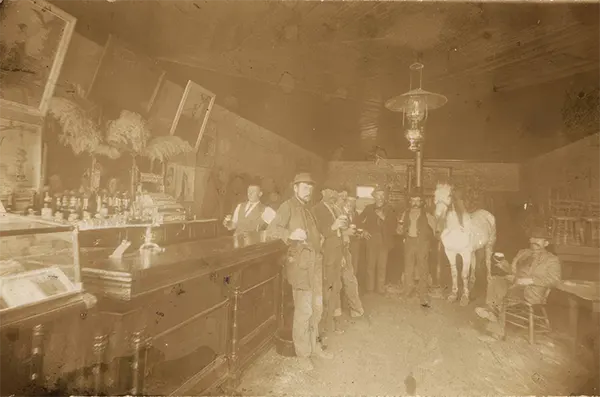
The interior of a saloon in Castle Dale, Utah, where one of the patrons apparently decided to pose with a horse.
Mueller Saloon in Ripon, Wisconsin, 1894.
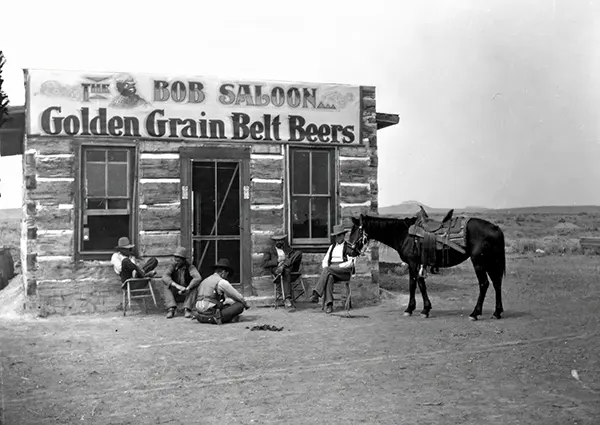
The Bob Saloon in Miles City, Montana, 1880s.
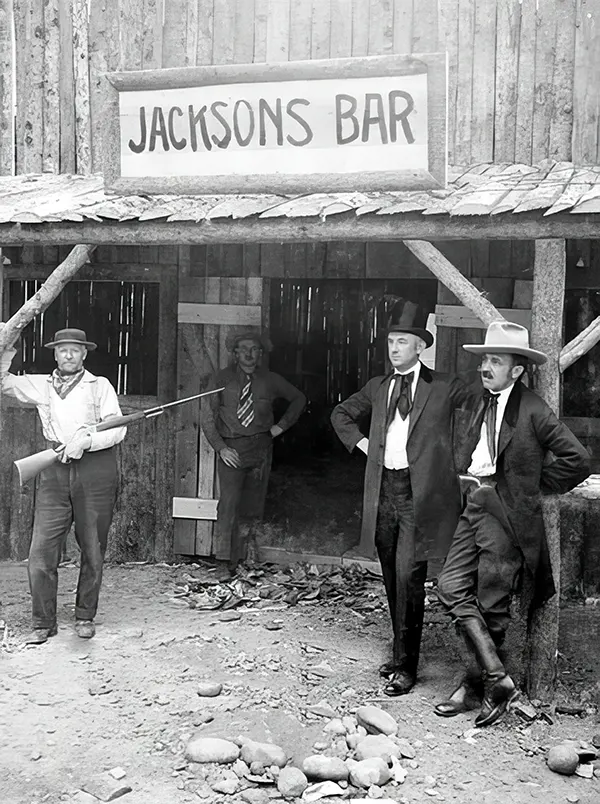
A patron cradles a rifle outside Jacksons Bar in Idaho, late 19th century.
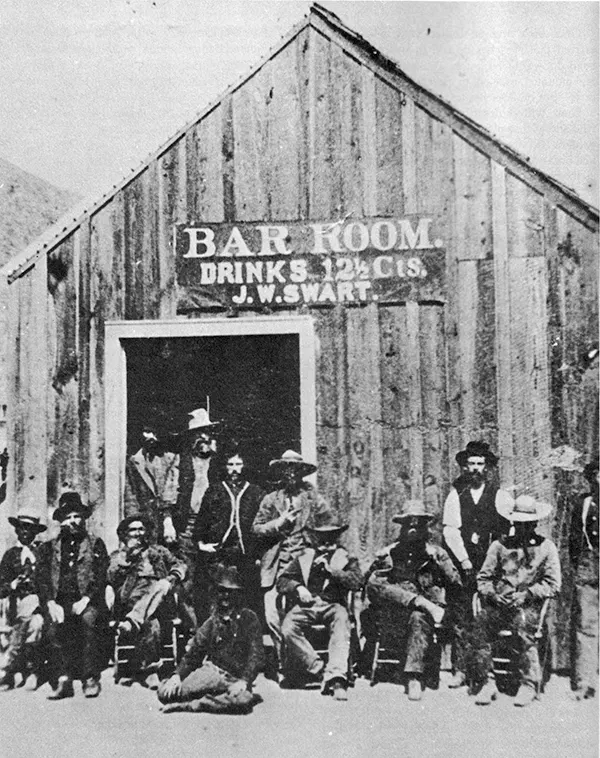
J. W. Swart's saloon in Charleston, South Carolina.
J. W. Swart’s saloon in Charleston, South Carolina.
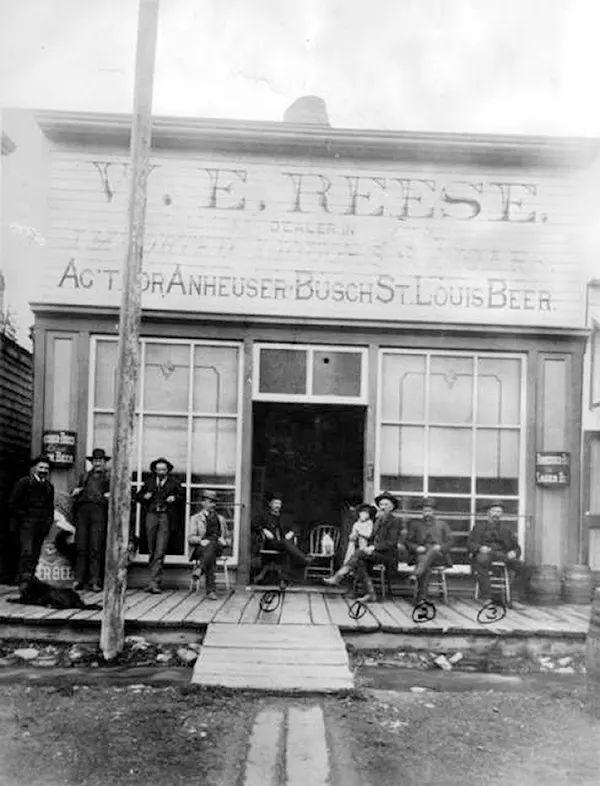
The Billy Reese Saloon in Gunnison, south Colorado.

Some of the men who drank in these saloons were among the most dangerous on the frontier. The Hash Knife Cowboys — a group hired by the Aztec Land & Cattle Company to manage over 33,000 head of cattle in Arizona — earned a notorious reputation for lawlessness. They were photographed together at the Fashion Saloon in Winslow, Arizona, a reminder that the line between hired hand and outlaw was often thin.
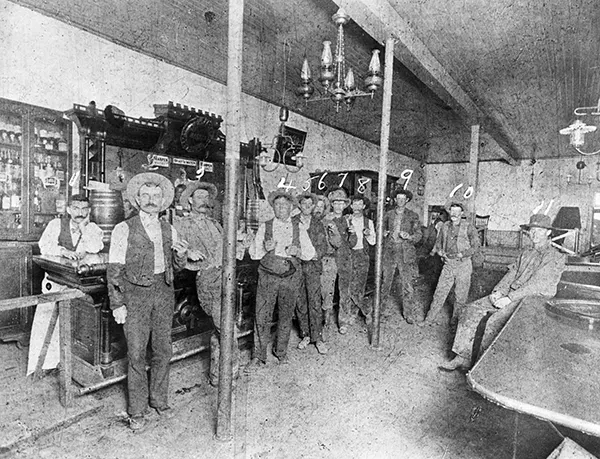
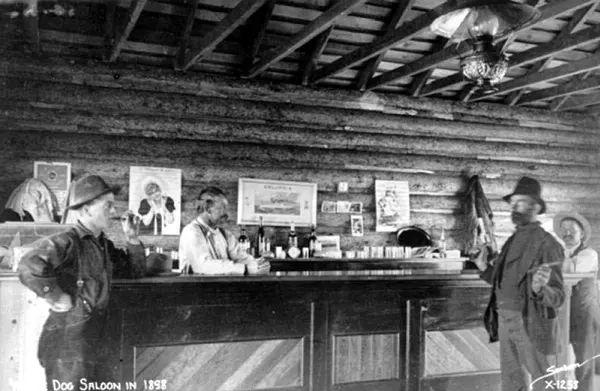
Members of the notorious Hash Knife Cowboys pose for a picture at the Fashion Saloon in Winslow, north eastern Arizona. The cowboys were initially hired to help the Aztec Land & Cattle Company look after the more than 33,000 cattle they had acquired. However, the outfit soon gained an unsavory reputation.
A man pulls a gun at the White Dog Saloon in Fort Worth, Texas, in 1898.
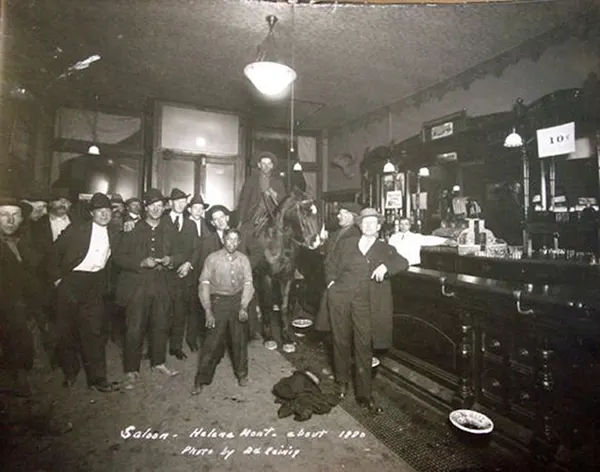
A saloon in Helena, Montana, circa 1890 – complete with a horse and rider.
Gamblers play Faro in an Arizona saloon, 1895.
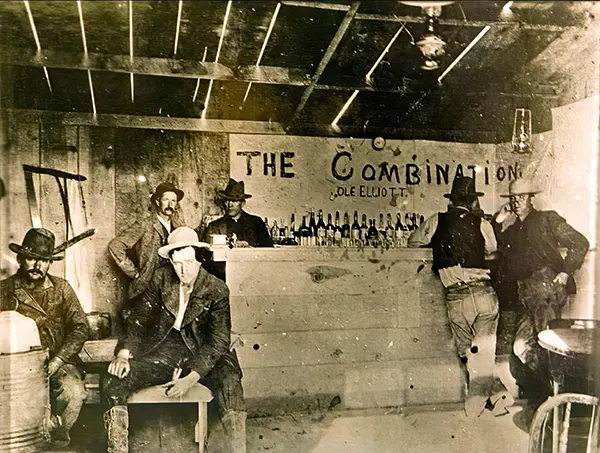
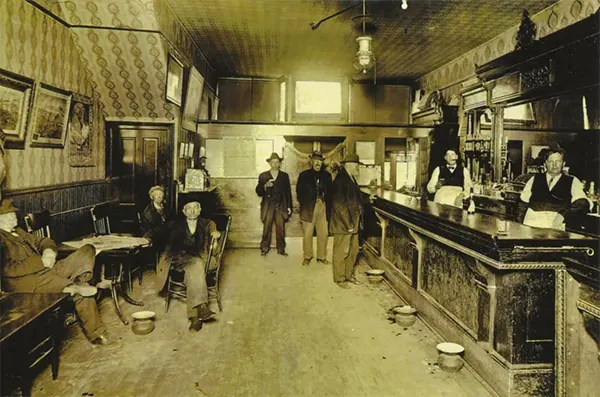
The Combination Saloon in Utah, late 19th century.
Enjoyed this post? Get new ones in your inbox.

Leave a Comment

Your email address will not be published. Required fields are marked *

Share this Post 🥺

Please take a moment to share this content. Your support is greatly appreciated! 🙌🙏

Share this Post 🥺

Please take a moment to share this content. Your support is greatly appreciated! 🙌🙏
Scroll to Top
 
Hey Friend, Before You Go.. Please like & follow for more interesting content