
When World War II ended, Germany ceased to exist as a unified country. The victorious Allied powers — the United States, the United Kingdom, France, and the Soviet Union — divided the country into four separate occupation zones, each under their own control. Berlin, though sitting deep inside Soviet-controlled territory, was also split among all four powers. The American, British, and French sectors of the city became West Berlin, while the Soviet sector became East Berlin.
The key decisions that shaped this arrangement were hammered out at the Potsdam Conference, held between July 17 and August 2, 1945. There, Allied leaders agreed on how Germany would be governed and how long the occupation would last. What no one could say at that point was how permanent those dividing lines would become.
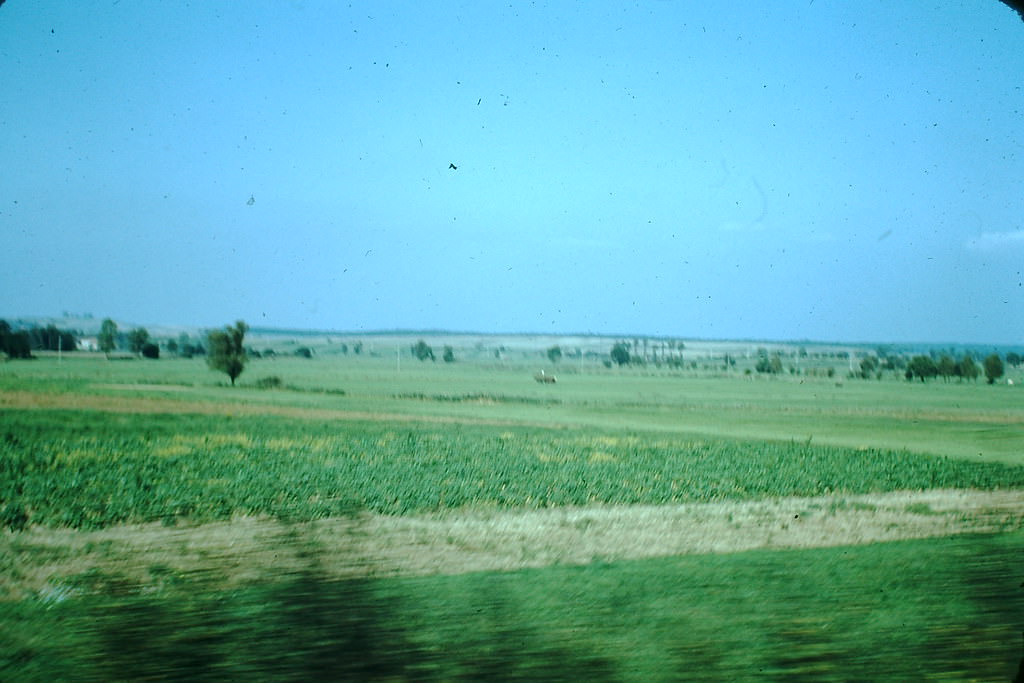
On May 23, 1949, the Parliamentary Council formally declared the establishment of the Federal Republic of Germany — what the world would come to know as West Germany. Chancellor Konrad Adenauer marked the moment with the words, “Today a new Germany arises.” But the mood in the room was far from triumphant. Many members of the German delegation had quietly hoped that some last-minute political shift might keep Germany whole. Those hopes were gone. One communist council member refused to sign the founding proclamation altogether, a visible sign of the deep political fault lines already running through the new state.
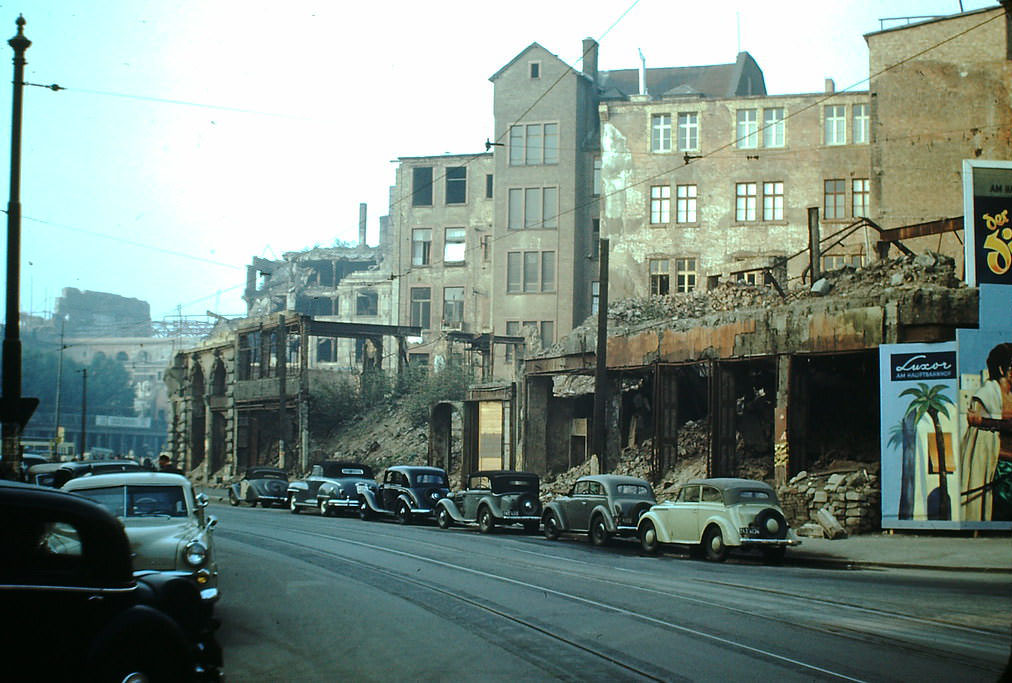
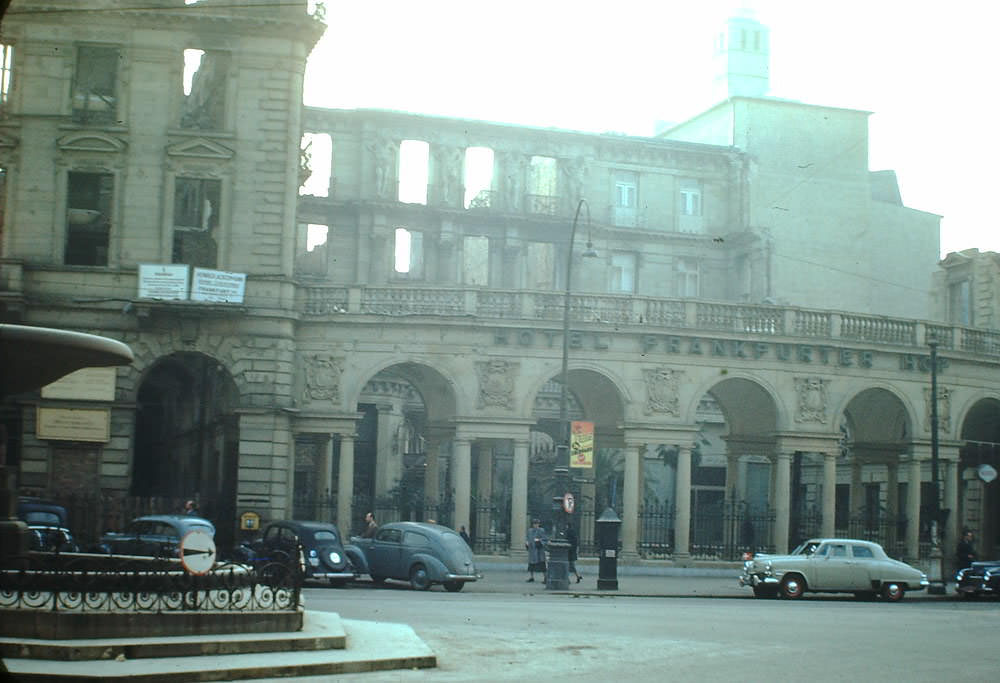
Frankfurt was among the most photographed cities in West Germany that year, and for good reason. It was a major urban center and a hub of the American occupation administration. The city had been heavily bombed during the war, and in 1949 its streets showed both the damage left behind and the early signs of rebuilding.
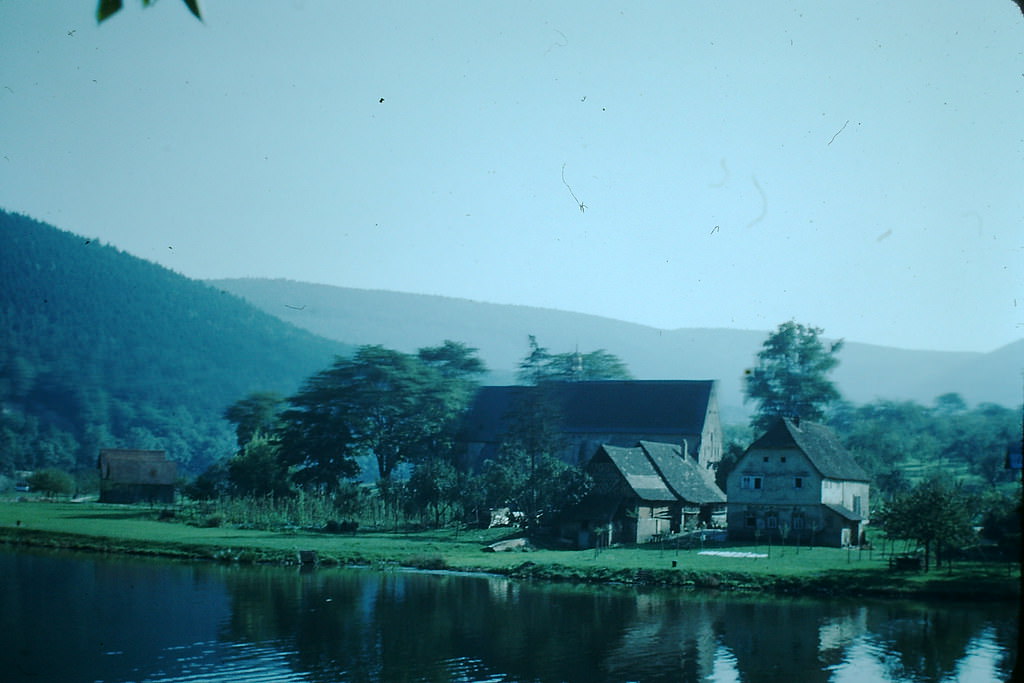
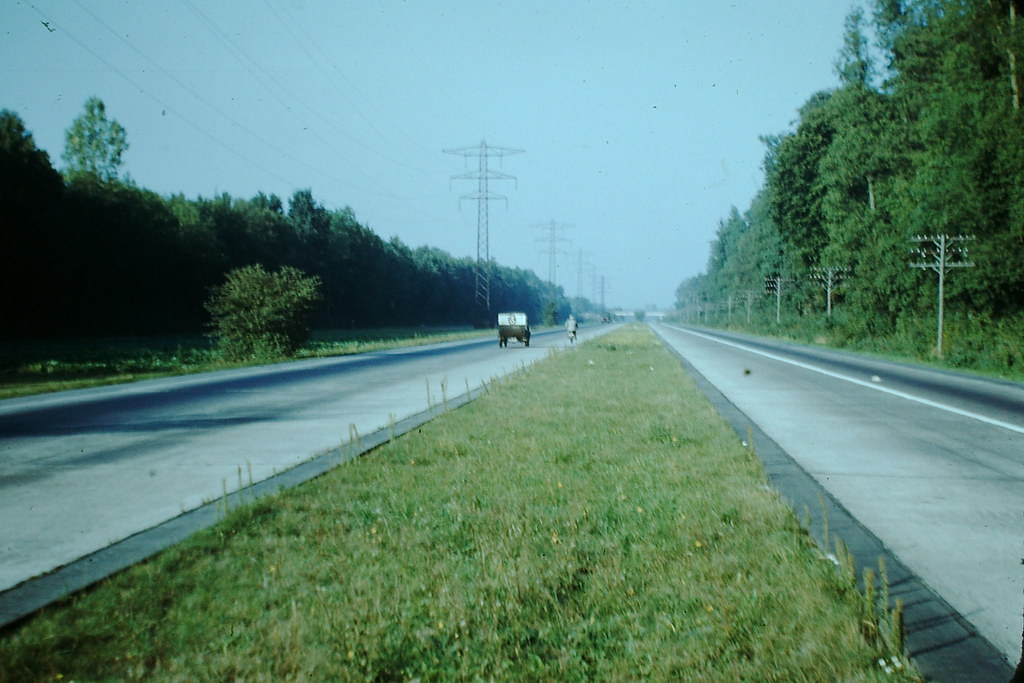
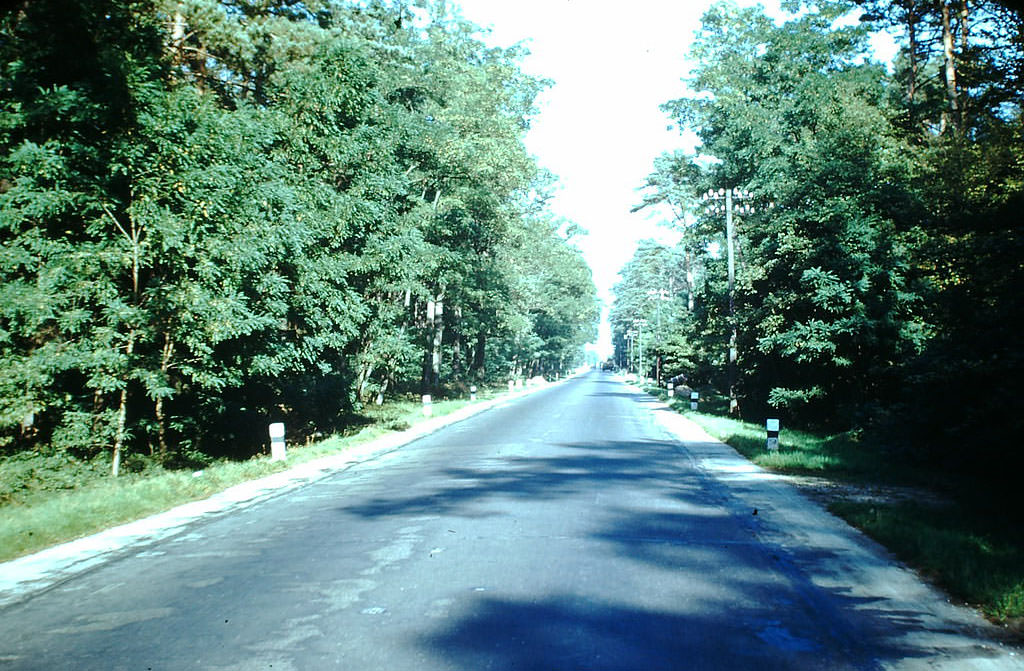
The roads connecting cities like Karlsruhe and Frankfurt told their own story. Traveling through the western regions of the new republic meant passing through farmland, forested hills, and towns that ranged from nearly untouched to heavily scarred by wartime bombing. The contrast between rural calm and urban ruin was stark.
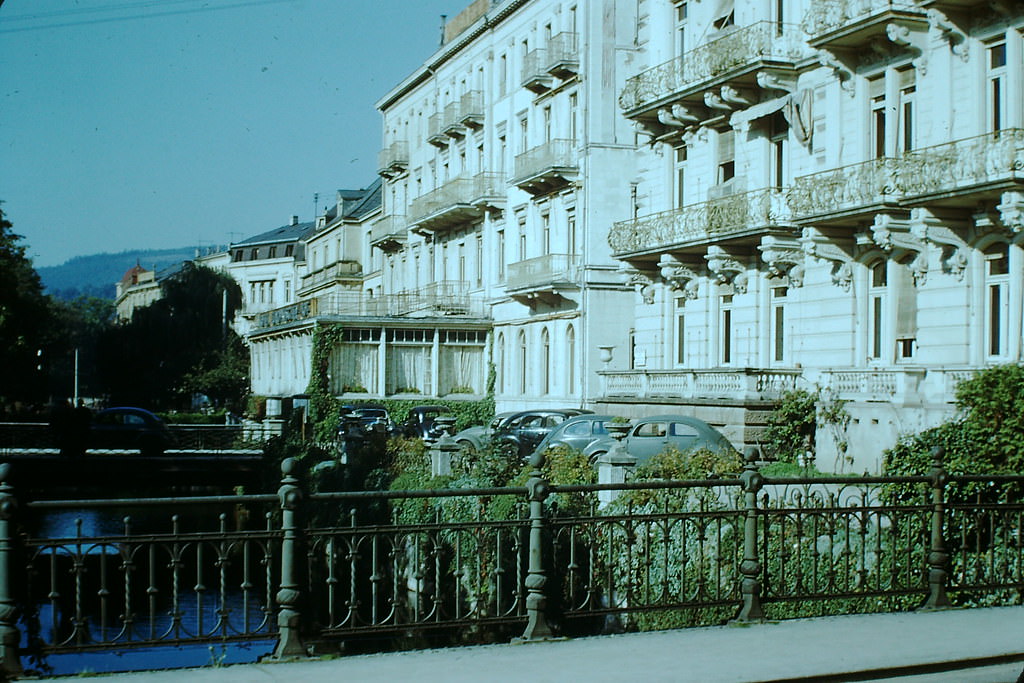
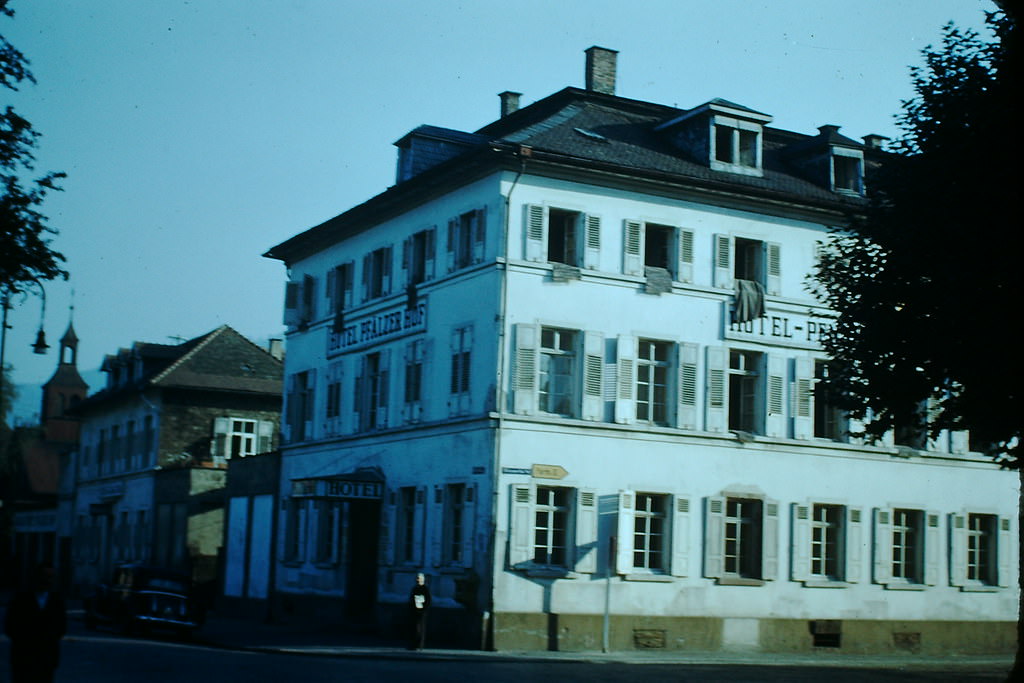
Baden-Baden, a spa town in the southwest, had fared better than most. Located in the French occupation zone, it served as the headquarters of French forces in Germany. The town’s grand hotels and well-kept streets gave it an air of normalcy that many other German cities simply didn’t have in 1949.
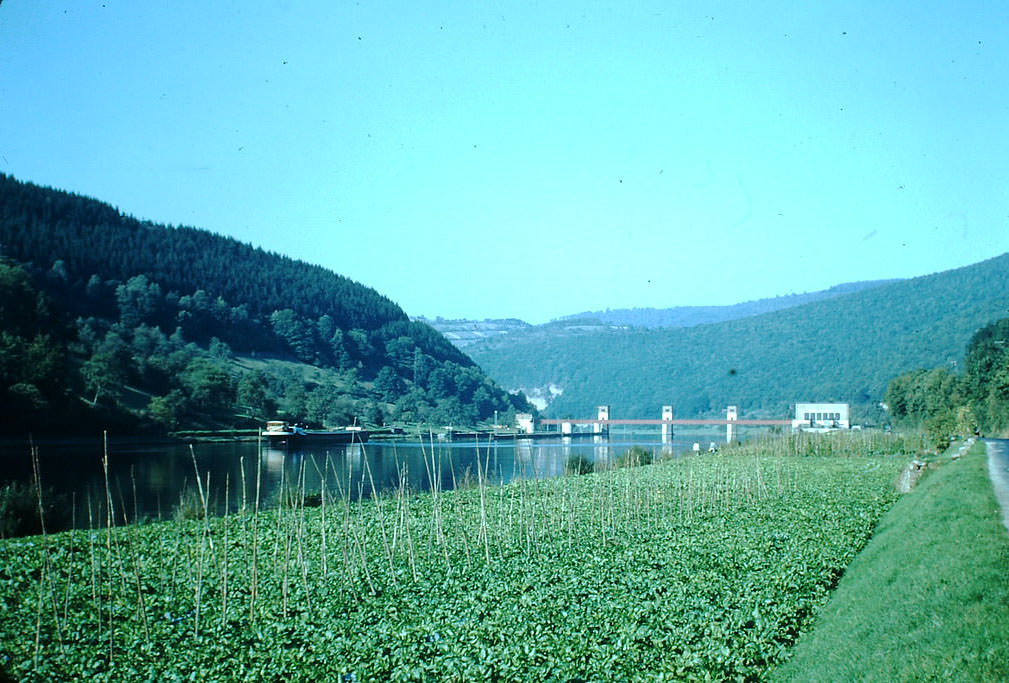
The Neckar River was a working waterway in 1949, with barges carrying goods through the heart of southwestern Germany. Waterways like the Neckar and the Rhine were critical to trade and transport as the country began piecing its economy back together.
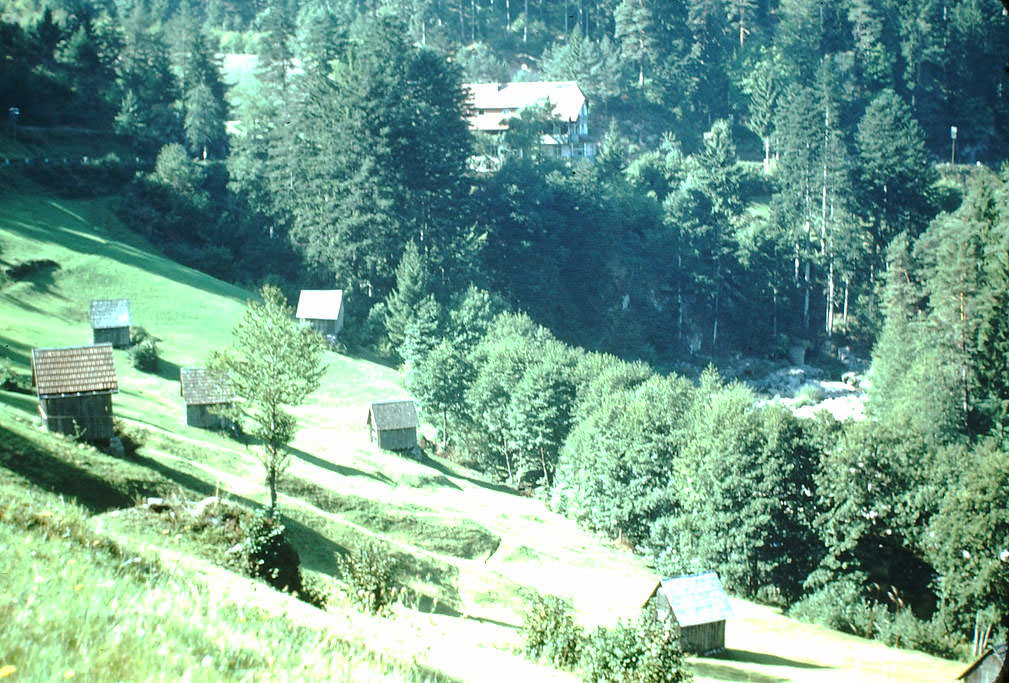
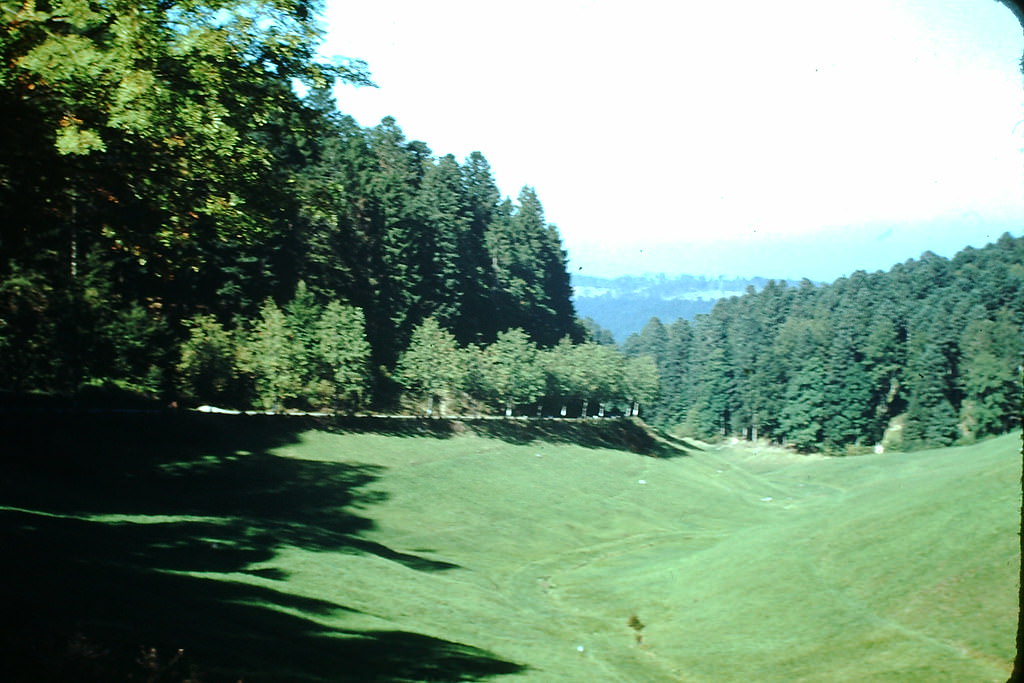
The Black Forest region in the southwest was a world apart from bombed-out city centers. Its dense tree cover, rolling valleys, and quiet villages had survived the war largely intact. Photographs from this area in 1949 show a landscape that looked almost unchanged from decades earlier.
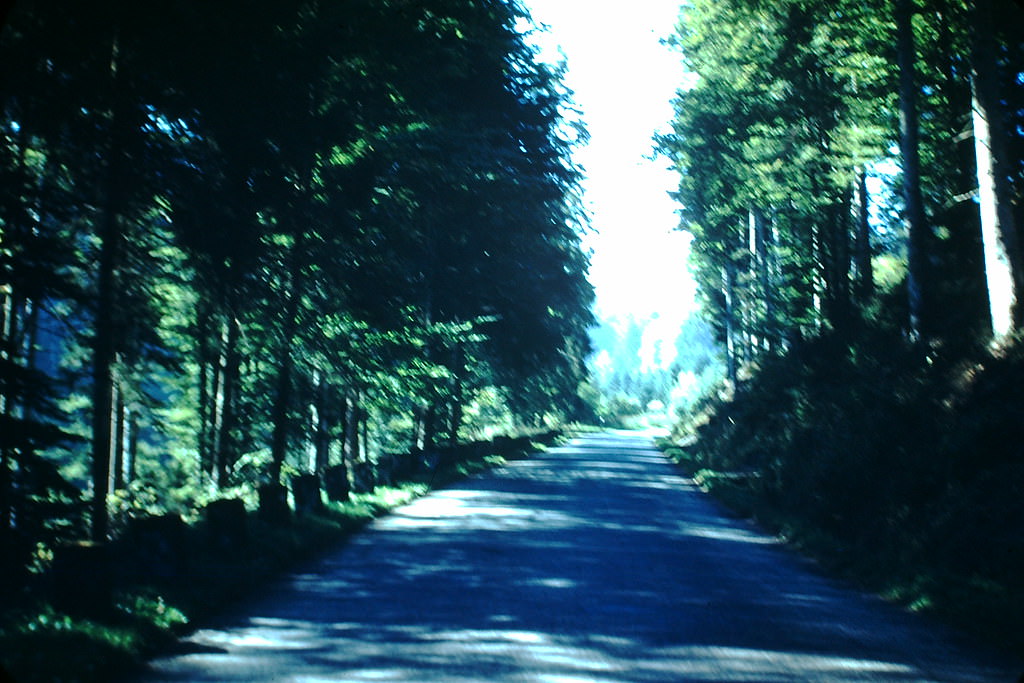
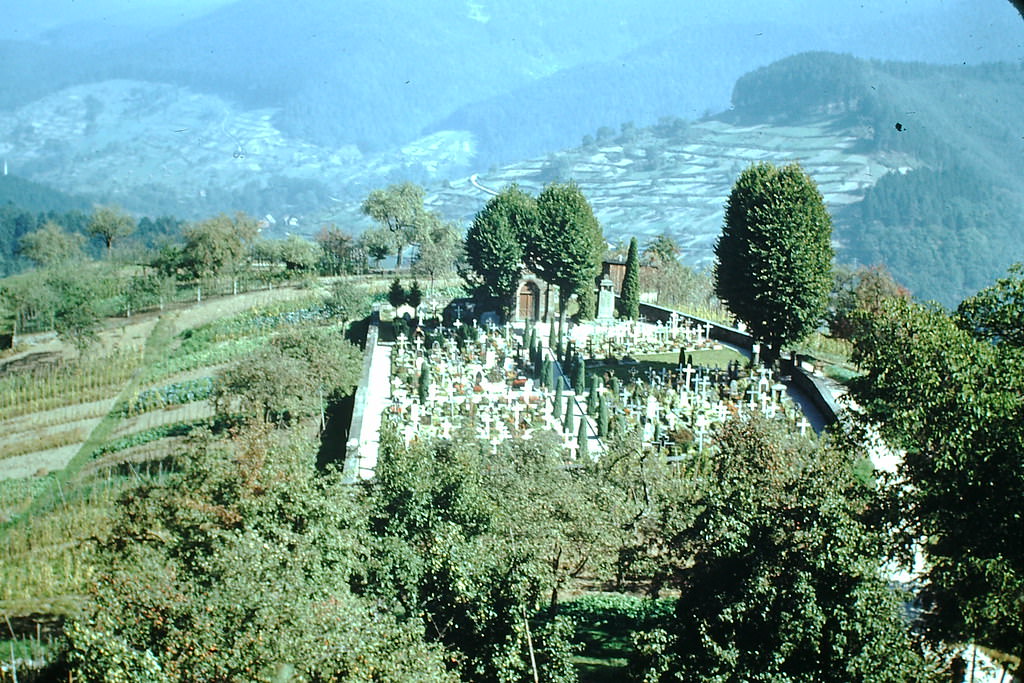
Cemeteries across Germany in 1949 held the weight of recent history. The Black Forest was no exception. Local graveyards contained both old family plots and fresh graves from the war years, a quiet but constant reminder of what the country had just been through.
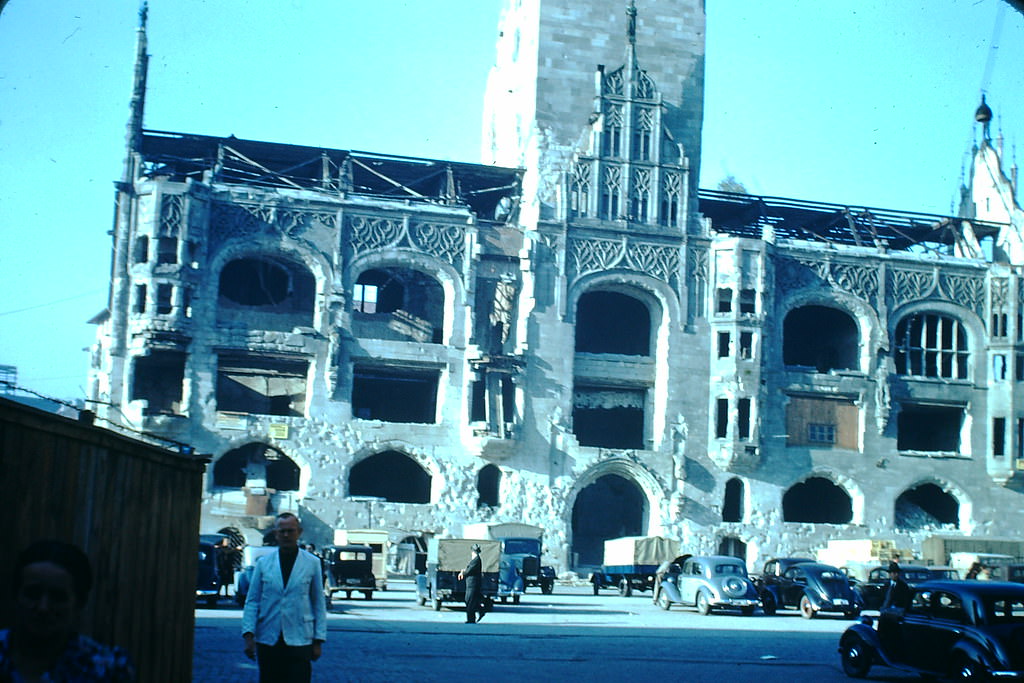
Stuttgart, the capital of the newly created state of Baden-Württemberg, was one of West Germany’s most important cities. Its city hall stood as a symbol of local government trying to function and rebuild under Allied occupation. The city had suffered significant bomb damage, but civic life was resuming.
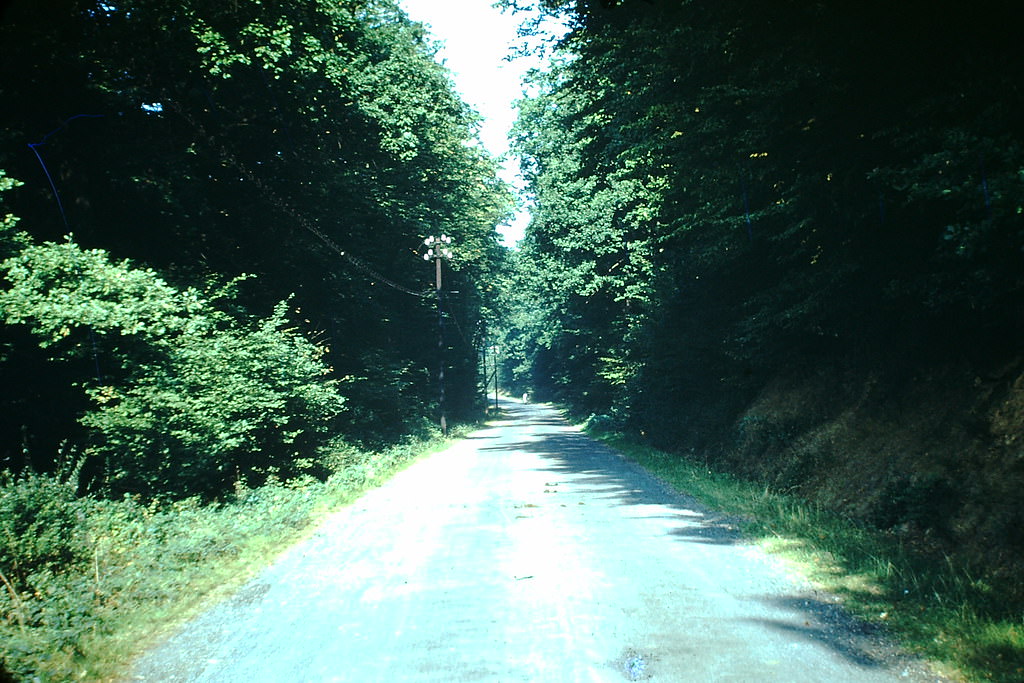
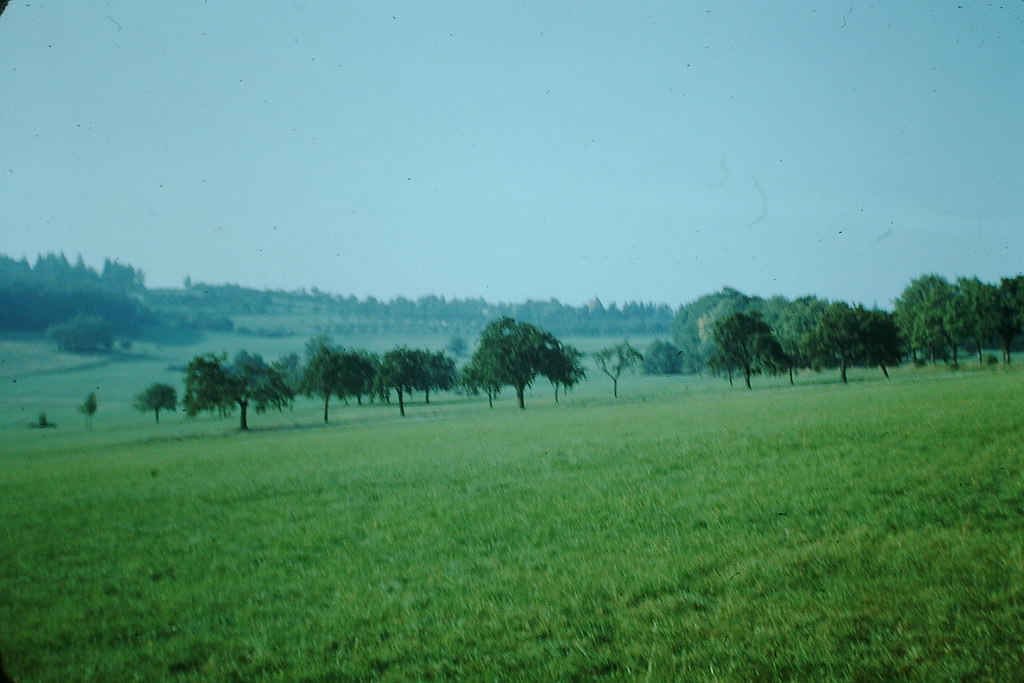
Kronberg, a town in the Taunus hills near Frankfurt, was home to Kronberg Castle — a 19th-century structure built for Empress Frederick, the eldest daughter of Queen Victoria. By 1949, the castle and its surrounding countryside had become part of the American occupation zone’s landscape, with U.S. military officials known to use the castle itself.
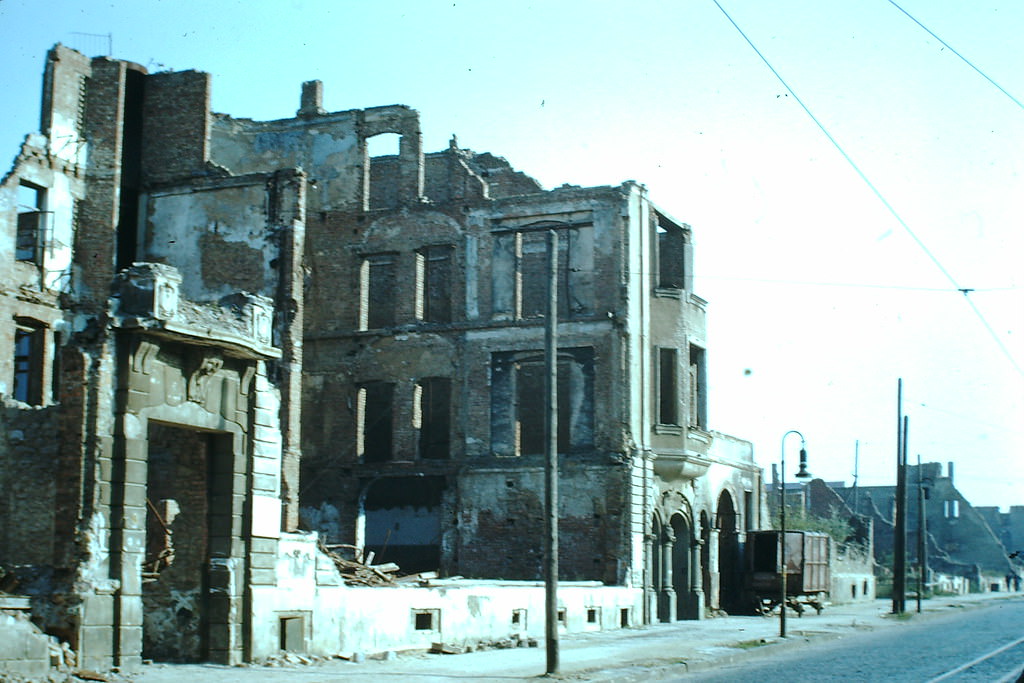
Darmstadt, south of Frankfurt, had been nearly destroyed in a British air raid in September 1944 that killed over 11,000 people in a single night. By 1949, reconstruction was underway, but the city still bore massive visible damage. It was one of the most heavily bombed cities in all of Germany relative to its size.
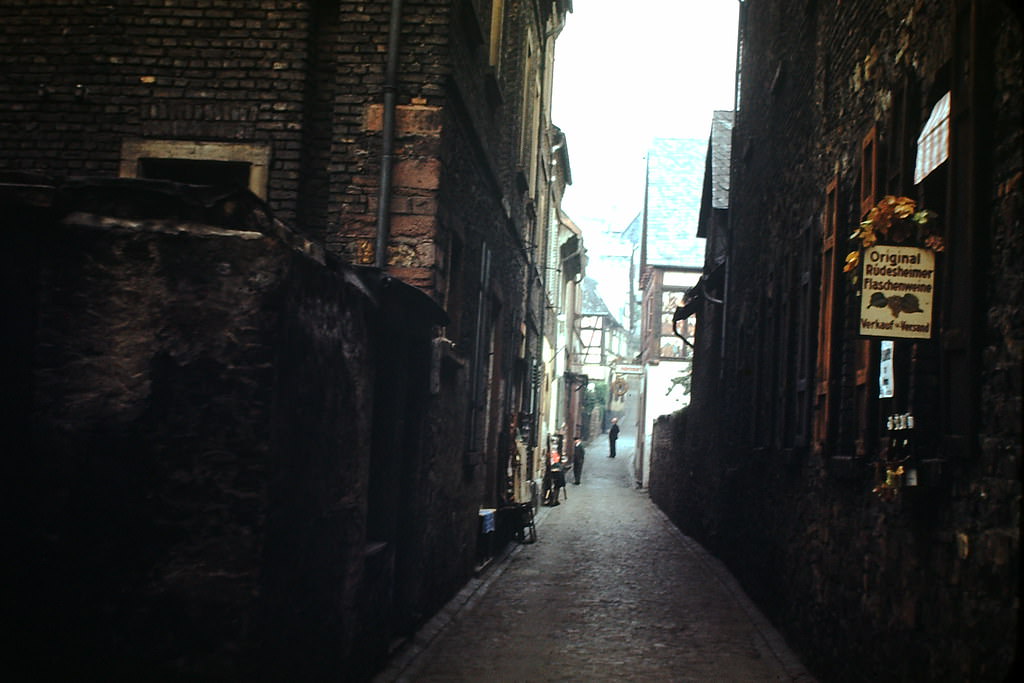
Rüdesheim am Rhein, a wine town on the Rhine, was famous for its Drosselgasse — a narrow lane packed with wine taverns and shops. Even in the difficult years after the war, this street retained its character. Wine production in the Rhine Valley had continued through the war years, and by 1949 the trade was picking up again.
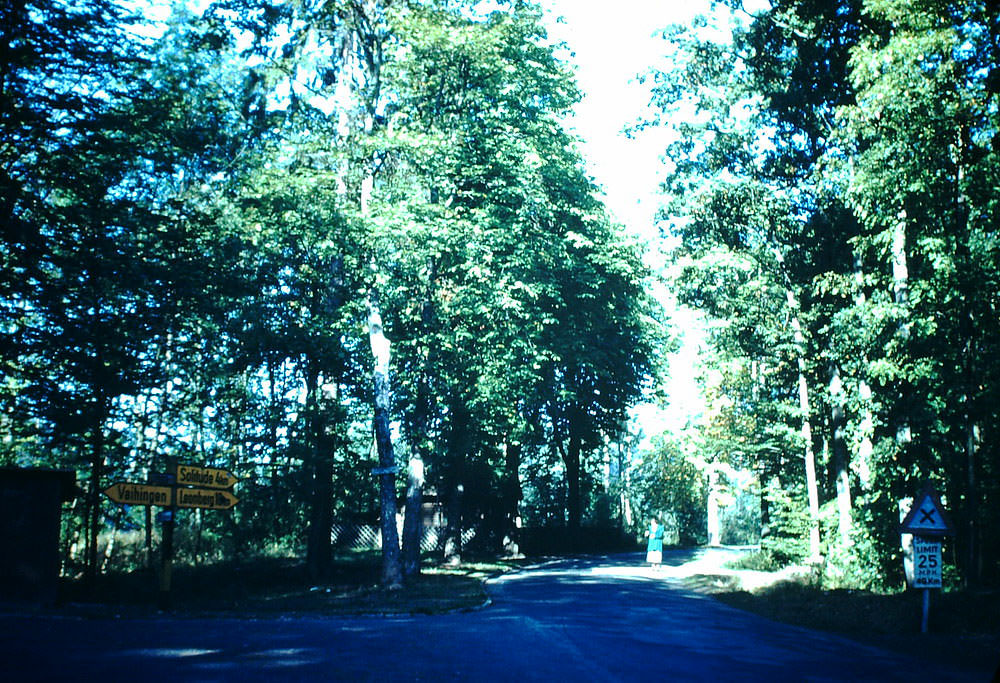
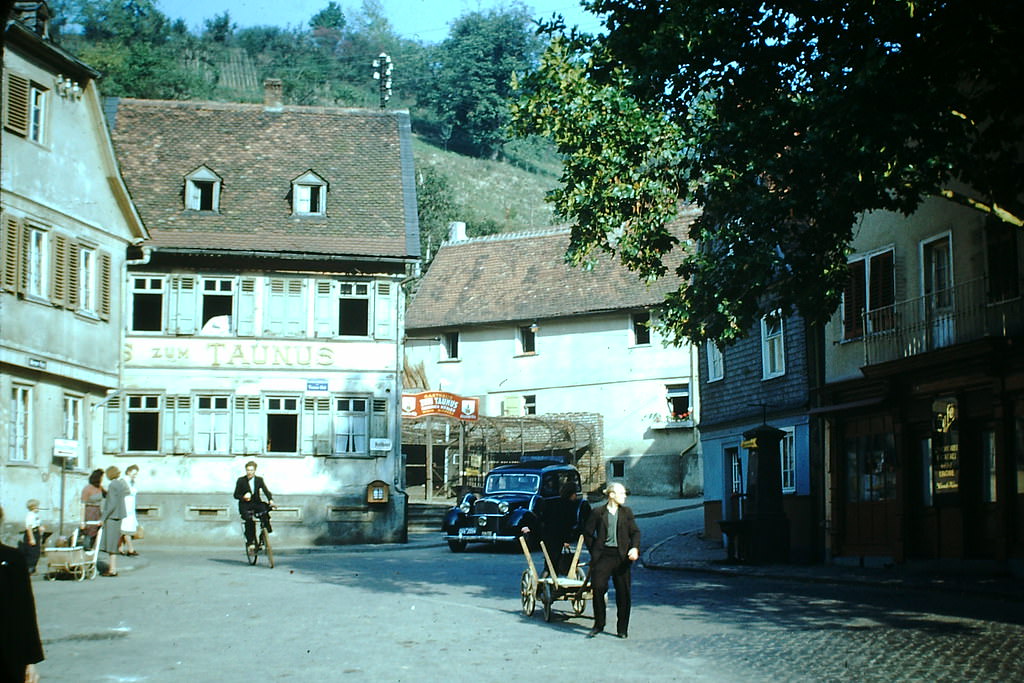
Small villages across the Nassau region retained their traditional half-timbered architecture. Towns like Eppstein, nestled in wooded valleys, had changed little visually over centuries. In 1949, they were quiet places still absorbing millions of German expellees and refugees who had been forced west from territories now under Polish and Soviet control.
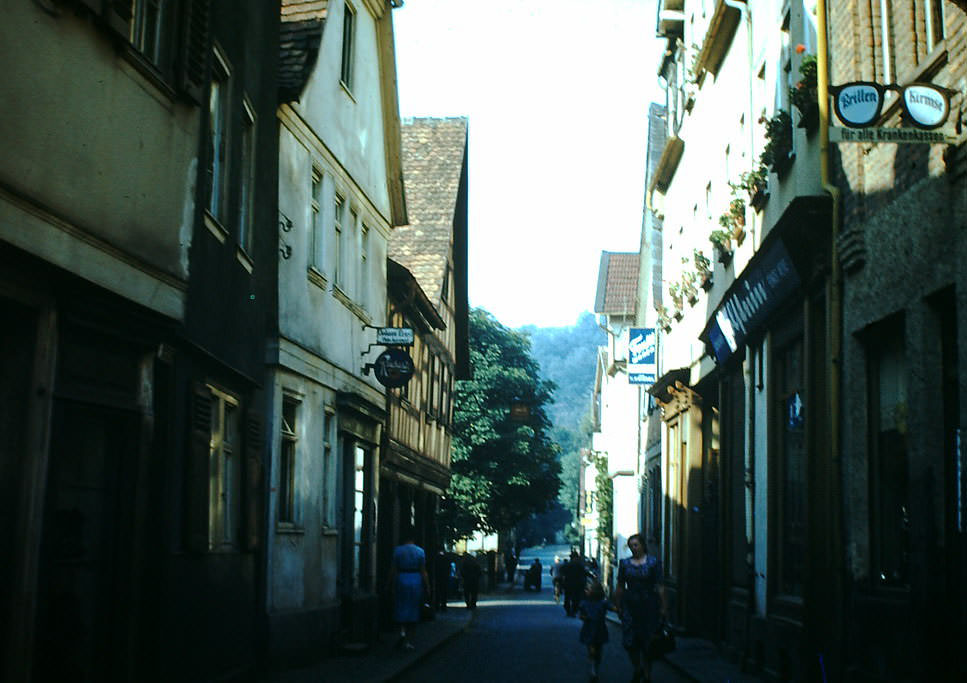
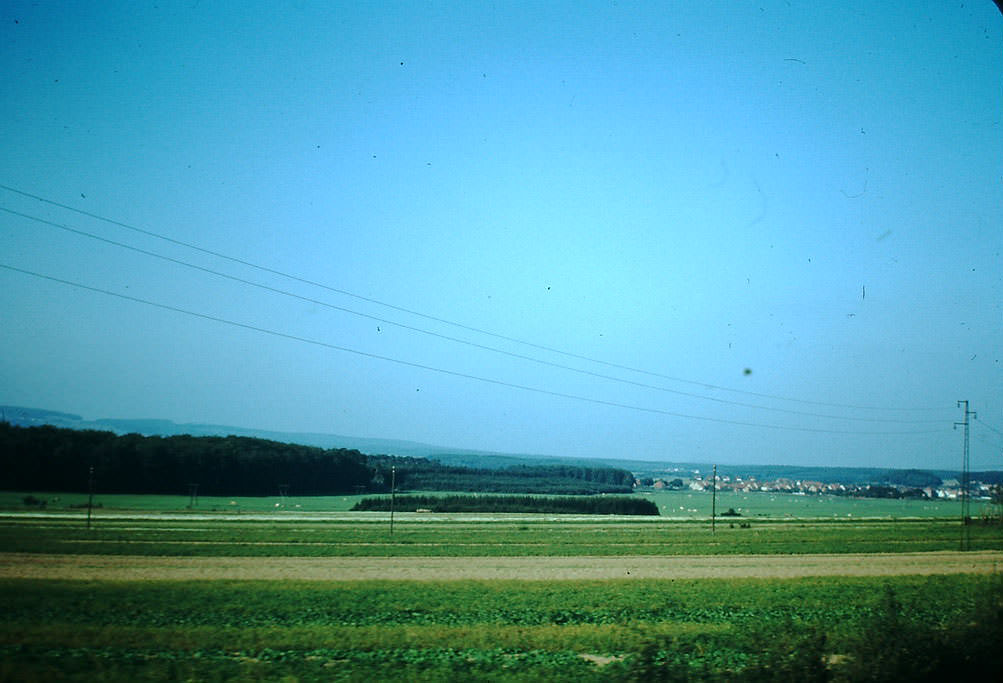
The Saar Valley in 1949 was politically complicated. The Saar Protectorate was not yet part of West Germany — France administered it separately and had its own plans for the region’s valuable coal resources. Farms there operated under French oversight, and the question of whether the Saar would ever join West Germany was unresolved.
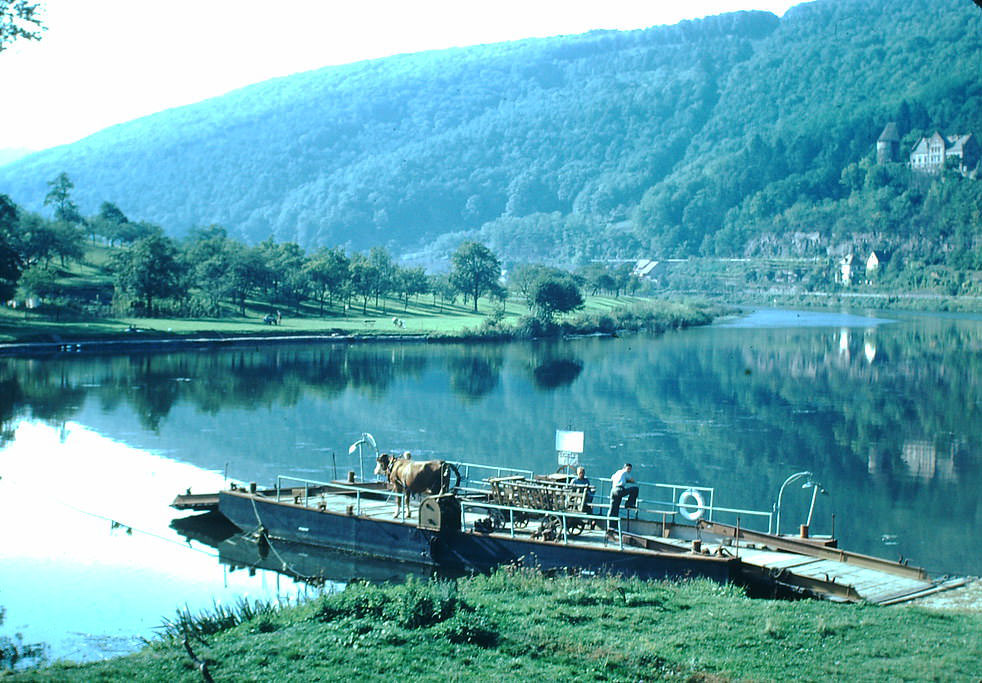
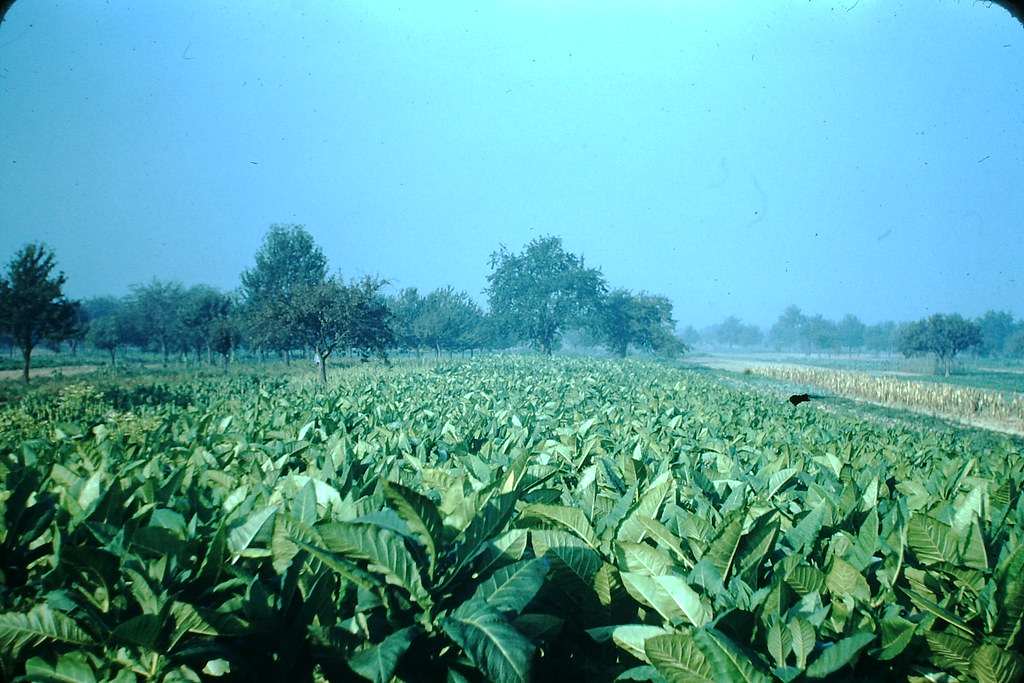
Tobacco farming near Weinheim, in the Rhine Plain between the Black Forest and the Odenwald hills, was one of the few crops that had a long history in this part of Germany. Fields of tobacco in 1949 represented the kind of agricultural continuity that rural West Germany was relying on while its cities were still rebuilding.
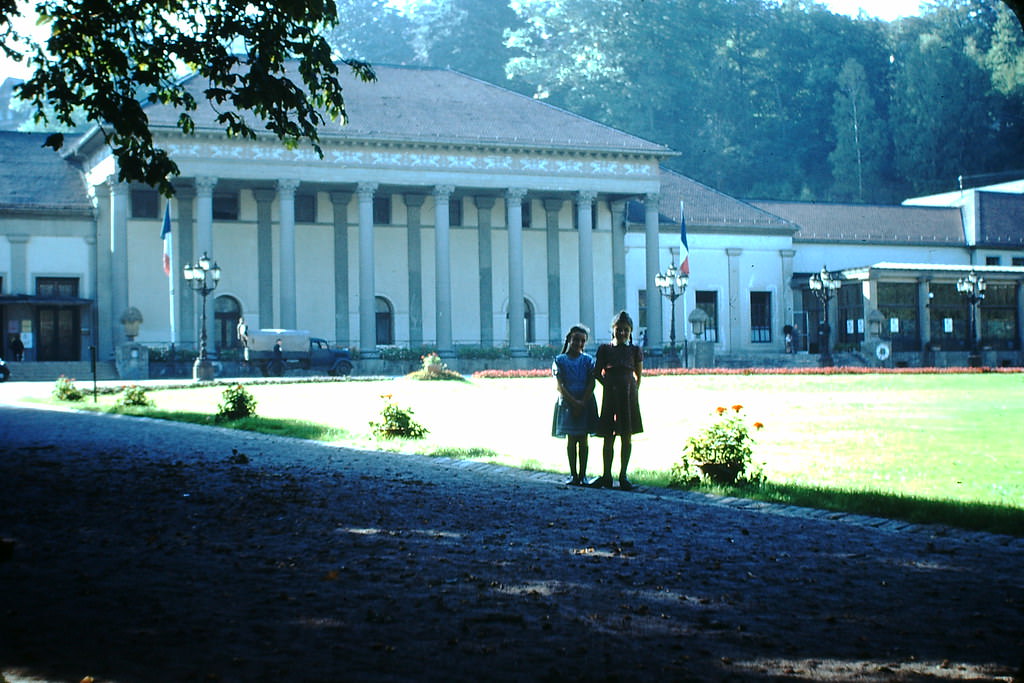
French military headquarters in Baden-Baden occupied some of the finest hotels in town. The French zone’s administration was centered here, and the presence of a well-funded foreign military force gave the city a distinctive atmosphere in these early postwar years — one that mixed German resort culture with French military authority.
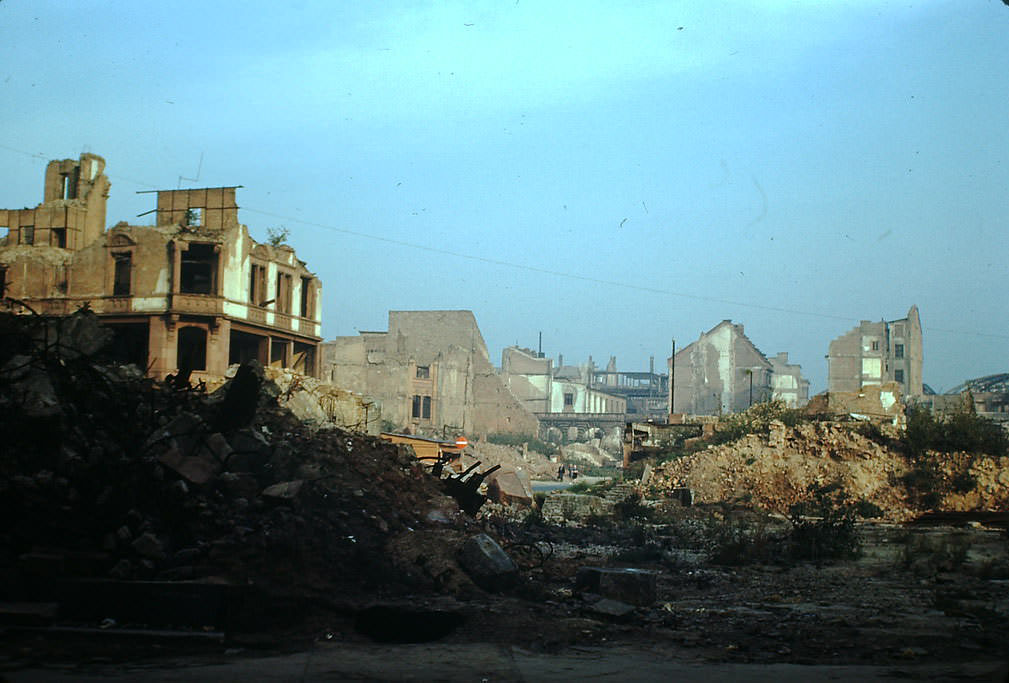
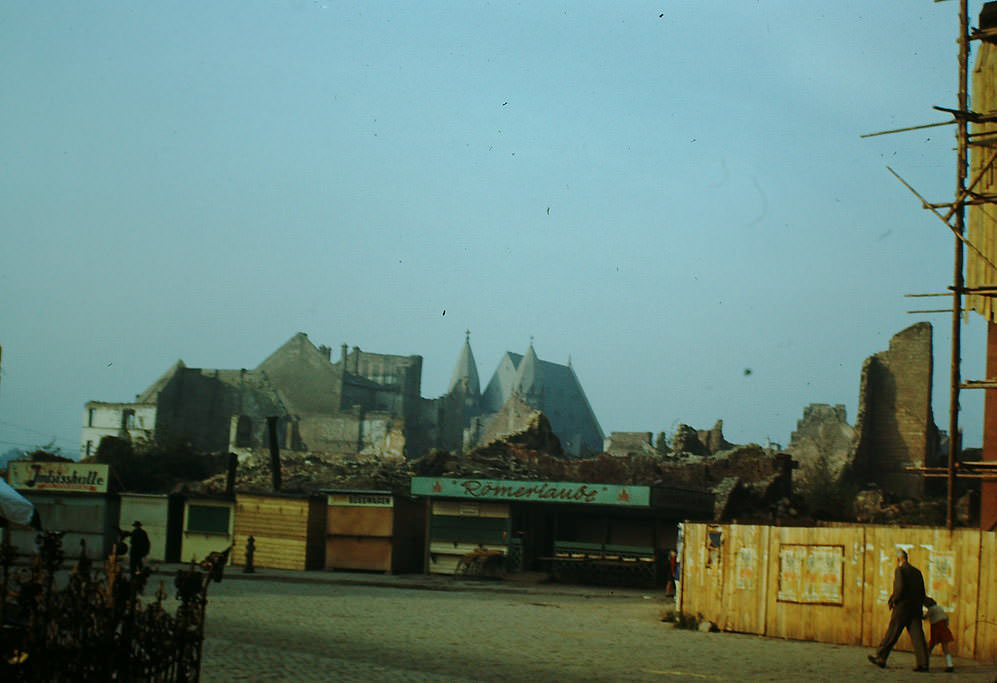
Frankfurt’s old city center, the Römerberg, had been devastated by Allied bombing. The historic square, once surrounded by medieval half-timbered buildings, was in ruins by 1945. Four years later, in 1949, the square was still largely rubble, though the city’s role as a financial and administrative center was already pulling investment back in.
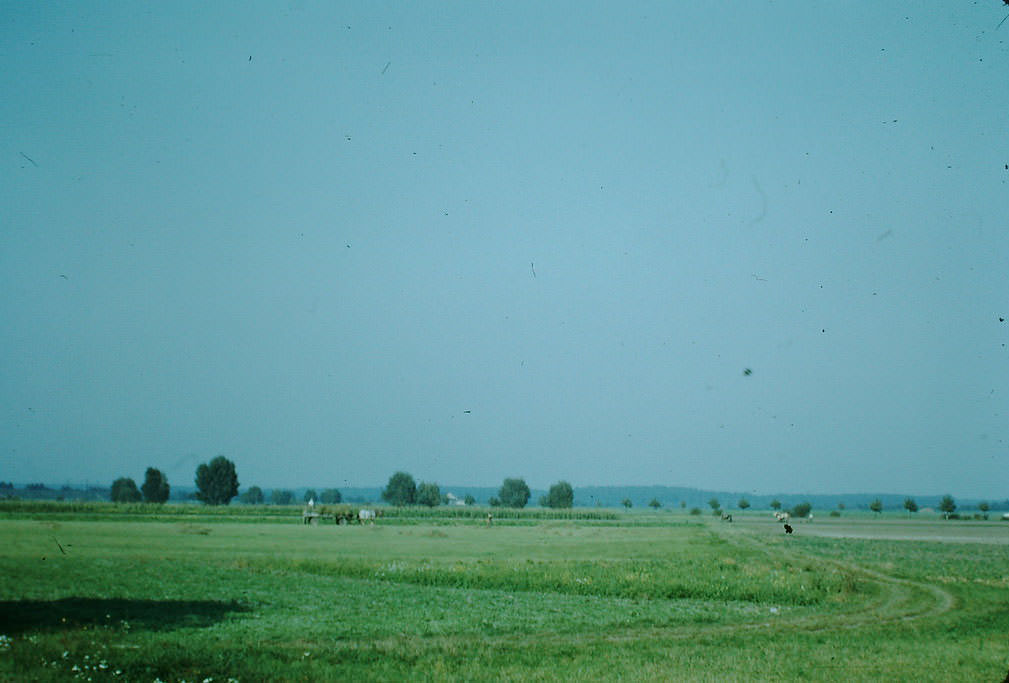
Agriculture around Mainz carried on with traditional methods. Haying — cutting and drying grass for winter livestock feed — was done by hand and with horse-drawn equipment across much of rural West Germany in 1949. Mechanized farming equipment was scarce, and the countryside moved at a pace that hadn’t changed much in generations.
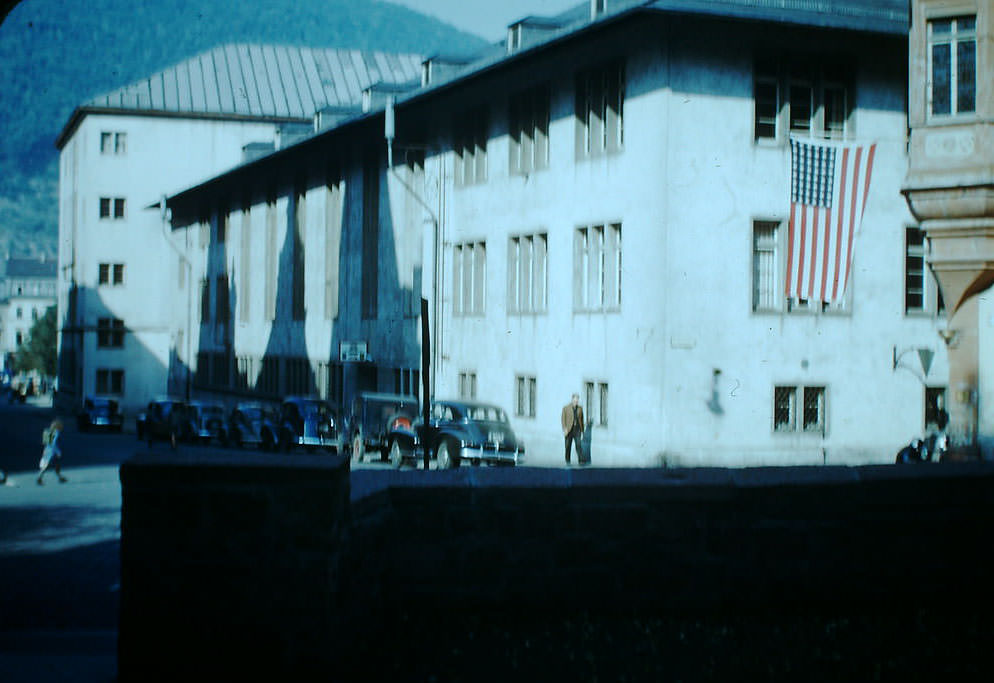
Heidelberg University, founded in 1386, was one of the oldest universities in the German-speaking world. Heidelberg itself had escaped serious bomb damage during the war, and the university resumed operations relatively quickly. By 1949, it was drawing students again and had become an important center of intellectual life in the American zone.
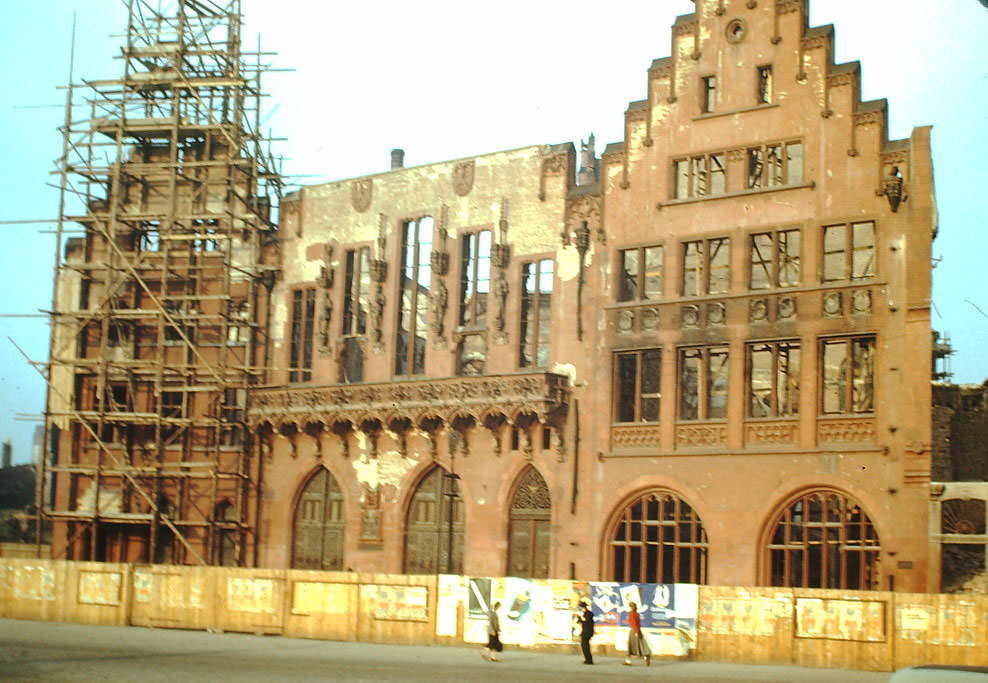
The Römer, Frankfurt’s medieval city hall complex, was the site where Holy Roman Emperors were elected and crowned for centuries. The building survived the war, though the surrounding district did not. In 1949, it stood in the middle of widespread destruction — a surviving relic of Germany’s long history surrounded by rubble.
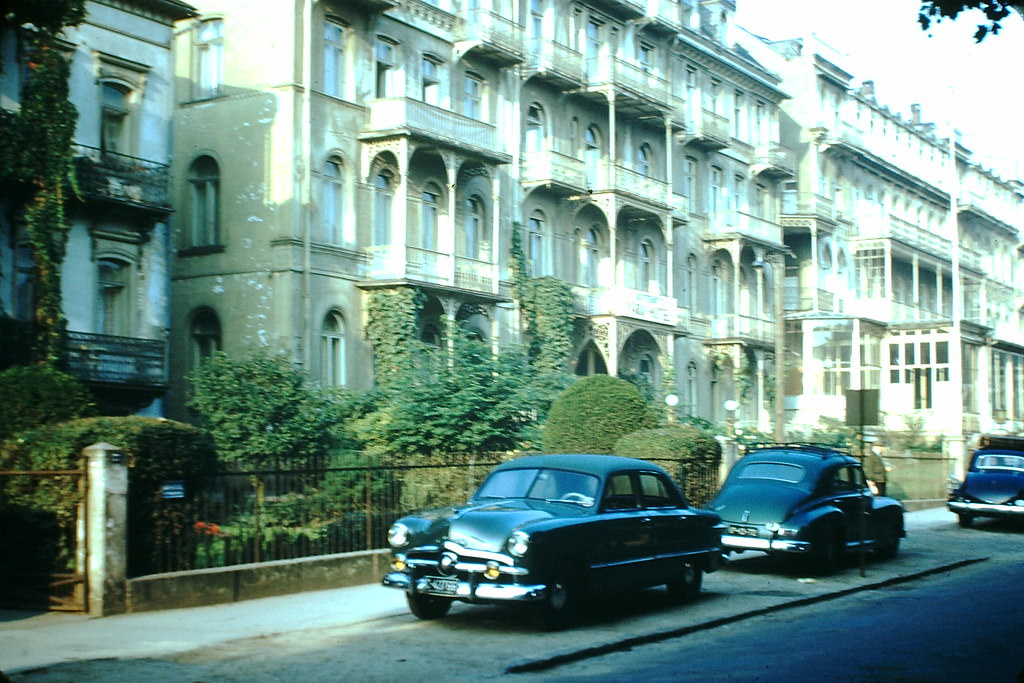
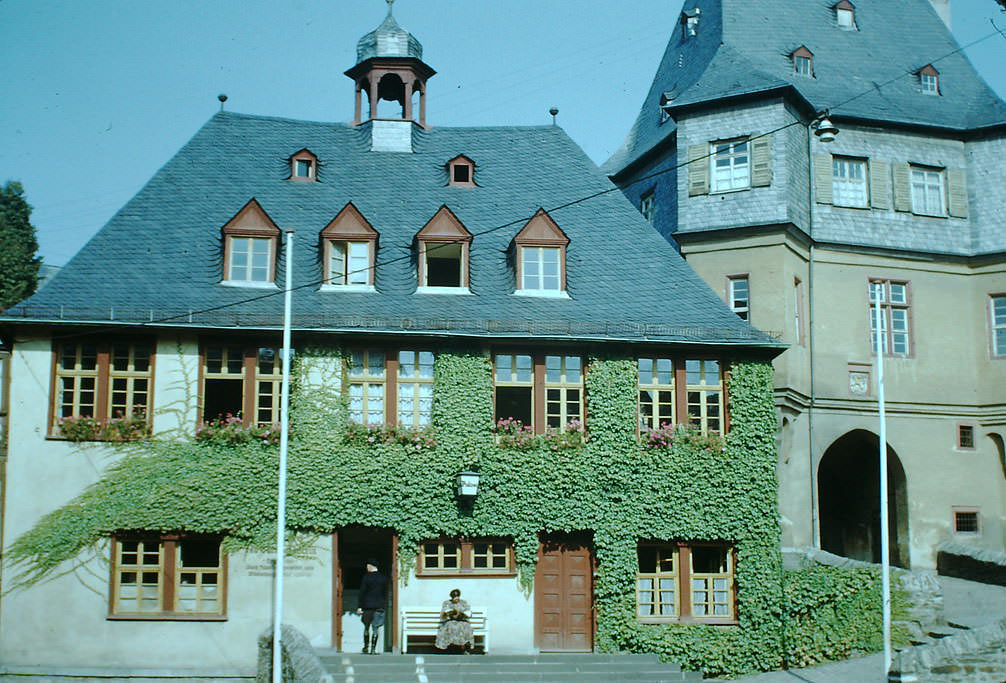
Idstein, a small town in the Taunus region, was known for its well-preserved old town and its distinctive witch tower — a medieval fortification that still stood in 1949. The town’s firehouse reflected the kind of local civic infrastructure that continued operating throughout the occupation years.
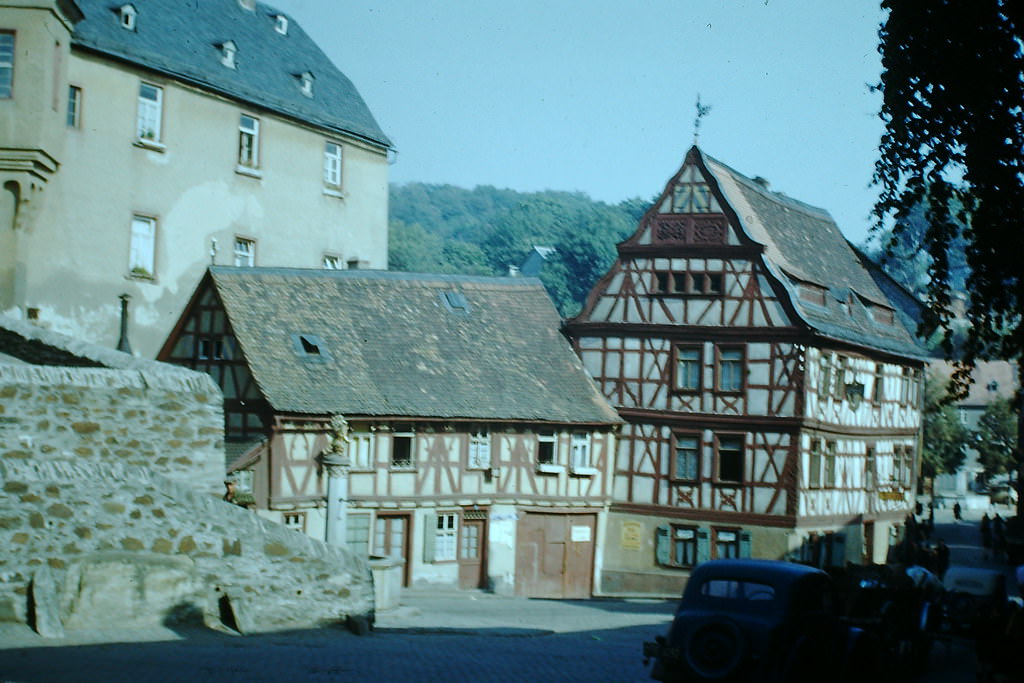
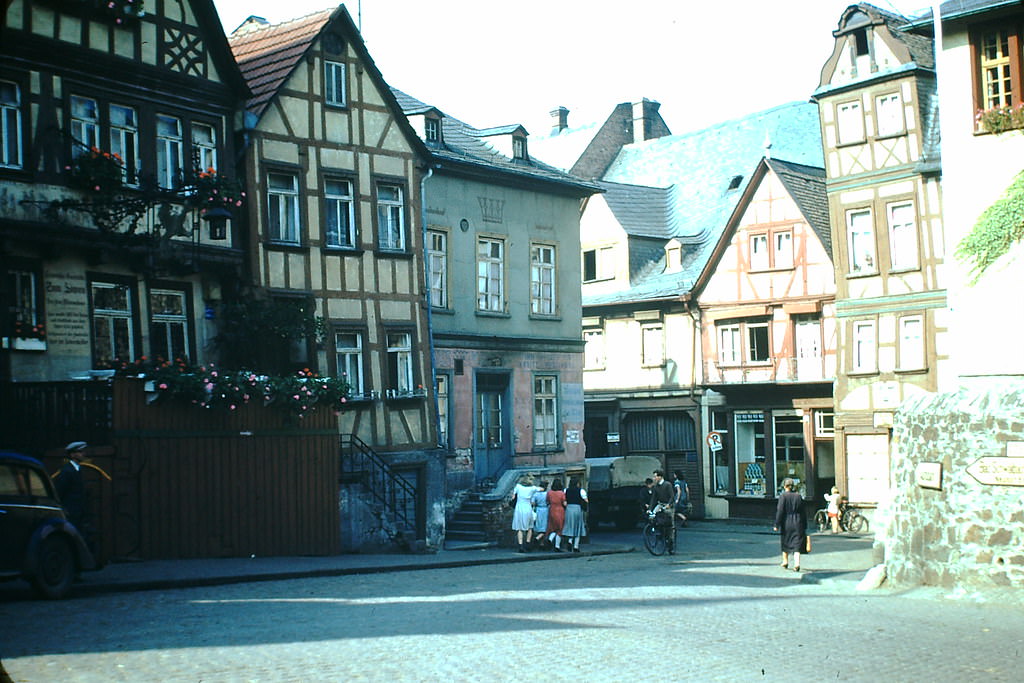
A building in Idstein dating to 1590 was still standing in 1949, a reminder that much of Germany’s built history predated the wars of the 20th century by centuries. These structures, common in towns across the Rhine and Taunus regions, gave West Germany’s smaller communities a visual continuity that the bombed cities had lost.
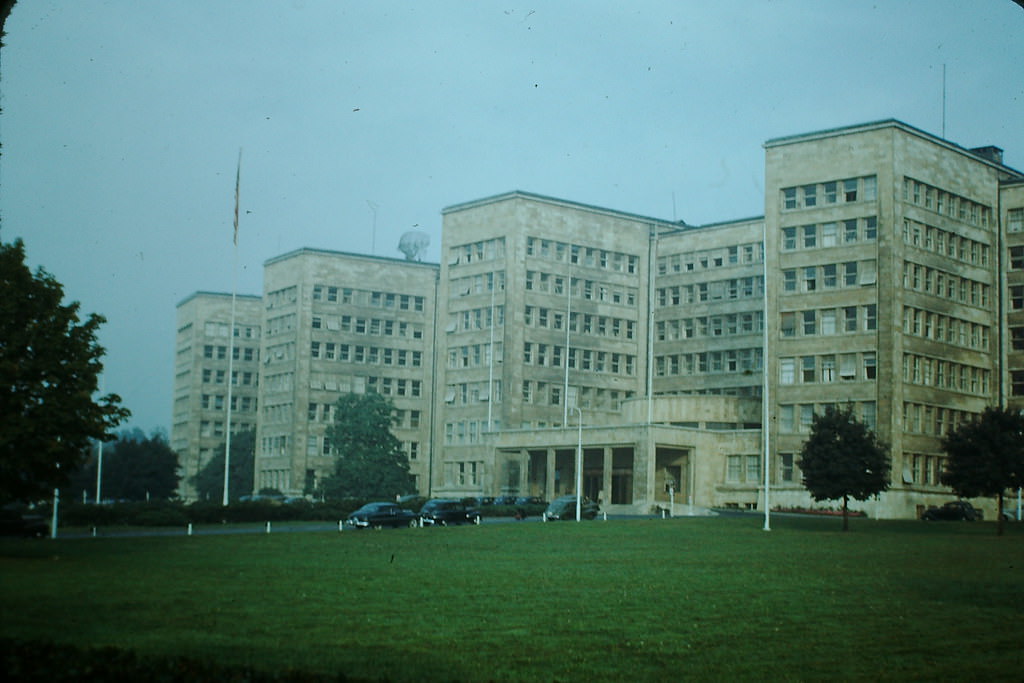
The IG Farben building in Frankfurt was one of the largest office buildings in Europe when it was completed in 1931. During the American occupation, it served as the headquarters of the U.S. military government in Germany. In 1949, it was the nerve center of American administrative power in the new West German state.
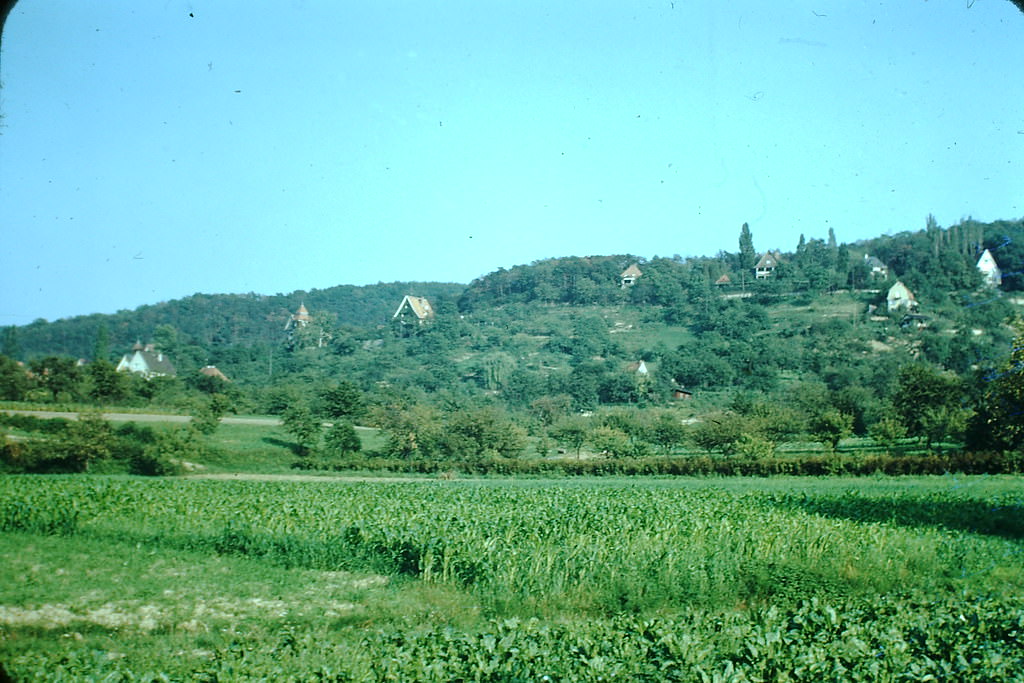
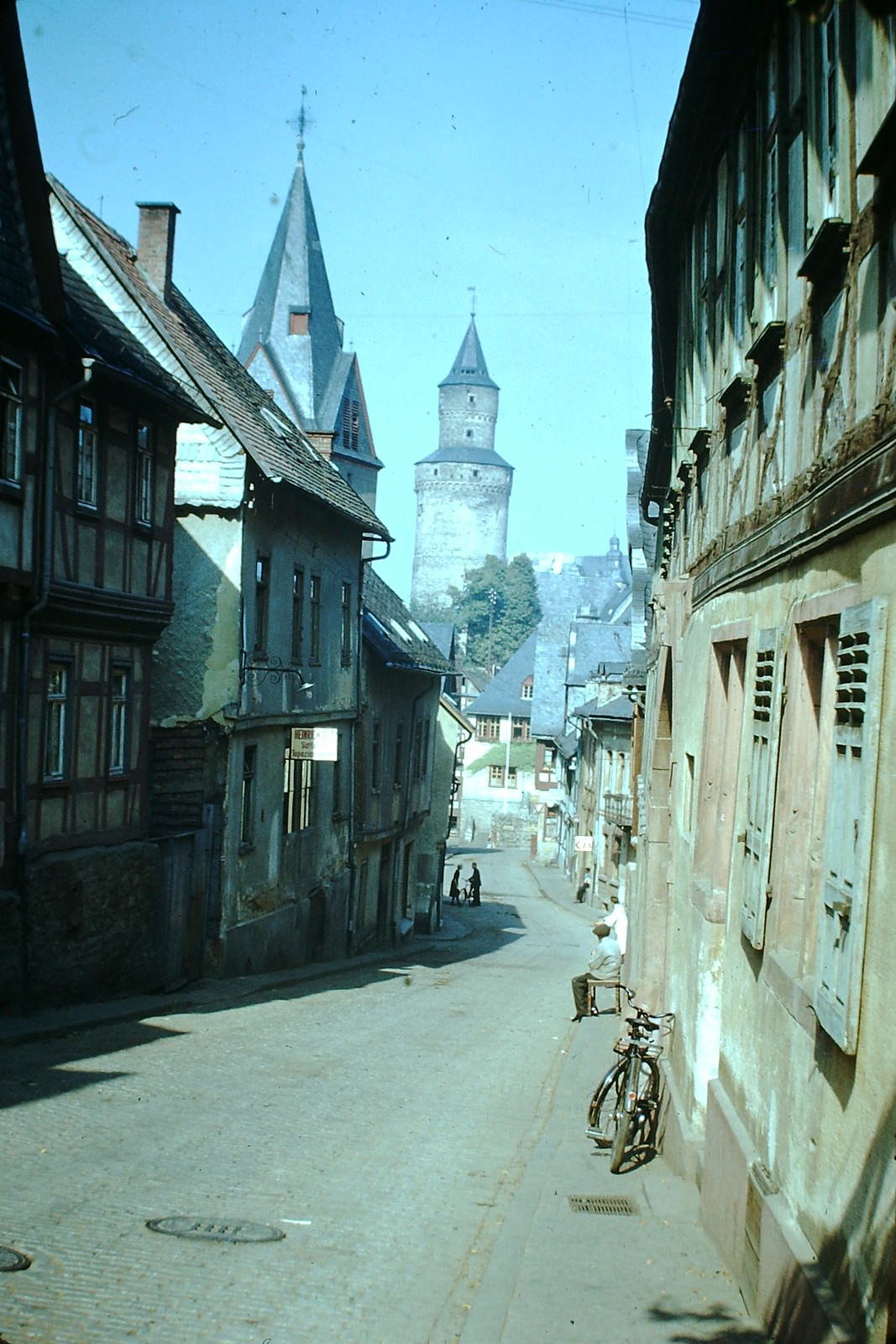
Königstein im Taunus, perched in the hills northwest of Frankfurt, was home to a ruined 16th-century fortress as well as a more modern landscape of spas and sanatoriums. By 1949, the town had become a residence for American military families stationed in the Frankfurt area.
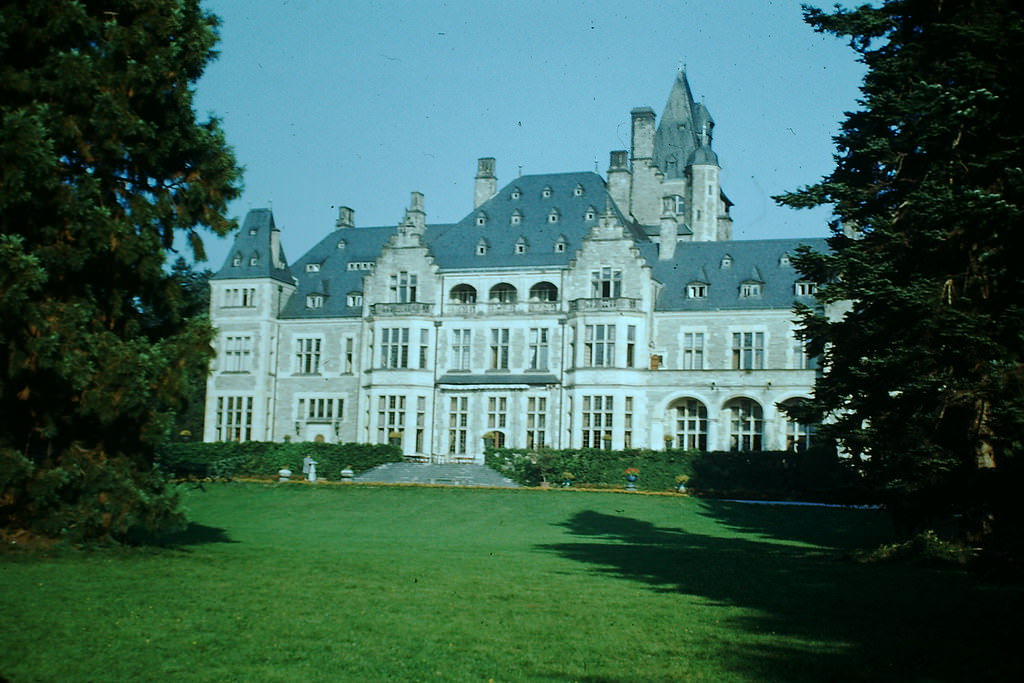
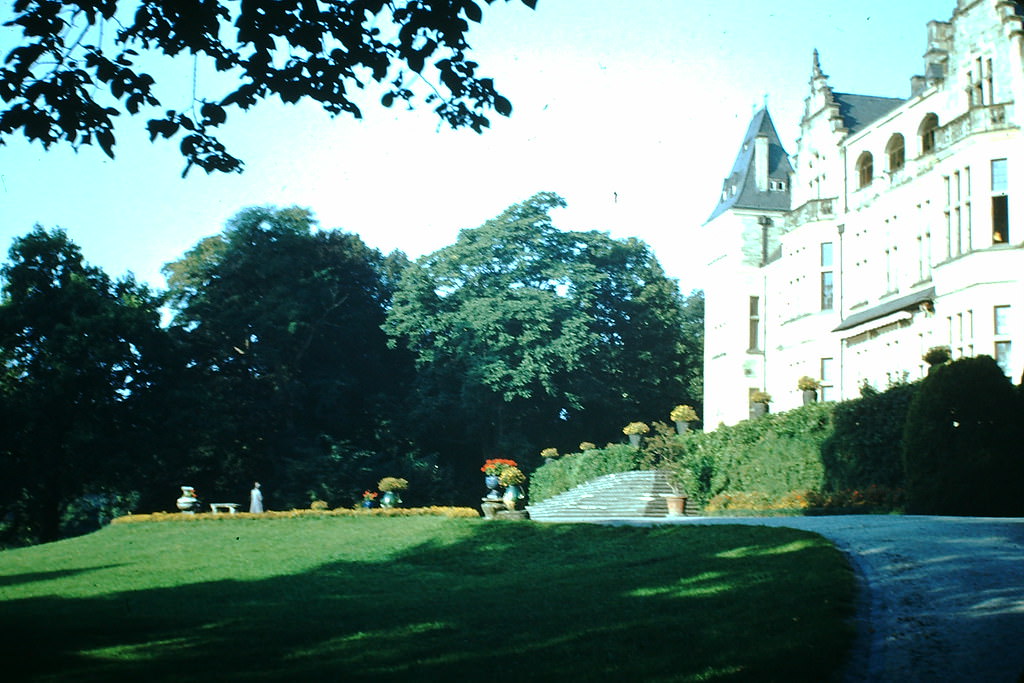
Kronberg Castle, built in the 1880s by Empress Frederick, had been requisitioned by U.S. forces after the war. In 1945, a notorious theft took place there — a collection of Hessian crown jewels was stolen by American military officers. By 1949, the case was still causing controversy, and some of the jewels had been recovered while others had not.
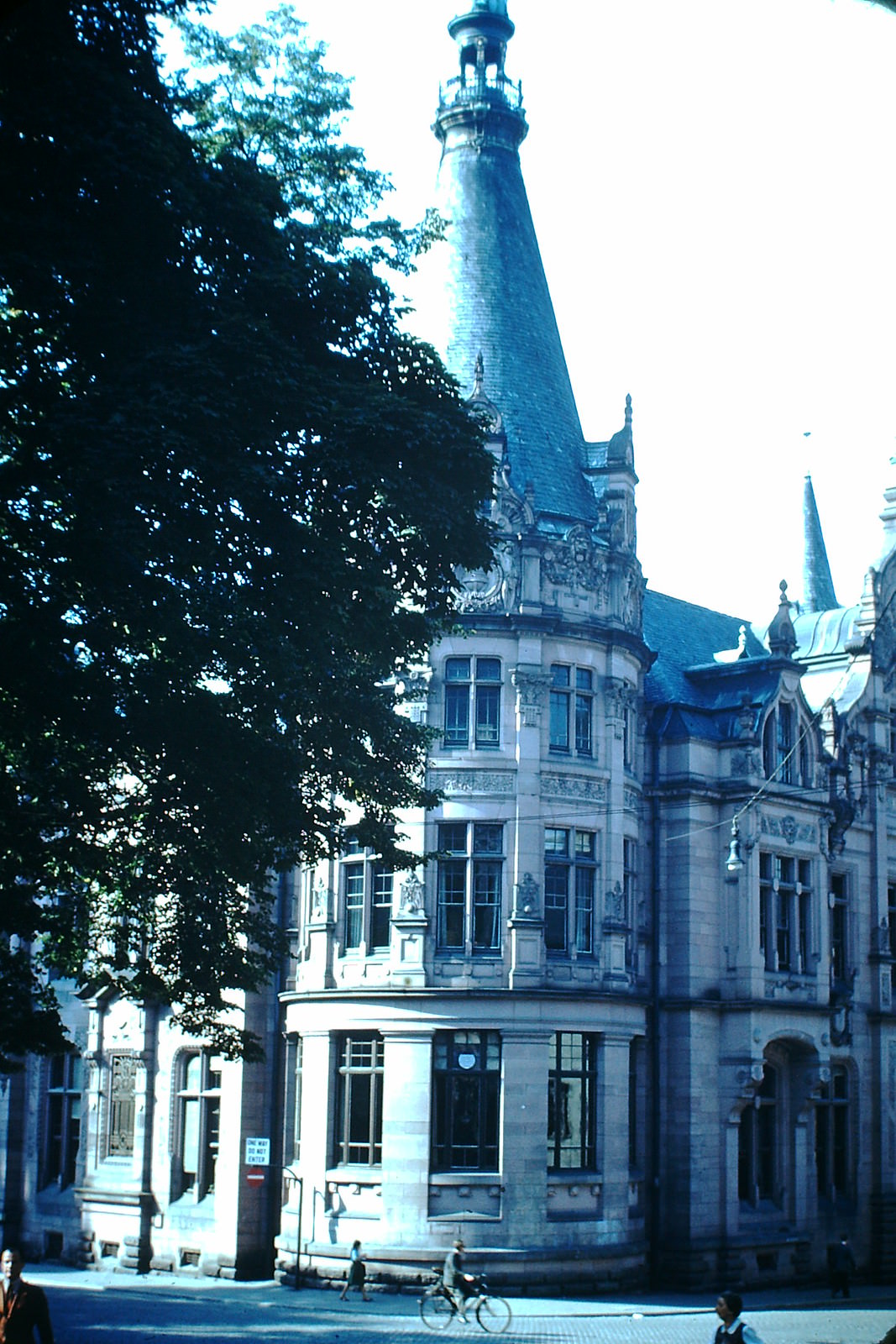
Heidelberg University’s library held one of the most important collections of German-language manuscripts and books in the world. Its survival intact through the war was significant. In 1949, the library was a functioning resource for the university’s returning students and faculty, who were working to rebuild academic life from the ground up.
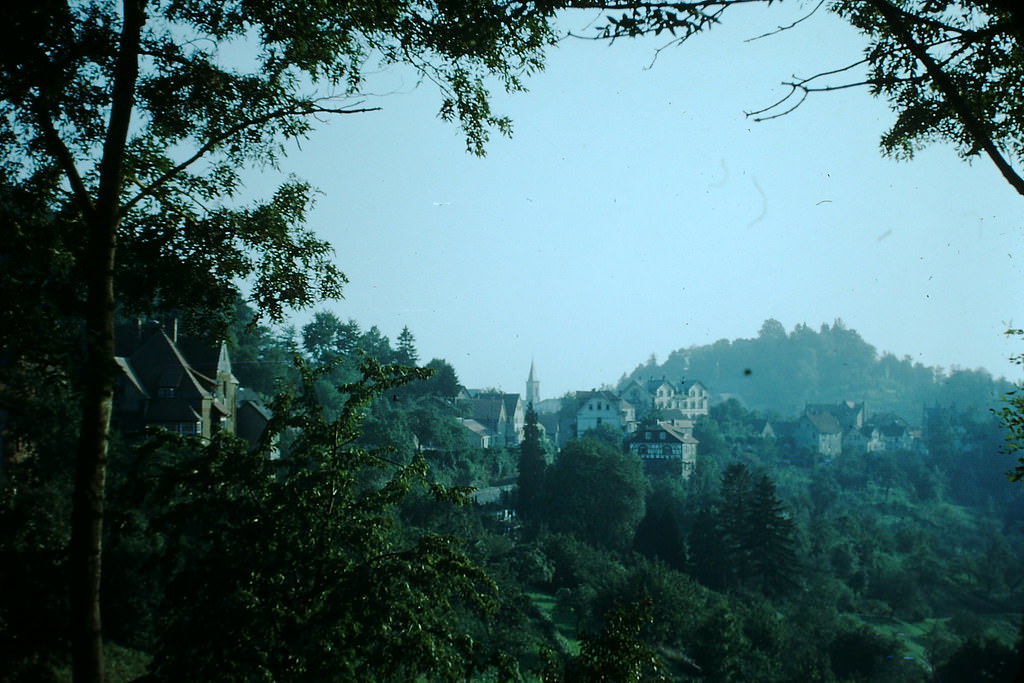
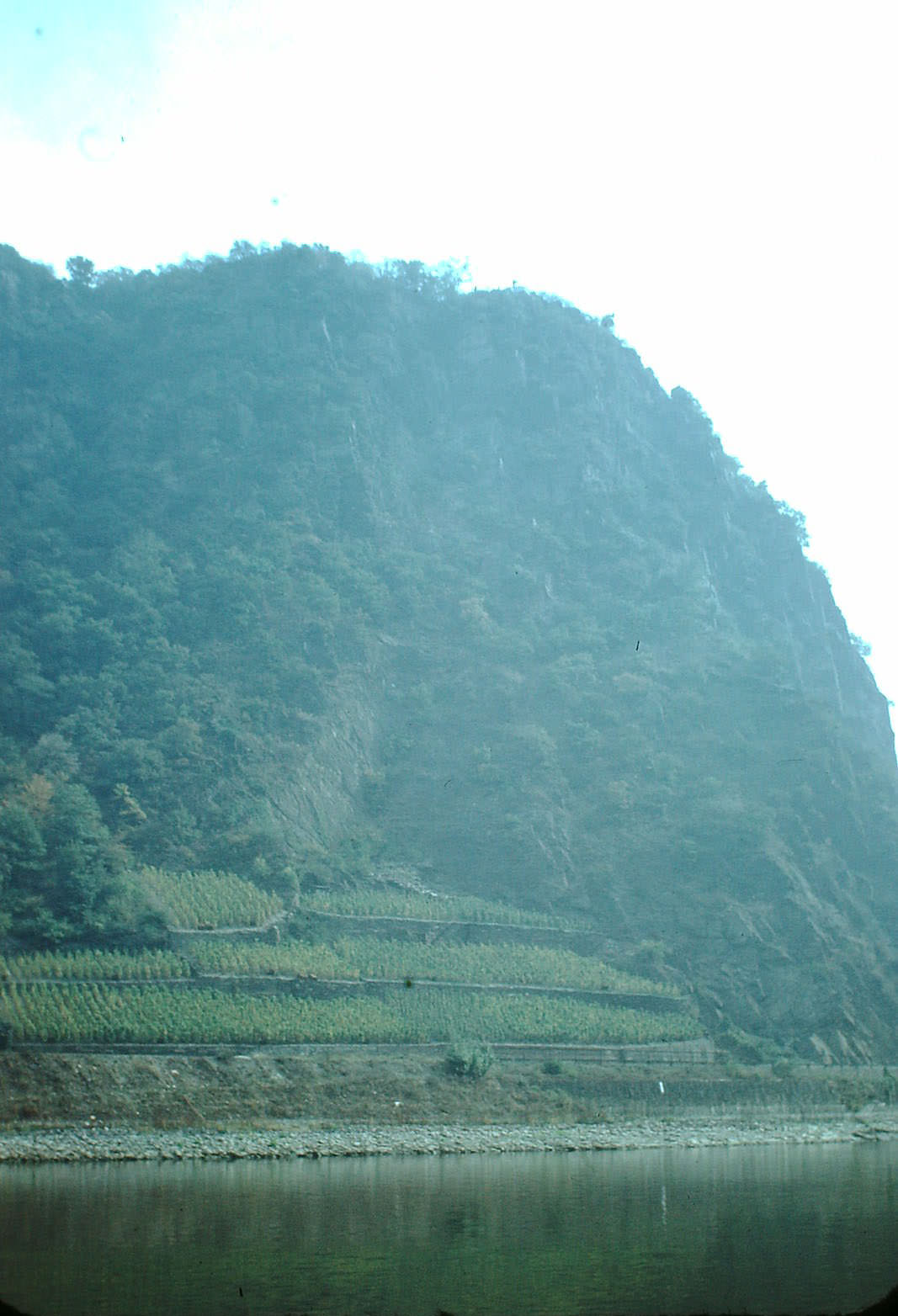
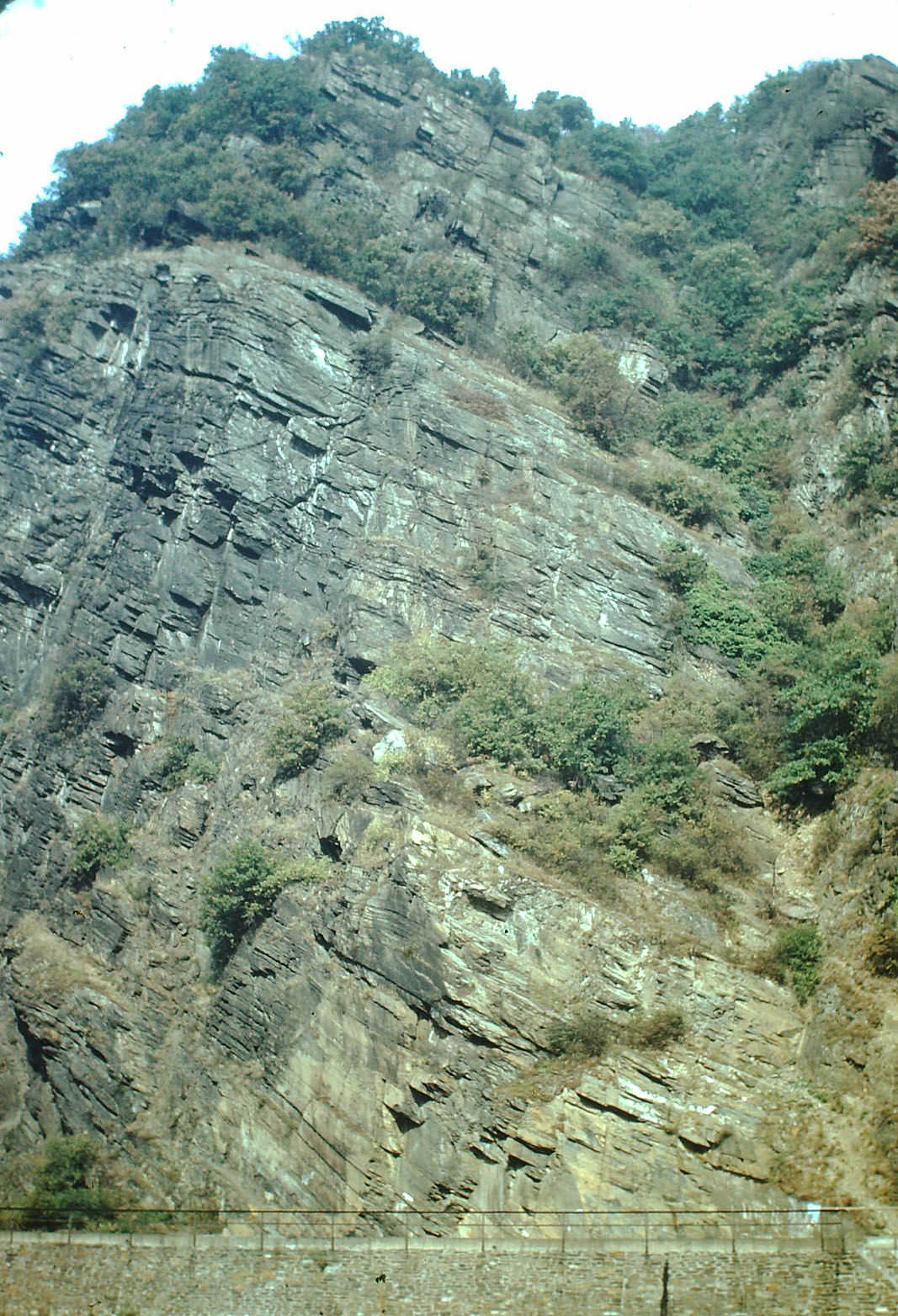
The Lorelei, a steep slate rock on the eastern bank of the Rhine near St. Goarshausen, was one of Germany’s most famous landmarks. The narrow gorge there was a tricky stretch of river for boat traffic, and the rock had inspired poems and songs for over a century. In 1949, Rhine river travel was resuming as commercial shipping picked up.
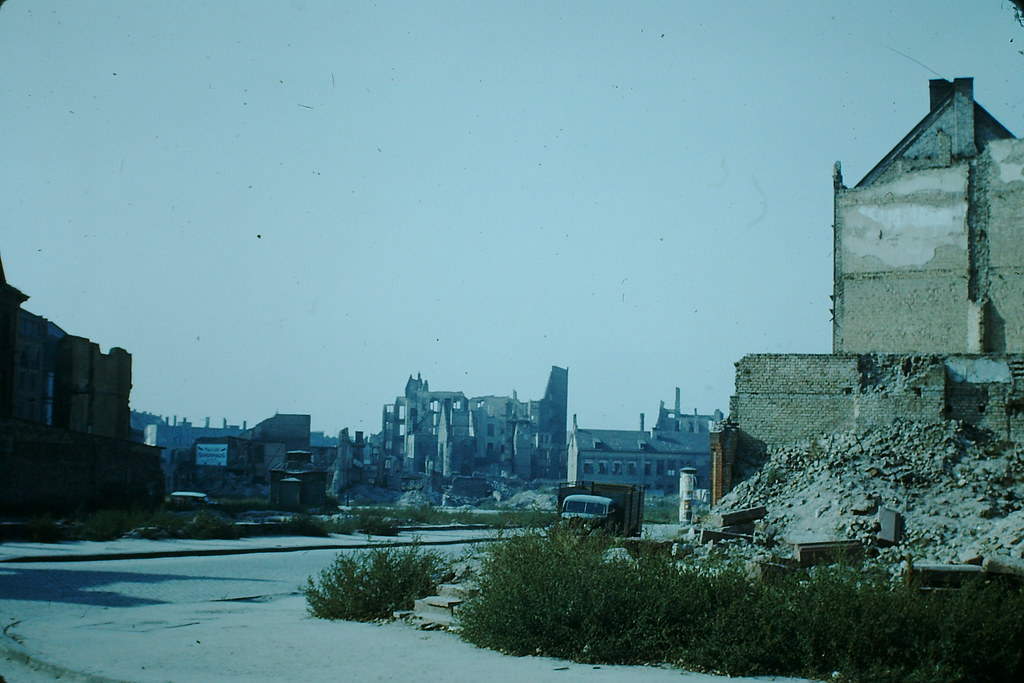
Mainz had been one of Germany’s most heavily bombed cities. Allied air raids between 1942 and 1945 destroyed a large portion of the city’s historic center. By 1949, four years after the war’s end, the destruction was still visible on a massive scale. Entire blocks remained collapsed, and the work of clearing and rebuilding had barely begun.
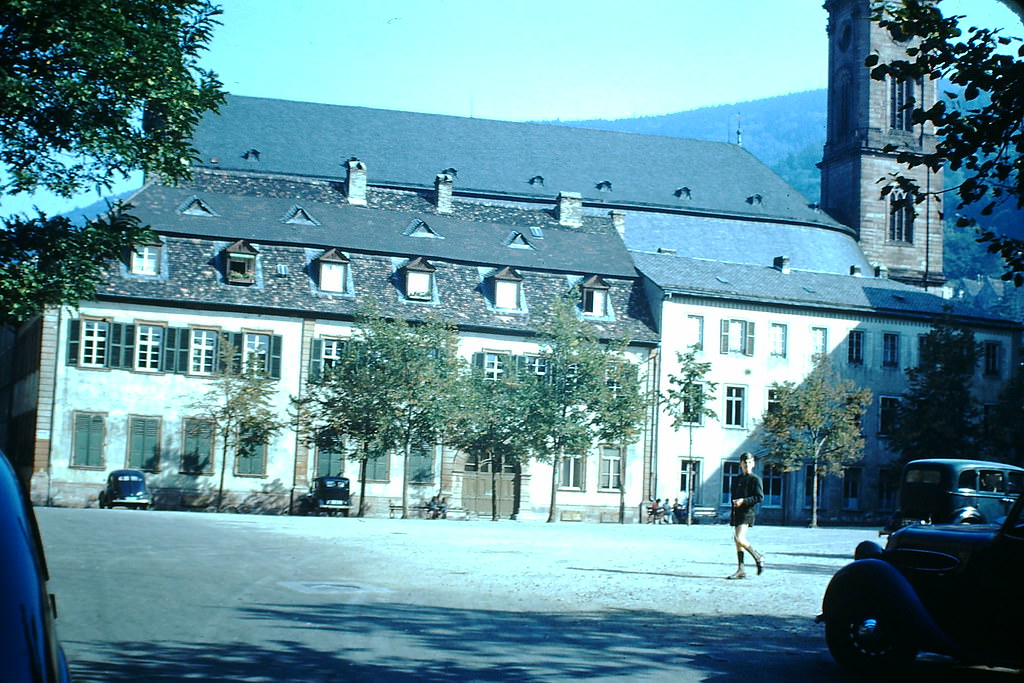
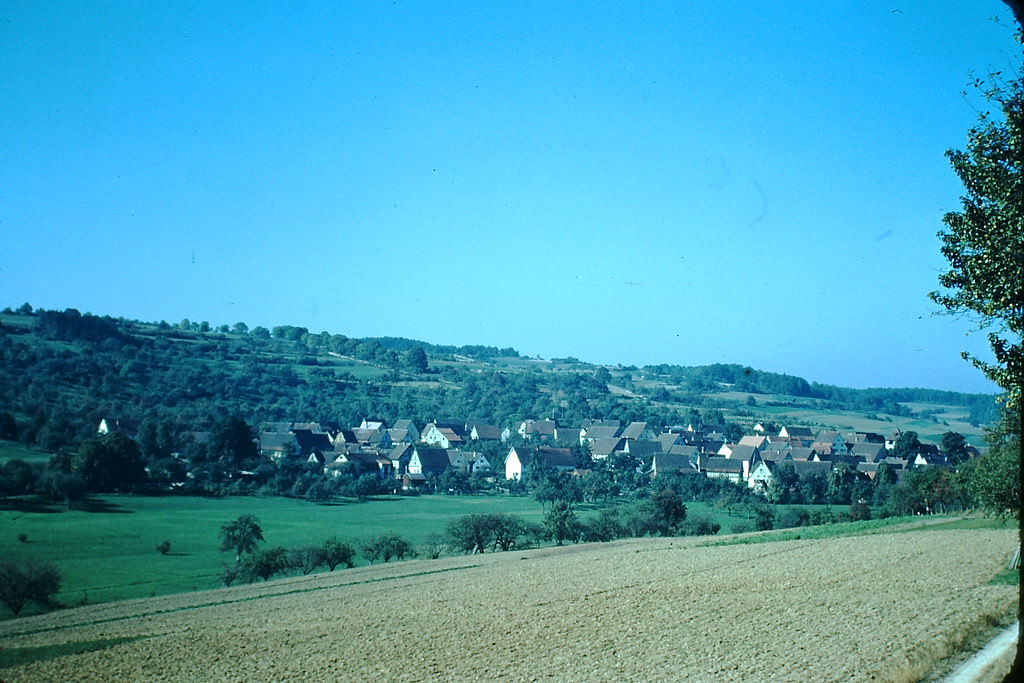
Ostelsheim, a village on the eastern edge of the Black Forest, was a typical example of the small farming communities that dotted the region. Stone and half-timbered buildings, church steeples, and vegetable gardens made up the everyday visual landscape. Life in these villages moved according to agricultural rhythms, largely undisturbed by the political changes happening in Bonn.
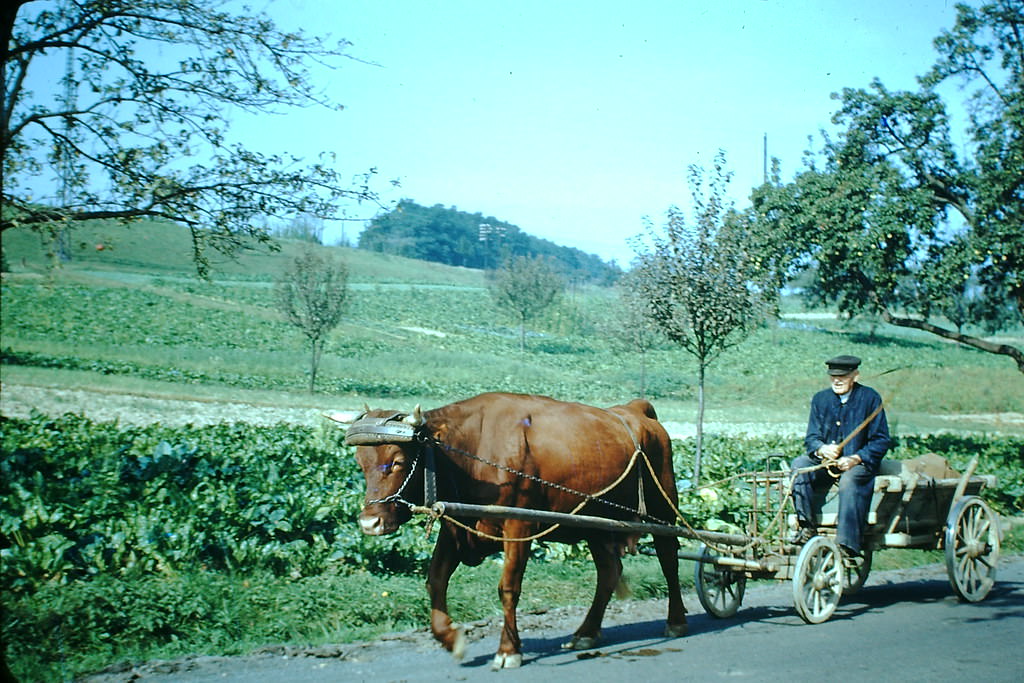
Oxen were still a common sight on West German farms in 1949. With horses depleted by wartime requisitioning and tractors in short supply, farmers across the country relied heavily on draft animals to plow fields and haul loads. The image of oxen at work in 1949 West Germany was not nostalgic — it was practical necessity.
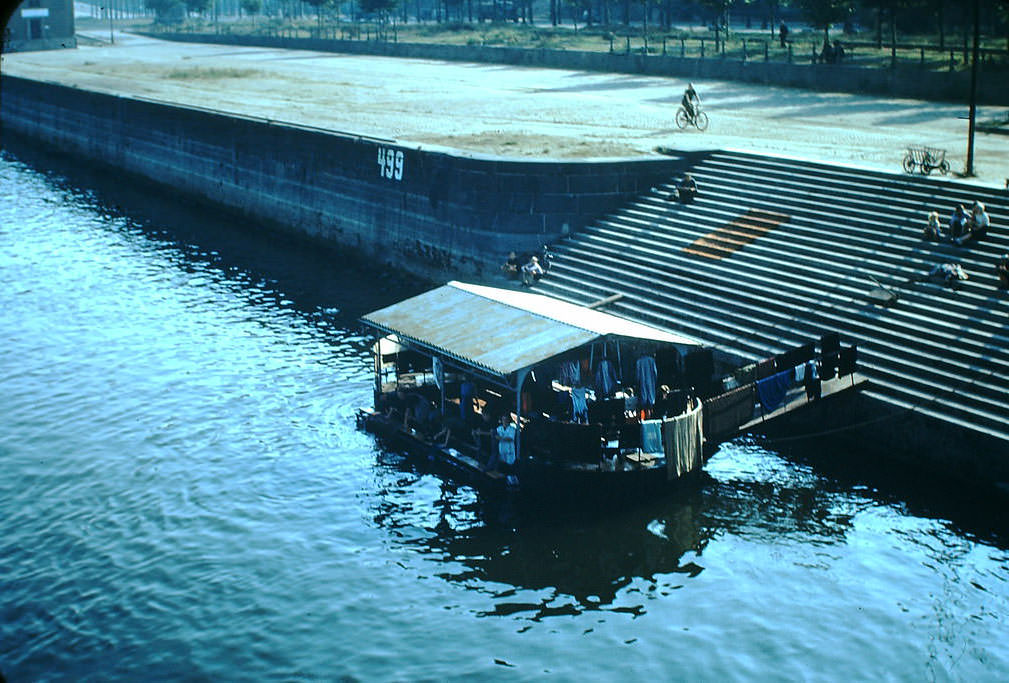
Along the Rhine at Mainz, public washhouses were a functioning part of daily life. With much of the city’s infrastructure damaged or destroyed, communal facilities like these served a practical role for residents who lacked running water or intact homes. Washhouses at the river’s edge were a fixture of working-class life in postwar German cities.
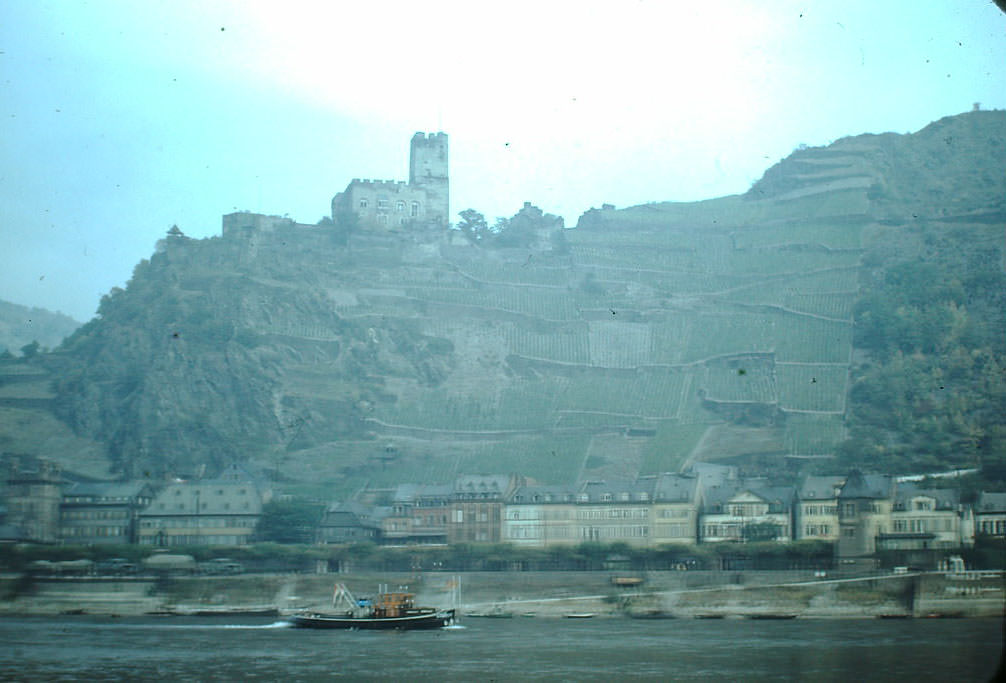
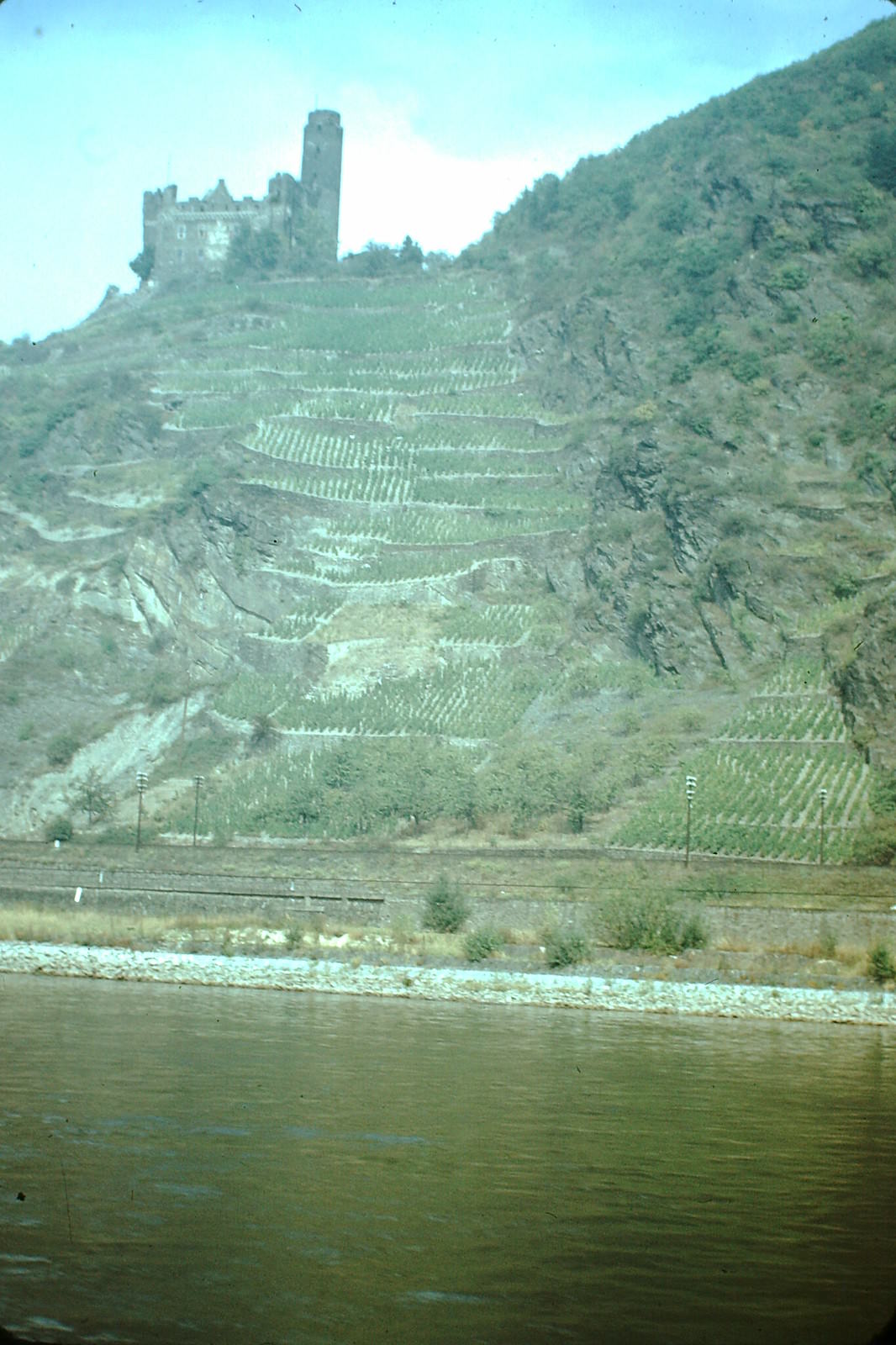
The Rhine between Bingen and Koblenz was lined with medieval castles perched on rocky hillsides above the river. Many of these castles had been built during the Middle Ages to control river traffic and collect tolls. In 1949, they stood largely intact, some in ruins, others still habitable, looming over a river that was coming back to commercial life.
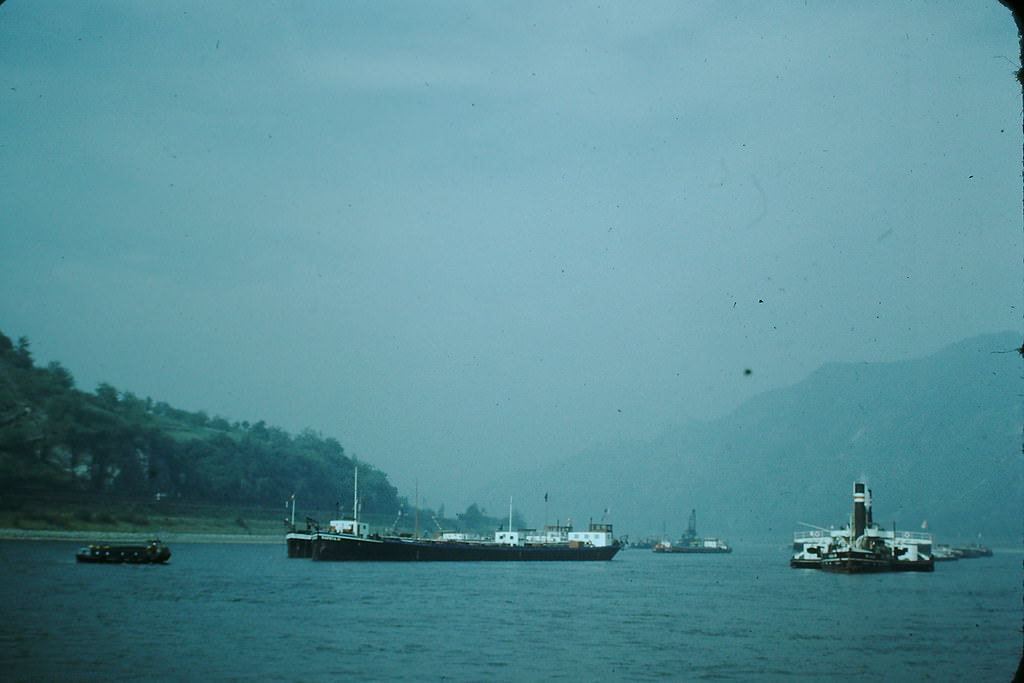
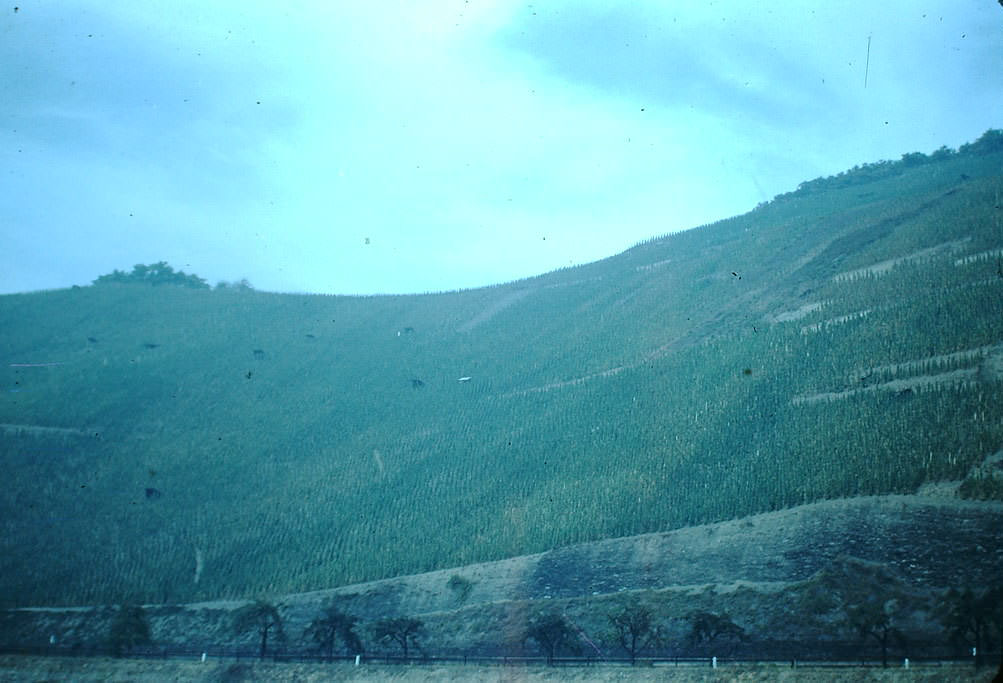
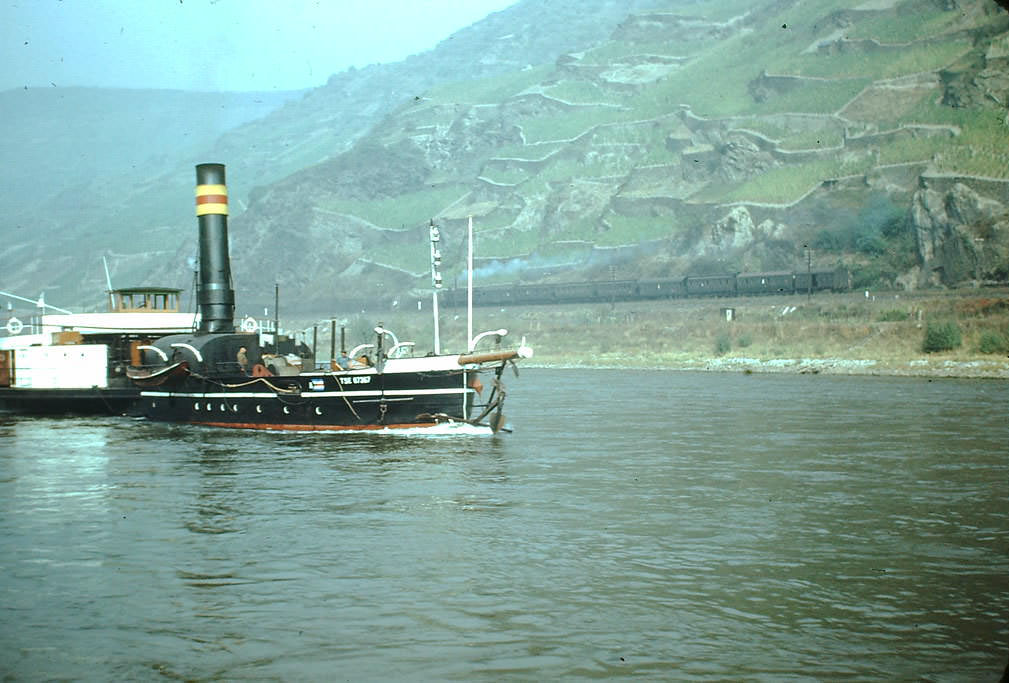
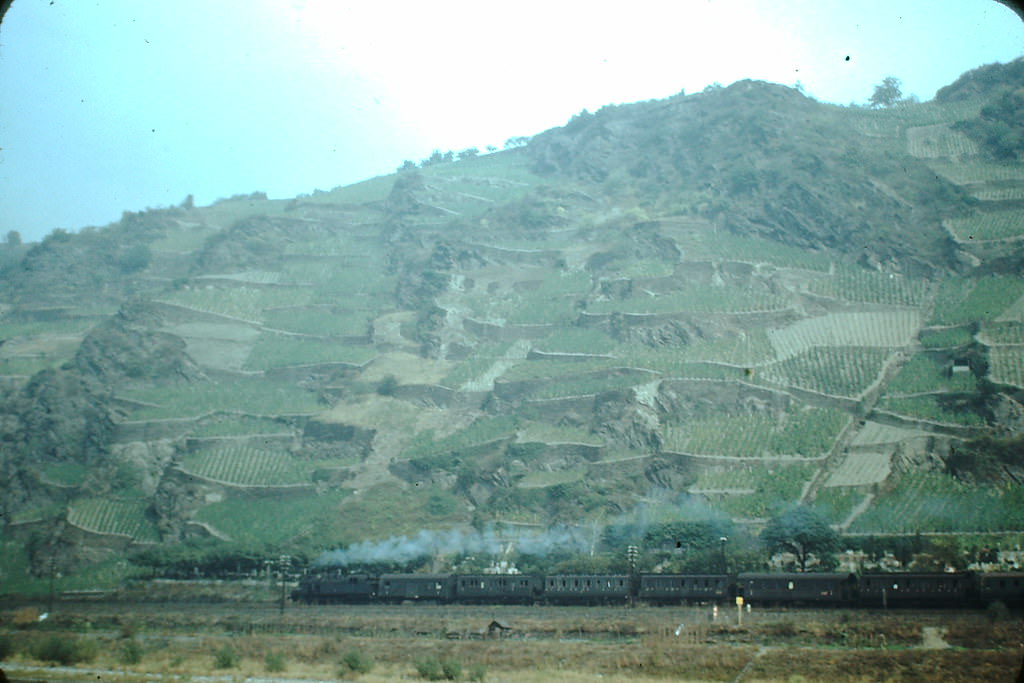
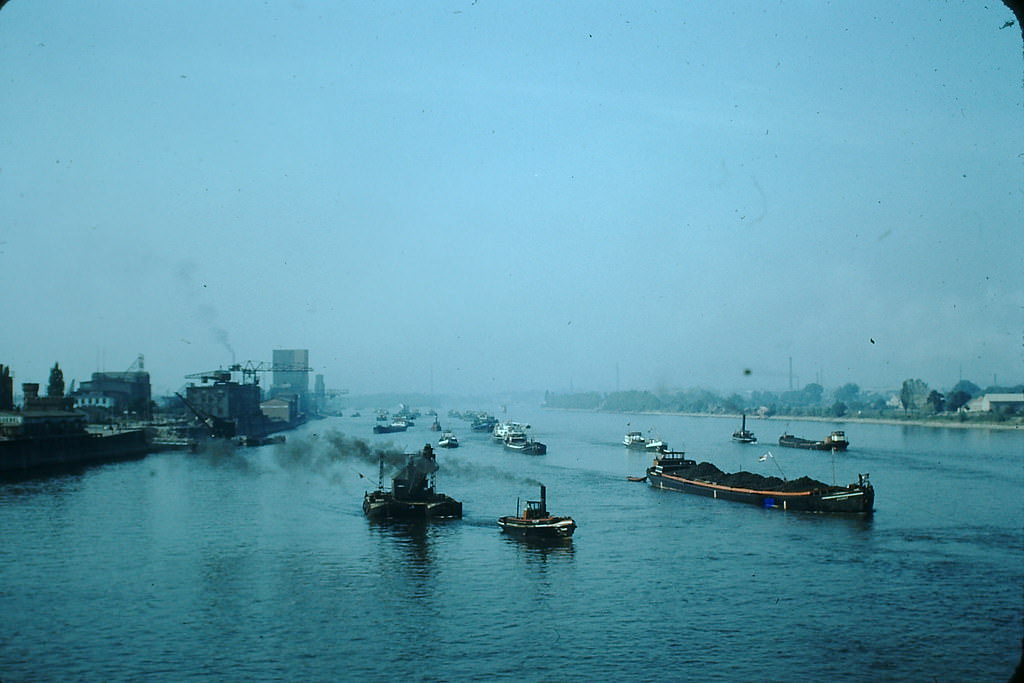
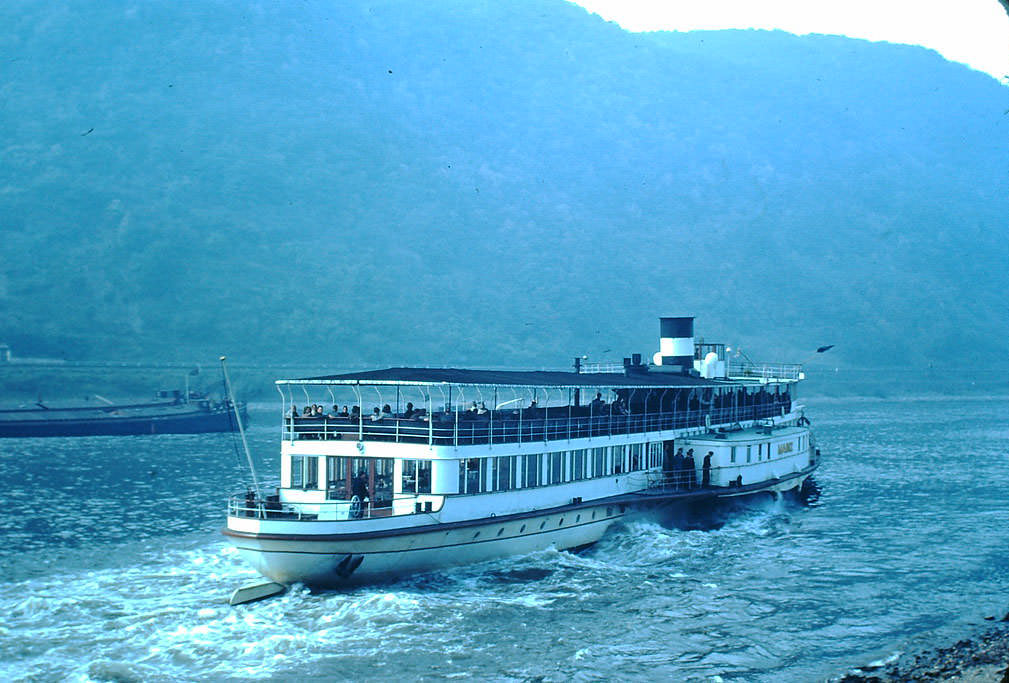
The Rhine was West Germany’s most important commercial waterway in 1949. Freight barges moved coal, steel, timber, and agricultural goods along its length. The river connected the Ruhr industrial zone in the north with the wine towns and port cities further south, making it a critical artery for a country trying to get its economy moving again.
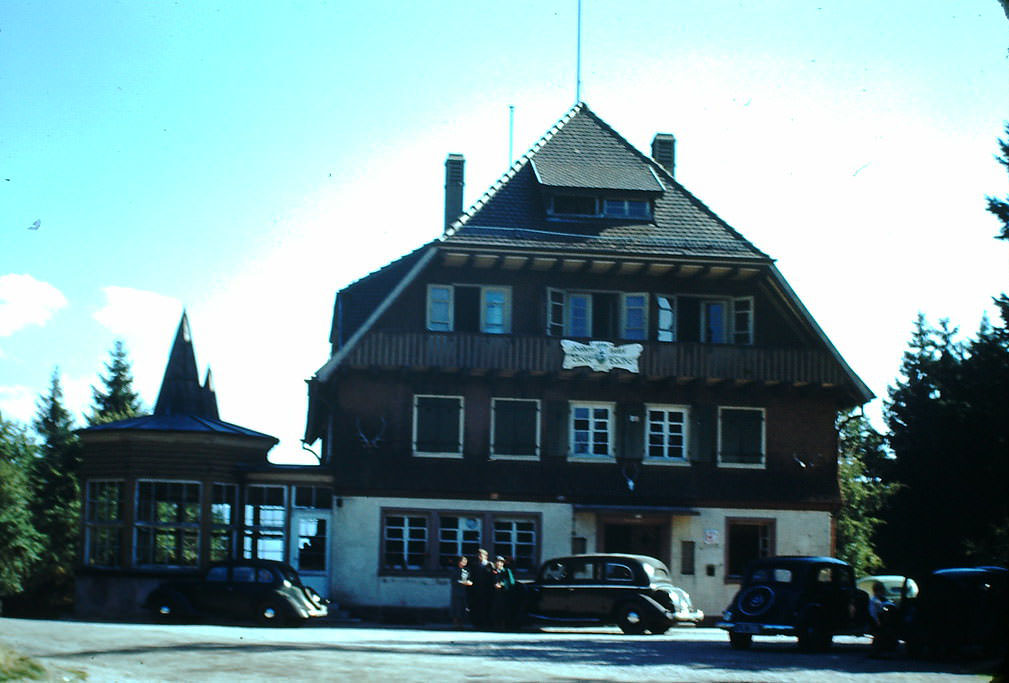
Inns in the Black Forest like the Rote Lache were traditional rest stops for travelers moving through the forested highlands. These establishments had served travelers for generations, and in 1949 they were beginning to see visitors again as travel within the western zones became easier.
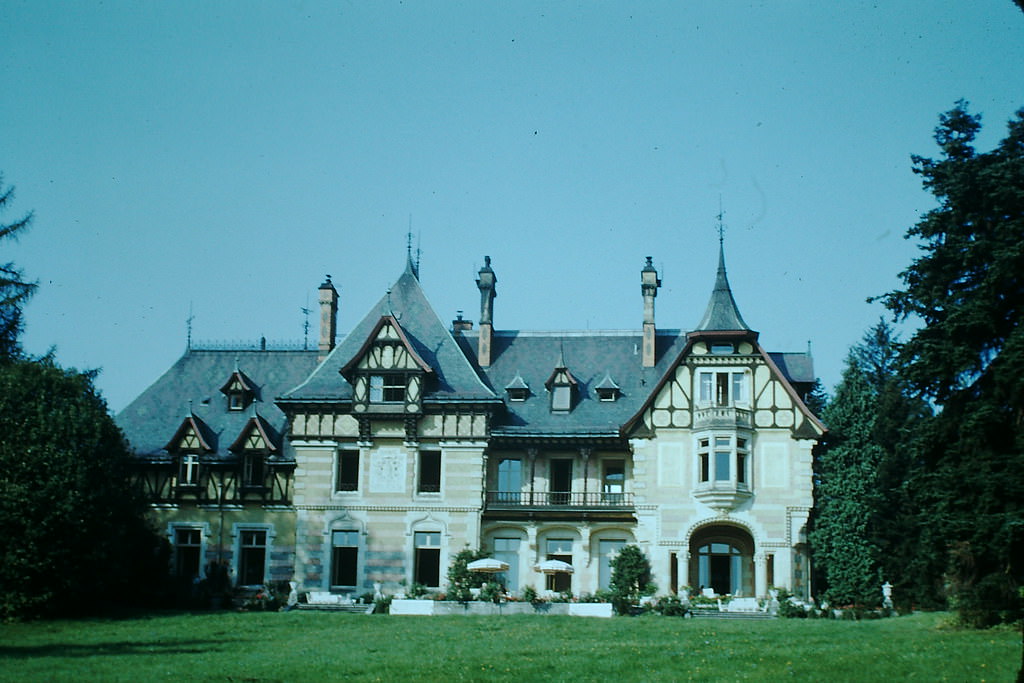
The Rothschild family estate near Frankfurt, one of the most prominent banking dynasties in European history, had been seized by the Nazi government during the 1930s. By 1949, the property was under government ownership. The fate of Jewish-owned properties confiscated under Nazi rule was one of the many unresolved legal and moral questions facing the new West German state.

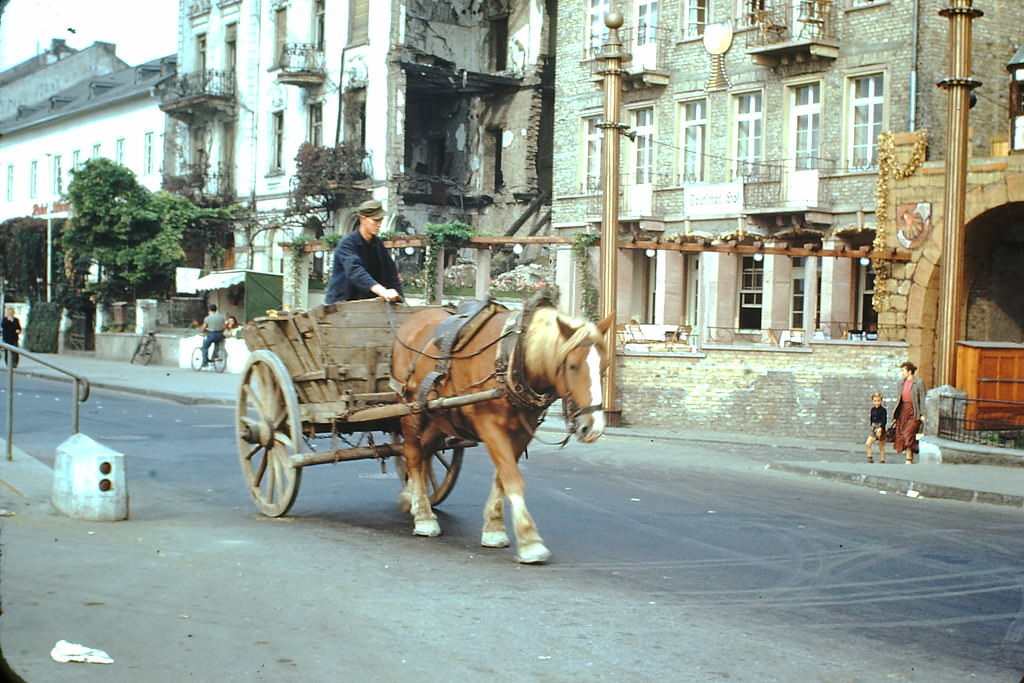
Grape harvesting in Rüdesheim was done with horse-drawn wagons loaded with freshly picked bunches from the steep Rhine slopes. The Rheingau wine region, of which Rüdesheim was a part, had been producing wine for over a thousand years. In 1949, the harvest continued as it always had, providing one of the region’s most reliable economic activities.
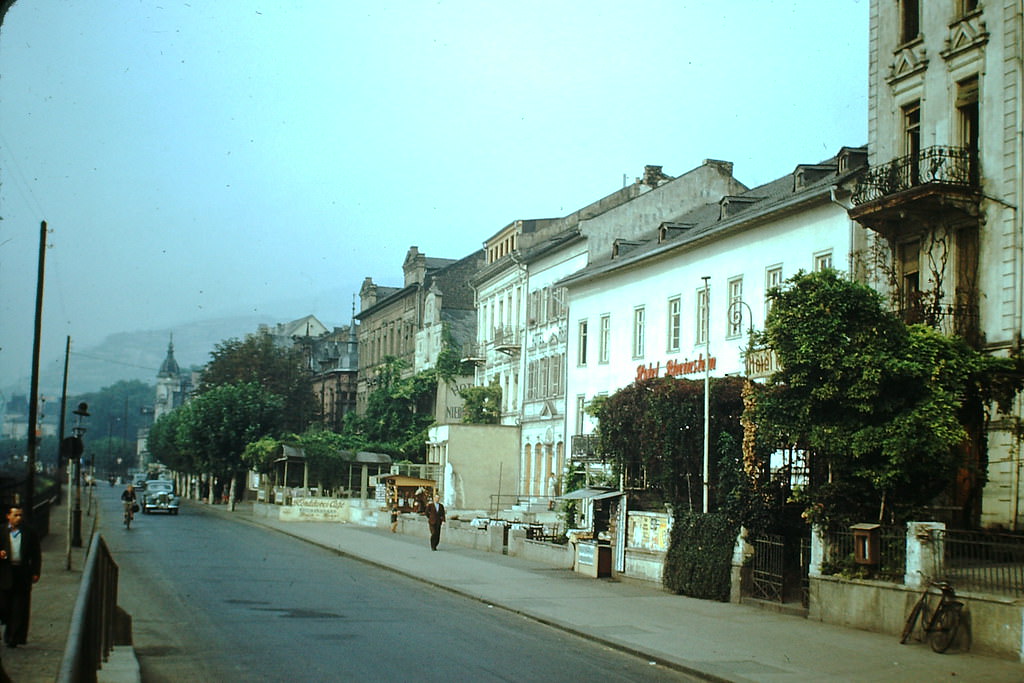
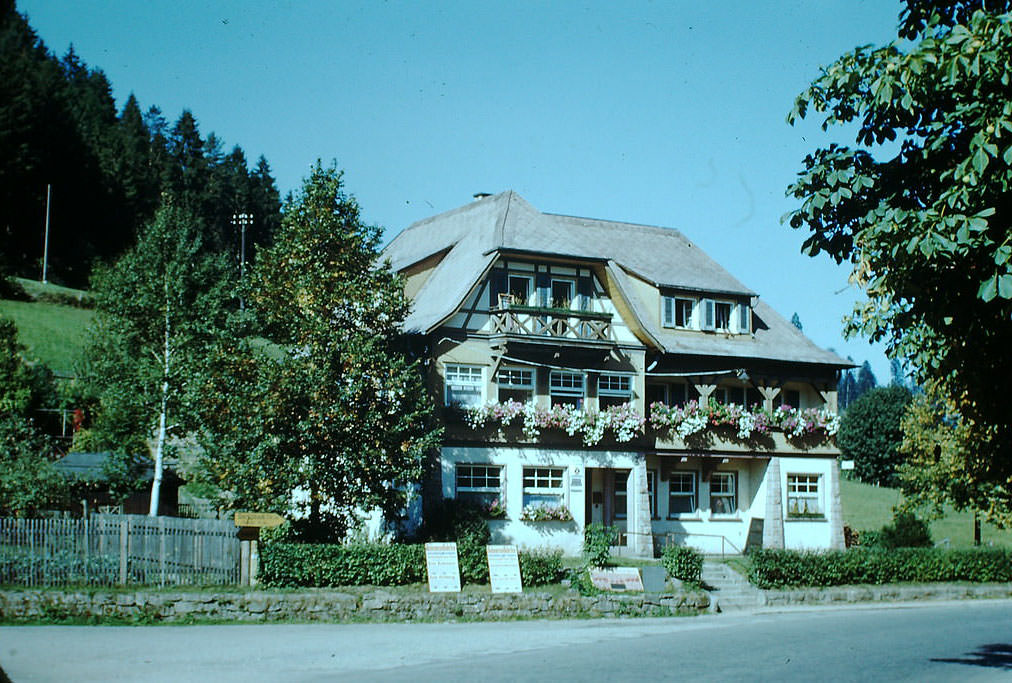
Schönmünzach, a small resort village in the Black Forest’s Murg Valley, was known for its quiet forests and spa facilities. It sat well off the main routes through western Germany and had seen very little wartime disruption. In 1949, it was the kind of place that felt far removed from the political upheaval transforming the country.
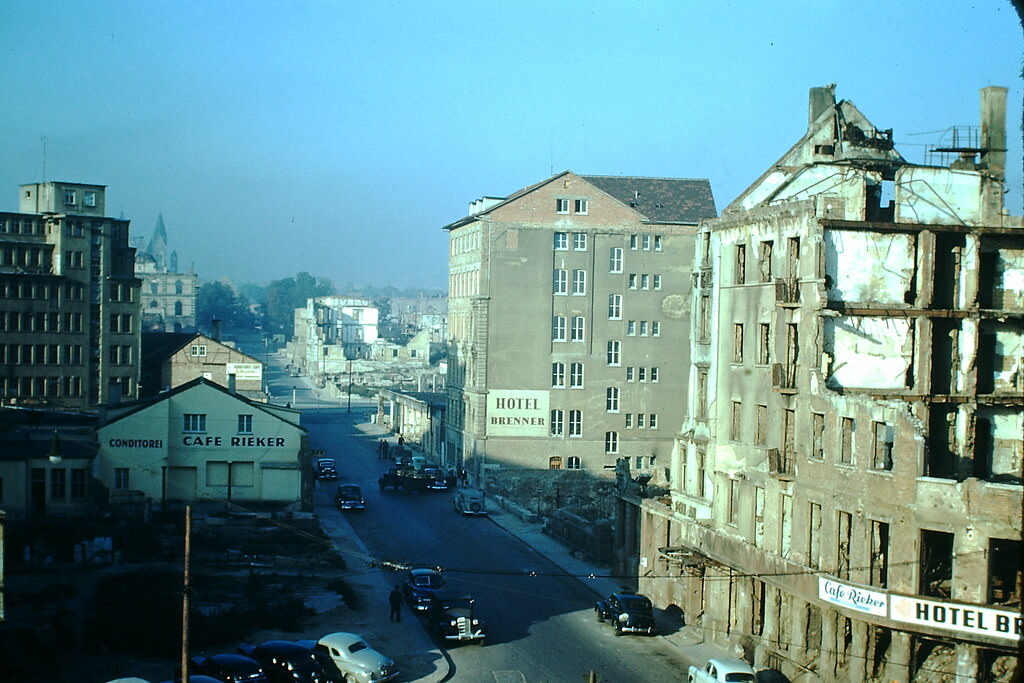
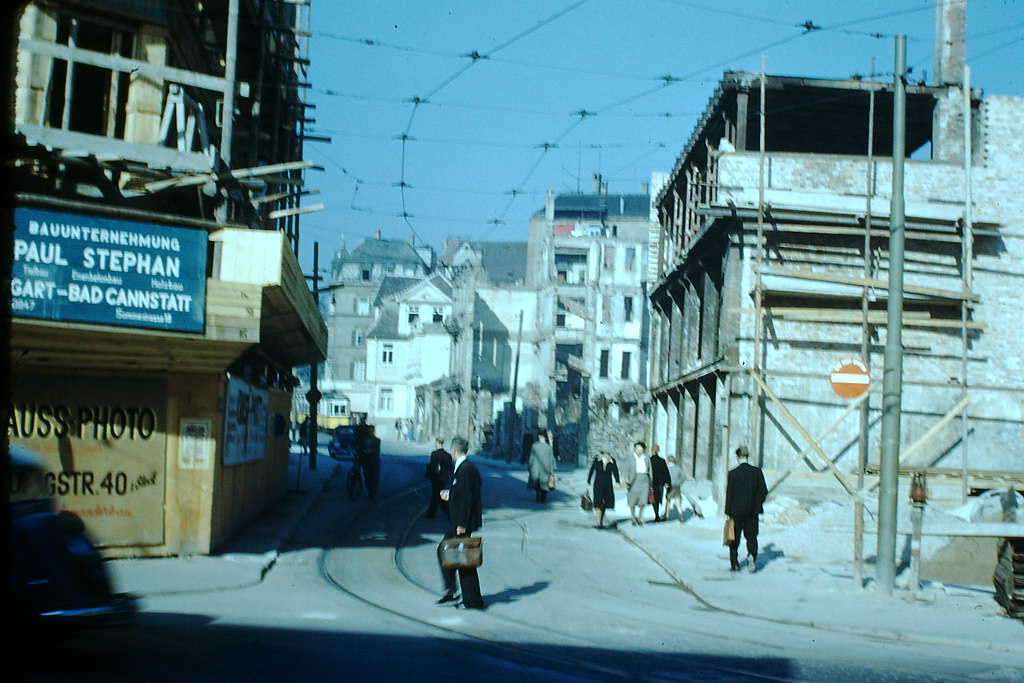
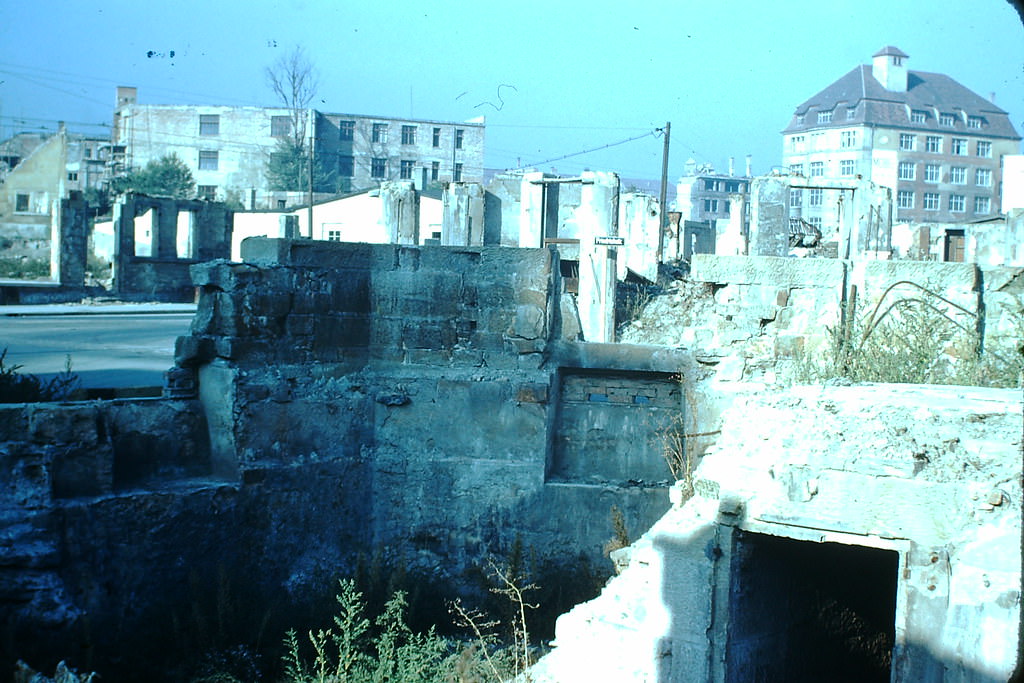
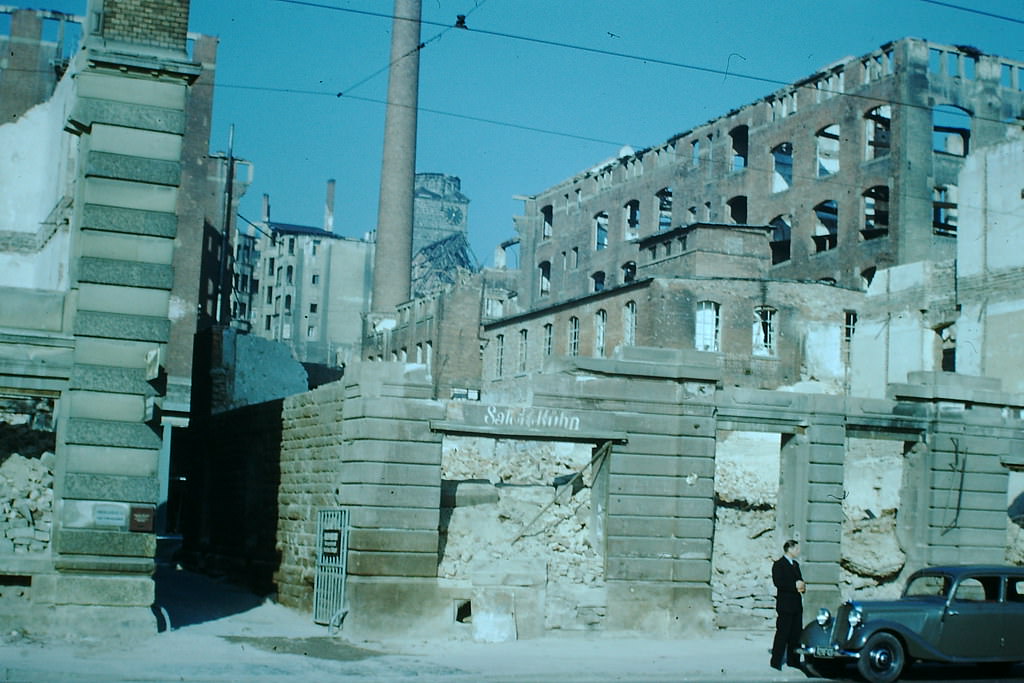
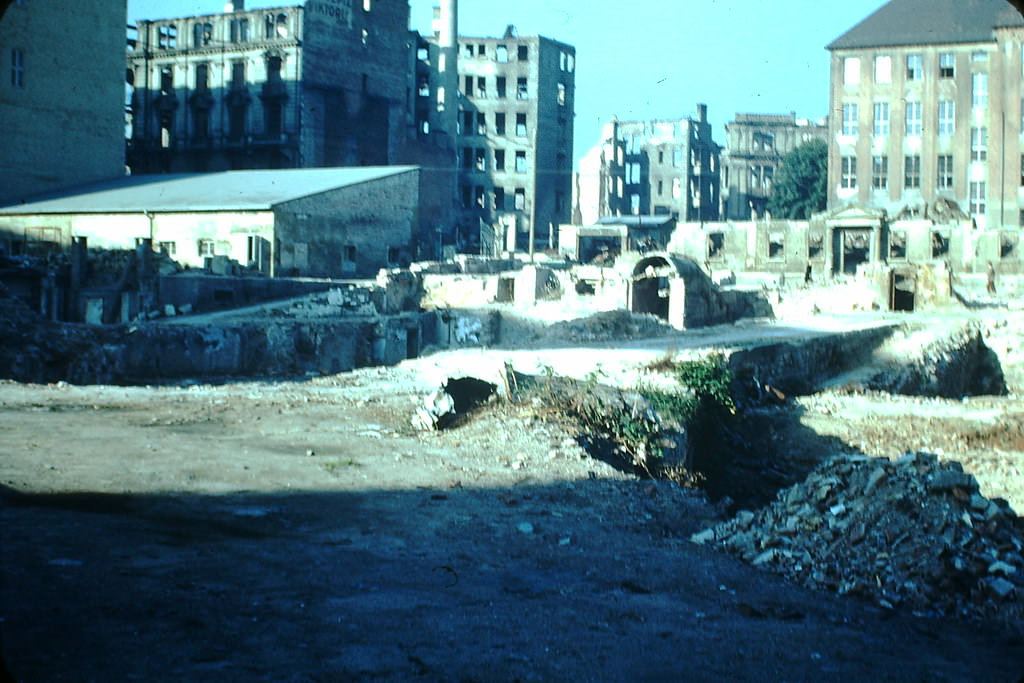
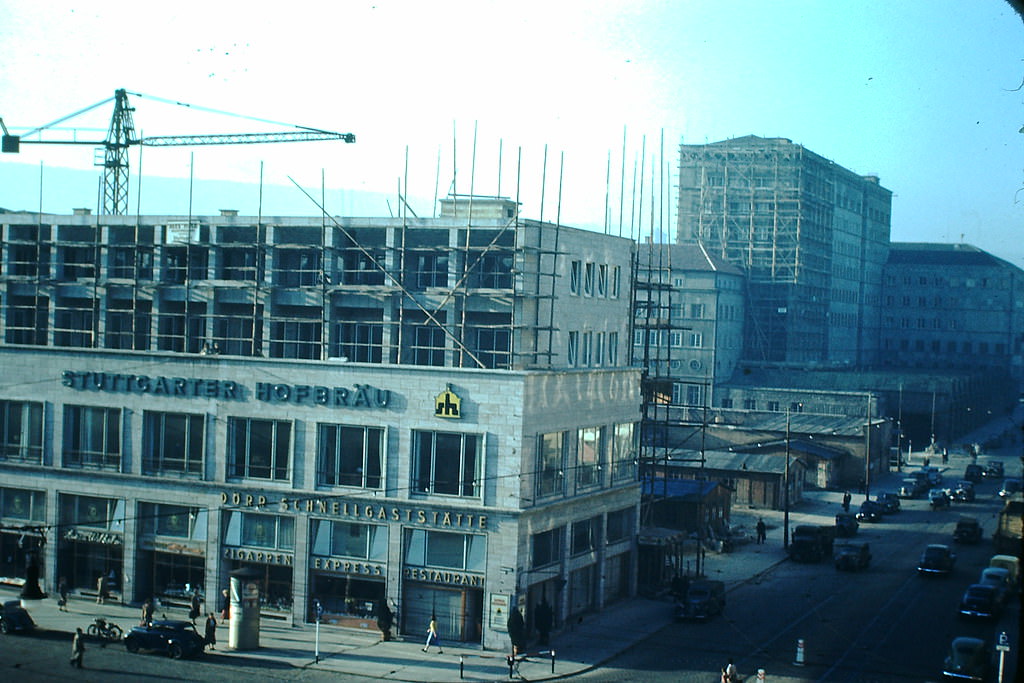
Stuttgart, set in a valley surrounded by vineyards and forested hills, had suffered significant bomb damage during the war. As the capital of the newly created Baden-Württemberg state, it was an important center of government and industry. Multiple photographs from 1949 capture the city in different stages — damaged neighborhoods alongside streets where daily commerce had resumed.
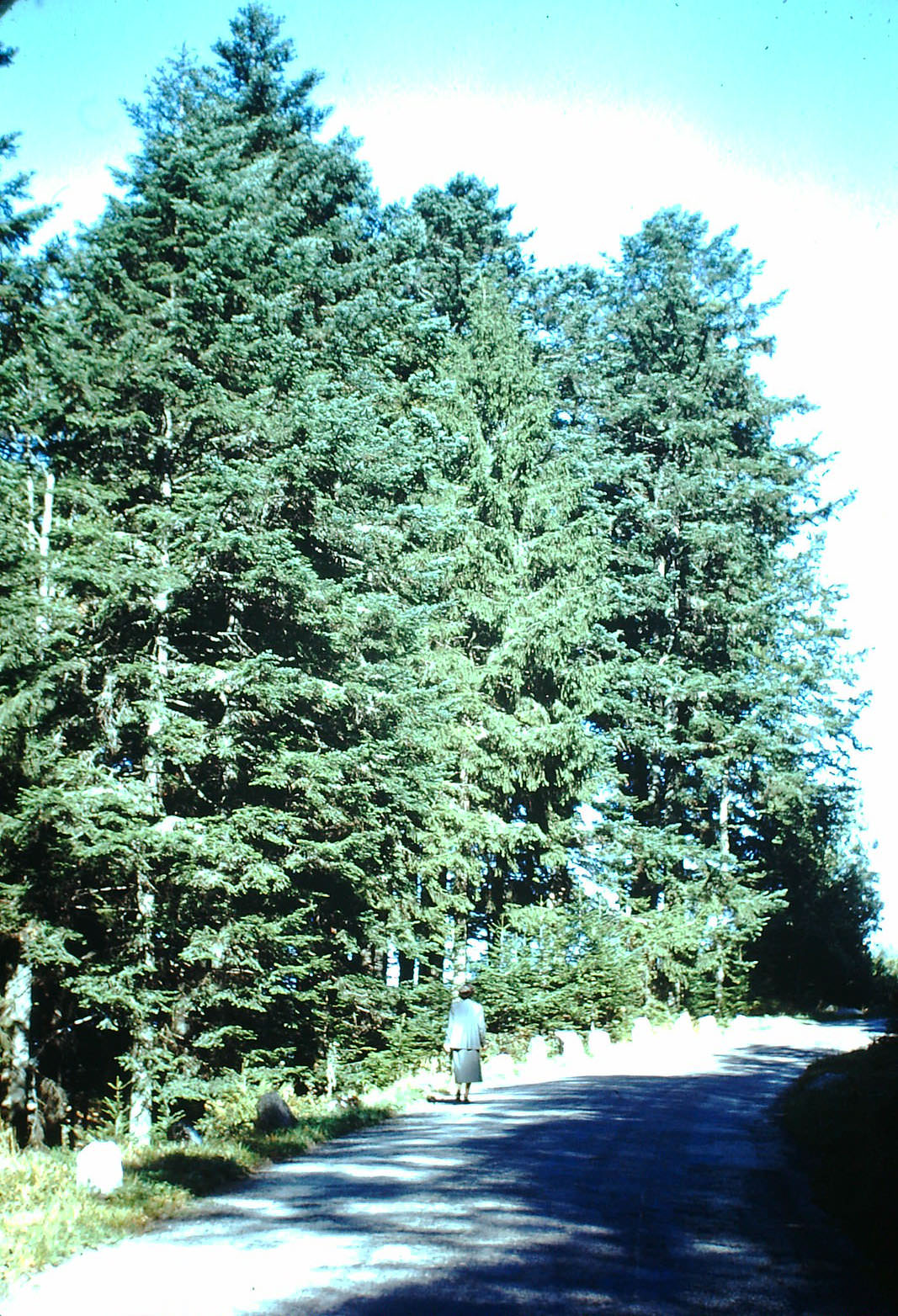
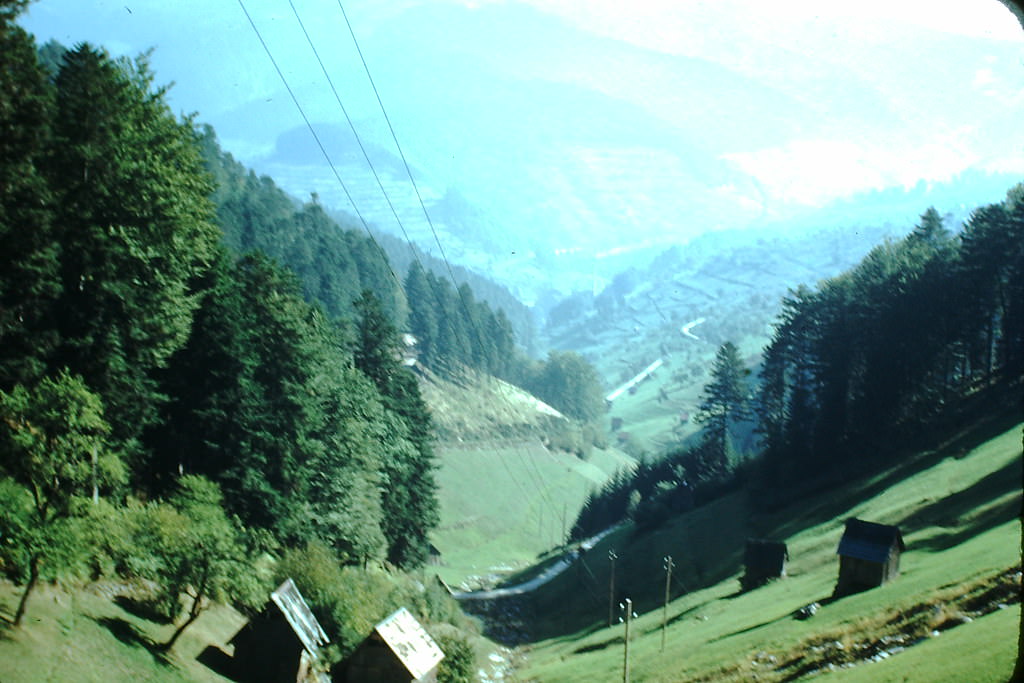
The valleys below the Black Forest’s higher elevations were green and largely peaceful in 1949. Farming villages, timber operations, and small streams filled the lower terrain. The Black Forest had been a source of timber and agricultural produce for centuries, and that continued without interruption in the years immediately following the war.
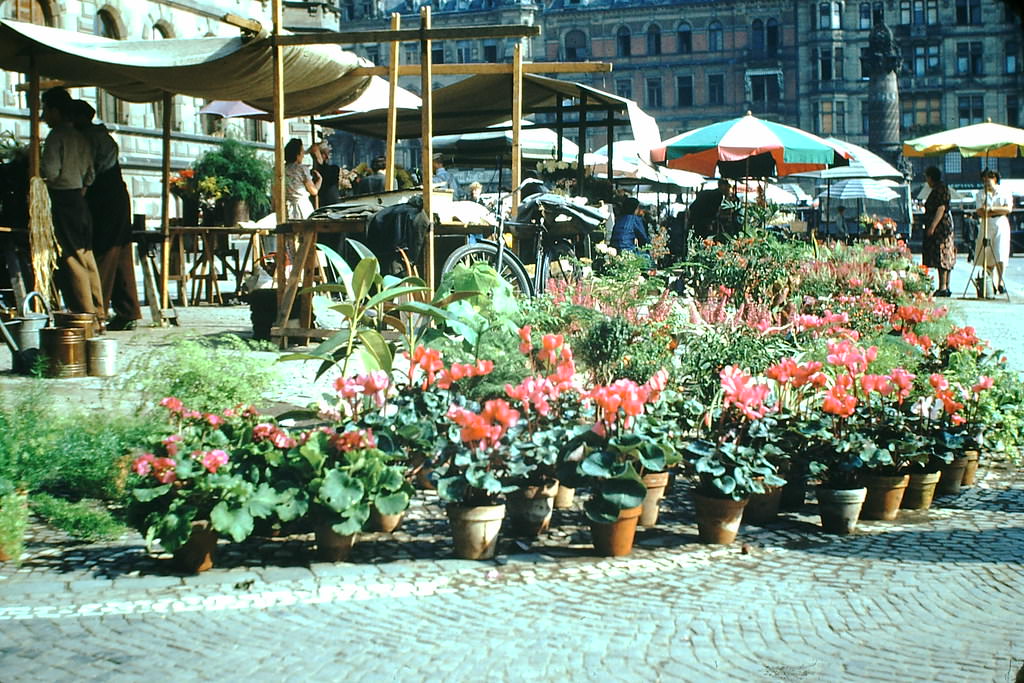
Wiesbaden, the capital of the newly formed state of Hesse, held a flower market that offered one of the more vivid signs of ordinary life returning. Wiesbaden had escaped heavy bombing partly because the Americans had designated it as an administrative center early in the war’s final months. By 1949, it was one of the more intact and functional cities in West Germany.
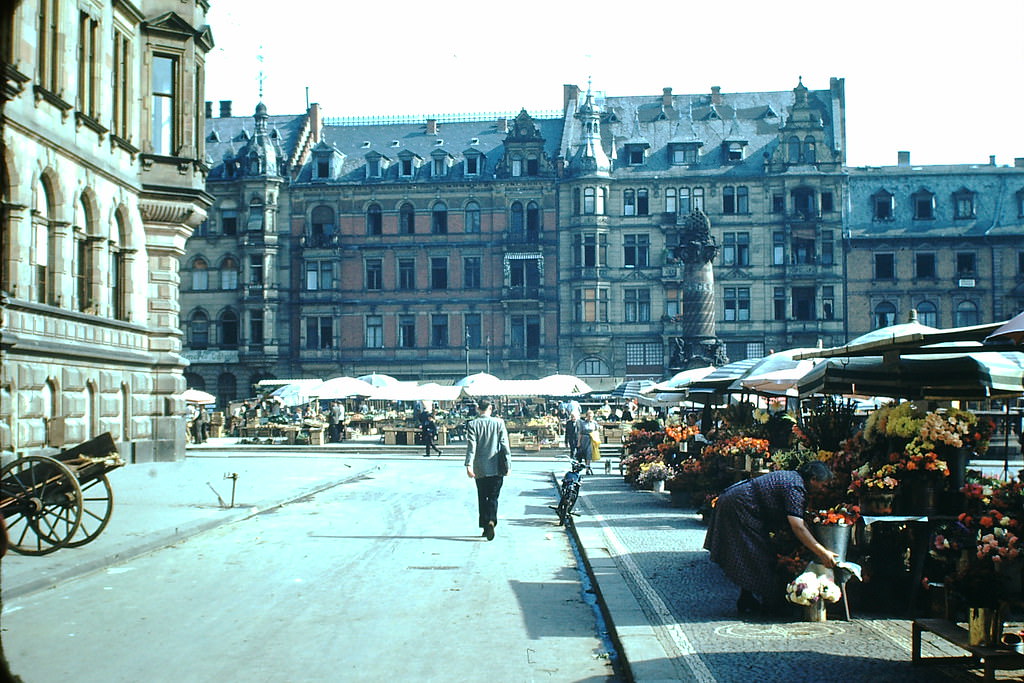
Wiesbaden’s markets were active by 1949, with vendors selling produce, flowers, and goods in the open air. The city’s relative physical intactness made it a natural home for markets and commerce. It also housed the U.S. Air Force’s European headquarters, making it one of the most heavily American-influenced cities in the new republic.
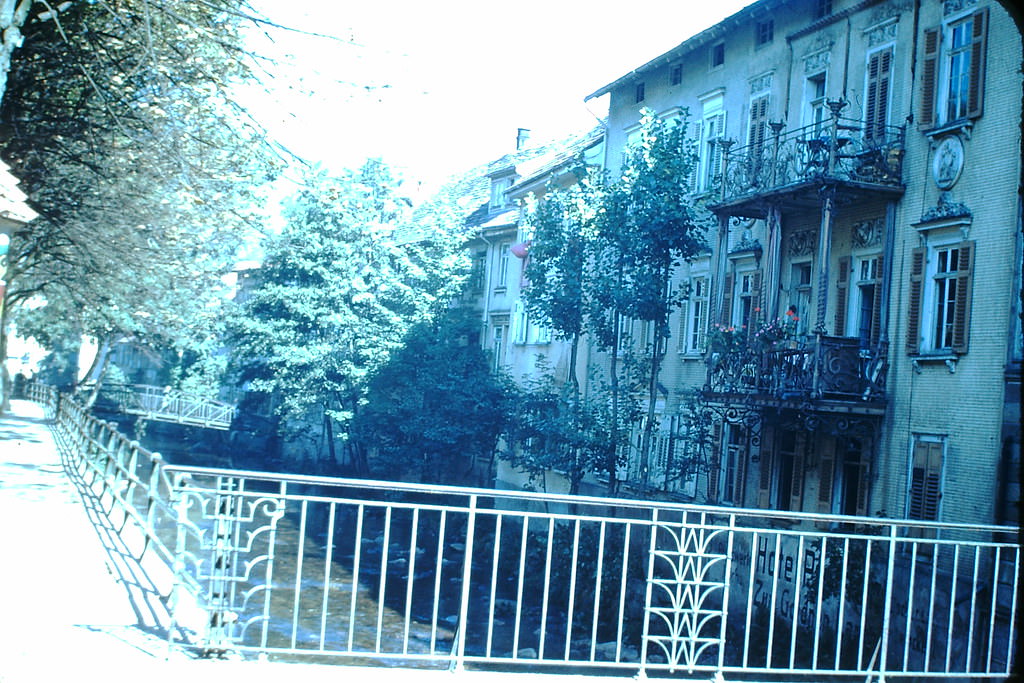
Bad Wildbad, a spa town on the Enz River in the northern Black Forest, had a long history as a place of rest and treatment. Its thermal baths had drawn visitors since the Middle Ages. In 1949, the town was also hosting French occupation forces, who had taken over several of its grand hotels and spa facilities for their own use.




