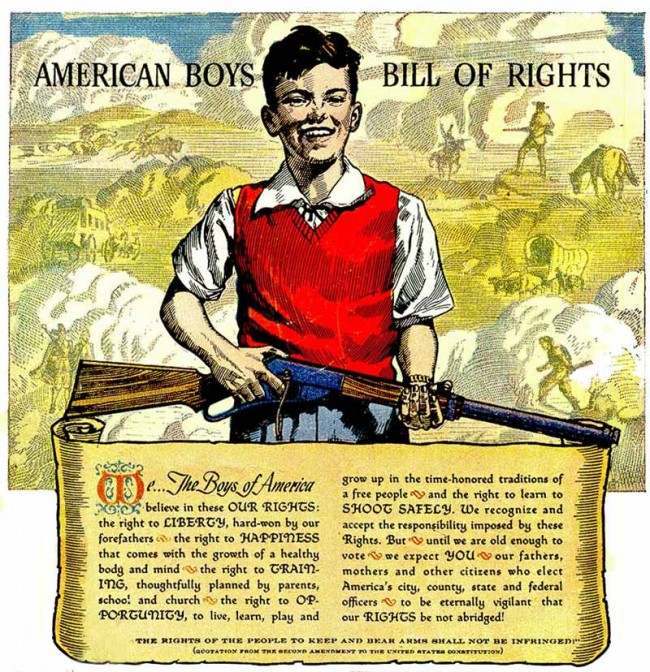
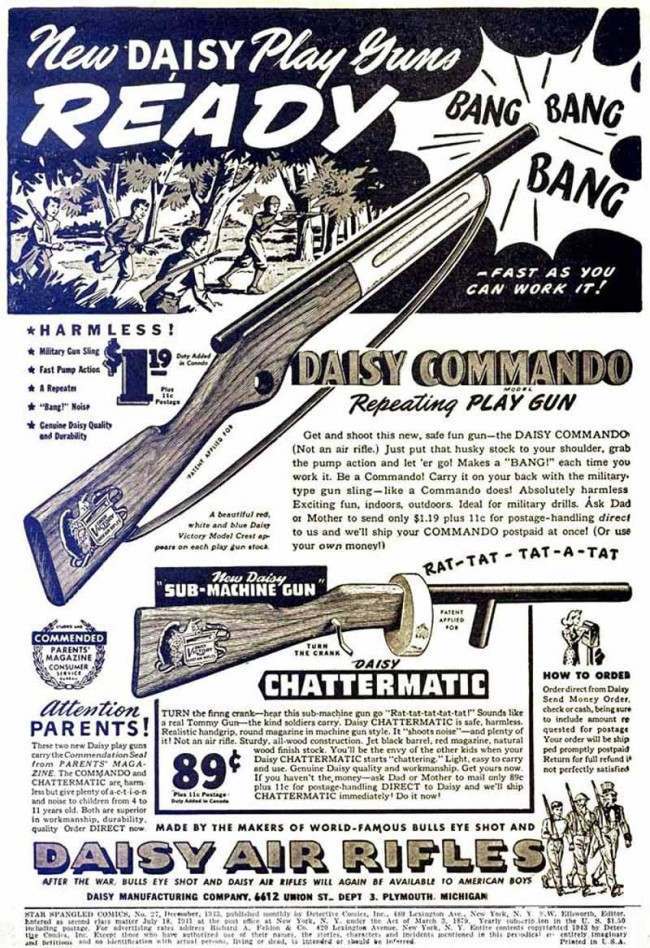
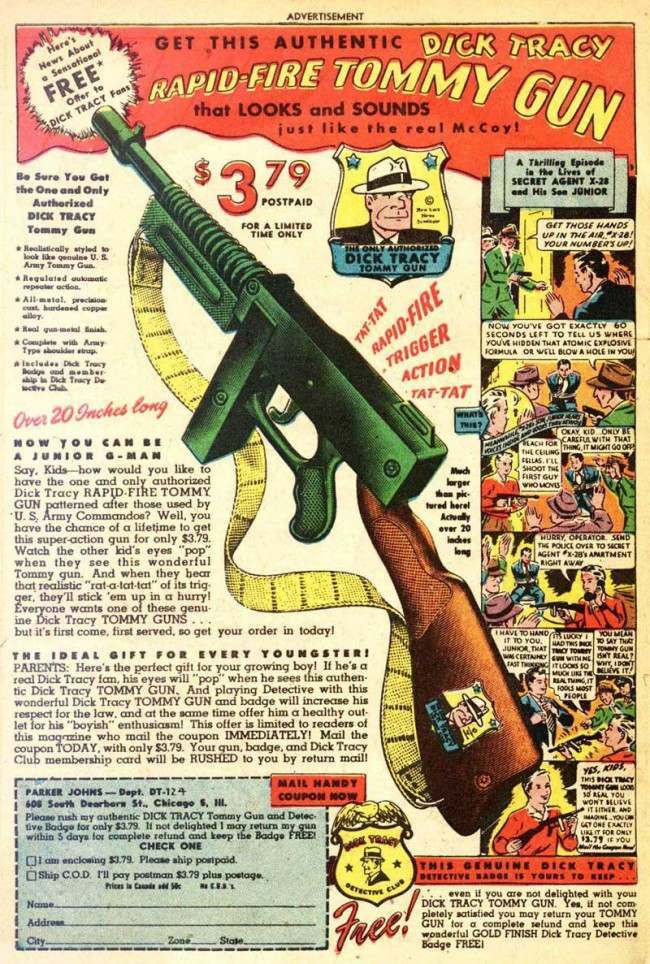
Decades ago, toy gun ads were everywhere — in comic books, newspapers, and holiday catalogs. Brands like Daisy and Mattel pitched their products directly to children, using bold slogans and colorful artwork designed to make every kid feel like they needed one.
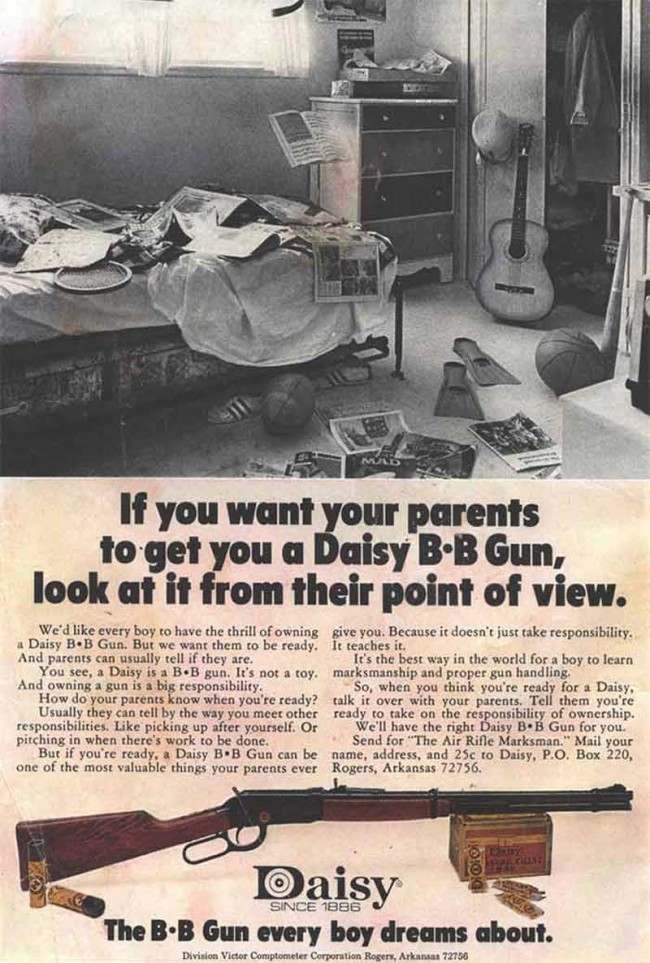
The toys themselves were built to impress. Many were modeled after real firearms with detailed metal parts and realistic proportions. These weren’t vague, cartoonish props — they were designed to look as close to the real thing as possible.
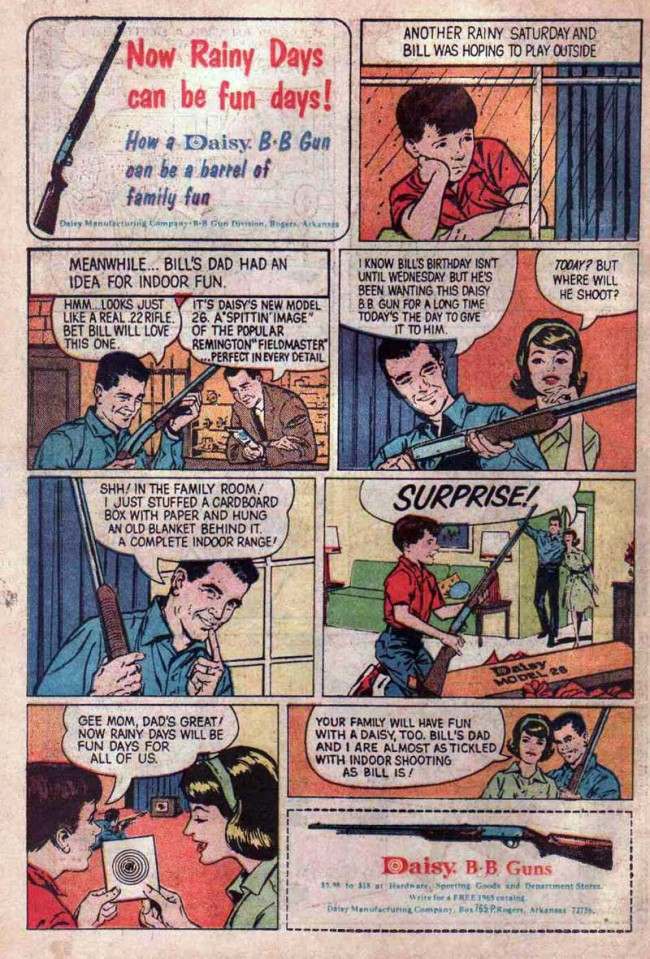
Cowboys and Indians, cops and robbers — these were the games driving sales. Ads leaned hard into TV and movie heroes of the era, telling kids they could be just like the gunslingers they watched on screen every week.
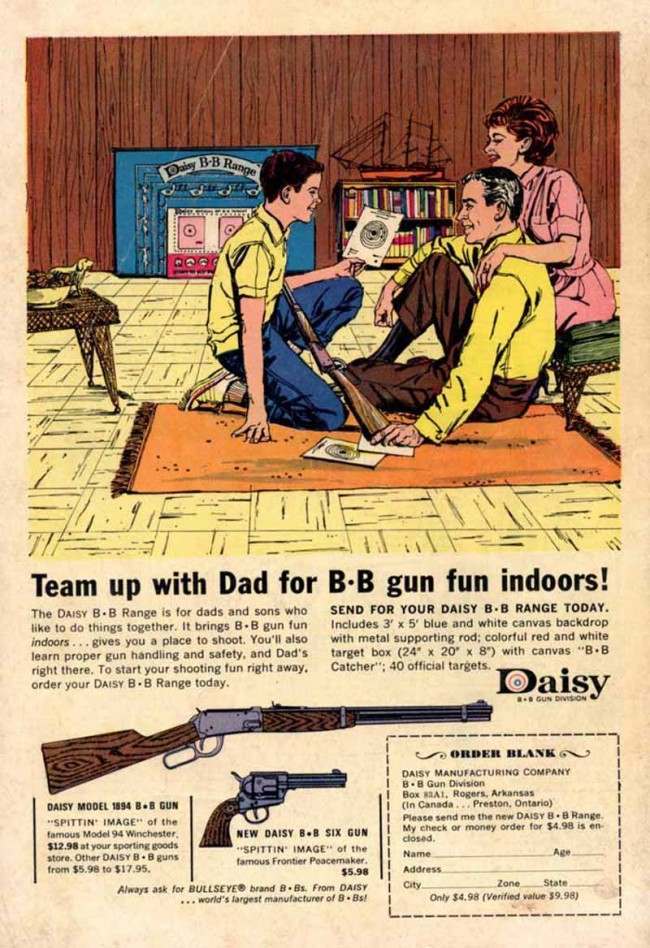
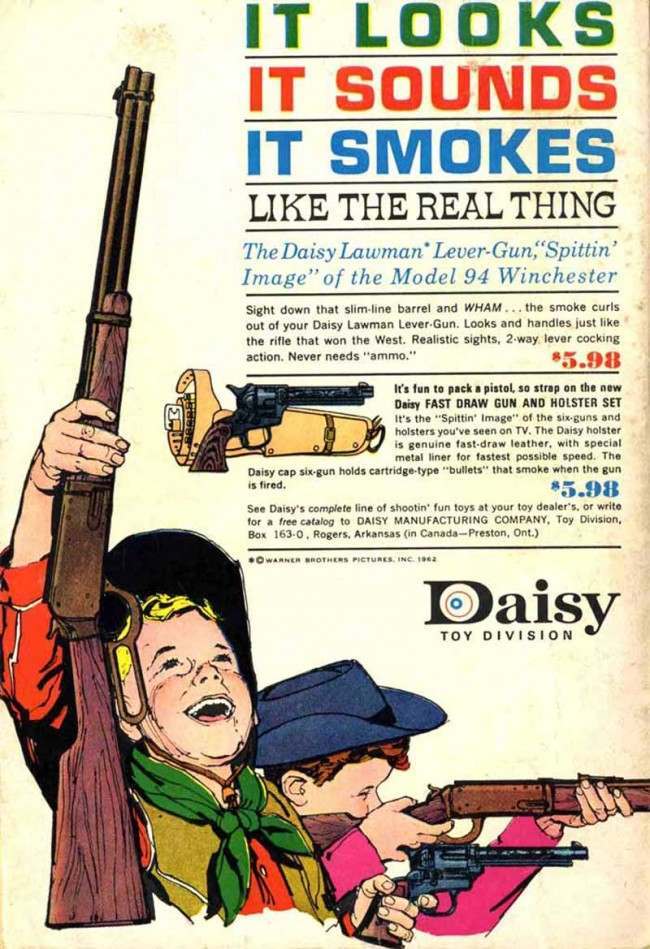
Parents were a secondary audience. Ads framed toy guns as tools for building courage, teamwork, and outdoor play. Owning one was treated as a natural milestone of American boyhood.
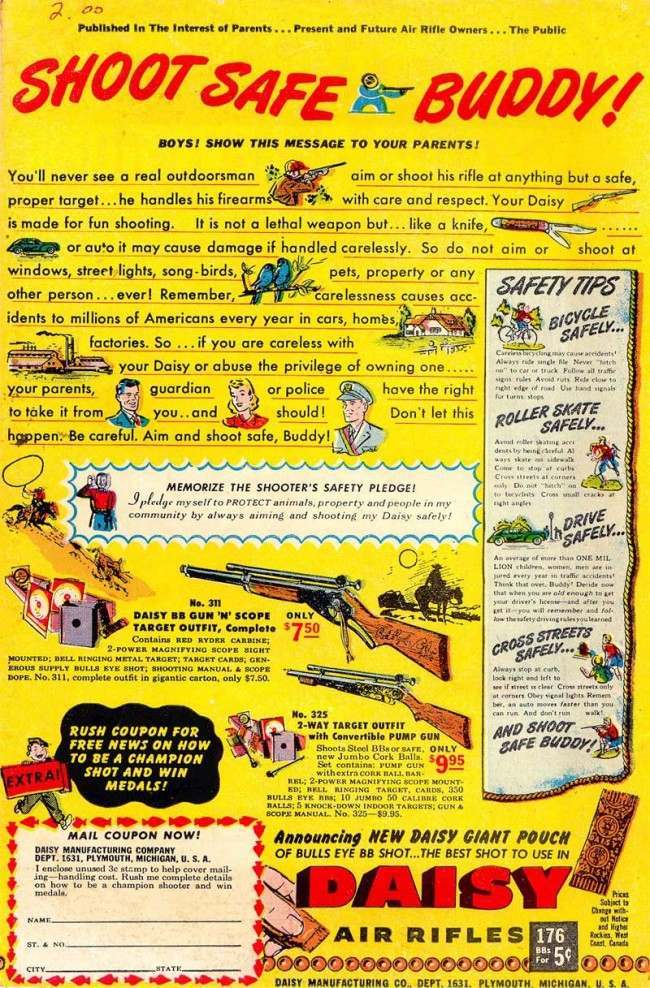
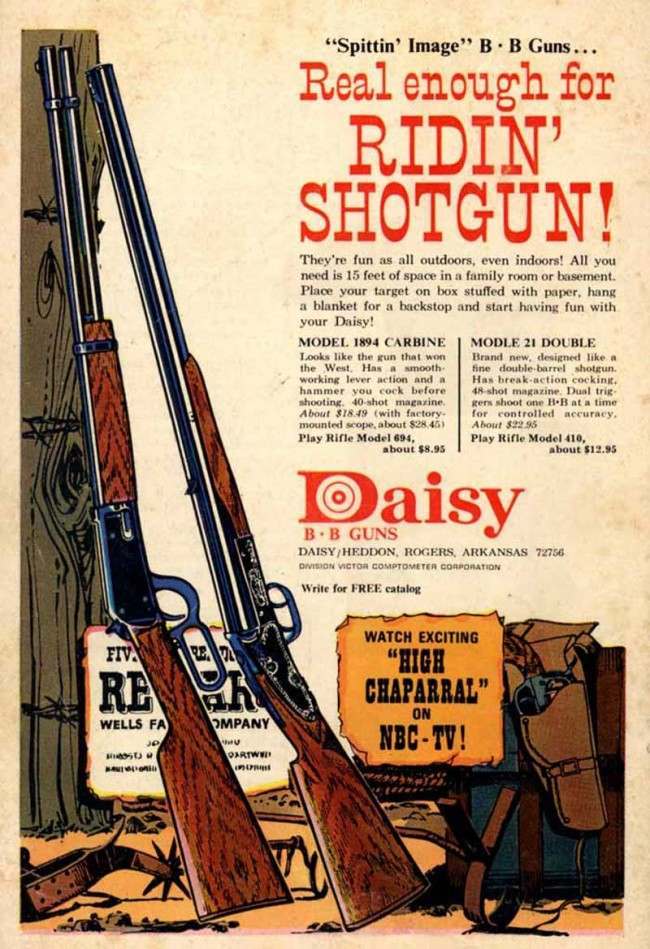
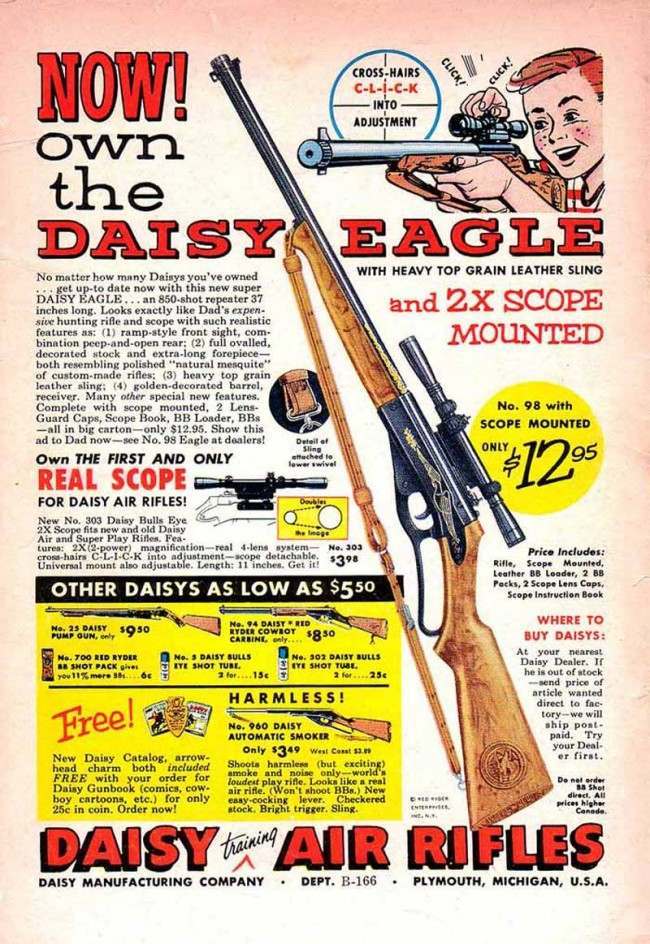
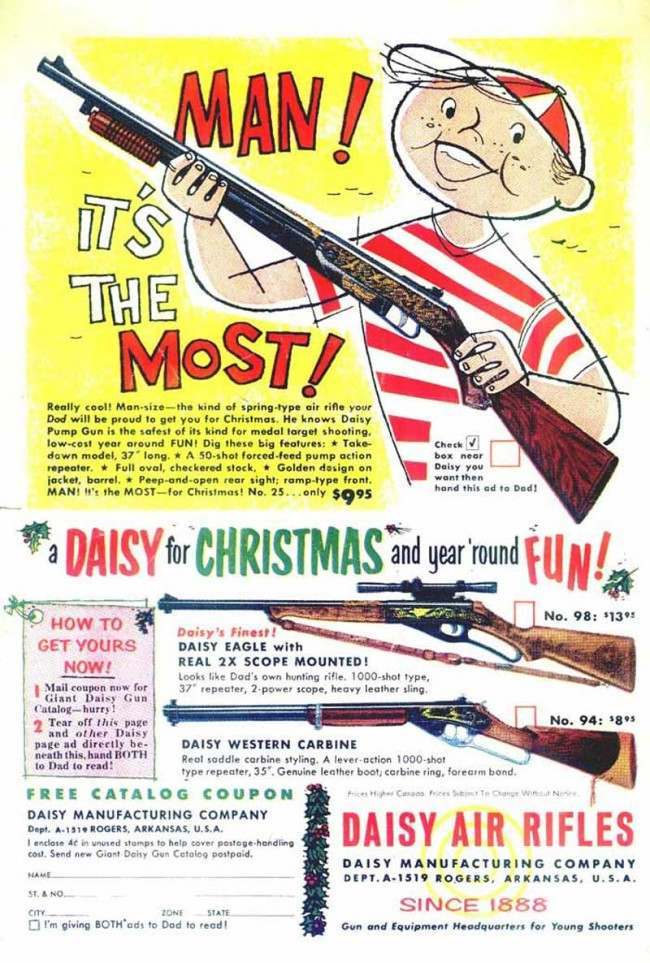
Daisy’s BB guns were especially popular. The company marketed them as starter firearms for young shooters, often featuring boys receiving a Daisy rifle as a Christmas gift — a tradition millions of families genuinely followed.
Mattel entered the space with cap guns and the Fanner 50, a revolver so realistic it was used as a prop on actual television westerns. The ad campaigns promoted it as the most authentic toy on the market.
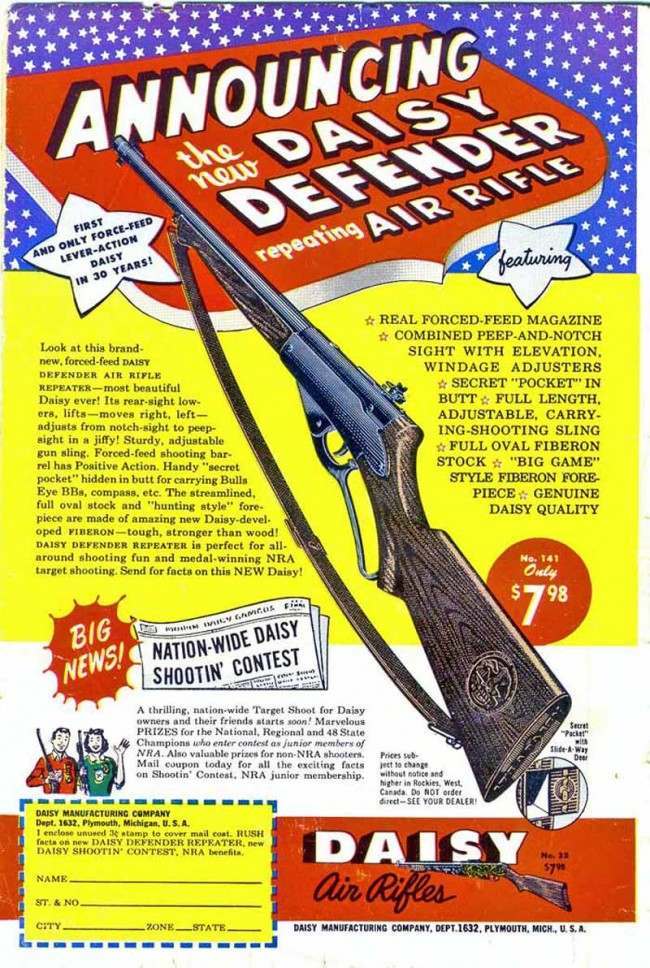
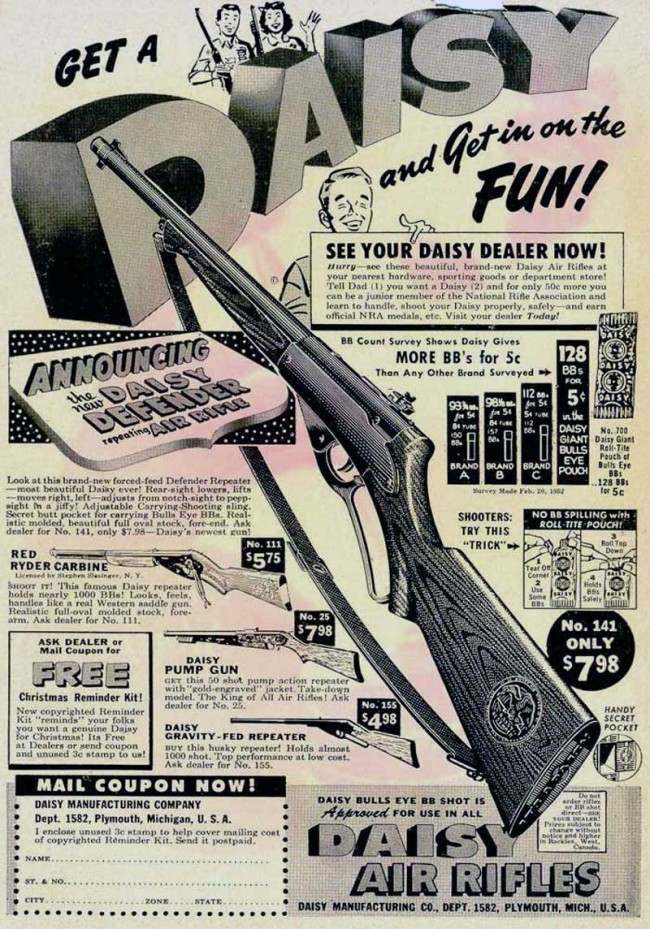
Critics raised concerns even then. Some child experts warned that realistic toy guns blurred the line between play and violence. The debate appeared in newspapers and parent magazines throughout the 1950s and 1960s.
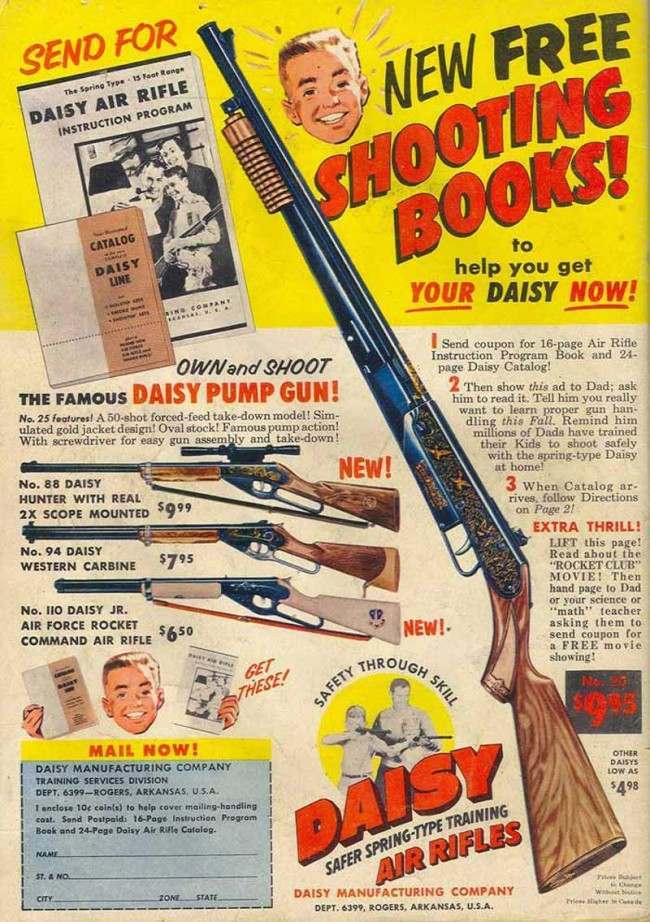
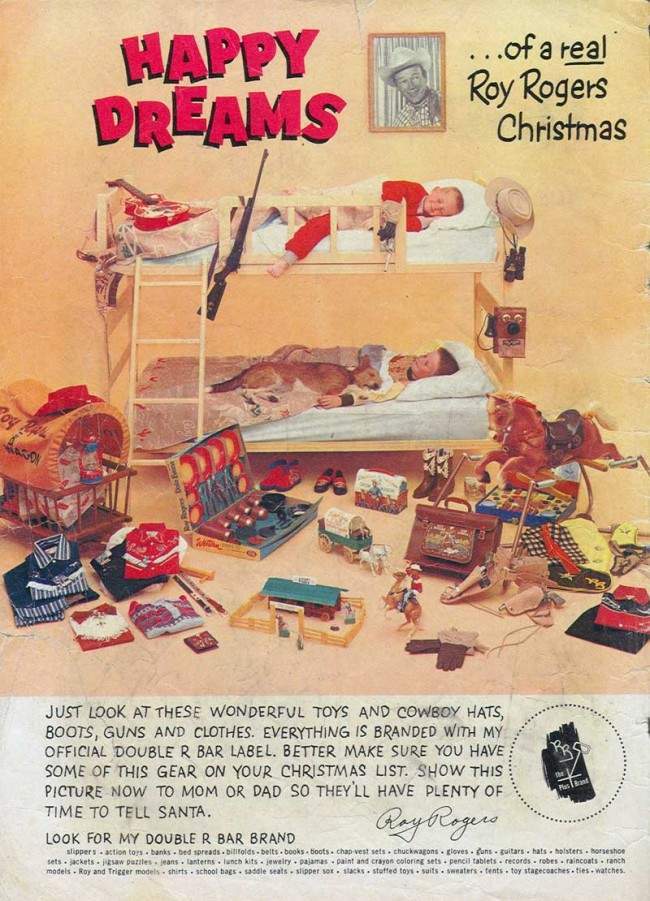
Despite the pushback, sales kept climbing. Toy gun sets were among the top-selling gifts for boys each holiday season throughout the mid-20th century, with some brands moving millions of units annually.
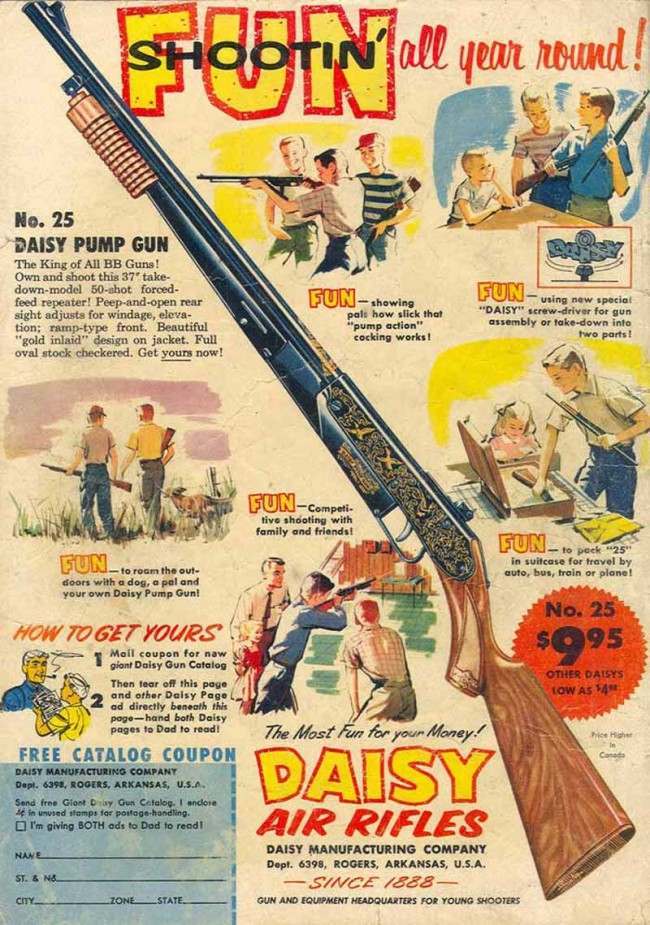
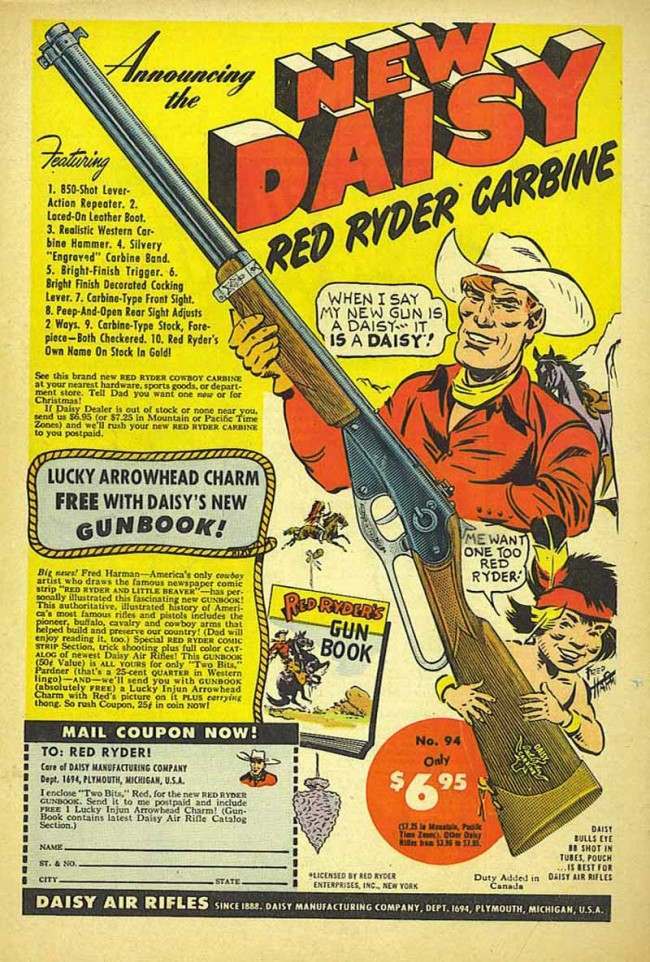
The ads spoke a specific cultural language — one tied to frontier mythology and postwar masculinity. A boy with a toy gun wasn’t just playing; he was practicing to be tough, independent, and ready.
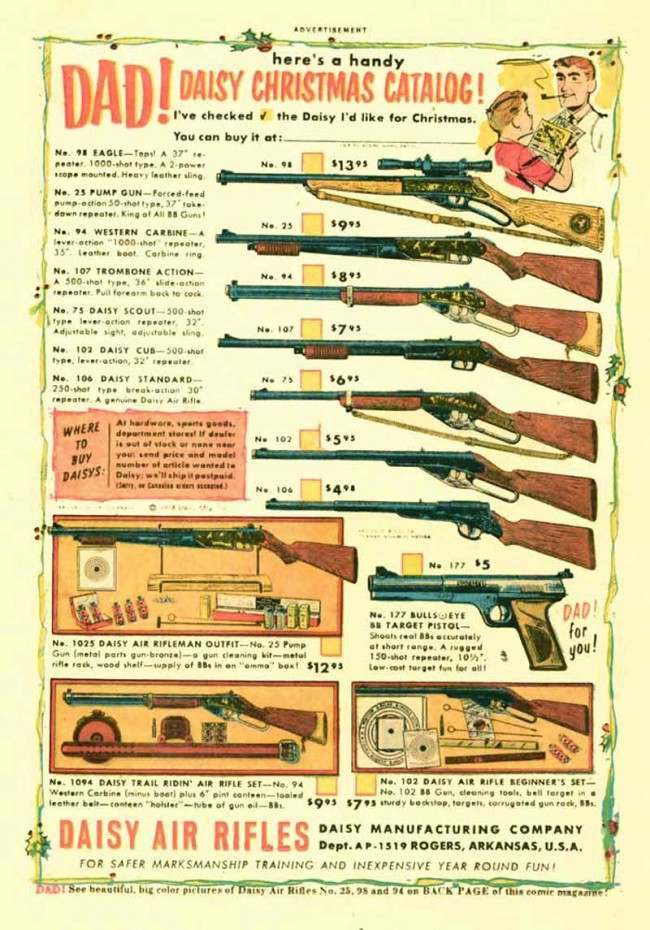
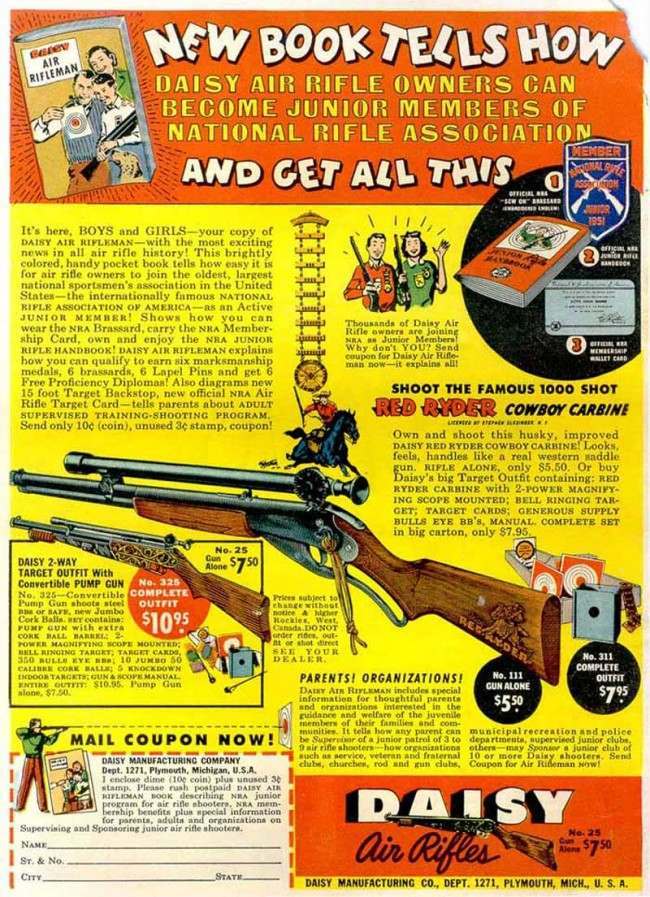
Some ads targeted girls too, though far less often. When they did, the framing usually positioned girls as sidekicks or cowgirls rather than leads — a reflection of the era’s rigid gender roles in advertising.
By the 1970s, regulations began tightening. Requirements for orange tip markings on toy guns arrived in later decades, signaling a shift in how society viewed the line between toy and weapon.
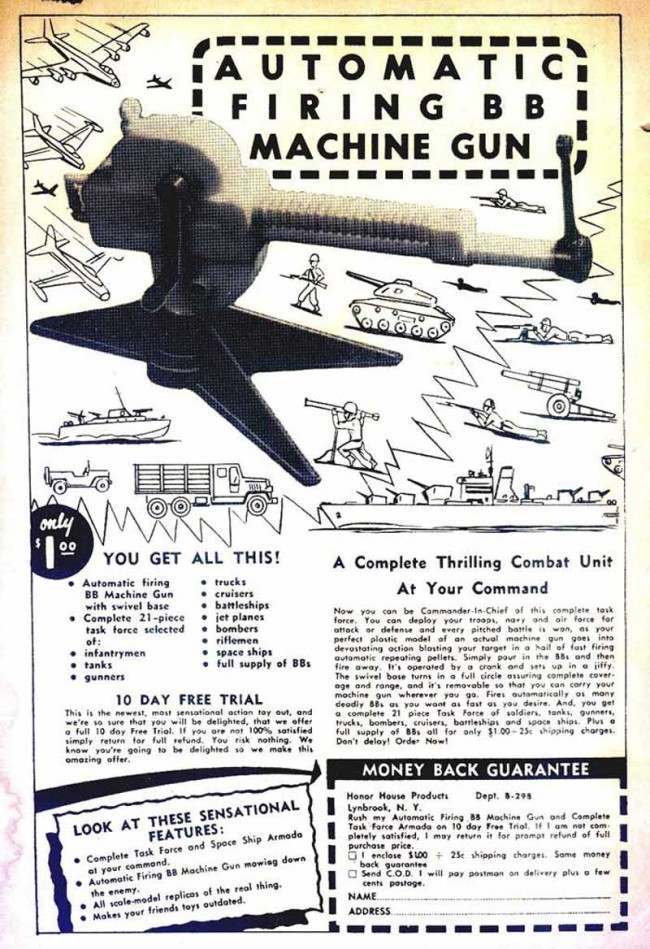
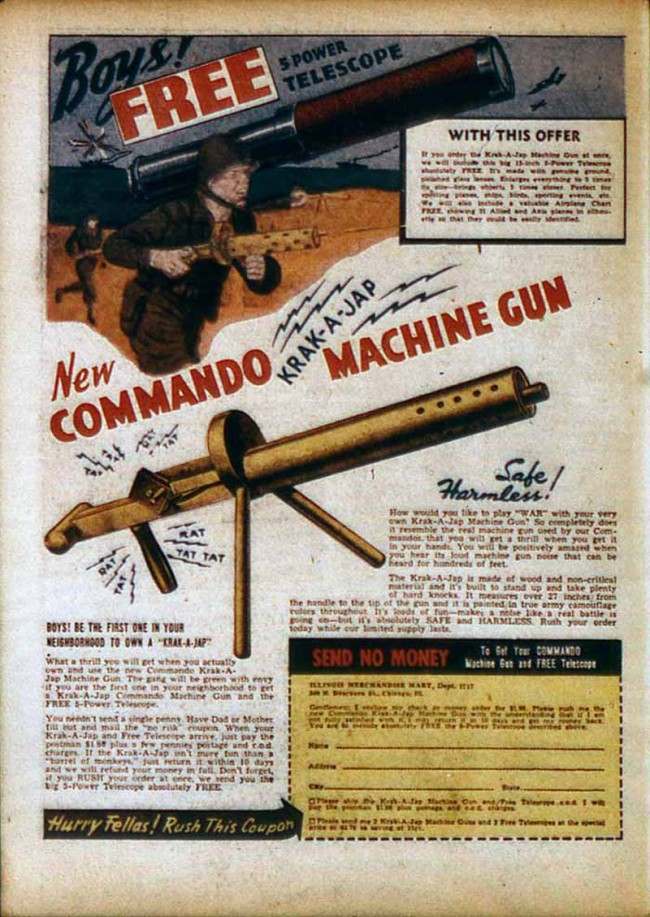
These ads are a direct record of mid-century American values — what adults chose to put in children’s hands and how companies convinced them it was not just acceptable, but essential.