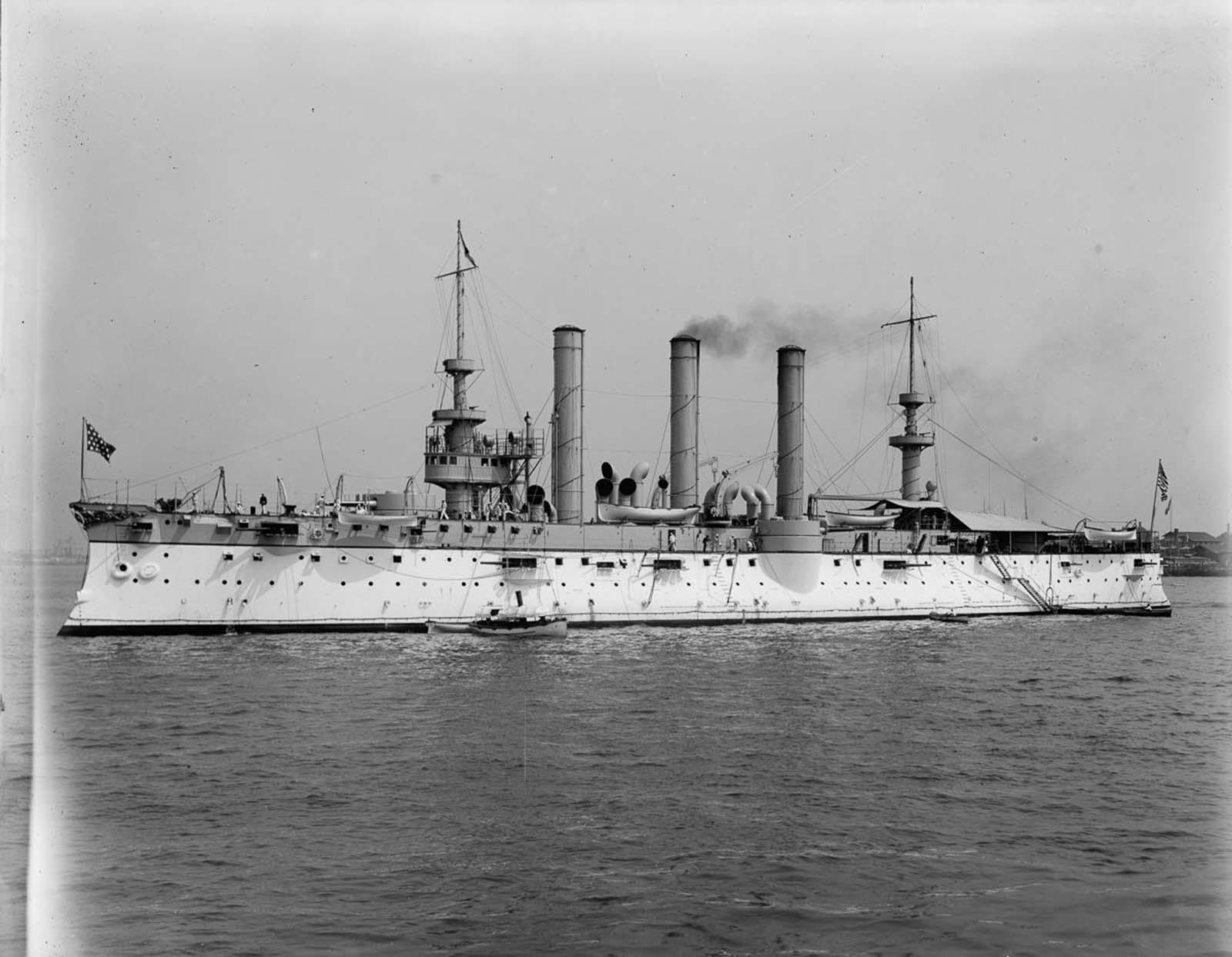
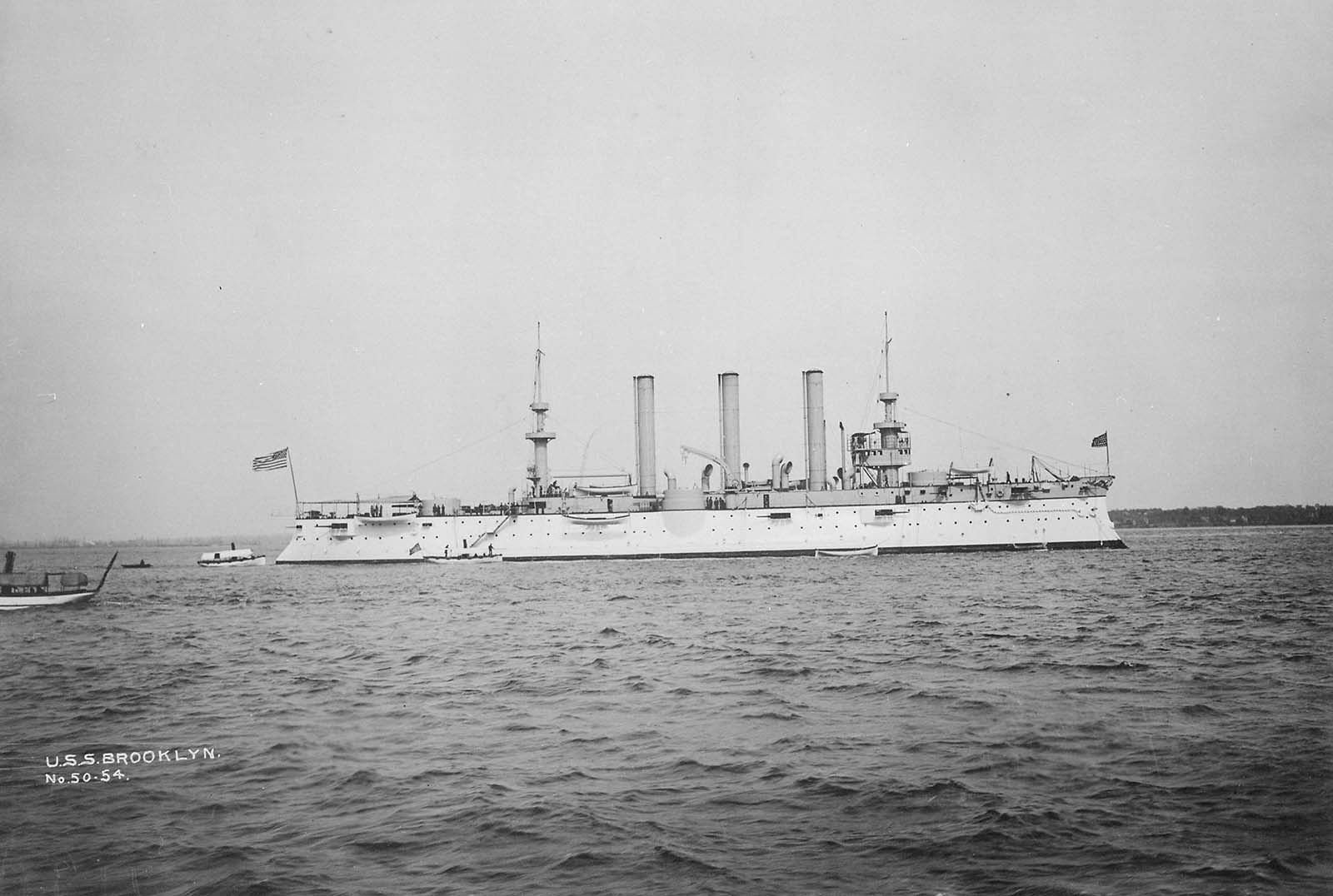
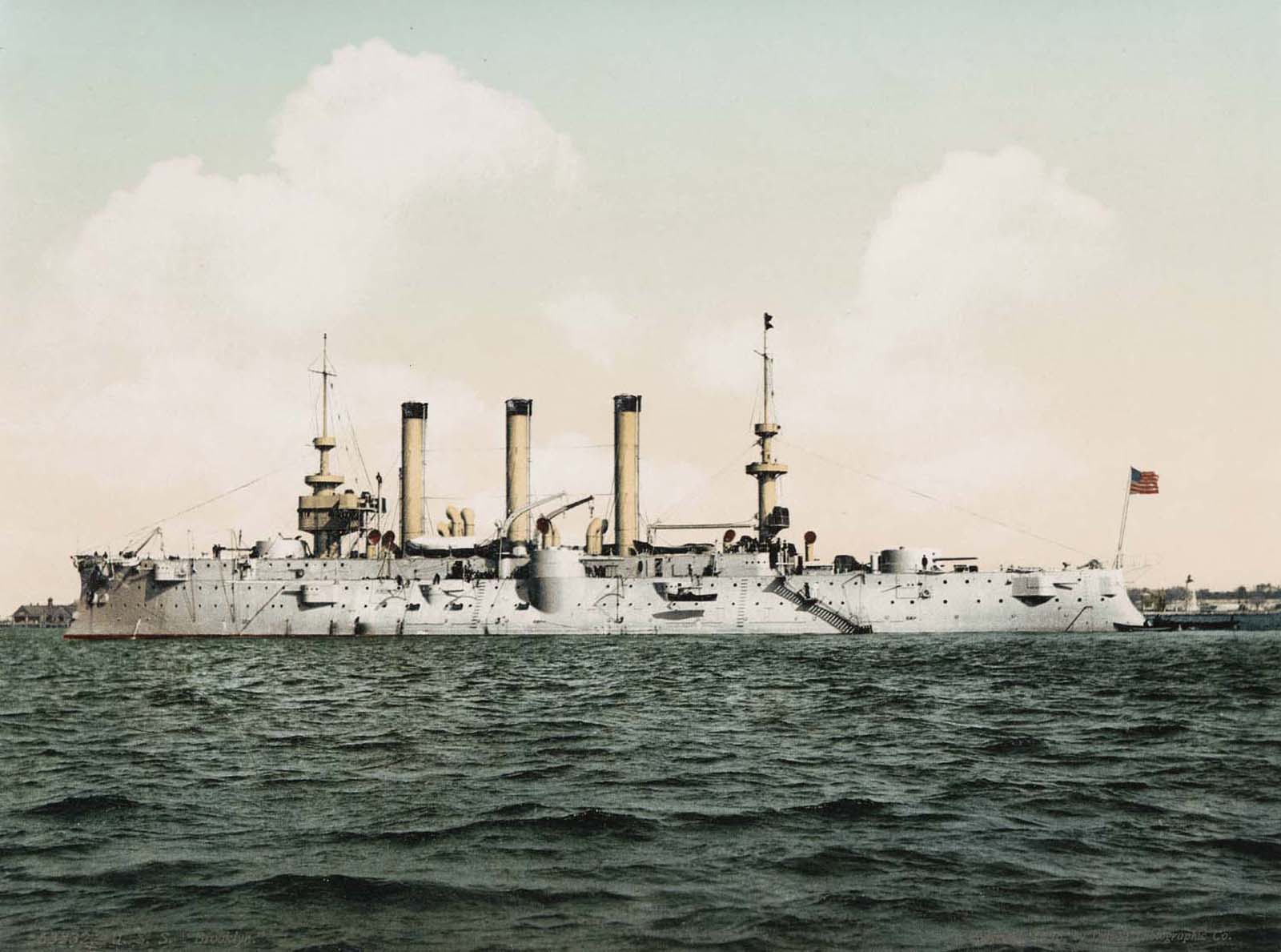
The USS Brooklyn was the third armored cruiser built by the United States Navy, and she was hard to miss. Three extremely tall funnels towered above her deck, making her instantly recognizable among American warships of the era. Named after the Brooklyn borough of New York, she was both the tallest and fastest cruiser in the American fleet when she entered service.
Her design carried notable French influences, seen in her lozenge armament arrangement and the sharp inward curve of her hull — a feature known as tumblehome. Brooklyn displaced more than 9,000 tons and carried a heavy punch: eight 8-inch guns, twelve 5-inch guns, and four 6-pounders. A crew of 561 enlisted men and officers kept her running.
Her armor belt was 3 inches thick and 8 feet 6 inches deep, with 5 feet of that sitting below the waterline. It was designed to protect the ship’s machinery, not much else. Compared to her sister ship USS New York, Brooklyn had less overall armor protection — a deliberate trade-off that allowed her to carry more guns and move faster.
After being commissioned, Brooklyn’s first major assignment had nothing to do with combat. She was sent to Britain to transport members of the United States delegation to the Diamond Jubilee celebrations for Queen Victoria in 1897. It was a prestigious mission that put the new cruiser on the world stage before she had fired a single shot in anger.
Back in American waters, she served along the East Coast and in the West Indies. Then, on March 28, 1898, she was assigned as the flagship of the “Flying Squadron” — a fast-moving naval force assembled in response to rising tensions with Spain. Within two months, the squadron was blockading Cuba.
The defining moment of Brooklyn’s combat career came in July 1898 at the Battle of Santiago de Cuba. The Spanish fleet attempted to break out of Santiago Harbor, and Brooklyn was at the center of the American response. The battle ended with the complete destruction of the Spanish fleet in the Caribbean. Brooklyn was struck by enemy fire 20 times during the fight. Remarkably, only one American sailor was killed aboard her.
Following the war, Brooklyn took part in the Spanish-American War Victory Celebration in New York on October 5, 1898, and then the Dewey Celebration in September 1899, honoring Commodore George Dewey’s victory at the Battle of Manila Bay. These events marked a high point of public pride in the Navy, and Brooklyn was front and center for both.
On October 16, 1899, Brooklyn set sail for the Philippines, where she became the flagship of the Asiatic Squadron. In 1900, she took part in the North China Relief Expedition — better known as the Boxer Rebellion — as foreign powers sent forces to protect their nationals in China during a violent anti-foreign uprising.
Brooklyn was decommissioned on June 23, 1908, but her service wasn’t over. She was recommissioned as a receiving ship at the Boston Navy Yard in 1914, and fully recommissioned again in 1915 to serve with the Neutrality Patrol during World War I. Later that year she was transferred back to the Asiatic Station, where she served as the commander-in-chief’s flagship — a role she had filled before.
Over the course of her long career, Brooklyn held roles that few warships ever did: diplomatic transport, fleet flagship, receiving ship, and destroyer squadron command vessel. She was put out of commission for the final time on March 9, 1921, and sold on December 20, 1921.
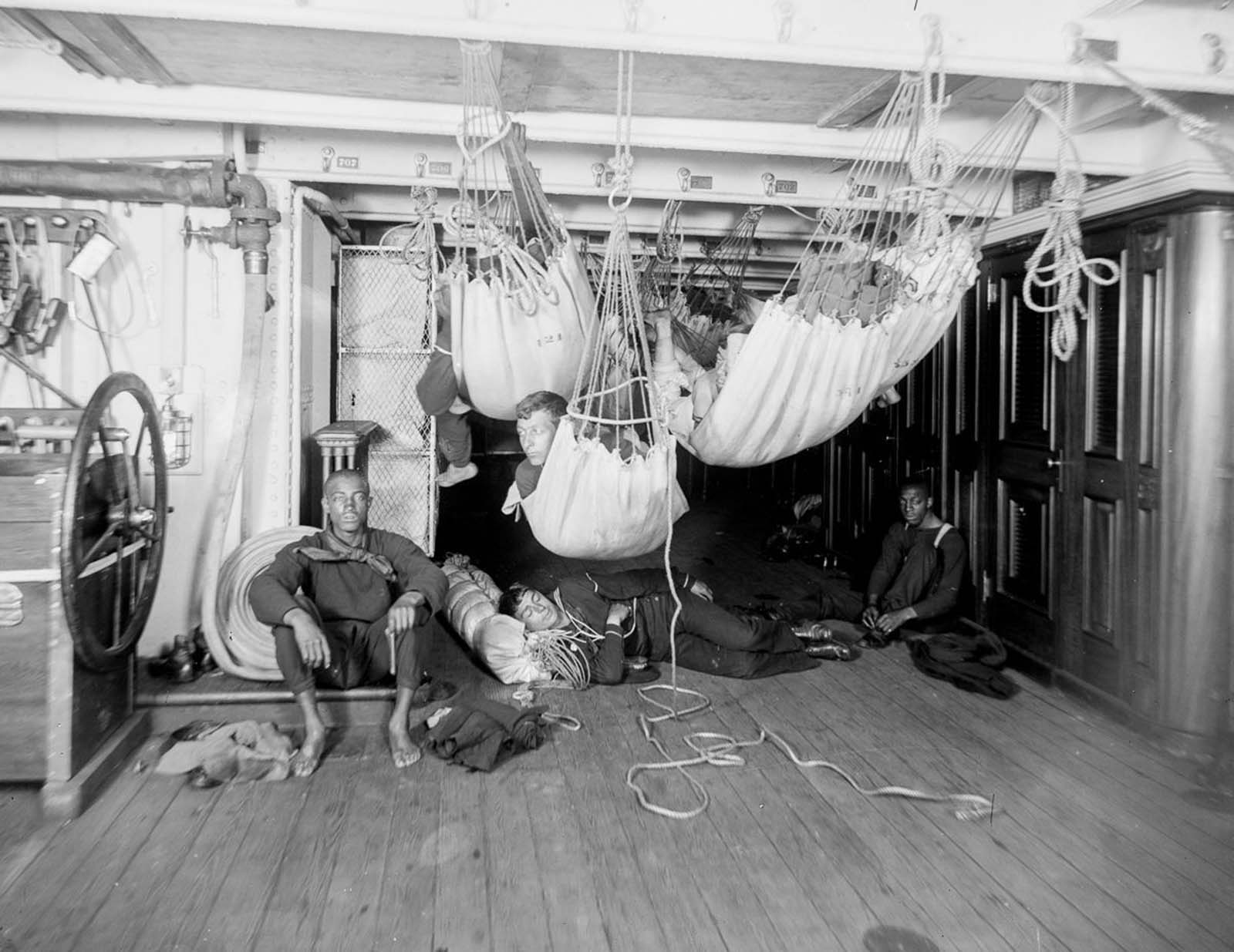
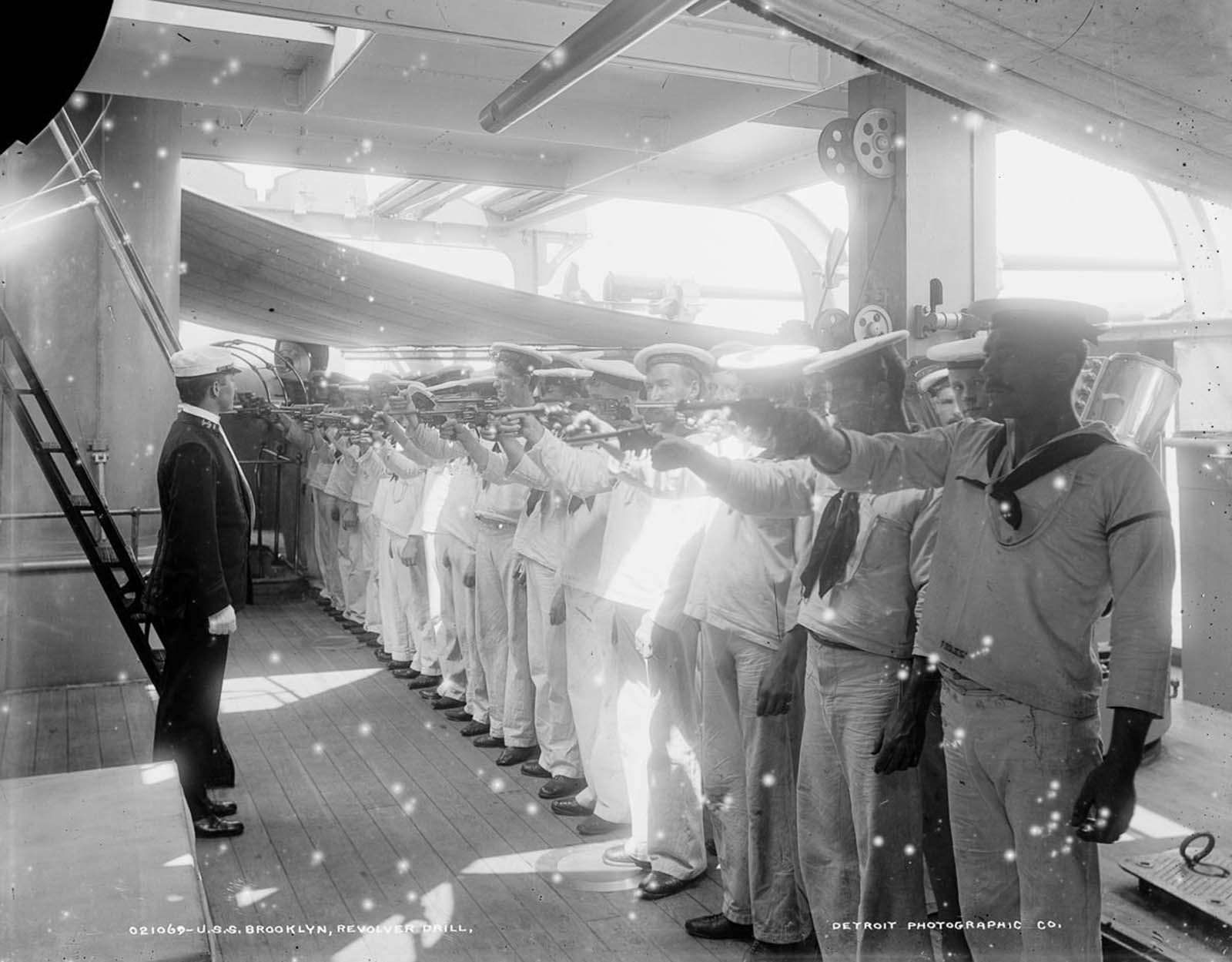
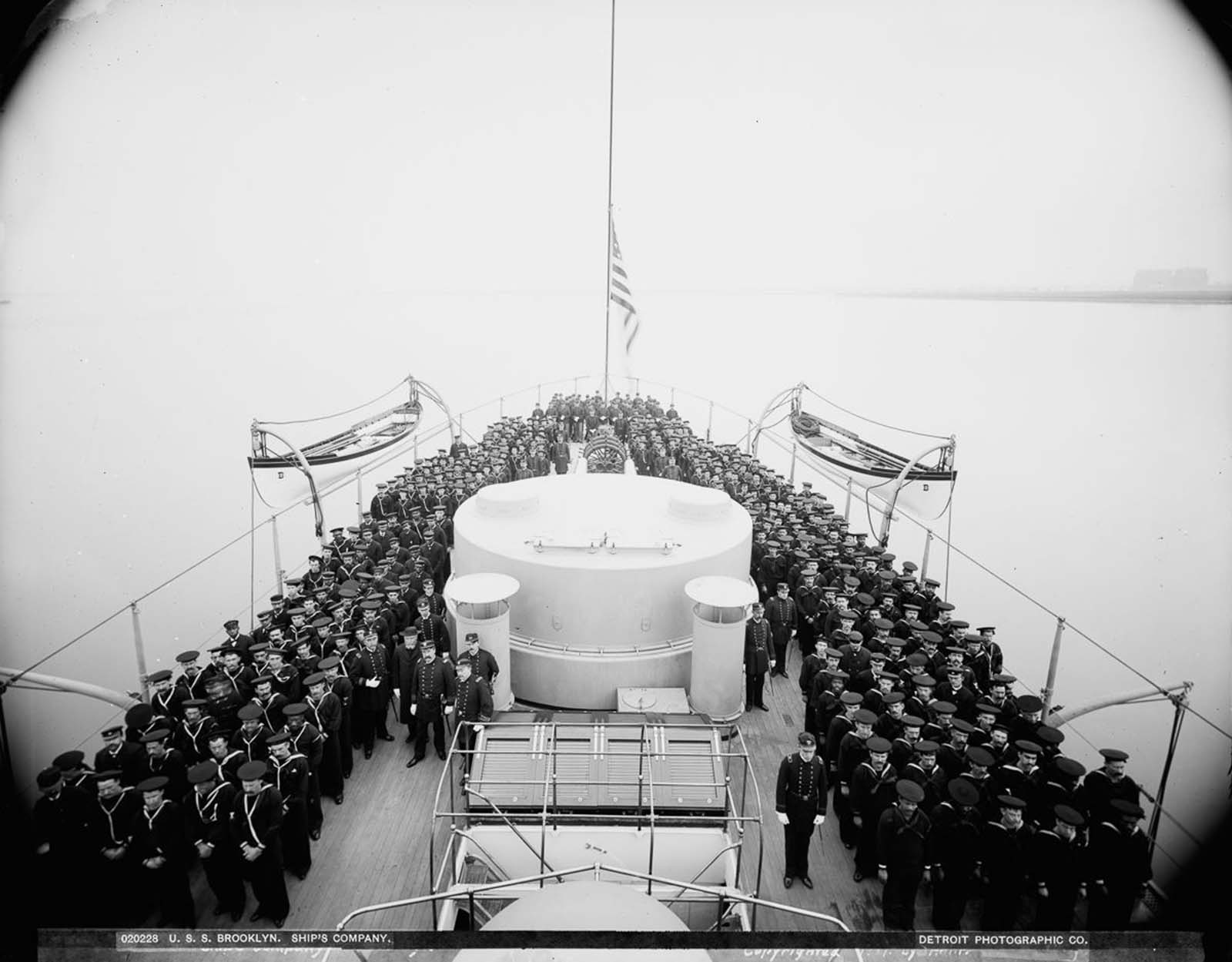
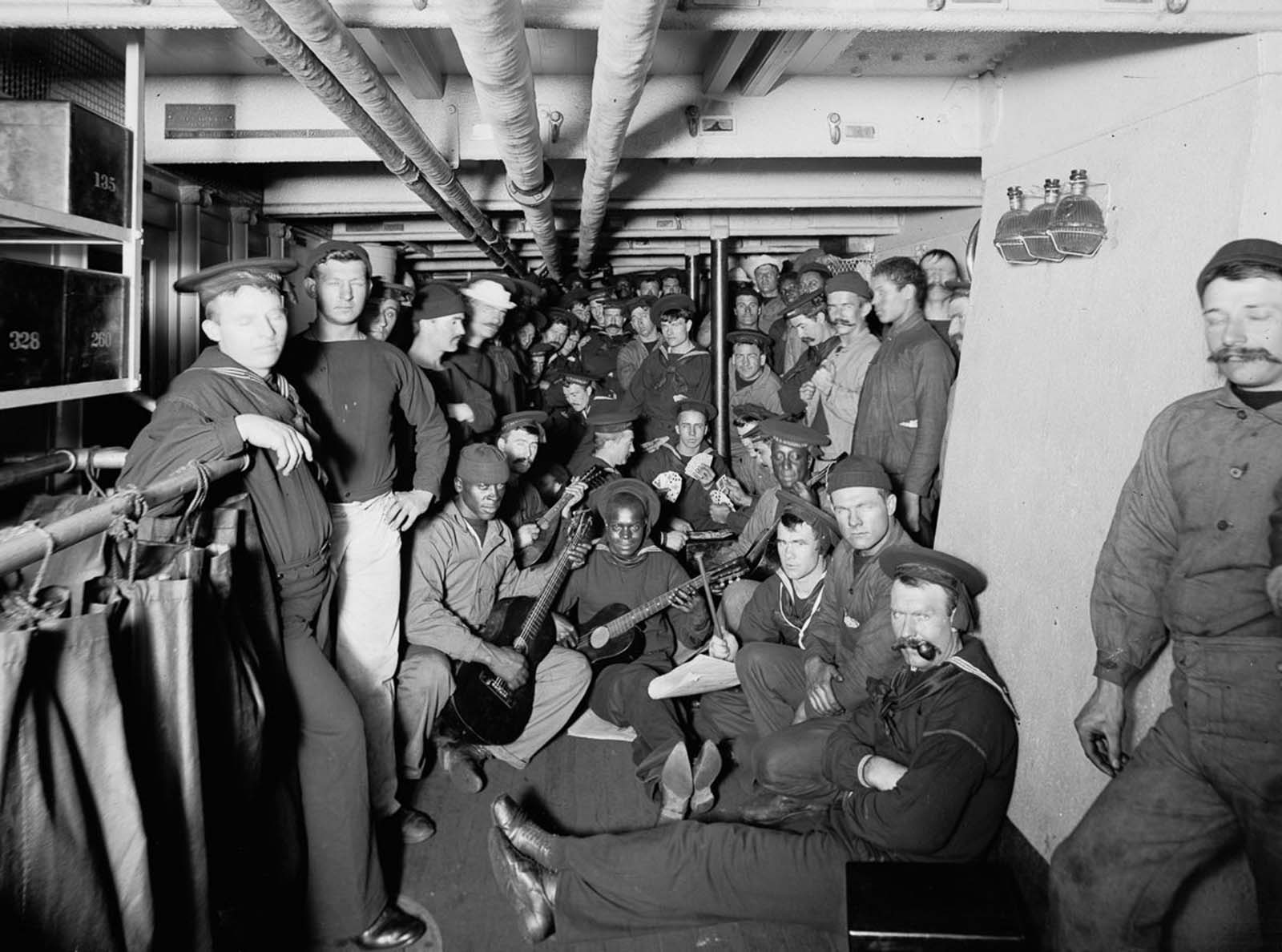
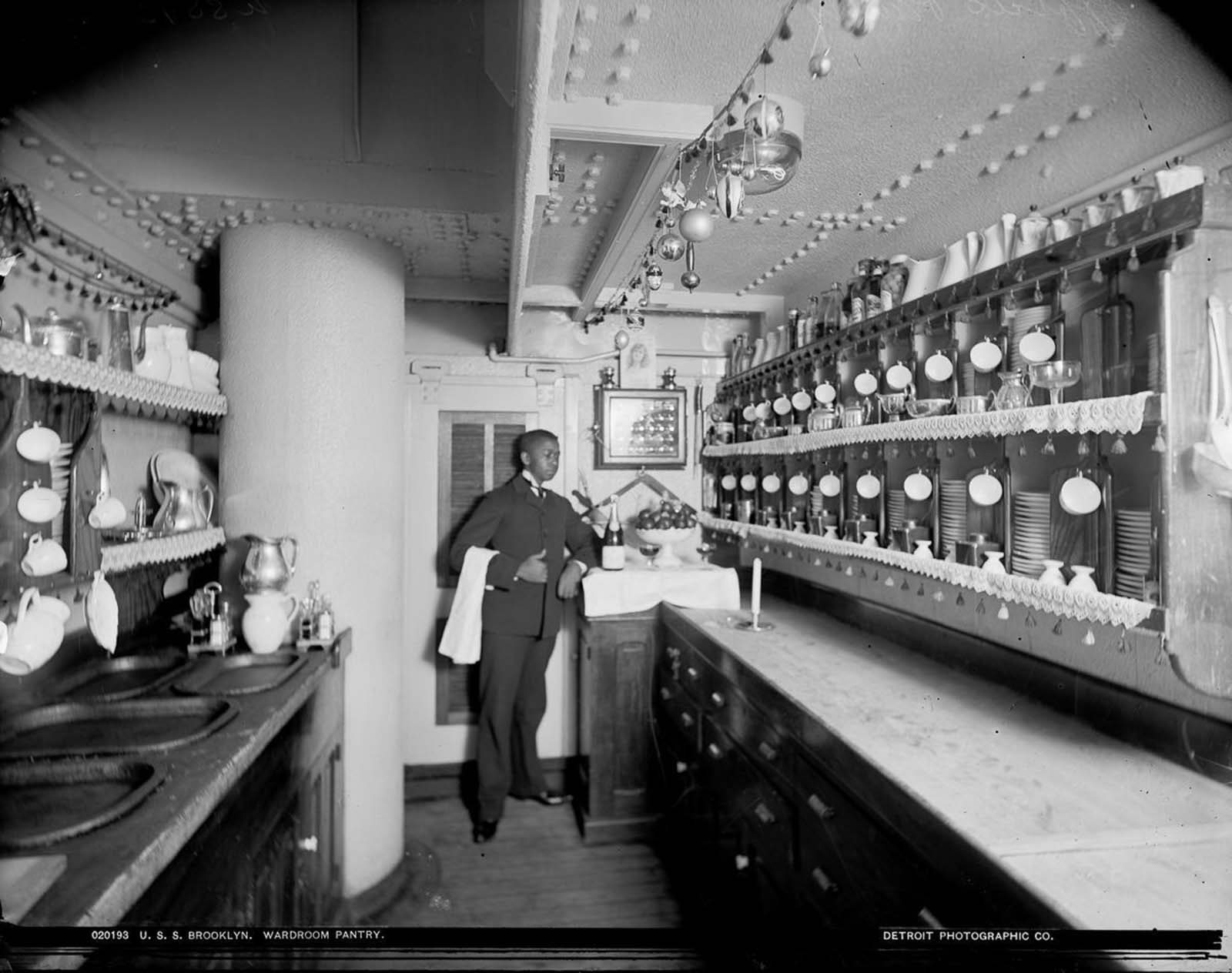
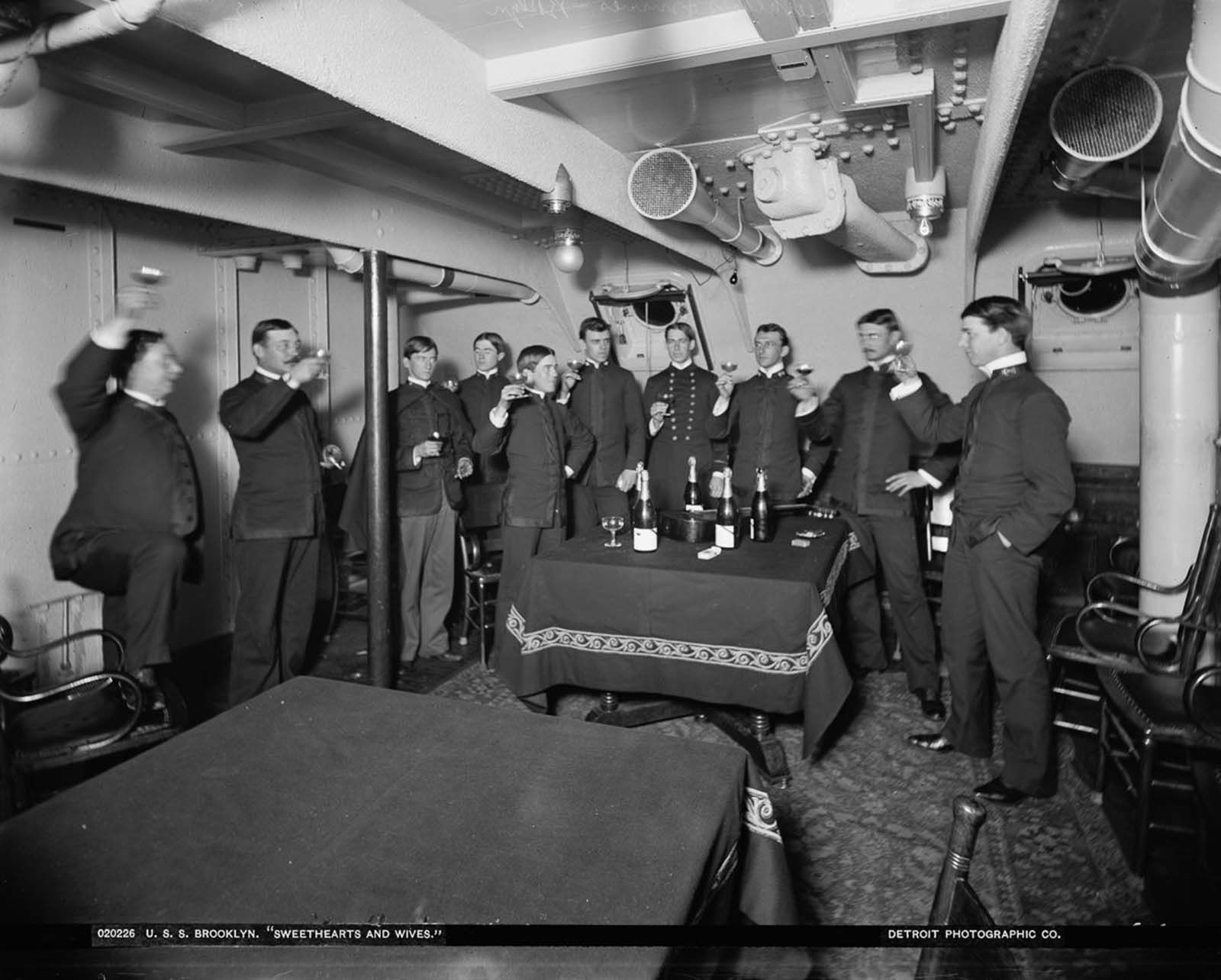
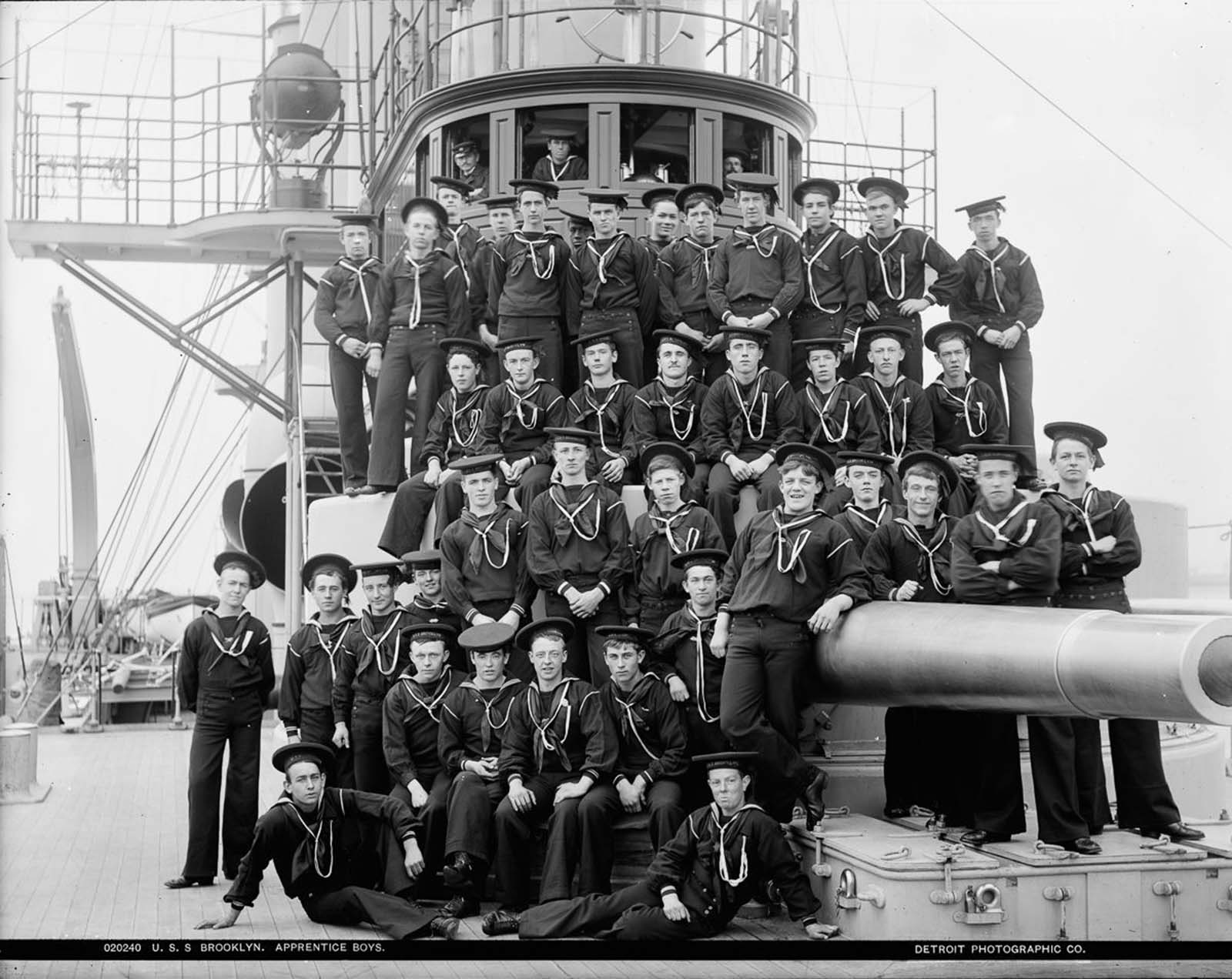
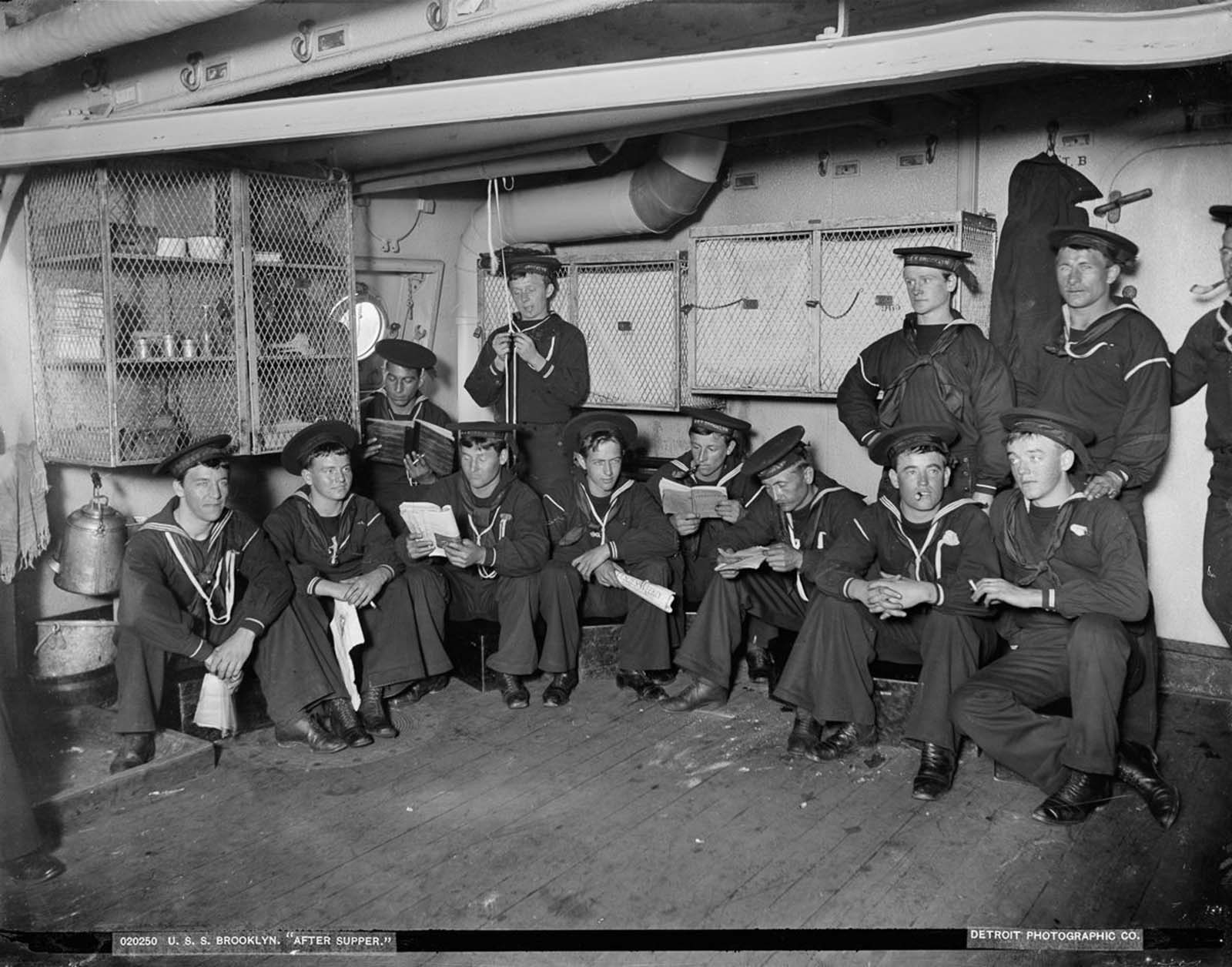
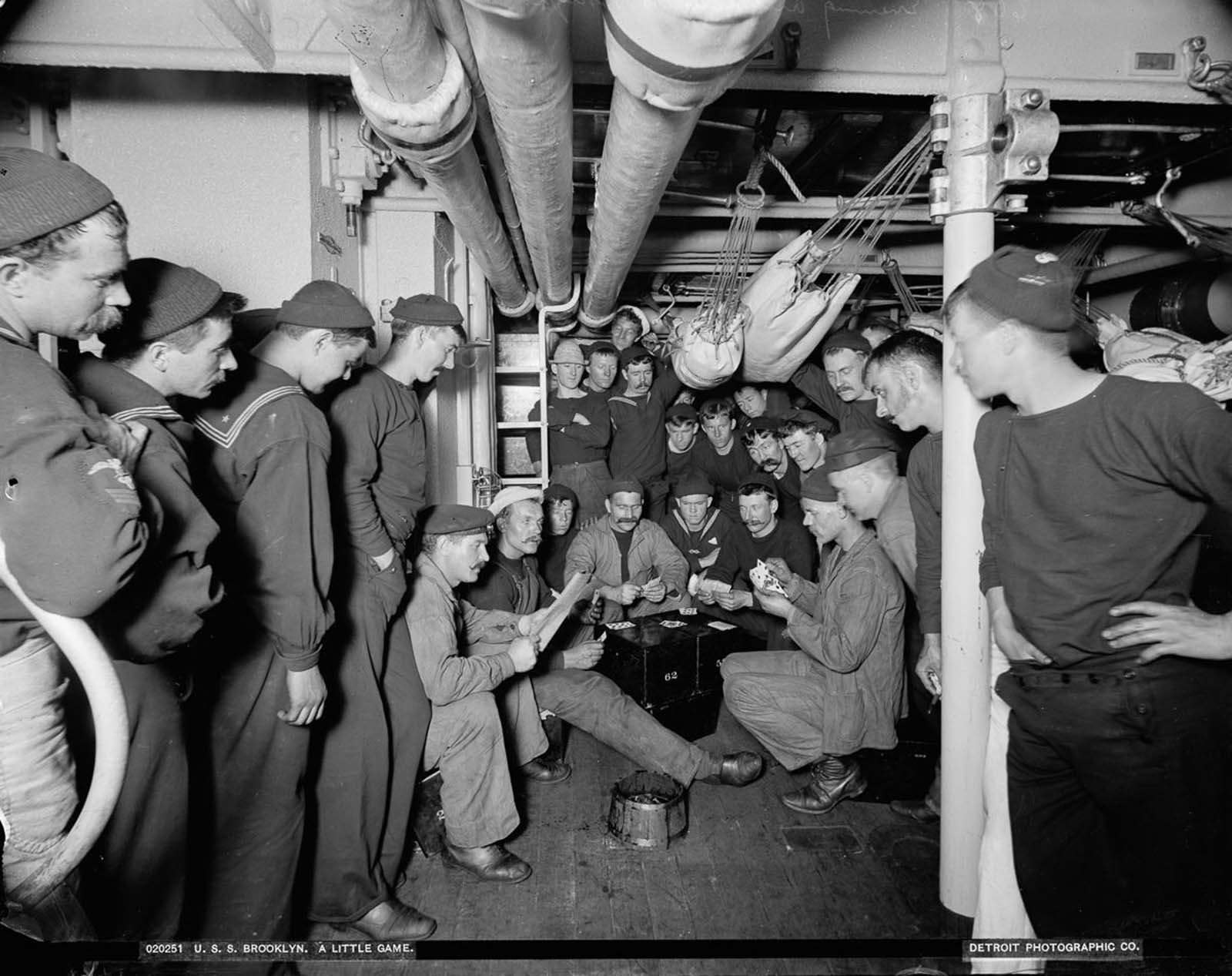
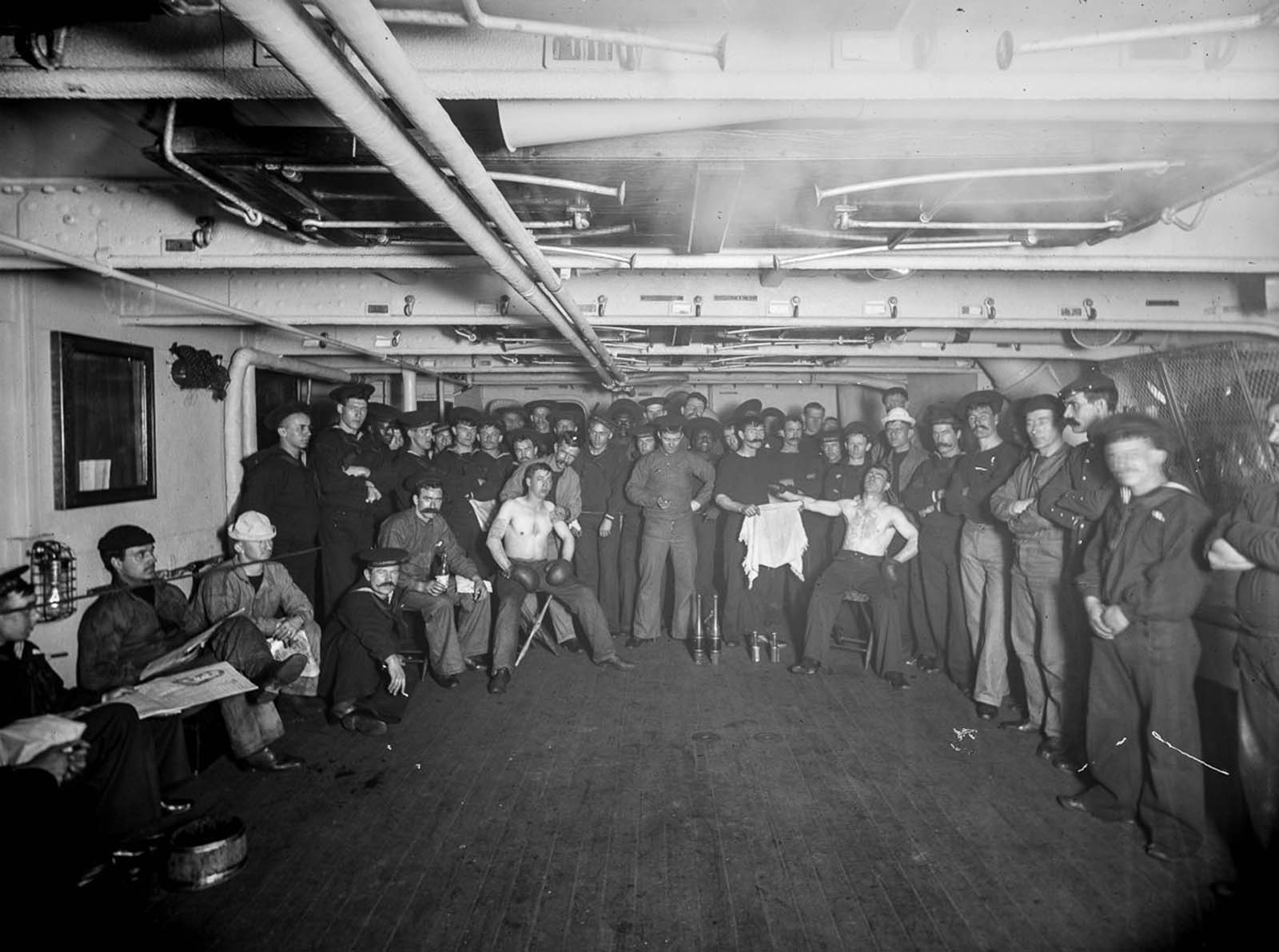
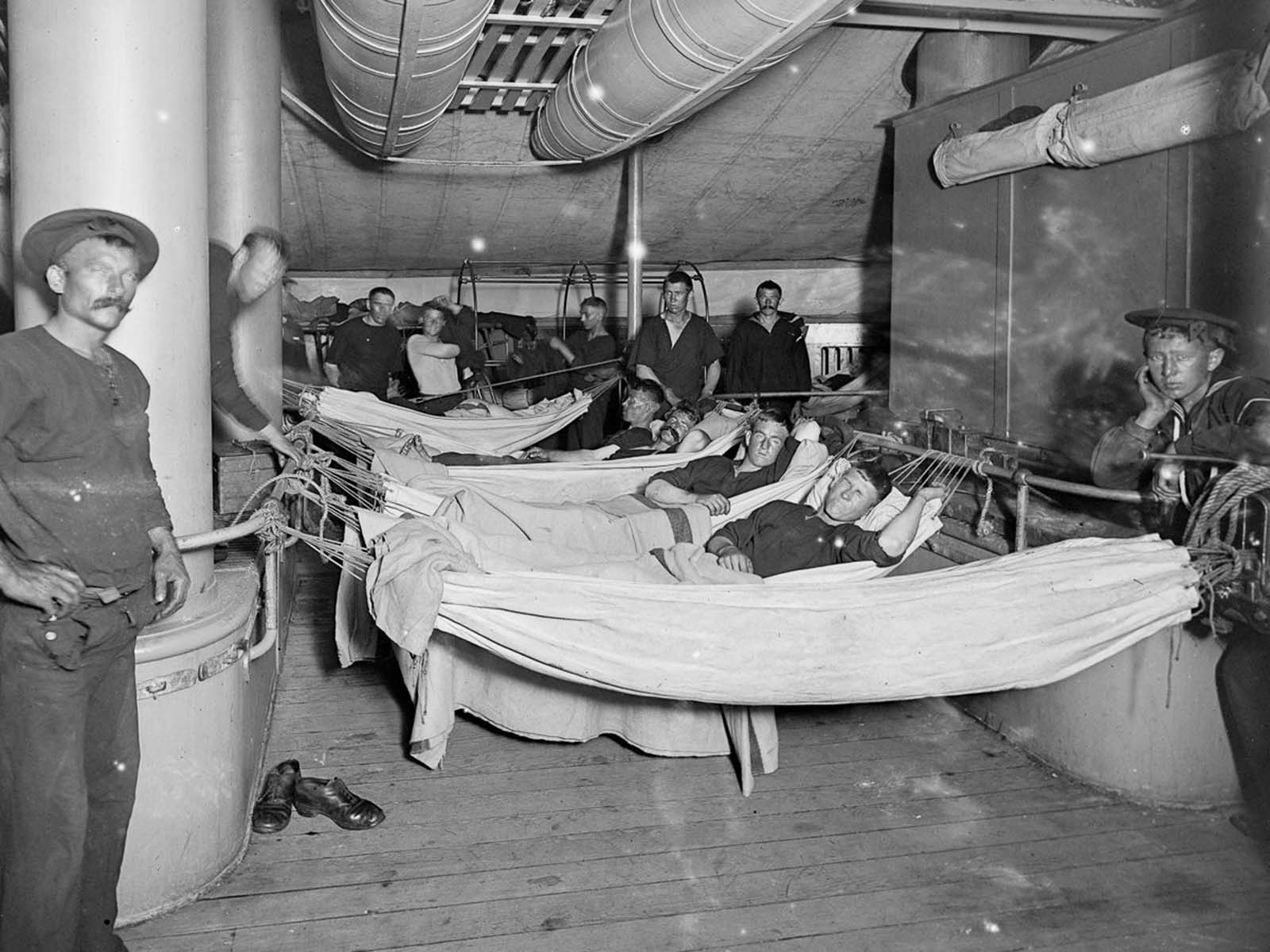
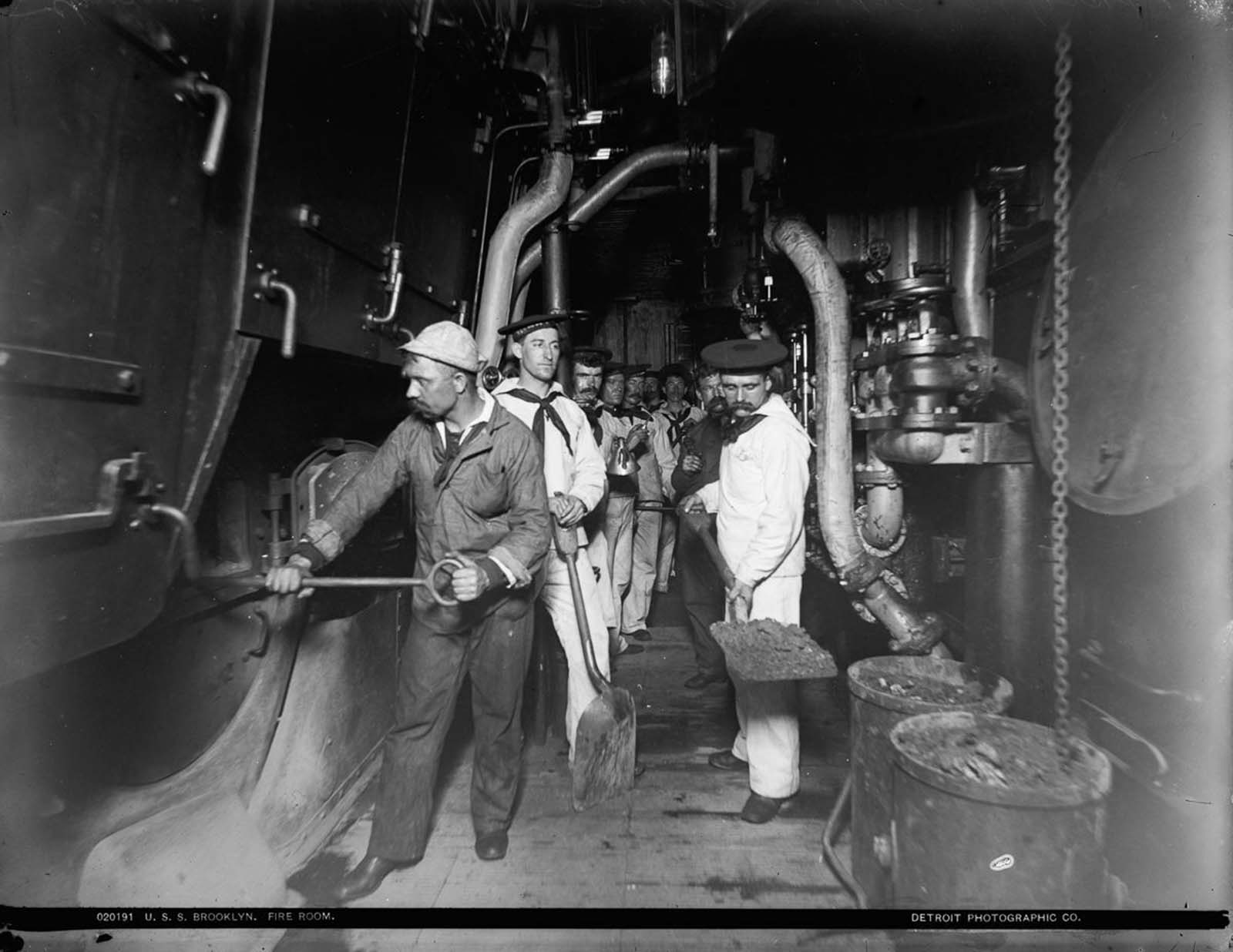
The photographs featured here were taken in 1896 by the Detroit Photographic Company, one of the most respected documentary photography firms of the era. They captured Brooklyn before any of her battles — showing the ship in peacetime, her armament on deck, her interior spaces, and the sailors who lived and worked aboard her.
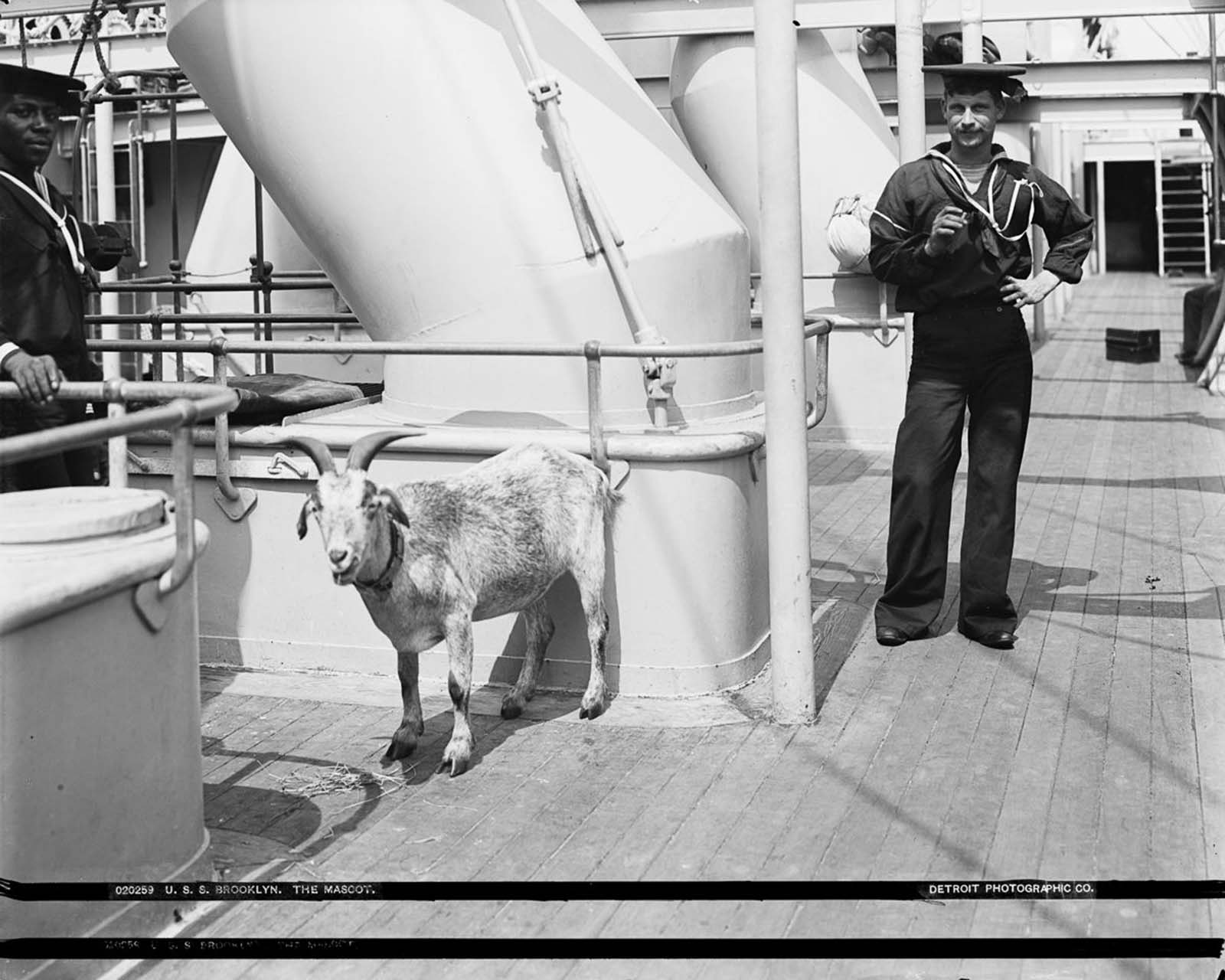
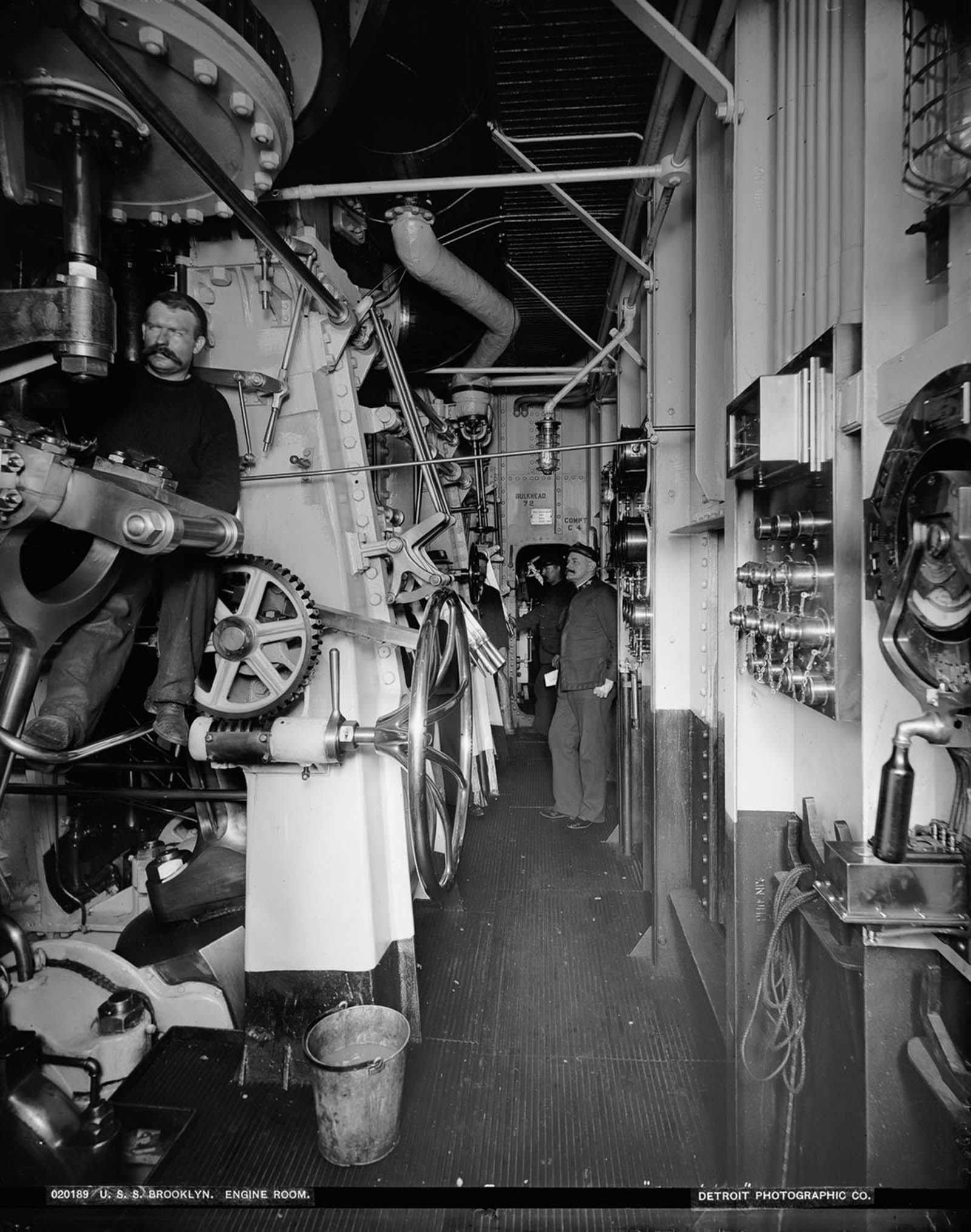
Life aboard a 9,000-ton armored cruiser in the 1890s was demanding and confined. Sailors worked in tight quarters surrounded by heavy machinery, ammunition stores, and gun turrets. The photos give a rare, unfiltered look at that daily reality — men at their posts, resting in hammocks, and going about the routines that kept a warship operational.
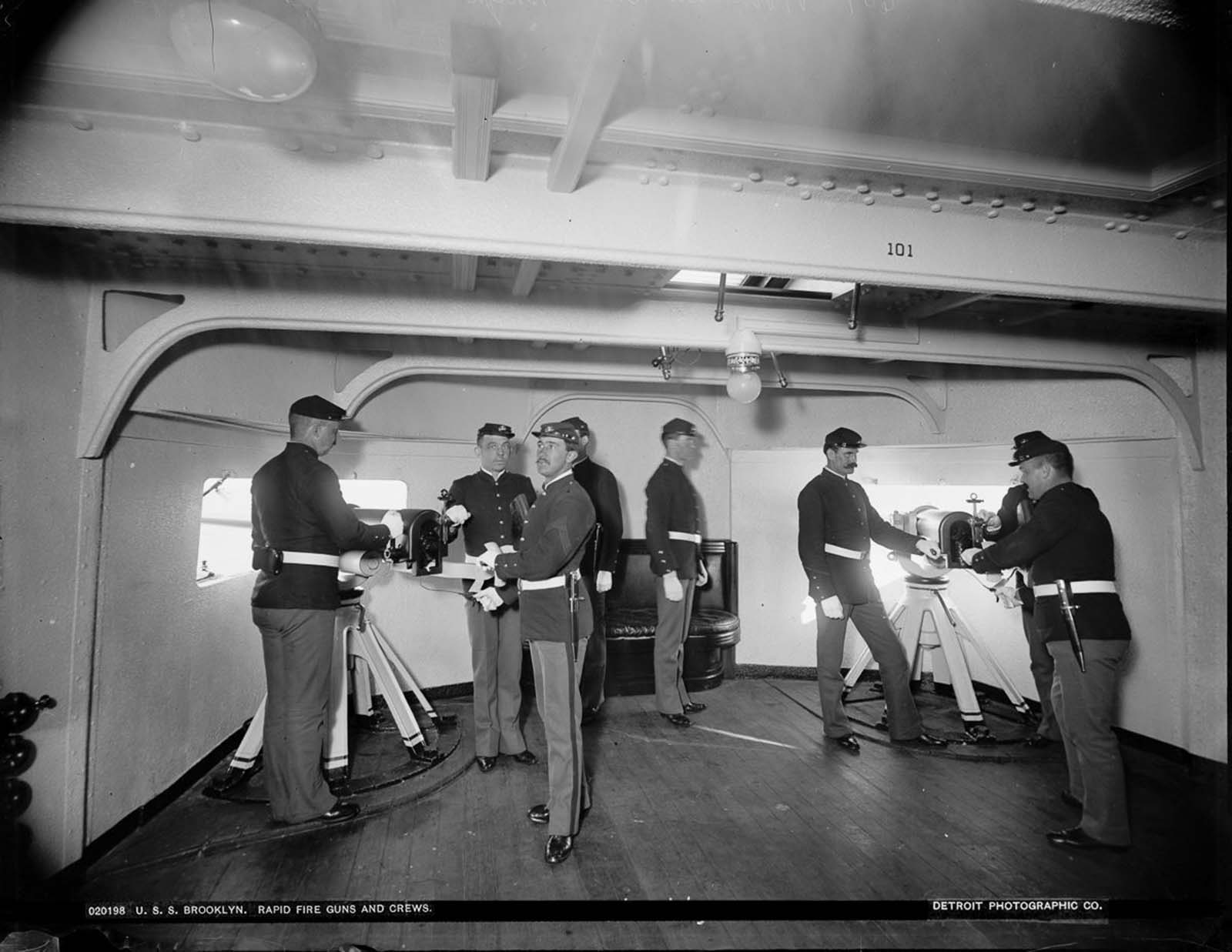
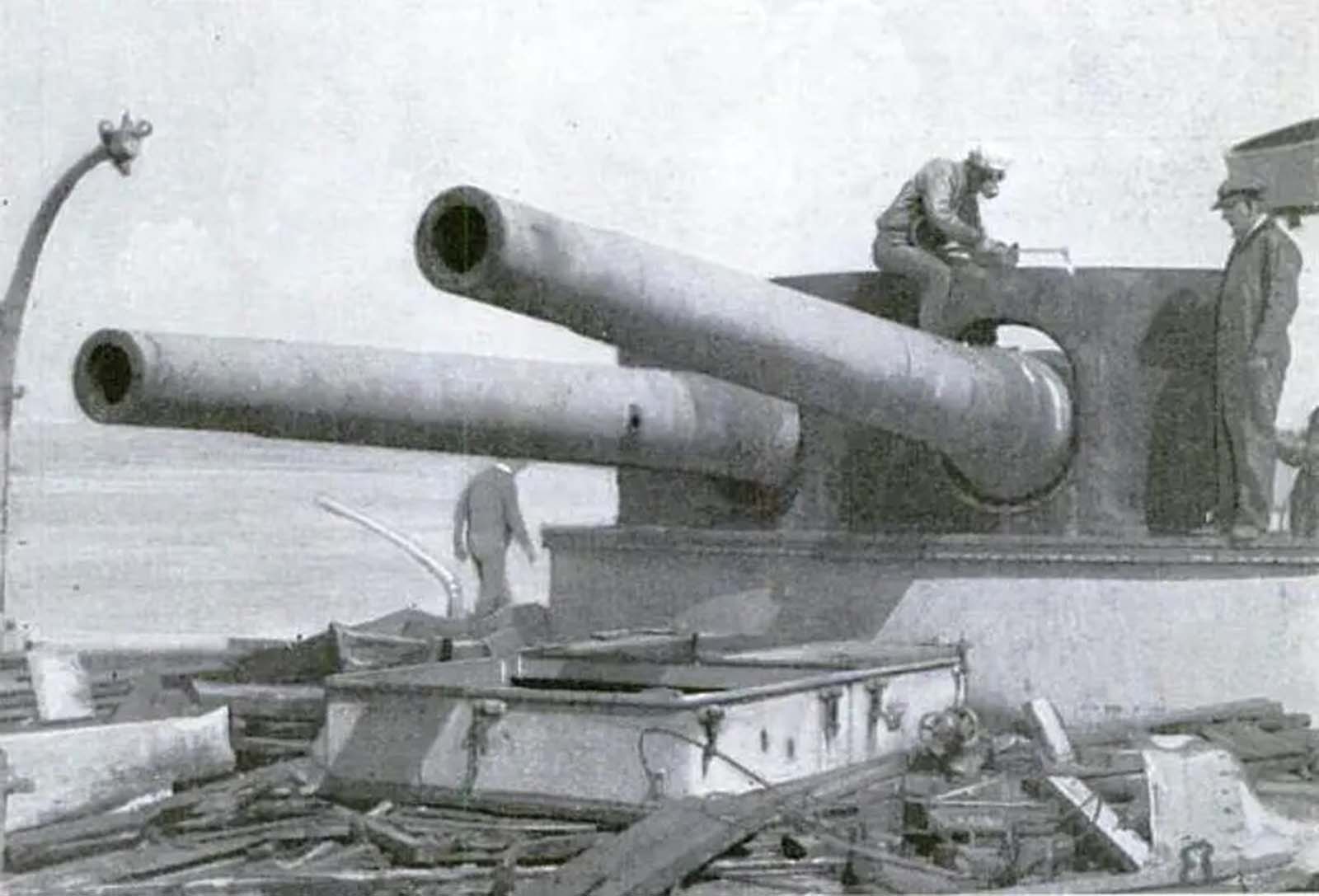
The ship’s armament is especially striking in these images. The 8-inch guns that would later tear into Spanish warships at Santiago sit ready on their mounts, giving a clear sense of the firepower Brooklyn carried. The scale of the turrets and gun barrels compared to the sailors standing nearby shows just how massive these weapons were.
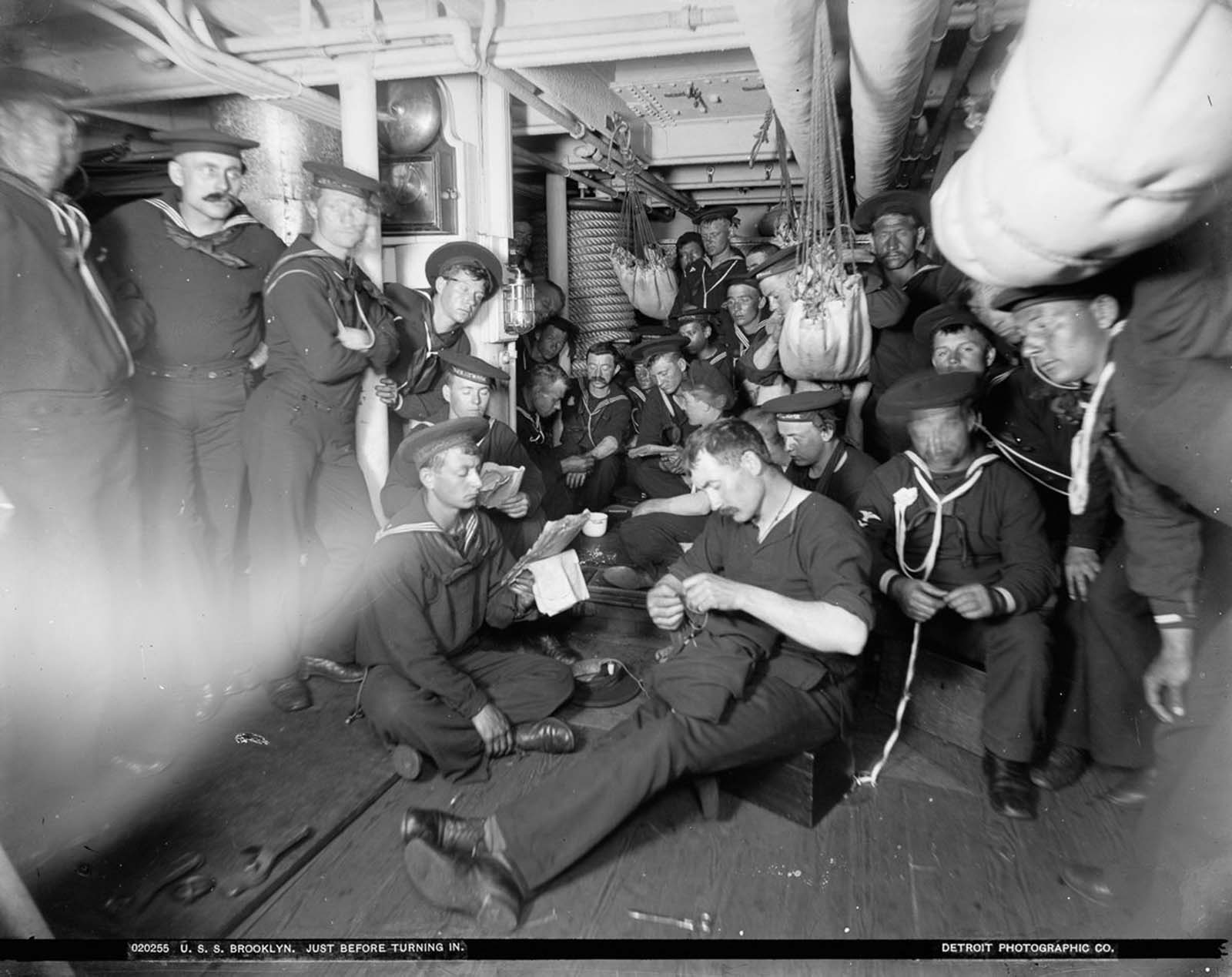
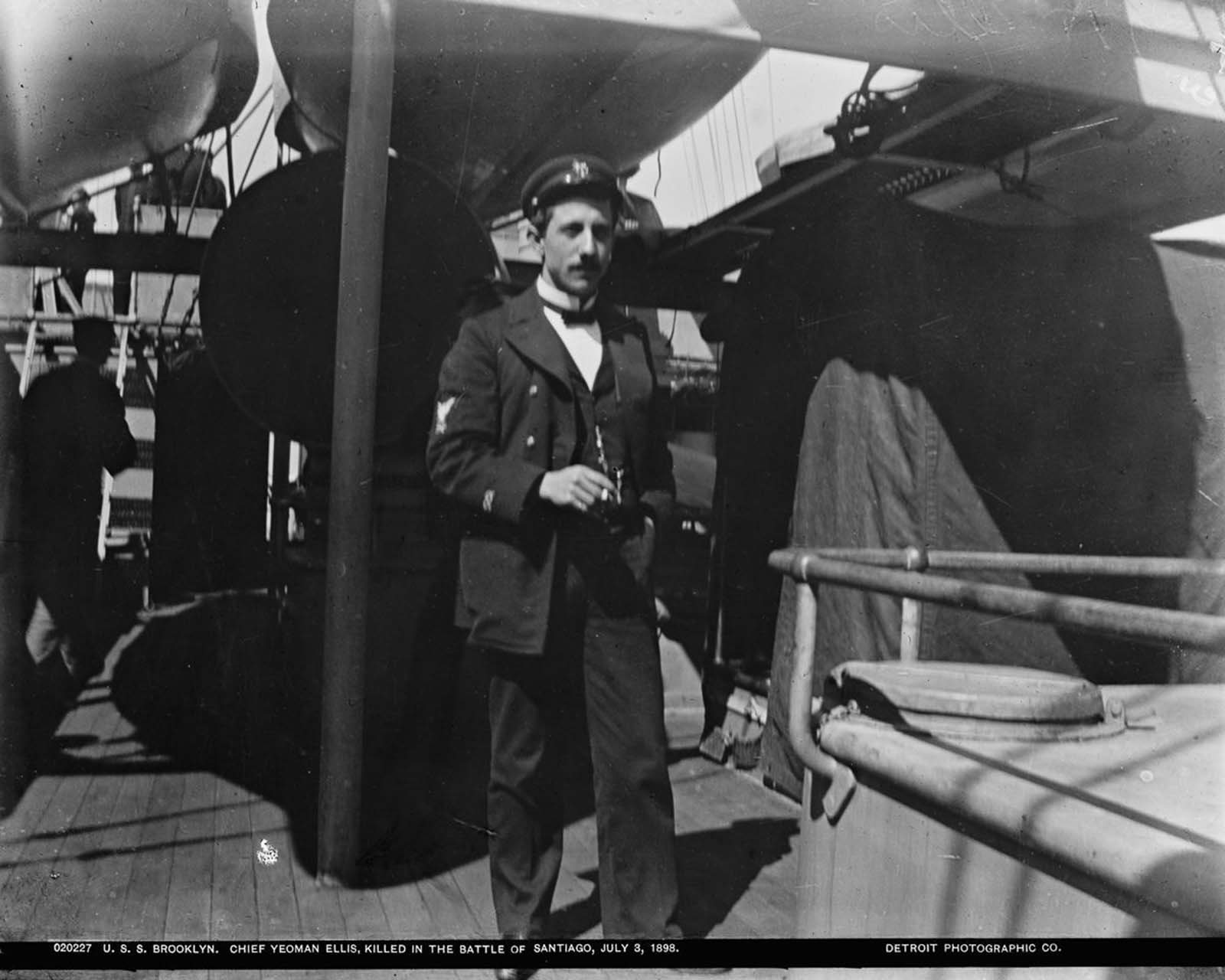
Below decks, the Detroit Photographic Company documented the ship’s interior in detail — engine rooms, mess areas, and crew spaces that rarely appeared in official records or newspapers of the time. These are windows into a world that most Americans of the 1890s never saw.
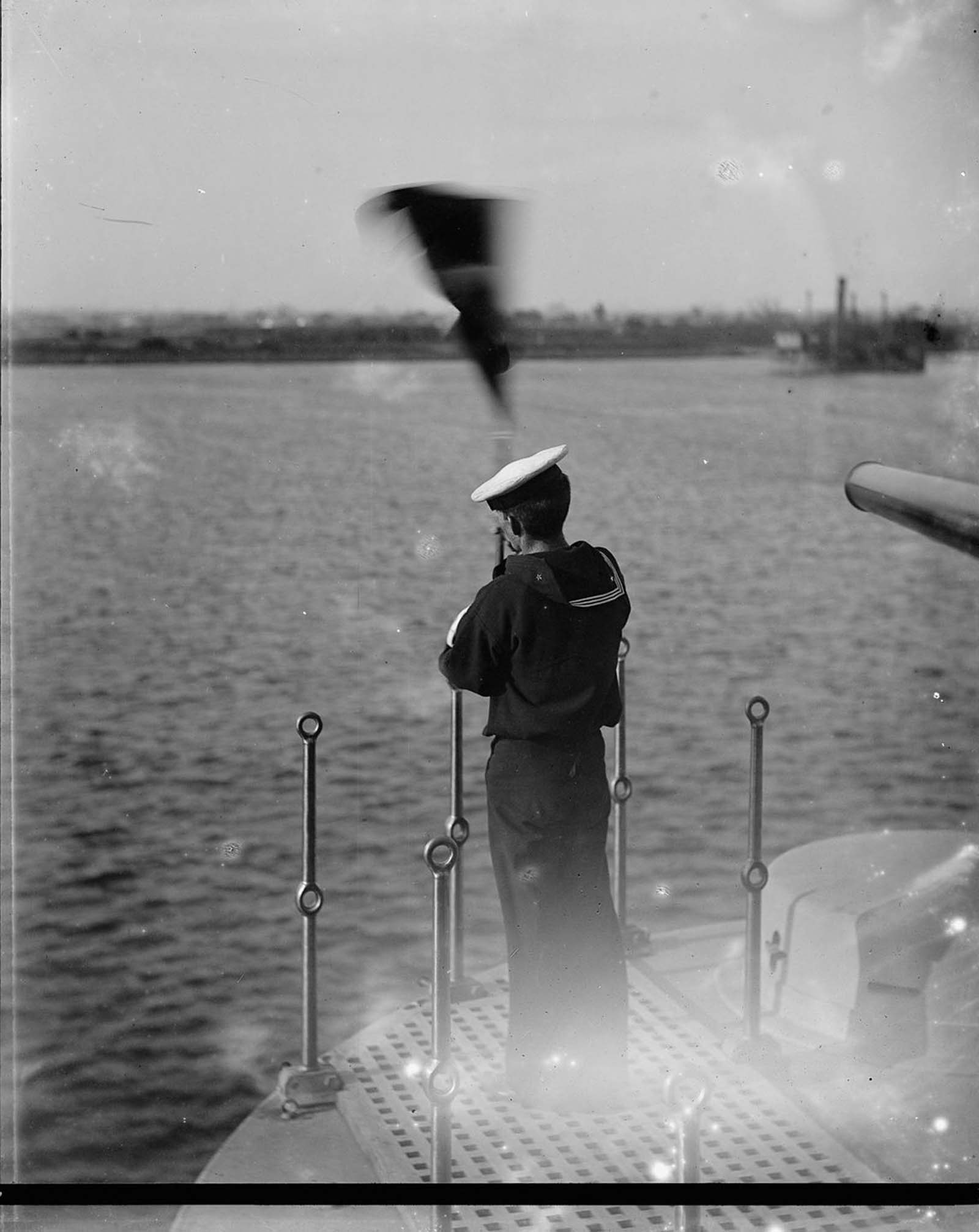
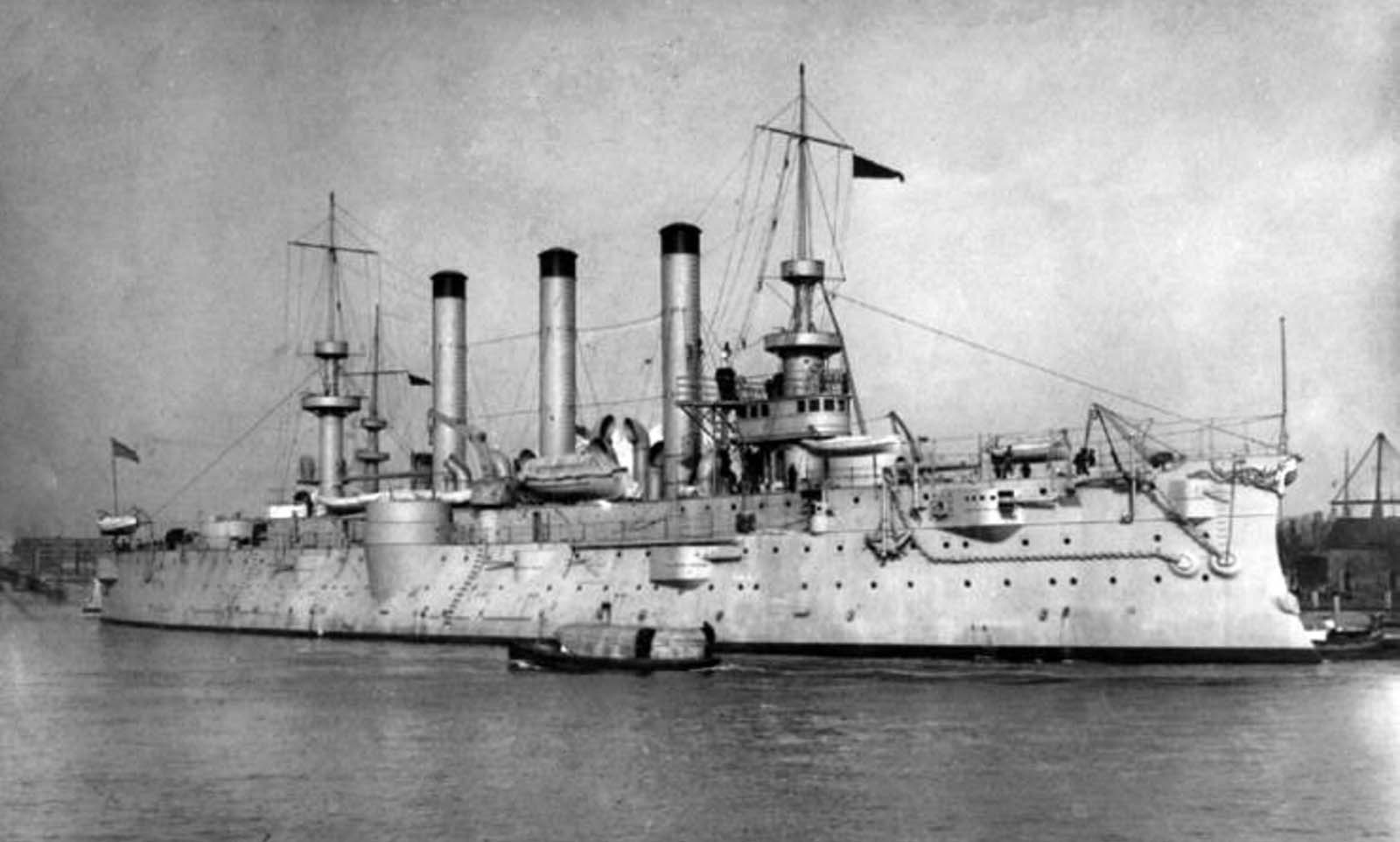
This colorized photograph offers a vivid perspective on how Brooklyn looked in her prime — her tall funnels, her imposing hull, and the distinctive profile that made her one of the most recognized warships in the American fleet.
After her sale in late 1921, Brooklyn’s physical end came quickly. Scrapping crews went to work dismantling the cruiser piece by piece, cutting apart the same turrets that had survived the Battle of Santiago over two decades earlier.