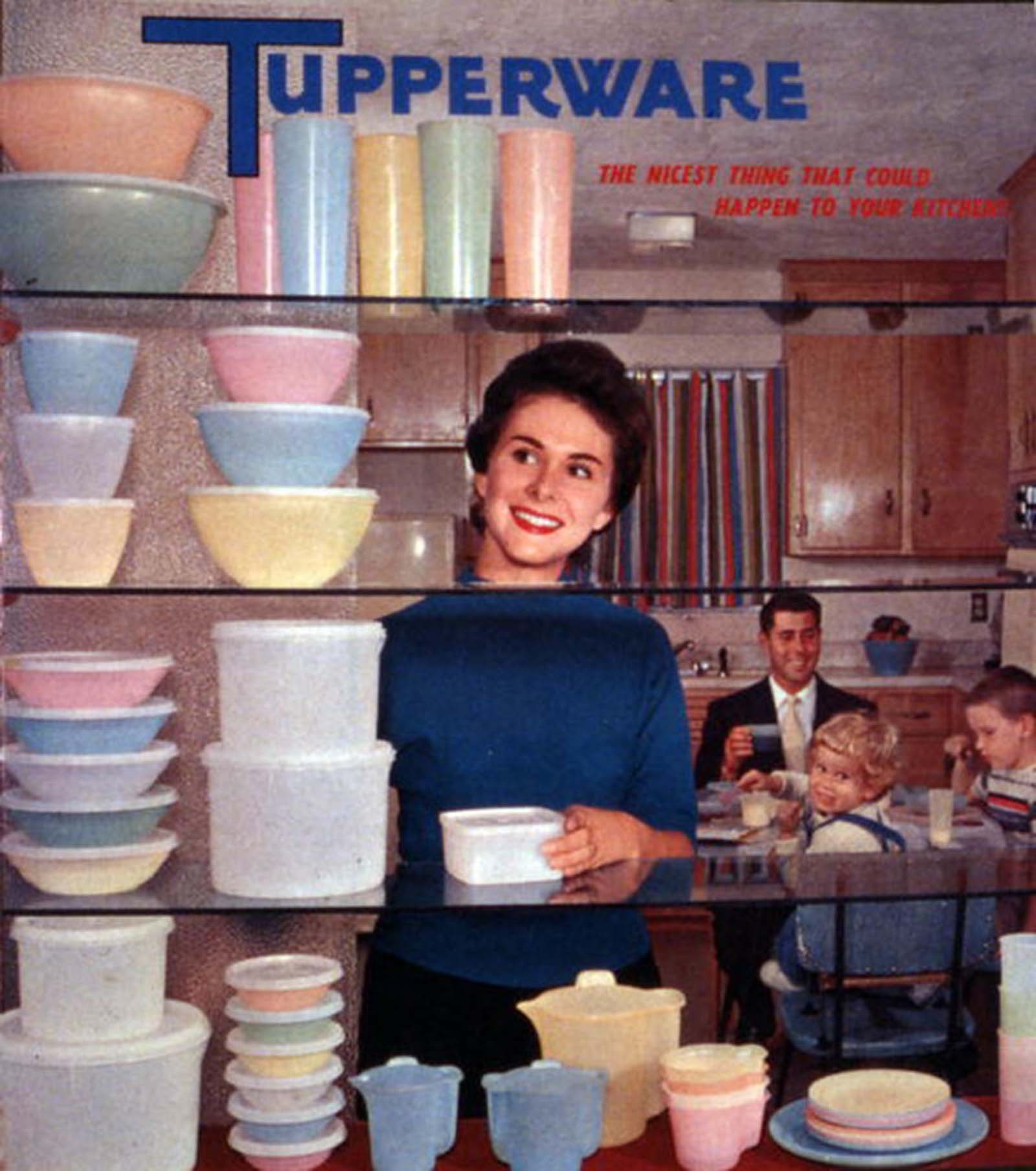
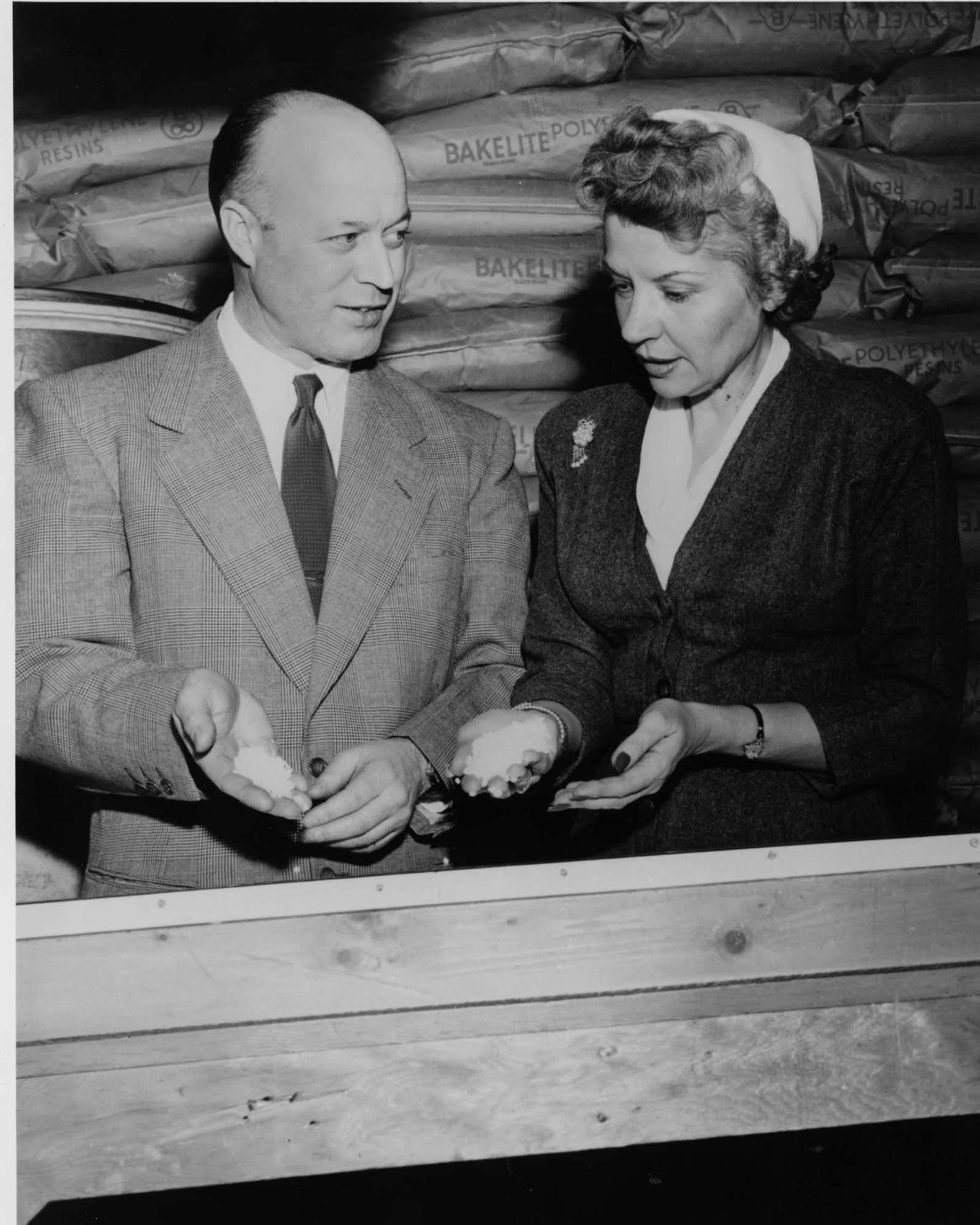
In 1942, Earl Silas Tupper invented a product he was convinced would change the American kitchen forever. Working with a refined form of polyethylene — a flexible, lightweight plastic — he produced a line of airtight food storage containers he called the “Material of the Future.” His pitch was practical: the containers would cut down on spills, seal out refrigerator odors, and stop families from throwing away leftover food. To make them sound accessible, he marketed them as “Fine Art for 39 Cents.”
Department stores stocked them. Magazines praised them as the answer to the modern homemaker’s needs. But American housewives weren’t buying — literally. Sales dragged. The product sat on shelves, and no amount of advertising seemed to move it. Tupper’s big idea was struggling to find its audience.
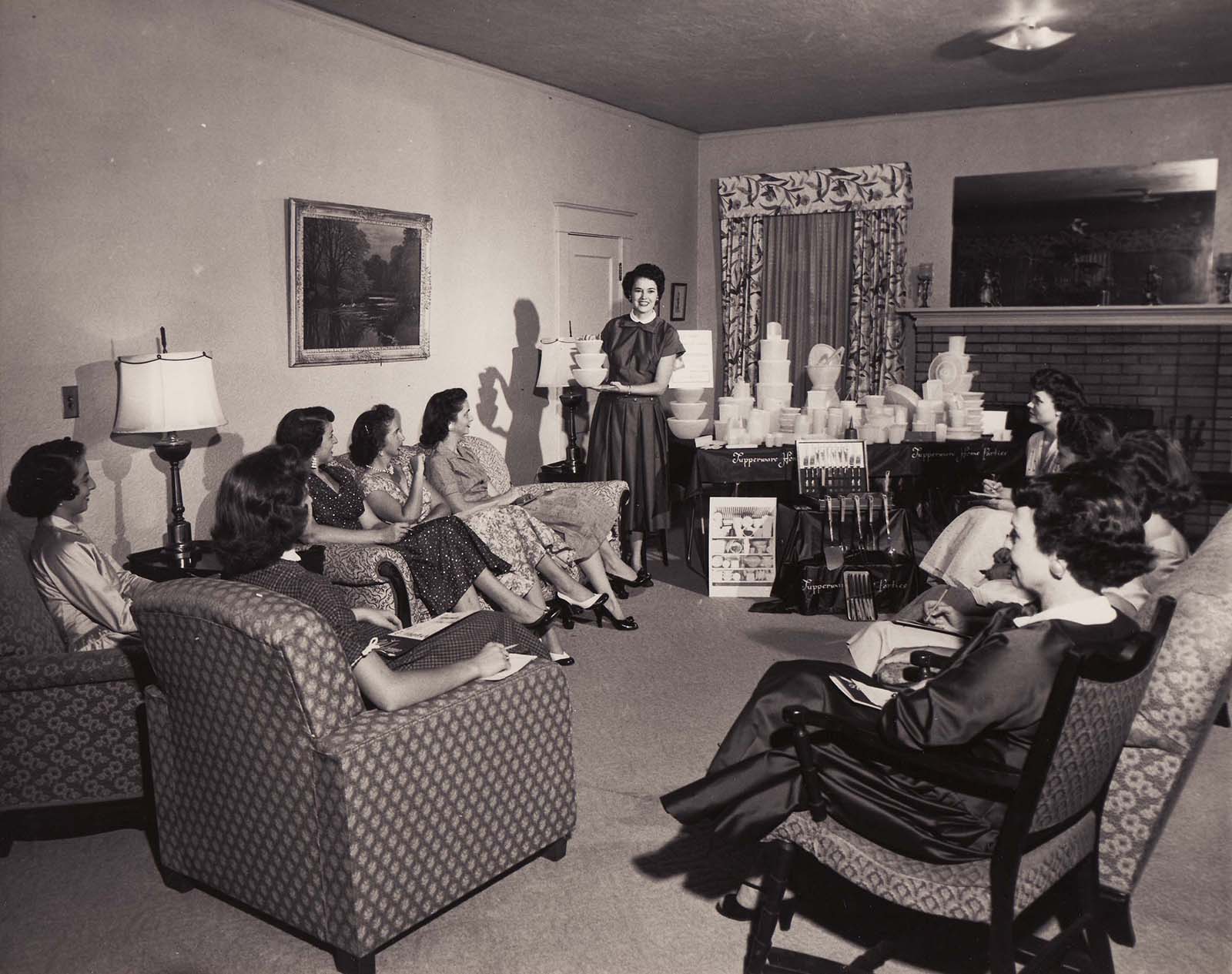
Then came Brownie Wise. A middle-aged single mother from Detroit, Wise had been working as a door-to-door salesperson to cover her young son’s medical bills. In the early 1950s, she had a straightforward idea: instead of knocking on strangers’ doors alone, she would bring women together in a social setting, demonstrate the products, and let the group environment do the selling. She hosted Tupperware parties in her home, and women came, watched, and bought.
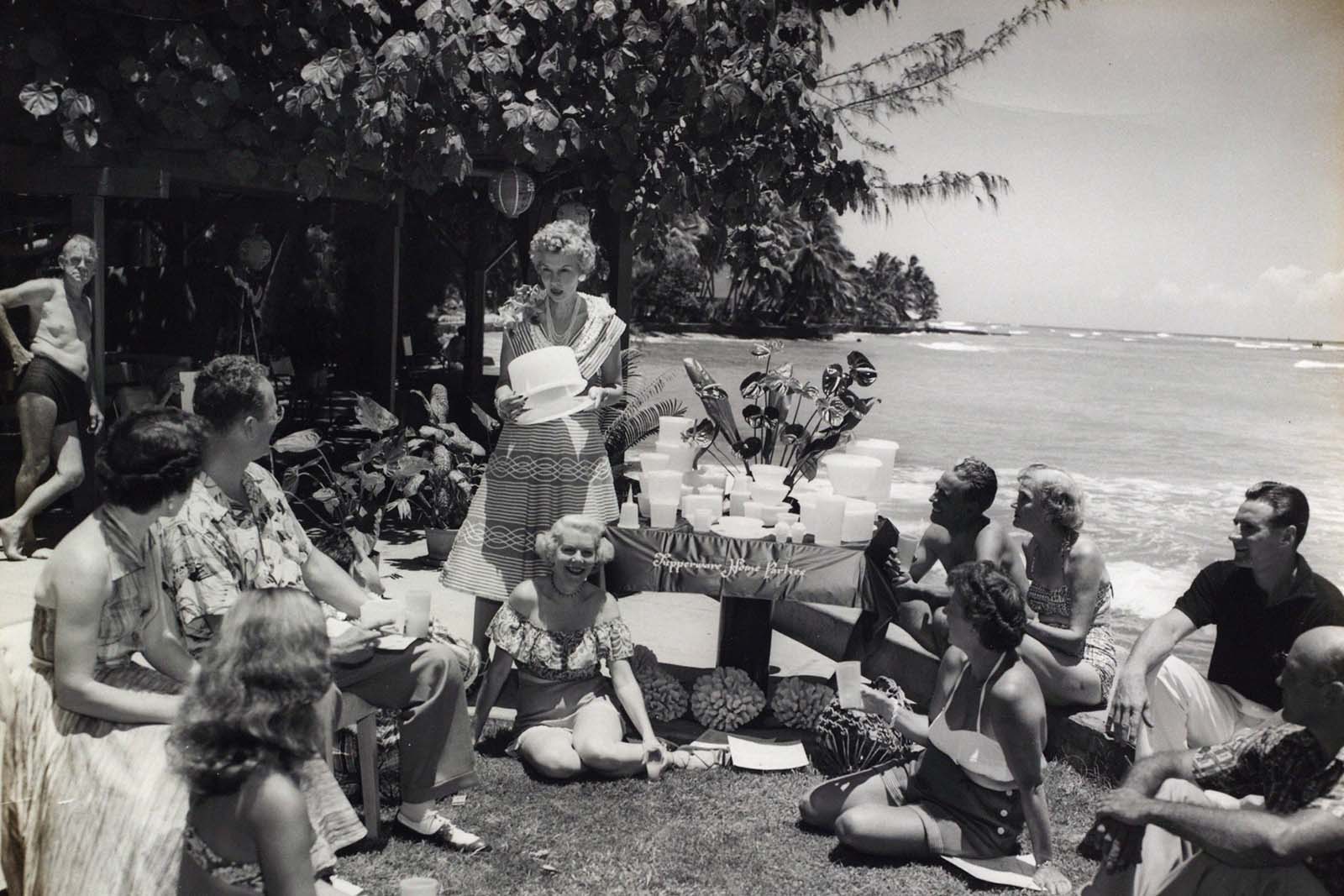
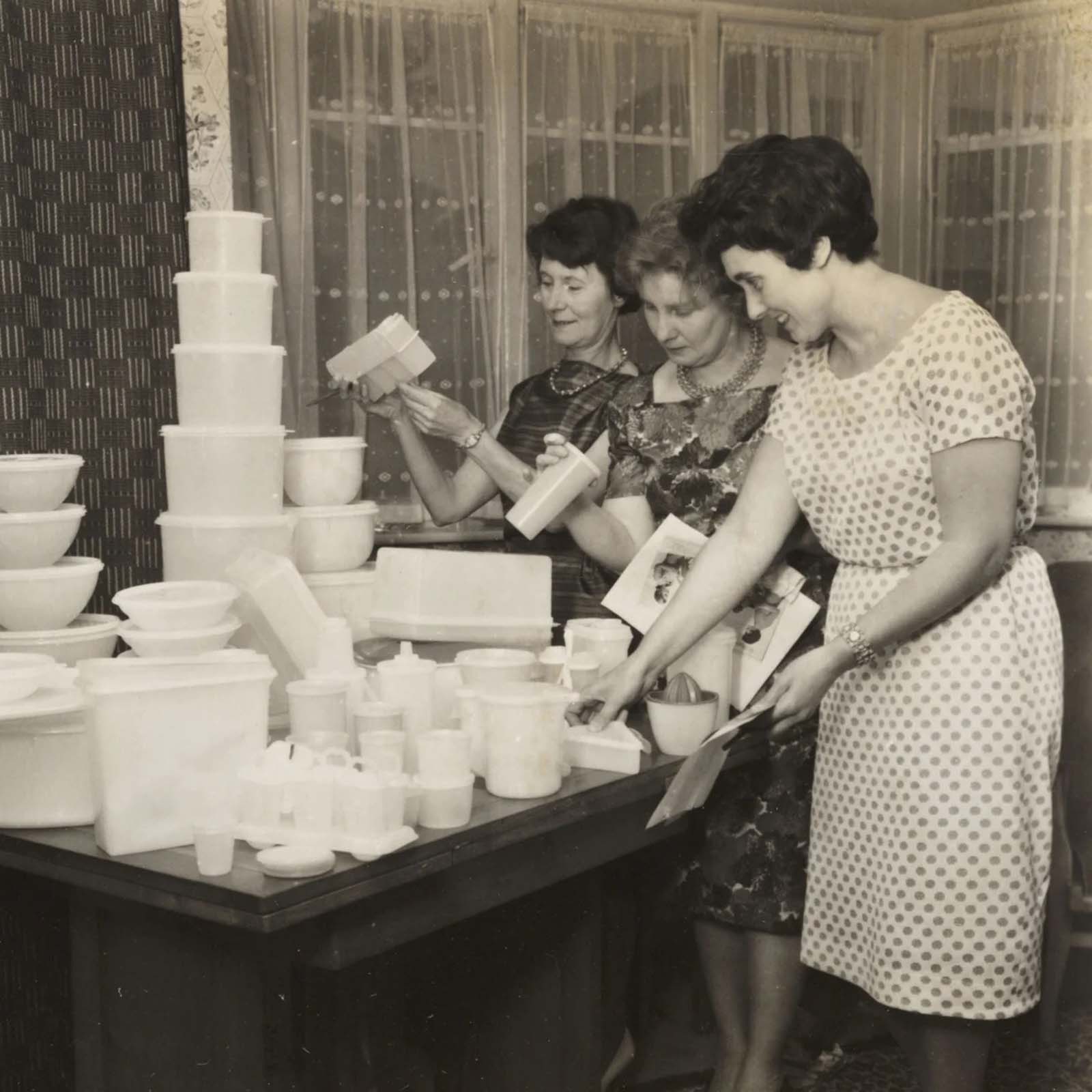
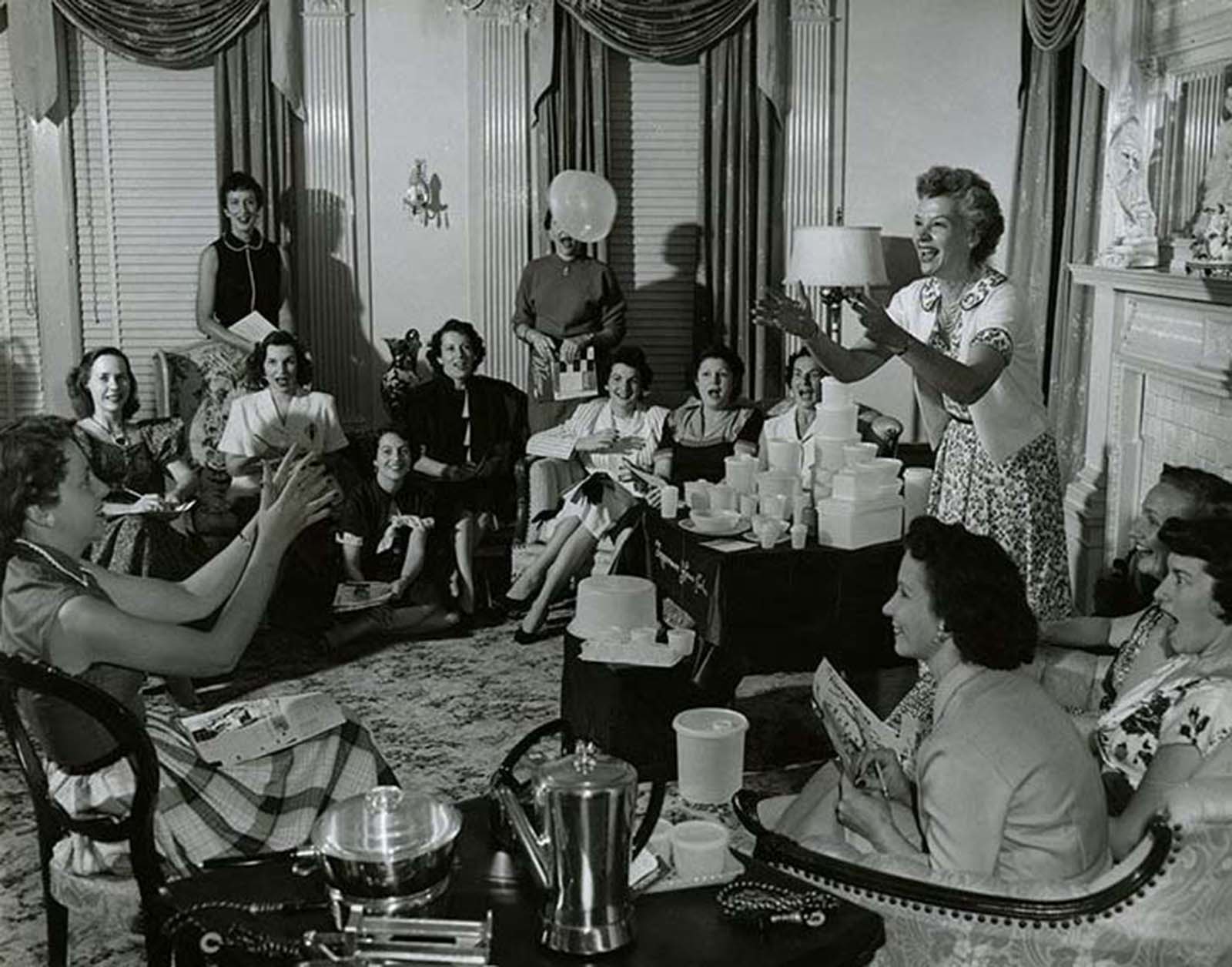
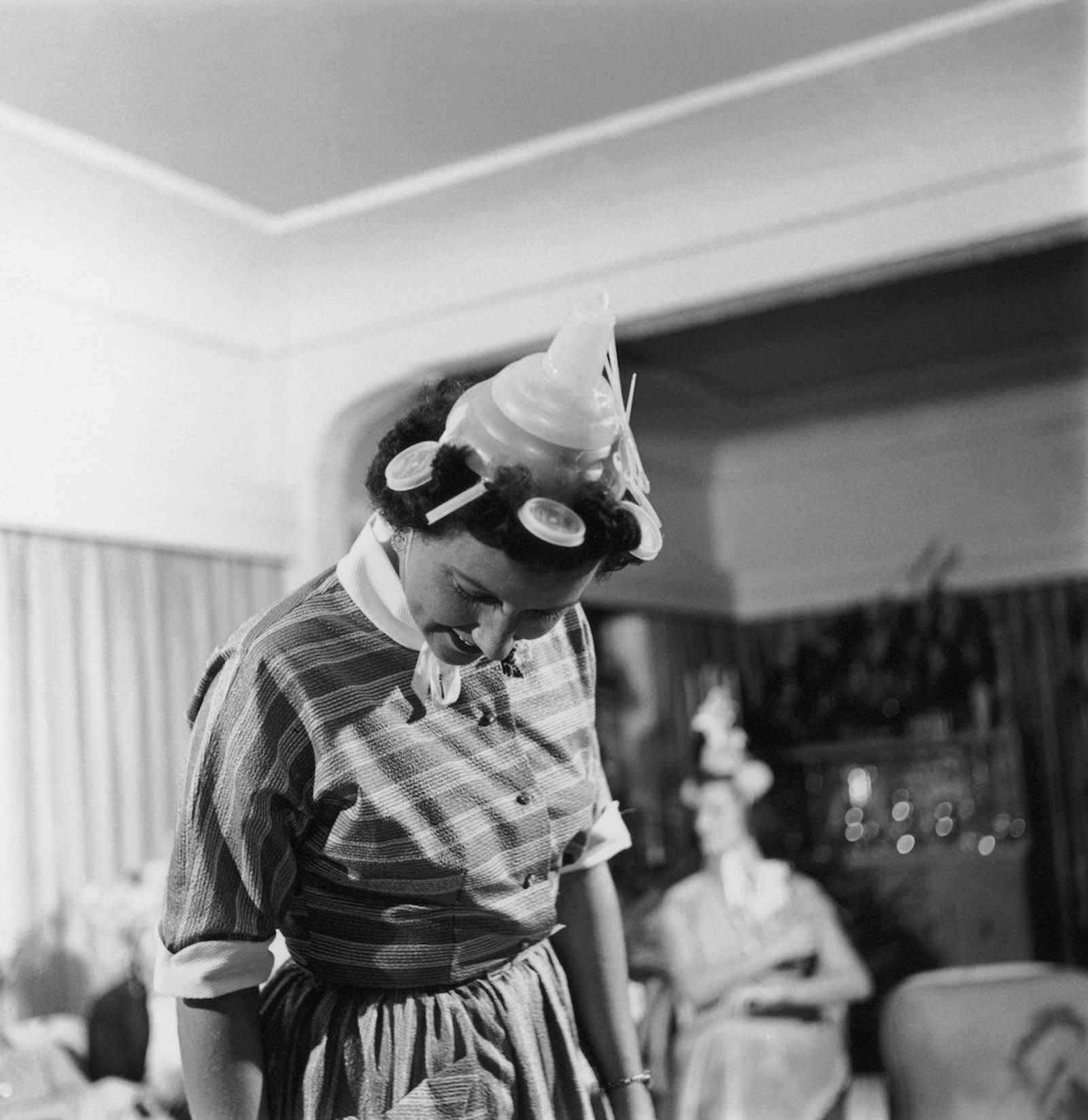
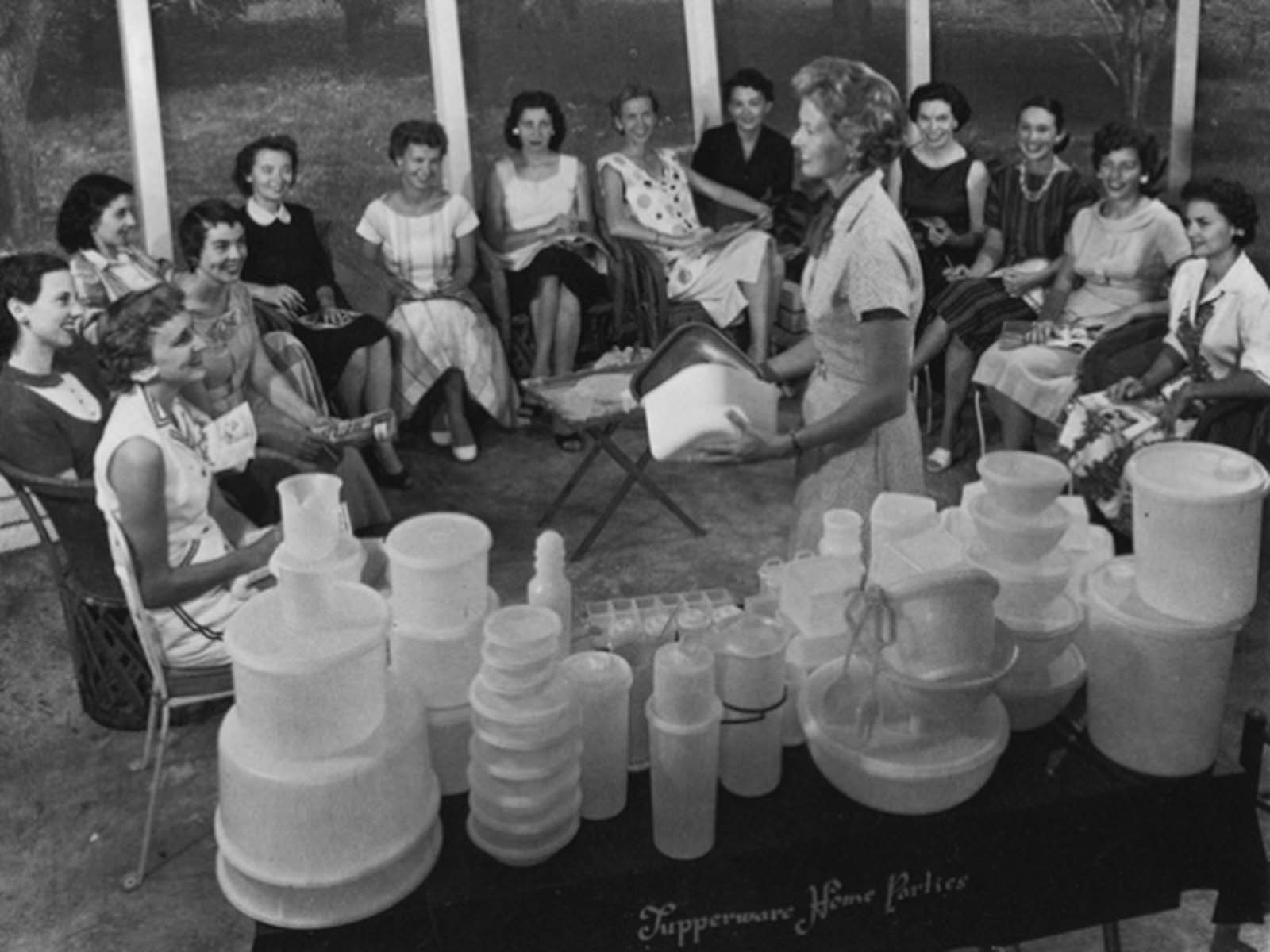
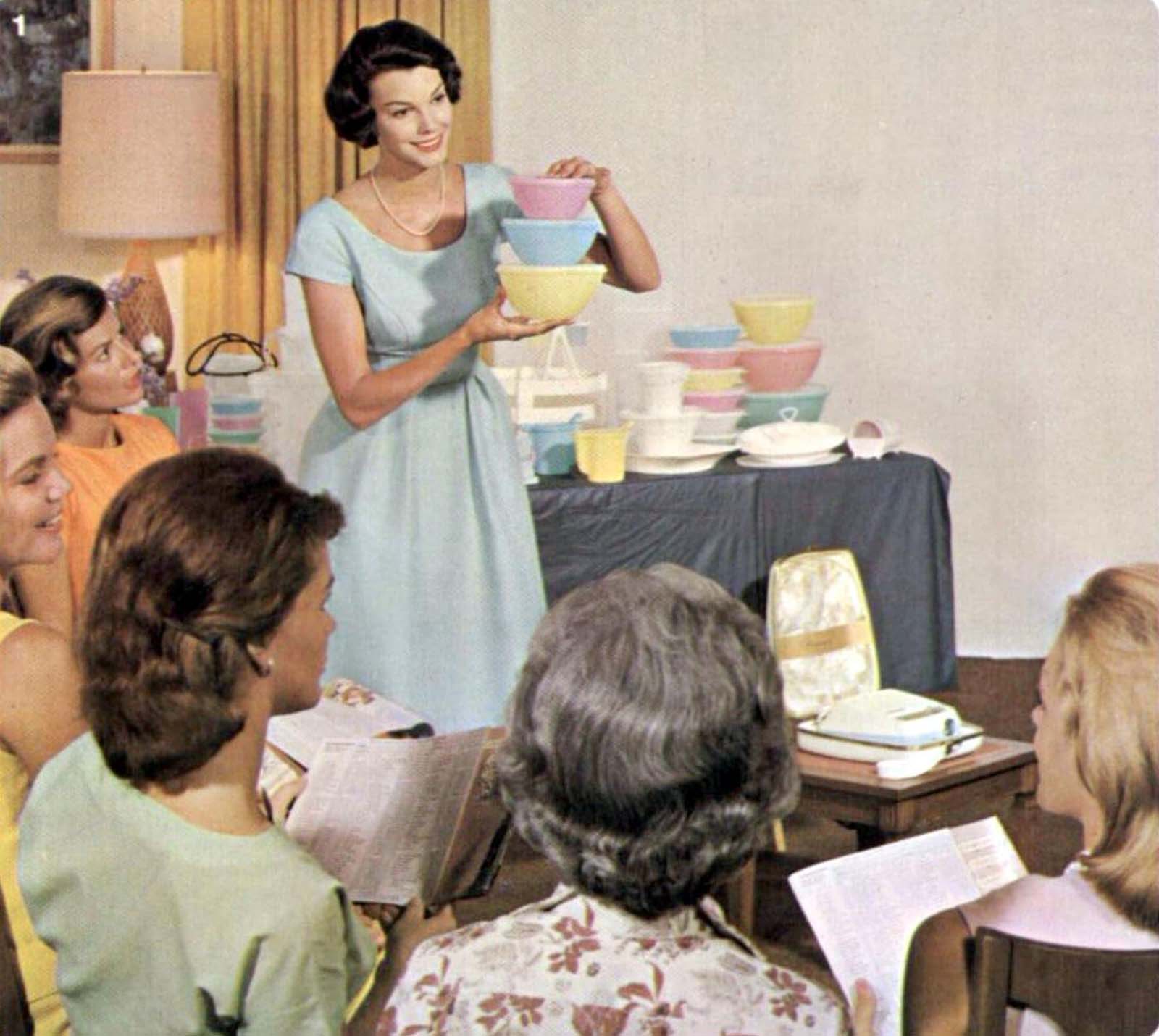
The party format worked because it turned a sales transaction into a social event. Women gathered in living rooms, tried out the containers, talked about how they worked, and placed orders in a relaxed, familiar atmosphere. Hosts followed a strict dress code — skirts and stockings were mandatory — which gave the gatherings a polished, respectable feel.
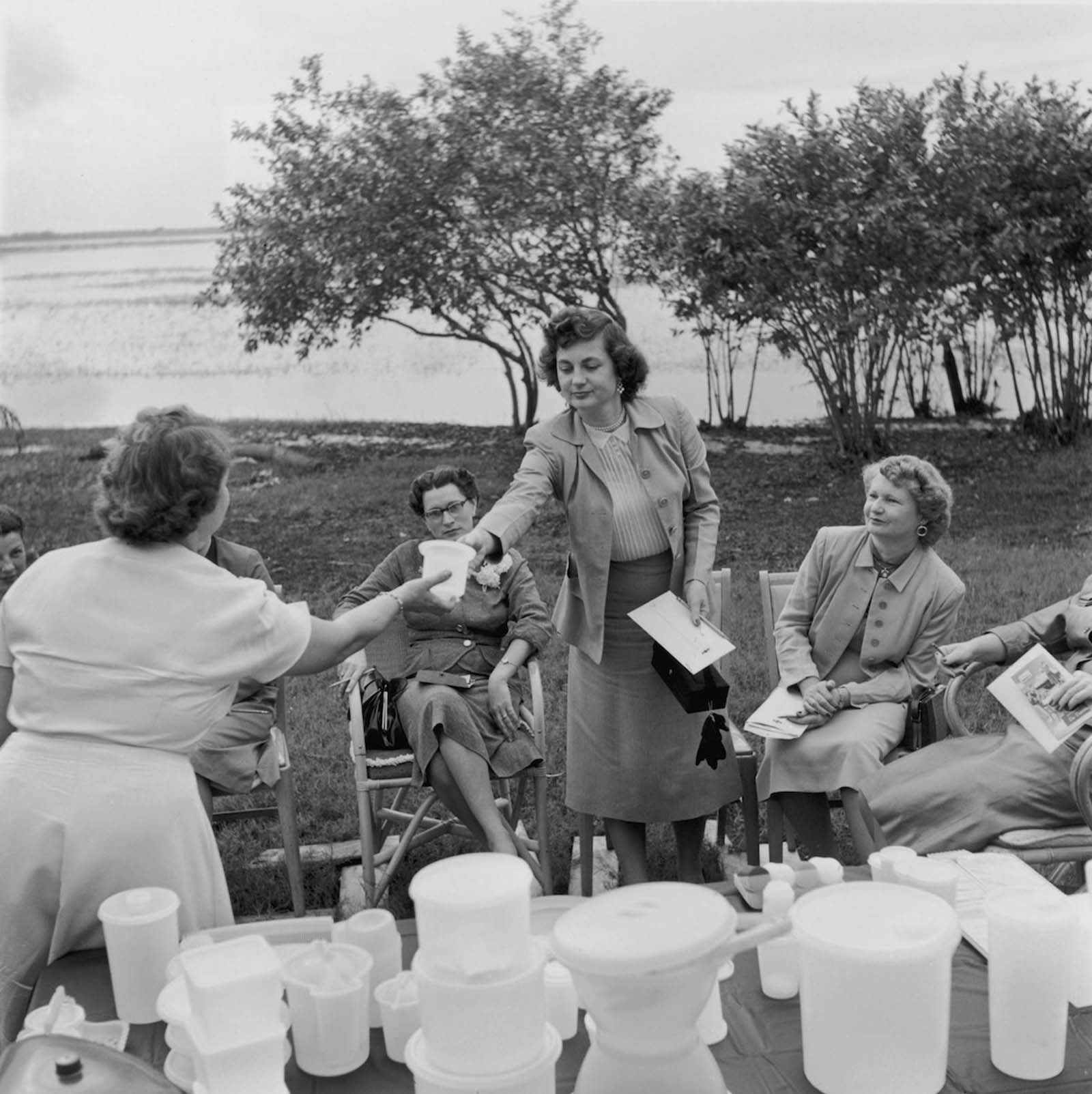
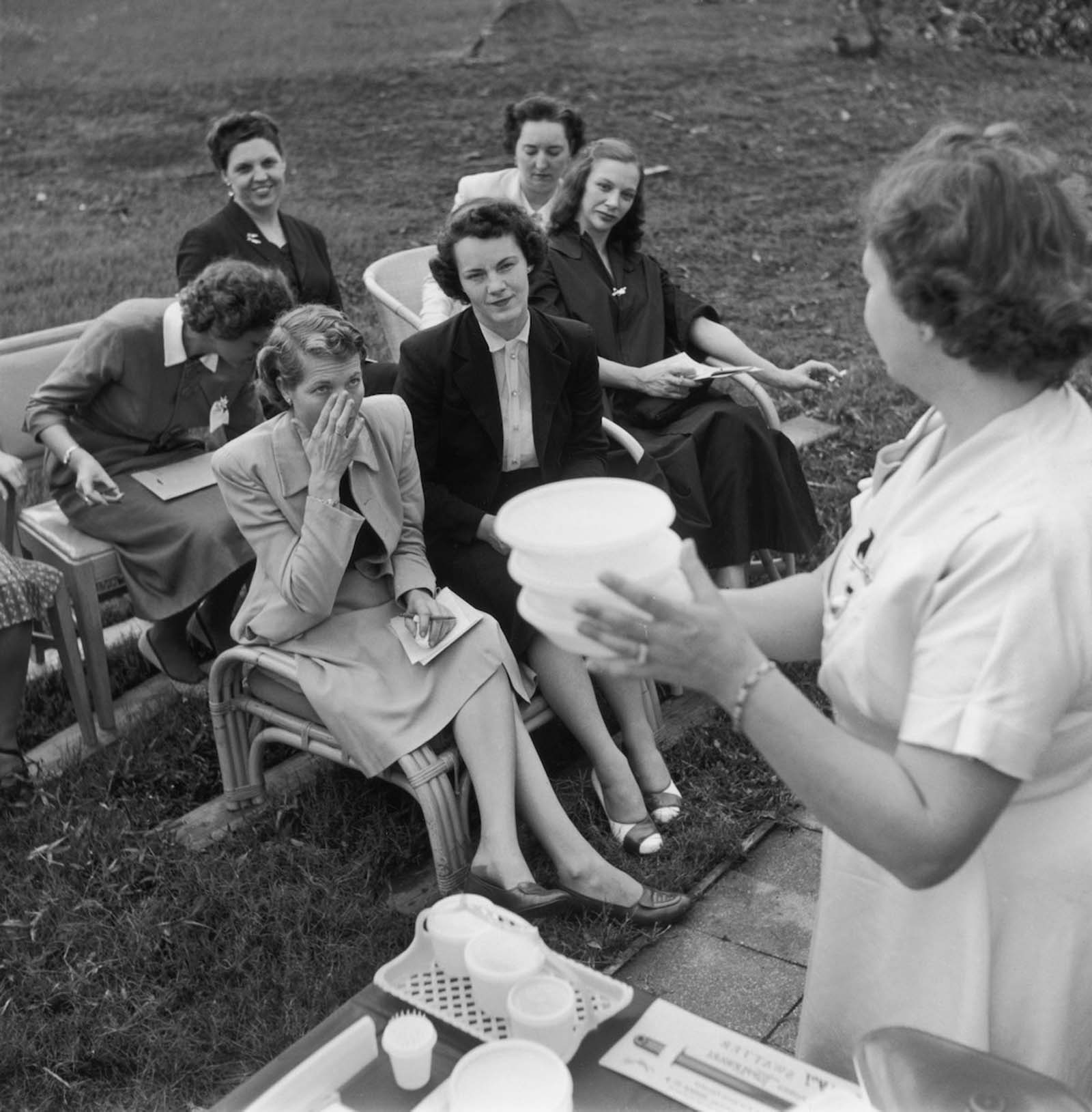
One of Wise’s most effective demonstrations involved filling a Tupperware bowl with water, sealing it, and tossing it across the room. The lid held. No leaks, no spills. That single act showed the airtight seal better than any advertisement ever could.
Earl Tupper noticed the sales numbers Wise was producing and acted quickly. He pulled Tupperware entirely from department stores and retail outlets, making the home party the company’s only method of distribution. It was a bold move — abandoning conventional retail in favor of a grassroots, woman-run sales network. Wise was appointed vice president of the newly formed Tupperware Home Parties Incorporated (THP).
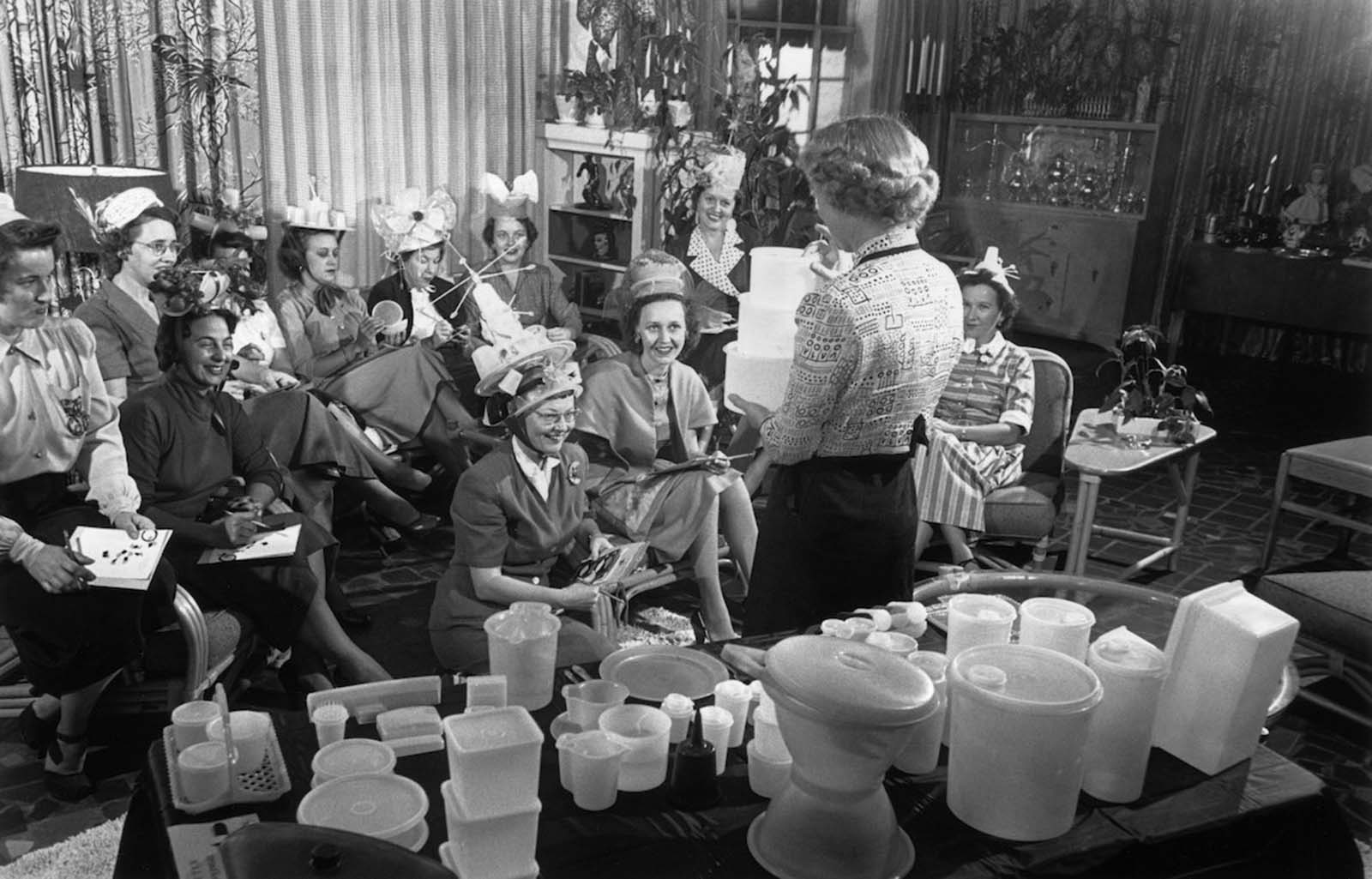
Her rise was remarkable. Wise went from a single working mother scraping together money for her son’s medical care to the leader of a multimillion-dollar enterprise. She appeared in women’s magazines and business journals across the country, and in 1954, she became the first woman to appear on the front cover of Business Week. Her guiding philosophy summed up the whole operation: “If we build the people, they’ll build the business.”
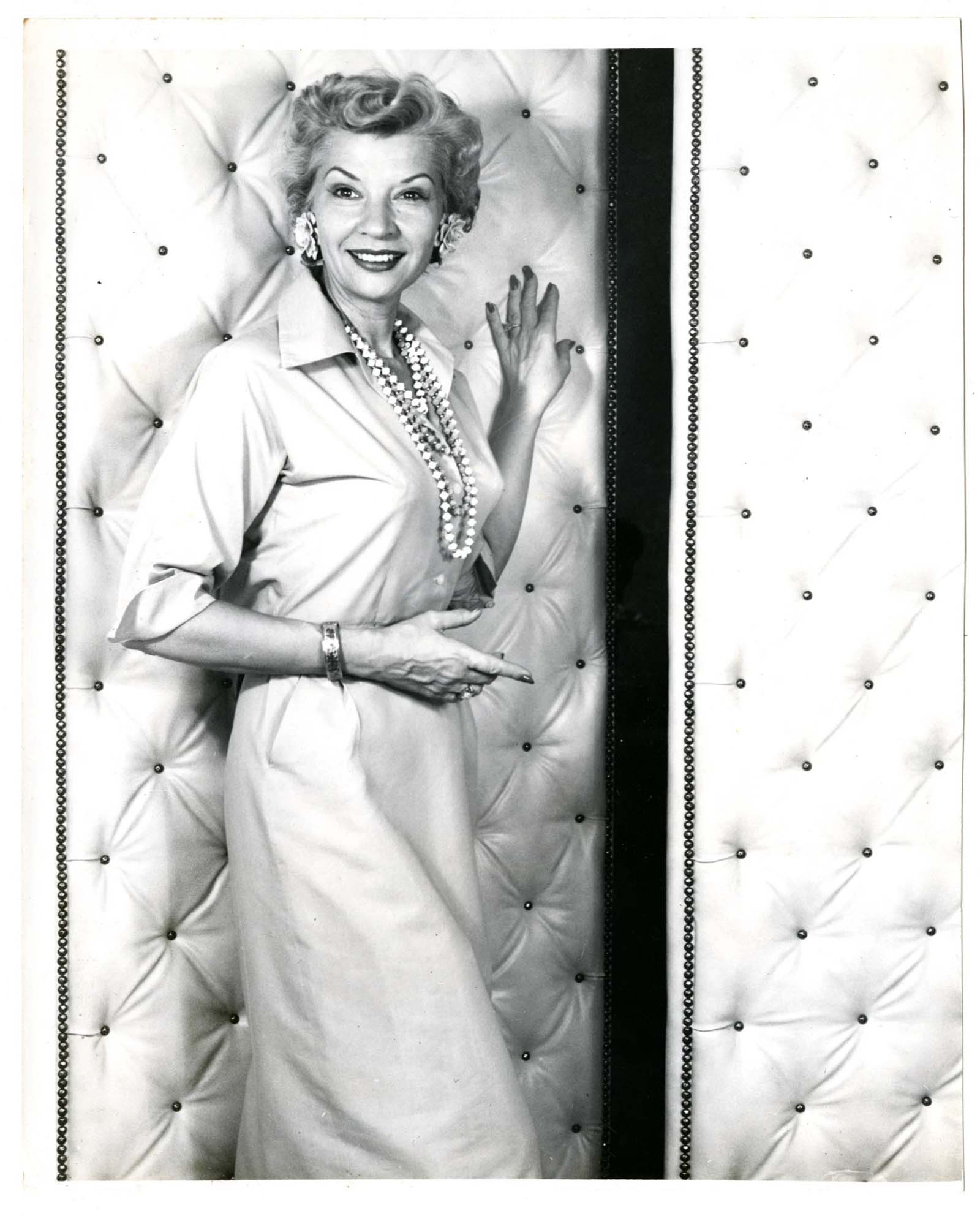
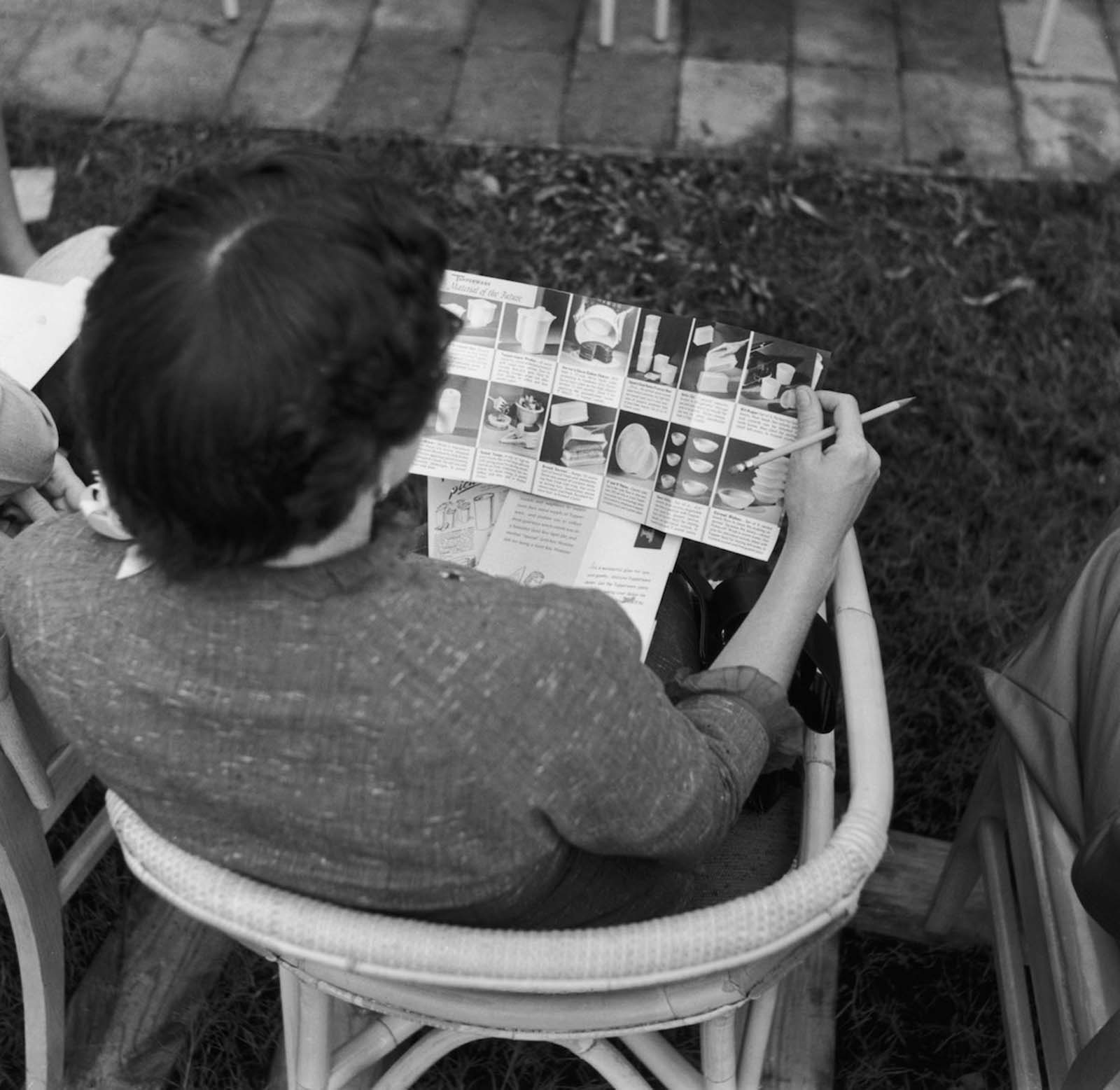
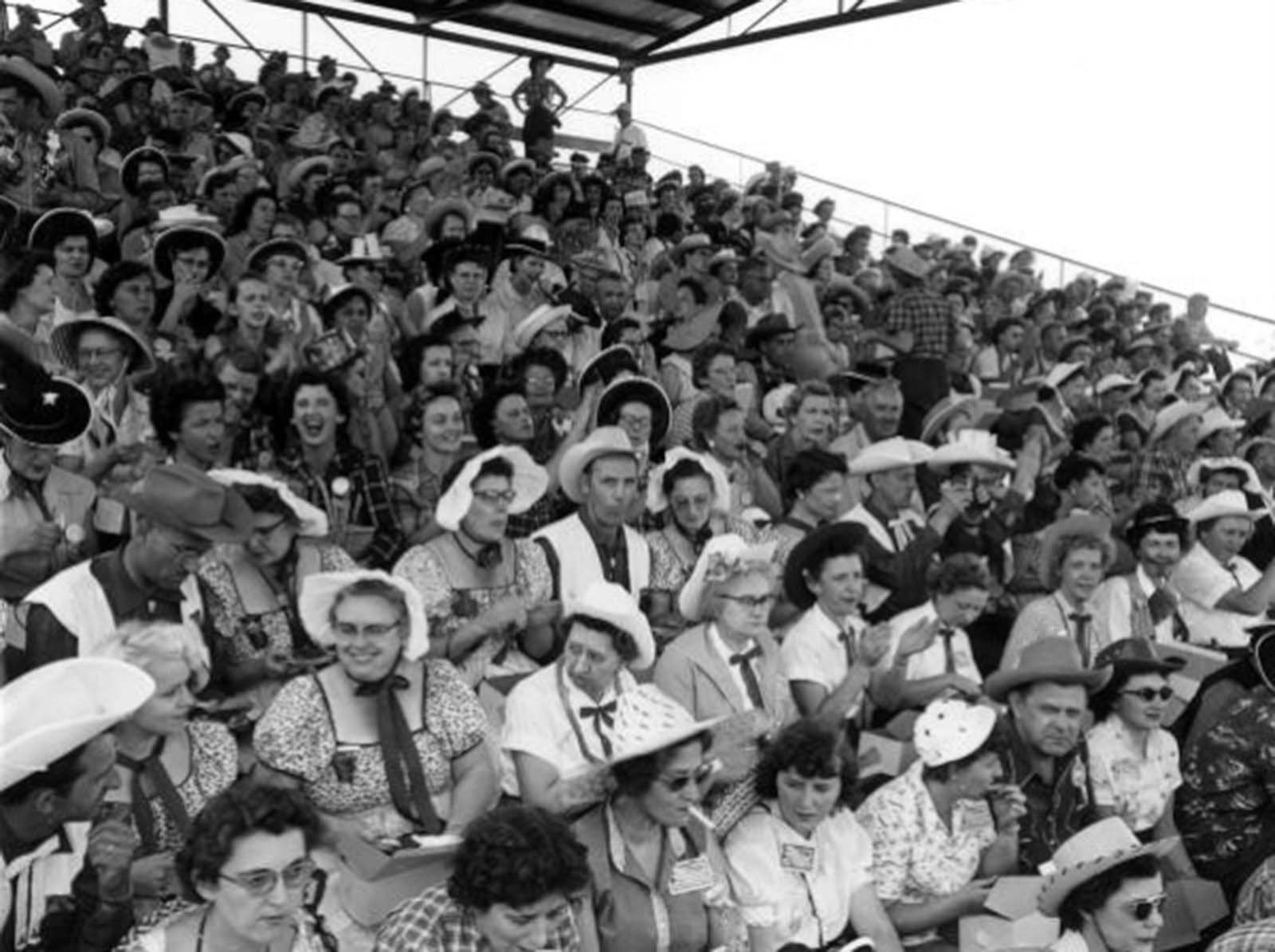
Wise recruited Tupperware dealers at scale. She built a nationwide network of women who hosted parties, earned commissions, and brought in new dealers of their own. To celebrate and motivate this growing workforce, the company held annual gatherings called the Tupperware Homecoming “Jubilee” — large-scale events designed to reward top performers and build loyalty across the sales network.
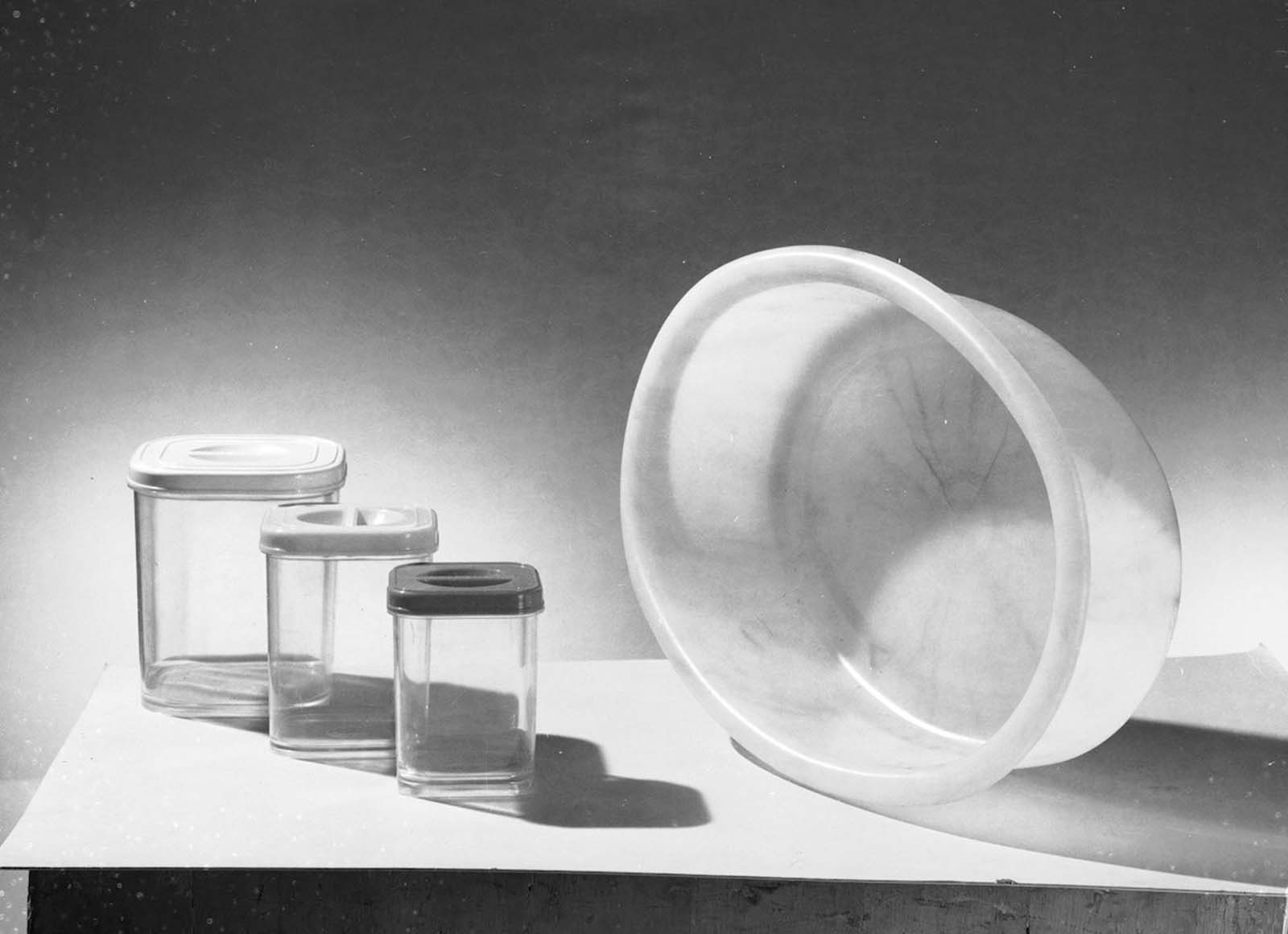
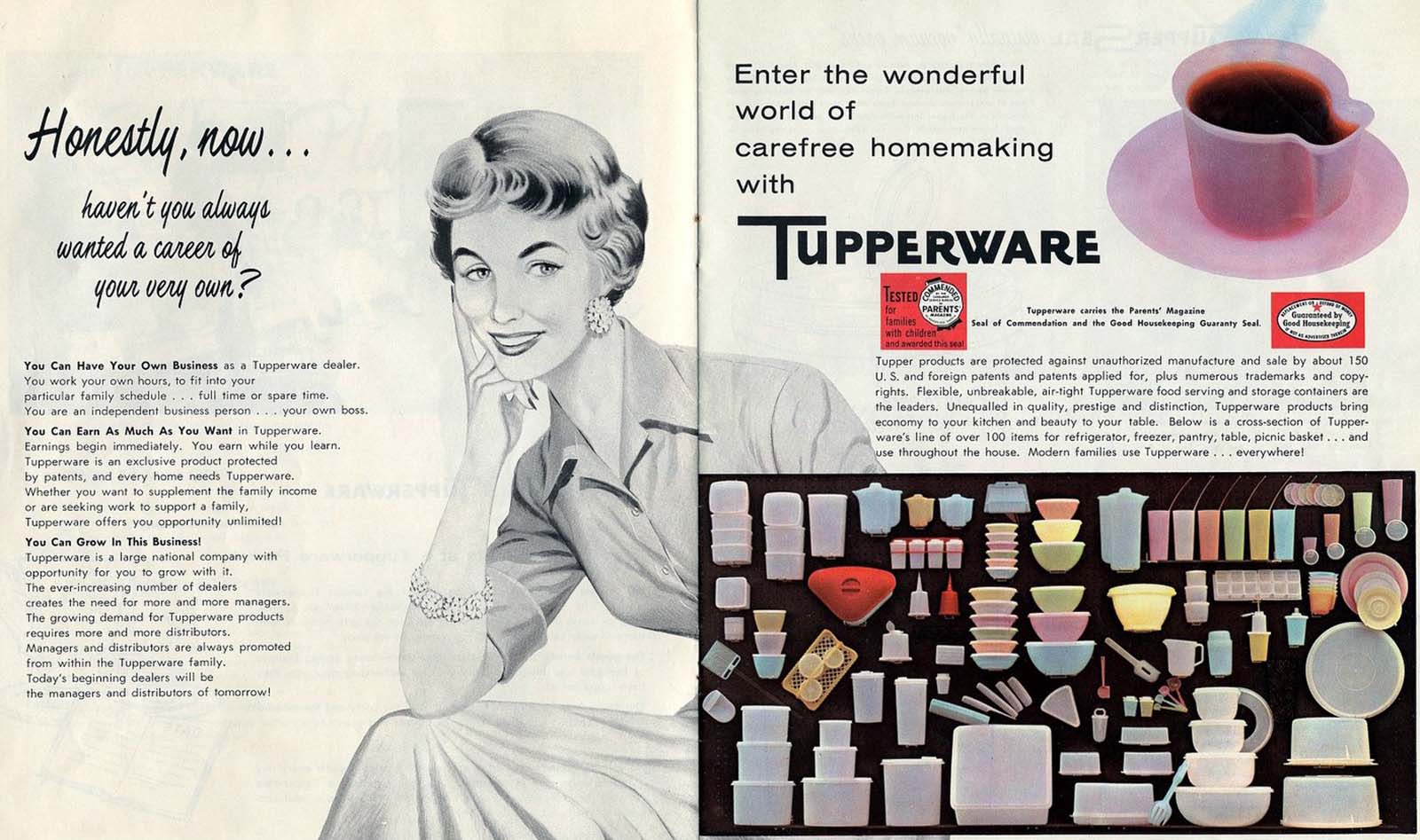
While Wise ran the sales side of the business, Tupper kept expanding the product line. Beyond the original food storage containers, he developed cocktail shakers, dishes, ketchup funnels, and cake domes. Factories opened across the country to keep up with demand. The range of products gave party hosts more to show off and gave buyers more reasons to keep coming back.
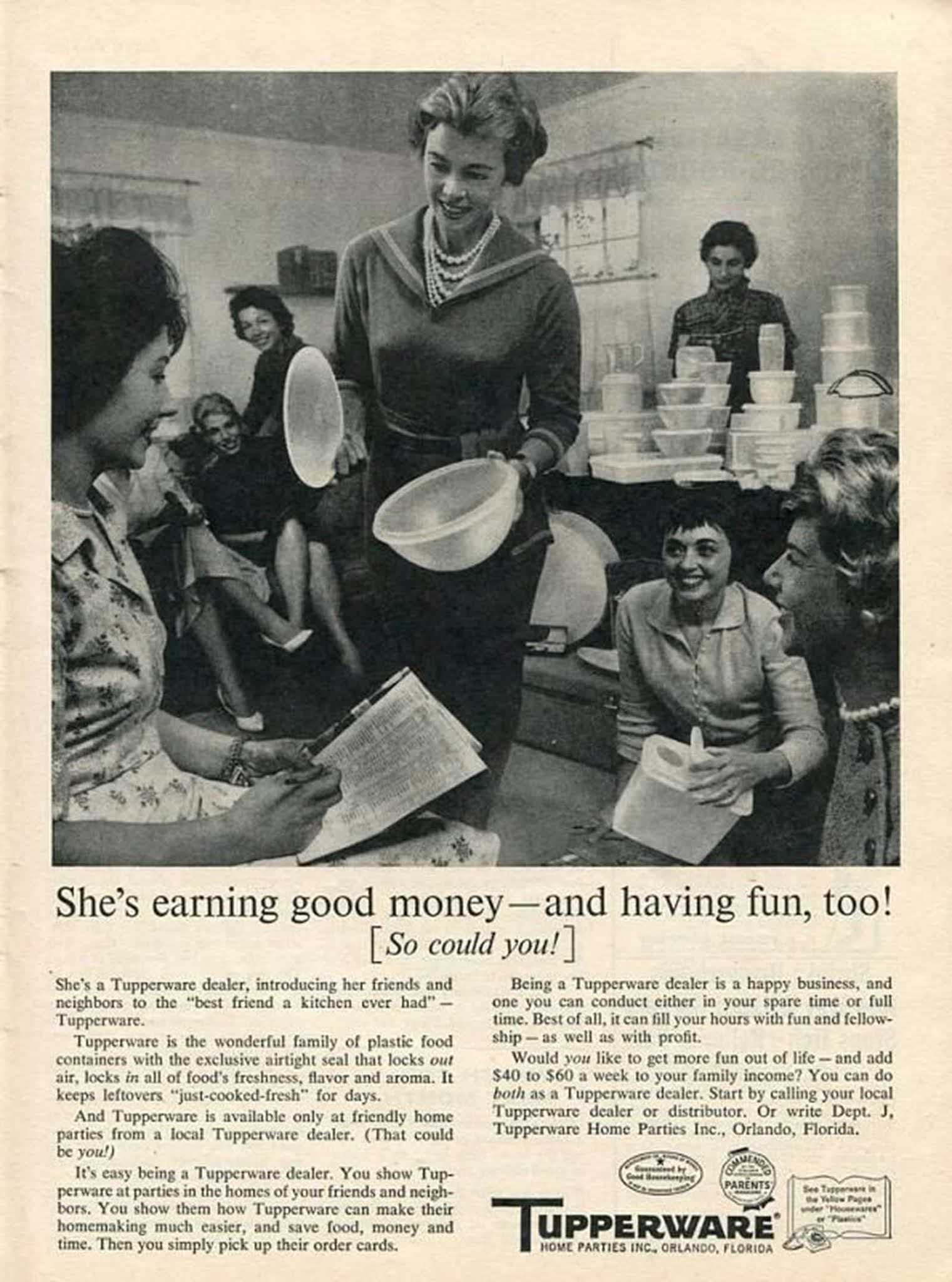
Tupperware advertising in this era leaned directly into the idea that selling the product was itself empowering for women — a way to earn real income while socializing. Ads promoted the idea that a woman could have fun and earn good money at the same time, which was a meaningful message in a decade when professional opportunities for women were limited.
Despite the success she helped build, Wise’s relationship with Earl Tupper did not end well. The partnership between the inventor and the woman who made his product a household name collapsed into a series of lawsuits. Tupper eventually sold the company in 1958, the same year he dismissed Wise from the business she had helped construct from the ground up.
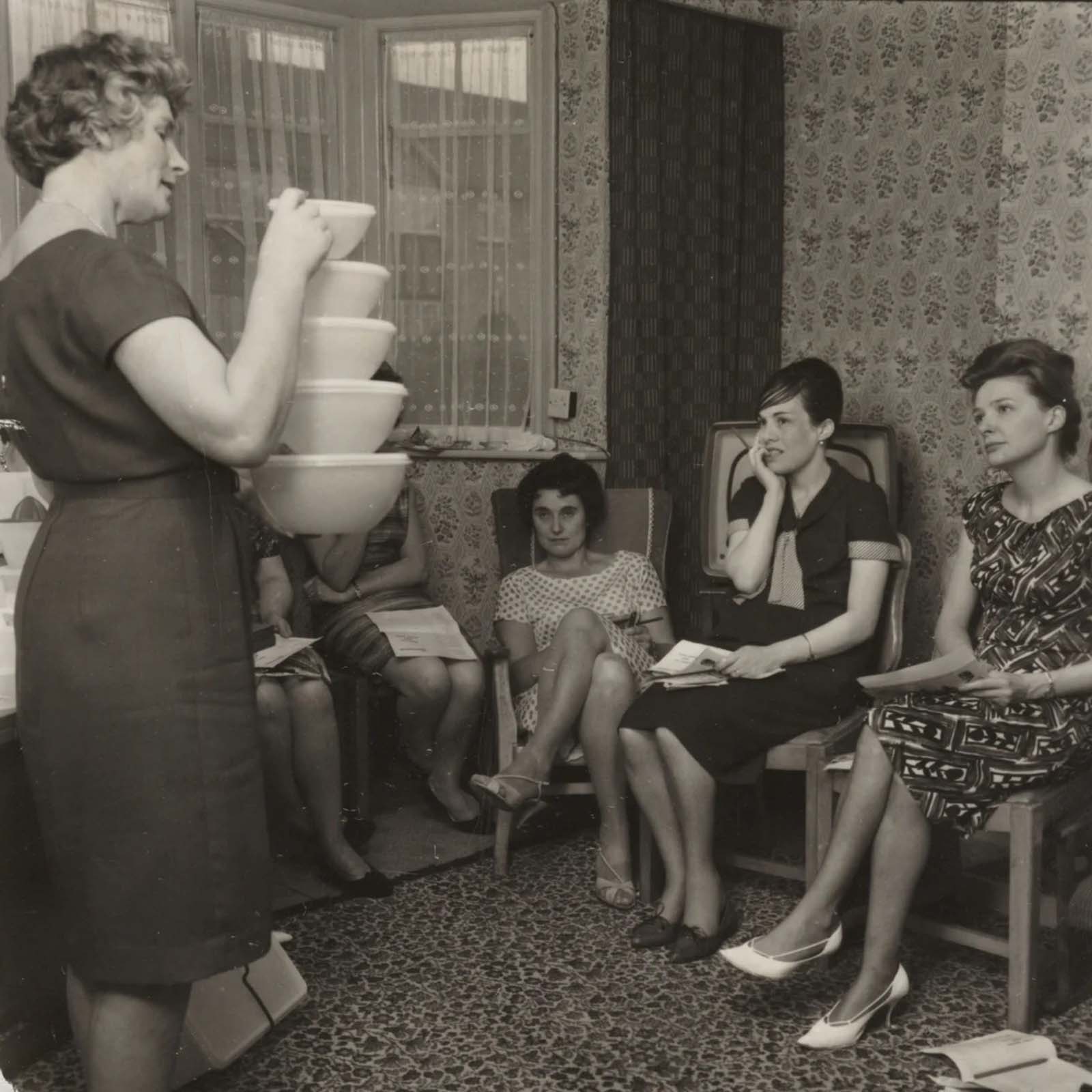
Throughout the 1950s and into the 1960s, the Tupperware party remained one of the most recognizable forms of direct marketing in the United States. Women across the country opened their homes, passed around containers, and built small businesses one gathering at a time. The model proved that a product rejected by traditional retail could thrive when sold person-to-person, in someone’s living room, by someone the buyer already knew and trusted.