Tony Sarg — born Anthony Frederick Sarg — packed several careers into one lifetime. He was a puppeteer, a commercial designer, a toy inventor, and a prolific illustrator. Born in Cobán, Guatemala, to a German father in diplomatic service, Sarg moved to the United Kingdom in 1905. When World War I broke out, he relocated his family to New York City in 1915 and became a U.S. citizen in 1920.
Puppetry was his first passion. He inherited his grandmother’s puppet collection as a child, kept it as a hobby for years, and turned it into a full profession by 1917. His work attracted serious attention. In 1928, Sarg designed a set of tethered, helium-filled balloons — some stretching up to 125 feet long — shaped like animals. His protégé Bil Baird built them for Macy’s department store, and they debuted in the store’s Thanksgiving parade. The balloons applied real puppetry mechanics on a massive scale.
Sarg didn’t stop at puppets. He designed Macy’s elaborate animated window display in 1935, running from Thanksgiving through Christmas. He created interiors for upscale restaurants and department stores. In 1939, he contributed extensively to the New York World’s Fair. Alongside all of this, he illustrated magazine covers, children’s picture books, guidebooks, games, and toys. Two of his most charming bodies of illustration work focused on the cities he knew best: London and New York.
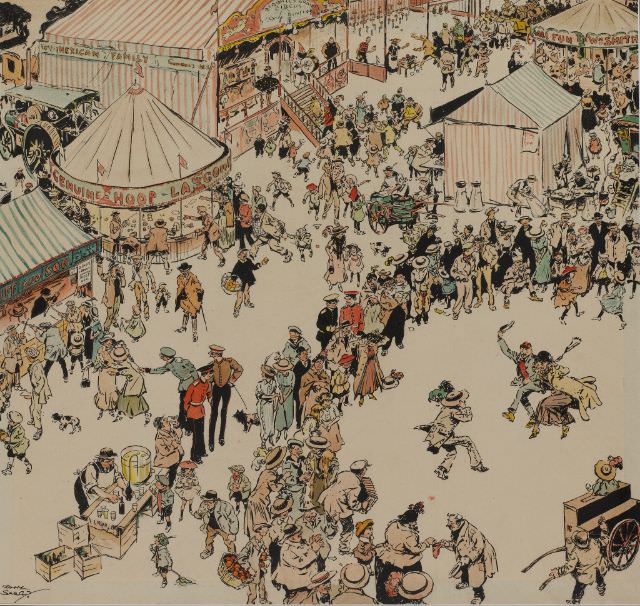
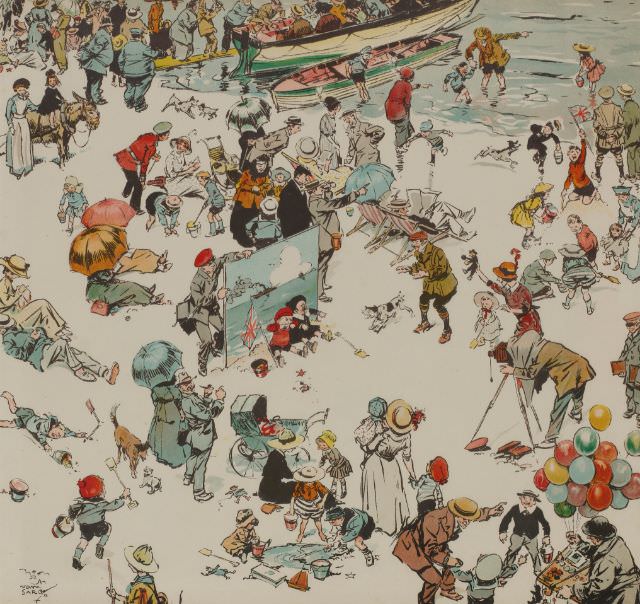
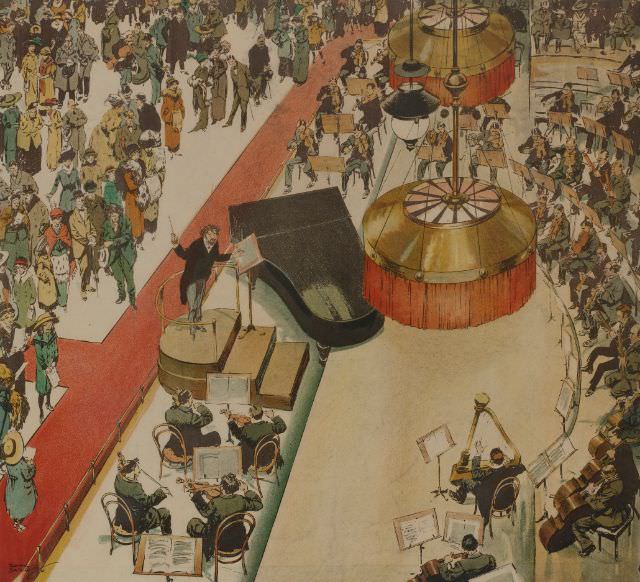
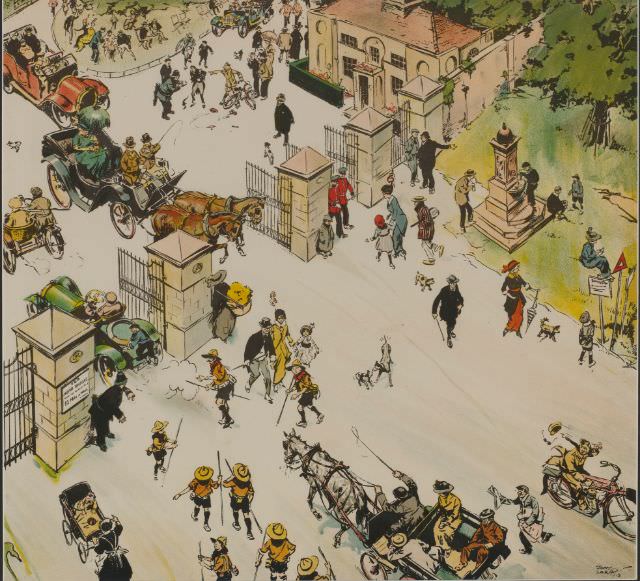
His London series, published under the title “Humours of London,” captured everyday British life with wit and warmth. The scenes ranged from West End theatre nights to seaside day trips, each packed with character and detail. The illustrations below show London as Sarg observed it during his decade living there — crowded, lively, and full of color.
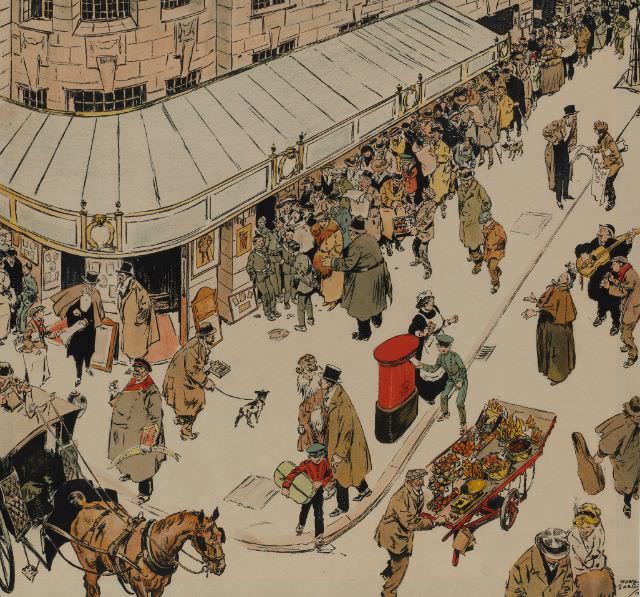
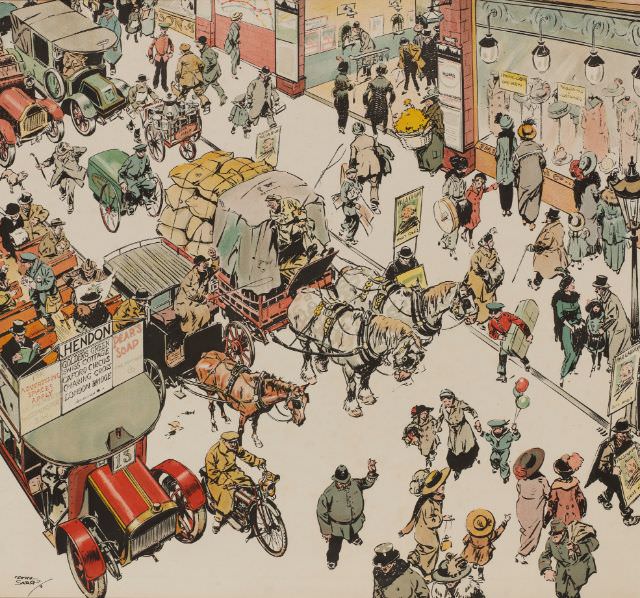
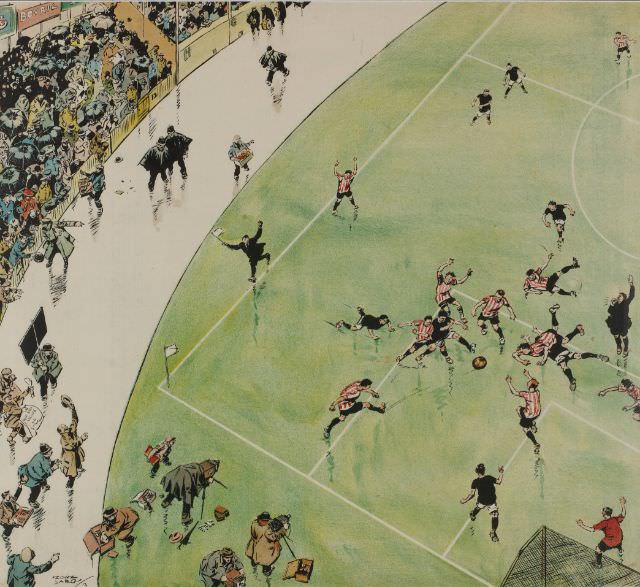
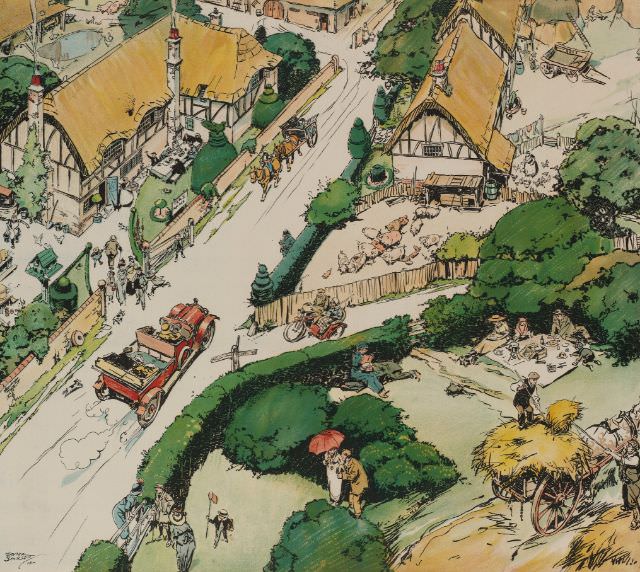
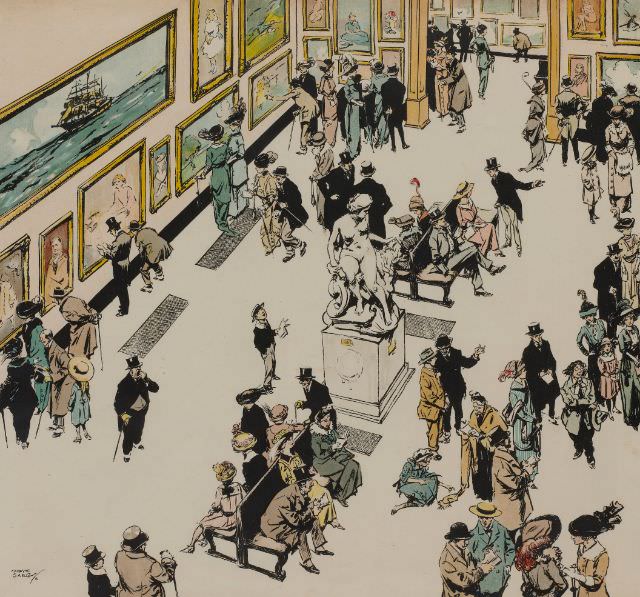
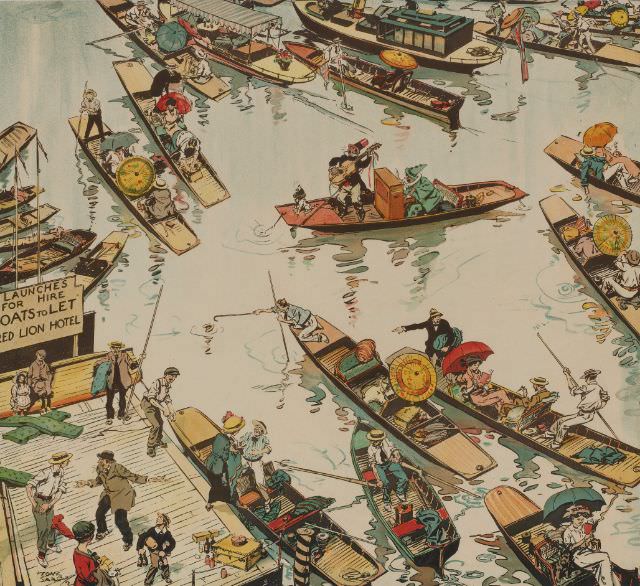
Sarg had an eye for the comic and the communal. His London scenes didn’t focus on grand monuments — they focused on people. Crowds at Hampstead Heath, families at Southend-on-Sea, concert-goers at the Proms, skaters on frozen rinks. He drew London as a city lived in, not just visited.
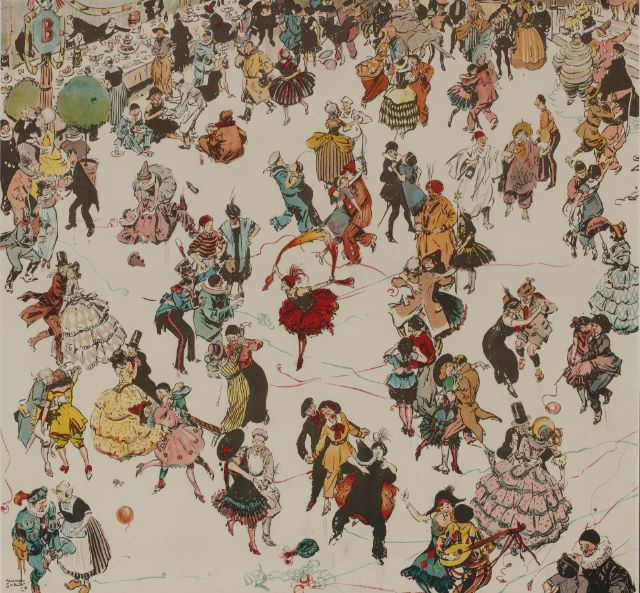
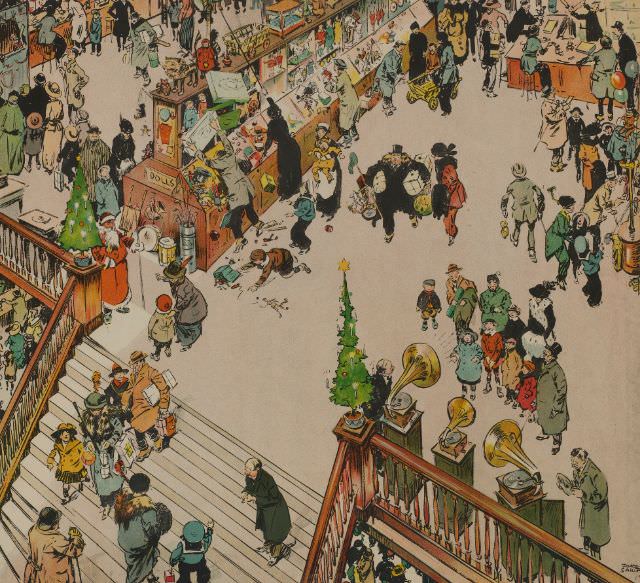
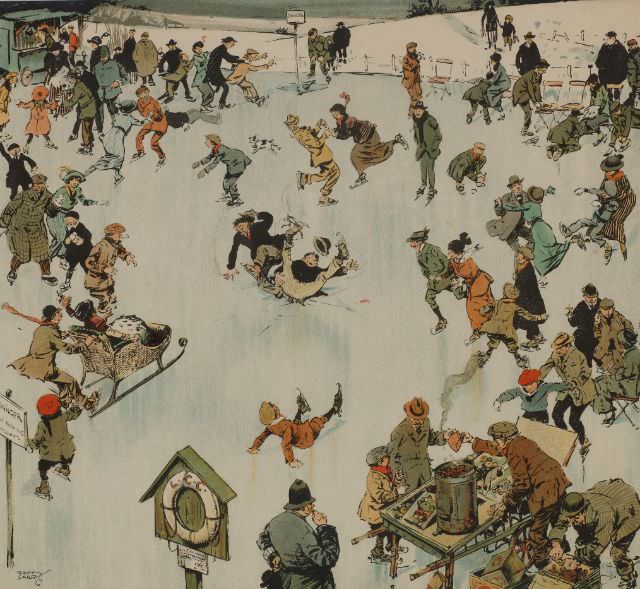
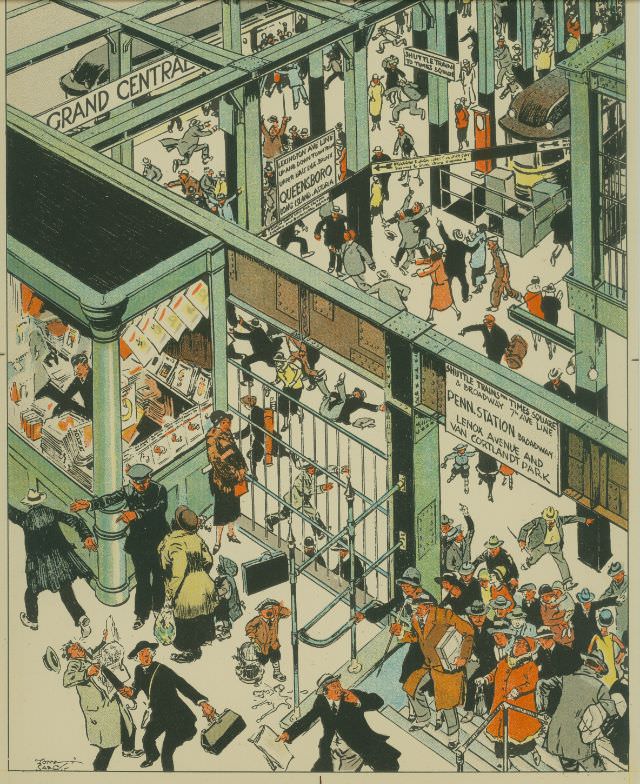
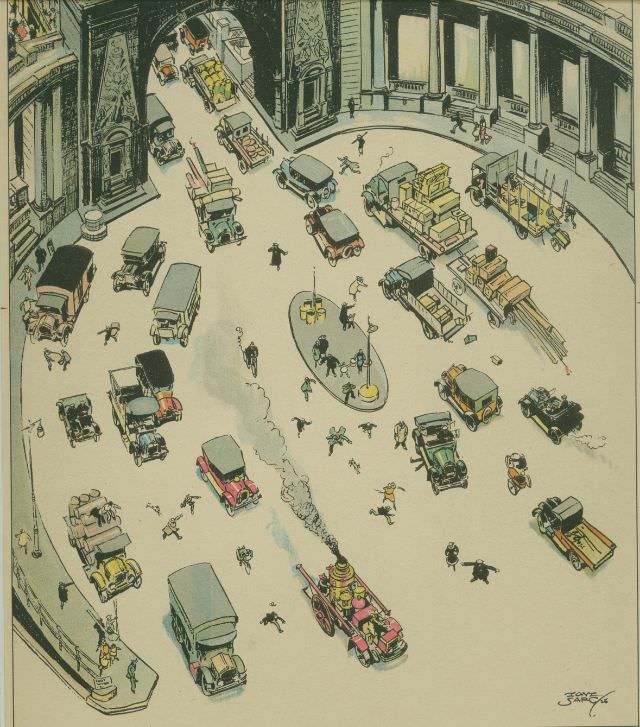
After settling in New York, Sarg turned the same illustrative attention to his adopted city. “Tony Sarg’s New York” captured the American metropolis with the same busy, affectionate style. The series moved through Grand Central Station, the Public Library, the Stock Exchange, and down into the subway — documenting New York’s landmarks and its daily hustle with equal enthusiasm.
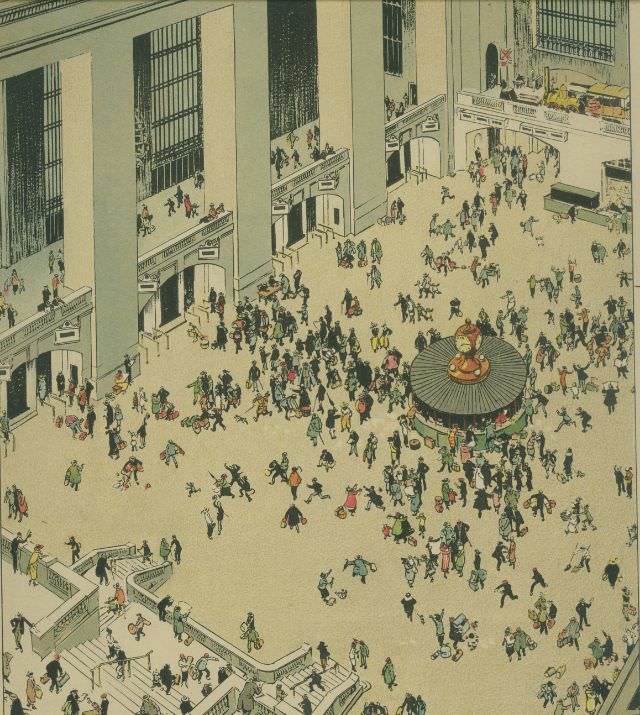
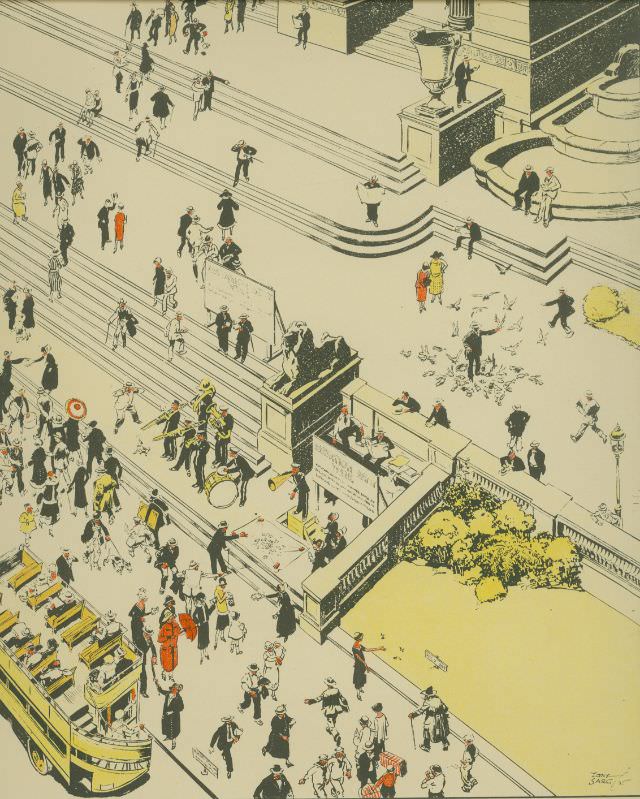
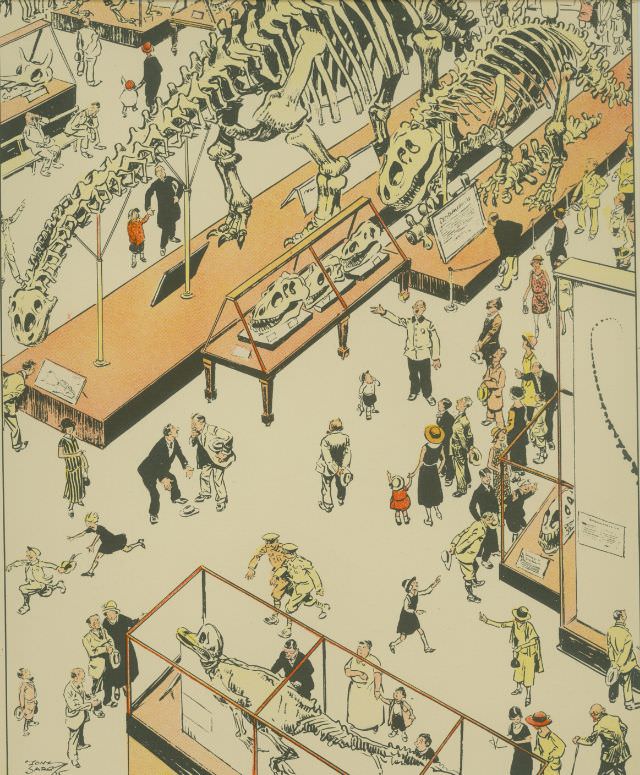
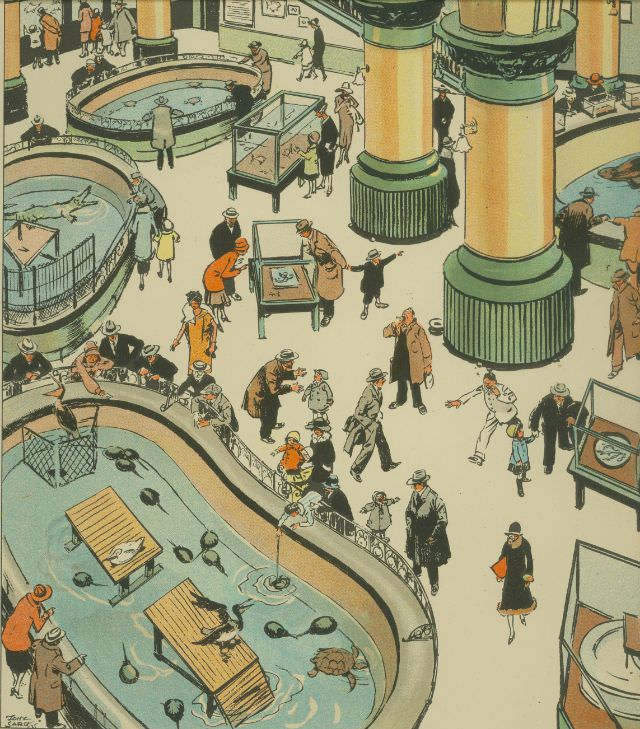
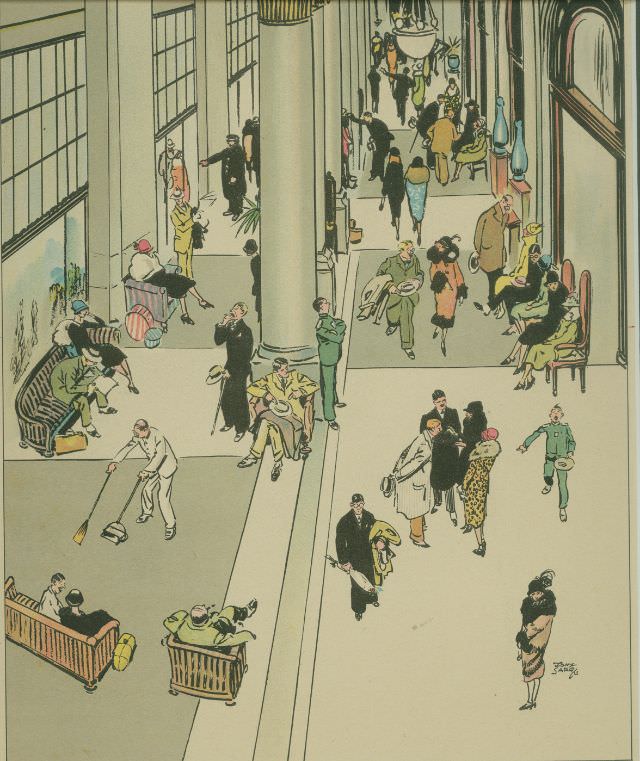
Sarg gave equal attention to the glamorous and the gritty. Peacock Alley in the Waldorf Astoria — a corridor famous for its fashionable foot traffic — appears alongside the ferry slip at Twenty-Third Street and the bustle of Washington Market. This range reflected his genuine curiosity about the full texture of city life, not just its polished surfaces.
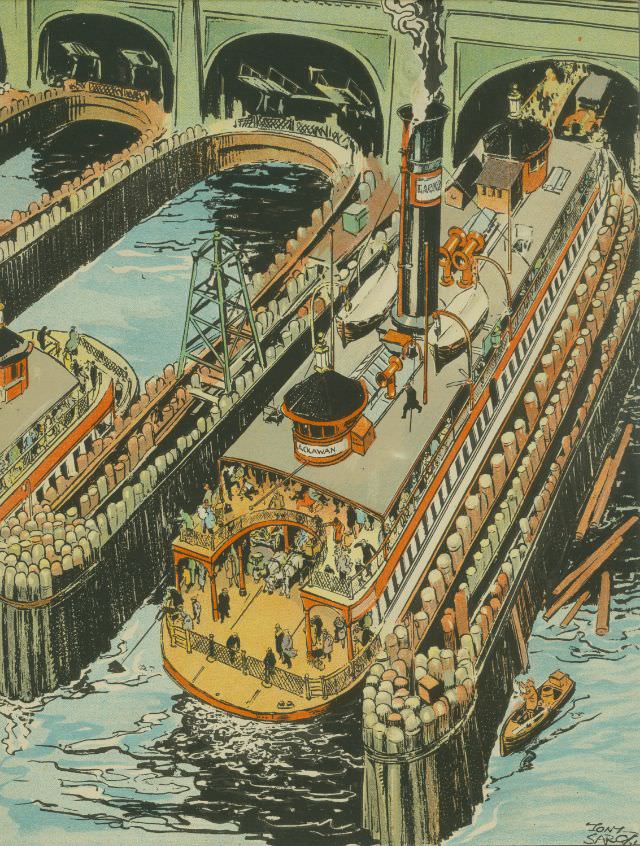
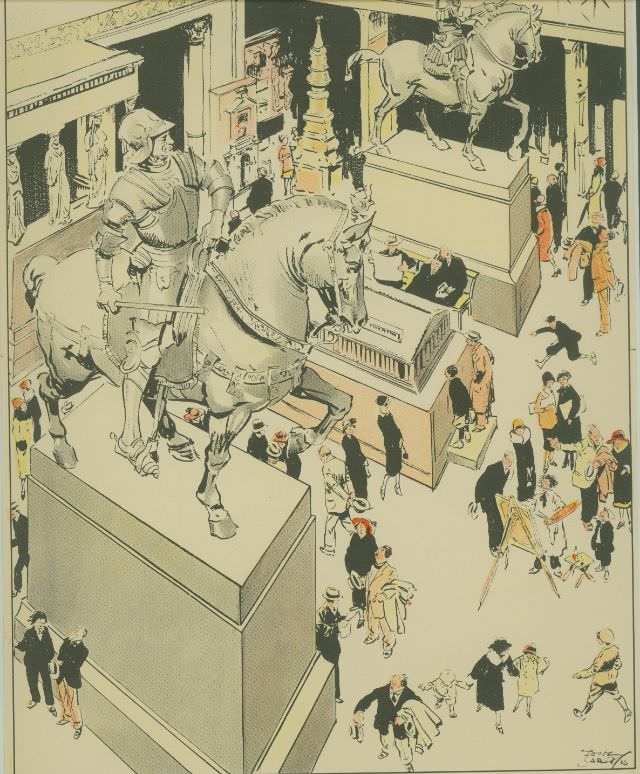
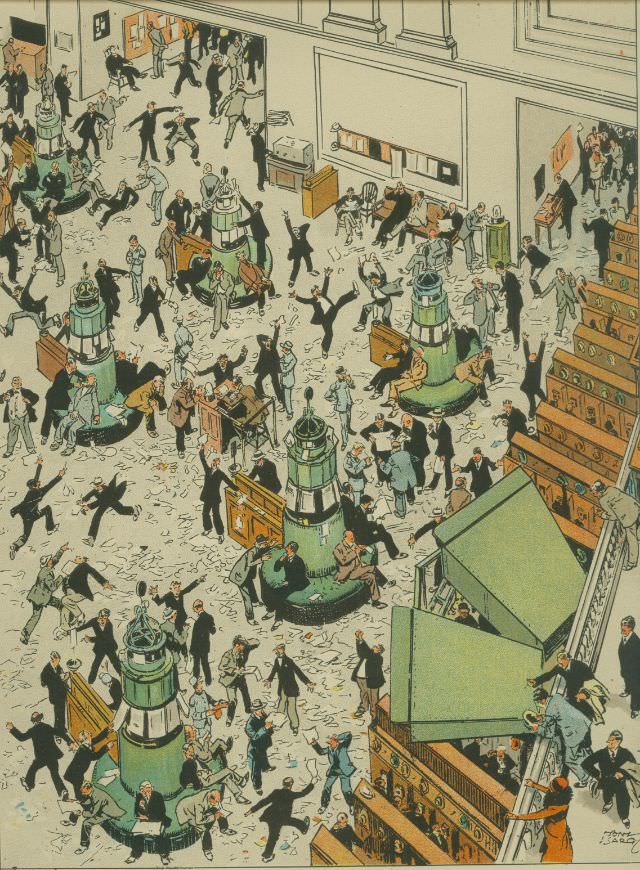
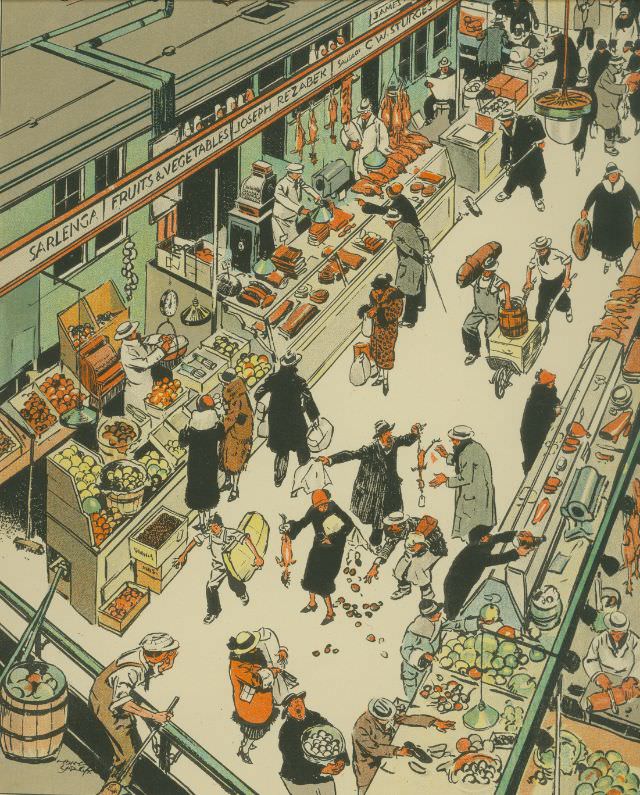
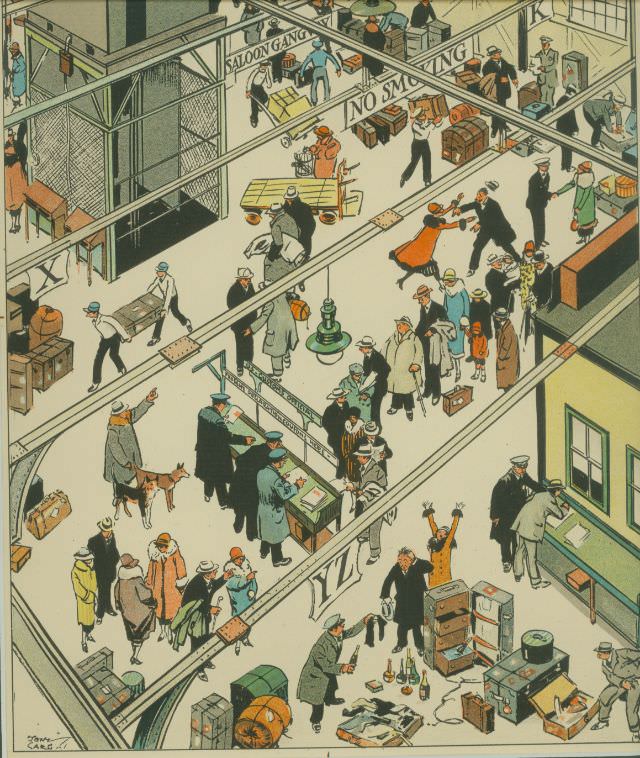
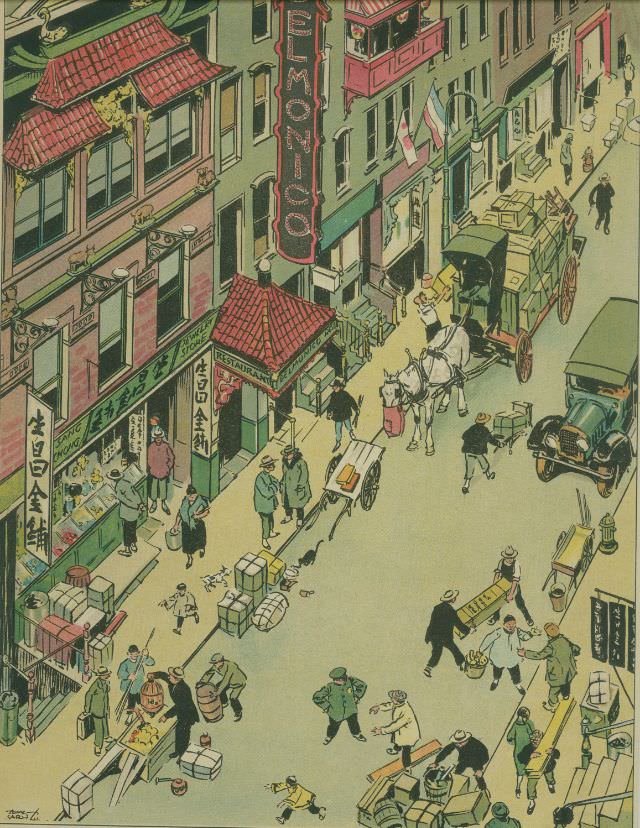
The New York series also ventured into the city’s more distinctive corners — the Times Square shuttle rumbling through the subway, the Manhattan Bridge spanning the East River, immigration inspections at the steamship pier, and the lantern-lit streets of Chinatown. Each scene is dense with figures and action, drawn with the same illustrator’s instinct Sarg brought to every medium he worked in.