Tokyo in the 1970s was a city in full motion. Cranes dotted the skyline as new towers climbed above older neighborhoods. Streets hummed with buses, taxis, and motorcycles. The Shinkansen bullet train sliced through the urban sprawl, a rolling symbol of Japan’s rapid postwar progress. These vintage photos, most taken between 1971 and 1979, freeze moments from a city that never stood still.
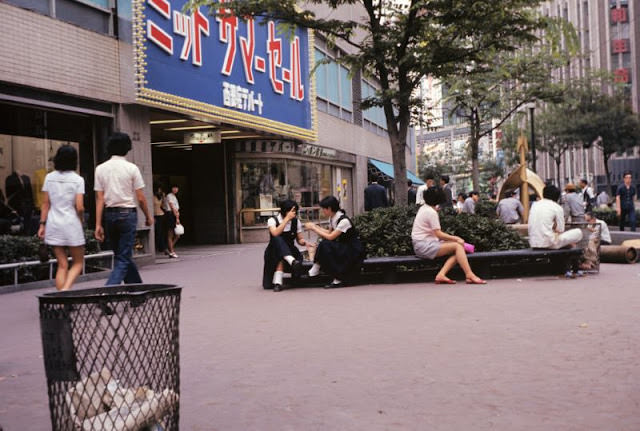
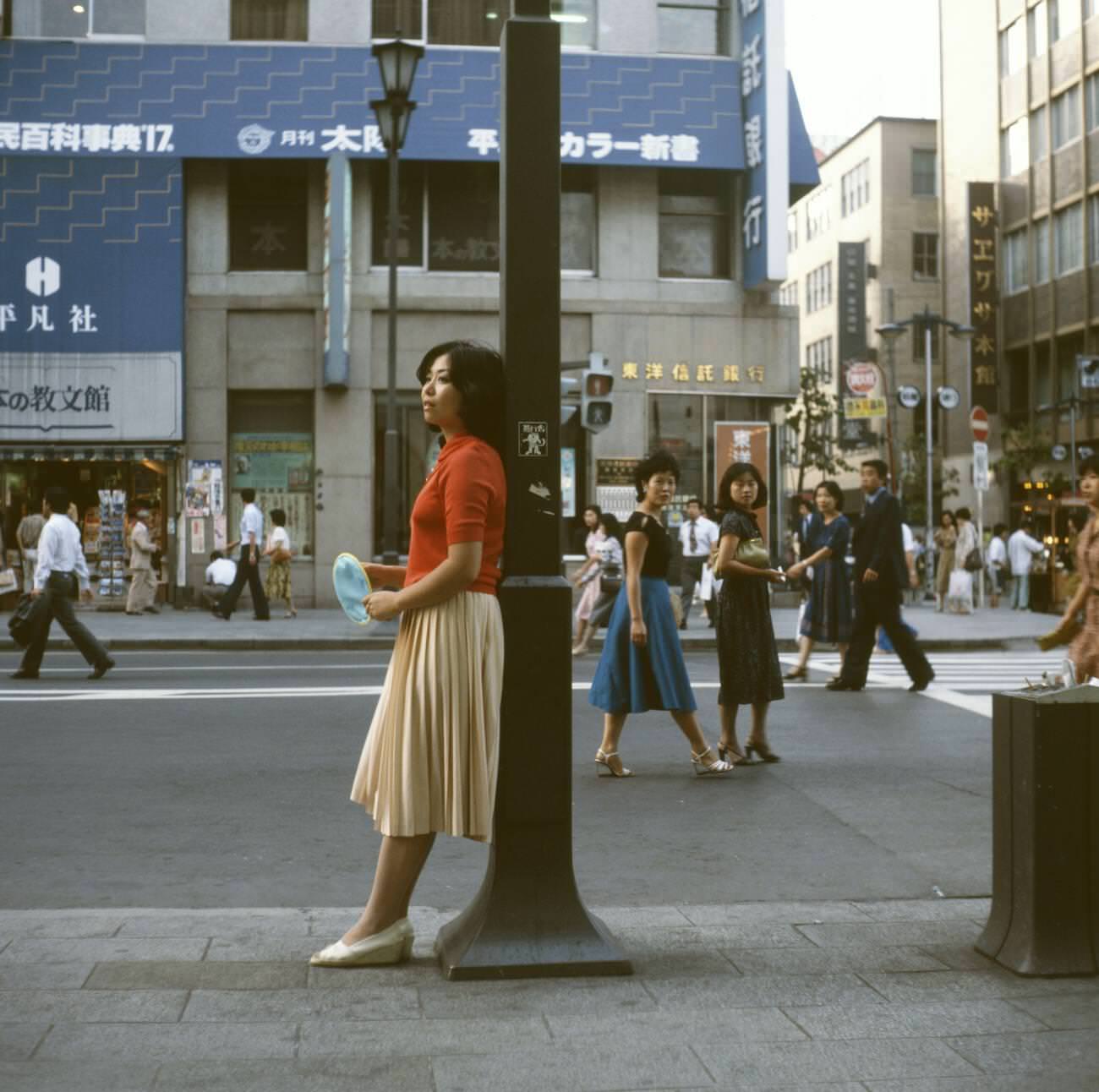
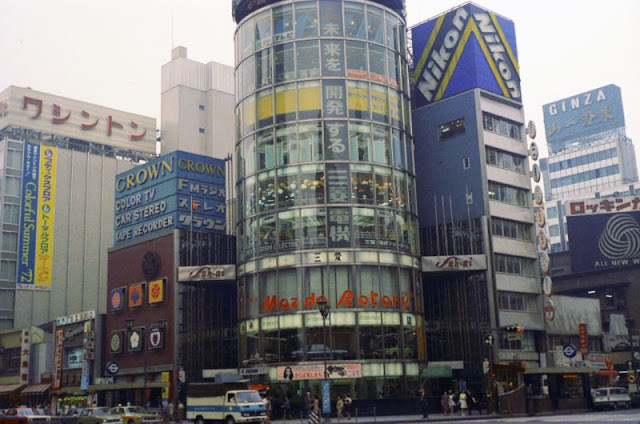
Ginza was Tokyo’s most polished district. Department stores like Mitsukoshi and Isetan lined its wide boulevards, drawing shoppers from across the city. Luxury brands claimed window space while ordinary Tokyoites browsed the sidewalks. The area around Sukiyabashi Park offered a rare patch of calm amid the commercial energy.
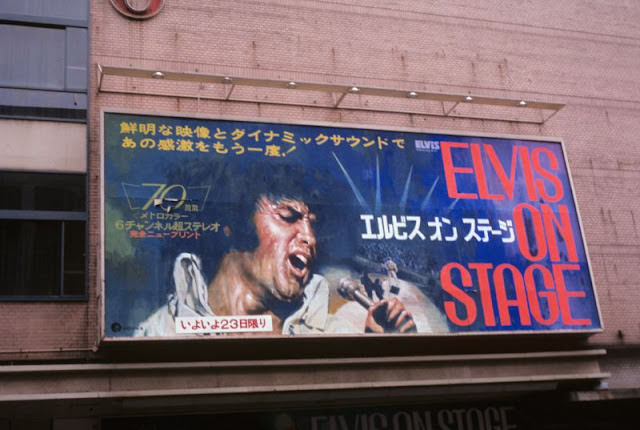

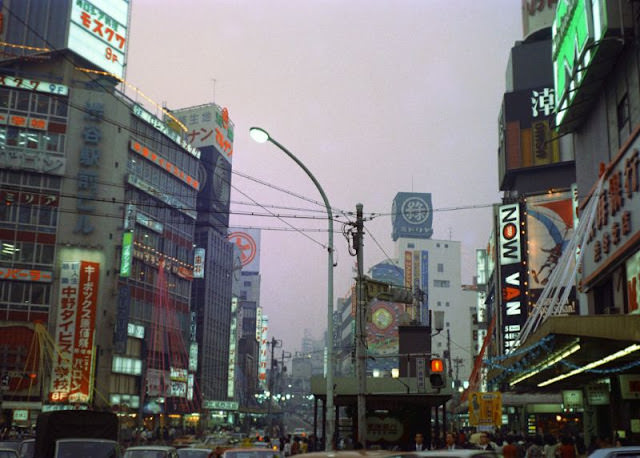
Western pop culture had a firm grip on Tokyo by the early 1970s. American music, fashion, and fast food were visibly present across the city. McDonald’s and KFC were opening their first Japanese locations, while record shops stocked the latest imports from the United States and Europe. Ginza’s streets reflected this blend — Japanese shoppers in Western-style clothing browsed storefronts that mixed local and foreign brands without hesitation.
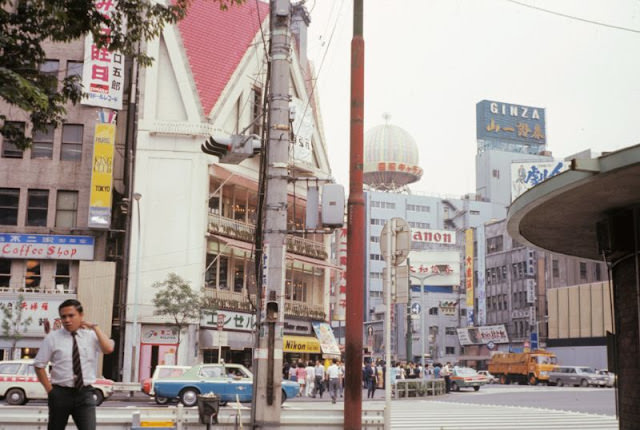
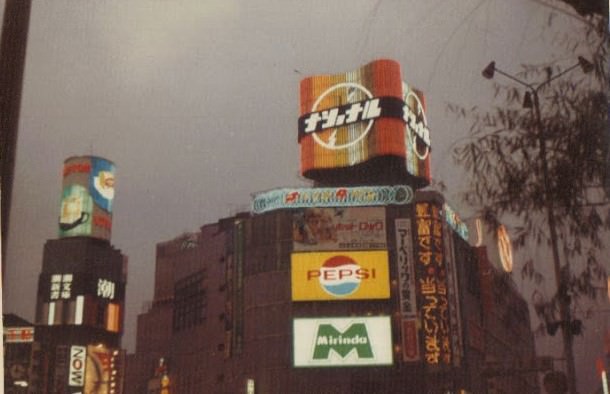
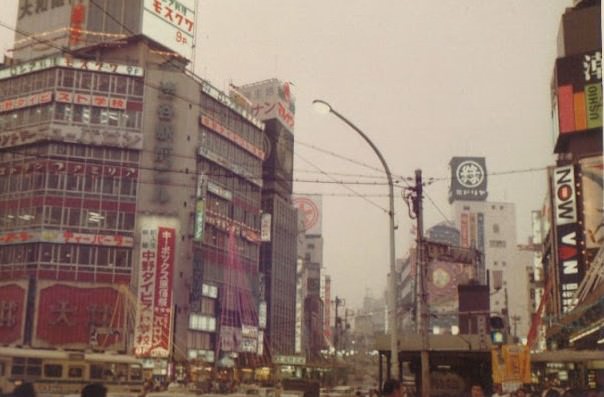
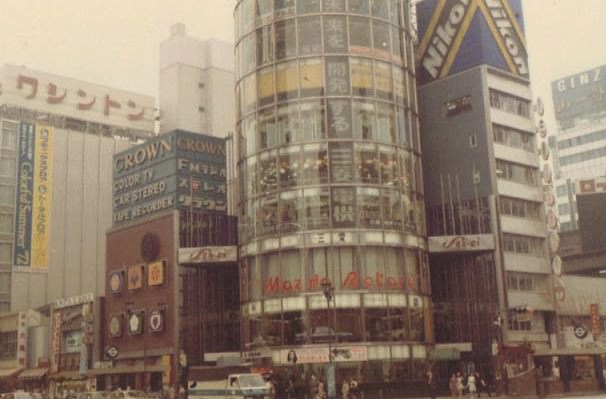
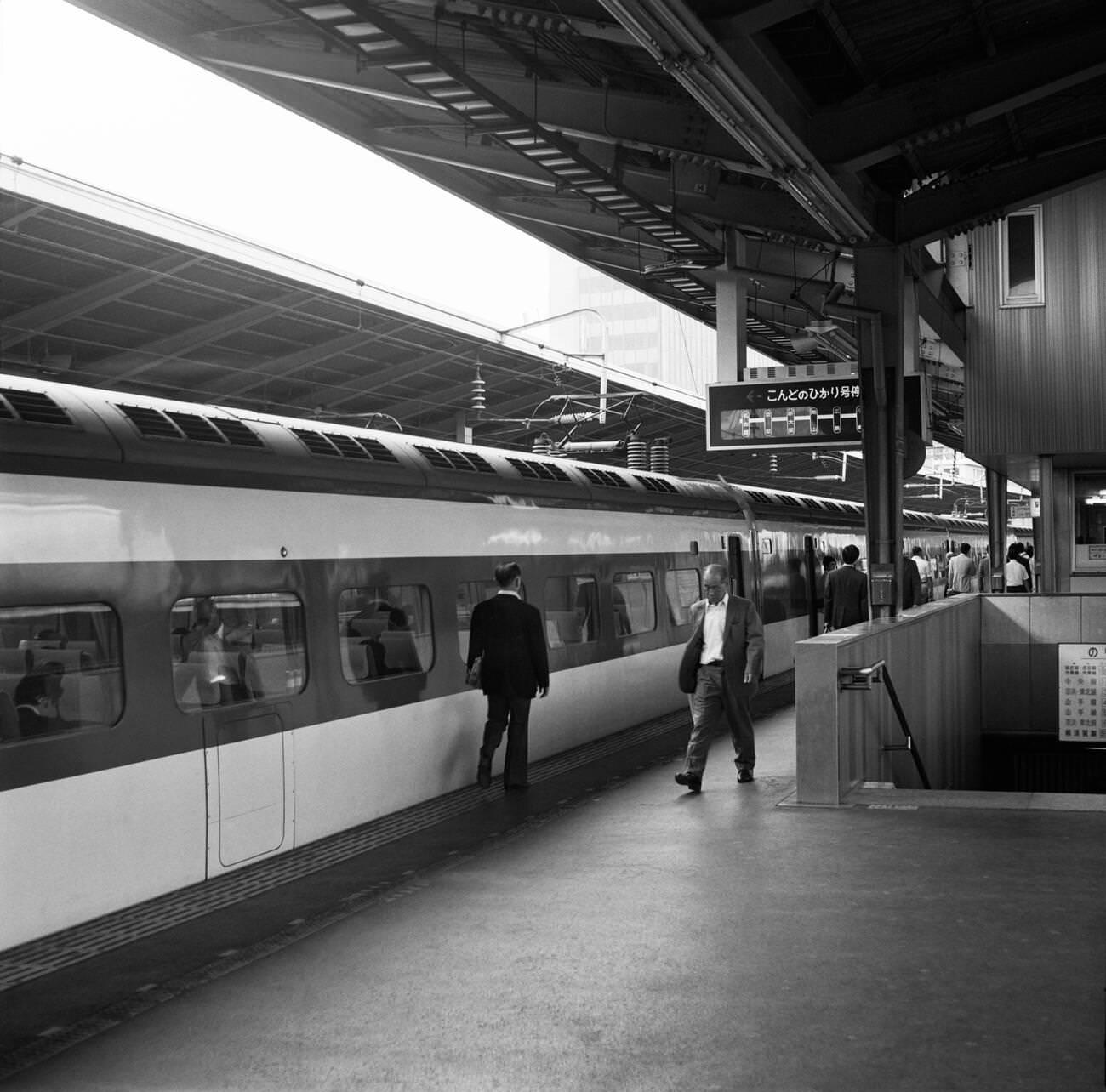
Transportation in 1970s Tokyo ranged from the ultramodern to the traditional. The Shinkansen connected Tokyo to other major cities at speeds that stunned the world. Inside the city, a dense web of train lines, buses, and taxis moved millions of people each day. But on quieter streets, older modes of transport still appeared.
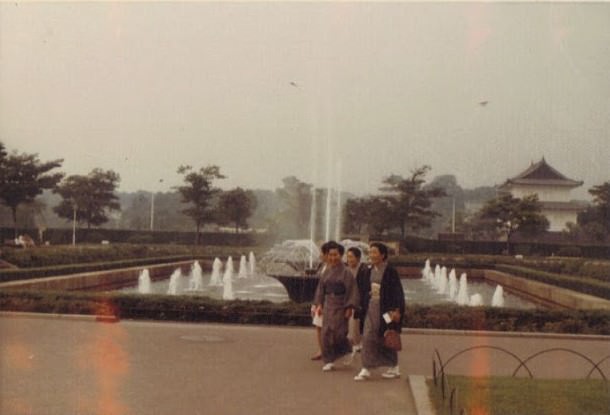
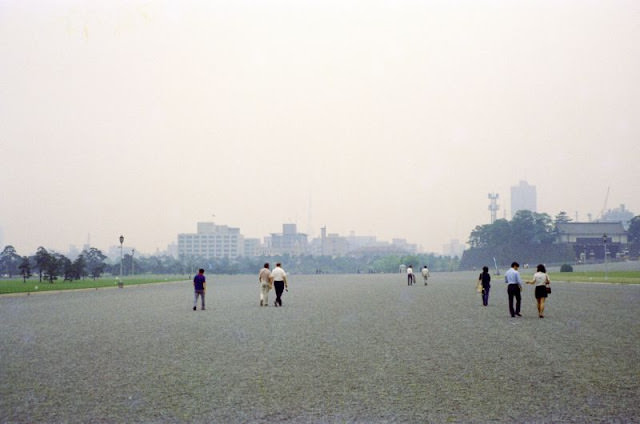
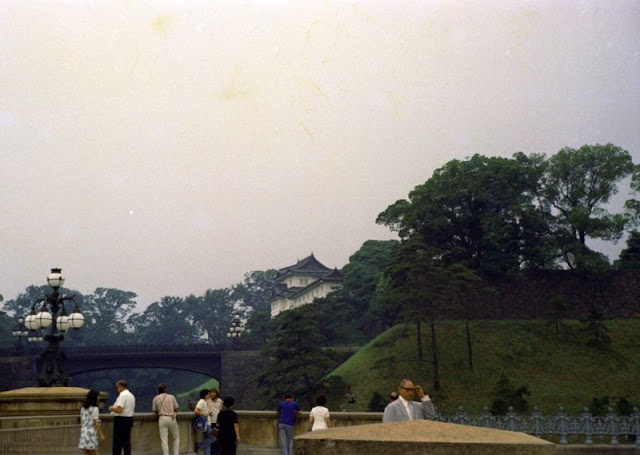
The grounds around the Imperial Palace were a popular destination for both locals and visitors. Wide open spaces and manicured paths made the area a rare escape from the dense urban grid surrounding it. Women in traditional dress were a common sight near the palace, a reminder that modern Tokyo was still rooted in centuries of Japanese culture.
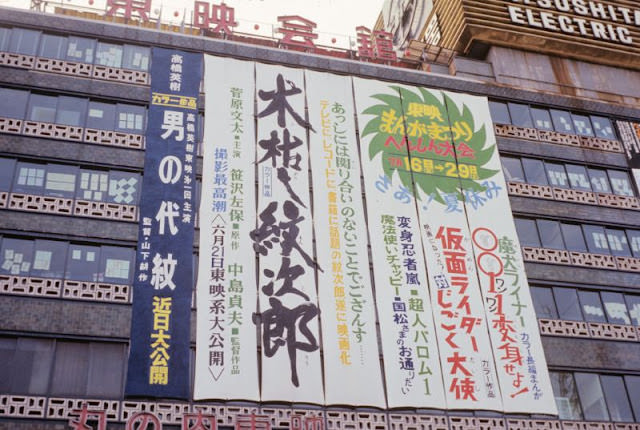
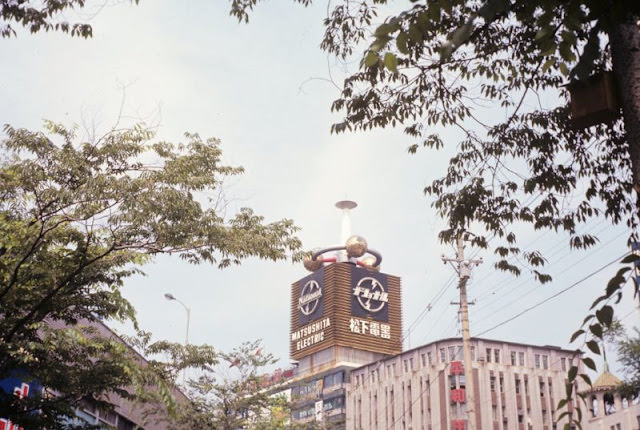
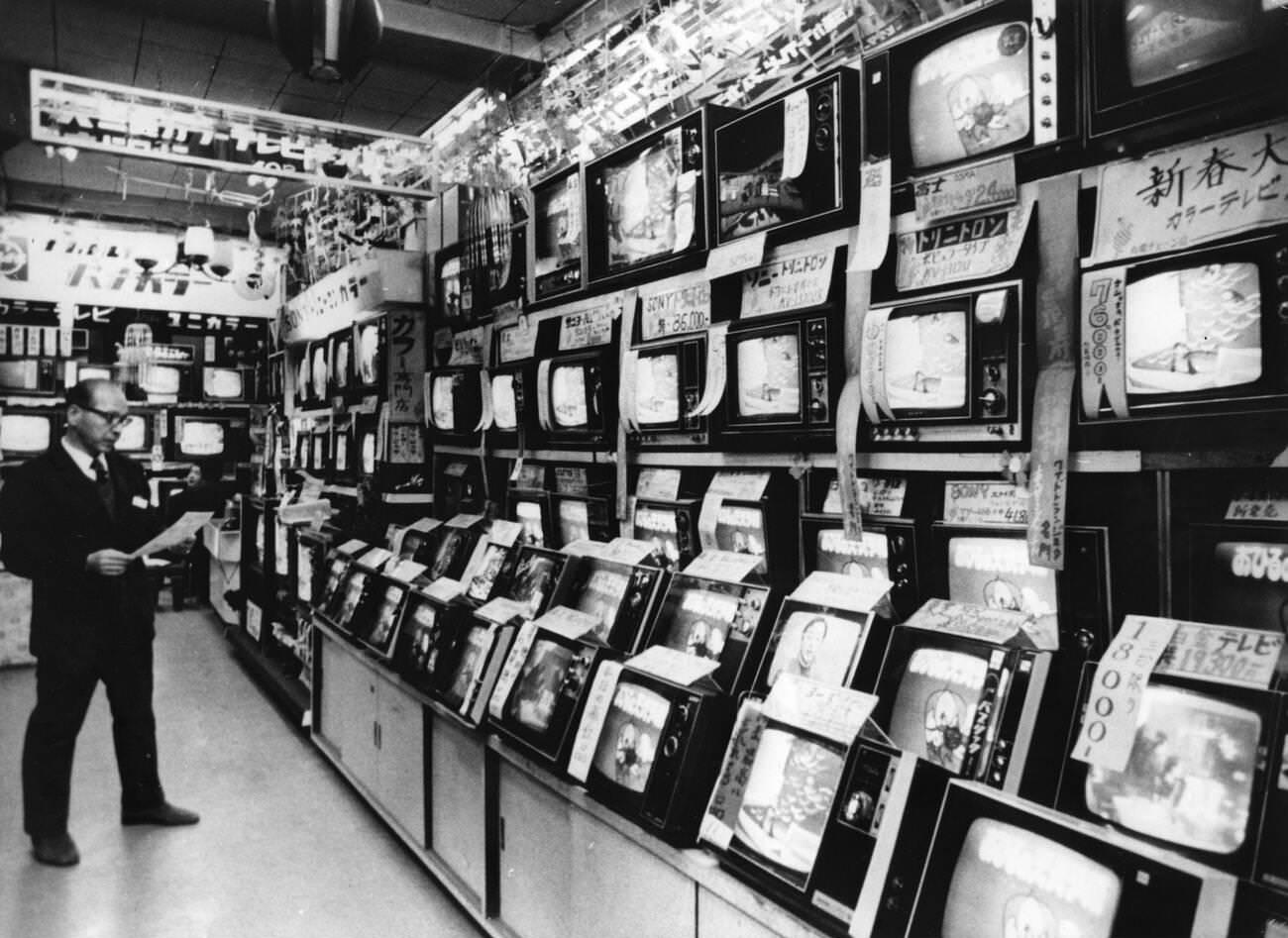
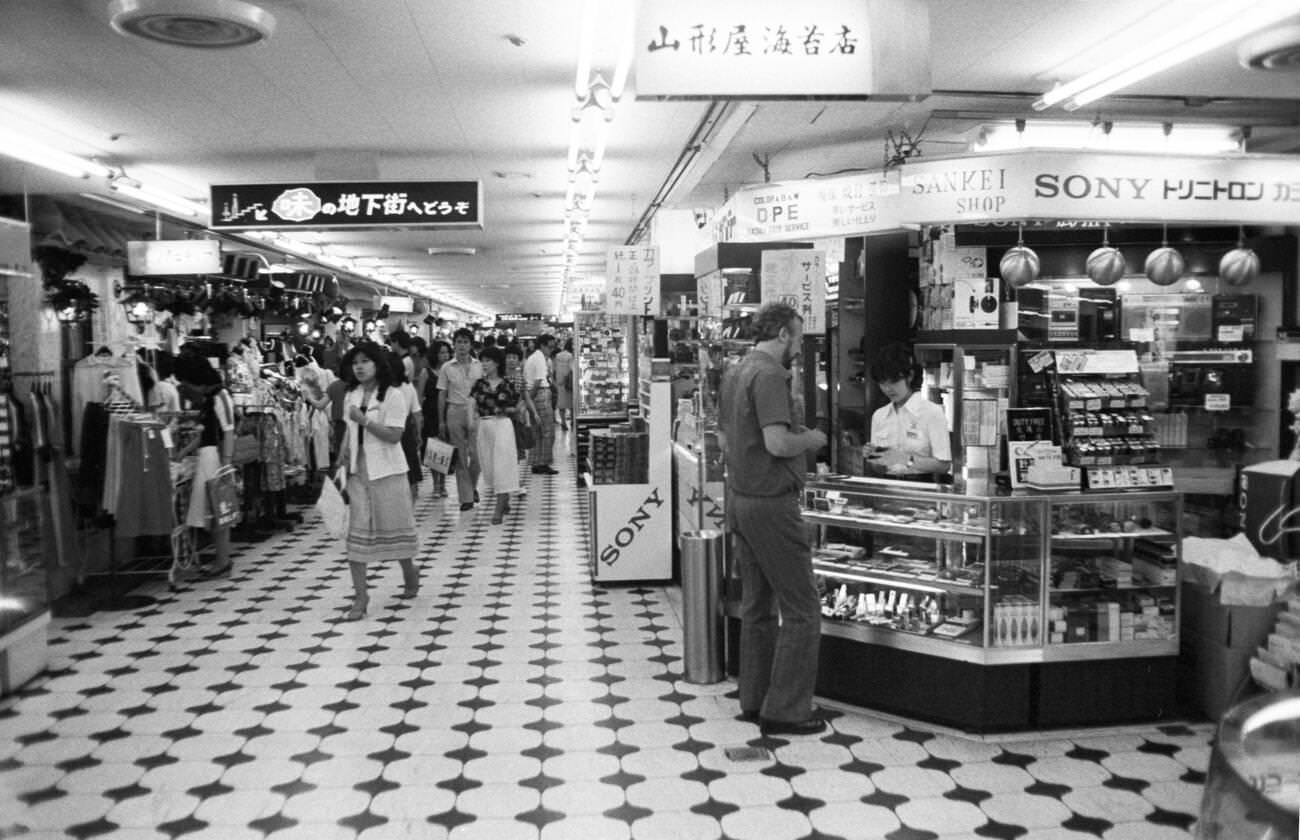
Japanese electronics companies dominated both the domestic market and the global stage in the 1970s. Sony, Panasonic (sold under the Matsushita brand), and Toshiba were household names. Transistor radios, color televisions, and cassette players were changing how people listened to music and watched the news. Akihabara, Tokyo’s electronics district, overflowed with shops selling the latest gadgets. The Matsushita sign, visible across central Tokyo, was a constant reminder of just how deeply technology companies had woven themselves into the city’s identity.
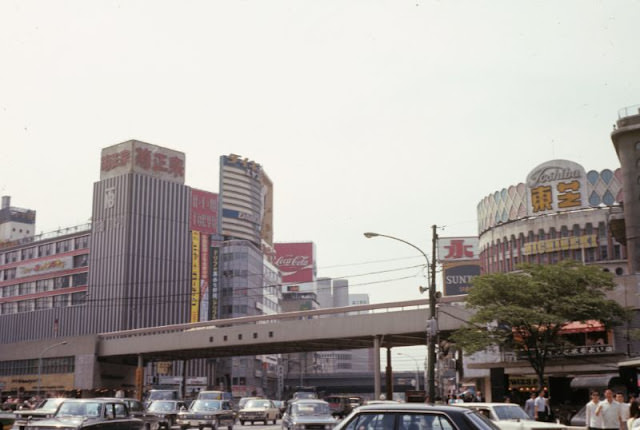
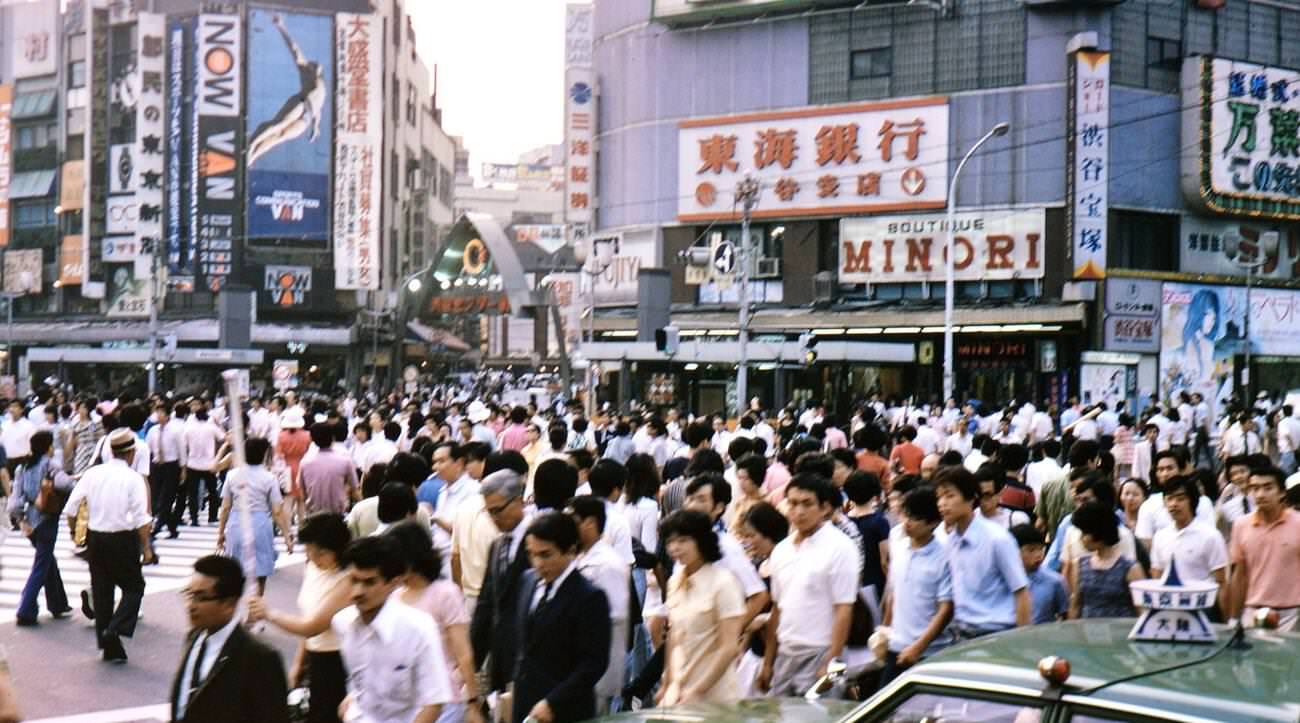
Few intersections in the world were as iconic in the 1970s as Shibuya Crossing. Thousands of pedestrians converged from every direction when the lights turned, crossing in a controlled mass before the traffic resumed. It was, and remains, one of the clearest visual expressions of Tokyo’s sheer population density.
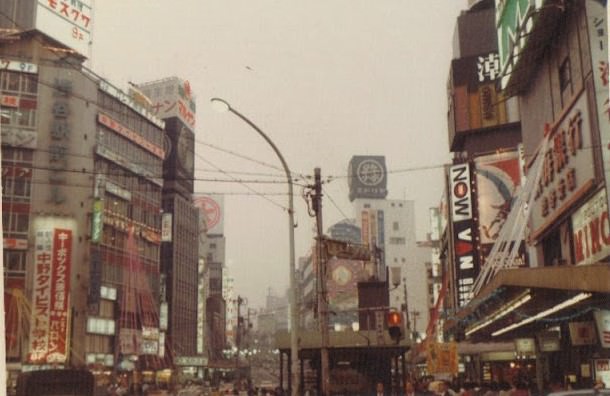
Tokyo’s food culture in the 1970s was diverse and deeply local. The Tsukiji fish market was the beating heart of the city’s seafood trade, where vendors auctioned off massive hauls each morning before dawn. Nearby sushi counters served fish that had been alive hours earlier. Ramen shops were gaining nationwide popularity, drawing long lines with their rich broths and hand-pulled noodles. Street markets like Ameyoko offered everything from produce to dry goods at bargain prices.
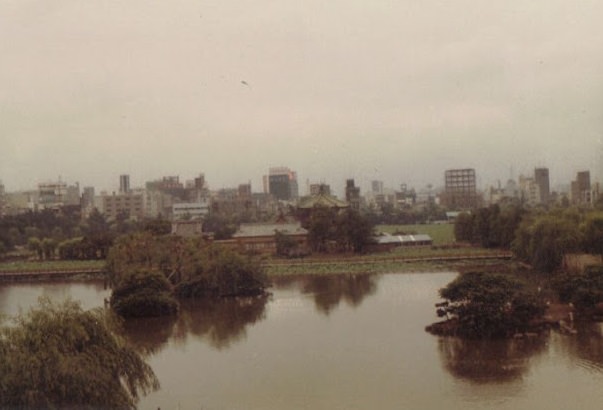
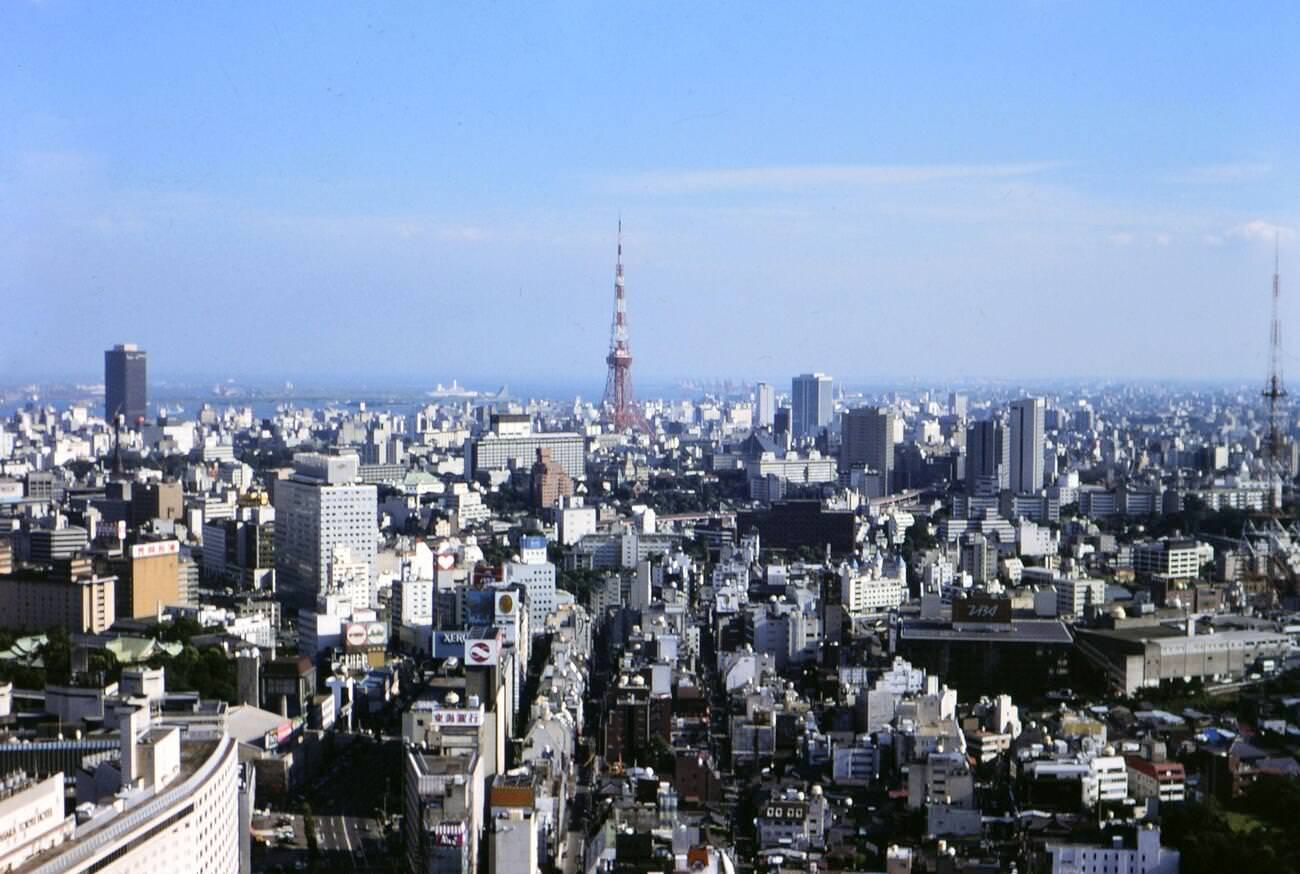
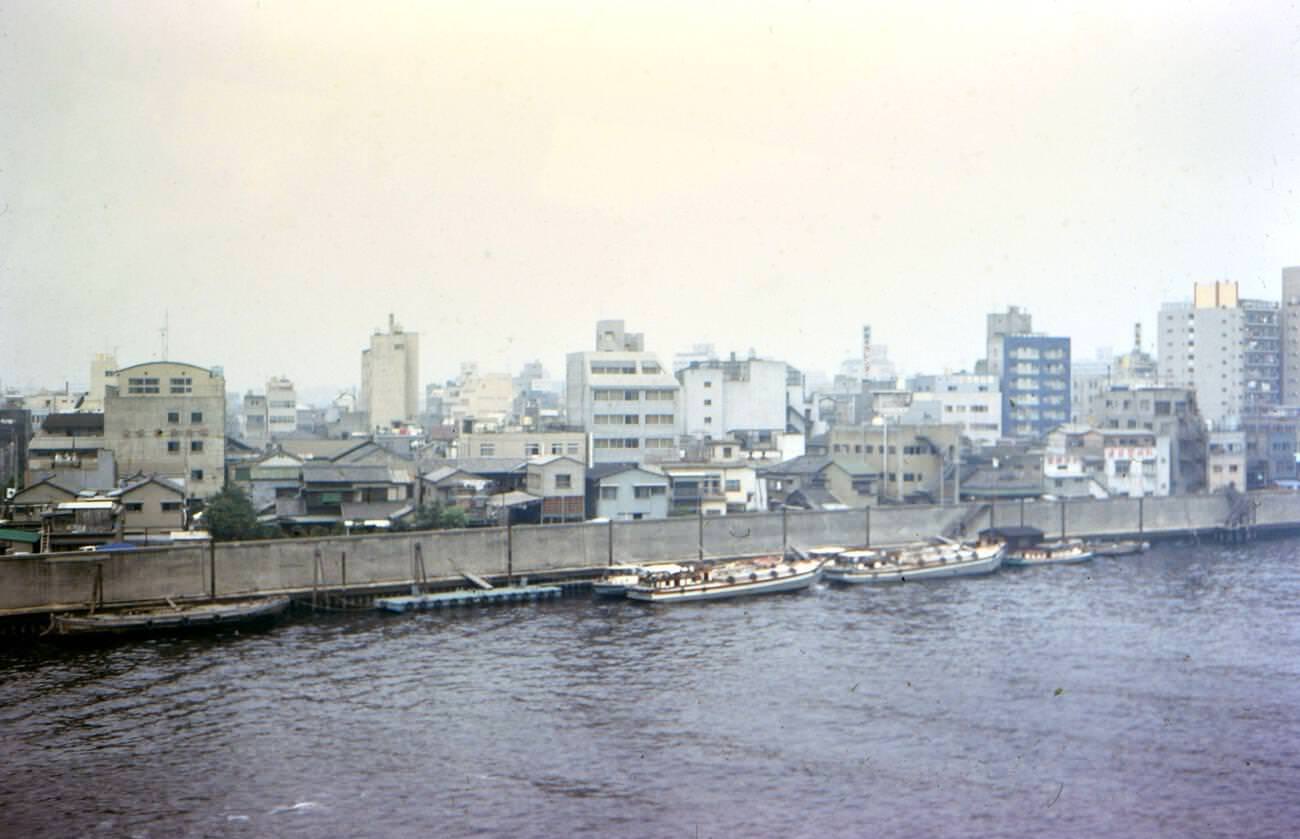
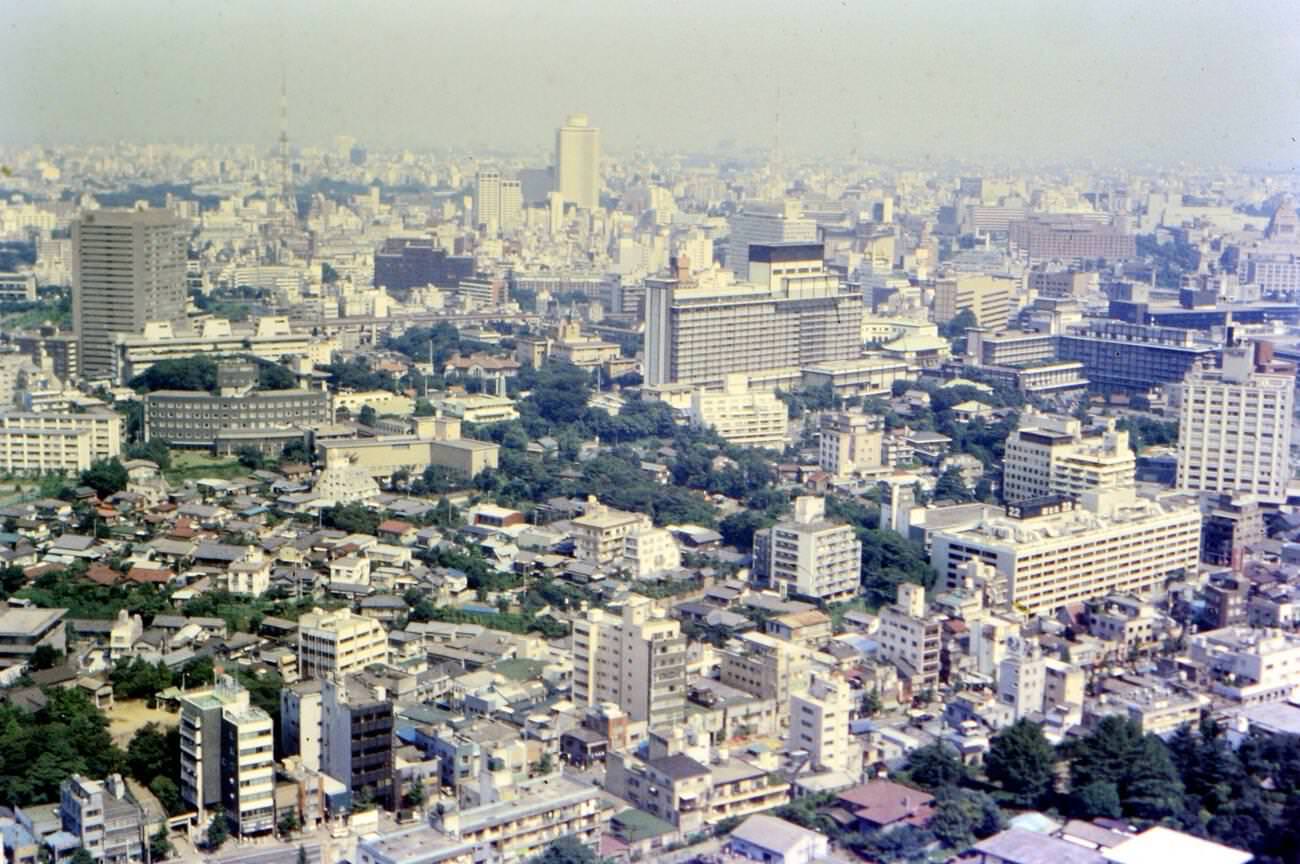
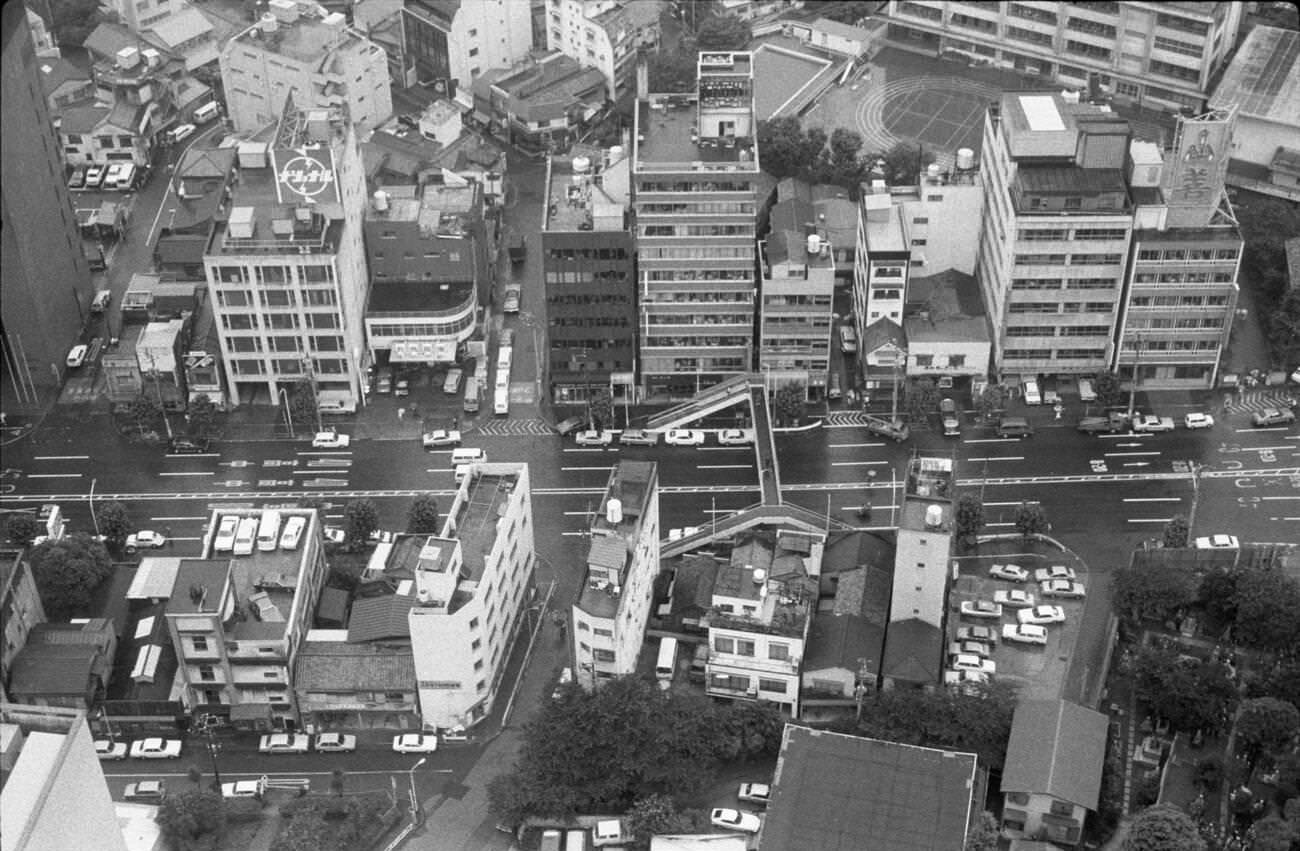
From above, Tokyo’s scale was almost impossible to fully absorb. Looking out from Ueno Park, the city stretched to the horizon in every direction — a dense grid of rooftops, elevated highways, and rail lines. Parks like Ueno and Shinjuku Gyoen gave residents small but vital green spaces within the concrete sprawl.
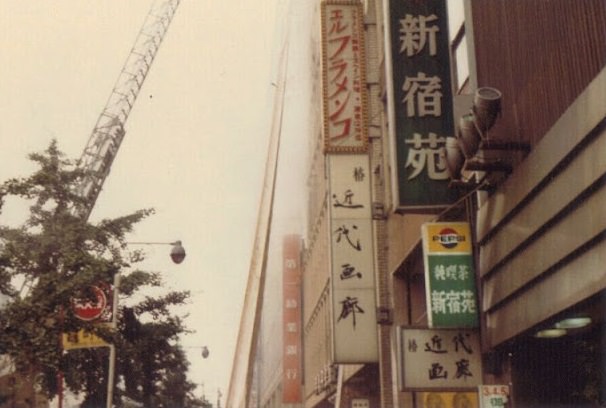
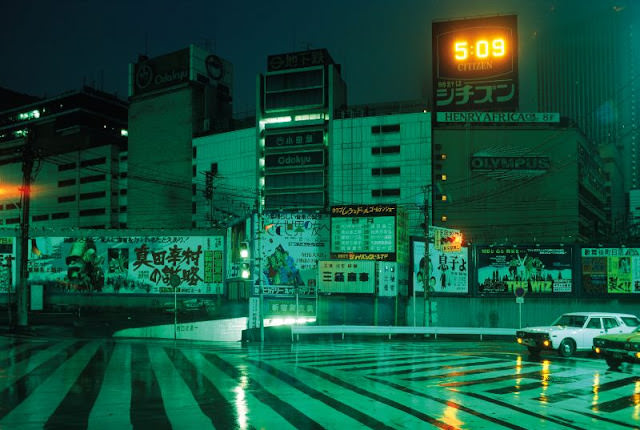
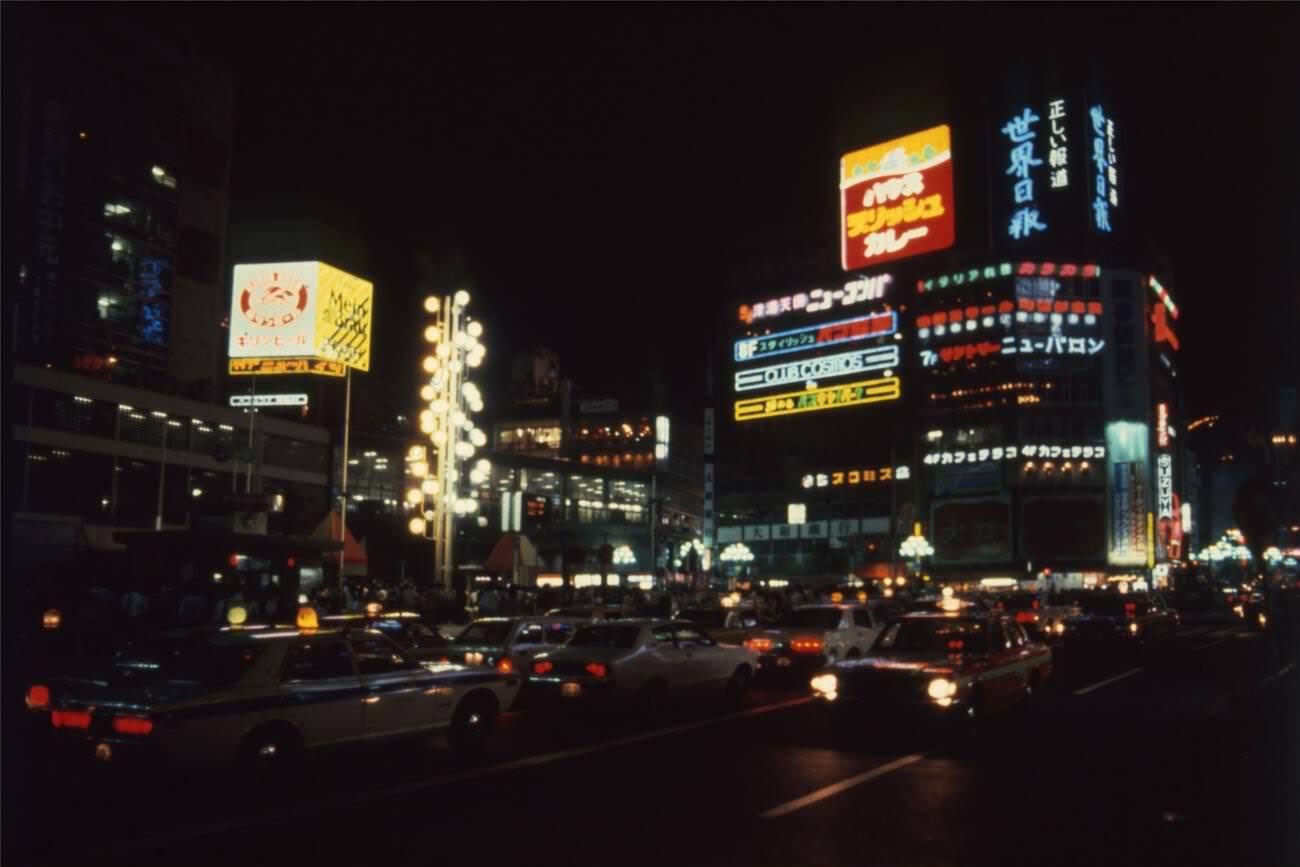
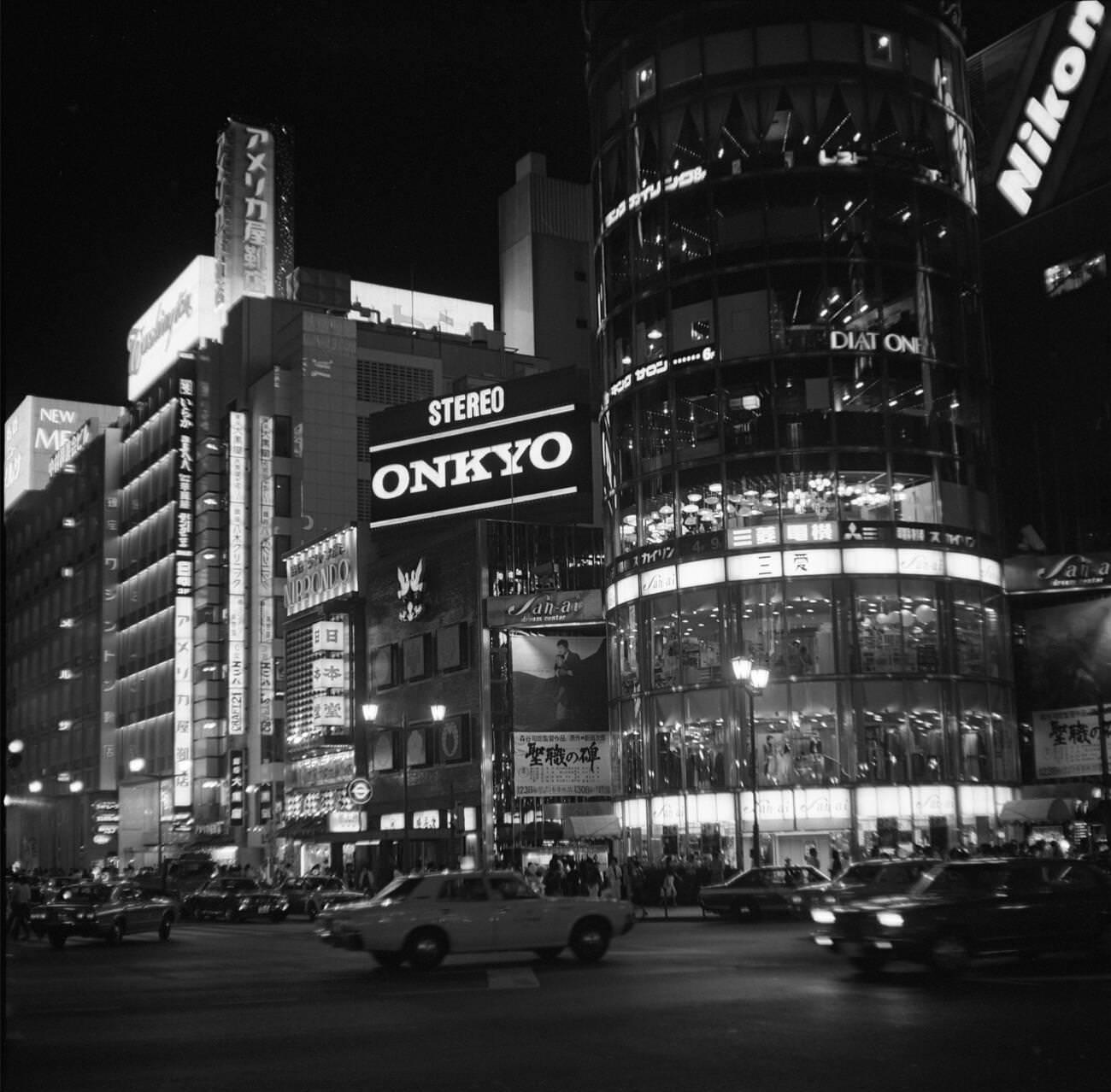
By the mid-1970s, Shibuya had grown into one of Tokyo’s most energetic commercial centers. The crossing that had already become a landmark drew even thicker crowds as more shops, restaurants, and entertainment venues opened around it. Nearby Kabukicho, Shinjuku’s entertainment district, lit up each night with neon signs advertising bars, clubs, and theaters.
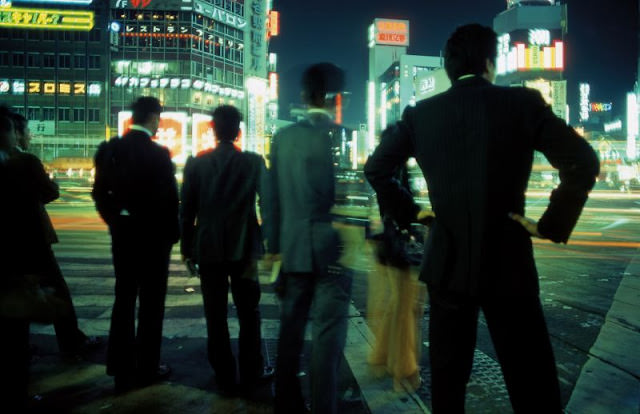
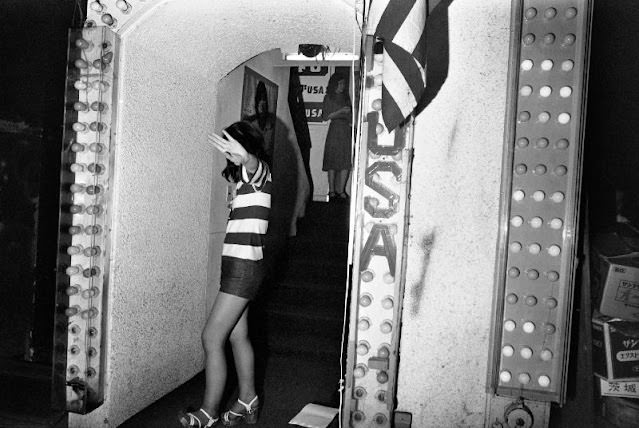
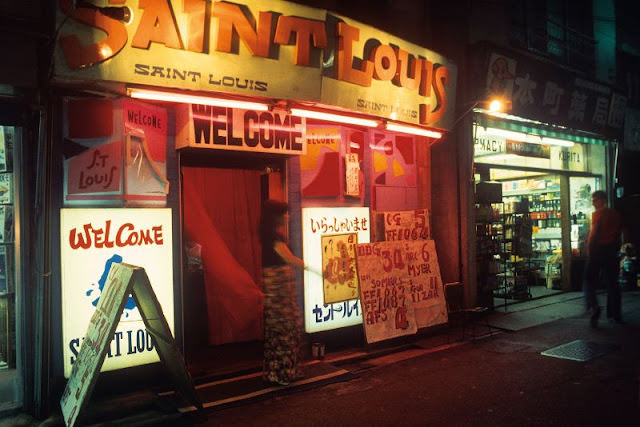
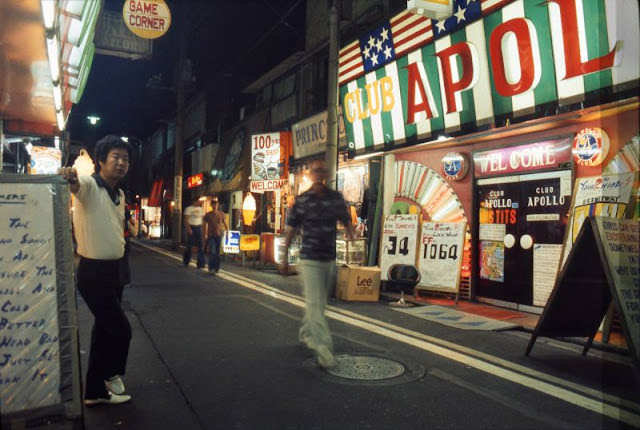
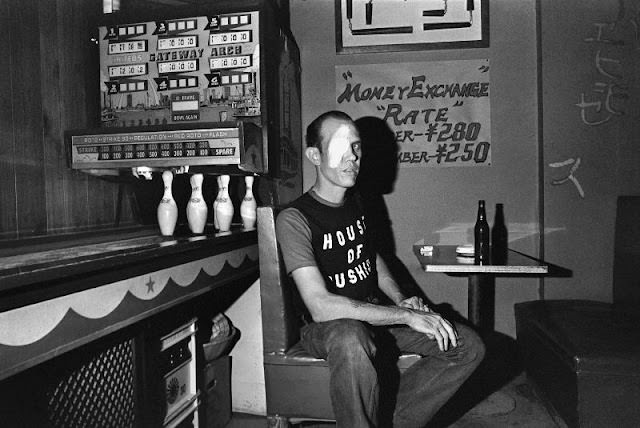
Yokosuka, a port city just south of Tokyo, had a strong American military presence throughout the 1970s. Bars and clubs catering to U.S. Navy personnel lined its streets, creating a cultural crossroads where Japanese locals and American servicemen mixed nightly. The Saint Louis Bar and Club Apollo were part of a strip that pulsed with music and activity well into the early morning hours.
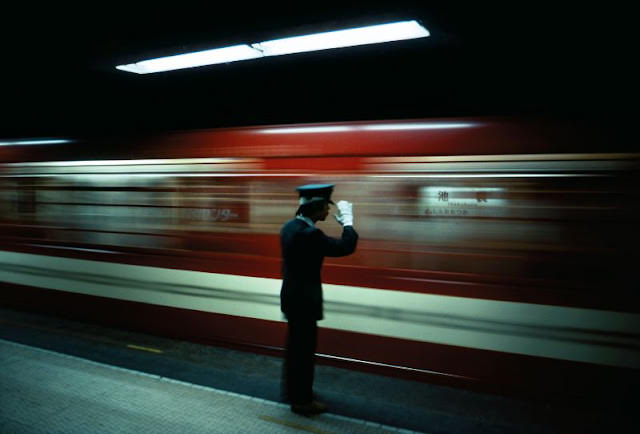
Tokyo’s rail network was one of the busiest on the planet. Platform conductors at major stations like Ikebukuro directed passengers, managed crowds, and ensured trains departed on schedule. During rush hour, the pressure on staff was intense. White-gloved platform workers became a defining image of Tokyo’s commuter culture — calm and precise in the face of enormous daily crowds.
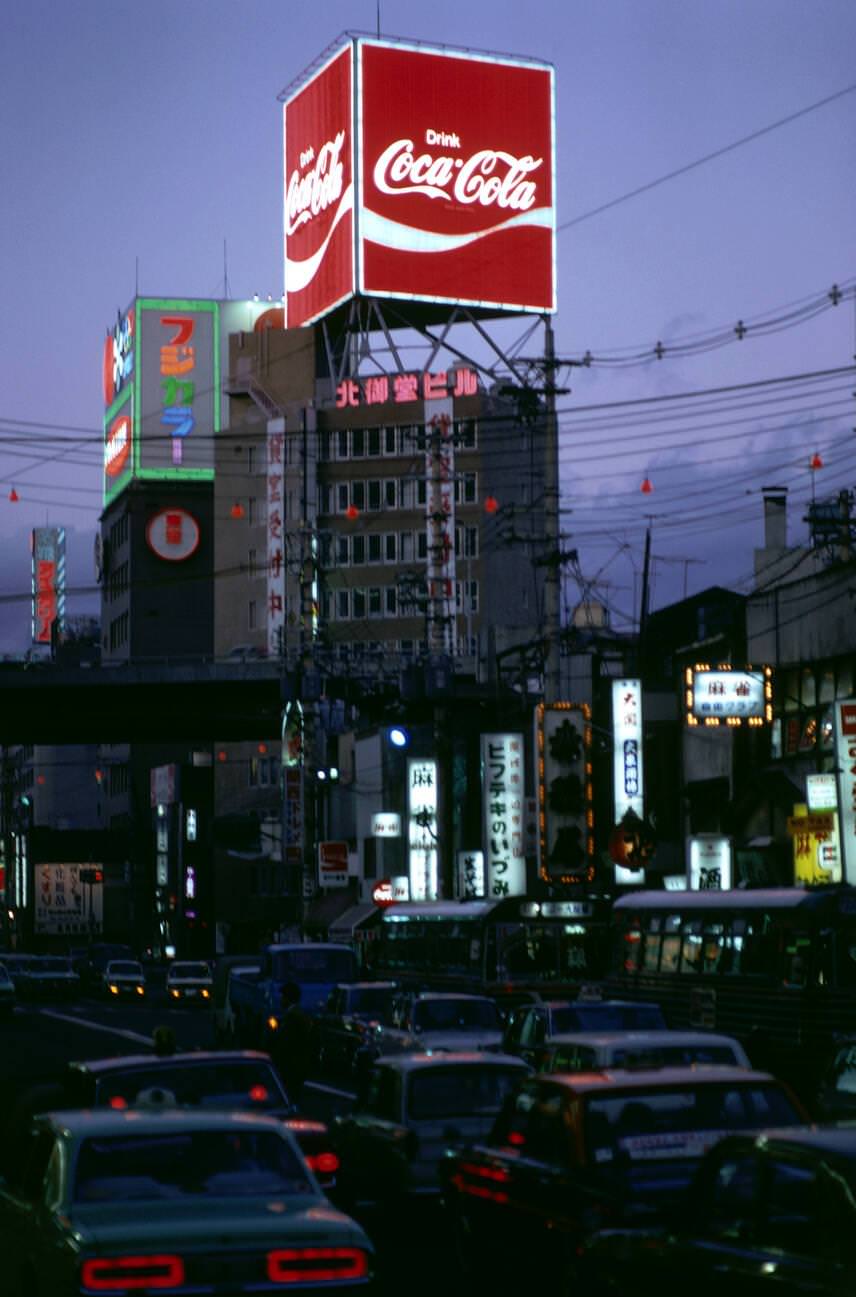
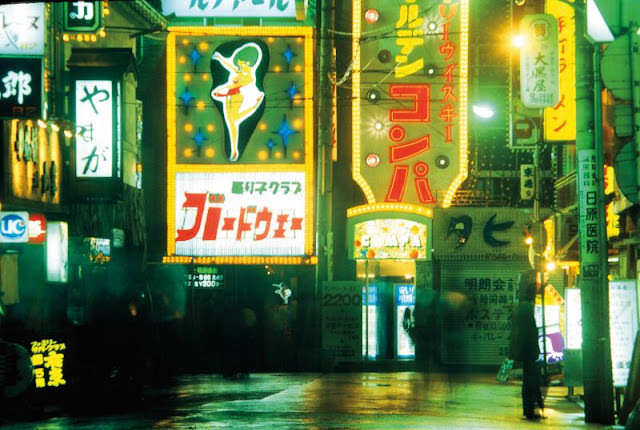
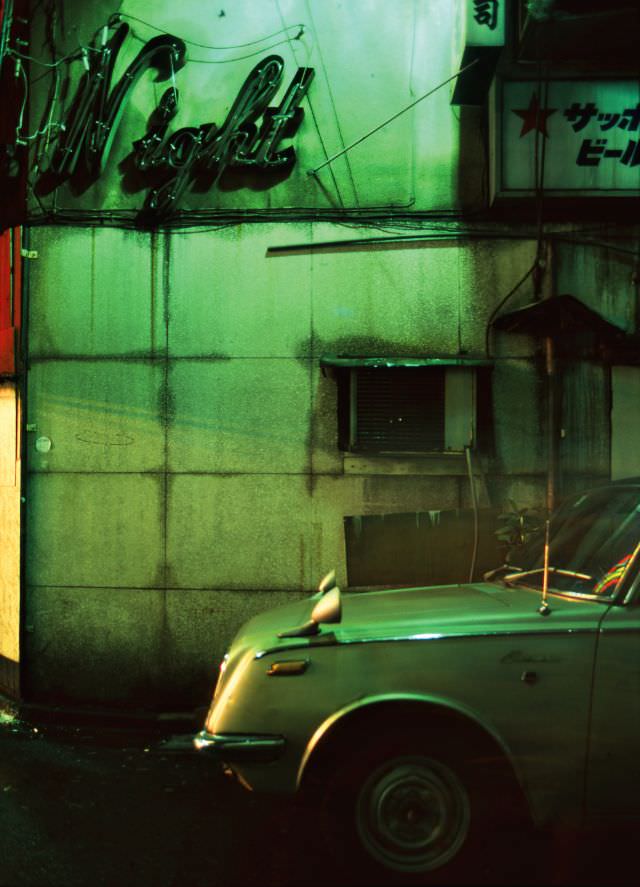
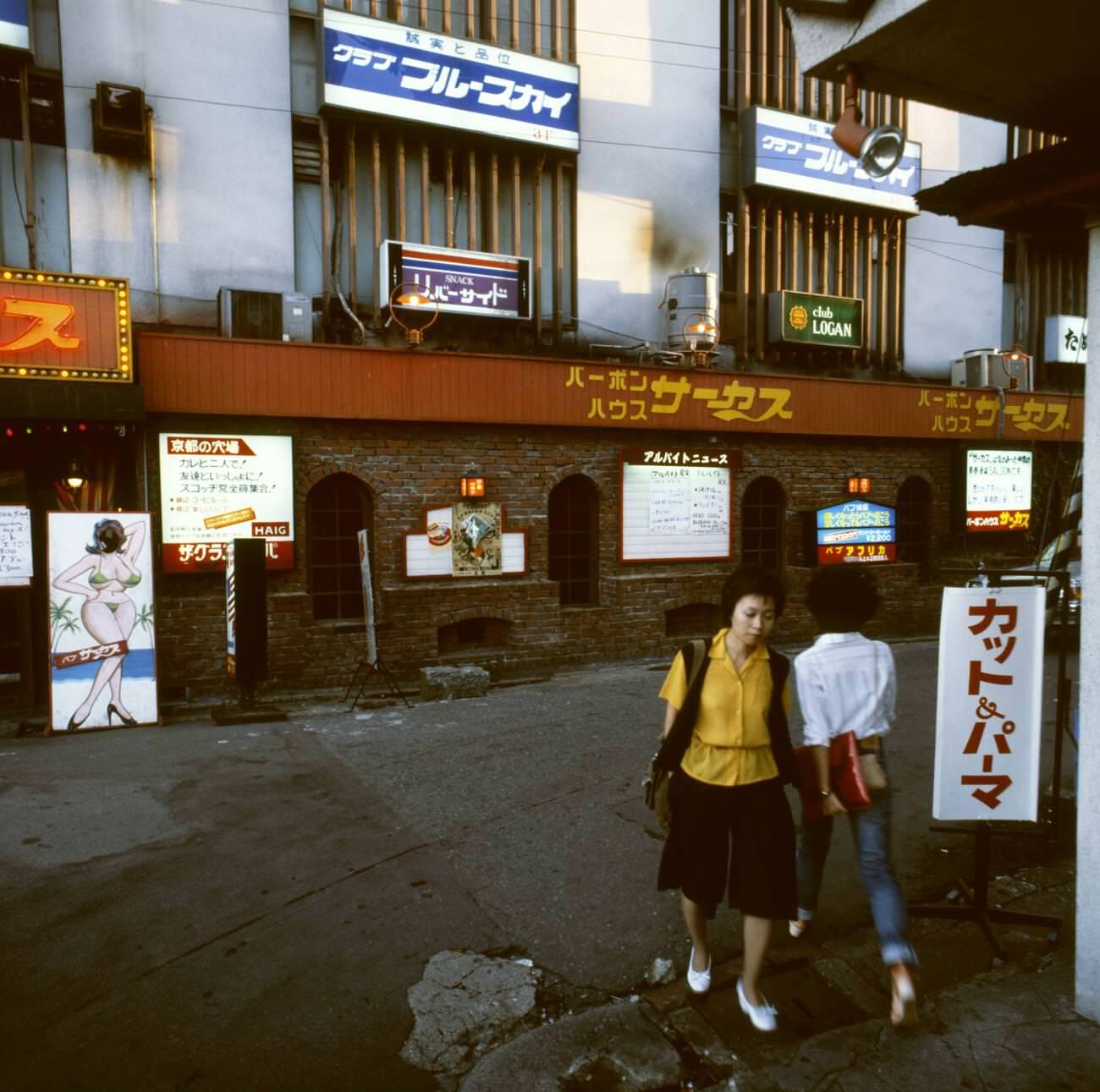
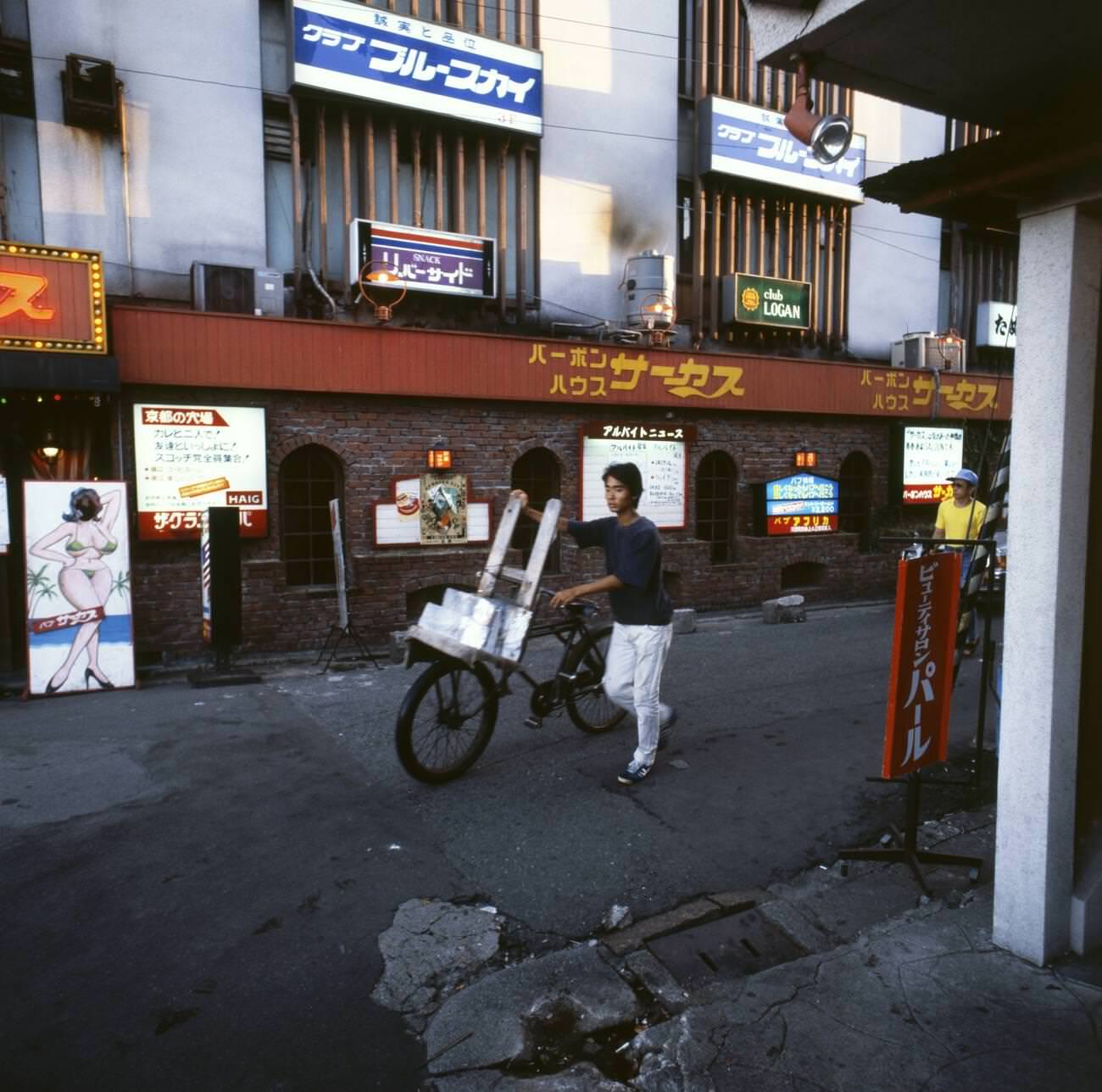
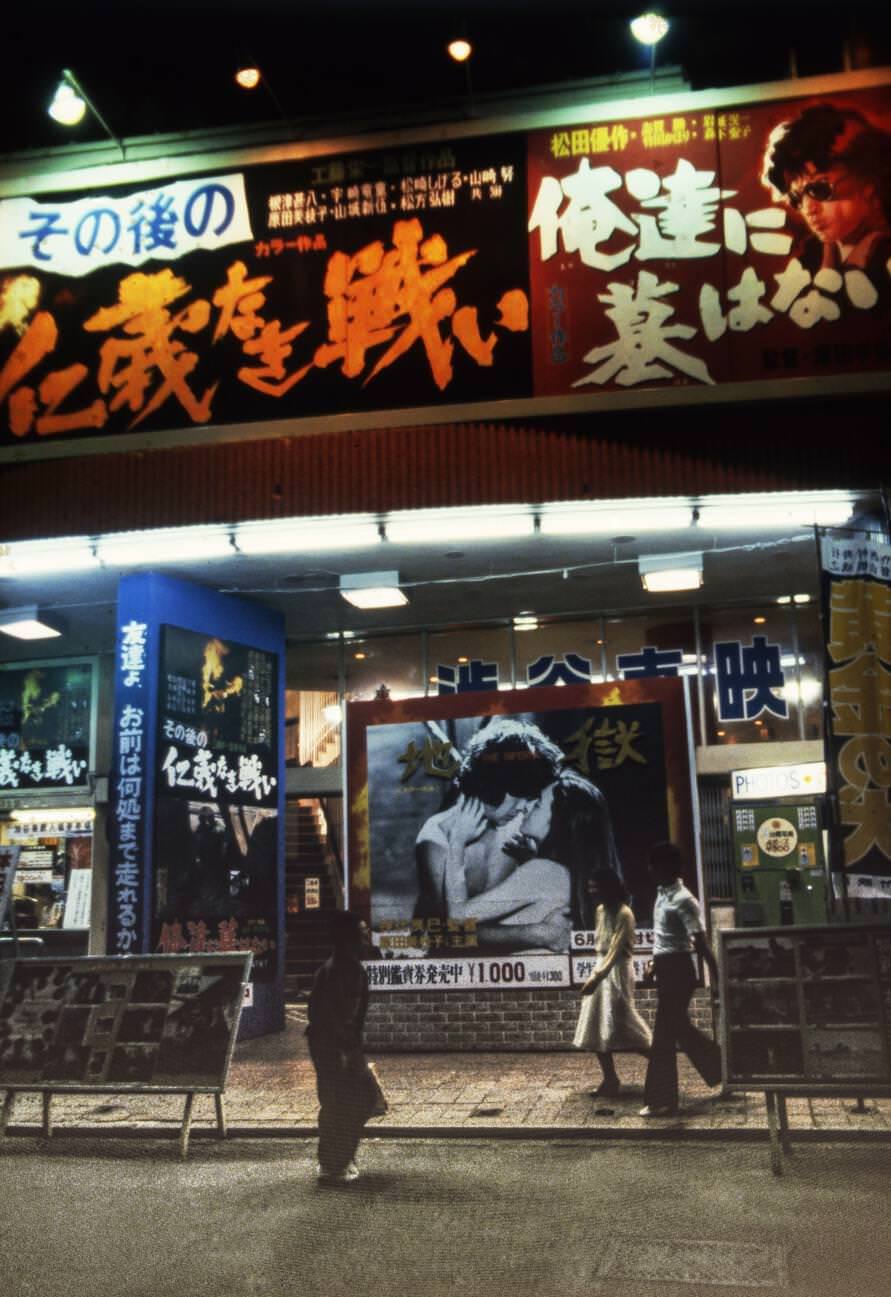
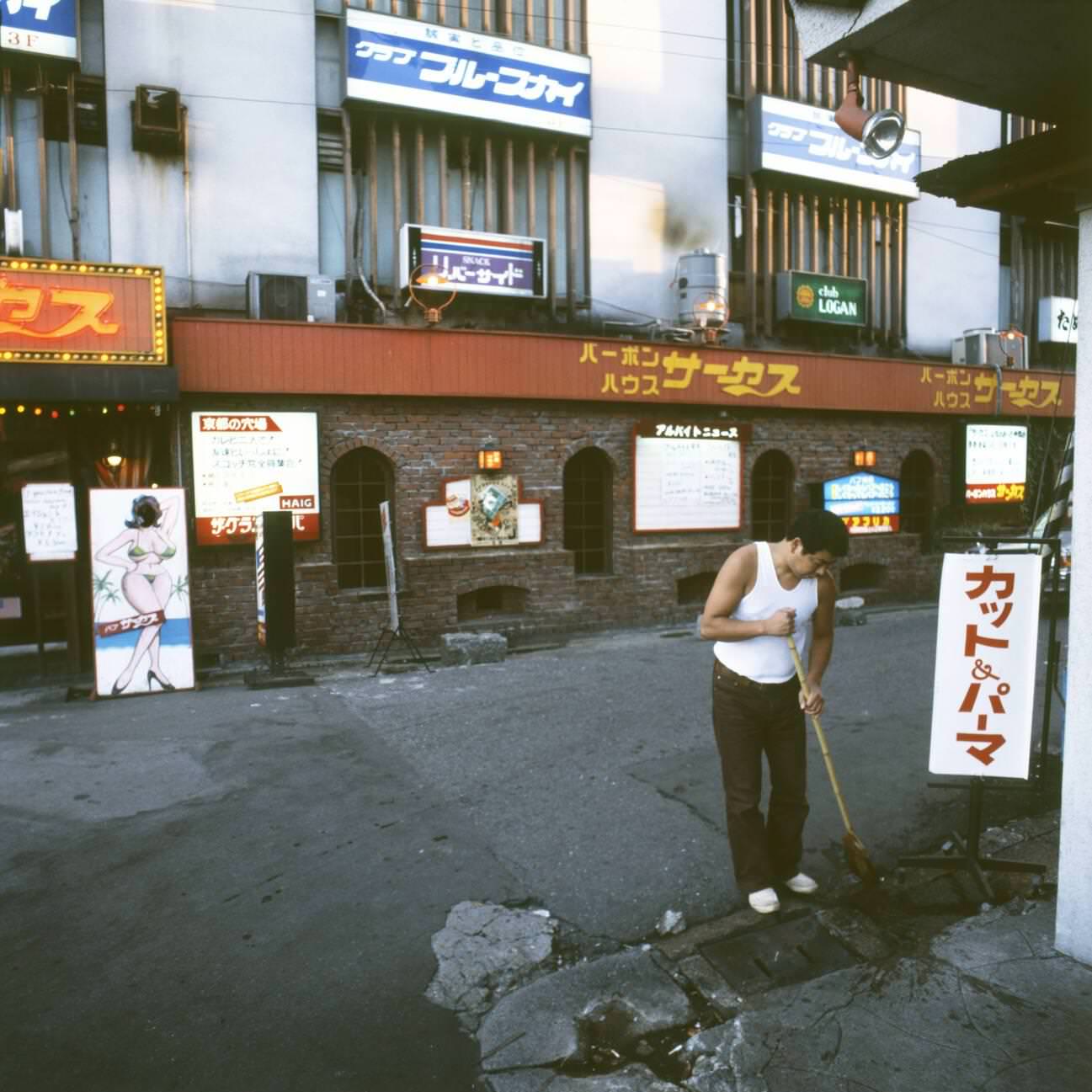
Kabukicho after dark was a world of its own. Neon signs in red, yellow, and blue stacked on top of each other, advertising clubs, hostess bars, and pachinko parlors. It was Tokyo’s most famous nightlife district, drawing everyone from salarymen to tourists to the city’s organized crime networks, known as yakuza.
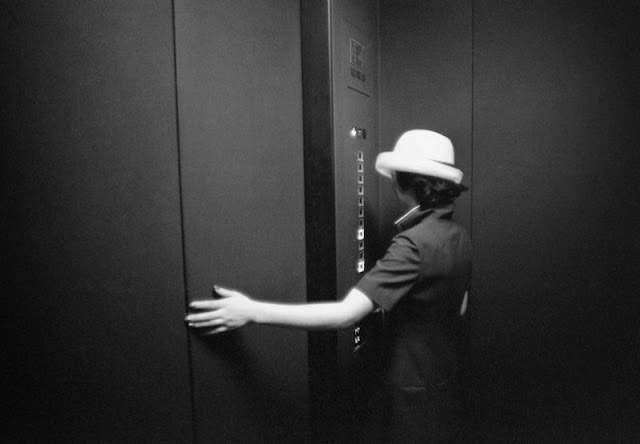
Department stores in 1970s Tokyo were elaborate operations. White-gloved elevator attendants guided customers between floors, announcing each stop with practiced formality. These attendants — almost always young women in crisp uniforms — were a standard feature of upscale retail in Japan. Their presence reflected the country’s deep emphasis on customer service and professional presentation.
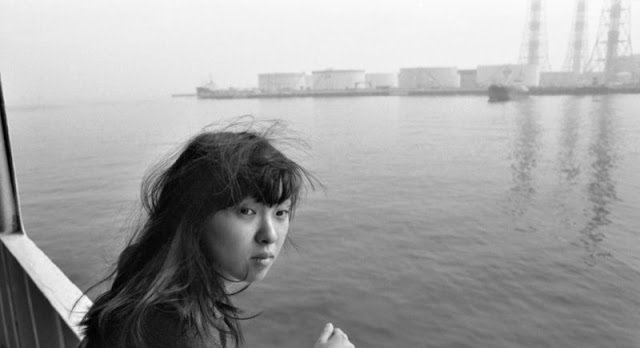
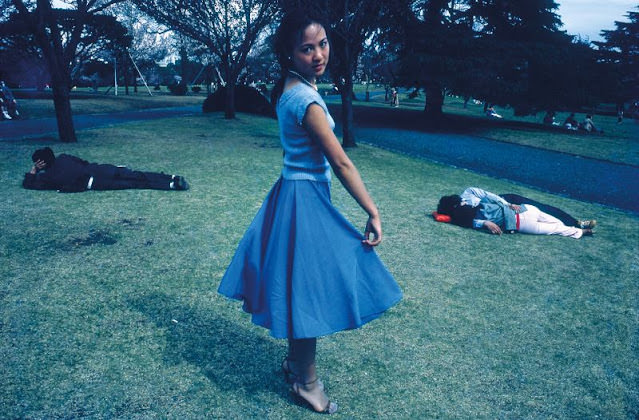
Yoyogi Park became a gathering place for Tokyo’s youth in the late 1970s. On weekends, musicians, dancers, and fashion-conscious teenagers filled its open spaces. Rockabilly groups performed for whoever stopped to watch. The park offered a free stage where young people could experiment with identity and style far from the rigid expectations of school and work.
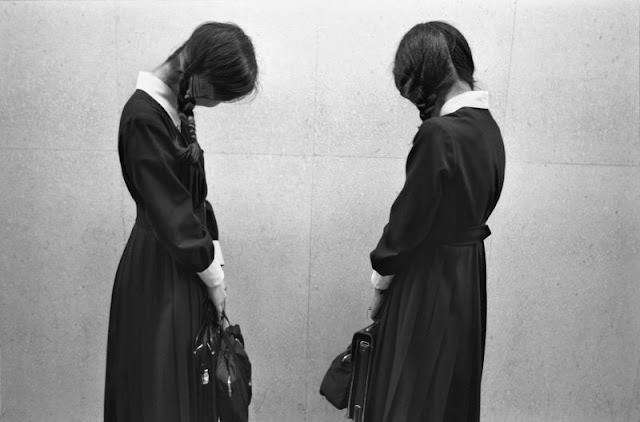
The yakuza were a visible, if underground, presence in Tokyo throughout the 1970s. Organized crime groups operated across the entertainment and construction industries, and formal rituals like greetings between members followed strict hierarchical codes. Neighborhoods like Koenji had reputations as areas where these networks operated openly.
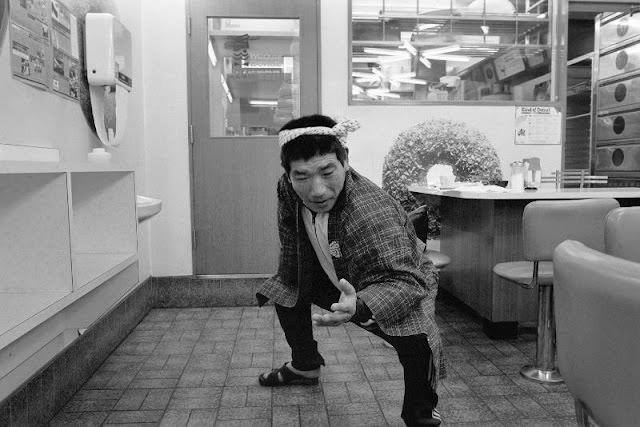
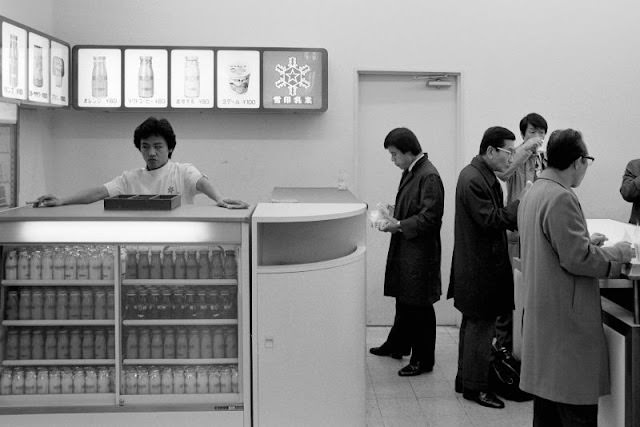
Milk bars and kissaten — Japanese-style coffee shops — were major fixtures of 1970s Tokyo street life. Young people treated these spots as social hubs where they could meet friends, listen to music, and linger for hours over a single drink. Cafés in Shibuya and Shinjuku developed devoted regulars and distinct personalities, some leaning into jazz, others into rock or classical music piped through quality speakers.
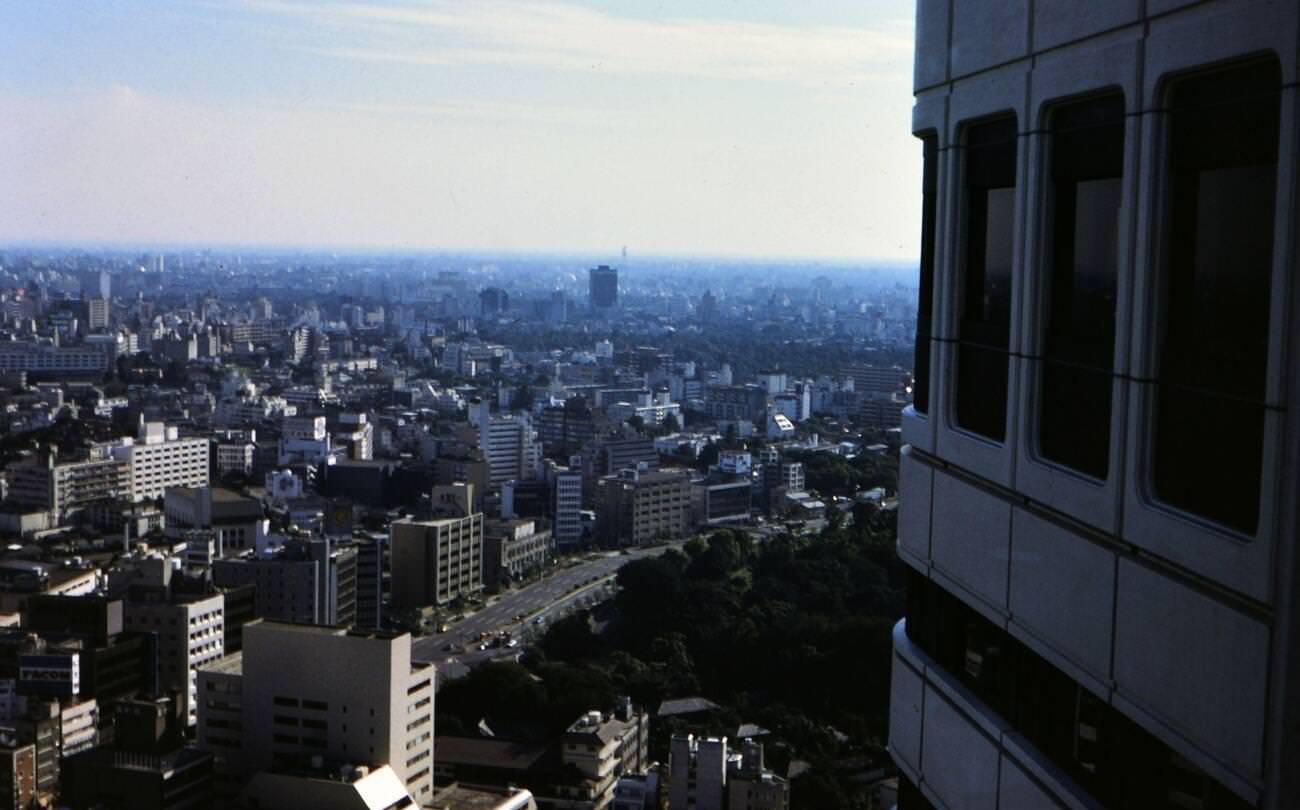
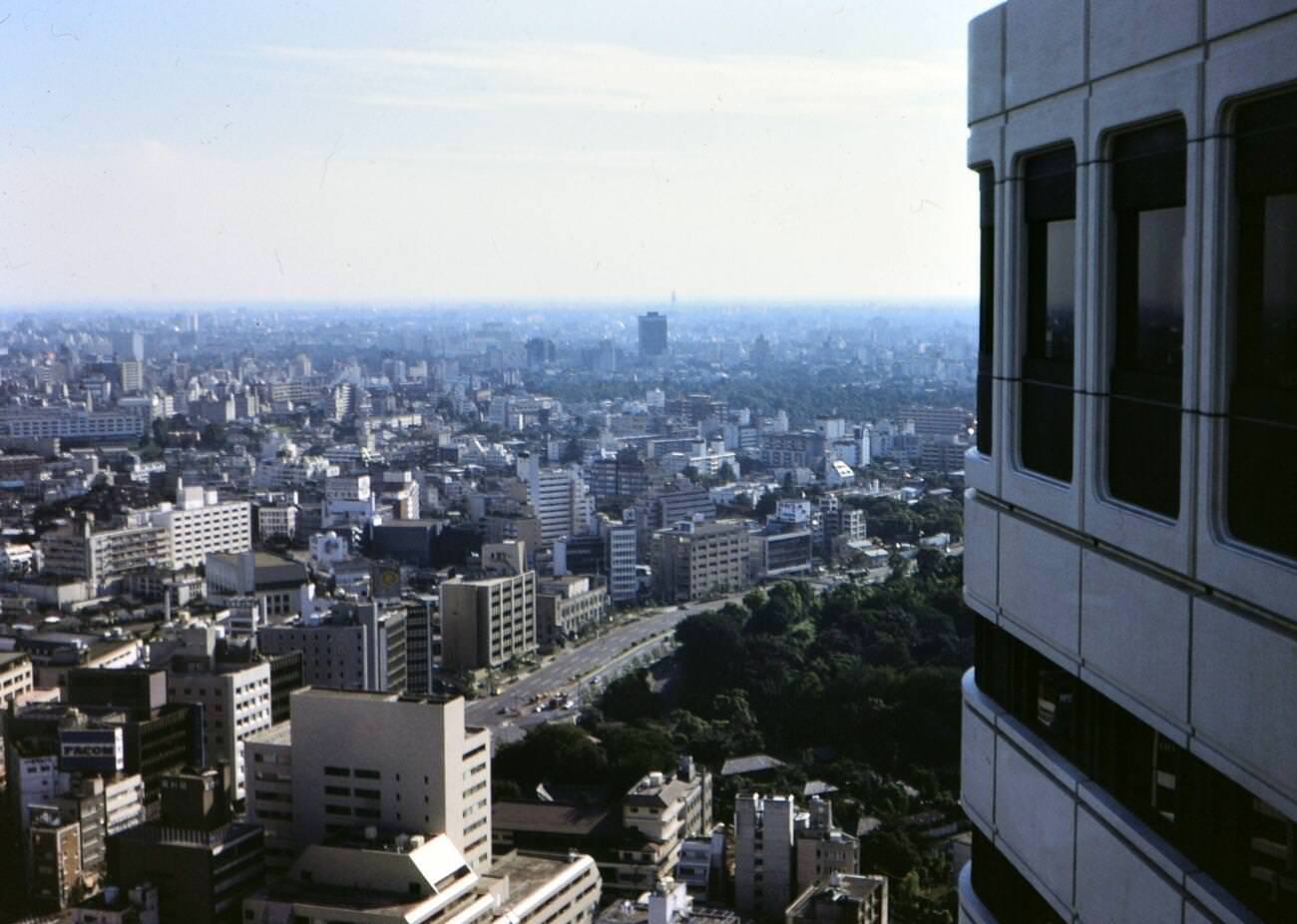
From the upper floors of the New Otani Hotel, Tokyo’s sheer size was overwhelming. The city spread out below in every direction — a sea of low-rise buildings punctuated by elevated highways and the occasional tower. The New Otani, one of Tokyo’s grandest hotels when it opened in 1964 ahead of the Olympics, remained a premier vantage point throughout the 1970s.
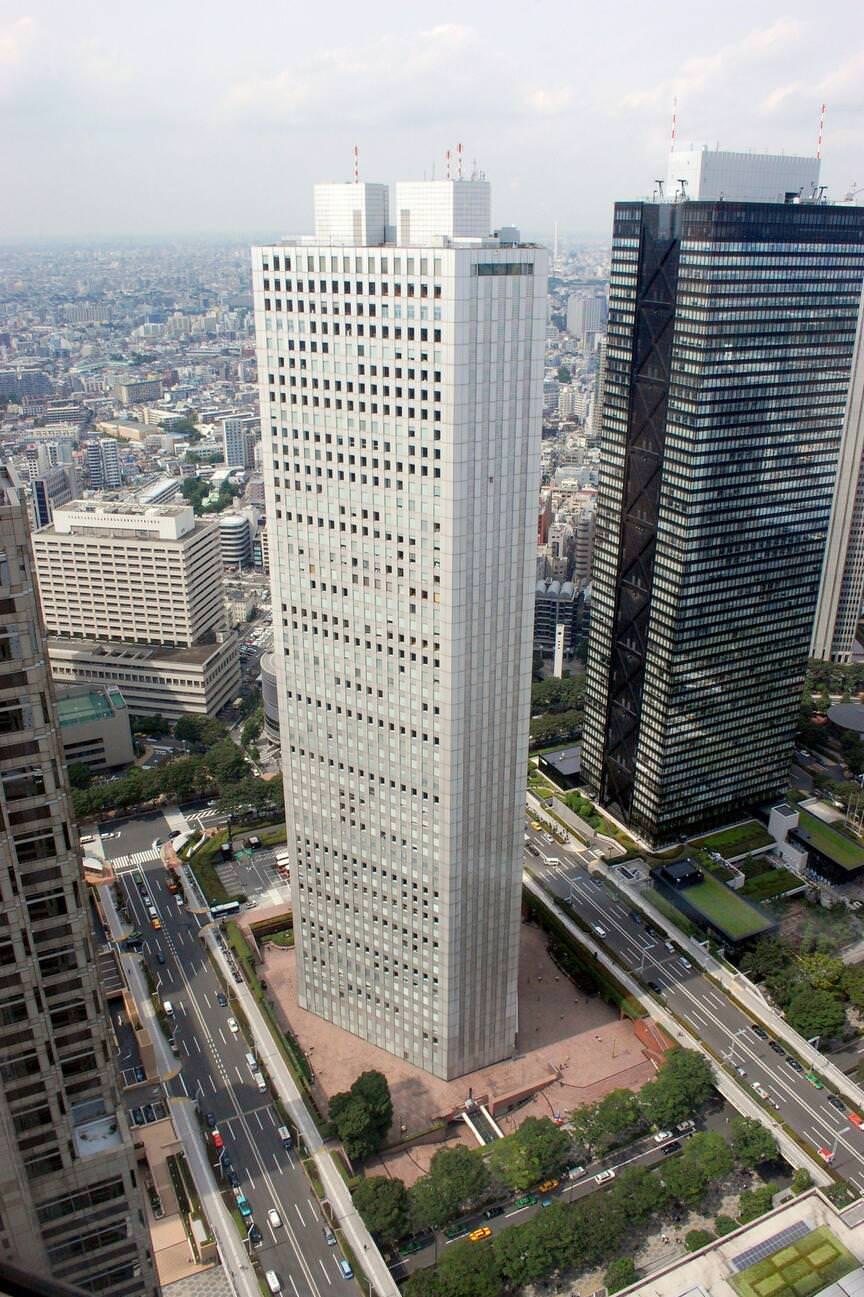
Shinjuku’s skyline transformed dramatically during the 1970s. The Sumitomo Building, completed in 1974, rose 52 stories above the western exit of Shinjuku Station, joining a cluster of new skyscrapers that turned the neighborhood into Tokyo’s emerging business district. These towers were a direct product of the city’s construction boom, fueled by corporate expansion and rising land values.
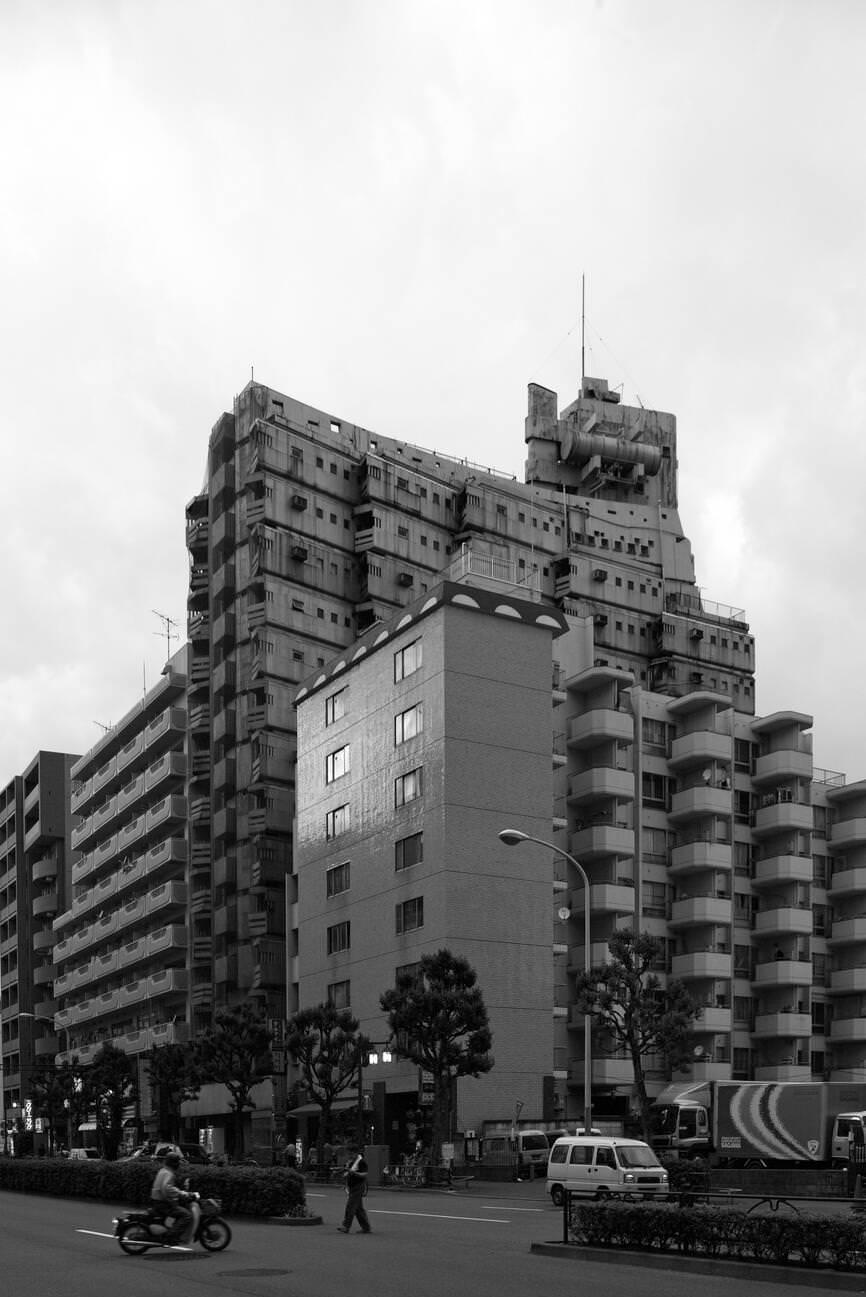
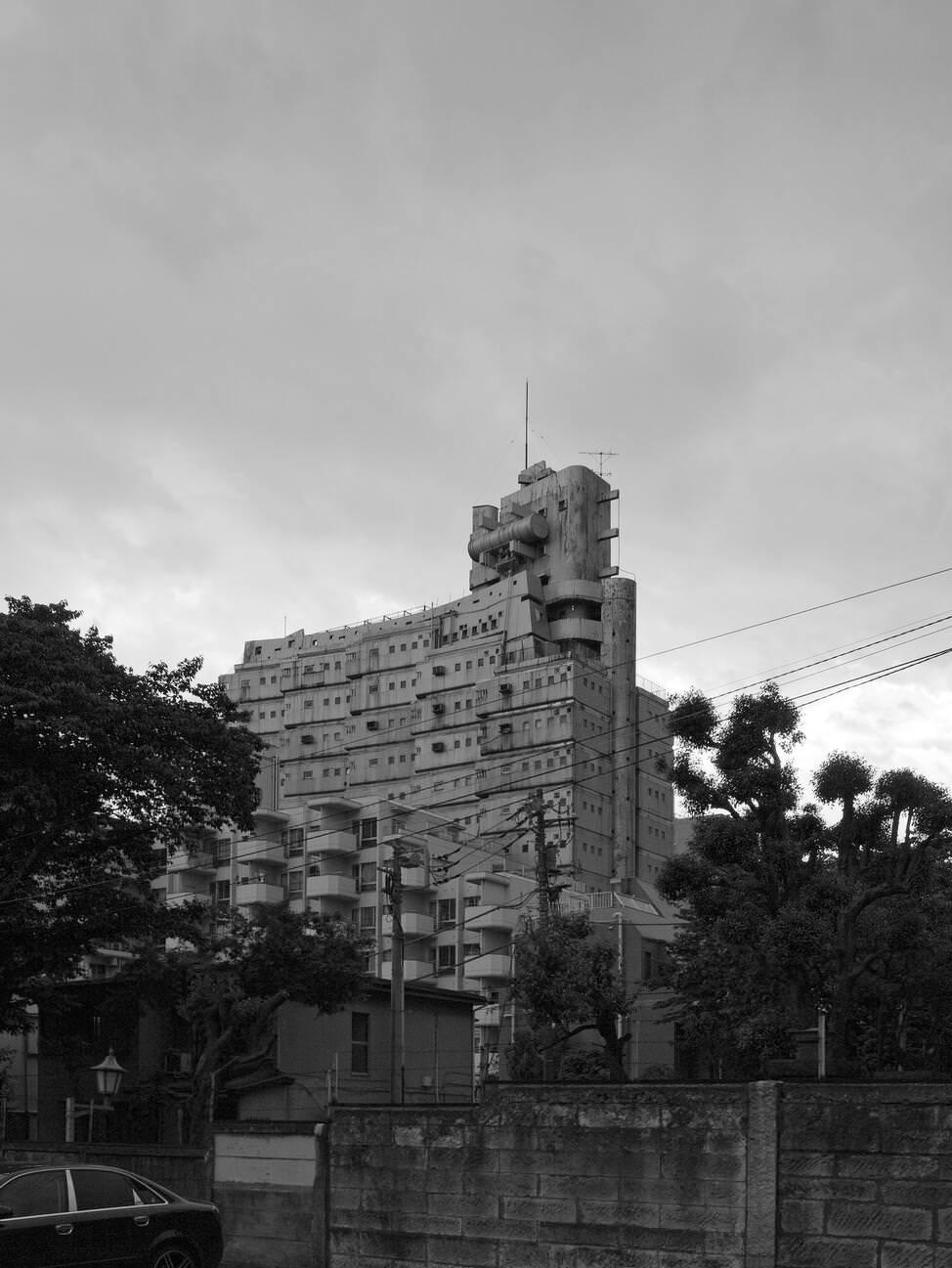
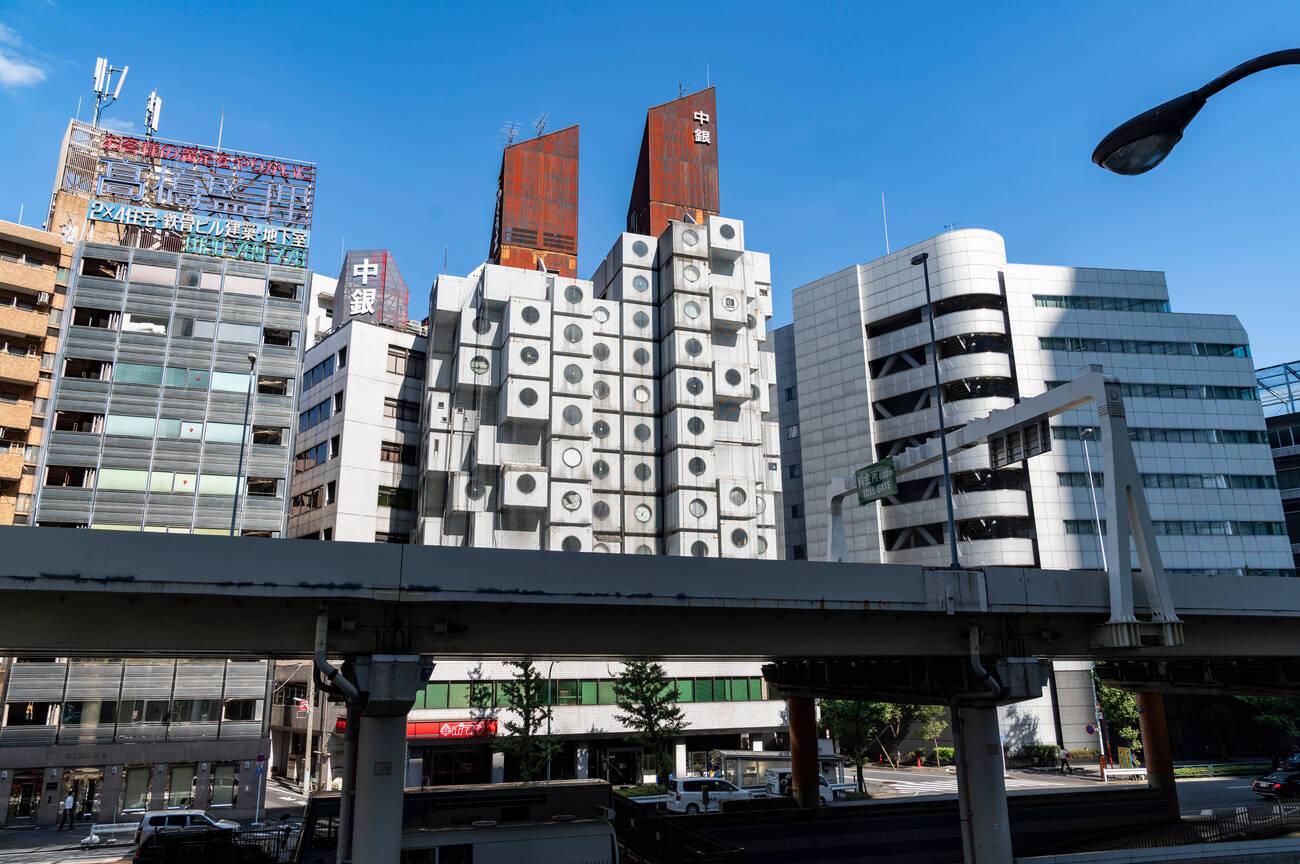
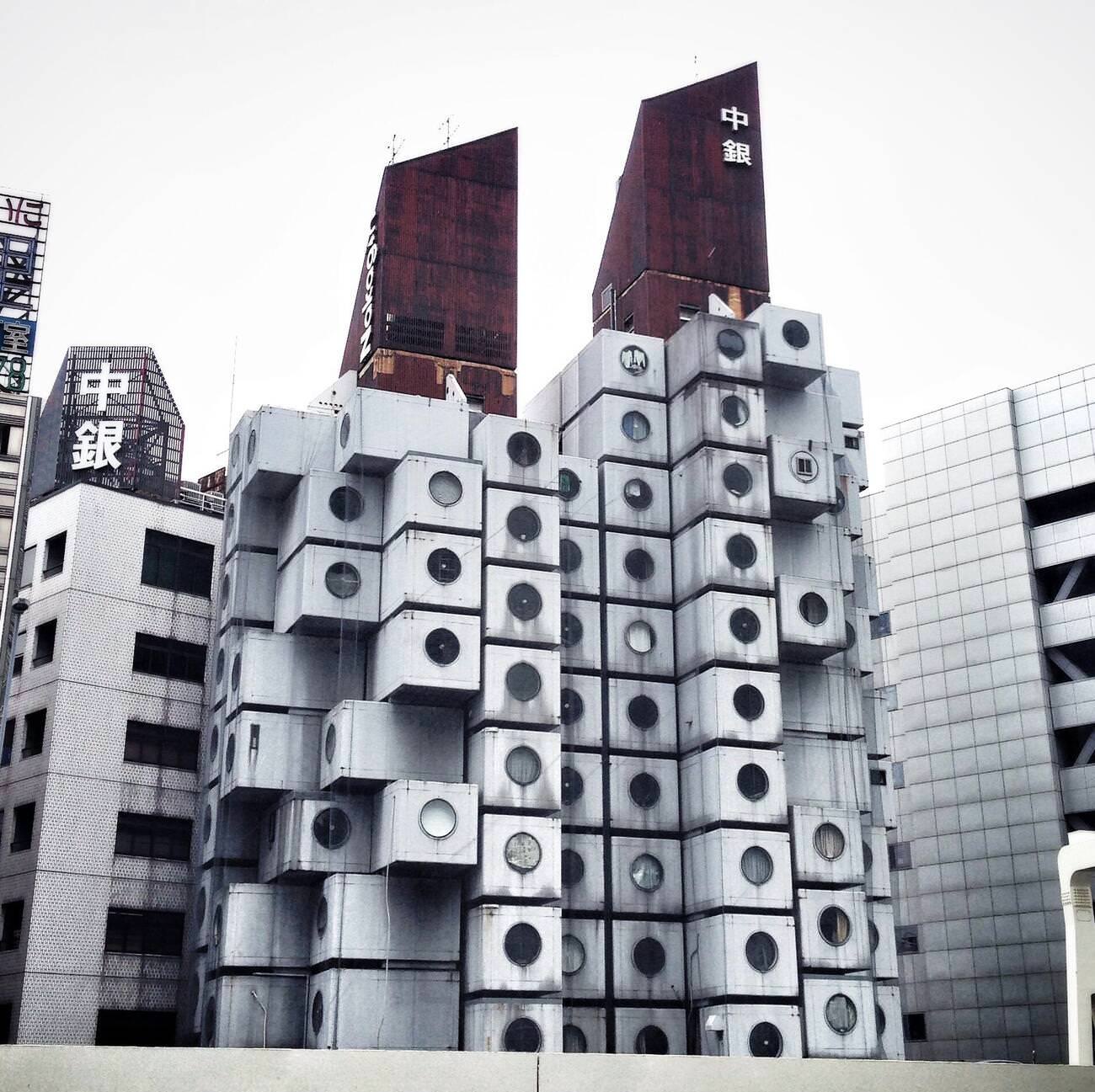
Architect Yoji Watanabe’s New Sky Building in Shinjuku stood out in a city full of bold structures. Completed in 1970, its cylindrical form and distinctive water tower gave it an unmistakable silhouette. It was one of several buildings in 1970s Tokyo that pushed architectural boundaries, alongside Kisho Kurokawa’s Nakagin Capsule Tower in Chuo-ku, completed in 1972. The Nakagin was built from 140 detachable capsule units, each designed as a self-contained living space — a radical idea that put Tokyo at the forefront of experimental architecture.
Tokyo Tower, completed in 1958 and standing 333 meters tall, remained the city’s most recognizable landmark throughout the 1970s. Painted in white and international orange, it broadcast television and radio signals to the Tokyo metropolitan area. Its observation decks drew steady streams of visitors, offering panoramic views of the city in every direction.
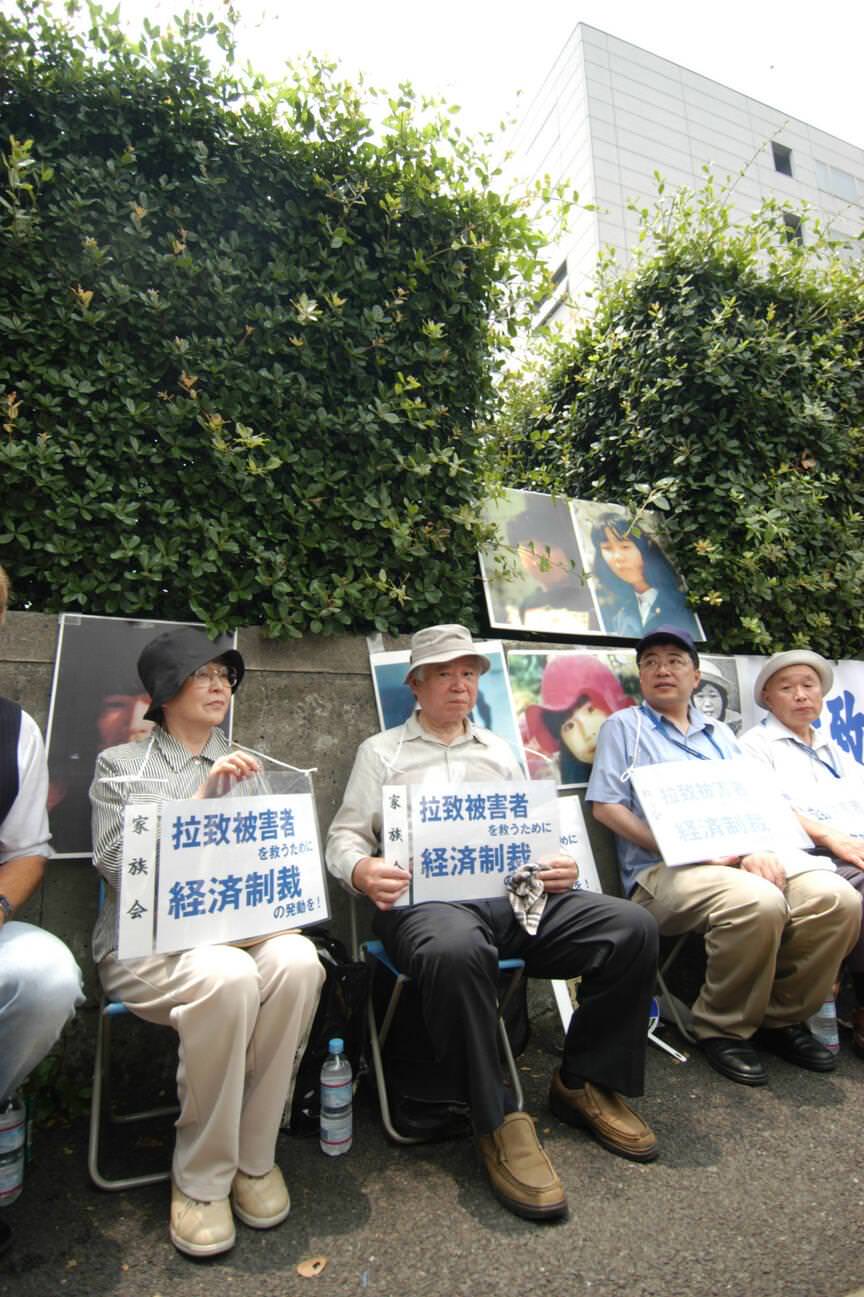
The 1970s in Japan were also marked by painful political episodes. The abduction of Japanese citizens by North Korean agents began in this decade and left deep scars on many families. Shigeru Yokota and his wife Sakie, whose teenage daughter Megumi was abducted in 1977, spent years demanding government action. Their campaign drew wide public attention and put pressure on Japanese officials to confront North Korea over the abductions.
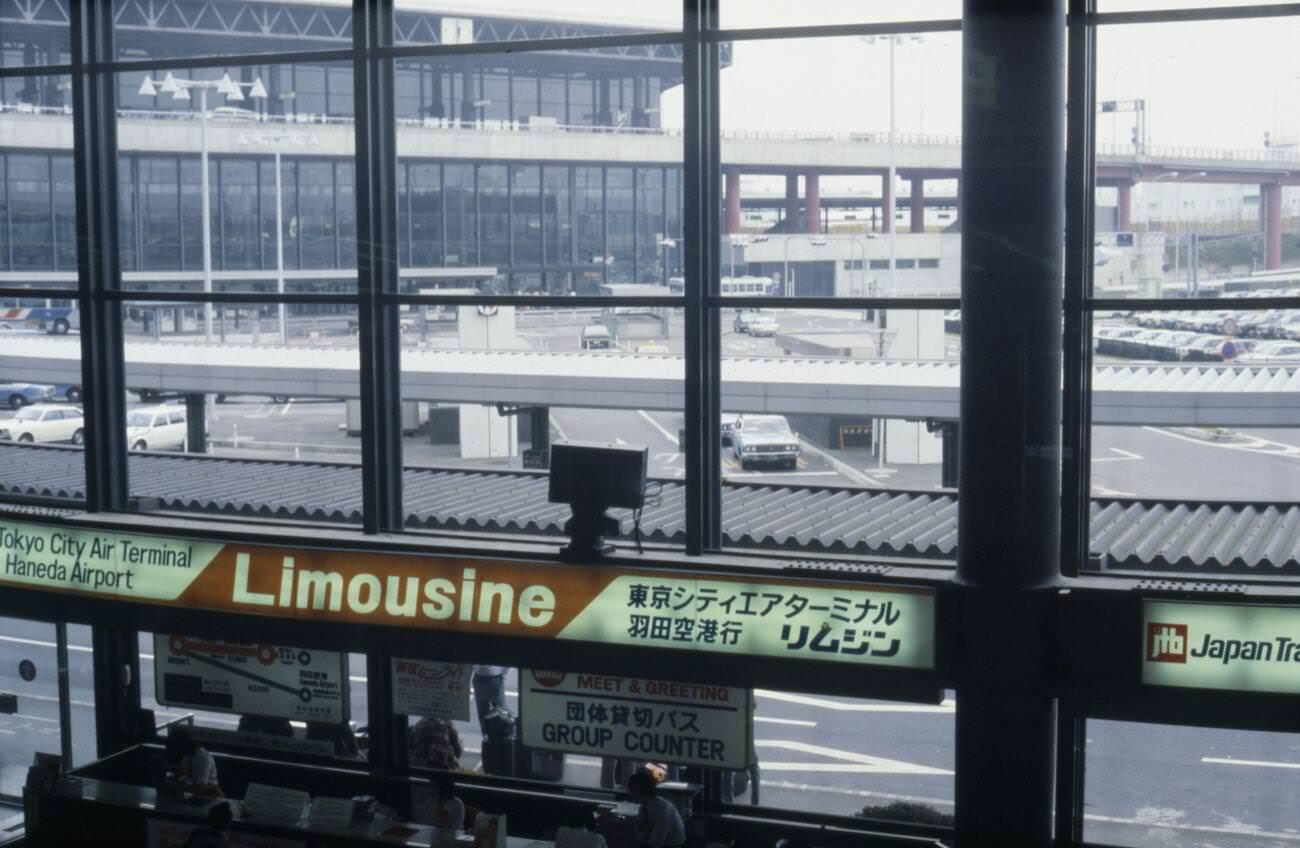
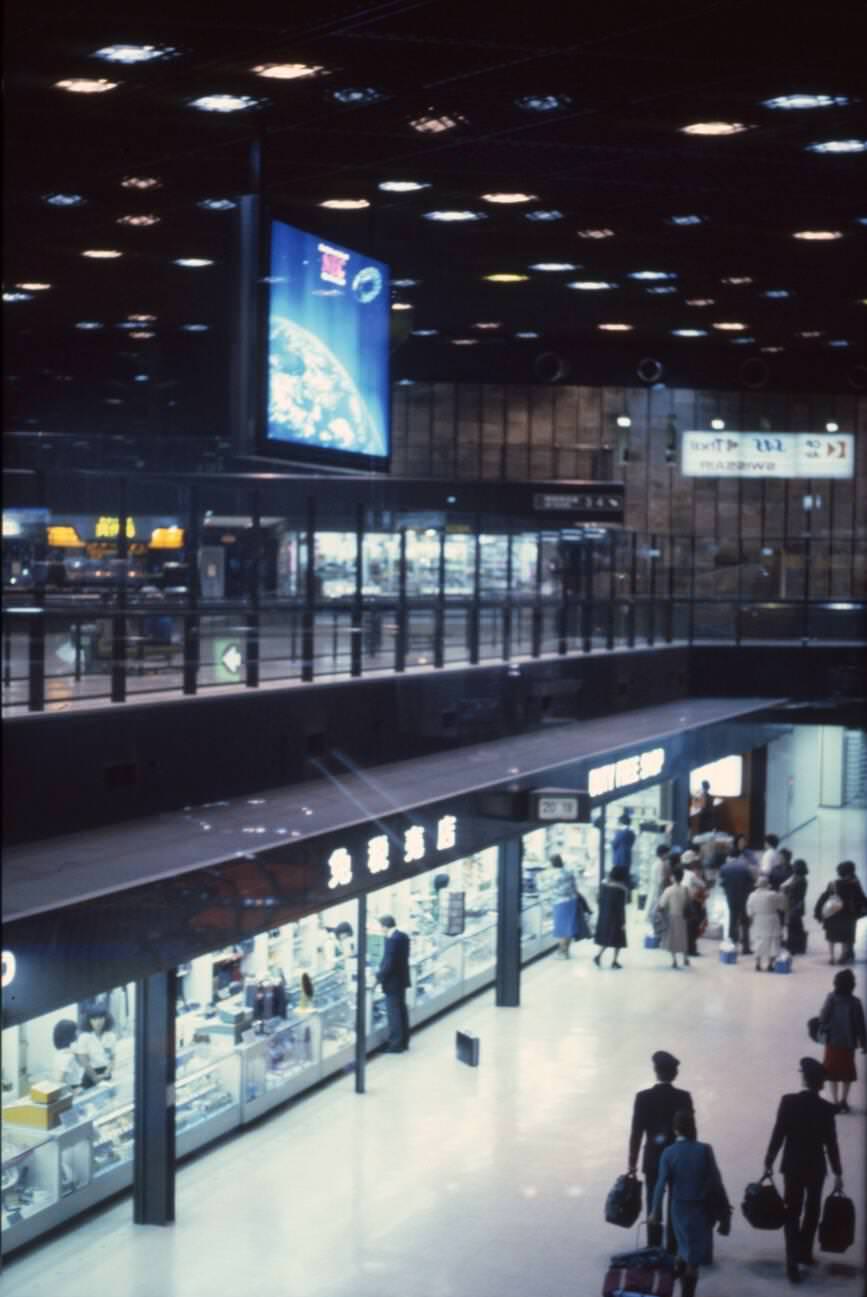
Haneda Airport was Tokyo’s primary international gateway through the 1970s, though Narita International Airport opened in 1978 and gradually took over long-haul routes. The two airports together handled a rapidly growing volume of passengers as Japan’s economy expanded and international business travel increased. Arriving in Tokyo by air in this era meant landing into a city that was visibly changing from one visit to the next.
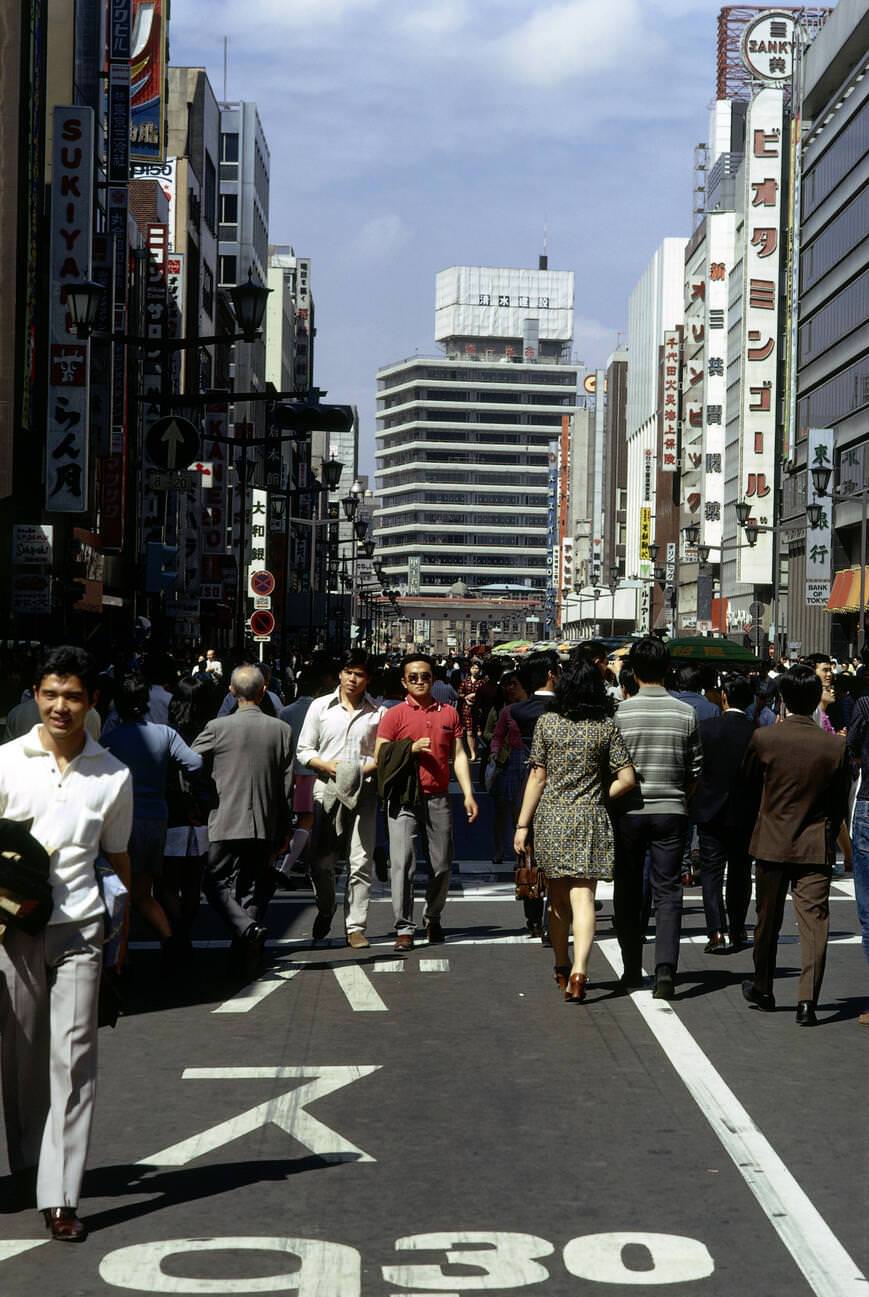
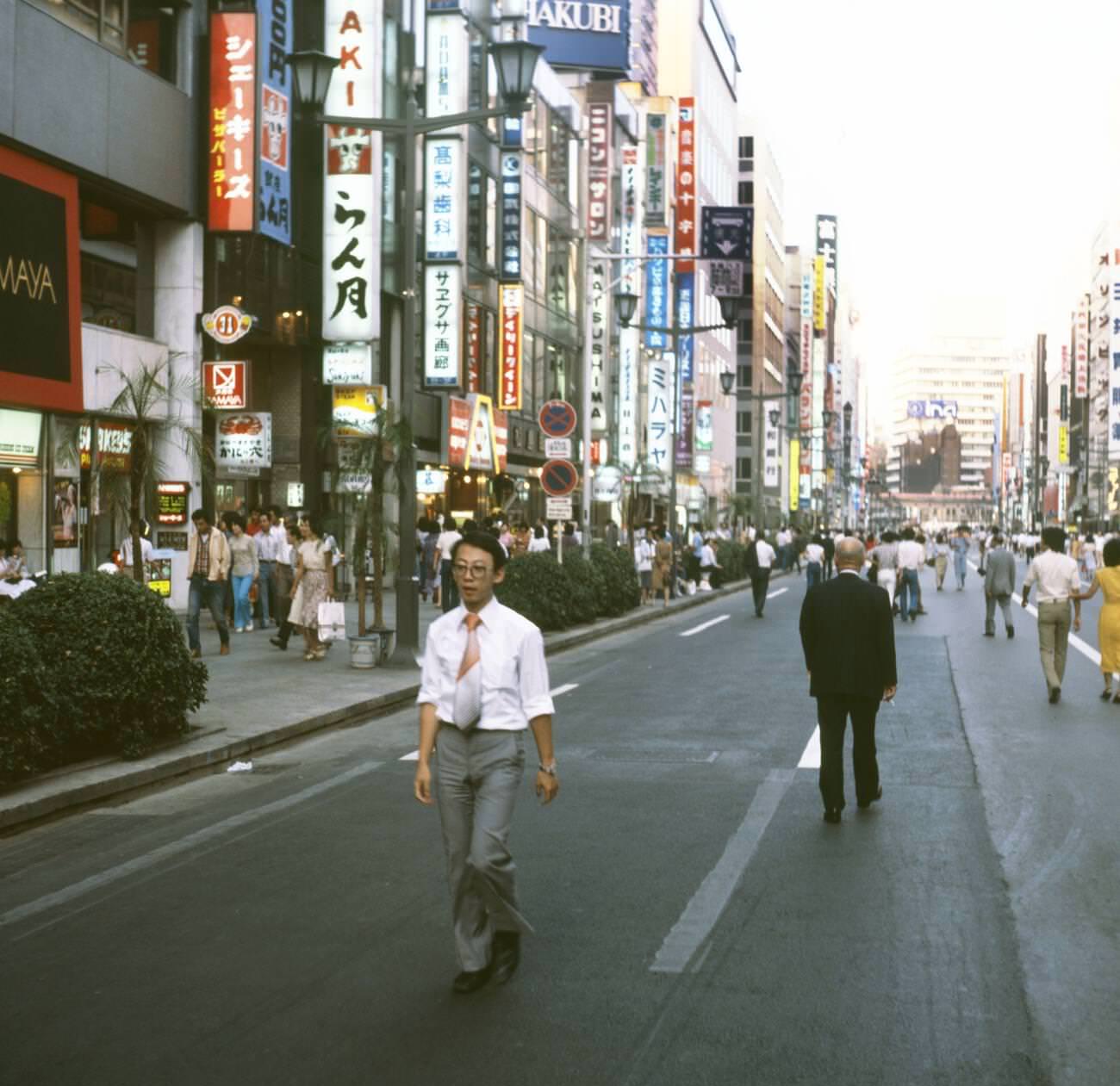
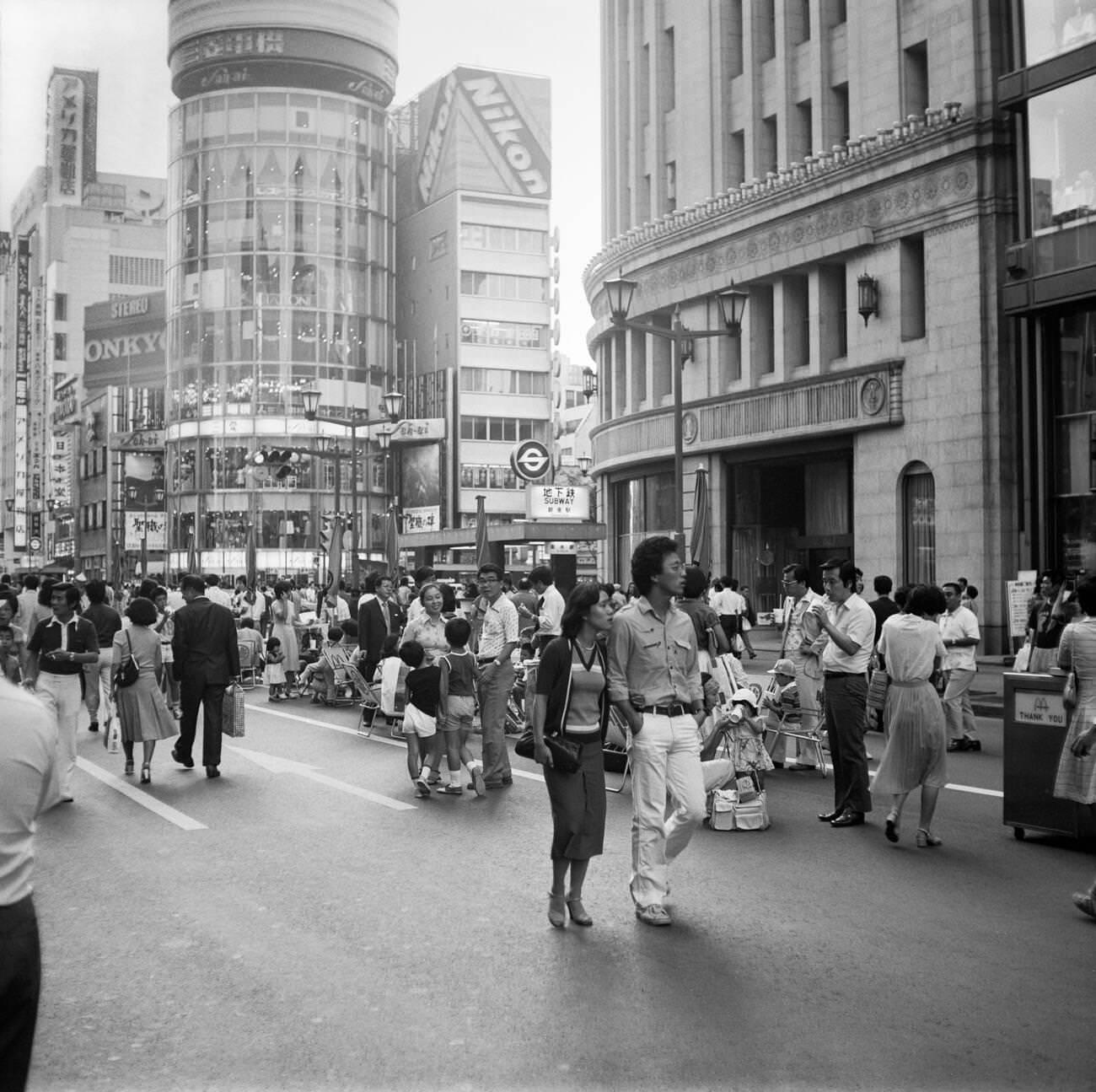
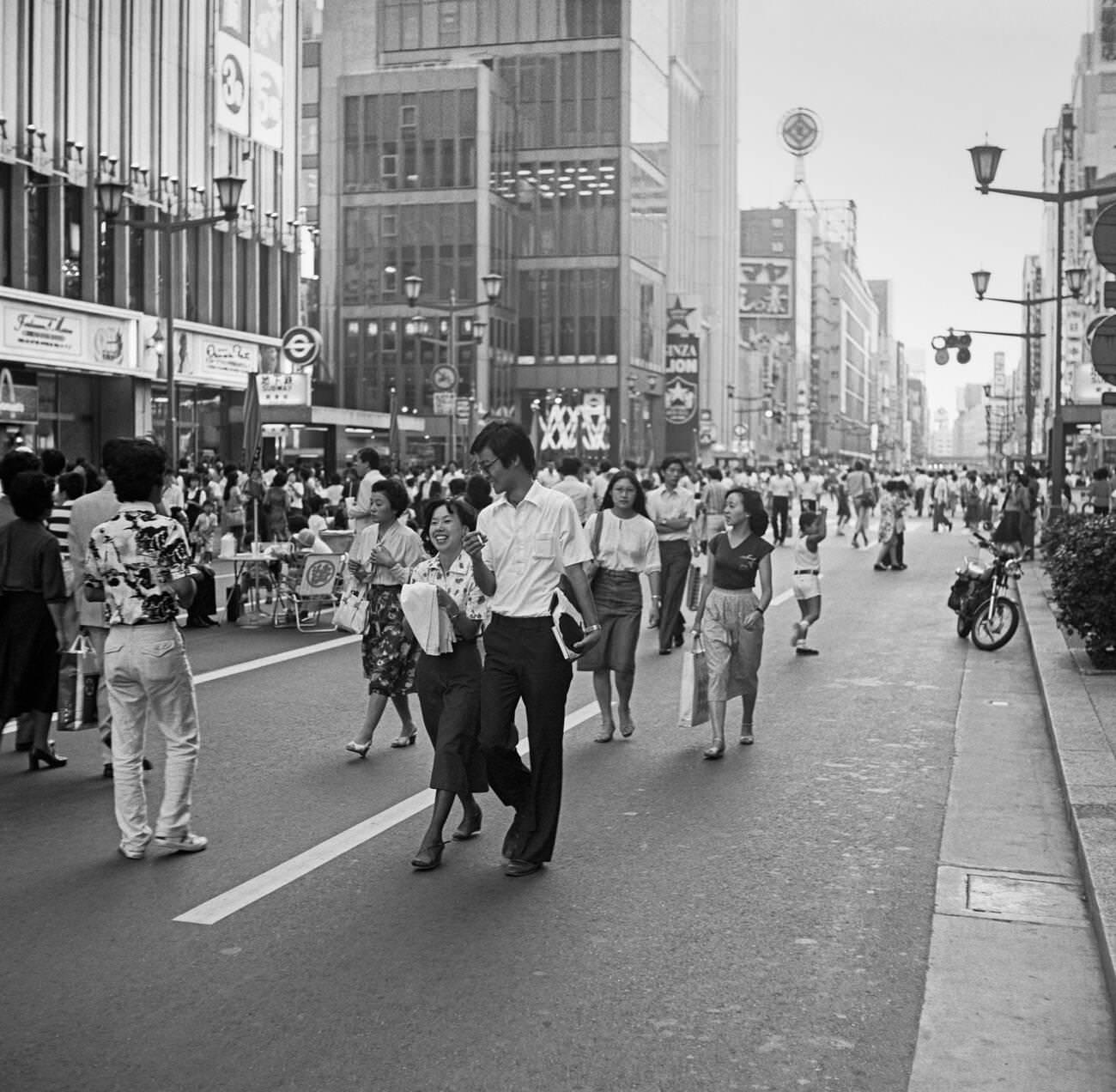
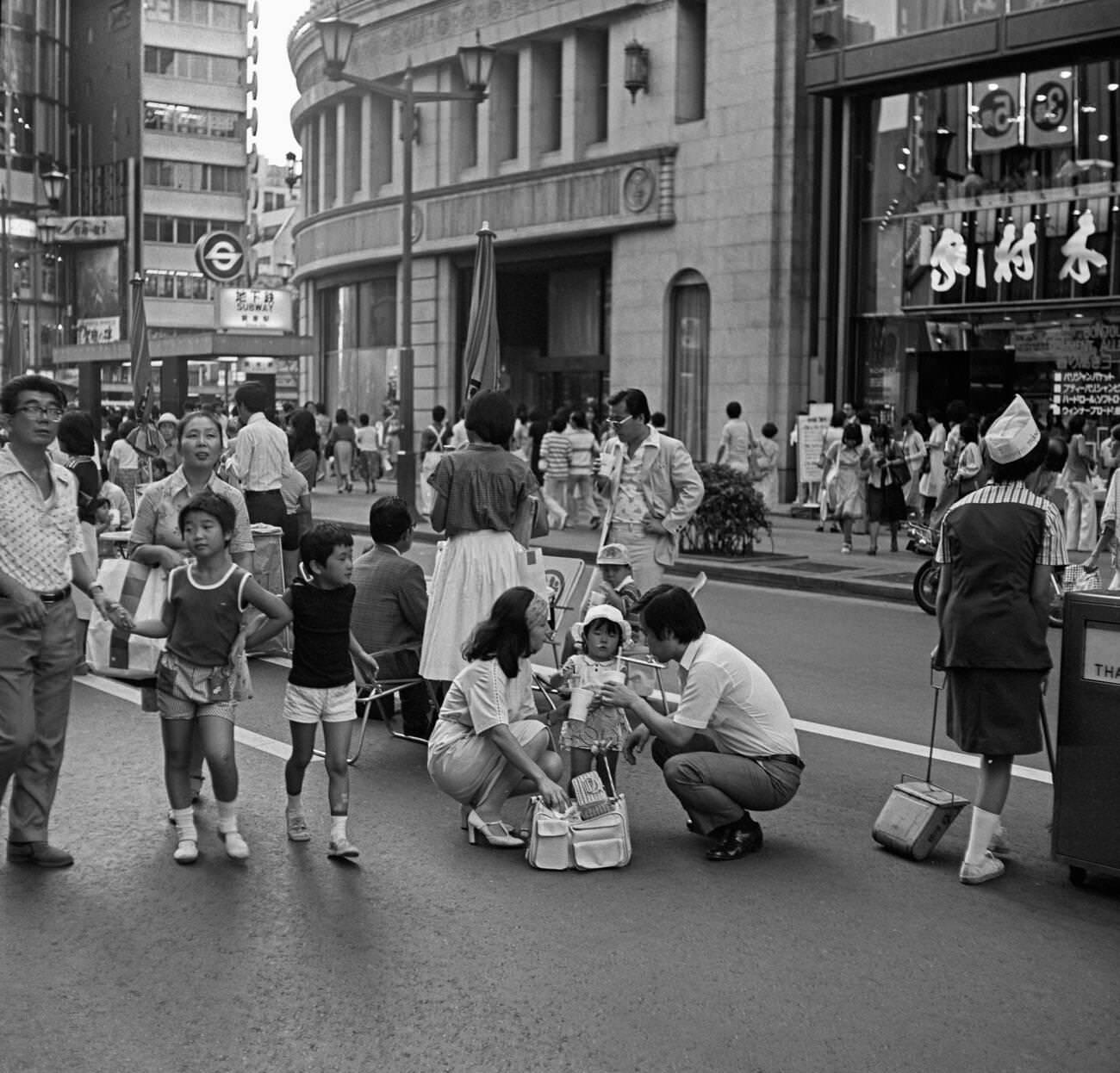
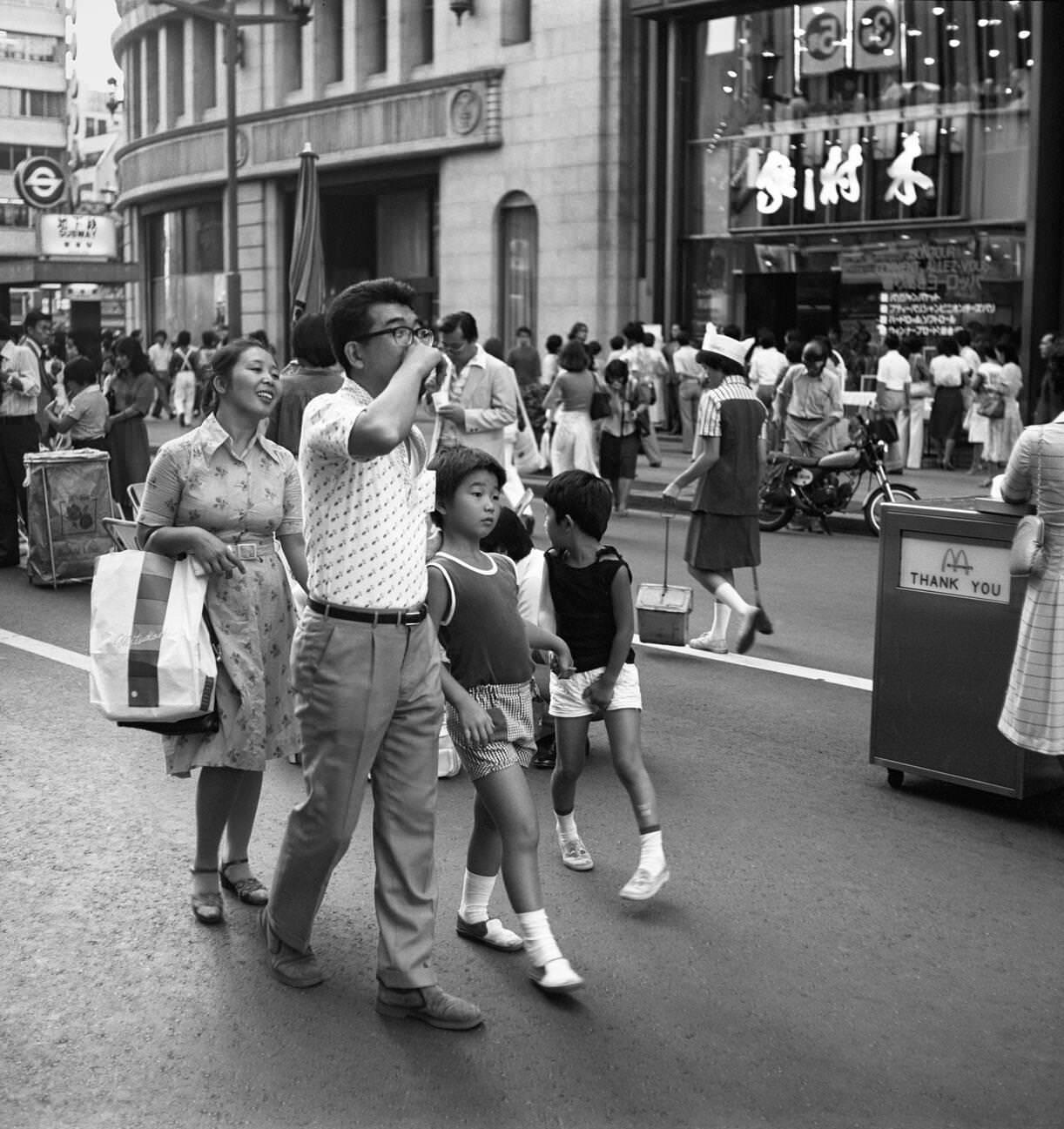
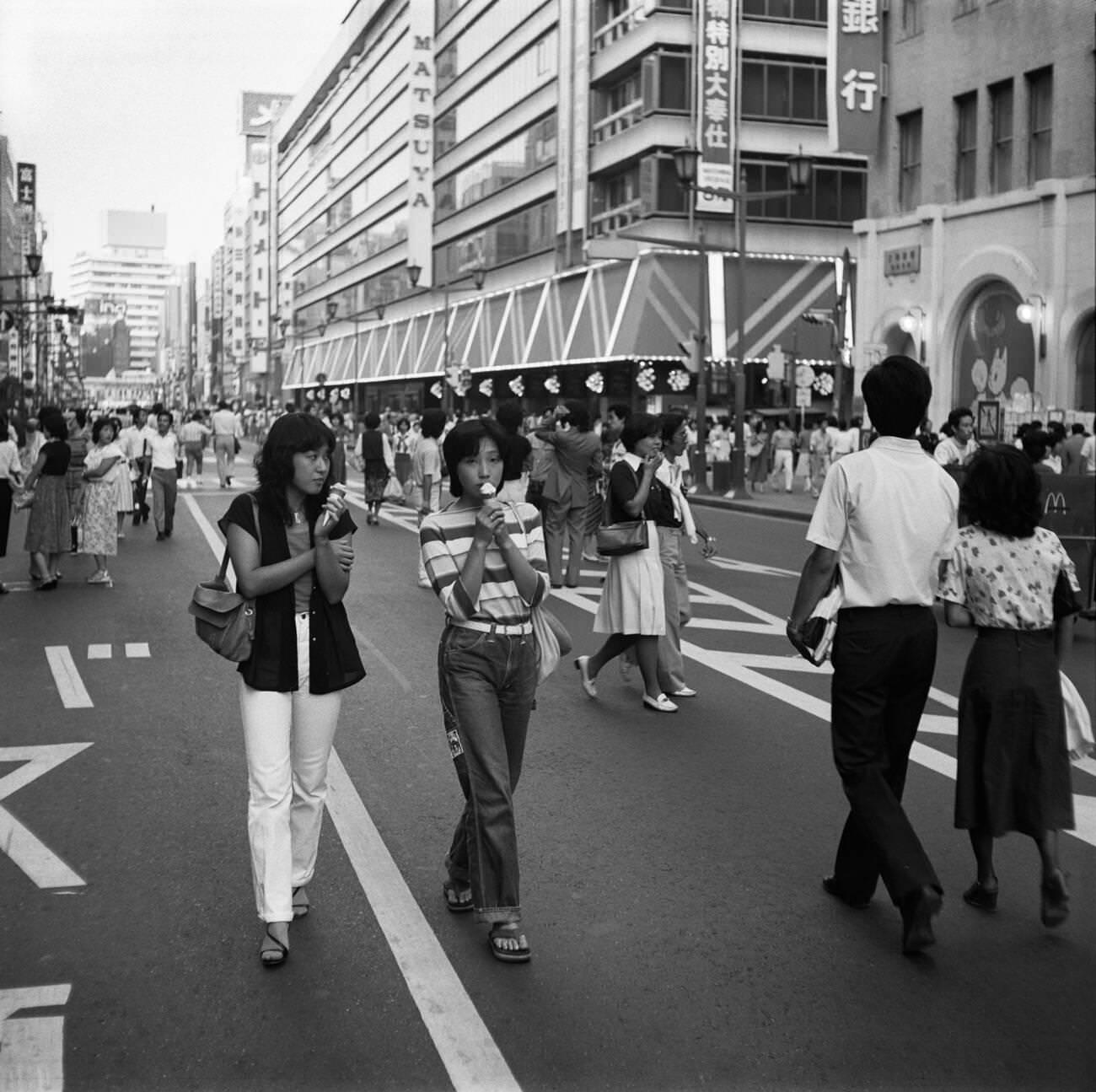
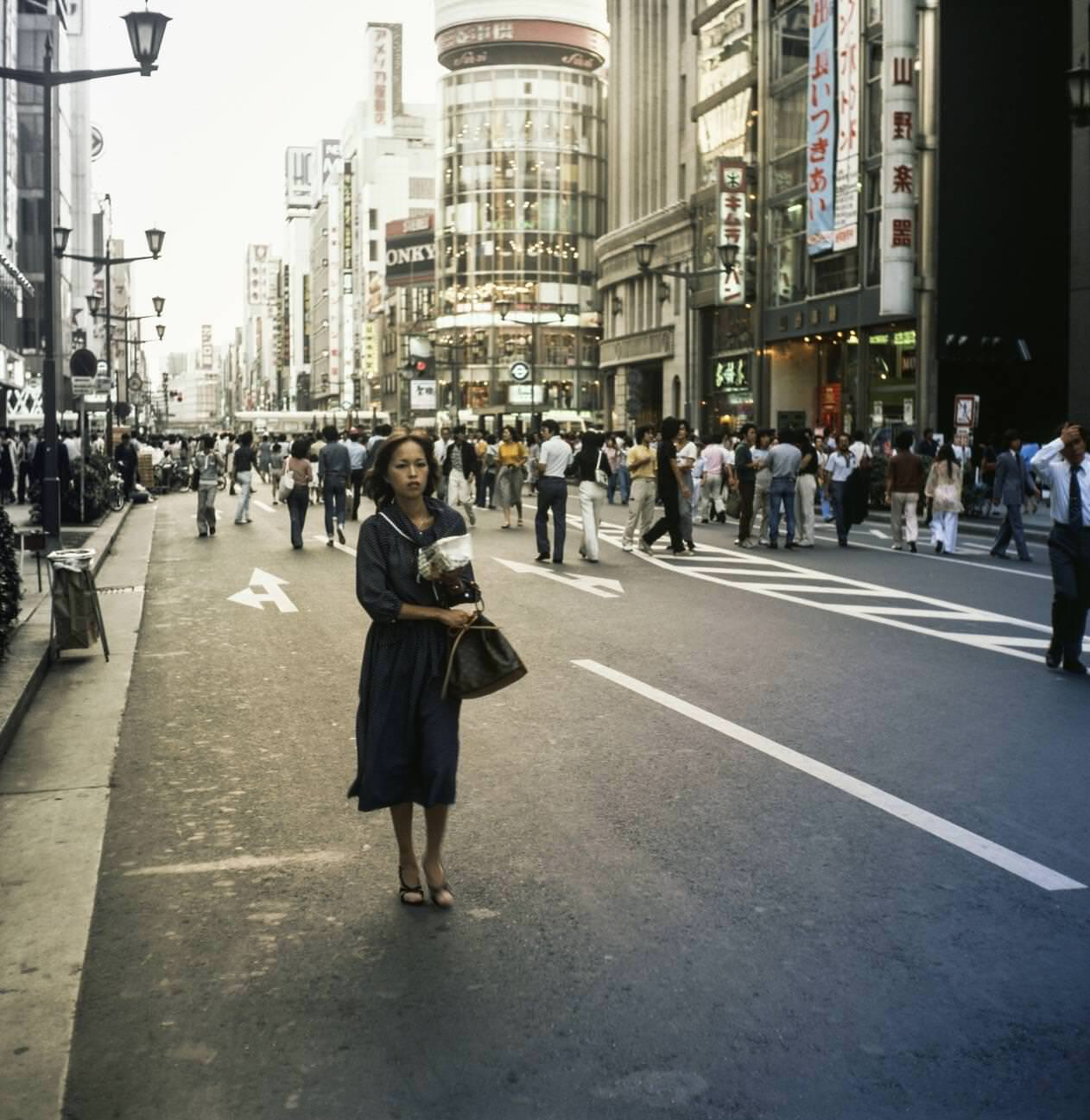
The Ginza Shopping Center drew crowds every day of the week. Shoppers came for the wide variety of goods on offer — clothing, electronics, food, and household items — all within reach of Tokyo’s dense transit network. On weekends, Ginza’s main boulevard was closed to traffic entirely, giving pedestrians free run of the street.
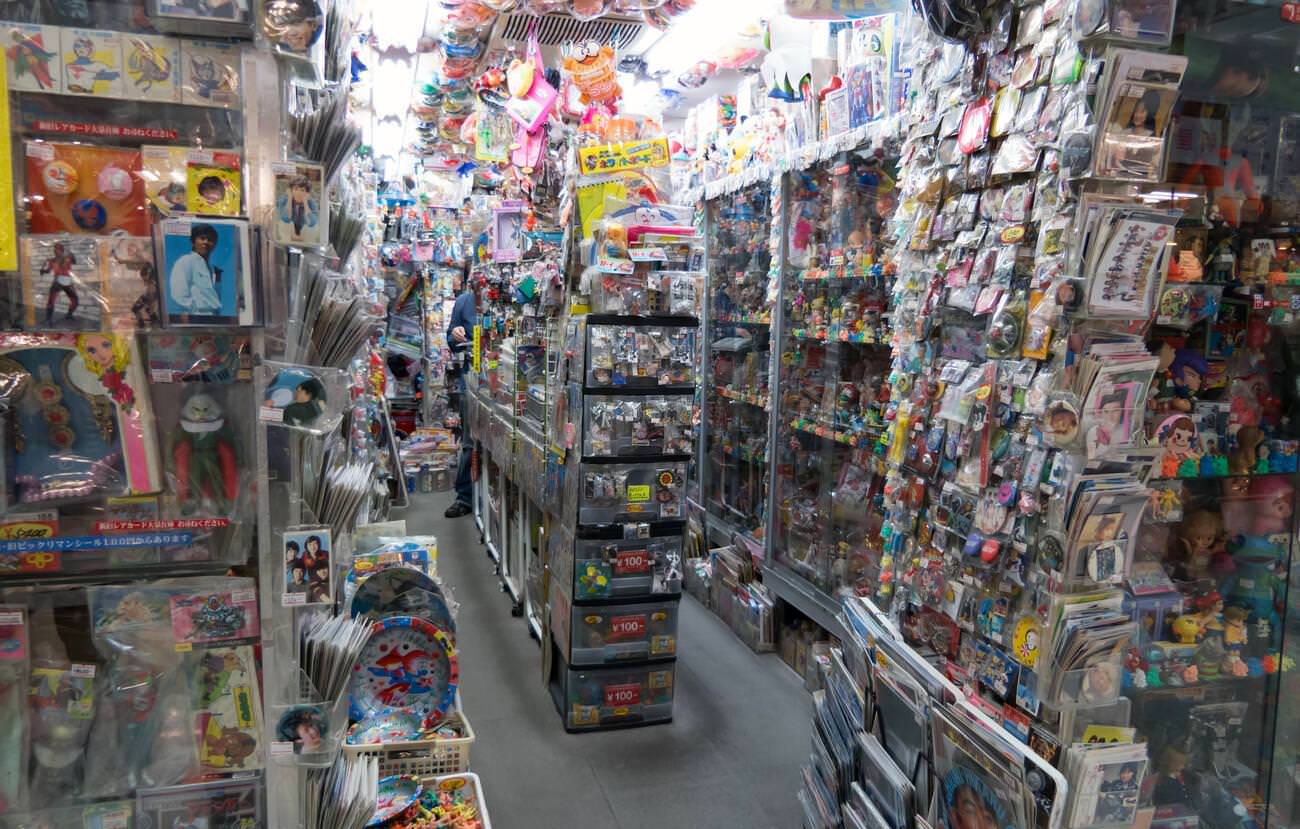
Tokyo’s collector culture was well established by the 1970s. Shops in places like Nakano Broadway stocked vintage toys, dolls, model kits, and memorabilia spanning decades of Japanese popular culture. Manga and anime drove much of the demand, with series like Astro Boy and Speed Racer generating merchandise that fans collected seriously. These shops served a growing community of enthusiasts who treated collecting as both hobby and passion.
Rush hour in Tokyo was relentless. Train platforms at major hubs like Shinjuku, Shibuya, and Ikebukuro became packed to dangerous levels during morning and evening commutes. White-gloved platform staff physically pushed passengers into cars so the doors could close. The sheer volume of people moving through the city each day was unlike almost anywhere else in the world.
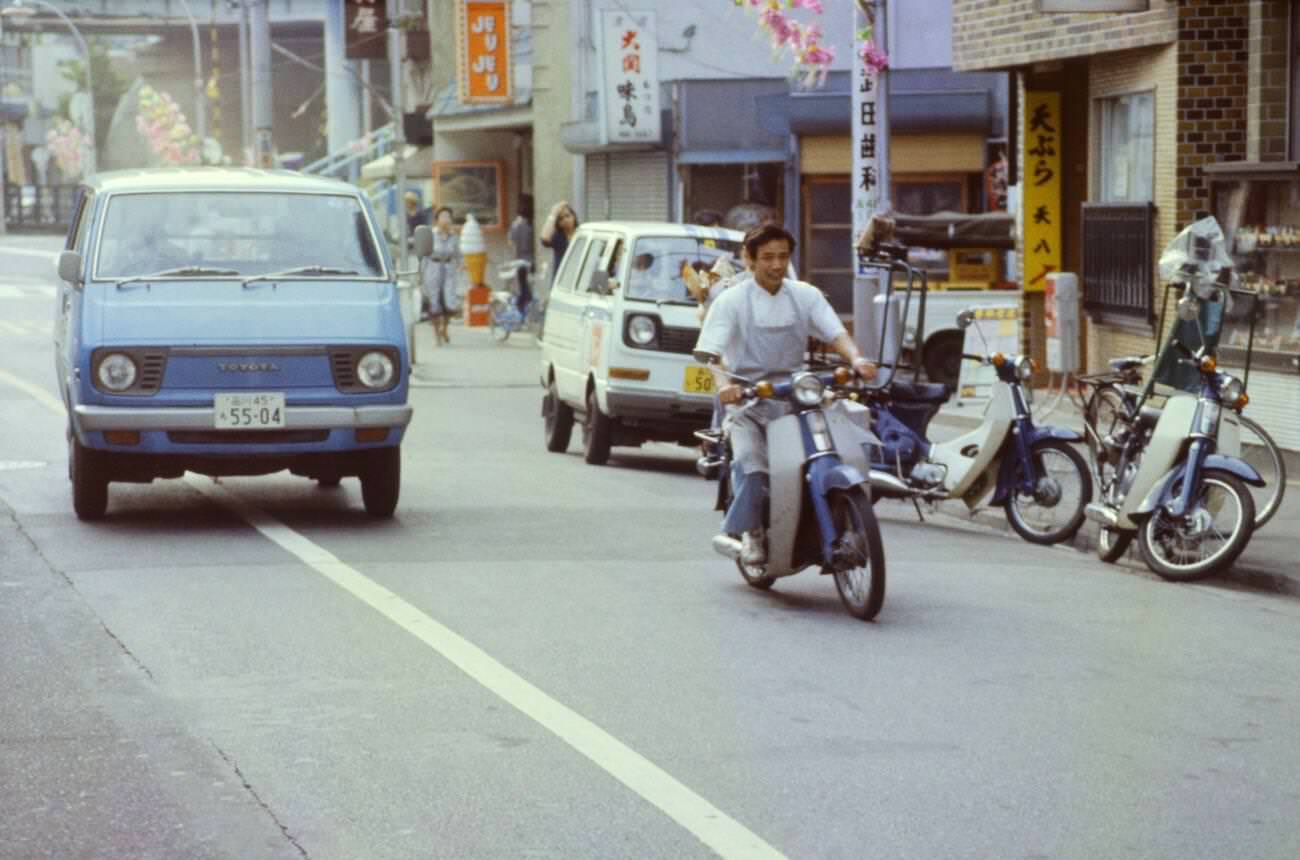
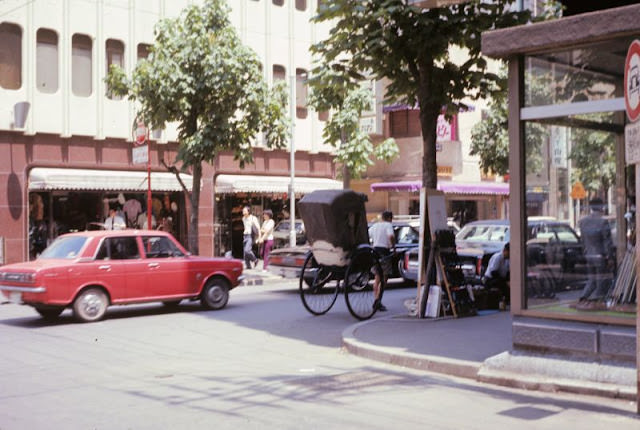
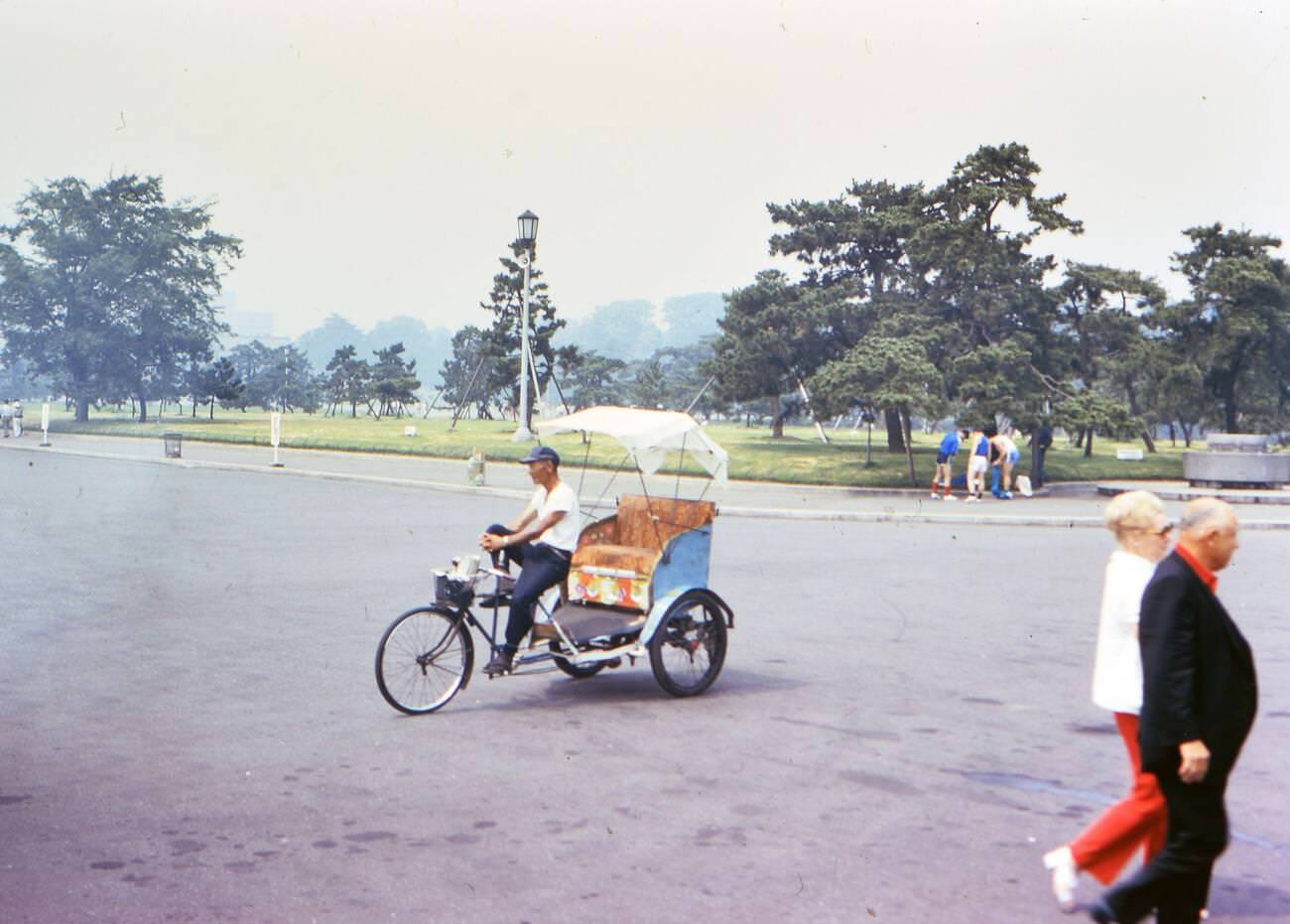
Rickshaws, or jinrikisha, were still a familiar sight on certain Tokyo streets in the early 1970s, even as the city modernized at speed. Operators waited near tourist sites and busy commercial districts, offering rides to those willing to pay for the experience. By the late 1970s, they had largely become a novelty for visitors rather than a genuine mode of daily transport.
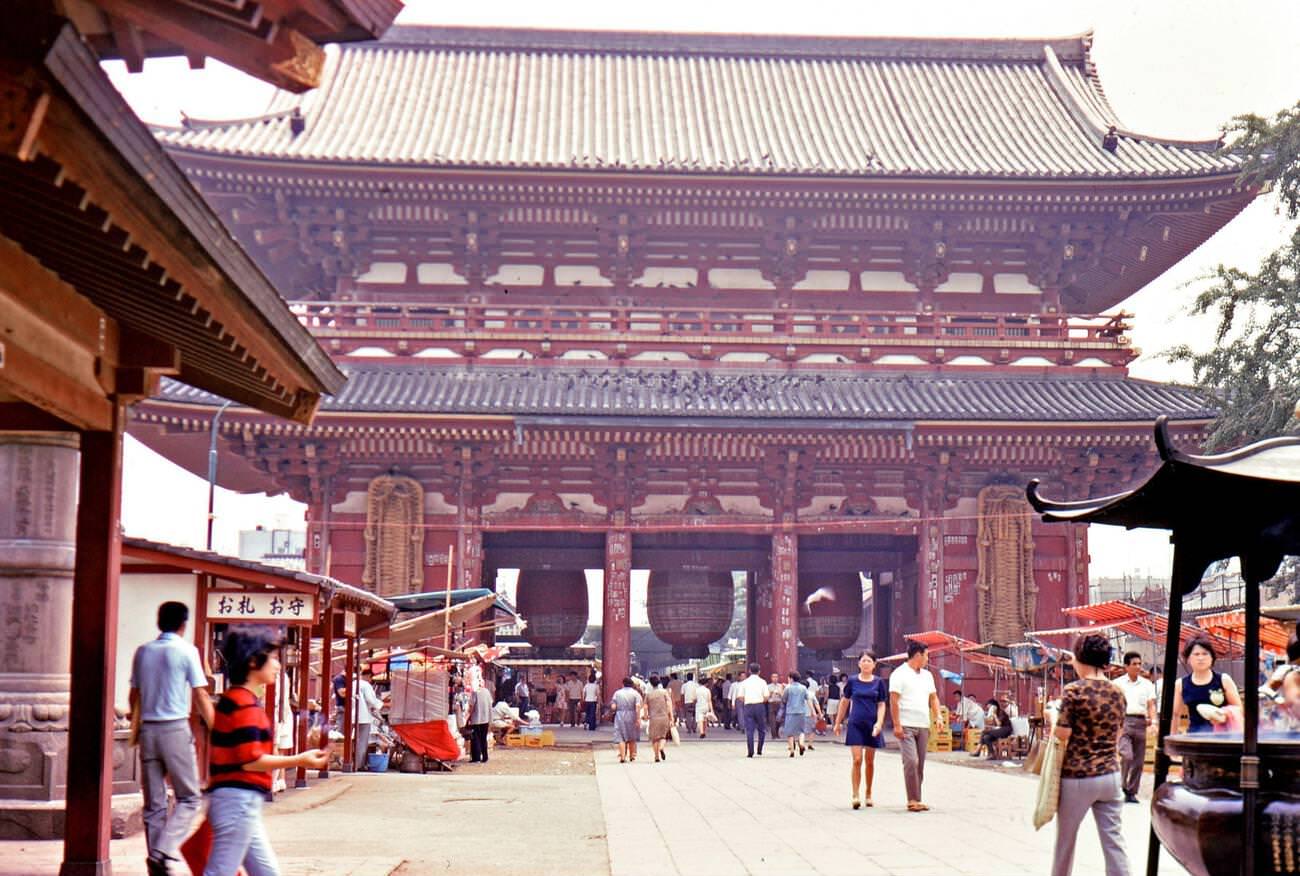
Religious life continued alongside Tokyo’s relentless modernization. The Kannon Temple in Asakusa — formally known as Senso-ji — drew visitors throughout the year. Its famous Kaminarimon gate, flanked by large red lanterns, marked the entrance to a sprawling temple complex that had stood in various forms since the 7th century. Tourists and locals alike walked its stone paths and offered prayers at its main hall.
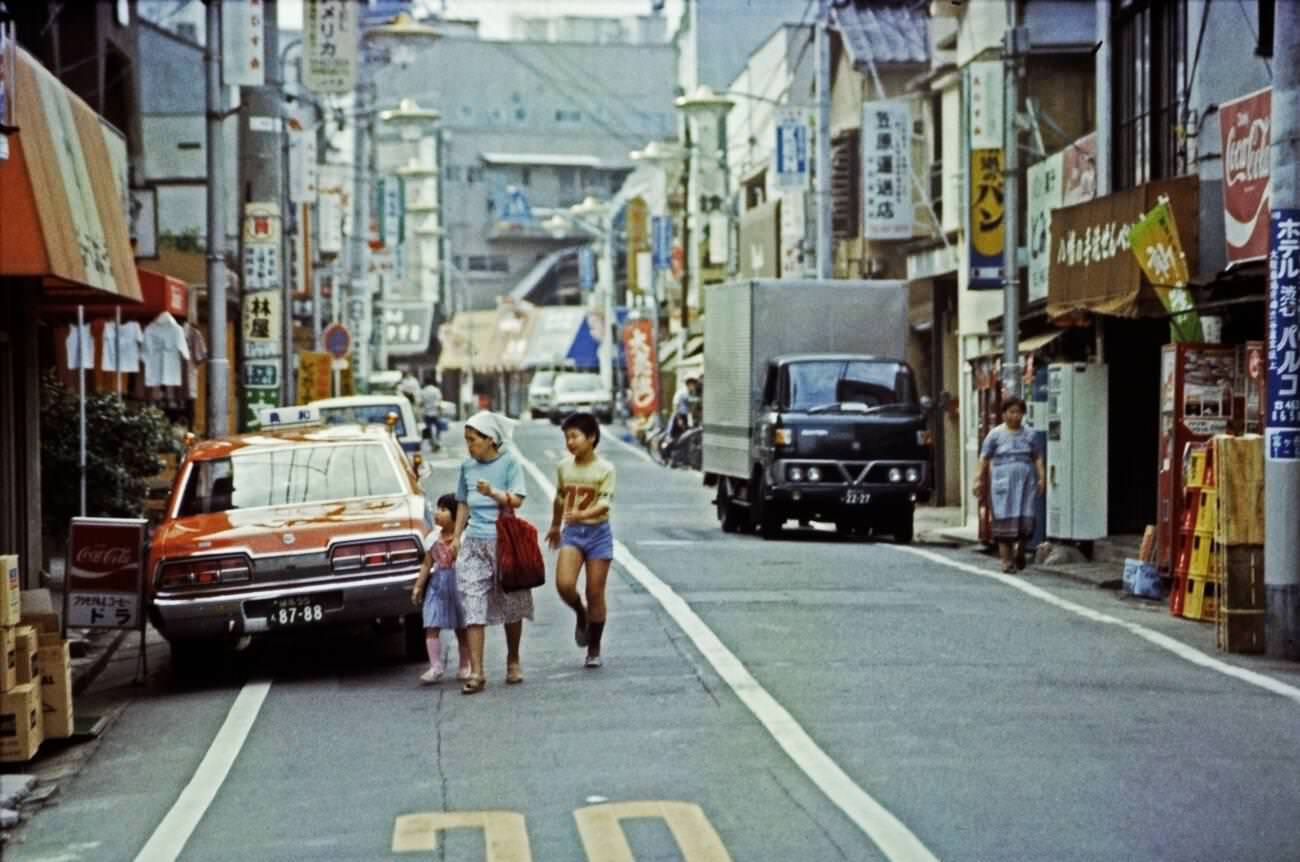
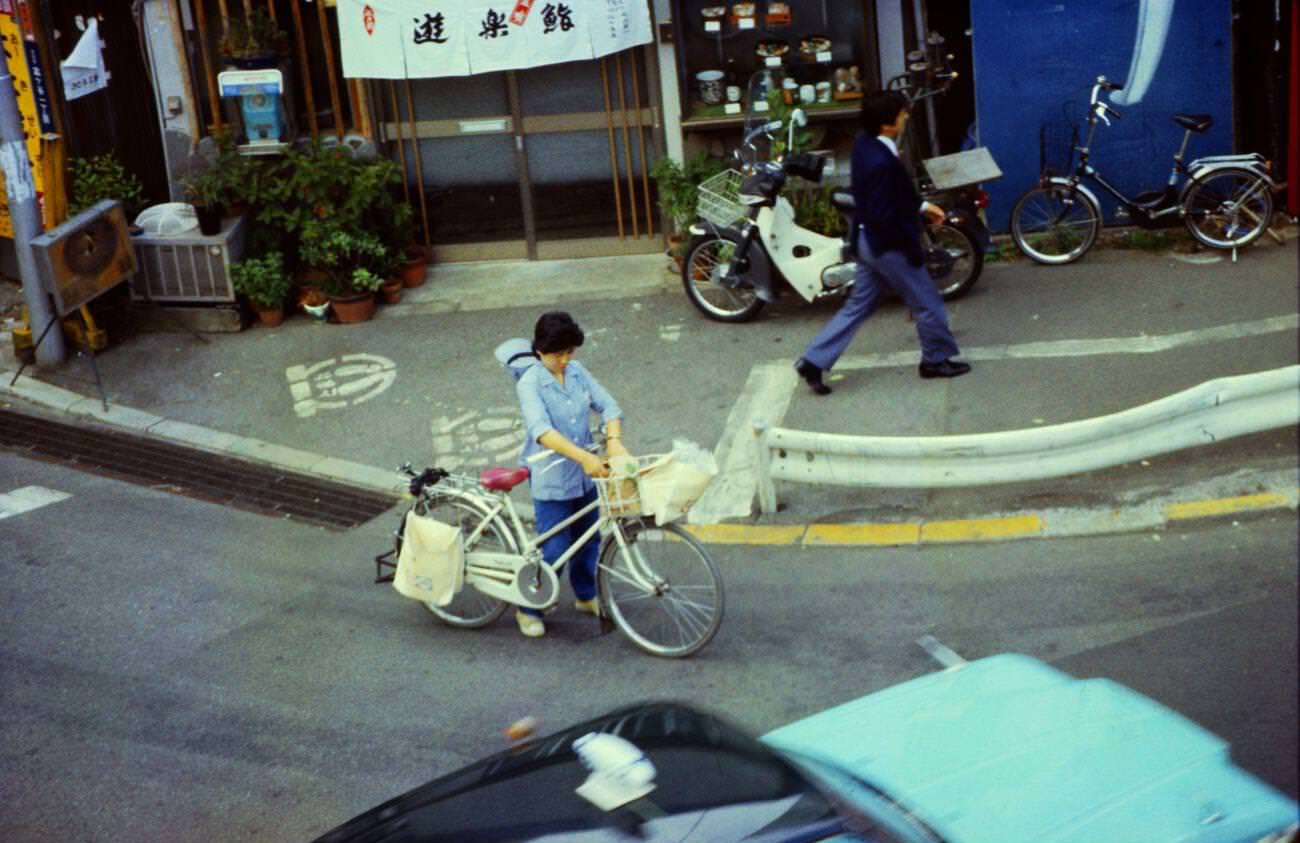
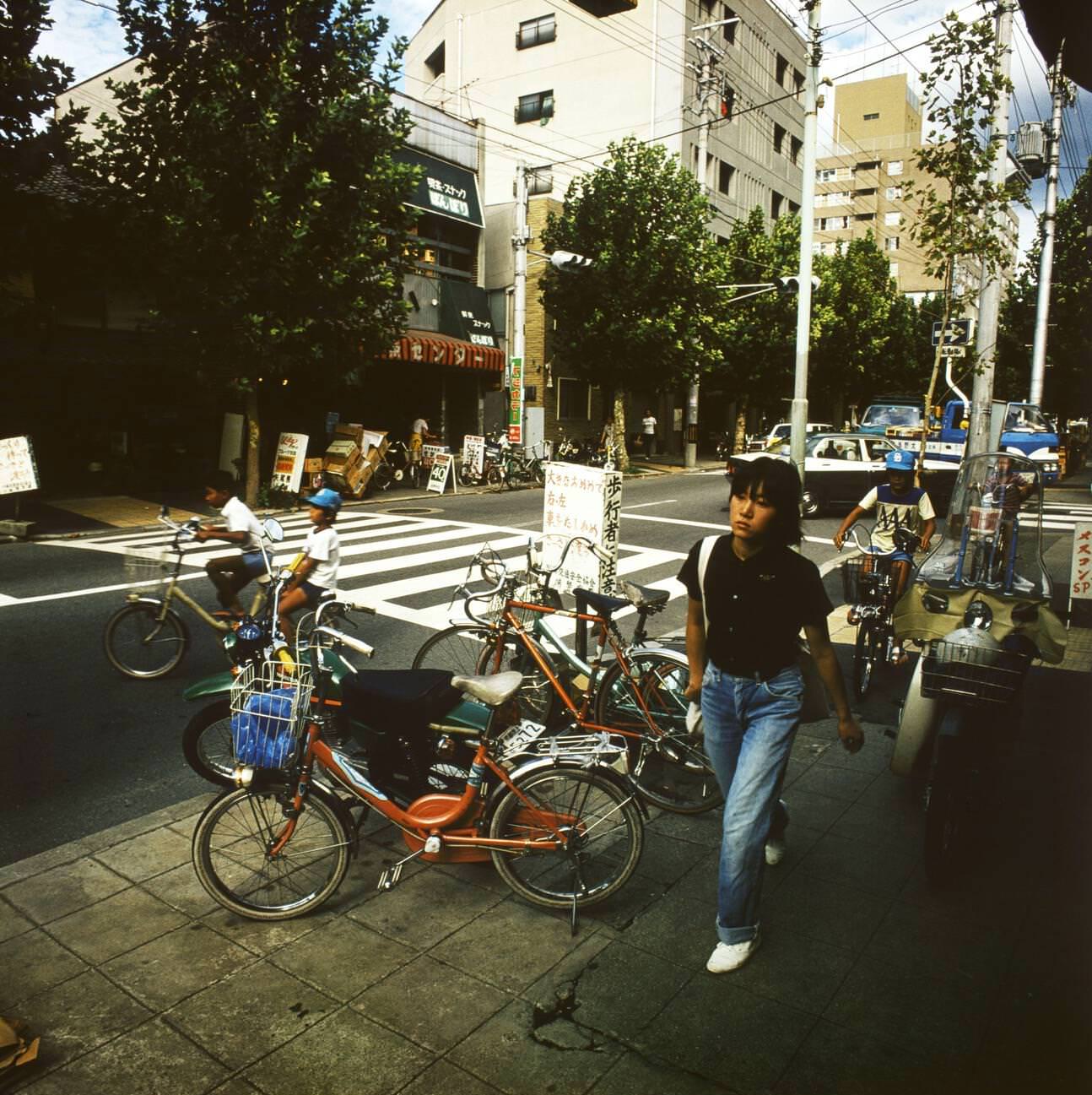
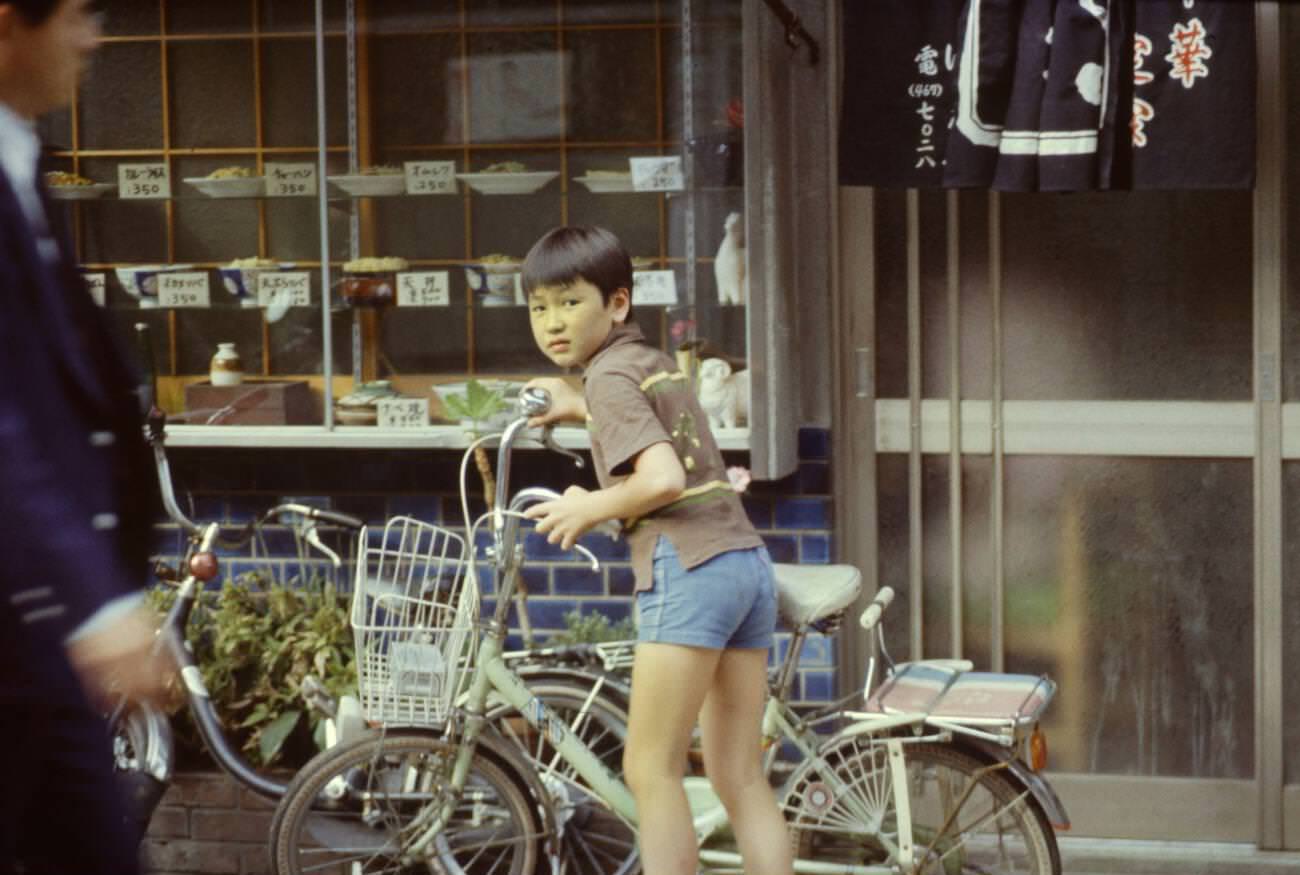
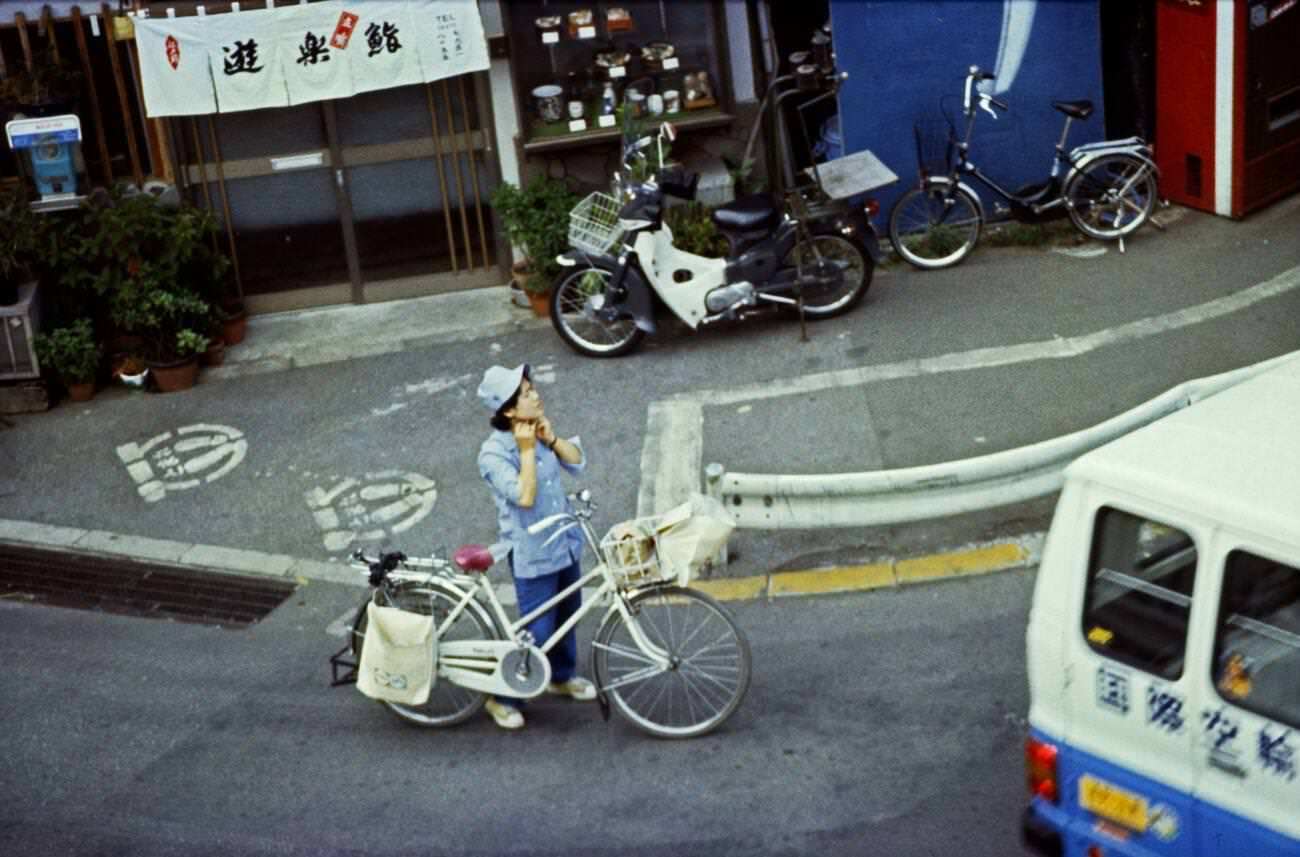
Bicycles were indispensable in 1970s Tokyo. Women used them to carry groceries and run errands through narrow residential streets where cars struggled to pass. In many neighborhoods, the bicycle was the most practical everyday vehicle, parked outside shops and homes without fanfare. It was a quieter, more personal layer of the city beneath the noise of major roads and transit lines.
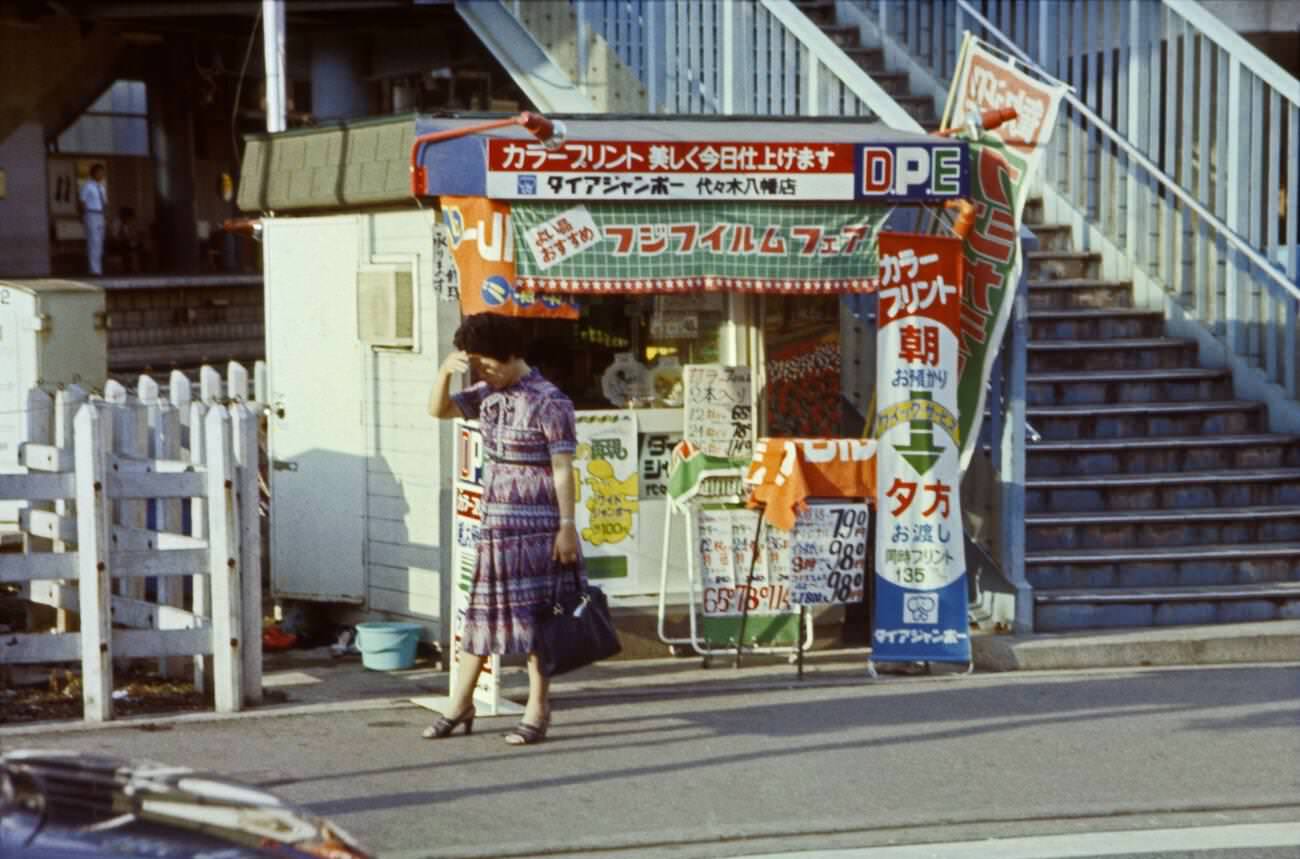
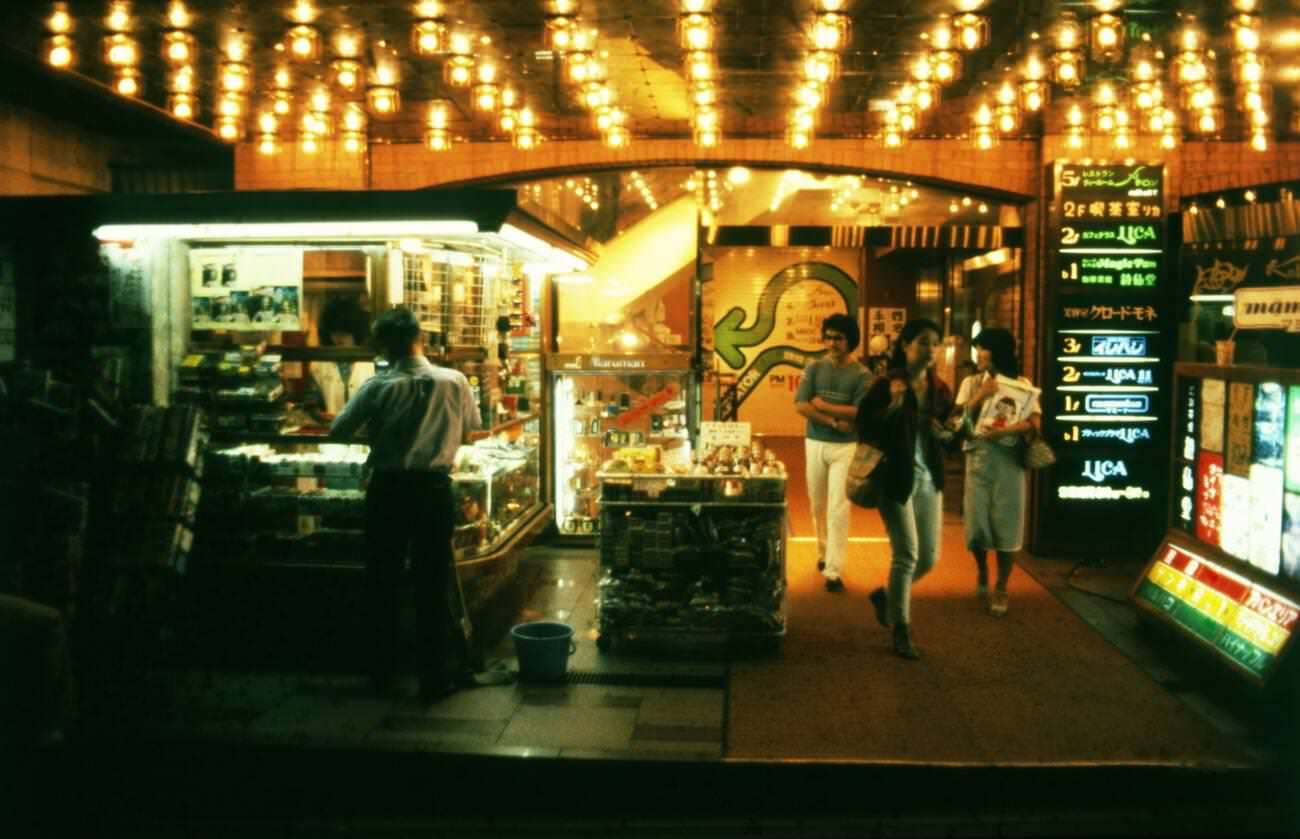
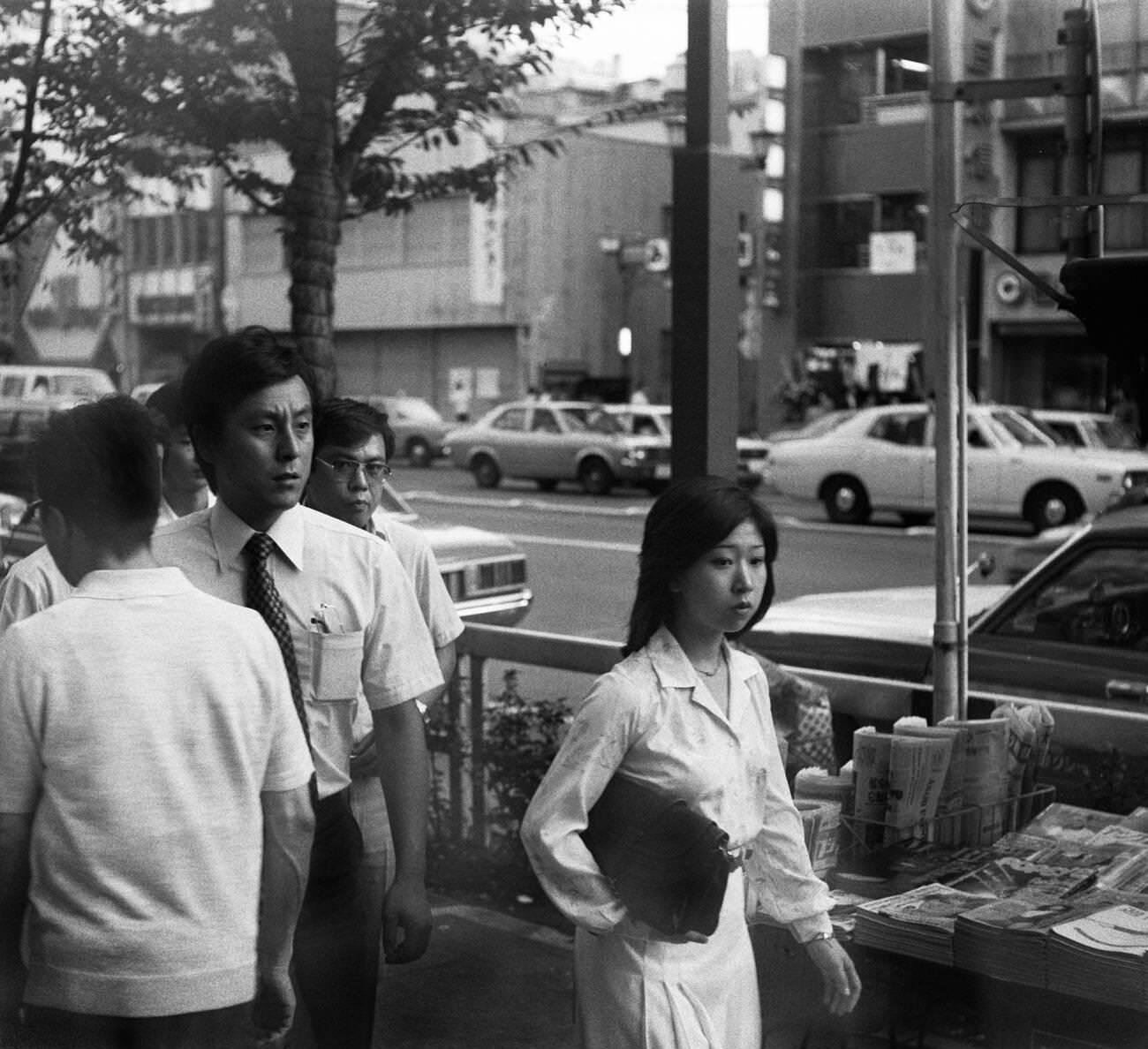
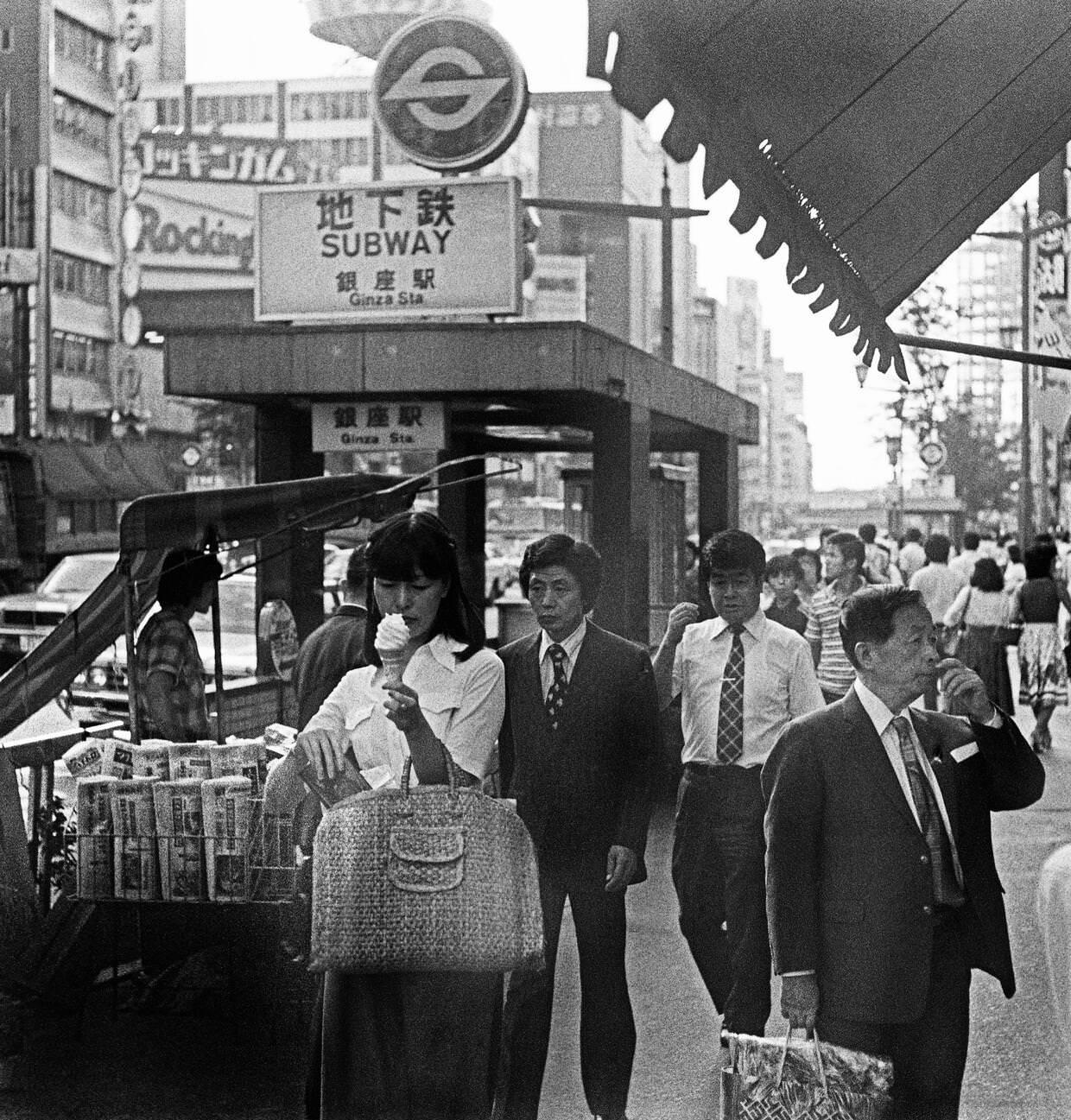
Street kiosks sold newspapers, cigarettes, candy, and train tickets at nearly every busy corner and station exit. They were a constant in Tokyo’s street landscape — small wooden or metal booths staffed by a single attendant who knew their regular customers by name. These kiosks connected residents to both local news and everyday necessities without requiring a detour.
Narita International Airport opened in 1978 after years of fierce controversy. Protests by local farmers and left-wing activists over forced land acquisition had delayed construction for years and turned violent on multiple occasions. When it finally opened, it replaced Haneda as Tokyo’s main hub for international flights, though the political conflict around it continued well into the 1980s.
The Nakagin Capsule Tower, completed in 1972, was one of the most unusual buildings in Tokyo. Architect Kisho Kurokawa designed it as part of the Metabolism movement, which treated buildings like living organisms with replaceable parts. Each of the 140 capsules was fitted with a porthole window, built-in furniture, and all the basics for single-person living. The building was intended to be a model for future urban housing.
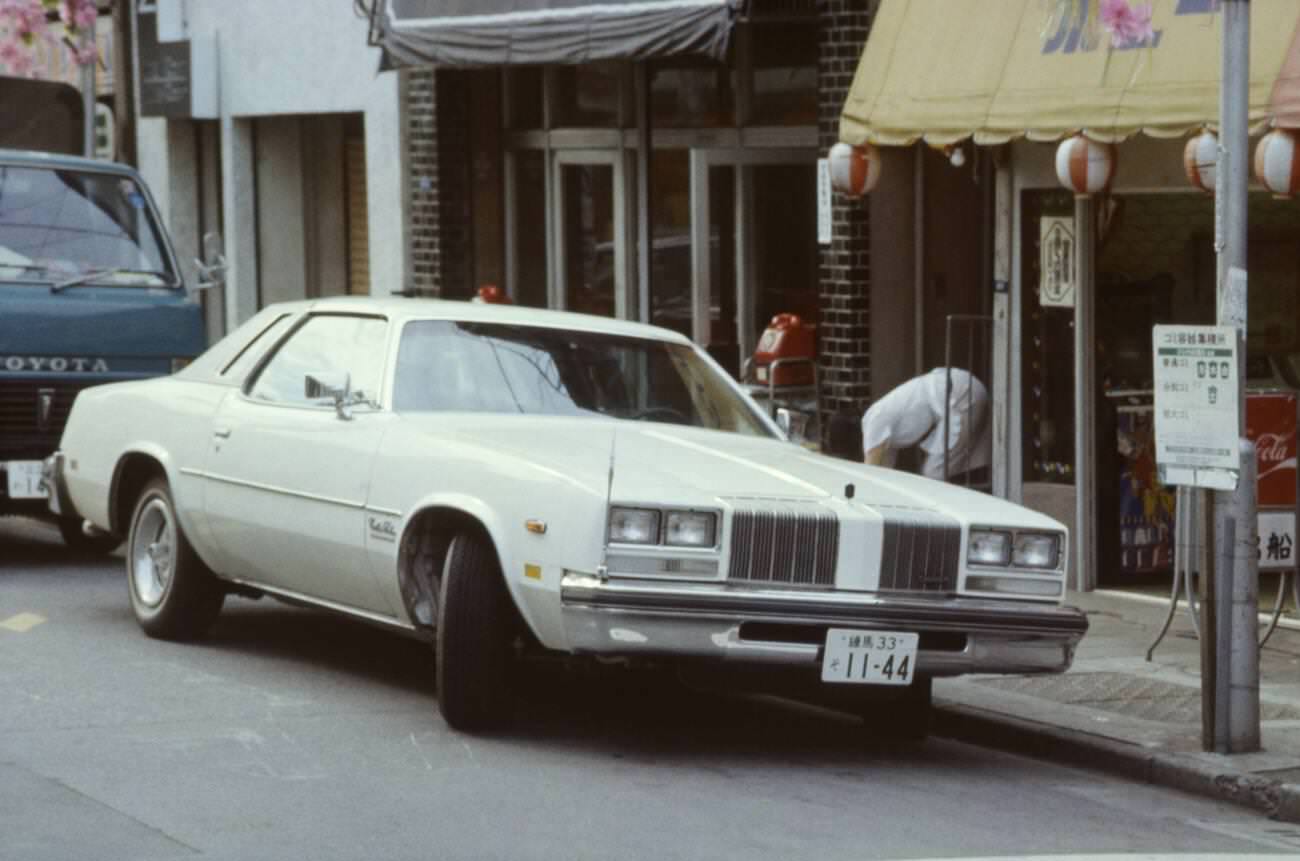
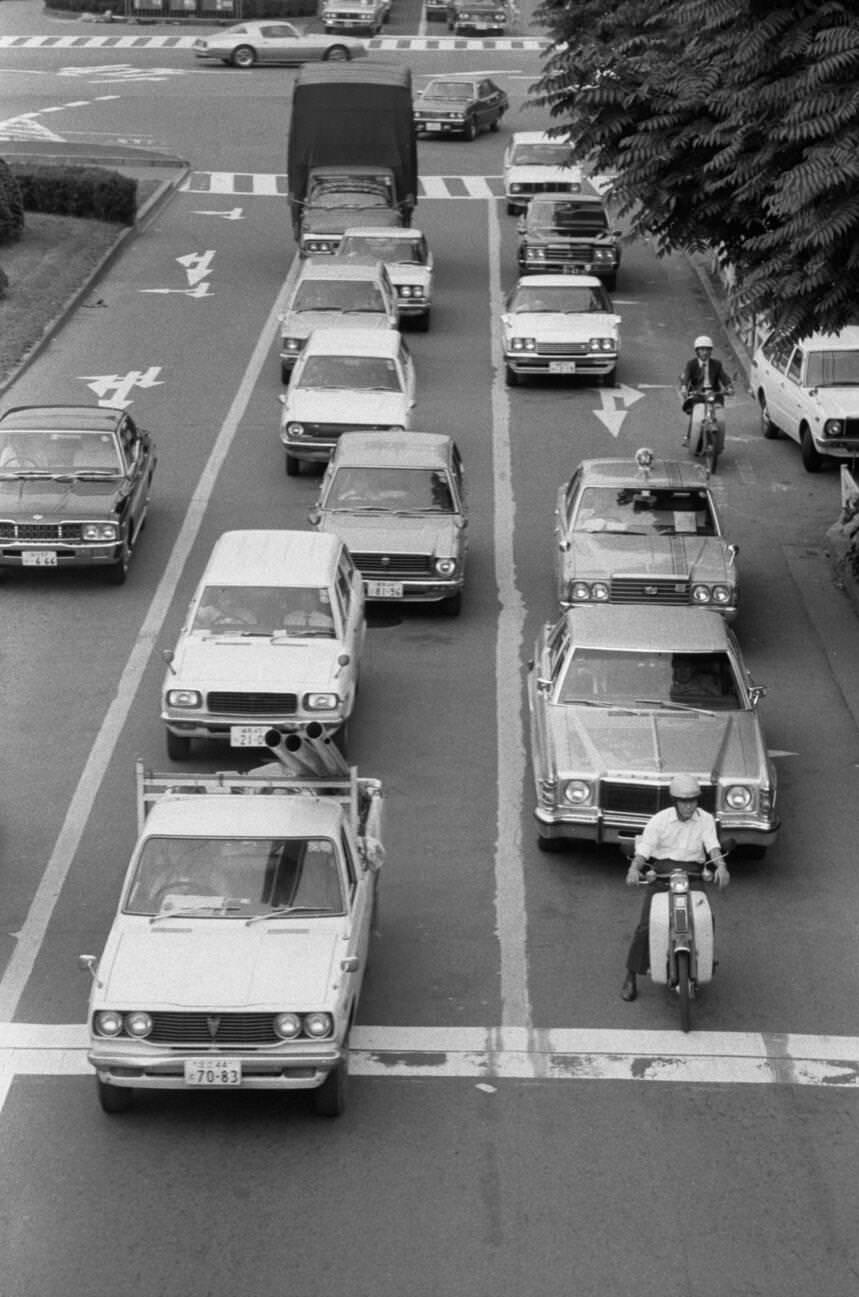
American cars were an uncommon but present sight on Tokyo’s streets in the 1970s. Japanese automakers like Toyota, Nissan, and Honda dominated the domestic market with smaller, fuel-efficient models better suited to the city’s narrow roads. But the occasional large American sedan stood out, a visible sign of the cultural and economic ties between Japan and the United States that had deepened since the postwar occupation.
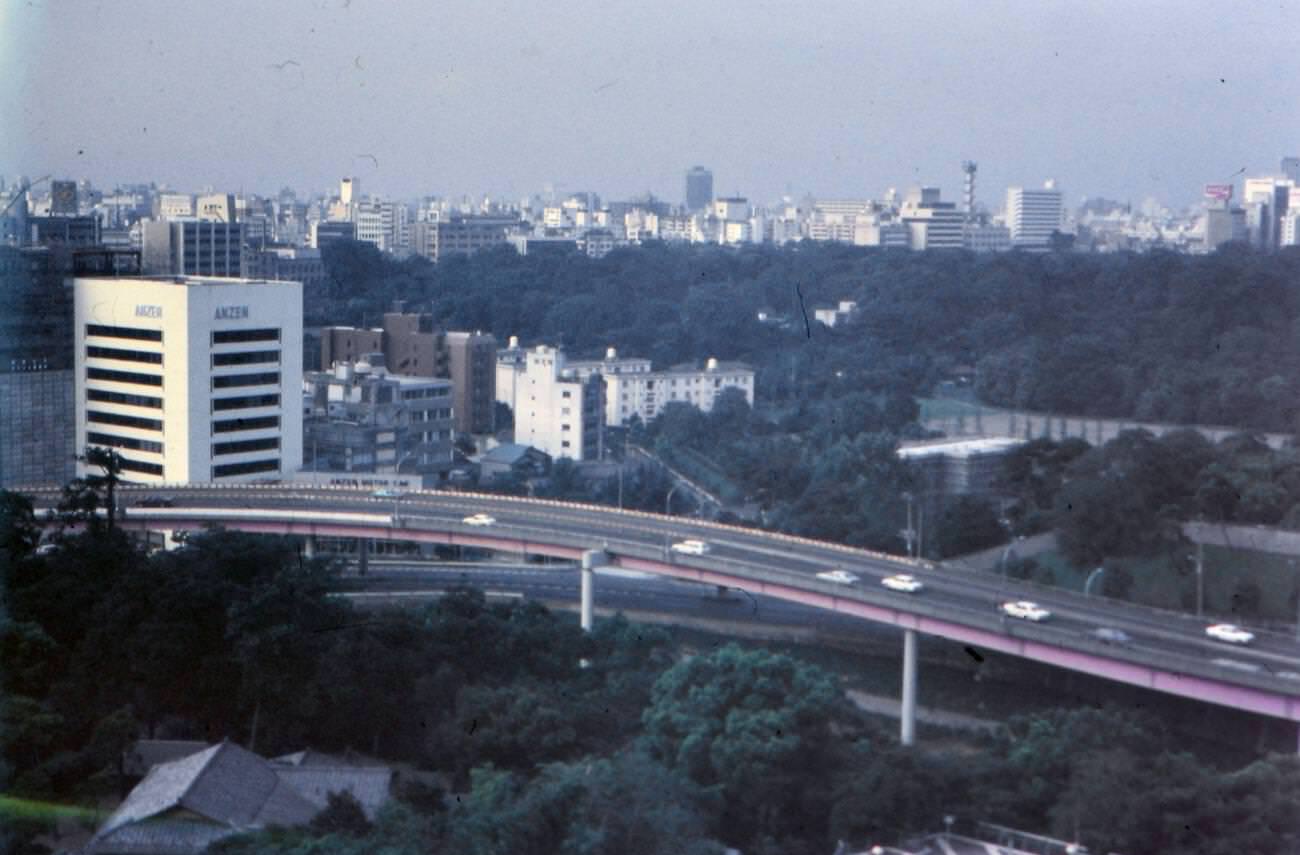
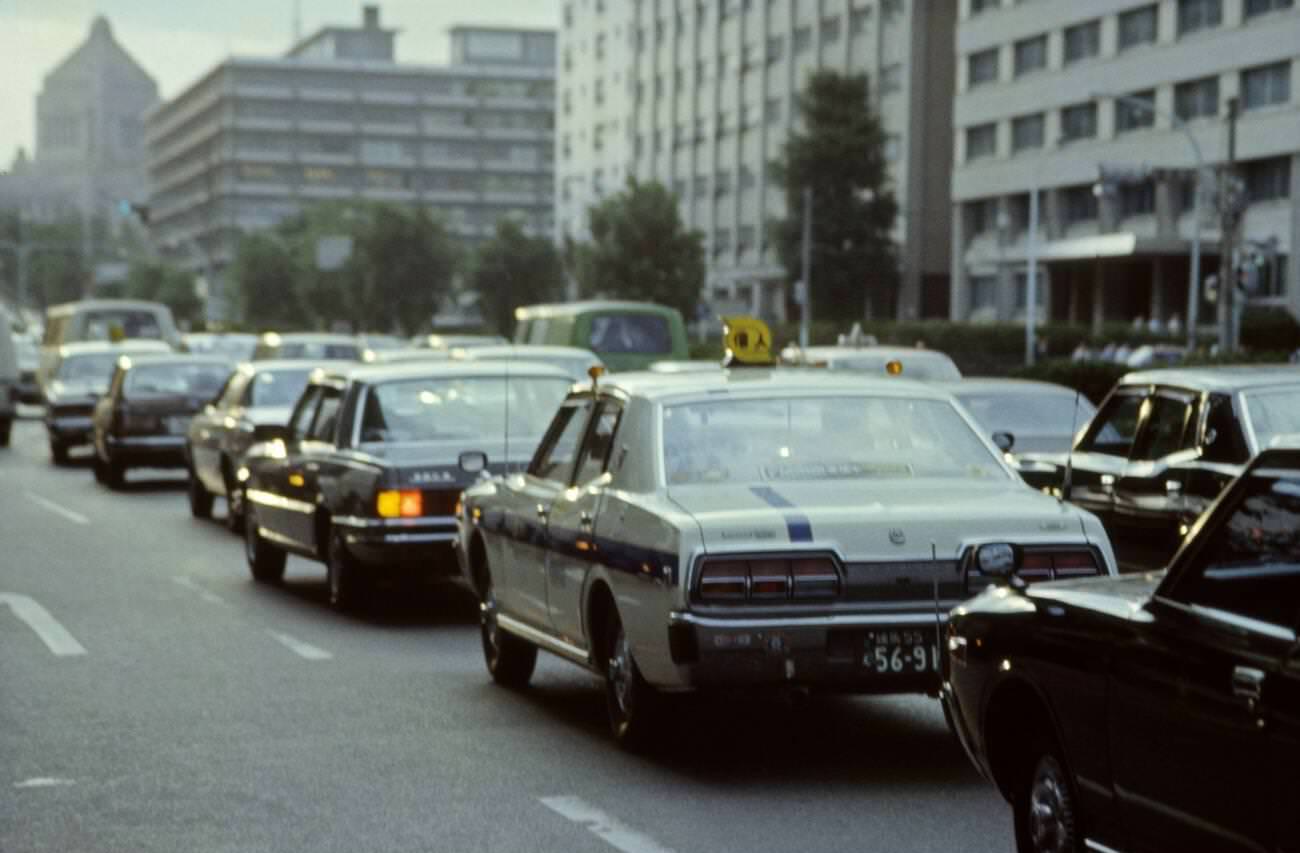
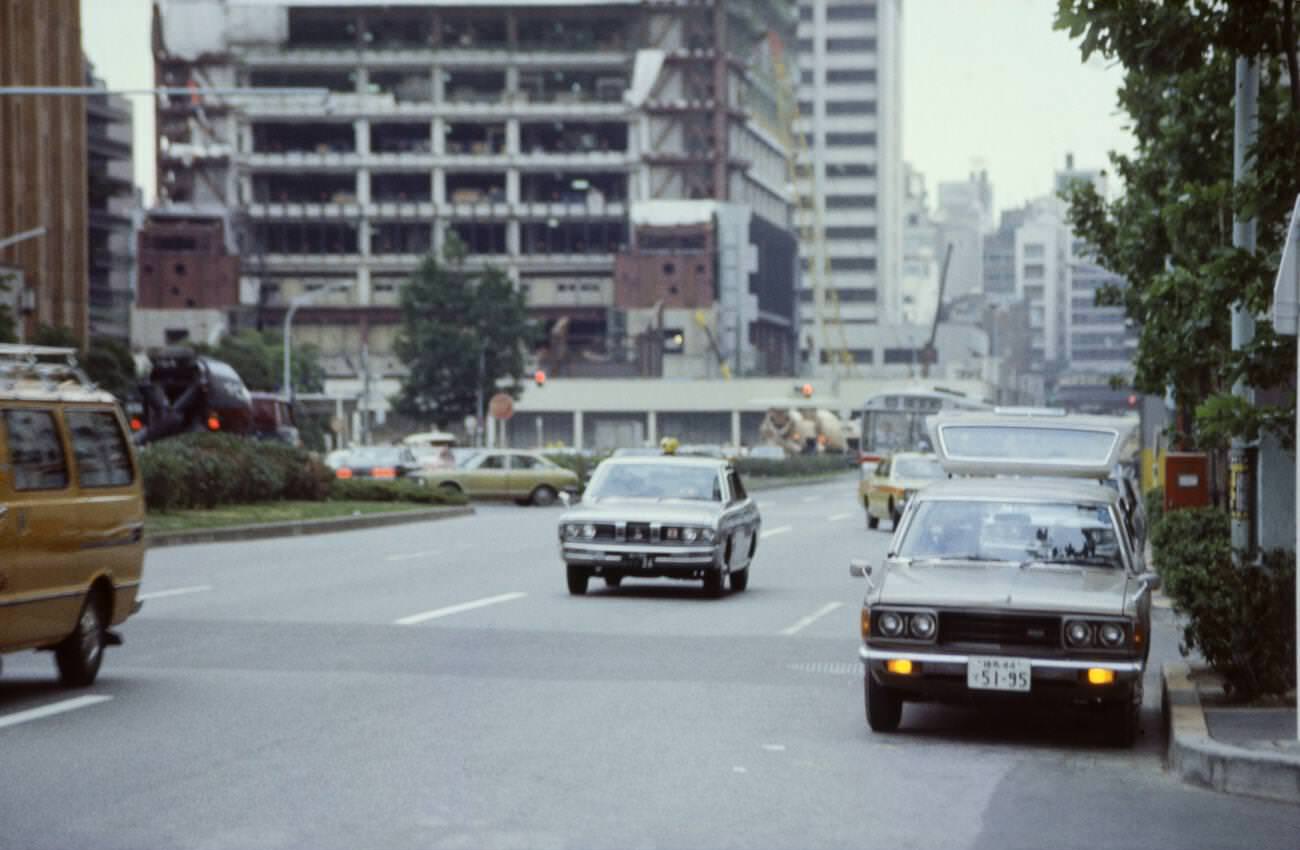
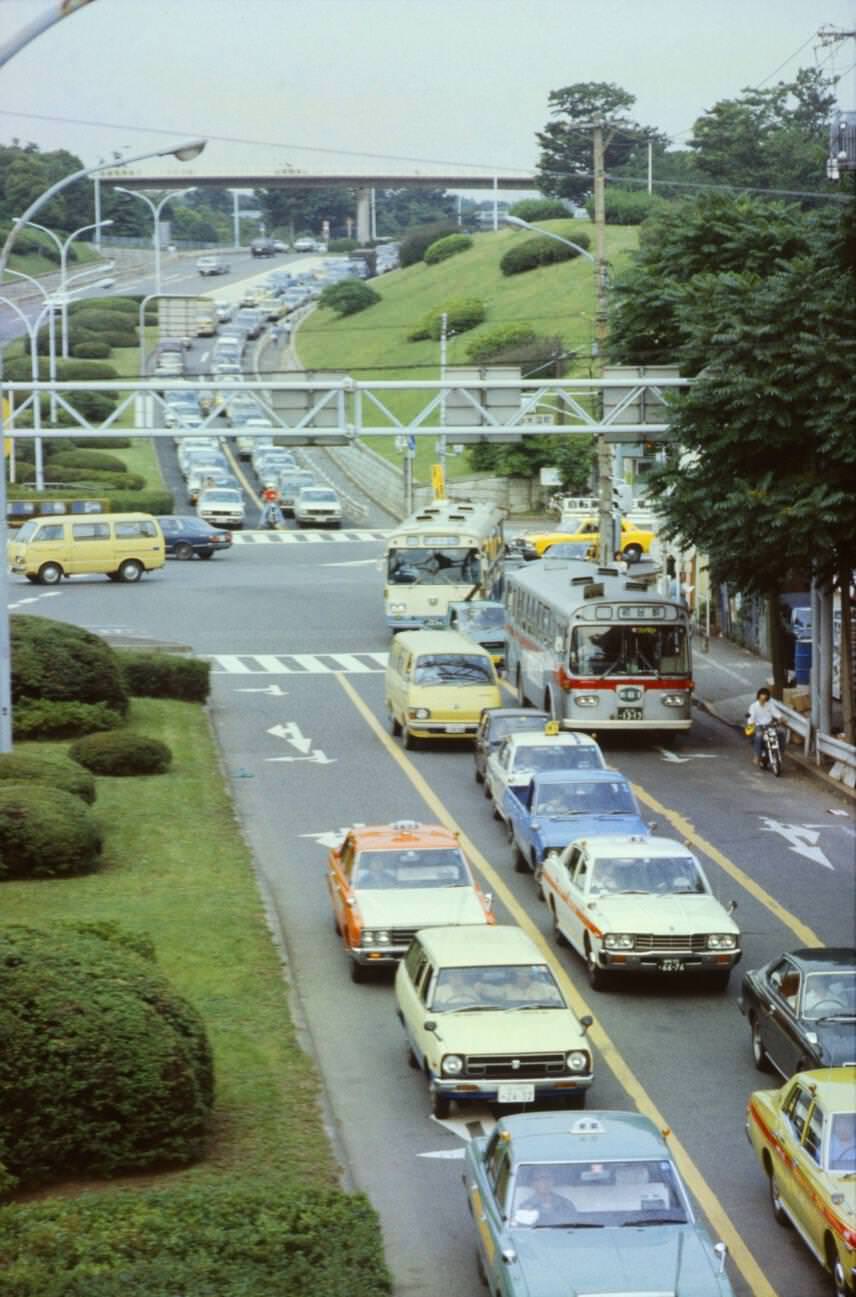
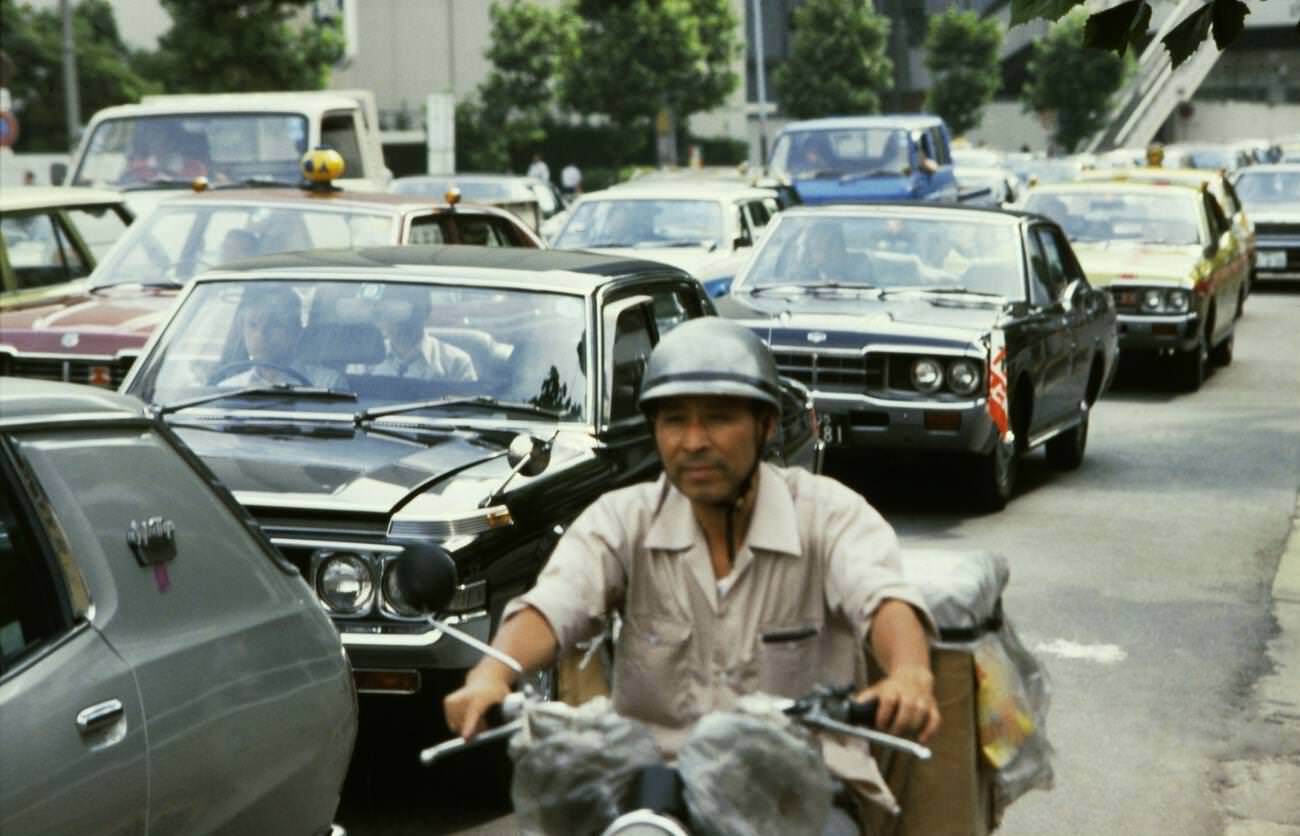
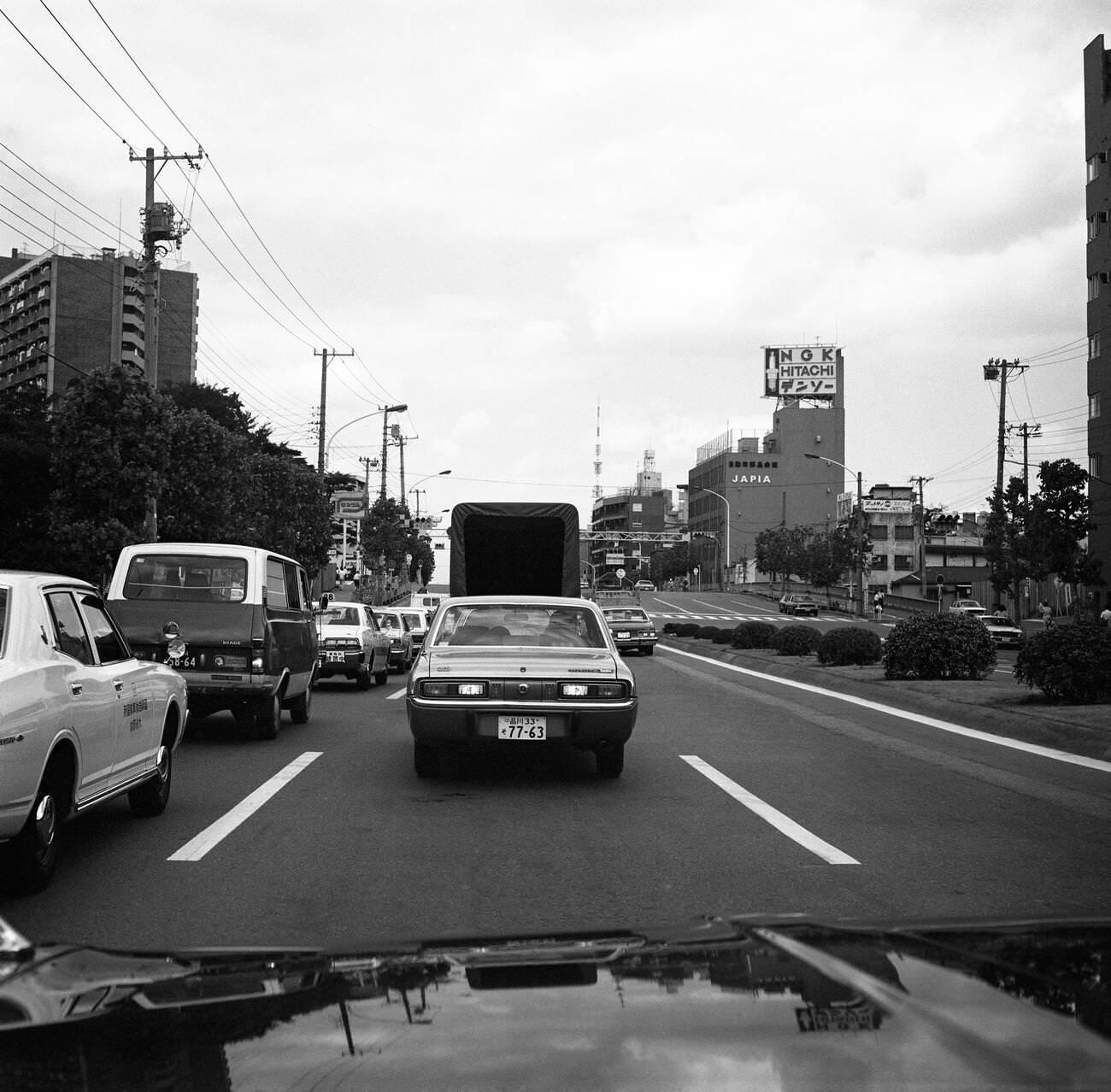
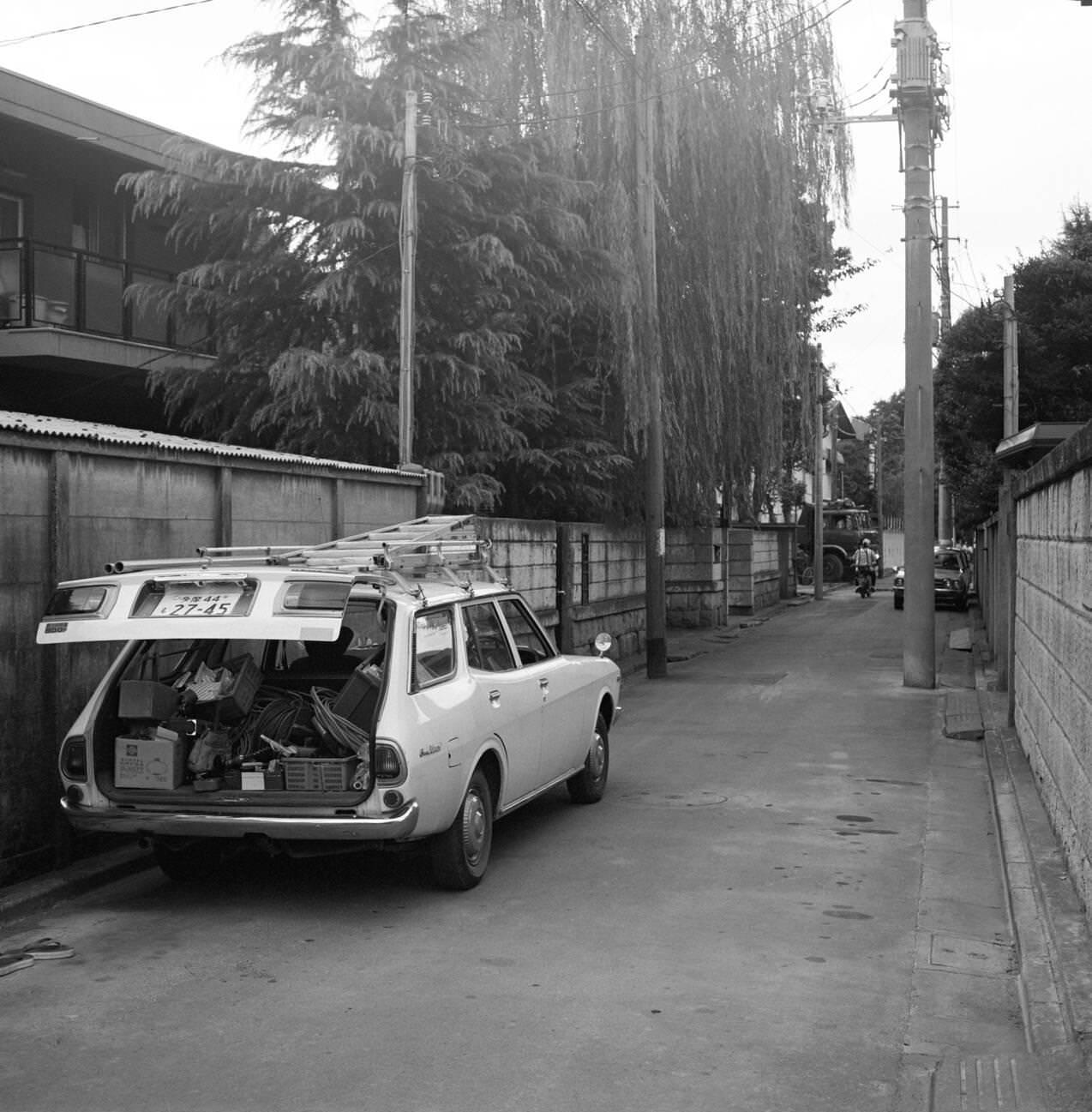
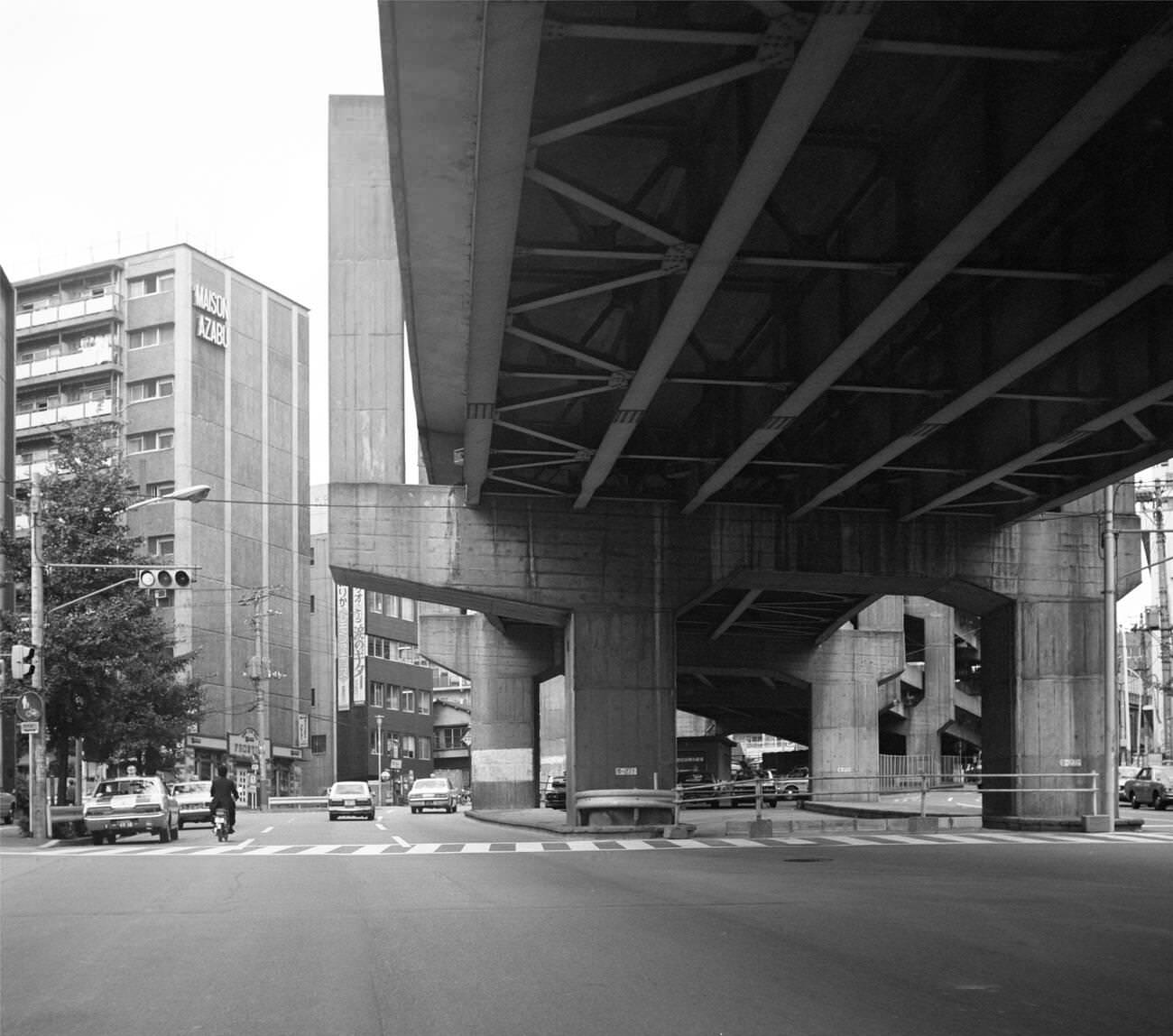
Traffic congestion was one of Tokyo’s most pressing problems in the 1970s. The city’s road network had not kept pace with the number of vehicles on its streets, and gridlock during peak hours was routine. The government responded with expanded expressway construction and improved public transit, but the problem persisted throughout the decade.
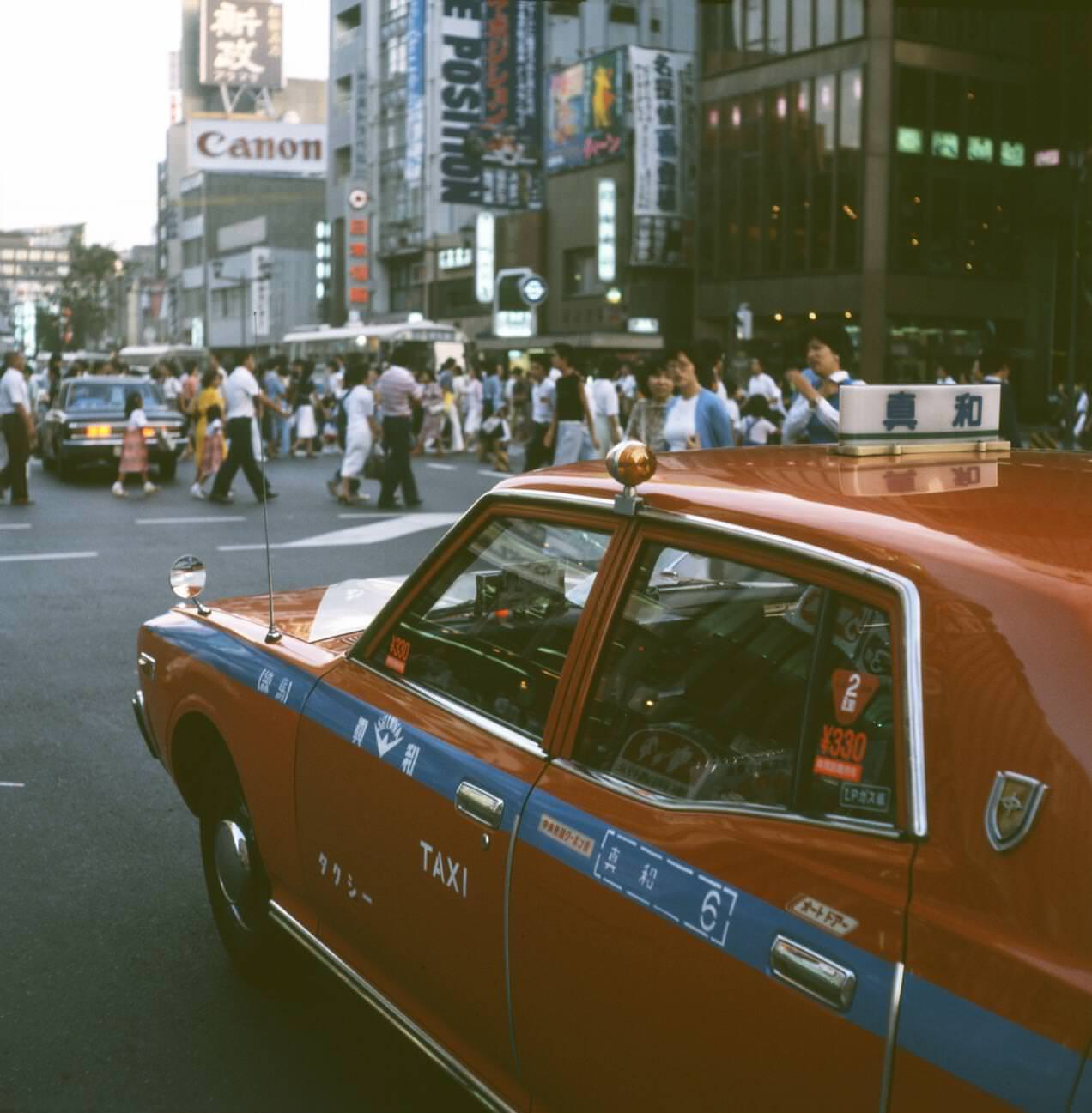
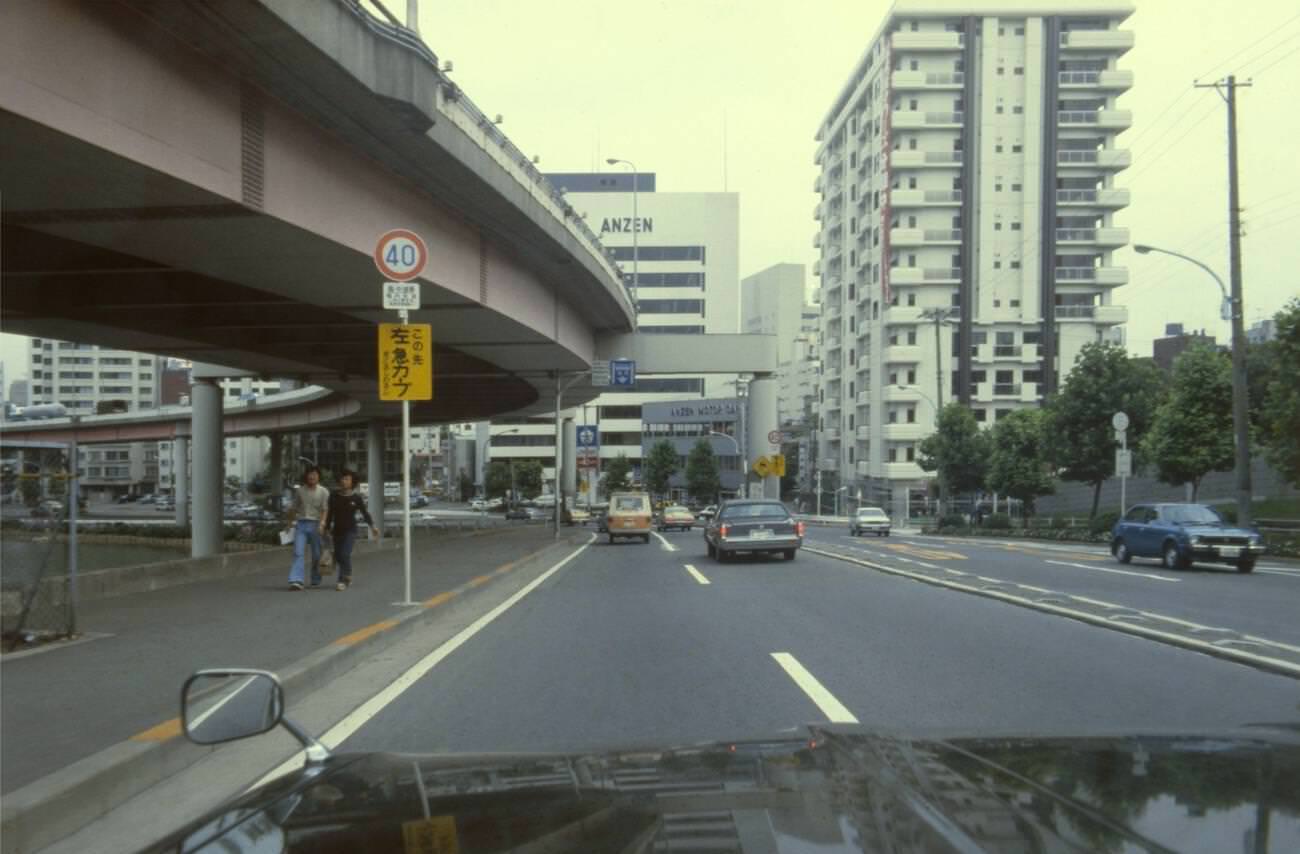
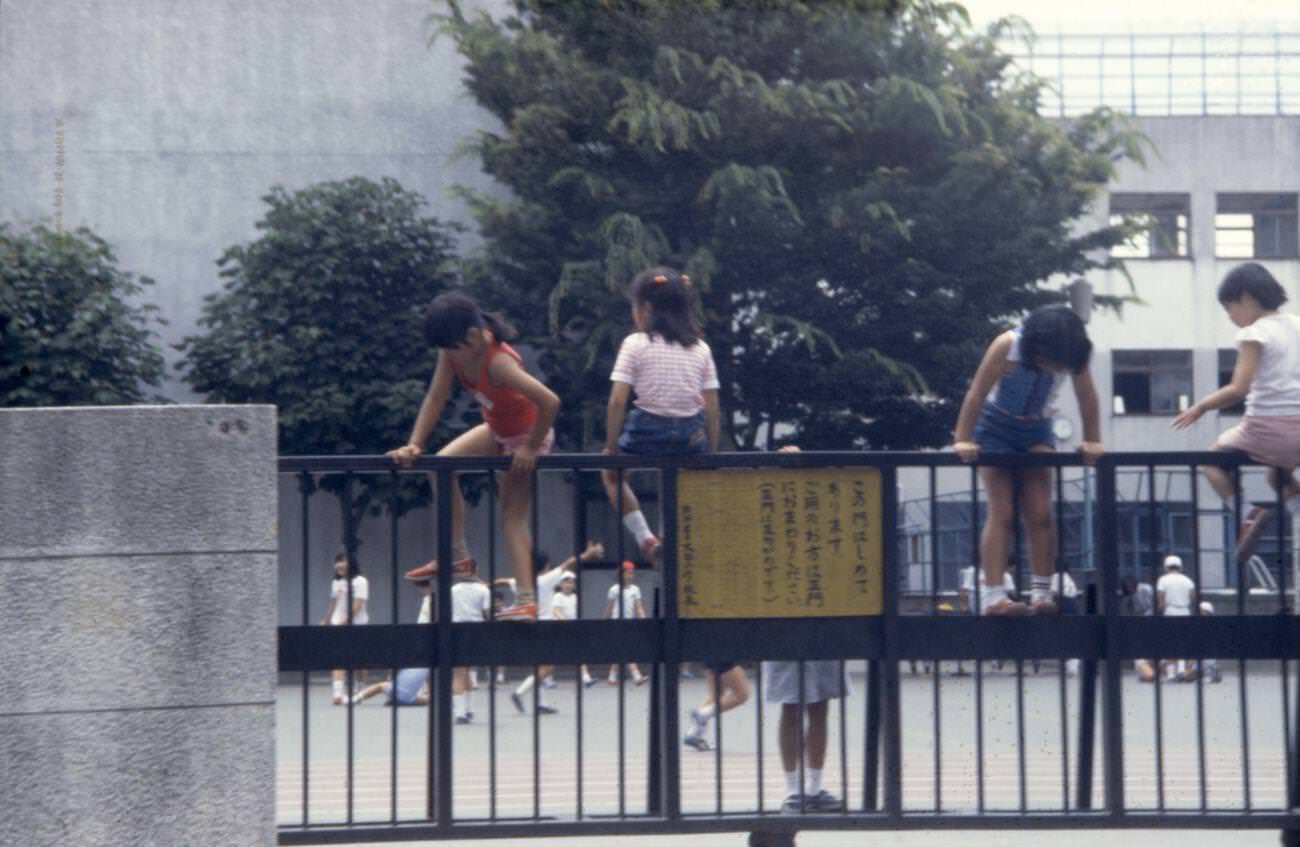
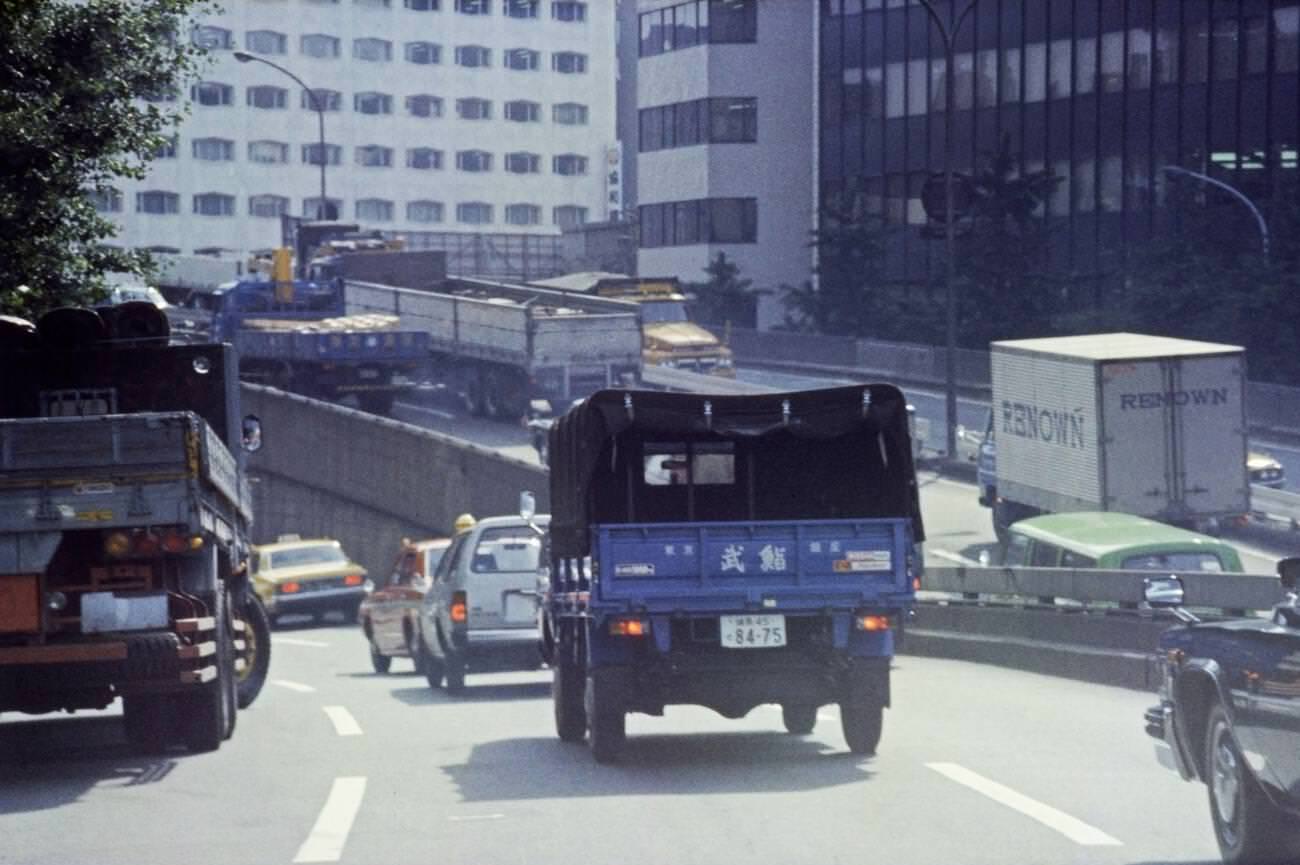
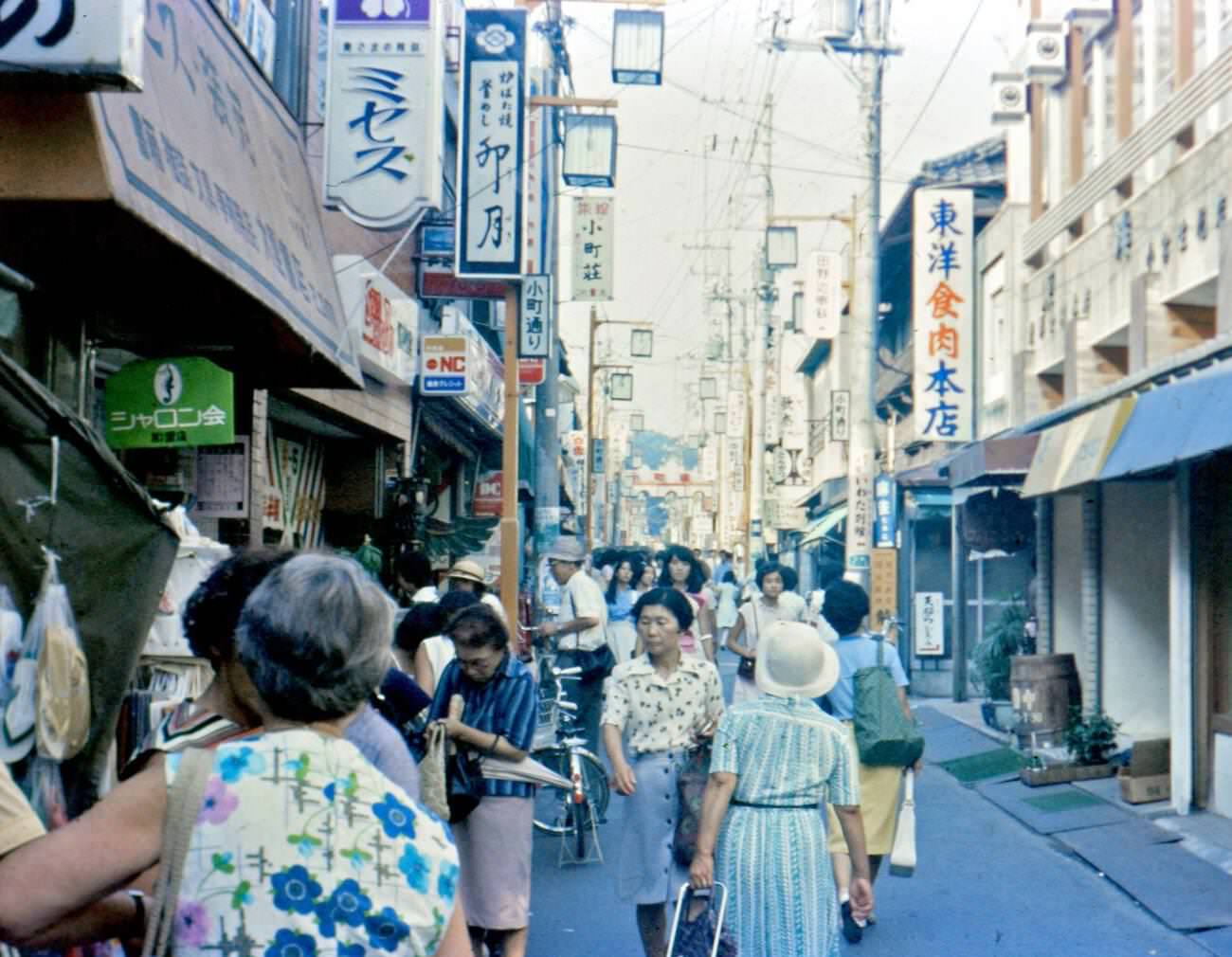
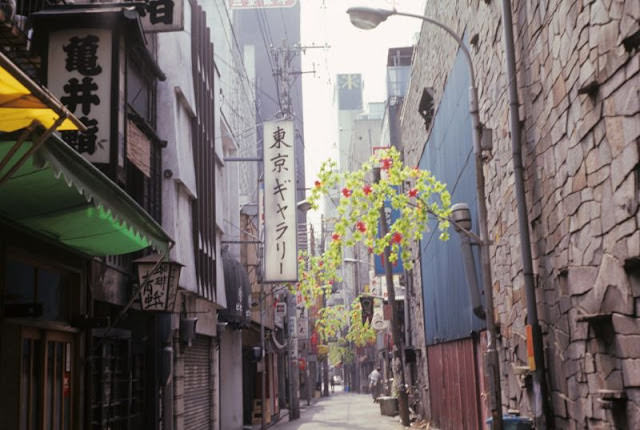
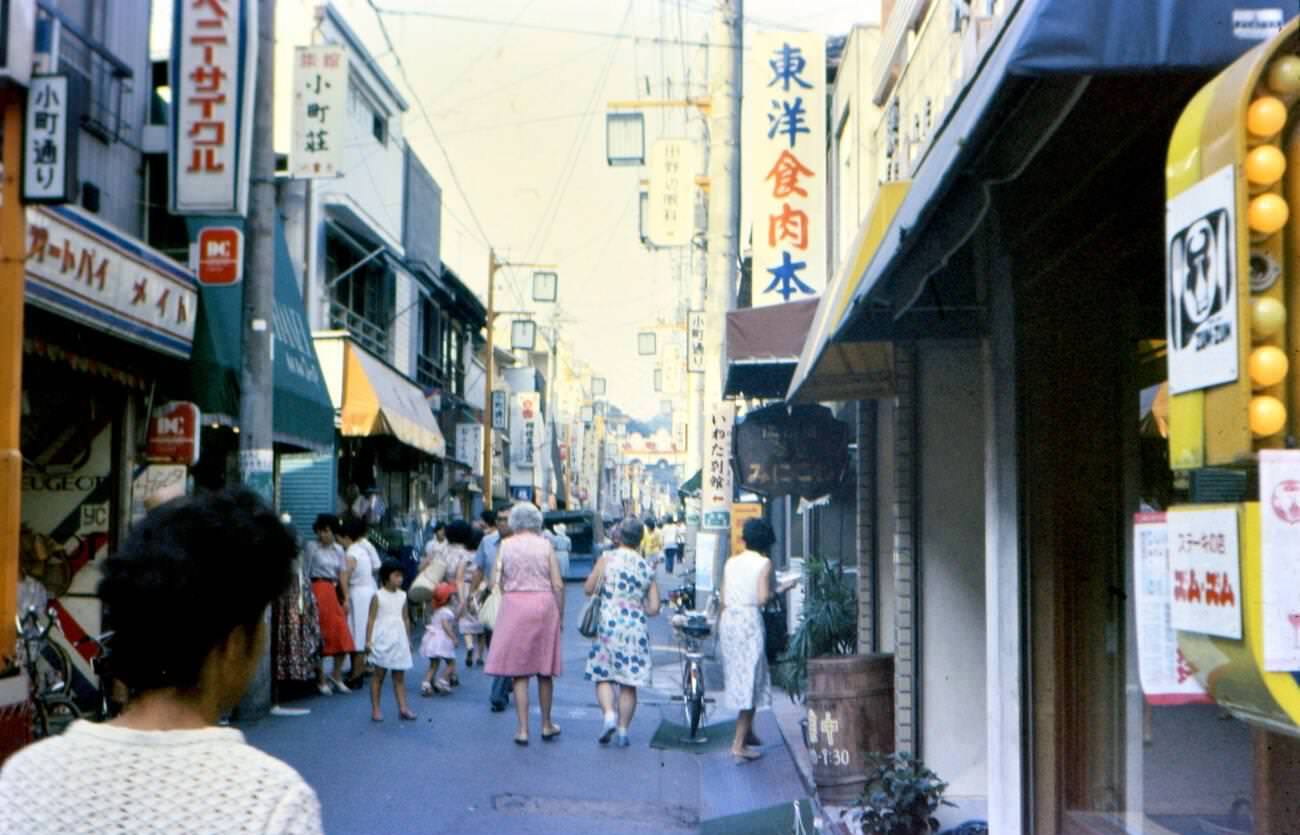
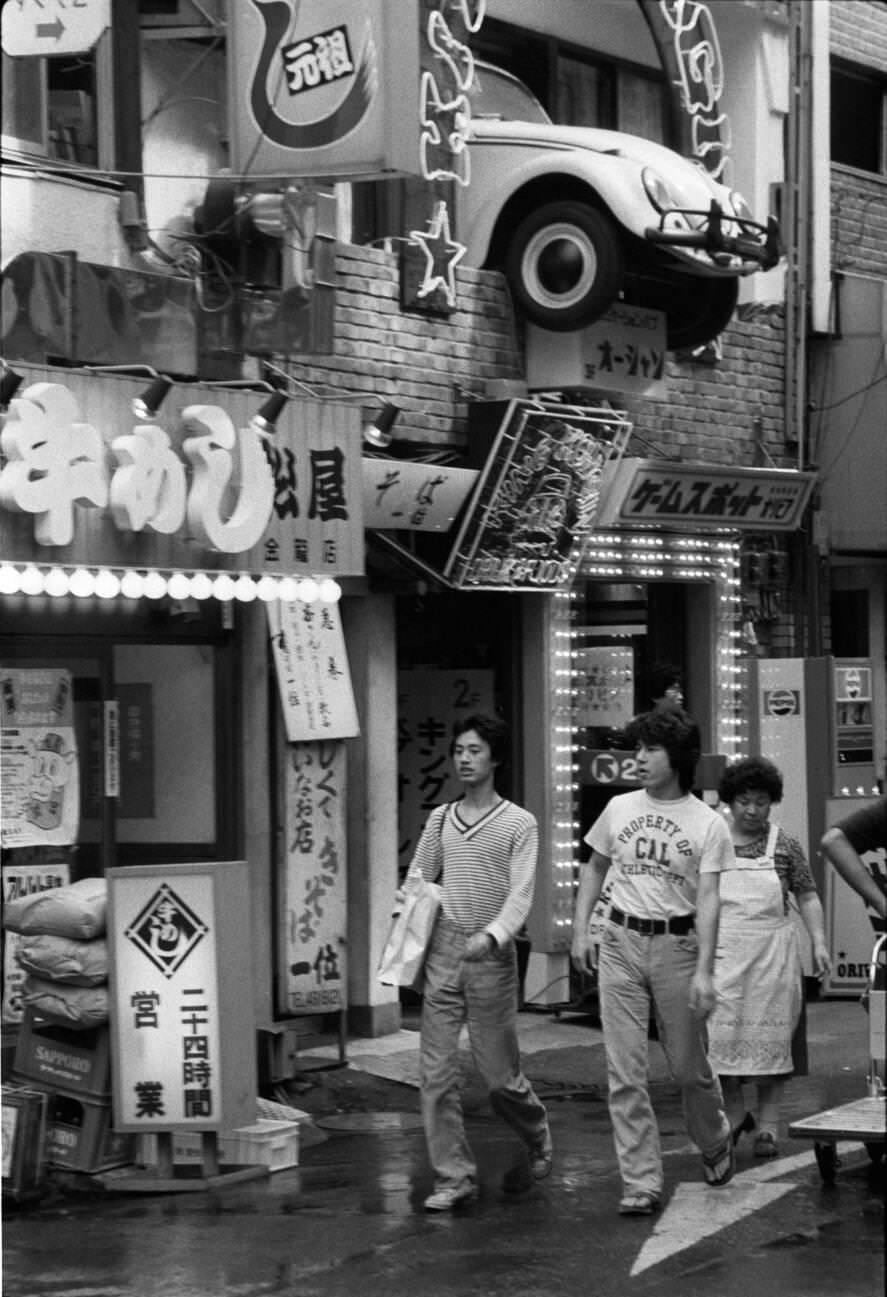
By the late 1970s, Tokyo’s streets were busier and more commercially saturated than ever. Shop signs competed for attention at every turn. The city’s population had passed eight million and was still growing, with new residential neighborhoods pushing outward into what had been farmland just a decade earlier. Yet even as the city expanded outward, its energy was densest in the center.
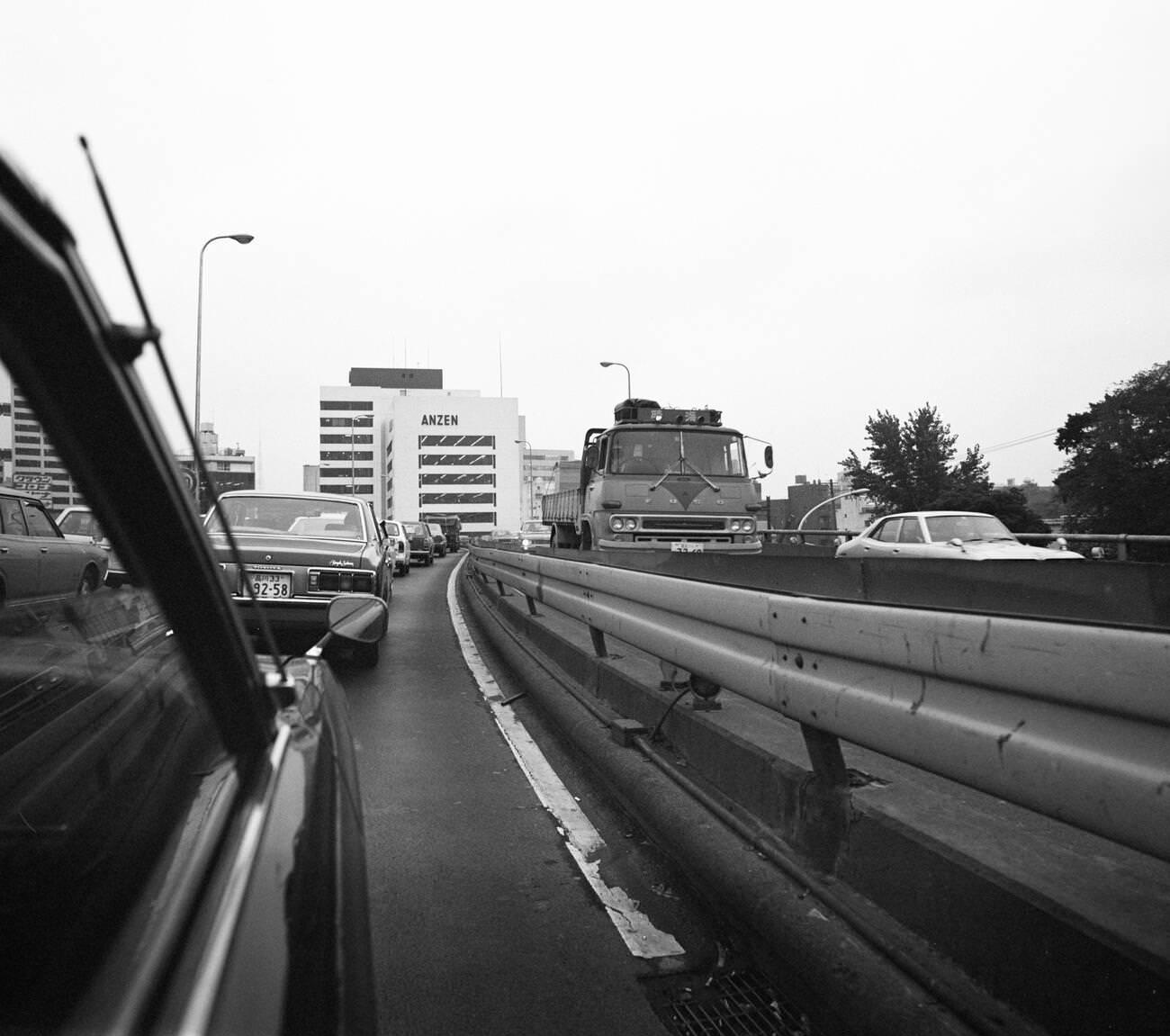
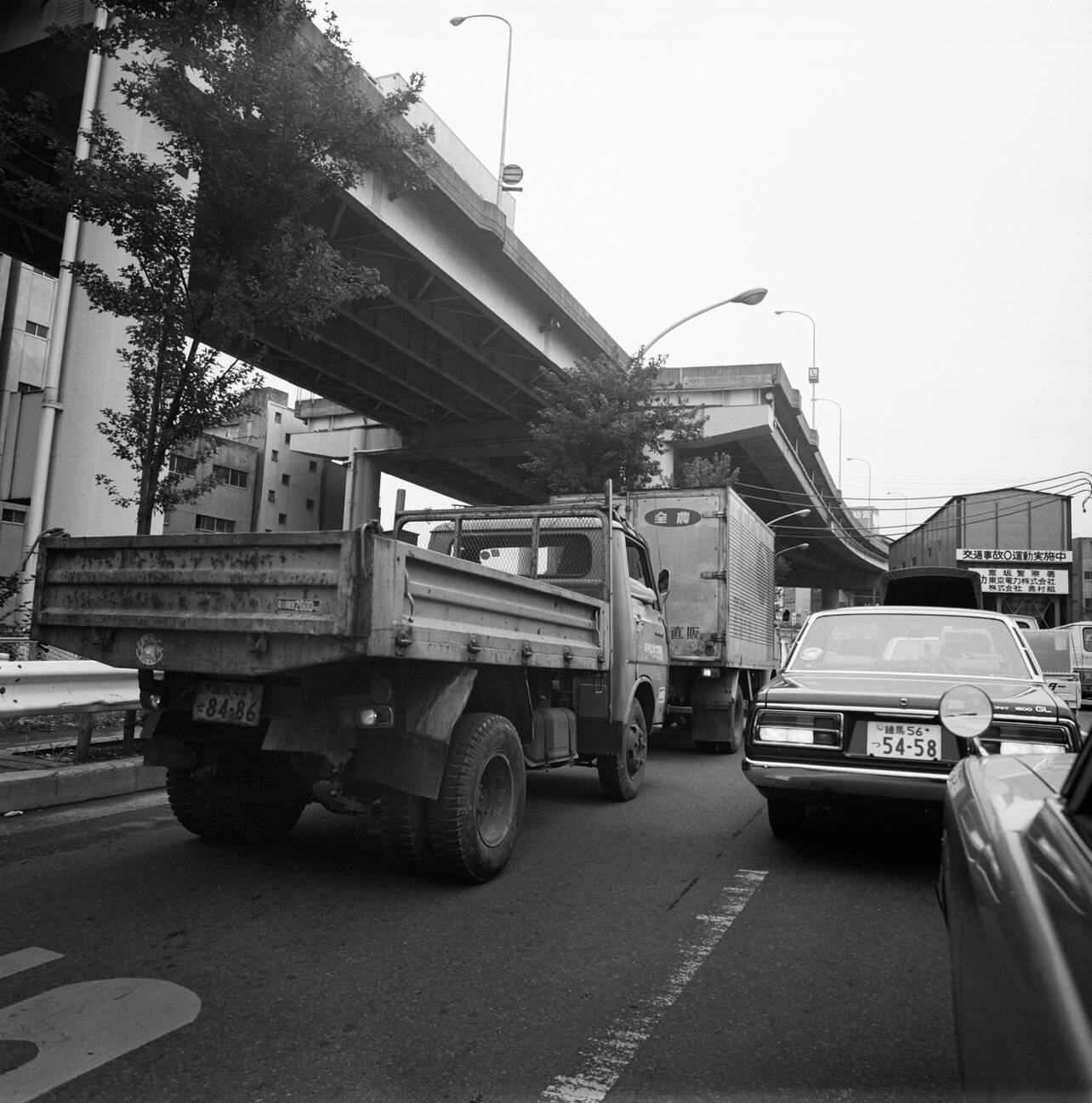
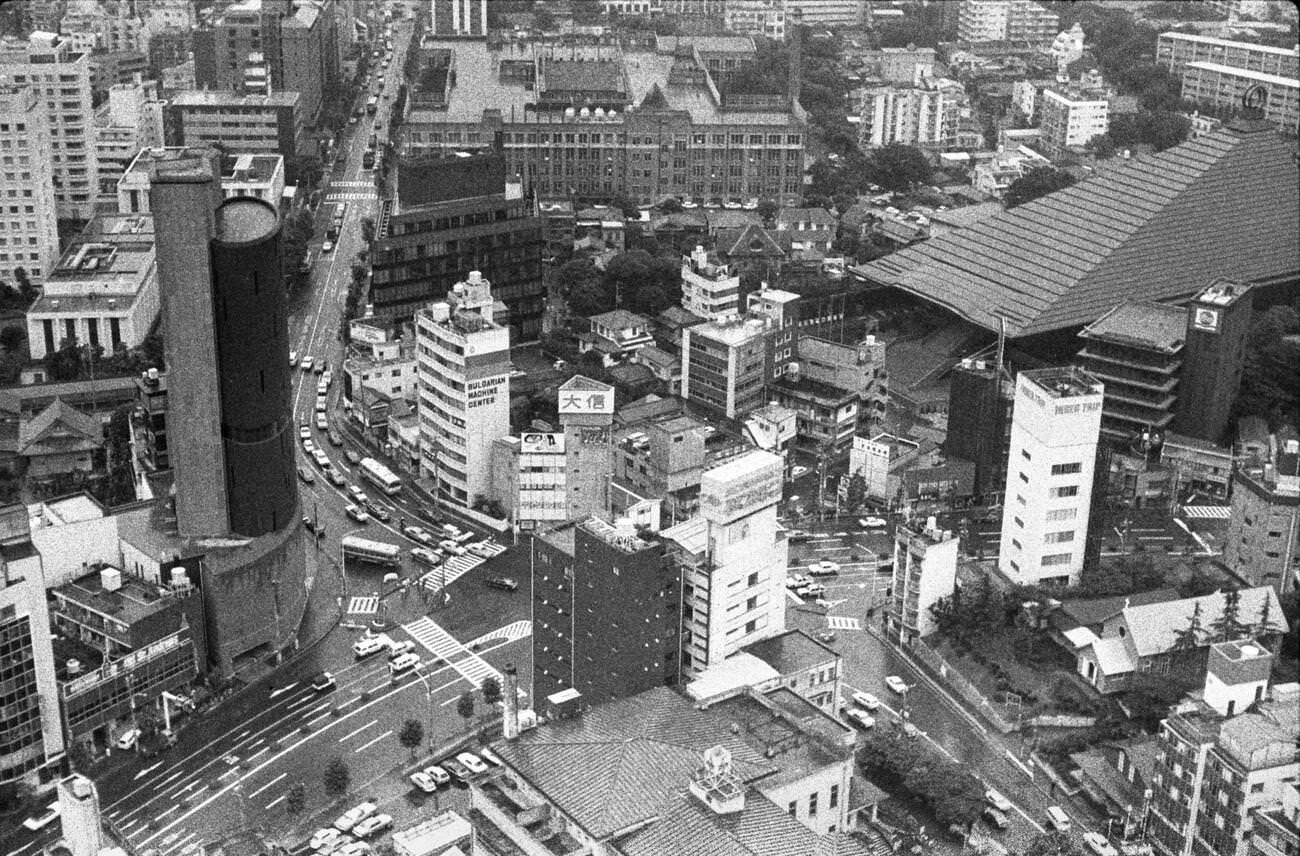
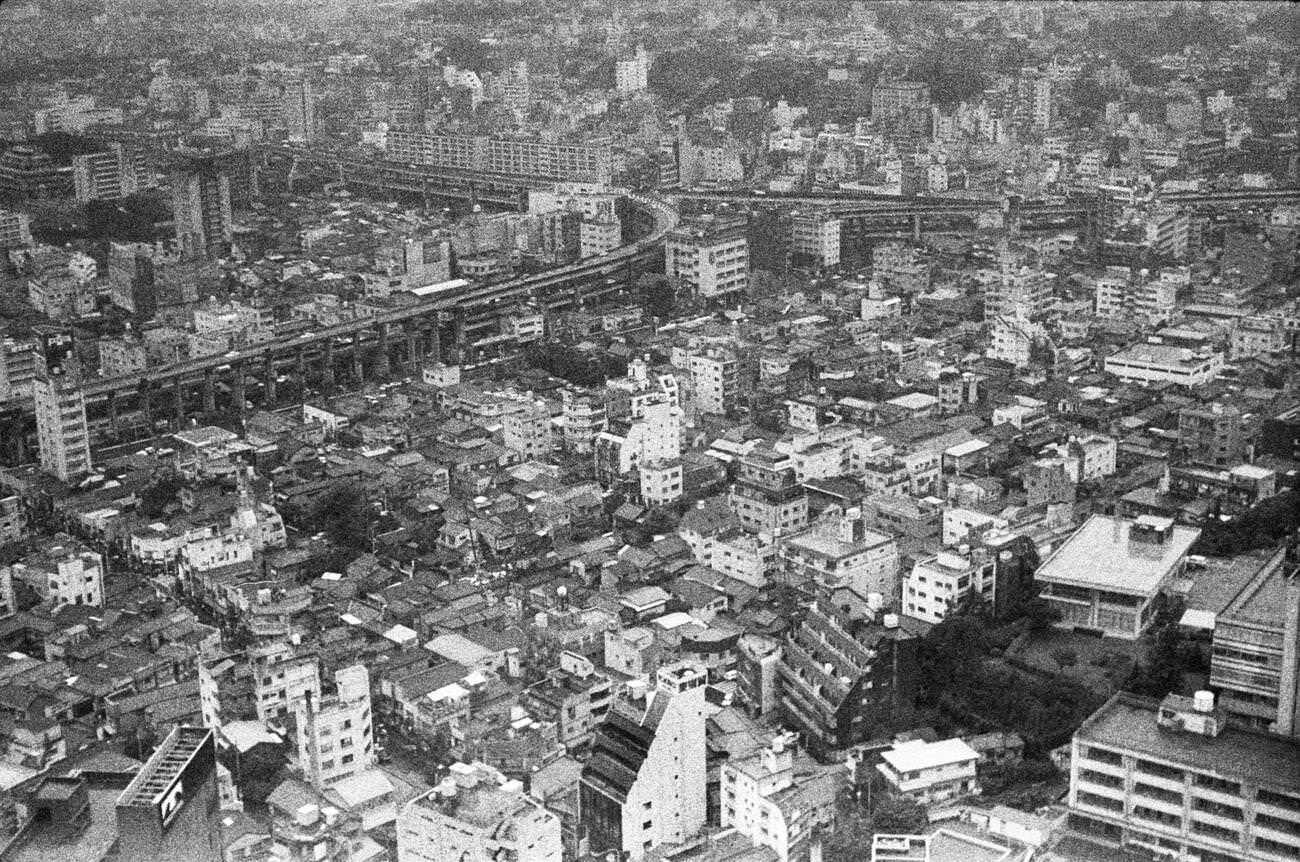
Aerial views of Tokyo in the late 1970s revealed a city that was both tightly packed and constantly under construction. Elevated highways cut through residential blocks. Rail lines criss-crossed at multiple levels. From above, the city looked less like a planned metropolis and more like an organism that had grown in every direction at once, filling every available space.
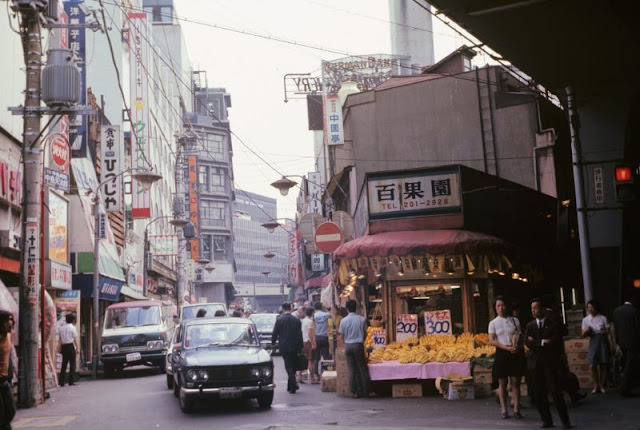
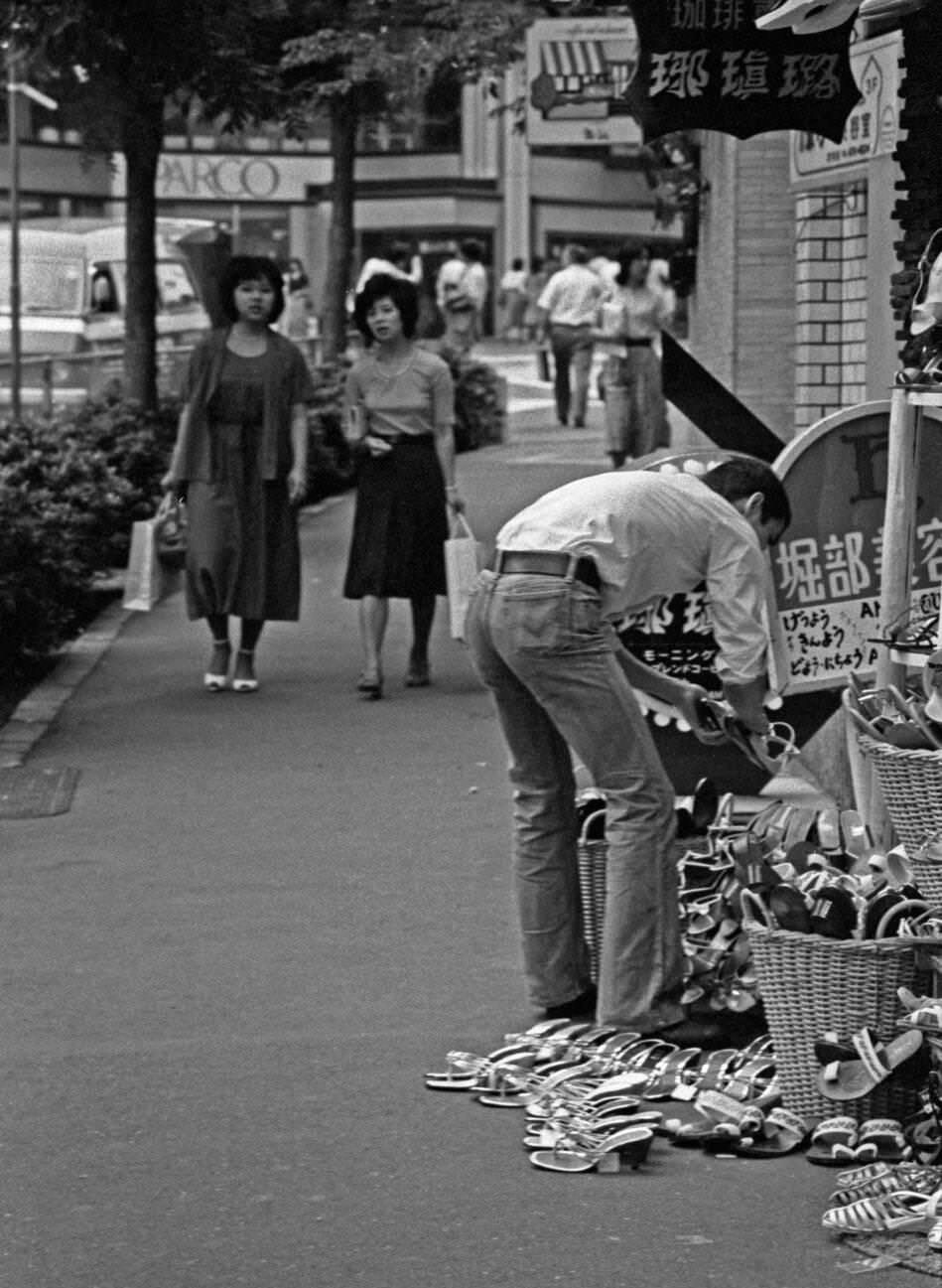
Street vendors and small merchants were fixtures of 1970s Tokyo. They organized their goods with care — vegetables, fish, dried goods, and prepared foods arranged neatly on carts or in open stalls. These sellers operated in the gaps between large retailers, serving the immediate neighborhoods where they set up. Many had sold from the same spot for years and knew their customers well.
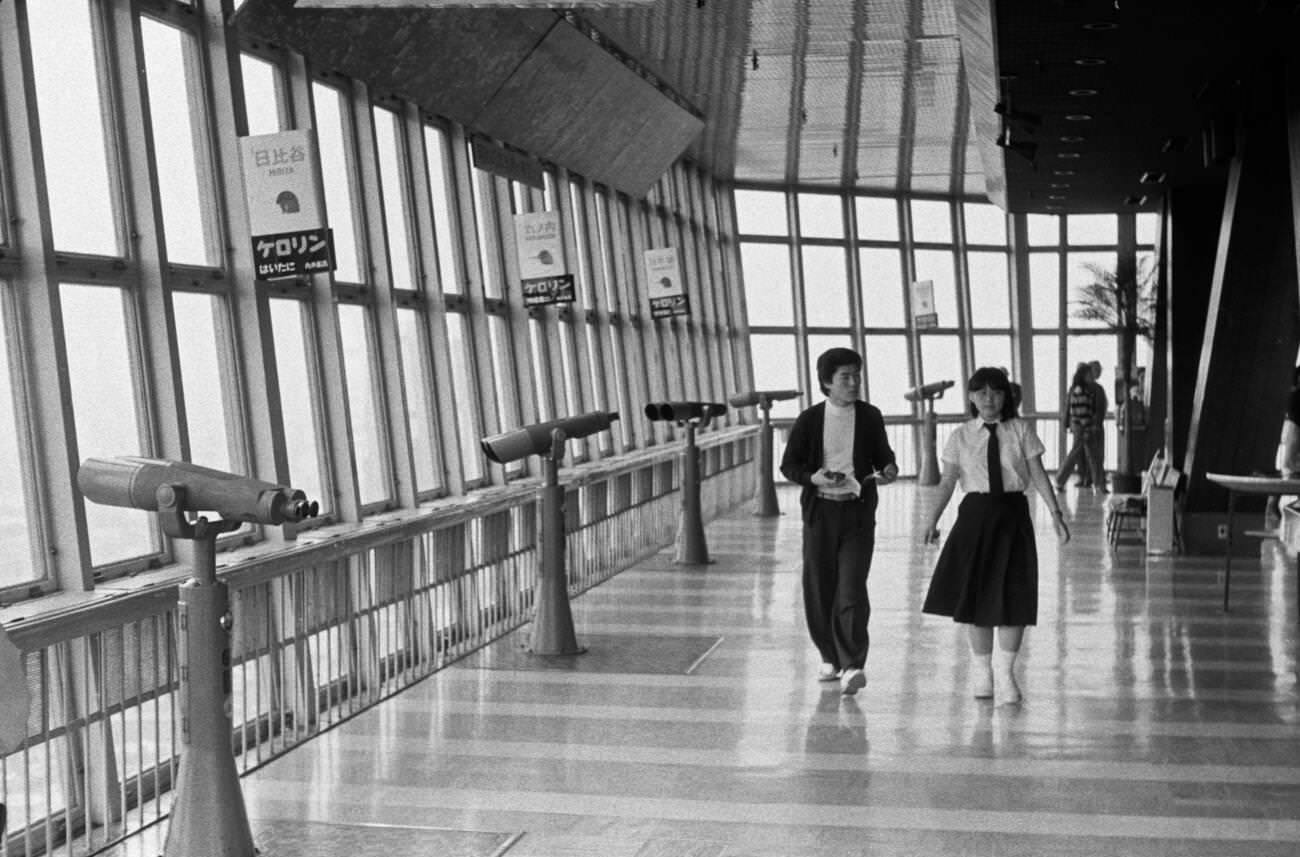
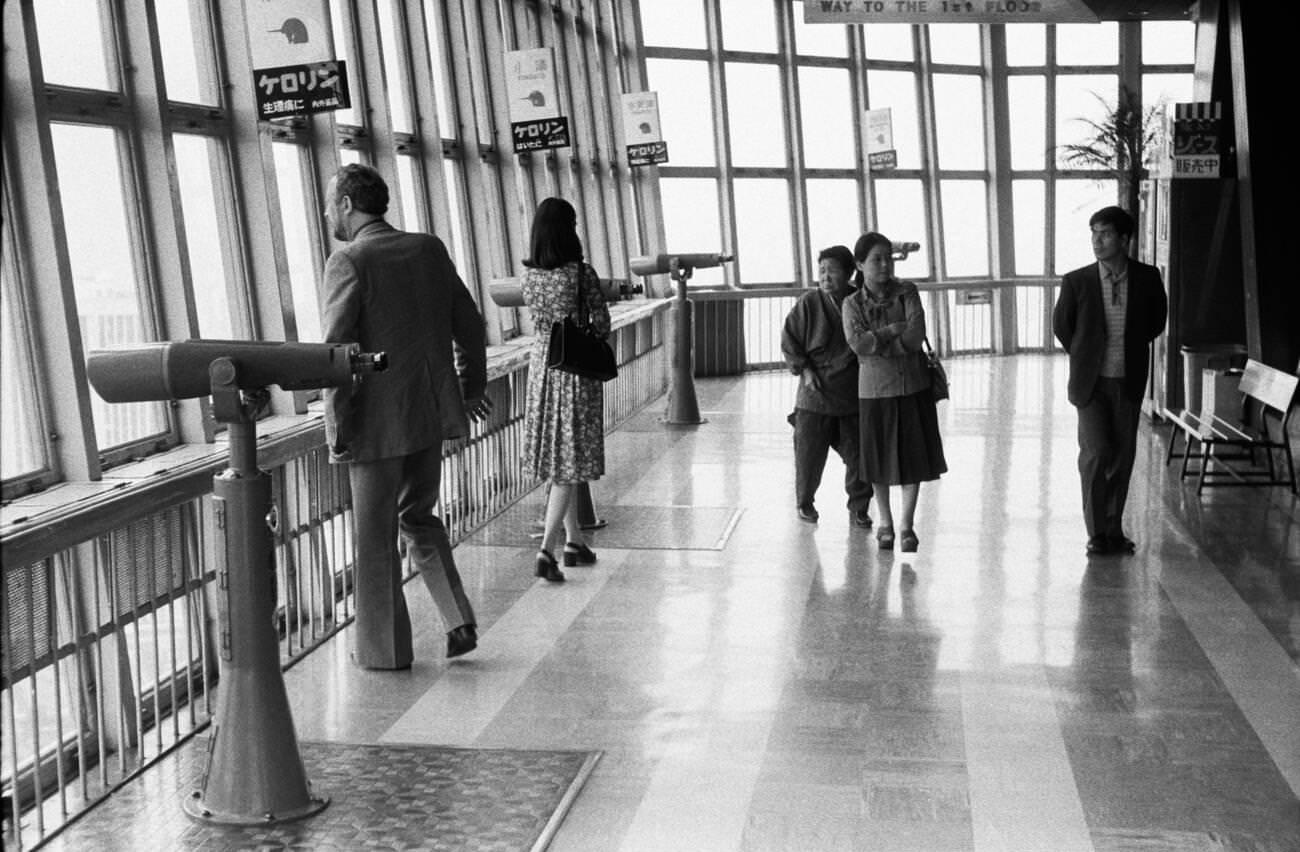
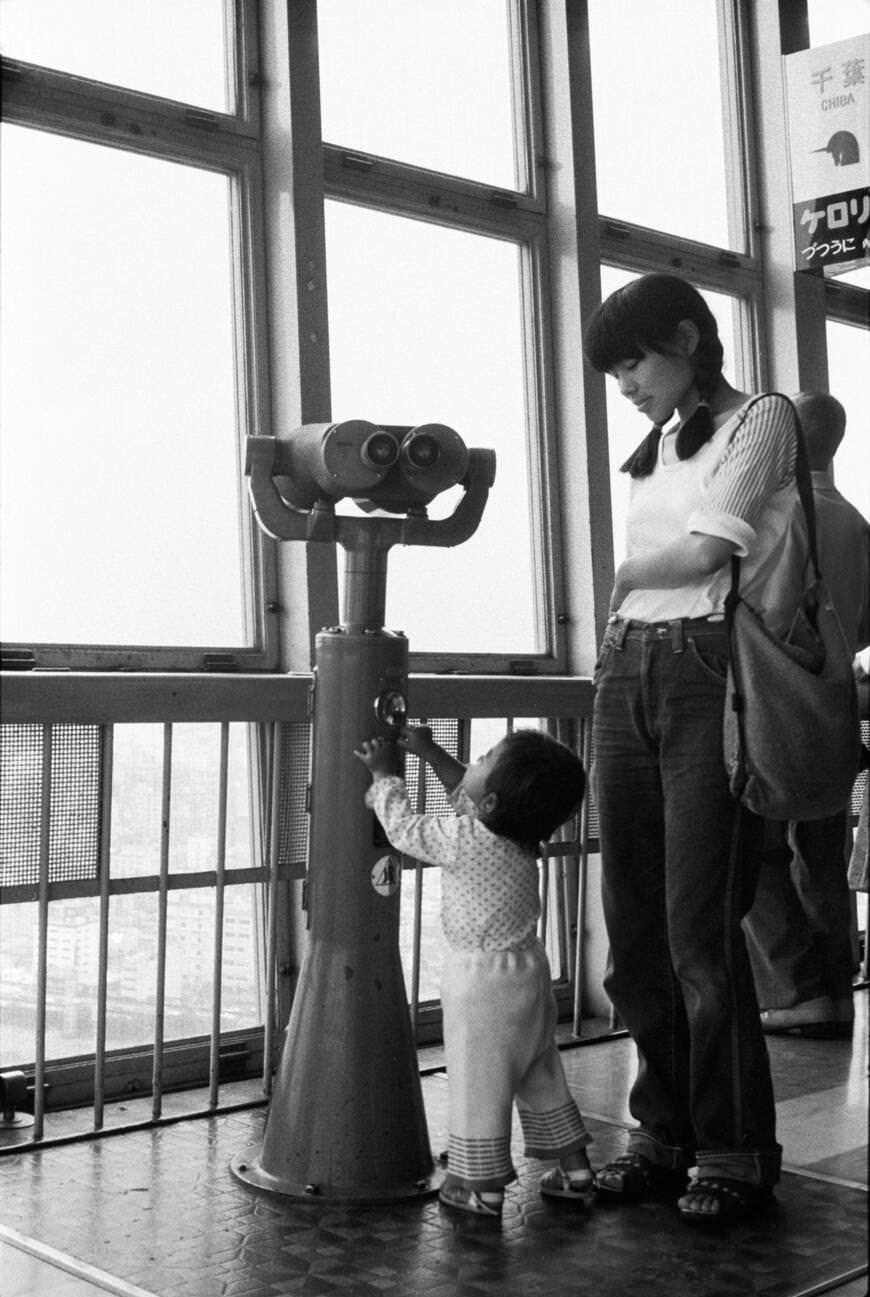
Tokyo Tower’s observation terraces offered one of the best views in the city. On clear days, visitors could see all the way to Mount Fuji to the west. Families, tourists, and school groups made the trip up regularly. By 1979, the tower had become a beloved civic fixture — functional as a broadcast antenna but also deeply embedded in the city’s popular imagination.
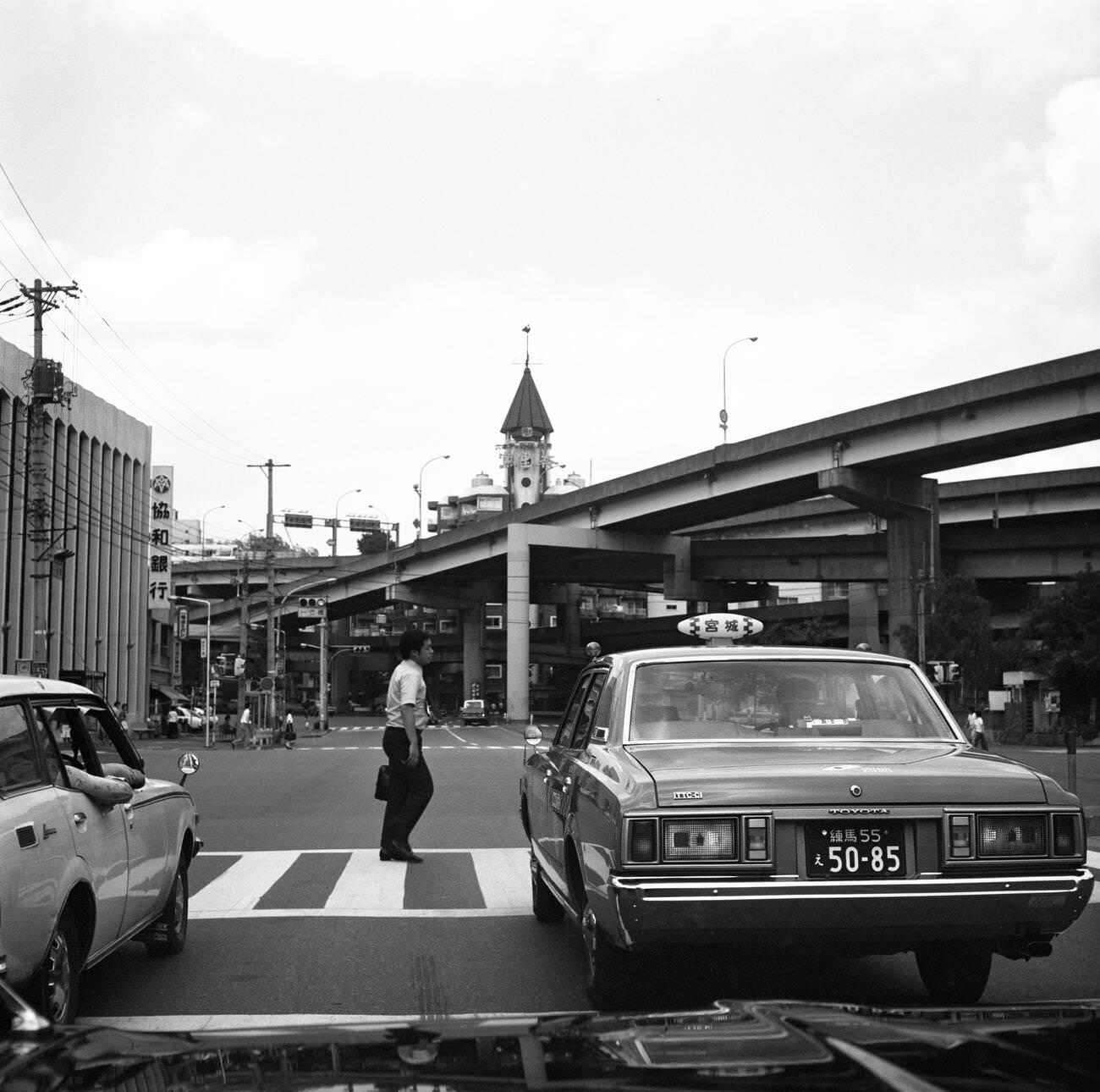
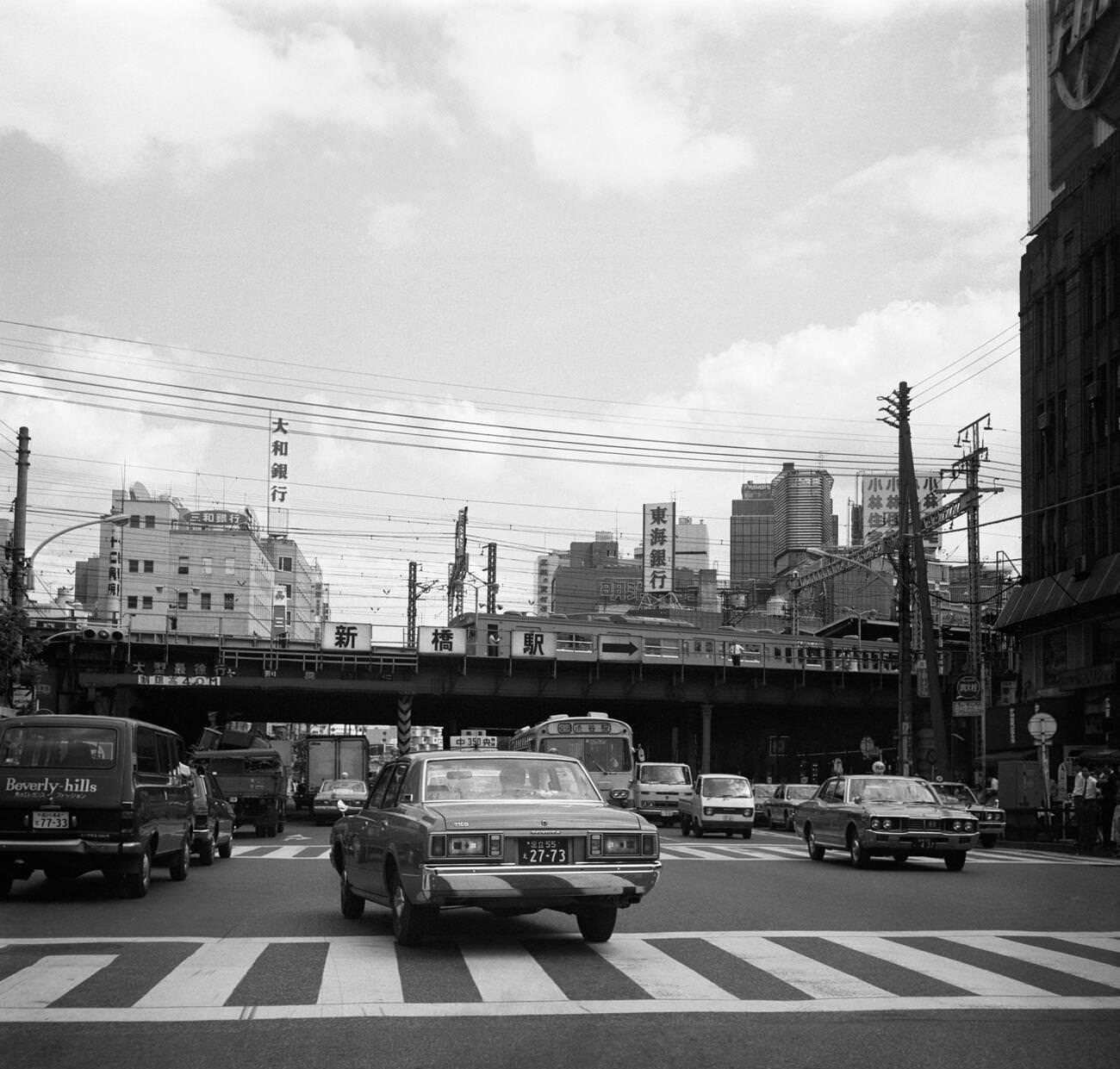
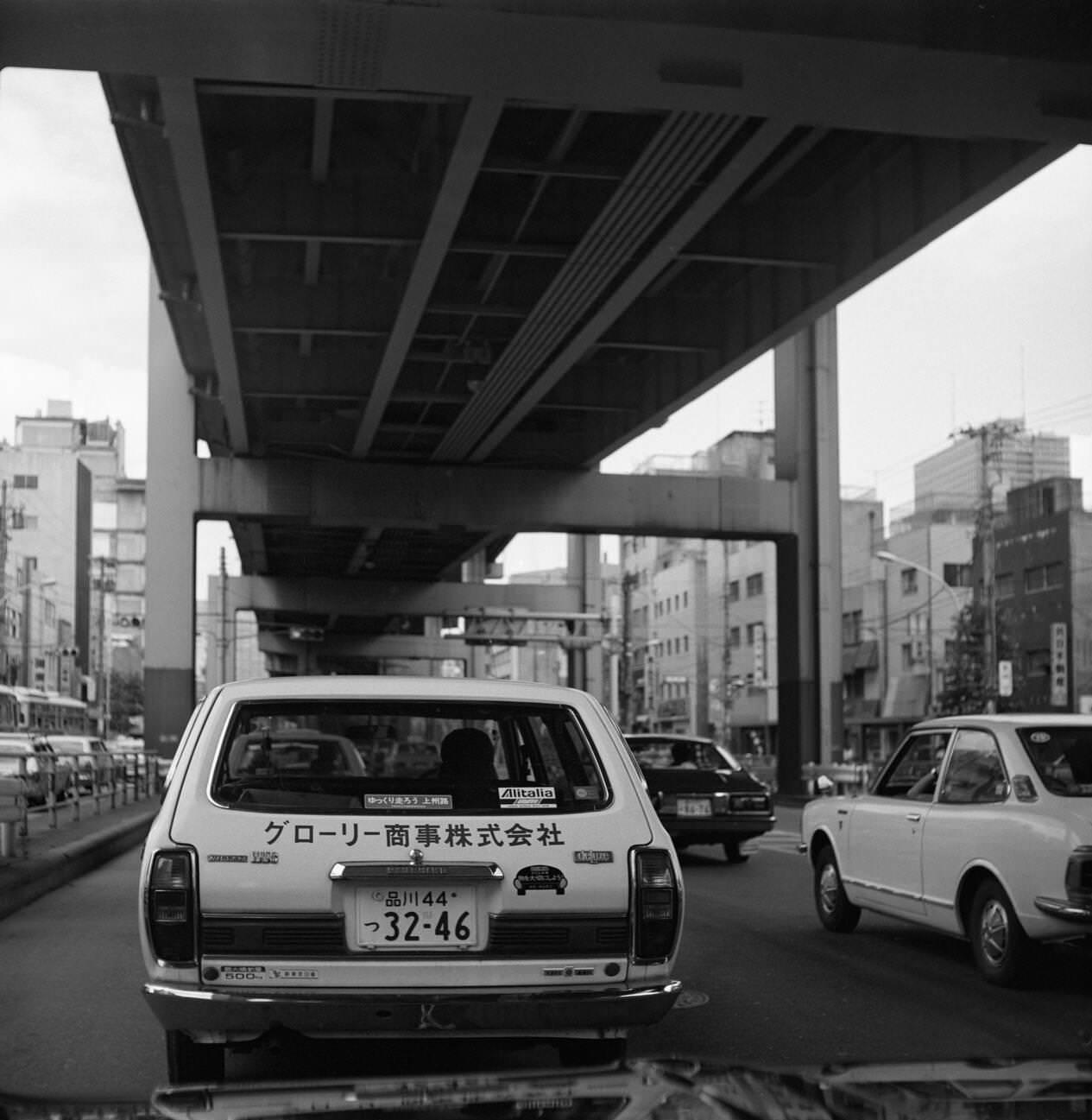
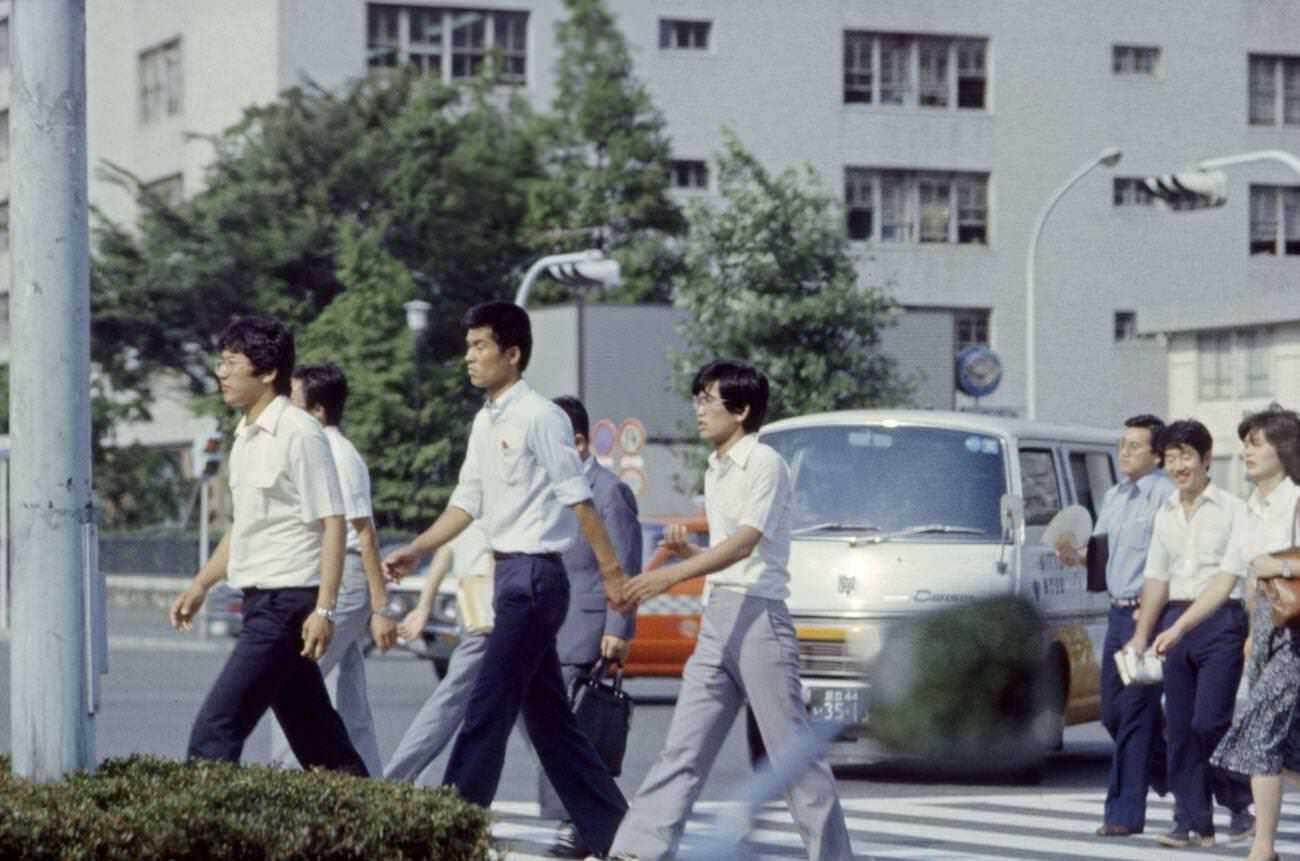
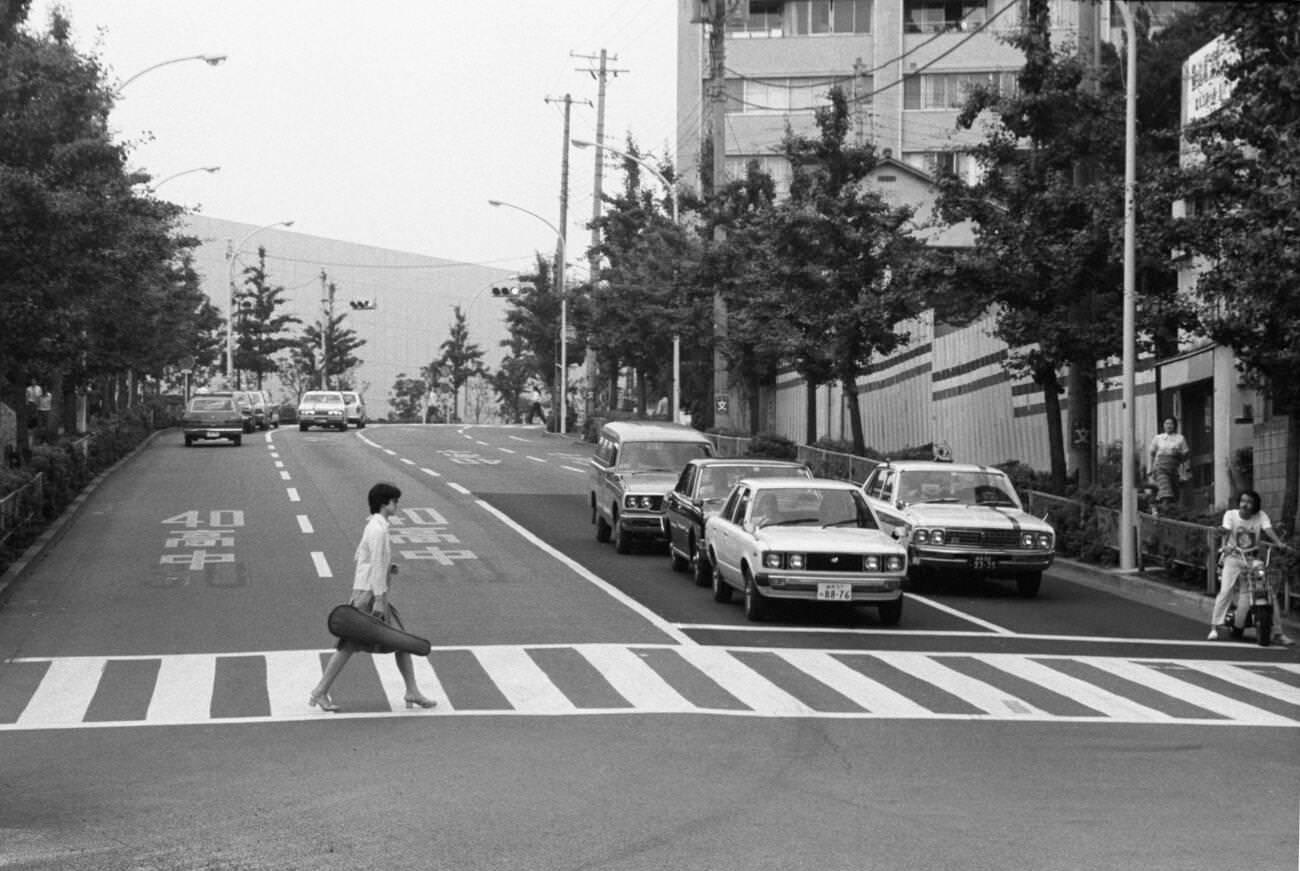
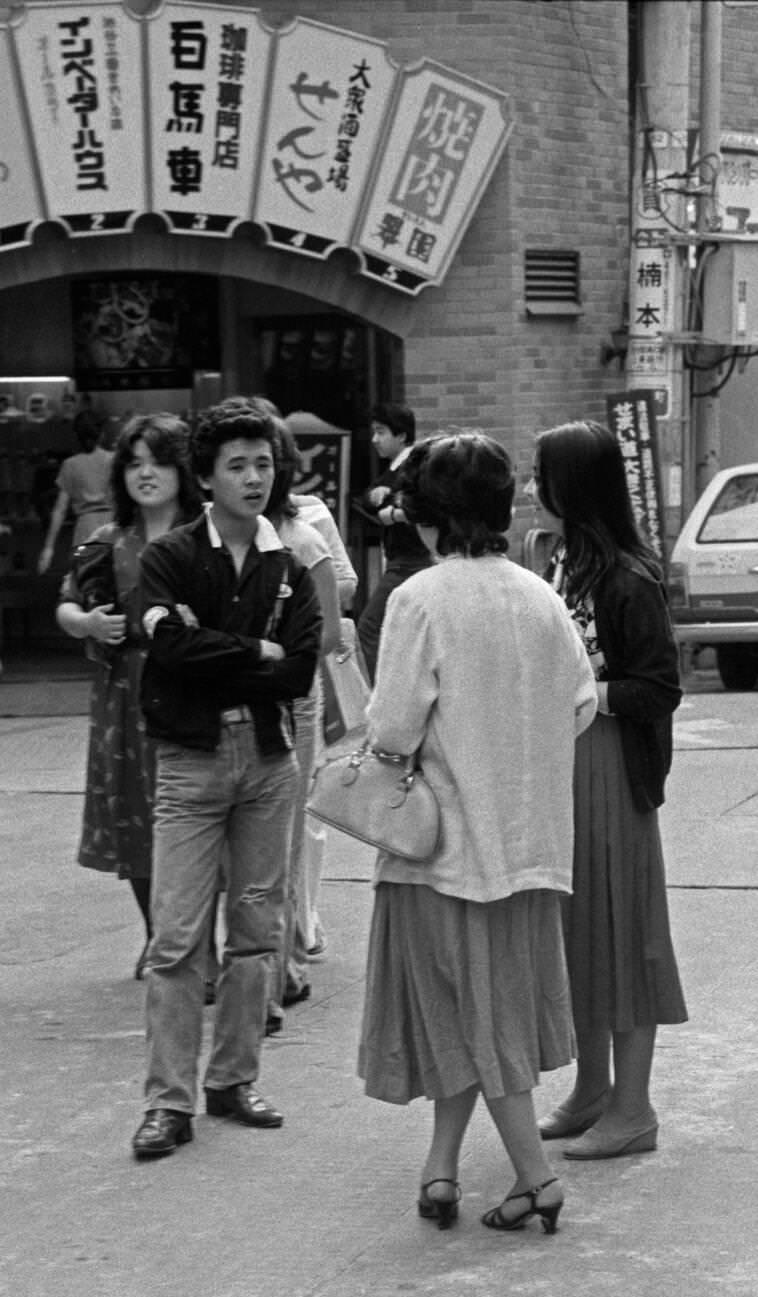
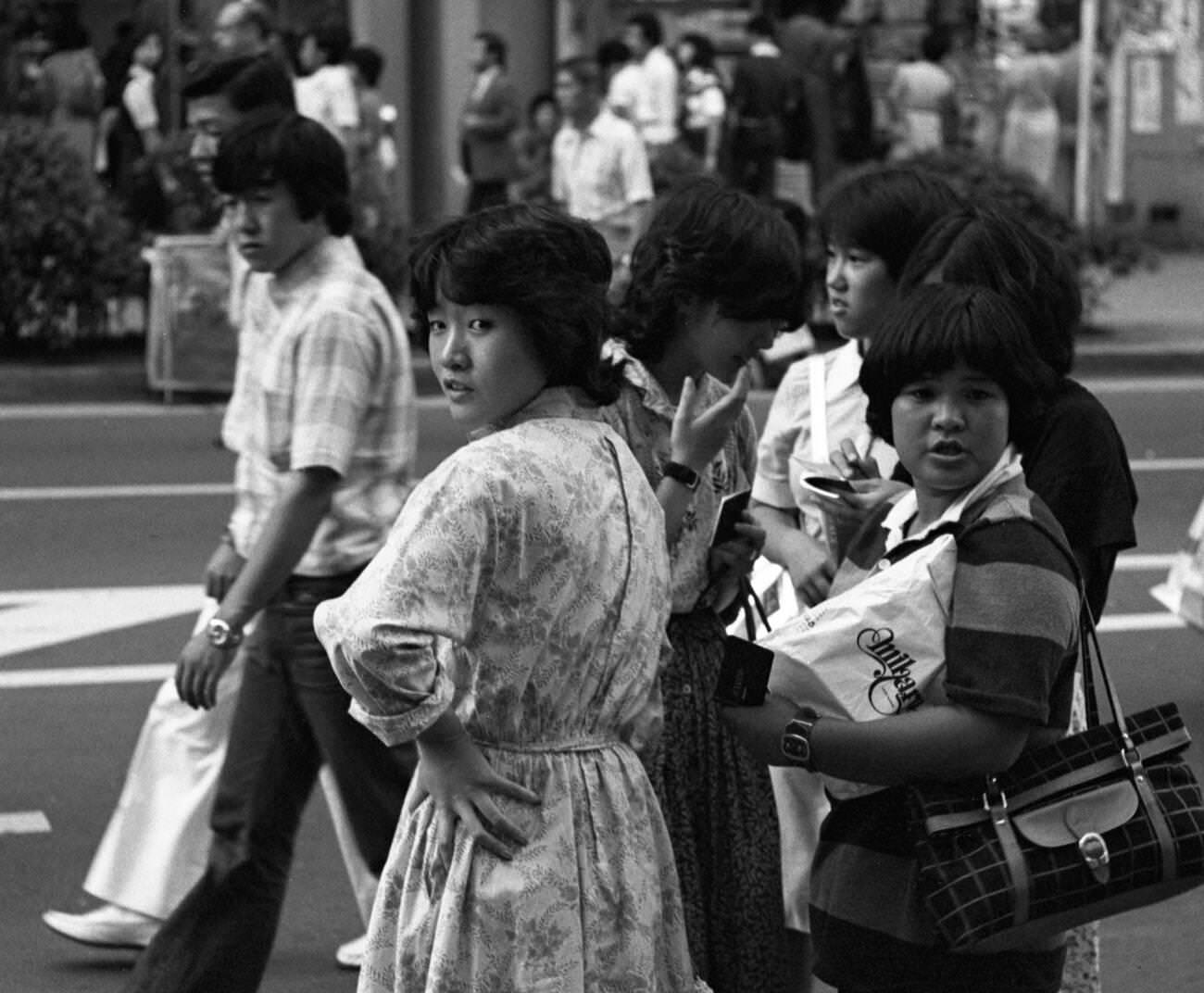
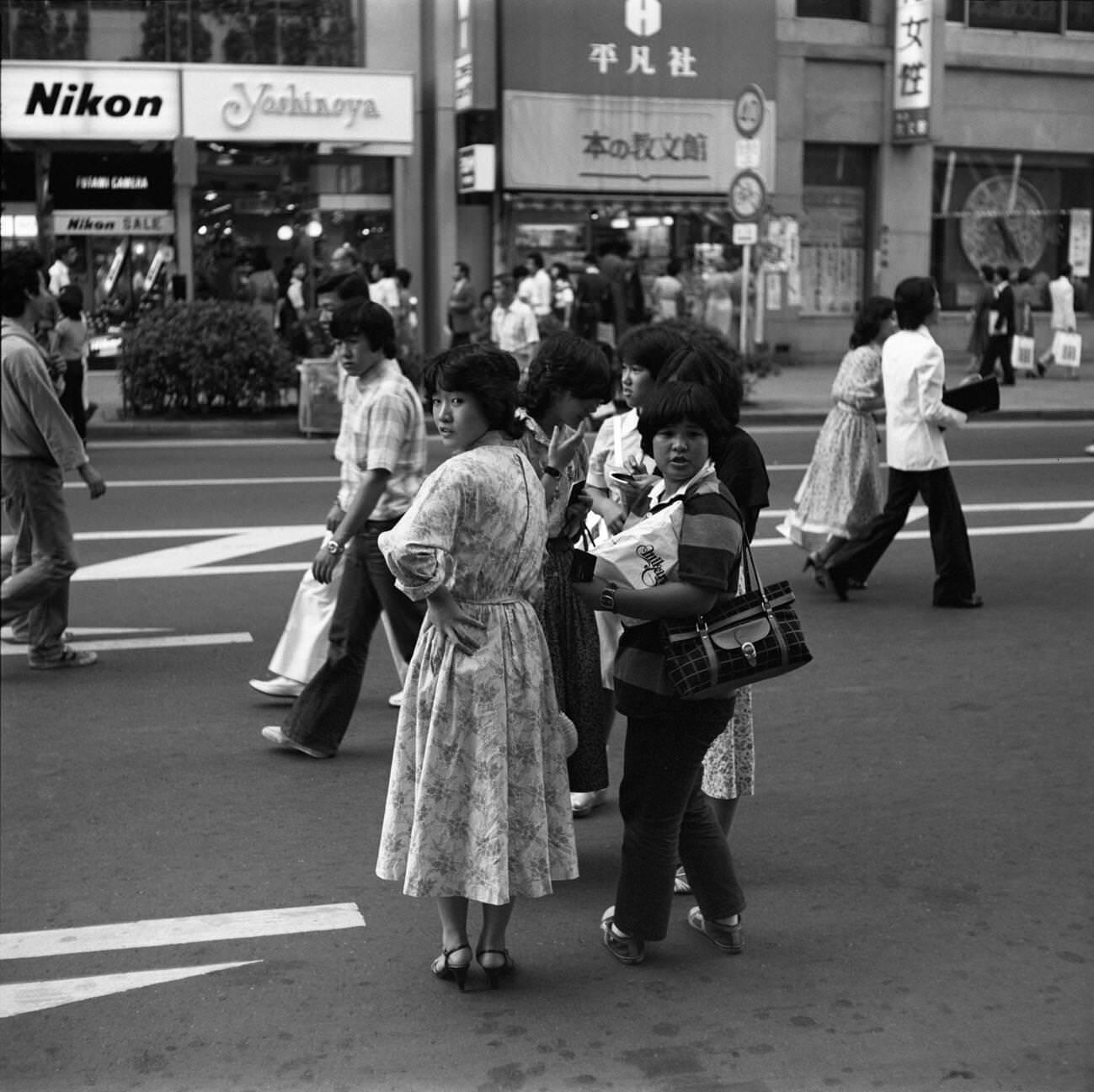
Tokyo’s streets in 1978 and 1979 were dense with pedestrians at nearly every hour. Shoppers, commuters, students, and workers moved along sidewalks that were often too narrow for the volume of people using them. Fashion had become more expressive by the late 1970s, particularly among young people who pushed against the conservative dress norms of the previous generation.
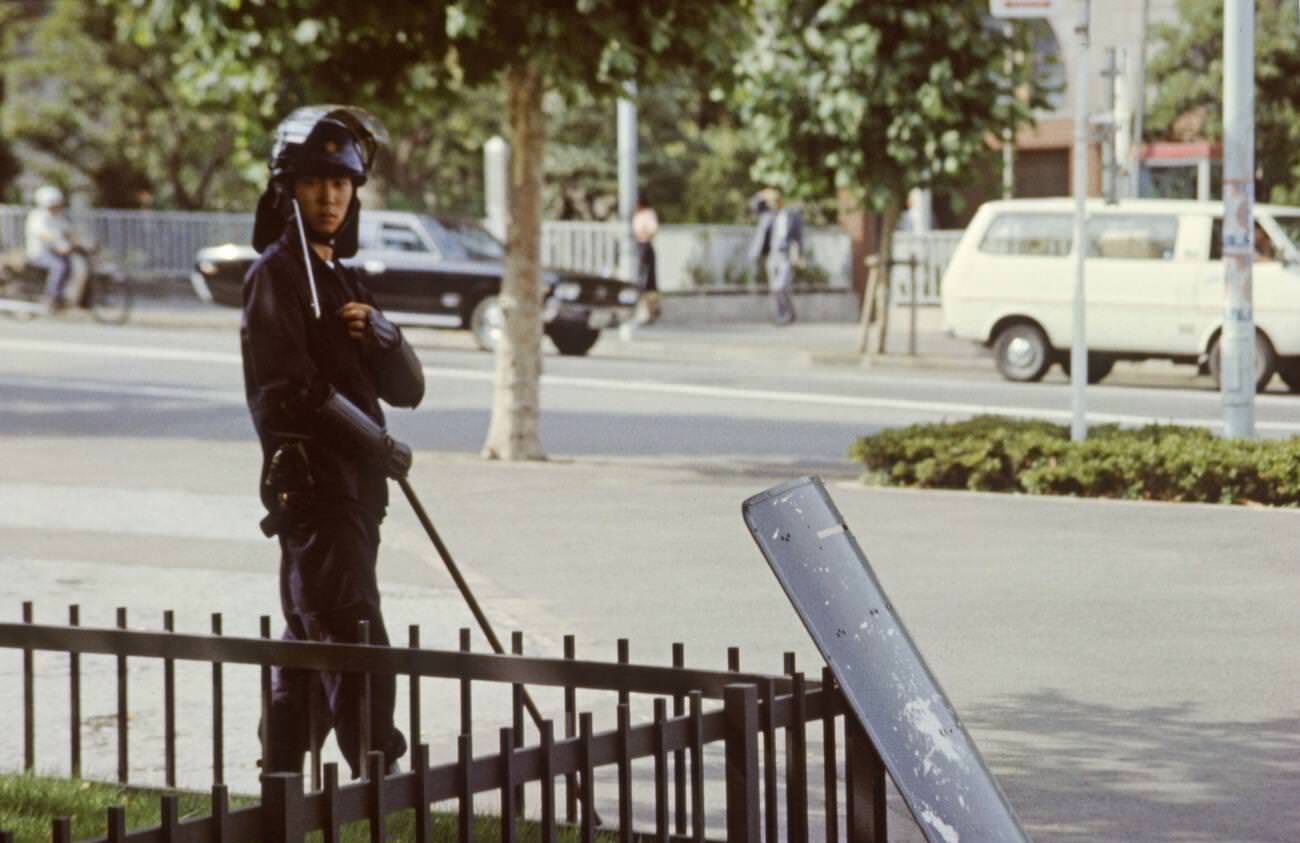
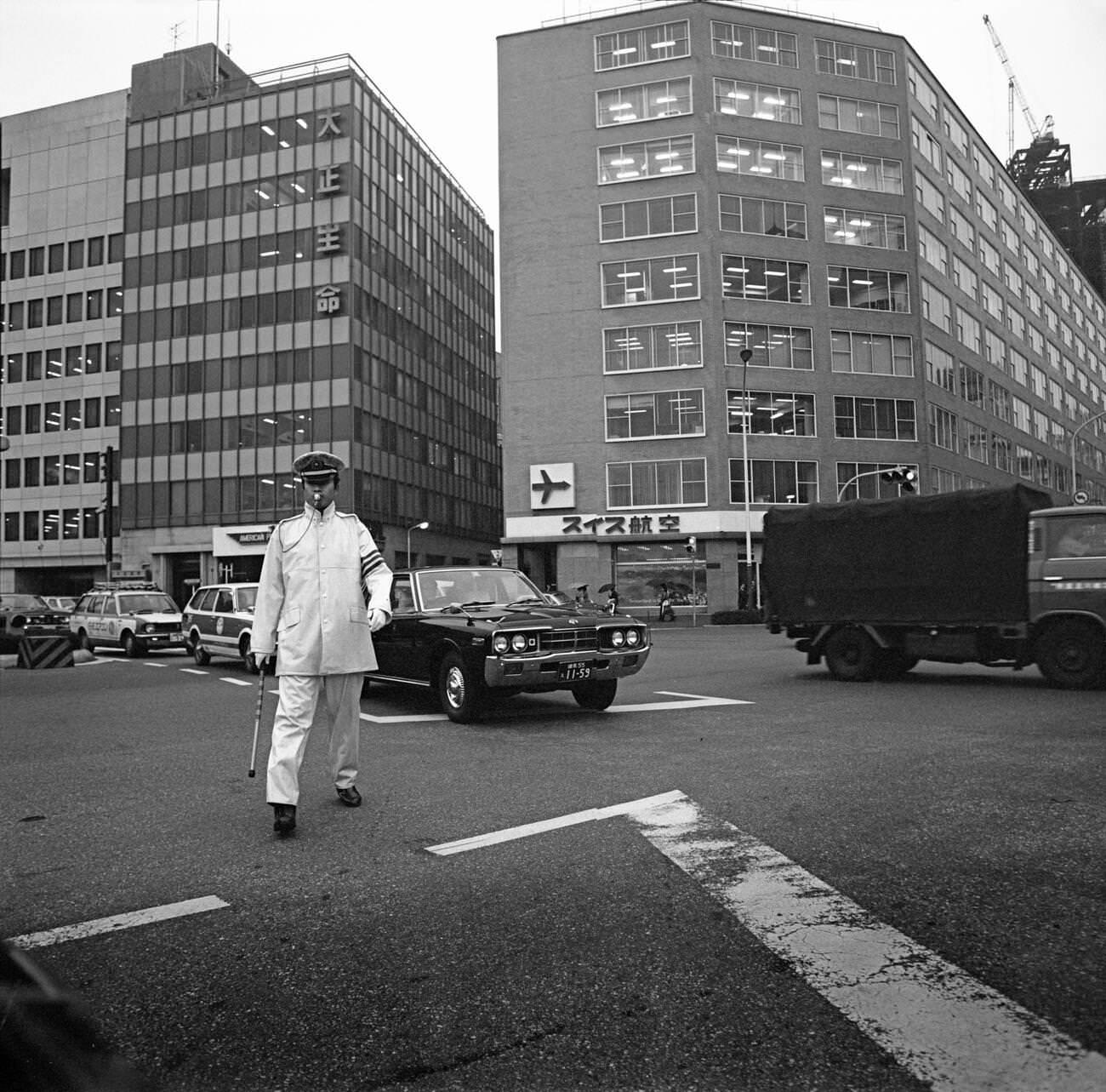
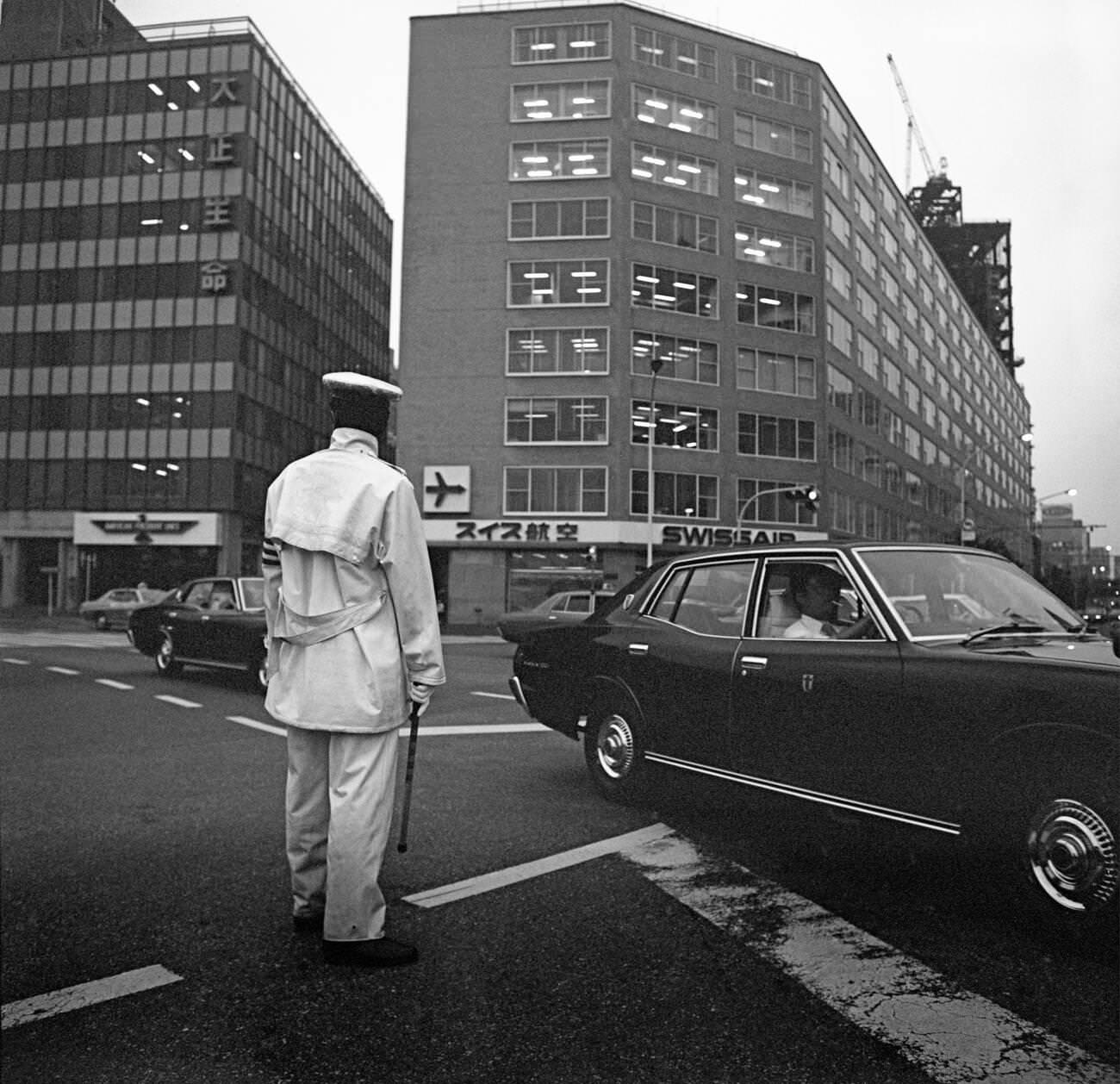
Traffic control in Tokyo was a demanding job. Police officers assigned to busy intersections directed vehicles by hand during peak hours, supplementing the city’s traffic lights during particularly congested periods. Their white gloves, crisp uniforms, and precise gestures were as much a part of Tokyo’s visual identity as the neon signs and red taxis.
Youth culture in late-1970s Tokyo thrived on street-level interaction. Teenagers gathered on corners, outside record shops, and near train exits to talk, show off new clothes, and listen to music. Harajuku had already become the center of youth fashion, with boutiques and second-hand shops catering to teenagers who mixed Western trends with homegrown styles.
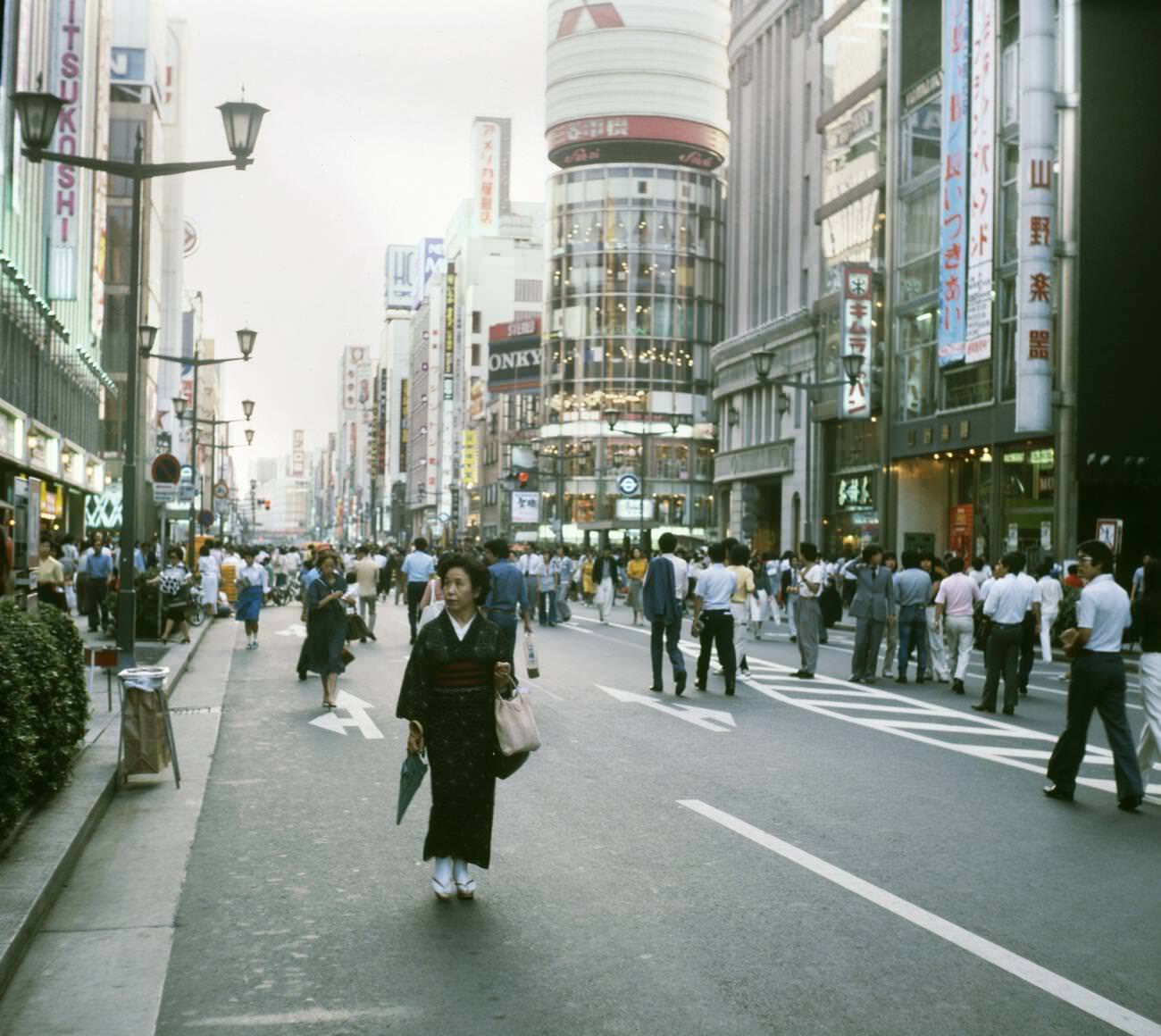
Traditional dress remained visible on Tokyo’s streets throughout the 1970s, even as Western clothing became the norm for most daily situations. Women in kimono appeared at festivals, temple visits, and formal occasions. Seeing someone walk a busy commercial street in traditional dress was less common but not unusual — a quiet statement that older customs had not disappeared beneath the city’s modern surface.
Tokyo’s department stores in the late 1970s were more than retail spaces. Stores like Seibu and Parco hosted art exhibitions, fashion shows, and live performances alongside their retail floors. Shoppers could browse clothing on one level and see a gallery installation on the next. These stores positioned themselves as cultural institutions, not just commercial ones.
The Shinkansen network expanded significantly during the 1970s, connecting Tokyo to more cities across Honshu and Kyushu. Trains departed from Tokyo Station on tight schedules, often with delays measured in seconds rather than minutes. The bullet train was Japan’s most visible proof that the country had fully rebuilt from the destruction of World War II and entered a new era of technological achievement.
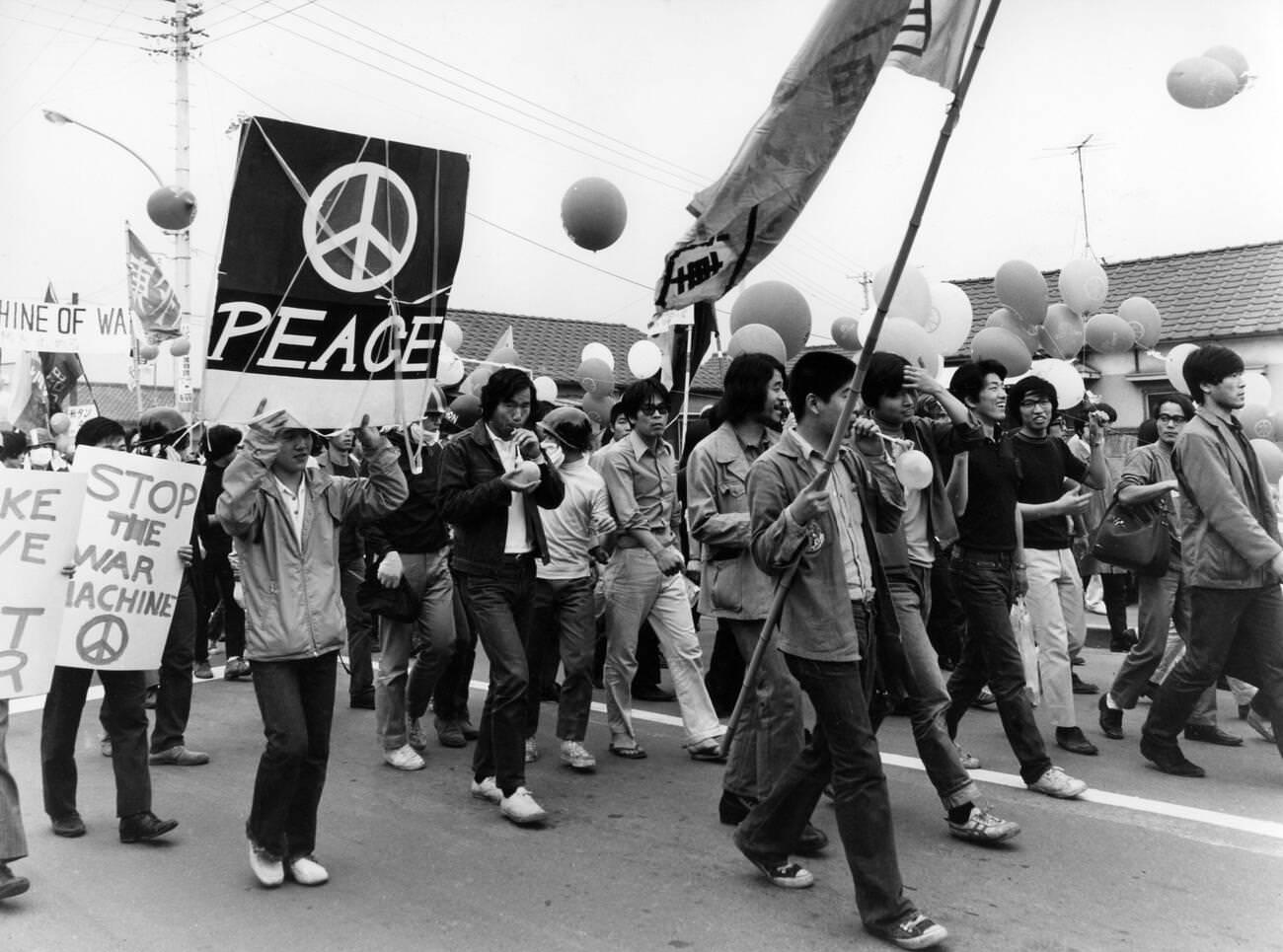
Student protests were a defining feature of early-1970s Tokyo. In 1971, demonstrators took to the streets to oppose Japan’s involvement in supporting U.S. operations in Vietnam and to challenge the terms of the U.S.-Japan Security Treaty. These protests were large, organized, and at times confrontational, reflecting a generation of young Japanese people who were deeply skeptical of both their own government and American foreign policy.
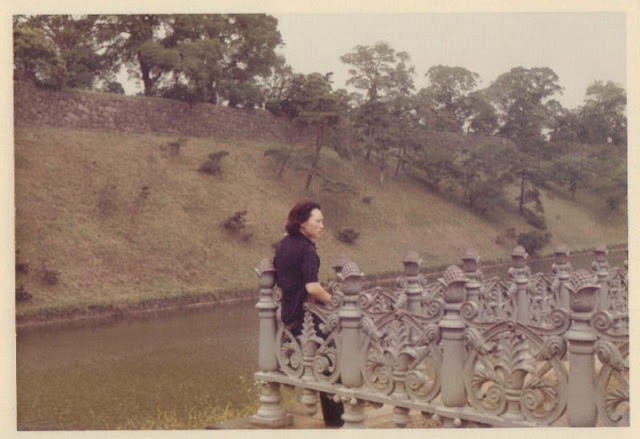
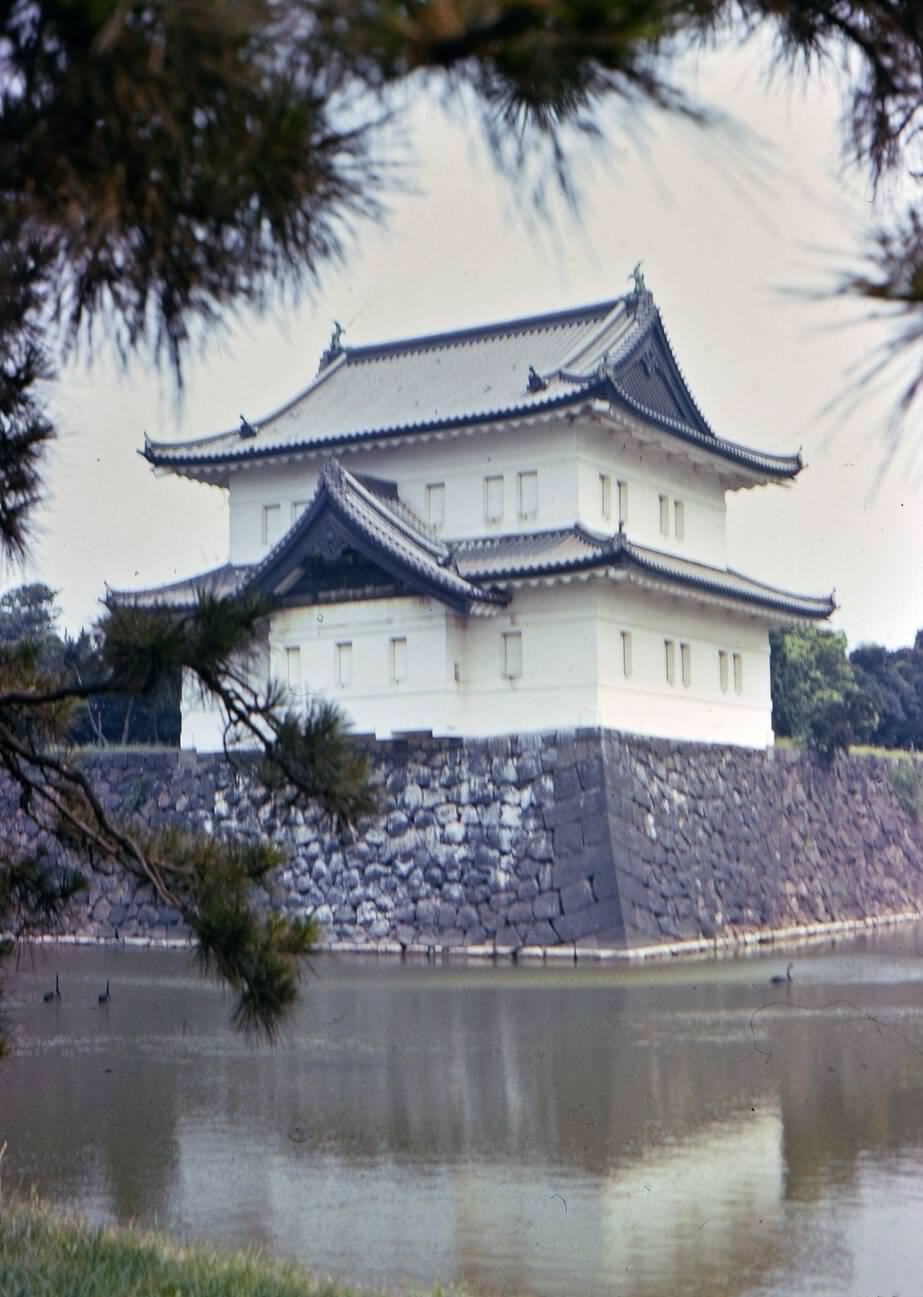
The Imperial Palace sat at the geographic and symbolic center of Tokyo. Surrounded by moats and wide open plazas, it was accessible to the public on its outer grounds but closed off at its core. The palace complex provided a sense of historical continuity in a city that was otherwise changing so fast that whole neighborhoods could look unrecognizable from one year to the next.
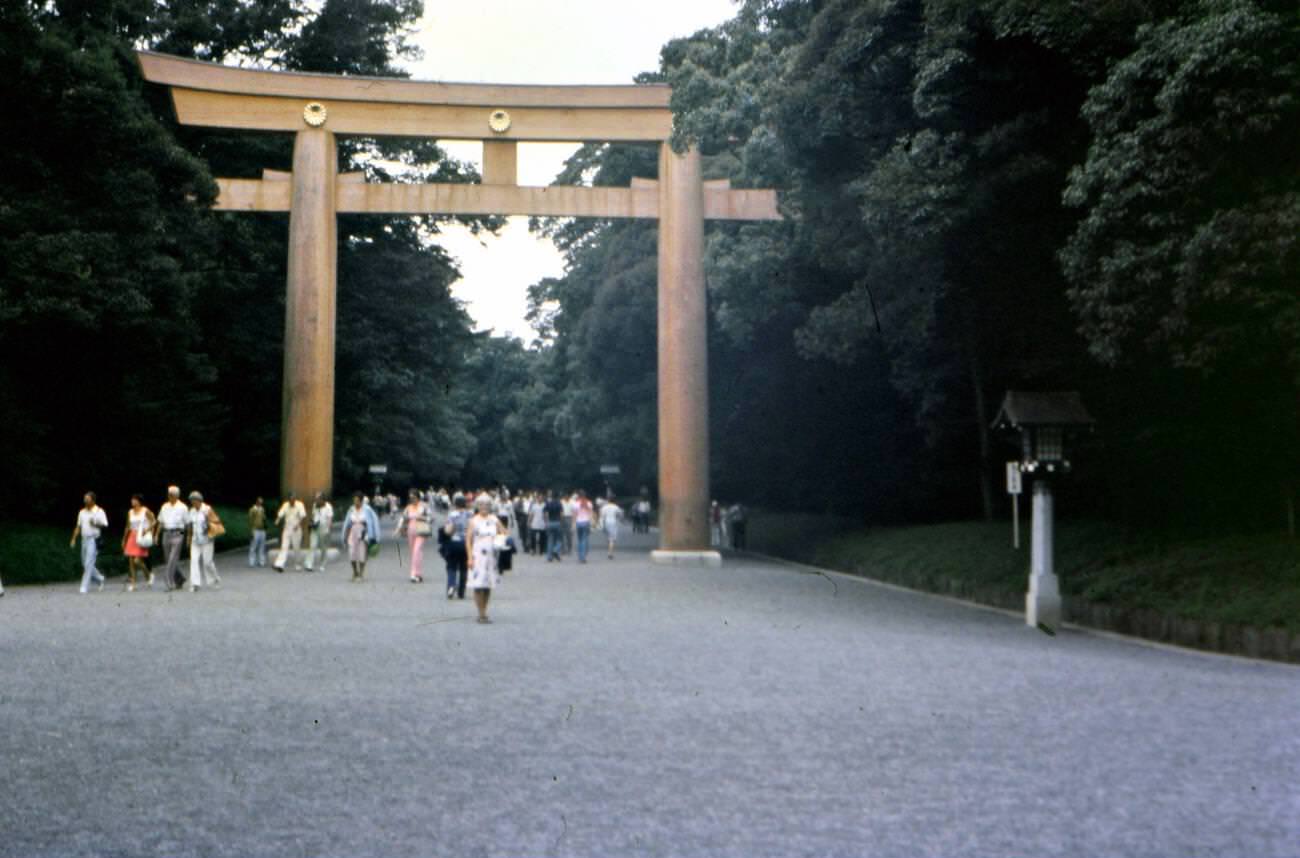
Meiji Shrine, located in Harajuku, was one of Tokyo’s most visited Shinto sites. The forested grounds surrounding the main shrine buildings offered a dramatic contrast to the dense urban environment just outside its gates. Visitors came throughout the week, but the site drew especially large crowds during New Year celebrations and on national holidays.
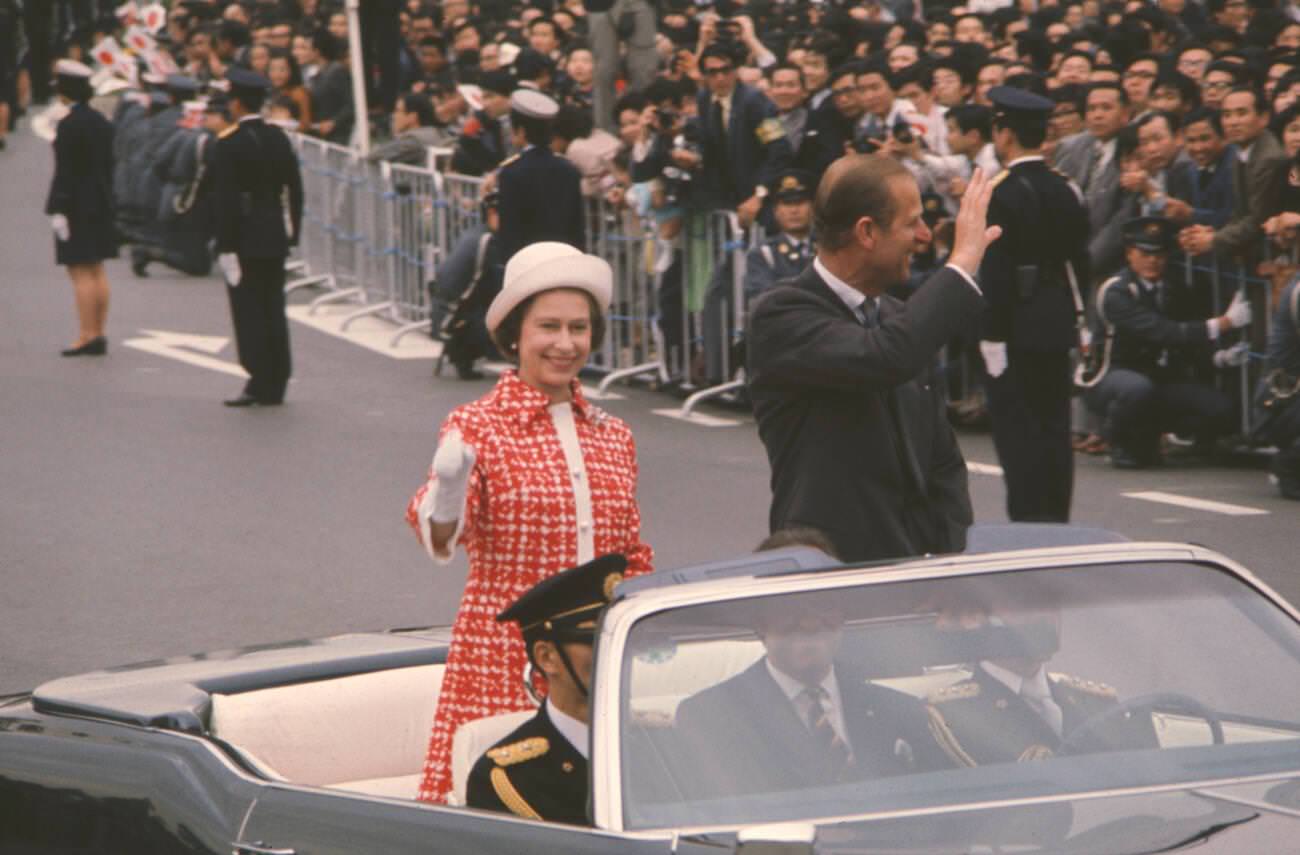
Tokyo received high-profile foreign visitors throughout the 1970s. Queen Elizabeth II and Prince Philip visited Japan in 1975, making a ceremonial journey through Tokyo that drew large crowds along the motorcade route. The visit underscored Japan’s standing as a major international power and reinforced the diplomatic ties between Britain and Japan that had been rebuilt in the postwar years.