In the early 1950s, a vehicle unlike anything the world had seen before rolled out of Indianapolis. It was called the Rhino, and the name suited it perfectly. Massive, heavy, and built for punishment, this five-ton machine was designed to cross terrain that would stop almost any other vehicle dead in its tracks — deep sand, thick mud, open water, and snowfields alike. The man behind it was Elie P. Aghnides, a Greek-American inventor who believed he had created something that would change transportation forever.
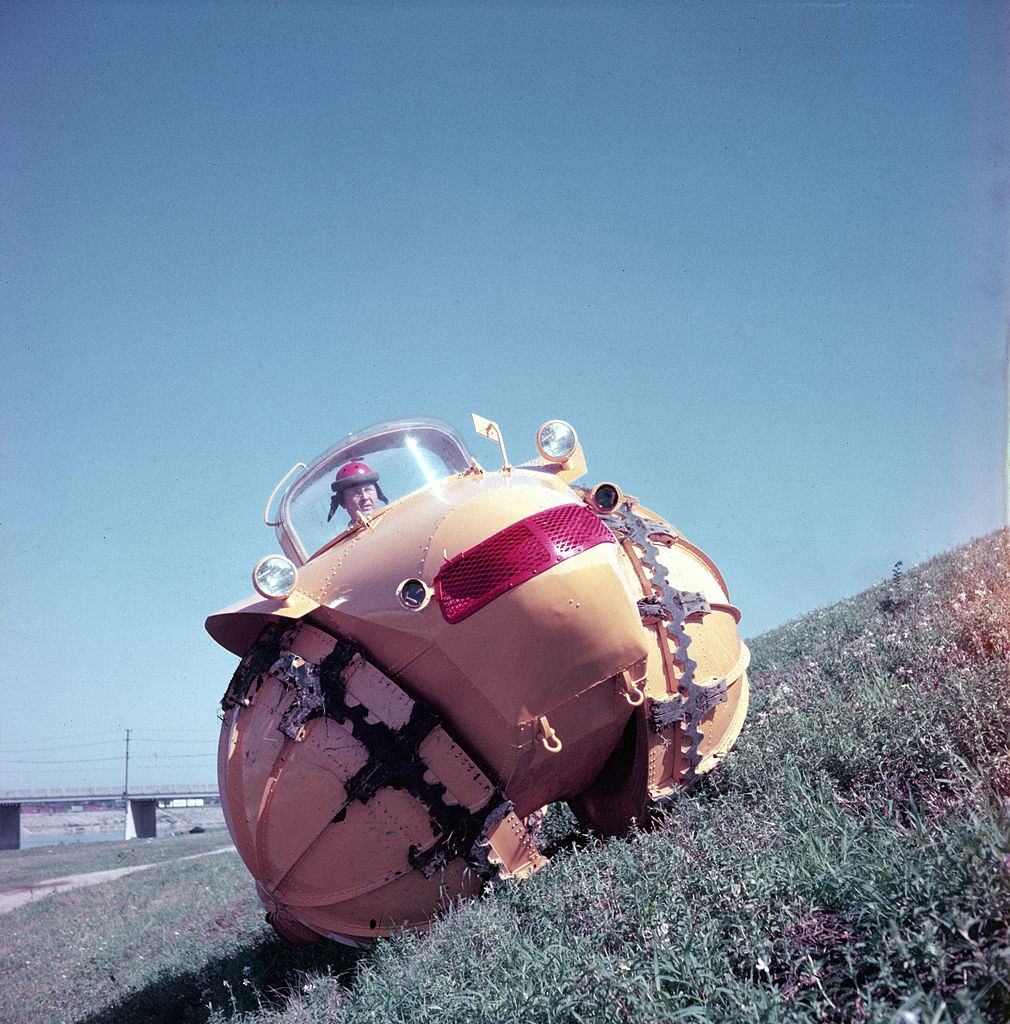
Aghnides drew his inspiration from the tractor. He studied how large agricultural tires gripped loose soil and floated over soft ground, then pushed that concept to an extreme. The result was a four-wheeled amphibious vehicle with an aluminum body welded to a steel frame, standing 9 feet 10 inches tall, stretching 19 feet long, and spanning 9 feet wide. Its sheer size was part of the design — the Rhino was built to dominate difficult environments, not navigate around them.
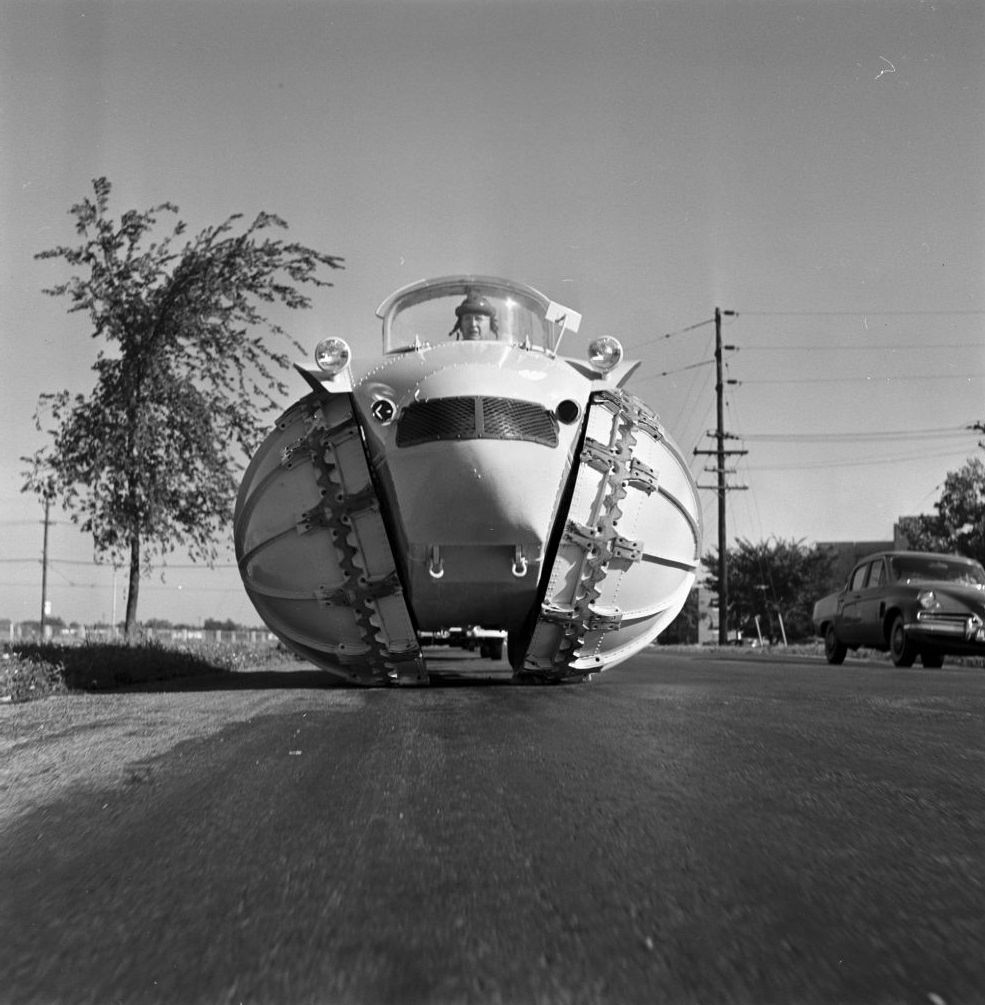
The most striking feature of the Rhino was its wheels. Each one was a six-foot-diameter tilted hemispheroidal shape — meaning the wheels were not upright and flat like a normal tire but angled outward in a slant. Each wheel weighed 680 kilograms. They were inflatable, which allowed them to absorb the shock of uneven ground and spread the vehicle’s enormous weight across a wider surface area. That wide footprint kept the Rhino from sinking into sand or snow the way a conventional vehicle would. The slanted design also gave the vehicle a low center of gravity, allowing it to tilt up to 74 degrees without tipping over — a remarkable stability figure for any vehicle.
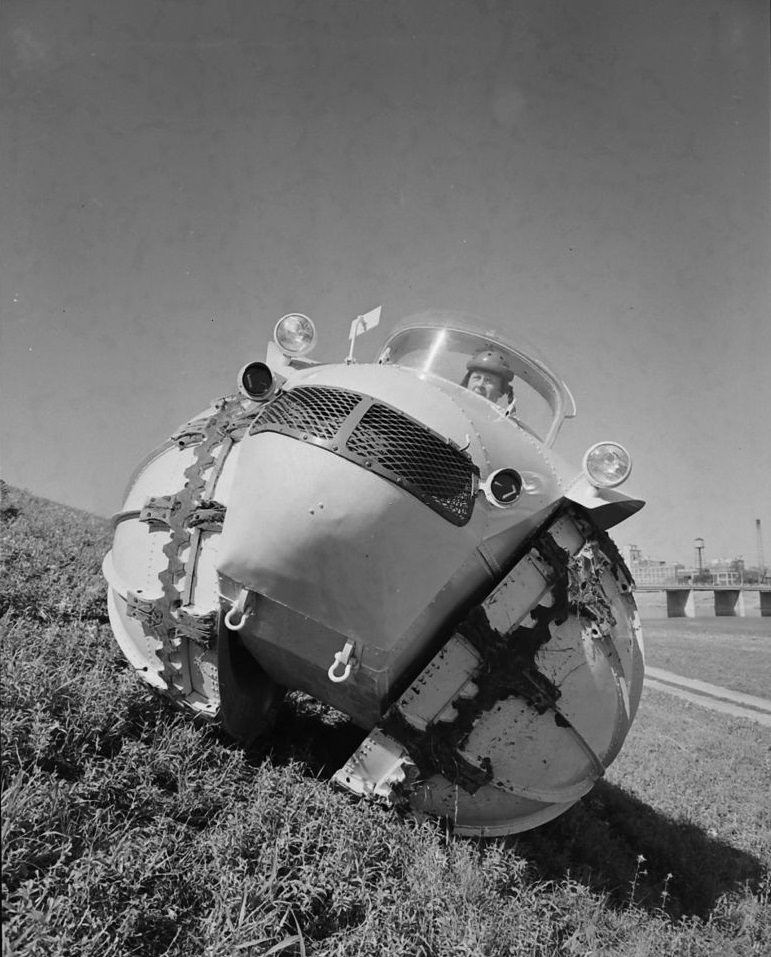
On paved roads, the Rhino performed like a legitimate highway vehicle. It could reach speeds of up to 45 miles per hour, powered by a 110-horsepower Ford engine. That was more than adequate for a machine of its weight and purpose. Aghnides never intended the Rhino to race — he intended it to go where no other vehicle could go without getting stuck or breaking down.

Water travel was a different story. The Rhino could enter rivers, lakes, and coastal water without any special preparation. Once afloat, it switched from engine power to a hydro-jet nozzle system for both propulsion and steering. This let the driver control the vehicle in water the same way a pilot steers a jet ski — by directing the thrust of the water jet. The top speed in water was five miles per hour, which was slow but functional for a machine weighing five tons. The design assumed that crossing a body of water mattered more than crossing it quickly.
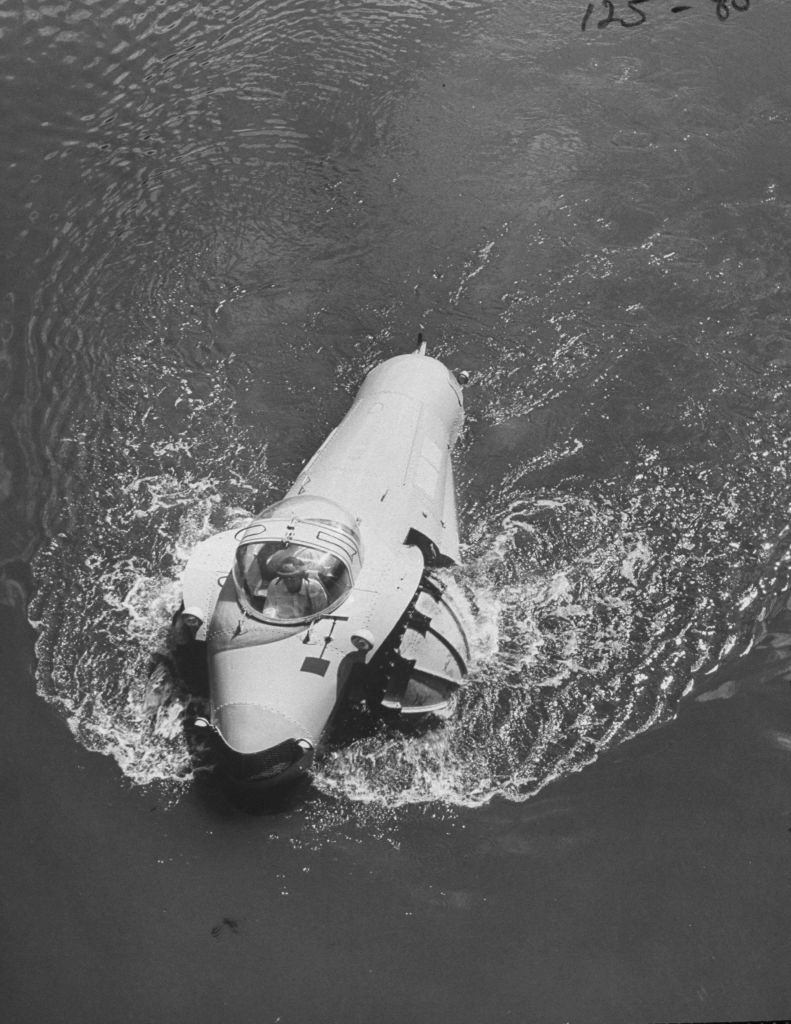
The Rhino was built by Marmon-Herrington, an Indianapolis-based company with deep experience building military and specialized vehicles. The prototype was completed in 1954. Aghnides promoted the vehicle aggressively, calling it
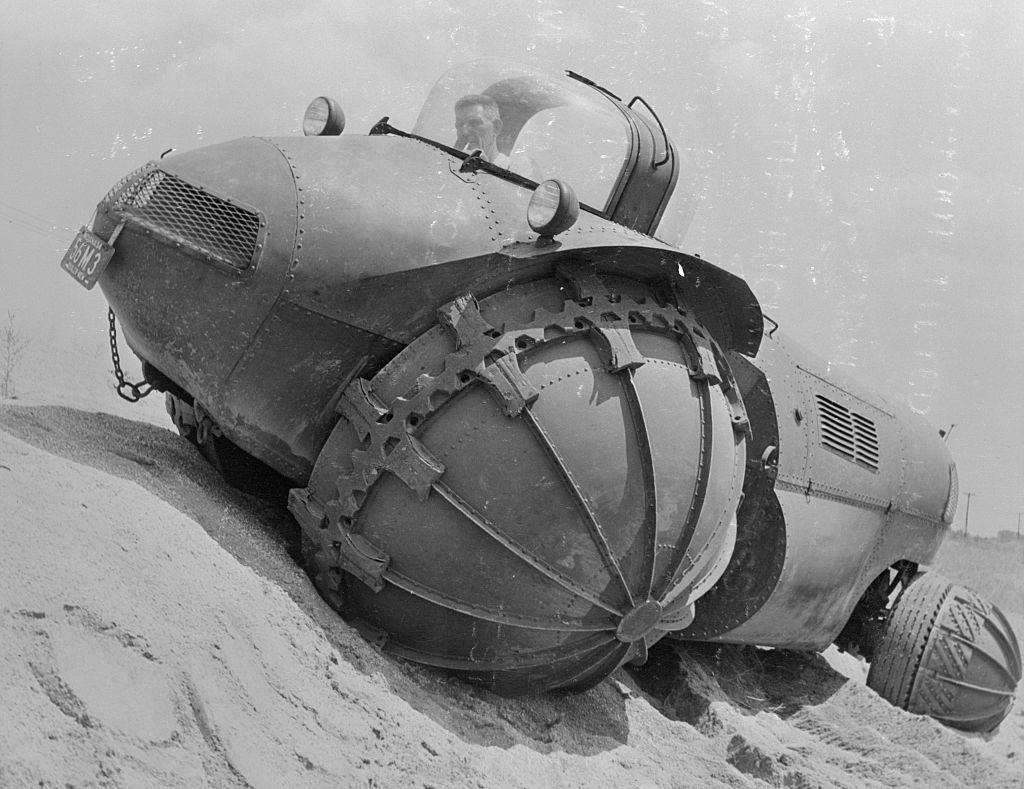
The military was an obvious target customer. A vehicle that could travel across Alaska’s frozen tundra, ford rivers without a bridge, and patrol Canada’s vast open wilderness without getting bogged down in soft ground was exactly the kind of tool that defense planners considered valuable. Aghnides demonstrated the Rhino to military officials, hoping to secure a contract. The vehicle passed its physical trials — it handled the terrain it was designed for without difficulty. But the military declined to purchase it. Their reasoning came down to one fundamental flaw: the inflatable wheels. Military planners feared that a single bullet or piece of shrapnel could pierce a wheel and cripple the vehicle in a combat zone. For an all-terrain military transport, that was an unacceptable risk.
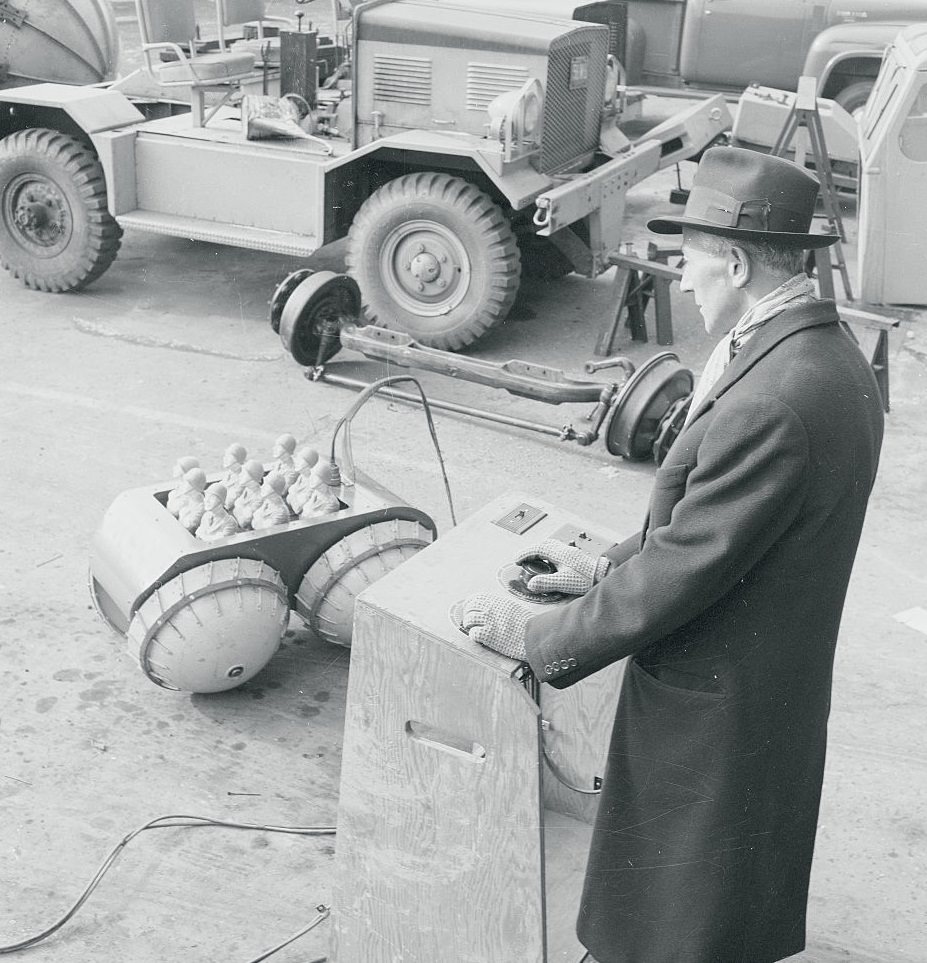
Aghnides also built a smaller demonstration model, known as the Baby Rhino, to showcase the core mechanics of the design. This scaled-down version was used at Marmon-Herrington’s facility to illustrate how the vehicle handled turns, road speeds, and varied terrain. The Baby Rhino carried a load of nine puppet passengers during demonstrations, showing how the vehicle could pivot sharply and move smoothly across nearly any surface without losing control. It was a compelling display, but the full-size version never found a buyer.
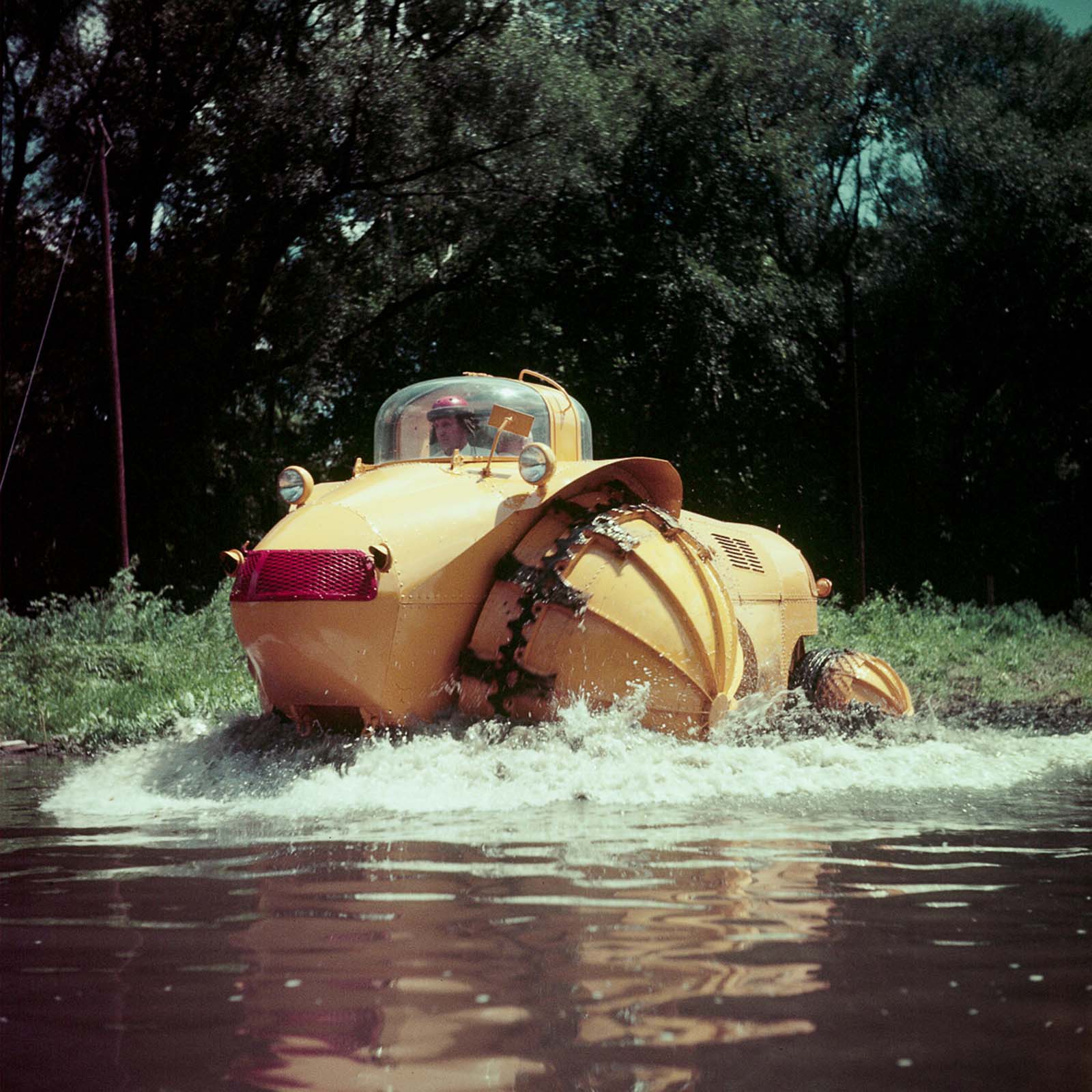
The full specifications of the Rhino reveal just how seriously Aghnides and Marmon-Herrington took the project. The aluminum-and-steel body kept weight manageable while maintaining structural strength. The vehicle’s dimensions — nearly 20 feet long and nearly 10 feet tall — placed it in a category closer to a military transport truck than a passenger vehicle. Yet it could turn on a tight radius, handle highway speeds, and float across open water. No single existing vehicle category fit what the Rhino actually was.
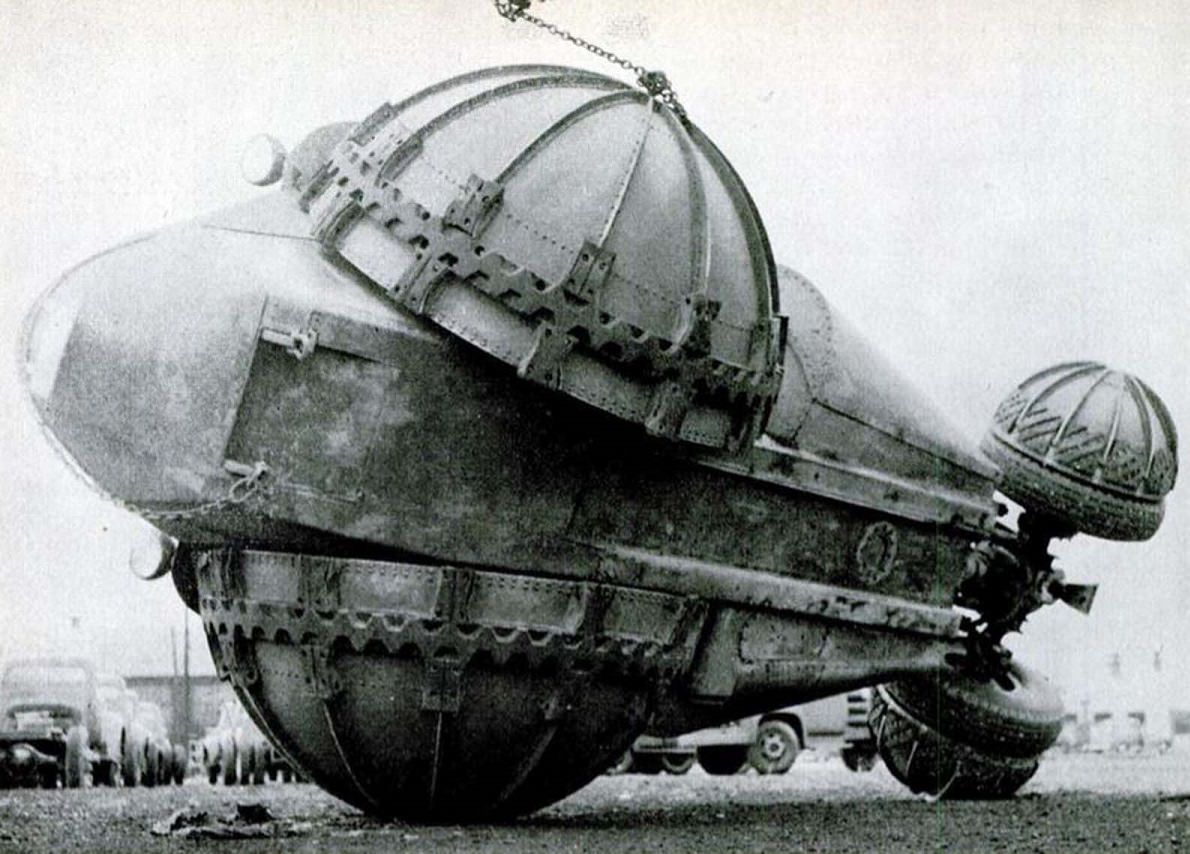
The Rhino existed at an interesting crossroads of postwar engineering ambition and practical limitation. Aghnides had solved real problems — soft terrain, river crossings, extreme weather — with a single machine. The inflatable wheel vulnerability that worried the military was a genuine engineering challenge, not an imaginary one. No matter how capable the Rhino was on open terrain, a combat vehicle that could be disabled by small-arms fire had a serious gap in its design. The prototype remained a one-of-a-kind machine, a product of an era when inventors regularly chased enormous ideas with the tools and technology available to them.