Hey There! Before You Go. 😧
Get the best vintage content straight into your inbox!

Don't worry, we don't spam

Texas in 1970s: 50+ Color Photos That Show Everyday Life In Texas In 1970s
Texas is the second largest and second most populous state in the United States. By the mid-20th century, it was already deep into a major transformation — shifting from a rural, agricultural economy to one built on urban industry and commerce. The oil boom played a central role in that shift, drawing workers, businesses, and money into the state at a rapid pace. Cities like Houston, Dallas, San Antonio, and El Paso grew fast, each developing its own character and rhythm.

The 1970s were a defining decade for Texas. Economic growth was strong, fueled largely by the energy industry. At the same time, everyday life across the state was a mix of hard work, outdoor recreation, neighborhood culture, and small-town routines. The photographs in this collection capture all of that — from industrial waterfronts and oil fires to deer hunting camps, beach crowds, and downtown street corners.
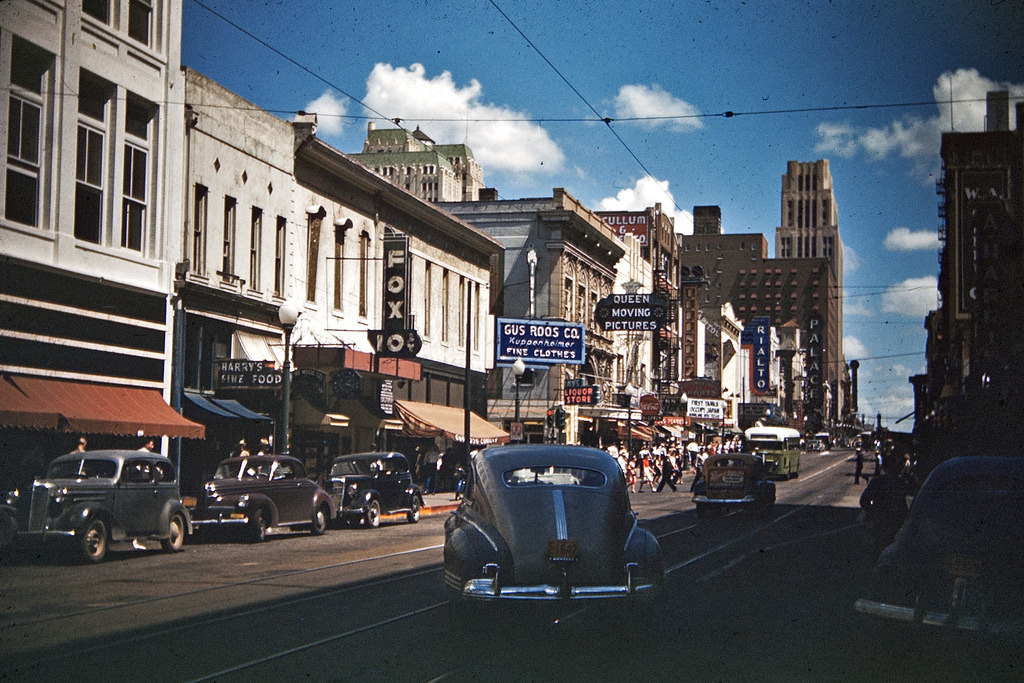
Elm Street, Dallas, 1945

Dallas in the early 1970s was a city in motion. Its downtown was dense with commercial activity, and its freeway system was expanding to handle a growing population. The streets buzzed with shoppers, workers, and traffic at nearly every hour of the day.
Street scene, downtown Dallas, 1972
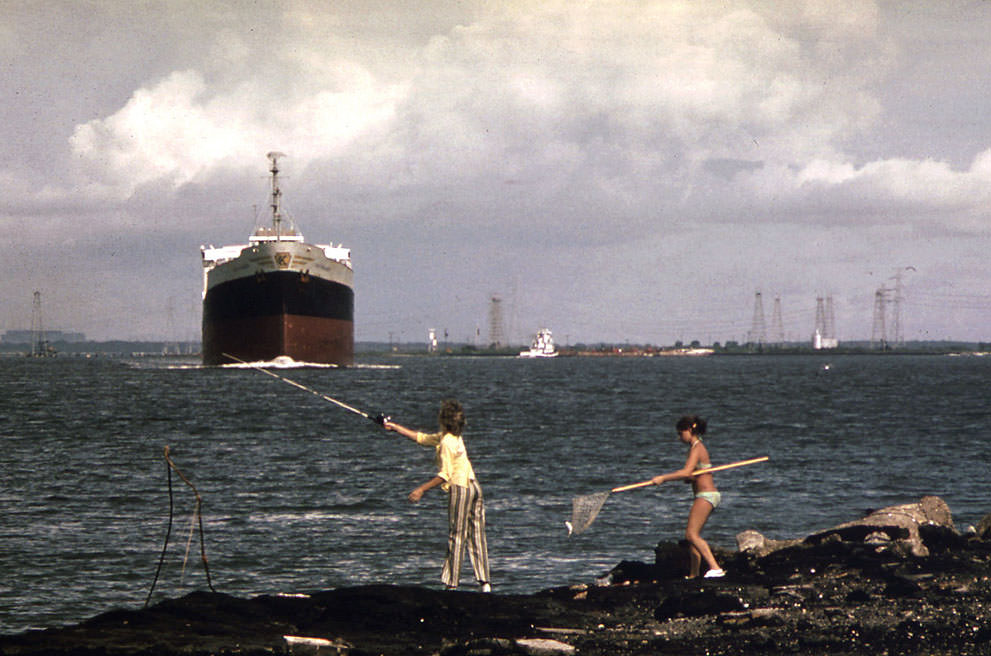
A freighter moves up the Houston Ship Channel as girls fish from the shore, with oil derricks visible in the background, 1973

Houston’s Ship Channel was one of the most industrially active waterways in the country during this period. Freighters carrying crude oil and cargo moved steadily through it, while oil derricks dotted the surrounding landscape. The contrast of children fishing from the shore against that heavy industrial backdrop captured the dual nature of life near Houston — ordinary moments unfolding alongside major economic machinery.

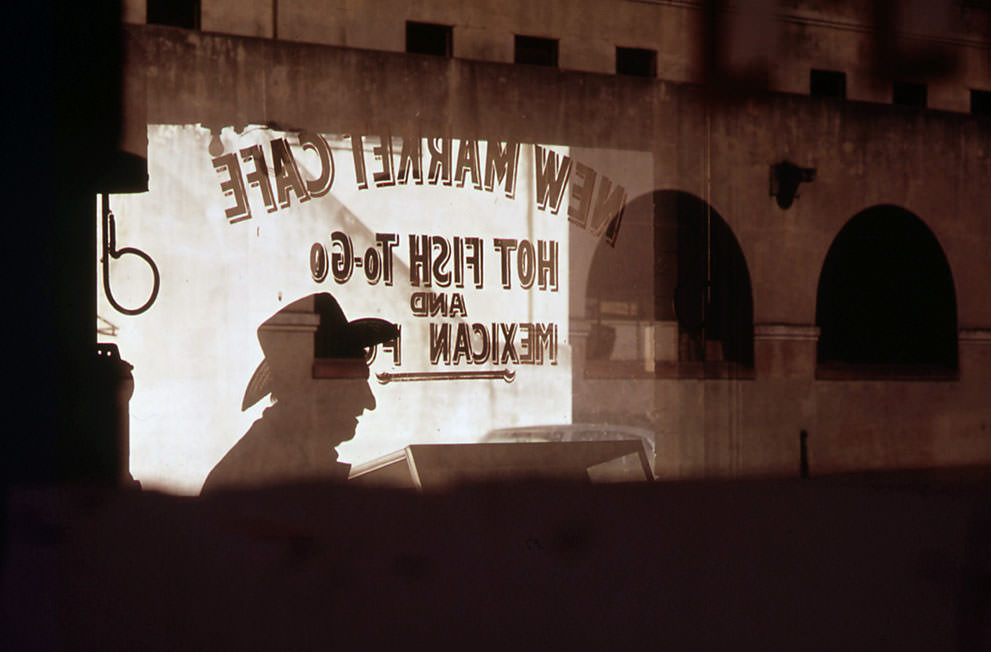
A customer's shadow reflected in the window of New Market Cafe in the old Mexican market area of San Antonio, 1972
A customer’s shadow reflected in the window of New Market Cafe in the old Mexican market area of San Antonio, 1972

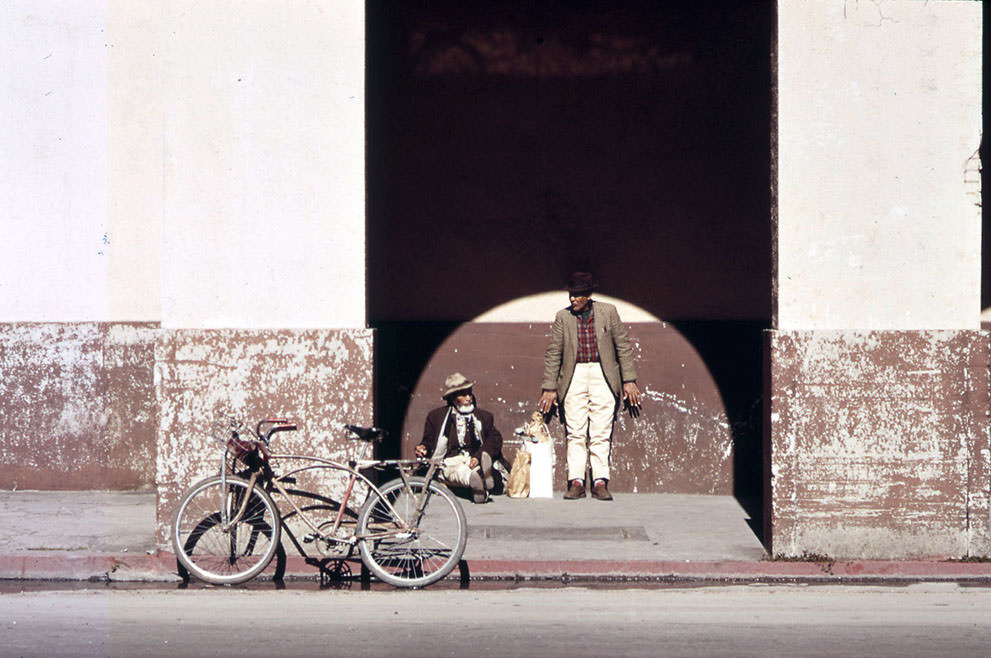
San Antonio’s old Mexican market district was one of the most culturally distinct neighborhoods in Texas. Located just west of downtown, it retained a strong sense of identity through its architecture, businesses, and street life. Local cafes and market stalls drew both residents and visitors, and the area’s character stood apart from the fast-modernizing city around it.

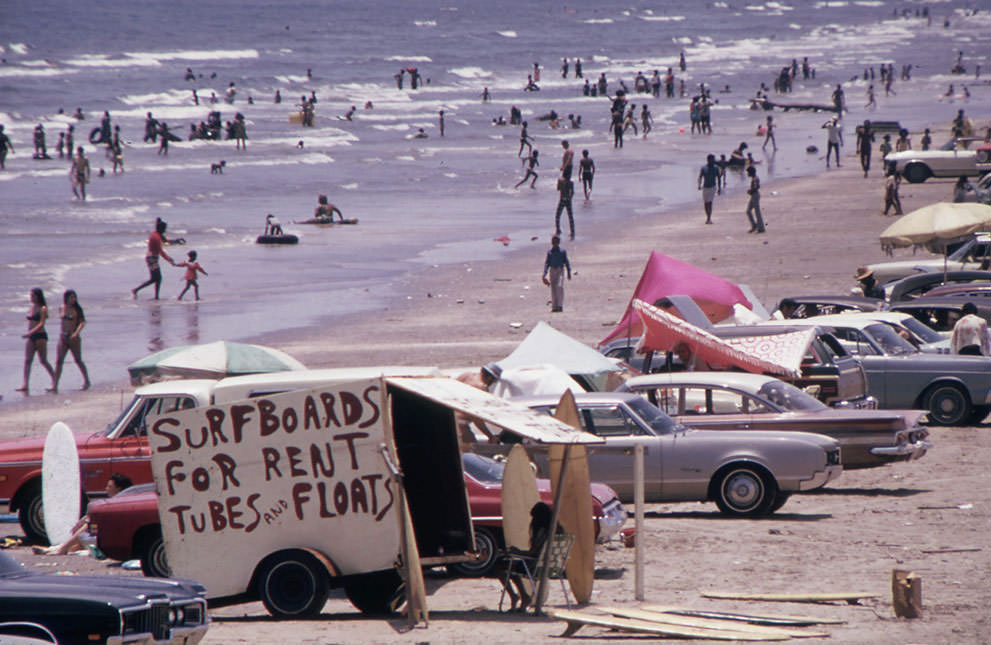
Galveston's West Beach on the Gulf of Mexico draws huge crowds, 1972
Galveston’s West Beach on the Gulf of Mexico draws huge crowds, 1972
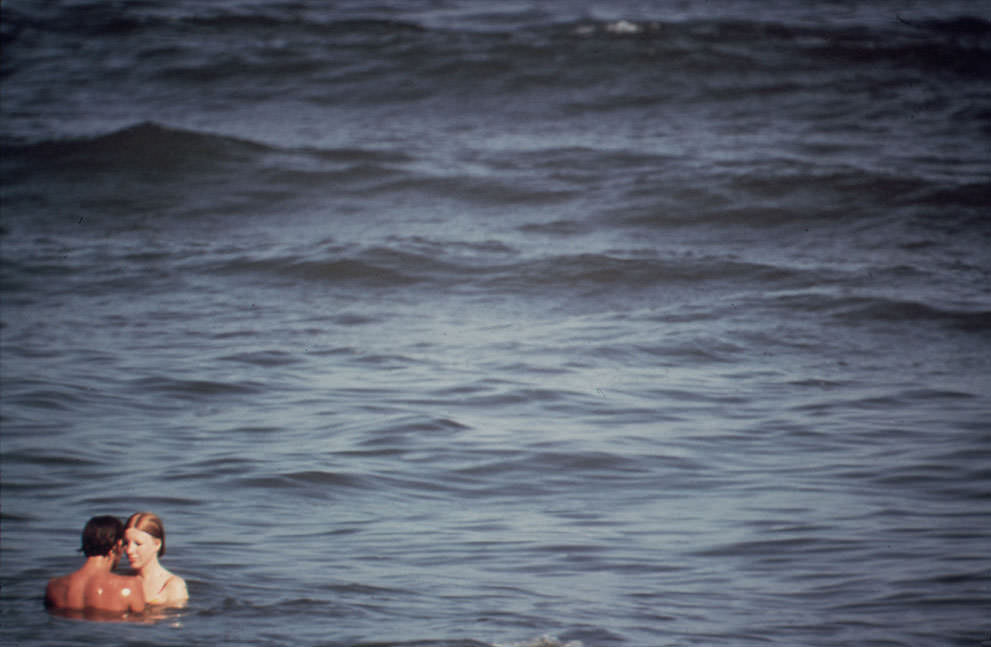
At play in the waves, Galveston Bay, 1972

Galveston was a major destination for Texans seeking a break from inland heat. Its beaches drew enormous crowds during the summer months, with West Beach on the Gulf of Mexico filling up with sunbathers, swimmers, and families. Galveston Bay itself was a popular spot for recreation, even as oil infrastructure increasingly surrounded it.

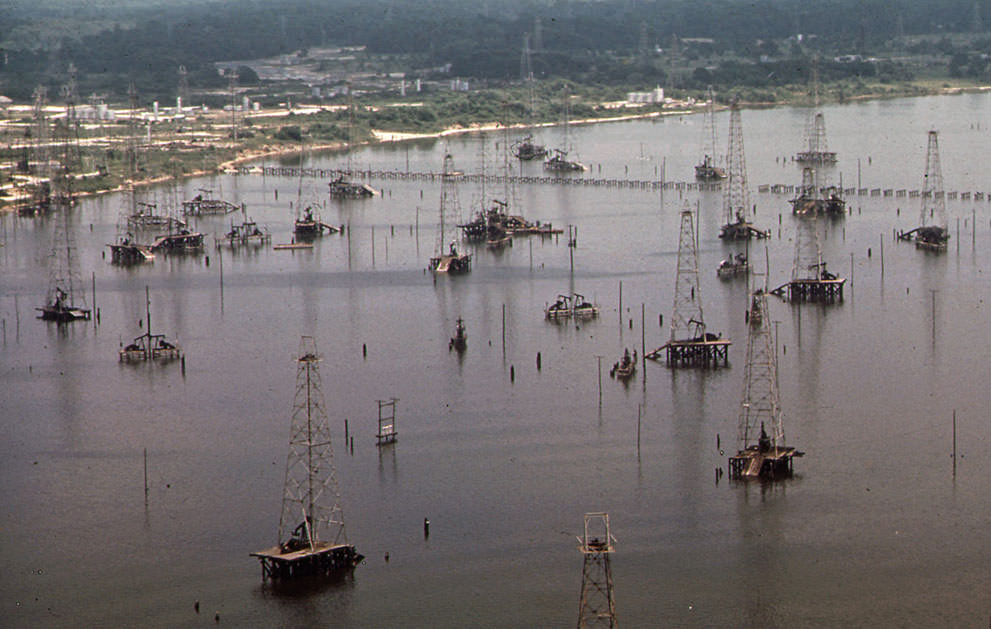
Offshore oil wells in Galveston Bay, 1972

The presence of offshore oil wells in Galveston Bay illustrated just how thoroughly the energy industry had woven itself into the Texas landscape. Even in areas used for fishing and swimming, oil extraction was a constant visual presence. The industry shaped not just the economy but the physical appearance of the coastline.

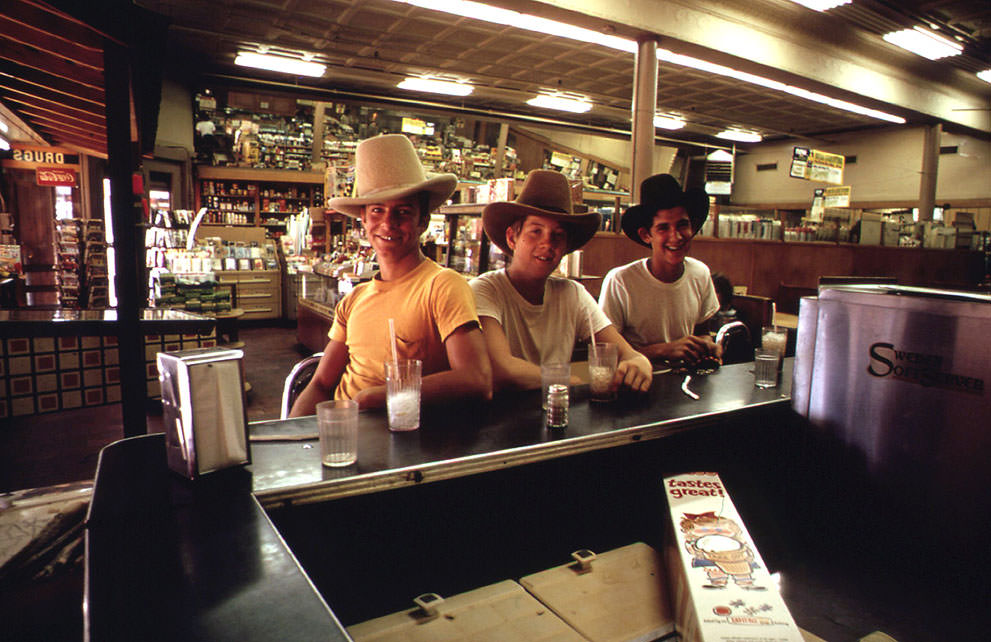
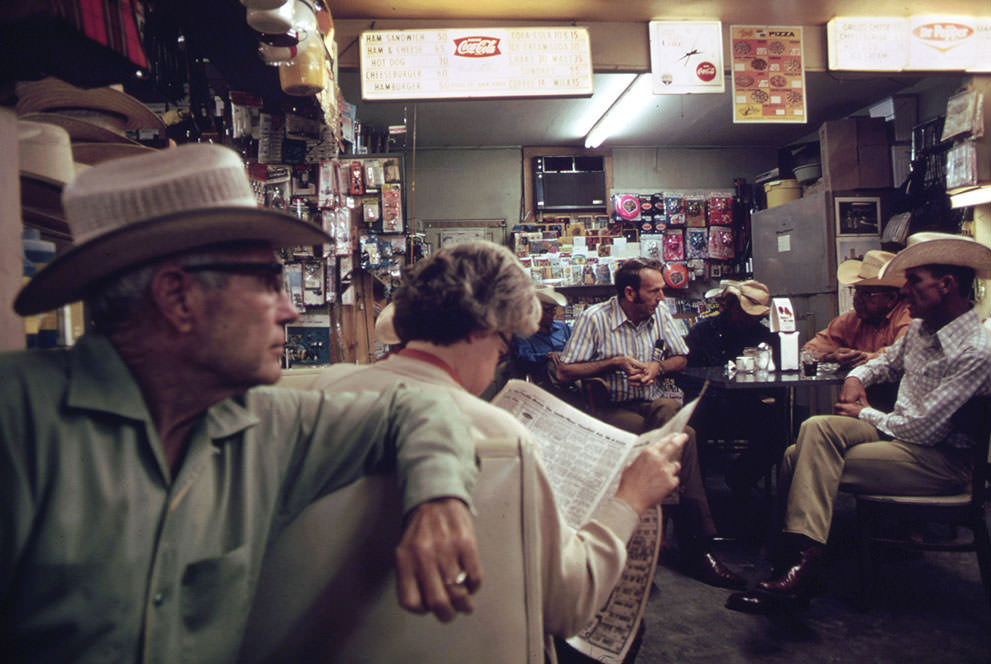
Drugstore in Leakey, Texas during the noon hour, 1973

Away from the major cities, small-town Texas had its own pace. Leakey, a rural community in the Hill Country, offered a very different picture from Houston or Dallas. At noon, the local drugstore was a gathering point — a quiet, familiar space where residents stopped in during the middle of the workday.

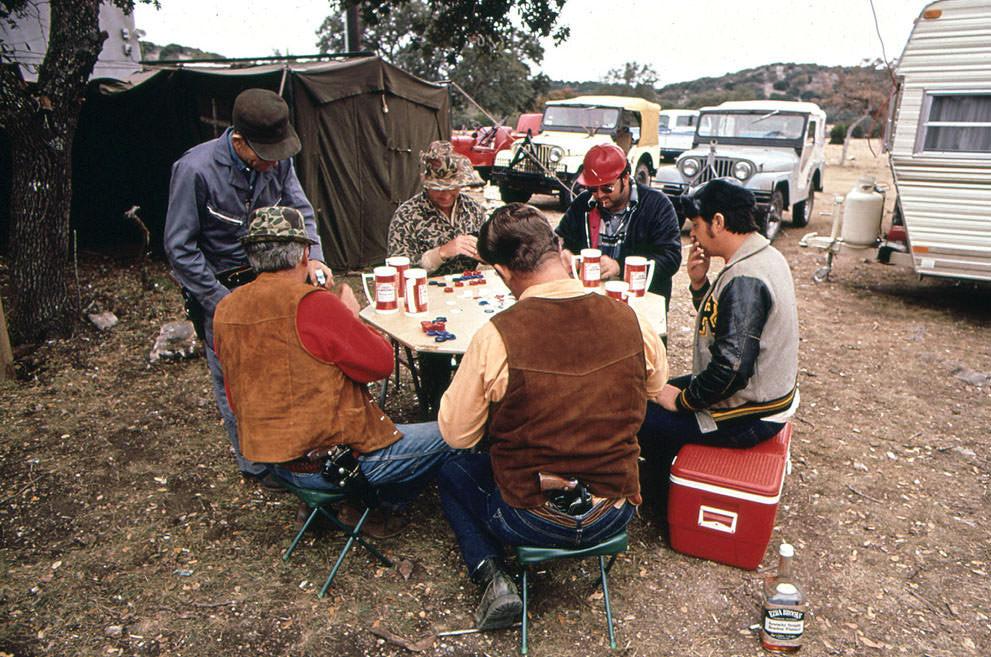
Deer hunters drink and play poker while waiting for deer at a permanent hunting camp they return to each year, 1972

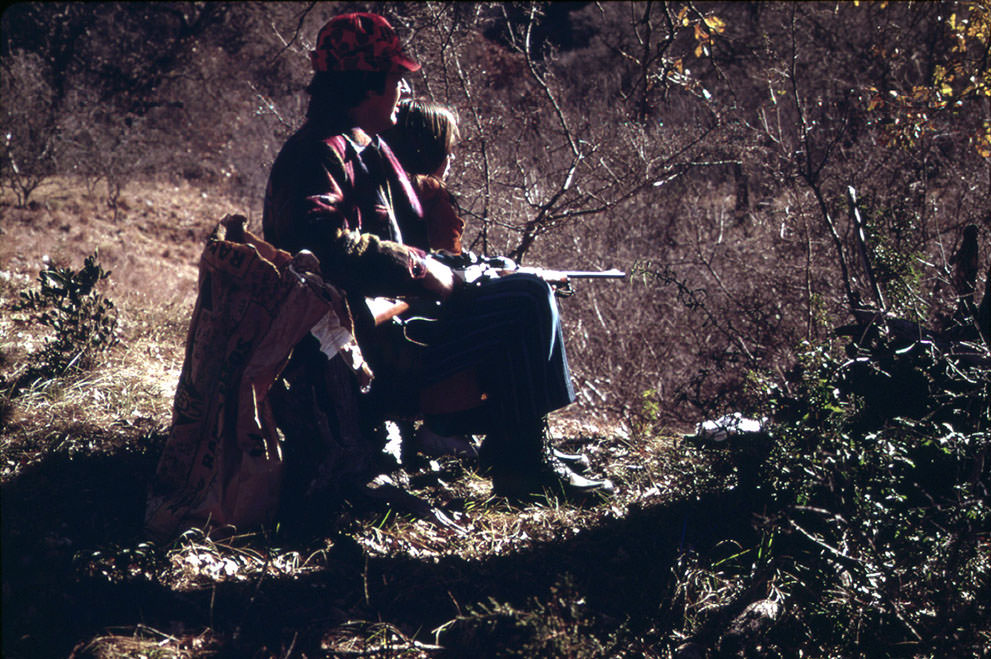
Deer hunting was deeply embedded in Texas culture. Many hunters built permanent camps on private land, returning to the same spots season after season. The camps functioned as social spaces as much as hunting bases — card games and conversation filled the hours between hunts.

The old Mexican market section just west of downtown San Antonio, 1972
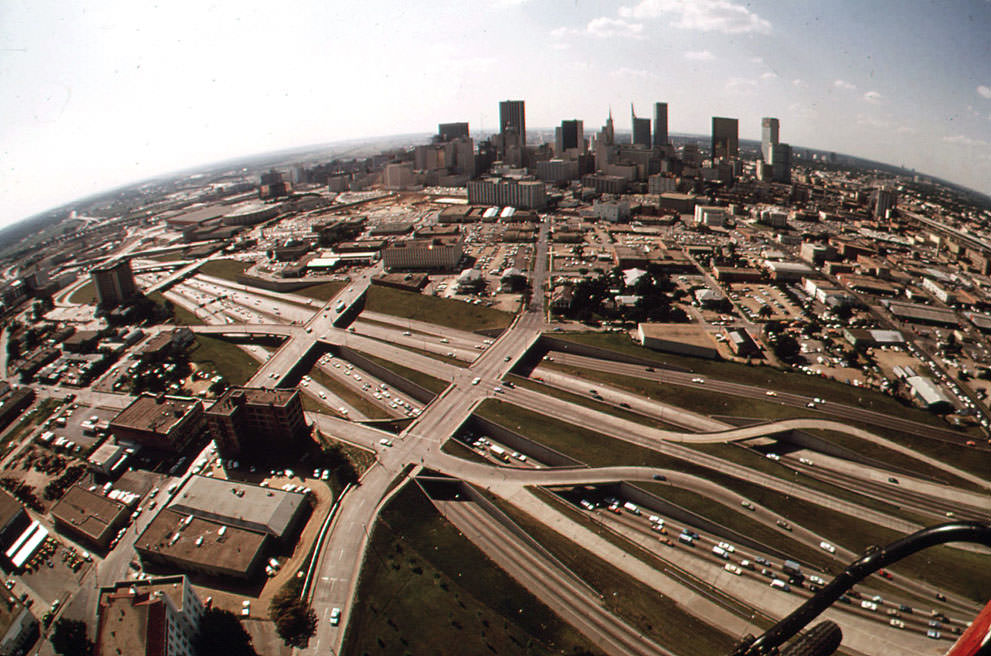
Expressways of Dallas, 1972

Dallas built some of the most extensive urban expressway systems in the country during this era. The freeways cut through and around the city, connecting suburban neighborhoods to downtown and enabling the rapid sprawl that defined Sun Belt cities in the 1970s. From above, the interchanges were a visual signature of the decade.

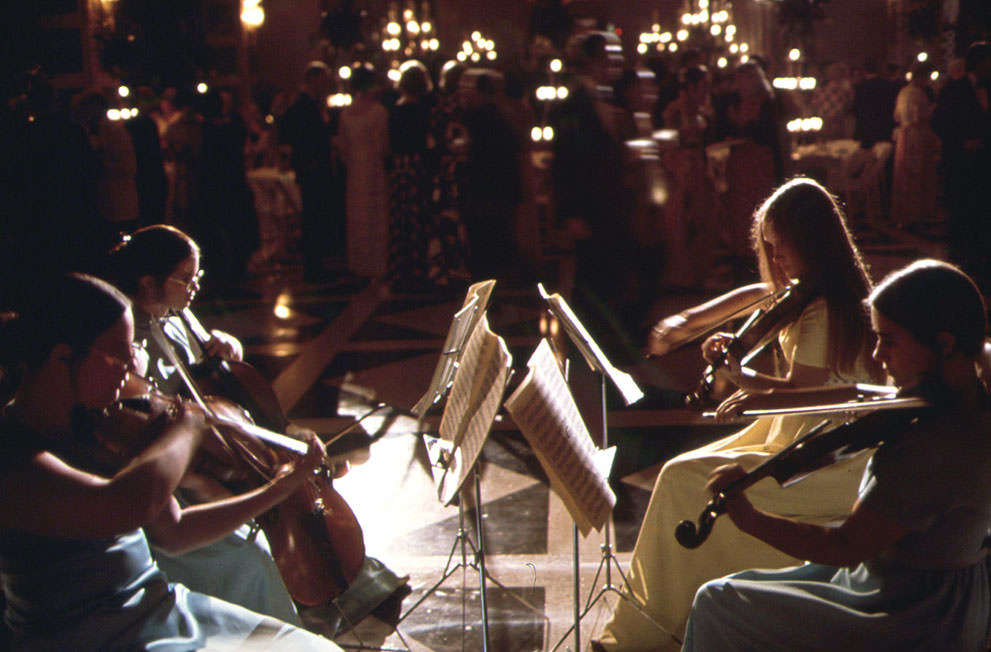
String quartet at the Heritage Ball, Houston, 1972

Houston’s social scene in the 1970s reflected the wealth generated by the oil industry. Formal events like the Heritage Ball brought together the city’s upper class in settings that stood in sharp contrast to the industrial landscapes just miles away. Live classical music, elegant dress, and high-society gatherings were a regular part of Houston’s cultural calendar.
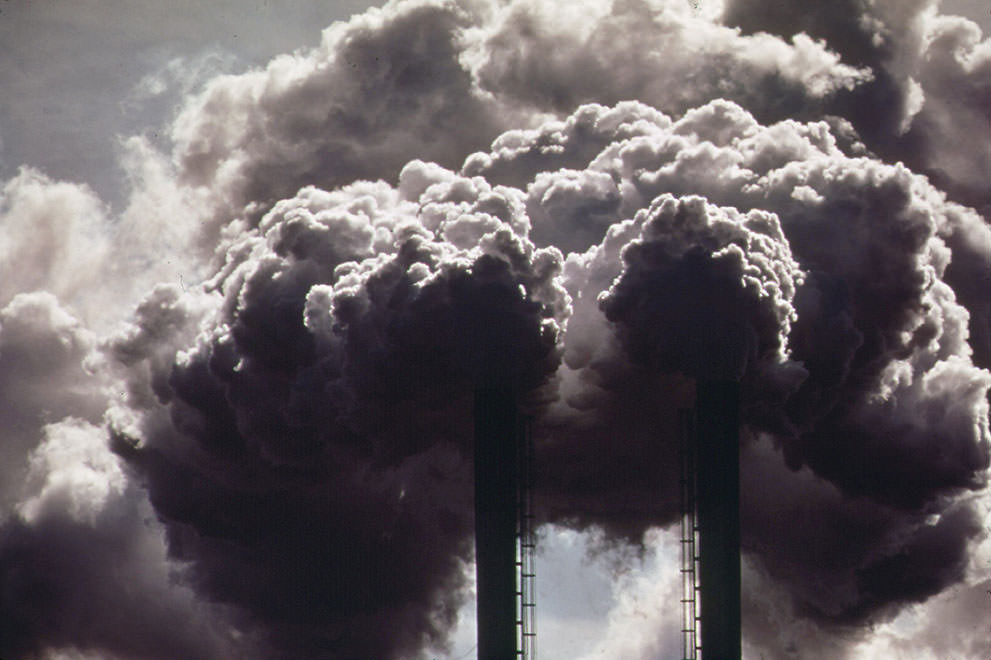
Smoke from the burning of old auto batteries near Houston, 1972

Industrial pollution was a visible and serious problem in Texas during the 1970s. Near Houston, the burning of old auto batteries sent thick black smoke into the air — one of many environmental hazards that came with rapid industrial expansion. The decade also saw the beginning of stronger environmental regulation in the U.S., but enforcement was uneven and the damage already done was significant.

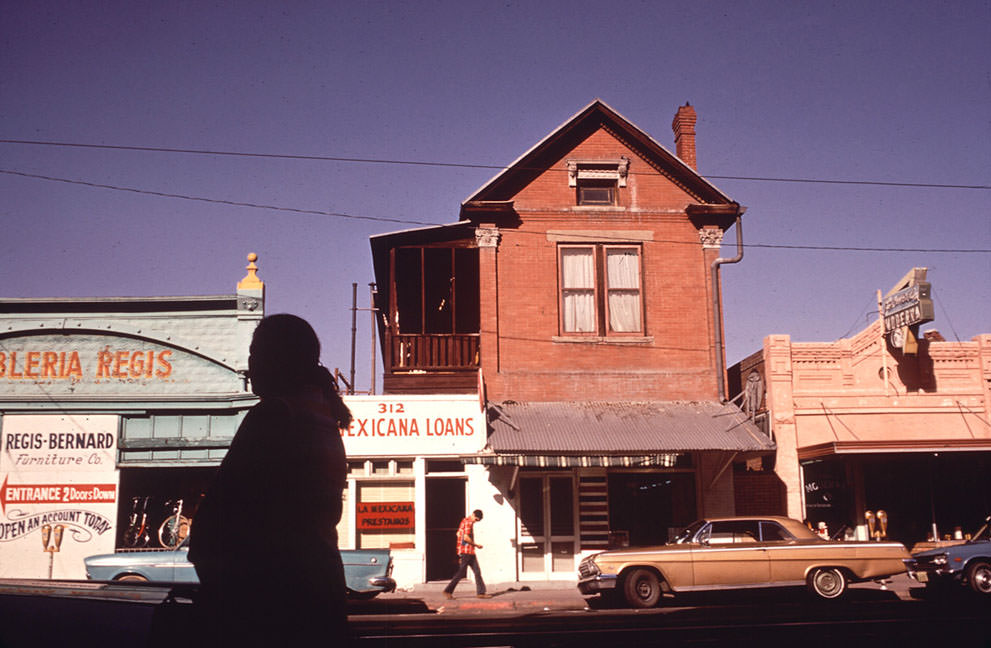
Stanton Street in El Paso's Second Ward, 1972
Stanton Street in El Paso’s Second Ward, 1972
A teenager in El Paso's Second Ward, 1972
A teenager in El Paso’s Second Ward, 1972
On a street corner in El Paso's Second Ward, 1972
On a street corner in El Paso’s Second Ward, 1972

El Paso’s Second Ward sat close to the U.S.-Mexico border, and its streets reflected the cross-cultural identity of the region. The neighborhood was working-class and predominantly Hispanic, with a streetscape shaped by decades of border commerce, migration, and community life. These photographs from 1972 document its everyday texture — storefronts, sidewalks, and residents going about their day.

Street scene, El Paso's Second Ward, 1972
Street scene, El Paso’s Second Ward, 1972
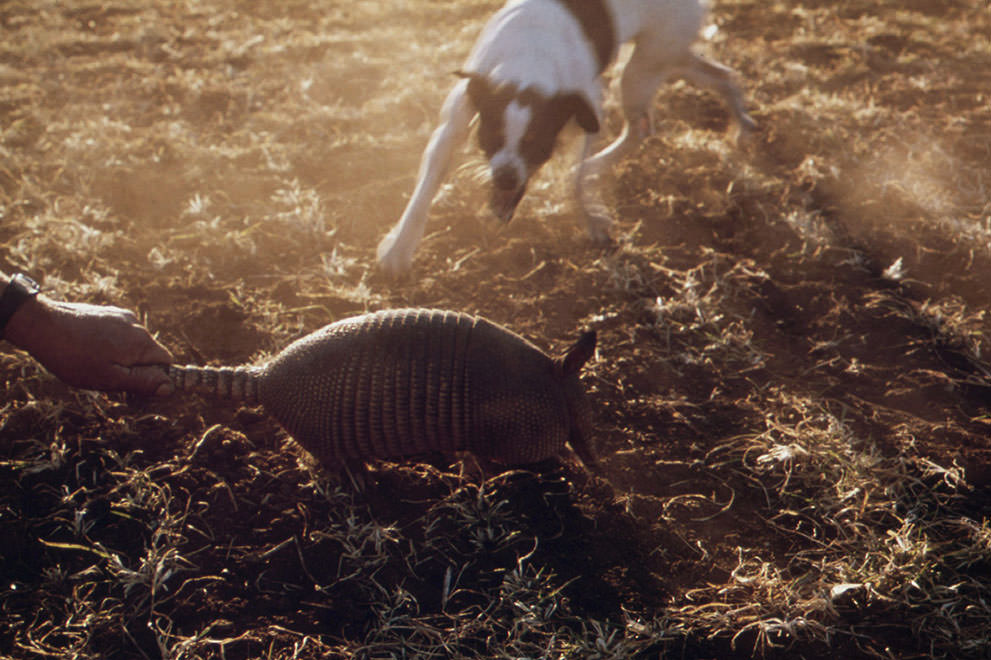
A dog attacks an armadillo on a farm near San Antonio, 1973

Rural life near San Antonio was marked by wide open land, farm work, and the kind of unscripted moments that rarely made it into official records. Armadillos were a common sight across central and south Texas, and encounters like this one — a farm dog confronting one on open ground — were an ordinary part of life on the land.

West Beach, Galveston Island, 1972
Teenagers in a drugstore in the Stockyards area of Fort Worth, 1972

Fort Worth’s Stockyards district had a long history tied to the cattle trade. By the early 1970s, it was still an active neighborhood with its own local businesses and social life. Young people gathered at the local drugstore, a common hangout spot in American towns and cities before the era of malls and fast food chains dominated social space.

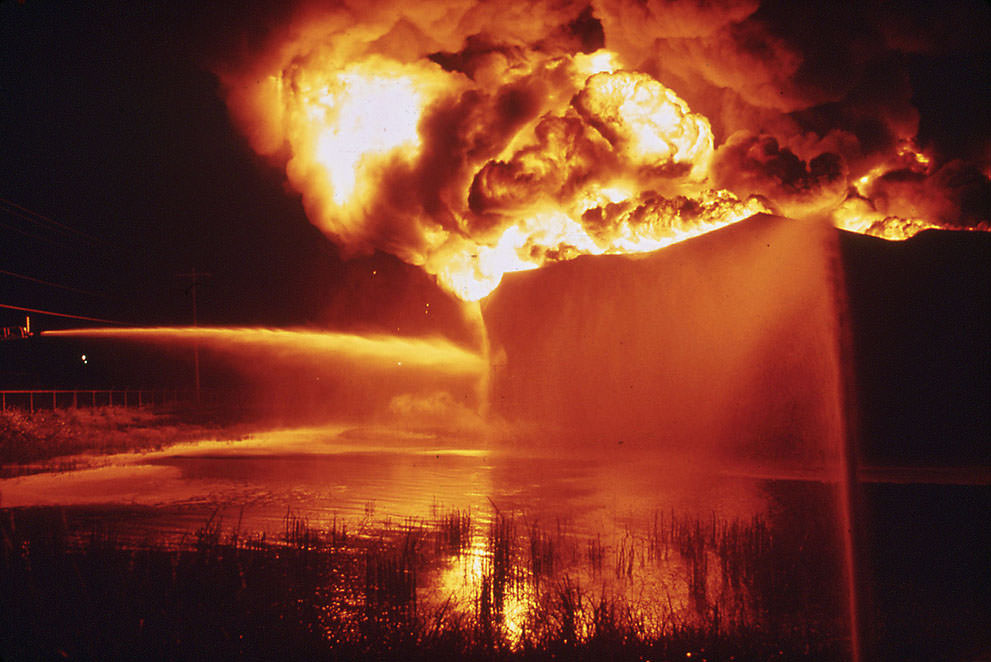
A Texaco crude oil tank blazes against the night after being struck by lightning near Houston, 1972

Texas oil infrastructure was not without its hazards. A Texaco crude oil storage tank near Houston was struck by lightning in September 1972, igniting a massive fire that burned against the night sky. Fires of this kind were a known risk in areas dense with storage tanks and refinery equipment, and they served as stark reminders of the volatile nature of the industry.

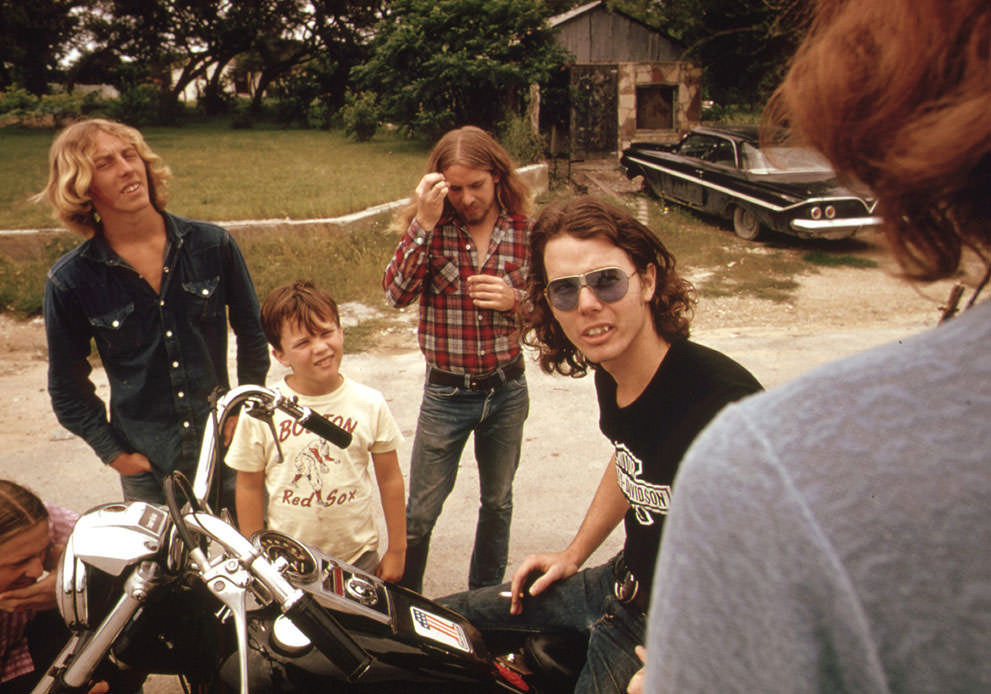
A motorcyclist loading his possessions onto a truck with the help of friends in Leakey, 1973
A teenage couple embraces on the bank of the Frio Canyon River near Leakey, 1973
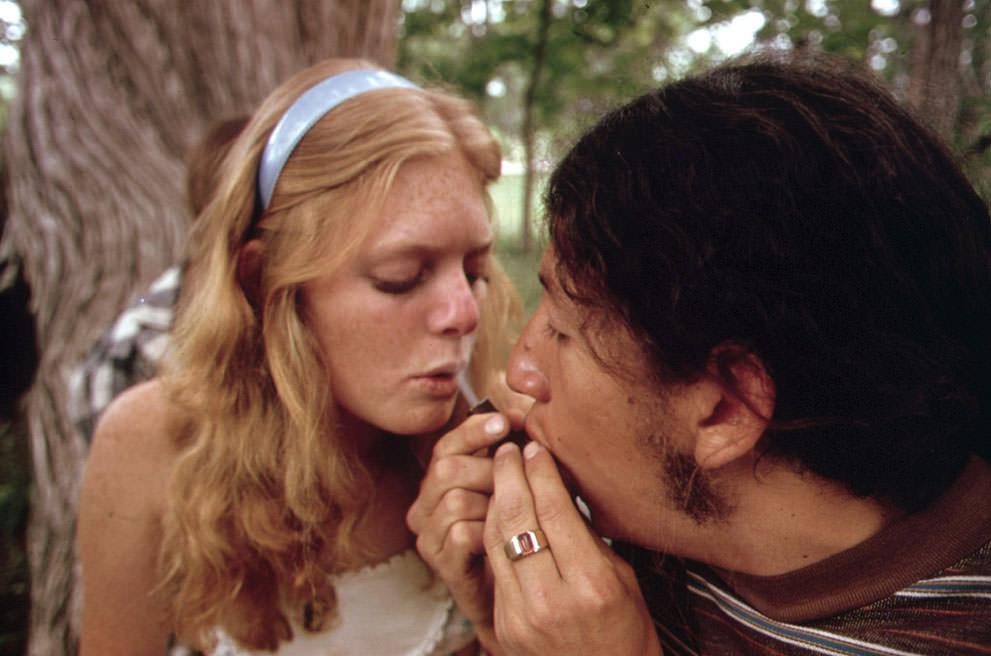
A young man and woman smoke pot during an outing near Leakey, Texas, 1973

The Hill Country around Leakey attracted young Texans looking for open space and a break from city life. The Frio River and its surrounding canyons were a popular destination. These photographs from 1973, taken with permission, show a generation of young people living loosely — camping, socializing, and spending time along the river.

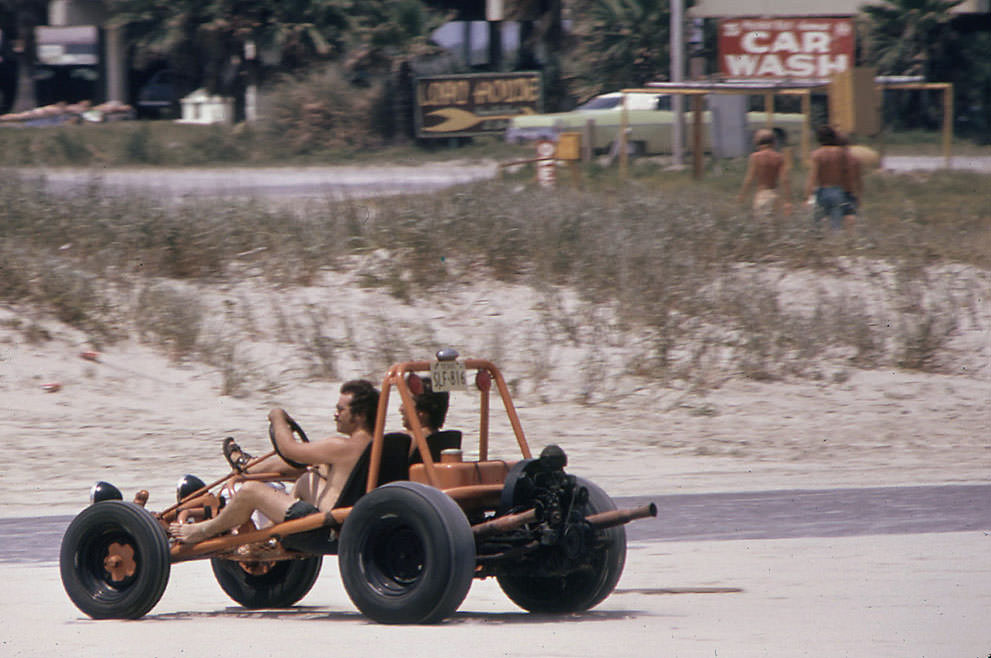
Dune buggy on Stewart Beach on the eastern tip of Galveston Island, 1972
Stewart Beach, Galveston Island, 1972

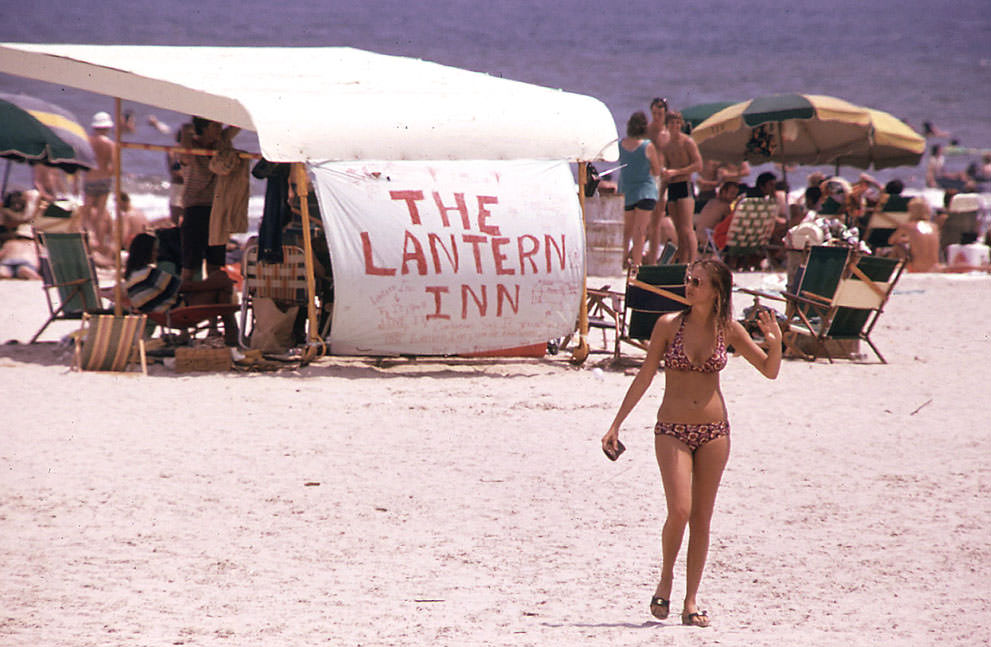
Stewart Beach on Galveston Island’s eastern tip was one of the most accessible stretches of Gulf Coast shoreline for day-trippers from Houston. Dune buggies were a popular presence on the sand, and the beach filled with activity from early summer through the fall. The island was a release valve for city residents, offering salt water, open sky, and room to roam.

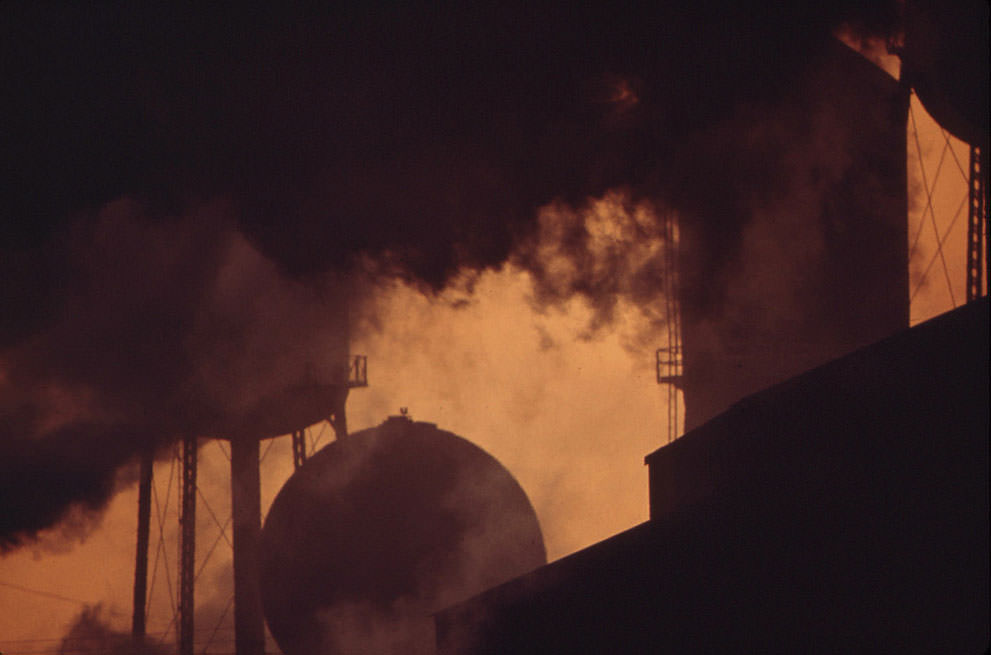
Smoke from Armco Steel on a sunny afternoon, 1972

Industrial output during the 1970s came with a visible environmental cost. Armco Steel’s operations produced heavy smoke that drifted over the surrounding area on even the clearest days. Steel production was a significant part of Texas’s industrial economy, and plants like this one operated at high capacity throughout the decade.
A hunter and his daughter wait before sunset for deer near San Antonio, where hunters leave food out before the season to establish the animals' feeding routines, 1973
A hunter and his daughter wait before sunset for deer near San Antonio, where hunters leave food out before the season to establish the animals’ feeding routines, 1973
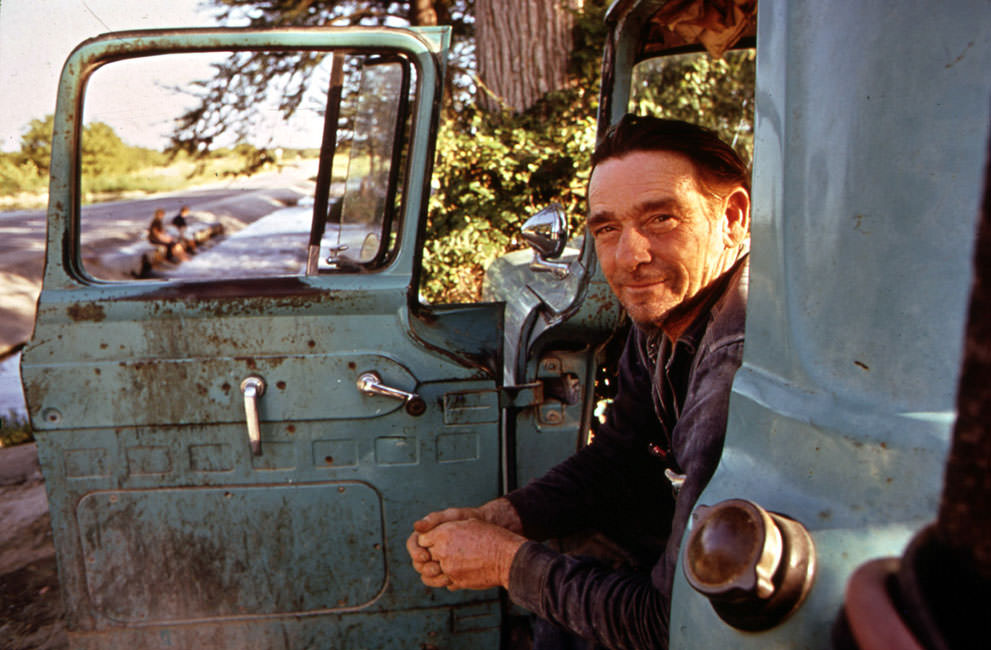
Woodrow Wilson, one of Leakey's local characters, in his pickup truck — he spent his days sitting and staring at the river from 7 a.m. until sunset, 1972
Woodrow Wilson, one of Leakey’s local characters, in his pickup truck — he spent his days sitting and staring at the river from 7 a.m. until sunset, 1972

Small towns like Leakey had their own cast of familiar faces. Woodrow Wilson was one of them — a local figure known for parking his pickup by the river and watching the water from morning until dark every day. He was part of the community’s fabric in the way that only small towns produce, where routines and personalities become landmarks in their own right.

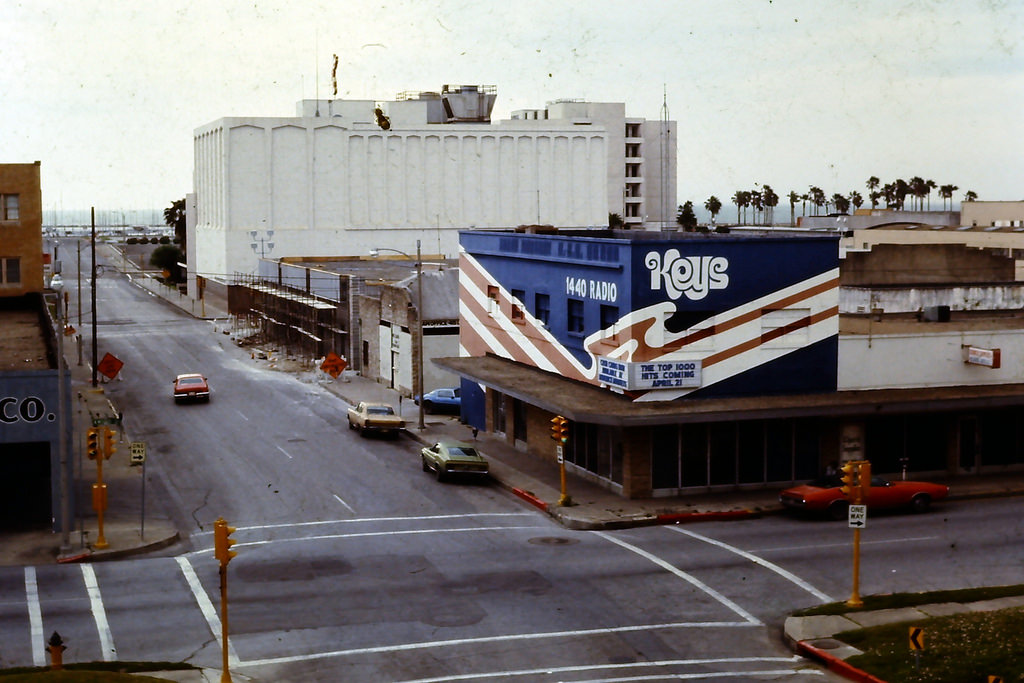
1440 Keys Radio Station, 1977

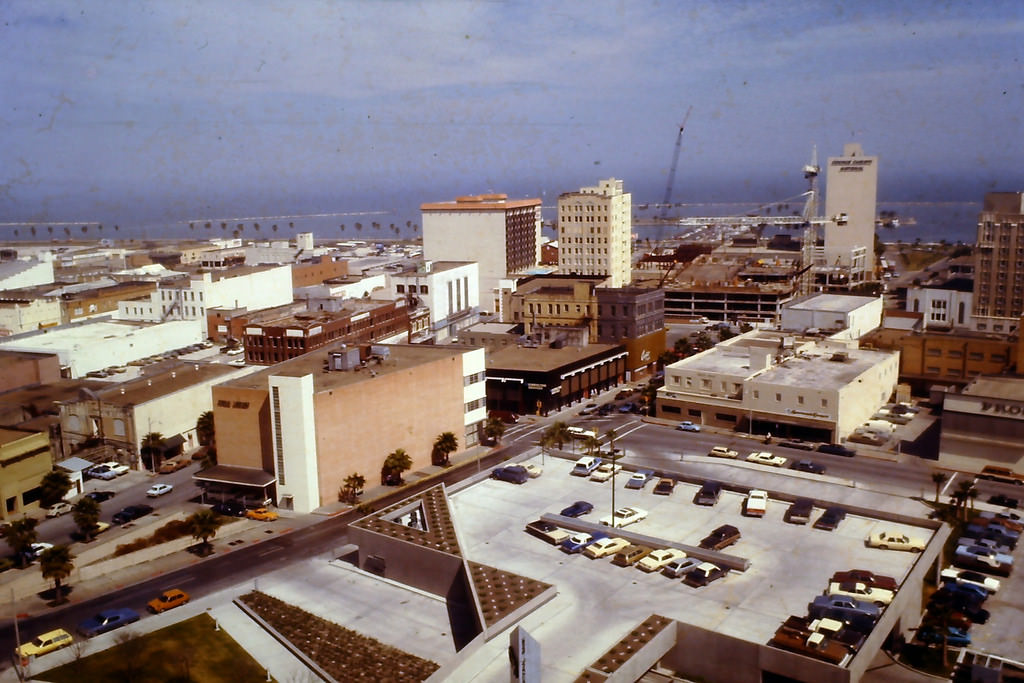
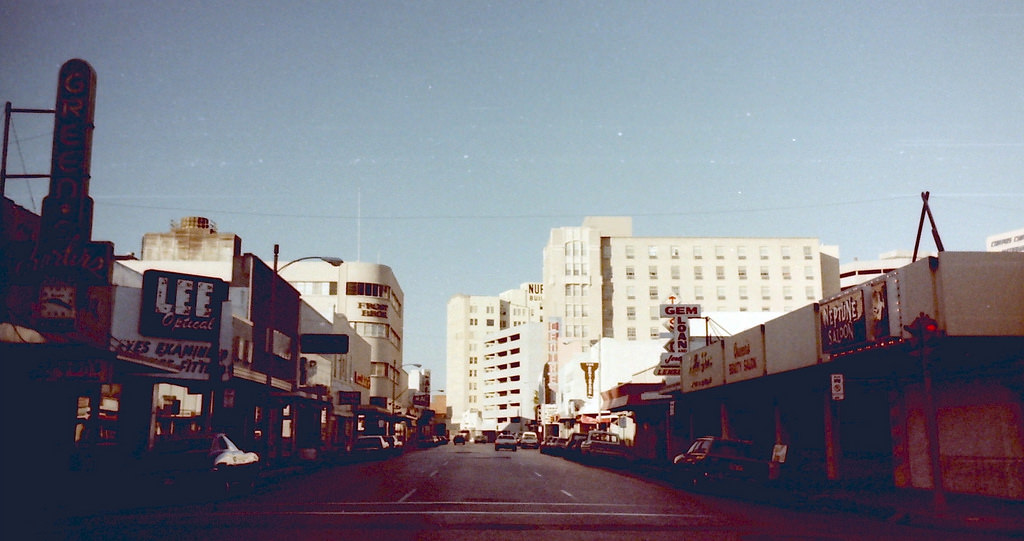
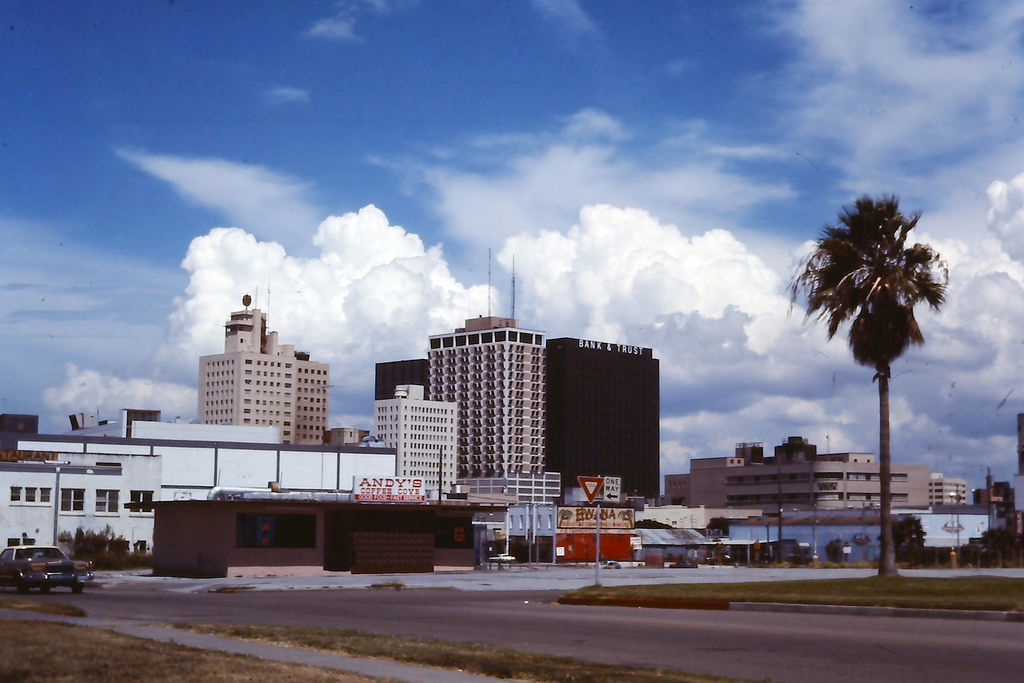
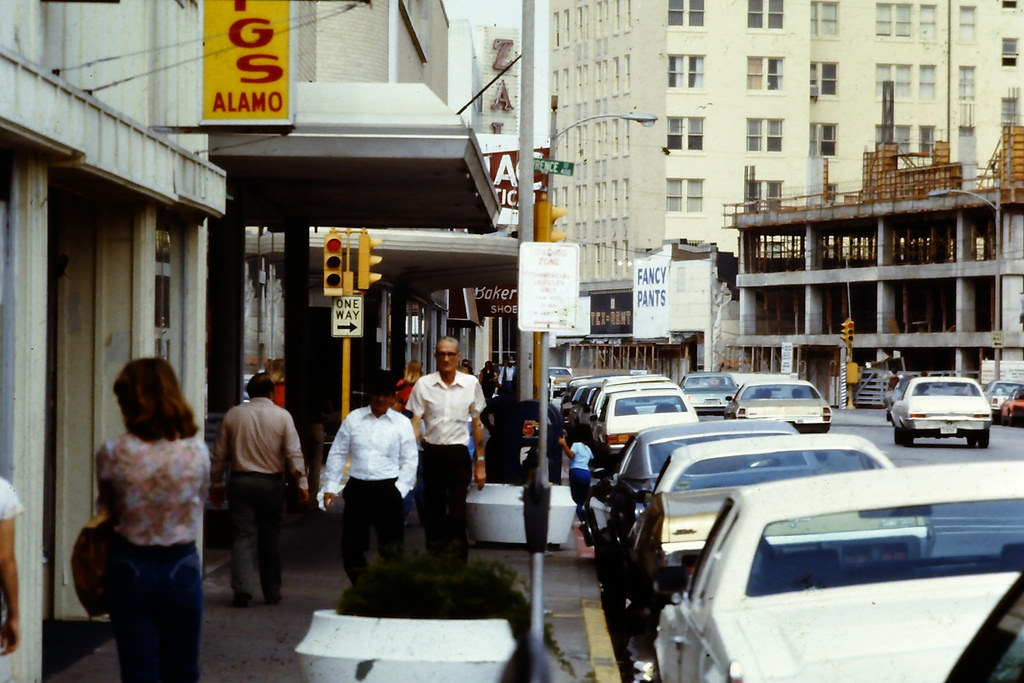
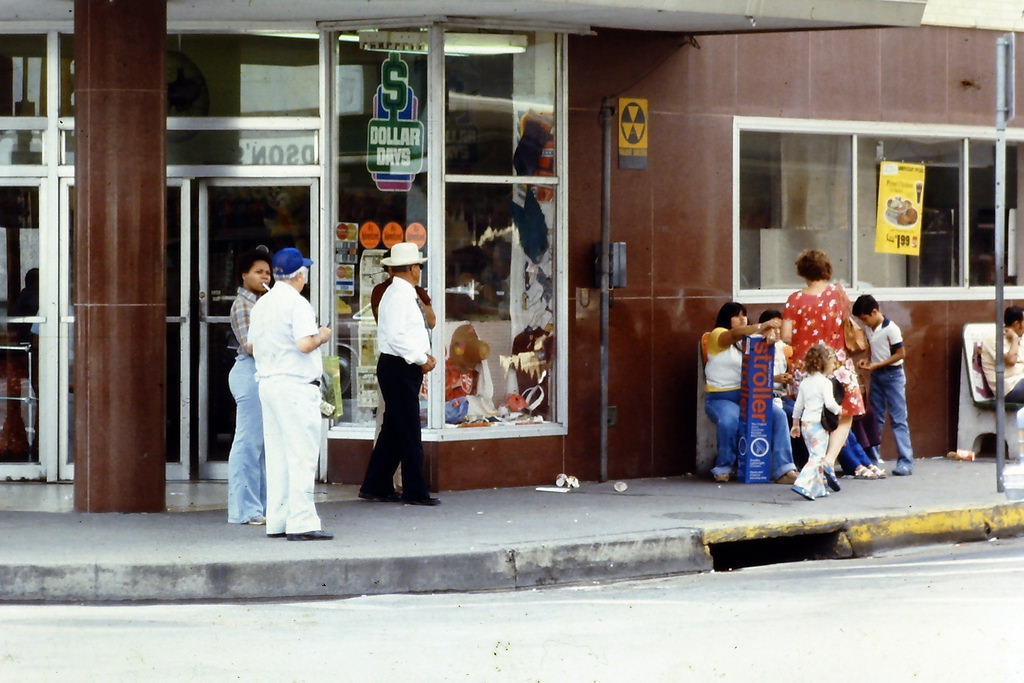
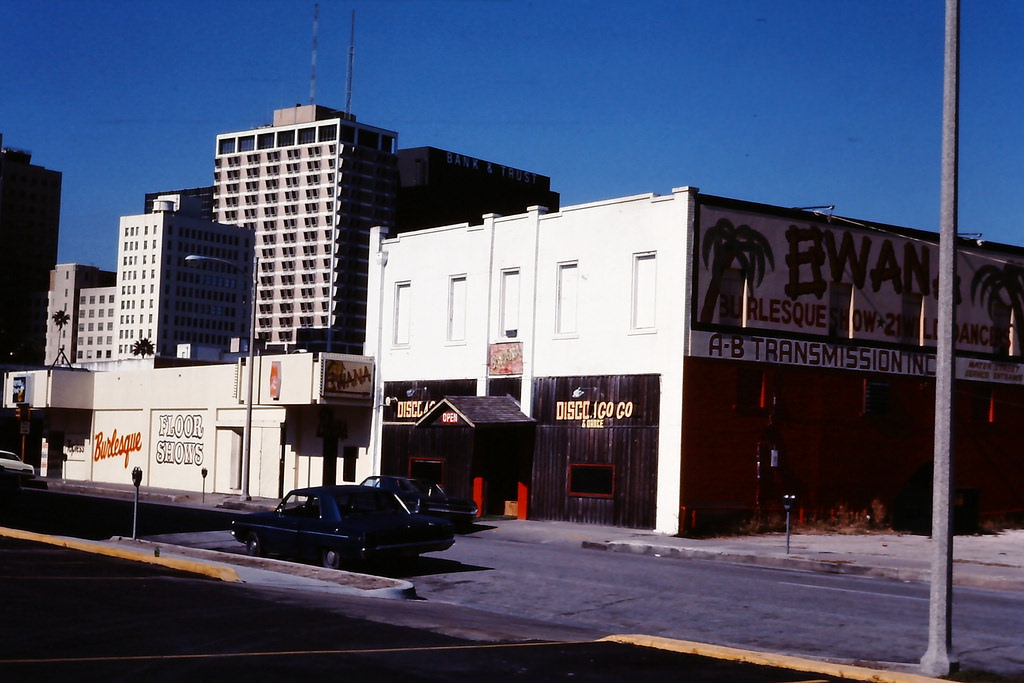
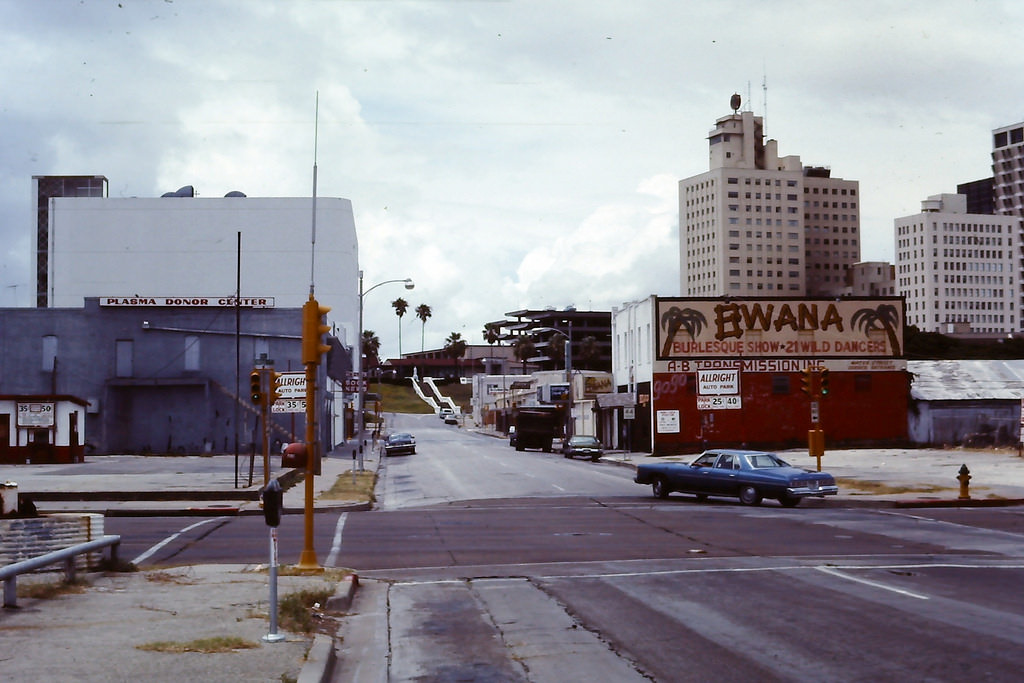
Corpus Christi in the late 1970s was a mid-sized Gulf Coast city with a busy downtown, a working port, and a commercial district that served both locals and the surrounding region. These photographs document its streets, storefronts, theaters, and landmarks in close detail — a record of what the city looked like before later decades of redevelopment changed much of it.
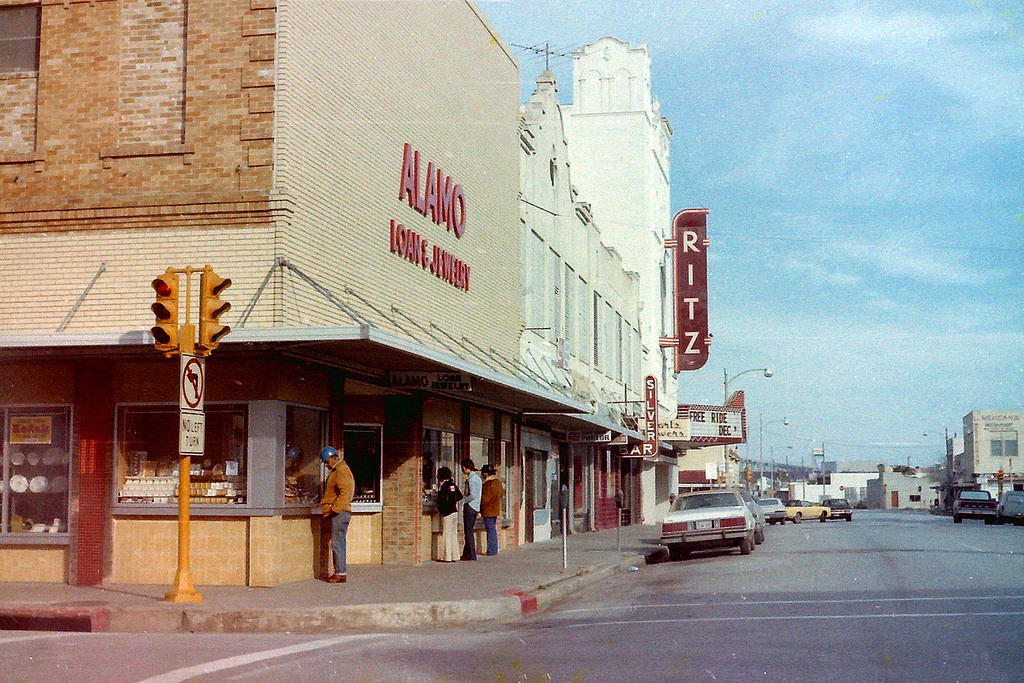
Alamo Loan & the Ritz Theater, 1977
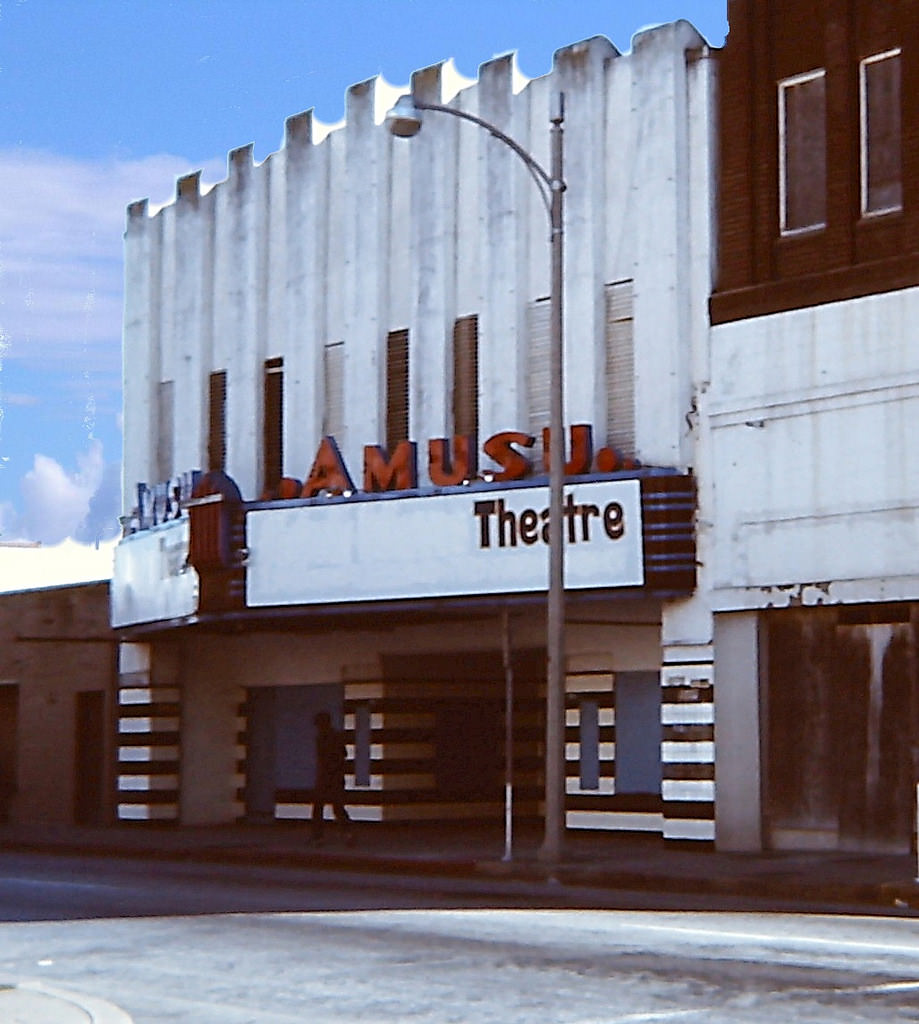
Amusu Theatre, 1975
Amusu Theatre, 1975

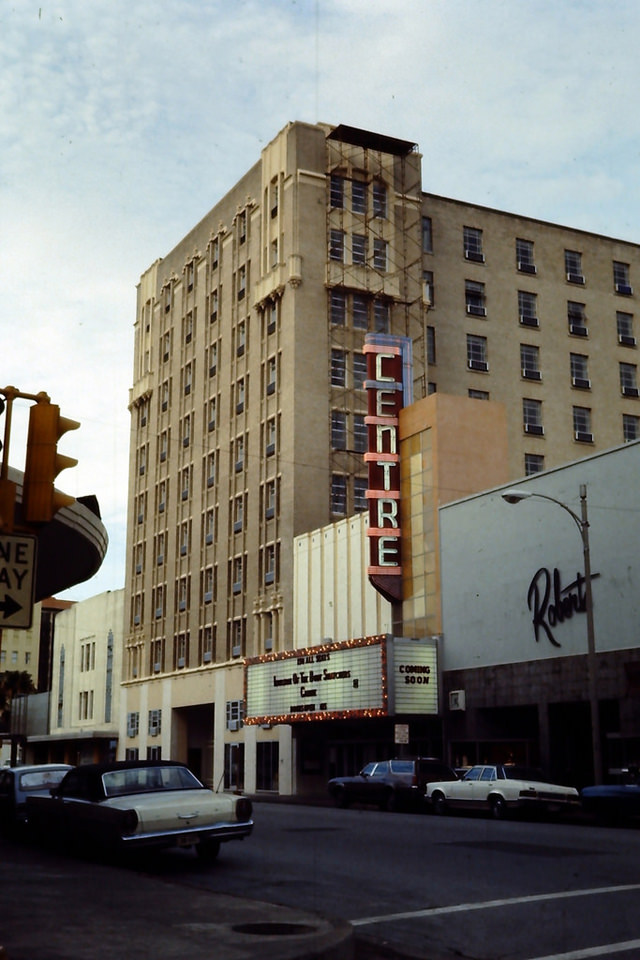
Movie theaters were central to downtown life in cities across Texas. The Amusu Theatre, the Ritz, the Centre, the Sun, the Tower — each one served as a neighborhood anchor, drawing foot traffic and giving commercial streets their character. By the late 1970s, many of these theaters were already facing competition from suburban cinemas and drive-ins, but they remained open and active.

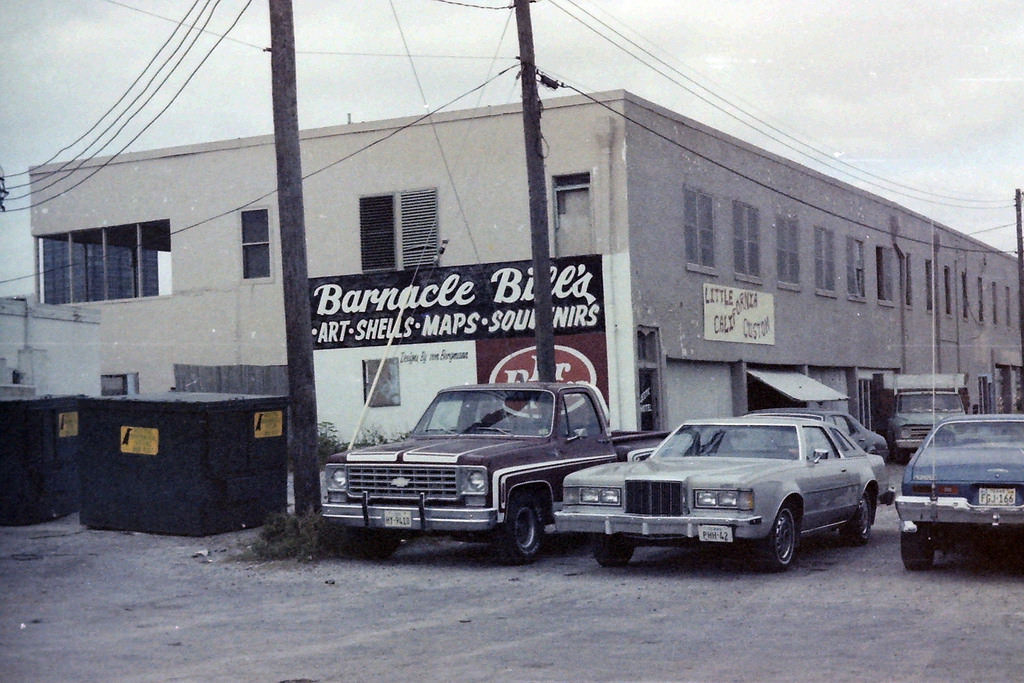
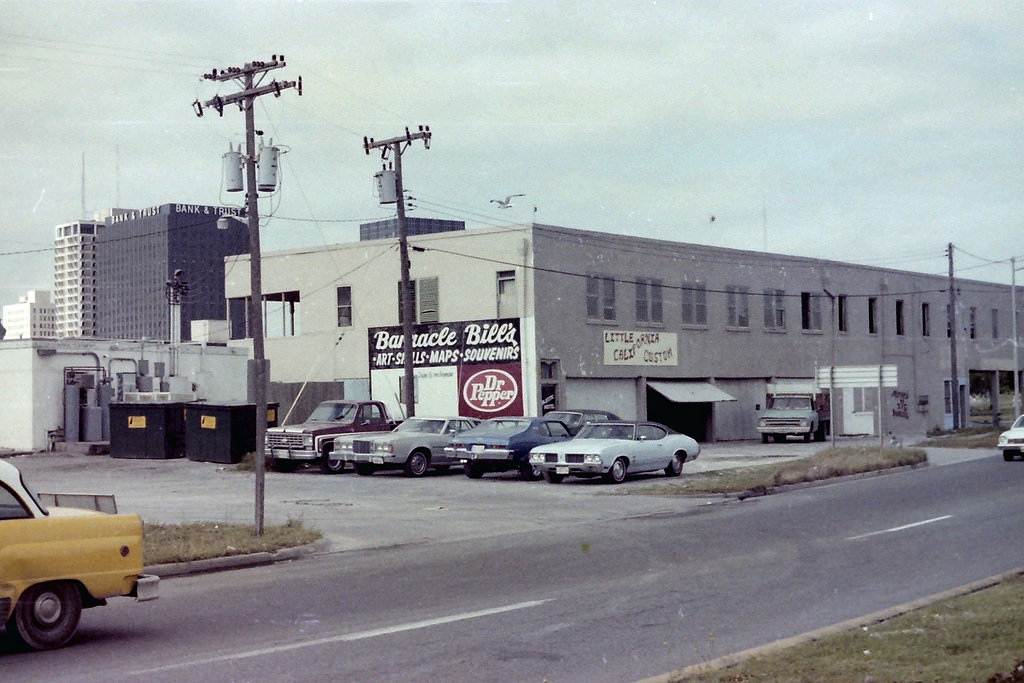
Barnacle Bill's, 1978
Barnacle Bill’s, 1978
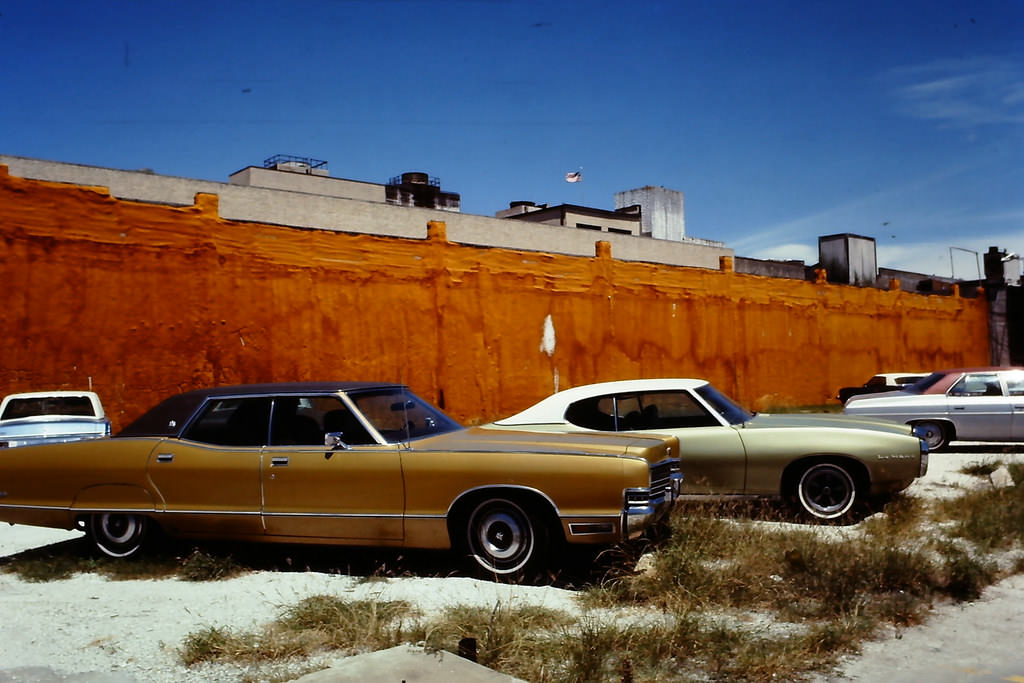
Big cars from Corpus Christi, Texas, 1978

American cars in the late 1970s were still large by today’s standards, though the fuel crisis of 1973 had begun pushing manufacturers toward smaller models. In Corpus Christi, full-sized cars and trucks remained the norm on streets and in parking lots. They were a product of Texas’s car culture — practical for long distances, built for a state where driving was simply a way of life.

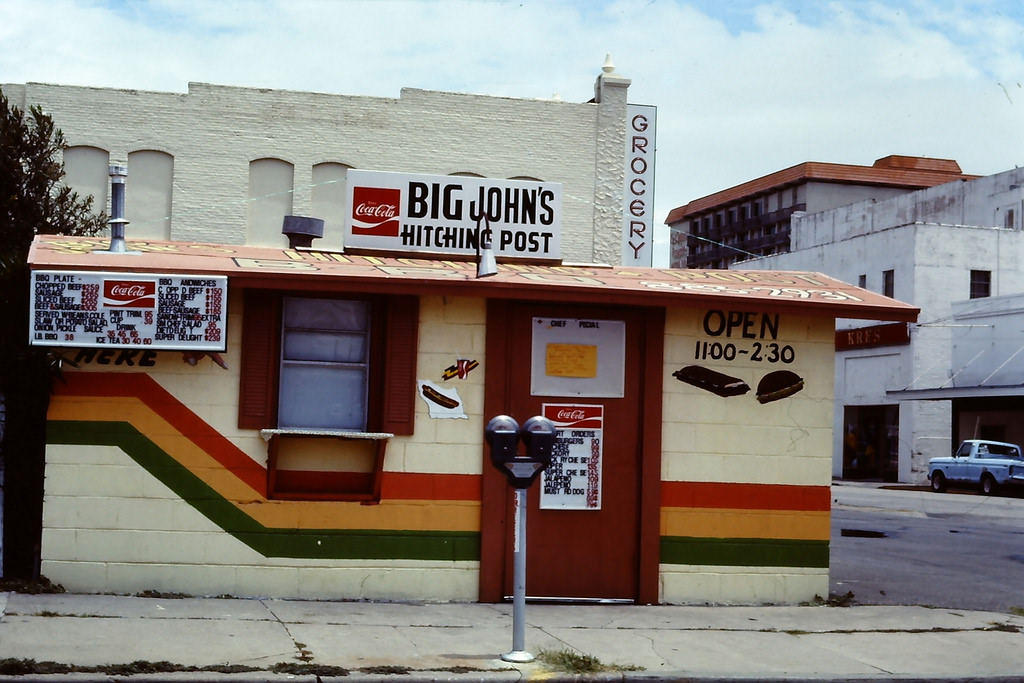
Big John's Hitching Post, 1978
Big John’s Hitching Post, 1978
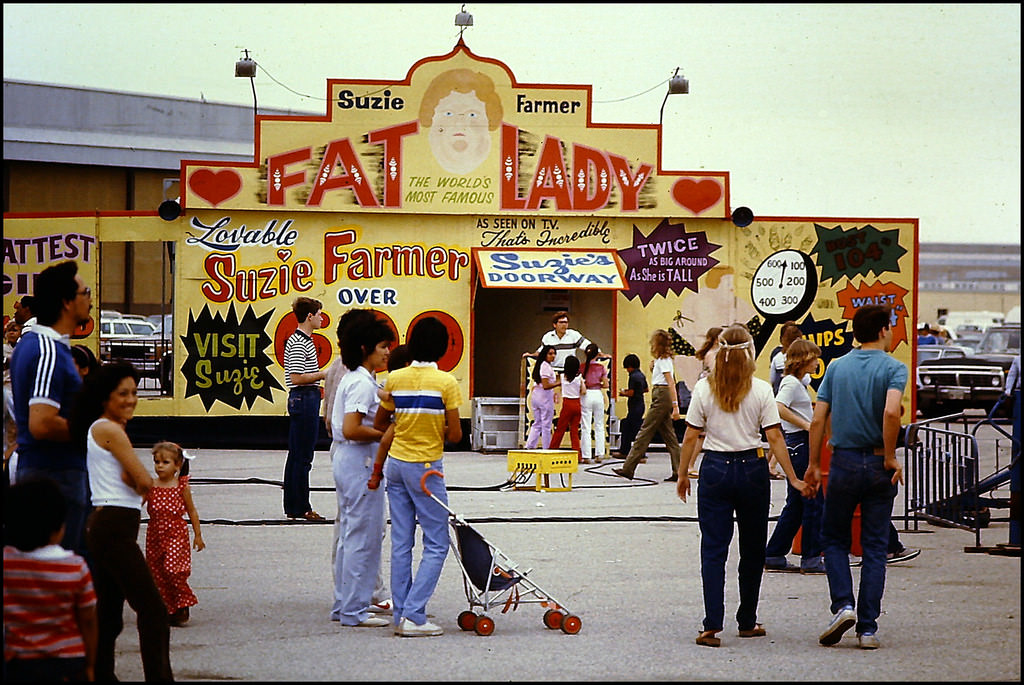
Carnival scene in Corpus Christi, Texas, 1979

Carnivals and fairs were a regular part of Texas community life, drawing crowds from across a region to temporary midways packed with rides, games, and food. Corpus Christi’s carnival scene in 1979 was lively and colorful — a sharp contrast to the quieter weekday streets captured in other photographs from the same period.

Centre Theater, 1978
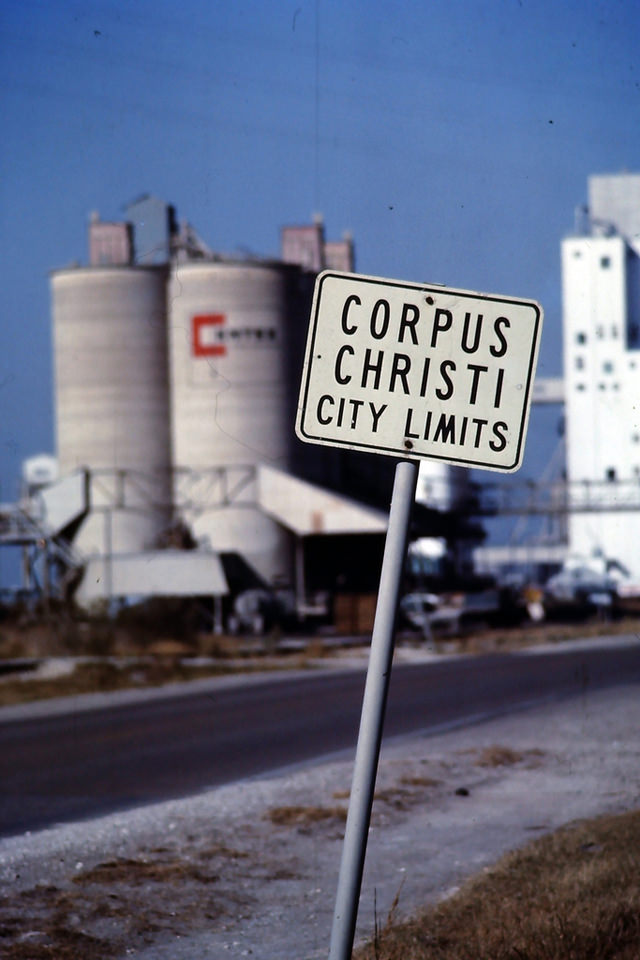
City limits sign on Navigation Blvd. on the north side of the ship channel, near the cement plant and grain elevator, 1978

The industrial north side of Corpus Christi’s ship channel told a different story from the commercial downtown. Here, cement plants, grain elevators, and port infrastructure lined the waterfront. Navigation Boulevard marked the edge of the city in one direction, beyond which the industrial corridor gave way to open land and highway.

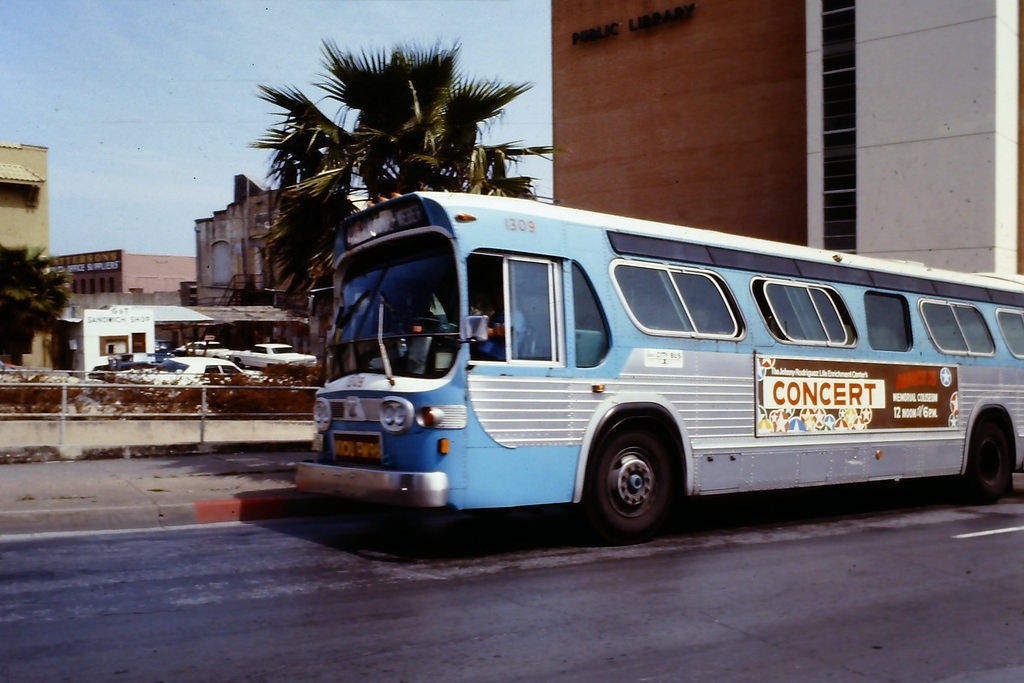
Corpus Christi city bus on Schatzell St. next to the old library, 1978
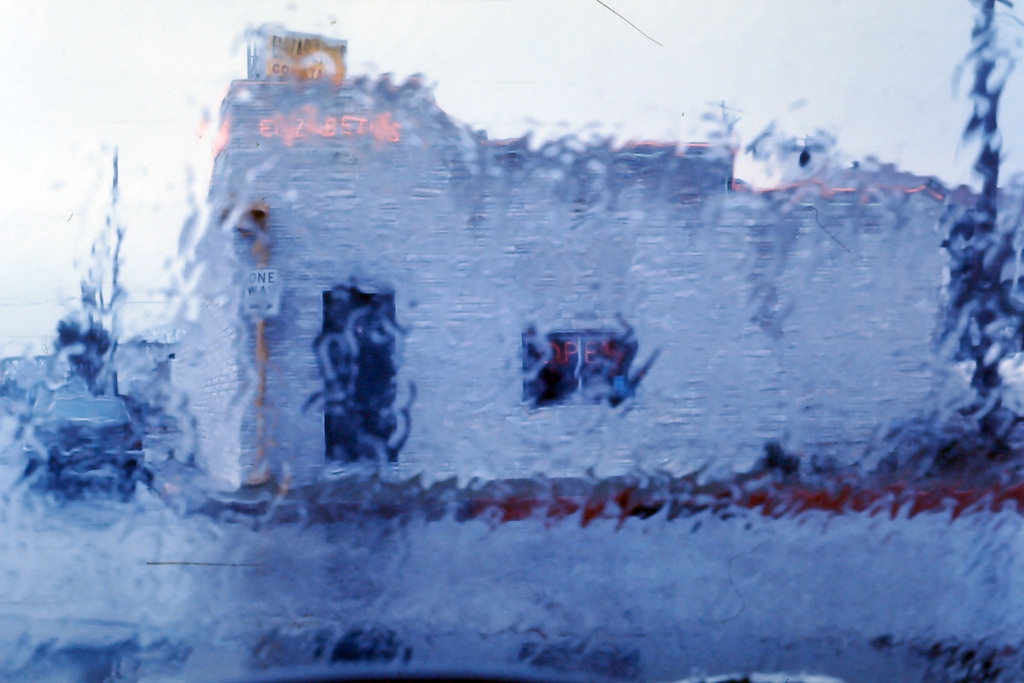
Elizabeth's Cocktails, photographed through a car windshield on a rainy day, 1977
Elizabeth’s Cocktails, photographed through a car windshield on a rainy day, 1977

Bars and cocktail lounges were a staple of Texas urban nightlife. Elizabeth’s Cocktails, shot through a rain-streaked windshield in 1977, captures the kind of neighborhood watering hole that existed on nearly every commercial block. The rainy-day photograph gives the scene a muted quality that suits the city’s quieter, off-season mood.

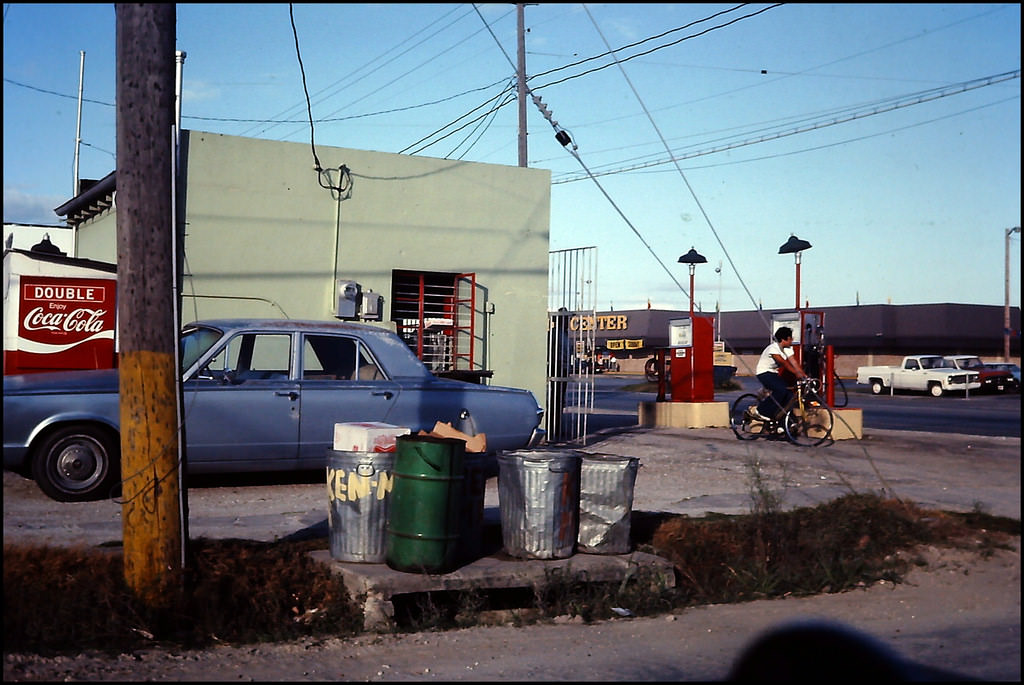
Ken-Mar Gas Station, 1979
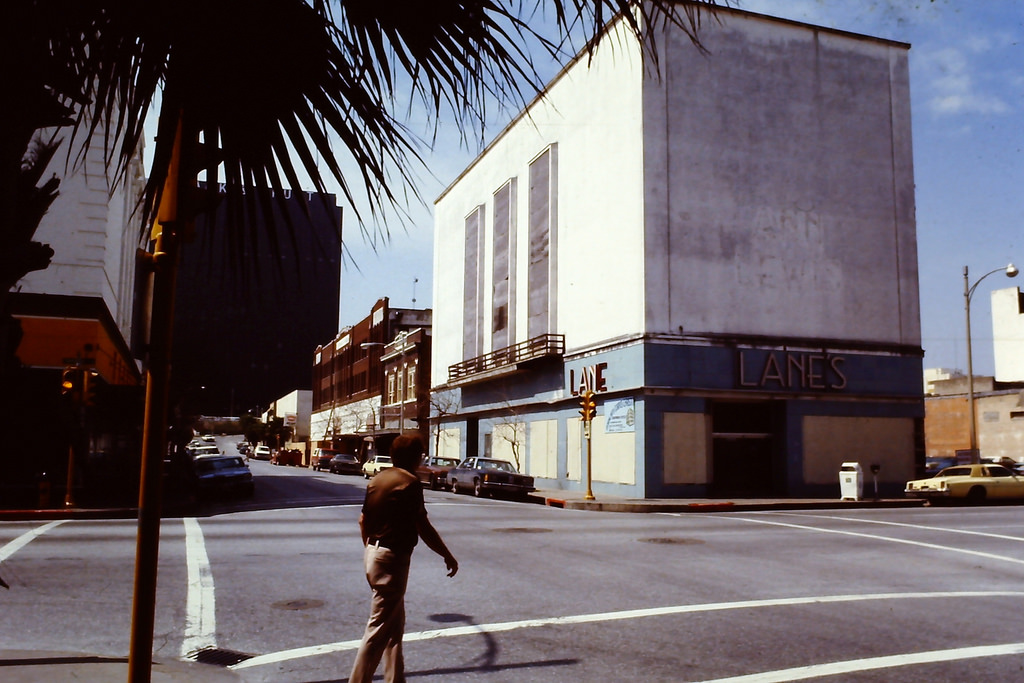
Lane's Building at the corner of N. Chaparral and Peoples St., 1978
Lane’s Building at the corner of N. Chaparral and Peoples St., 1978

North Chaparral Street was the spine of downtown Corpus Christi’s commercial district. Lane’s Building anchored one of its key intersections at Peoples Street, and the surrounding blocks were lined with retailers, restaurants, and service businesses. These photographs document the street as a functioning downtown corridor — busy, lived-in, and still commercially active.

Looking north from Williams St., 1977
N. Chaparral St. looking south, 1978
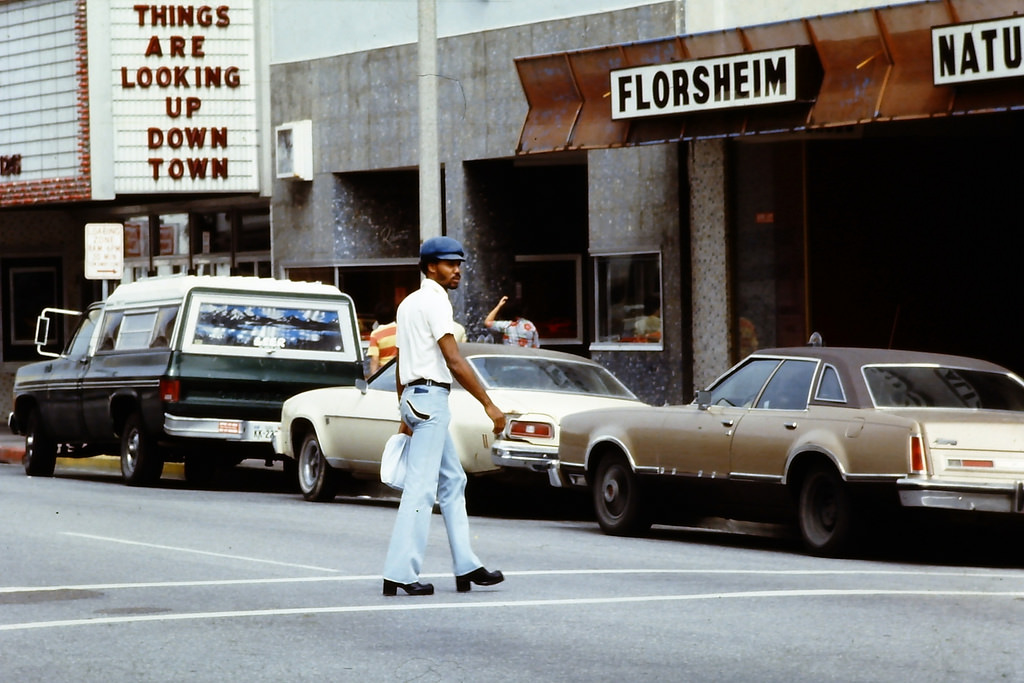
N. Chaparral St. near the Centre Theater, 1978

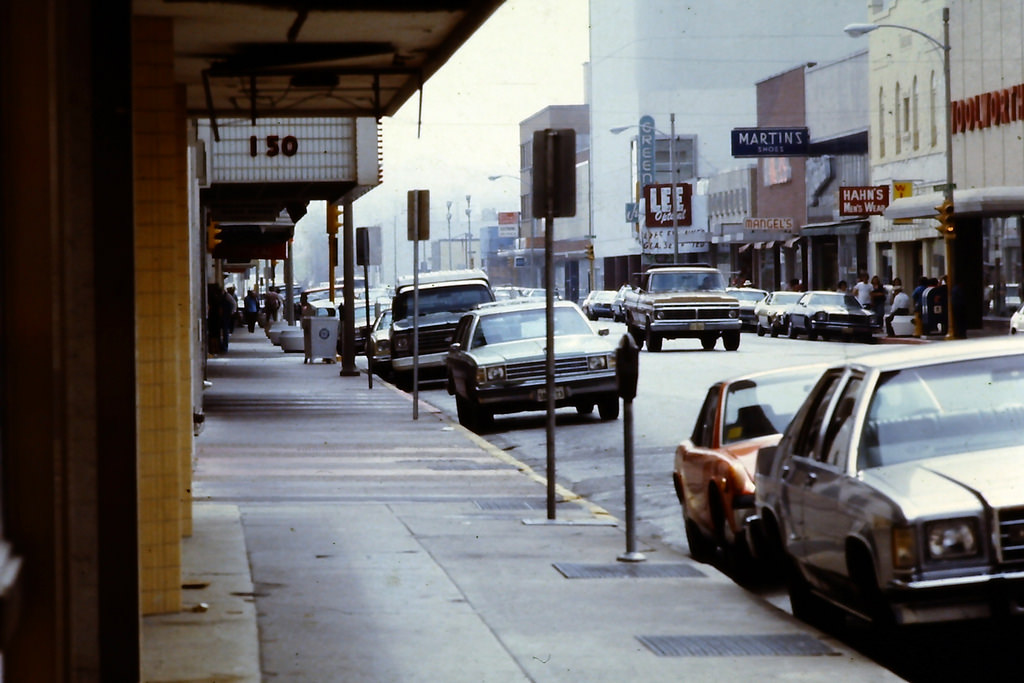
Walking north or south along N. Chaparral in the late 1970s meant passing theaters, shops, and the foot traffic of a downtown that still served as a true city center. Pedestrians, storefronts, and parked cars filled the sidewalks and curbs. The street’s vitality at this moment contrasts with what many American downtowns became in the decades that followed.

Part of the Corpus Christi skyline, 1978
Pedestrians on the street at the 400 block of N. Chaparral, 1977

The Corpus Christi skyline in 1978 reflected a mid-sized city in the middle of its growth phase. New office buildings rose alongside older structures, and the waterfront gave the city a distinct Gulf Coast profile. Downtown pedestrian traffic was still a daily constant — people shopping, commuting, and moving through the city on foot.

Shopping in downtown Corpus Christi, 1978
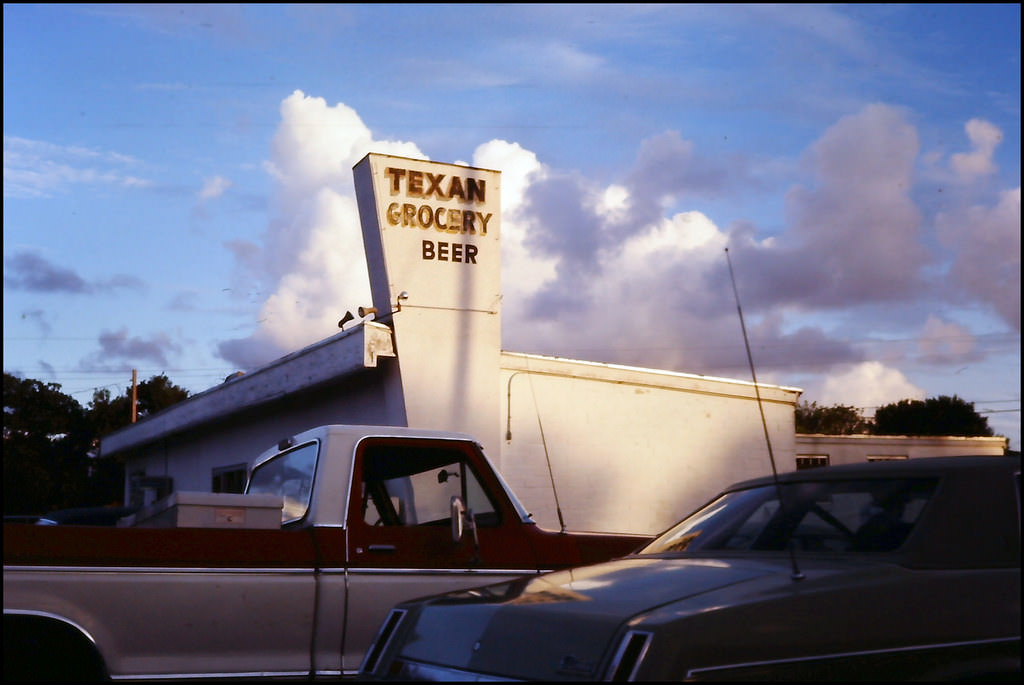
Texan Grocery, 1979
Texan Grocery, 1979

Neighborhood grocery stores remained common in Texas cities through the 1970s, before large chain supermarkets and big-box retailers came to dominate the market. The Texan Grocery, photographed in 1979, represents a category of local business that served tight-knit urban neighborhoods where residents could walk to shop for daily necessities.

The Bwana Club, 1978
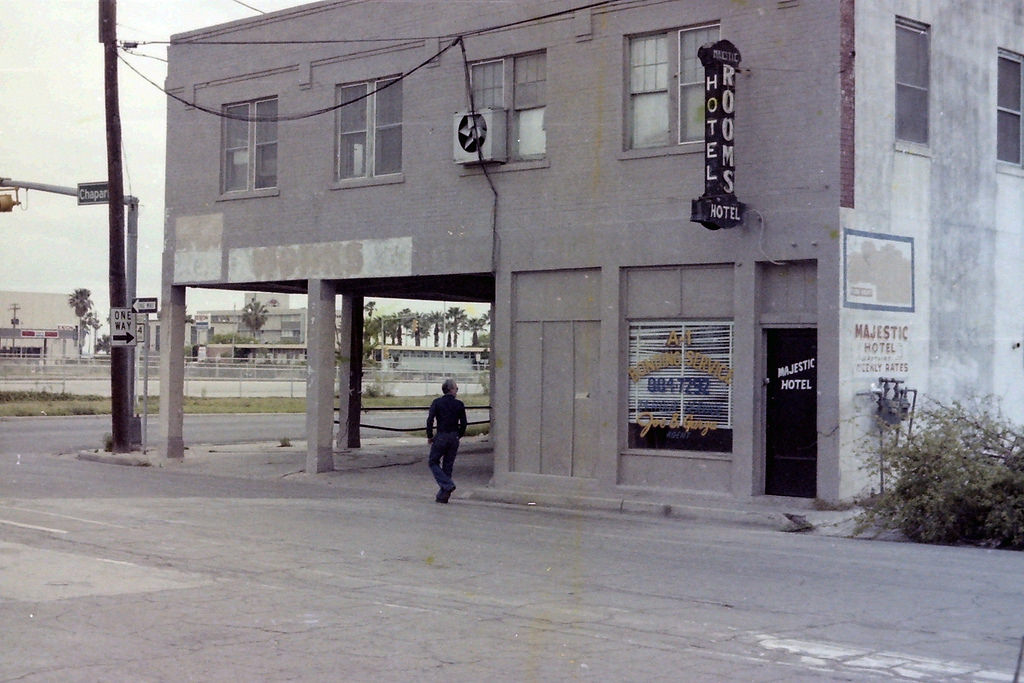
The Majestic Hotel, 1977
The north side of the Majestic Hotel building facing I-37, 1977

The Majestic Hotel was one of Corpus Christi’s prominent downtown landmarks. Its north face looked out over Interstate 37, the main corridor connecting the city to San Antonio. By 1977, the hotel existed in a downtown already beginning to feel the pressure of highway-driven development that was pulling residents and businesses toward the outskirts.

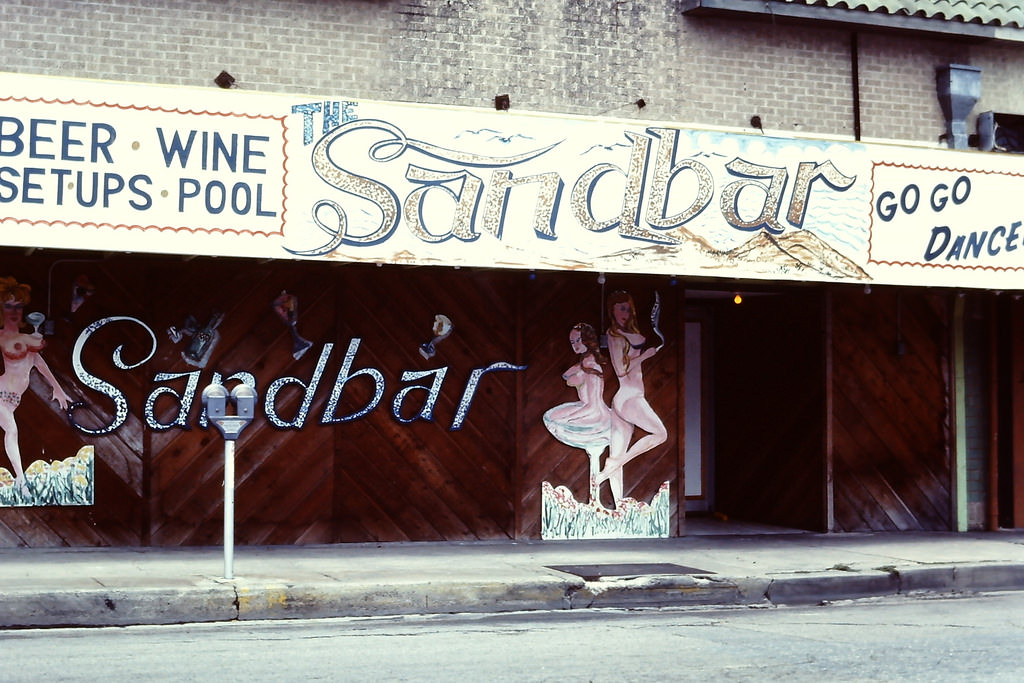
The Sandbar Club at 408 Taylor, across the street from the Ritz Theater parking lot, 1978
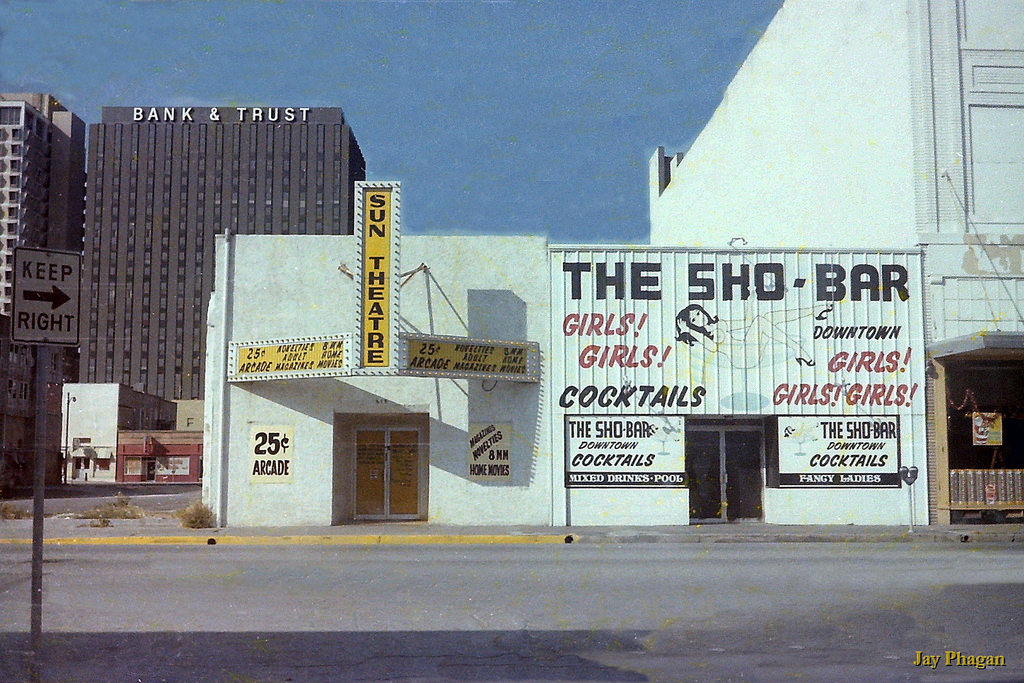
The Sun Theatre and the Sho-Bar in the 600 block of N. Chaparral next to the Kress building, 1979

The 600 block of N. Chaparral was home to some of downtown Corpus Christi’s most recognizable entertainment venues. The Sun Theatre and the Sho-Bar sat side by side next to the Kress building, combining cinema and nightlife in a single stretch of sidewalk. This kind of dense, mixed-use commercial block was typical of American downtowns before suburban sprawl thinned them out.

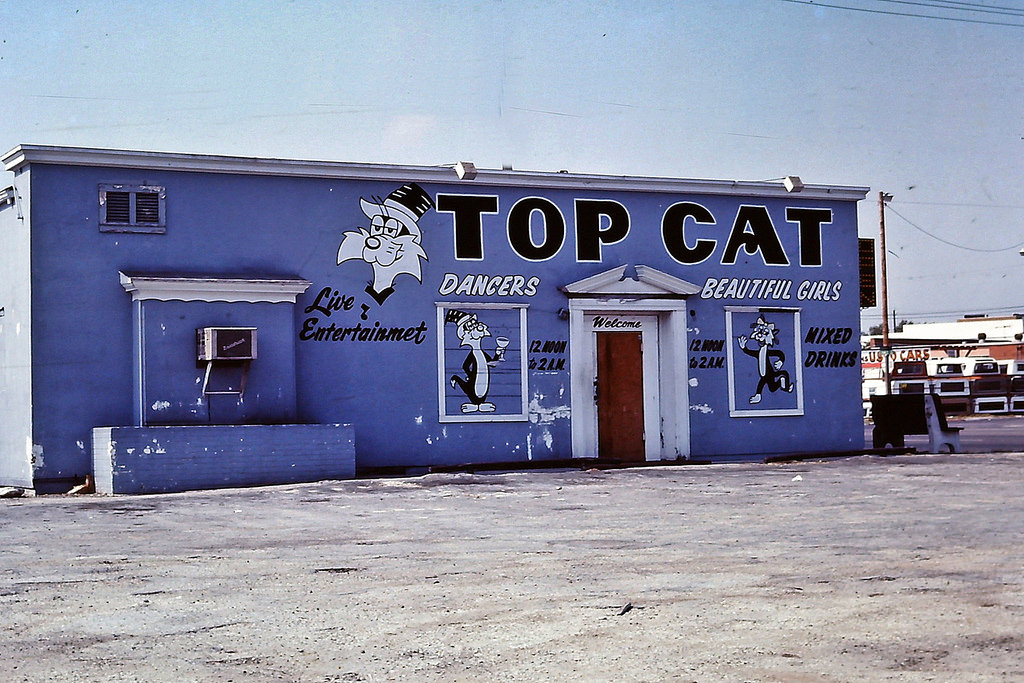
Top Cat on S. Staples at Booty St. near Six Points, 1978
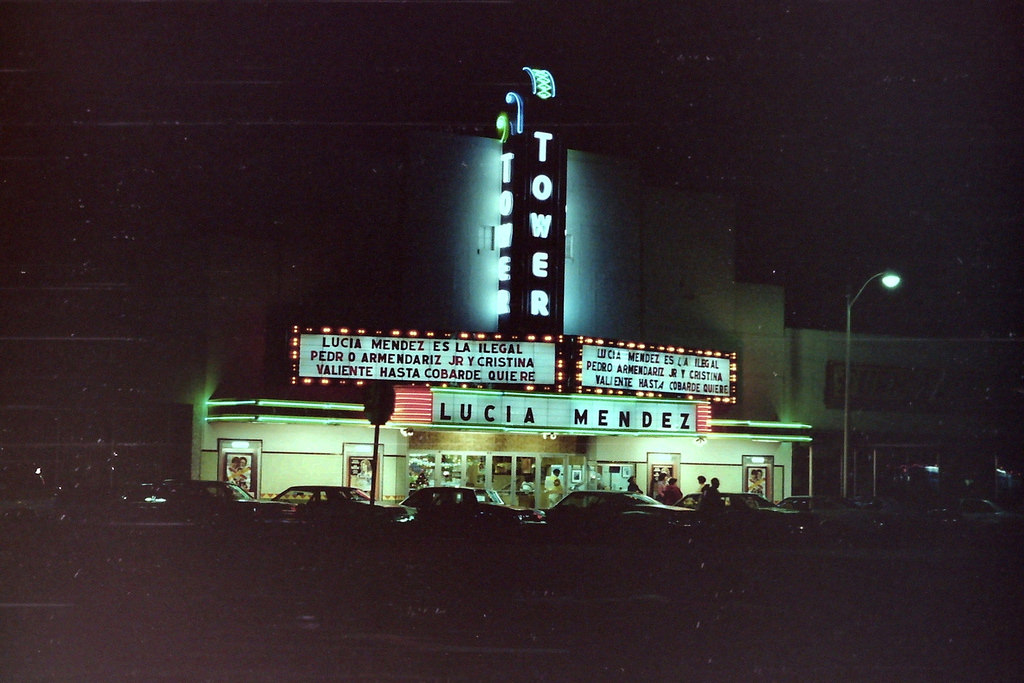
Tower Theater near Six Points at 1645 S. Alameda, 1978

The Six Points area on the south side of Corpus Christi was a busy commercial node where several major streets converged. The Tower Theater at 1645 S. Alameda and nearby businesses like Top Cat on S. Staples were part of a corridor that served the surrounding residential neighborhoods. Unlike the downtown core, this area had a more spread-out, auto-oriented feel.

View from the Wilson Building looking down on the parking lot on top of a Bank of America drive-through bank at Mesquite and Schatzell St., 1979
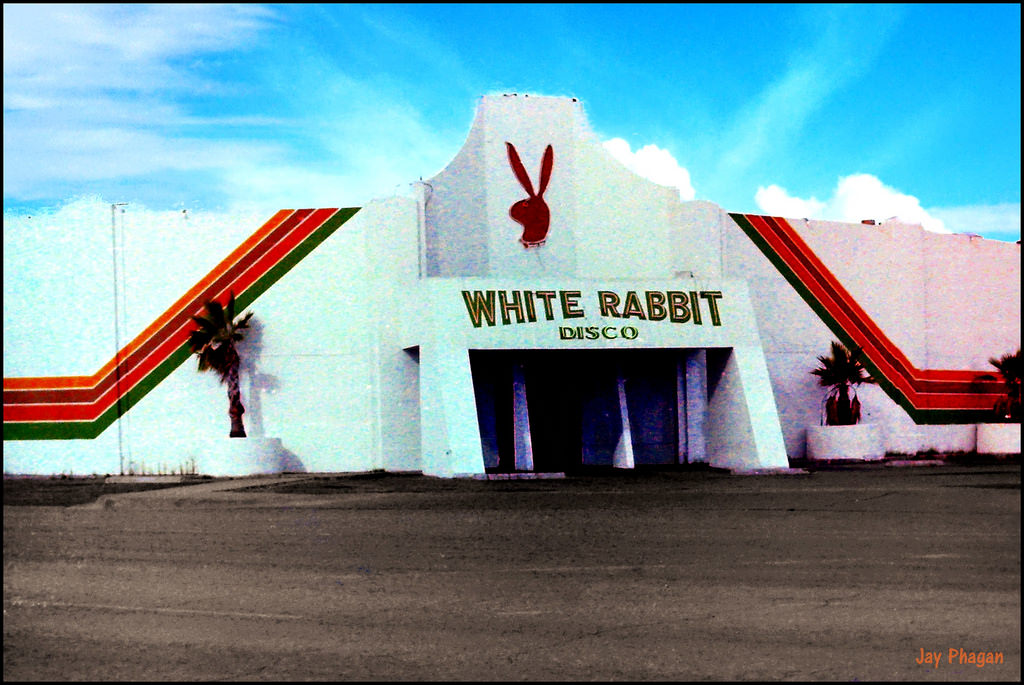
White Rabbit Disco, 1979

Disco culture reached Texas in the late 1970s, and Corpus Christi had its own version of it. The White Rabbit Disco, open in 1979, was part of a broader national trend that turned nightclubs into major social venues for young adults. The decade closed with disco at its peak, just before the genre’s sharp commercial decline in 1980.

Williams Street looking west from Water Street towards the bluff, 1978
Enjoyed this post? Get new ones in your inbox.

Leave a Comment

Your email address will not be published. Required fields are marked *

Share this Post 🥺

Please take a moment to share this content. Your support is greatly appreciated! 🙌🙏

Share this Post 🥺

Please take a moment to share this content. Your support is greatly appreciated! 🙌🙏
Scroll to Top
 
Hey Friend, Before You Go.. Please like & follow for more interesting content