in

What Taiwan looked like in the 1950s through these Captivating Vintage Photos

By 1950, Taiwan was under firm control of the Republic of China, led by Chiang Kai-shek and his Kuomintang party. They had retreated to the island in 1949 after losing the Chinese Civil War to the Communists on the mainland. The decades of Japanese rule from 1895 to 1945, followed by the chaos of World War II’s end, had left deep marks on the island. What followed was a period known as the “White Terror” — a time of strict martial law, political repression, and tight government control that shaped nearly every aspect of life.
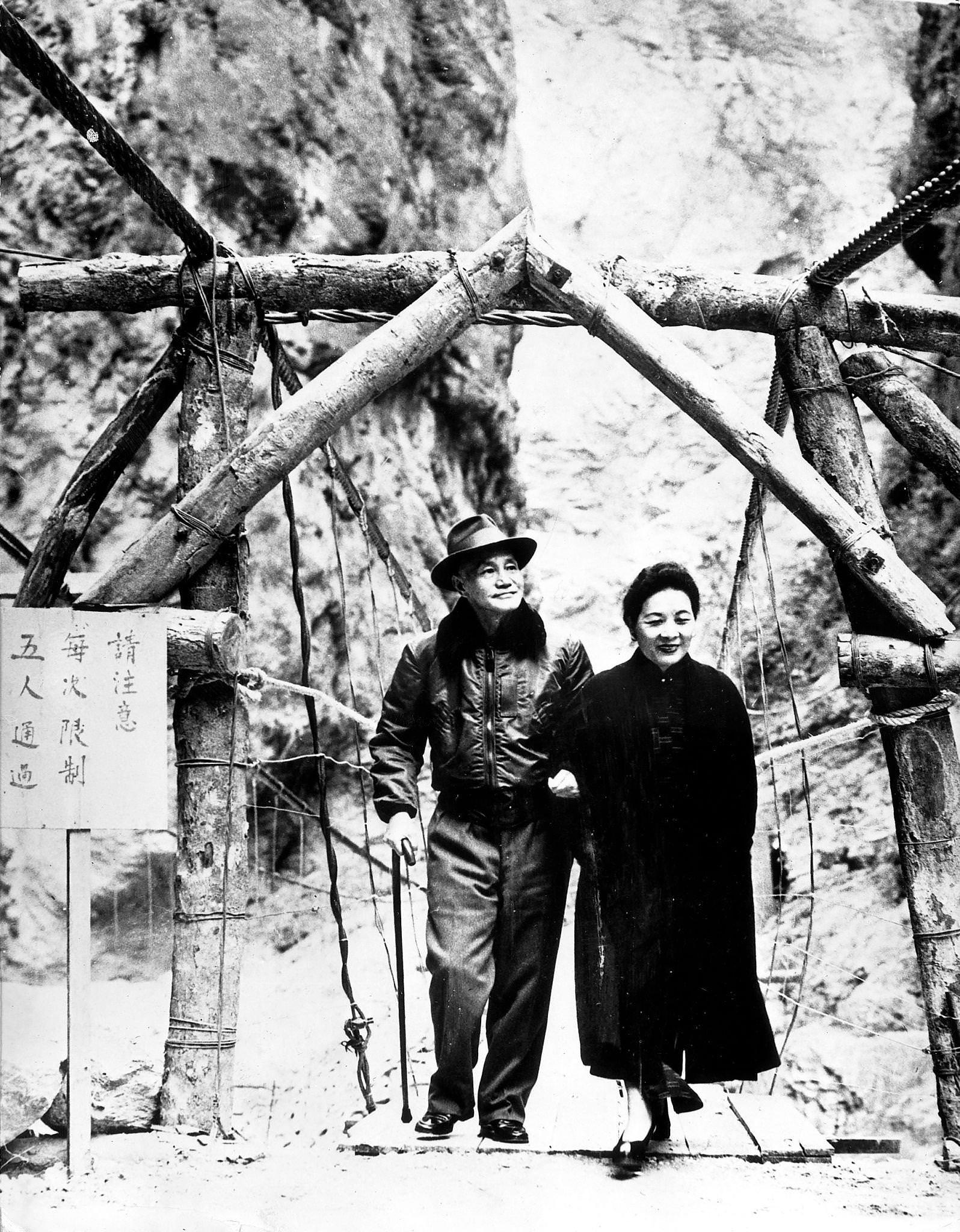
Chiang Kai-shek in Taiwan, 1950s

Chiang Kai-shek ruled Taiwan with an iron hand throughout the decade. His Nationalist soldiers were a constant presence on the island, stationed across cities and military bases. American support — through the U.S. Navy and Army MAAG troops — reinforced Taiwan’s defense posture, especially given the threat from Communist China just miles away across the strait.
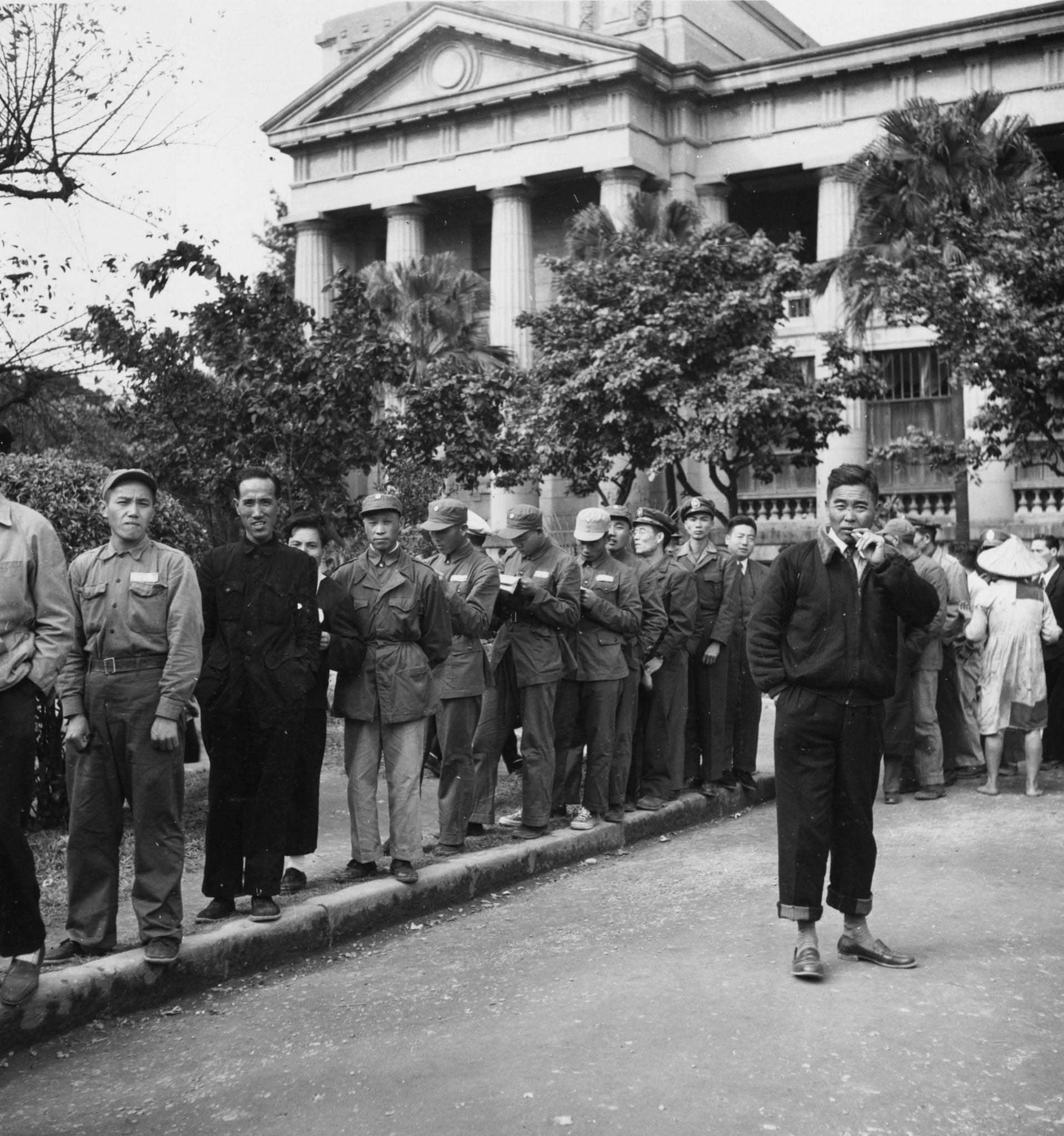
Chinese Nationalist soldiers in a queue for transport home after a visit to the Taipei Museum in Taiwan, 1955

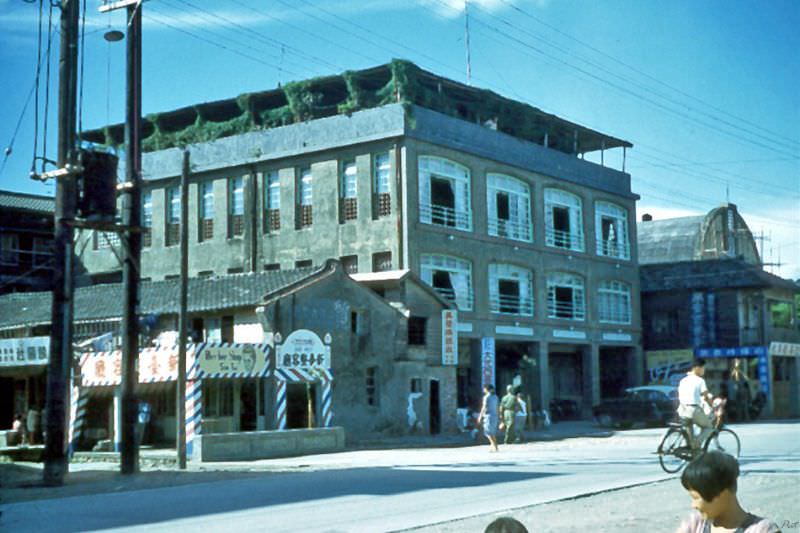
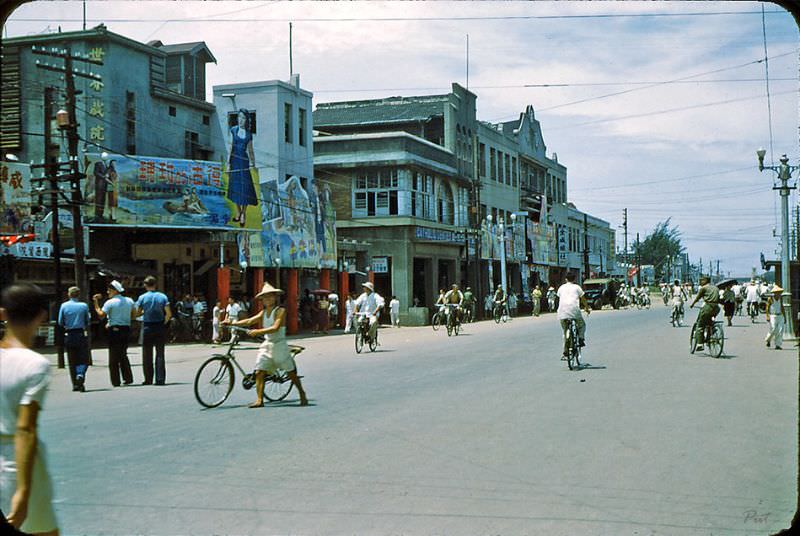
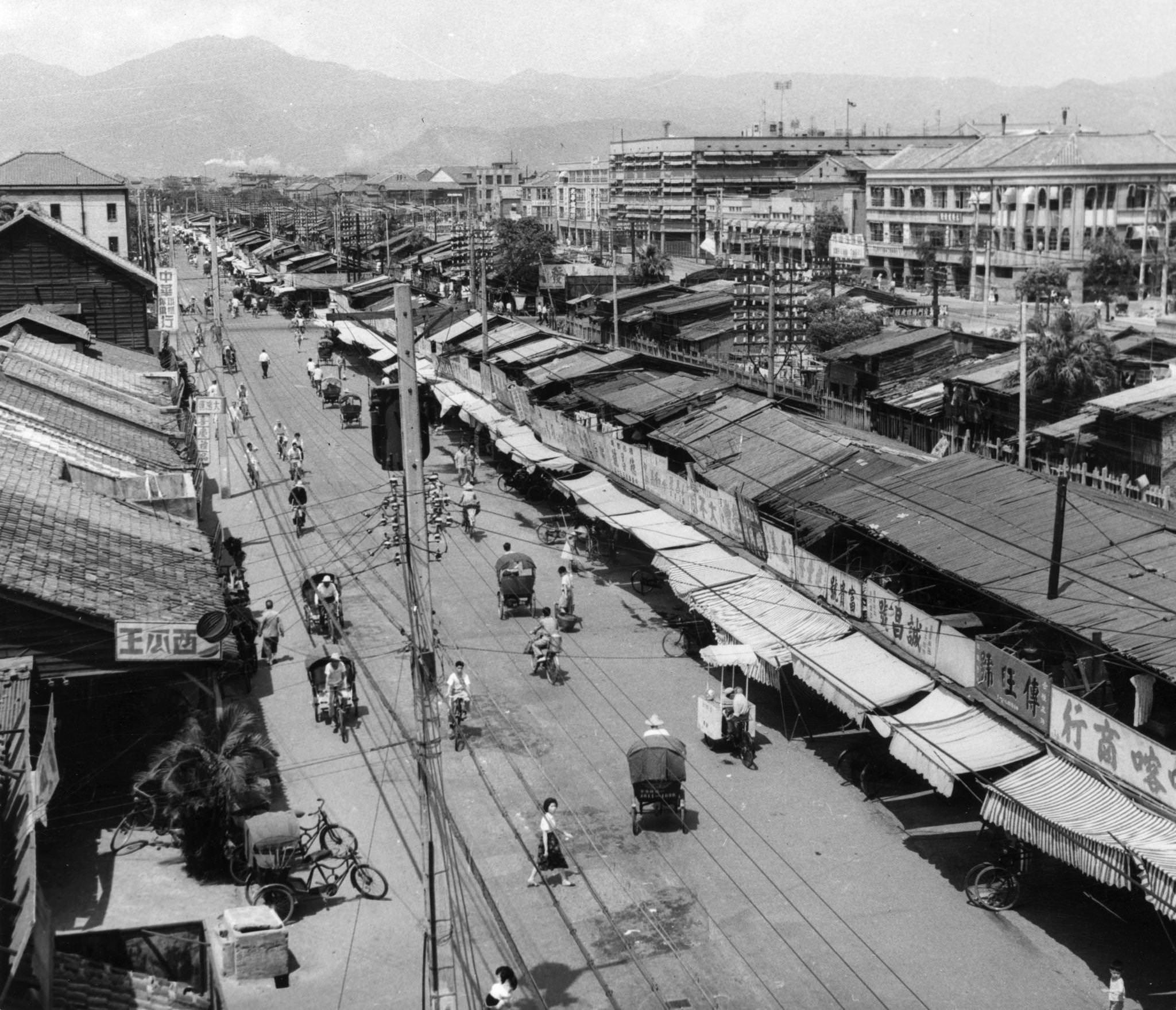
Taipei was the political and cultural heart of the island. Along Chung Hwa Road, buildings were draped in banners written in Chinese characters, and shops built largely by mainland refugees after 1949 lined the streets. These refugees brought with them the food, dialects, crafts, and customs of dozens of different Chinese provinces, adding new layers to an already complex local culture.
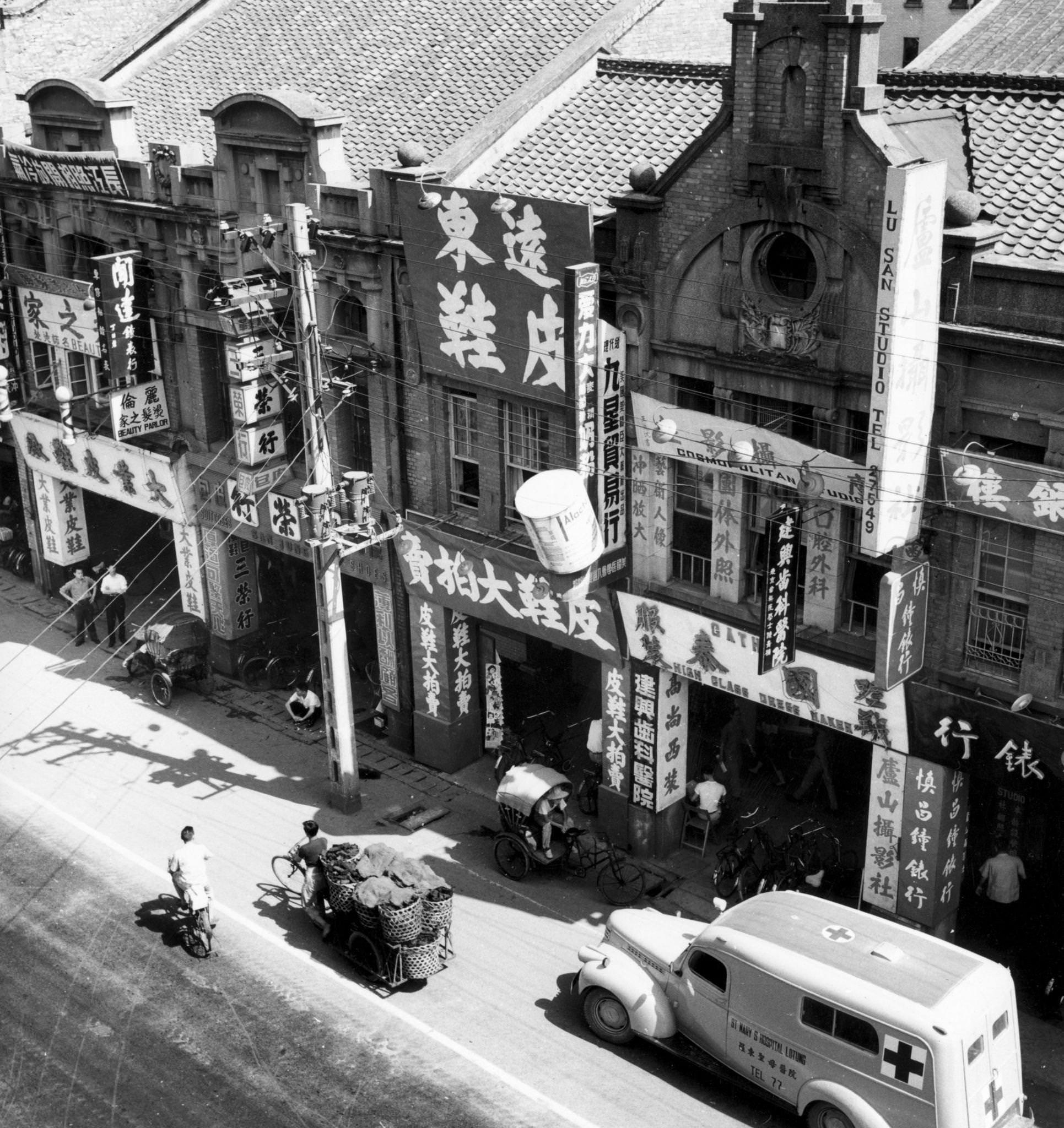
Buildings covered with banners written in Chinese characters at Chung Hwa Road, Taipei, Taiwan, 1955
Shops on Chung Hwa Road, Taipei, Taiwan (Formosa), built mostly after 1949 by Chinese refugees from the mainland, 1950s

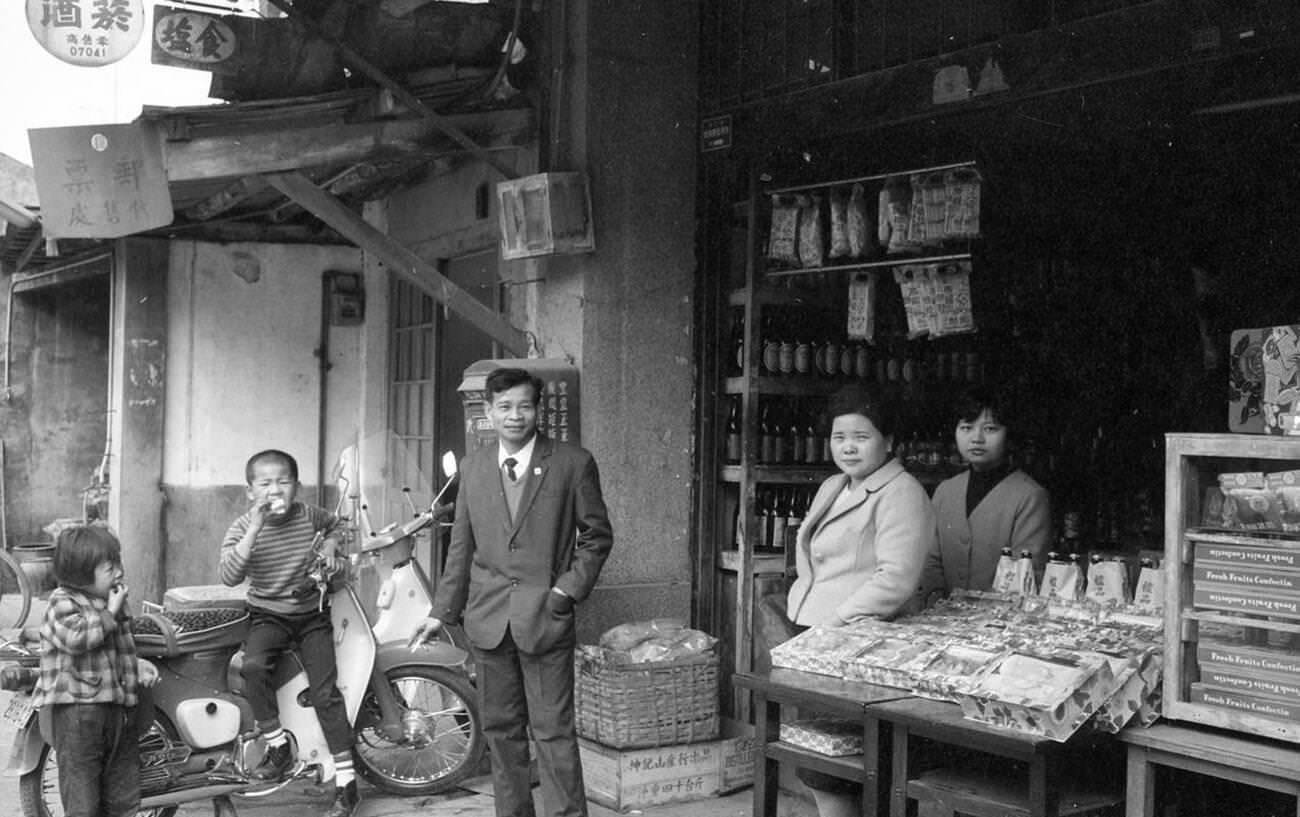
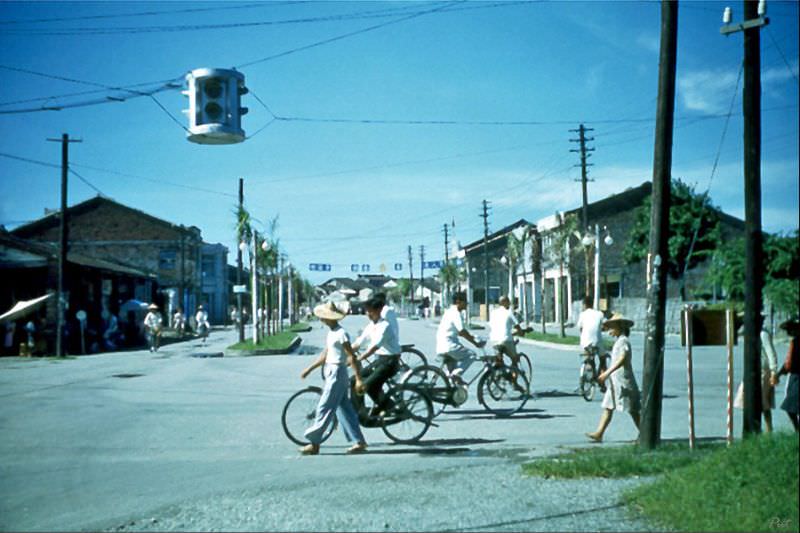
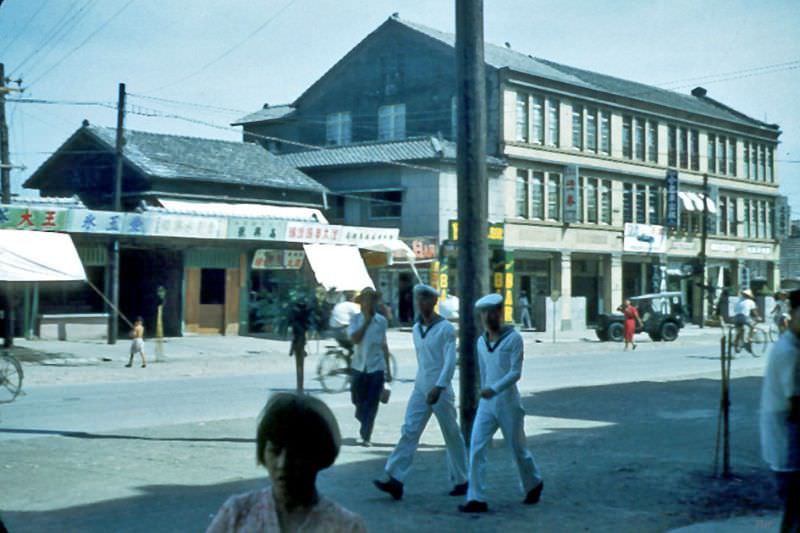
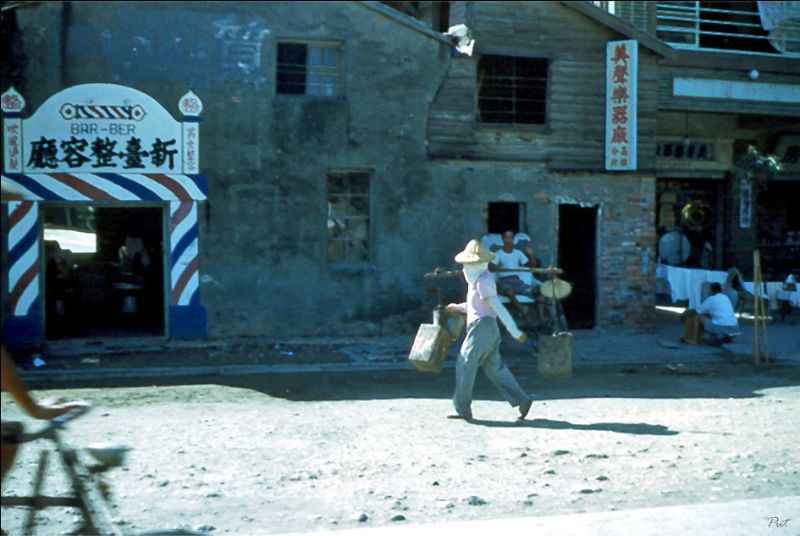
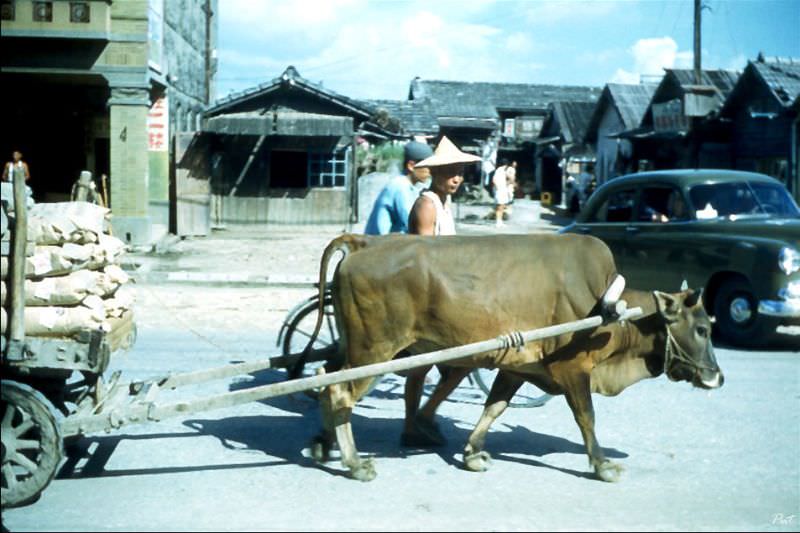
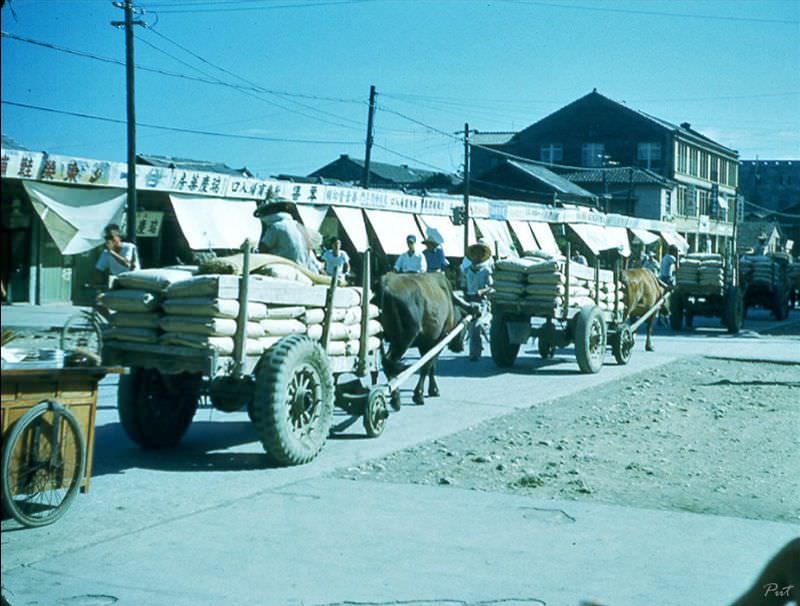
Street life was busy and layered. Ox carts shared roads with early motor vehicles. Shoppers crowded markets selling everyday goods. Small grocery stores served neighborhoods, while side streets offered a quieter pace. Taipei and the southern cities of Tainan and Kaohsiung each had their own distinct rhythm, but all shared the same energy of a society rebuilding itself.
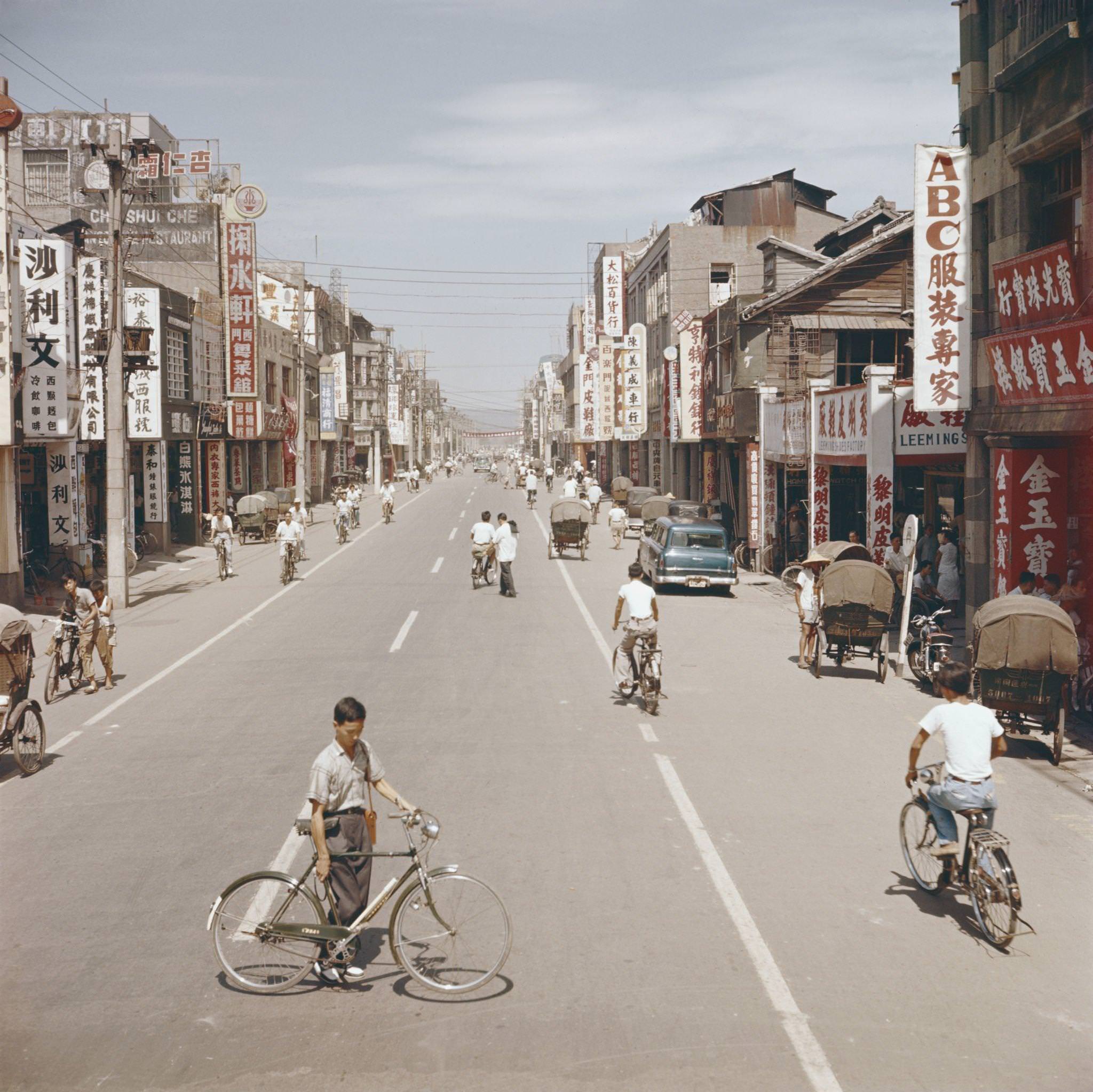
A street in Taiwan (Republic of China), 1957.
Common transport in Taiwan, 1954
107 Grocery store in Taiwan 1950s

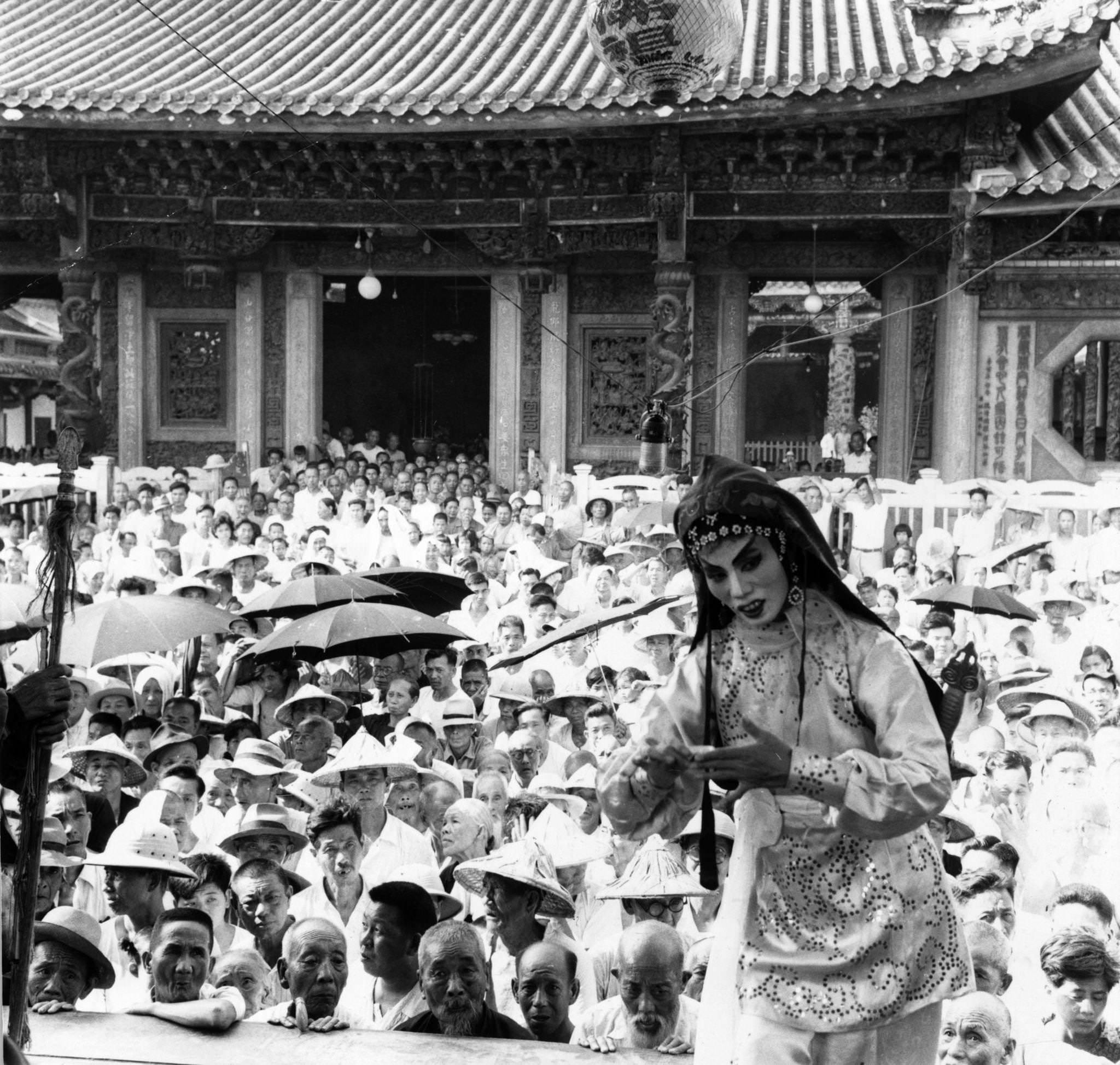
Chinese opera was one of the most popular forms of entertainment. Traveling theater companies drew large crowds in open-air settings, and classical performers trained rigorously from a young age. In Taipei, the Peking Opera school was producing the next generation of actors, teaching them the precise movements, costumes, and vocal techniques that had been refined over centuries.
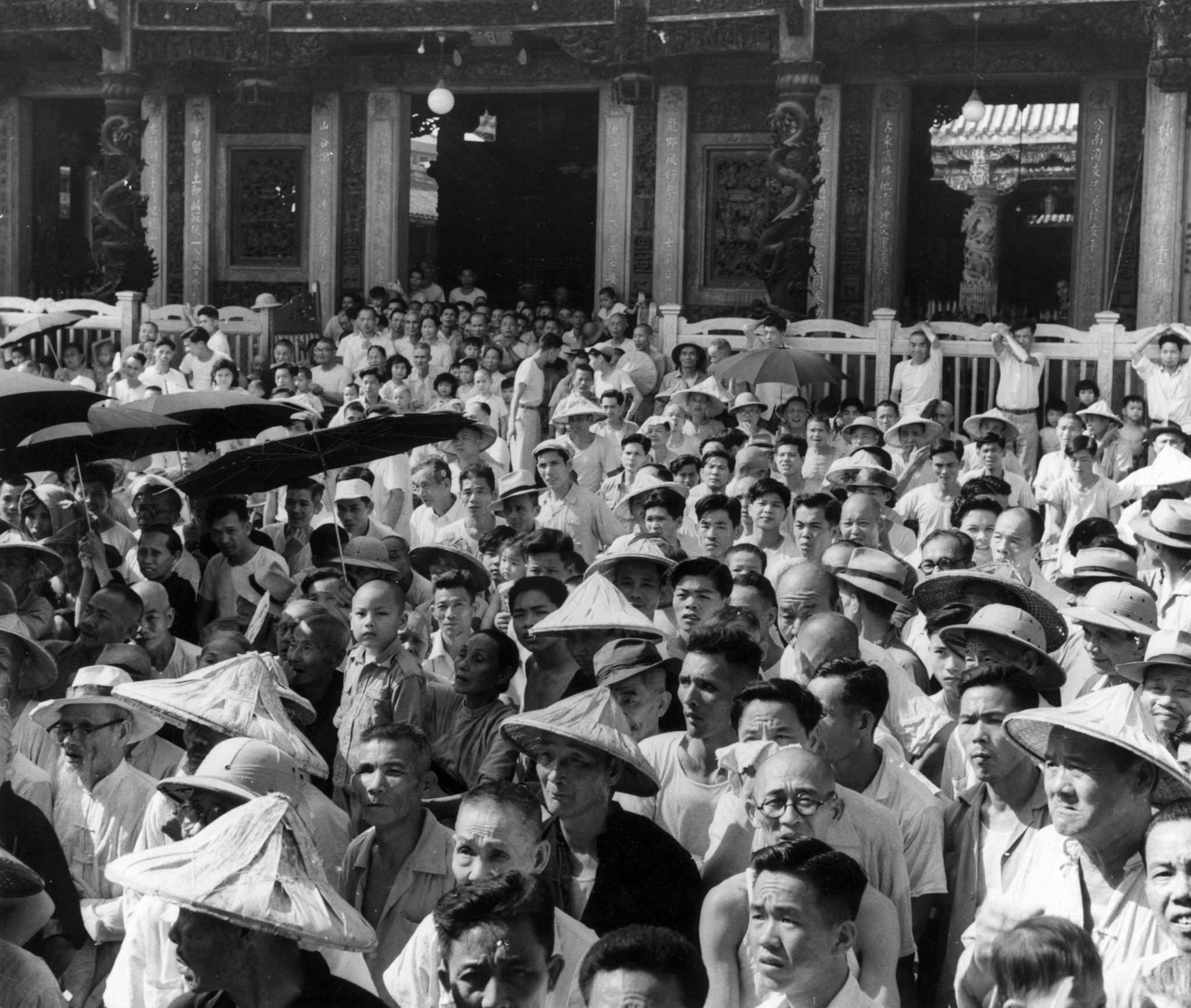
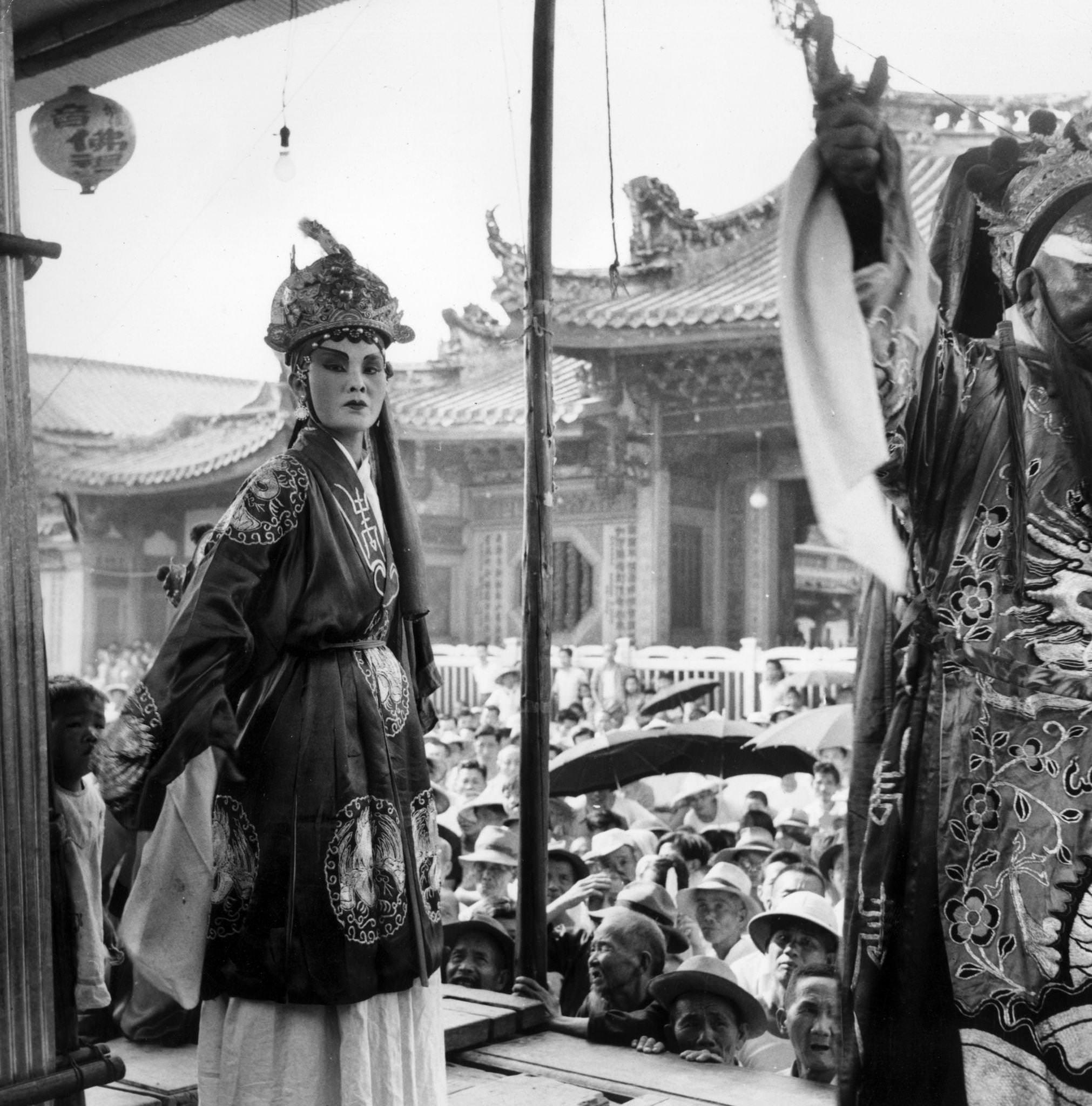
A crowd watching a performance of Chinese opera by a traveling theater company at Taipei, Taiwan, 1955
Chinese classical actors during a performance outdoors at Taipei, Taiwan, 1954
A Chinese classical actress during a performance outdoors at Taipei watched by a large audience, Taiwan, 1955
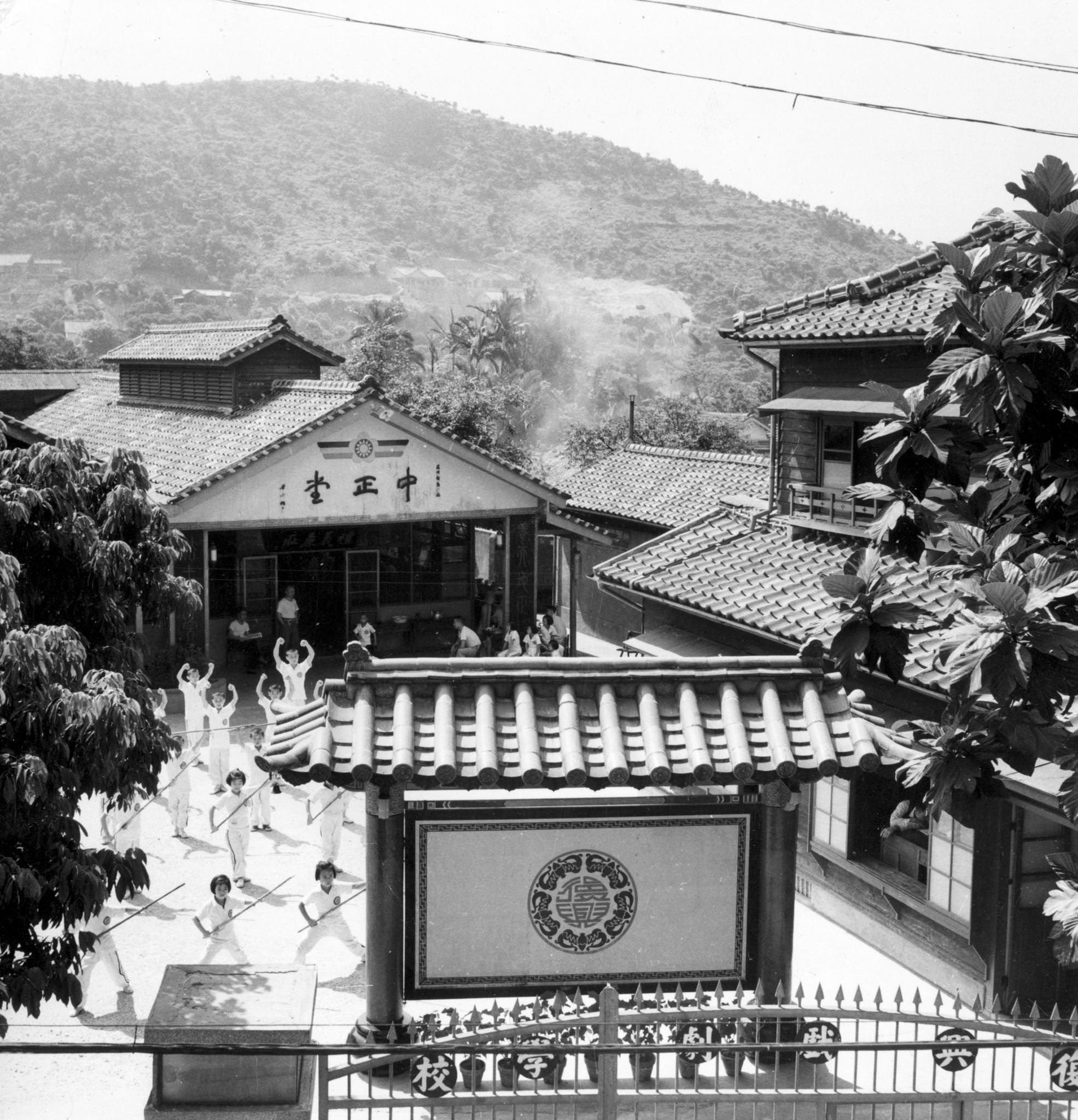
Pupils training to be actors in Chinese classical theater productions during a class at the Peking (Beijing) Opera's school at Taipei, 1955.
Pupils training to be actors in Chinese classical theater productions during a class at the Peking (Beijing) Opera’s school at Taipei, 1955.

Cinema was also growing fast. Movie theaters appeared in cities like Tainan, showing everything from historical dramas to romantic films. Taiwan’s film industry was still young, but it was producing work that reflected the tensions and hopes of the era. A visit to the cinema was both entertainment and a window into the values of the time.
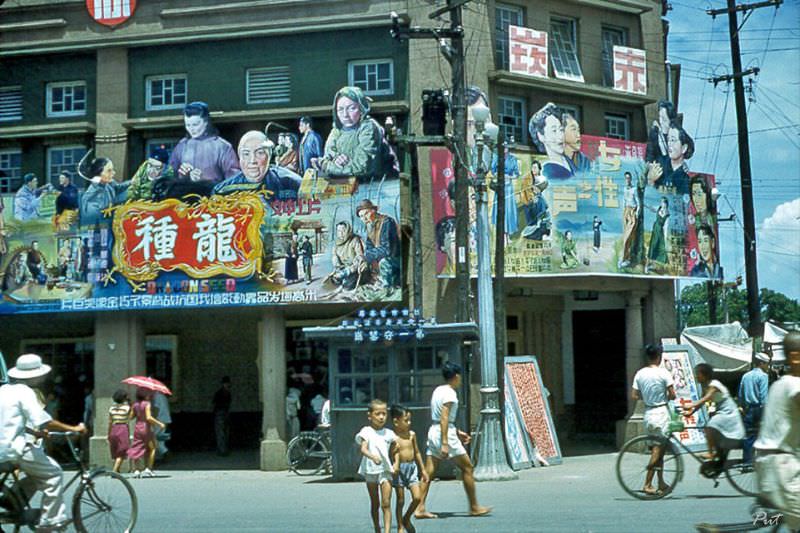
Tainan movie theater, Taiwan, 1954

Agriculture remained central to everyday life. Rice paddies stretched across the flatlands between Kaohsiung and Tainan, tended by farmers working long hours in the sun. The government’s land reform programs of the early 1950s had transferred farmland from large landowners to individual farmers, which boosted production and gave rural families more economic stability.
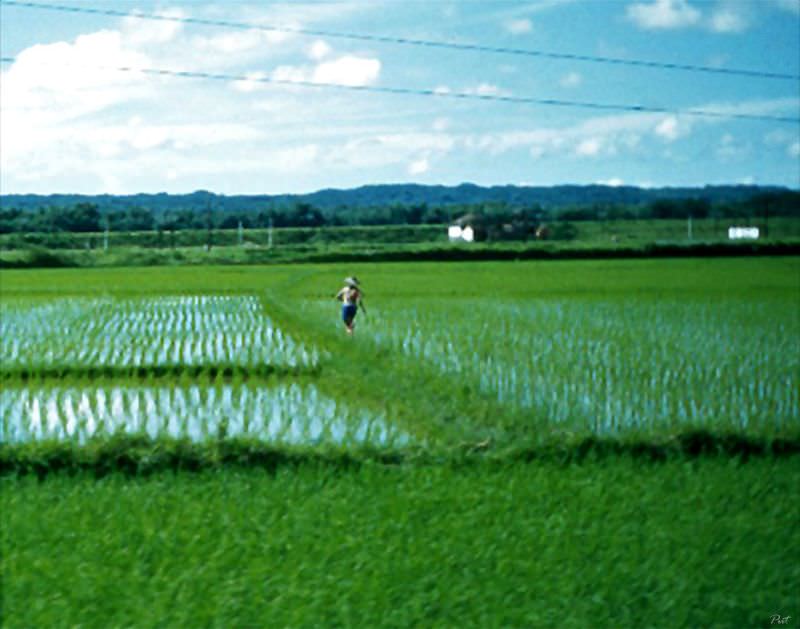
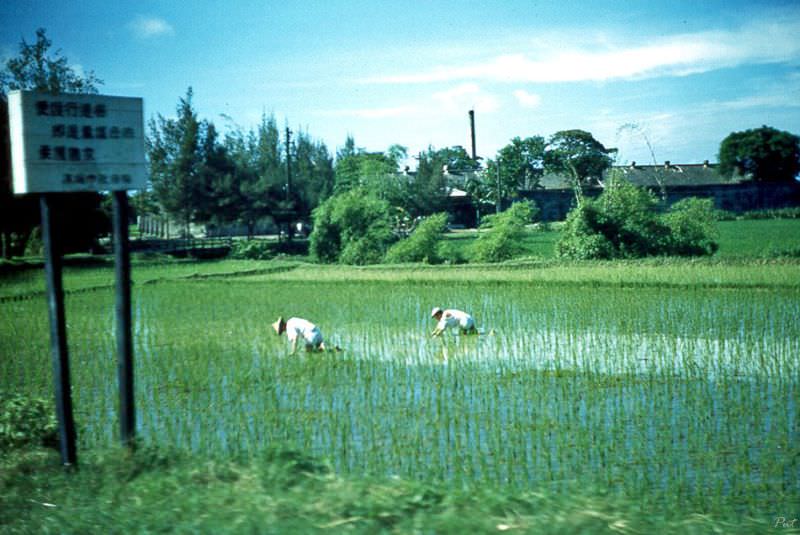
Rice farmer in Taiwan, 1954
Rice paddies on the way to Tainan from Kaohsiung, Taiwan, 1954

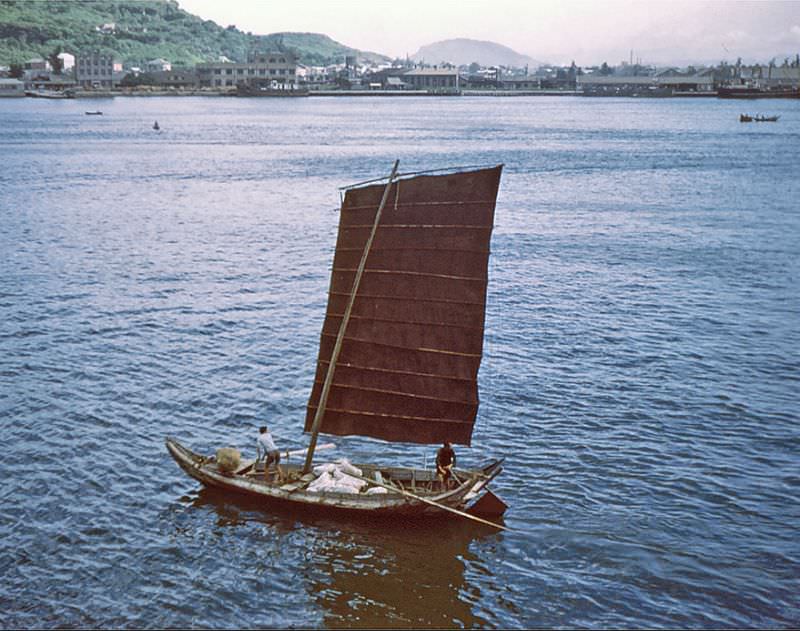
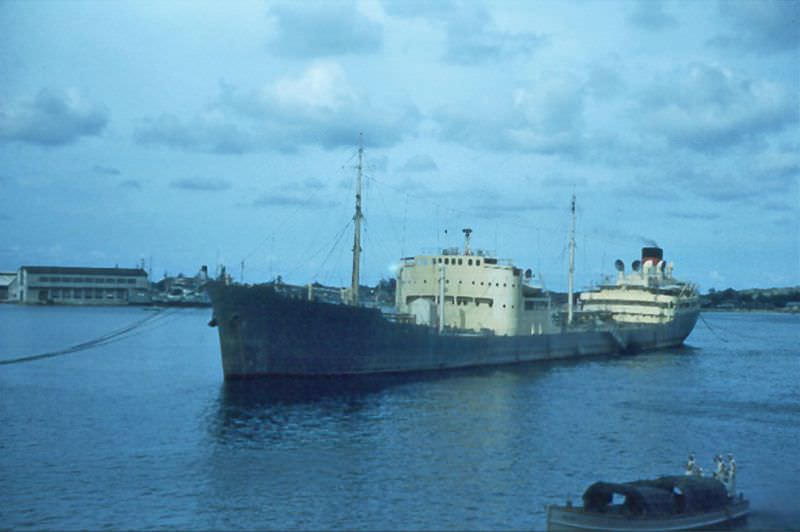
Kaohsiung, in the south, was Taiwan’s main port city. Its harbor was active with fishing boats, commercial tankers, and smaller bum boats ferrying goods across the water. The port was a key artery for trade, and the U.S. military presence there — including an Officers’ Club used by Navy and Army MAAG personnel — reflected just how important the city was to American strategic interests in the Pacific.
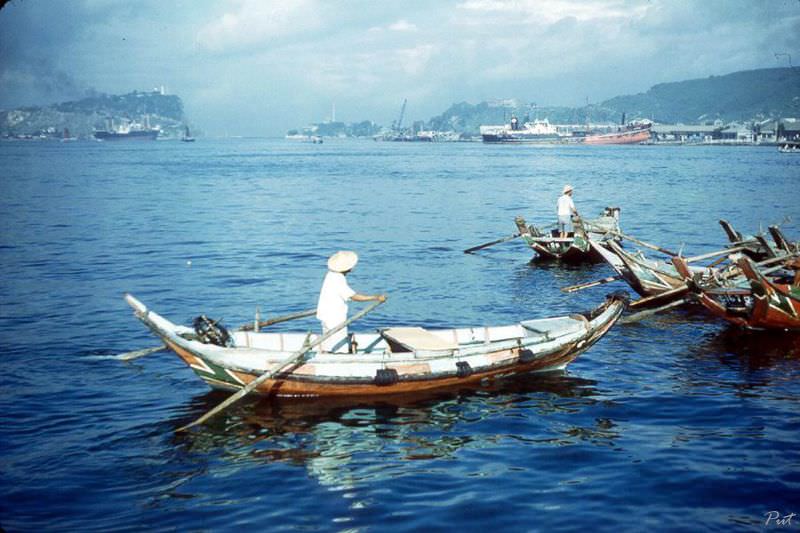
Bum boats, Taiwan, Kaohsiung, 1954
Commercial tanker was tied up in harbor, Kaohsiung, Taiwan, 1954
One of many fishing boats transiting the harbor, Kaohsiung, Taiwan, 1954
The roof top of this building hosted the Officers' Club, which was used by the US Navy and US Army MAAG troops stationed in the area, Kaohsiung, Taiwan, 1954
The roof top of this building hosted the Officers’ Club, which was used by the US Navy and US Army MAAG troops stationed in the area, Kaohsiung, Taiwan, 1954

The rooftops of Kaohsiung told their own story — densely packed houses clustered together, a sign of the rapid population growth driven by the influx of mainland refugees. Country estates sat at the edges of the city, contrasting with the tighter urban blocks closer to the harbor.
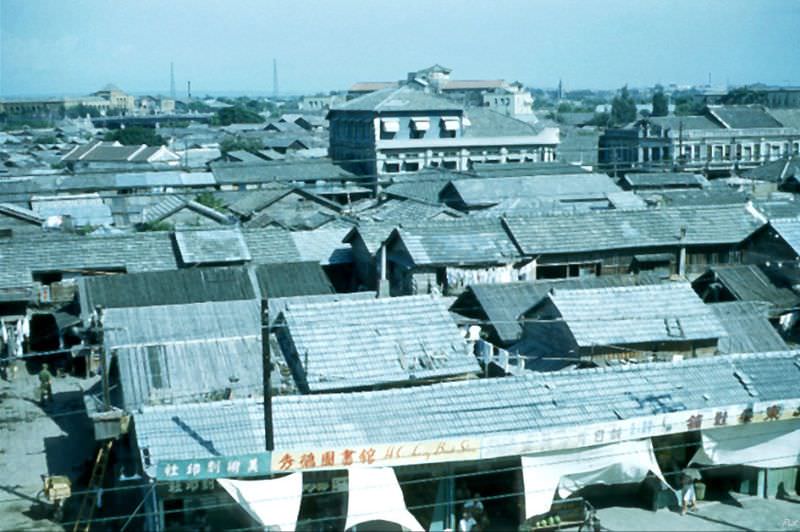
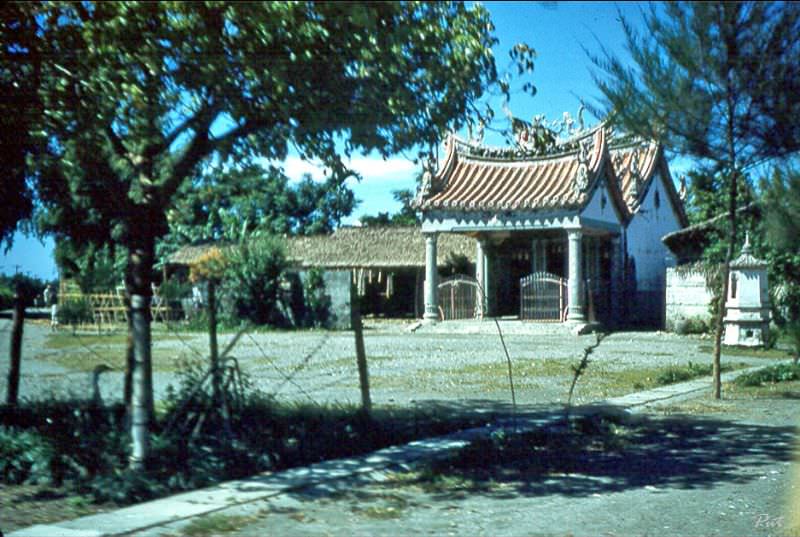
Kaohsiung rooftops, Taiwan, 1954
Country estate, Kaohsiung, Taiwan, 1954
Kaohsiung street scenes, Taiwan, 1954

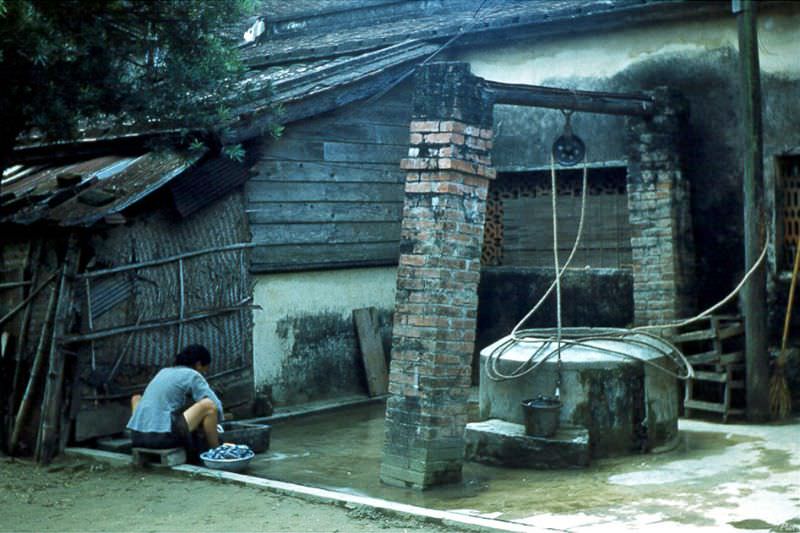
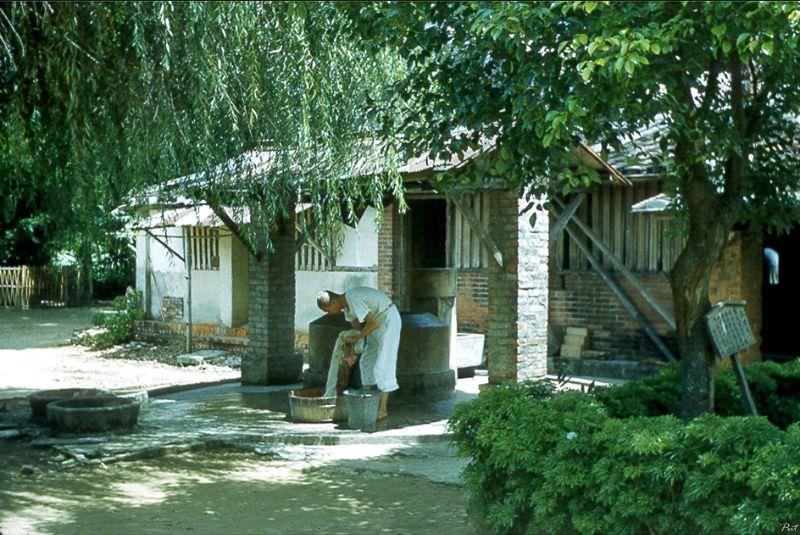
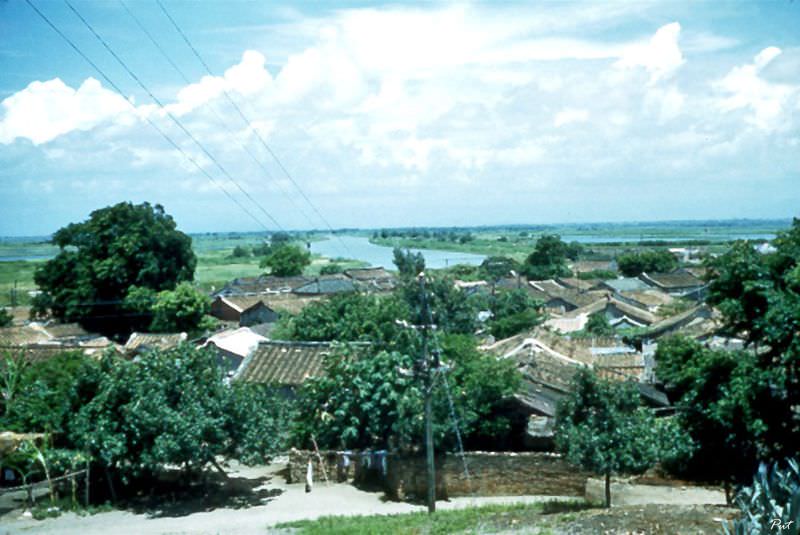
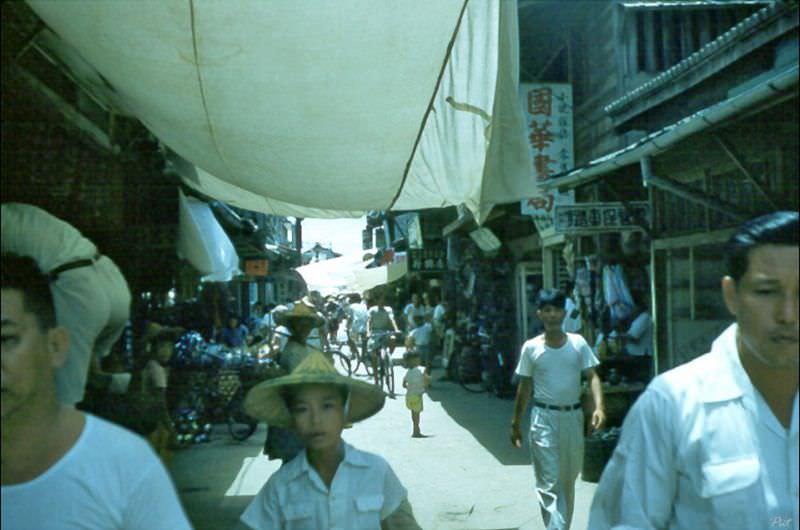
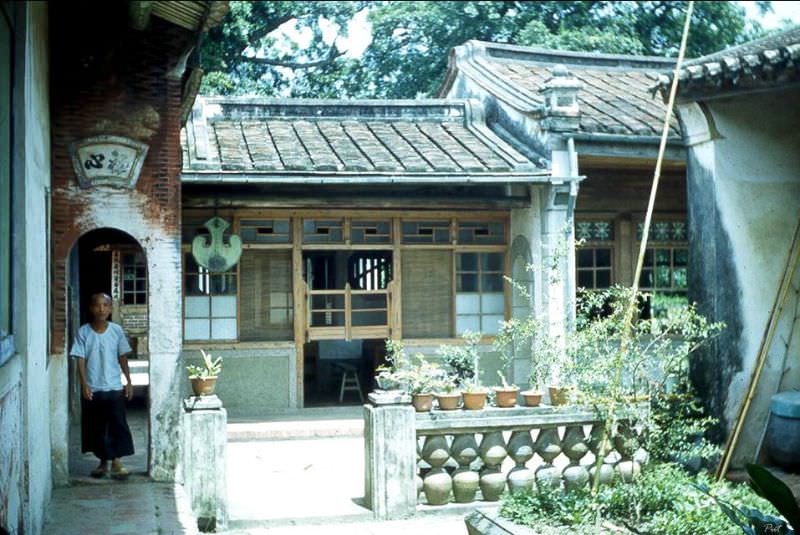
Tainan, Taiwan’s oldest city, retained much of its historical character. Its main street was lined with shops and foot traffic. Monastery courtyards offered quiet spaces where monks carried on daily routines — including washing laundry beside stone wells. From the heights of the monastery, visitors could look out over the rooftops of clustered houses stretching toward the bay.
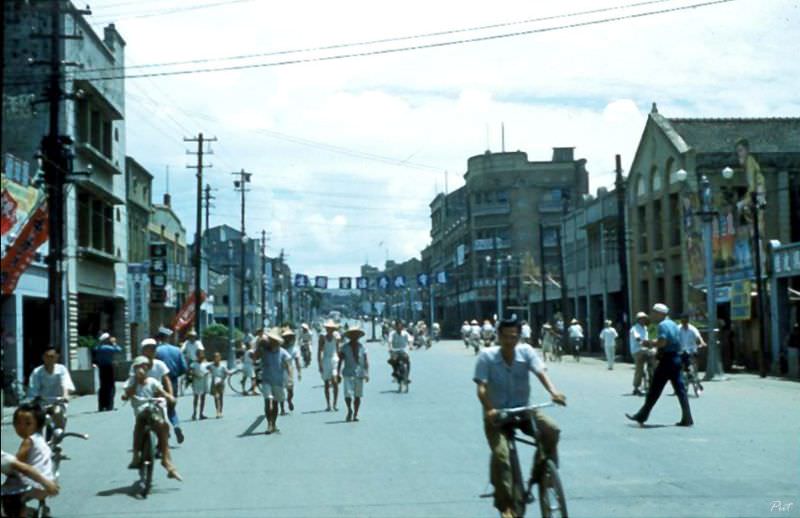
Tainan main street, Taiwan, 1954
Tainan monastery courtyard, Taiwan, 1954
A monk doing laundry beside a well inside the monastery, Tainan, Taiwan, 1954
A view from a monastery showing the rooftops of the clustered houses below and the bay beyond, Taiwan, Tainan, 1954

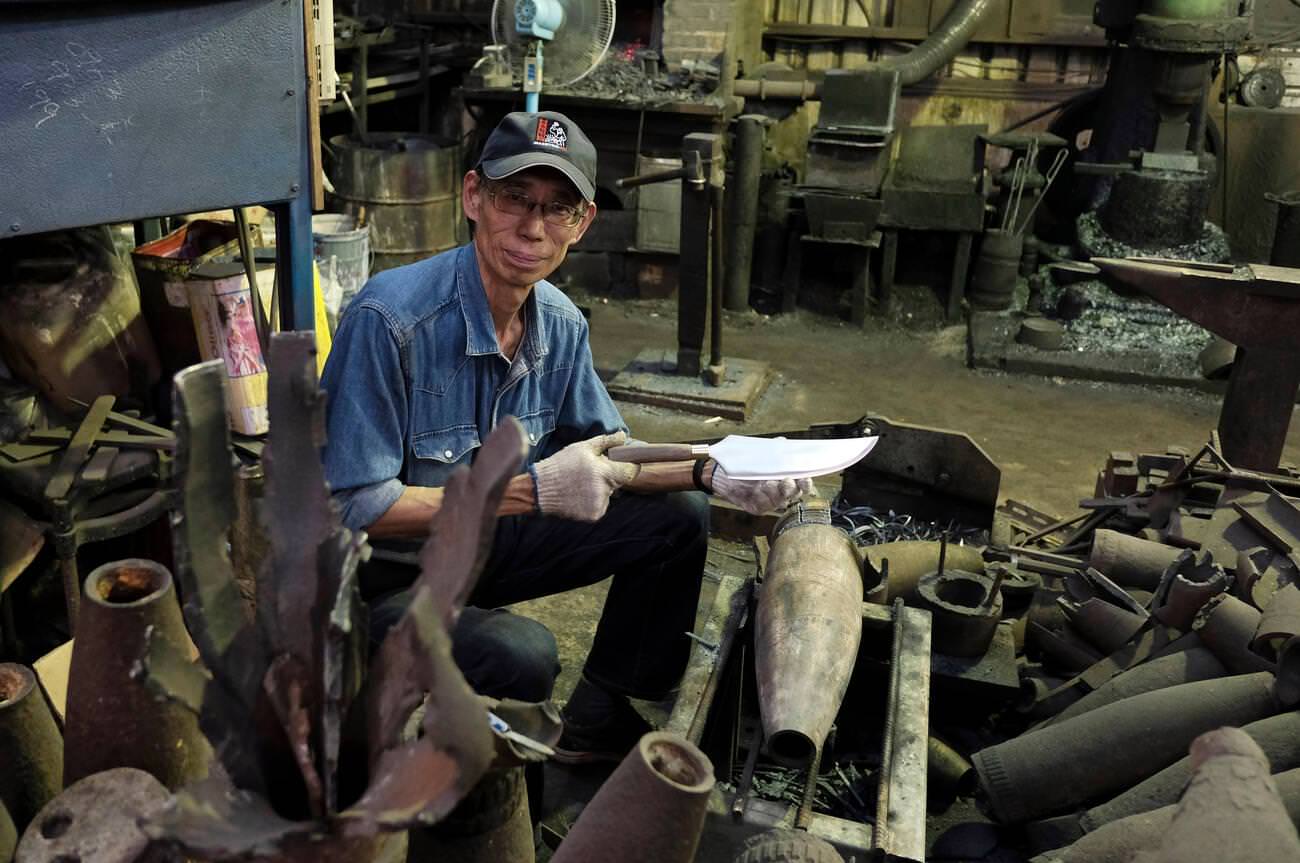
The military threat from mainland China was never far from daily life. Pill boxes sat in monastery yards. Tank barrier walls lined certain roads. On Kinmen, a small island just miles from mainland China, blacksmith Wu Tseng-tong — known as Maestro Wu — turned recovered artillery shells into knives, a practice that continues to this day and became a symbol of the island’s resilience under constant military pressure.
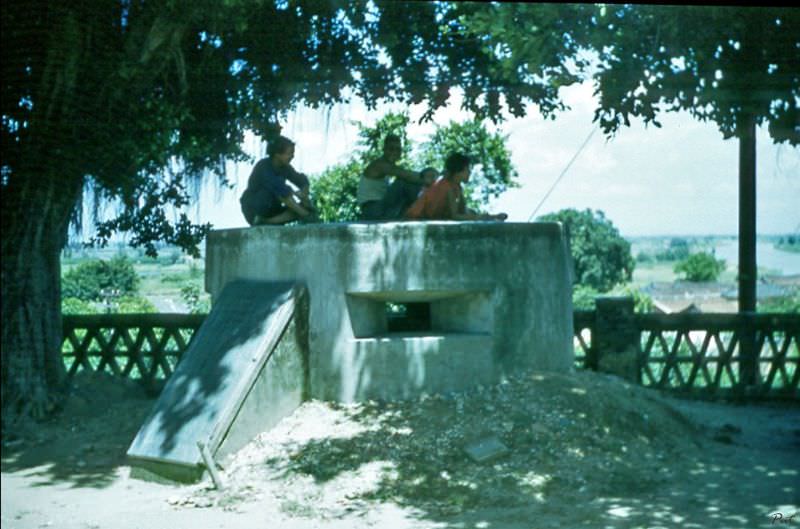
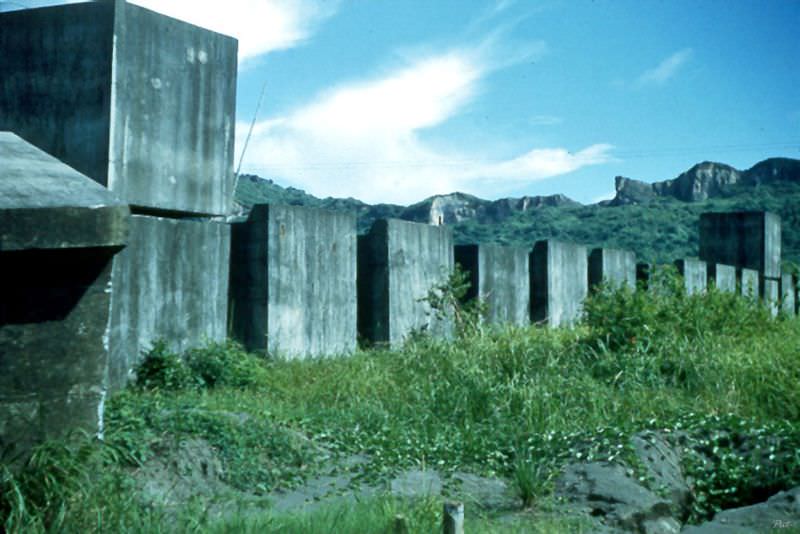
Pill box in the yard of a monastery, Tainan, Taiwan, 1954
Tank barrier wall, Taiwan, 1954
Taiwanese blacksmith Wu Tseng-tong known as Maestro Wu crafts a knife from recovered artillery shells in Kinmen County or island few miles from mainland China, Taiwan, 1950s

Indigenous communities — referred to in the period records as aborigine villages — maintained their own ways of life in more remote areas. Swing bridges built from local materials connected isolated settlements. These communities existed largely apart from the political struggles unfolding in the cities, though they were still subject to the policies of the Kuomintang government.
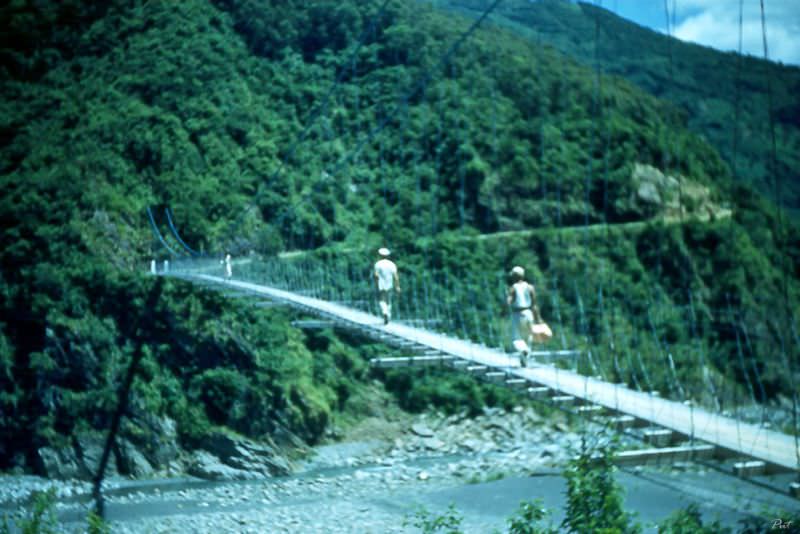
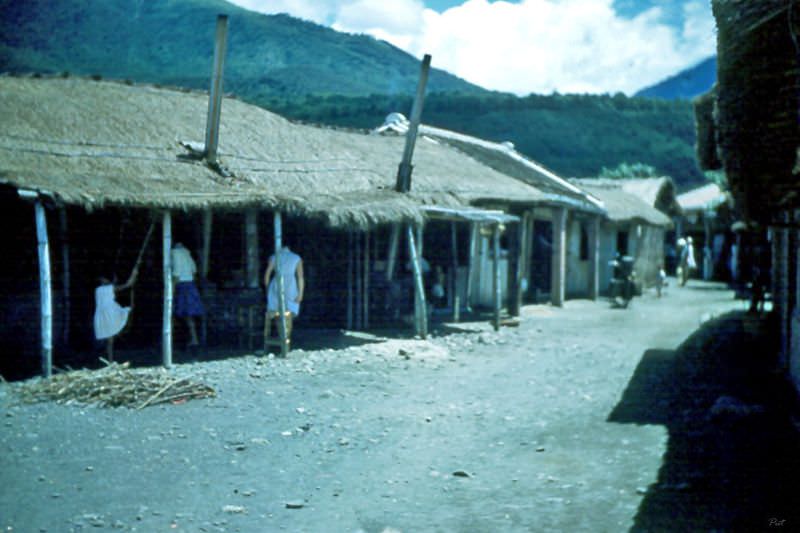
Aborigine swing bridge, Taiwan, 1954
Aborigine village, Kaohsiung, Taiwan, 1954

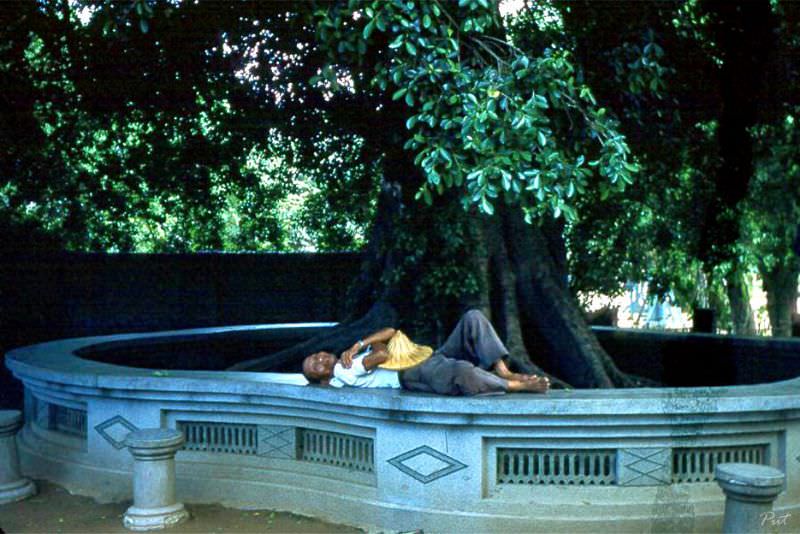
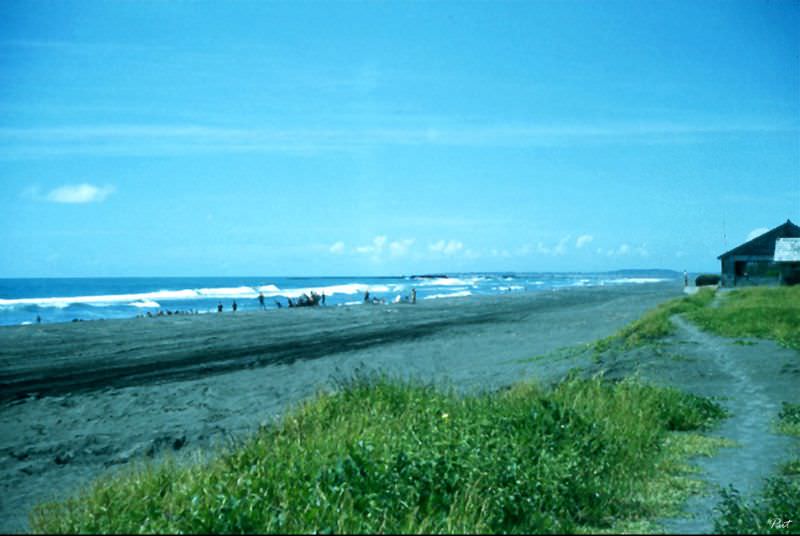
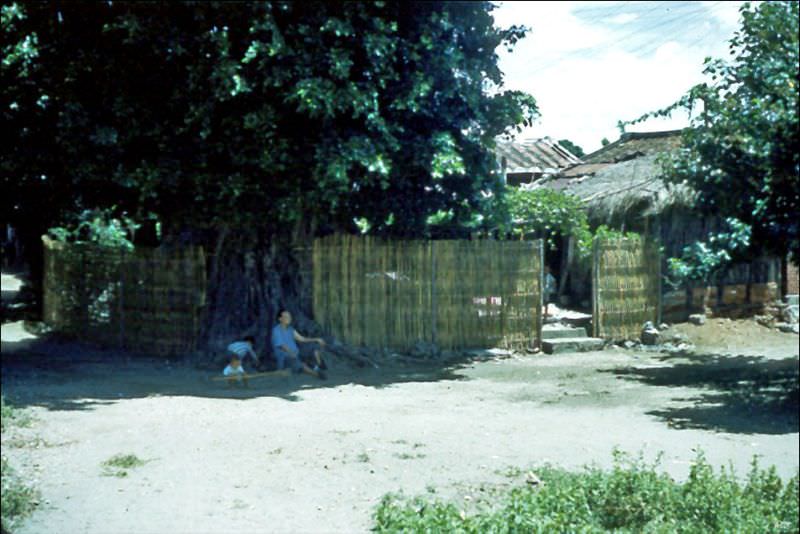
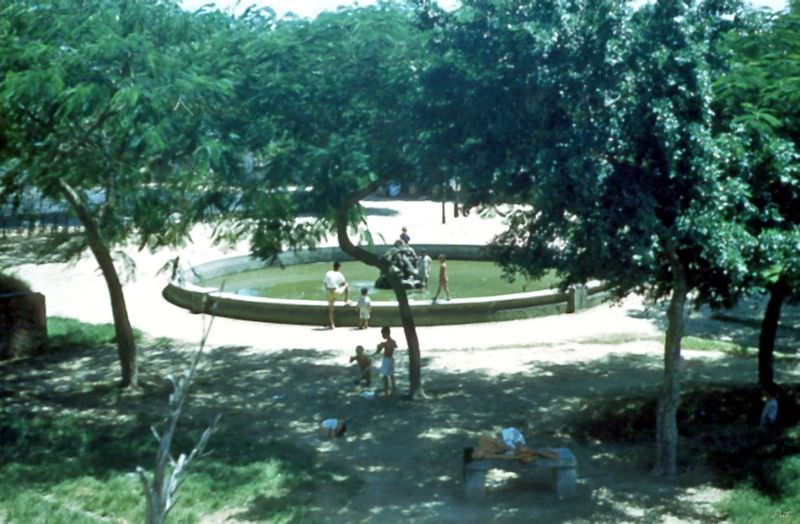
Everyday life had its own quieter rhythms. People rested in the shade during the heat of the day, gathered in parks, and cooled off at swim beaches. Ox carts moved goods through narrow streets. A side street in Tainan could be nearly still at midday, with only the sound of cicadas and distant traffic breaking the silence.
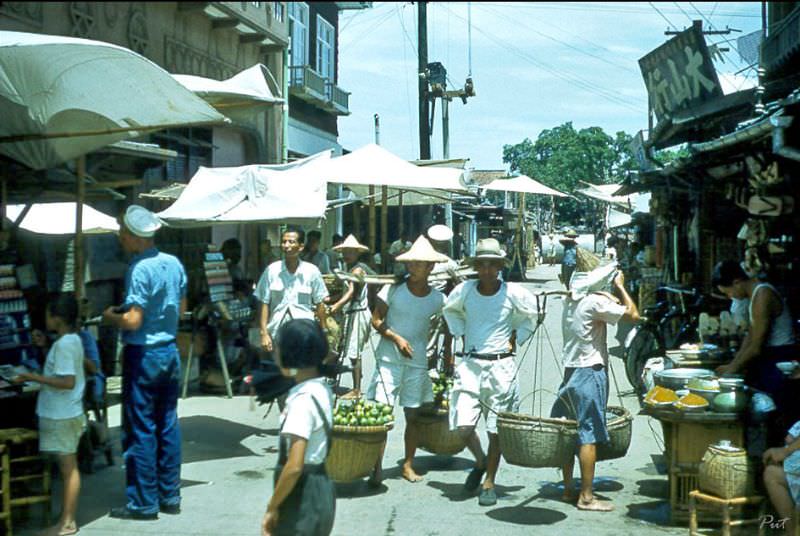
A street lined with shops and full of shoppers, Taiwan, 1954
Tainan park, Taiwan, 1954
Tainan side street, Taiwan, 1954
Tainan siesta, Taiwan, 1954
Tainan street scenes, Taiwan, 1954
Tainan swim beach, Taiwan, 1954
Catching shade, Taiwan, Tainan, 1954
Ox cart, Tainan, 1954
Enjoyed this post? Get new ones in your inbox.
Avatar of Kevin Clark

Written by Kevin Clark

Kevin Clark is a historian and writer who is passionate about sharing the stories and significance behind historical photos. He loves to explore hidden histories and cultural contexts behind the images, providing a unique insight into the past.

Leave a Reply

Your email address will not be published. Required fields are marked *

One Comment