Hey There! Before You Go. 😧
Get the best vintage content straight into your inbox!

Don't worry, we don't spam

St. Louis in the 1980s: A Photographic Exploration of a City in Transition

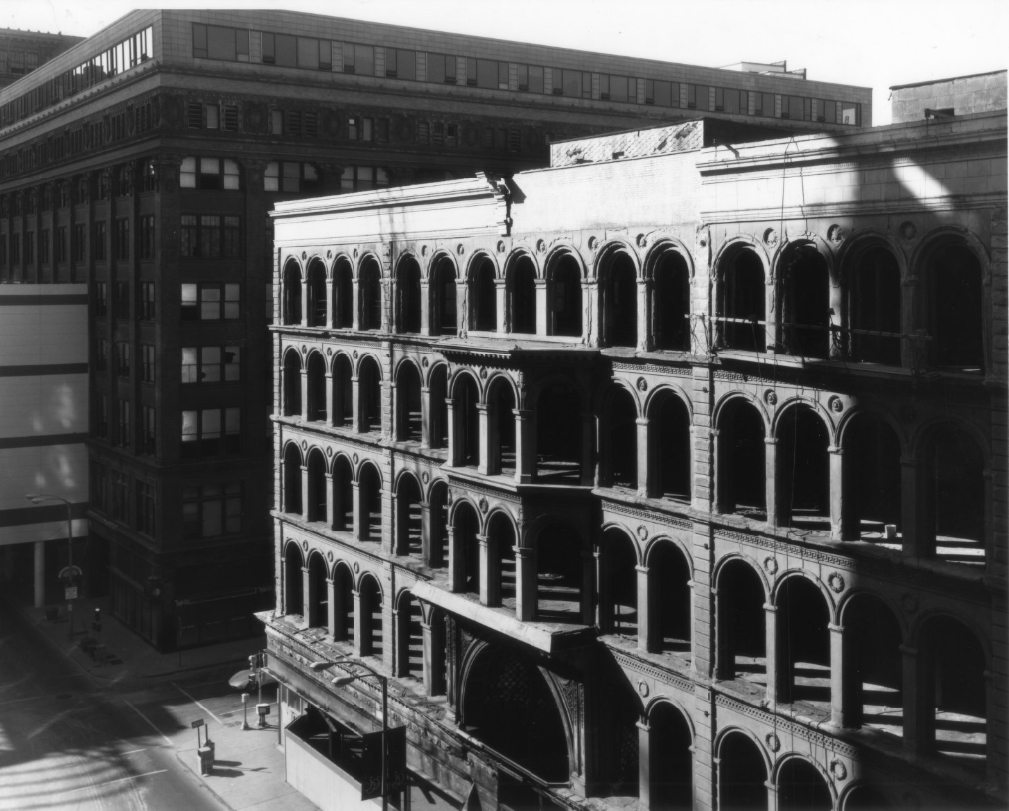
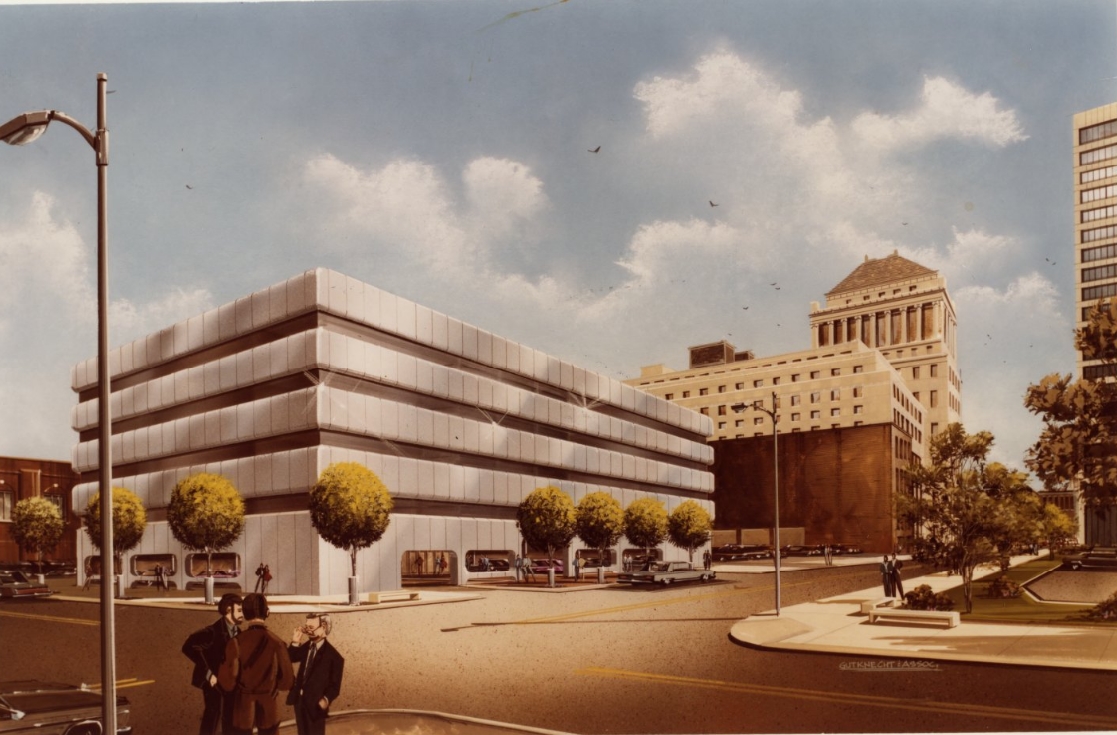
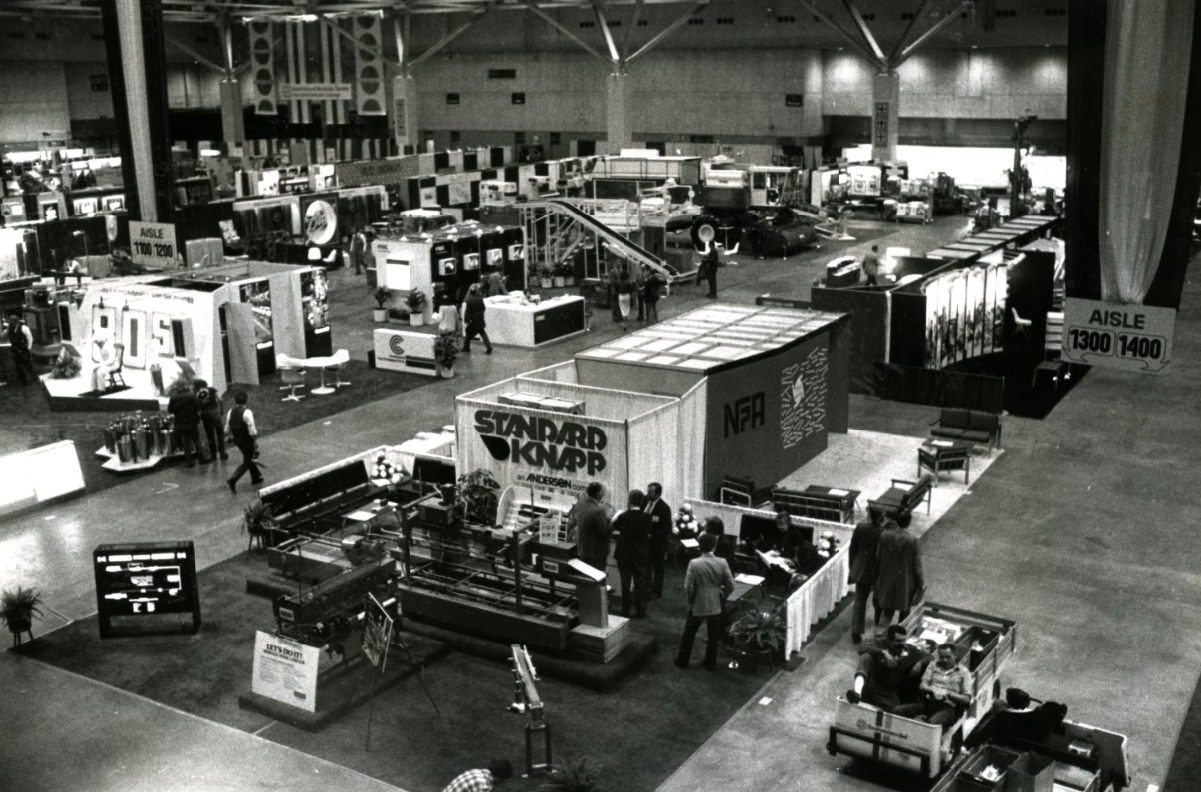
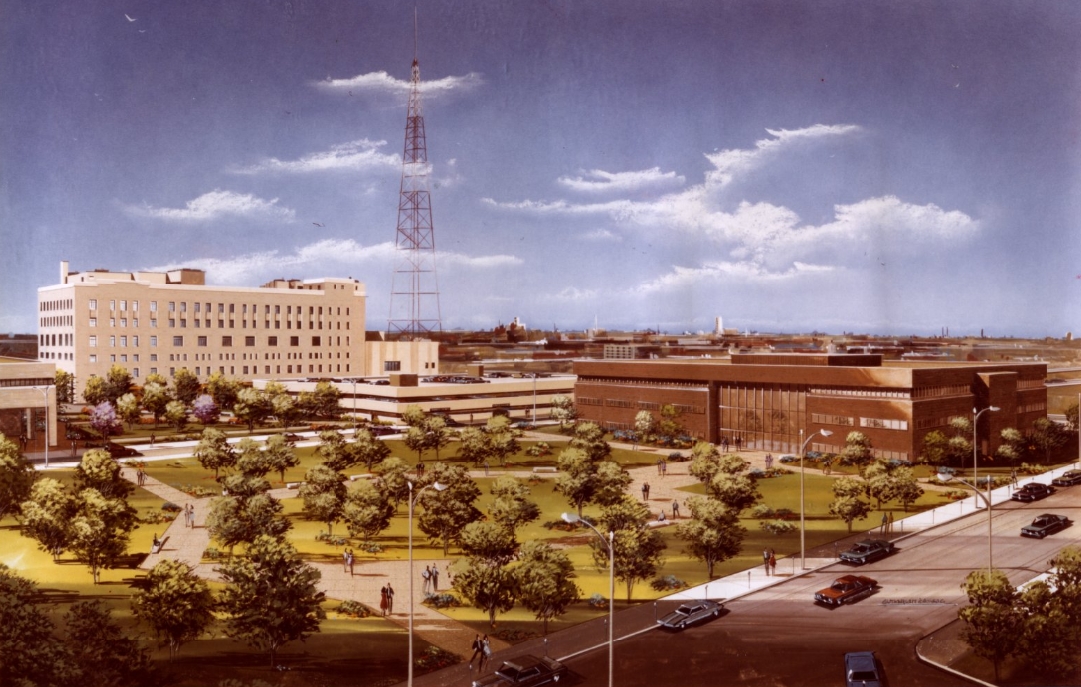
In the 1980s, St. Louis ranked as the 23rd largest city in the United States, with a population hovering around 700,000. It was a city that still carried the weight of its industrial past while reaching toward something new. Manufacturing, healthcare, education, and finance all formed the backbone of its economy. Fortune 500 companies like Monsanto, Anheuser-Busch, and Emerson Electric called it home, anchoring the city’s commercial identity even as the ground beneath it shifted. The decade was defined by contradiction. Cranes rose over construction sites in some neighborhoods while vacant buildings crumbled in others. Highways were widened, bridges were repaired, and whole city blocks were cleared for new development. These photographs, taken across the full span of the decade, capture that friction — the daily life of a city working hard to hold itself together and push itself forward.
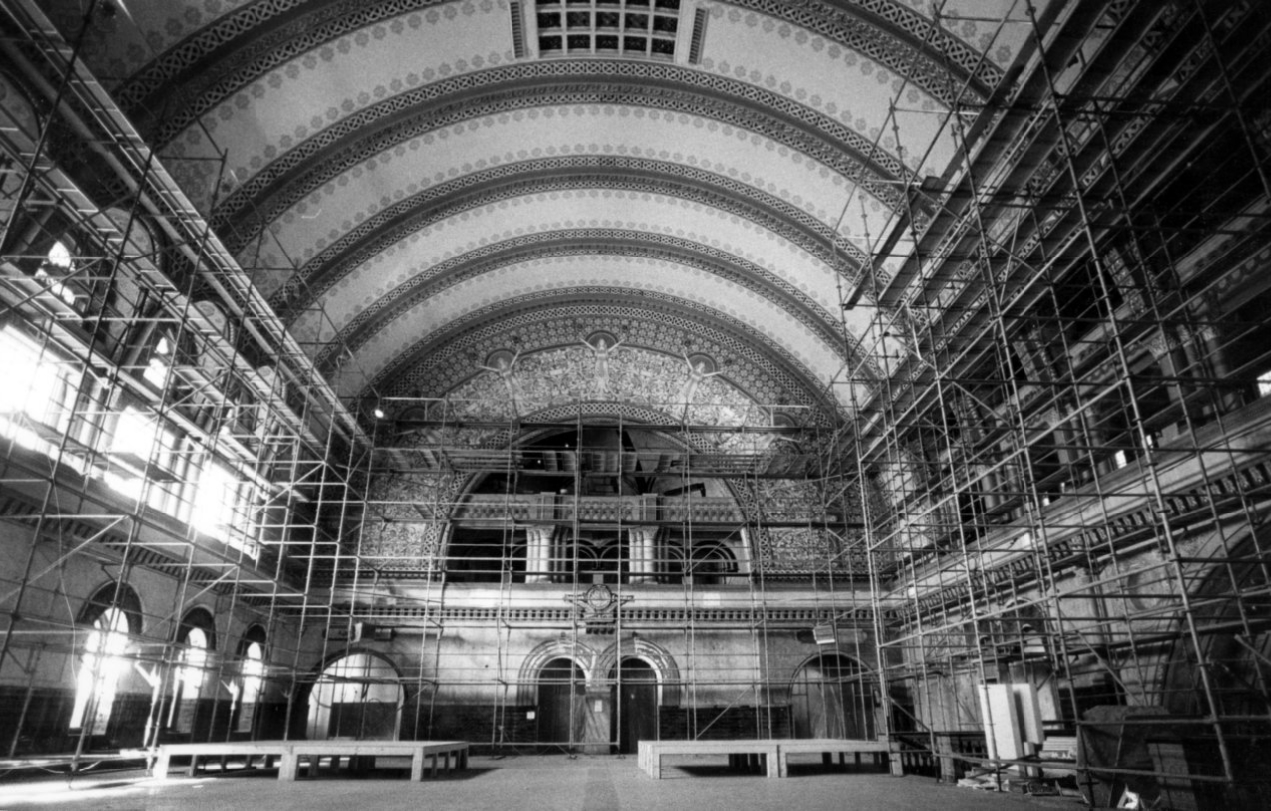
Workers remodel the lobby inside the terminal at Union Station, 1925

No single story better captures St. Louis in transition than the rebirth of Union Station. Once the world’s largest and busiest railroad terminal when it opened in 1894, the station had fallen into serious decline by the late 1970s. By 1983, developers launched an ambitious redevelopment effort to transform it into a festival marketplace — a hotel, shopping, and entertainment complex — at a cost exceeding $100 million.
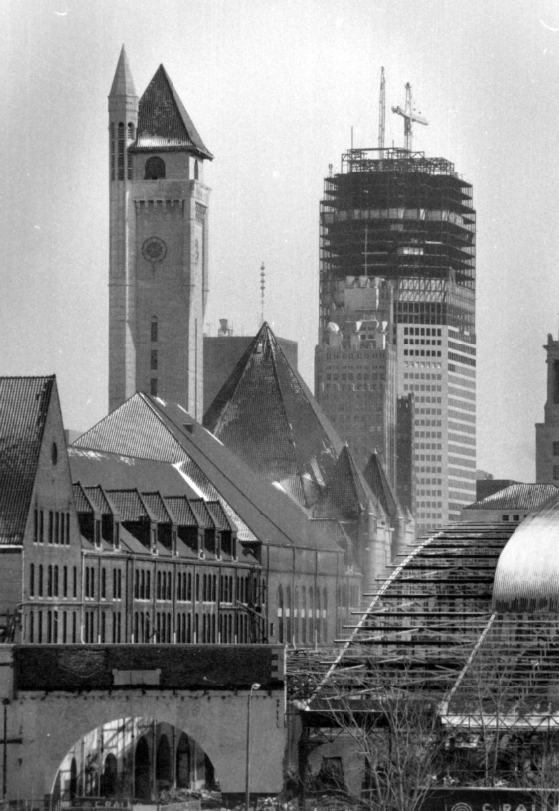
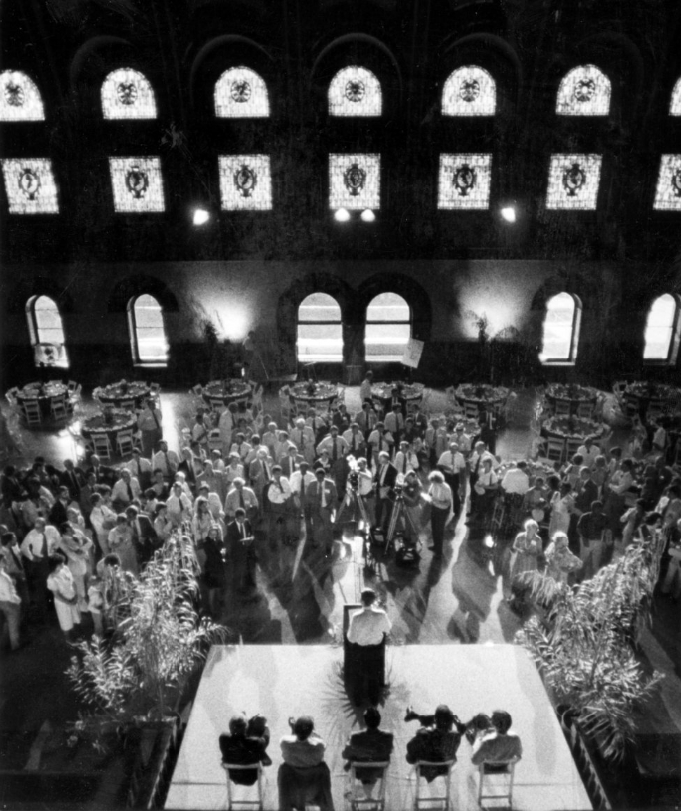
Union Station, 1984
Union Station, 1984
Media and friends gather at the ground breaking and kickoff of the $100 million plus Union Station Redecelopment (sic) project, 1983

The groundbreaking drew media attention and public excitement. By 1985, the building hosted what was billed as the world’s largest marching band — some 5,000 musicians — marching through its grand hall. The station’s transformation stood as one of the decade’s most visible symbols of urban renewal in the American Midwest.
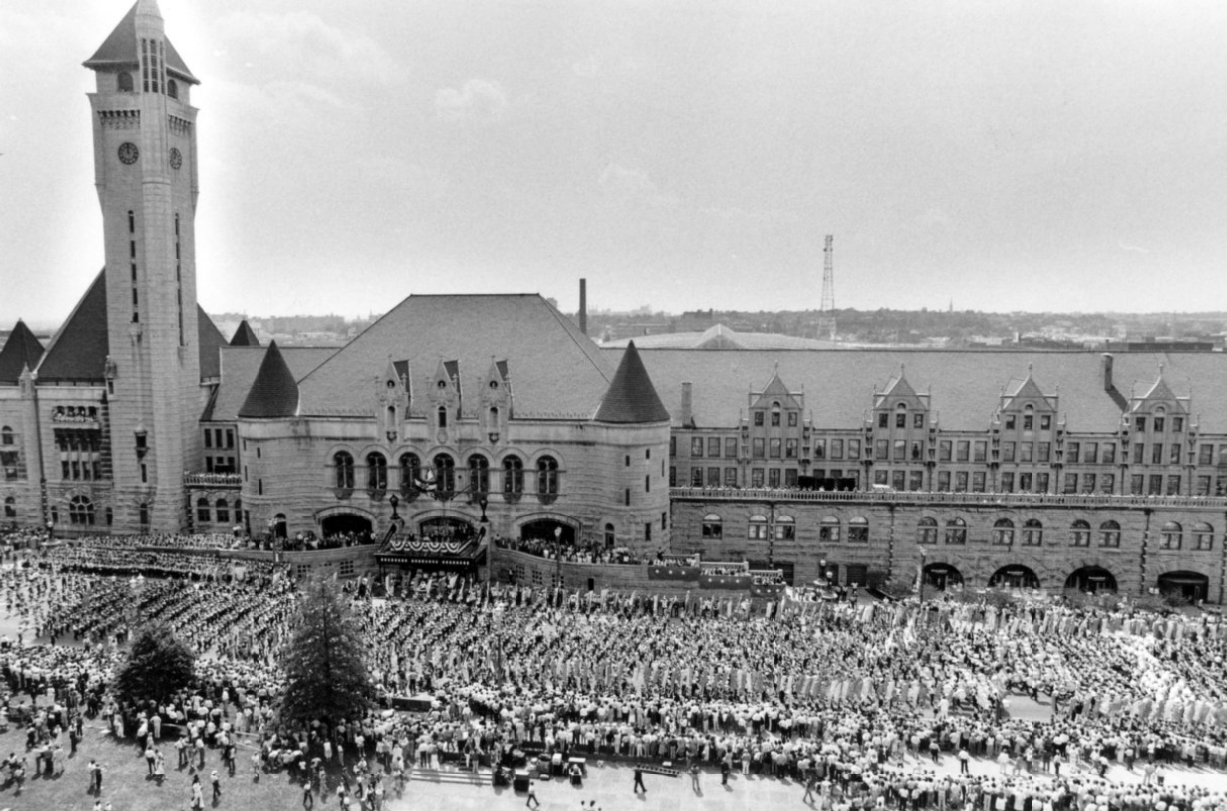
Overall view of Union Station as world's largest marching band, some 5000 strong, marches through, 1985
Overall view of Union Station as world’s largest marching band, some 5000 strong, marches through, 1985

Forest Park, the sprawling public green space that had hosted the 1904 World’s Fair, remained one of St. Louis’s most treasured gathering places. On the Fourth of July in 1980, crowds packed Art Hill in front of the St. Louis Art Museum for the city’s annual celebration. The museum itself held European paintings, American and contemporary art, and decorative arts — a collection that had grown steadily since the park’s earliest years.
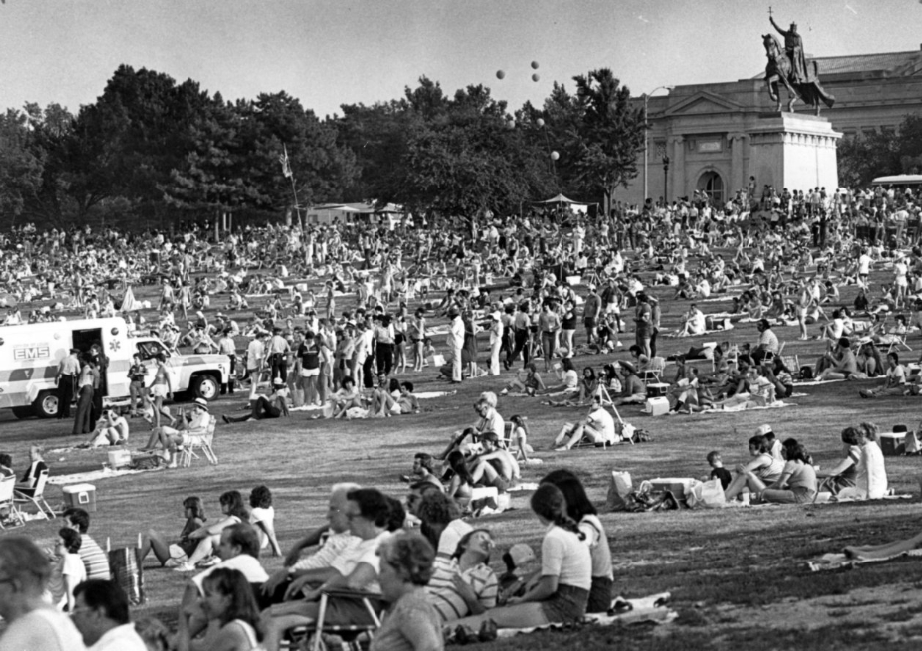
4th of July: The general scene on Art Hill in front of the St. Louis Art Museum in Forest Park, 1980

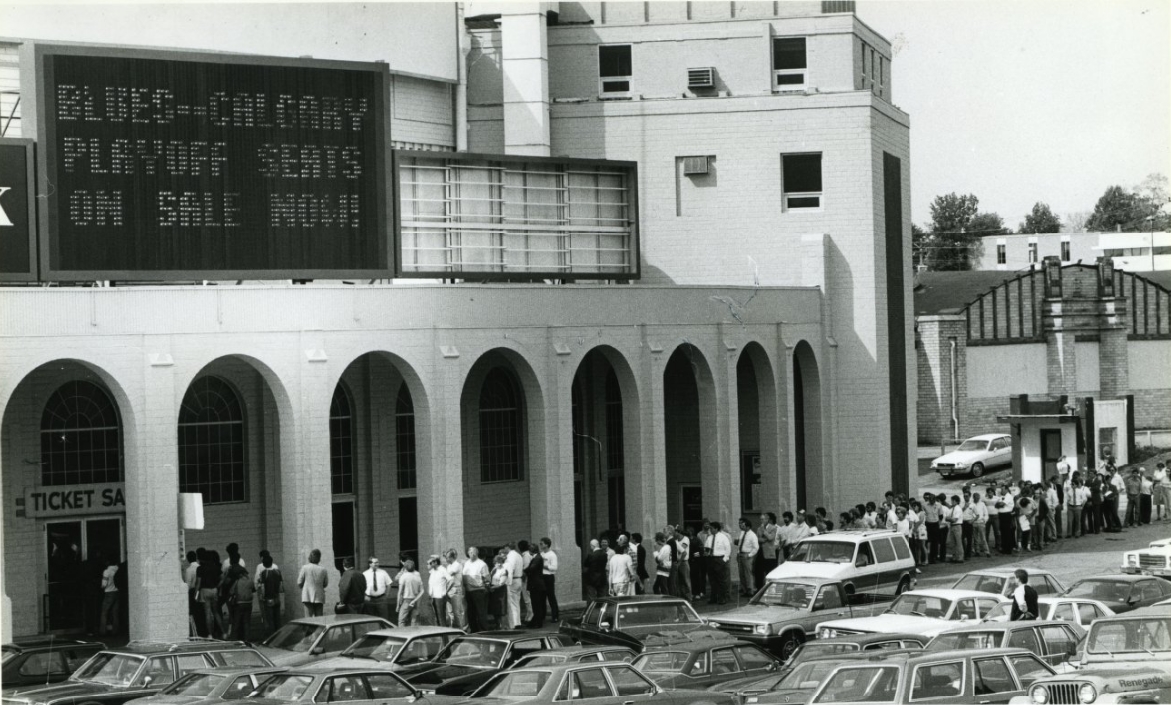
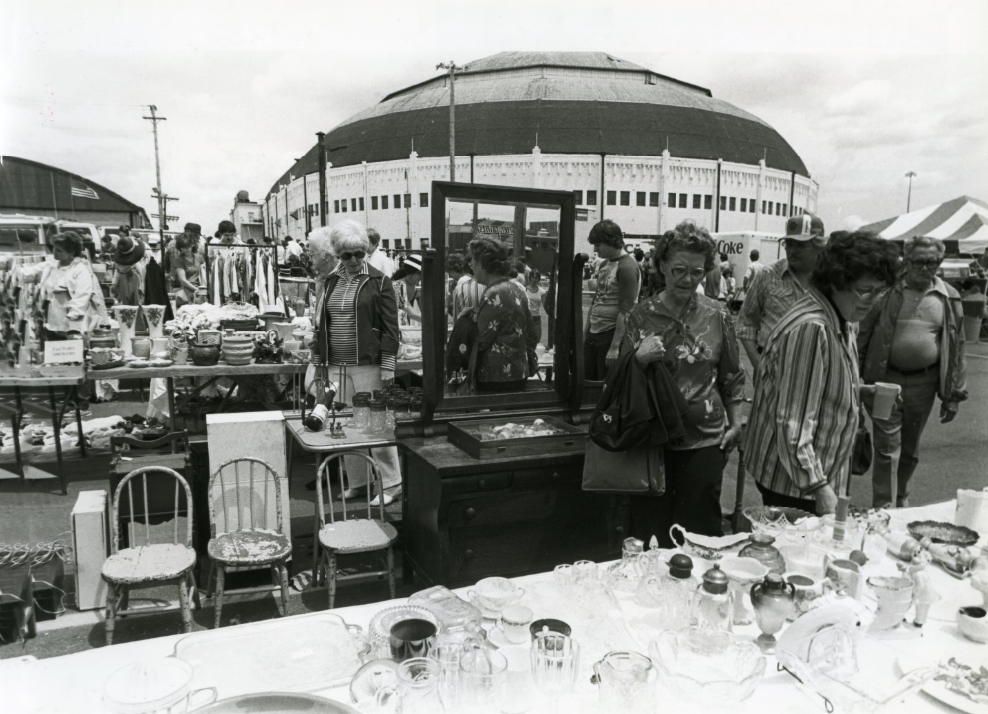
The St. Louis Blues were a fixture of the city’s sports culture, and their home — the arena known for much of the decade as the Checkerdome — drew passionate crowds. In 1983, the building was rebranded back to its original name, the St. Louis Arena, a change that generated its own local headlines. By 1986, playoff hockey tickets were a hot commodity, with signs outside the arena advertising availability to fans lined up in hopes of getting in.
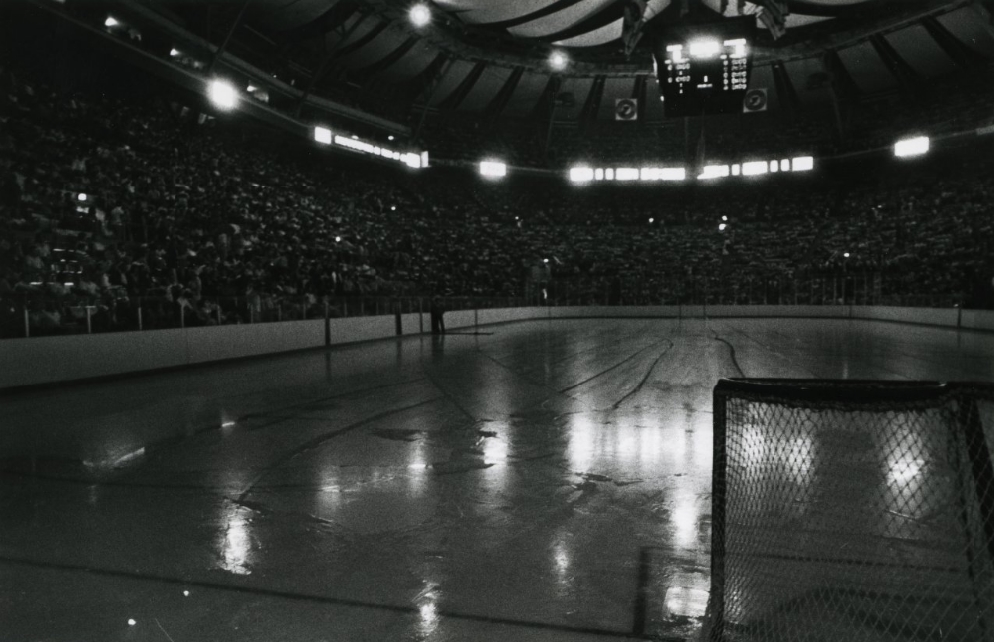
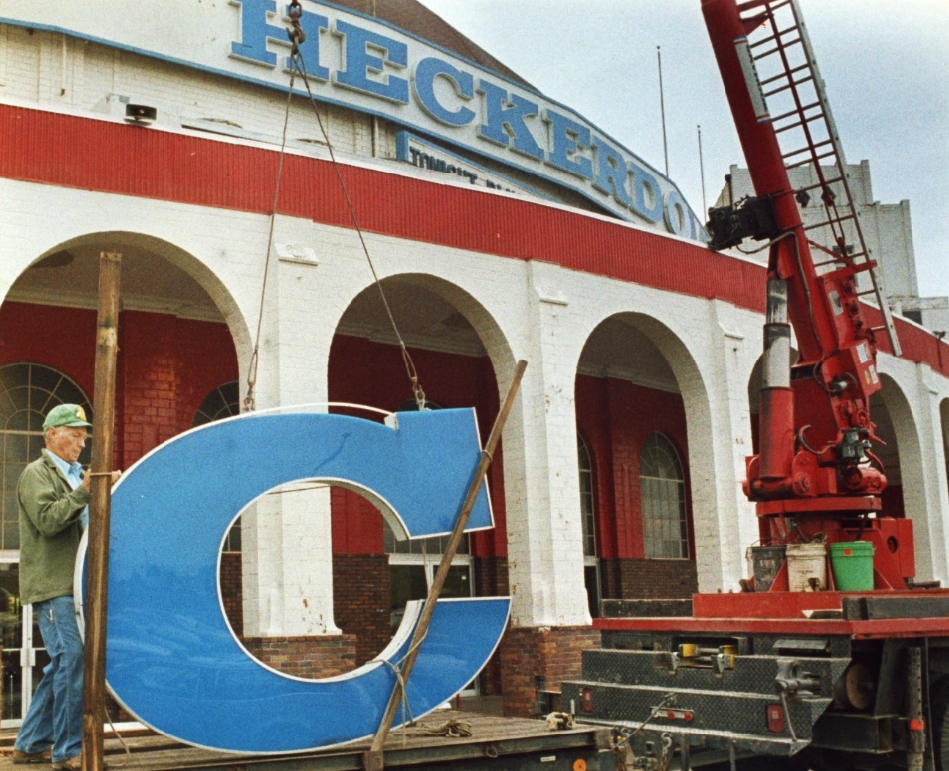
Checkerdome-Black Out, 1981
Arena-Checkerdome No More, 1983
Arena-Hot Hockey Blues Playoffs Tickets on Sale, 1986

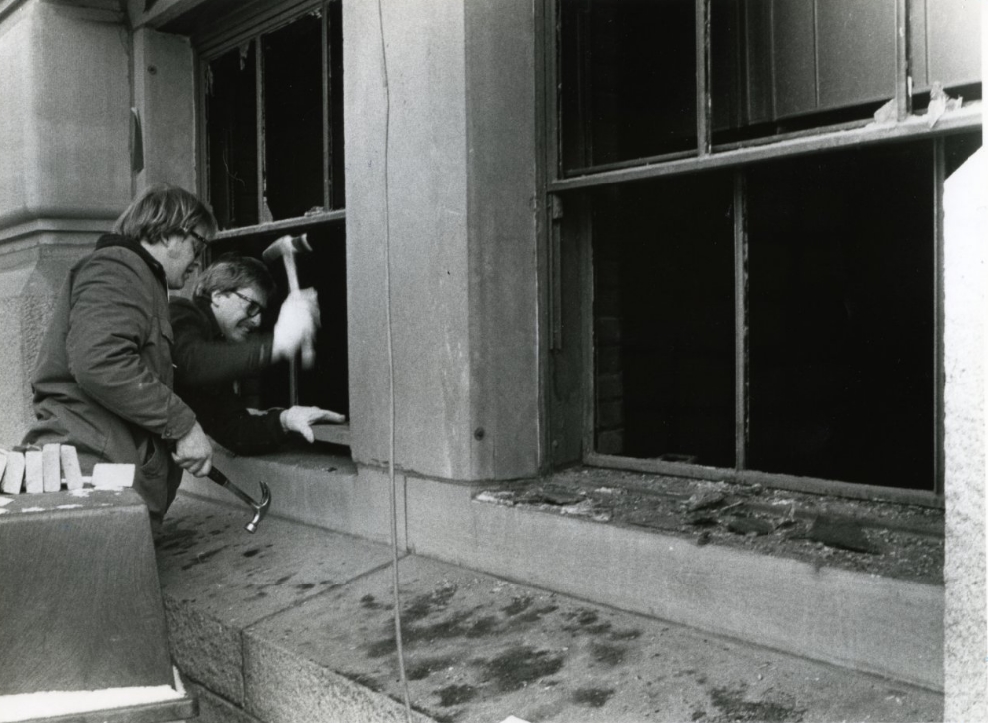
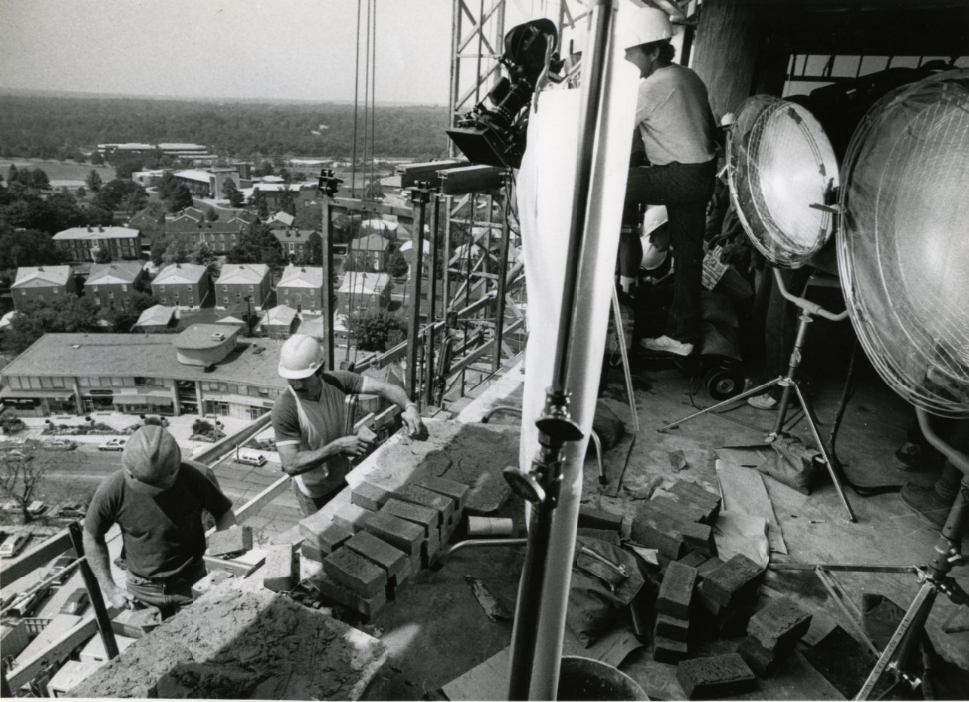
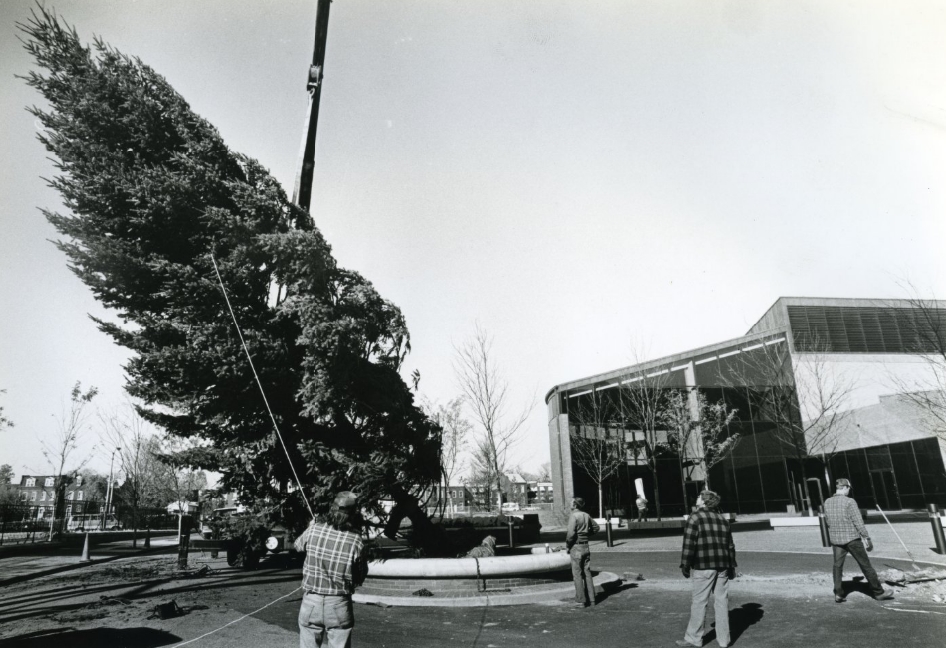
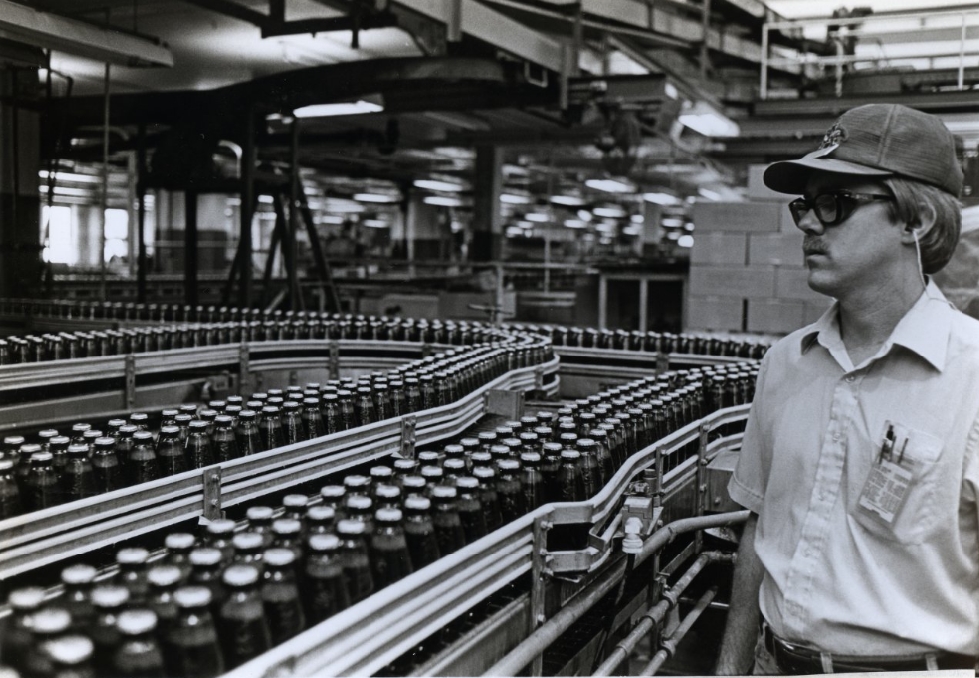
Few companies shaped the physical and cultural landscape of St. Louis more than Anheuser-Busch. Its sprawling South Side brewery complex covered 70 city blocks, and by the 1980s it had become a tourist attraction in its own right. Public tours drew steady visitors throughout the decade. Workers replaced windows, filmed Budweiser commercials on-site, and erected a Christmas tree on the brewery grounds each holiday season. The company’s reach extended well beyond the city — a rice mill in Jonesboro, Arkansas, supplied Busch Agricultural Resources Inc., one of many operations that fed the brewery’s enormous production demands.
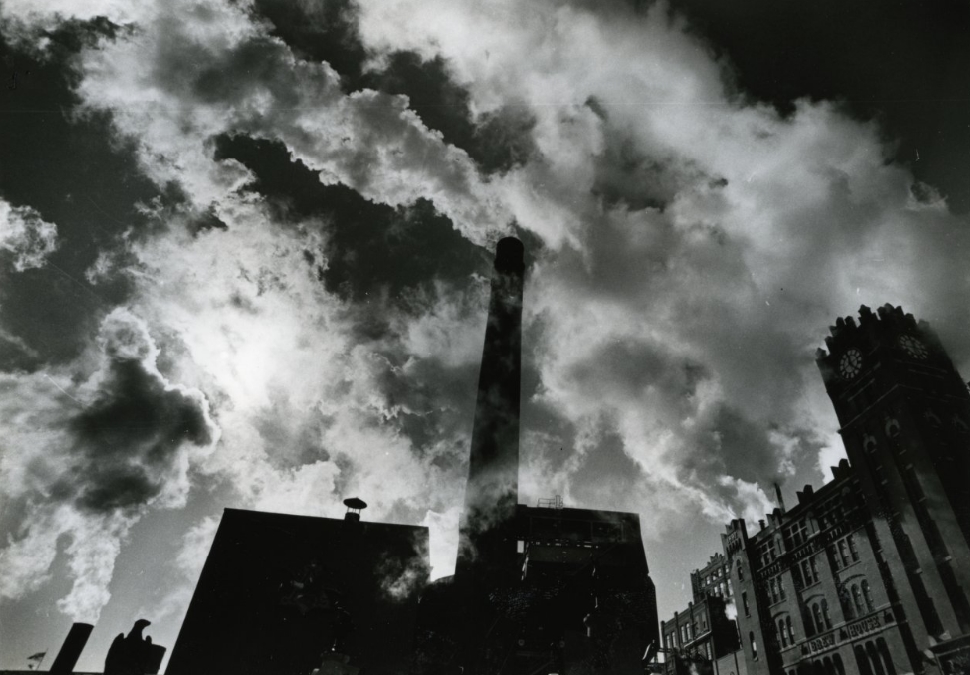
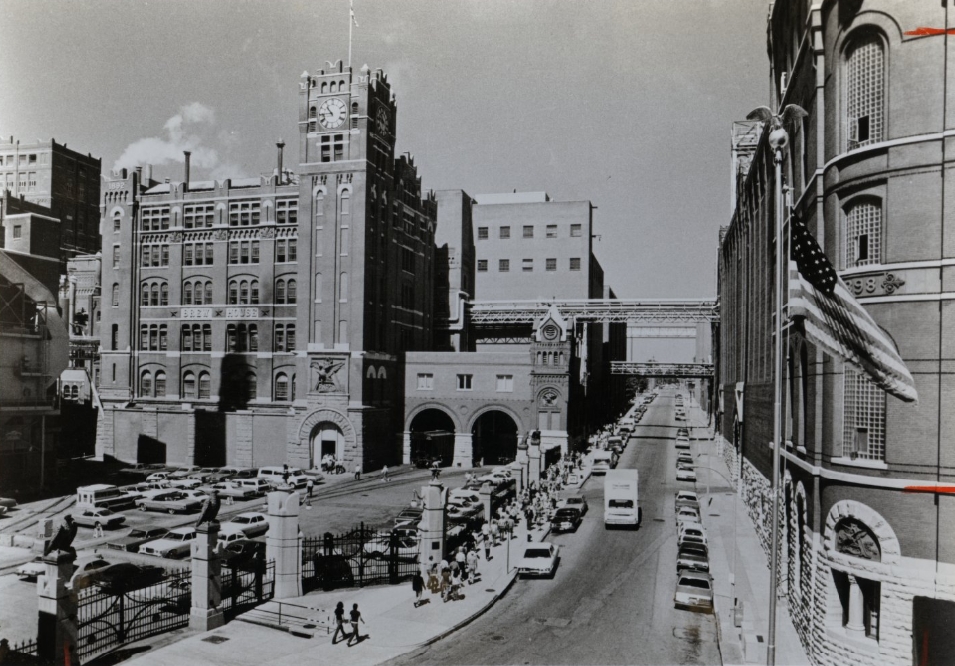
Anheuser Busch Brewery, 1986
Public Tours of 70-block of Anheuser-Busch, Inc, 1983
Anheuser-Busch Carpenters Replacing Windows, 1984
Filming Of Budweiser Beer Commercial, 1985
Christmas Tree Erected on the Anheuser-Busch Brewery Ground, 1985
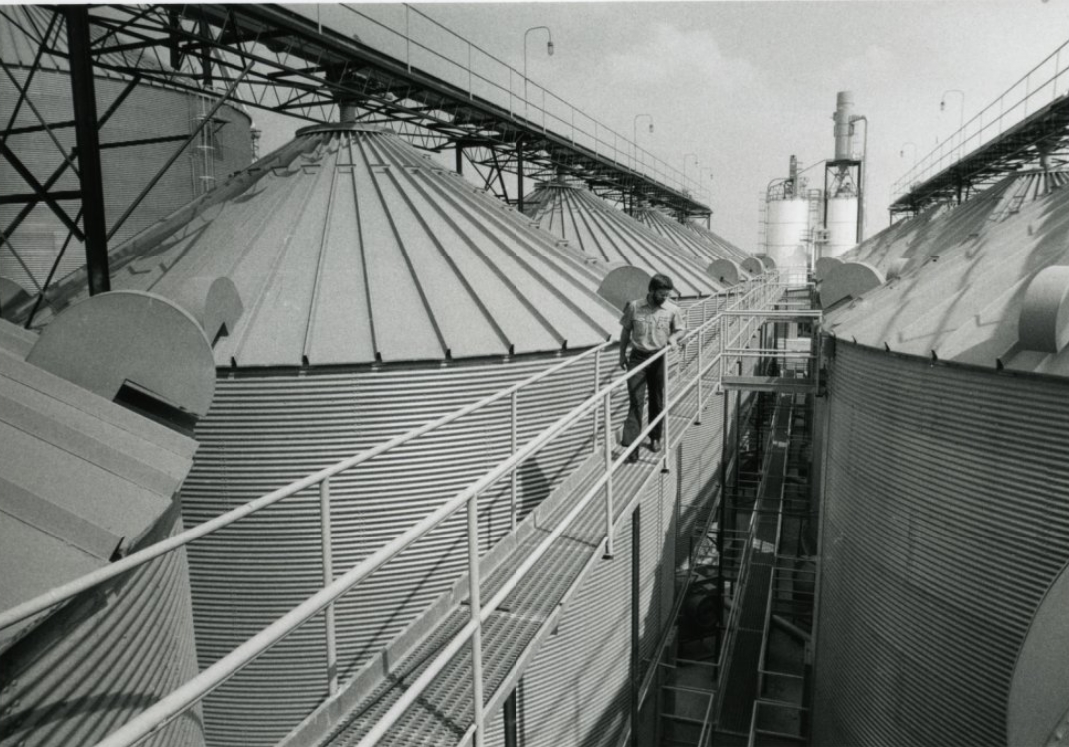
A worker inspects the Jonesboro, Arks, rice mill of Busch Agricultural Resources Inc, 1984

The Budweiser Clydesdales, one of the most recognized symbols in American advertising, made appearances throughout the decade tied to Anheuser-Busch promotions. The company also sponsored high-profile stunts, including the Budweiser Rocket Car in 1980, which became a spectacle in its own right. Supervisors like Bill Whiteley became minor public figures simply by being associated with the brewery’s outsized presence in the city.
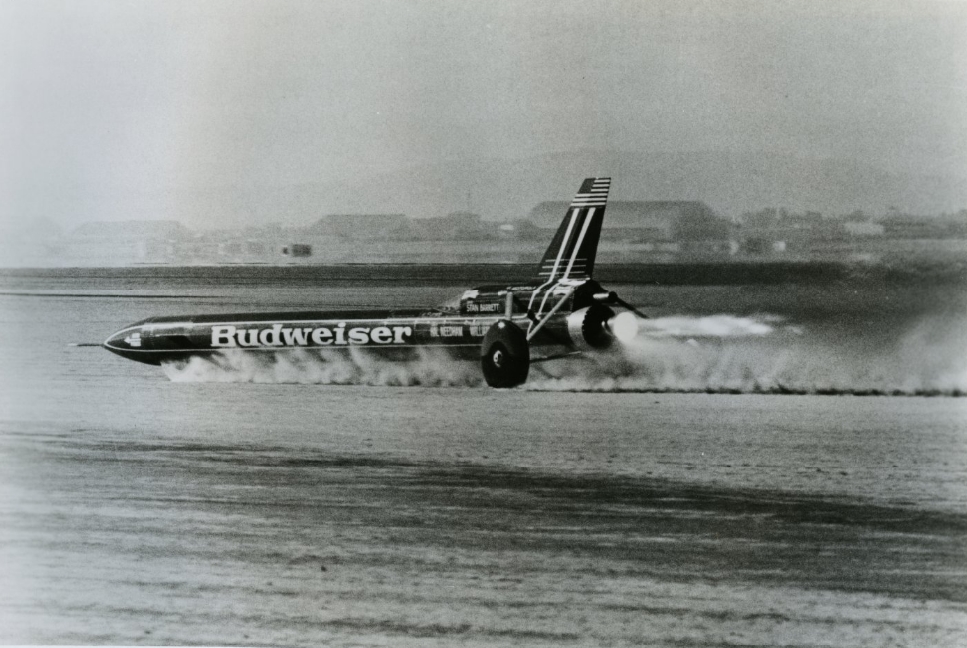
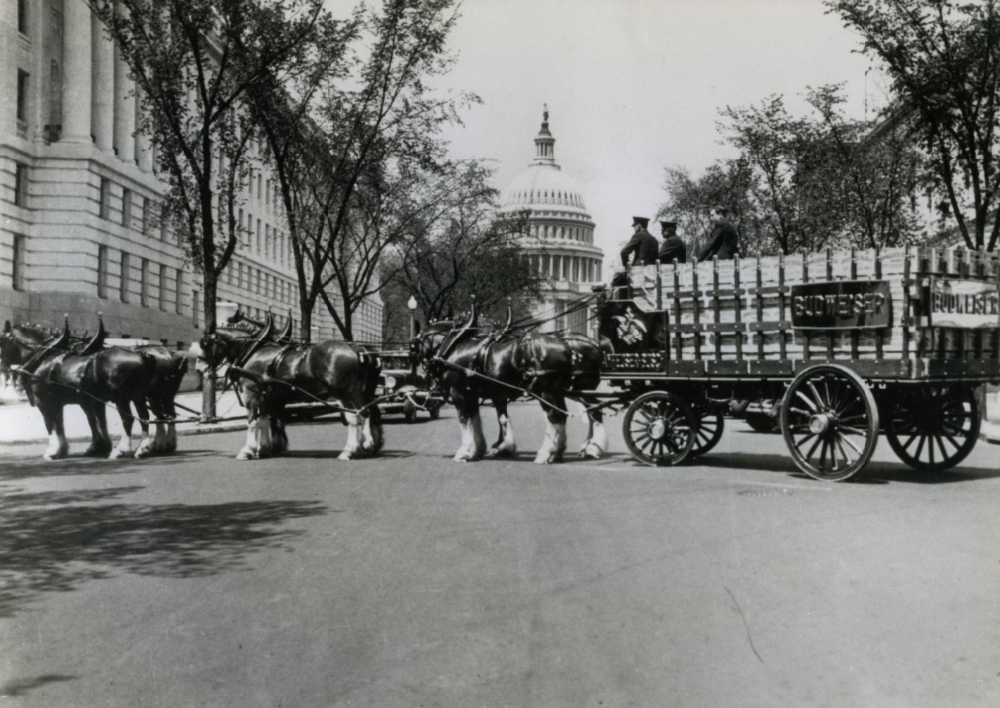
The Budweiser Rocket Car, 1980
Anheuser Busch-The First Budweiser Clydesdale Hitch, 1983
Bill Whiteley, An Anheuser-Busch Supervisor, 1981

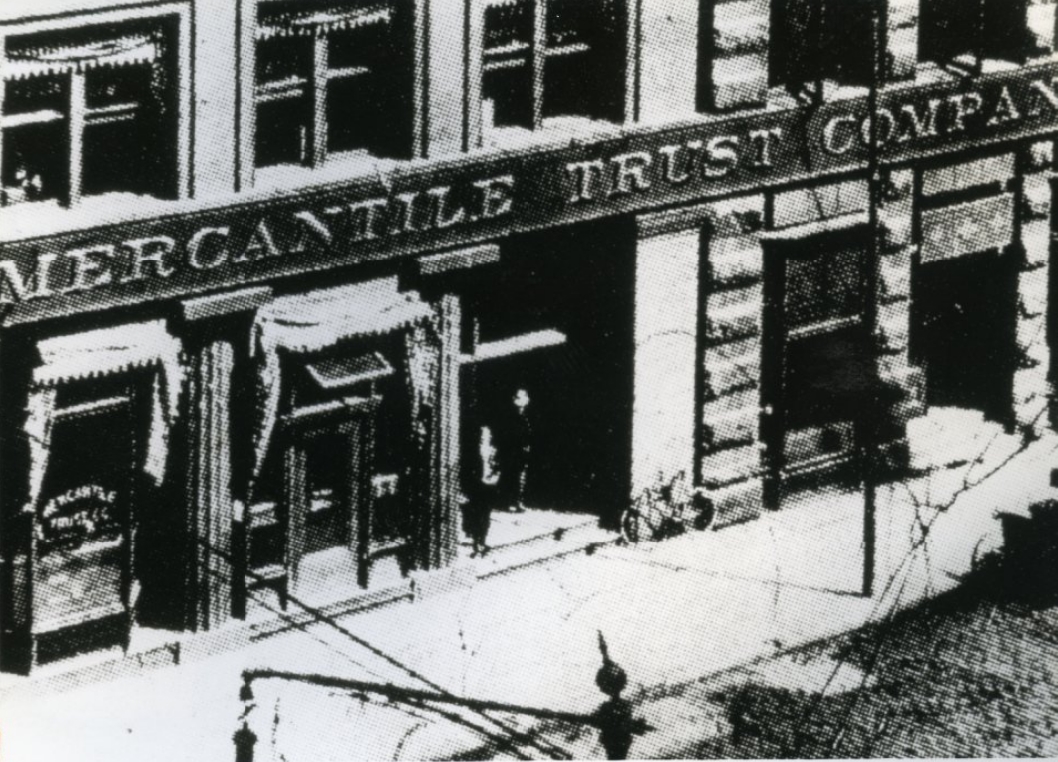
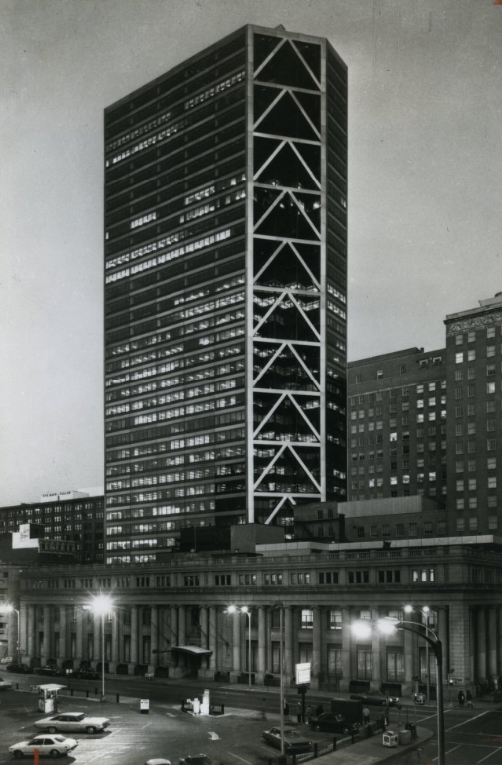
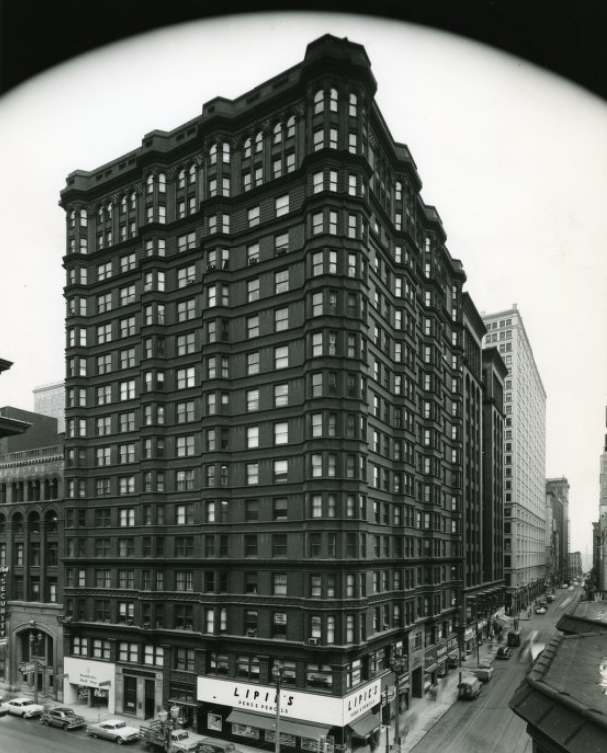
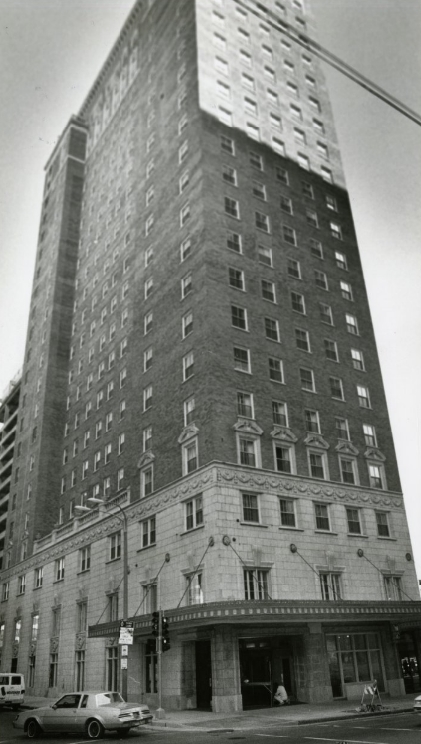
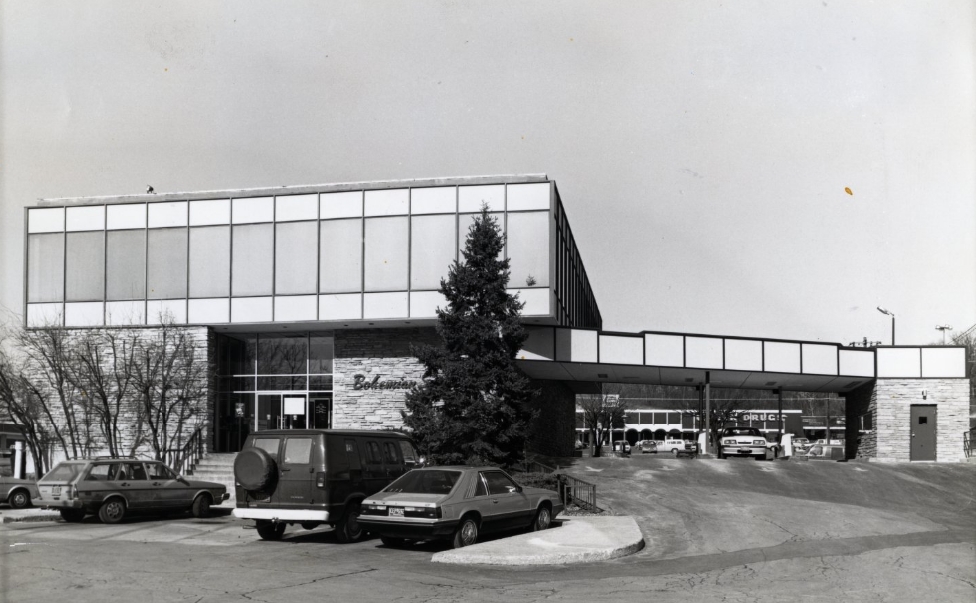
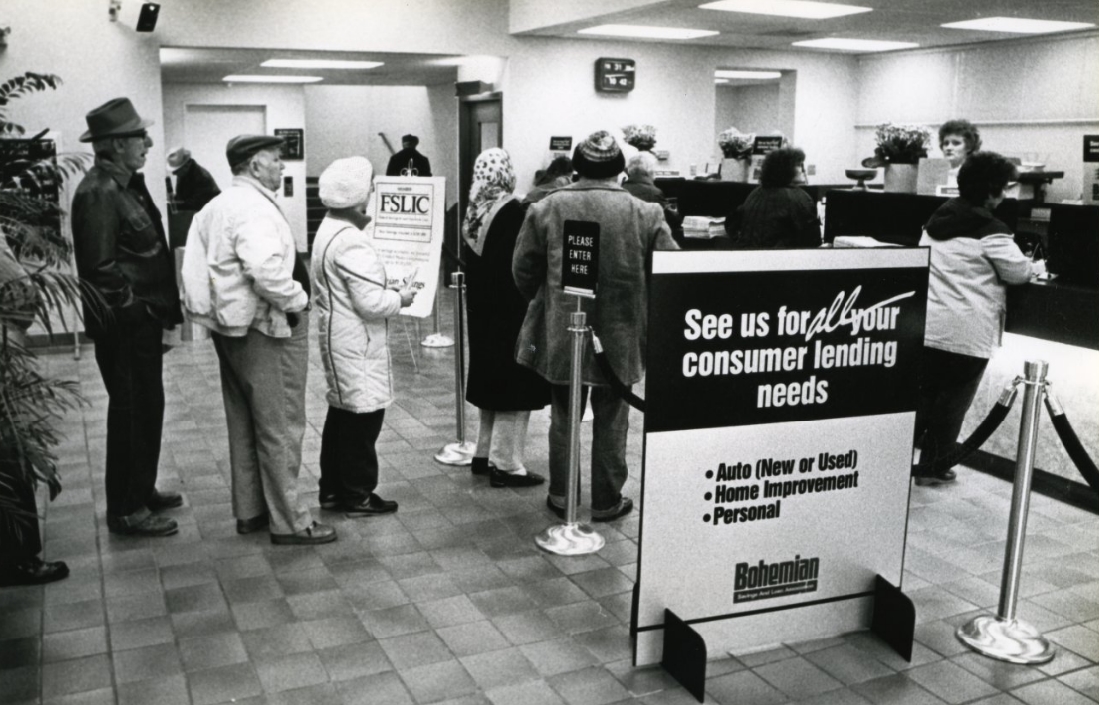
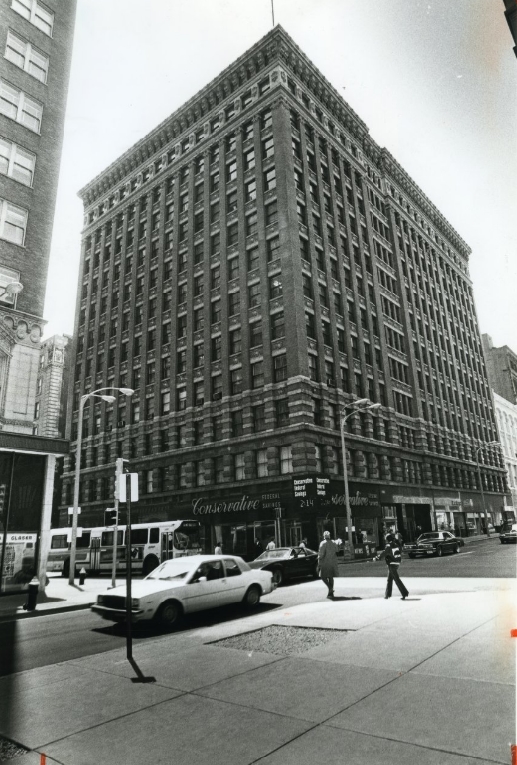
St. Louis’s financial district underwent considerable change during the decade. Banks expanded, remodeled, and, in some cases, repositioned themselves entirely. The First National Bank finished exterior remodeling in 1981. Centerre Bank occupied a downtown skyscraper by 1982. The Mercantile Trust Company’s original southeast corner location at Eighth and Locust streets was documented in 1980 alongside its newer building — a visual record of banking’s own evolution in the city. Boatmen’s Bank had designs drawn up for a new Jefferson County building in 1986, while smaller community institutions like Bohemian Savings & Loan continued expanding their services.
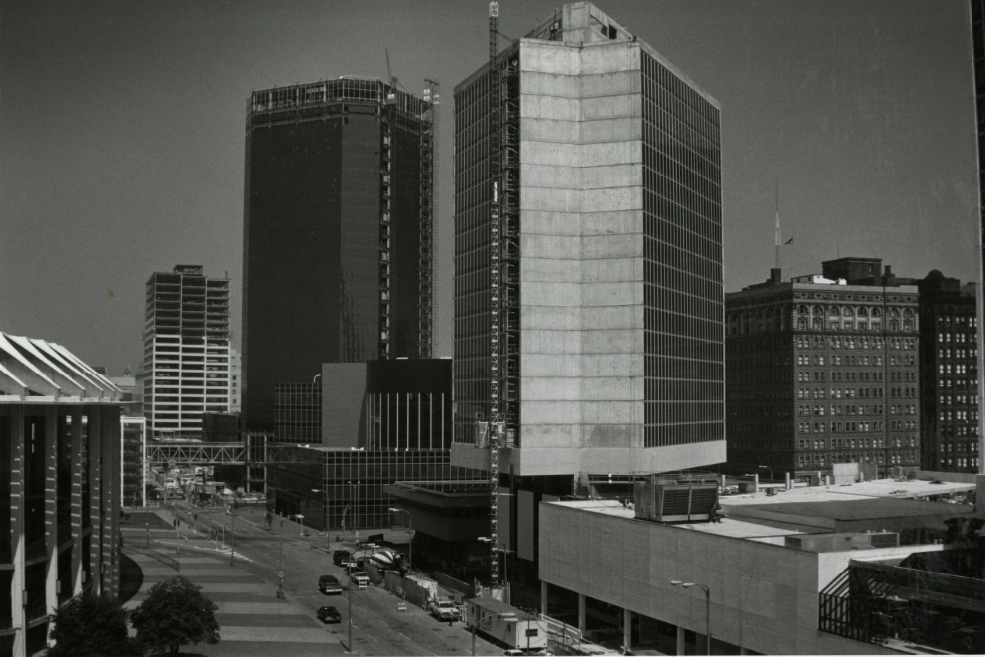
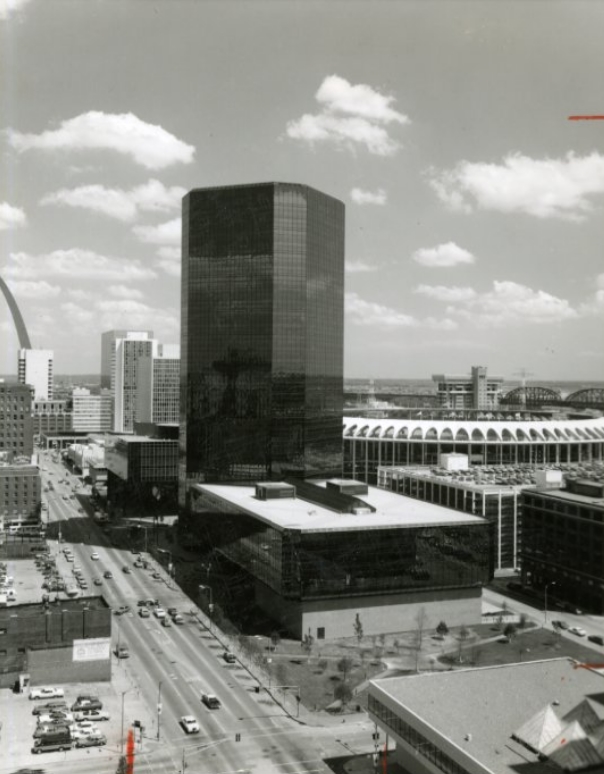
First National Bank (exterior) Remodel Finishing, 1981
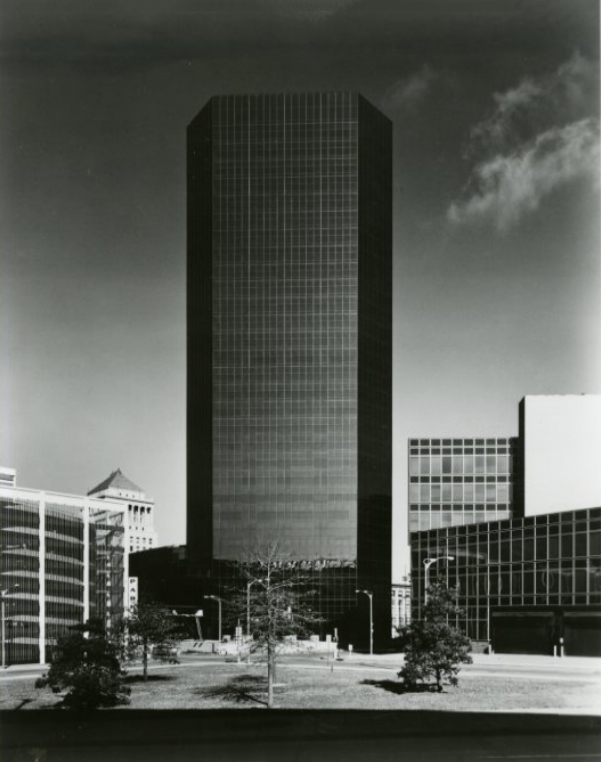
Centerre Bank - One Centerre Plaza, 1983
Centerre Bank – One Centerre Plaza, 1983
Original Mercantile Trust Company location on the southeast corner of Eighth and Locust streets, St. Louis, Missouri, 1980
Present Mercantile Trust Company Building, 1980

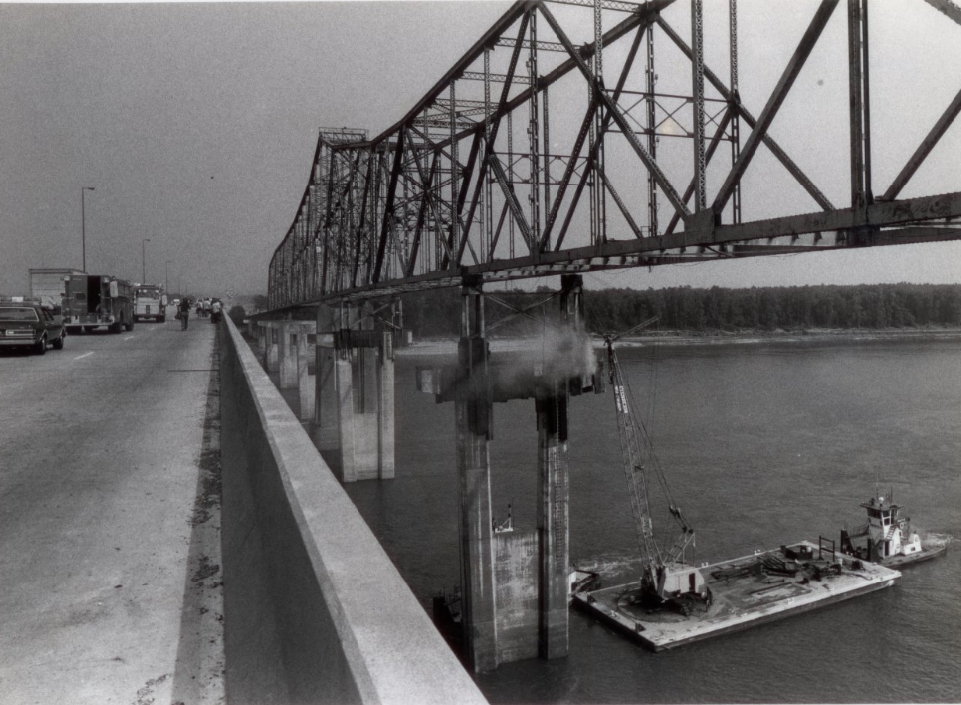
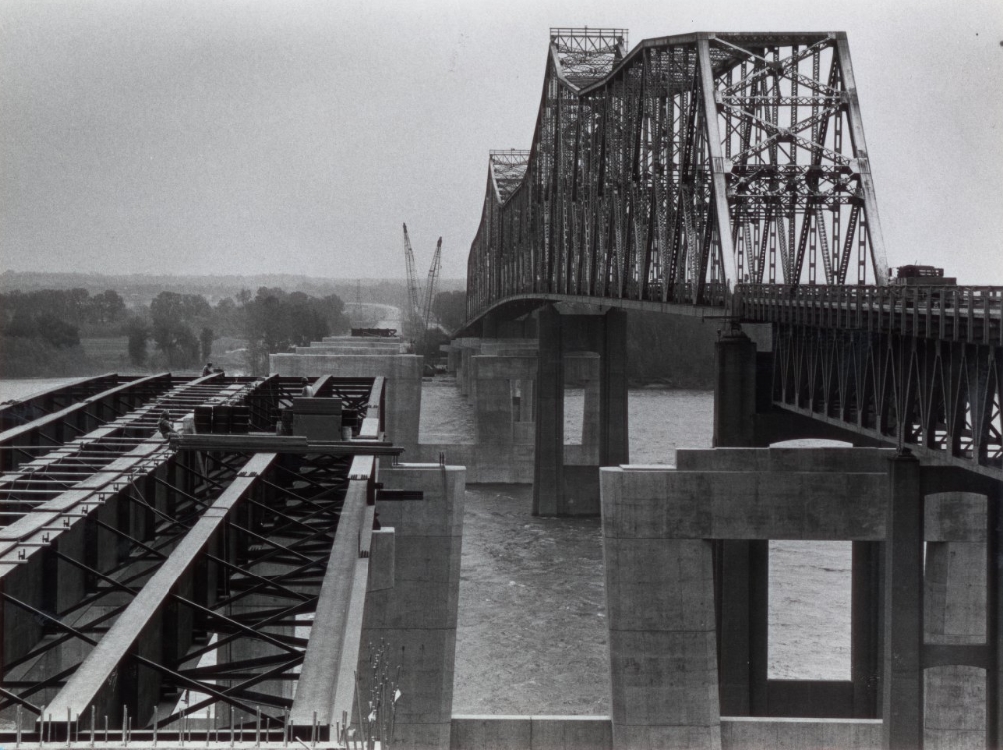
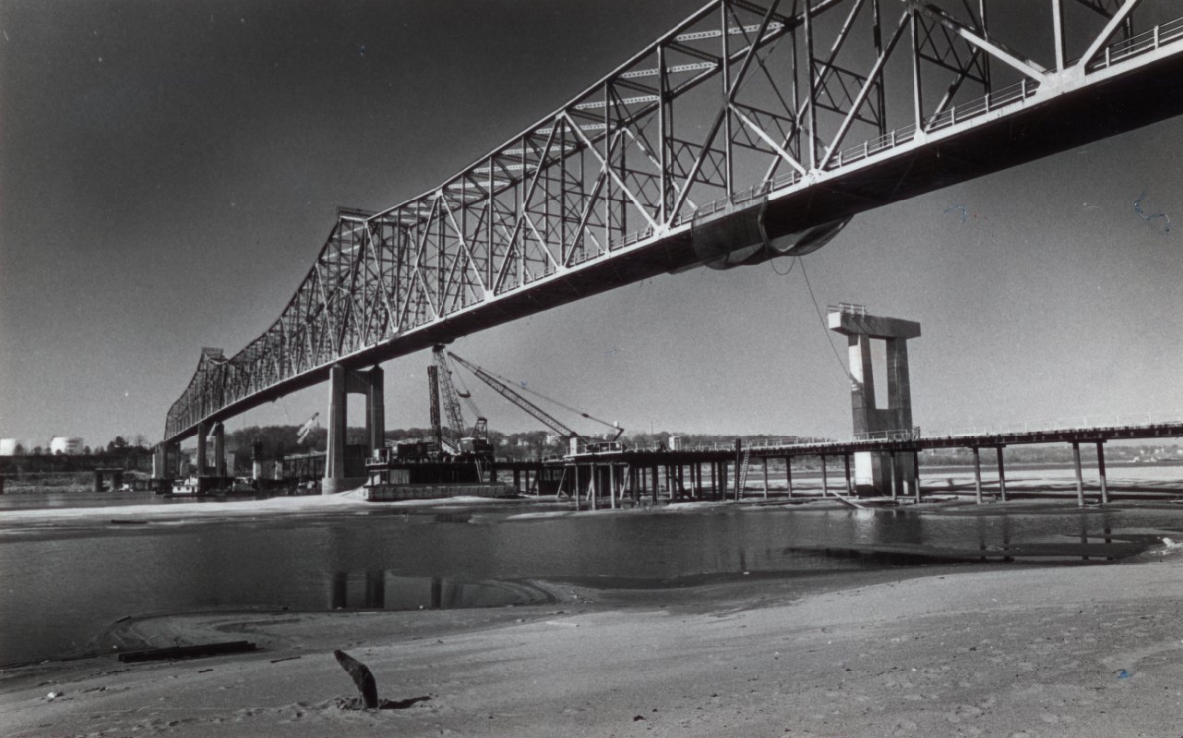
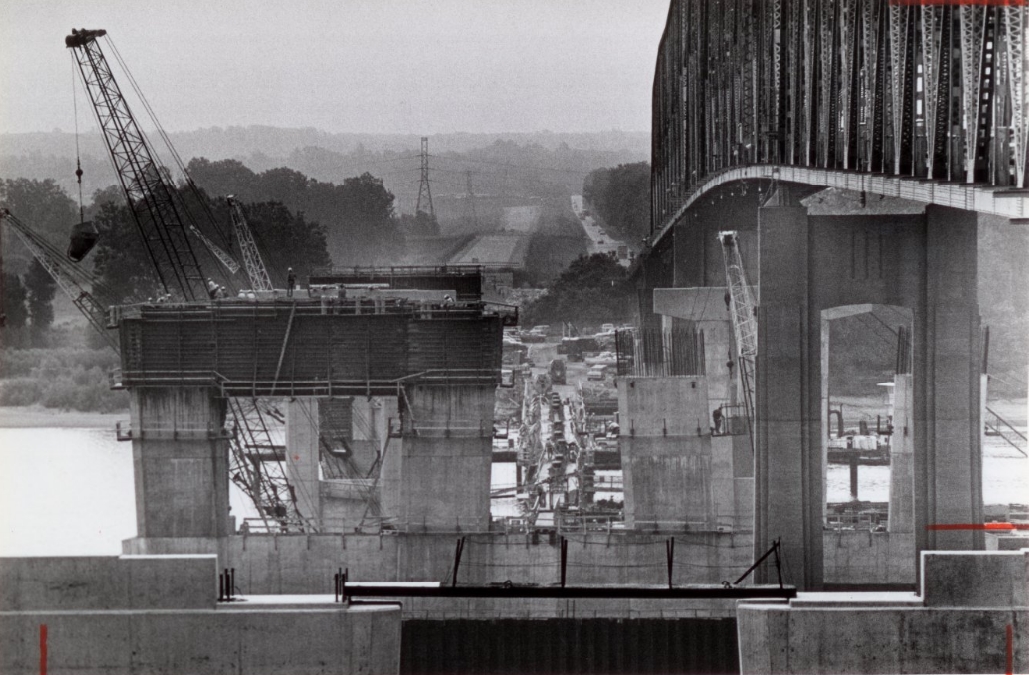
The city’s bridges were a constant source of both progress and problems throughout the decade. The Jefferson Barracks Bridge, constructed north of Columbia to replace an aging structure, was one of the largest infrastructure projects of the era. Concrete piers rose from the riverbed beginning in 1981, and workers in caged platforms carried out tasks over the water far below. The new bridge was designed to connect with the Interstate 270 bypass, which extended to I-55/70 at Collinsville. Construction dragged across years, and in 1985 a fire broke out on the old Jefferson Barracks Bridge when workers’ torches ignited railroad ties, forcing the temporary closure of two lanes on the adjacent new bridge.
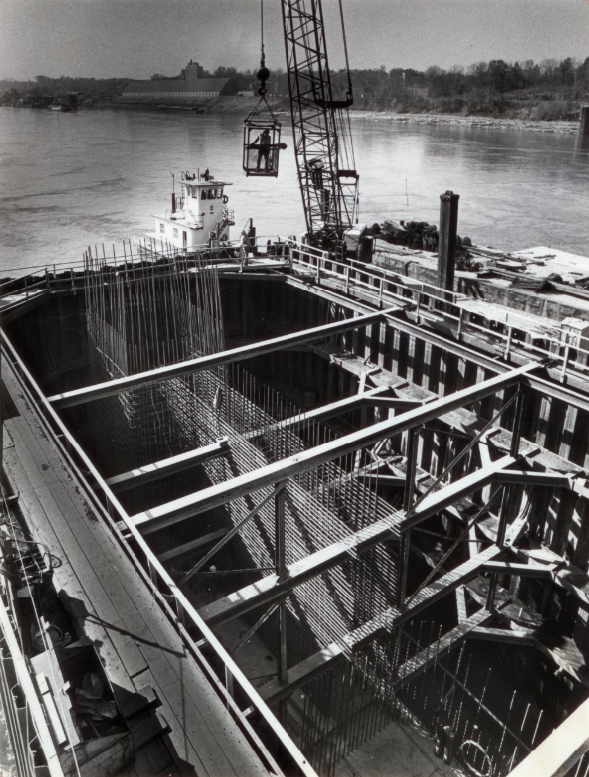
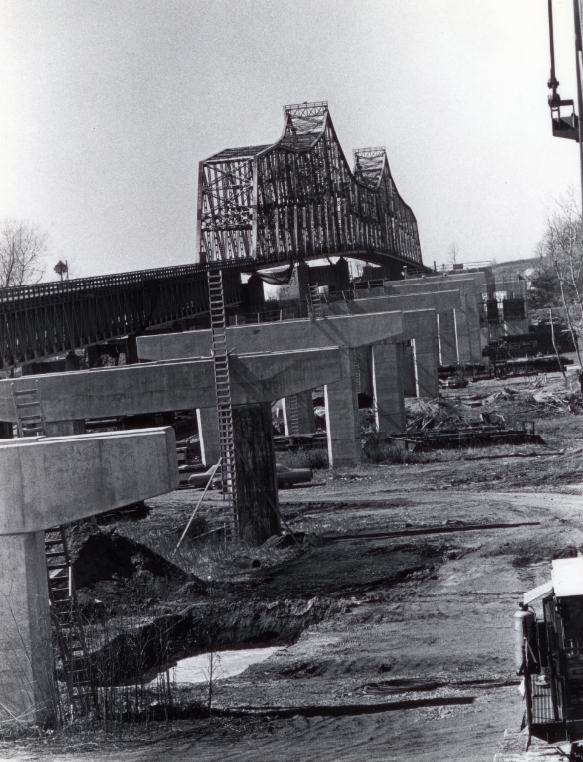
Caged Worker Continues Work On The Jefferson Barracks Bridge, 1981
Jefferson Barracks Bridge: Bridge-work, 1981
Jefferson Barracks Bridge Troubles, 1985

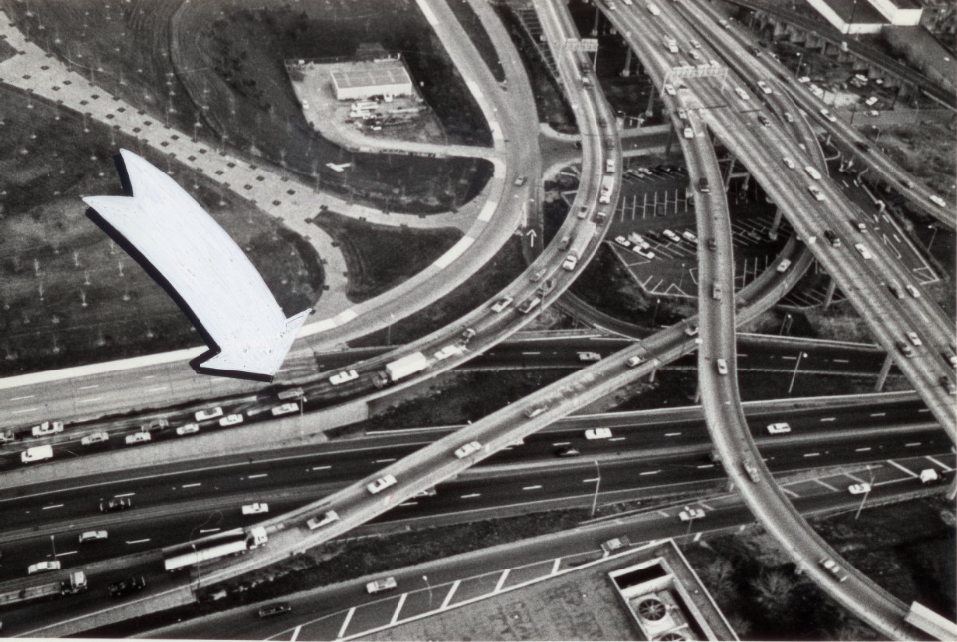
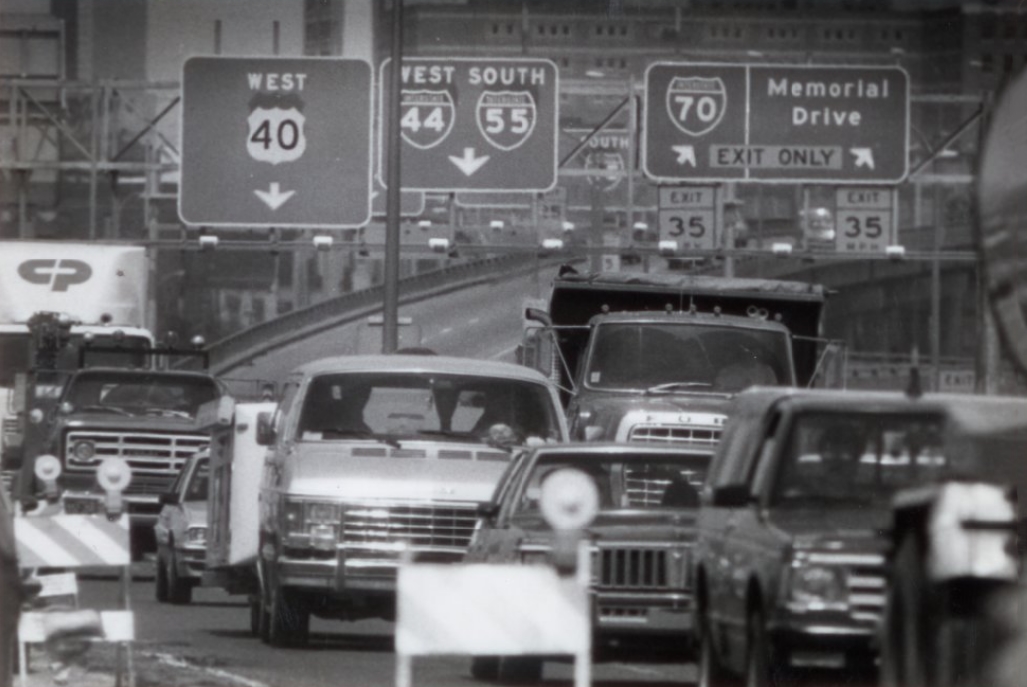
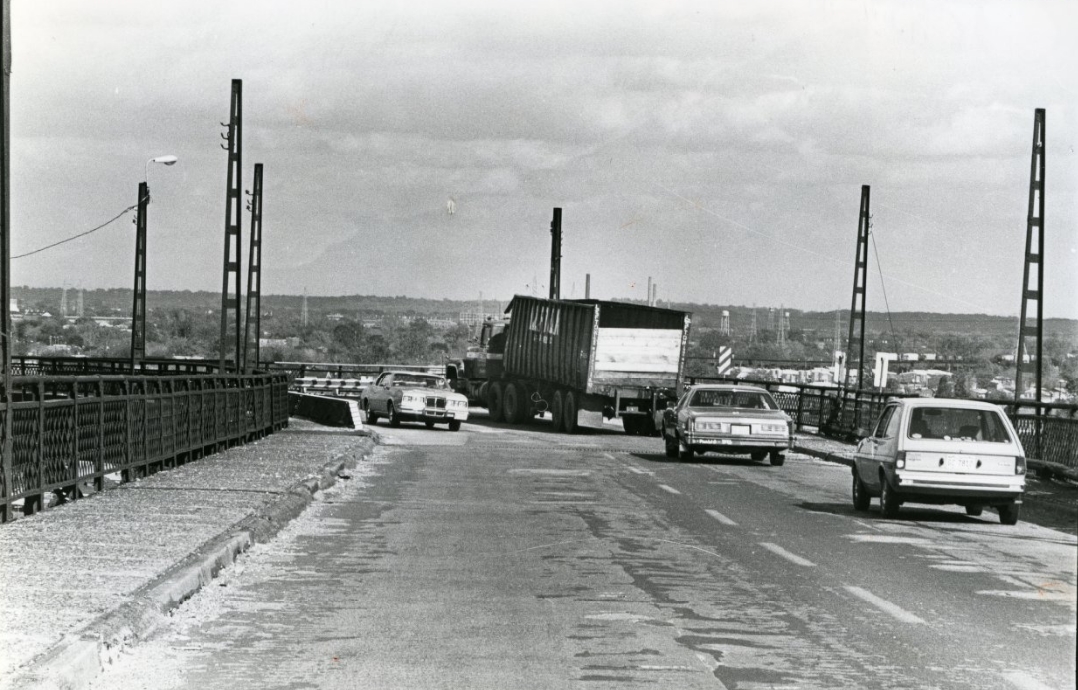
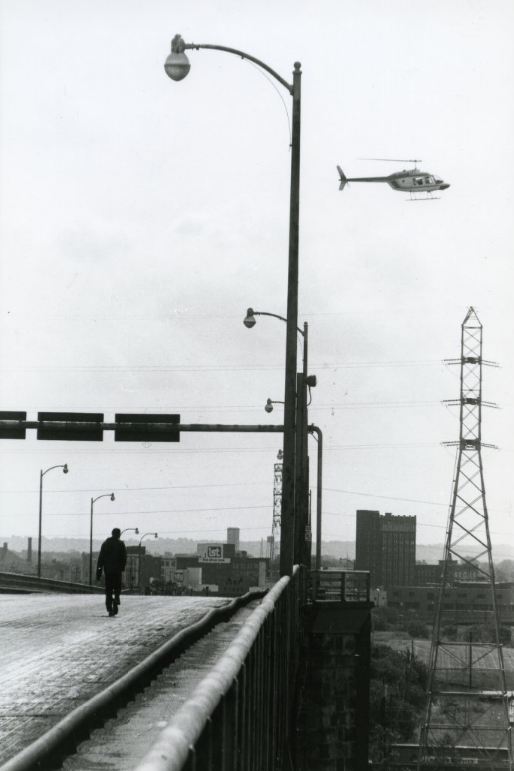
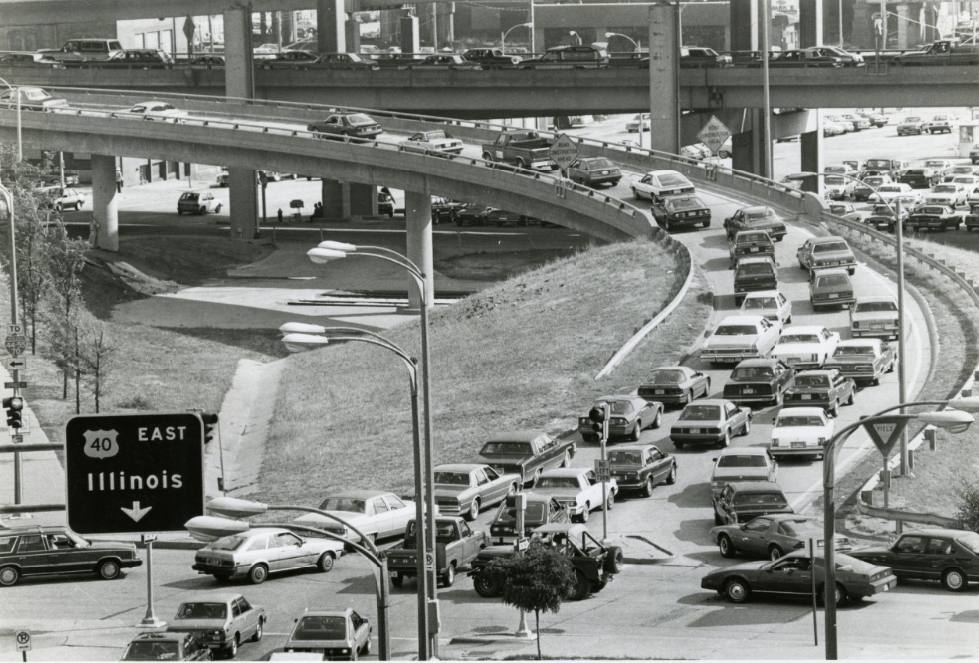
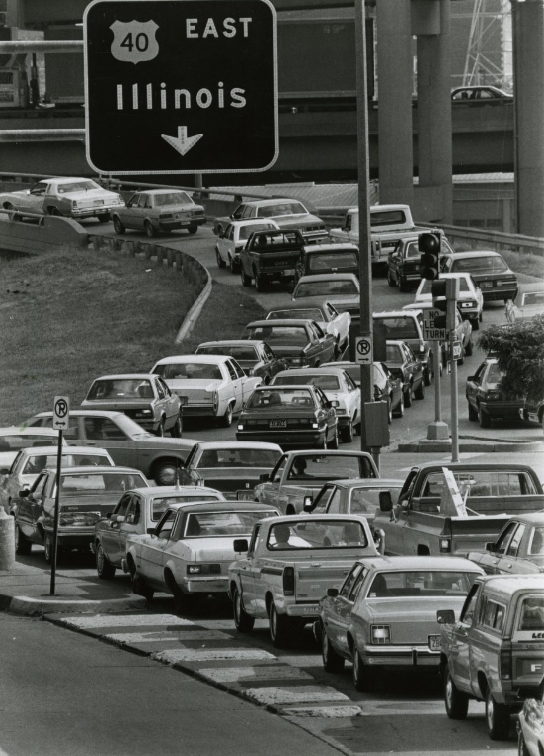
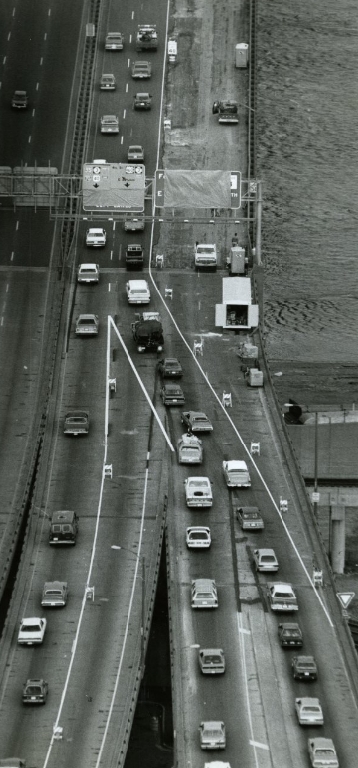
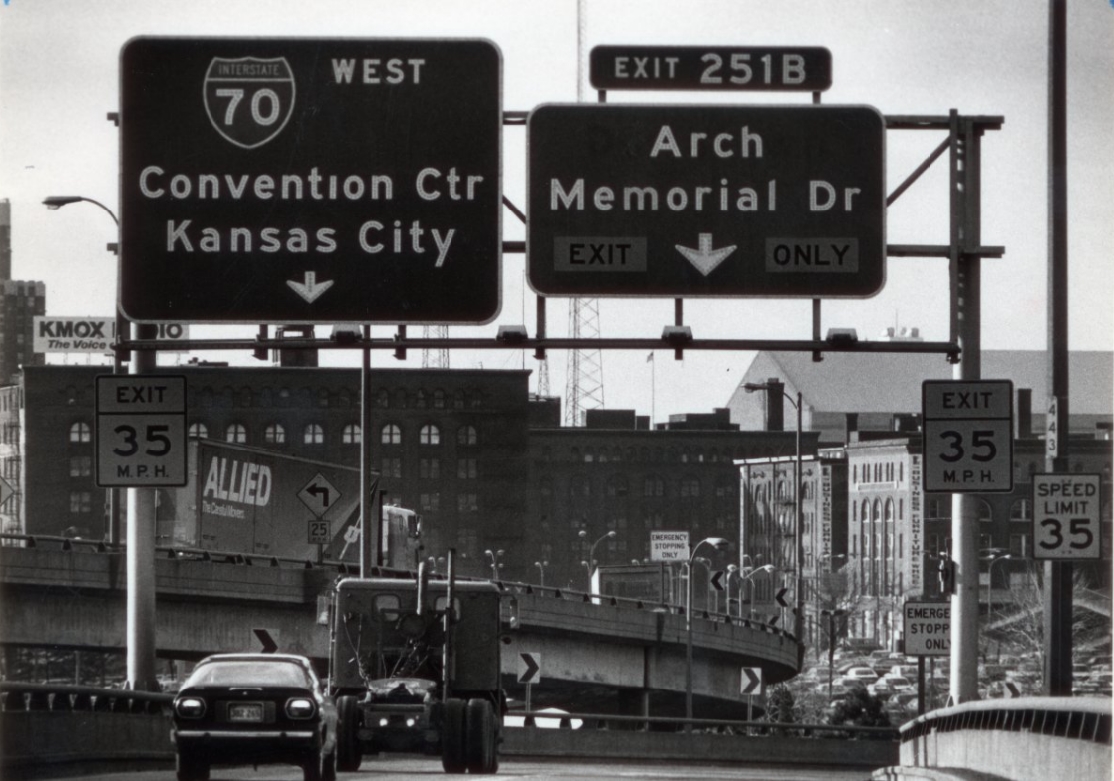
The Poplar Street Bridge carried an enormous volume of traffic across the Mississippi River and became one of the most photographed and most problematic stretches of roadway in the region. Construction work there in 1983 squeezed traffic into a single lane, creating bottlenecks that stretched for blocks. Confusing signage drew complaints. A fiery crash in 1983 closed sections of the bridge entirely. By 1986, the city undertook a full repaving effort, and new signs were installed to address the long-running navigation problems.
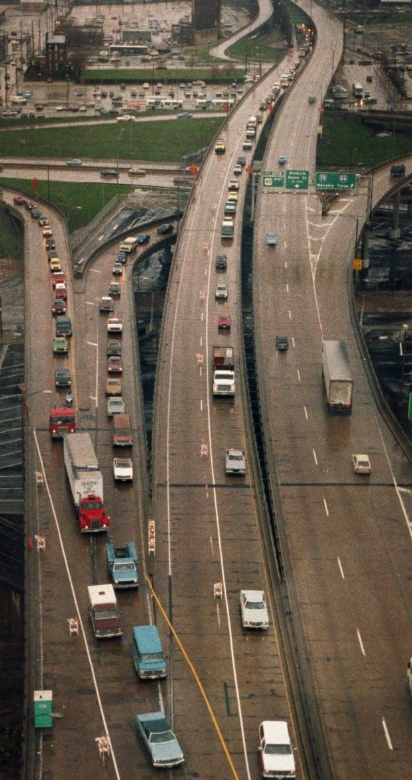
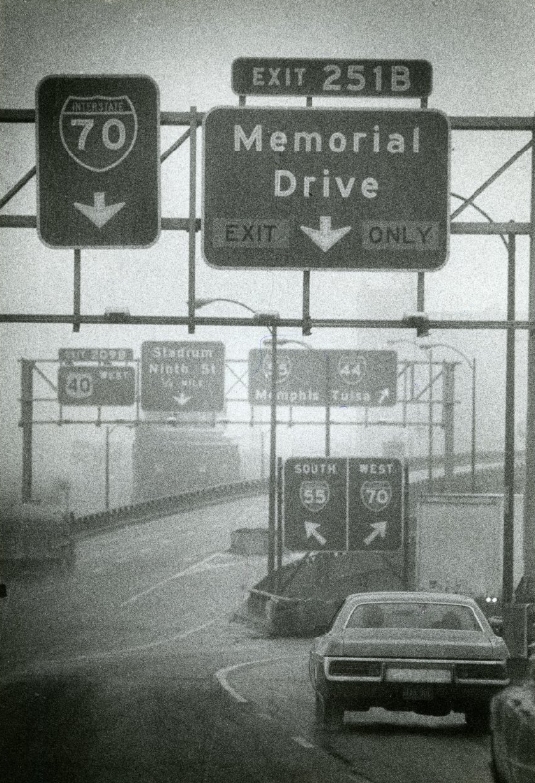
Construction Causes One Lane Merge On Poplar Street Bridge, 1983
Confusing Signs On The Poplar Street Bridge, 1983
Site Of Fiery Crash On Poplar Street Bridge, 1983
Poplar Street Bridge Re-Paving, 1986

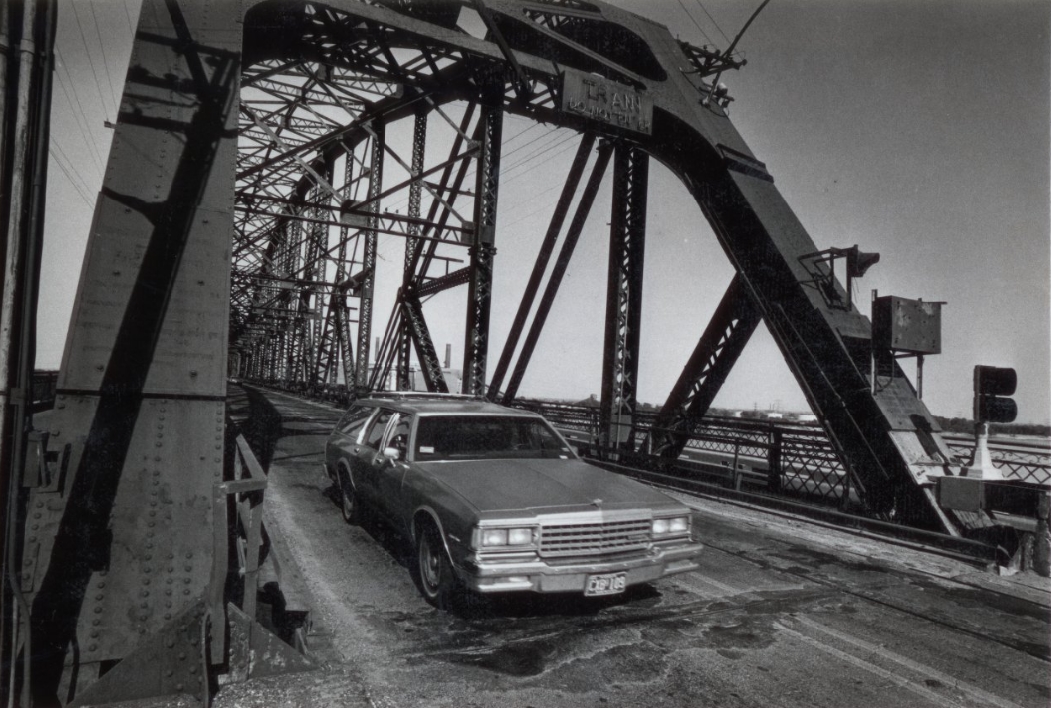
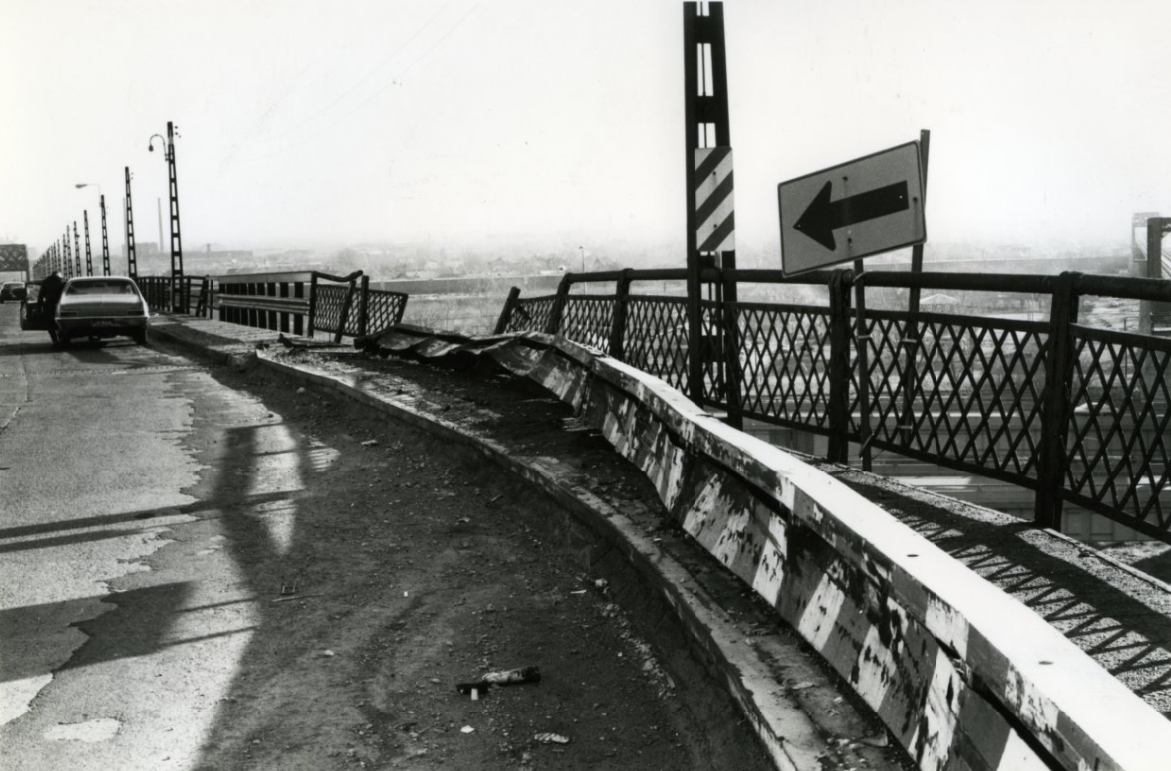
The MacArthur Bridge, which carried rail traffic across the Mississippi, showed visible signs of neglect throughout the decade. Photographs from 1980 and 1981 documented broken railings, holes in the bridge railing, crumbling concrete, and the notorious stretch on the Illinois side known as the “Suicide Curve.” These were not abstract infrastructure concerns — they were daily realities for workers and commuters navigating the city’s aging crossings.
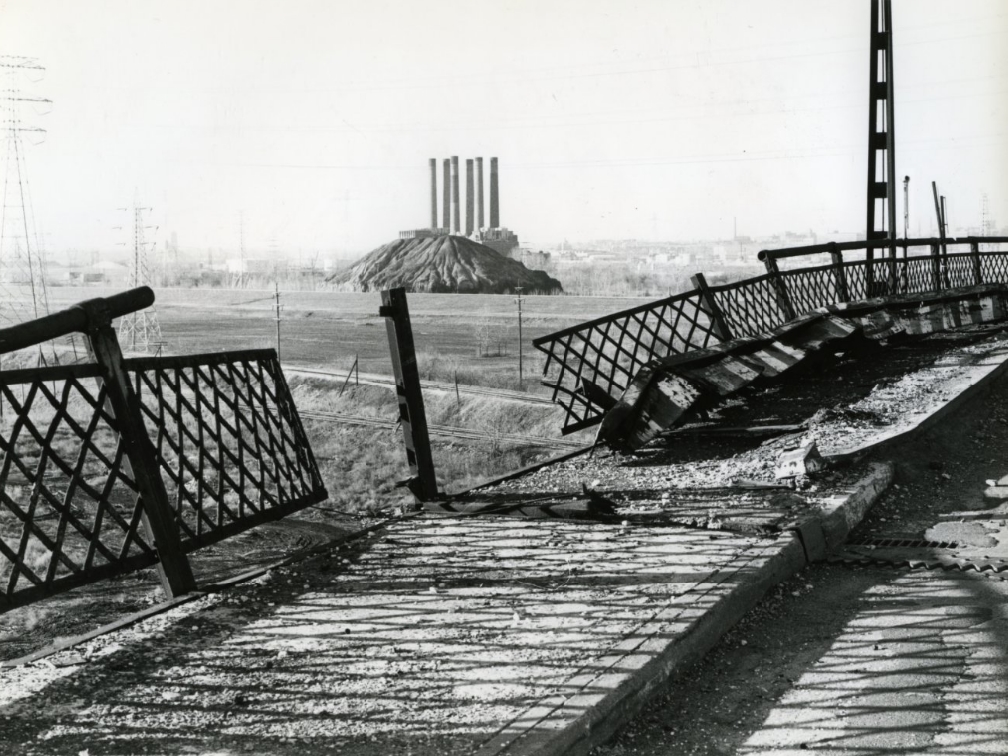
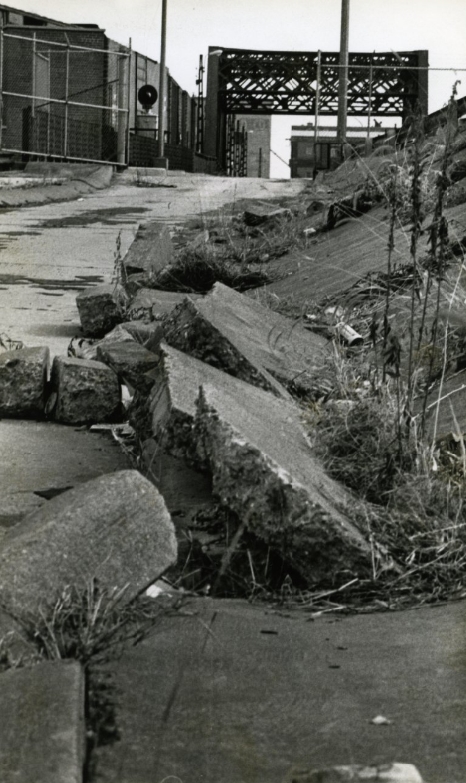
MacArthur Bridge-Broken Railing, 1980
MacArthur Bridge-Concrete Crumbling, 1986
The "Suicide Curve" On The Illinois Side Of The MacArthur Bridge, 1981
The “Suicide Curve” On The Illinois Side Of The MacArthur Bridge, 1981

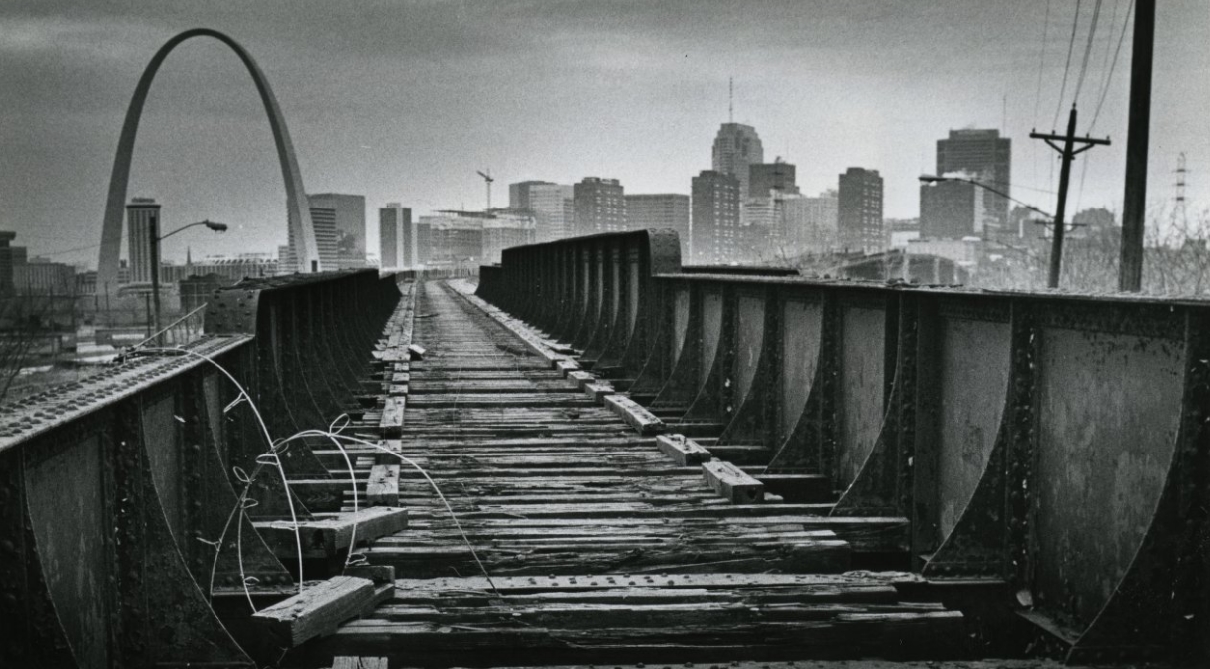
The Eads Bridge, one of the oldest steel truss bridges in the world, was lit up and photographed in 1981, its iron arches glowing over the river. By 1985, city planners were studying the old railroad bed running across it as a possible route for a future light rail system — a proposal that would eventually come to fruition years later. Morning walkers used the bridge as a pedestrian route, making it both a civic landmark and a working part of the city’s daily life.
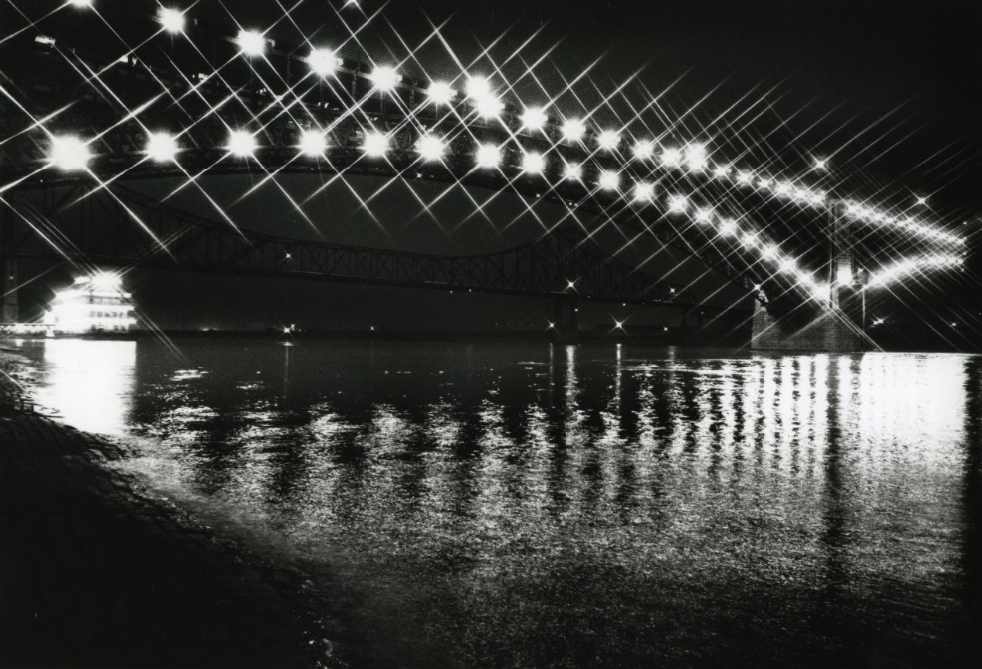
The Lighted Eads Bridge, 1981
The old railroad bed on Eads Bridge that may be used for a light rail system, 1985
A Morning Walk on Eads Bridge, 1985

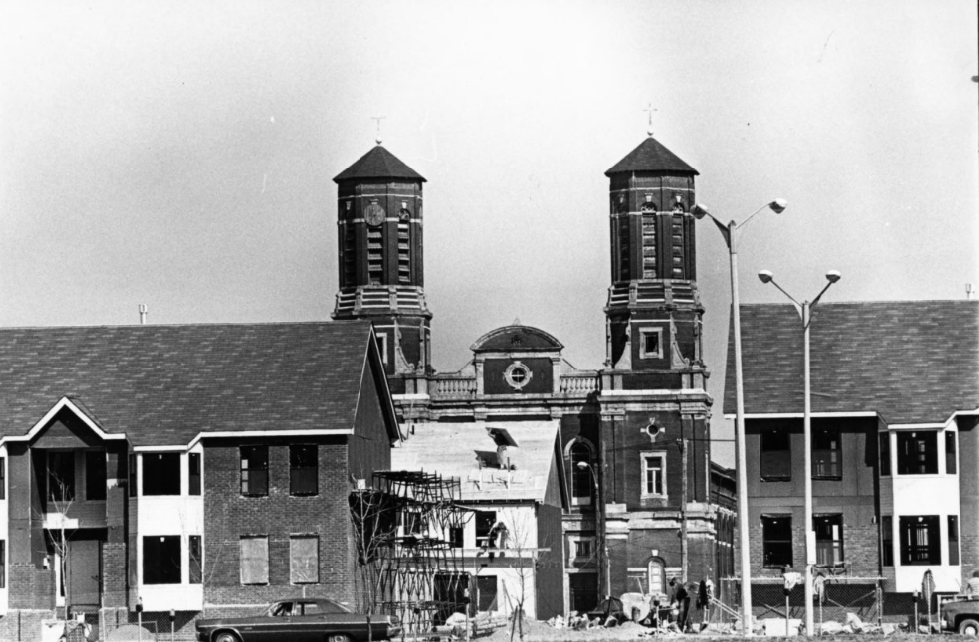
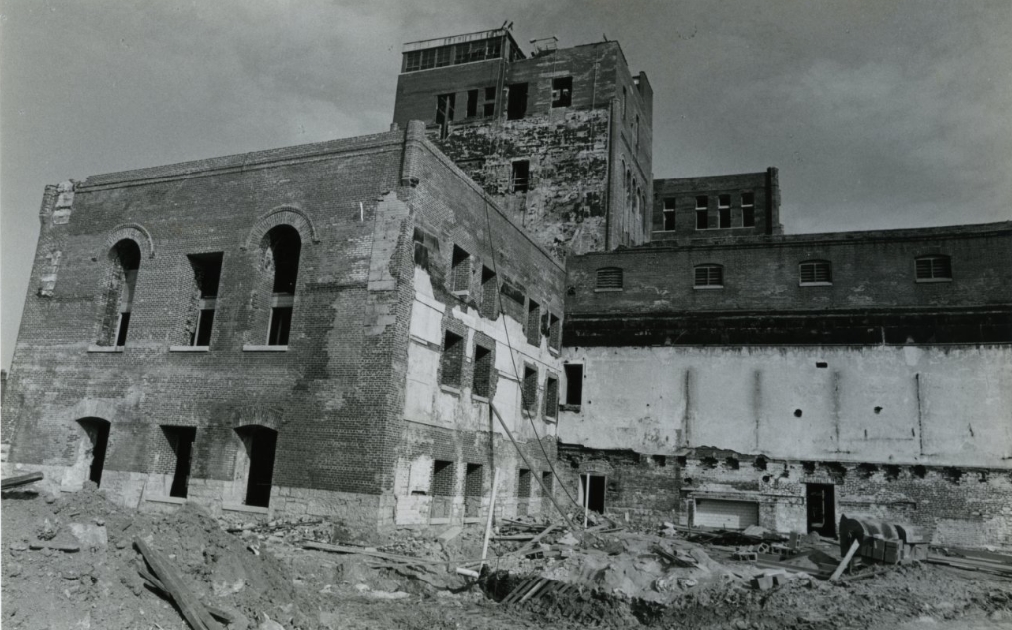
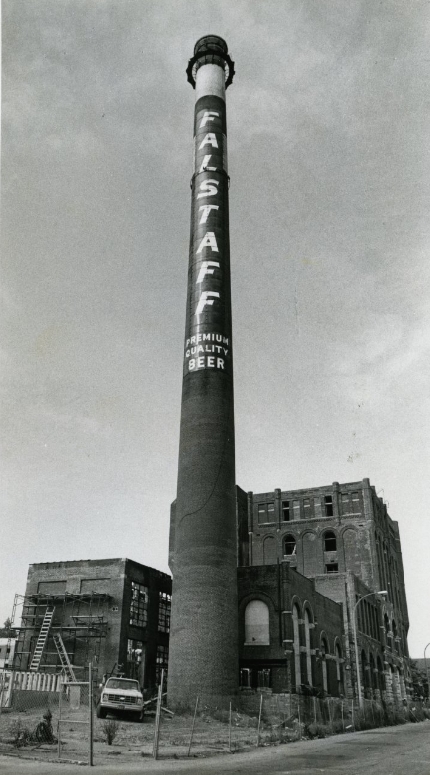
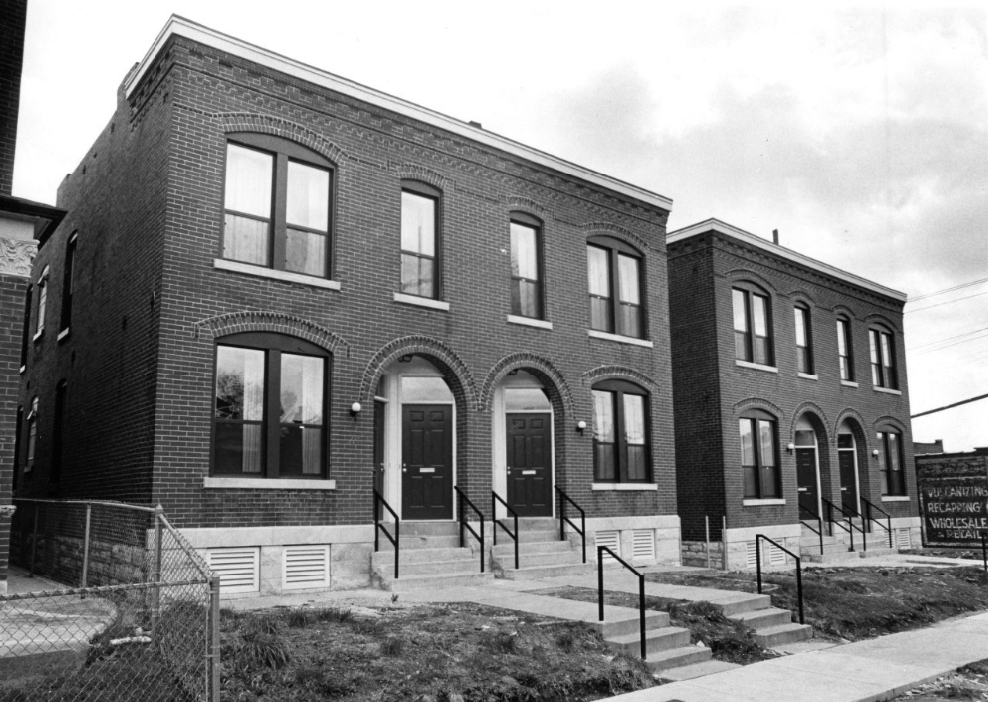
Downtown housing construction was one of the more active sectors of St. Louis real estate throughout the 1980s. Columbus Square, near the Cervantes Convention Center, added townhouses and new apartment units as part of a broader effort to bring residents back to the urban core. A caption from 1981 notes that the downtown construction boom had created 85,000 new jobs in the St. Louis area over the prior decade. New housing developments like St. Louis Place Apartments, created from the shell of the old Falstaff Brewery, brought adaptive reuse to the city before the term was widely in use.
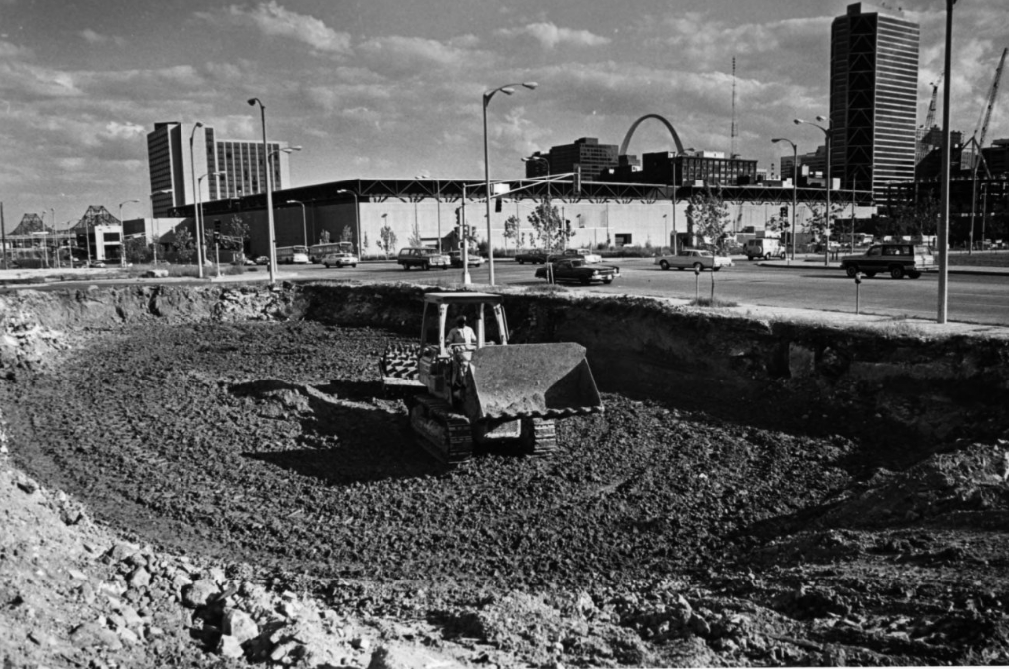
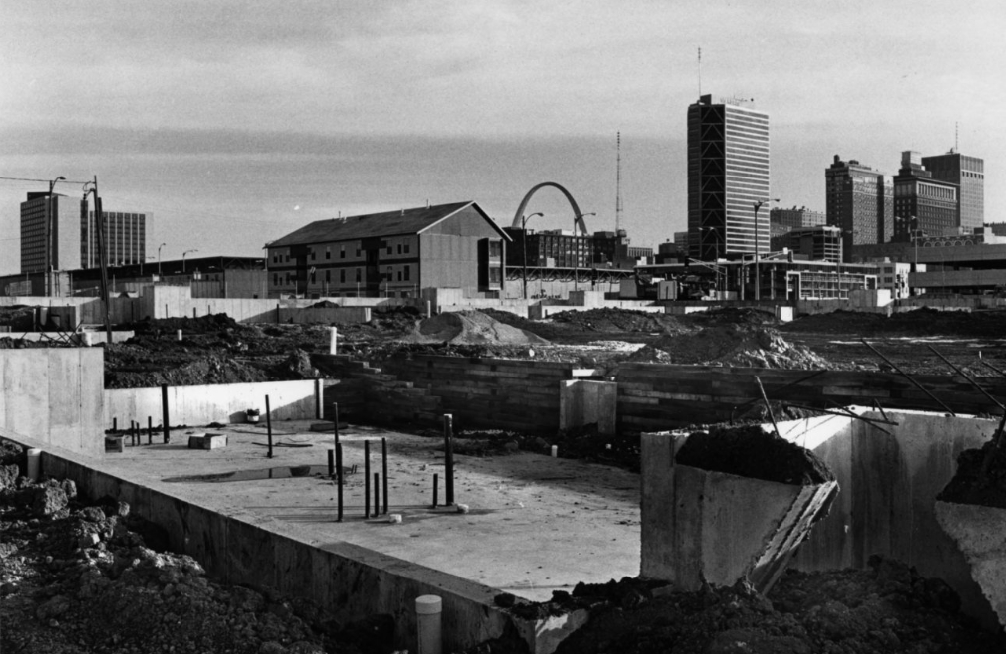
Columbus Square Apartments Construction, 1980
Housing Under Construction at Columbus Square, 1981
Columbus Square Apartments Townhouse, 1981
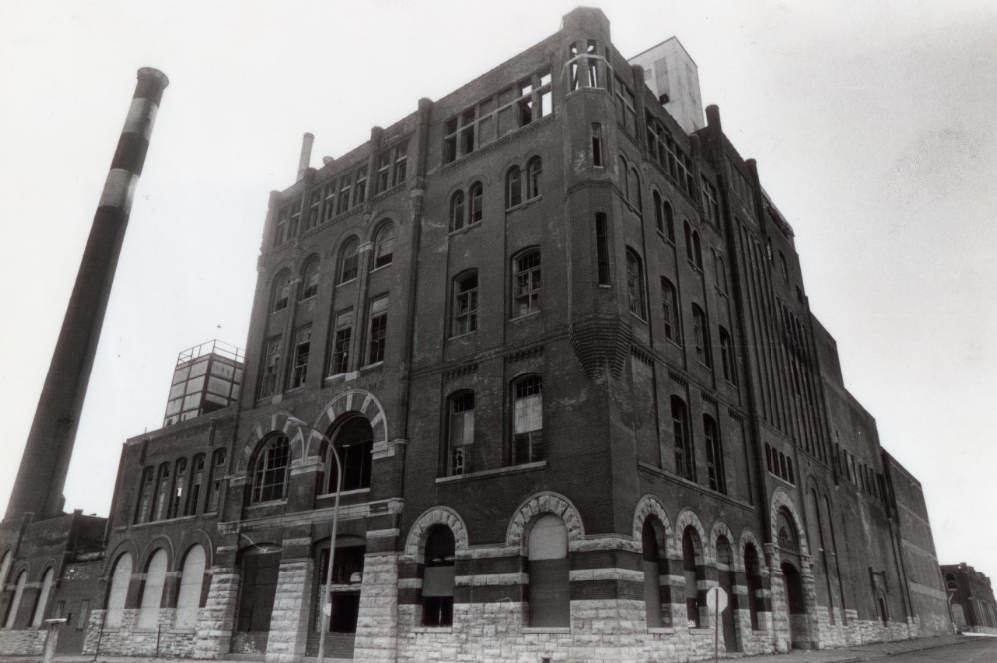
Backside of the old Falstaff brewery which is being converted into 141 apartments called St. Louis Place Apartments, 1986

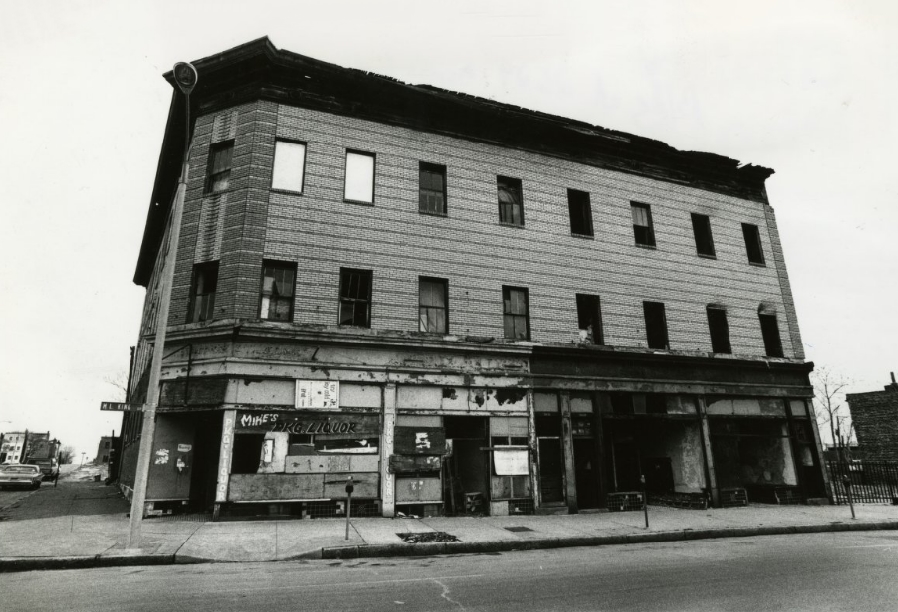
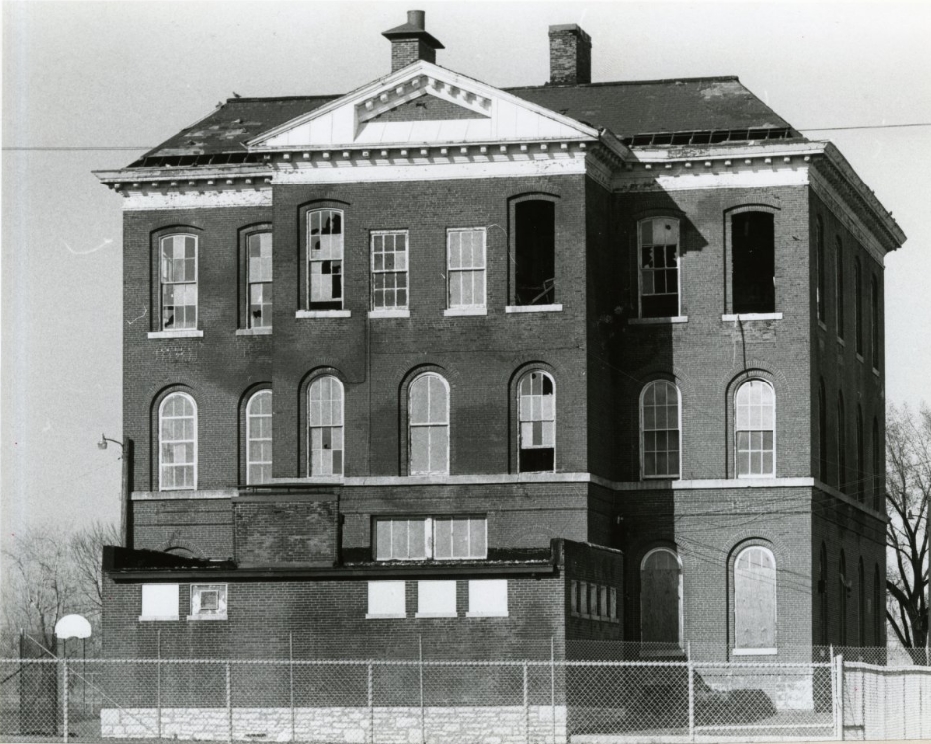
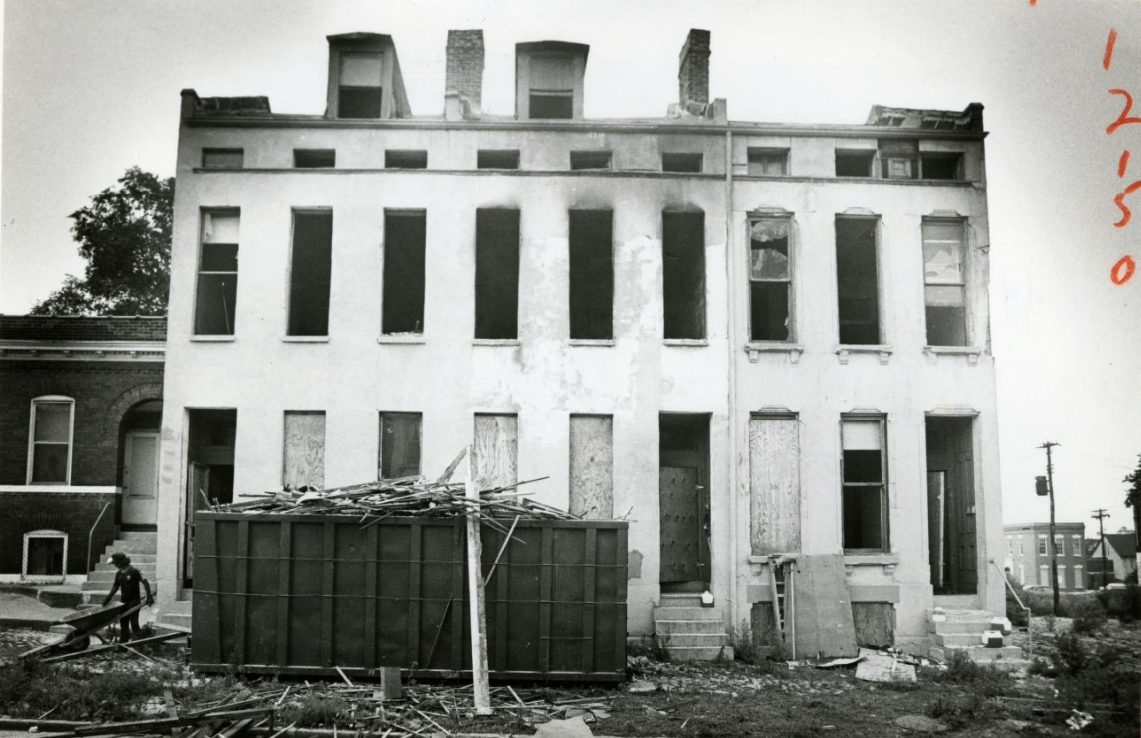
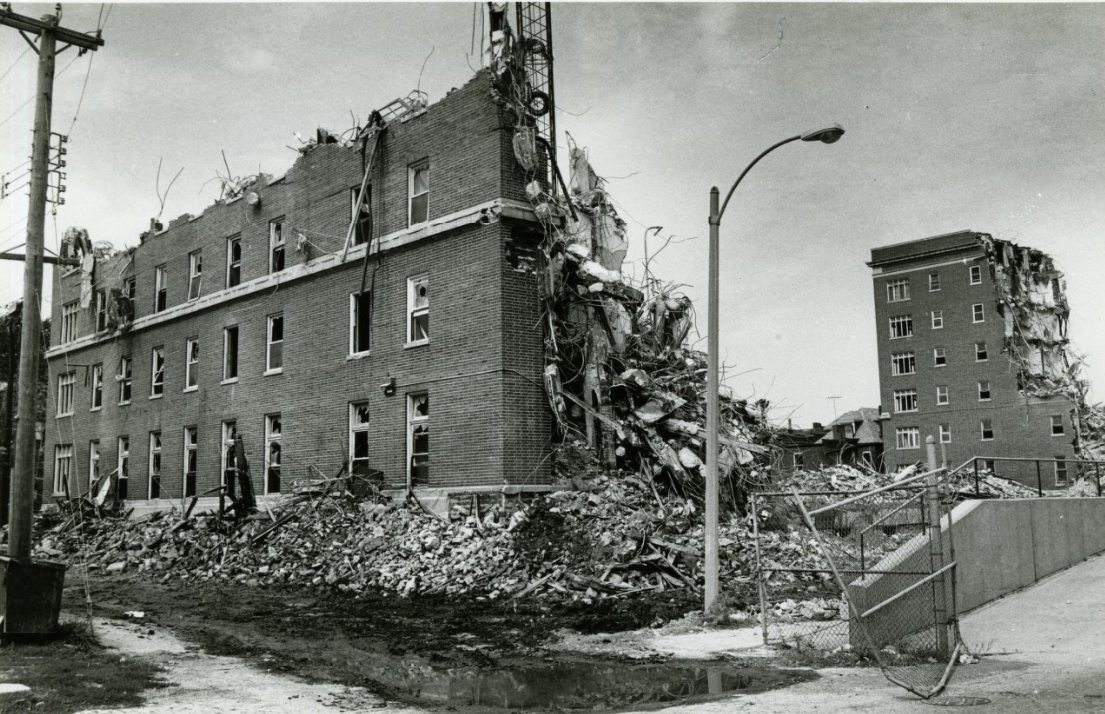
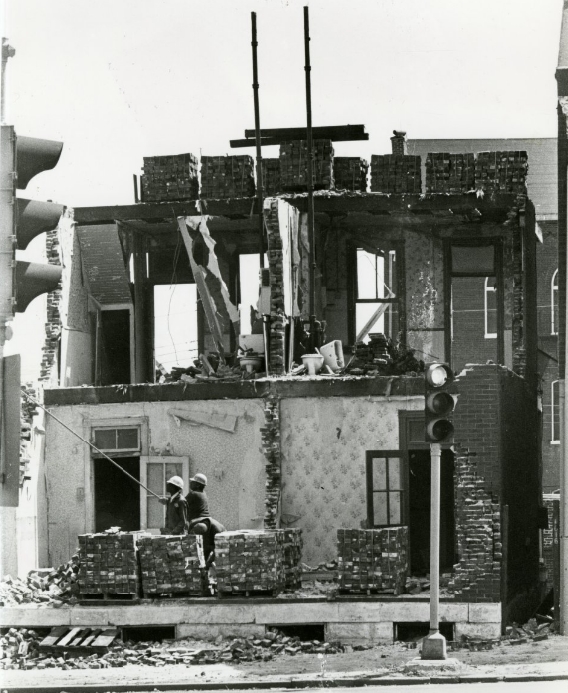
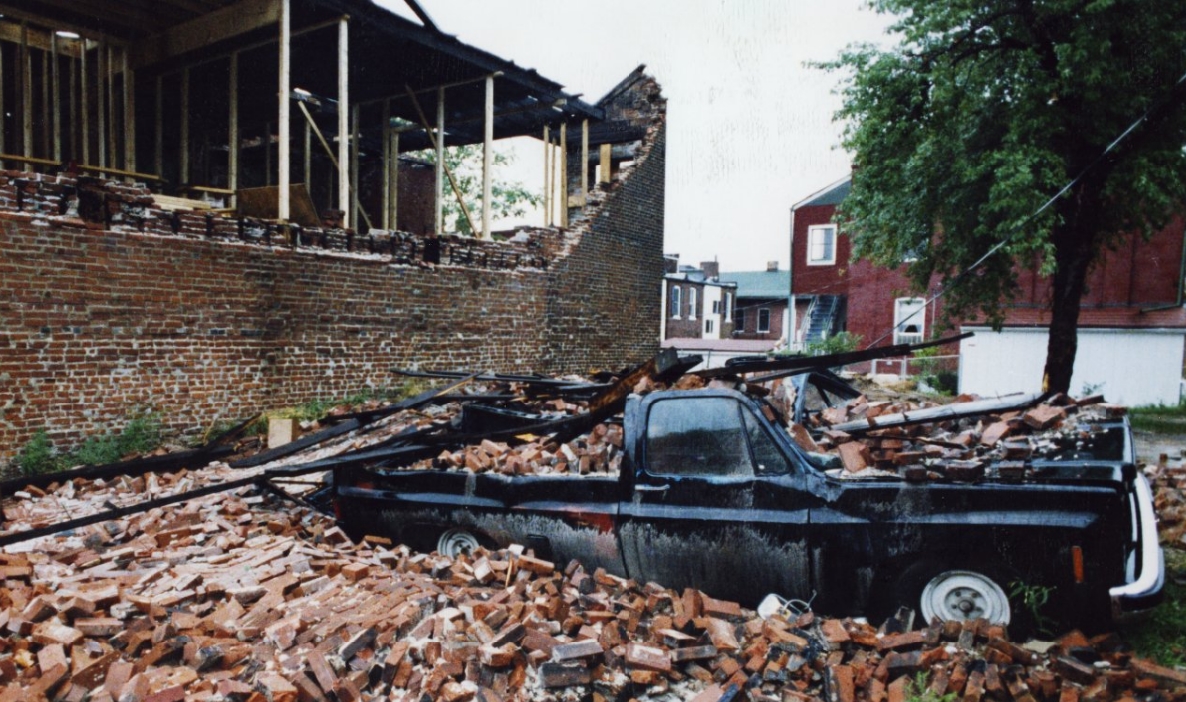
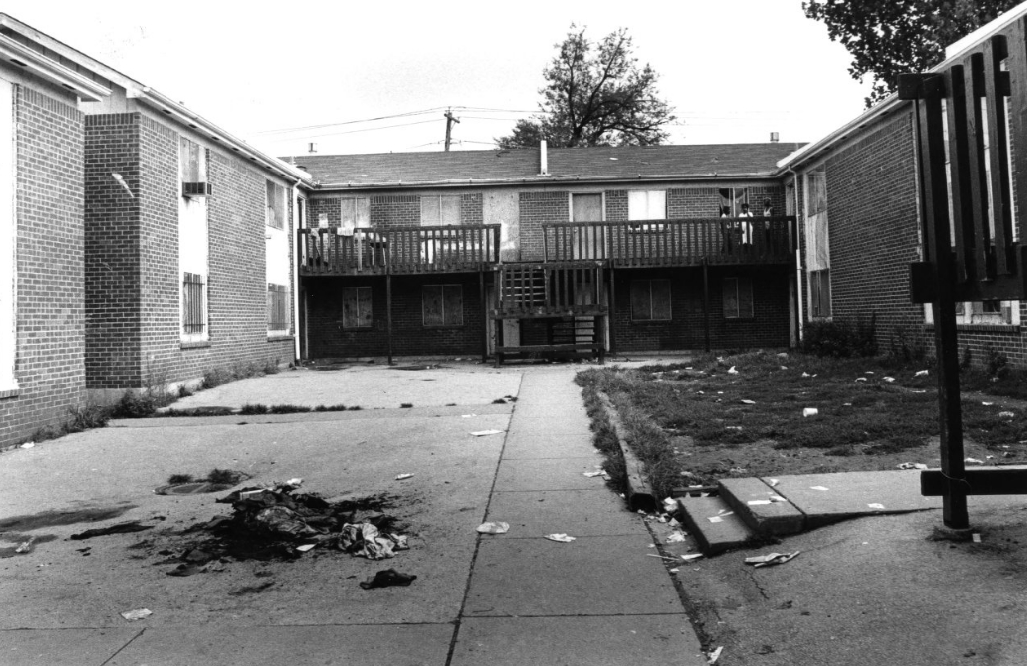
Not every corner of the city was growing. Large stretches of St. Louis faced depopulation and decay. Vacant buildings stood behind schools, on prominent corners, and along major streets. In 1980, a roof collapsed on St. Louis Avenue. In 1983, a pickup truck was crushed on South 8th Street. A building at 10th and Cass collapsed entirely in 1980. At Lafayette and Grattan, a structure west of City Hospital was demolished in 1984. These were not isolated incidents — they were regular features of city life in neighborhoods hit hardest by the loss of manufacturing jobs and the long-term effects of segregation and disinvestment.
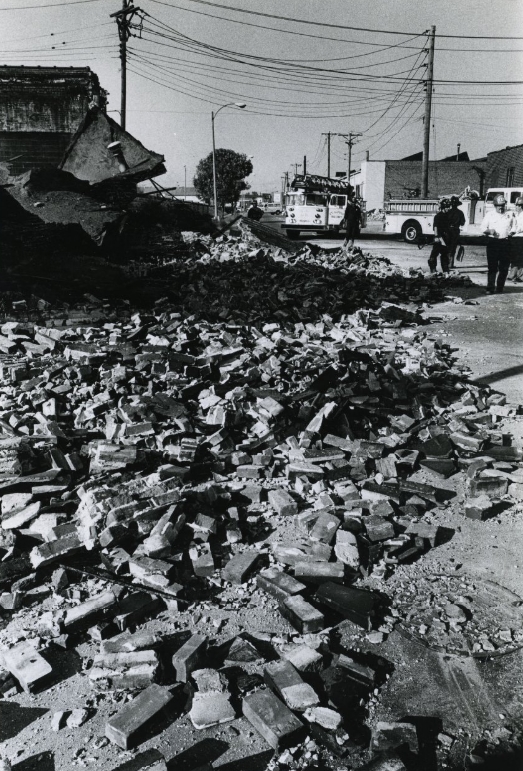
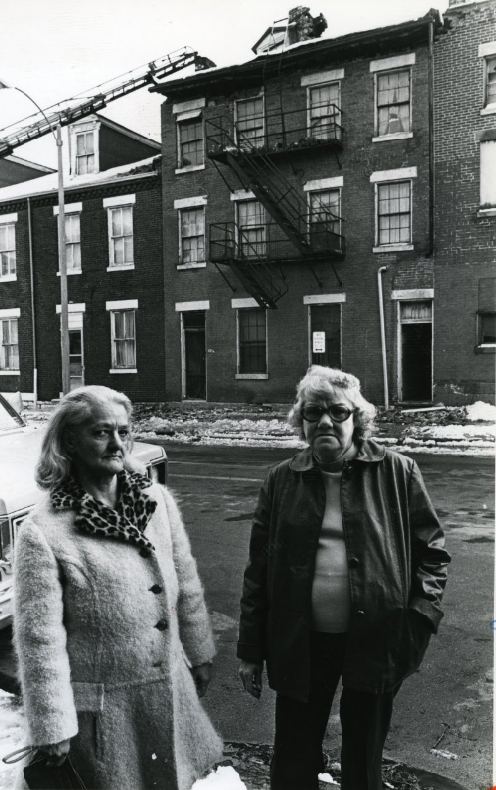
10th and Cass - Vacant Building Collapse, 1980
10th and Cass – Vacant Building Collapse, 1980
St. Louis Avenue - Roof Collapse, 1980
St. Louis Avenue – Roof Collapse, 1980
Derelict Building, 1985
This deserted building stands behind Carr School, at the corner of Carr and 15th Streets, just north of downtown, 1986

Some demolition was planned. The Buder Building, a downtown structure with preservationist supporters, was imploded in 1984 despite the protests of the past president of the Market Preservation Society, who stood outside it in a final act of opposition. Deliberate demolitions like the one at Tucker Boulevard and Lafayette Street were carefully staged, not chaotic. Elsewhere, a vacant residential building was torched ahead of its scheduled renovation in 1981, a practice used to expedite clearance of certain properties.
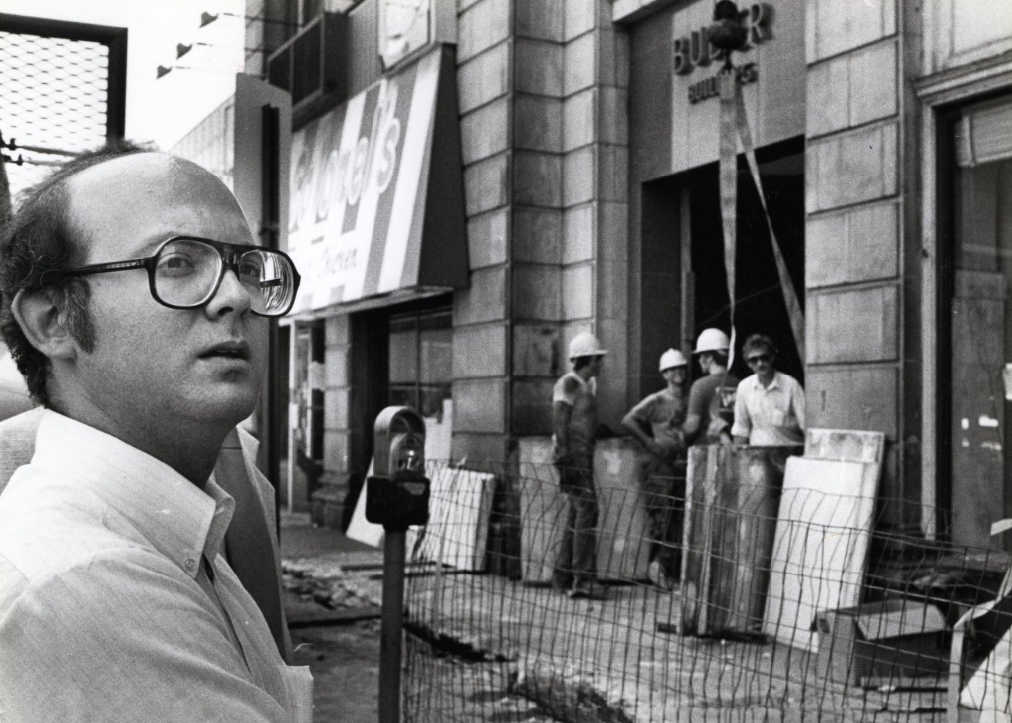
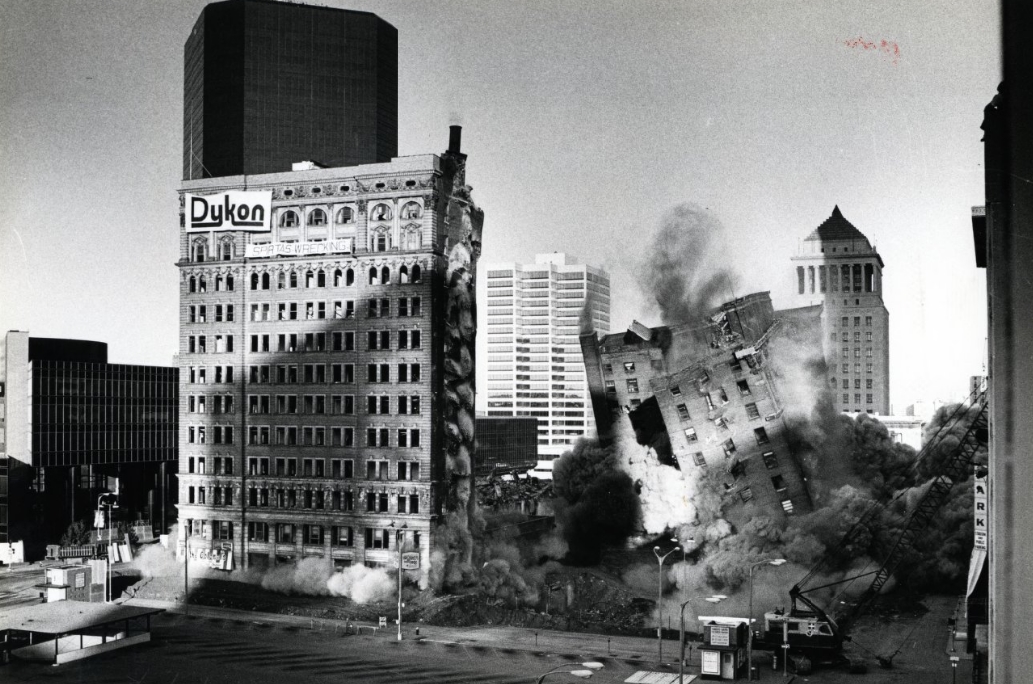
Past President of Market Preservation Soc. Standing Outside Buder Building, 1984
Buder Building Implosion Downtown, 1984
Torching Of A Vacant Residential Building Ahead Of Its Scheduled Renovation, 1981

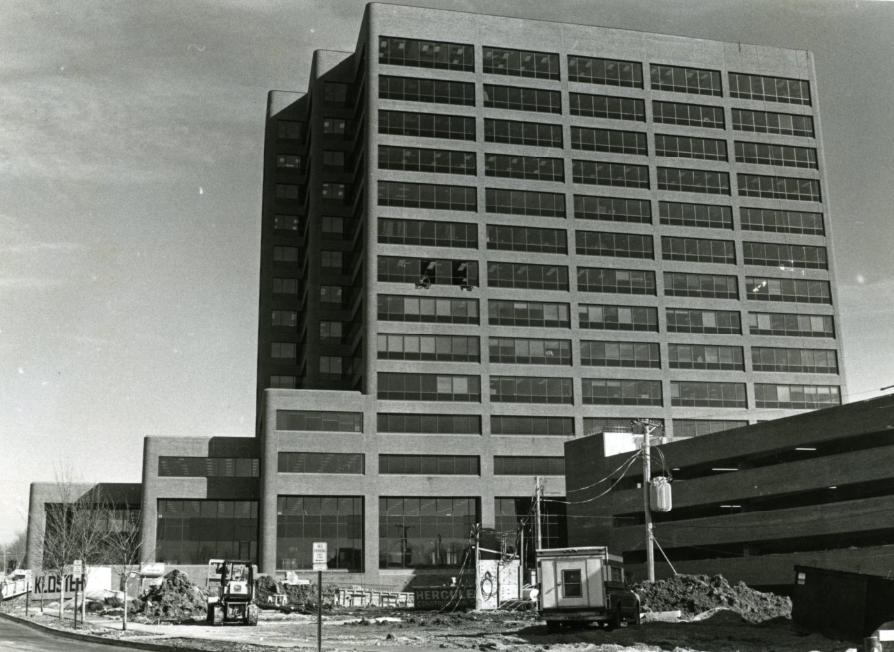
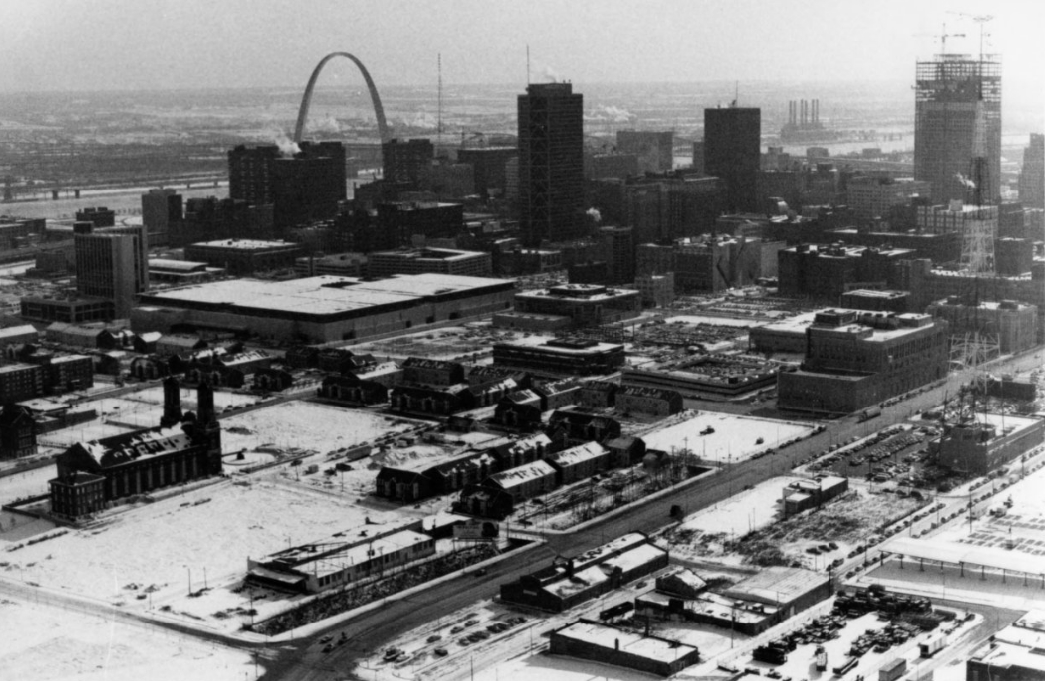
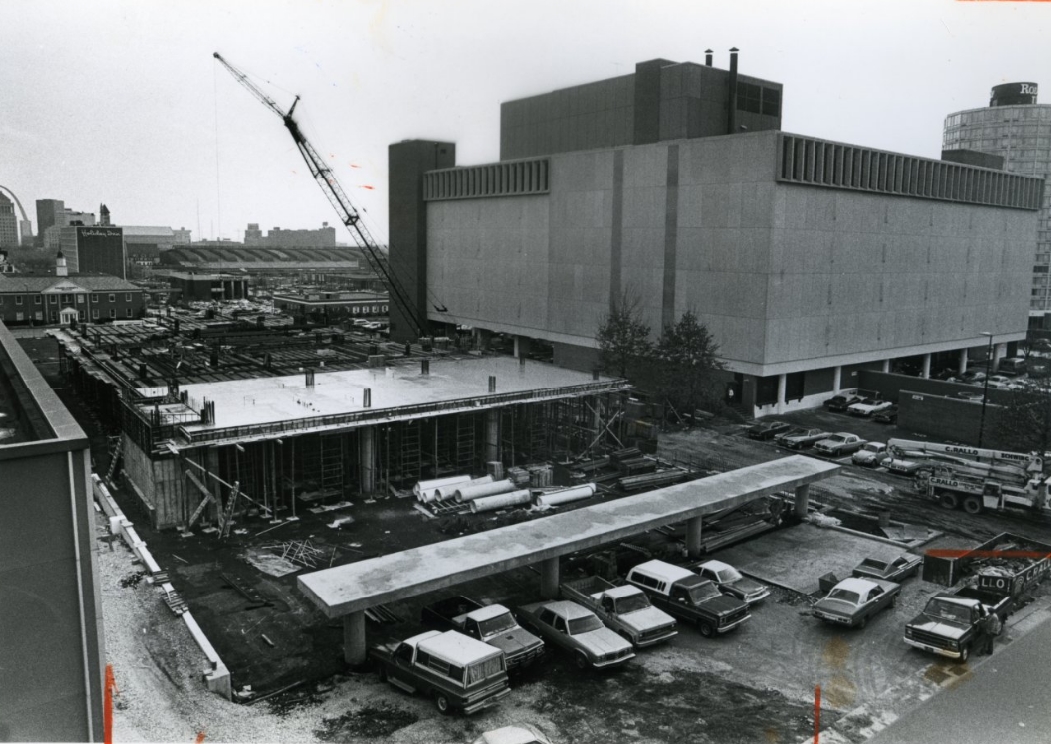
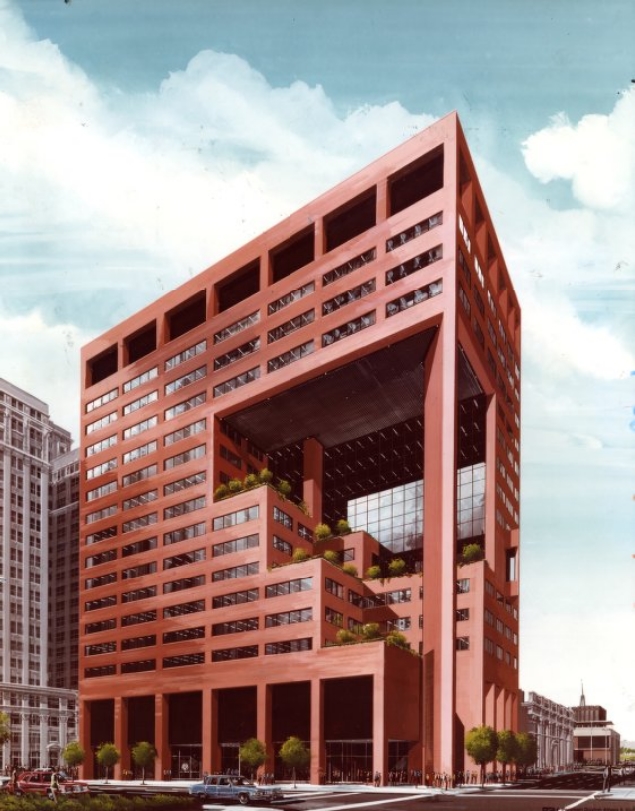
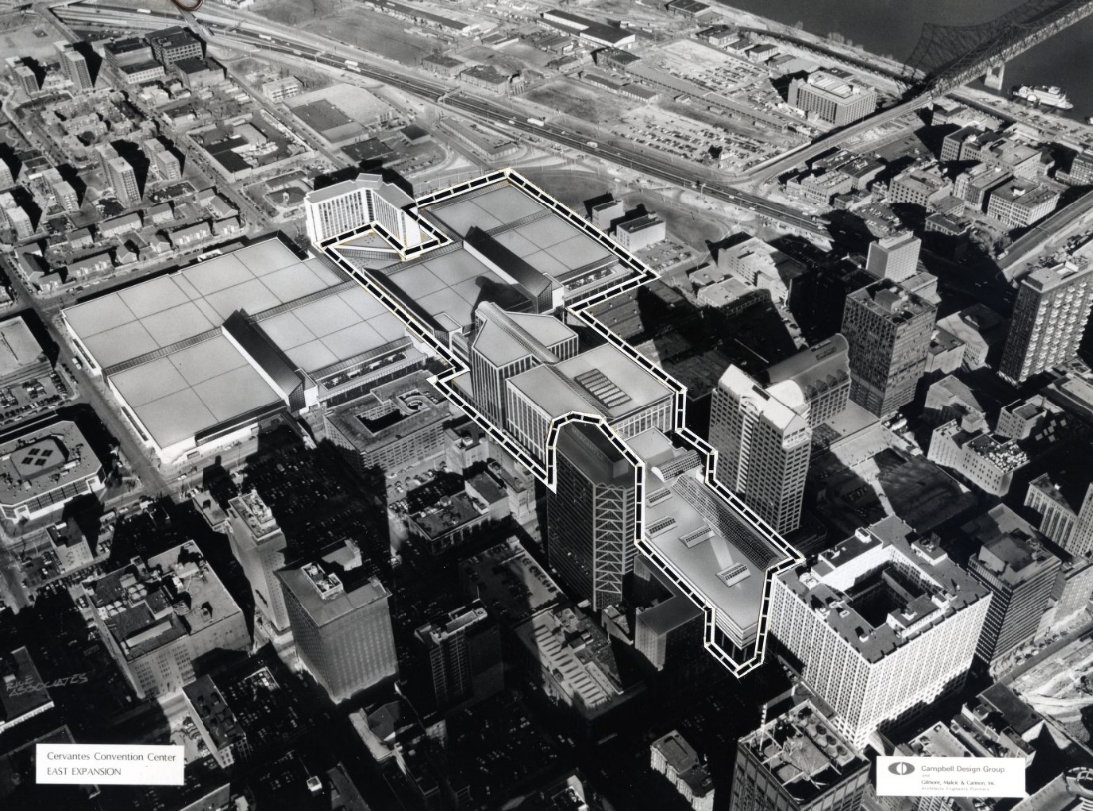
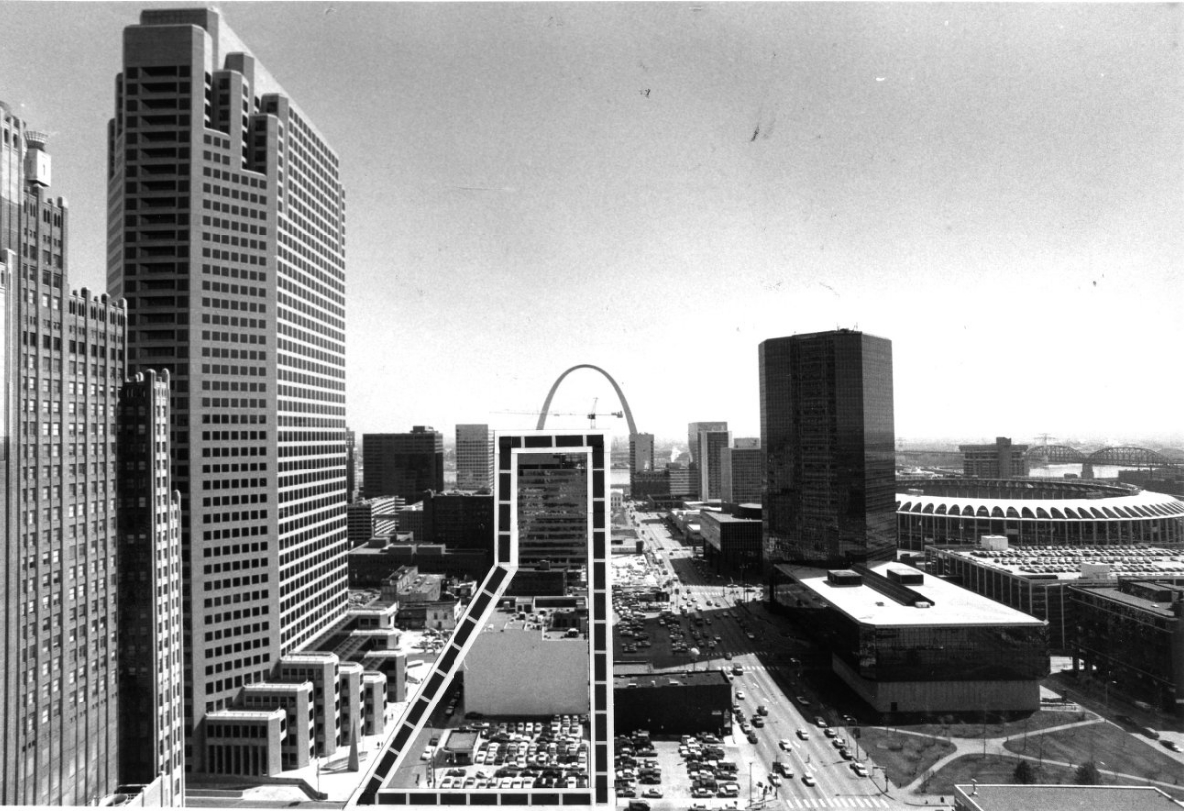
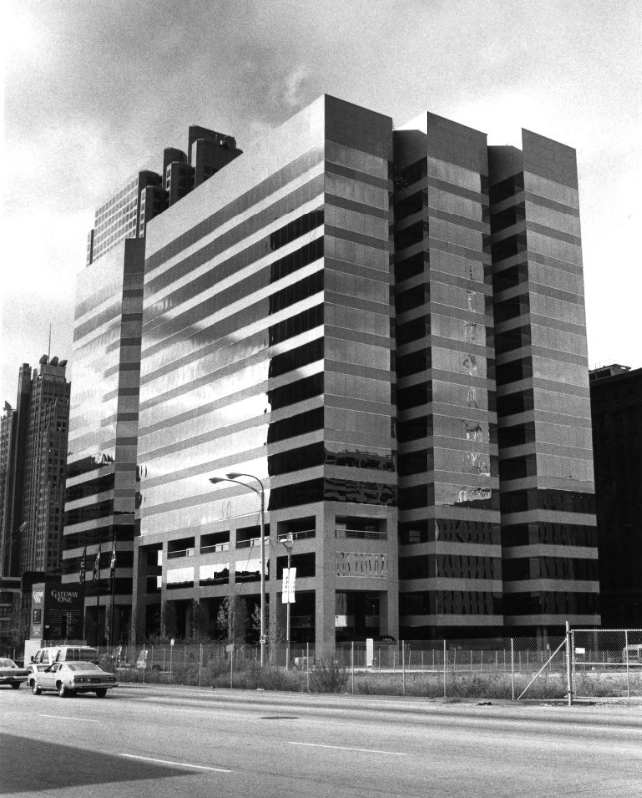
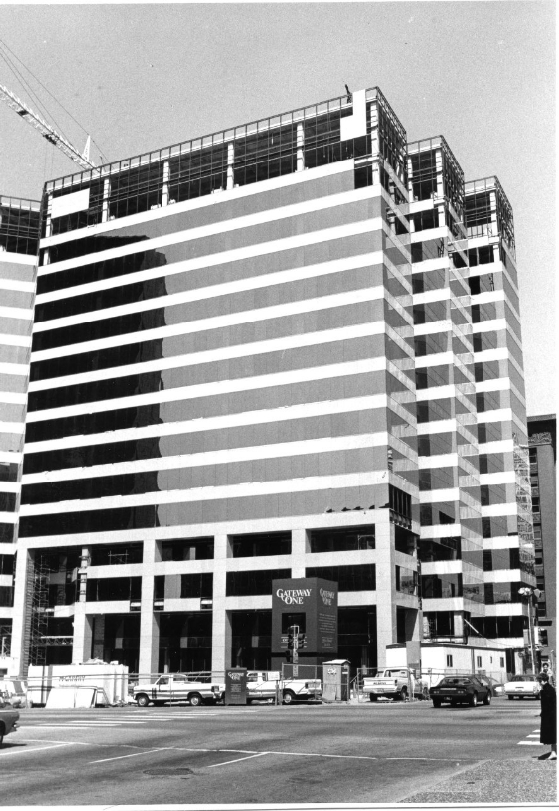
The Gateway One complex, a major downtown office development, was under construction by 1986. Aerial photographs showed the scale of the project — multiple towers rising near the base of the Gateway Arch. The Cervantes Convention Center, already operating by mid-decade, anchored the convention district. The Chemical Building, meanwhile, made headlines in 1986 for a different reason: the discovery of asbestos in its walls, a problem that forced costly abatement work and raised questions about other aging downtown properties.
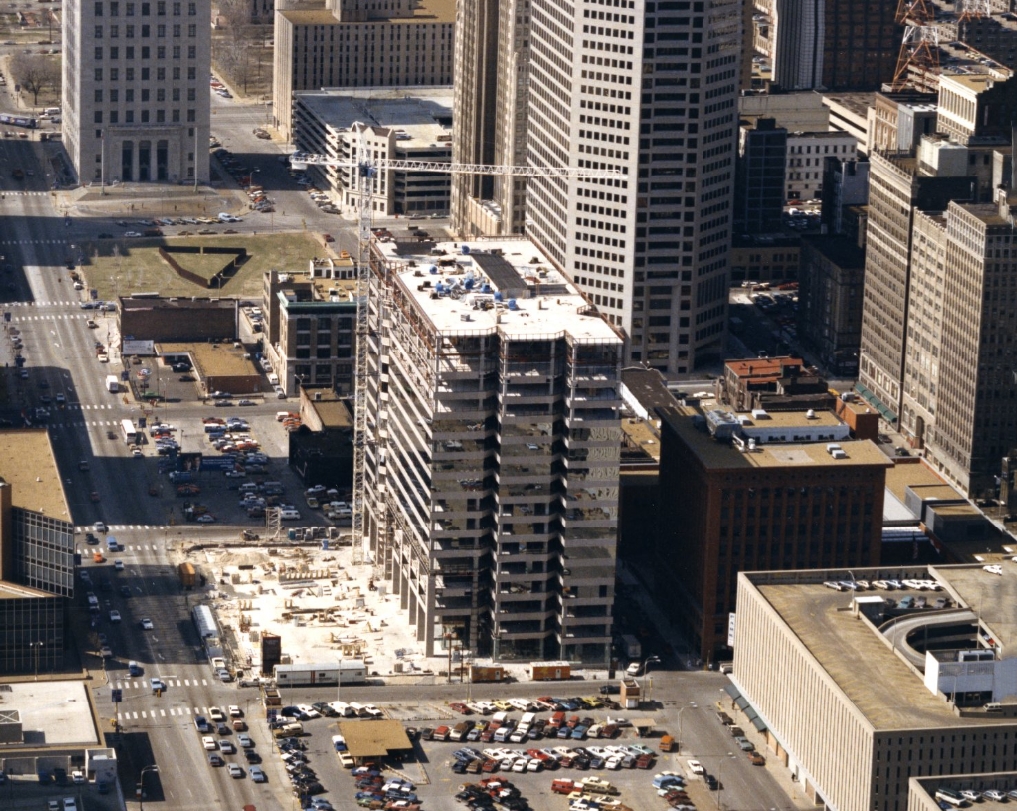
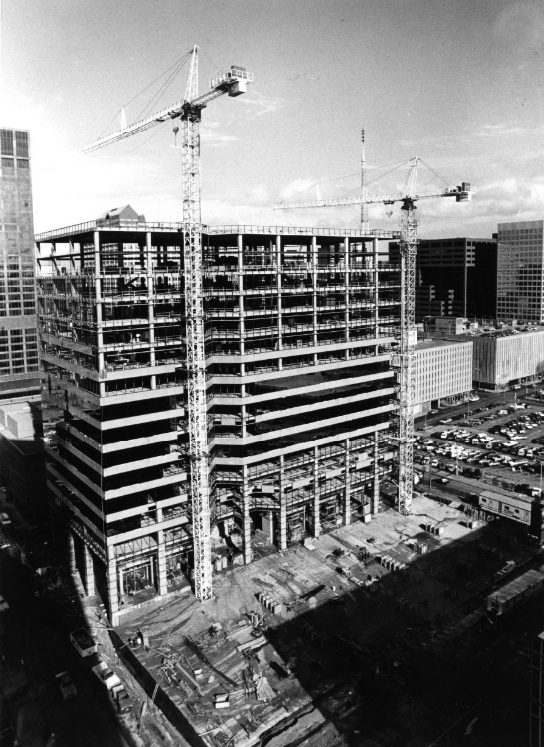
Aerial View of the Gateway One Construction, 1986
Gateway Tower Building Construction, 1986
Cervantes Convention Center Sunday, 1986
Chemical Building Asbestos, 1986

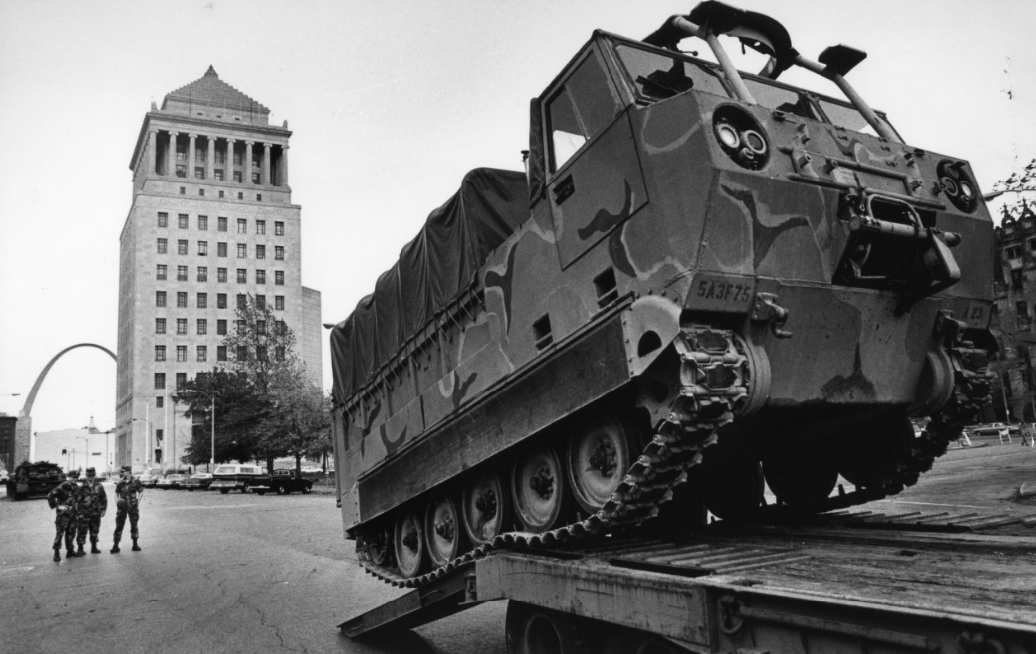
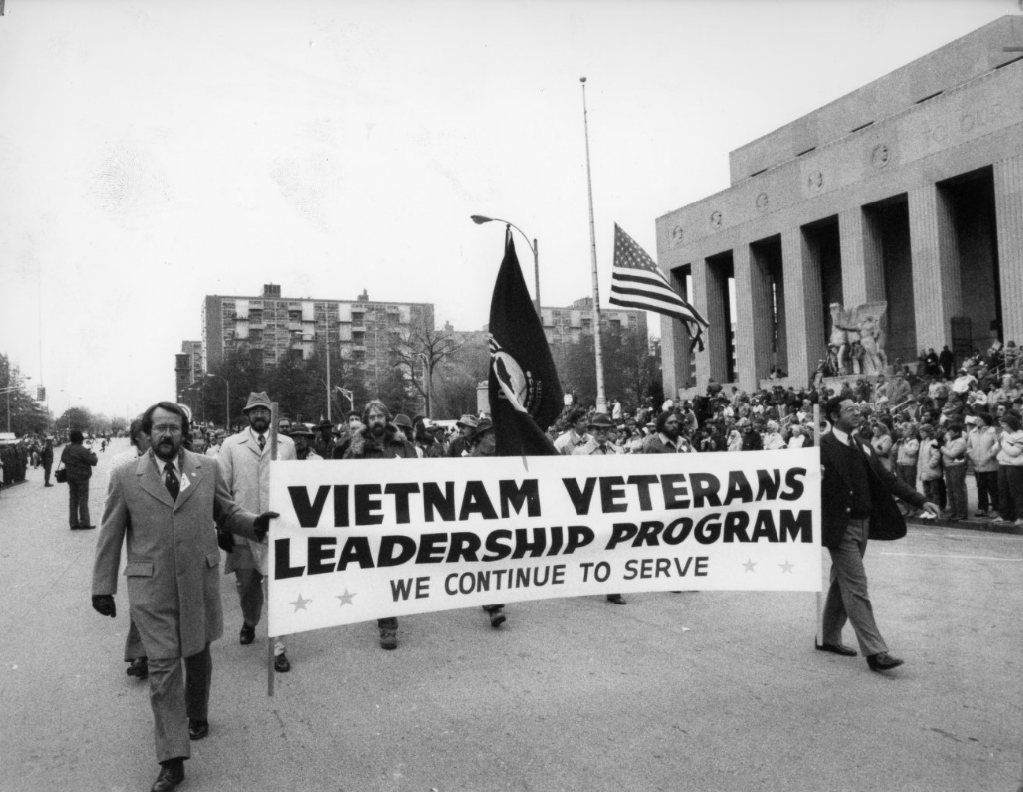
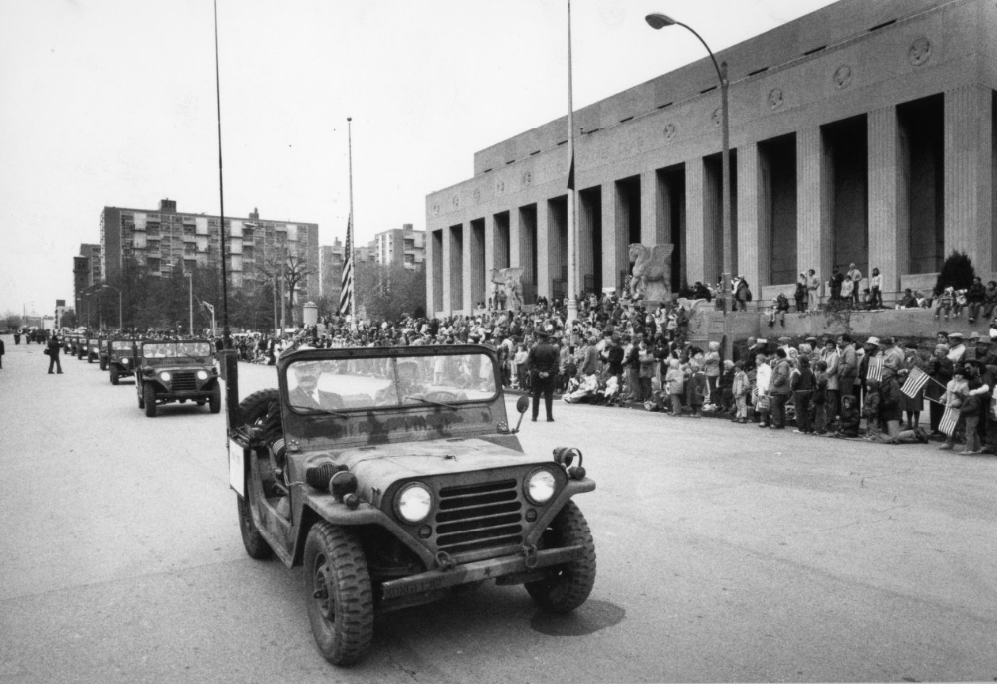
Jefferson Barracks, located on the city’s southern edge along the Mississippi River, served dual roles in the 1980s. Its historic grounds housed a military museum, while the Missouri National Guard maintained an active armory nearby. Veterans Day parades moved through downtown streets, with U.S. Army units rolling ammunition carriers past the Soldiers Memorial on Chestnut Street. The Vietnam Veterans Leadership Program had a visible presence in the city by 1983, working to connect returning veterans with jobs and housing during a period when their needs were only beginning to receive serious public attention.
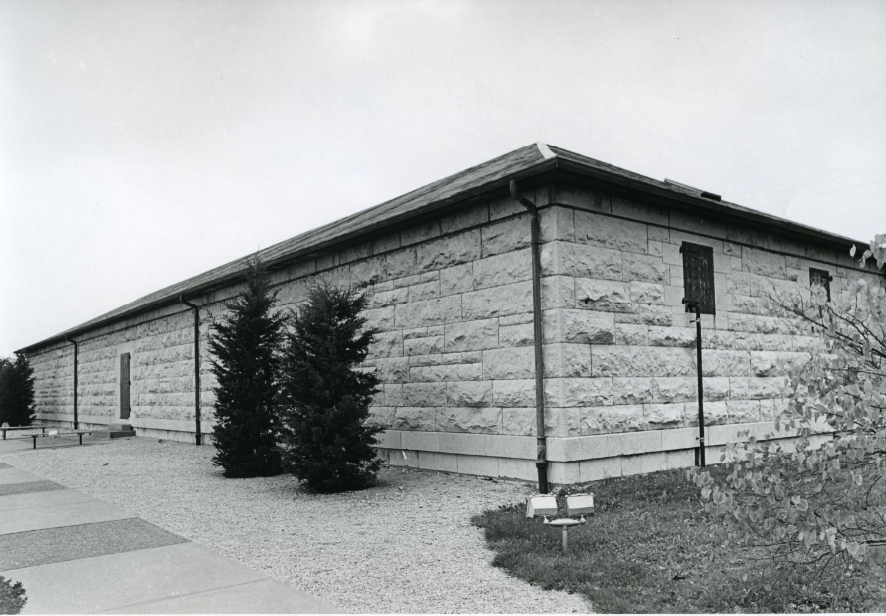
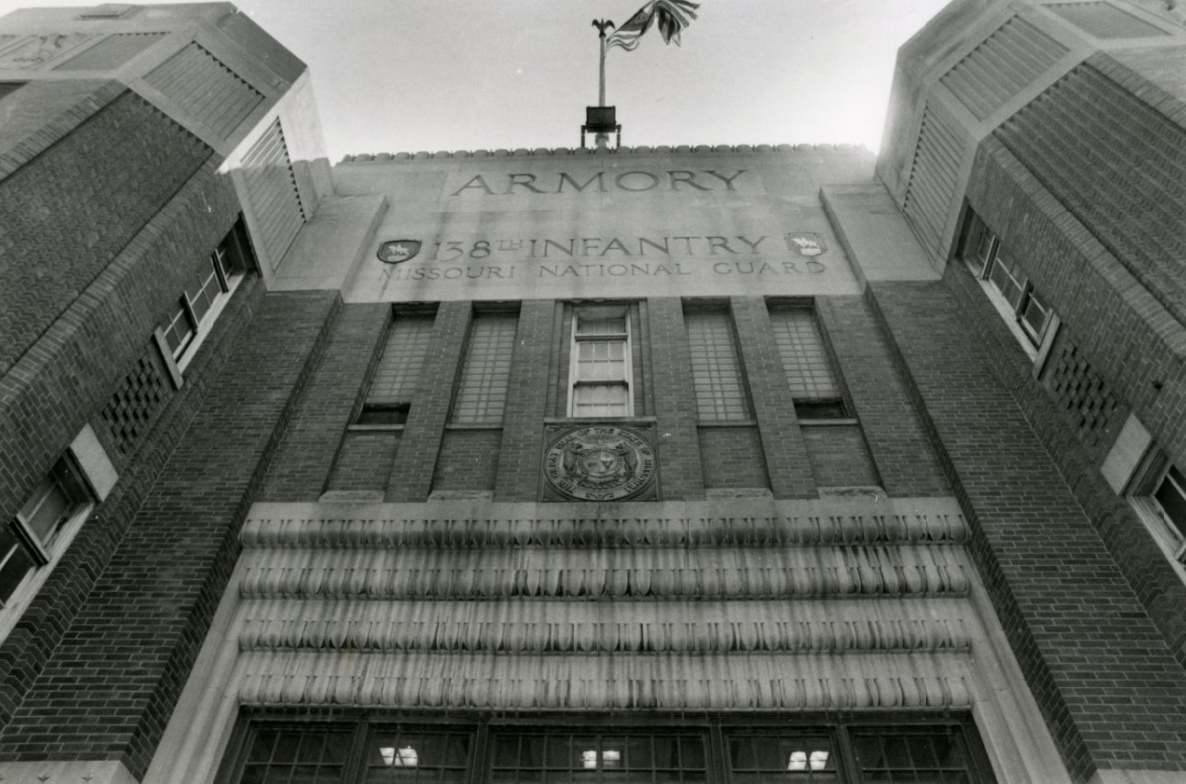
Jefferson Barracks Museum was originally the location of a military base, 1988
Armory 138th Infantry Missouri National Guard, 1986
Ammo Carrier for Veterans Day Parade, 1984
Vietnam Veterans Leadership Program, 1983

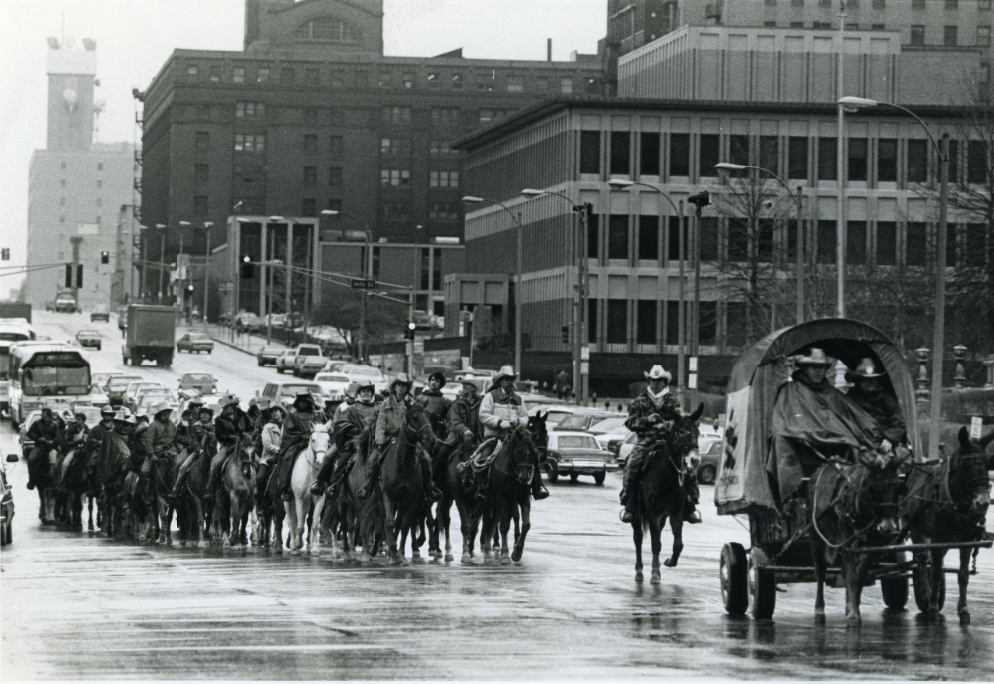
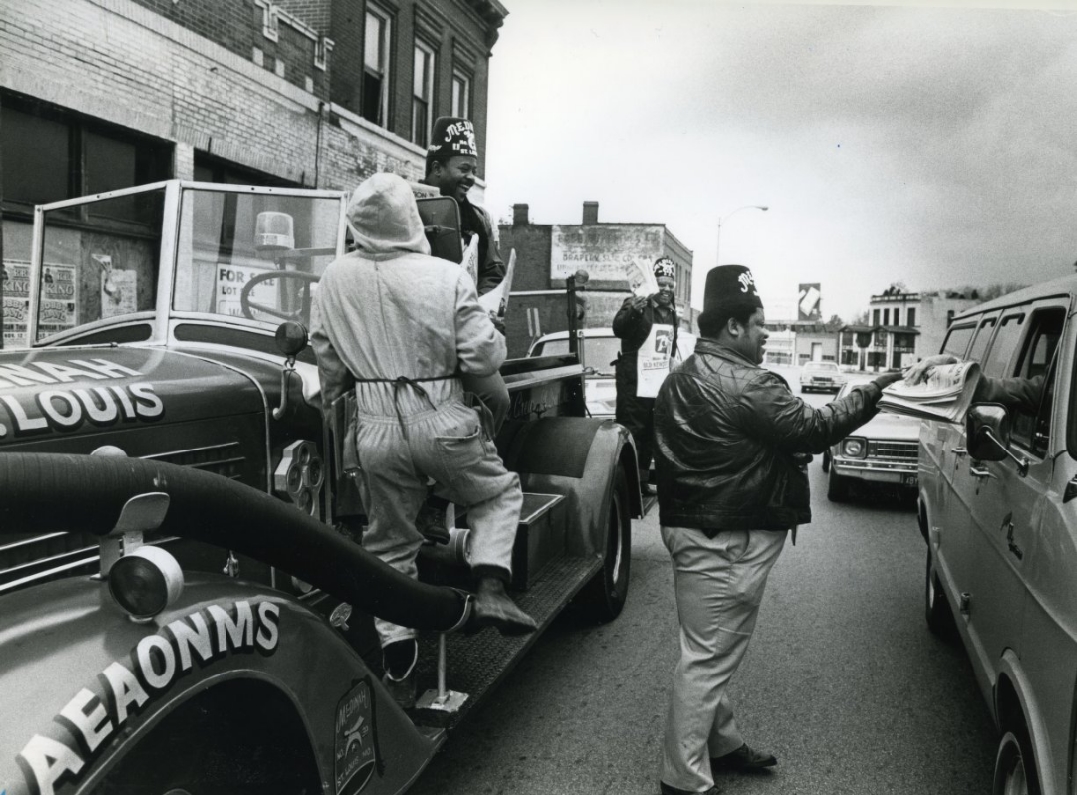
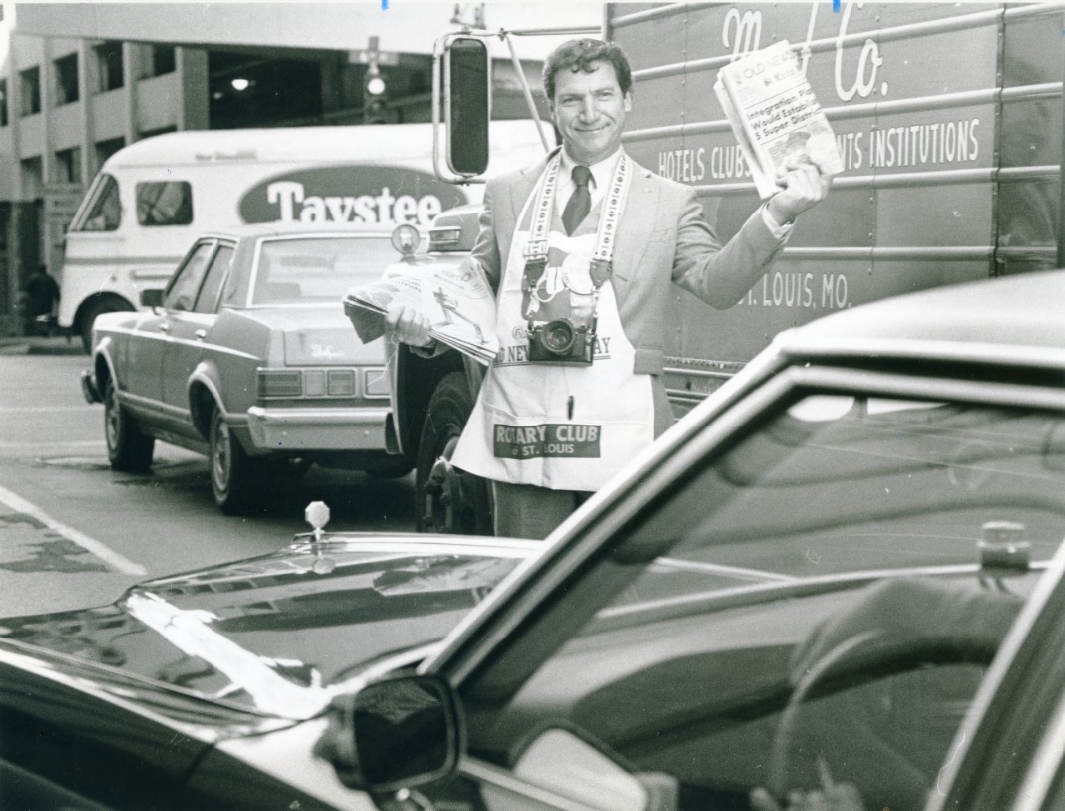
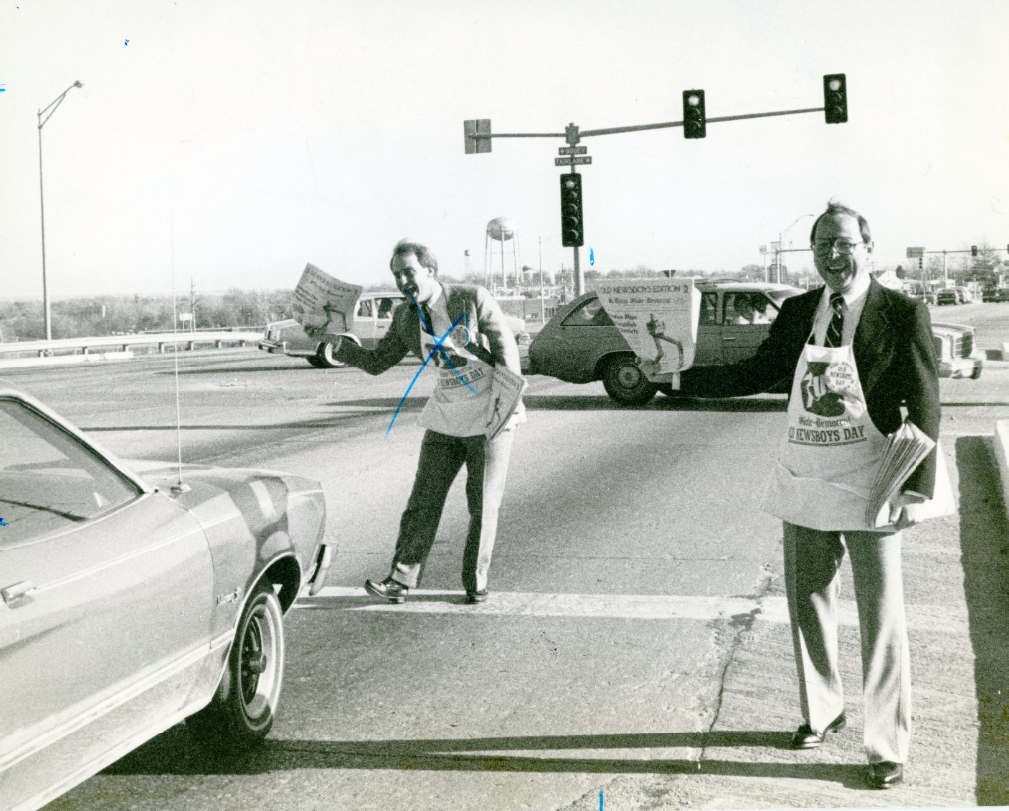
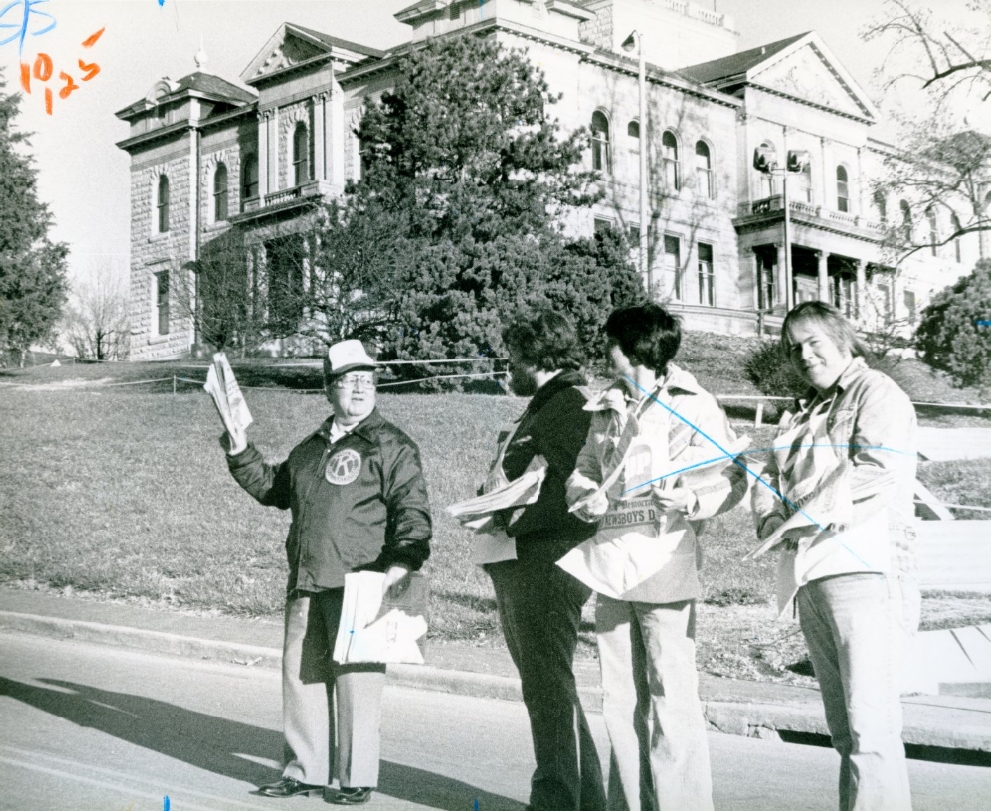
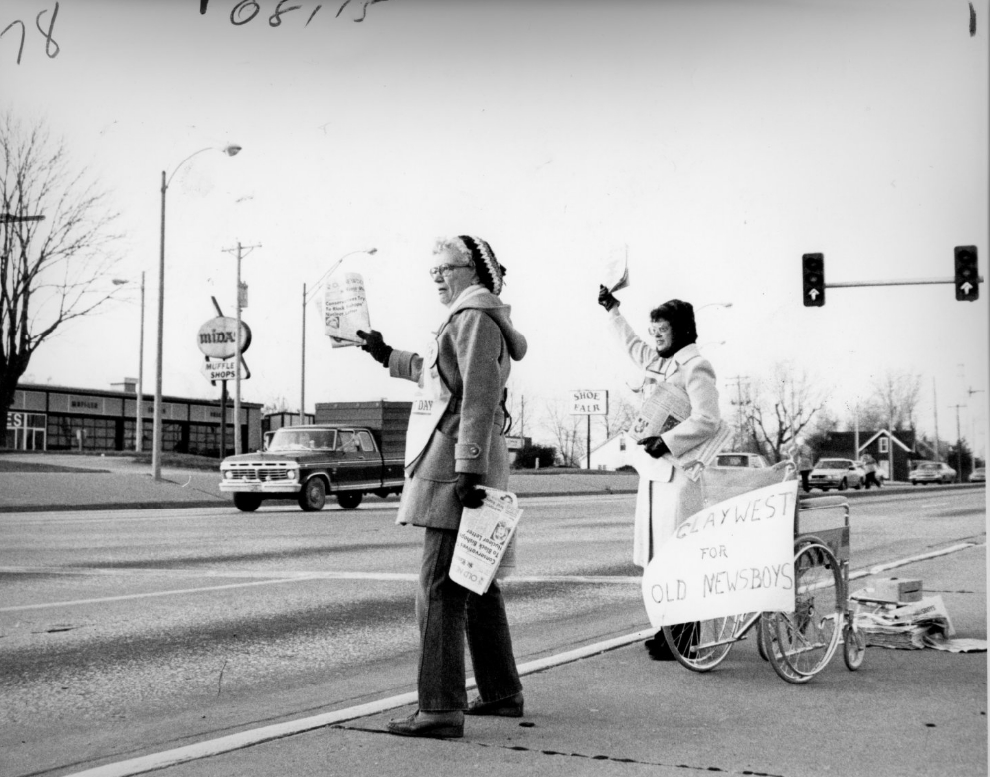
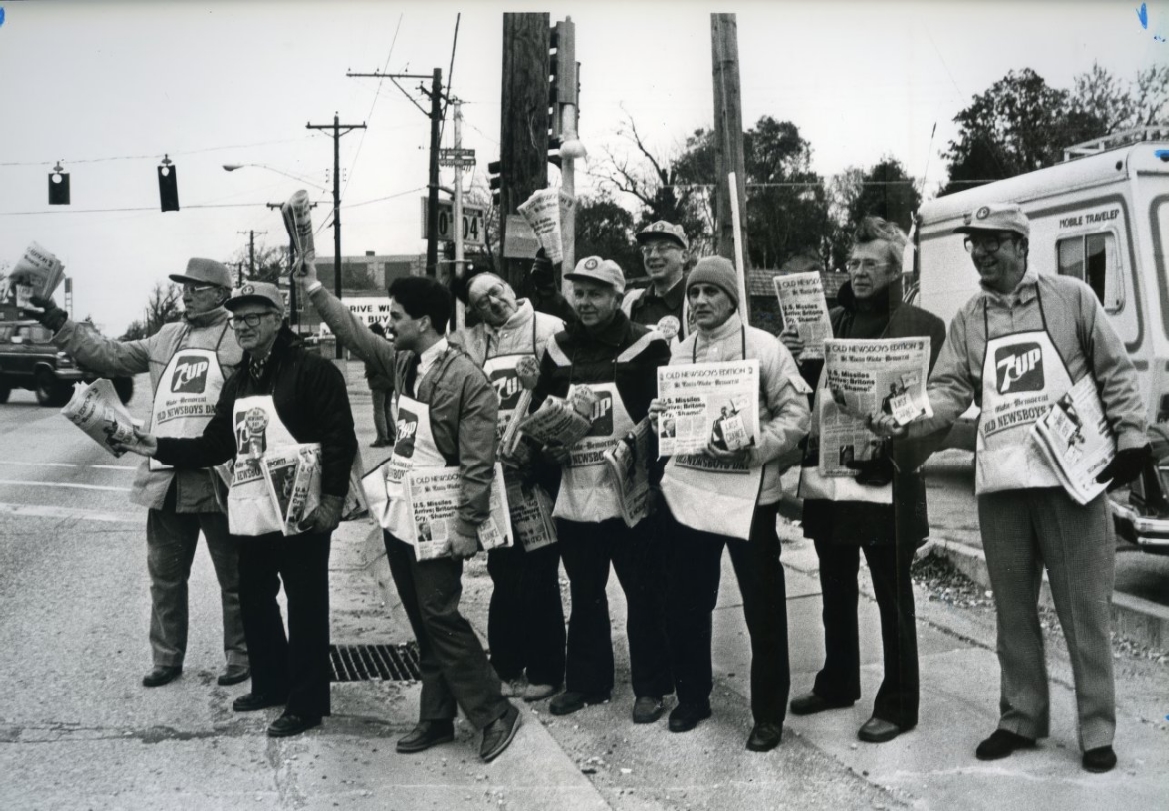
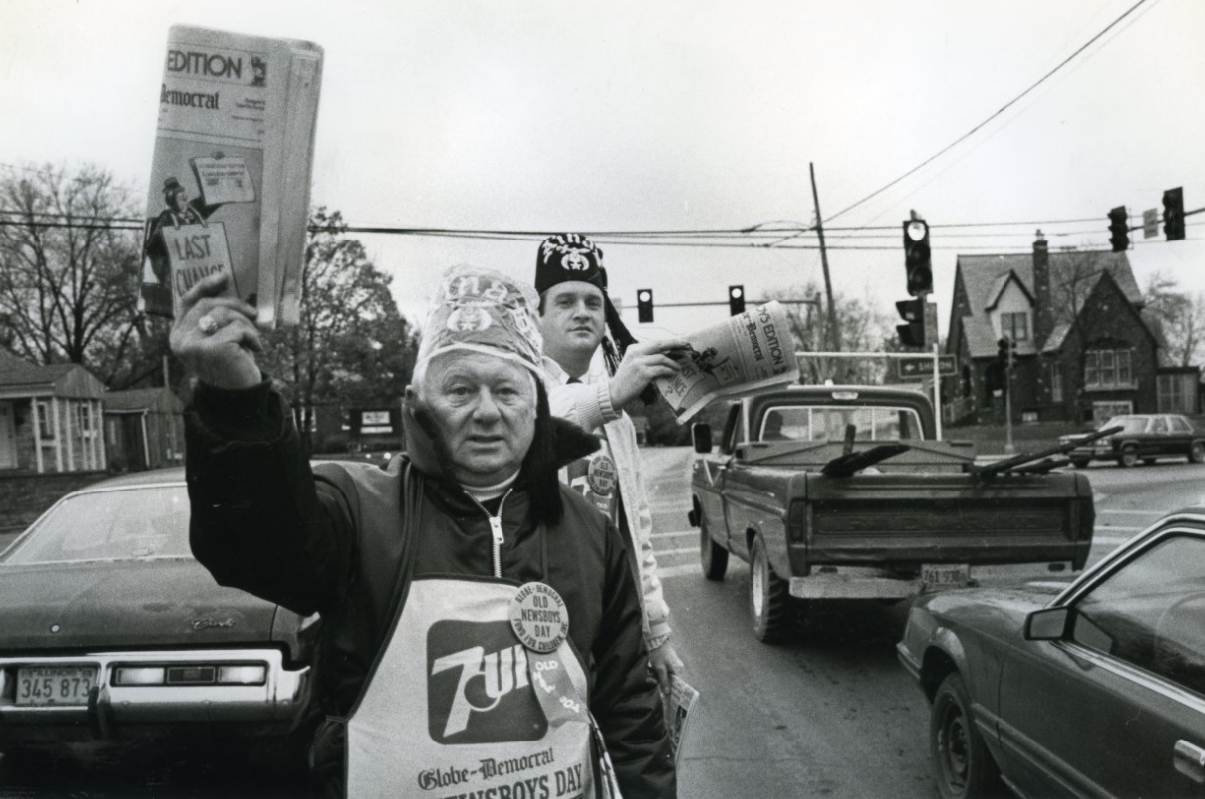
Community life took many forms across the city. The Ferguson Lions Club, the Prince Hall Shriners of Medinah Temple, and the Dania Shrine Club all held events documented by photographers during the decade. The Old Newsboys, a charity group that sold papers to raise funds for children, gathered near the Arch in 1981. The Mehlville Optimist Club organized volunteers of all ages in 1980. The Boys Town Caravan rolled down Olive Street in 1984. These civic organizations maintained the connective tissue of neighborhoods that, in some cases, were otherwise fraying.
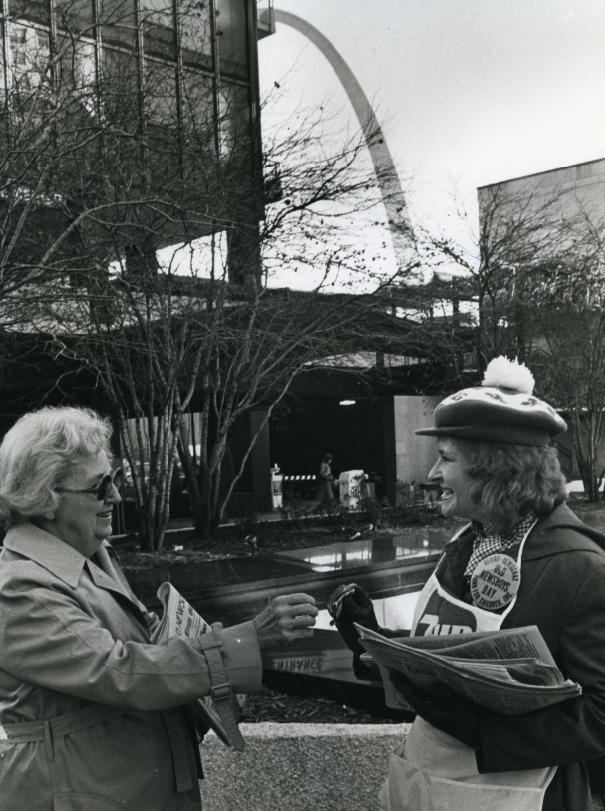
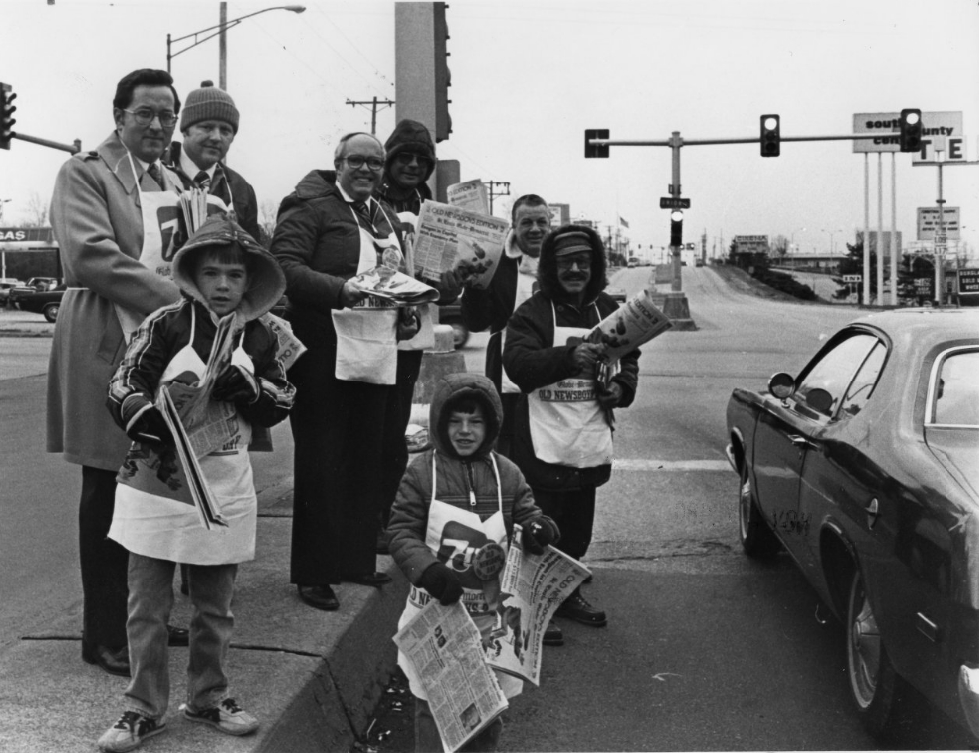
Old Newsboys and the Arch, 1981
The Mehlville Optimist Club Volunteers Of All Ages, 1980
Boys Town Caravan on Olive Street, 1984
Prince Hall Shriners of Medinah Temple, 1983

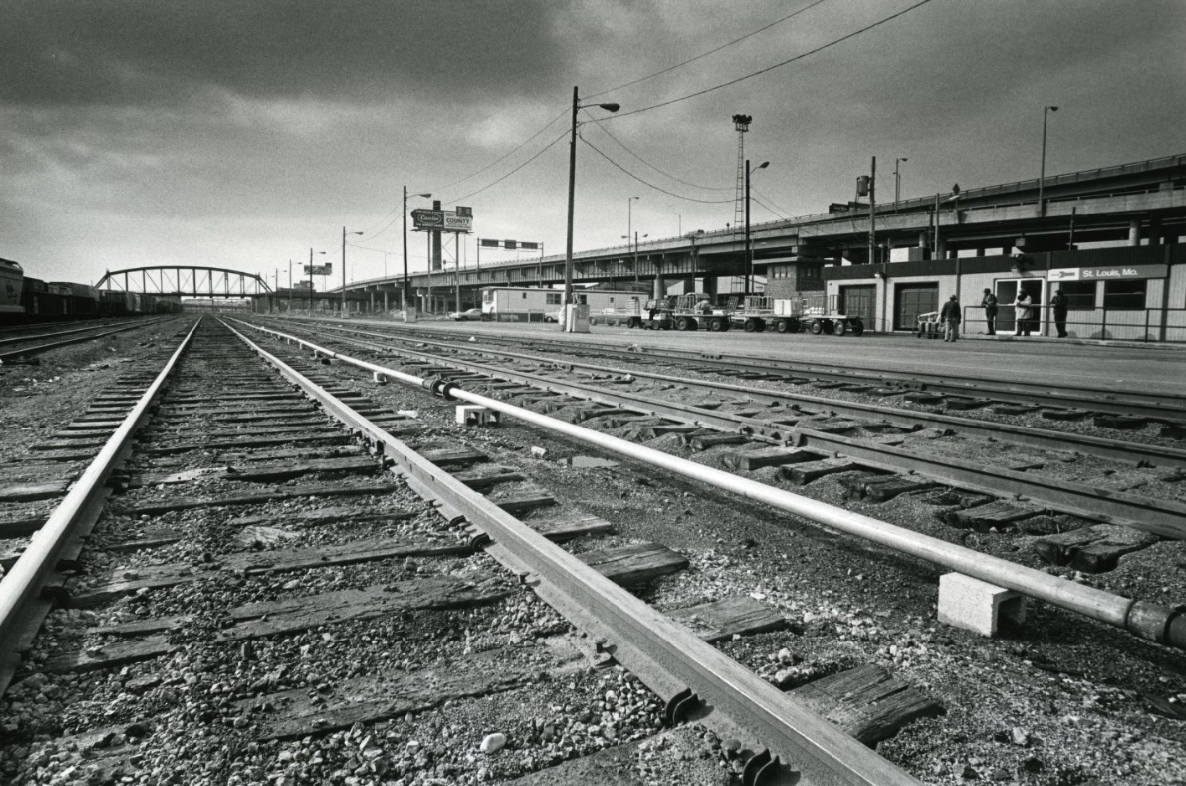
The Amtrak station remained a functional gateway for St. Louis throughout the decade. The Ann Rutledge train, a named Amtrak service, arrived at the station in 1982, and passengers walked along the platform in the early years of the decade. Rail travel had sharply declined from its mid-century peak, but the station still processed regular traffic, sitting as a kind of counterpoint to Union Station’s transformation from working terminal to retail destination just blocks away.
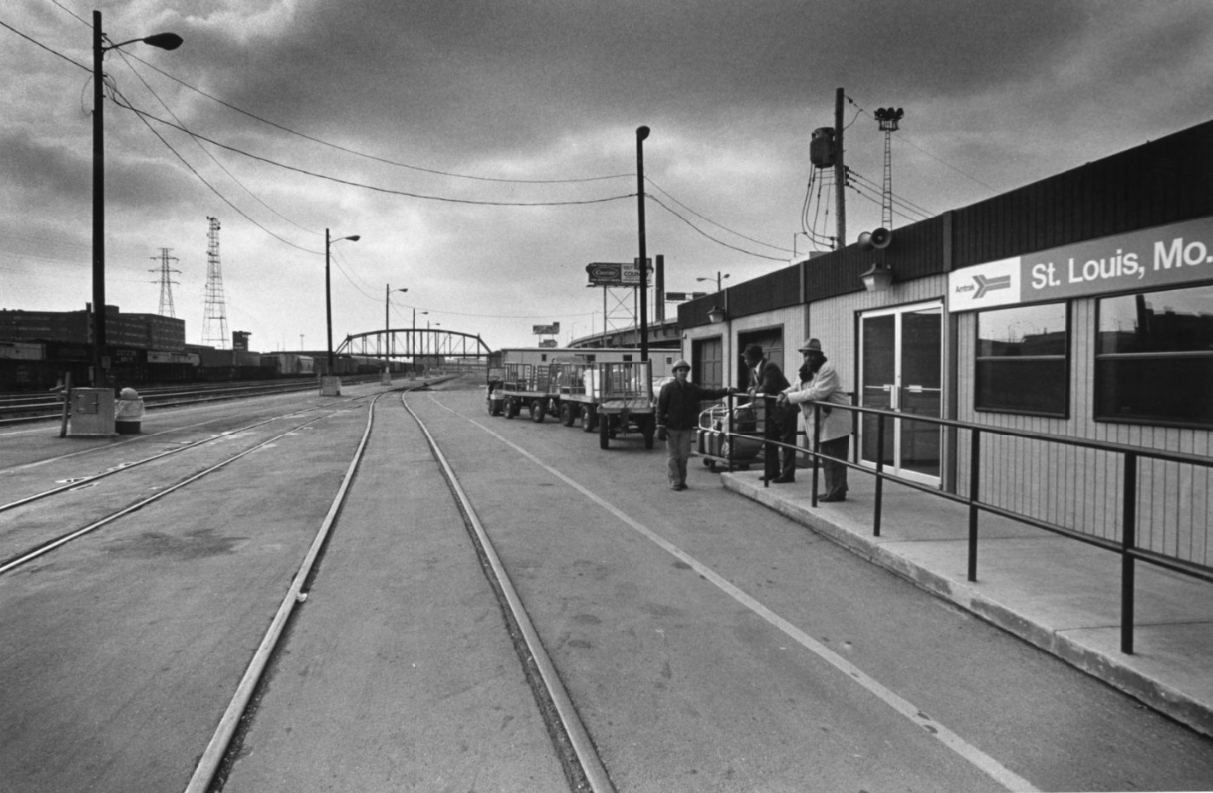
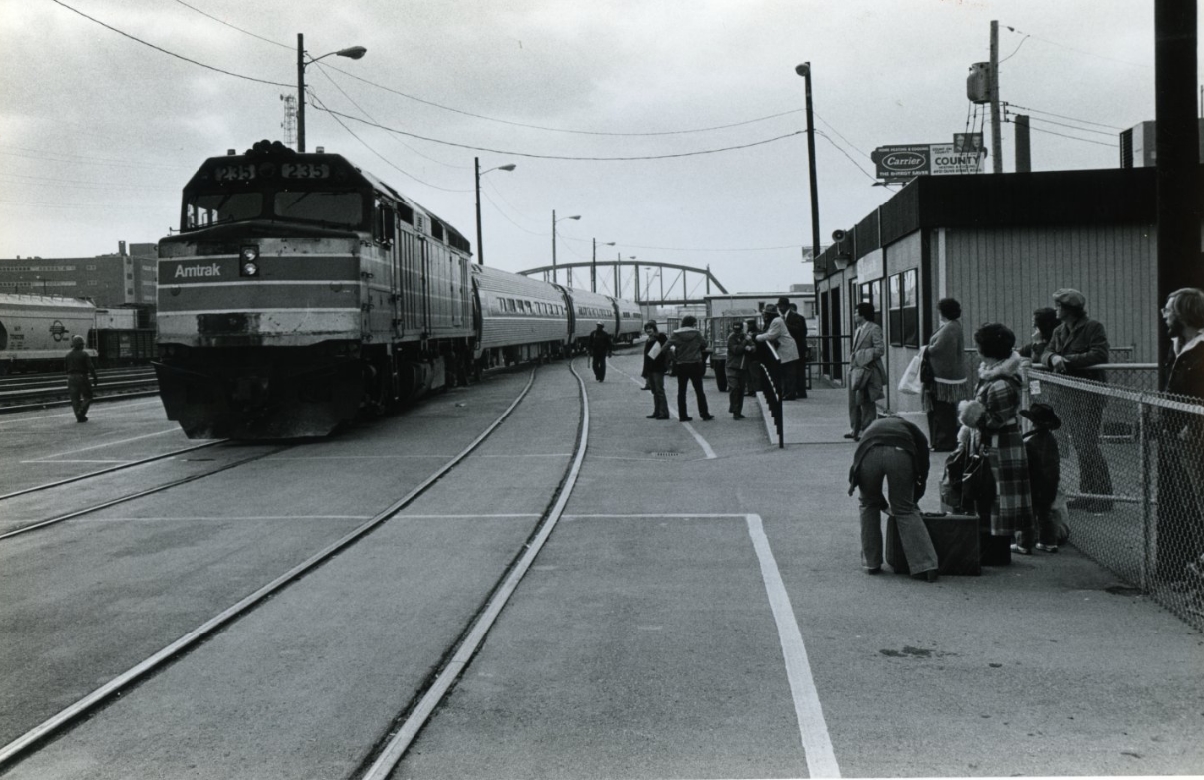
Amtrak Station in St. Louis in 1980
Ann Rutledge train arriving Amtrak Station, 1982

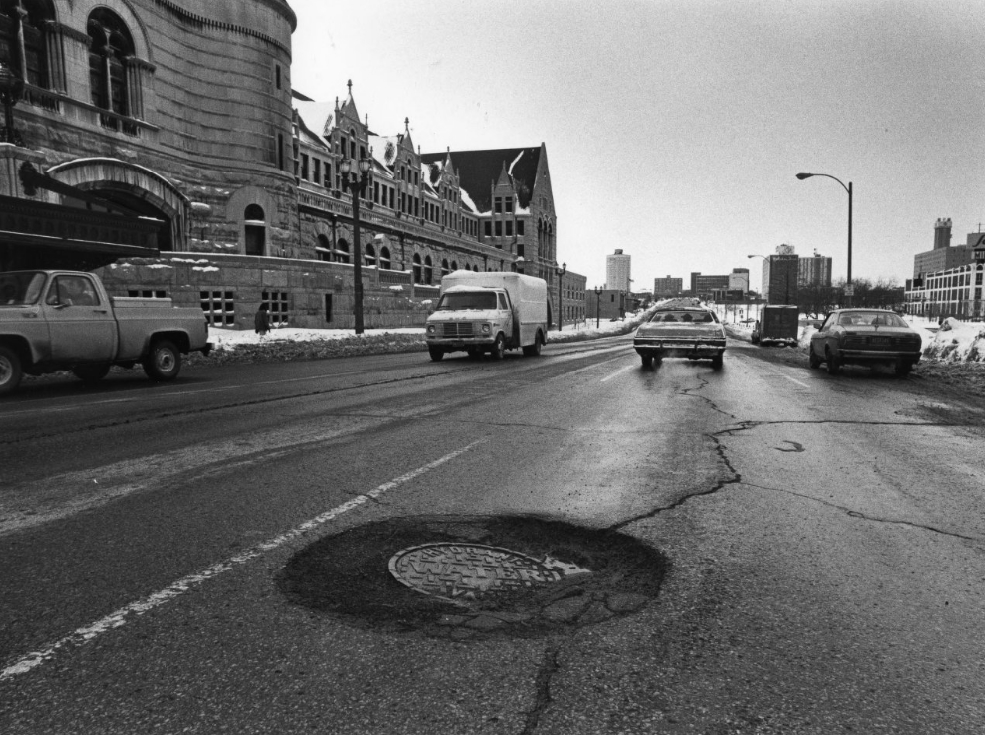
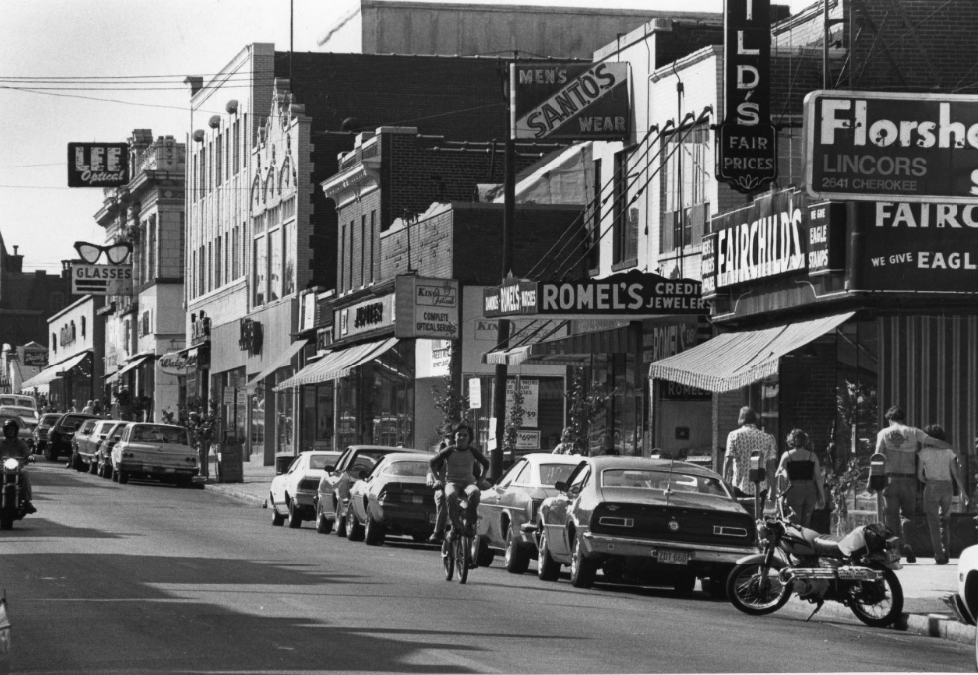
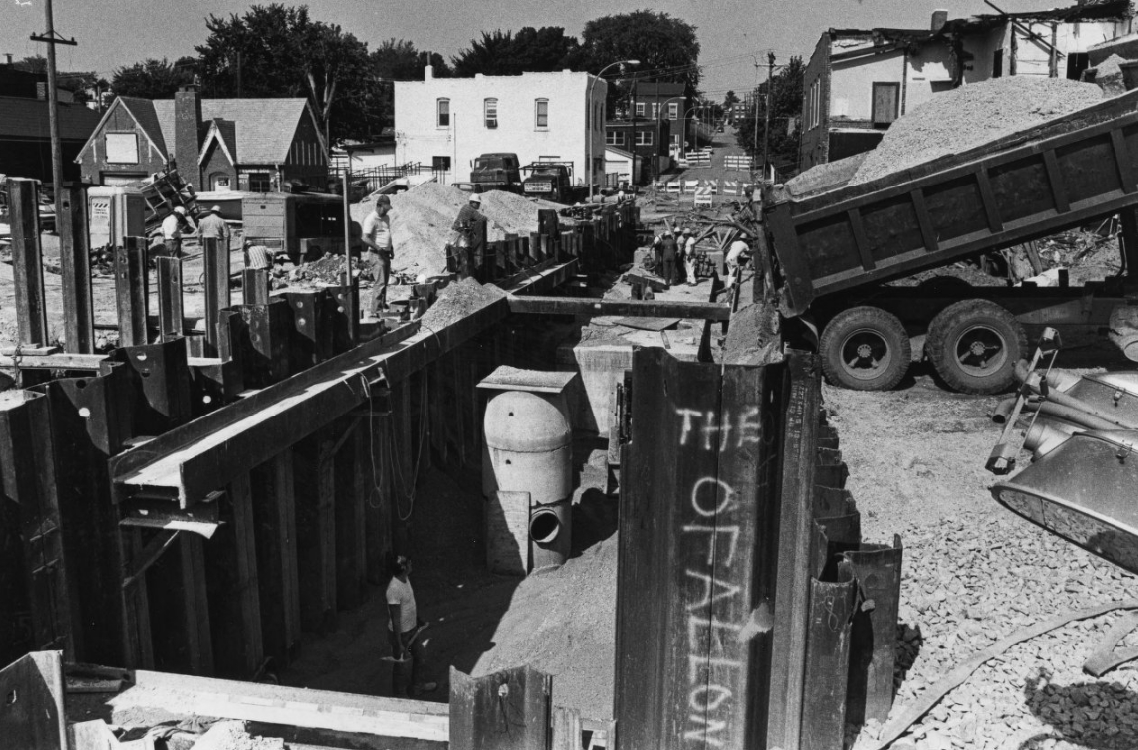
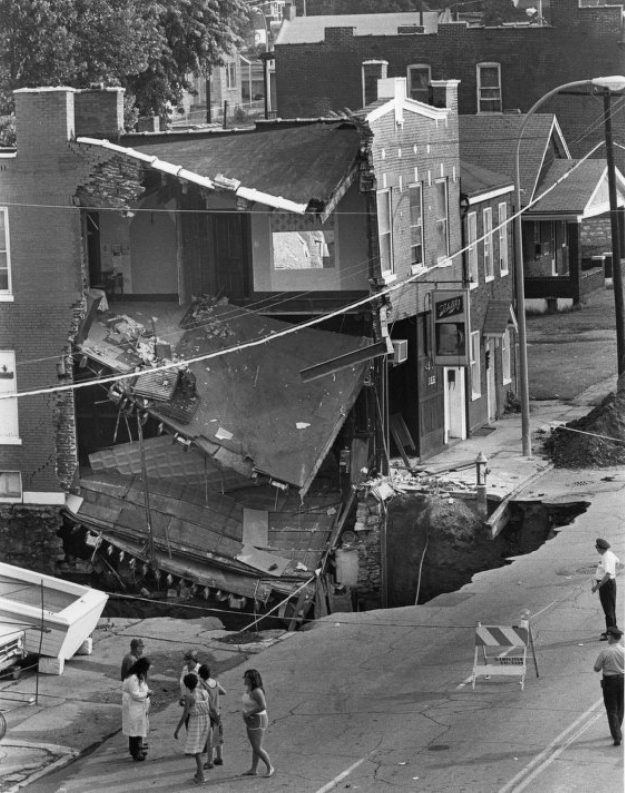
Across the decade, the Cherokee Street antique district, the tree-lined blocks of Cabanne Avenue, and the storefronts along Broadway each told different stories about how St. Louis neighborhoods were adapting. Some blocks thrived on small business activity. Others bore the scars of structural collapse, like the building on South Broadway whose wall fell into a hole at the Fillmore Street intersection in 1982, leaving construction crews to fill the gap. Potholes on Market Street in 1982 became photographs worth keeping — small but telling details of a city managing decades of infrastructure wear.
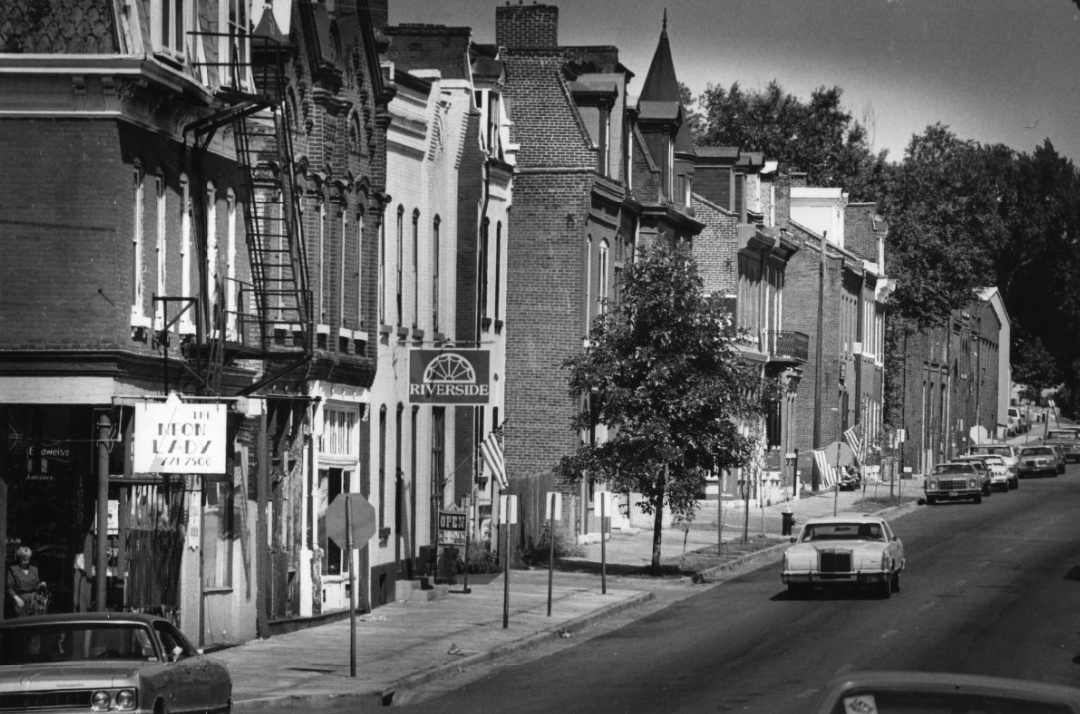
General view of antique shops in the 19xx block of Cherokee, 1986
Broadway Street, 1982
Pot Hole on Market St, 1982

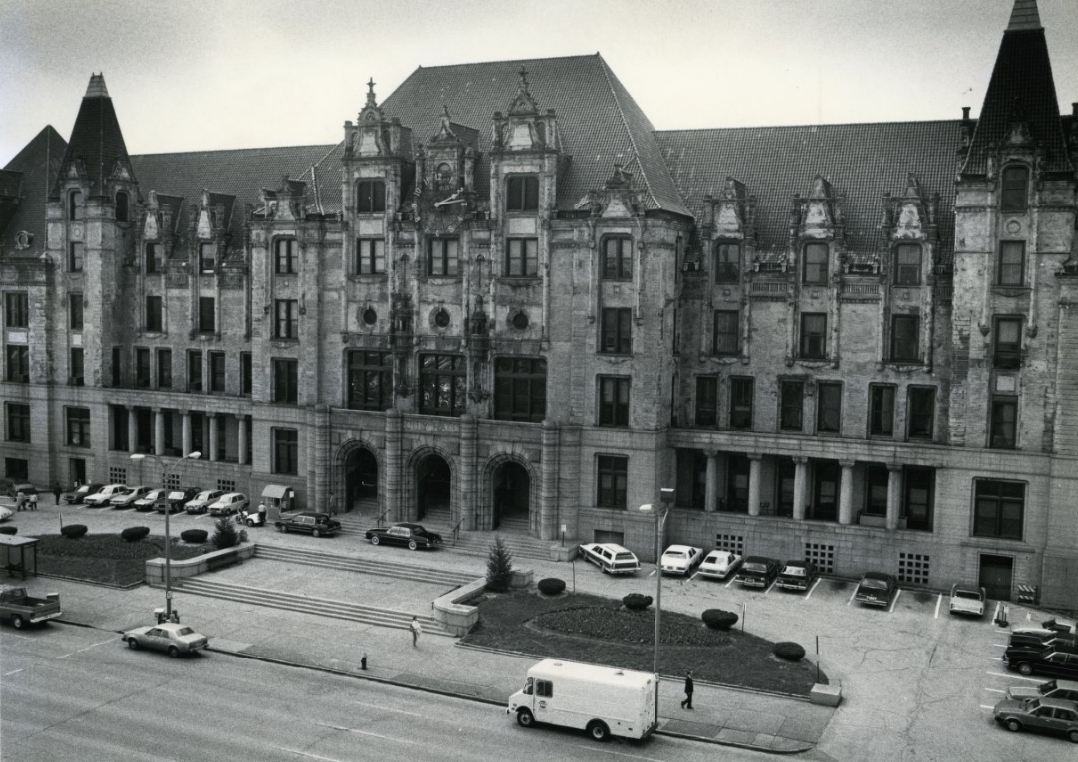
City Hall remained a center of local government activity and a gathering point for residents navigating civic bureaucracy. In 1980, long lines formed as people bought city wheel tax stickers. By 1984, the parking spaces in the circular drive on the east side of City Hall had become a source of political controversy. The St. Louis Symphony Orchestra, founded in 1880 and one of the oldest in the country, continued performing throughout the decade, representing the more formal end of a cultural life that also included indoor soccer at the Armory and high school football at Soldan.
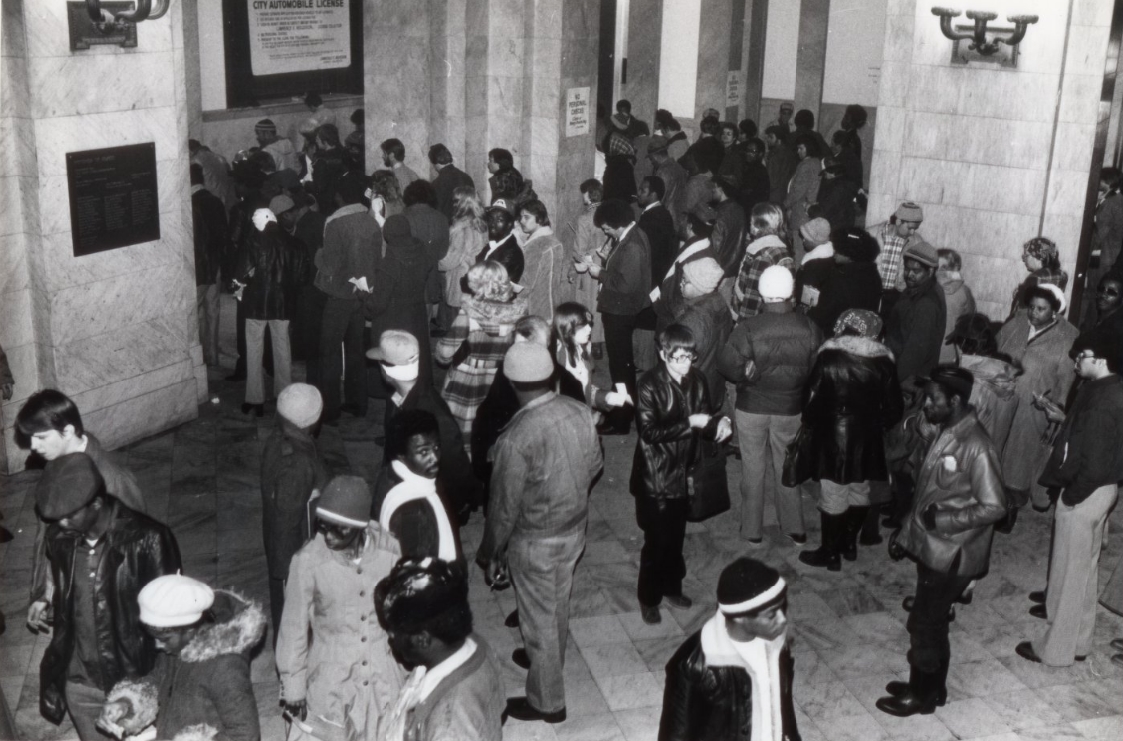
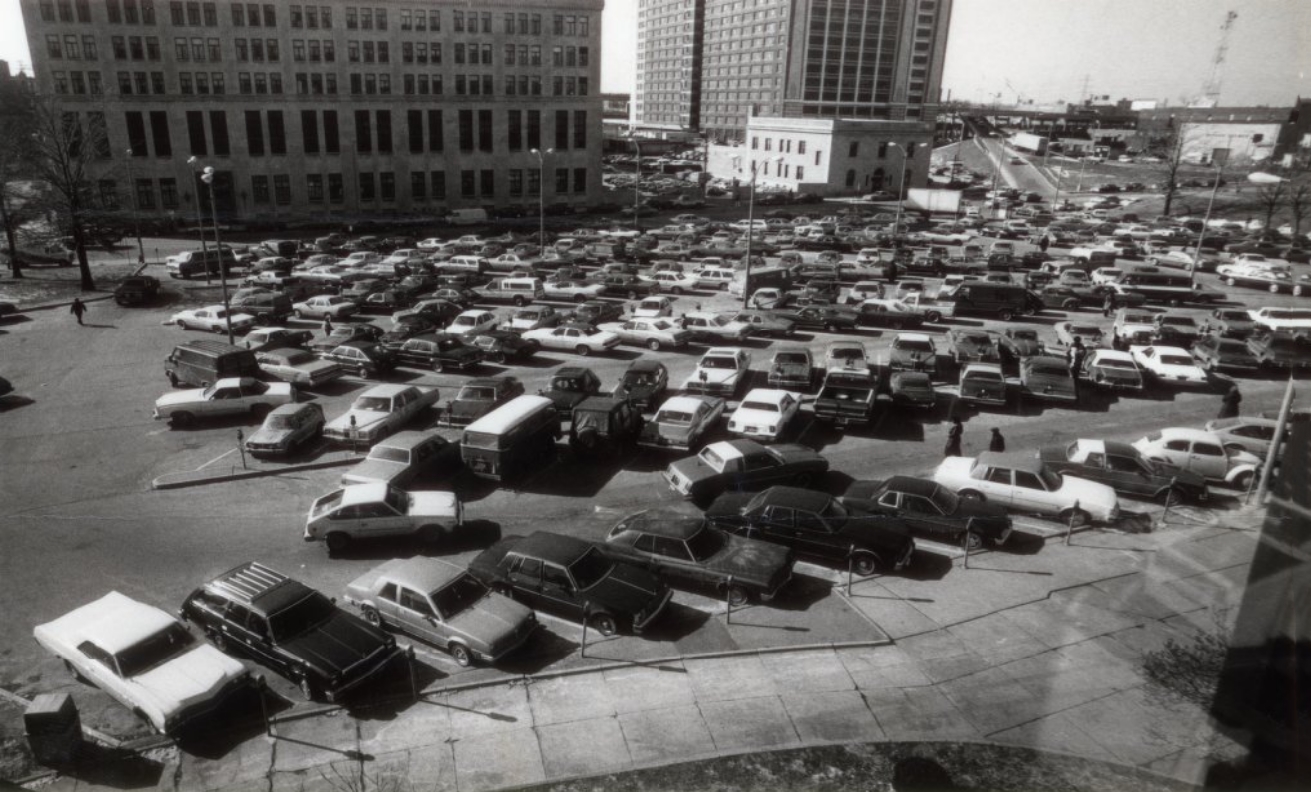
City Hall,1980
City Hall,1980
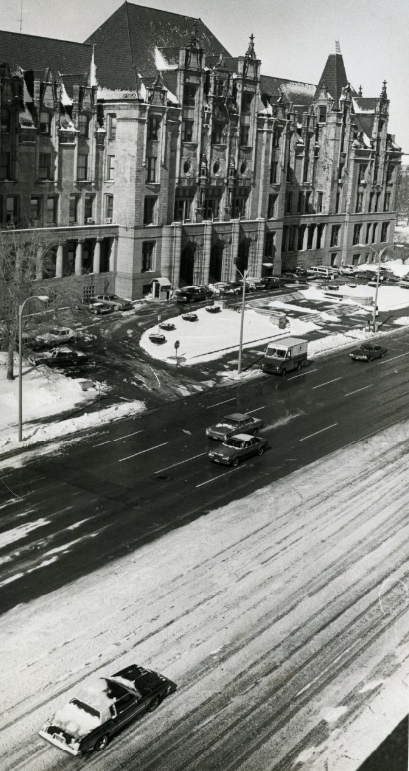
City Hall, St. Louis, 1985
Soccer at the Armory, 1982
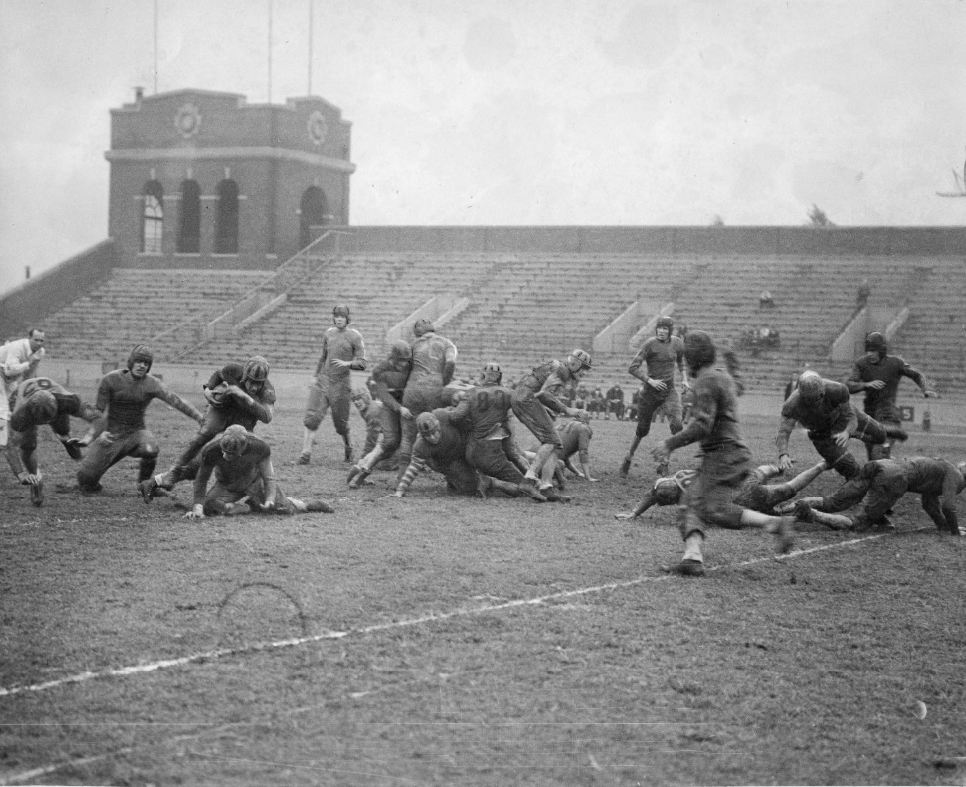
Soldan High School Football, 1984

The photographs that document St. Louis in the 1980s are not a tidy record of progress. They show cranes next to rubble, new apartment towers near boarded-up storefronts, and bridges in various states of construction and disrepair. They show workers, residents, civic clubs, athletes, bankers, and brewery supervisors — people moving through a city that was actively remaking itself, block by block, decade by decade.
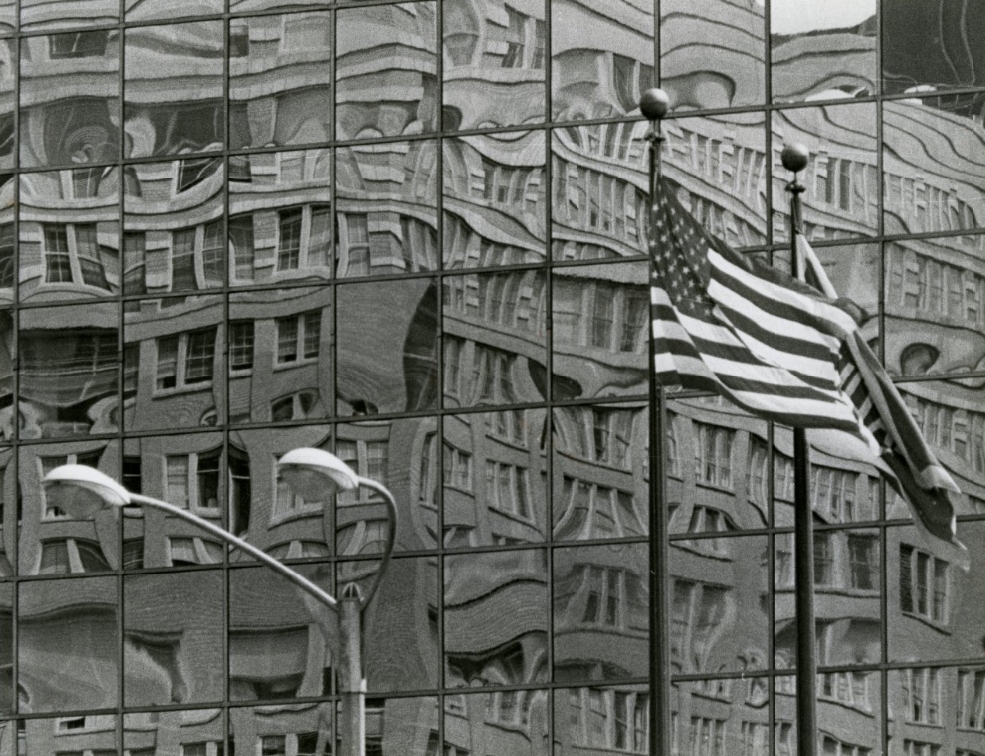
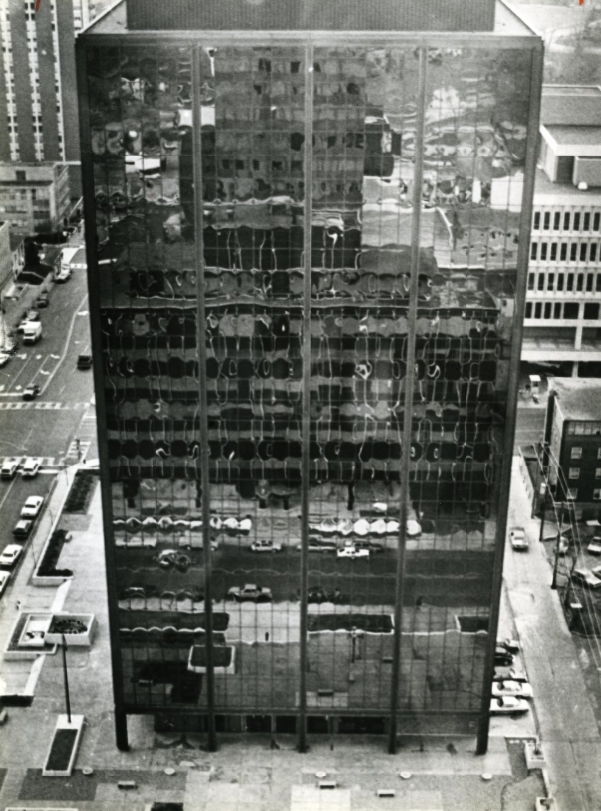
Reflections on windows of a downtown St. Louis office building, 1981
Downtown life is reflected in the shimmering panels of the Chromalloy Building, 1980
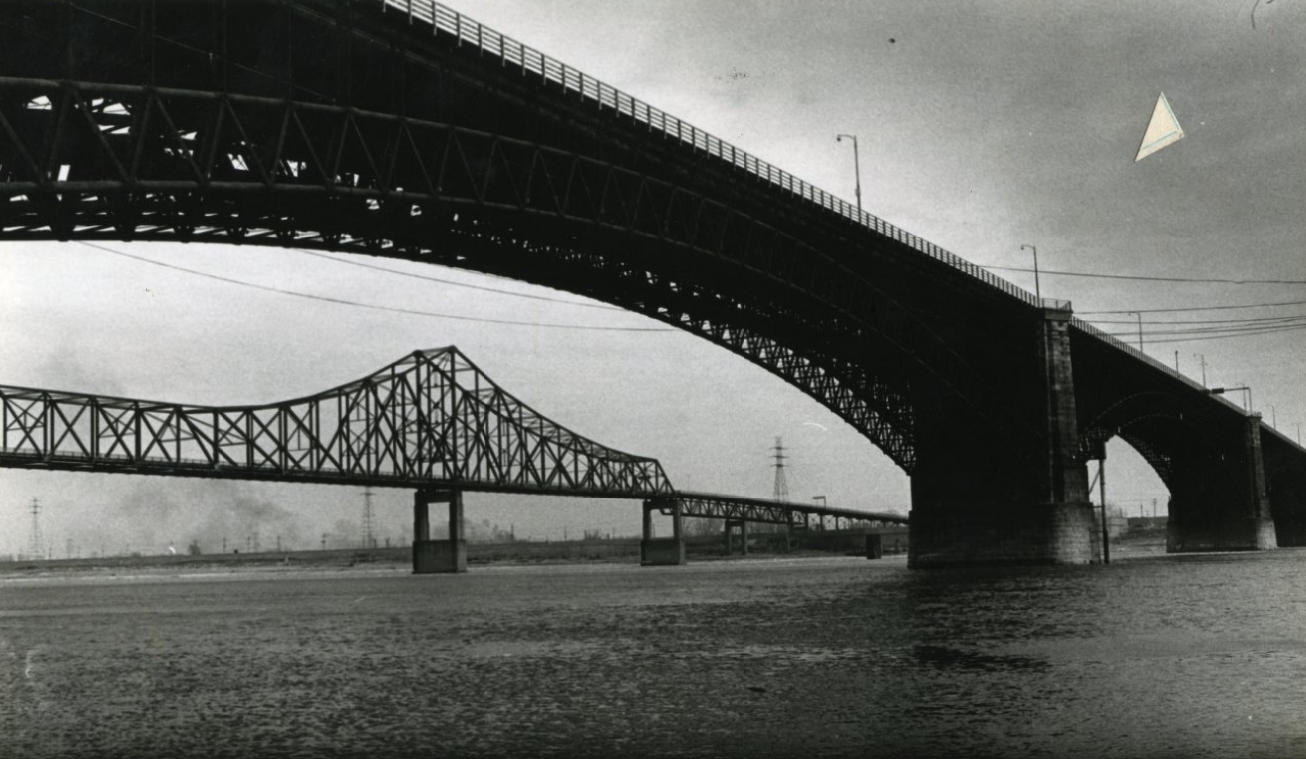
Eads Bridge and Martin Luther King Bridge, 1986
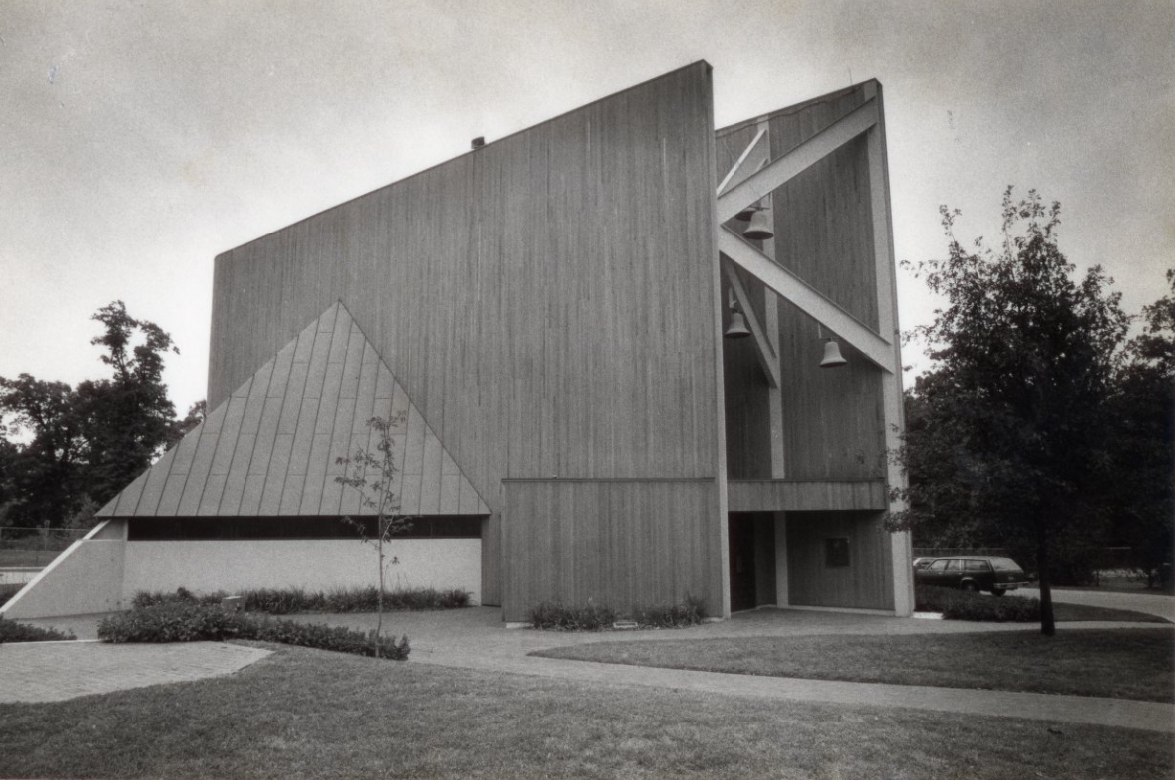
Jefferson Barracks Cemetery Chapel, 1985
Apex Oil Co Building, 1986
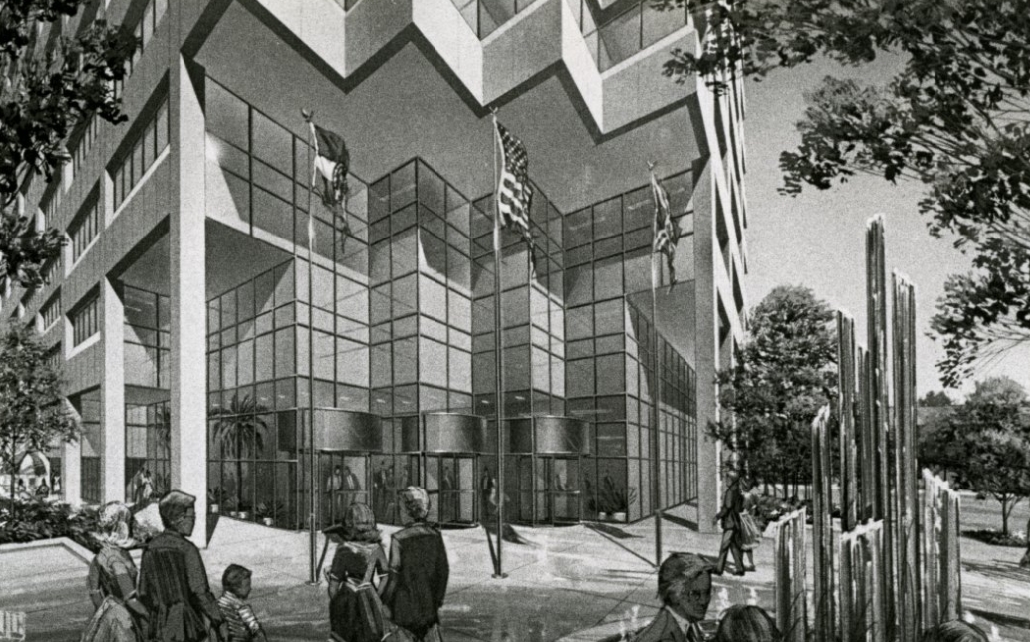
Apex Sketch, 1981
Apex Sketch, 1981
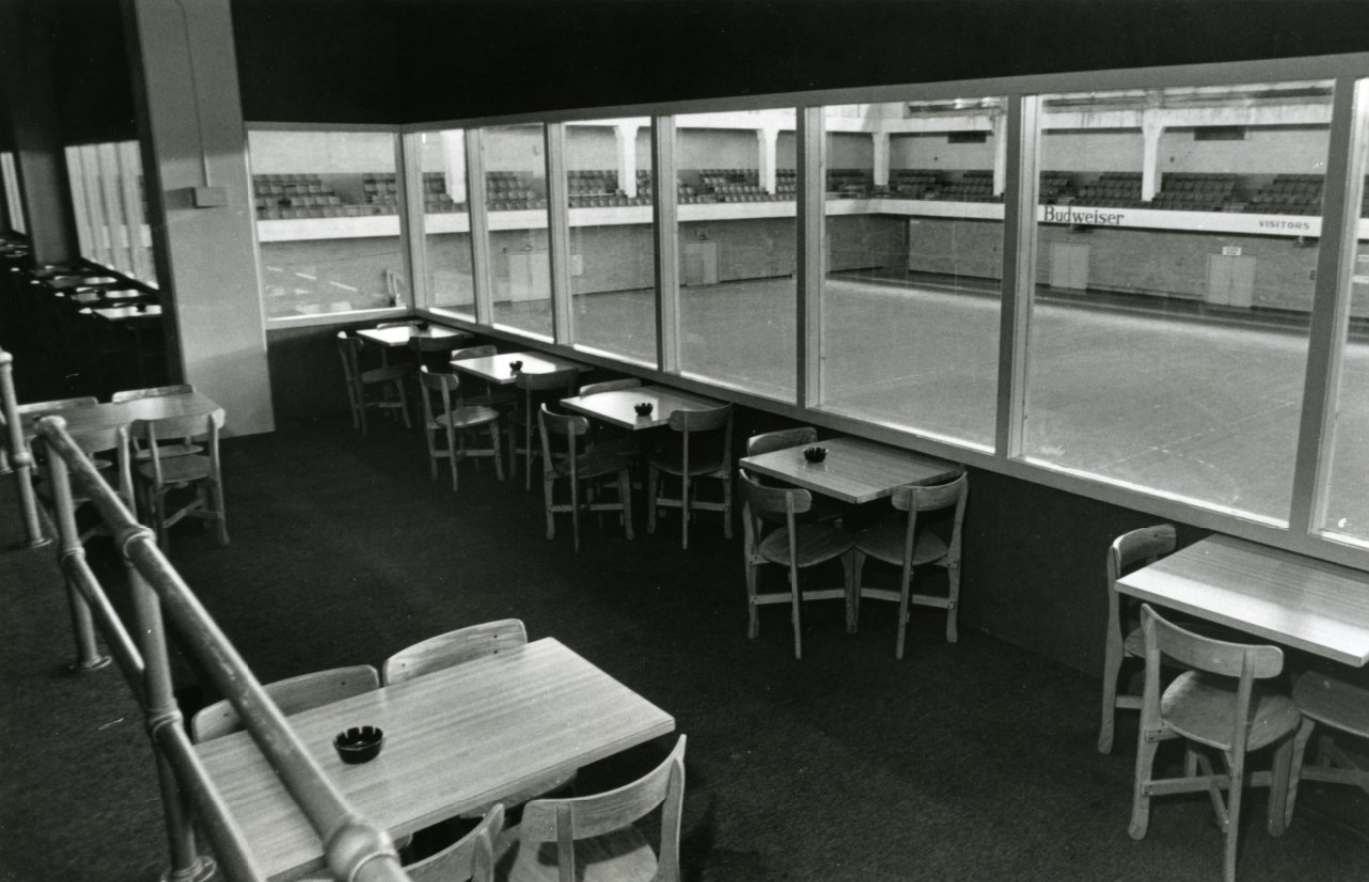
Tables And Chairs, 1986
Jefferson Barracks Bridge Construction, 1982
Jefferson Barracks Bridge Piers, 1981
Jefferson Barracks Bridge Work,1 981
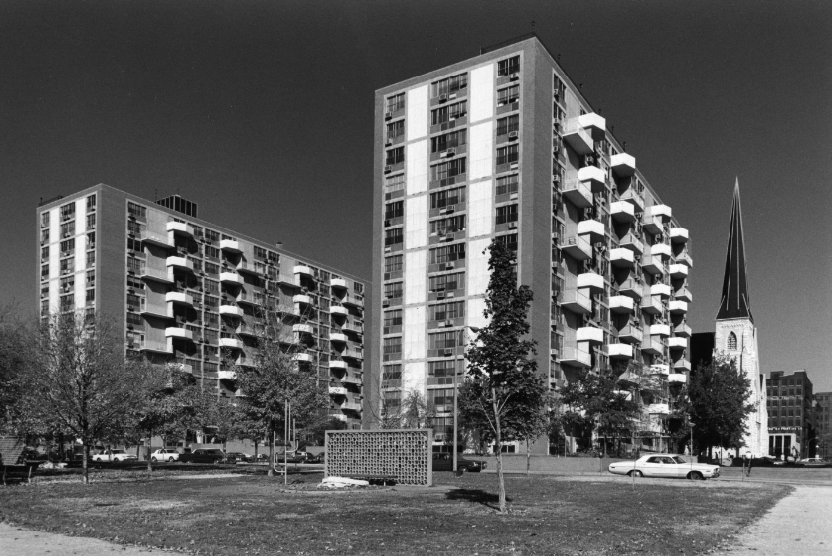
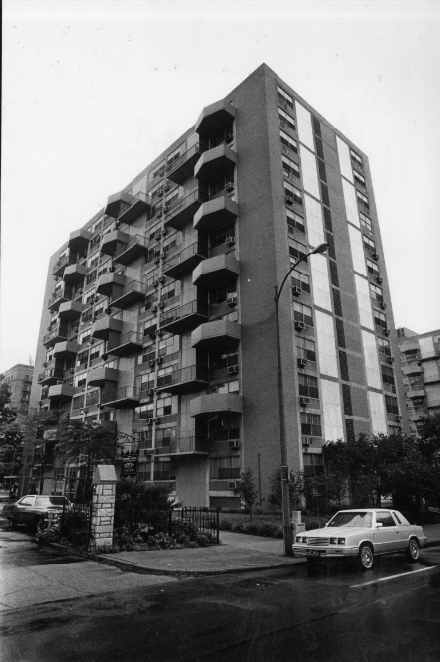
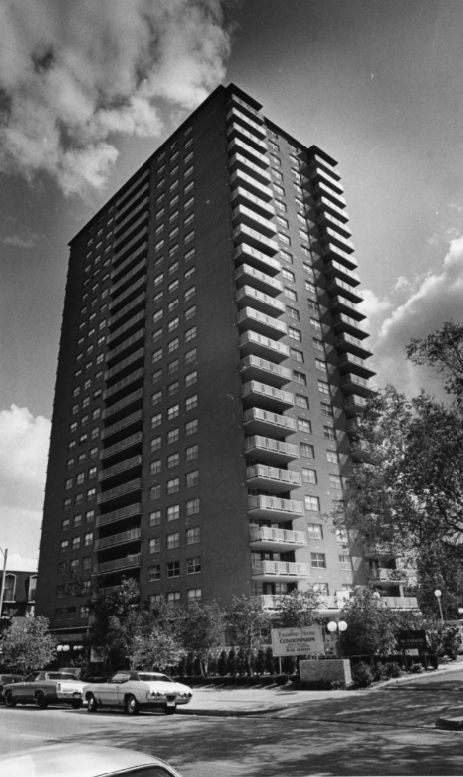
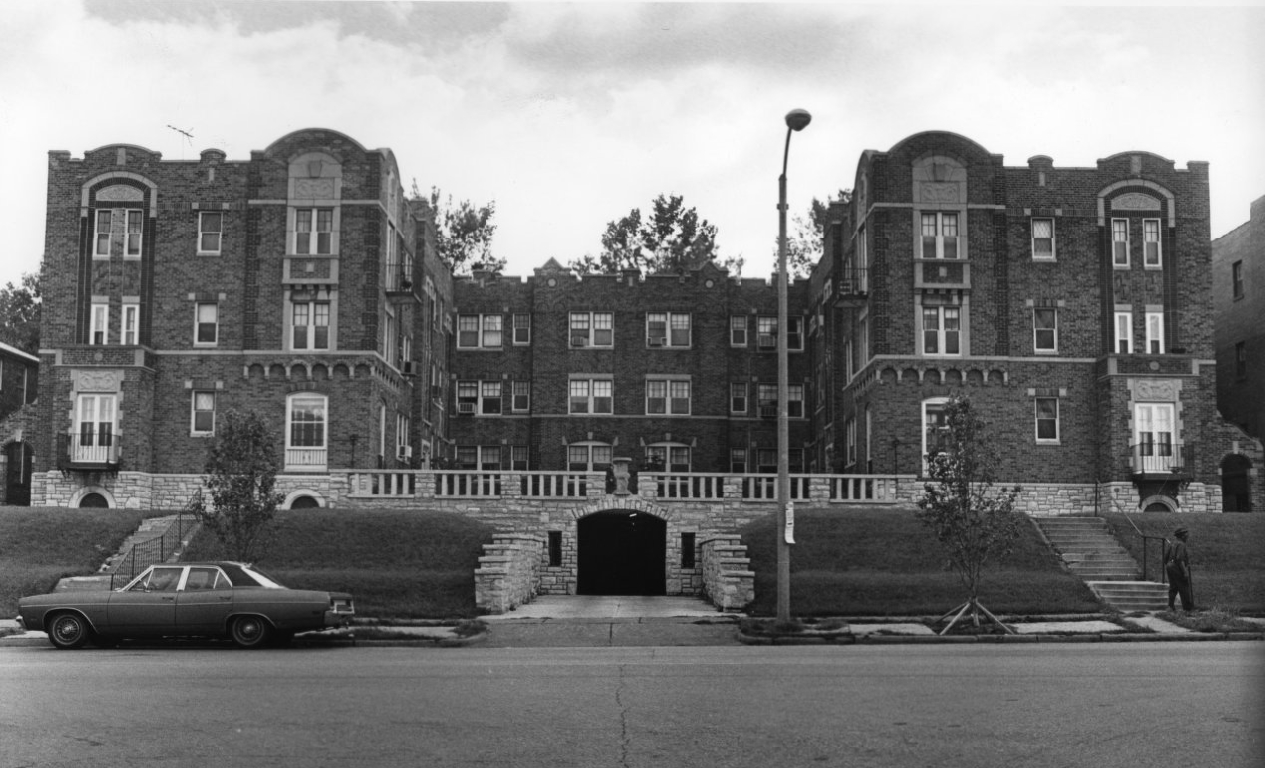
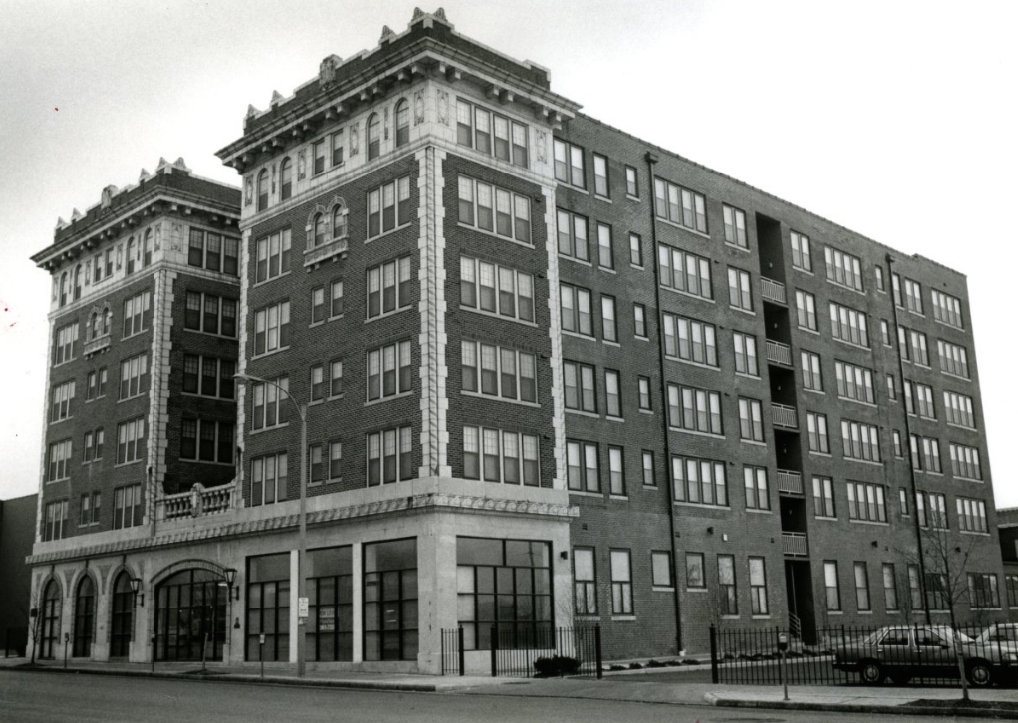
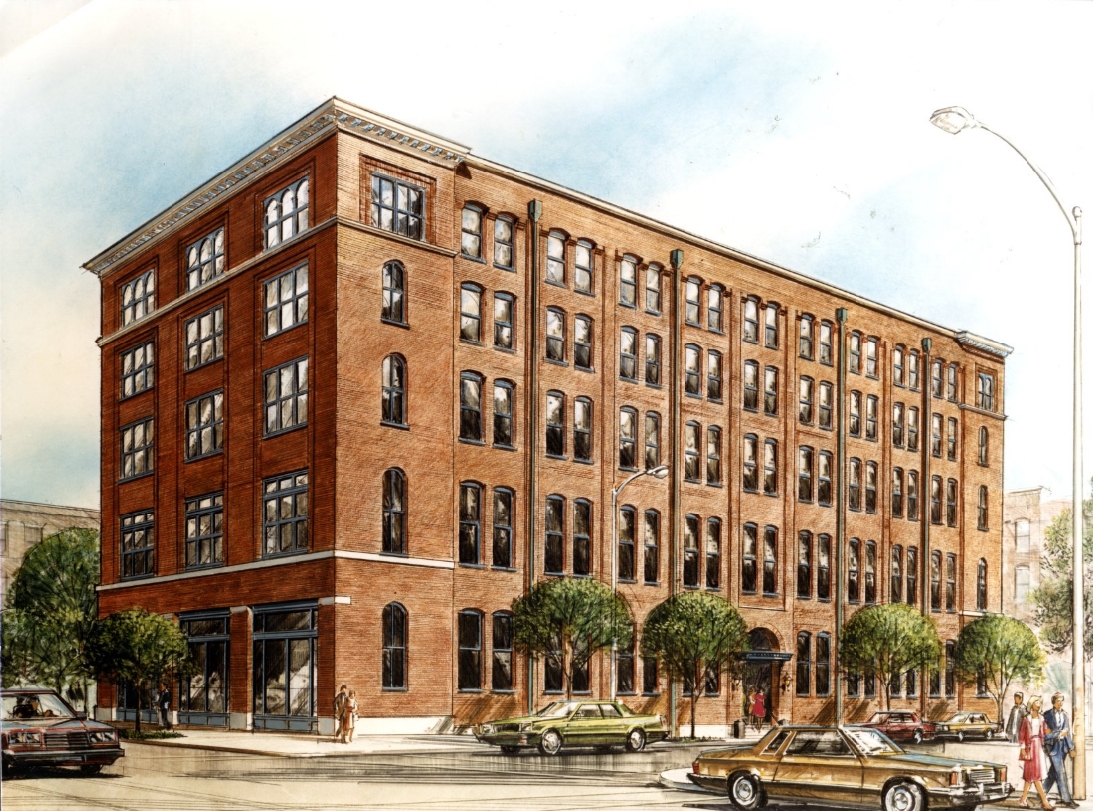
Plaza Apartments - Exterior side view, 1981
Plaza Apartments – Exterior side view, 1981
Plaza Apartments - Rates, 1984
Plaza Apartments – Rates, 1984
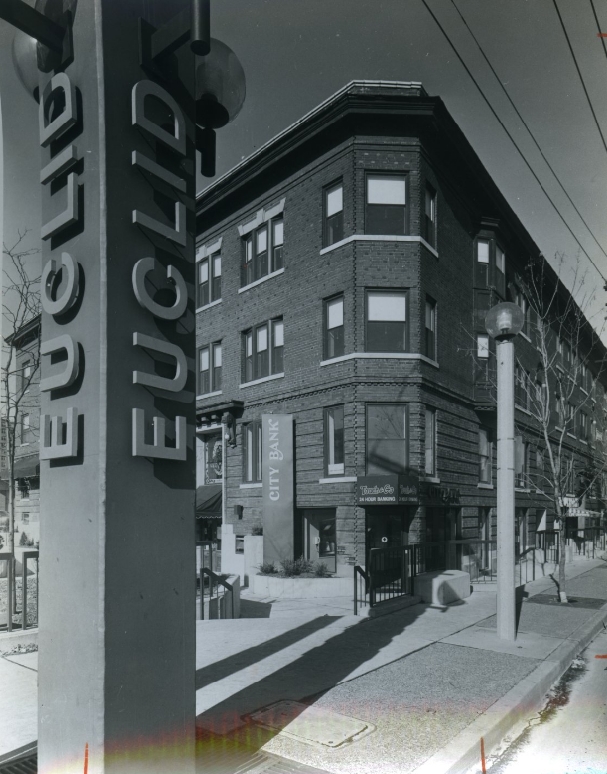
City Bank has opened its automated banking facility in the remodeled Ettrick Buidling, at Forest Park and Euclid Avenues, 1981
Columbus Square Apartments, 1981
ABCD Apartments-Site of Robbery, 1981
Executive House Apartments at 4466 W. Pine, St. Louis, 1981
Neighborhood Gardens Apartments, 1205 N Seventh Street, 1986
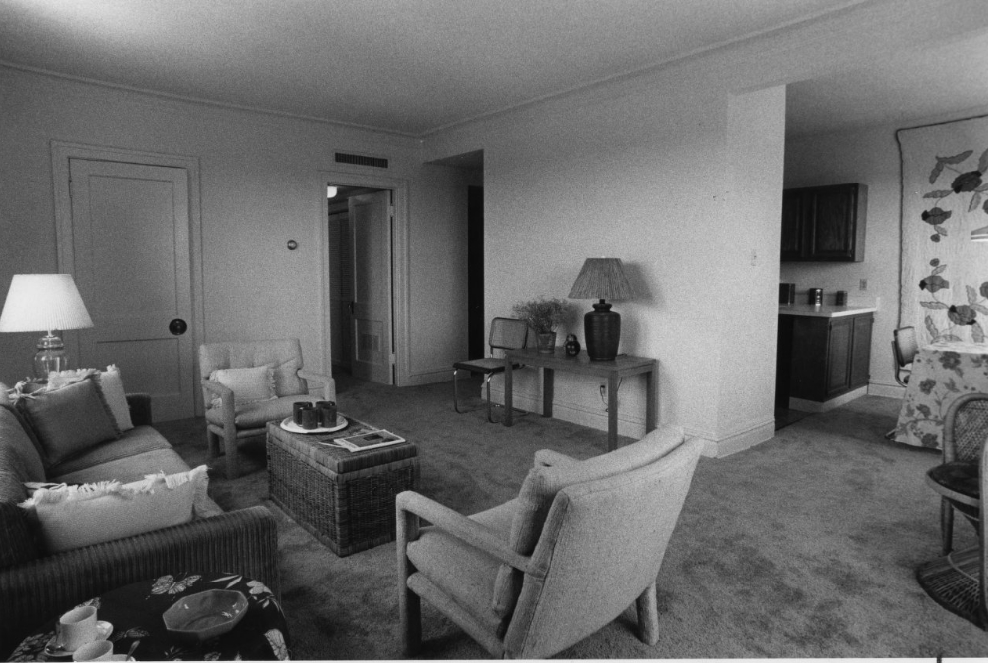
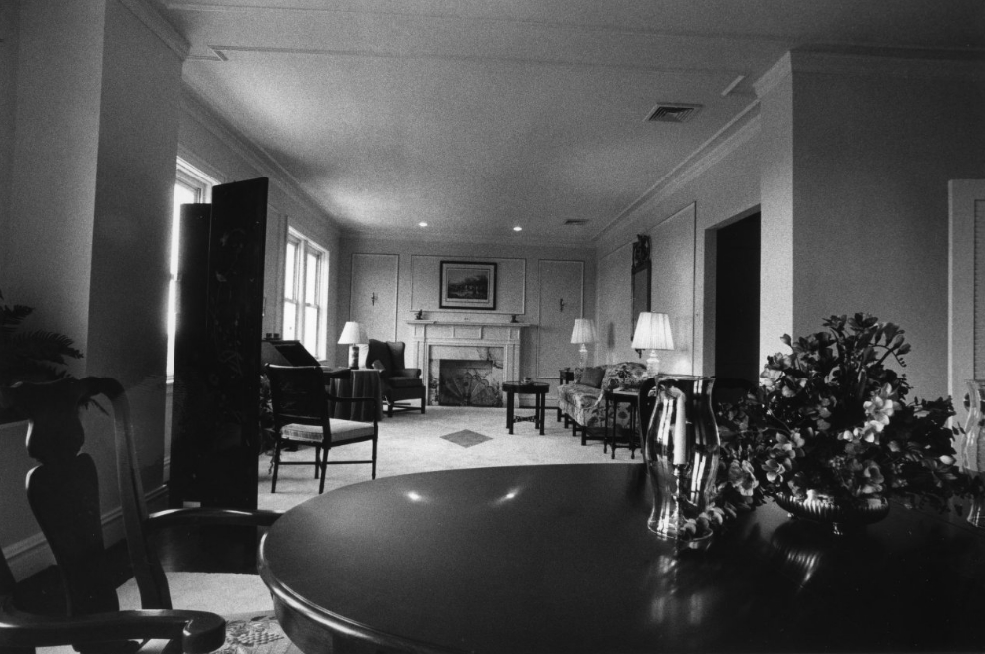
Versailles Apartments - Sitting room, 1981
Versailles Apartments – Sitting room, 1981
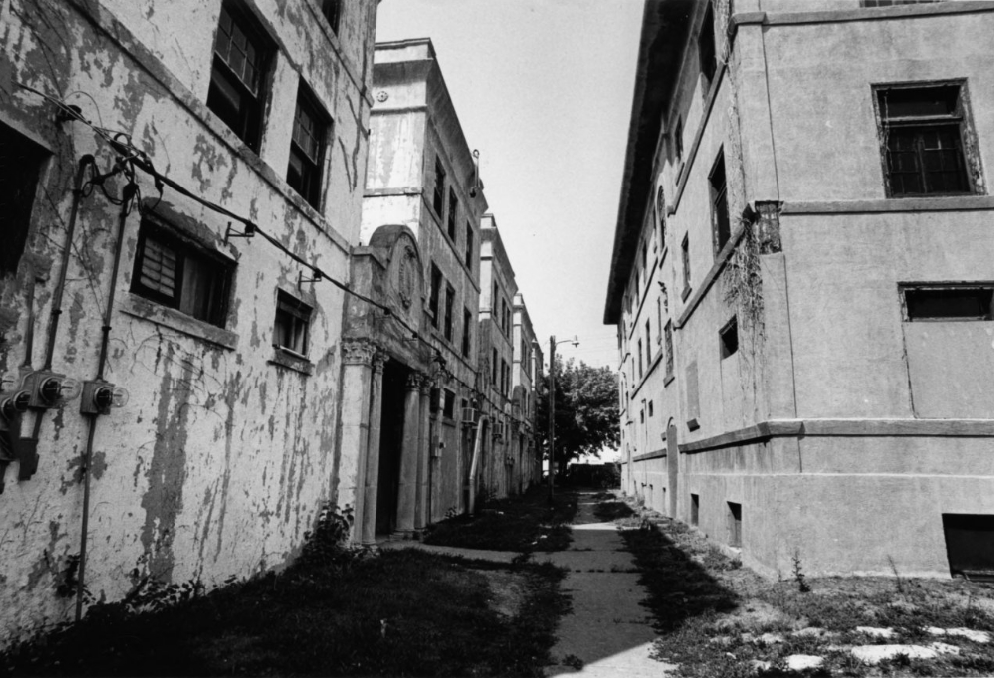
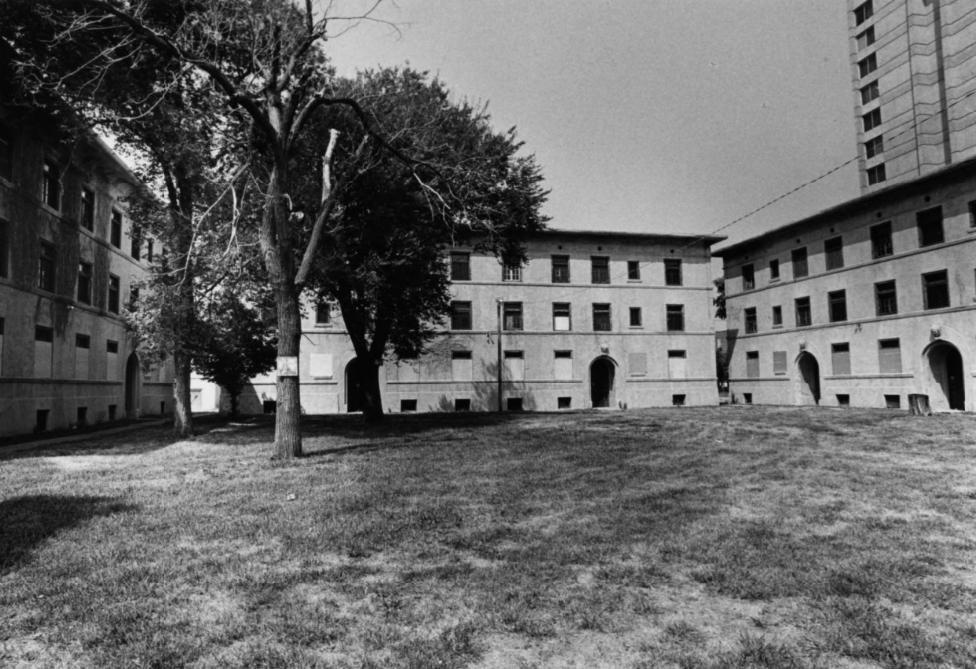
Donaldson (Court) Apartments Alleyway, 1983
Donaldson (Court) Apartments Courtyard, 1983
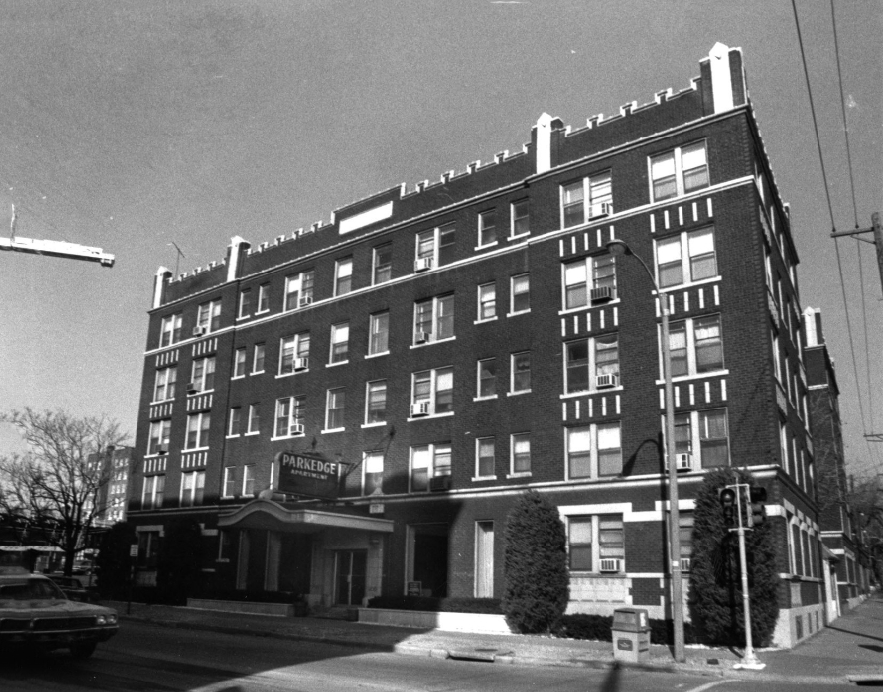
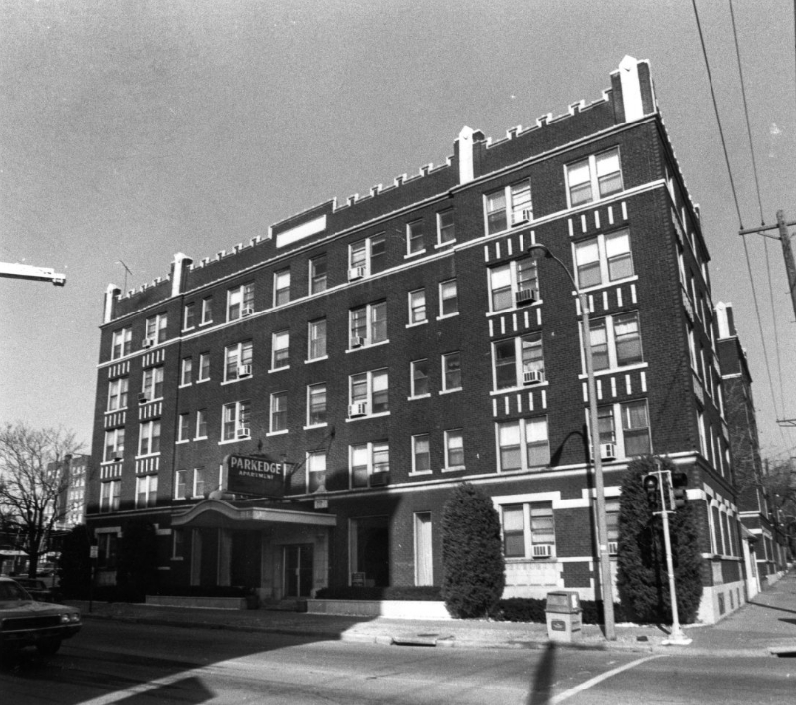
Parkedge Apartments, 1982
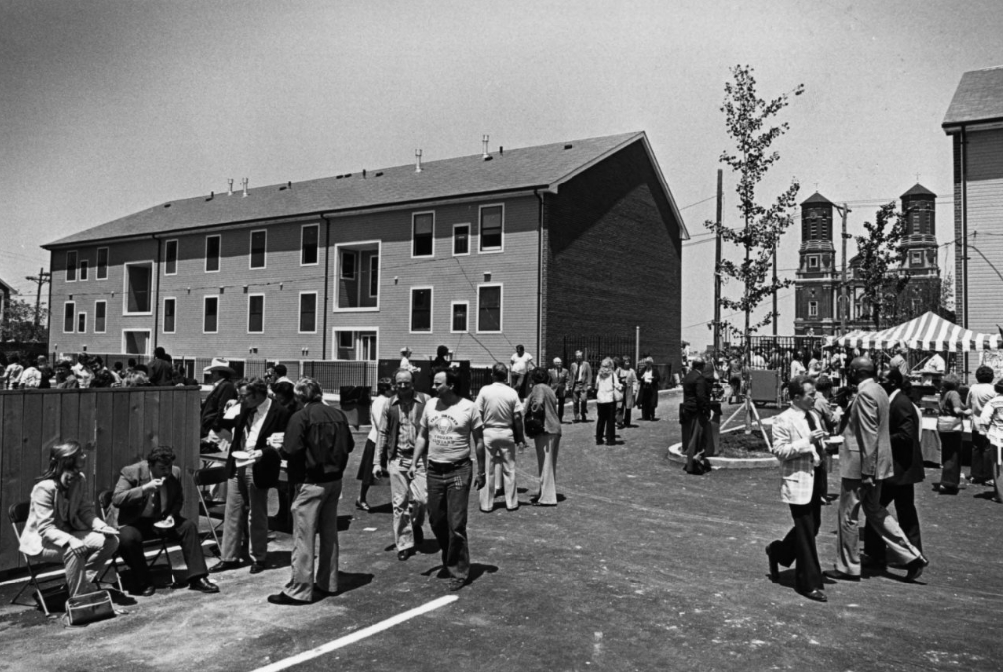
Columbus Square Apartments Opening, 1981
Construction At Columbus Square Apartments, 1984
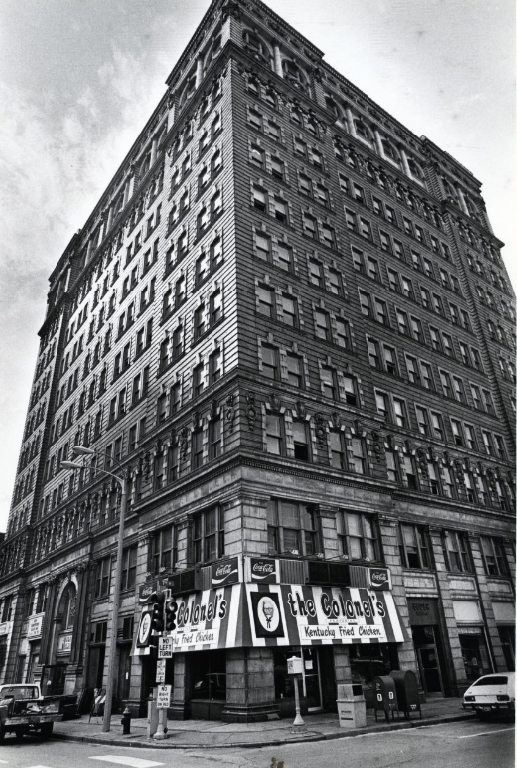
Lennox Hotel Building, Downtown on Washington Ave, 1986
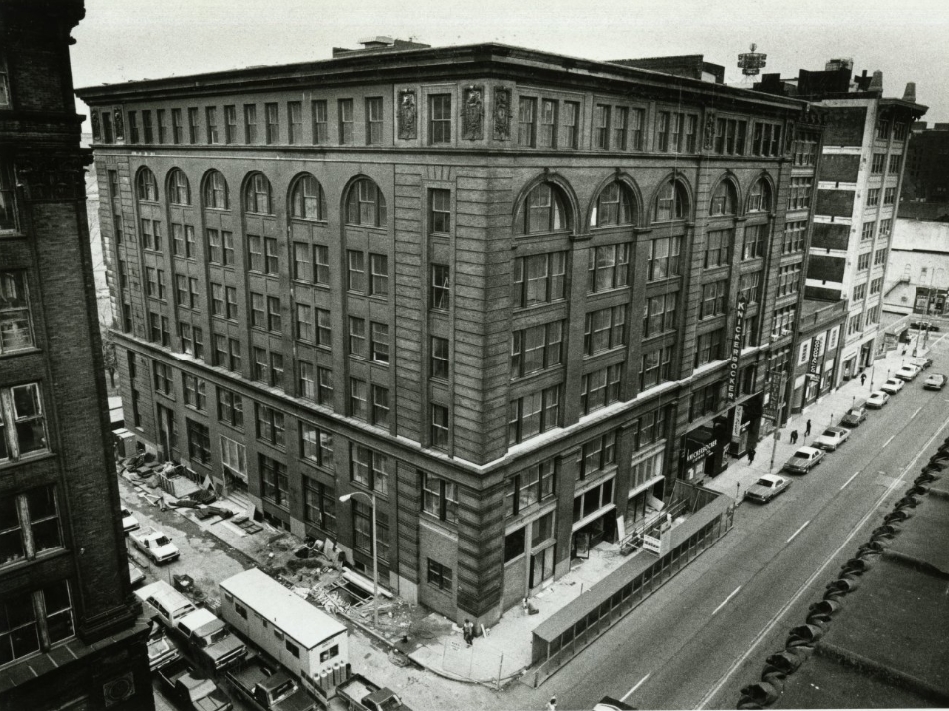
The building at 13th and Washington avenue, St. Louis, 1985
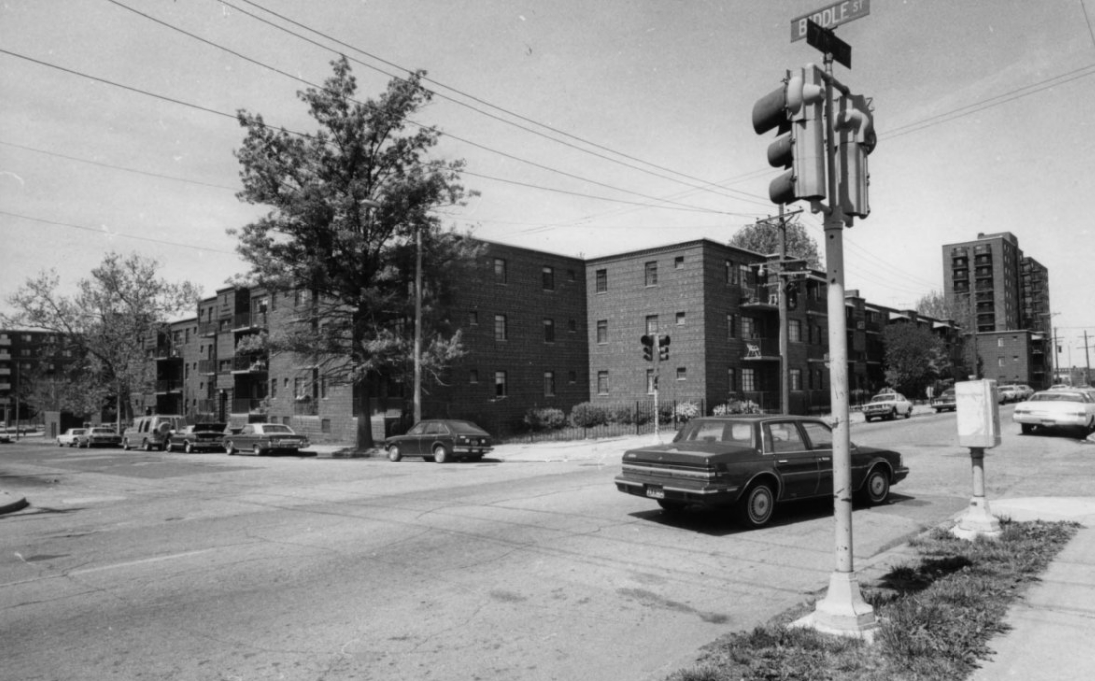
Urban West Apartments - Exterior, front view, 1981
Urban West Apartments – Exterior, front view, 1981
Versailles Apartments - Lounge, 1981
Versailles Apartments – Lounge, 1981
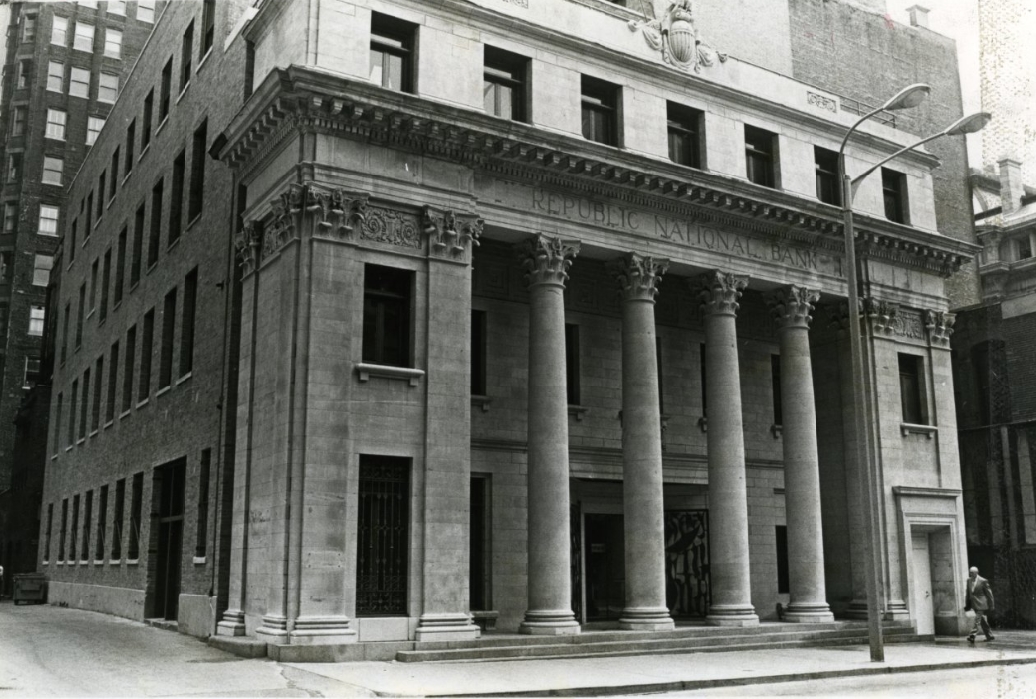
Republic National Bank, 1980
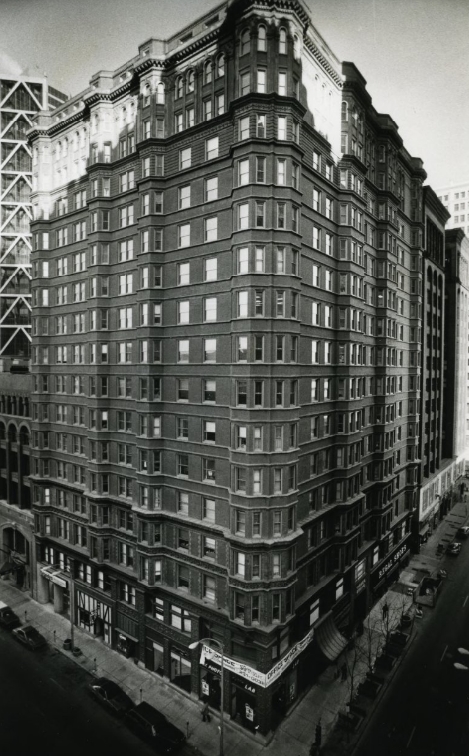
Centerre Bank - Skyscraper, 1982
Centerre Bank – Skyscraper, 1982
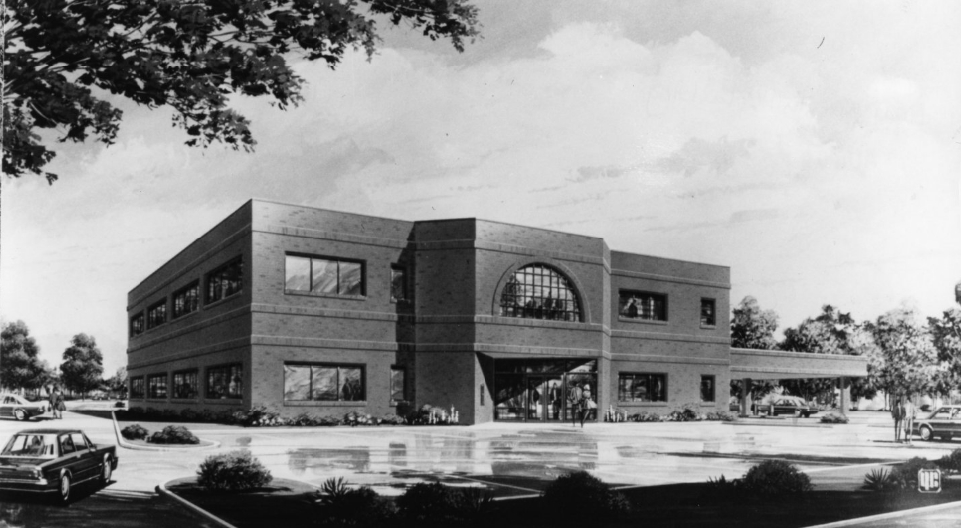
Boatmen's Bank - Designs for Jefferson County Building, 1986
Boatmen’s Bank – Designs for Jefferson County Building, 1986
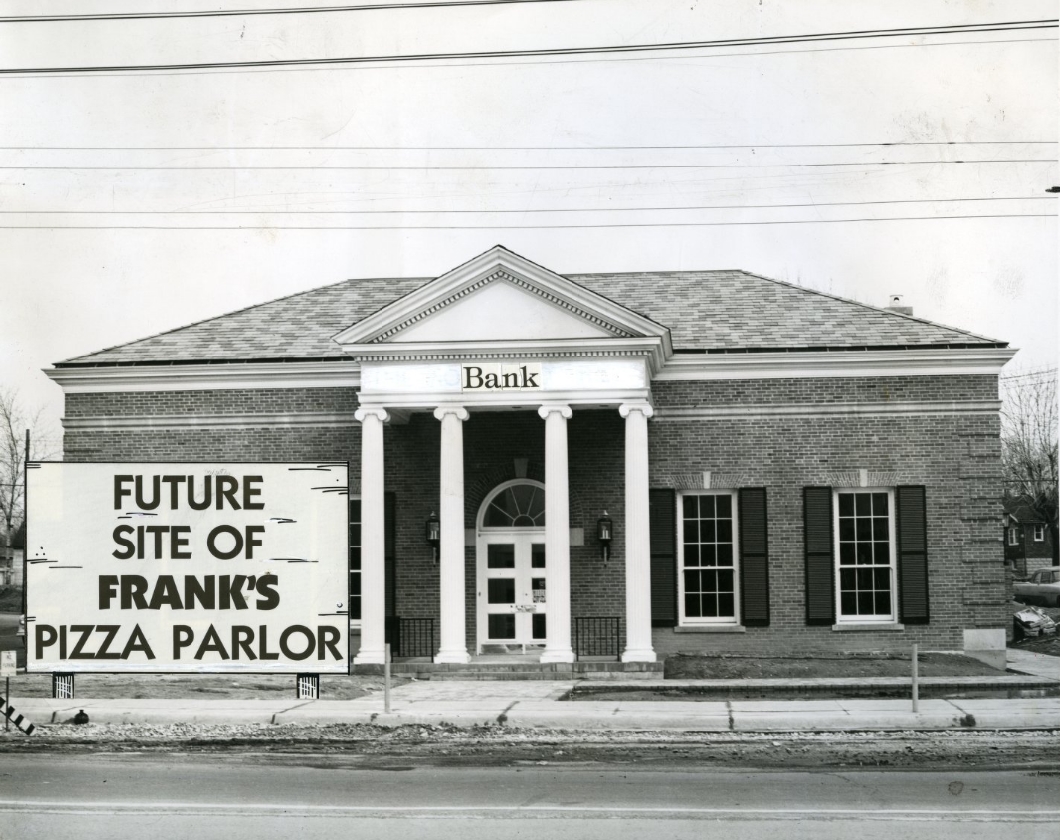
Future site of Frank's Pizza Parlor--North Side Bank, 1984
Future site of Frank’s Pizza Parlor–North Side Bank, 1984
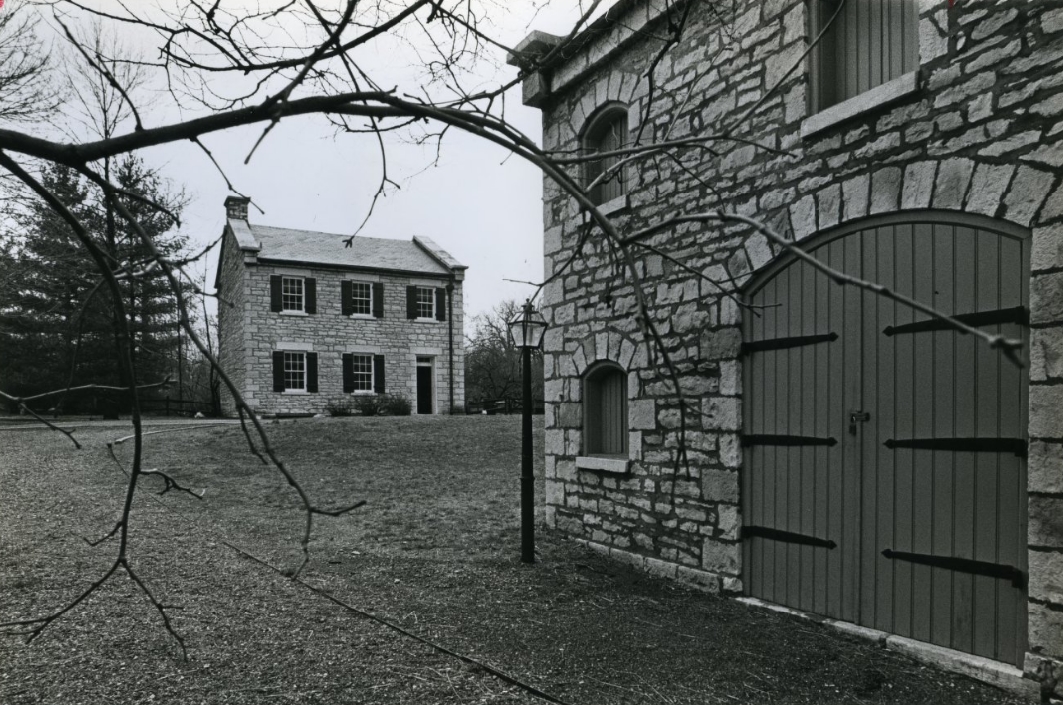
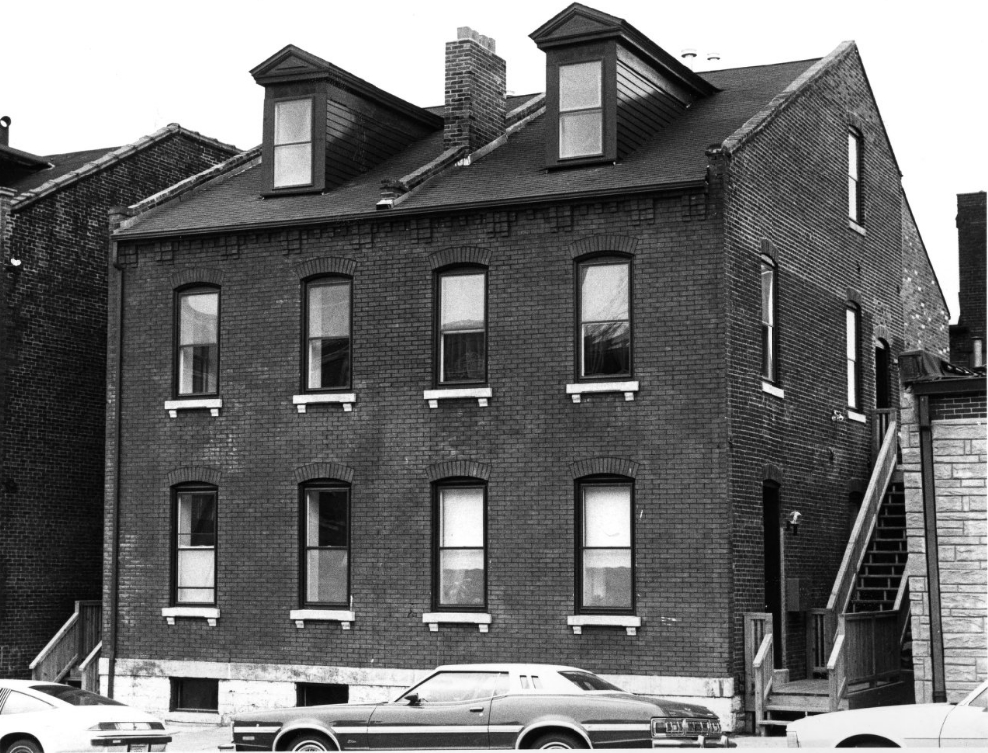
Two Houses, 1983
Two Houses, 1983
Mississippi River Bluffs, 1982
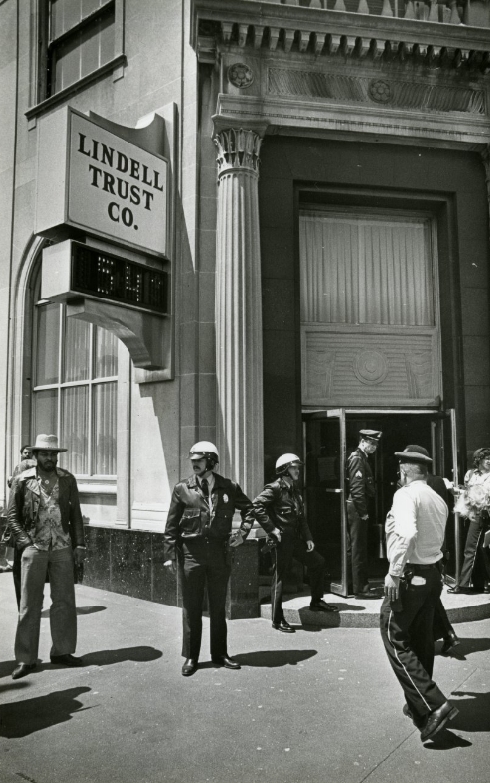
St. Louis police officers around the front entrance of the Lindell Trust Co. bank corner St. Louis Avenue and Grand Ave, 1981
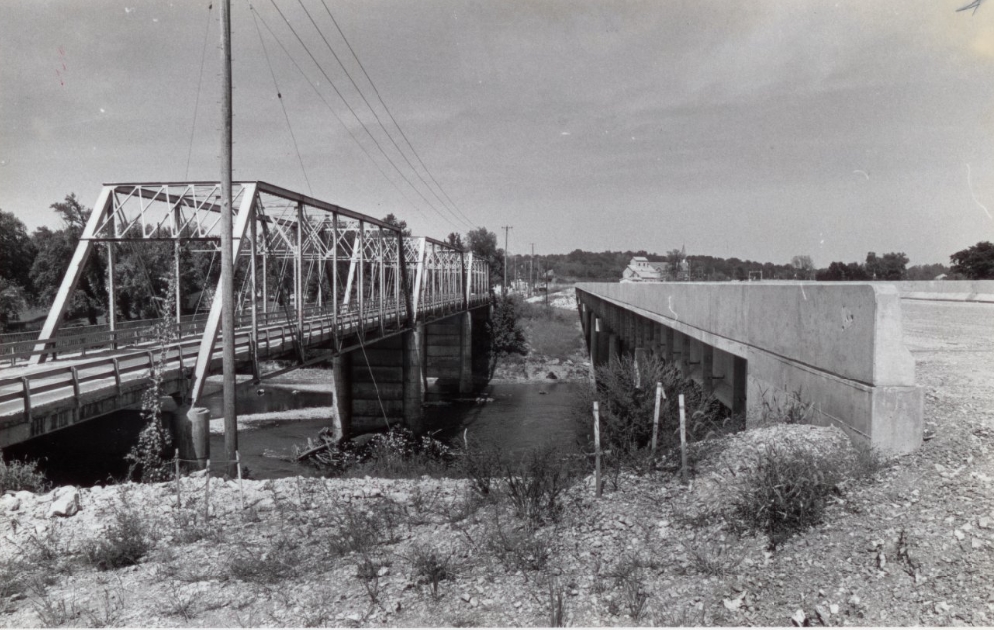
A north view of the old Meramec River bridge on the left and the new bridge is on the right, 1985
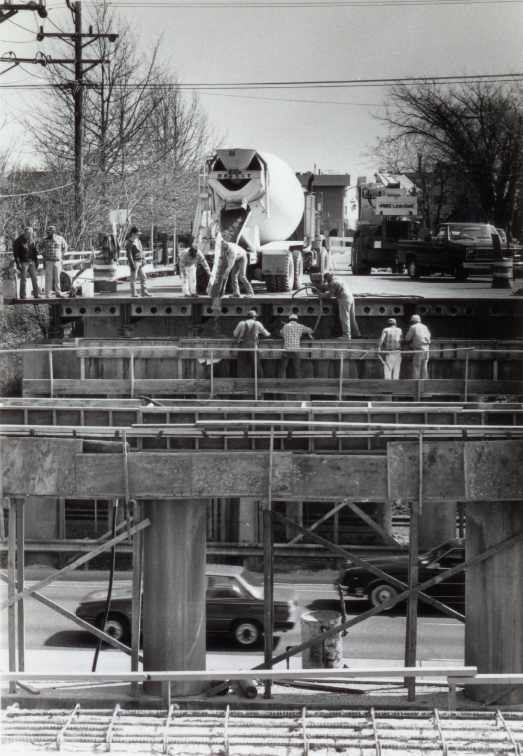
Concrete is poured on a form to bridge I-70 at Old Bonhommme, 1986
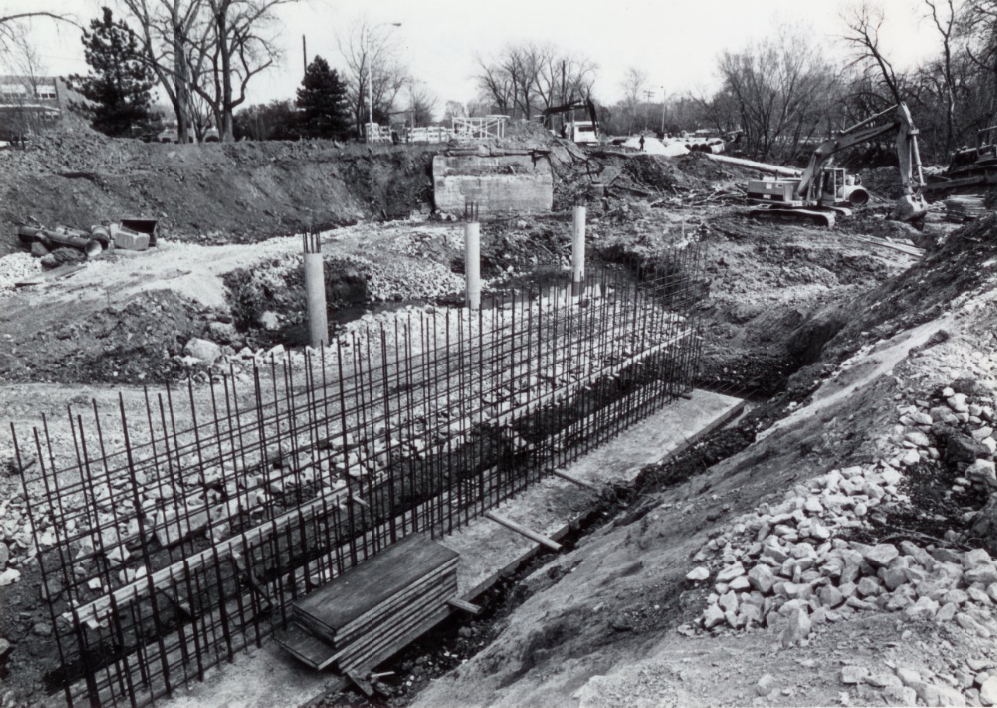
Bridge Over Brentwood To Connect Innerbelt to U.S. 40, 1982
A million dollars worth of bridge improvements will be completed this year for the St.Louis County Highway Department in the Heman Park area of University City, 1981
Bridge construction on Vernon ave., west of Pennsylvania, 1981
McKinley Bridge officials say the Venice-owned toll bridge has retained some of the new customers it acquired earlier this year when motorists sought to avoid construction areas on the Poplar Street Bridge.
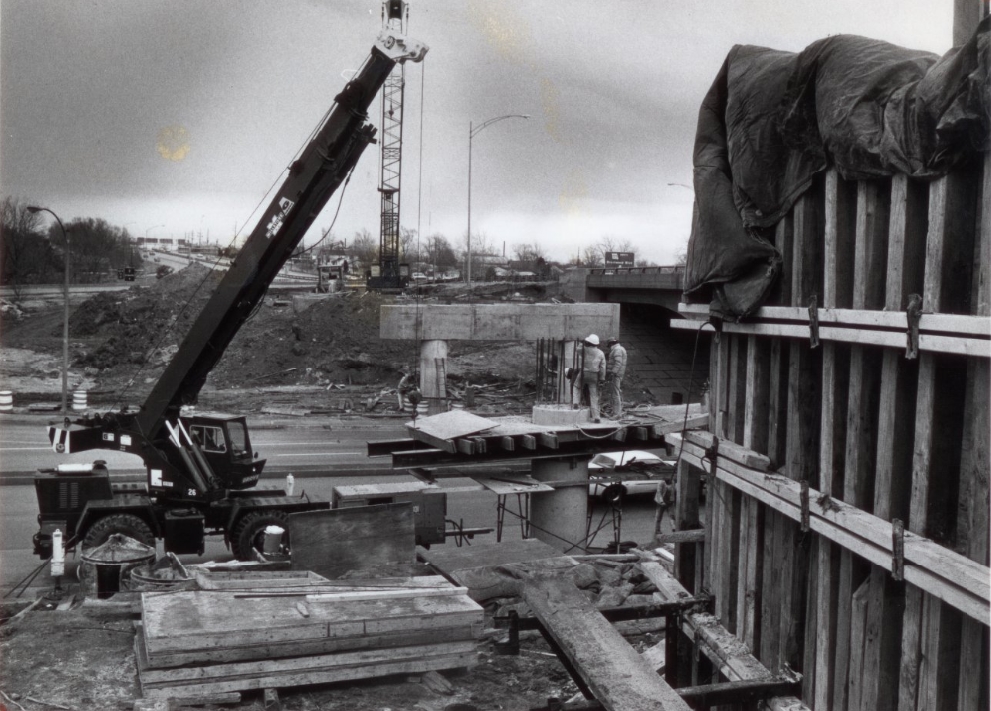
A view of the McKinley Bridge, 1985
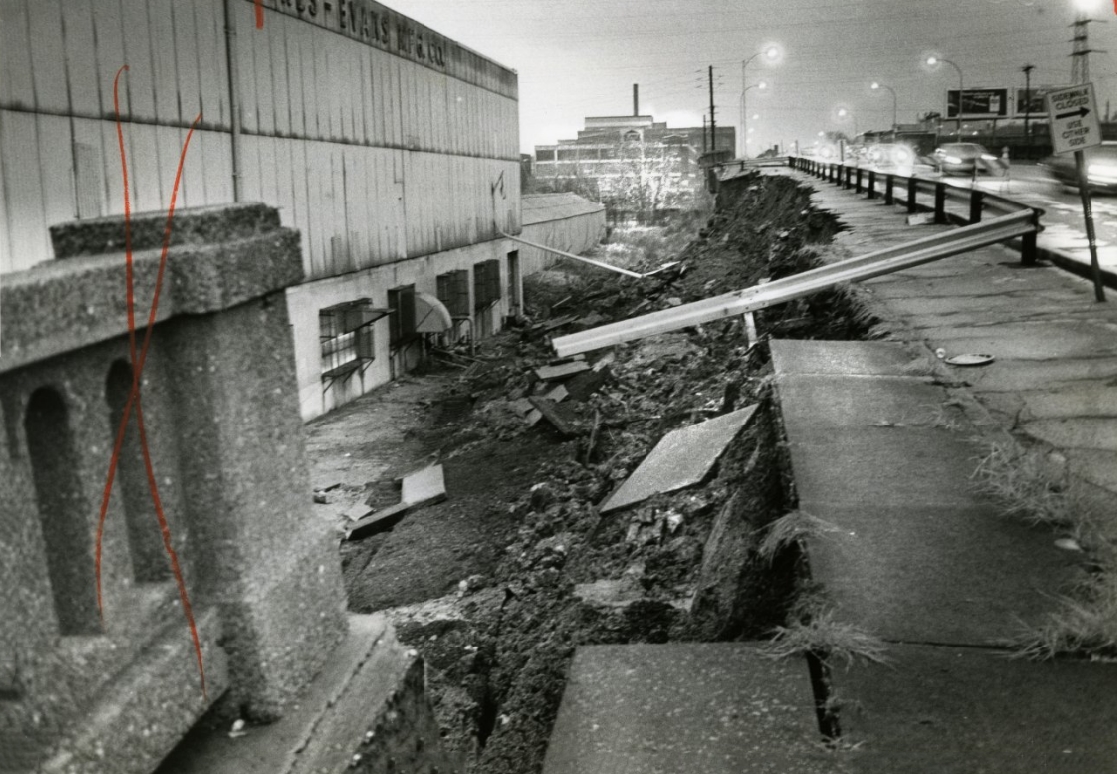
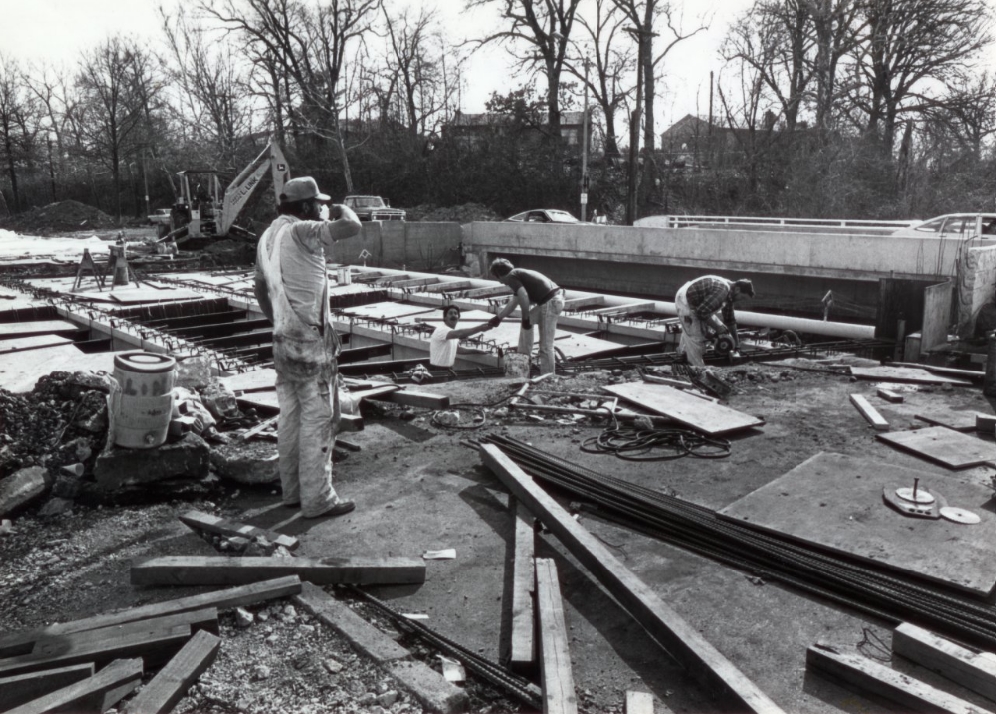
The retaining wall on the Union Boulevard bridge collapsed Nov. 26, taking a sidewalk and part of the boulevard's northbound lanes with it, 1983
The retaining wall on the Union Boulevard bridge collapsed Nov. 26, taking a sidewalk and part of the boulevard’s northbound lanes with it, 1983
Demolition of building at Lafayette and Grattan, west of City Hospital, 1984
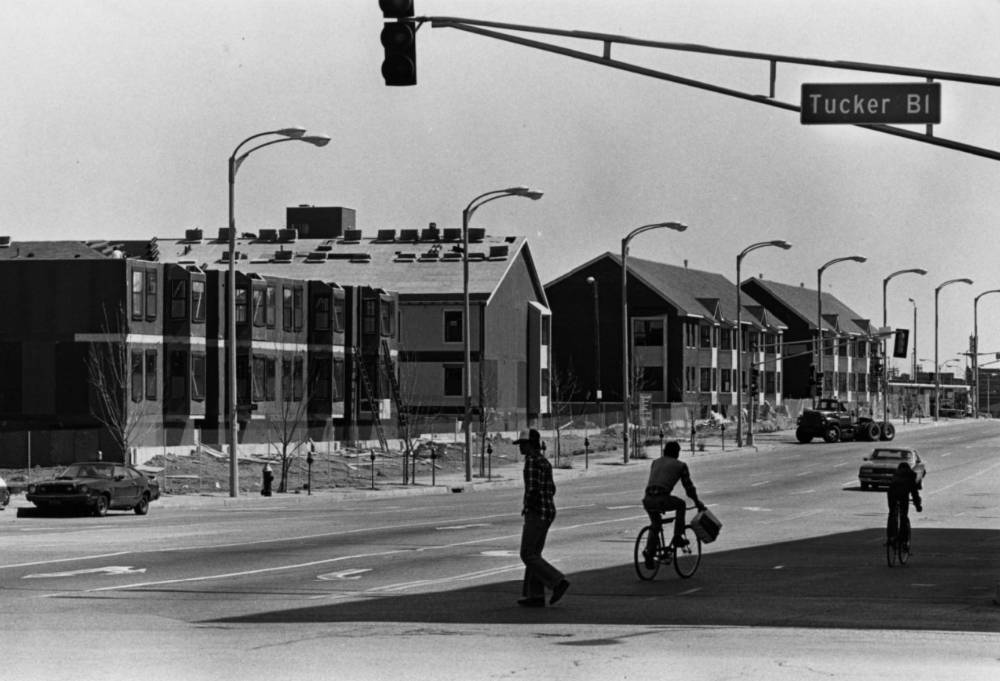
Demolition of this building at Tucker Boulevard and Lafayette Street is no helter-skelter affair, 1981
Traffic snakes onto Poplar St. bridge ramp at Spruce St. intersection, 1986
Heavy Traffic On Poplar Street Bridge Toward Prairie State, 1986
Highway and I-55 Crossing The Poplar Street Bridge, 1986
St. Louis Place Apartment Project, 1985
New Signs On Poplar Street Bridge, 1984
A.G. Edwards & Sons has launched another expansion, its fourth in 12 years, at Jefferson Avenue and Market Street, 1982
Falstaff Brewery Renovation, 1986
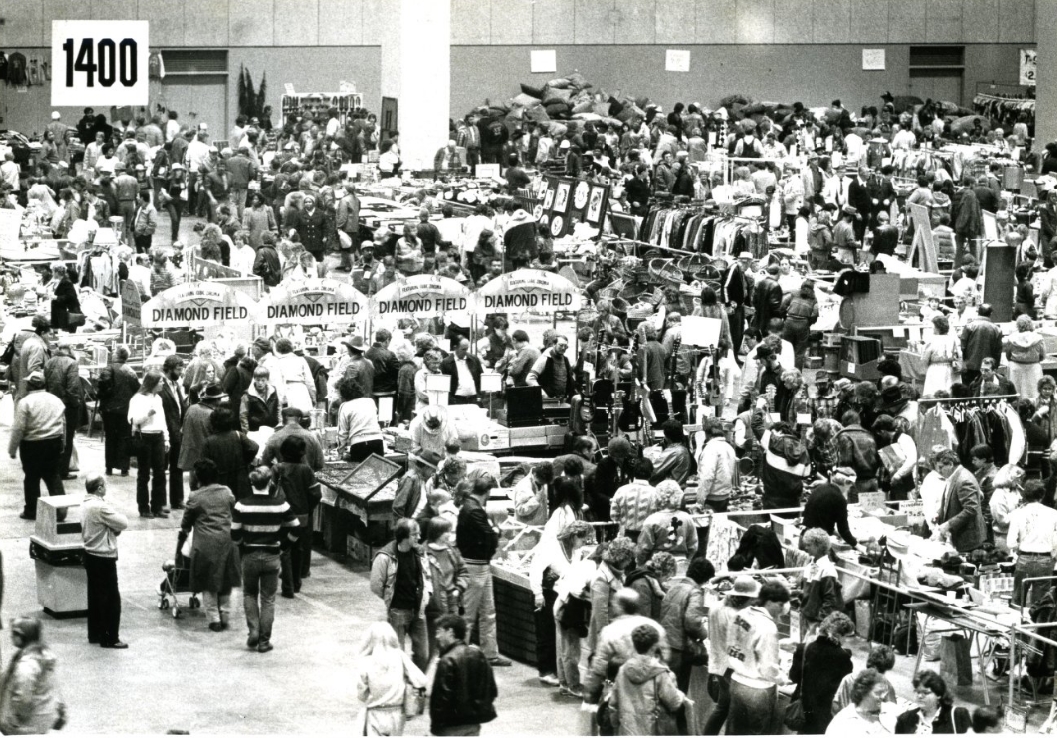
St. Louis Arena-Bargains Galore, 1984
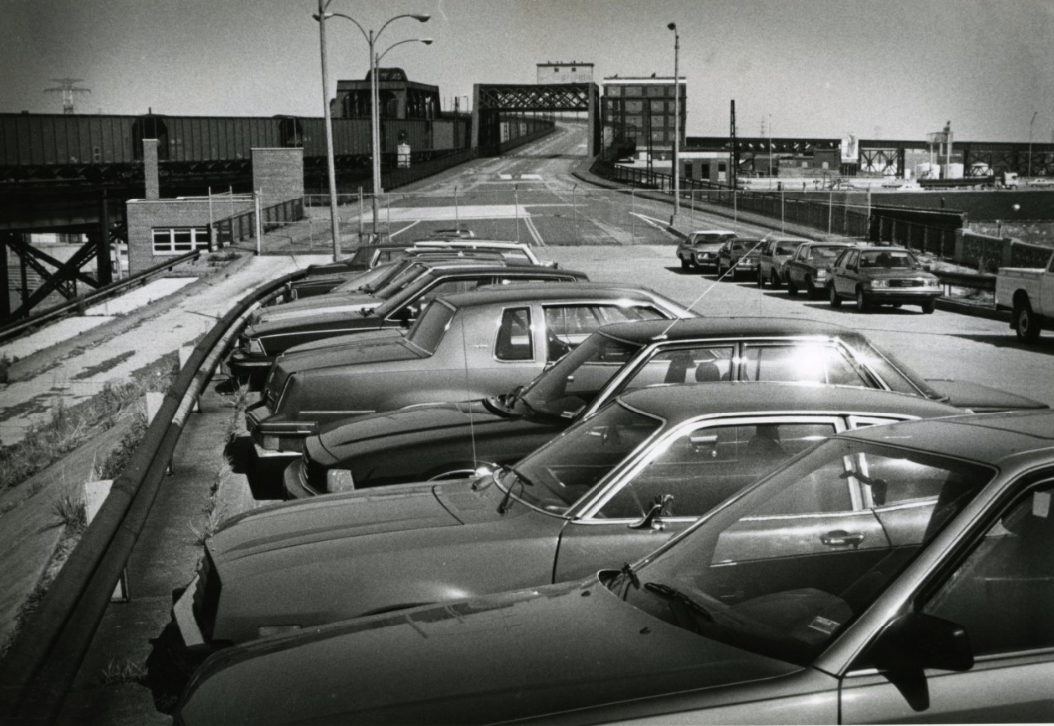
MacArthur Bridge-Parking Lot, 1985
Hole In MacArthur Bridge Railing, 1980
A shot of the passengers walking down the walkway, 1980
Richard H. Amberg Awards, 1984
Bohemian Savings & Loan Association-Expanding Service, 1985
Bohemian Savings & Loan Association, 1986
Pickup Crushed - South 8th Street, 1983
Pickup Crushed – South 8th Street, 1983
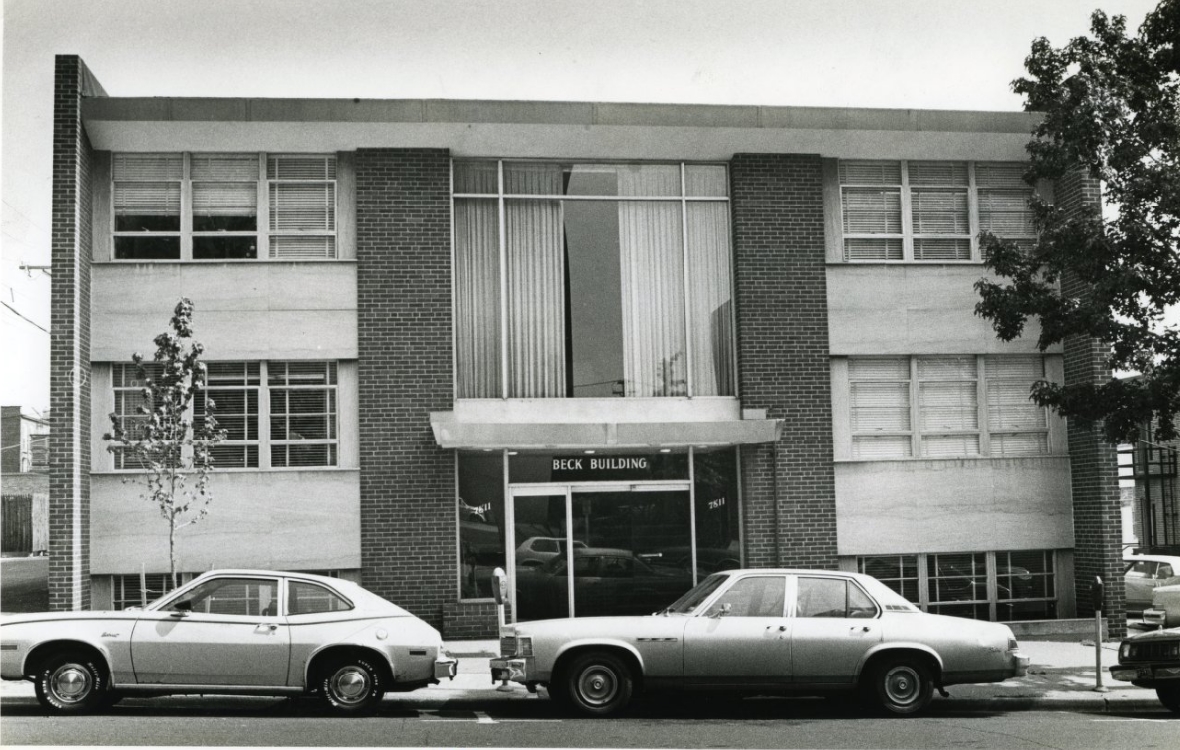
The Beck Building at 7811 Carondelet Ave, 1981
Buder Building Implosion Downtown, 1984
The Buder Building, 1984
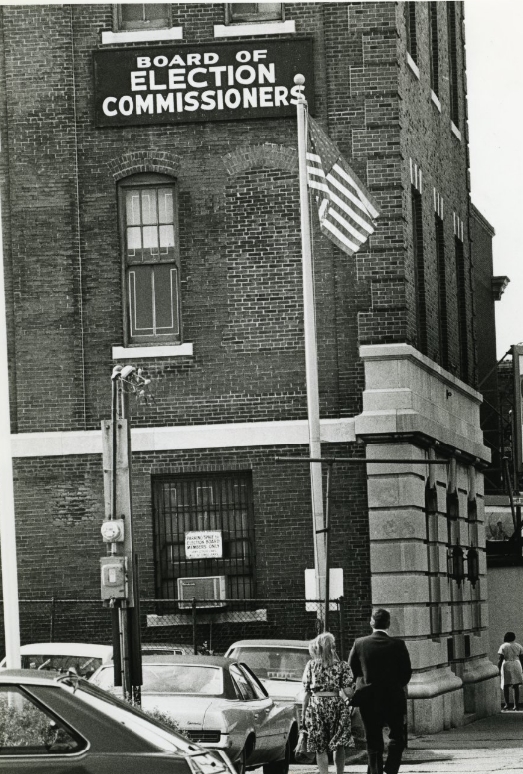
Board of Election Commissioners Building, 1982
Sign Of The Times, 1980
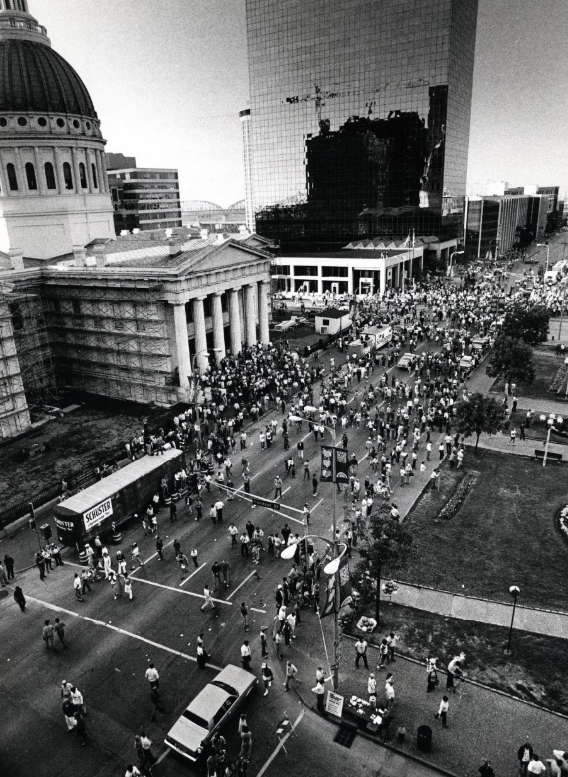
Spectators Admiration, 1982
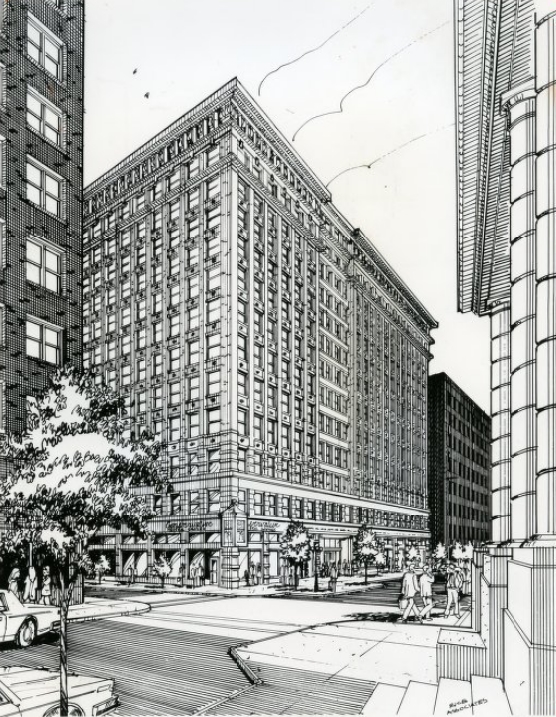
A sketch of the office building project of the Frates Redevelopment Corp, 1980
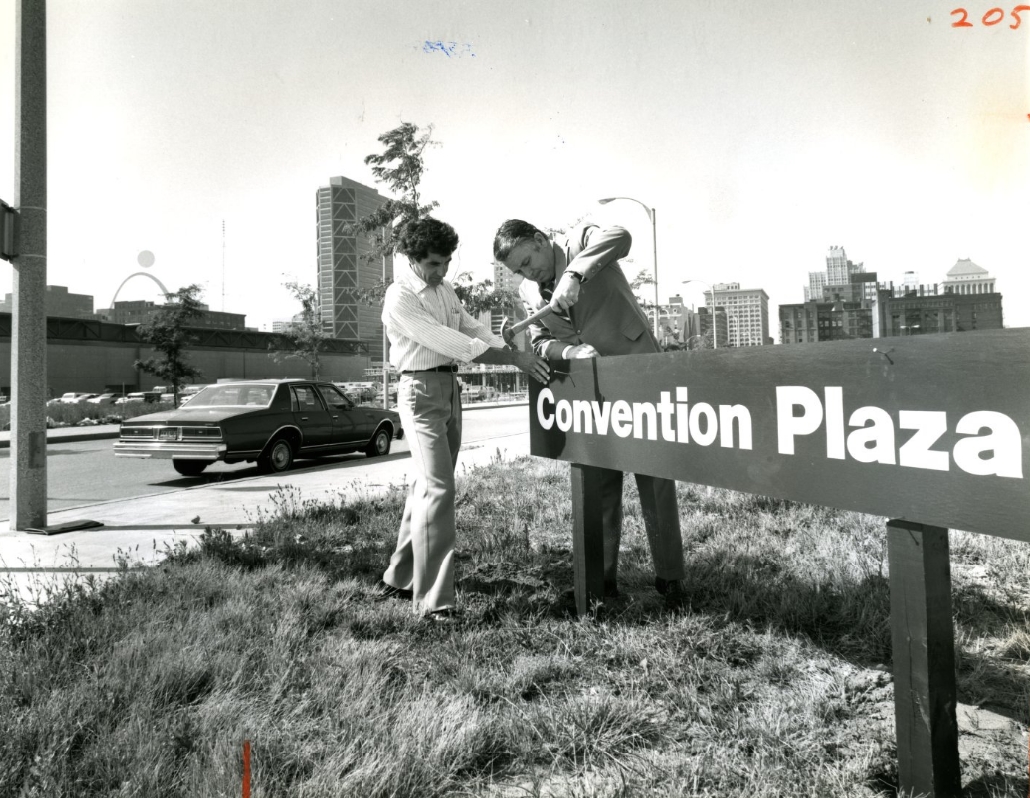
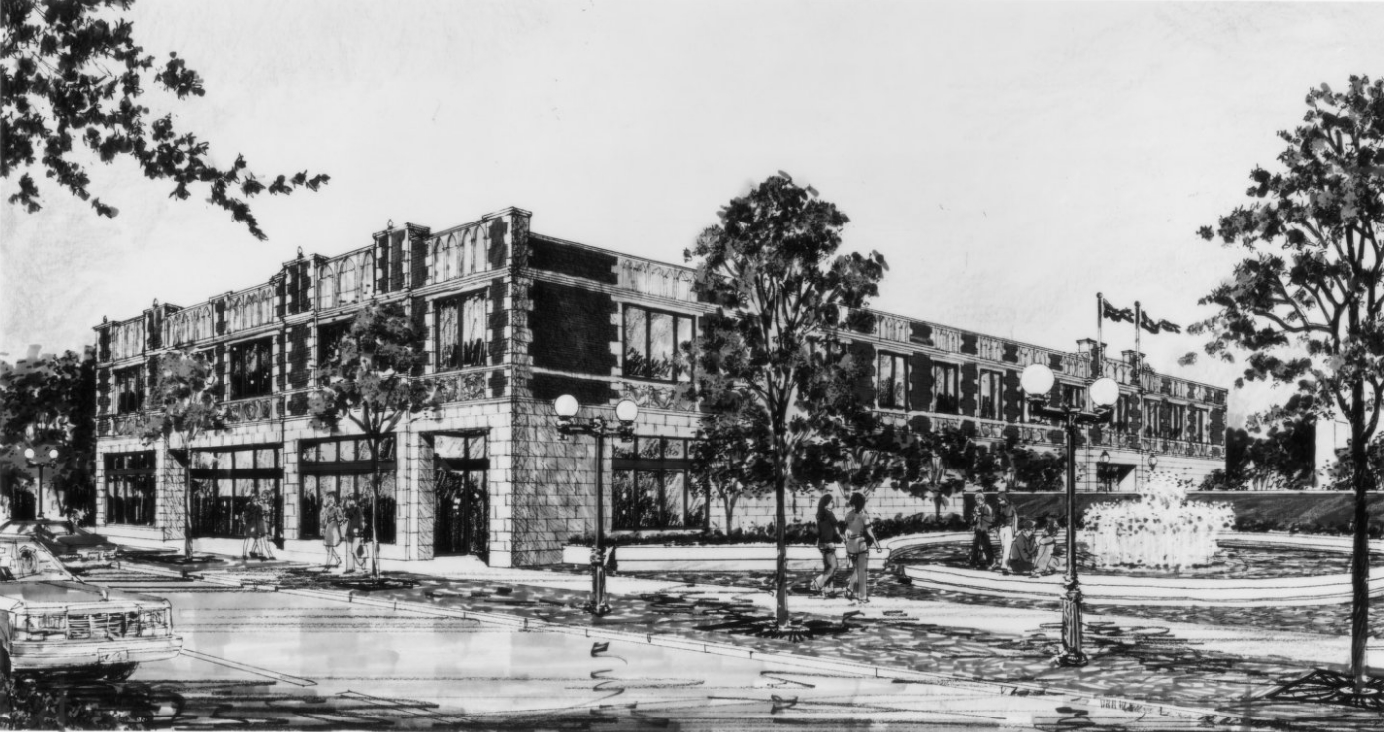
Convention Center and Plaza Cervantes Center Env. 3, 1986.
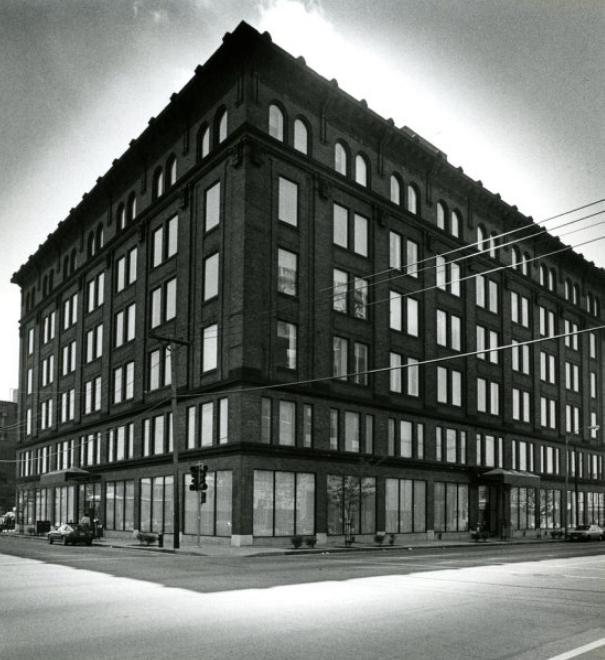
Frisco Building, 1983
Frisco Building Plans, 1983
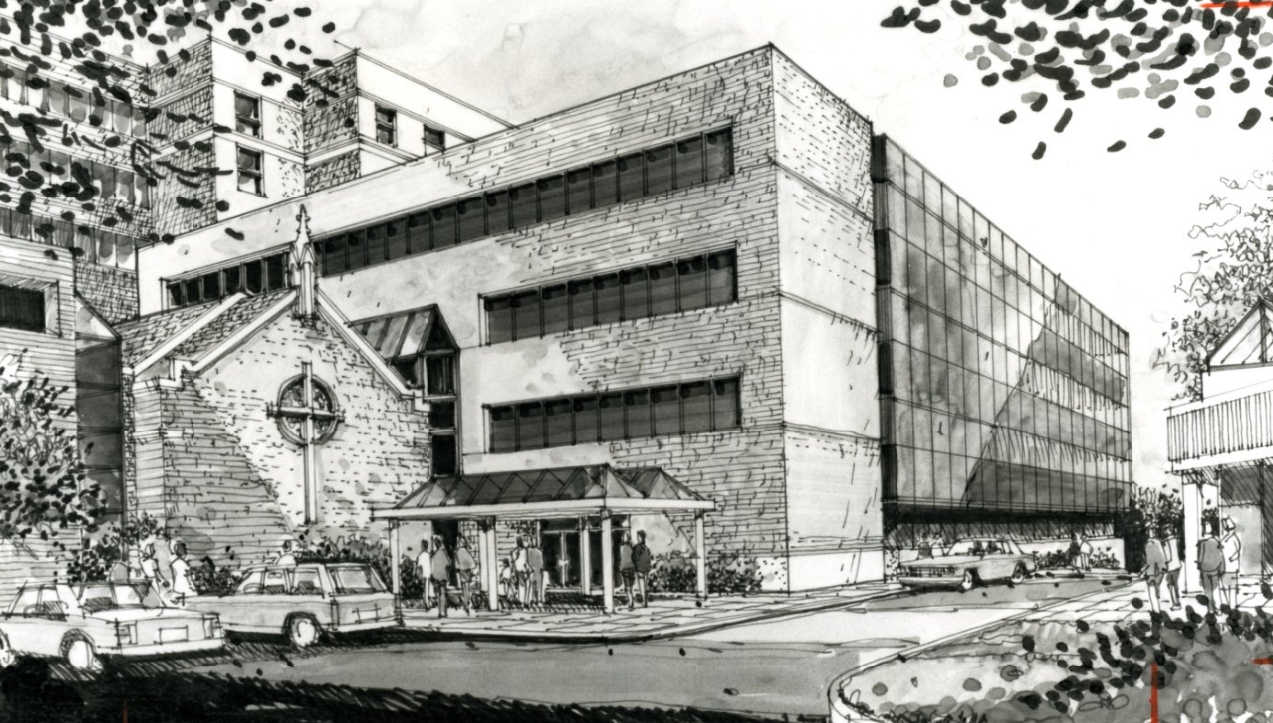
Medical Office Center, 1982
Moving clockwise, is a picture of the Del Monte Building on Delmar Boulevard where Burns plans eventually to relocate, 1986
House that has been renovated at a cost of $150,000 mistakenly scheduled for demolition, 1980
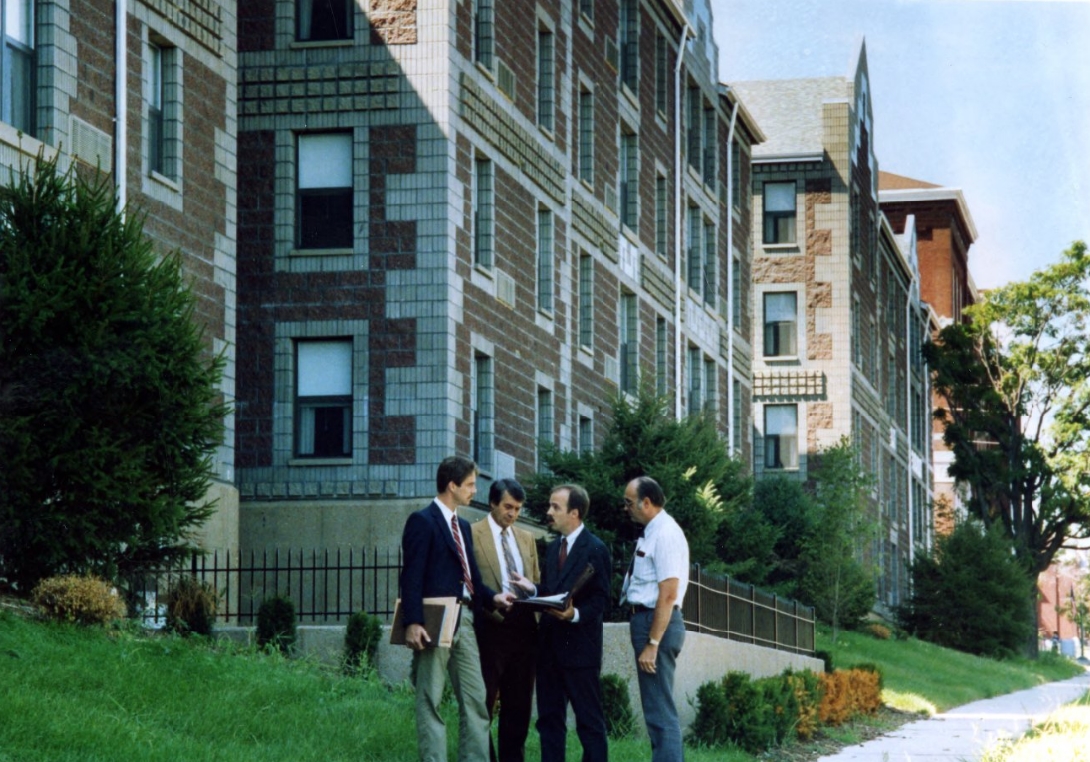
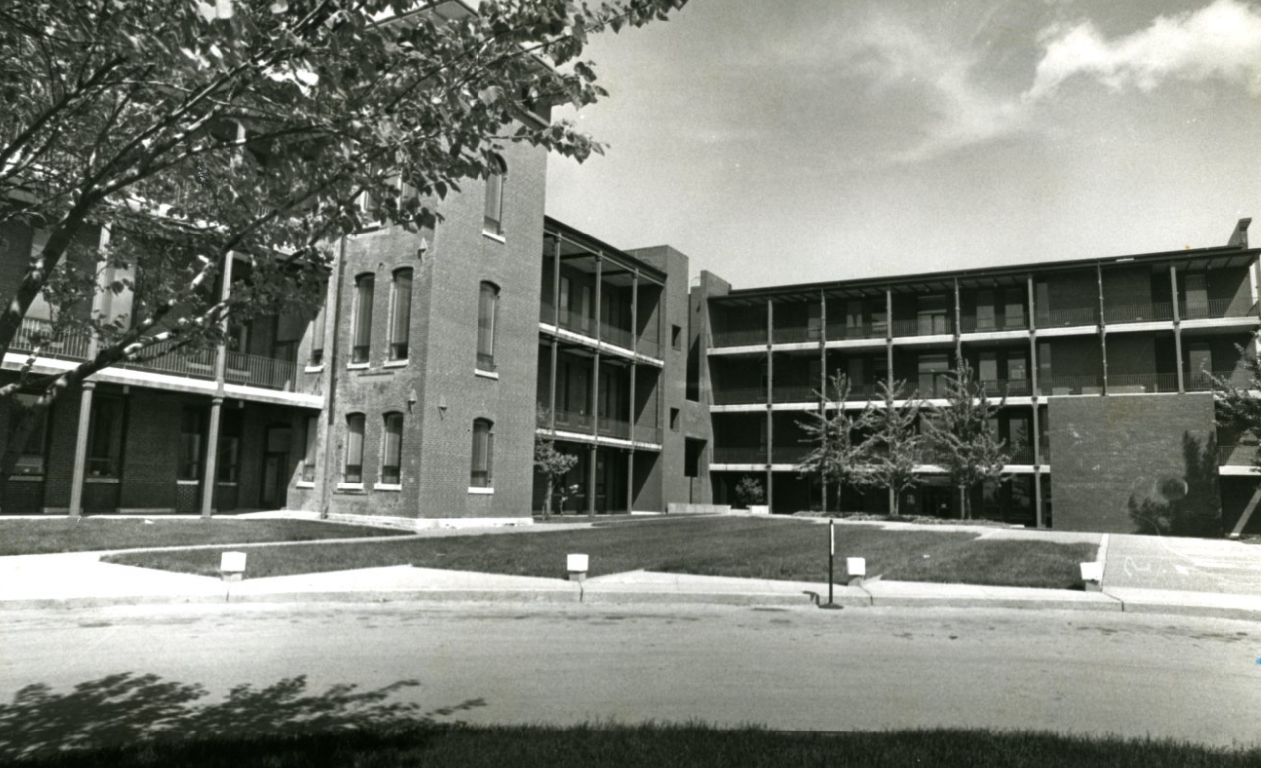
Apartments at 3714 Shreve - Penrose Park. (obverse), 1985
Apartments at 3714 Shreve – Penrose Park. (obverse), 1985
Courtyard of apartment group in the 5700 block of Cabanne Ave., 1985
Eads Square, new 103-unit housing for elderly in Lafayette Towne, 1985
12-units apartment building on the corner of Jamieson and Lansdown, 1983
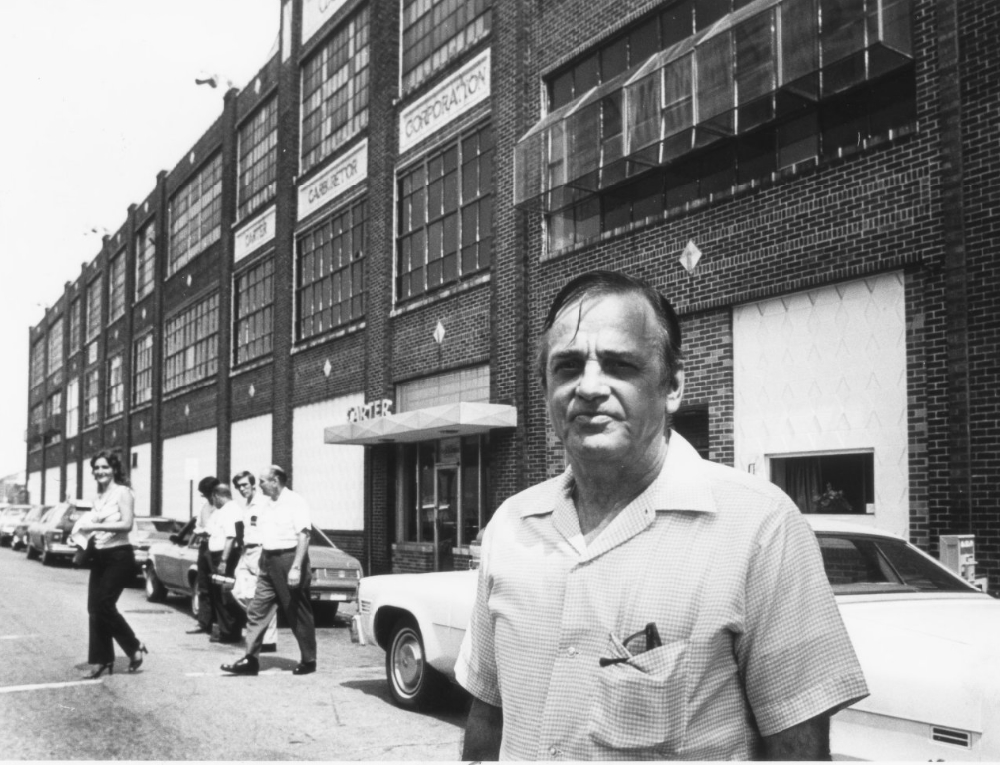
Rector Brown, 57, a die caster at Carter, 1981
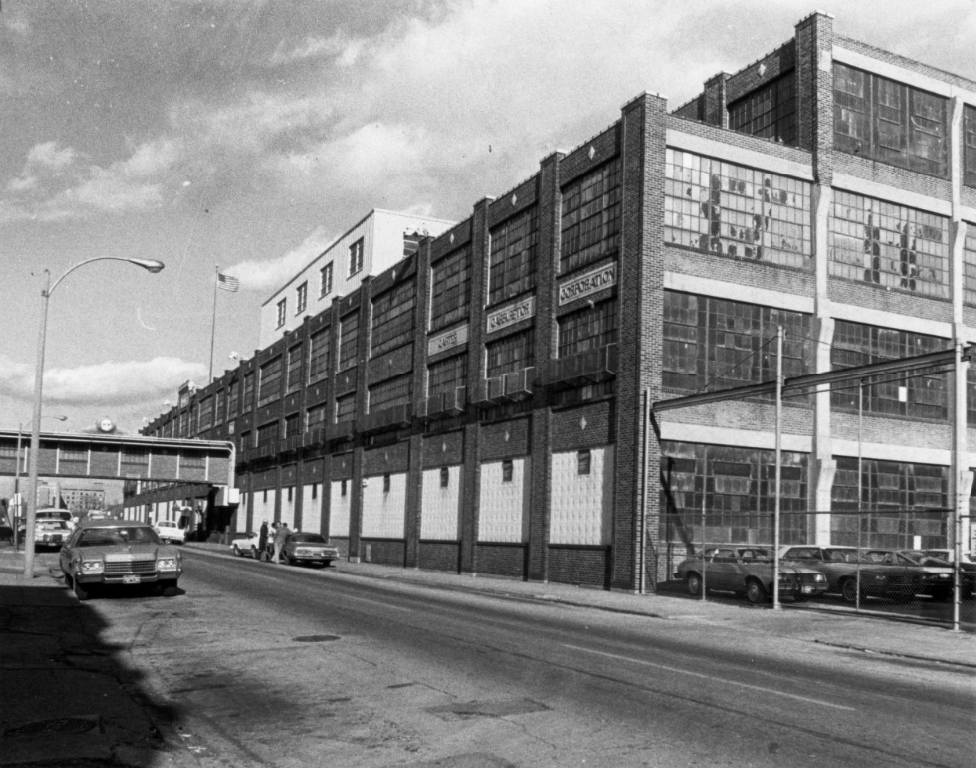
The Carter Carburetor Plant at 2849 N. Spring Ave, 1981
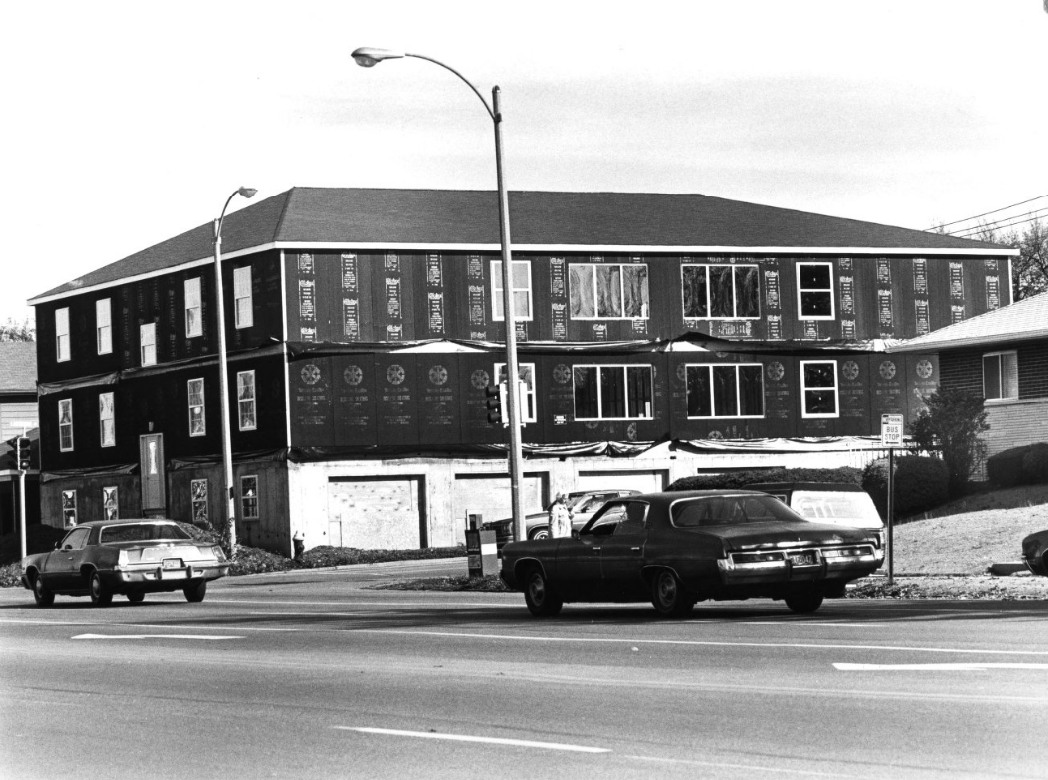
Plaza Apartments - Shopping center construction, 1981
Plaza Apartments – Shopping center construction, 1981
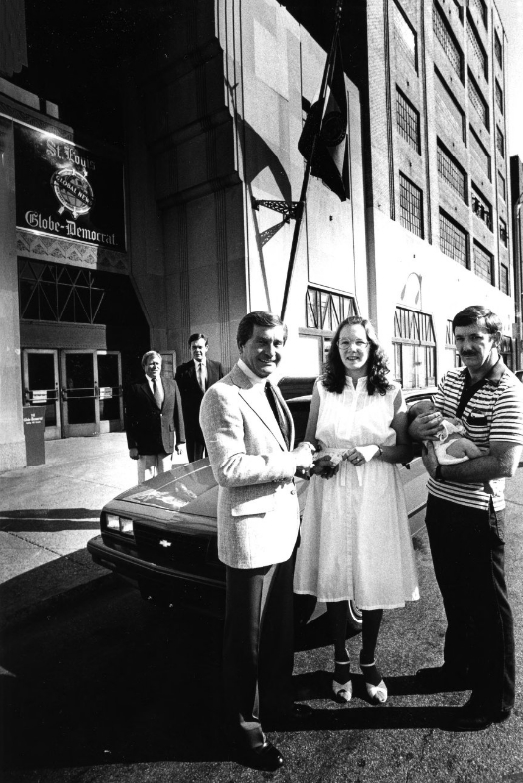
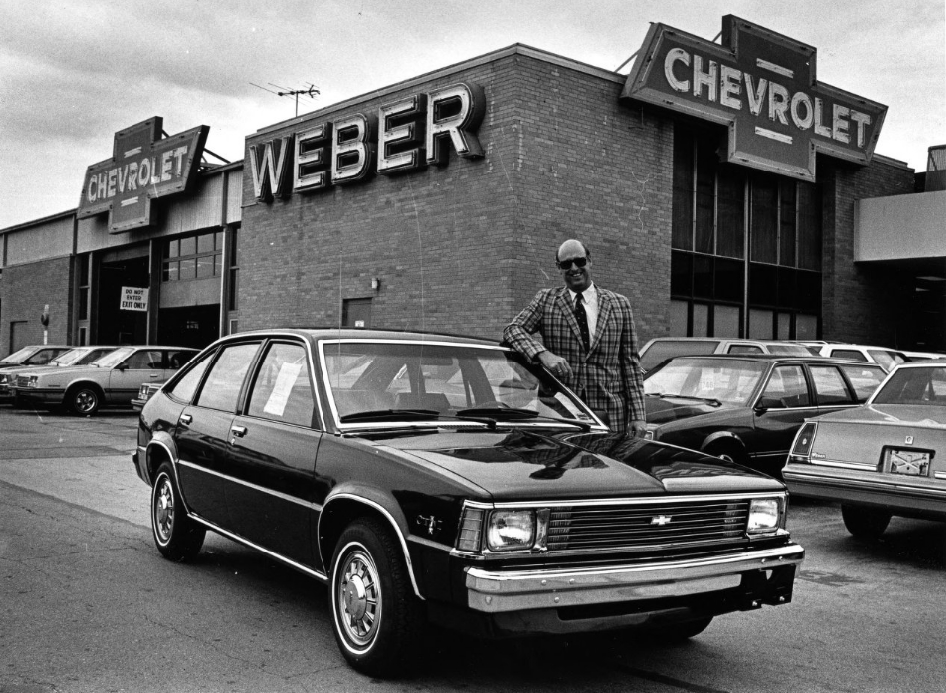
Great Car and Cash Giveaway Contest Car Prize, 1984
Great Car and Cash Giveaway Chevrolet Prize Winner, 1984
Great Car and Cash Giveaway Car Prize, 1984
The highly coveted parking spaces in the circular drive on the east side of City Hall are stirring controversy, 1984
Chemical Building Asbestos, 1986
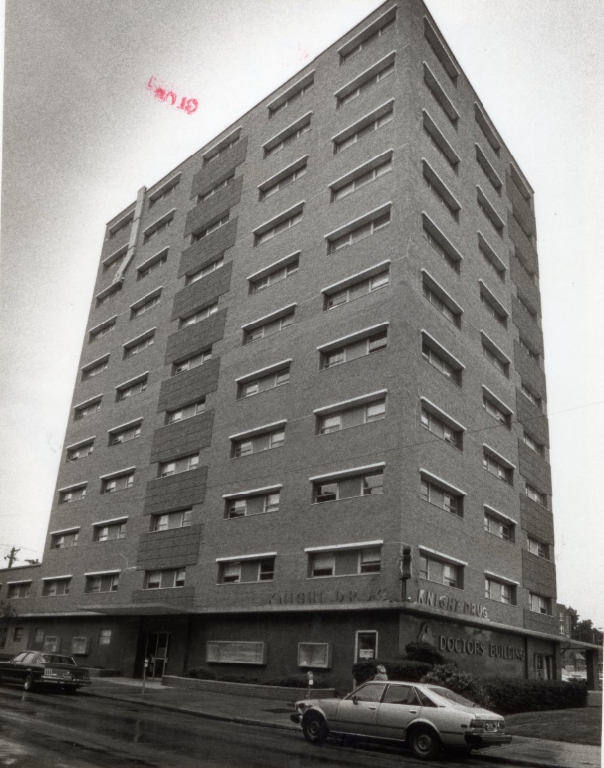
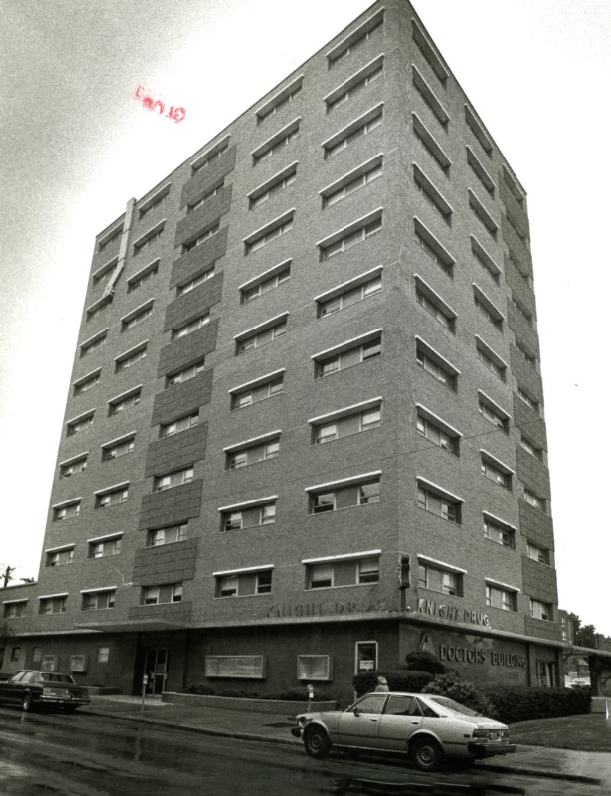
C. F. Knight Drug Company, 1985
Knight Drug, 1985
Knight Drug, 1985
Central West Plaza Building, 1981
Cemrel, 1983
Cemrel, 1983
City Hall in Winter, 1981
St. Anthony's Medical Center Marketing Director, 1985
St. Anthony’s Medical Center Marketing Director, 1985
Modernized Office Building, 1985
Continental Car Building, 1982
Dollar Building located downtown, 1985
The building is scheduled for completion in February 1982.
Food Process Industry Called Healthy Despite 3 Problems, 1980
The New Building, 1981
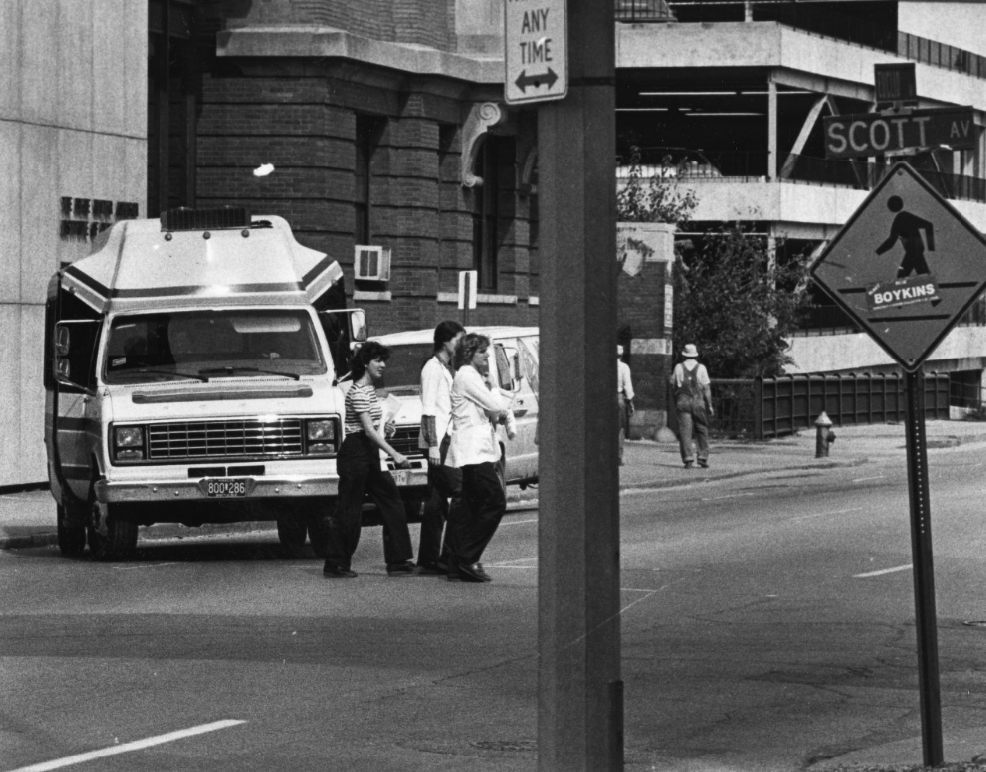
Pedestrians trying to cross Euclid Ave with a van on their tails thats making a left turn from Euclid into Scott, 1982
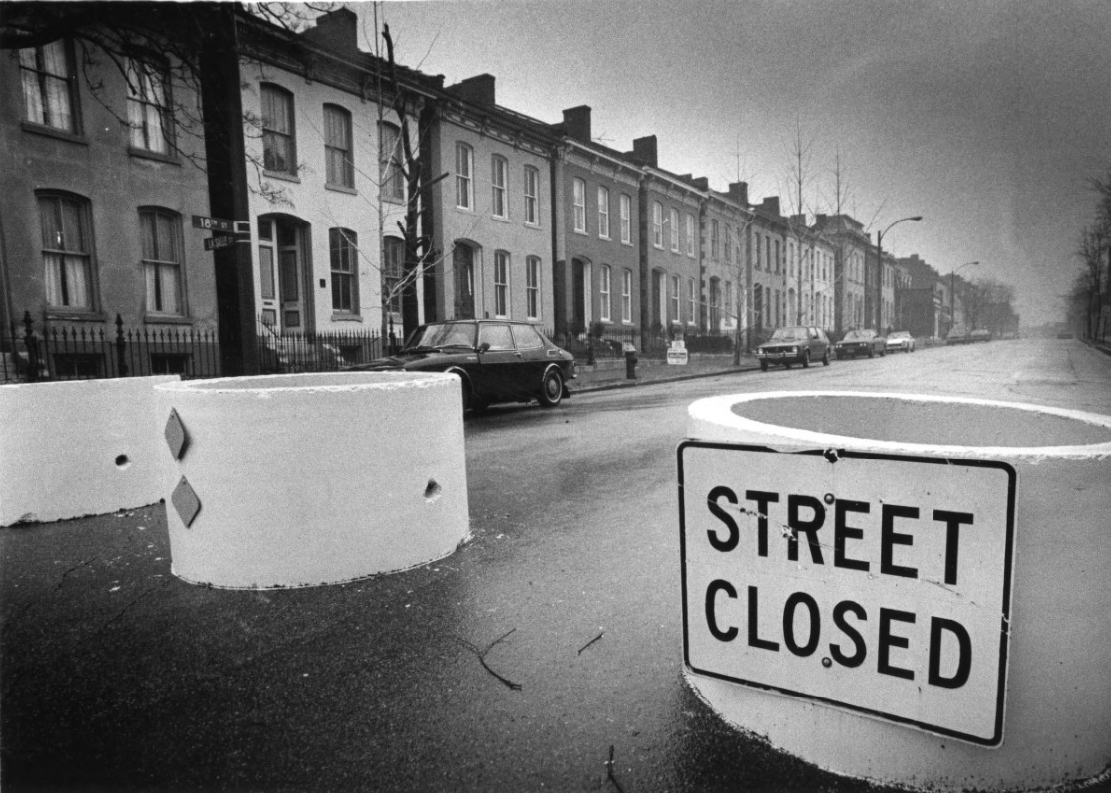
Eighteenth Street, 1986
Cherokee St. west from Texas, 1982
Construction crews work to fill what was a gaping hole at South Broadway and Fillmore Street, 1982
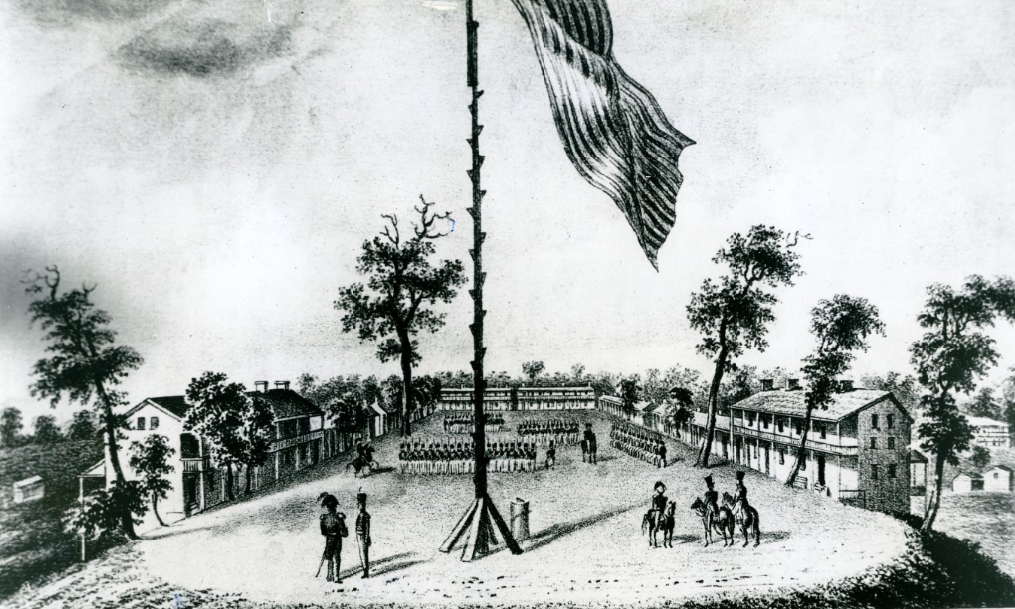
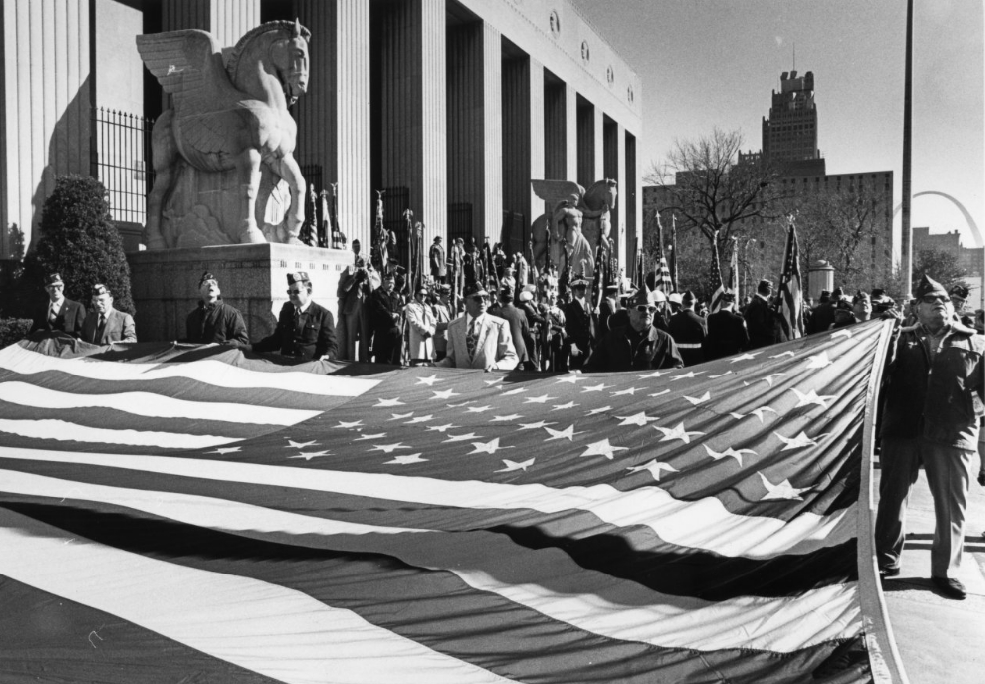
Raising the Flag, 1981
Military Vehicles, 1983
Gateway One Tower Building Location, 1986
Gateway One Building, 1986
Construction on the Gateway One Mall, 1986
Joe Pieri, a Downtown Rotary Club member, took to the corner at 6th and Pine streets, 1981
St.. Charles Hawkers No. 2, 1981
St. Charles Hawkers, 1981
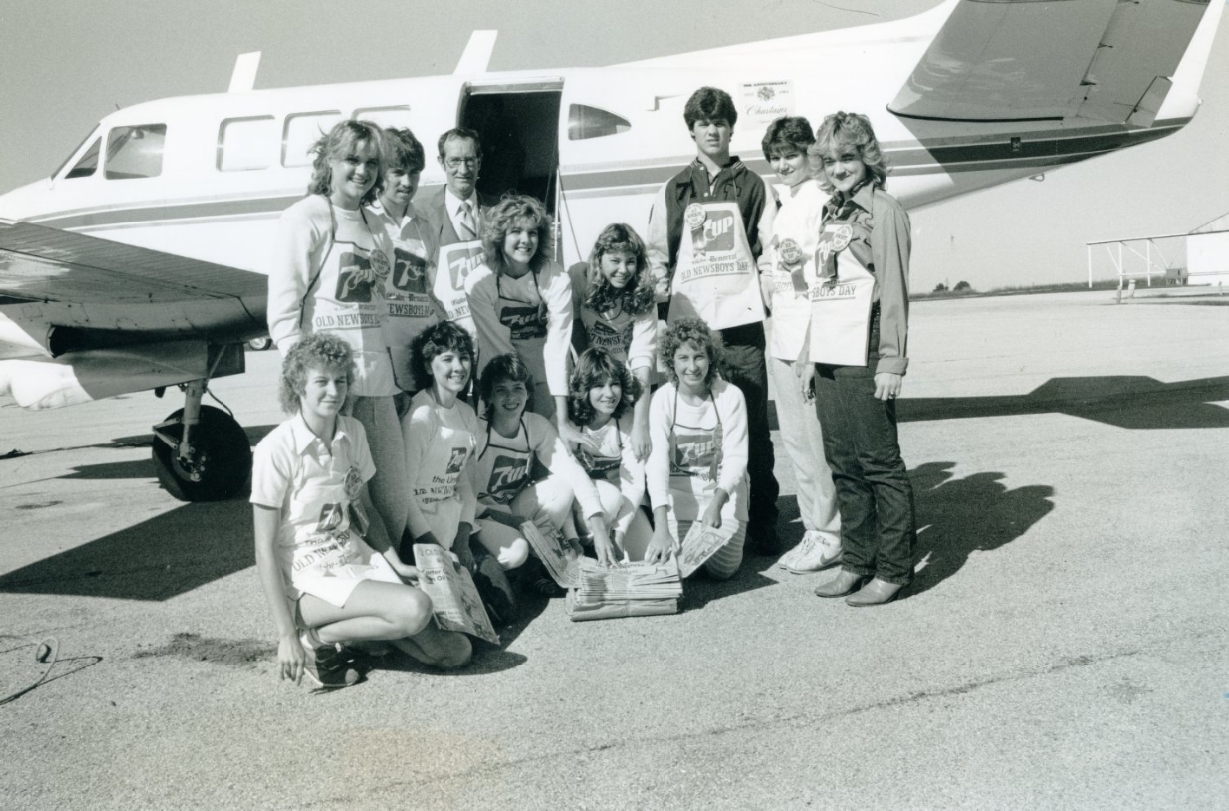
Claywest for Old Newsboys, 1982
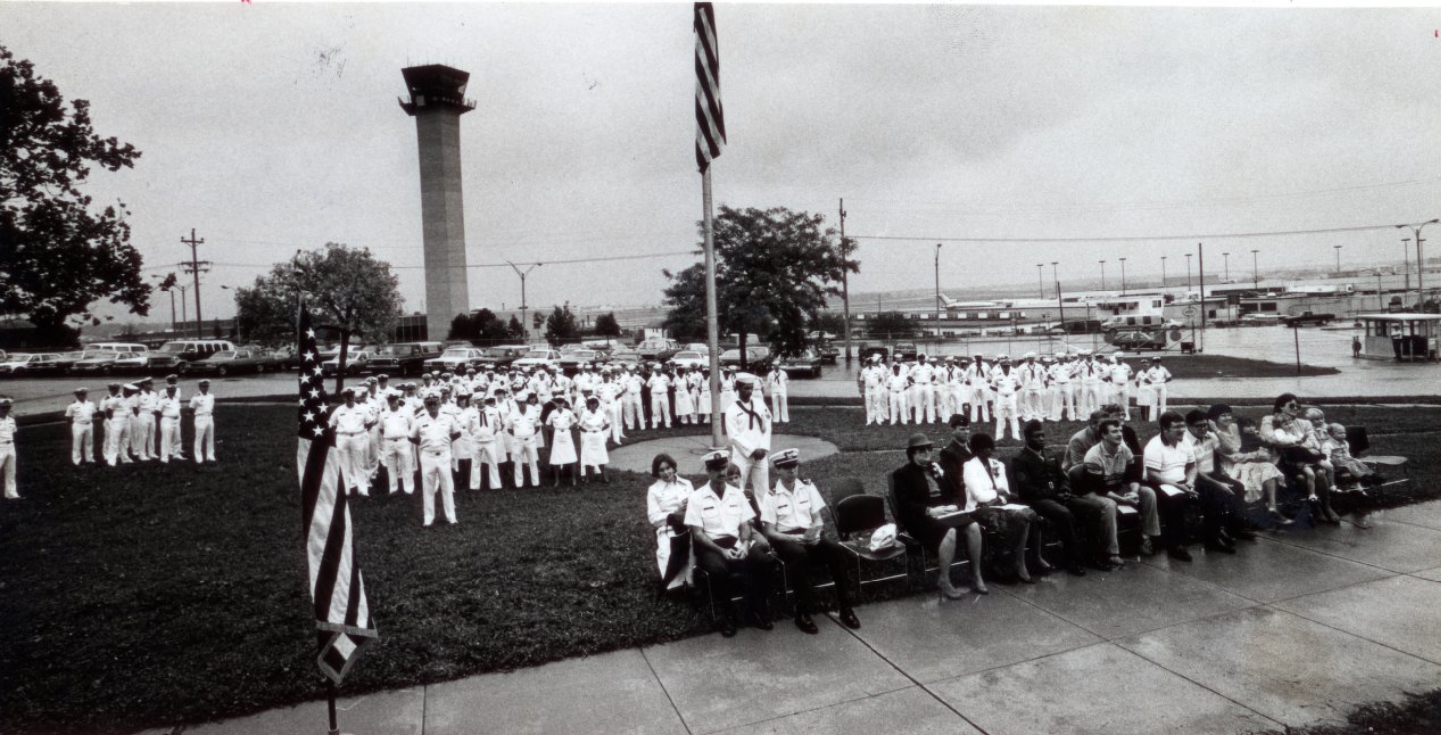
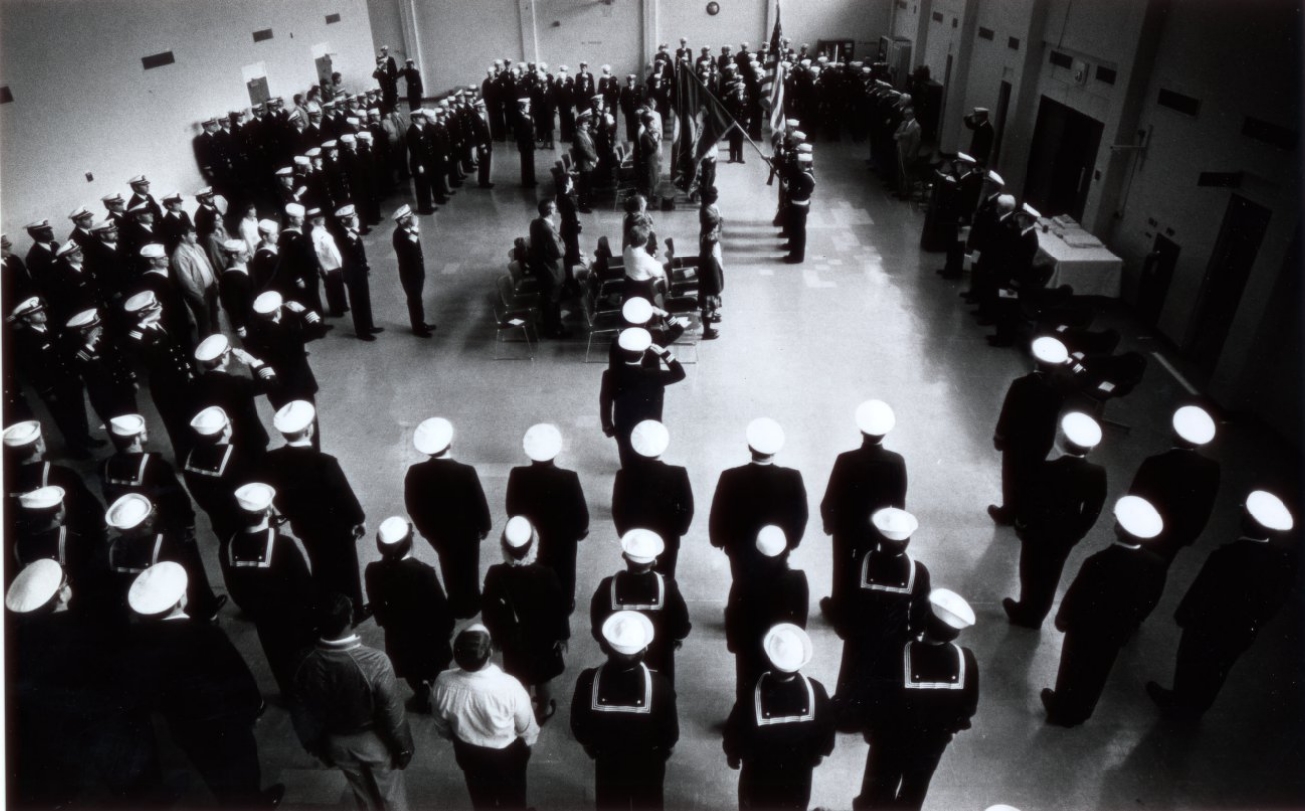
The Amberg Award Ceremonies held at the Navy and Maring Corp. Center at Lambert St. Louis International Airport, 1983
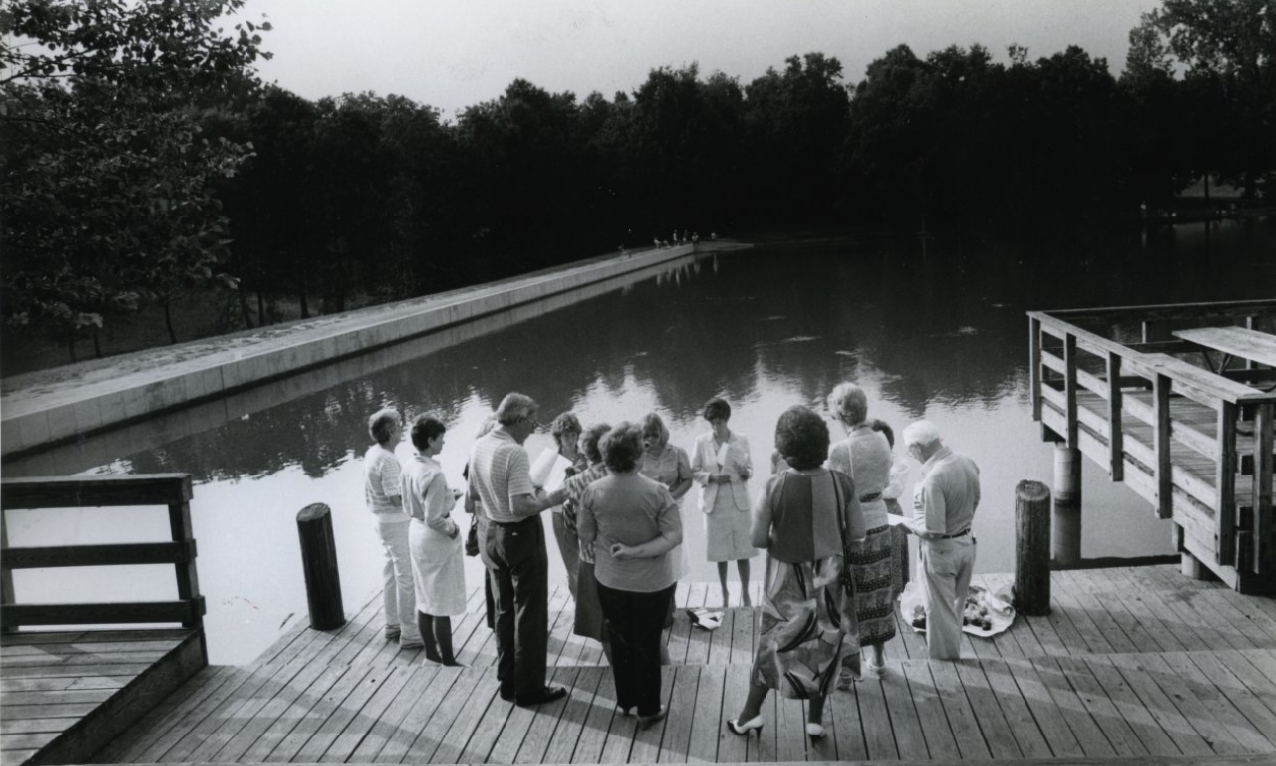
A memorial service for families that have used Community Hospice Care was held Tuesday at the pond in Tilles Park in Ladue, 1986
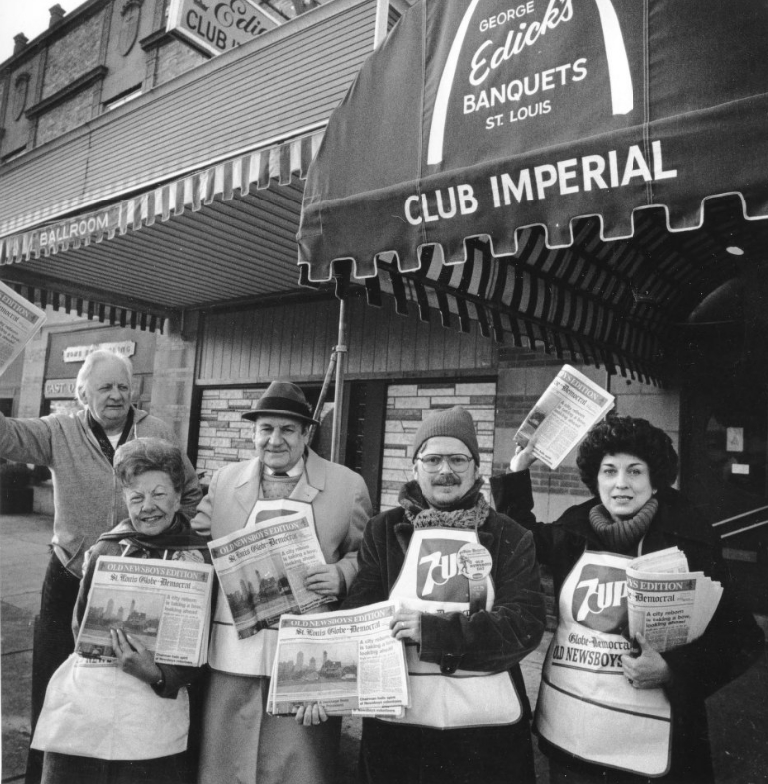
Club Imperial and WGNU, 1985
Paper Delivery, 1983
Ferguson Lions Club, 1983
Big Red Line, 1983
Big Red Line, 1983
City Living Art Competition, 1981
St. Louis Steamers coach, Dave Clements, 1983
Dania Shrine Club, 1983
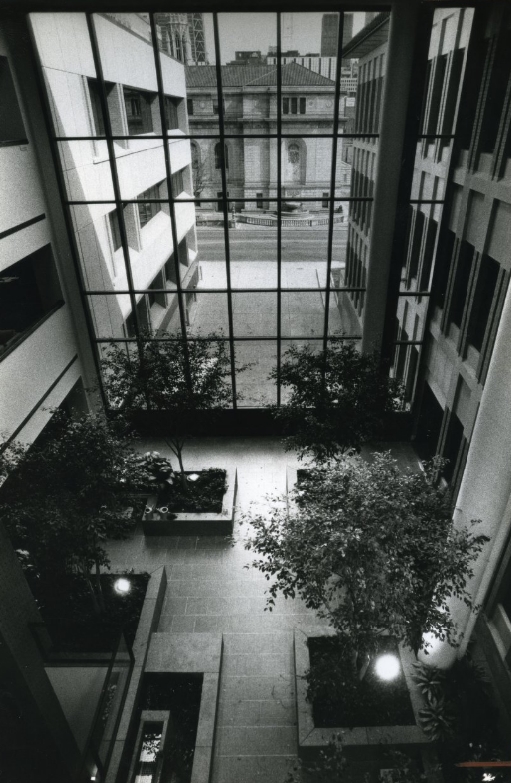
Atrium of Farm Credit Banks Building, 1983
Enjoyed this post? Get new ones in your inbox.

3 thoughts on “St. Louis in the 1980s: A Photographic Exploration of a City in Transition”

Leave a Comment

Your email address will not be published. Required fields are marked *

Share this Post 🥺

Please take a moment to share this content. Your support is greatly appreciated! 🙌🙏

Share this Post 🥺

Please take a moment to share this content. Your support is greatly appreciated! 🙌🙏
Scroll to Top
 
Hey Friend, Before You Go.. Please like & follow for more interesting content