At the turn of the 20th century, St. Louis was one of the most important cities in America. With a population of around 550,000 people, it ranked as the fourth-largest city in the country. Sitting along the Mississippi River in Missouri, it served as a crossroads between the established East and the expanding West. Settlers and traders had long passed through on their way along the Oregon and Santa Fe trails, and the city had grown up around that traffic — becoming a hub of trade, transportation, and ambition.
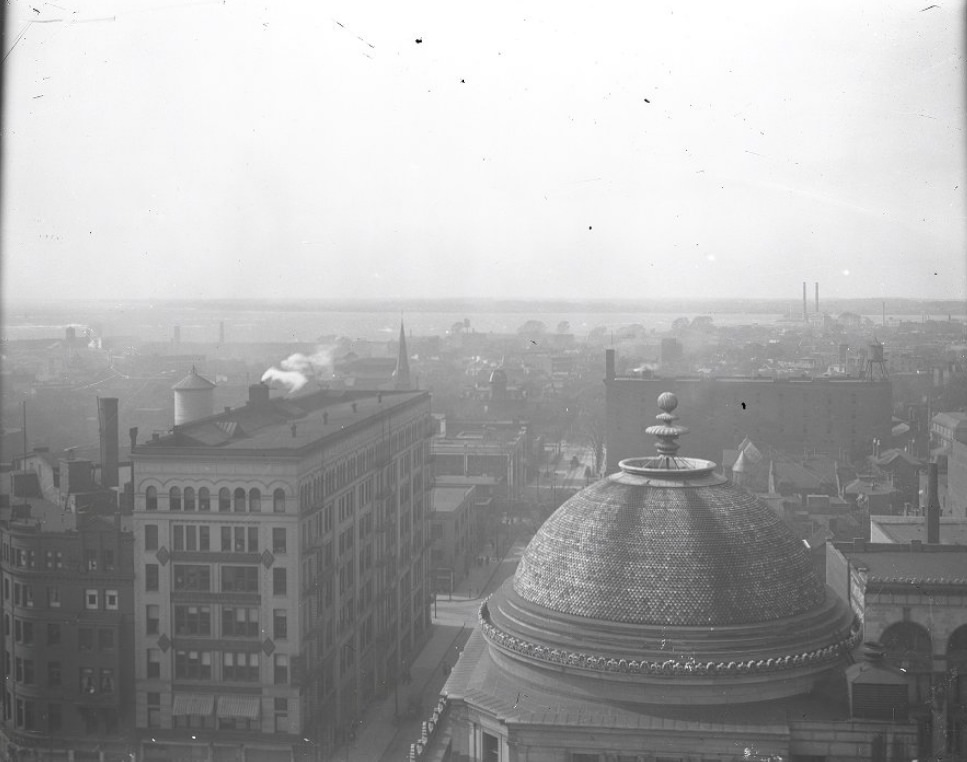
An aerial view of Saint Louis. The view spans across rooftops with smokestacks in the distance, and the river in the background, 1900
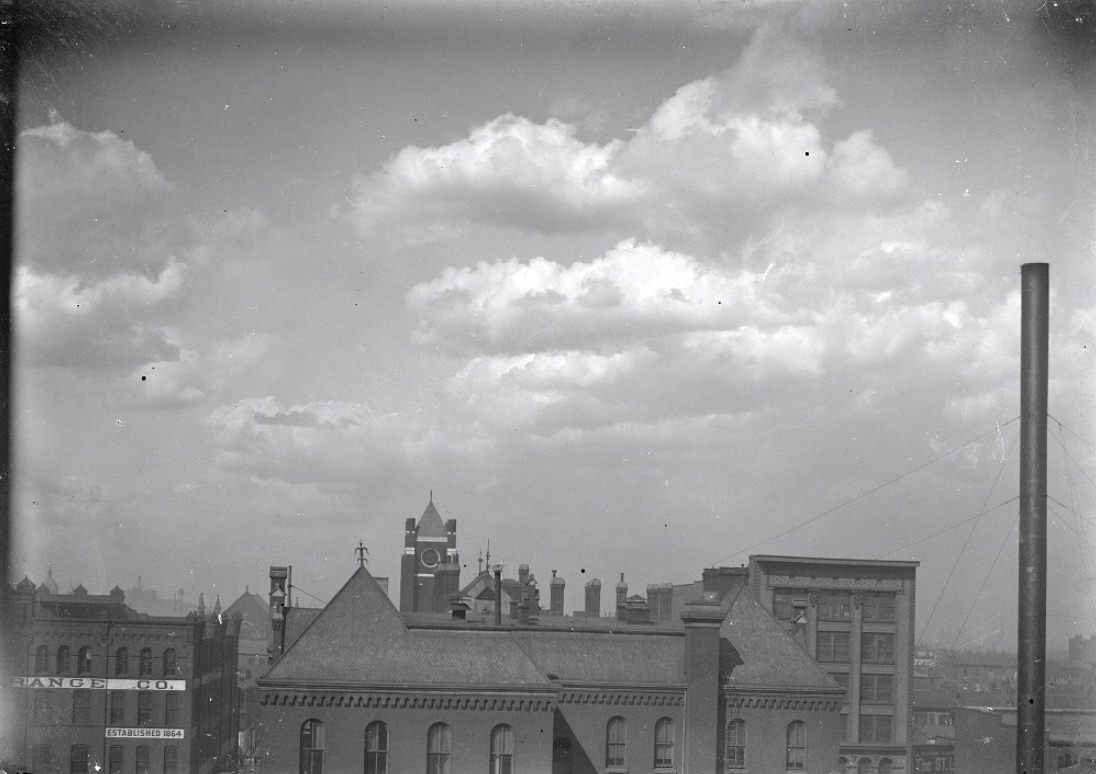
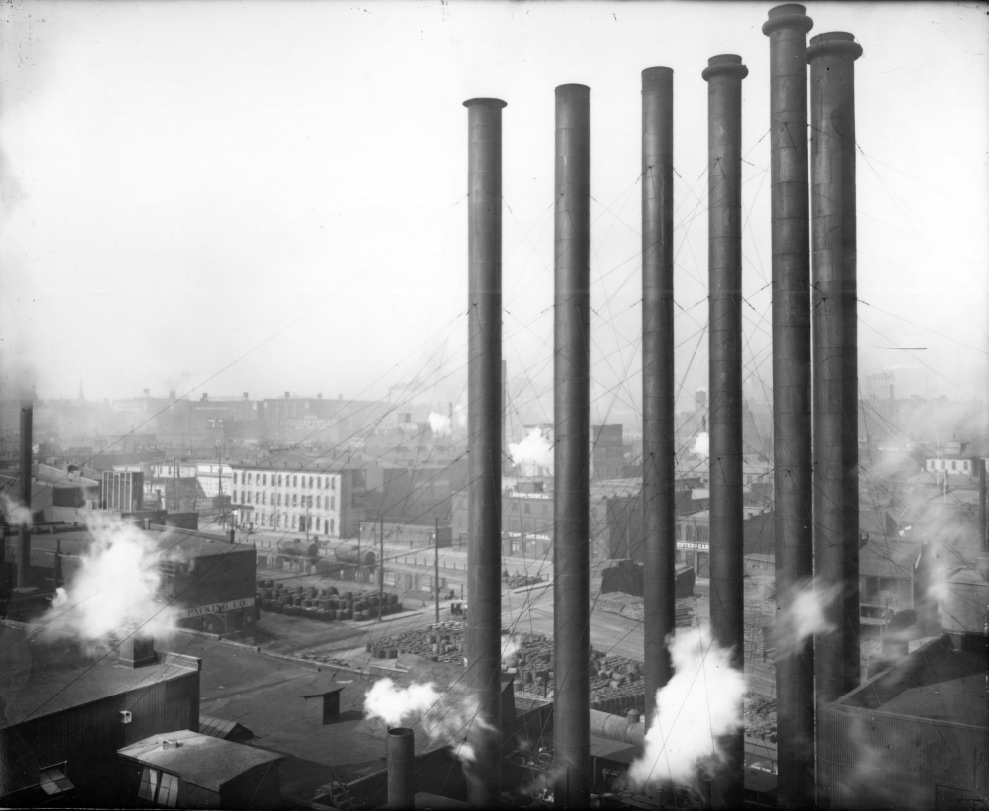
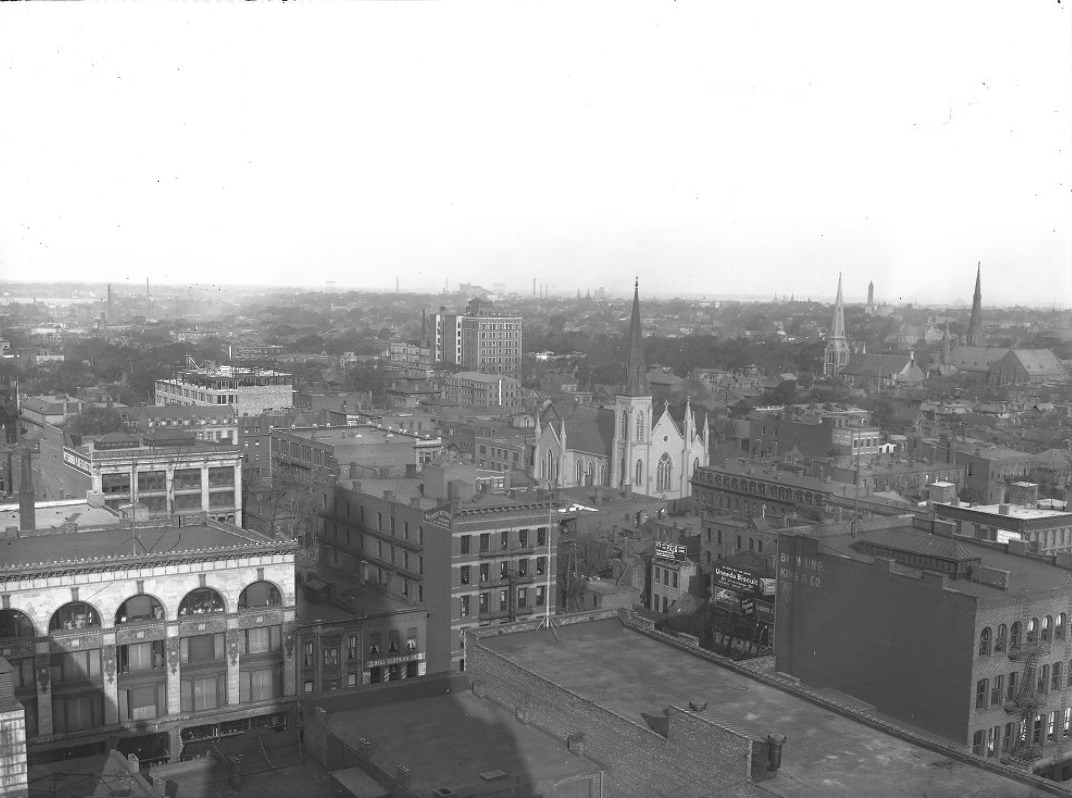
From above, the city in 1900 was a dense patchwork of rooftops, church steeples, and factory smokestacks stretching toward the Mississippi. The river wasn’t just a backdrop — it was the engine of St. Louis commerce. Steamboat companies ran freight and passengers up and down the waterway, while multiple railroads fanned out from the city in every direction, linking it to the rest of the country. St. Louis was a place where goods moved in and out constantly, and the skyline of smoke and steam was proof of it.
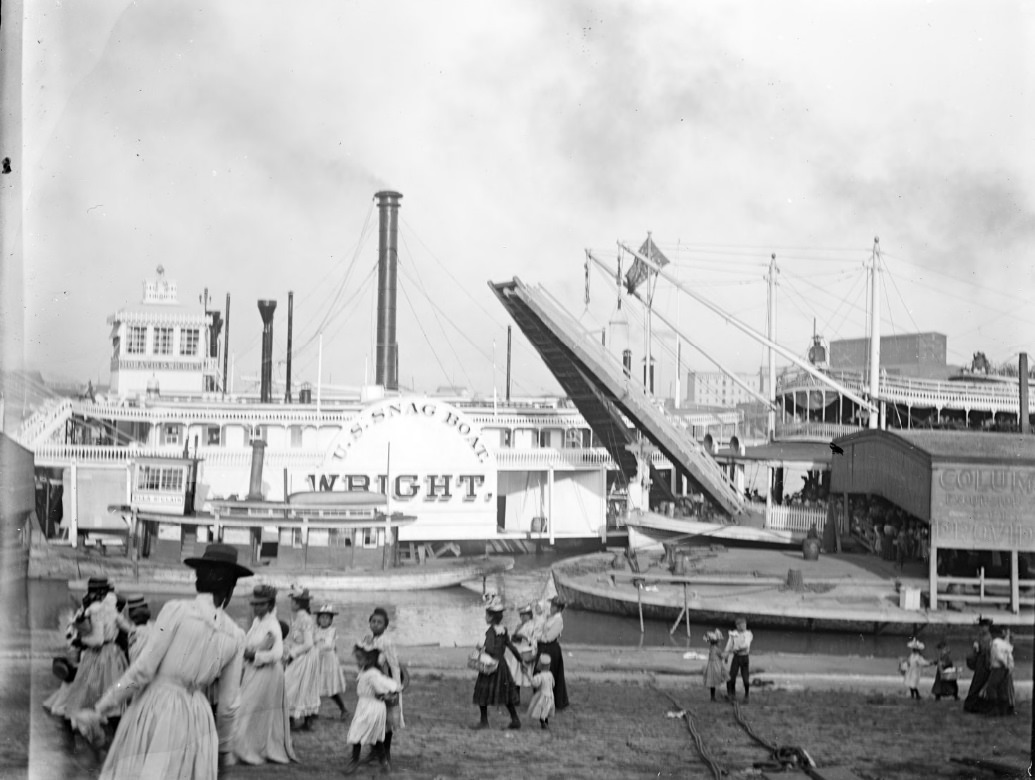
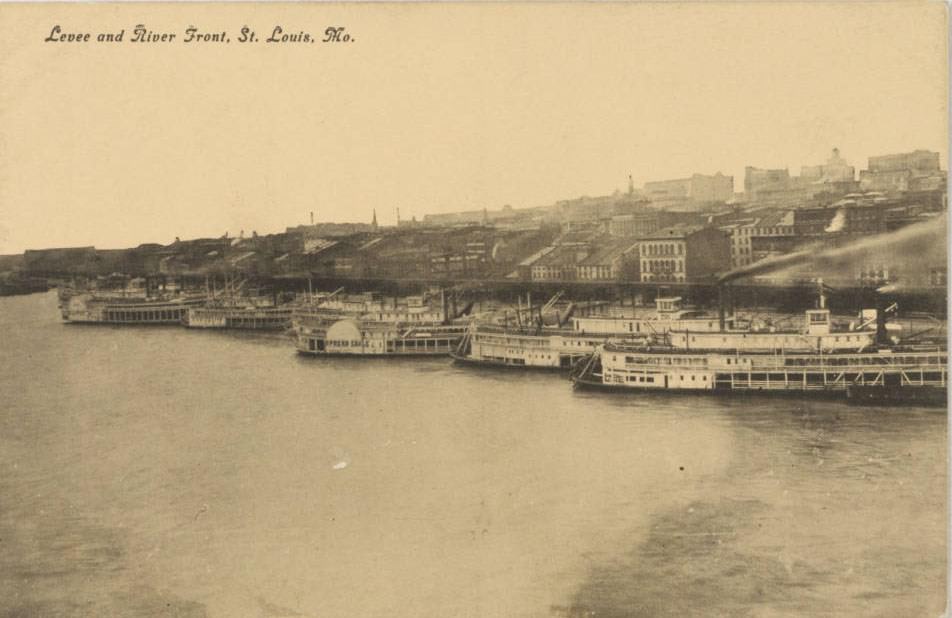
Saint Louis Riverfront, 1900
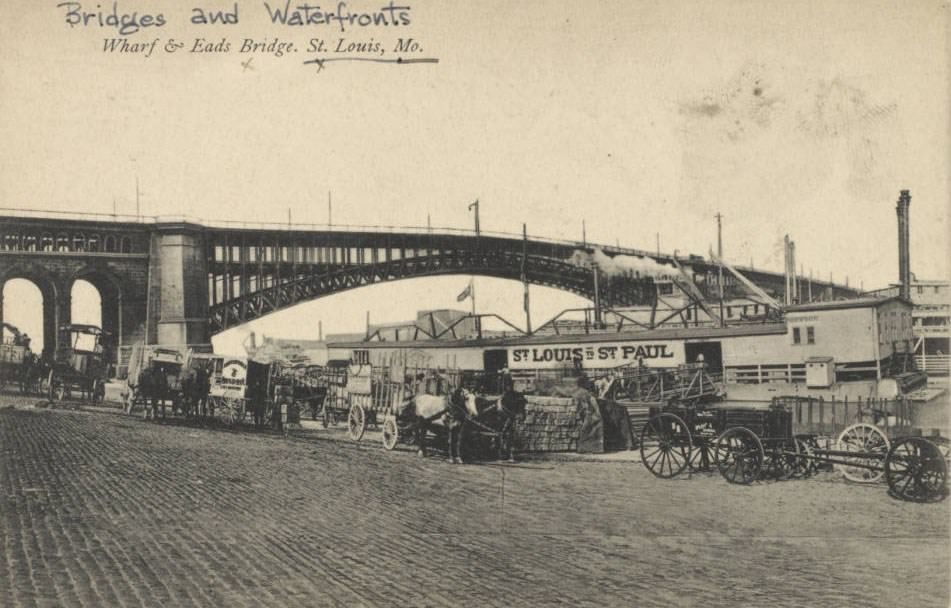
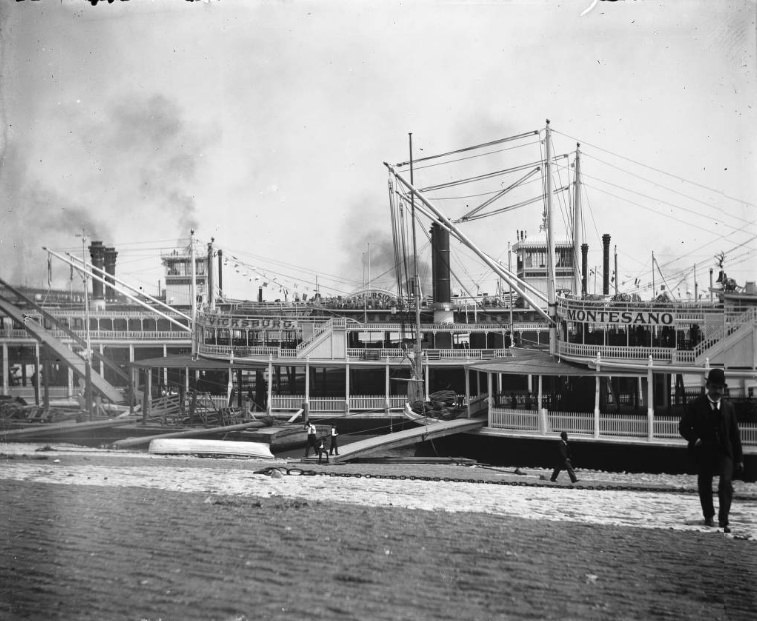
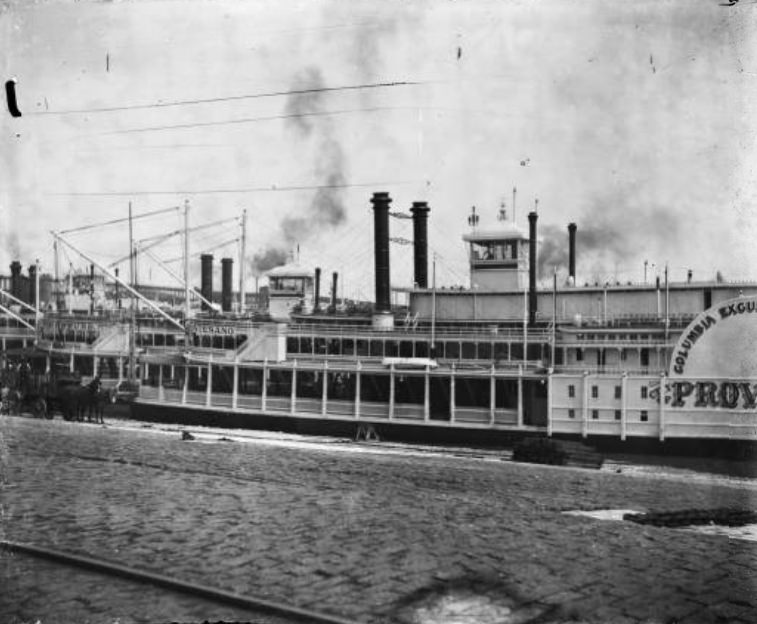
The riverfront was a busy, working place. Steamboats loaded and unloaded cargo along the levee, and the wharves were rarely quiet. The Mississippi carried everything from agricultural goods to manufactured products, and the boats that worked the river were a mix of freight haulers and passenger excursion vessels.
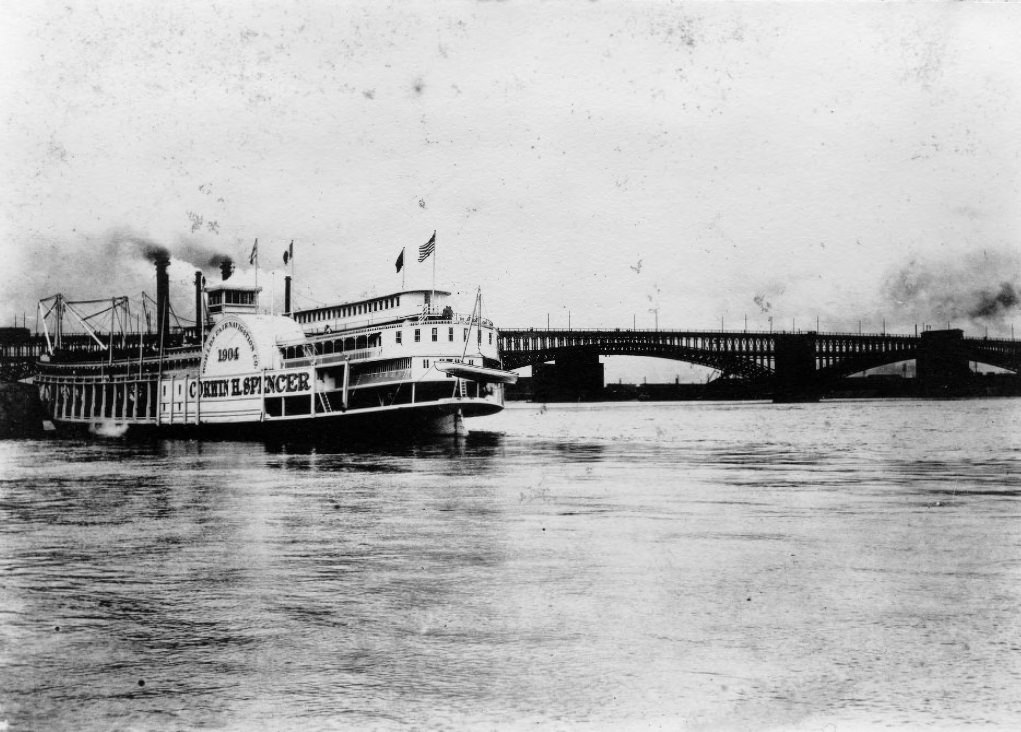
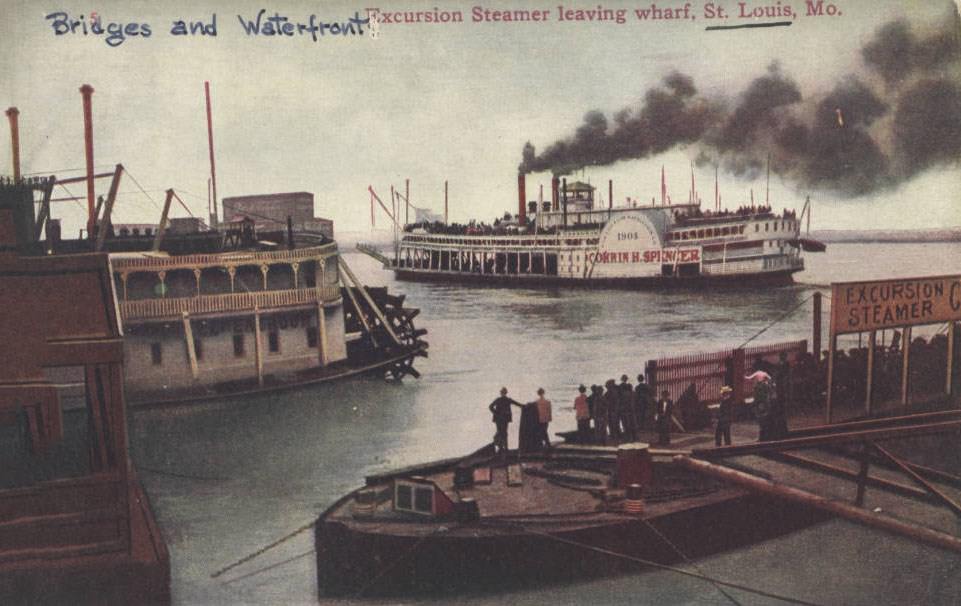
Corwin H. Spencer, 1900
One of those vessels was the Corwin H. Spencer, originally built in 1887 as the Anchor Line steamer City of Monroe in Jeffersonville, Indiana. The boat was badly damaged during the catastrophic cyclone that struck St. Louis on May 27, 1896, then rebuilt and renamed the Hill City. In 1903, it was purchased again, converted into an excursion boat, and given the name Corwin H. Spencer. The boat measured 327 feet long, with a 44-foot beam. It burned just above Jefferson Barracks, Missouri, on October 12, 1906.
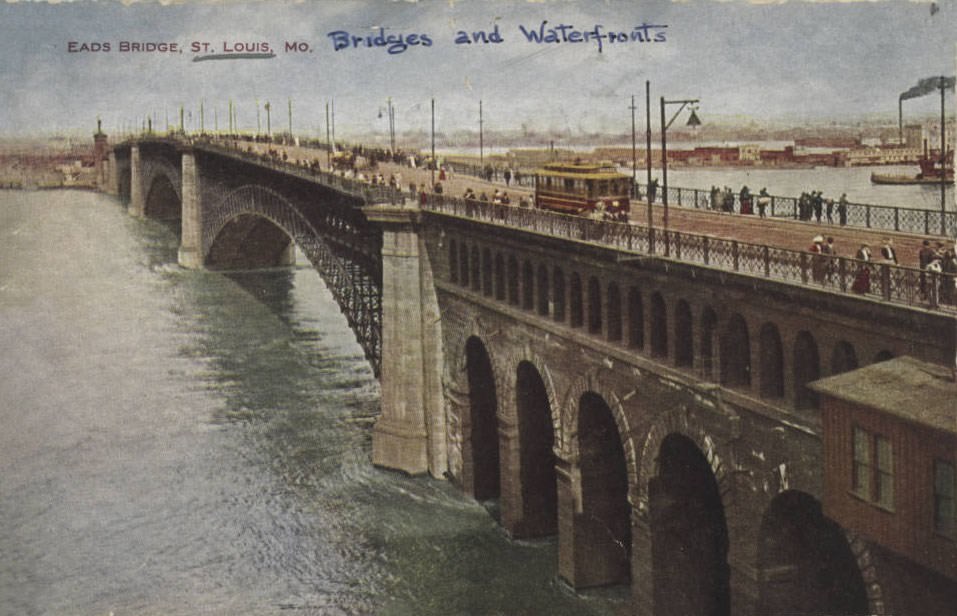
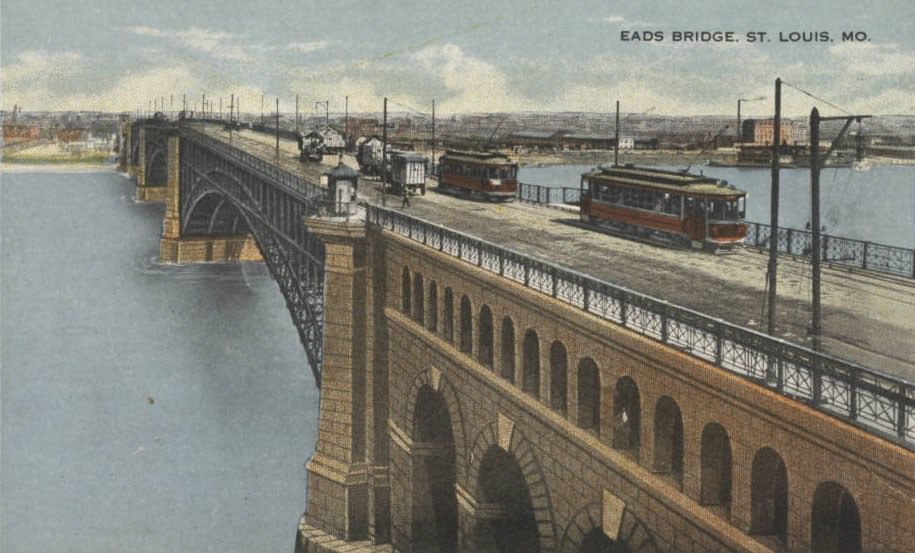
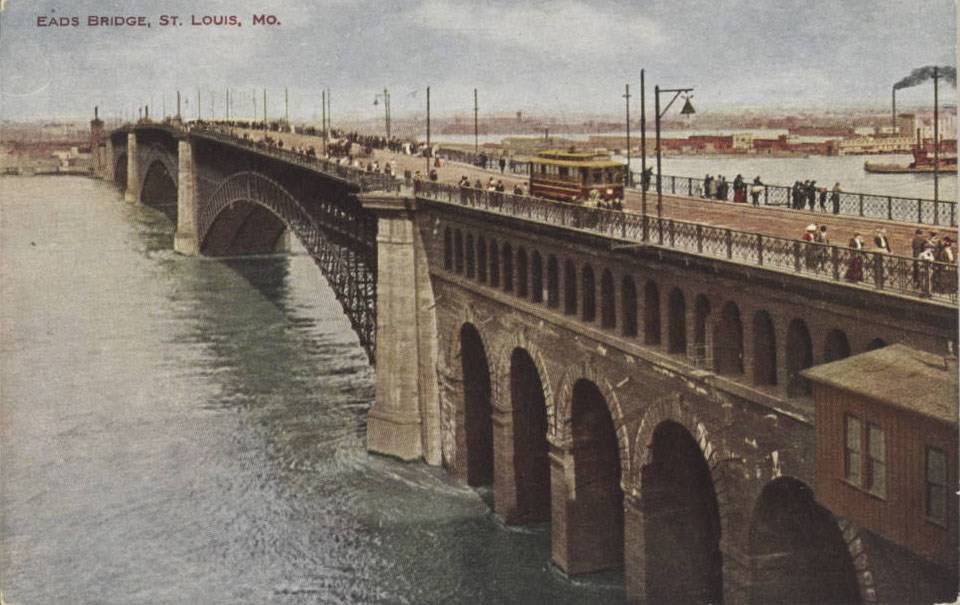
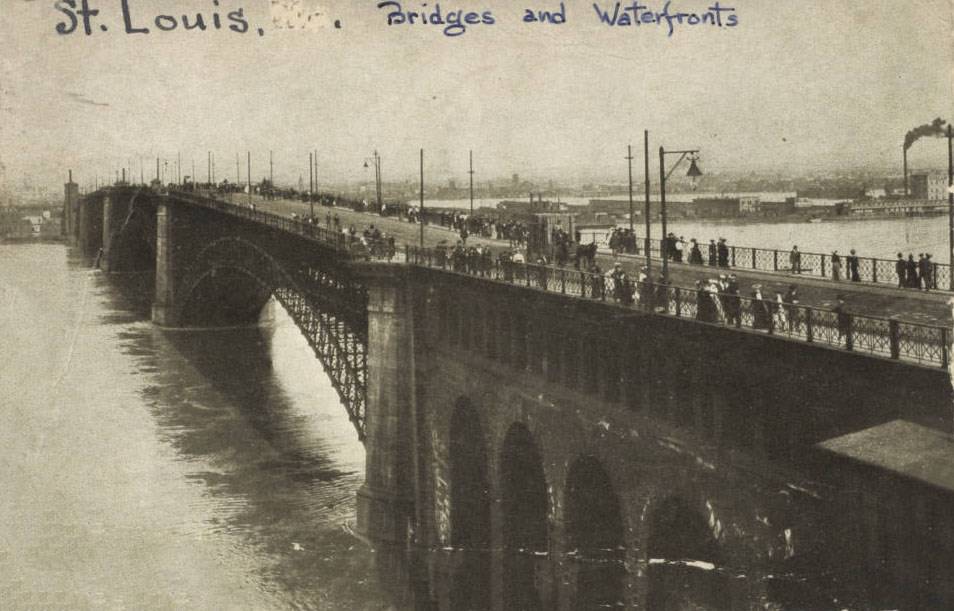
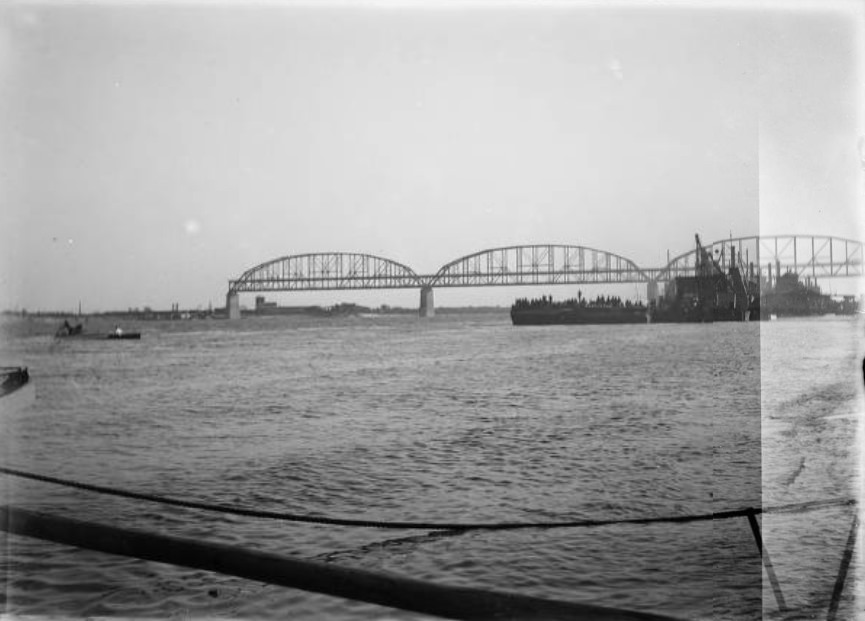
View of the Eads Bridge looking from St. Louis, Missouri towards East St. Louis, 1900
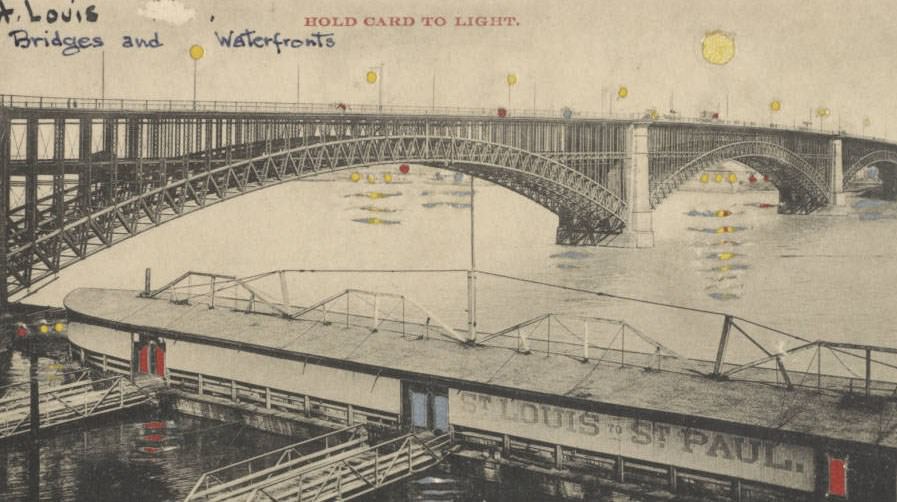
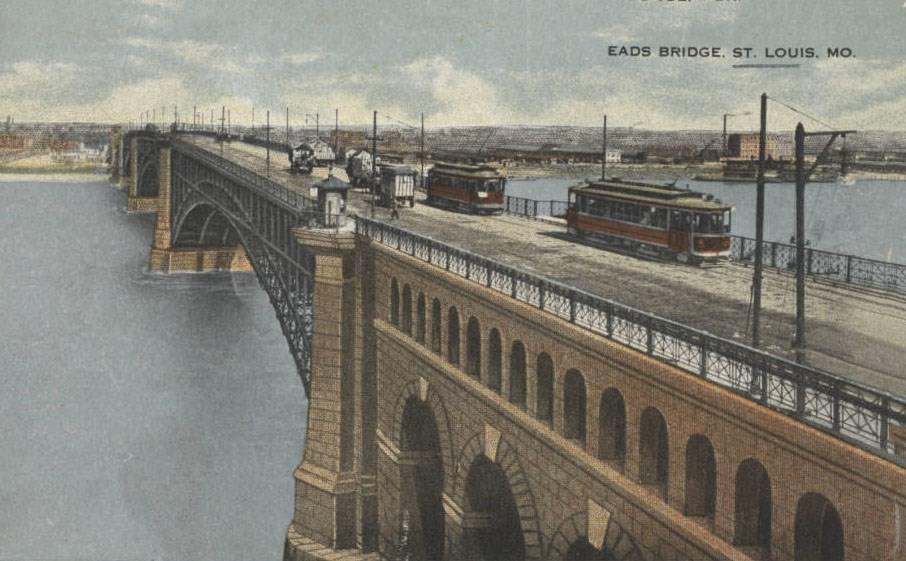
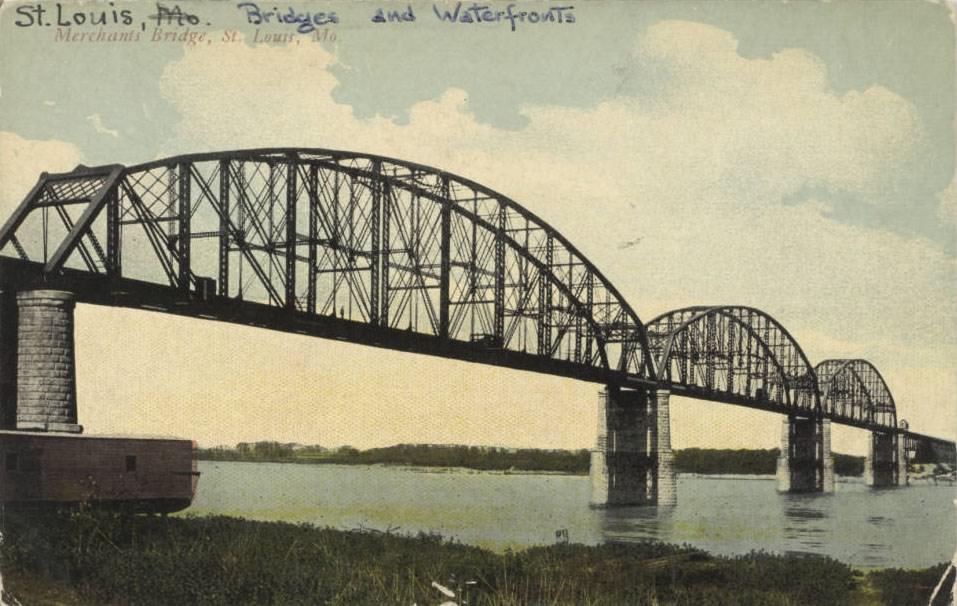
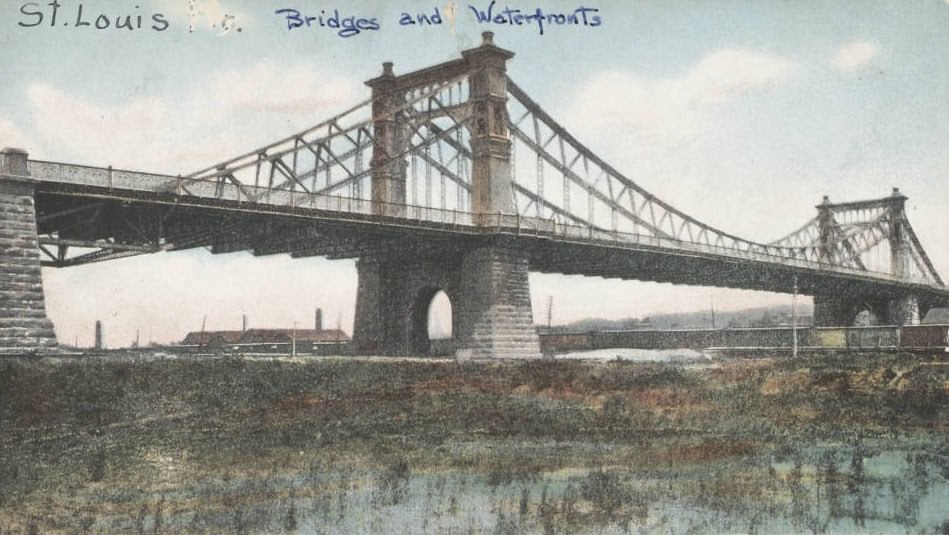
Spanning the Mississippi at St. Louis was the Eads Bridge, a massive steel arch structure that connected Missouri to Illinois. Streetcars crossed it regularly, and it stood as one of the most recognizable landmarks in the city. The bridge had opened in 1874 and by 1900 was still a vital link for both rail and road traffic. The Merchants’ Bridge, a second river crossing, handled railroad freight just upstream.
Streetcars cross the Eads Bridge, which spans the Mississippi River from St. Louis, 1900
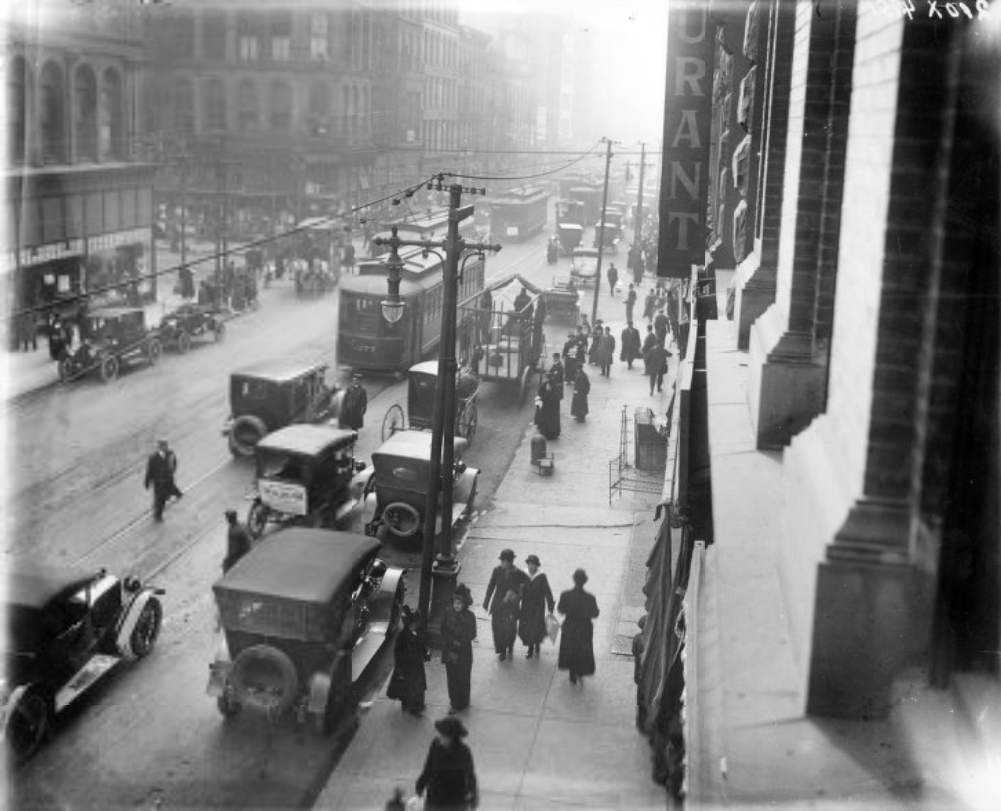
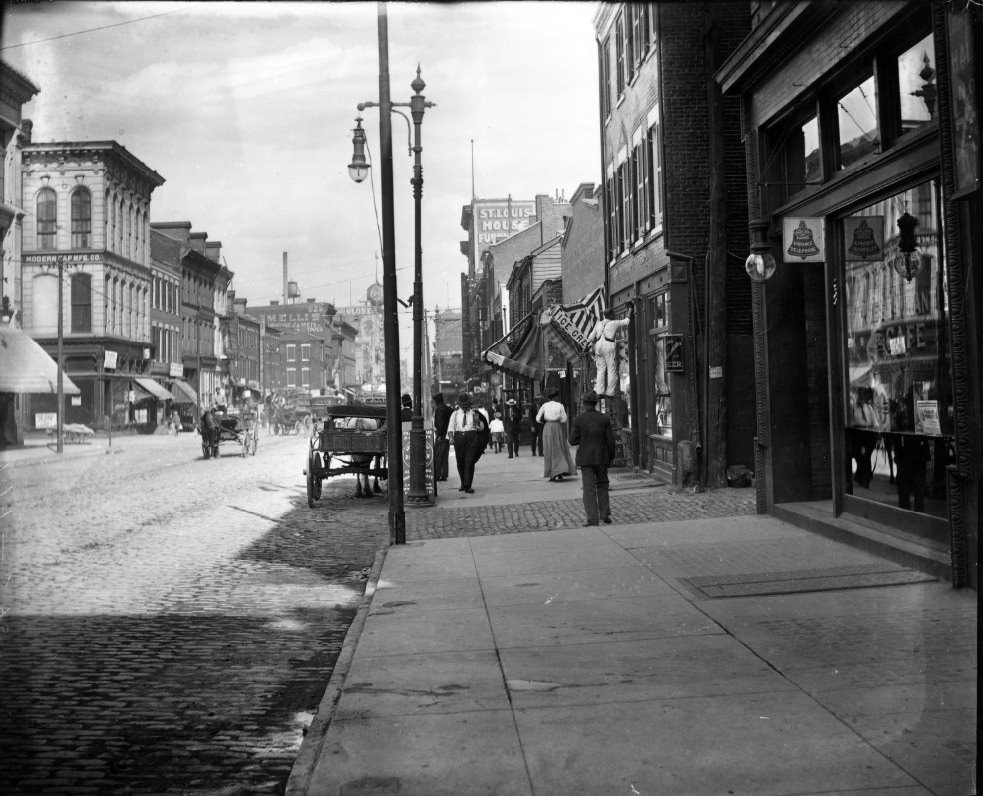
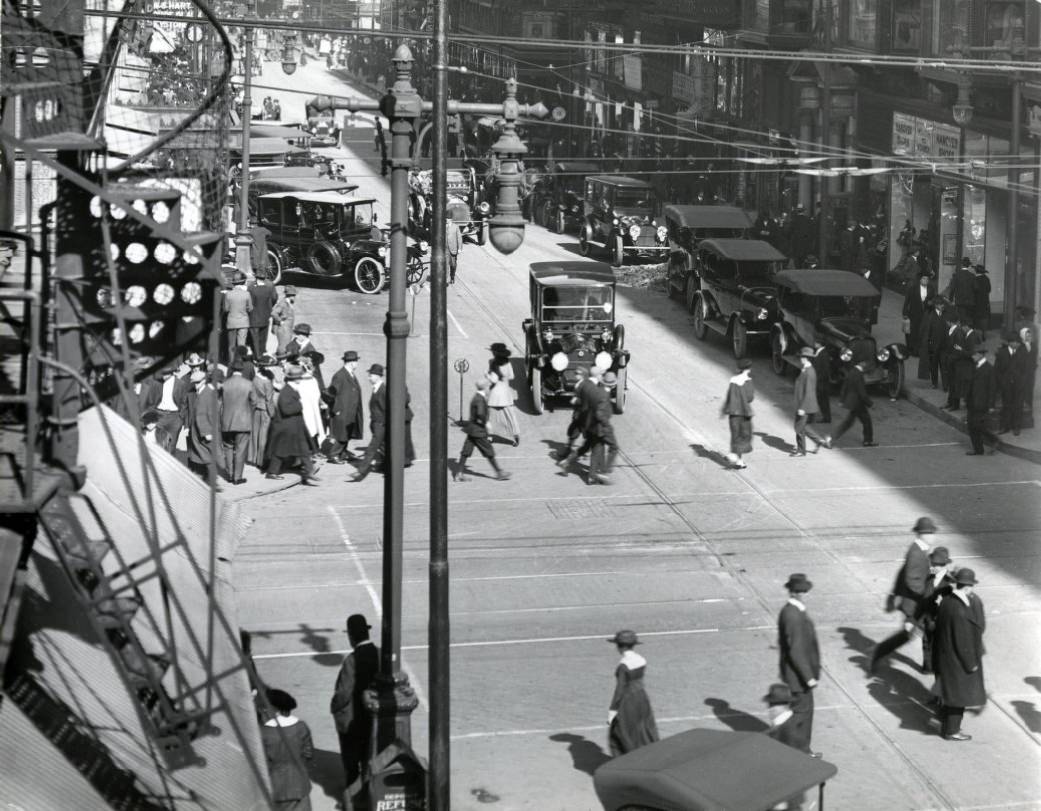
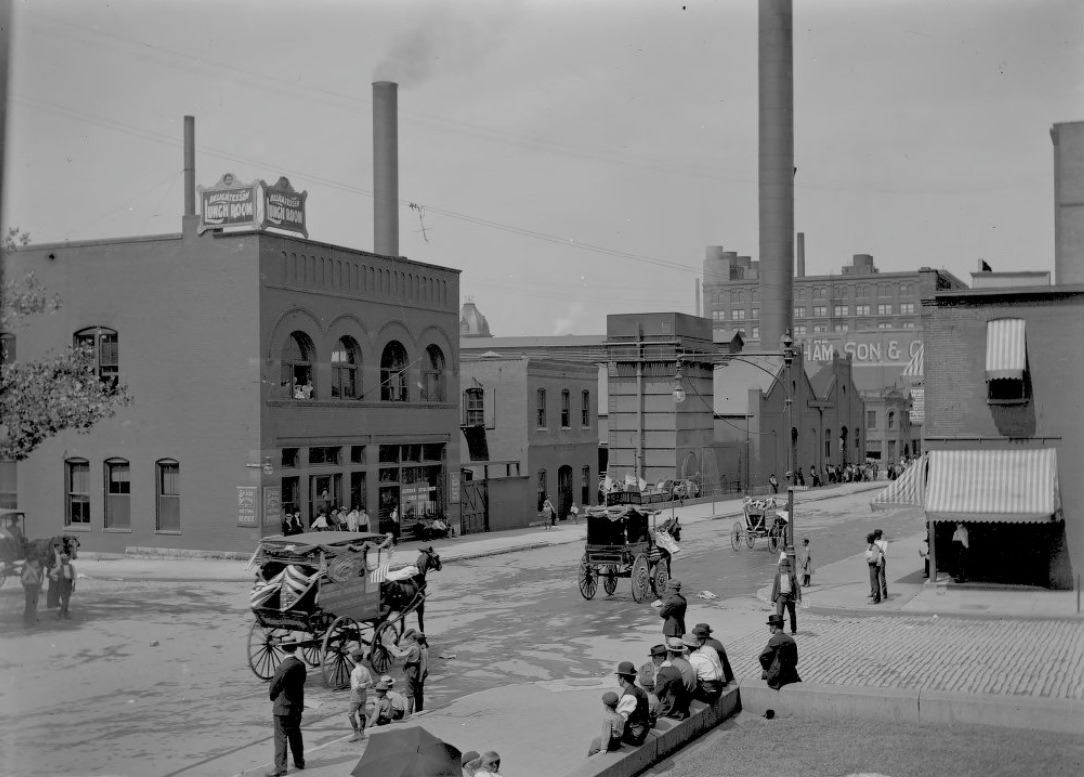
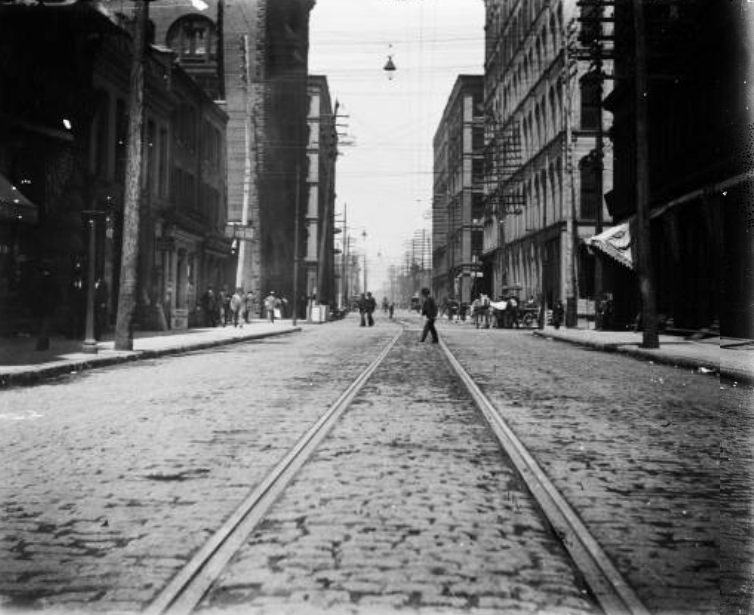
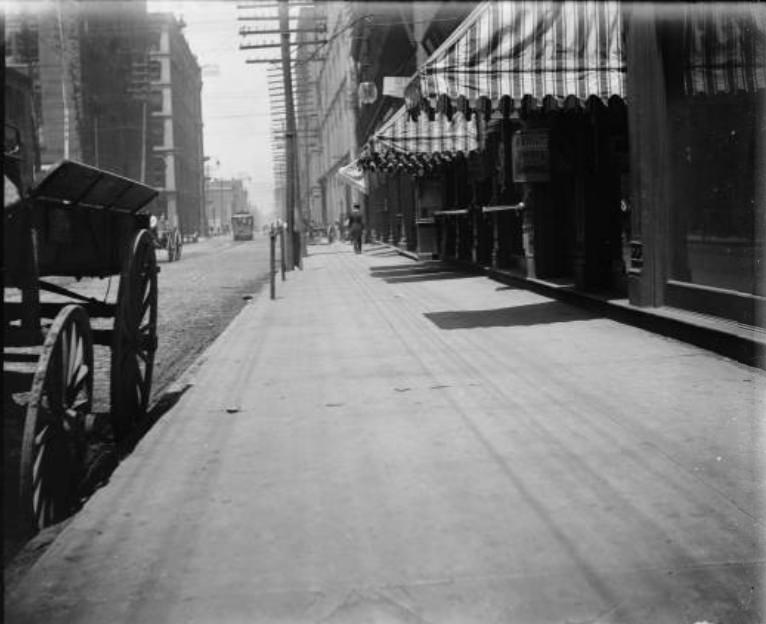
On the streets of St. Louis, the city was in the middle of a transportation shift. Horse-drawn wagons and carriages still shared the roads with the growing presence of electric streetcars and early automobiles. Washington Avenue was a particularly busy corridor, with pedestrians, trolleys, and motorized vehicles navigating the same cobblestone and paved streets. The transition from horse power to machine power was playing out in real time on every major block.
Washington Avenue looking west, 1900. Automobiles, pedestrians, electric streetcars and horse-drawn wagons are visible.
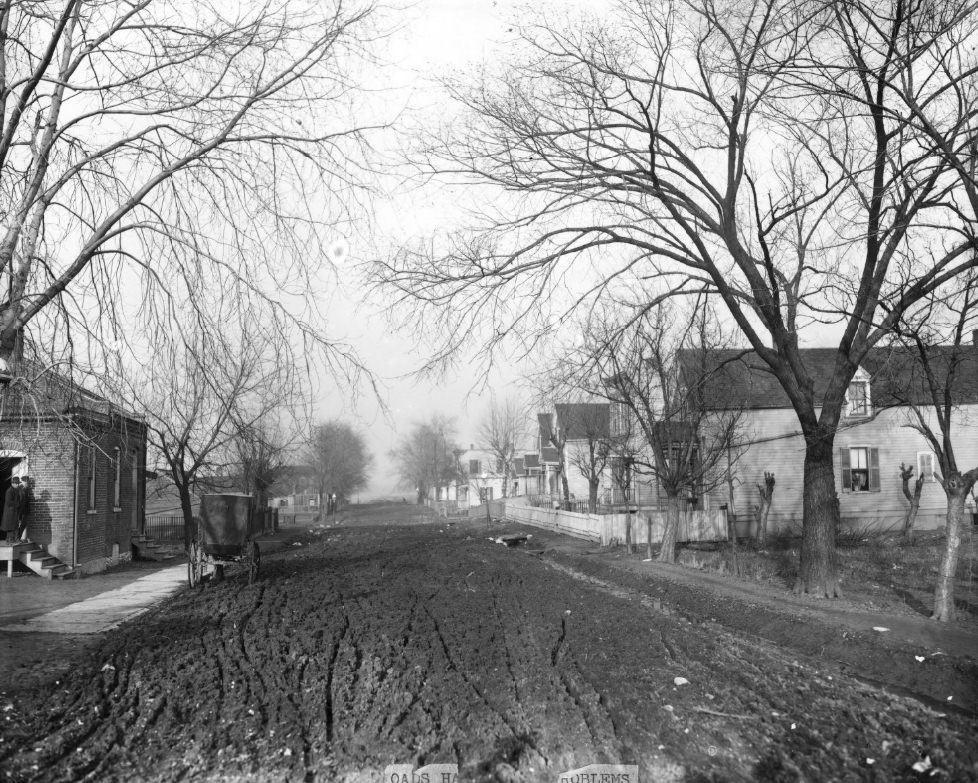
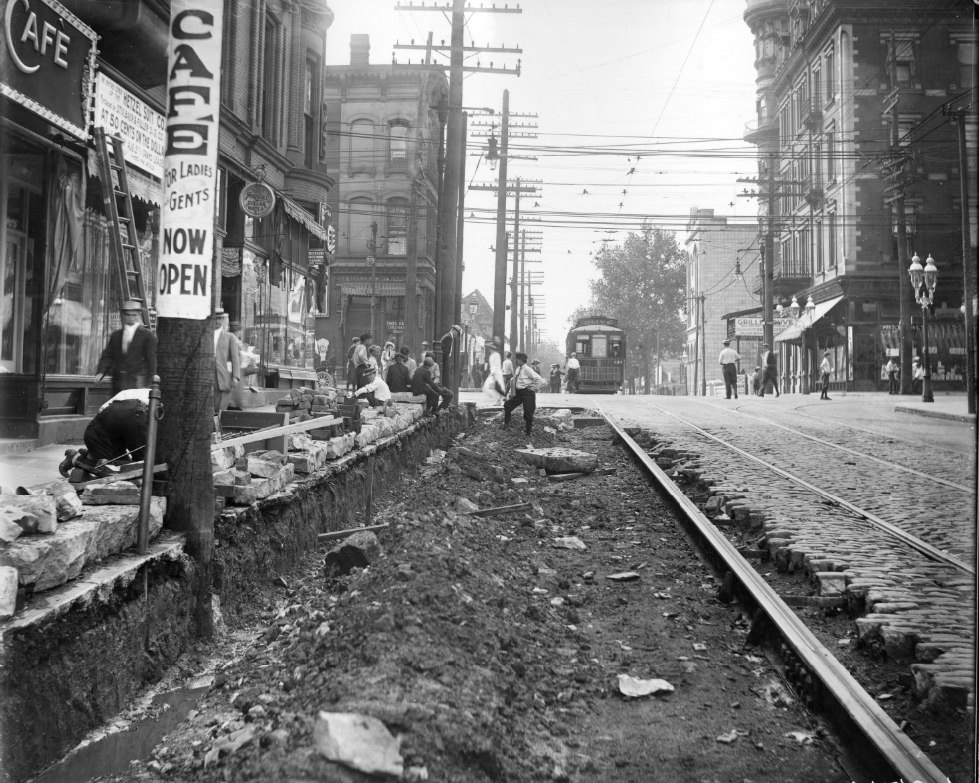
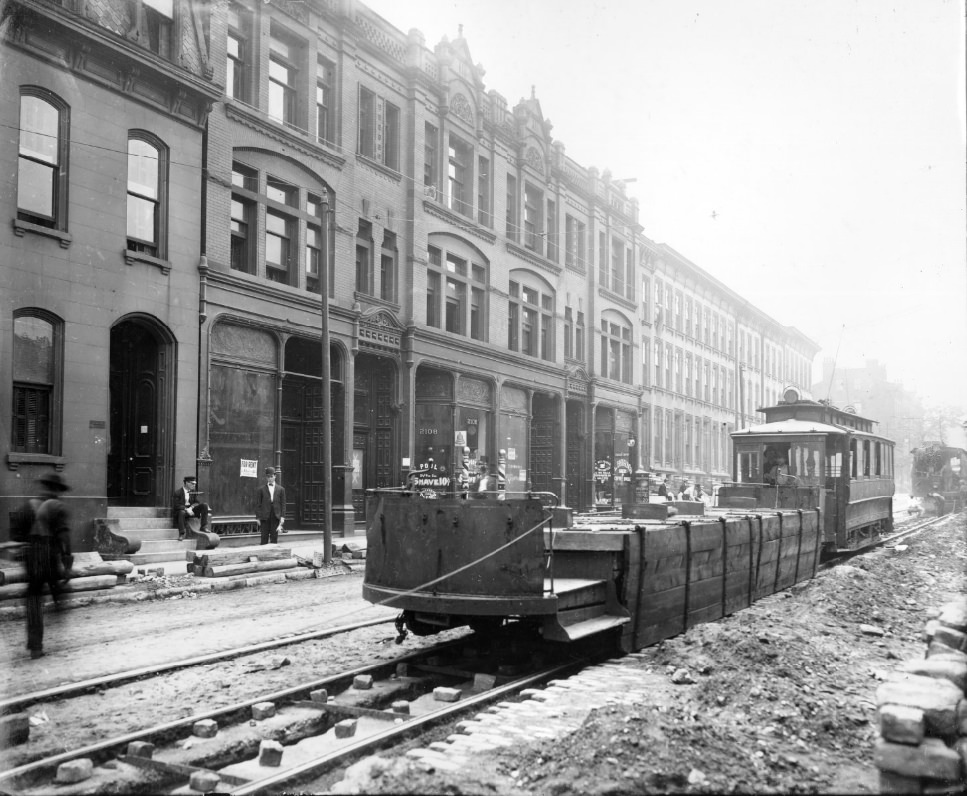
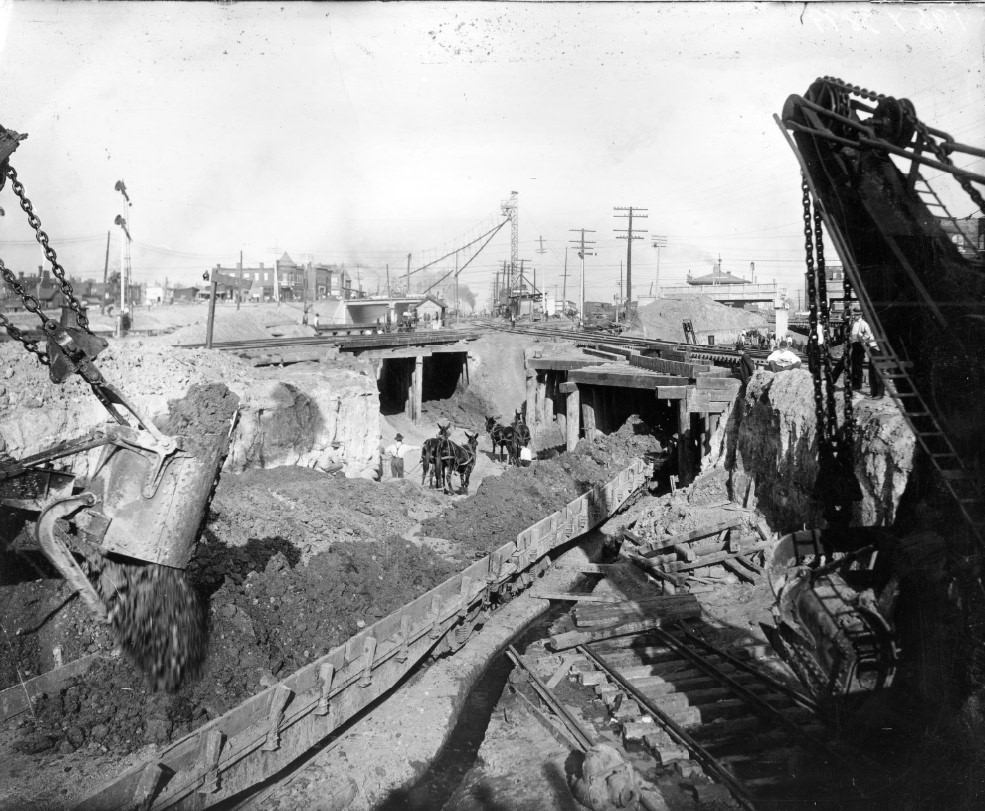
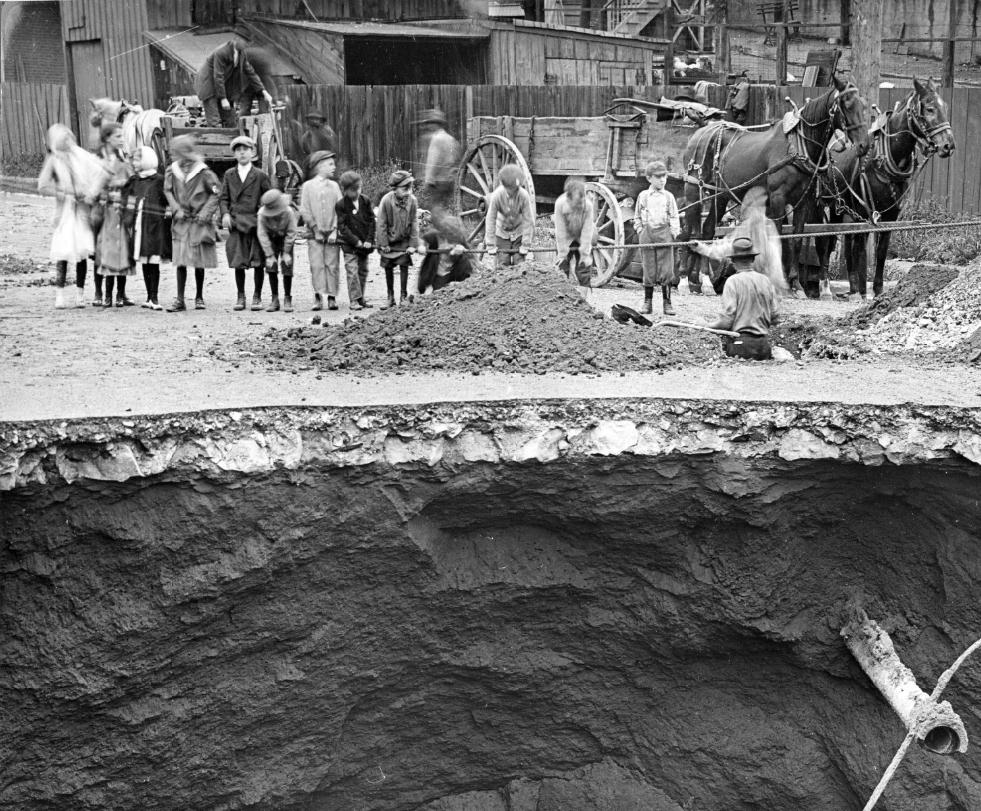
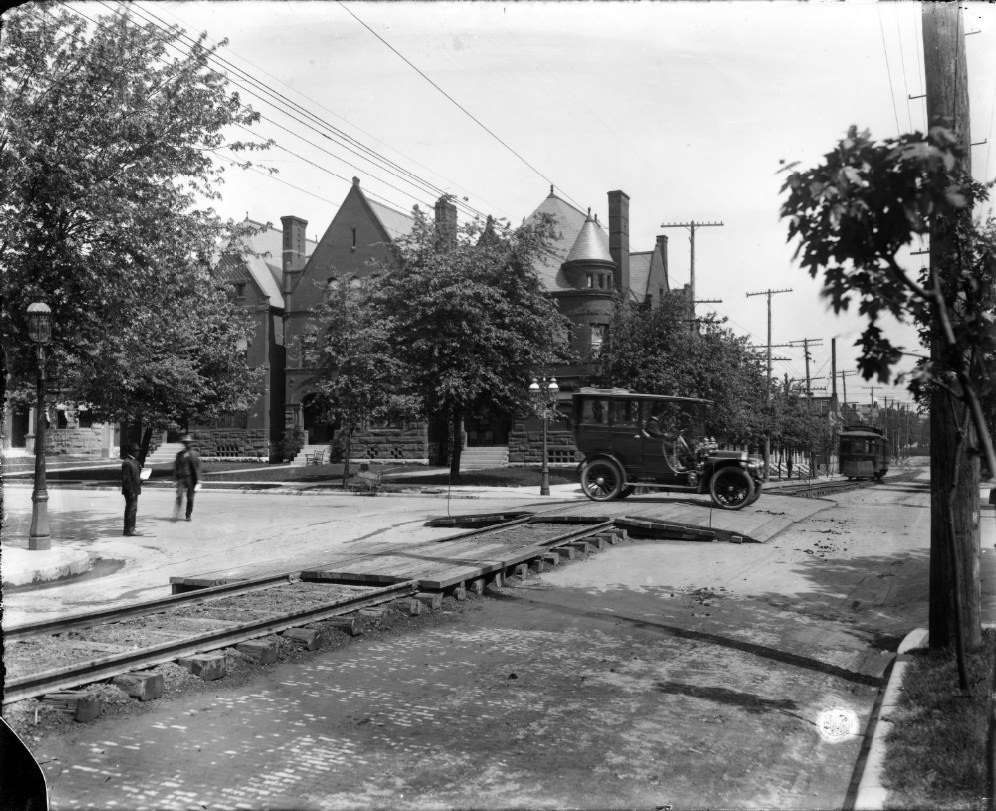
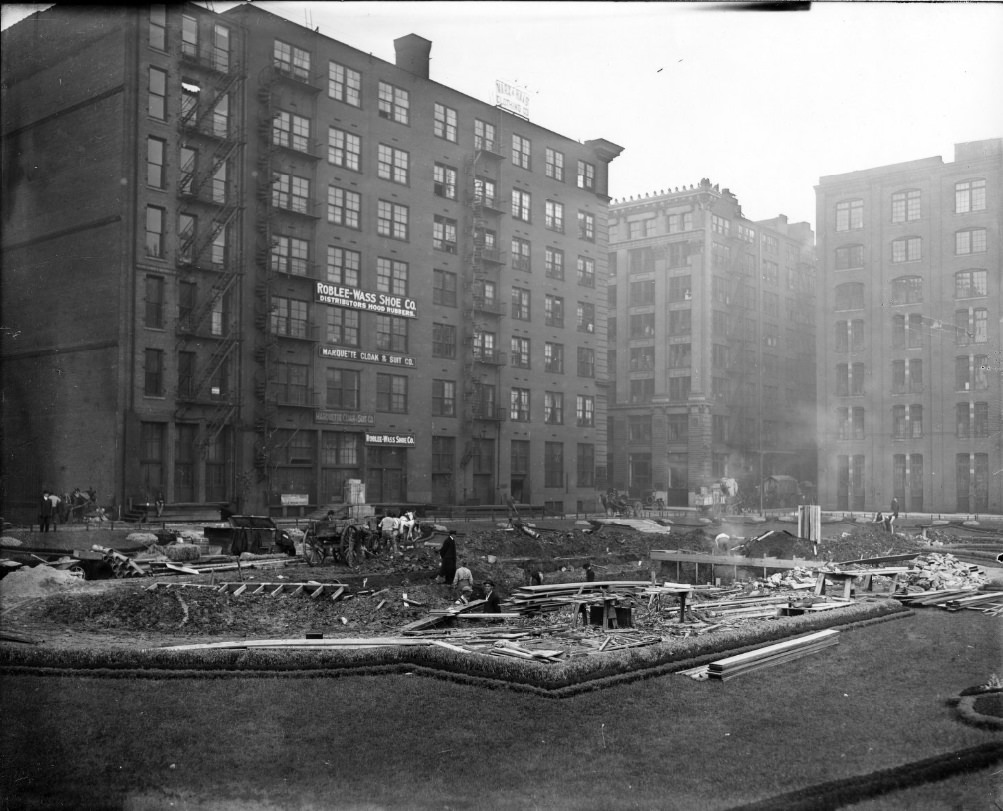
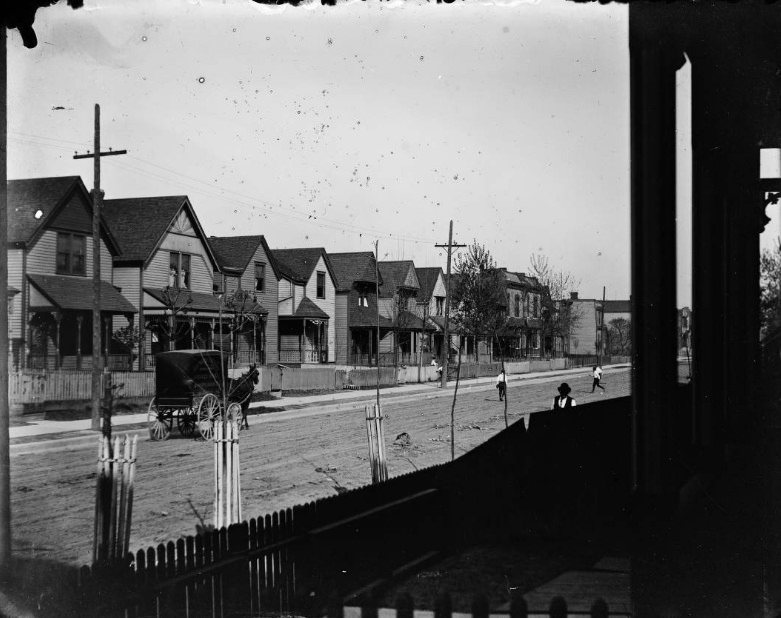
Not every street was smooth or easy to navigate. Unpaved roads turned muddy in wet weather, and construction work was a constant feature of city life. Workers dug up intersections to install pipes, laid new cobblestones, repaired streetcar lines, and hauled debris from demolition sites. The city was actively rebuilding itself, and the mess that came with it was everywhere.
Unpaved road that is muddy, many ruts from carriage wheels are visible, 1900.
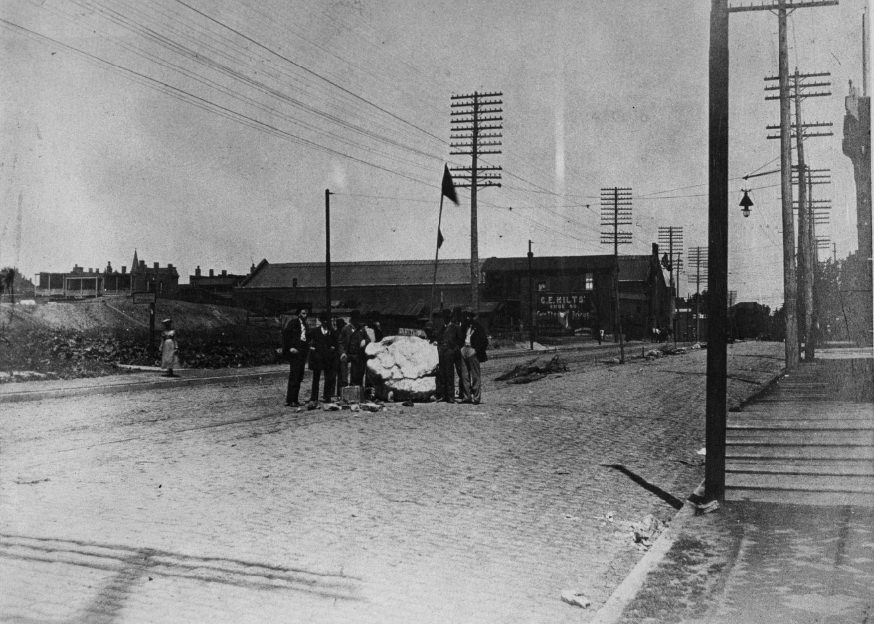
The electric streetcar network was the backbone of daily movement for most residents. Lines ran along major avenues and connected neighborhoods across the city. But that system was not without conflict. During the 1900 streetcar strike, workers walked off the job and sabotage became a tool of protest. On North Broadway, between Gano and John streets, a massive boulder was repeatedly rolled onto the tracks to block service. Each time workers removed it, the rock reappeared overnight. The trolley company eventually blasted it to pieces.
This huge boulder was rolled onto the tracks on North Broadway between Gano and John during 1900 streetcar strike.
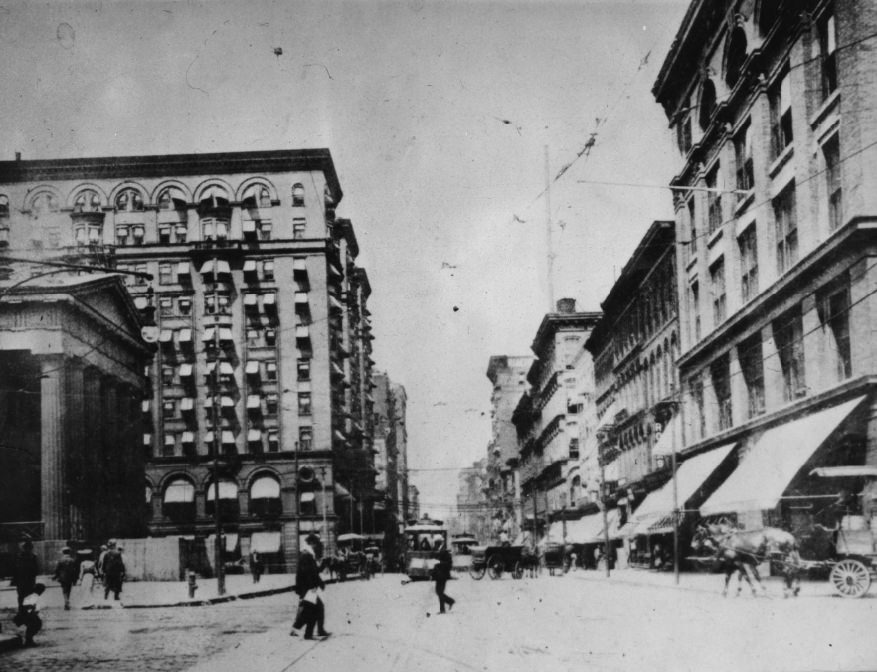
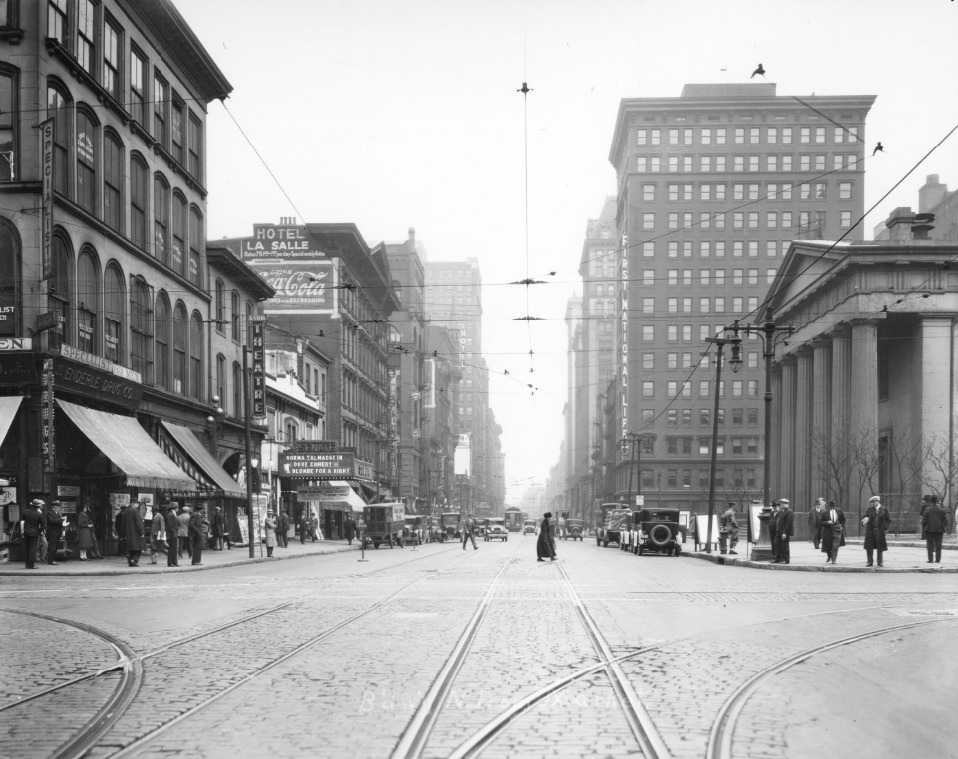
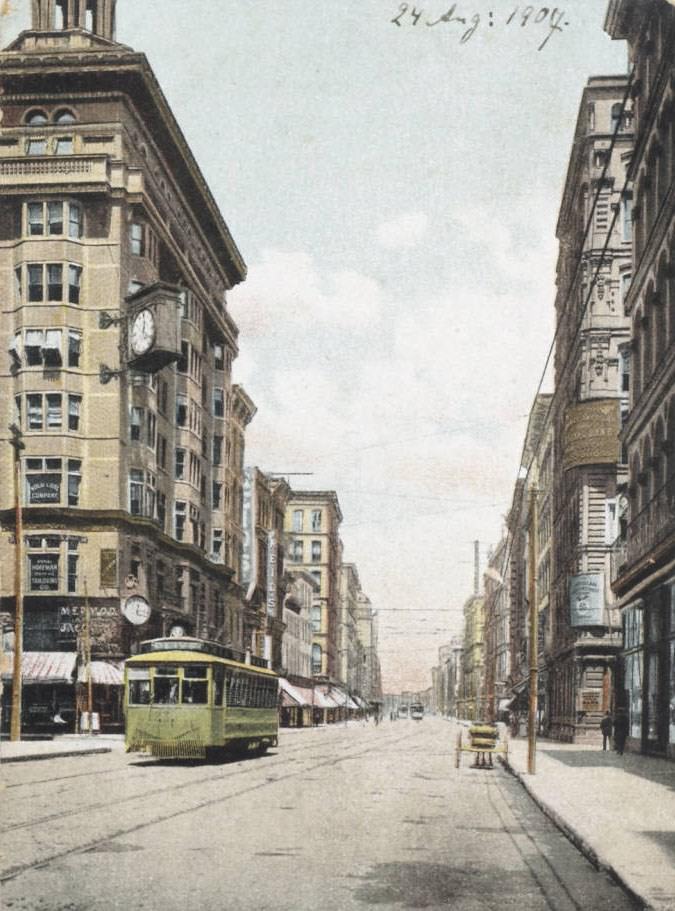
Fourth Street, one of the city’s most prominent commercial corridors, had changed significantly by 1903. What had been a lively bazaar of shops and hotels in the 1880s had given way to a quieter stretch of tall office buildings occupied by insurance companies and railroad agencies. Horse-drawn cars had been replaced by electric trolleys. Looking north from Market Street, the old Courthouse, Planters Hotel, Rialto Building, and Merrell Drug Company lined the street.
Fourth street, looking north from Market, 1903
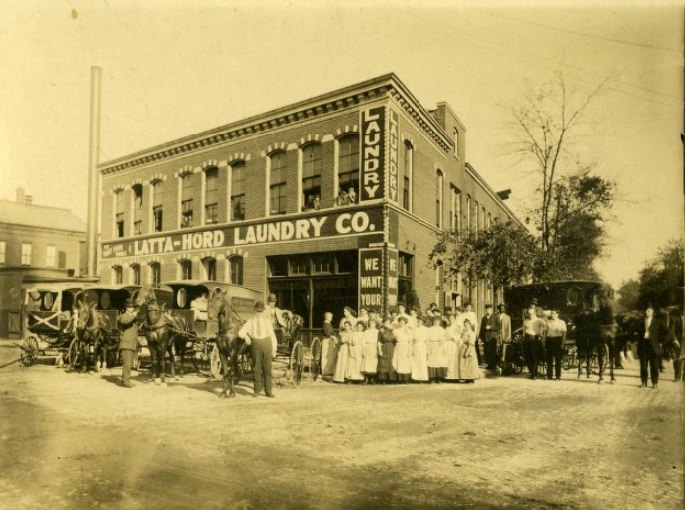
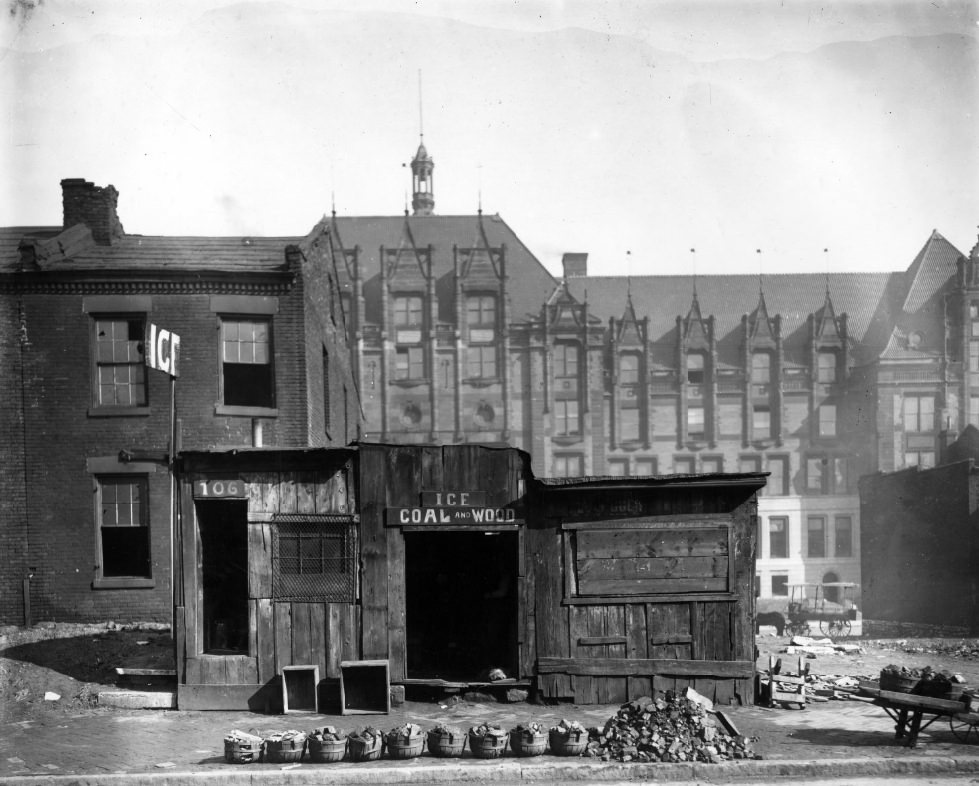
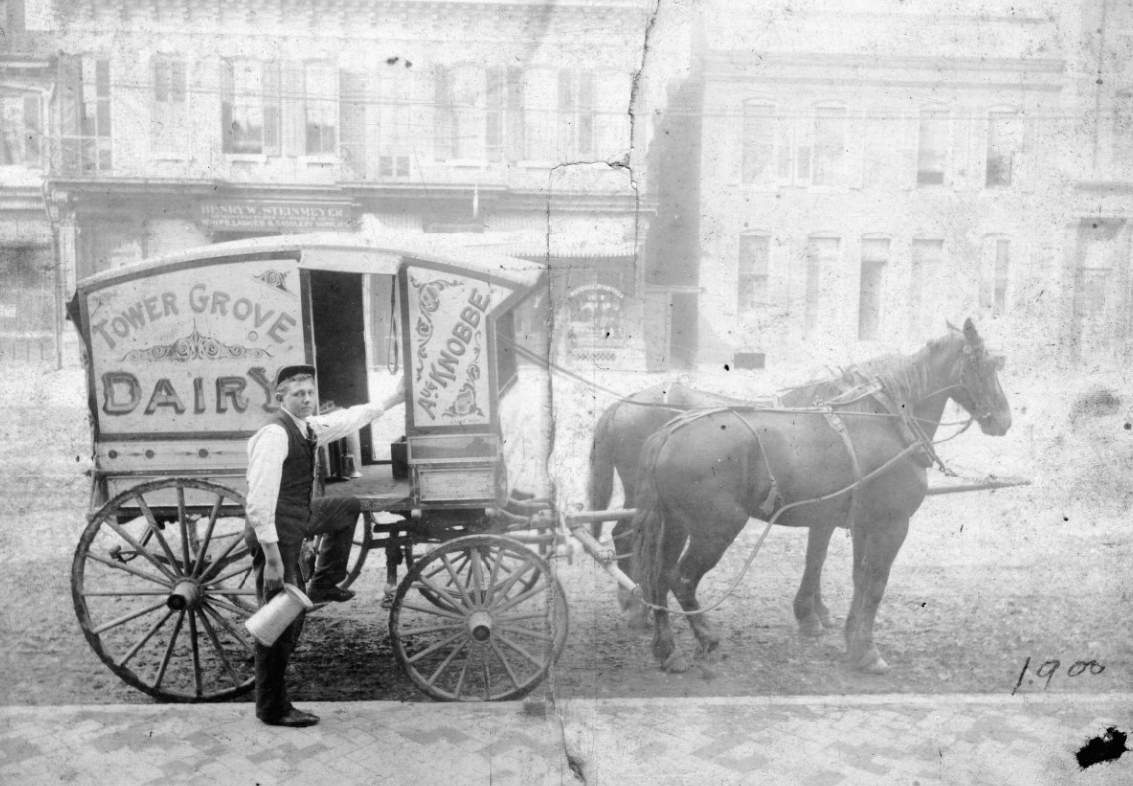
Commercial life in St. Louis extended well beyond the major avenues. Neighborhood groceries, pharmacies, laundries, and lunch stands operated on nearly every block. The Latta-Hord Laundry Company advertised with fresh signage reading “We Want Your Work,” with employees — men and women alike — posing beside horse-drawn delivery wagons. Dairy workers from Tower Grove Dairy made regular rounds through residential neighborhoods. Ice, coal, and wood stands served households that depended on all three for daily survival.
Latta-Hord Laundry Company in St. Louis, Missouri, 1900.
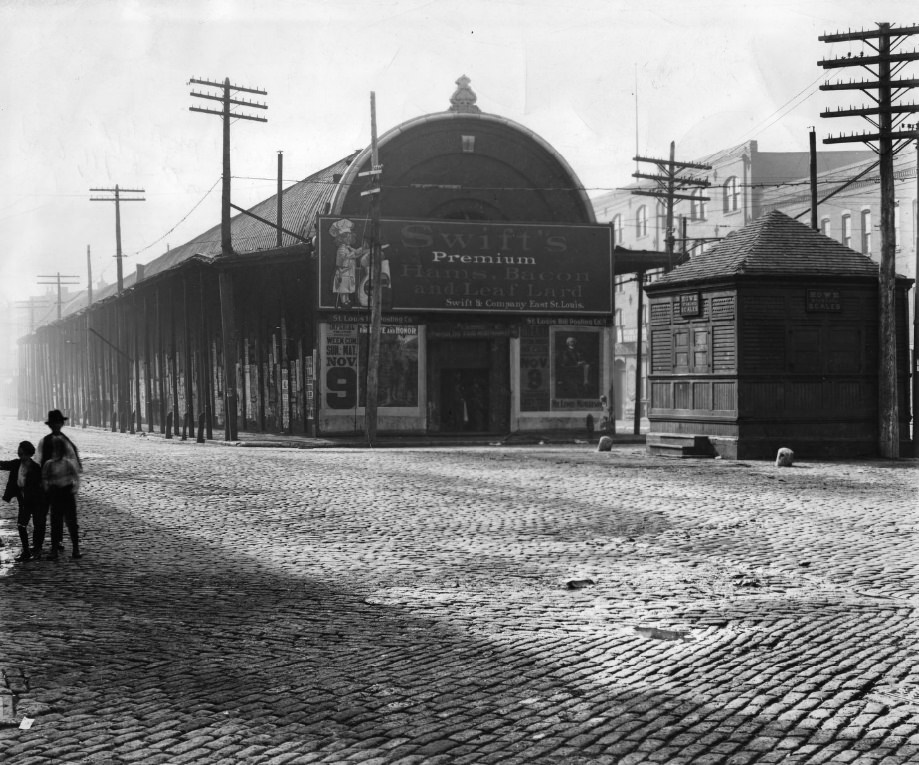
The city’s public markets were also central to everyday life. At the corner of Biddle and Broadway stood the City Market — sometimes called the Round Top Market for its dome-shaped roof. The city had built it in 1857 on land belonging to the estate of Ben W.S. Harney, with the proceeds collected until the city recovered its costs. By 1878, the market had lapsed back to the Harney estate and eventually passed to the Merchants’ Bridge and Terminal Company.
Biddle and Broadway, showing the City Market – sometimes known as the “Round Top Market” on account of its dome-shaped roof, 1900.
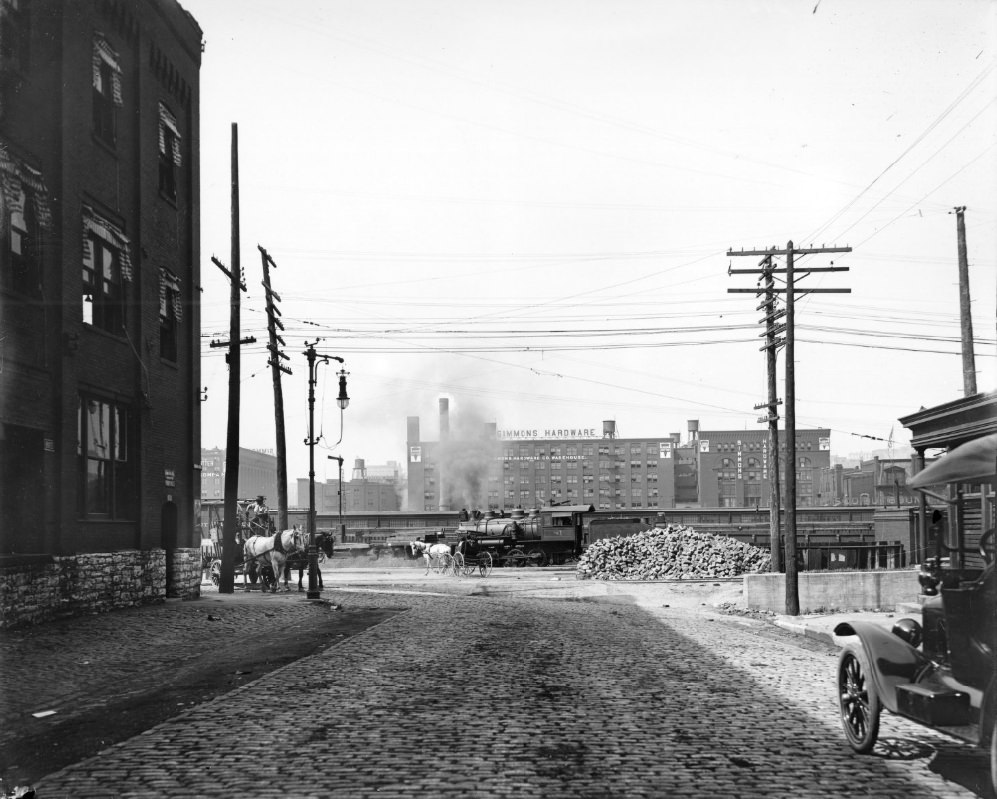
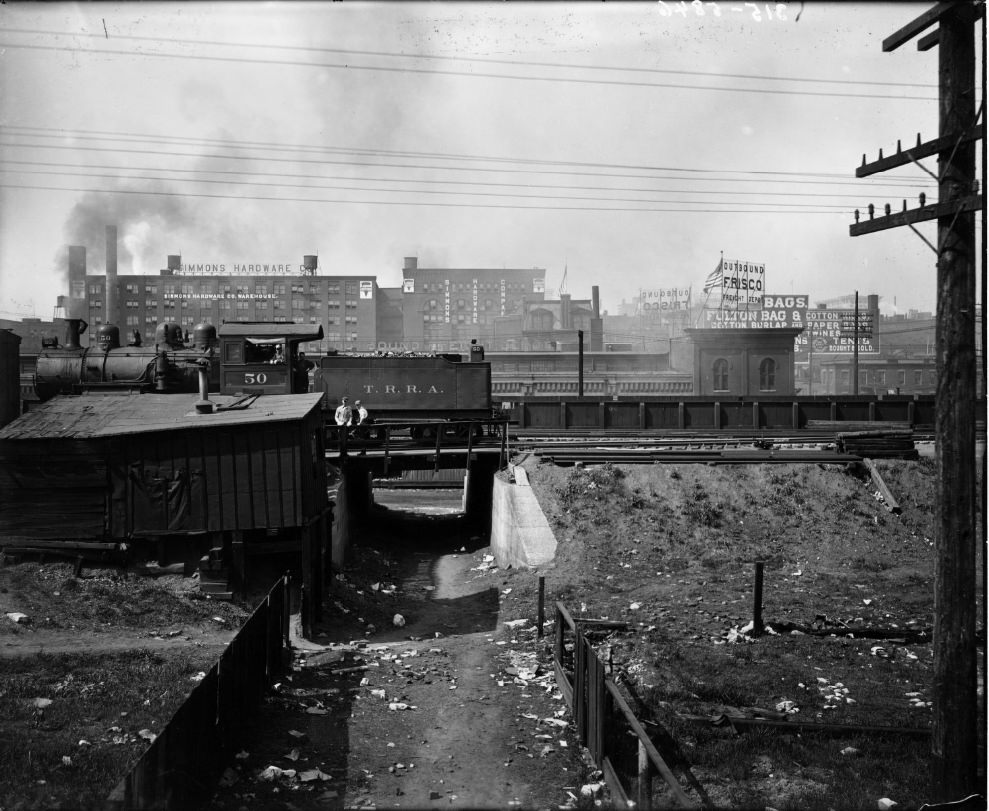
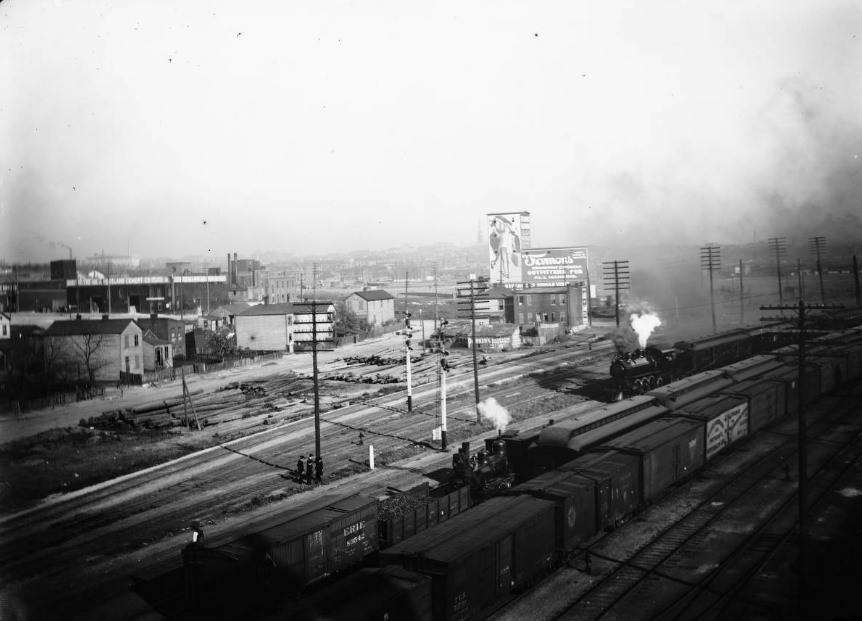
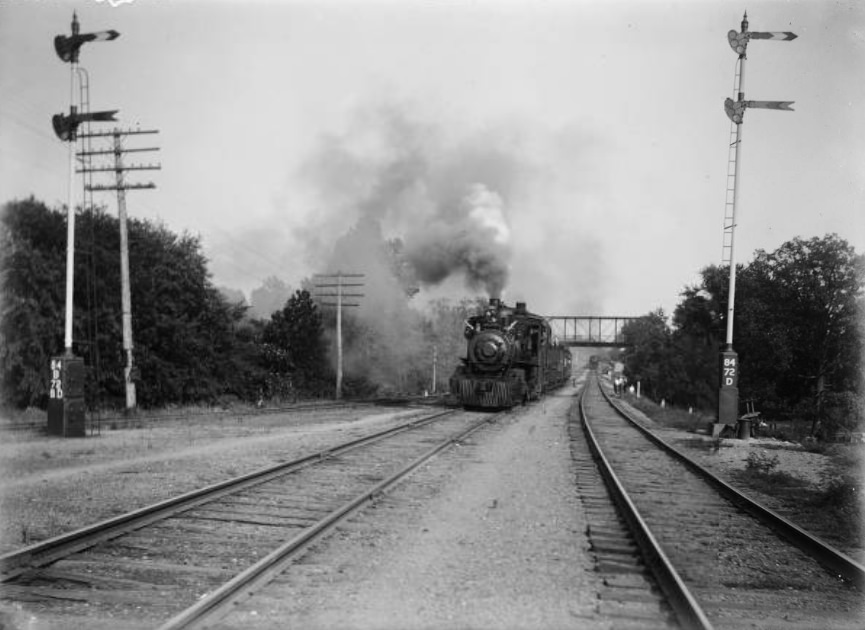
Freight continued to move through St. Louis in large volumes, much of it by rail. The Terminal Railroad Association operated engines and yards that connected multiple rail lines converging on the city. Engine 81 of the Terminal Railroad was photographed in front of the Simmons Hardware Company warehouse, alongside horse-drawn carriages and factory buildings. The scene captured a moment when steam locomotives and horse-drawn transport still coexisted on the same block.
Locomotive in front of Simmons Hardware, 1900
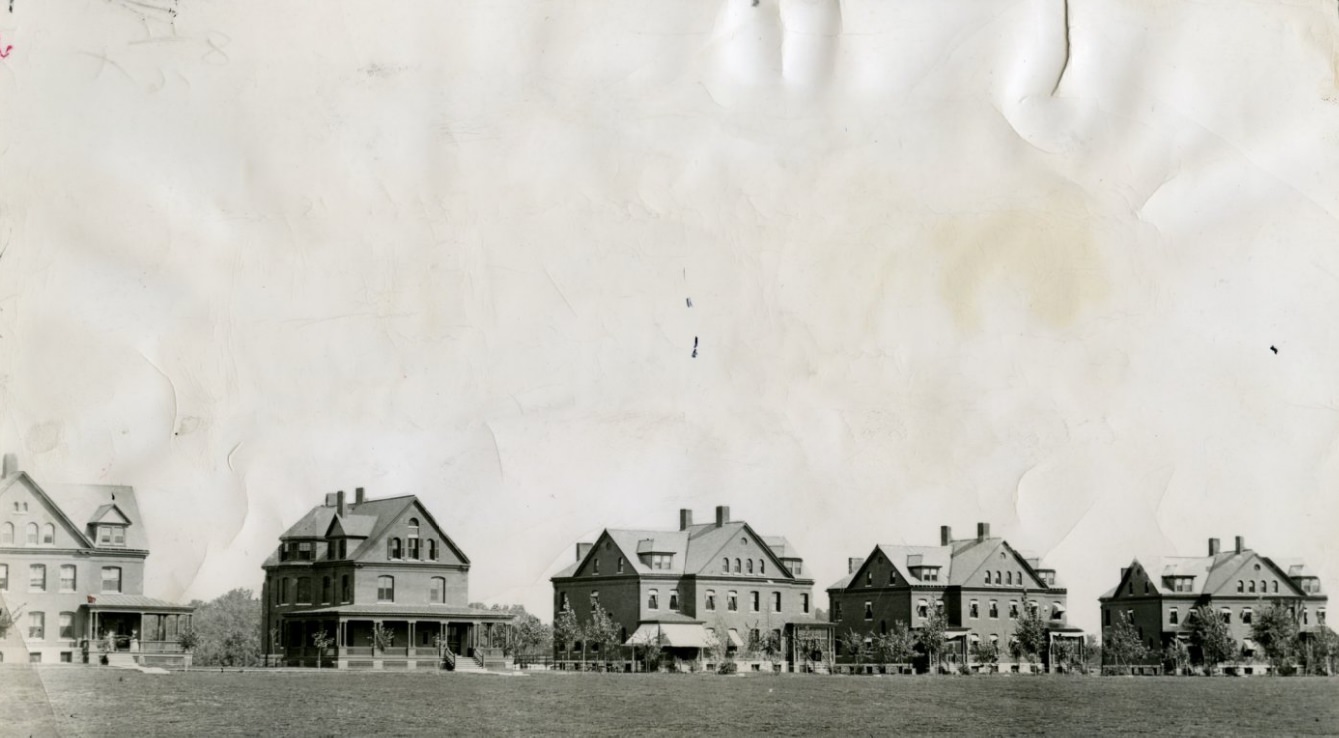
Jefferson Barracks, situated just south of the city along the river, remained an active military installation. The post’s 1895 parade grounds — built across from new officers’ quarters that had replaced the original 1827 limestone buildings — were a source of institutional pride. It was on those grounds that Colonel Walter Krueger marched his Sixth Infantry in review to honor a visiting Japanese military attaché, shortly before handing over command to Colonel Walter Short.
Jefferson Barracks – New Parade Grounds, 1900
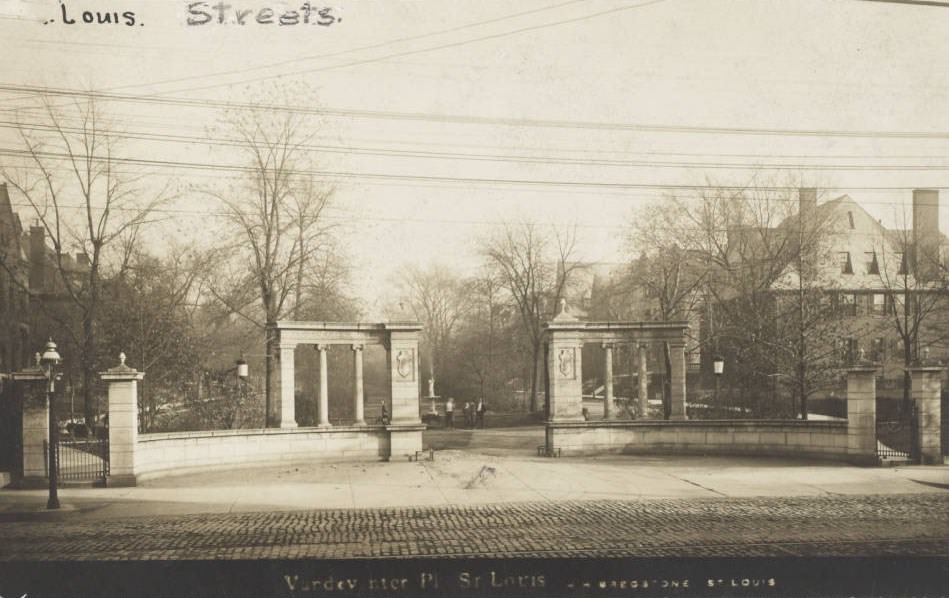
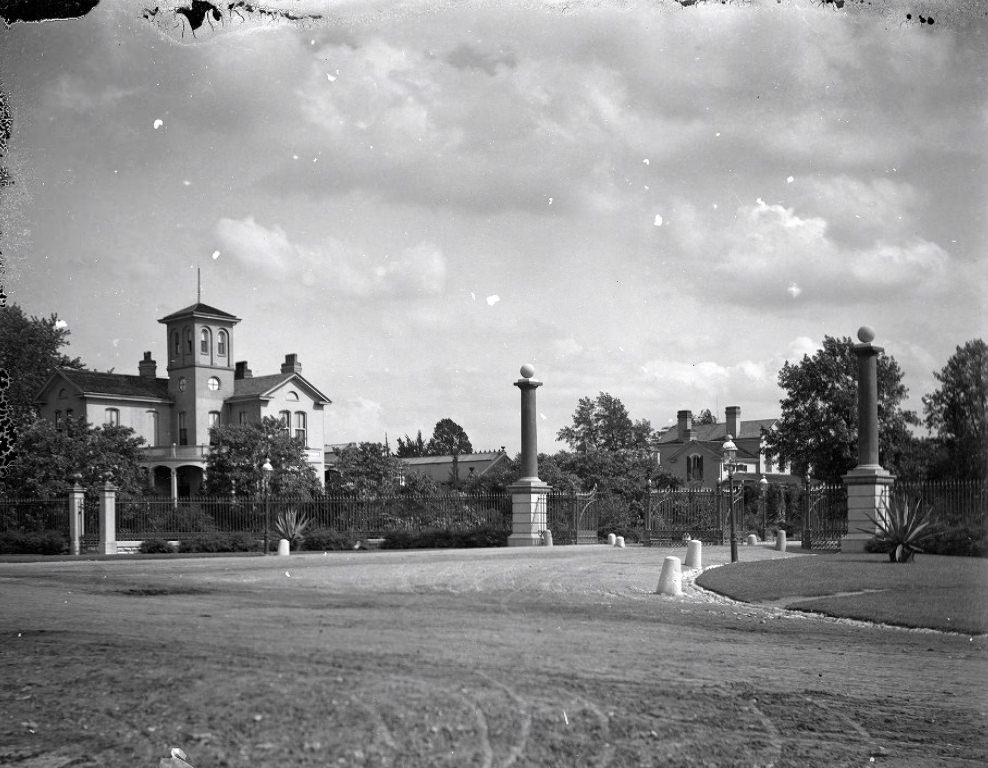
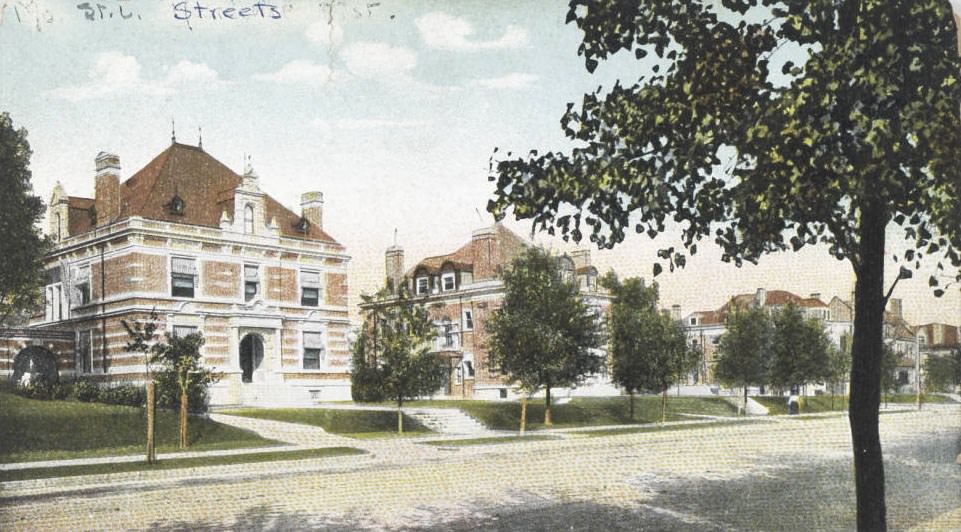
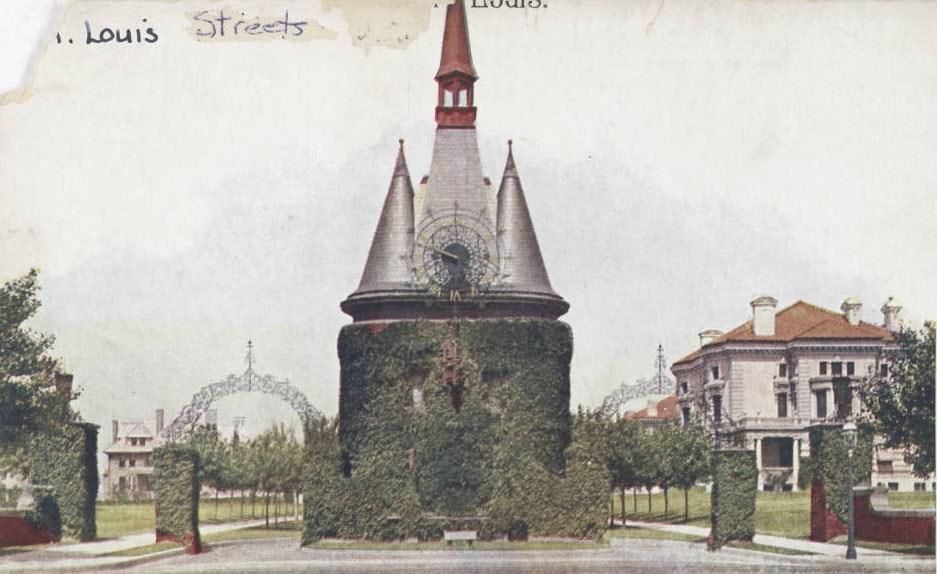
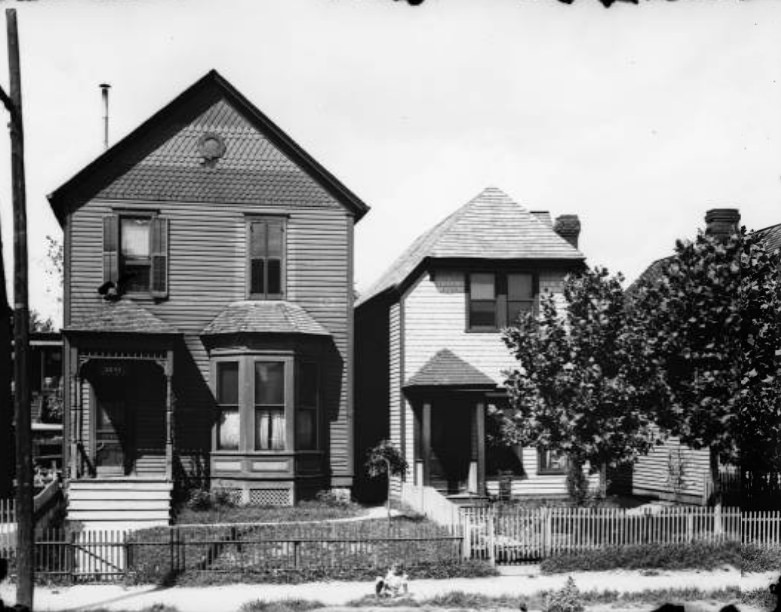
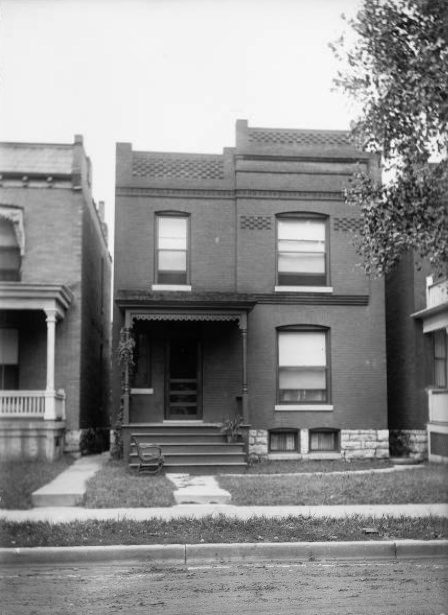
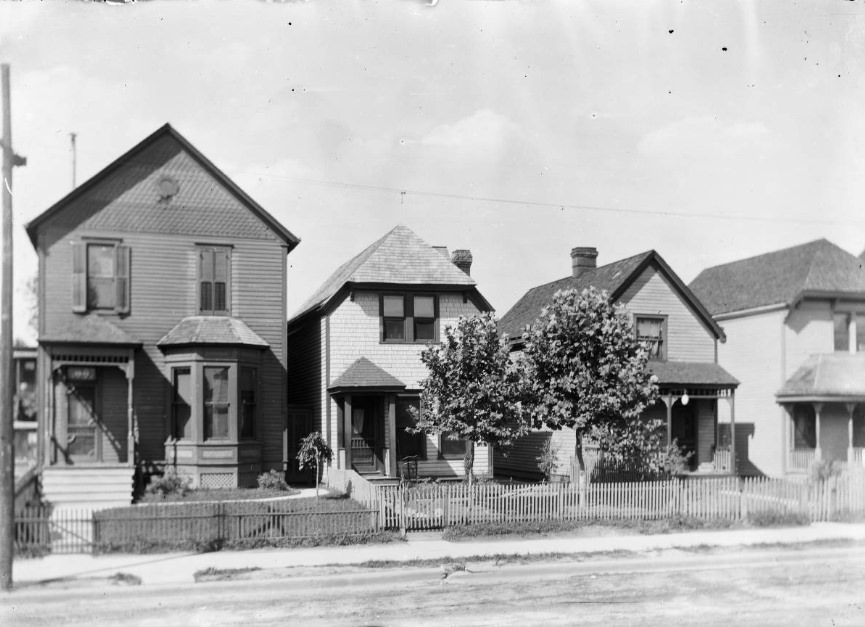
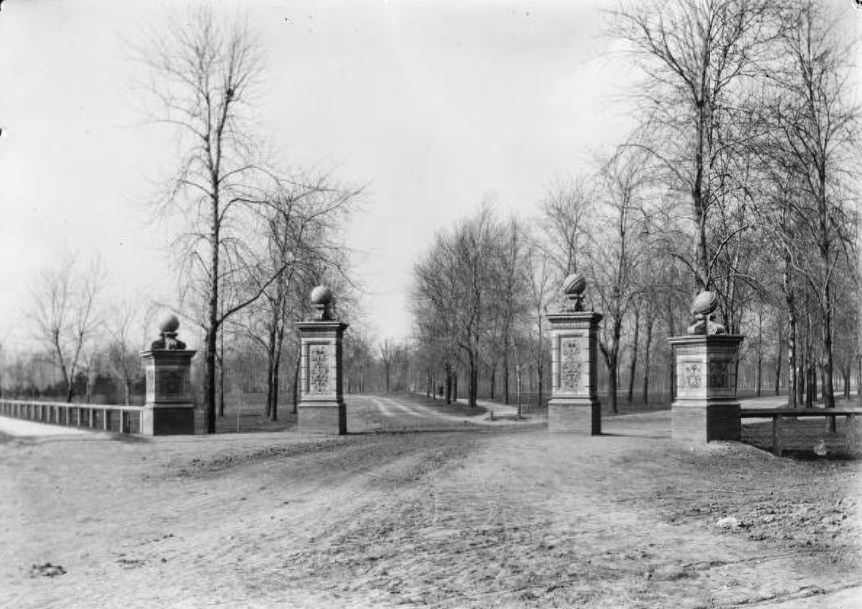
Beyond the downtown core, St. Louis had well-developed residential neighborhoods ranging from modest working-class blocks to elegant private streets. Vandeventer Place was among the most exclusive — a private residential enclave with gated entrances and a formal fountain near the entryway. Washington Terrace was another private street developed for wealthy residents, insulated from the noise and traffic of the city’s commercial districts.
The entrance gates to Vandeventer Place, one of St. Louis exclusive, private residential streets, 1900
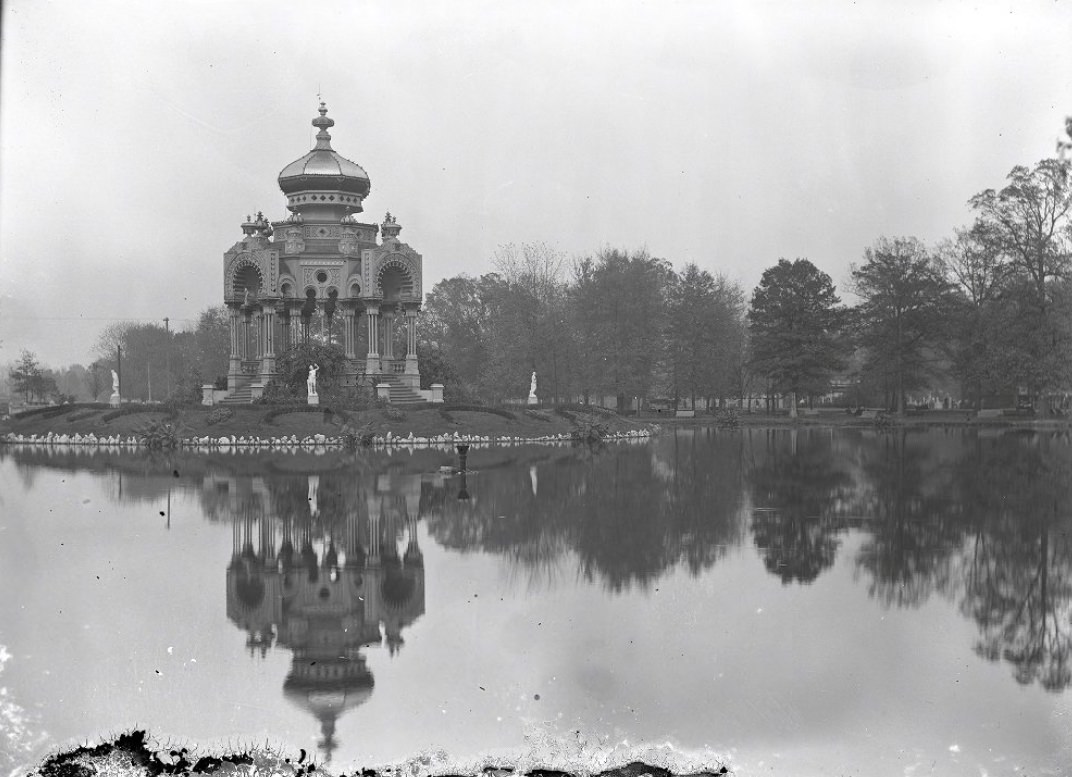
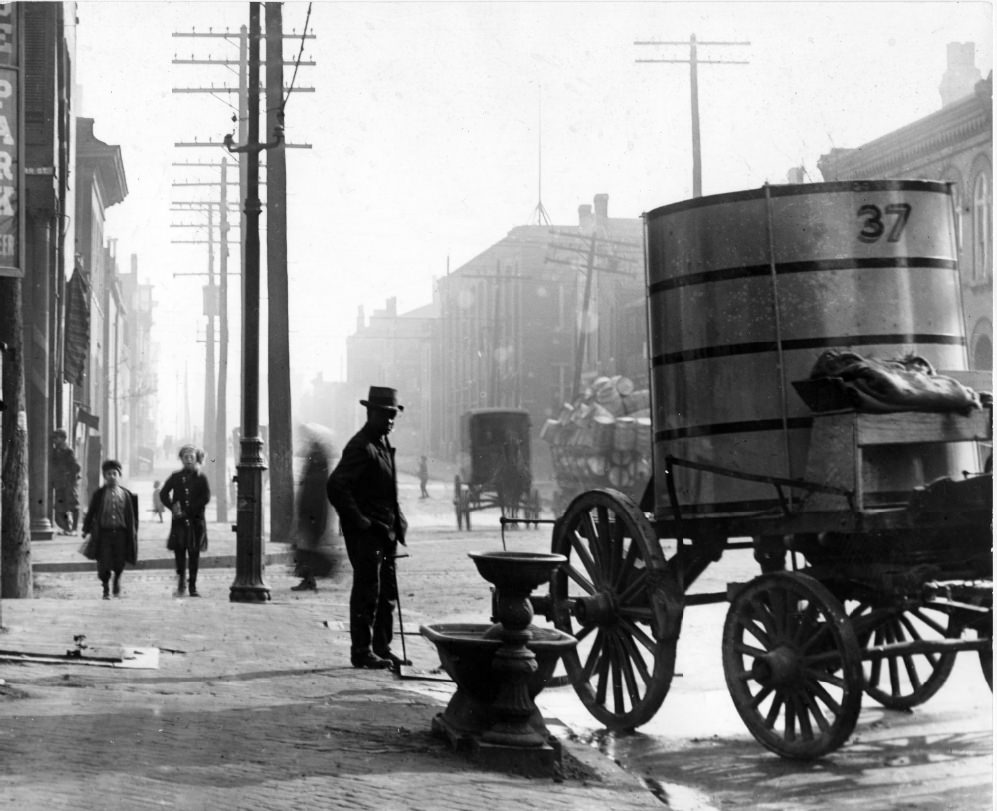
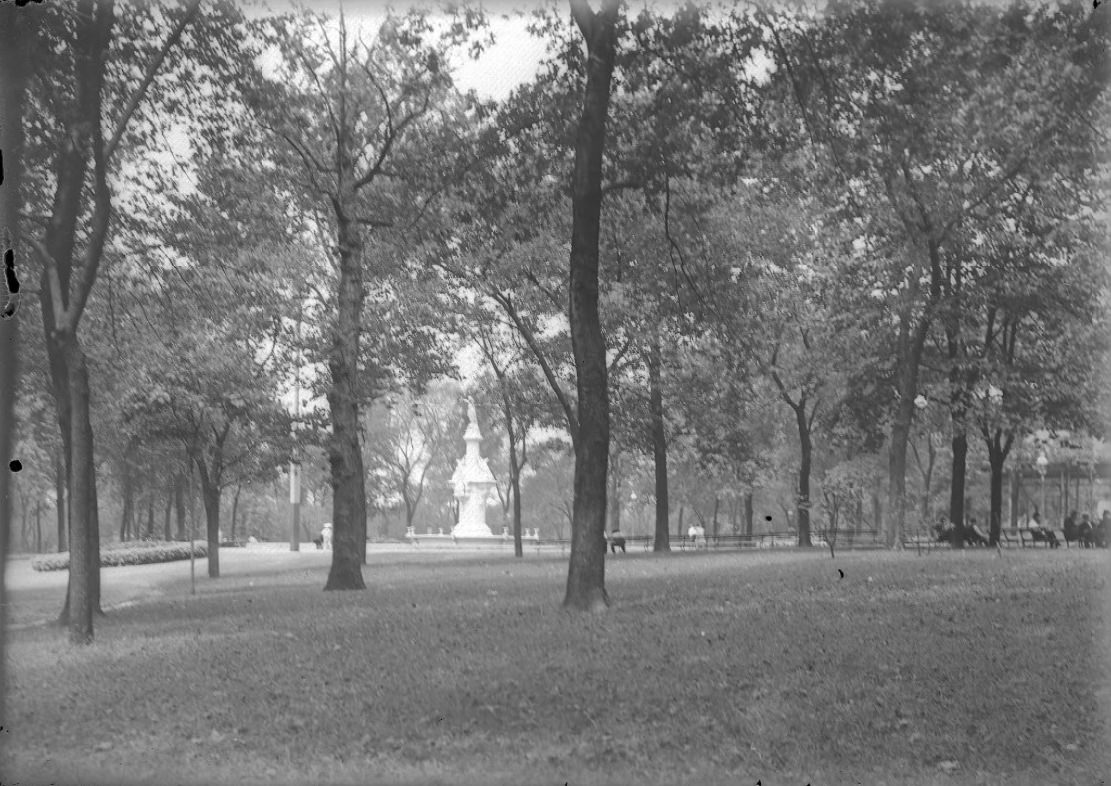
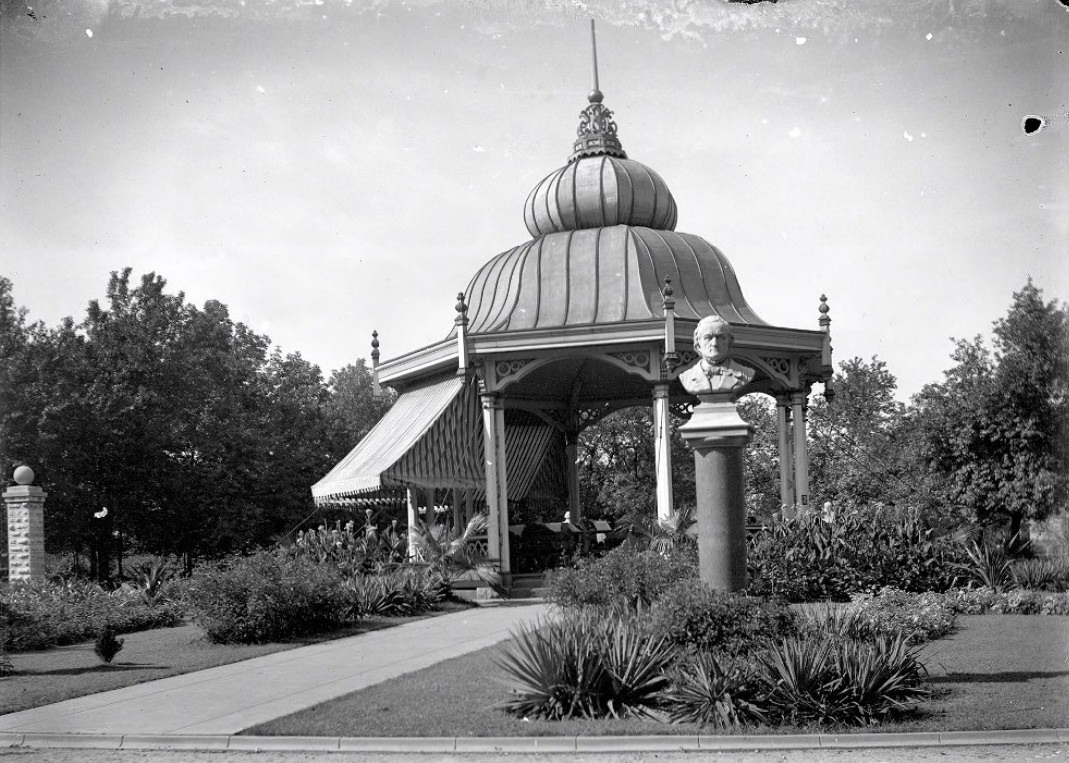
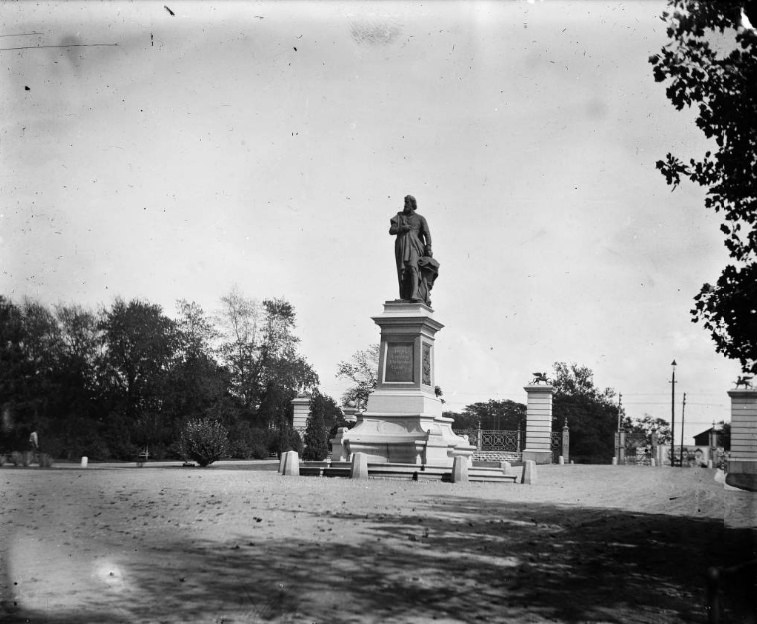
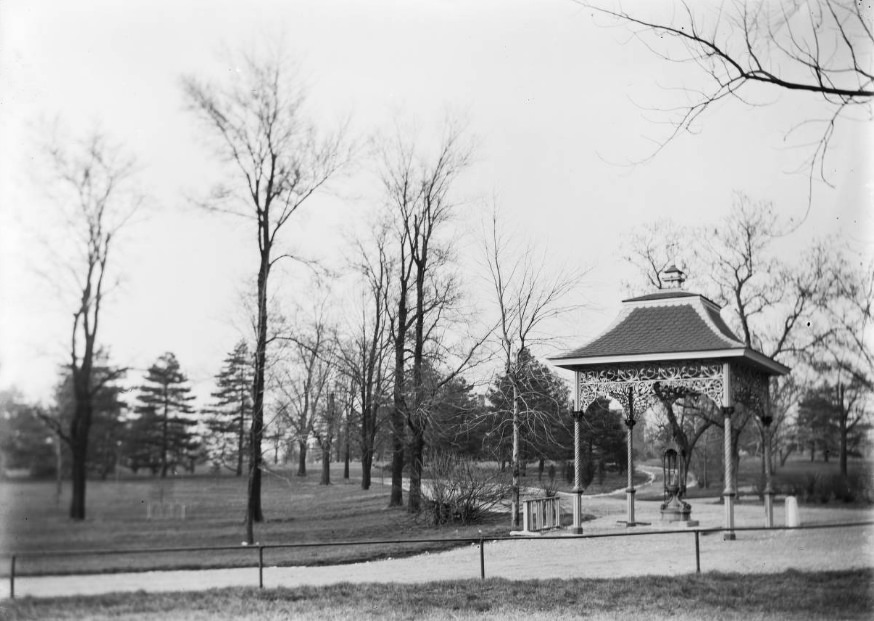
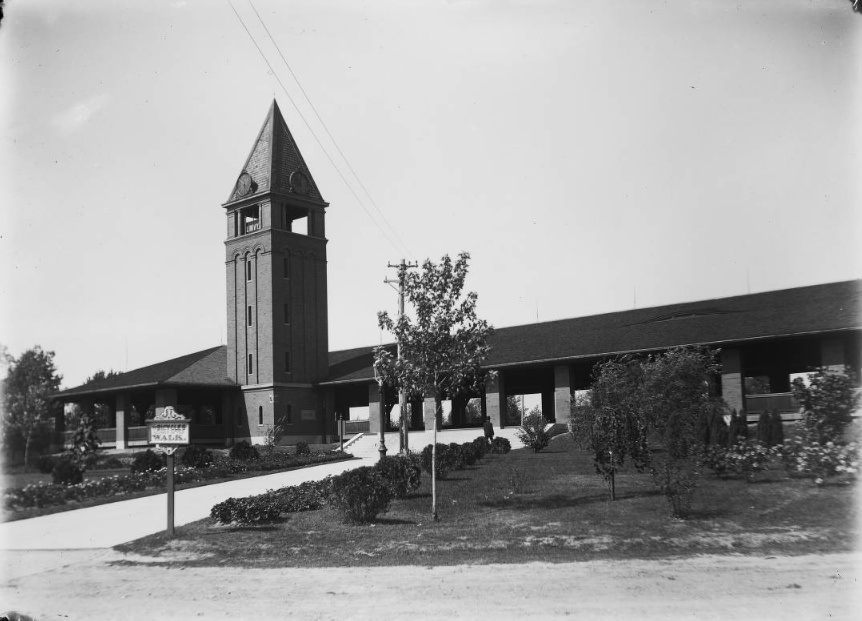
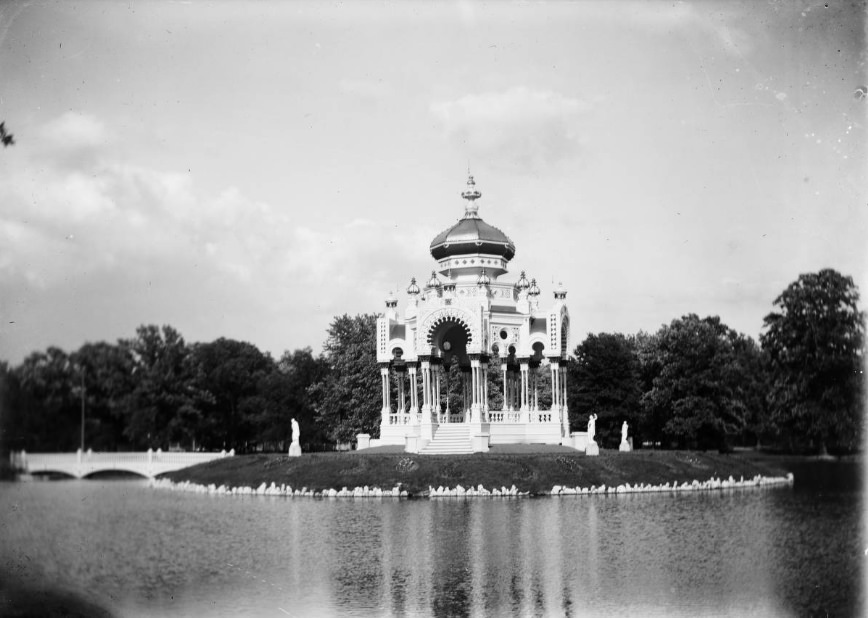
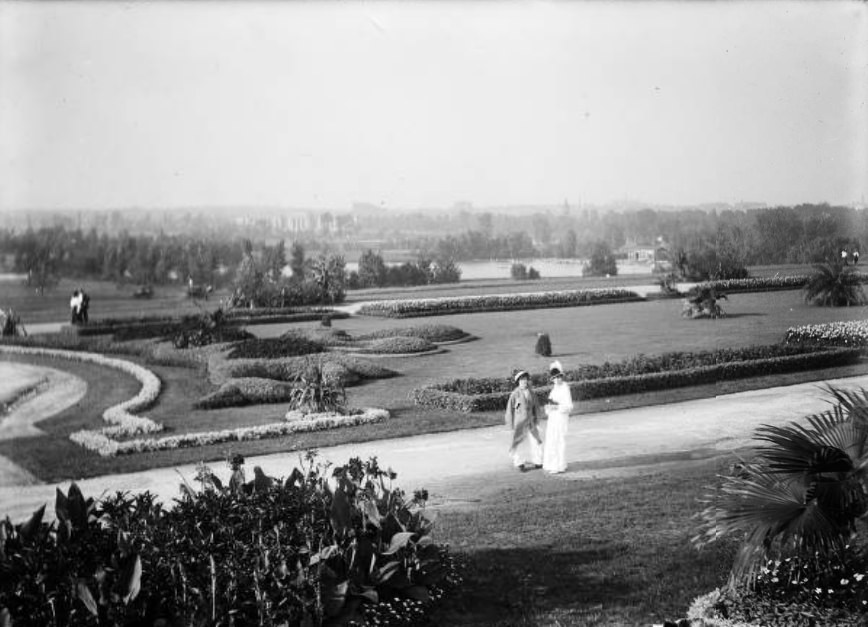
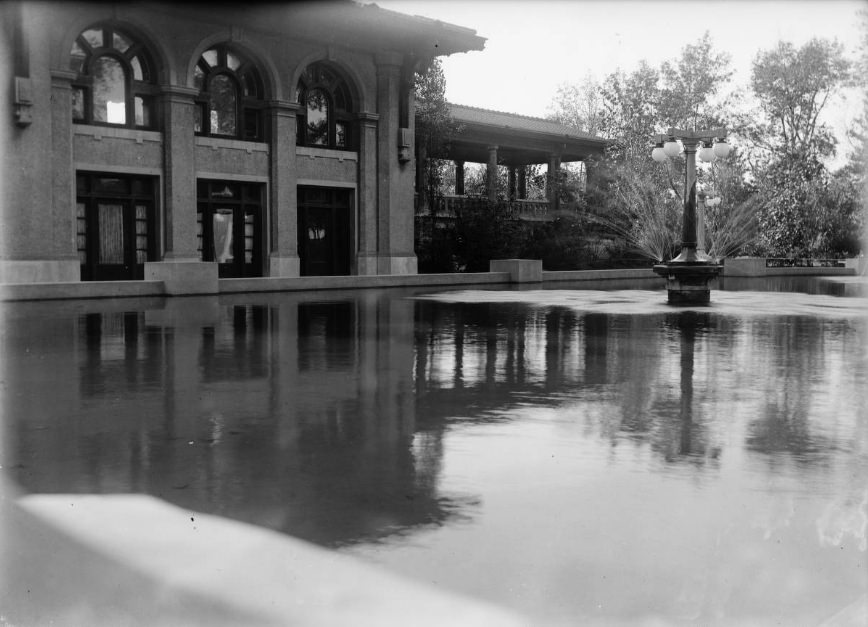
Parks gave residents of all backgrounds a place to gather. Forest Park, Tower Grove Park, and O’Fallon Park all served the city. Forest Park had a bandstand pagoda, bridges, drinking fountains, and open space for children to run and play. Tower Grove Park featured a bandstand, the Christopher Columbus statue, a statue of Alexander von Humboldt, and formal garden areas. These green spaces were not passive backdrops — they were actively used, well-maintained, and photographed often.
Forest Park Band Pagoda, 1900
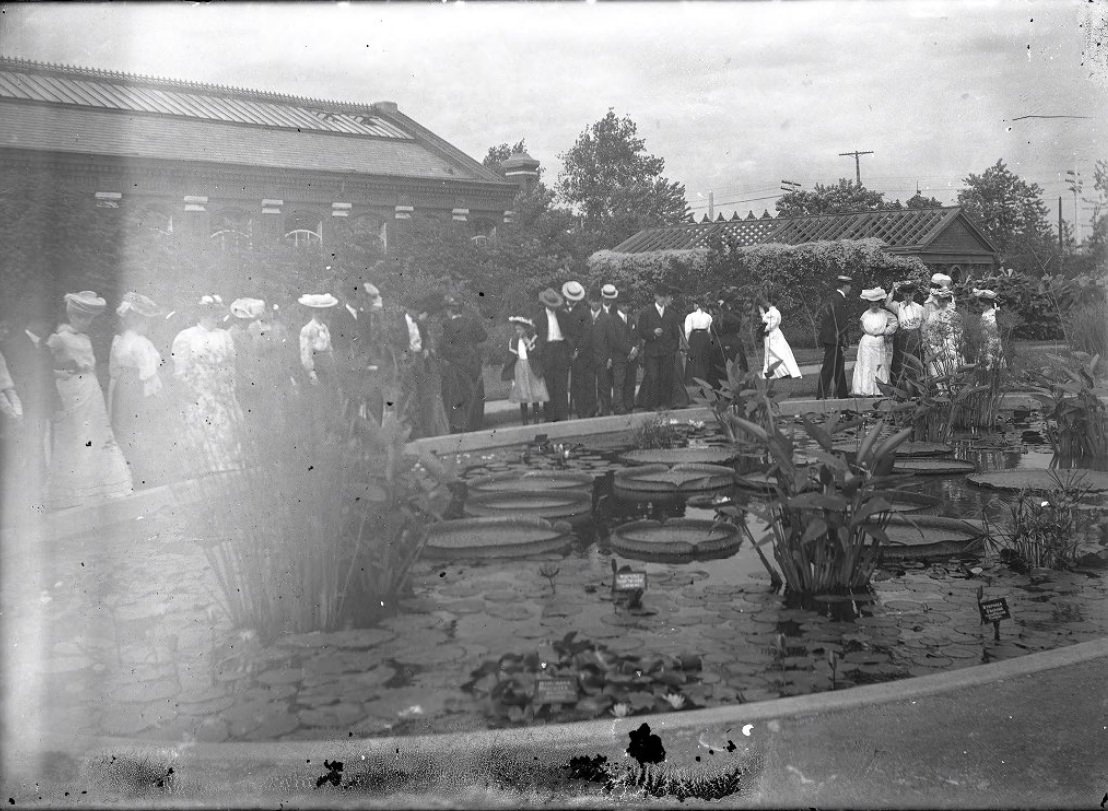
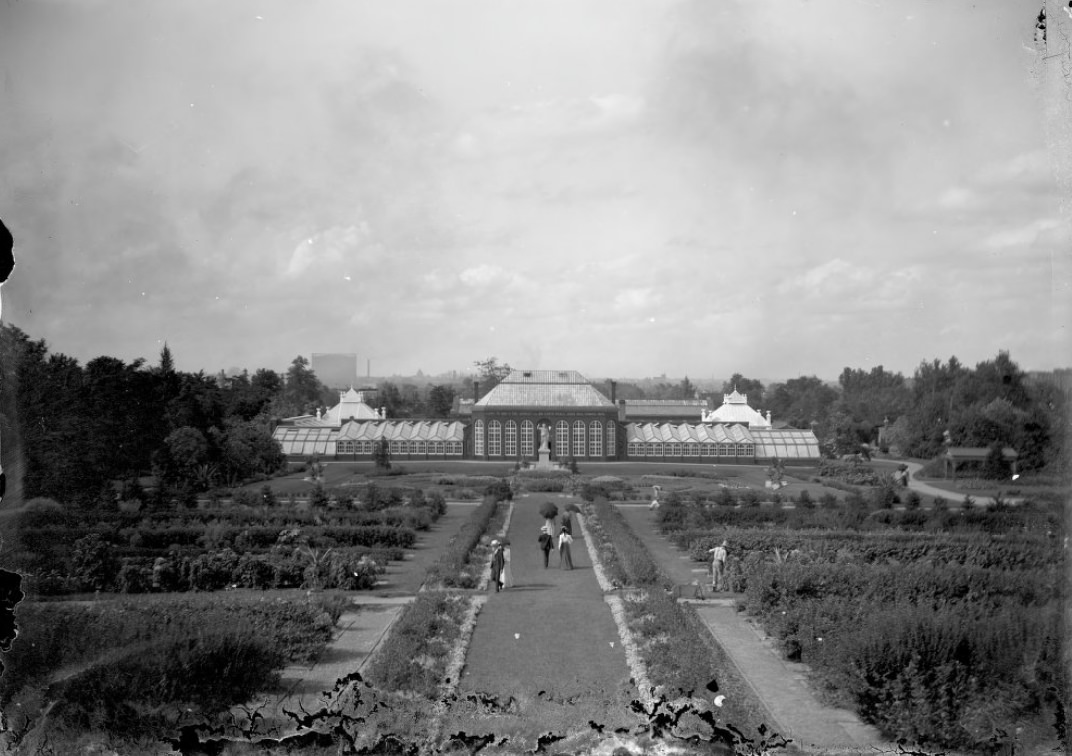
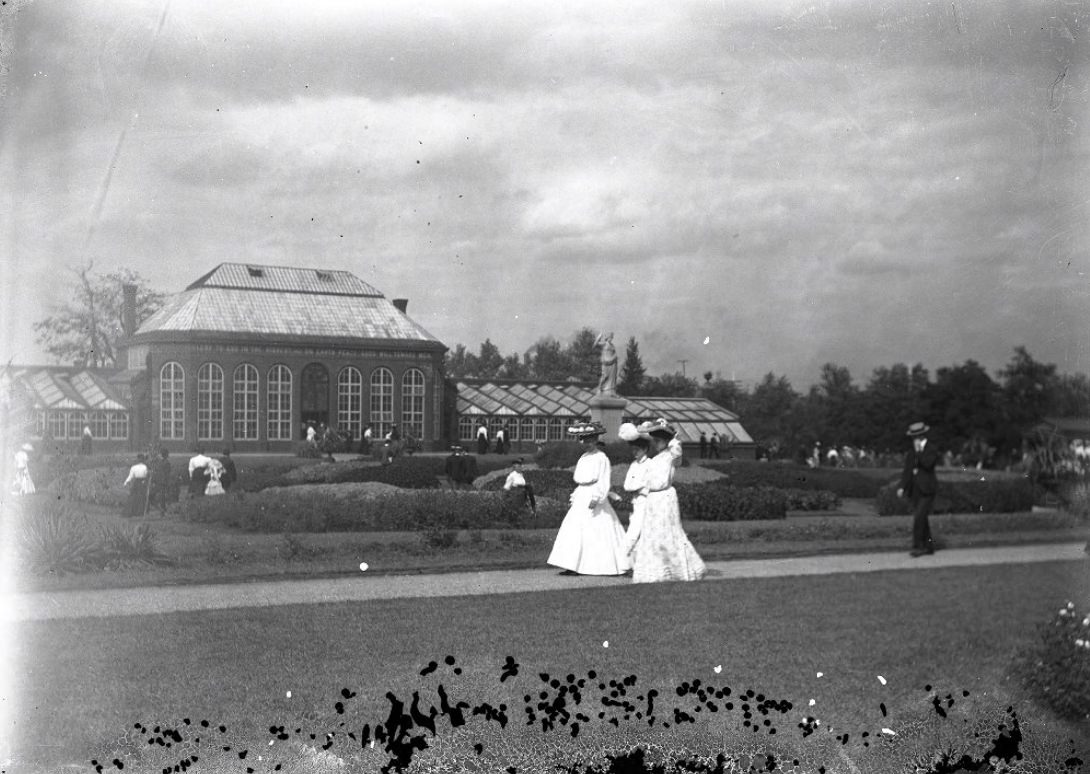
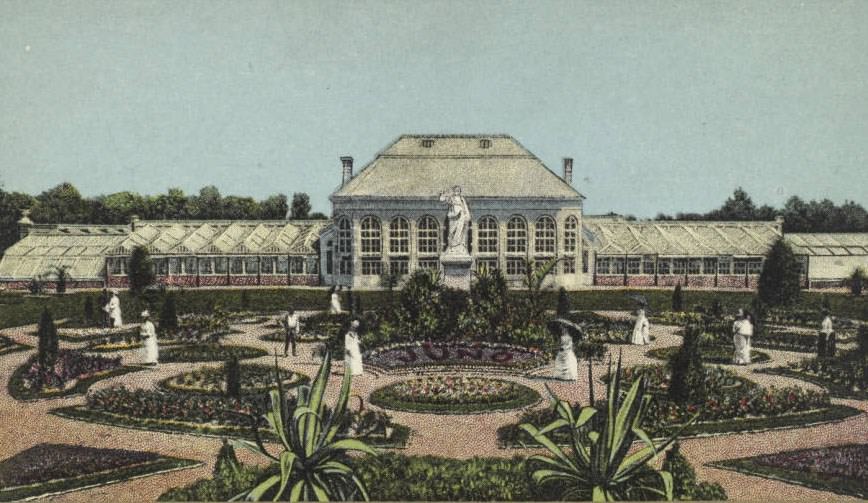
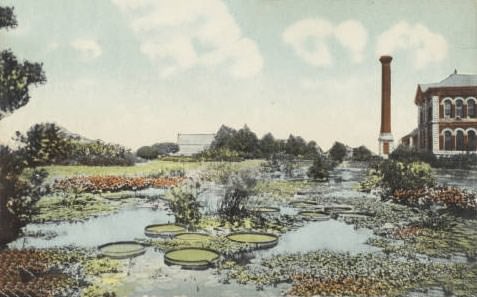
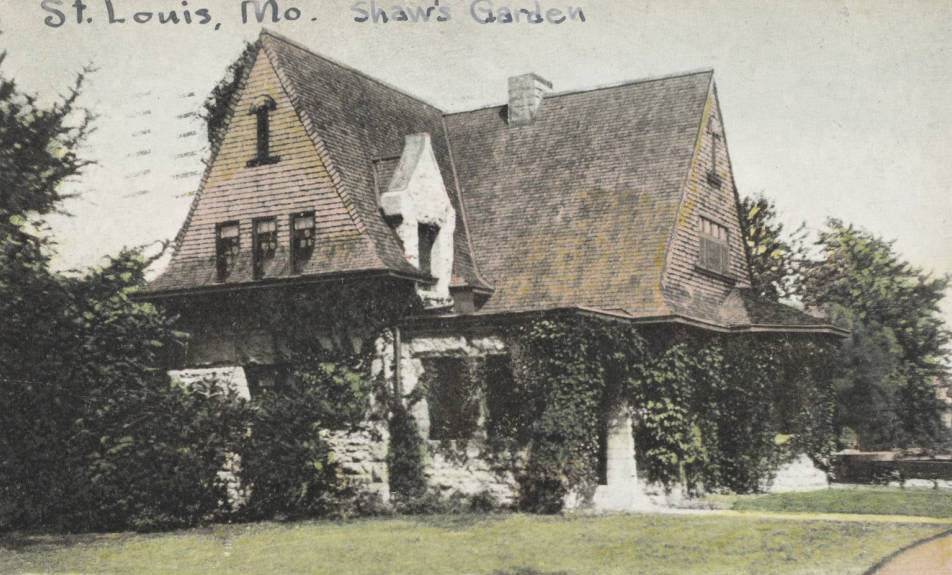
The Missouri Botanical Garden, also known as Shaw’s Garden, offered one of the most distinctive green spaces in the city. Its lily pond was filled with aquatic plants, floating lily pads, and small flowers, with labeled signs identifying different species for visitors. The Palm House was a major greenhouse attraction. St. Louis residents visited regularly, and photographs from the period show well-dressed families and groups strolling through the grounds.
Missouri Botanical Garden Lily Pond, 1900
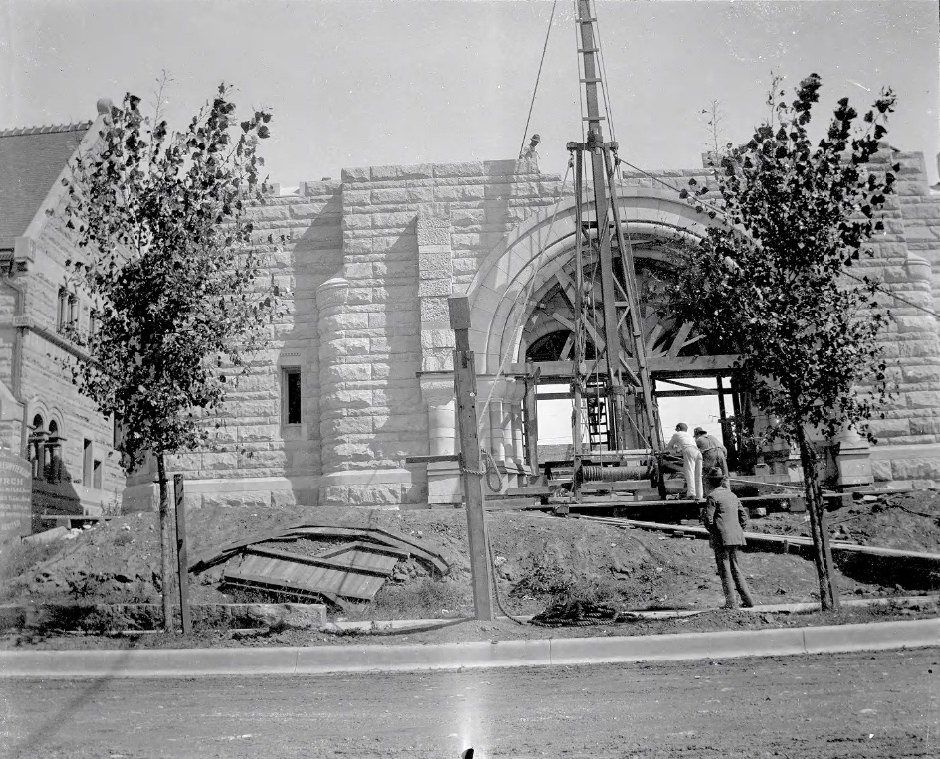
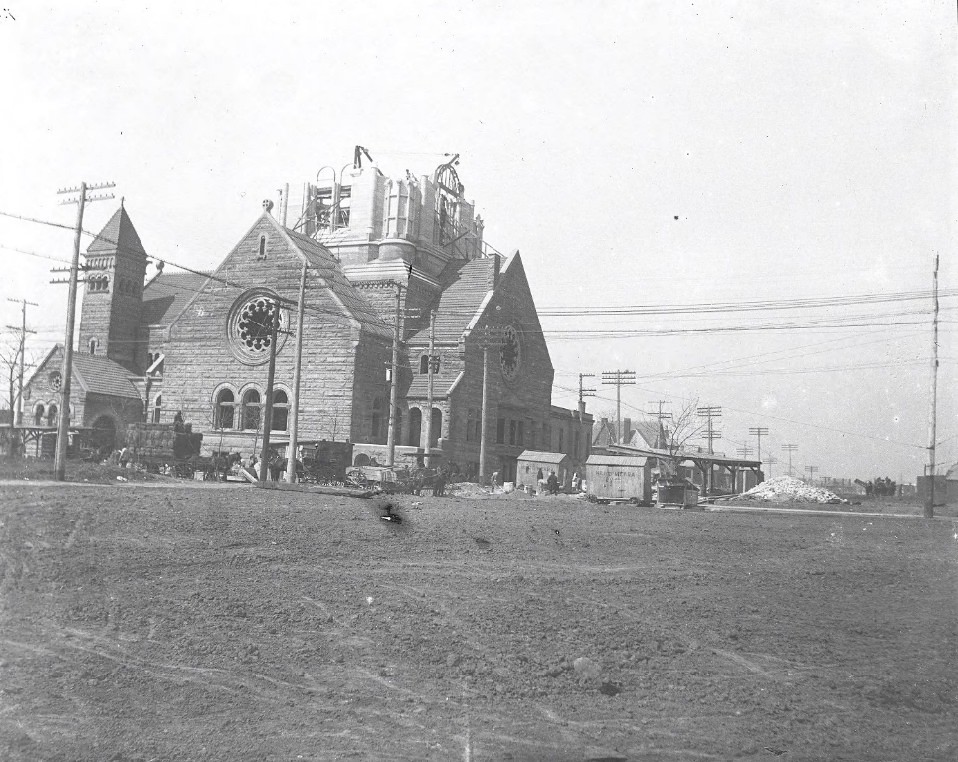
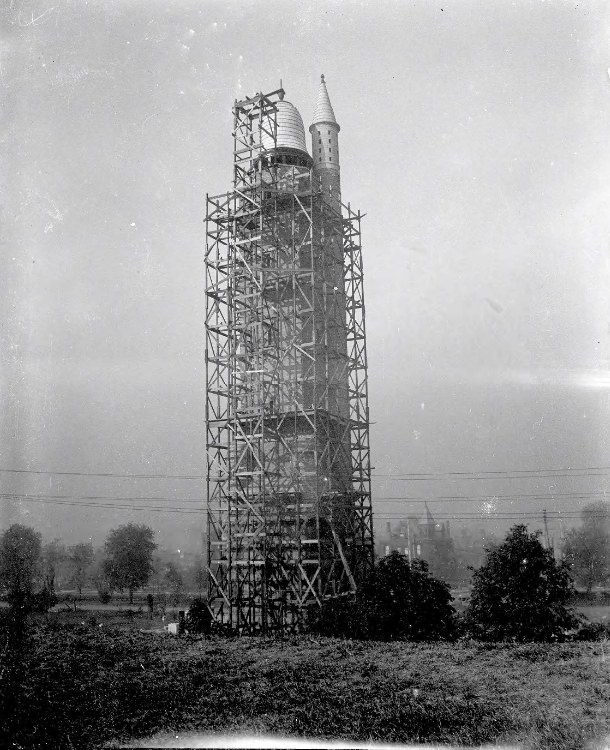
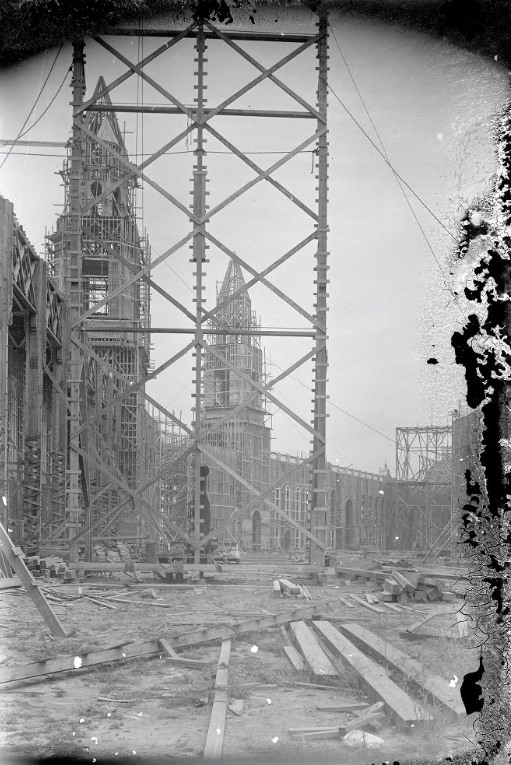
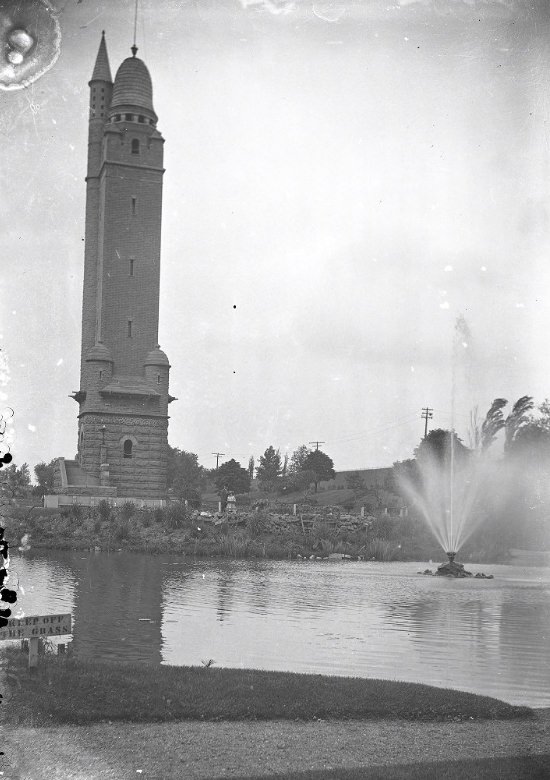
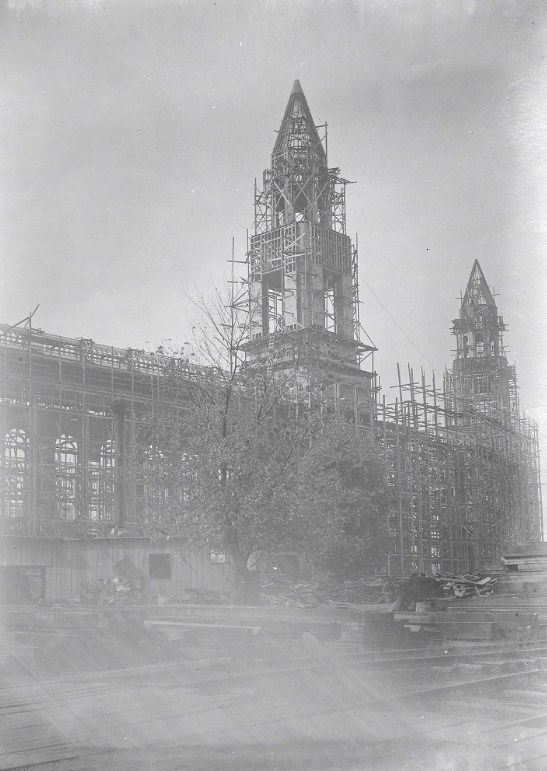
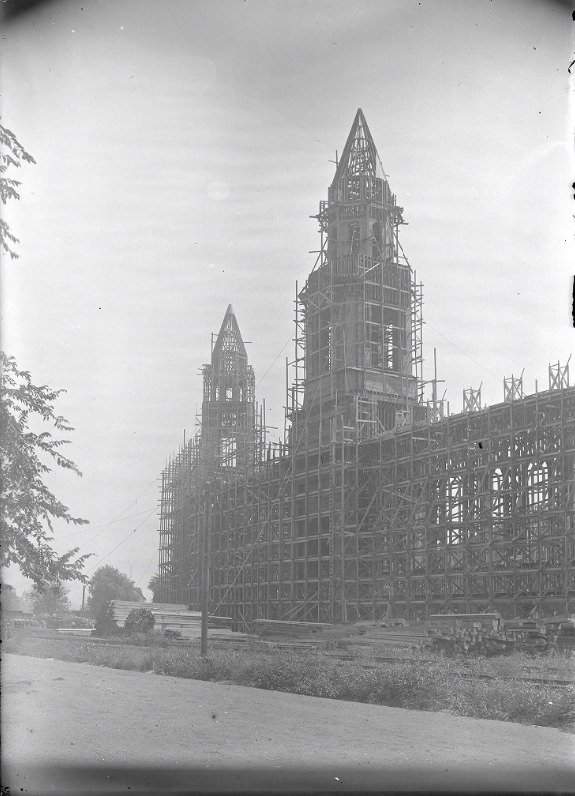
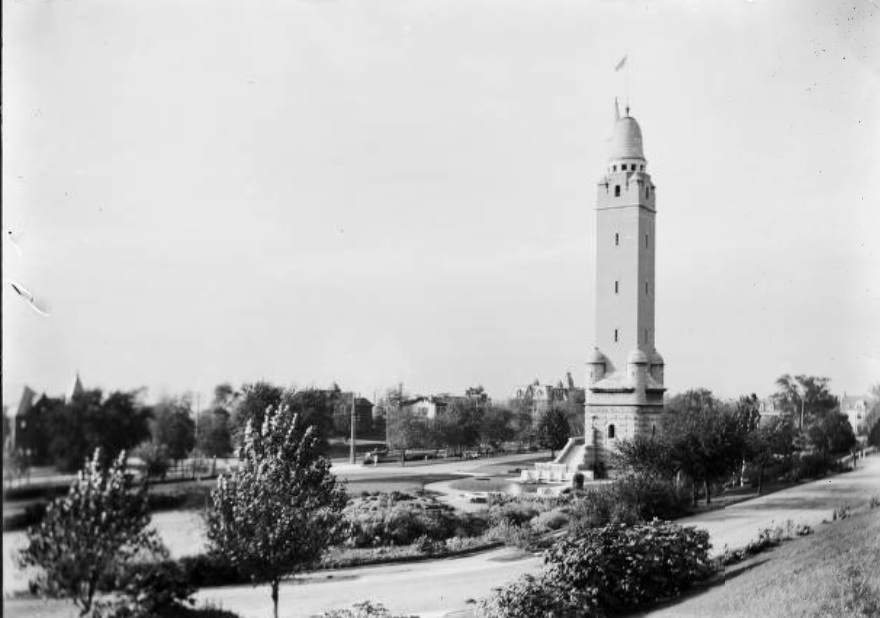
Construction activity defined much of St. Louis in the early 1900s, and not just for commercial or civic buildings. The Second Presbyterian Church was photographed at two stages — first with its walls still short and a hand-controlled crane lifting stone to the top, and later with the roof still incomplete and workers placing window frames. The Compton Hill Water Tower was also under construction, wrapped in scaffolding with its twin peaks rising above the wooden framework.
Second Presbyterian Church Construction, 1900
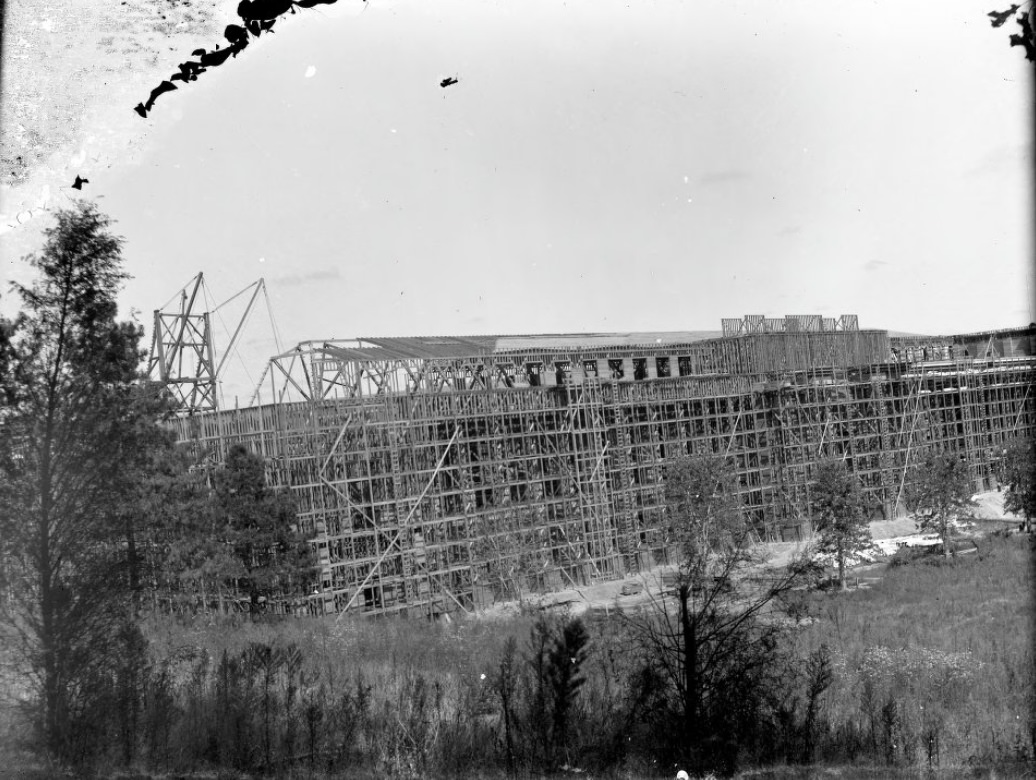
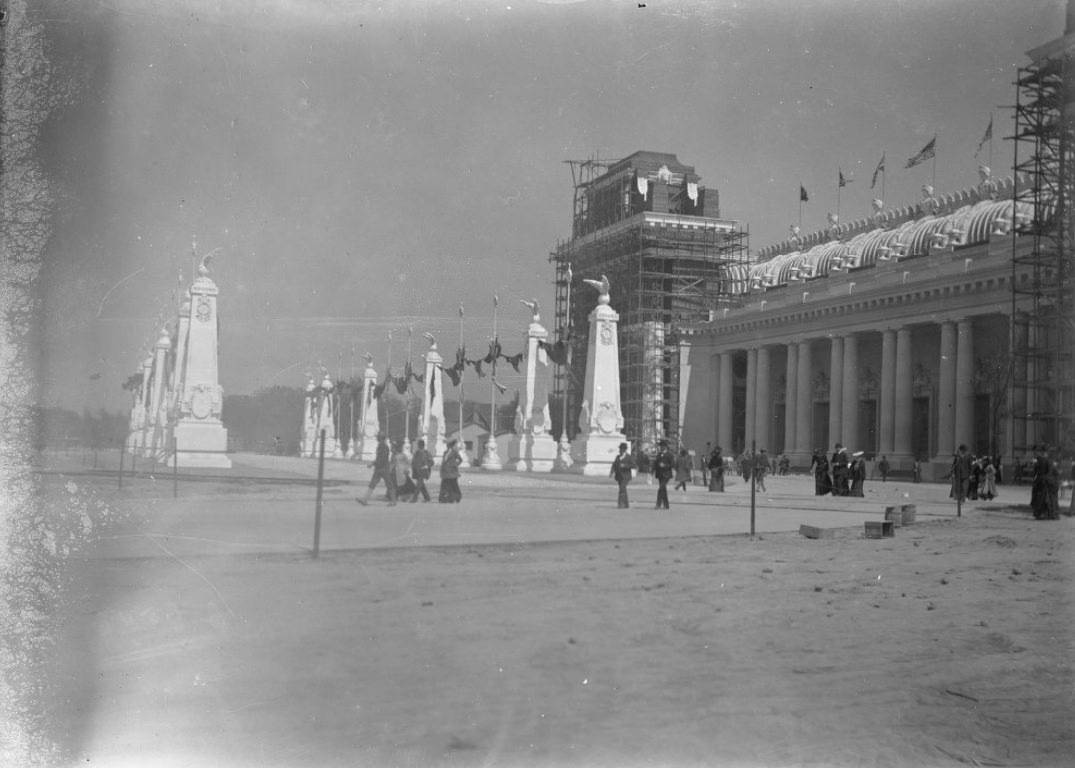
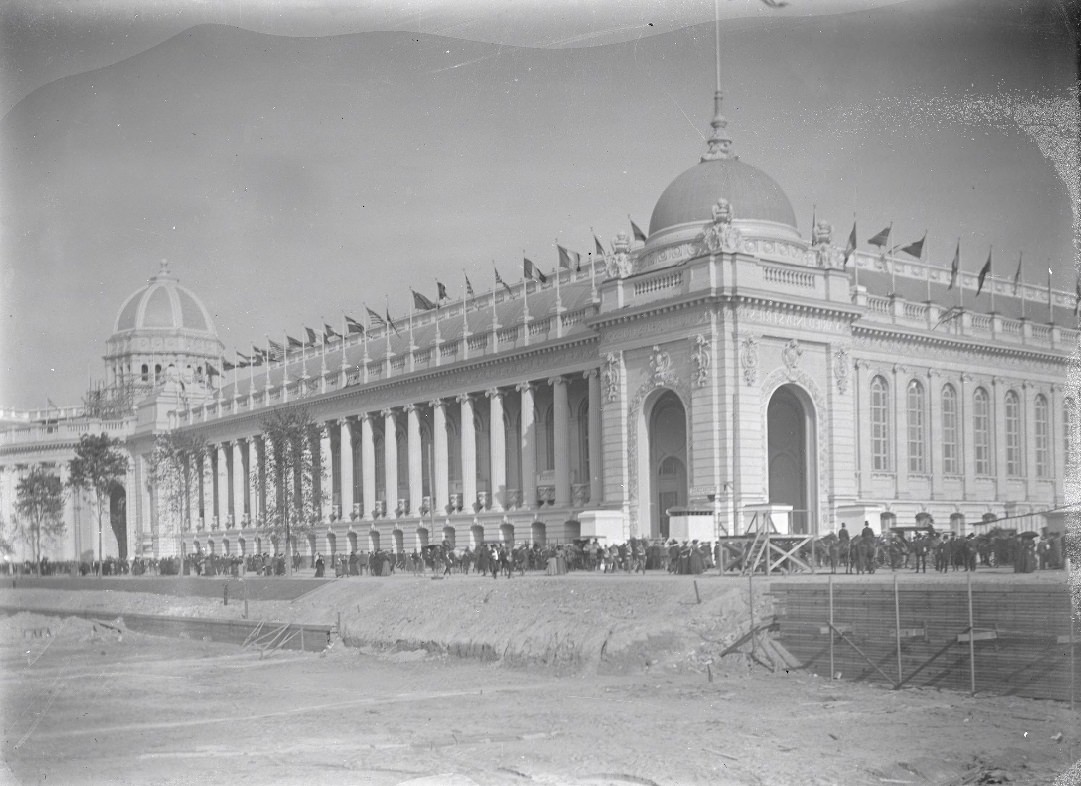
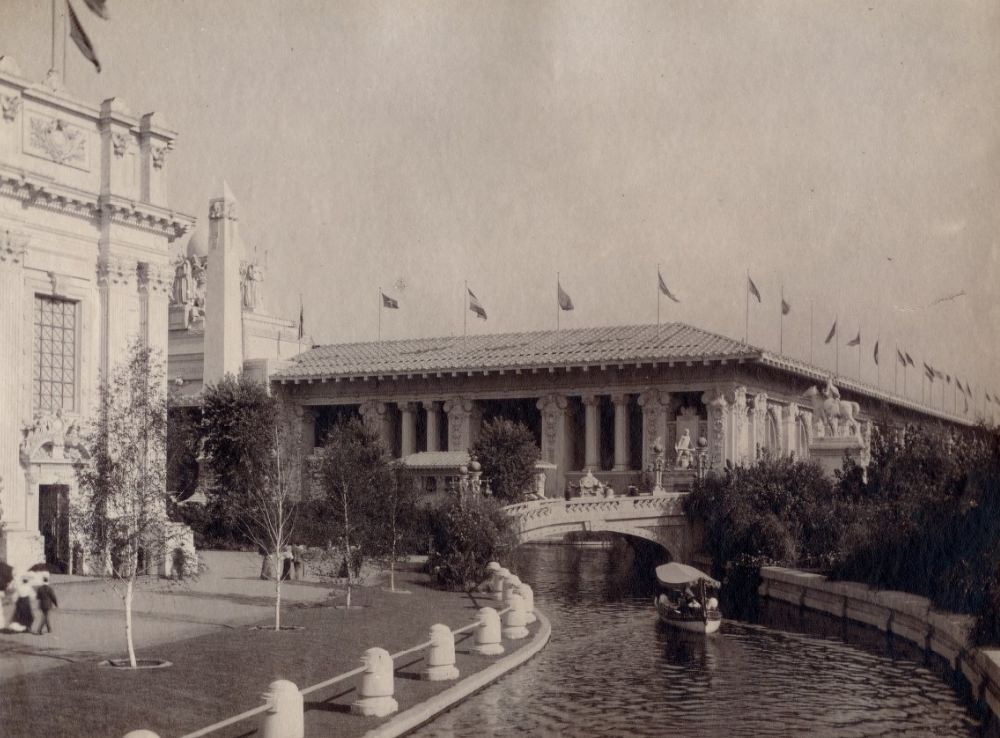
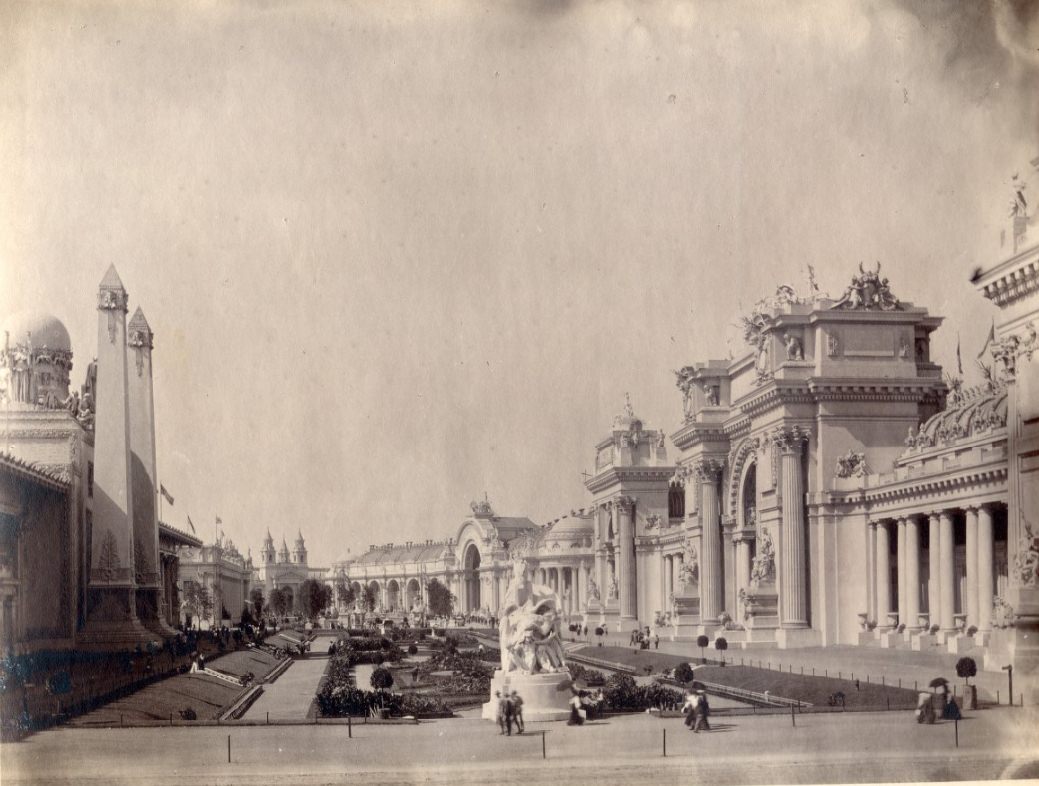
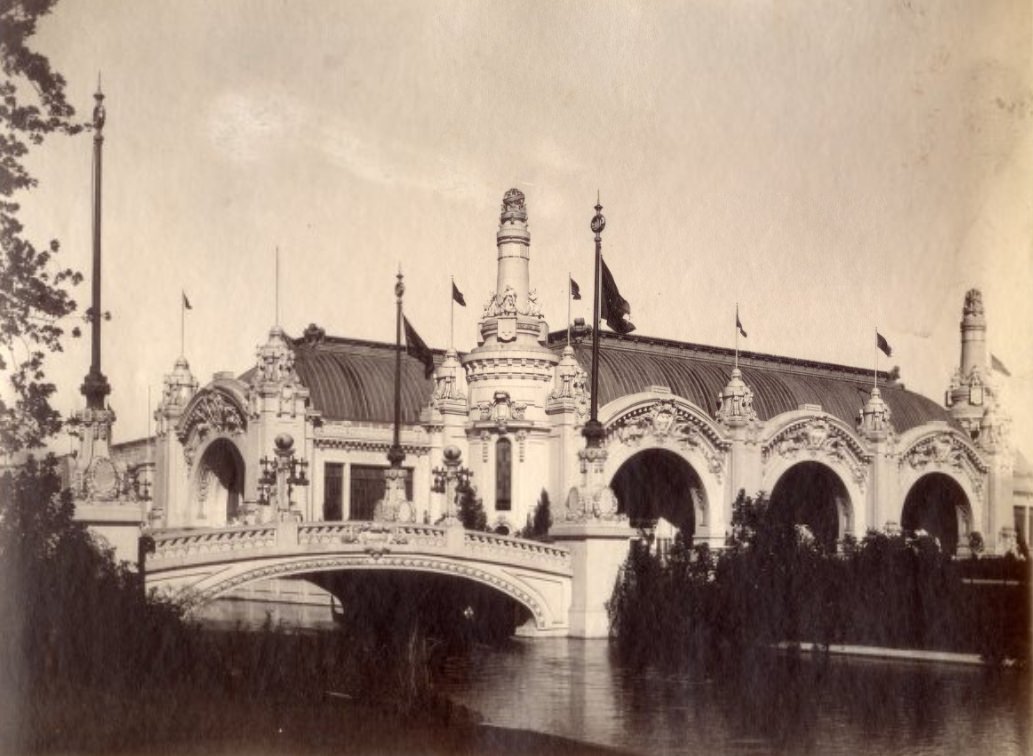
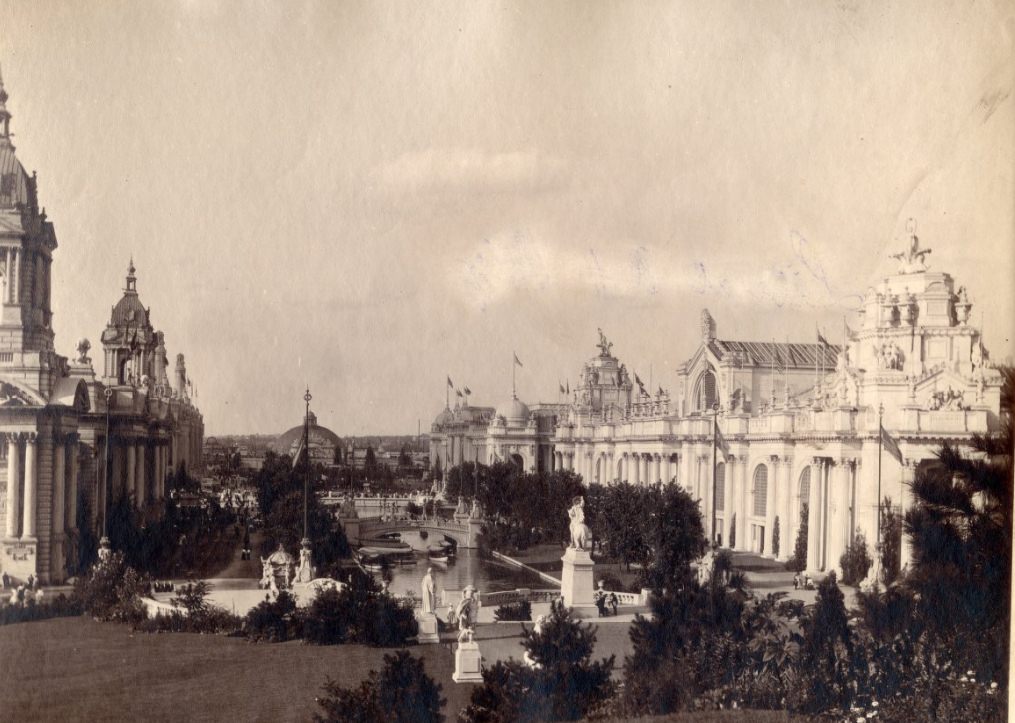
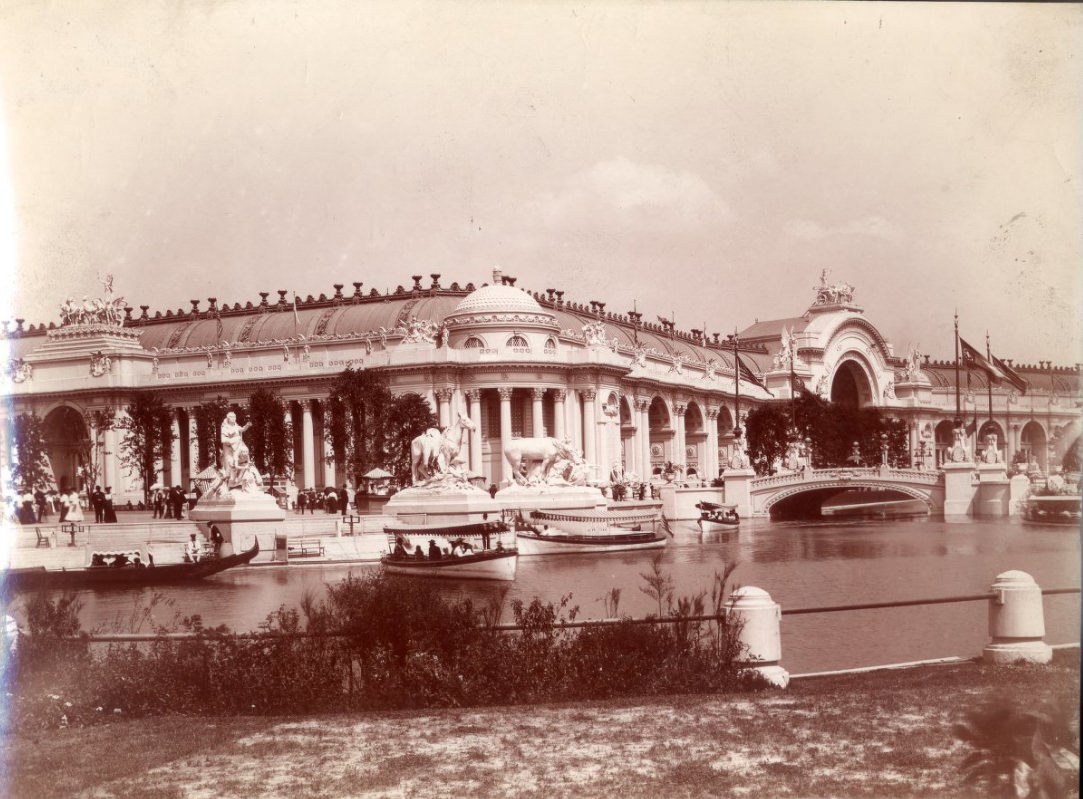
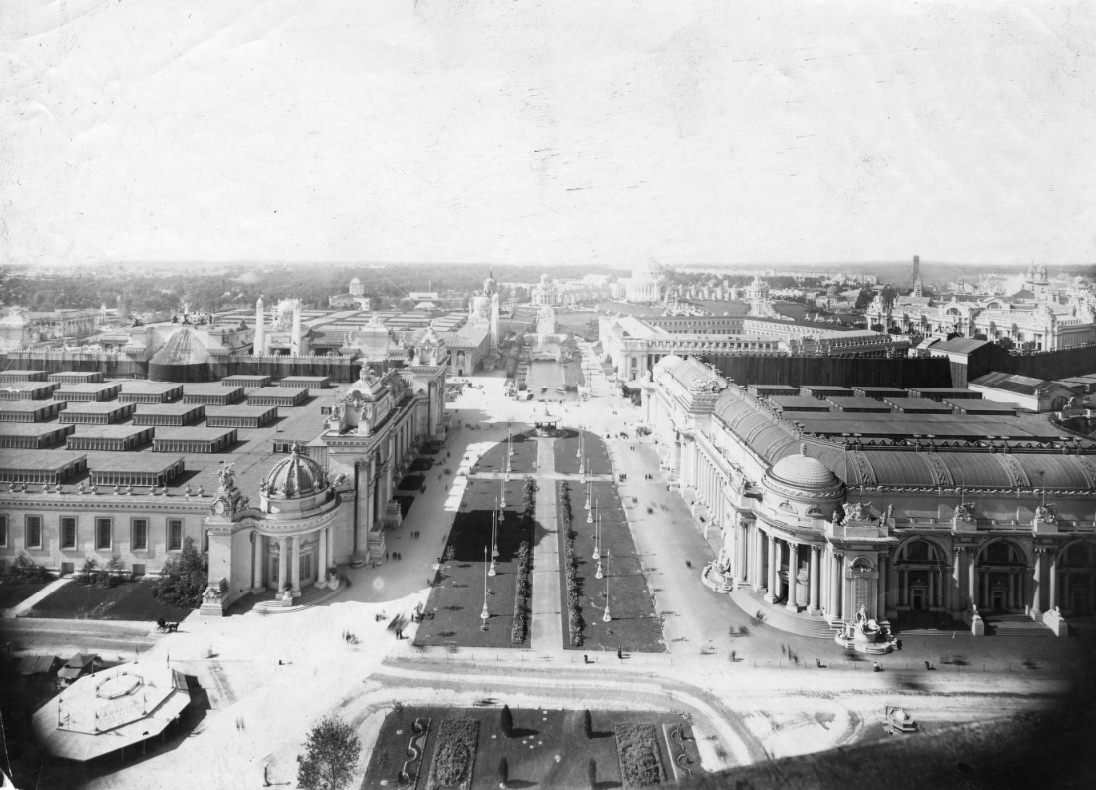
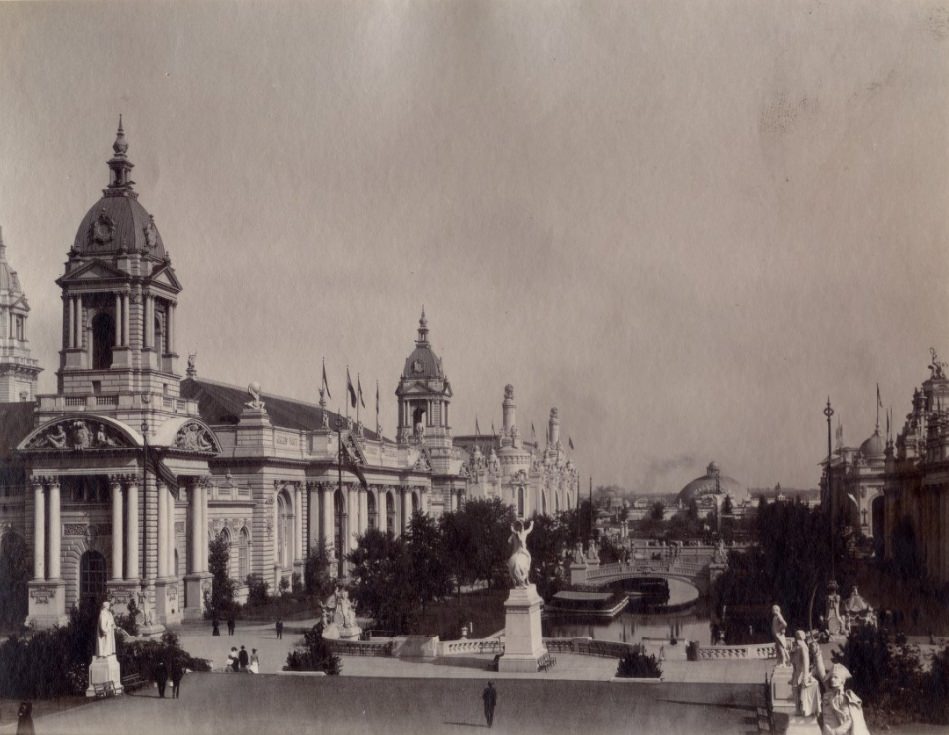
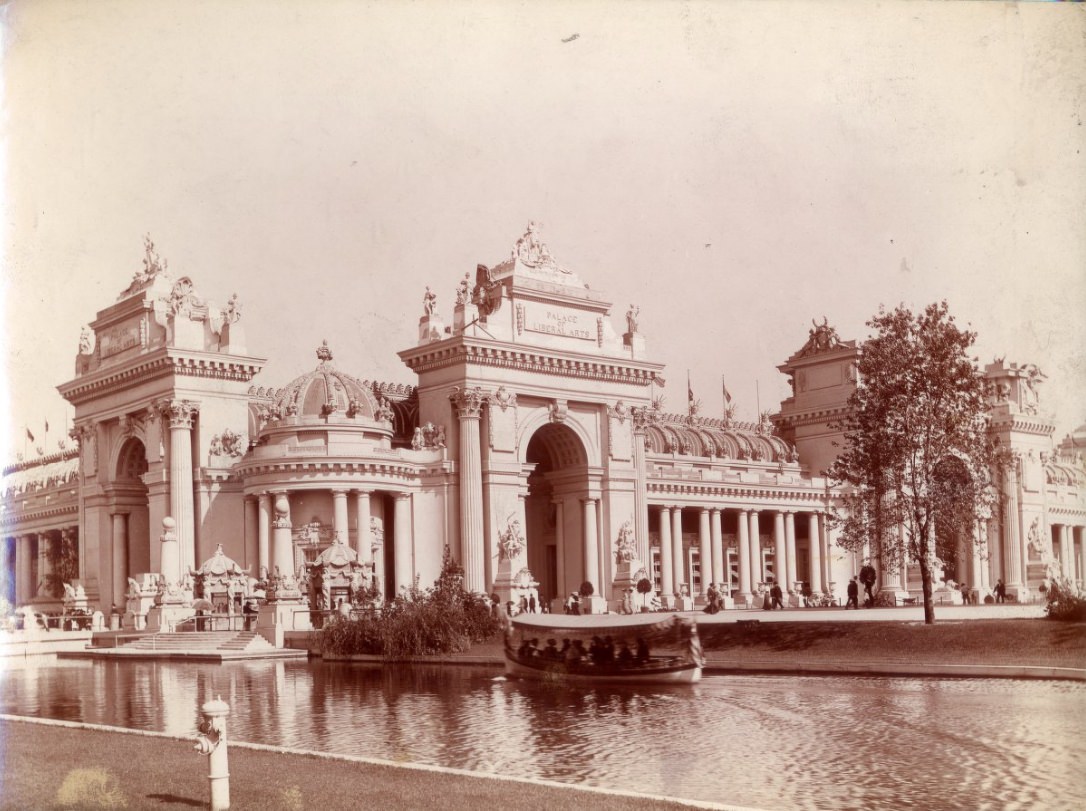
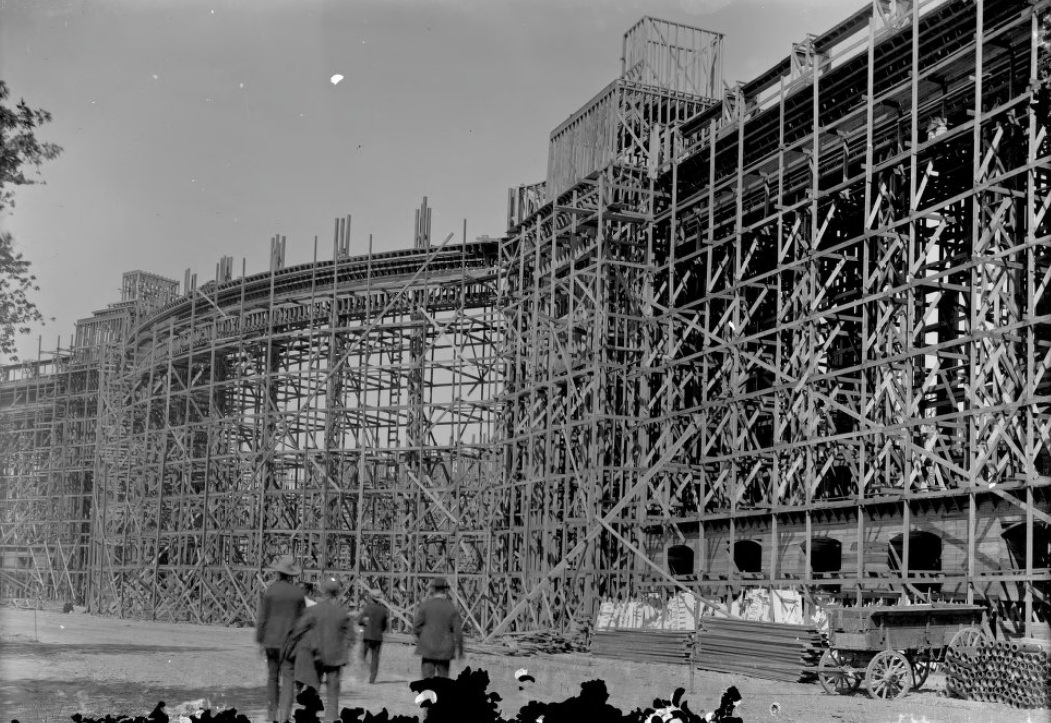
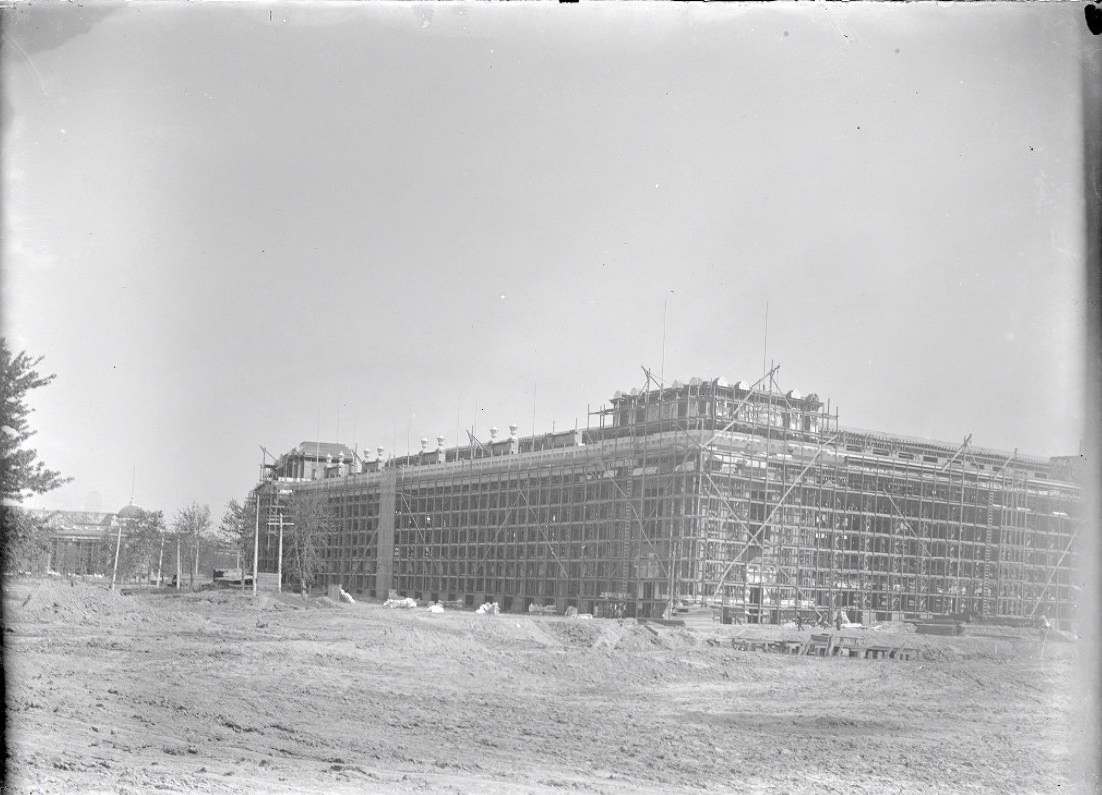
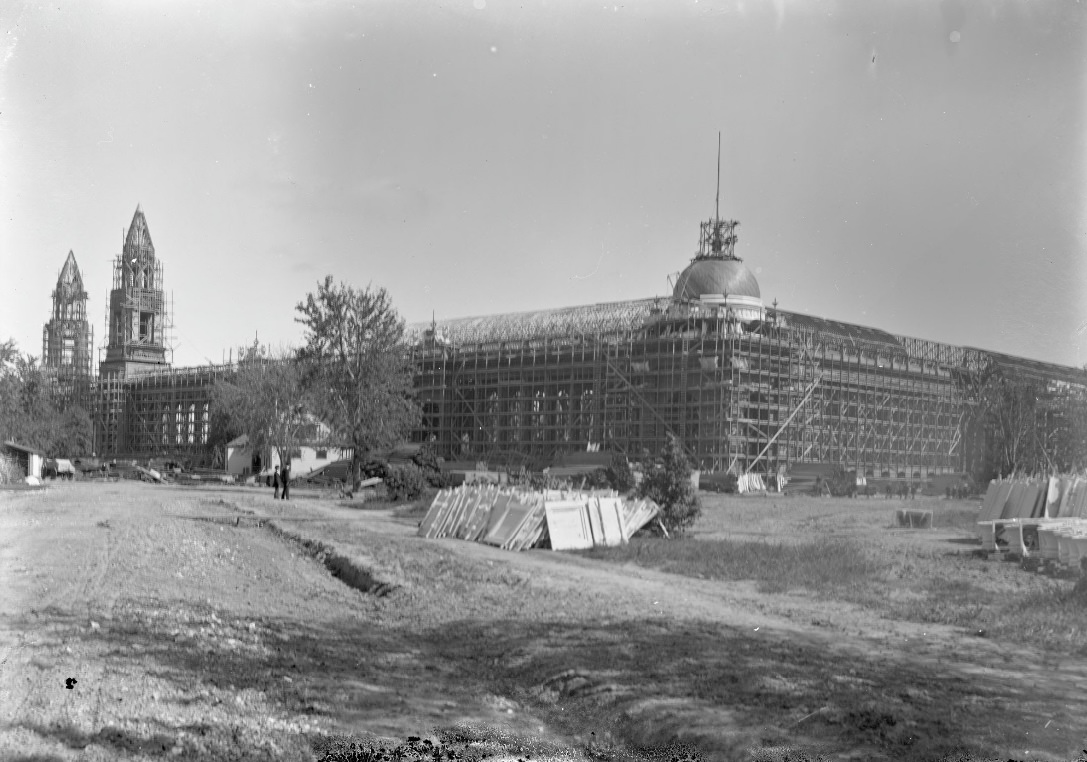
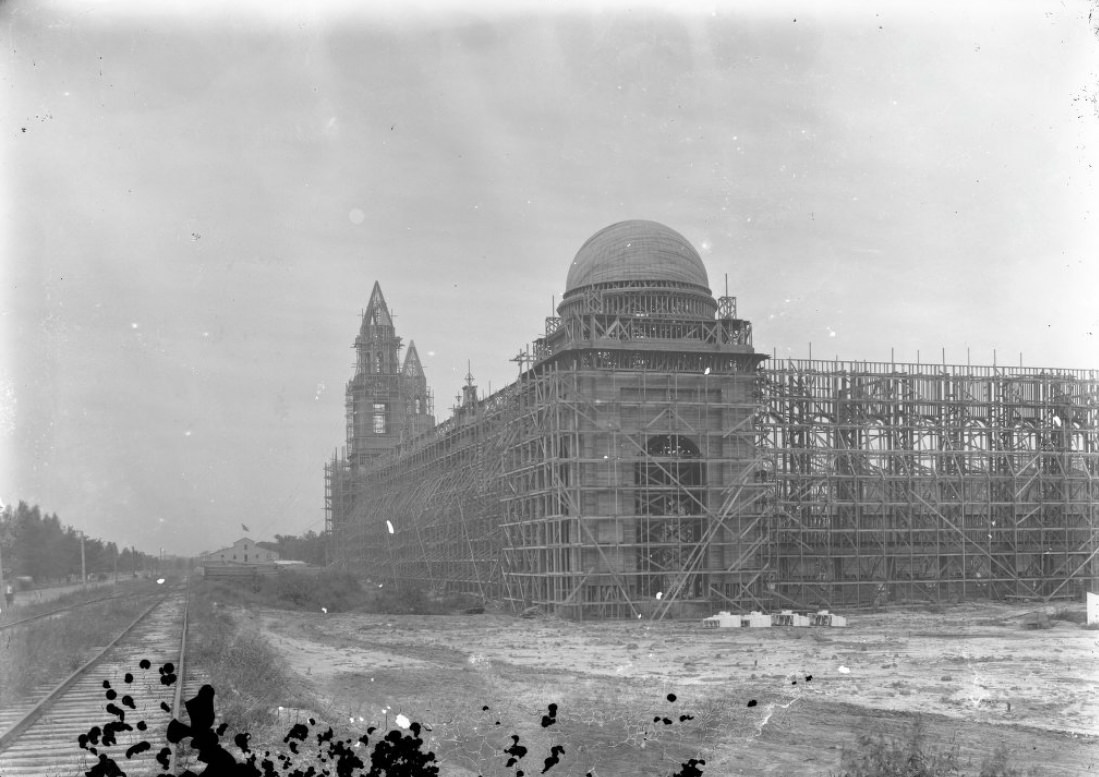
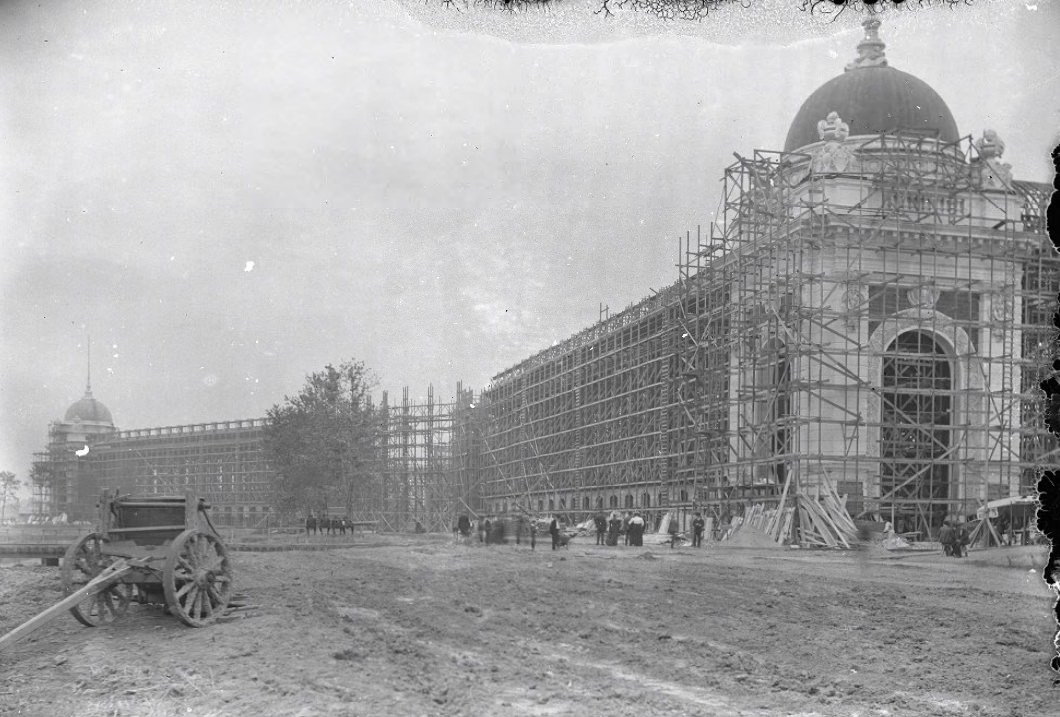
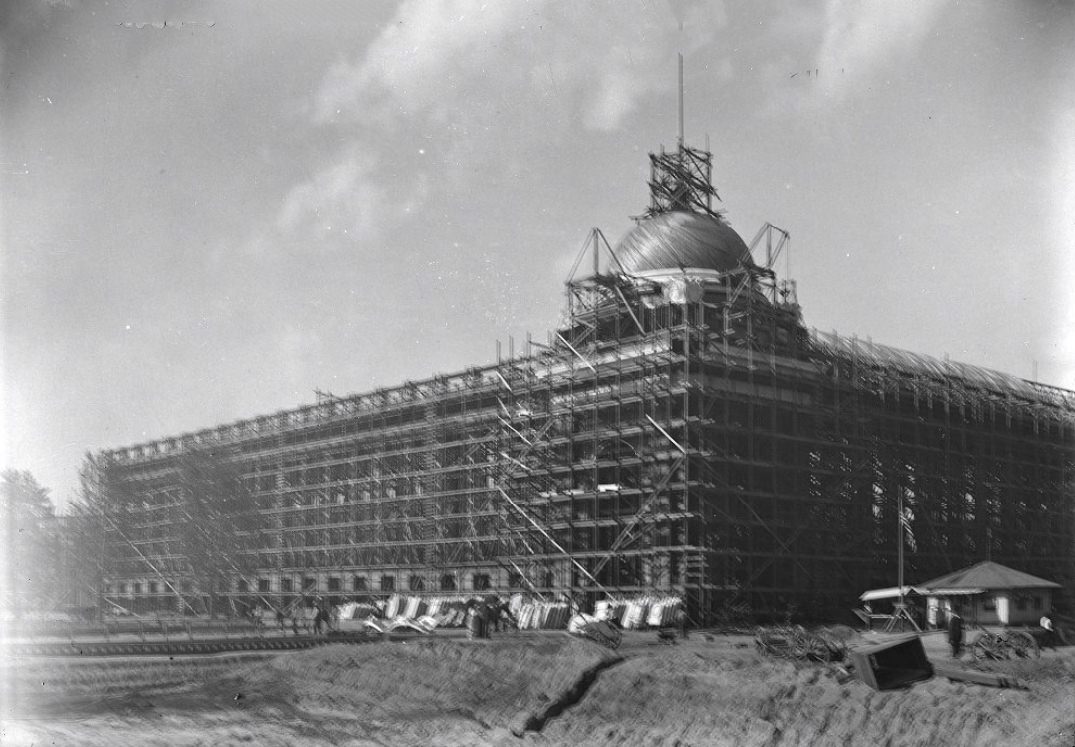
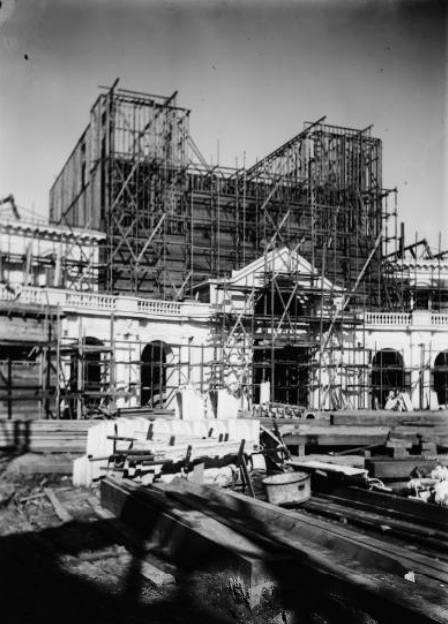
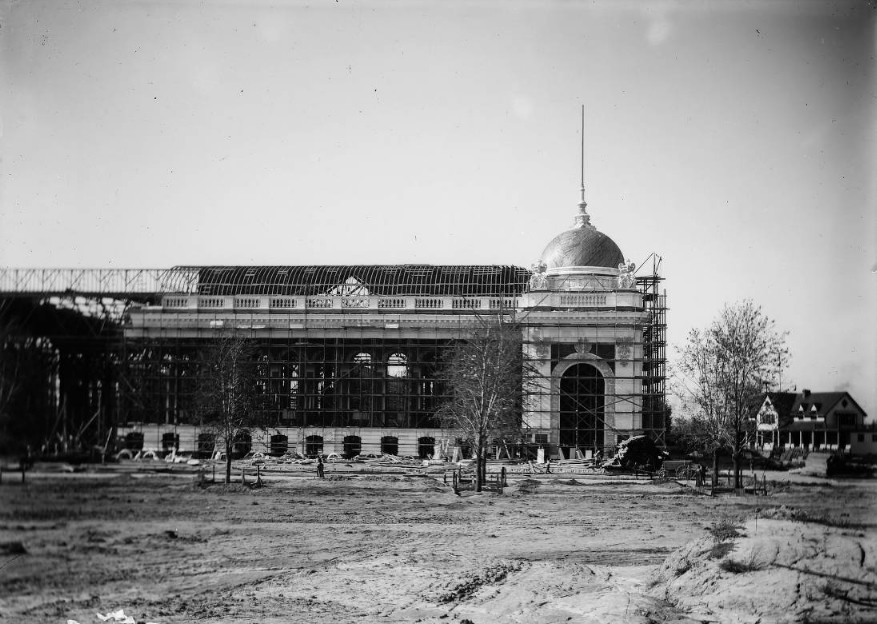
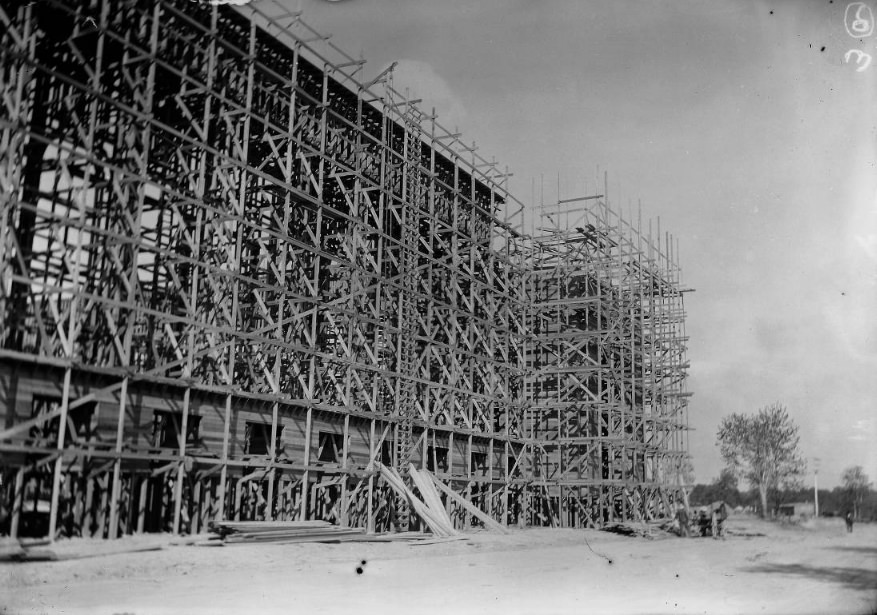
The most significant single event to reshape St. Louis at the turn of the century was the 1904 World’s Fair, officially called the Louisiana Purchase Exposition. Held in Forest Park, it drew millions of visitors from around the world and required years of preparation. Construction crews worked across the park’s grounds from 1900 onward, erecting enormous exhibition palaces — the Palace of Liberal Arts, the Palace of Electricity and Machinery, the Palace of Transportation, the Palace of Manufactures, the Palace of Varied Industries, and more — on a scale the city had never seen.
World’s Fair Construction, 1900The Palace of Liberal Arts as it is being finished for the 1904 World’s Fair.
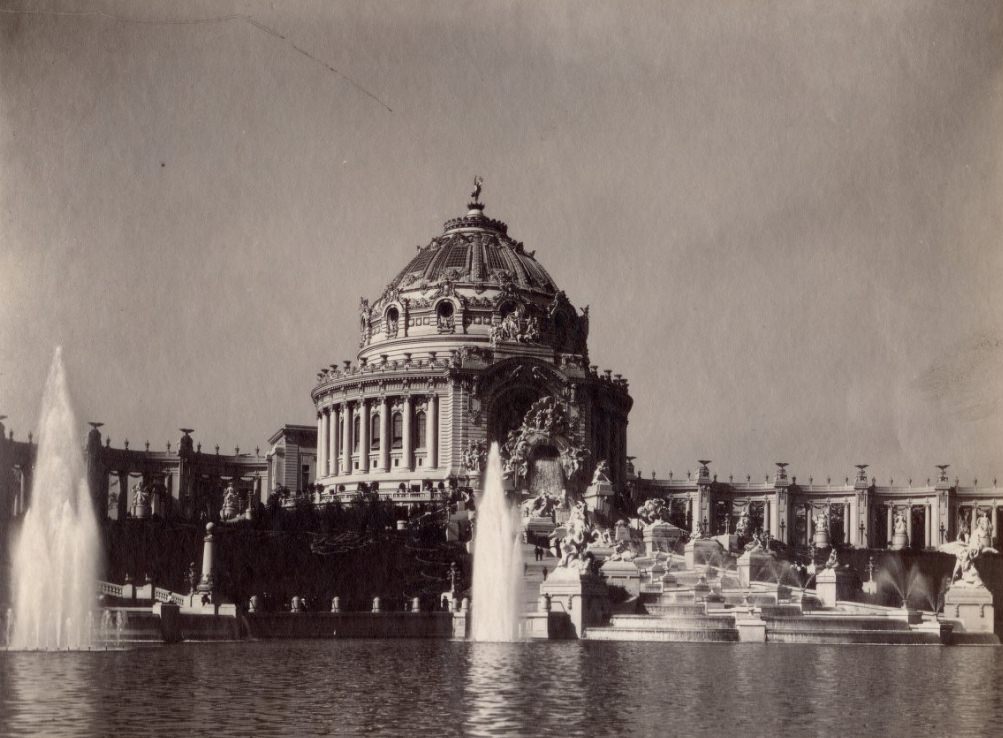
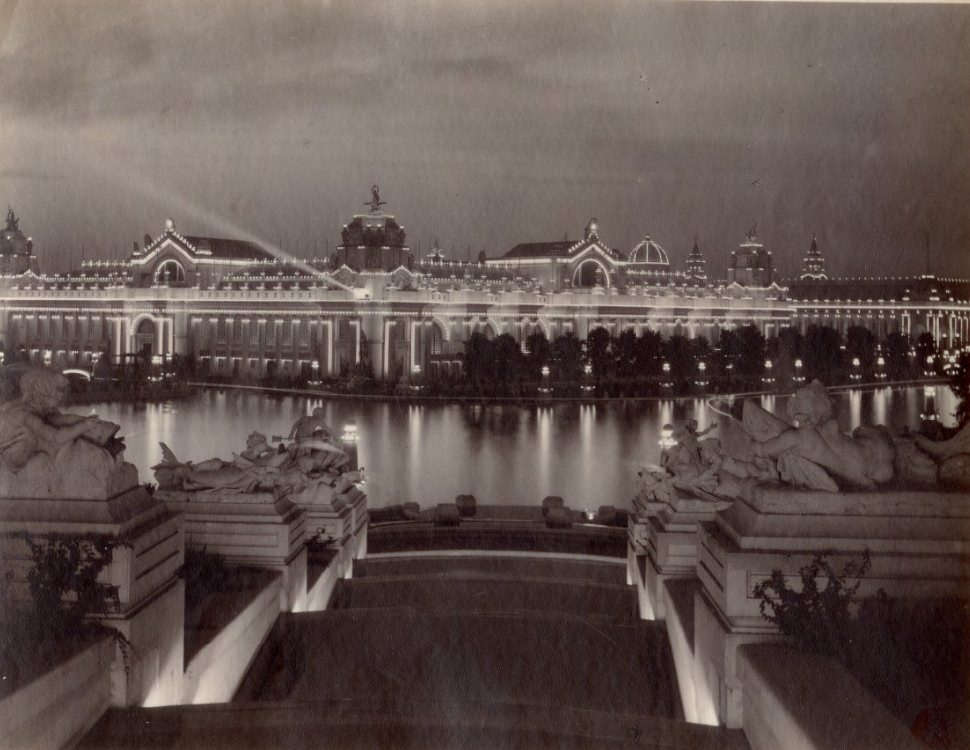
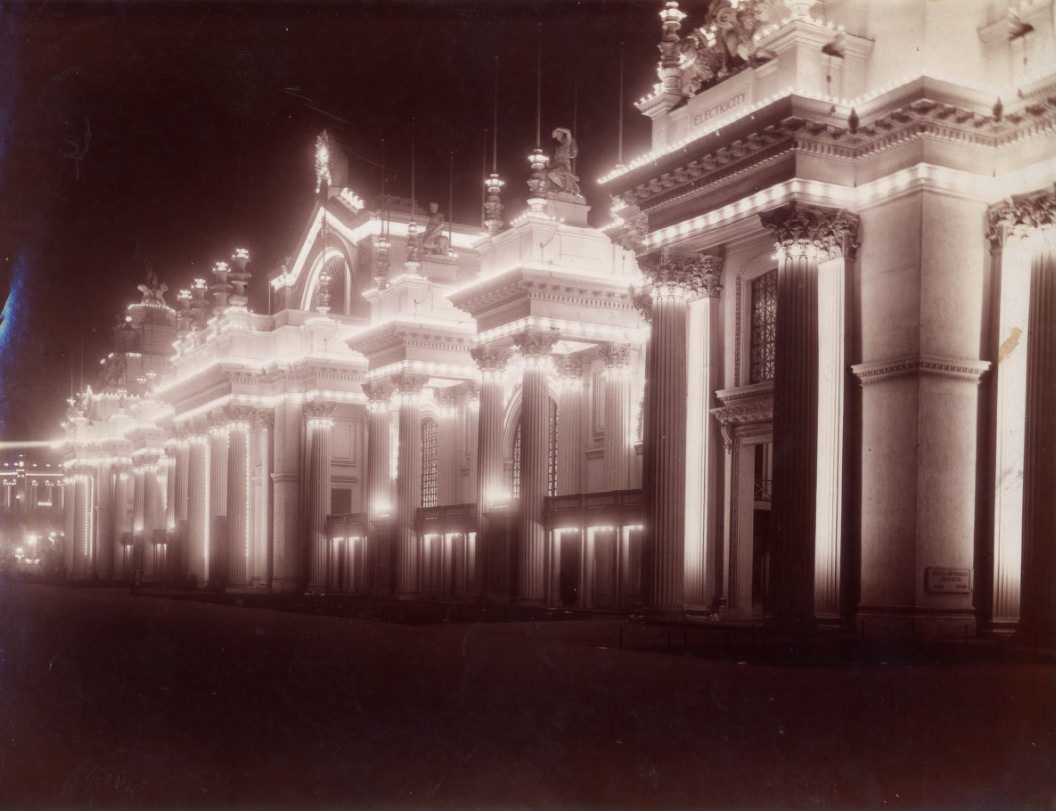
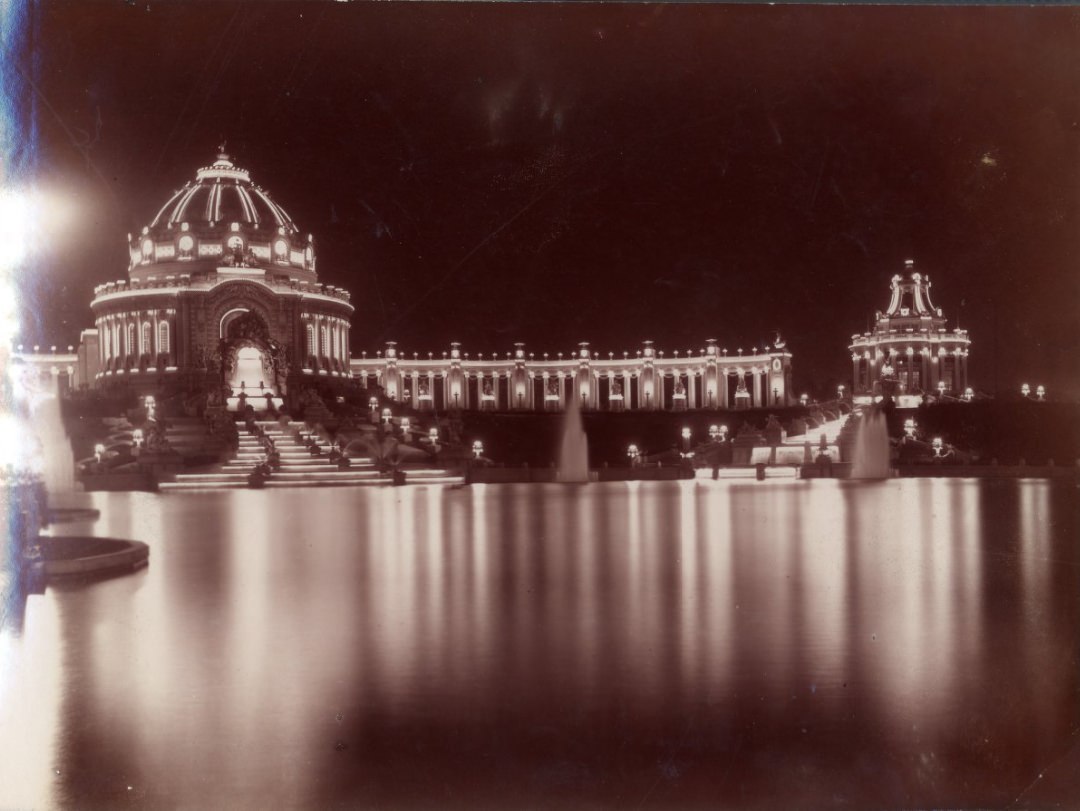
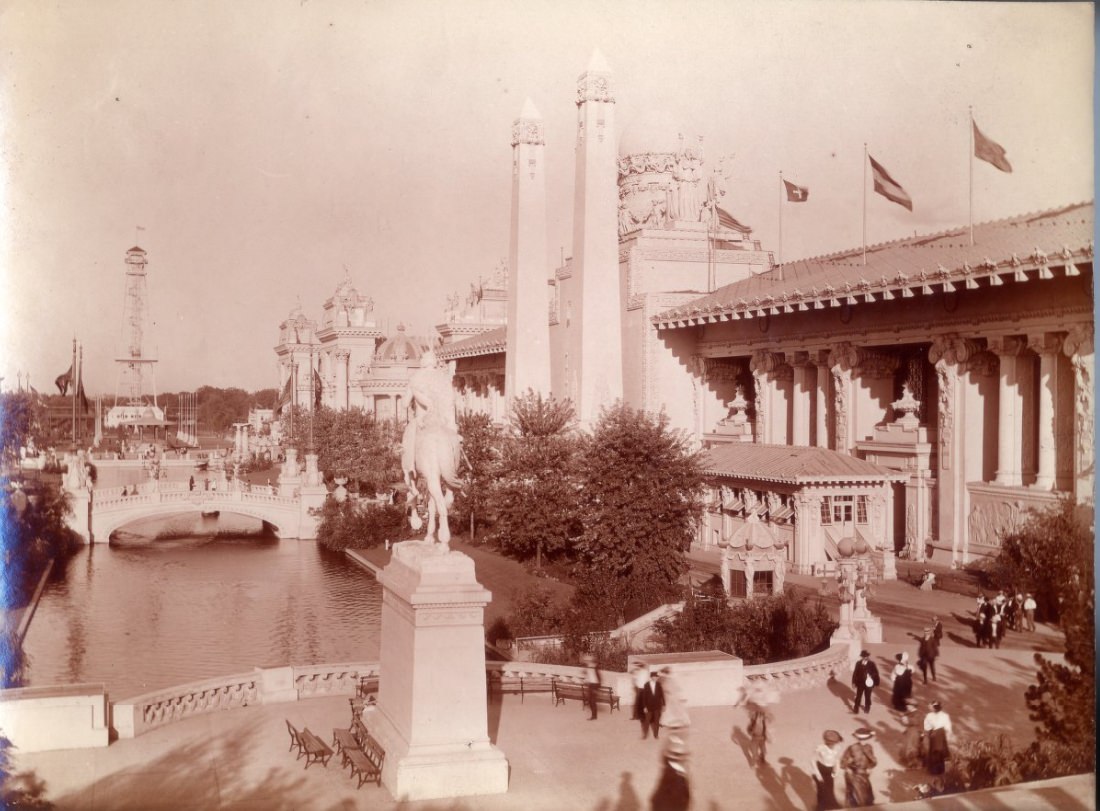
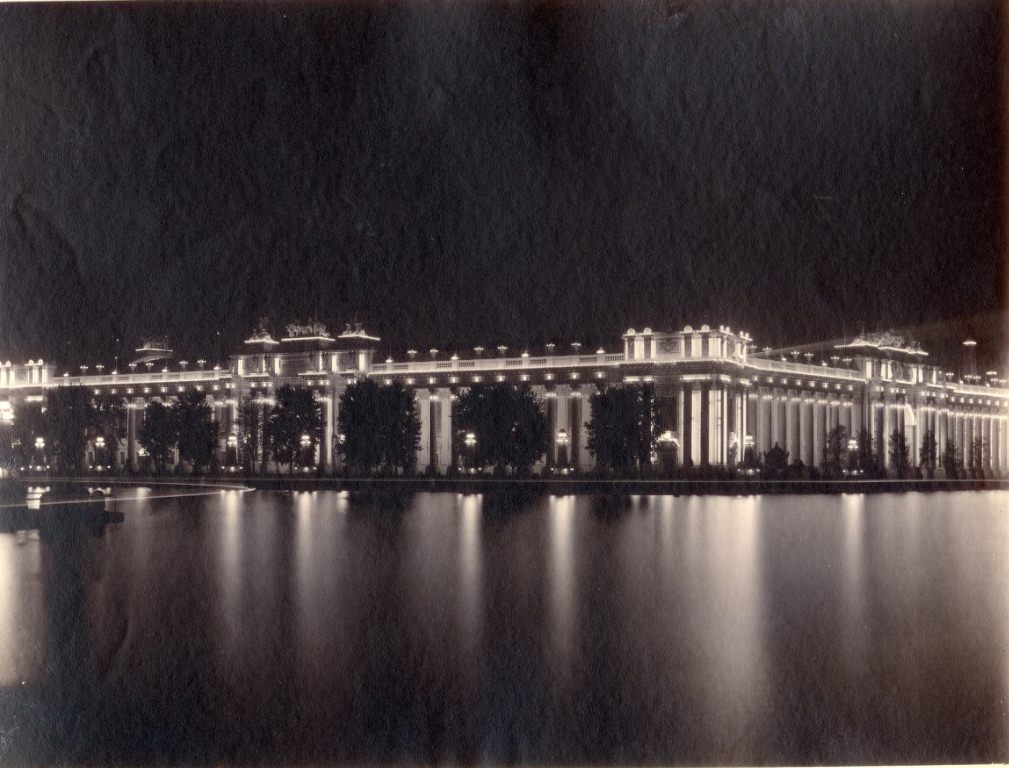
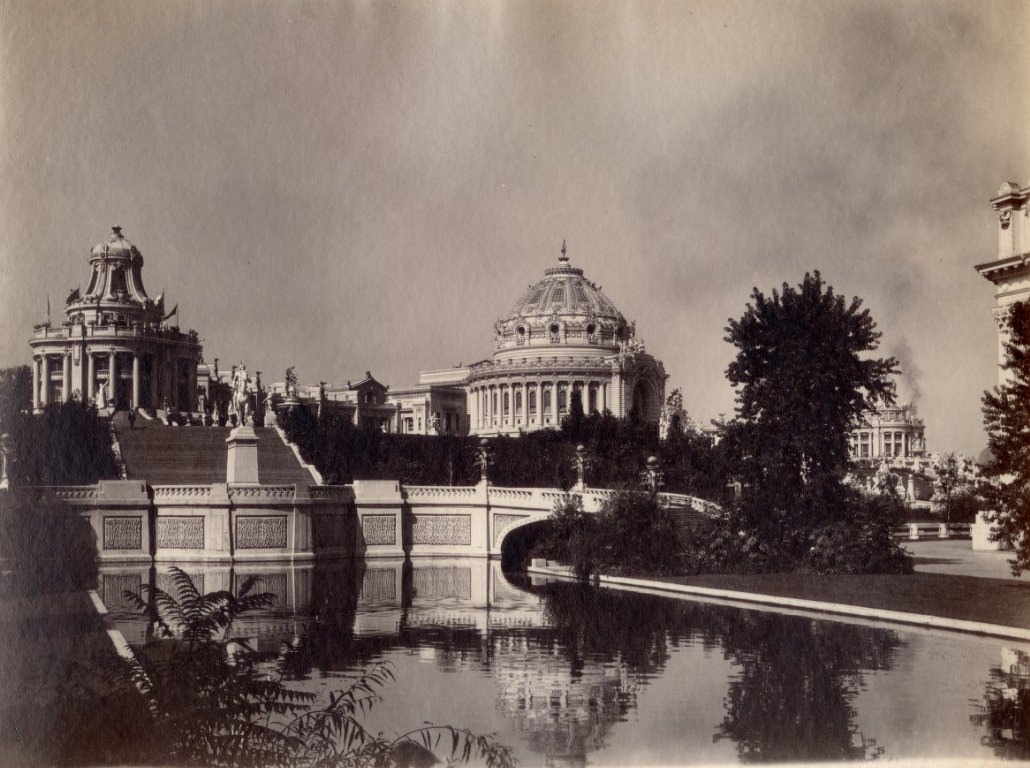
The fair’s grounds were organized around a grand central axis. Festival Hall sat at the top of Art Hill, with the Cascades running down to the Grand Basin below. A lagoon extended east from the basin, flanked by the towering exhibition palaces. At night, the Palaces of Electricity and Machinery were illuminated across the water — a display that was entirely new to most fairgoers. The Sunken Garden, viewed from the Government Terrace looking north, offered sight lines all the way to the Palace of Varied Industries in the distance.
Festival Hall at the 1904 World’s Fair. The image includes the Cascades running down Art Hill to the Grand Basin as well as various fountains and statues.Palaces of Electricity and Machinery, 1900. The image is of the buildings at night viewed from Art Hill looking across the Grand Basin.
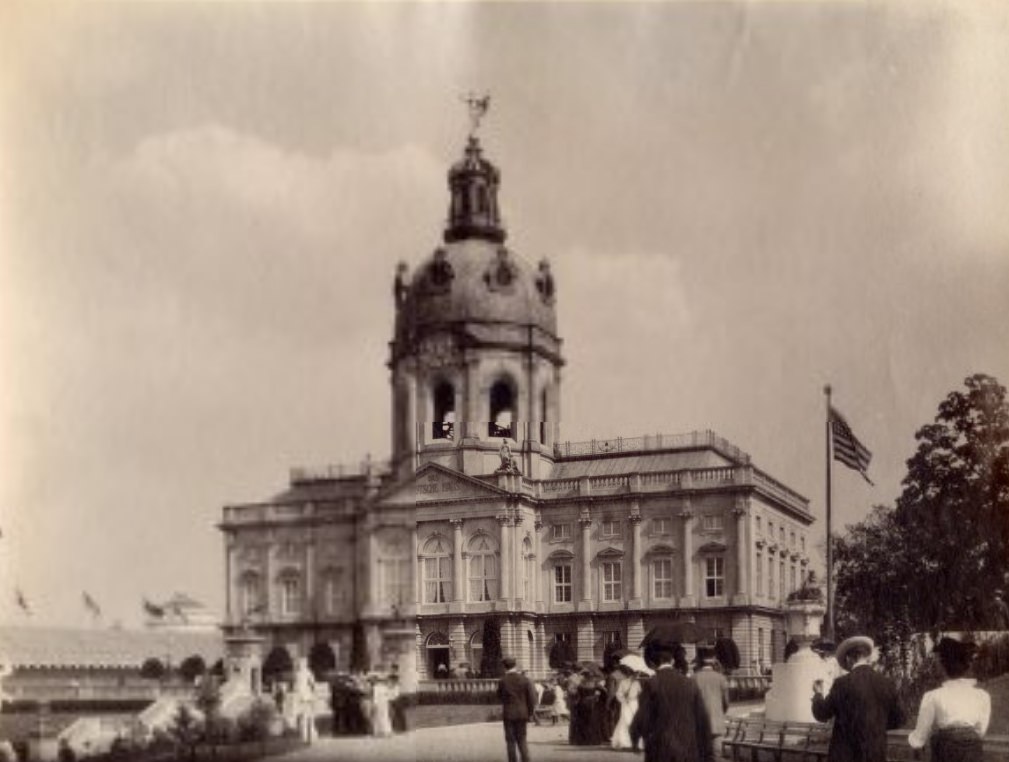
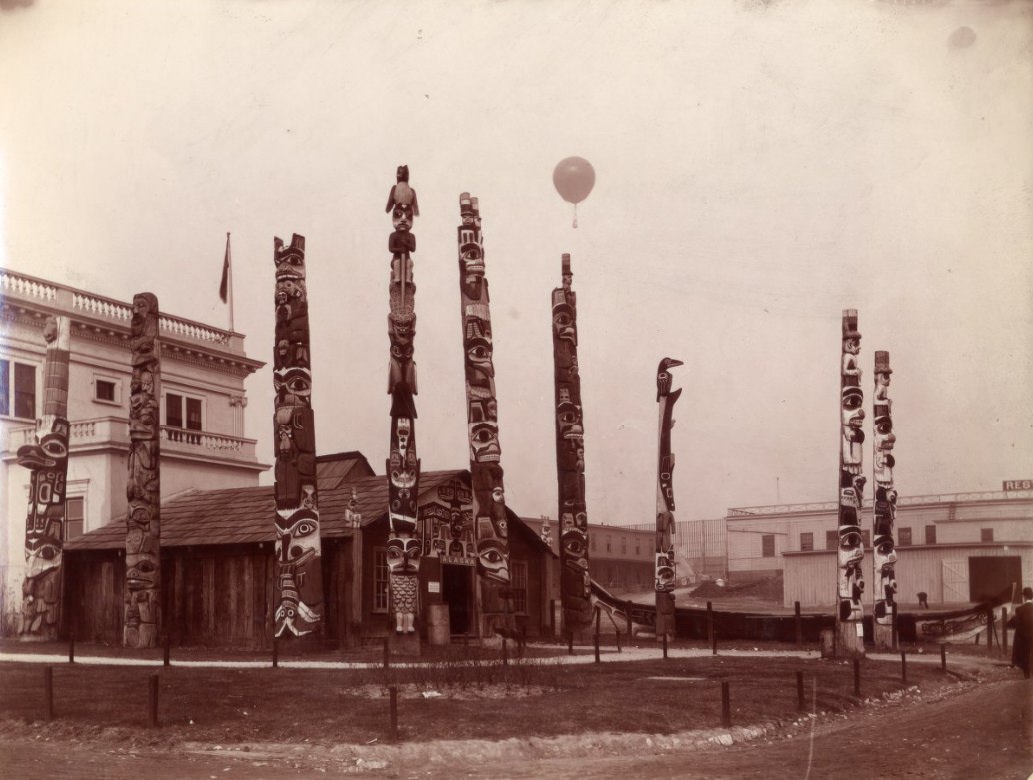
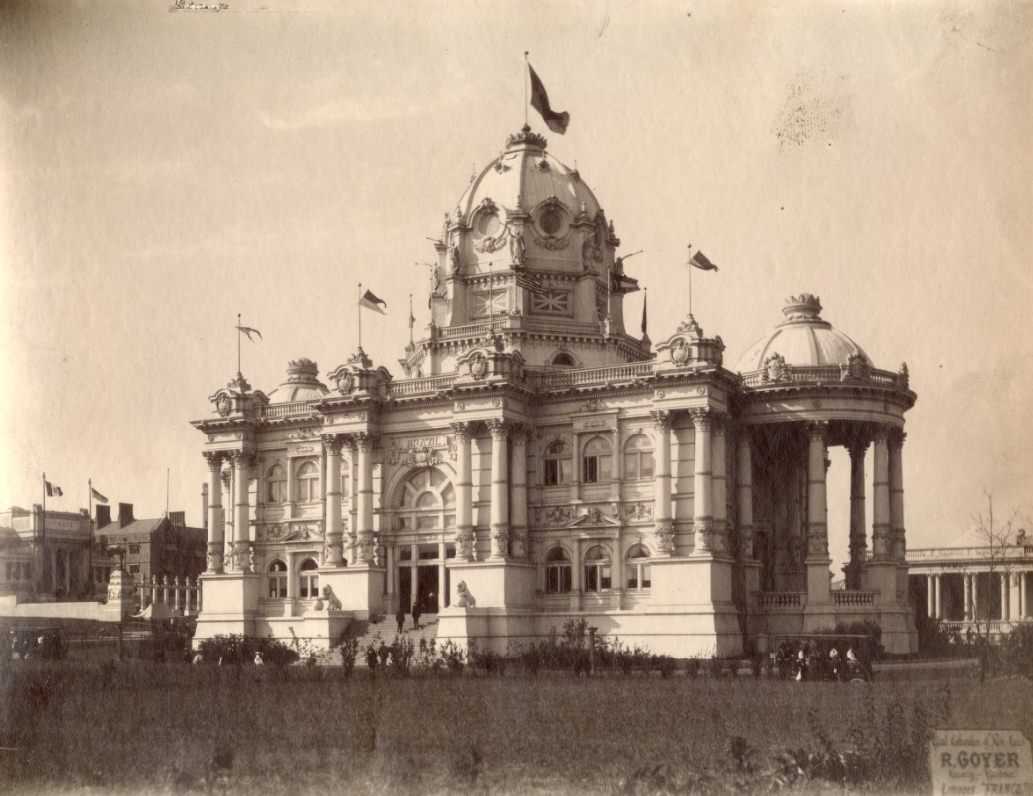
Participating nations and states built their own pavilions across the fairgrounds. Germany’s pavilion was best known for its bells, which could be heard from a great distance. Japan’s pavilion came with formal gardens. Brazil, Alaska — with its totem poles surrounding the Alaska House — and Missouri all had dedicated structures. The Missouri Building was a temporary structure that was demolished after the fair ended, and the World’s Fair Pavilion was later built on that same site.
The German Pavilion at the 1904 World’s Fair in St. Louis, 1900. This pavilion was best known for its bells which could be heard from a great distance.The totem poles around the Alaska house at the 1904 World’s Fair in St. Louis.
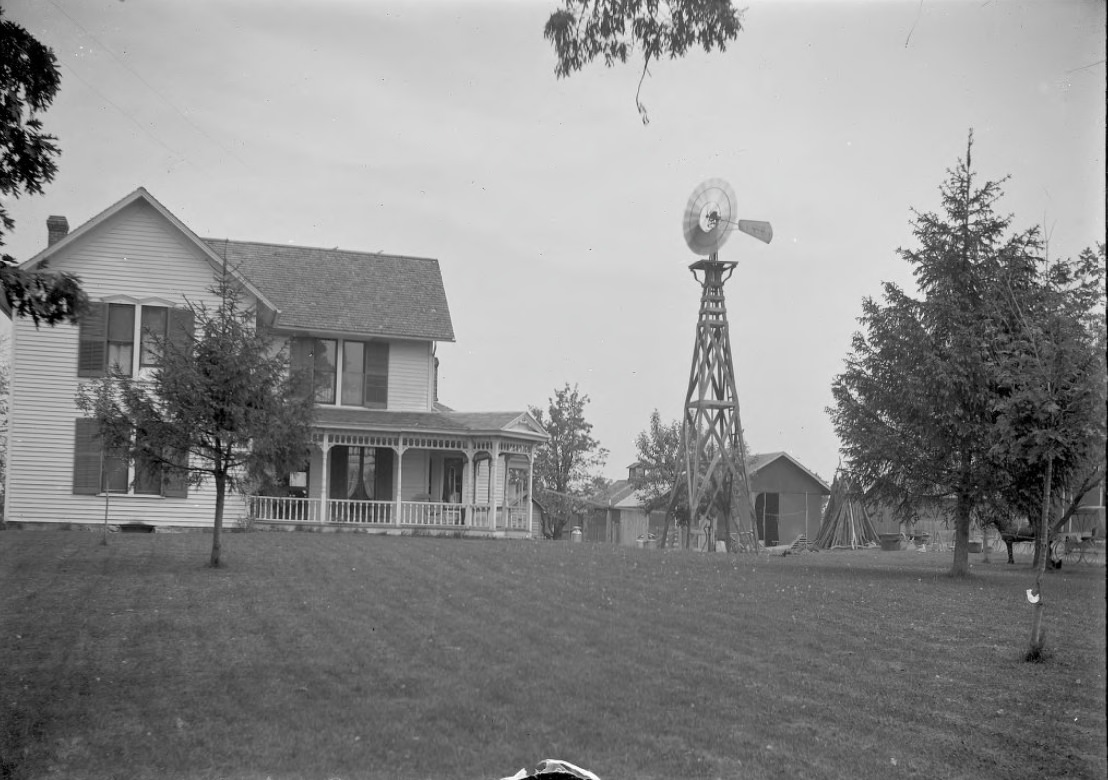
The fair put St. Louis on the world stage, but the city that hosted it was already a place of considerable size and complexity. Its streets were busy with workers, merchants, students, and families. Its riverfront connected it to a continental trading network. Its neighborhoods ranged from farm properties on the outskirts to crowded urban blocks near downtown. And its institutions — schools, churches, libraries, military posts, parks, and markets — served a population that was growing, working, and building at every turn.
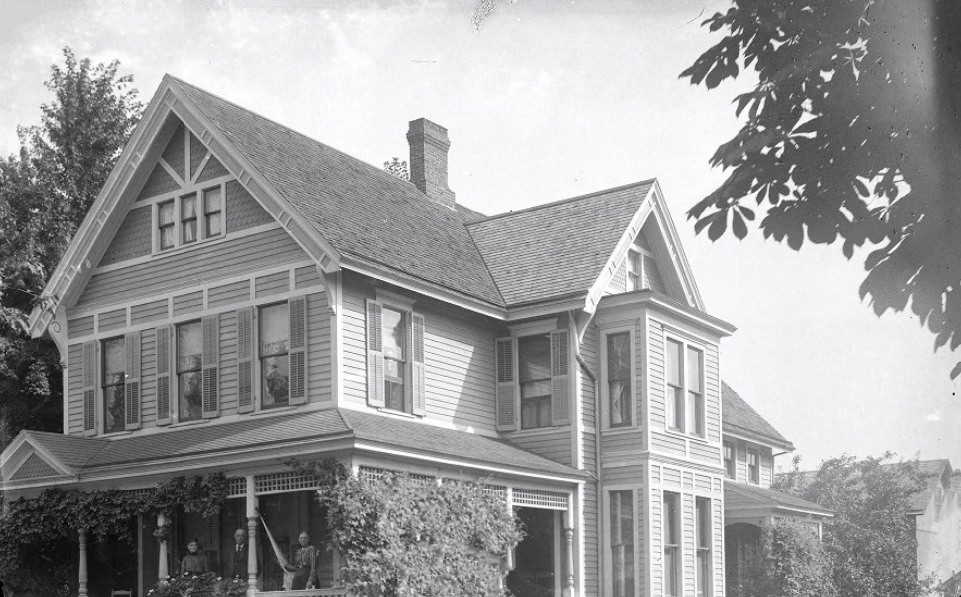
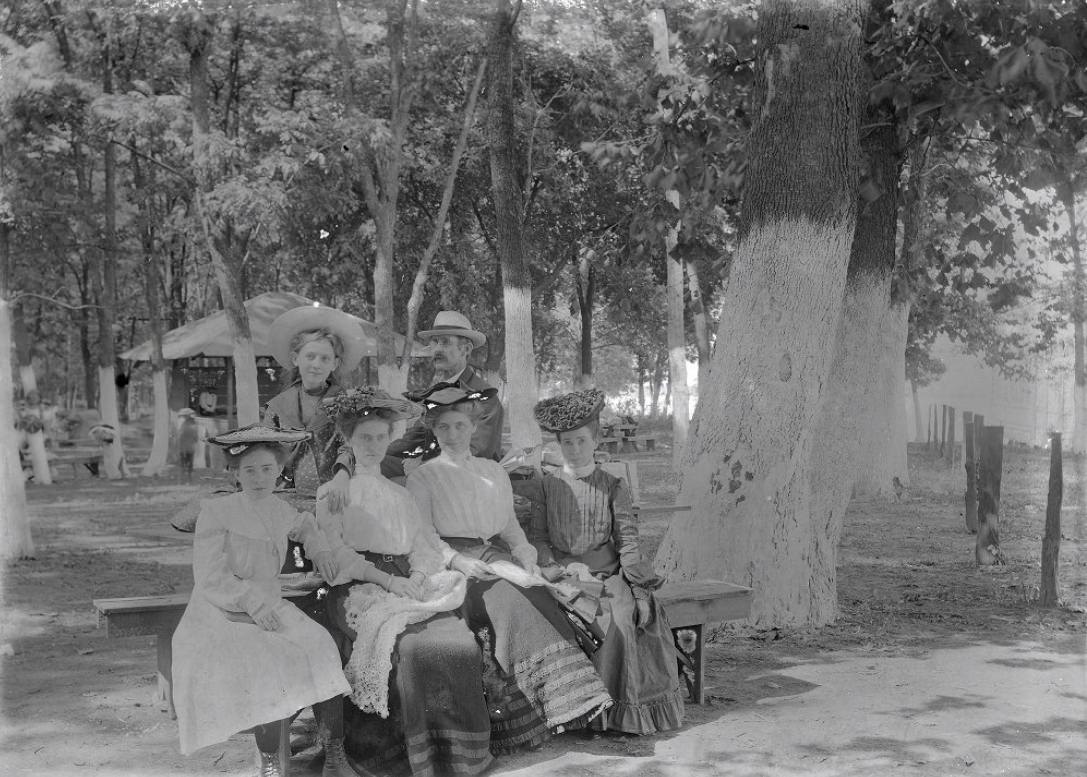
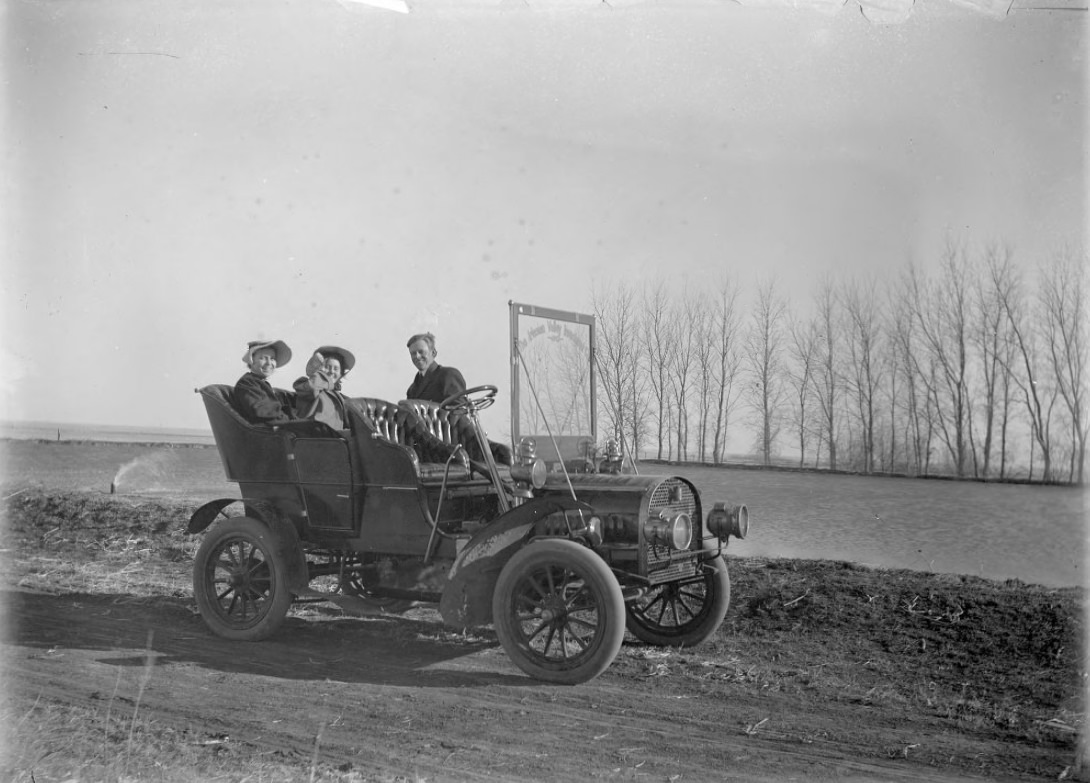
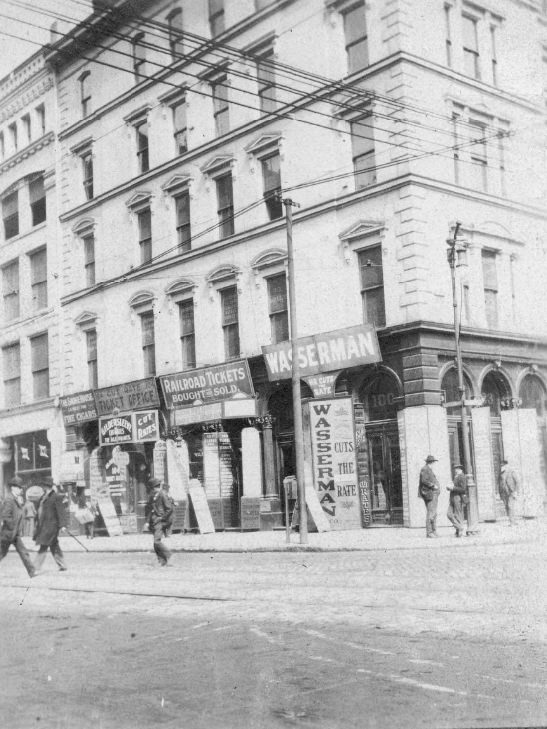
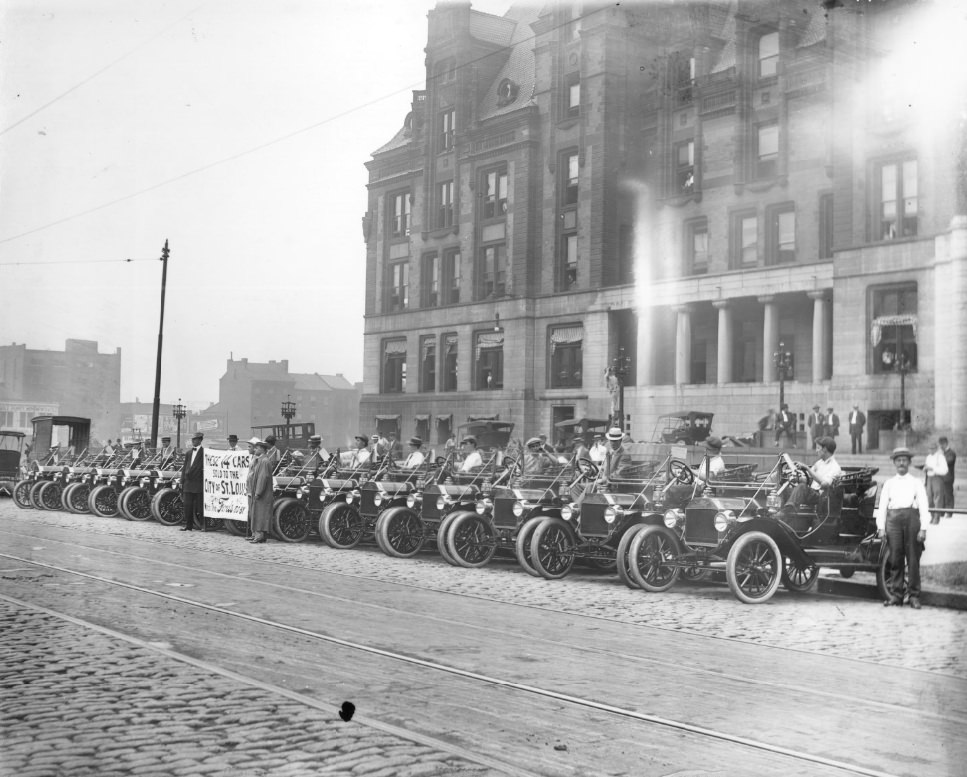
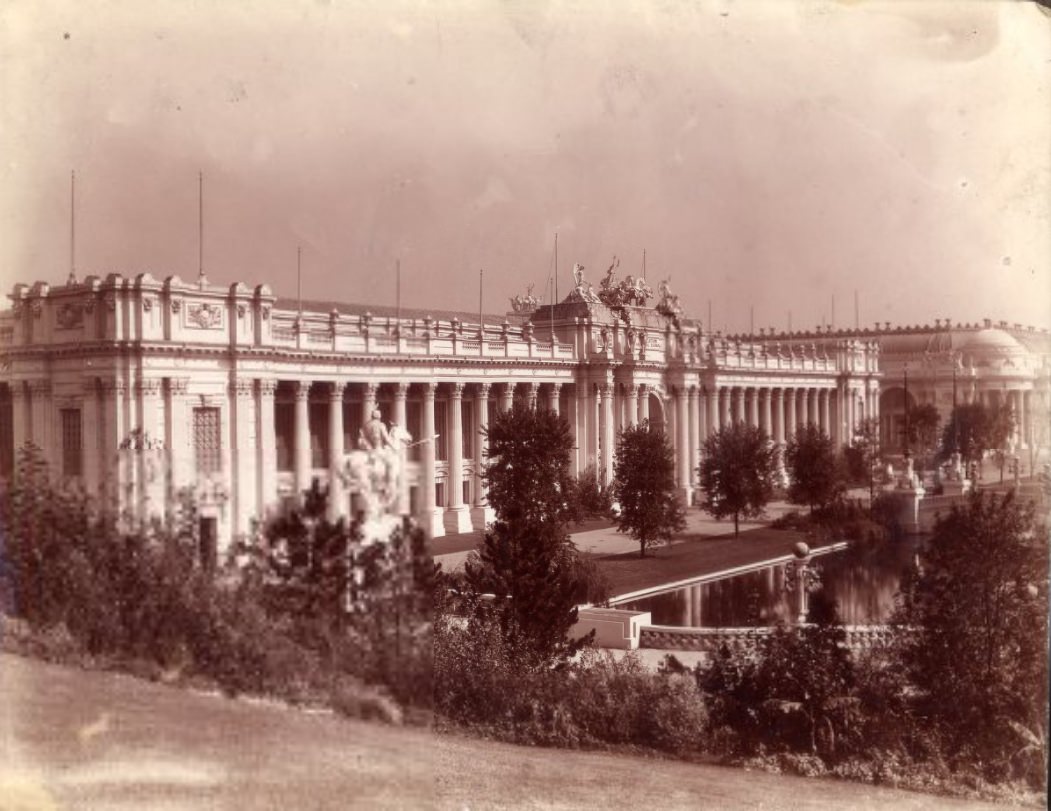
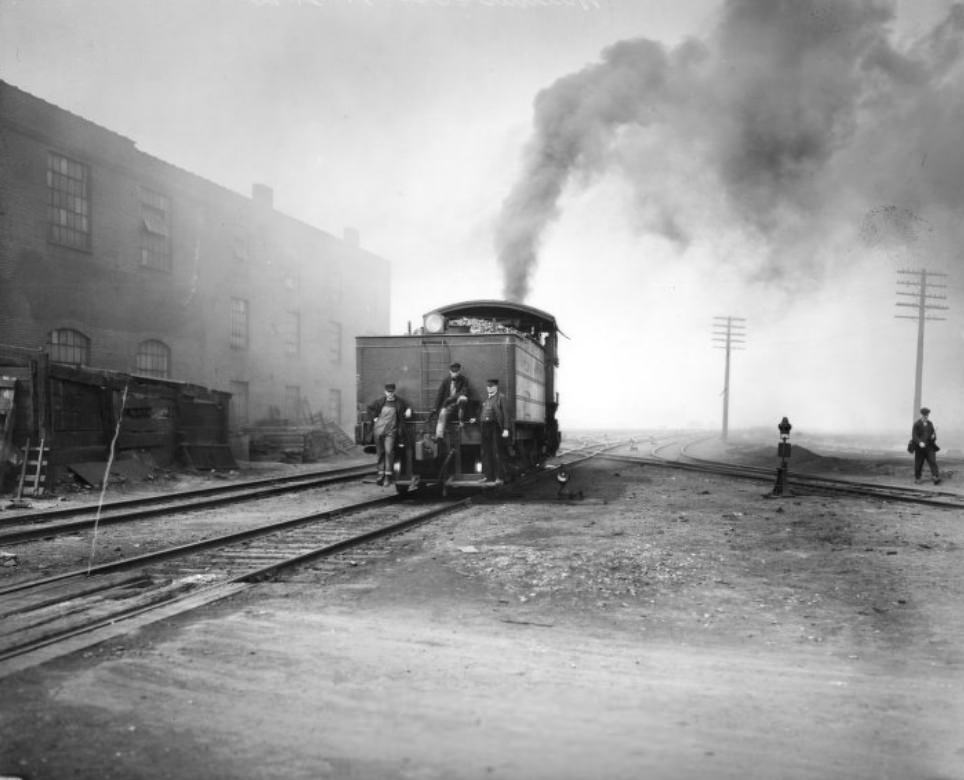
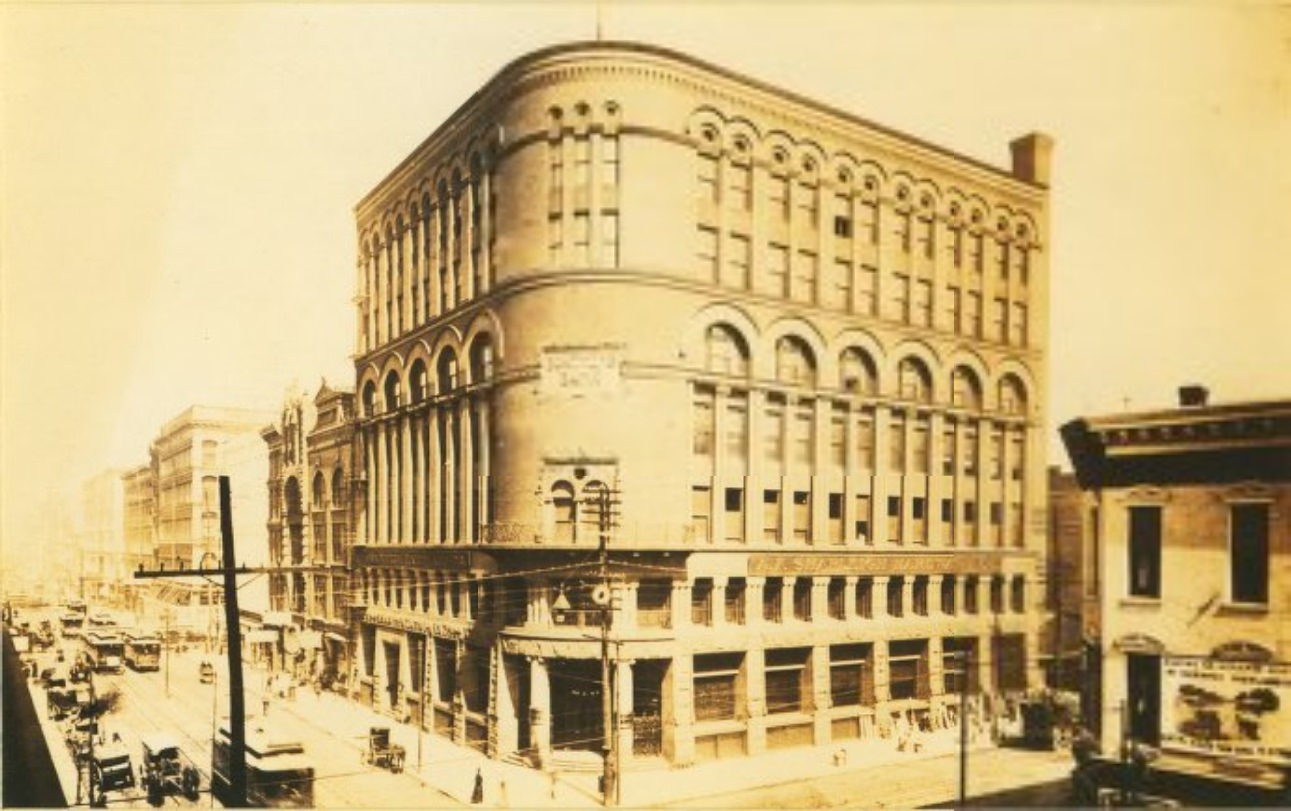
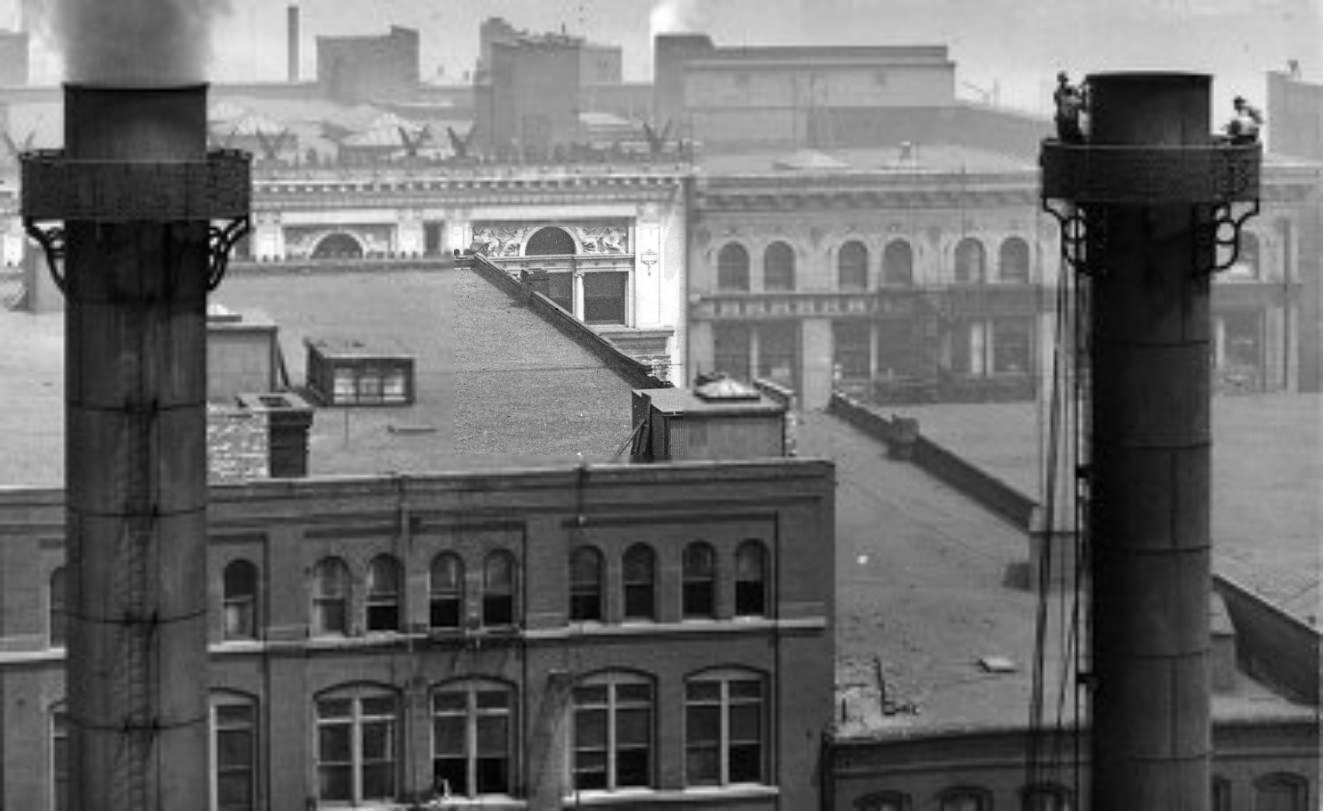
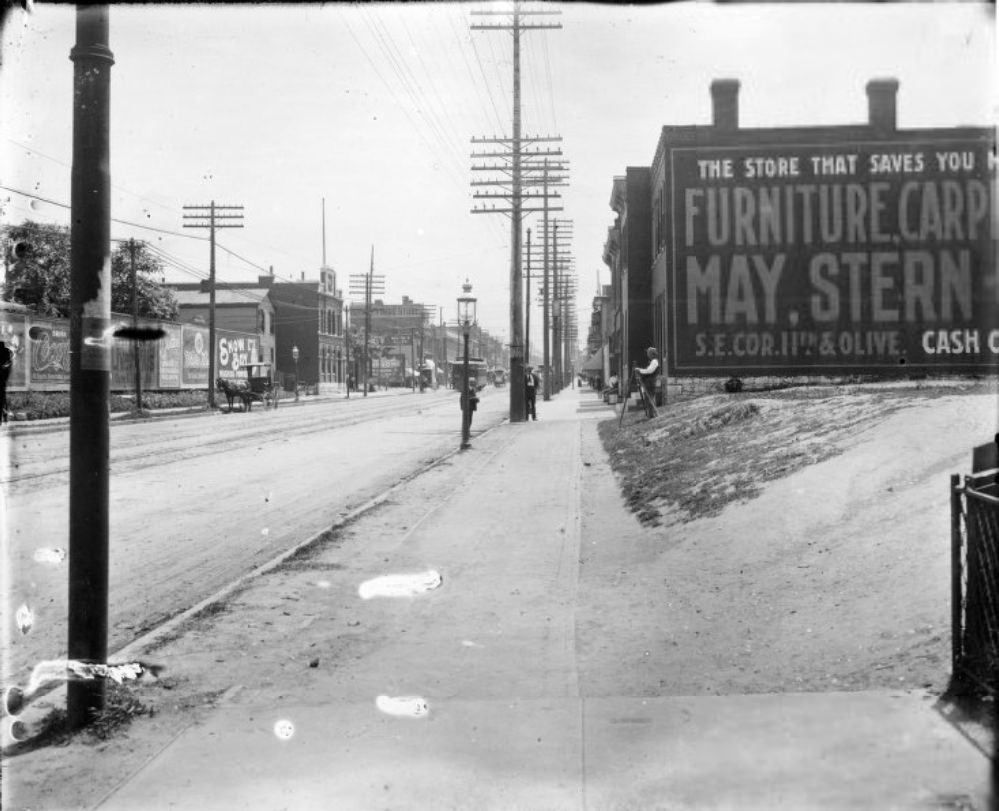
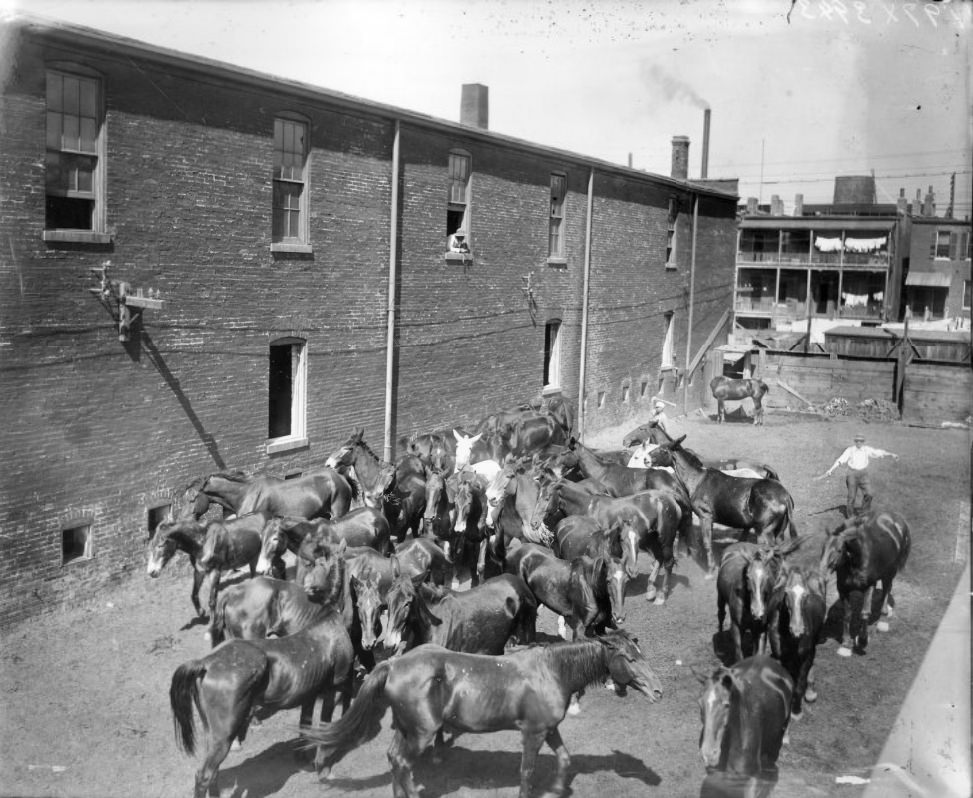
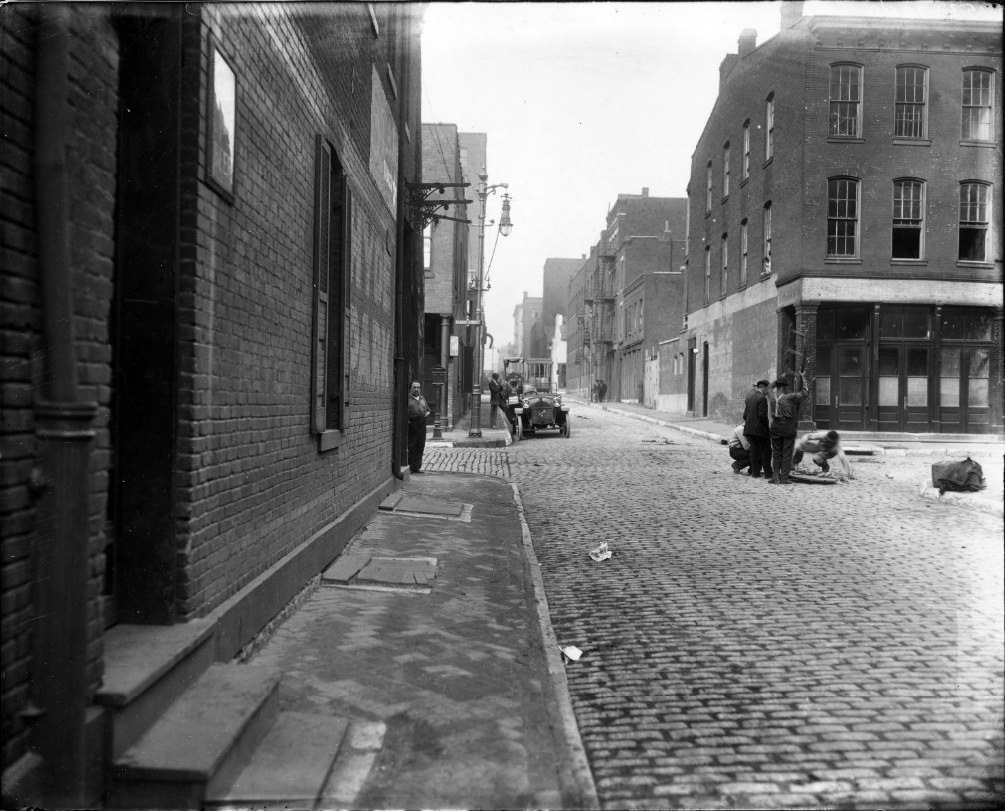
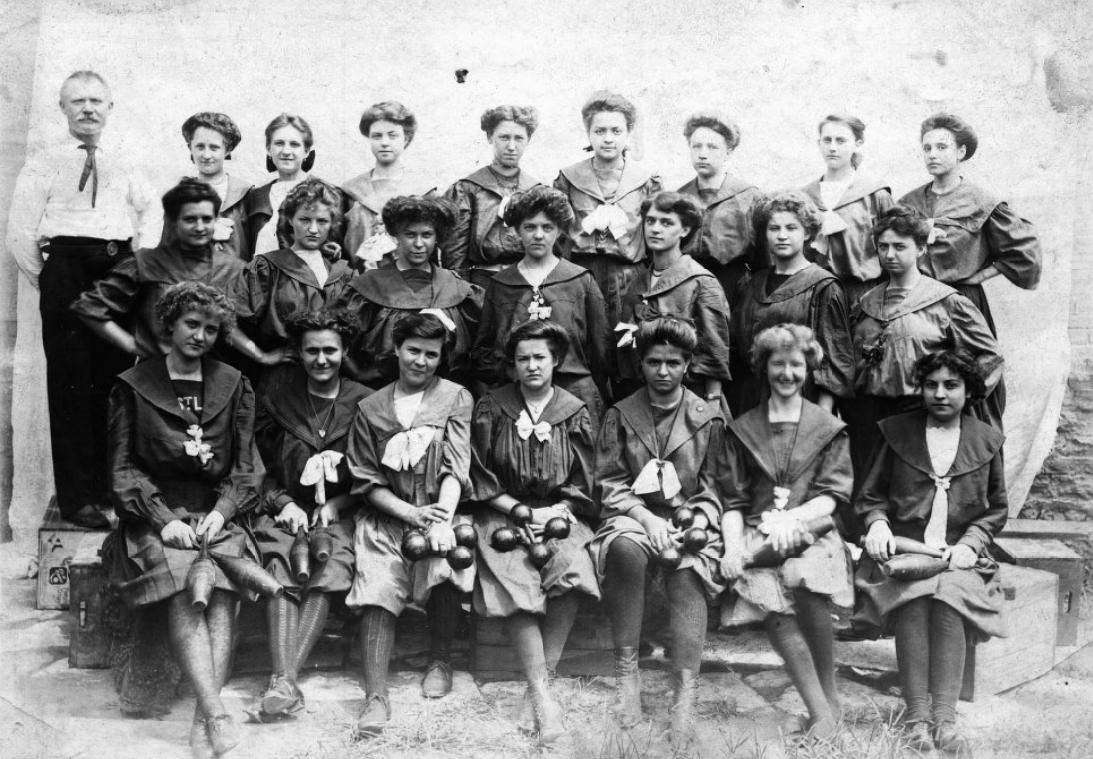
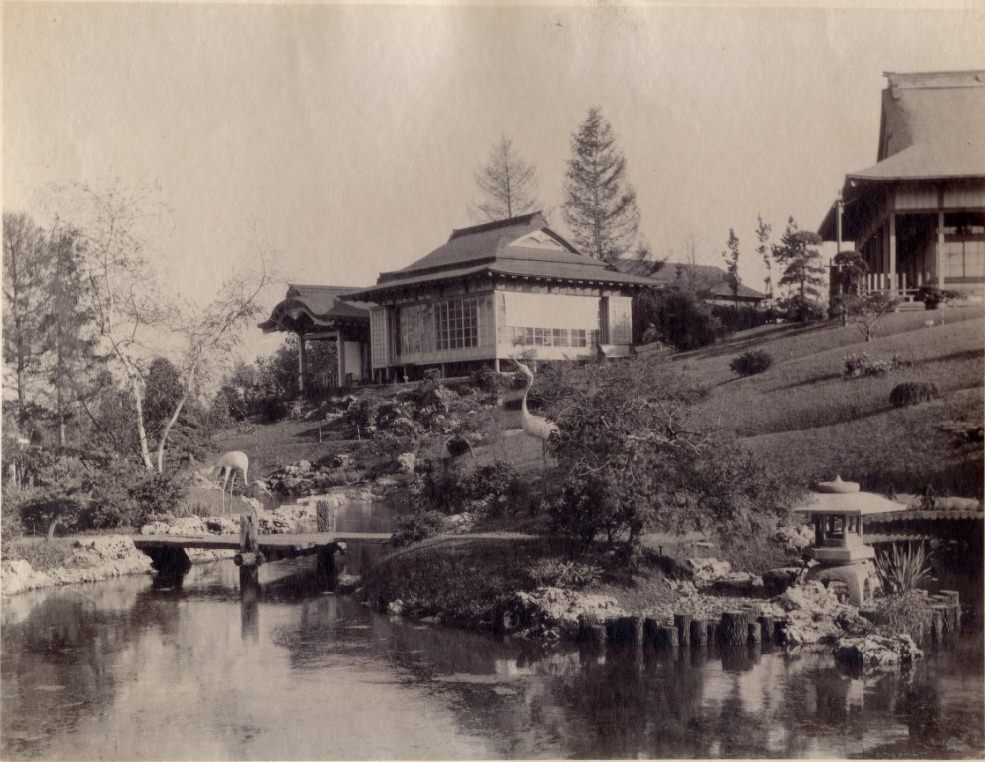
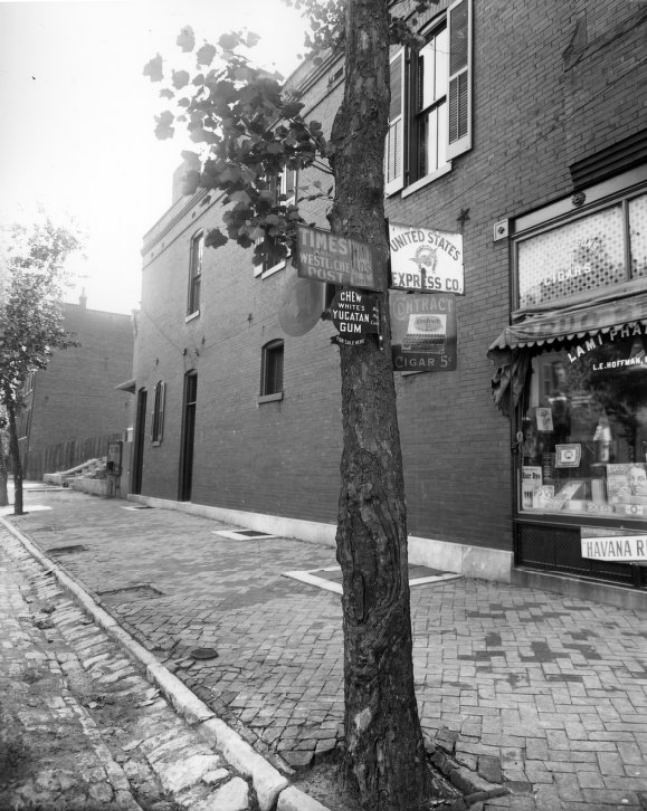
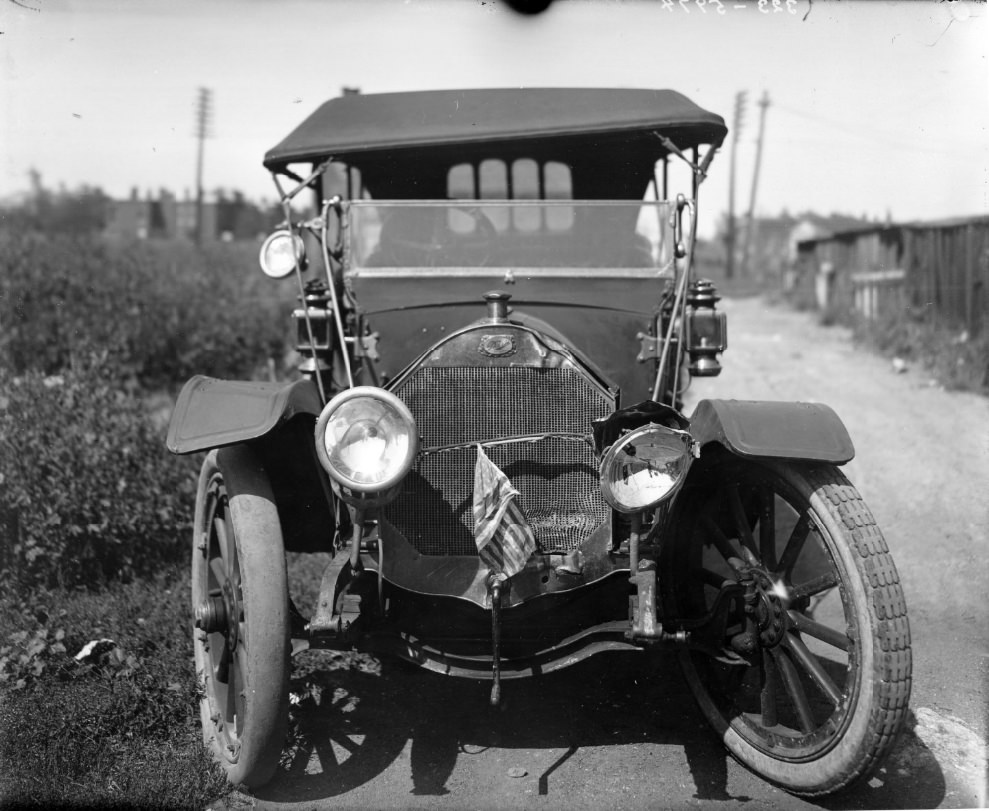
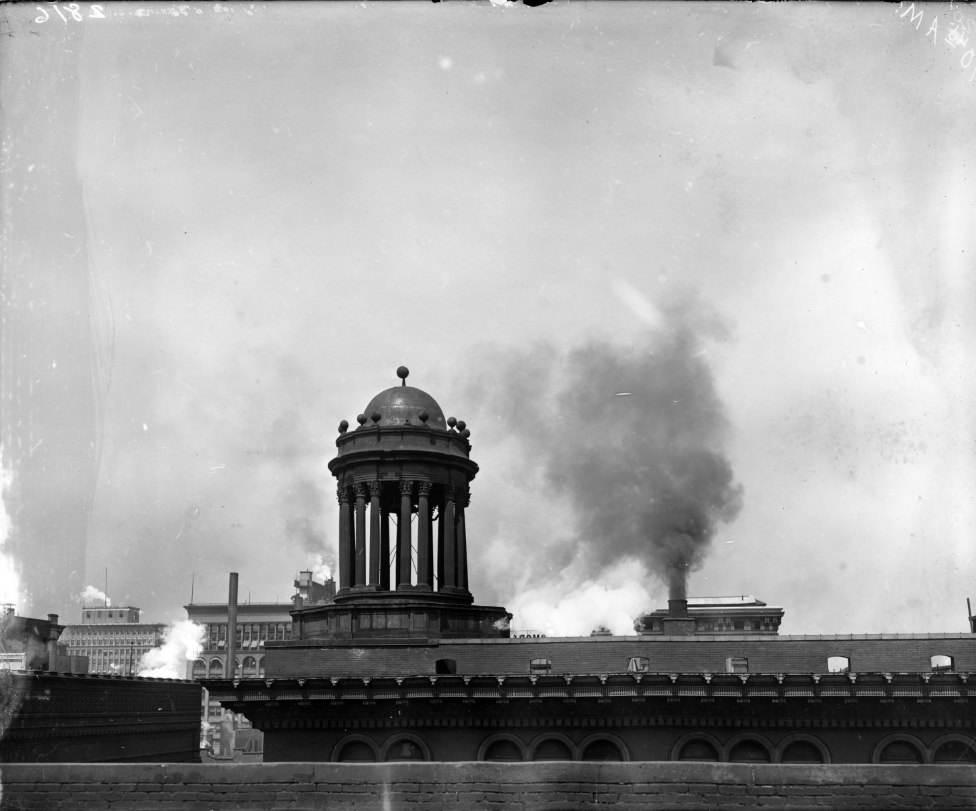
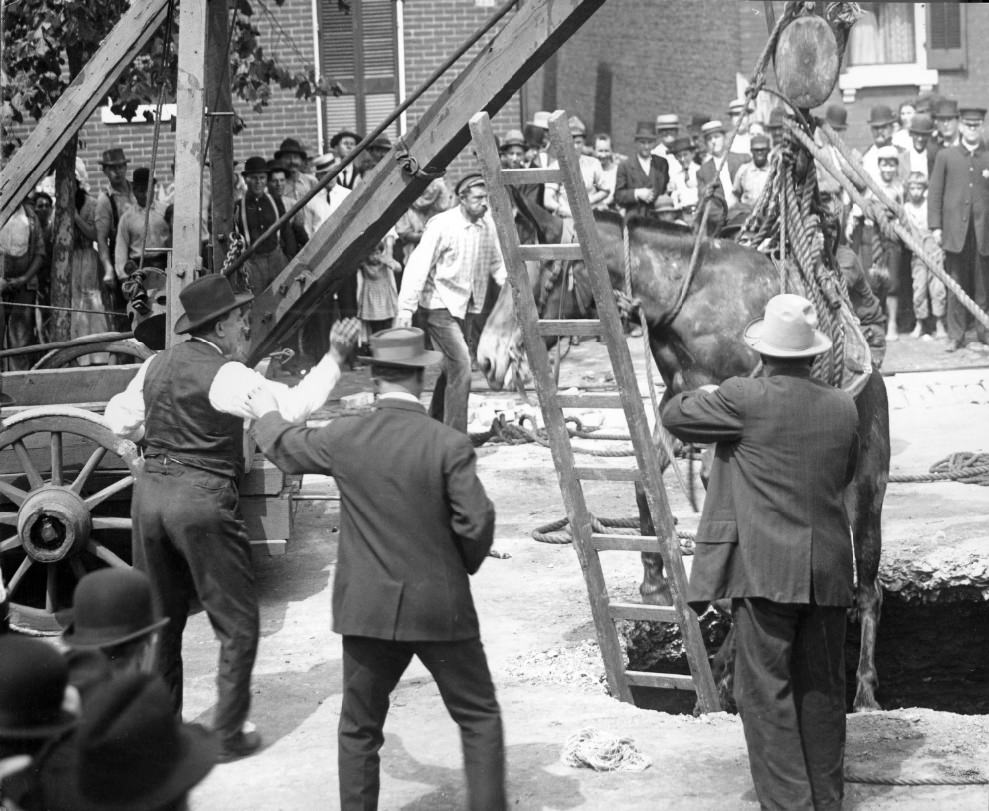
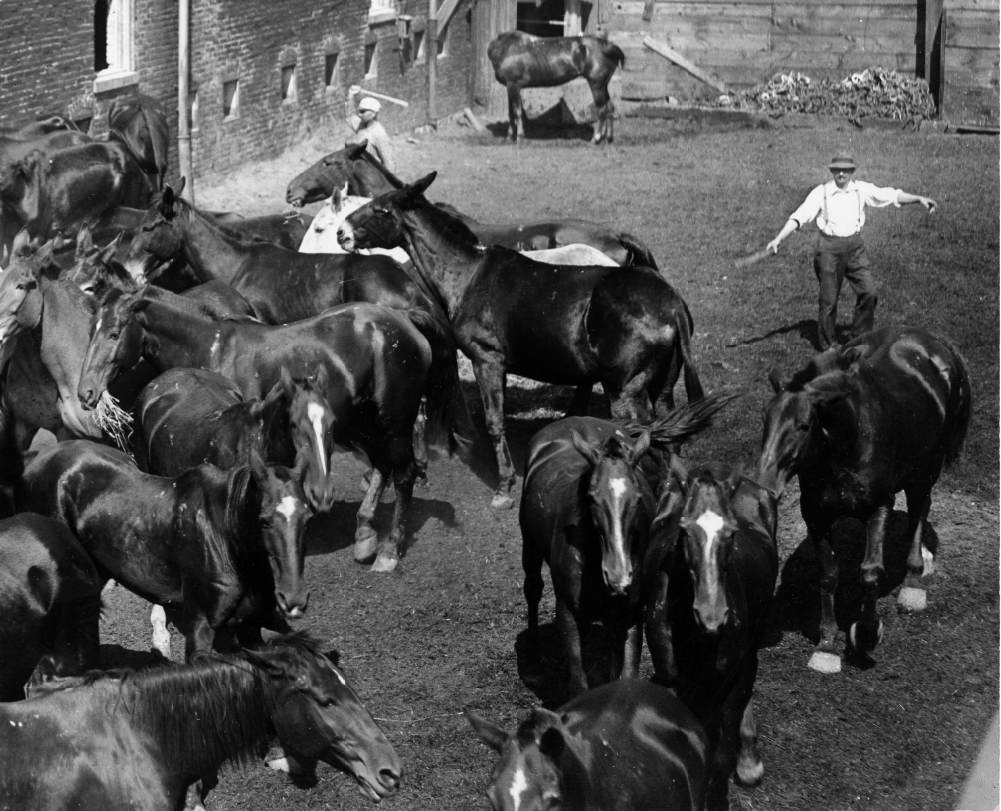
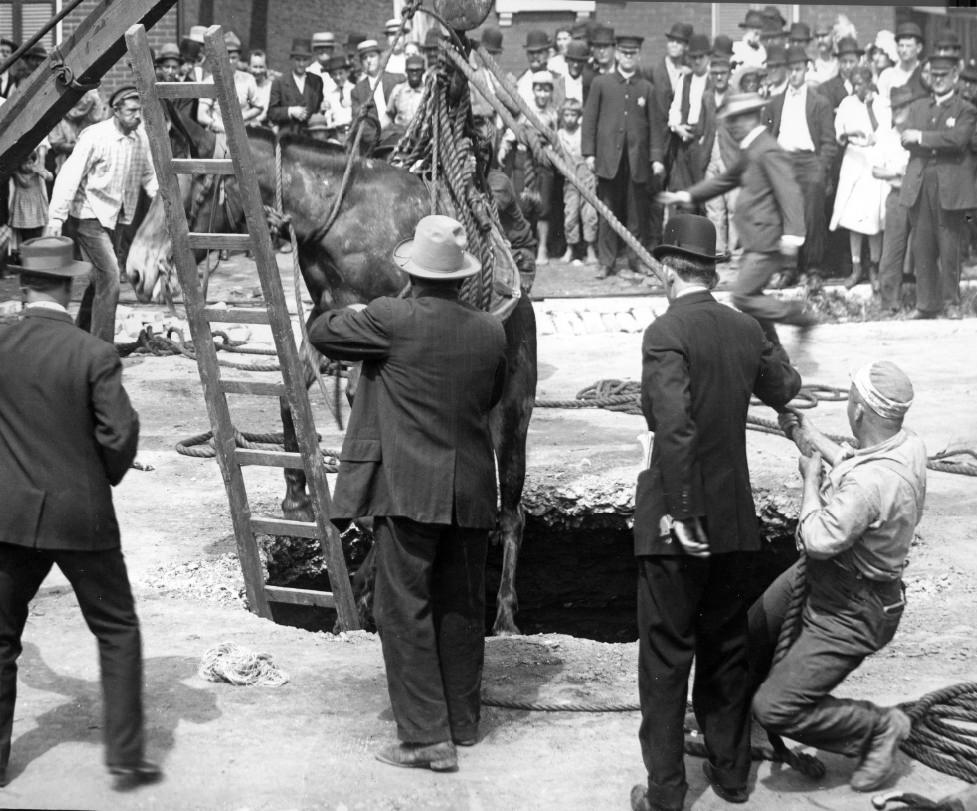
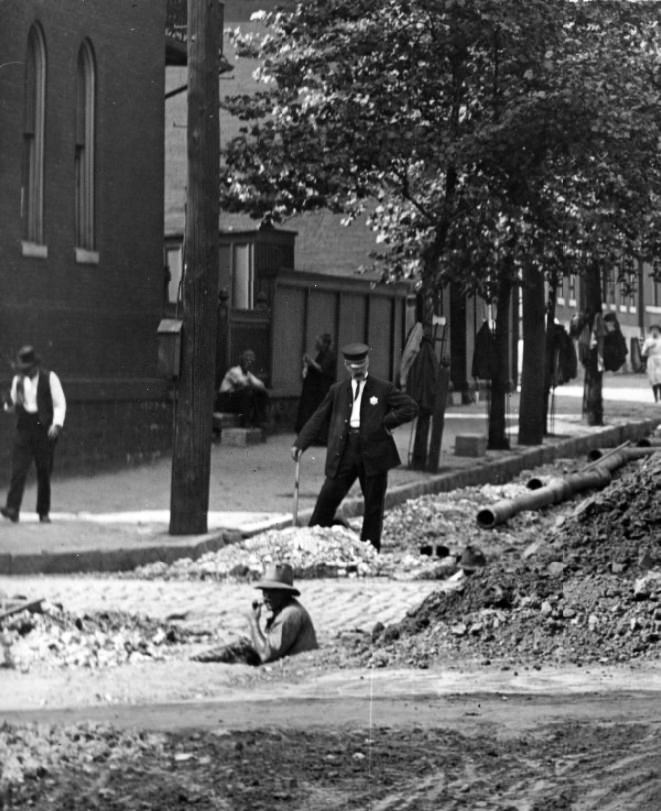
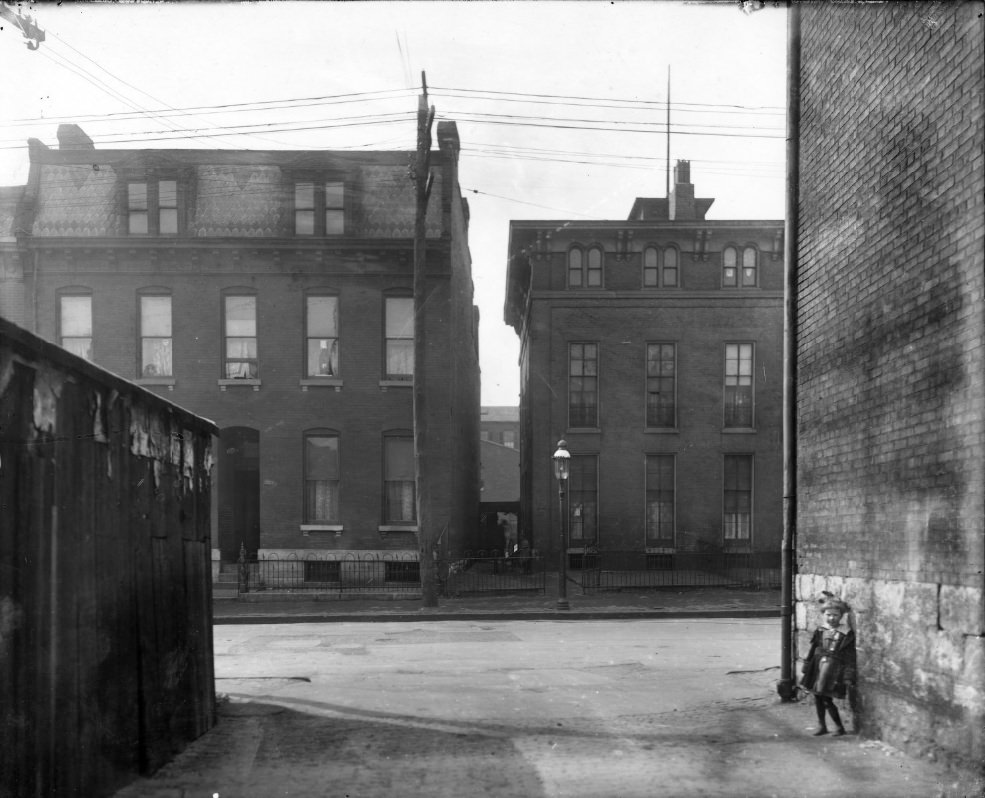
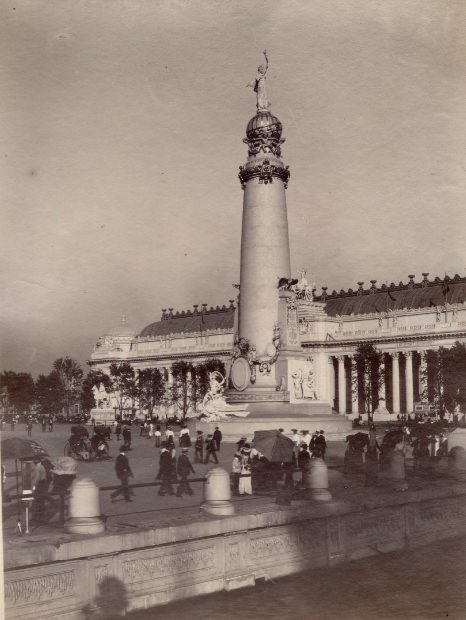
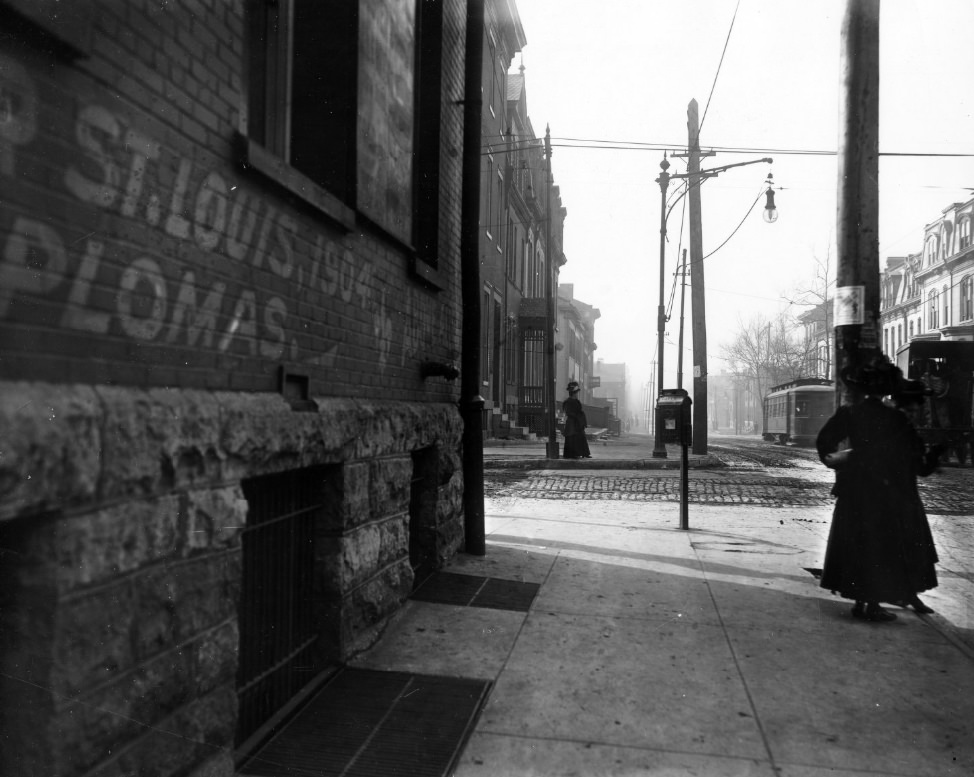
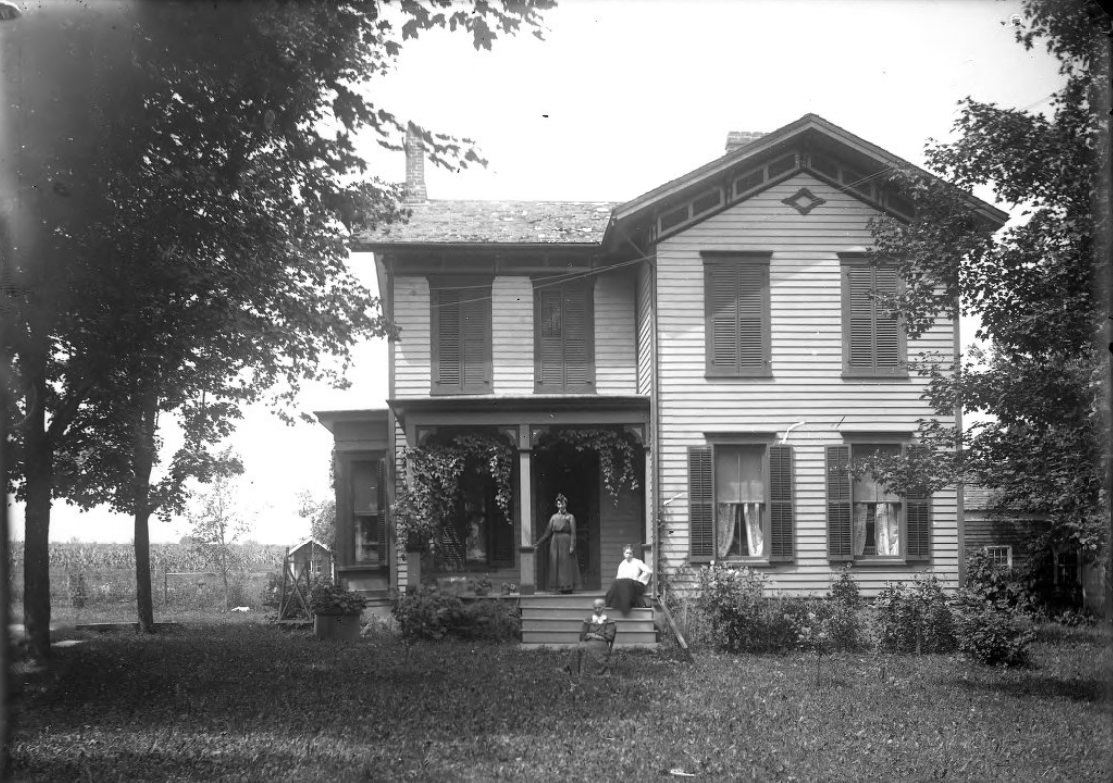
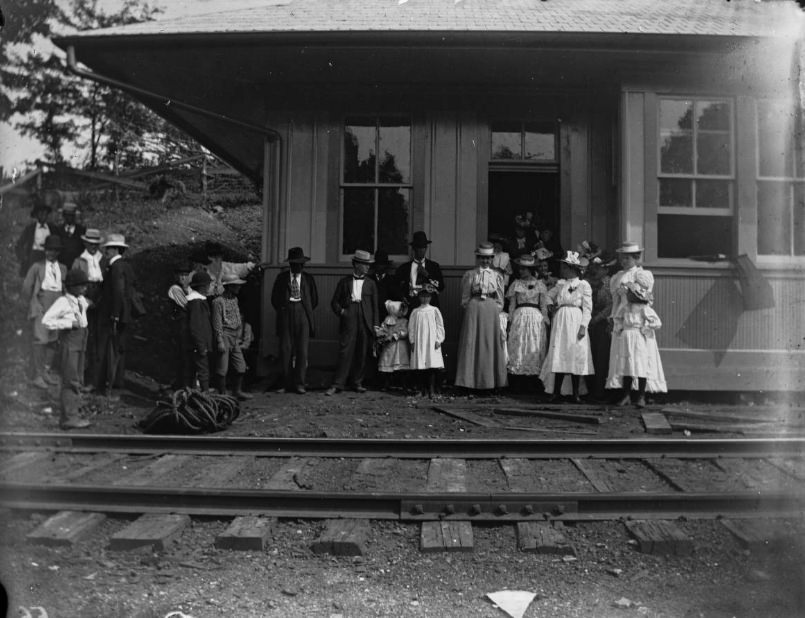
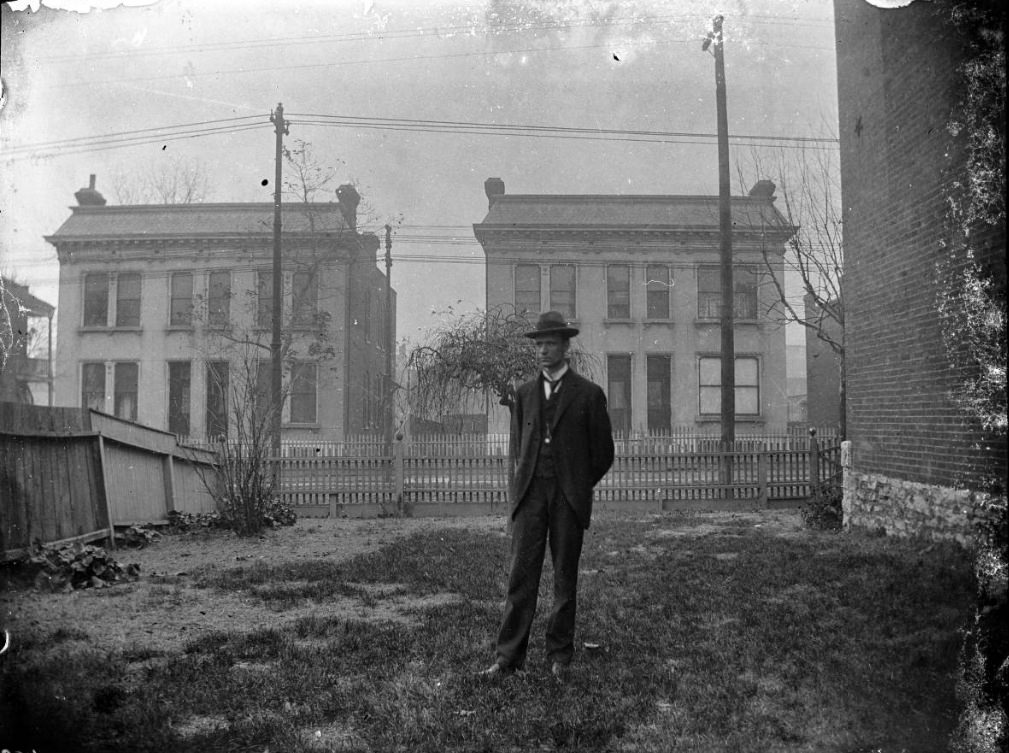
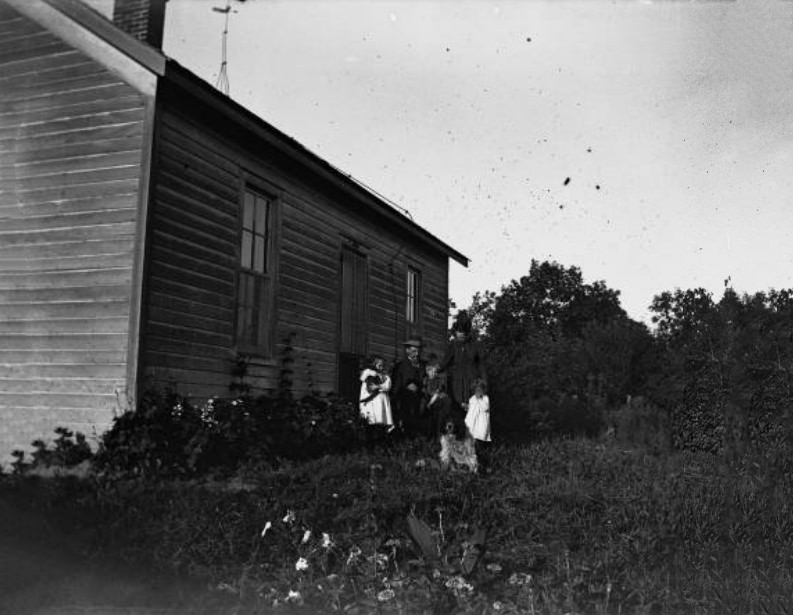
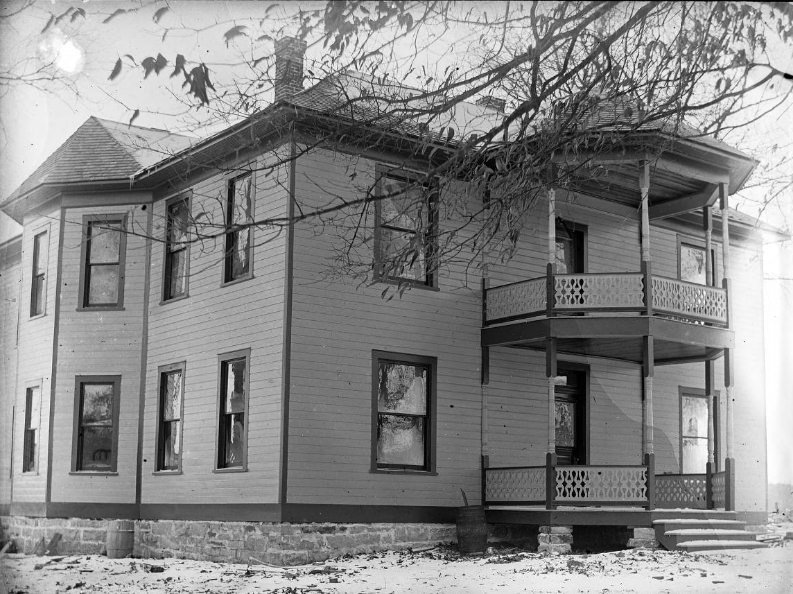
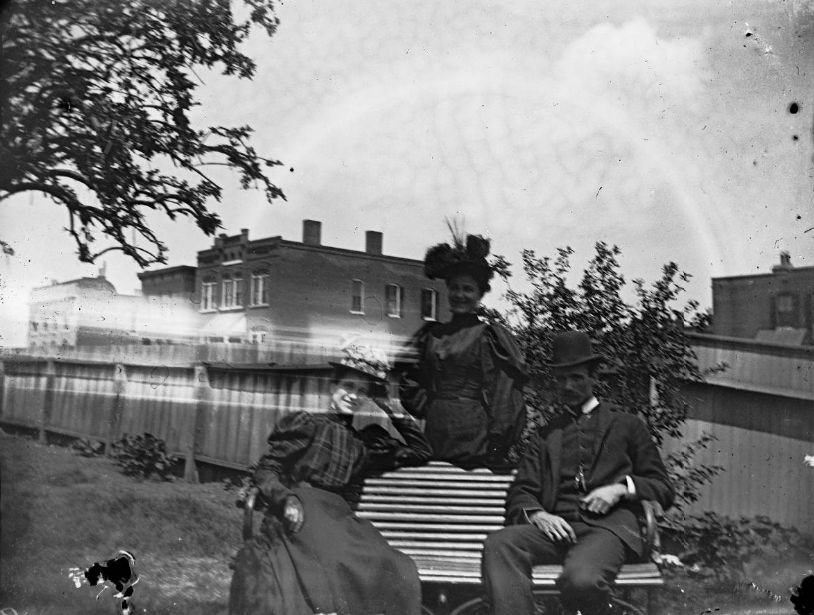
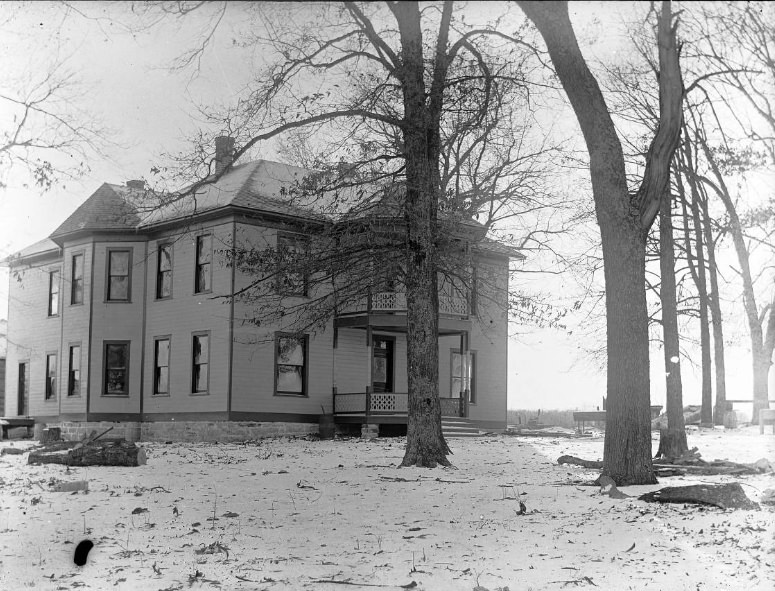
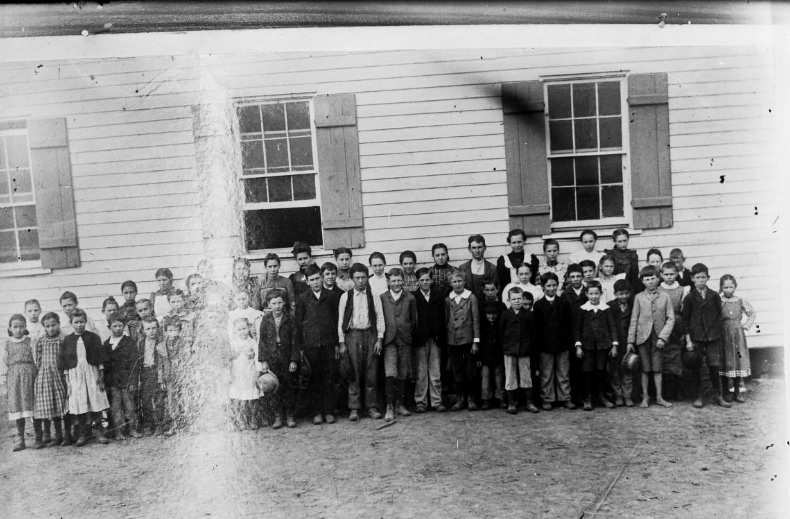
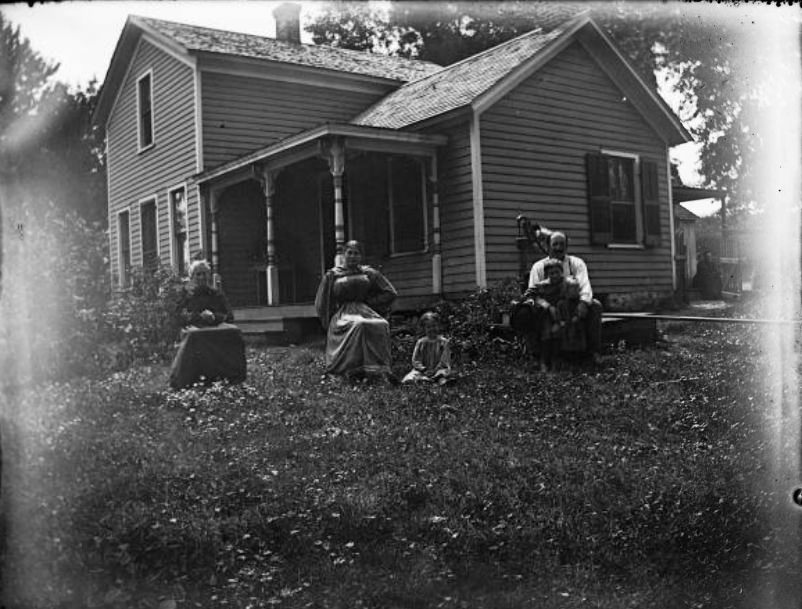
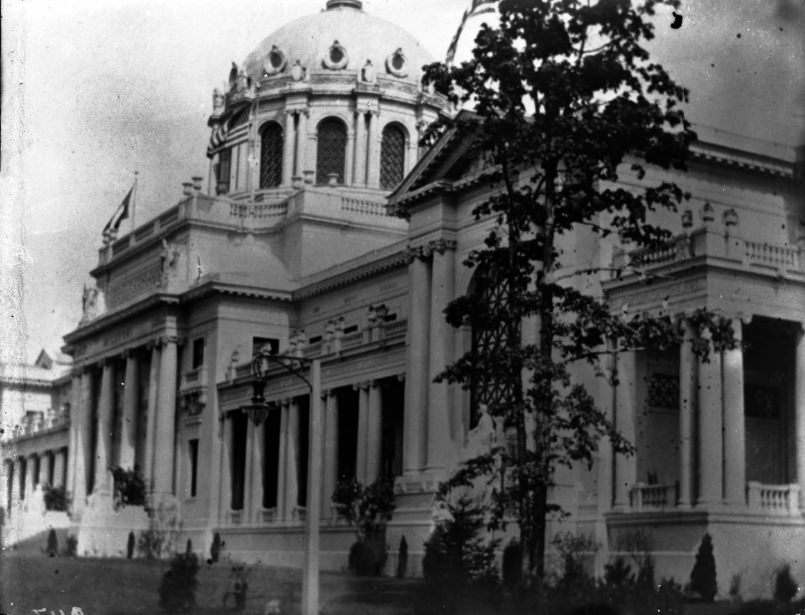
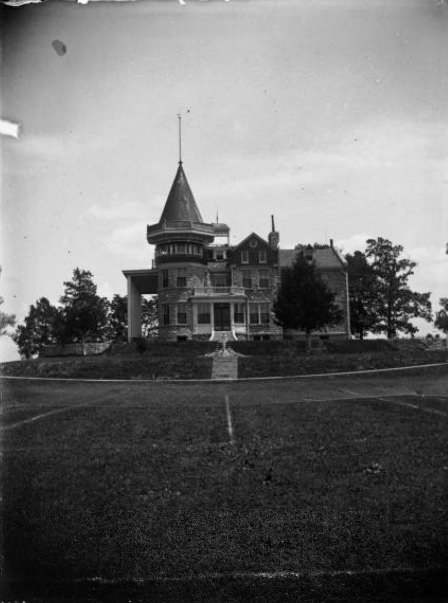
Looking east along Washington Avenue from approximately North Tucker Boulevard, 1900.World’s Fair building surrounded by a crowd of people. In front of the building is still under construction.City View with a Smokestack, 1900. several other buildings with a cloudy sky, and a smokestack on the right side of the image.A large house with four people on and around the porch facing the camera, 1900. Going towards the right of the photo, the neighborhood continues with vegetation grown houses.Family Portrait in a Park,1900Three people in a company care parked by the river. Two women are sat in the back of the car, and a man is standing next to the car; all smiling.18th and Market St.s Opposite Union Station in 1900. Ticket Scalpers are seen here as well.Fleet of Ford Model T automobiles in front of St. Louis city hall, 1900The Palaces of Education and Social Economy at the 1904 World’s Fair.Rear of a railway locomotive travelling away from the camera. Trainmen and an engineer are on the back of the Tender.The old Boatman’s Bank building in March of 1900.A pair of smokestacks, one of which is being worked on by a group of men near the top of the stack, 1900. The upper stories and roofs of 901 and 911 Washington Avenue are visible in the background.Looking along city sidewalk with major street on one side and vacant lot on the other, 1900Urban Horse Herd, 1900The intersection of Second Street with another street with men working in the middle of the intersection, 1900Women of the Gymnastic Association Sokol in St. Louis, 1900Japanese Pavilion and gardens at the 1904 World’s Fair in St. Louis.Tree along South 11th Street with signs attached to it. The tree is in front of Lami Pharmacy, which was at the intersection of South 11th Street and Lami Street, 1900Site where house has just been demolished in the midst of an urban area, 1900Palaces of Electricity and Machinery at the 1904 World’s Fair.Dorris automobile that has been in a wreck, 1900. An American flag has been tied between the headlampsA rooftop view of the domed bell tower at the top of the Jaccard Building, 1900A horse either being lowered into or lifted out of a hole in a city street, 1900Ice, coal and wood stand in downtown St. Louis, 1900
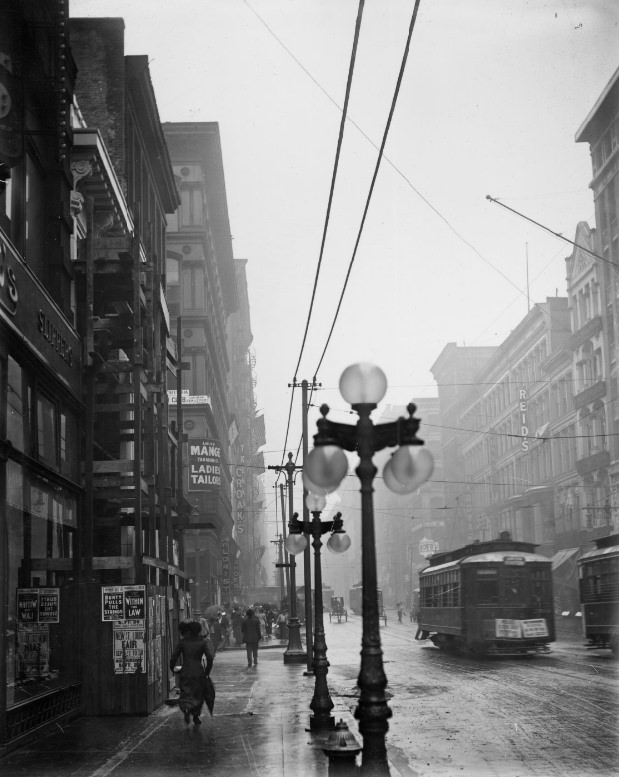
Rainy city street with street lamps visible in the foreground, 1900
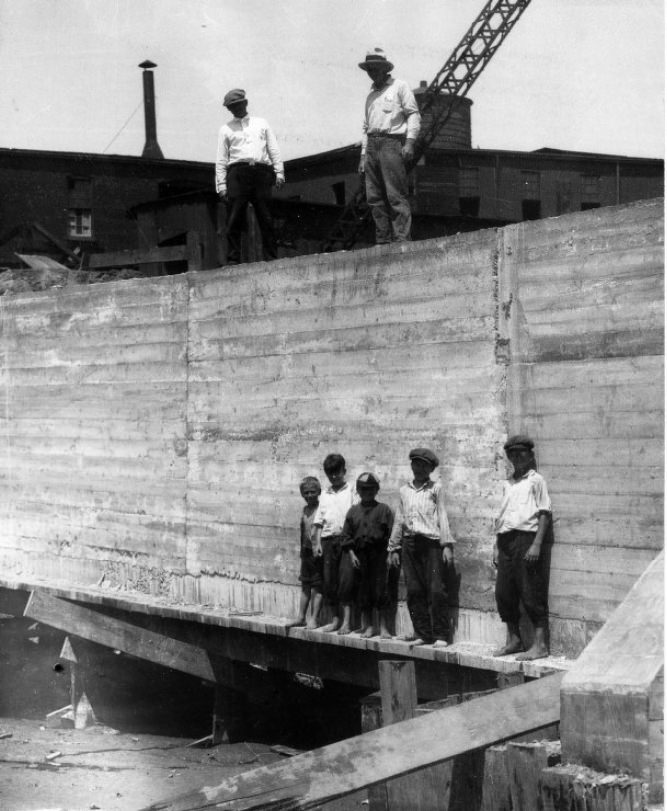
Five boys standing along the base of a poured concrete wall at a construction site, 1900
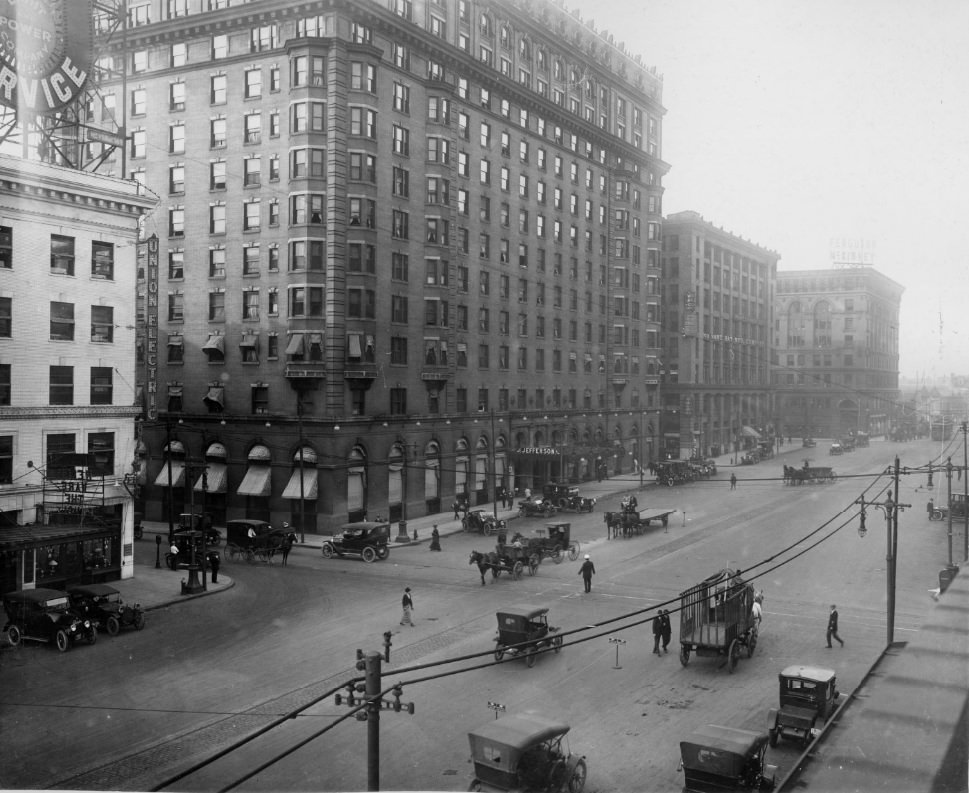
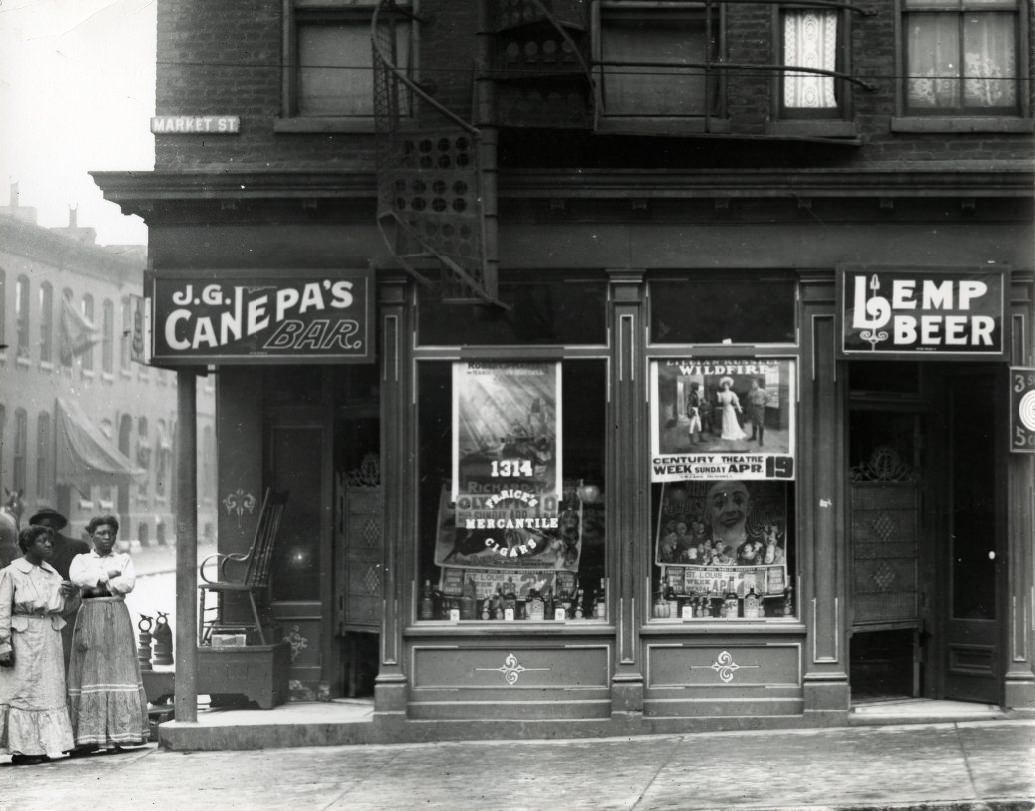
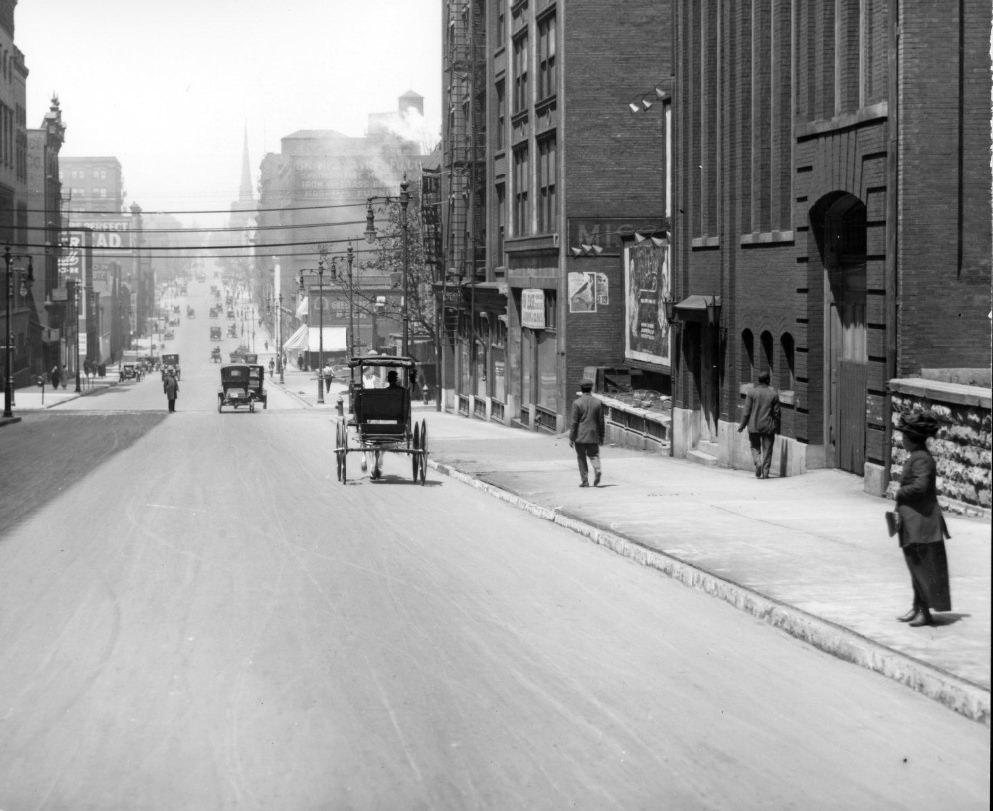
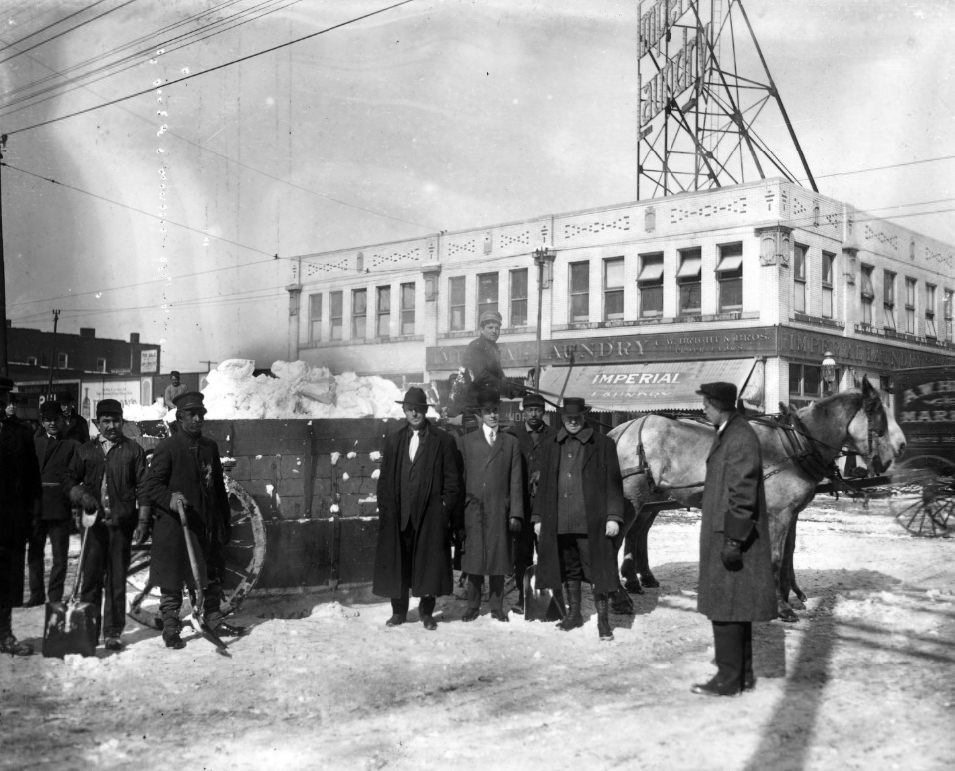
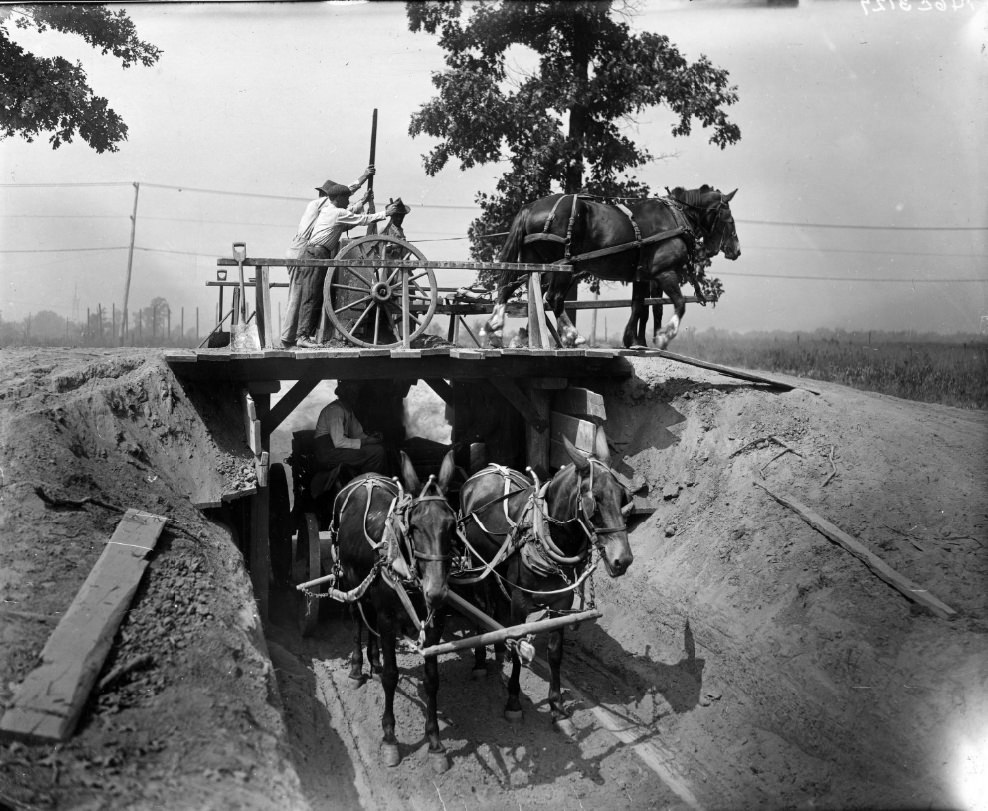
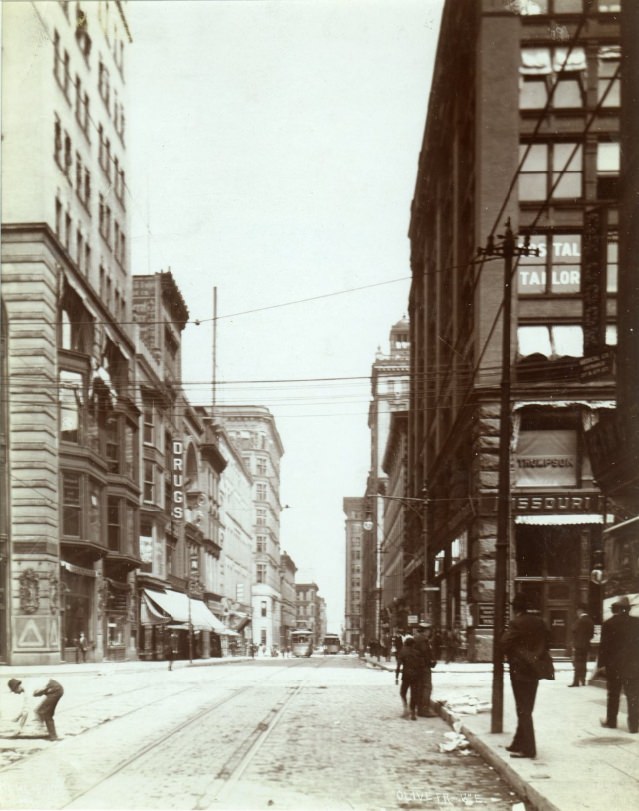
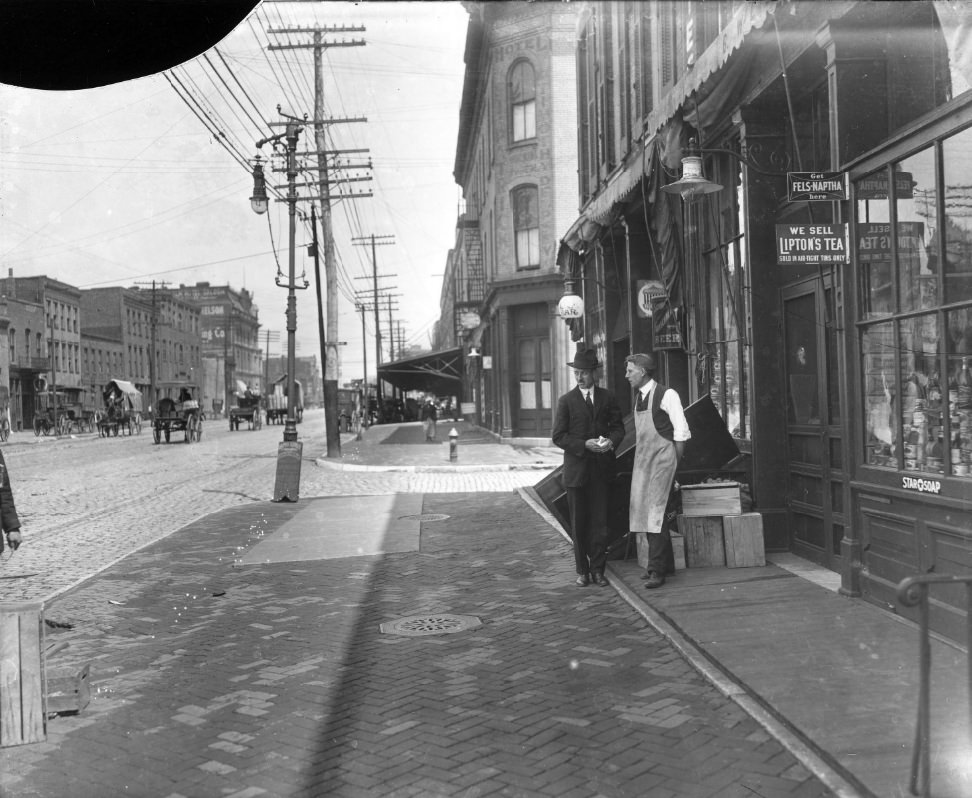
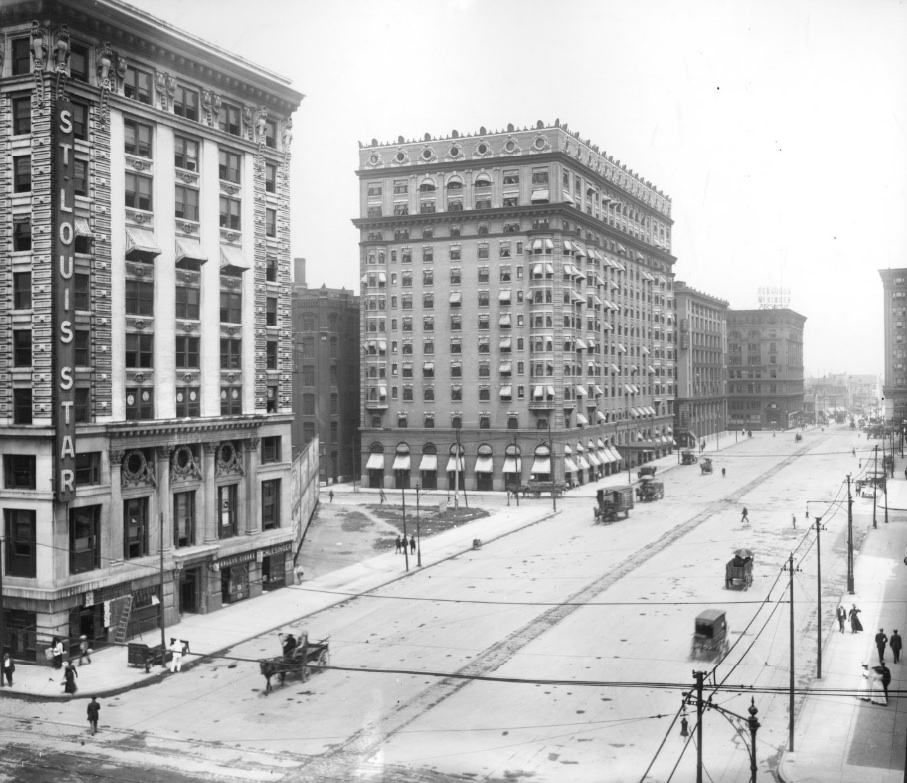
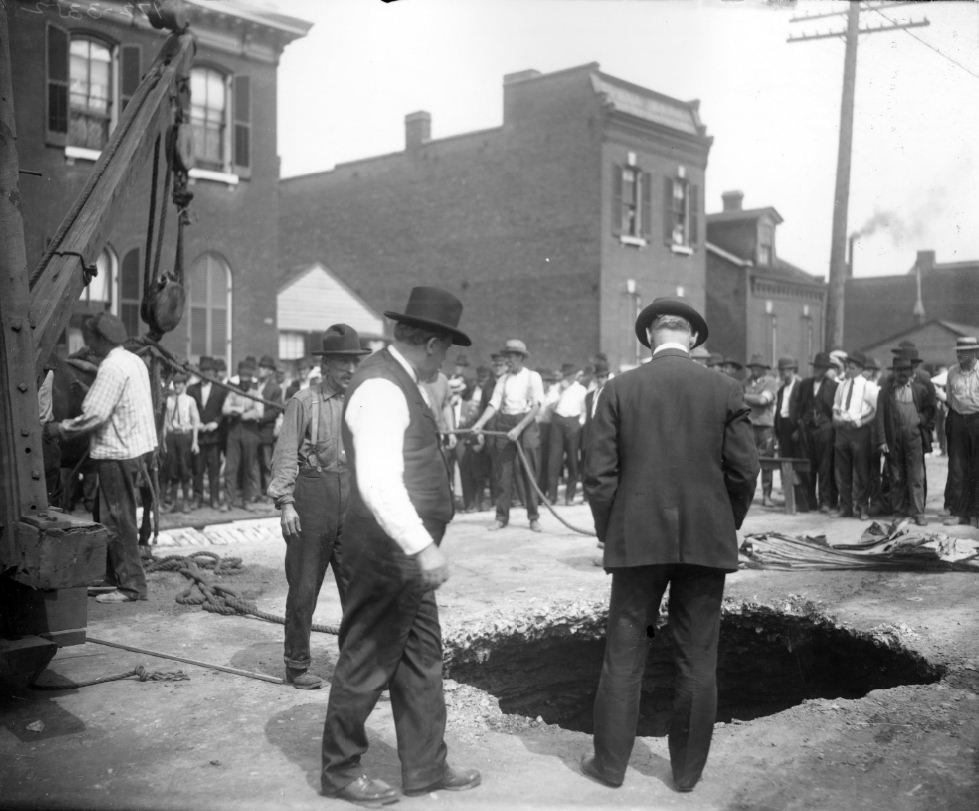
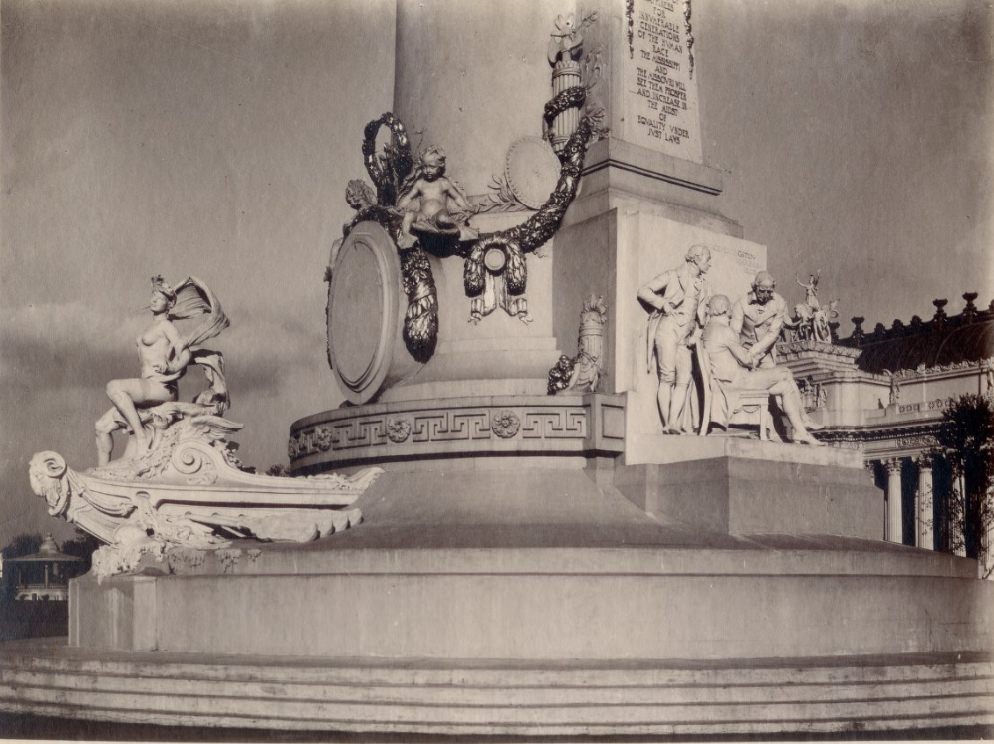
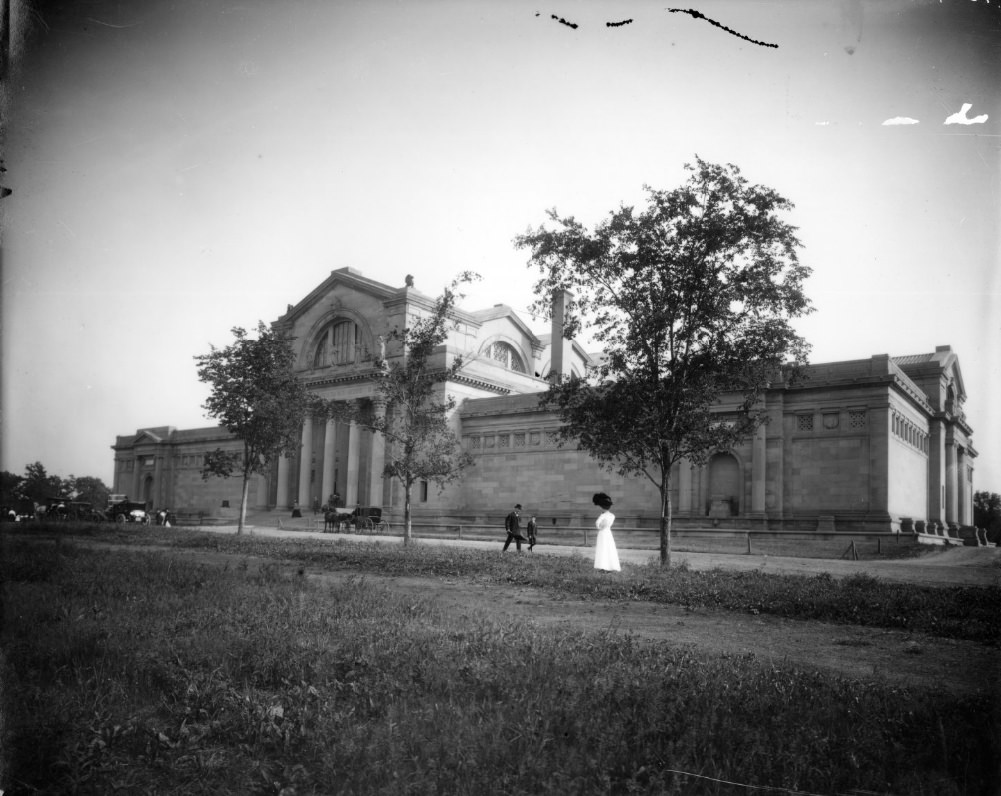
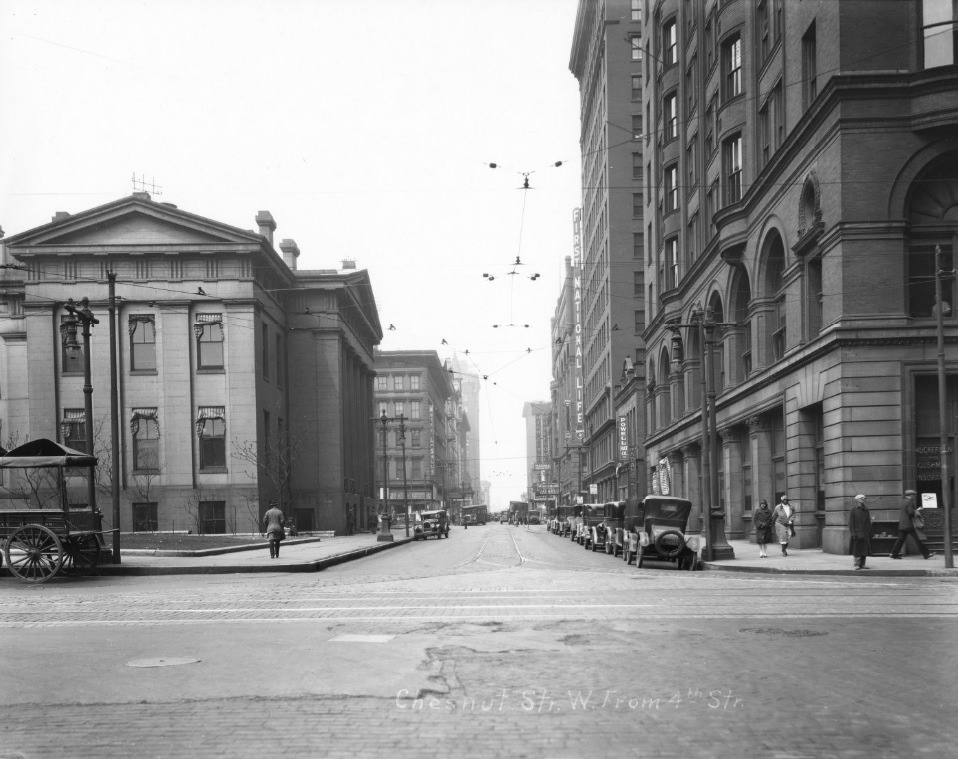
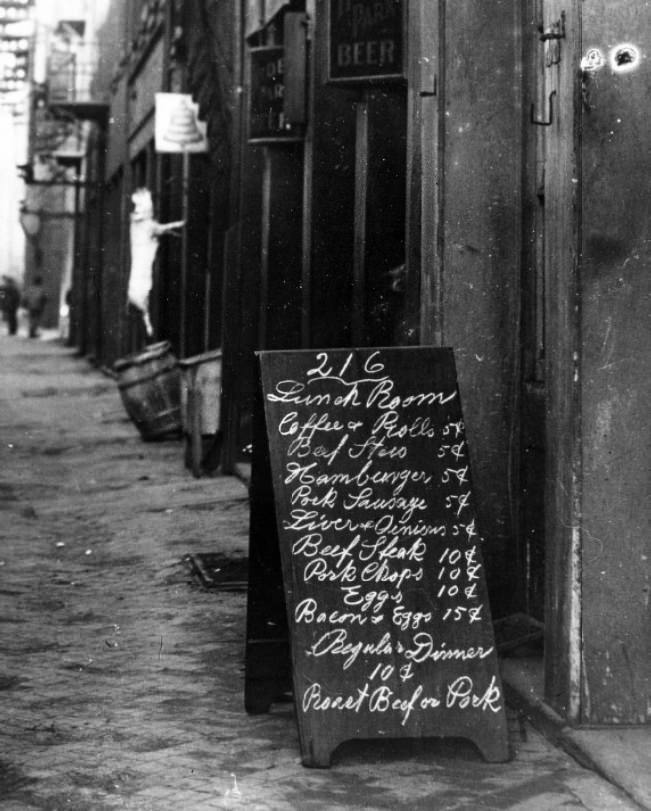
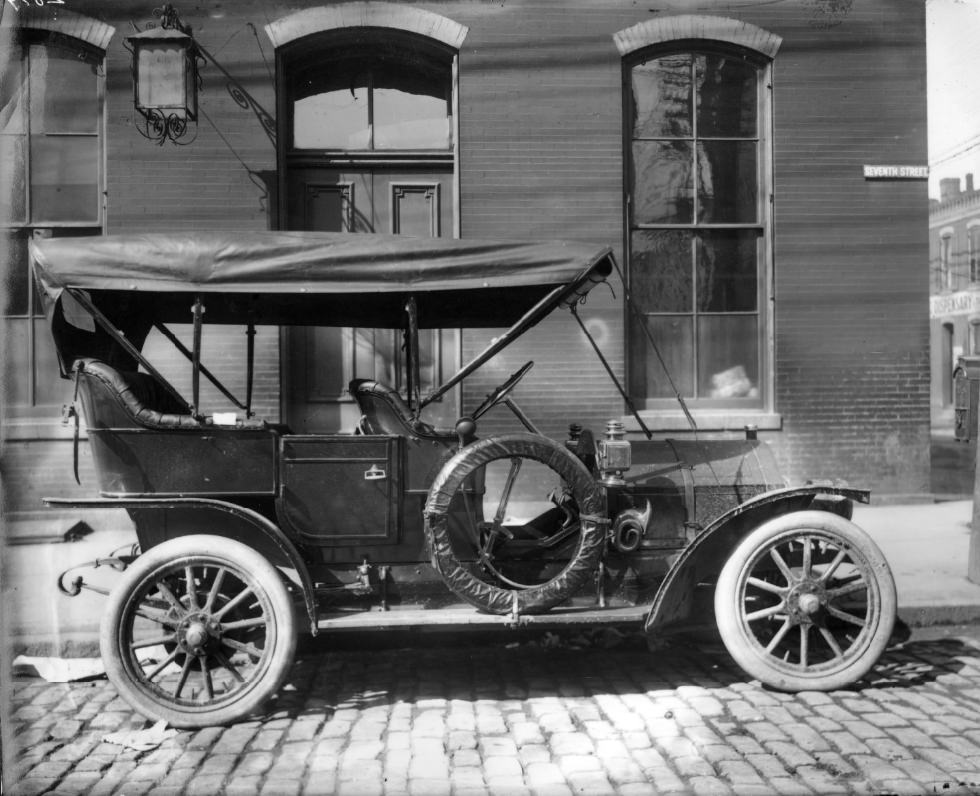
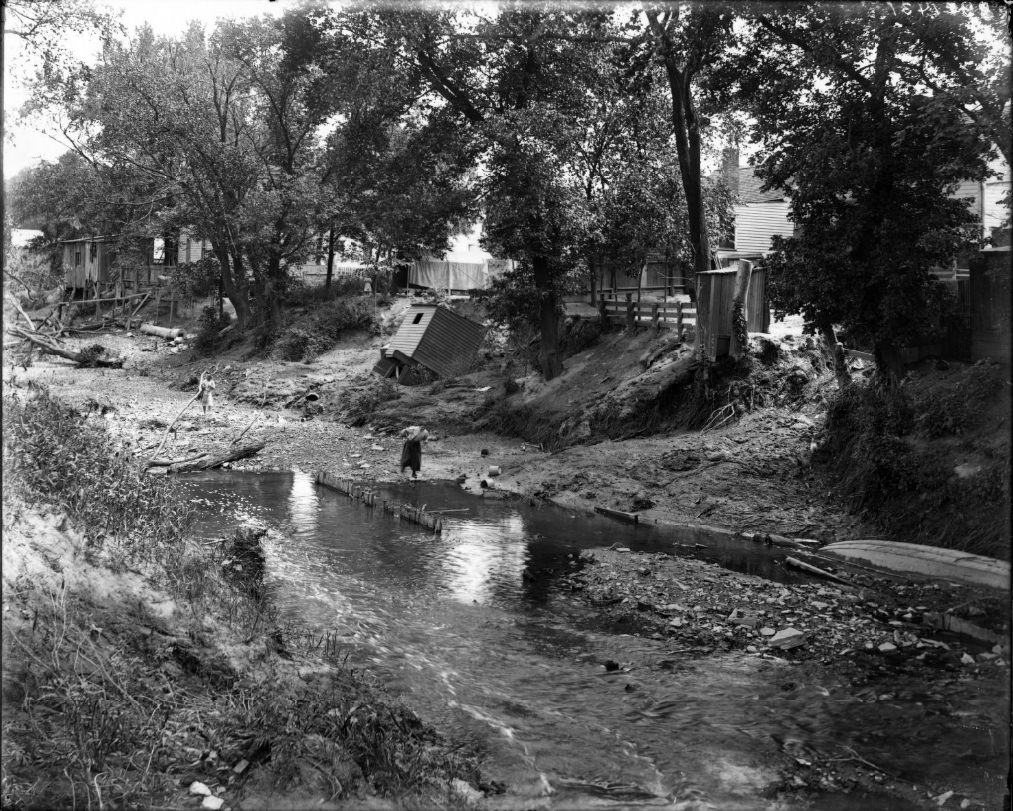
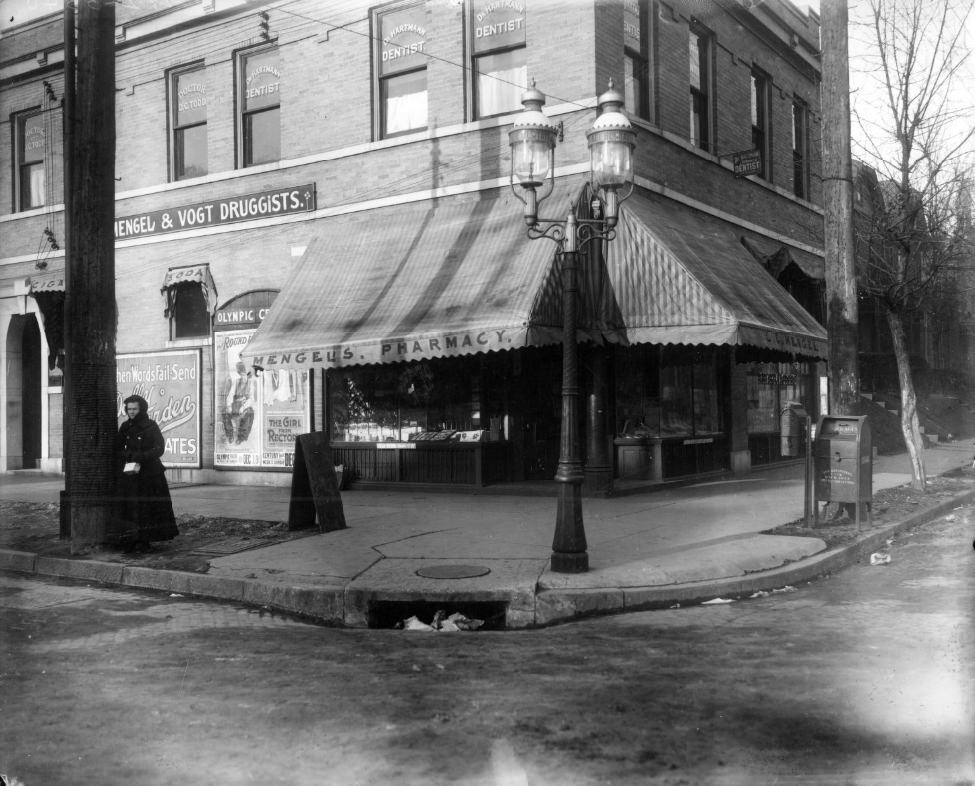
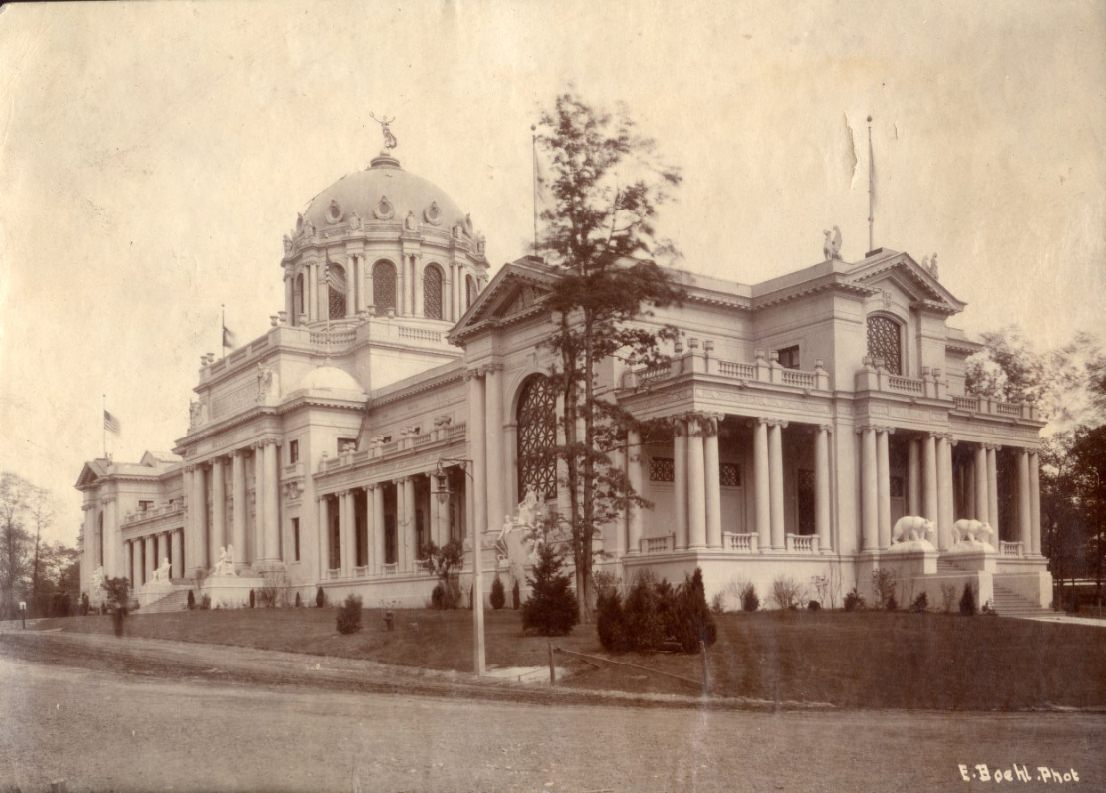
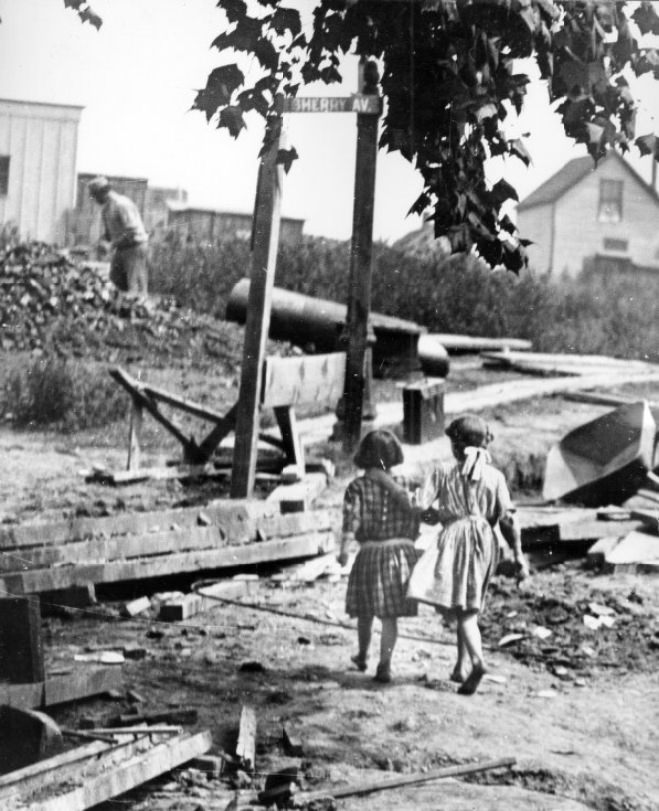
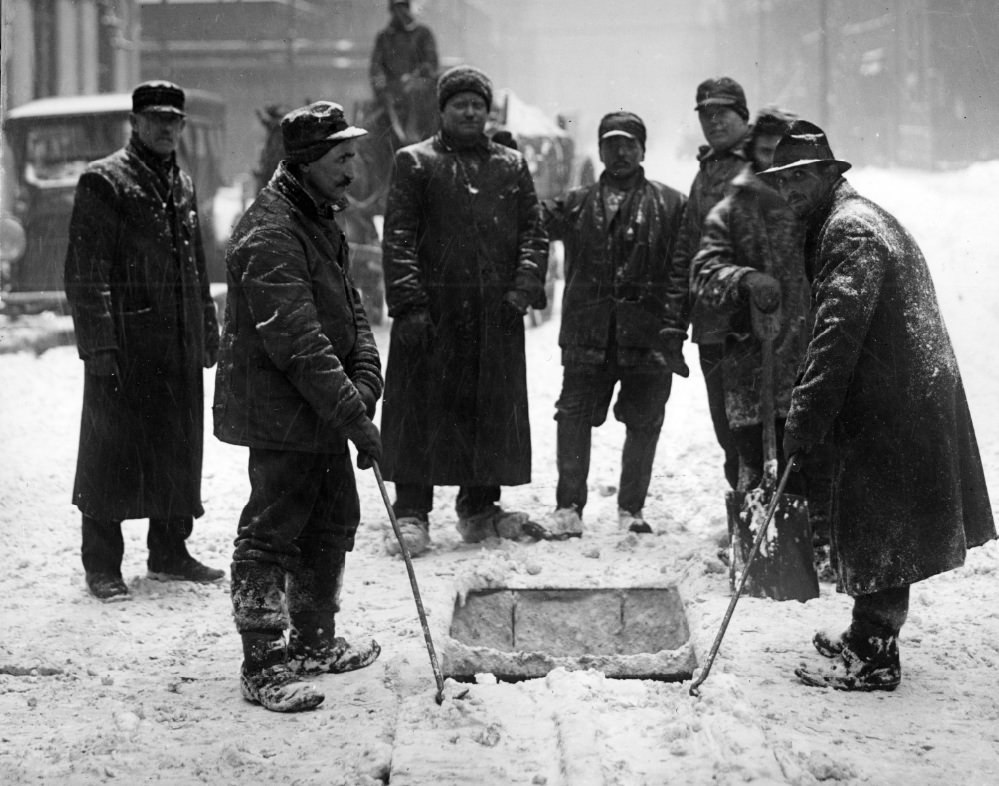
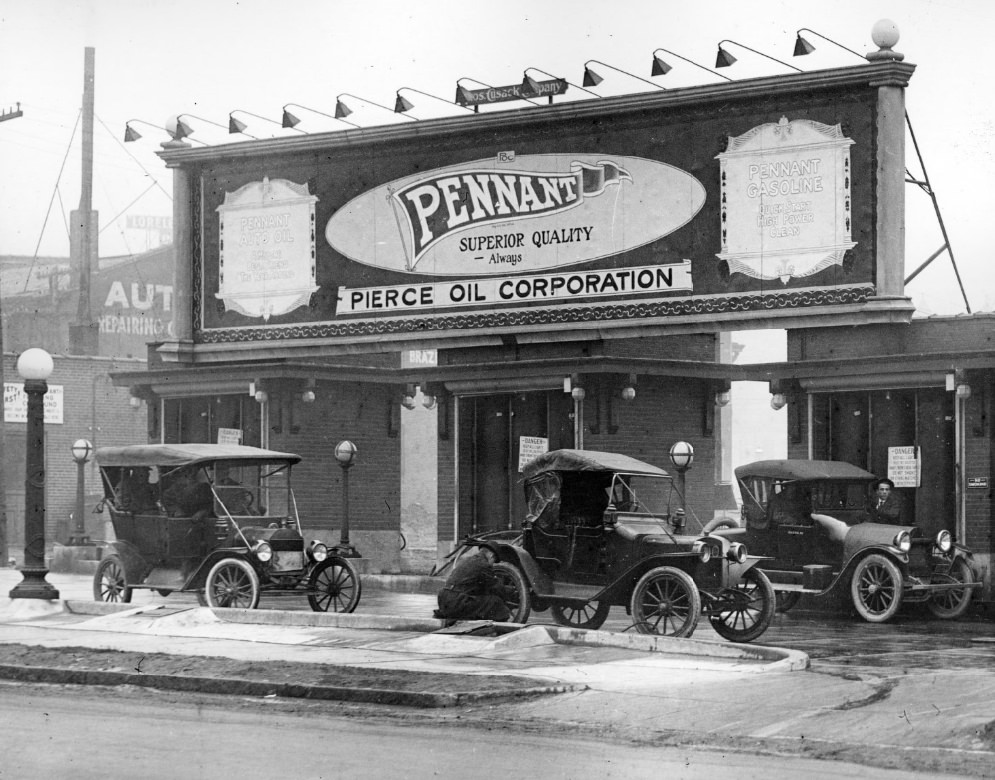
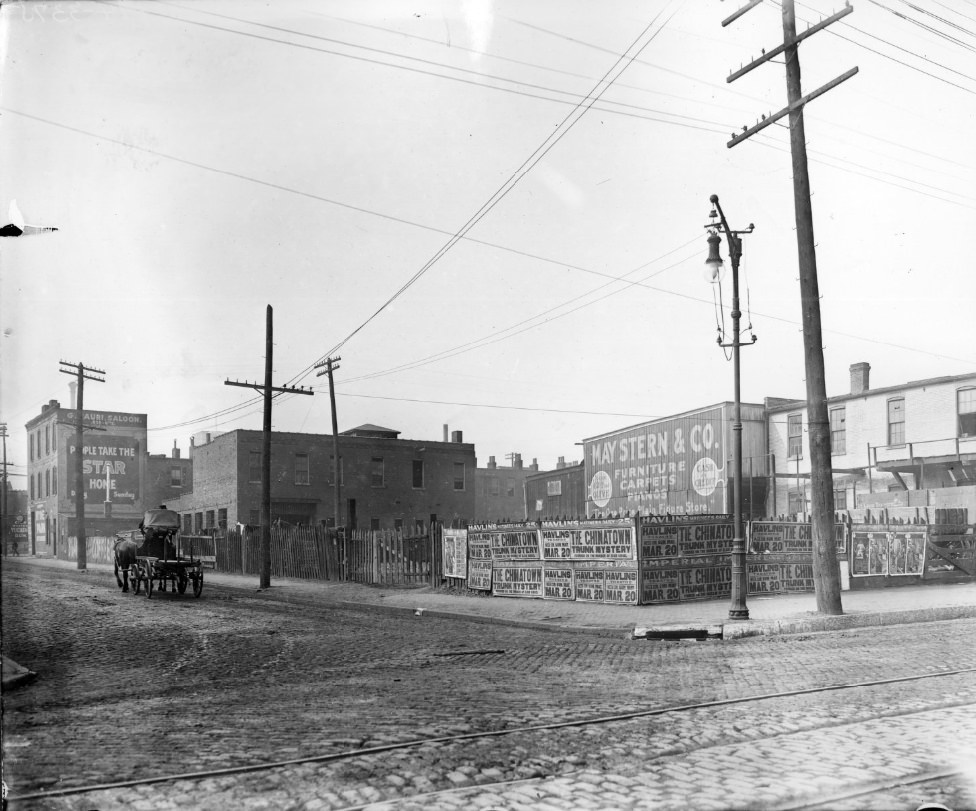
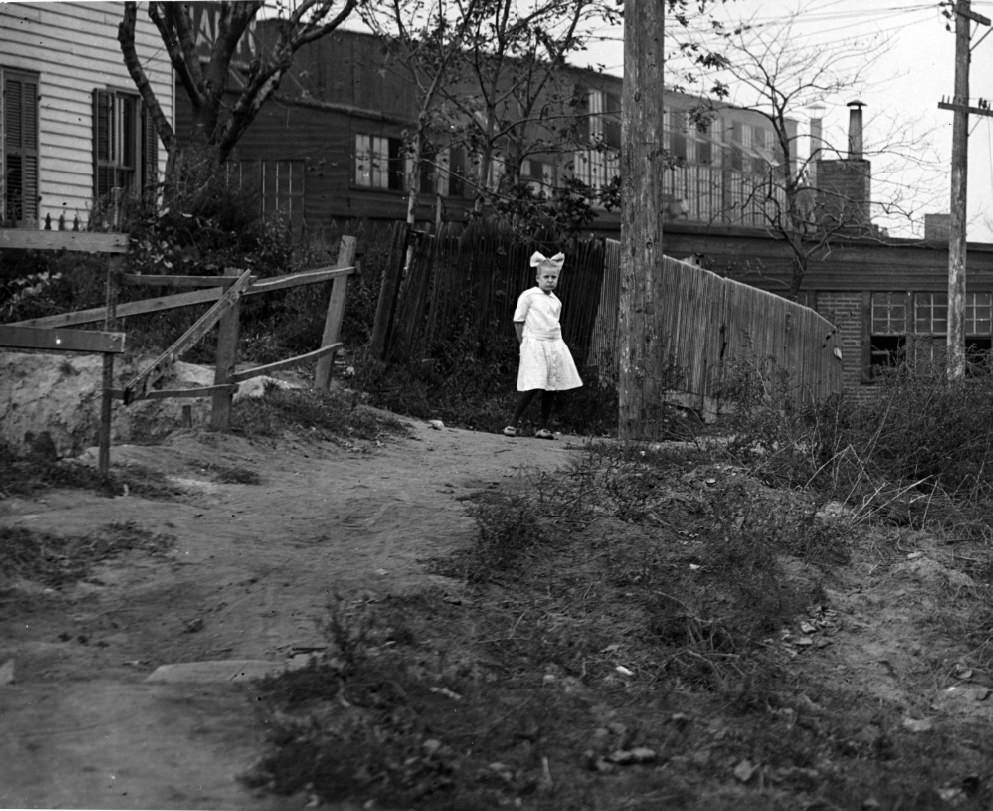
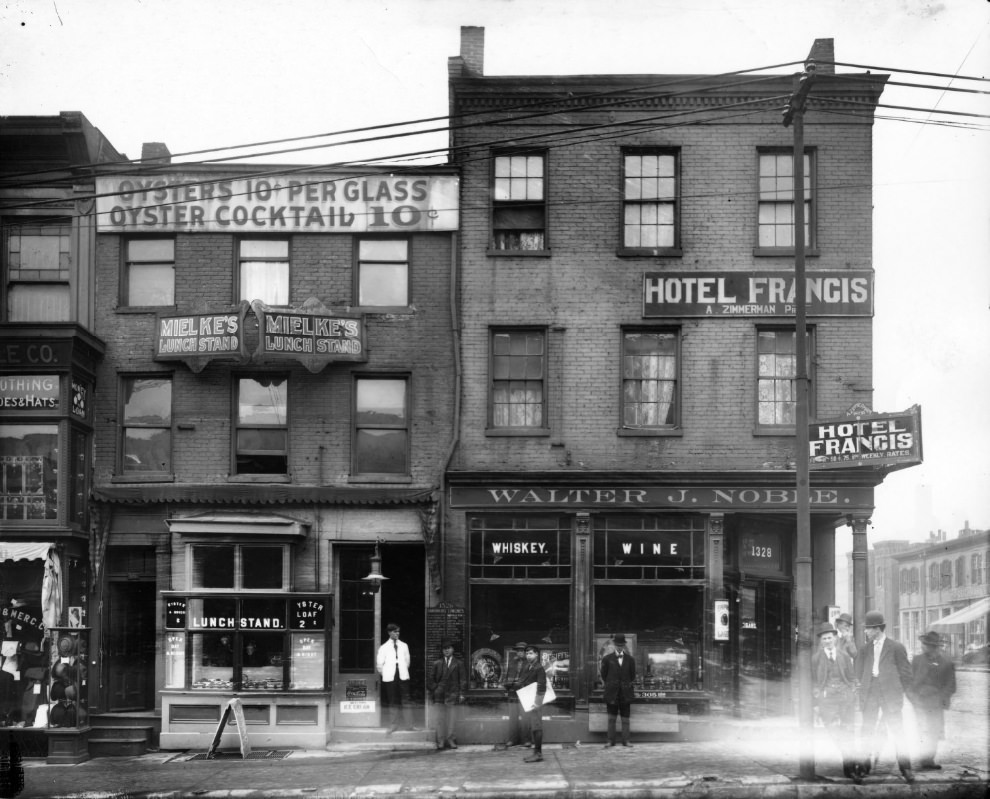
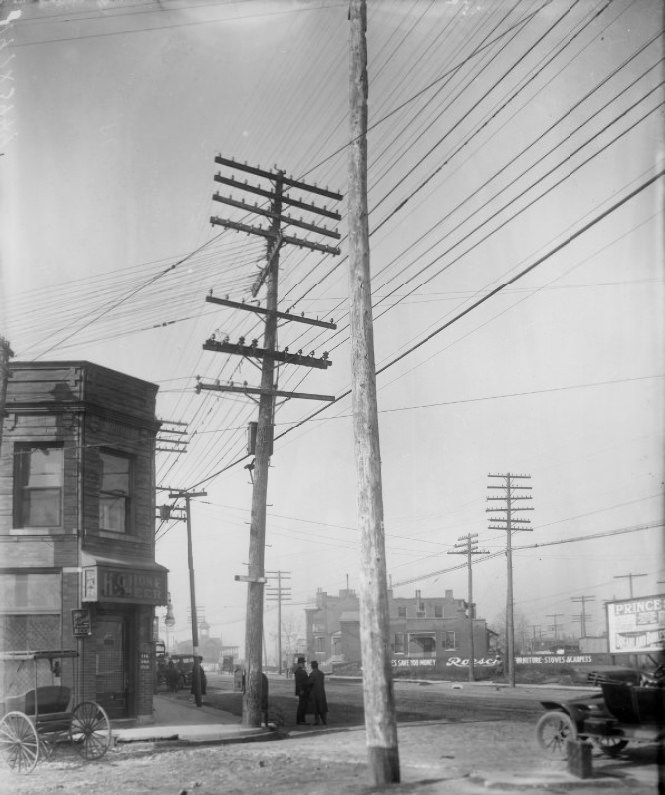
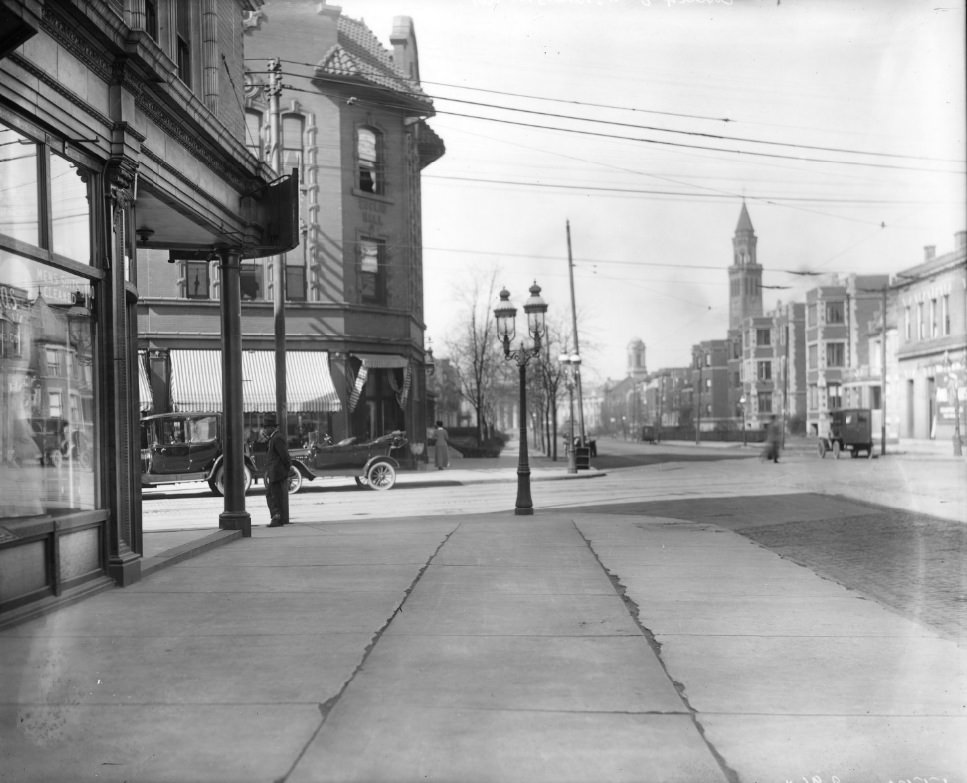
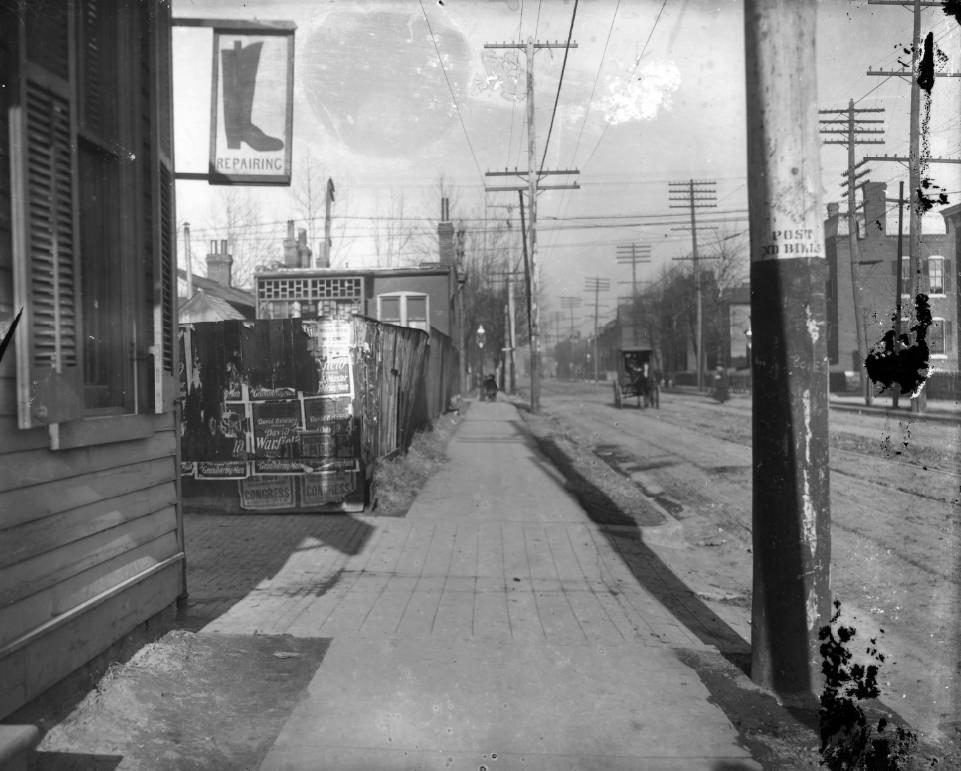
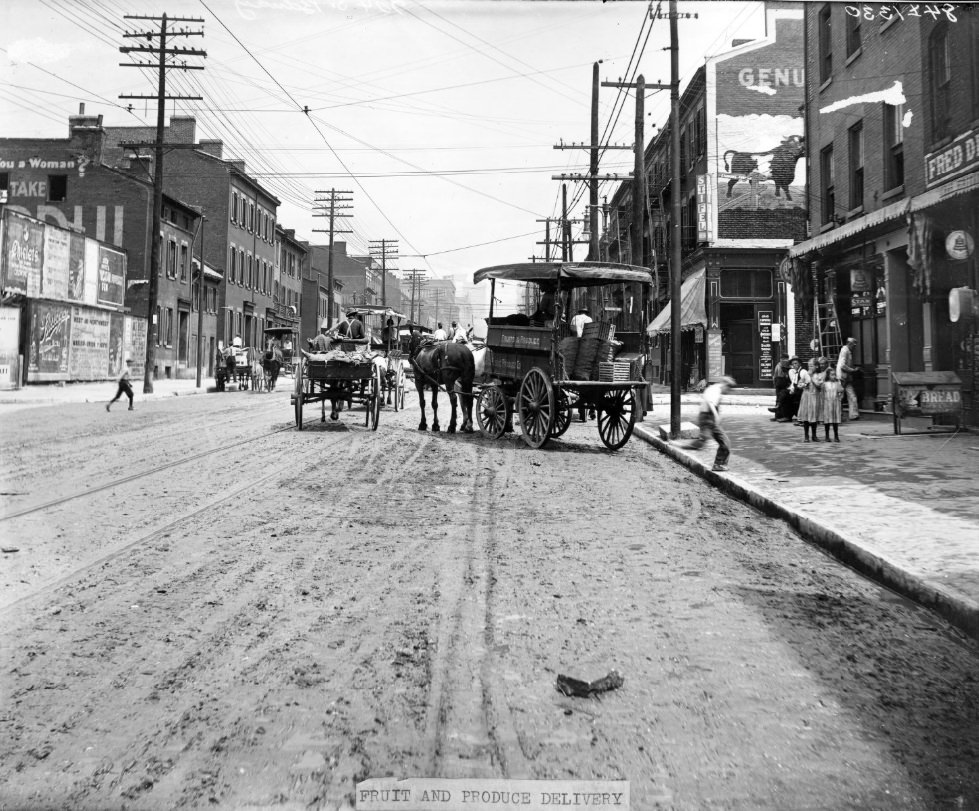
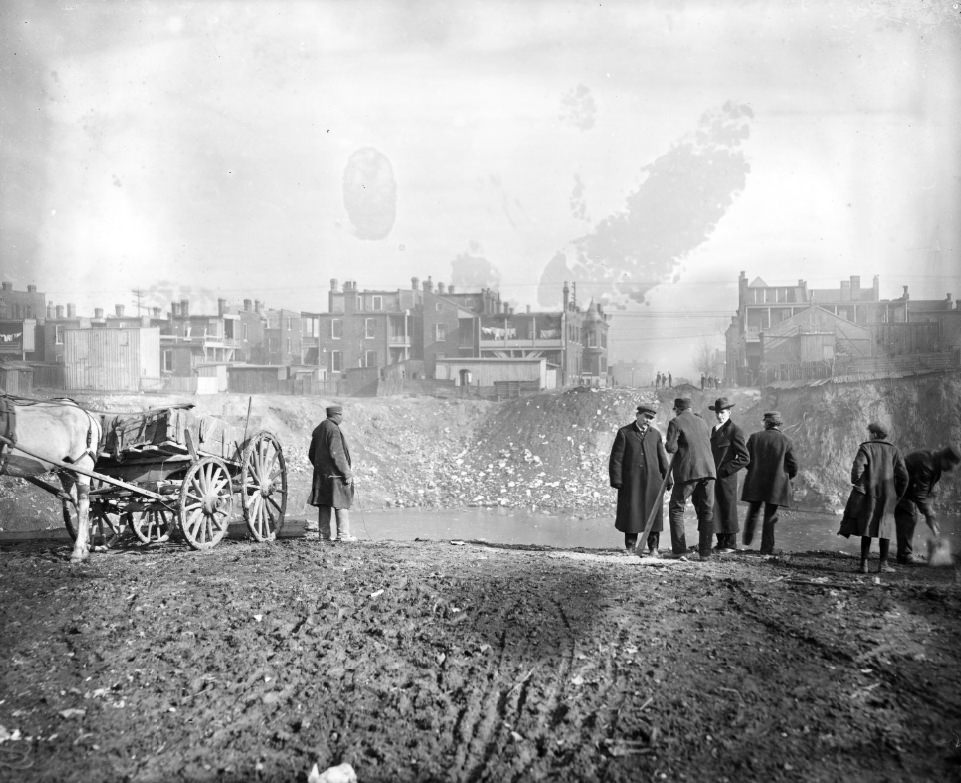
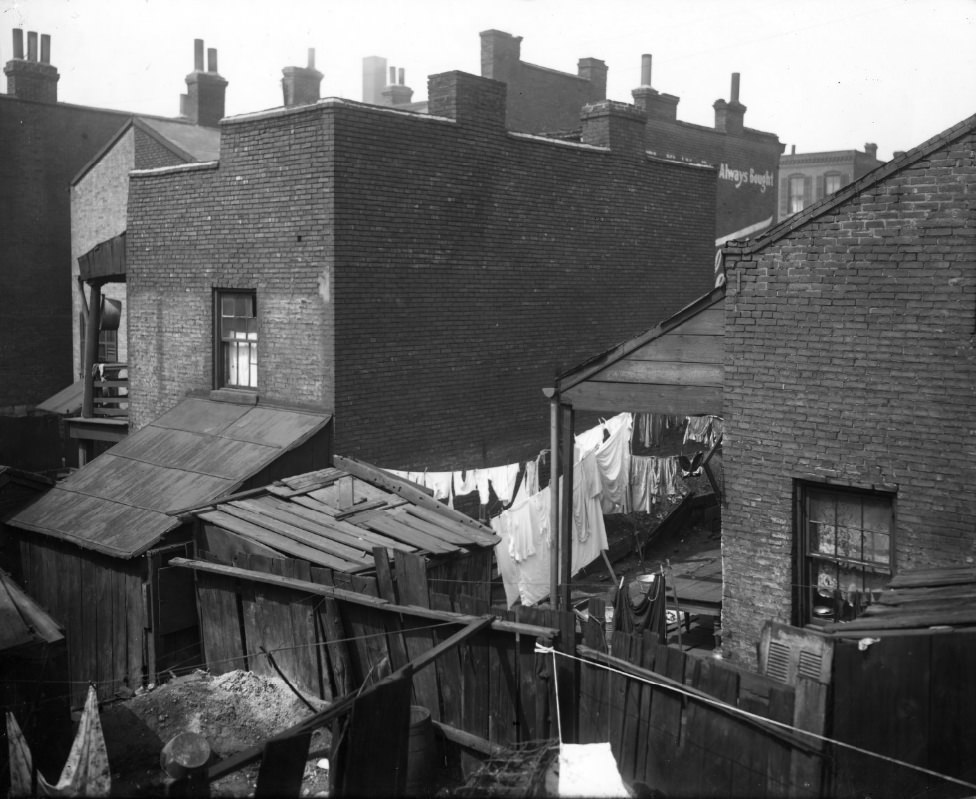
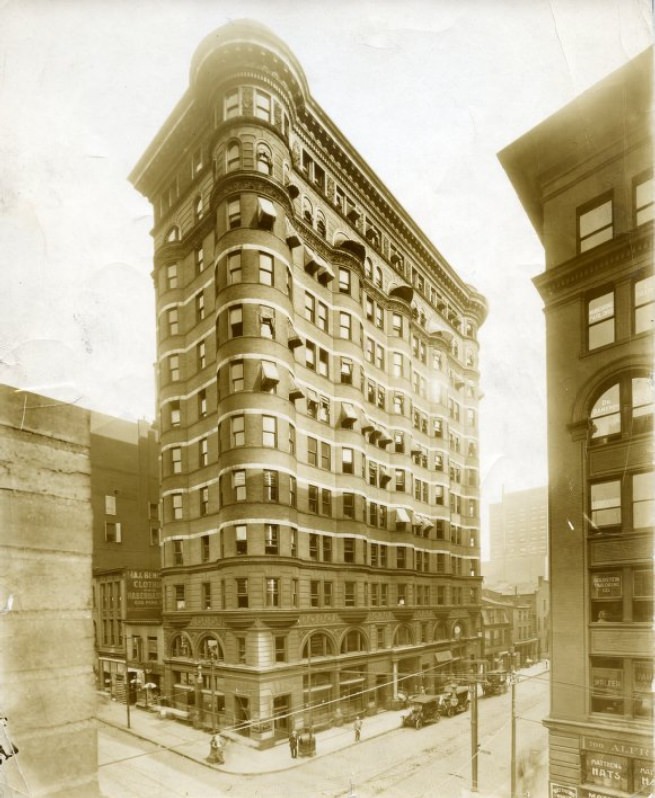
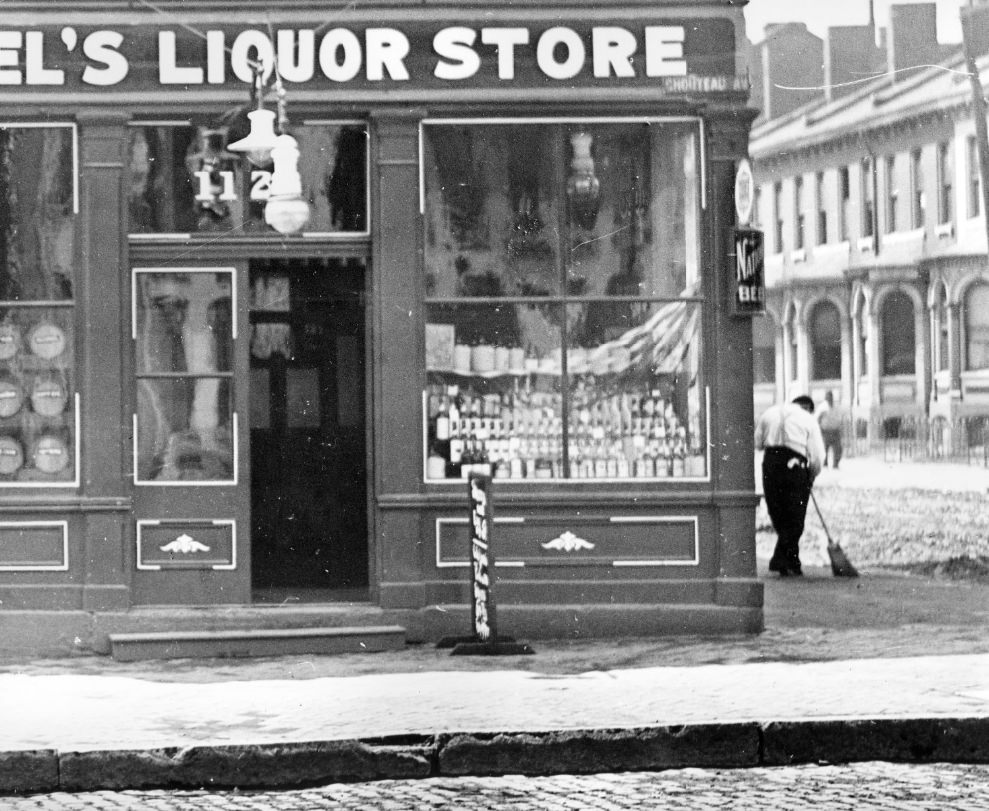
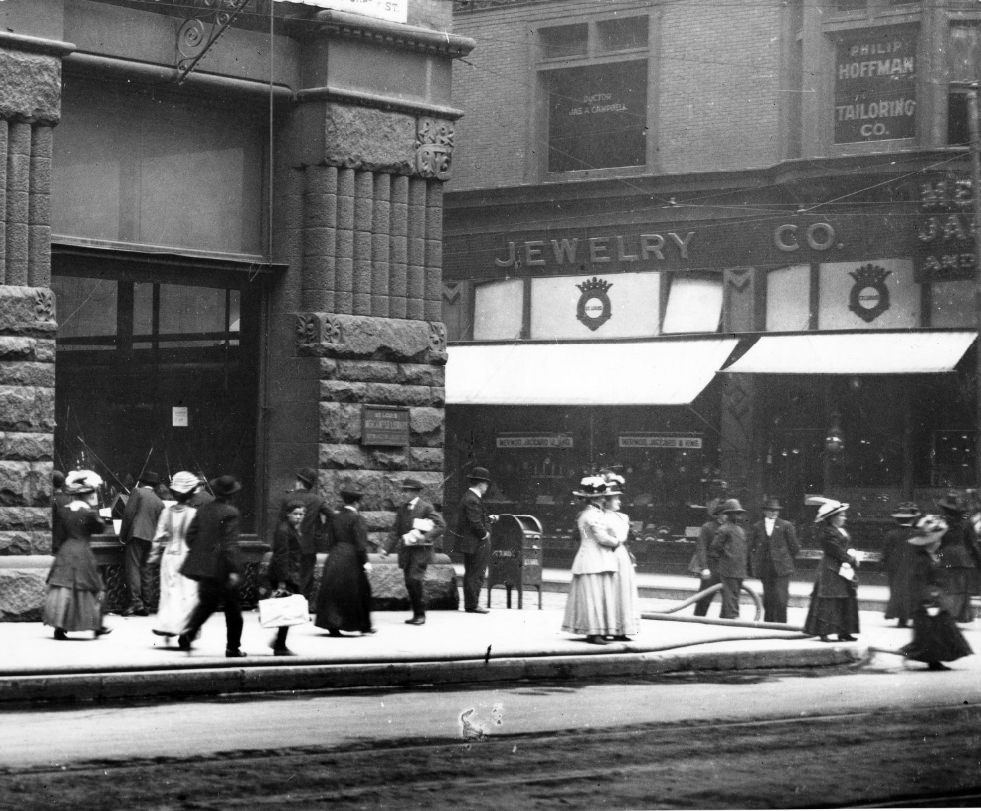
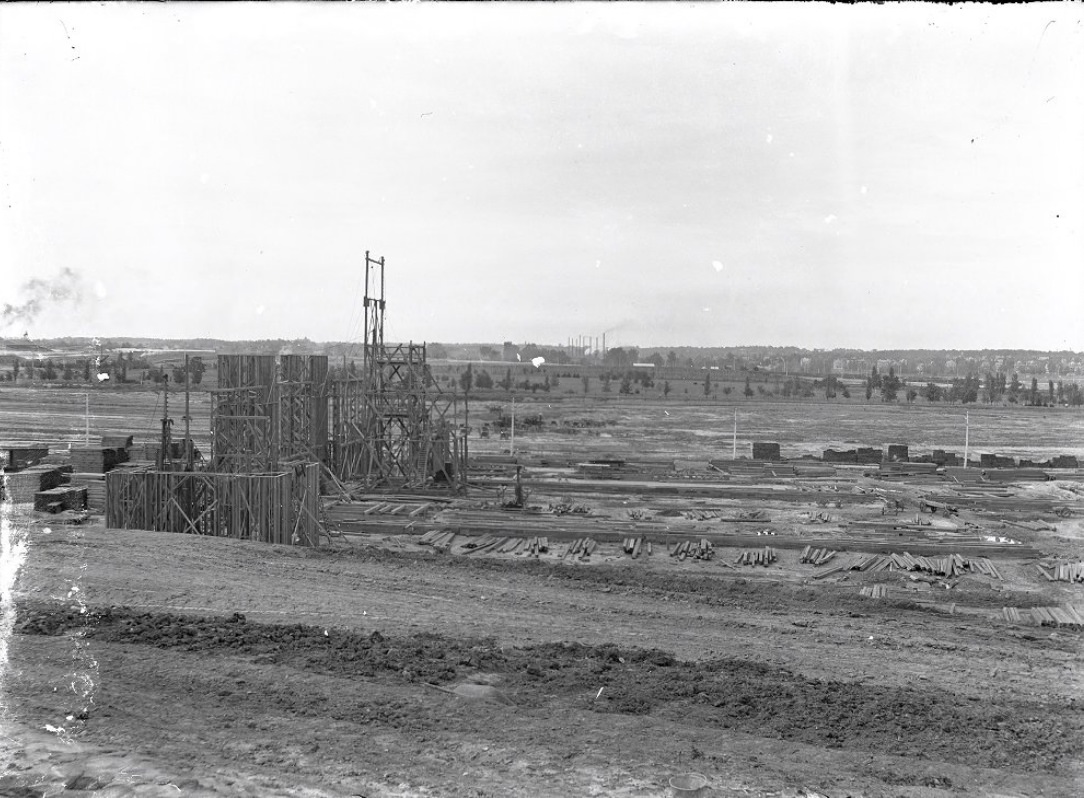
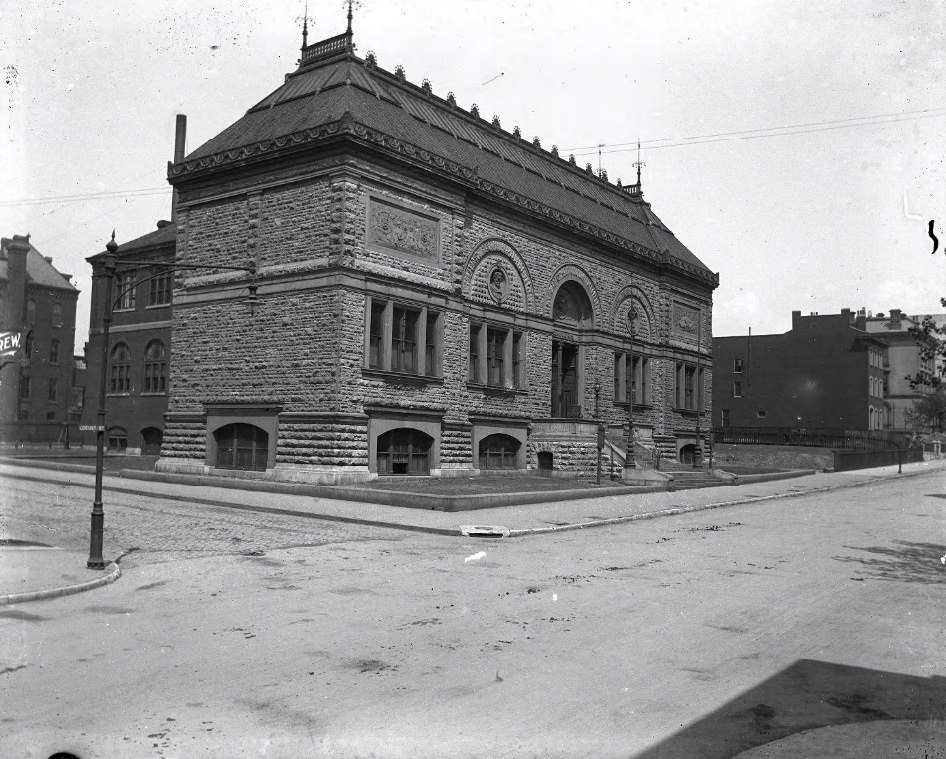
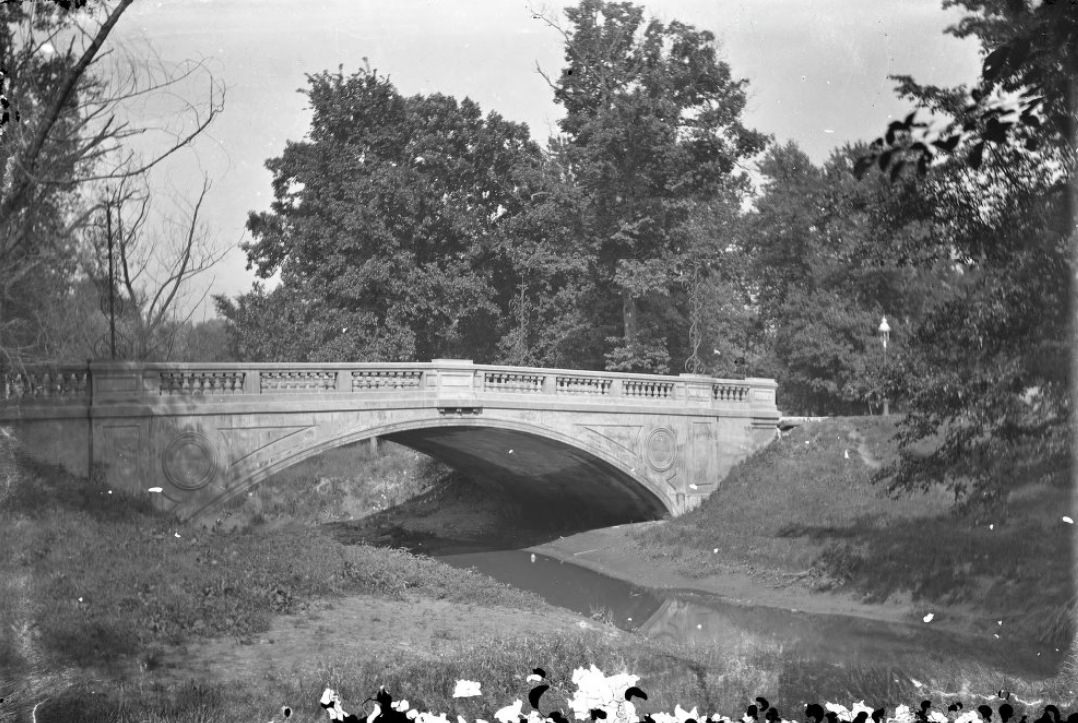
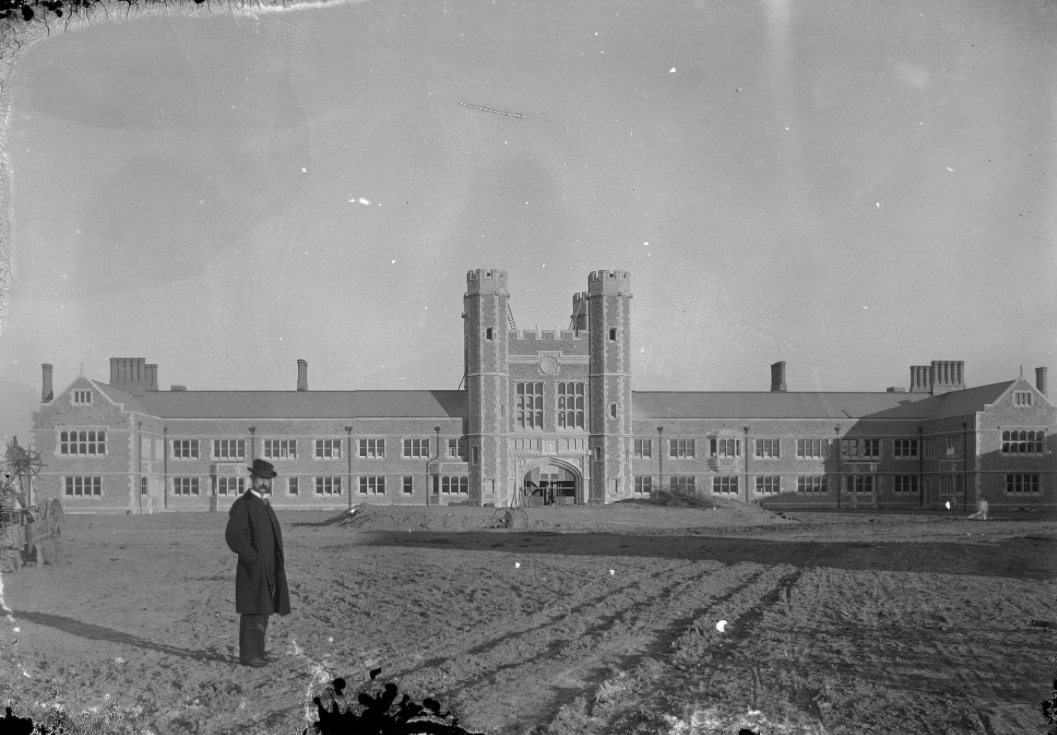
The lagoon leading east from the grand basin at the 1904 World’s Fair in St. Louis.Sunken Garden at the 1904 World’s Fair.The Palace of Transportation at the 1904 St. Louis World’s Fair.The Hotel Jefferson looking north along Tucker Boulevard, 19001314 Market, corner of Market and Centre Streets, 1900A wide view of Locust Street headed downhill toward 18th Street, 1900.Snow Removal, Chouteau Avenue, 1900Palaces of Electricity and Machinery, 1900A couple of two-hitch horse wagons. The contents of one wagon is being poured into the wagon under the bridge, 1900Olive Street in St. Louis looking east across Sixth Street, 1900Two men standing on the sidewalk of a major street. One man appears to work at the grocery they are standing in front of, 1900St. Louis Star newspaper building and Hotel Jefferson along North Tucker Boulevard, 1900People standing around a large hole in a city street, 1900Base of the Louisiana Monument, 1900North 7th Street showing people at work and walking along street, 1900Saint Louis Art Museum building, 1900Intersection of Chestnut and 4th Street looking west along 4th Street, 1900. The Old Courthouse is visible on the left. Many automobiles are visible along 4th Street.A section of cobblestones has been removed along a busy sidewalk, 1900Menu sign board on sidewalk in front of restaurant. Menu items with prices are visible, 1900Palace of Manufactures, 1900Festival Hall & Grand Basin, 1900A Christmas Tree arch display being set up on North Tucker Boulevard, 1900Smokestacks against an industrial background, 1900Herd of horses in urban neighborhood, 1900. Two men can be clearly seen corralling the horses. This is a close-up from another photograph in the collection.Car Parked On Seventh Street, 1900Olive and 7th Street, looking east, 1900View from the Buffalo Tower, 1900A horse either being lowered into or lifted out of a hole in a city street, 1900An employee for the Tower Grove Dairy delivering goods to residents of St. Louis, 1900.Palace of Machinery, 1900. The picture was taken facing north down the lagoon and takes in the Palace of Transportation and the dome of Creation in the distance.Terminal Railroad Association train engine with tender stopped in rail yard, 1900View of Buffalo Tower, 1900River at low level running through a neighborhood, 1900Streetcars on street under repair, a modified streetcar with the cab removed is in the foreground, 1900The Mengel & Vogt pharmacy at Taylor and Page Avenues, 1900. A woman is standing next to a pole in front of the building. The building still exists and appears to be vacant.Missouri building at the 1904 World’s Fair in St. Louis. This was a temporary structure demolished after the fair. The World’s Fair Pavilion was then built on this site.Palaces of Education and Social Economy, 1900Two Young Girls at a Construction Site on Sherry Avenue, 1900Palace of Liberal Arts, 1900Workers in Snowy Street, 1900Pennant Pierce Oil Corporation filling station, 1900. Three cars are visible in front. A man appears to be putting air into the tire of one of the cars.Men installing a pipe in a city street. One man is standing in a hole in the middle of the street and is smoking a pipe, 1900Street intersection with theater posters and building billboards visible, 1900Girl on dirt path, 1900. An industrial warehouse is visible in the background.Mielke’s Lunch Stand, the Hotel Francis and Walter J. Noble Whiskey and Wine store, 1900South Taylor Avenue and Manchester Avenue, 1900. A bar is visible at the corner. Two men are in a discussion in the street. An automobile is partially visible on the right.The intersection of North Euclid and McPherson Avenues, looking west along McPherson Avenue, 1900City sidewalk with wooden fence with posters plastered on it, 1900.Horse-drawn wagon delivering fruit and produce to a business, 1900.Large pit in the middle of an urban area that is filled with water, 1900.Rear of urban residential housing showing laundry drying, 1900The front of two city houses side by side, 1900. Buildings in foreground partially obstructing the house fronts. Young child in alley in foreground.The Louisiana Monument at the 1904 World’s Fair in St. Louis.Street scene of St. Louis after during or after 1904. Two women on sidewalk. Trolley car on rails in the cobblestone street. Buildings with mansard roofs.Broadway North from Market Street, 1900. The old Courthouse is visible on the right, theaters and a hotel are visible on the left across from the Courthouse.Construction site at railway interchange, 1900.Children standing along and hanging on a rope near a construction site, 1900.Fullerton Building, 1900Boyle Avenue, 1900Lucas Gardens Park Construction, 1900Brazilian Pavilion at the 1904 World’s Fair in St. Louis.Festival Hall at the 1904 World’s Fair viewed from the northeast looking across the lagoonWater wagon on major St. Louis street near the intersection with Carr Street, 1900.Store front of liquor store on Chouteau Avenue, 1900.Saint Louis Mercantile Library building in downtown St. Louis at Broadway and Locust Streets, 1900Construction in an Open Field, 1900The entrances to Tower Grove Park in Saint Louis, Missouri.The Second Presbyterian Church Progress, 1900Saint Louis School and Museum of Fine Arts, 1900Compton Hill Water Tower Construction, 1900Missouri Botanical Garden, 1900Franklin Bridge in Forest Park, Saint Louis, Missouri, 1900.Washington University’s Brookings Hall in Saint Louis, Missouri, 1900.Workers on a World’s Fair Construction Site, 1900World’s Fair construction, 1900.Construction of World’s Fair Buildings, 1900Trees and a Statue in a Park, 1900Side of Exposition Building Construction, 1900Missouri Botanical Garden Visitors, 1900
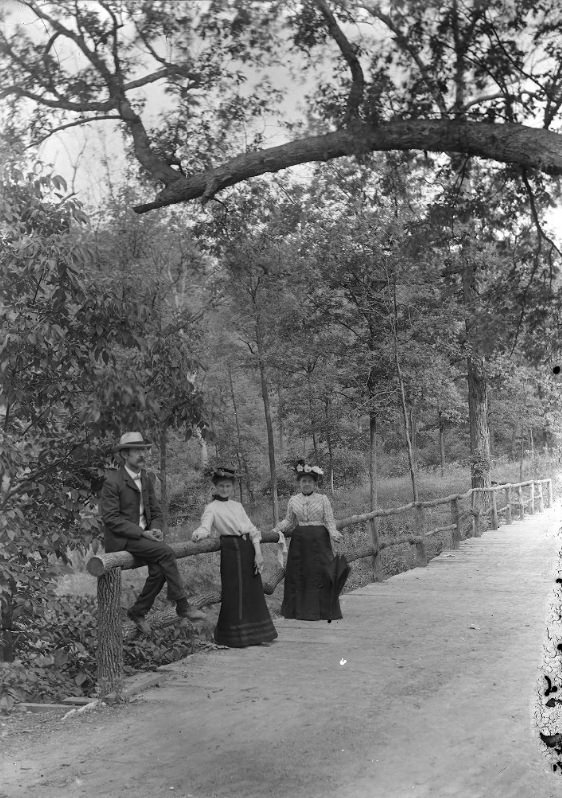
Three People Leaning on a Wooden Railing, 1900
Close Up of World’s Fair Constructionv, 1900
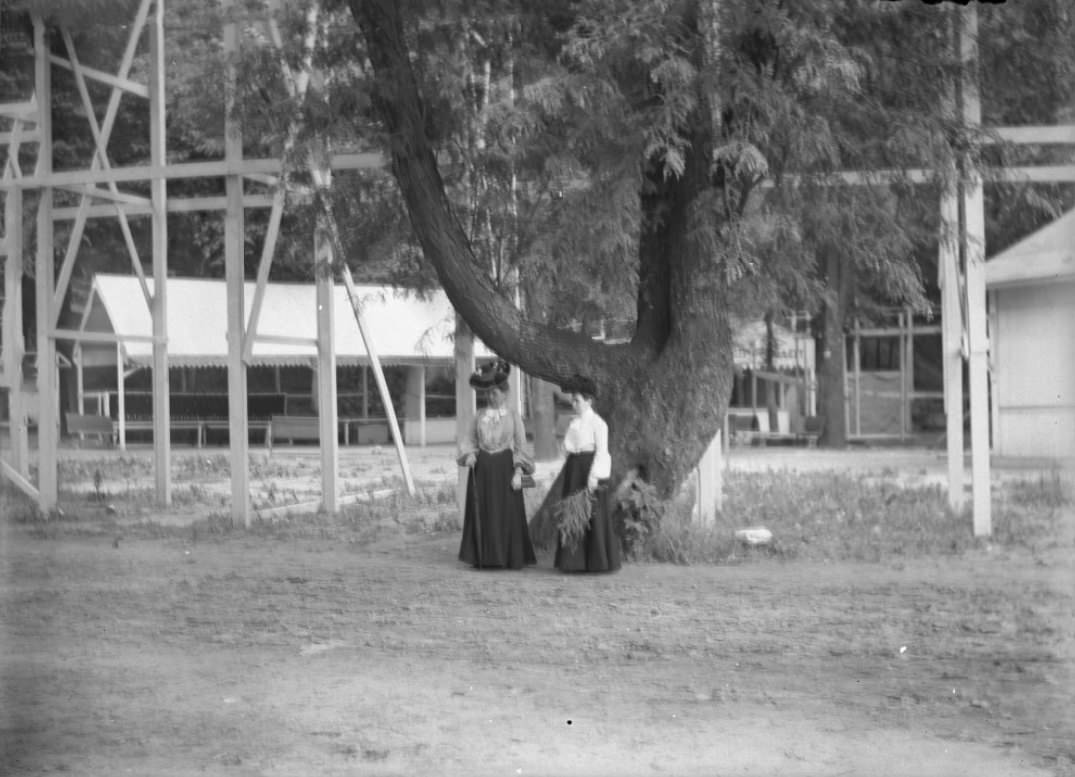
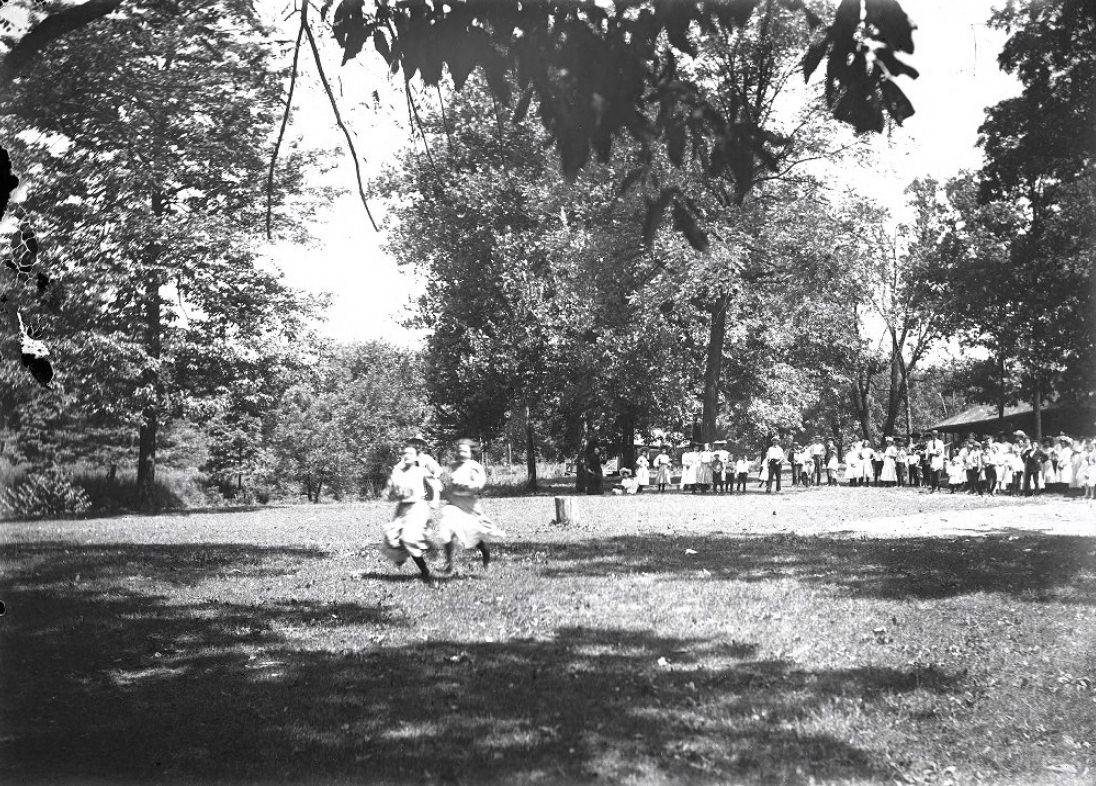
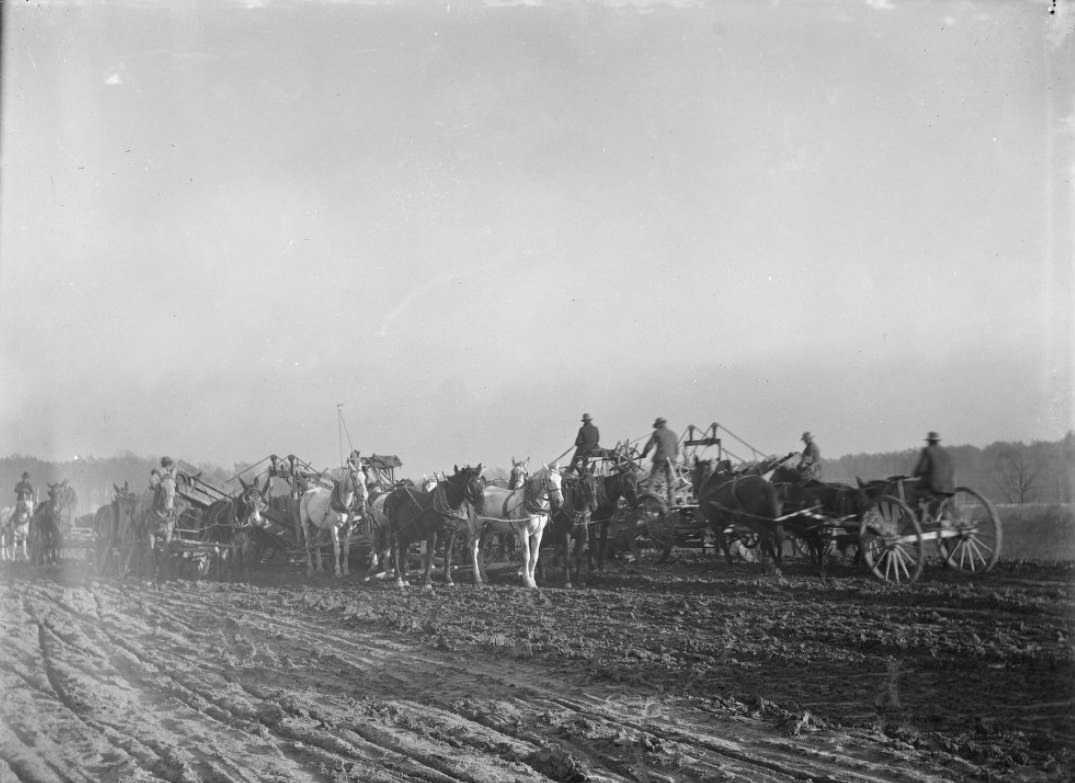
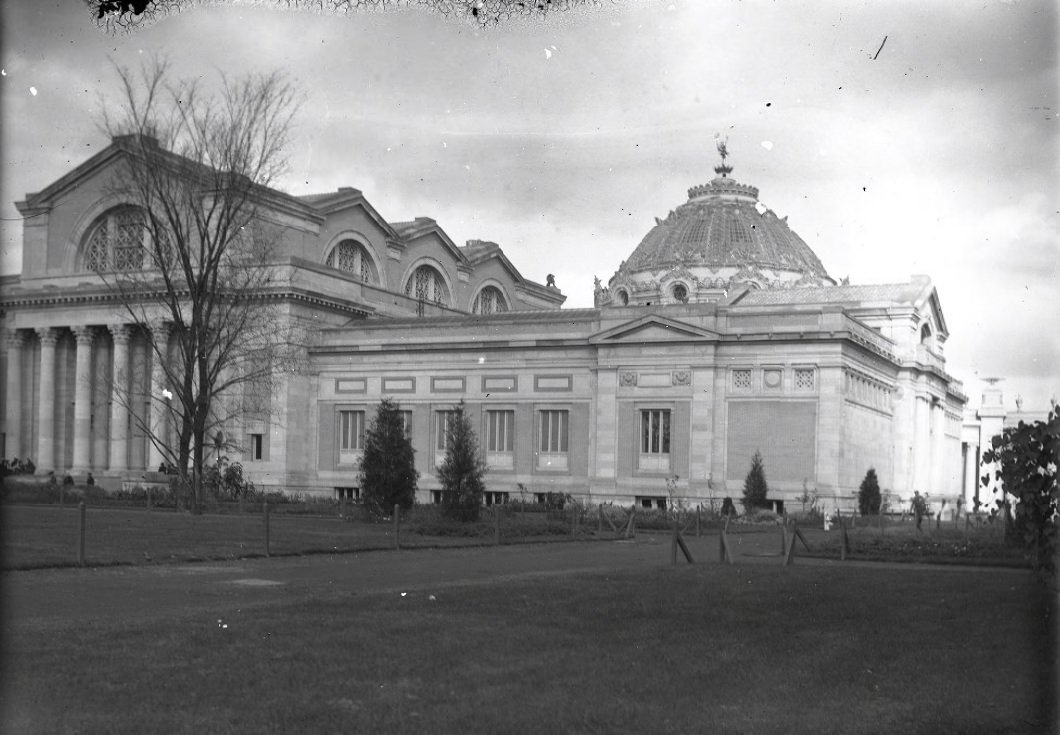
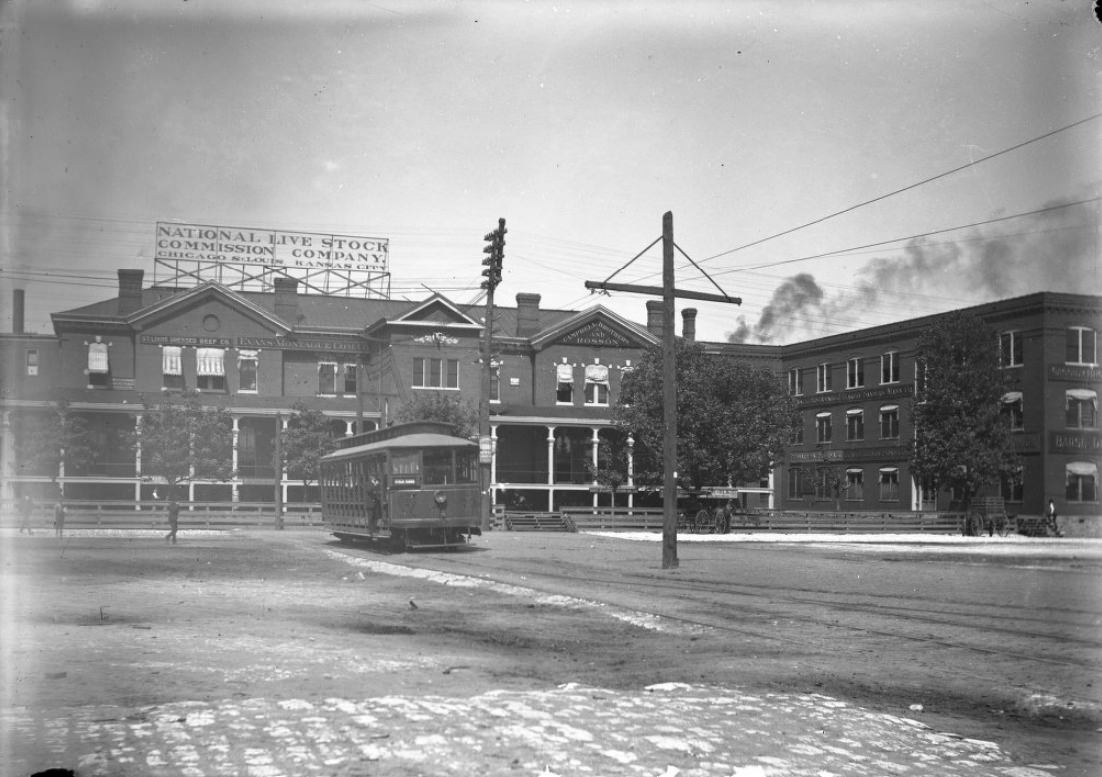
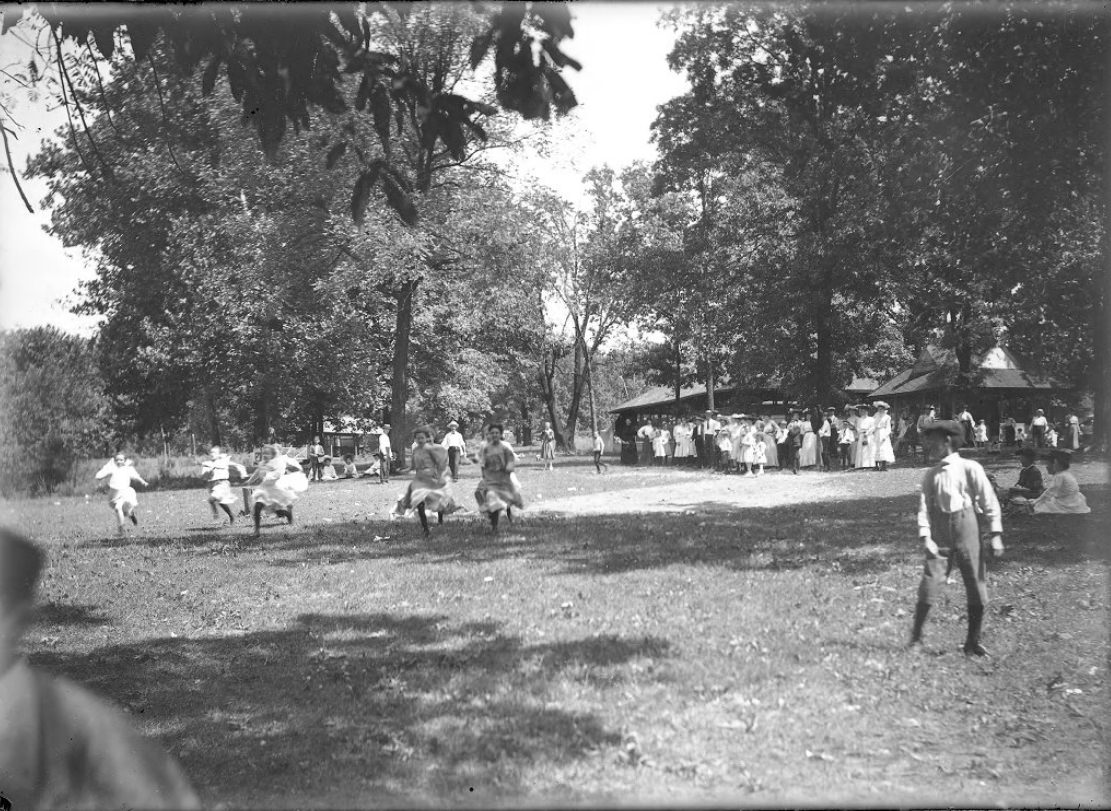
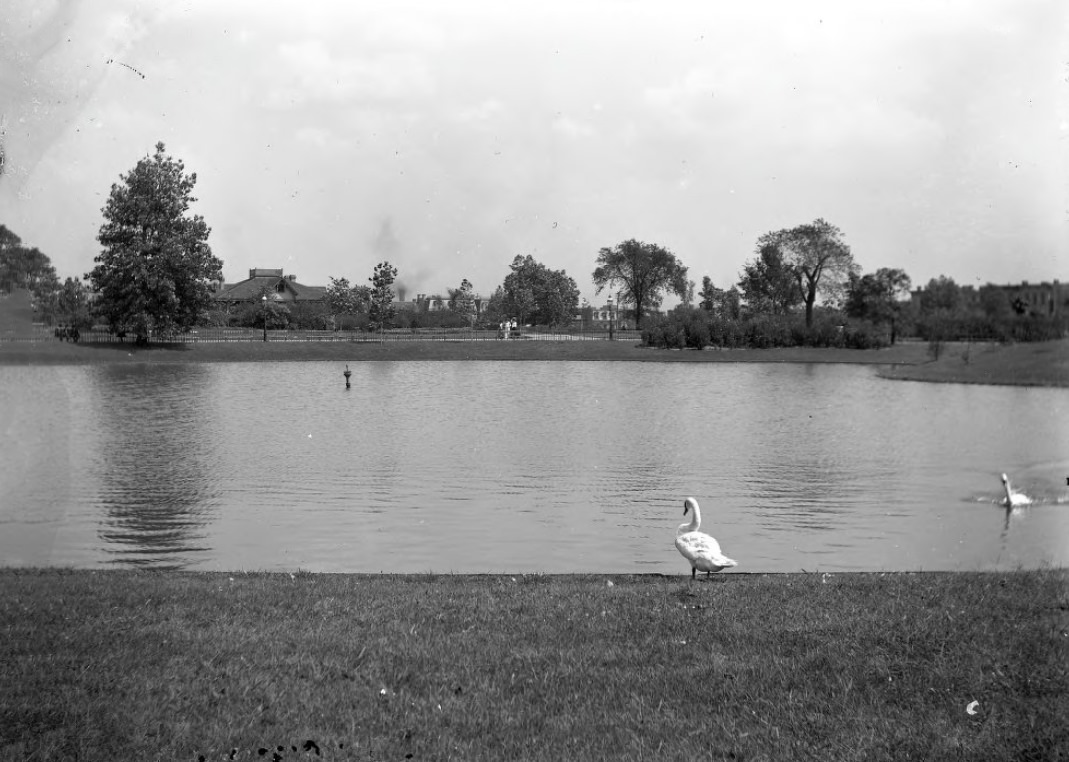
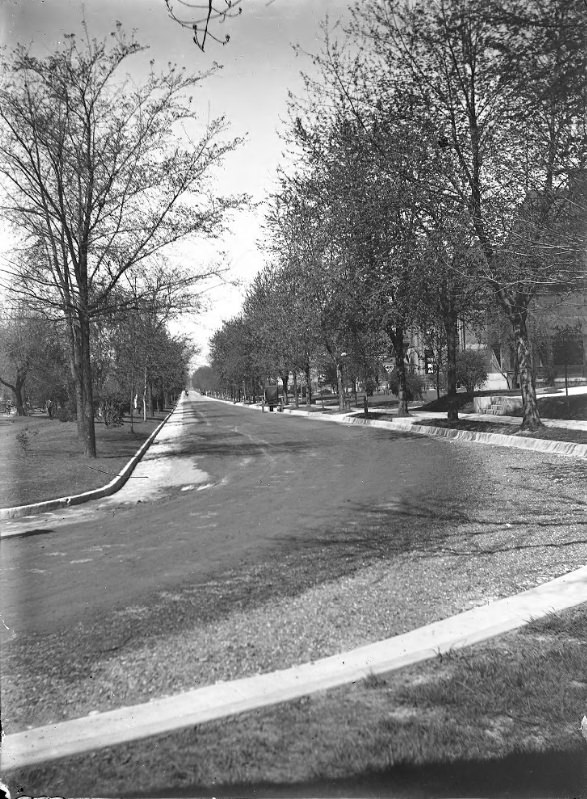
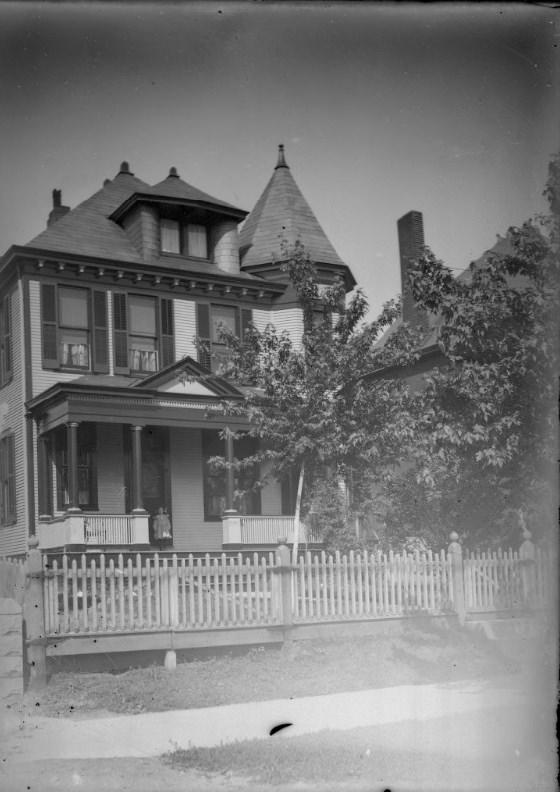
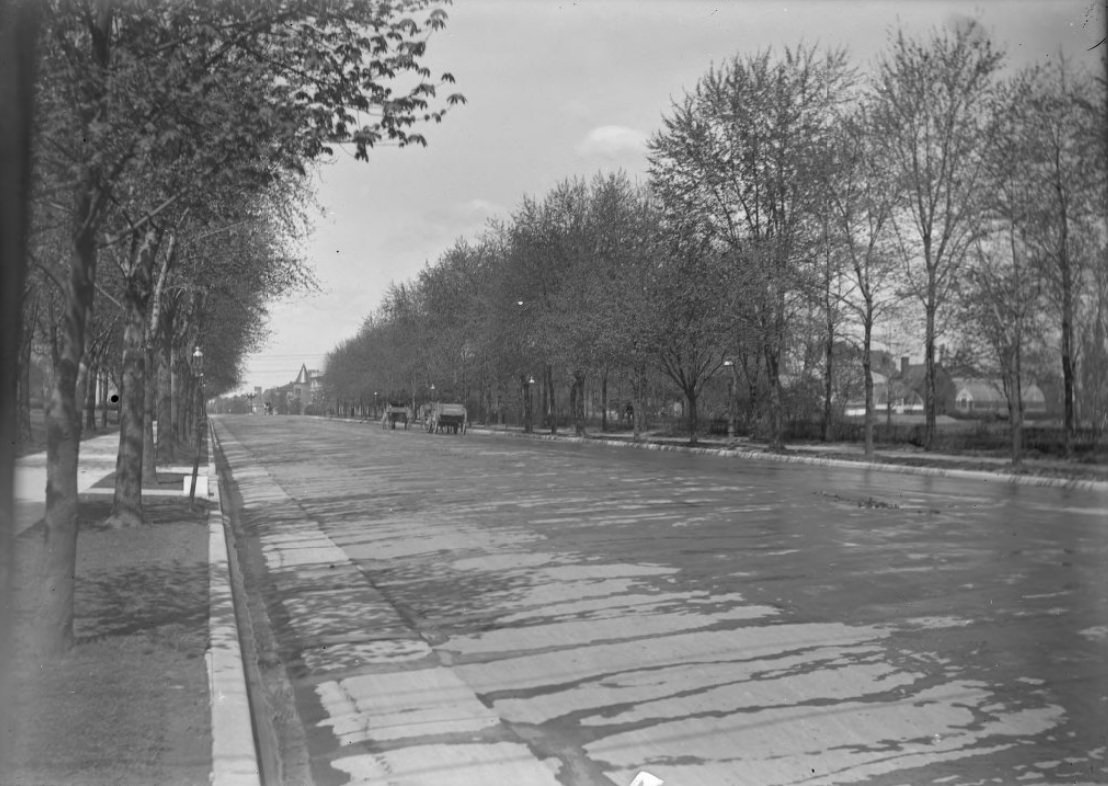
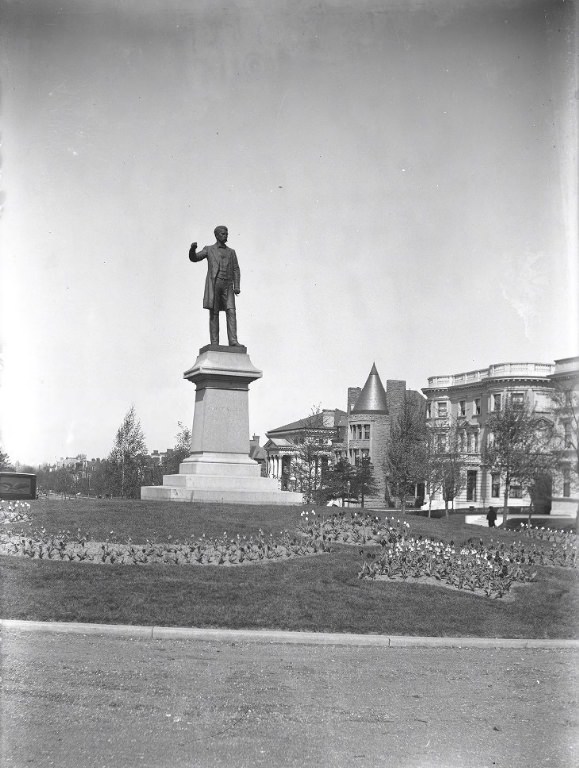
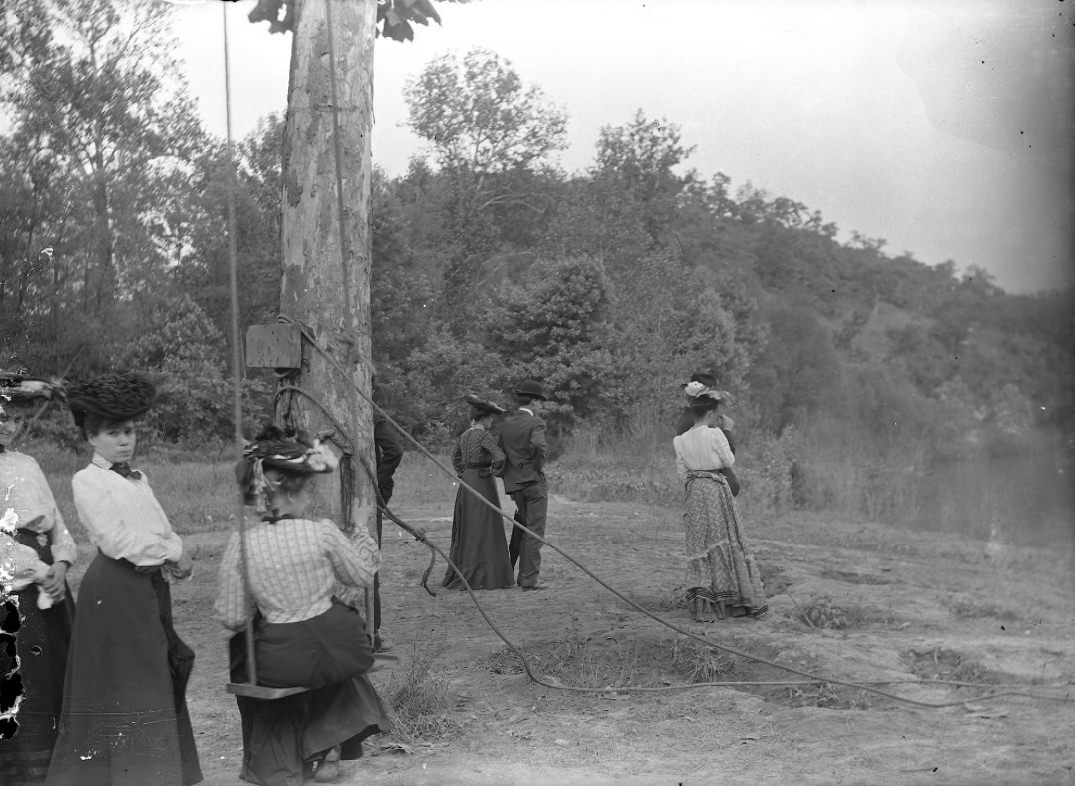
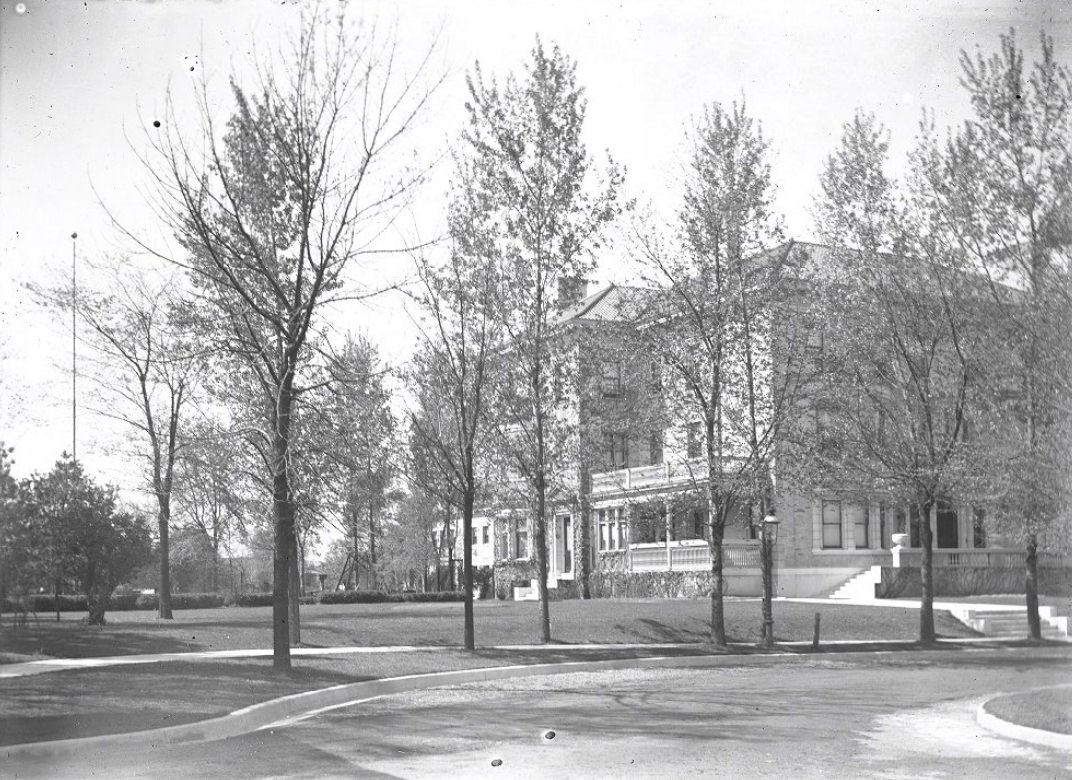
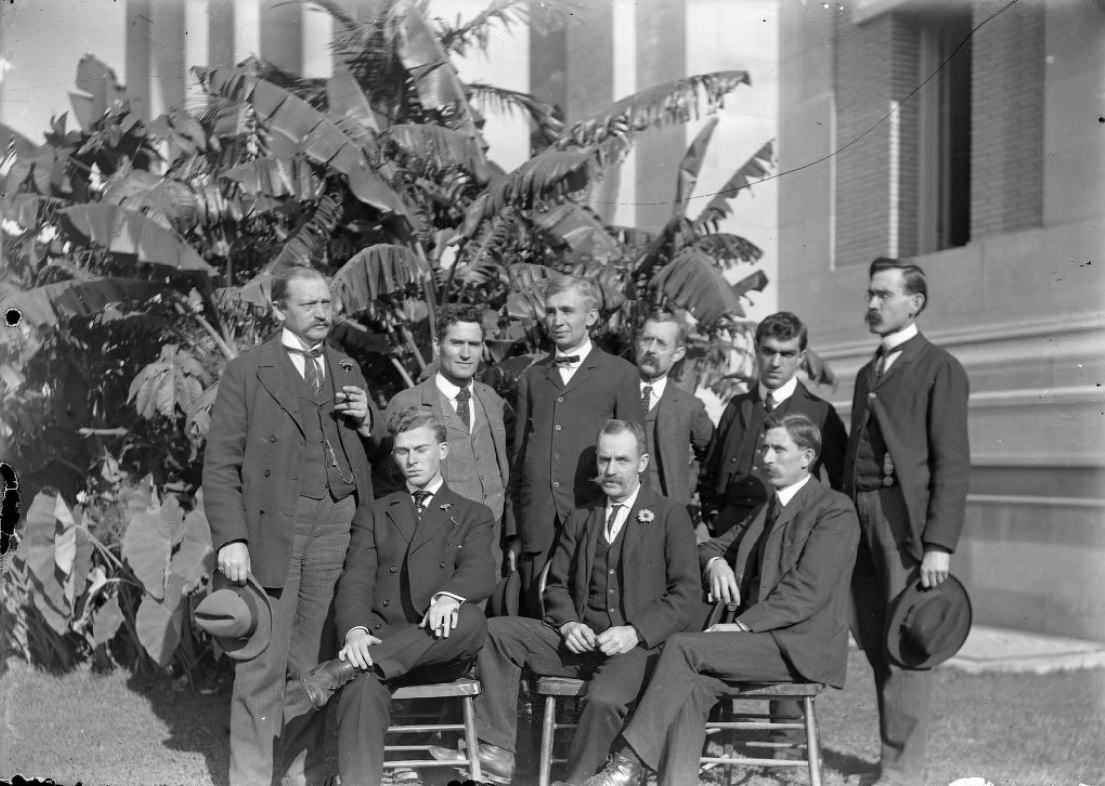
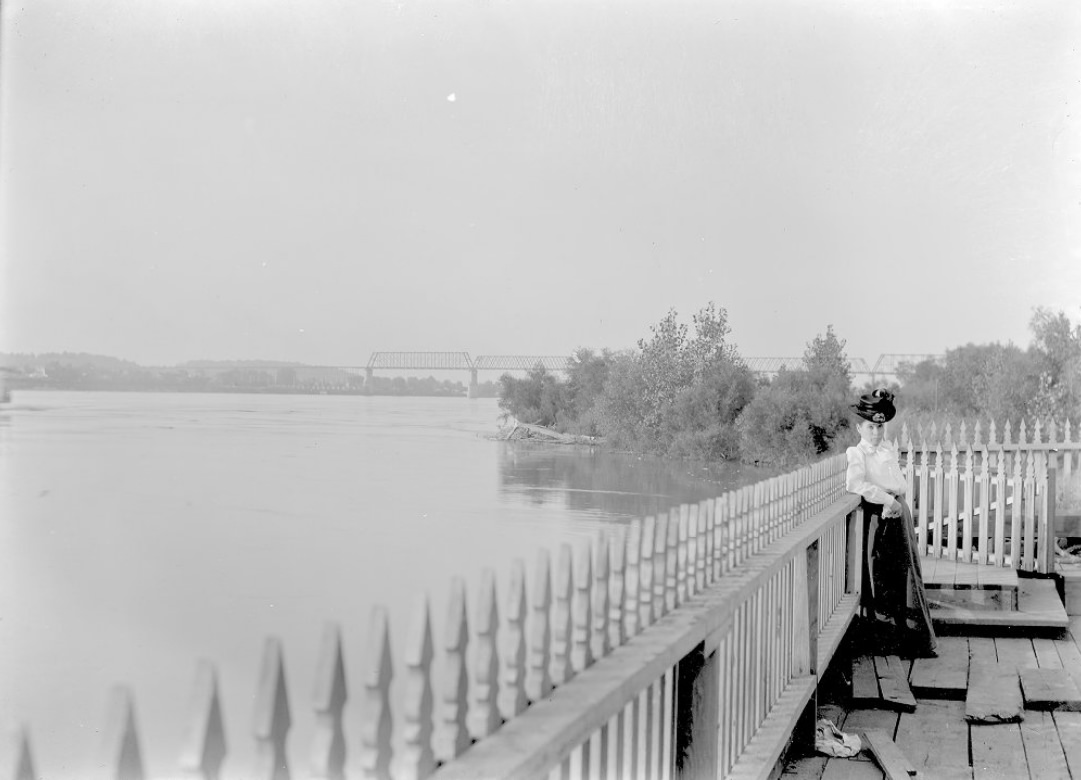
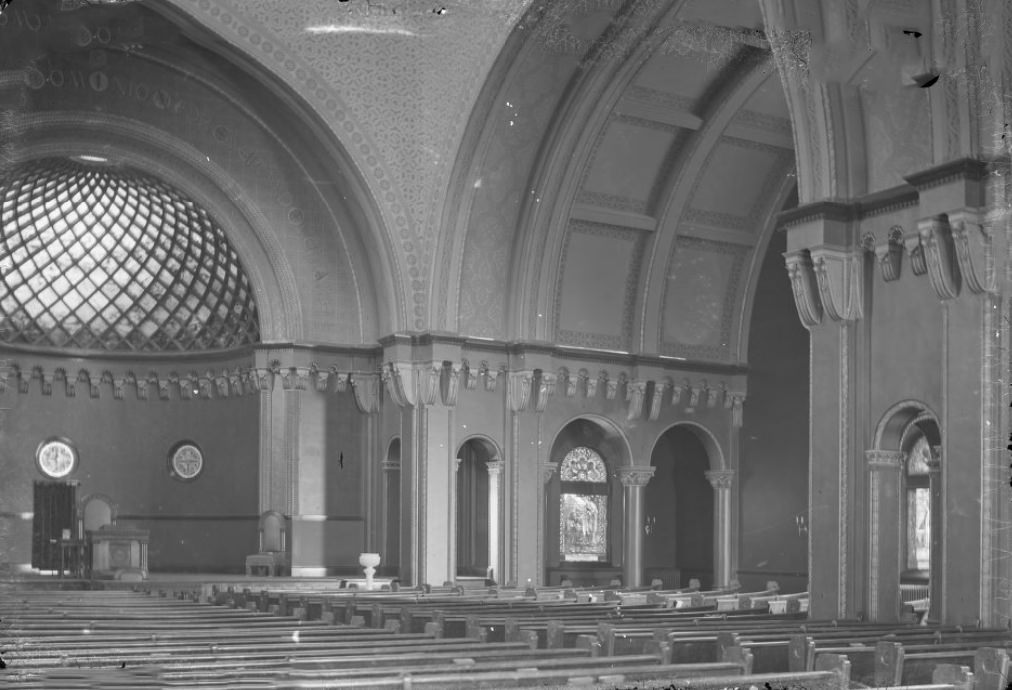
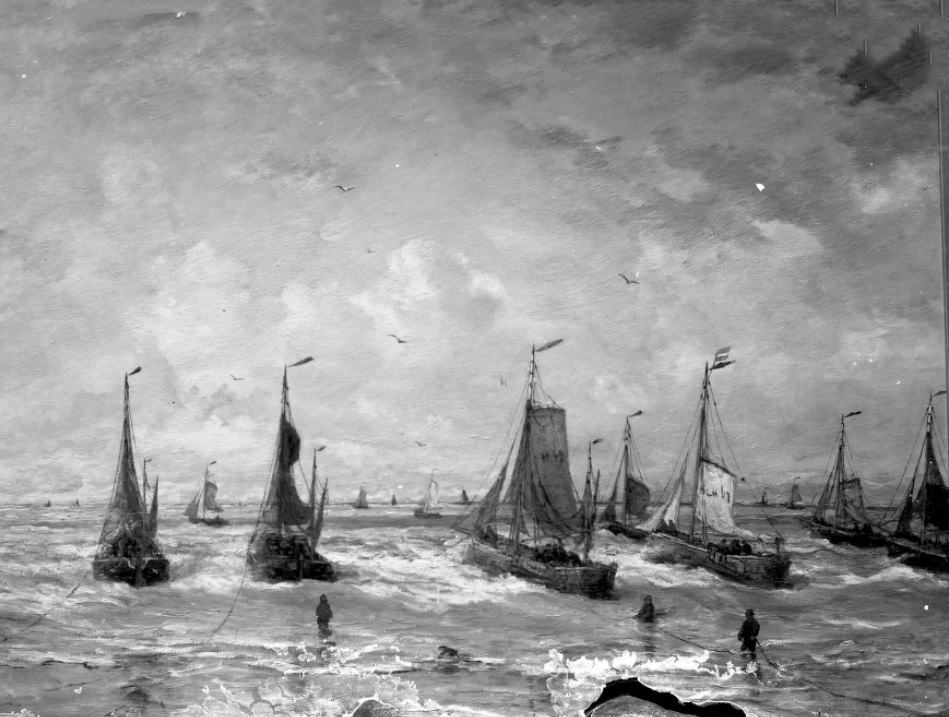
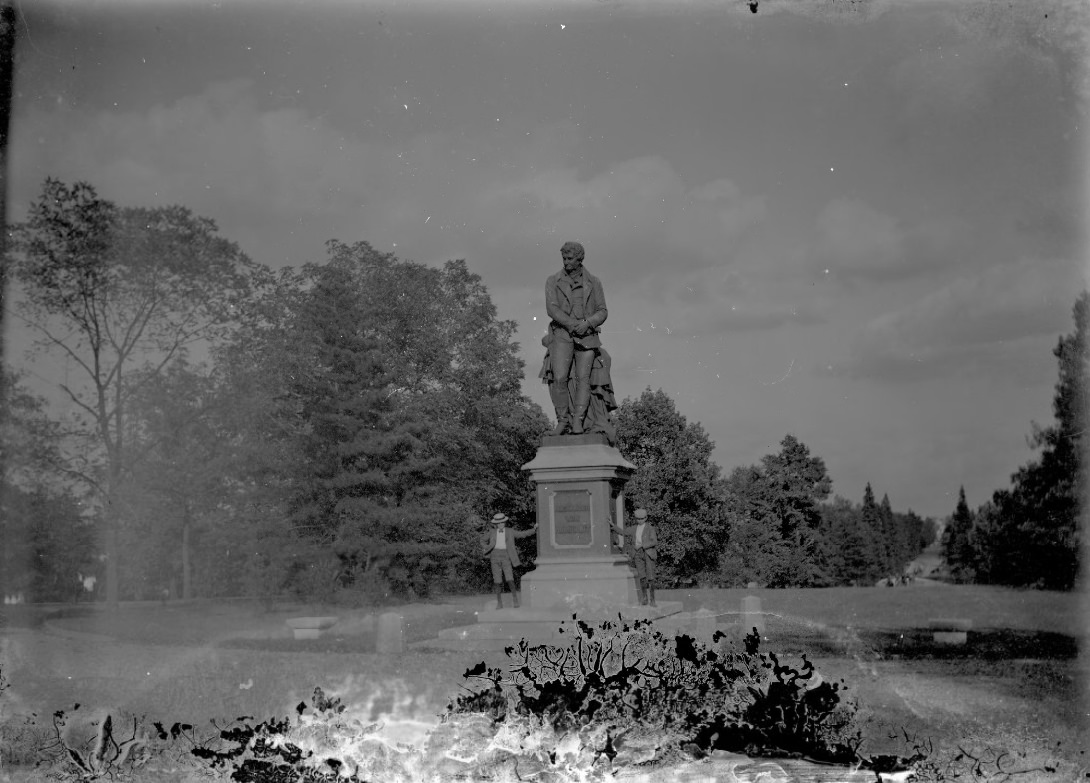
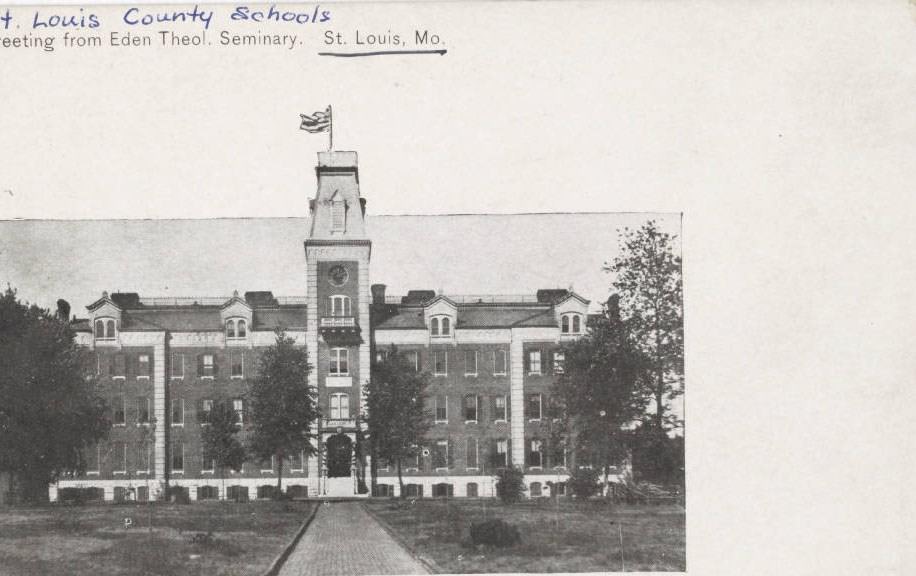
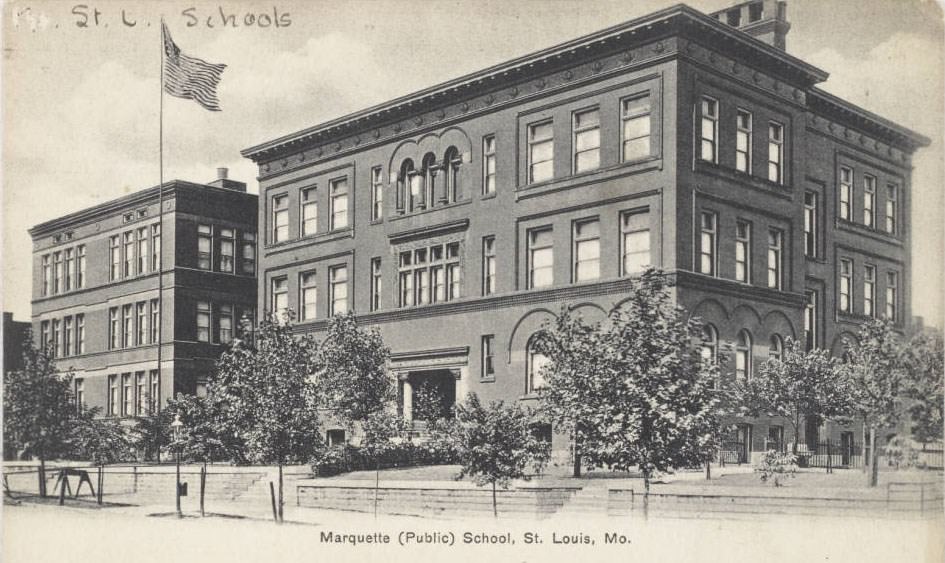
Two women standing by a large, misshapen tree near a tall, wooden structure, 1900.Horse-Drawn Carriages in Downtown Saint Louis, 1900Children Running Through a Park.1900Horses and Mules Pulling Carts in a Field, 1900Saint Louis City from a Roof, 1900Saint Louis Art Museum, 1900Construction of the Palace of Varied Industries, 1900Bandstand in Tower Grove Park, 1900Palace of Varied Industries, 1900Compton Hill Water Tower, 1900National Live Stock Commission Company, 1900Children Racing Through a Park, 1900Swans in a Park Pond, 1900Down the Length of a Residential Street, 1900Farmhouse in Saint Louis, 1900Family in Front of a Farmhouse, 1900Child Standing on the Porch of a Large House, 1900Saint Louis Farmhouse, 1900Horse-Drawn Carts Going Down a Boulevard, 1900The Statue of Francis P. Blair Jr., 1900Group of People Gathered By a Tree, 1900Street view photograph of large homes in a suburban area, 1900.Three seated men, and six men standing behind the chairs. Directly behind them is a tight grouping of palm trees, 1900A Woman by the River, 1900Pews and Altar of a Church, 1900Painting of Ships and Their Crews, 1900A construction site in Forest Park, Saint Louis, Missouri, 1900A statue of Alexander Von Humboldt in Tower Grove Park of Saint Louis, Missouri, 1900.Ground level photograph of construction for the World’s Fair in Forest Park of Saint Louis, Missouri, 1900.Greeting from Eden Theo. Seminary, St. Louis, 1900St. Louis-the Eads Bridge, 1900Wharf and Eads Bridge, St. Louis, 1900Marquette (Public) School, St. Louis, 1900The Eads Bridge looking from St. Louis towards the Illinois side, 1900Levee and riverfront, St. Louis, 1900Excursion steamer leaving wharf, St. Louis, 1900Eads Bridge, St. Louis, 1900Merchants’ Bridge, St. Louis, 1900
Olive Street in downtown St. Louis, Missouri, 1900
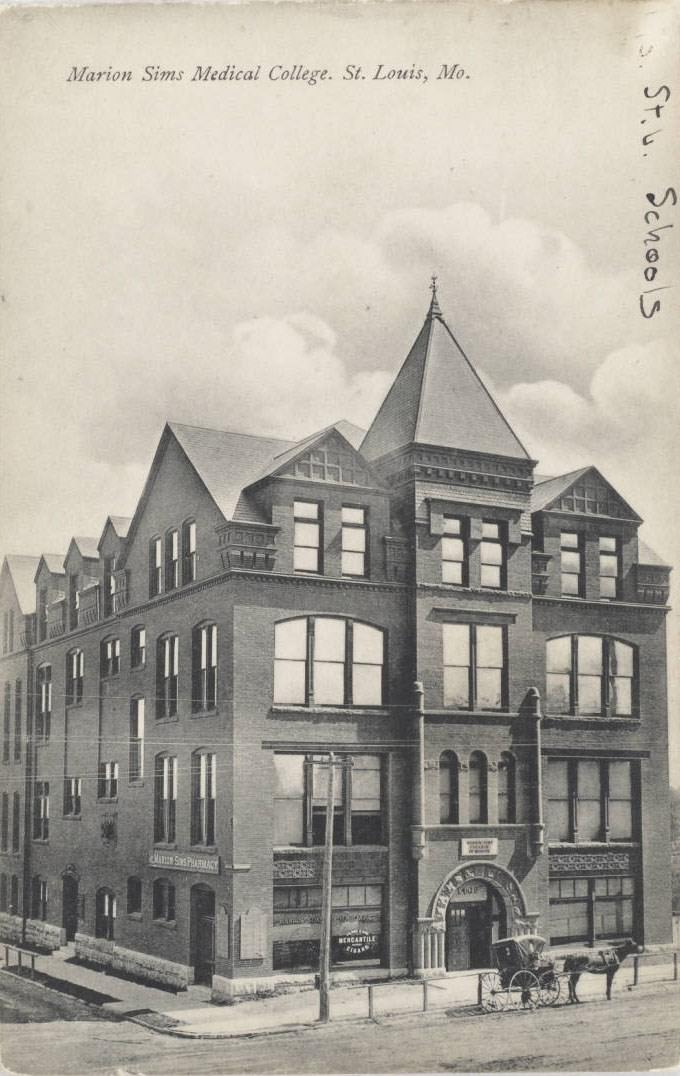
The Marion Sims-Beaumont College of Medicine, owned by a group of St. Louis physicians, was incorporated into St. Louis University in 1903.
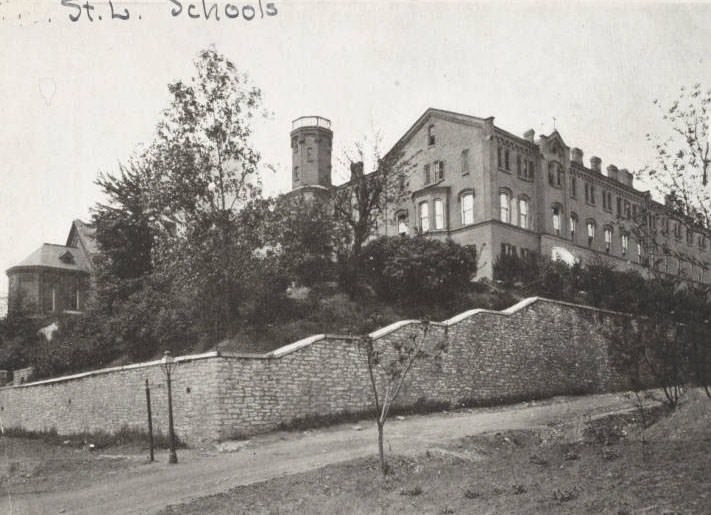
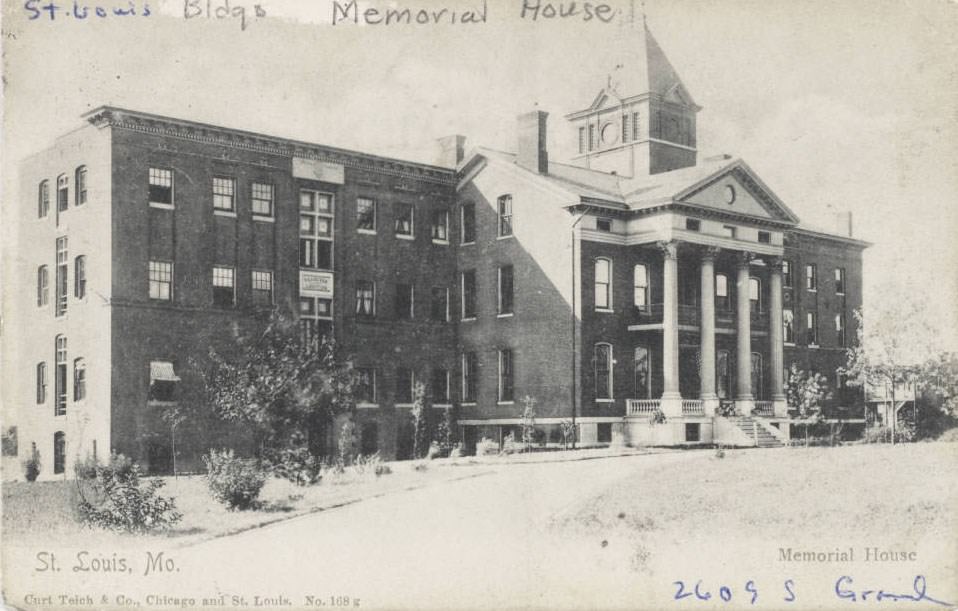
Lindell B’l’v’d. near Taylor Avenue, St. Louis, 1900Shaw’s Garden, Palm House, St. Louis, 1900Private streets, such as Washington Terrace, were developed in St. Louis, 1900St. Joseph’s Convent, St. Louis, 1900Memorial House, 2609 South Grand, St. Louis, 1900
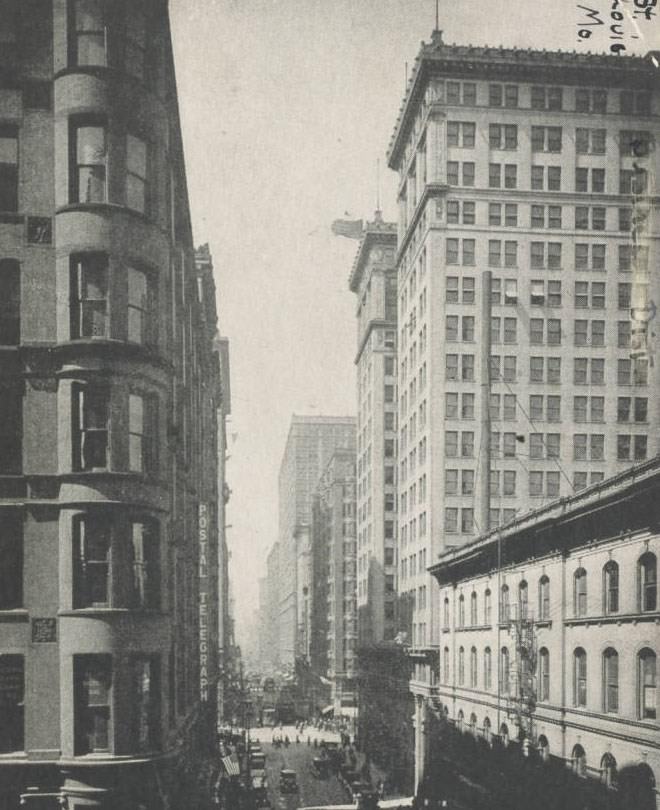
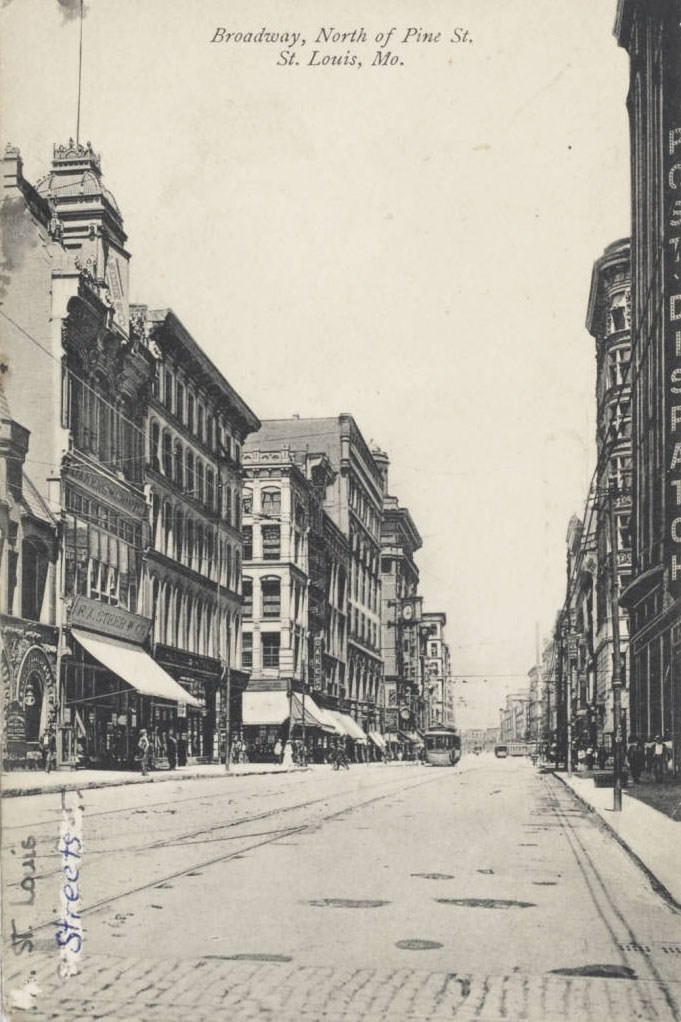
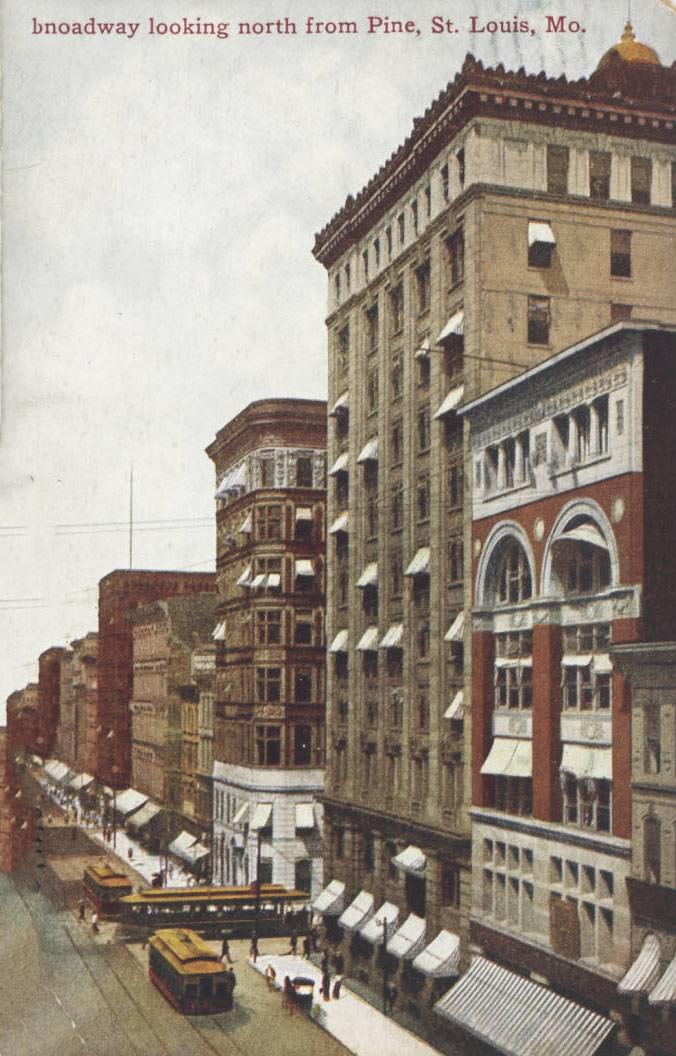
The building housing the St. Louis Post-Dispatch newspaper can be seen in the view of Broadway, nroth of Pine Street, St. Louis, 1900
The Mermod-Jaccard building, 407 North Broadway, is in the foreground in this view of Broadway north of Olive Street, St. Louis, 1900
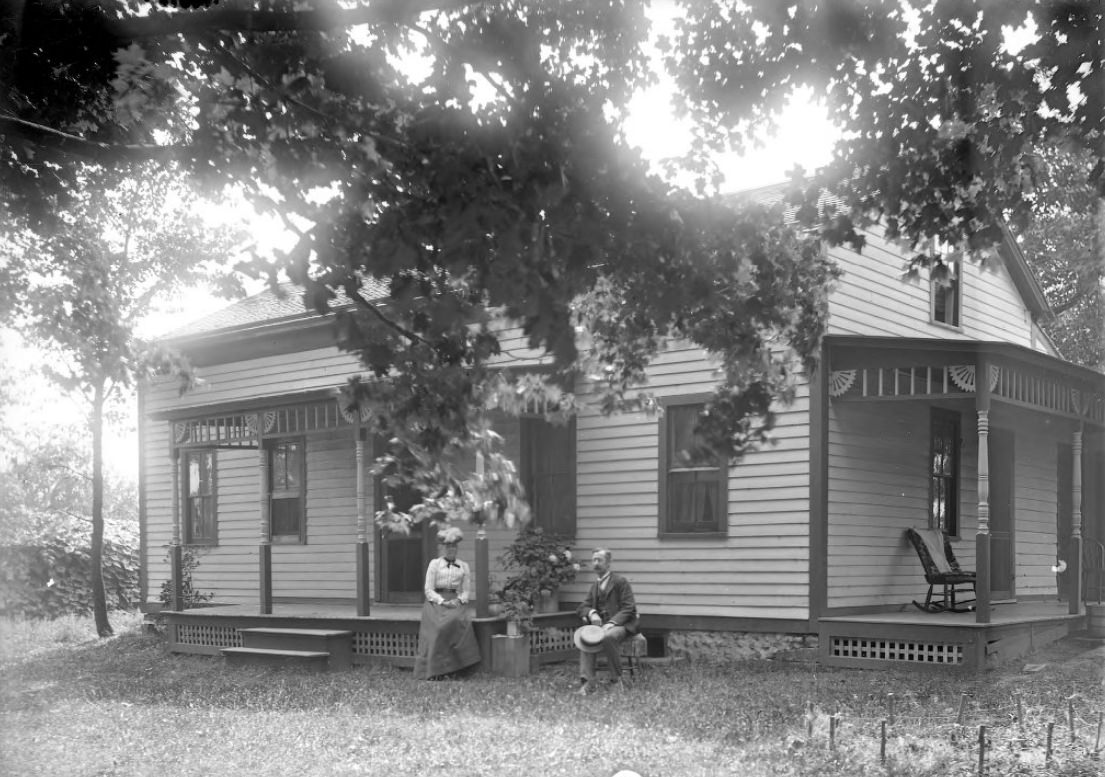
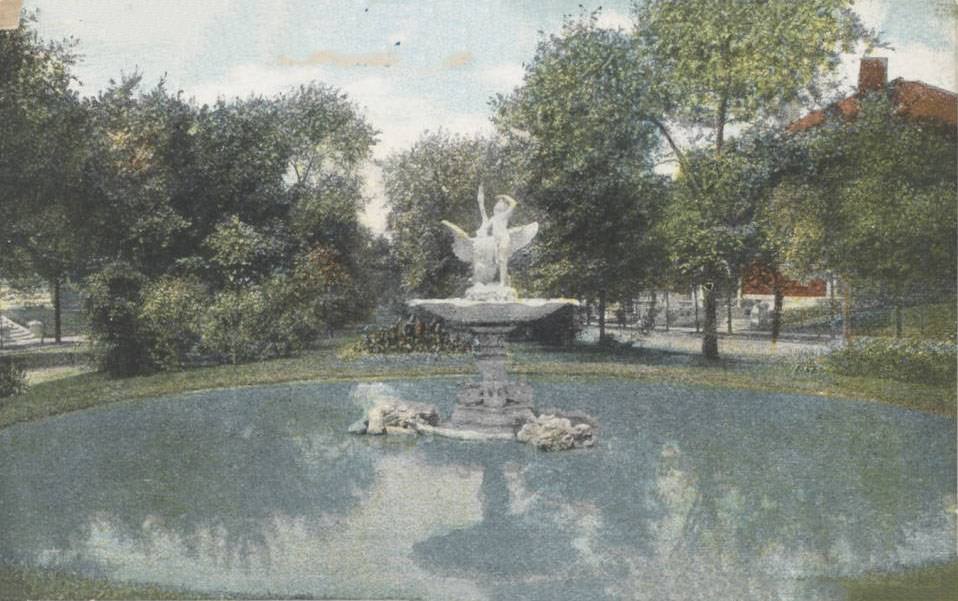
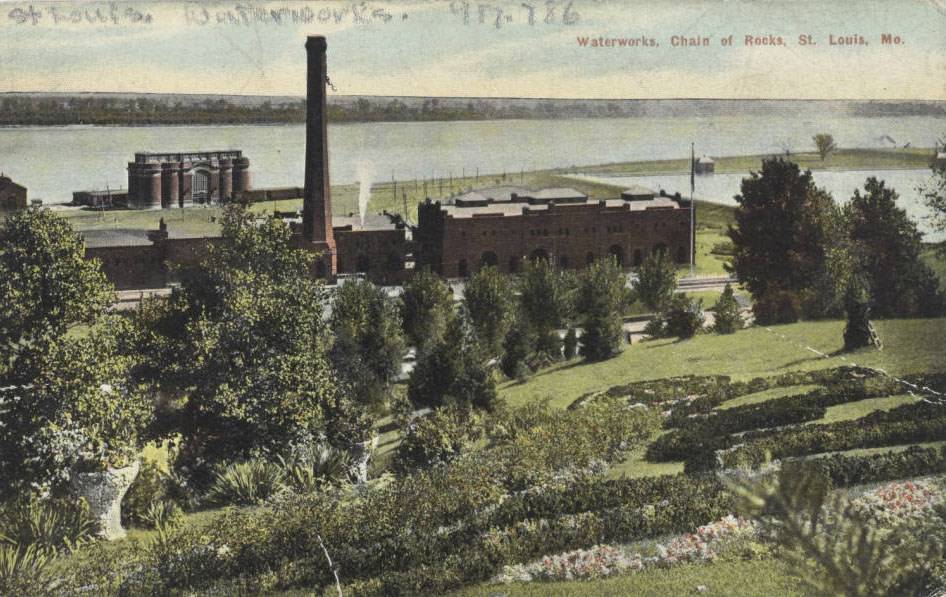
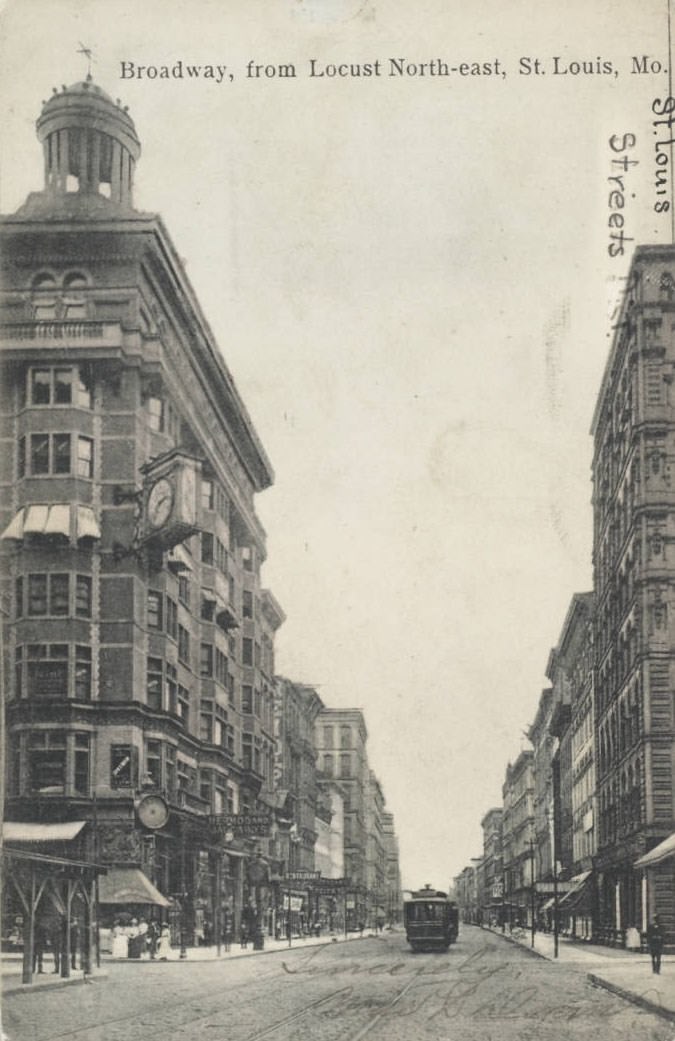
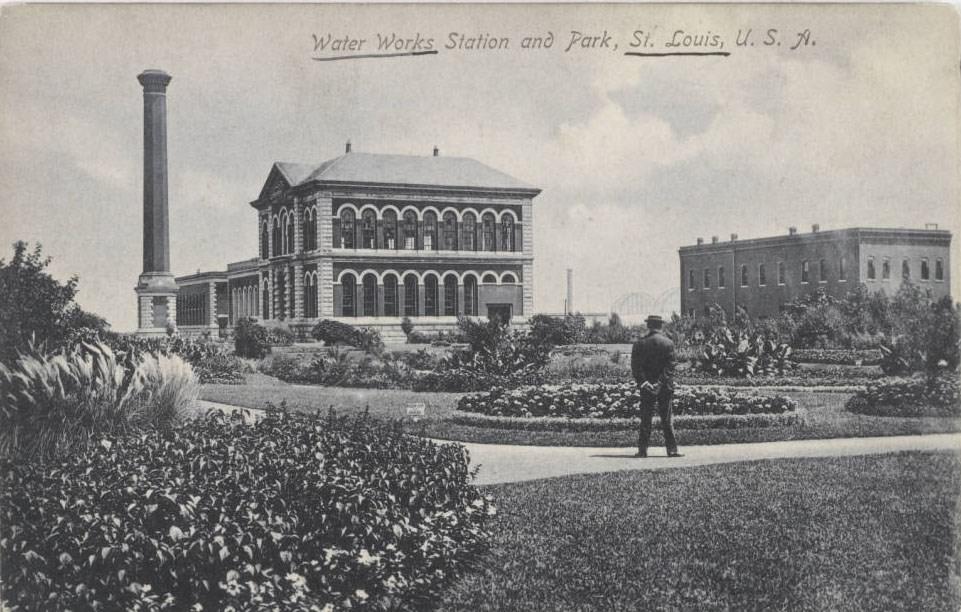
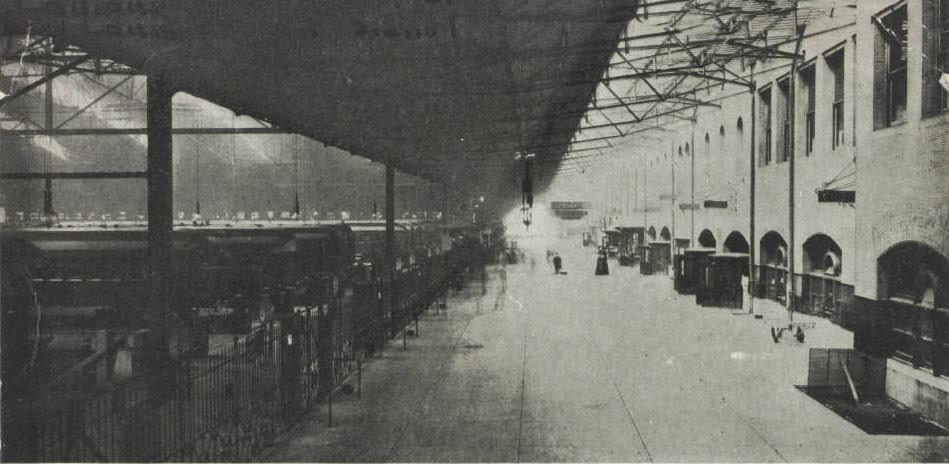
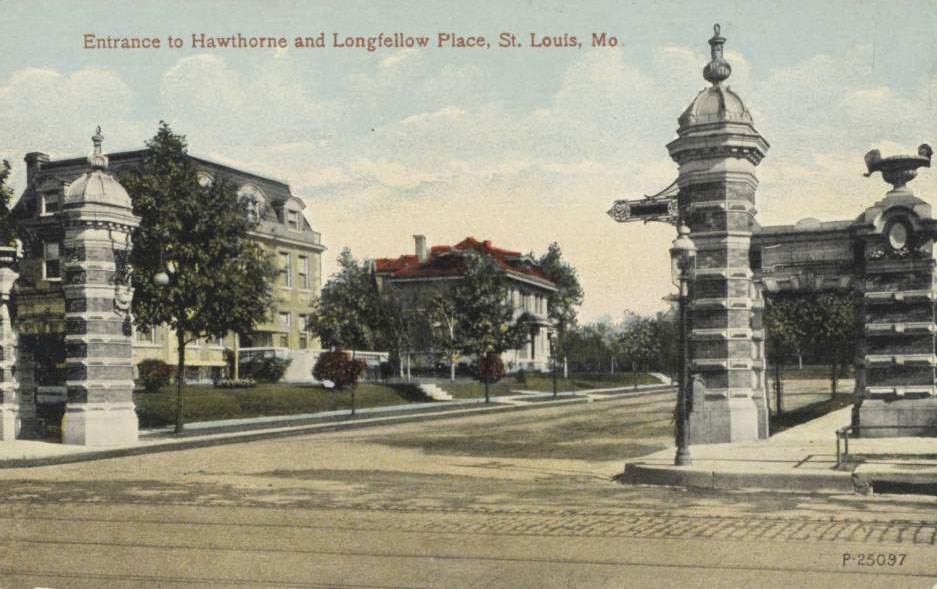
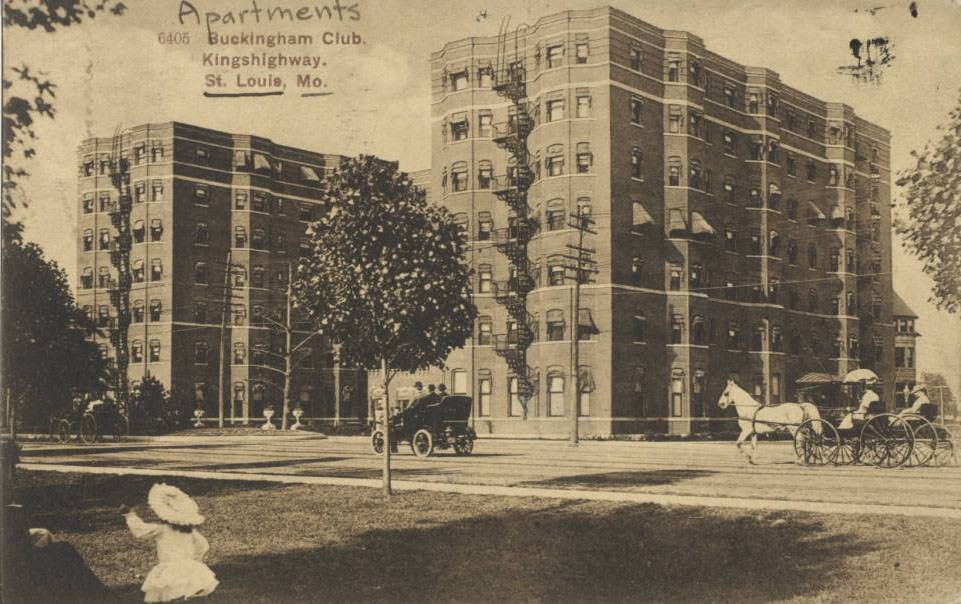
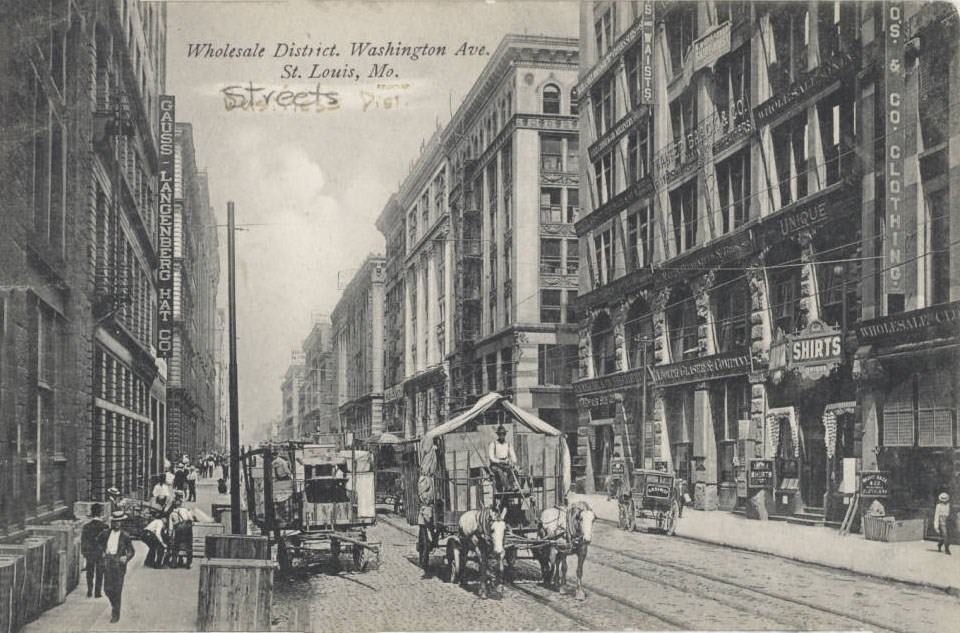
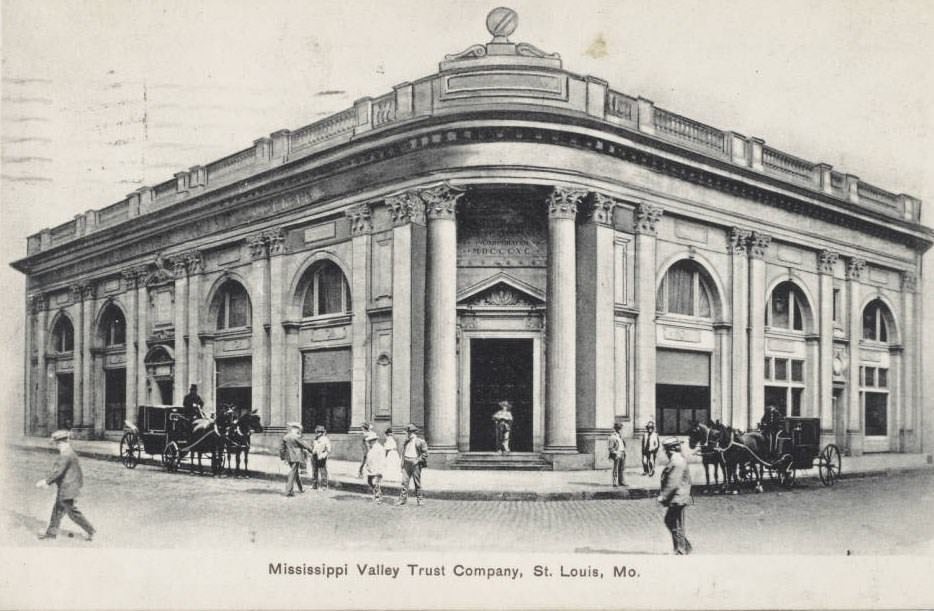
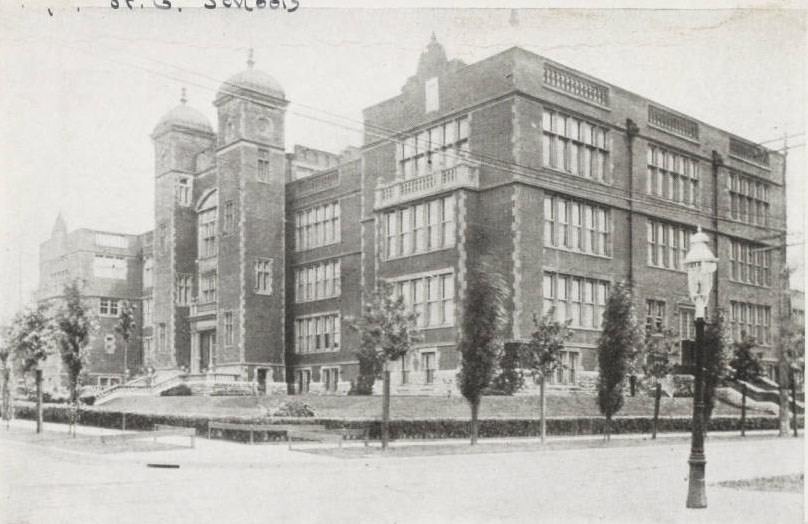
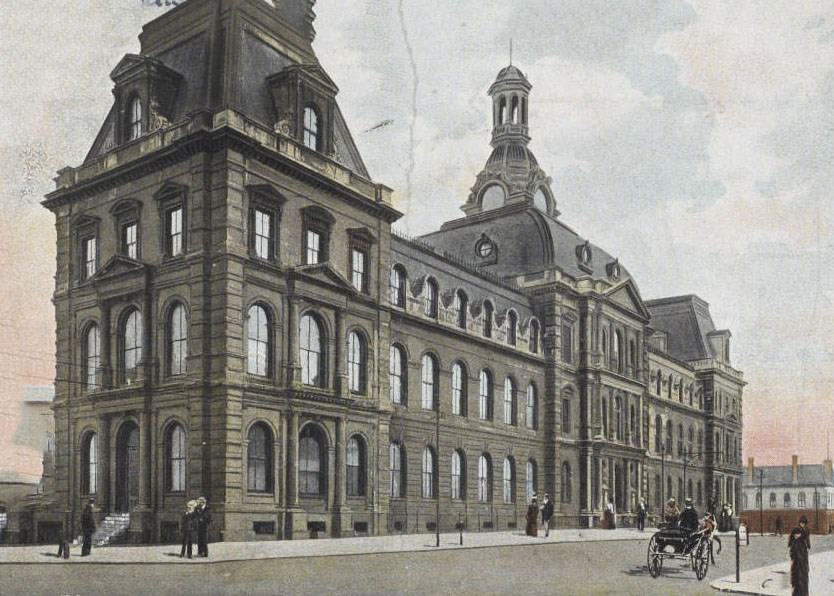
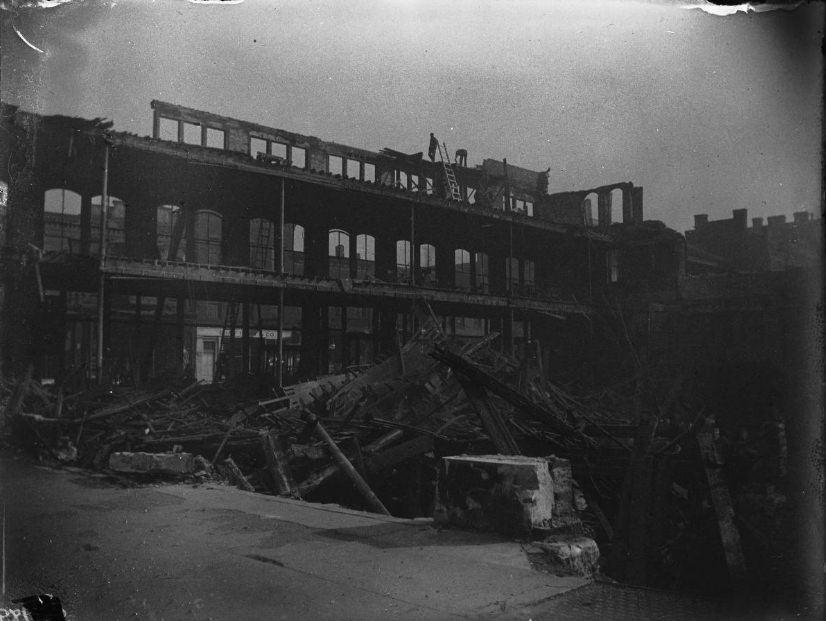
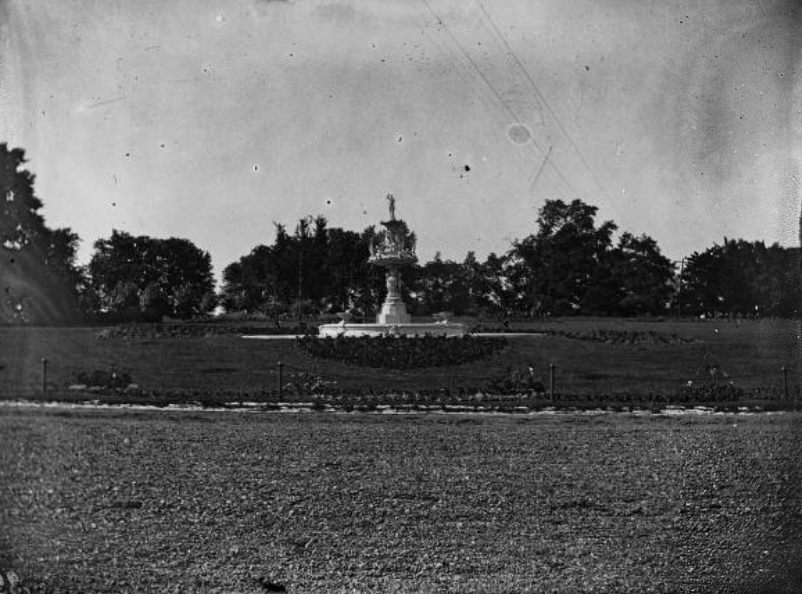
Fountain and sculpture near the entrance of Vandeventer Place, St. Louis, 1900The Grand Avenue bridge or viaduct crossed over the Mill Creek Valley railroad yards north of Chouteau Avenue in St. Louis, 1900Sunken garden, Chain of Rocks, St. Louis, 1900Waterworks, Chain of Rocks, St. Louis, 1900Broadway, from Locust north-east, St. Louis, 1900Water works staion and park, St. Louis, 1900A view of the Midway at Union Station, St. Louis, 1900Entrance to Hawthorne and Longfellow places, St. Louis, 1900Buckingham Club, Kingshighway, St. Louis, 1904House in Kirkwood, Mo. Original photograph by Lee Erbschloe, Kirkwood, 1908Eads Bridge, St. Louis, 1908Wholesale district, Washington Ave., St. Louis, 1909Mississippi Valley Trust Company, St. Louis, 1909Yeatman High School, St. Louis, 1908Yeatman High School, St. Louis, 1905Private gate house, Shaw’s Garden, St. Louis, 1905The Four Courts municipal building on Clark Avenue between 11th and 12th streets, 1905. The building housed a police station and jail. Designed by Thomas M. Walsh, it was built in 1871 and razed in 1927.Broadway looking north from Pine, St. Louis, 1905Angie with Lucy and May Byrne, 1900Cadet Station, Cadet, 1900Edmund poses in suit and hat in winter, 1900Family poses in front of frame house, 1900Fire ruins, Crawford’s North wall, 1900Fire ruins, looking East from Broadway, 1900Fire ruins, looking S.W. from 4th & Morgan1, 1900Fire ruins, looking West from 4th St, 1900Fire ruins, Penny & Gentles, from S.E. corner of Broadway & Franklin, 1900Flo & Frank McCallion’s home in Cadet, 1900Florence, Angie, and Edmund, 1900Fountain as seen from Grand Drive in Forest Park, 1904Front view to Flo and Frank McCallion’s house in Cadet, 1900Group of school-age children, 1900John Philibert, Sr. House, in De Witt, 1900Missouri State Pavilion at the World’s Fair, 1904
River Craig Mansion, 1900
Sarah Jane Philibert, 1900
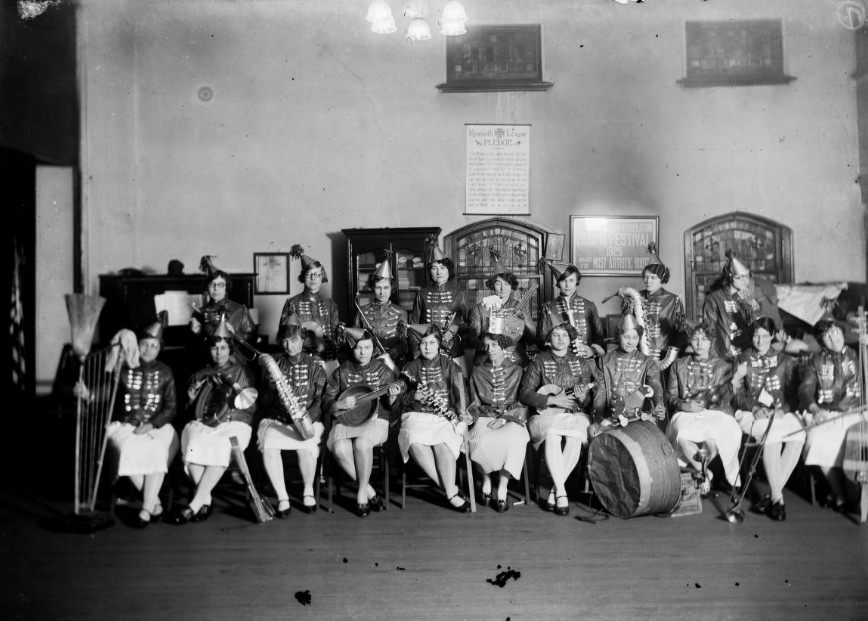
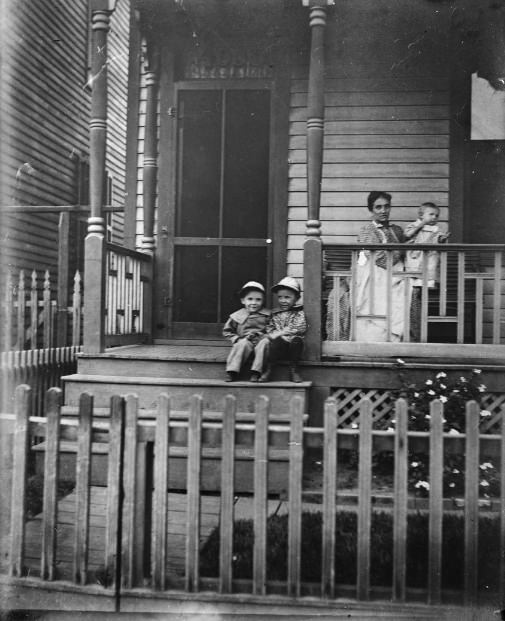
Side view to Flo and Frank McCallion’s house in Cadet, 1900Sarah Jane Philibert with elderly man, 19002627 N. Spring Avenue, 19003900 block of Lincoln Avenue, St. Louis, 19003949 Lincoln Avenue, St. Louis, 1900Archie Baldwin and wife, 1900Back of Henderson’s House, 6th Street, 1900Back views from back porch, 1905Band members in uniform, 1900
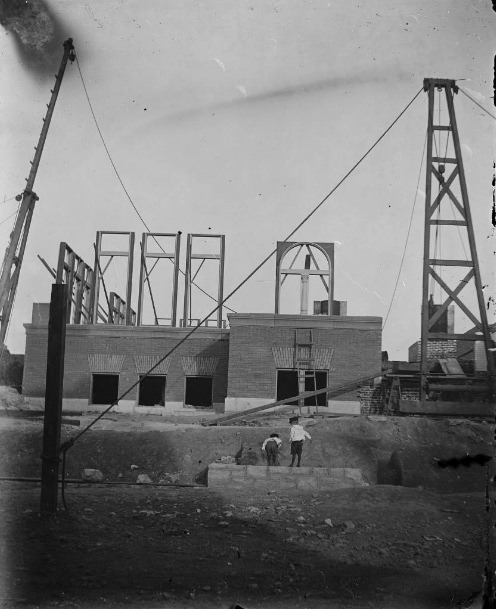
Boys at construction site, 1900
Buck and Bab in side yard swing, 1902
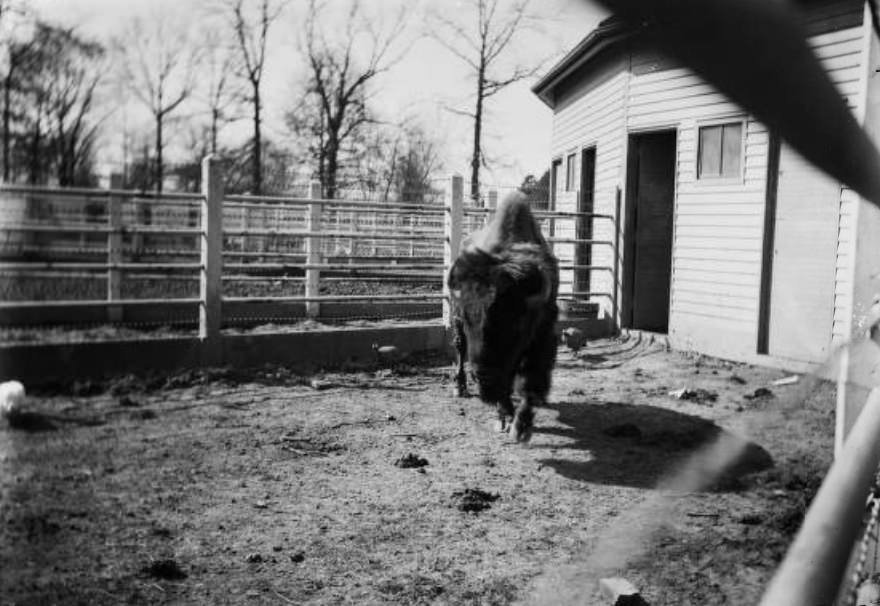
Buck, Albert, Mamma and Adele Dubach, 1900Buffalo—Forest Park, 1902
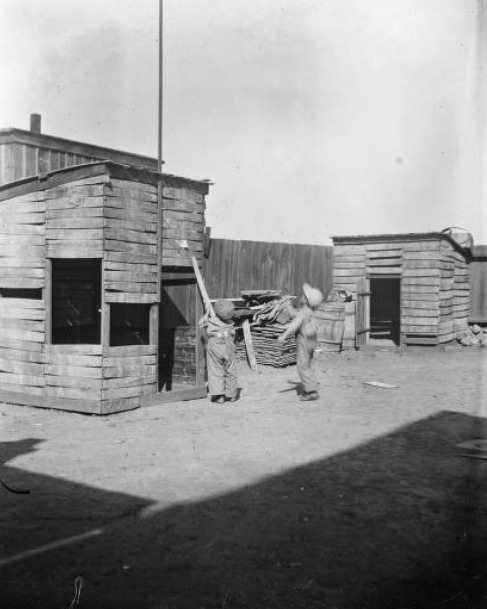
Children and chicken coop, 1900
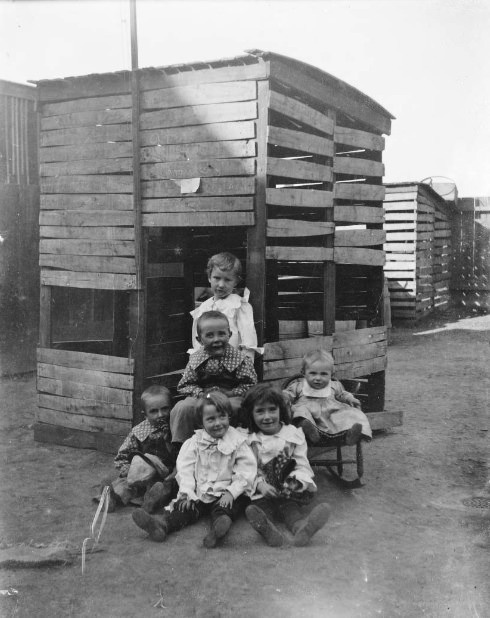
Childrens sit for camera beside chicken coop, 1900
Christopher Columbus statue in Tower Grove Park, 1900Downtown St. Louis street view, 1900Drinking Fountain, Forest Park, 1900Dubach children and Spot, 1900
Electrical Building, 1902
Front View of 3959 Kennerly Ave.1900
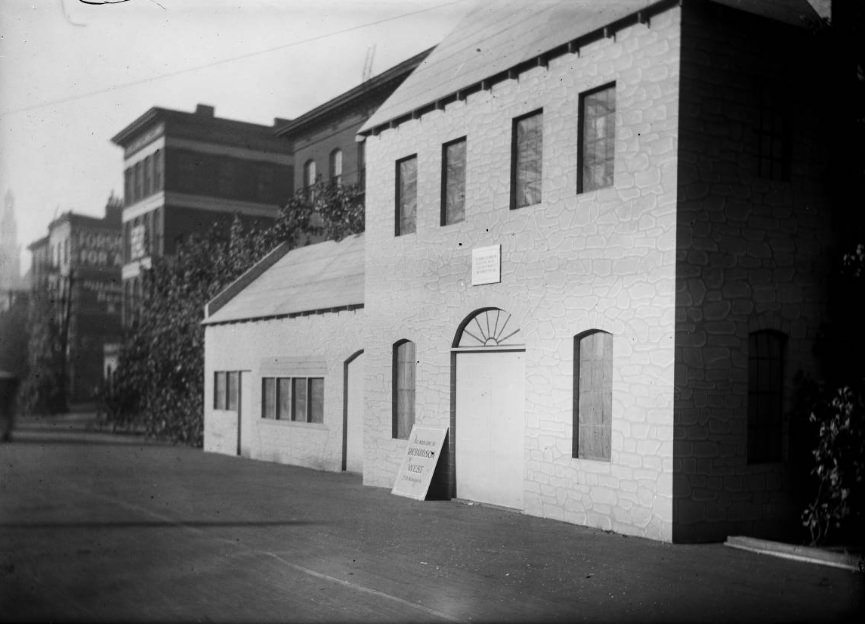
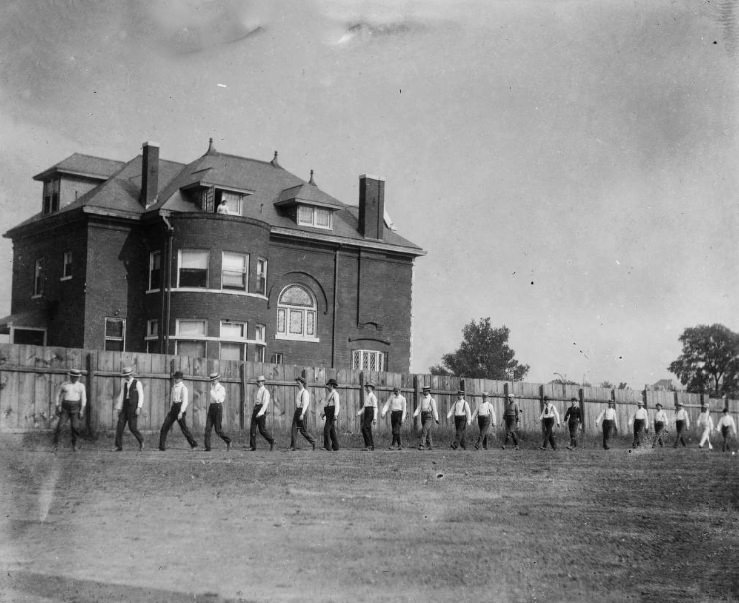
Grand Avenue Bridge, 3 pm, 1900Grand Avenue Water Tower, 1900H.A. Hyatt Photo Supplies, Broadway, St. Louis, 1900House in the 3900 block of Lincoln Avenue, 1900Lindell Pavilion-Forest Park, 1900Mississippi River Views with Free Bridge, 1909Music Stand, Forest Park, 1900Nellie Hanlon and Adele Dubach, with flowers, near birdcage, Forest Park, 1914O’Fallon Park entrance, 1905Pavilion in O’Fallon Park, 1900Reproduction of the first City Hall, 1900sSeveral unidentified men in line along fence, 1900St. Louis Riverfront, 1900Steamboat, 1900Trains, near Lake Junction, Maplewood, 1909Varied Industries, 1900View of bridge in Forest Park, 1900World’s Fair Construction, 1902
Traveling to Europe aboard one of the old steamships in a First Class cabin had to be an ordeal unless you were super-rich. There is a romanticization of this era that makes it seem like it was like ‘Downton Abbey’ for everyone. There was a book written years ago that debunked many of the nostalgic notions about the late 19th/early 20th century. As well, the earlier times depicted in Jane Austen’s romances probably weren’t easy.
On a serious note, I think much of the rose-tinted longing for this era comes from the fact that we could have maintained/improved this urban structure. Rather than transforming it into parking lots and sprawl, we turned it into parking lots and suburban sprawl.
It’s true that once you read the book I mentioned, you’ll never look at this time period or sentimental films like “Meet Me in St. Louis” in quite the same way again.
Life was crazy back then, and it’s almost satisfying to know where most of this stuff is and identify everything. It would have been nice if the “palaces” had stayed. I love how cool that looks.
The fact that so many of these really solidly built old mansions and buildings didn’t last all that long is amazing. Several Vanderbilt mansions in New York City didn’t last even a century, and I’m sure that some of the old ones here in St. Louis are either completely gone or abandoned hulks waiting for some urban explorer to video.

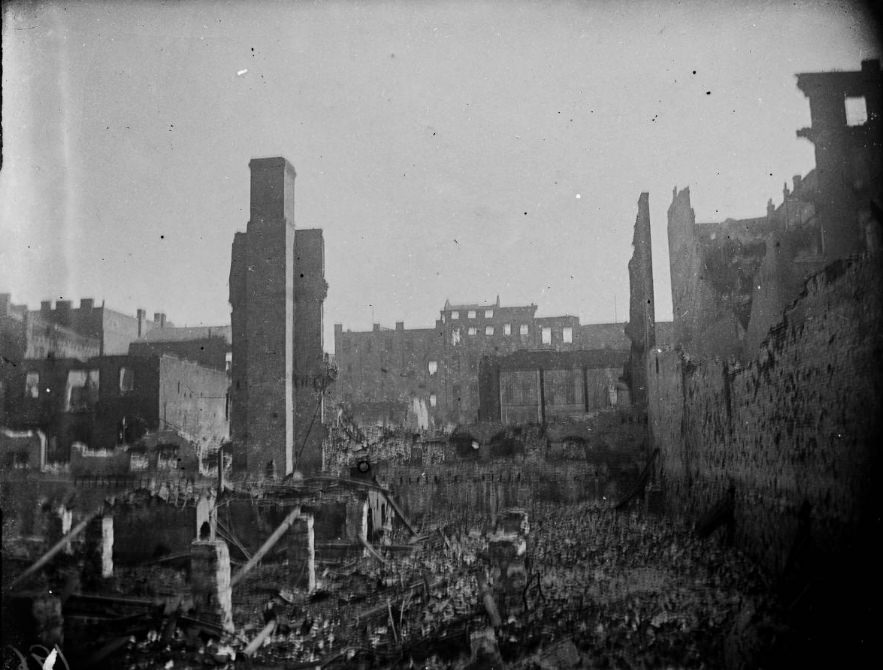
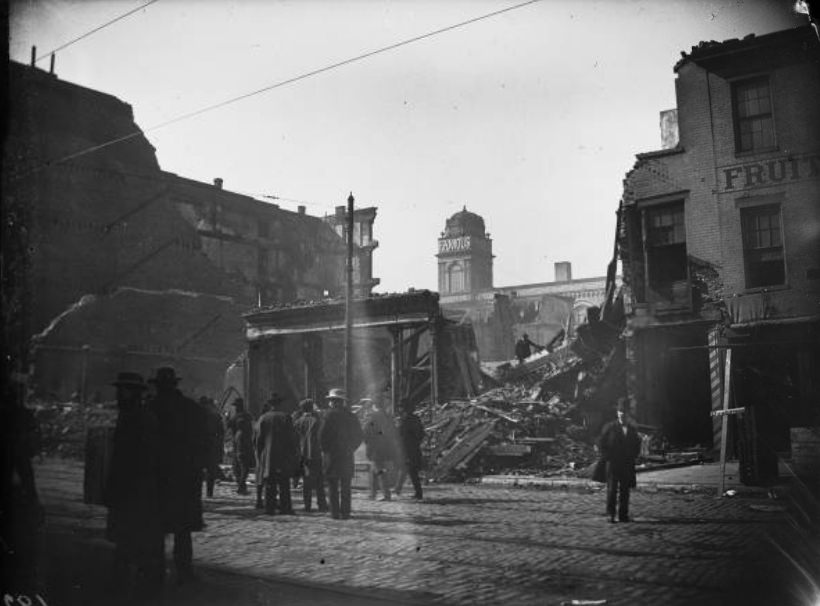
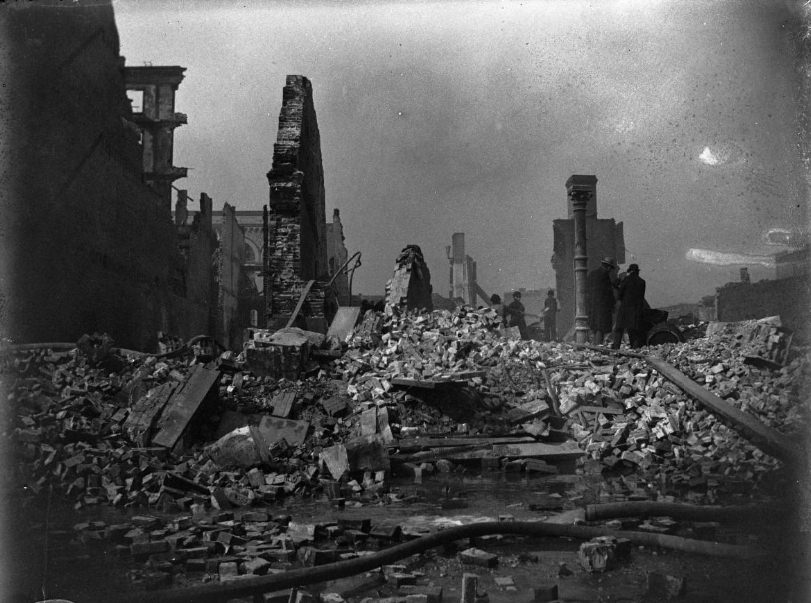
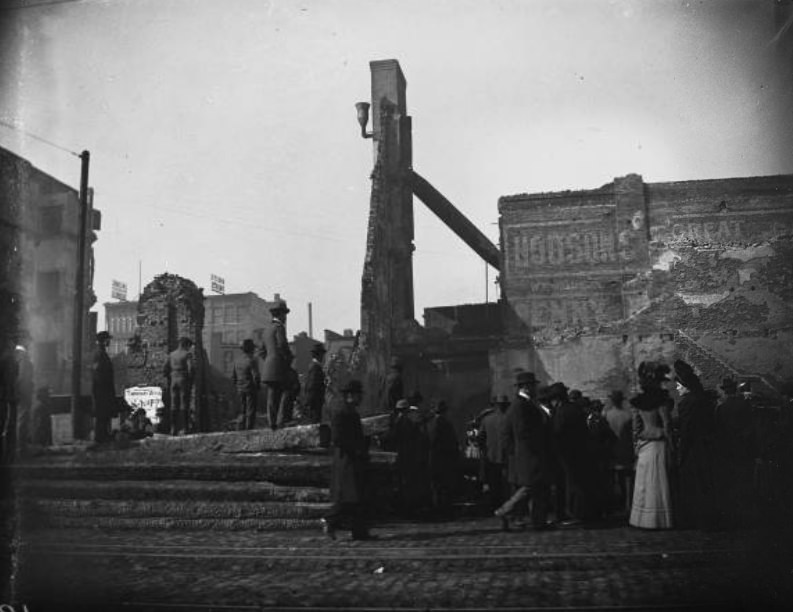





In those days, cities were filthy because of industrial pollution and horse faeces everywhere.
I can’t imagine living in a city where you couldn’t see the sun through the coal smoke. Crazy.
Traveling to Europe aboard one of the old steamships in a First Class cabin had to be an ordeal unless you were super-rich. There is a romanticization of this era that makes it seem like it was like ‘Downton Abbey’ for everyone. There was a book written years ago that debunked many of the nostalgic notions about the late 19th/early 20th century. As well, the earlier times depicted in Jane Austen’s romances probably weren’t easy.
The complete title of this book is: The Good Old Days: They Were Terrible!
On a serious note, I think much of the rose-tinted longing for this era comes from the fact that we could have maintained/improved this urban structure. Rather than transforming it into parking lots and sprawl, we turned it into parking lots and suburban sprawl.
It’s true that once you read the book I mentioned, you’ll never look at this time period or sentimental films like “Meet Me in St. Louis” in quite the same way again.
Life was crazy back then, and it’s almost satisfying to know where most of this stuff is and identify everything. It would have been nice if the “palaces” had stayed. I love how cool that looks.
The fact that so many of these really solidly built old mansions and buildings didn’t last all that long is amazing. Several Vanderbilt mansions in New York City didn’t last even a century, and I’m sure that some of the old ones here in St. Louis are either completely gone or abandoned hulks waiting for some urban explorer to video.
We need our twice monthly reminder STL was a bustling big city that is a husk of its former self.
St. Louis is still one of the largest metro areas in the United States.
Quality of life was probably also absolutely shit for 95% of the population
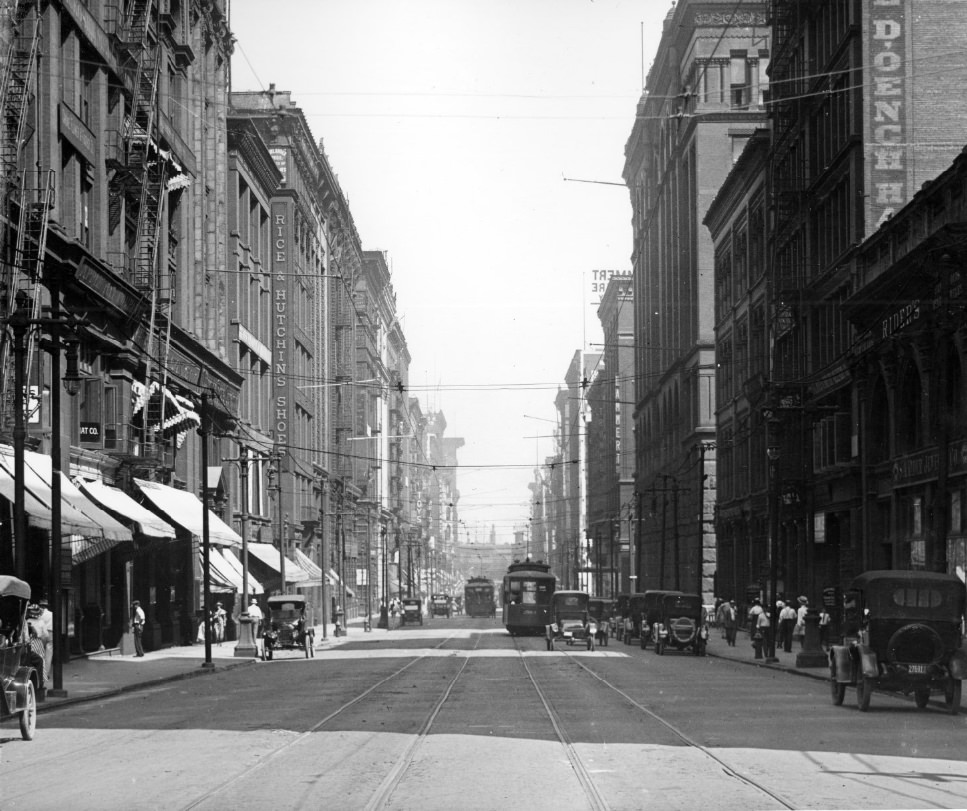
St Louis 1900 showing a row of Ford Model T cars? The model T wasn’t produced until 1908.