
St. Augustine, Florida, holds a distinction that no other American city can claim: it is the oldest continuously inhabited European-established settlement in the United States. Founded by Spanish colonists in 1565, the city had already been standing for more than four centuries by the time these photographs were taken in 1986. By then, St. Augustine had become one of Florida’s most visited destinations, drawing tourists from across the country and around the world. Its appeal was straightforward — nowhere else in the U.S. could visitors walk cobblestone streets lined with Spanish colonial architecture, then head to the beach within the same afternoon.
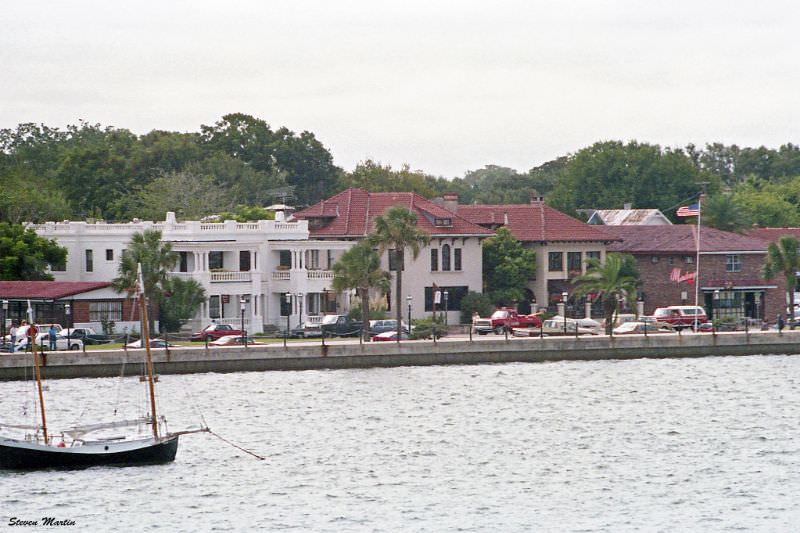
Avenida Menendez runs along the waterfront, offering some of the most recognizable views in the city. In 1986, it served as a natural boundary between the historic district and the Matanzas River, where boat traffic was a regular part of daily life.
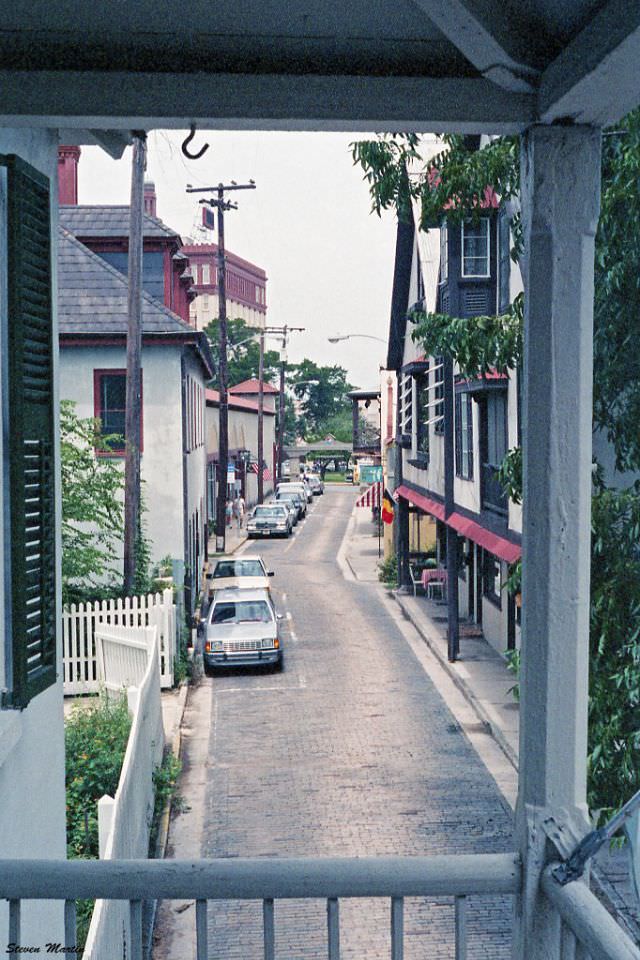
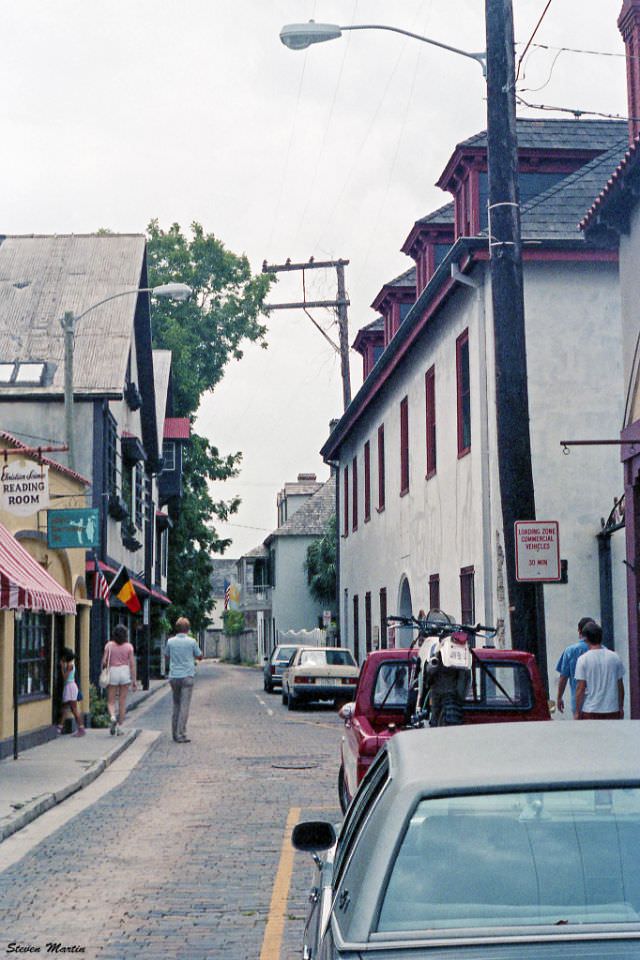
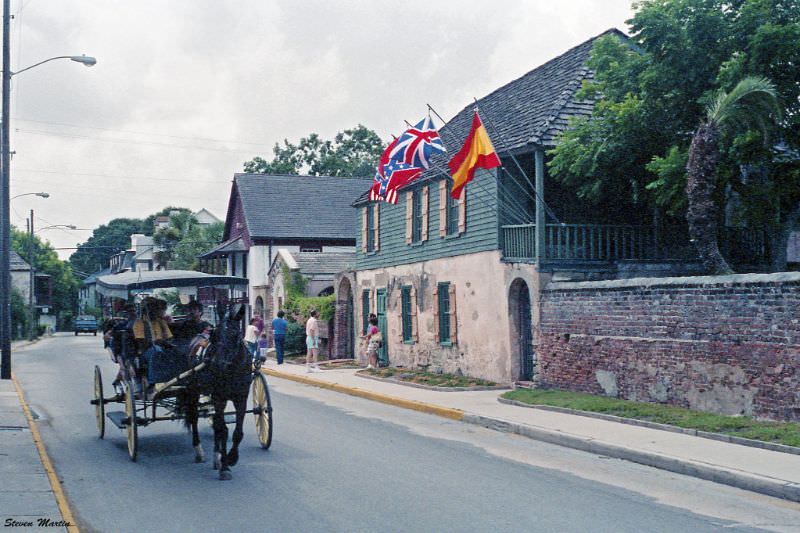
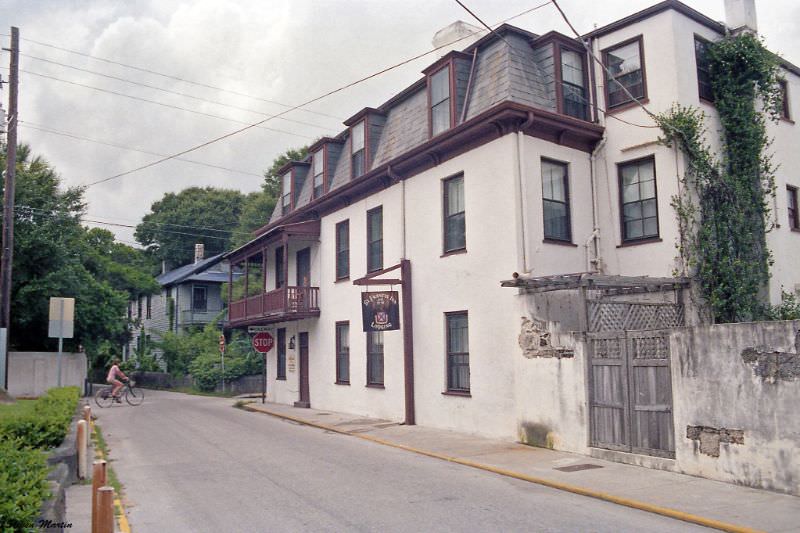
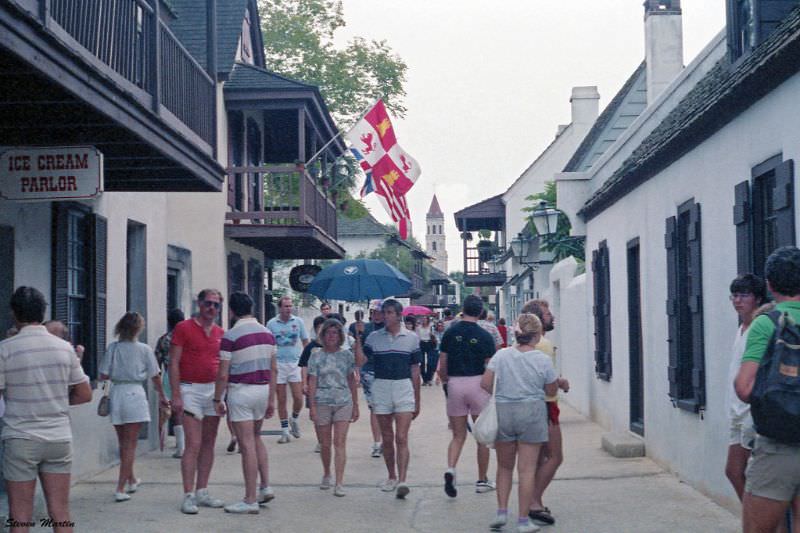
Aviles Street is one of the oldest streets in the city, and in 1986 it retained much of its original character. The Ximenez-Fatio House, which dates to 1798, sat along this stretch and gave visitors a direct view down the street from its front balcony. The house itself served as a boarding house through much of the 19th century and was preserved as a museum by the time these photos were taken.
Walking down Aviles Street in 1986 meant passing through layers of history compressed into just a few blocks. The street’s narrow width and low-rise buildings gave it a scale that felt more like a Spanish village than an American city.
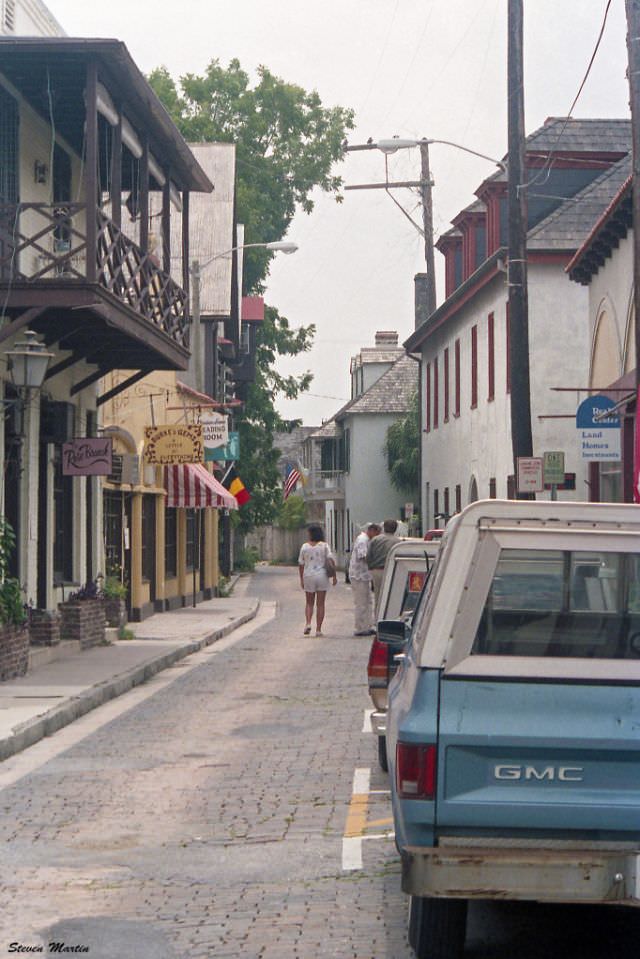
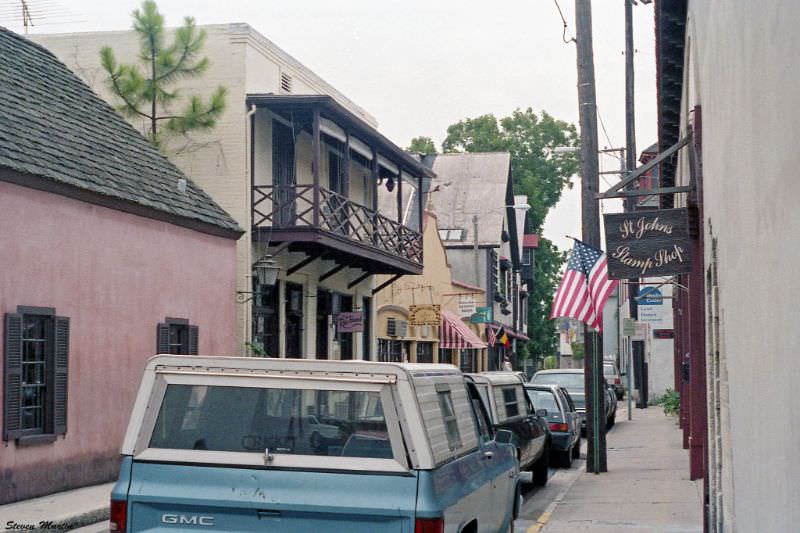
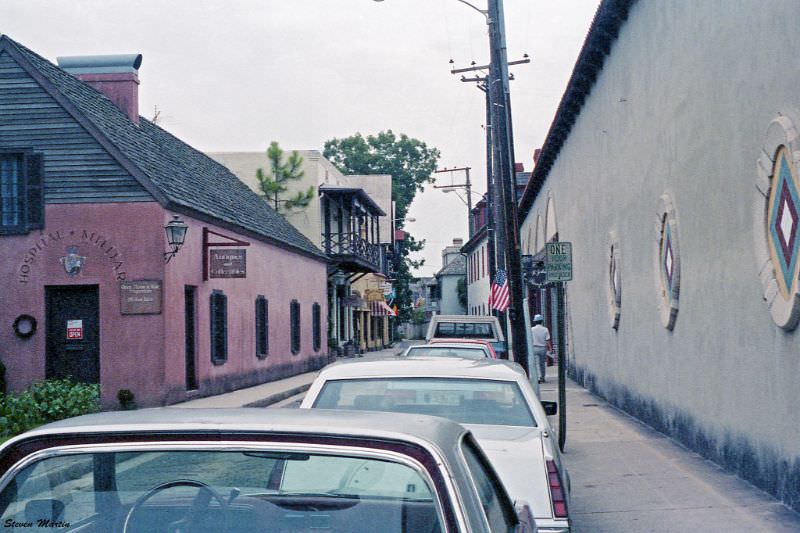
One of the standout features along Aviles Street was the Hospital Militar — a reconstruction of a Spanish Colonial military hospital. Spain operated the original structure during its colonial periods in Florida, and the rebuilt version gave visitors a tangible sense of how the city’s early inhabitants organized their civic life.
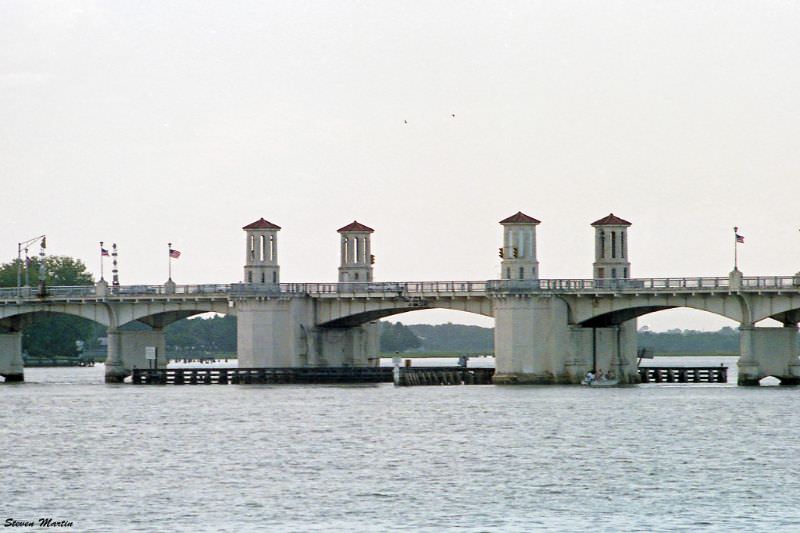
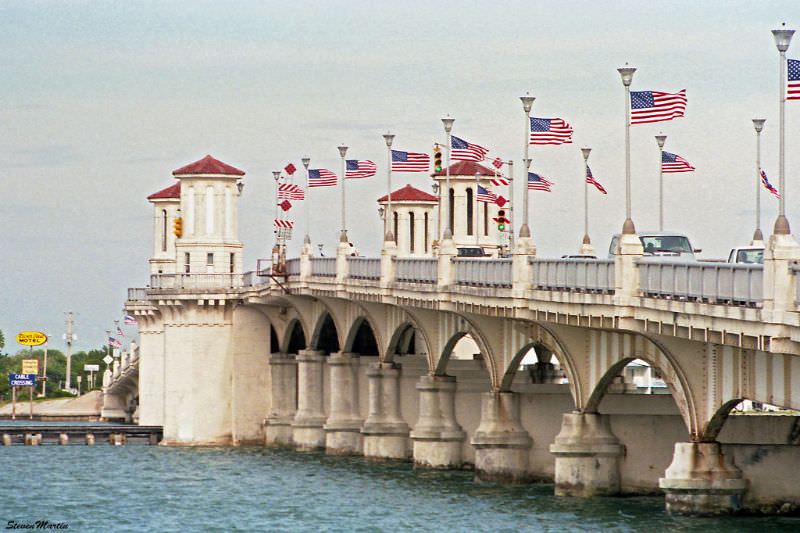
The Bridge of Lions is one of St. Augustine’s most iconic landmarks. Completed in 1927 and named for the marble lion sculptures at its western entrance, the bridge connects downtown St. Augustine to Anastasia Island. From the battlements of Castillo de San Marcos, the bridge stretches across the Matanzas River in clear view, framing the water and the island beyond.
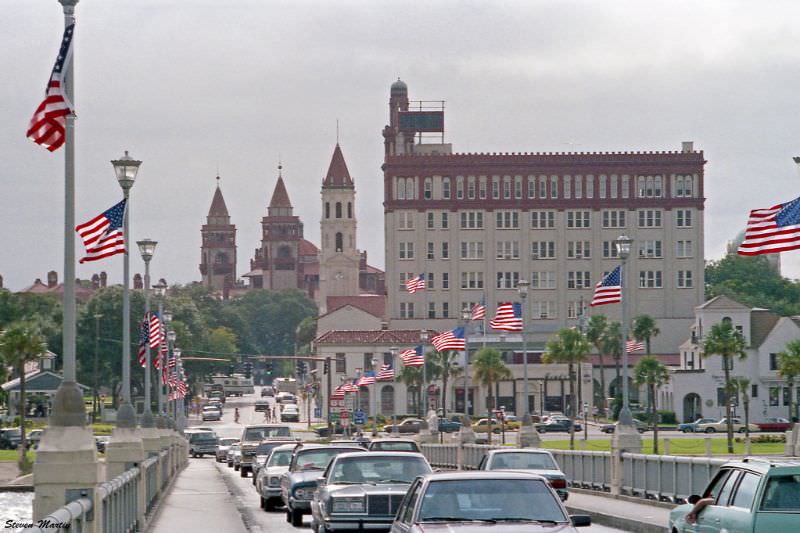
Standing at the center of the Bridge of Lions and looking west in 1986 offered a sweeping view of the city’s low skyline. The buildings along the waterfront reflected the city’s mix of Victorian-era and Spanish colonial architectural styles.
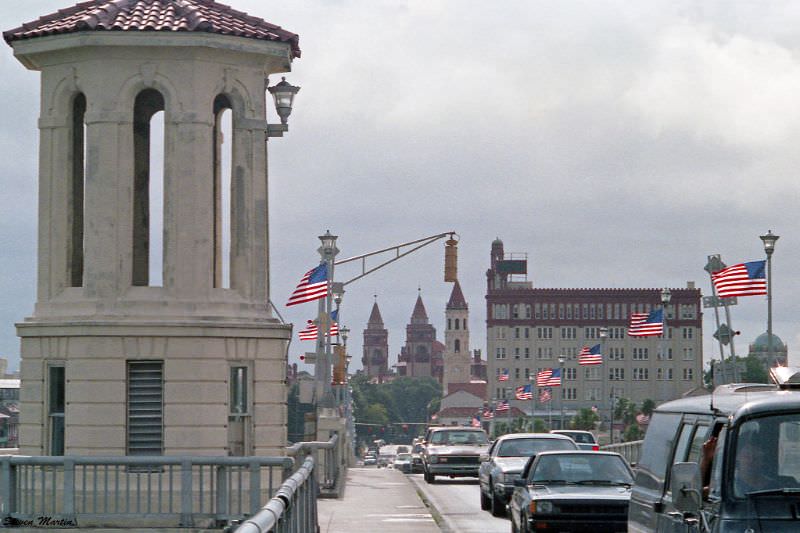
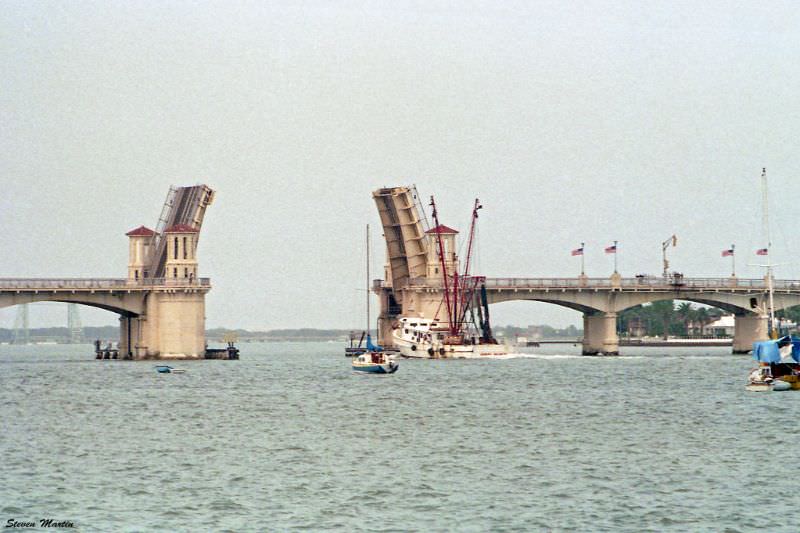
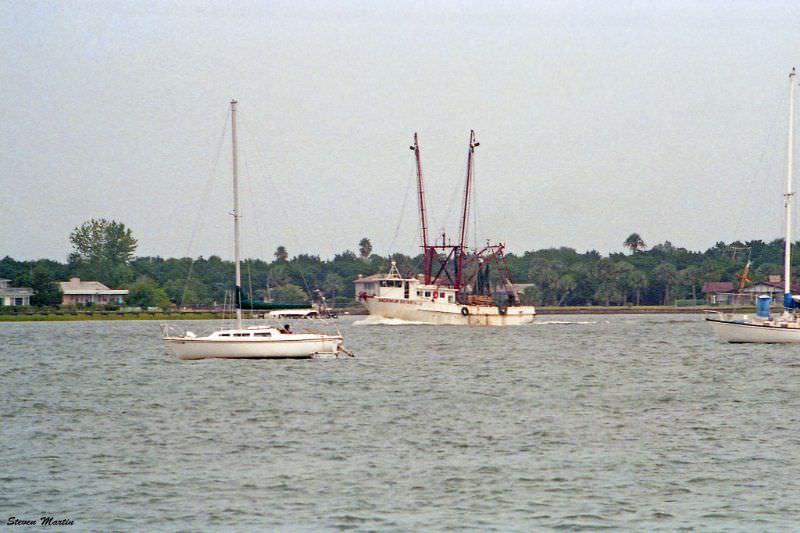
The Bridge of Lions was a drawbridge, and in 1986 it still opened regularly to allow boat traffic through. Shrimp boats were a common sight on the Matanzas River, and the bridge’s draw span would swing open to let them pass beneath.
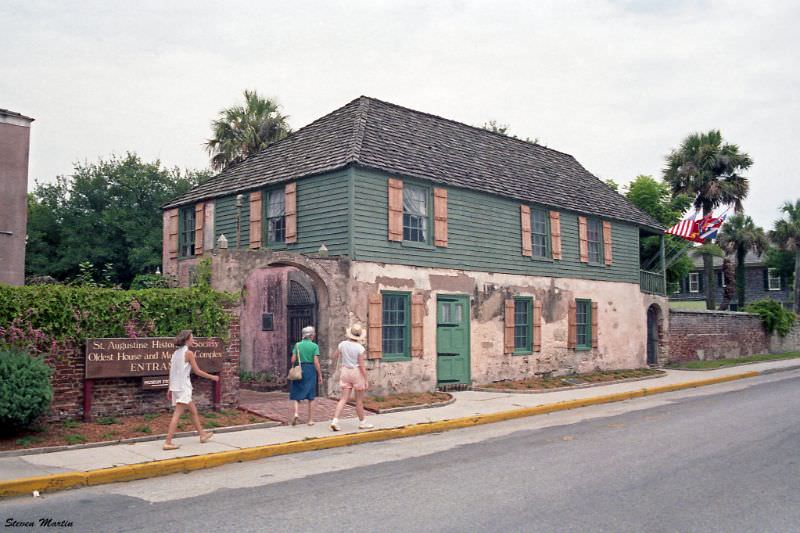
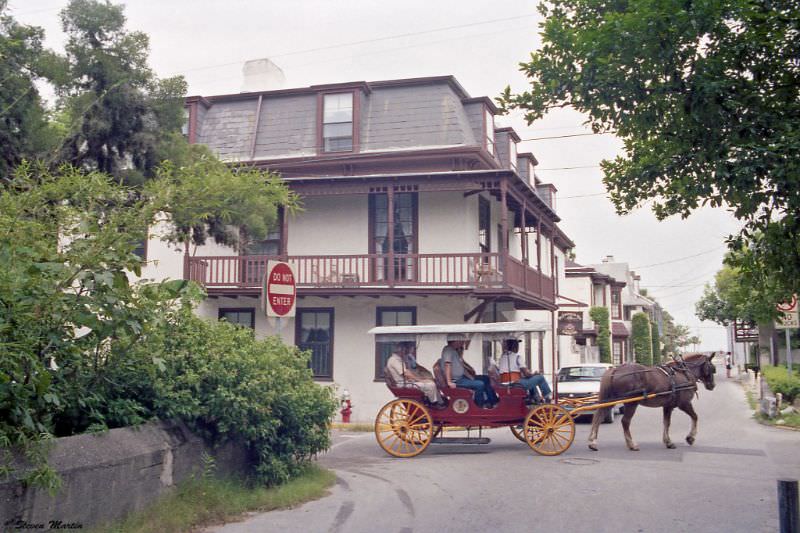
The Gonzalez-Alvarez House is the oldest surviving house in St. Augustine and the oldest in the state of Florida. Built in the early 1700s on foundations that may date to the late 1600s, it passed through the hands of several families over the centuries — including a British merchant and a Cuban veteran of the Seminole Wars. By 1986, it operated as a museum. Horse-drawn carriages passing in front of it were a common tourist attraction.
The Cathedral Basilica of St. Augustine faces the Plaza de la Constitución, the city’s central public square. The church’s origins date to 1565, though the current structure was largely built in the late 18th century and underwent major reconstruction after a fire in 1887. It remains the oldest Catholic parish in the United States.
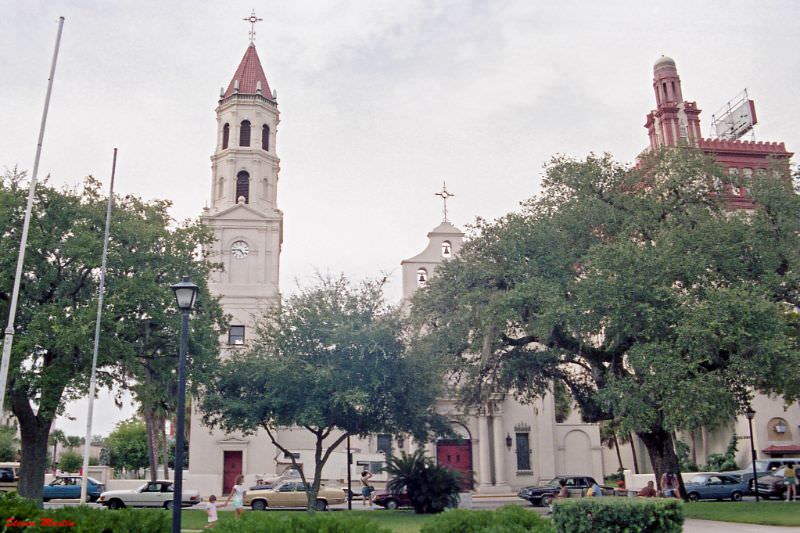
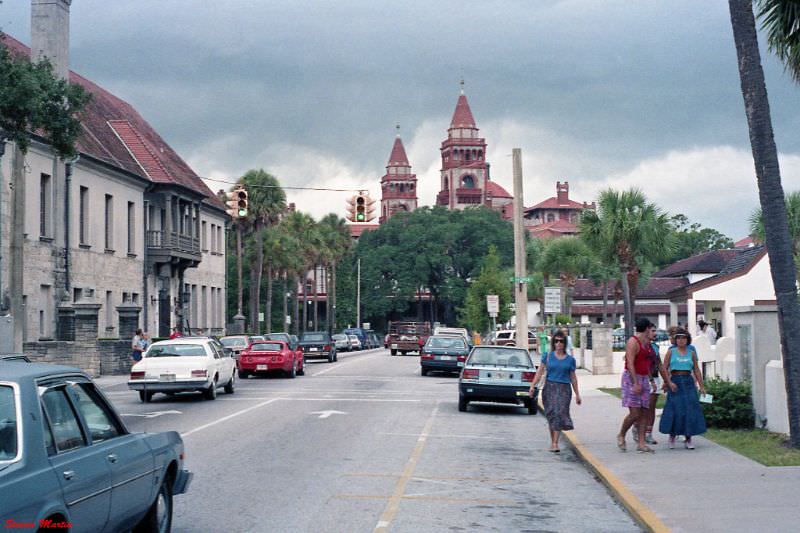
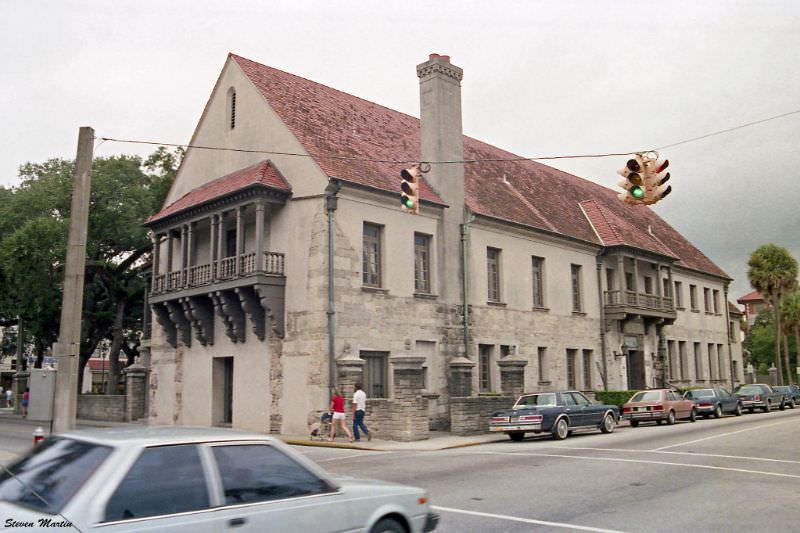
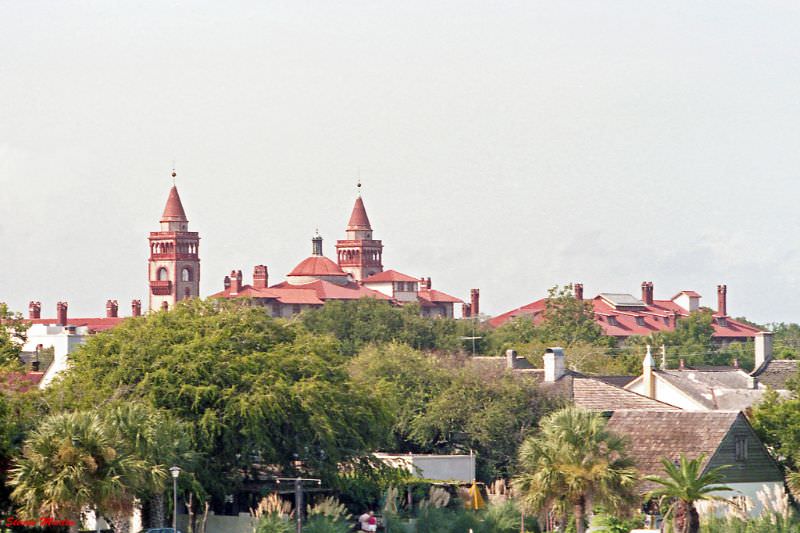
Looking west along Cathedral Place in 1986, one of the most striking sights was the former Ponce de Leon Hotel at the end of the view. Henry Flagler, the railroad and hotel magnate who helped develop Florida’s east coast in the late 19th century, built the grand Spanish Renaissance Revival structure in 1888. By 1968, it had been converted into Flagler College, a private liberal arts institution. Government House, another significant colonial-era building, stood to the left along the same stretch.
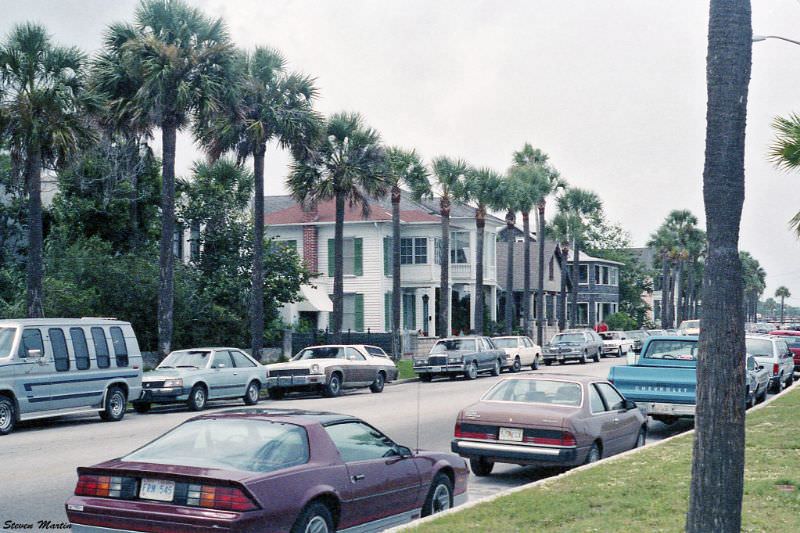
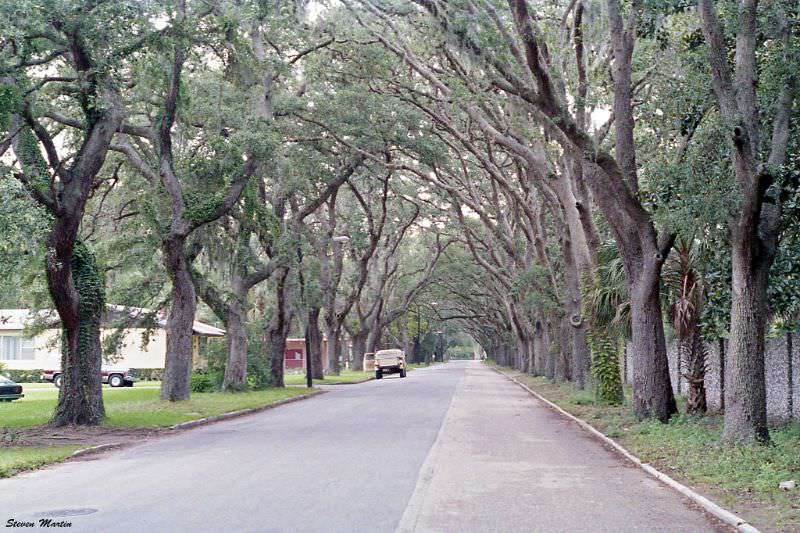
Magnolia Avenue offered a quieter residential feel compared to the busier tourist corridors. Lined with trees and older homes, it captured a side of St. Augustine that visitors venturing off the main streets would occasionally discover.
The Old Drug Store Museum was one of the city’s more unusual attractions in 1986. Housed in a building that once served as a working pharmacy, it preserved the look and contents of an old-fashioned American drugstore, complete with period fixtures and merchandise.
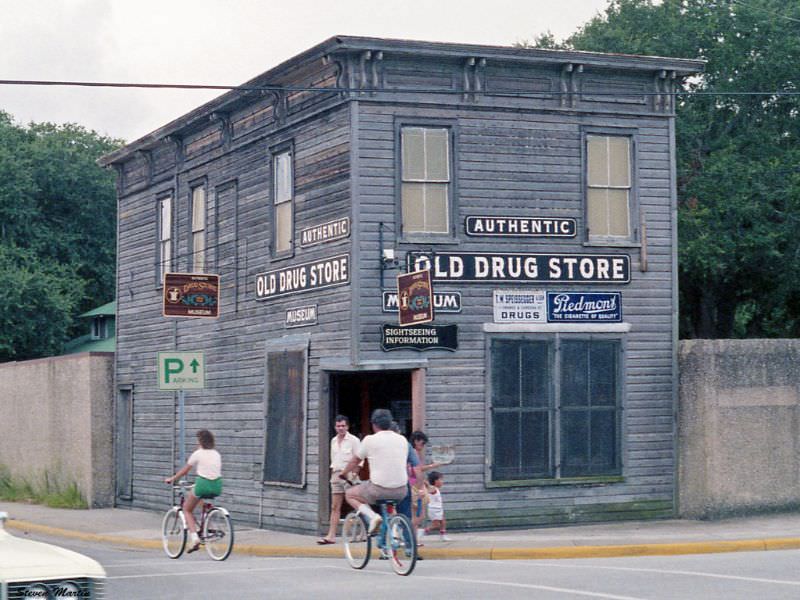
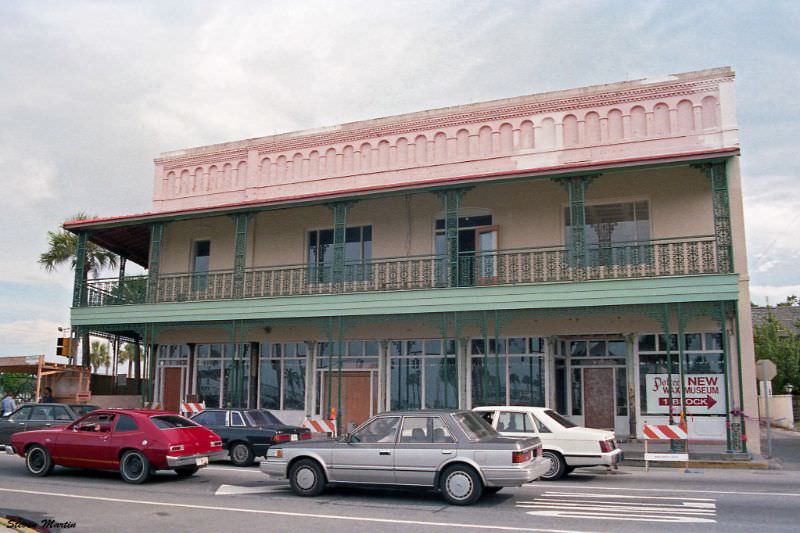
Ripley’s Believe It or Not Museum occupied a prominent building in St. Augustine’s historic district. The museum, part of Robert Ripley’s internationally known chain, drew steady crowds with its collection of oddities, curiosities, and unusual artifacts from around the world. Its St. Augustine location added an extra layer of intrigue simply by virtue of the city it sat in.
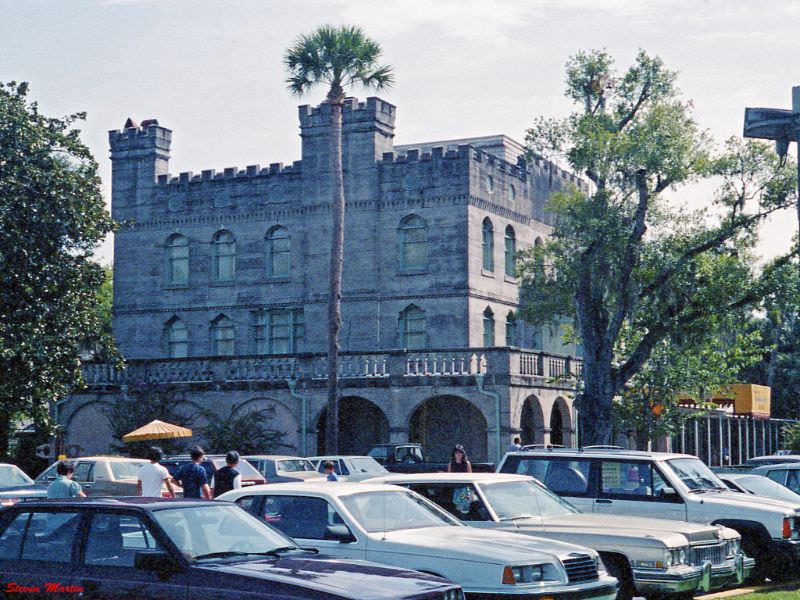
St. George Street was the heart of the tourist experience in 1986. Much of it had been converted into a pedestrian zone, lined with shops, restaurants, and reconstructed Spanish colonial buildings. The Rodriquez-Avero-Sanchez House was one of the historic structures along this corridor, representing the kind of 18th-century Spanish construction that made the street architecturally significant.
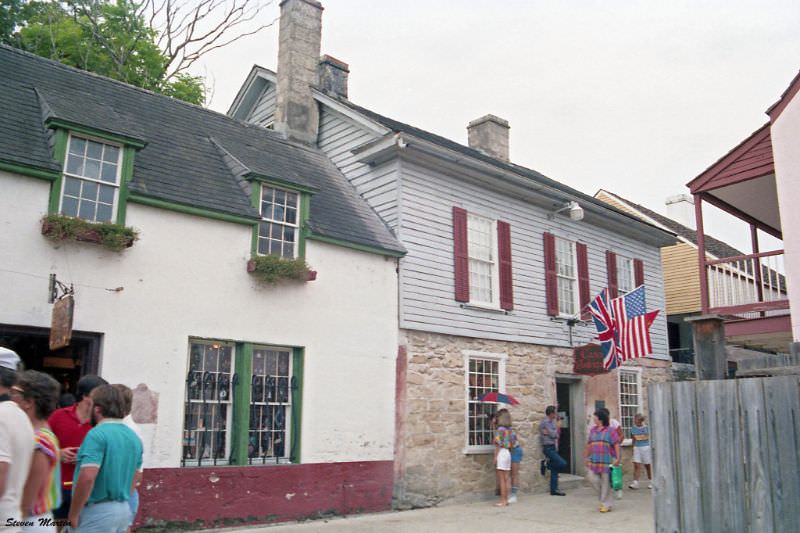
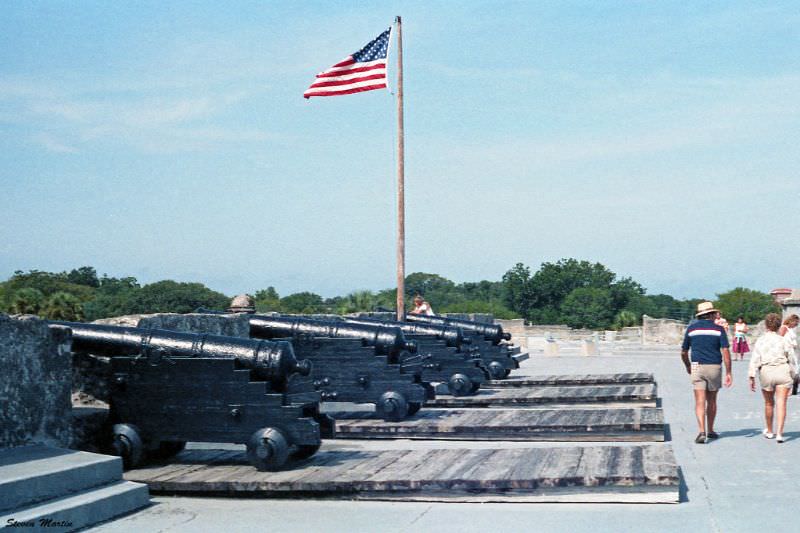
Castillo de San Marcos is the oldest masonry fort in the continental United States. Built by the Spanish between 1672 and 1695 using coquina — a soft limestone made of compressed shells — it withstood multiple sieges and never fell in battle. By 1986, it was a National Monument managed by the National Park Service, and its cannon batteries remained one of the most photographed features of the city.
The Matanzas River in 1986 was active with both recreational and working boats. Sailboats shared the water with shrimp boats, and the waterfront remained a working part of the city’s economy alongside its growing tourism industry.
The St. Francis Inn is one of the oldest inns in Florida, with a history stretching back to the early 18th century. In 1986, it continued to operate as a bed and breakfast, drawing guests who wanted to stay in an authentically historic setting rather than a modern hotel. Its location near the southern end of the historic district put it within easy walking distance of many of the city’s major sites.
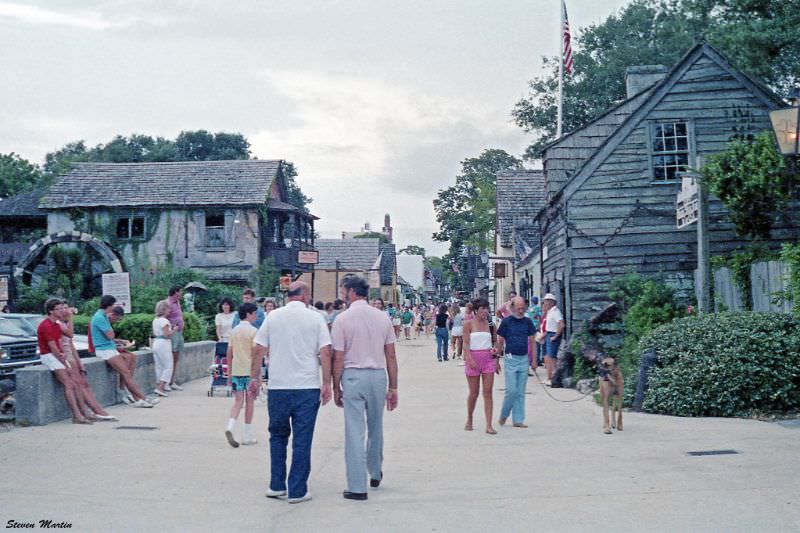
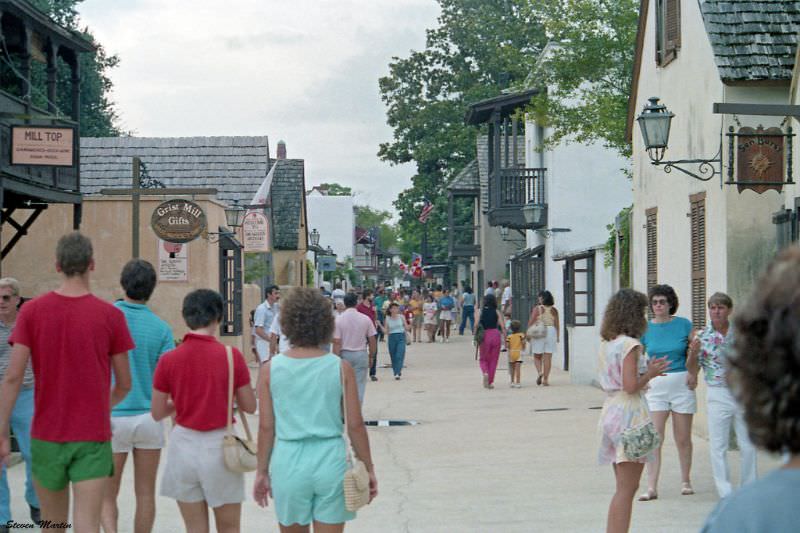
St. George Street was the central artery of St. Augustine’s historic district. In 1986, the street buzzed with foot traffic, and the mix of colonial-era structures and period-style storefronts created an atmosphere that was both educational and commercially lively. The city’s preservation efforts in the 1980s worked to keep the street’s visual character intact while allowing businesses to operate within it.
From the top of Castillo de San Marcos, the view westward in 1986 brought Flagler College into clear sight. The building’s ornate towers and red-tiled roofs rose above the surrounding structures, a reminder of the Gilded Age ambition that Flagler poured into his Florida enterprises. The fort’s thick coquina walls and the college’s Spanish Renaissance facade — both products of very different eras — framed the same skyline.
The waterfront buildings visible from the Bridge of Lions reflected decades of commercial and civic activity along the Matanzas River. In 1986, this stretch of the waterfront was a defining part of St. Augustine’s streetscape, where the edge of the old city met the open water.





Damn Bro..Looks almost exactly the same to me…
Astonishing how similar the current view looks in comparison to the photos, except for the older cars present in the photographs.
Based on the advertisement on the window, it seems that the wax museum may have recently relocated, indicating that the building might have been vacant during that period.
If I am correct, the wax museum relocated down King Street, one block away during that year. It was moved once again in 2013 to its current location. It is worth noting that this was the first wax museum in America.
For those who are interested in seeing more than still photographs of St. Augustine, the 1987 film “Illegally Yours,” featuring Rob Lowe and Colleen Camp, was shot extensively in the city. Although not considered a great movie, it can still be enjoyable to see what the city looked like back then. Surprisingly, there haven’t been many significant changes since then. The entire movie is currently available on YouTube as well.
Although the movie may not be considered a cinematic masterpiece, it can still be fascinating to observe the different filming locations used in the film. There is a scene in a bookstore or record store where Rob Lowe’s kid brother is employed. The filming was done across the street from where the present-day gas station and Happy Pappy’s Glowing Balls are located. Does anyone know if a real bookstore or record store previously occupied that location?
It seems that the scene in question took place at a real location called “The Music Shop.” The scene appears to have been filmed outside of St. Augustine, possibly in Jax Beach, as indicated by the presence of the church of St. Paul’s By the Sea in the background. A Google search yielded results for “The Music Room” in Jax Beach during the 1980s and 1990s, and the interior shots show “325” above the door. This suggests that the building was located in the first block west of A1A, likely at 325 7th Ave N. It is possible that the building no longer exists, and the current site of the Beach Methodist Church. It may be worth checking old yellow pages from 40 years ago at a Jax Beach public library to verify the listing.
I hear ya! It’s pretty wild to see that there are only vintage cars in these photographs, and it looks like there wasn’t a whole lot of people struggling with obesity back then either, huh?
And the men in little white shorts. It was definitely the era of Richard Simmons and his enthusiastic workout sessions.
Those photos remind me the remarkable job that was done on the Bridge of Lions, which appears to be the one that was opened in 1927.
It seemed like the temporary bridge was there for an extended period, almost a decade.
A glimpse of what many would consider the good old days.
It’s amazing to witness Casa Rodriguez again, a place where I worked for several years back in 2005, just a year after I was born.
Wish the flags were still on the bridge.
Nice photos, but the article is trash. It implies Flagler College became that in the ’80s and is worded in a way that makes it sound we don’t exist anymore
i will say the shoreline behind the bridge of lions in most of those photos of the bridge of lions has changed.. its a bit more developed. The downtown ‘city side’ must have been more striking with less development, and all that greenery to contrast it.
When St.Augustine was drinking village with a fishing problem. Damn the times
Now it’s a tourist village with a drinking problem.
Looks all pretty similar to today!
Super helpful as I’m actually writing something regarding St A in the 1980s and it’s hard finding photos! Thanks for posting
The only part I find fascinating is how someone let a tree grow on the roof in Pic #3. It’s a historic building and they just let nature run its course. One good thing about the increased tourism is the historic buildings are probably more likely to be maintained nowadays.
That tree isn’t growing on the roof. There’s a narrow alley a few feet wide between the buildings, as you can see on Google Maps if you look between 3 Aviles Street (the pink building) and 5 Aviles Street (the one with the second story patio). The tree is across the street from Forgotten Tonic today.
Thanks for the clarification. On Google Maps looks like the pine tree is gone now. Still a weird place to let a tree grow just asking for roots to cause structural damage.