
Hey There! Before You Go. 😧
Get the best vintage content straight into your inbox!

Don't worry, we don't spam

The Story of the Soviet’s Great Seal Bug at the Heart of American Diplomacy

In 1945, as World War II came to an end, the United States and the Soviet Union stood at a crossroads. They had fought on the same side against the Axis powers, but their political systems and ambitions could not have been more different. Trust between them was already crumbling. What followed over the next decade would define a new kind of conflict — one fought not on battlefields, but in embassies, back rooms, and listening posts. One of the most brazen acts of this new war came wrapped in the form of a gift.

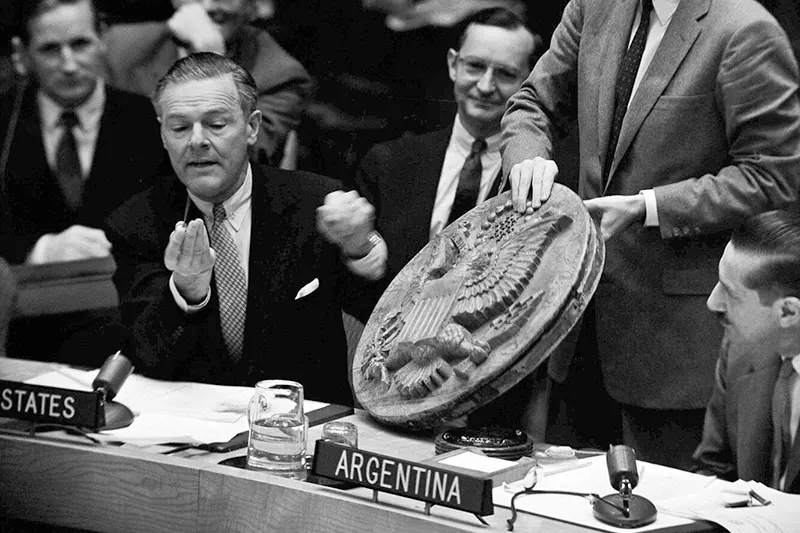
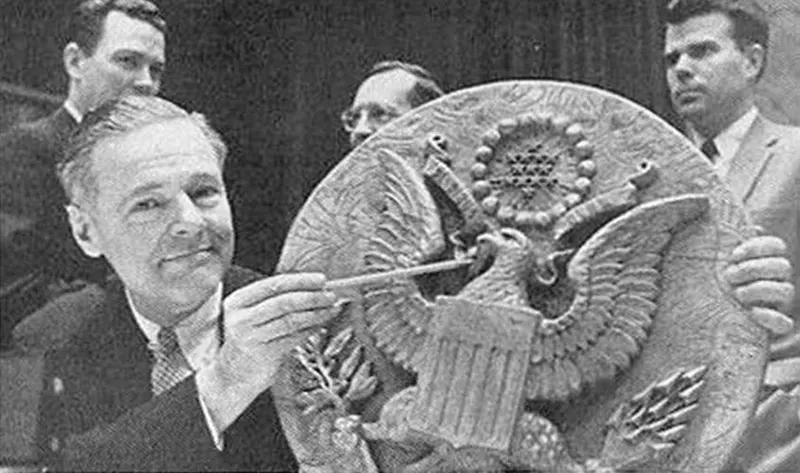
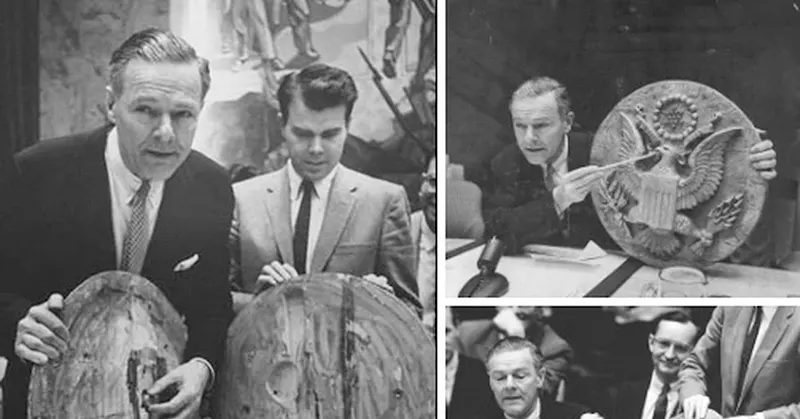
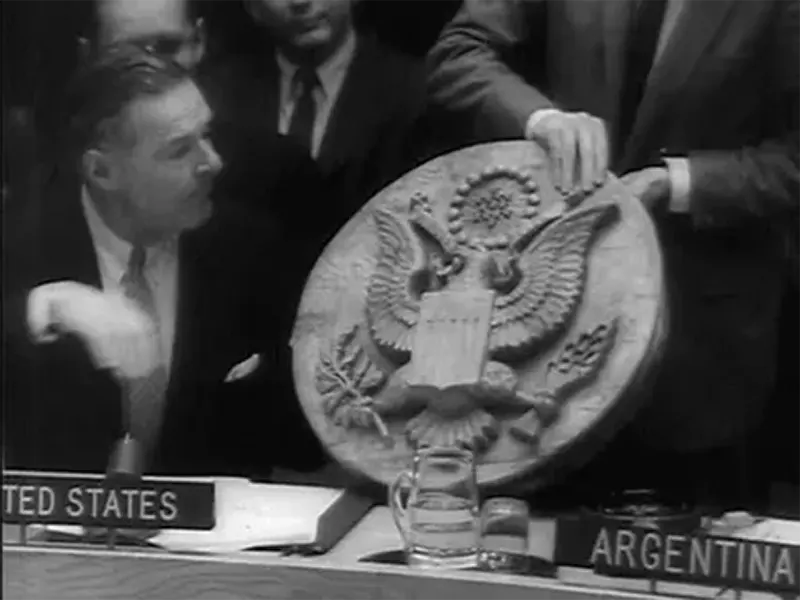
Henry Cabot Lodge displays the bug in front of the United Nations.

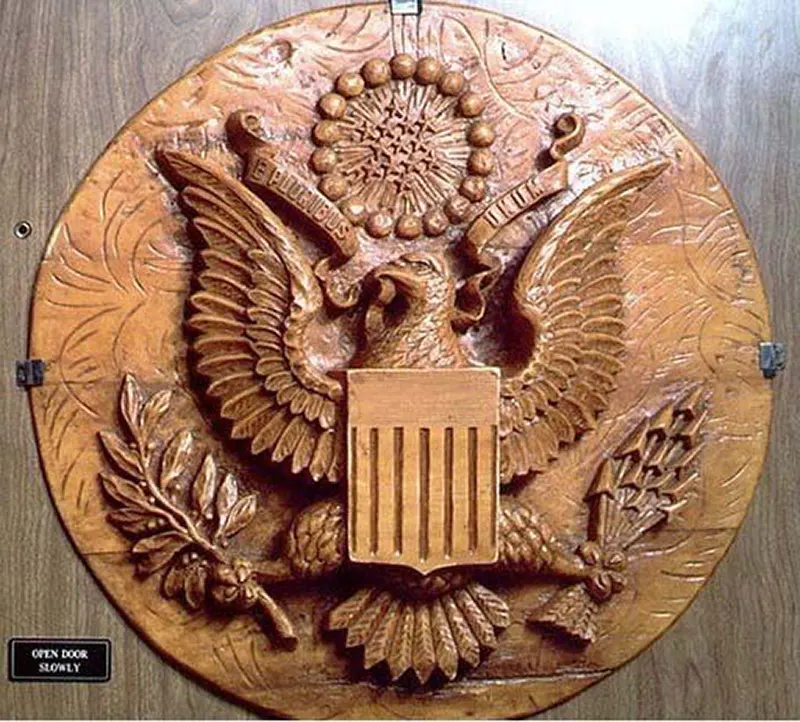
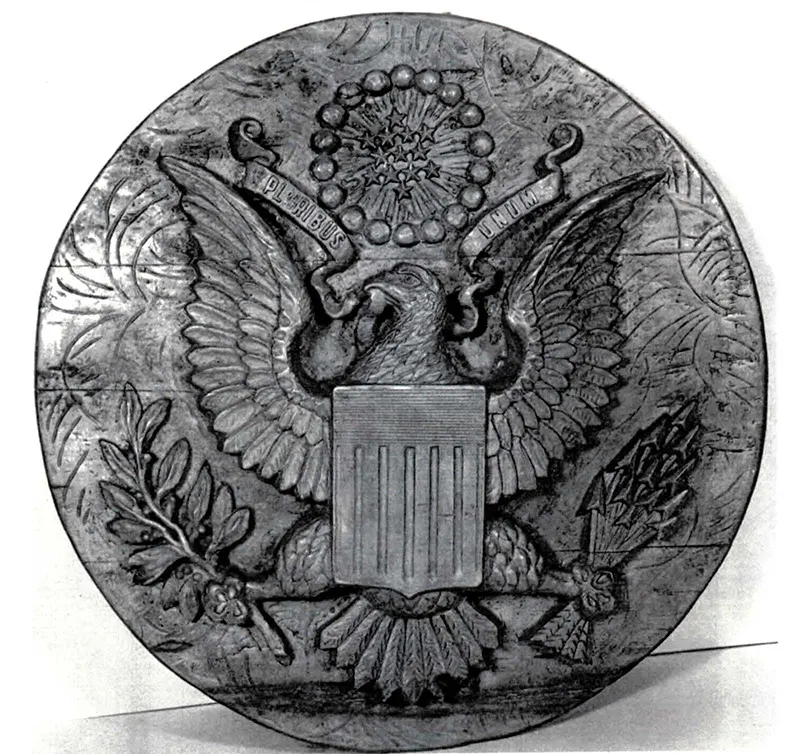
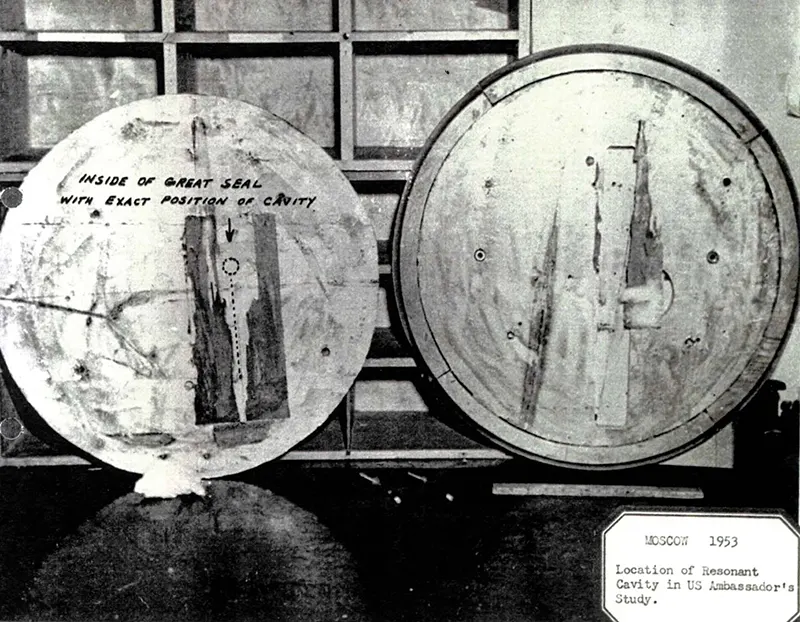
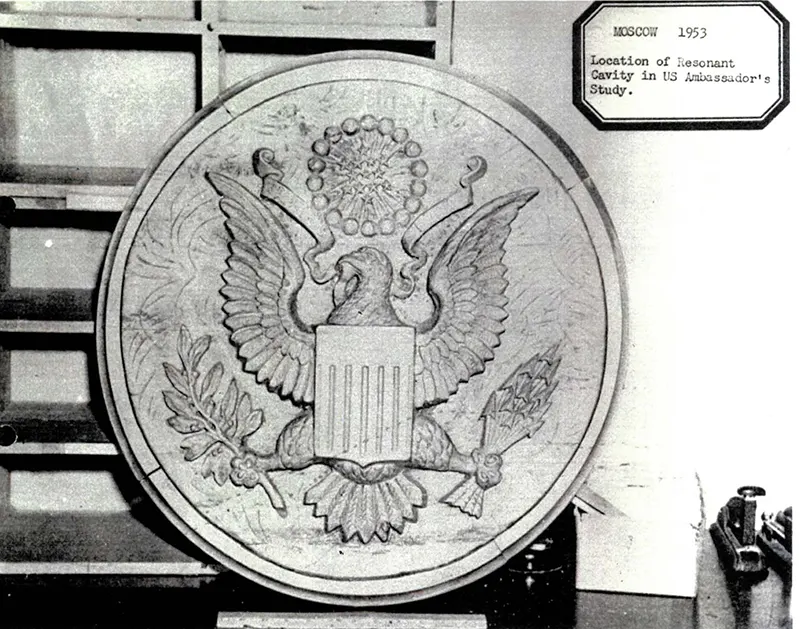
In 1945, the Young Pioneer organization of the Soviet Union presented U.S. Ambassador Averell Harriman with a large carved wooden plaque of the Great Seal of the United States. It was framed as a gesture of goodwill between two nations that had just helped defeat Nazi Germany. Harriman accepted it without suspicion, and the plaque was hung in the study of Spaso House, the official U.S. Ambassador’s residence in Moscow. It stayed there, quietly, for years.

Ambassador Henry Cabot Lodge, Jr. displays the Great Seal bug at the United Nations.

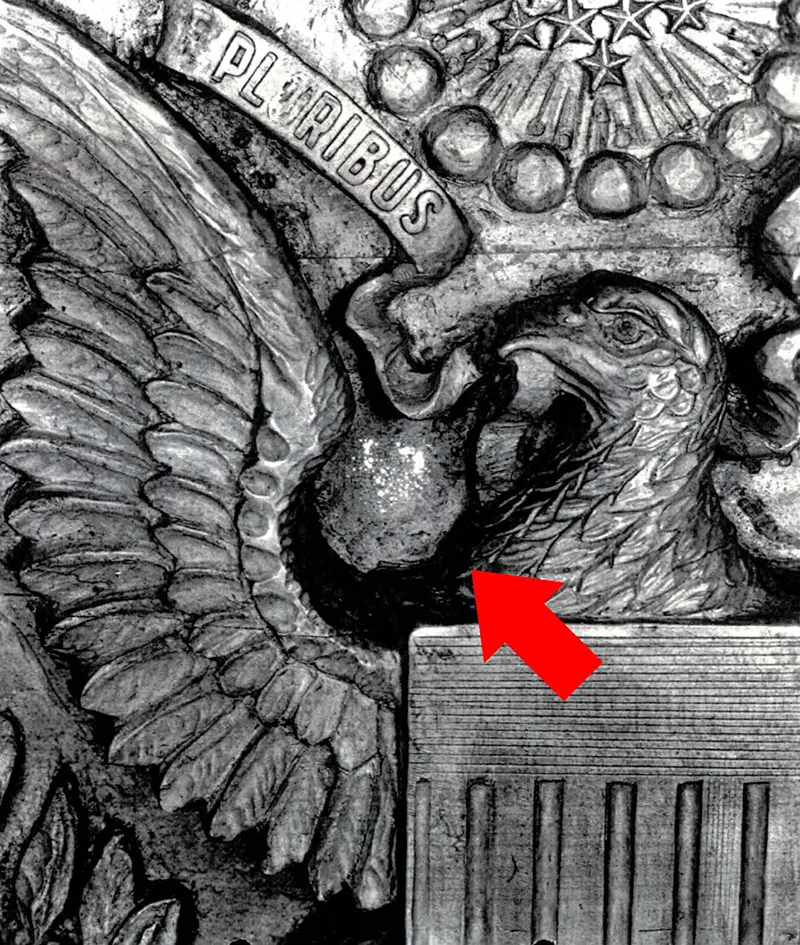
What Harriman did not know was that hidden inside the carving was one of the most advanced listening devices ever built. The operation had been ordered by Lavrentiy Beria, the feared head of the Soviet secret police. To carry it out, Soviet intelligence turned to Léon Theremin — an inventor already famous for creating the theremin, one of the world’s first electronic musical instruments. This time, Theremin was not building music equipment. He was building a spy tool unlike anything that existed.

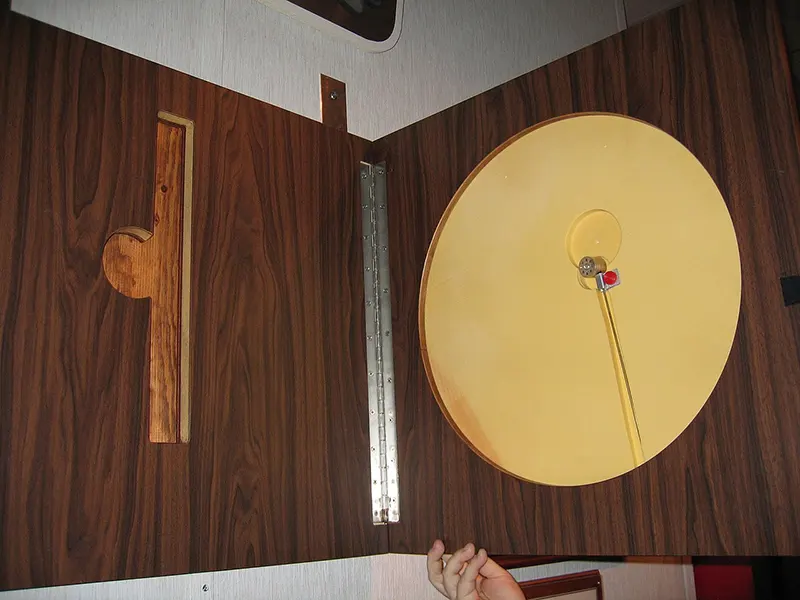
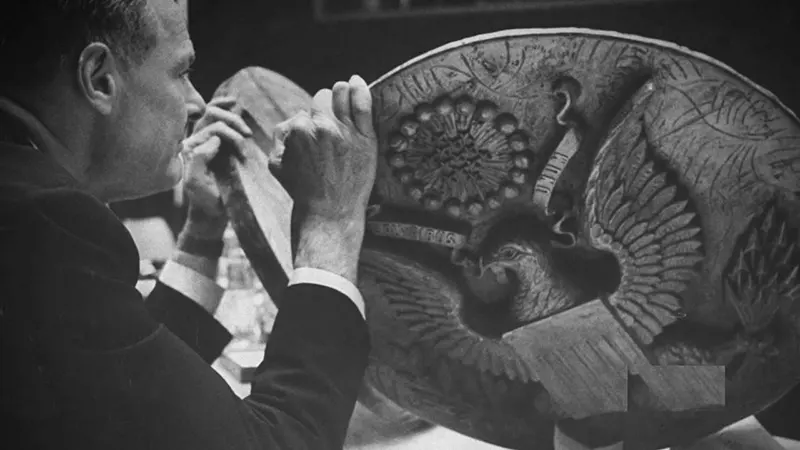
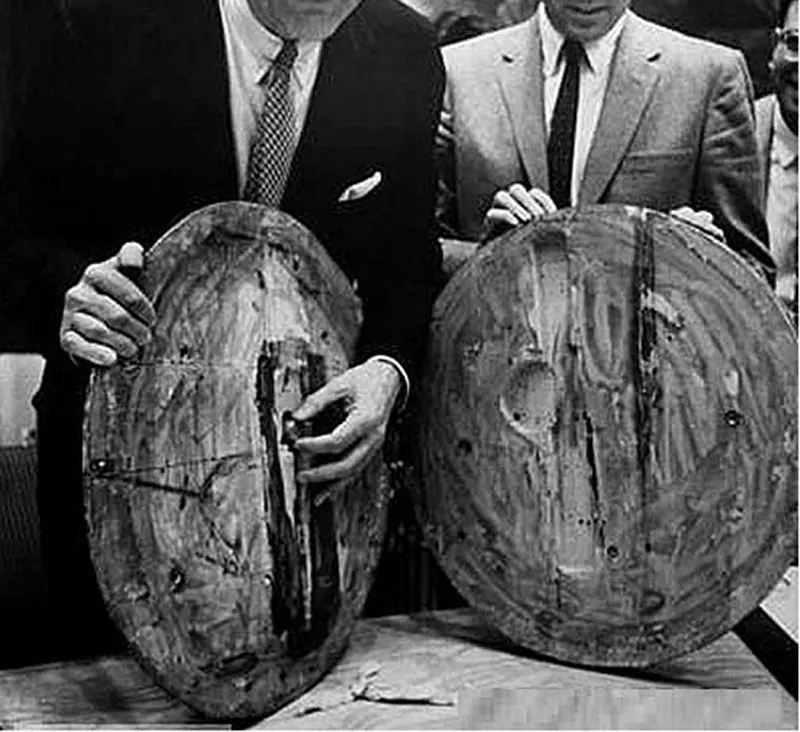
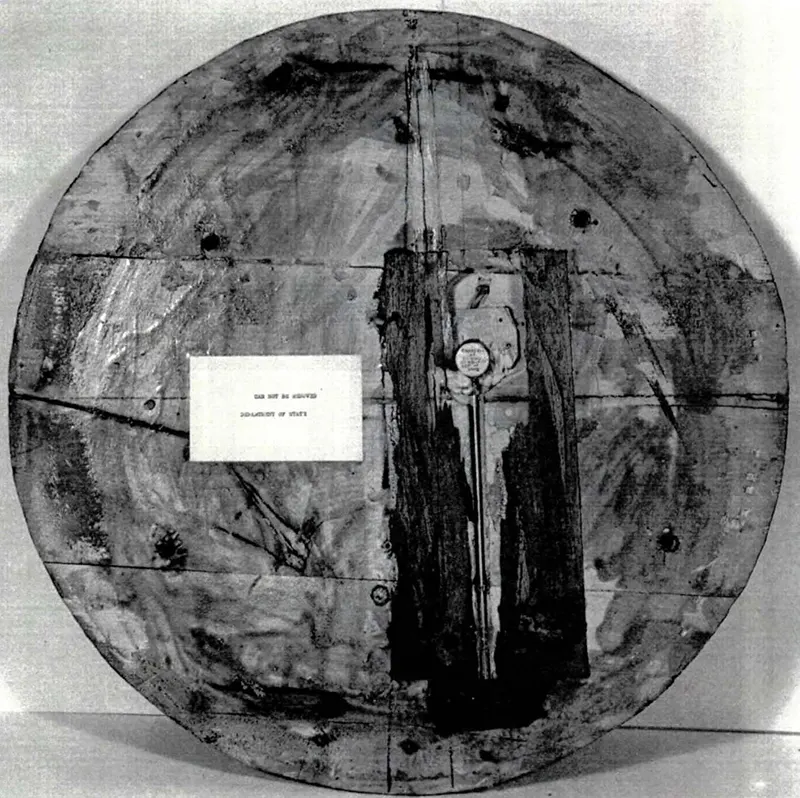
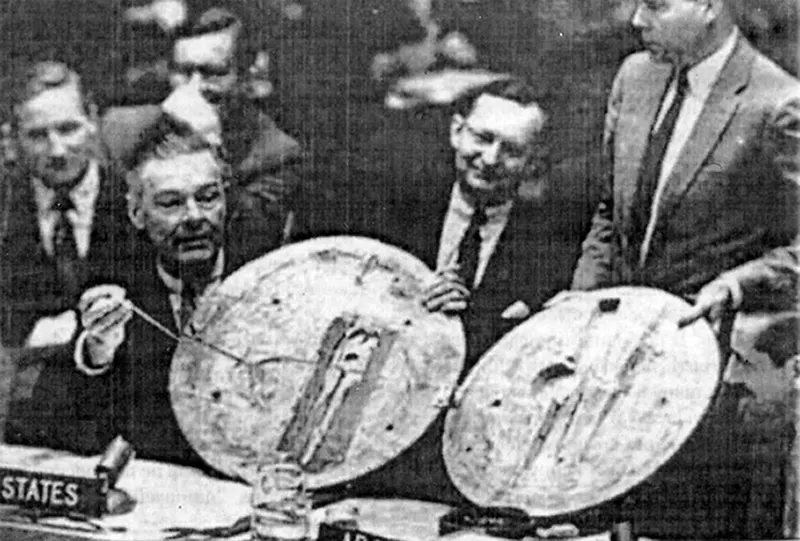
The seal opened exposing the Soviet bugging device, on display at the NSA's National Cryptologic Museum.
The seal opened exposing the Soviet bugging device, on display at the NSA’s National Cryptologic Museum.

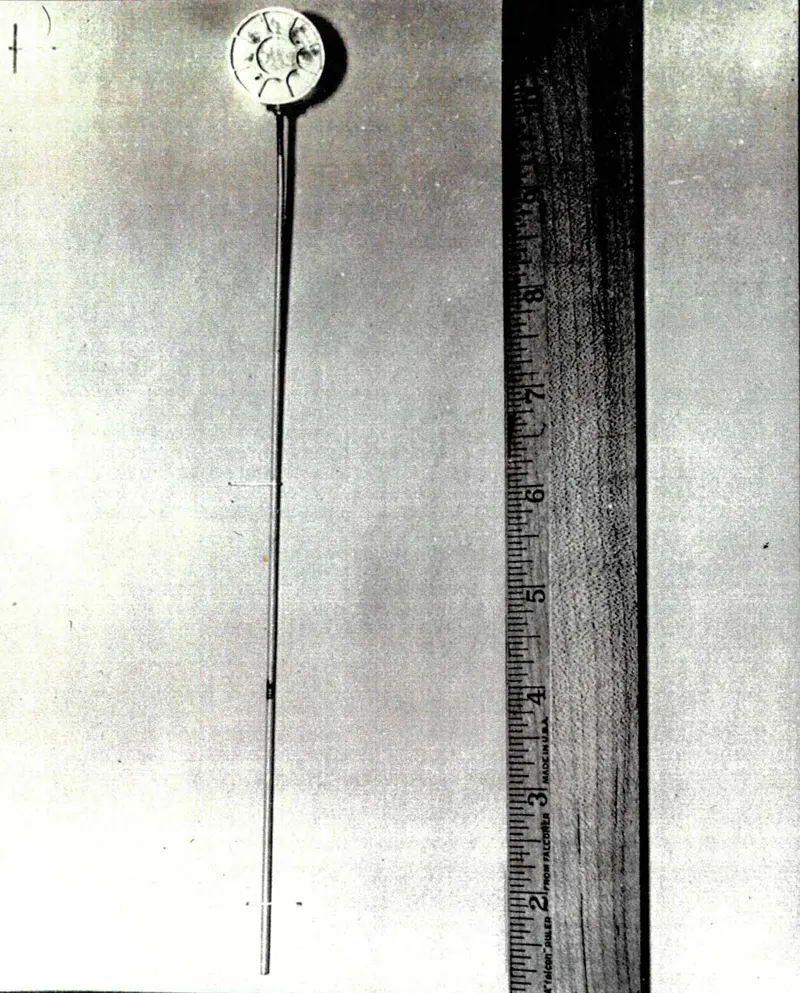
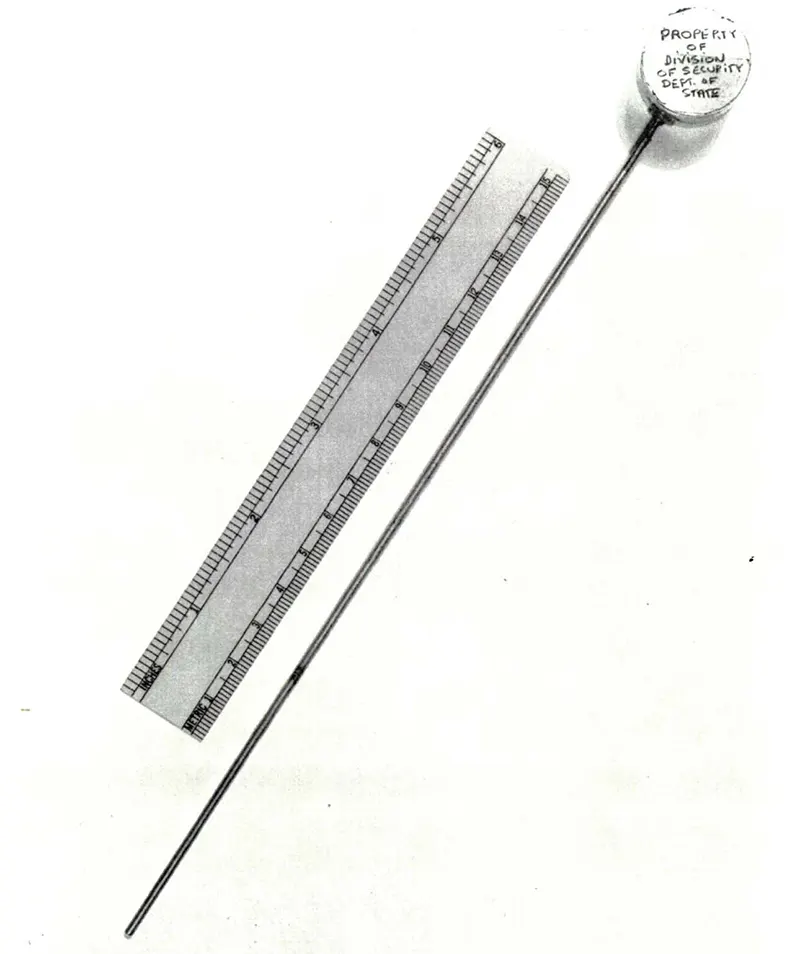
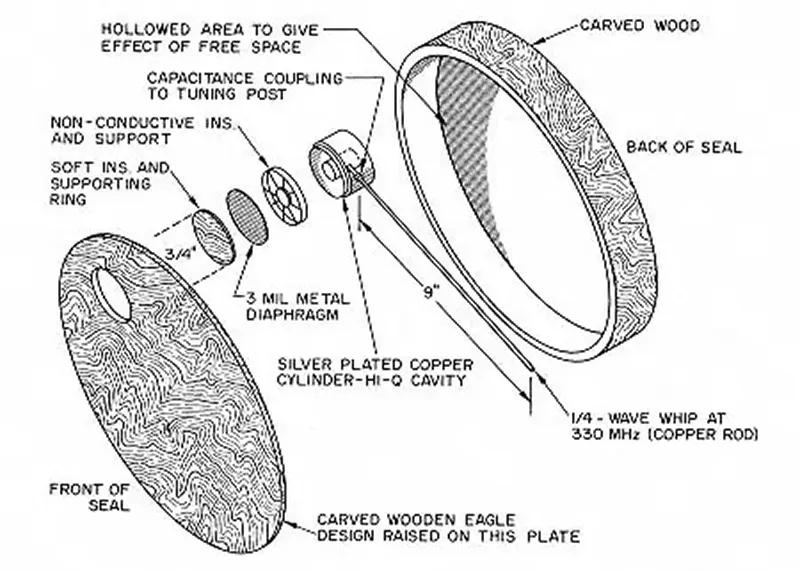
The device Theremin designed was called a passive resonant cavity microphone. It had no battery, no wires, and no active electronic parts. By the standards of 1945, this was extraordinary. Most listening devices of the era needed a power source and had to be physically maintained — both of which made them easier to find. Theremin’s bug needed none of that. It sat completely dormant until it was needed.

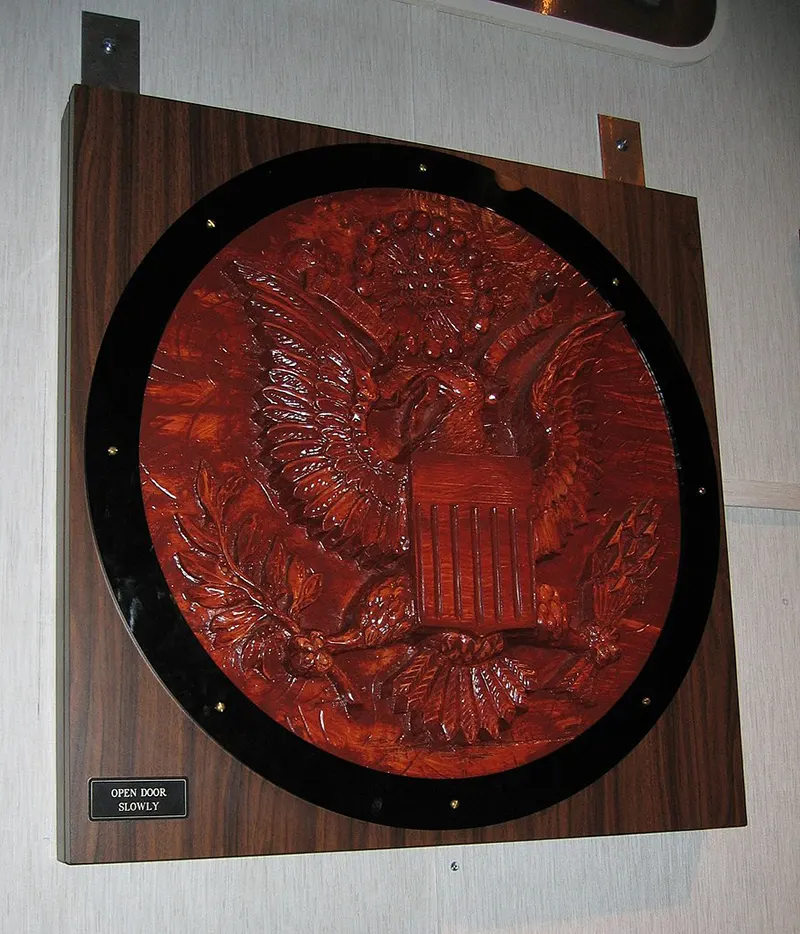
Replica of The Thing which contained a Soviet bugging device, on display at the NSA's National Cryptologic Museum.
Replica of The Thing which contained a Soviet bugging device, on display at the NSA’s National Cryptologic Museum.

At its core, the bug was made up of a small capacitive membrane — essentially a thin disk that vibrated with sound — connected to a short antenna. When Soviet agents parked nearby and aimed a radio signal of the correct frequency at the building, the device would wake up. Sound waves in the room, such as voices in conversation, caused the membrane to vibrate. Those vibrations altered the radio signal bouncing off the device, and the modified signal was then picked up by a Soviet receiver outside. The bug never transmitted on its own. It only reflected back what it heard, activated entirely by an external beam.

The Story of the Soviet’s Great Seal Bug at the Heart of American Diplomacy

Because the device had no electronics to detect and emitted nothing on its own, standard sweeps for listening devices completely missed it. Soviet intelligence agents could park a vehicle on the street near Spaso House, aim their signal at the building, and listen to conversations happening inside the Ambassador’s private study. This went on for approximately seven years, spanning the tenures of multiple U.S. ambassadors.

The Story of the Soviet’s Great Seal Bug at the Heart of American Diplomacy

The bug — which American investigators would later nickname “The Thing” — was finally discovered in 1952. A routine security sweep was being conducted ahead of a planned visit by the U.S. Secretary of State. Technicians were using a newer procedure that involved signal generators and receivers, and during that sweep, the equipment accidentally picked up the device’s resonant frequency. The signal it reflected back was unmistakable once you knew what to look for.

The Story of the Soviet’s Great Seal Bug at the Heart of American Diplomacy

When investigators examined the Great Seal plaque and found what was hidden inside, the reaction within the American intelligence community was one of genuine shock. For seven years, the Soviets had been listening to conversations in one of the most sensitive rooms in U.S. diplomatic operations in Moscow. The scope of what may have been overheard — private discussions, diplomatic strategy, sensitive correspondence — was deeply alarming.

The Story of the Soviet’s Great Seal Bug at the Heart of American Diplomacy

The discovery immediately triggered a global review of U.S. diplomatic premises. Every sensitive space in every American embassy and consulate around the world was examined. Security procedures that had been considered adequate were recognized as dangerously outdated. The assumption that a gift could simply be displayed without a technical inspection was abandoned.

The Story of the Soviet’s Great Seal Bug at the Heart of American Diplomacy

The United States did not reveal the discovery publicly right away. For several years, the existence of The Thing was kept classified. The Americans actually used the device themselves for a period, studying how it worked and testing whether they could replicate the technology. British intelligence was also briefed and conducted their own research into the concept.

The Story of the Soviet’s Great Seal Bug at the Heart of American Diplomacy

The bug was eventually brought into public view in 1960, during a tense session of the United Nations Security Council. U.S. Ambassador Henry Cabot Lodge Jr. produced The Thing on the world stage as evidence of Soviet espionage activity. The timing was tied to the U-2 spy plane incident, in which an American reconnaissance aircraft had been shot down over Soviet territory. The Soviets had been using that incident to pressure and embarrass the United States diplomatically. Lodge’s display of the Great Seal bug was a direct counter — proof that the Soviets were conducting their own aggressive intelligence operations.

The Story of the Soviet’s Great Seal Bug at the Heart of American Diplomacy

Léon Theremin’s story adds another layer to this episode. He had not been a willing participant in Soviet intelligence work. After achieving international fame as an inventor and musician in the 1920s and 1930s, Theremin was forcibly returned to the Soviet Union in 1938. He was sent to a labor camp and later worked in a sharashka — a secret research facility staffed by prisoners. His work on the Great Seal bug was done under those conditions. He was awarded the Stalin Prize for the device, though the full details of the project remained secret for decades.

The Story of the Soviet’s Great Seal Bug at the Heart of American Diplomacy

The technical achievement behind The Thing continued to impress engineers and intelligence professionals long after its discovery. Theremin had essentially invented a passive RFID-like device nearly half a century before the technology became widely used in commerce and security systems. The principle of using an external signal to activate and read a dormant device is now embedded in everything from transit cards to building access fobs.

The Story of the Soviet’s Great Seal Bug at the Heart of American Diplomacy

The Great Seal bug demonstrated something that intelligence agencies had to reckon with seriously: a listening device does not need to look like a listening device. It does not need power. It does not need to transmit. It only needs to be in the right place when the right signal arrives. That insight permanently changed the way security professionals thought about physical spaces and the objects within them.

The Story of the Soviet’s Great Seal Bug at the Heart of American Diplomacy

Replica models of The Thing and the opened Great Seal plaque are now on display at the NSA’s National Cryptologic Museum in Maryland. Visitors can see how the device was hidden within the carving and examine the simple but effective components Theremin used to pull off one of the most successful intelligence operations of the Cold War era.

The Story of the Soviet’s Great Seal Bug at the Heart of American Diplomacy
Enjoyed this post? Get new ones in your inbox.

Leave a Comment

Your email address will not be published. Required fields are marked *

Share this Post 🥺

Please take a moment to share this content. Your support is greatly appreciated! 🙌🙏

Share this Post 🥺

Please take a moment to share this content. Your support is greatly appreciated! 🙌🙏
Scroll to Top
 
Hey Friend, Before You Go.. Please like & follow for more interesting content