Hey There! Before You Go. 😧
Get the best vintage content straight into your inbox!

Don't worry, we don't spam

What Singapore looked like in the 1970s Through These Stunning Vintage Photos

When the British military formally ended its presence in Singapore in October 1971, the city-state stood at a crossroads. The empire that had shaped its streets, its hotels, and its institutions was gone. What replaced it was something entirely new — a government-driven push for economic growth that would reshape nearly every corner of the island within a single decade. These photographs, taken throughout the 1970s, capture Singapore in the middle of that transformation: a place still rooted in its colonial and Chinese heritage, yet visibly charging toward a modern future.
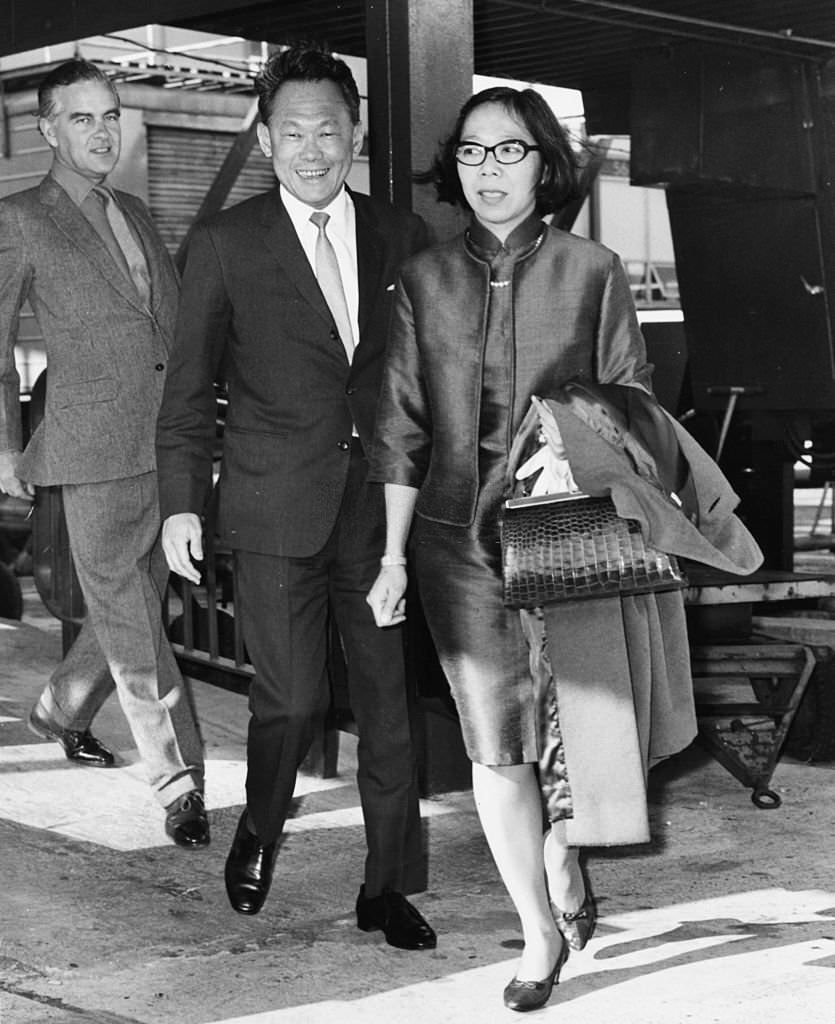
Lee Kuan Yew, Prime Minister of Singapore, leaving Heathrow Airport with his wife, 1970

Prime Minister Lee Kuan Yew was the central figure steering Singapore through this era. His government pursued growth through exports, skills training, and foreign investment. English was made the primary language of instruction in schools, a deliberate choice designed to build a workforce capable of competing in global markets. The government also invested in subsidized housing, healthcare, and public transportation — not just as social programs, but as economic tools to keep the workforce productive and stable.
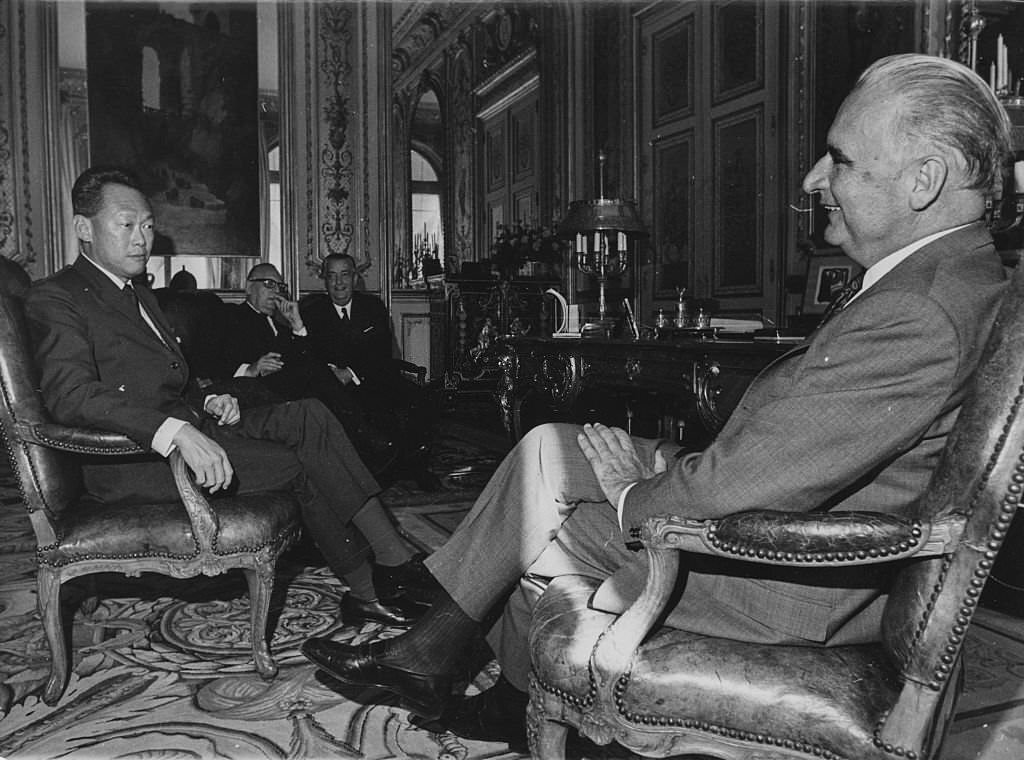
President Georges Pompidou of France (right) and Prime Minister Lee Kuan Yew of Singapore, sitting together during a meeting at the Elysee, 1970

Singapore’s leaders spent the early 1970s building relationships abroad. Lee Kuan Yew met with heads of state across Europe and Asia, securing trade ties and foreign investment. One of the most significant draws for international capital was Singapore’s rapidly expanding oil refining sector. By the mid-1970s, Singapore had become the third-largest oil refining center in the world, with major companies like Shell and Esso operating on the island. The port was central to all of it.
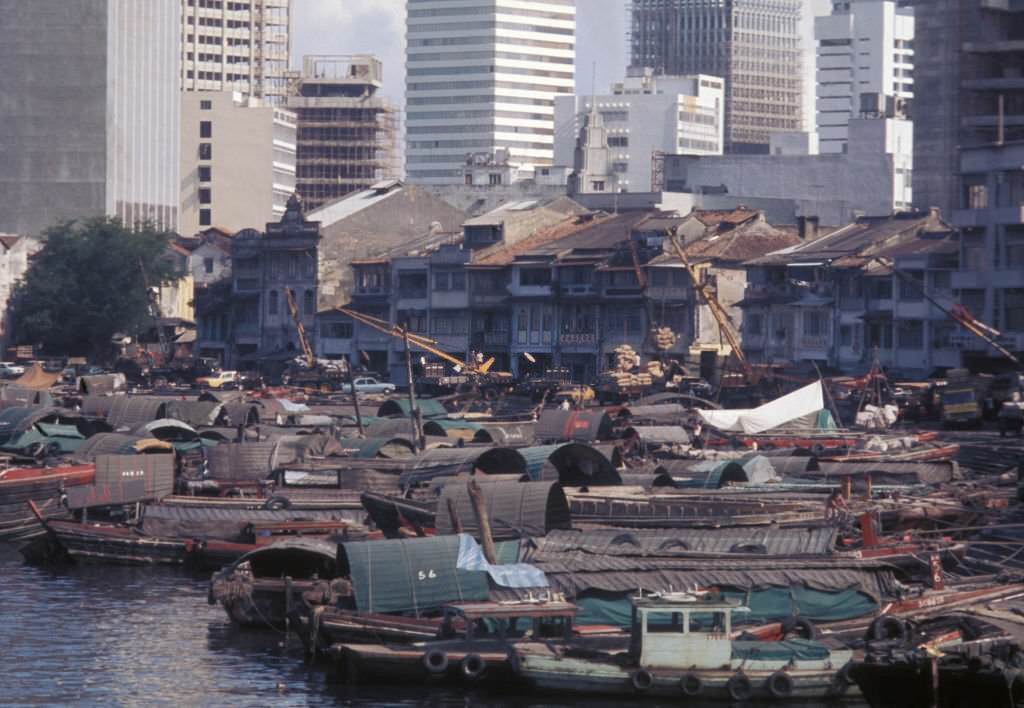
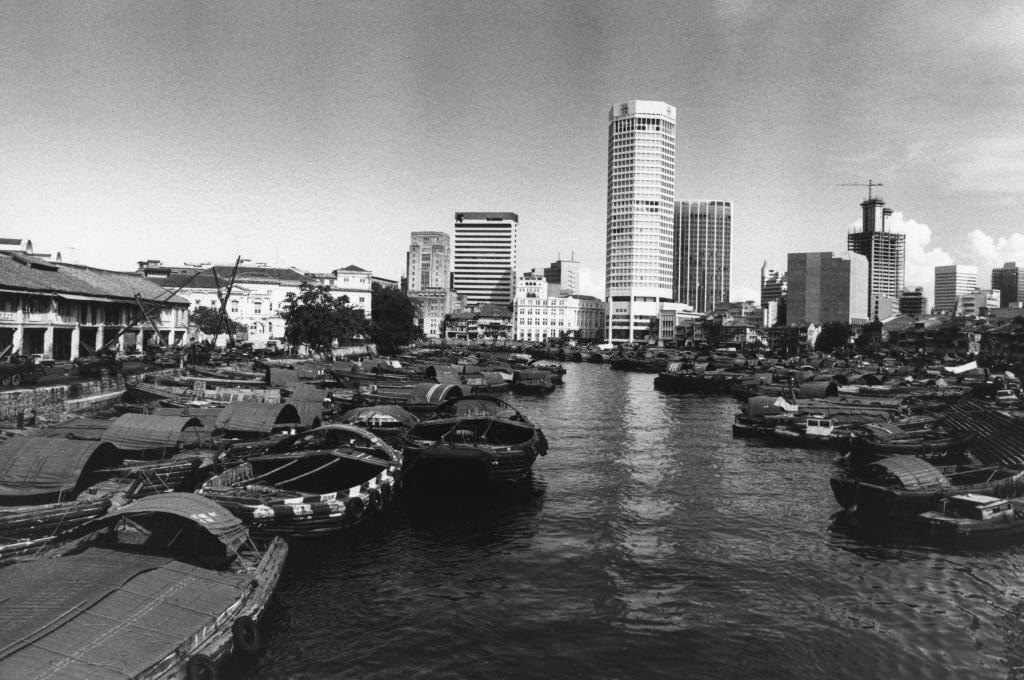
Boats in the port of Singapore, 1975.
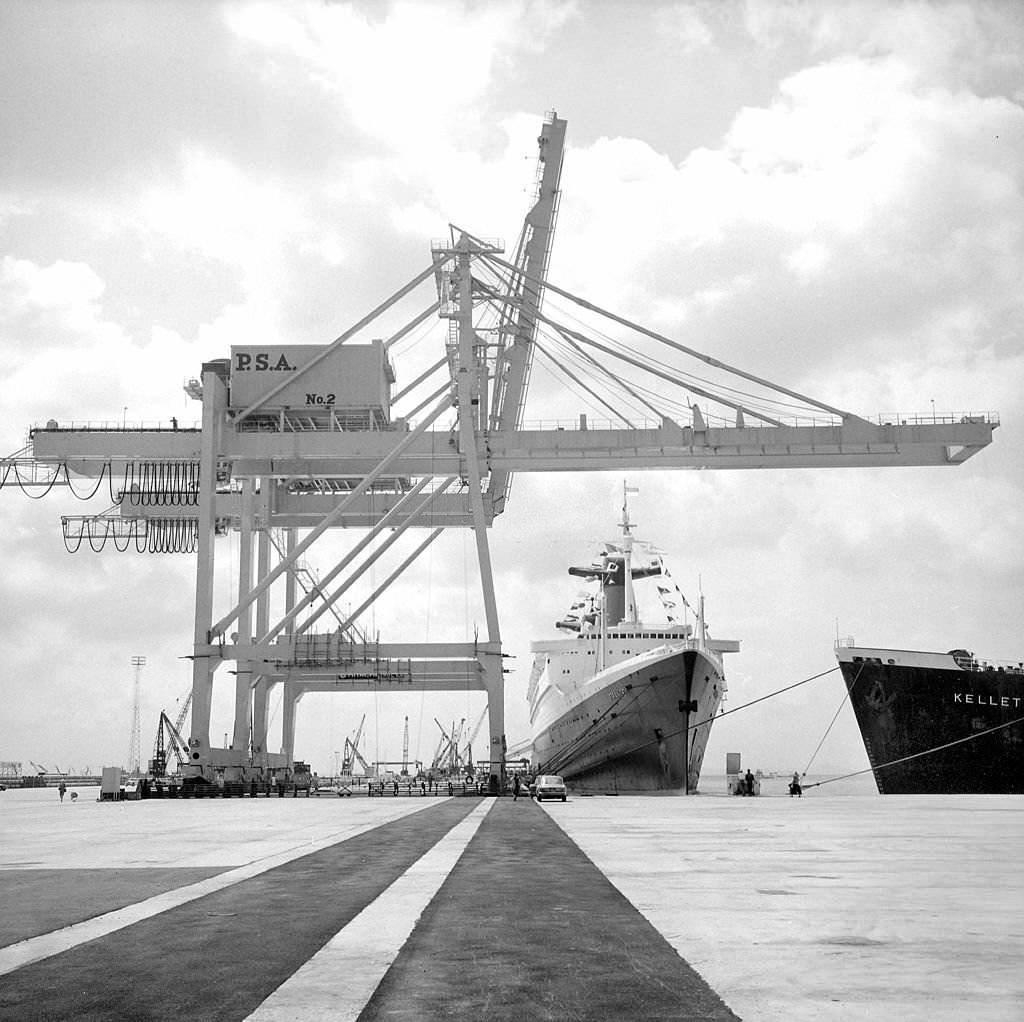
The steamship France in the port of Singapore, 1972

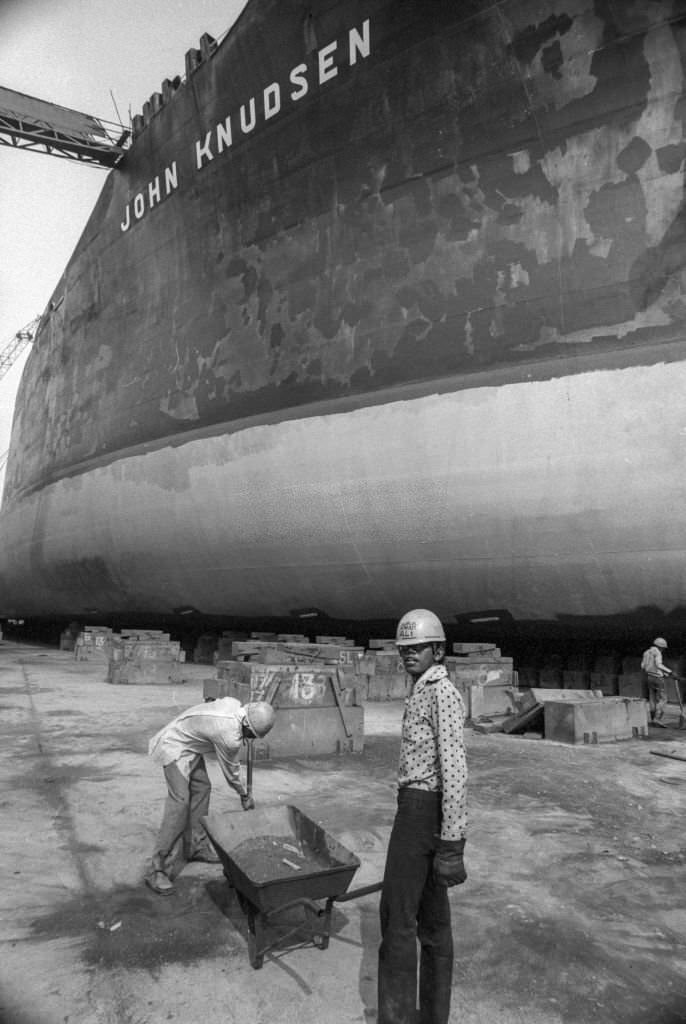
The port handled an enormous volume of international traffic throughout the decade. Cargo vessels, tankers, and passenger steamships like the France moved through Singapore’s waters regularly. The shipyard industry was thriving alongside the port. Dry docks held massive ocean liners for repair and maintenance, and boat propellers the size of cars were a routine sight along the waterfront.
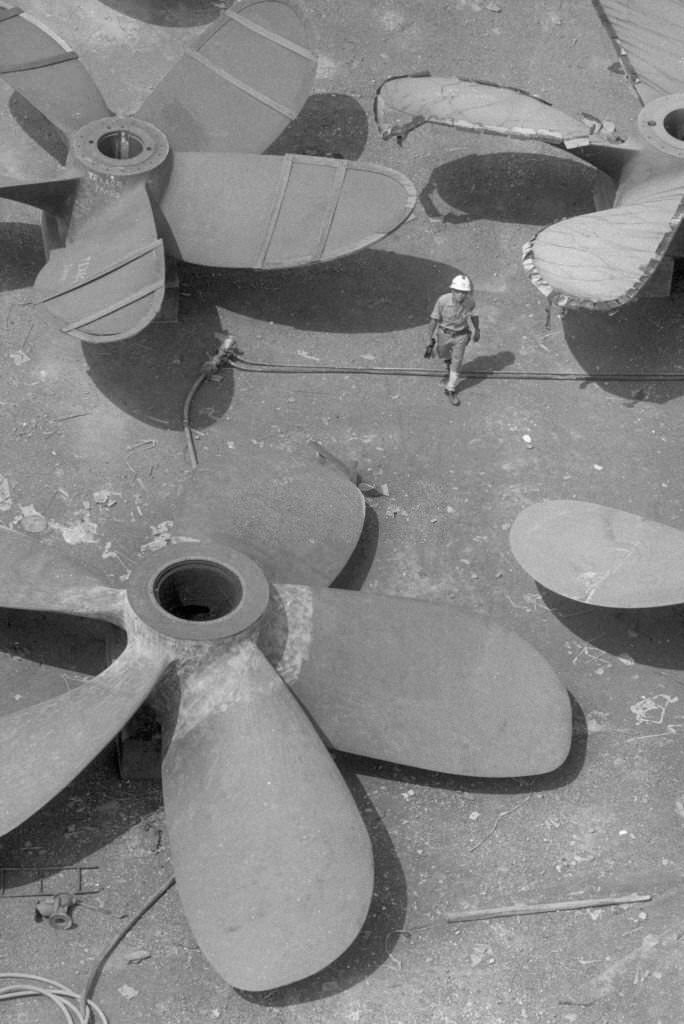
Boat propellers at a shipyard in Singapore, July 1974.
Workers in front of the liner "John Knudsen" in dry dock at a Singapore shipyard, July 1974.
Workers in front of the liner “John Knudsen” in dry dock at a Singapore shipyard, July 1974.

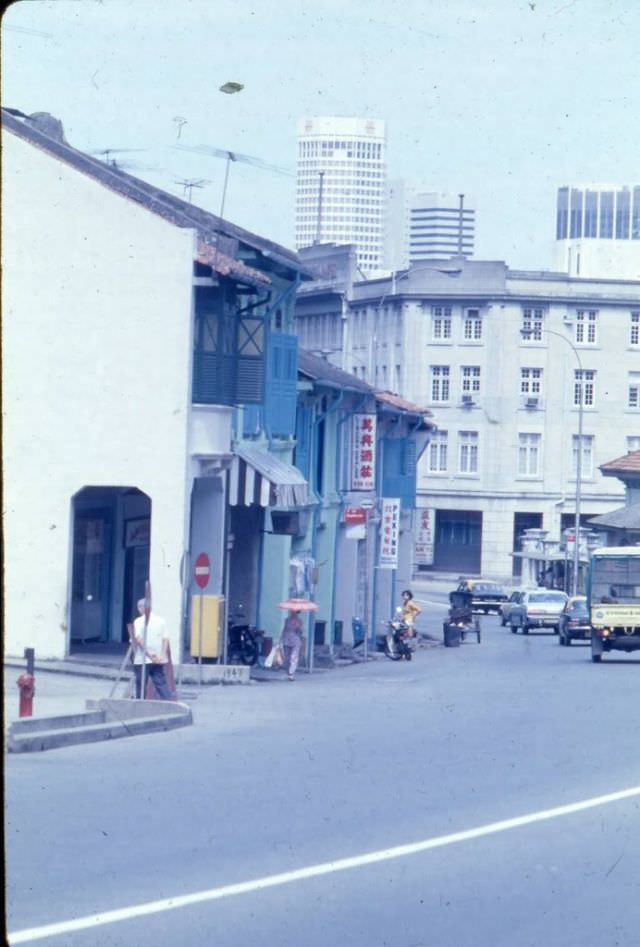
On land, Singapore’s streets told a story of two different worlds existing side by side. In Chinatown, narrow roads were lined with traditional shophouses, open-air markets selling clothing and goods, and the kind of dense street life that had defined the neighborhood for generations. Just beyond those same streets, a modern skyline was taking shape. The OCBC Building, completed in the mid-1970s, was one of the most visible markers of that change.
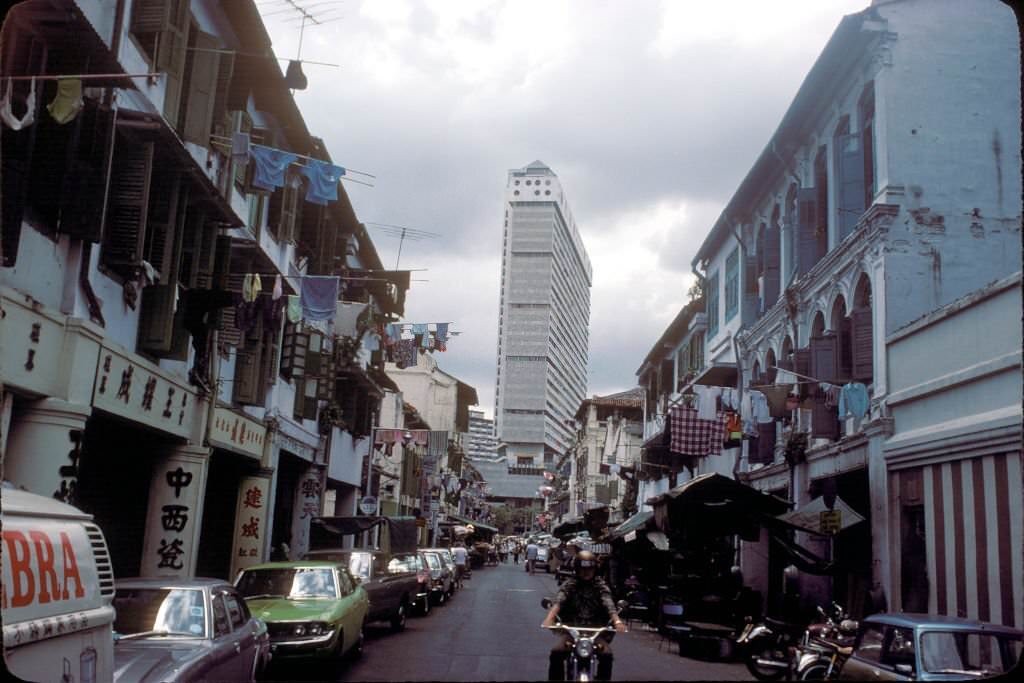
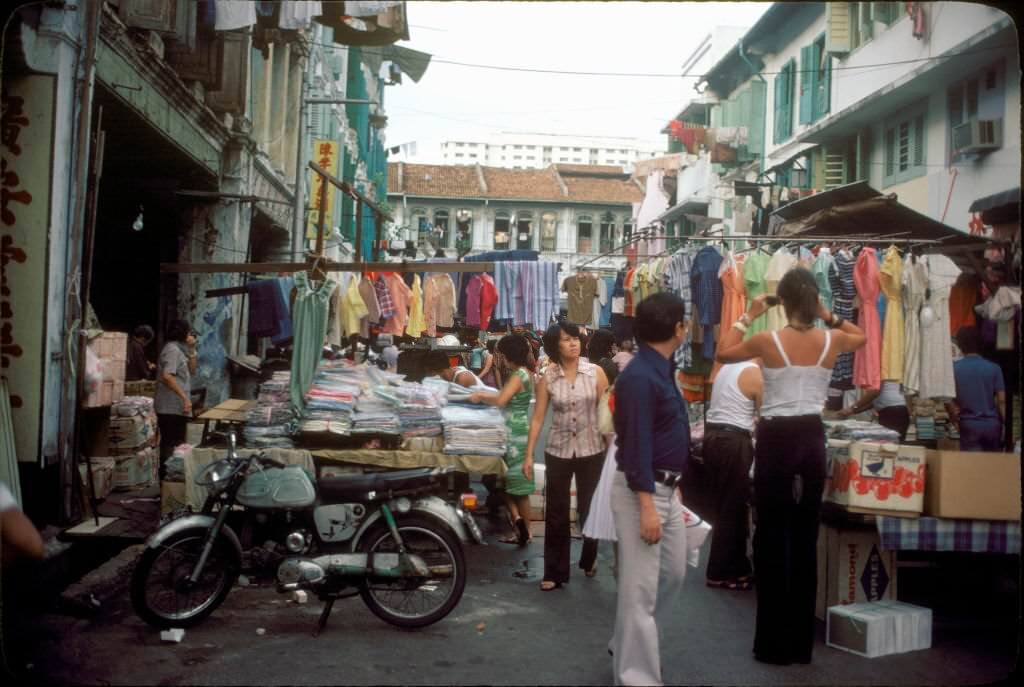
Singapur Strasse in China Town, Singapore, 1977.
Kleidermarkt in China Town, Singapore, 1977
China Town und Skyline, Singapore, 1977.
China Town and Skyline, Singapore, 1977

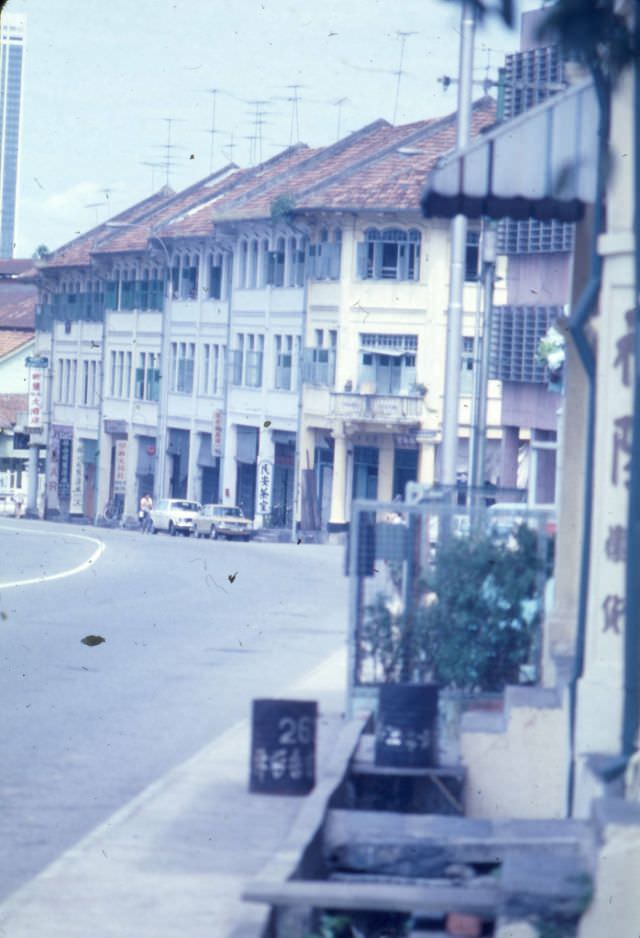
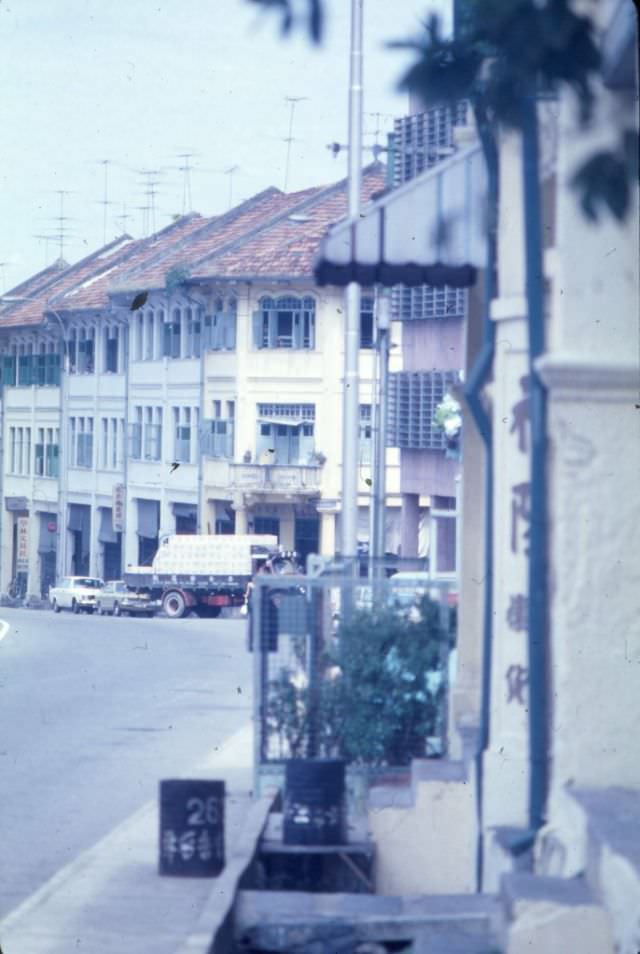
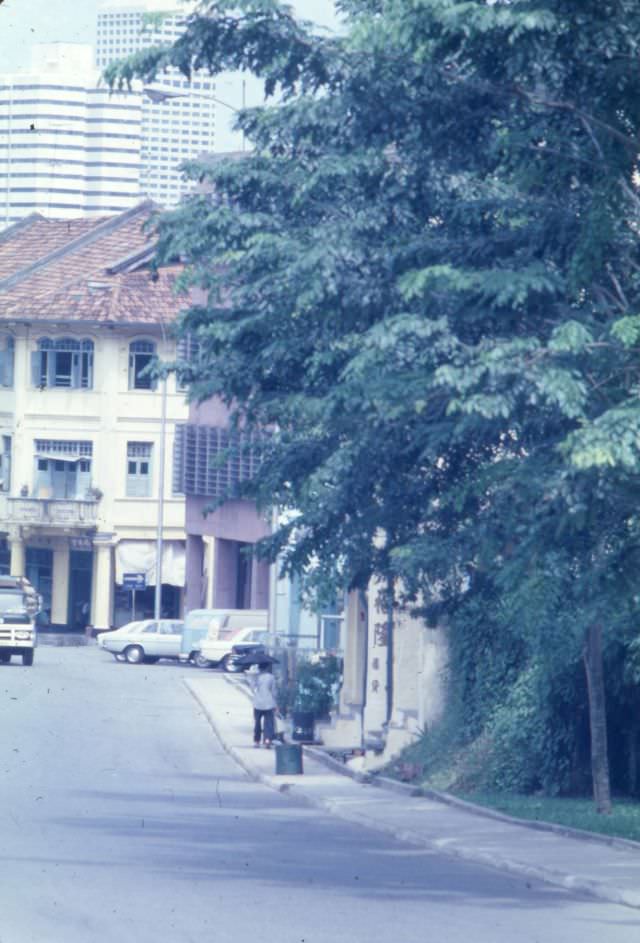
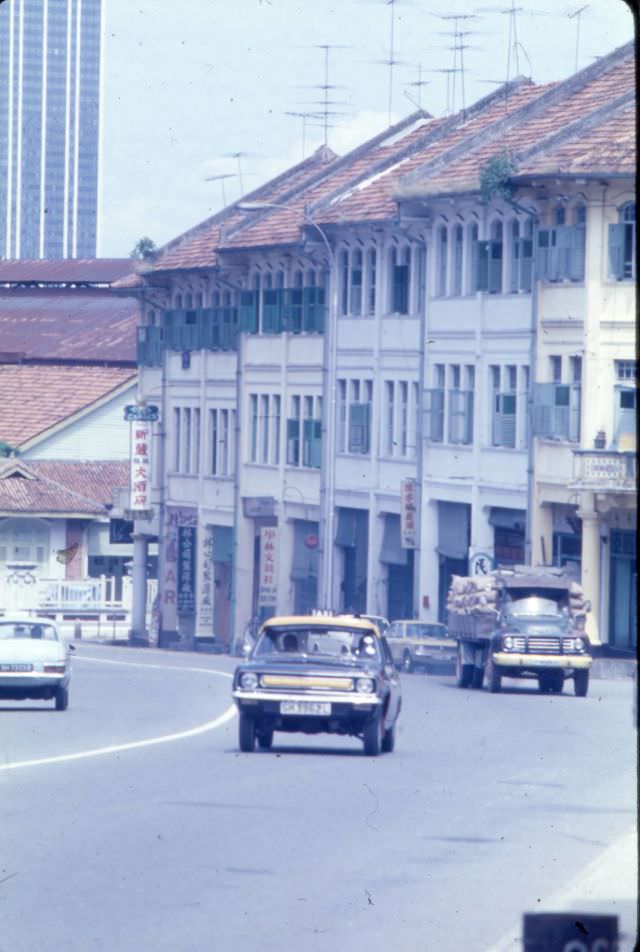
River Valley Road captured that same contrast. Rows of low-rise shophouses sat in the shadow of new commercial towers going up across the city. The road itself was busy with traffic, vendors, and everyday urban life. These weren’t ceremonial streets — they were working ones, full of people going about their day in a city that never seemed to slow down.
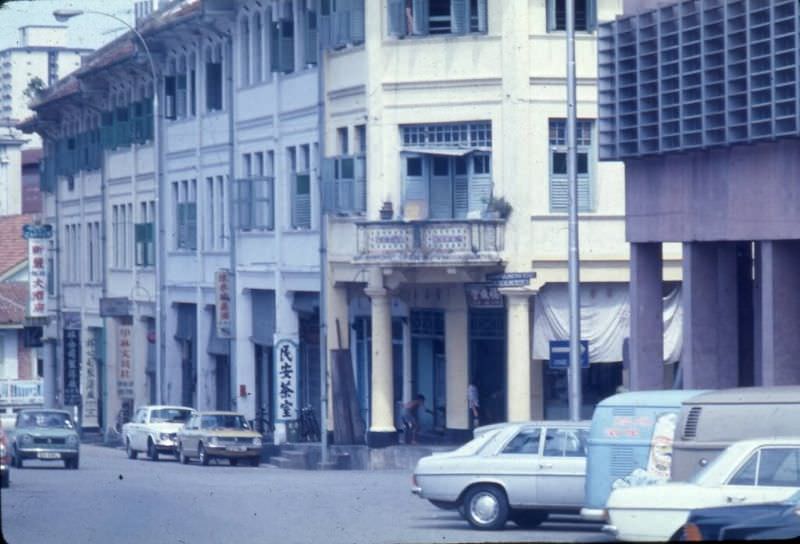
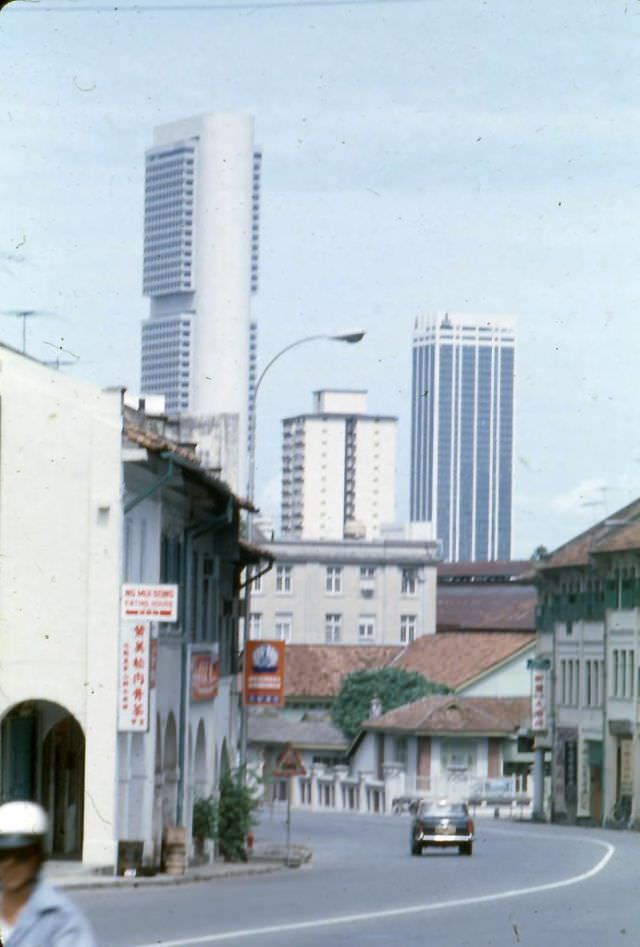
River Valley Road and Mohd Sultan Road, Singapore, 1978
River Valley Road. The tallest building on the left is the OCBC Building completed in the mid-1970s, Singapore, 1978
Shophouses on River Valley Road, Singapore, 1978

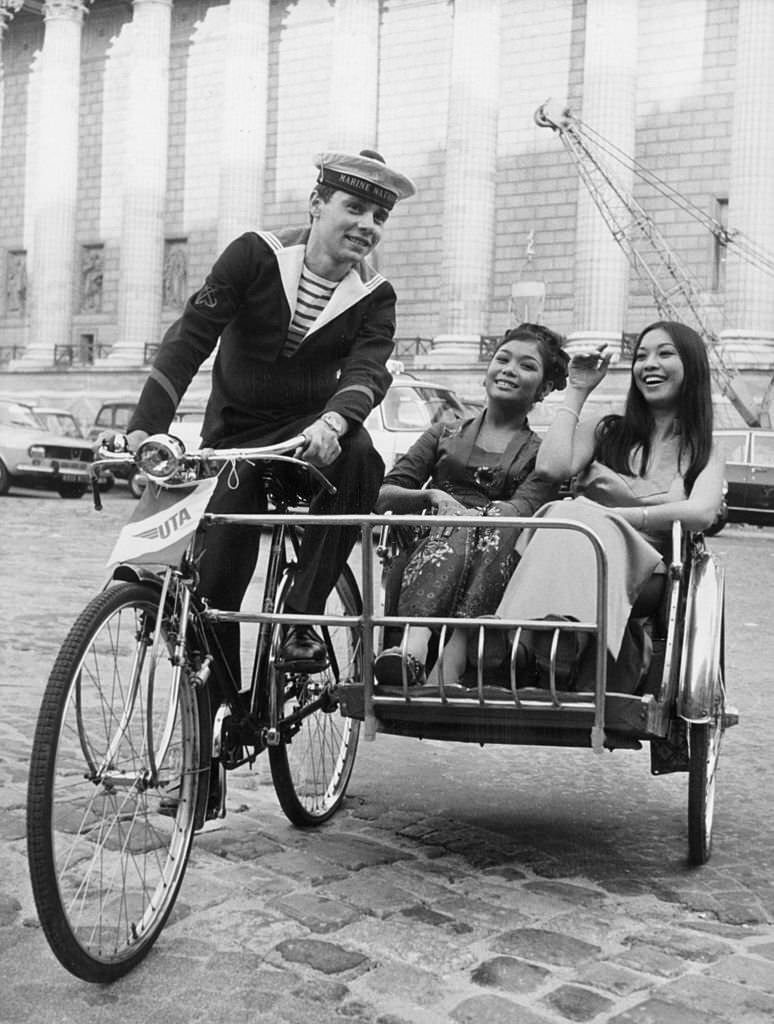
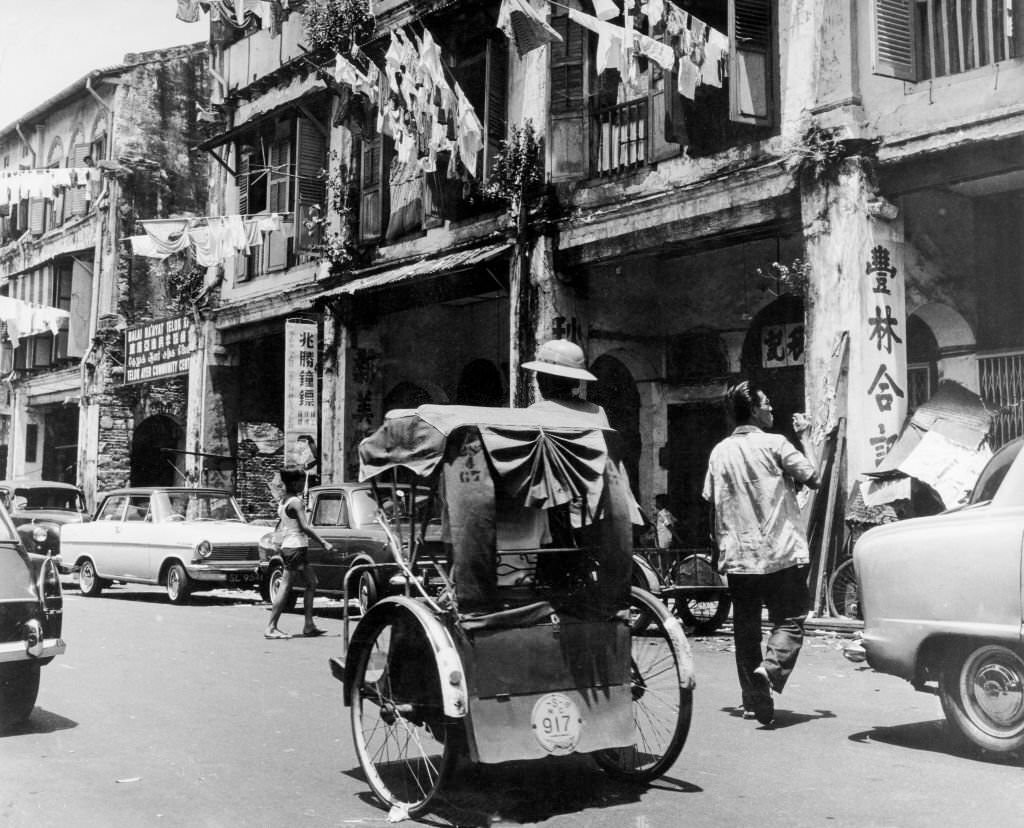
Cycle taxis — known as trishaws — were still a common way to get around parts of Singapore in the early 1970s. They carried passengers through crowded streets where motor traffic was difficult, and they remained a fixture of the city’s transport network even as modern alternatives expanded. By the end of the decade, they had become far less common, pushed out by Singapore’s growing bus and road infrastructure.
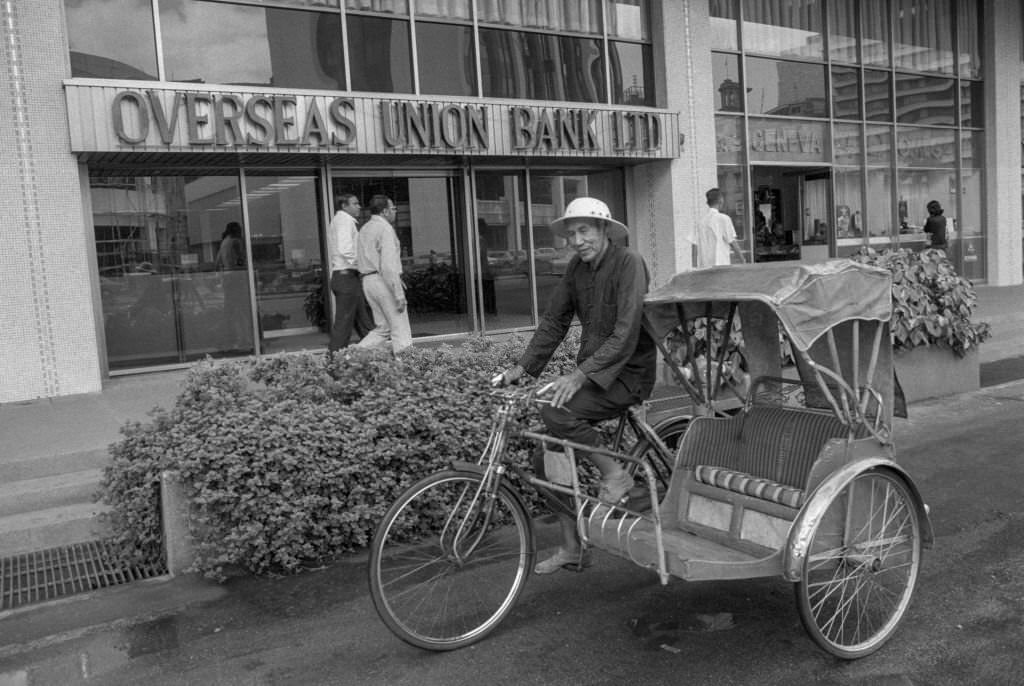
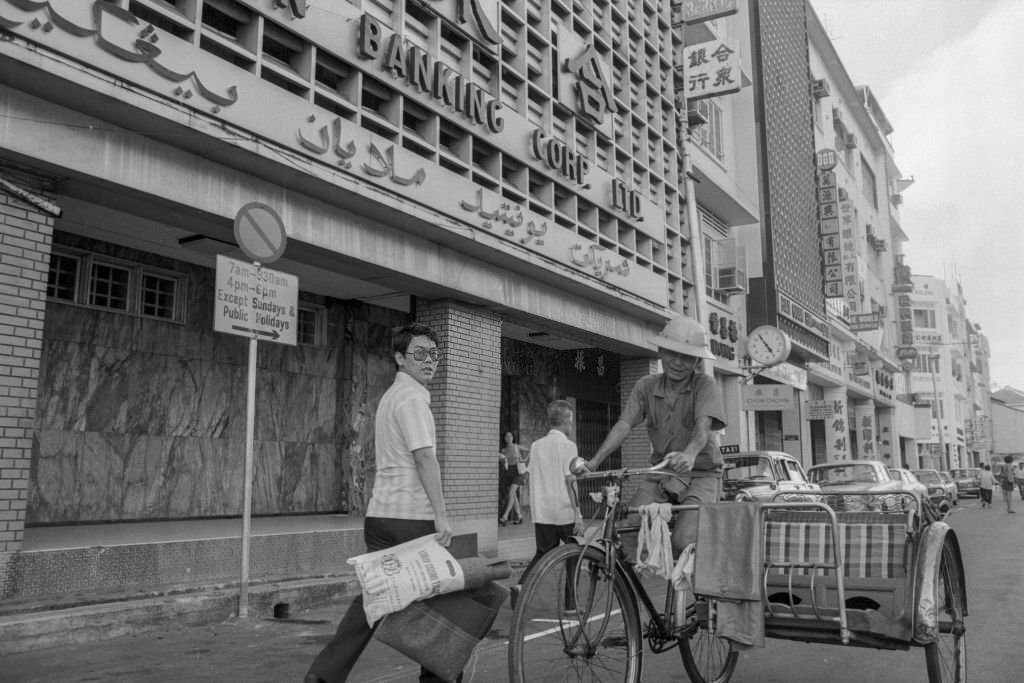
Cycle taxi on a street in Singapore, July 1974.
A French sailor takes two ladies from the Singapore Tourist Office on a jaunt around Paris in a trishaw, 1971

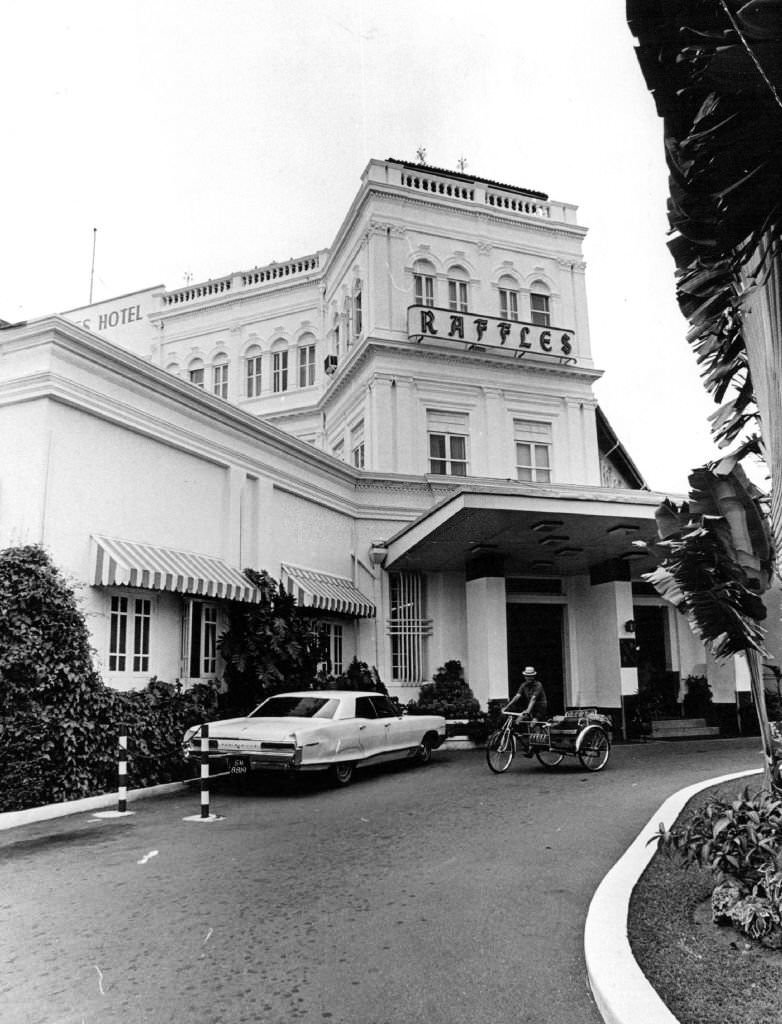
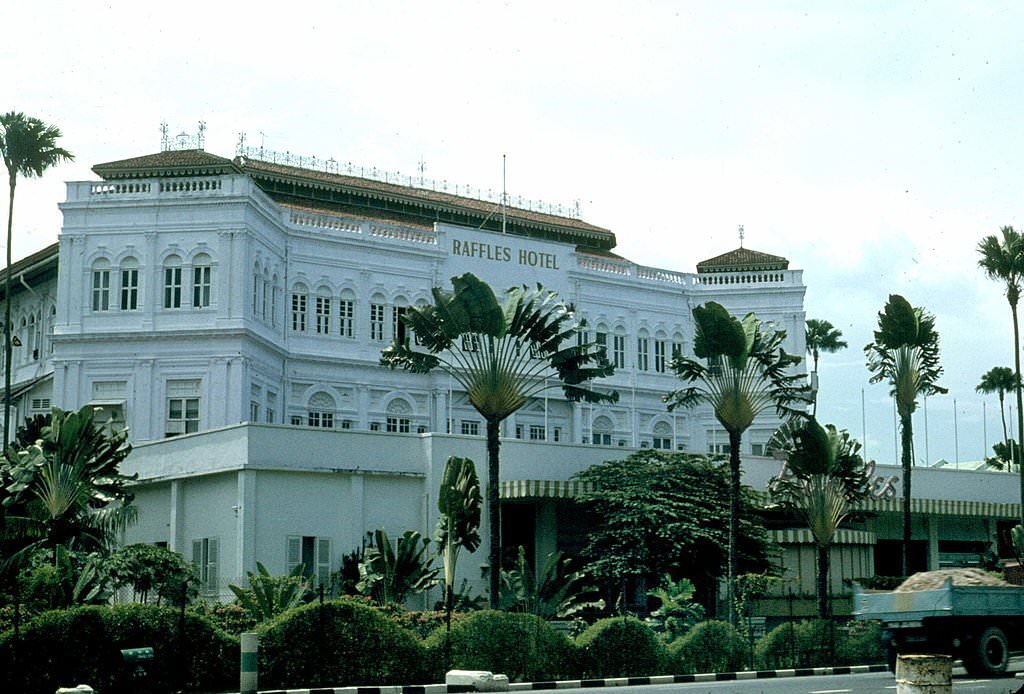
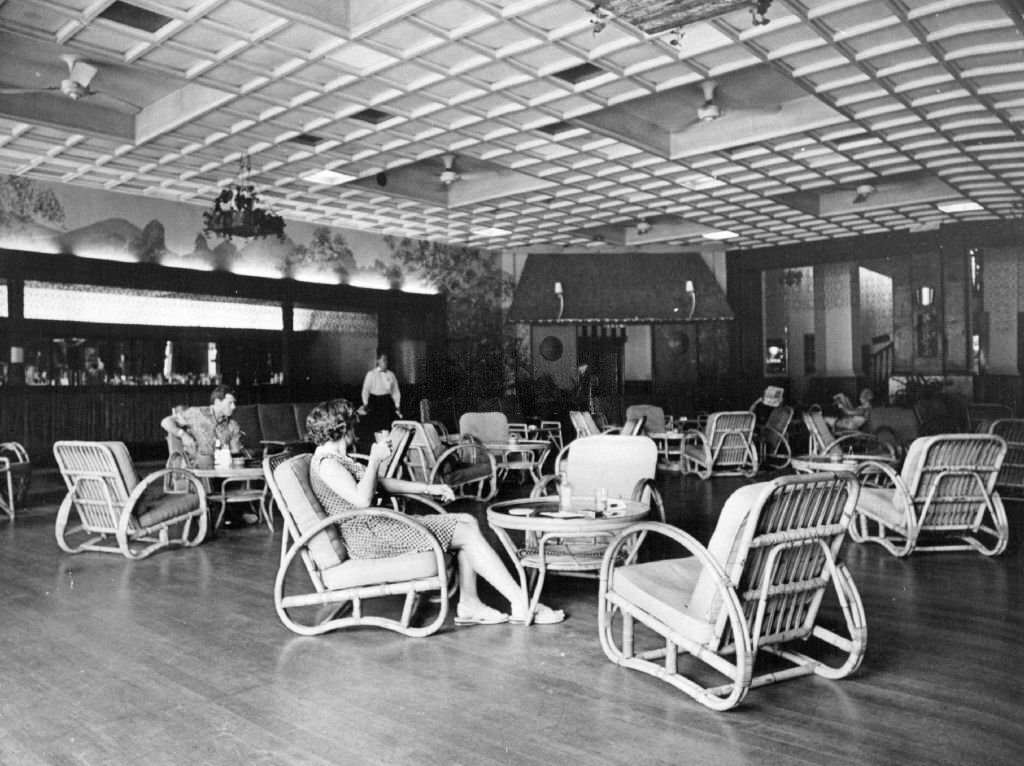
The Raffles Hotel stood as one of the most recognizable symbols of Singapore’s colonial past. Built in the 19th century, it had been the social center of British Singapore for decades. By the 1970s, newer luxury hotels like the Singapore Hilton were drawing more visitors, but Raffles refused to disappear. Its Long Bar, famous as the birthplace of the Singapore Sling cocktail, kept attracting tourists and locals alike.
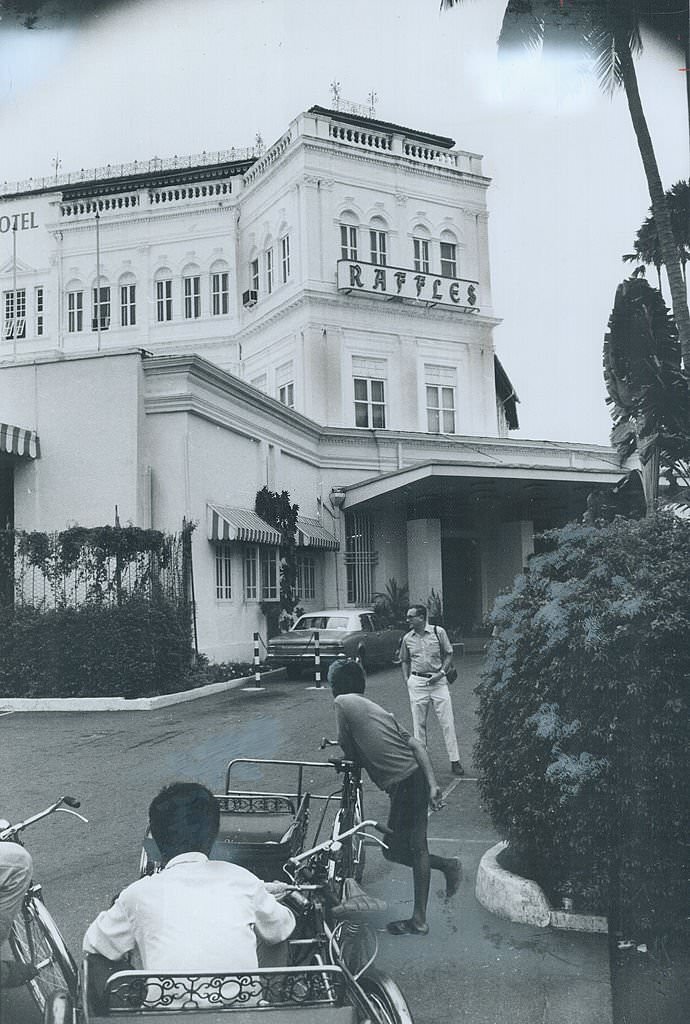
The Raffles Hotel in Singapore has refused to fade away with the empire it epitomized back, 1970s
The bar of the celebrated Raffles Hotel at Singapore, home of the Singapore, 1972
The Raffles, formerly the No. 1 hotel in Singapore and famous as birthplace of the Singapore gin sling, has lost ground to a flock of new hostelries, 1971
Raffles Hotel, Singapore, August 1971.

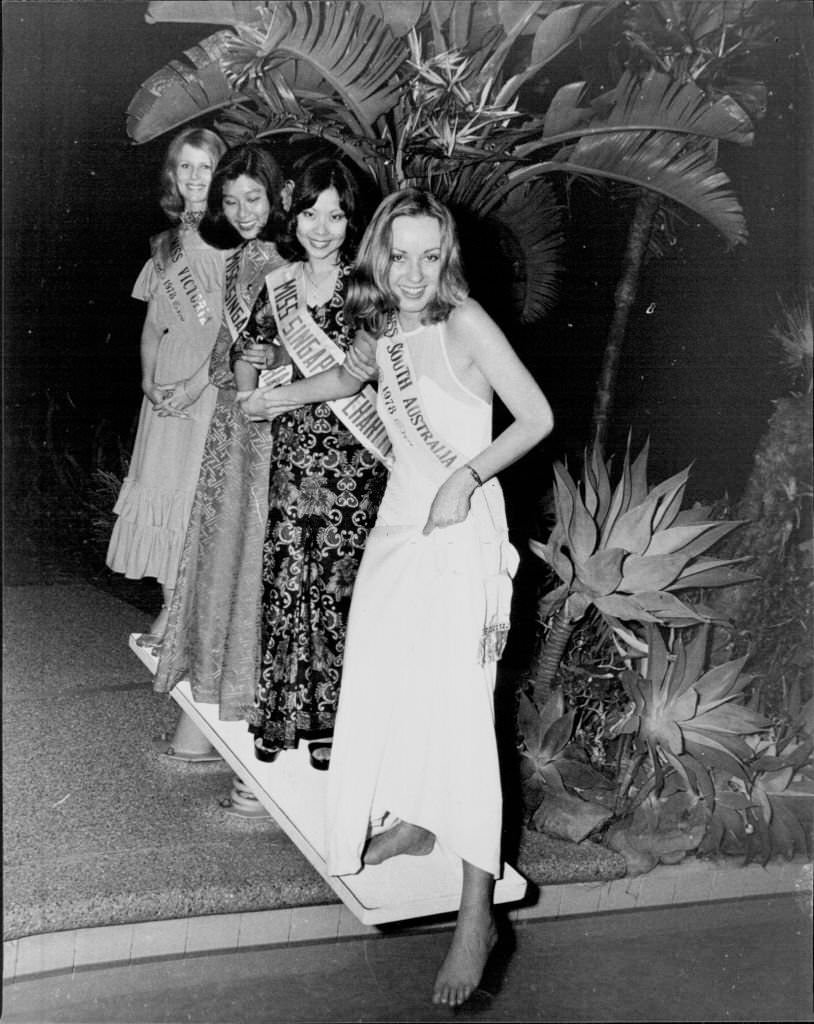
Tourism was growing steadily throughout the decade, and the government worked to make Singapore an attractive destination for international visitors. Beauty pageants, international events, and cultural displays were part of that effort. In 1972, Singapore sent a contestant to Miss World in London. By 1977, local charity pageants were drawing multiple international participants.
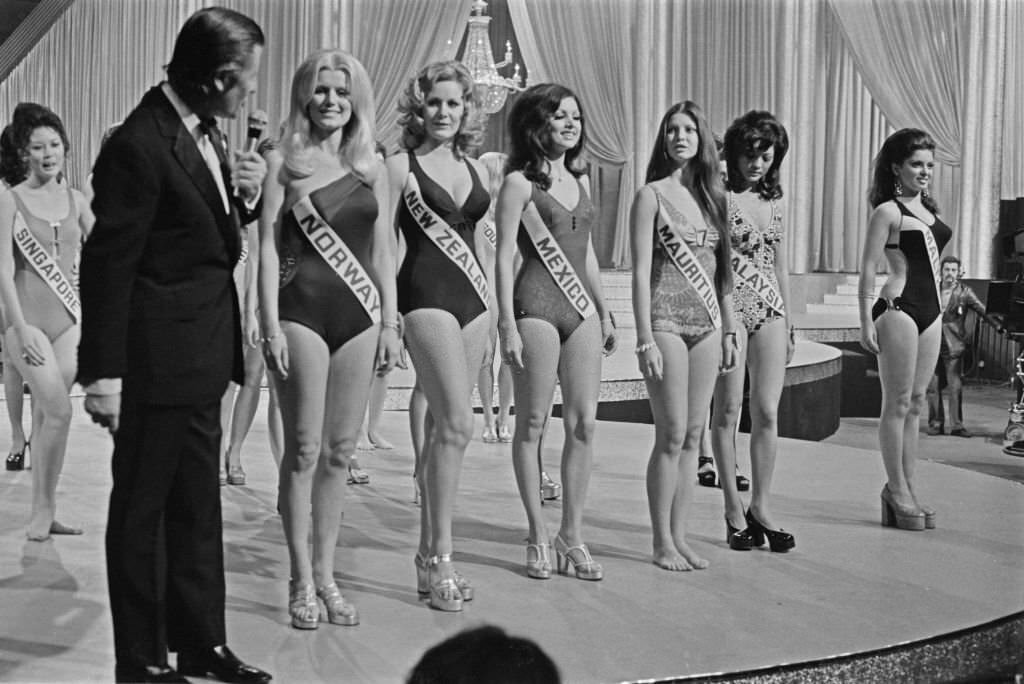
British television host Eric Morley  meets some of the contestants in the Miss World 1972 beauty pageant in London.
British television host Eric Morley meets some of the contestants in the Miss World 1972 beauty pageant in London.
Left to right) Miss Victoria, Gloria Krope, Miss Singapore Charity Princess, Rugayah Dalair, Miss Singapore Charity Queen, Florence Leong, and Miss South Australia, in Singapore, 1977

Singapore’s manufacturing sector was expanding rapidly in this period. The German camera brand Rollei opened a factory on the island, and workers leaving the plant at the end of a shift became an everyday scene. Foreign manufacturing companies were drawn by Singapore’s political stability, its skilled and growing workforce, and the government’s willingness to offer favorable conditions for business. By the late 1970s, the government began steering investment toward higher-tech industries, moving away from simple labor-intensive work.
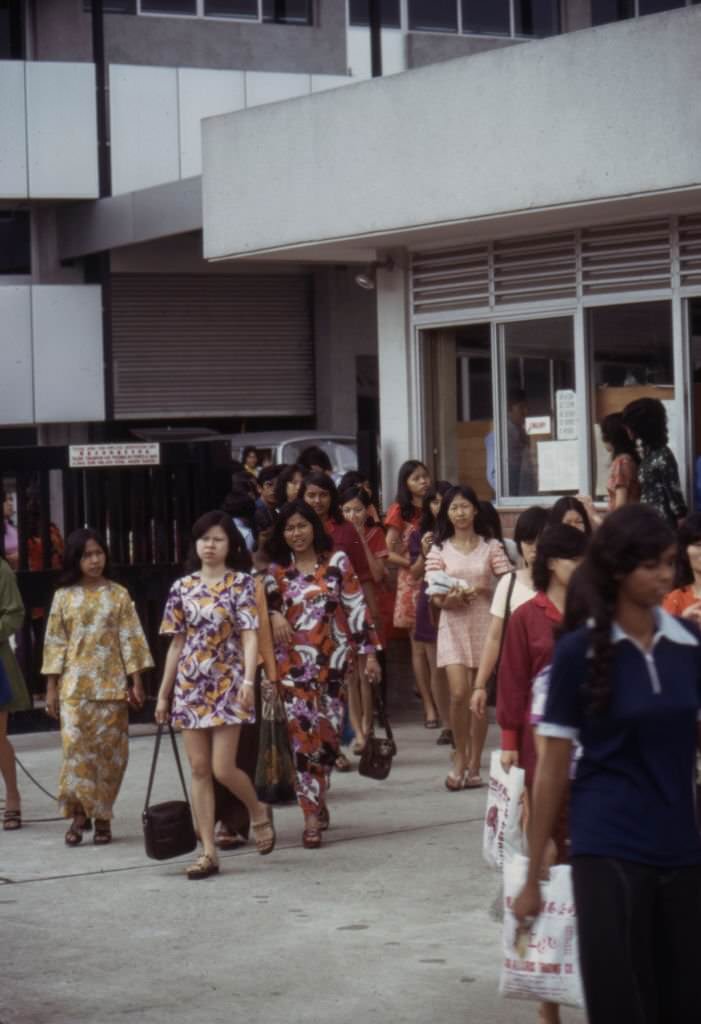
Workers leaving the 'Rollei' camera factory in Singapore in the 1970s.
Workers leaving the ‘Rollei’ camera factory in Singapore in the 1970s.
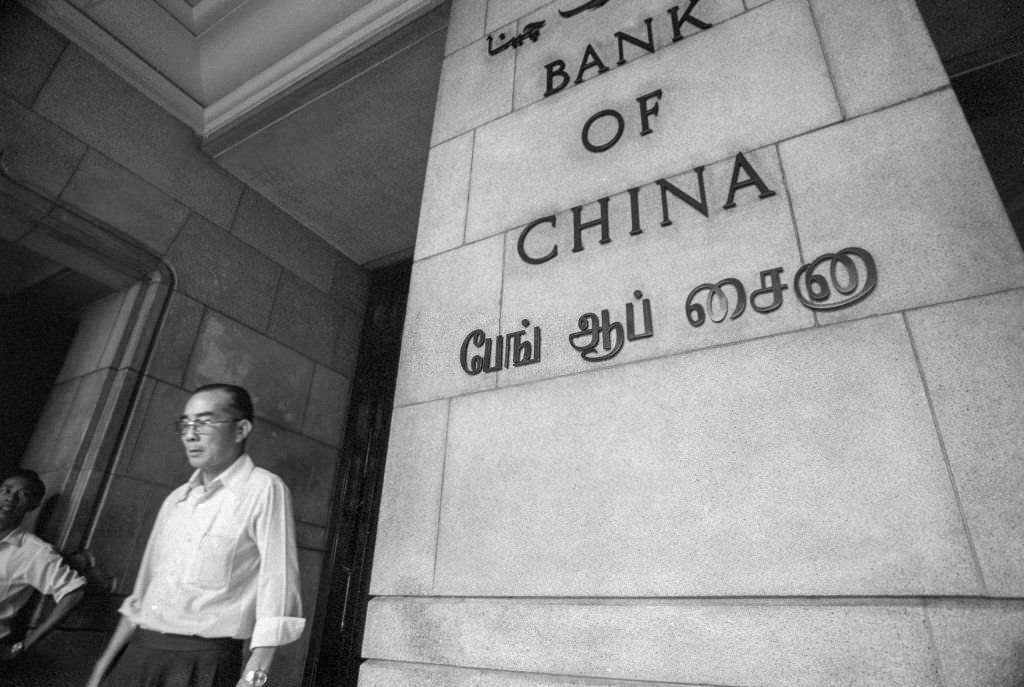
Branch of the 'Bank of China' in Singapore, in July 1974.
Branch of the ‘Bank of China’ in Singapore, in July 1974.

The Central Provident Fund played a key role in all of this. Every employer and employee in Singapore contributed a percentage of wages to the fund, which provided retirement savings for workers and gave the government a large pool of capital for national projects. It was one of the main ways Singapore financed its public housing program, which relocated hundreds of thousands of people from cramped shophouses and squatter settlements into government-built apartment blocks.

Singapore apartments, 1970s
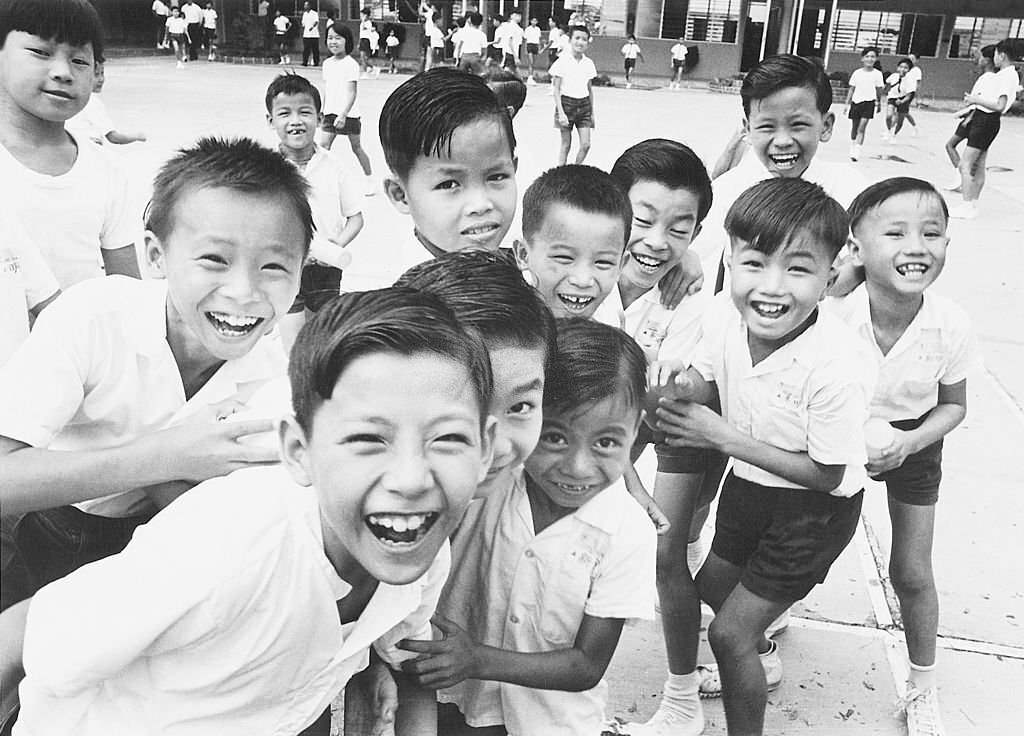
Children in the playground at a school in Singapore, 1970.

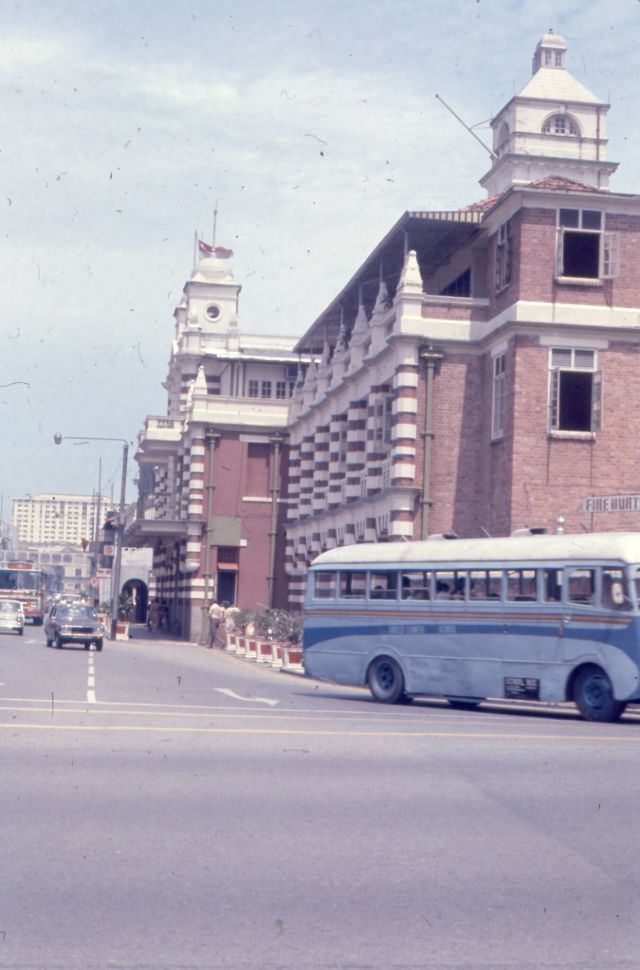
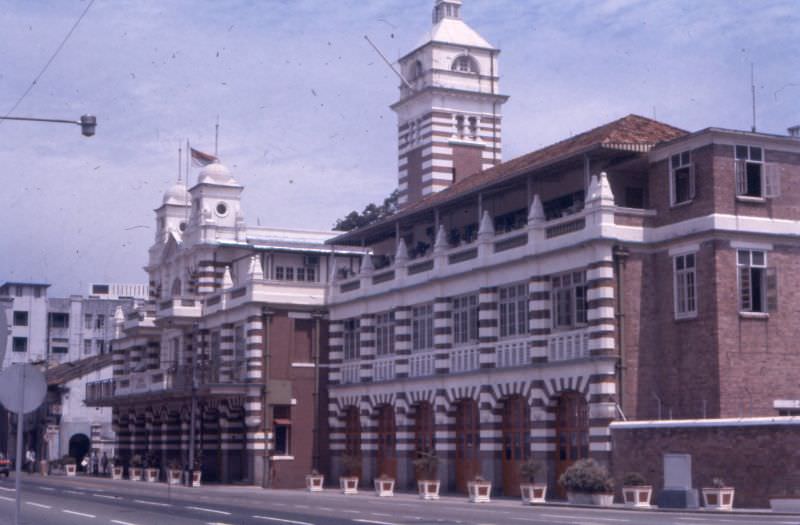
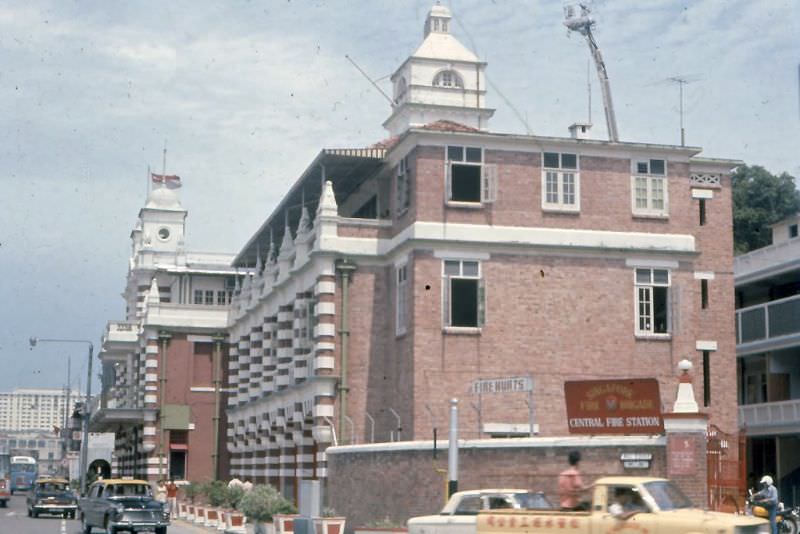
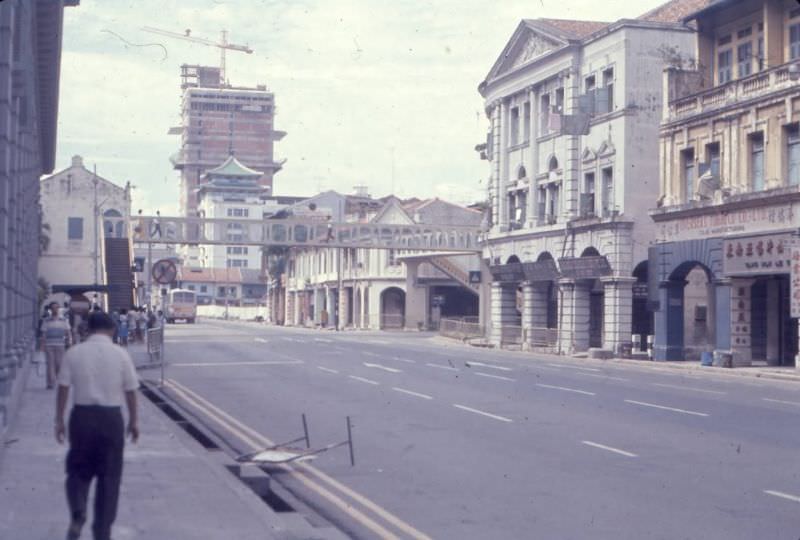
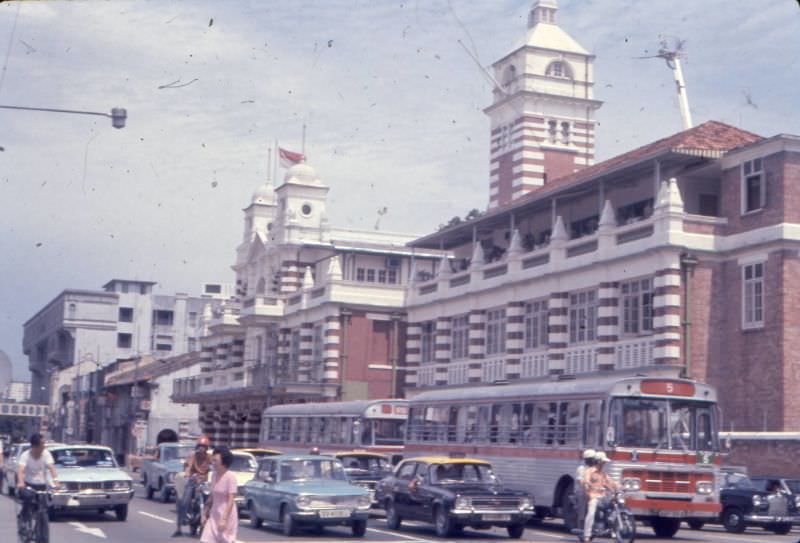
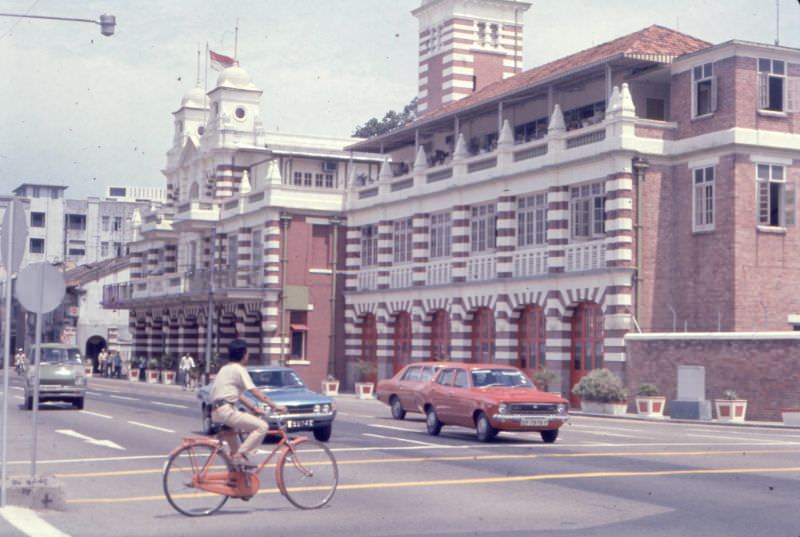
Singapore’s public institutions were also expanding and professionalizing through this period. The Singapore Police Academy was training a new generation of officers. The Hill Street Central Fire Station remained one of the city’s most architecturally distinctive public buildings, its red-and-white facade a well-known landmark. These institutions reflected the government’s focus on order and public safety as foundations for economic growth.
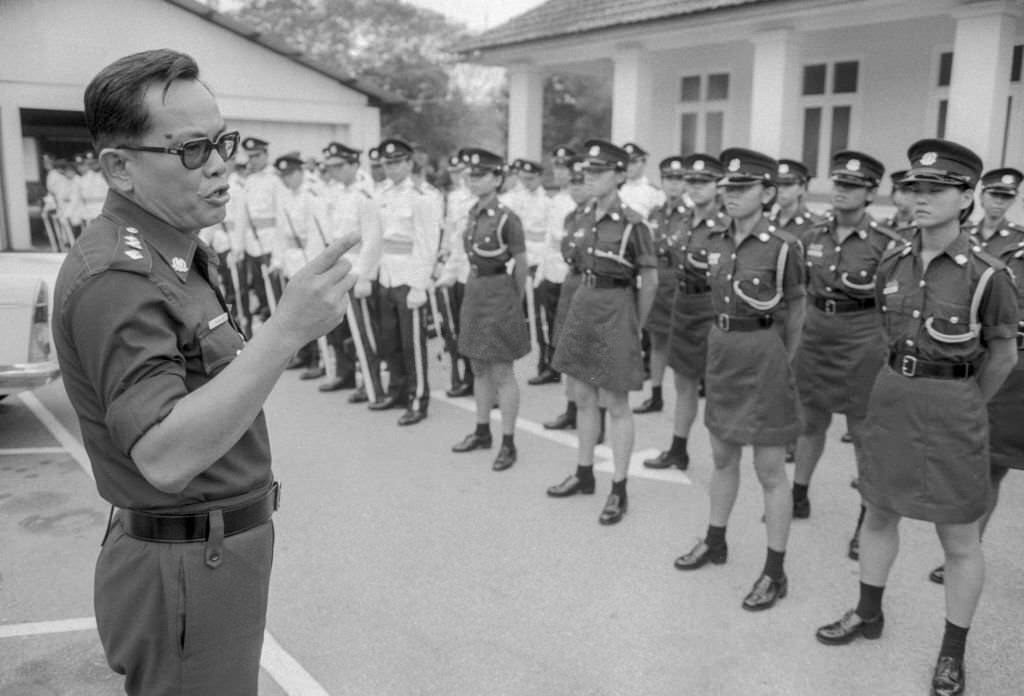
The Singapore Police Academy, 1974
Hill Street Central Fire Station, Singapore, 1978
Hill Street, Singapore, 1978

The late 1970s also brought a humanitarian crisis to Singapore’s shores. Thousands of Vietnamese refugees fleeing the aftermath of the Vietnam War arrived by boat across Southeast Asia. Singapore set up a camp at Hawkins Road to process those who landed. Children lived in the camp while their families waited for resettlement decisions, and photographers documented their daily lives there.
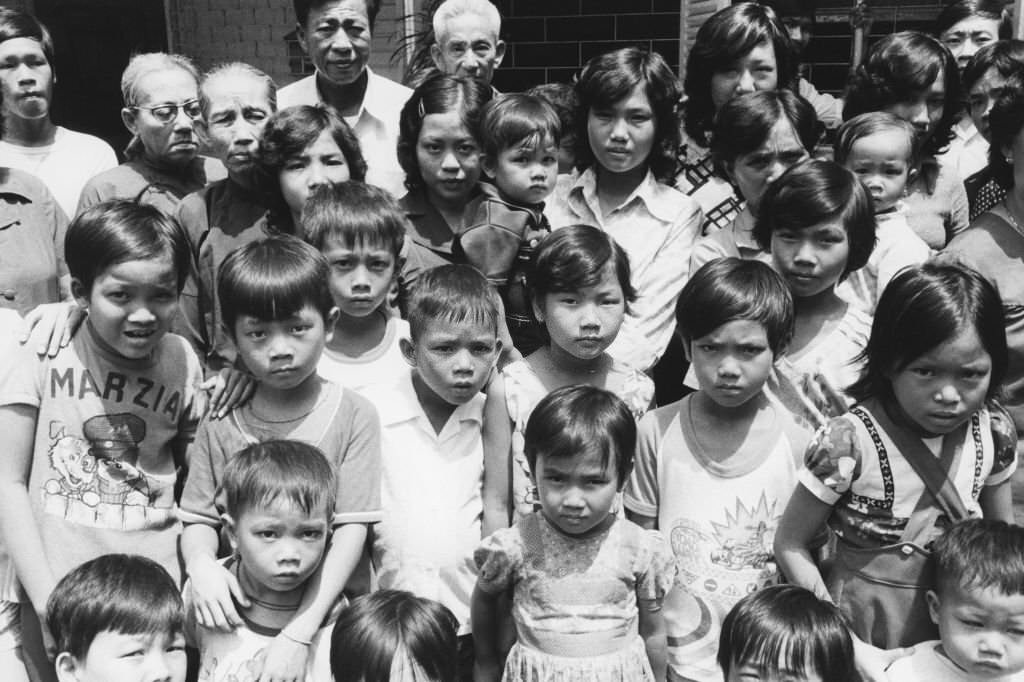
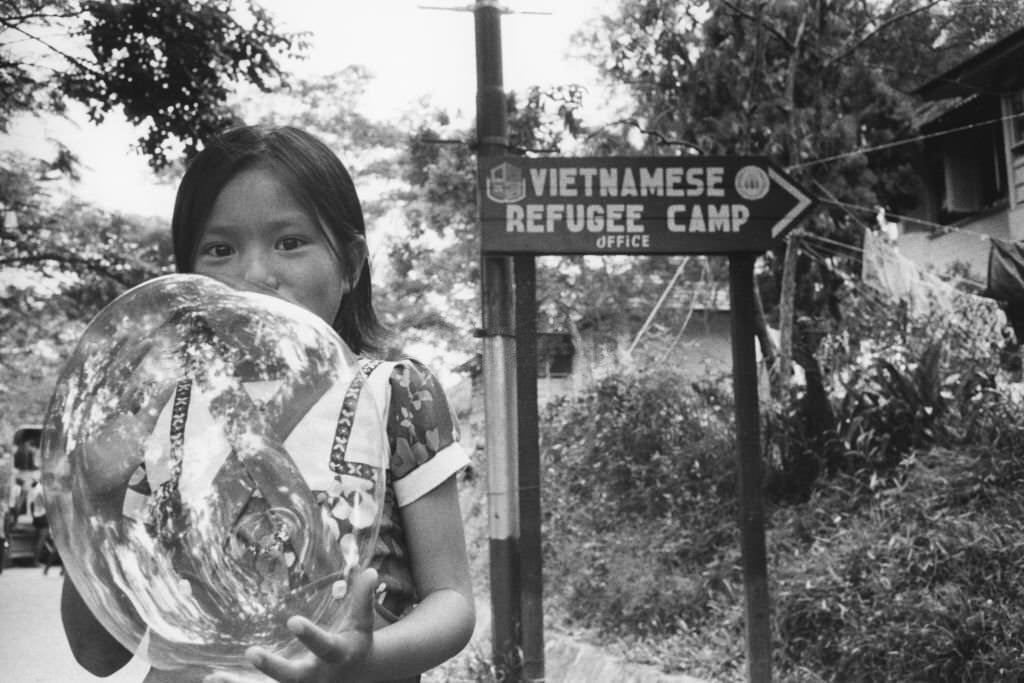
Group of children at Hawkins Roadd Vietnamese refugee camp in Singapore, 1979
A little girl blowing bubbles at Hawkins Roadd Vietnamese refugee camp in Singapore, July 28, 1979.

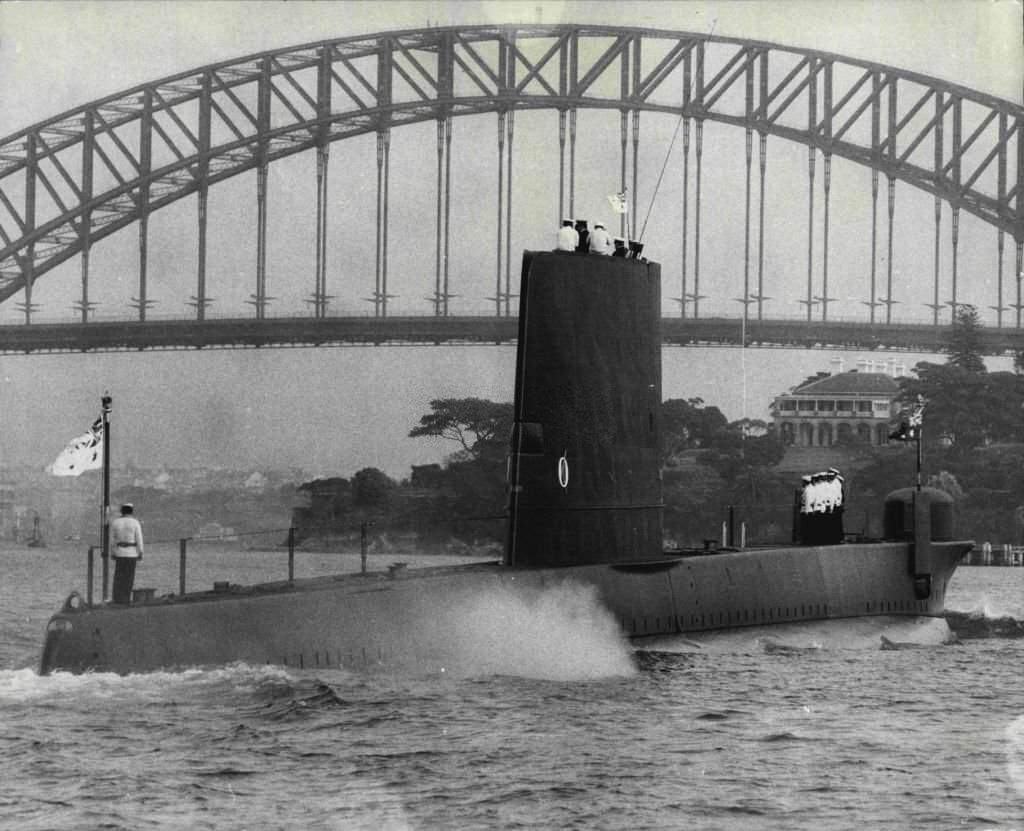
The Commonwealth Conference of 1971 had brought world leaders to Singapore, placing the young nation on the international diplomatic stage. Canadian Prime Minister Pierre Trudeau was among those who attended. That same year, the ANZUK forces — a joint military arrangement between Australia, New Zealand, and the United Kingdom — maintained a presence in the region, with Australian submarines operating out of Singapore before withdrawing.
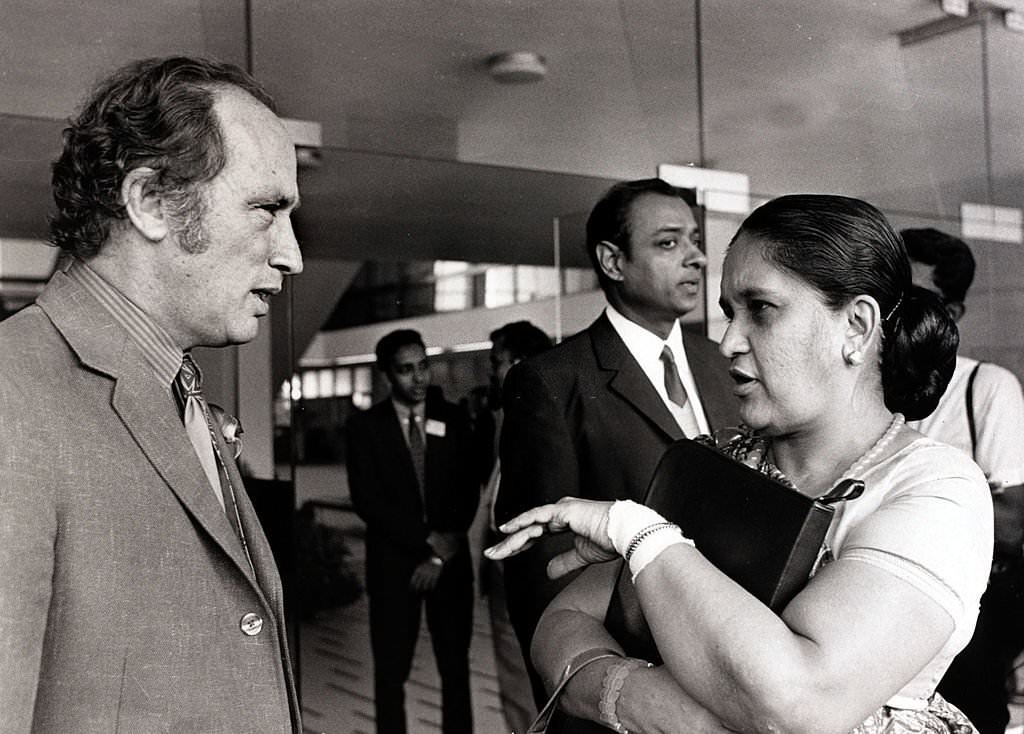
Canadian Prime Minister Pierre Trudeau chats to the Ceylon Prime Minister Mrs, Sirimavo Bandaranaike (right) at the Commonwealth Conference in Singapore, 1971
The Australian Navy Oberon Class submarine HMAS Ovens returned to Sydney today from a 5 months tour of duty with the ANZUK forces in Singapore, 1972

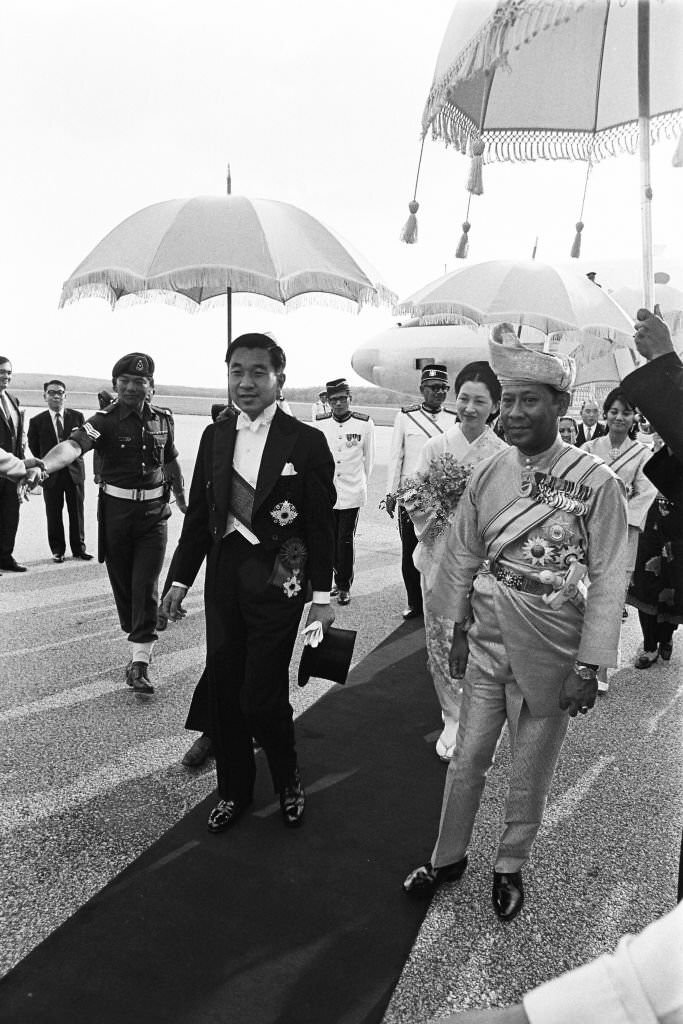
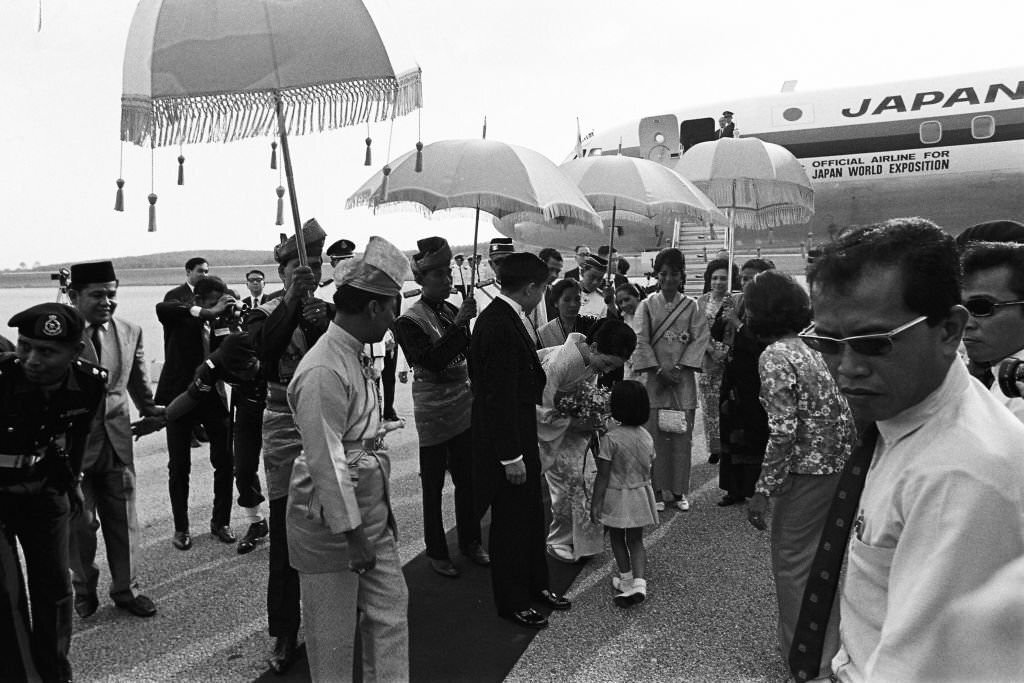
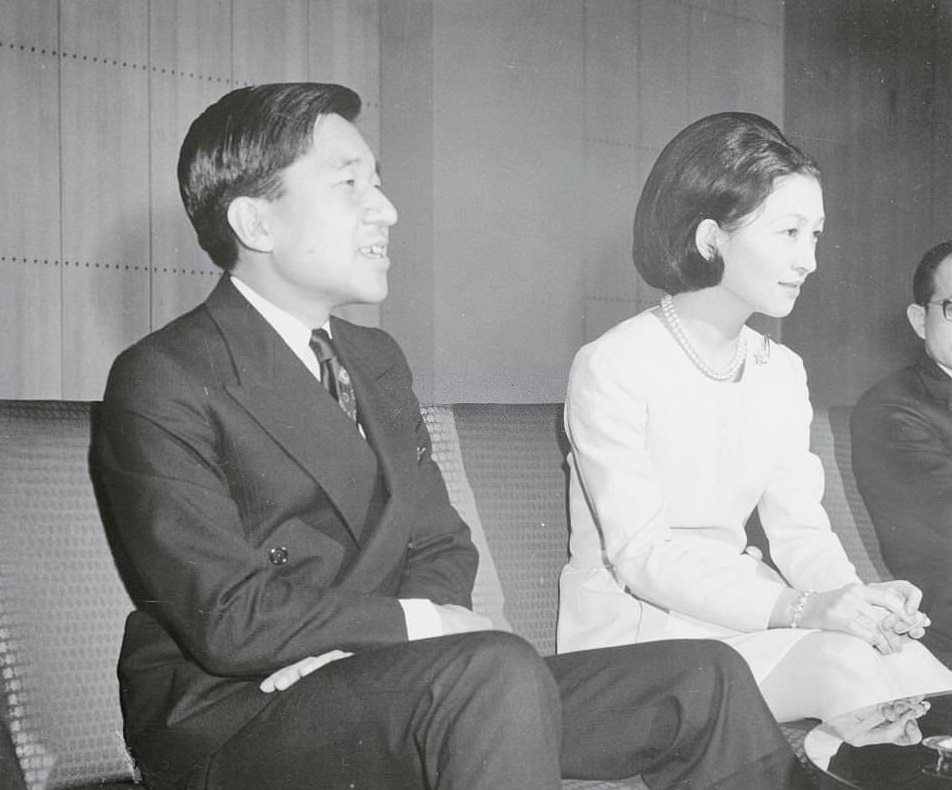
Royal visitors also marked the decade’s early years. Japan’s Crown Prince Akihito and Crown Princess Michiko visited the region in 1970, touring both Malaysia and Singapore as part of a broader diplomatic trip through Asia. Their arrival was a formal affair, welcomed by officials and documented by press photographers.
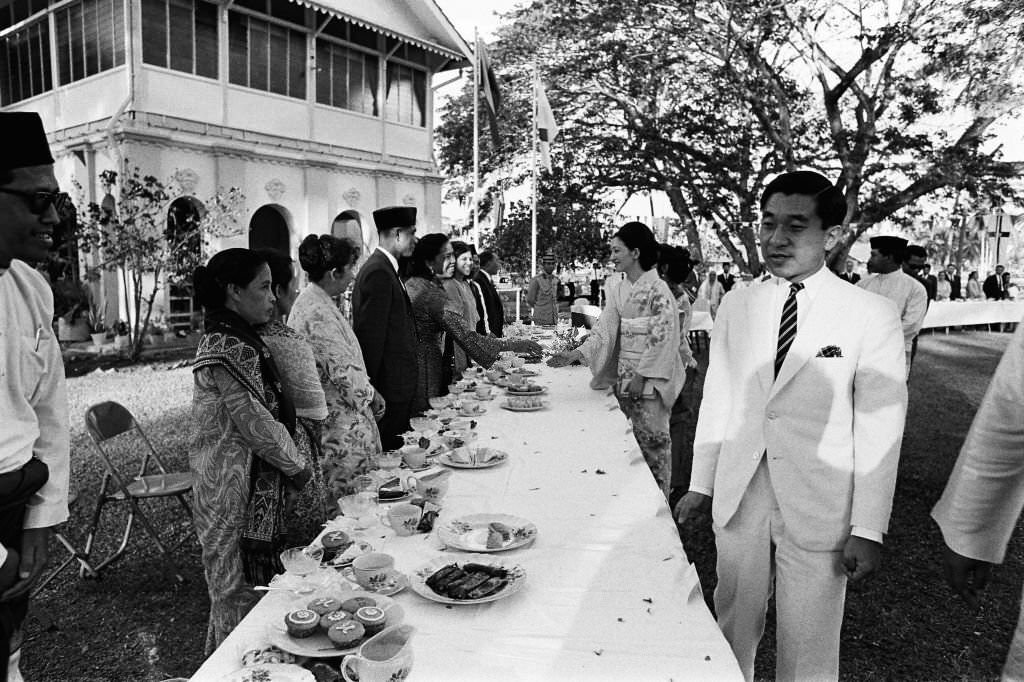
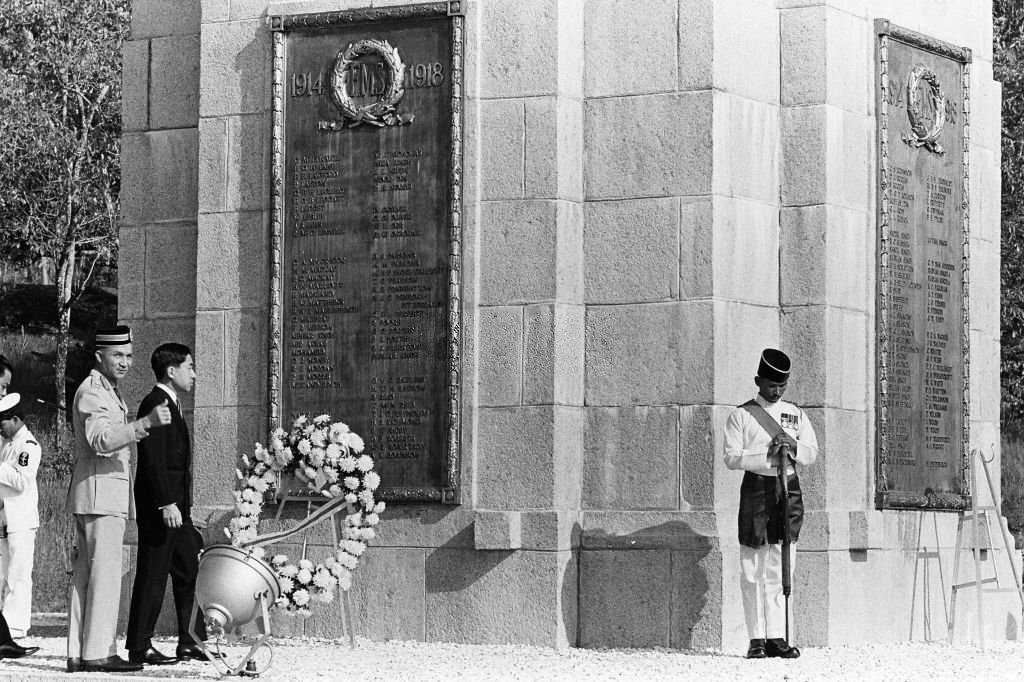
Crown Prince And Crown Princess Visit to Singapore., 1970s
Crown Prince And Crown Princess Visit Malaysia and Singapore, 1970
Crown Prince Akihito and Crown Princess Michiko are welcomed by Deputy Yang di-Pertuan Agong Abdul Halim Mu'adzam and his wife Sultanah Bahiyah on arrival at Subang International Airport, 1970
Crown Prince Akihito and Crown Princess Michiko are welcomed by Deputy Yang di-Pertuan Agong Abdul Halim Mu’adzam and his wife Sultanah Bahiyah on arrival at Subang International Airport, 1970
Crown Prince And Crown Princess Visit Malaysia and Singapore, 1970
Prince Akihito and Princess Michiko in Singapore, 1970

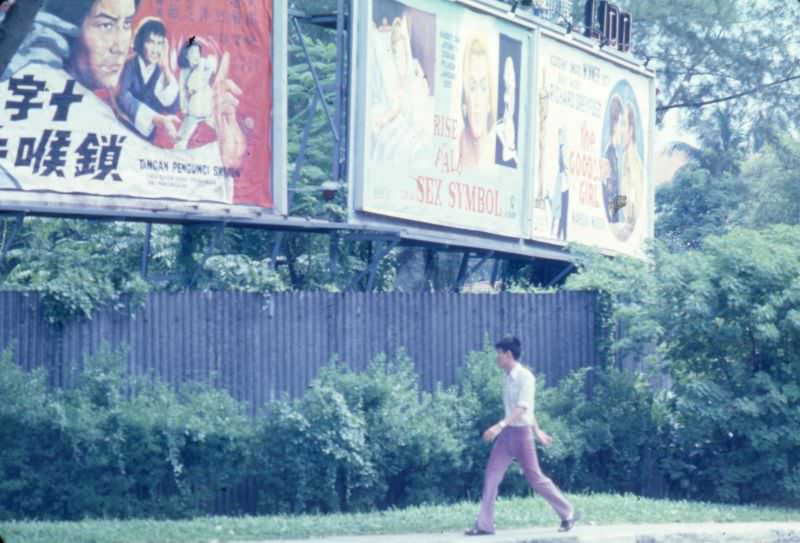
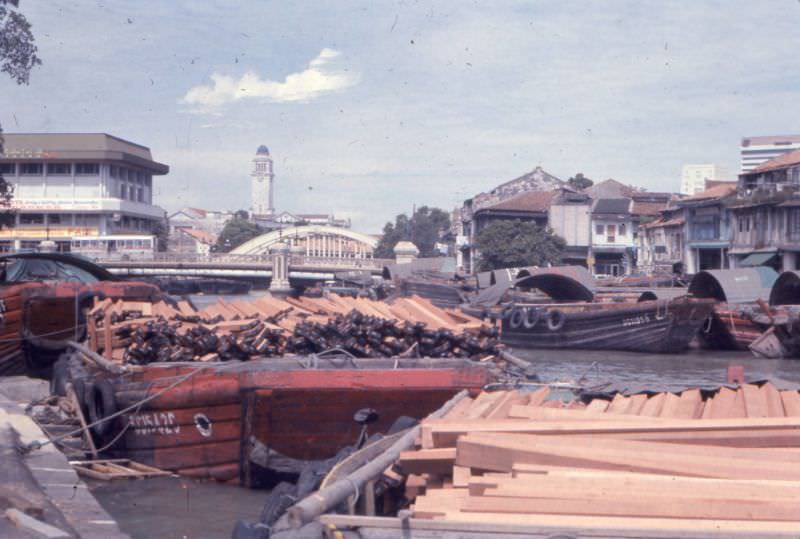
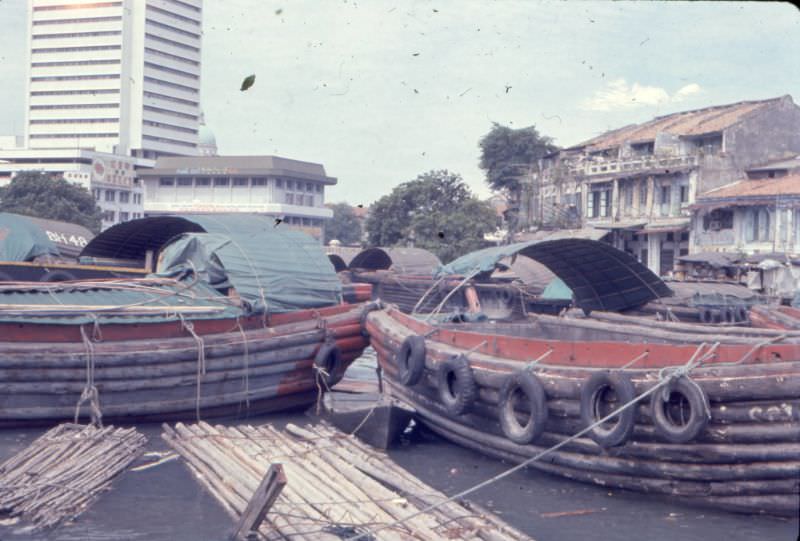
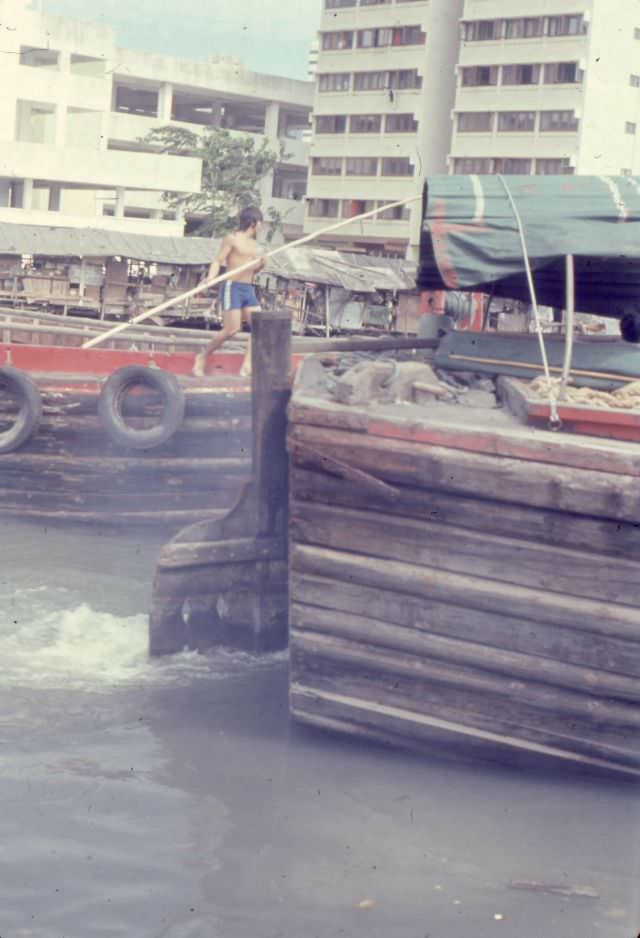
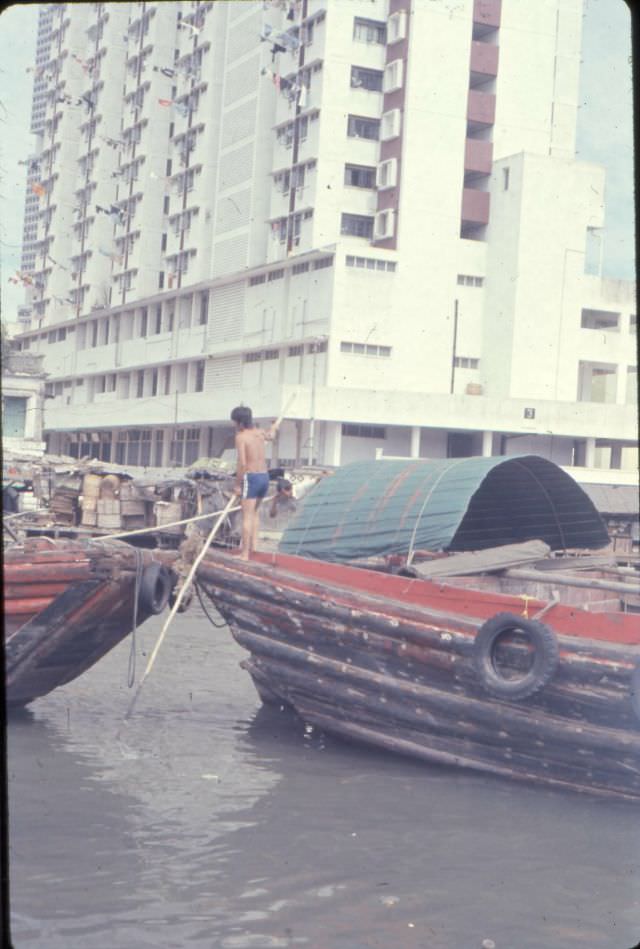
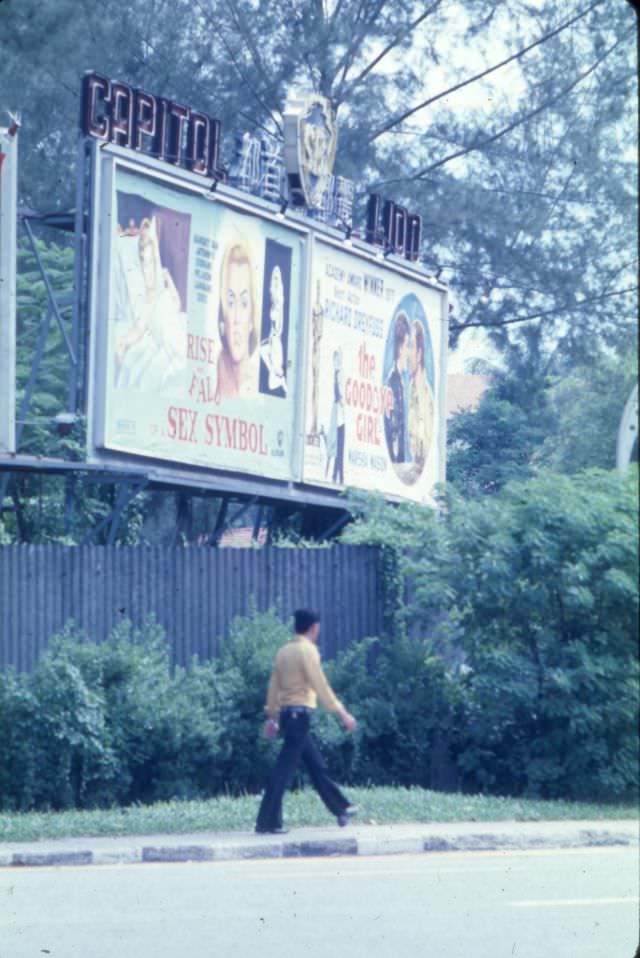
Everyday life in Singapore during this decade had a texture that these photographs preserve in detail. Street vendors sold ice cream from carts. Movie billboards towered over pedestrians on busy commercial roads. Tuk-tuks threaded through traffic. On the waterfront, traditional wooden boats clustered along the river in their dozens, their masts and hulls reflected in the water below a city that was building itself taller by the year.
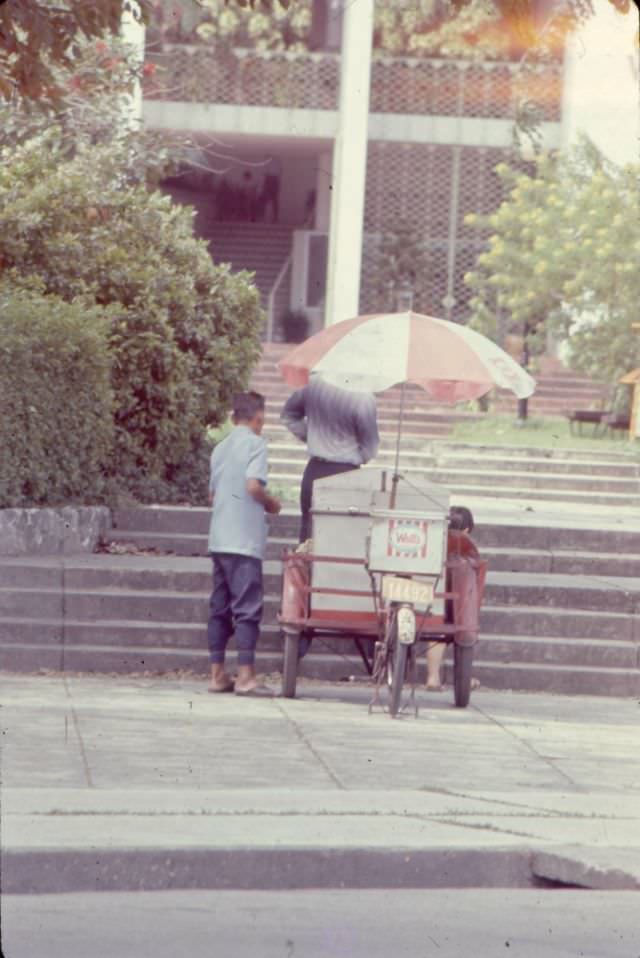
Singapore ice cream vendor, 1978
Singapore movie billboards, 1978
Tuk-tuk on the street in Singapore, 1970s
Boats and buildings, Singapore, 1970s
Boats, Singapore, 1970s

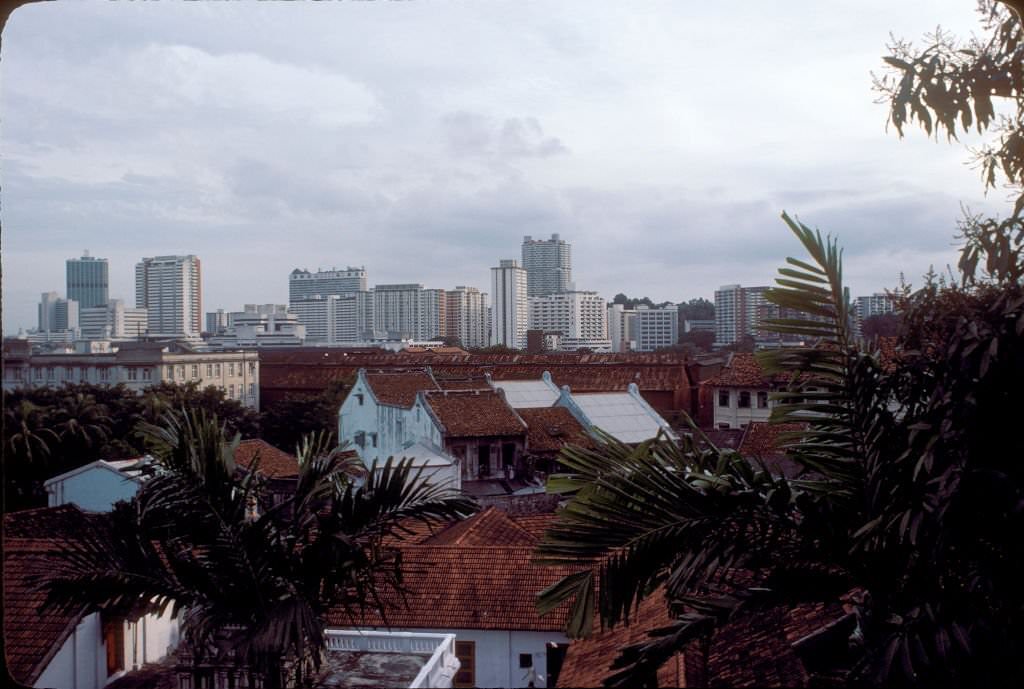
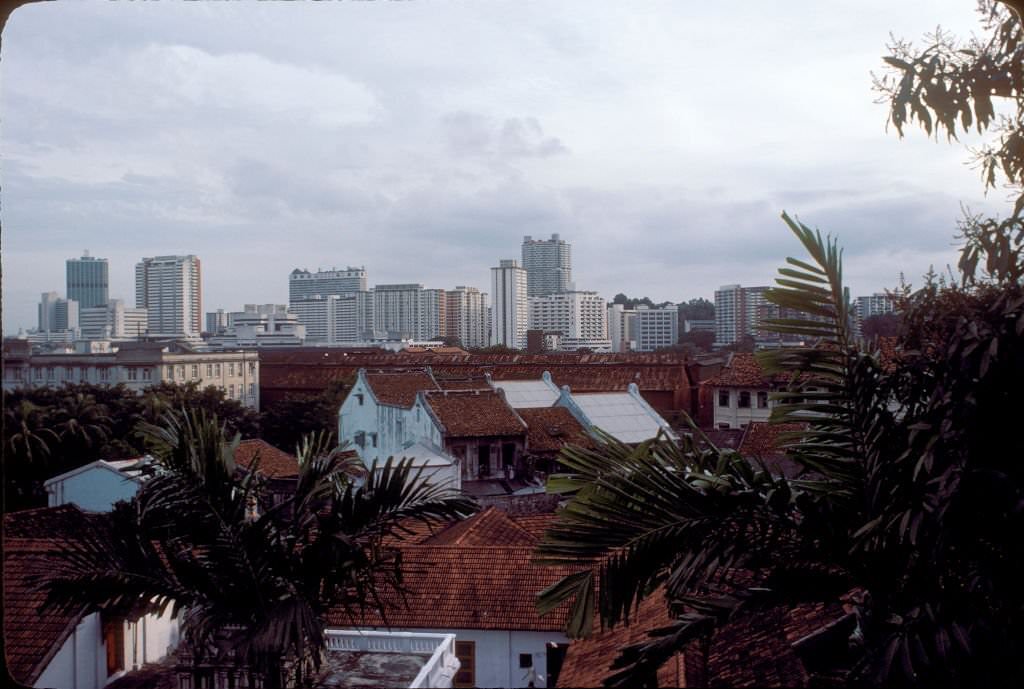
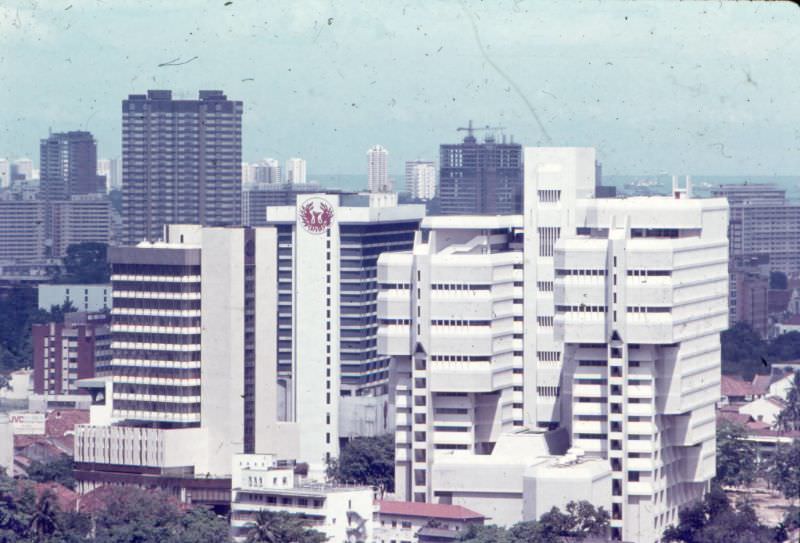
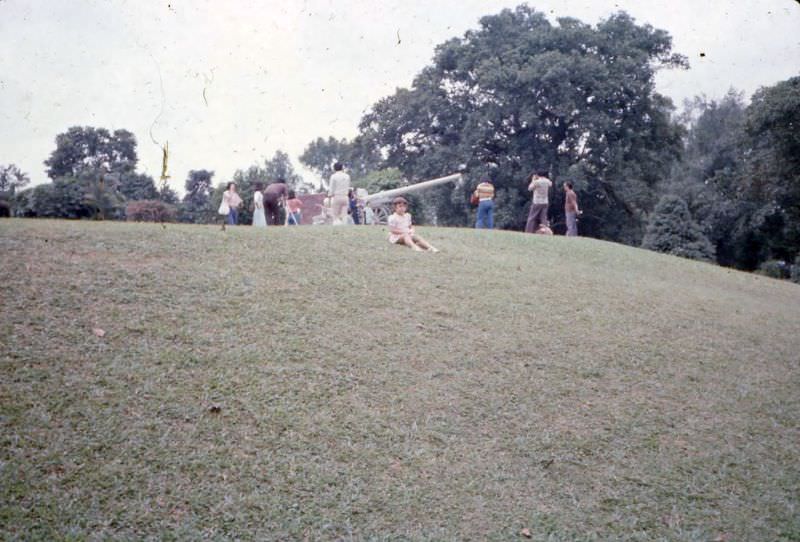
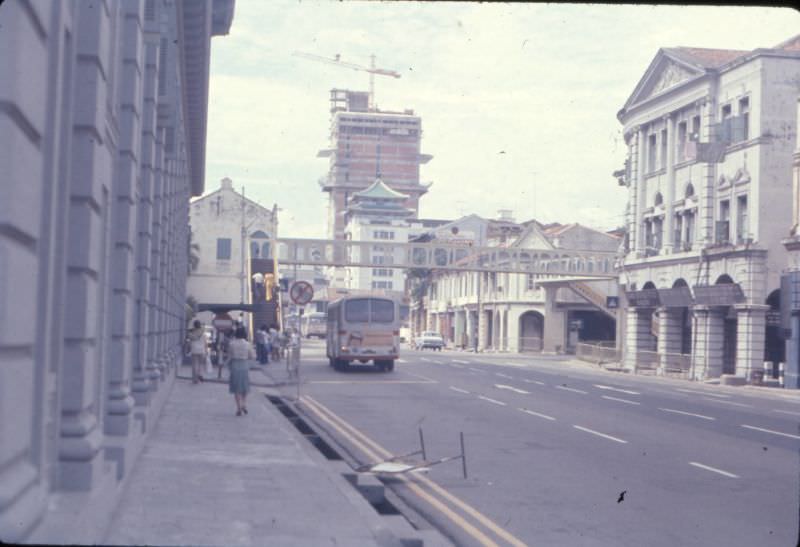
The skyline itself was the most visible measure of how fast Singapore was moving. Photos taken in 1978 show a city where cranes and new towers stood alongside two-story shophouses and tree-lined streets. Parks and open spaces still existed within walking distance of the financial district. It was a city in the act of becoming — not yet the gleaming metropolis it would be, but clearly and deliberately heading there.
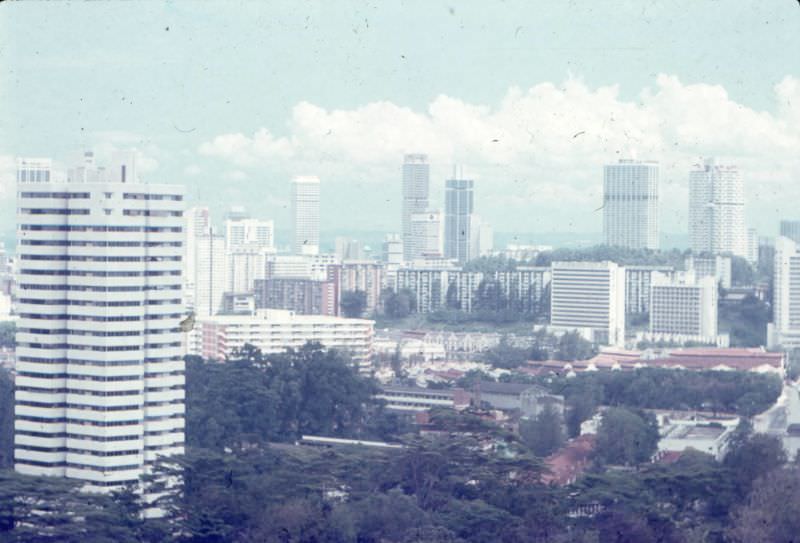
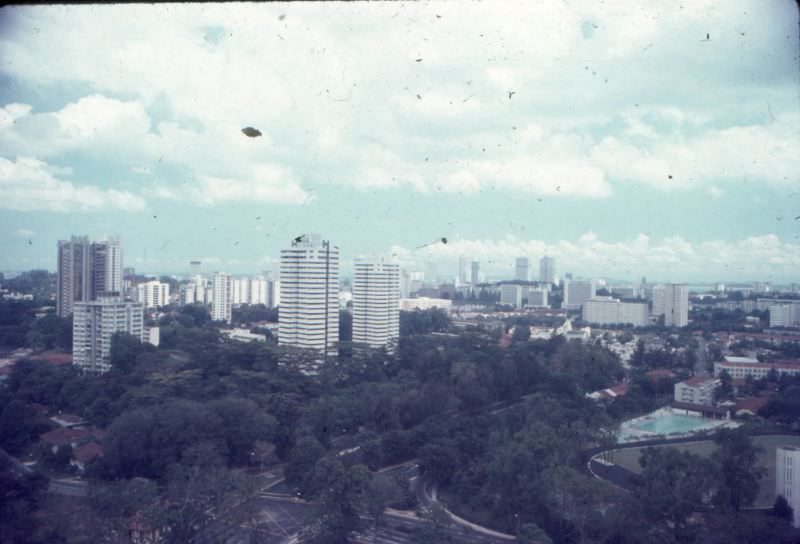
Singapore skyline, 1978
Singapore buildings, 1970s
Park in Singapore, 1970s
Singapore street scenes, 1970s
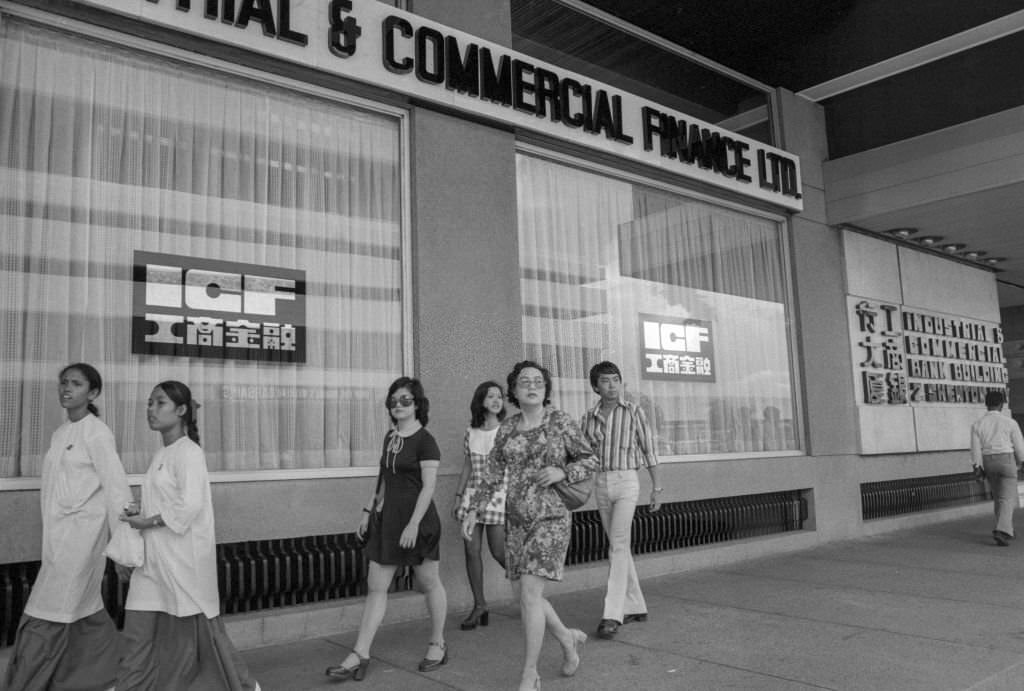
ICF' in Singapore, 1975
ICF’ in Singapore, 1975
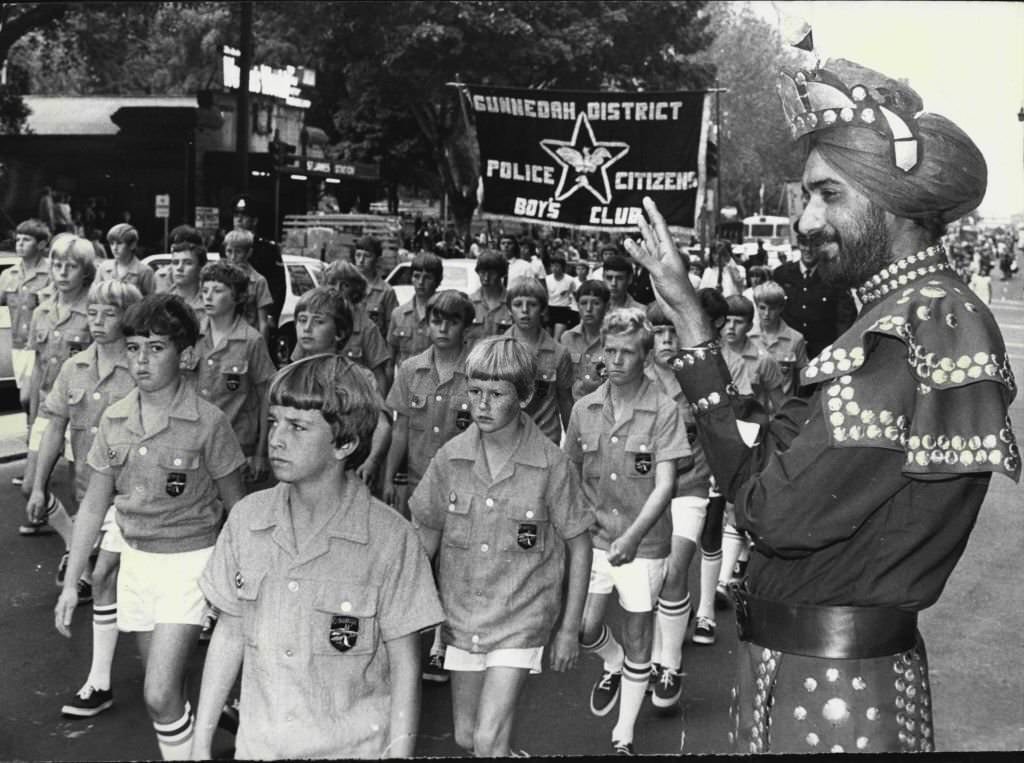
Mr. Rajinder Singh from Singapore, who watched the march at Elizabeth Street today, 1973
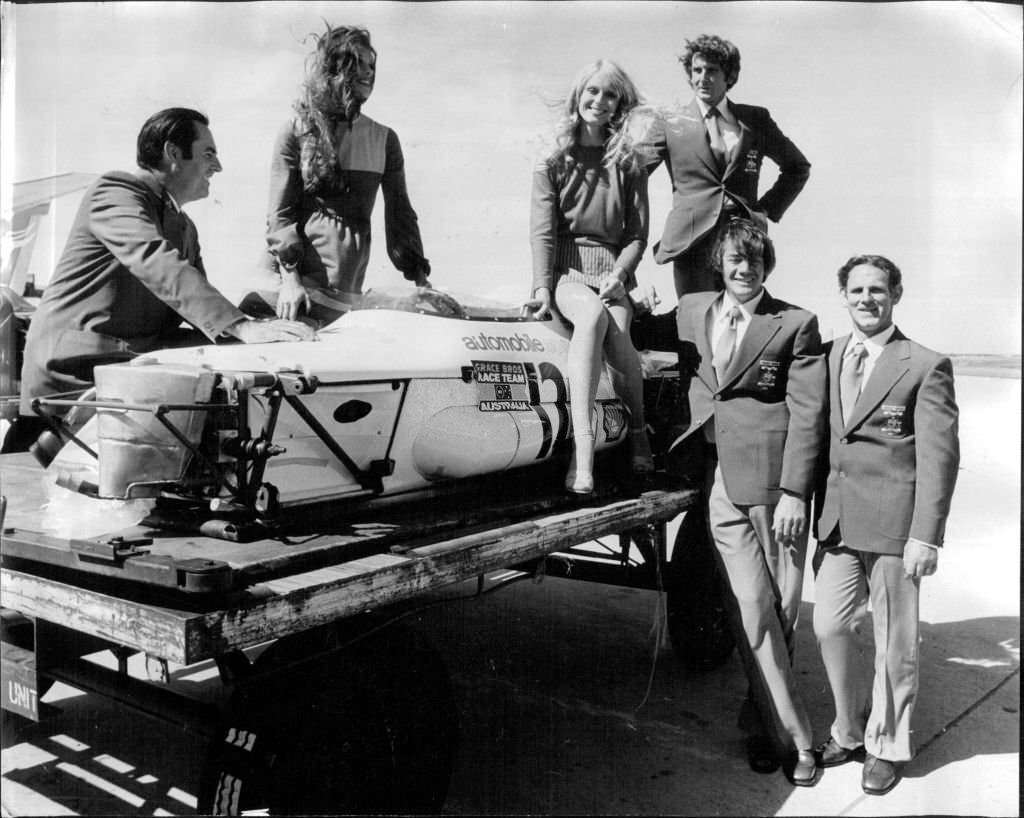
The cars for the Grace Bros Race Team.
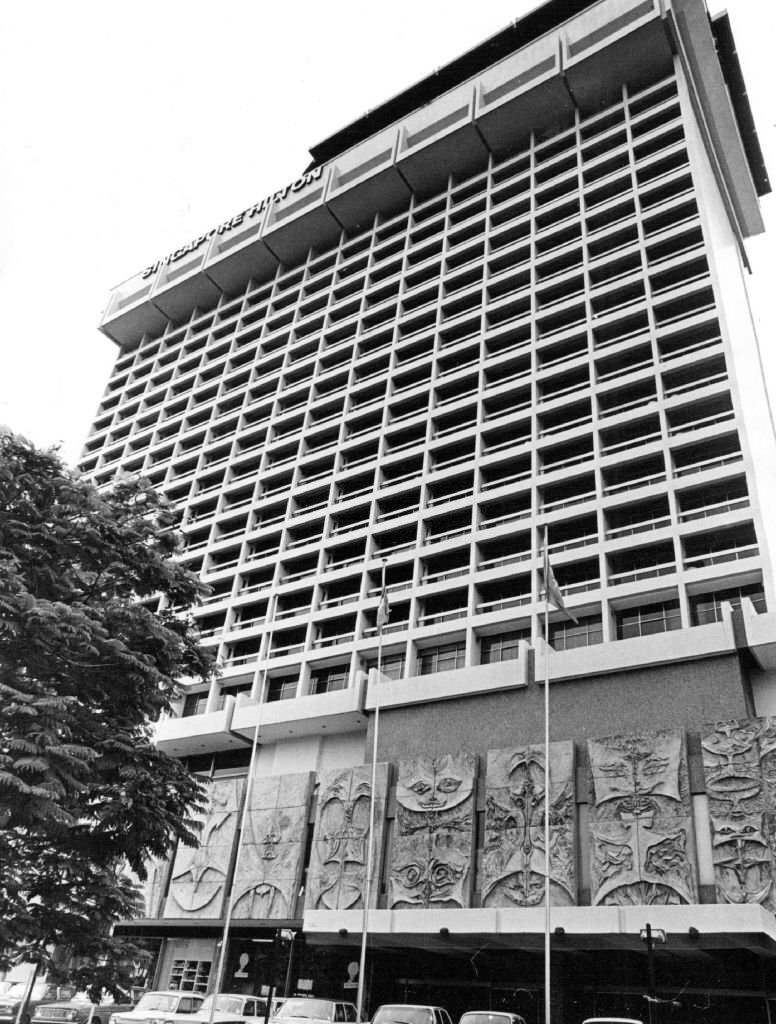
Typical of the deluxe hotels springing up in Singapore is the new Singapore Hilton, 1971
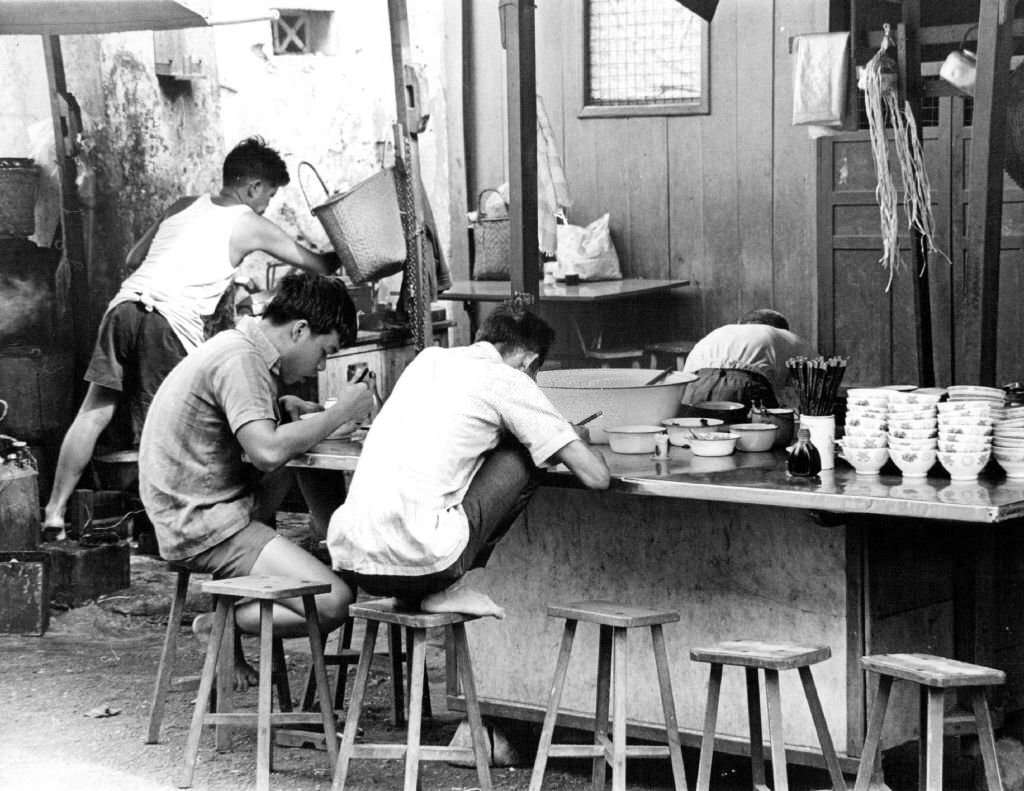
Contrast is a hallmark of Pacific travel. This is a sidewalk cafe in the teeming Chinese area of Singapore, 1971
True Blacks and Whites of Singapore (named for their black pants, white blouses) are renowned among amahs, 1970
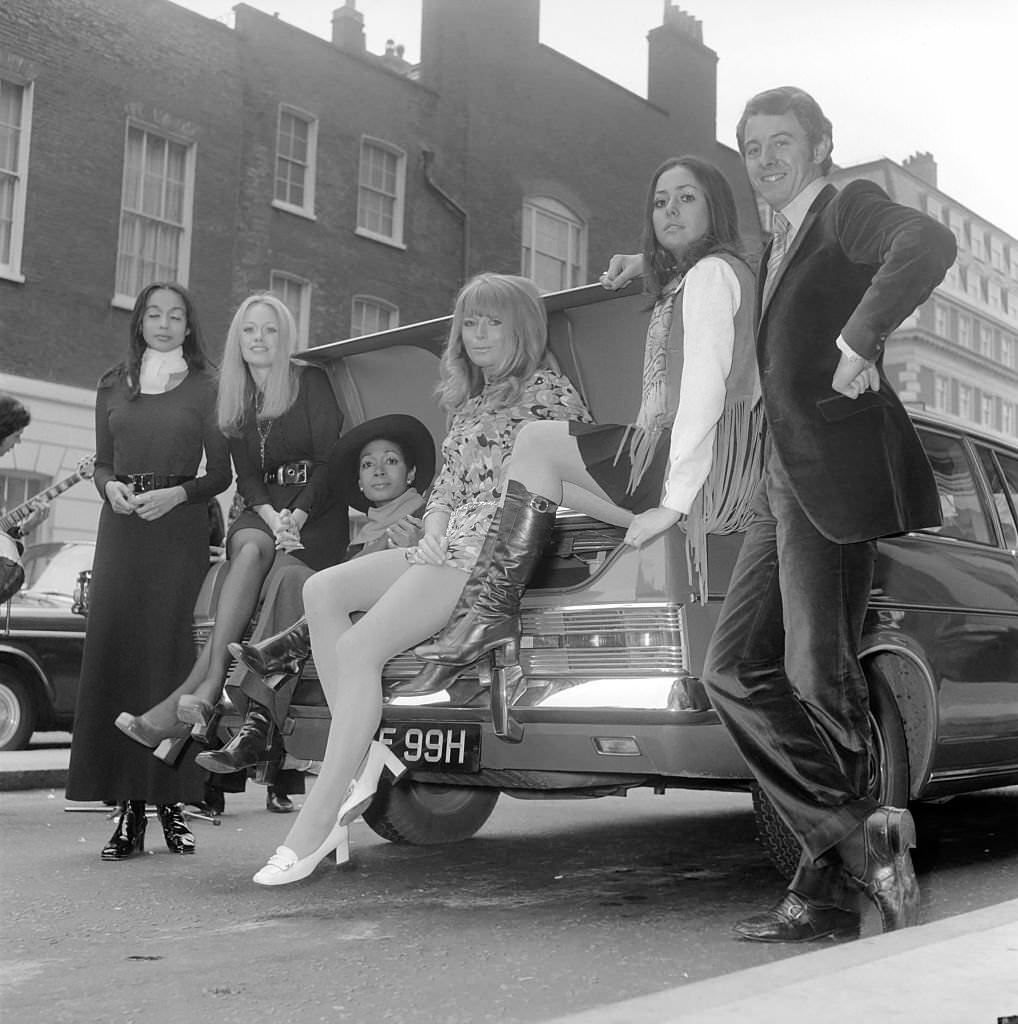
Pirelli Limited photshoot in Singapore, 1970.
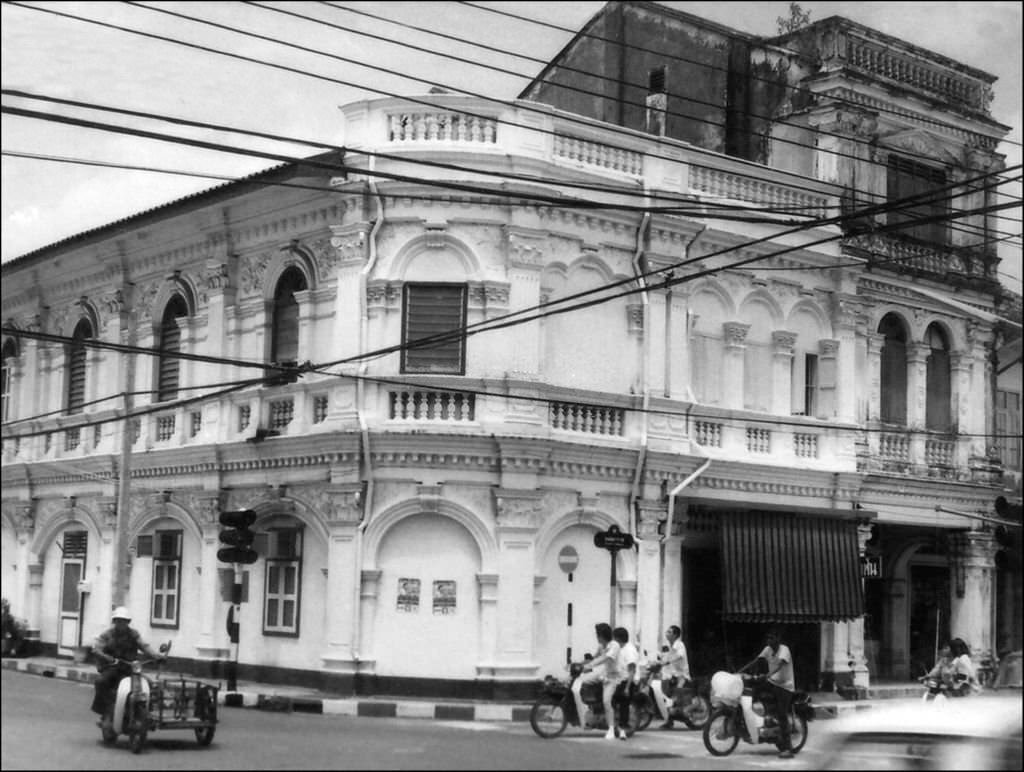
Street scene with Sino-Portuguese shophouses in Phuket,1970s
Floating district in Singapore, 1970
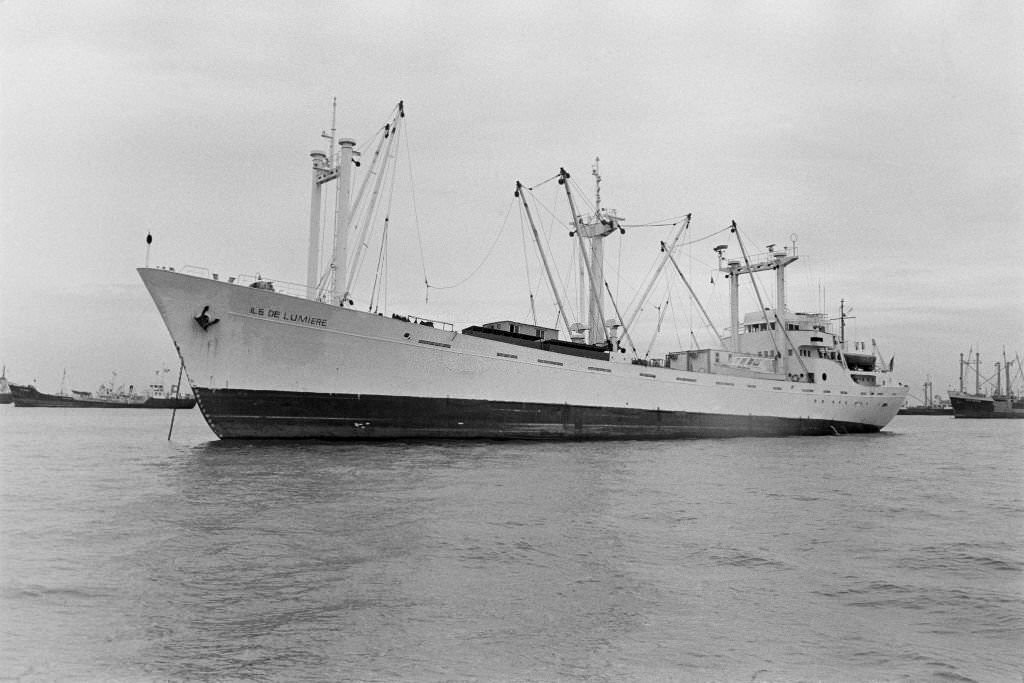
The Hospital Ship Island of Light, 1970s
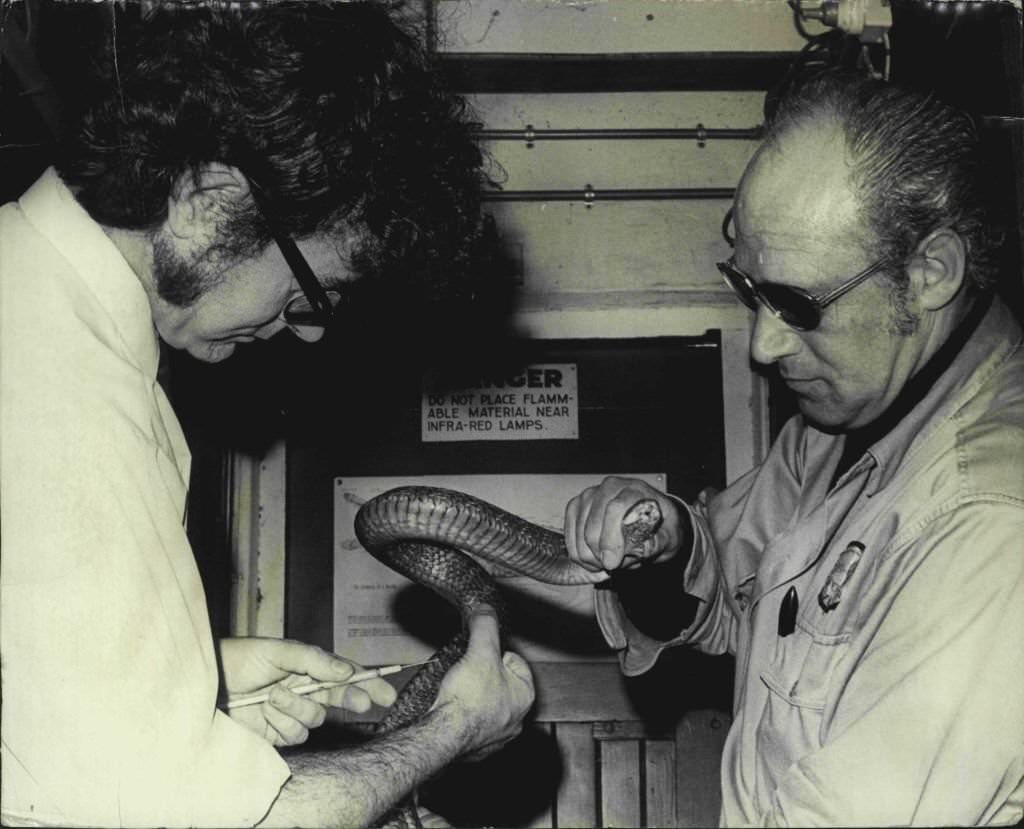
Head Reptile keep Uwe Peters, with dark glasses, watches as a veterinary surgeon tranquilises snakes before being shipped to Singapore to be shown in the new zoo
River Valley Road near intersection with Mohd Sultan Road, Singapore, 1978
River Valley Road near Mohd Sultan Road, Singapore, 1978
River Valley Road, Singapore, 1978
Shophouses, Singapore, 1978
Enjoyed this post? Get new ones in your inbox.

Leave a Comment

Your email address will not be published. Required fields are marked *

Share this Post 🥺

Please take a moment to share this content. Your support is greatly appreciated! 🙌🙏

Share this Post 🥺

Please take a moment to share this content. Your support is greatly appreciated! 🙌🙏
Scroll to Top
 
Hey Friend, Before You Go.. Please like & follow for more interesting content