For most of the 20th century, knitting and crochet were practical skills. Women made garments to keep their families warm, not to turn heads. Then the 1970s arrived and rewrote every rule. Baby Boomers were in their prime, and their appetite for self-expression bled into every corner of culture — including what they made with yarn.
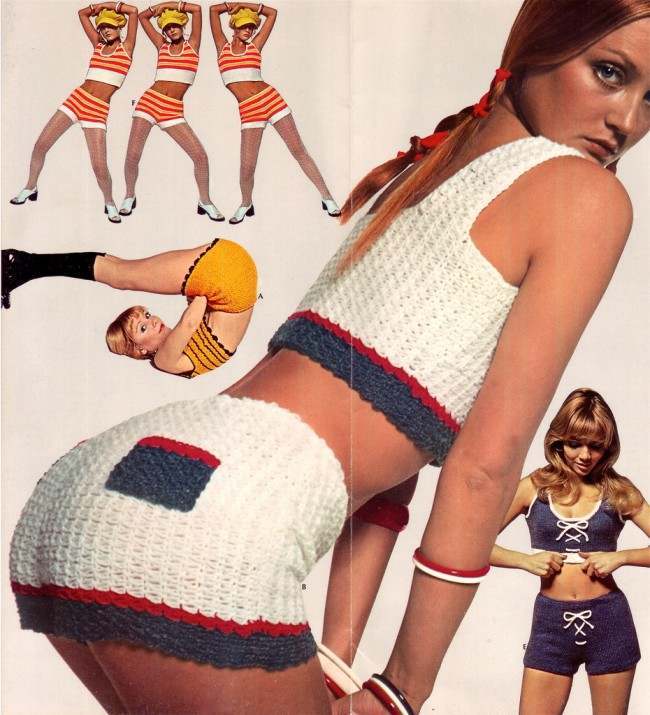
The decade’s fashion was loud, bold, and unapologetic. Bright oranges, vibrant yellows, and earthy greens dominated handmade pieces. The color combinations were sometimes jarring, but always deliberate. Music festivals, psychedelic art, and the countercultural movement all fed directly into the patterns women chose to create.
One of the decade’s defining trends was the open-weave crochet vest, frequently worn with nothing underneath. This was a dramatic departure from anything that came before it. Crochet, by its very nature, is full of gaps — and 70s designers leaned into that deliberately, treating those gaps as a design feature rather than a flaw.
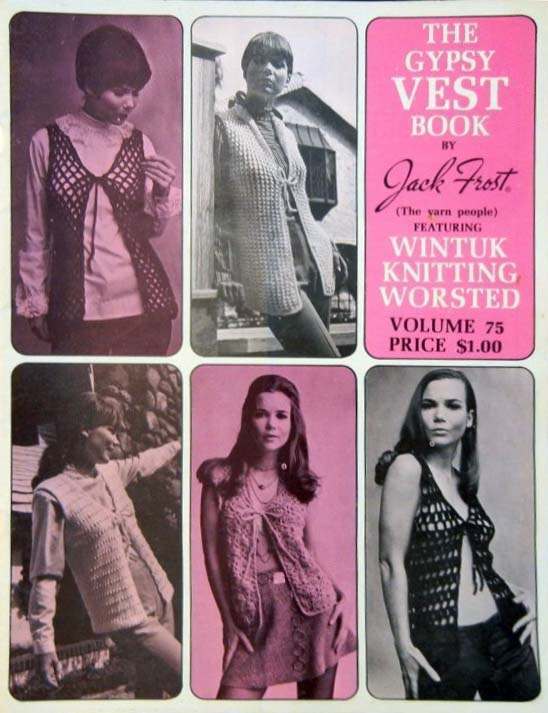
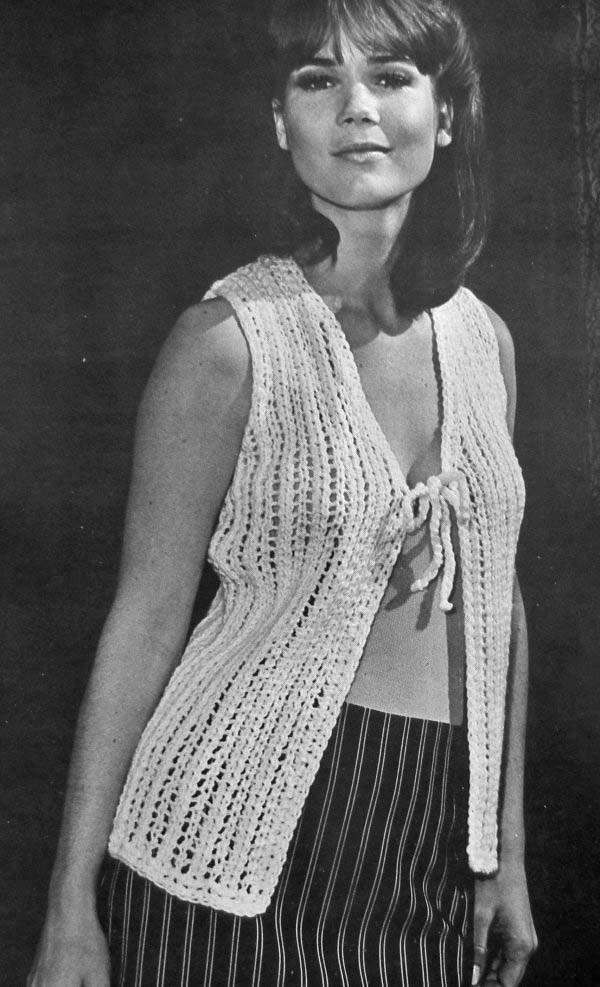
Women wore these pieces with bell-bottom jeans, mini skirts, or layered over thin dresses. The garments signaled freedom as much as they signaled fashion. Making your own revealing top — stitch by stitch — was an act of ownership over your own body and image.
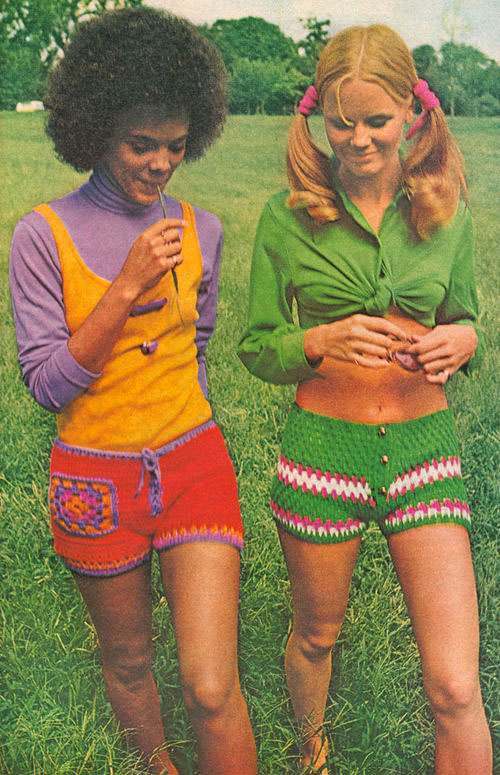
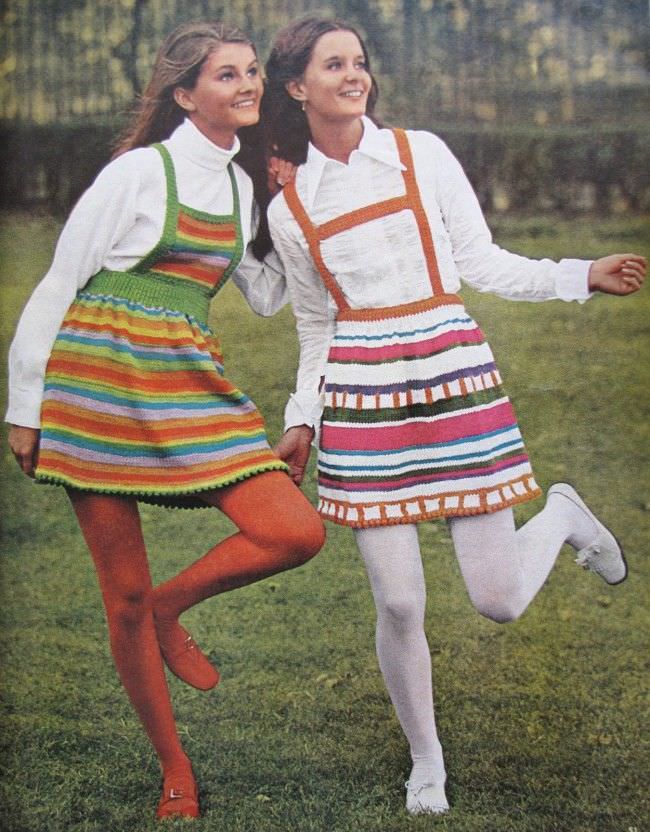
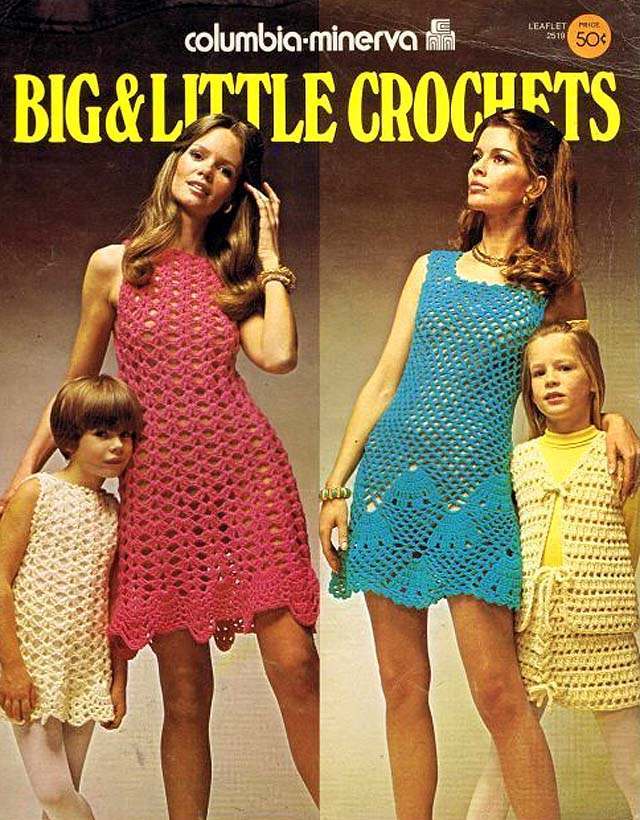
Even the marketing materials reflected the shift. Knitting pamphlets and pattern booklets took on a noticeably sultry tone, with covers and photography that looked more like fashion editorial — or something edgier — than traditional craft guides.
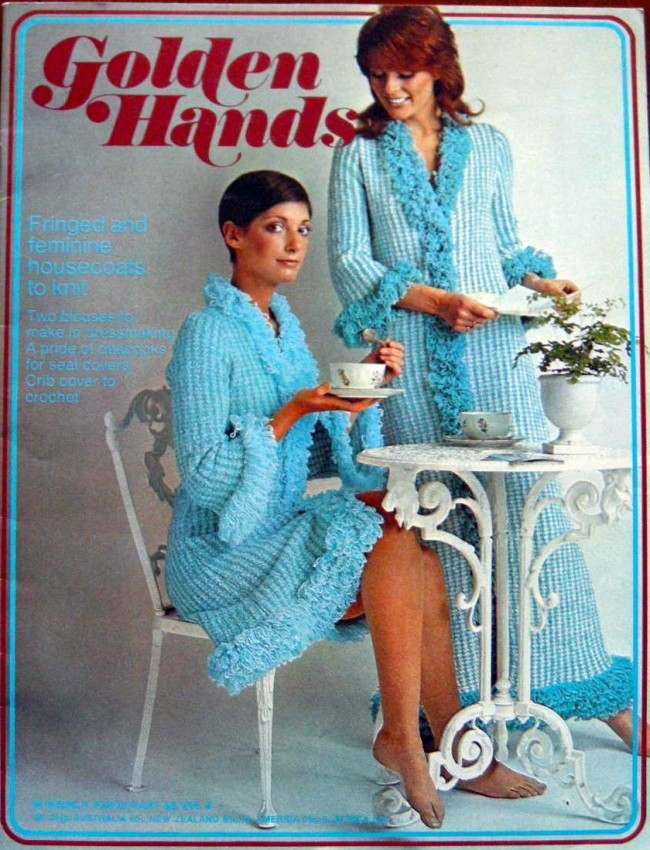
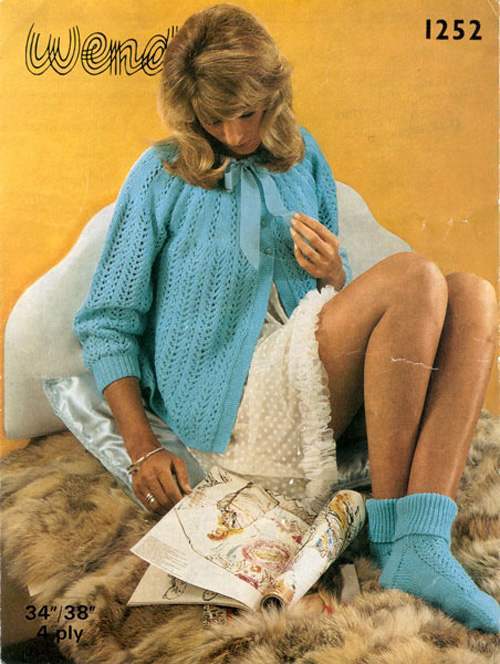
The styling of these pattern publications pushed boundaries hard. Poses, lighting, and garment choices were chosen to sell a lifestyle — one built around sensuality and liberation.
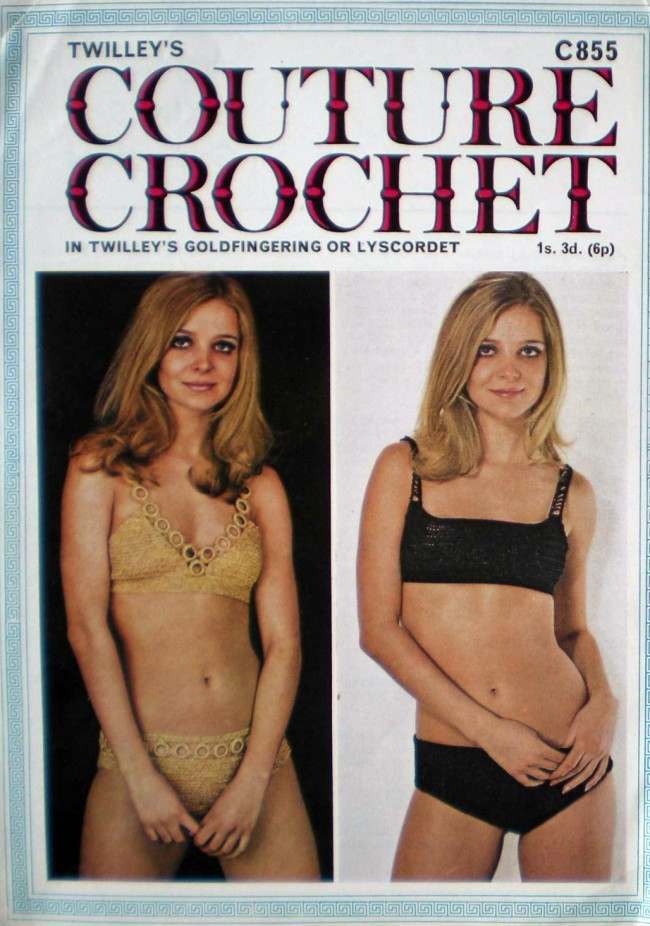
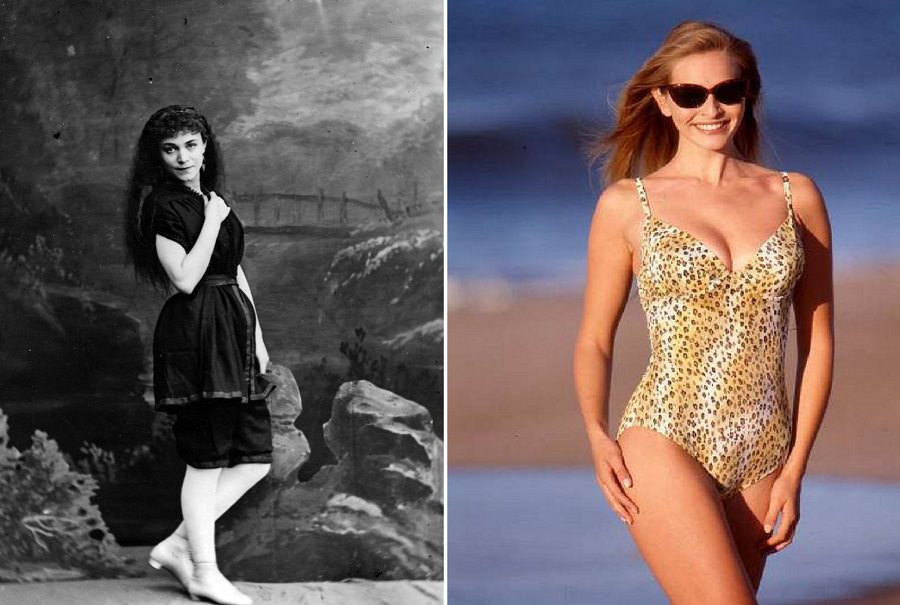
Designers also ventured into genuinely unexpected territory: knitted and crocheted swimwear. The physics were questionable at best — yarn soaks up water, stretches, and sags — but that didn’t stop the patterns from being published and worn.
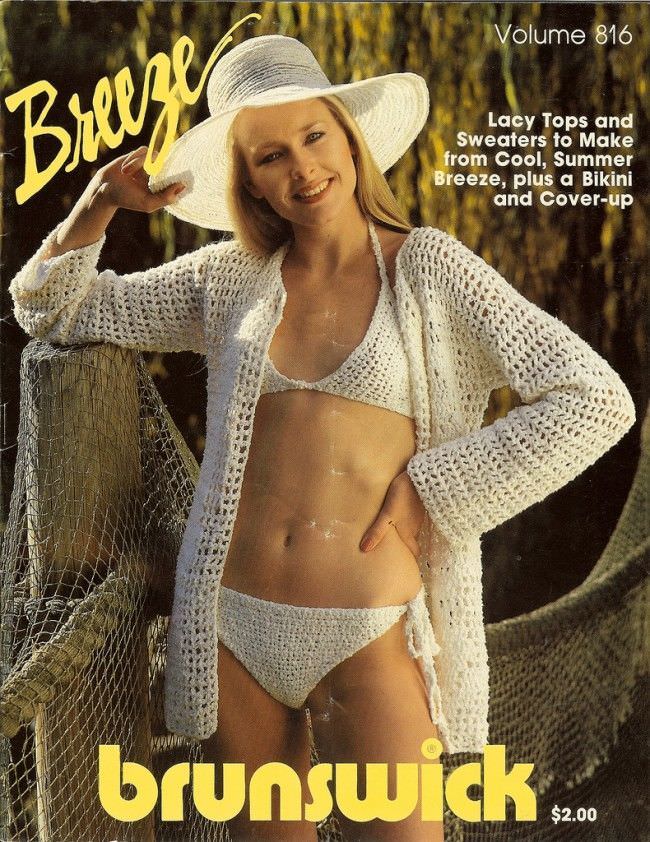
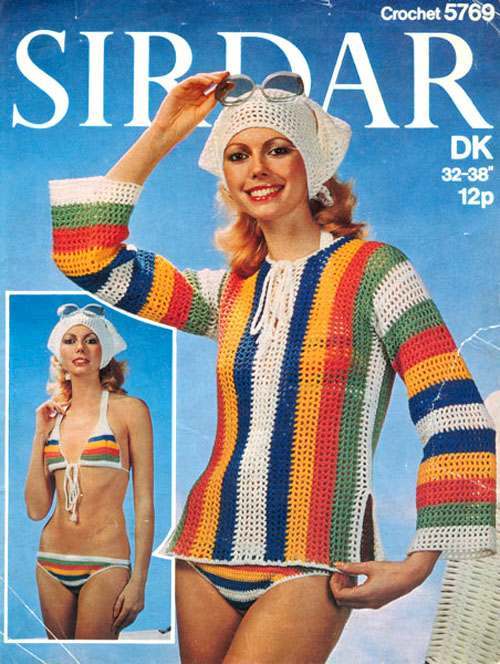
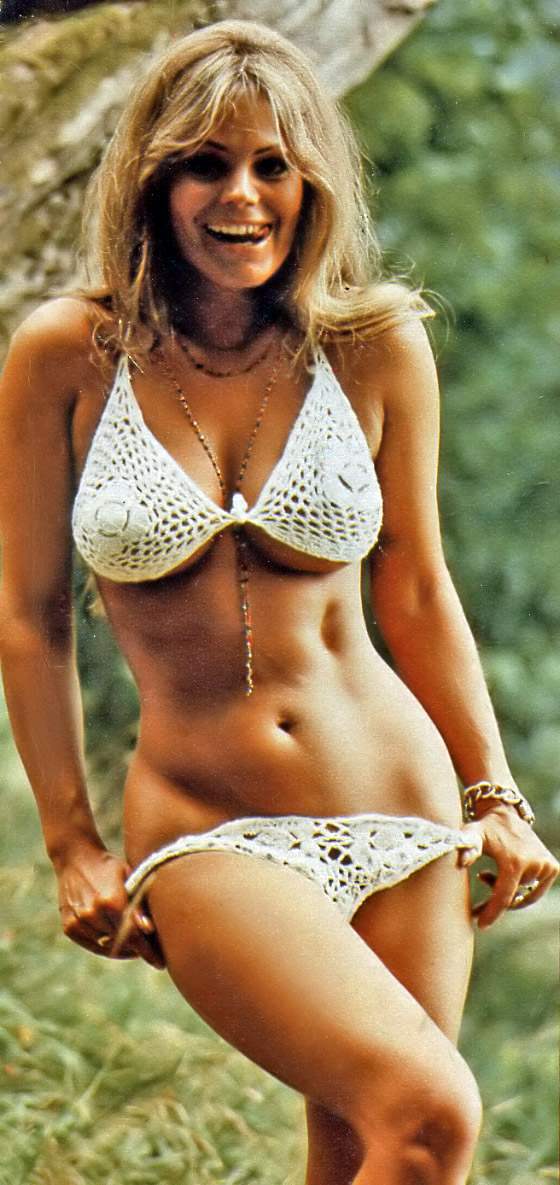
The open-stitch construction that made crochet breathable and lightweight also made it inherently revealing, whether wet or dry. Designers used this quality to craft full bodysuits, tops, and dresses where coverage was always partial and always intentional.
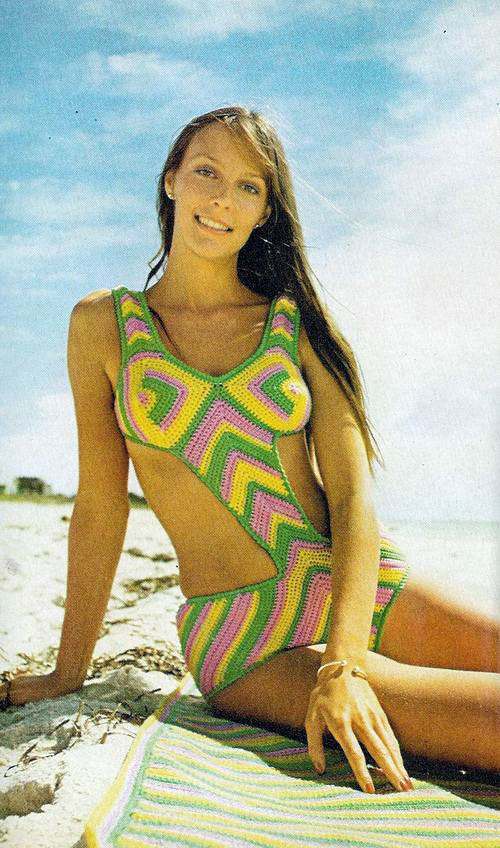
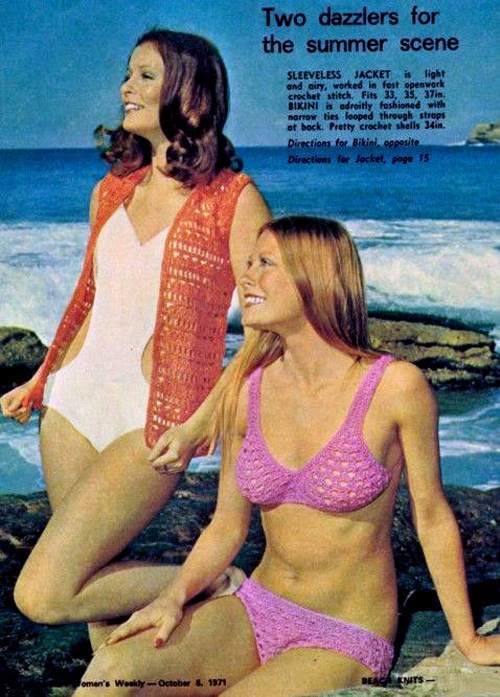
Some designs left very little to the imagination, with imagery in the pattern booklets that carried unmistakable undertones.
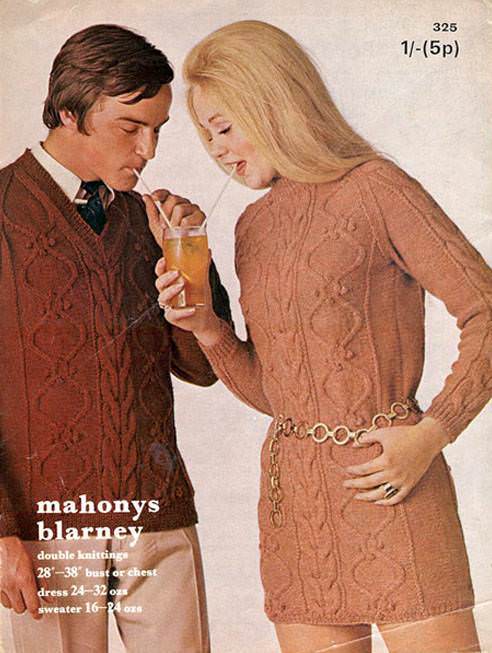
Much of this movement grew directly out of hippie culture. The anti-materialist ethos of the late 1960s carried into the 70s, and making your own clothing by hand was a rejection of mass-produced consumer fashion. Crafting was political as much as it was personal.
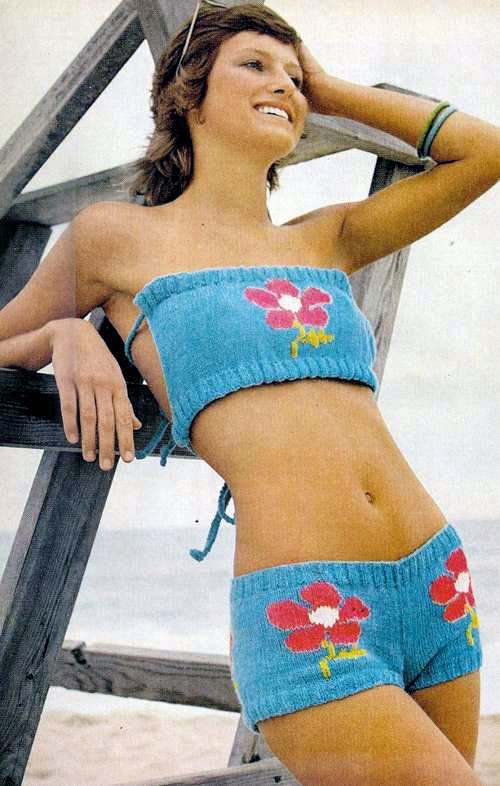
Nothing illustrated the decade’s willingness to push limits quite like knitted pants. Thin, stretchy, and see-through when the light hit them right, yarn trousers were as daring as any garment of the era.
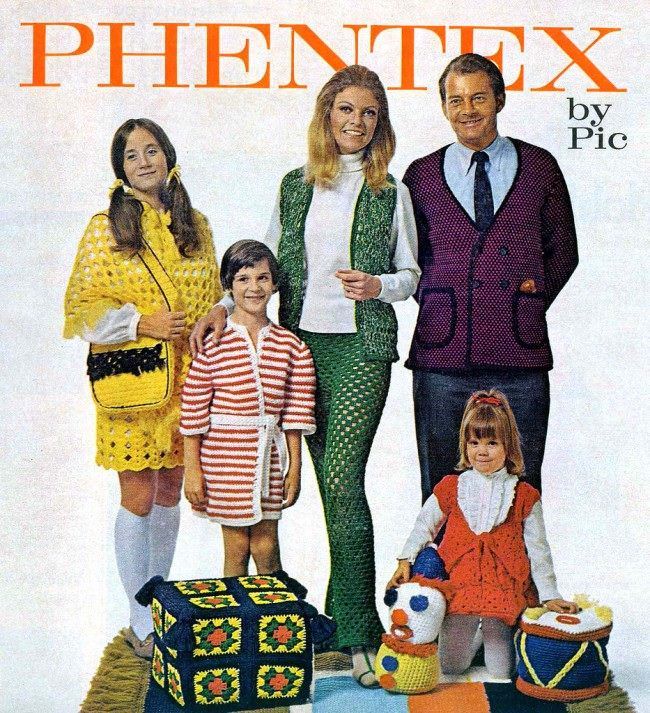
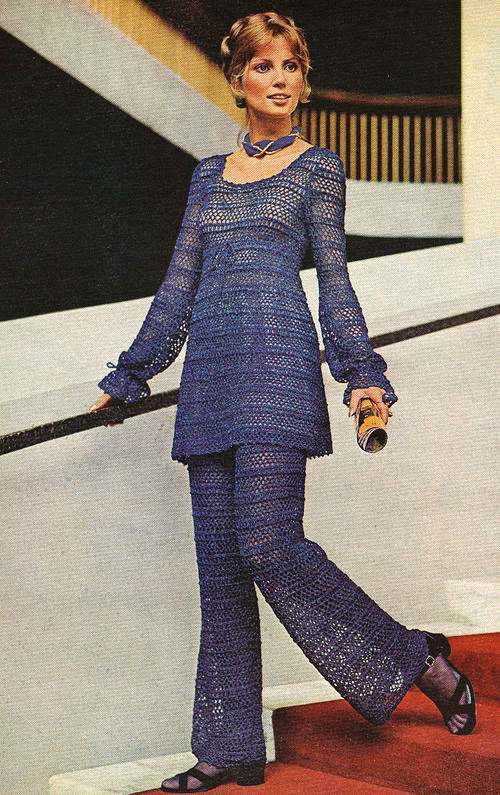
Crafting communities formed around these bold new styles. Women gathered to trade patterns, experiment with techniques, and encourage each other’s creativity. What had once been a solitary domestic task became a collective act of self-expression — stitched together, one daring row at a time.