
Han Youngsoo (1933–1999) spent most of his career photographing a city in the middle of one of the most dramatic transformations of the 20th century. Born into a well-off family in Gaesung, Korea, he grew up taking painting and drawing lessons and treated photography as a hobby. That all changed after the Korean War.
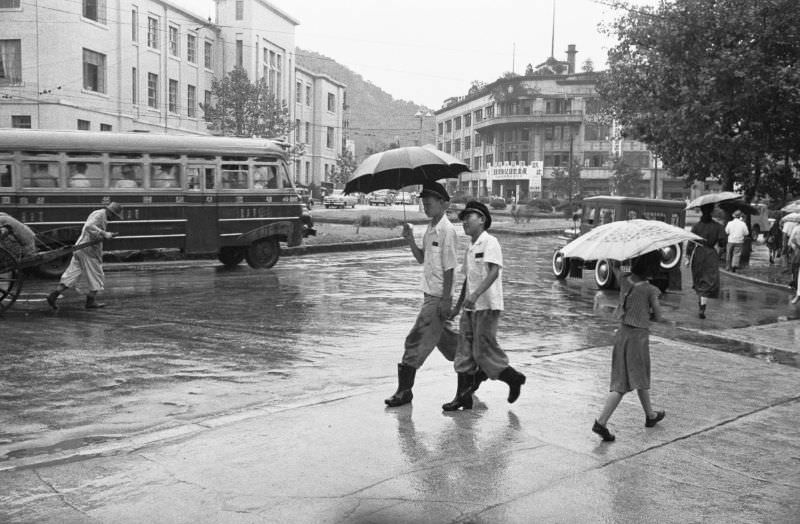
Youngsoo served as a young South Korean soldier on the front lines of the Korean War. When he returned to Seoul after the fighting ended, he found a city in ruins. Buildings had been leveled, communities were shattered, and poverty was widespread. Faced with that reality, he made a decision — he would pick up his camera and document what came next.
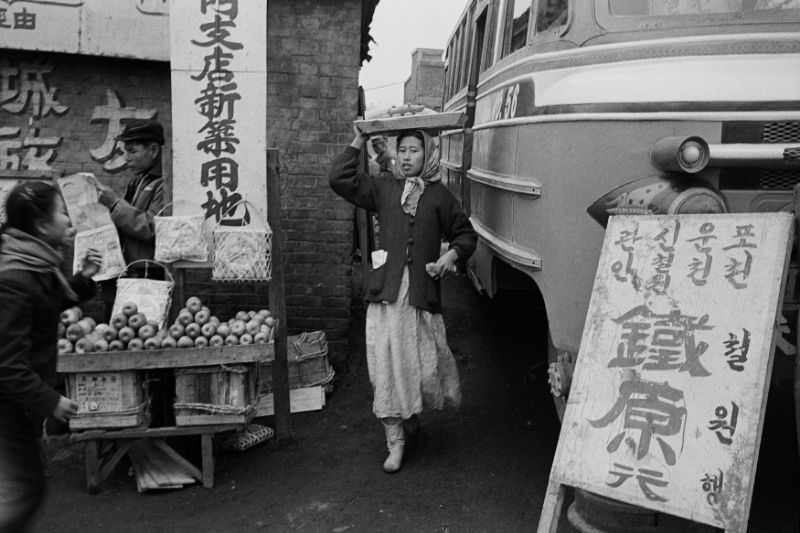
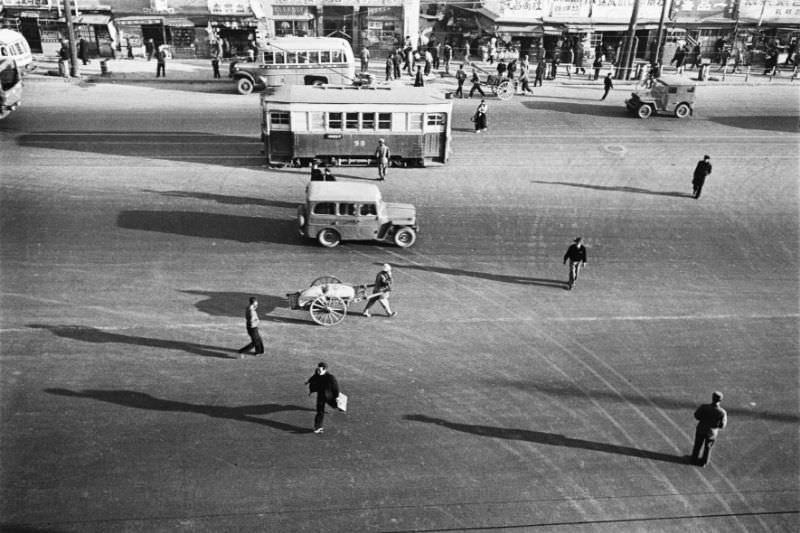
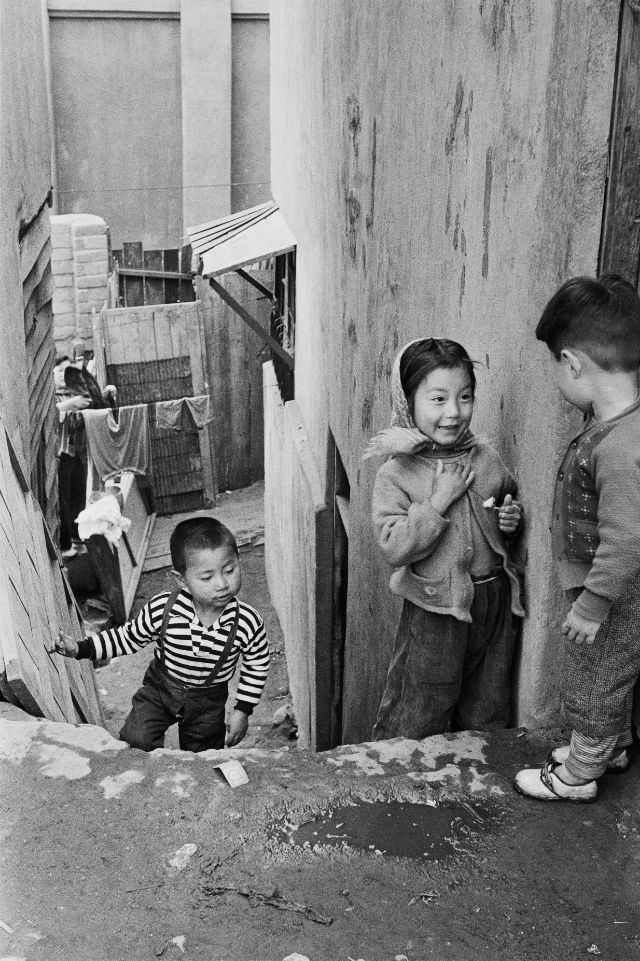
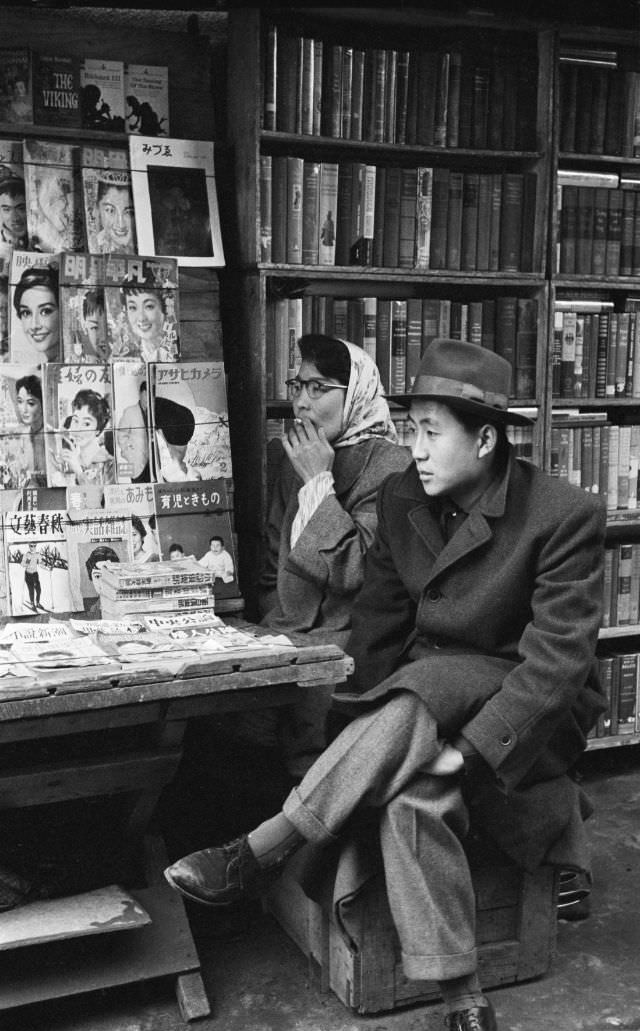
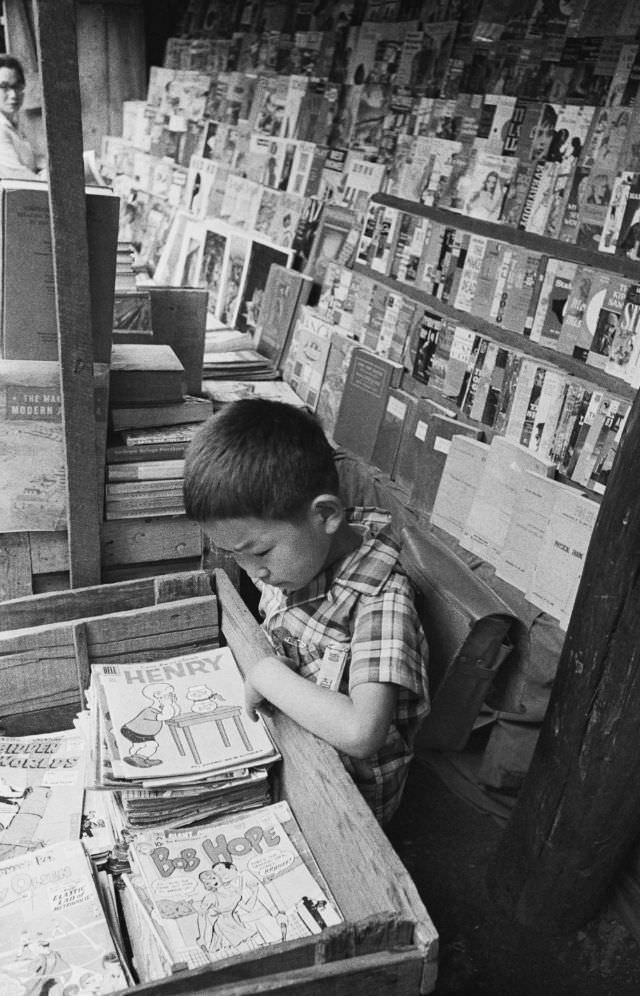
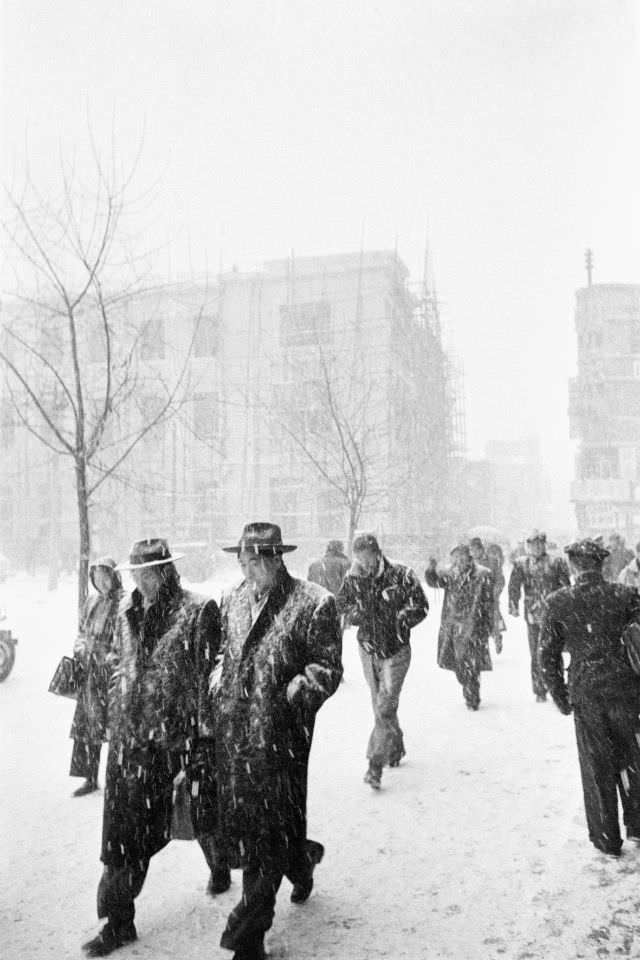
Youngsoo turned professional and spent the following two decades on the streets of Seoul. His photographs focused on ordinary people — men, women, and children going about their daily lives. He was drawn to the energy of a city rebuilding itself from almost nothing, and his camera captured that energy in sharp, intimate detail.
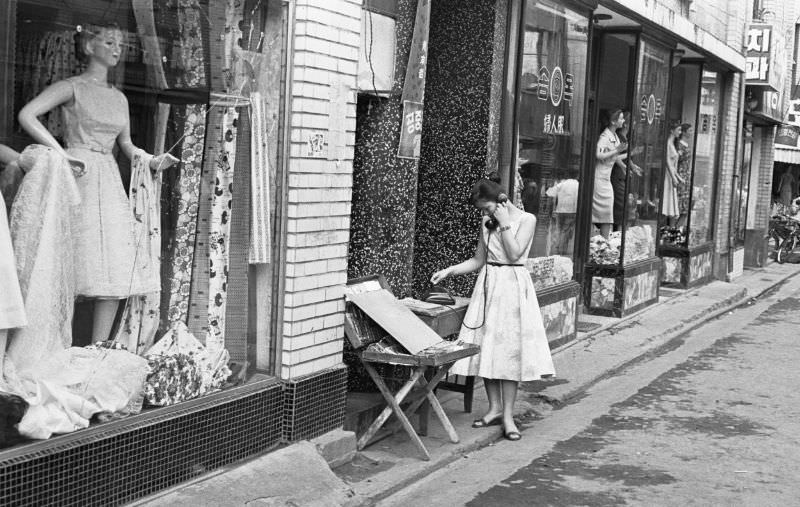
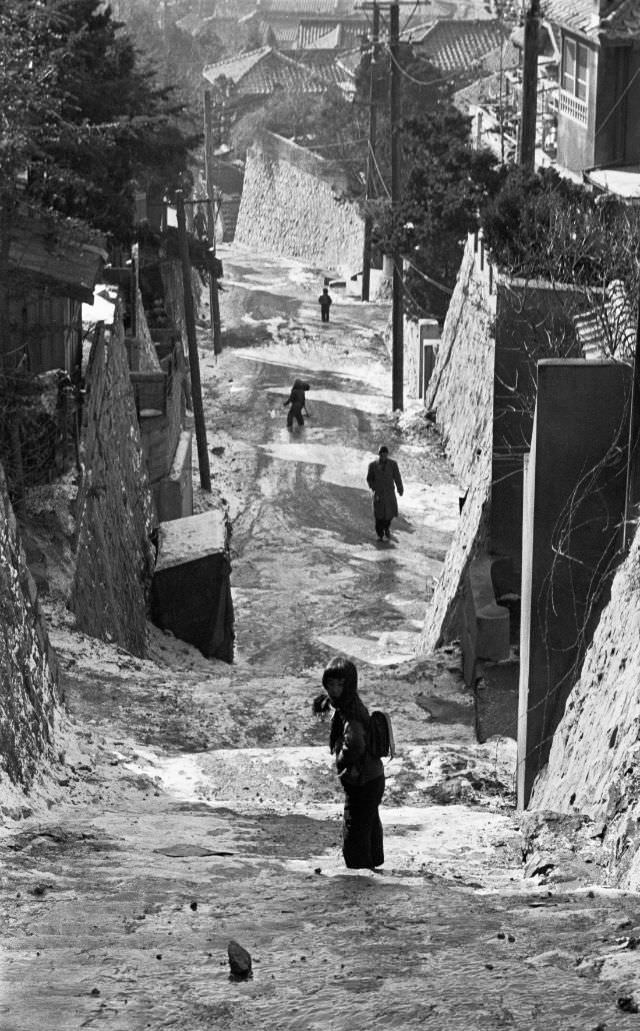
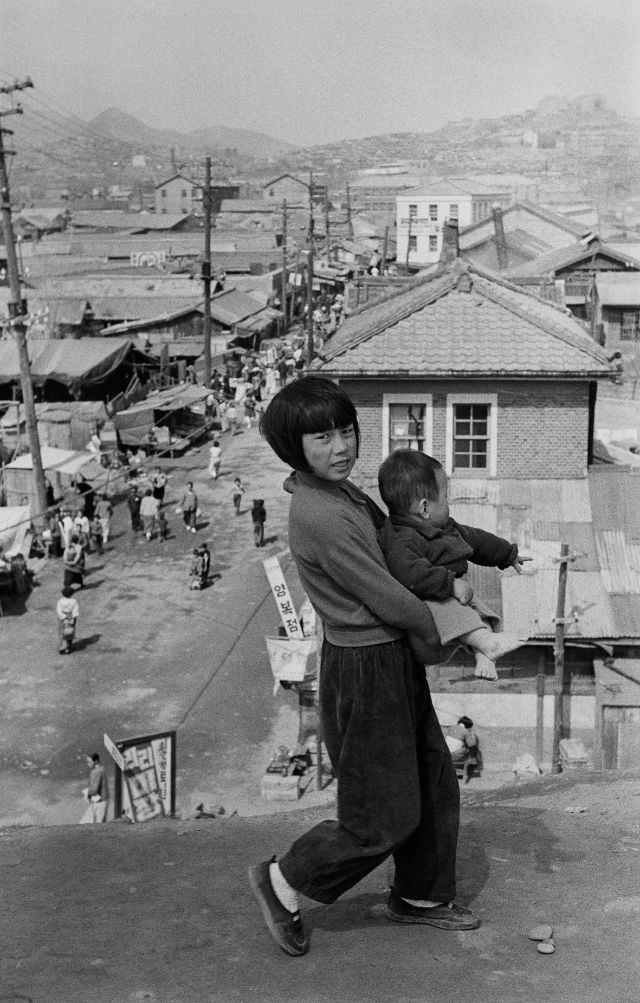
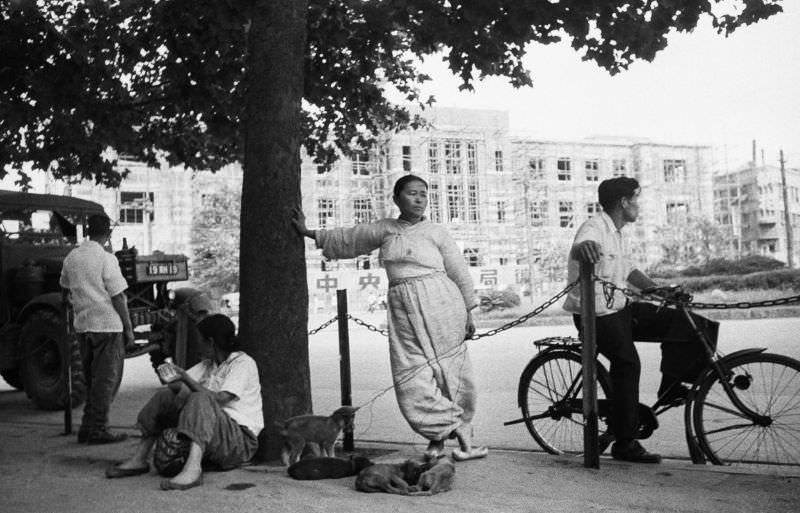
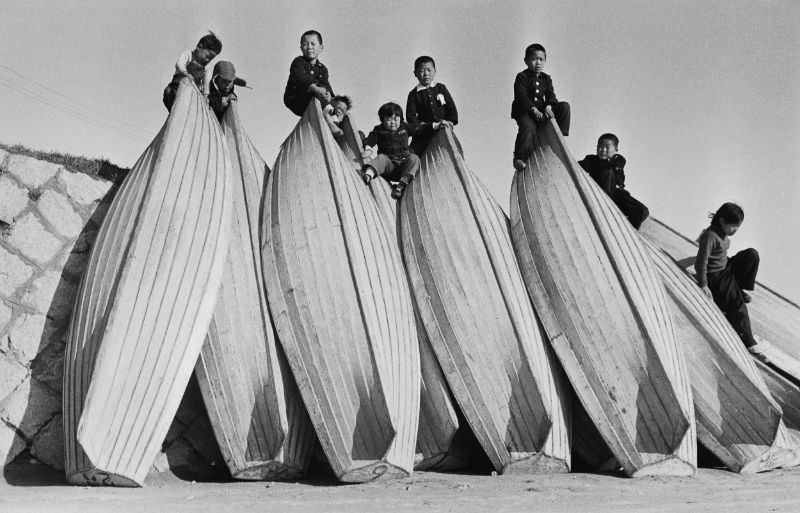
Seoul in the 1950s was a city of contrasts. The scars of war were still visible — in damaged buildings, in crowded and makeshift neighborhoods, in the faces of people who had lost nearly everything. Yet life pressed forward. Markets opened, children played in the streets, and vendors filled the sidewalks.
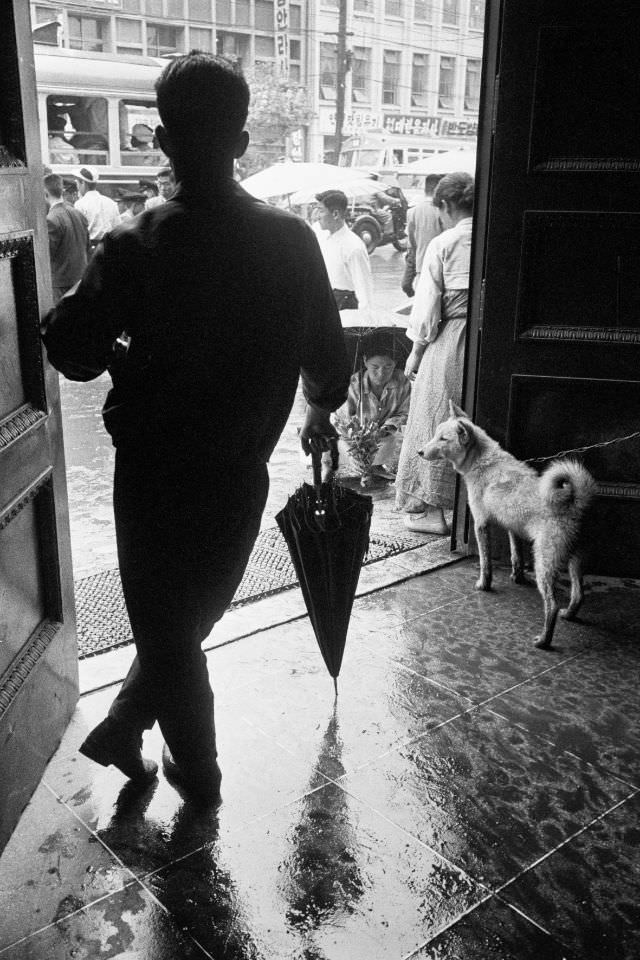
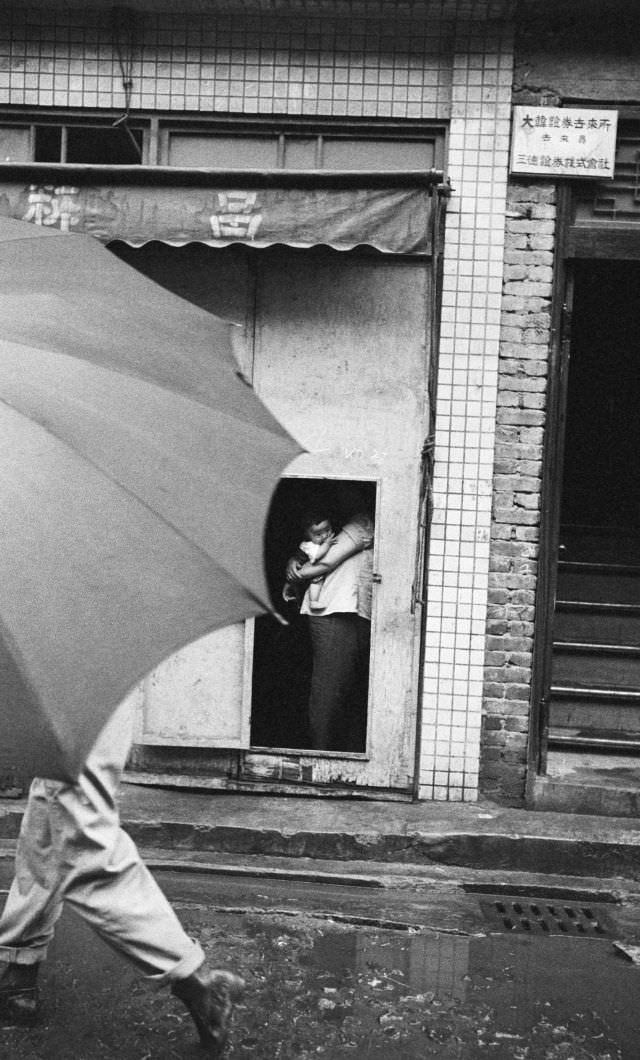
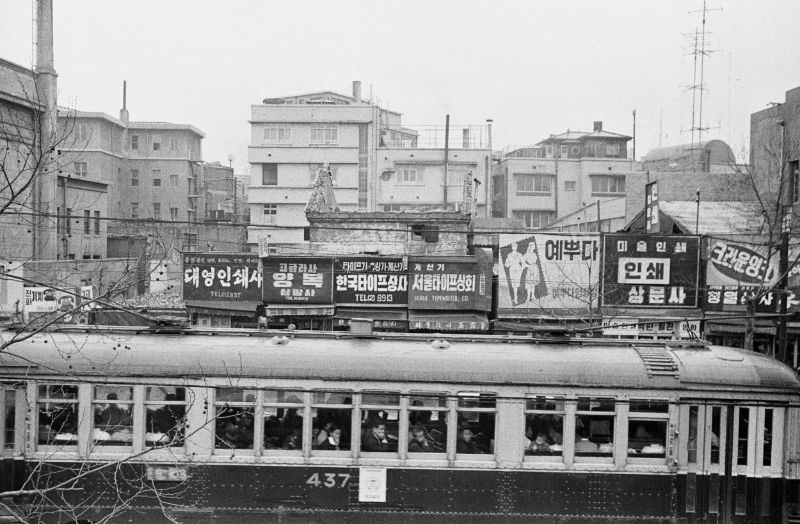
Youngsoo did not ignore what remained of old Seoul either. While modern buildings began to rise across the city, traditional architecture and customs were still present in certain neighborhoods. He documented both, treating the old and the new as equally important parts of the same story.
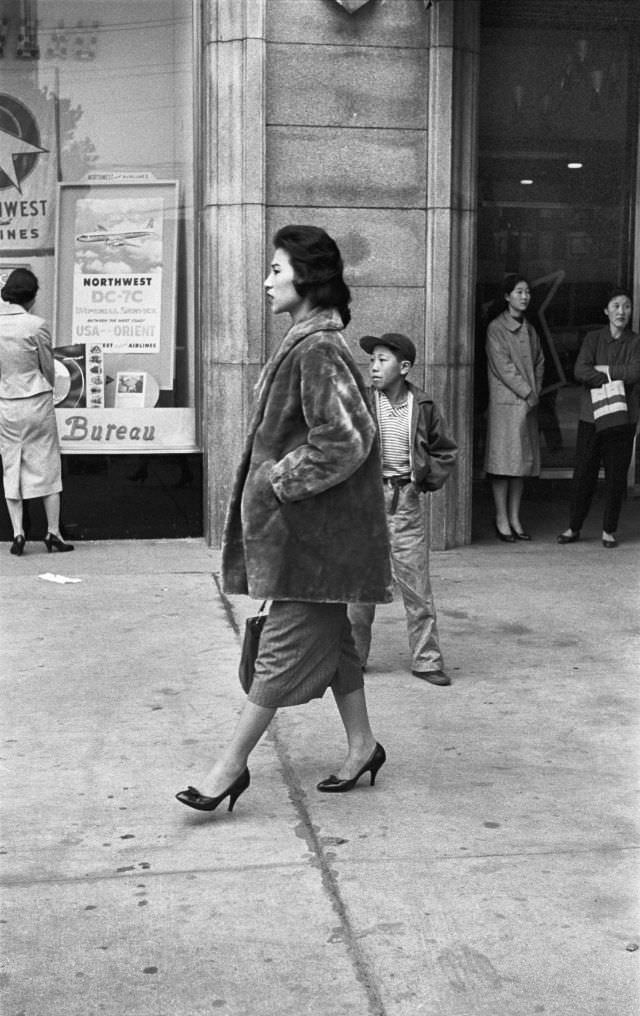
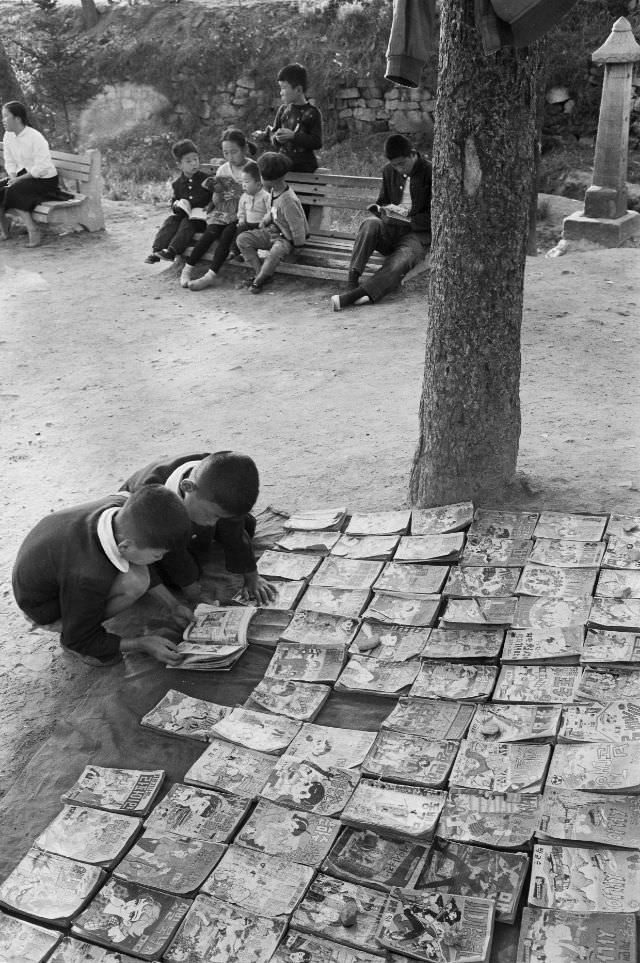
Parks and public spaces appear throughout his work as gathering points for Seoul’s residents. Places like Jangchungdan Park offered a glimpse of quieter city life — a break from the noise and hustle of postwar reconstruction.
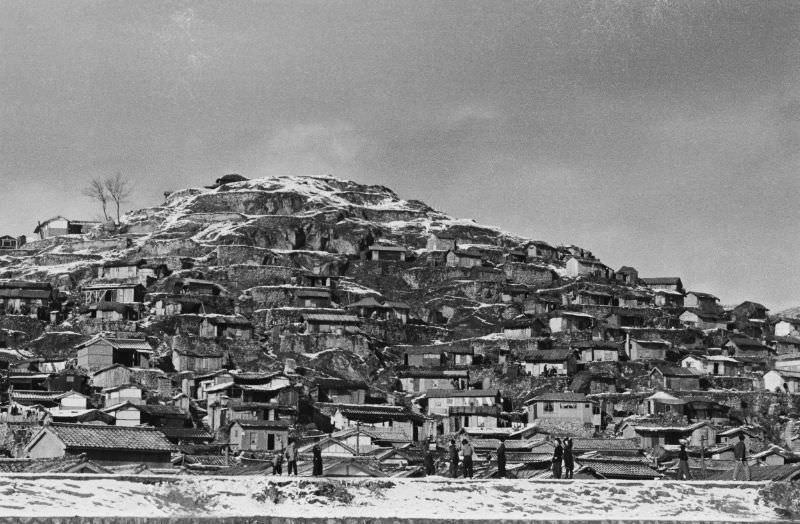
By the 1960s, Seoul’s transformation was accelerating. Youngsoo photographed neighborhoods like Huam-dong and Hongje-dong, where the mix of old residential structures and newer development told the story of a city moving fast. The physical shape of Seoul was changing block by block.
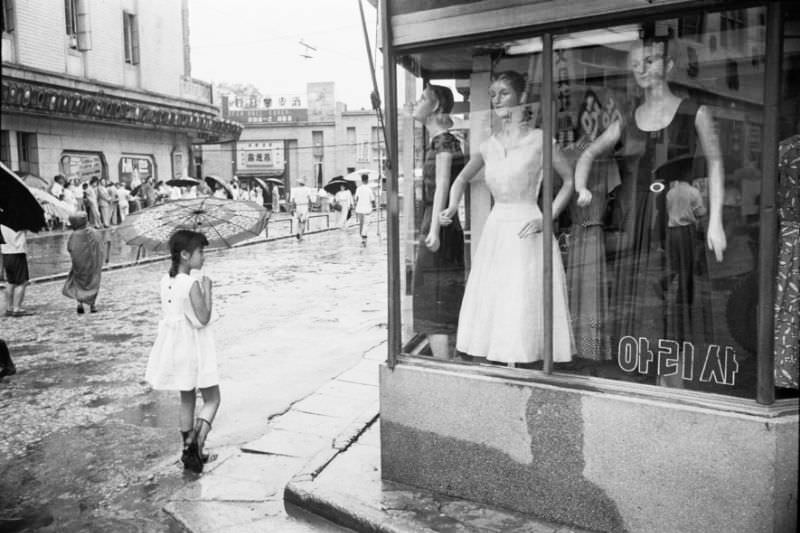
One of the clearest themes in Youngsoo’s 1960s work is the changing role of Korean women. His photographs show women running shops and businesses, browsing fashion boutiques lining narrow streets, and taking part in the consumer culture that was beginning to take shape. These were roles that had not existed for them in the same way before the war.
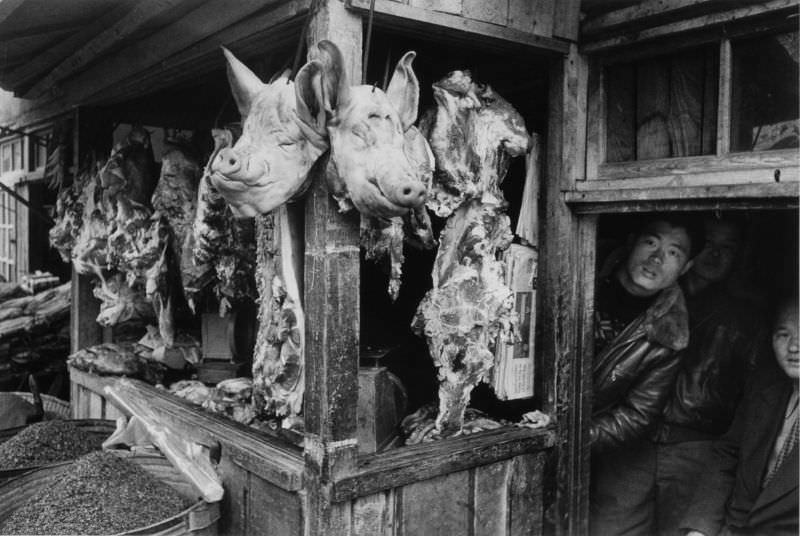
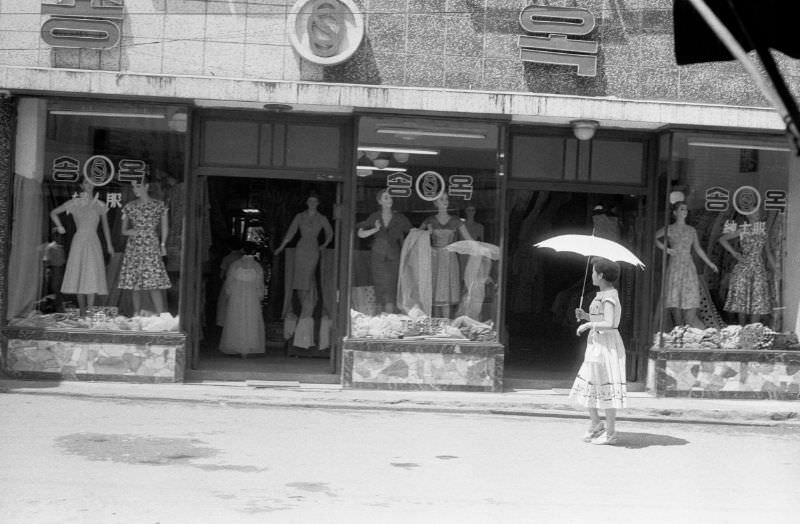
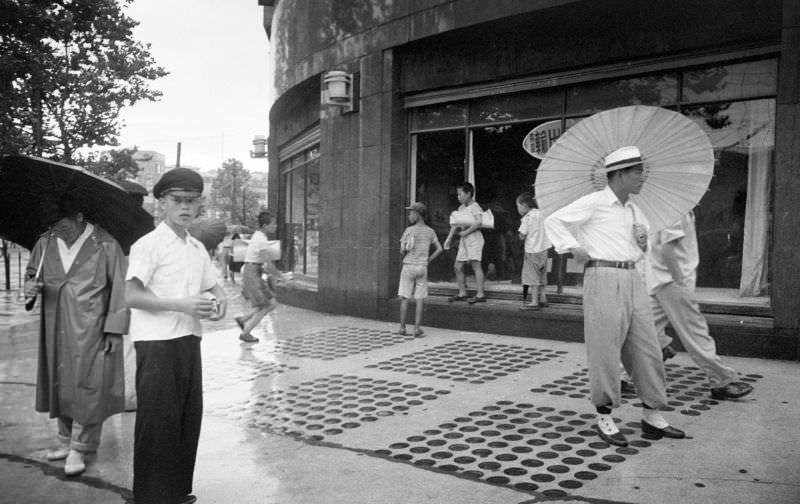
Street life remained one of Youngsoo’s greatest subjects throughout both decades. Whether he was photographing a busy commercial strip or a quiet residential lane, his eye consistently found the human detail — a gesture, a glance, a moment of stillness inside a city that rarely stood still.
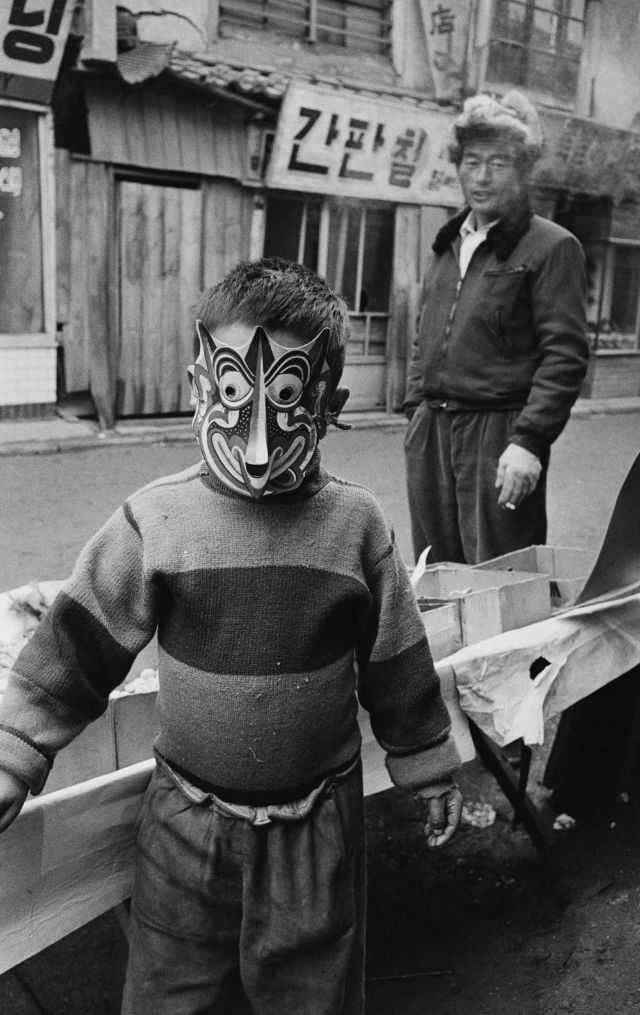
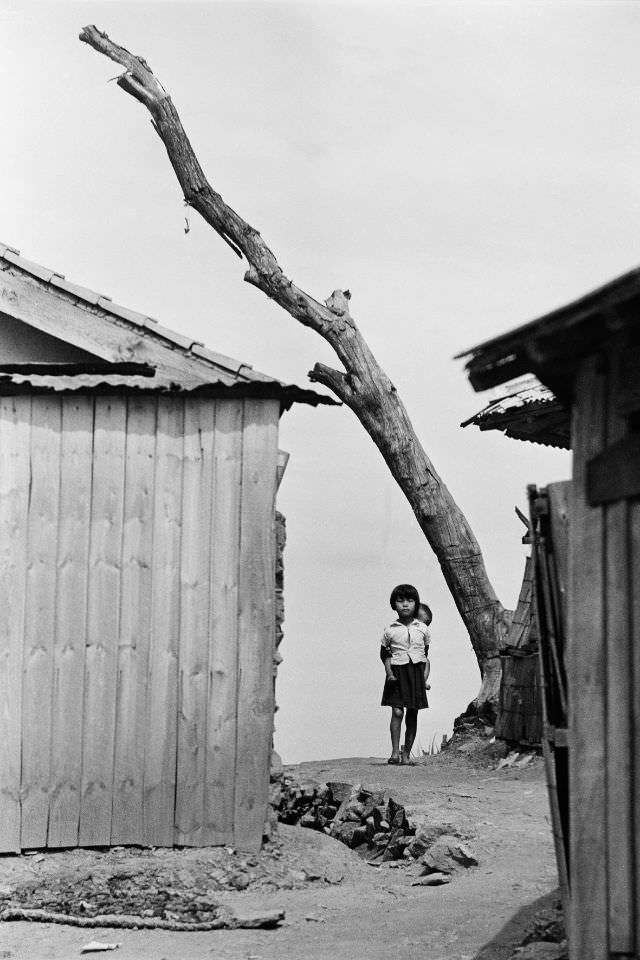
Landmarks like Namdaemun — one of Seoul’s great historic gates — also appeared in his work. The gate had stood for centuries, and Youngsoo placed it in the context of the modern city growing up around it, a reminder that Seoul’s history did not begin with the postwar rebuild.
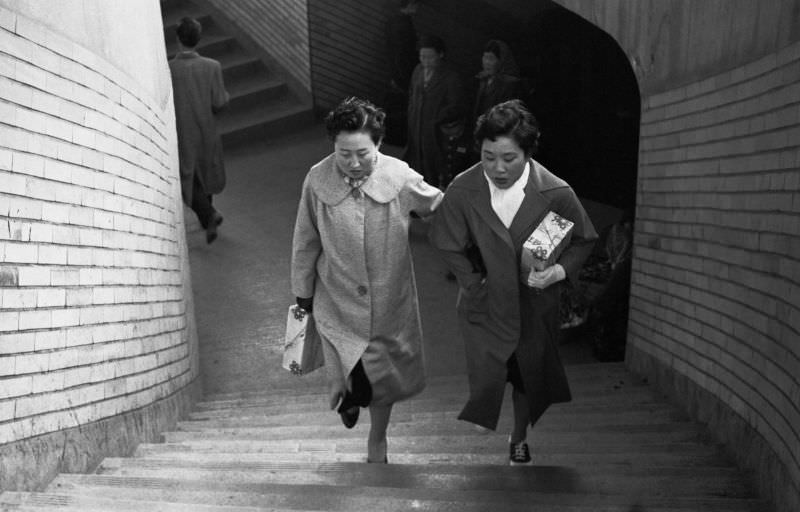
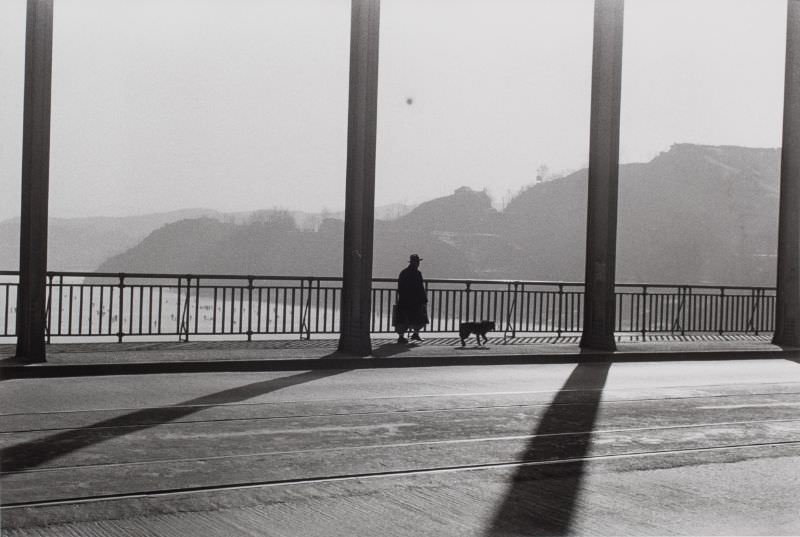
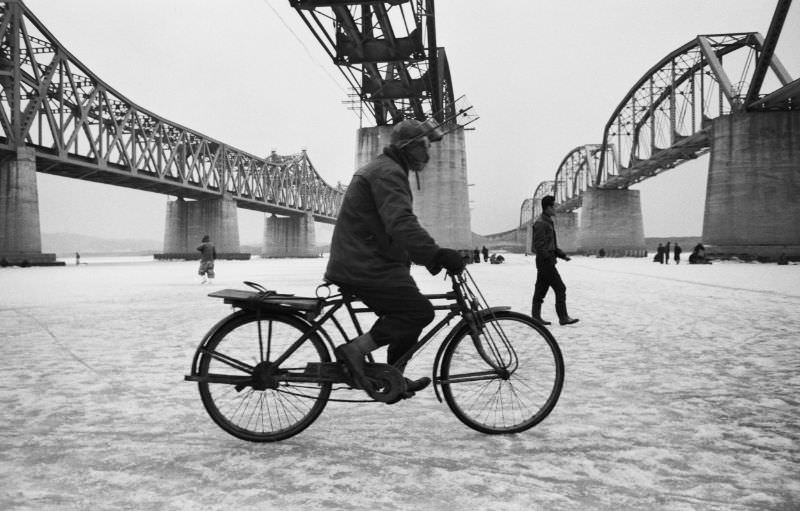
The Hangang River runs through Seoul, and Youngsoo returned to it repeatedly. The river and its bridges — including the Hangangdaegyo — were essential arteries of the city. His photographs along the Hangang show everything from industrial activity to quiet riverside scenes, reflecting how central the river was to daily life.
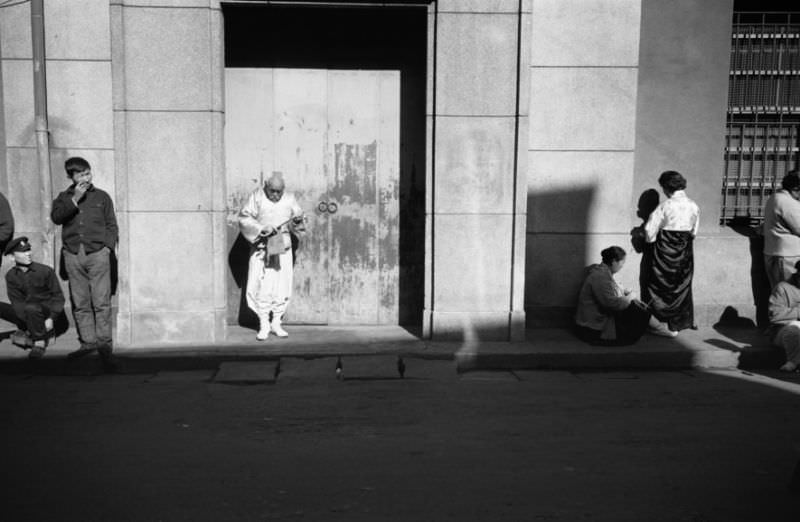
The Sogong-dong district gave Youngsoo some of his most varied material. The area was a commercial and social hub, and his photographs there show the density and movement of city life — shops, pedestrians, and the layered visual texture of a neighborhood finding its modern identity.
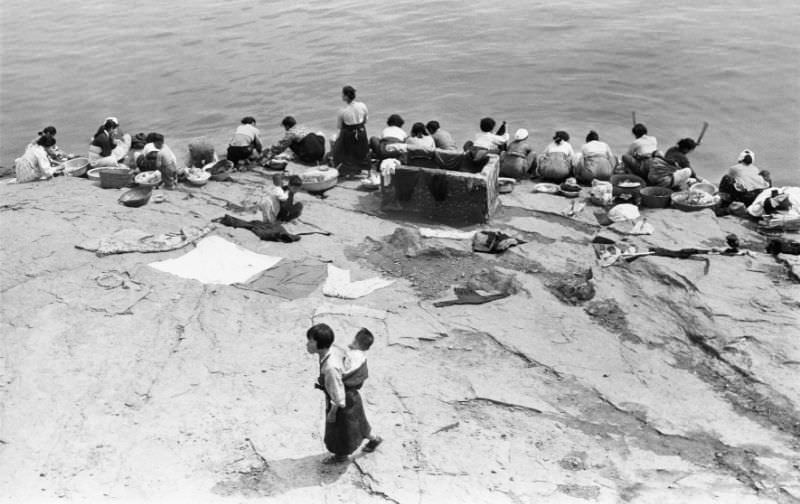
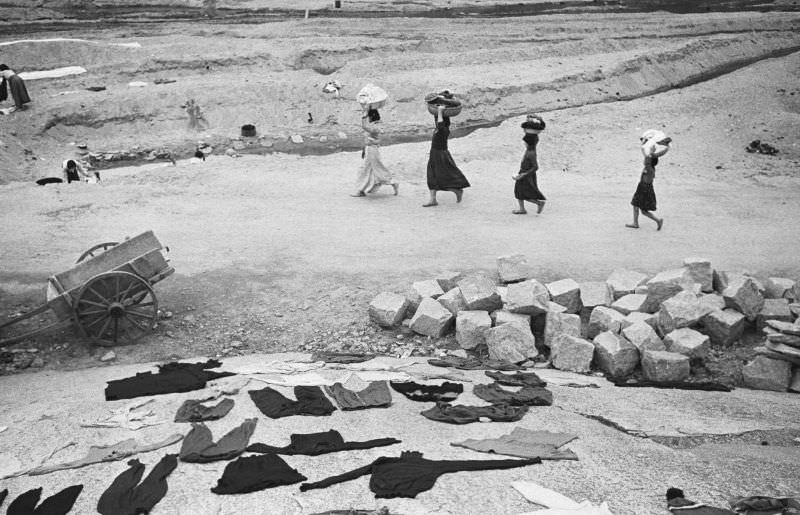
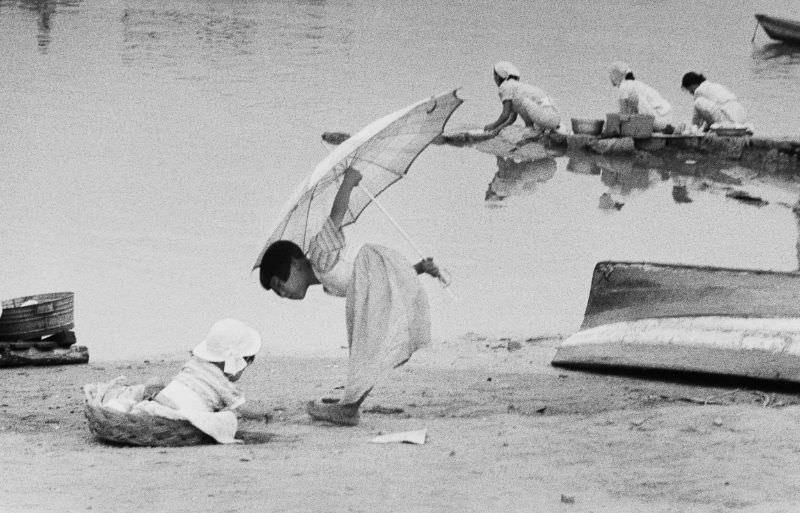
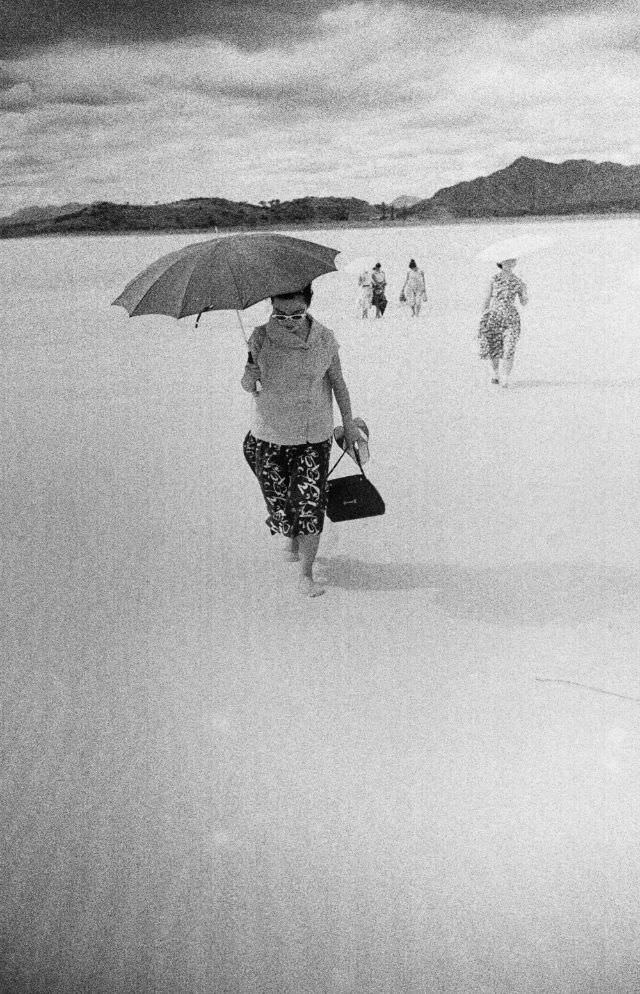
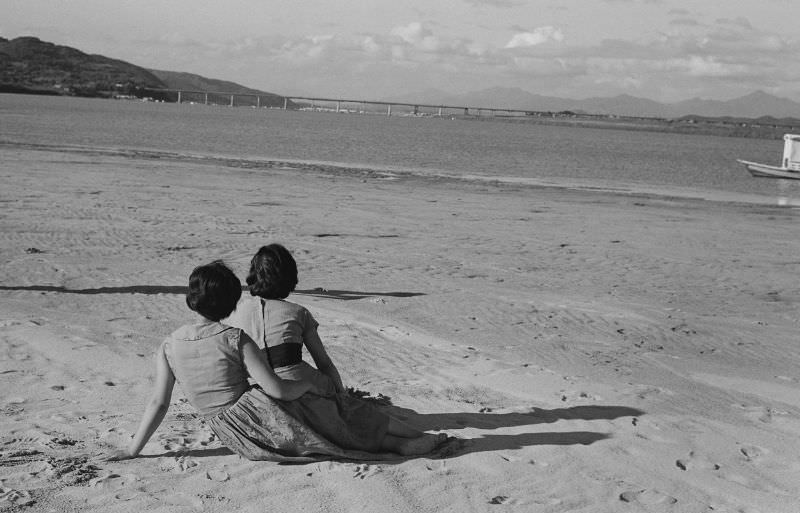
The Hangang River appears across multiple photographs, each one capturing a different mood. Some images show the wide, calm surface of the river with the city’s skyline in the background. Others place people at its edges — fishing, washing, or simply watching the water pass.
Myeongdong was one of Seoul’s most active commercial districts, and Youngsoo photographed it with the same steady attention he brought to every part of the city. The streets there were crowded and full of energy — a sharp contrast to the devastation Seoul had endured just years before.
Han Youngsoo remained largely unknown outside Korea during his lifetime. It was only after his death in 1999 that his archive received wider recognition. His photographs now stand as one of the most detailed visual records of Seoul during a pivotal period — a city pulling itself out of the wreckage of war and stepping, decade by decade, into a new era.





It’s absolutely amazing. From being one of the poorest countries in the world to becoming a modern metropolis, this is where we came from. The past must be remembered and we should be humble.
It’s unfortunate that the change happened so quickly, and many don’t know or haven’t been around, including a lack of modern plumbing in many places. Therefore, the pressure is always high and the thinking is always ‘first class’.
It’s really interesting to me, and I was wondering if anyone could shed some light on it. Most of the pictures I’ve seen of Seoul during the 1950s, usually during the war, show slums with dirt roads and everyone wearing traditional clothing. The photos show a very different, and westernized side of the city that I have never seen before. There are polished concrete sidewalks, boutique stores, and everyone is dressed in fancy western clothes.
The city has slums and wealthy areas as it does now, but does anyone know if these photos are all from before the war? Did the wealthy continue to live that way during the war? Given how hard Seoul was hit during the war, I find that difficult to imagine.
Fascinating pictures. Thanks for sharing!
Barely any 한글 in the 50’s pics
Was thinking the same thing.
Some of these people were deadly fashionable. Those suits!
Very cool
Wish the Han River still had beaches
Hangang River is incorrect. It is the Han River. “Gang” in Korean means river.
A time that has truly by gone … people were beautiful back then as they are today
It’s really sad that the Han river no longer has a beach…it’s really wild when you see it in old photos
Korea is the only country in the world that has developed from one of the poorest nations, completely devastated by war, into an advanced nation.
And that was achieved in a hundred years.
Currently, many poor countries are looking up to us as a role model and striving to escape abject poverty and develop into livable nations, and our government is actively trying to help.
It is not easy.
However, many countries believe that since Korea did it, they can do it too, and Korean people hope that this will happen.
What gets me is seeing young children in slums. Go to one now and everyone’s over 70. They could even be the same people.
Was flipping through these thinking, “these kiddos could be my parents/aunts/uncles/their friends…”
Incredible black and white shots. Thanks a lot for sharing the link.
These are amazing, thank you for this!
There are a few very pretty photobooks released over the last ten years. The children photos are mostly seen in “Once upon a Time”.
http://m.mmcafd.godomall.com/us/goods/goods_view.php?goodsNo=1000001434