Hey There! Before You Go. 😧
Get the best vintage content straight into your inbox!

Don't worry, we don't spam

Fascinating Vintage Photos Show Life In Scotland From The Early 20th Century

At the turn of the 20th century, Scotland was home to around 4.5 million people. The country was caught up in sweeping social and political change. In the Khaki Election of 1900, the Conservatives and their Liberal Unionist allies won a majority of Scottish seats. Meanwhile, Scotland’s economy was booming, driven in large part by its role as a major trade hub. Scottish fisheries were thriving, and the country dominated Europe’s herring trade. It was a golden age on the water.

Innovation was everywhere. Cinema, wireless radio, and the mass use of the telephone were all reshaping daily life. The turbine engine was invented during this period, advances in physics were accelerating, and powered flight became a reality. Scotland’s cities were growing fast, and construction projects were reshaping skylines across the country. One of the most dramatic examples of this was happening in Glasgow.
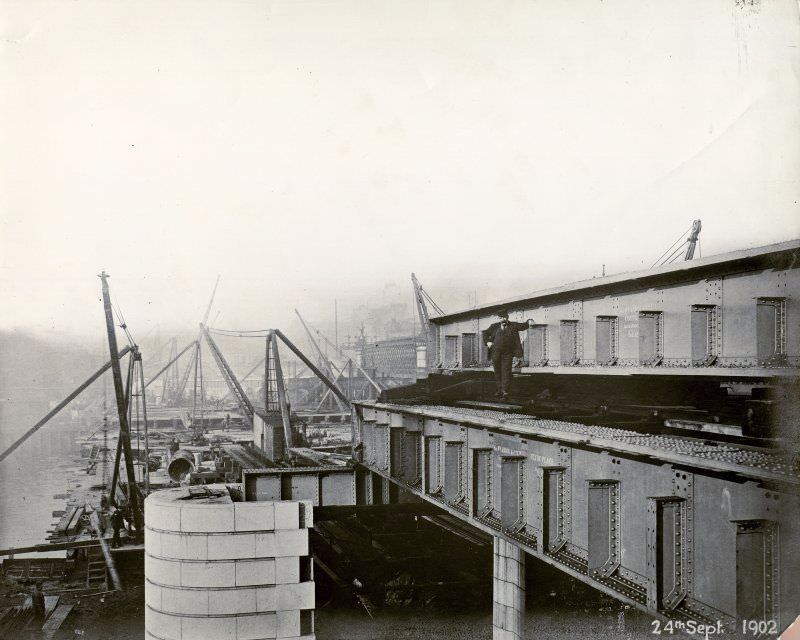
View from Clyde Place, Glasgow of the Central Station Bridge during construction, September 1902 (completed 1905). This was built for the Caledonian Railway Company to their design as part of the reconstruction of the Station.

Glasgow was transforming rapidly in the early 1900s. The city hosted the Glasgow International Exhibition in 1901, held at Kelvingrove Park, drawing visitors from across the world. The Industrial Hall was one of the exhibition’s most striking structures, a clear sign of Scotland’s confidence in its manufacturing and engineering power.
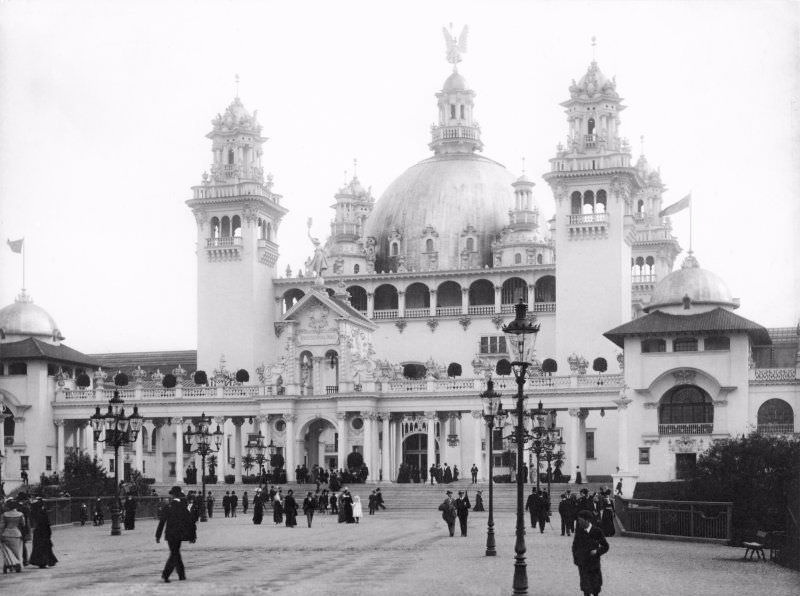
Photograph of Industrial Hall building taken during the Glasgow International Exhibition in 1901.

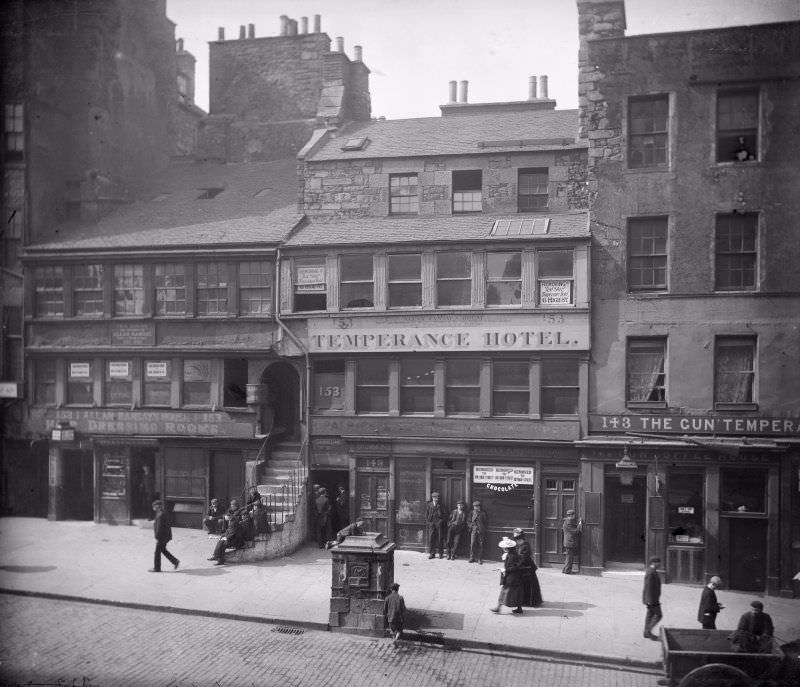
Street life across Scotland’s cities was rich and busy. In Edinburgh, horse-drawn carts shared the roads with early trams and the first automobiles. South Bridge was a daily artery of commerce and movement, while areas like Milne’s Court and the High Street were packed with grocers, hotels, and coffee houses.
South Bridge, Edinburgh, from South East showing street scene with horses and carts, c. 1910.
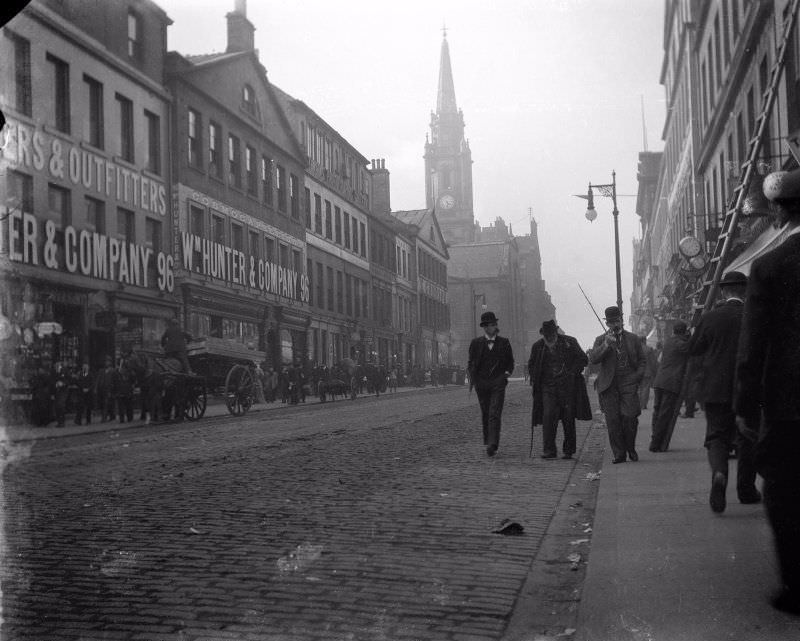
High Street between Canongate and North Bridge, Edinburgh showing no 153 Allan Ramsay's House, The Temperance Hotel, no 143 The Gun'Temperance and The Gun Coffee House, c. 1900.
High Street between Canongate and North Bridge, Edinburgh showing no 153 Allan Ramsay’s House, The Temperance Hotel, no 143 The Gun’Temperance and The Gun Coffee House, c. 1900.

Leith, Edinburgh’s port district, had its own landmark station that opened in 1903. Leith Central Station was a major transit point, and its facade along Leith Walk was a familiar sight to commuters and shoppers alike. Trams advertising Cadbury’s Cocoa ran past its entrance, and the Queen’s Hotel stood nearby.
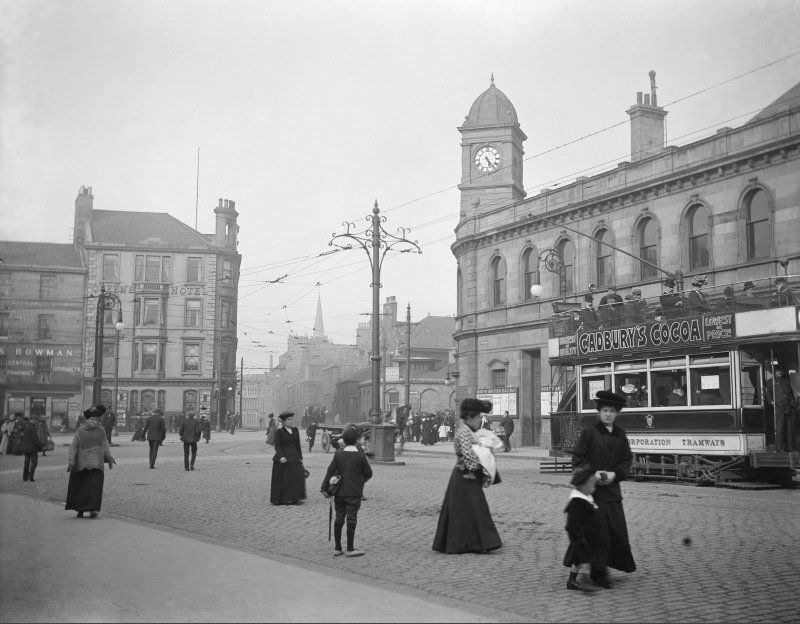
View of Leith Central Station, Edinburgh, from Leith Walk, with street scene and tram advertising Cadbury's Cocoa, 1912. The station opened in 1903 and closed for regular passenger traffic in 1952. Visible is also the Queen's Hotel.
View of Leith Central Station, Edinburgh, from Leith Walk, with street scene and tram advertising Cadbury’s Cocoa, 1912. The station opened in 1903 and closed for regular passenger traffic in 1952. Visible is also the Queen’s Hotel.

Edinburgh at night had its own atmosphere. Gas lighting illuminated stone bridges and narrow wynds, and the city looked both ancient and alive after dark. Photographers were beginning to experiment with night photography, capturing scenes that most people of the time would never have seen preserved on film.
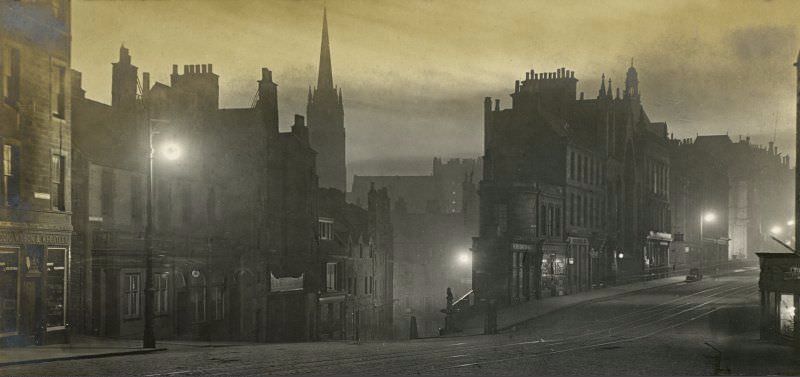
View of Edinburgh at night, 1907. Titled: 'Candlemakers Row and George IV Bridge April 1907'.
View of Edinburgh at night, 1907. Titled: ‘Candlemakers Row and George IV Bridge April 1907’.

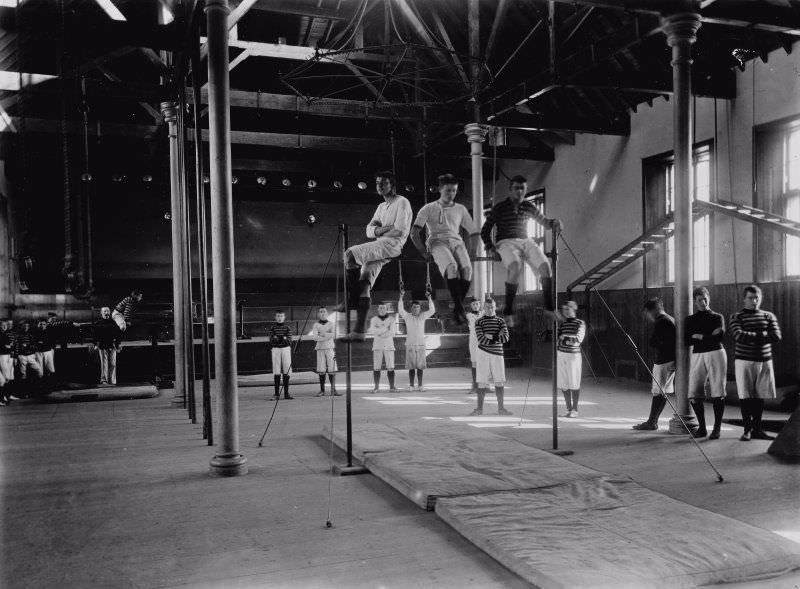
Scotland’s schools were serious institutions. Edinburgh’s Merchant Company ran several well-known schools where education was structured and discipline was expected. Boys trained in practical trades like woodwork, while girls took part in physical education in purpose-built gymnasiums. At Fettes College, one of Scotland’s top private schools, facilities were already impressive by the early 1900s.
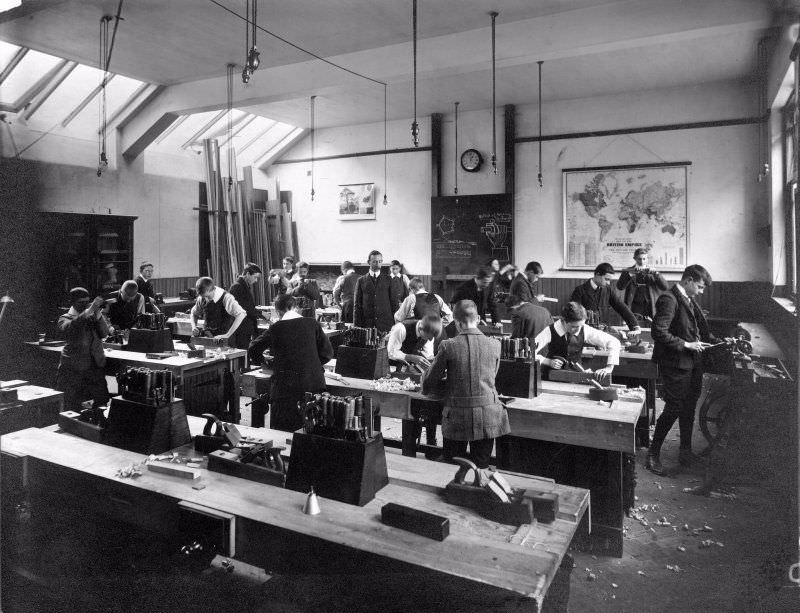
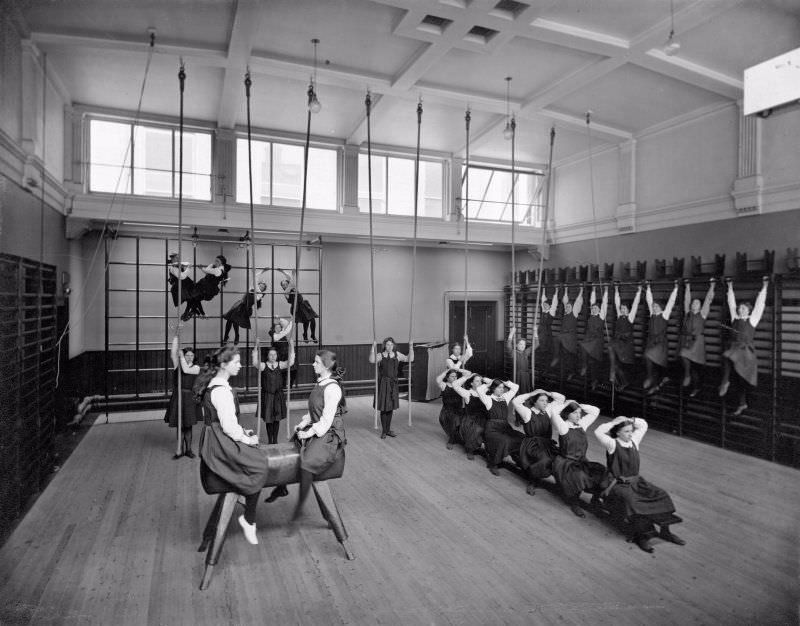
Male pupils in a woodwork class at unidentified school run by the Edinburgh Merchant Company, c. 1910.
Female pupils in the Gymnasium of unidentified school run by the Edinburgh Merchant Company, c. 1900.
Interior view of the gym at Fettes College, Edinburgh. c. 1905.

George Heriot’s School in Edinburgh was another institution with a long history. Its grand courtyard reflected the ambition that Scottish education had long placed in architecture as well as learning. Established in the 17th century, by 1900 it remained one of the country’s most respected schools.
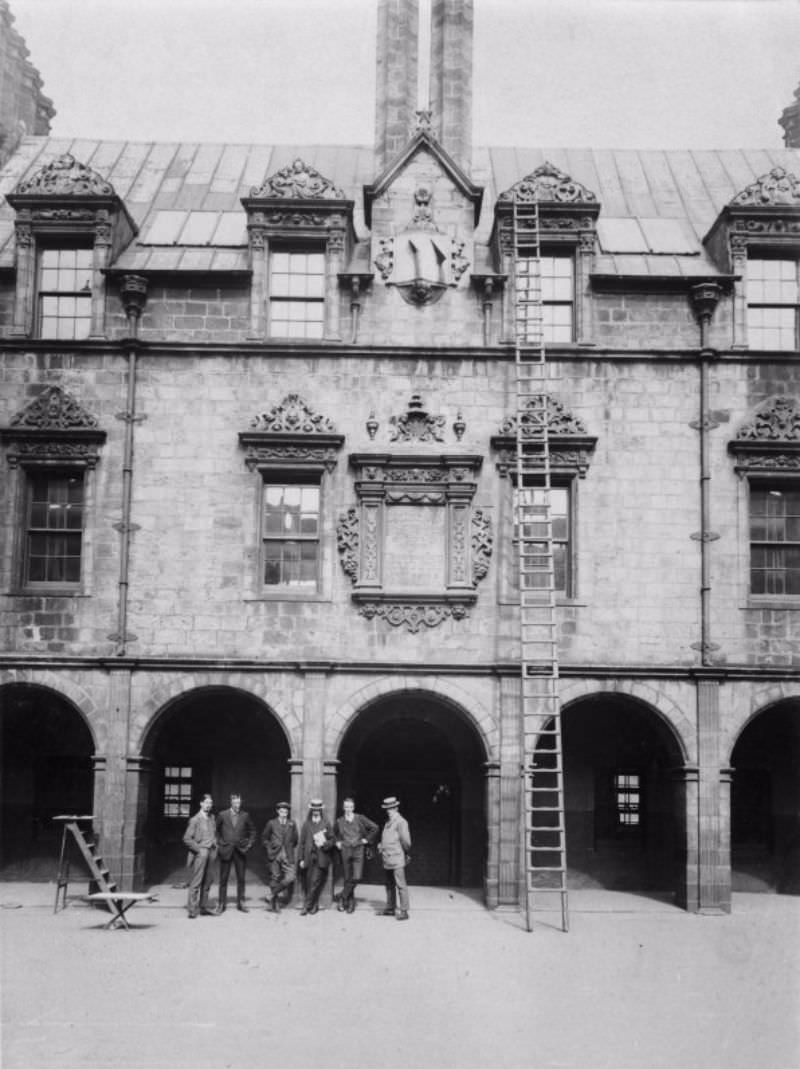
View of the courtyard, George Heriot's School, Lauriston Place, Edinburgh, c. 1900.
View of the courtyard, George Heriot’s School, Lauriston Place, Edinburgh, c. 1900.

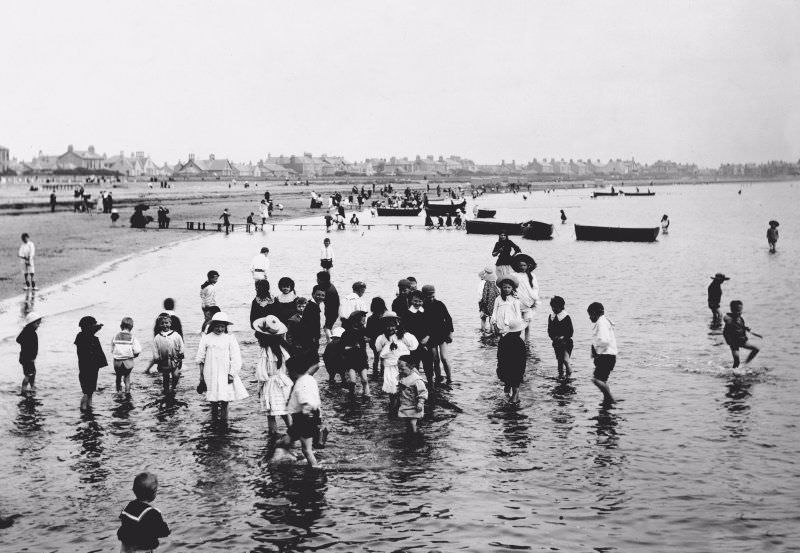
Outside the cities, Scottish life moved at a different pace. Coastal towns like Troon in South Ayrshire had a mix of thatched cottages and newer buildings, with the sea shaping the rhythms of everyday life. Children played on the beach, families gathered outside their homes, and the town’s streets were quiet compared to Glasgow or Edinburgh.
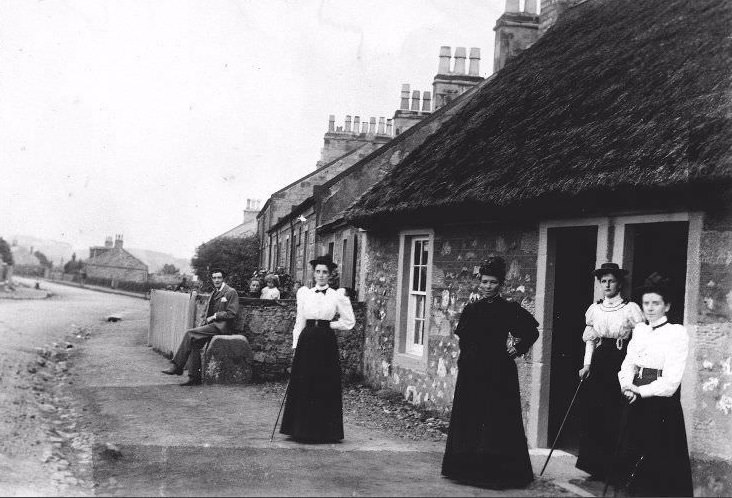
People outside cottages at Troon, South Ayrshire, with thatched cottage in foreground, c.1910.
Children at Troon beach, 1907.

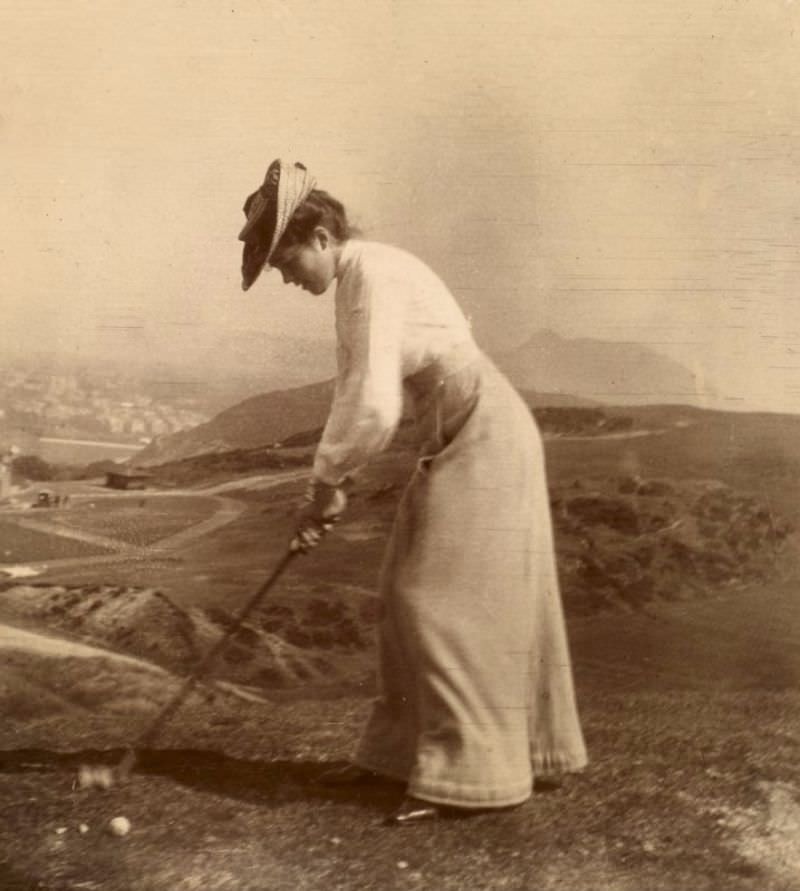
Golf was already deeply woven into Scottish culture. Royal Troon Golf Course, established in the 19th century, was a well-known fixture along the Ayrshire coast. Women were playing too. At the Braid Hills course near Edinburgh, golfers could be spotted on the fairways in 1902, long before the sport became widely open to women at most clubs.
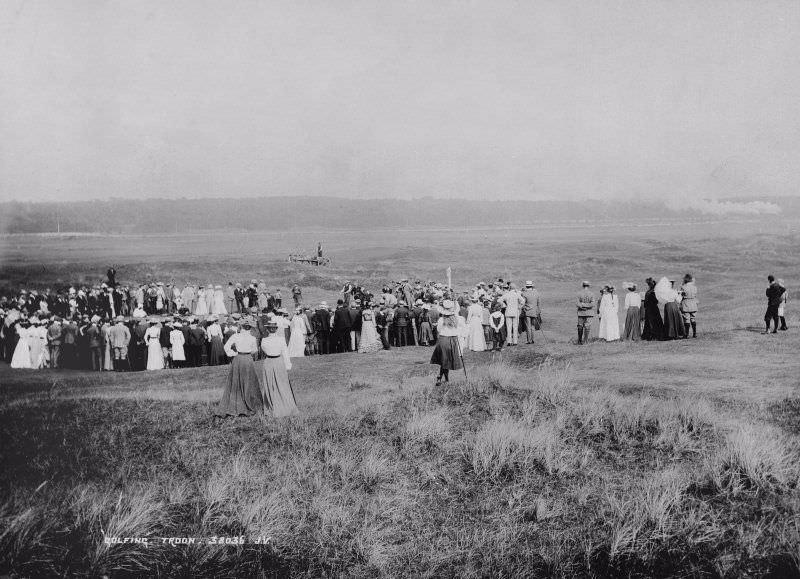
Royal Troon Golf Course, 1902.
Woman playing golf, 1902. Titled: 'F.J.T Braid Hills 1902'.
Woman playing golf, 1902. Titled: ‘F.J.T Braid Hills 1902’.

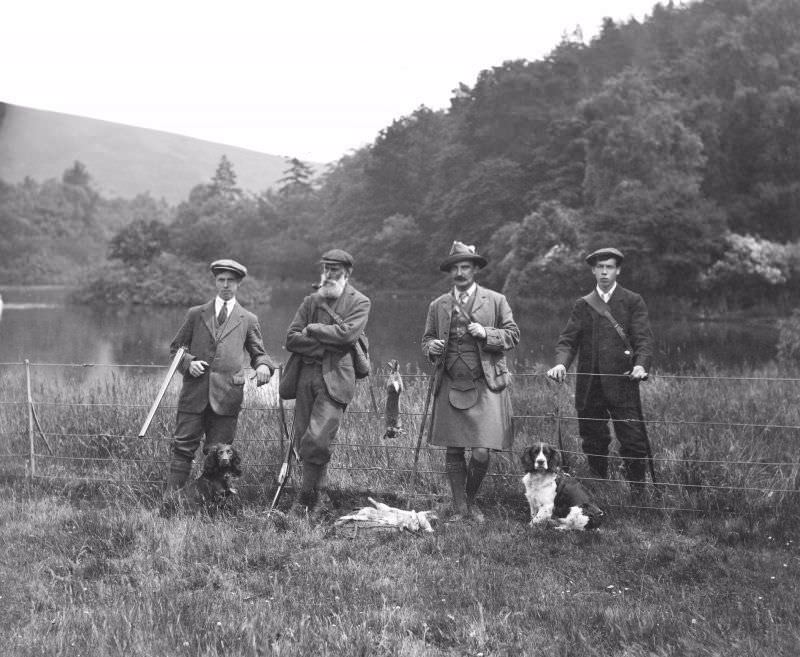
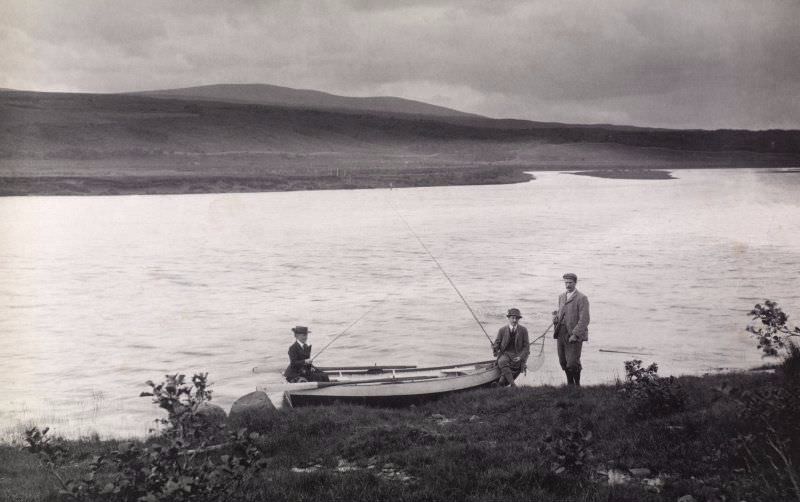
For the upper classes and landed gentry, the Scottish Highlands offered shooting parties, hunting excursions, and salmon fishing. Estates across the country hosted wealthy guests who traveled by car or rail to take part in these seasonal pursuits. The Glen estate, Glen Luss, and the Inveroykel area near the Kyle of Sutherland were all popular destinations.
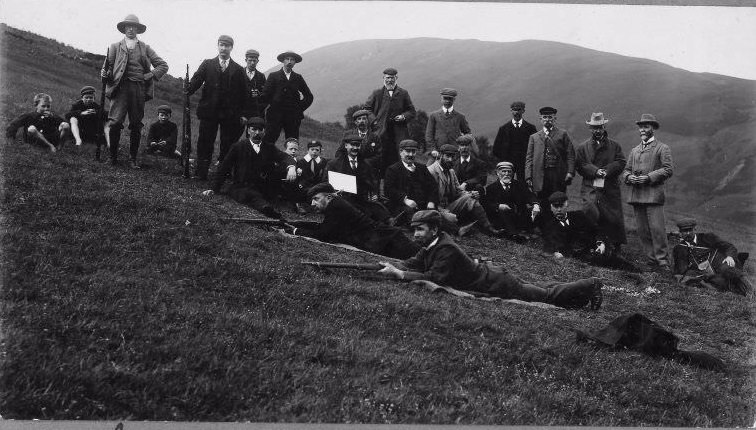
Shooting party at Glen Luss, 1904. Titled: 'Glen Luss. 1904. Shooting for Astor Challenge Cup' and 'Col. Brock, Mr Christall and Mr Lumsden'.
Shooting party at Glen Luss, 1904. Titled: ‘Glen Luss. 1904. Shooting for Astor Challenge Cup’ and ‘Col. Brock, Mr Christall and Mr Lumsden’.
Fishing party, c.1910. Titled: 'Inveroykel and Kyle of Sutherland'.
Fishing party, c.1910. Titled: ‘Inveroykel and Kyle of Sutherland’.

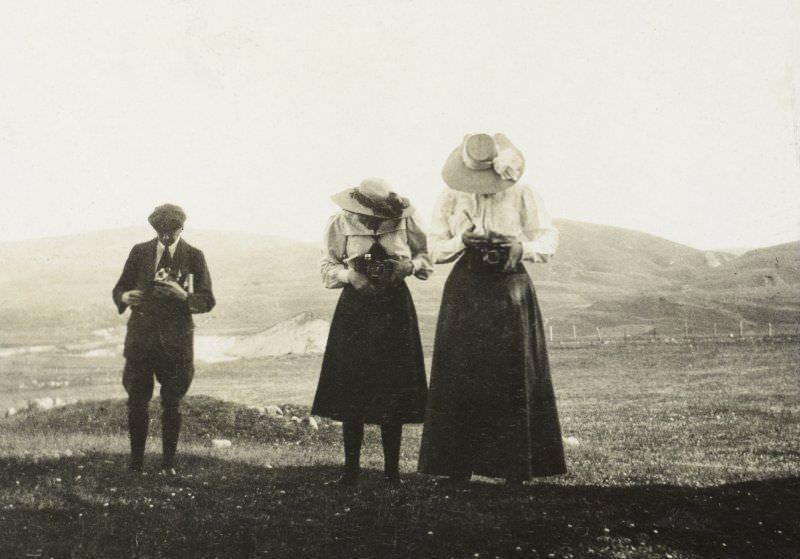
The rise of photography meant that private family life was increasingly documented. People captured school outings, garden tea parties, bicycle trips, and seaside holidays. Amateur photographers like Cornelia Craven, who used a small Kodak camera at Balmacaan House, left behind personal records of their world that no official archive could replicate.
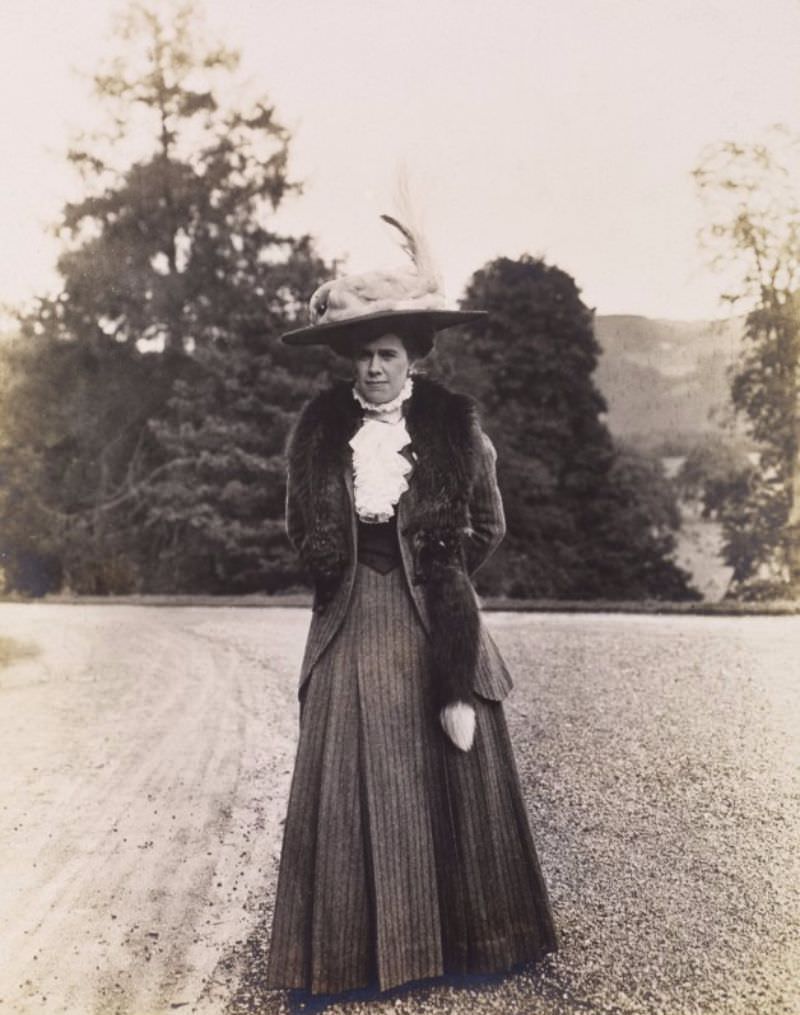
Cornelia Craven at Balmacaan House, c.1910. Titled: 'Myself' The album is titled: 'These photographs were all taken with my little Kodak. Cornelia Craven'.
Cornelia Craven at Balmacaan House, c.1910. Titled: ‘Myself’ The album is titled: ‘These photographs were all taken with my little Kodak. Cornelia Craven’.
Two women and a man with cameras, 1907. Titled: 'A Henderson, Gladys Younger, J Henderson'.
Two women and a man with cameras, 1907. Titled: ‘A Henderson, Gladys Younger, J Henderson’.

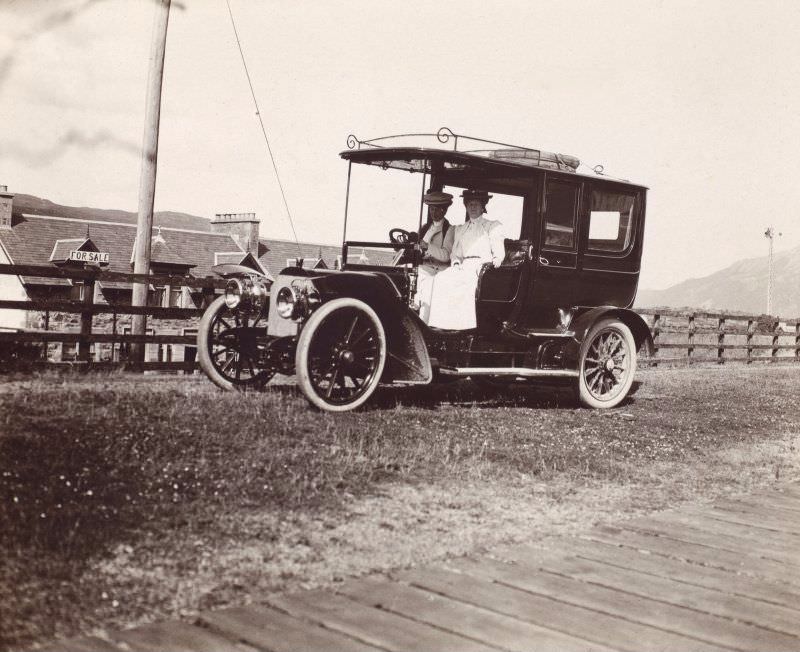
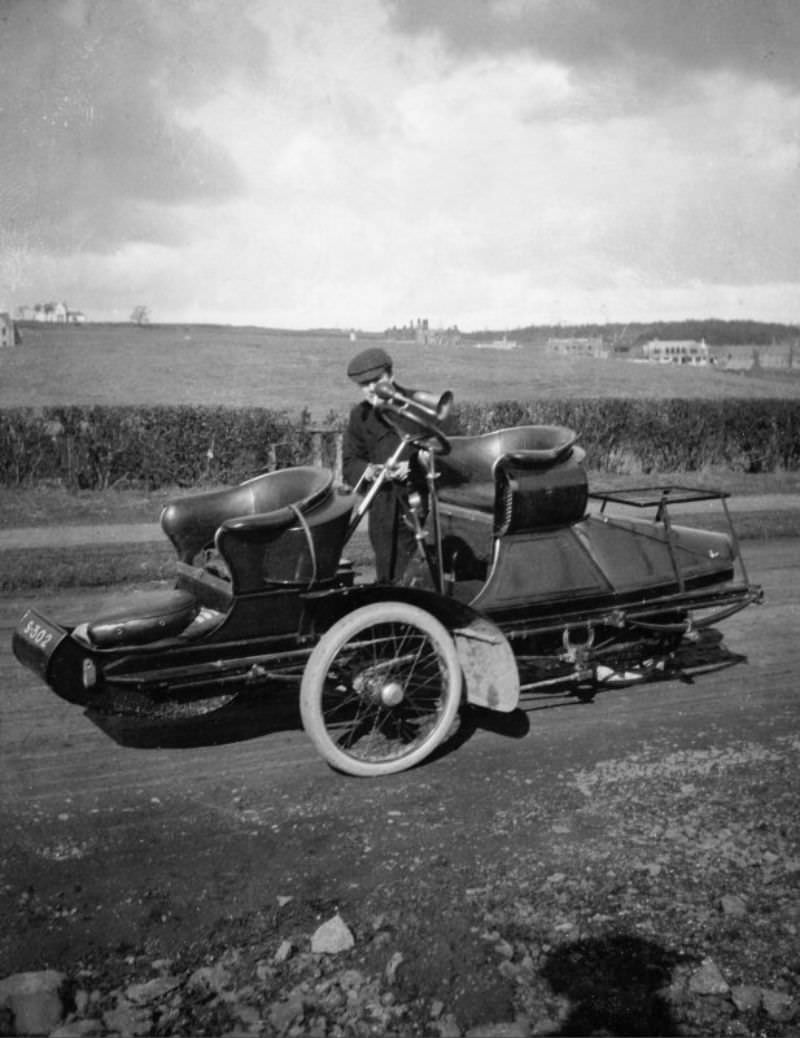
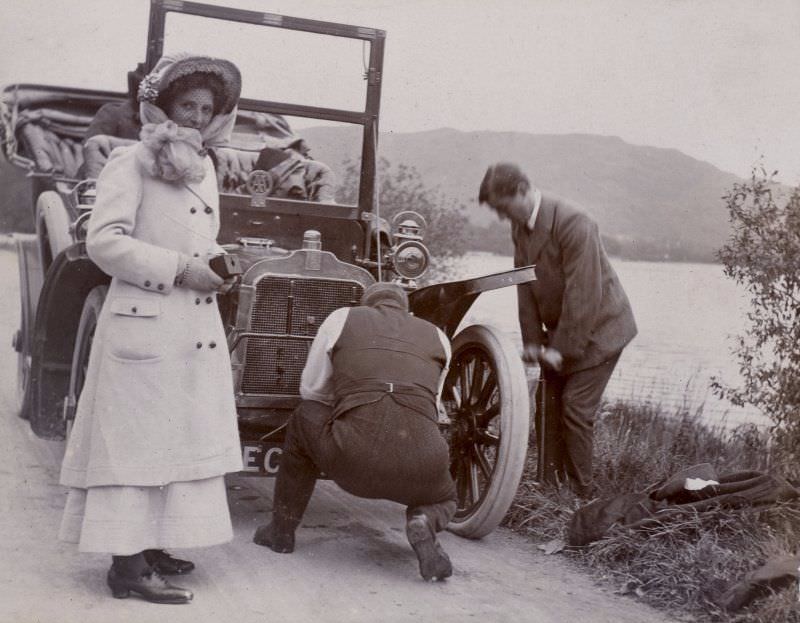
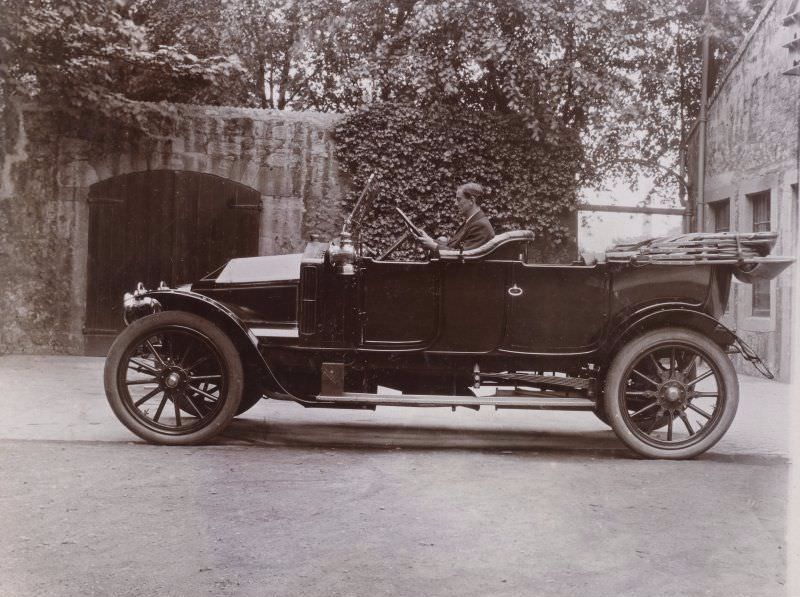
Technology was also changing how people traveled. Motorcycles and motor cars were appearing on Scottish roads, though horses and carts were still the dominant form of transport for most people. Early automobiles were a novelty worth photographing, and several images from this era show Scots posing proudly beside or inside their vehicles.
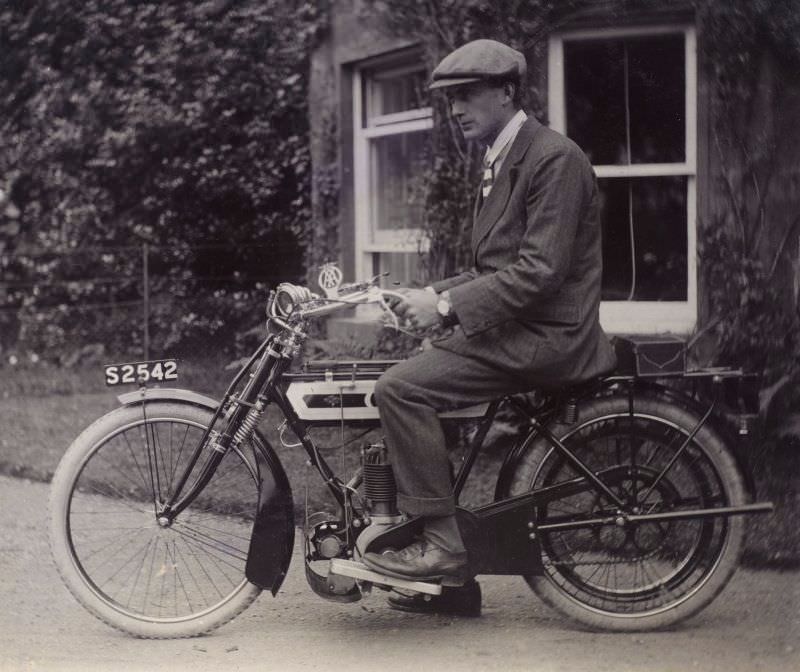
Man on motorcycle, 1909.
Man in car, 1909.
Man in car, 1909.
Two women in a car, c.1910.

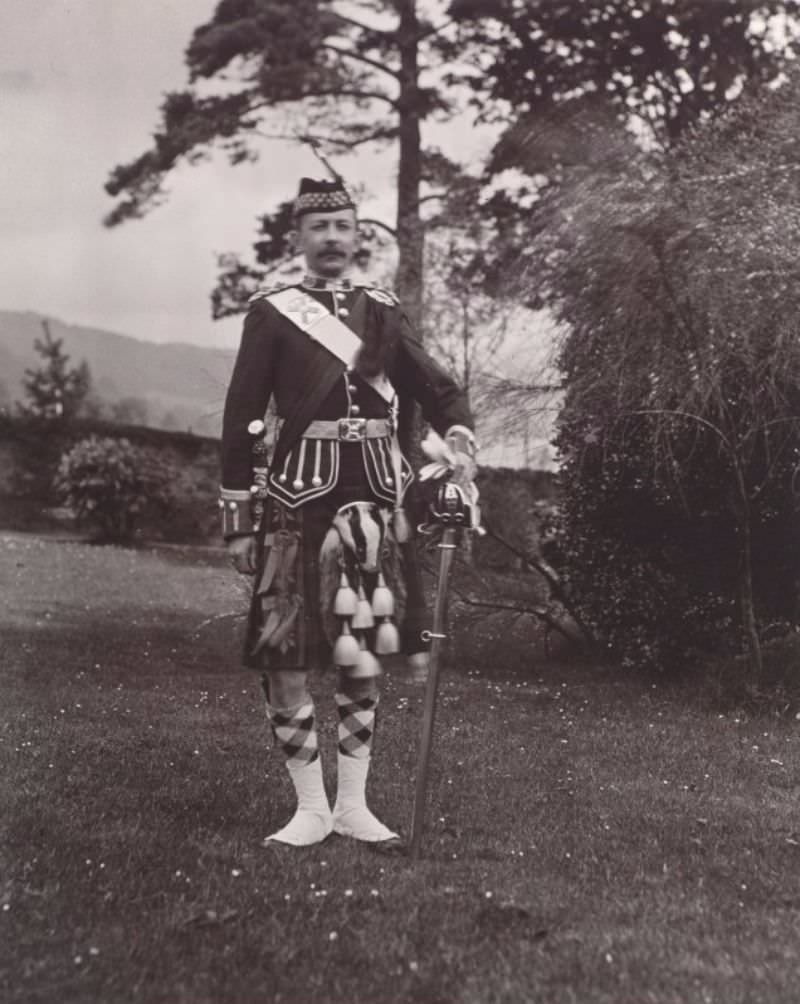
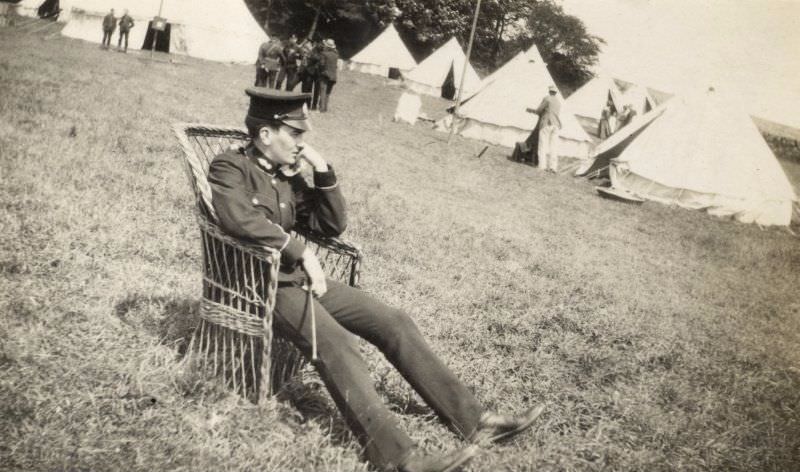
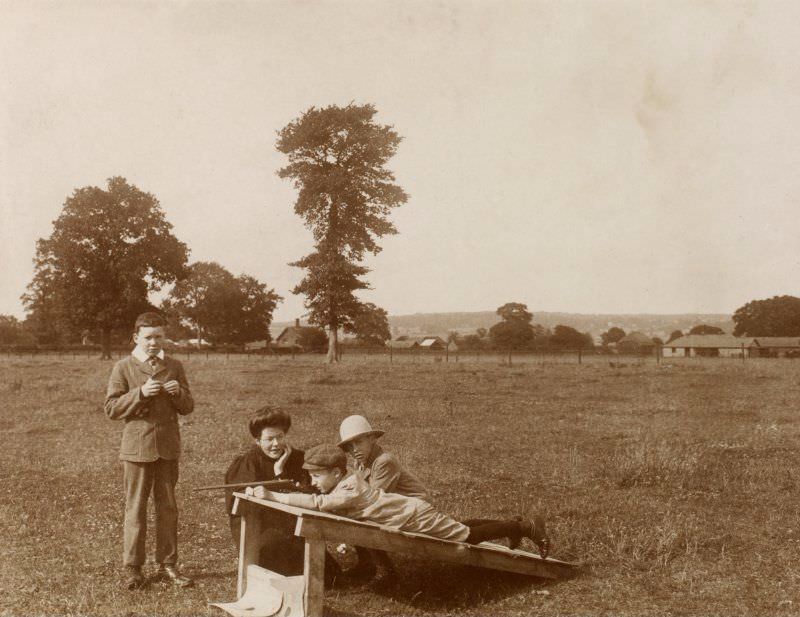
The military was a visible part of Scottish life long before the First World War began. Soldiers camped at Kilcreggan in 1902, children practiced shooting in 1906, and a soldier named Stuart was photographed in 1910 preparing to march in the funeral service parade for King Edward VII. When war finally came in 1914, Scotland contributed 690,000 men, along with ships, machinery, and food to support Britain’s war effort.
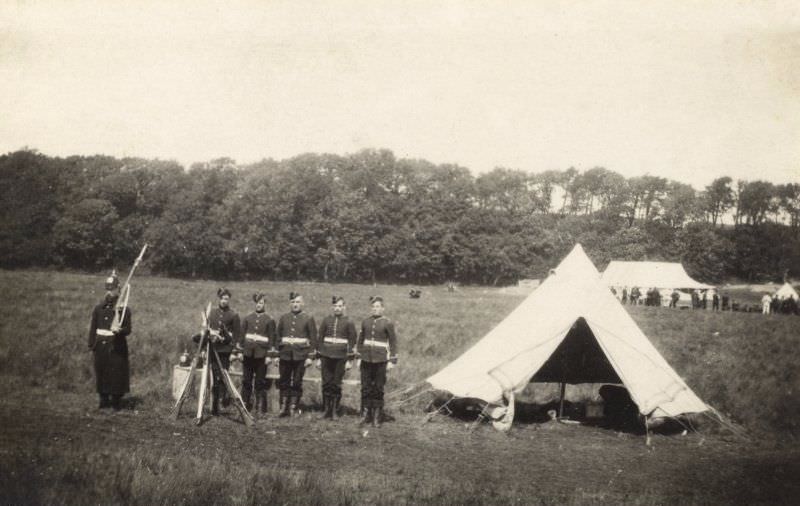
Soldiers at 'Camp at Kilcreggan, 1902.
Soldiers at ‘Camp at Kilcreggan, 1902.
Children practising shooting, 1906.
Portrait of a soldier, 1910. Titled: 'Stuart ready to start for King Edward VIIs funeral service parade'.
Portrait of a soldier, 1910. Titled: ‘Stuart ready to start for King Edward VIIs funeral service parade’.

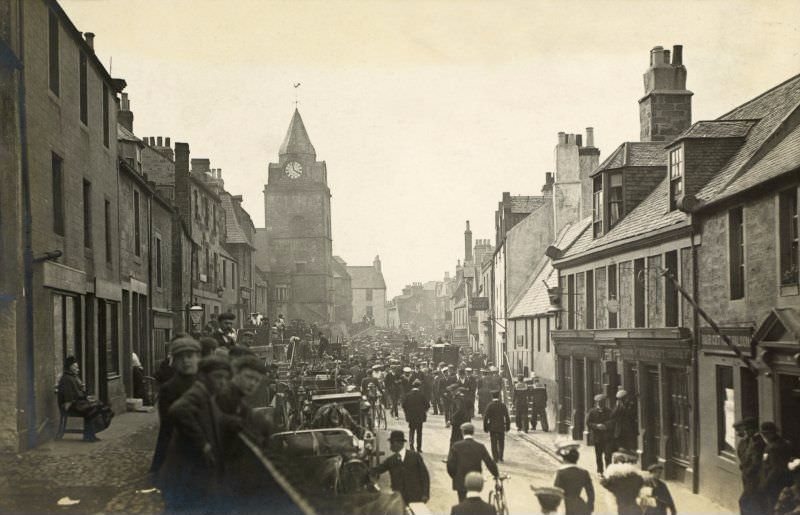
Scotland’s waterways remained central to daily commerce and travel. The Caledonian Canal at Fort Augustus carried steamers through the Great Glen, connecting the west coast to the east. Coastal communities like South Queensferry had direct ties to naval activity, as demonstrated by the Channel Fleet’s visit in 1907, which drew crowds to the High Street.
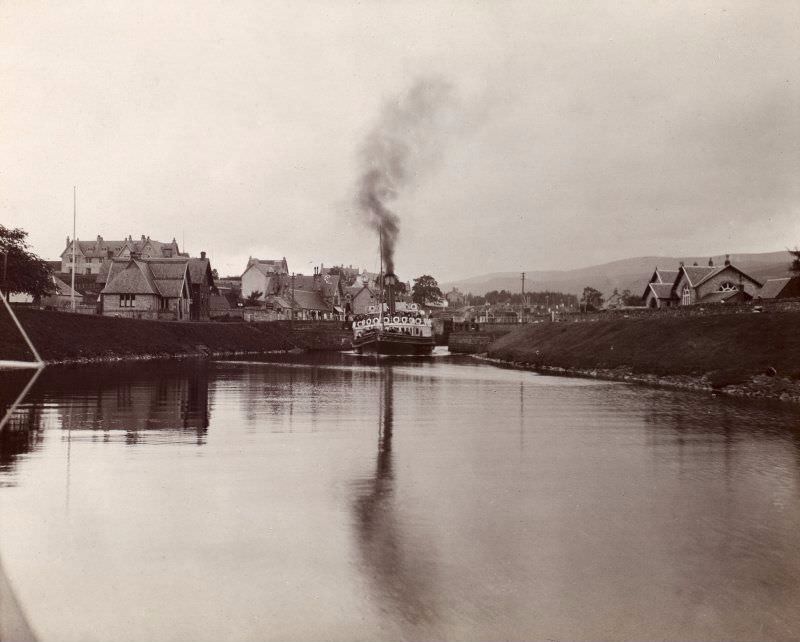
A steamer in the Caledonian Canal at Fort Augustus swing bridge, taken from the E., c. 1910.
View of High Street, South Queensferry, 1907. Titled: 'South Queensferry, 'Channel Fleet visit 1907'.
View of High Street, South Queensferry, 1907. Titled: ‘South Queensferry, ‘Channel Fleet visit 1907’.

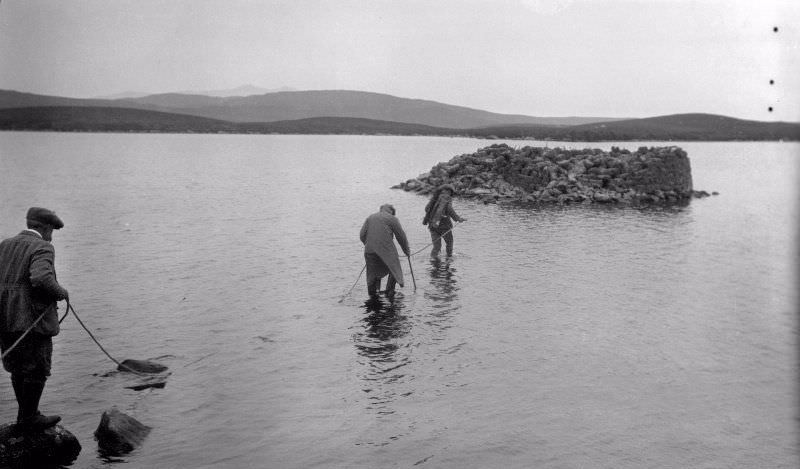
The remote islands and rural communities of Scotland had their own distinct character. On Benbecula in the Outer Hebrides, a telegraph office connected the island to the wider world. On Skye, the Kilmuir Free Church was a gathering point for the local community. Surveyors from the Royal Commission on the Ancient and Historical Monuments of Scotland were still documenting ancient structures across the country well into the 1920s.
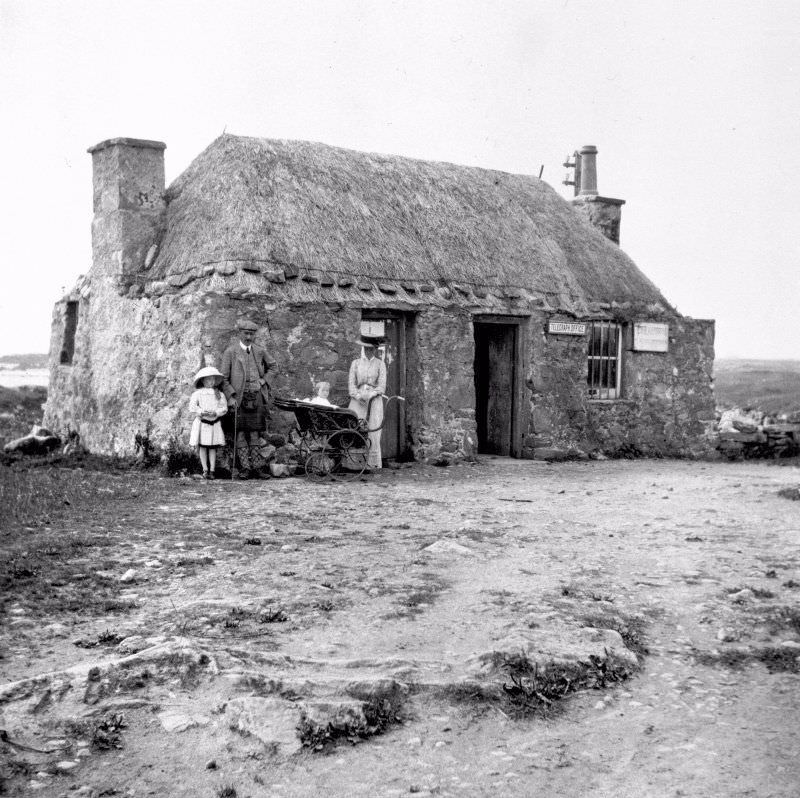
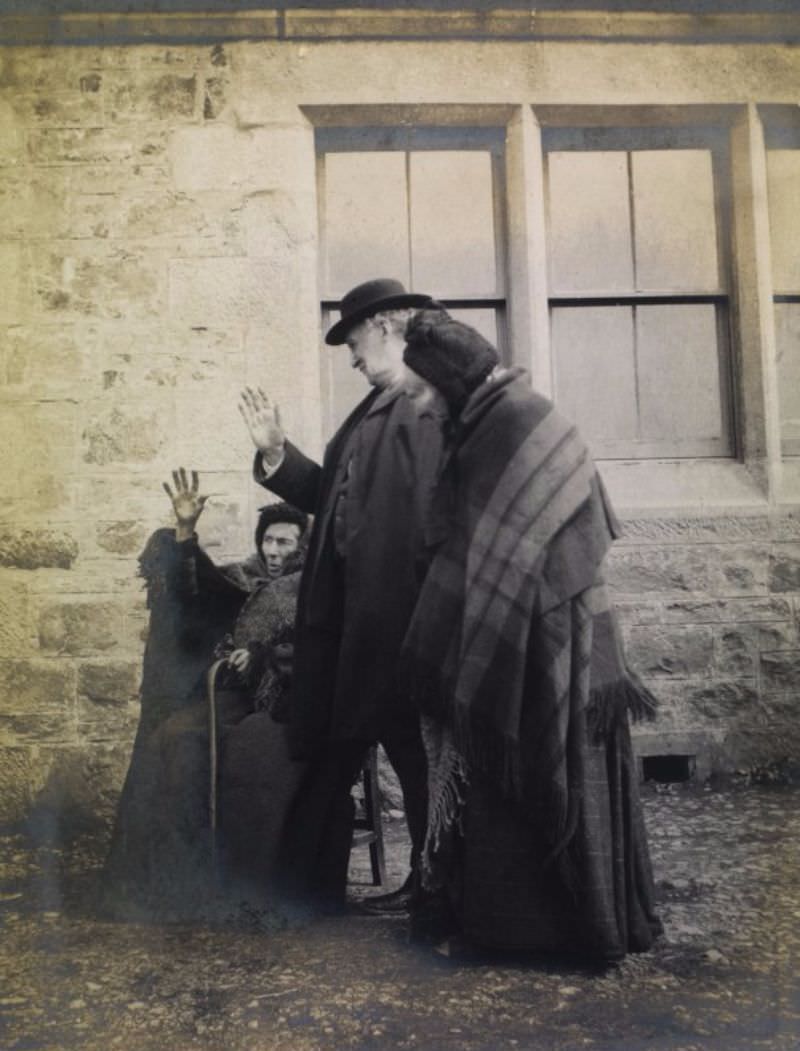
View of telegraph office at Creagorry, Benbecula, with family, 1910.
Group of people outside Kilmuir Free Church, Skye, 1906.
View of RCAHMS surveyors wading out to a dun in 1924, Dun Nighean Righ Lochlainn, North Uist.

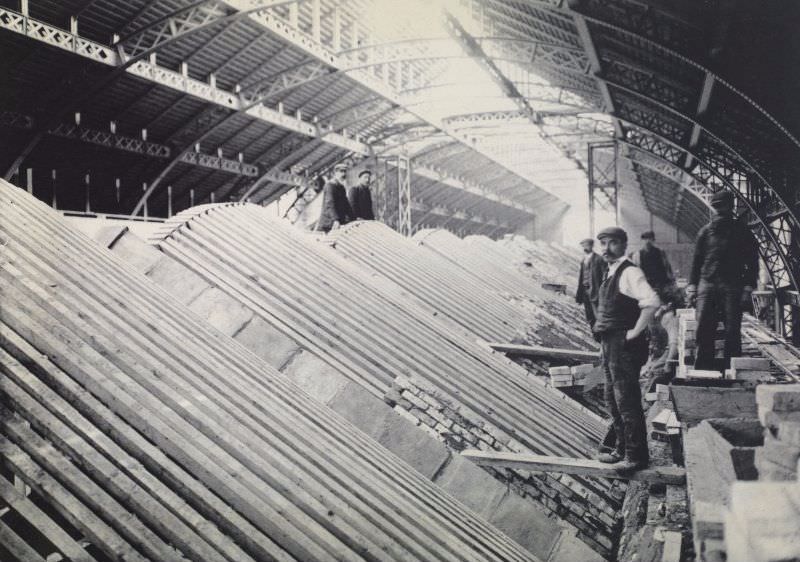
Rural industries like sheep shearing continued much as they had for generations. Near The Dorback in the Highlands, shearers worked in the open in 1907, just as new gas infrastructure was being built in Edinburgh. Granton Gasworks, photographed during construction in 1906, represented the modernization pushing into every part of Scottish life — even as older ways of working continued side by side with the new.
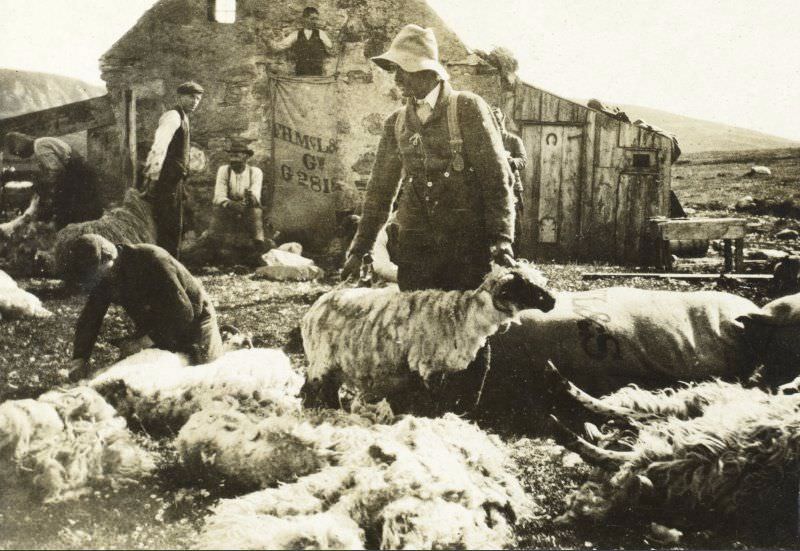
Sheep-shearing near The Dorback, 1907.
View of retort house during the construction of Granton Gasworks, 1906
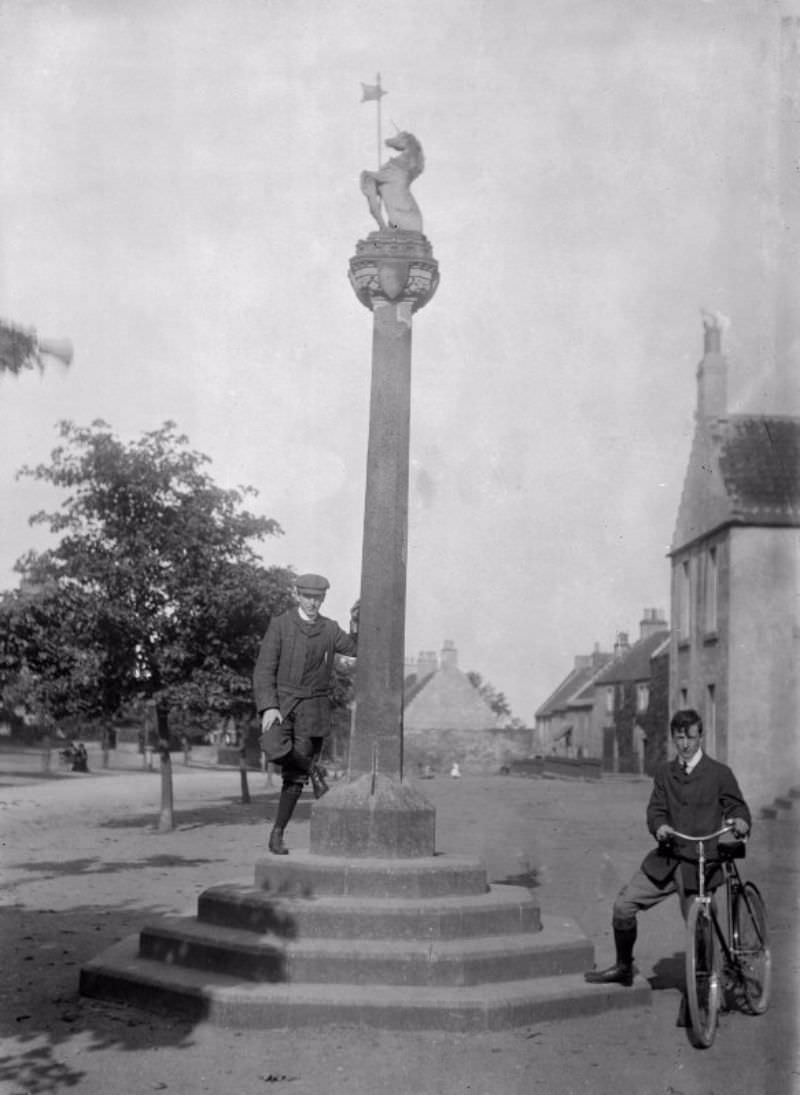
View of the market cross from the south, 1904.
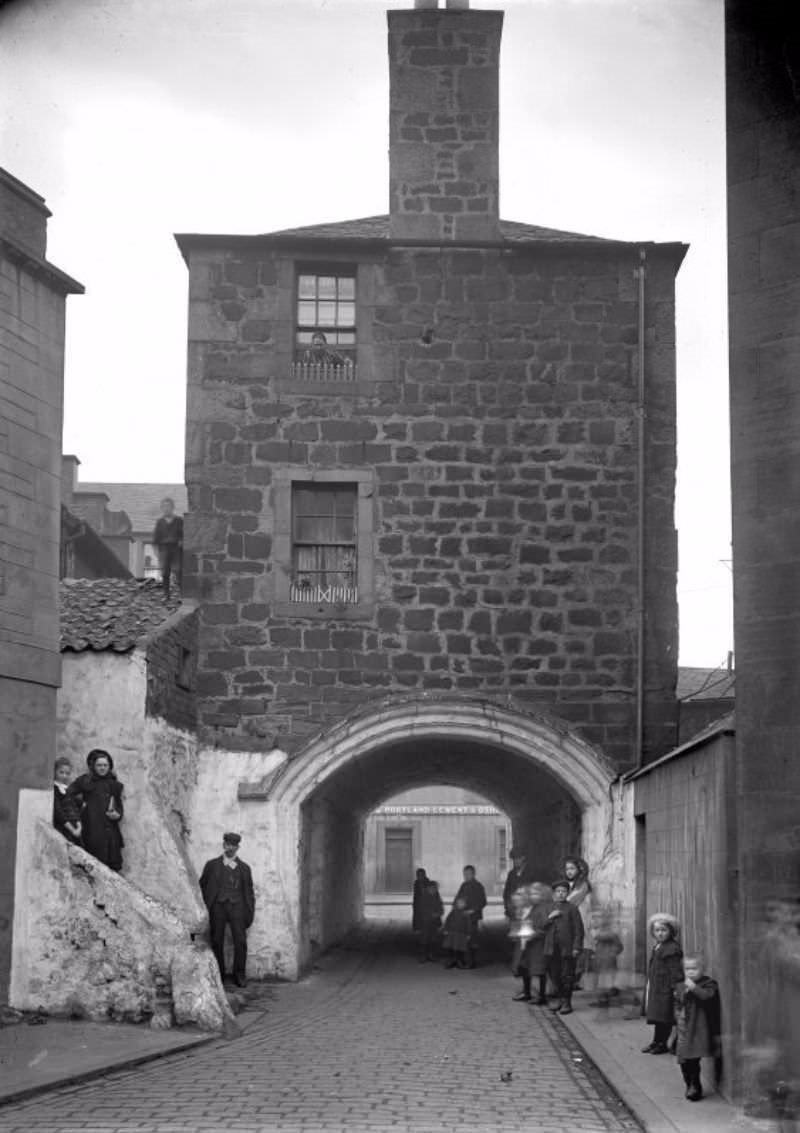
The Citadel Arch, Dock Street, Edinburgh with people, c.1912.
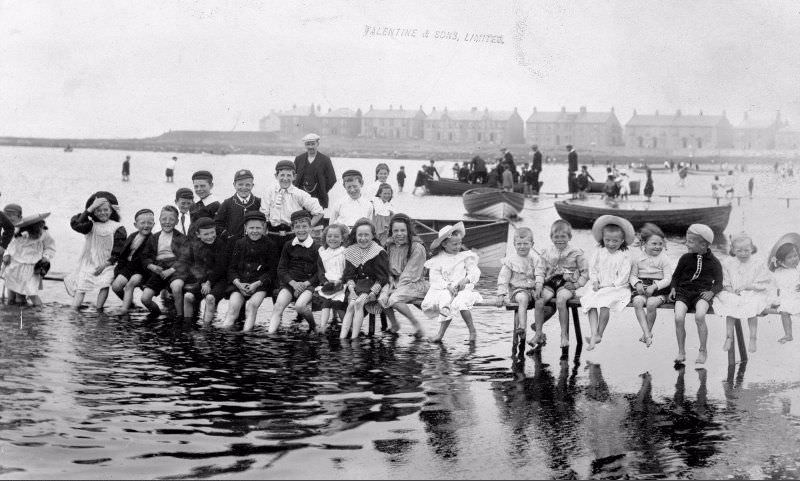
School outing at beach, 1907.
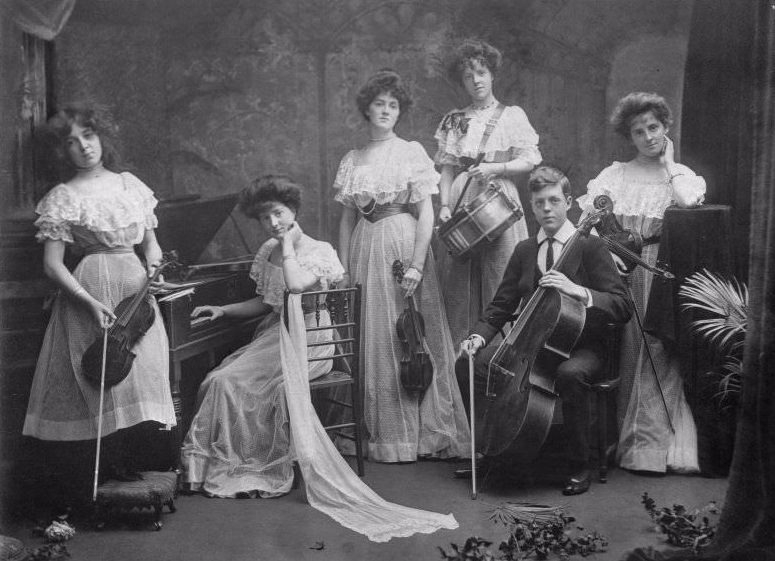
Members of the Mather family with instruments, c.1910.
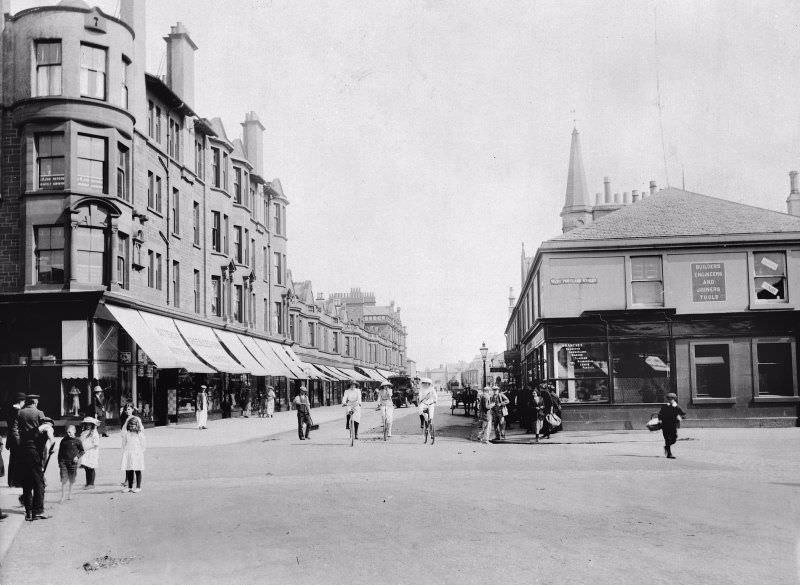
Photograph showing Ayr Street, Troon on the corner to West Portland Street, c.1910.
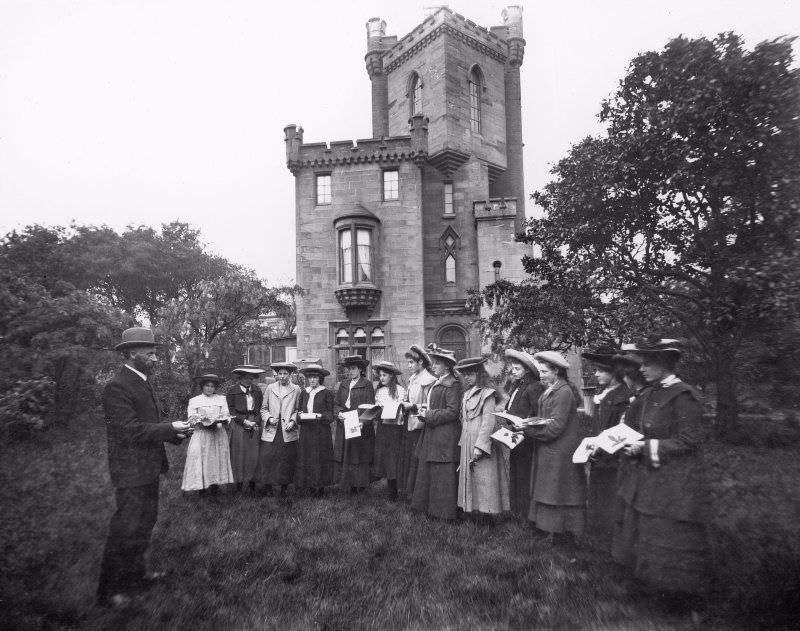
Group outside St John the Baptist's Church, Ayr, c.1906.
Group outside St John the Baptist’s Church, Ayr, c.1906.
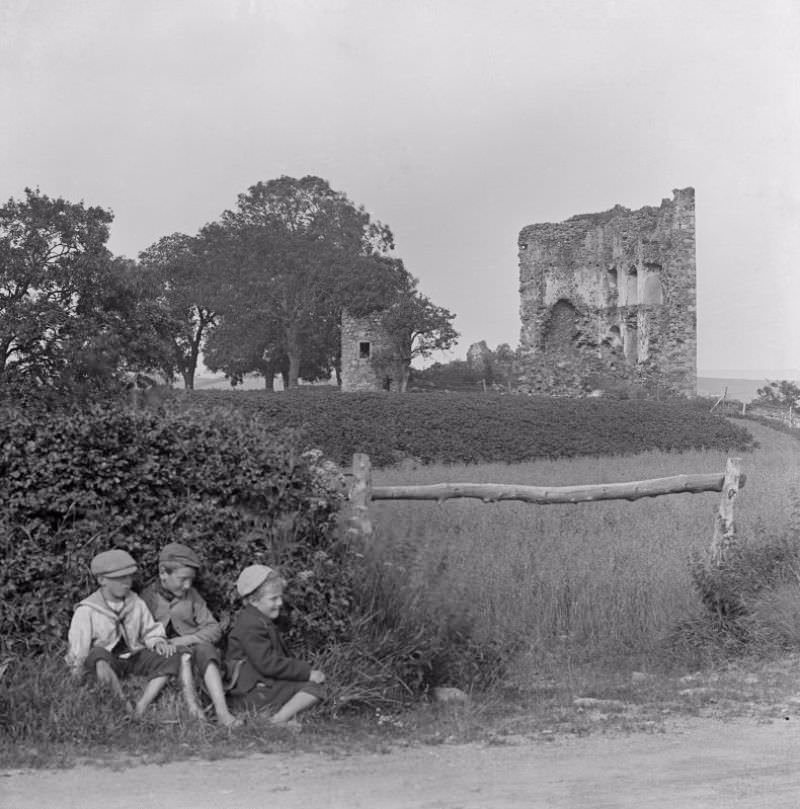
Balquhain Castle from SW, c. 1910.
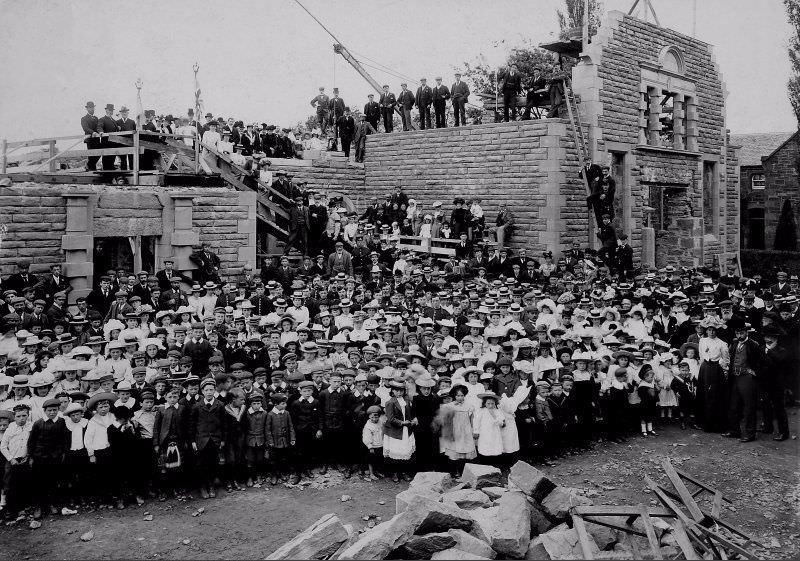
Crowd in front of the Phipps Institute, Beauly, under construction, c. 1903.
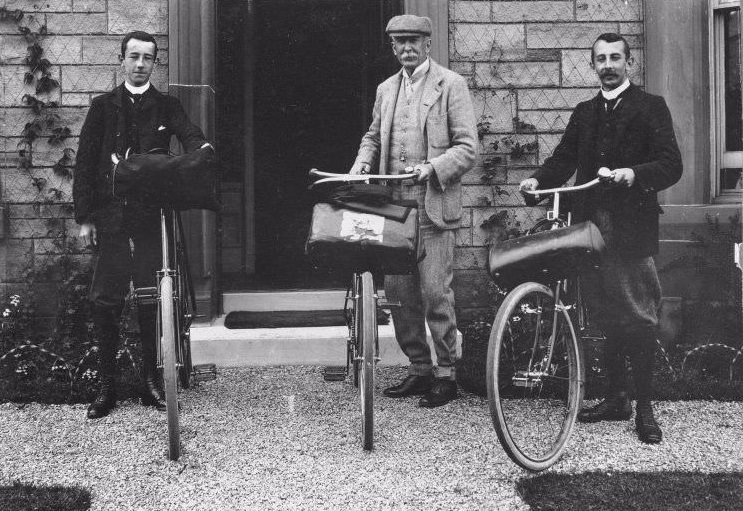
Three men with bikes outside house, 1903. Inscribed beneath: 'As we started from 2 Corrennie Gardens. July 20th 1903.'
Three men with bikes outside house, 1903. Inscribed beneath: ‘As we started from 2 Corrennie Gardens. July 20th 1903.’
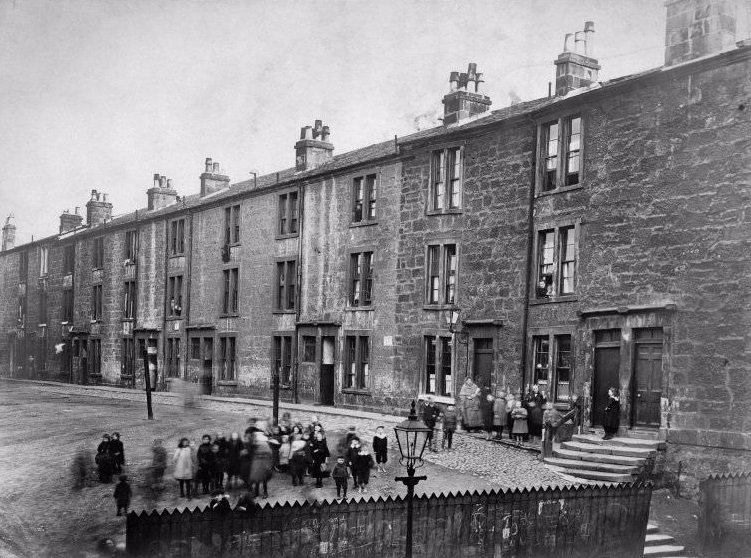
St. James Terrace, Glasgow, with large group of children outside, c.1910. Titled below: ' 3 dwellings, 3 apartments, 24 dwellings, 1 apartment: 2 wash-houses containing in all 29 taps and 8 W.Cs
St. James Terrace, Glasgow, with large group of children outside, c.1910. Titled below: ‘ 3 dwellings, 3 apartments, 24 dwellings, 1 apartment: 2 wash-houses containing in all 29 taps and 8 W.Cs
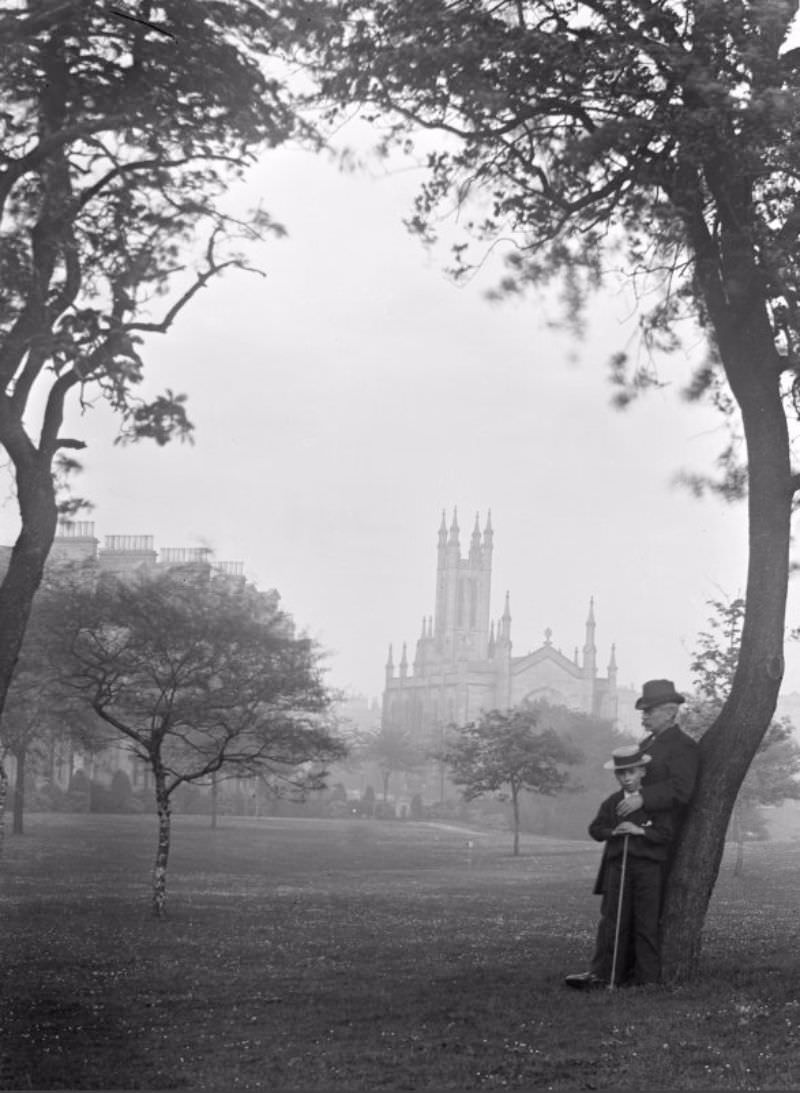
Gentleman and boy leaning on tree with a distant view of Holy Trinity Church, c.1900.
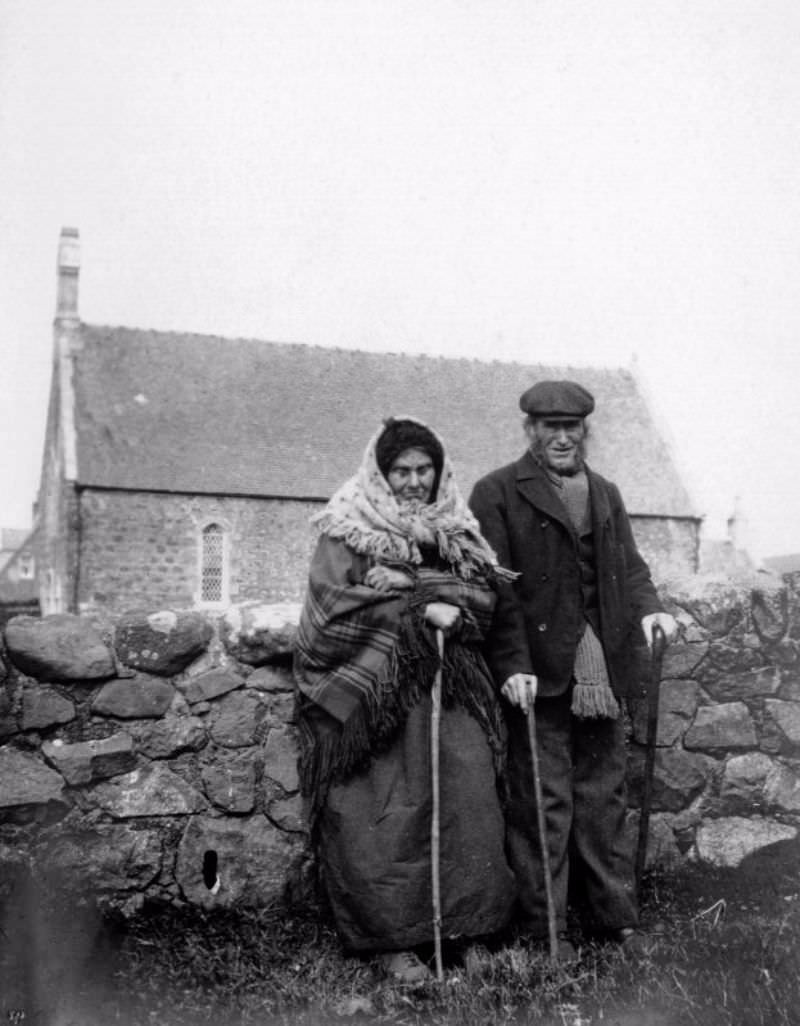
Two people in front of Kilmuir Free Church, Skye, 1906. Titled: 'Witnesses - Kilmuir'
Two people in front of Kilmuir Free Church, Skye, 1906. Titled: ‘Witnesses – Kilmuir’
Side view of possible steam car with man, c.1906.
A hunting party on The Glen estate, c.1907.
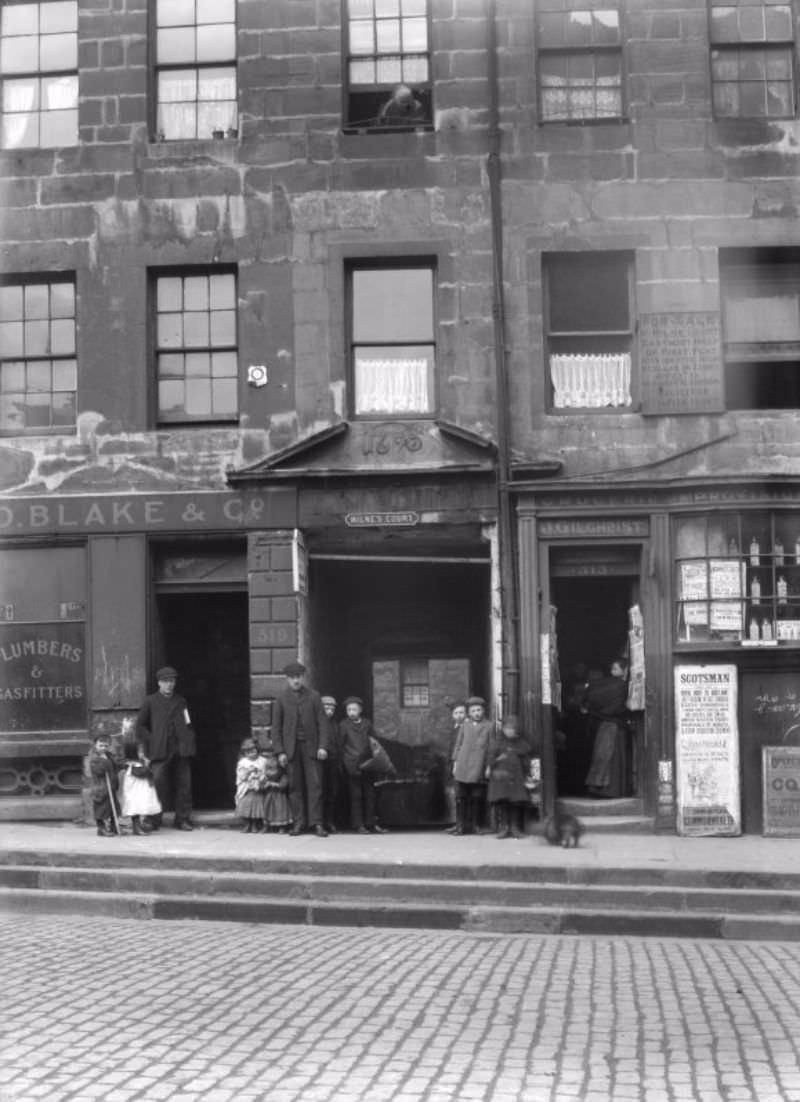
Entrance to Milne's Court, Edinburgh, on Lawnmarket elevation, with D Blake & Co and J Gilchrist Groceries & Provisions. c. 1910.
Entrance to Milne’s Court, Edinburgh, on Lawnmarket elevation, with D Blake & Co and J Gilchrist Groceries & Provisions. c. 1910.
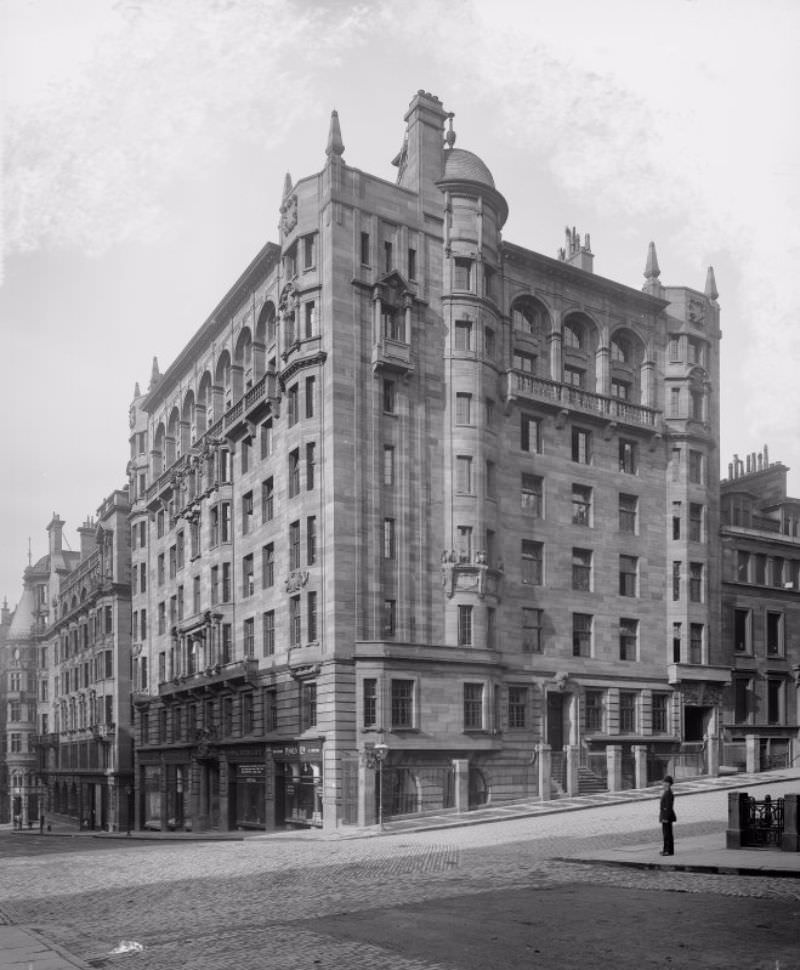
View of Clerical Medical & General life Assurance Society, West George Street, Glasgow. Since demolished, 1906.
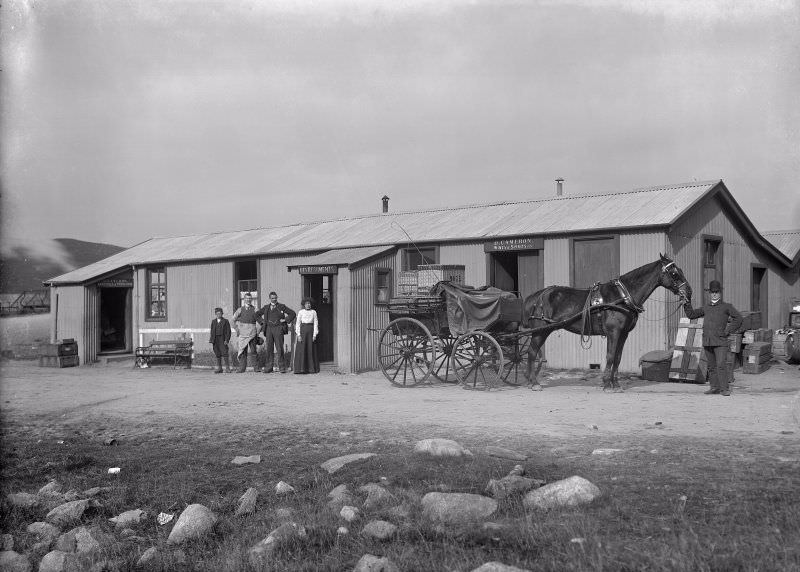
General view of building including horse and cart in foreground outside of 'D. Cameron, Groceries & Provisions, Refreshments and Wines & Spirits,' 1904. Possibly business of Duncan Cameron located near Rannoch Station or Kinloch-Rannoch.
General view of building including horse and cart in foreground outside of ‘D. Cameron, Groceries & Provisions, Refreshments and Wines & Spirits,’ 1904. Possibly business of Duncan Cameron located near Rannoch Station or Kinloch-Rannoch.
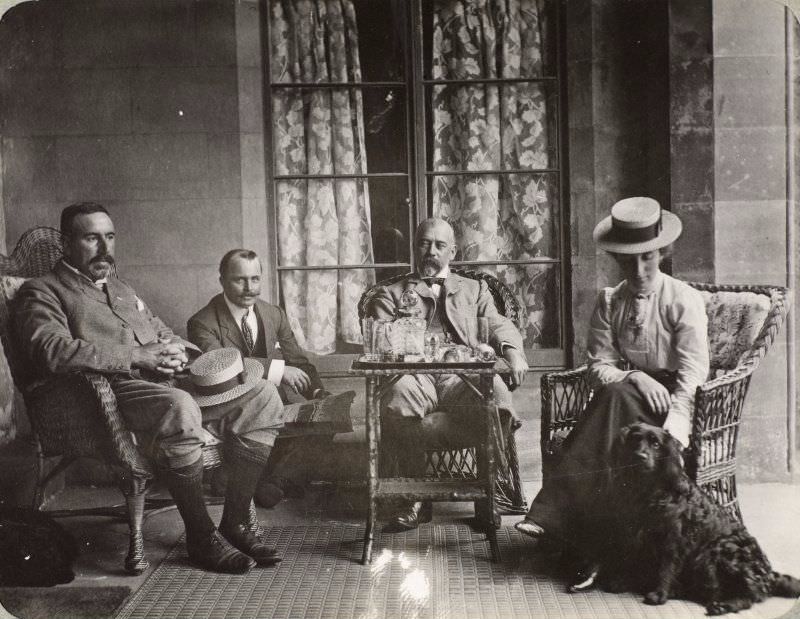
Group in the loggia, Inchrye Abbey, c. 1900.
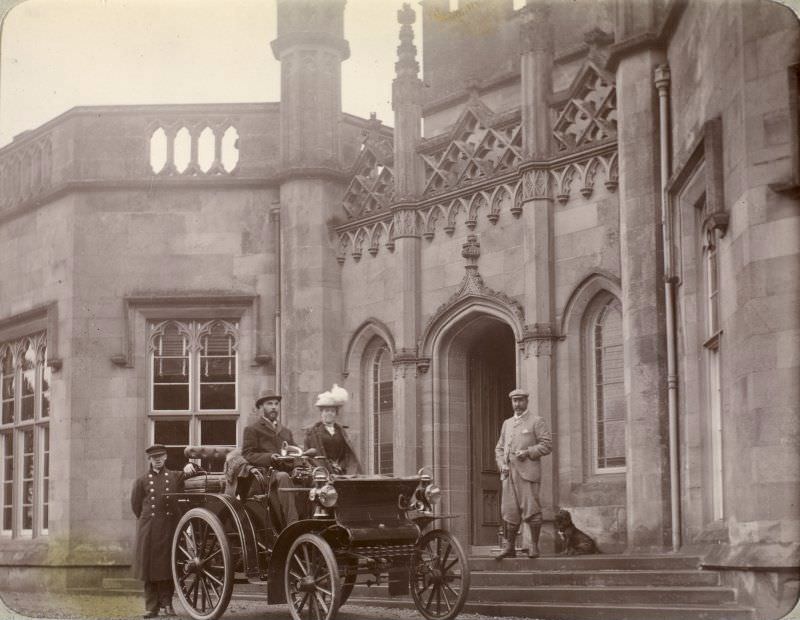
Inchrye Abbey entrance with couple in automobile, c. 1900.
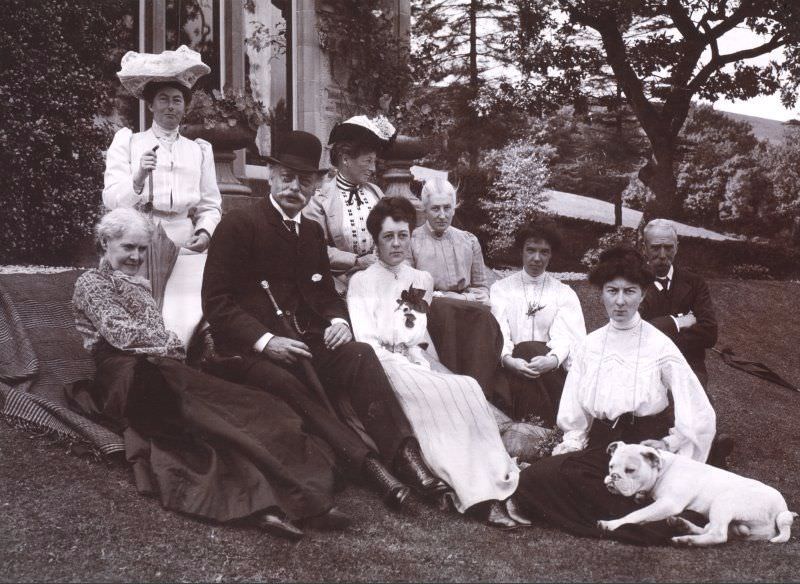
Group of people sitting in garden, 1905. Titled: 'Aikenshaw July 1905. Miss Louise Stuart, Miss Grant, Mr Parker, Miss Parker, Francess, Mrs Jameson, Miss Davidson, Jessie, Mr W S Turnbull, Stroncher'.
Group of people sitting in garden, 1905. Titled: ‘Aikenshaw July 1905. Miss Louise Stuart, Miss Grant, Mr Parker, Miss Parker, Francess, Mrs Jameson, Miss Davidson, Jessie, Mr W S Turnbull, Stroncher’.
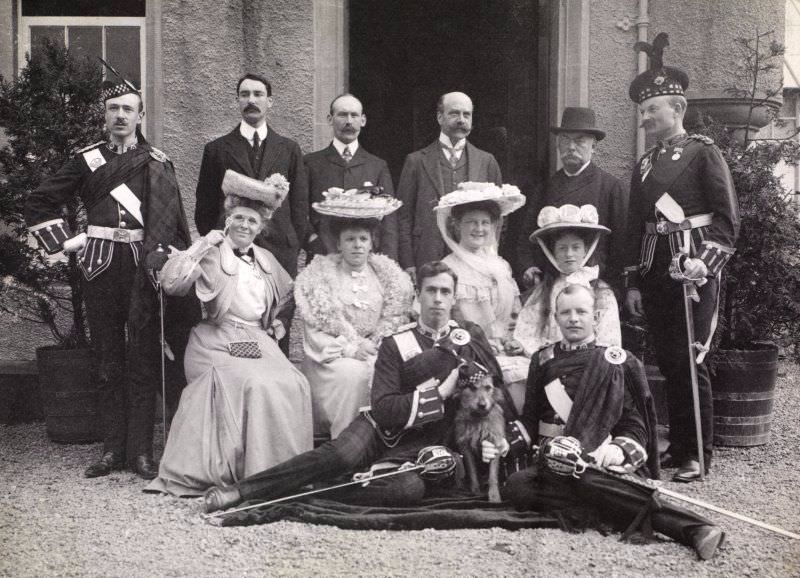
Group of 12 people outside entrance, possibly at Aikenshaw, c.1904. Titled: 'S K Turnbull, A Arrol Snr, Montagu Baird, Campbell of Cambusaskin, Franklyn Baird, A Theo Arrol, Miss Wm Arrol, Baroness V Grote, Miss G Arrol, Mr Baird'.
Group of 12 people outside entrance, possibly at Aikenshaw, c.1904. Titled: ‘S K Turnbull, A Arrol Snr, Montagu Baird, Campbell of Cambusaskin, Franklyn Baird, A Theo Arrol, Miss Wm Arrol, Baroness V Grote, Miss G Arrol, Mr Baird’.
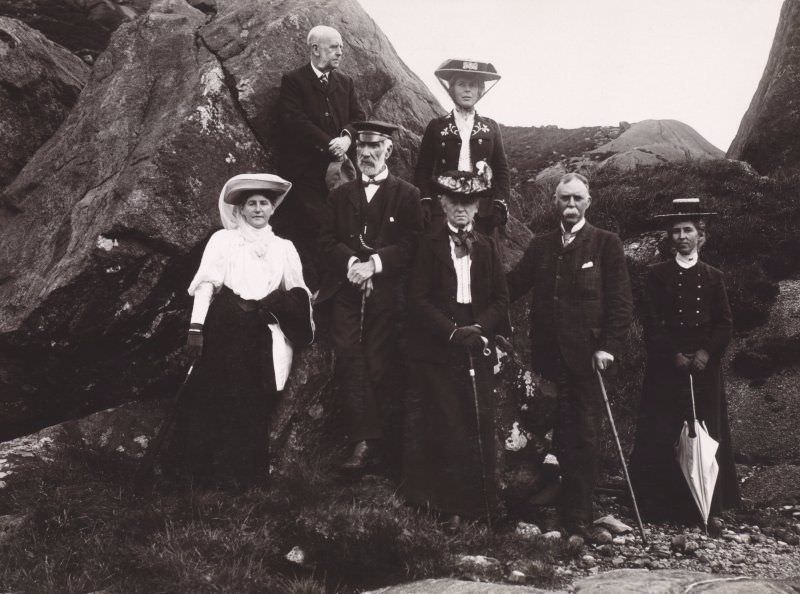
Group of seven people at excursion, c.1905. Titled: 'Ms Thom, Prof. Sir A Geickie, Mrs Thom'.
Group of seven people at excursion, c.1905. Titled: ‘Ms Thom, Prof. Sir A Geickie, Mrs Thom’.
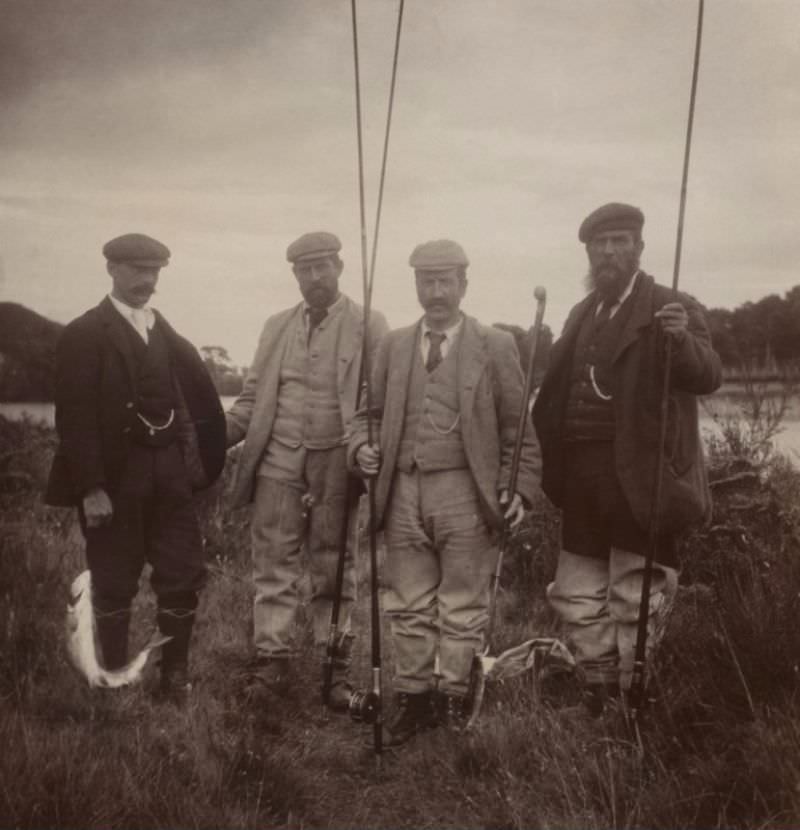
Fishing party, possibly in the Ballindaroch area, c. 1905.
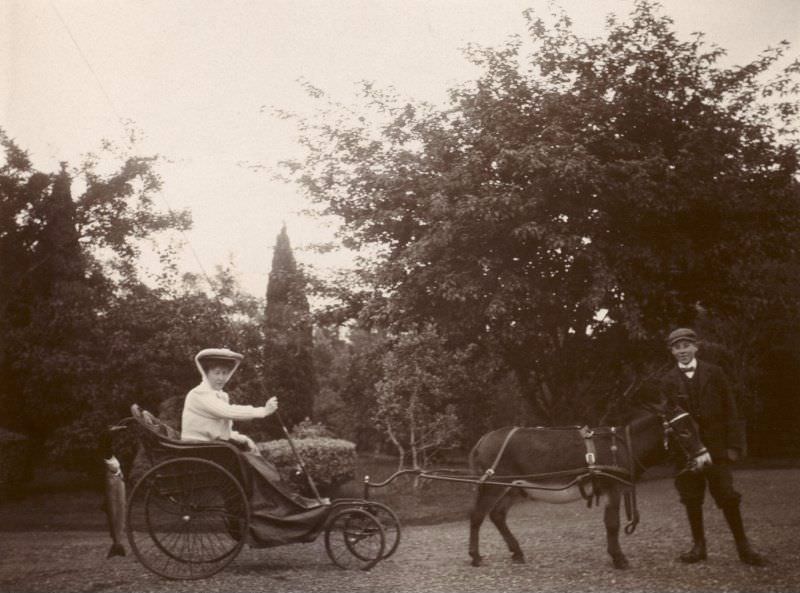
Woman in small carriage, possibly in the Ballindarroch area, c. 1907.
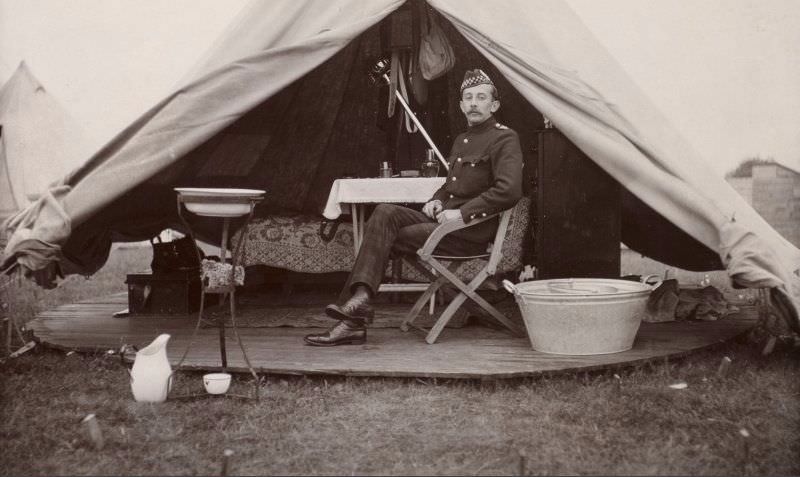
Soldier sitting by his tent, c.1904.
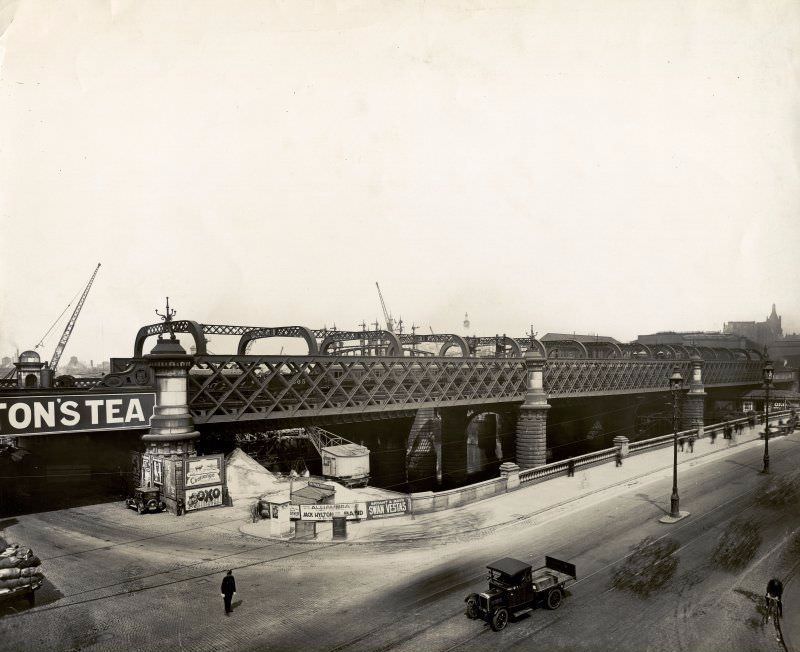
Elevated view of bridge looking NW from corner of Carlton Place/ Bridge Street, Glasgow.
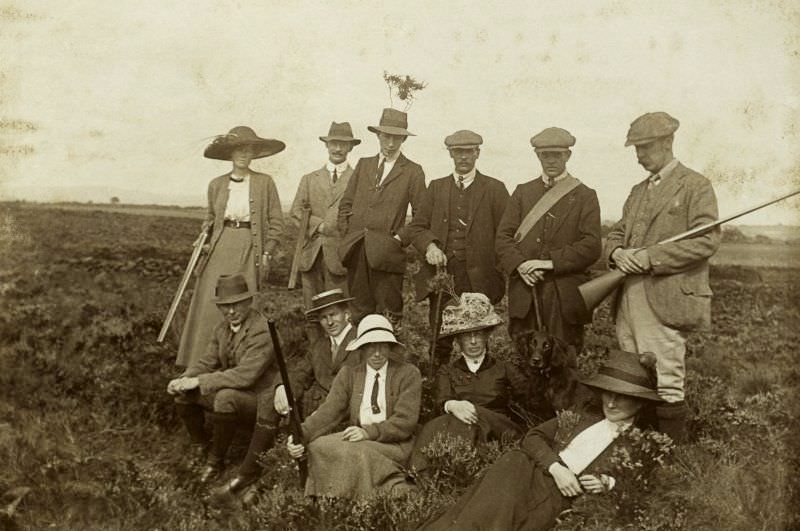
A group of people at Williamwood Moss, 1912.
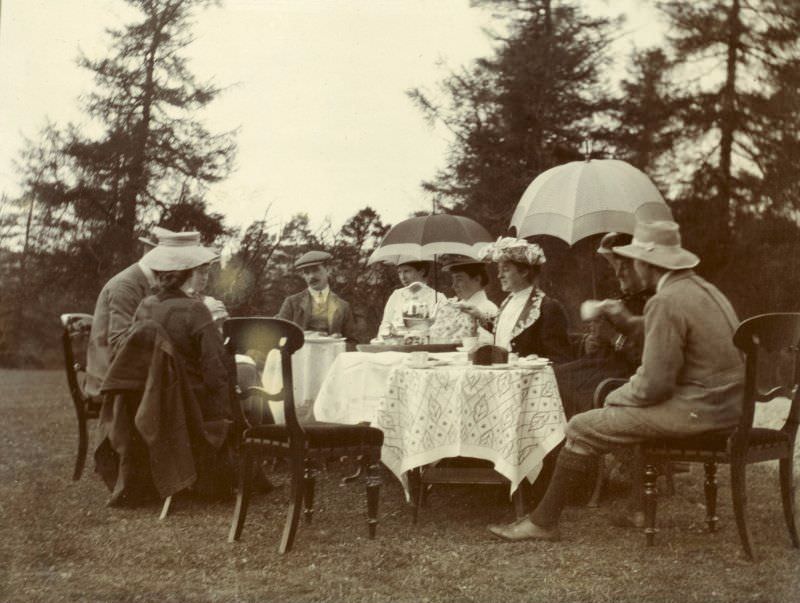
Teaparty in unidentified garden (probably Achernack,Strathdon), c. 1906.
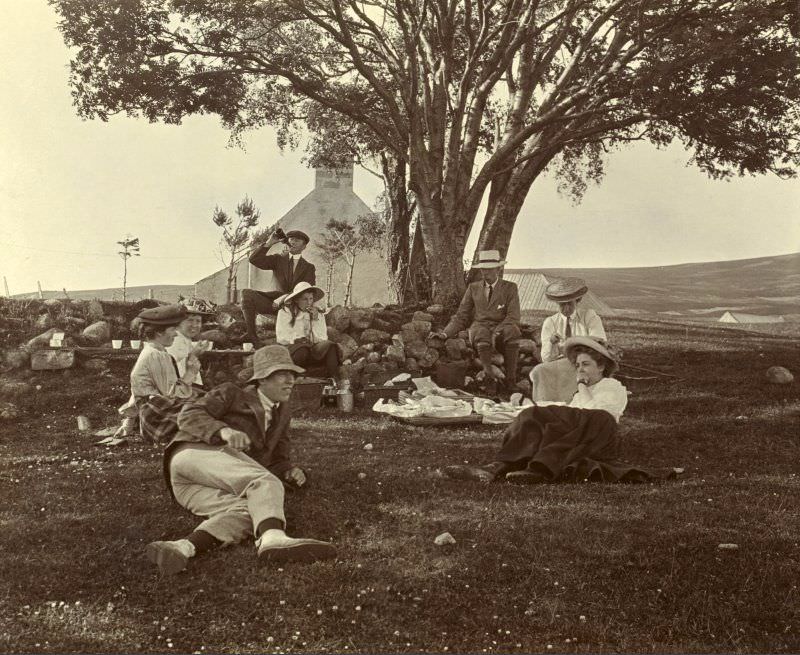
Group having picnic, 1907. Headed paper on the album page is titled 'Achernack, Grantown-on-Spey'. Photograph titled: 'I Asher, A Henderson, T Horne, E Macpherson, B Younger, M Younger, R Bruce-Clark, H J Horne'
Group having picnic, 1907. Headed paper on the album page is titled ‘Achernack, Grantown-on-Spey’. Photograph titled: ‘I Asher, A Henderson, T Horne, E Macpherson, B Younger, M Younger, R Bruce-Clark, H J Horne’
9/1909.
9/1909.
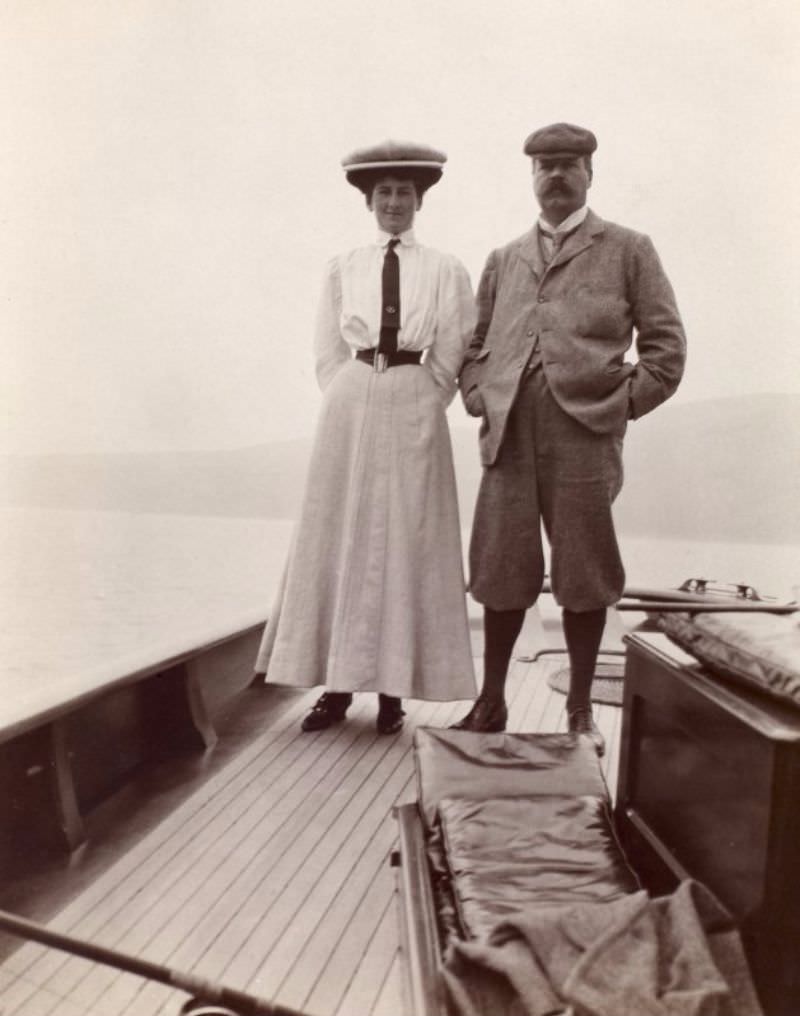
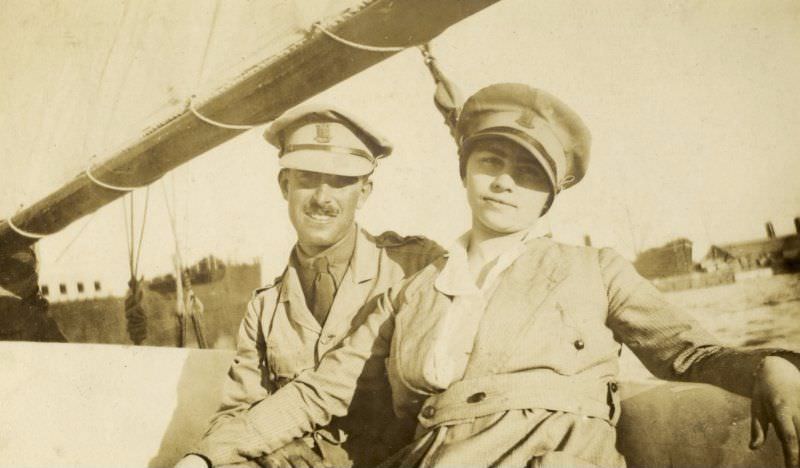
Couple onboard a ship, c.1910.
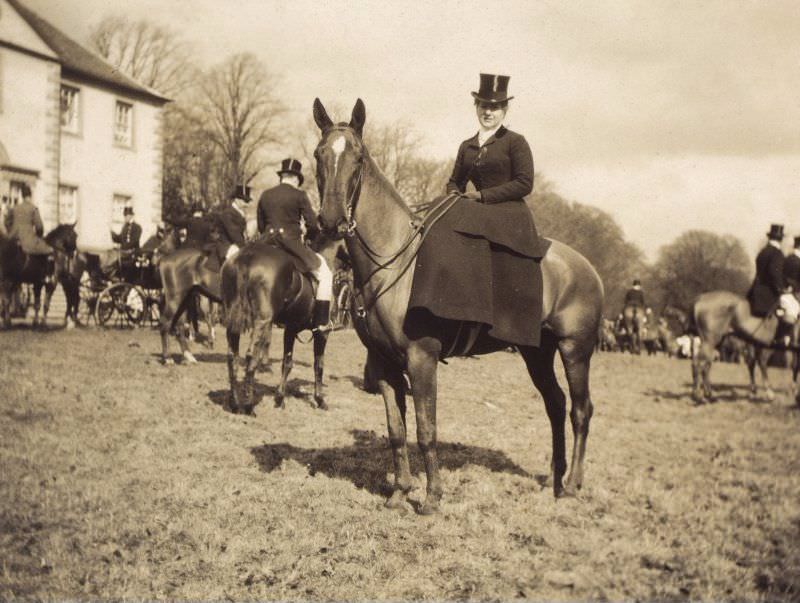
Woman on horseback outside Duchal House, Renfrewshire.
Soldier at 'Camp at Kilcreggan, 1902.
Soldier at ‘Camp at Kilcreggan, 1902.
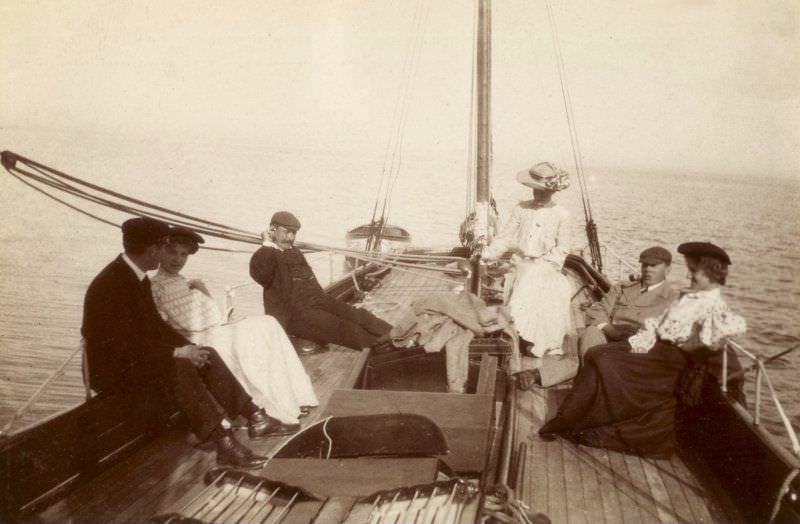
Group on sailing boat, probably 'Gadfly,' c.1904. Titled: 'Sunday afternoon cruise Brodick. Jack Swan, Monty Murray, Johnson family'.
Group on sailing boat, probably ‘Gadfly,’ c.1904. Titled: ‘Sunday afternoon cruise Brodick. Jack Swan, Monty Murray, Johnson family’.
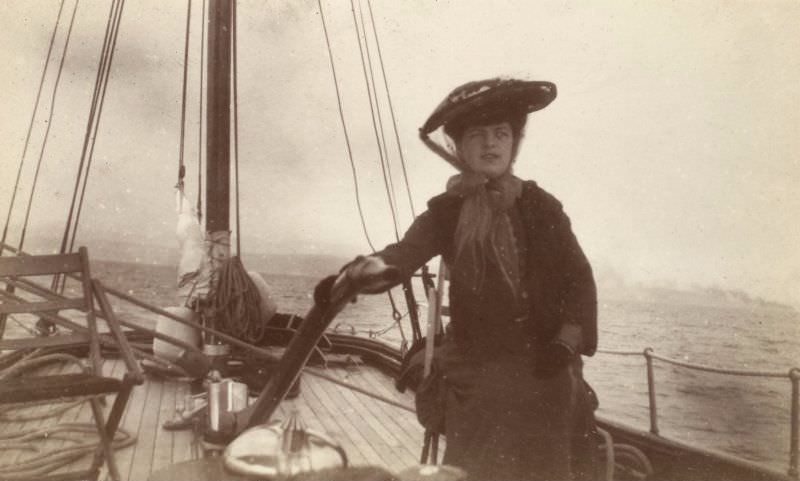
Woman on sailing boat, probably 'Gadfly,' c.1904. Titled: 'S.M (Mrs Hoggenheimn of Park Lane)'.
Woman on sailing boat, probably ‘Gadfly,’ c.1904. Titled: ‘S.M (Mrs Hoggenheimn of Park Lane)’.
View from Alexandria, Egypt, c.1915-17. Titled: 'Higginson and Flora sur mer'.
View from Alexandria, Egypt, c.1915-17. Titled: ‘Higginson and Flora sur mer’.
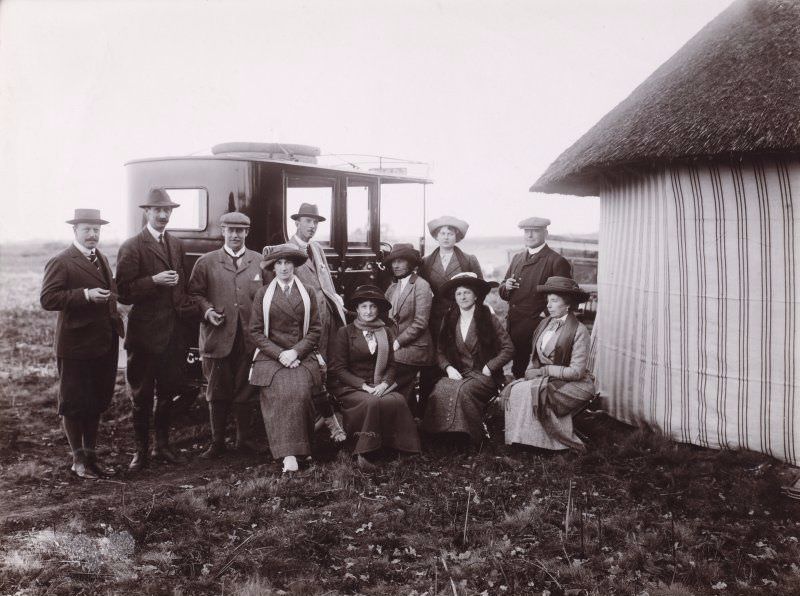
Group photograph showing five men and five ladies beside a large car, outside what appears to be a thatched striped tent. Some of them are members of the Wallace family of Duchal House.
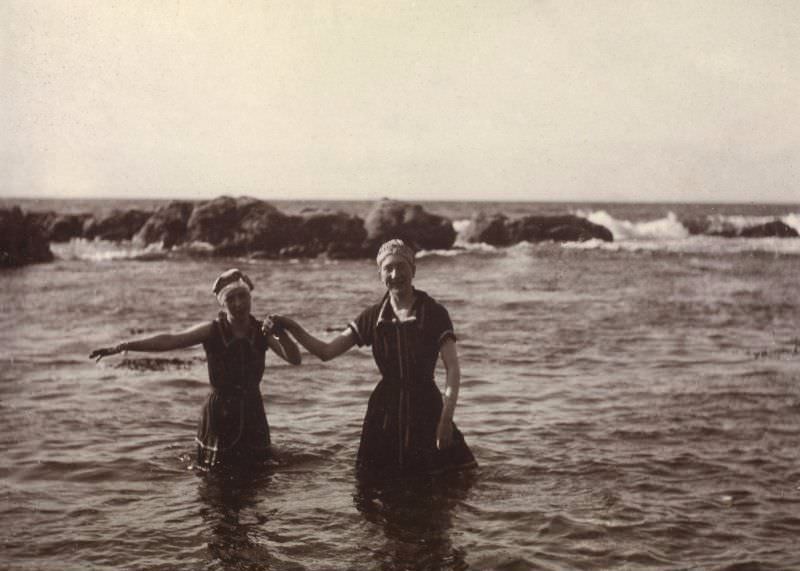
Two women swimming, c. 1902.
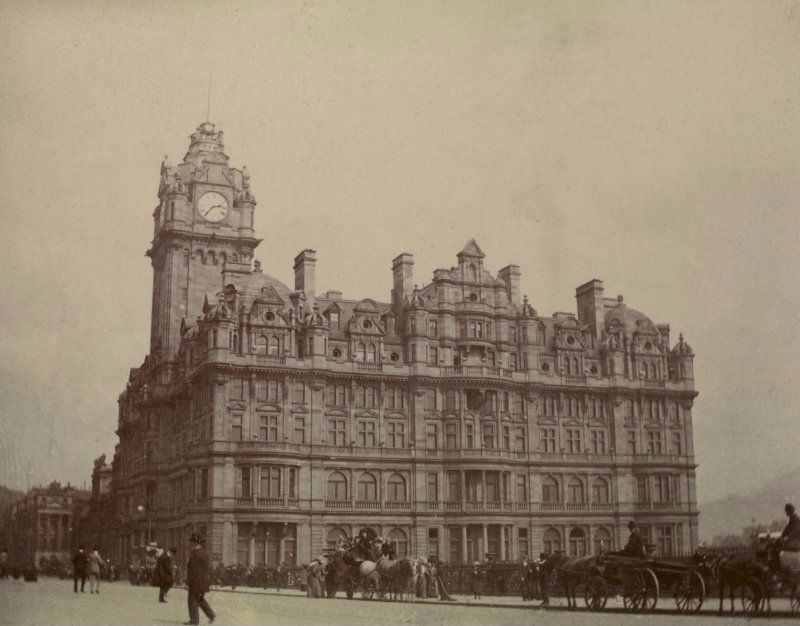
View of the North British Railway Hotel, Edinburgh, c. 1902.
Enjoyed this post? Get new ones in your inbox.

Leave a Comment

Your email address will not be published. Required fields are marked *

Share this Post 🥺

Please take a moment to share this content. Your support is greatly appreciated! 🙌🙏

Share this Post 🥺

Please take a moment to share this content. Your support is greatly appreciated! 🙌🙏
Scroll to Top
 
Hey Friend, Before You Go.. Please like & follow for more interesting content