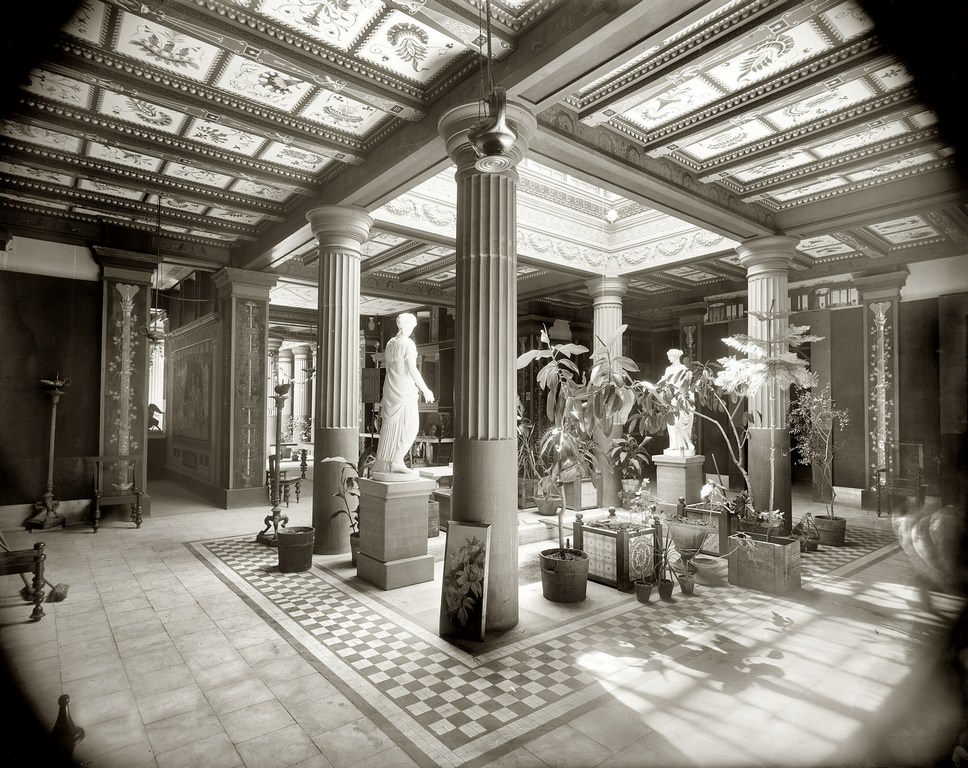
Saratoga Springs, New York, has a history as rich as the mineral waters that gave it its name. Nestled in upstate New York, the city grew from a small western portion of the Town of Saratoga, formally established as a settlement in 1819. Its principal community became a village in 1826, and the entire region was incorporated as a city in 1915. By the turn of the 20th century, Saratoga Springs was already a well-known resort destination, drawing visitors with its famous racetrack, grand hotels, healing springs, and Victorian architecture. The photos below offer a rare window into what the city looked like during that golden era.
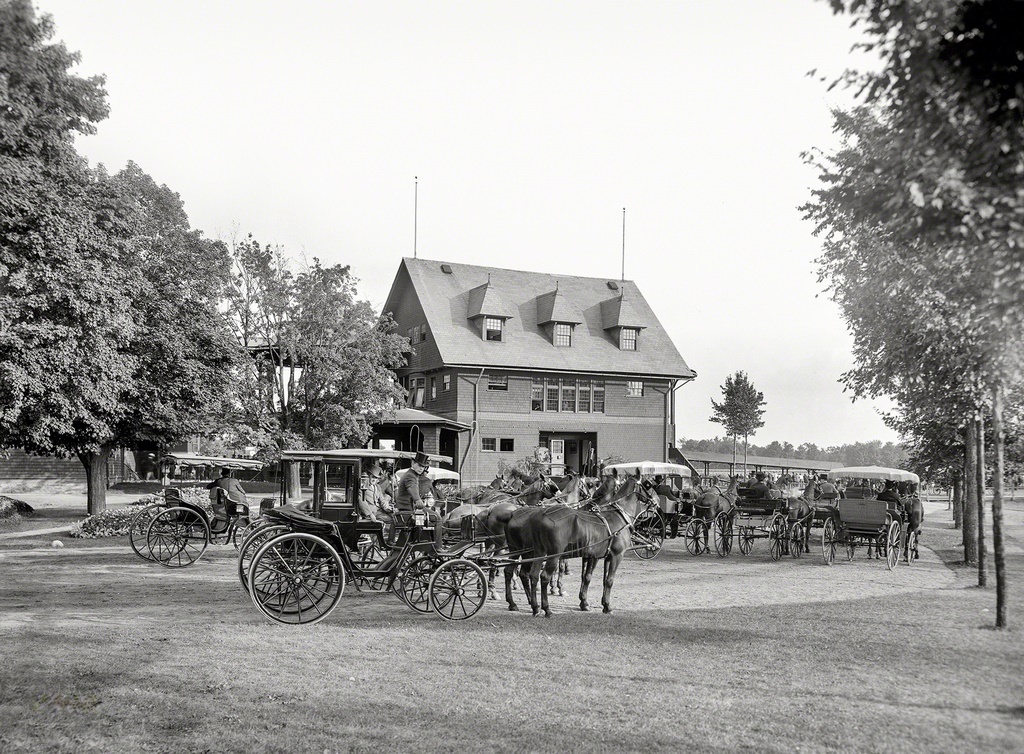
Horse racing was at the heart of Saratoga Springs’ identity. The Saratoga Race Course, one of the oldest thoroughbred racing venues in the United States, drew wealthy crowds from across the country each summer. The clubhouse was the social centerpiece of the racing scene — an elegant gathering place for the well-heeled visitors who made the annual pilgrimage to the track.
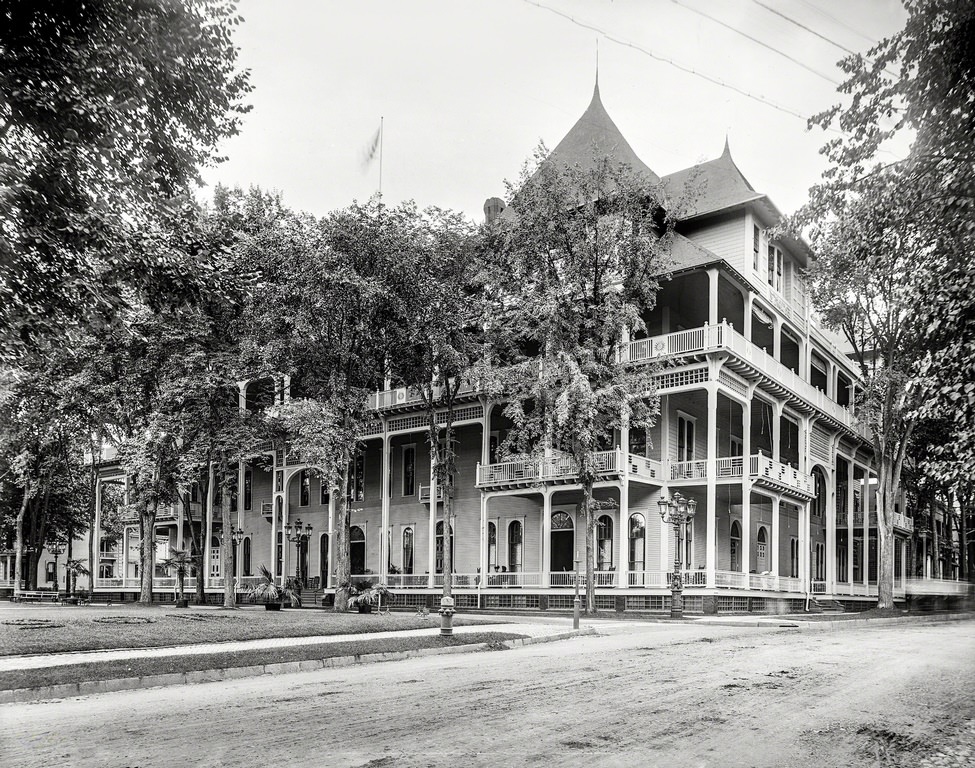
Beyond the racetrack, Saratoga Springs was defined by its grand hotels. These were not simply places to sleep — they were destinations in themselves. The Windsor Hotel was one of the city’s prominent establishments, catering to guests who expected luxury and elegance during the height of the resort era.
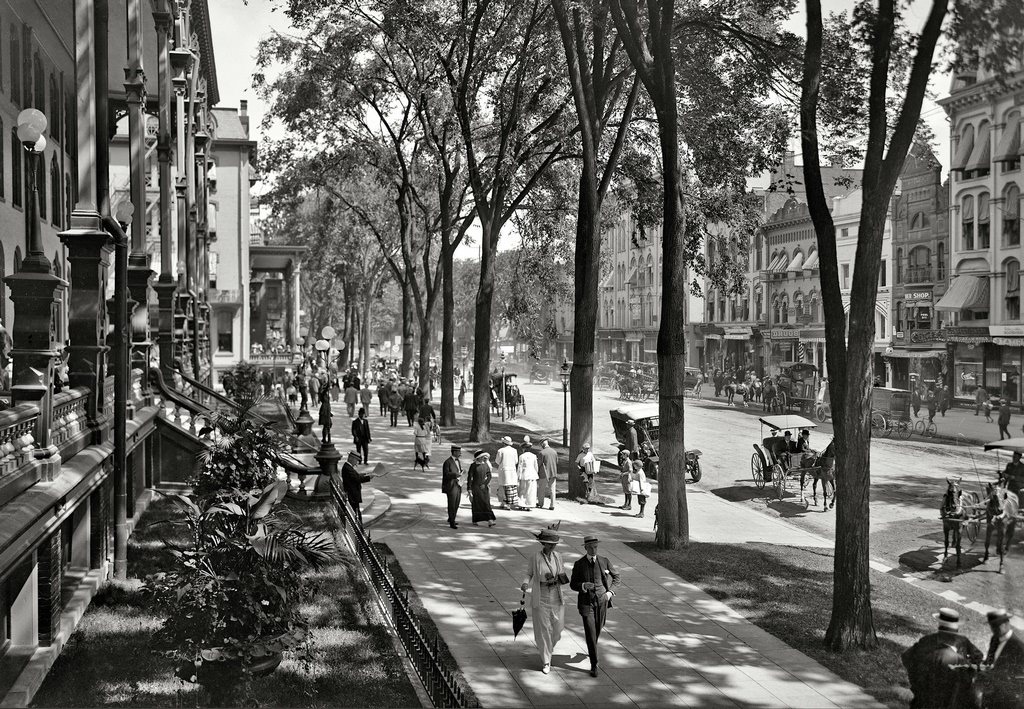
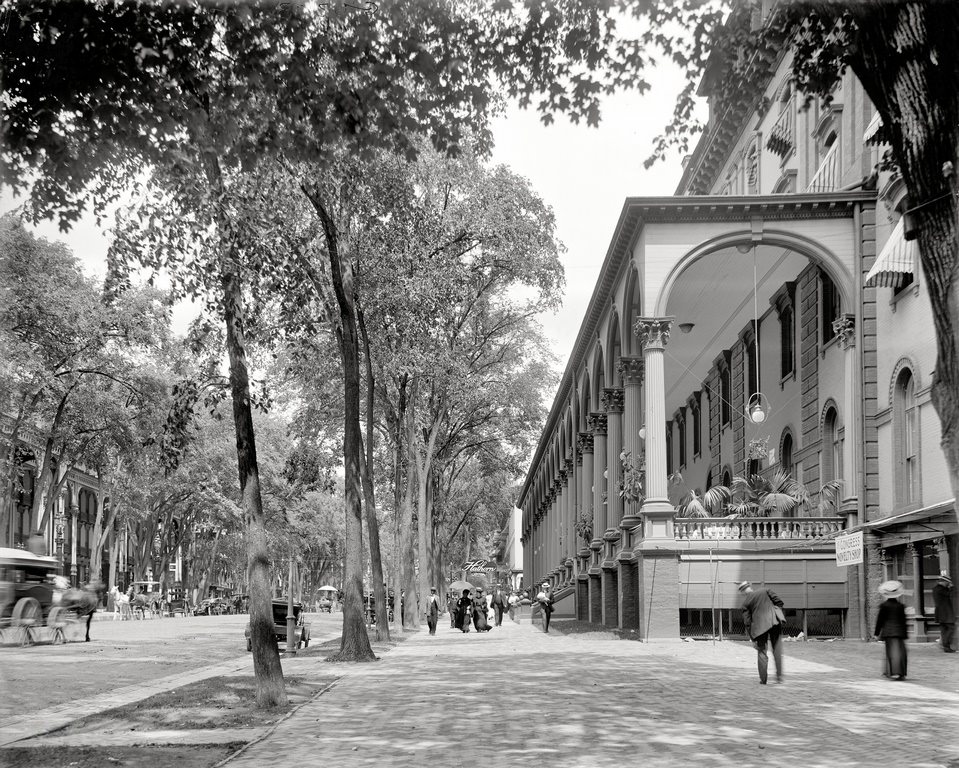
Broadway was the beating heart of Saratoga Springs. Wide, tree-lined, and flanked by impressive buildings, it served as the city’s main commercial and social corridor. The United States Hotel stood as one of its crown jewels — a sprawling resort hotel that could accommodate hundreds of guests at once. At its peak, it was considered one of the largest hotels in the world.
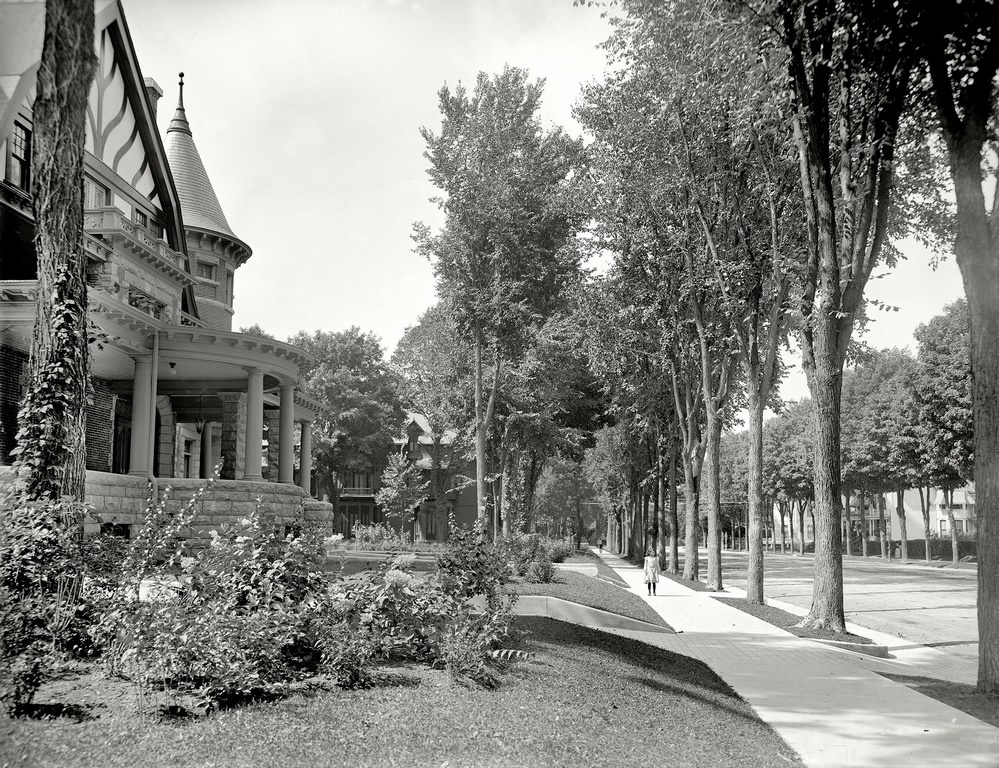
Union Avenue connected Broadway to the racetrack, making it one of the most traveled streets in the city during the summer racing season. Lined with Victorian homes and shaded by mature trees, it gave the city much of its distinctive character. Wealthy families built their summer cottages along this avenue, and its elegant streetscape reflected the prosperity Saratoga Springs enjoyed during this period.
A few years before the photo on Broadway at the United States Hotel was taken, the same area looked nearly as bustling. The hotel’s long veranda and ornate facade made it a landmark that anchored the city’s identity. Guests would stroll along Broadway in the evenings, and the scene along this stretch captured the leisure culture that defined Saratoga Springs at the turn of the century.
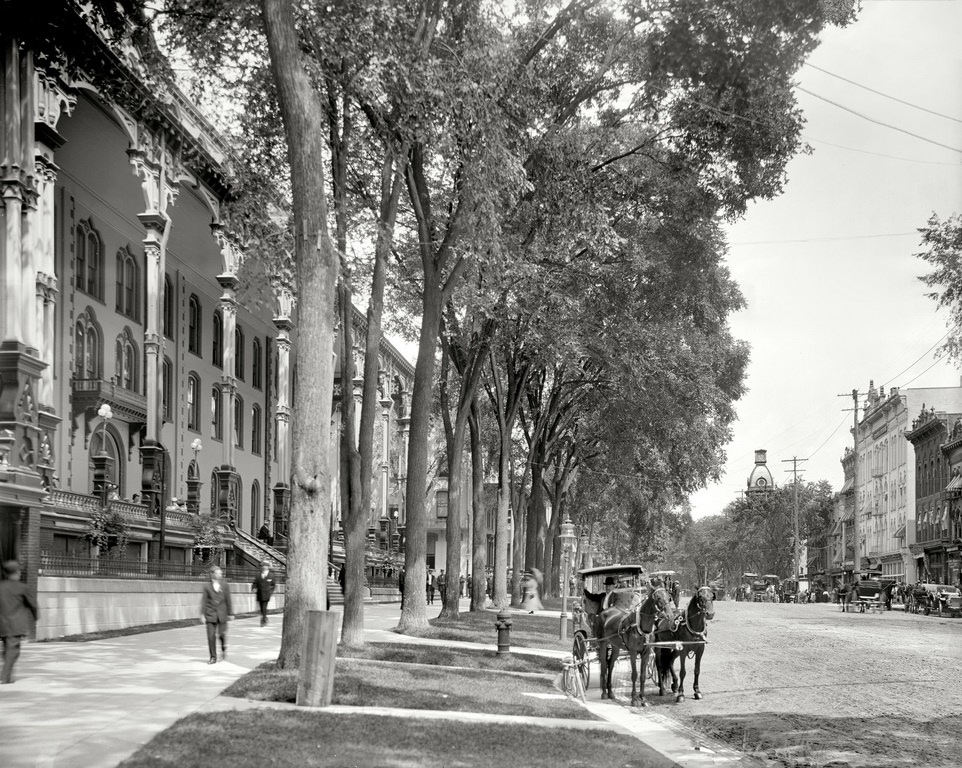
Congress Hall was another of Broadway’s dominant landmarks. One of the oldest resort hotels in America, it had hosted U.S. presidents and was synonymous with the high-society summers that made Saratoga Springs famous. By 1908, Broadway was a lively mix of horse-drawn carriages, well-dressed pedestrians, and the storefronts that served a thriving seasonal economy.
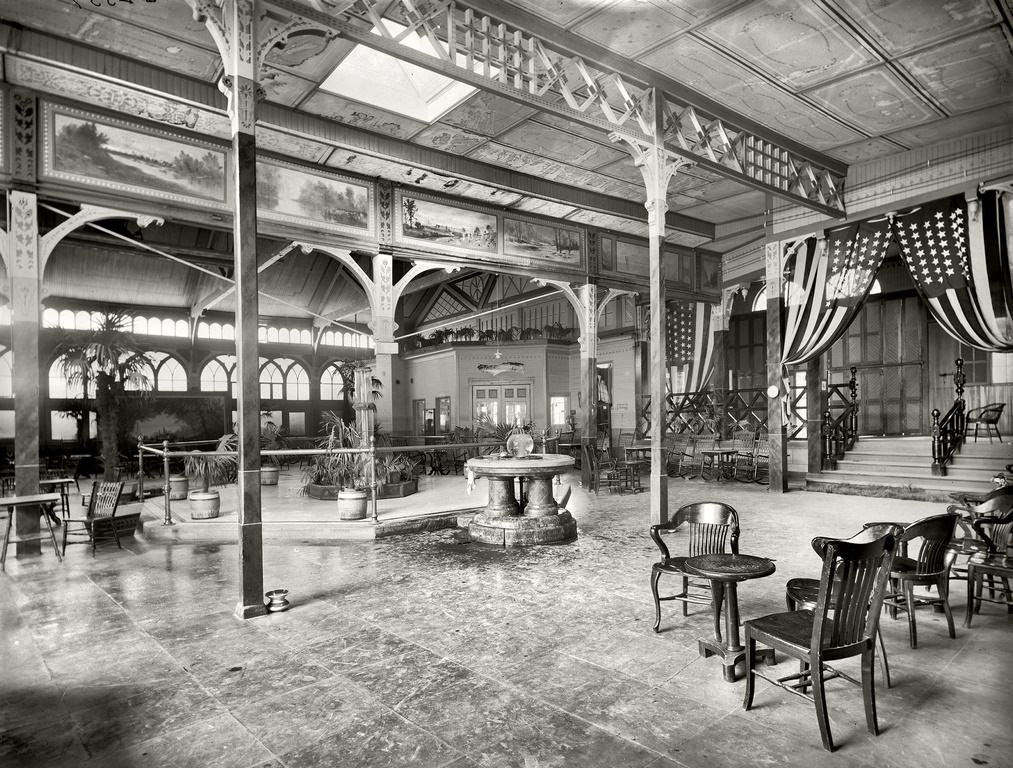
The mineral springs were the original draw that put Saratoga Springs on the map. Hathorn Spring was among the most well-known of these natural springs, and visitors traveled from across the country to drink its naturally carbonated, mineral-rich water, which was widely believed to have medicinal properties. Spring pavilions like this one were social gathering spots as much as they were health destinations.
Not all of Saratoga Springs’ attractions were rooted in nature or racing. The city also offered cultural destinations, including Pompeia — a museum that billed itself as offering “Illustrations of History and Art.” One of its most striking exhibits was a full-scale replica of the House of Pansa, an ancient Roman home modeled on the ruins of Pompeii. The detailed atrium reconstruction gave visitors a tangible glimpse into Roman domestic life.
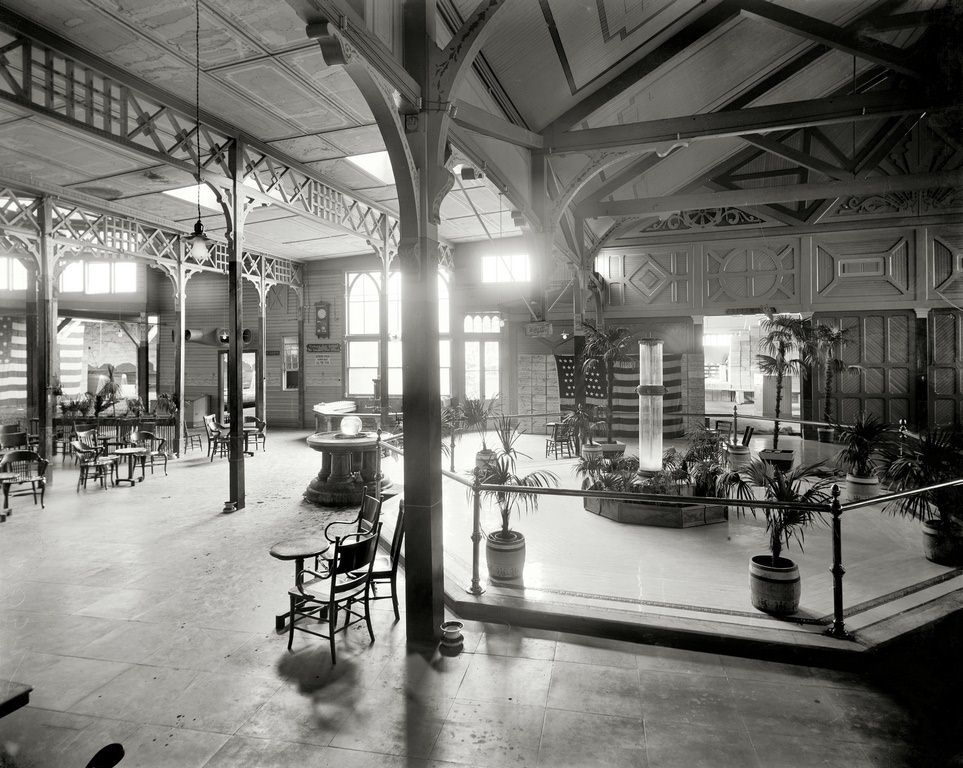
Hathorn Spring drew visitors year after year, and it remained one of the most photographed spots in the city. The spring’s covered pavilion provided shade and a place to gather, and the ritual of drinking the mineral water was a daily routine for many guests staying in Saratoga Springs for the season. These waters were bottled and shipped across the country, spreading the city’s reputation far beyond New York State.