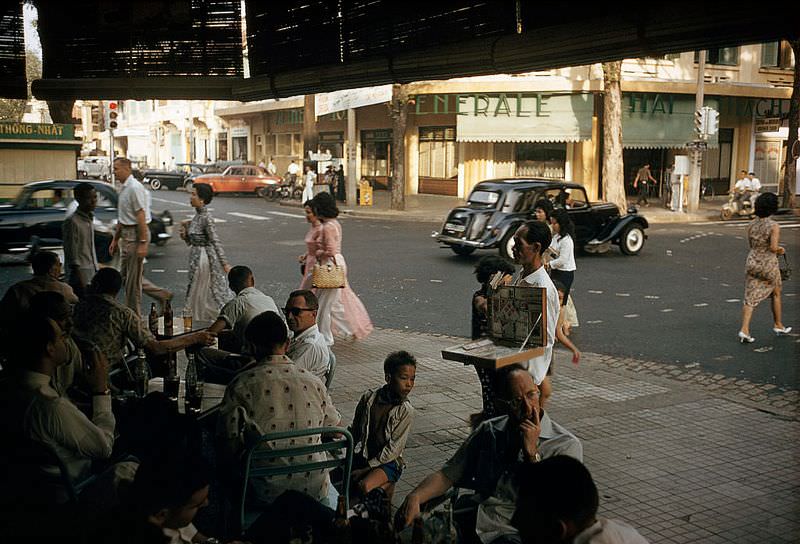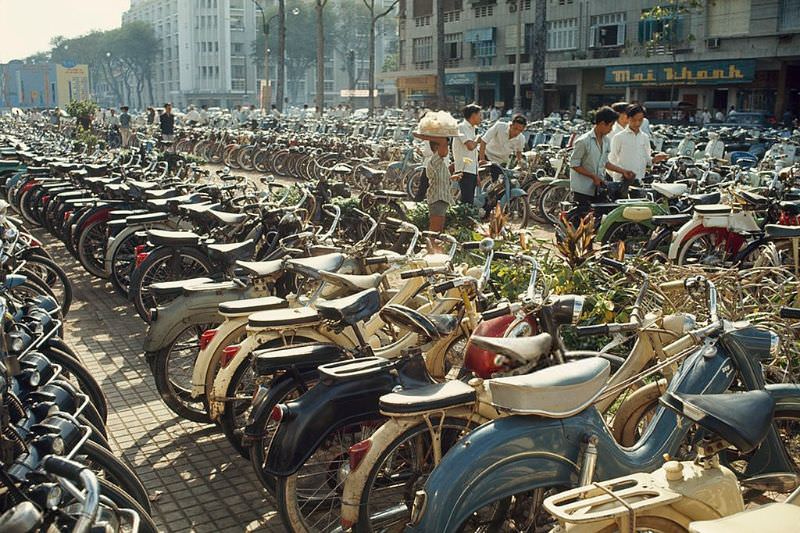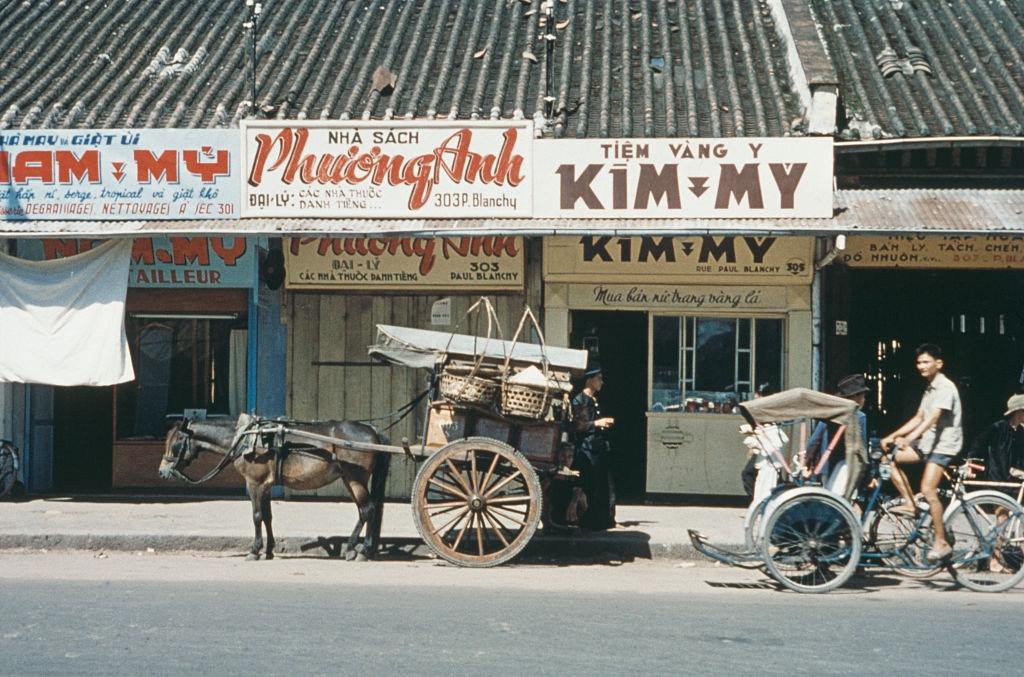

Saigon in the 1960s was a city that carried two faces at once. On one hand, it was a buzzing urban center where street vendors set up stalls, families piled onto motorbikes, and café patrons watched the world go by. On the other hand, the Vietnam War was reshaping the country around it. The rural provinces bore the heaviest cost of the conflict, but Saigon was far from untouched. American troops patrolled its streets, military helicopters flew overhead, and checkpoints controlled who could move in and out of the city. These photographs, taken between 1960 and 1968, preserve both sides of that story.

Sidewalk cafés were a fixture of Saigon’s street culture. Men lingered over drinks and watched foot traffic pass by, a relaxed habit that reflected the city’s French colonial influence. The French had ruled Vietnam for nearly a century before 1954, and their presence left behind wide boulevards, European-style architecture, and café culture. Even as the political climate shifted dramatically in the early 1960s, these small daily rituals continued in the city’s busy districts.

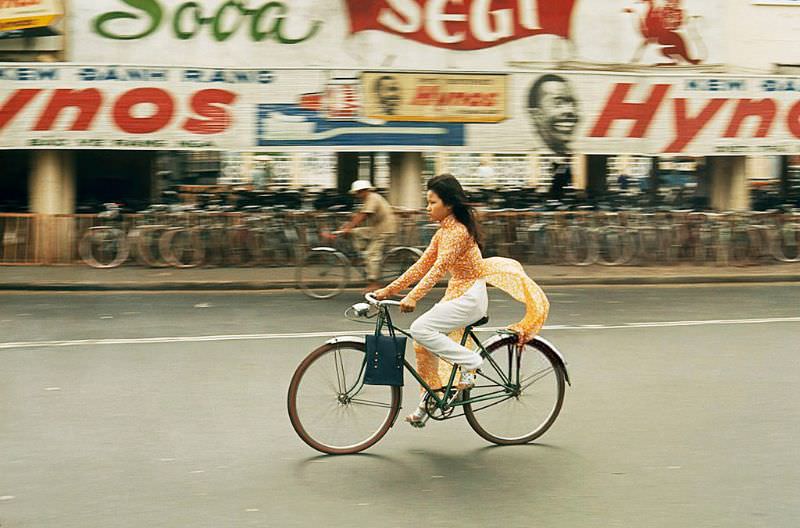
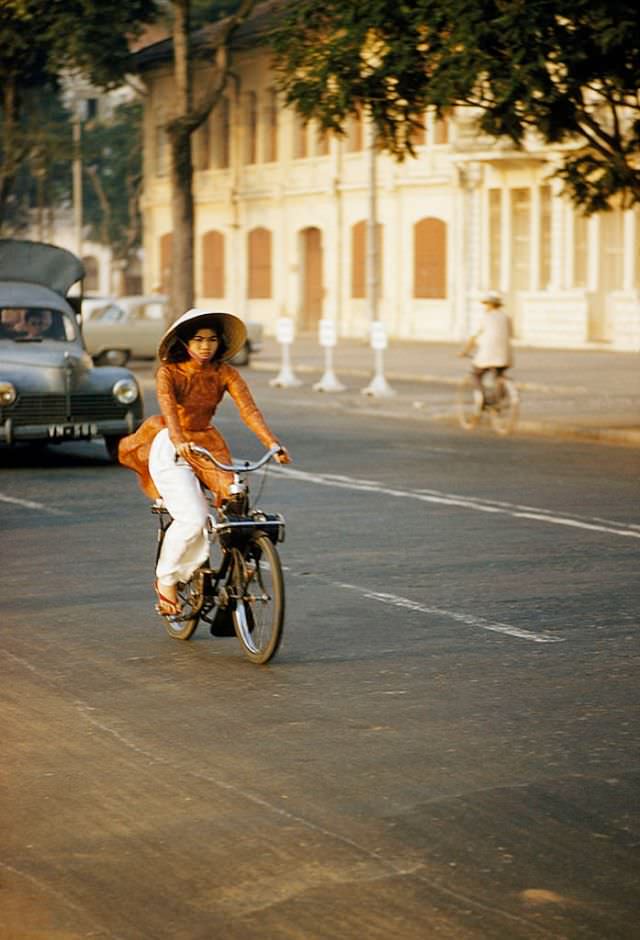
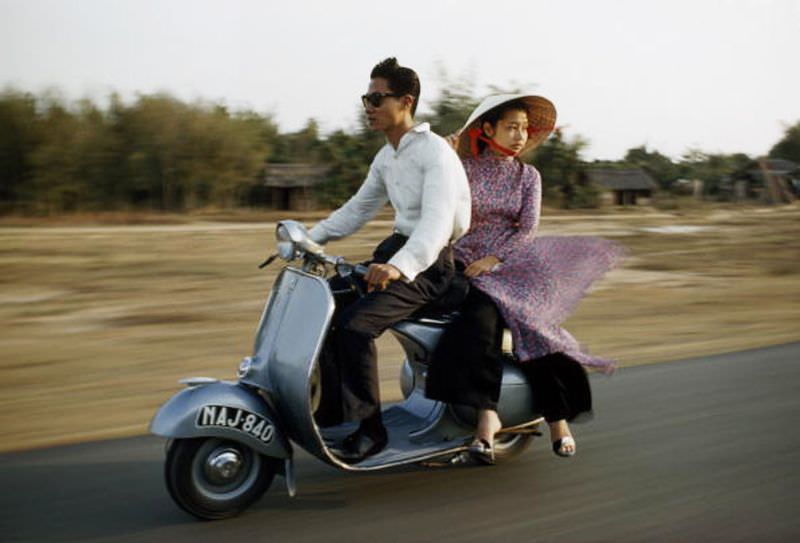
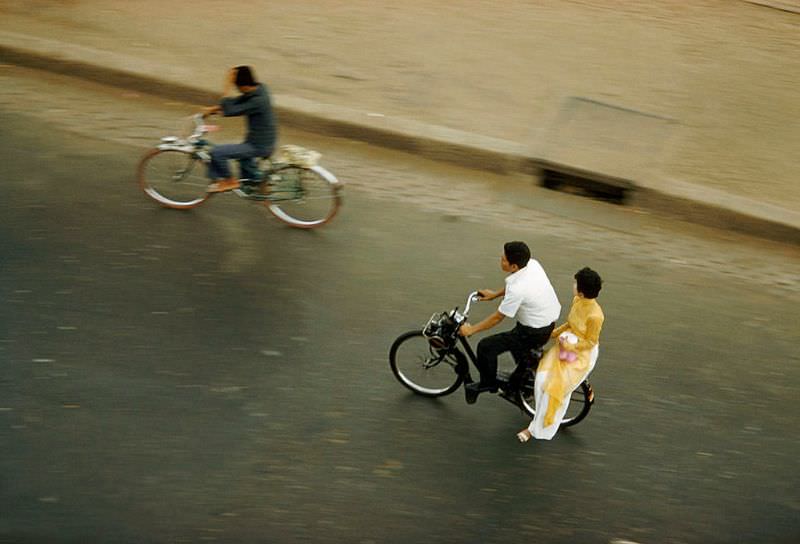
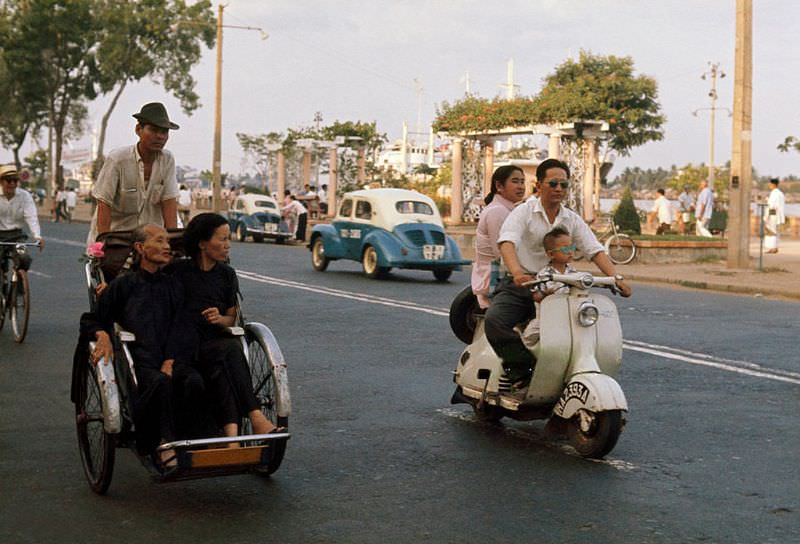
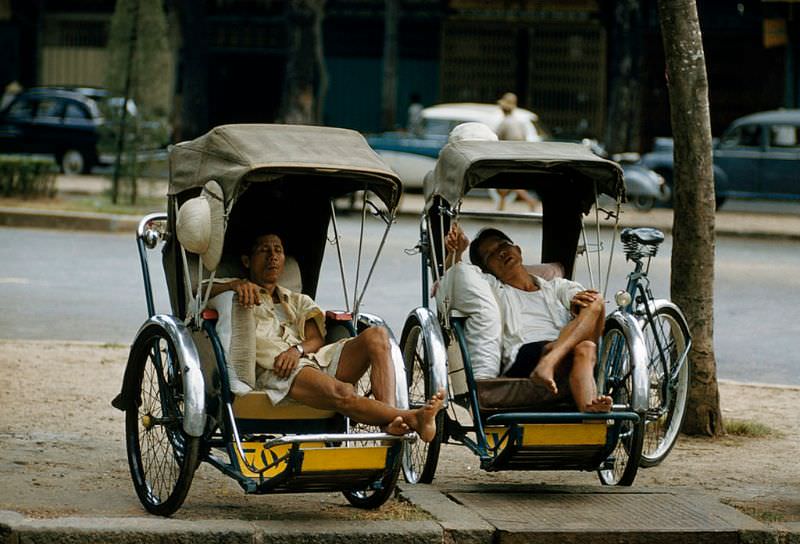
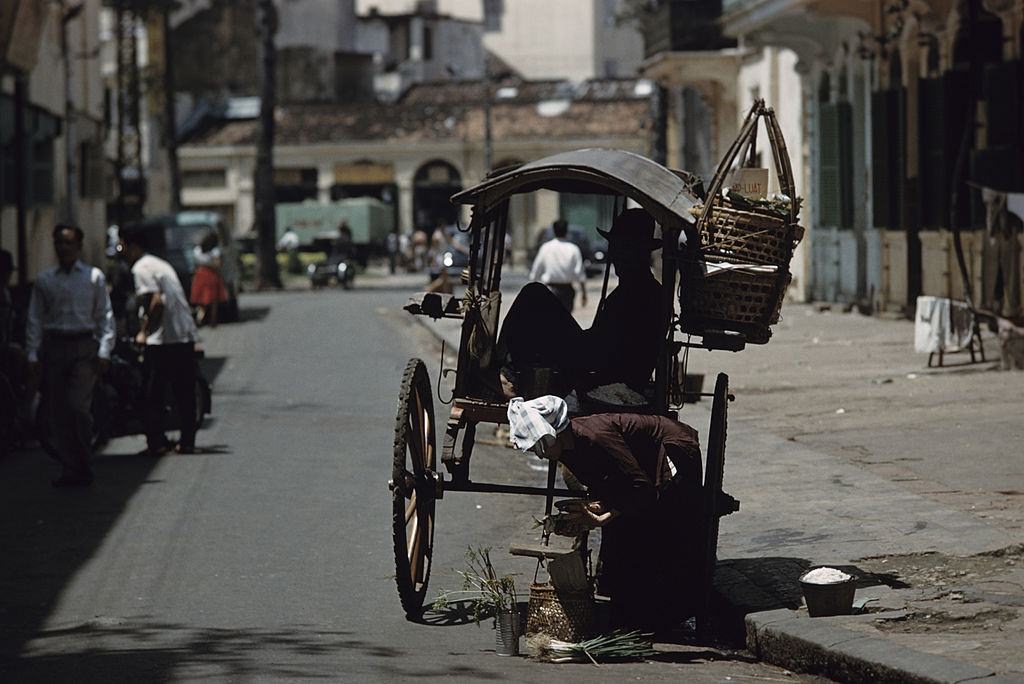
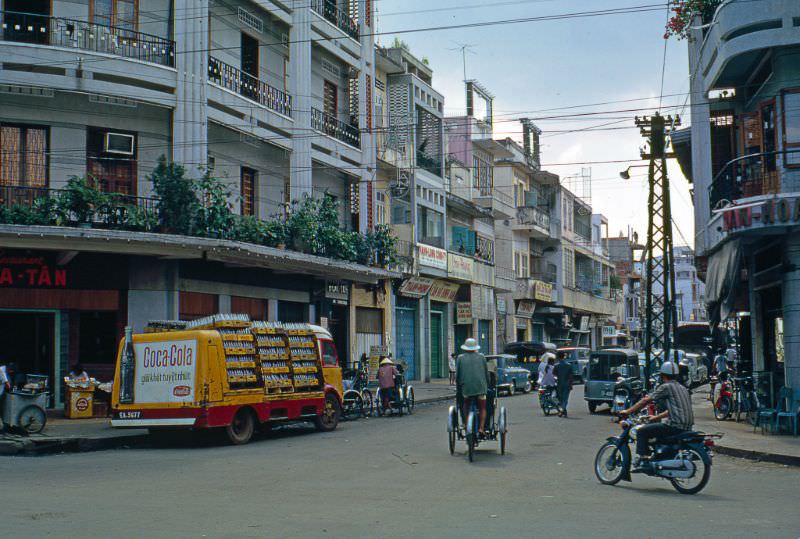
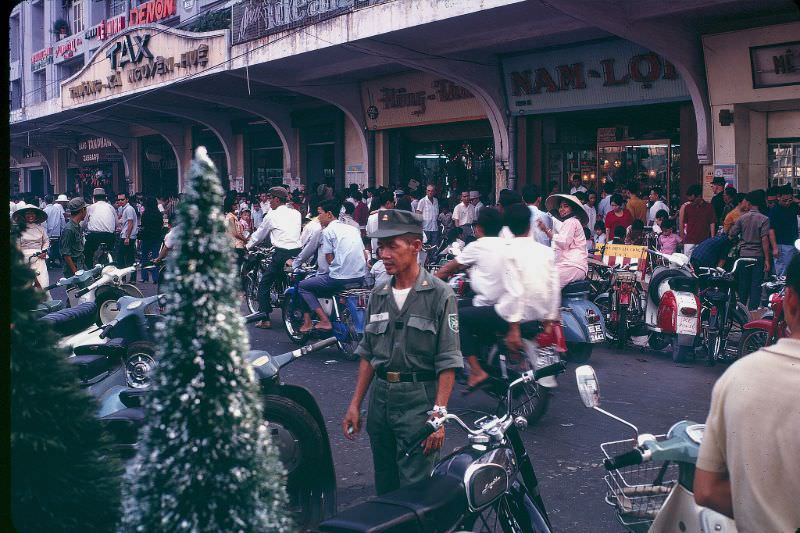
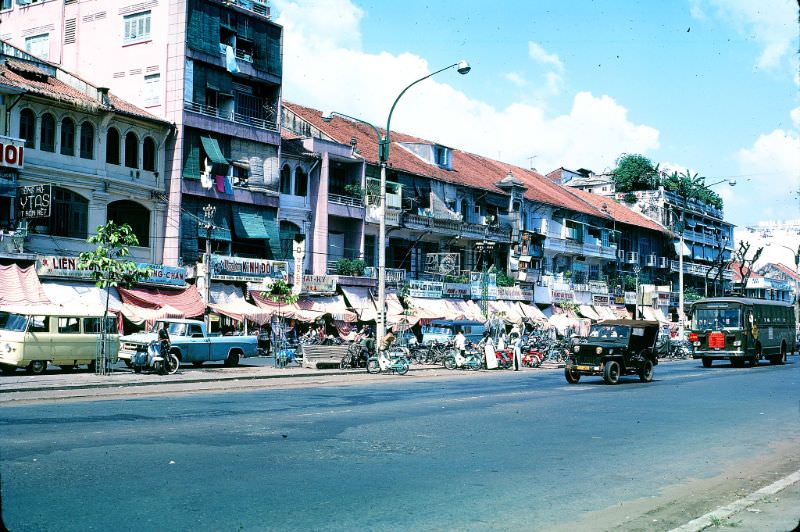
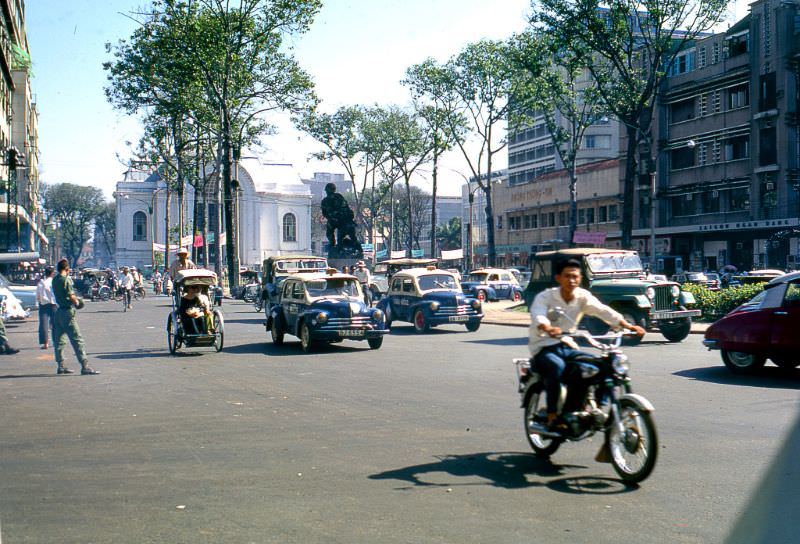
Bicycles and motorbikes were the primary way most Saigonese got around. In 1961, riders zipped through traffic wearing traditional dress, and nobody wore helmets. The streets were crowded with two-wheeled traffic long before cars became common. Cyclos — three-wheeled bicycle taxis — also moved through the streets, carrying passengers through the dense urban grid. Drivers of these cyclos were known to pull over and nap in their cabs between fares, catching rest wherever they could.


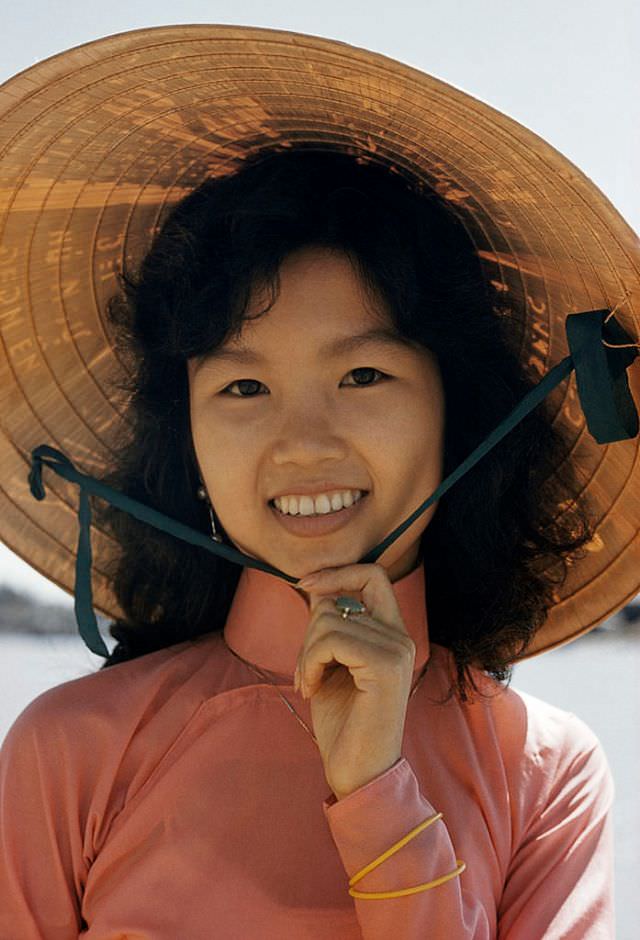
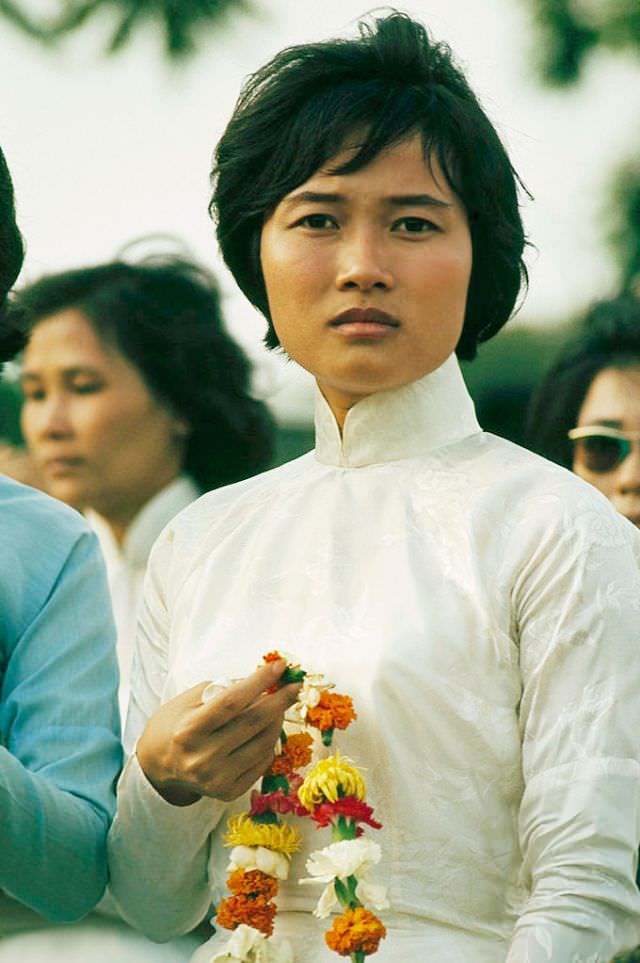
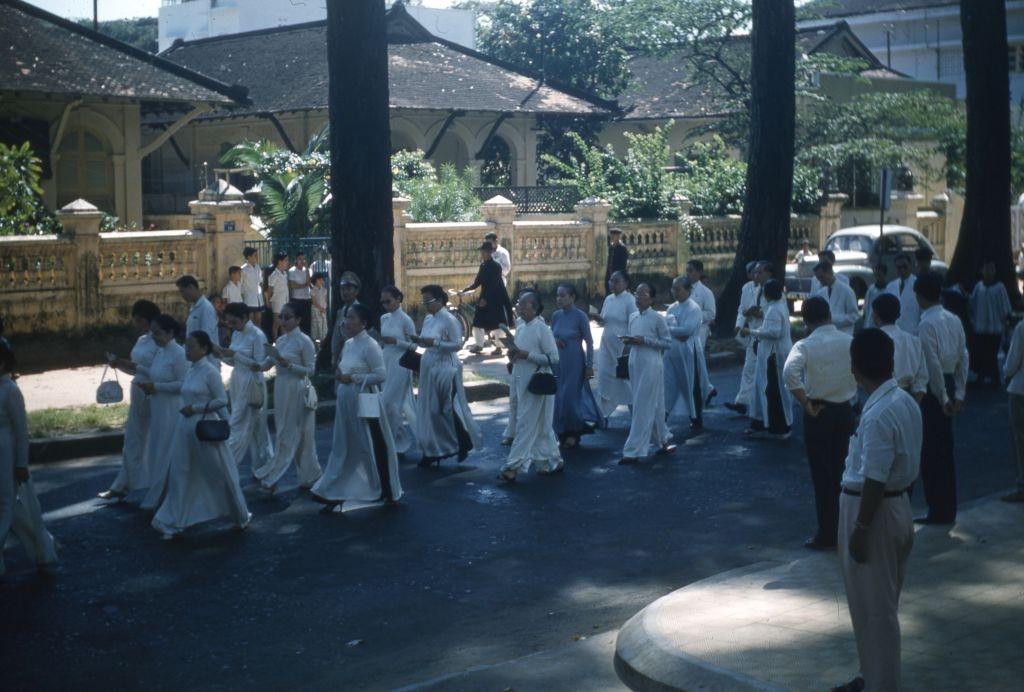
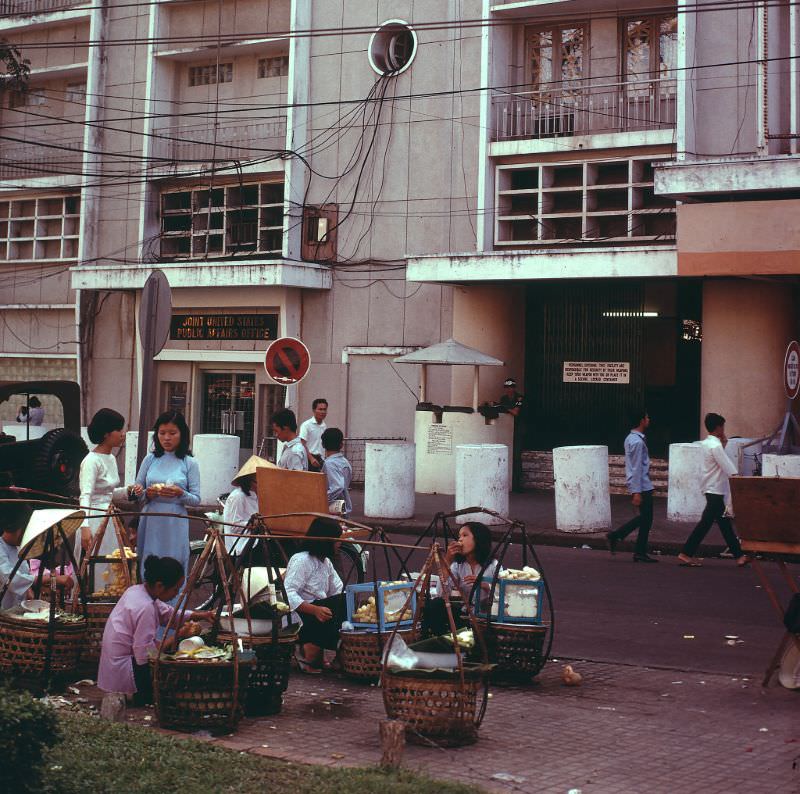
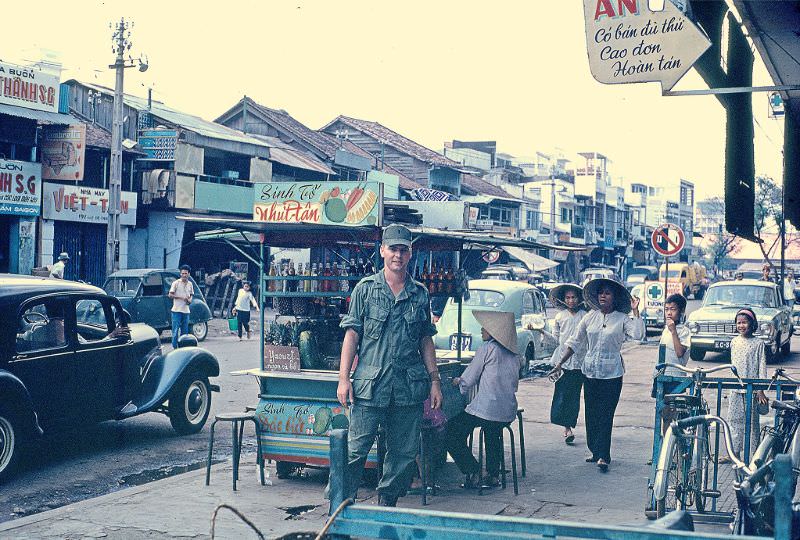
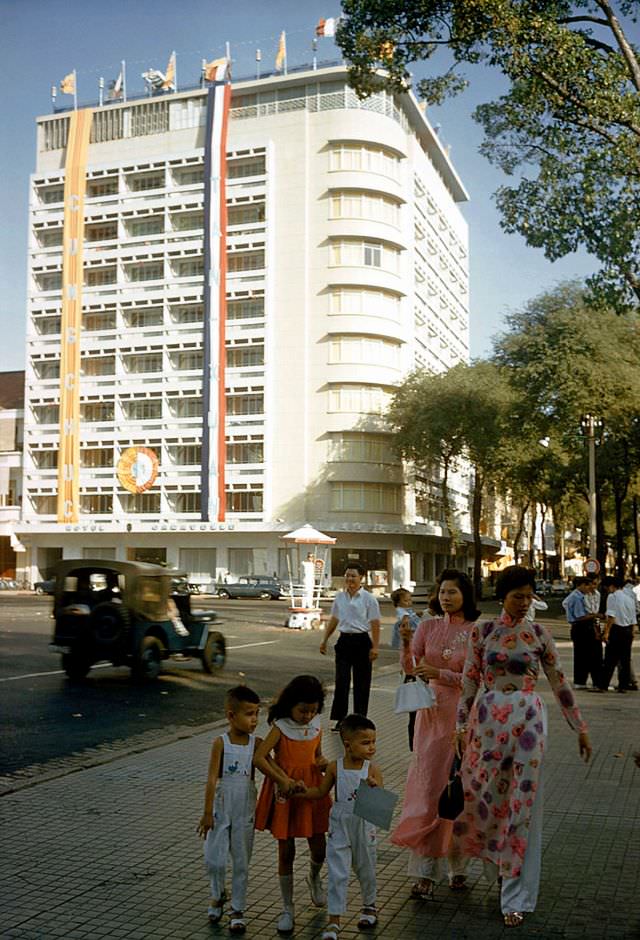
The Áo dài — a long, form-fitting tunic worn over trousers — was the standard dress for Vietnamese women throughout this period. Women wore it while cycling, walking, and going about daily tasks. The nón lá, or conical hat, was equally common. Woven from palm leaves, it provided shade from the intense southern sun and became one of the most recognizable symbols of Vietnamese street life. Both items appeared constantly in Saigon’s daily scenes, worn across all social classes.


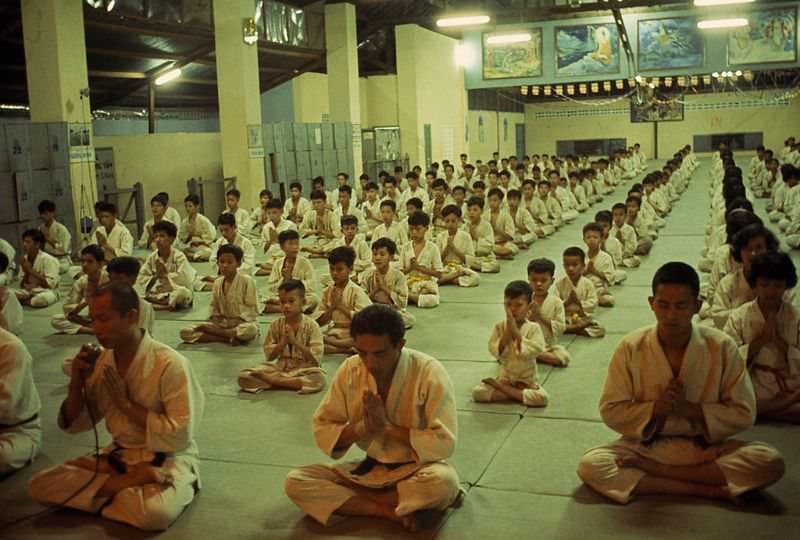
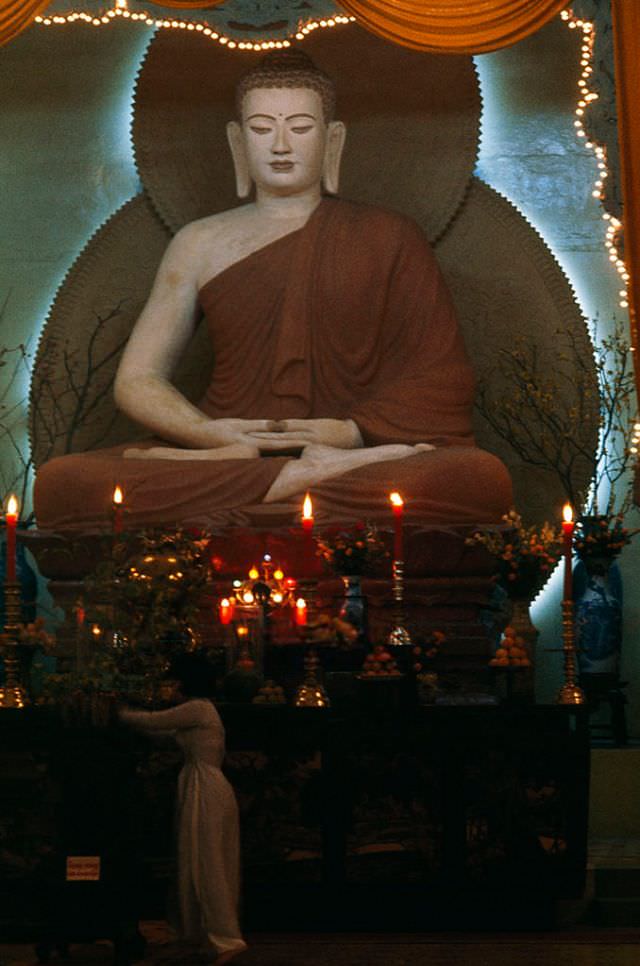
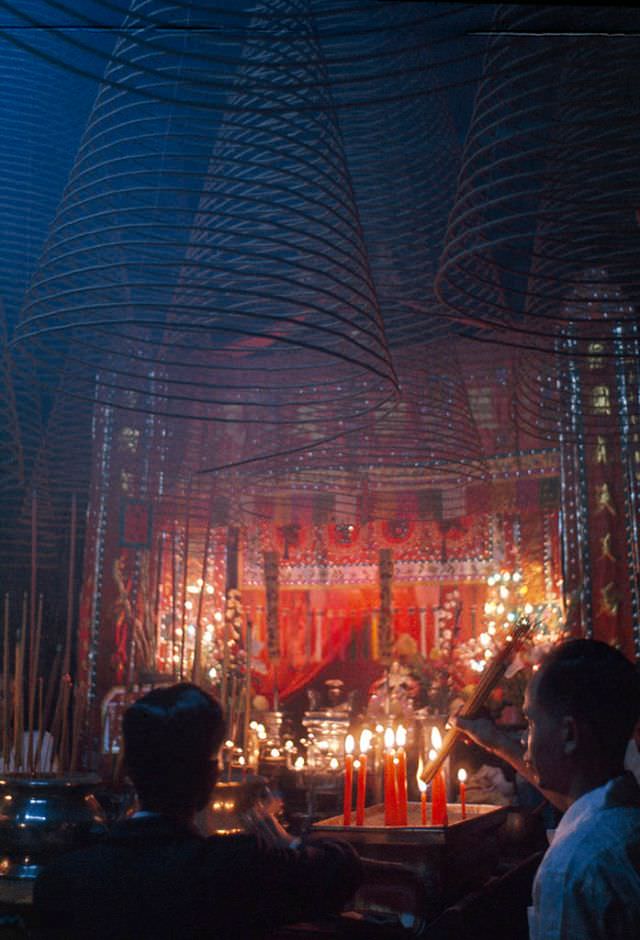
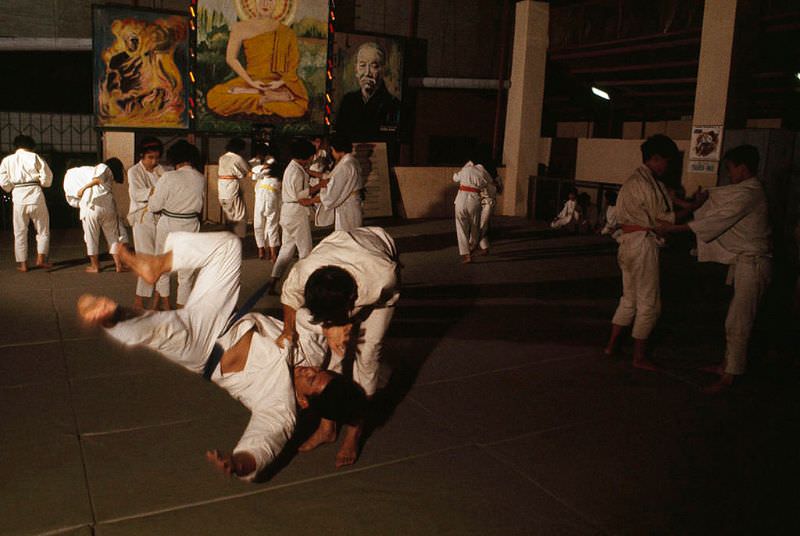
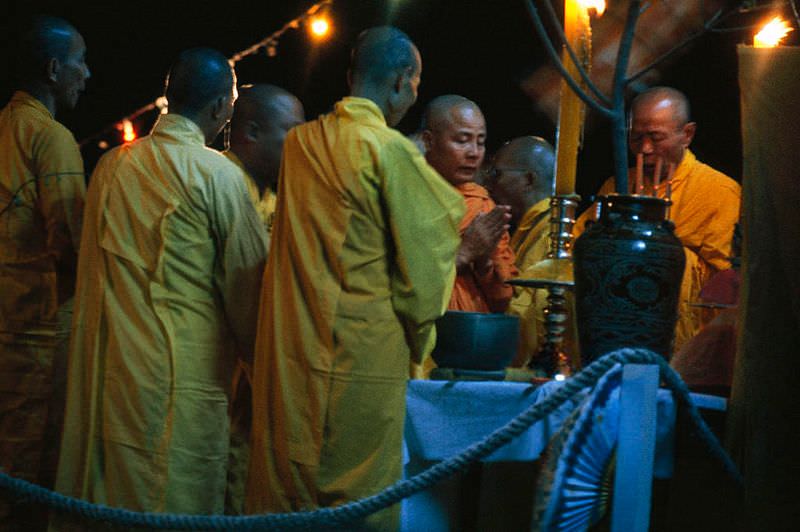
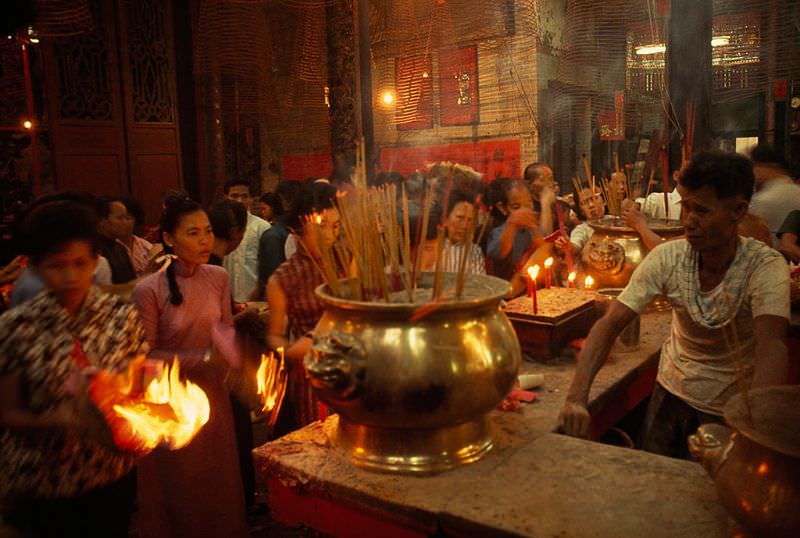
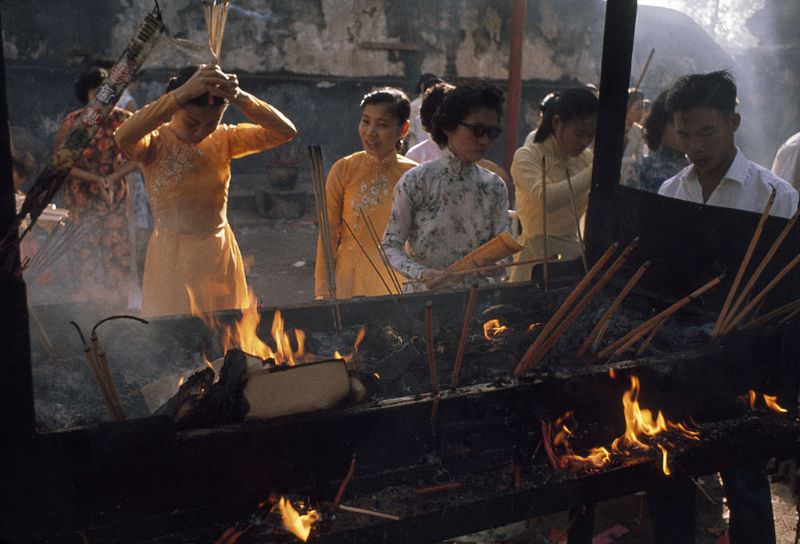
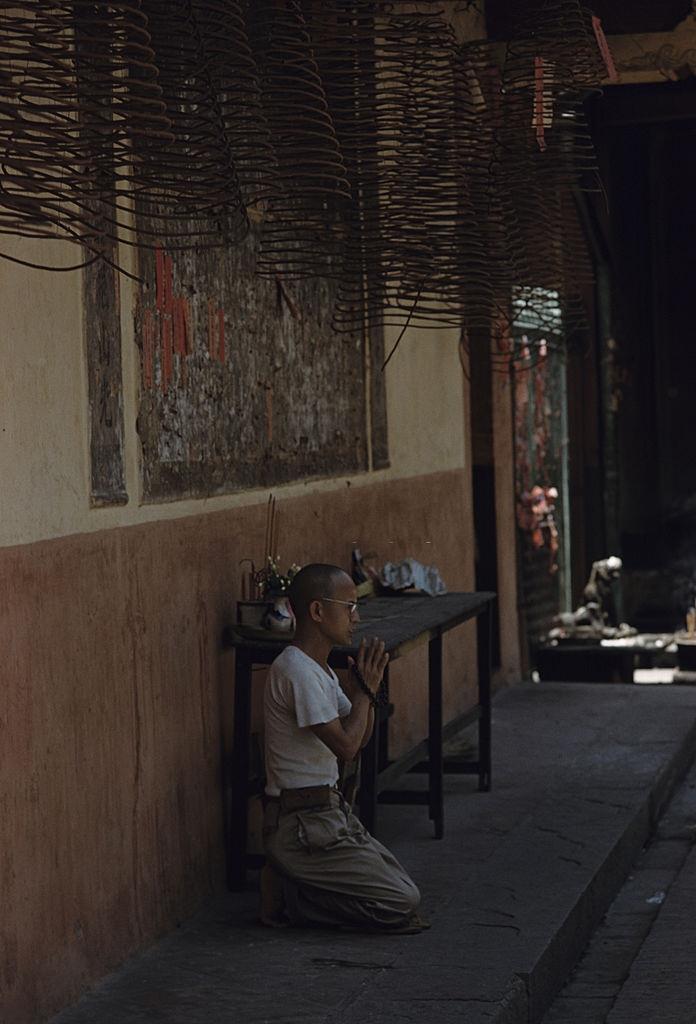
Religion was woven into everyday life in Saigon. Buddhist temples drew worshipers who removed their shoes before approaching altars, burned incense and joss sticks, and offered prayers at all hours. Chinese temples in the Cholon district — Saigon’s large ethnic Chinese neighborhood — filled with smoke from burning votive papers. Monks held midnight prayer sessions to mark the lunar New Year. Judo classes were even held beneath images of revered Buddhist figures, with a monk and judo expert leading students in meditation before matches.


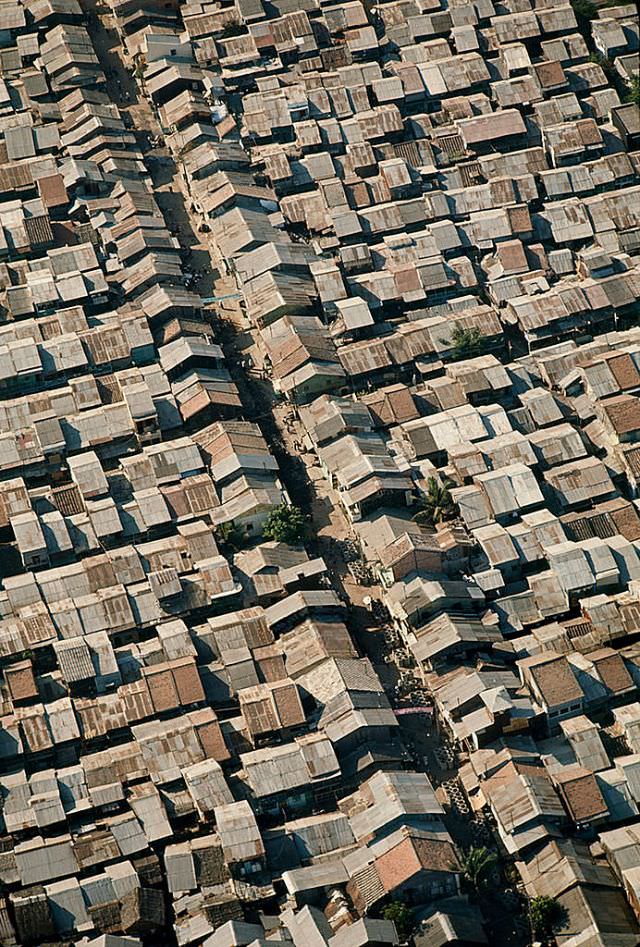
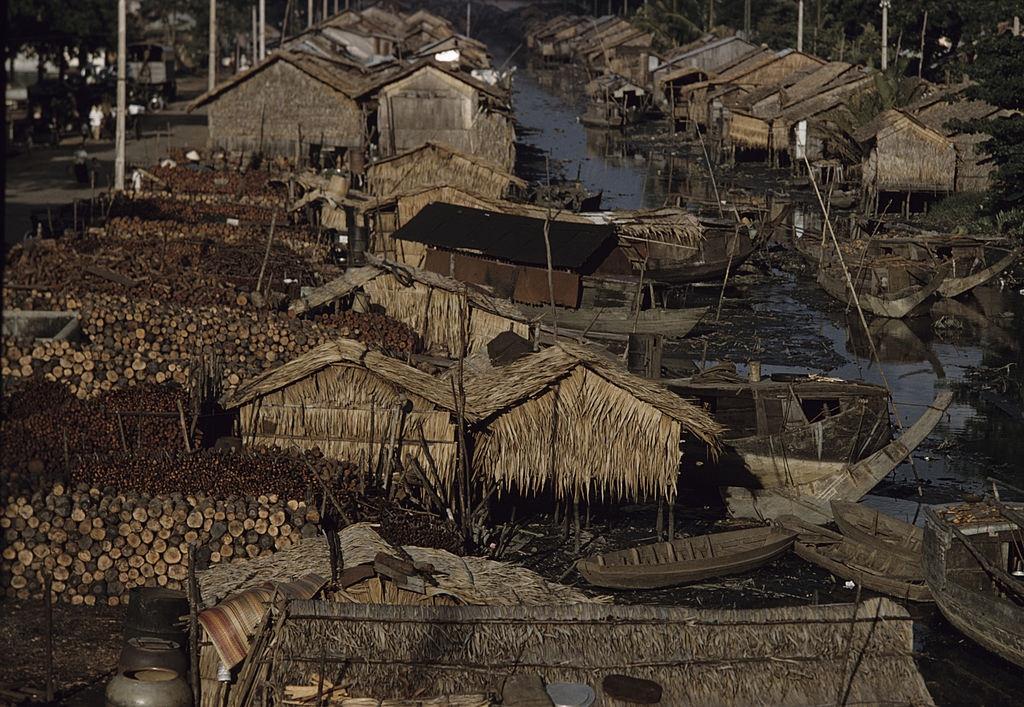
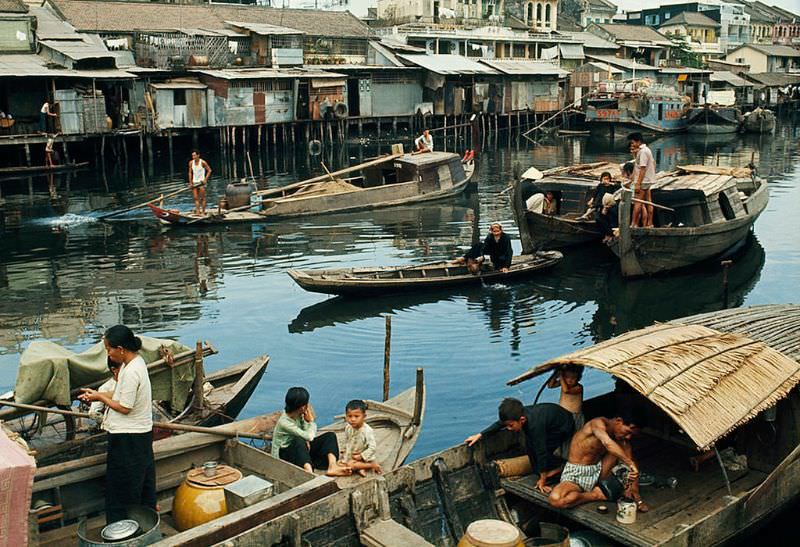
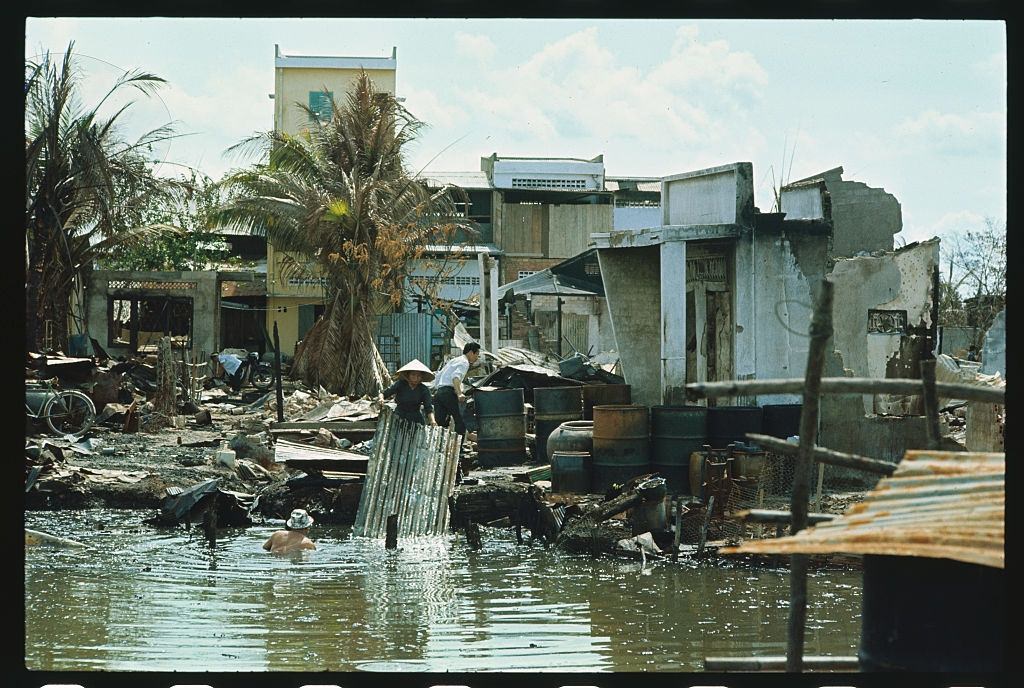
Cholon, Saigon’s Chinatown district, was a city within a city. It had its own temples, markets, and street culture shaped by the large ethnic Chinese population that had settled there over generations. Housing in parts of Cholon was basic — some structures were built entirely from leaves, while suburban areas were packed with shacks made from metal, wood, and cardboard. Families without formal housing lived in sampans moored along the waterways. Poverty and crowding were stark realities just beyond the busier commercial streets.


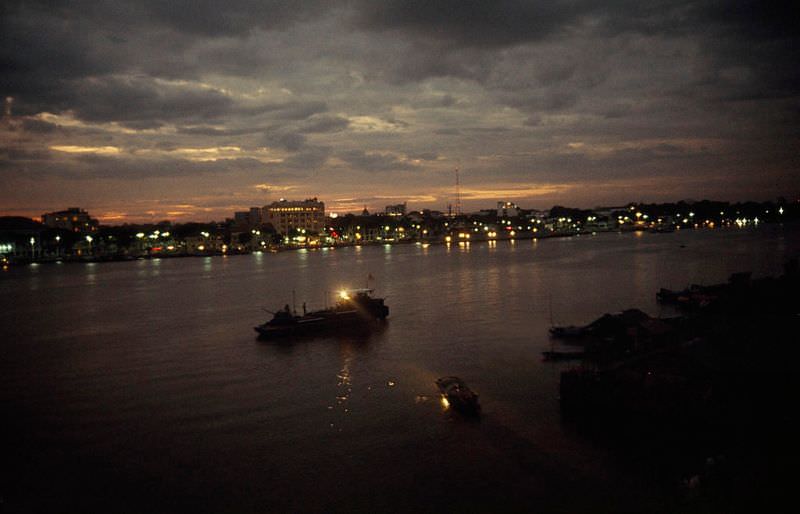
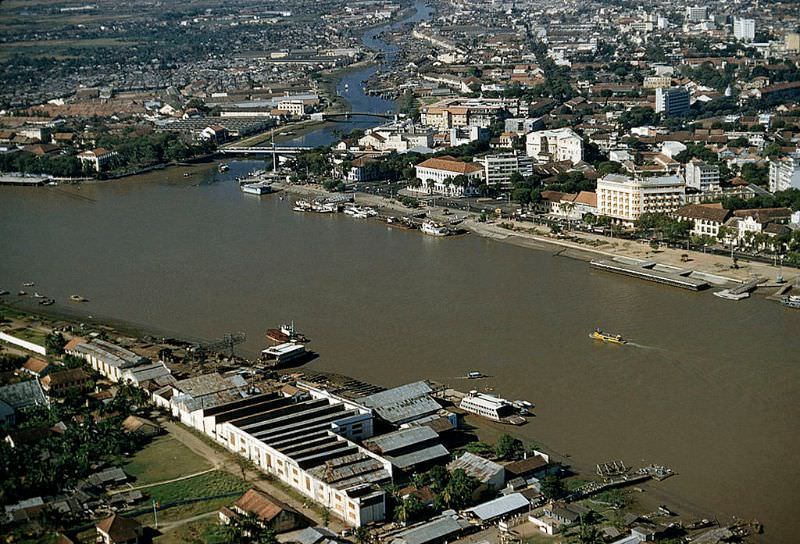
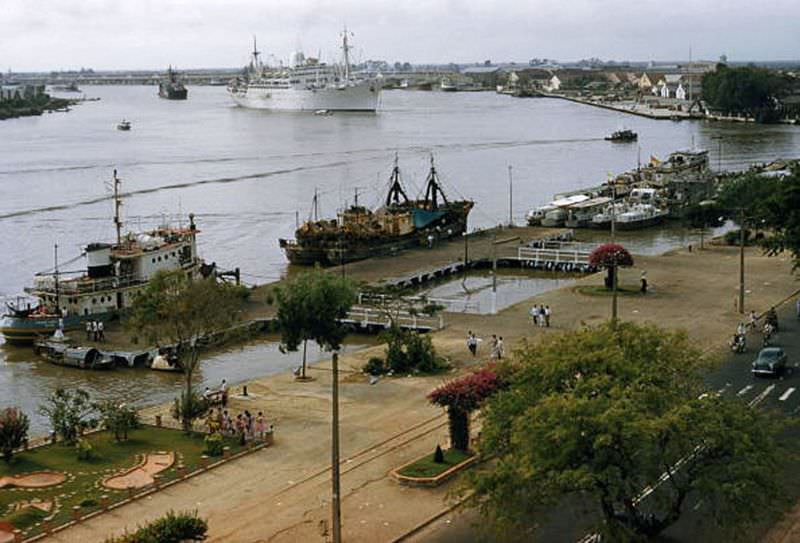
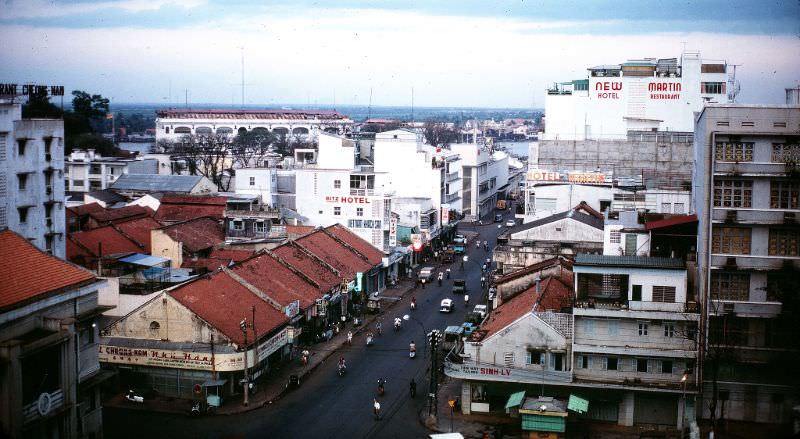
The Saigon River was essential to the city’s commerce and daily life. Ships moved in and out of the active port, and people strolled along the waterfront watching large vessels arrive. At night, military patrol boats swept the river with searchlights, stopping sampans to check their cargo and occupants. The river was both a trade lifeline and a security concern, reflecting how civilian and military realities overlapped constantly in 1960s Saigon.


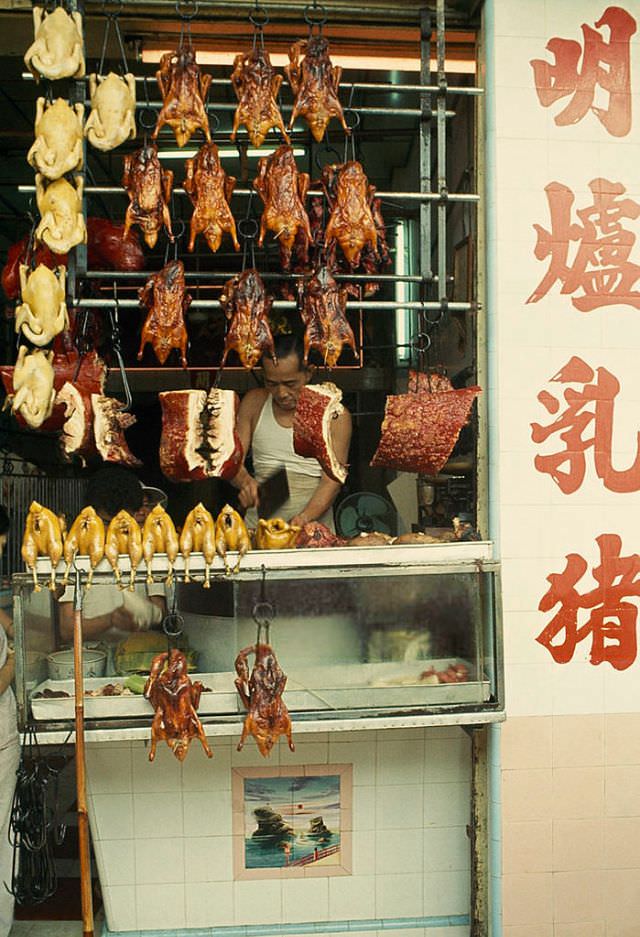
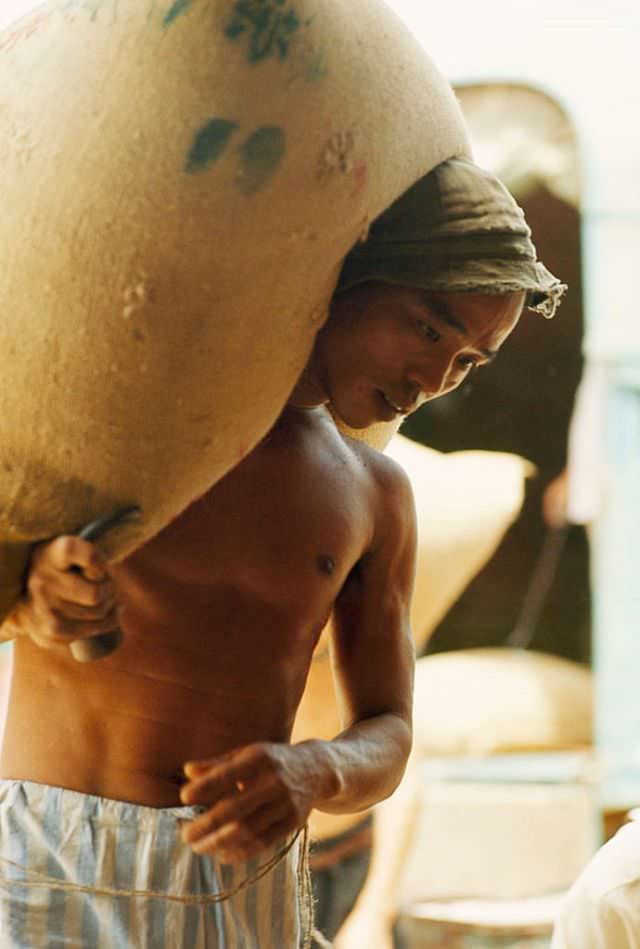
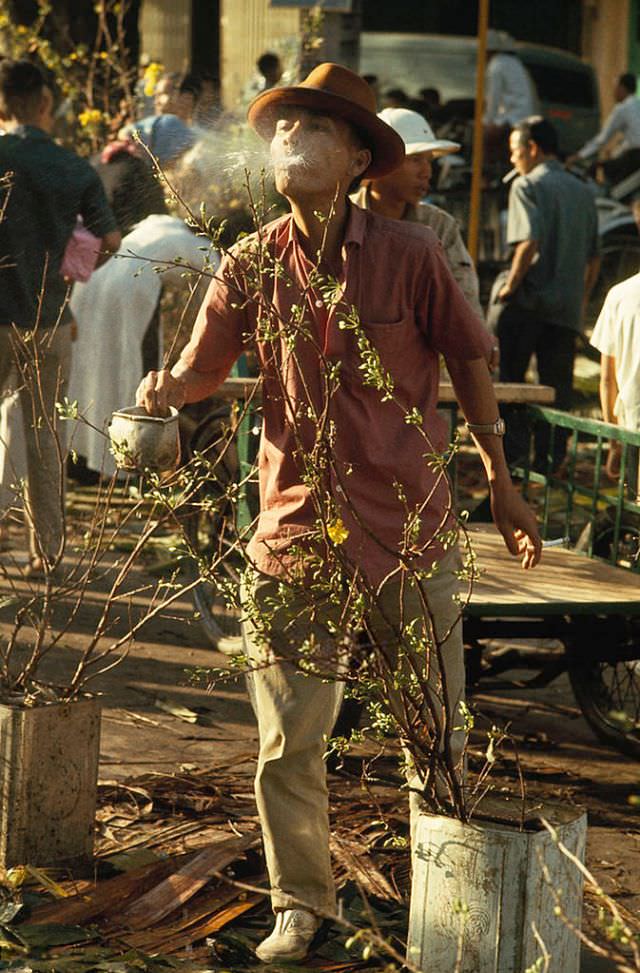
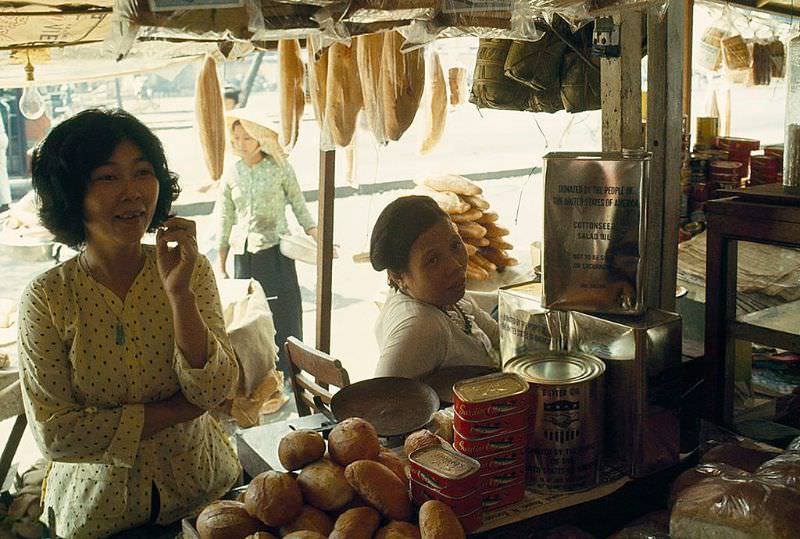
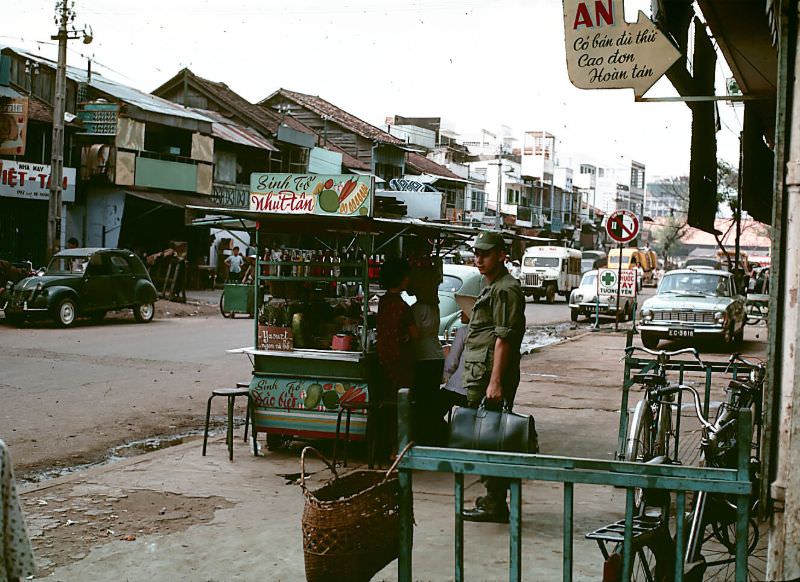
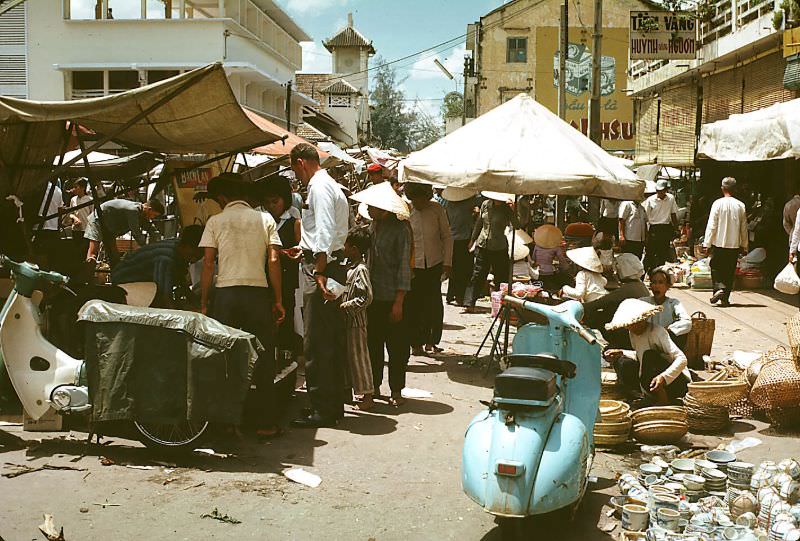
Markets and street vendors kept Saigon fed and supplied. Butchers displayed raw and cooked meat in the open air. Vendors sold canned goods that had been sent as foreign aid gifts to the Vietnamese people. In Cholon, workers carried heavy sacks of rice on their backs through crowded streets. The Tet lunar New Year brought its own rituals — men sprayed water onto mai tree branches to encourage blooming in time for the celebration, one of the most important holidays in Vietnamese culture.


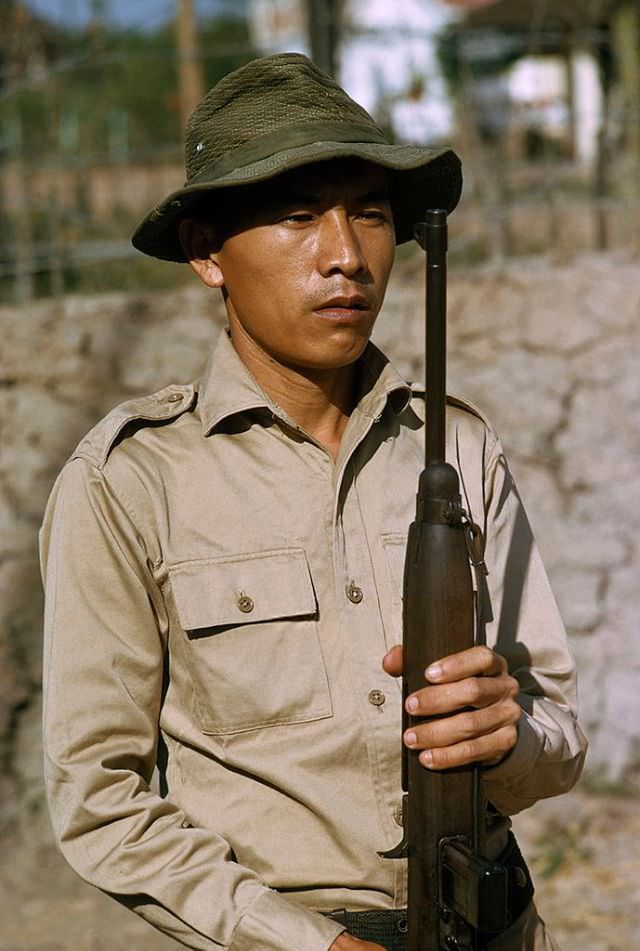
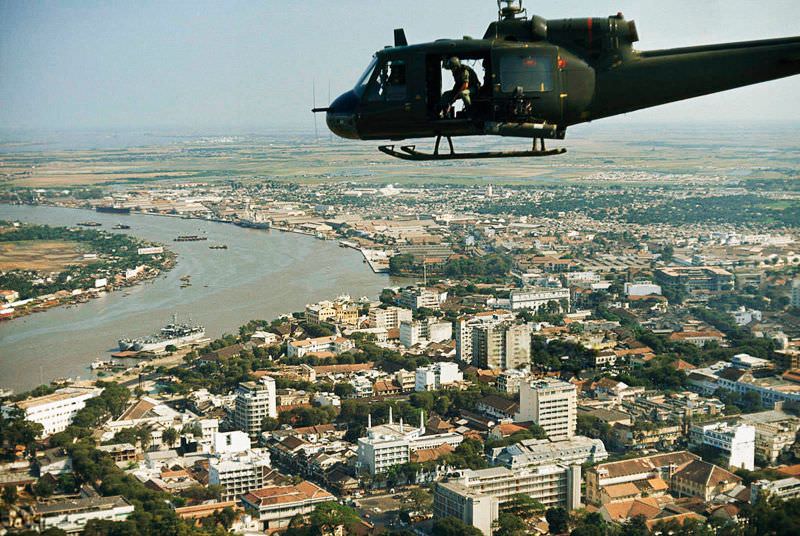
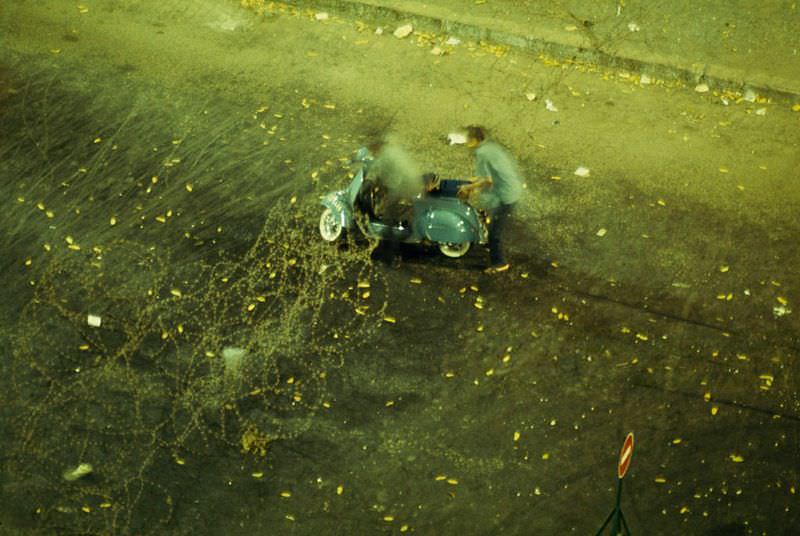
By 1965, the American military presence in Saigon had grown significantly. UH-1B helicopters — the iconic “Huey” — flew over the city. South Vietnamese Popular Forces soldiers stood guard at checkpoints where police checked identity papers of anyone trying to enter. Barbed-wire barricades blocked certain roads, and occasionally men had to struggle to free their scooters from the wire. Tanks commanded by rebellious military officers rolled down city streets during periods of political upheaval. The assassination of President Ngô Đình Diệm in November 1963 had destabilized the government, and coups and counter-coups followed throughout the mid-1960s.
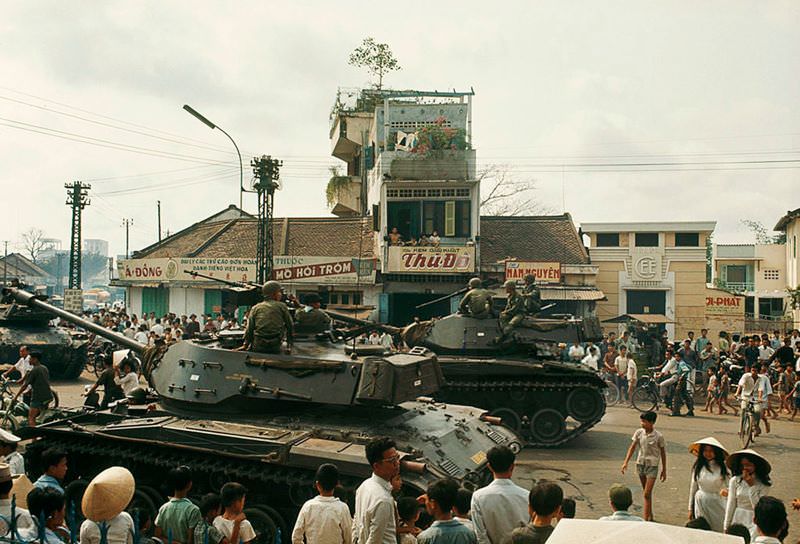


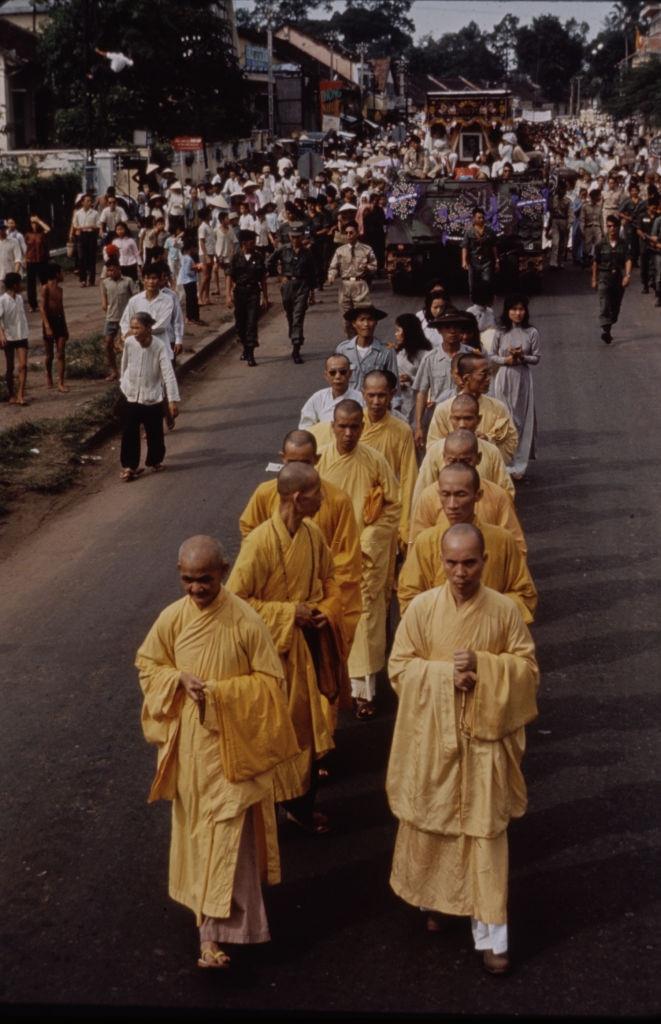
The monks of Saigon were not passive observers of political events. In 1963, Buddhist monks marched through the streets during the crisis that led to the removal of President Ngô Đình Diệm. That same year, monks had staged dramatic public protests against his government’s policies. Funerals also moved through the city’s tree-lined streets — the 1961 procession for Colonel Hoang Thuy Nam drew female mourners dressed in white áo dài, the traditional color of mourning in Vietnamese culture.

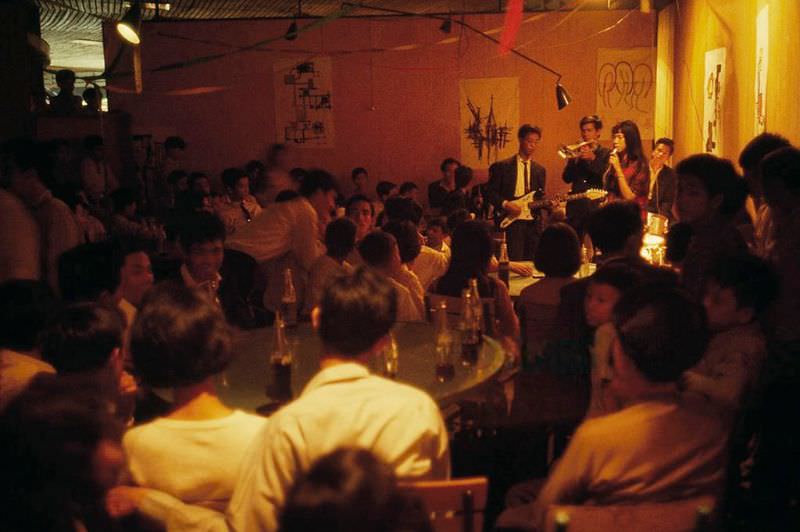
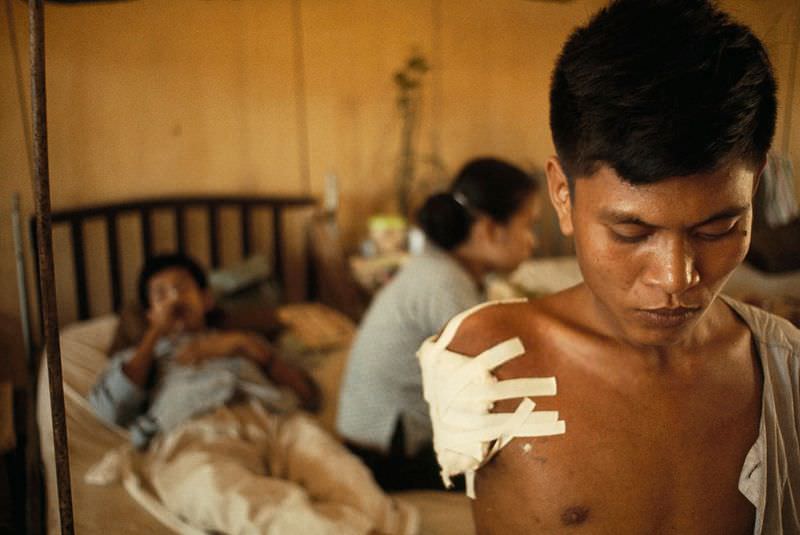
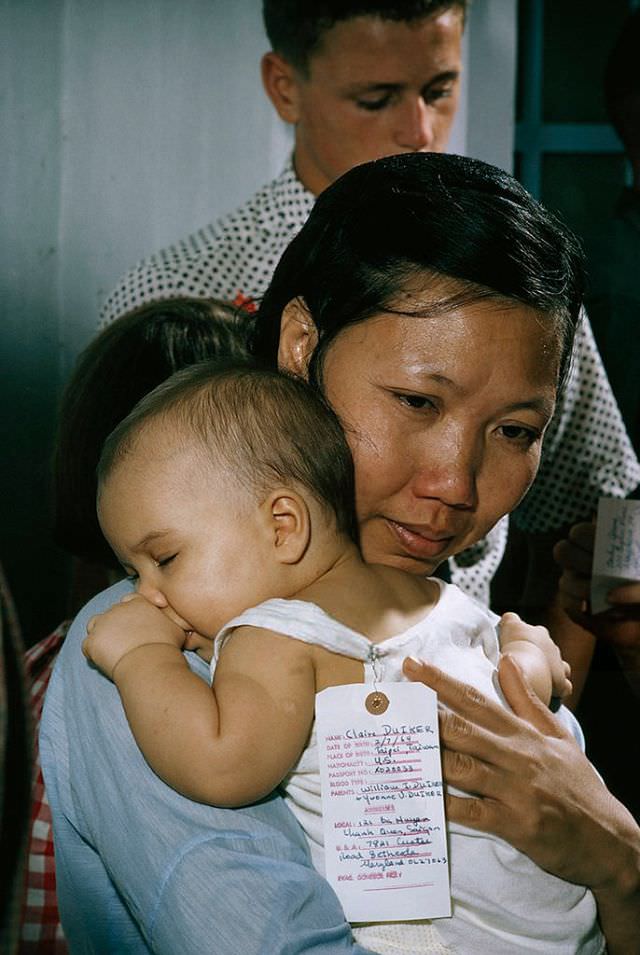
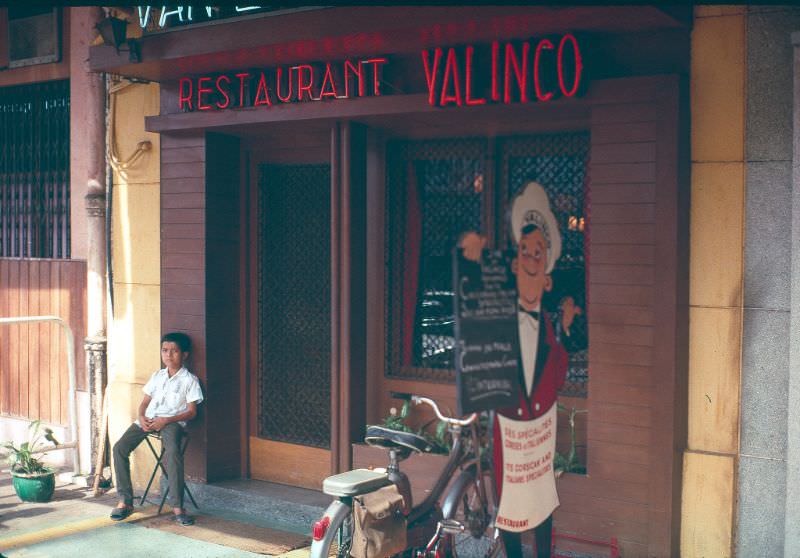
The war’s human cost was visible in the city’s hospitals. A South Vietnamese soldier who lost an arm in battle west of Saigon was photographed suffering in a medical ward in 1965. A Vietnamese nurse was photographed embracing her American patient before he left. These moments sat alongside the city’s nightlife — makeshift nightclubs where live bands played for mixed crowds of Vietnamese and American patrons, and restaurants like Valinco that served food beneath glowing signs on busy streets.


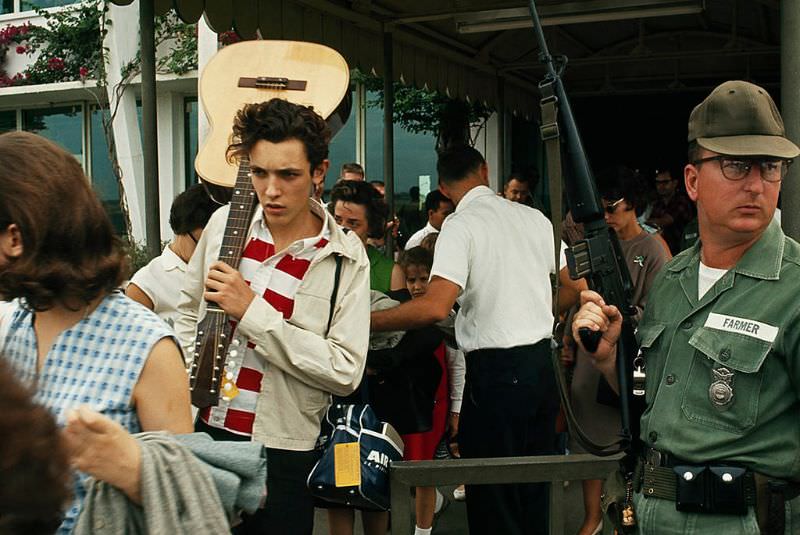
Korean troops also arrived in Saigon as part of the allied military coalition supporting South Vietnam. Members of the Women’s Army Forces greeted incoming Korean soldiers. Meanwhile, Americans who had completed their tours left through Saigon’s airport carrying personal belongings, beginning the long journey home. The Joint United States Public Affairs Office operated openly in the city, managing information and media in the midst of a war that was being covered by journalists from around the world.


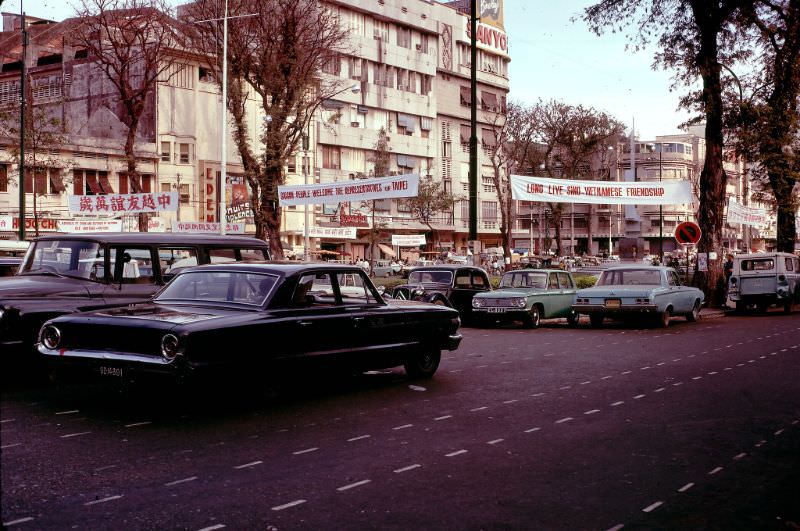
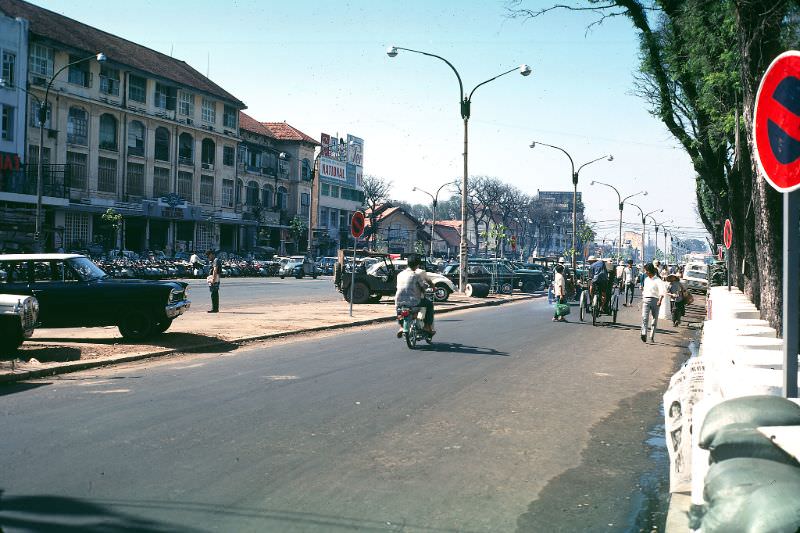
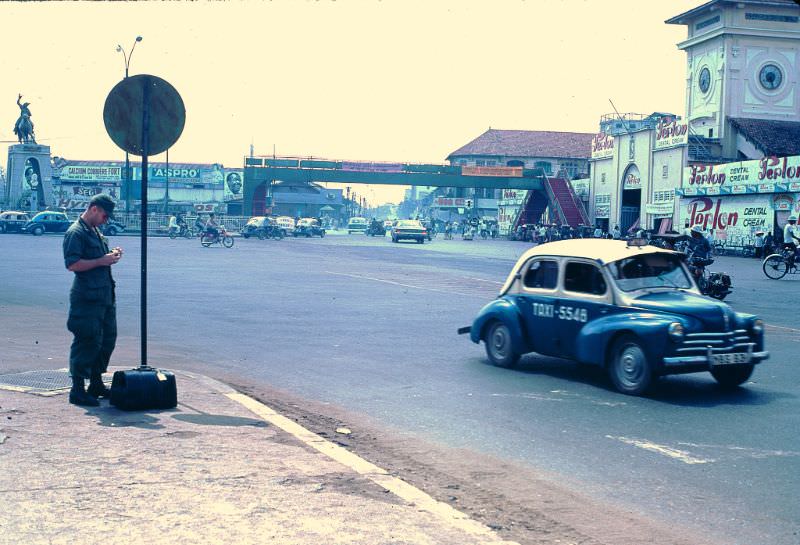
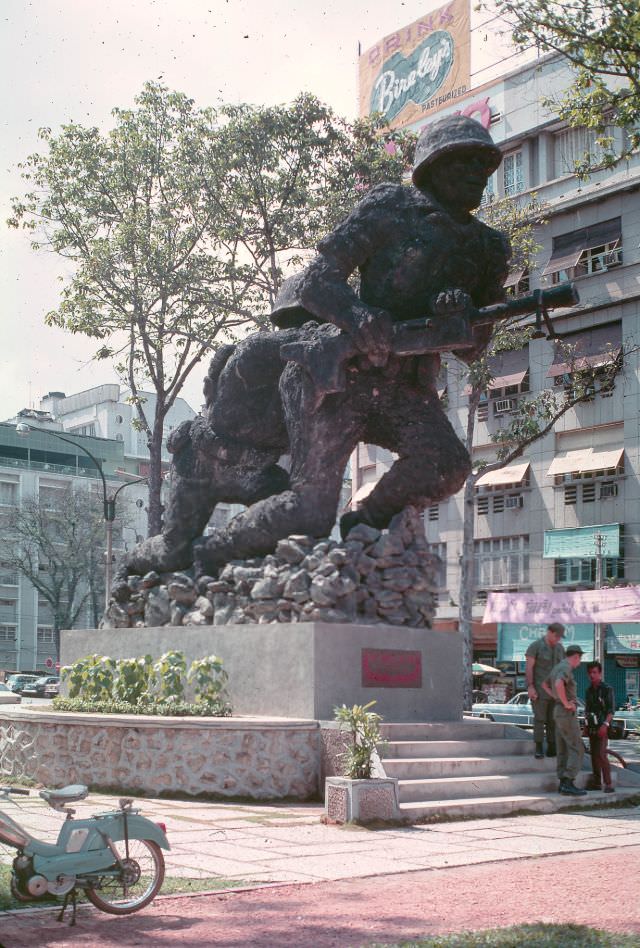
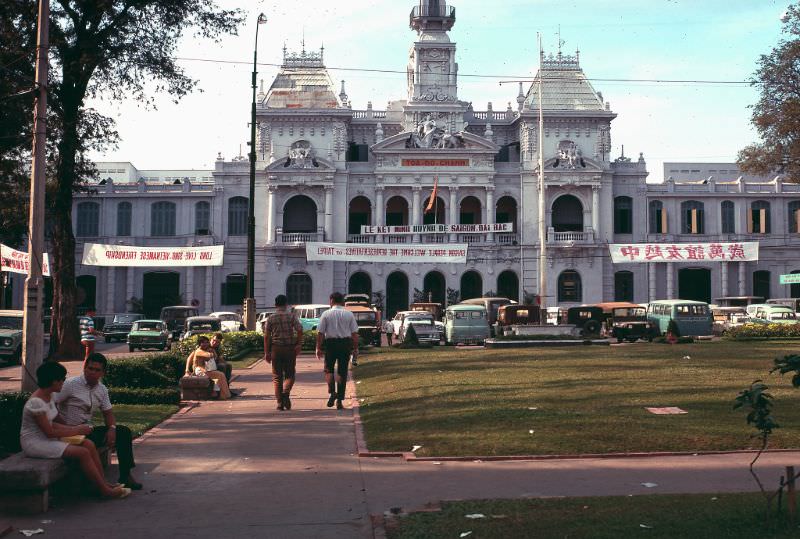
By 1968, Saigon had changed visibly. The Tet Offensive in January of that year — a massive coordinated attack by North Vietnamese and Viet Cong forces — brought fighting directly into the city for the first time at a large scale. The streets around Christmas 1968 showed a city that had absorbed years of war but kept moving. Taxis queued at traffic signals, Coca-Cola deliveries ran on schedule, and shops remained open along De Tham Street. The city’s French colonial Government Building still stood as a landmark, as did Lam Son Square with its Marines statue on Le Loi Boulevard.


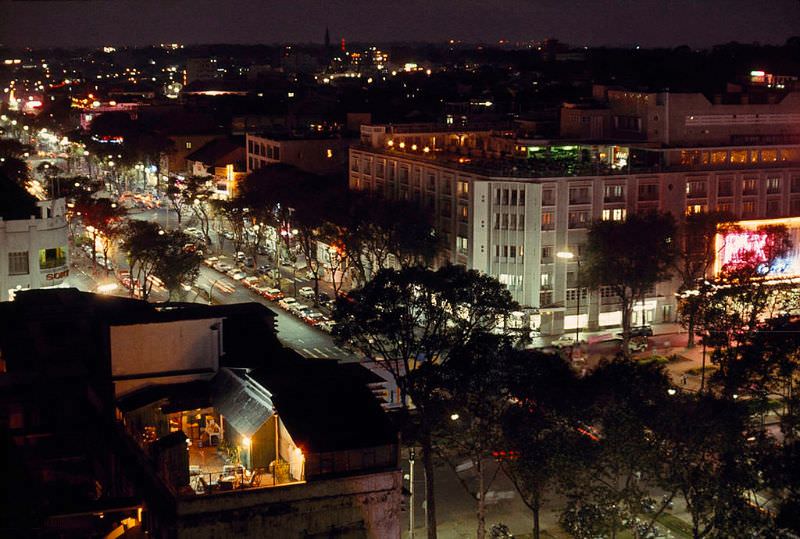
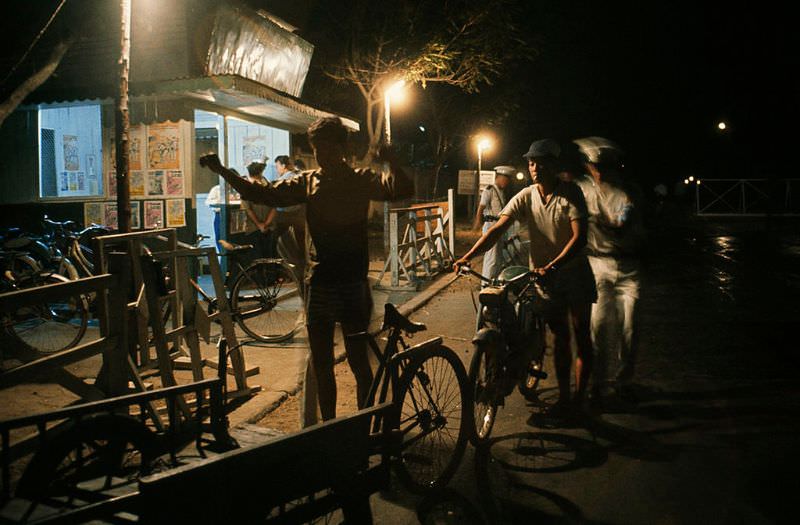
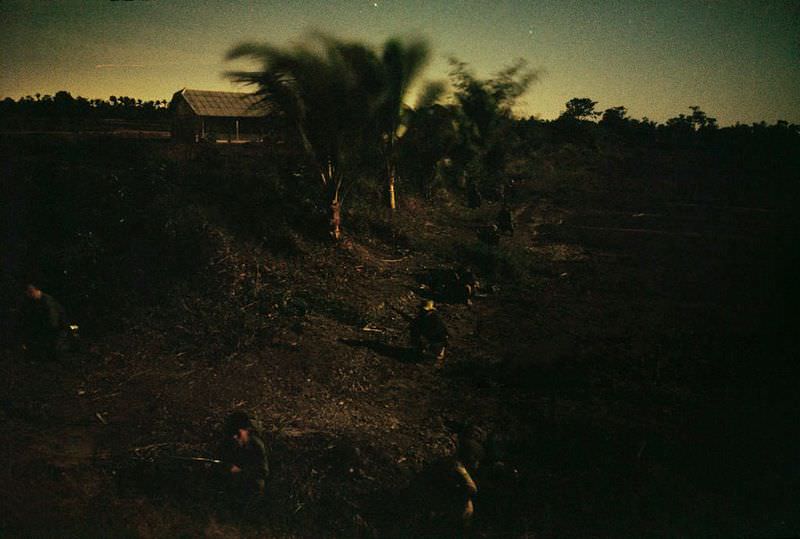
Night in Saigon had its own character. Le Loi Boulevard lit up with traffic and neon signs. Neighborhood home guard units patrolled residential streets after dark, armed and watching for infiltrators. The same boulevard that saw families strolling in traditional dress during the day became a checkpoint zone at night. Security was a constant undertow beneath the surface of normal city life — visible in the patrols, the barricades, and the armed guards at every entrance point.


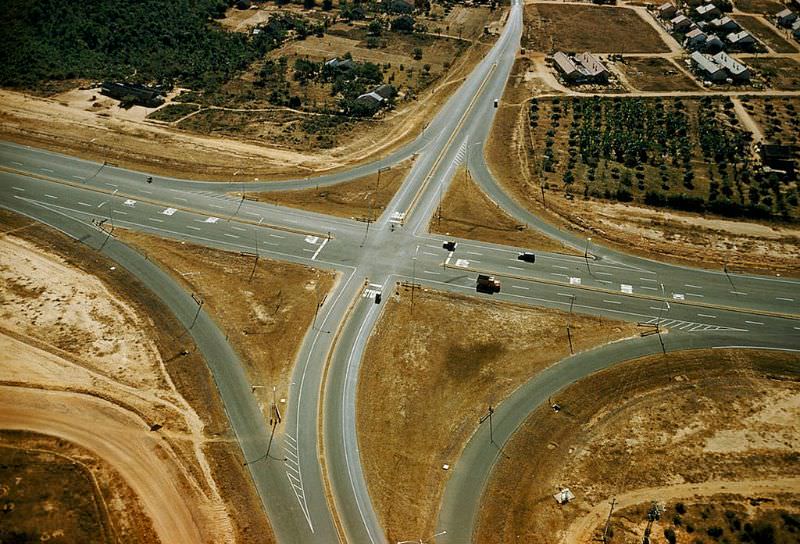
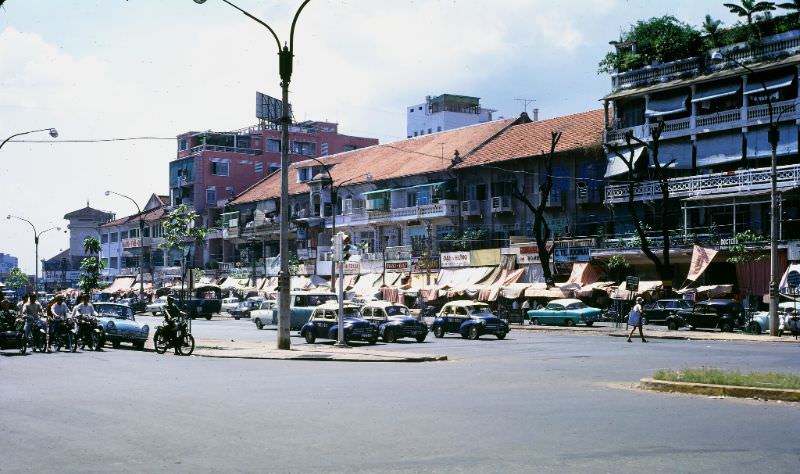
The infrastructure around Saigon also showed signs of outside investment. A 20-mile highway connecting Saigon to Bien Hoa was built with U.S. aid funding and saw light traffic in 1961 — a straight, modern road running through the landscape around the capital. The city’s streets in the commercial center were lined with shops, their signs in Vietnamese and Chinese marking the blend of cultures that defined Saigon’s character. After the war ended in 1975 and the city was renamed Ho Chi Minh City, many of its street names were changed to remove references to its colonial and South Vietnamese history. But the physical layout — the wide avenues, the river, the markets — remained.


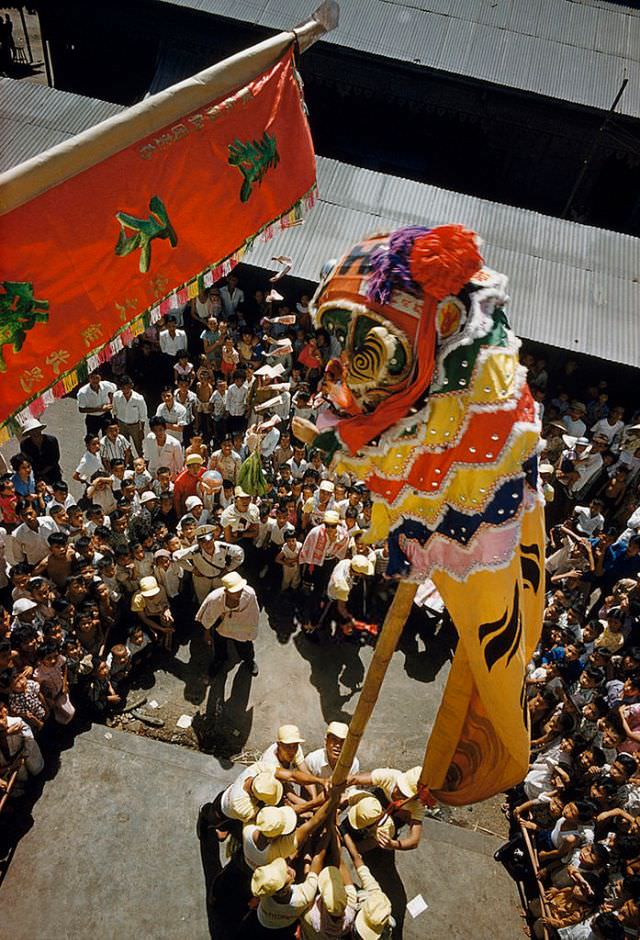
Everyday faith, labor, and celebration continued alongside all of it. A man knelt on a sidewalk in prayer, holding his Buddhist mala beads. Performers climbed poles at festivals in Cholon to grab treats suspended from banners. Couples rode motorbikes dressed in their best clothes. A woman waded in water while her husband searched nearby for salvaged tins and materials to rebuild their home. These photographs hold the details of a city that was never simply one thing — not purely at war, not fully at peace, but always, unmistakably, alive.