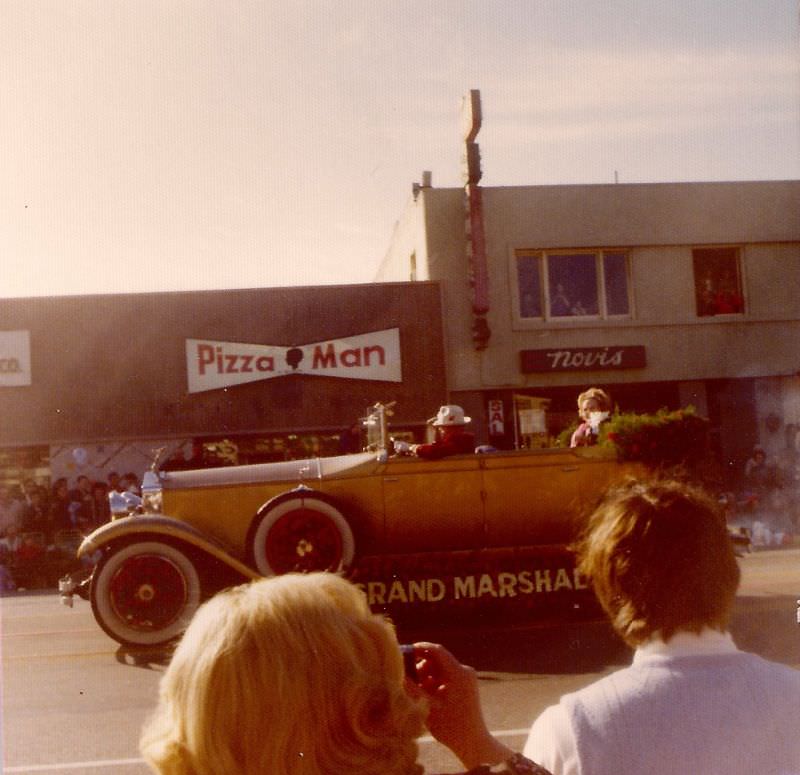
On January 1st, 1976, Pasadena, California came alive with color, music, and motion. The 87th Tournament of Roses Parade rolled down Colorado Boulevard, drawing enormous crowds and television audiences across the country. That year’s theme — “People, People Everywhere” — set the tone for a celebration focused on the richness and variety of human experience.
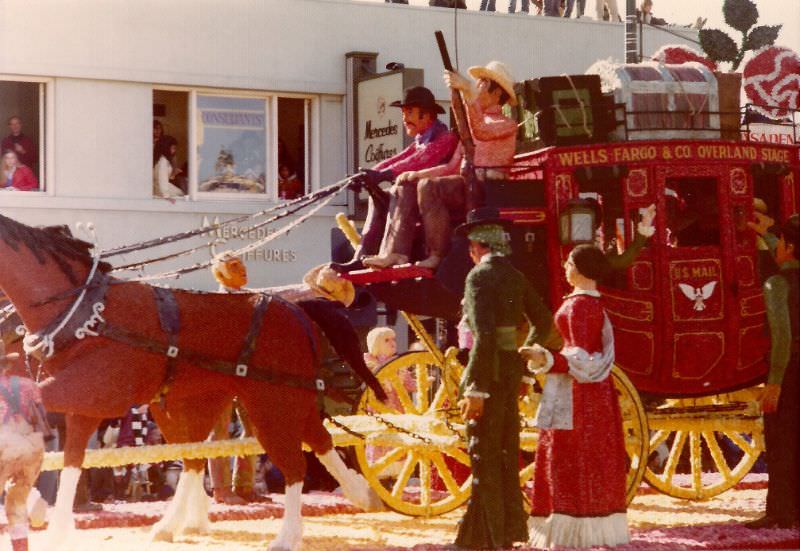
The Rose Parade has roots going back to 1890, when the Valley Hunt Club organized a festival to showcase Southern California’s mild winter climate to the rest of the nation. By 1976, it had grown into one of the most watched parades in the world. Every float, every rider, and every musician was part of a tradition that had been carefully built over more than eight decades.
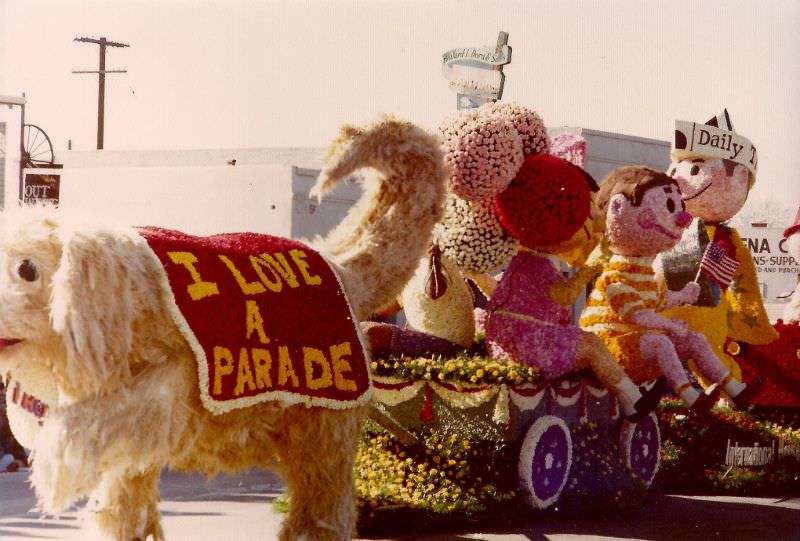
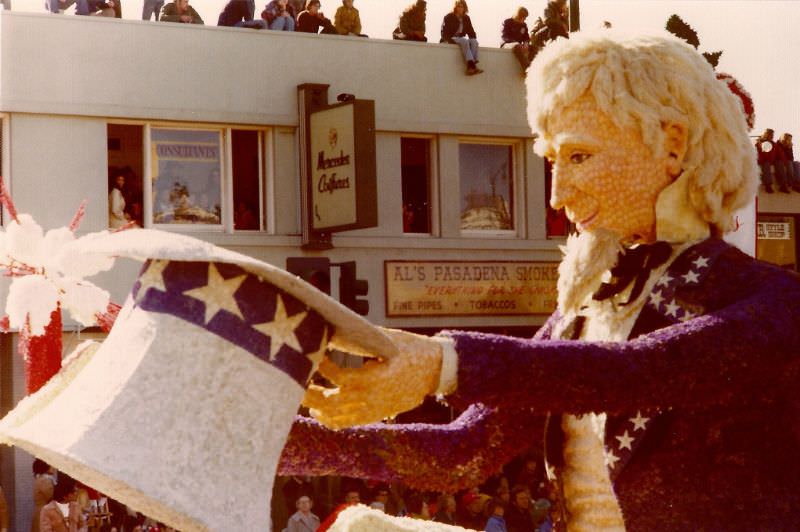
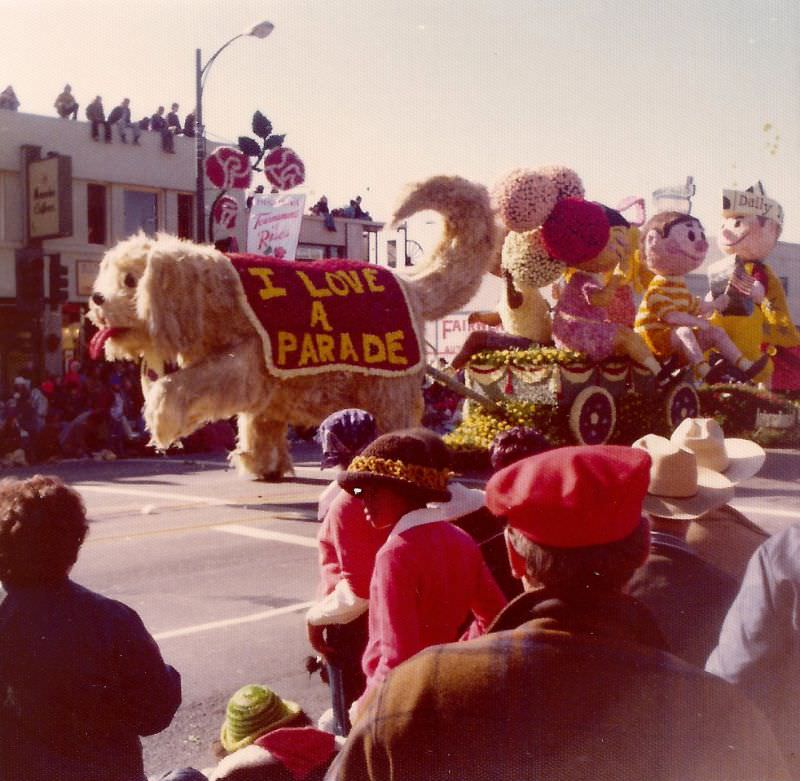
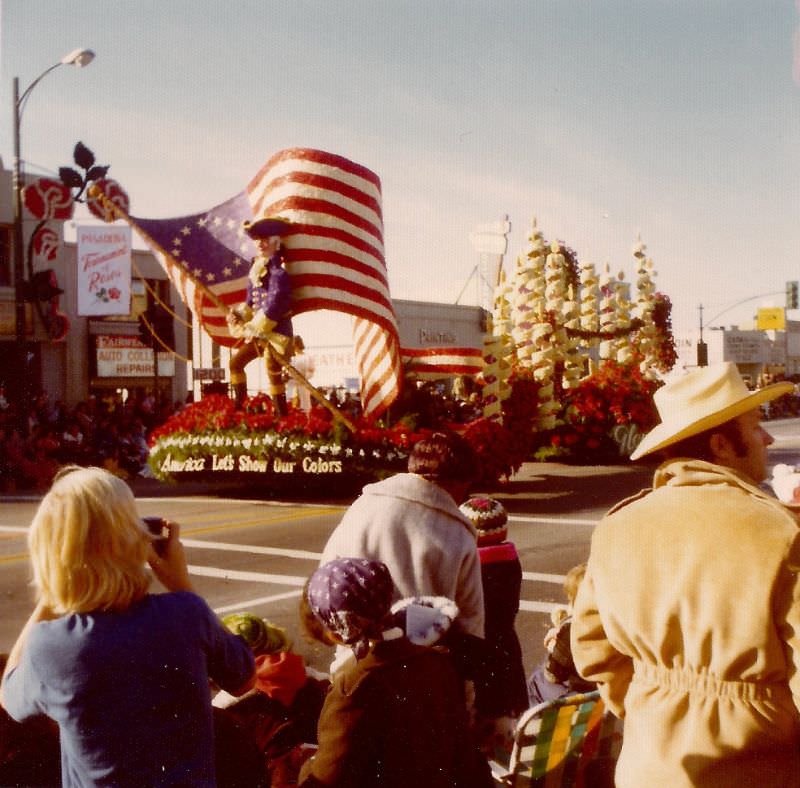
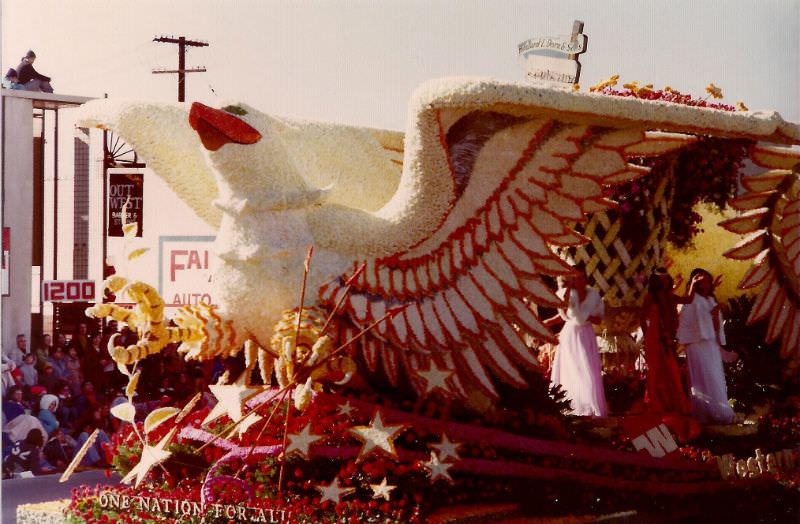
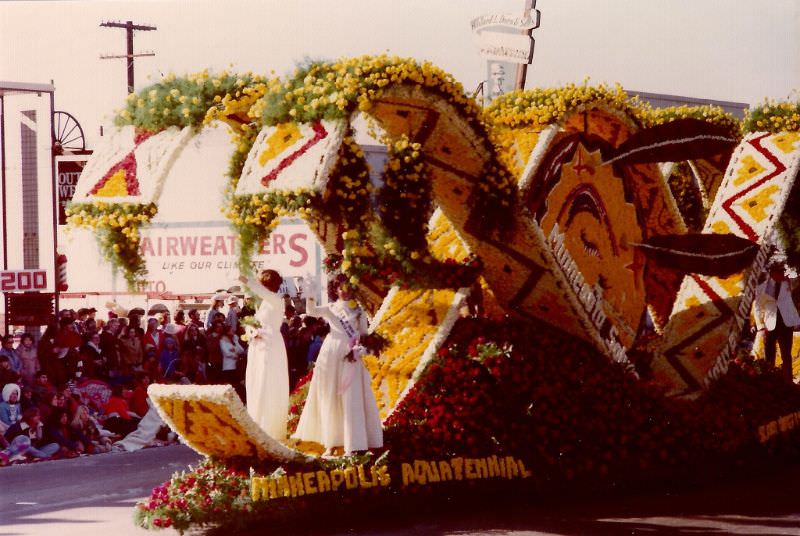
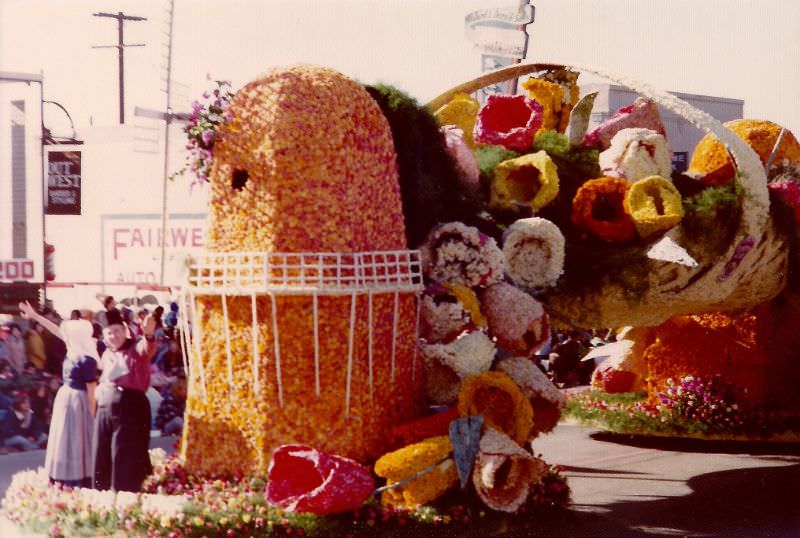
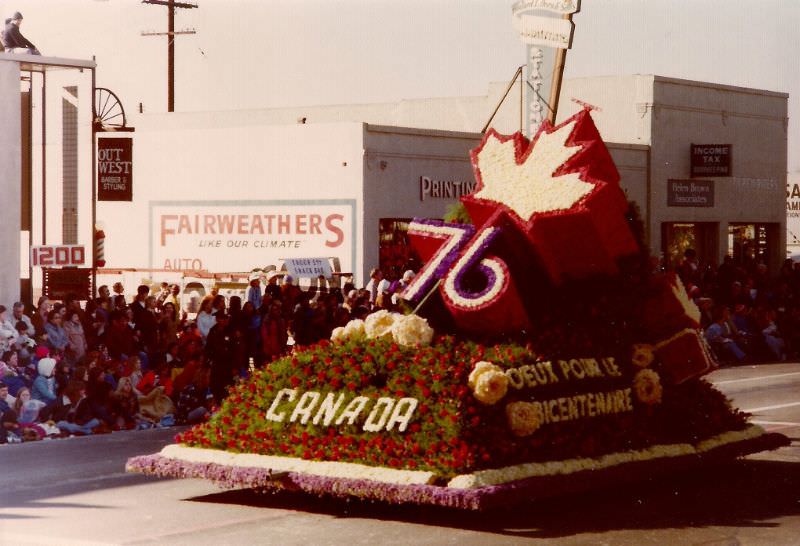
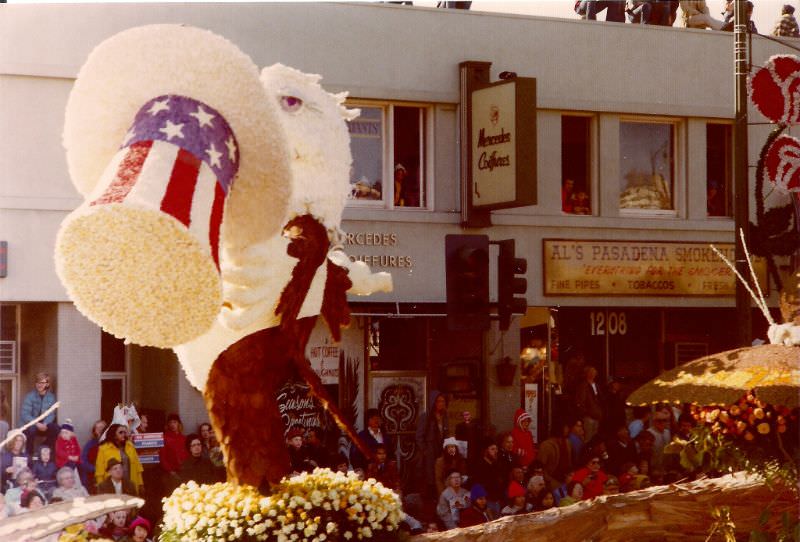
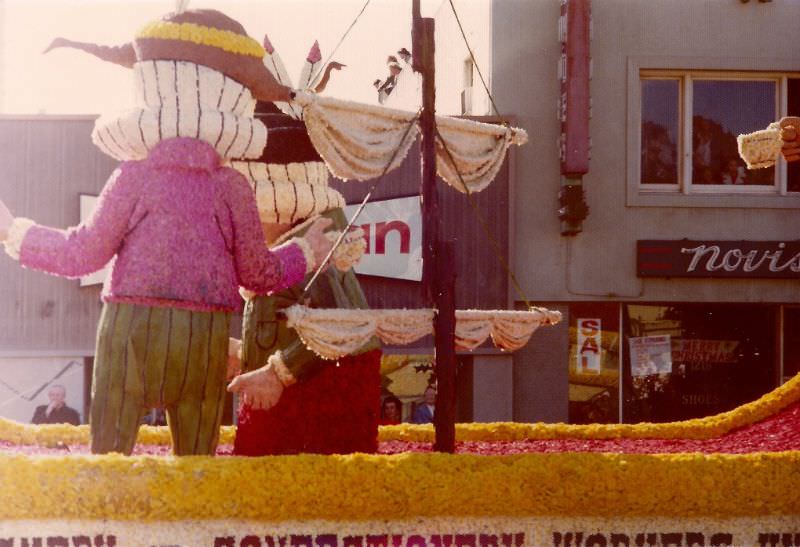
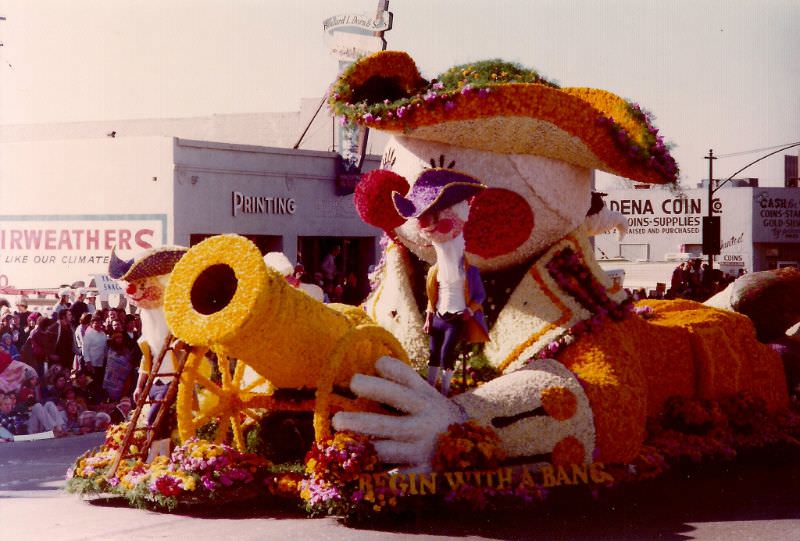
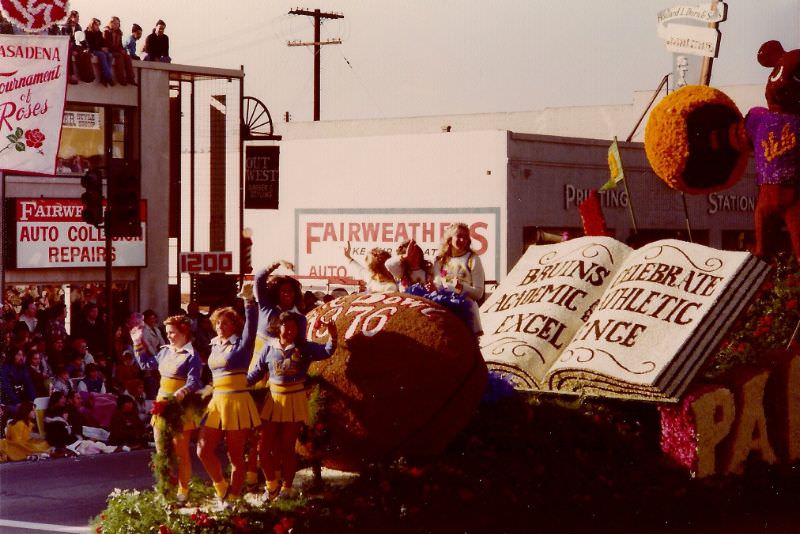
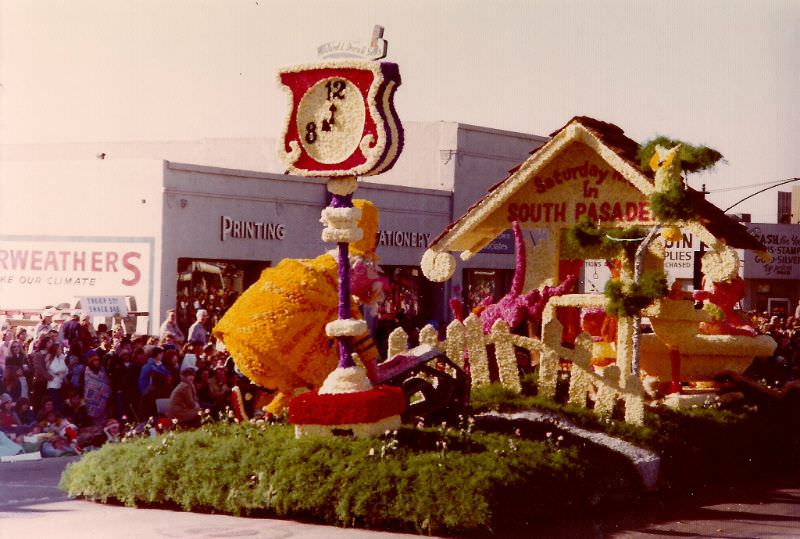
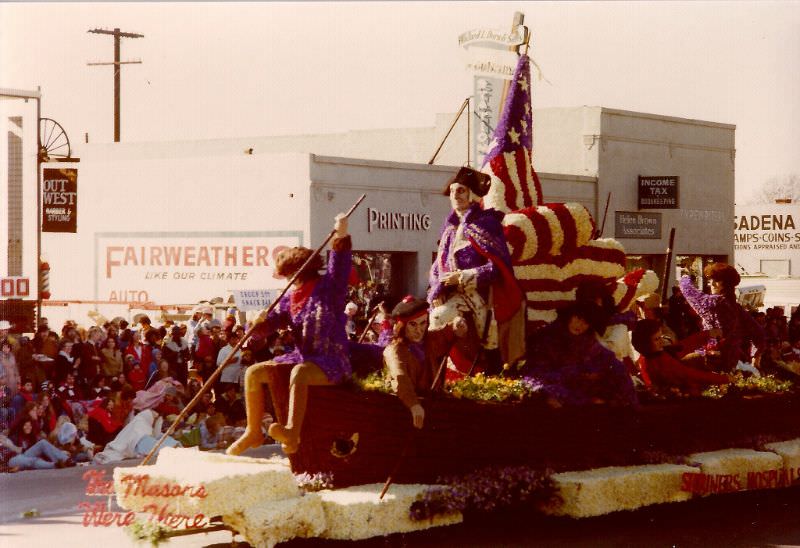
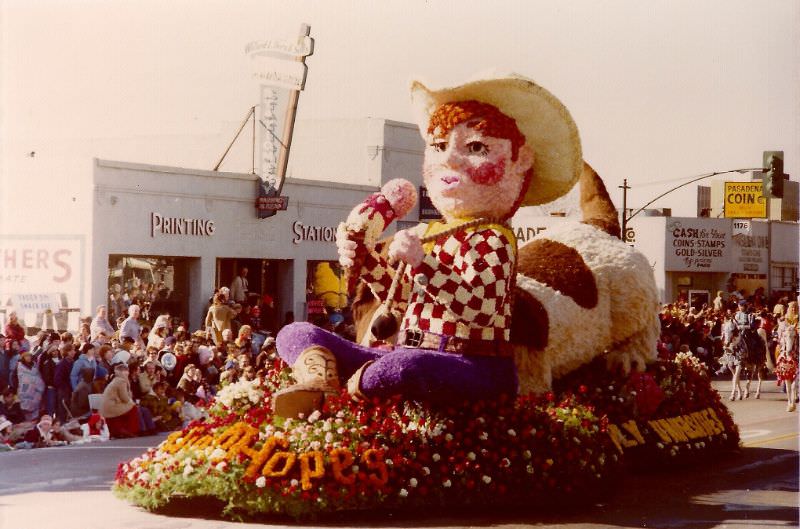
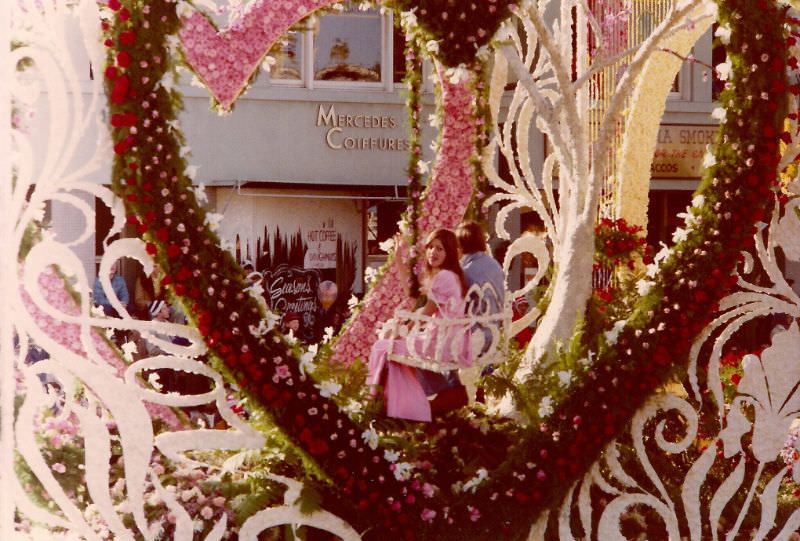
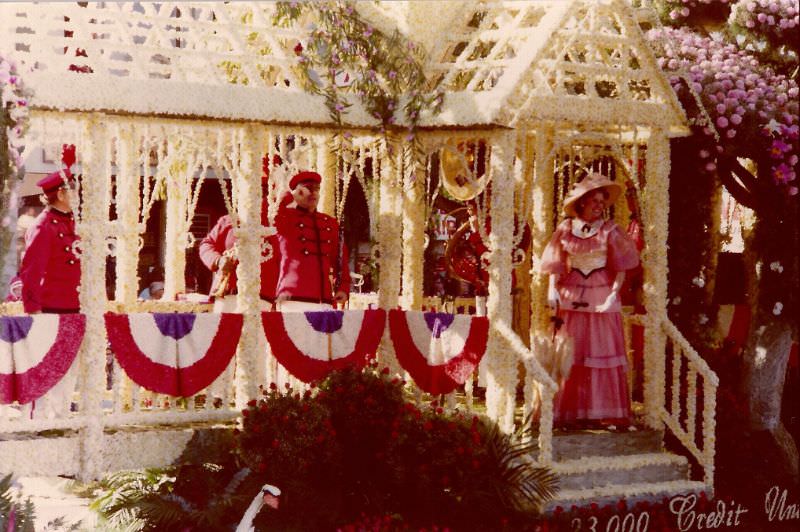
Floats in the Rose Parade must be covered entirely in flowers, seeds, bark, leaves, or other natural plant materials. No artificial coloring or synthetic materials are allowed on the visible surface. The result is a moving gallery of natural art, with builders spending months designing and constructing each entry.
One of the standout entries in 1976 came from the Cal Poly Universities float, which featured a large rocket model built from natural materials. Cal Poly — referring to California Polytechnic State University campuses — has a long history of entering student-built floats in the parade, and their 1976 entry drew wide attention for its scale and detail.
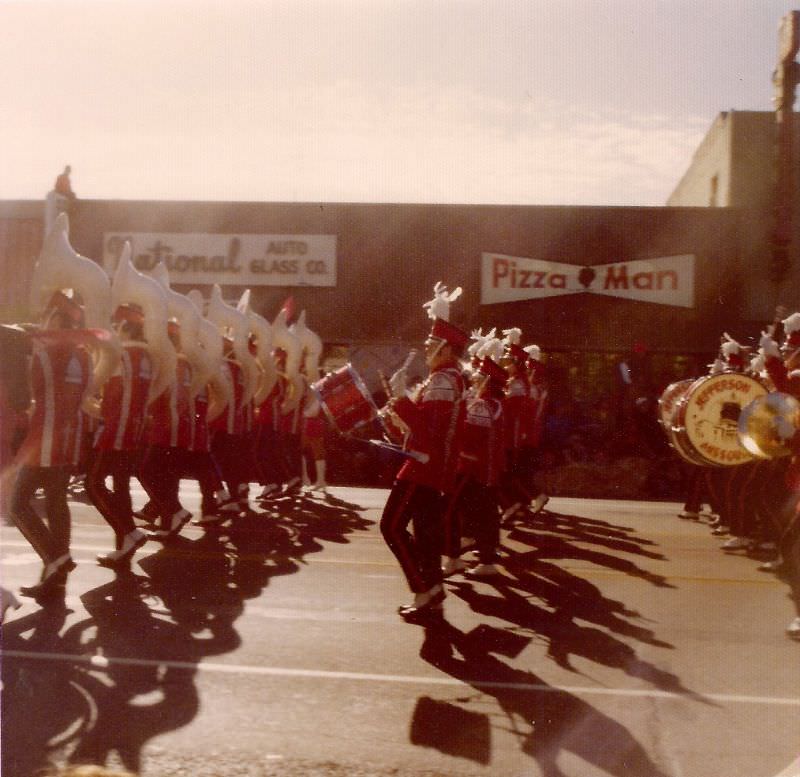
Marching bands are a core part of the parade experience. The Tournament of Roses Band performed that day, delivering a program of musical pieces that kept the energy high along the route. Dozens of other bands from schools and organizations across the country also marched, each bringing its own sound and style to the event.
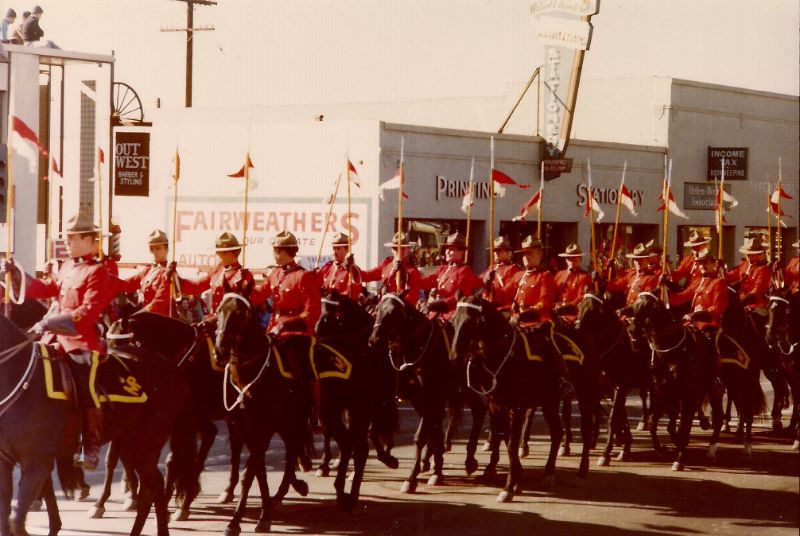
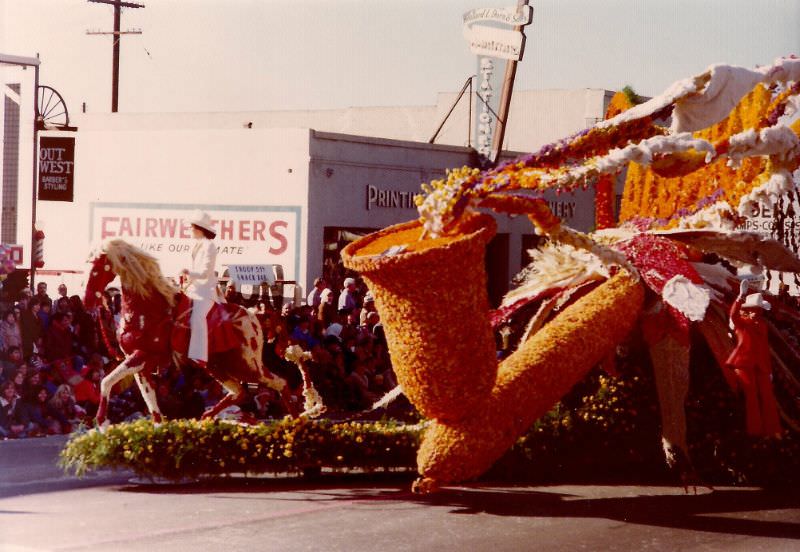
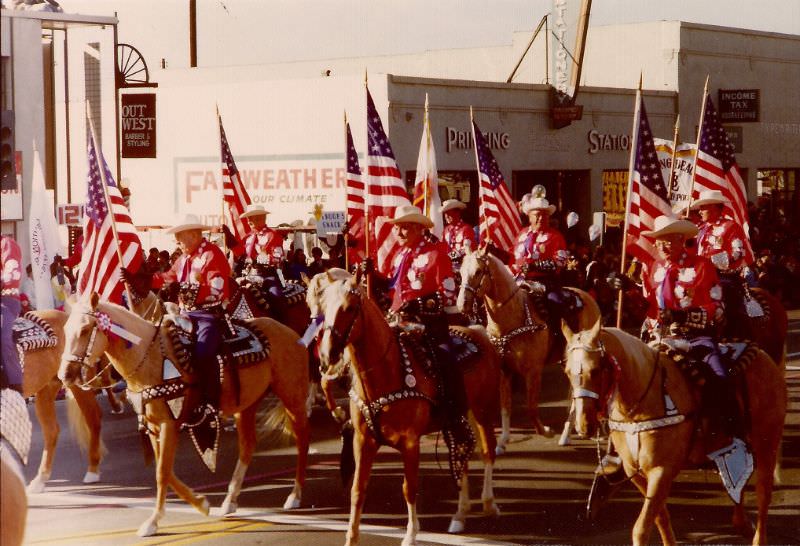
Equestrian units added another layer of pageantry to the 1976 parade. Riders dressed in formal and traditional attire guided their horses along the boulevard, representing ranching groups, historical societies, and civic organizations. Horsemanship has been part of the Tournament of Roses since its earliest years.
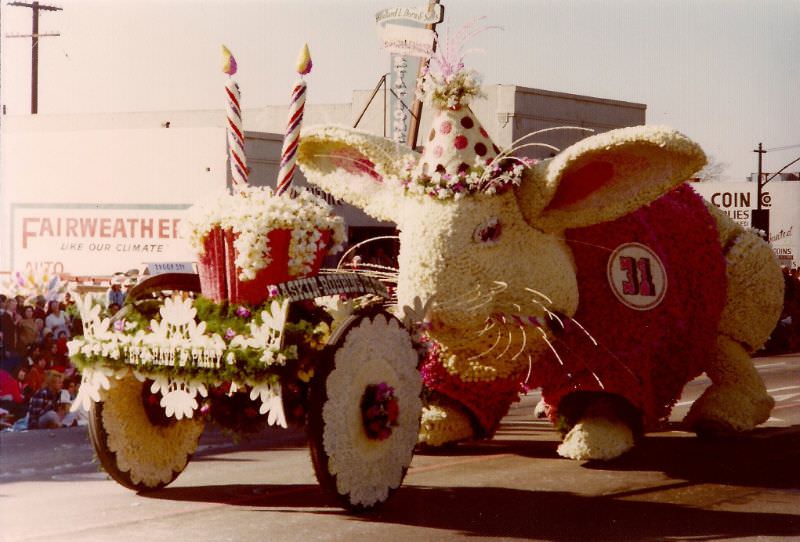
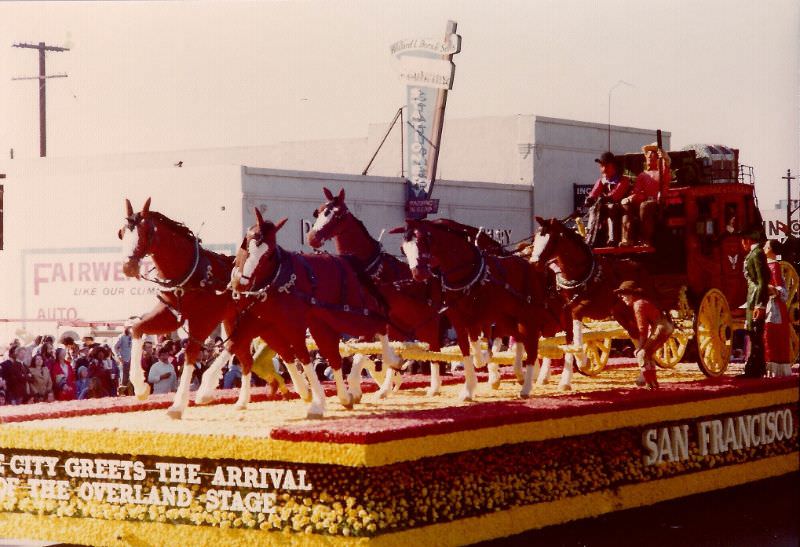
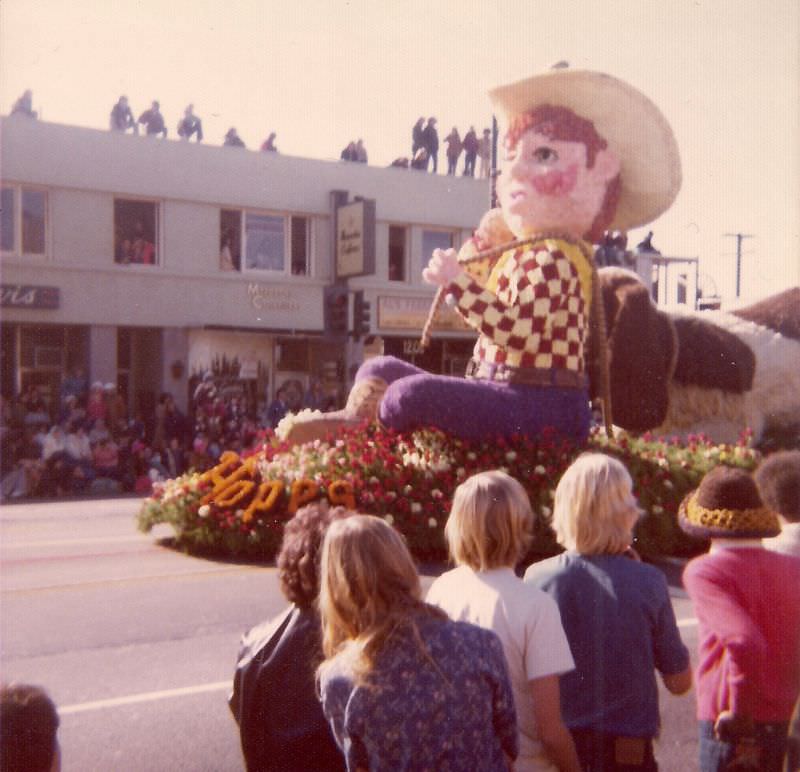
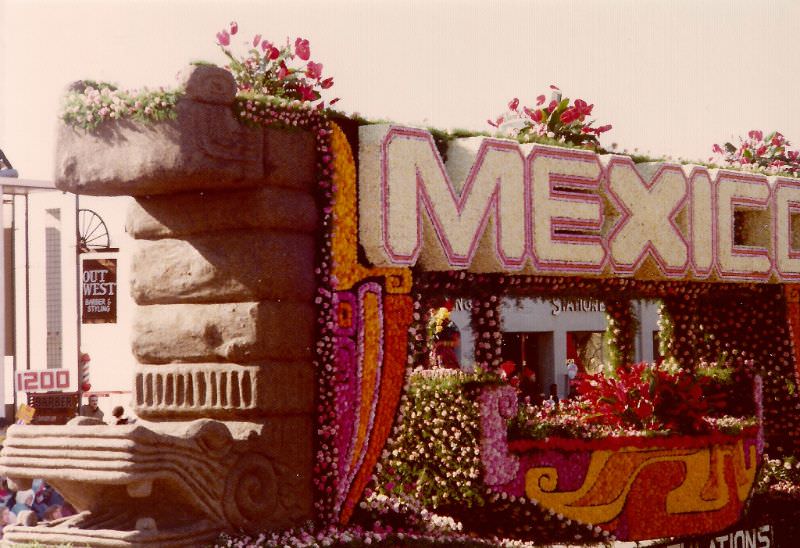
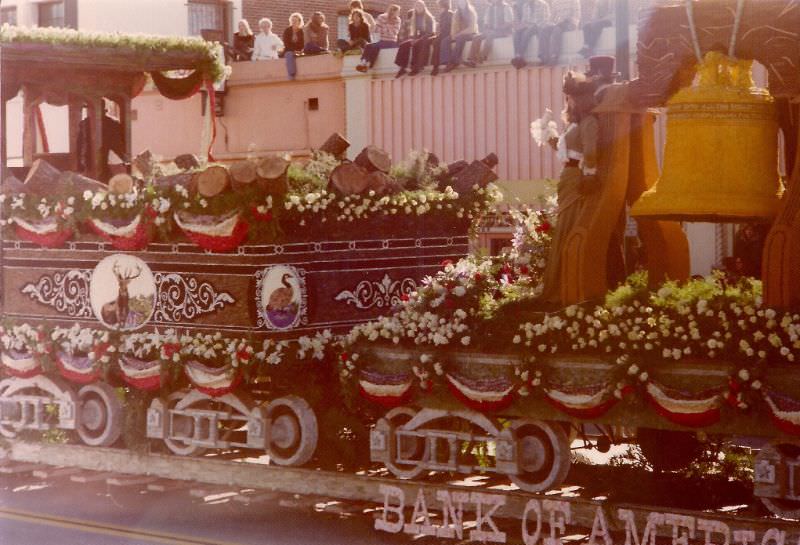
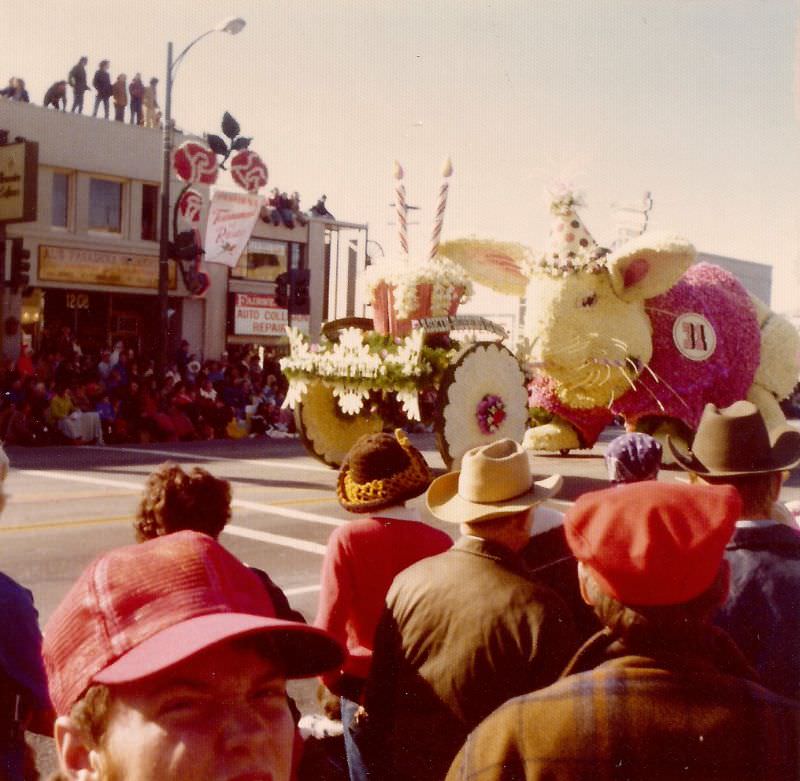
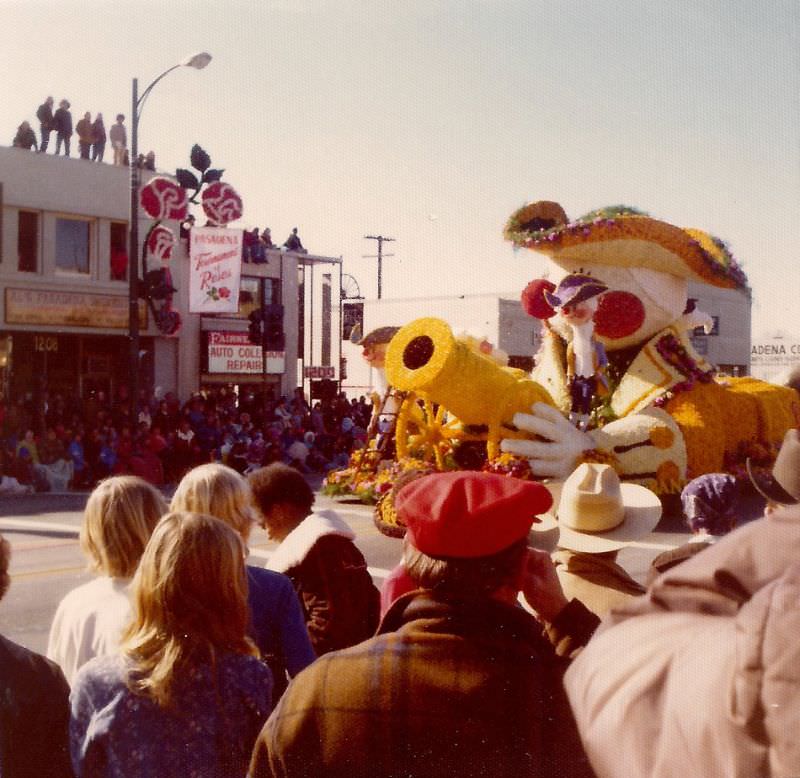
The “People, People Everywhere” theme gave float designers a broad canvas to work with. Entries depicted people from different cultures, walks of life, and historical periods — all rendered in petals, seeds, and foliage. The variety of interpretations on display reflected both the creativity of the builders and the openness of the theme itself.
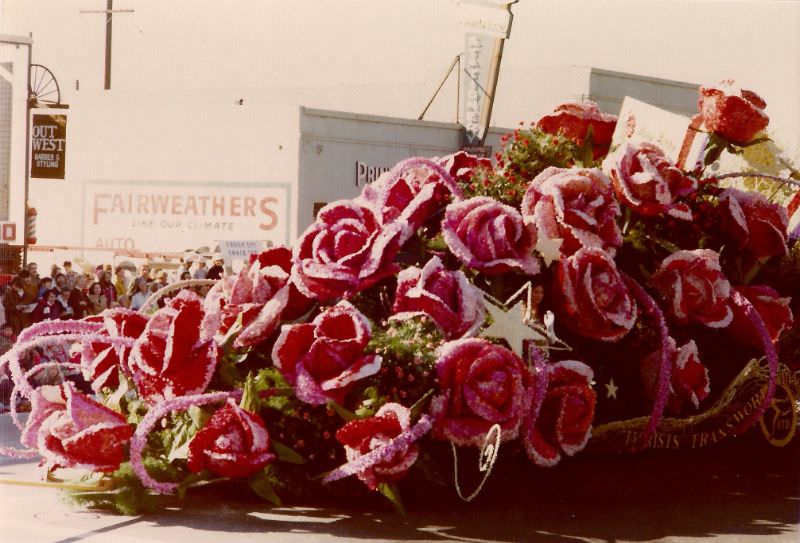
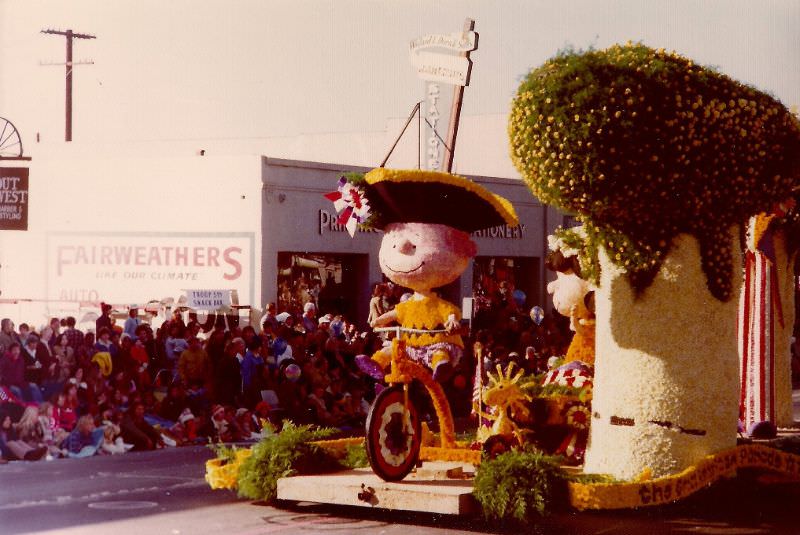
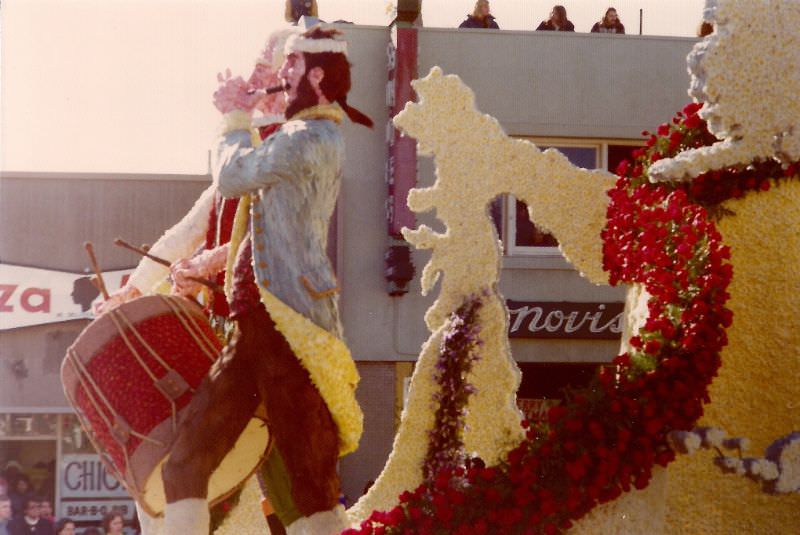
Thousands of spectators lined Colorado Boulevard early on New Year’s morning, many having camped overnight to secure a good spot. The parade route stretches 5.5 miles, and covering it on foot remains a tradition for many Southern California families who attend year after year.
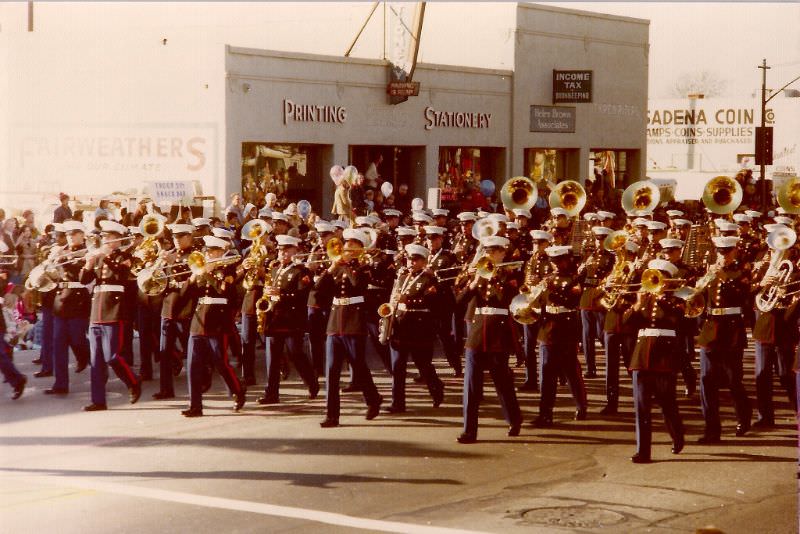
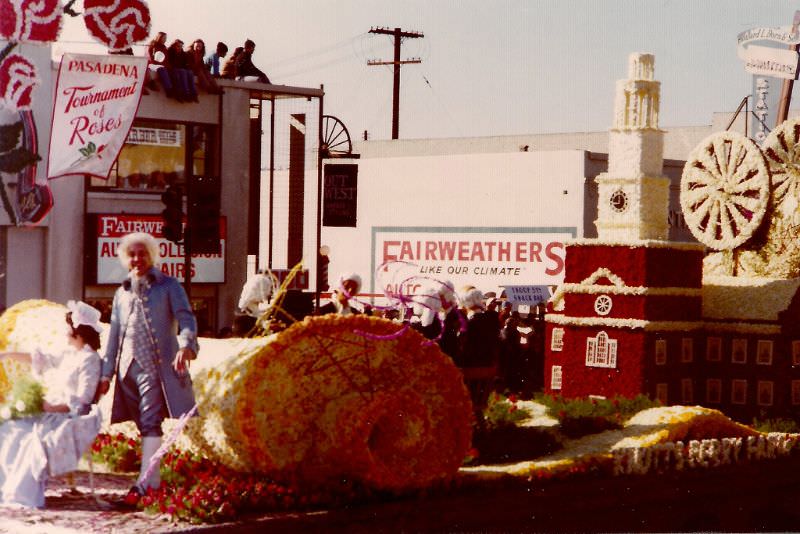
Float sponsors in 1976 included corporations, civic groups, cities, and nonprofit organizations. Each sponsor worked with professional float builders or volunteer crews to bring their vision to life. The cost and labor involved were substantial, with some floats requiring tens of thousands of individual flowers placed by hand in the days before the parade.
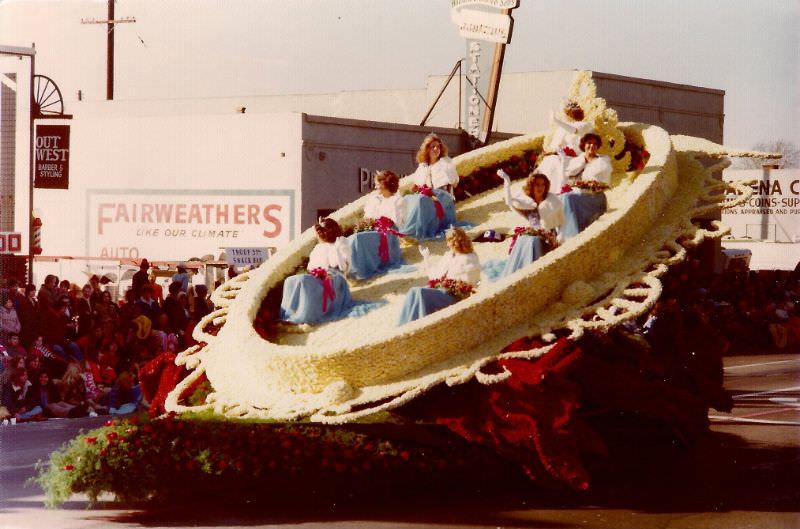
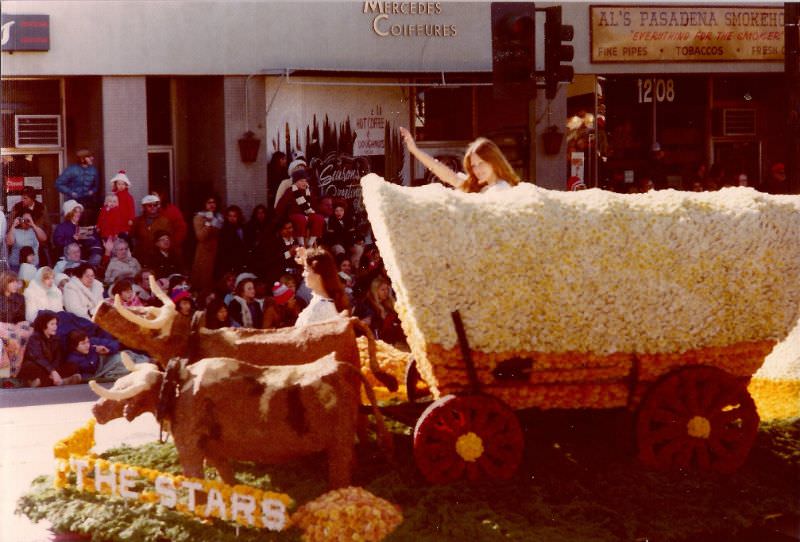
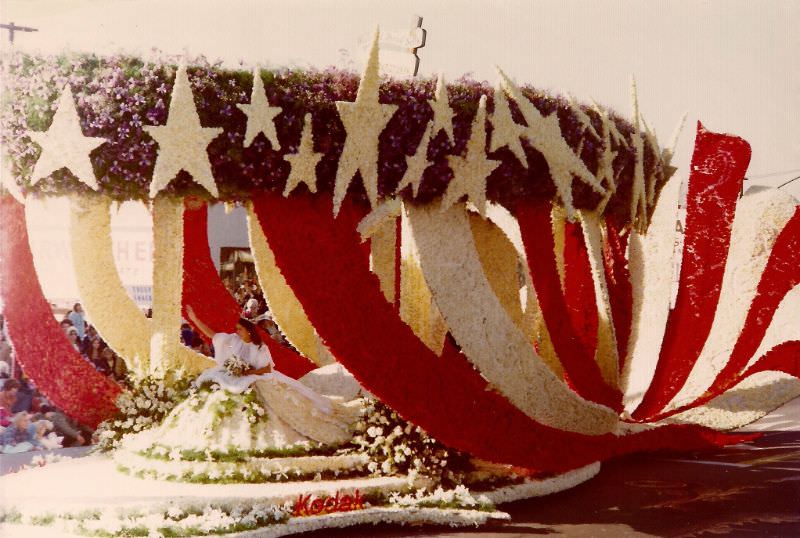
Television coverage brought the 1976 parade into living rooms across the United States and beyond. Network cameras captured the floats from multiple angles, giving home viewers a close look at the intricate floral work that would be impossible to see clearly from the sidewalk.
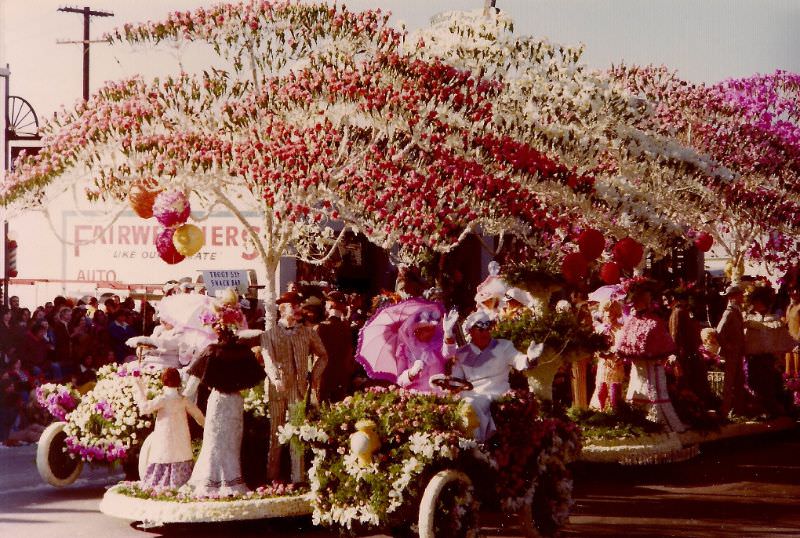
The Rose Queen and her court rode in the parade as well. Selected through a scholarship competition among Pasadena-area high school students, the queen and her princesses represented the host city on the national stage. Their appearance on floats draped in roses was one of the most photographed moments of the day.
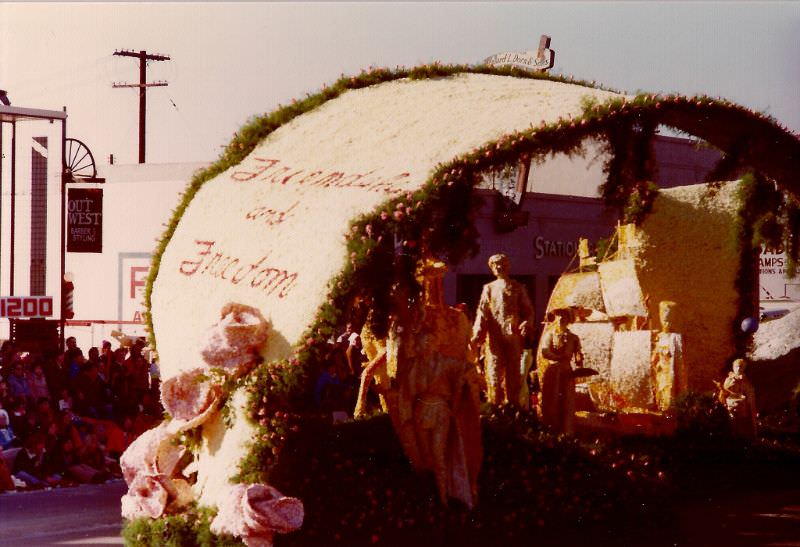
Behind every float was a team of decorators working through the final days of December. Fresh flowers are applied only in the last 24 to 48 hours before the parade to keep them from wilting. Volunteers and paid workers alike work overnight shifts to meet the deadline, applying blooms petal by petal under artificial lighting in large warehouses.
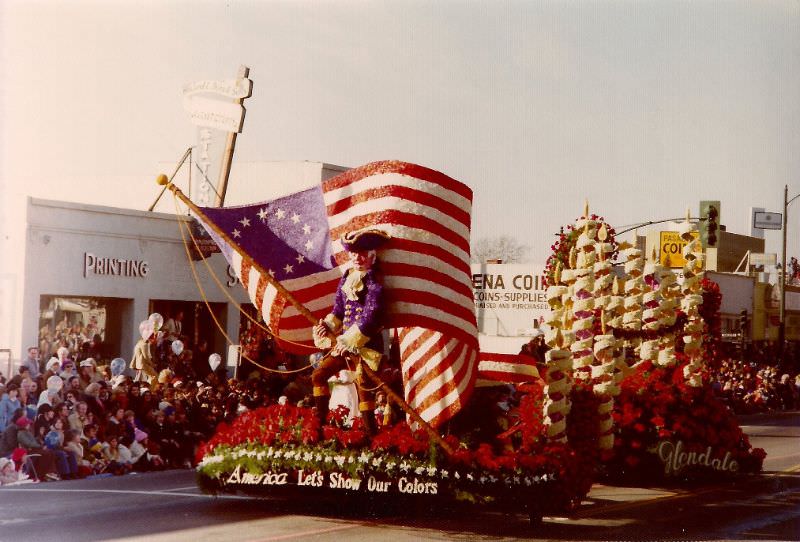
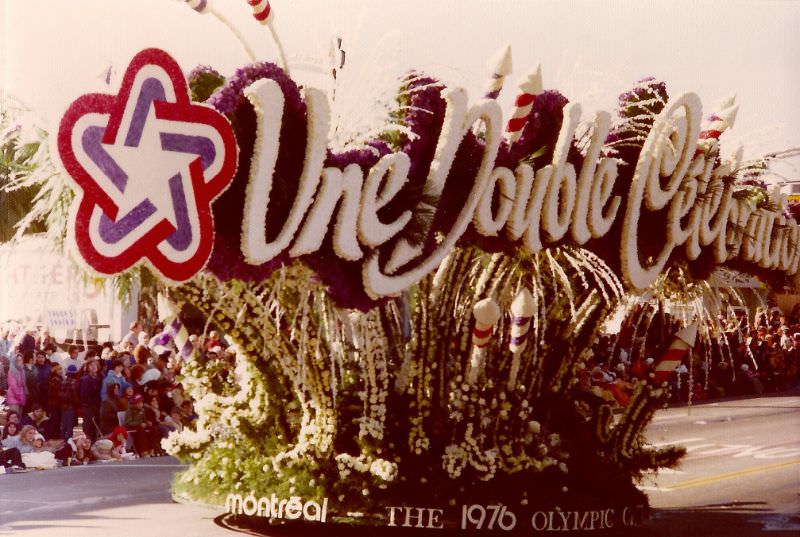
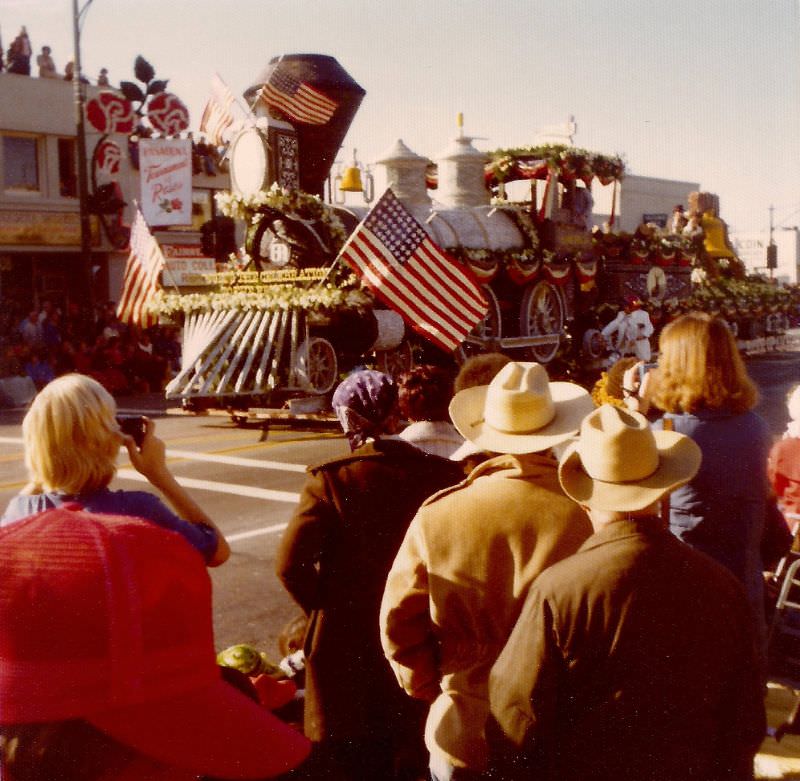
The 1976 parade took place during America’s Bicentennial year, though the Rose Parade’s own theme focused specifically on the human element rather than patriotic history. The broader national mood — marked by two hundredth anniversary celebrations throughout 1976 — was nonetheless part of the cultural backdrop for everyone watching and participating.
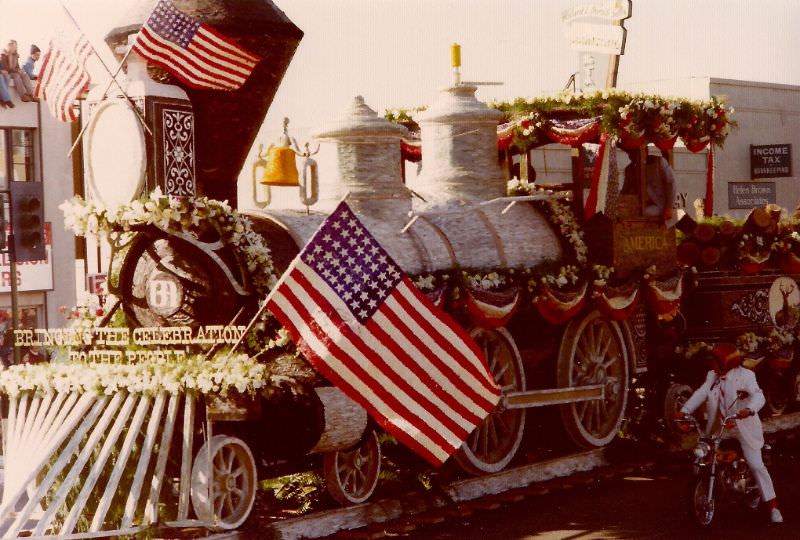
Judges evaluate Rose Parade floats in several categories, including most beautiful, most colorful, most innovative use of floral material, and best use of color and design. Awards are presented to winning entries after the parade concludes, recognizing the months of effort that each float represents.
The sounds of the 1976 parade ranged from brass fanfares to drumline cadences to the clatter of hooves on pavement. Each band kept a strict pace to maintain spacing between floats, and the combined noise from dozens of performing groups created a wall of sound that carried well beyond the curbside crowds.
The Tournament of Roses Association, which organizes the parade, was founded in 1895 and has managed the event ever since. Its volunteer members — known as the White Suiters for their formal white uniforms — coordinate logistics, judging, and operations throughout parade day and the weeks leading up to it.
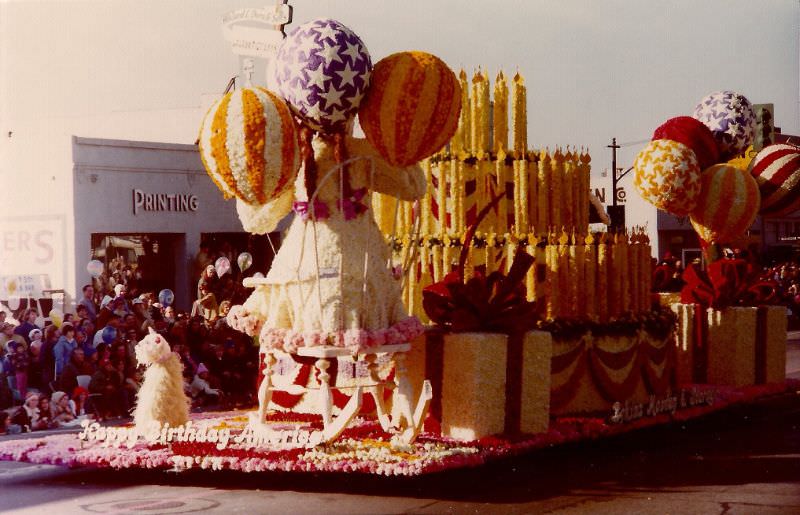
Floats from the 1976 parade varied widely in scale. Some were compact, showcasing a single detailed scene, while others stretched to the maximum allowable dimensions — up to 55 feet long, 18 feet wide, and 35 feet tall. The largest entries required special engineering to move safely through the route without hitting overhead wires or street fixtures.
Equestrian entries in the 1976 parade included both Western and English riding styles. Some groups wore Spanish Colonial costumes, honoring California’s ranching heritage, while others represented sheriff’s posses, riding clubs, and ceremonial military units. Together, they kept alive a form of parade participation that dates to the event’s very first year.
The January 1st start time has always been fixed, with one historical exception: when New Year’s Day falls on a Sunday, the parade is moved to January 2nd to avoid disrupting church services. In 1976, January 1st fell on a Thursday, so the parade ran on its traditional date without any shift.