
After World War II, Rome entered one of the most exciting chapters in its long history. The city rebuilt itself at a remarkable pace through the late 1940s and into the 1950s, drawing workers, architects, filmmakers, tourists, and celebrities from across the world. Streets that had been quiet and cautious during wartime were now packed with Vespas, Fiats, double-decker buses, and pedestrians going about their daily lives. The energy was unmistakable.
This was the era of the so-called Italian Economic Miracle — a period of rapid industrial growth that transformed cities like Rome almost overnight. New buildings went up alongside ancient ruins. Modern traffic filled roads that had existed for thousands of years. The contrast between old and new defined the city’s look during this decade.
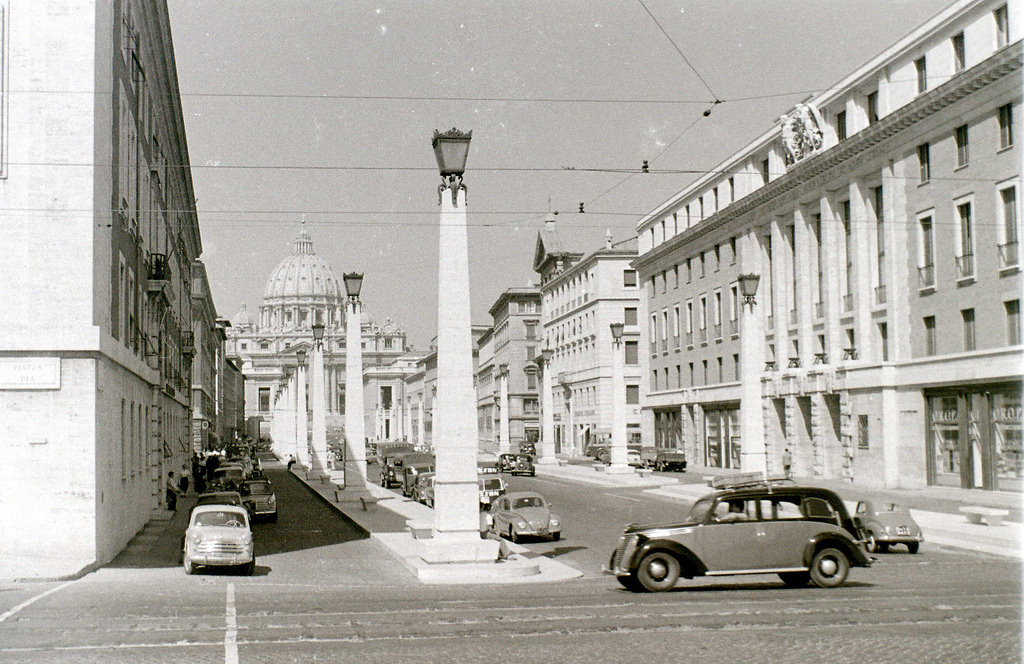
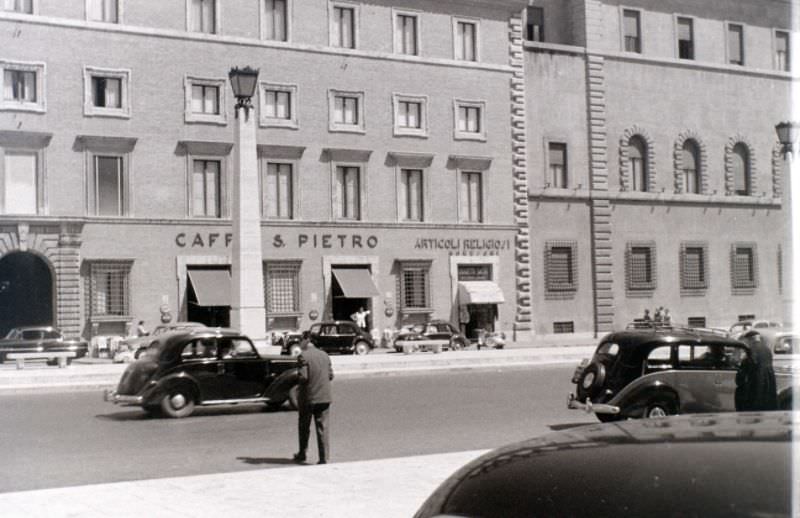
One of Rome’s most iconic thoroughfares, Via Conciliazione, was a focal point of daily movement. The wide boulevard leading directly to St. Peter’s Basilica was lined with traffic and pedestrians, connecting the Vatican to the rest of the city. It had only been completed in 1936, making it relatively new by Roman standards, and in the 1950s it buzzed with life.
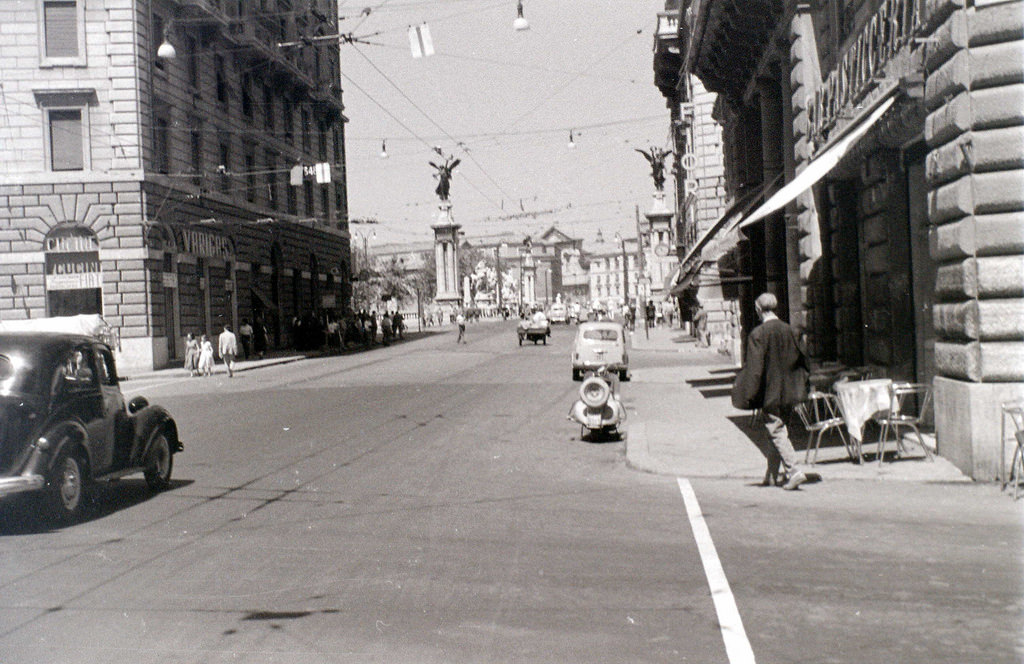
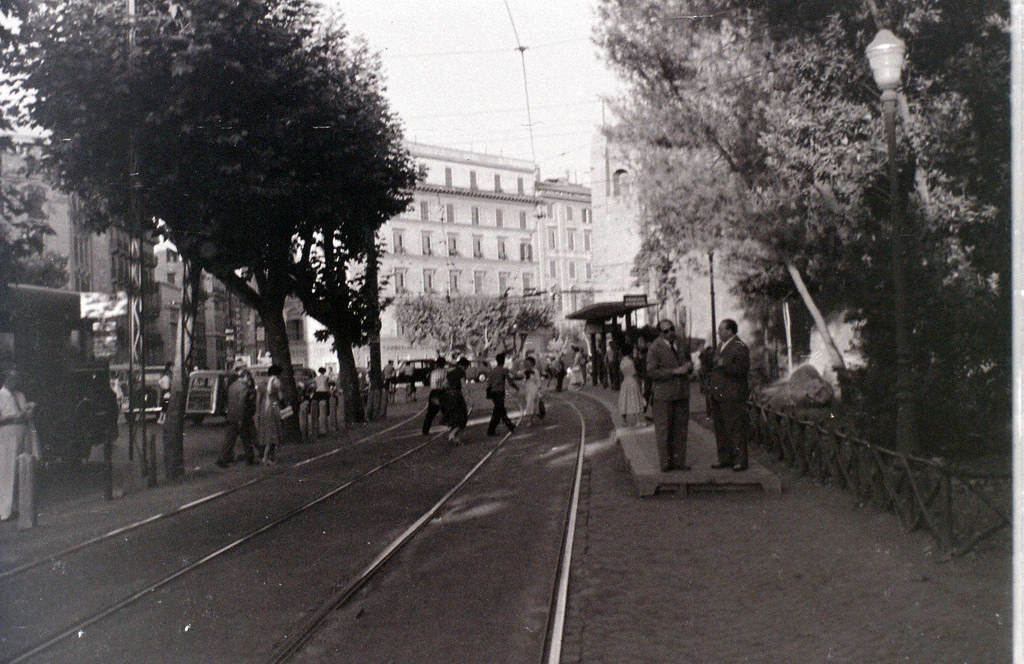
Corso Vittorio Emanuele was another artery at the heart of Roman street life. Cutting through the historic center, it served as a main route for both locals commuting to work and visitors exploring the city. Trams, cars, and cyclists shared the road in a organized chaos that was very much Roman in character.
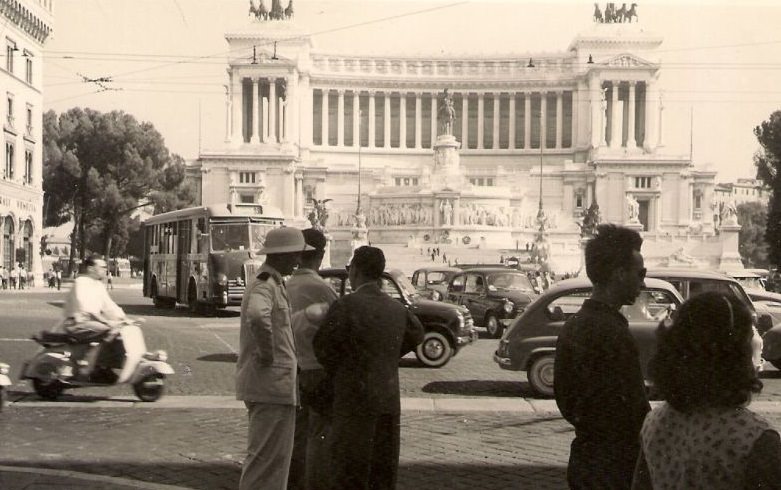
The Victor Emmanuel II Monument — known locally as the Vittoriano — dominated the skyline at the foot of the Capitoline Hill. Built to honor the first king of unified Italy, this massive white marble structure was a defining landmark of the city. By the 1950s, it served as both a national symbol and a busy meeting point for Romans and tourists alike.
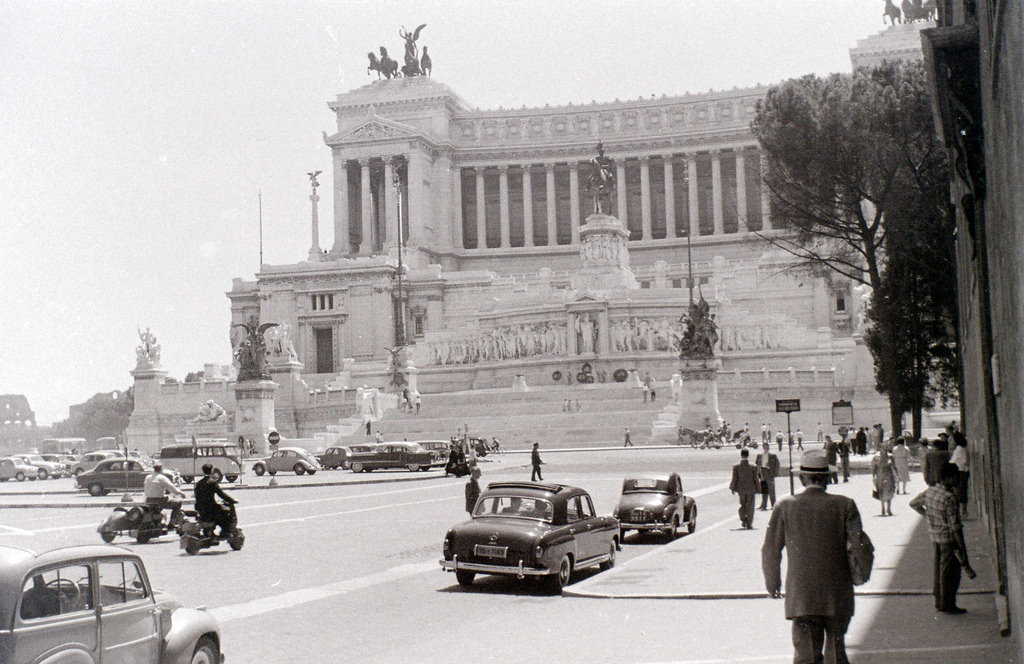
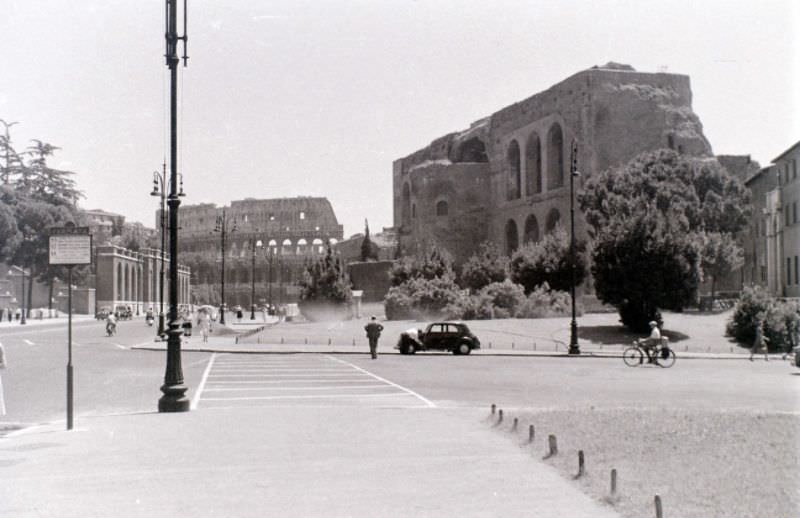
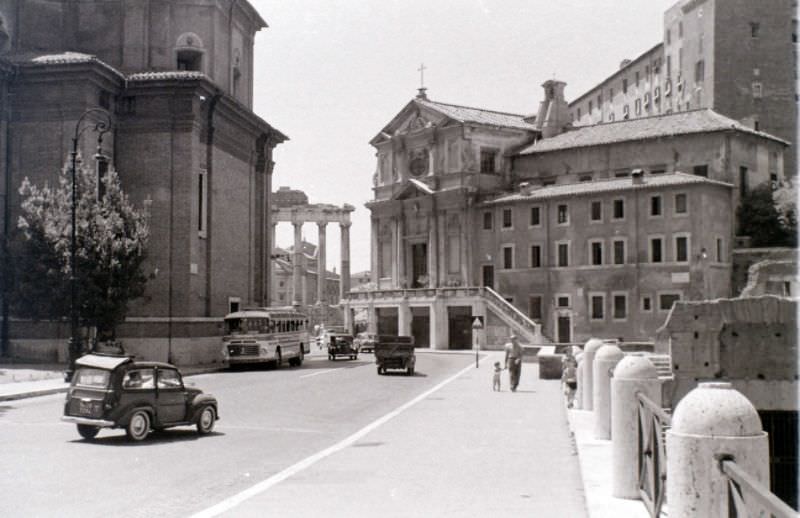
Via dei Fori Imperiali runs through the heart of ancient Rome, passing the Roman Forum and several of the Imperial Fora. Mussolini had constructed the road in the 1930s, cutting straight through archaeological zones. By the 1950s, it had become one of the city’s most-traveled streets, offering a daily commute set against the backdrop of two-thousand-year-old ruins.
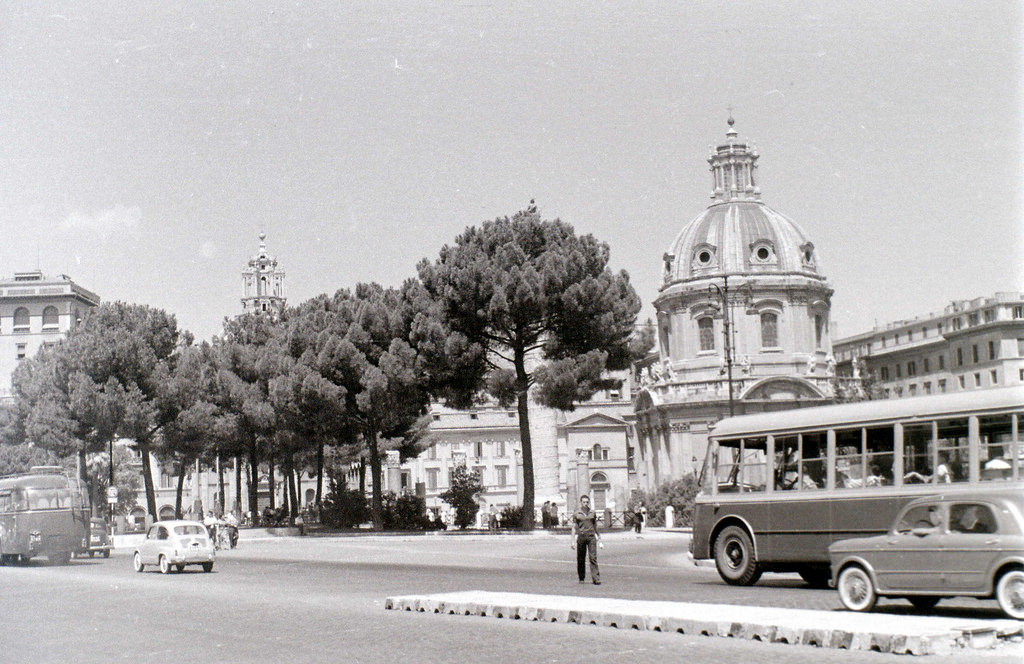
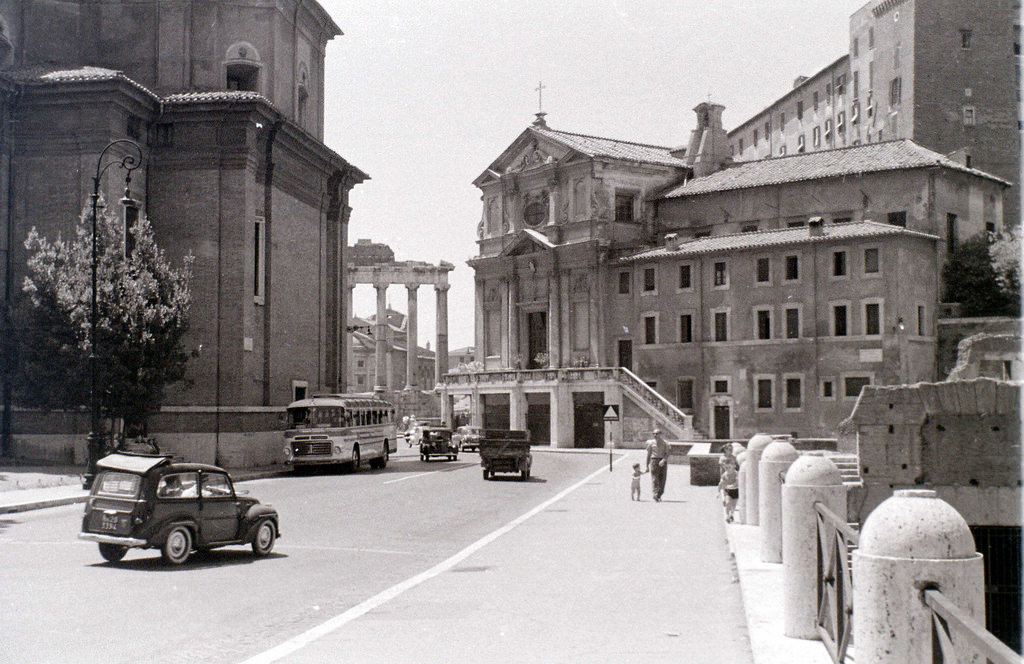
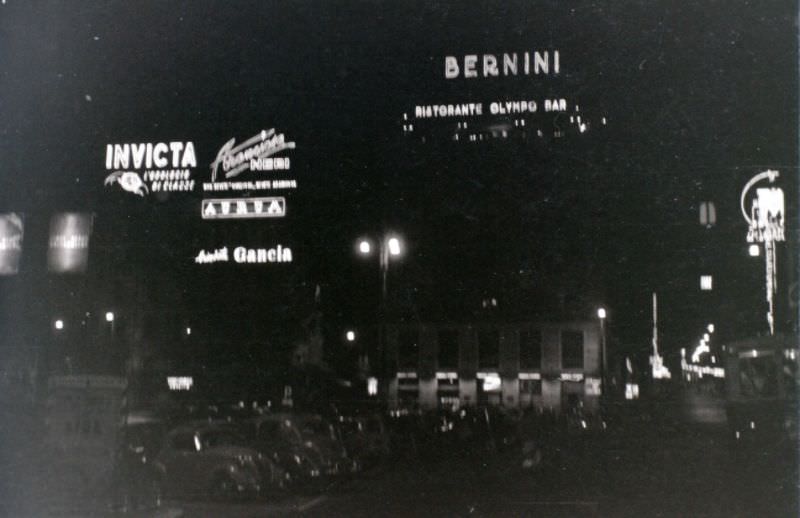
Via Barberini and the surrounding Barberini neighborhood were commercial and busy. Shops, cafes, and offices filled the buildings along this stretch, drawing a steady flow of people throughout the day. The area sits near Piazza Barberini, home to Bernini’s famous Triton Fountain, which made it a popular stop for visitors on their way through the city.
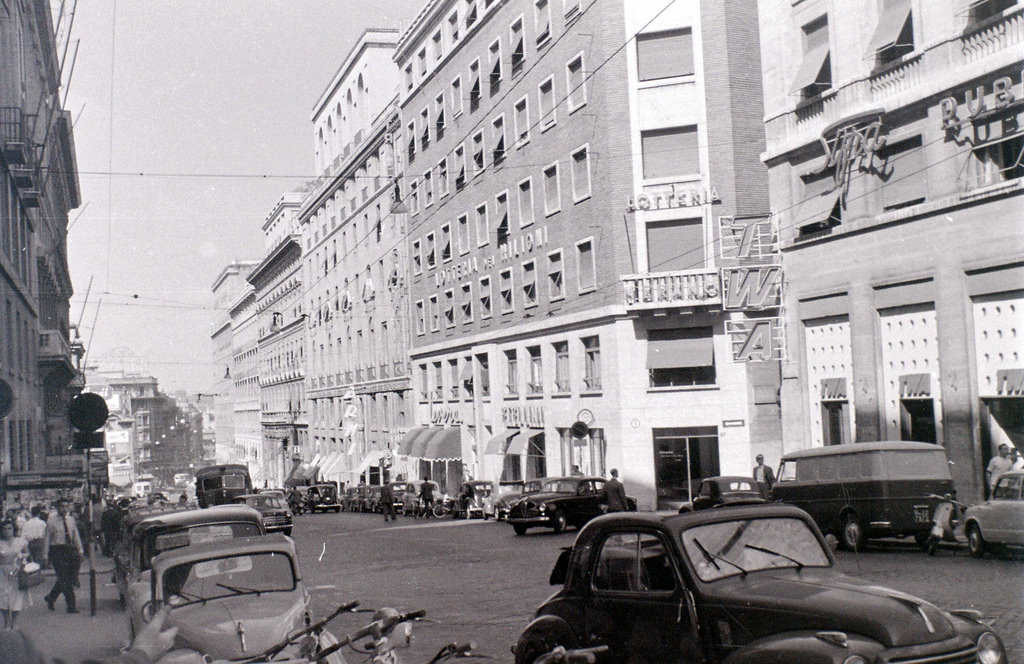
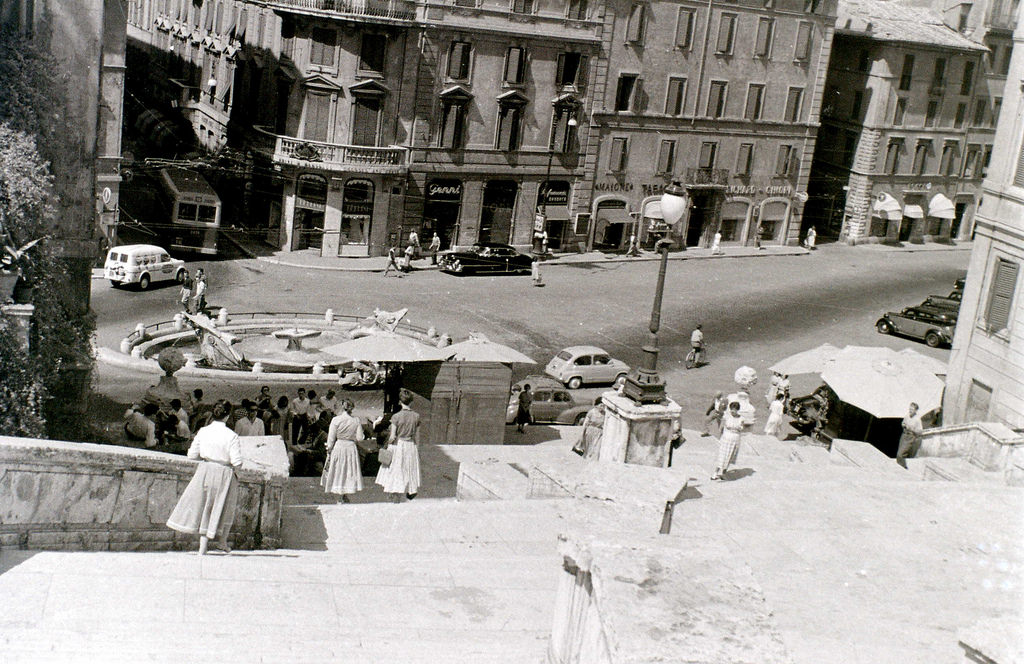
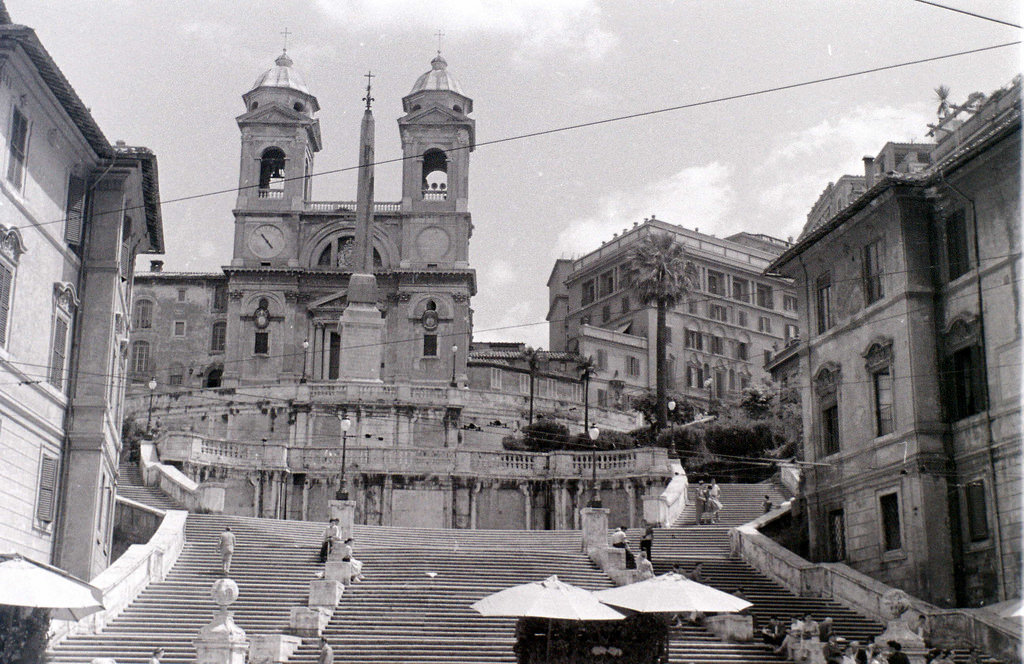
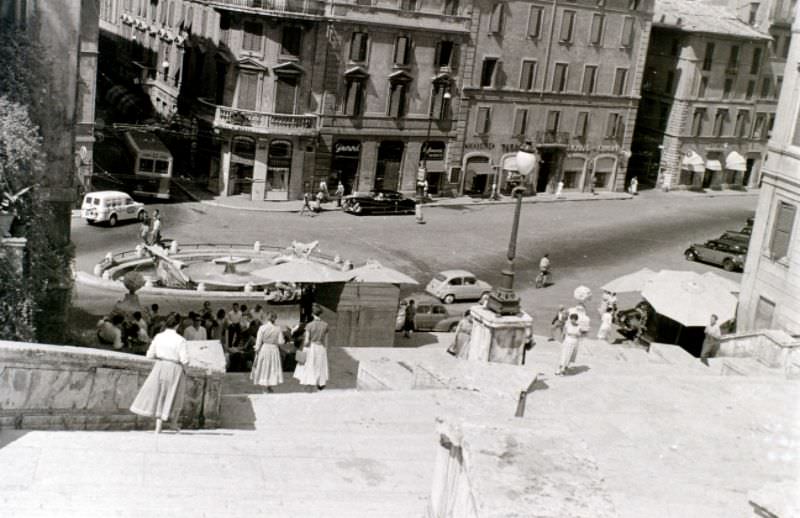
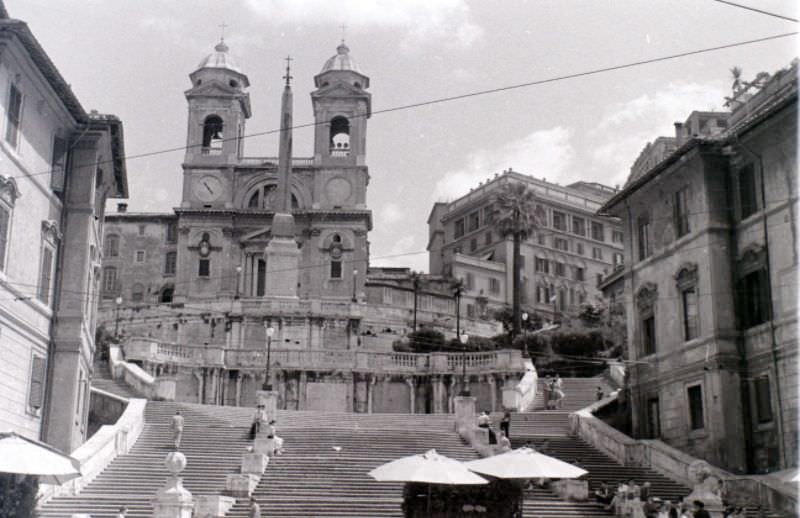
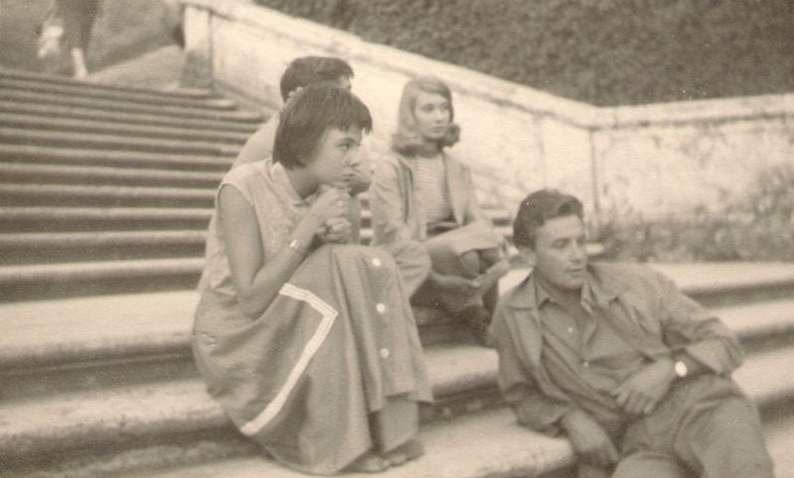
The Spanish Steps were a magnet for both locals and tourists throughout the decade. The 135 steps leading up to the Trinità dei Monti church had been a social gathering spot since the 18th century, and in the 1950s they took on a new kind of glamour. Artists, students, and fashionable visitors from across Europe and America spent hours there, sitting on the steps, watching the world go by.
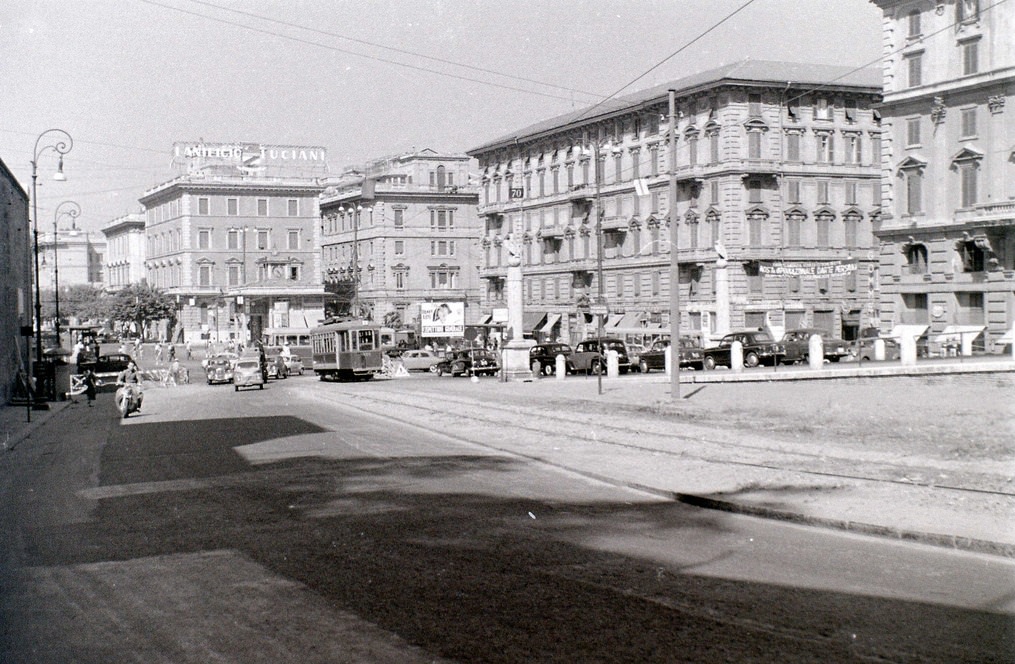
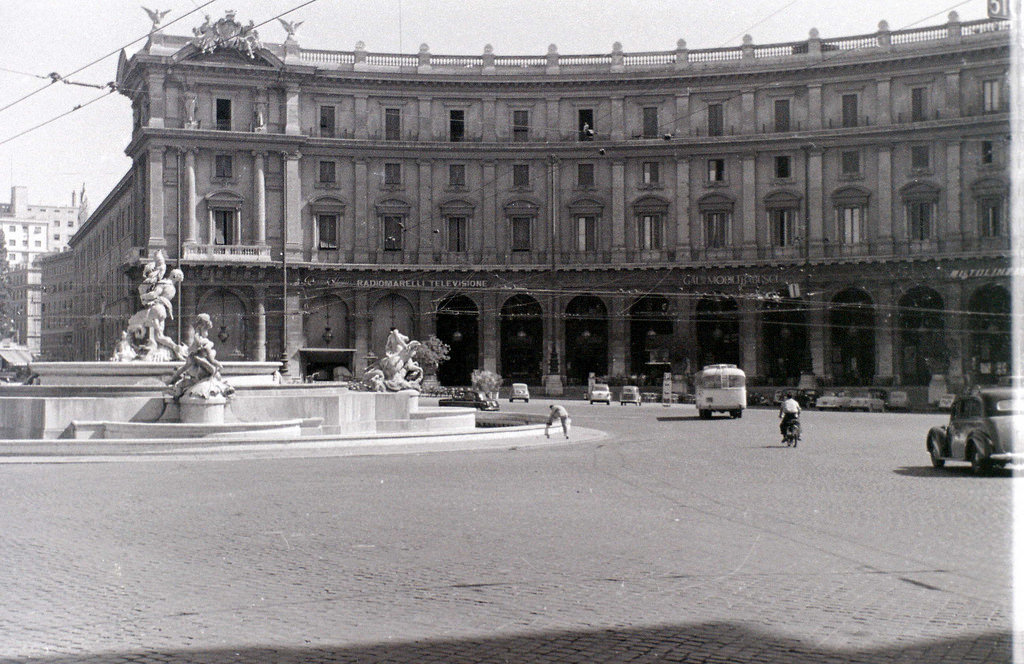
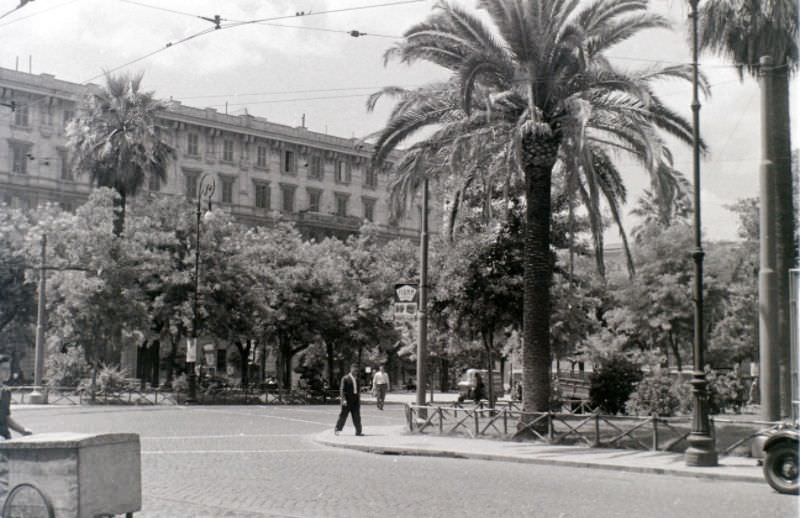
Piazza della Repubblica, built around the ruins of the Baths of Diocletian, was a major transportation hub in 1950s Rome. Its large semicircular colonnades framed the piazza, and the Fountain of the Naiads stood at its center. The square sat just outside Rome’s main railway station, Termini, making it one of the first sights many visitors encountered when arriving in the city.
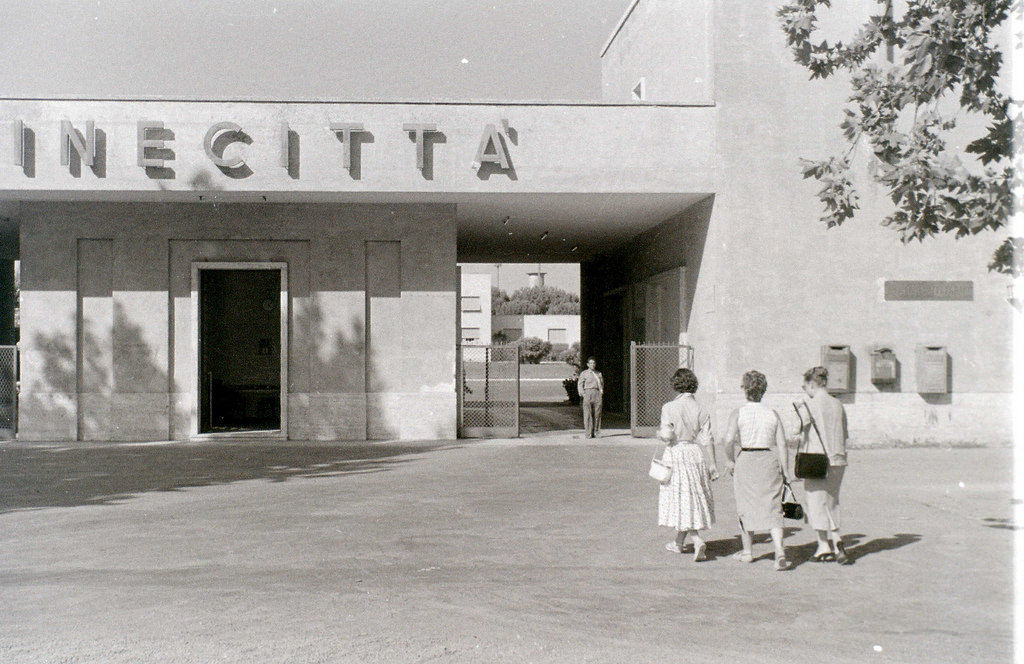
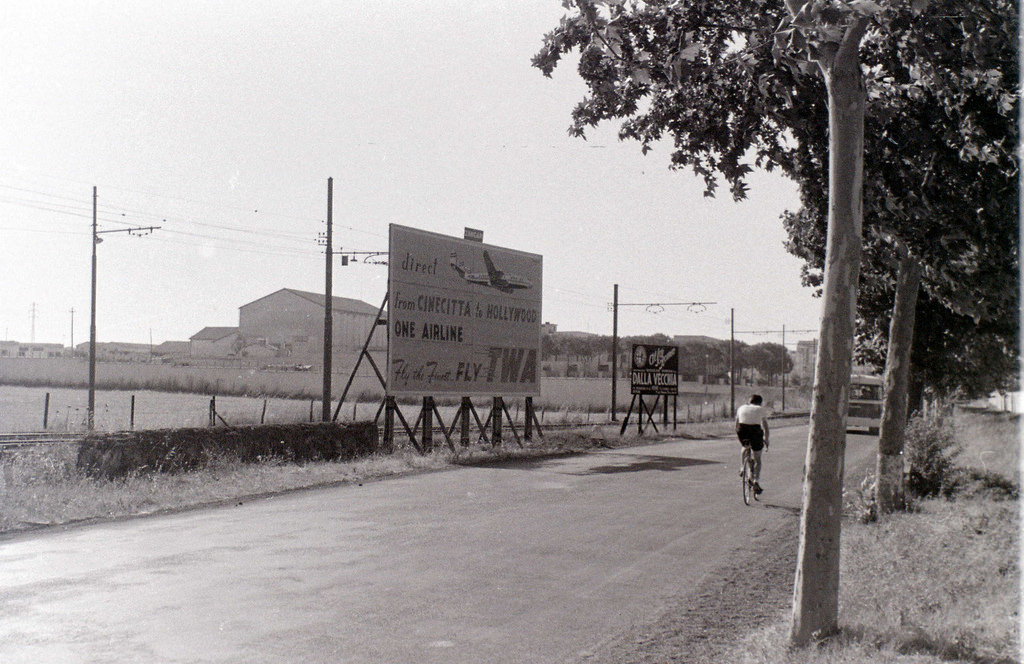
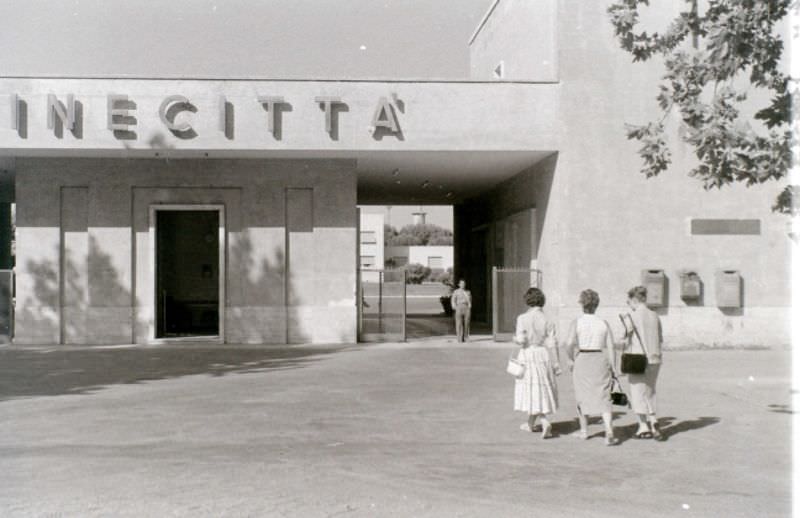
Rome in the 1950s was also the movie capital of Europe. Cinecittà Studios, located on the Via Appia Nuova on the outskirts of the city, produced some of the most famous films of the era. American studios relocated major productions to Rome to take advantage of lower costs and Italian talent. Films like Quo Vadis, Roman Holiday, and Ben-Hur were either shot or partly produced at Cinecittà, earning Rome the nickname “Hollywood on the Tiber.”
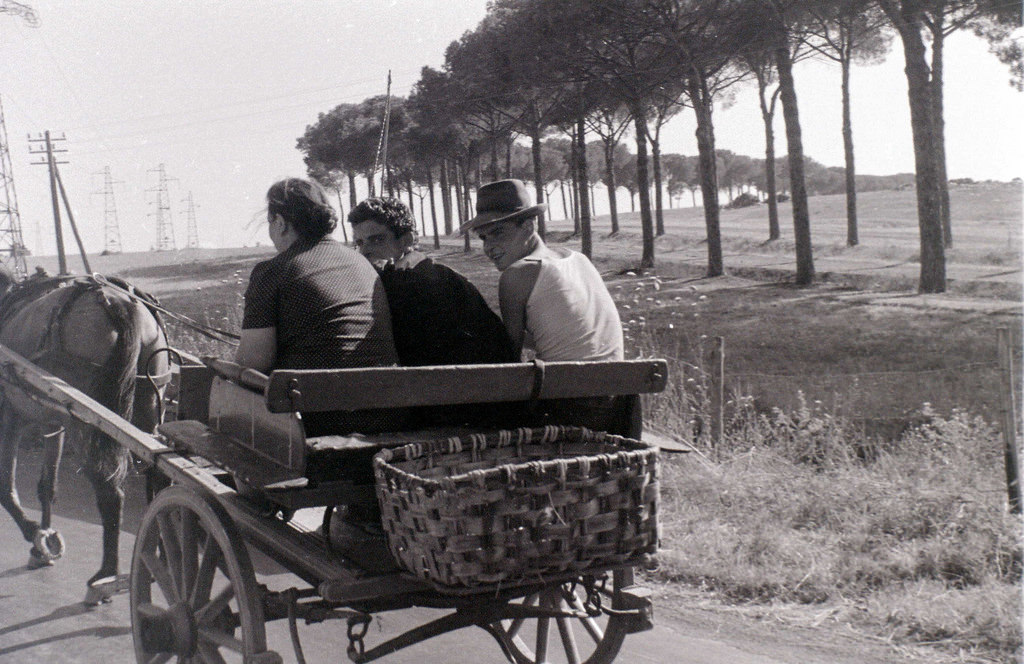
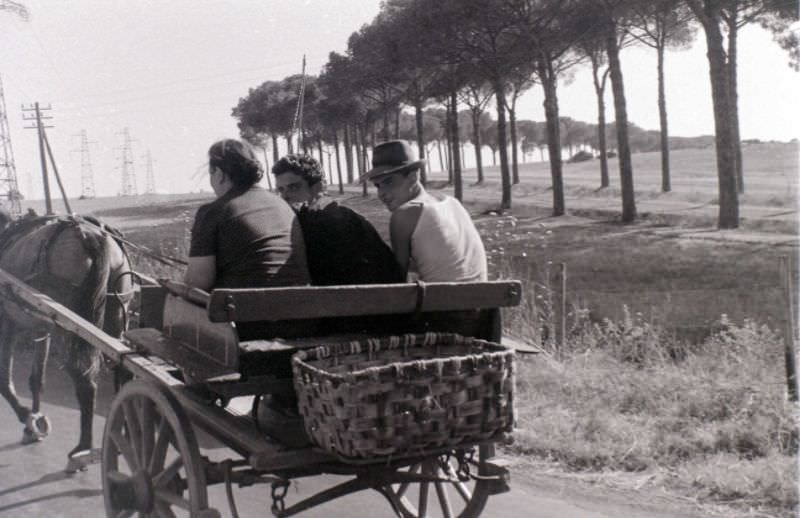
The ancient Appian Way, or Via Appia, stretched south from Rome and was one of the oldest and most important roads of the ancient Roman Republic. By the 1950s, sections of the road still passed through countryside dotted with tombs and ruins. It was a working road, used by vehicles and pedestrians, yet it felt like a direct connection to the ancient world.
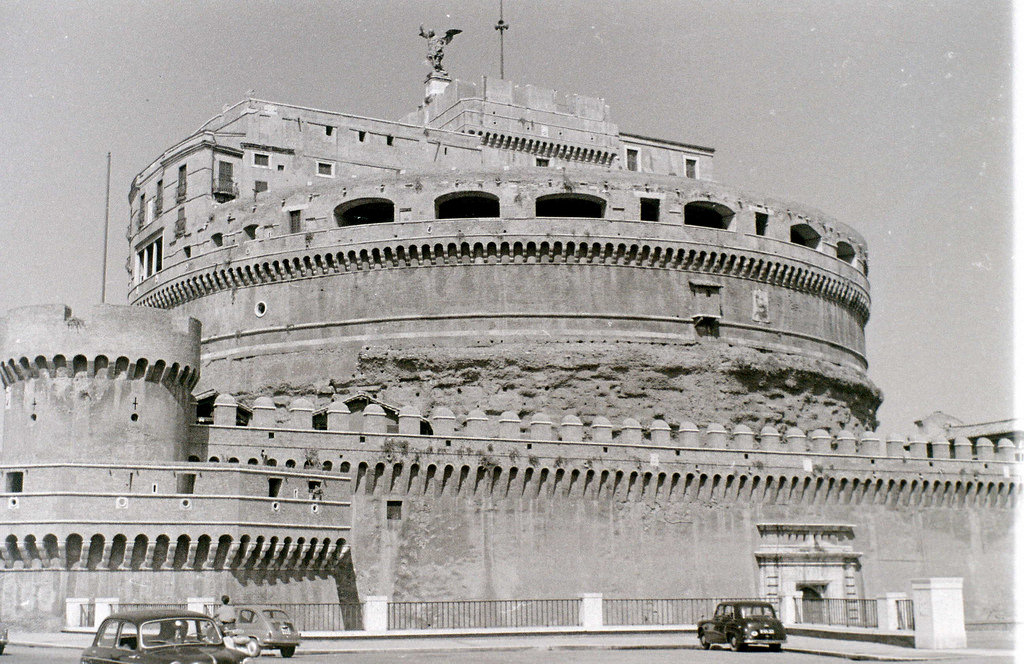
Castel Sant’Angelo, the cylindrical fortress on the banks of the Tiber River, was one of Rome’s most recognizable silhouettes. Originally built as a mausoleum for Emperor Hadrian in the 2nd century AD, it had served as a castle, prison, and papal refuge over the centuries. In the 1950s, it stood as a monument open to the public, with the Tiber flowing steadily beside it.
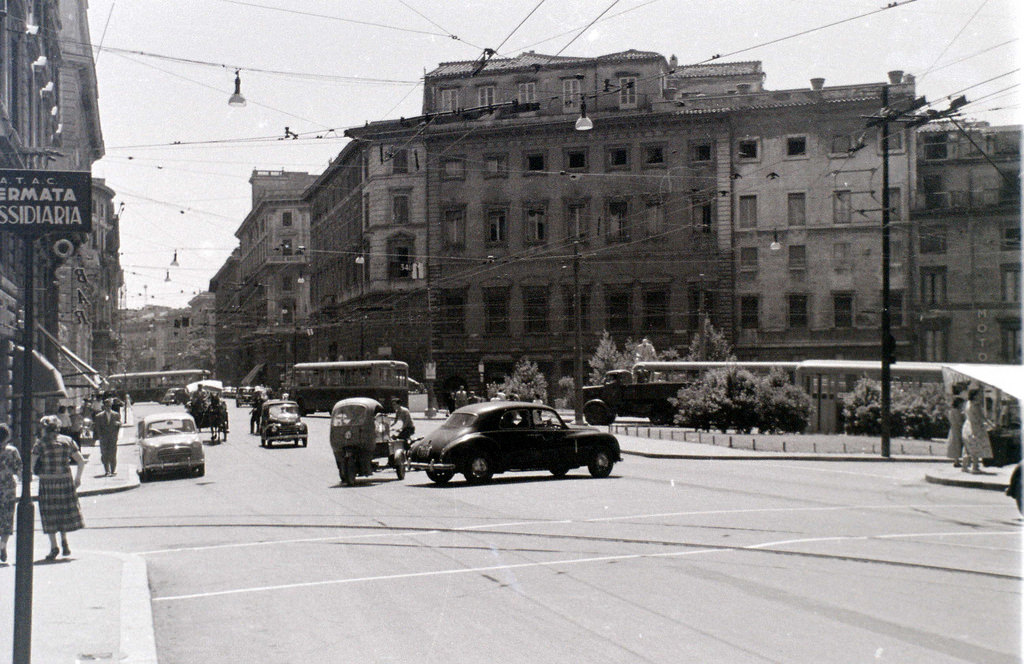
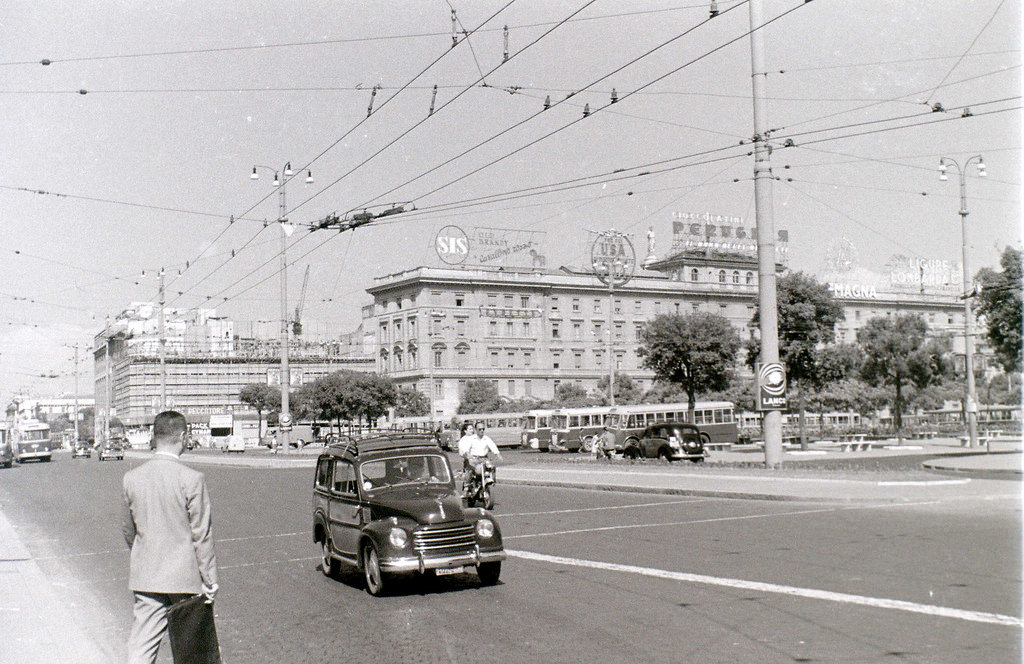
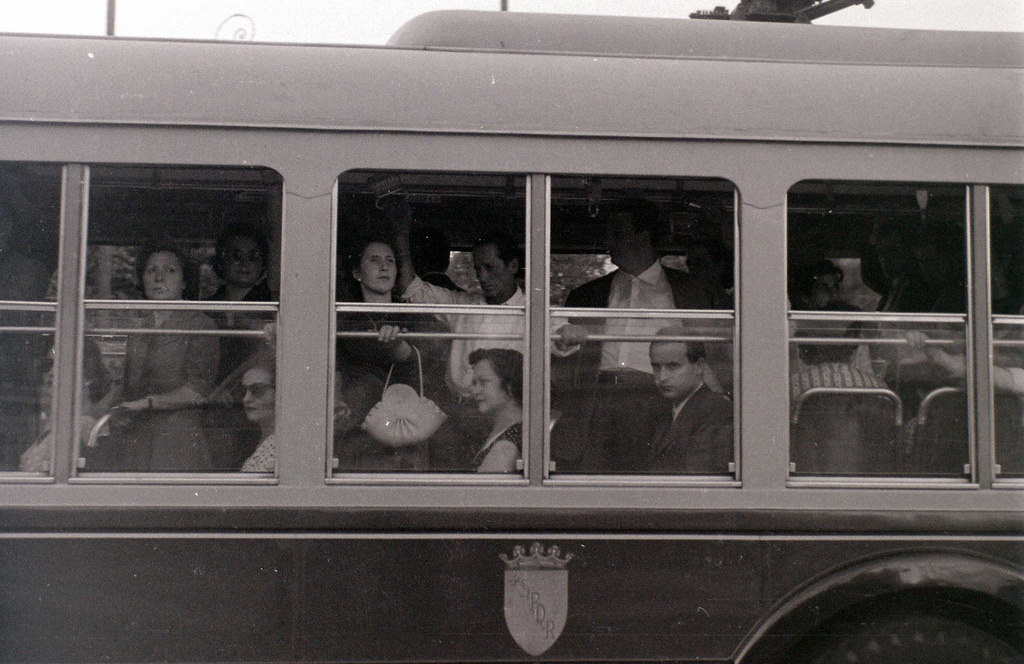
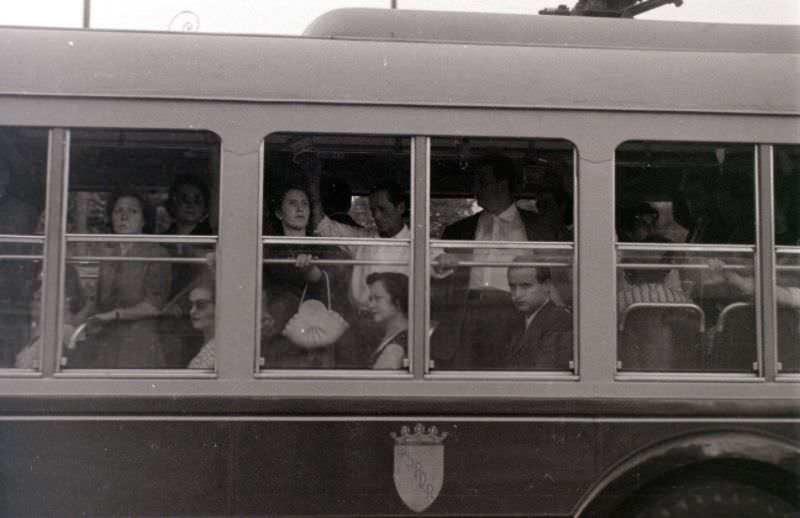
Public transportation was central to daily life in Rome. Buses carried thousands of workers, students, and shoppers across the city each day. The bus network expanded significantly during this period to keep up with the growing population and the increasing demands of a modernizing city.
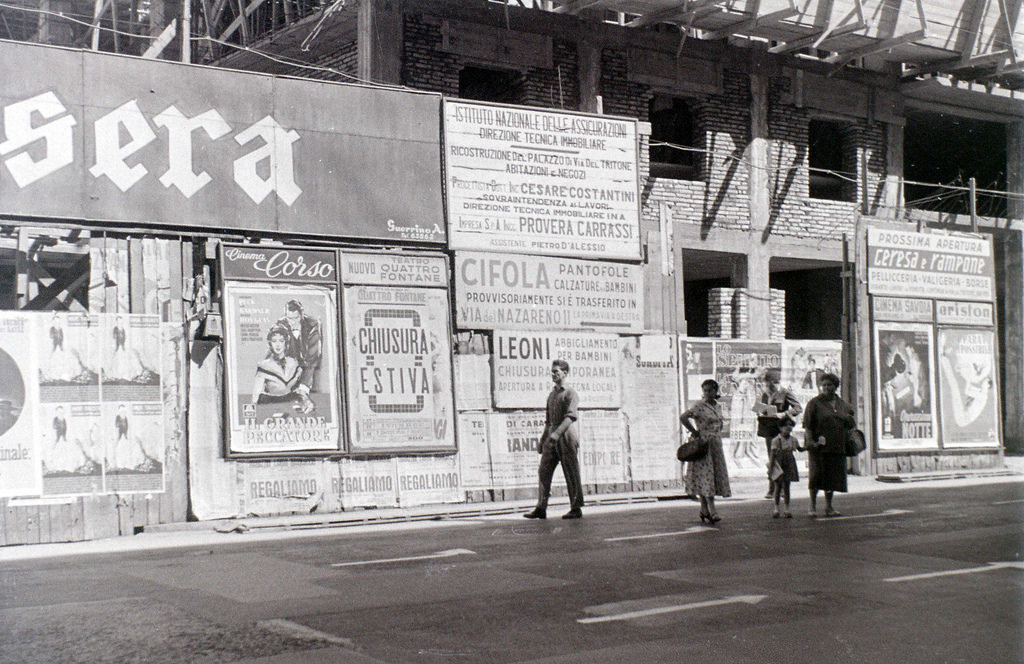
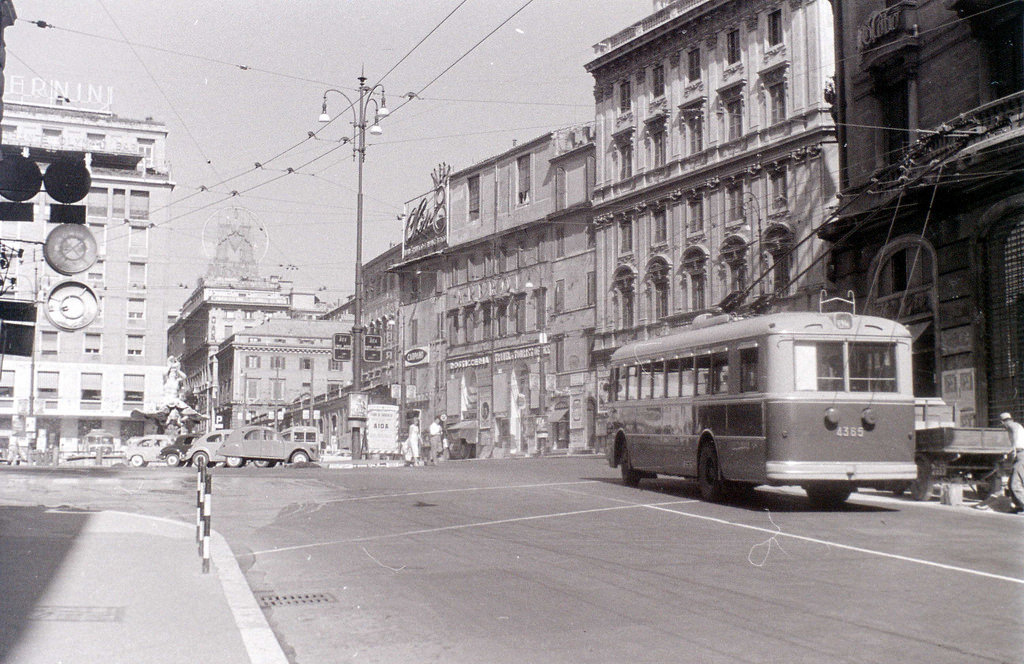
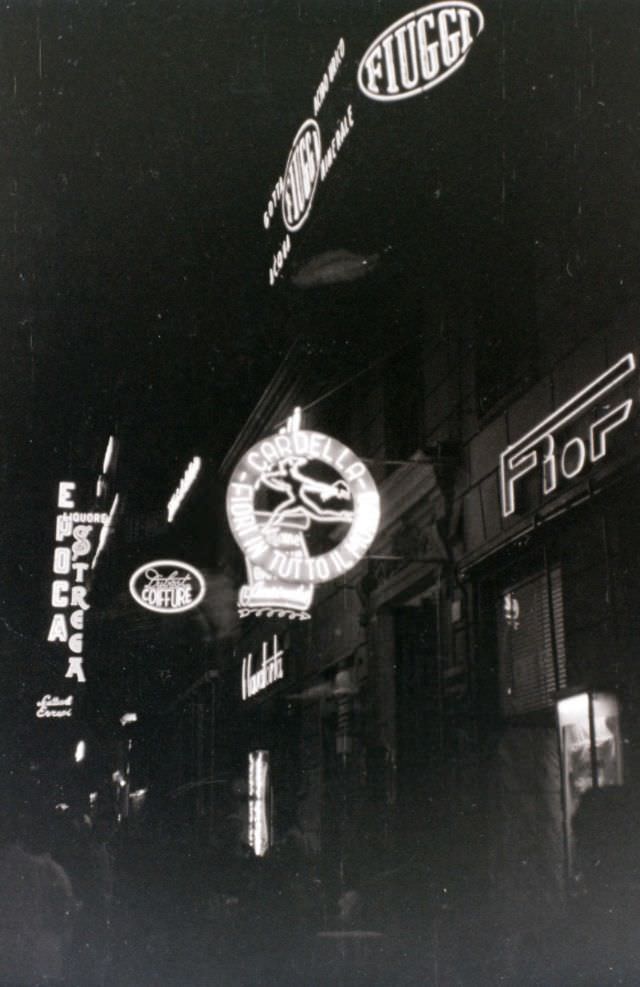
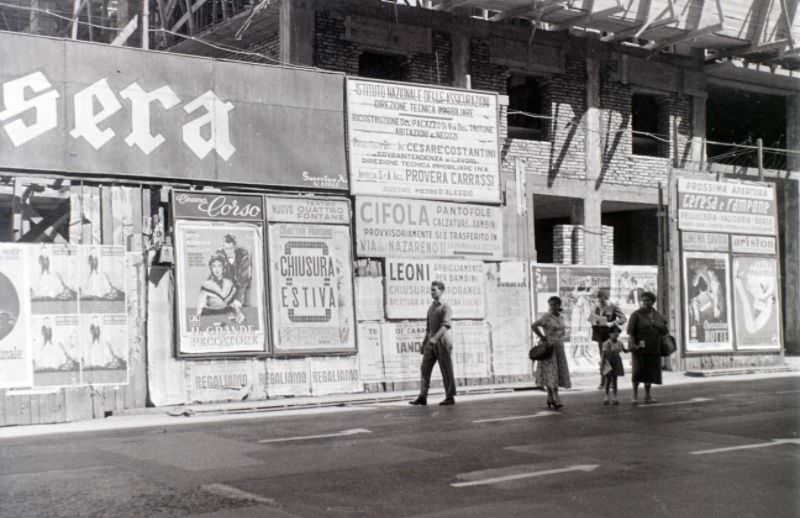
Via del Tritone connected the Trevi Fountain area to Piazza Barberini and was one of the busiest commercial streets in central Rome. Shops and businesses lined both sides, and the steady stream of foot traffic and vehicles made it one of the city’s most hectic corridors. At the Trevi Fountain itself — just a short walk away — visitors gathered in large numbers, already making it one of Rome’s top attractions long before it became the global icon it is today.
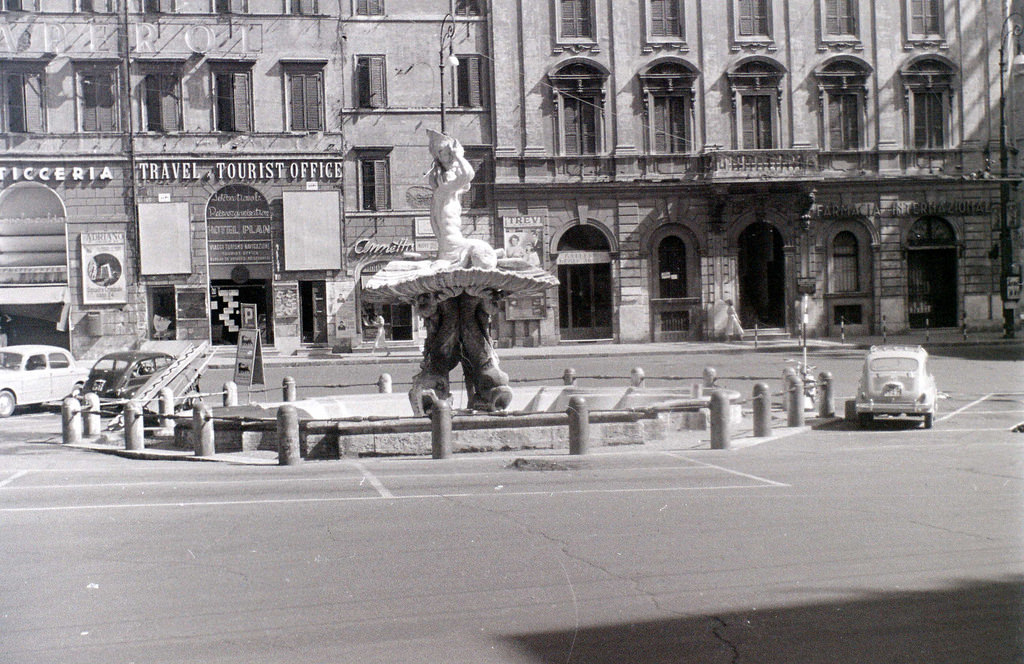
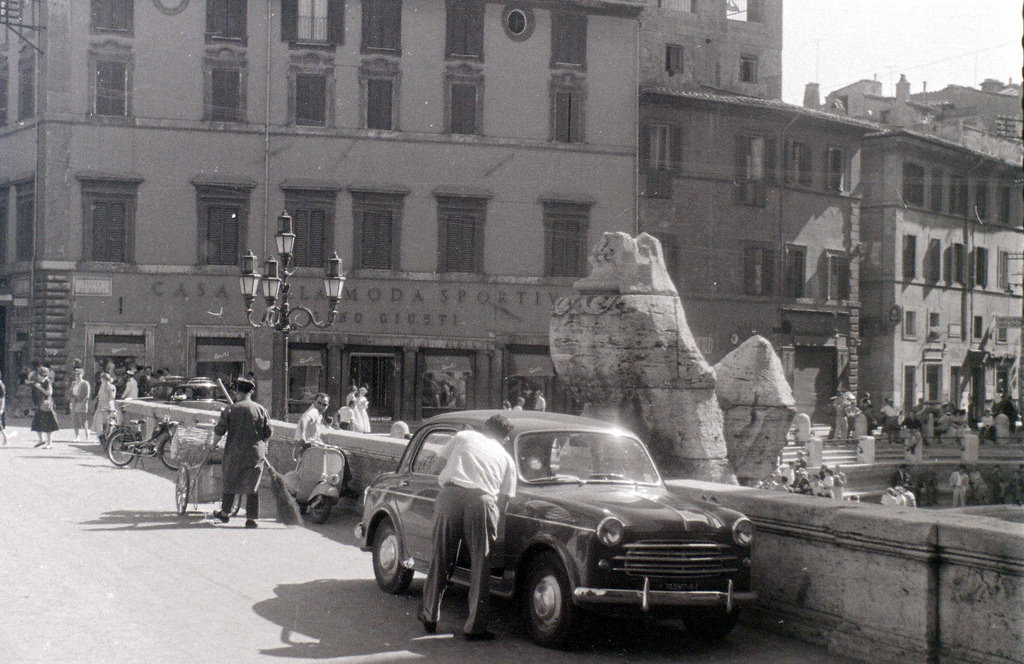
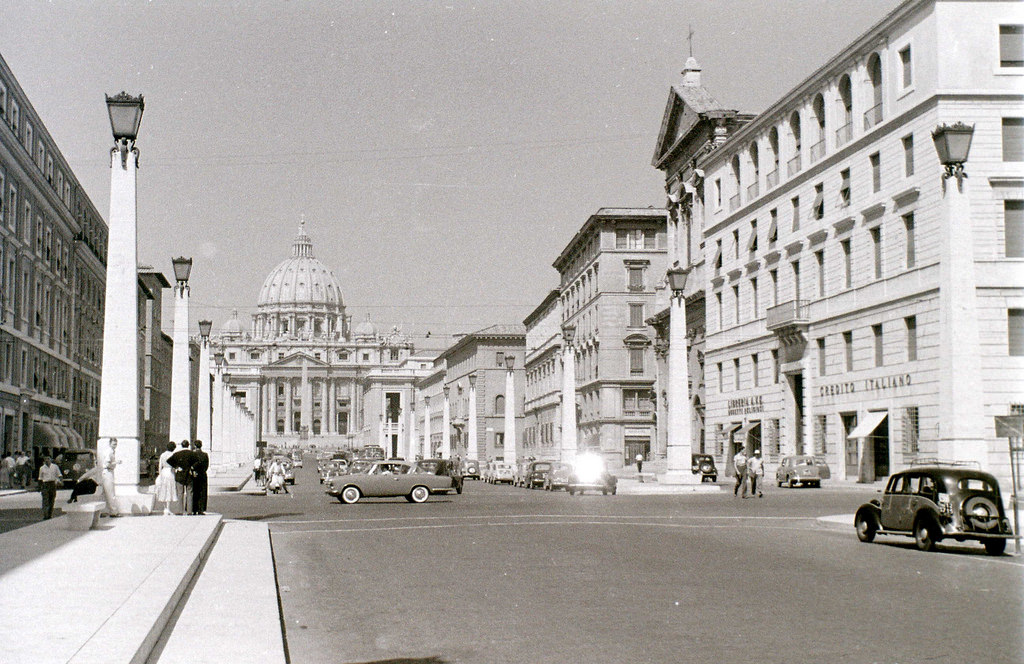
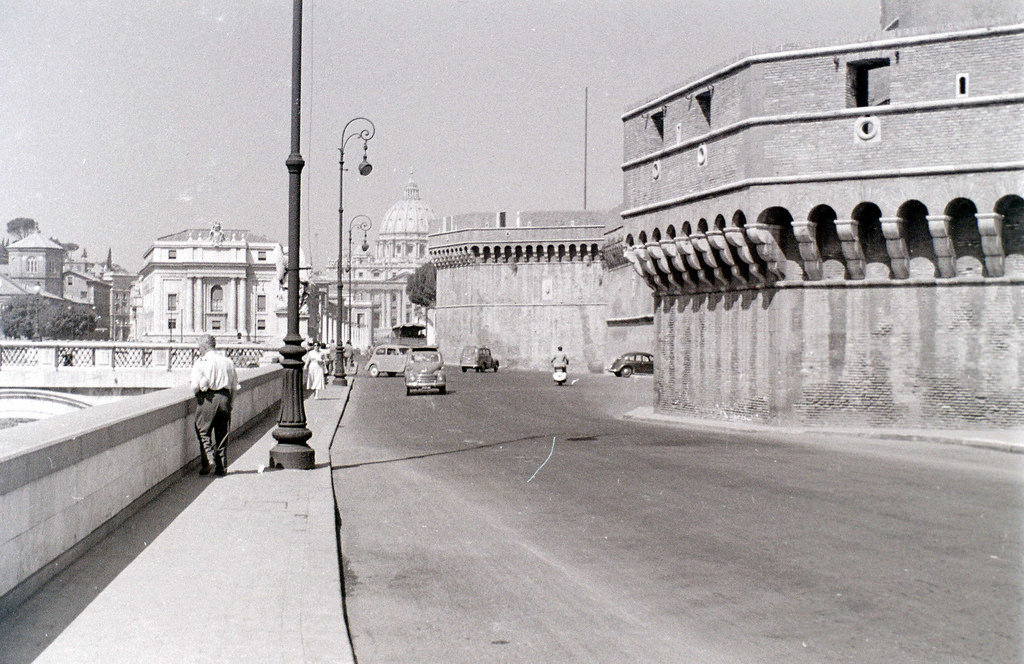
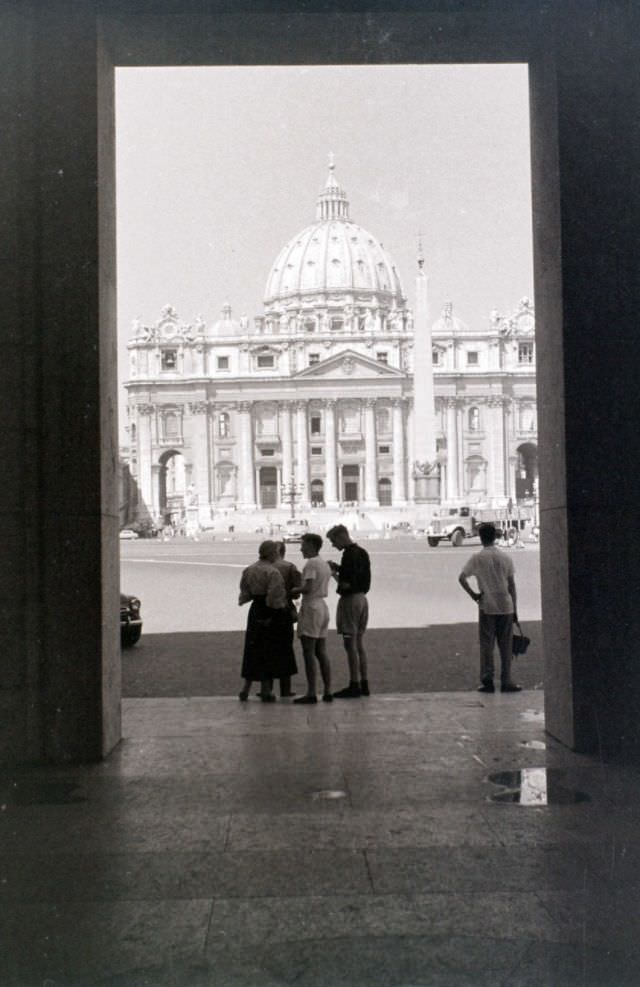
The view along Via Conciliazione toward St. Peter’s Basilica and with Castel Sant’Angelo nearby was one of the most photographed scenes in the city. Pilgrims, tourists, and local Romans all passed through this zone constantly. The Vatican and its surroundings drew enormous crowds, particularly during religious events and papal appearances.
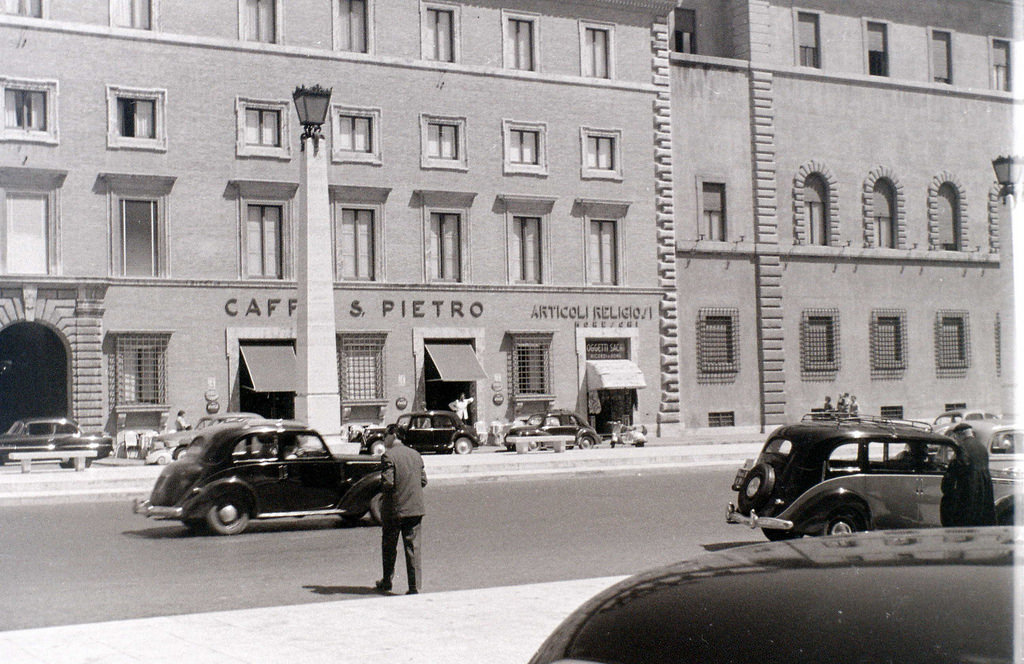
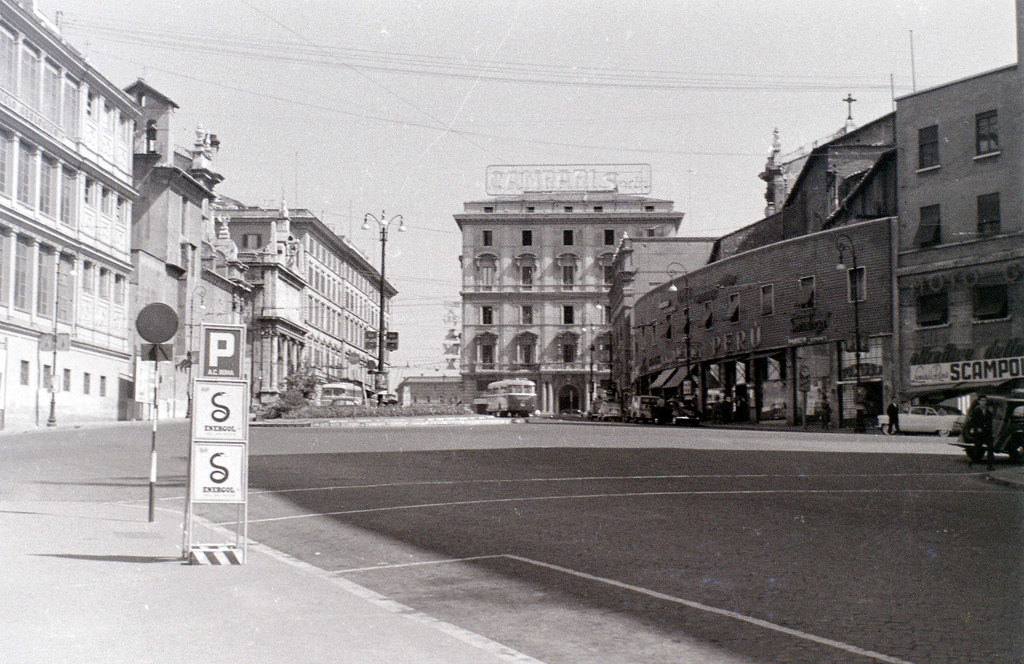
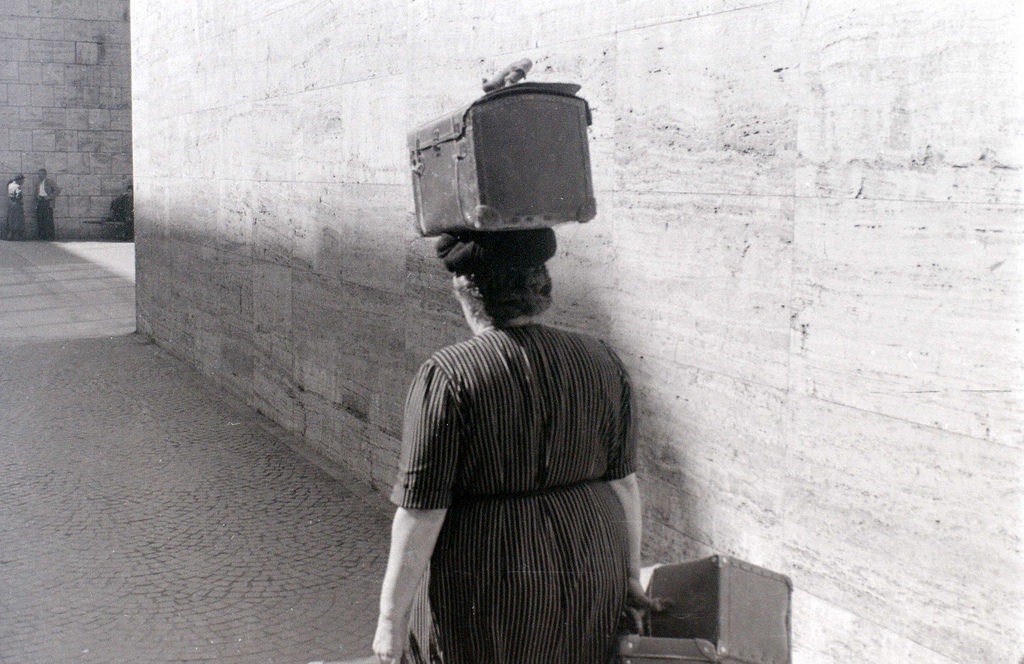
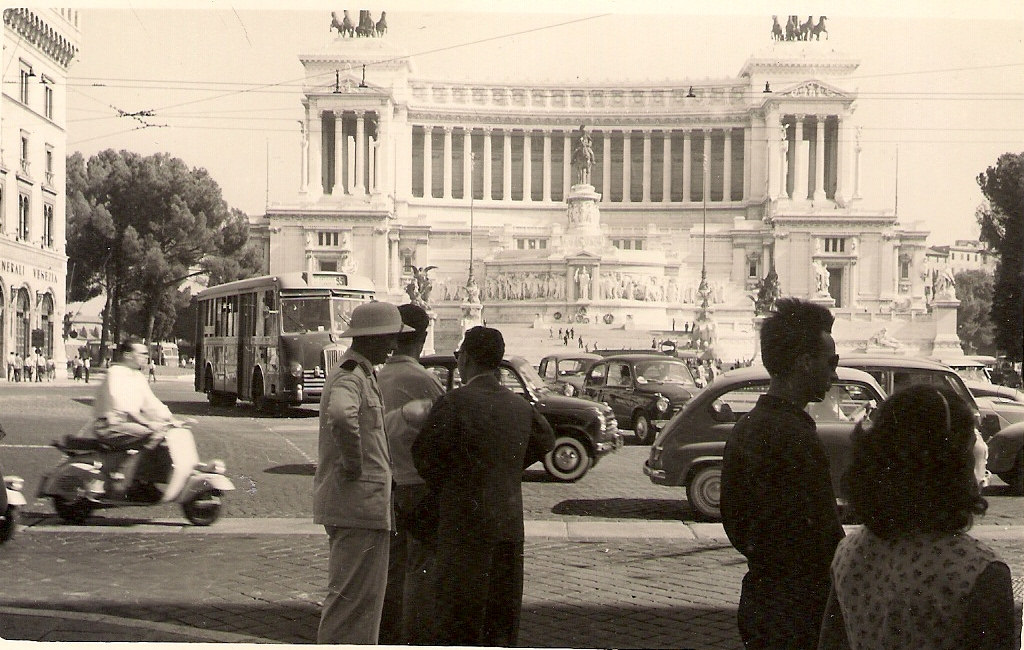
The area around Rome’s main railway station, Termini, was a city within the city. Completed in 1950, the newly rebuilt station was a modern architectural statement. Its surrounding streets were filled with hotels, restaurants, and vendors catering to the constant flow of travelers arriving from and departing to cities across Italy and Europe.
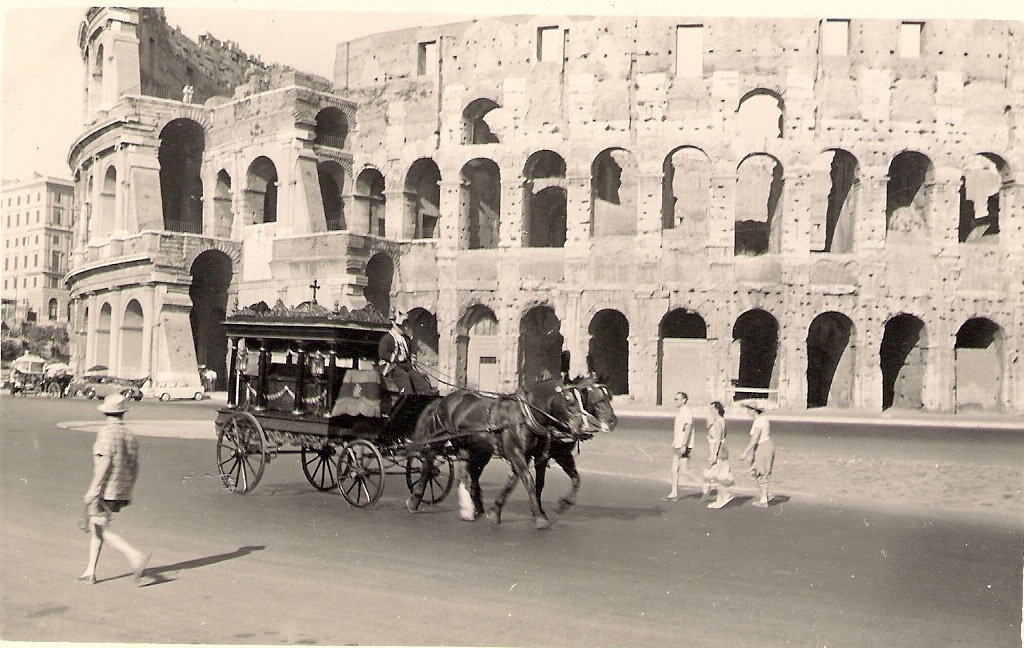
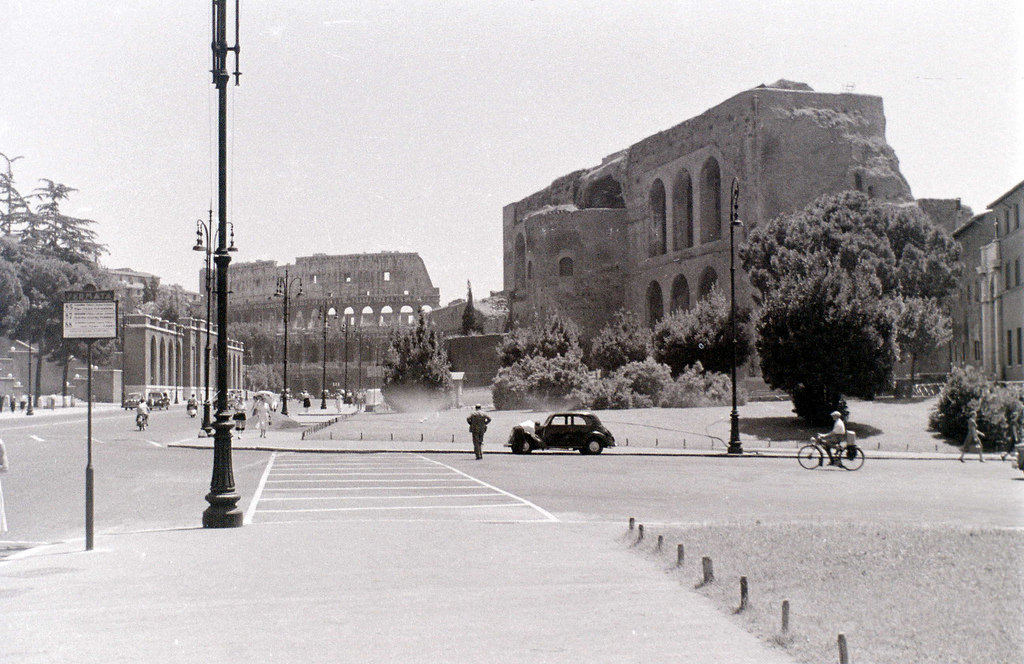
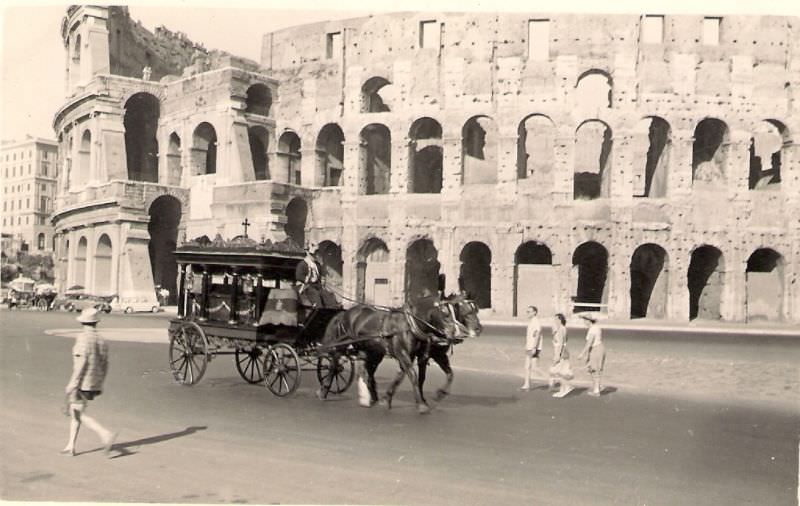
The Colosseum stood at the center of Rome’s ancient landscape, just as it had for nearly two thousand years. In the 1950s, traffic circled around it daily, and its massive arched walls loomed over the modern street life taking place at its feet. It drew visitors from every corner of the globe and remained the single most recognized landmark in the city.
By 1956, the Spanish Steps were as lively as ever. The steps served as a meeting place, a rest stop, and a social stage. Street vendors, artists, and lounging visitors filled the space from morning to evening. The flower sellers at the base of the steps were a fixture of the scene, offering bouquets to passersby throughout the day.
St. Peter’s Square in 1956 was a constant hub of activity. Designed by Bernini in the 17th century, its sweeping colonnade arms embraced thousands of visitors daily. Pilgrims came from across the Catholic world, while tourists came simply to witness the scale and grandeur of the Vatican’s centerpiece. The piazza connected the spiritual life of Rome to its physical streets in a way no other place in the city could.
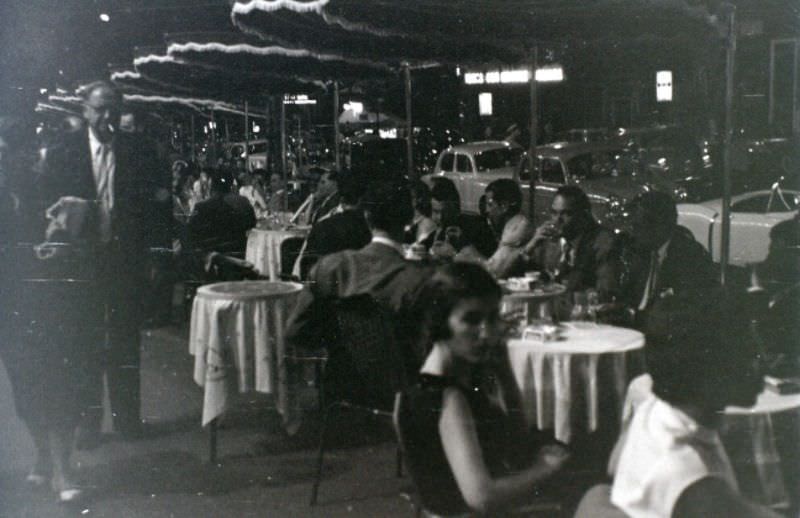
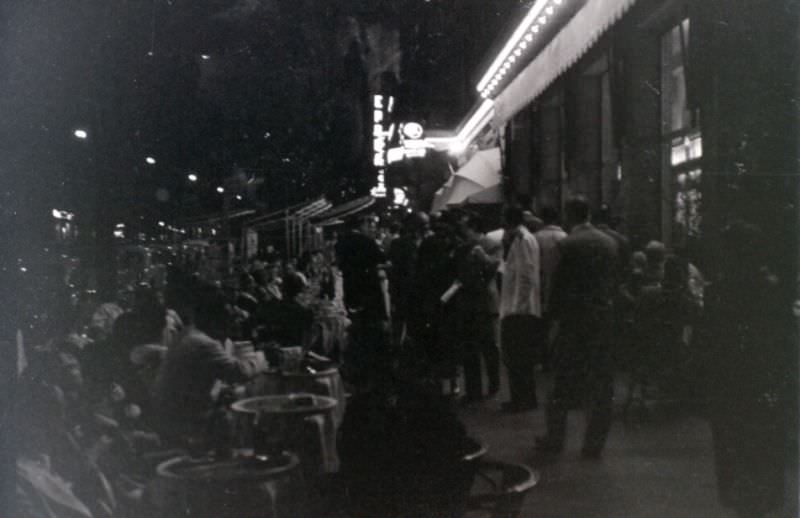
Via Veneto was the glamour street of 1950s Rome. Lined with luxury hotels, high-end cafes, and elegant boutiques, it attracted international celebrities, diplomats, and the new class of Italian film stars. The café culture along Via Veneto was captured endlessly by photographers and journalists. This was where the “dolce vita” — the sweet life — was most visible, where the wealthy sat outdoors over coffee while the city moved around them.
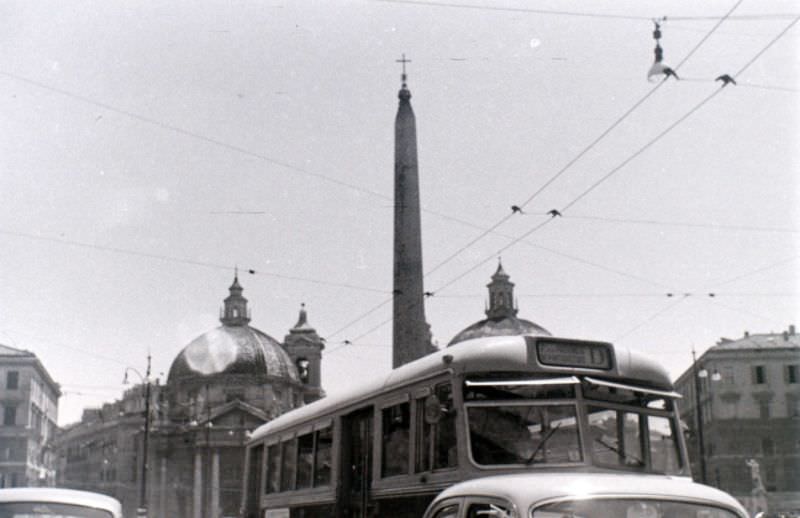
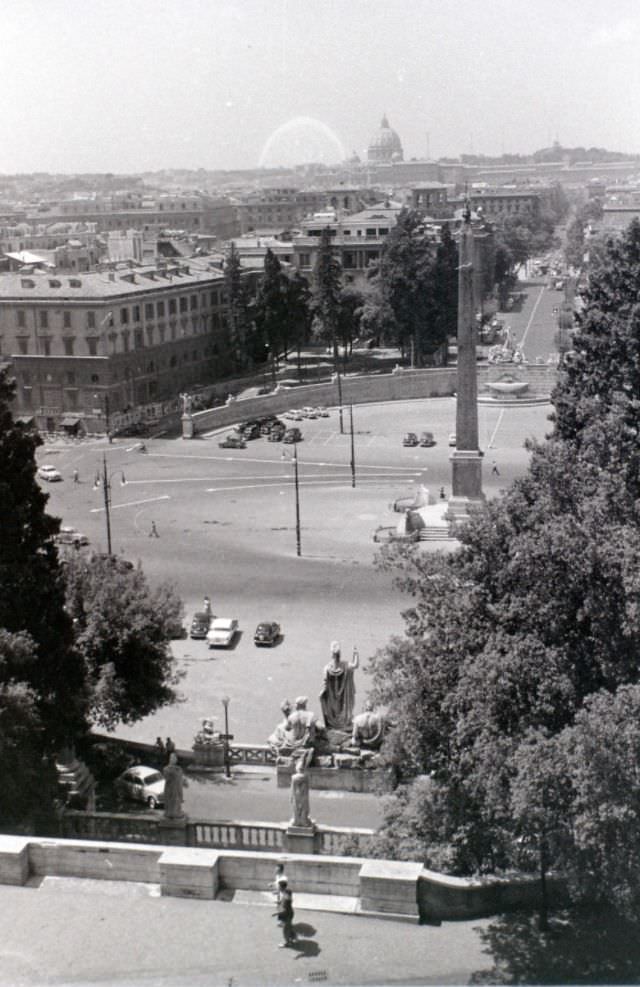
Piazza del Popolo — the People’s Square — sat at the northern gateway to the historic city center. For centuries it had been the first major landmark visitors entering Rome from the north would encounter. In the 1950s, it remained a central gathering place, framed by twin baroque churches and the ancient Egyptian obelisk at its center.
The Trevi Fountain in 1956 was already drawing enormous crowds. Fed by one of ancient Rome’s original aqueducts, the Aqua Virgo, the fountain had stood at this location since 1762. Visitors filled the small piazza around it at all hours. The tradition of tossing a coin into the fountain to ensure a return to Rome was already well established by this point, drawing coins — and tourists — in steady numbers.
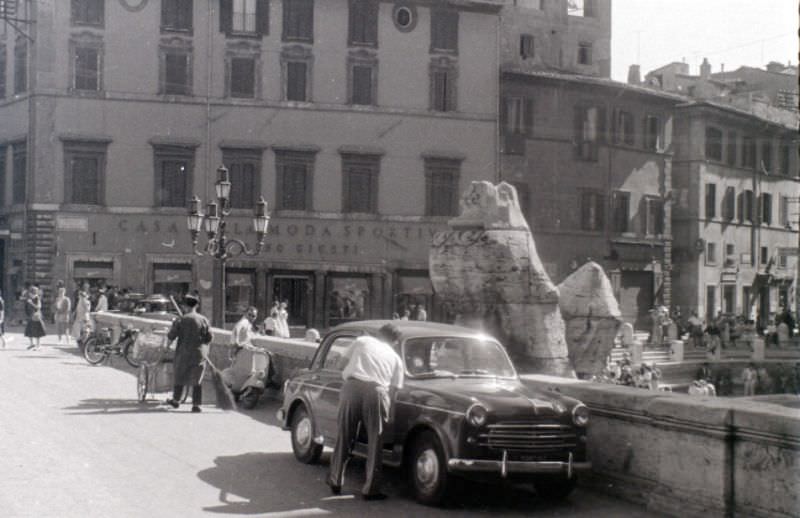
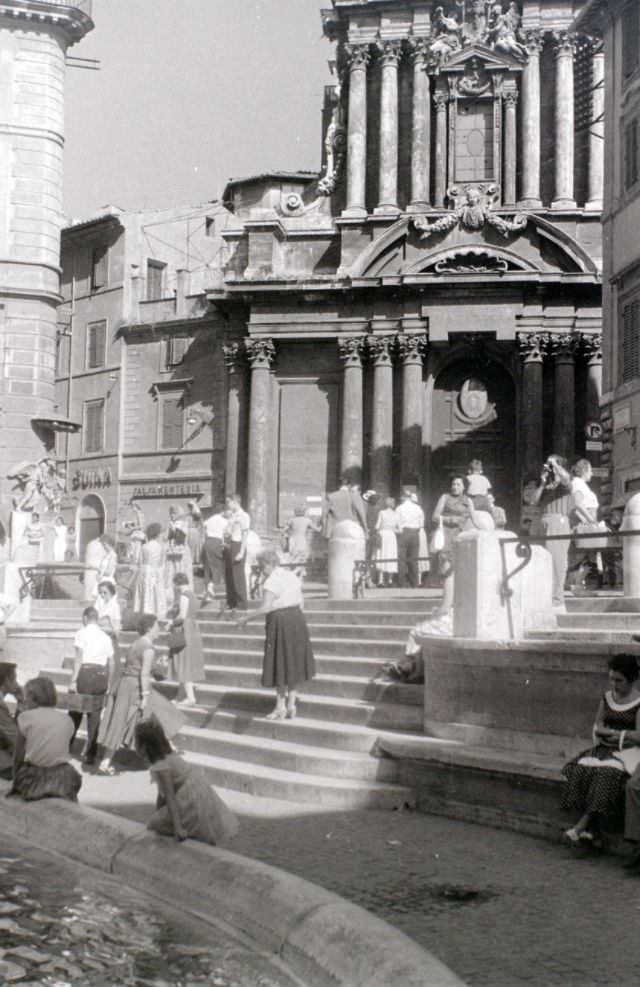
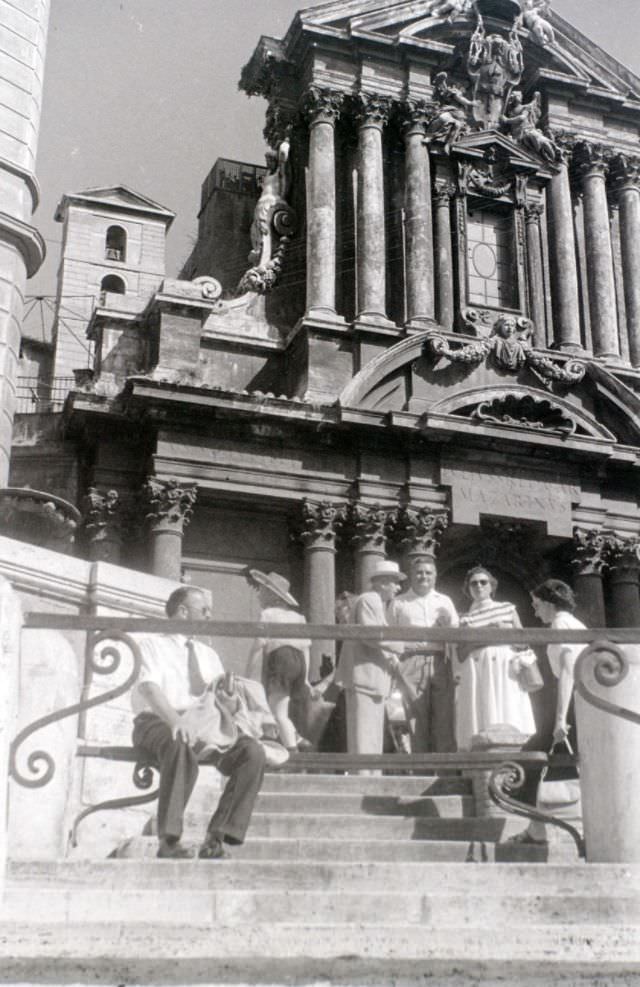
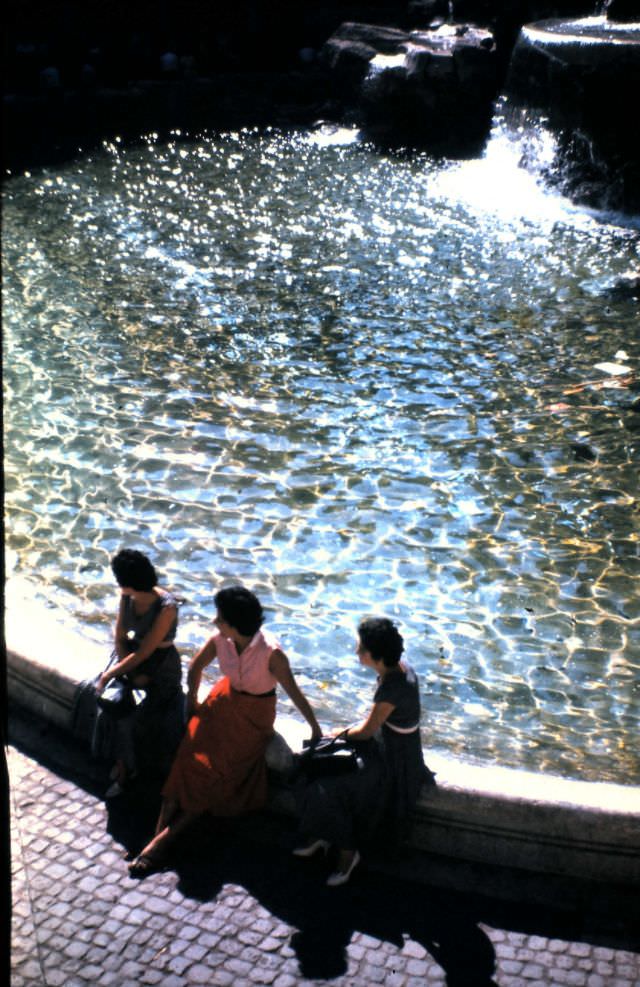





Some of those captions are way off…
Wayyyyyyy
it seems so clean