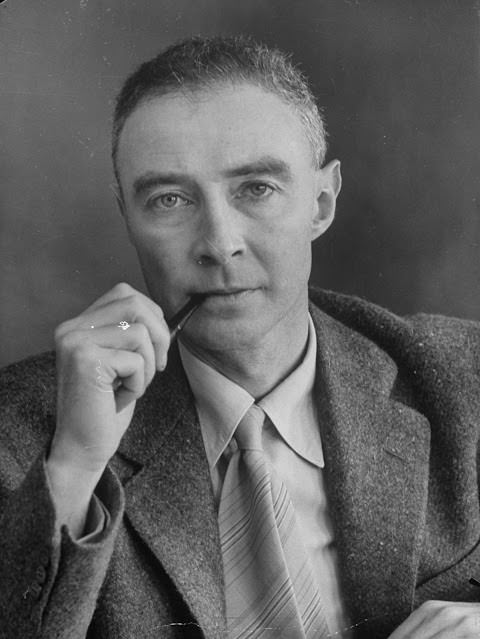
J. Robert Oppenheimer is remembered first and foremost as the scientific director of the Manhattan Project — the man who oversaw the creation of the world’s first atomic bomb. His name is stamped permanently onto one of history’s most consequential moments. But the photographs taken throughout his life tell a fuller story: a man who argued with generals, read to his children, shared offices with Einstein, and sat quietly at his desk after the government stripped him of his security clearance. These candid images capture Oppenheimer not as a symbol, but as a person.
Born on April 22, 1904, in New York City, Julius Robert Oppenheimer grew up in a wealthy, intellectually active household. His father, Julius S. Oppenheimer, was a German immigrant who built a successful textile import business. His mother, Ella Friedman, was a painter and a member of the Ethical Culture Society, an organization rooted in secular humanist values. That upbringing — surrounded by art, ideas, and ambition — pointed young Robert toward literature and philosophy before physics eventually claimed him entirely.
He blazed through Harvard in three years, earned a fellowship to Cambridge, and ultimately found his scientific home at the University of Göttingen in Germany, where he studied theoretical physics under some of the leading minds of the era. His intellectual gifts were obvious to everyone around him. His emotional life, however, was considerably more turbulent. At Cambridge, he went through a period of severe depression and suffered a nervous breakdown, driven in part by the enormous pressure he placed on himself.
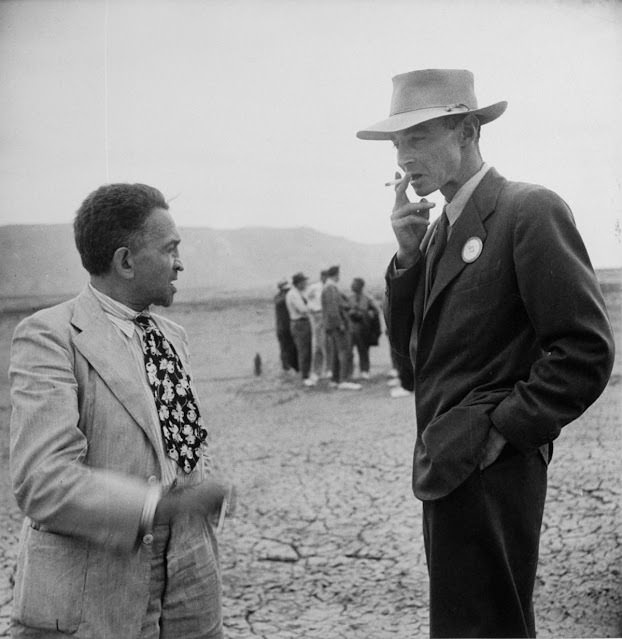
When World War II brought Oppenheimer to the center of the Manhattan Project, he was tasked with leading the scientific effort at Los Alamos, New Mexico. The work was relentless, and the stakes were impossible to overstate. The photo below captures a rare documented moment from 1945 — Oppenheimer at the bomb blast site alongside New York Times reporter William Laurence, one of the few journalists granted access to the program.
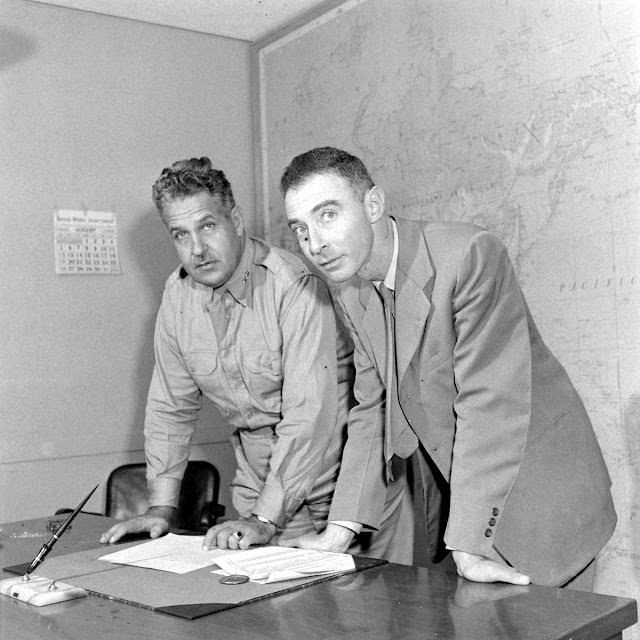
Running the Manhattan Project meant working in close coordination with the U.S. Army, and no relationship defined that dynamic more than the one between Oppenheimer and General Leslie Groves. Groves was the military commander overseeing the entire project — practical, blunt, and focused on results. Oppenheimer was the scientific mind Groves needed but rarely fully understood. The two made an unlikely but effective partnership.
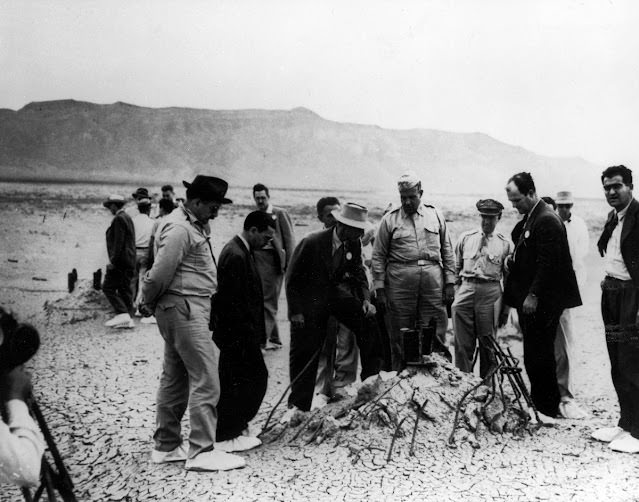
The Trinity test in July 1945 was the culmination of years of classified work. It was the world’s first detonation of a nuclear device, conducted in the New Mexico desert. Oppenheimer famously recalled a line from the Bhagavad Gita upon witnessing the blast: “Now I am become Death, the destroyer of worlds.” The photo below places him among the officials who stood at that test site — men who understood exactly what they had just set in motion.
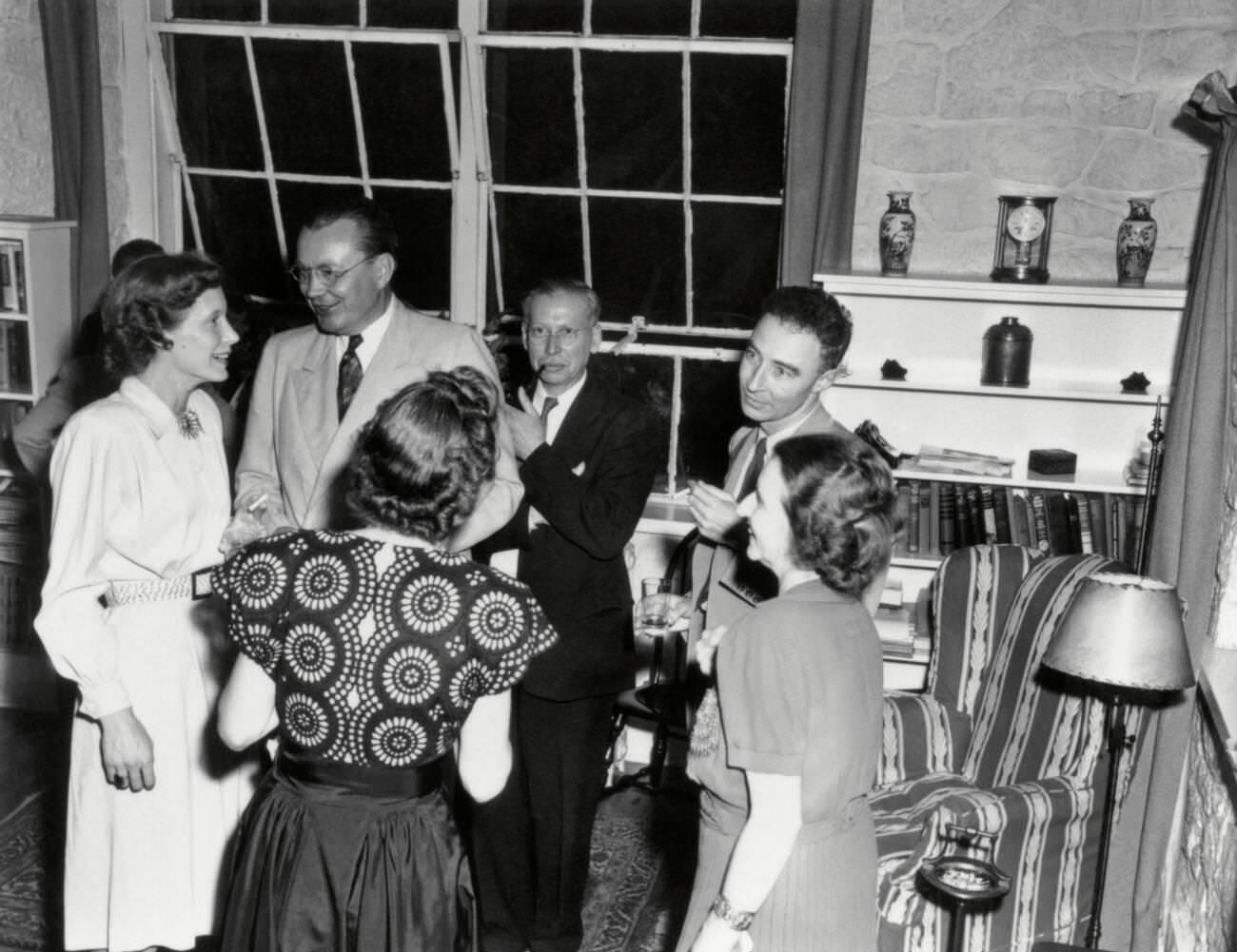
Life at Los Alamos wasn’t purely lab work and military briefings. Oppenheimer’s residence there — known as the “Big House” — served as a gathering point for the brilliant and often restless scientists stationed at the site. Social events were a regular part of life in that remote, high-security community, offering brief breaks from the weight of what everyone there was building.
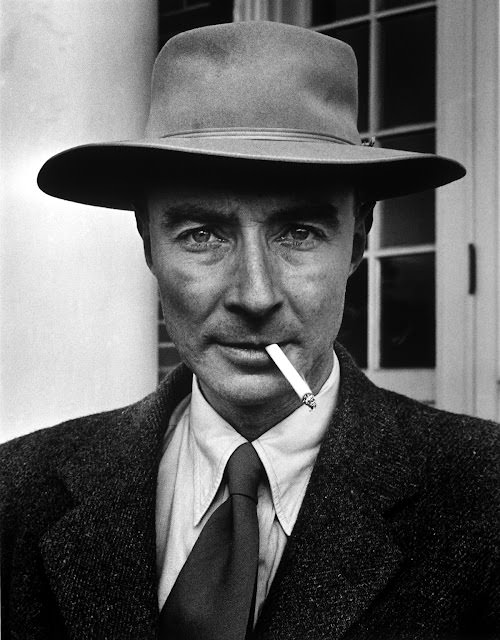
Even in quieter moments during the war years and immediately after, Oppenheimer carried the physical markers of a man under constant stress. Photographs from 1946 show him gaunt and cigarette in hand, pausing at the Guest Lodge in Oak Ridge, Tennessee — one of the key sites in the broader Manhattan Project infrastructure.
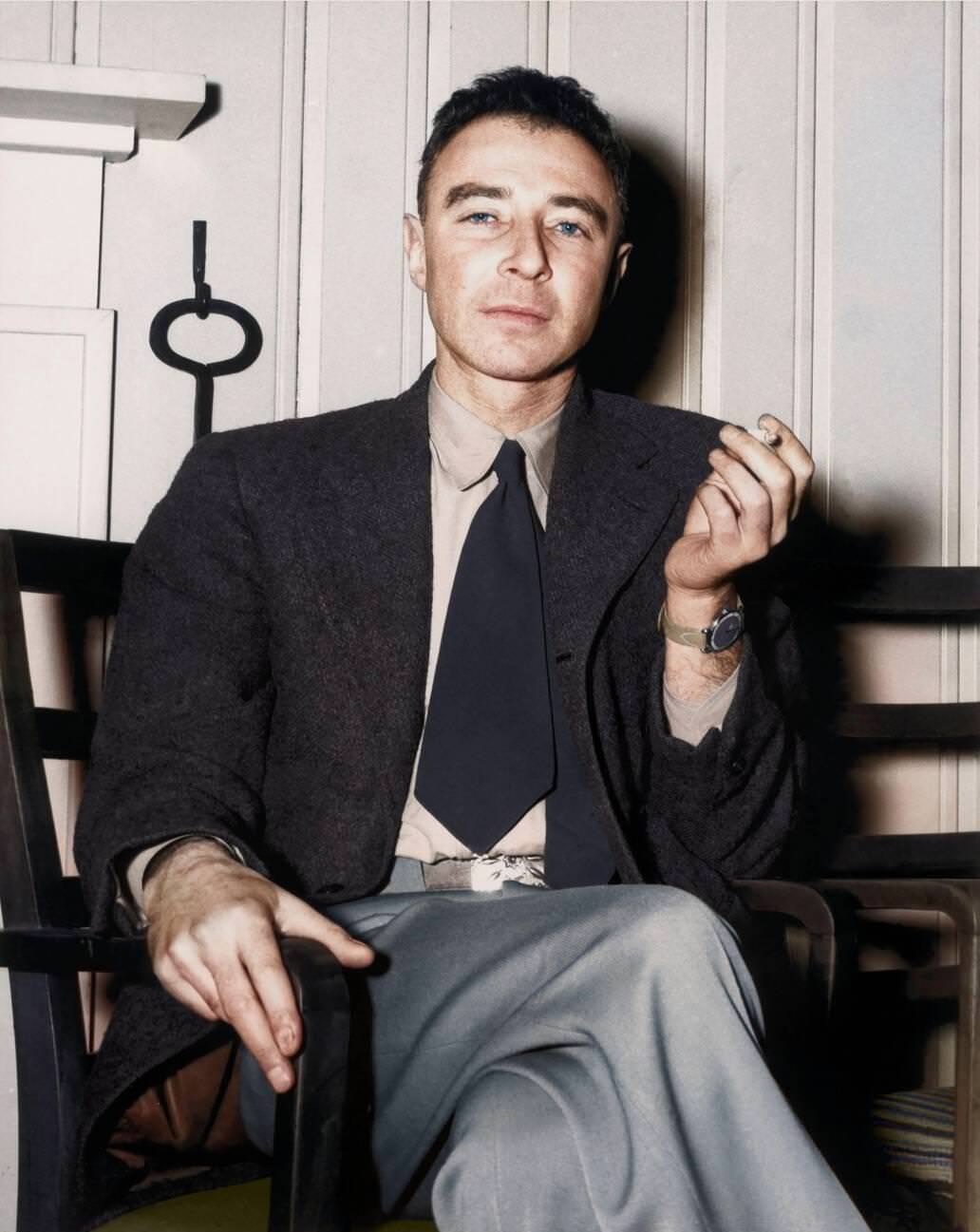
After the war, Oppenheimer transitioned into public life as a chief advisor to the newly formed United States Atomic Energy Commission. In 1947, he also took on the role of director of the Institute for Advanced Study in Princeton, New Jersey — a position he would hold for years. The photo below documents the formal start of that chapter, as Oppenheimer steps into his role alongside Professor Oswald Veblen.
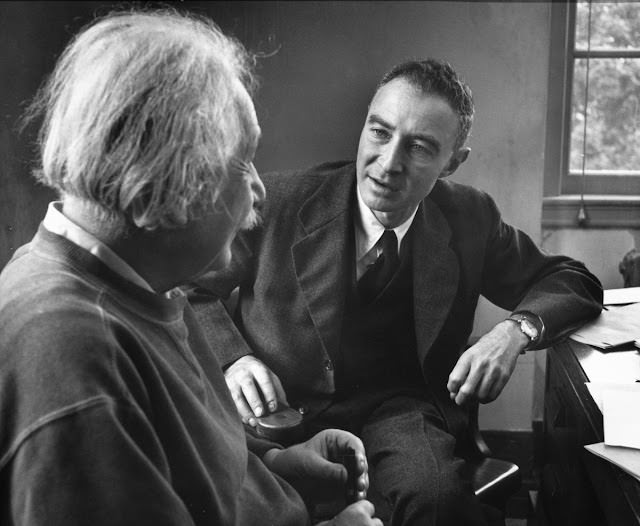
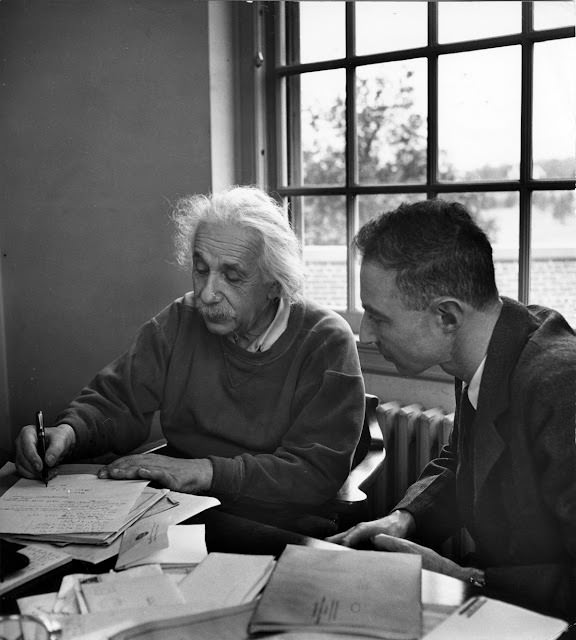
Princeton brought Oppenheimer into the orbit of Albert Einstein, who was also working at the Institute for Advanced Study. The two men, both towering figures in 20th-century physics, were photographed together multiple times during this period. Their conversations ranged across physics, philosophy, and the moral responsibilities of scientists in the nuclear age.
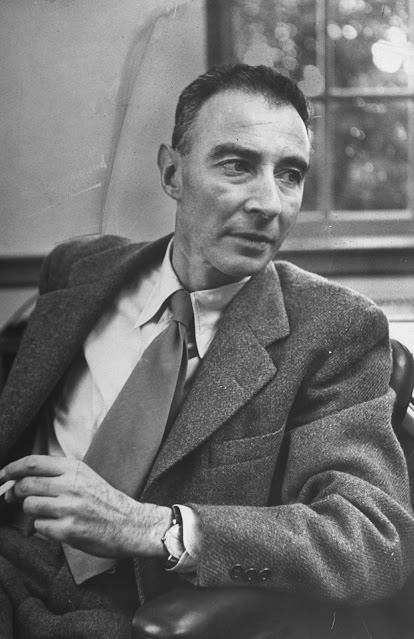
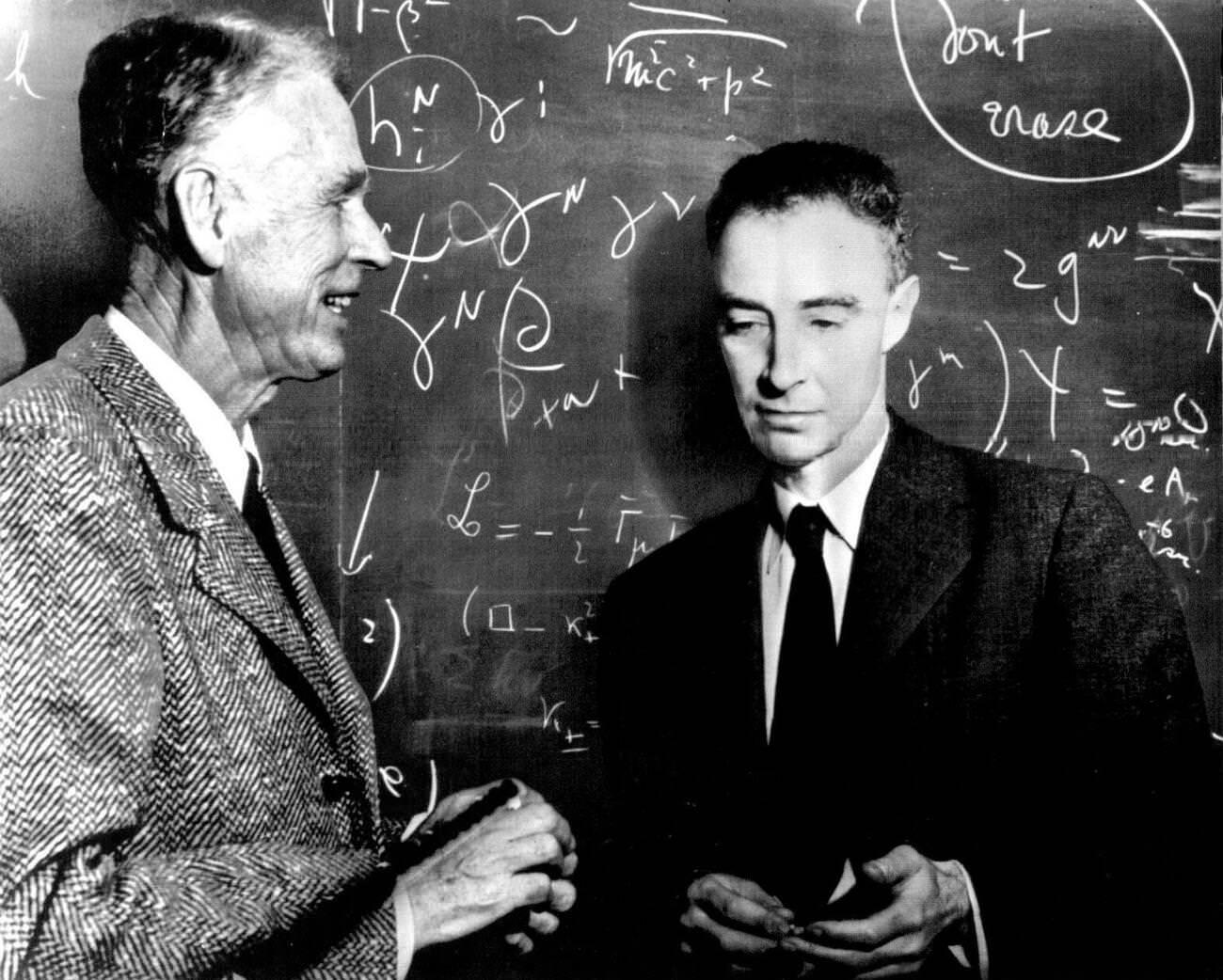
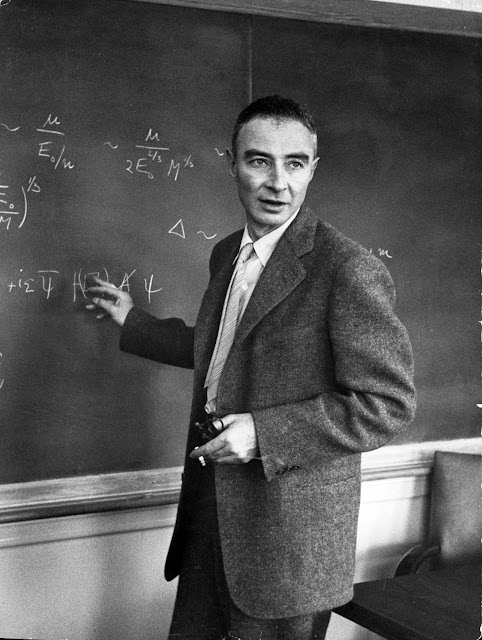
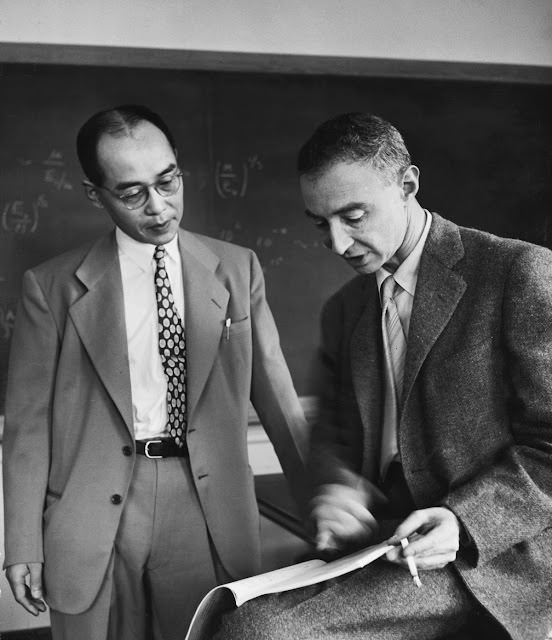
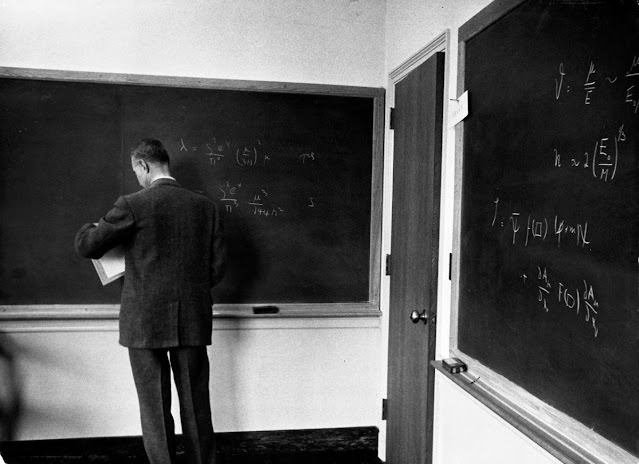
By 1949, Oppenheimer had settled into his work at Princeton. His office became a hub for visiting scholars and Nobel laureates. Japanese physicist Hideki Yukawa, who won the Nobel Prize in Physics in 1949 for predicting the existence of mesons, was among those photographed with Oppenheimer during this period — a snapshot of postwar scientific collaboration at the highest level.
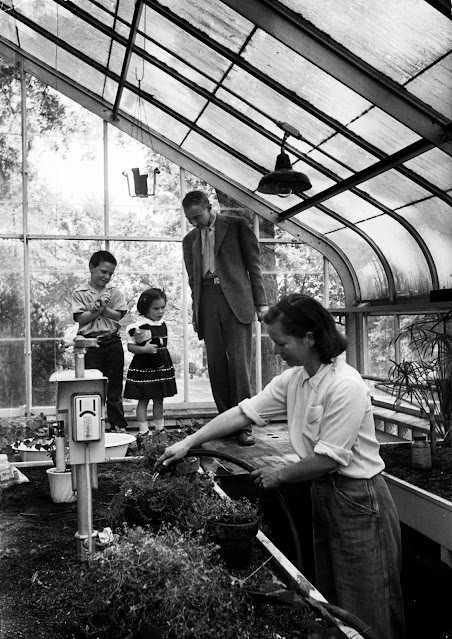
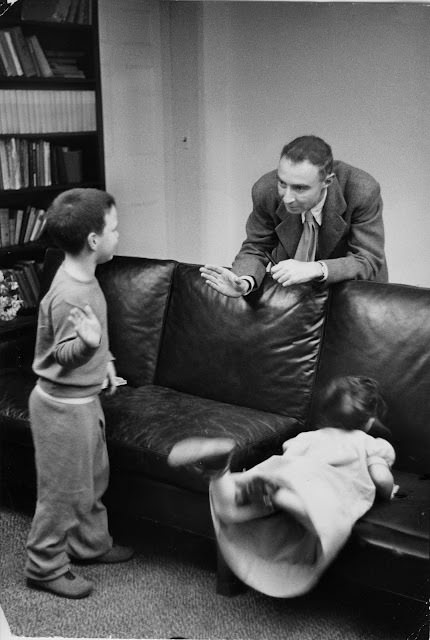
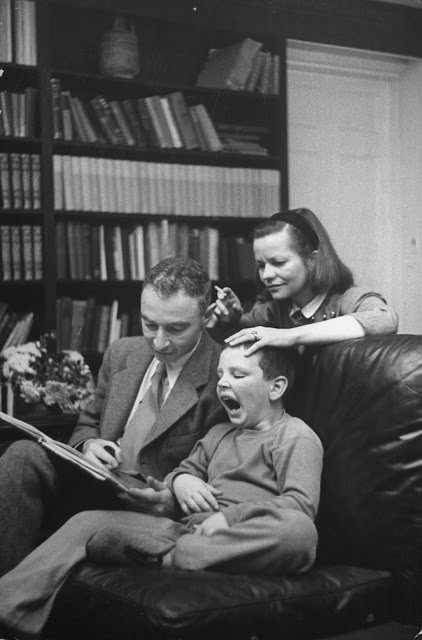
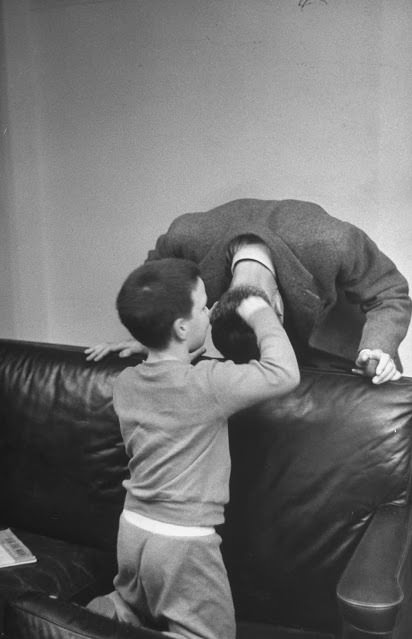
Away from the office, Oppenheimer’s home life in Princeton offered a different portrait. He had married Katherine “Kitty” Puening Harrison in 1940. Kitty had been previously married twice — both times to communist activists — and her background would later be used against Oppenheimer during his security hearing. Together, they had two children: a son, Peter, and a daughter, Toni. Photographs from 1949 show the family in moments that feel genuinely domestic — Kitty with the children in their greenhouse, Oppenheimer being greeted at the door by Peter and Toni, and a quiet evening with his wife and son over a book.
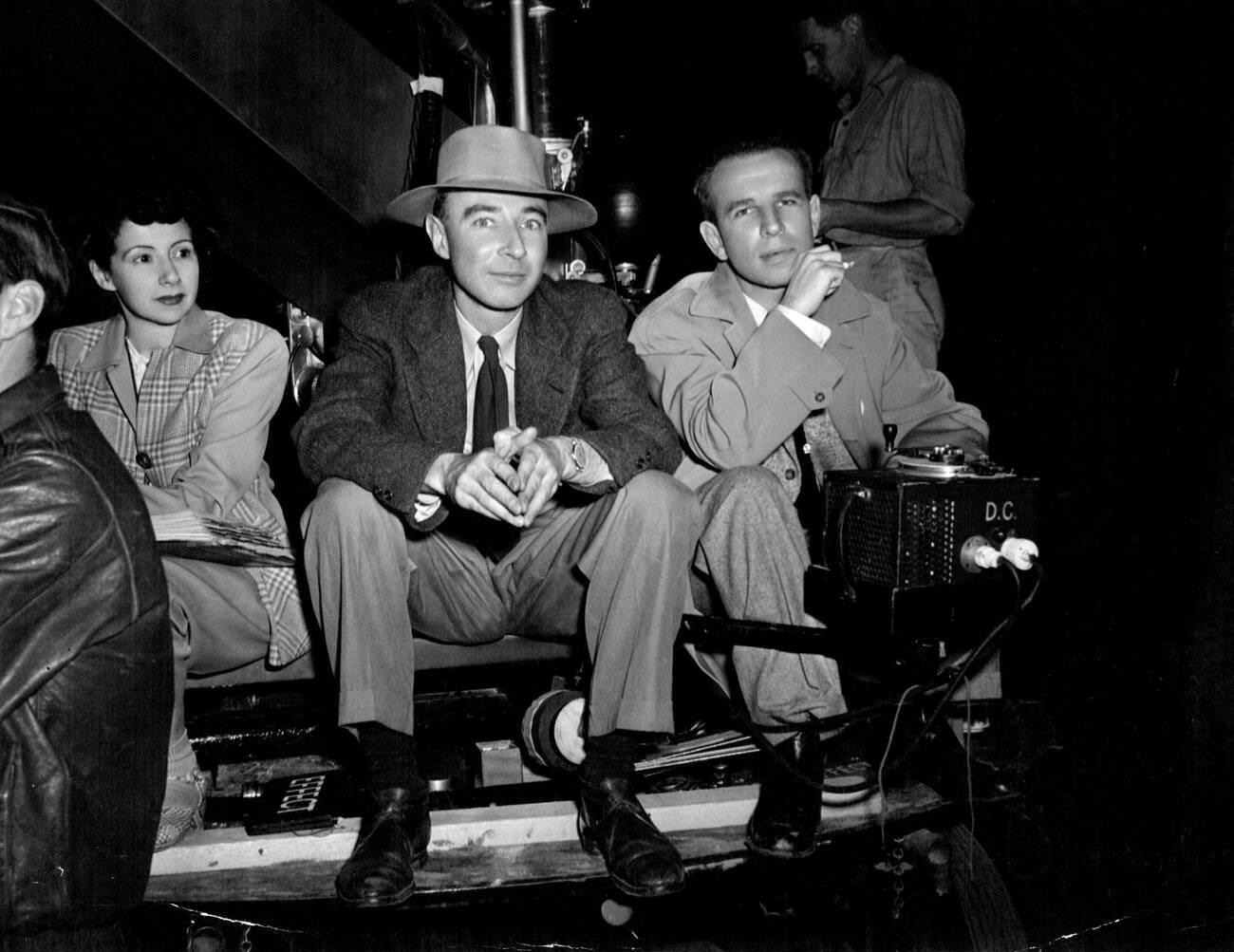
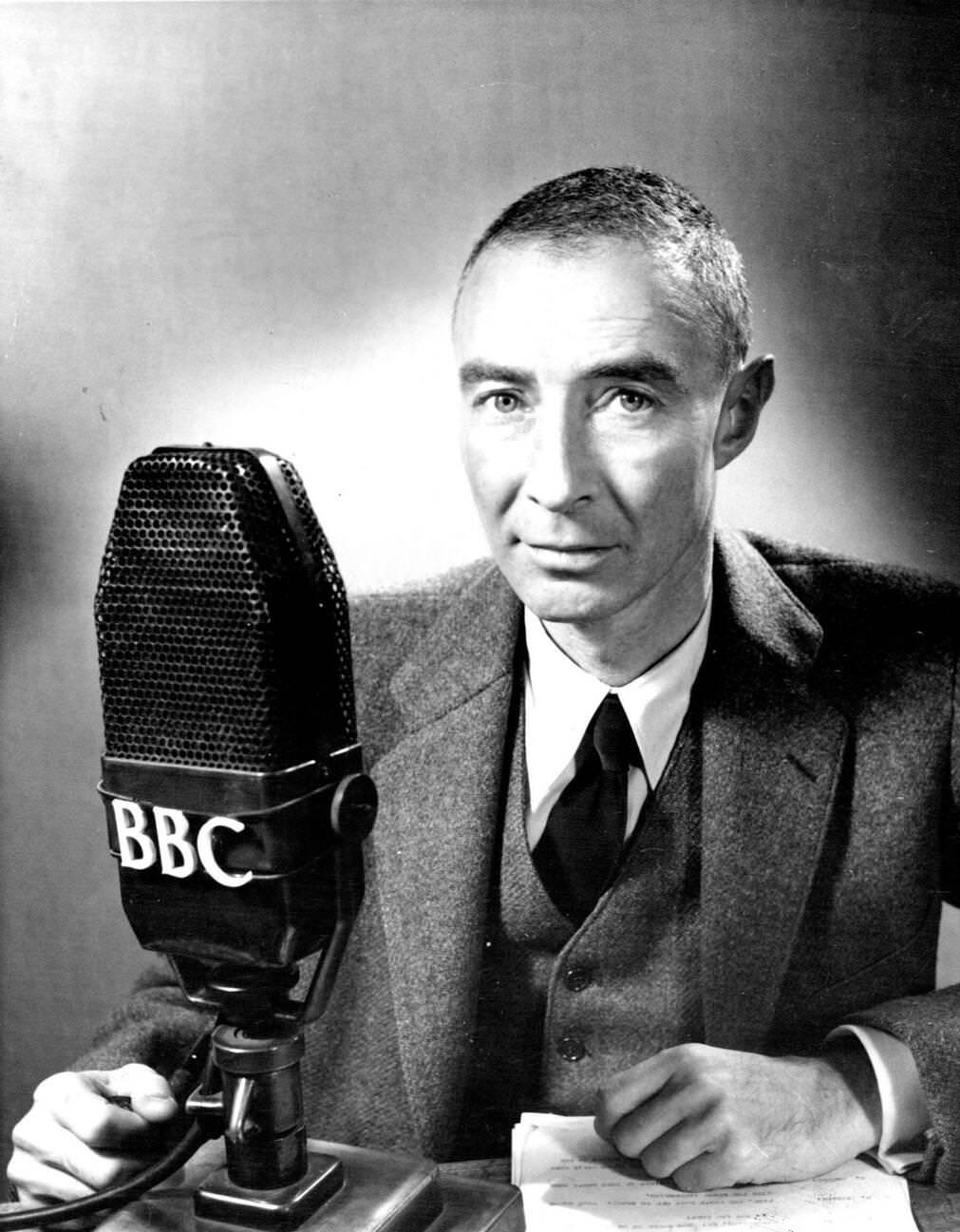
Oppenheimer’s public role continued to expand into the early 1950s. He appeared before audiences across the world and engaged with cultural institutions. In 1953, he delivered the prestigious BBC Reith Lectures, speaking on science and its relationship to human knowledge and society. That same year, he met actor Hume Cronyn during the filming of “The Beginning or the End,” a Hollywood dramatization of the Manhattan Project.

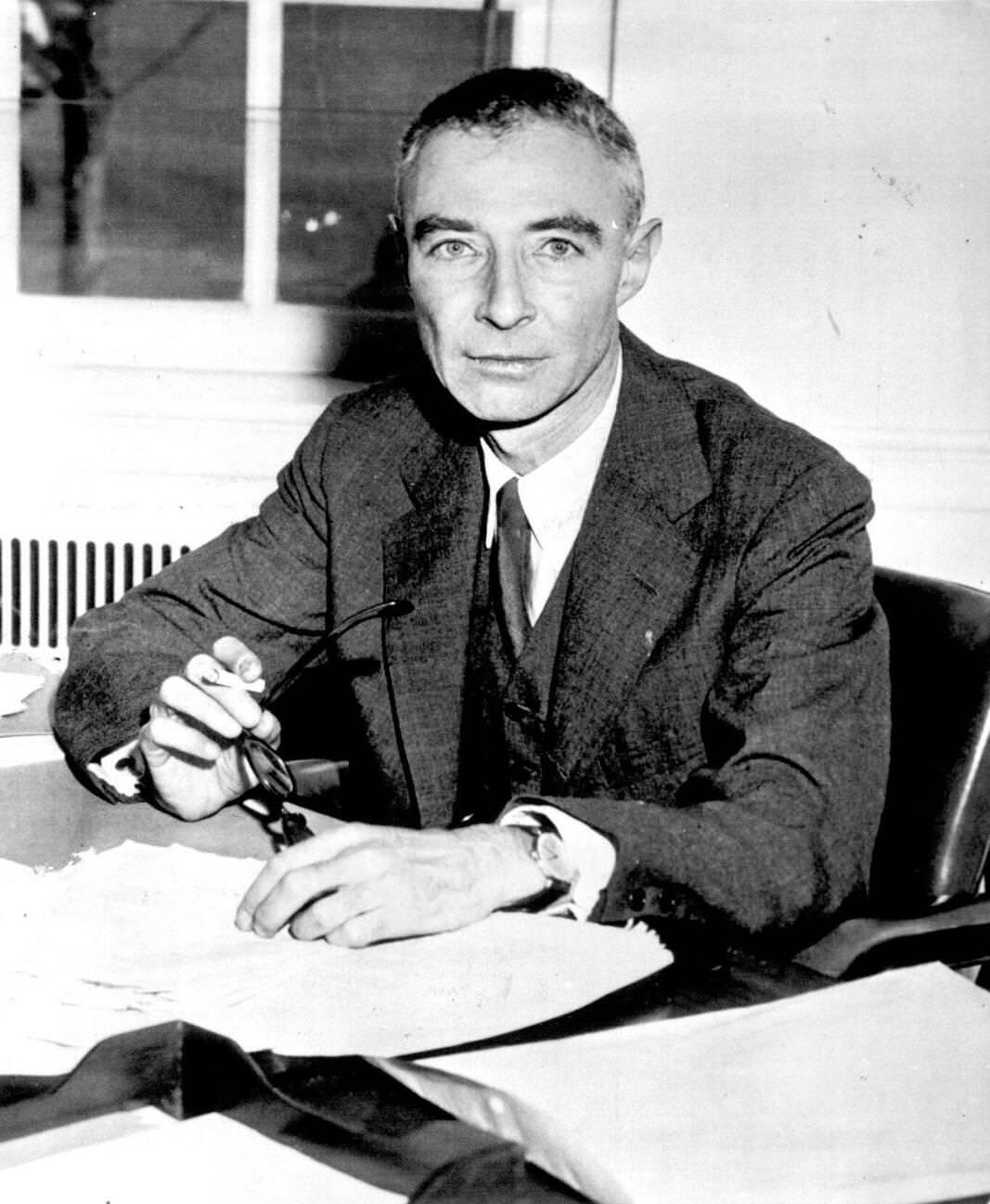
In 1954, the U.S. government held a security hearing that ended with Oppenheimer’s security clearance being revoked. His earlier associations with left-wing political groups, combined with his vocal opposition to the development of the hydrogen bomb, had made him a target during the height of Cold War suspicion. The photograph taken on June 2, 1954 — Oppenheimer at his desk, discussing the decision that had effectively shut him out of the work he helped create — is among the most telling images of his later years.
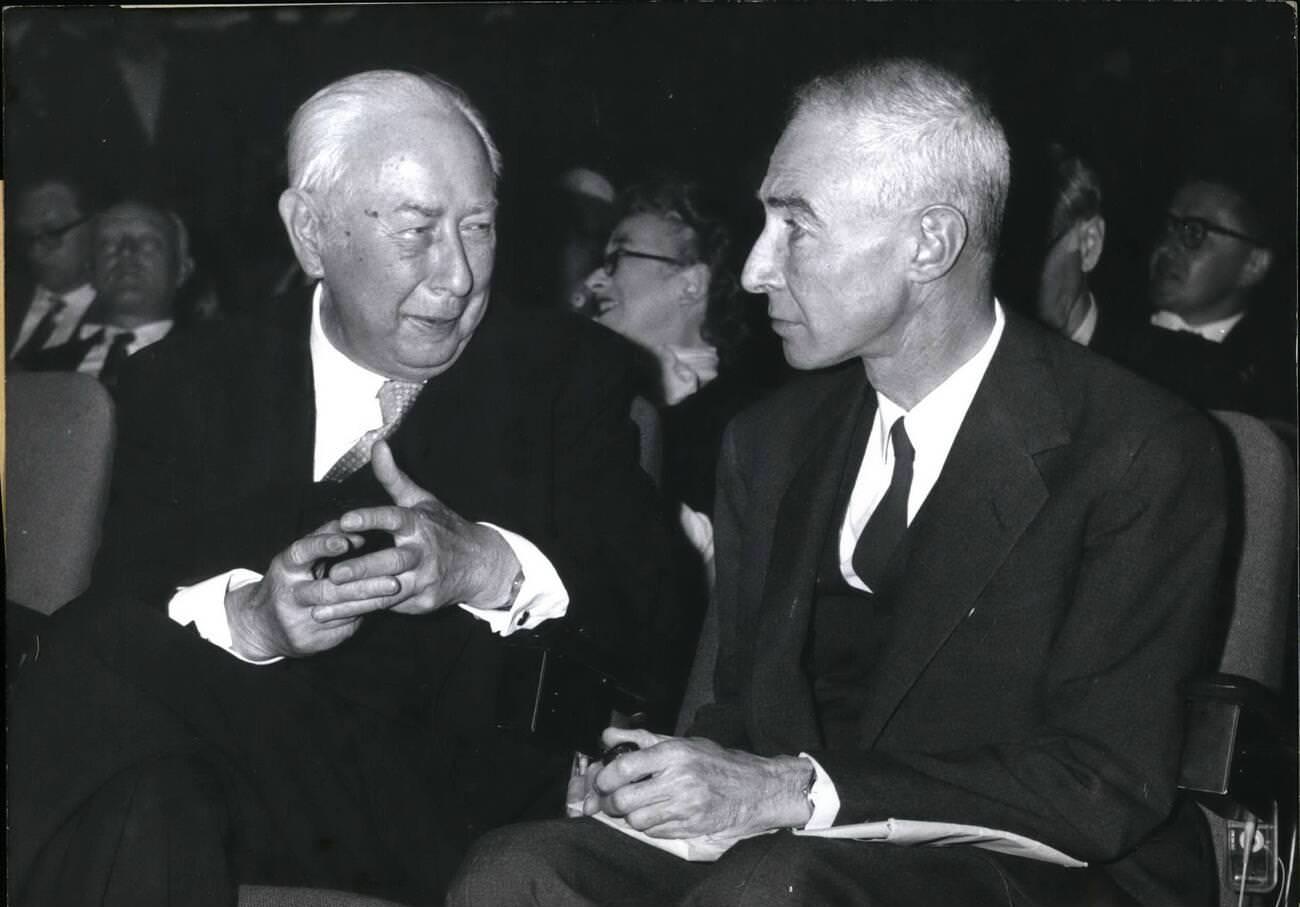
Despite the professional isolation that followed the hearing, Oppenheimer did not disappear from public life. He continued speaking on science and society and remained director of the Institute for Advanced Study. In 1960, he attended the Congress for Cultural Freedom in Berlin, engaging with intellectuals and policymakers on the role of knowledge in a divided world.
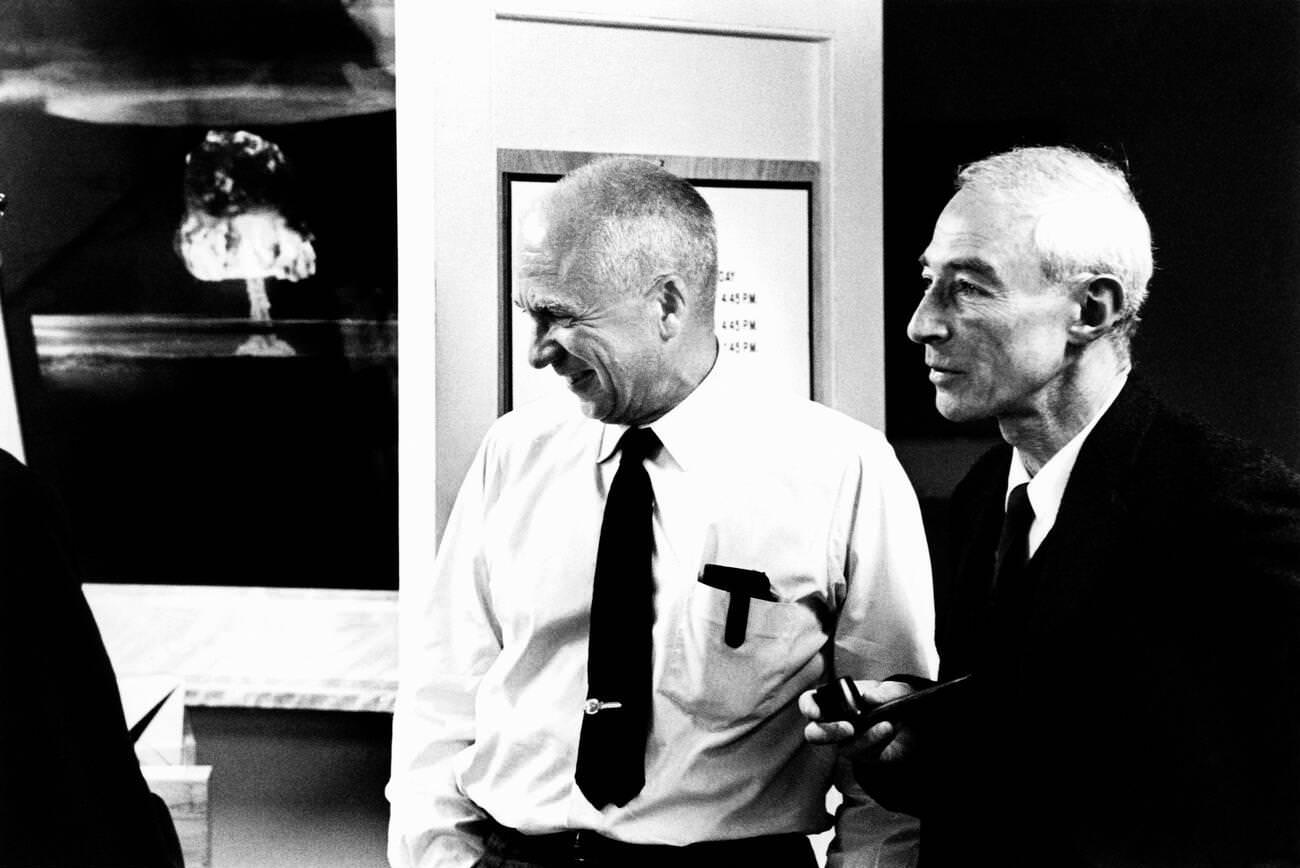
In May 1964, Oppenheimer returned to Los Alamos — the place where the most consequential chapter of his career had unfolded two decades earlier. He was photographed there with Norris Bradbury, who had succeeded him as director of the Los Alamos laboratory after the war. The visit was a rare public return to the site that had made him famous and, in many ways, defined the rest of his life.
Oppenheimer died on February 18, 1967, from throat cancer — a heavy smoker throughout his adult life. He was 62 years old. What these photographs collectively show is a man who occupied almost every extreme: celebrated and condemned, powerful and sidelined, intensely public and deeply private. The candid images don’t resolve those contradictions — they simply document them, frame by frame.