Richmond, Virginia entered the 1950s as a city still finding its postwar footing. The economy was growing, new neighborhoods were spreading into the suburbs, and daily life was full of the kind of small details that rarely make the history books — but are often the most revealing. These photographs capture all of it: the storms, the street corners, the storefronts, the schools, and the people who filled them.
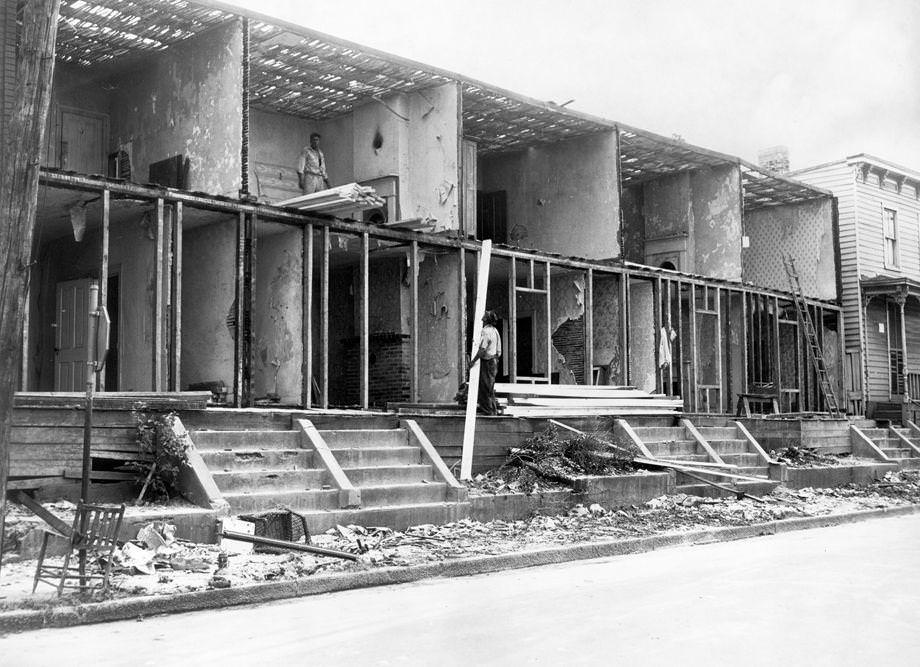
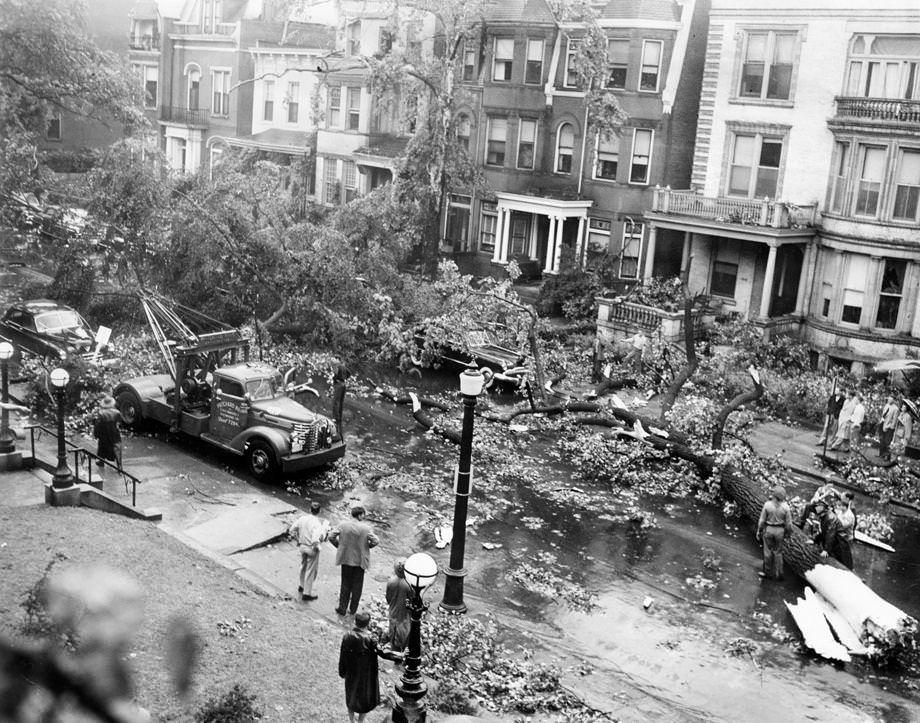
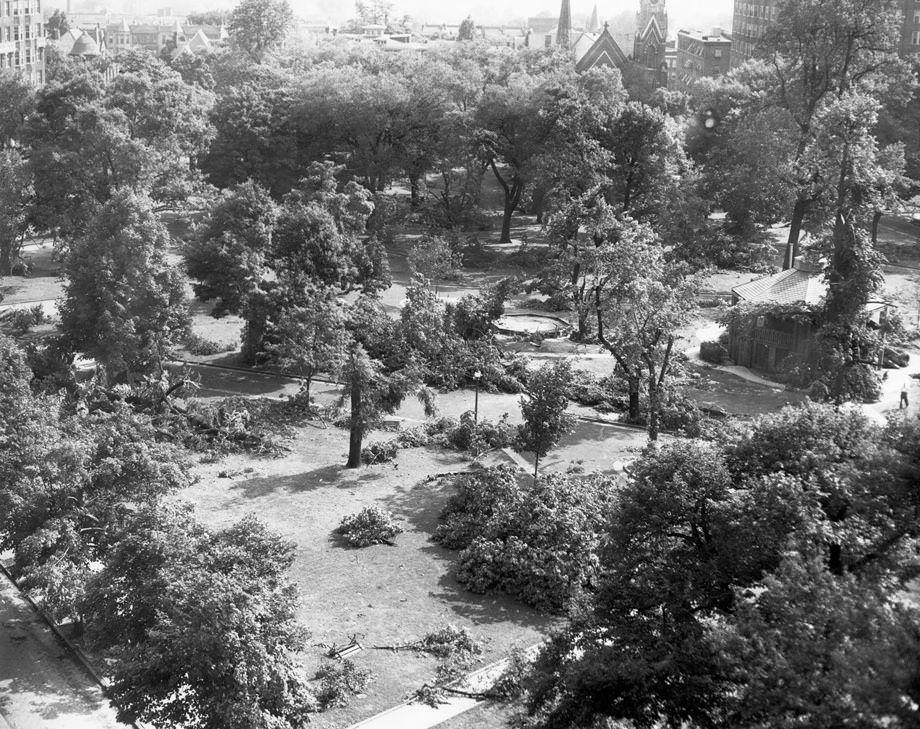
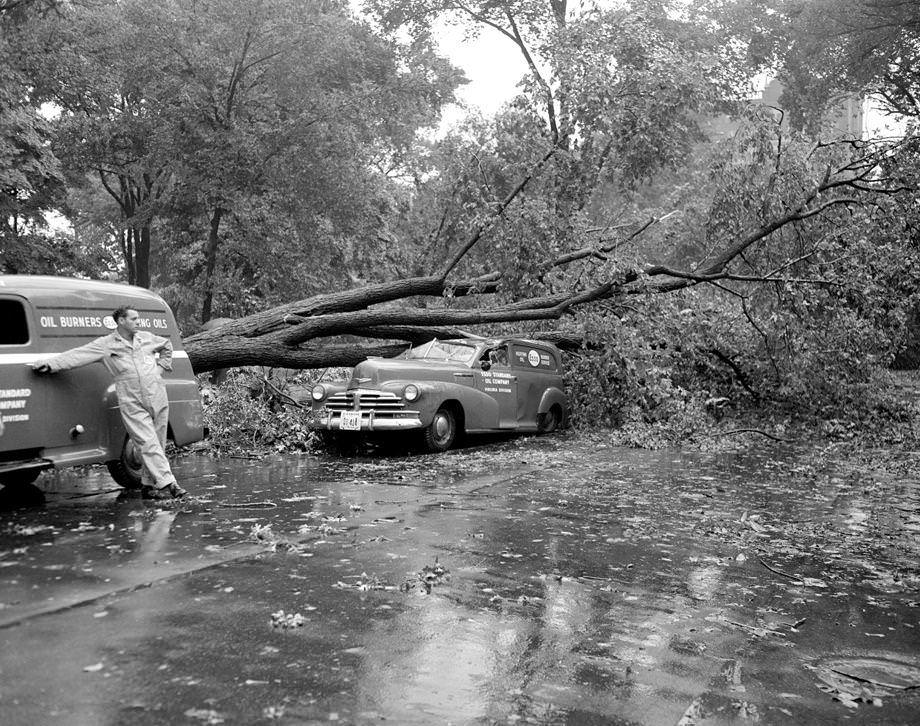
The decade did not begin quietly. In June 1951, a tornado carved a 4-mile path of destruction through the city, toppling trees, crushing vehicles, and leaving entire blocks in ruin.
The 300 block South Lombardy Street after tornado. Storm was June 14, 1951.Tornado felled trees in front of Commonwealth Club on Franklin St., June 13, 1951.Tornado damage from June 14, 1951 storm. Photo taken June 23, 1951. Location is Monroe Park.
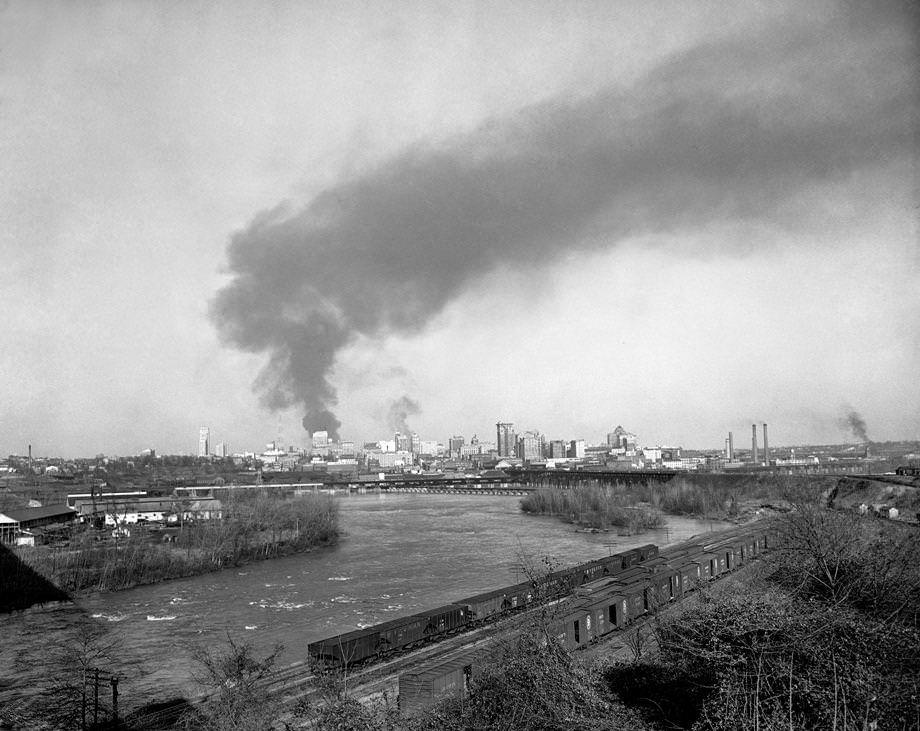
The tornado wasn’t the only disaster to test Richmond that year. On Christmas Eve 1951, three fuel oil and kerosene tanks at a storage plant on Rady Street caught fire, sending black smoke billowing across much of the city. More than 100 firefighters were needed to bring the blaze under control. When the owner of neighboring fuel tanks learned his had been saved, he called it “the nicest Christmas present ever.”
South Richmonders had this view of a Dec. 24, 1951, fire on North Side at the F.L. Parsley storage plant on Rady Street.
Higher education was expanding rapidly across the region. The University of Richmond, set on a beautiful campus in the West End, was growing its programs and its reputation throughout the decade.
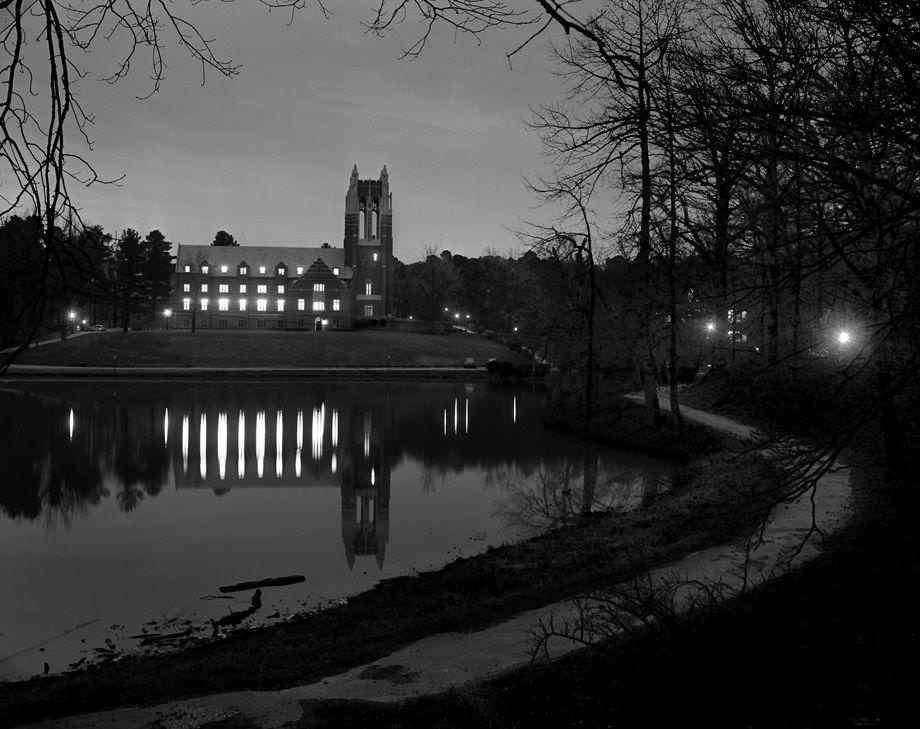
The University of Richmond’s Boatwright Memorial Library created a vivid reflection in Westhampton Lake, 1957.
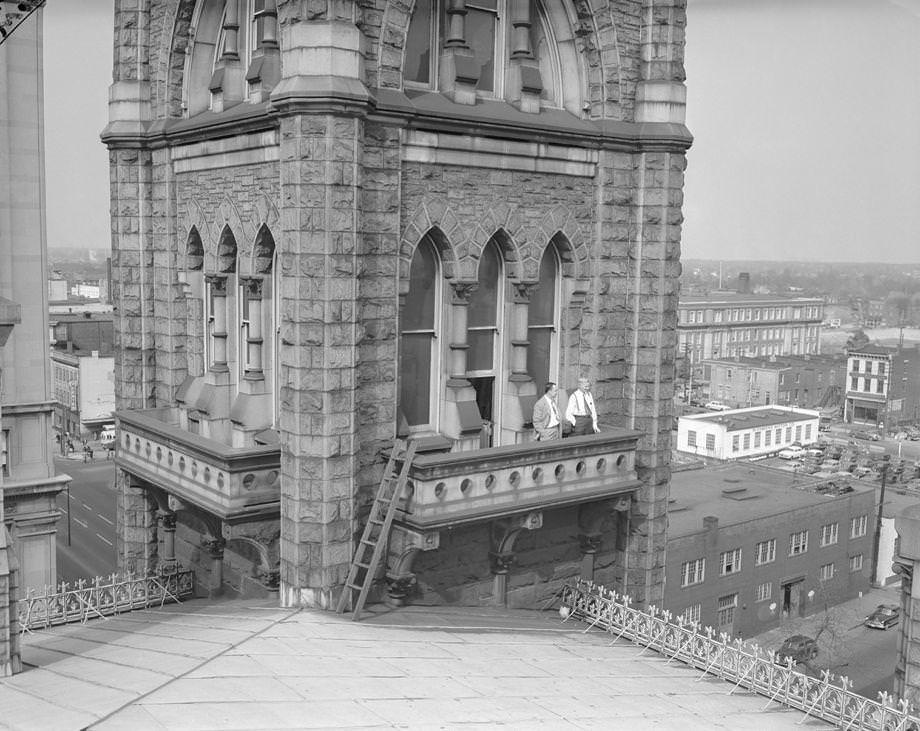
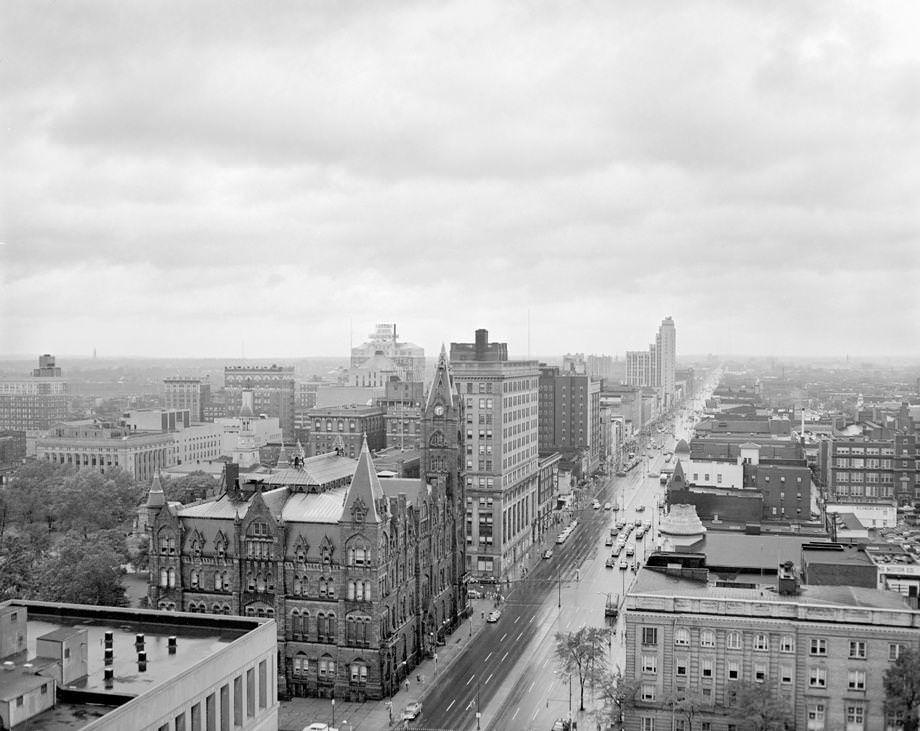
Downtown Richmond remained the commercial and civic heart of the city. Old City Hall, built in the High Victorian Gothic style, dominated East Broad Street and stood as one of the most recognizable landmarks in the region.
Several stories below the clock itself, four small balconies jut out from the clock tower on Old City Hall in downtown Richmond.A view of East Broad Street in downtown Richmond on a cloudy day in October 1954.
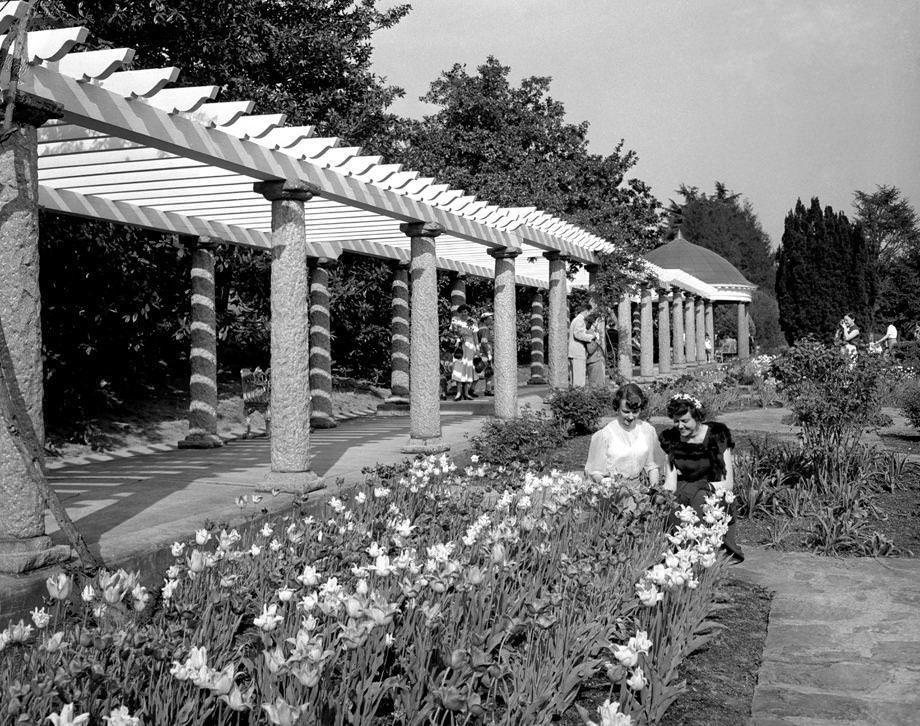
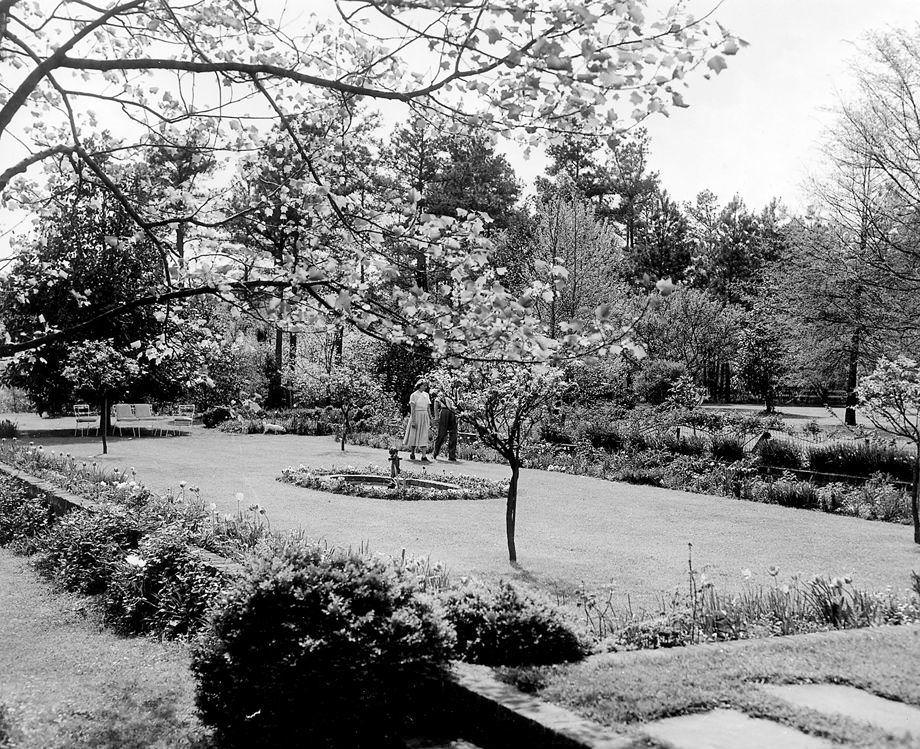
Away from the bustle of downtown, Richmond’s parks offered a slower pace of life. Maymont Park, with its Italian Garden, was a popular gathering spot, especially in spring when the flowers were in bloom.
Betsy Marrin and Doris Bolton admired the springtime blooms in the Italian Garden at Maymont Park, 1952.A couple strolled through the gardens at Shooters Hill in Goochland County.
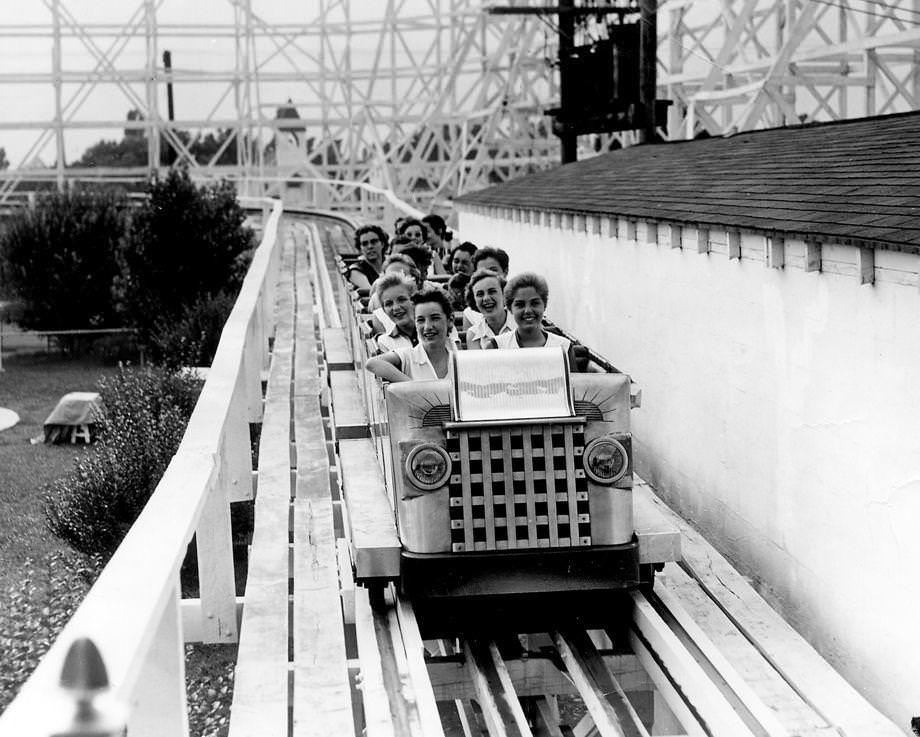
For a longer day trip, many Richmonders headed east to Buckroe Beach in Hampton. The railroads had long offered direct service to the area, and families could rent a cottage for $50 to $75 a week — an affordable escape from the summer heat.
Patrons enjoyed the roller coaster at the amusement park in Buckroe Beach in Hampton, 1957.
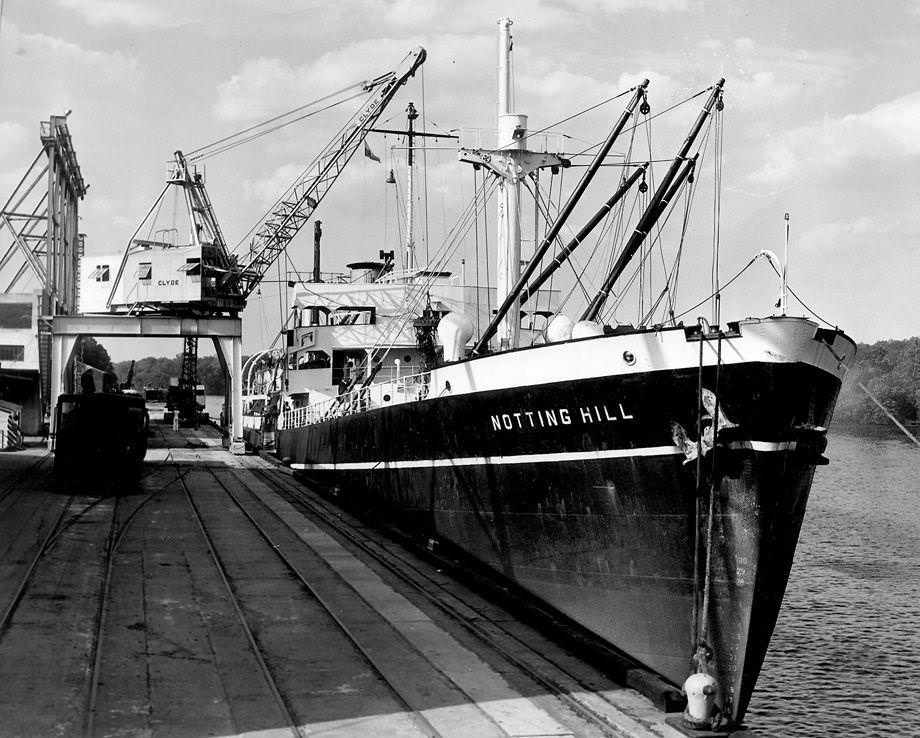
Richmond’s economy was closely tied to its port on the James River. The Deepwater Terminal handled a wide range of cargo — tobacco, textiles, newsprint, machinery, and steel — carried by ships from across the world.
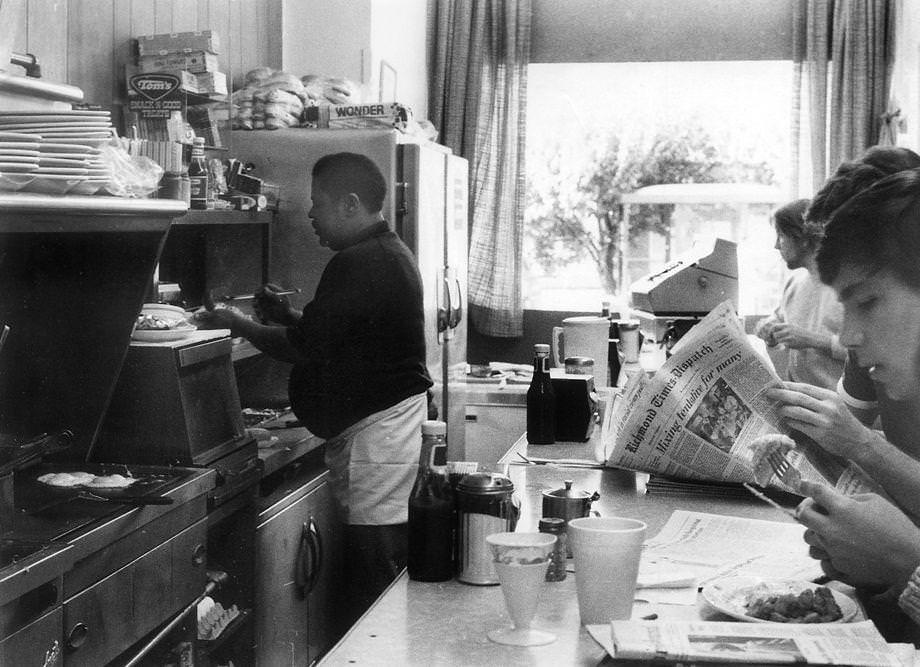
The Canadian ship Notting Hill was docked at Richmond’s Deepwater Terminal on the James River, 1954.Melvin “Shot” Walker worked the grill at the White Spot in Charlottesville.
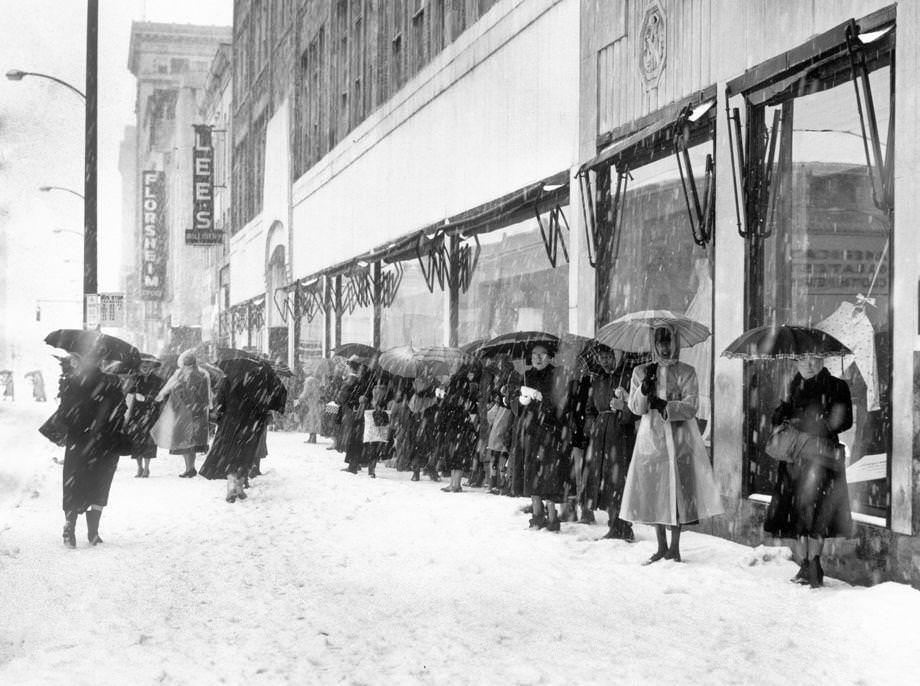
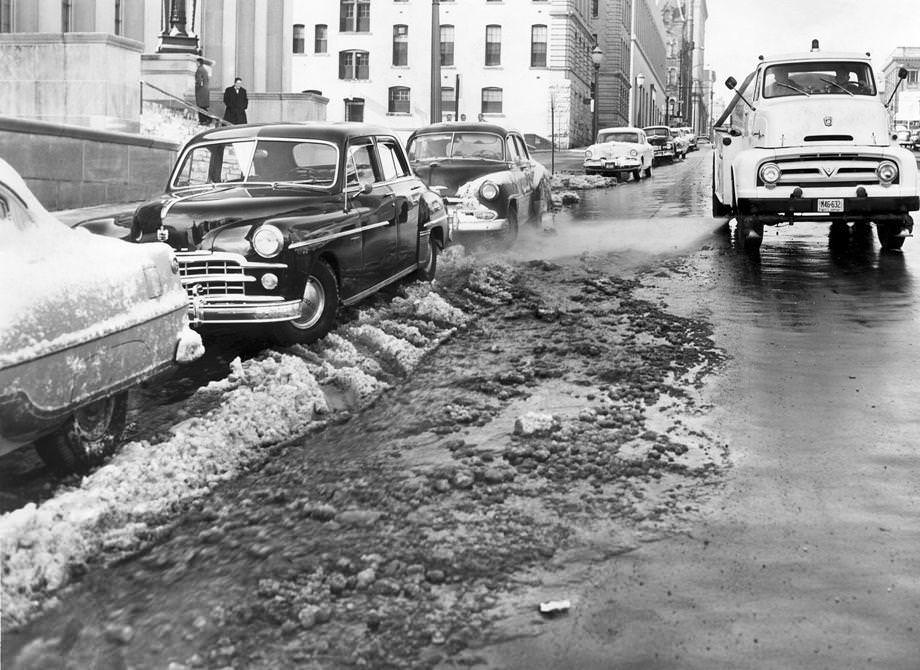
Winters in Richmond brought their own kind of character. A heavy snowfall in 1954 brought the city to a near standstill, but it also brought out what one newspaper account called a “spirit of neighborliness” among strangers waiting together at bus stops on Broad Street.
Shoppers waited for buses in the snow on Broad Street in downtown Richmond, 1954.
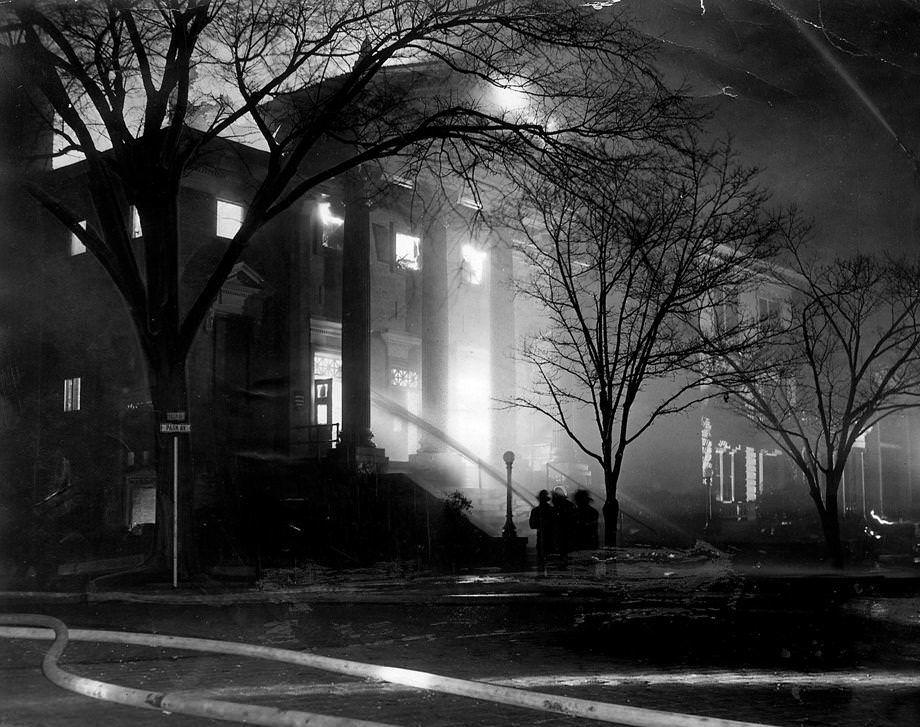
Fires were a constant threat throughout the decade. In 1950, a blaze broke out at Monument Methodist Church at Allen and Park avenues, drawing more than 150 firefighters — roughly two-thirds of the city’s entire firefighting force. Four firefighters were injured, many from ice that formed on ladders and sidewalks in the freezing temperatures.
Richmond firefighters battled an early morning blaze at Monument Methodist Church, located at Allen and Park avenues, 1950.
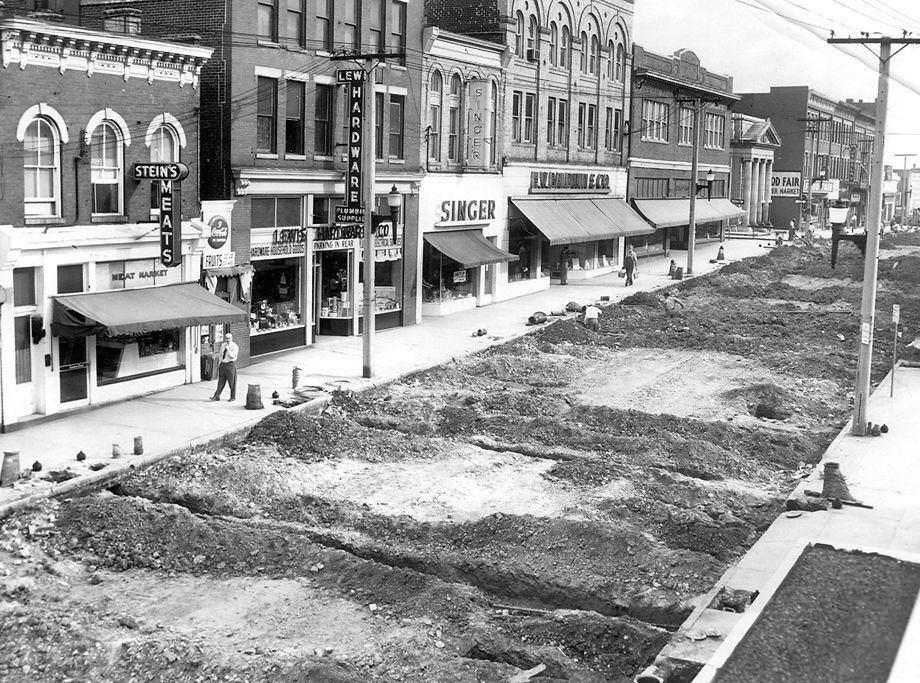
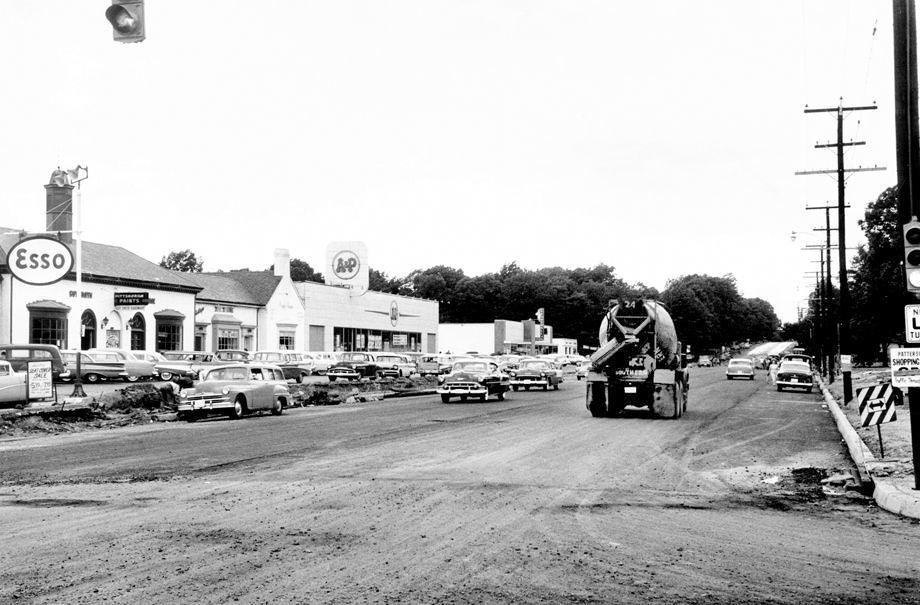
Infrastructure improvements were a constant feature of Richmond’s streetscape during this era. Roads were widened, streetcar tracks were torn out, and entire blocks were dug up to modernize the city’s utility systems.
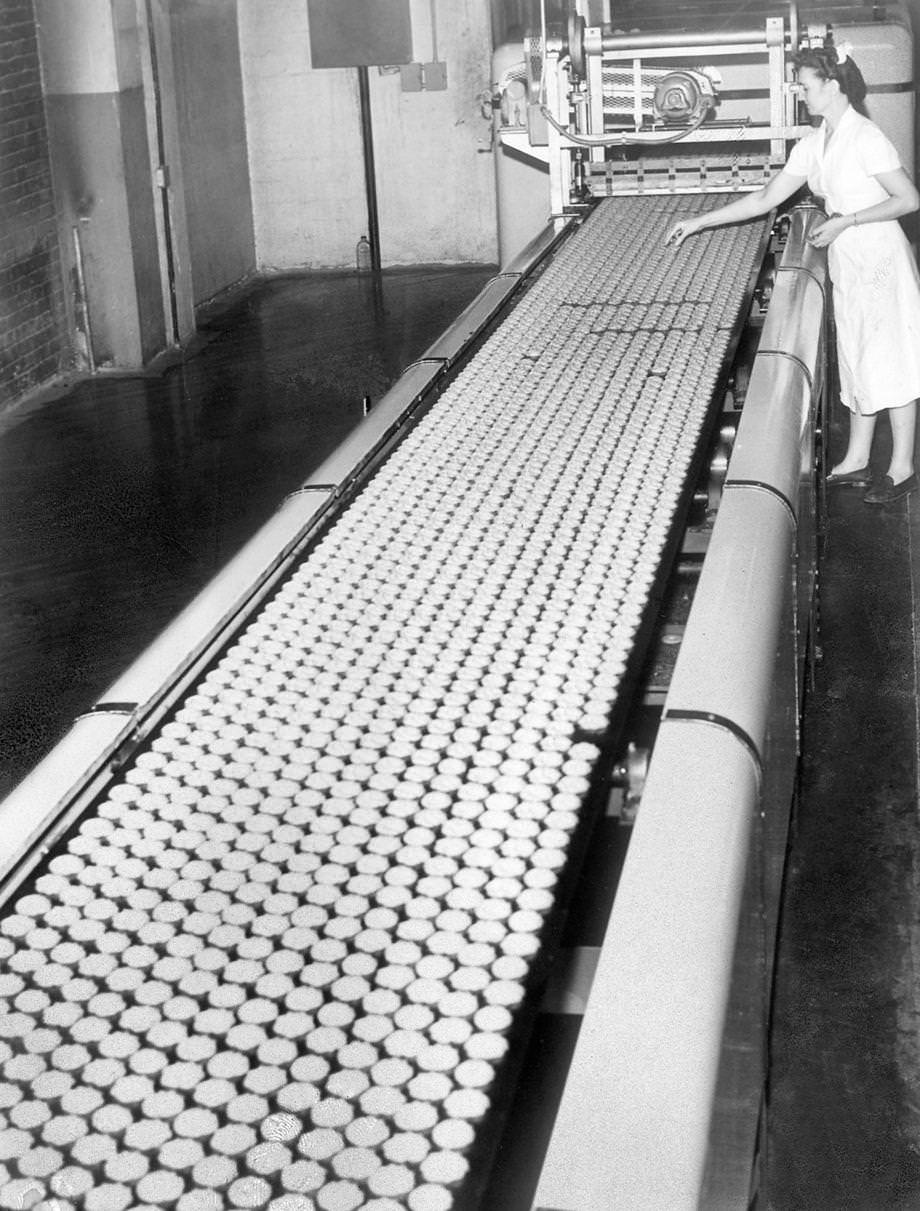
The area of Hull Street between 12th and 13 streets in South Richmond was dug up for utility work and street rebuilding, 1951.Edition of The Times-Dispatch included a photo spread on the Southern Biscuit Co., whose products – under the Famous Foods of Virginia brand – established the company as one of America’s largest producers of cookies and crackers, 1953.
Richmond’s cultural life was active and varied. Garden clubs, flower shows, and civic events filled the social calendar, making use of the city’s many historic homes and public spaces.
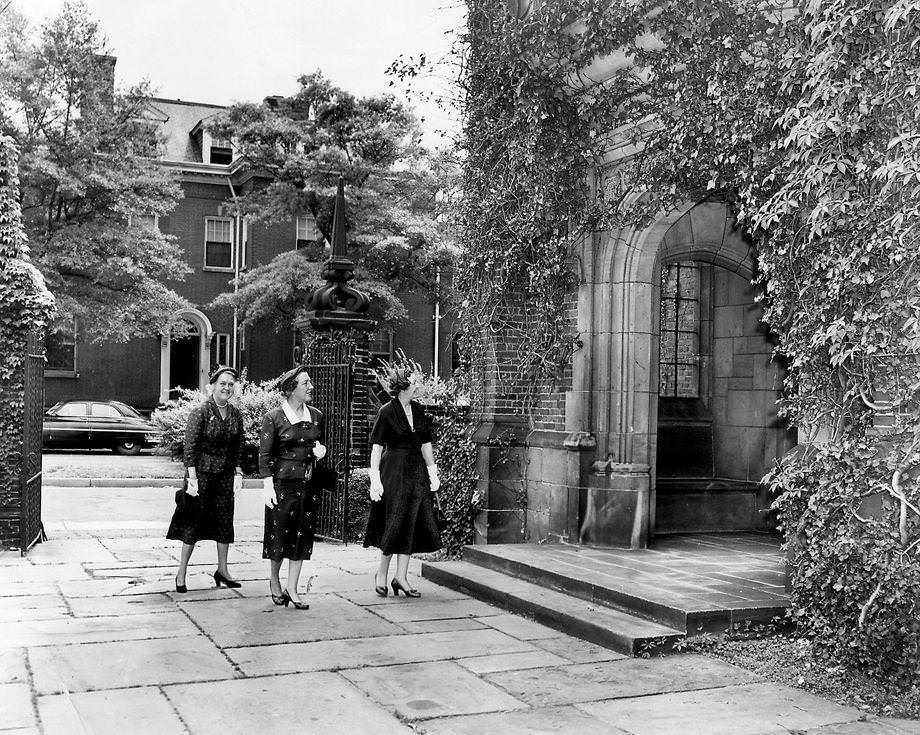
James River Garden Club members visited the Branch House on Monument Avenue in Richmond to make last-minute arrangements before the weekend’s flower show, 1954.
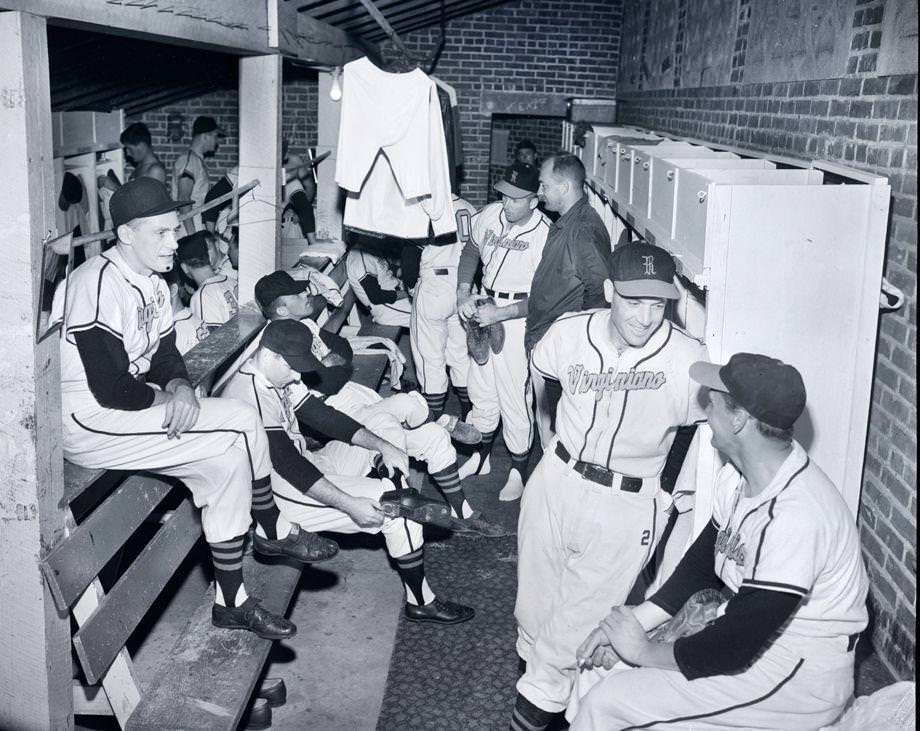
Sports were central to Richmond life as well. The Richmond Virginians, a minor league baseball team in the International League, held spring training in Florida before returning to their home base at Parker Field. The team had a devoted local following.
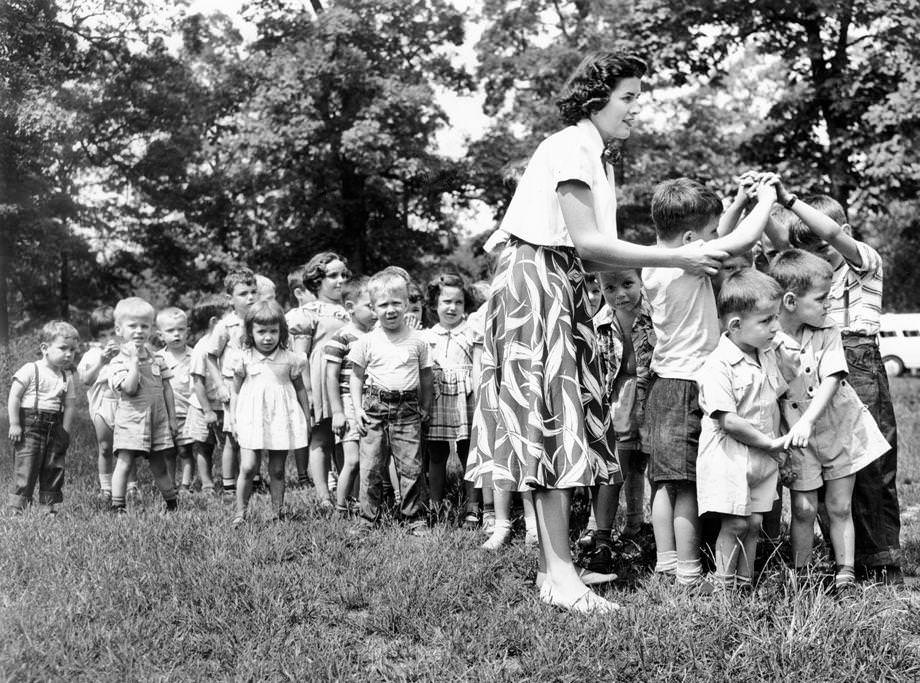
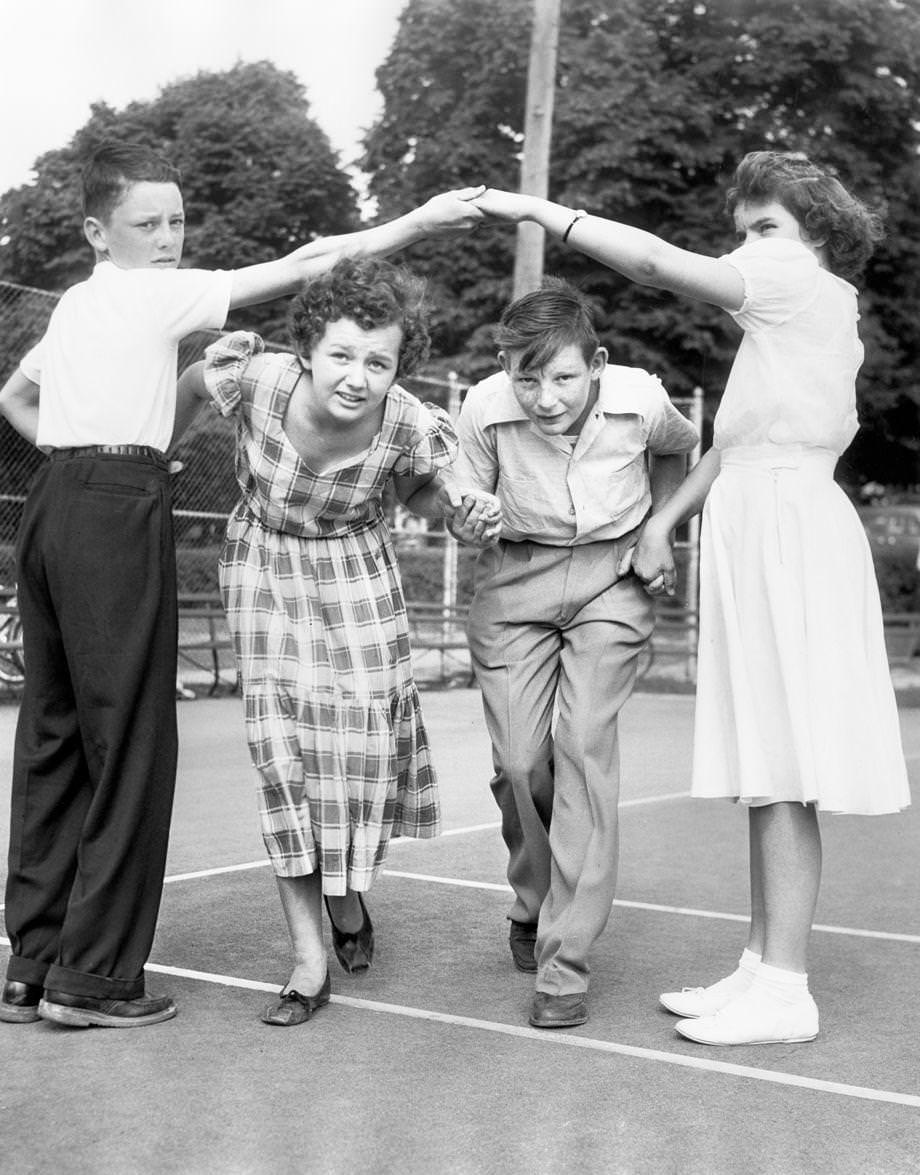
Members of the Richmond Virginians engaged in a pre-practice bull session in their locker room, 1955.June Maile showed youngsters from the Belle Bryan Day Nursery how to play “London Bridge is Falling Down” during the nursery’s annual outing at Byrd Park, 1951.
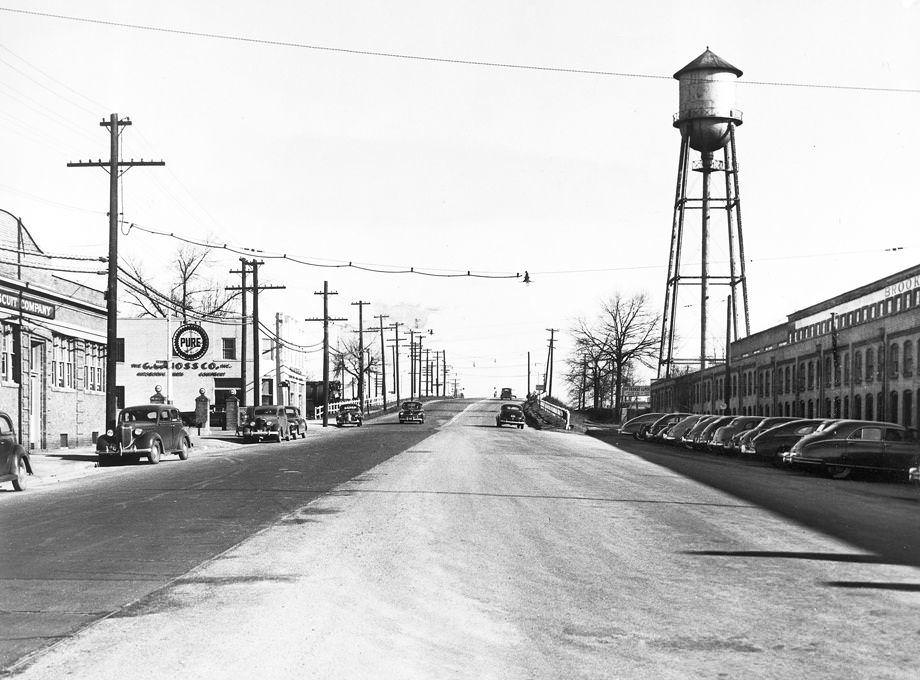
The city was also investing in its physical bones. Road widenings and rail overpass projects were common, part of a broader push to modernize Richmond’s transportation network as car ownership surged across the country.
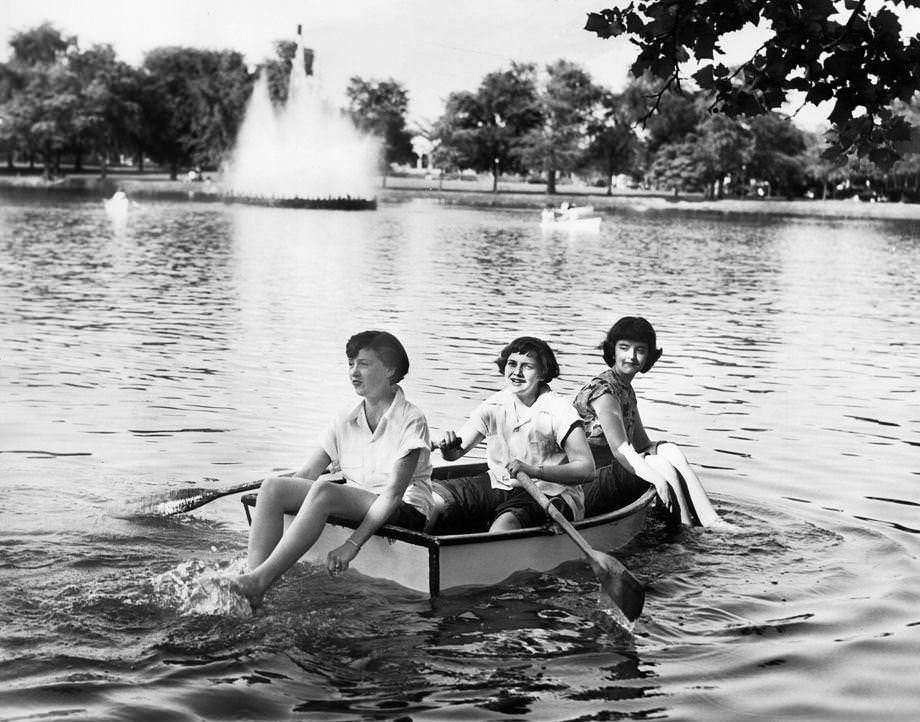
Work was scheduled to begin to widen this south end of the North Boulevard railroad overpass, 1950.These young ladies cooled off during a heatwave and enjoyed a boat ride on Fountain Lake at Byrd Park in Richmond, 1950.
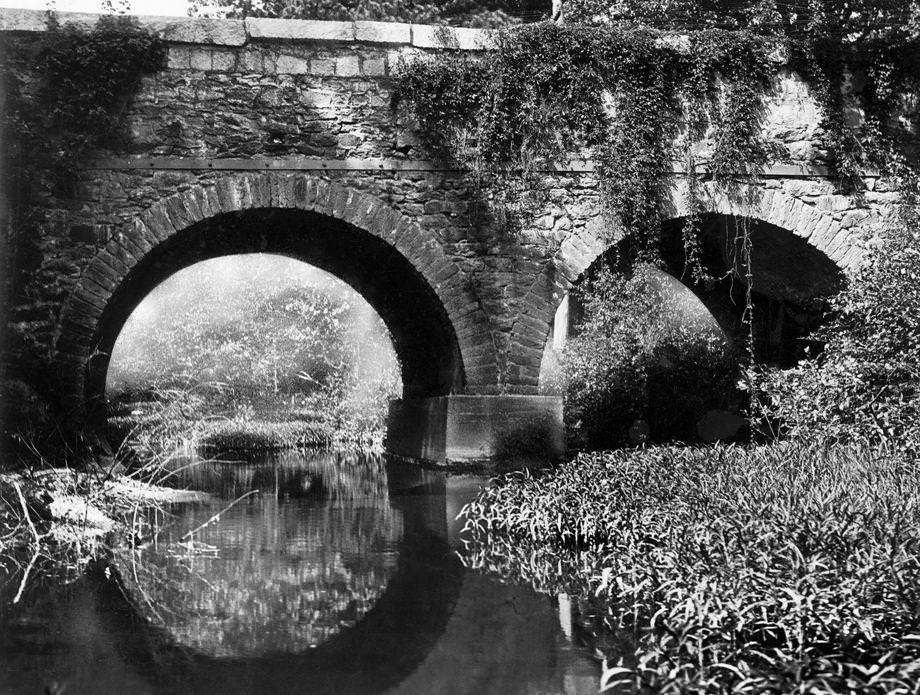
While the city was modernizing rapidly, reminders of its much older history were never far away. The granite arch bridge at Falling Creek, built in the 1820s for just over $2,000, had been retired from active service in the early 1930s but still stood as a quiet monument to the area’s engineering past.
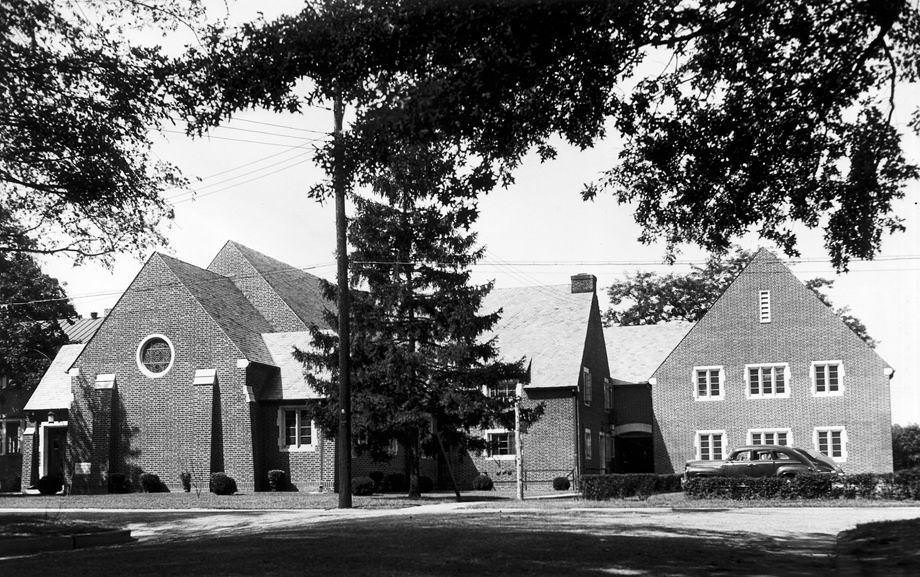
The Bridge at Falling Creek, 1951.Forest Hill Presbyterian Church, with its new attached building at right, 1951.
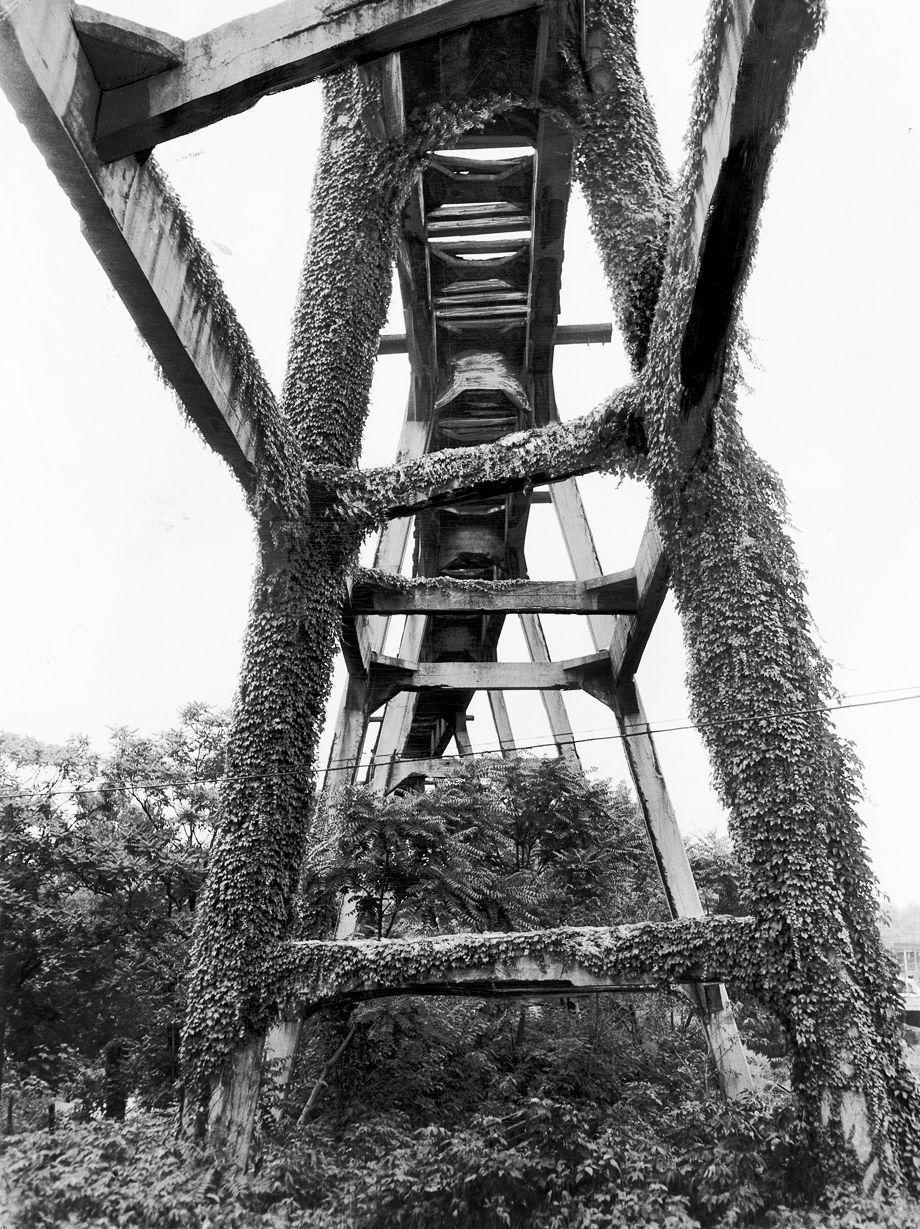
Not all remnants of the past were preserved with such care. The crumbling viaduct of the Richmond-Ashland Electric Line, overgrown with vines and shedding chunks of concrete, had become a hazard near Moore Street. The trolley system it once supported had shut down in the late 1930s, and it would take more than 15 additional years before the last of the structures was finally removed.
A crumbling Richmond-Ashland Electric Line viaduct, covered in vines, near Moore Street in Richmond, 1950.
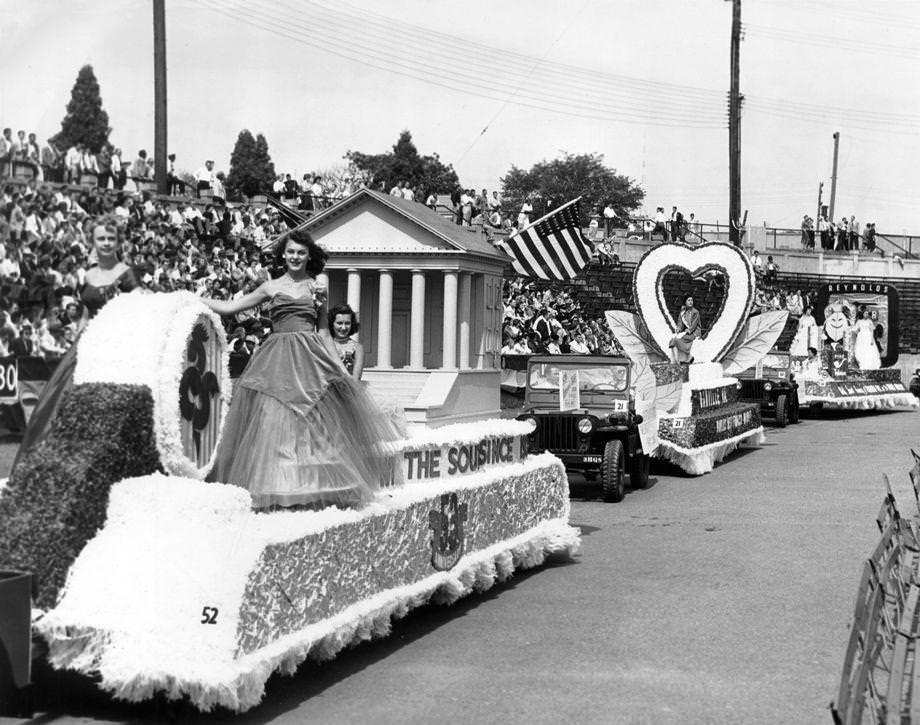
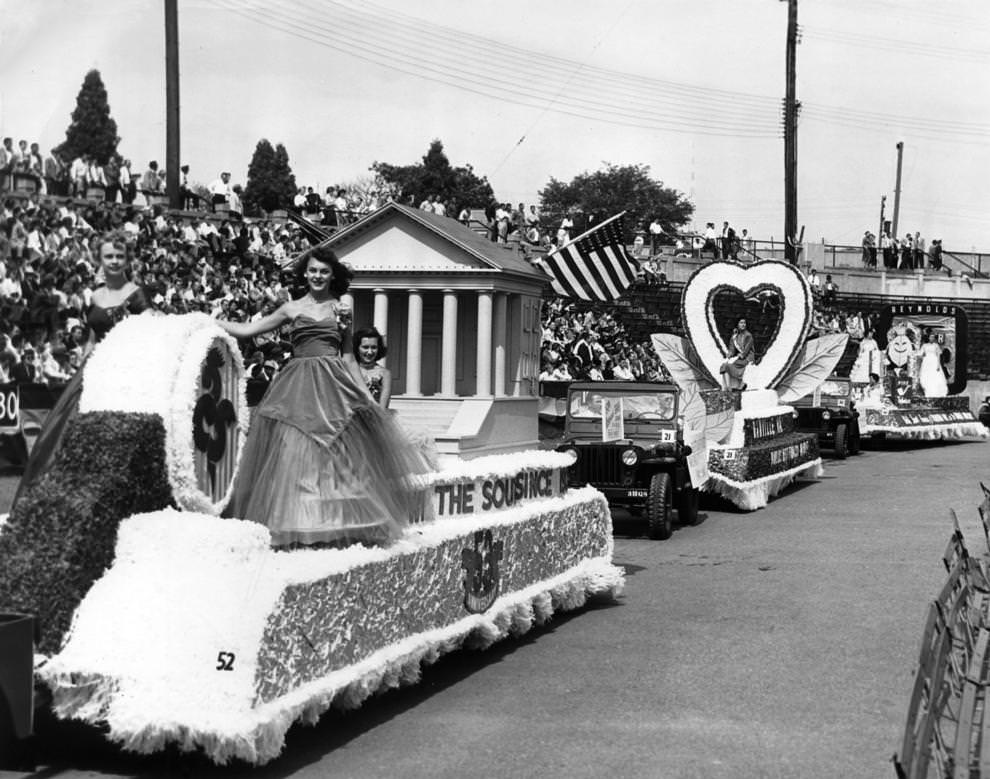
One of the decade’s most beloved civic traditions was the National Tobacco Festival, which ran in Richmond from 1949 to 1984. Each year, the event included a parade around City Stadium, followed by a college football game.
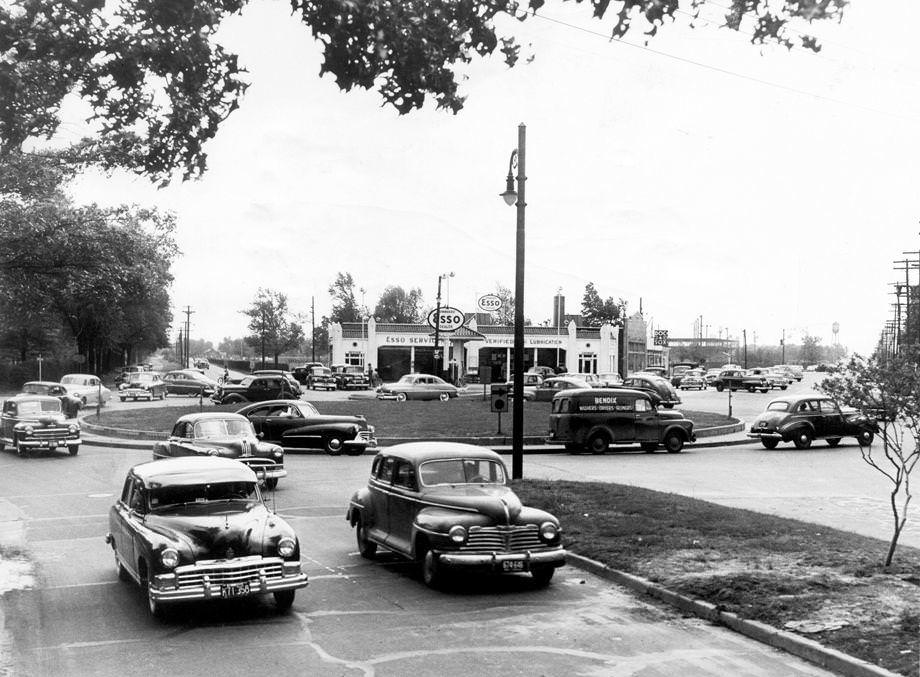
Floats in the National Tobacco Festival parade completed their promenade around City Stadium before the football game between the University of Richmond and Hampden-Sydney College, 1954.The former Westwood Circle in Richmond, a traffic circle at the intersection of North Boulevard, Hermitage Road and Westwood Avenue, 1950.
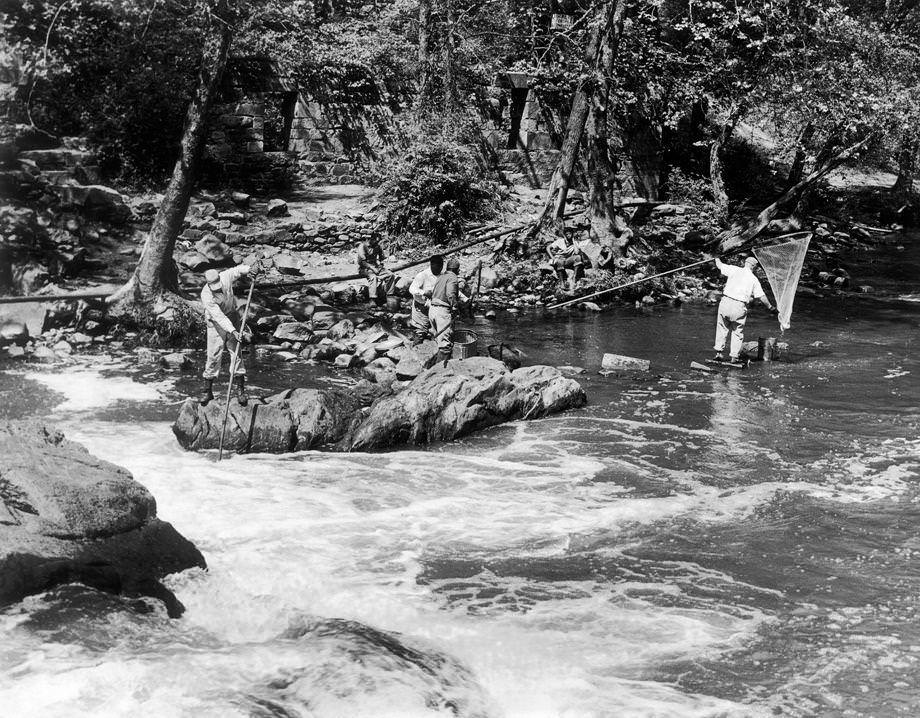
Spring in the Richmond region brought a different kind of gathering. Along Falling Creek in Chesterfield County, men came out each year to dip for herring as the fish arrived to spawn. It was as much a social occasion as a practical one — a chance to stock up on fish that could be salted and stored through the year.
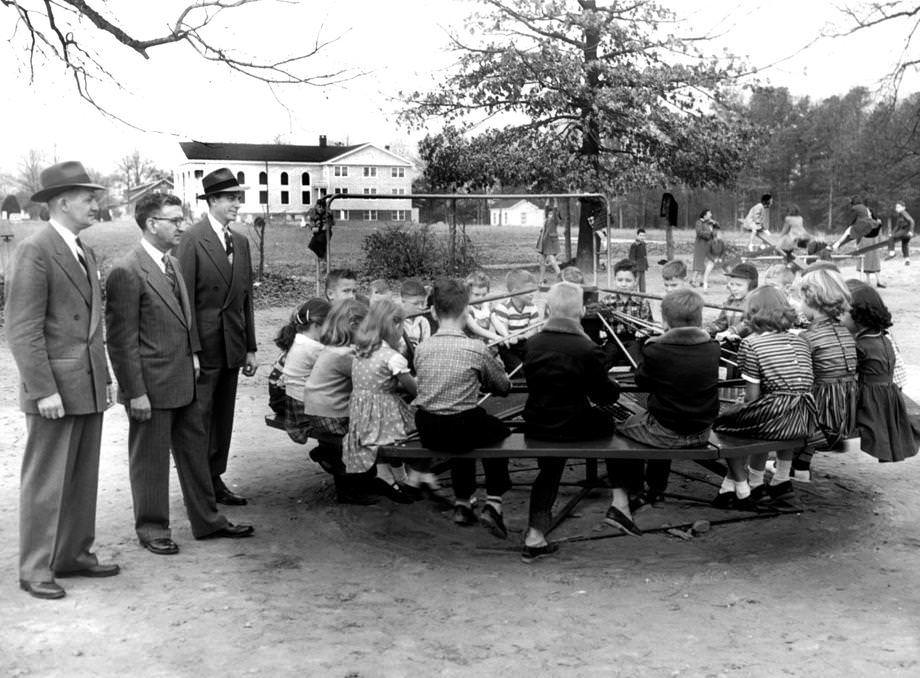
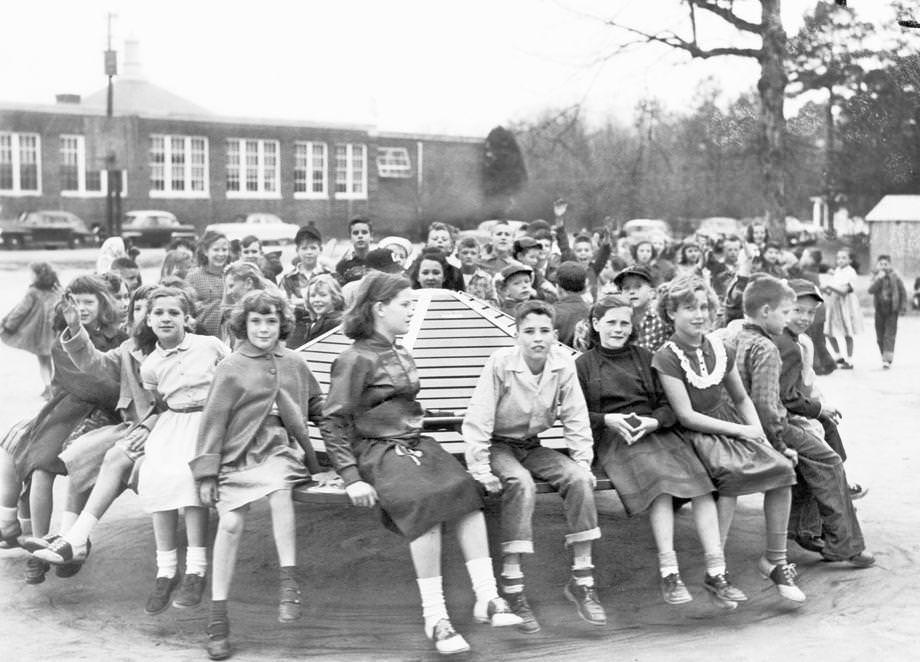
Men dipping for herring in Falling Creek in Chesterfield County, 1955.The new whirlaway, a merry-go-round type of gadget turned by the foot power of dozens of students, was popular at Dumbarton Elementary School in Henrico County, 1953.
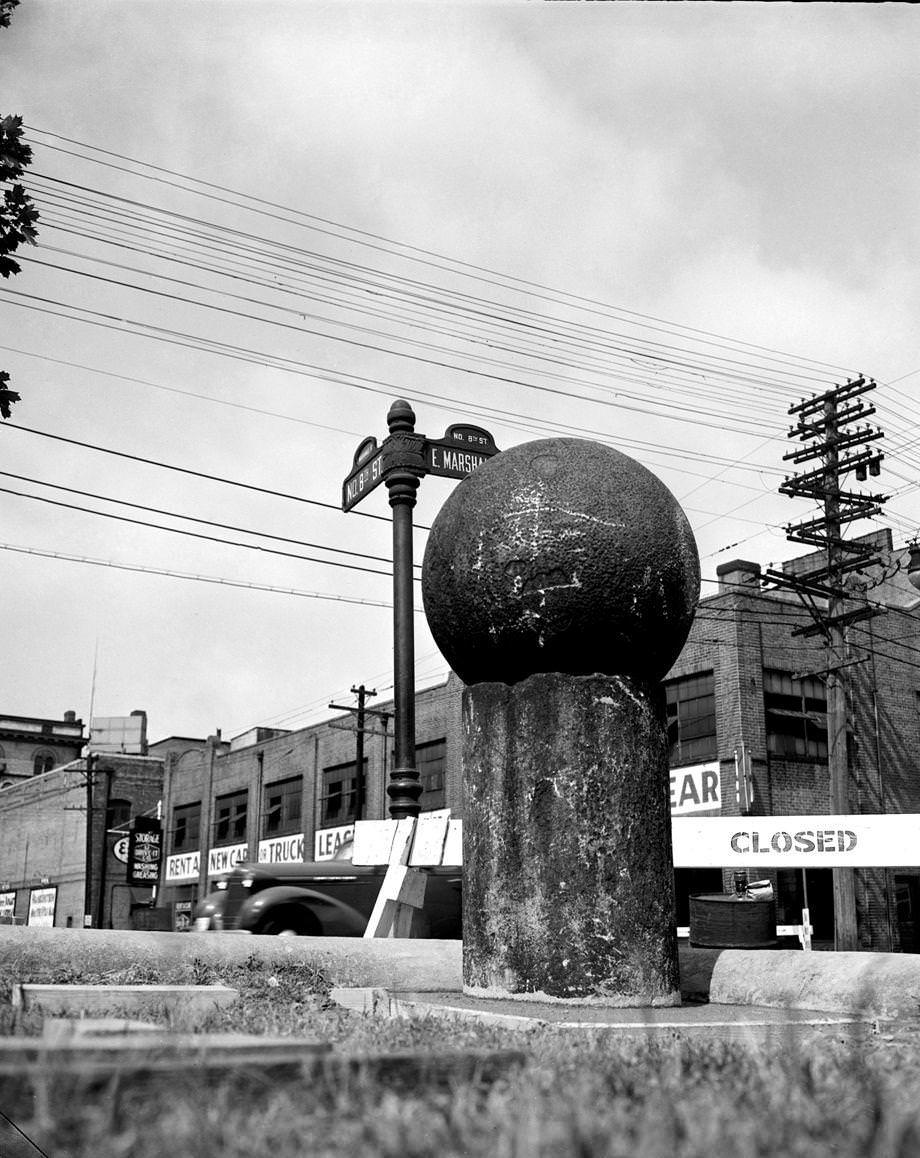
The city had its share of quirky historical footnotes. A set of 30-inch Turkish cannonballs — long known as “Dr. Duval’s pills” — had stood for years in front of Grays’ Armory. In 1952, one was moved to John Marshall High School rather than being sent to the city dump, where its two companions had already disappeared during World War II before being rediscovered earlier that year.
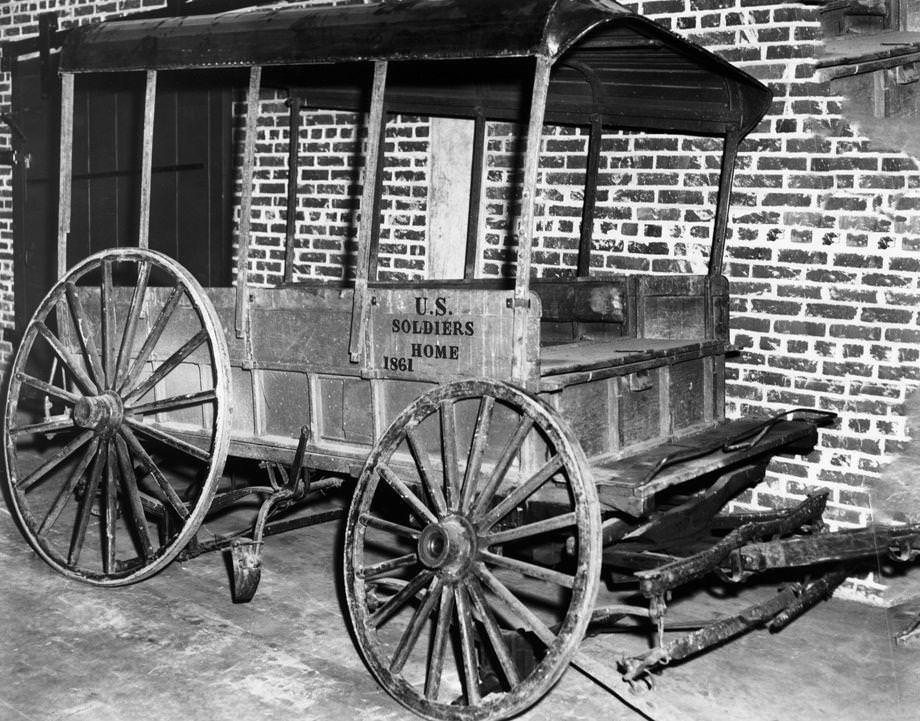
One of “Dr. Duval’s pills,” part of a trio of 30-inch granite Turkish cannonballs, in its new location at John Marshall High School at Eighth and Marshall streets in Richmond, 1952.A wagon, believed to have been Union Gen. Ulysses S. Grant’s during the Civil War, as it was retired to the Army’s Richmond Quartermaster Depot at Bellwood, 1952.
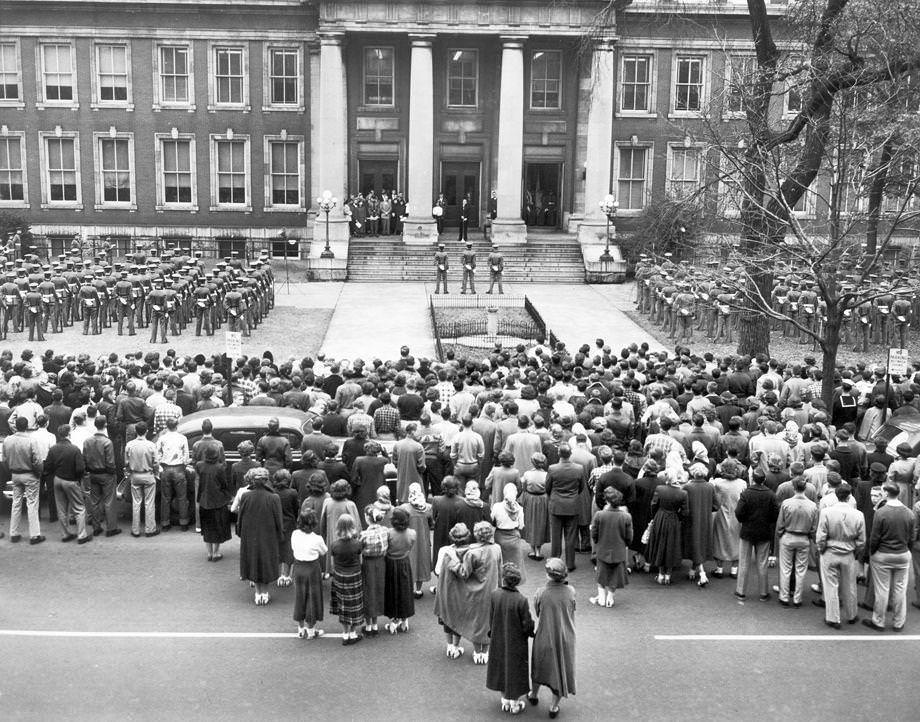
Veterans and military traditions held a prominent place in Richmond’s public life. Armistice Day ceremonies at John Marshall High School in 1952 marked the 34th anniversary of the end of World War I. The school’s band and color guard took part, and wreaths were placed on plaques honoring former students who died in both world wars.
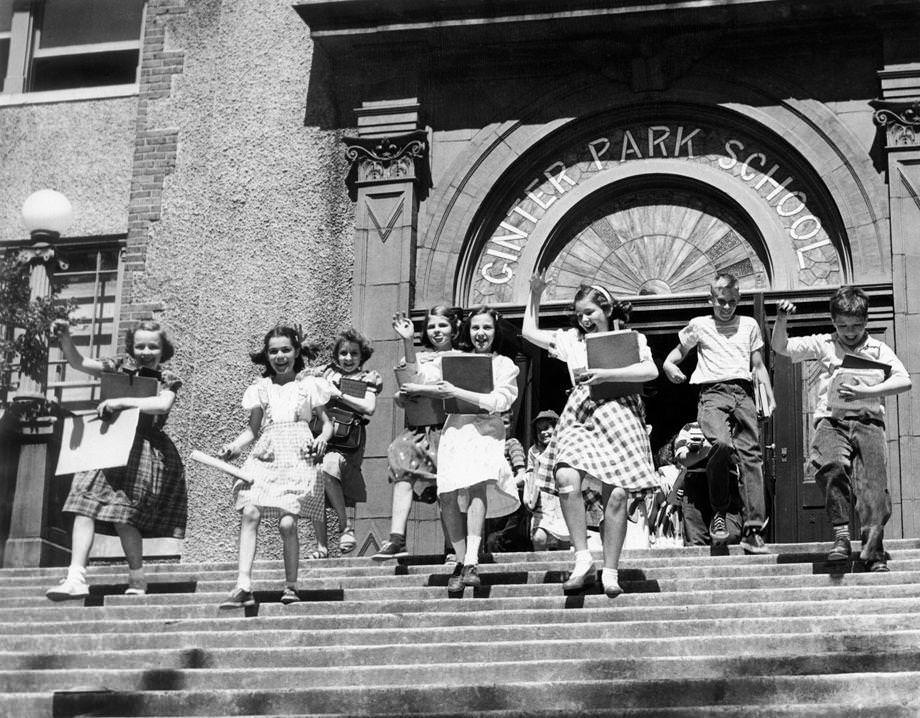
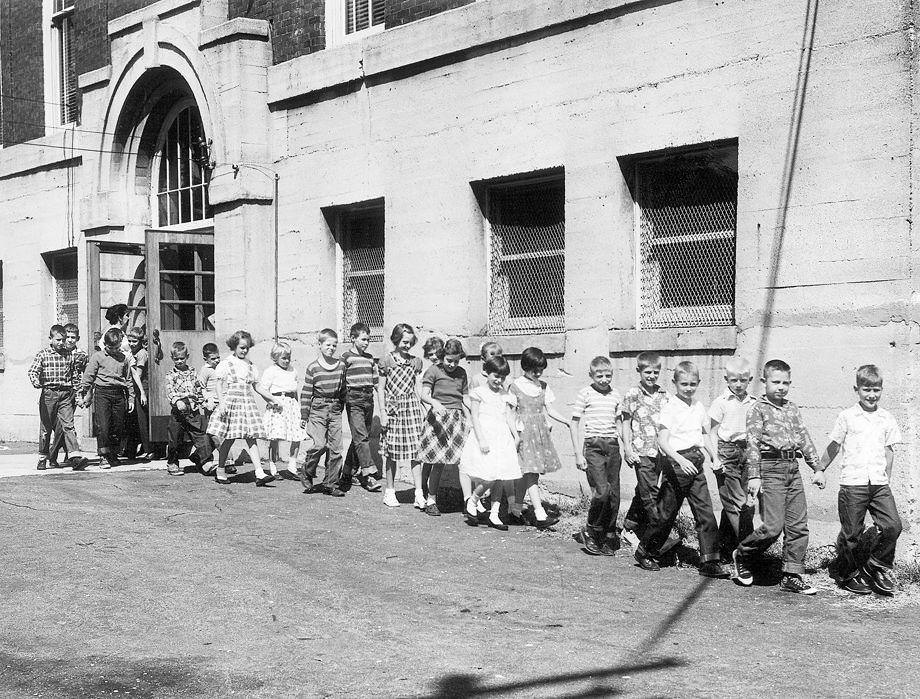
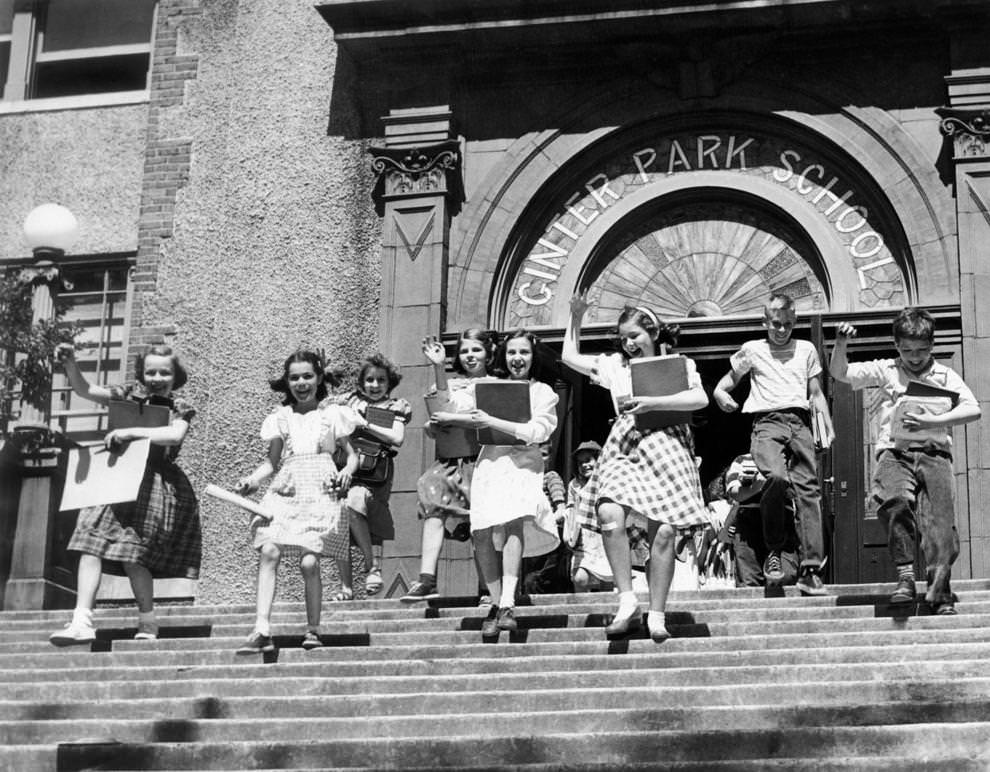
Armistice Day ceremonies were held at the old John Marshall High School in Richmond, 1952.Gleeful children left Ginter Park School in Richmond as they were dismissed for the summer months – though they did need to return a few days later for their report cards, 1950.
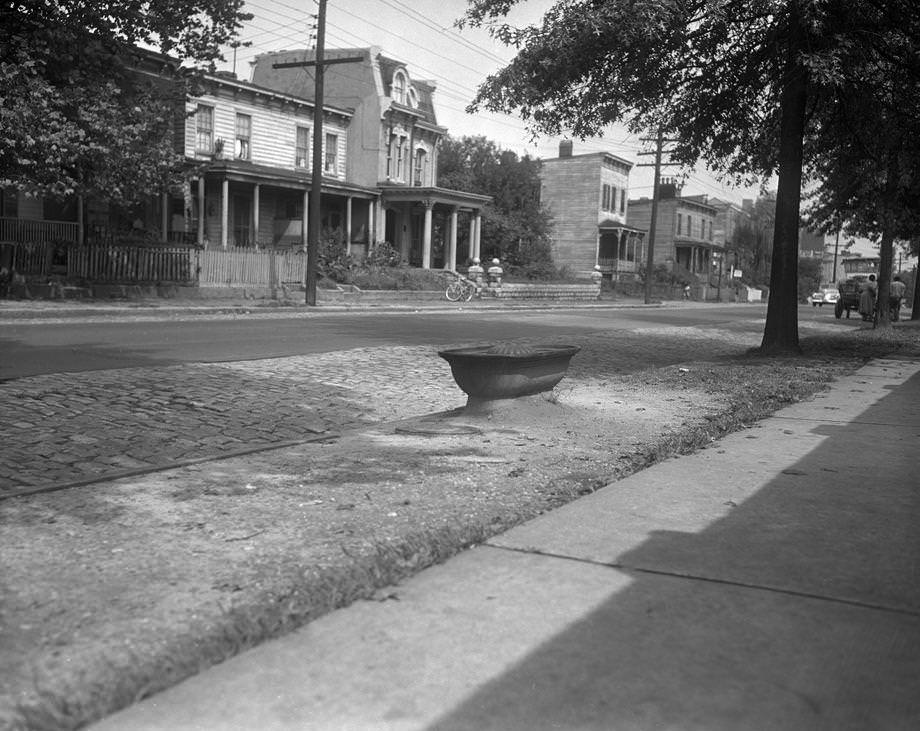
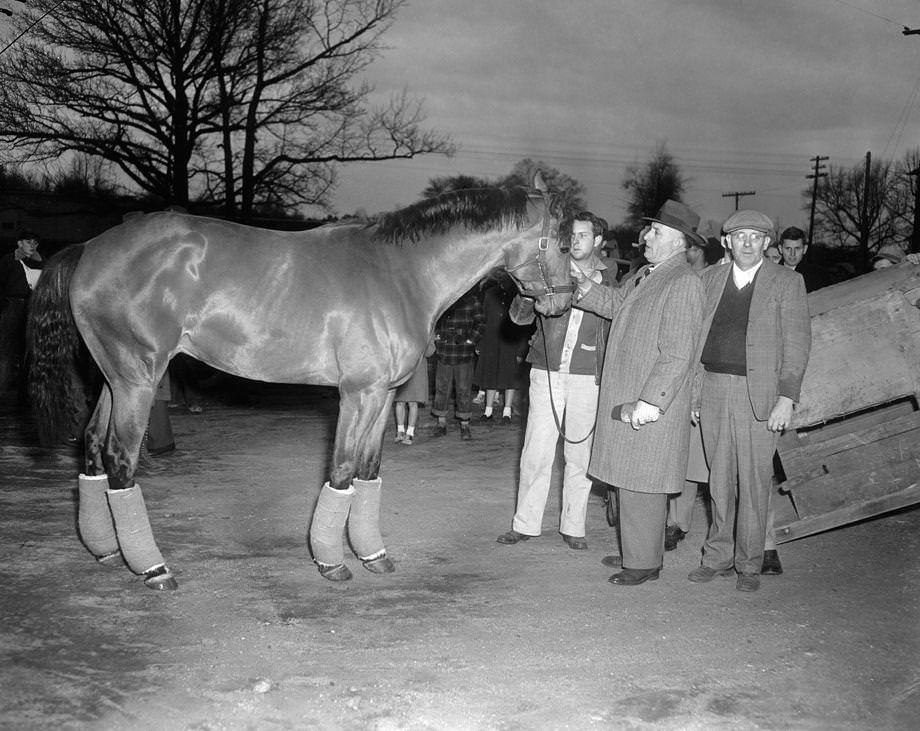
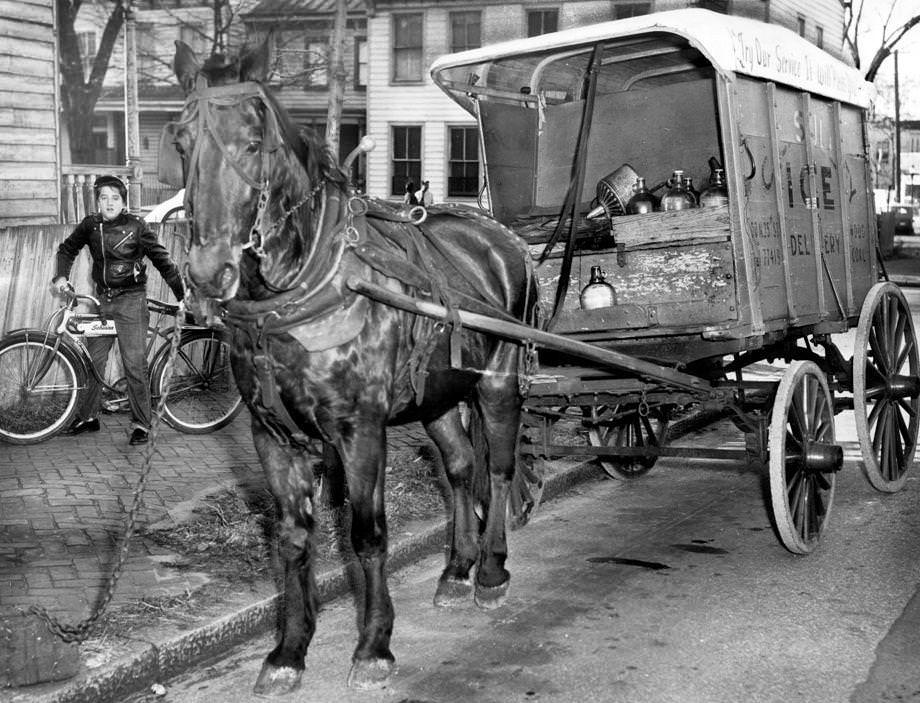
As late as 1950, working horses were still a familiar sight on Richmond’s streets — used for deliveries and ridden by police patrols. City officials that year debated whether it was still worth the roughly $500 annual cost to keep three public horse troughs supplied with water.
There were still working cart and wagon horses in Richmond, in addition to police horses that patrolled the streets, 1950.Reigning horse of the year Hill Prince came home to The Meadow, near Doswell in Caroline County, after suffering a leg fracture during training in California, 1951.
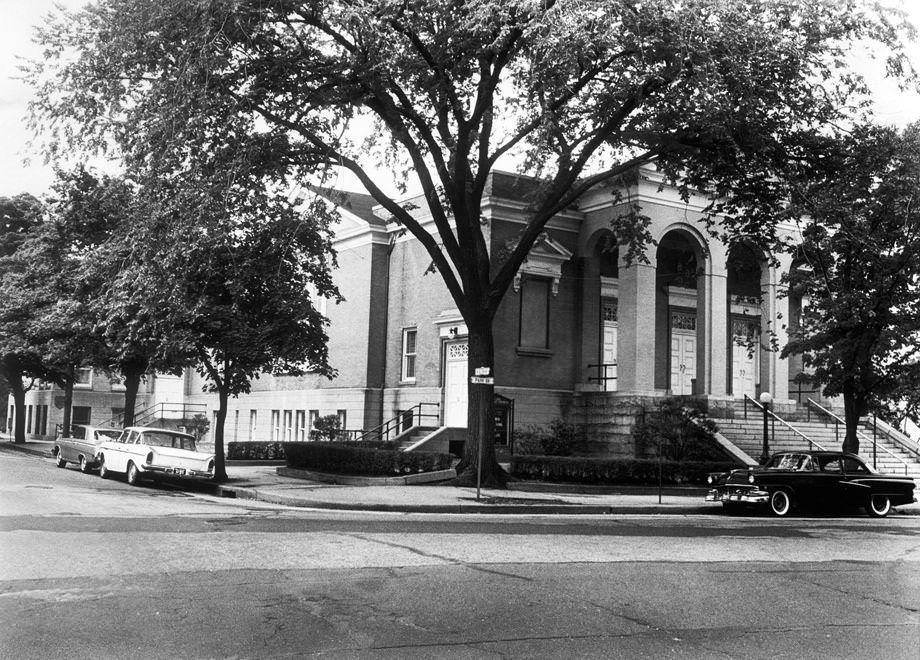
The Monument Methodist Church building at Park and Allen avenues had a complicated history. After a fire gutted the original structure in 1950, the congregation eventually merged with another to form Reveille United Methodist. The Byrd Park Methodist congregation moved in during 1952 after the building was renovated, giving the structure a new life under a new name.
The newly renovated Park Avenue Methodist Church, 1954.
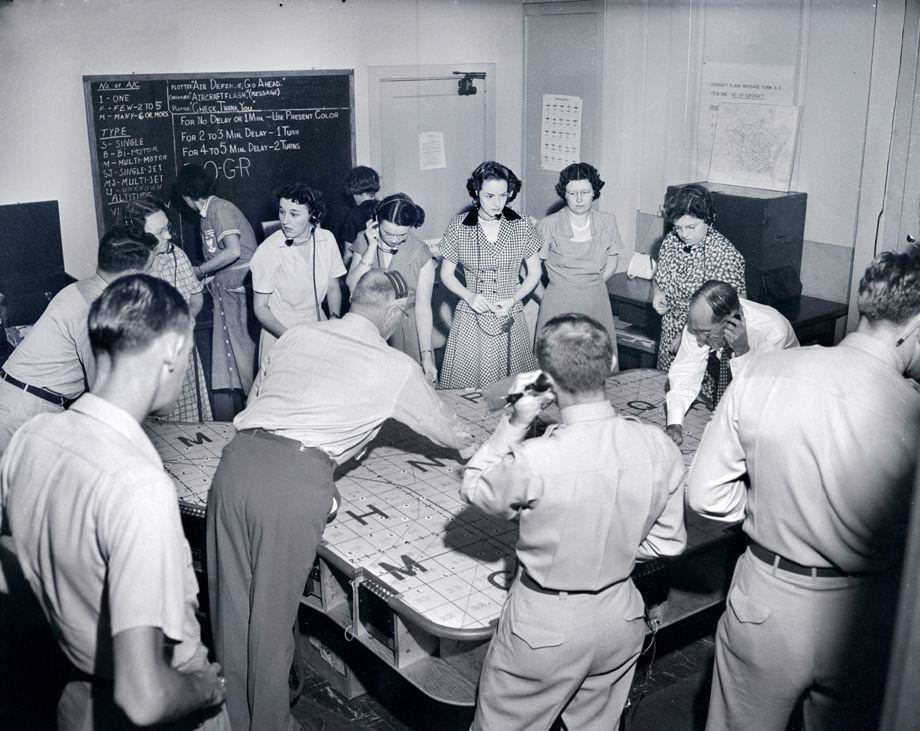
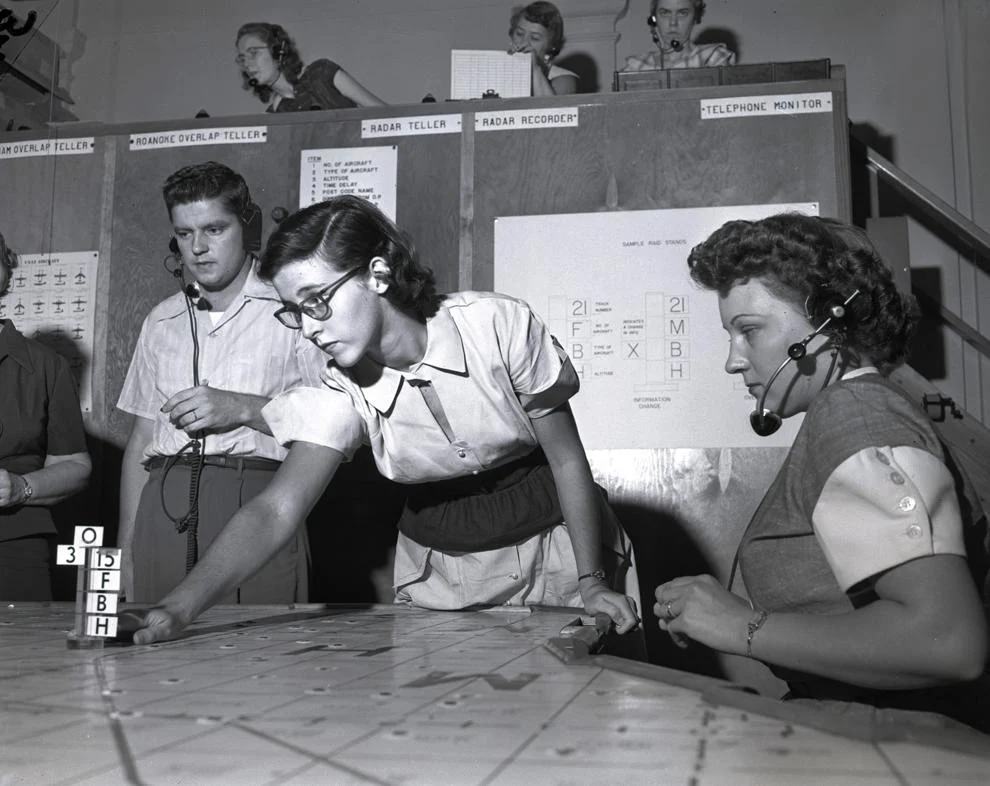
Cold War anxieties reached Richmond in 1952 when the nation’s first 24-hour peacetime air raid alert system — Operation Skywatch — began operations. Volunteers and Air Force personnel at the Richmond filter station started tracking all aircraft sightings reported by lookouts across the region.
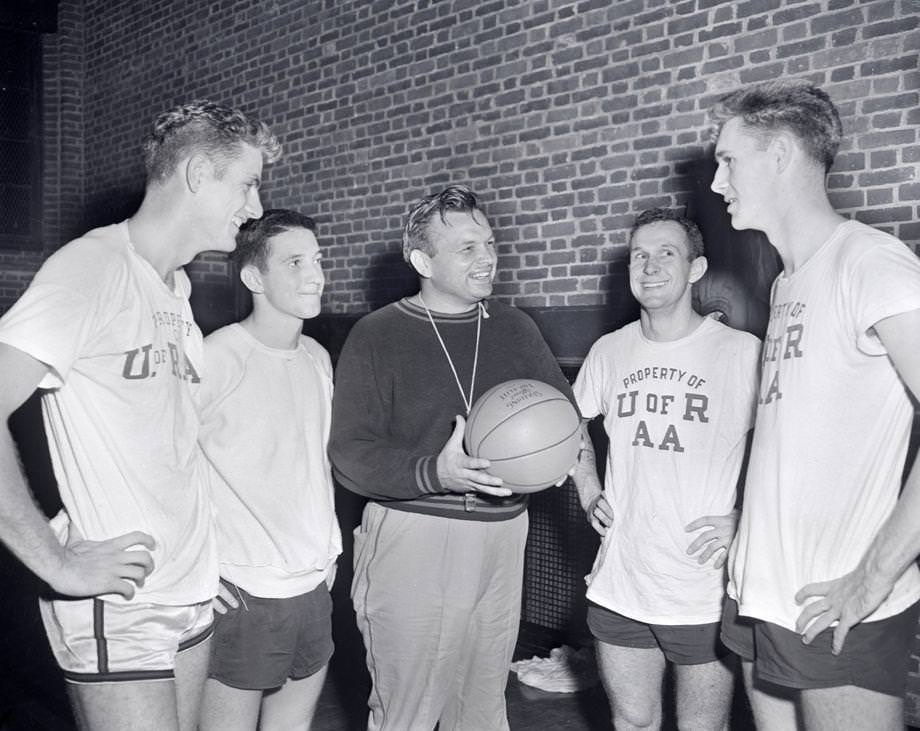
The nation’s first 24-hour peacetime air raid alert system, called Operation Skywatch, began operation, 1952.University of Richmond basketball coach Les Hooker was surrounded by four returning members from the previous season’s team, which won the Big Six title in Hooker’s first season and earned him coach of the year honors, 1953.
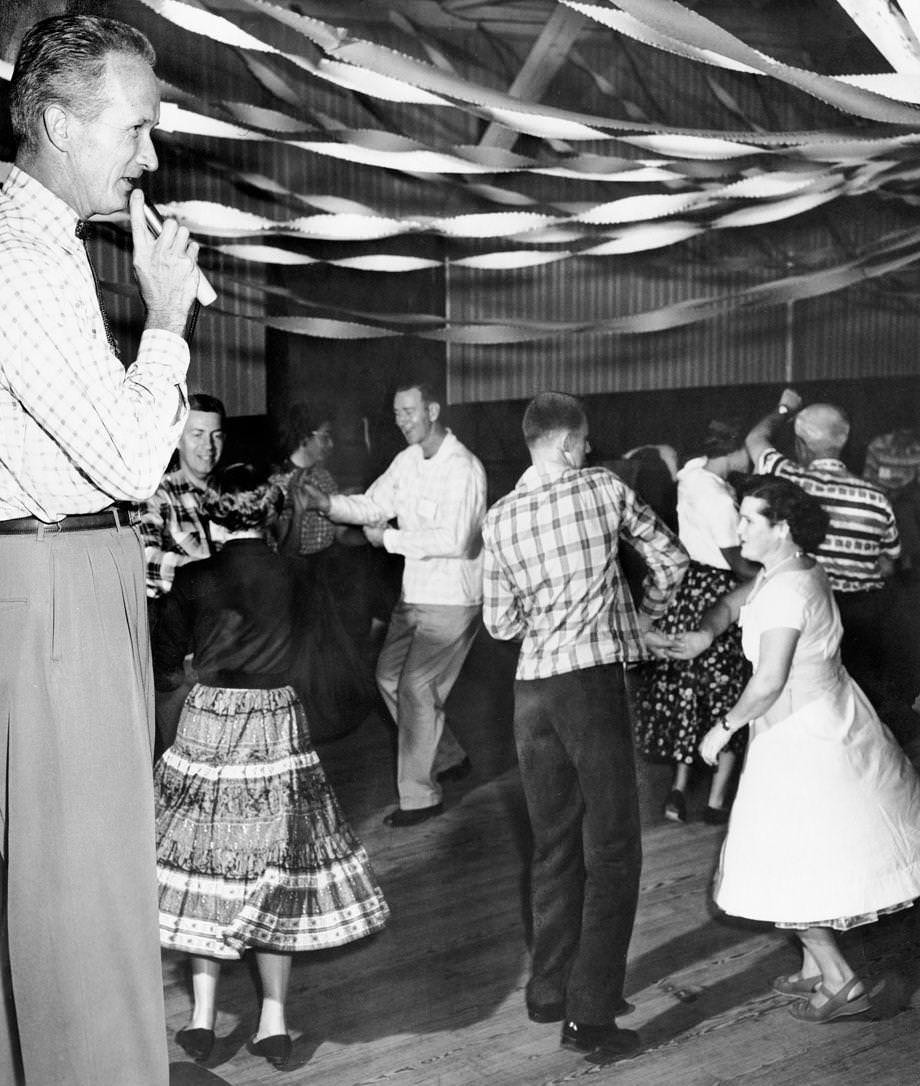
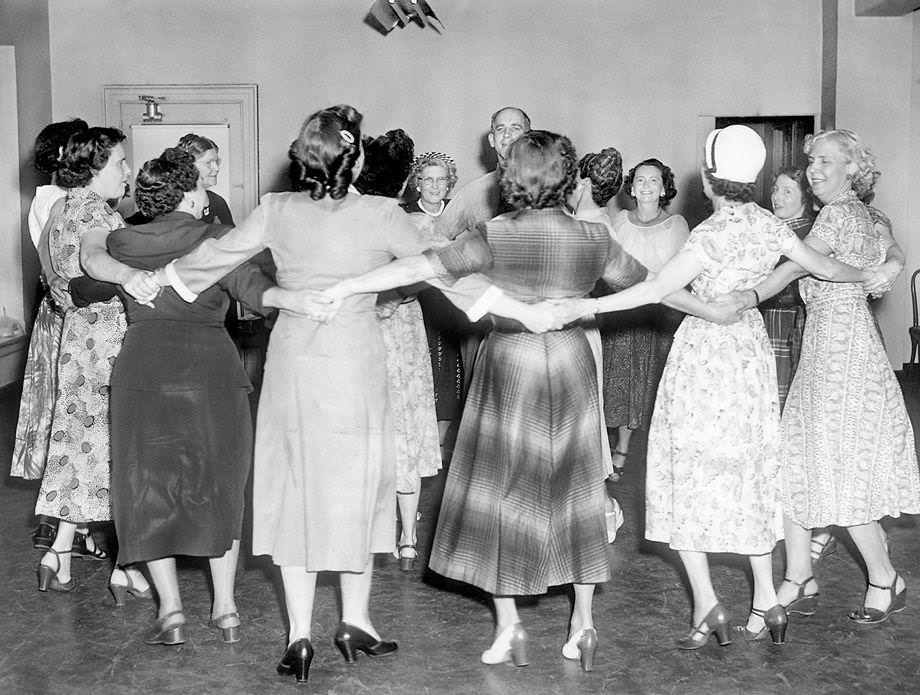
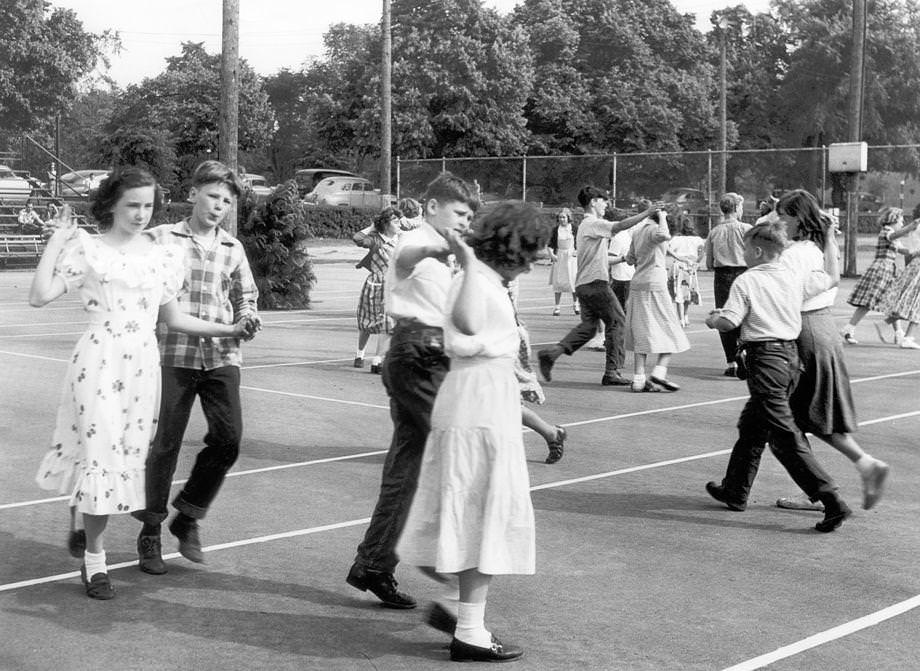
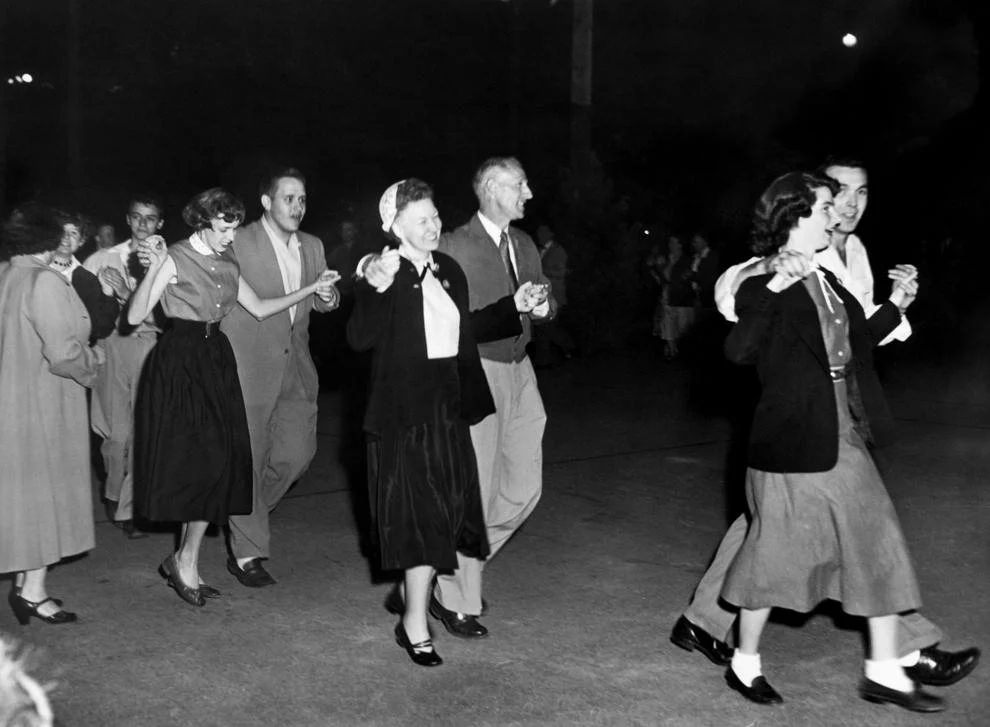
Square dancing saw a genuine revival in Richmond during the early part of the decade. The local Richmond Square Dance Federation, working alongside the city parks department and the state Chamber of Commerce, organized festivals that drew groups from across Virginia.
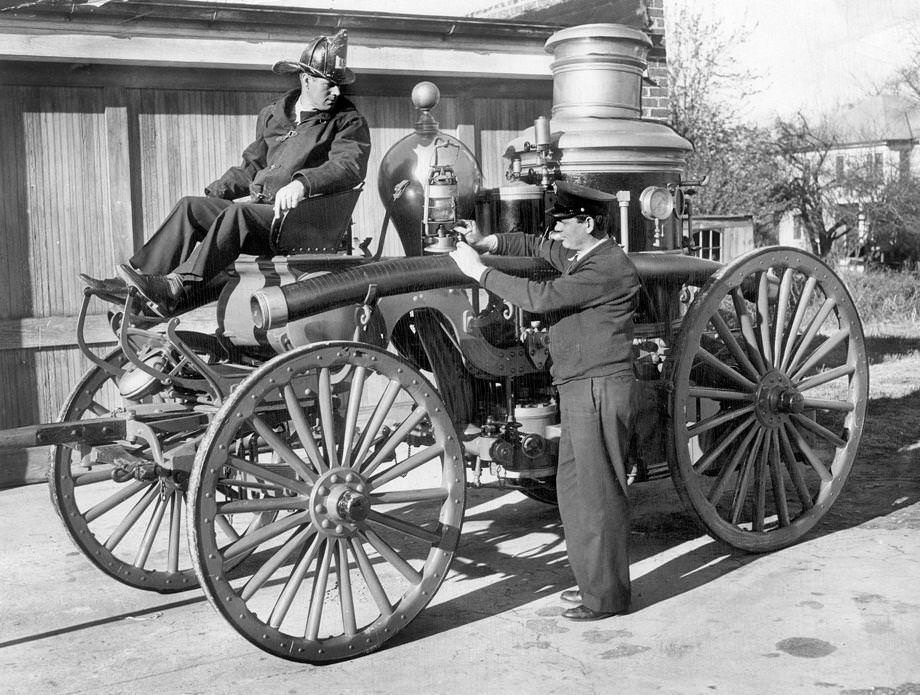
Members of the Richmond Square Dance Federation danced in Bon Air, 1953.Firemen W.M. Alley and J.B. Winston mounted Richmond’s oldest fire engine, Old 798.
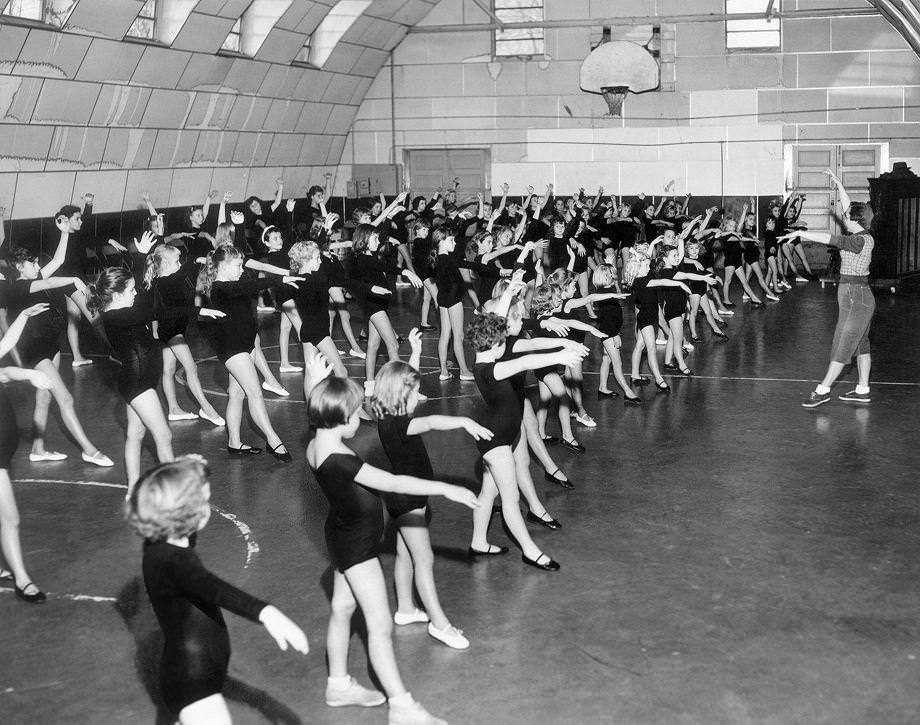
Across Richmond’s many neighborhoods, recreation programs kept children active year-round. At the Powhatan Hill playground, a Quonset hut acquired in 1947 for $15,000 had become a center for after-school activities, including dance classes that were still going strong a decade later.
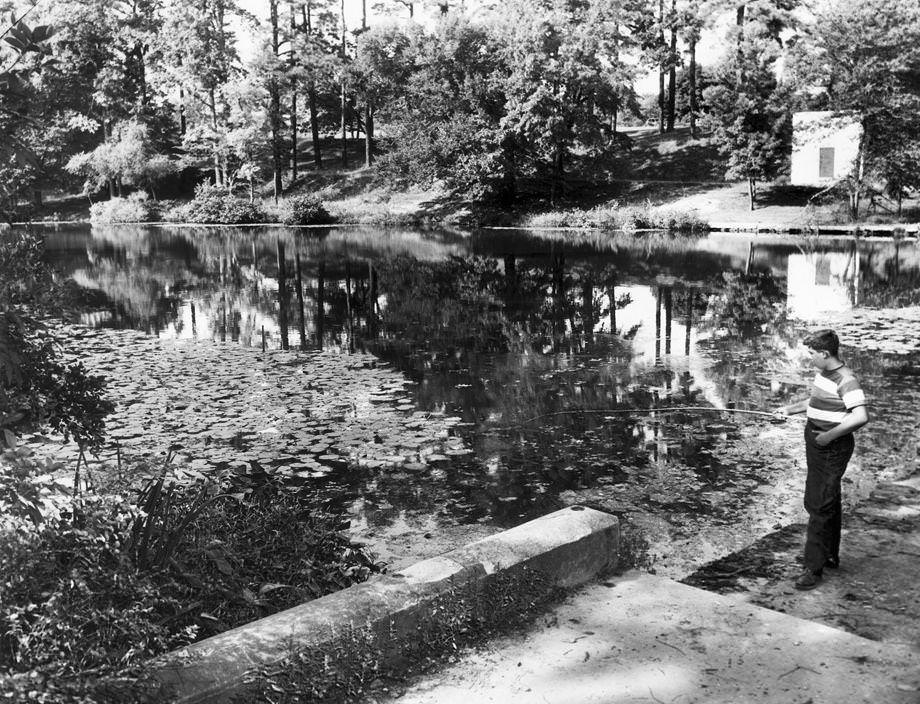
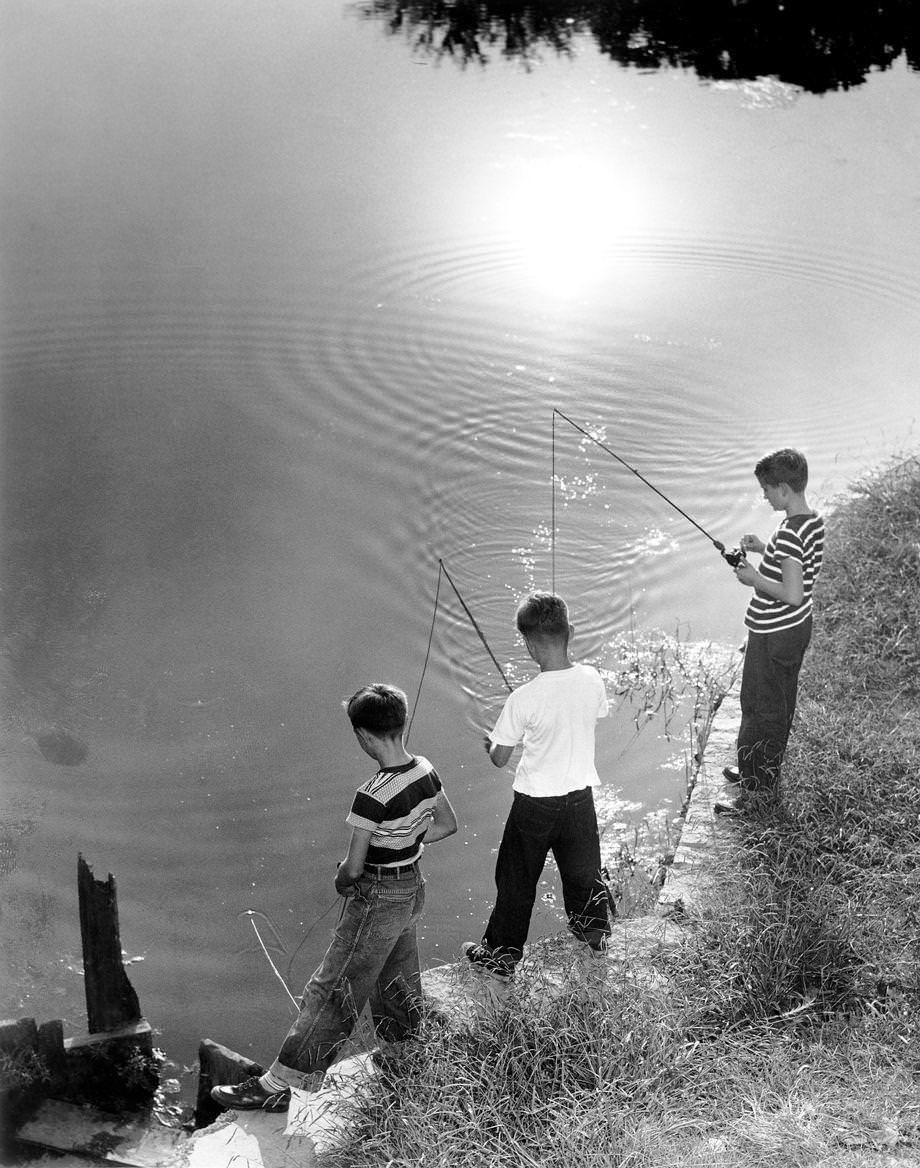
Dot Perkins led a dance class in “the hut” at the Powhatan Hill playground in Richmond, 1957.In September 1951, a boy fished at the dam of Lakeside Lake in Henrico County, 1950.
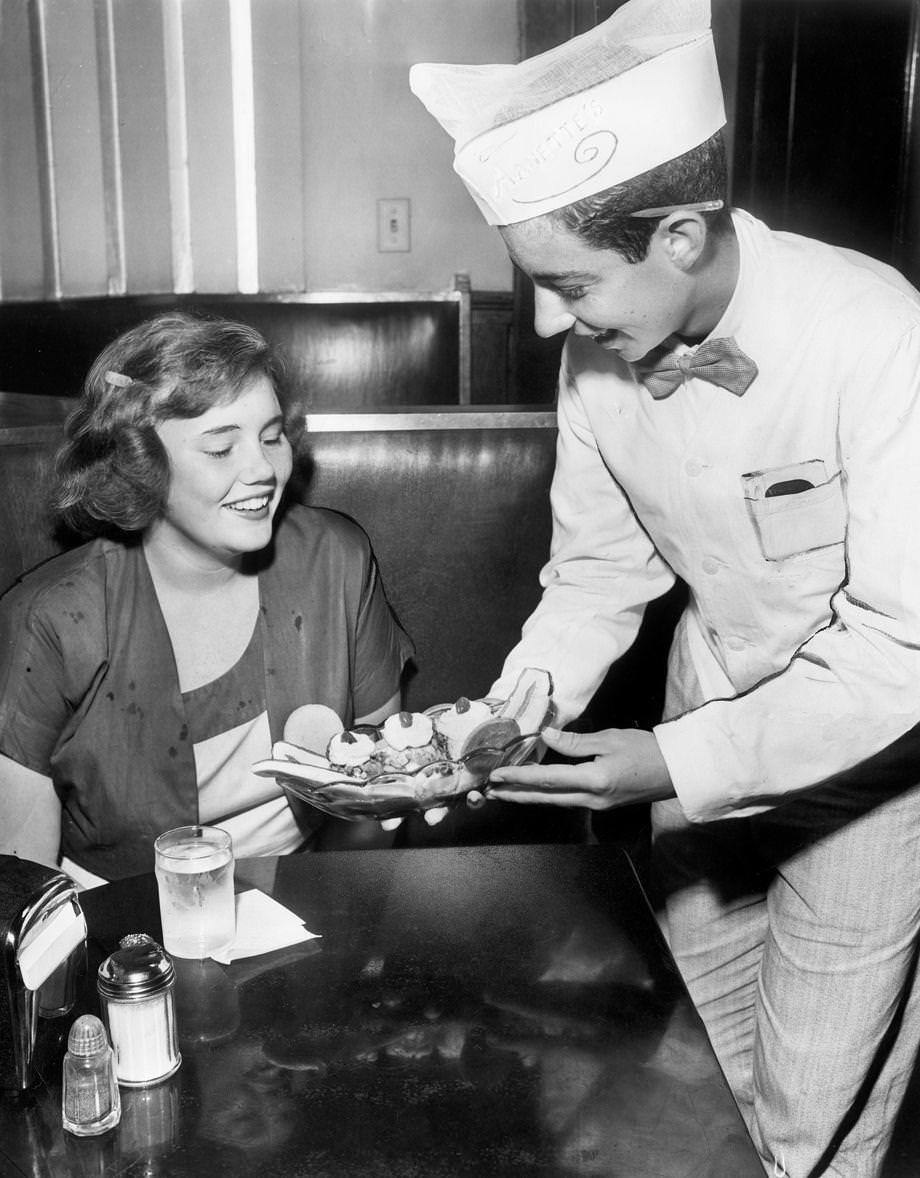
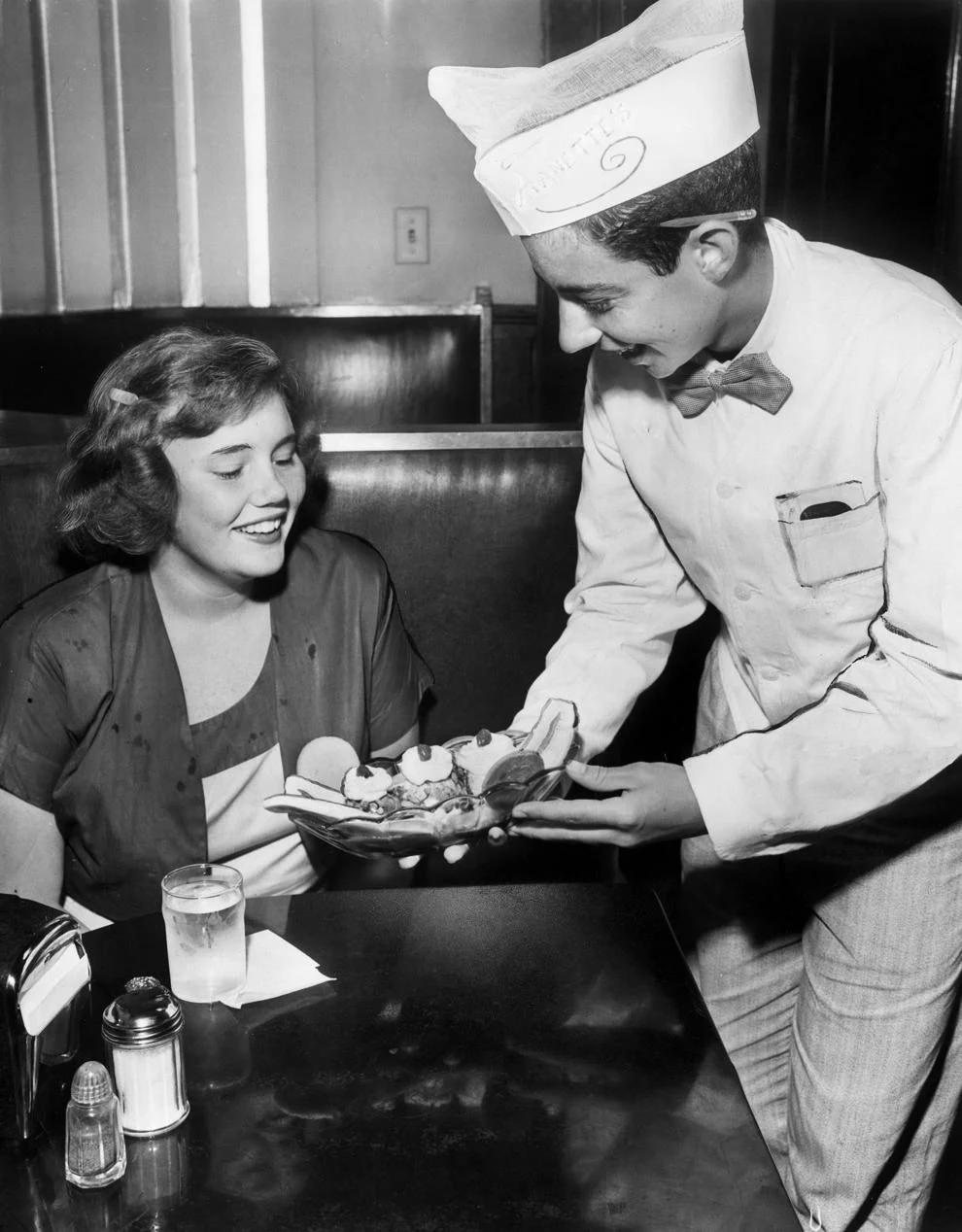
In Henrico County, Arnette’s Ice Cream Co. on Willard Road was a fixture for local teenagers. A curbside banana split served through a car window was a standard weekend ritual.
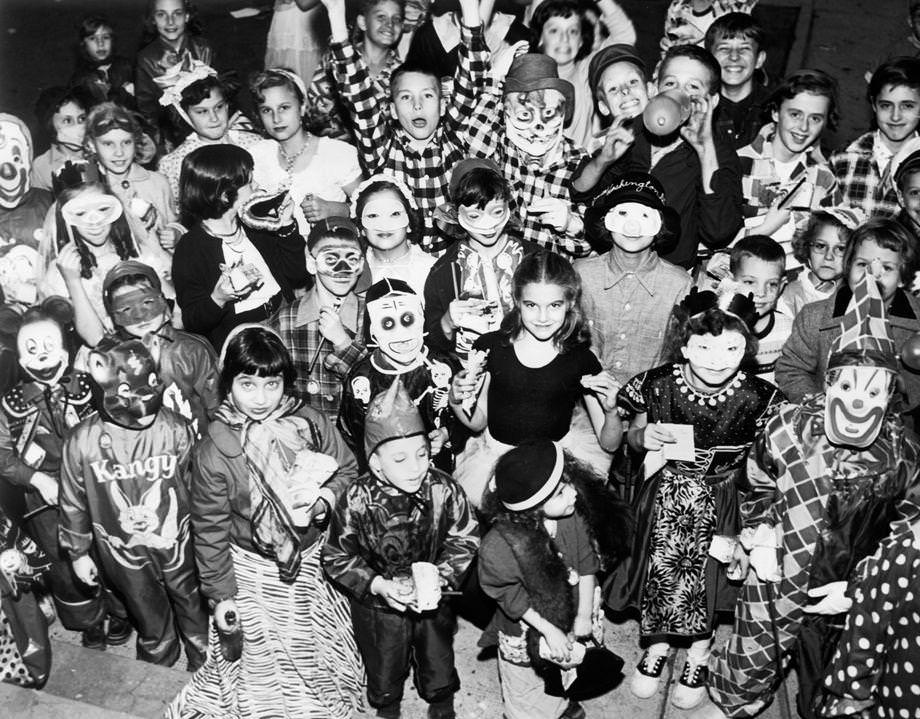
A curb boy at Arnette’s Ice Cream Co., served Beverly Page French a banana split, 1950. TA group of costumed children celebrated Halloween at the William Fox playground in Richmond, 1954.
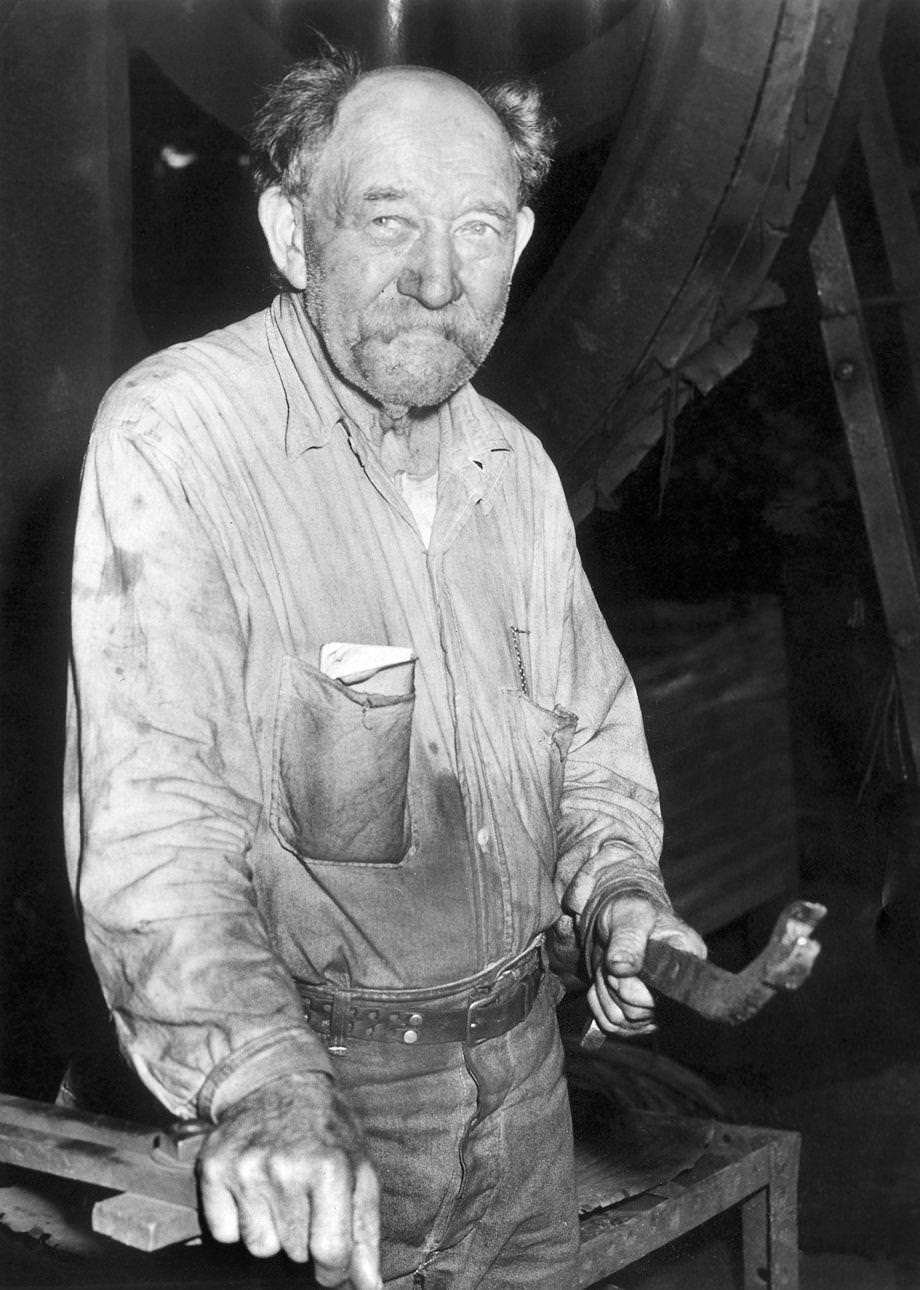
Tredegar Iron Works, one of the most storied industrial sites in the South, was still actively producing goods well into the 1950s. James R. Osterbind, photographed at the plant in 1953, was one of several members of his family who worked there across four generations — a lineage that stretched back to when Tredegar first opened in 1837.
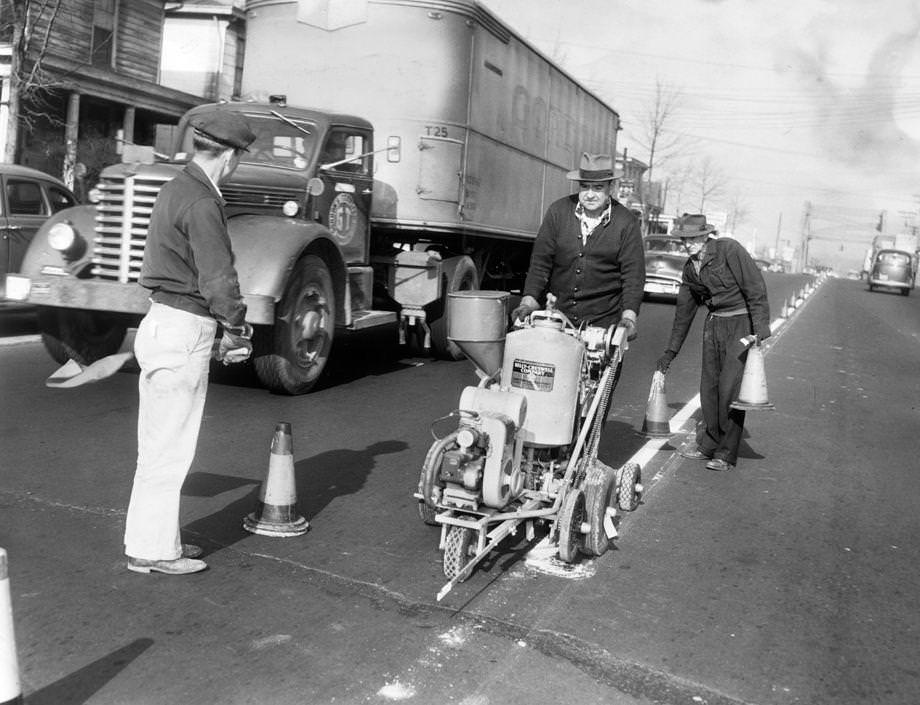
James R. Osterbind posed for a photo during his workday at Tredegar Iron Works in Richmond, 1953.Richmond city workers painted lane lines on Cowardin Avenue using a new power-driven machine, 1953.
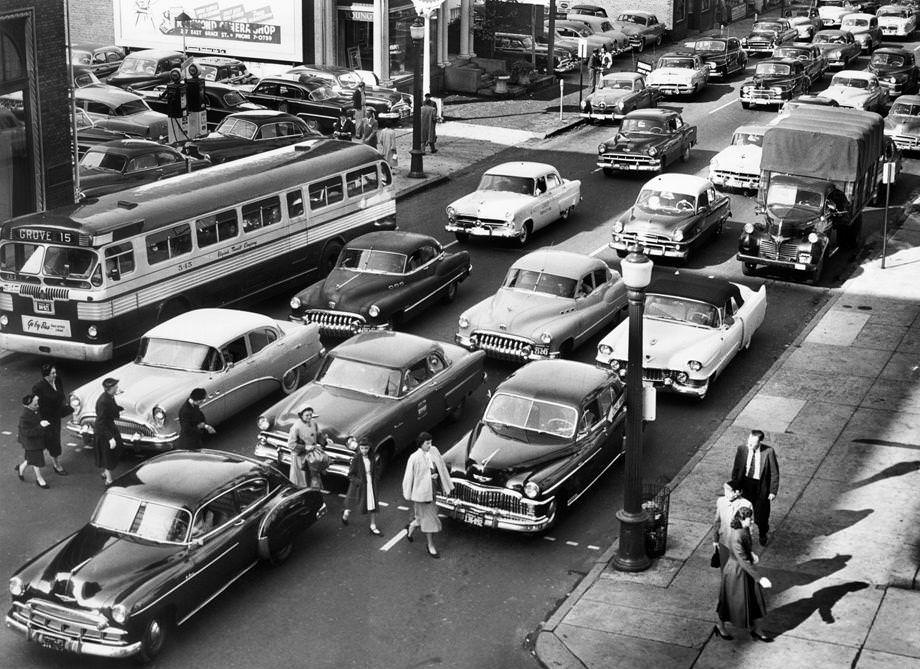
Downtown Richmond could get seriously congested. On busy shopping days, cars stacked up at key intersections, and the city’s commercial corridors buzzed with activity.
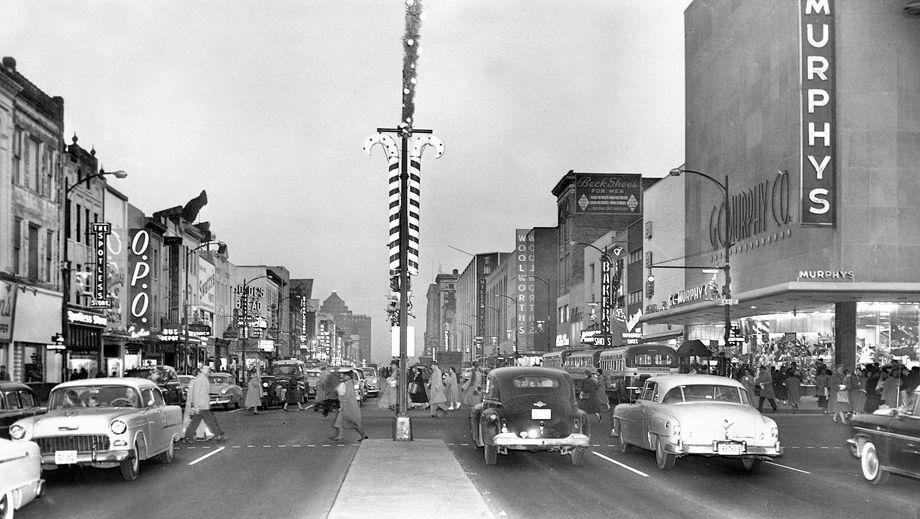
Traffic stacked up at Fifth and Franklin streets in downtown Richmond on a busy shopping day, 1954.Richmond in the 50s
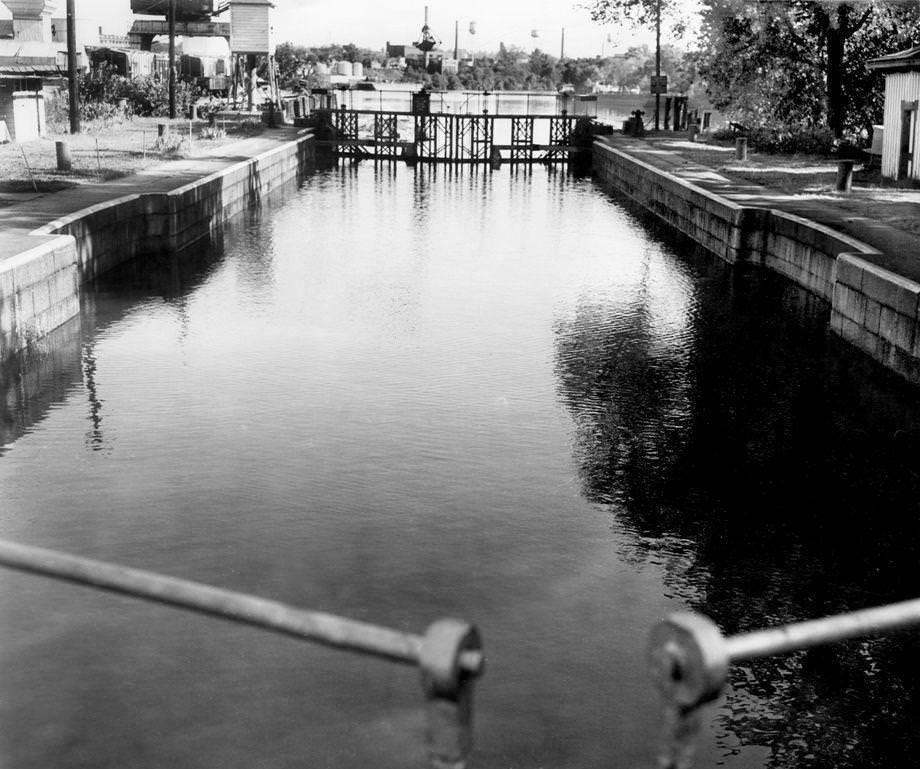
Richmond’s historic canal system, a major artery of 19th-century commerce, was still visible in the 1950s. The canal locks between 14th and Pear streets downtown stood as a reminder of the days when boats carried goods in and out of the city via the James River and Kanawha Canal.
Shows the canal locks in downtown Richmond between 14th and Pear streets, 1953.Square dance caller Richard Chase taught playground directors some steps ahead o f a dance scheduled for the Byrd Park tennis courts in Richmond as part of Park and Recreation Week, 1951.
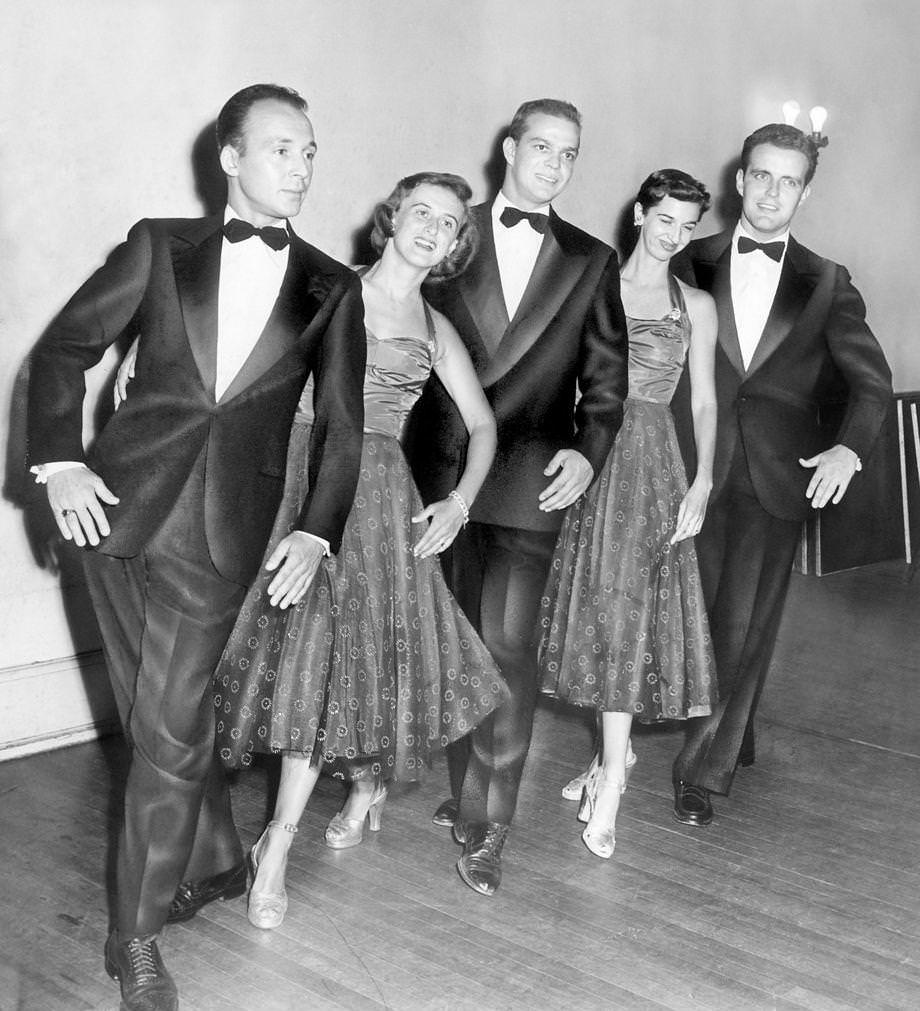
The arts had an active presence in Richmond throughout the decade. The Richmond Civic Ballet, a volunteer organization founded by former professional dancers Betty Carper Grigg and John Hurdle, held roughly a dozen performances annually at local events.
Members of the Richmond Civic Ballet rehearsed for an upcoming performance, 1954.
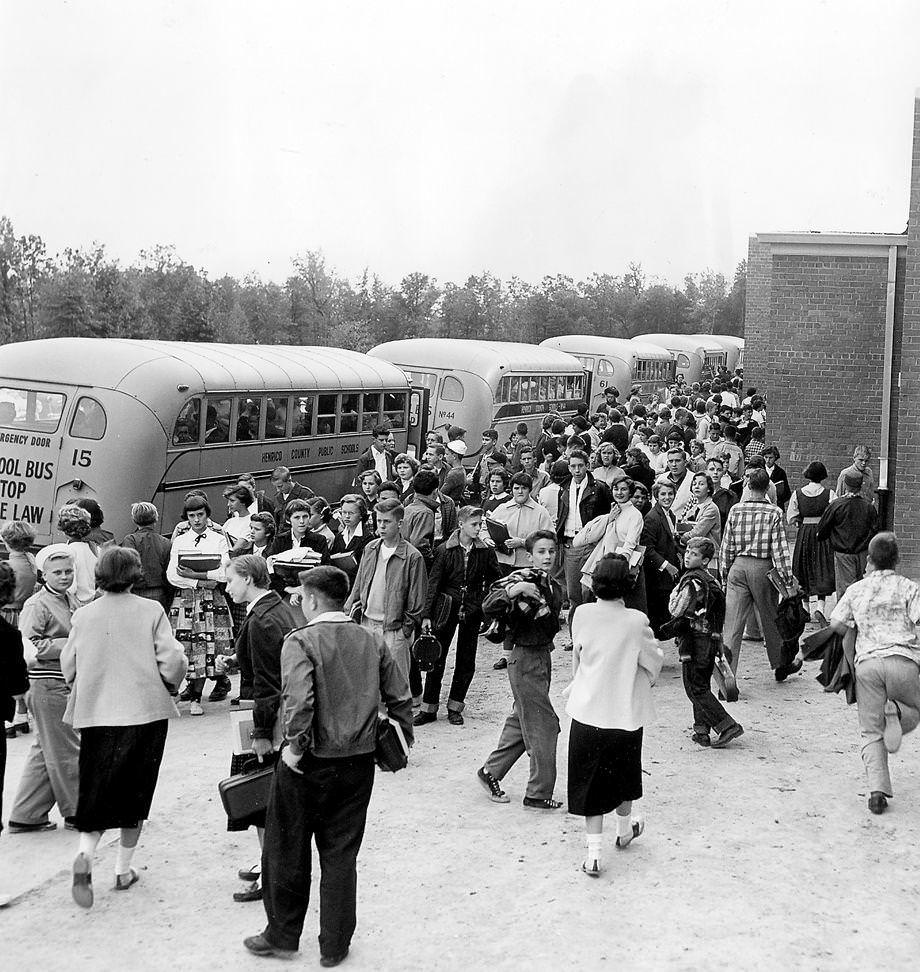
Henrico County was growing quickly to accommodate the postwar suburban surge. The new Douglas S. Freeman High School, which opened in 1954 at a cost of $1.1 million, enrolled roughly 500 high school students and another 500 elementary students almost immediately upon opening.
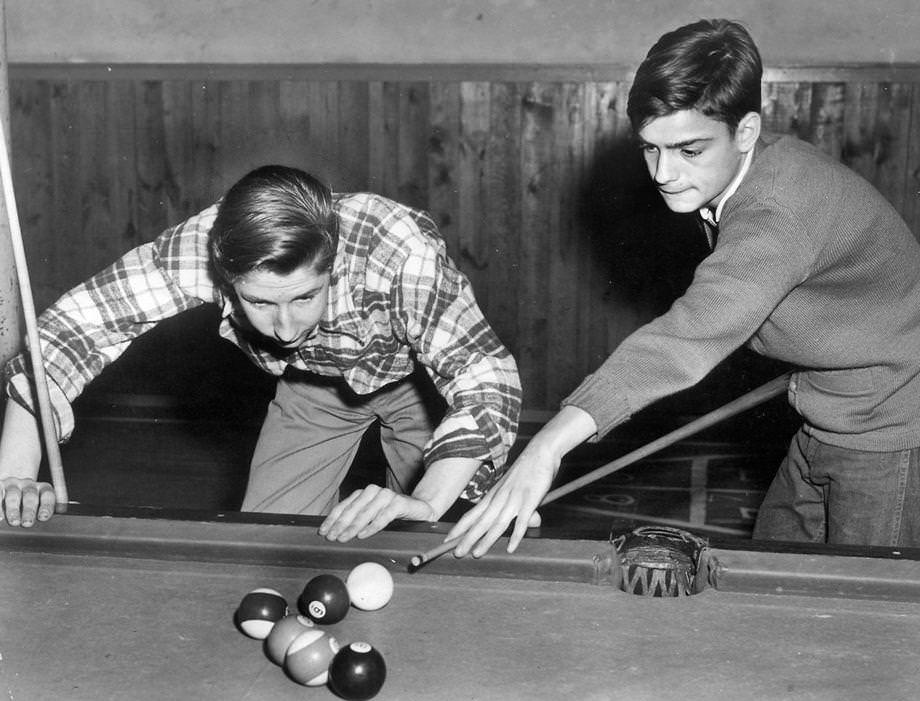
Students crowded into the new Douglas S. Freeman High School in Henrico County, 1954.Members of the Monacan Junior Woman’s Club sought volunteers for the upcoming blood drive at Tuckahoe Elementary School in Henrico County, 1953.Bobby Seal (left), 15, and Marvin “Kayo” Williams, 14, played billiards on the new table at the Salvation Army’s Red Shield Boys Club, which was on Church Hill in Richmond, 1950.
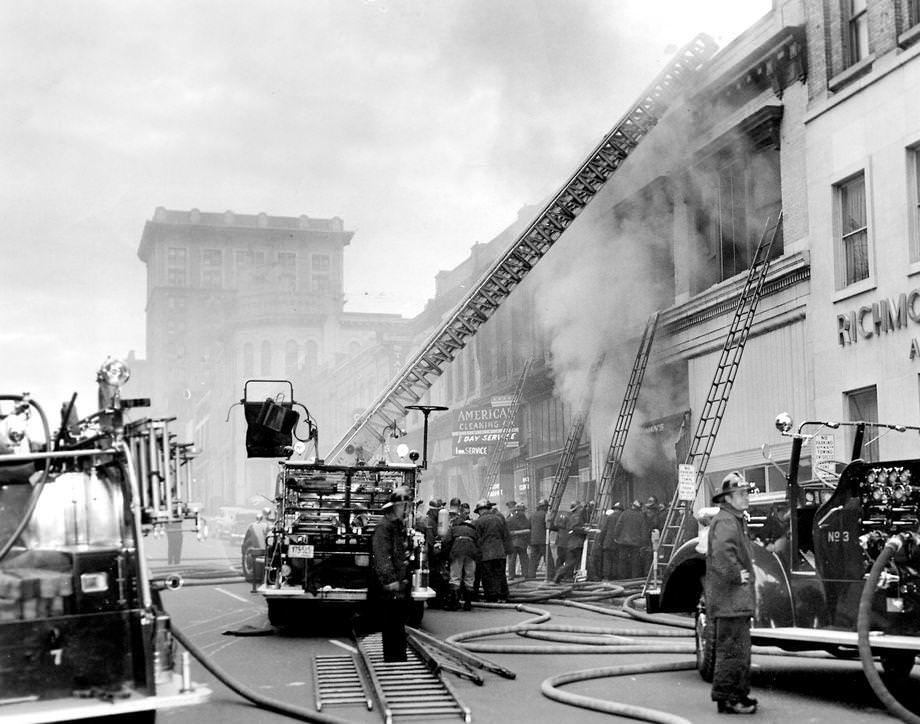
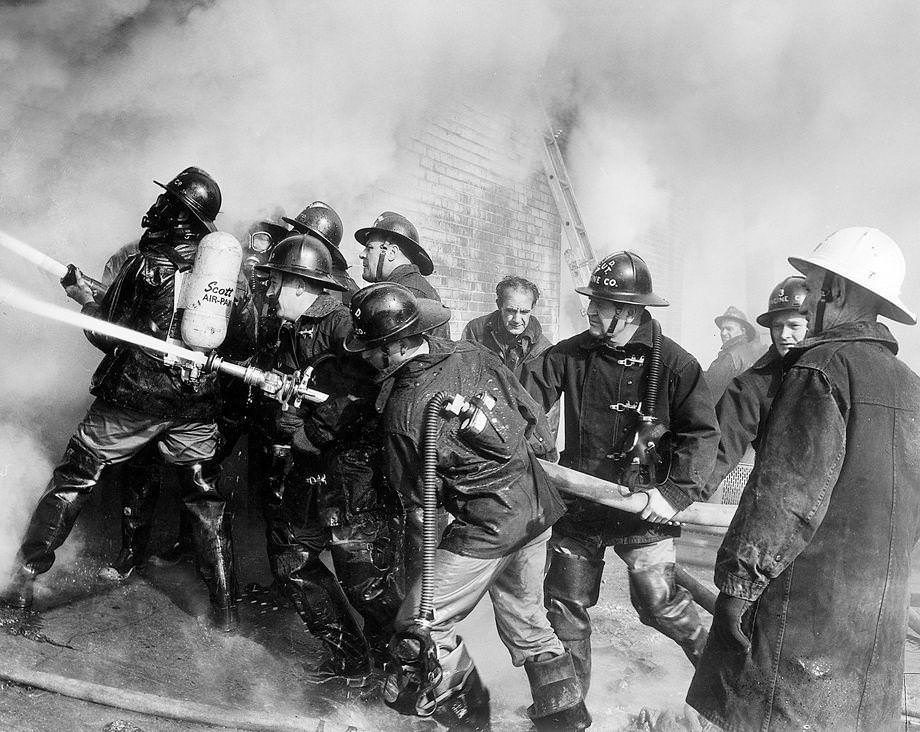
Large fires remained a recurring feature of Richmond news. In 1957, about 100 firefighters spent four hours fighting a blaze in the 700 block of East Main Street, which caused $100,000 in damage and wiped out two businesses.
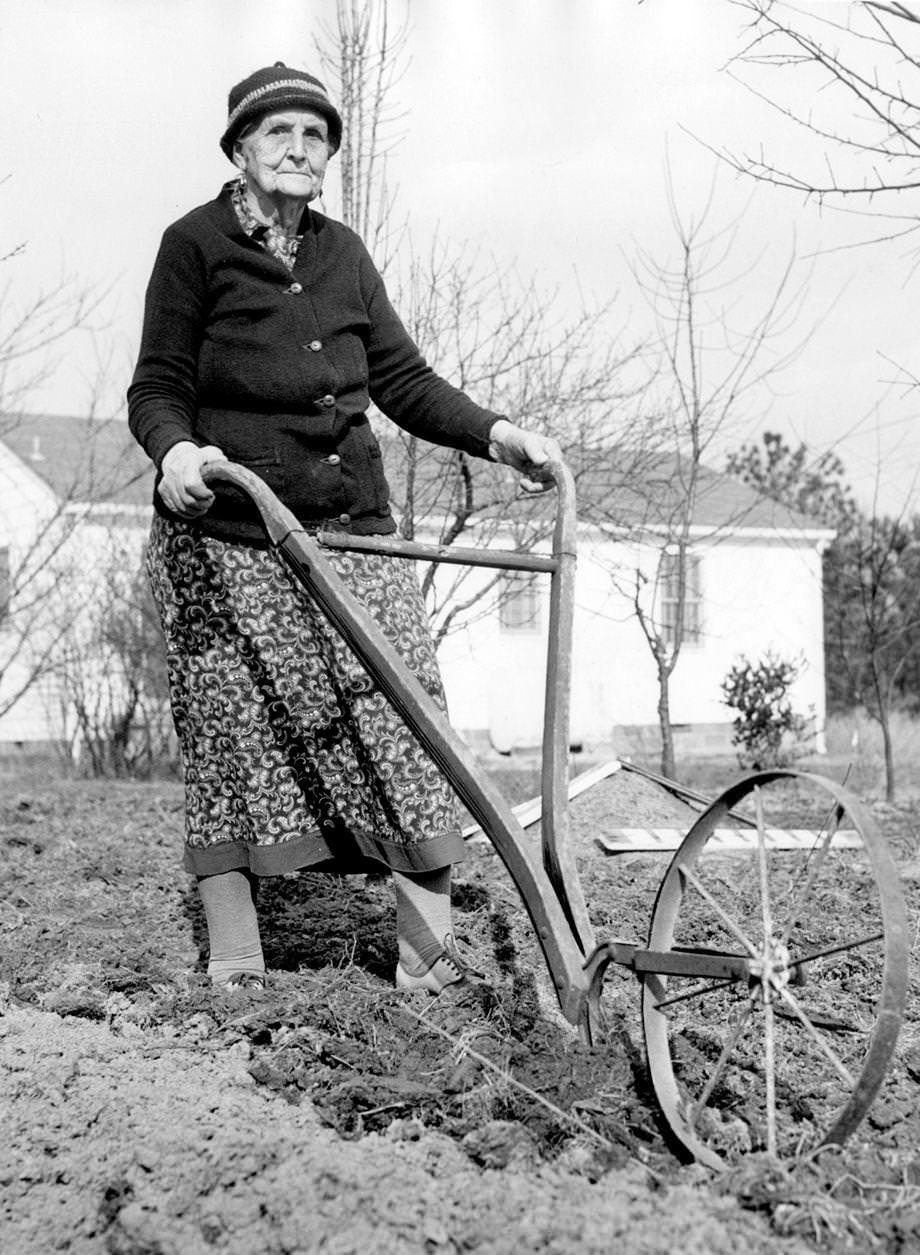
About 100 firefighters needed four hours to control a blaze in the 700 block of East Main Street in downtown Richmond, 1957.Mrs. V.C. Wiltshire, 85, prepared for spring planting at her home on Patterson Avenue in Richmond, 1952.
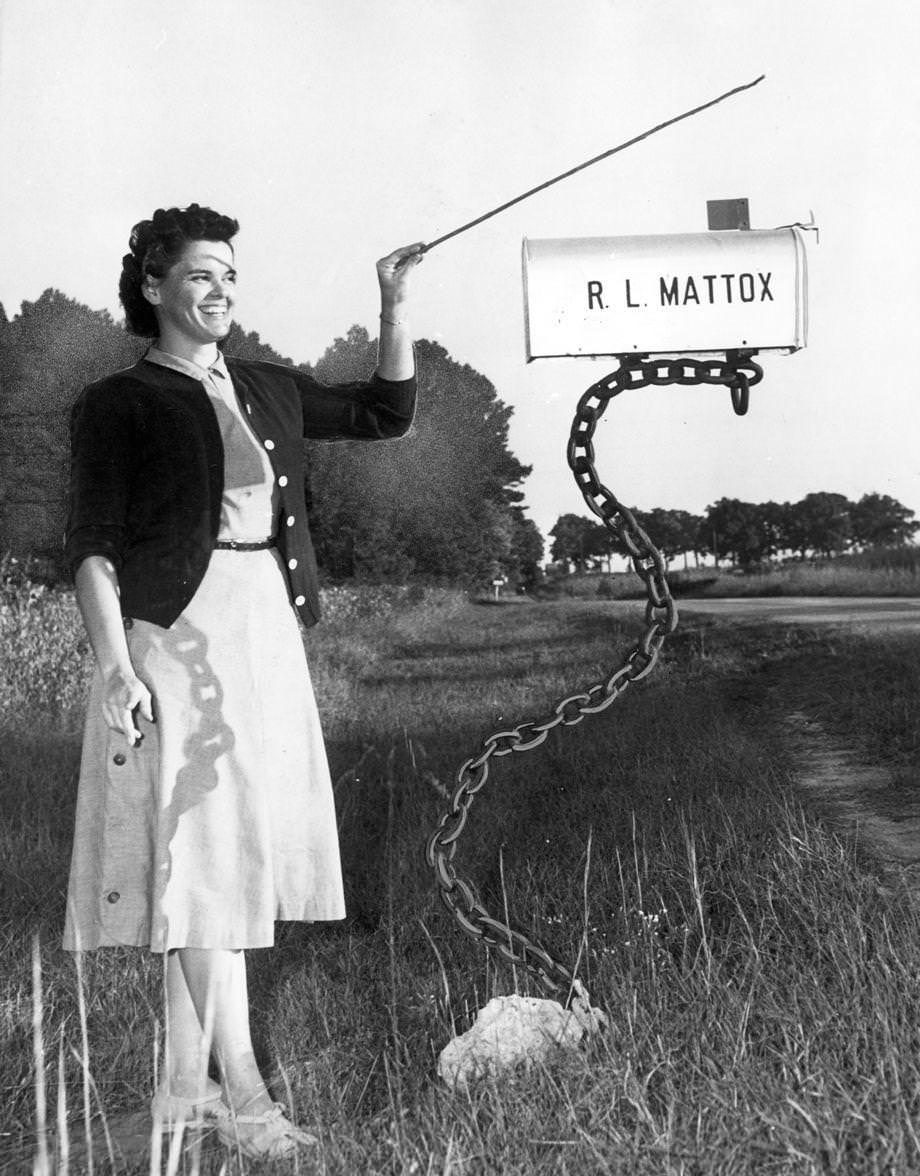
Everyday creativity showed up in unexpected places. In Prince George County, a homeowner built a mailbox post out of an old log cabin chain, requiring an hour of welding — the design inspired by something she and her husband had seen in a magazine.
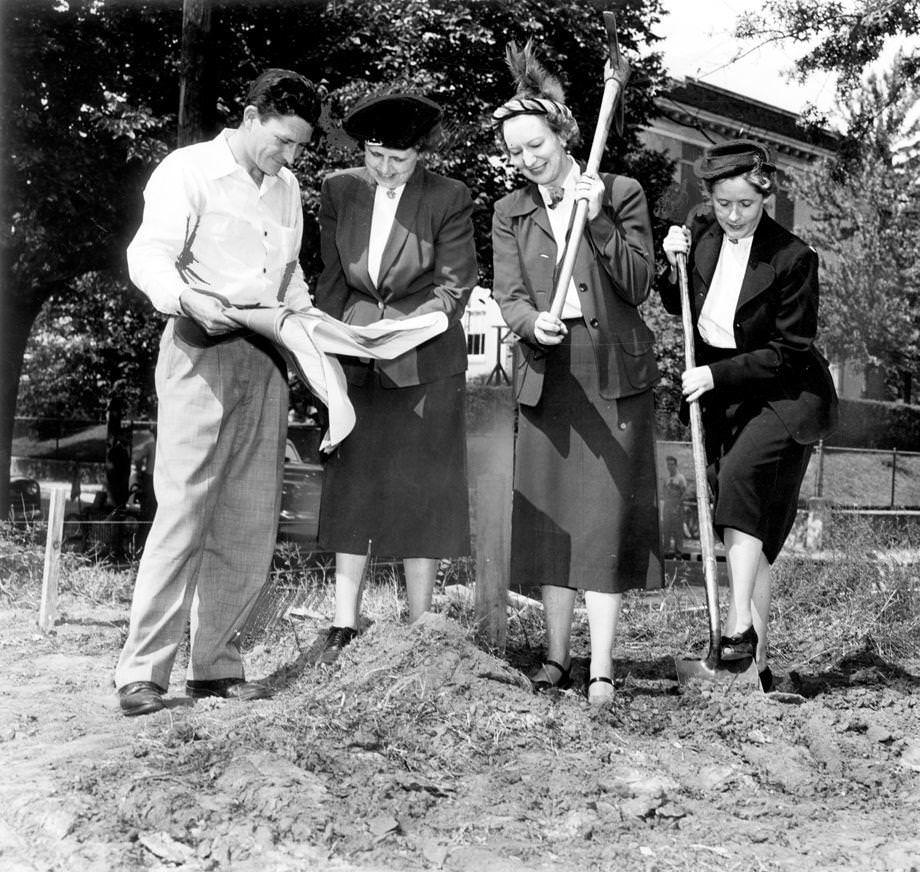
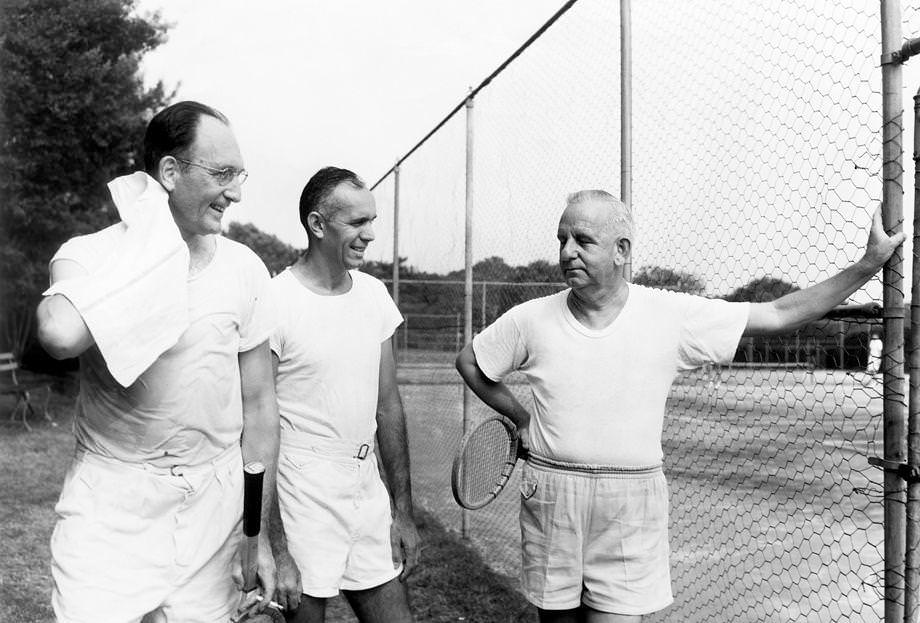
Mrs. R.L. Mattox showed off her unique mailbox at her home on state Route 35 in Prince George County, 1951.Ground was broken for the South Richmond Health Center at 14th and Bainbridge streets, 1950.Tennis players (from left) Cliff Miller, Al Dickinson and Bob Figg Sr. discussed the Country Club of Virginia’s annual tennis competition, which began the day before, 1953.
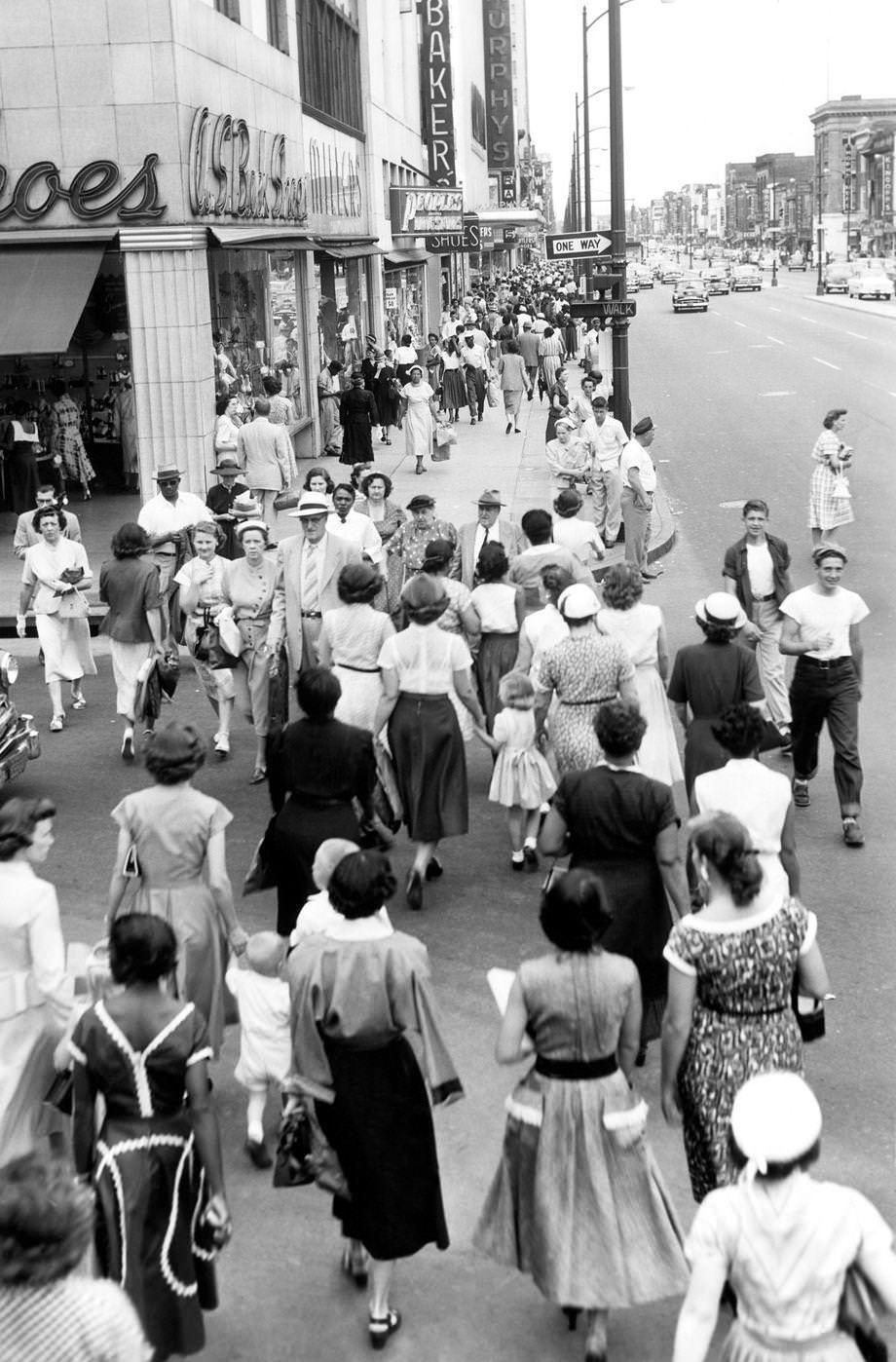
Richmond Day was a major annual shopping event that drew enormous crowds downtown. By its fourth year in 1955, stores were offering deals including winter coats for $1 for early customers, television sets priced between $1.98 and $19, and a seven-diamond ring for $39. Customers lined up as early as 8:30 p.m. the night before.
Shoppers crowded the streets of downtown for Richmond Day, a promotion that began the year before, 1953.
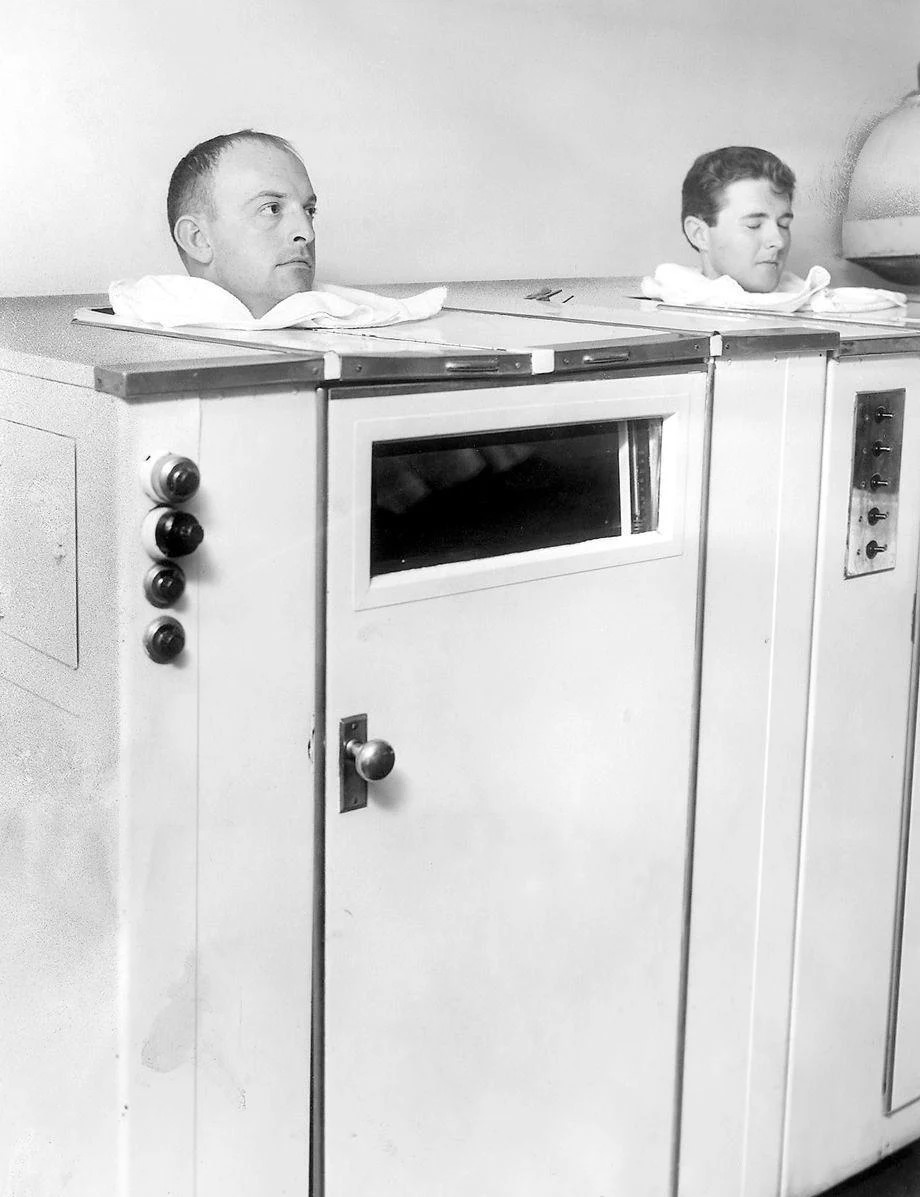
Melvin Doggett (left) and Jeff Martin sought relief from the summer heat … by getting even hotter, 1954
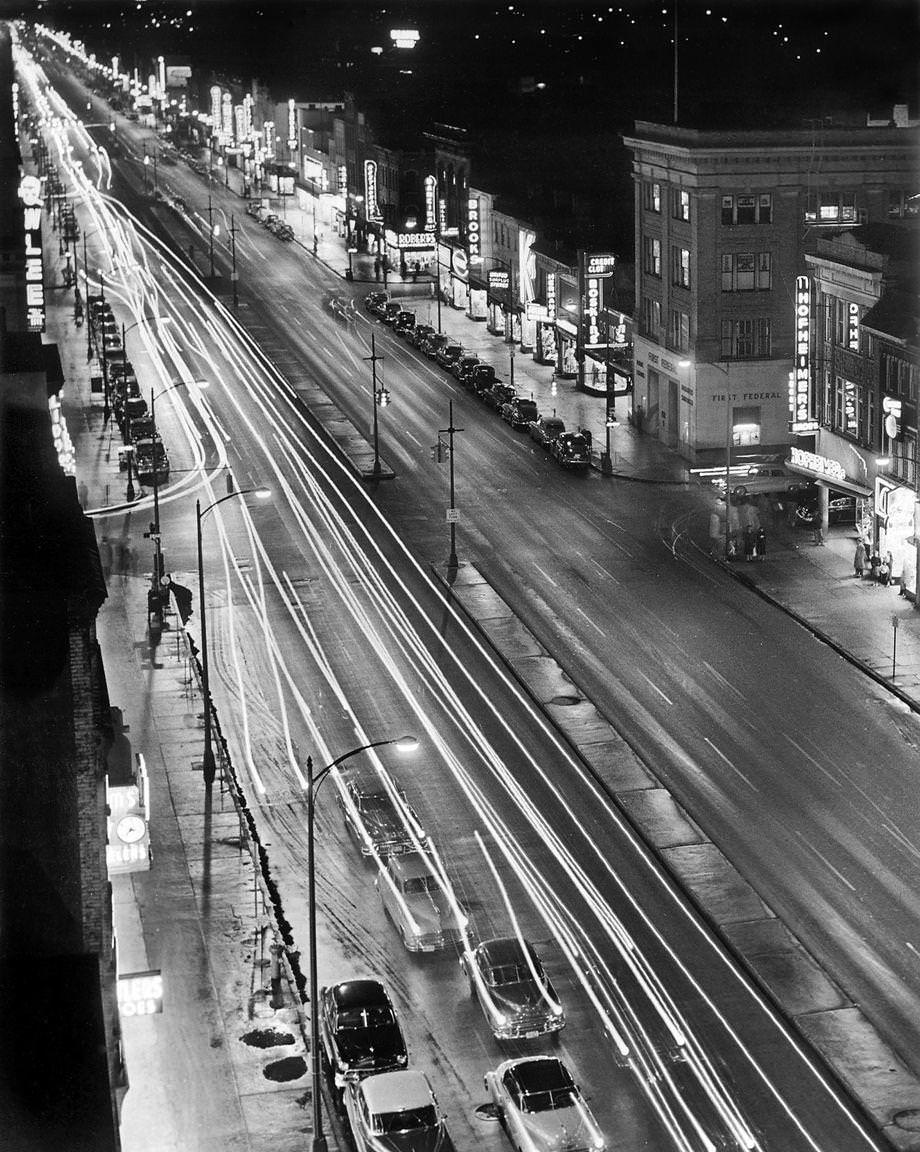
After dark, East Broad Street had its own character. The lights of downtown Richmond reflected a city that was commercially confident and outwardly prosperous, even as larger social tensions were building beneath the surface.
East Broad Street in downtown Richmond at night, 1952.
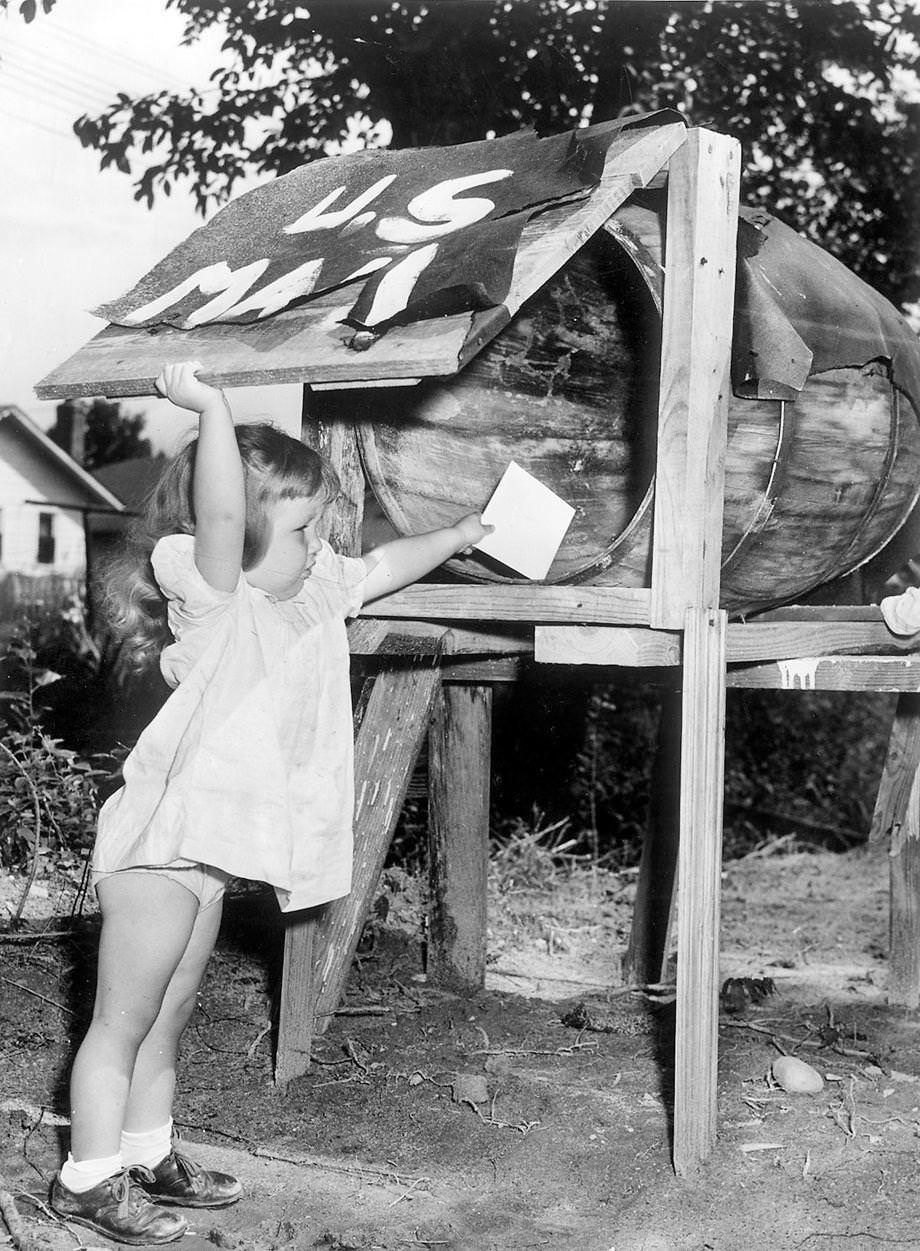
Sherry Gilman placed a letter in a barrel-turned-mailbox on Honaker Avenue in Richmond, 1950.
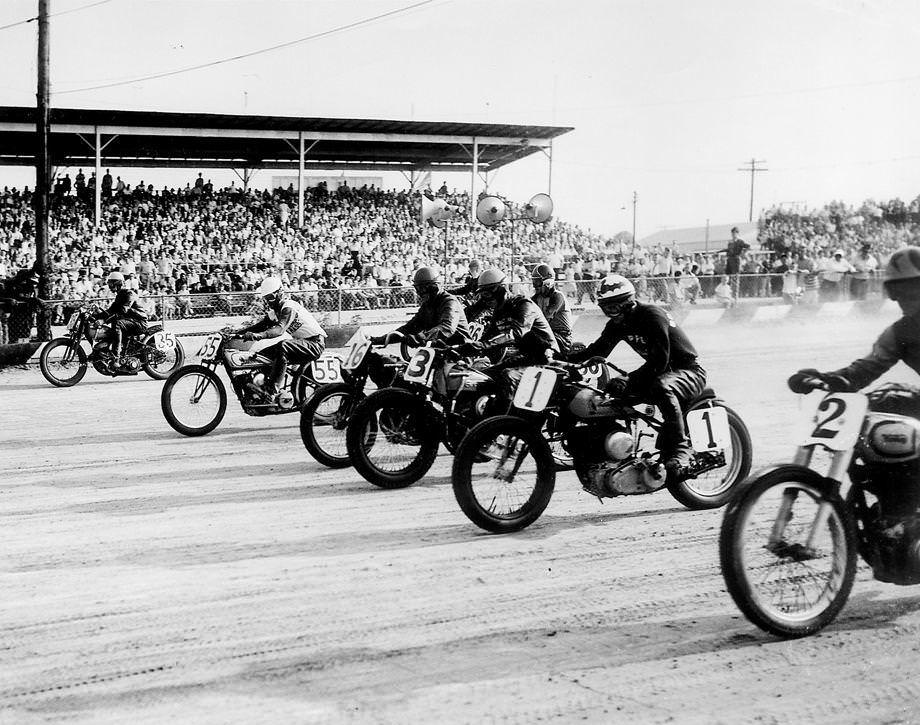
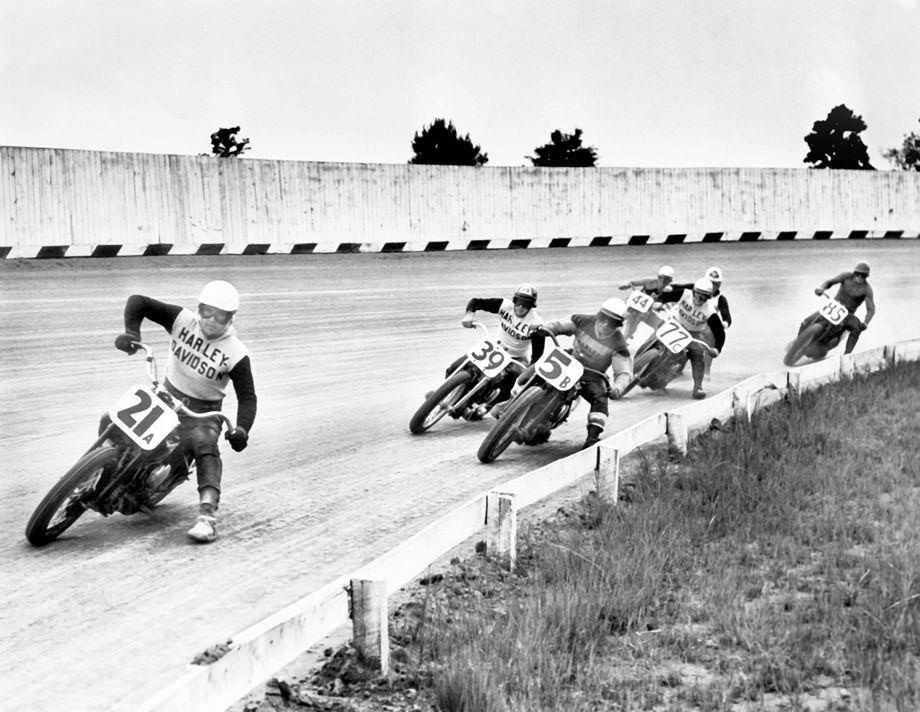
Motorsports drew large crowds to the Atlantic Rural Exposition grounds in Henrico County. In 1952, more than 4,000 spectators watched Bobby Hill of Columbus, Ohio — the nation’s top racer — win the 10-Mile National Motorcycle Championship. Two years earlier, in 1950, the same event was won by “Little Joe” Weatherly of Norfolk, who later switched to stock car racing and won NASCAR titles in the 1960s before dying in a crash at Riverside, California, in 1964.
Motorcyclists raced in the 10-Mile National Motorcycle Championship at the Atlantic Rural Exposition grounds in Henrico County, 1952.Firefighters battled at blaze at L.R. Brown & Co., a furniture store on Hull Street in South Richmond, 1952.
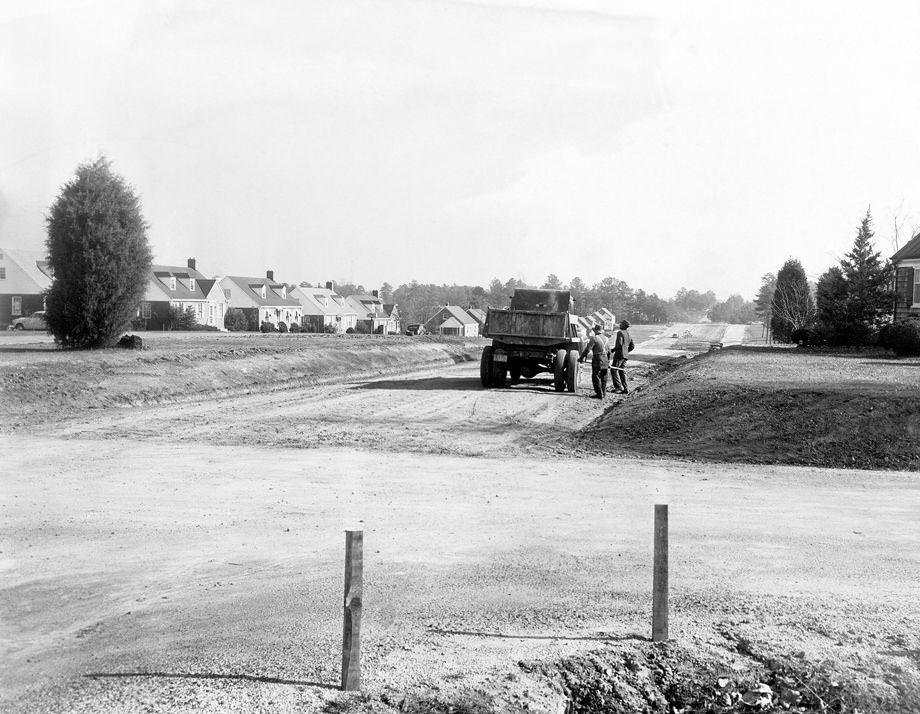
South Richmond was seeing steady construction throughout the decade. New road segments were being built and paved to connect growing residential areas to the city’s expanding network of streets.
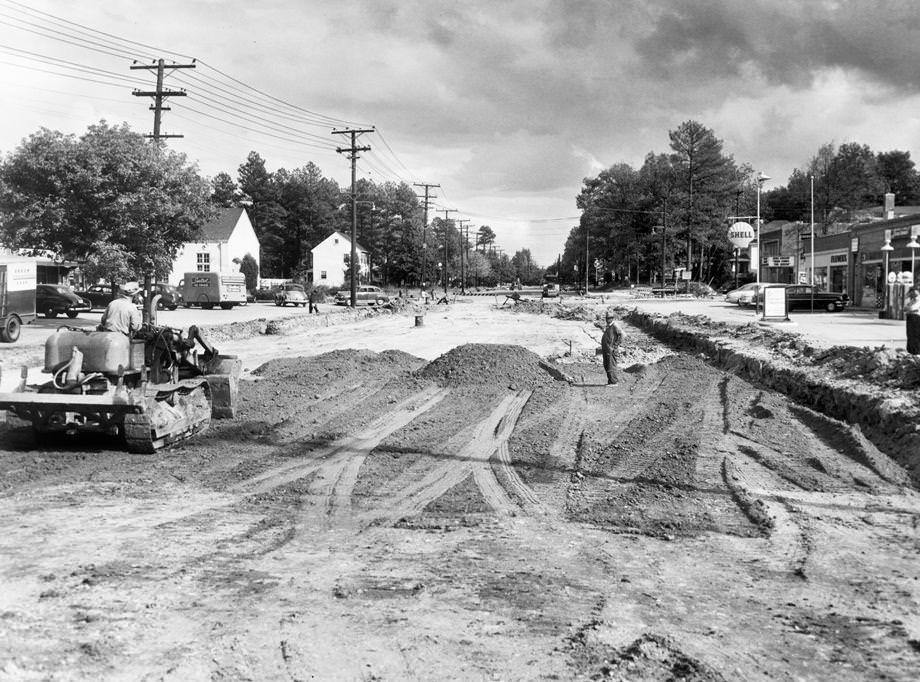
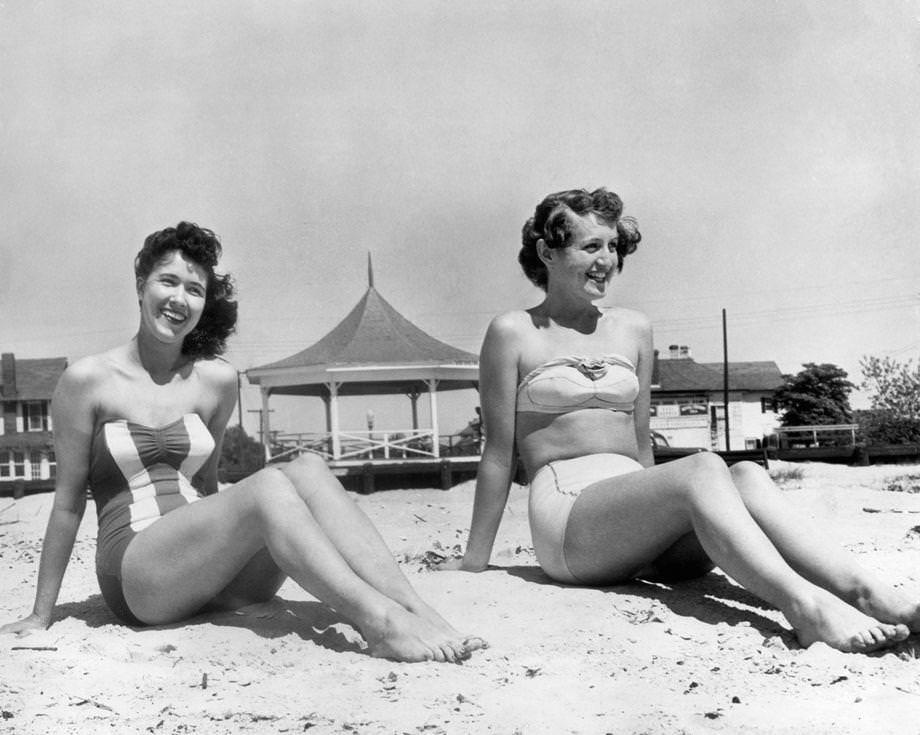
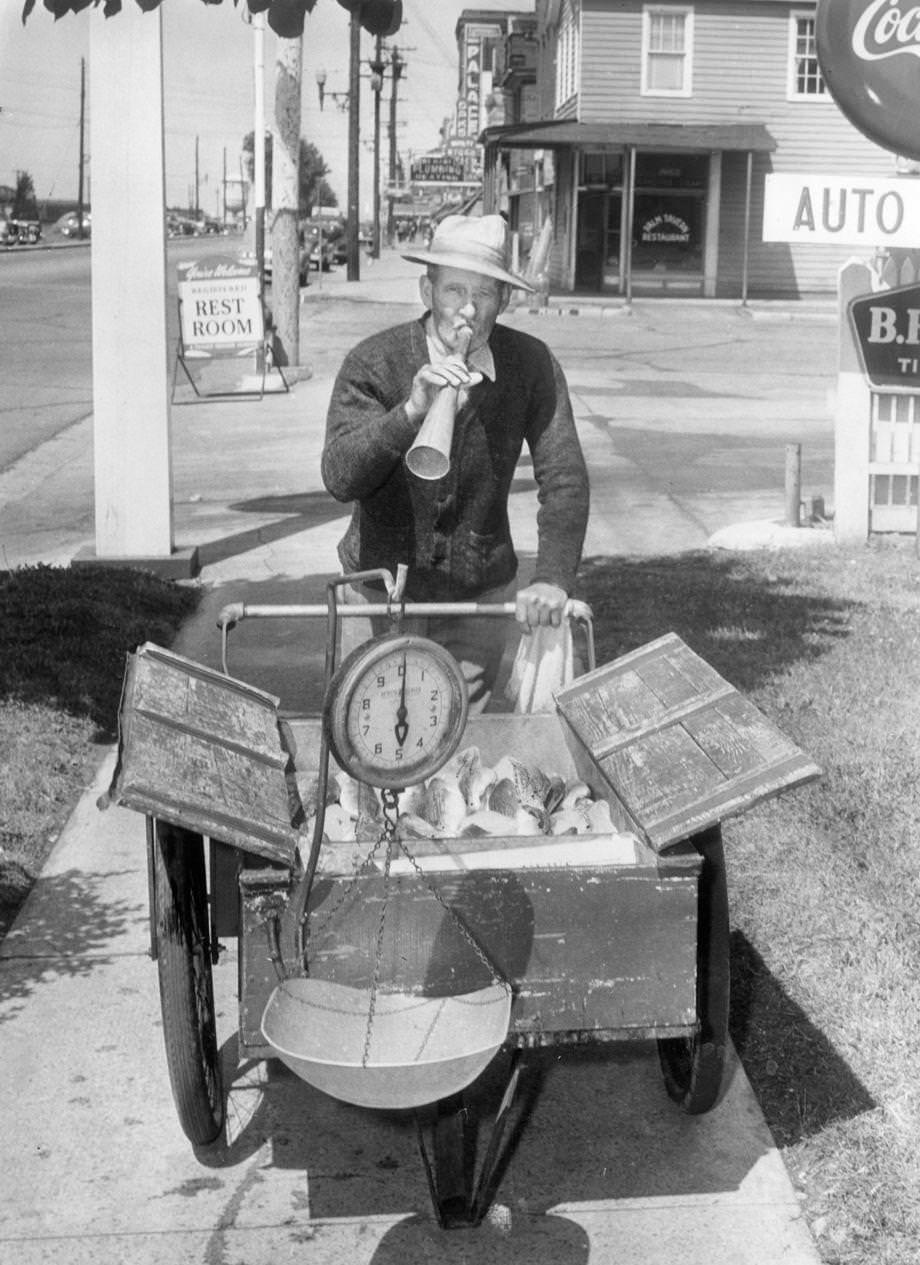
Workers constructed a section of Forest Hill Avenue in South Richmond, 1951. The segment sits between Westover Hills Boulevard and Prince Arthur Road.Two women enjoyed the white sand beach of Cape Charles on Virginia’s Eastern Shore, 1951.Alonzo Moore, 74, walked down a street in Cape Charles on Virginia’s Eastern Shore and blew his horn, alerting locals to his sale of the fresh catch of the day, 1951.
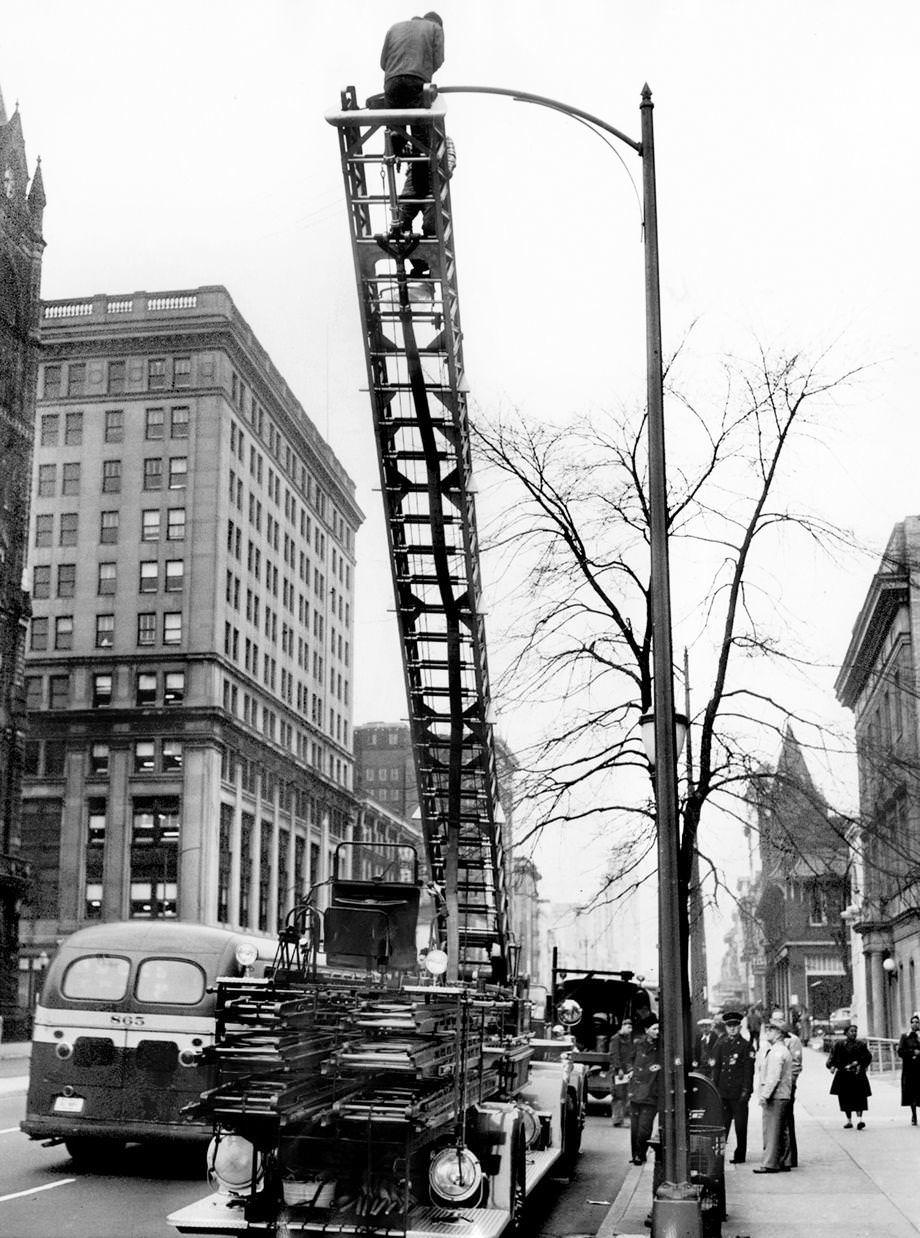
Back in the city, practical problems required creative solutions. When the Richmond Department of Utilities needed to install new lights along Broad Street and couldn’t secure ladders from private companies, they borrowed a 65-foot hook-and-ladder fire truck to get the job done.
Richmond Department of Utilities workers used a 65-foot hook-and-ladder fire truck to install new lights on Broad Street after attempts to secure other ladder facilities from private companies had failed, 1953.
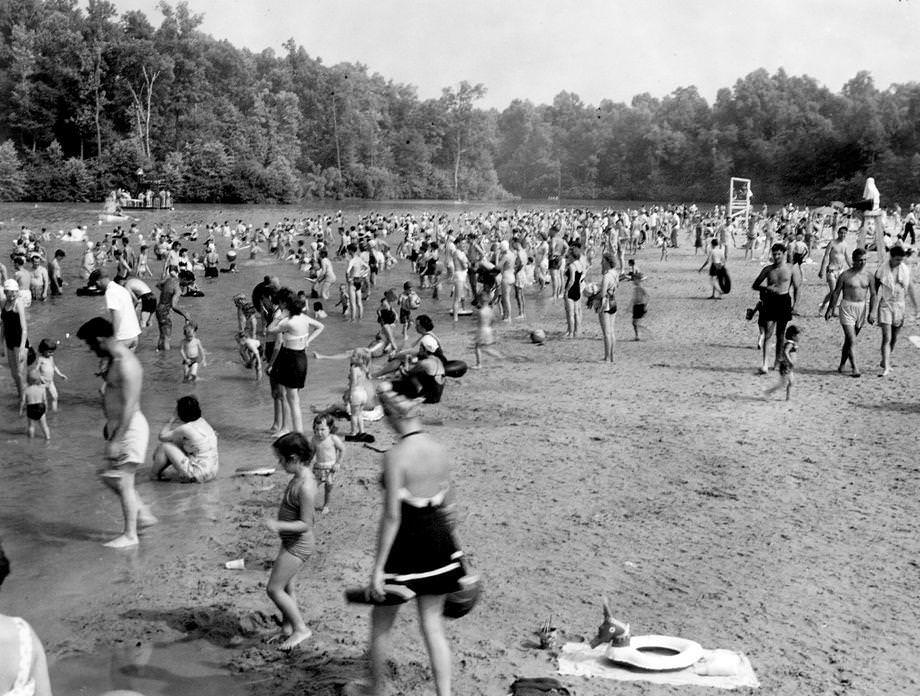
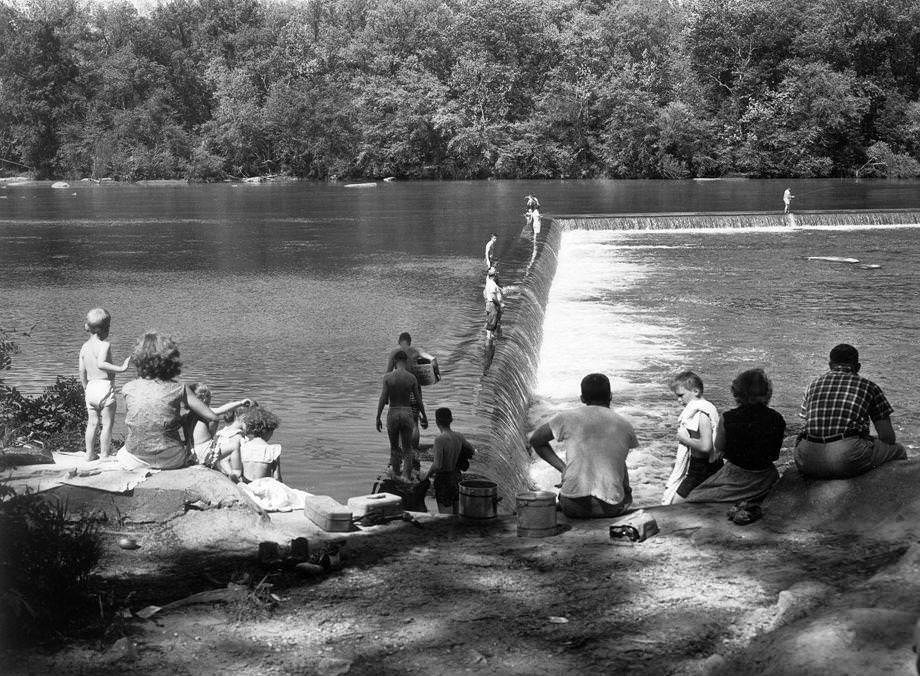
When temperatures climbed, Richmonders headed for water. Pocahontas State Park in Chesterfield County was one of the most popular destinations. During the park’s unofficial opening week for one summer season, Virginia’s nine state parks collectively welcomed more than 77,000 visitors.
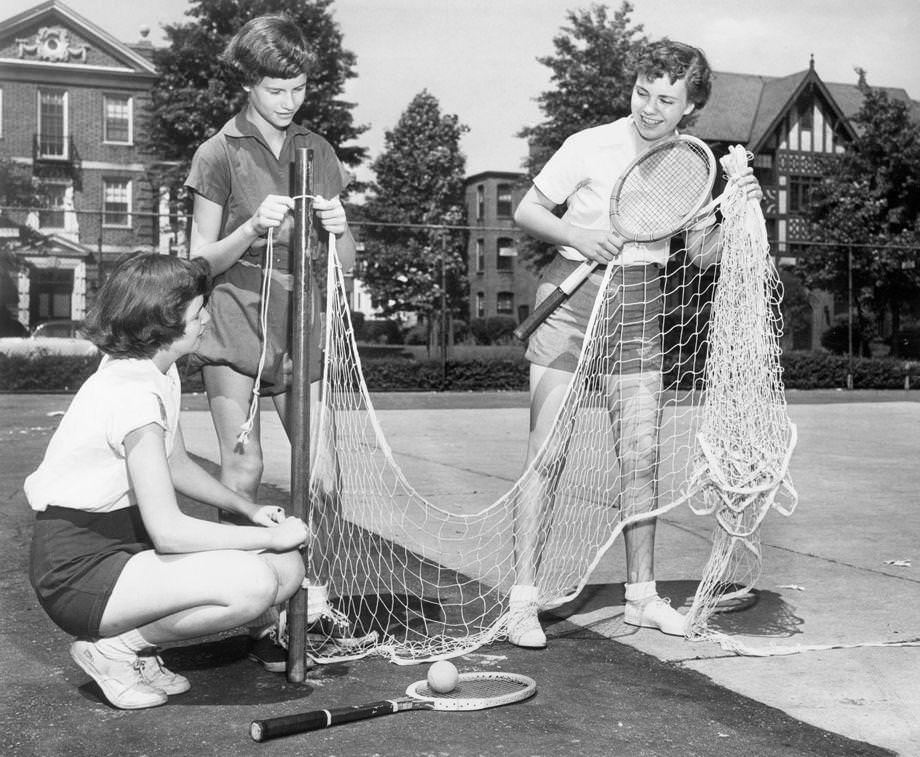
The summer heat sent crowds to Pocahontas State Park in Chesterfield County for a swim, 1950.Clifford Burgess (from left), Harlean Bibb, Charles King and Shirley Kingsley, who attended Summer Hill School in South Richmond, practiced a square dance called “Duck for the Oyster”, 1950Barbara Kilday (from left), Becky Branch and Jill Arnold set up a net for tennis, 1950. The 14-year-olds were attending summer school in the Richmond area.
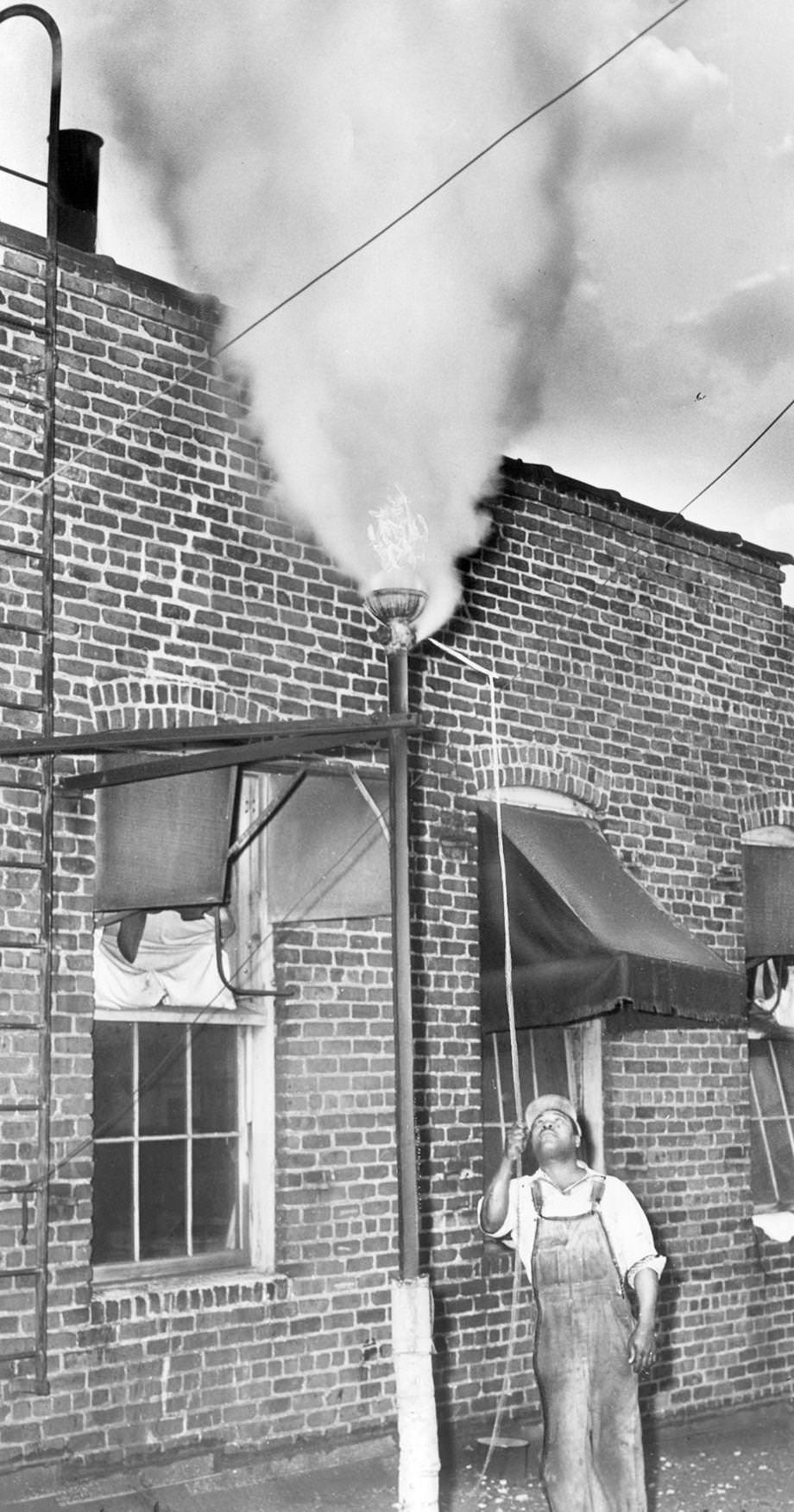
The threat of air attack was taken seriously enough that the city tested the audibility of its air raid signals across multiple locations. In 1951, a steam whistle at T&E Laundry on Marshall Street was one of nine used citywide in the test.
Roman West pulled the cord of a steam whistle at T&E Laundry on Marshall Street in Richmond, 1951.
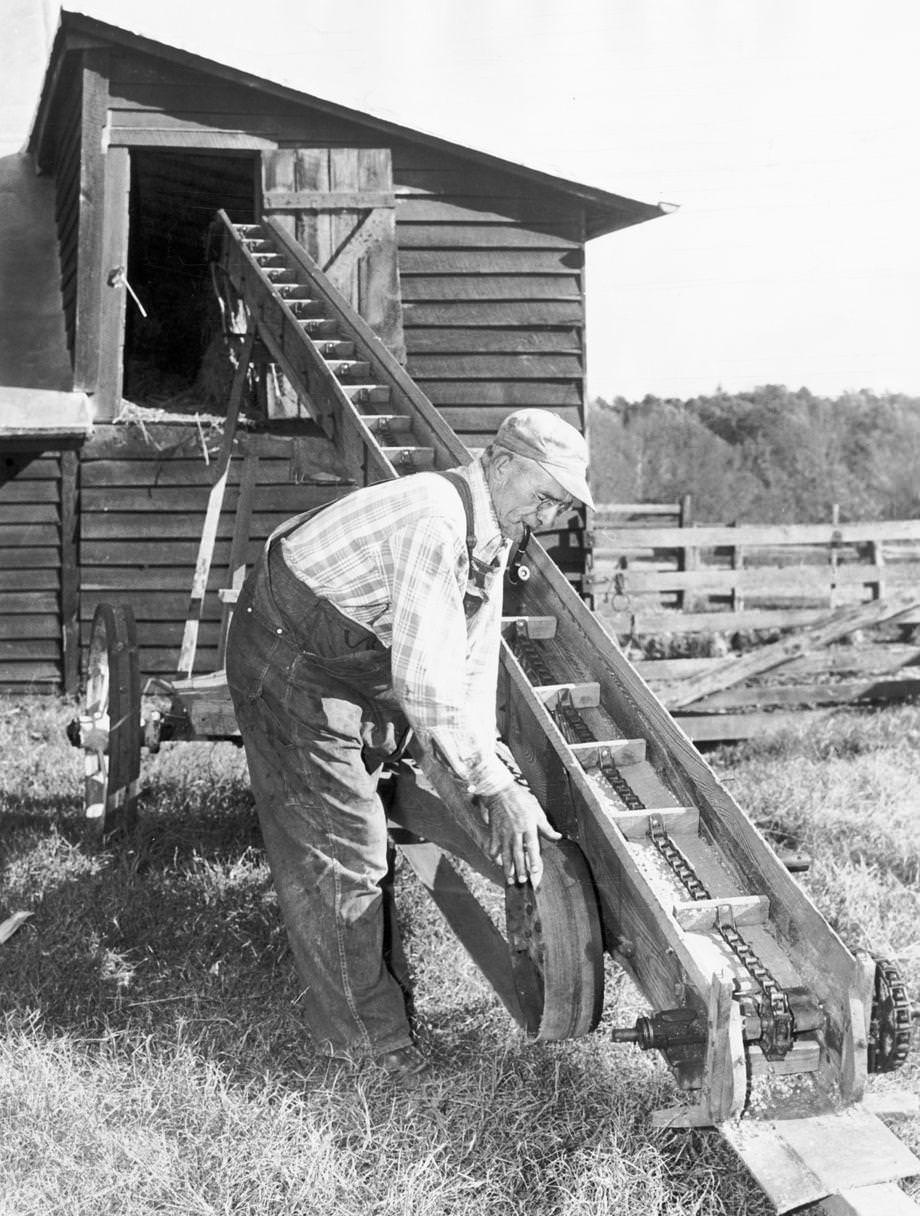
Farmer Ray Welch of Northumberland County used his homemade portable corn elevator, 1950.
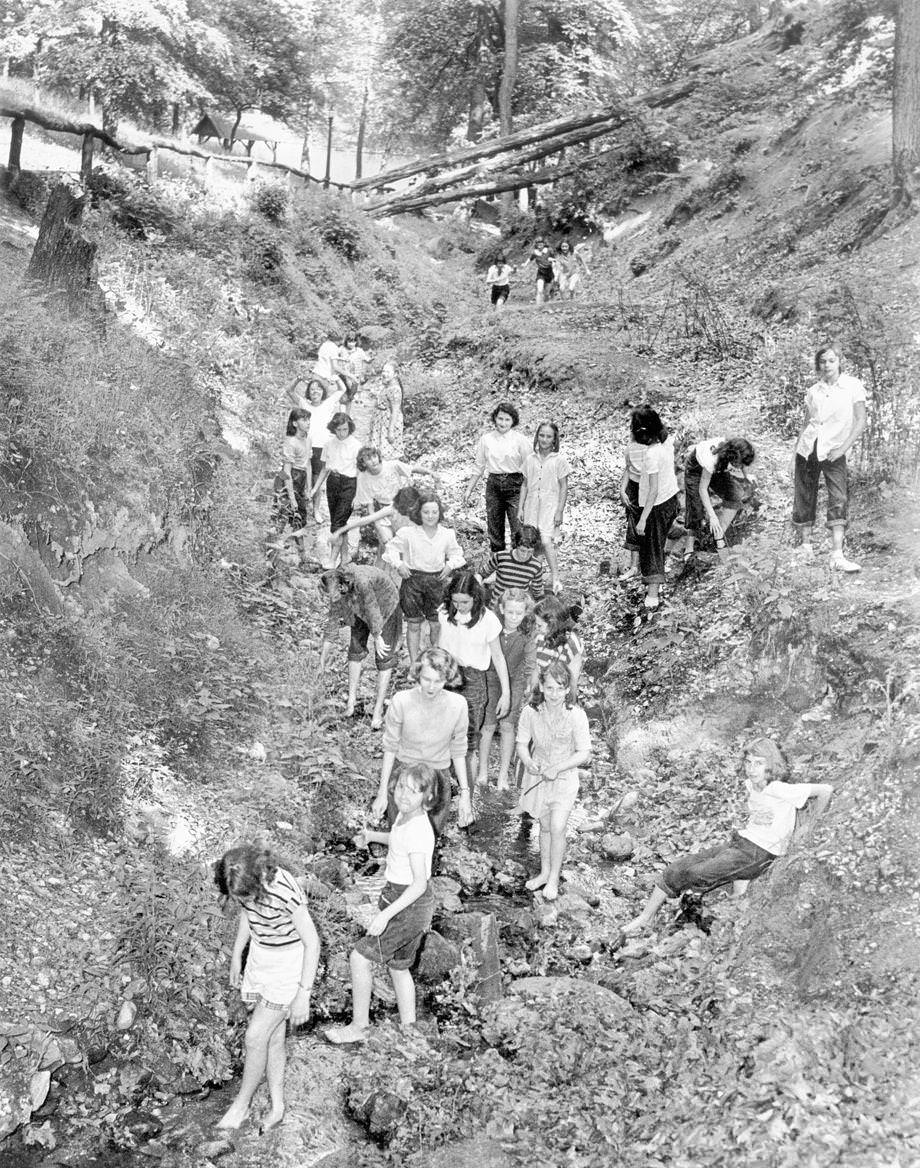
A school group followed a nature trail at Forest Hill Park in Richmond and explored a wildflower preserve and bird sanctuary, 1950.
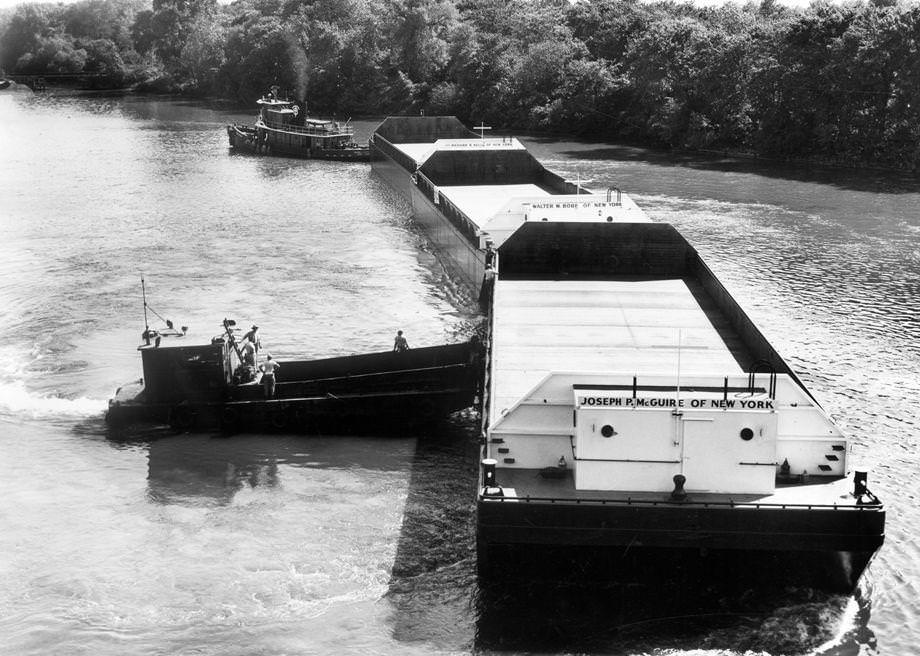
Richmond’s Upper Terminal on the James River was a hub of commercial activity. Tugboats regularly left the terminal towing barges loaded with industrial goods headed for ports up and down the East Coast.
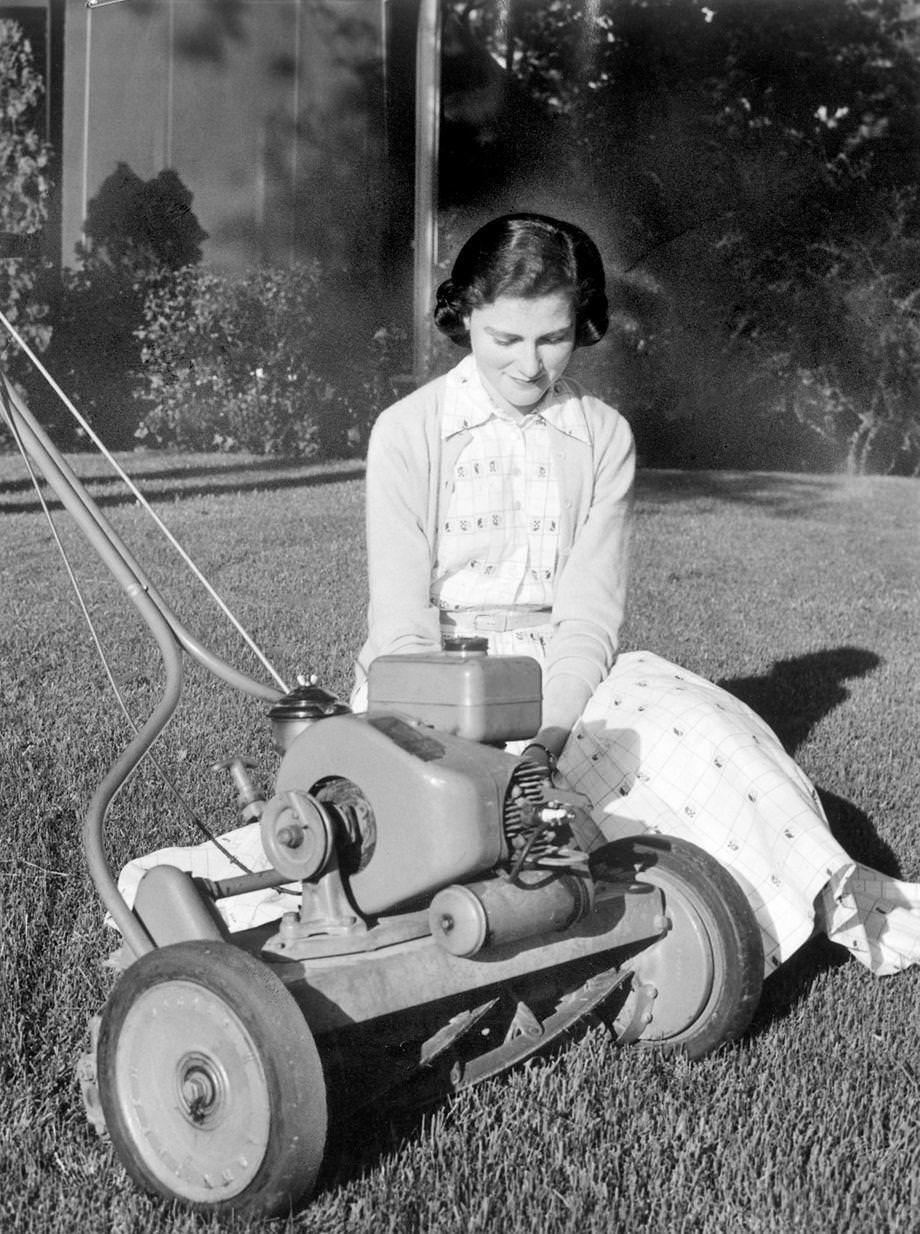
A tugboat from New York City left Richmond’s Upper Terminal with three steel barges in tow, 1955.Ann Huxley adjusted the blade height on her lawnmower before cutting the grass at her home on Three Chopt Road in Henrico County, 1956.Students at Ridge School in Henrico County enjoyed their new merry-go-round, 1955.
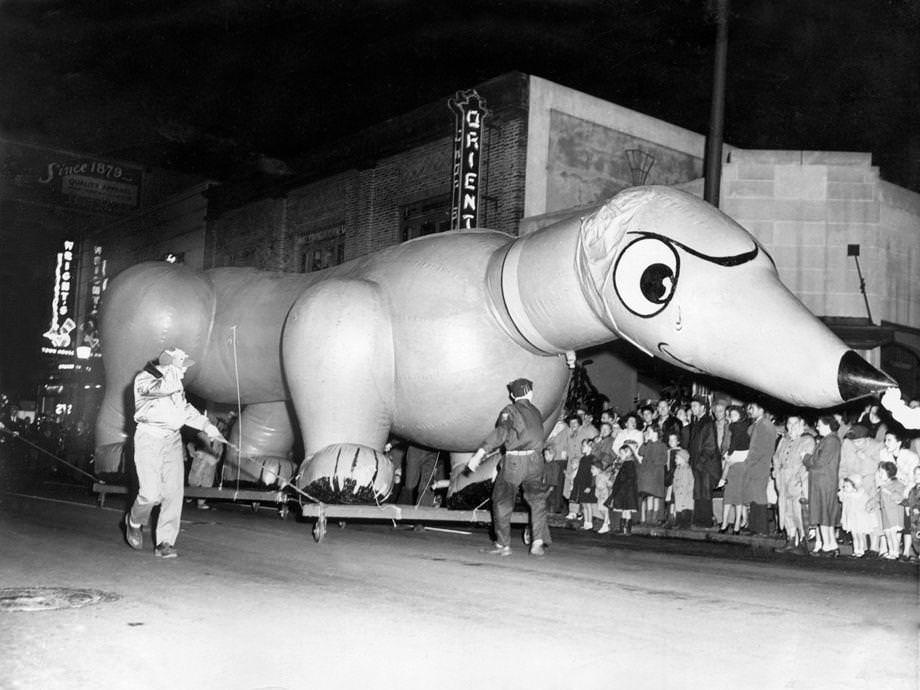
The Thalhimers Toy Parade was a beloved Richmond tradition. First held in 1929 and revived after World War II, it filled downtown streets each year with floats built by department store employees who spent months on their construction.
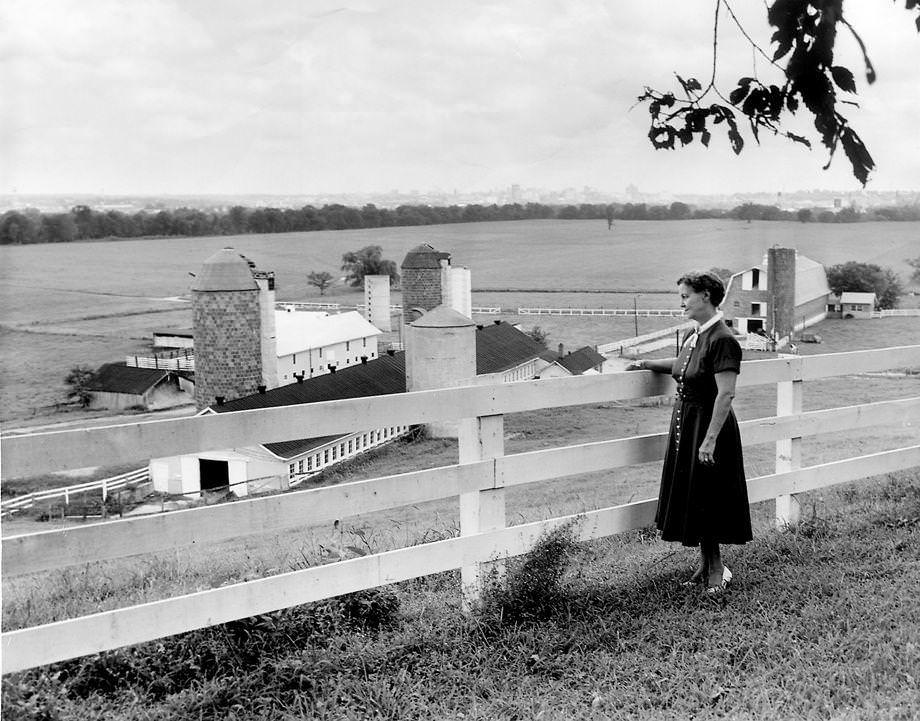
A dachshund float towered above spectators lining the curb during the Thalhimers Toy Parade in downtown Richmond, 1950.Mrs. Burlee stood on her front lawn at Tree Hill Farm in Henrico County’s Varina area and admired the view of Richmond, 1955.
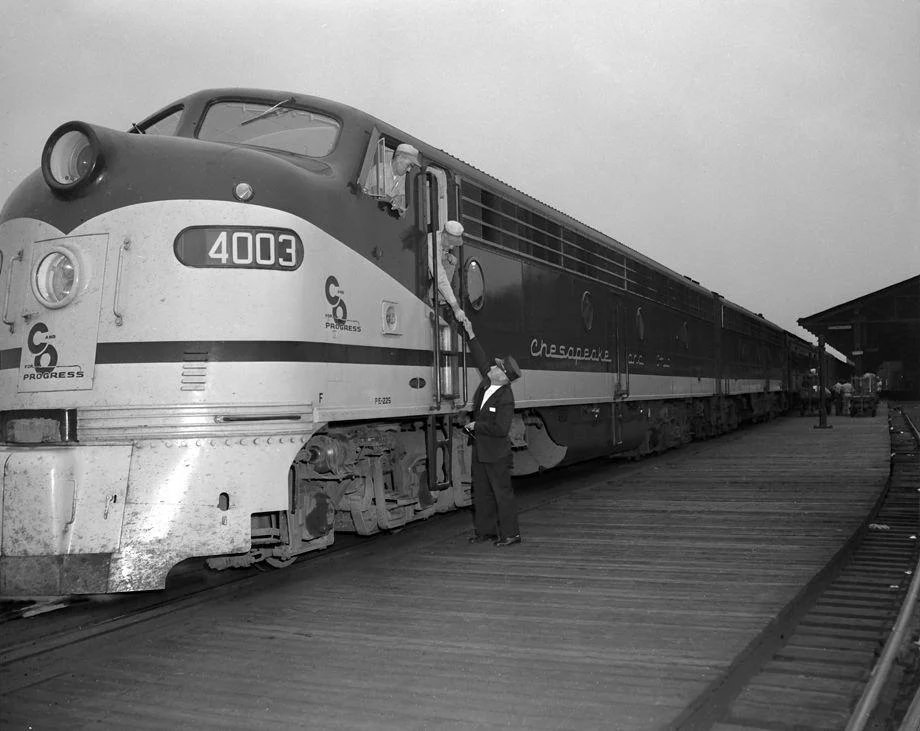
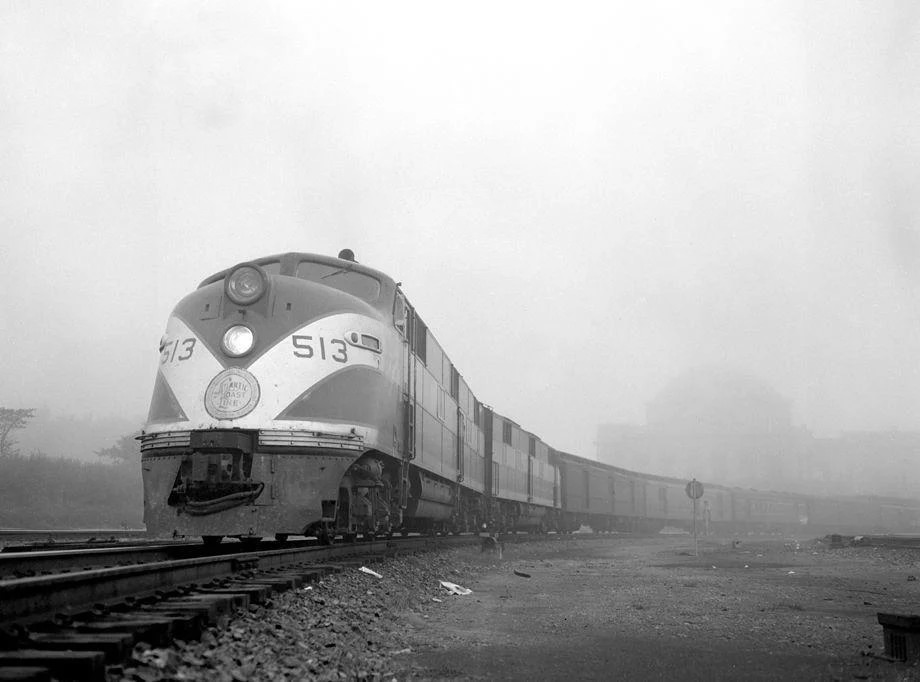
Rail travel was still the dominant long-distance transportation option for much of the decade. In 1951, the Chesapeake and Ohio Railway introduced its first diesel-powered locomotives on Richmond passenger routes, with plans to replace most of its steam engines by year’s end.
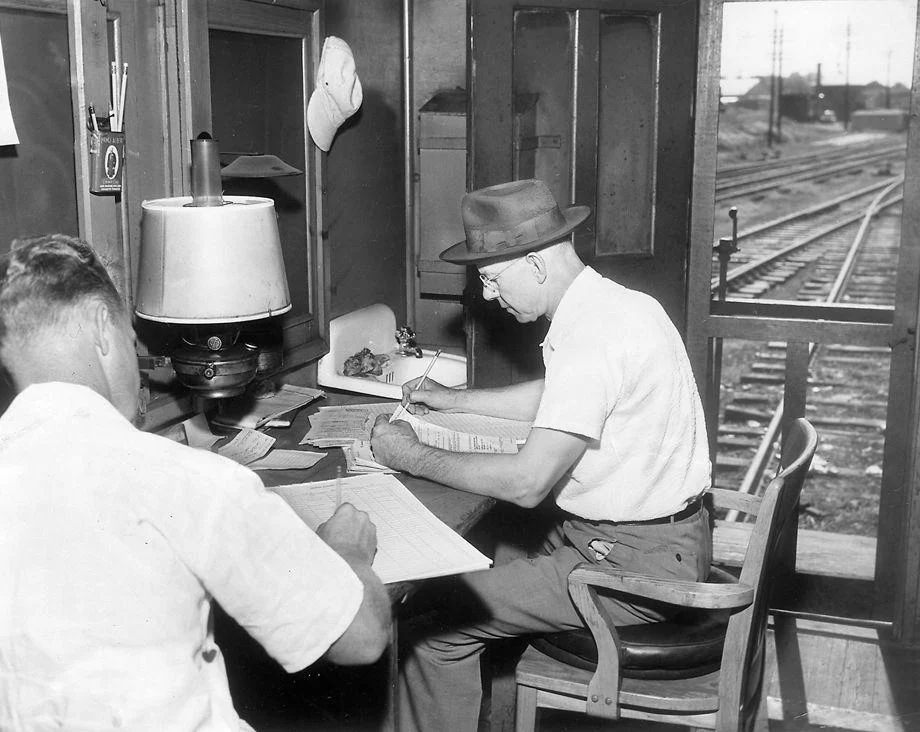
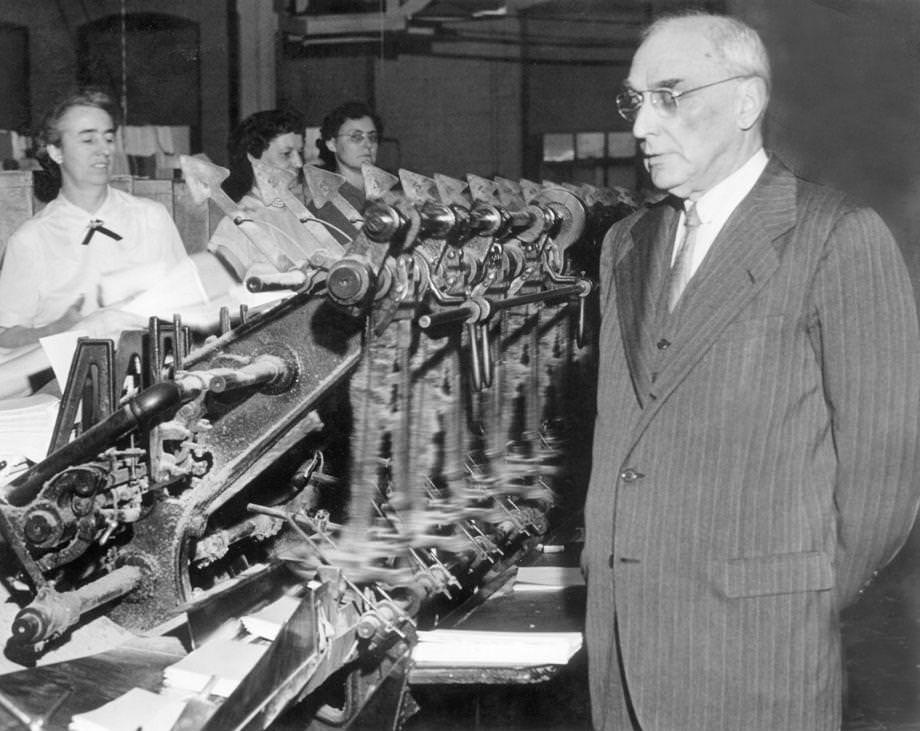
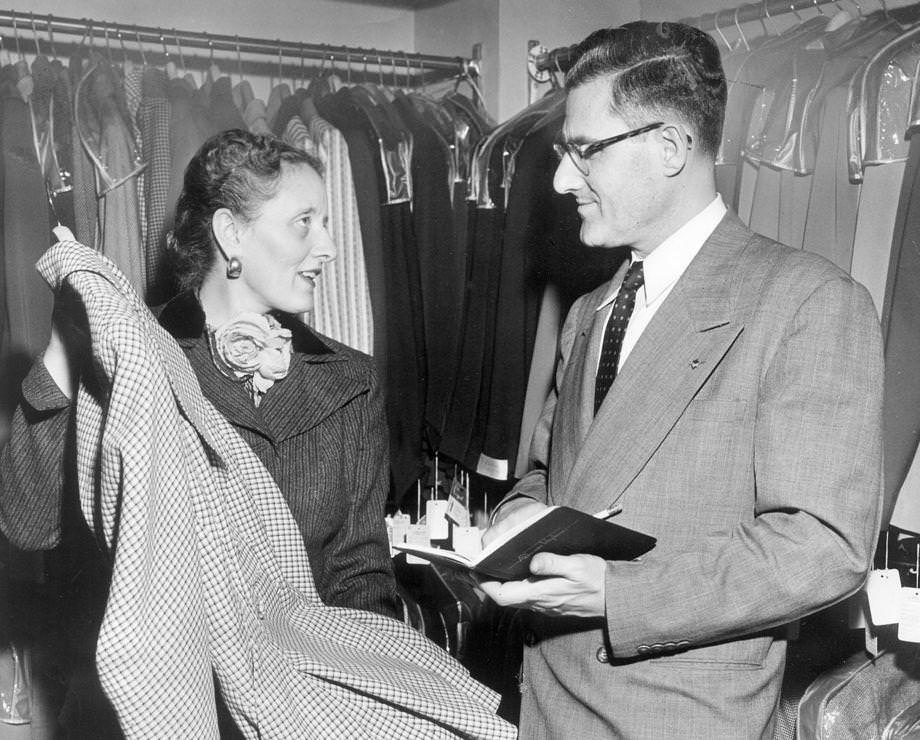
Fredericksburg and Potomac Railroad conductor H.C. Rollins (right) and flagman C.H. Smith did pre-trip paperwork in a train caboose before a ride to Washington, 1953.L. Howard Jenkins, head of a Richmond book manufacturer that bore his name, supervised workers at his plant on West Broad Street, 1953.Mrs. J.H. Boxley diverted her husband’s attention from his bookkeeping to show off new inventory at the L’Pell’s clothing store they owned on East Grace Street in Richmond, 1951.
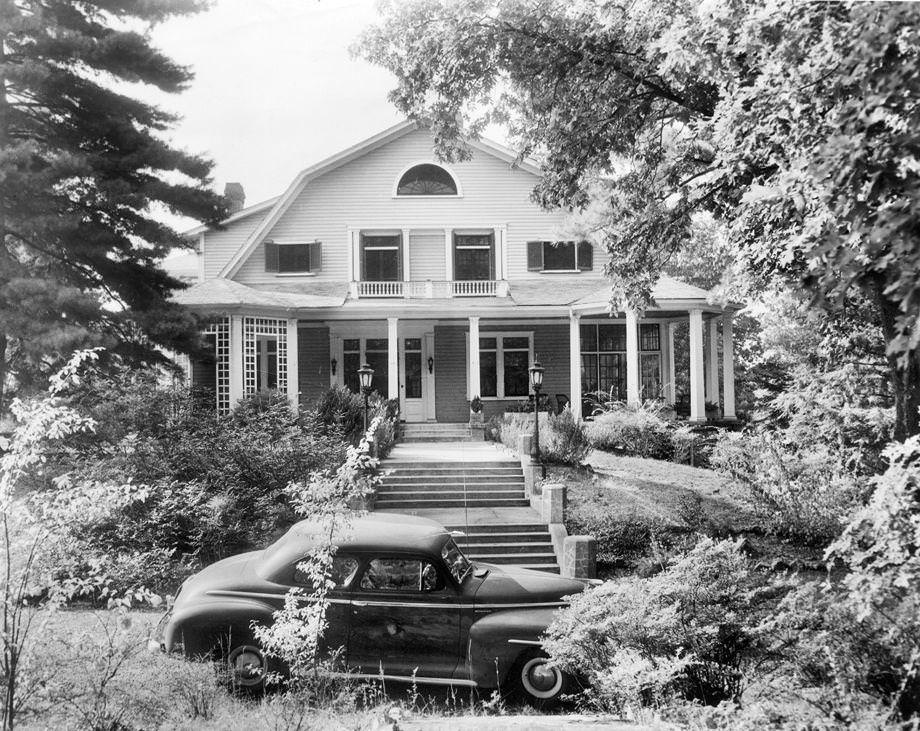
Lewis Ginter’s legacy was visible across Richmond. The elegant Bloemendaal House, once his private residence, still stood in the early 1950s — a surviving piece of the Gilded Age in a city rapidly modernizing around it.
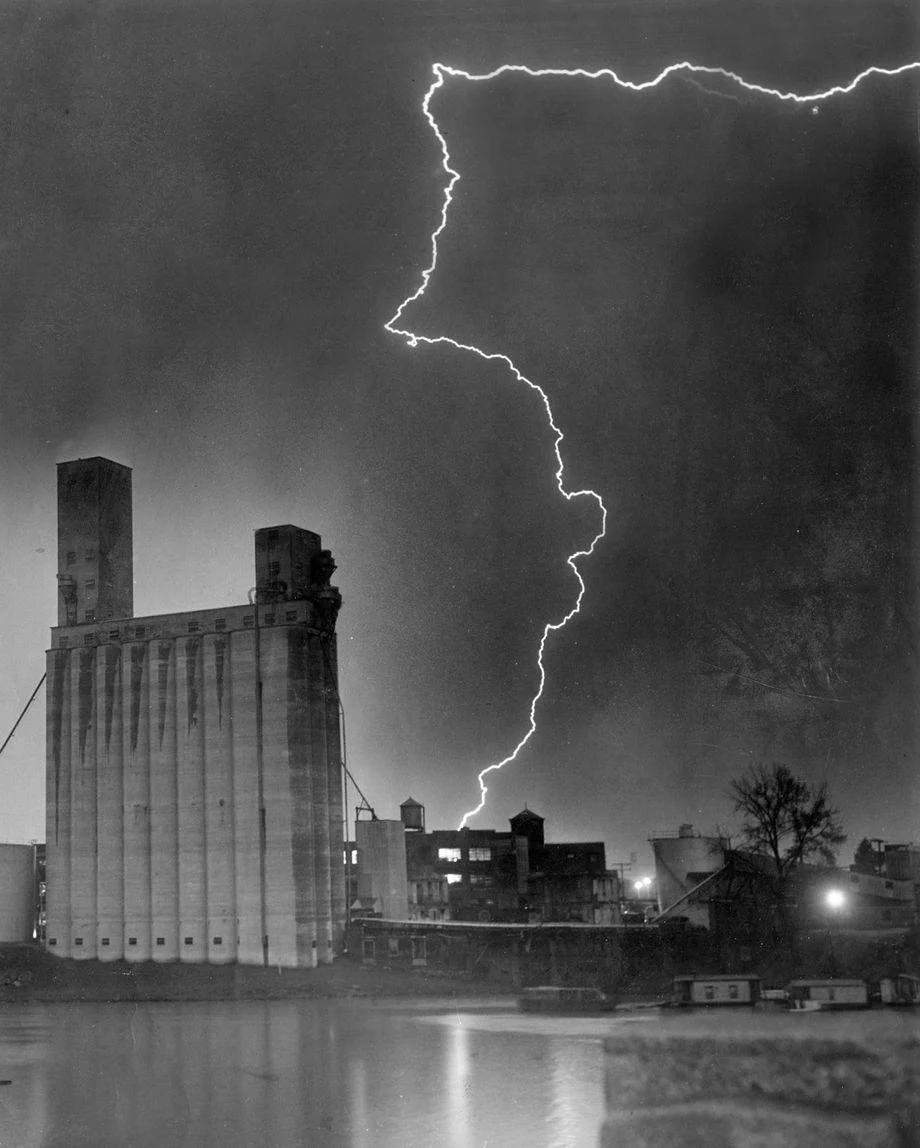
One side of Bloemendaal House, the former home of Richmond businessman Lewis Ginter and now part of Lewis Ginter Botanical Garden, 1951.A 10-block section of Monument Avenue between Horsepen Road and Keystone Drive in Henrico County began carrying eastbound and westbound traffic on separate sides of the median, 1953.Lightning flashed over South Richmond during a storm that brought heavy rain and stiff wind to the city, 1953.
Richmond’s motorcycle racing scene had roots that extended beyond the local area. The 1950 National Championship at the Atlantic Rural Exposition grounds launched the career of “Little Joe” Weatherly, who went on to become a NASCAR champion before his fatal crash in 1964.
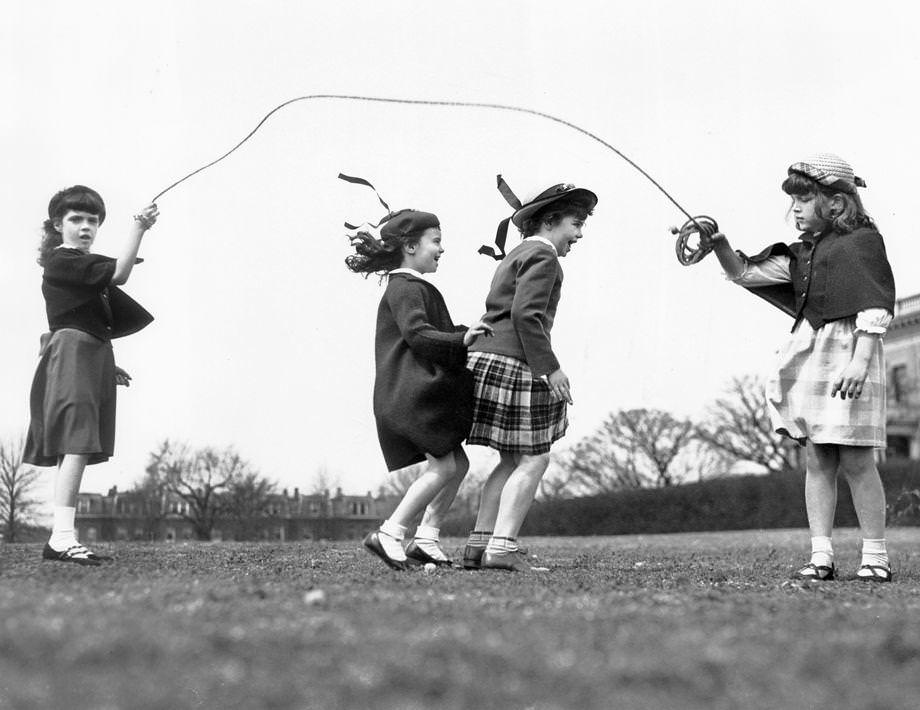
Motorcyclists raced in the 10-Mile National Motorcycle Championship at the Atlantic Rural Exposition grounds in Henrico County, 1950.The truck was occupying what used to be the front yard of a house in the 6500 block, 1951.Area residents enjoyed a refreshing swim in the James River — a reprieve from record high temperatures during the spring month, 1956.Four girls played jump-rope in a Richmond city park, 1950.
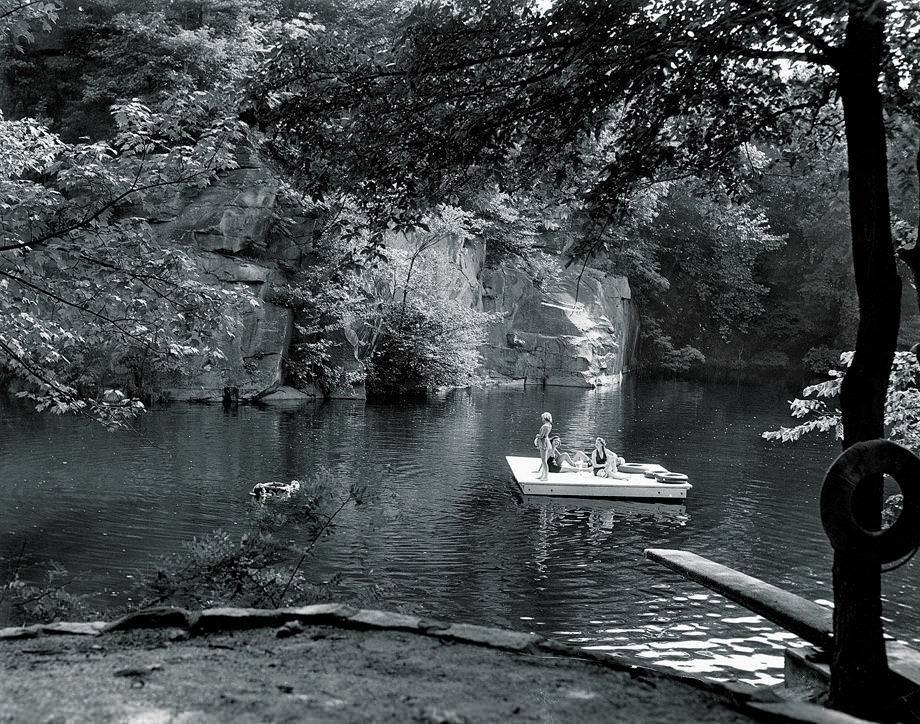
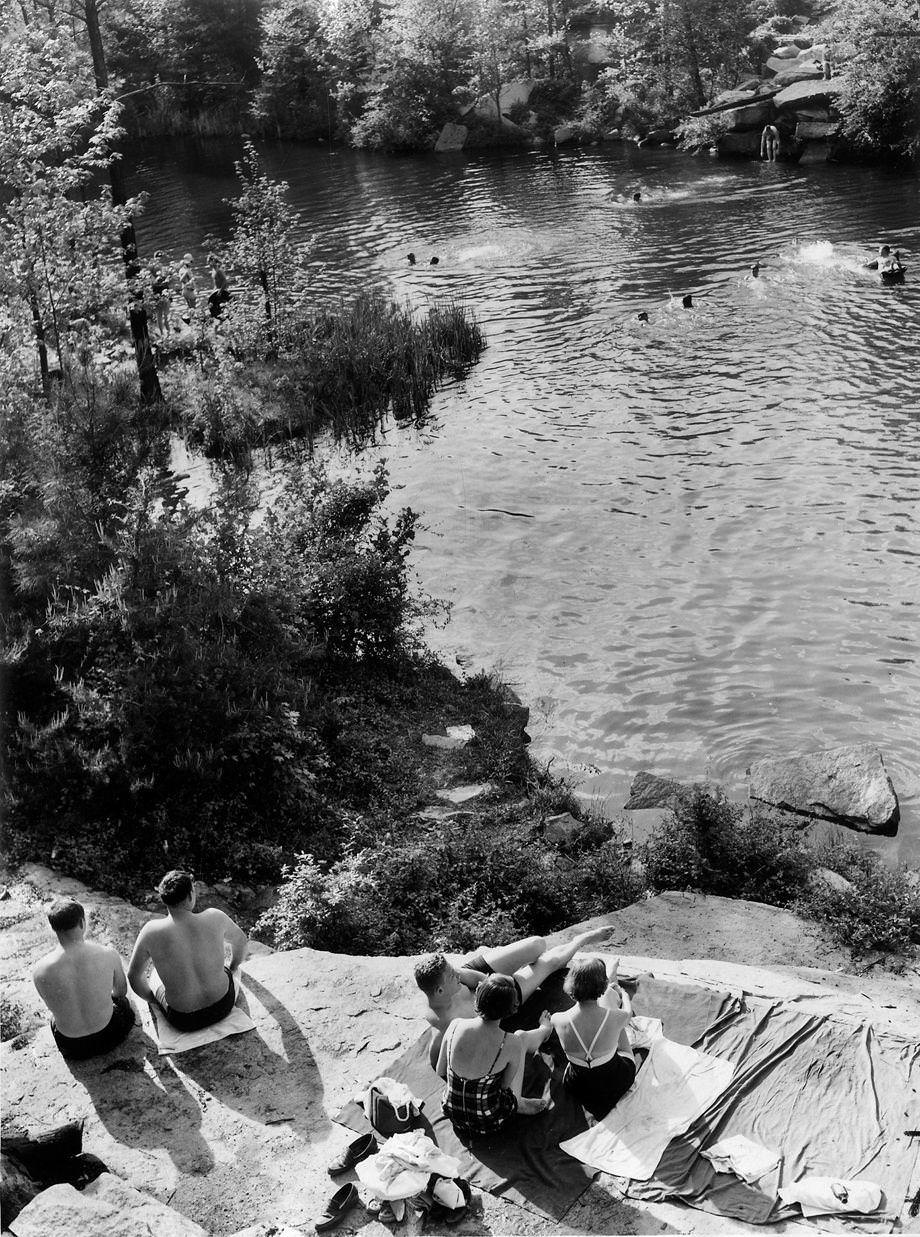
Former granite quarries near what is now Willow Oaks had filled with water over the decades and become favorite swimming spots. The quarry tradition dated back to the 1800s, and by the 1950s these deep, clear pools were pulling in swimmers on hot summer days.
Women lounged on a floating platform at a swimming hole that was once a quarry, 1950.
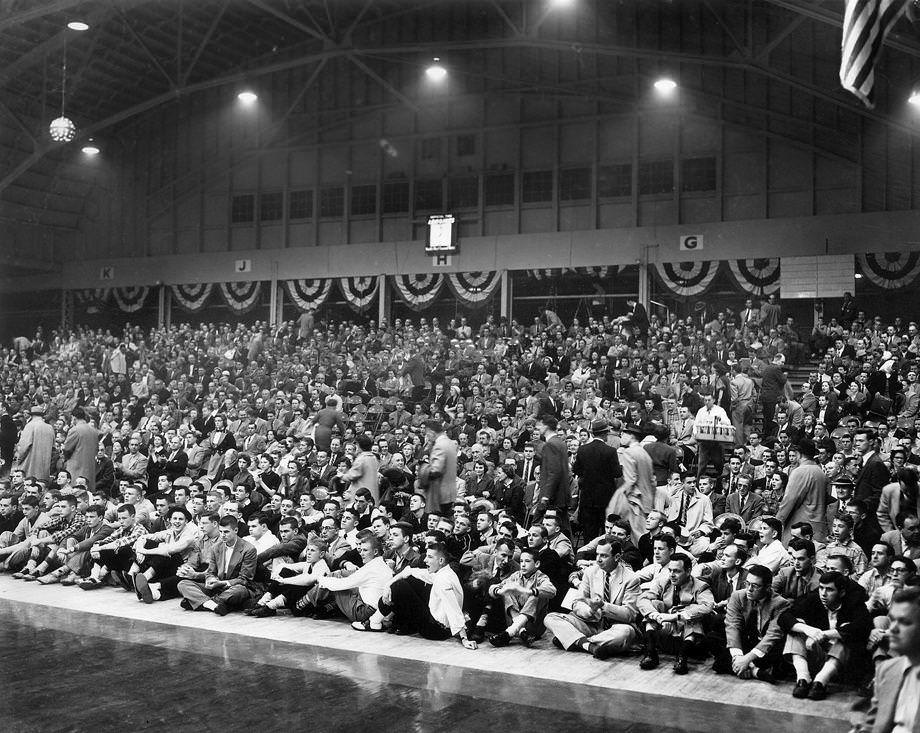
High school basketball drew serious crowds. When the State Group 1 tournament was held at the Arena in Richmond in 1956, the house was packed. Admission was $1 for adults and 50 cents for students, and Newport News High School took home the title.
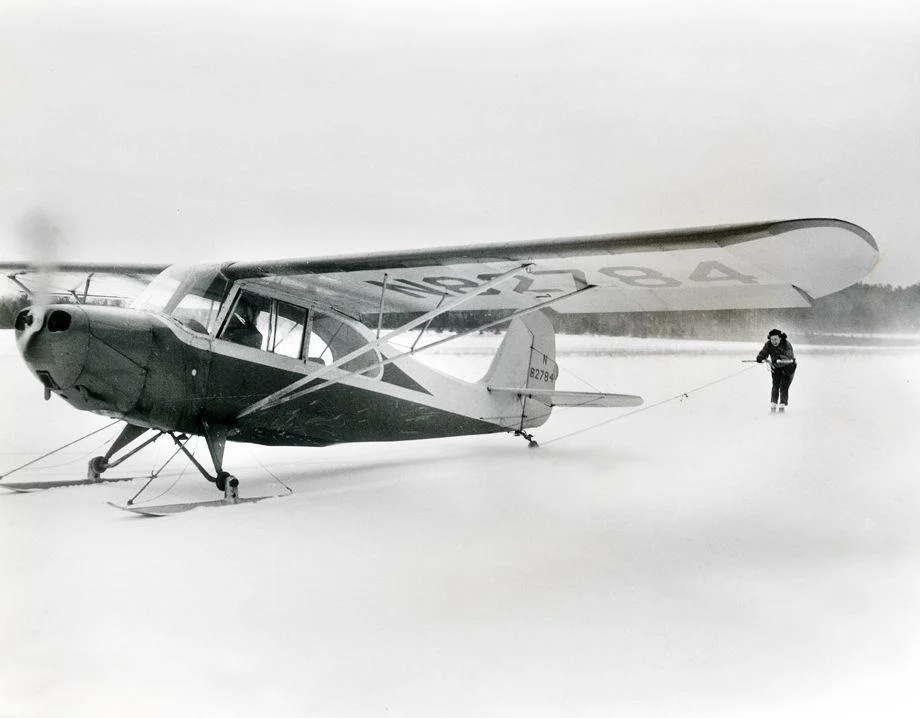
A full house at the Arena in Richmond watched the State Group 1 high school basketball tournament, 1956.Mrs. Hunter Jones hitched a ride behind a ski plane that was visiting Chesterfield County’s Parnell Field, which opened in March 1946 as the first postwar airport in the Richmond area, 1957.
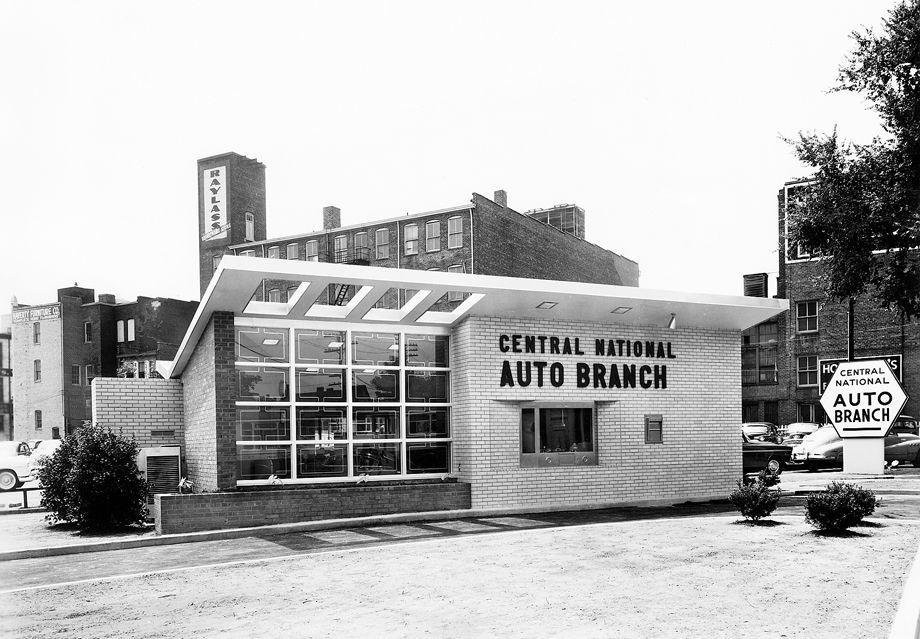
Banking was evolving along with the rest of the city. In 1955, Central National Bank opened what it called an “auto branch” at Third and Marshall streets — a drive-in facility that offered windows, walk-up service, and a night depository, reflecting the growing car culture of the era.
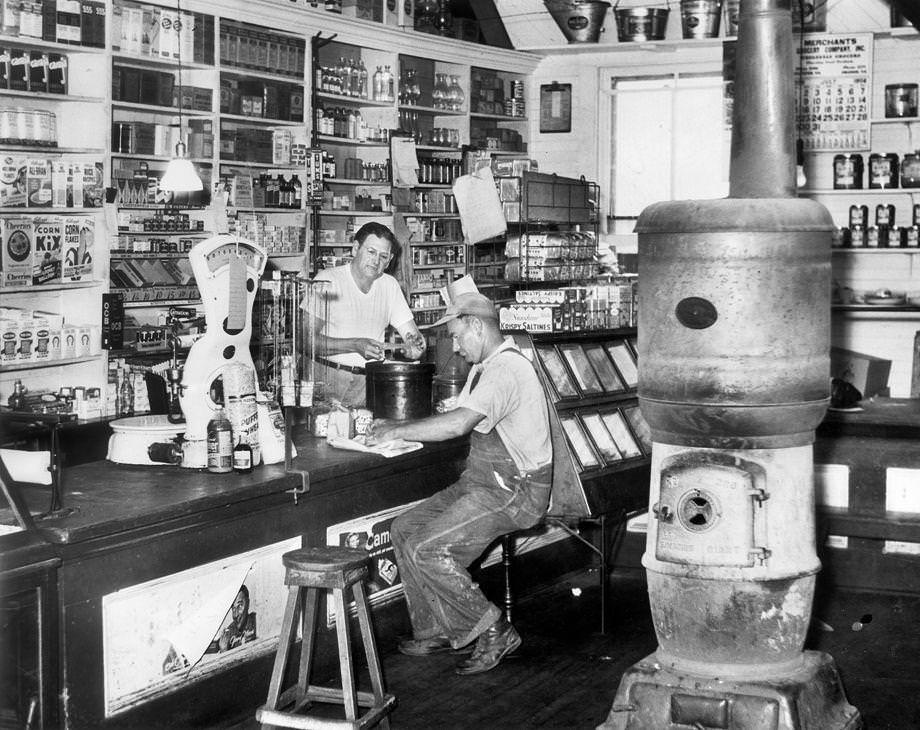
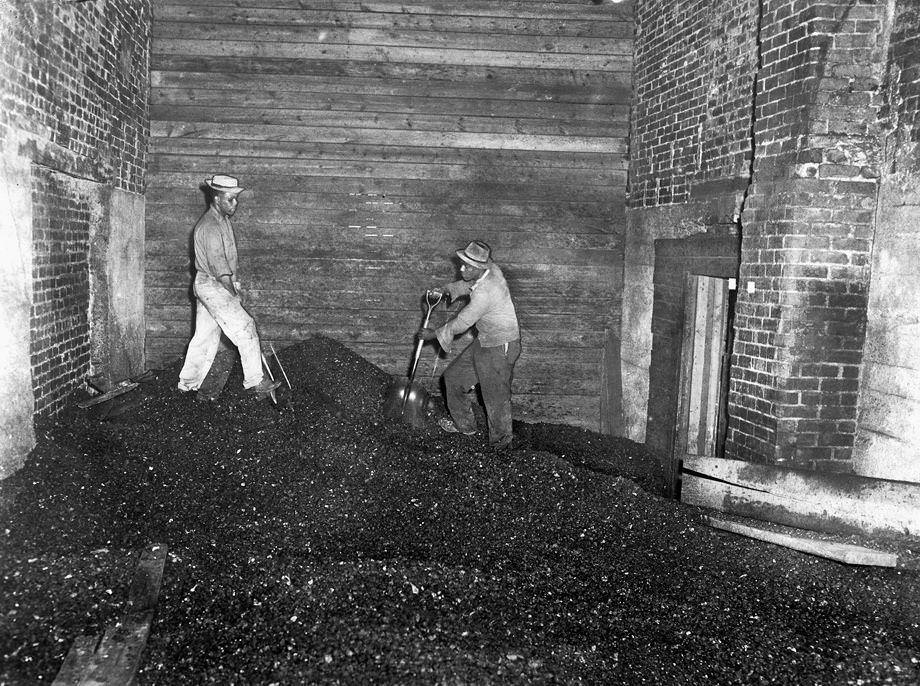
Central National Bank opened an “auto branch” at Third and Marshall streets in downtown Richmond, a block from the main office, 1955.Criglersville general store owner Robert H. Gibbs served customer Lindsay Utz while they discussed topics of the day, 1956.This coal bin in the Highland Springs High School shop building was cleaned out and converted into a practice room for the school band, 1950.
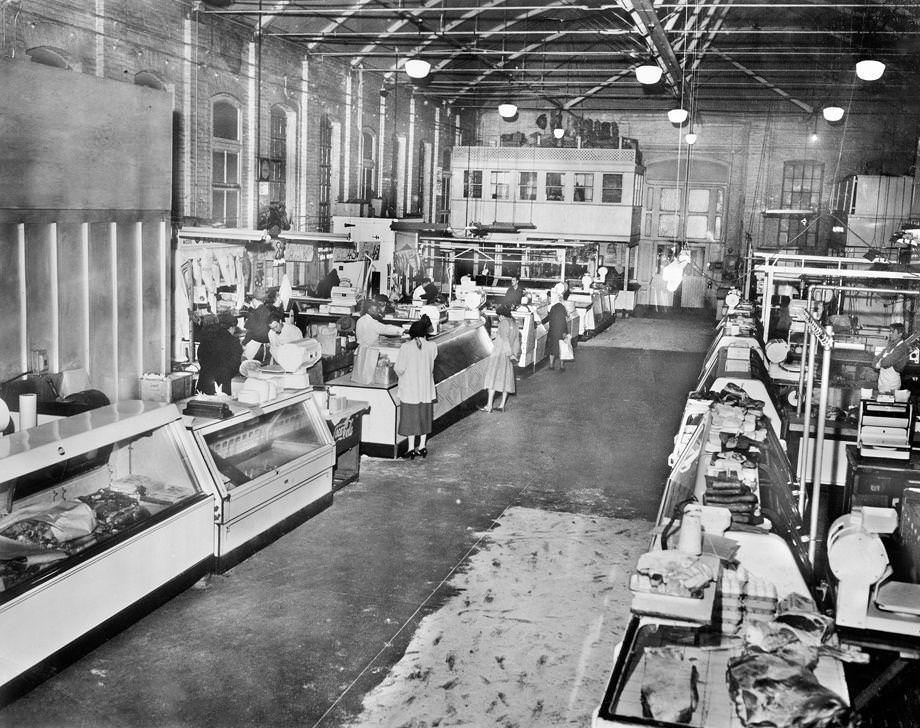
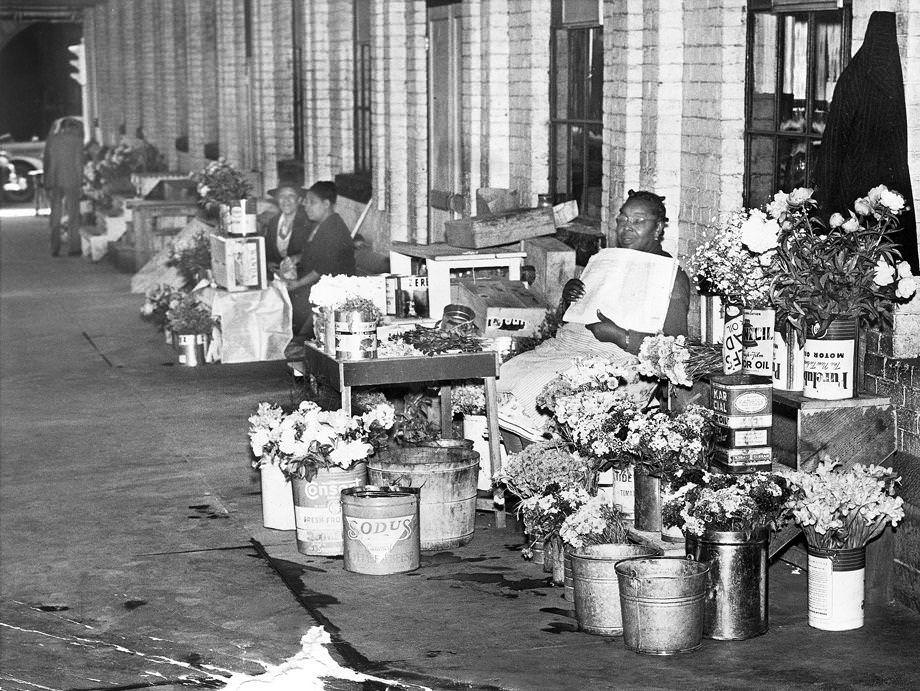
The Sixth Street Market was one of Richmond’s oldest commercial gathering places. City officials in 1950 were weighing rent increases for vendors there, along with raising sanitation fees — decisions that affected the flower sellers, produce vendors, and other merchants who depended on the market.
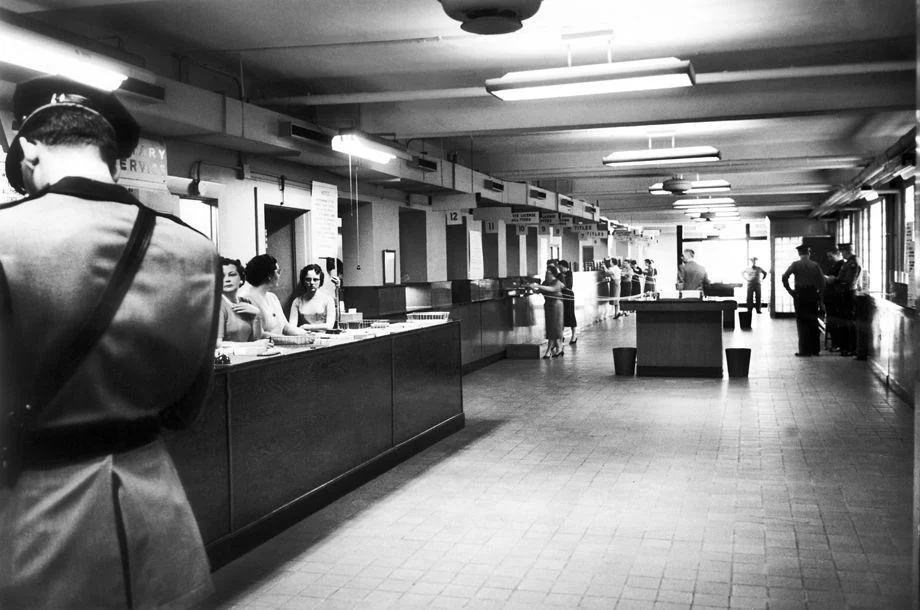
The Sixth Street Market, where the city of Richmond was set to raise rents to be more in line with prevailing rates, 1950.Students at the Grace Arents School, located on Oregon Hill, were among those all over Richmond who participated in a fire drill, 1956.Shoppers on Broad Street in downtown Richmond rushed to find bargains at the fourth annual Richmond Day, 1955.Employees of the Virginia Division of Motor Vehicles on West Broad Street in Richmond prepared for an onslaught of customers before doors opened for business, 1959.
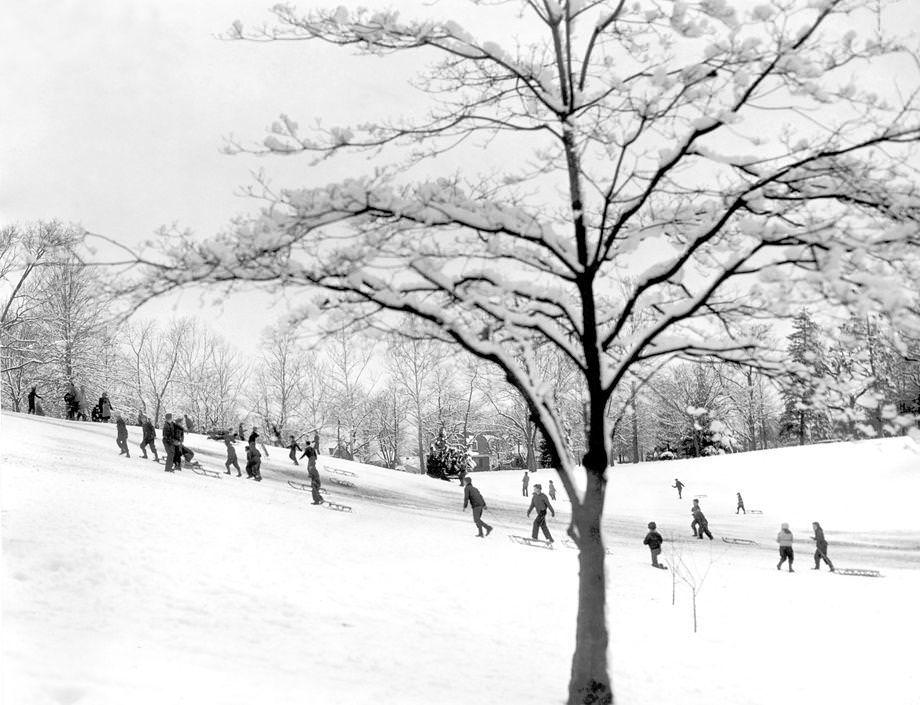
After a snowfall of 7.6 inches — the most since 1948 — Forest Hill Park in South Richmond became a sledding destination. Children showed up right after school and stayed until dark on the hard-packed slope.
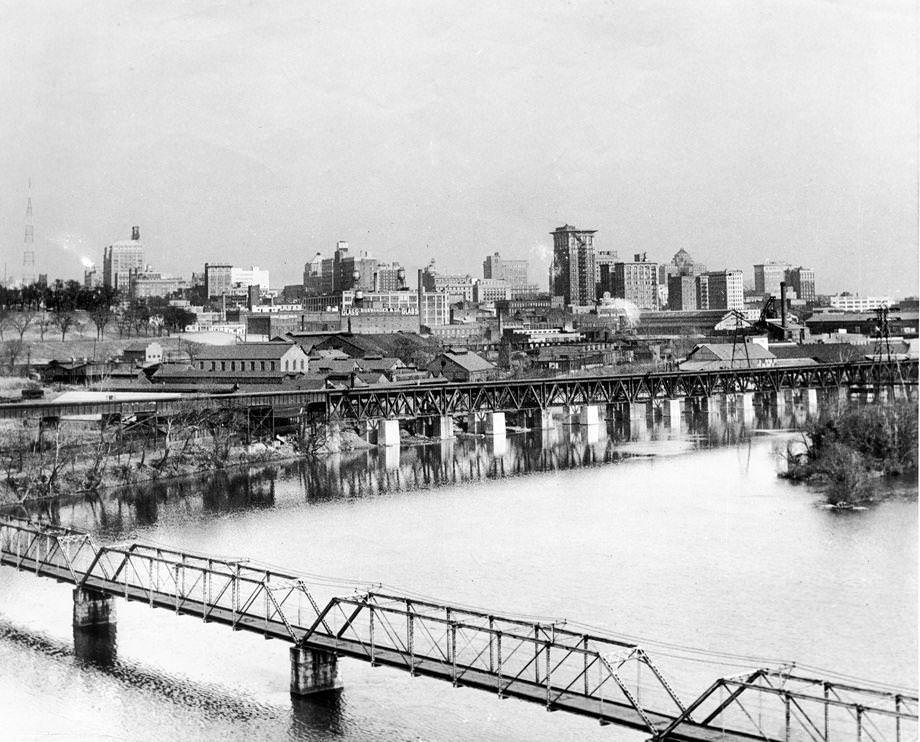
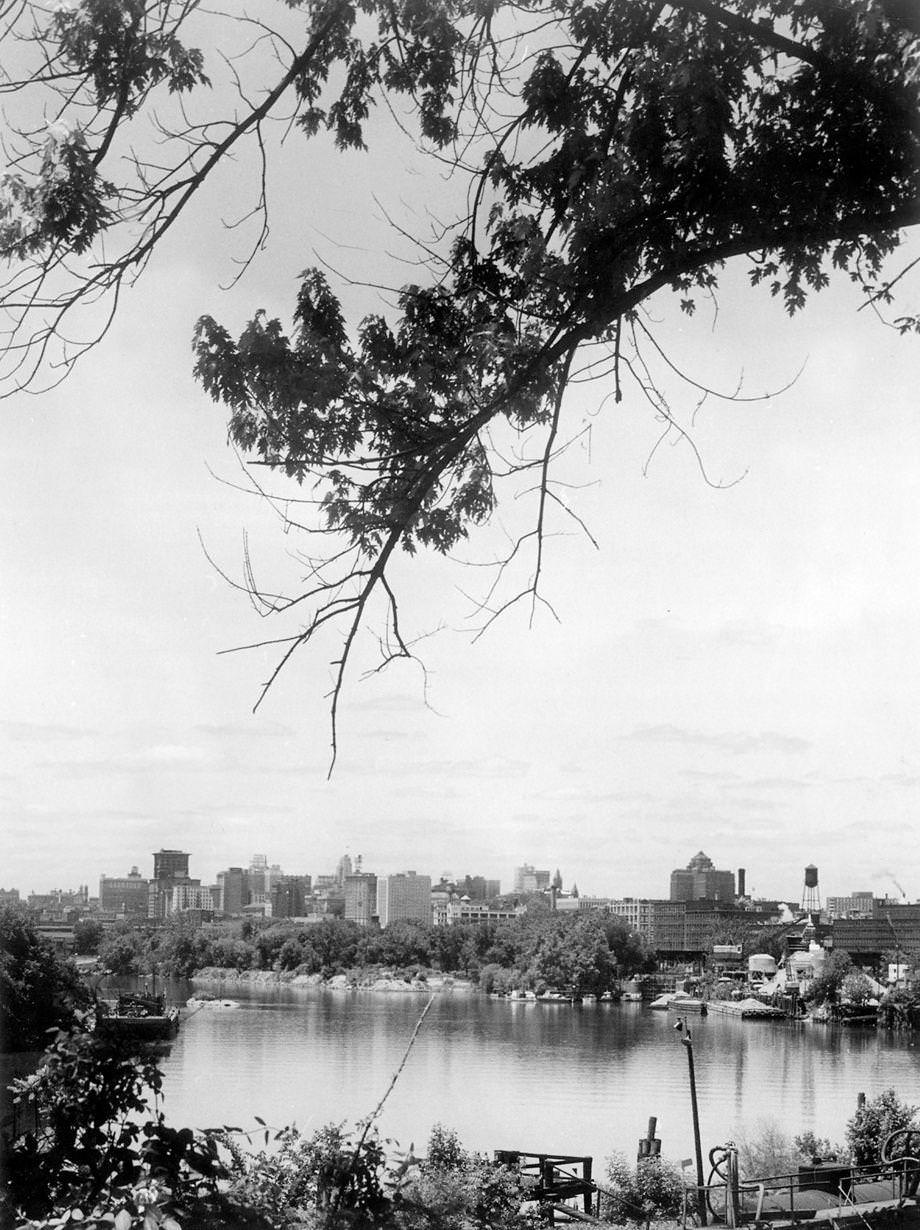
A snowy slope at Forest Hill Park in Richmond came to life on a cold afternoon, 1955.The Richmond skyline as seen from the south end of the Lee Bridge, 1951.Swimmers cooled off on a hot day at Granite Quarry in Chesterfield County, 1954.
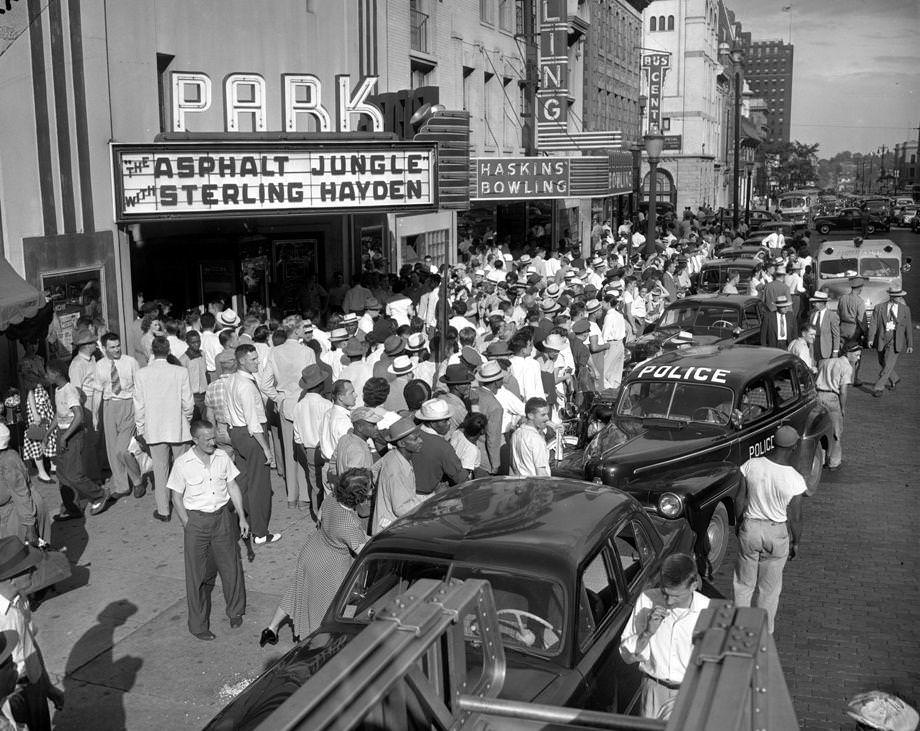
Not every night out in Richmond was uneventful. In 1954, part of the ceiling at the Park Theater on East Broad Street collapsed during a showing, injuring 17 people. The theater had a long and complicated history — it had opened in 1909 as the Lubin, changed names multiple times, closed, reopened, and was going by the name “the Park” when the collapse occurred.
Part of the ceiling of the Park Theater at 810 E. Broad St. collapsed during a showing, injuring 17, 1954.A tornado struck Richmond, causing massive damage in its 4-mile path of destruction –including a truck crushed by a fallen tree at Belvidere and Franklin streets downtown, 1951
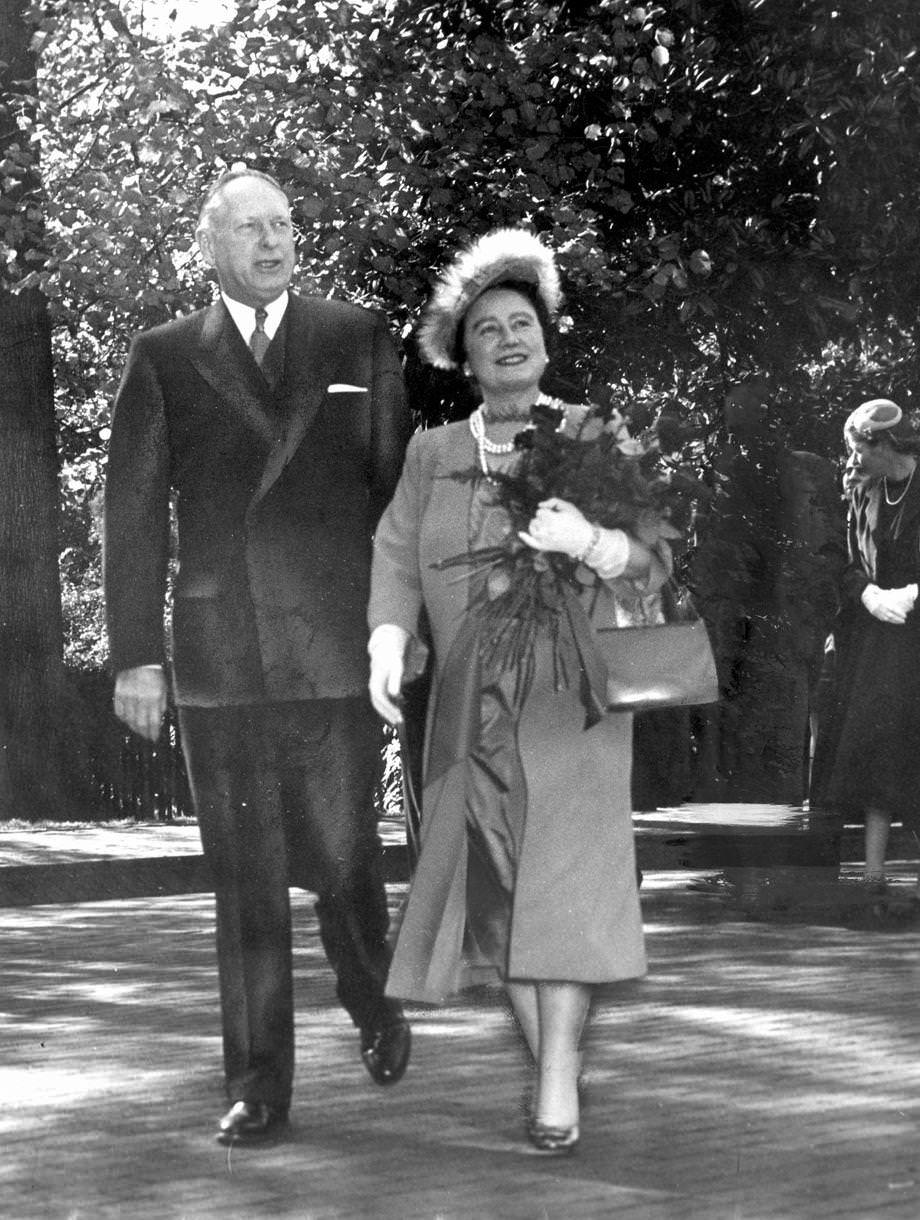
In 1954, Queen Elizabeth the Queen Mother visited Richmond as part of a U.S. tour. Before a crowd of about 6,000 people at Capitol Square, Governor Thomas B. Stanley personally escorted her into the Capitol for a tour.
Queen Elizabeth the Queen Mother visited Richmond on a U.S. tour. Before a crowd of about 6,000 people at Capitol Square, Gov. Thomas B. Stanley escorted her into the Capitol for a tour, 1954
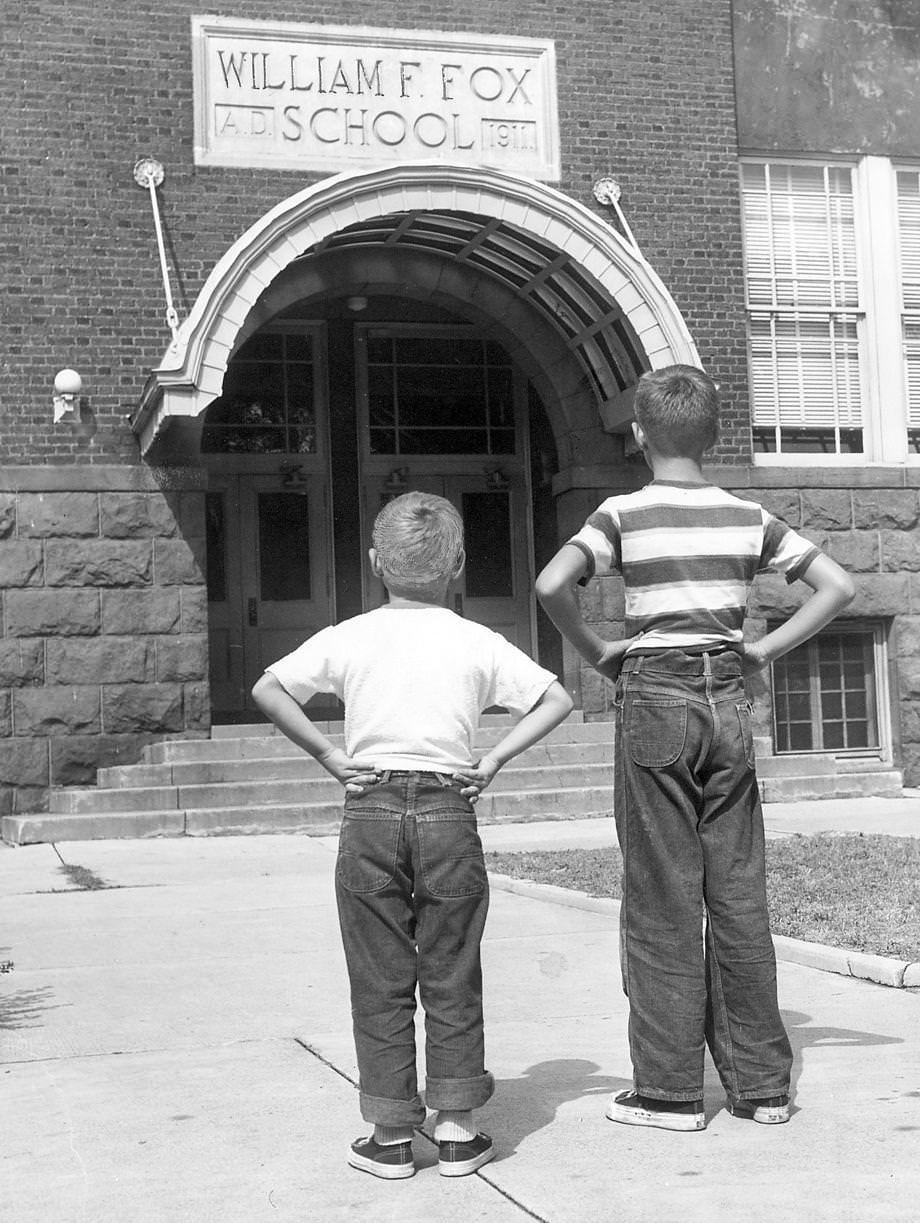
Two boys surveyed the William F. Fox School, which they were ready to attend within days, 1953. The Richmond school, on Hanover Avenue in the Fan District, was dedicated in September 1911.
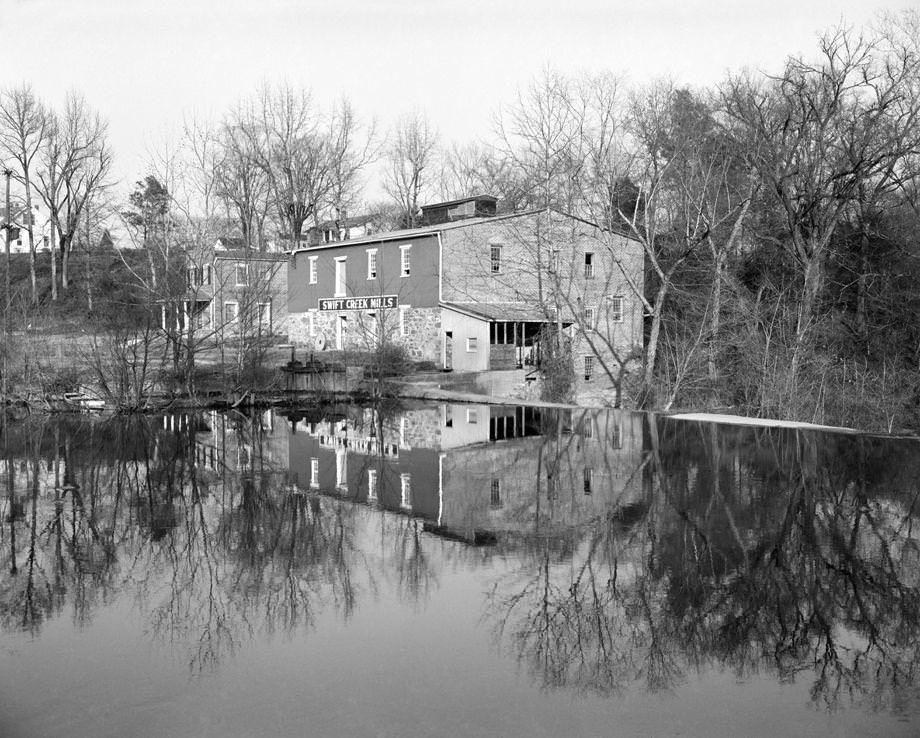
Swift Creek Mill in Chesterfield County was one of the oldest active industrial sites in Virginia. Built in 1663 as a gristmill, it had changed hands and functions many times before finally ceasing operation as a mill in 1956.
Swift Creek Mill in Chesterfield County. Now home to the local theater, the site was built in 1663 as a gristmill and changed hands and functions many times over the centuries, according to the theater’s history.
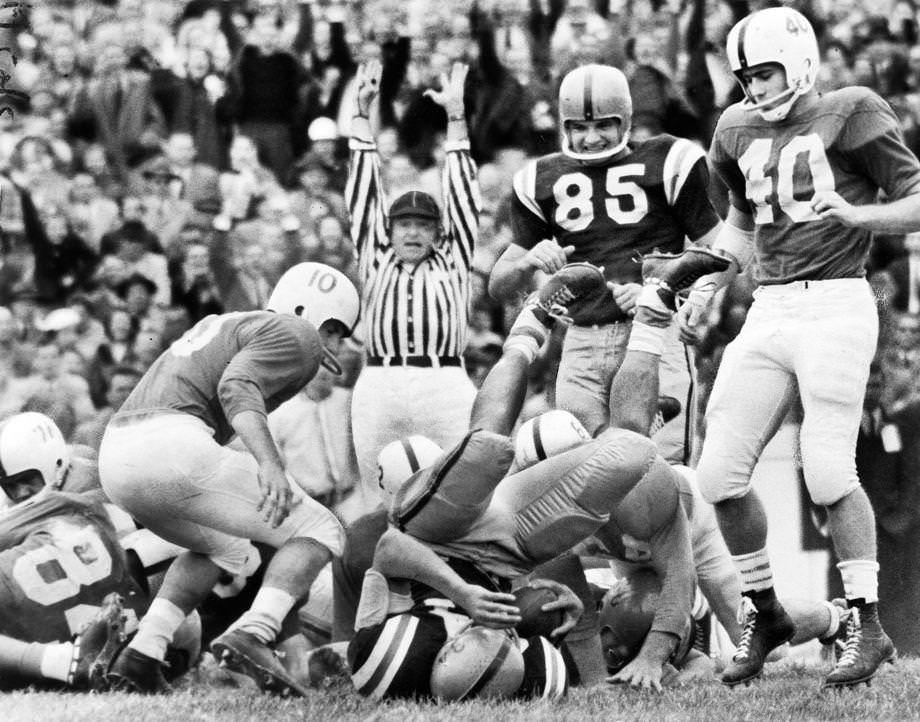
The National Tobacco Festival also served as a showcase for college football. At City Stadium in October 1957, the University of Virginia faced Virginia Tech in the Tobacco Festival game. Virginia’s Jim Bakhtiar scored four touchdowns, and the Cavaliers won decisively, 38-7.
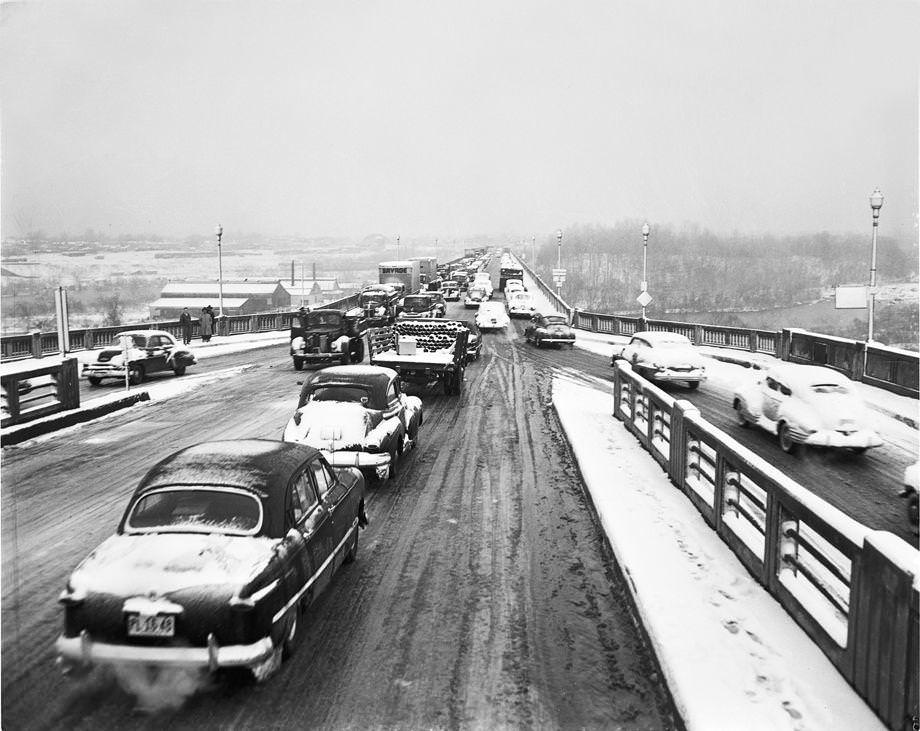
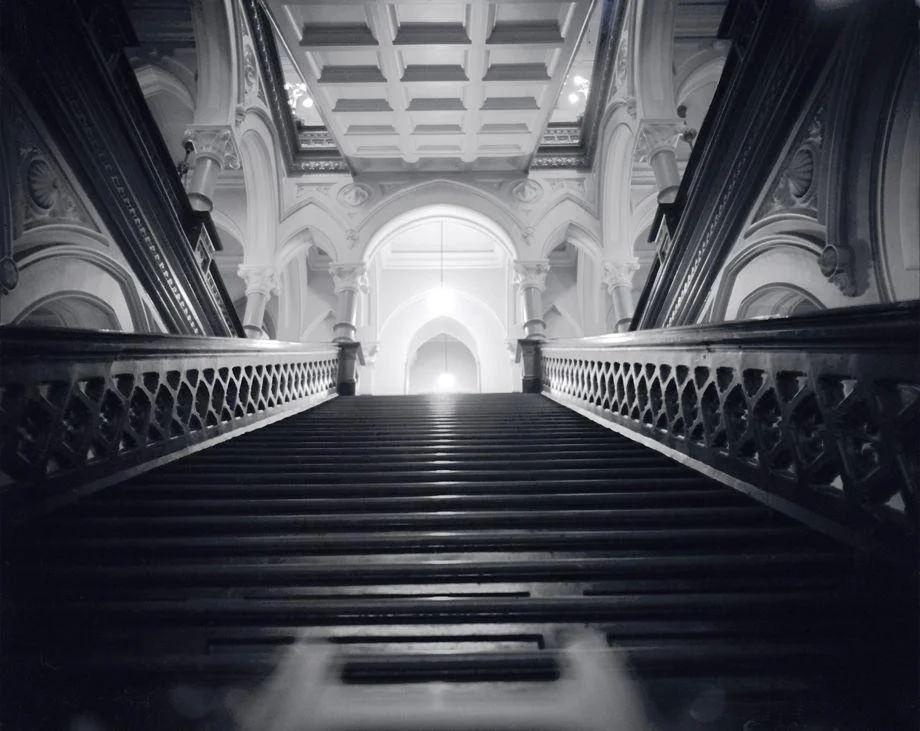
In October 1957, U.Va. faced Virginia Tech in the Tobacco Festival football game at City Stadium in Richmond.A surprise 5-inch snowfall covered Richmond and kept traffic on the slushy Lee Bridge moving slowly, 1950.View of a staircase at Old City Hall, 1959.
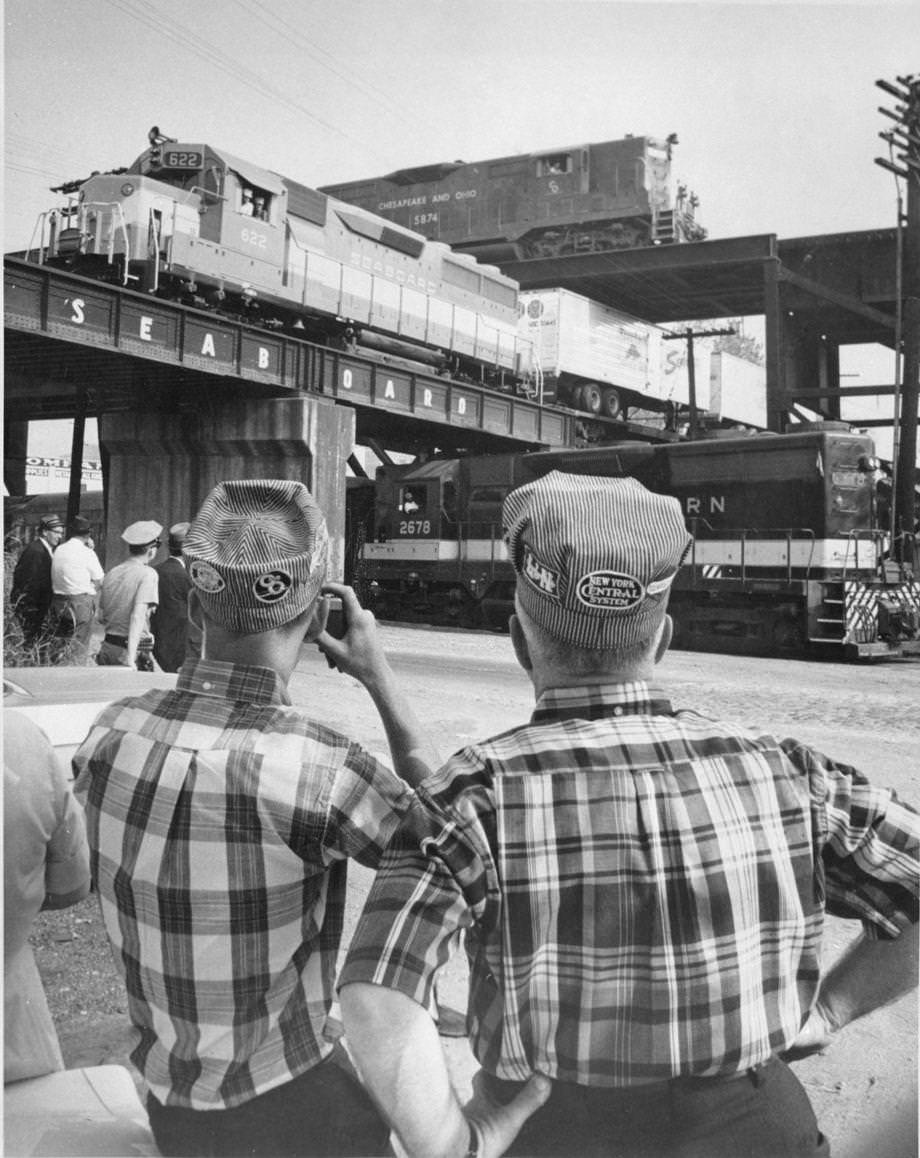
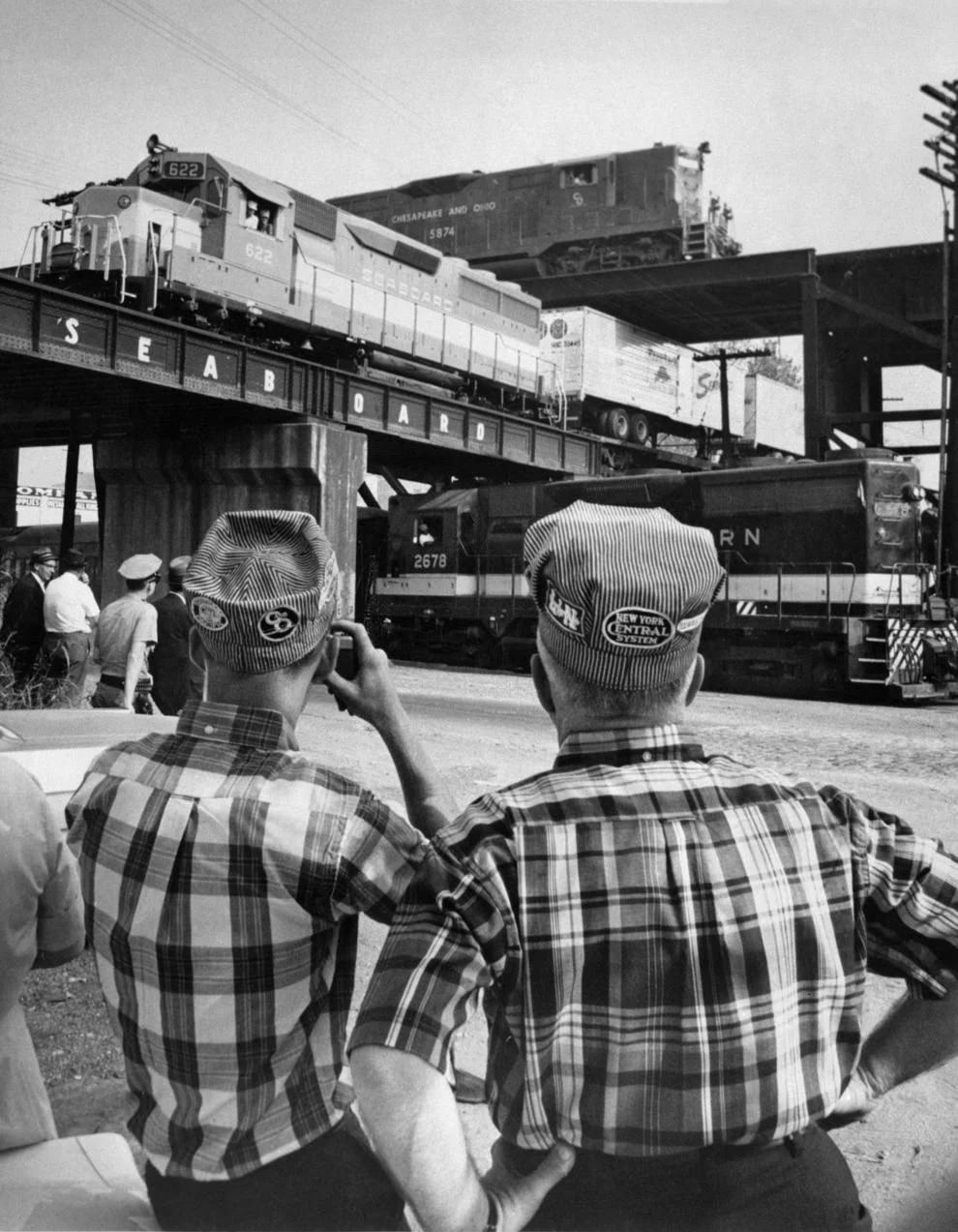
Rail enthusiasts from across the region gathered in Richmond in October 1958 for a rare event: a triple railroad crossing, in which trains from the Southern, Seaboard, and Chesapeake and Ohio railroads crossed simultaneously. It was only the fourth time in history this had been staged — previous occasions were 1911, 1926, and 1949.
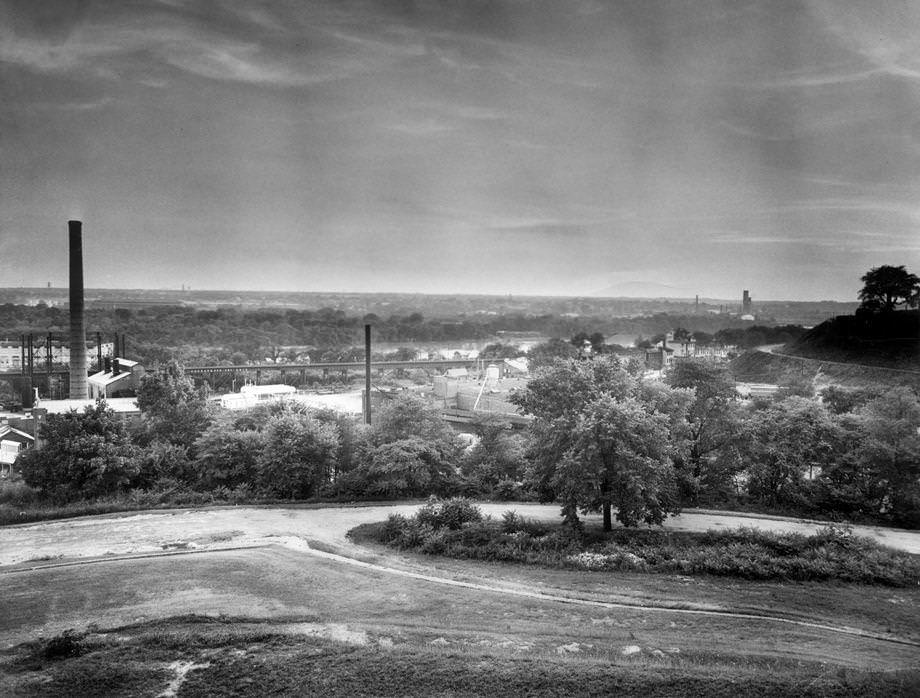
Richmond’s triple railroad crossing 4th time in history 3 trains lined up TD Oct 13, 1958The view from Richmond’s Chimborazo Hill at twilight, looking across Fulton and the James River, 1955.
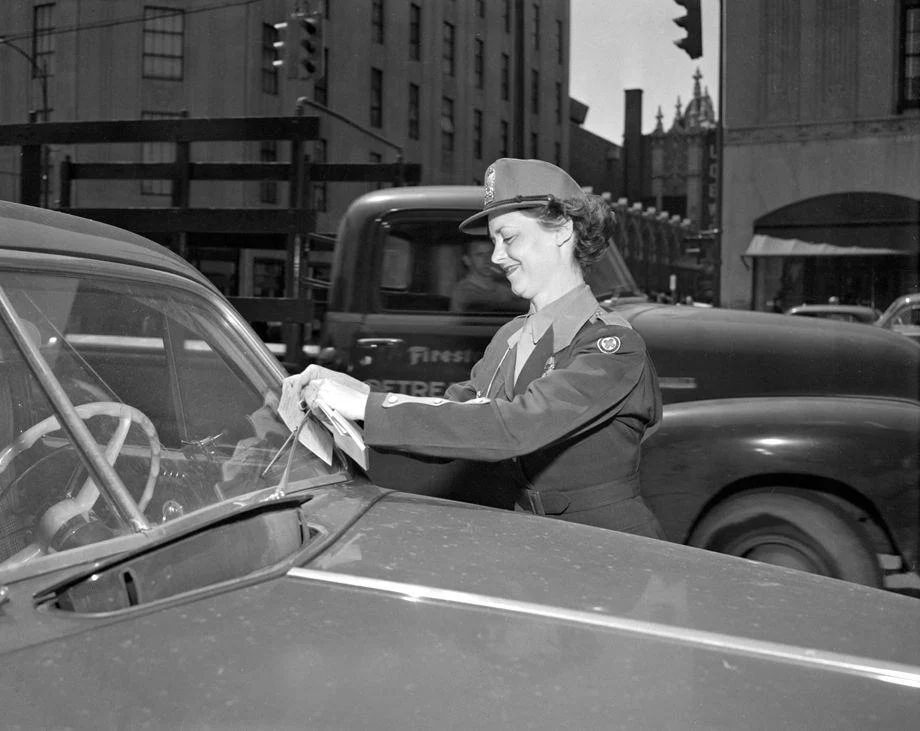
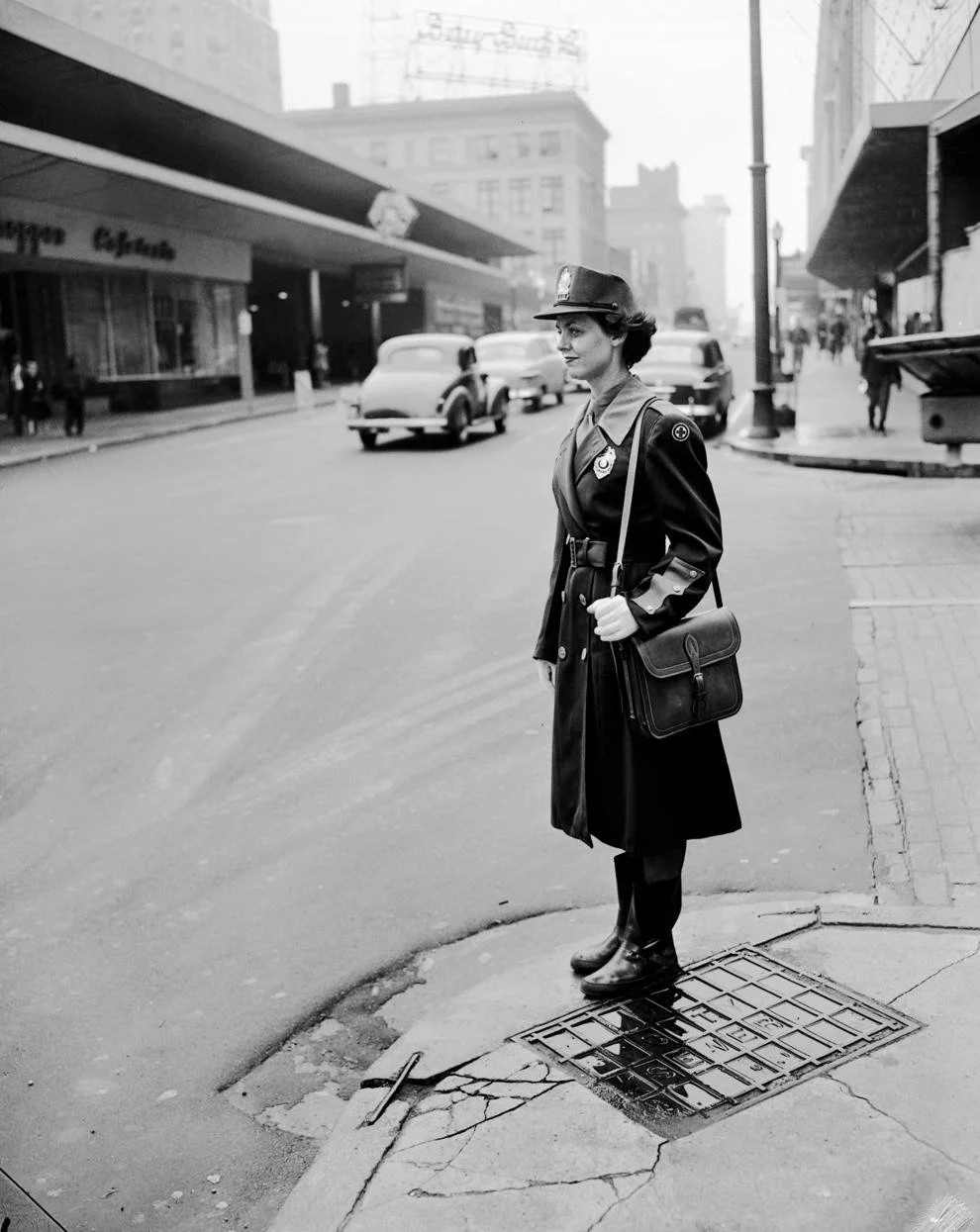
Women were beginning to take on new roles in Richmond’s public workforce. In 1952, Martha S. Jackson became one of the city’s first full-fledged female traffic officials with full police authority. She was assigned to pedestrian enforcement along Broad Street when the city introduced its new “walk/don’t walk” signals.
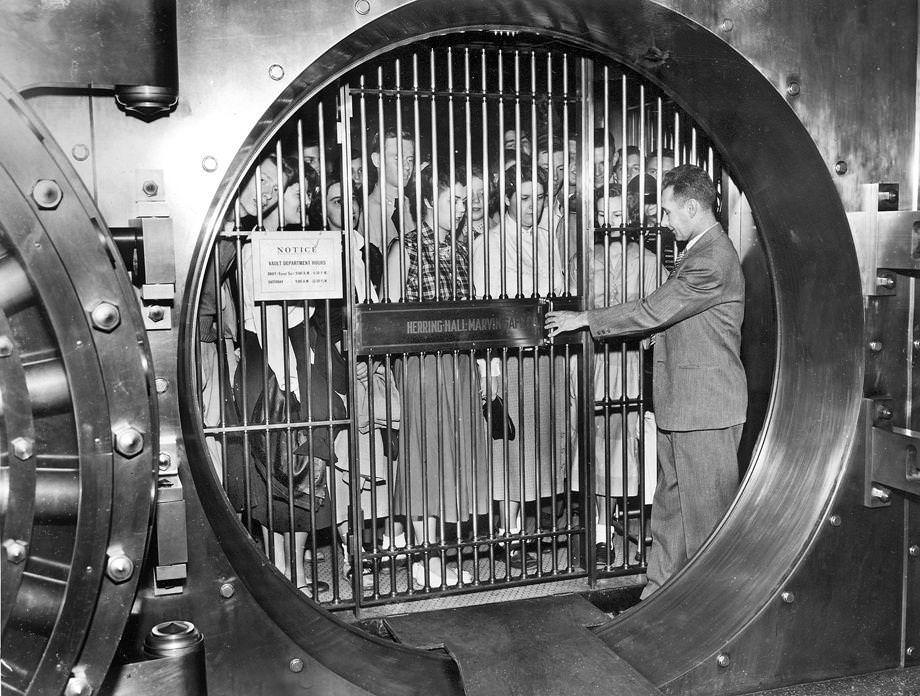
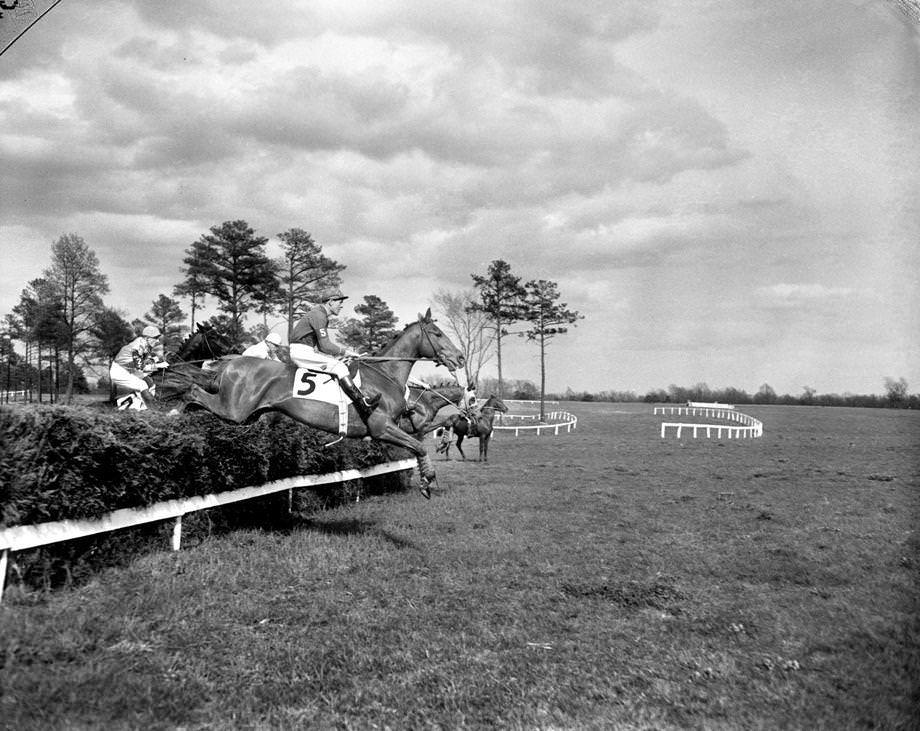
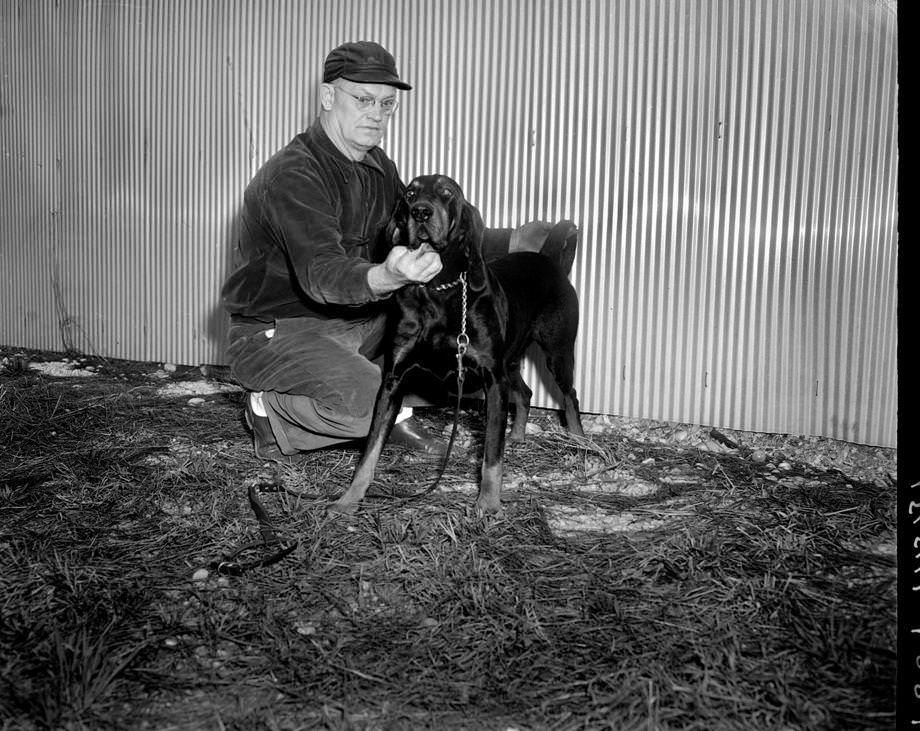
New policewoman Martha S. Jackson placed one of her first tickets on an illegally parked car, 1952.Know-Your-Bank Week activities in Richmond included behind-the-scenes tours for bank customers and school students, 1952.The Deep Run races were held at the Atlantic Rural Exposition fairgrounds, now known as the Richmond Raceway Complex, 1951.W.H. Childress’ coonhound won best of breed at the Virginia Kennel Club’s 17th annual dog show at the Atlantic Rural Exposition fairgrounds, 1951.The Cary Street resurfacing project was approaching completion, 1950.
Richmond had its share of unusual stories. At Retreat for the Sick Hospital on Grove Avenue, a persimmon tree growing in the back had a peculiar origin. Around 1922, a 6-year-old boy from Powhatan County ate so many persimmons that he developed a serious stomachache and was brought in for treatment. Doctors removed about a pint of seeds from his stomach — and then planted one. The resulting tree was still growing in 1951.
The “Tummyache” persimmon tree in the back of Retreat for the Sick Hospital at Grove Avenue and Mulberry Street in Richmond, 1951.St. Andrew’s School in Richmond’s Oregon Hill area. Noted philanthropist Grace Arents founded the school in 1894 and was a key supporter of St. Andrew’s Episcopal Church, 1951.
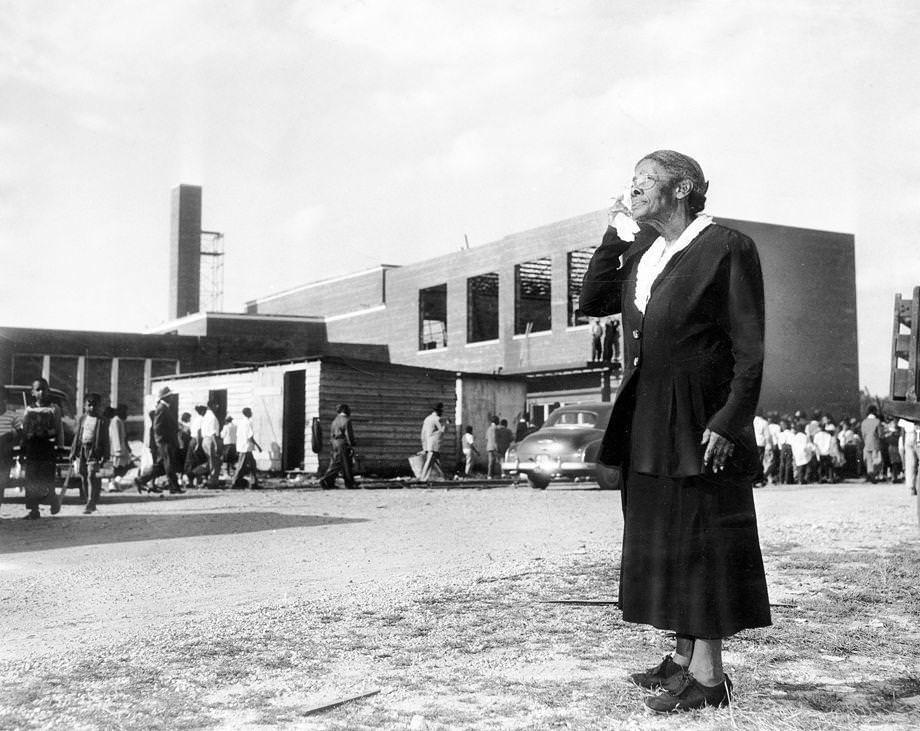
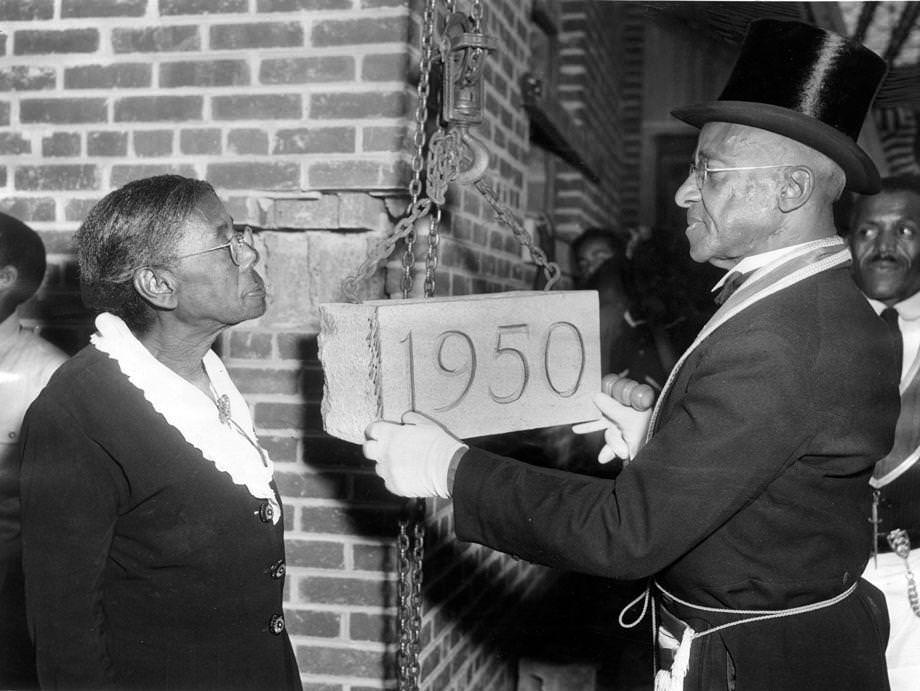
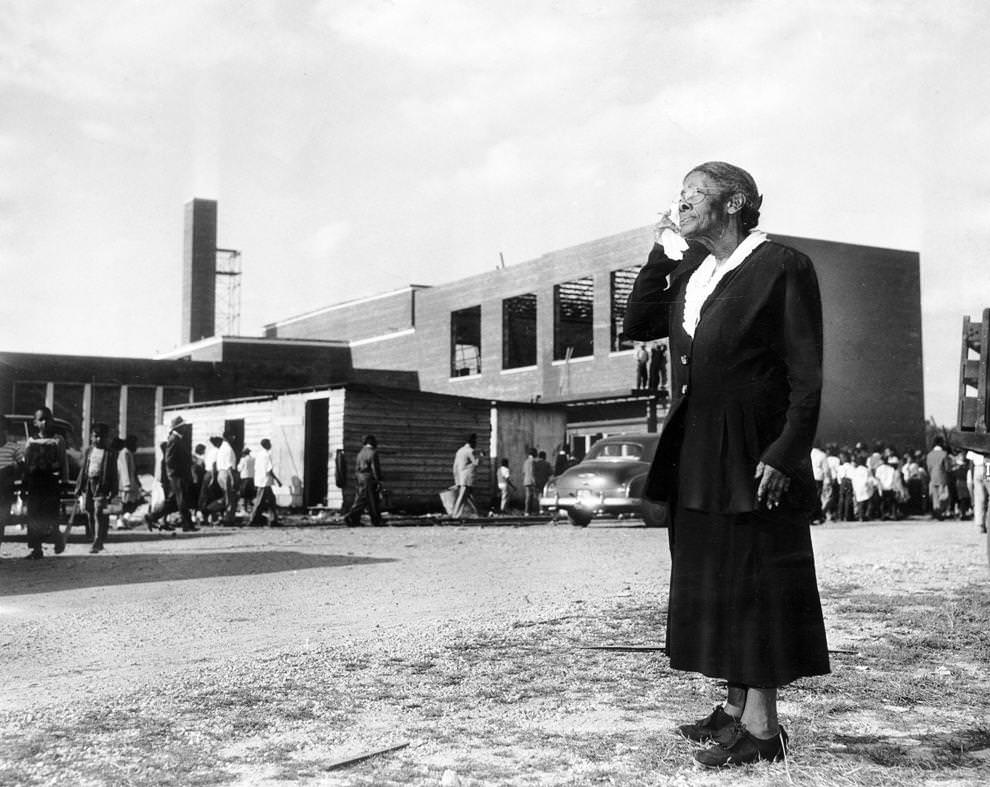
Virginia Randolph, who started a one-room school in Glen Allen in 1892 and built it into a model for vocational education for Black students across Virginia, attended the cornerstone-laying ceremony for a major $262,000 addition to the school that bore her name. She had retired in 1949 at age 79 and died in 1958.
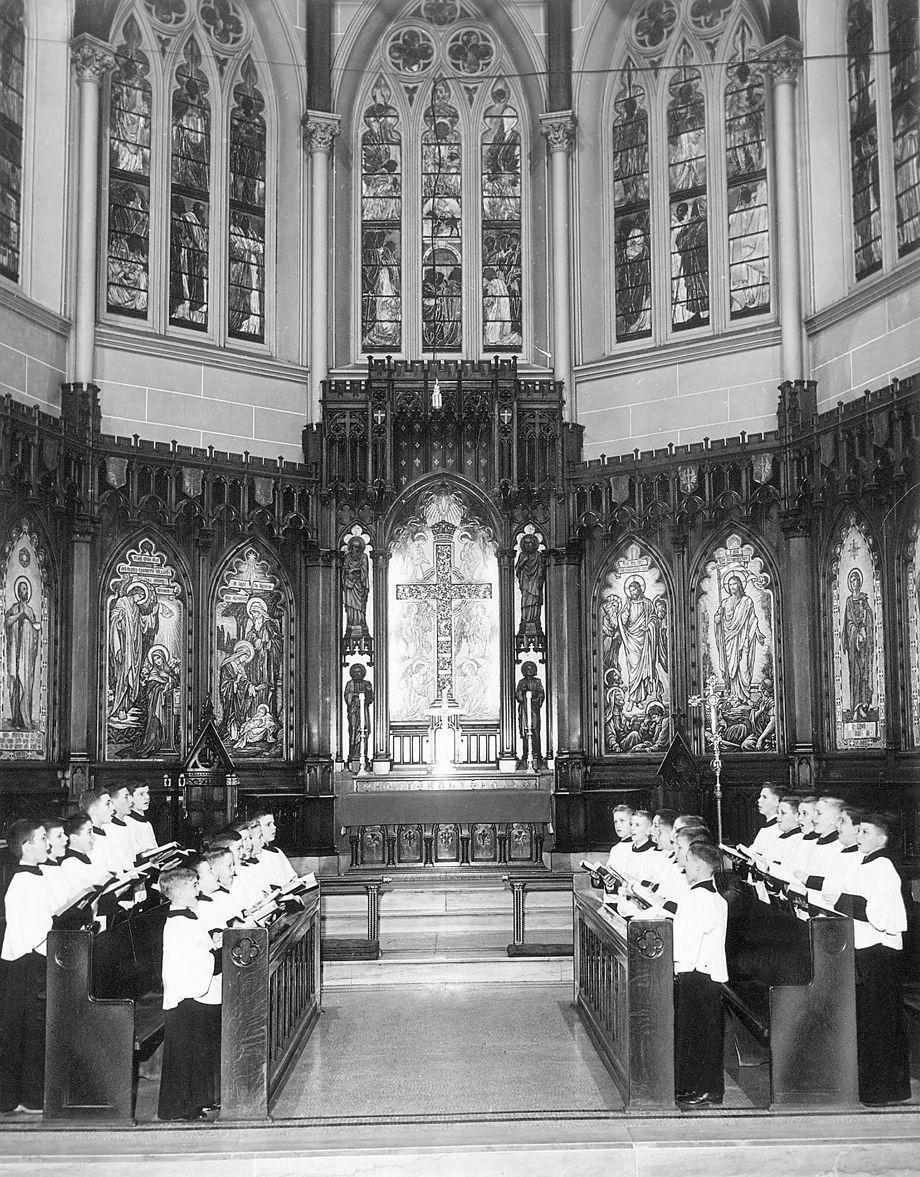
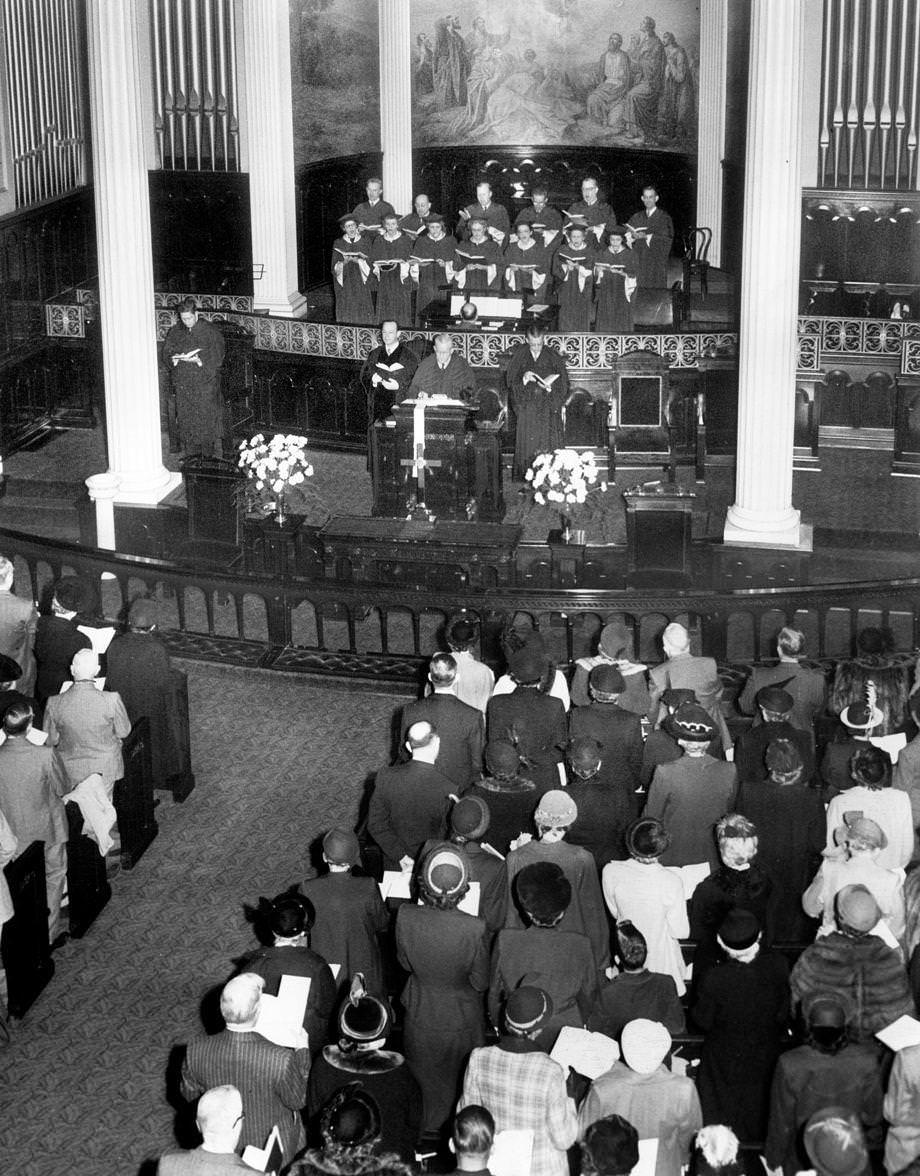
Virginia Randolph attended the cornerstone-laying ceremony for a $262,000 addition to the former one-room schoolhouse in Glen Allen that she started in 1892 and that was named for her.The boys choir sang in All Saints Episcopal Church, which was then on West Franklin Street, 1954.The Chesapeake and Ohio Railway ran its first diesel-powered locomotives through Richmond on two of its passenger trains, 1951.
Richmond’s identity as a tobacco city was visible everywhere. Along Dock Street, a row of brick factory buildings from the late 1800s and early 1900s housed some of the country’s largest cigarette manufacturers. The American Tobacco Company and Reynolds Metals were among the biggest employers in the region, and Tobacco Row was the physical center of that industry.
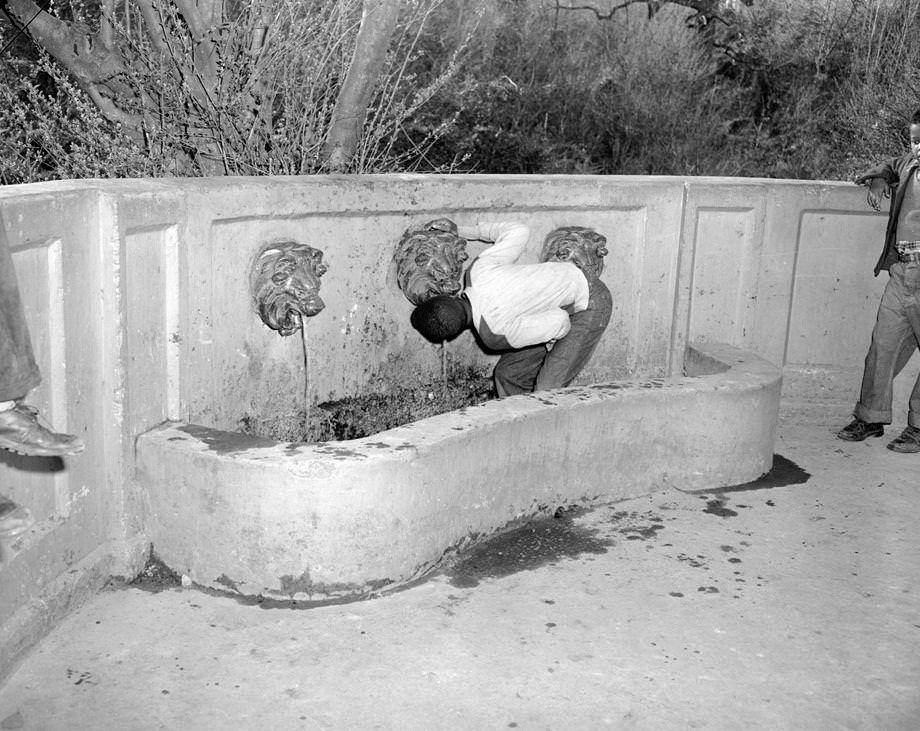
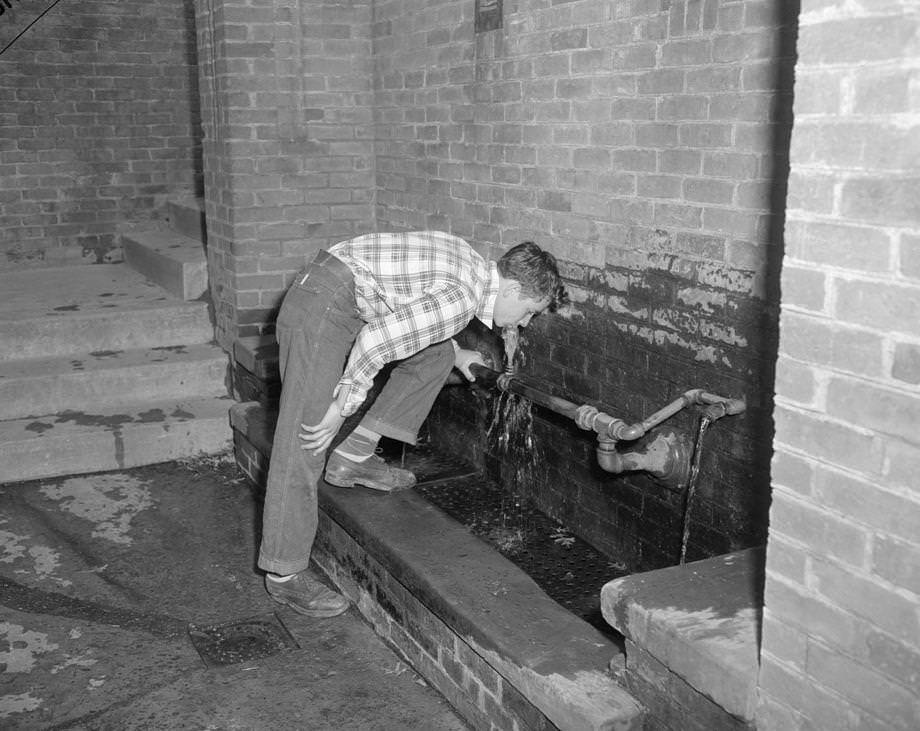
Tobacco Row at Dock Street, where many cigarette manufacturers were located, 1956.Some children took a rest and got a drink from a fountain in North Richmond located along the Richmond Henrico Turnpike, 1950.
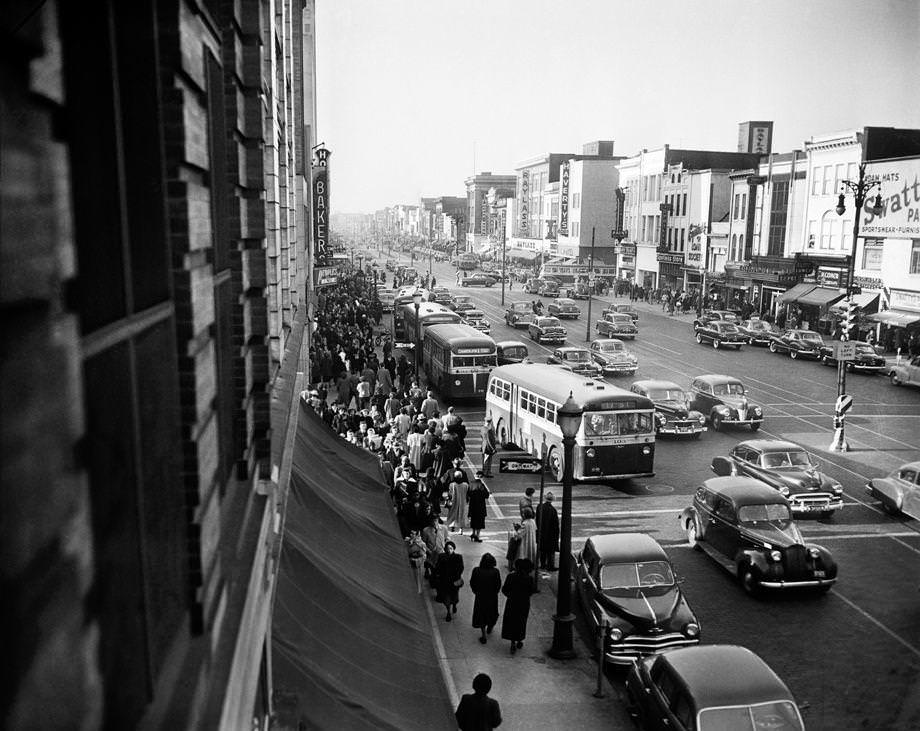
Holiday shopping transformed East Broad Street each December. Stores like Baker’s, Haverty’s Furniture, and Raylass Department Store drew enormous crowds, and the sidewalks outside were packed from morning until closing time.
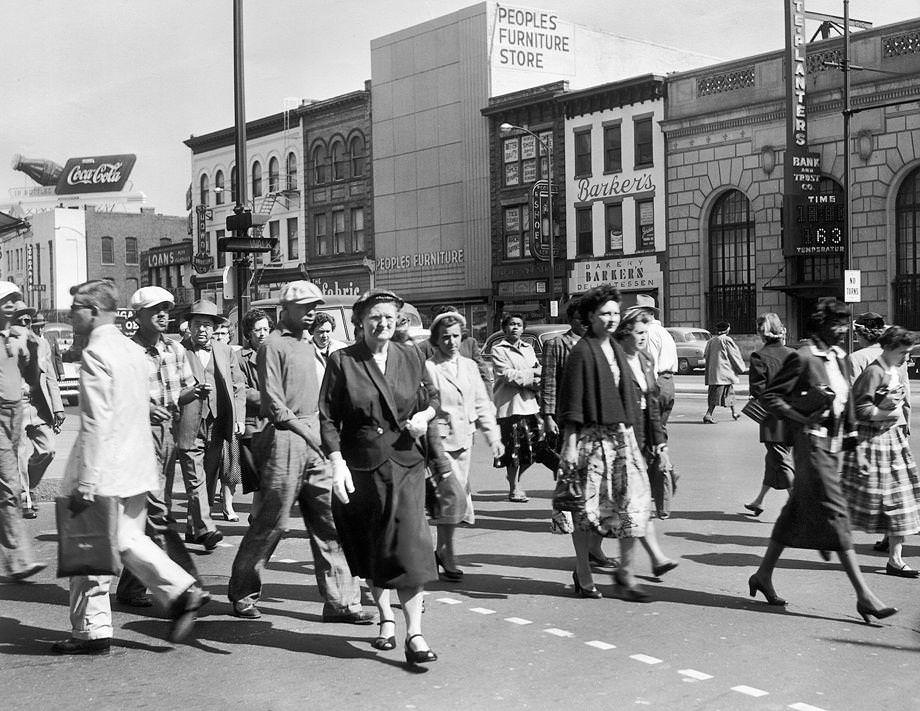
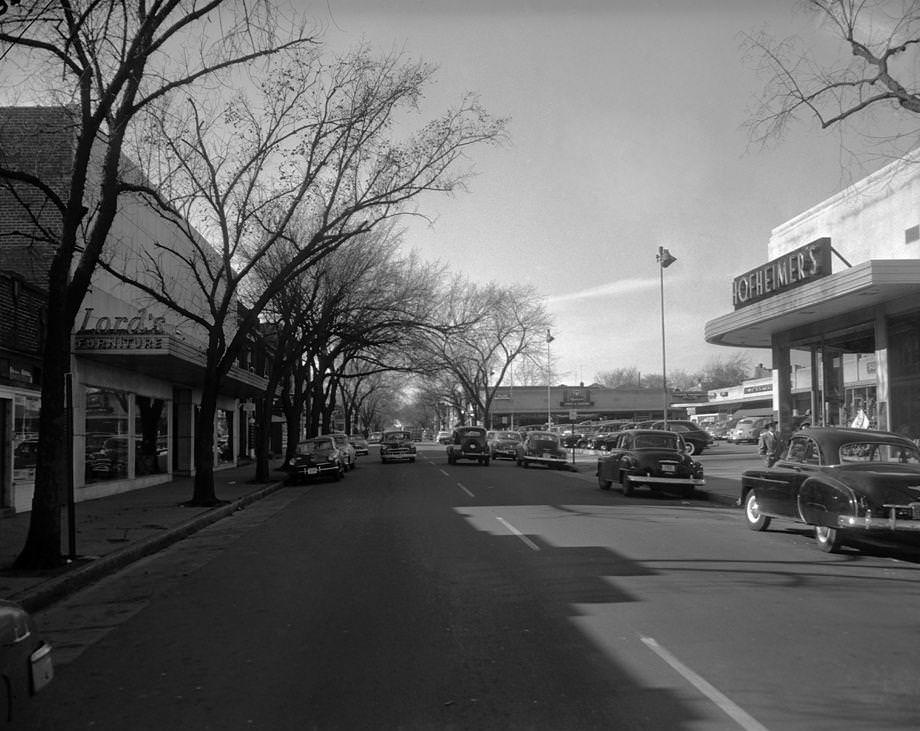
East Broad Street at Fifth Street in downtown Richmond shows crowds of holiday shoppers visiting such stores as Baker’s, Peoples Drug, Swatty’s Pants, Haverty’s Furniture and Raylass Department Store, 1950.The 3100 block of West Cary Street shows Lord’s Furniture and Hofheimer’s shoe store, 1951.Richmond celebrated Park and Recreation Week with a series of events, including an art carnival, puppet shows and concerts, 1950.
The Korean War cast a shadow over the early part of the decade. The Office of Price Stabilization posted regulations at department stores like Thalhimers to curb price gouging spurred by wartime demand. The office was eventually shut down in April 1953 after the conflict wound down.
Office of Price Stabilization regulations were posted at the Thalhimers department store, 1951.
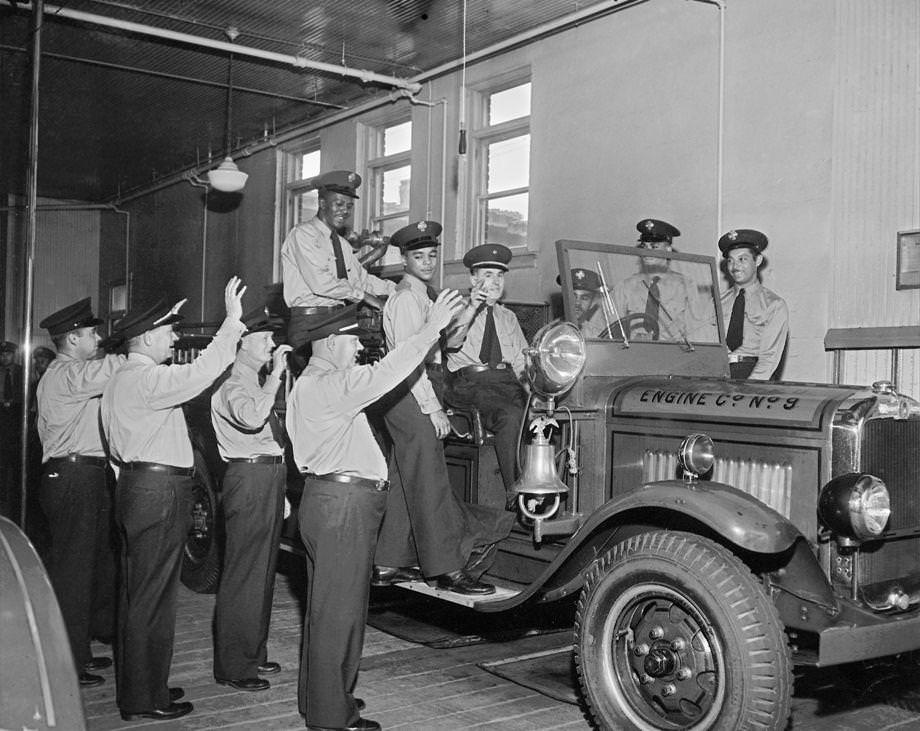
One of the most significant civil rights milestones in Richmond’s fire department occurred during this decade, when the city’s first Black firefighting unit took charge of Engine Co. 9 at Fifth and Duval streets. The white members who had previously staffed the station were transferred out.
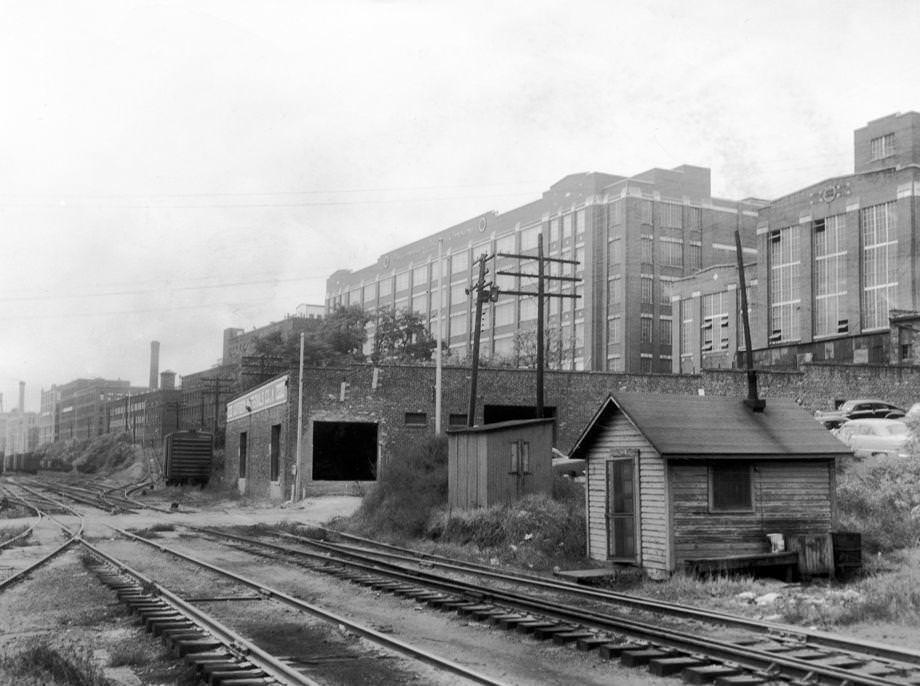
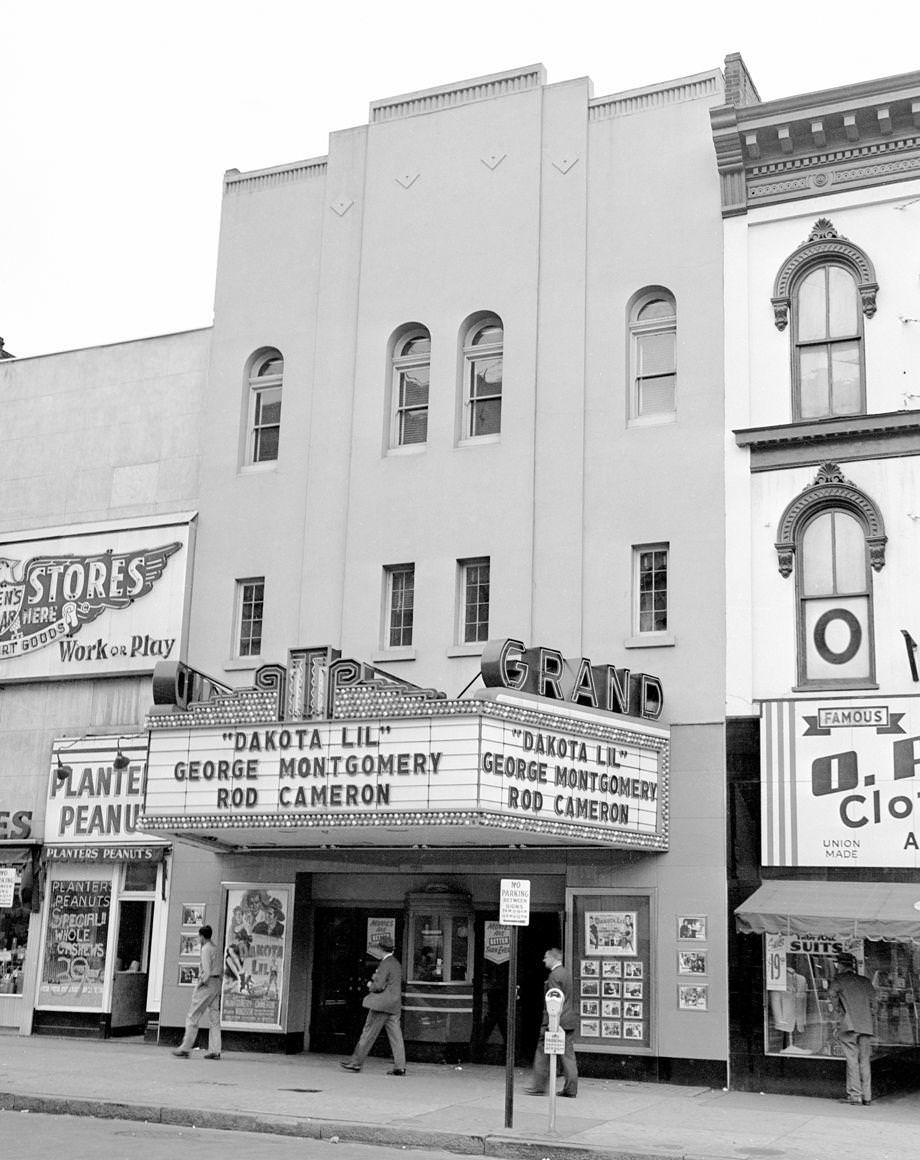
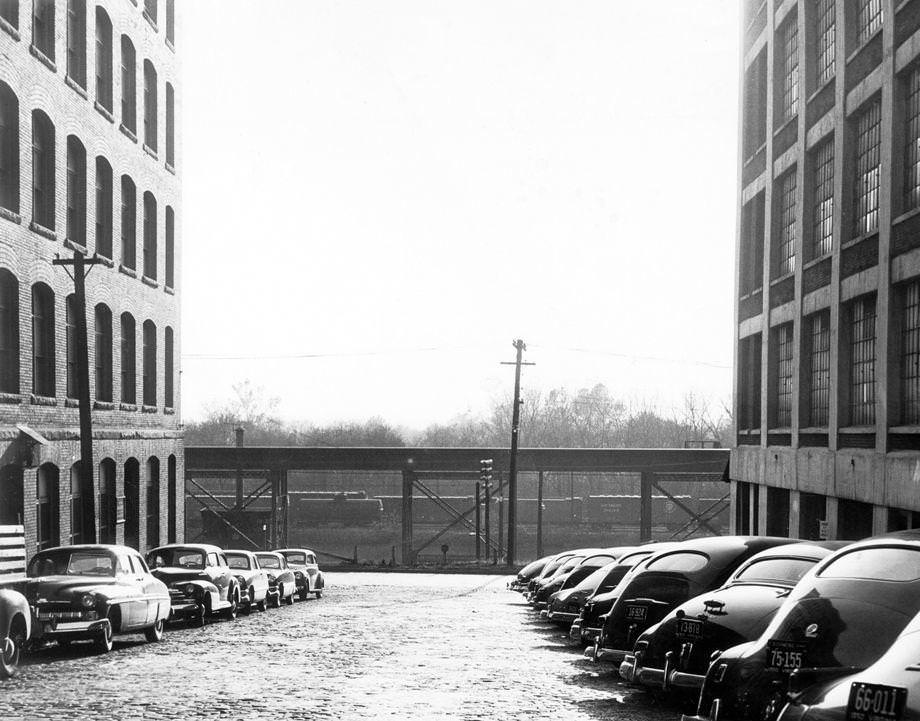
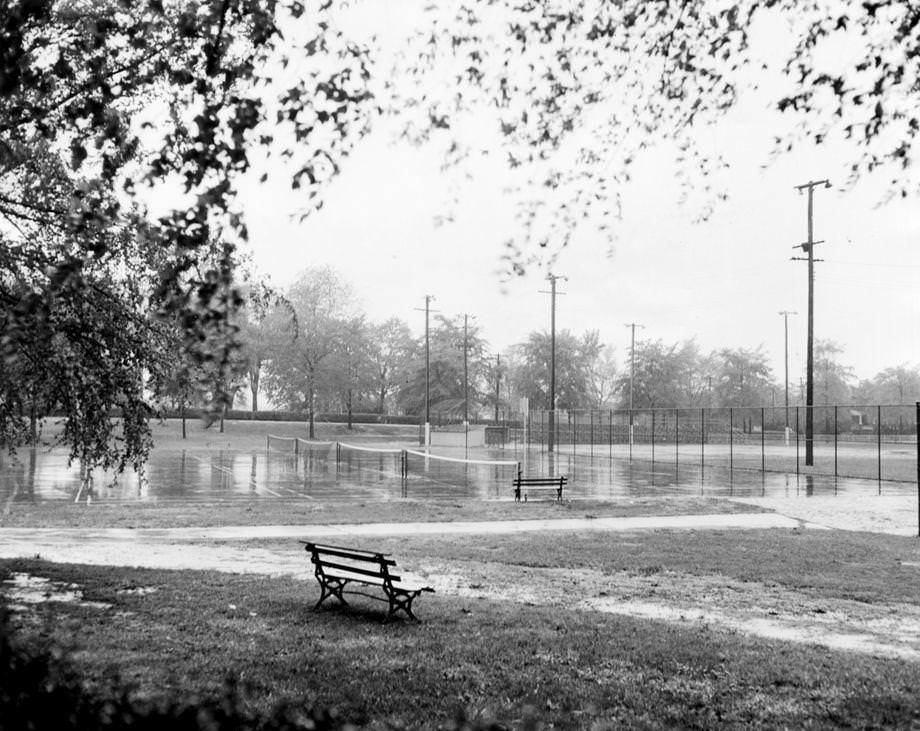
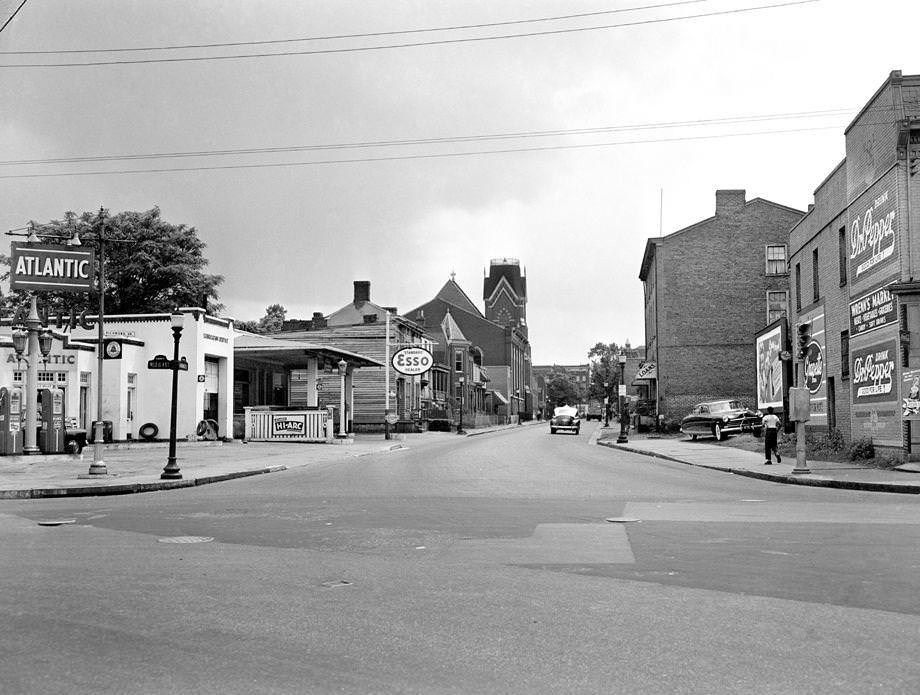
Richmond’s first black firefighting unit took charge of Engine Co. 9 at Fifth and Duval streets. Capt. J.G. Forristal, seated beside the driver, remained head of the station, and white members who waved to their colleagues were transferred.Grand Theatre at 620 E. Broad St. The theater opened in 1917 as the Bluebird, and in 1933, it reopened as the Grand, specializing in grindhouse and B movies, 1950.City Council was set to consider a request to abandon the stretch of 23rd Street between Cary and Dock streets, partially occupied by the railroad tracks seen in the distance, 1950.No players were in sight at the Byrd Park tennis courts, 1950.Adams Street at West Leigh Street, 1950.
Just days after hosting a multifaith Thanksgiving service in 1950, Monument Methodist Church at Allen and Park avenues was devastated by a five-alarm fire — a dramatic turn that upended the congregation and ultimately led to its merger with another church the following year.
A multifaith Thanksgiving service was held at Monument Methodist Church, located at Allen and Park avenues in Richmond, 1950.
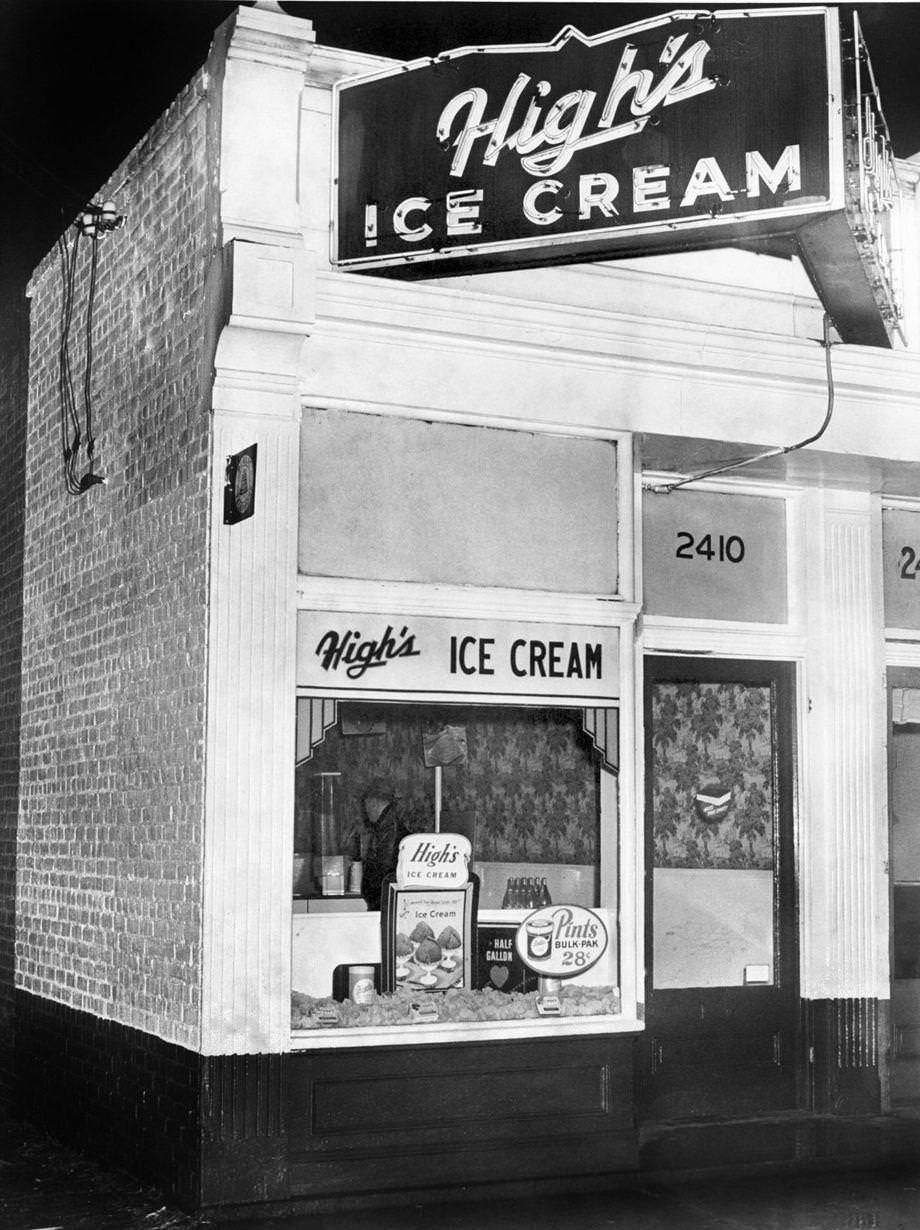
The High’s Ice Cream store at 2410 E. Broad St. High’s operated a number of stores in Richmond and had a plant on West Broad Street – its opening-day special in 1932 was buy one Big Cone for 5 cents, get the second free, 1952.
Virginia Randolph’s cornerstone ceremony drew community leaders together to honor a woman whose educational work for Black students had spanned more than half a century.
Virginia Randolph helped S.O. Spriggs, worshipful master of East End Lodge 233, A.F. & A.M., lay the cornerstone at a ceremony for a $262,000 addition to the former one-room schoolhouse in Glen Allen that Randolph started in 1892 and that was named for her.
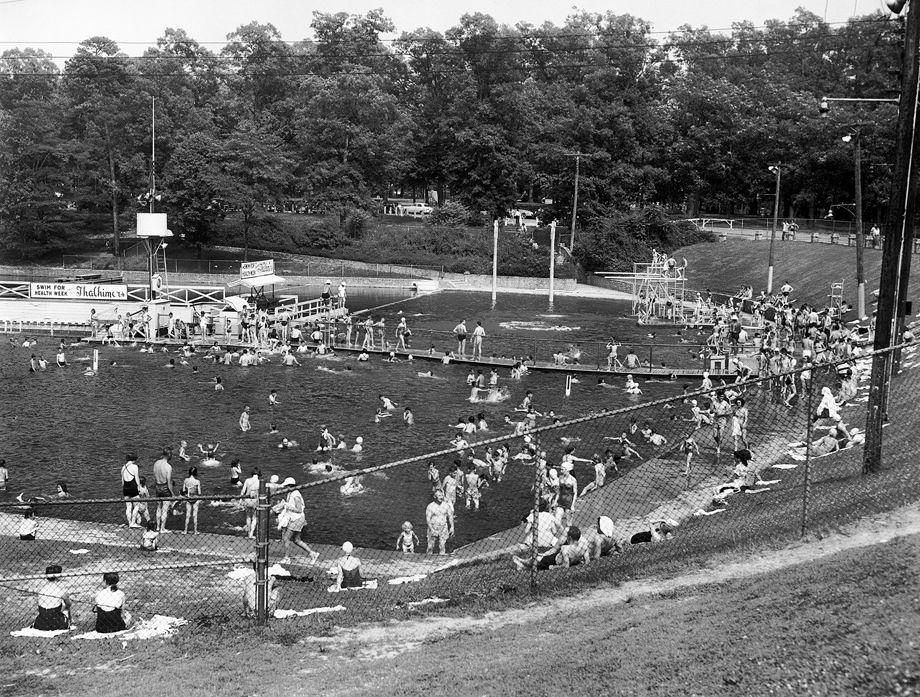
Segregation shaped nearly every aspect of public life in Richmond. Shields Lake in Byrd Park was a whites-only public swimming facility that broke attendance records during the sweltering summer of 1951. The facility was closed in 1955. City officials cited the cost of repairs as the reason, not the mounting legal pressure against segregated public facilities.
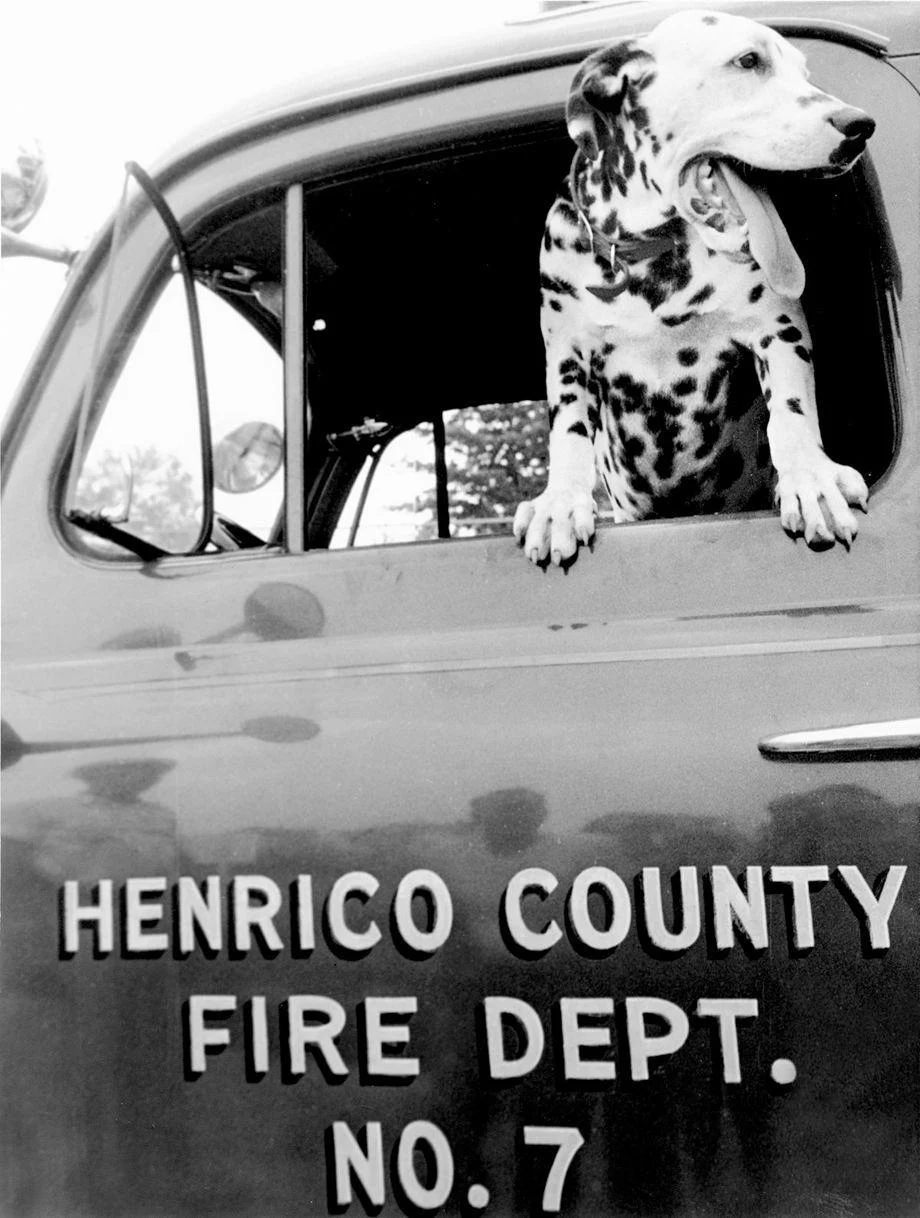
Amid high temperatures and humidity, Shields Lake in Byrd Park and other pools in Richmond were setting attendance records, 1951.Newt, the fire dog at the Henrico County Fire Department’s Station No. 7. The station was formed in 1948 as the Glenwood Farms Fire Department, serving the Mechanicsville Turnpike area, 1954.
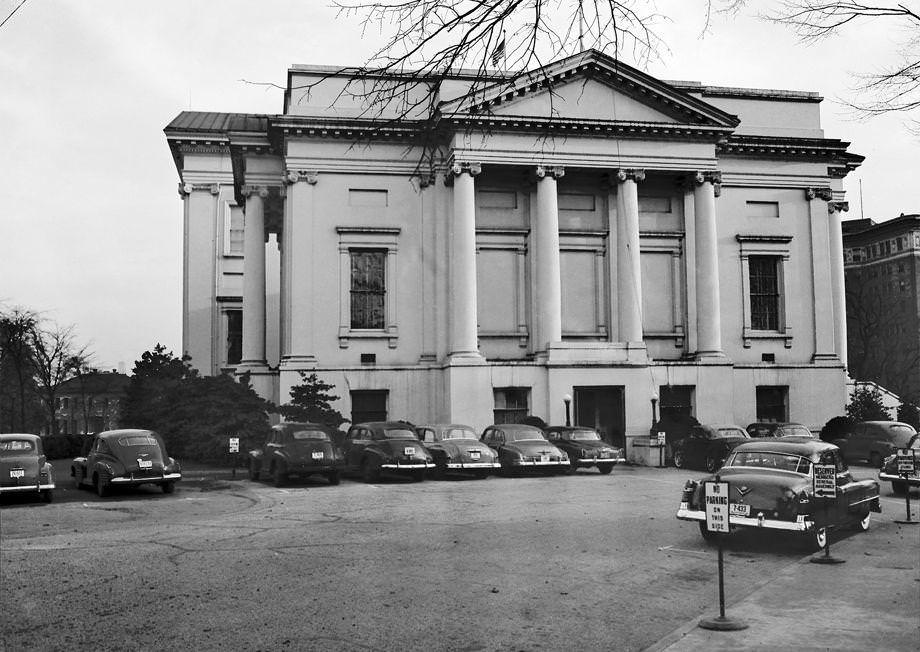
Government in Richmond was always weighing the cost of expansion. A 1951 proposal to add wings to the state Capitol at a cost of $875,000 was considered — and ultimately rejected.
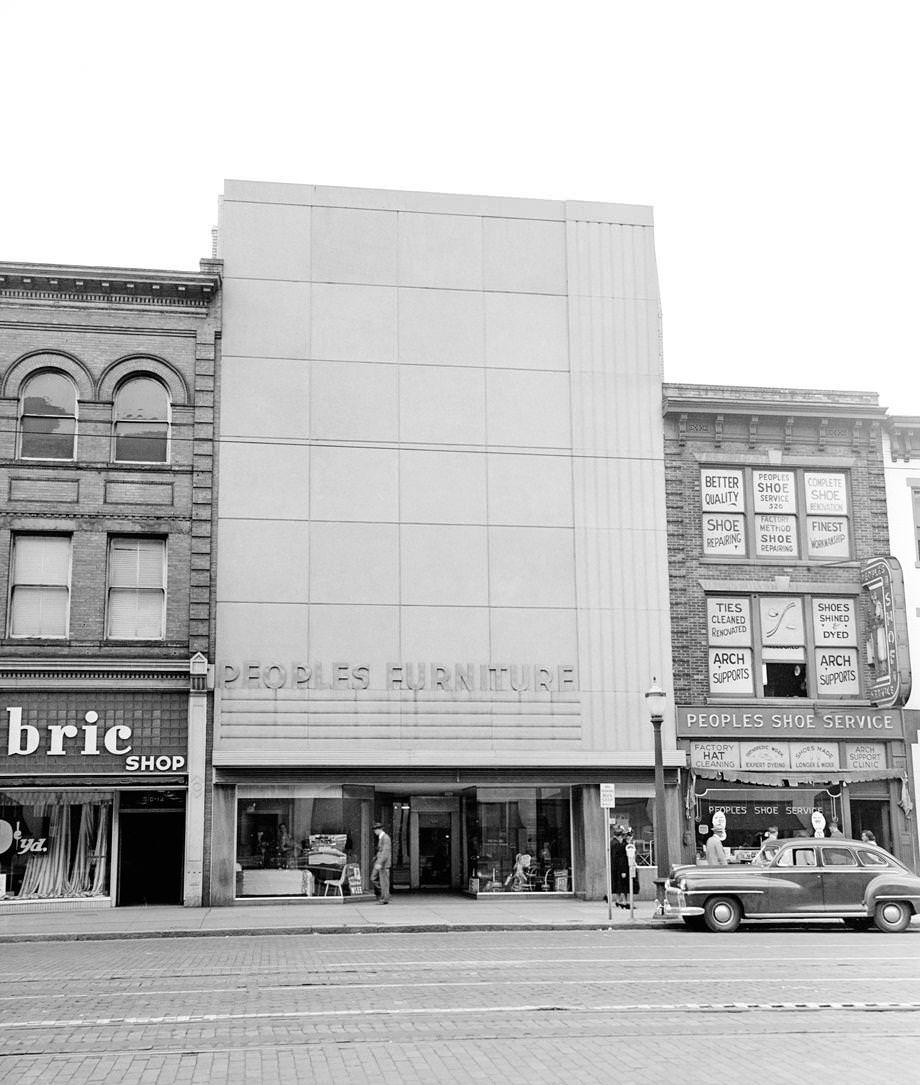
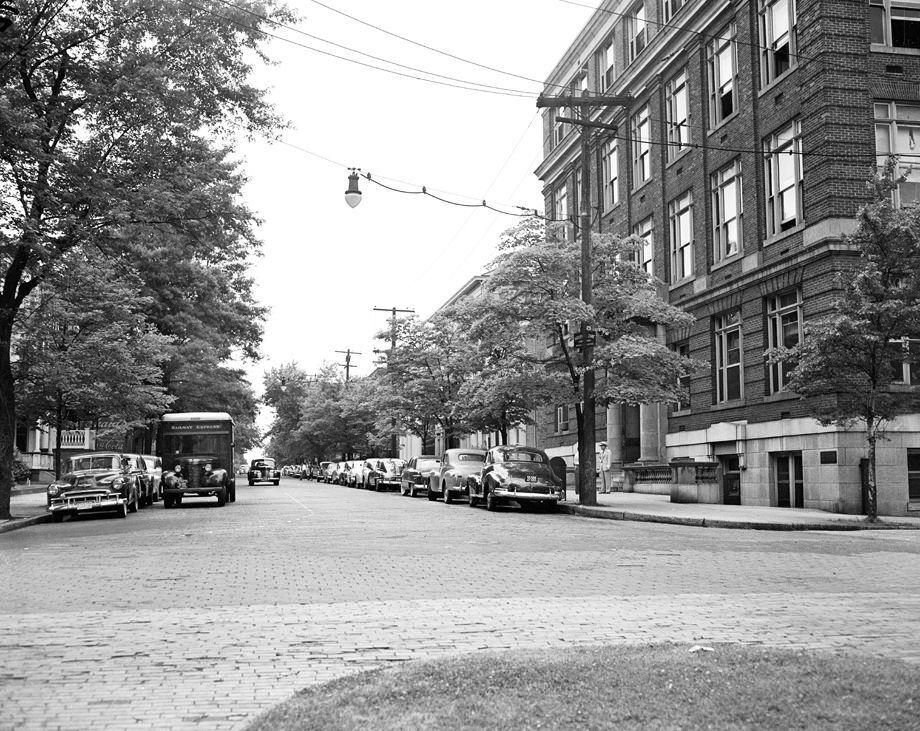
The state Capitol’s west wing, which was added in the early 20th century.Peoples Furniture Store at 514 E. Broad St., where the summer furniture sale included a chaise lounge with mattress for $18.95, 1950.McGuire Hall at 12th and Clay streets in downtown Richmond, 1950.Part of the Bellona Arsenal property in Chesterfield County, 1950.A visitor drinking the natural spring water from a fountain at South Richmond’s Fonticello Park, also known as Carter Jones Park, 1950.
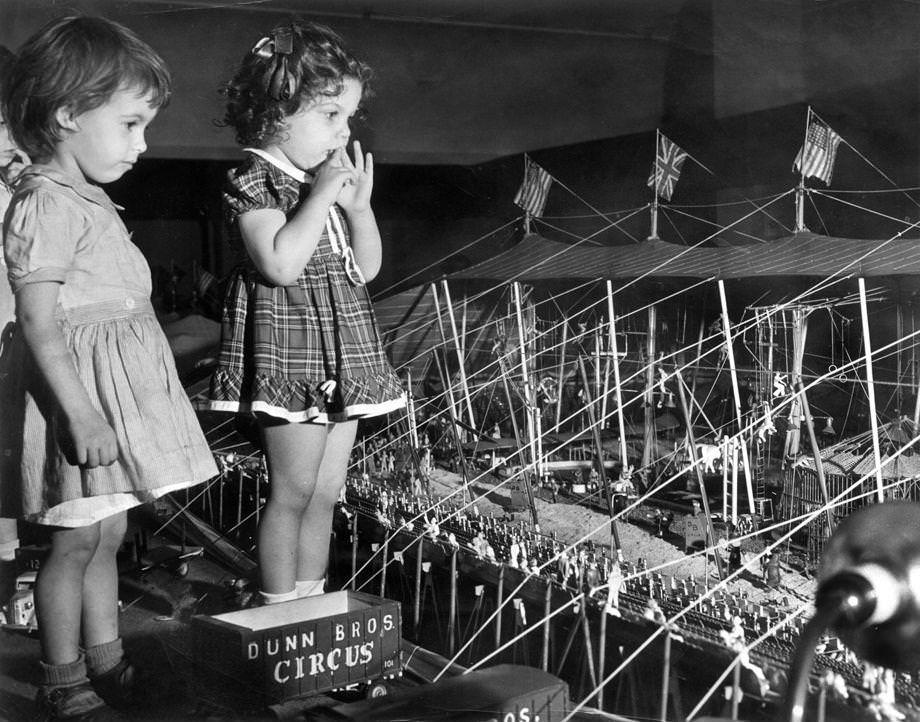
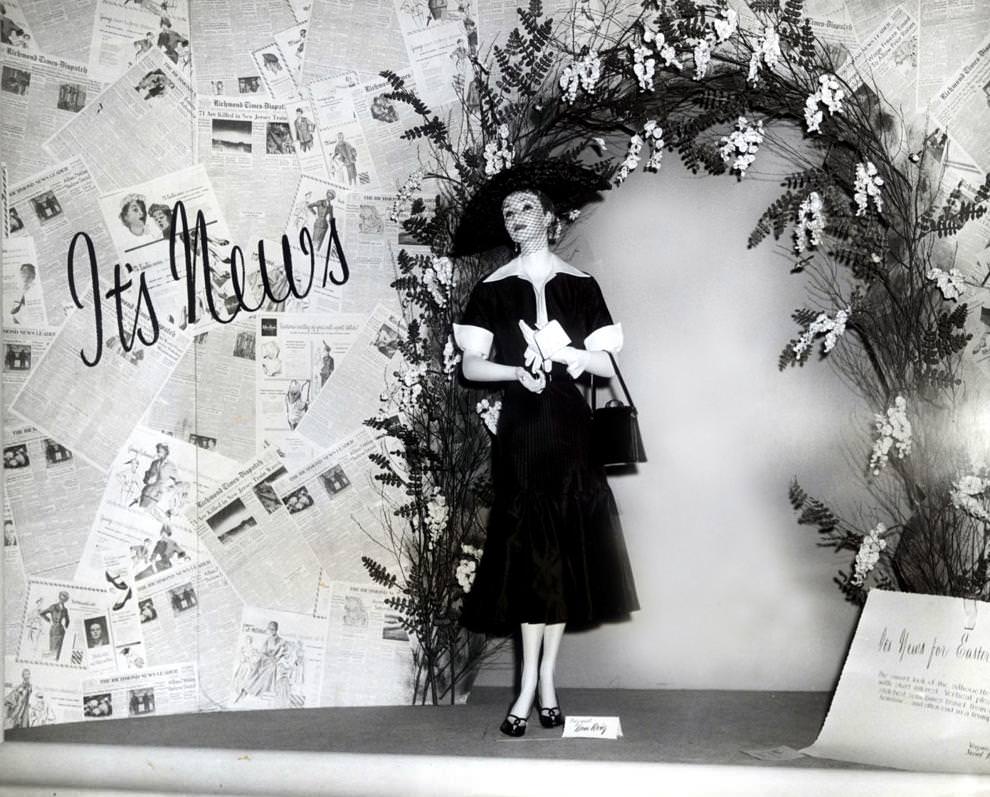
Miller & Rhoads on Grace Street was one of Richmond’s premier department stores. In 1950, its Grace Street windows were dressed with elaborate displays timed to Easter and spring — an annual tradition overseen by Addison Lewis, who directed window displays at the store for 52 years.
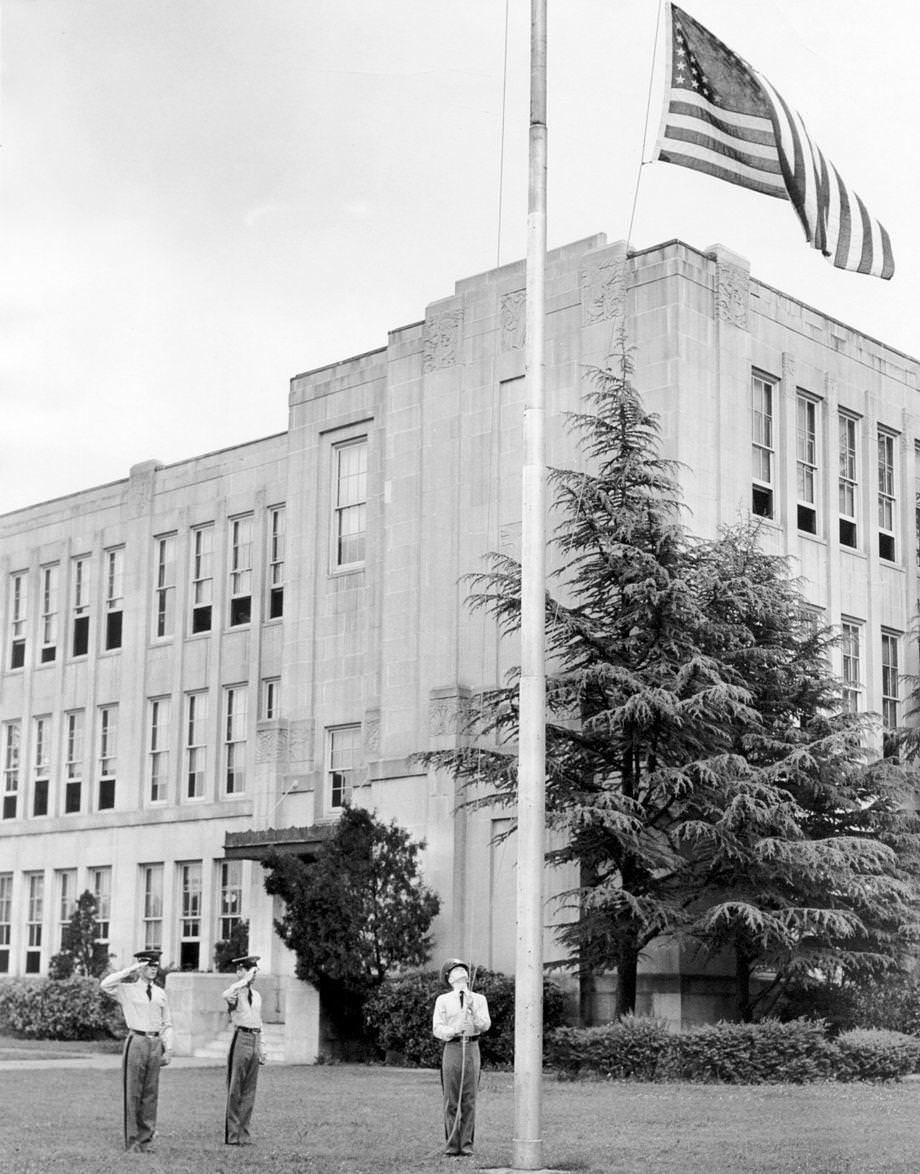
Two girls from the Belle Bryan Day Nursery visited Miller & Rhoads in downtown Richmond to see the Dunn Bros. miniature circus – “the biggest little show on Earth,” as it proclaimed itself, 1950.Three members of the Thomas Jefferson High School cadet corps completed their daily flag ritual, 1950.
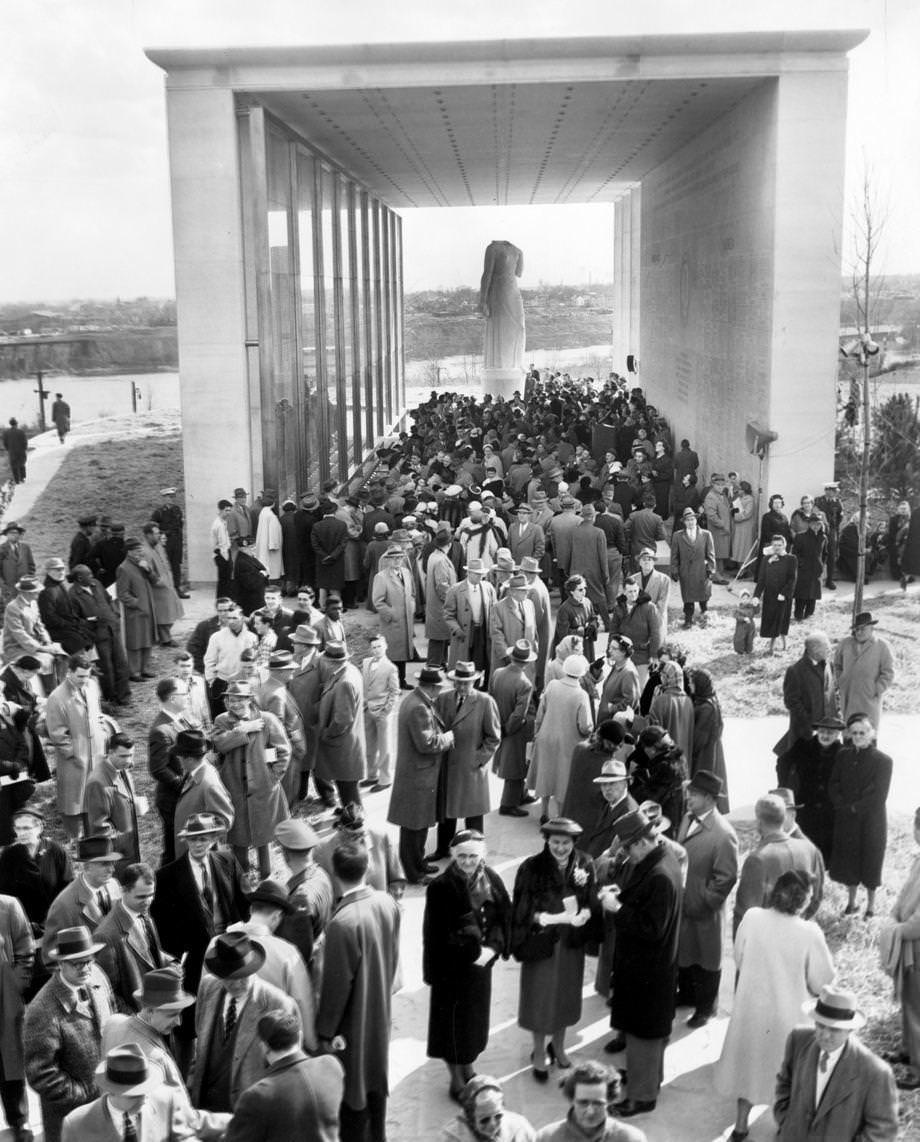
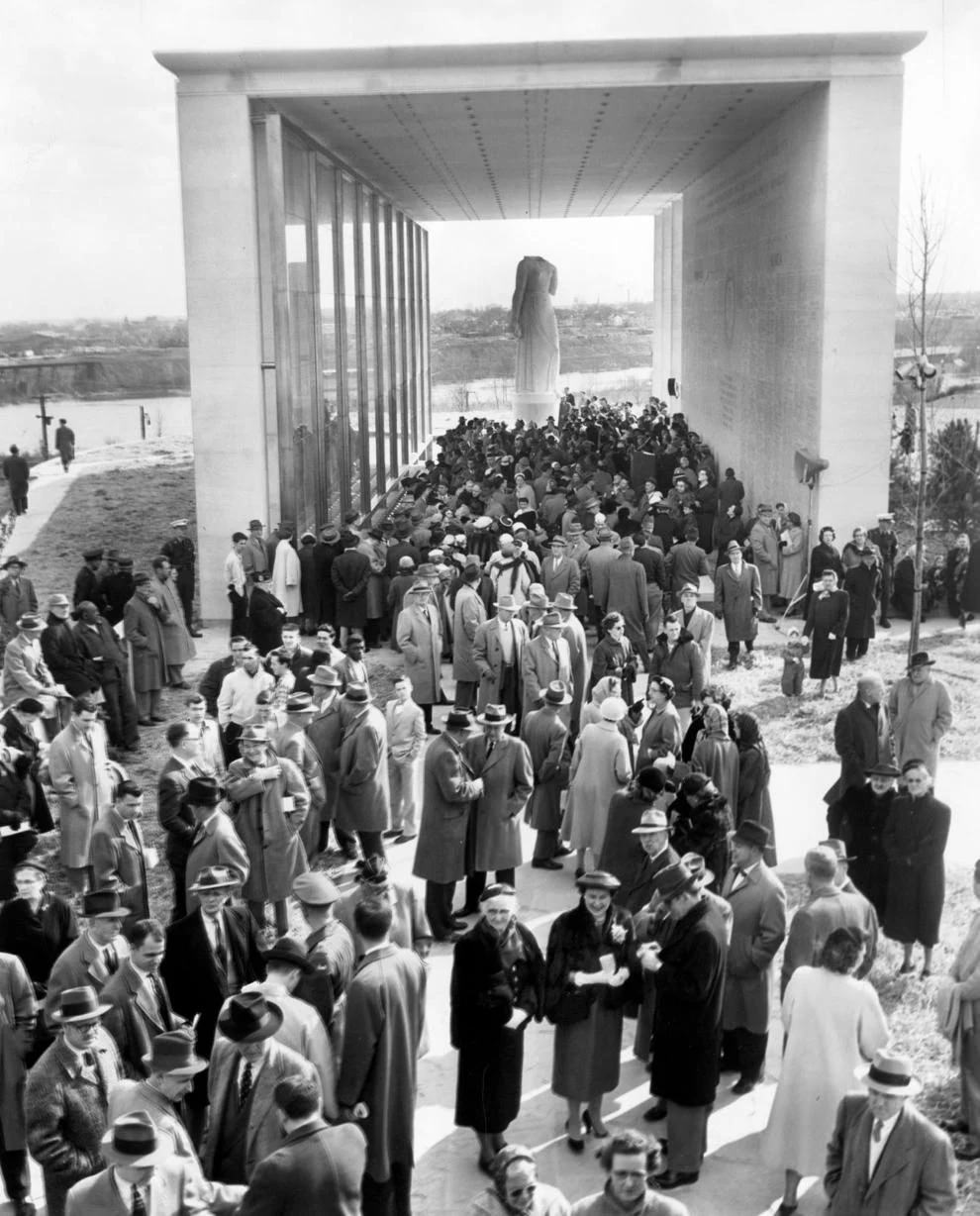
The Virginia War Memorial was dedicated in 1956, though its central statue — a figure called “Memory” — was still unfinished at the time. Getting the statue’s head into place was a six-hour ordeal, with only two feet of clearance between the ceiling and the top of the head.
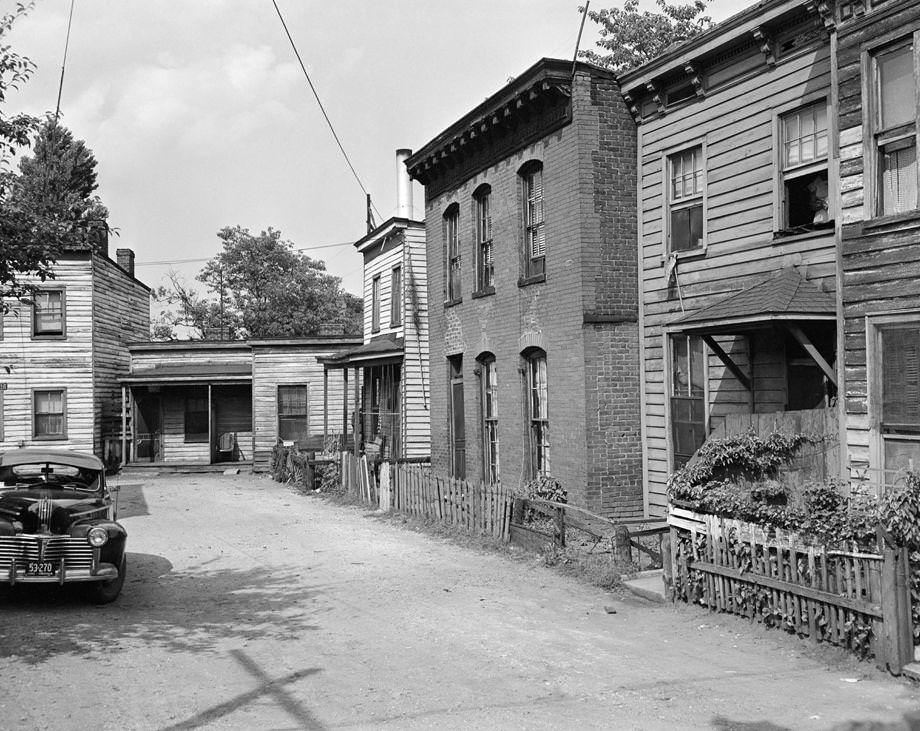
The Virginia War Memorial was dedicated despite the statue “Memory” still being unfinished, 1956.The area at the intersection of Axtell and Jesse streets in downtown Richmond, 1950.
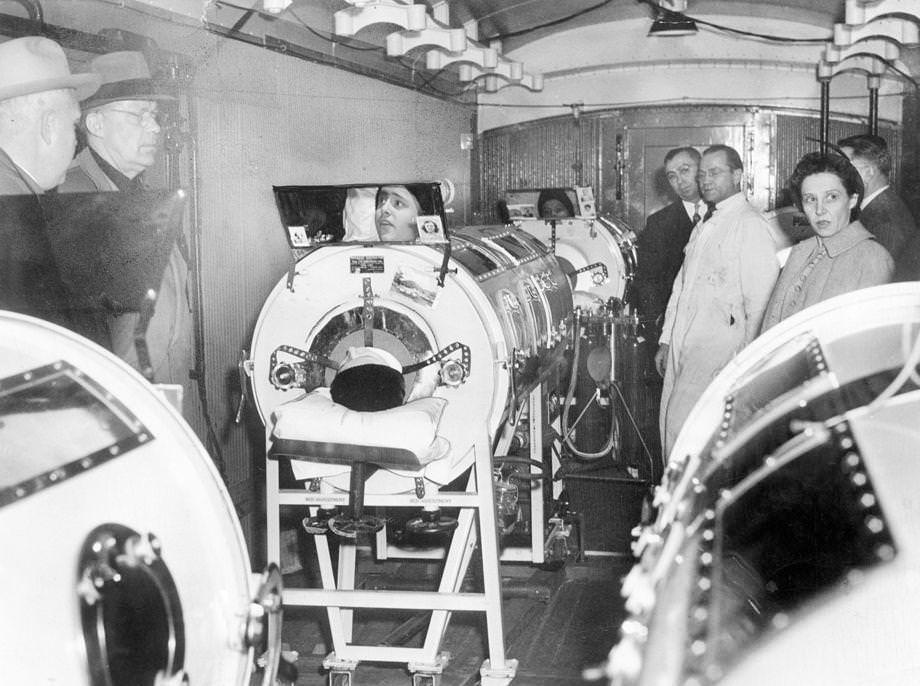
Medical transport in the early 1950s presented serious challenges. In 1951, three polio patients dependent on iron lungs were moved by truck and train from Roanoke to Richmond’s Medical College of Virginia Hospital for long-term treatment. The journey lasted 10½ hours. Extra iron lungs were kept on hand throughout the trip as a precaution, and the transfer was completed without incident.
Three young polio patients in iron lungs were transported by truck and train from Roanoke to Richmond, where they could undergo long-range treatment at the Medical College of Virginia Hospital, 1951.
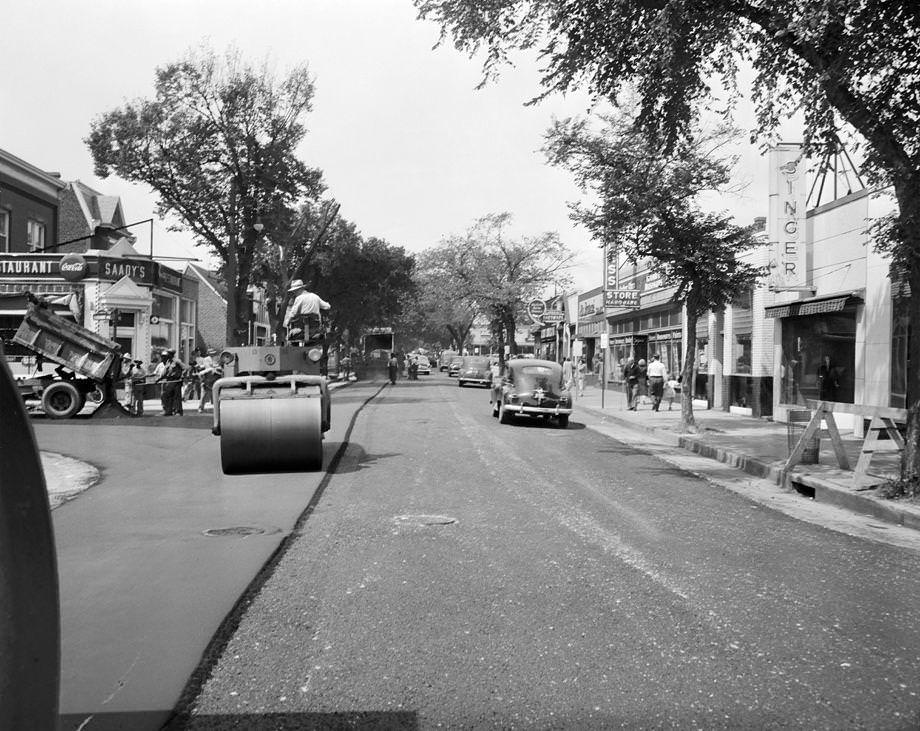
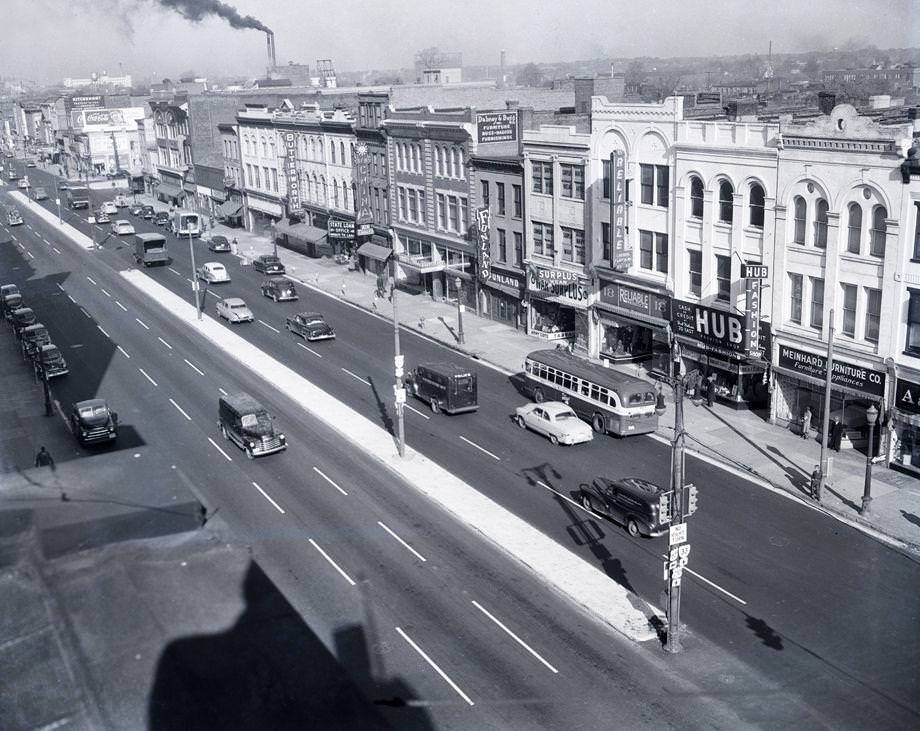
The removal of Richmond’s streetcar tracks from Broad Street in 1951 was a significant moment in the city’s physical transformation. Along with resurfacing the road, the project added a concrete center strip, updated traffic signals, and installed the new “walk/don’t walk” signs that were becoming standard across American cities.
Work to improve the 100 block of Broad Street, looking west from First Street, was completed, 1951.Temperatures reached into the mid-80s, and people around the area found ways to enjoy the unseasonably warm weather, 1952.
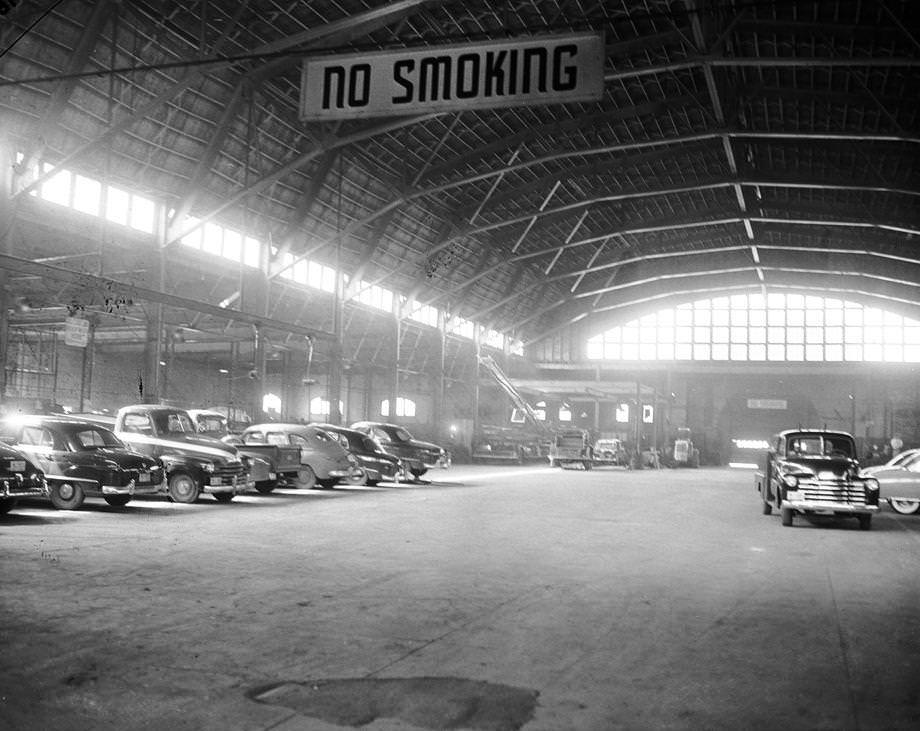
The City Garage at the old fairgrounds near Parker Field was one of Richmond’s more versatile buildings. It opened in 1908 and had served at various points as an administration building, an Army induction center, and an Army motor pool. By 1951, it housed the city’s vehicle fleet. In 1954, the building was converted into The Arena, which went on to host sporting events, concerts, and exhibitions for more than 40 years.
The interior of the City Garage at the old fairgrounds property near Parker Field, 1951.
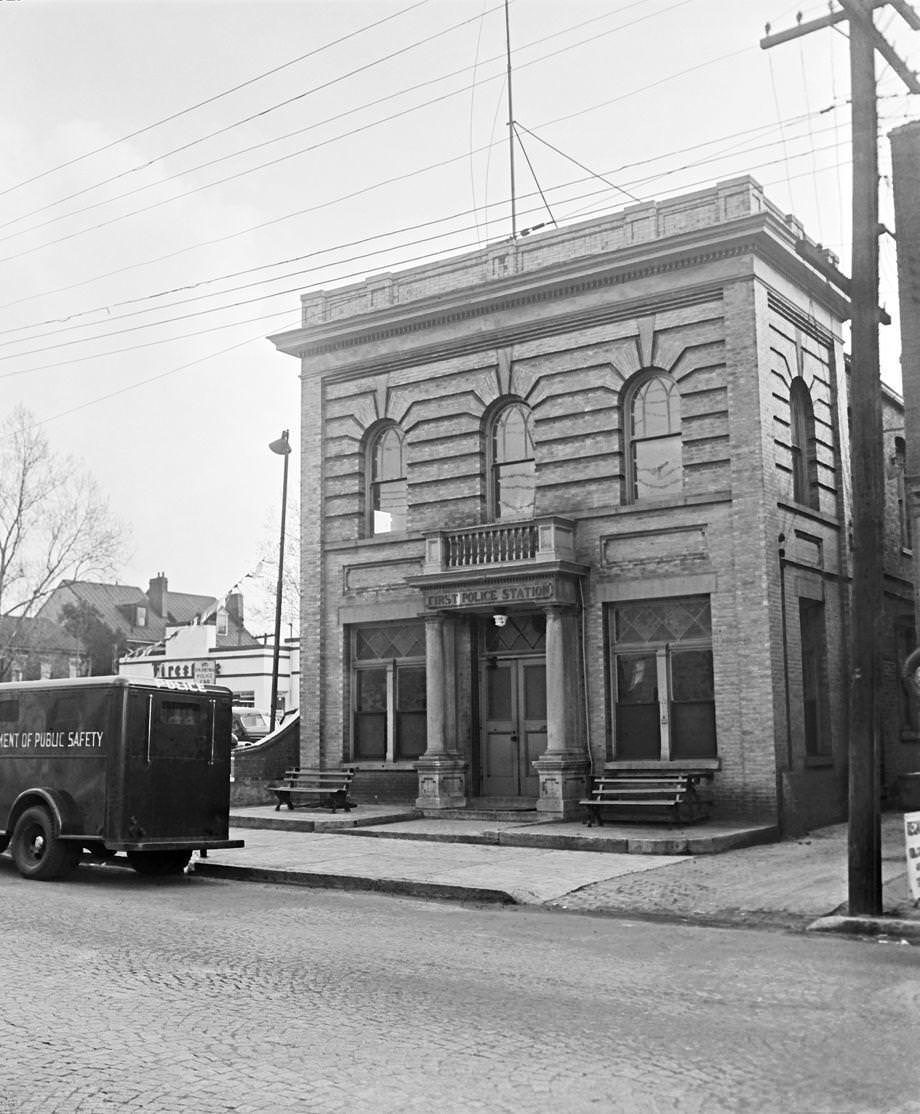
The 1st Precinct police station at 17th and East Broad streets faced an uncertain future after the decision to consolidate it with the 2nd Precinct station on Marshall Street, 1951.
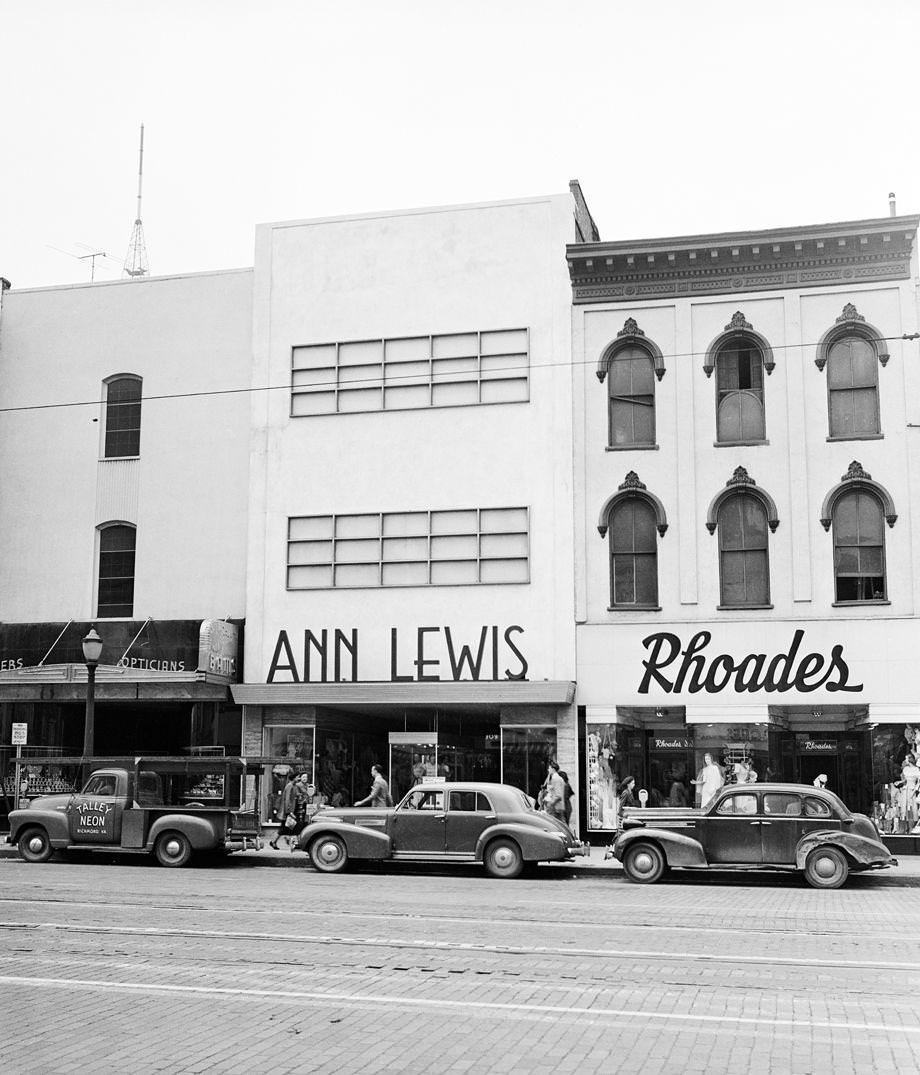
The Ann Lewis women’s clothing store at 309 E. Broad St. in downtown Richmond, 1951. That year, fall suits were on sale for $11, and dresses for only $5.44.
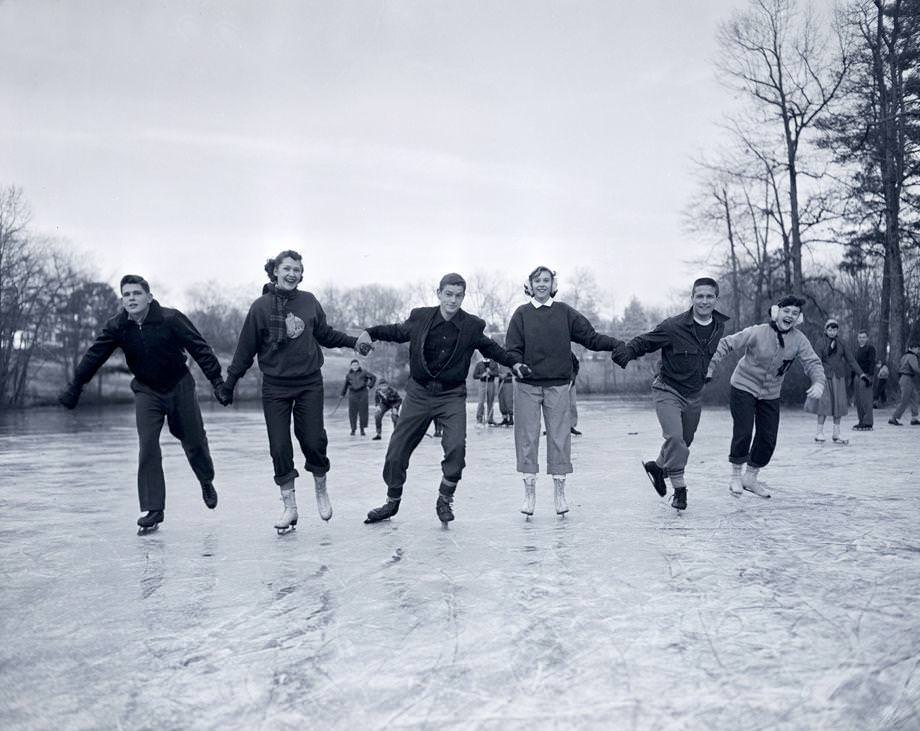
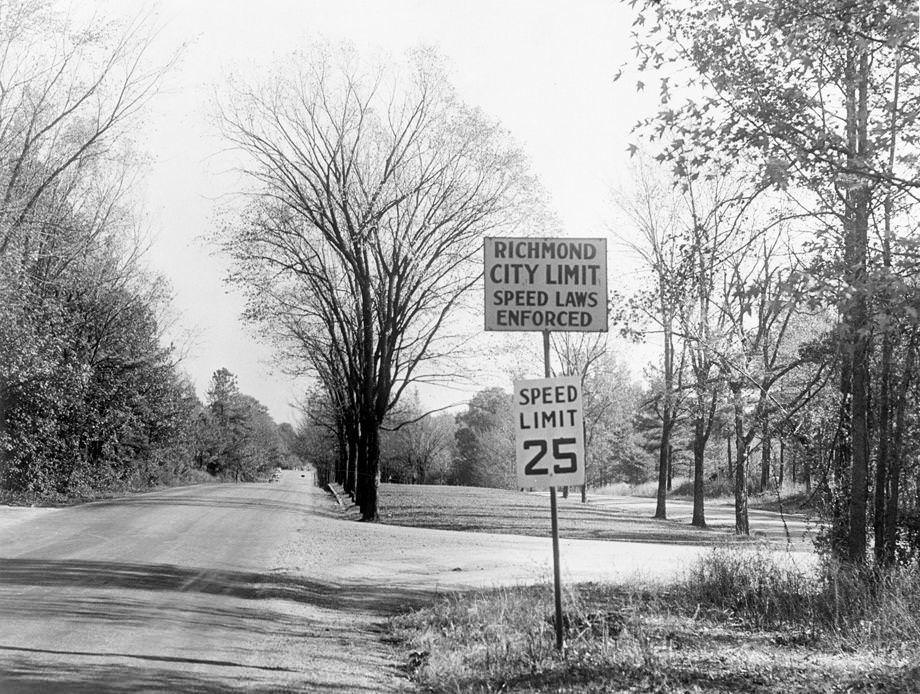
The Staples Mill Pond froze, giving people the chance to dust off their ice skates and have some fun, 1951. The pond was a popular ice-skating spot whenever it froze.The speed limit on Monument Avenue inside the city was 25 mph, 1951.Edition of The Times-Dispatch included a photo essay and story on train and car safety, 1951.
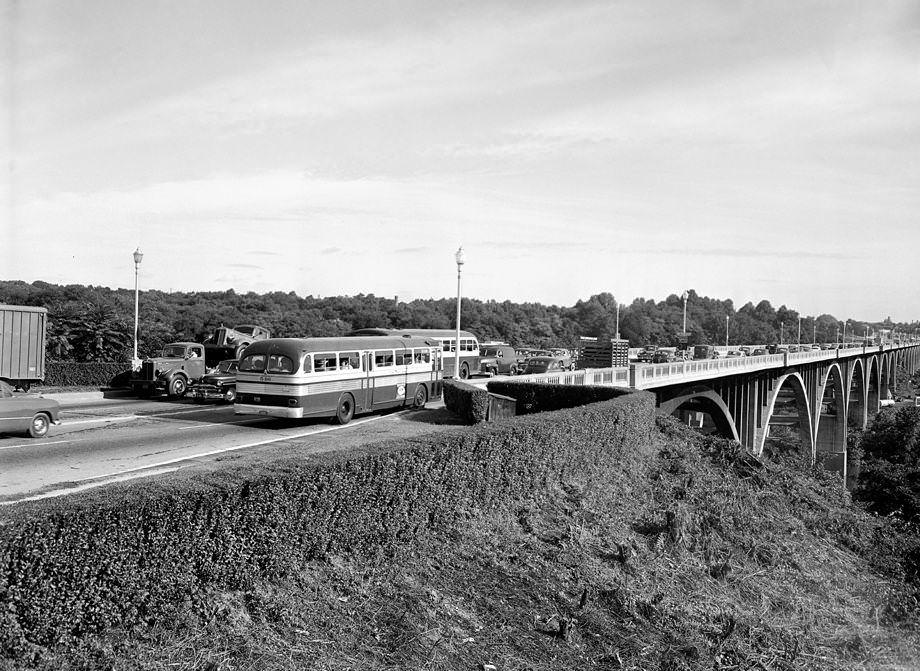
Traffic accidents were a growing concern across the region. A 10-car pileup on the Lee Bridge during rush hour in 1950 drew attention to the dangers of the city’s major crossings, though fortunately that particular accident resulted in only one minor injury.
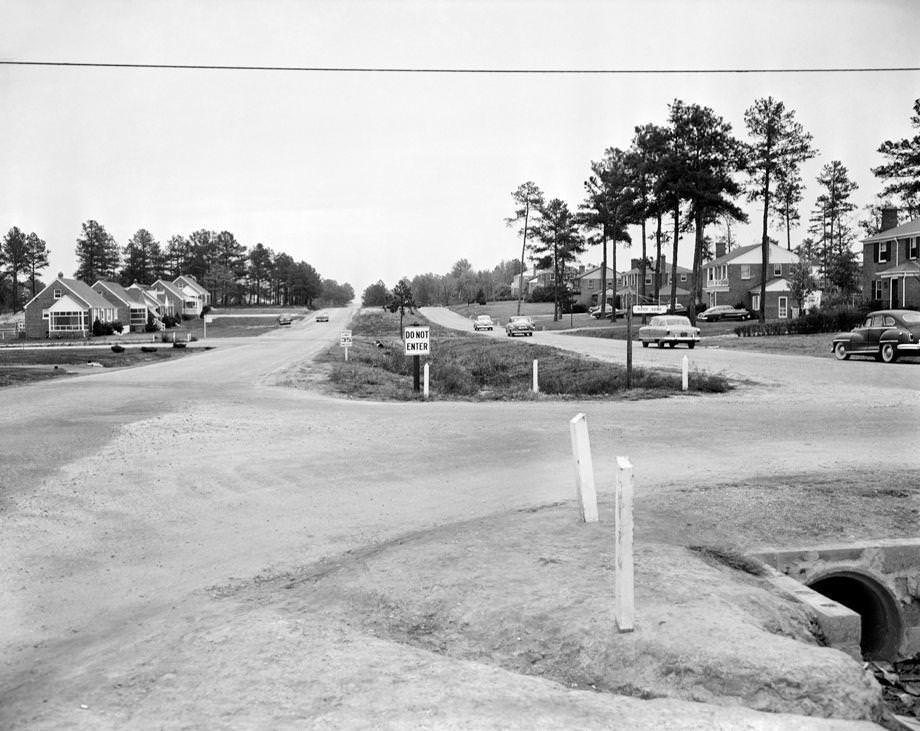
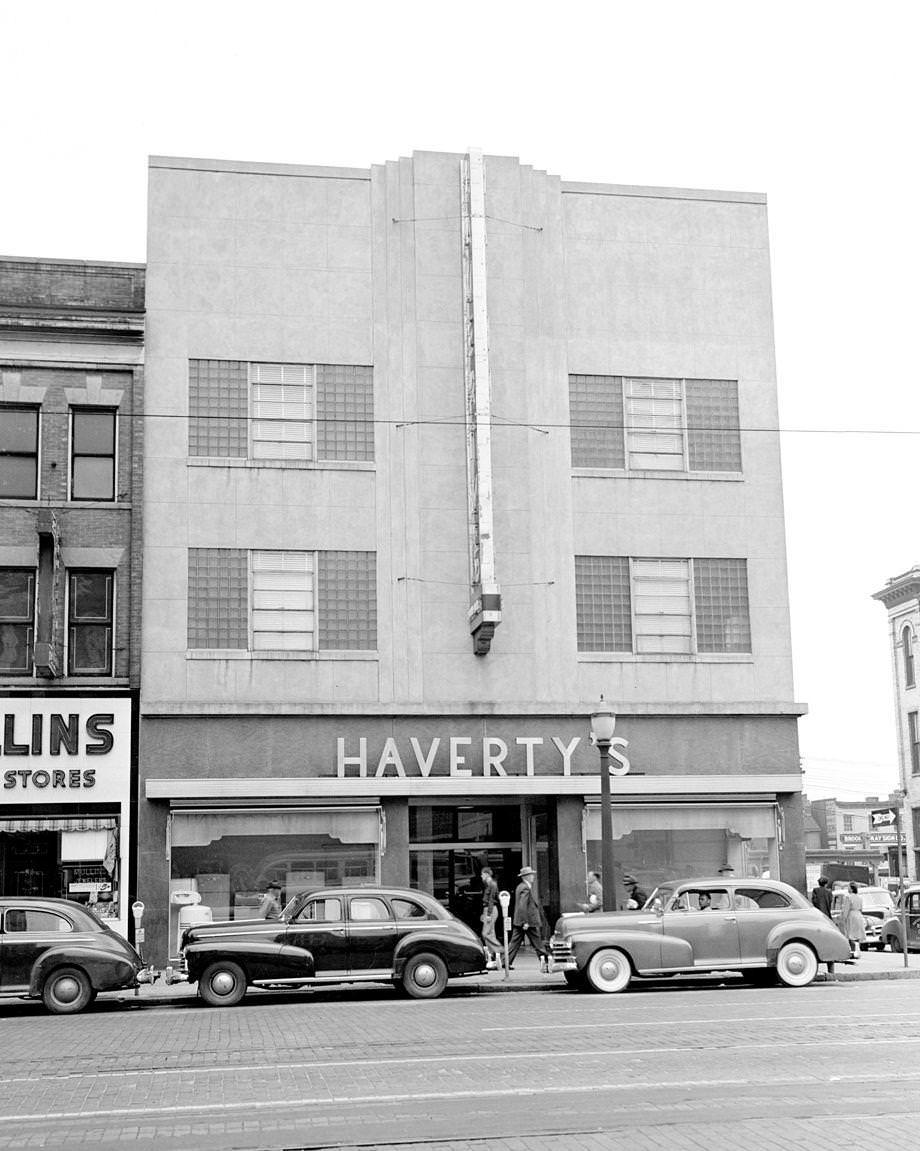
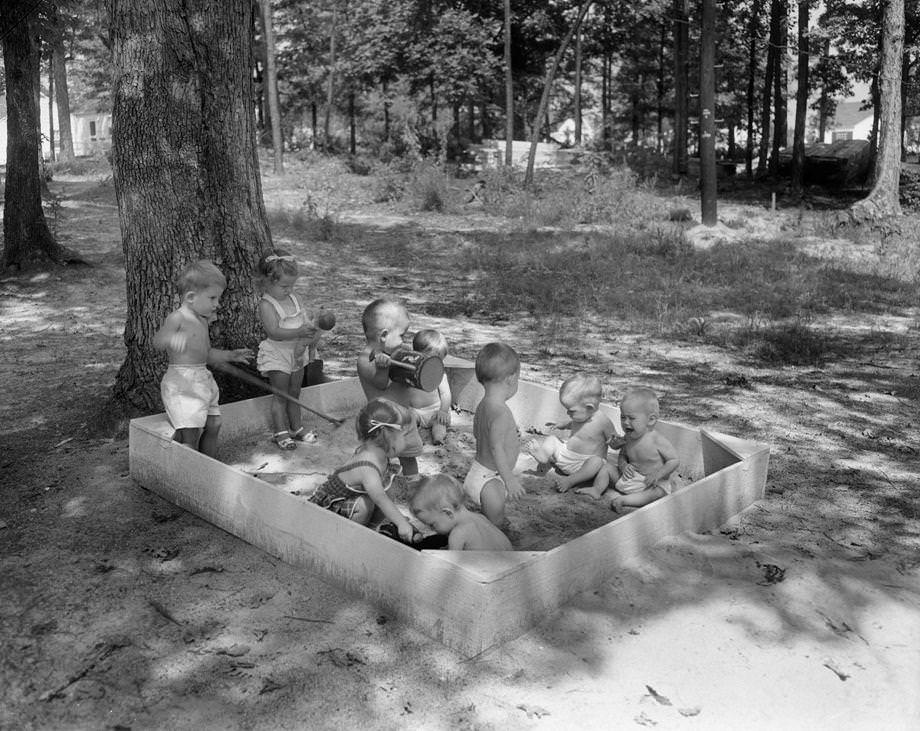
A 10-car accident on the Lee Bridge snarled traffic both ways during rush hour, 1950. There was only one minor injury, and none of the vehicles sustained serious damage.The Haverty’s furniture store at the corner of East Broad and Fourth streets downtown, 1950.Children playing on the Westwood Terrace playground, 1950. Some new homes in the development were offered for less than $10,000 that year.
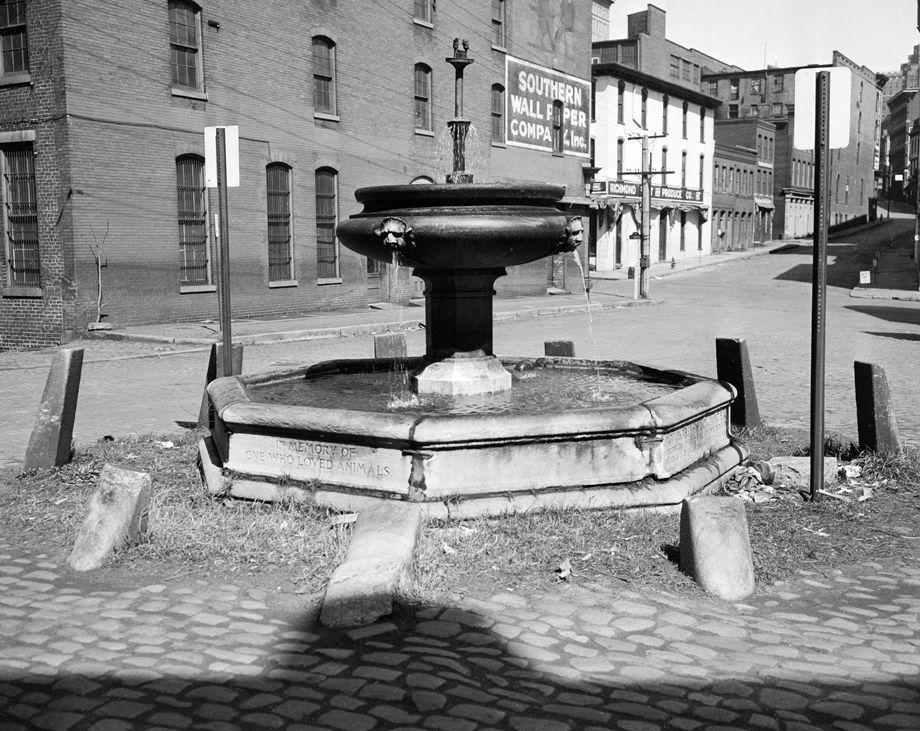
Shockoe Lane — the small stretch at 13th and East Cary streets now known as Shockoe Slip — was home to a marble horse fountain donated anonymously by a Baltimore woman in 1909, in memory of a Confederate cavalry captain buried in Hollywood Cemetery. The inscription read: “In Memory of One Who Loved Animals.”
The horse fountain on Shockoe Lane, the small stretch at 13th and East Cary streets that is now referred to as Shockoe Slip, 1950.
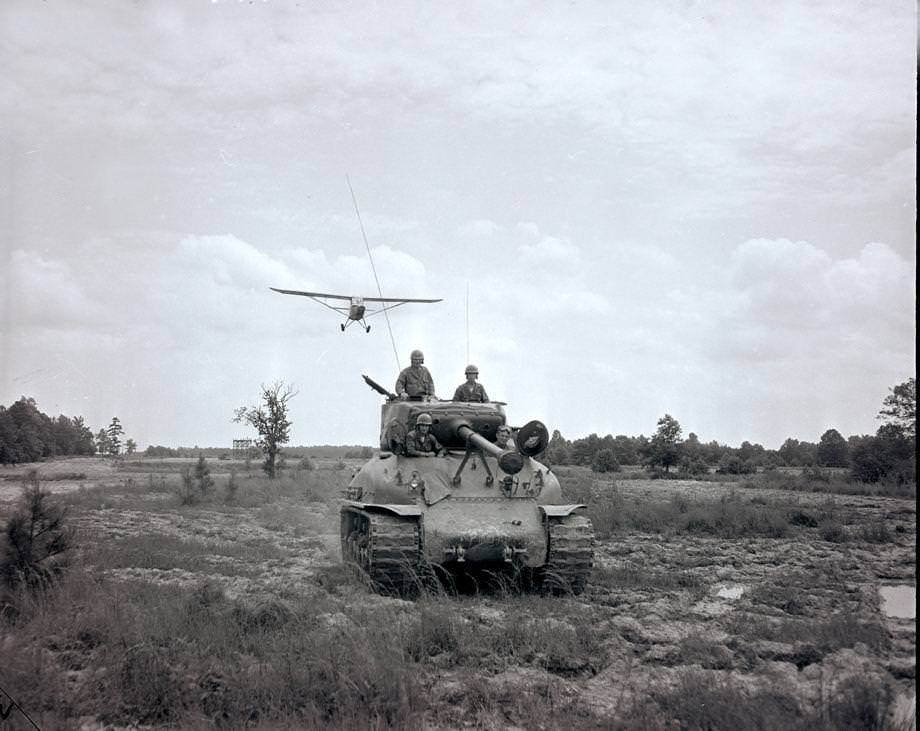
As the Korean War loomed in 1950, the 176th Infantry of the Virginia National Guard was mobilized for training at Camp Pickett. The unit had deep historical roots — its lineage included the Confederacy’s 1st Virginia Infantry, which had served with the Army of Northern Virginia nearly a century earlier.
The 176th Infantry of the Virginia National Guard was training at Camp Pickett in preparation for possible duty in Korea, 1950.
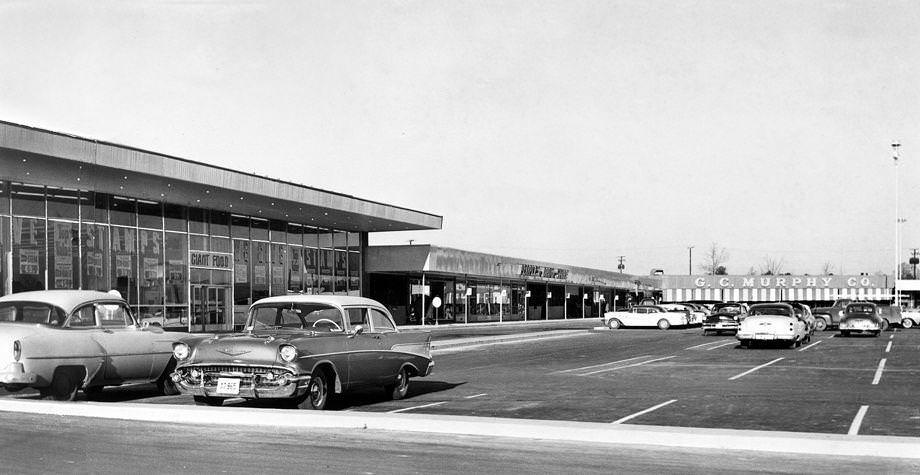
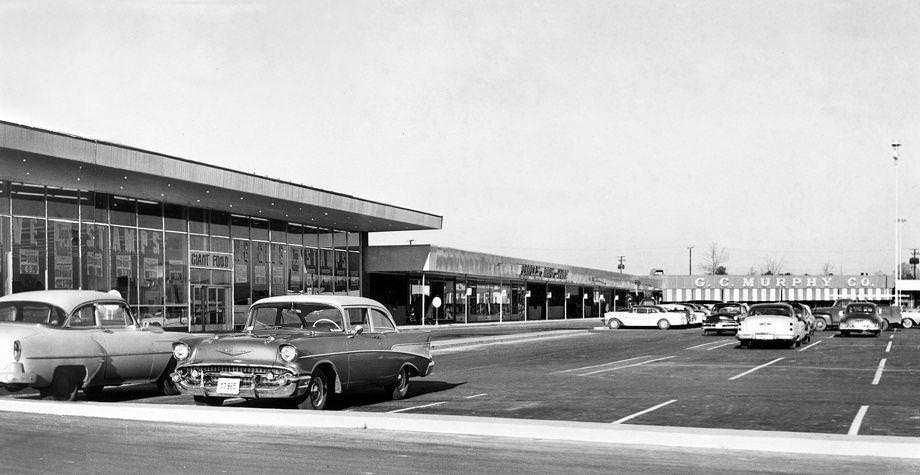
The shift from downtown shopping to suburban commercial centers accelerated through the late 1950s. In Chesterfield County, Southside Plaza opened its first three stores in 1957 — Giant Food, Peoples Drug Store, and G.C. Murphy Co. — with a formal grand opening set for March 1958.
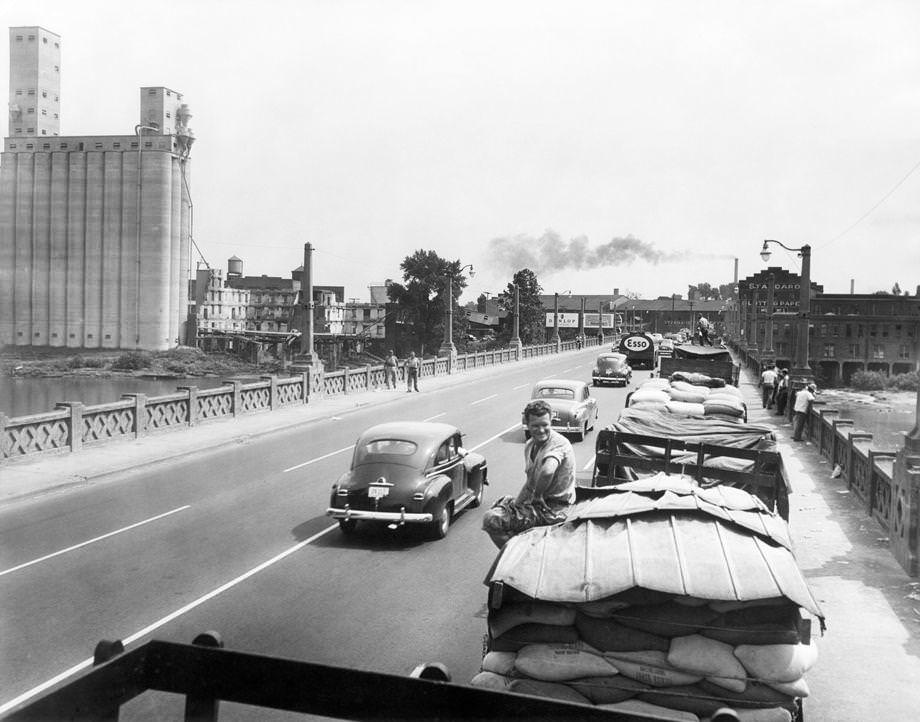
Three stores opened for business in Southside Plaza, then part of Chesterfield County, 1957.Trucks loaded with wheat during the harvest season had a long wait – including along the Mayo Bridge – to reach the Cargill Inc. grain elevator at First and Hull streets in South Richmond, 1952.Richmond was preparing to raise the daily sanitation tax on street vendors at the Sixth and 17th Street markets from 10 cents per day to 25, 1951.
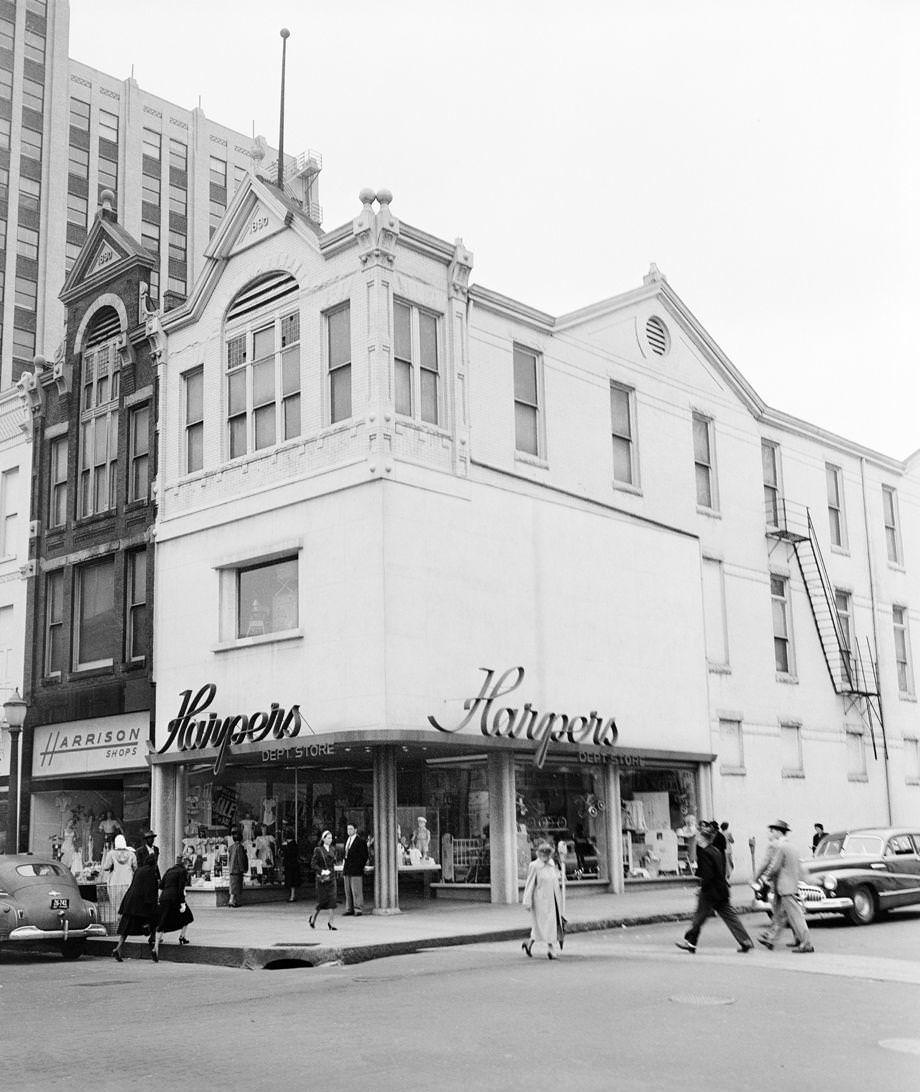
The Harper’s Department Store at 201 E. Broad St. The store opened in 1933 as The Linen Mart, 1950.
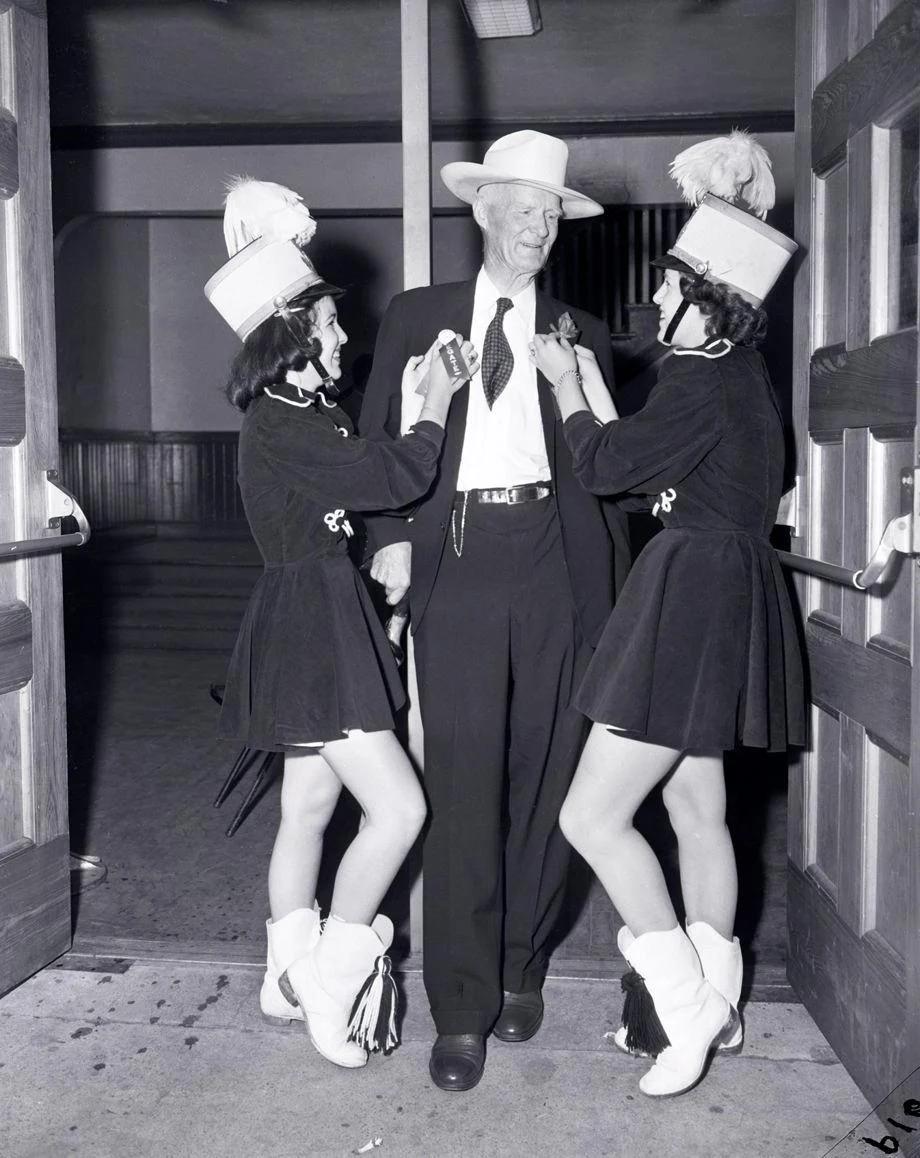
Lovick Law, sergeant-at-arms for the House of Delegates, had his badges and flowers adjusted by majorettes while attending the Virginia Democratic Convention in Roanoke, 1952.
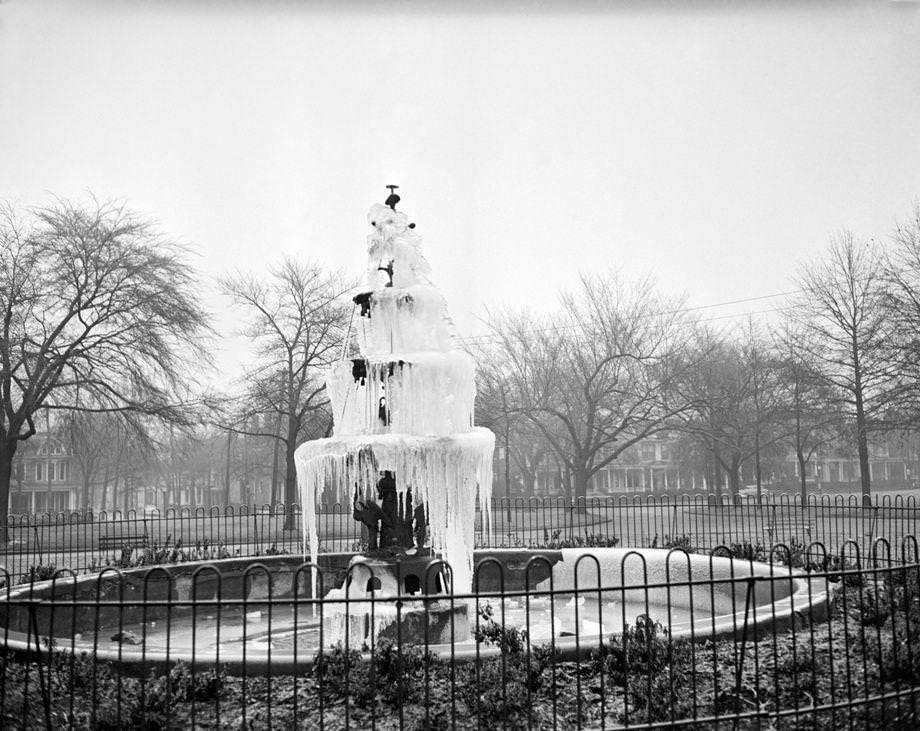
Winter in Richmond could be severe. In 1951, frigid temperatures turned the Chimborazo Park fountain into a mass of ice. The fountain, installed in 1909 and lit with colored lights at night, was eventually removed from the park in the late 1950s after falling into serious disrepair.
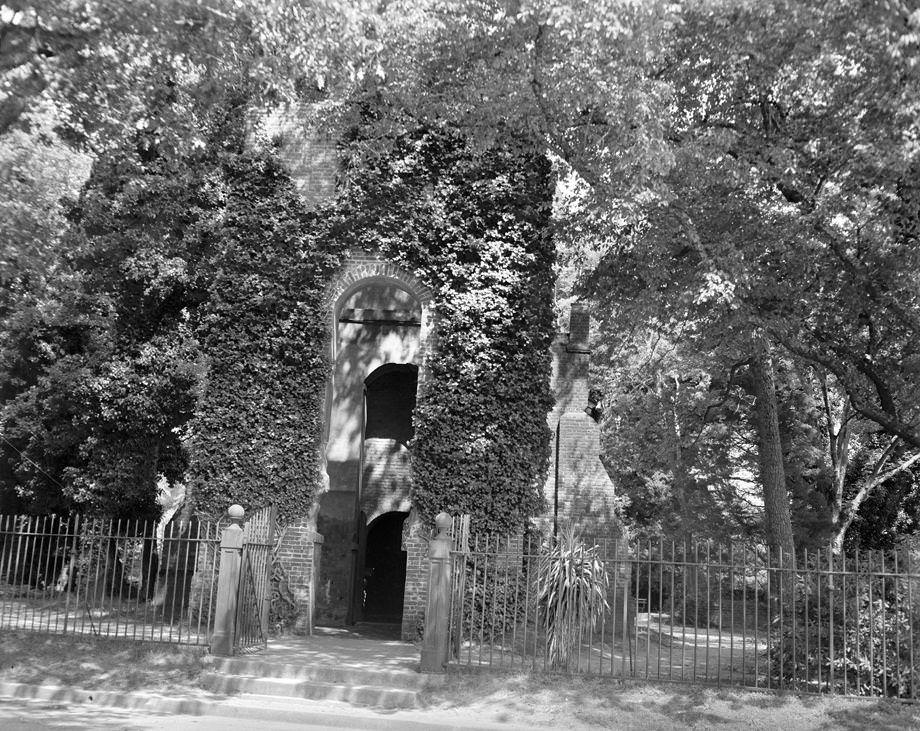
Frigid temperatures put the Chimborazo Park fountain in a frosty state, 1951.The old church tower on Jamestown Island. The structure is the only 17th century above-ground building that still stands there, 1953.
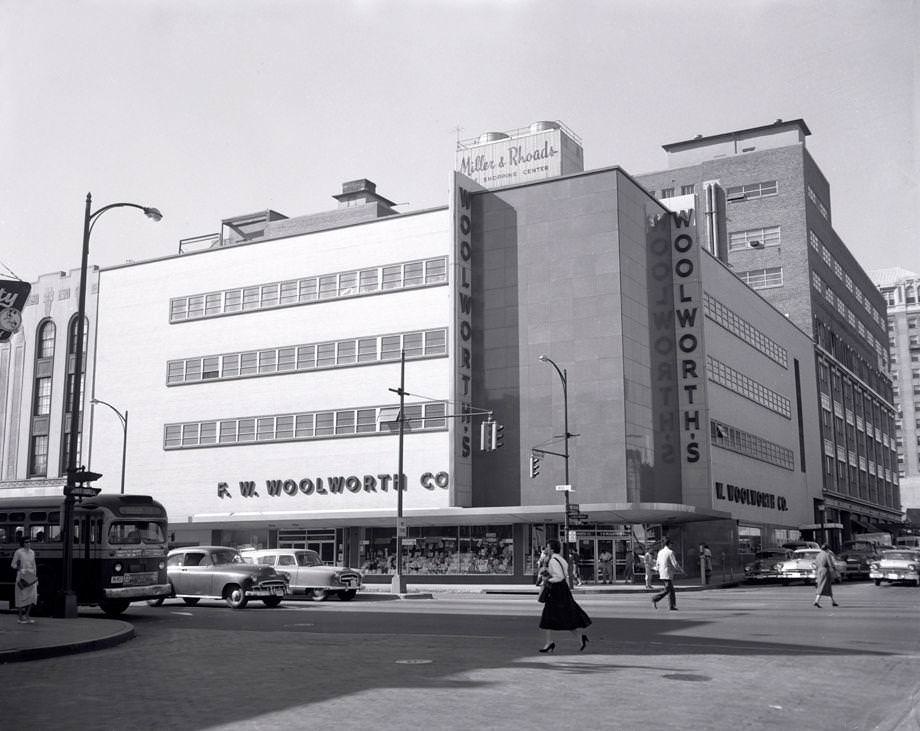
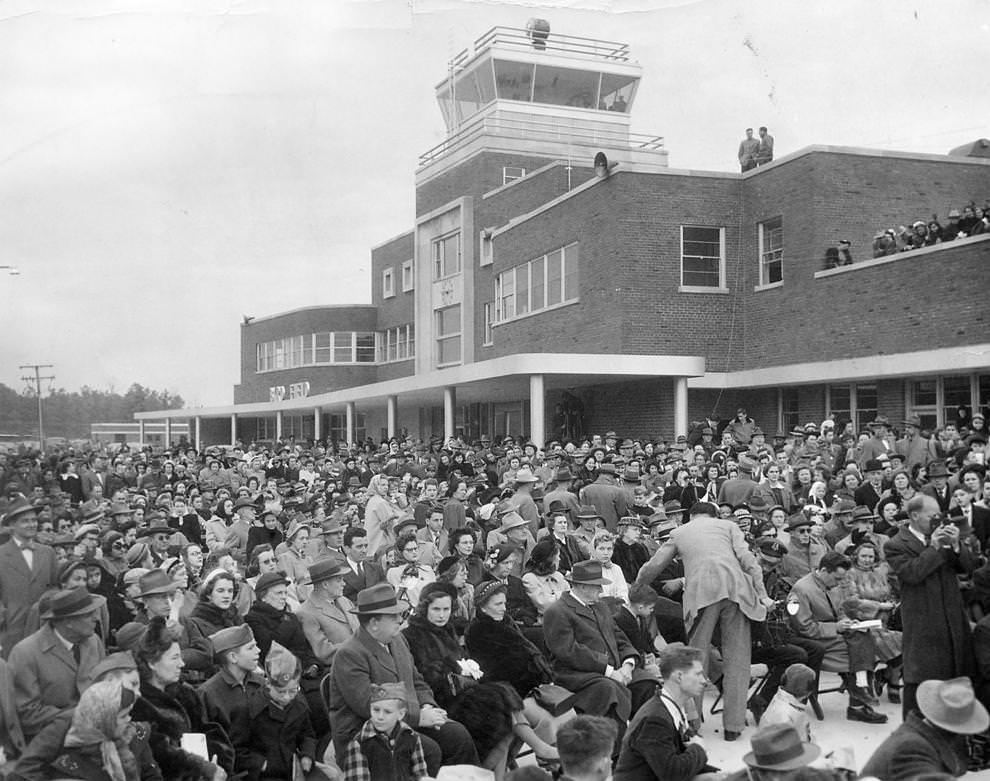
The Woolworth’s at Fifth and Broad streets was one of downtown Richmond’s newer commercial additions. The $1 million building opened in September 1954, housing several departments for the neighboring Miller & Rhoads as well.
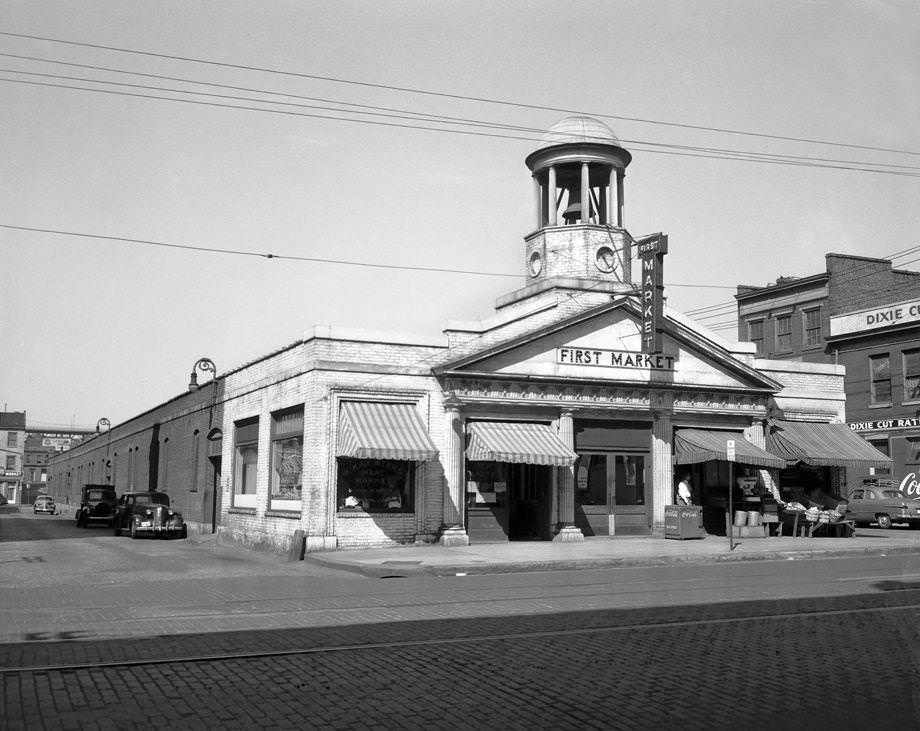
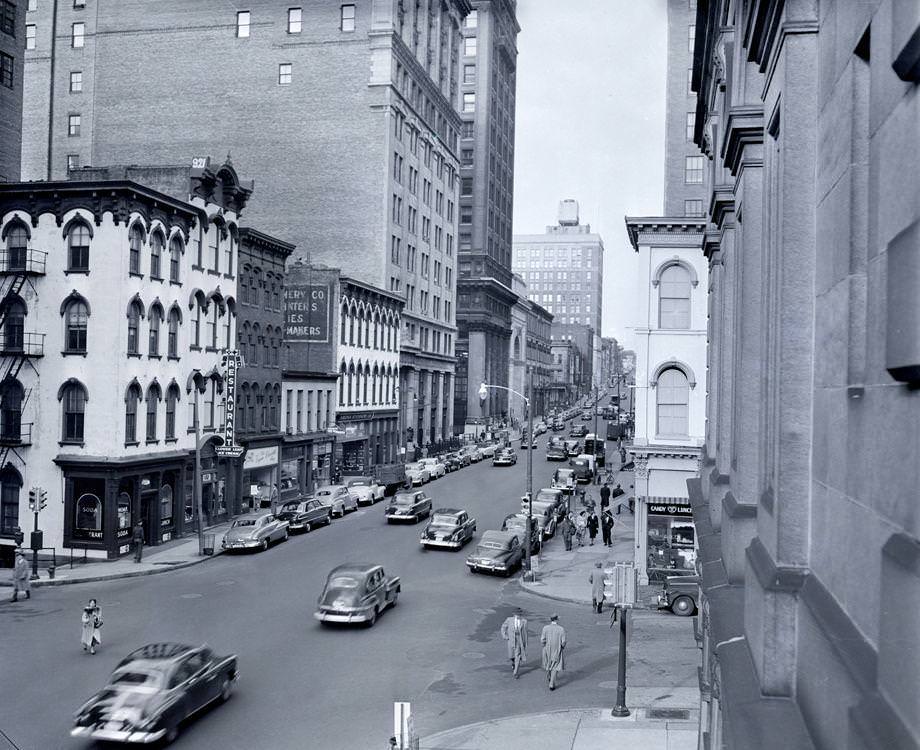
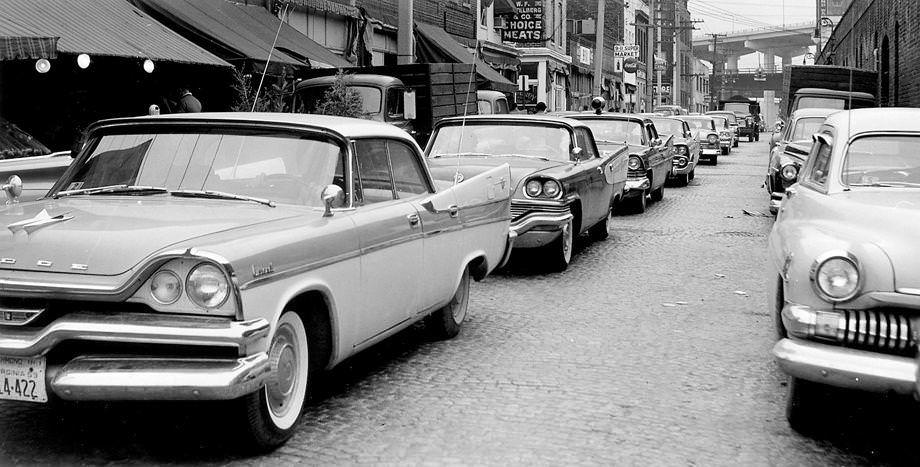
The Woolworth’s at Fifth and Broad streets in downtown Richmond, 1957.The First Market building, which was razed in 1961. This site now houses the 17th Street Farmers Market, but its history as a public gathering place and market dates to the 1700s, 1953.East Main Street near 10th Street in downtown Richmond, with Rao’s Restaurant on the corner at left, 1953.
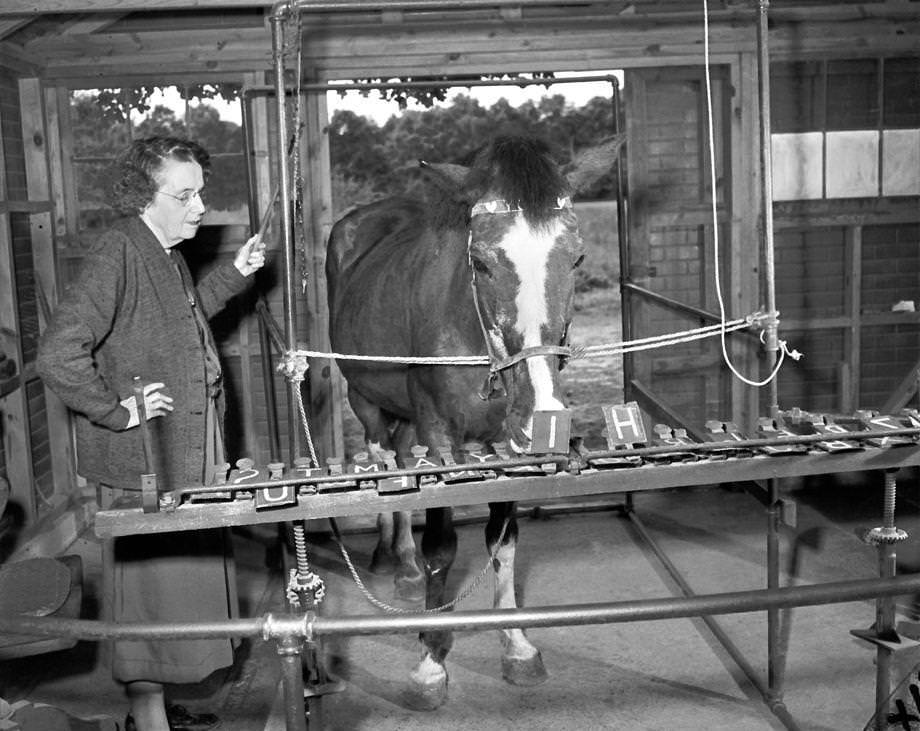
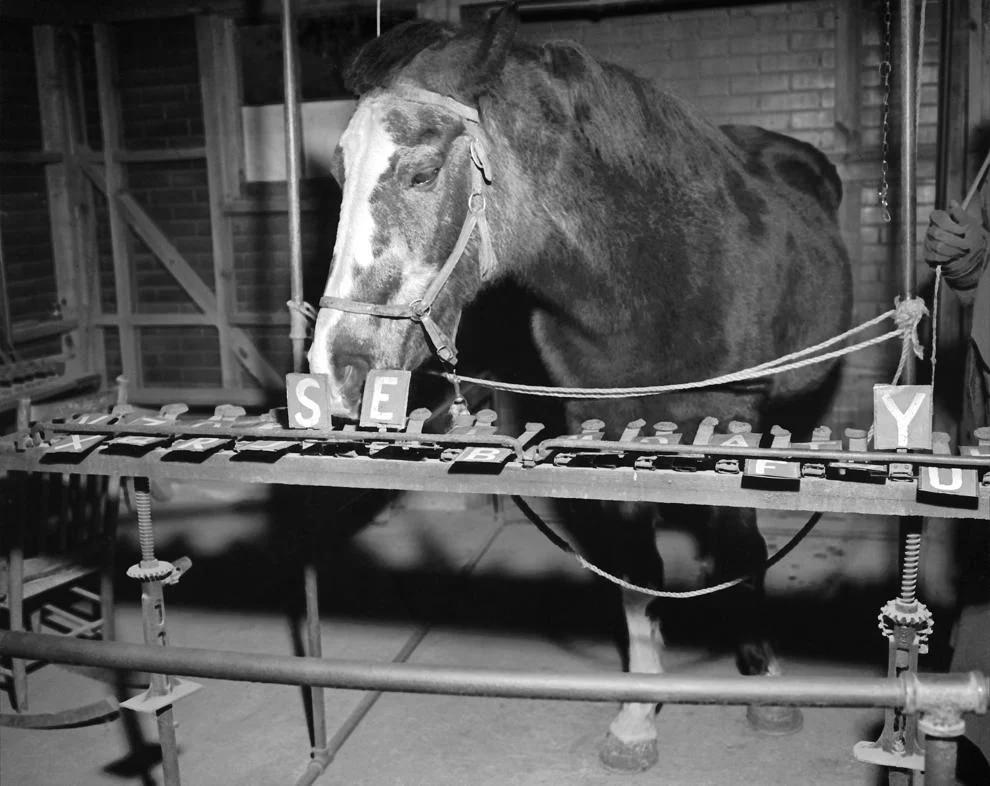
Richmond had its own psychic celebrity: Lady Wonder, a horse that had been gaining attention since correctly predicting a boxing upset in 1927. In 1950, a reporter visited Lady for her annual predictions. She got only one right that year — that 1st District Congressman Edward J. Robeson Jr. would win his next election. In 1952, the horse’s owners were contacted by the desperate mother of a missing 6-year-old Rhode Island boy. Lady indicated the child was alive and could be found in Kansas. A year later, the child’s skull was discovered just one mile from his Rhode Island school.
Lady Wonder, Richmond’s psychic horse, spelled out a greeting when a reporter visited for her latest predictions, 1950.
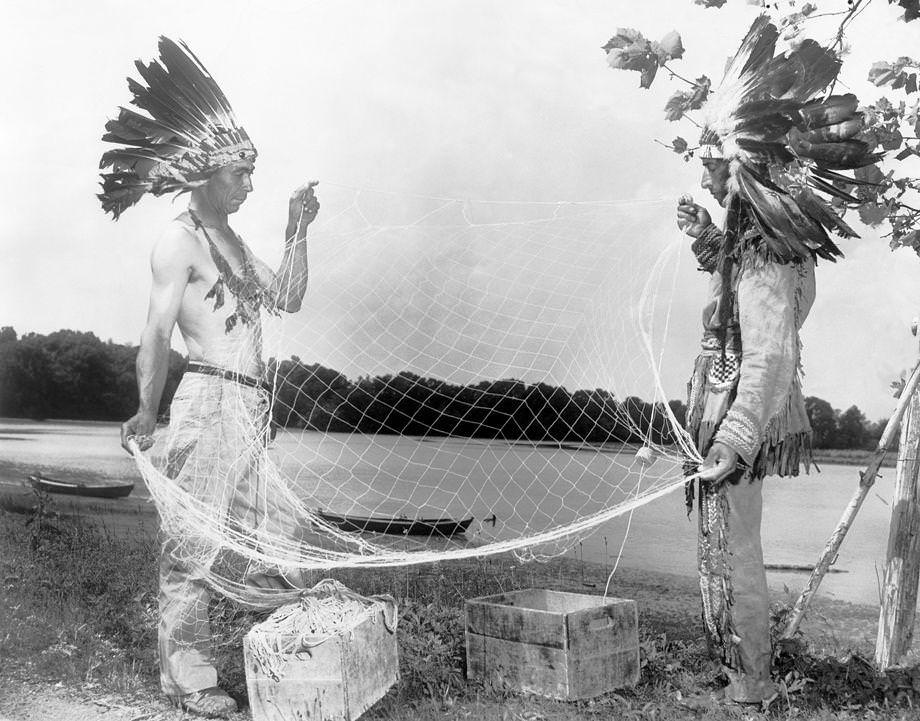
The Pamunkey tribe, based on their reservation in King William County, maintained an active presence in the Richmond region during this period. In 1950, they had a profitable fishing season and donated a portion of their earnings to the Richmond Memorial Hospital building fund — in memory of a tribe member killed in World War II.
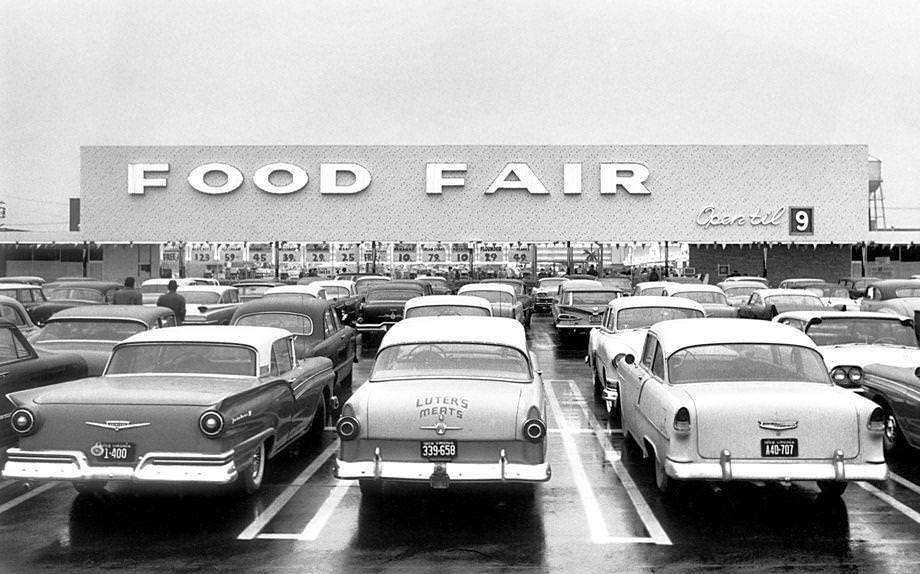
Willie Bradby (left) and Pamunkey Chief Tecumseh Deerfoot Cook checked a shad net on their reservation in King William County, 1950.Pedestrians scurried across a busy Broad Street at Fourth Street in downtown Richmond as Christmas shopping was in full swing, 1955.The parking lot was full at the new Food Fair grocery store on West Broad Street in Richmond, near downtown, 1959.
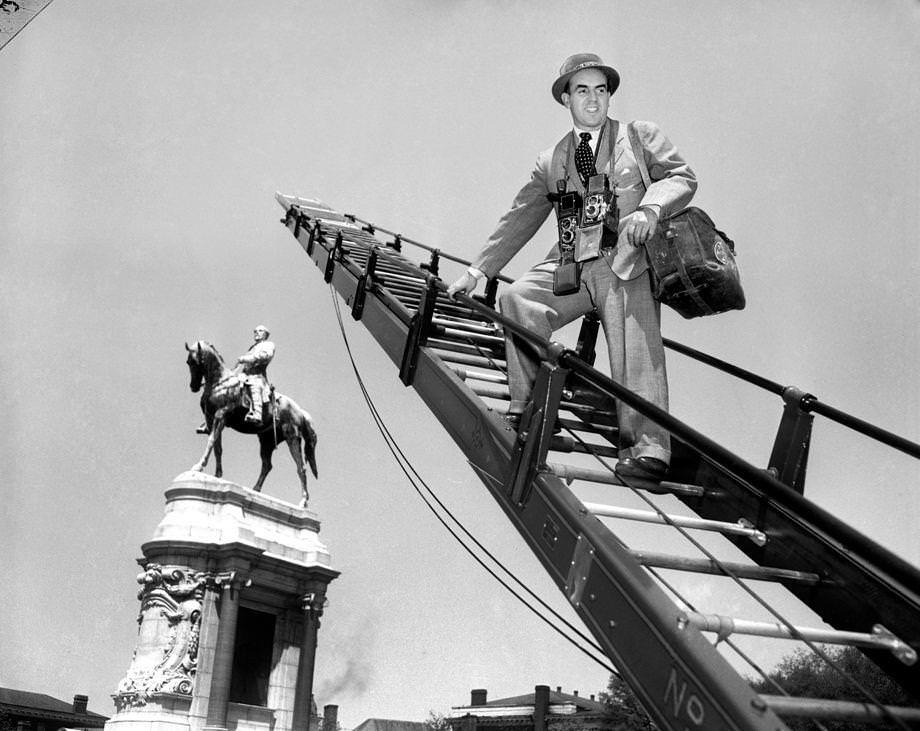
Monument Avenue was not just a residential boulevard — it was a canvas for the city’s identity. In 1951, photographer Ewing Krainin came to Richmond to shoot images for a national magazine. He enlisted the fire department and its tallest extension ladder to get aerial angles on landmarks, including the Robert E. Lee statue.
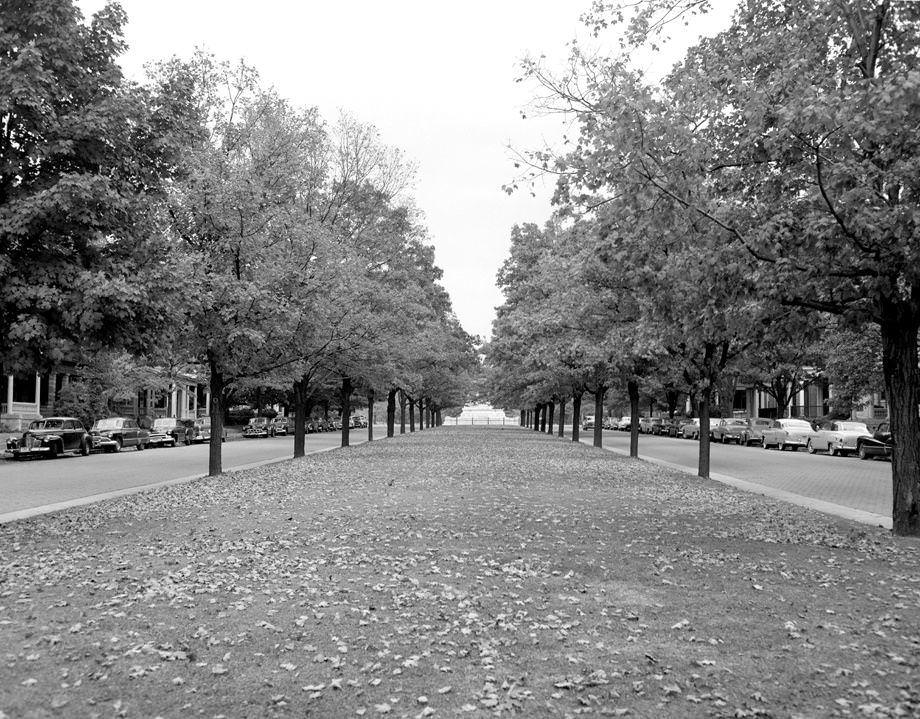
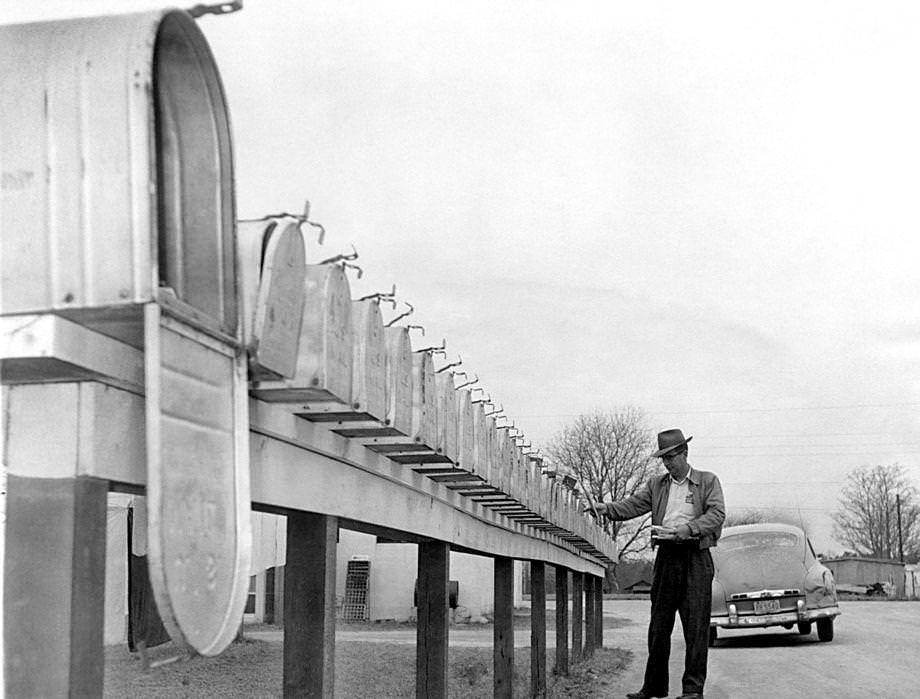
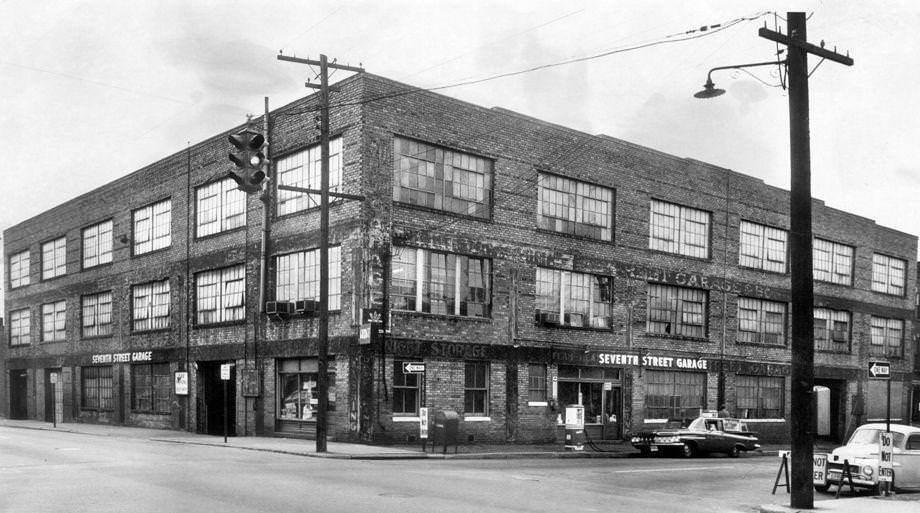
Ewing Krainin was in Richmond to take a series of pictures for a national magazine, 1951.The Monument Avenue median adorned with autumn leaves, 1952.Postman Sam H. Mellichampe delivered mail in a long line of boxes at a trailer park near Petersburg. He said the row of mailboxes was the longest on his route, 1959.The Seventh Street parking garage in downtown Richmond was the largest of 54 properties, valued collectively at about $1.2 million, that were slated for condemnation by the city as part of plans to build a civic center, 1959.
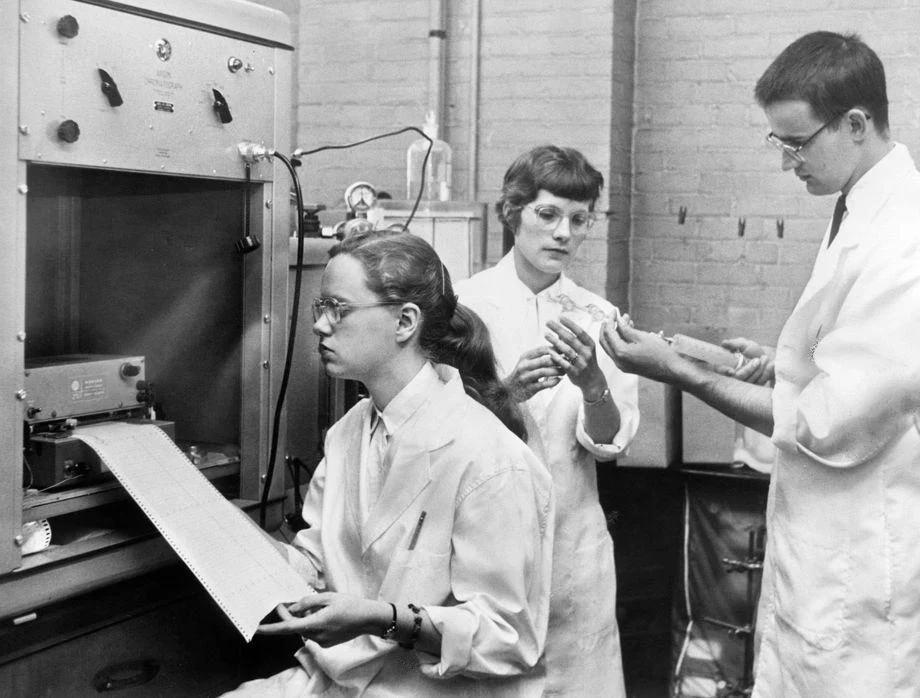
The tobacco industry’s scientific response to growing health concerns was visible inside Philip Morris’s Richmond laboratories by 1959. Researchers like Phyllis Grove, Alta Strickland, and David Fridley were using gas chromatograph equipment to analyze cigarette smoke — research that the company framed as a direct response to the emerging debate over smoking and cancer.
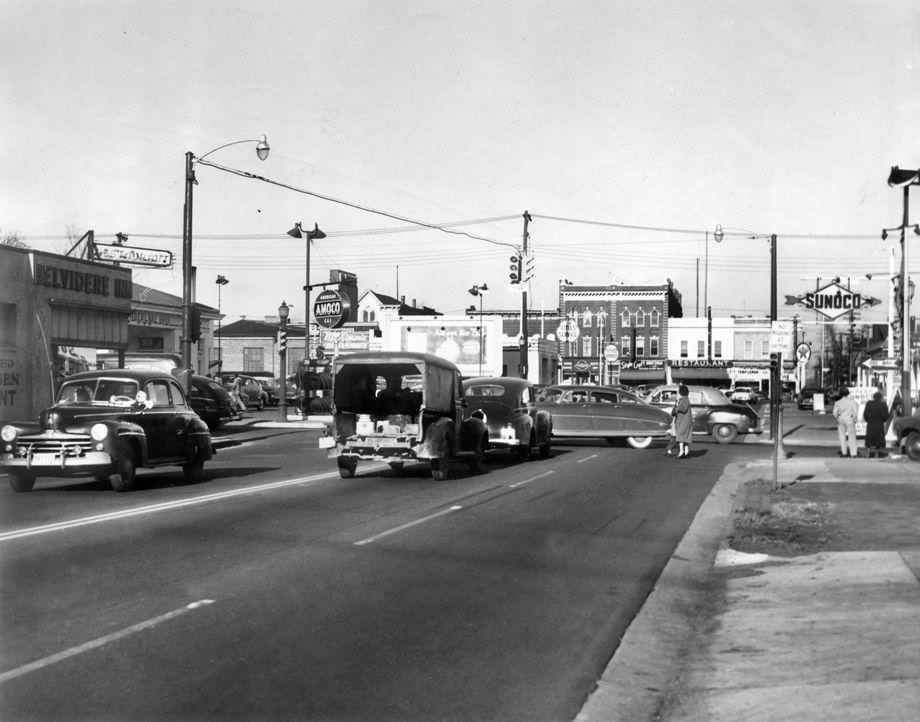
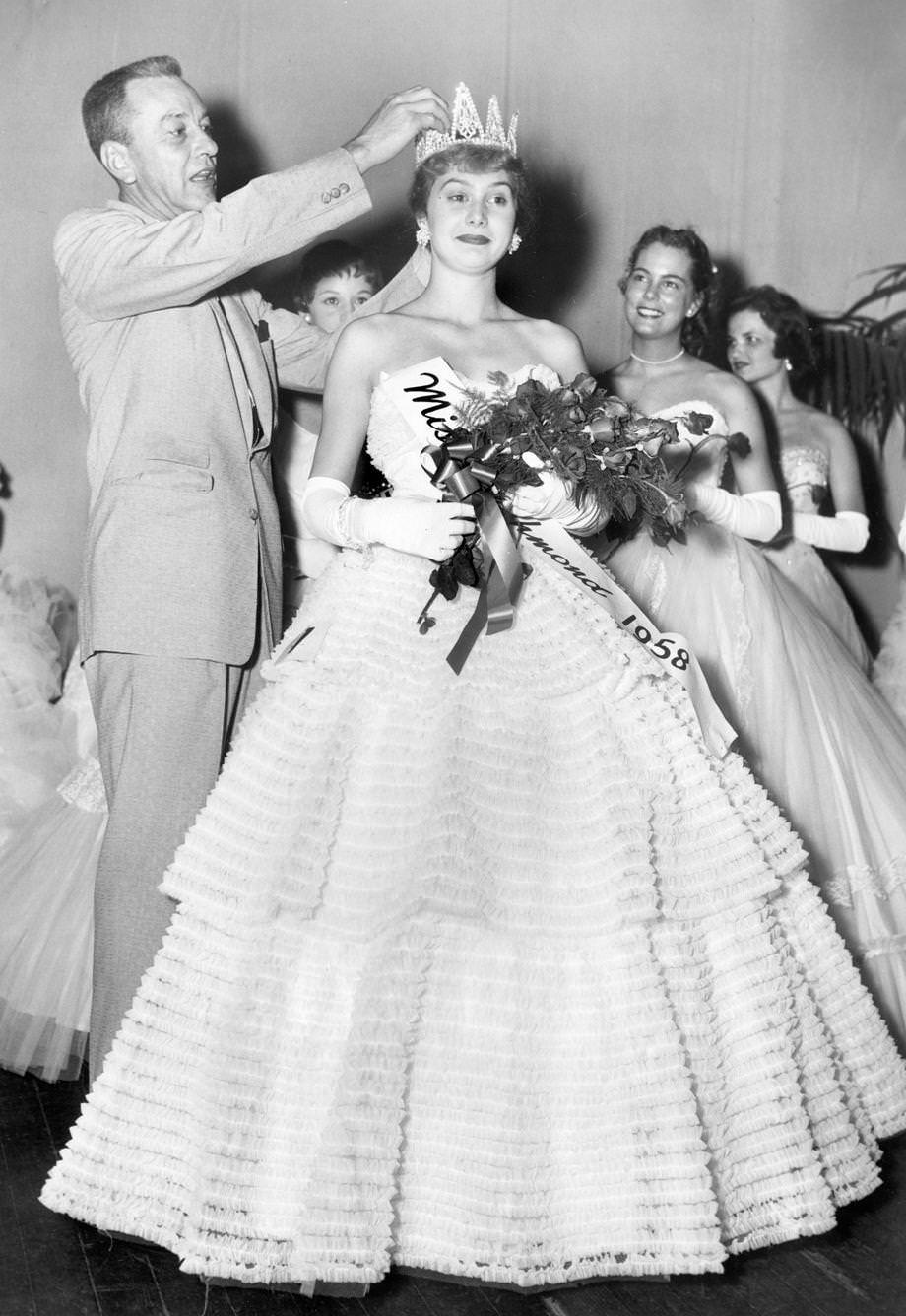
Phyllis Grove (from left), Alta Strickland and David Fridley analyzed cigarette smoke using a gas chromatograph at Philip Morris in Richmond, 1959.Traffic moved through the intersection of Grace and Belvidere streets in Richmond, 1958.Richmond Mayor F. Henry Garber crowned Grace Jacqueline Allen as Miss Virginia during a ceremony at the Jefferson Hotel downtown, 1958.
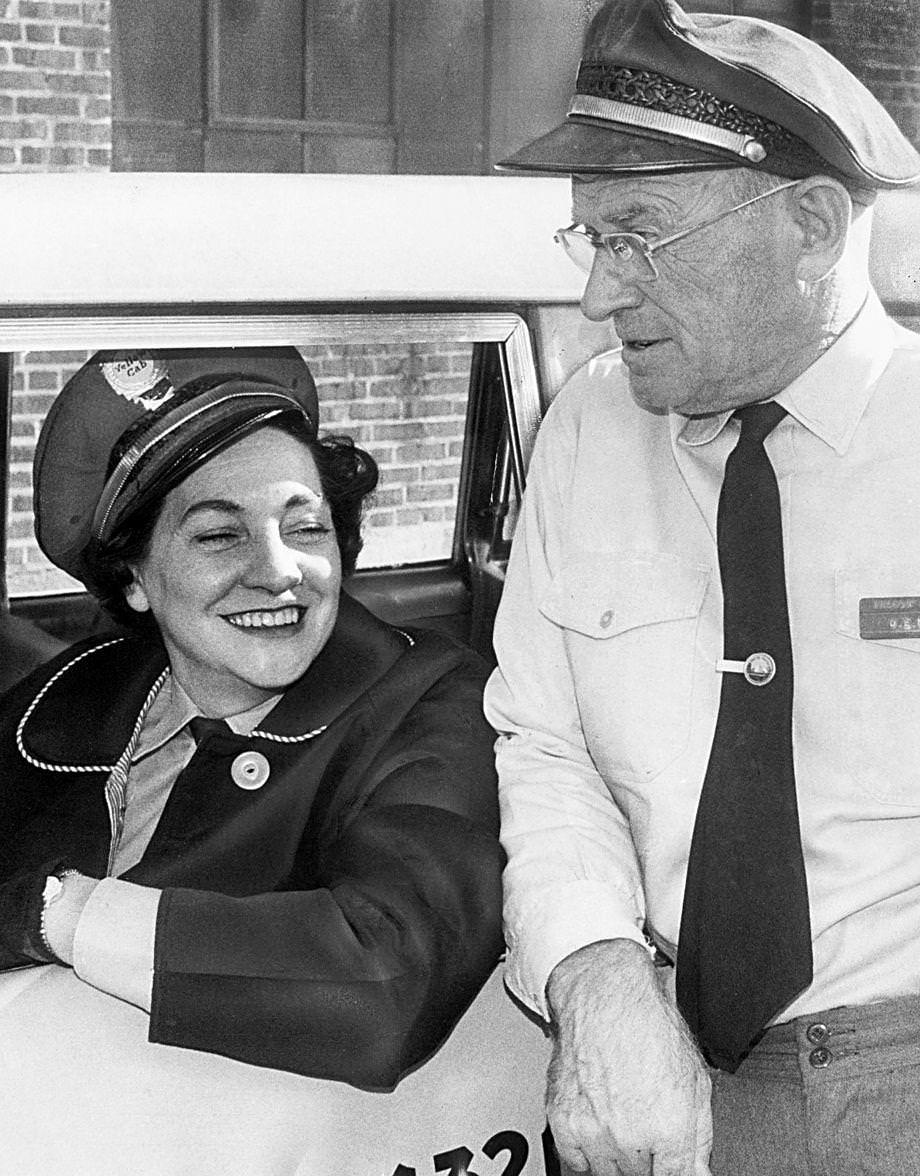
Jewell Mason was among a very small number of women driving cabs in Richmond during the late 1950s. She started working for the Yellow Cab Co. in 1958 and said she never encountered problems because of her gender. She pushed back on broader assumptions too: “Women are as careful as anyone else,” she said.
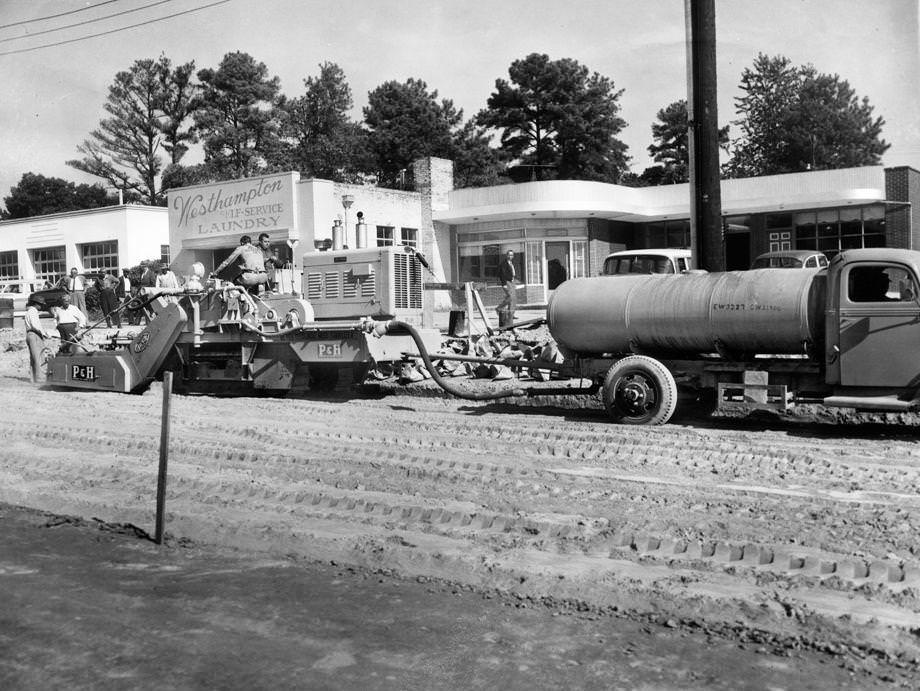
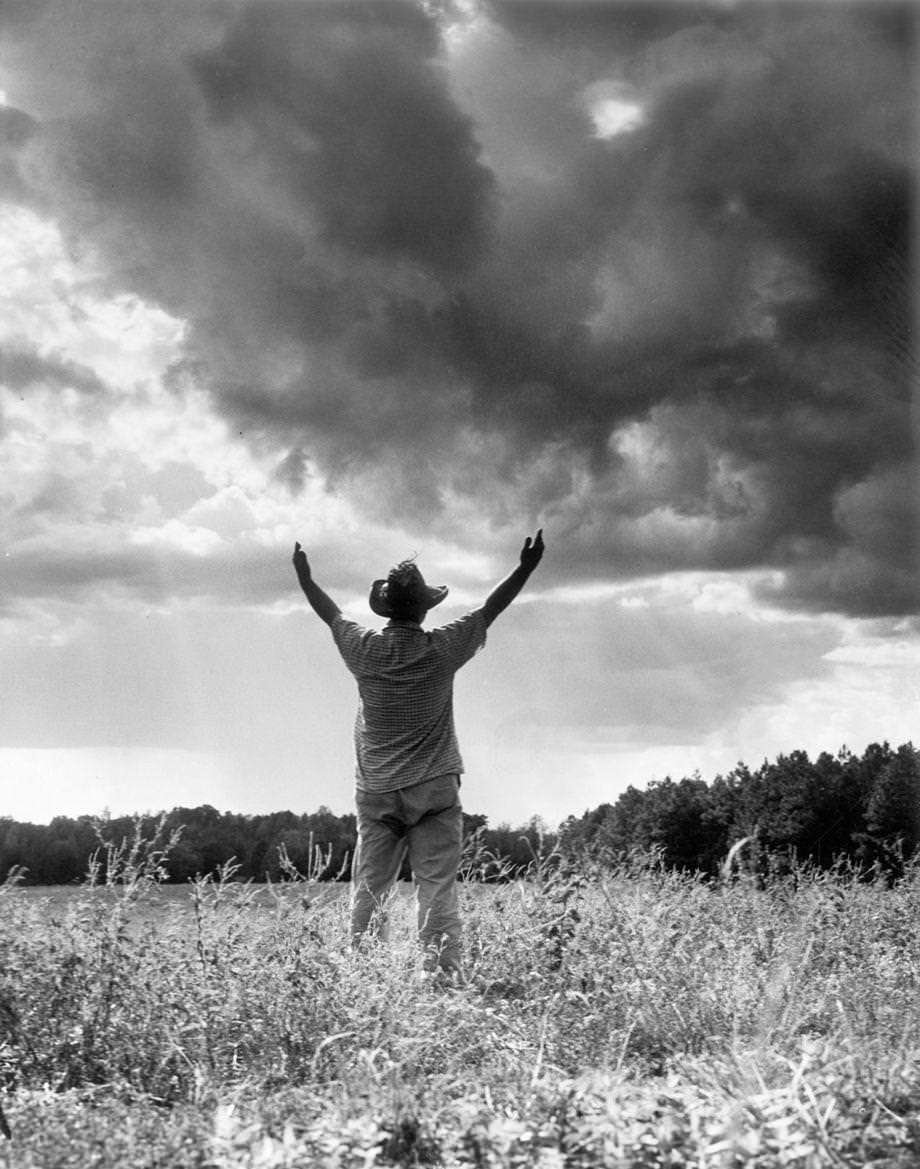
Jewell Mason, one of Richmond’s few female cab drivers, chatted with her husband, Otha, who also drove cabs, 1950s.A street-widening project continued along Patterson Avenue in Richmond’s West End, 1958.A Chesterfield County farmer welcomed the sight of rain clouds, though they didn’t yield any rain, 1958.
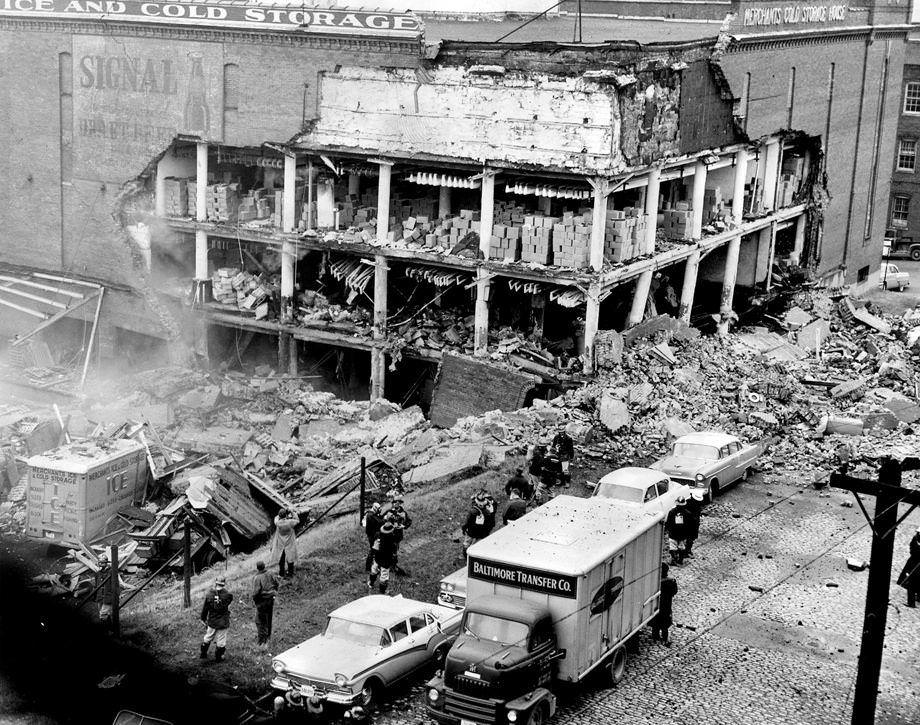
One of the decade’s deadliest single incidents occurred in 1956, when an explosion at Merchants Ice & Cold Storage Co. at Sixth and Byrd streets killed seven people and shattered windows as far as seven blocks away. There was no fire — a cloud of ammonia from the refrigeration equipment made the scene difficult for firefighters to approach. In December of that year, a jury found the city at fault, with evidence pointing to a leaking underground gas main.
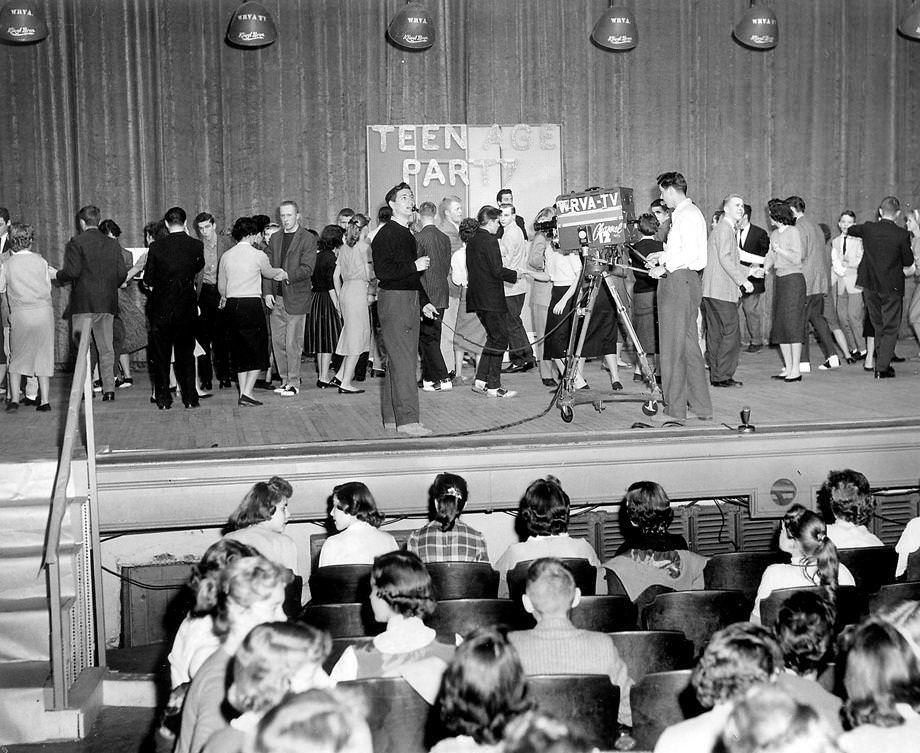
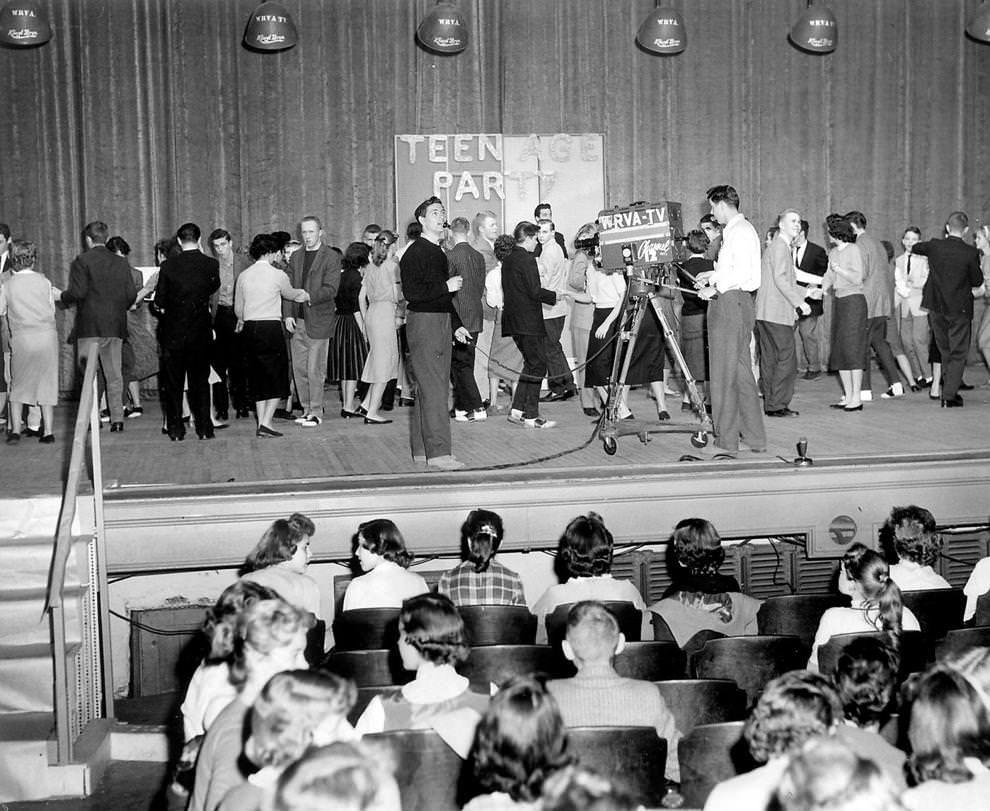
An explosion at Merchants Ice & Cold Storage Co. at Sixth and Byrd streets in downtown Richmond killed seven people and shattered windows up to seven blocks away, 1956.“Teen Age Party,
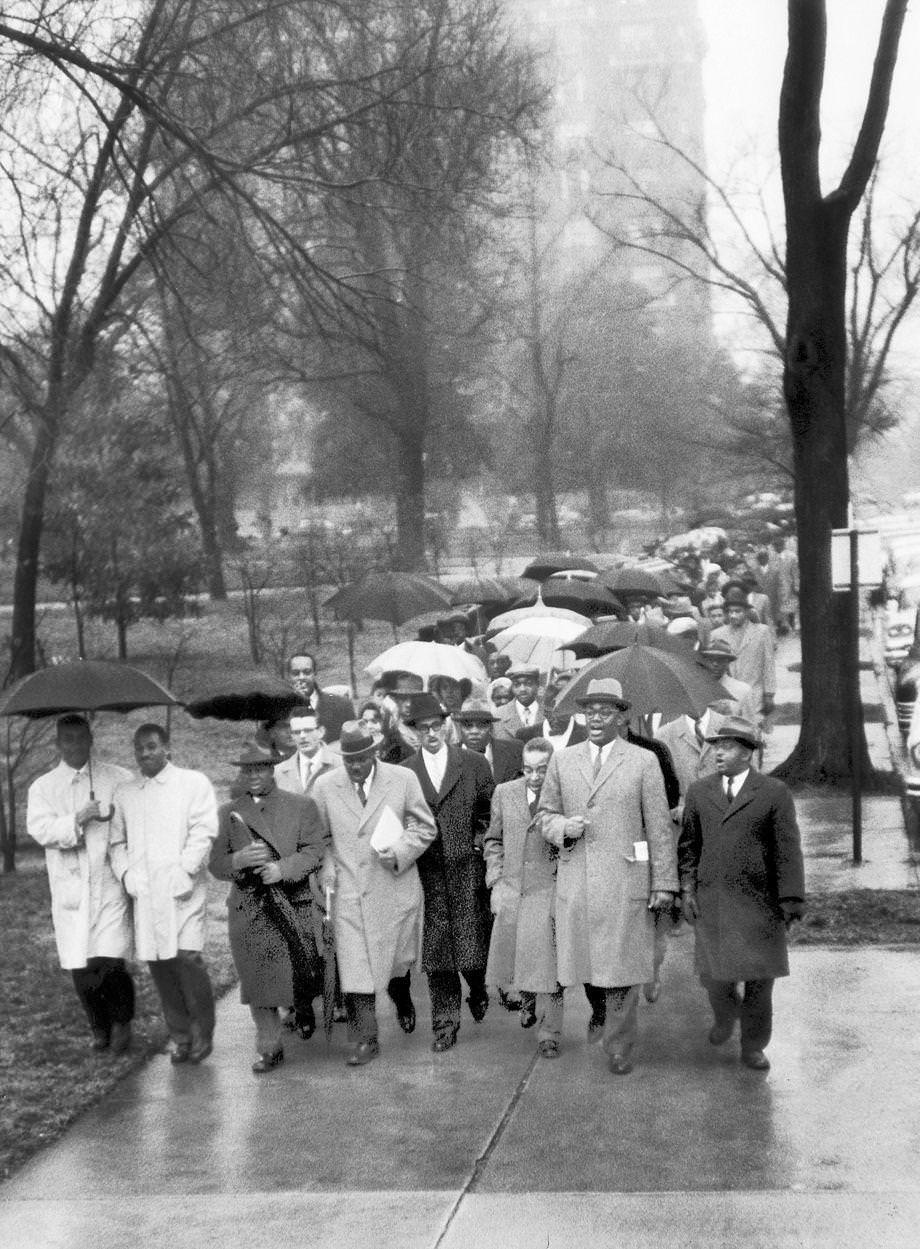
As the decade closed, civil rights tensions in Richmond were becoming impossible to ignore. In 1959, protesters marched through the rain to the state Capitol in support of school integration, as Virginia’s Massive Resistance to the Brown v. Board of Education ruling was in full force. Richmond’s public schools would not be integrated until 1970.
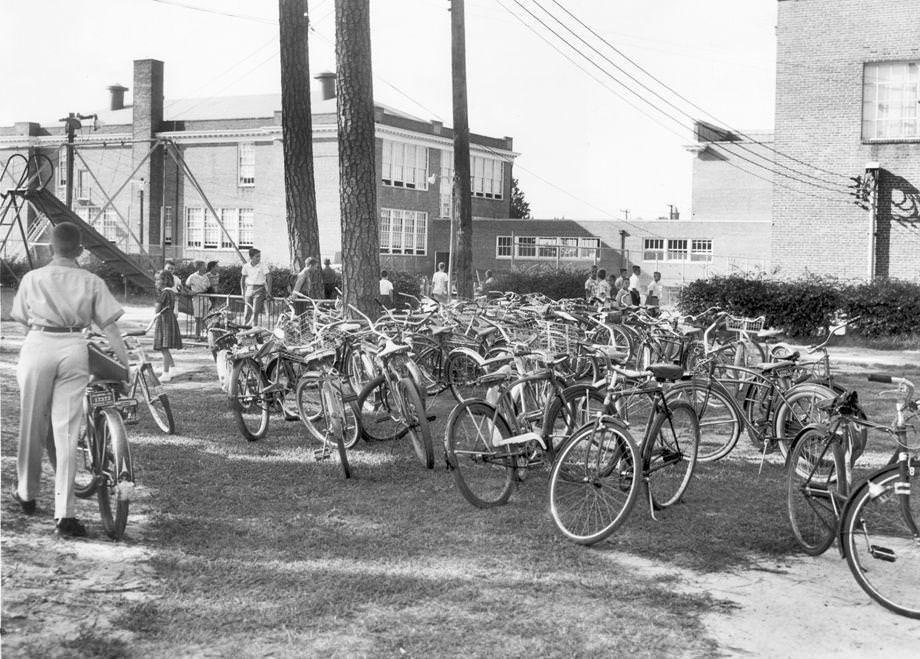
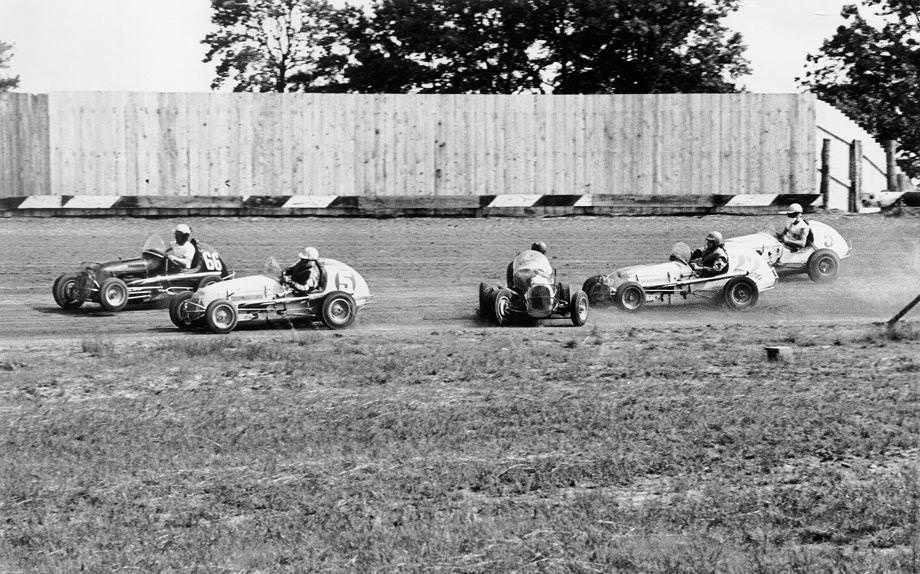
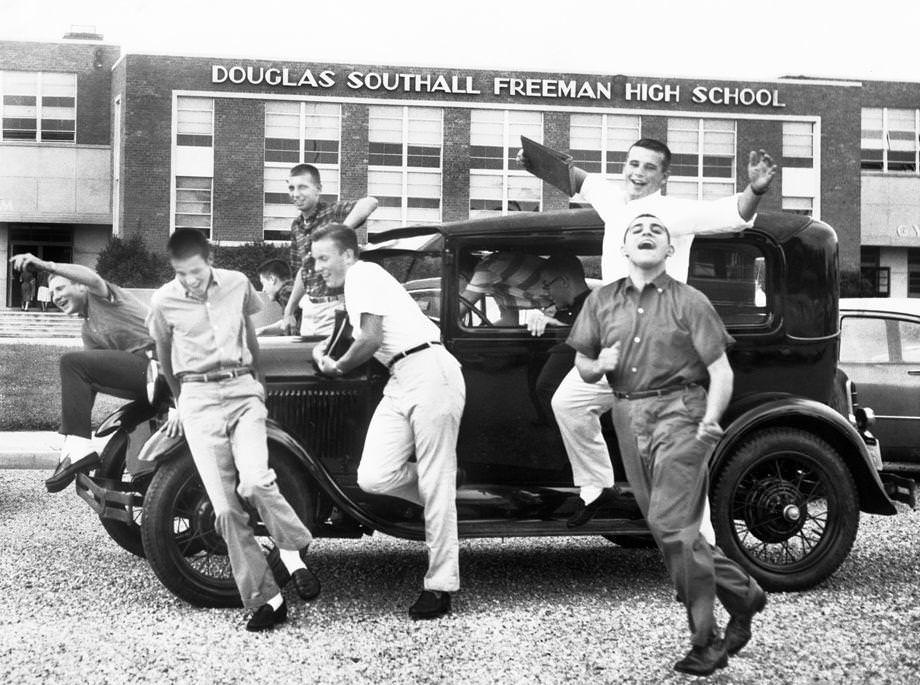
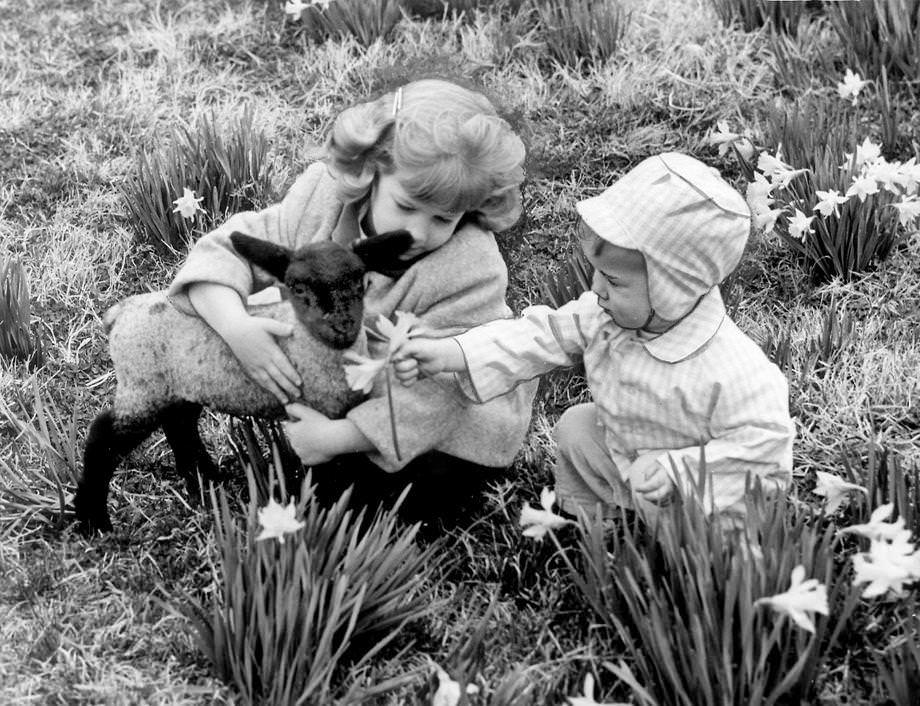
Protesters marched through the rain to the state Capitol in Richmond to support school integration, 1959.Richmond got an early dose of winter, with 2 inches of wet snow and record cold temperatures, 1954.Three stores opened for business in Southside Plaza, then part of Chesterfield County, 1957.Construction along Patterson Avenue between Libbie and Maple avenues in Richmond, 1959.A yard full of bicycles made clear that classes were back in session at Westhampton School in Richmond, 1958.Bill Shockley of Greenville, S.C., spun out in an eight-lap midget auto heat on the half-mile dirt track at the State Fairgrounds, 1958.Jimmy Harrison gave some friends a ride to school in his antique car, 1959.Donnie and Bobby Alvis enjoyed the first days of spring in Richmond with appropriate seasonal company: a baby lamb and new blossoms, 1959.
Reynolds Metals, one of Richmond’s largest employers, opened a striking new $10 million office complex in Henrico County in 1958. The facility sprawled across 40 acres of a 160-acre property and featured more than 10,000 trees, shrubs, and plants — including a greenhouse that supplied fresh flowers for the building year-round.
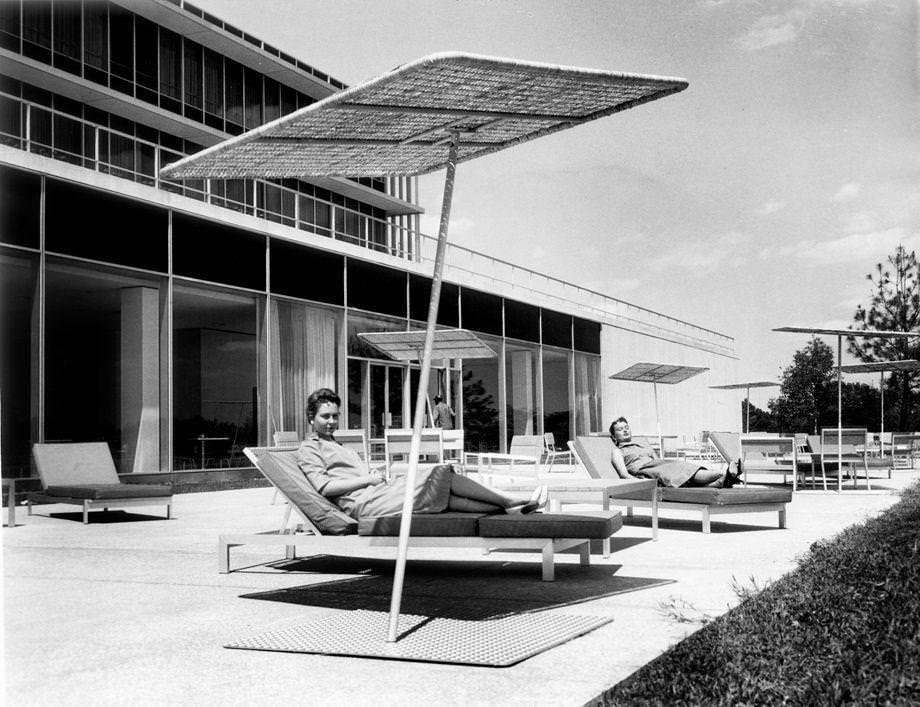
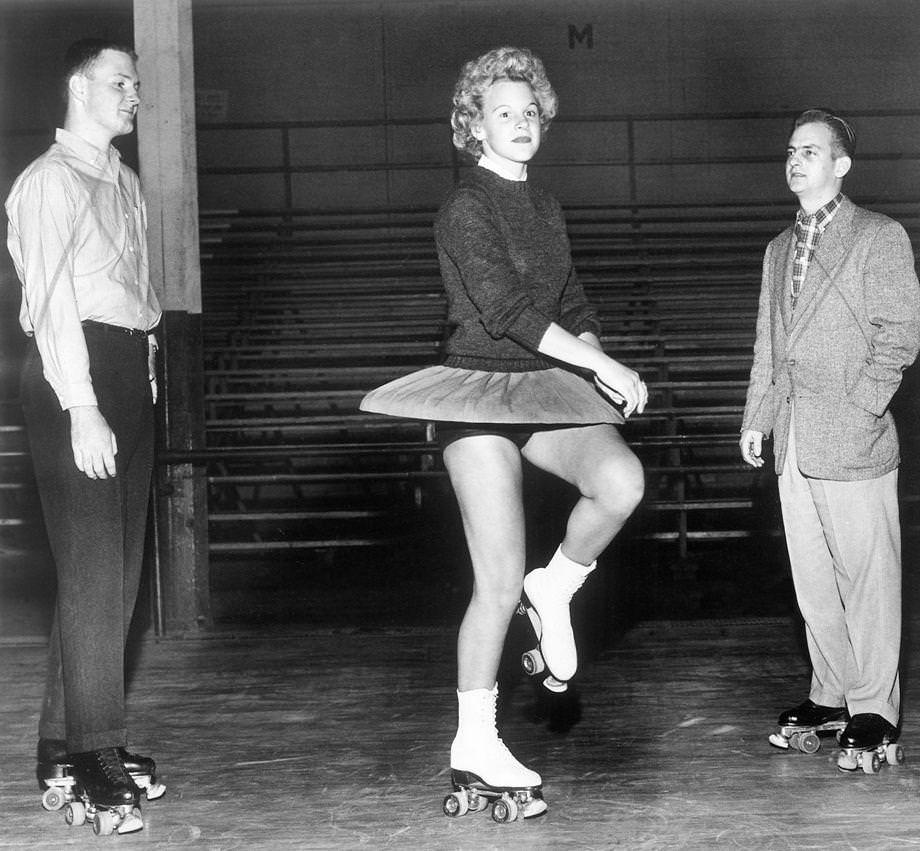
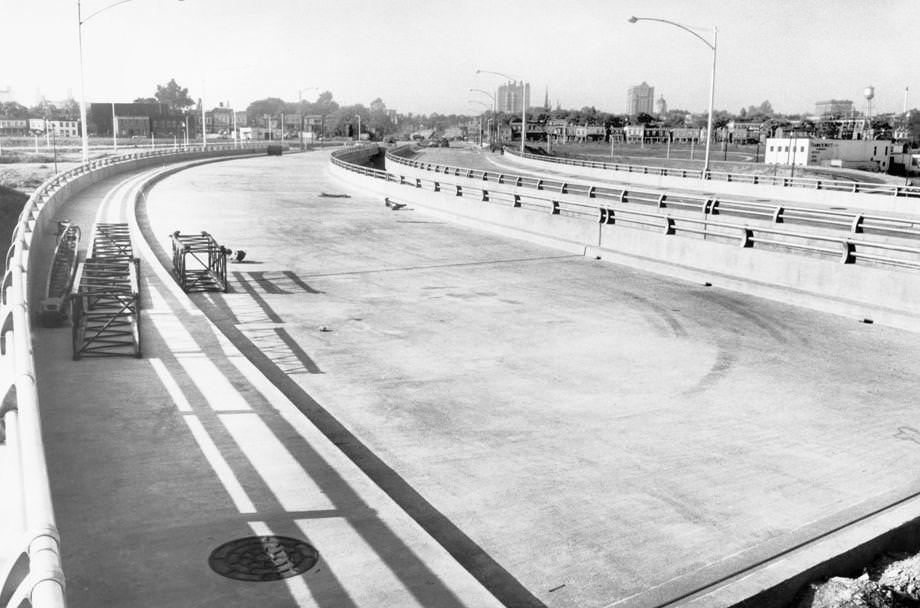
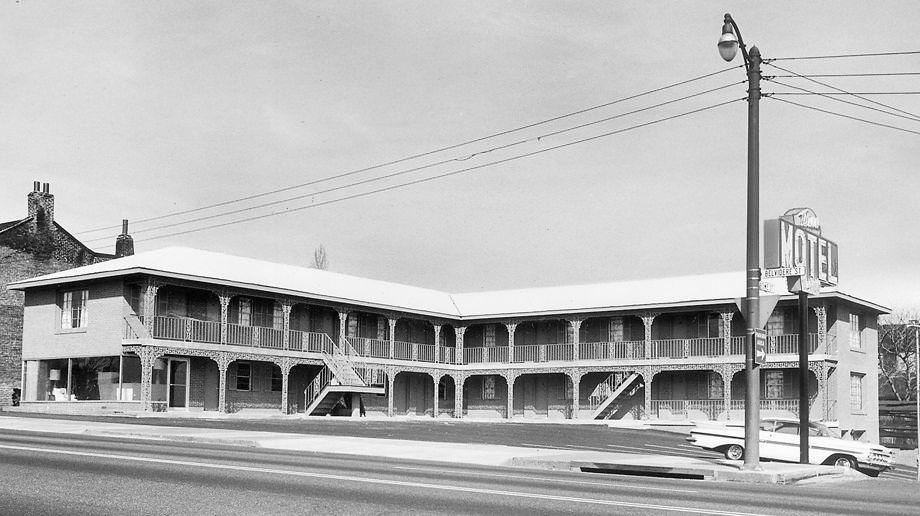
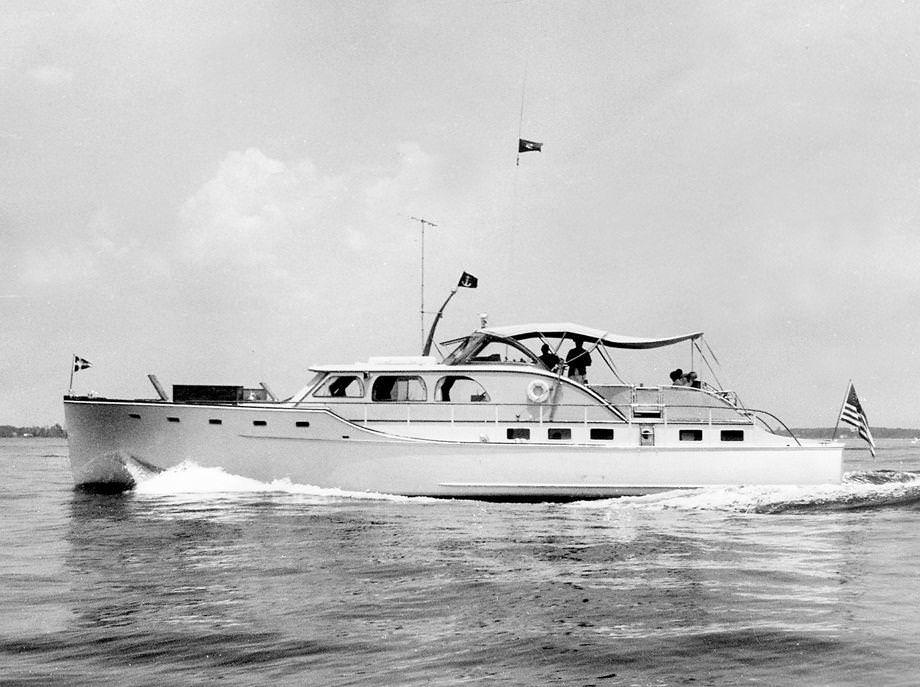
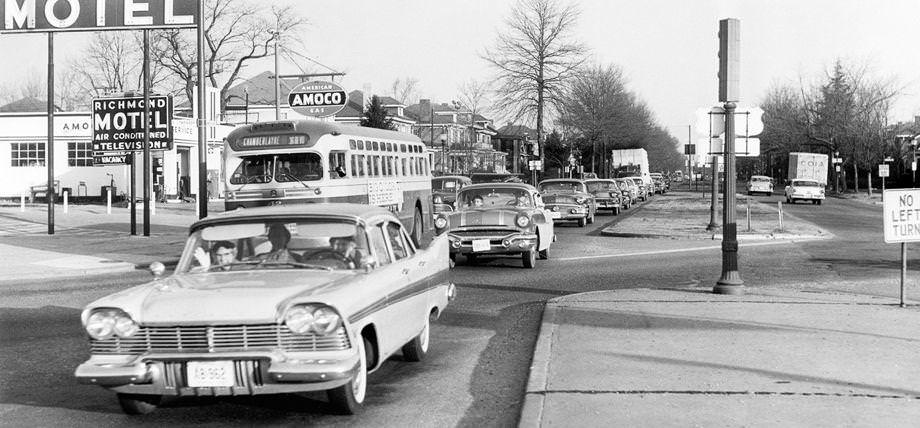
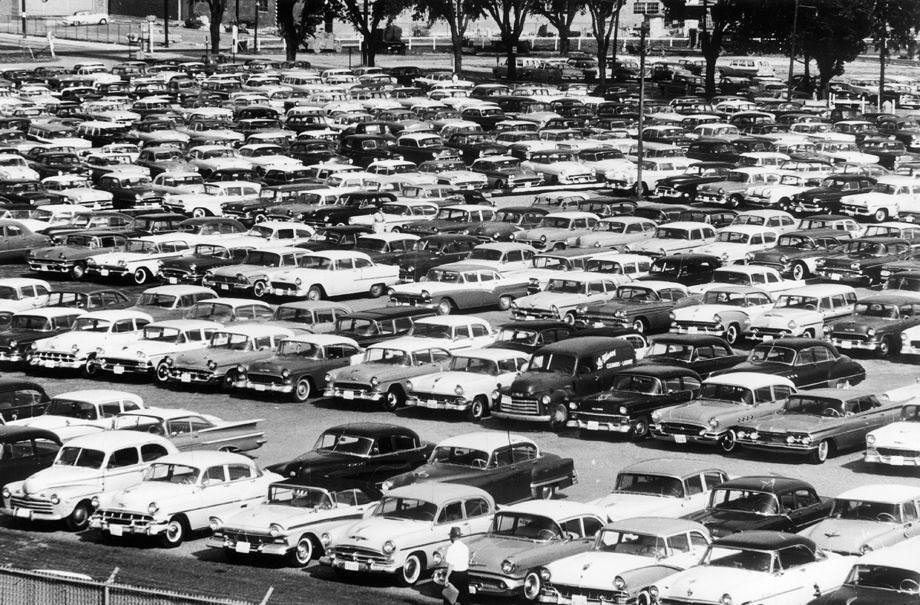
Reynolds Metals Co. employees Ethel Blue (left) and Bonnie Foy enjoyed some sun at the company’s new office space in Henrico County, 1958.The Richmond skyline from the south bank of the James River, 1959.Cars were parked along 17th Street in Richmond looking toward Main Street, 1959.Judy Moss, a Hermitage High School freshman took a spin on roller skates as she practiced her routine at the Arena, a roller-skating rink at Boulevard and Hermitage Road, 1958.A bridge that was part of a Belvidere Street extension project near Chamberlayne Avenue in Richmond neared completion, 1958.The Town Motel had just opened at Belvidere and Rowe streets near the Virginia War Memorial in Richmond, 1959.George Richardson of Richmond glided along the Rappahannock River in his yacht, Hummingbird, 1958.A line of vehicles moved along Chamberlayne Avenue at Lombardy Street on Richmond’s North Side, 1958.Cars filled the parking lot at Parker Field as about 6,500 people watched the Richmond Virginians split a double-header with the Buffalo Bisons and retain the lead of the International League, 1959.
Horses hadn’t entirely disappeared from Richmond’s streets even by the late 1950s. In 1958, a runaway horse pulling a coal delivery wagon on Church Hill spooked at a loud noise and galloped through the streets for five minutes before its wagon clipped a parked car near Jefferson Avenue and 23rd Street, shattering its windshield and rear window.
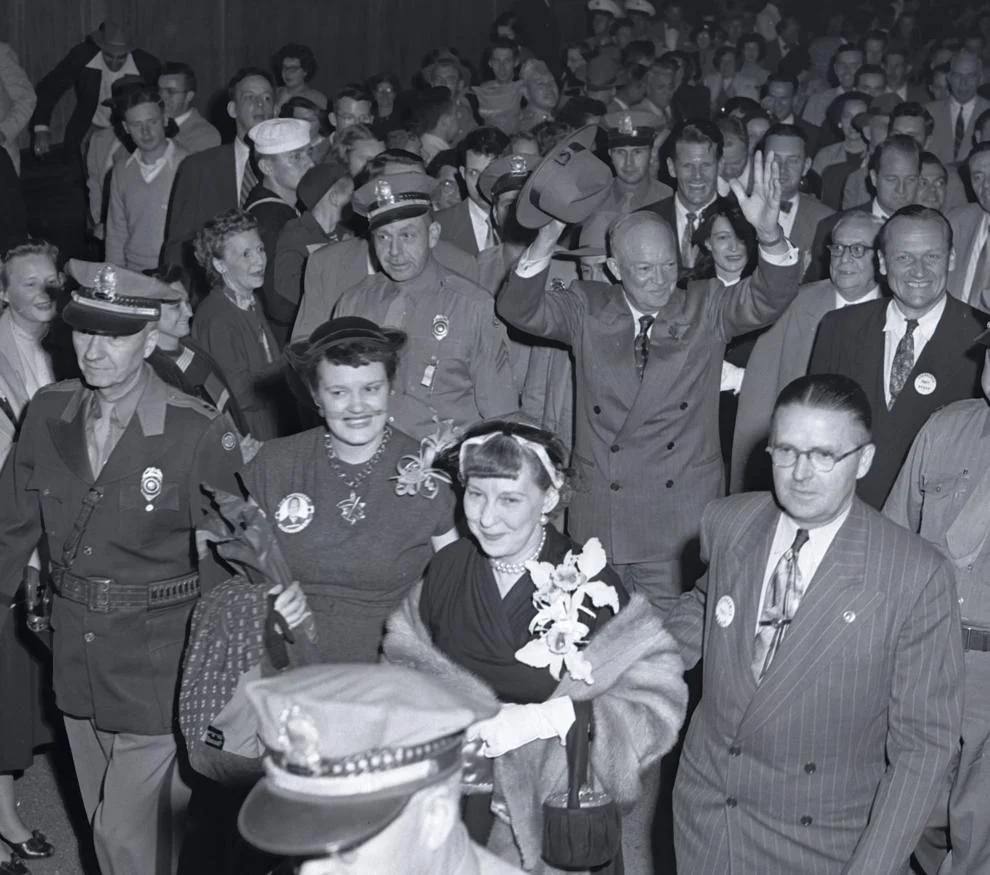
This horse and wagon raced through the streets of Church Hill in Richmond before stopping after hitting a car, 1958.Buildings at Fifth and Marshall streets in downtown Richmond that were soon to be razed to make way for a parking lot, 1958.Mamie Eisenhower, shown here in Richmond in the 1950s, glamorized cattleya orchid corsages like no first lady before or since.
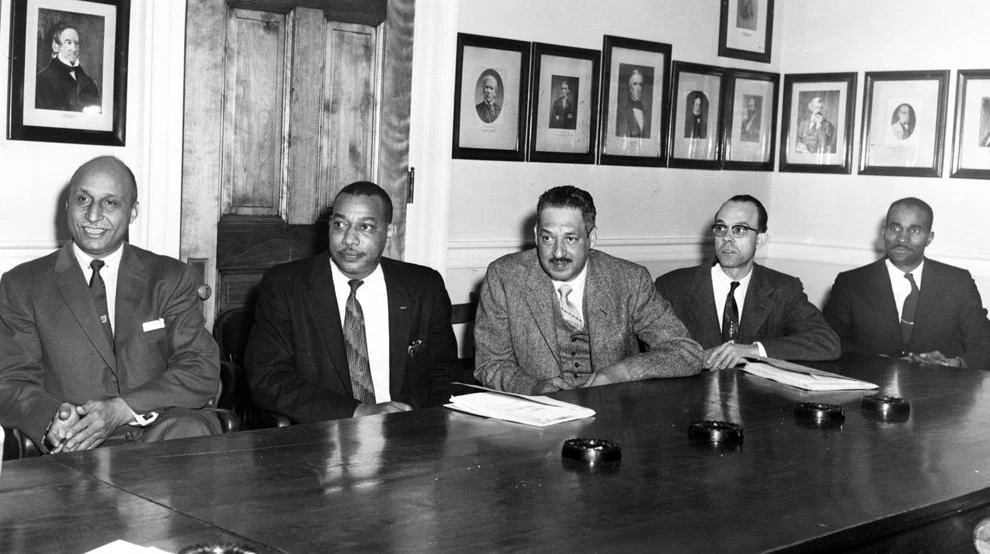
In 1957, the NAACP’s top leadership — including Thurgood Marshall and Oliver W. Hill Sr. — appeared before a Virginia General Assembly committee that was investigating the organization’s activities. It was one of the most visible confrontations between civil rights advocates and state government during Virginia’s period of Massive Resistance.
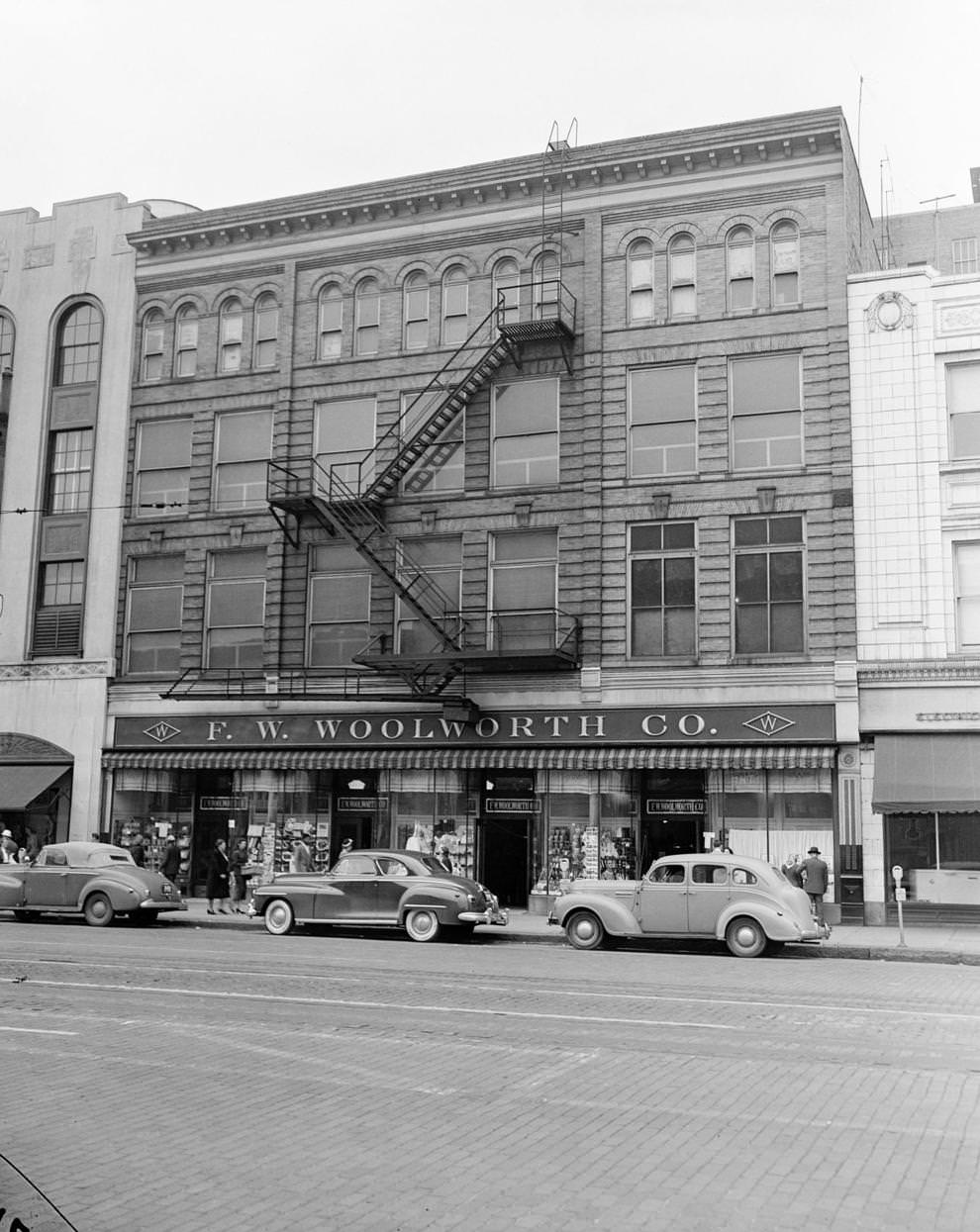
NAACP delegates waited to appear before a Virginia General Assembly committee that was conducting an investigation into the group’s activities, 1957.A view of the F.W. Woolworth Co. store at 509 E. Broad St. downtown in June 1950.
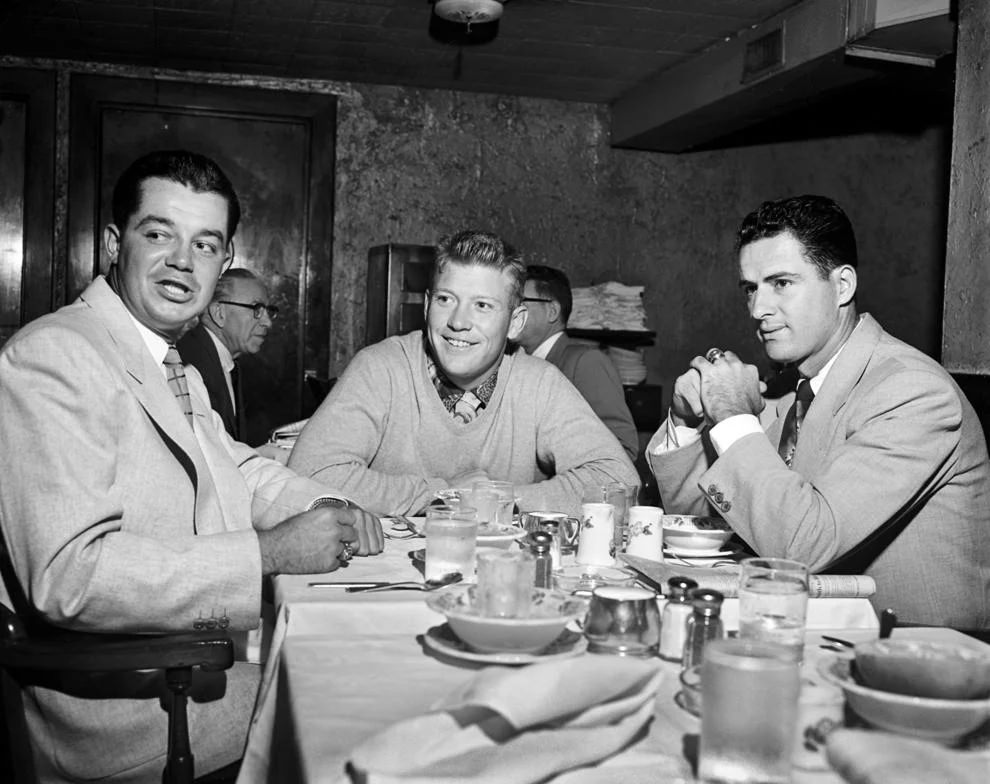
When the New York Yankees came to Richmond in April 1954 to open Parker Field, they brought Mickey Mantle with them. Before the game, Mantle had breakfast with teammates Bill Miller and Jerry Coleman at the Hotel John Marshall — a moment that planted a major league name briefly in the middle of Richmond’s minor league world.
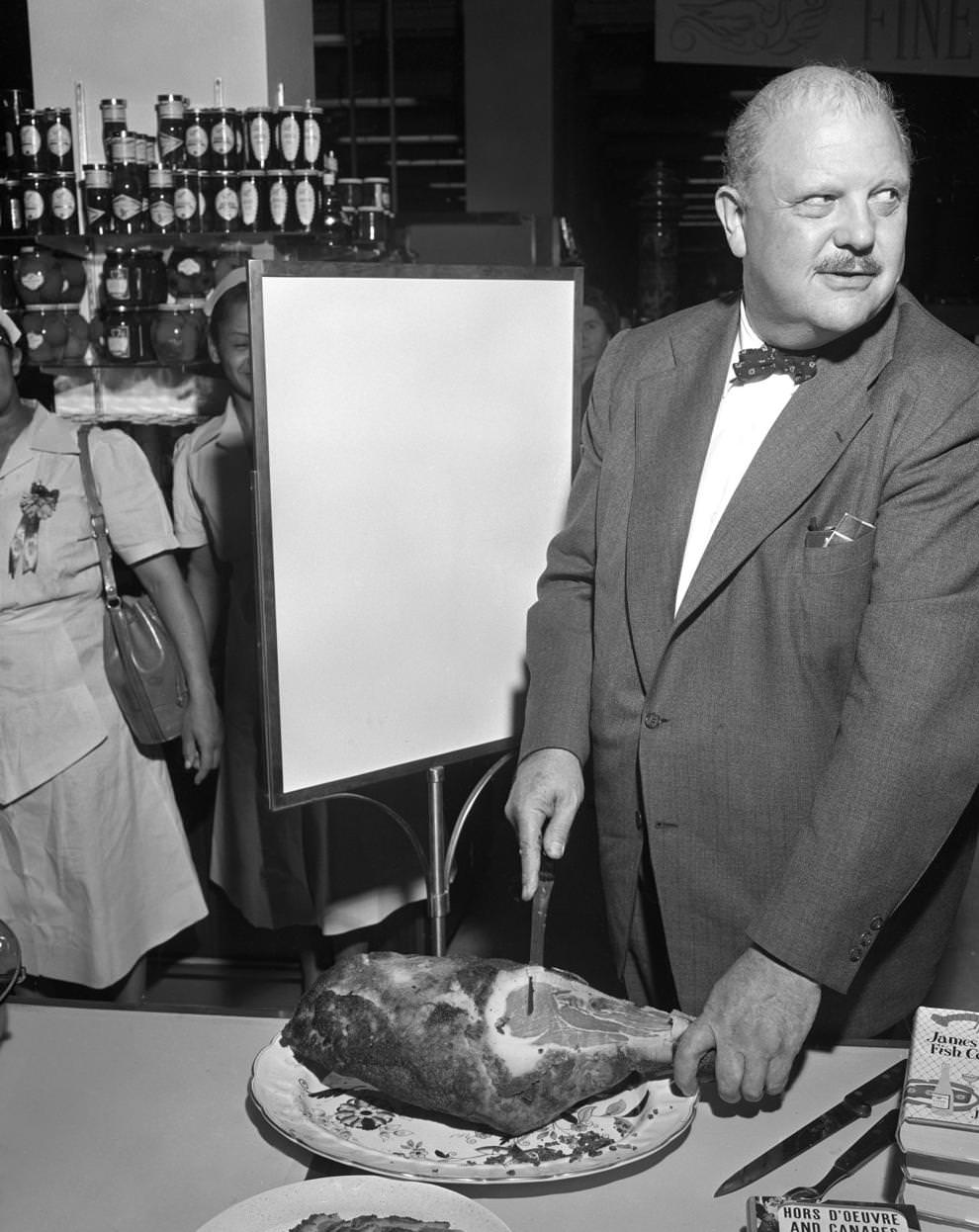
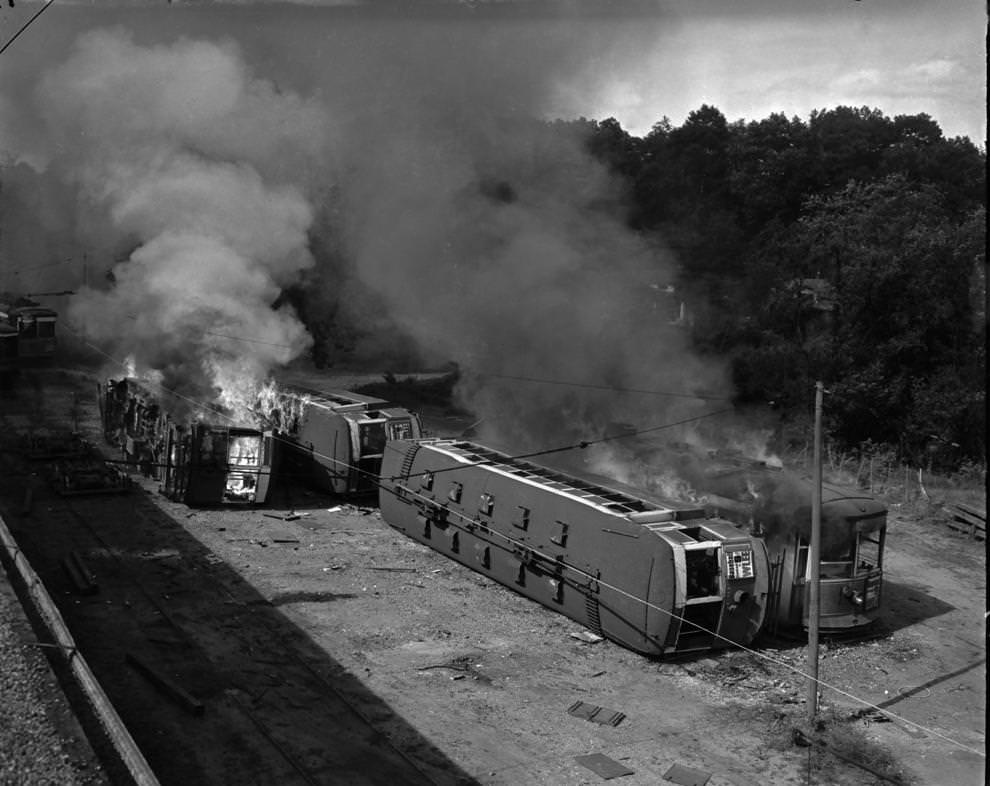
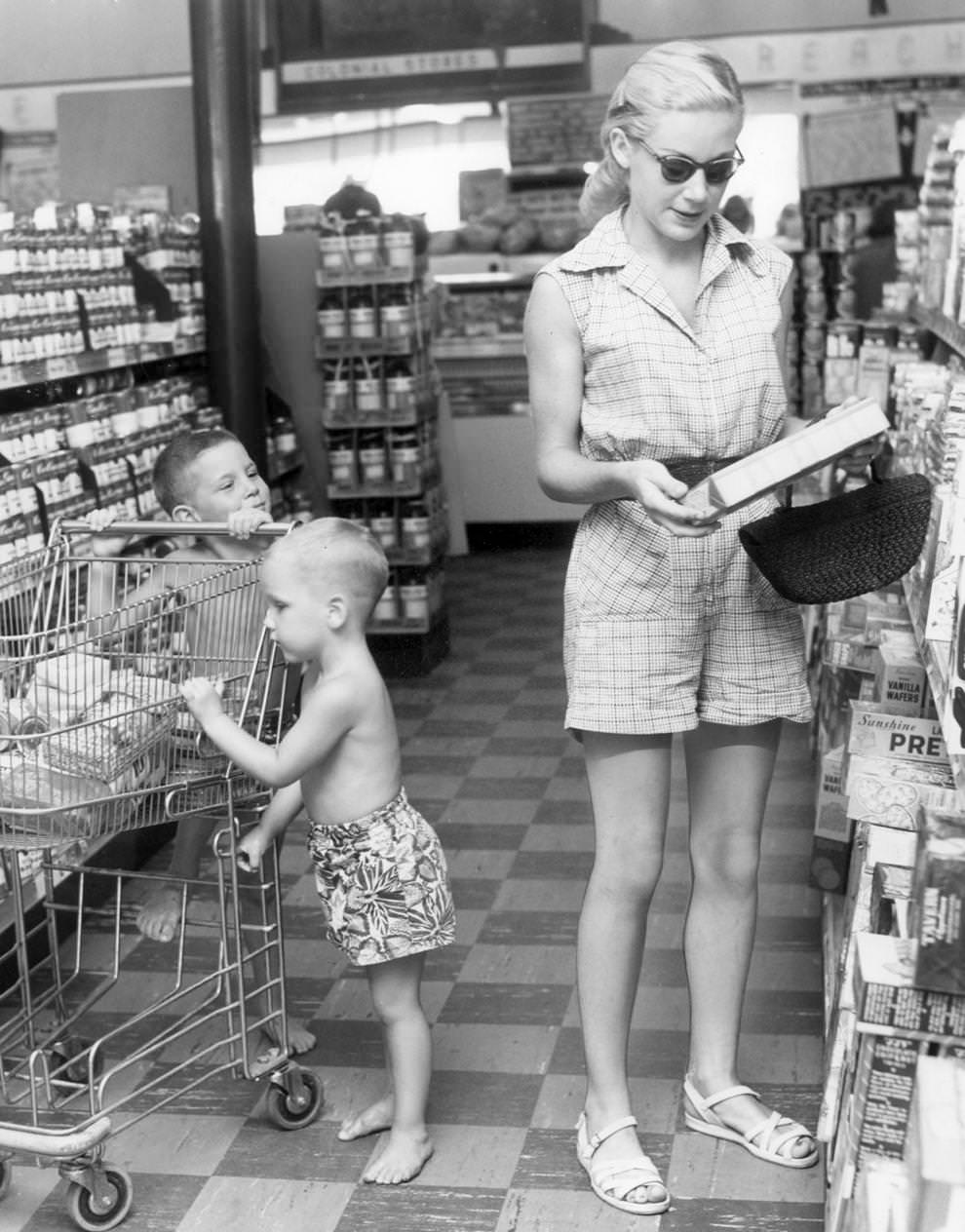
New York Yankee star Mickey Mantle (center) had breakfast with teammates Bill Miller (left) and Jerry Coleman at the Hotel John Marshall before the team played the Richmond Virginians on April 8, 1954, to open Parker Field.Famed chef James Beard visited Thalhimer’s new fine foods shop and conducted cooking demonstrations, 1955.Burning of Richmond street cars 1950.Floats in the National Tobacco Festival parade completed their promenade around City Stadium before the football game between the University of Richmond and Hampden-Sydney College, 1954.Miller & Rhoads, 1951Gleeful children left Ginter Park School in Richmond as they were dismissed for the summer months – though they did need to return a few days later for their report cards, 1950.The nation’s first 24-hour peacetime air raid alert system, called Operation Skywatch, began operation, 1952.Richmond homemaker G.F. Sutliff sported casual attire while shopping at a neighborhood market, 1953.
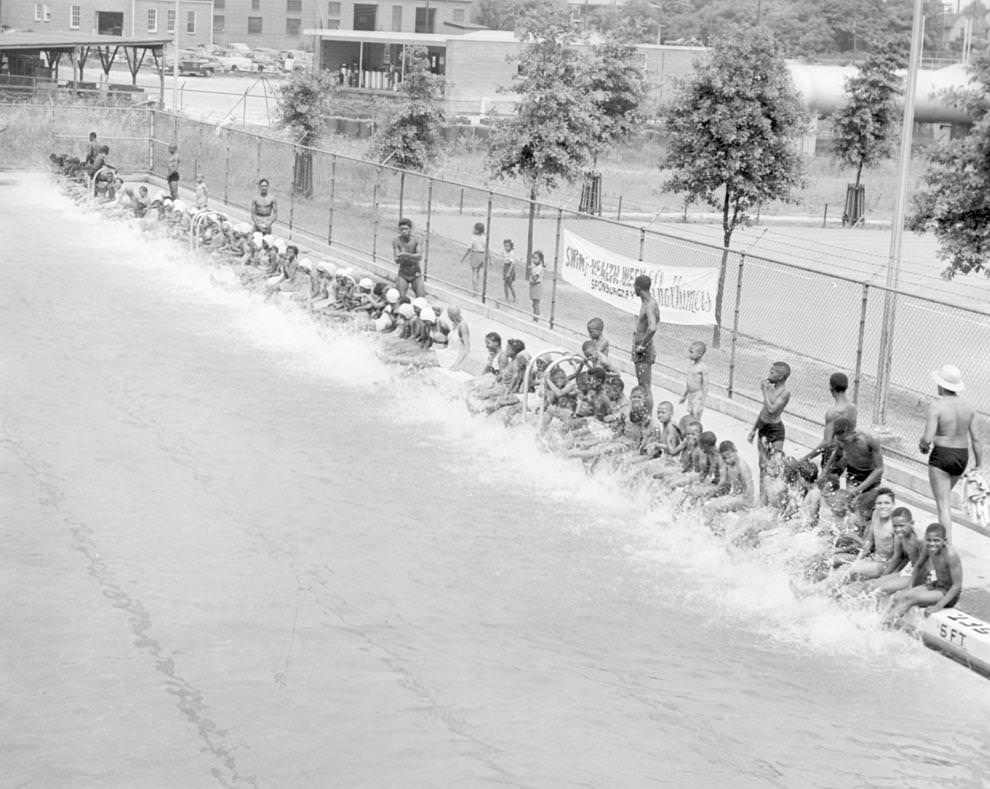
Brook Pool in Richmond held a special place in the city’s segregated landscape. During the era of segregation, it was the only public pool that served Richmond’s African-American population. Swim for Health Week events held there drew children eager to take part in structured lessons sponsored by Thalhimers and run by the city’s recreation department and the YMCA.
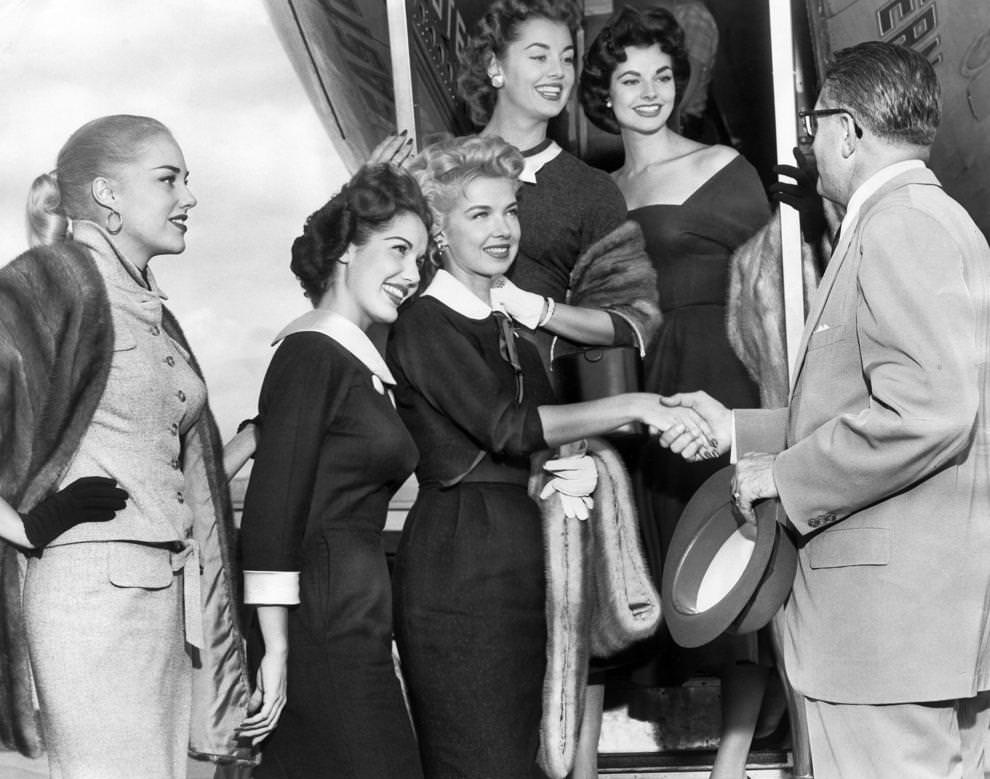
Children prepared for lessons at Brook Pool in Richmond as part of Swim for Health Week, 1950.Five members of the Goldwyn Girls, who made an appearance in Richmond during the National Tobacco Festival, bid farewell to a local representative, 1955.
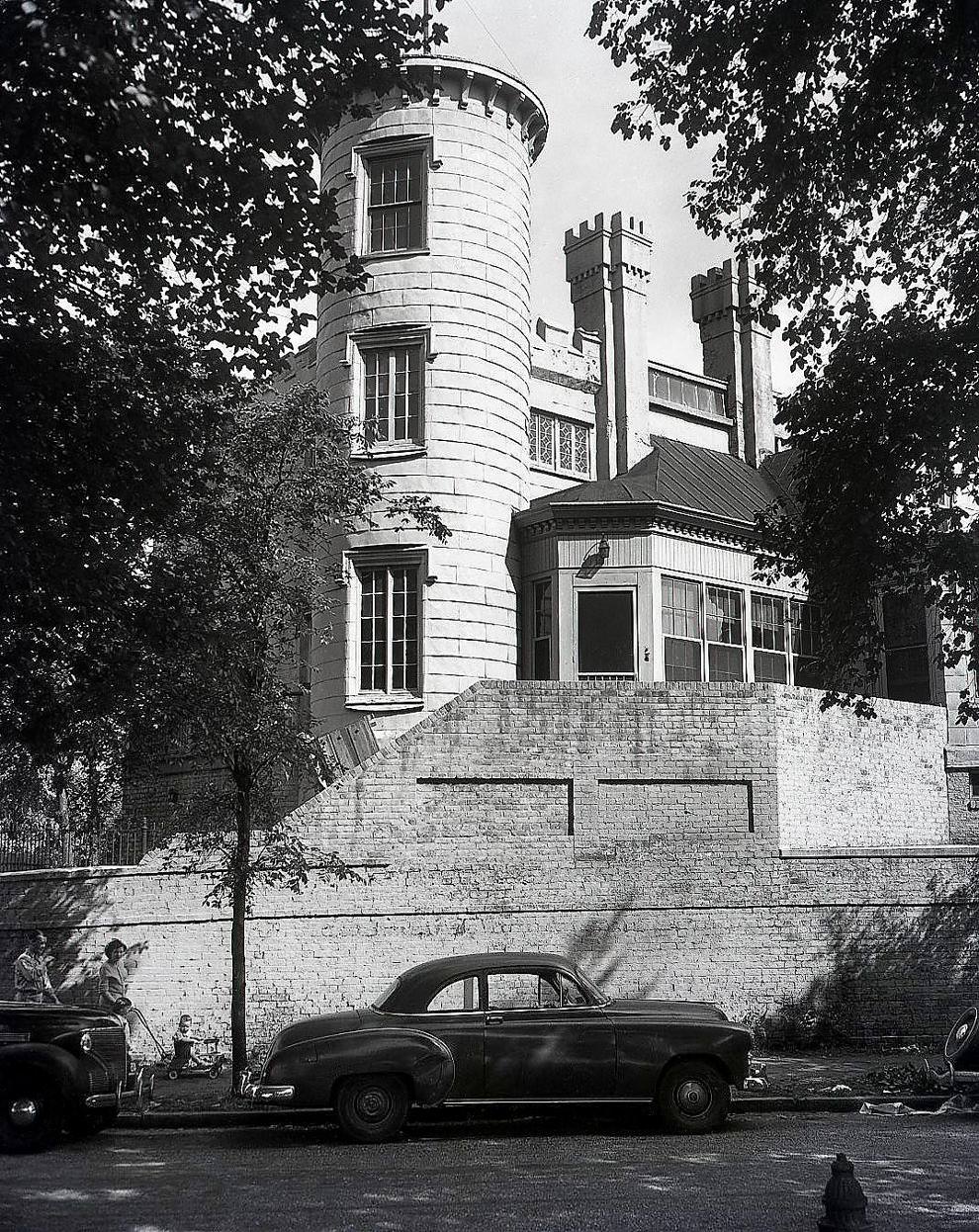
Among the architectural casualties of the 1950s was Pratt’s Castle on Gamble’s Hill — a private home built in the 1850s by William Abbott Pratt, who modeled it after the Scottish estates of his relatives. The distinctive structure, which overlooked the James River from the southern tip of Fourth Street, was demolished in the late 1950s to make way for the headquarters of what became Ethyl Corp.
Pratt’s Castle, built as the Richmond private home of William Abbott Pratt in the 1850s.
A curb boy at Arnette’s Ice Cream Co., served Beverly Page French a banana split, 1950.
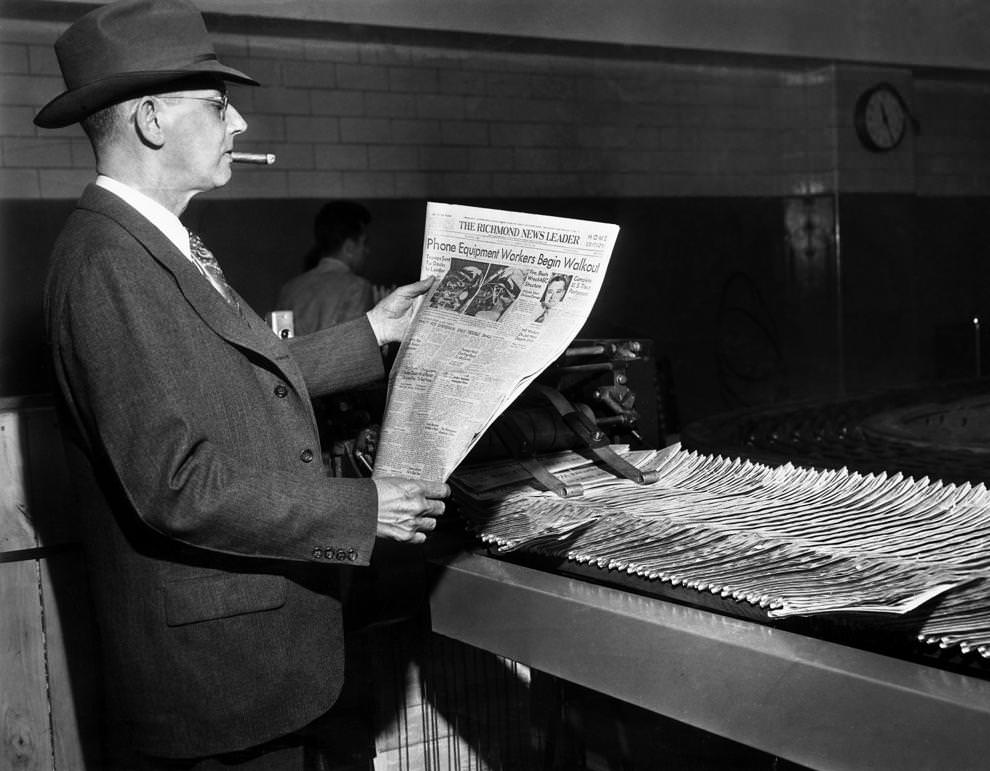
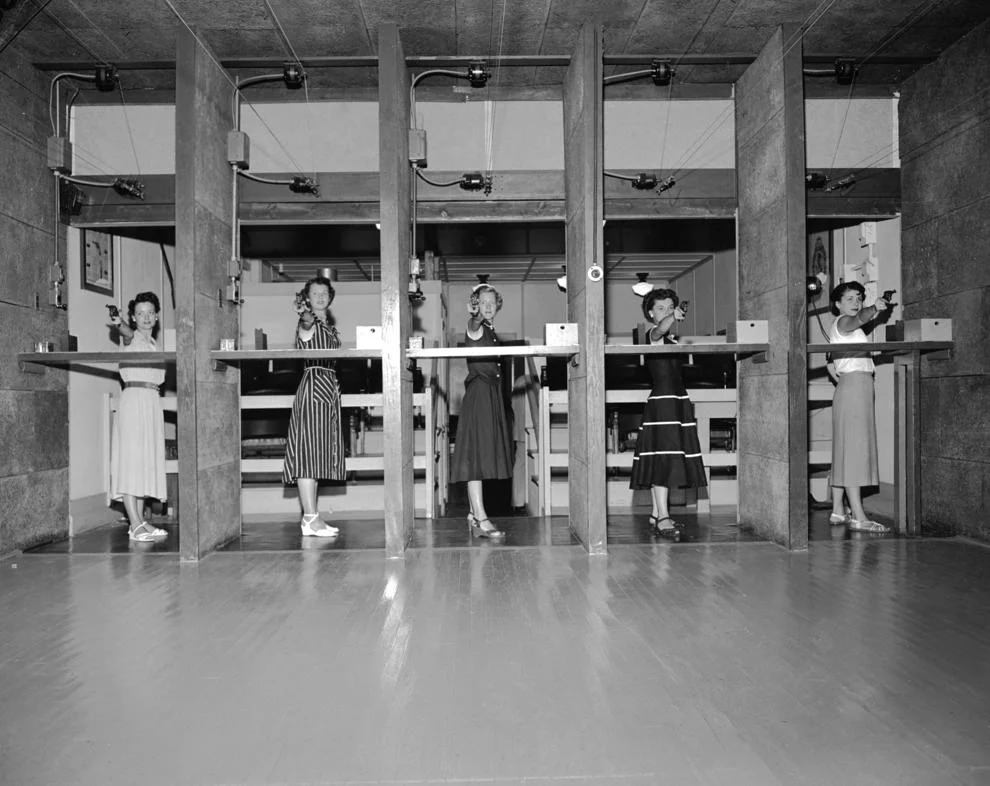
Richmond News Leader city circulation manager E.H. Collins examined one of the first papers to come off the new press, 1950.“Teen Age Party,Richmonders attended a square dance at the Byrd Park tennis courts to kick off Park and Recreation Week. Other events included festivals, concerts, games and exhibits, 1954.Byrd Field dedication, 1950On the police range at the mosque are policewomen Martha Jackson (left), Thelma Wilkinson, Dorothy Tyler, Mary Berry, and Virginia Galyano. Note to LB: From the RVA News website: Since taking over ownership, the city has used the mosque in several ways, 1950s.
On October 13, 1958, Richmond witnessed something that only three previous generations had seen. Officials from the Southern, Seaboard, and Chesapeake and Ohio railroads coordinated their schedules to produce a triple crossing — three trains passing simultaneously at the same point. The event drew rail enthusiasts from Richmond and beyond.
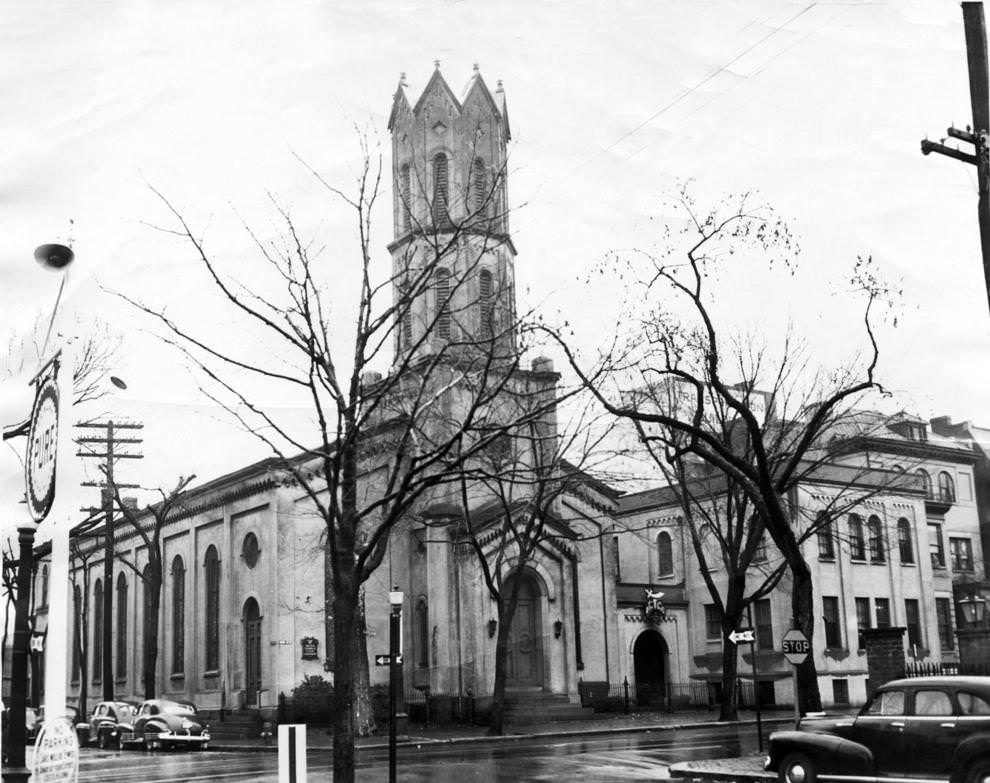
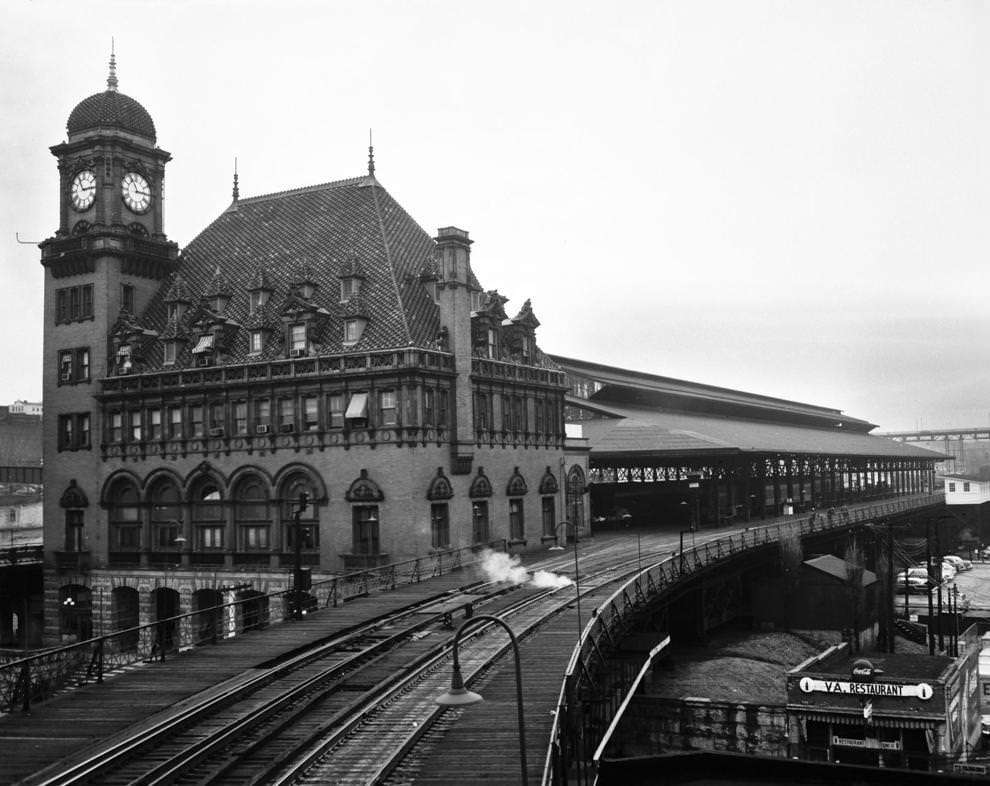
Just before 2 p.m., a rare triple railroad crossing was organized in Richmond, 1958.The building, at Madison and Grace streets in Richmond, that once sat downtown and housed First Presbyterian Church, 1955.Main Street Station downtown at a time when there was discussion about moving all passenger train traffic to Broad Street Station, 1958.Virginia Randolph attended the cornerstone-laying ceremony for a $262,000 addition to the former one-room schoolhouse in Glen Allen that she started in 1892 and that was named for her, 1950.
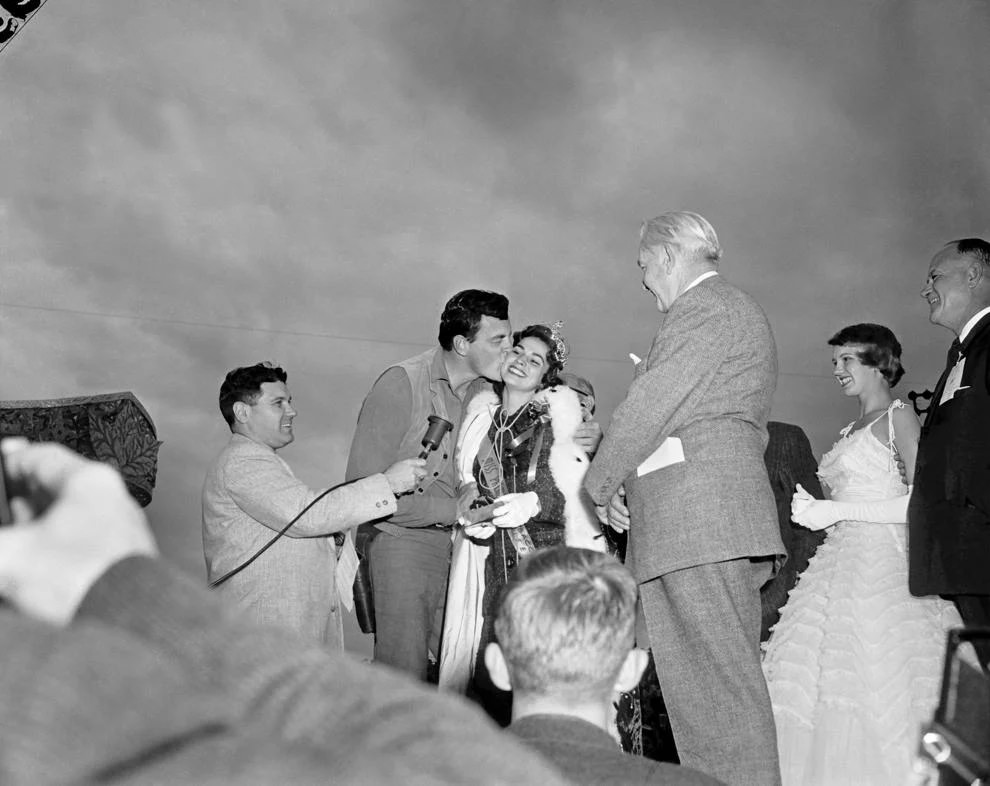
The National Tobacco Festival attracted national celebrities as grand marshals throughout its run. In 1958, James Arness — who played Matt Dillon on the hit television series “Gunsmoke” — served in the role and was photographed kissing that year’s Tobacco Queen, Judy Ann Austin, at the event.
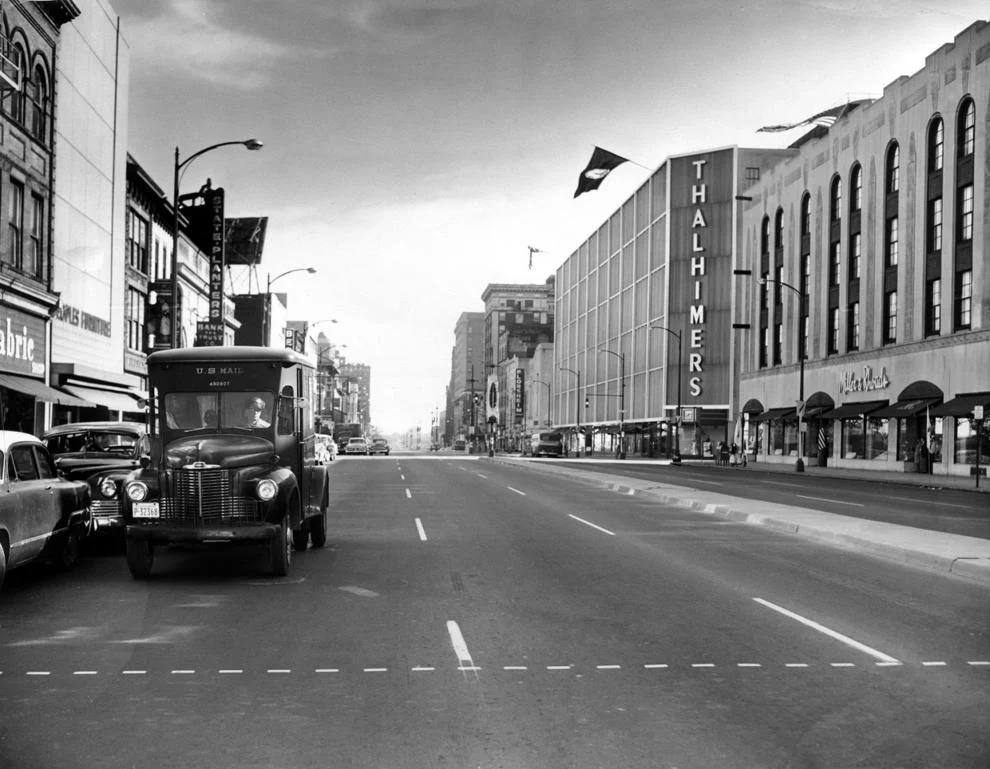
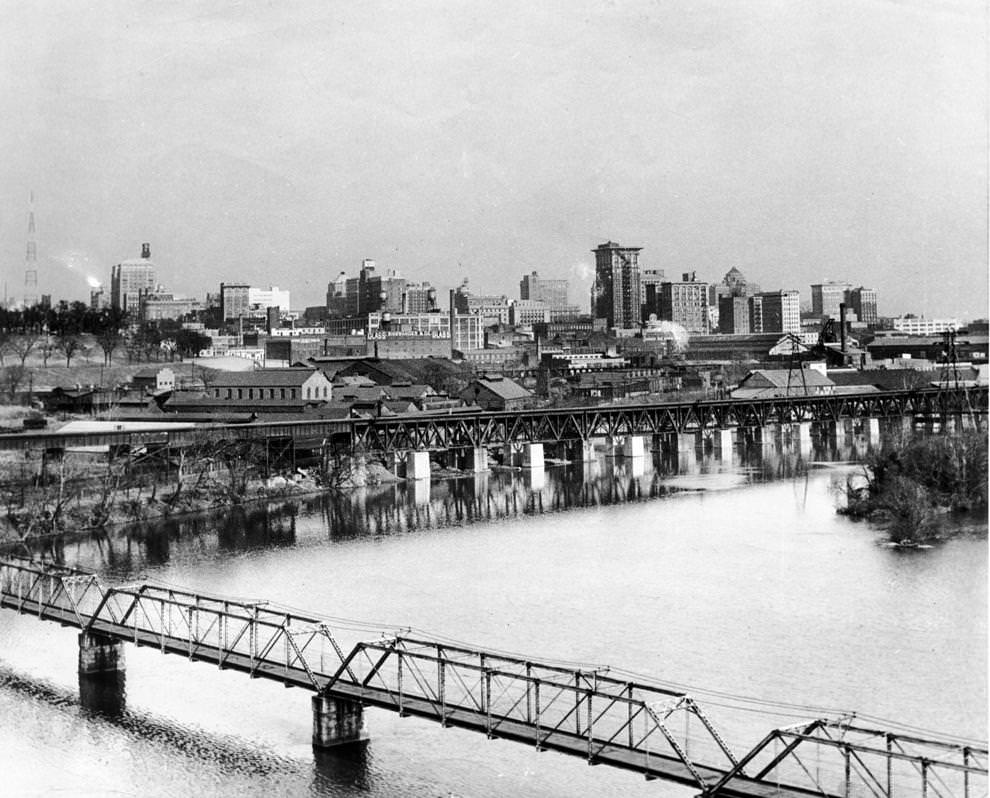
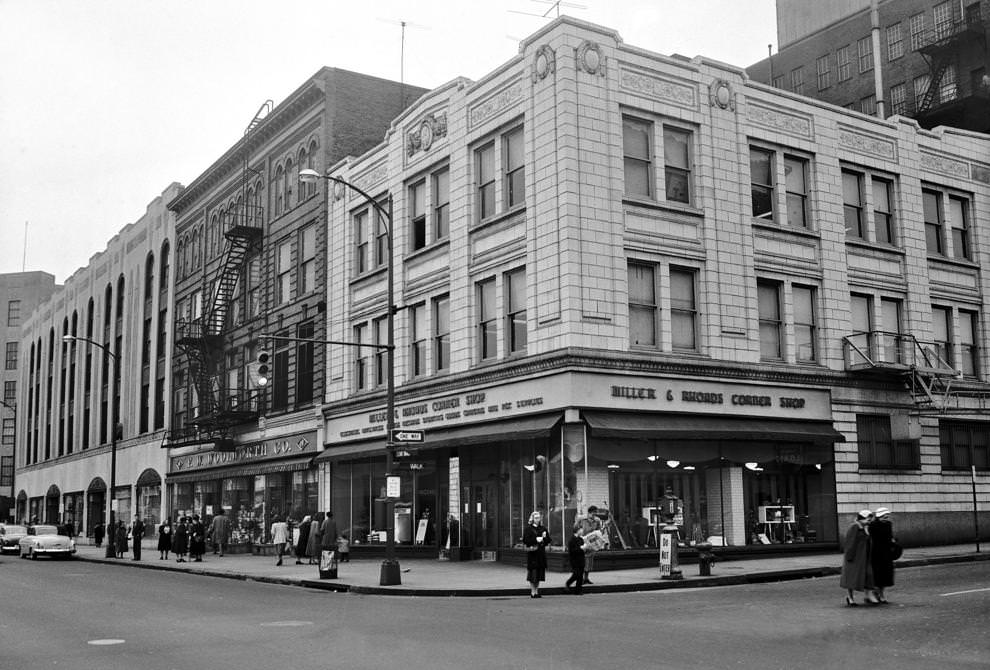
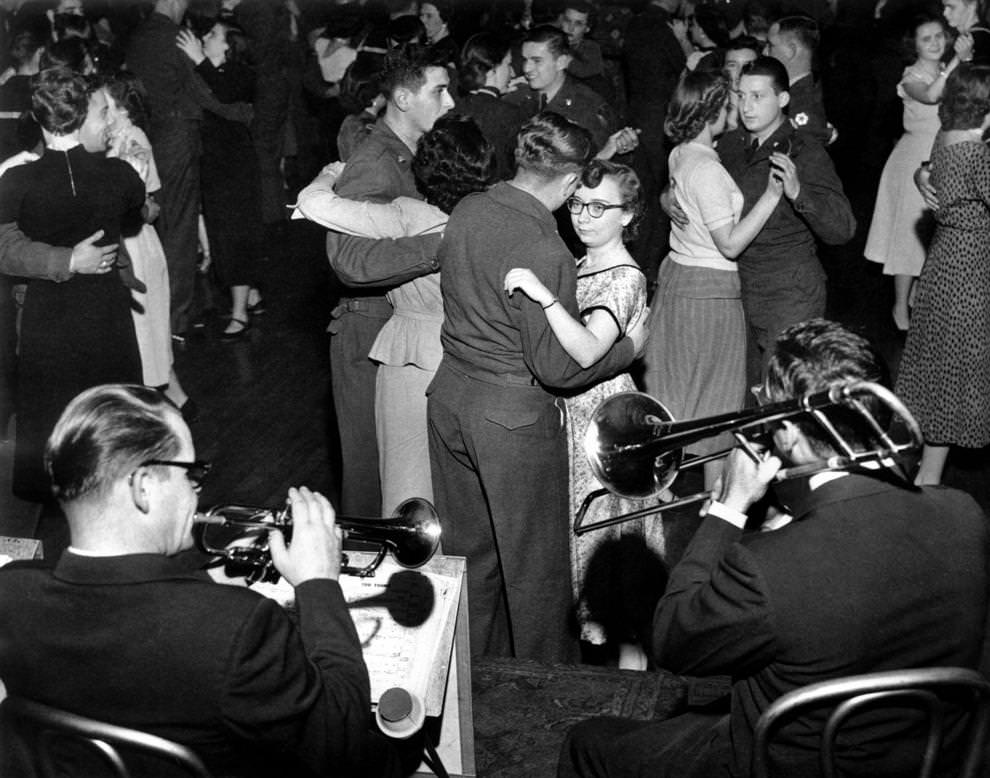
National Tobacco Festival parade grand marshal James Arness (Matt Dillon from TV’s “Gunsmoke”) gave a kiss to that year’s Tobacco Queen, Judy Ann Austin, 1958.Mrs. M.S. Jackson, one of Richmond’s first full-fledged female traffic officials with full police authority, worked at Seventh and Grace streets downtown, 1952.A U.S. mail truck navigated Broad Street downtown across from the Thalhimers and Miller & Rhoads department stores, 1955.The Richmond skyline as seen from the south end of the Lee Bridge, 1951.The old Miller & Rhoads Corner Shop and the adjoining Woolworth’s at Fifth and East Broad streets downtown, just before they were torn down, 1953.Richmond’s Lady Wonder indicated that a mute 6-year-old Rhode Island boy, missing for more than two months, was alive but hurt and could be found in Kansas, 1952.Hundreds of dancers crowded the floor of the Winter Garden at the Hotel Richmond to mark the first anniversary of a series of Saturday night hotel dances for military members, 1951.
The Virginia War Memorial was dedicated despite the statue “Memory” still being unfinished, 1951.
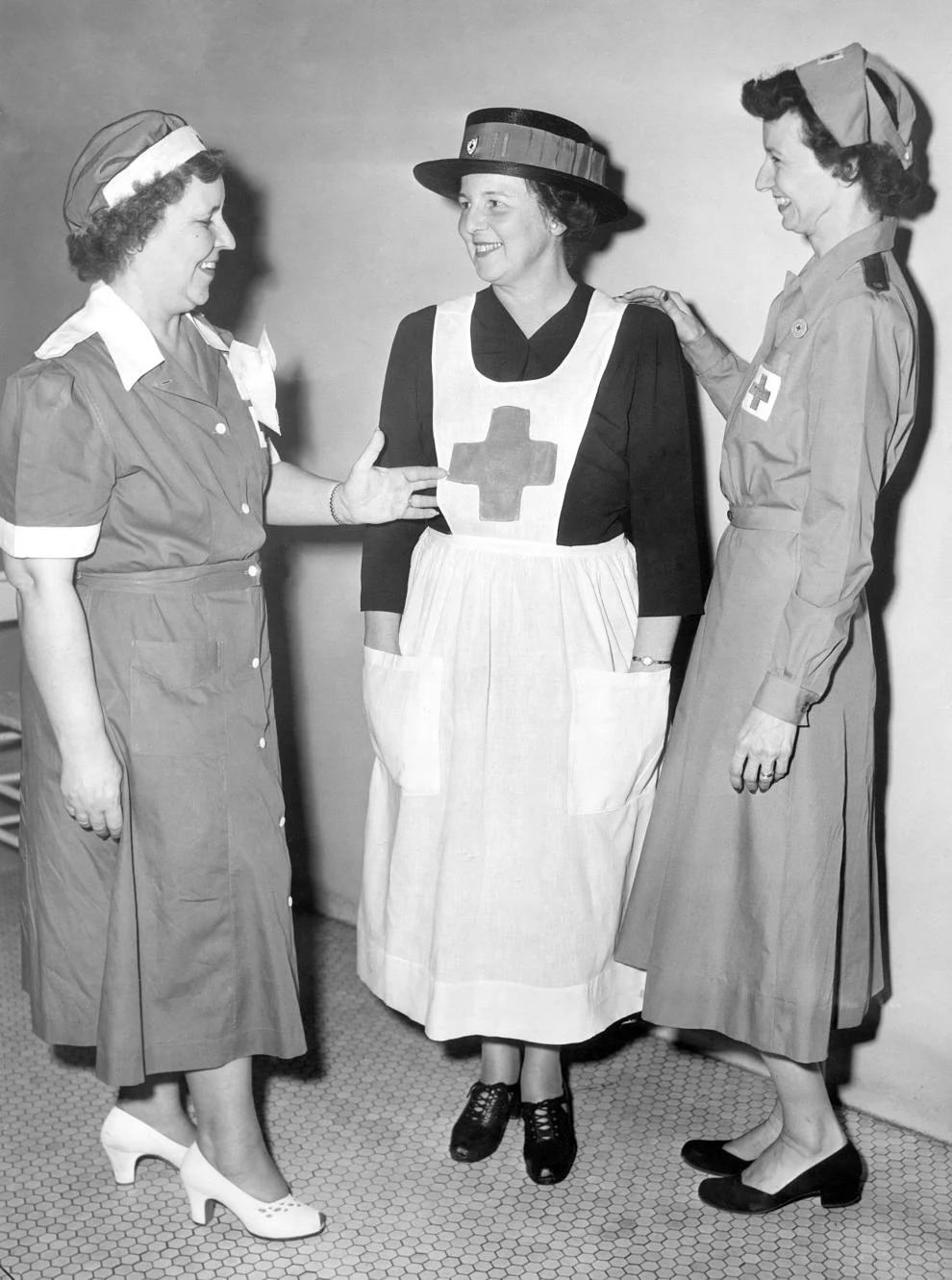
Three American Red Cross canteeners, representing three war periods, gathered for the Richmond chapter’s rally marking the graduation of the first group of canteeners to be trained since World War II, 1951.
The decade ended with Richmond still in motion — roads under construction, suburbs expanding, schools filling up, and the social order being challenged in ways that would reshape the city in the years ahead. These photographs preserve the texture of those years: ordinary days in a city that was anything but ordinary.
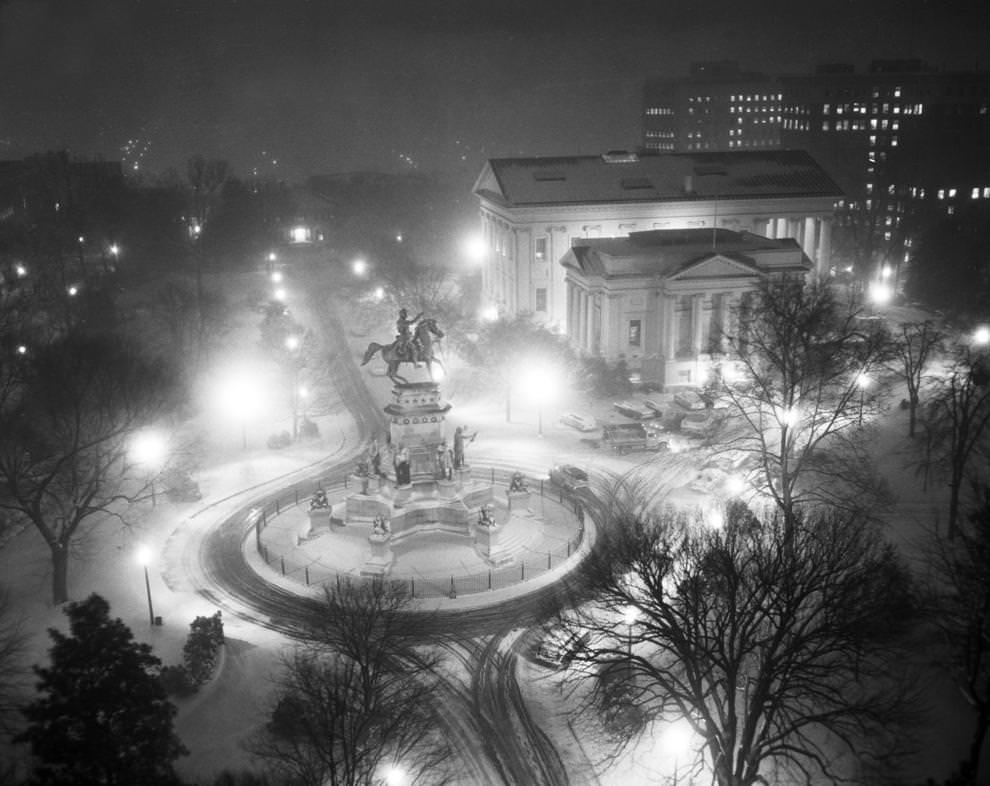
The Richmond area received about 7 inches of snow, creating a memorable nighttime image of the George Washington equestrian statue at Capitol Square downtown, 1958.
Kevin Clark is a historian and writer who is passionate about sharing the stories and significance behind historical photos. He loves to explore hidden histories and cultural contexts behind the images, providing a unique insight into the past.






great collection. Seems weird,but understandable given the times, that there are so few pictures of blacks. Lots of grand times for some…
What a gift to discover this treasure trove link of the Richmond I well remember as a young girl!!! Thank you! Thank you!