Hey There! Before You Go. 😧
Get the best vintage content straight into your inbox!

Don't worry, we don't spam

The Lost Fishing Culture of the 1950s Portugal Through Fascinating Historical Photos

Portugal’s relationship with the sea goes back more than two thousand years. When the region was known as Lusitania under Roman rule, its coastal towns were already built around fish. The harbor of Lacobriga — today’s Lagos — exported garum, a fermented fish sauce that Romans prized highly, all the way to the capital. The ruins of a Roman garum factory still stand in Lisbon’s old quarter, a physical reminder of just how far back this fishing tradition runs.

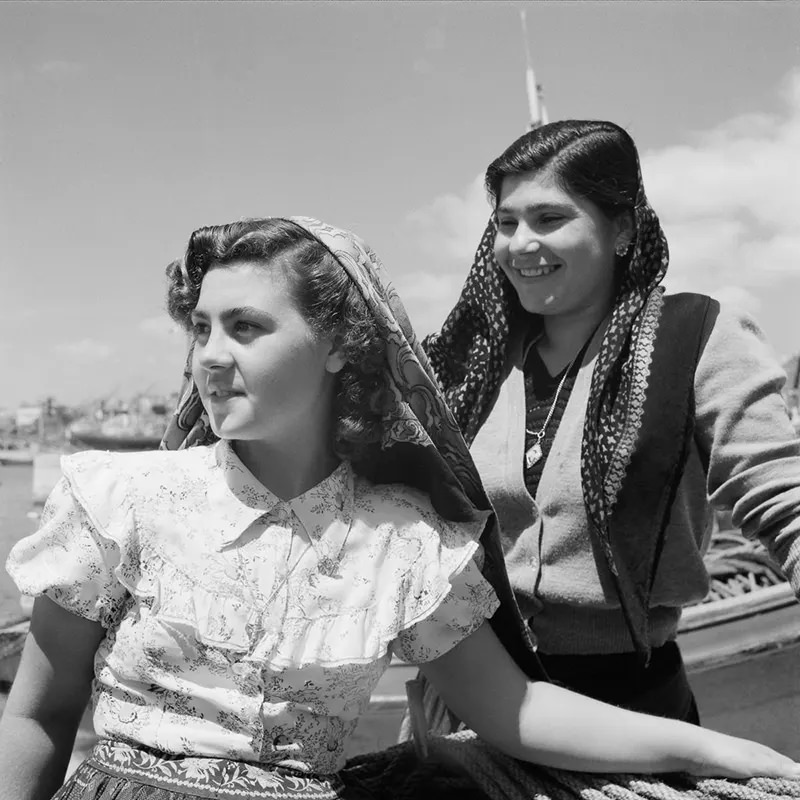
By the 1950s, that ancient connection to the sea was still alive along Portugal’s Atlantic coast. Fishing villages like Nazaré, Ericeira, Peniche, and Cascais operated much the same way they had for generations. The methods were simple, the tools were handmade, and the work was shared by entire communities — men, women, and children alike.
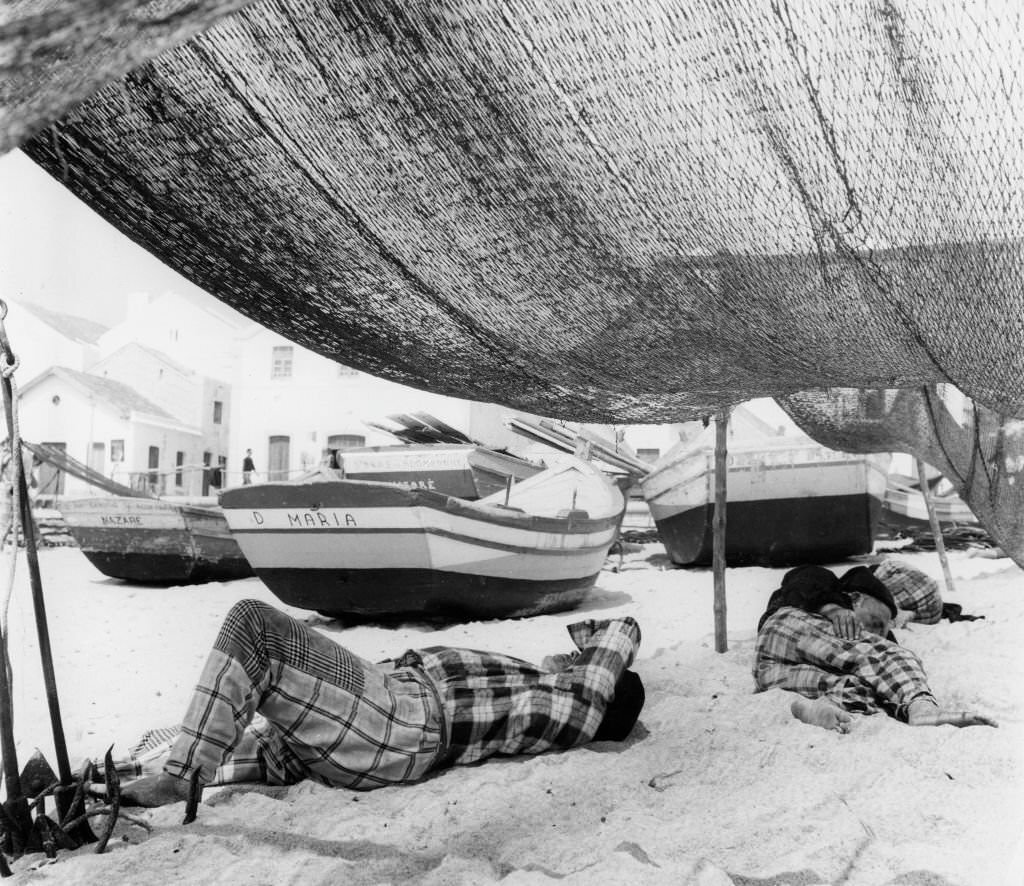
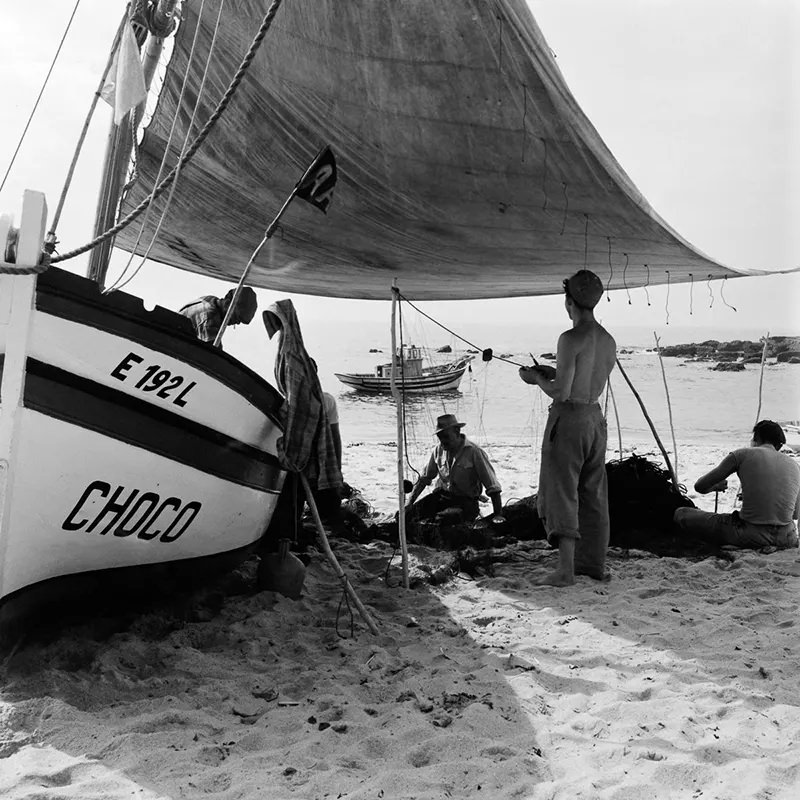
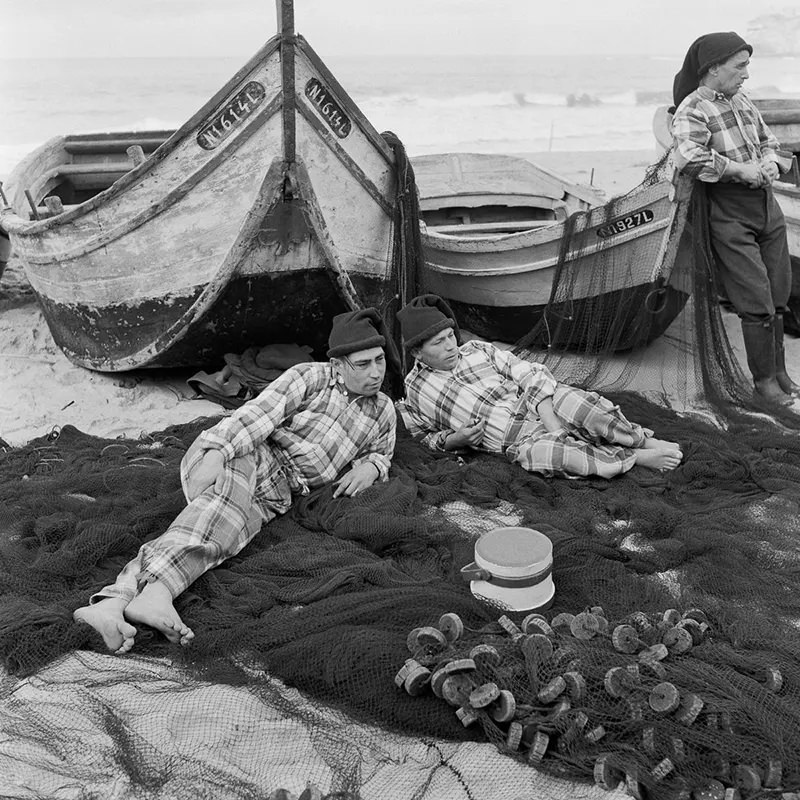
Portugeuse fishermen in traditional checks having a siesta underneath their nets on the beach at Nazare, 80 miles north of Lisbon, 1958

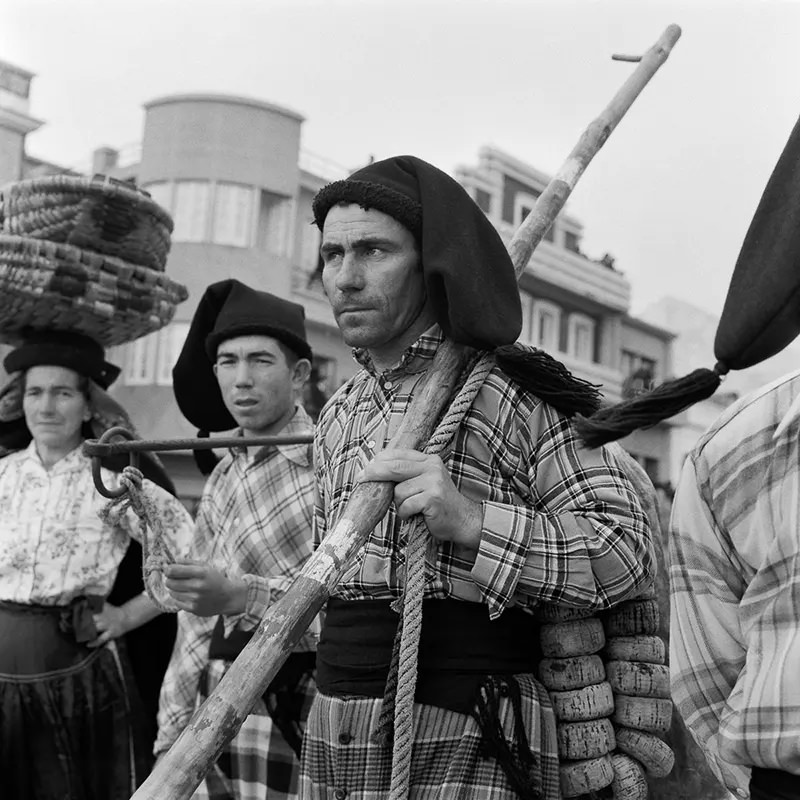
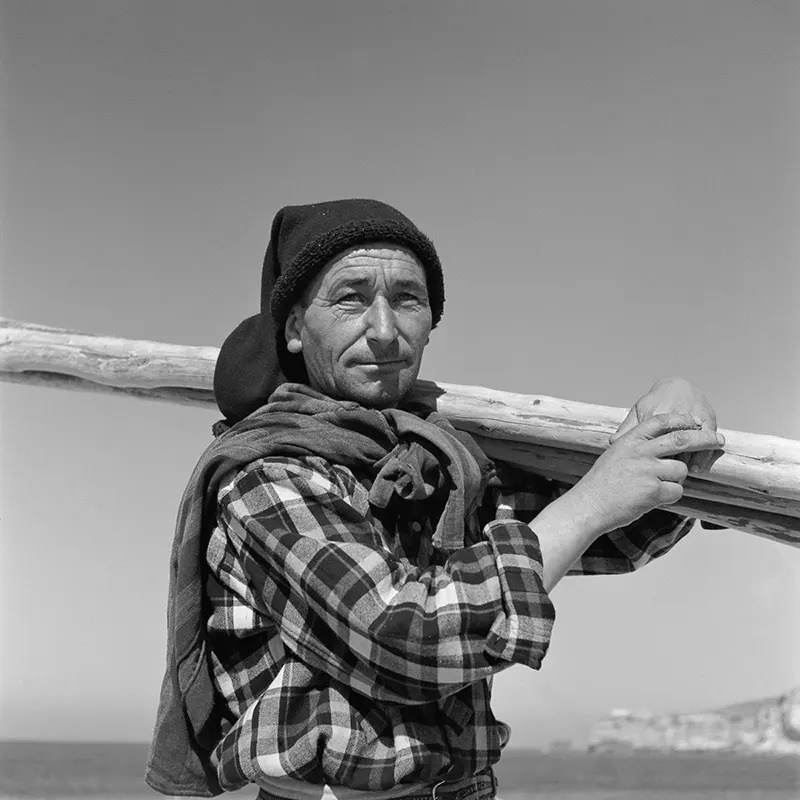
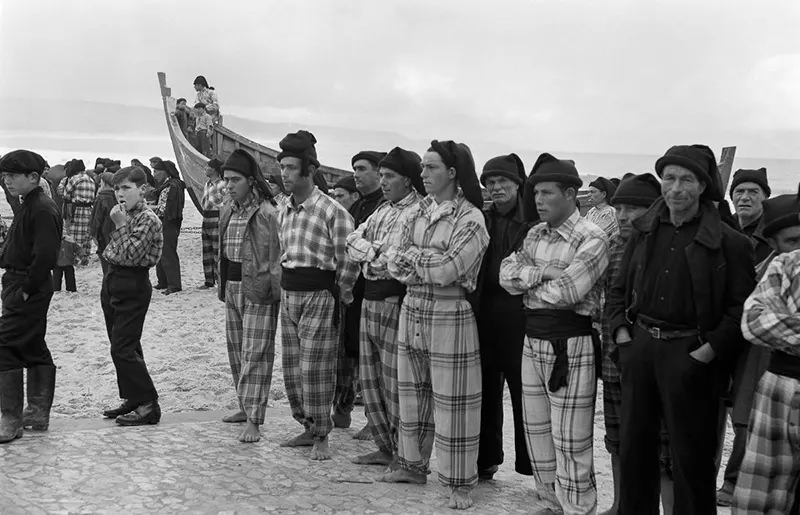
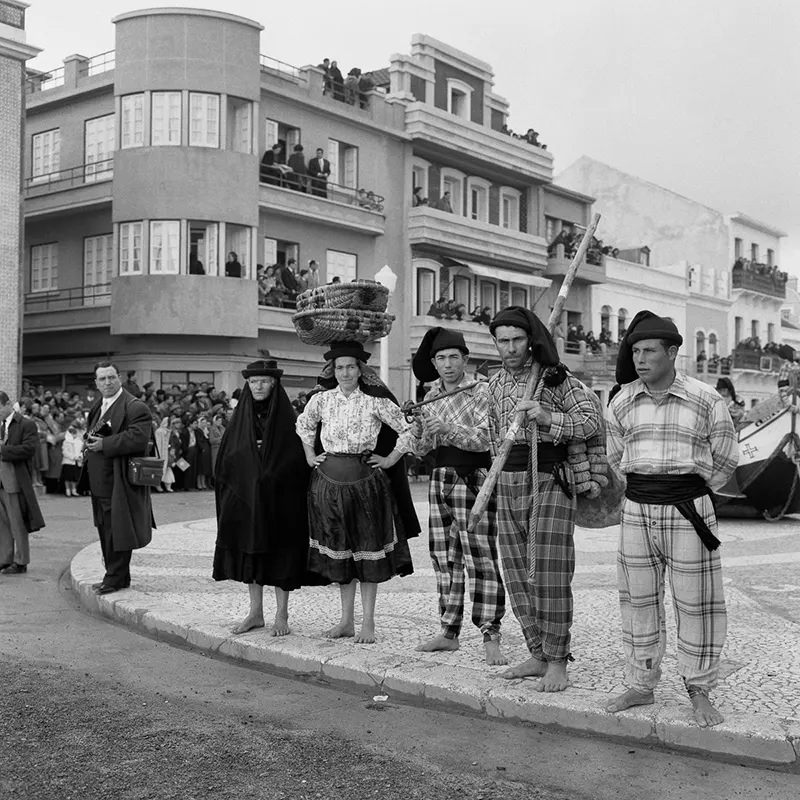
The fishermen of Nazaré were easy to recognize. They wore checkered shirts and long woolen hats — a distinctive look that set them apart from fishermen in other parts of Europe. Their boats were open wooden vessels called saveiros, roughly 15 feet long, built for working close to shore. These men went out at night, using bright spotlights and sardine bait to draw schools of mackerel and horse mackerel toward the surface, where large seine nets — launched between two boats — would close around them.
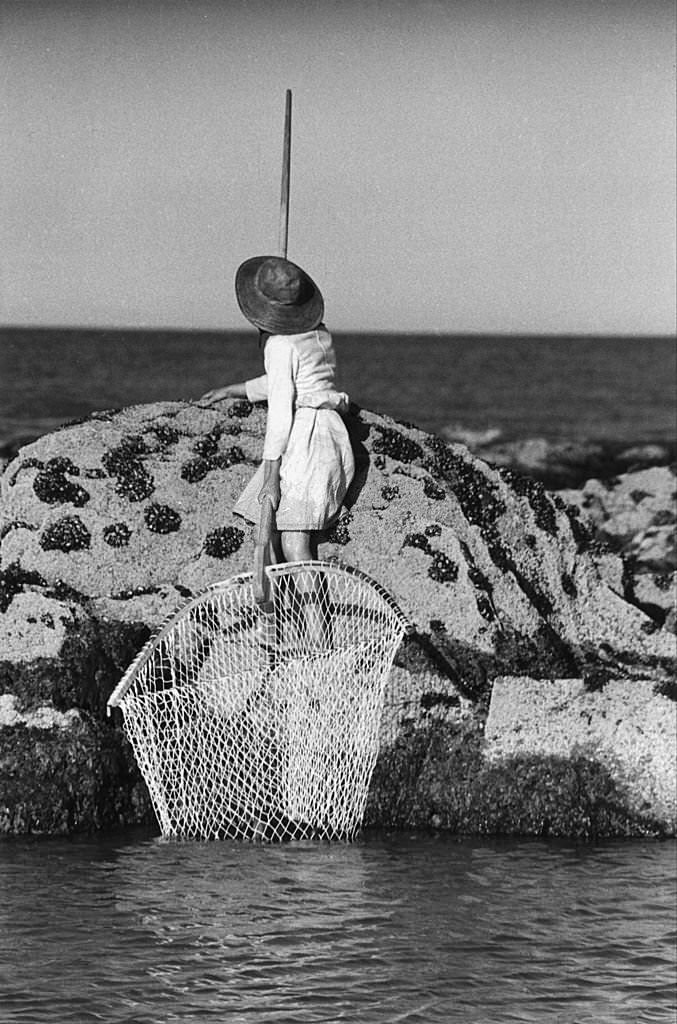
Netting Shrimp (Portugal), 1957

Not every catch required a seine net stretched between two boats. Shrimping, lobster trapping, and small-scale net fishing were also part of daily life along the Portuguese coast. At Cascais, lobster pots were stacked high on the quayside, waiting for the next run.
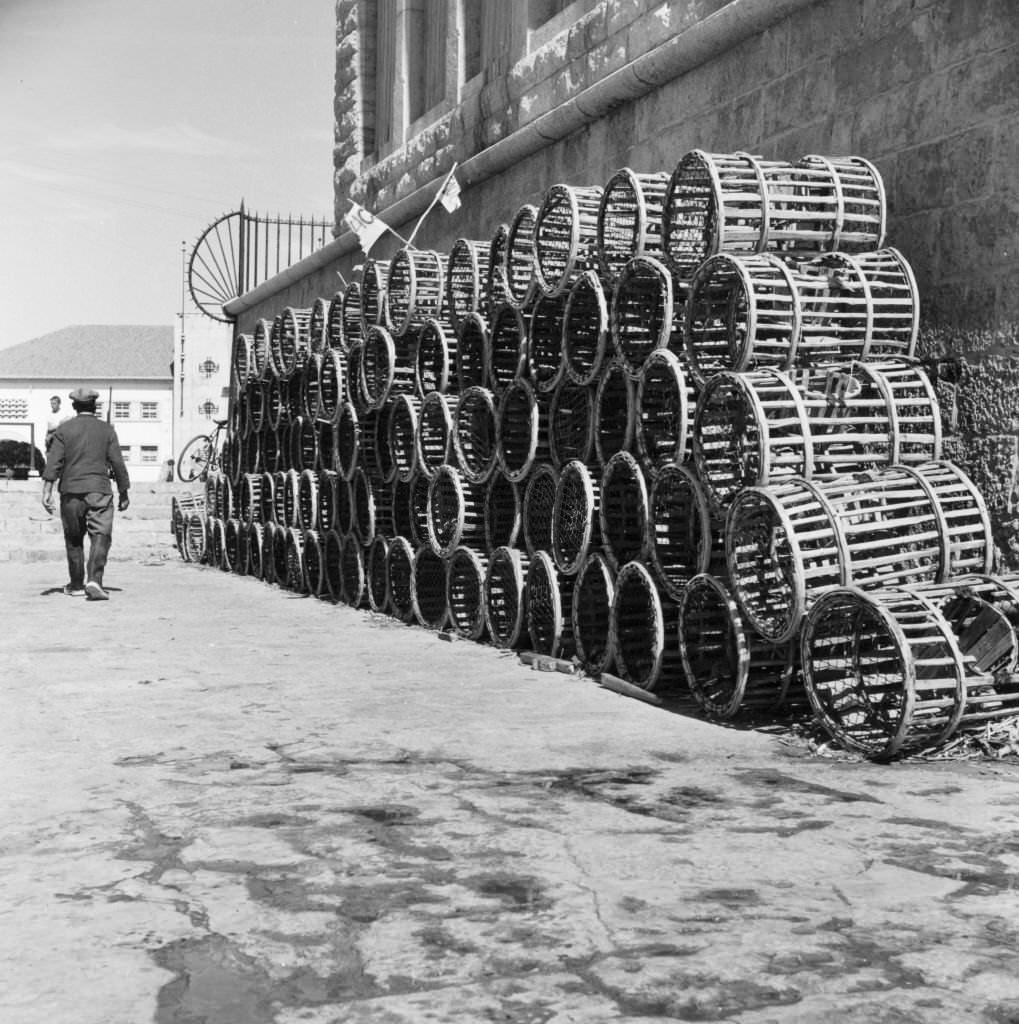
Lobster pots stacked up on the quayside at Cascais, 1957

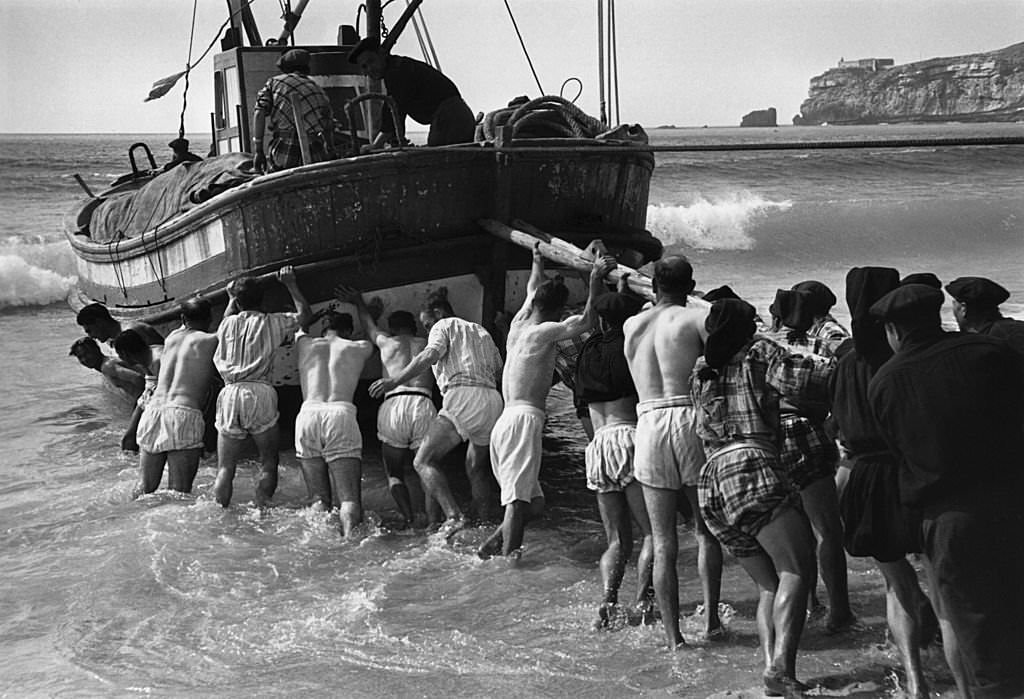
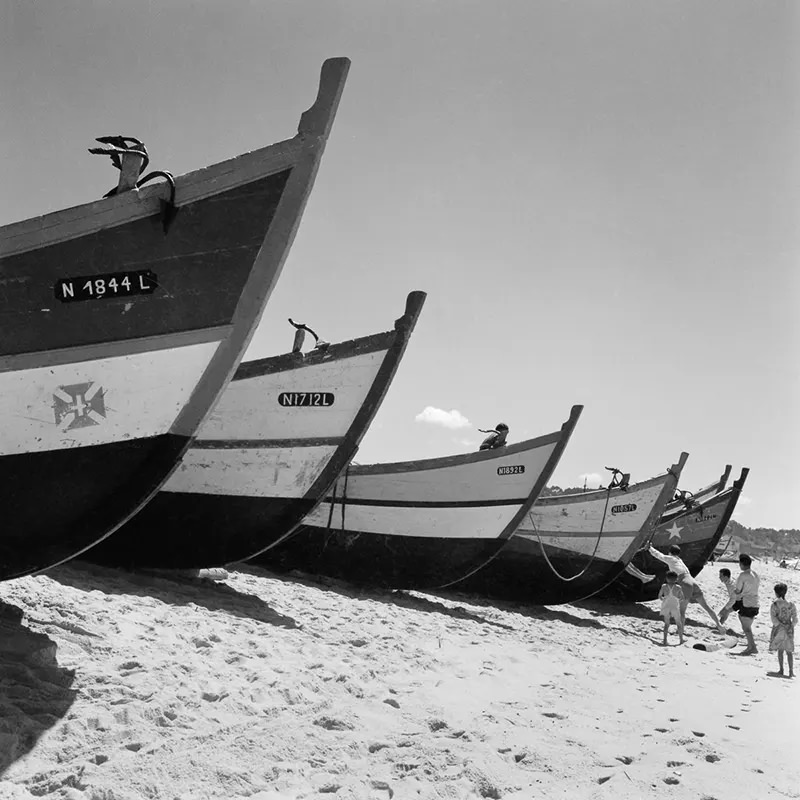
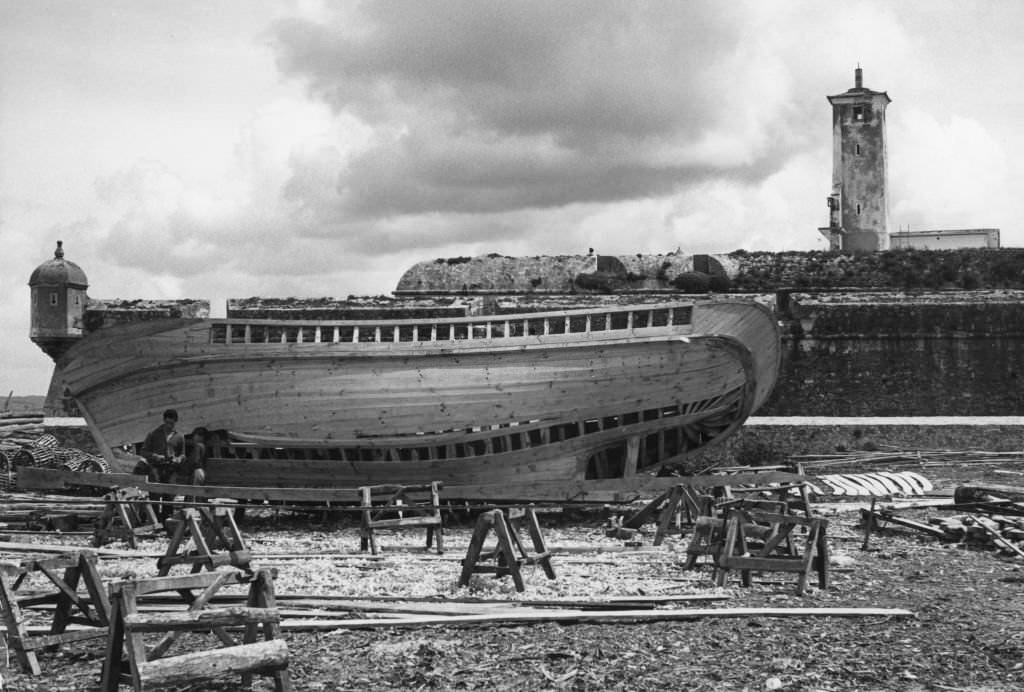
The boats themselves were built right on the beach. Craftsmen shaped and assembled the wooden hulls by hand near Nazaré, and when a vessel was ready, the whole community turned out to push it into the water. Launching a fishing boat was a communal effort — men leaning hard against the hull, rolling it across the sand on logs toward the surf.
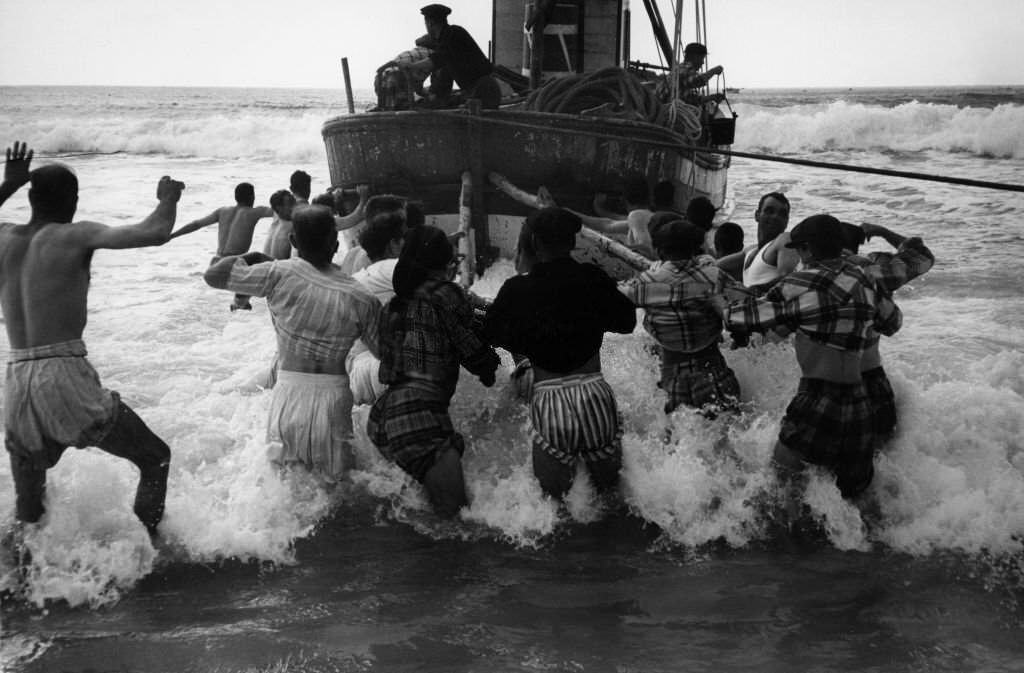
Launching of a fishing boat on a beach near Nazaré, Portugal, 1956
Construction of a fishing boat in Portugal a beach near Nazaré, Portugal, 1956.
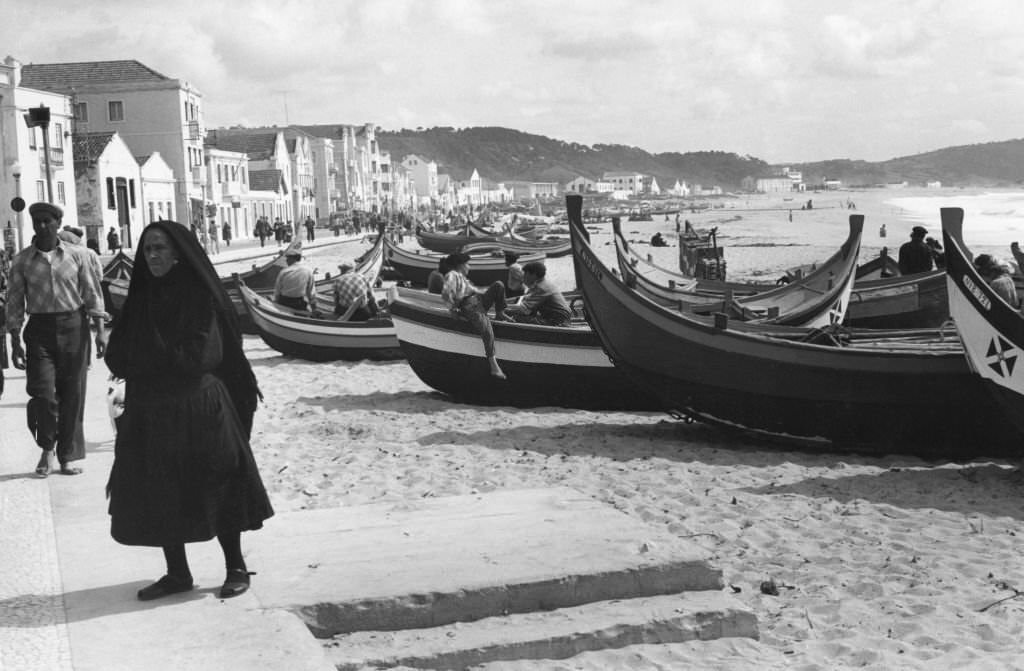
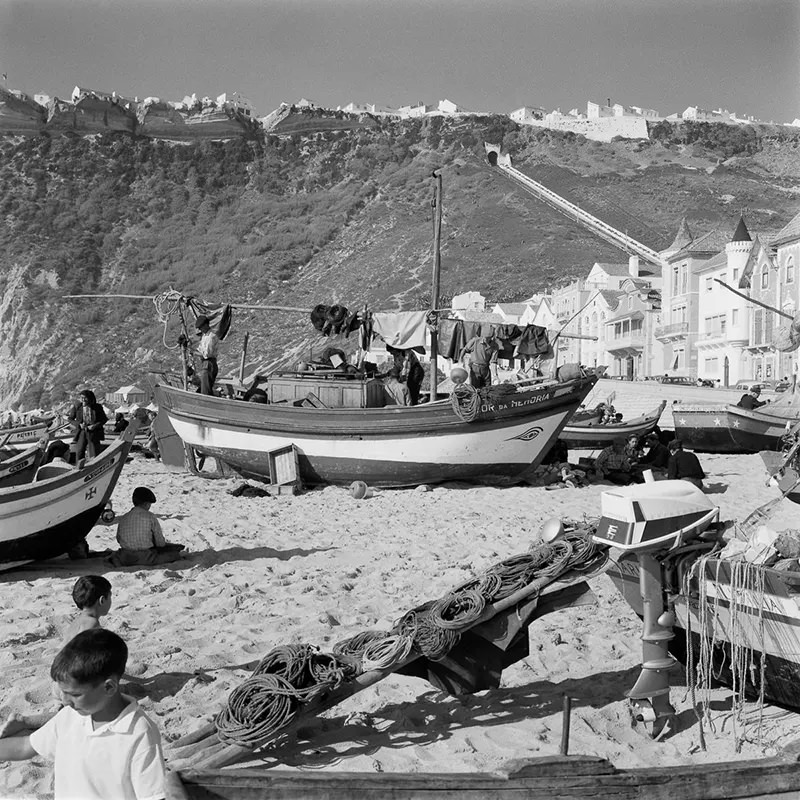
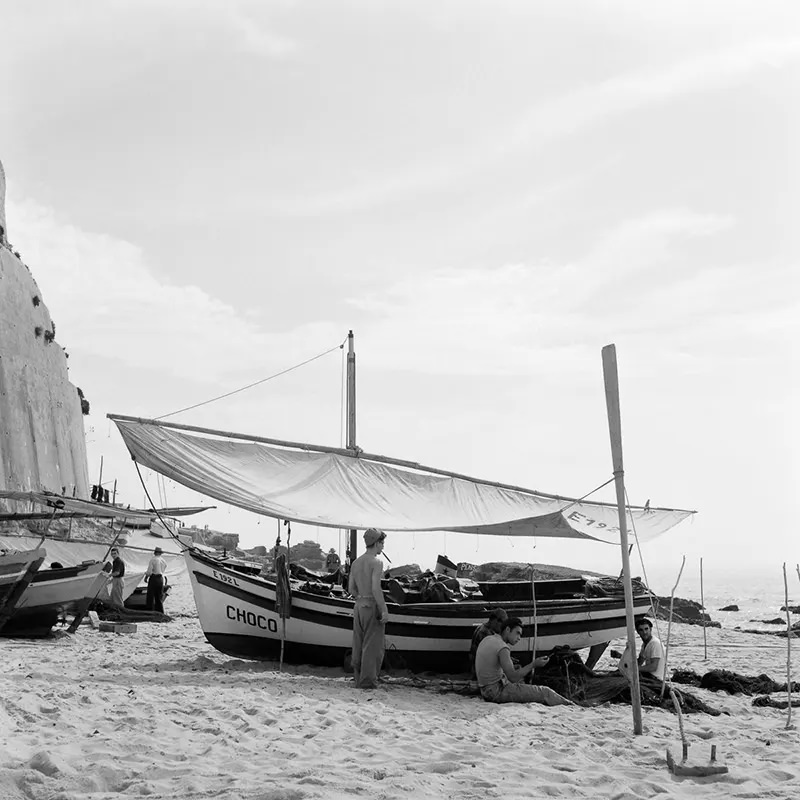
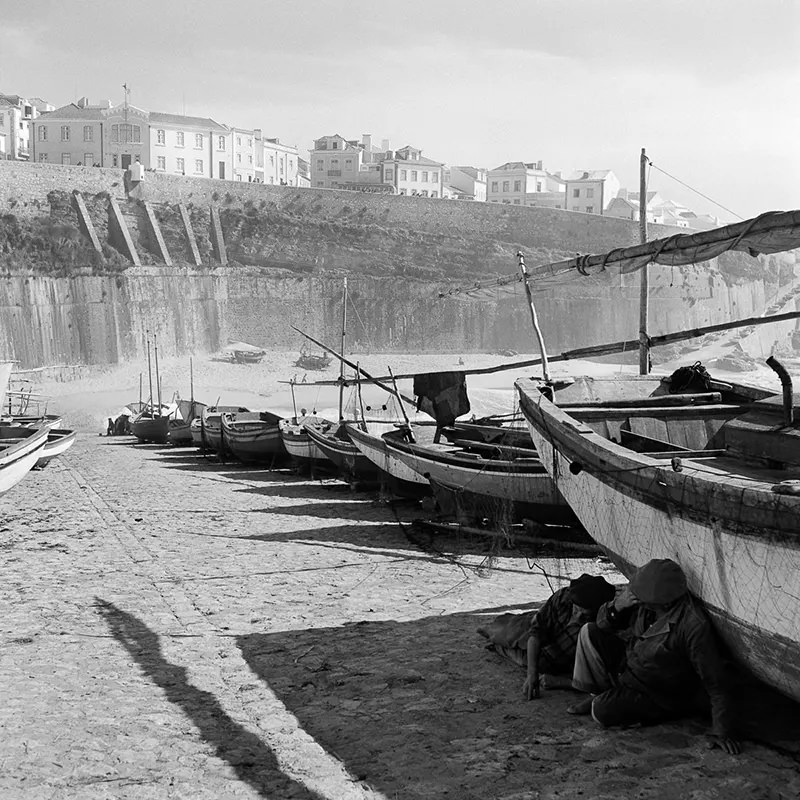
Fishing boats on a beach in the Nazaré region, 1956
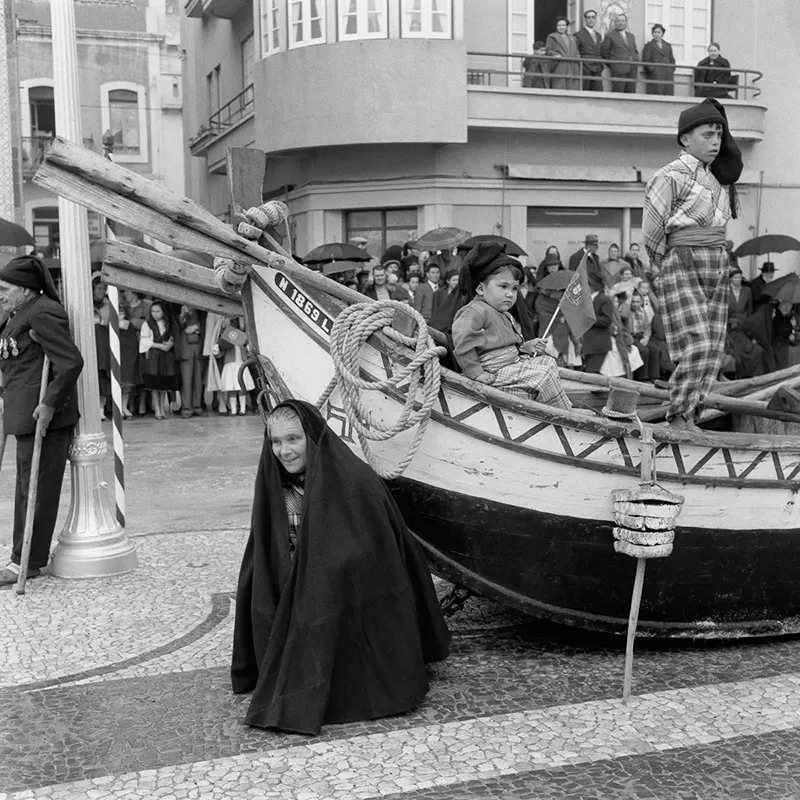
Nazare, Portugal, 1956
Fishing Boat Set Into Water On The Seashore Near Nazare, 1956

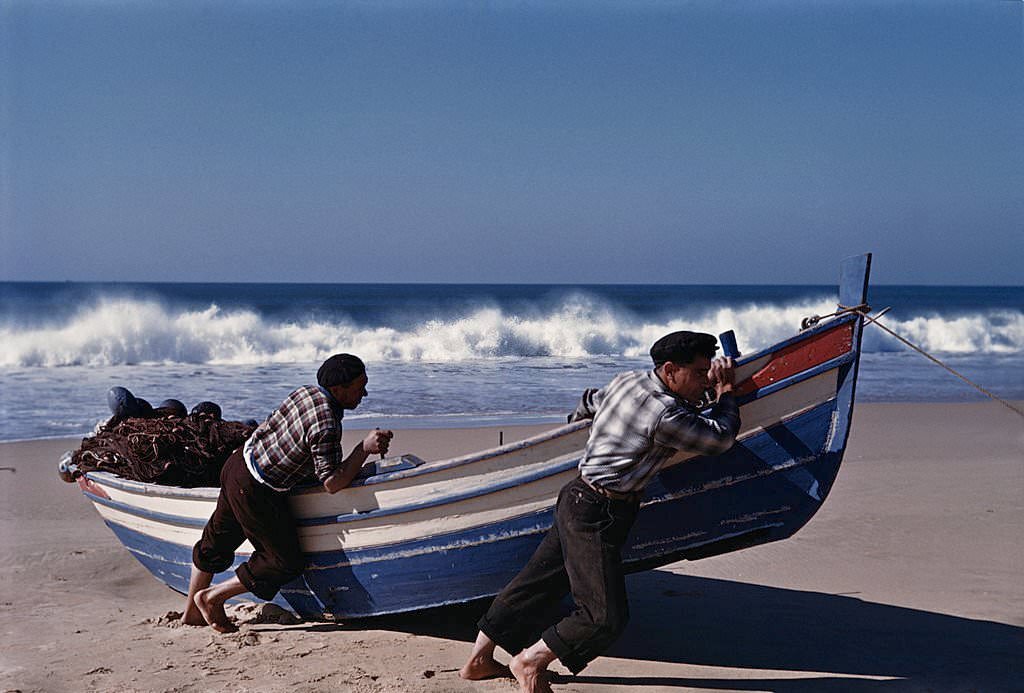
Once a boat was in the water, the real work began. Crews headed out before dawn and returned with whatever the sea had given them. On the beach, everything moved fast — boats had to be hauled out of the surf, nets untangled, and fish sorted before the morning heat set in.
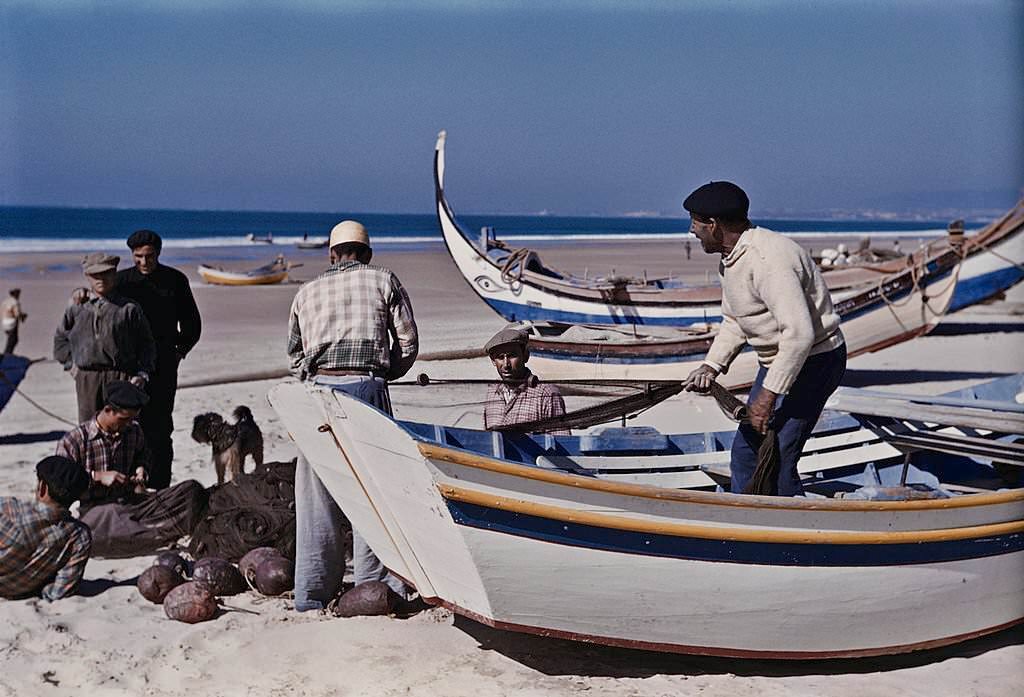
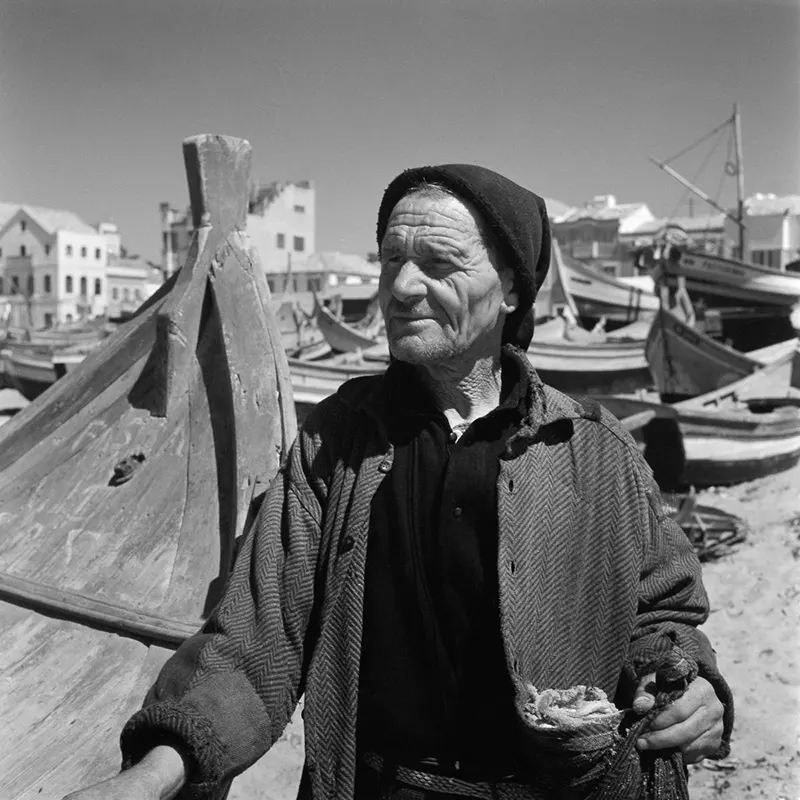
Fishermen with their boats on the beach at Nazare, Portugal, 1952.
Fishermen pulling their boat up the beach at Nazare, Portugal, 1952.

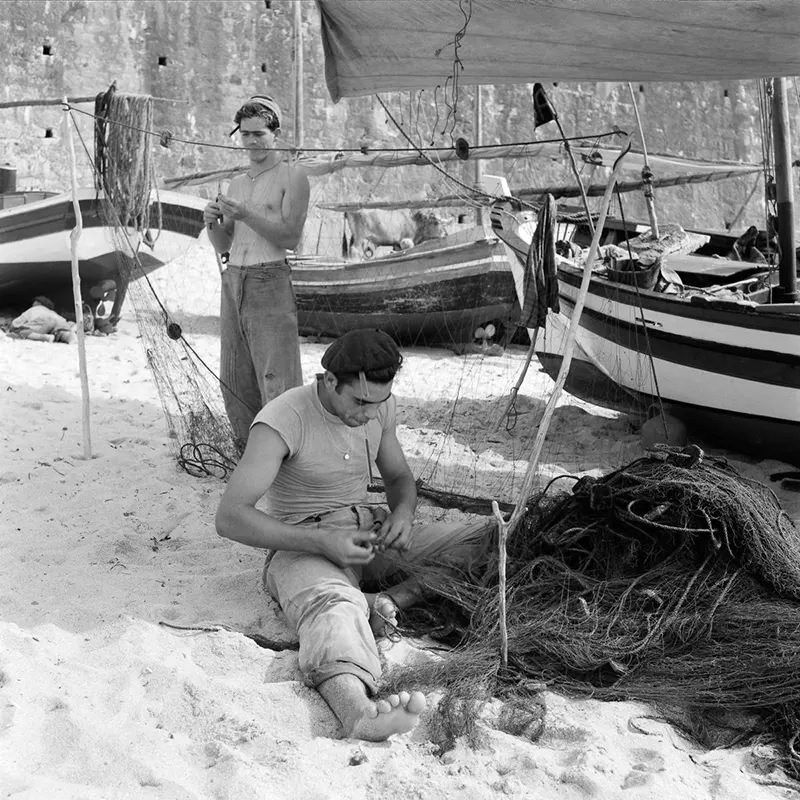
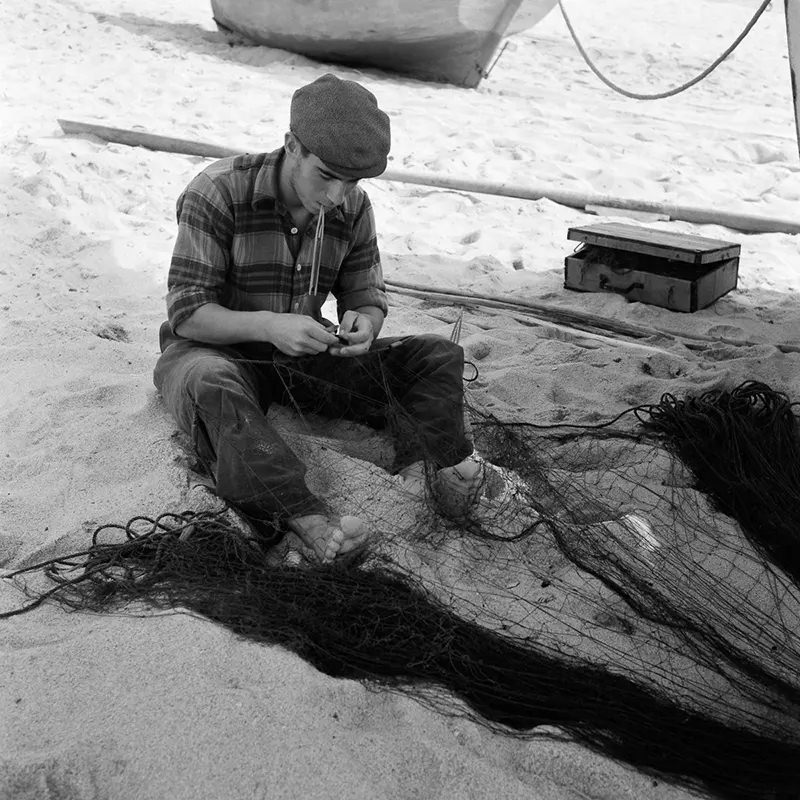
Net maintenance was constant. A torn net meant a lost catch, so fishermen spent hours on the beach repairing mesh, checking for weak spots, and preparing gear for the next outing. It was painstaking, unglamorous work that kept the entire operation running.
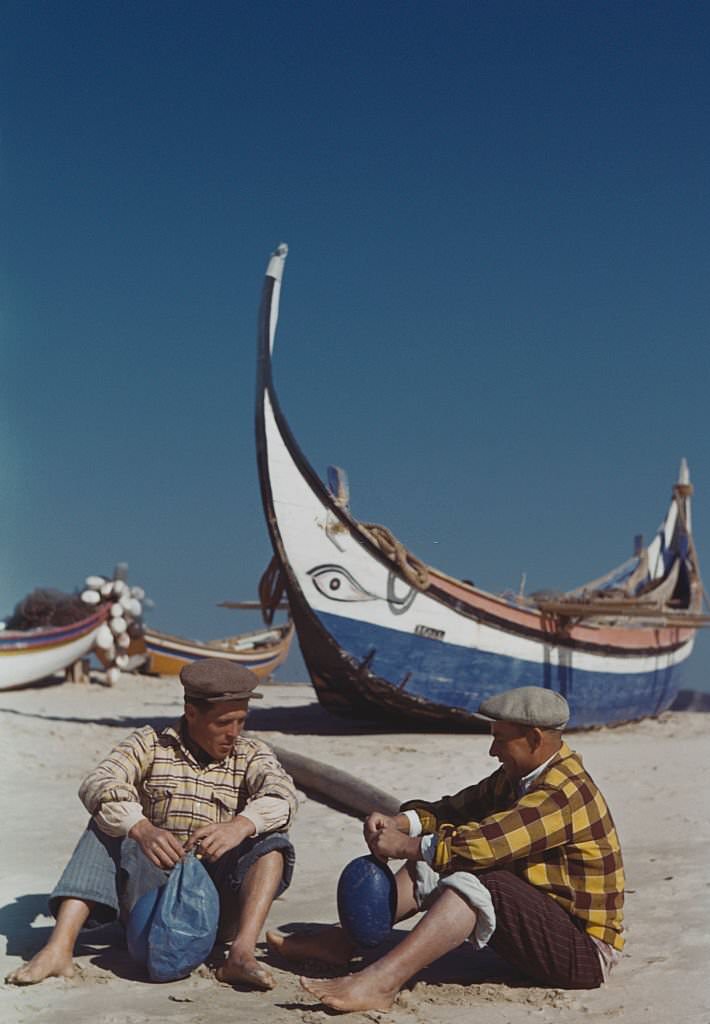
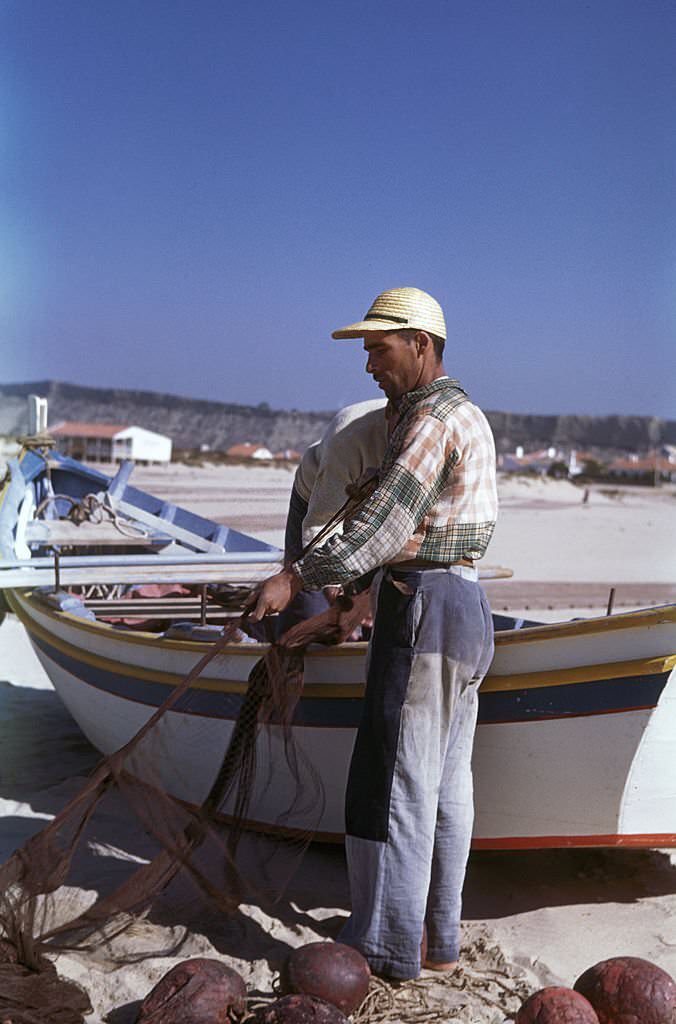
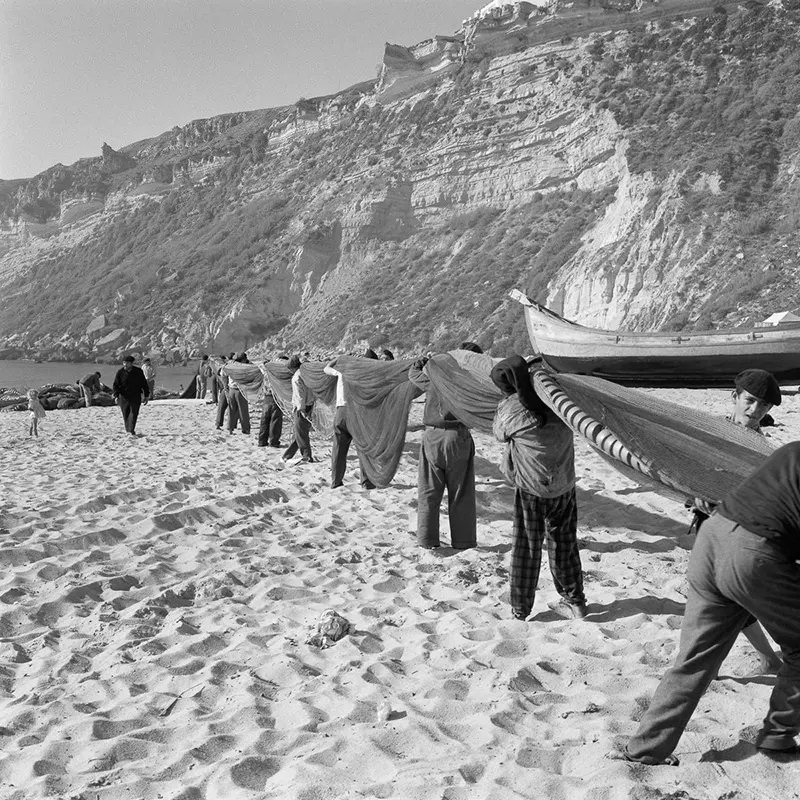
Portuguese fishermen prepare their nets on the beach at Nazare, Portugal, 1955.
Portuguese fishermen prepare their nets on the beach at Nazare, 1955.

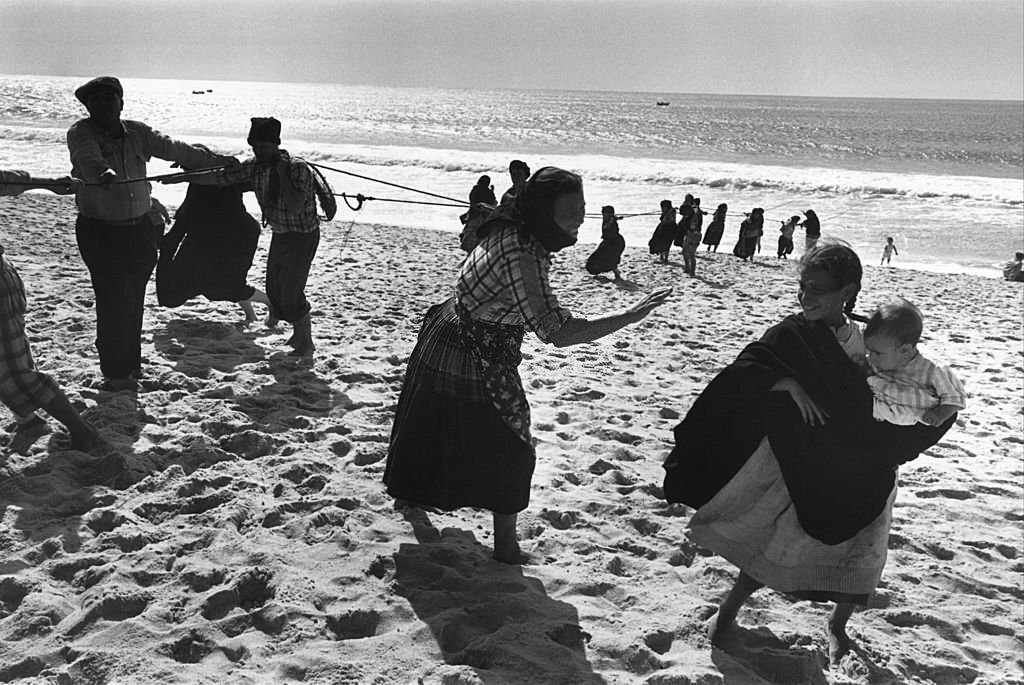
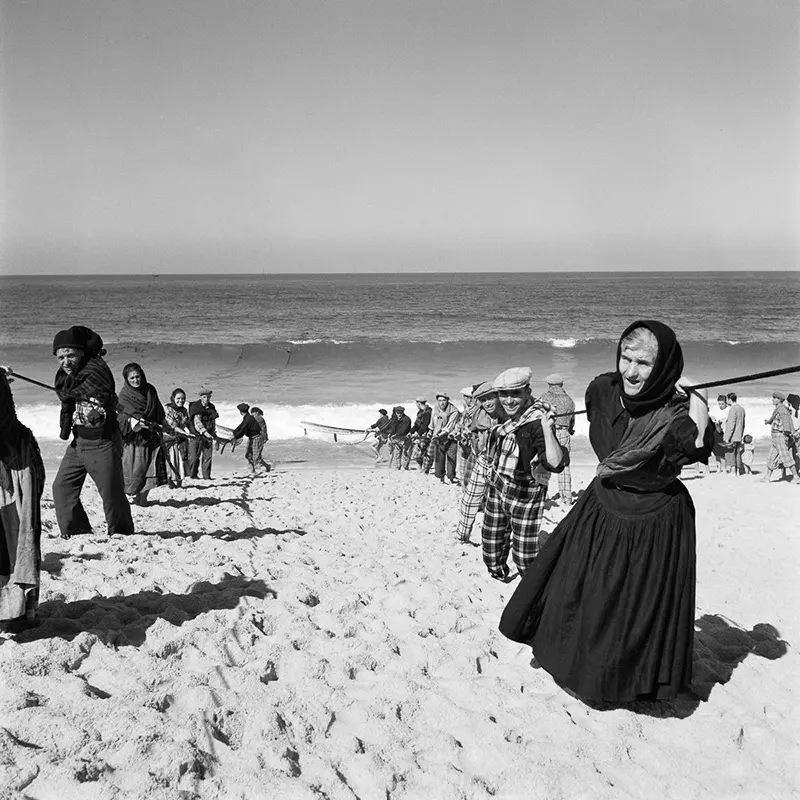
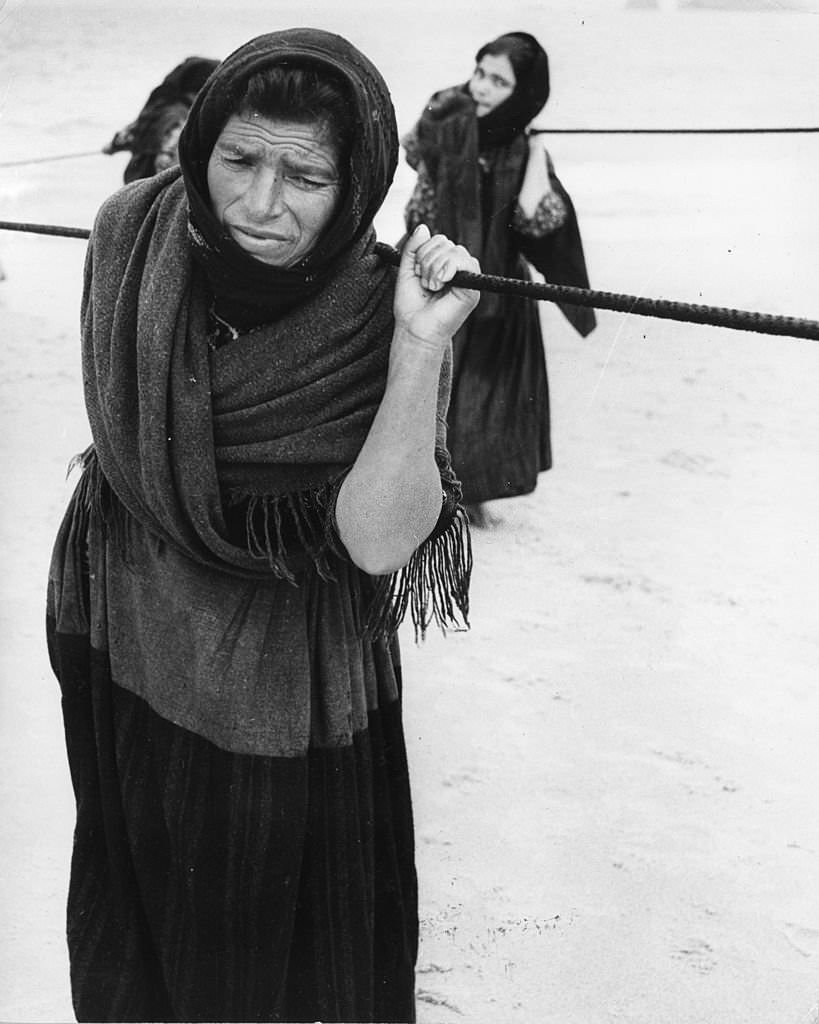
Women were central to this world. At Peniche, women helped haul boats out of the water alongside the men. In Nazaré, they laid out nets to dry and carried fish in baskets balanced on their heads. This was not occasional help — it was full, physical labor performed every single day.
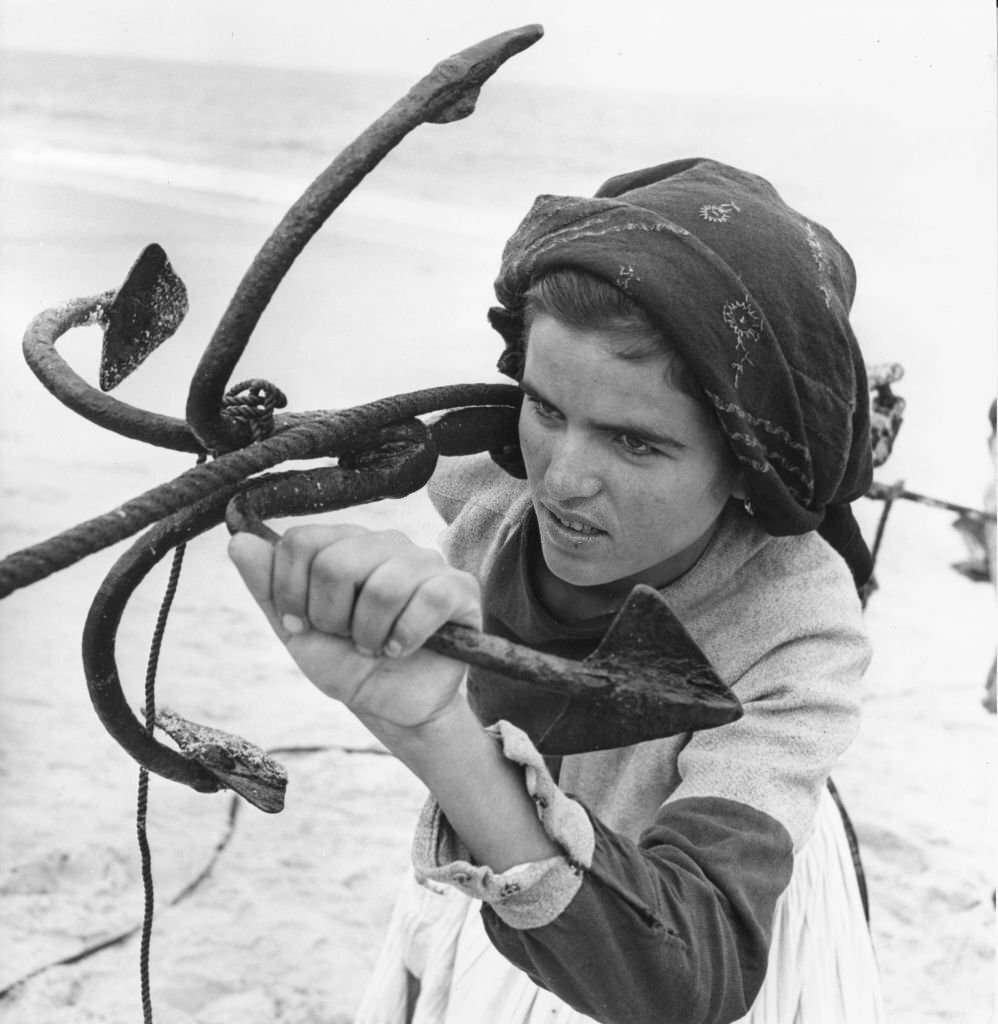
A woman helps to pull in the fishing boats at Peniche, Portugal.

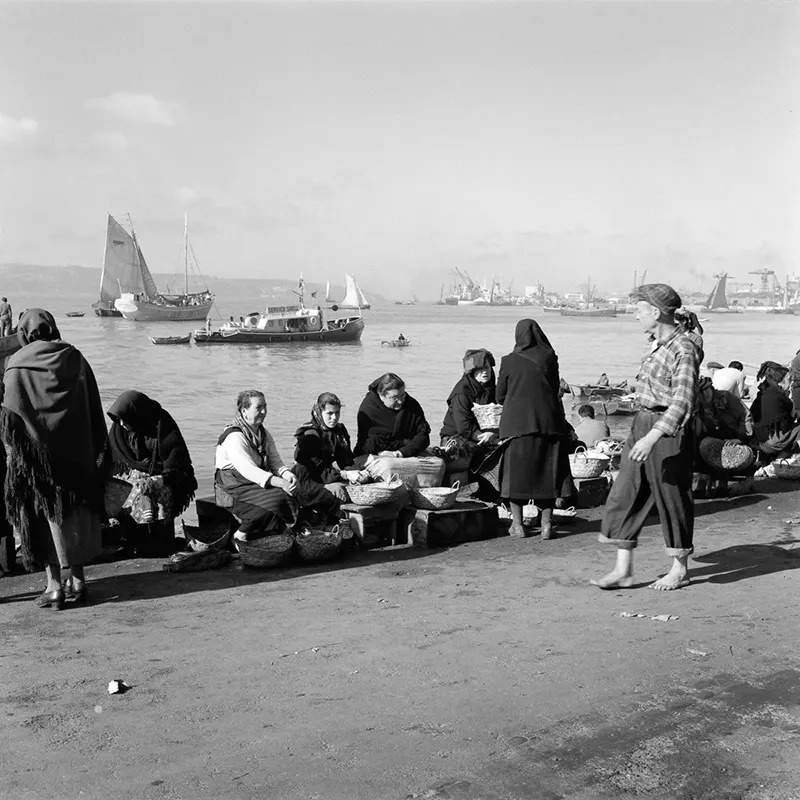
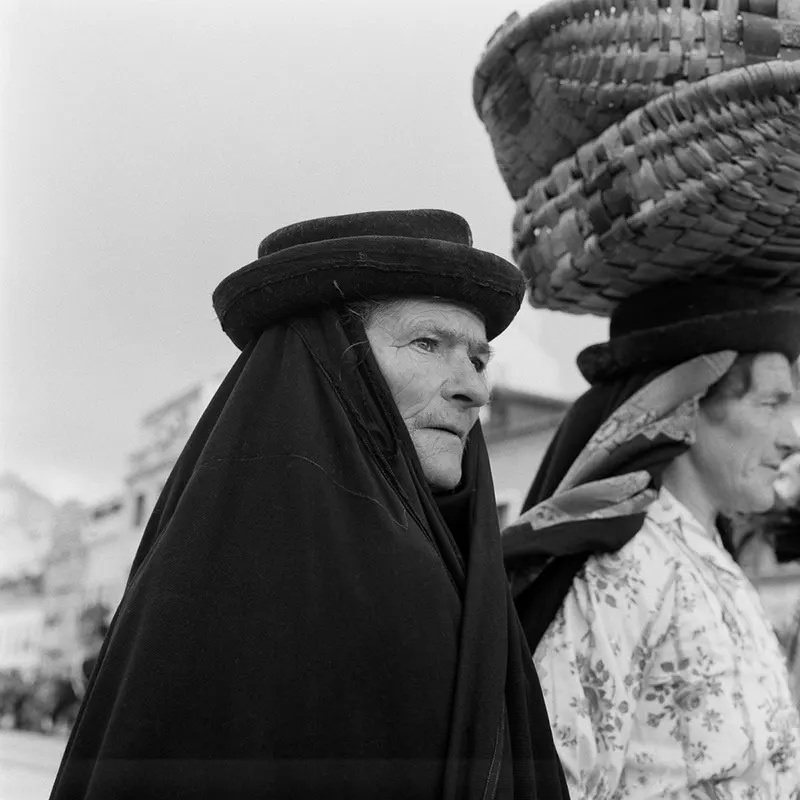
In Lisbon, the women who worked the fish trade had a specific name: varinas. These were the fisherwomen who walked the docks along the Tejo River carrying large empty baskets to market, ready to fill them with the morning’s catch and sell it across the city. They were a fixture of Lisbon street life and a vital link between the boats and the dinner table.
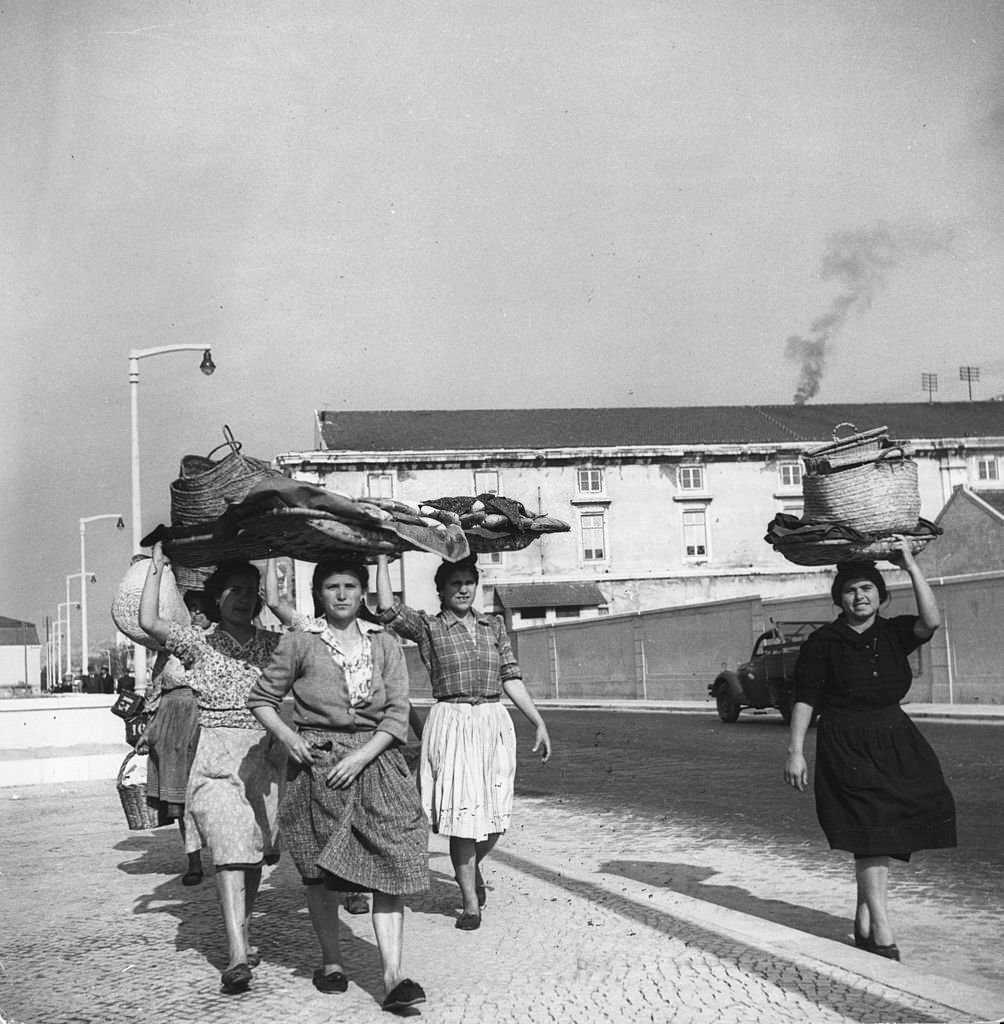
Portuguese fisherwomen, known as 'varinas', walk along the docks on the Tejo River carrying empty baskets which they use to take fish to market, 1955
Portuguese fisherwomen, known as ‘varinas’, walk along the docks on the Tejo River carrying empty baskets which they use to take fish to market, 1955
Women pulling in fishing boats at Nazare, Portugal.
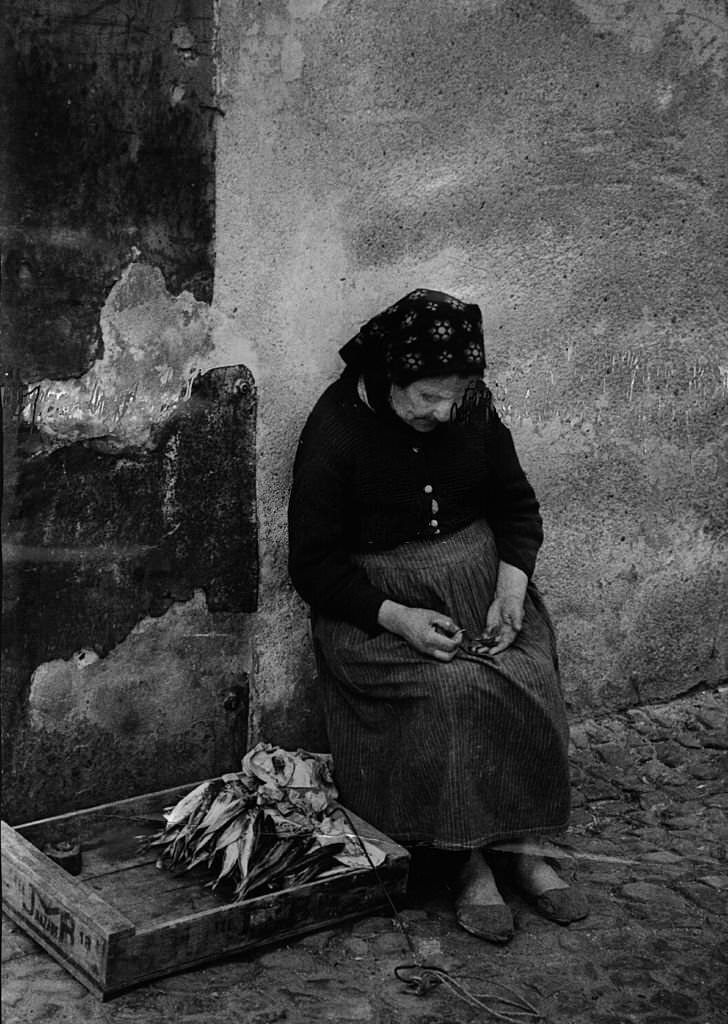
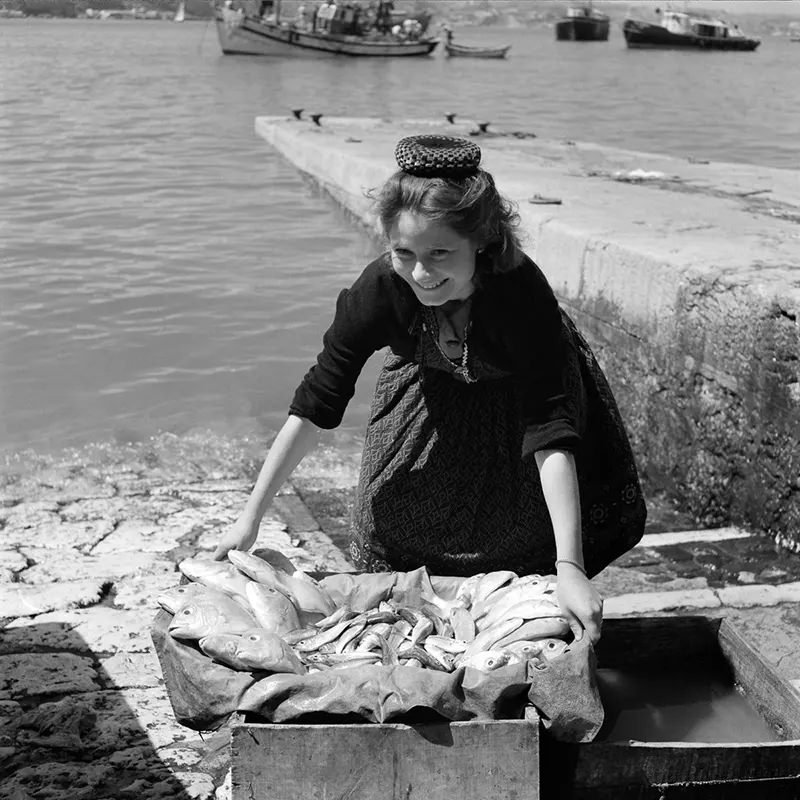
SellerA Portuguese fish seller.

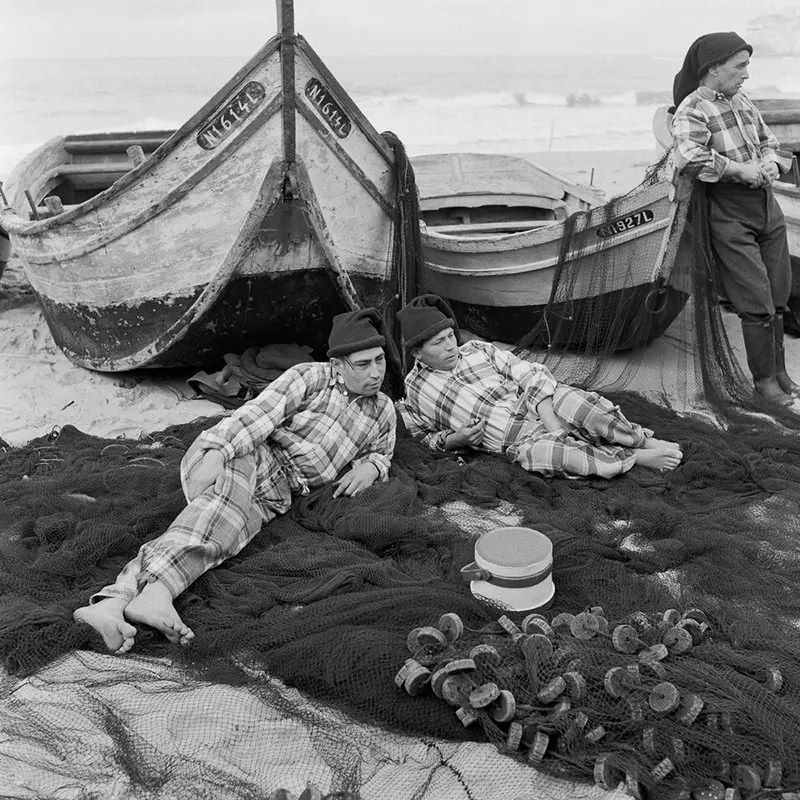
Between trips, the men rested on the sand. Photographs from Nazaré in 1952 show fishermen sprawled out near their boats, taking a break before the next run. It was a rhythm dictated by the tides and the season — hard bursts of labor followed by short windows of rest.
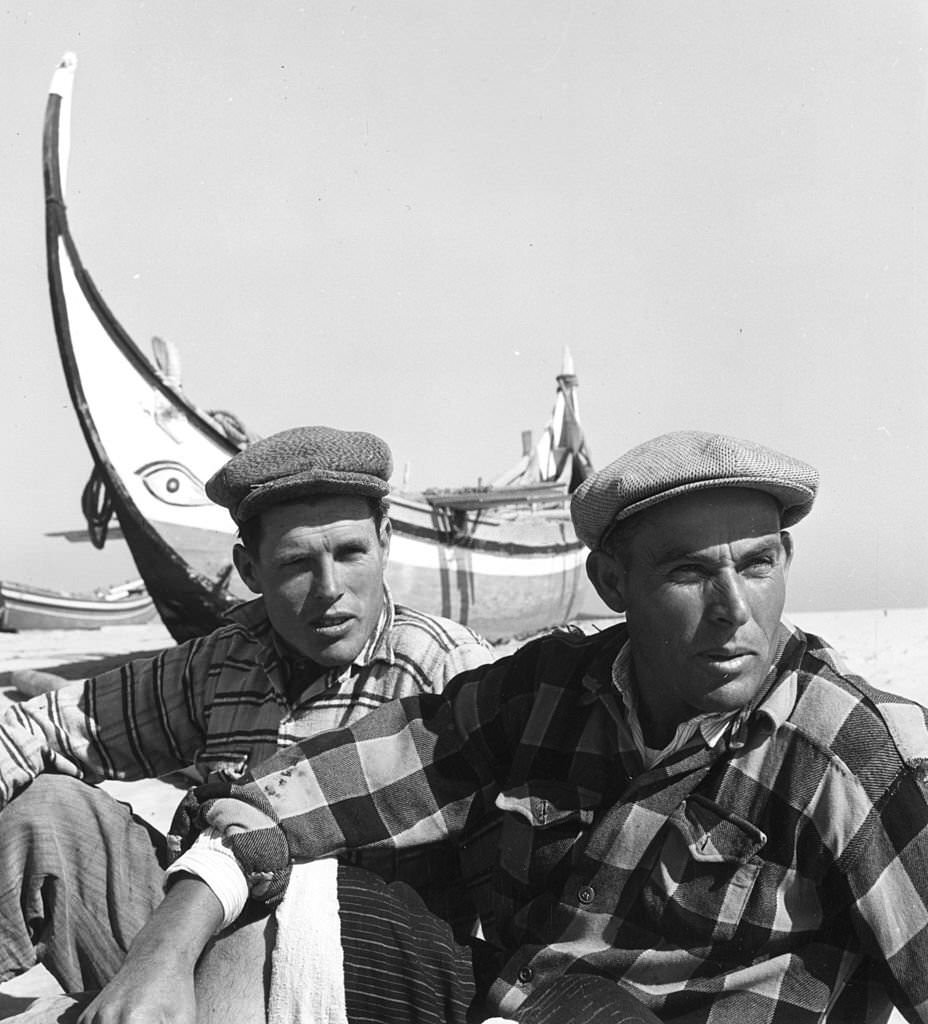
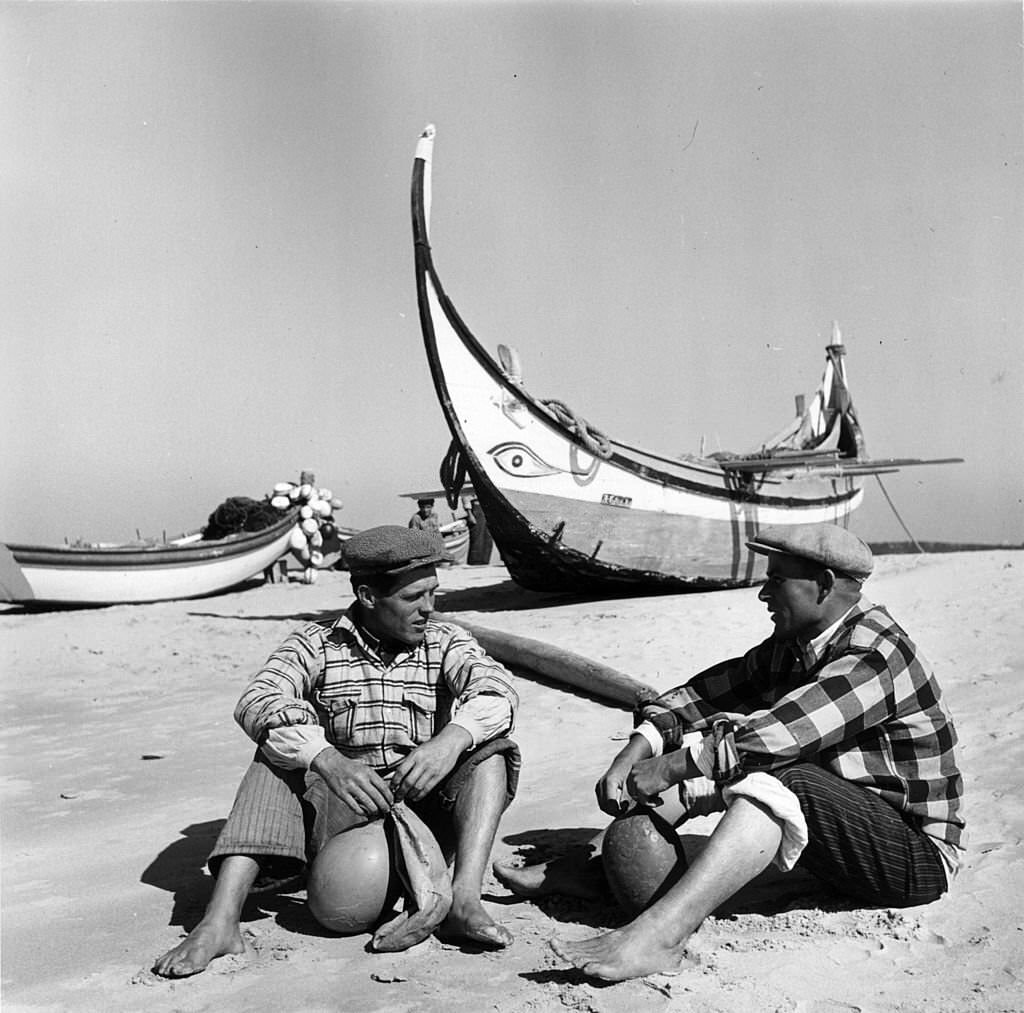
Portuguese fishermen relax on the beach at Nazare, 1952
Portuguese fishermen relax near their traditional fishing boats on a beach near Lisbon.

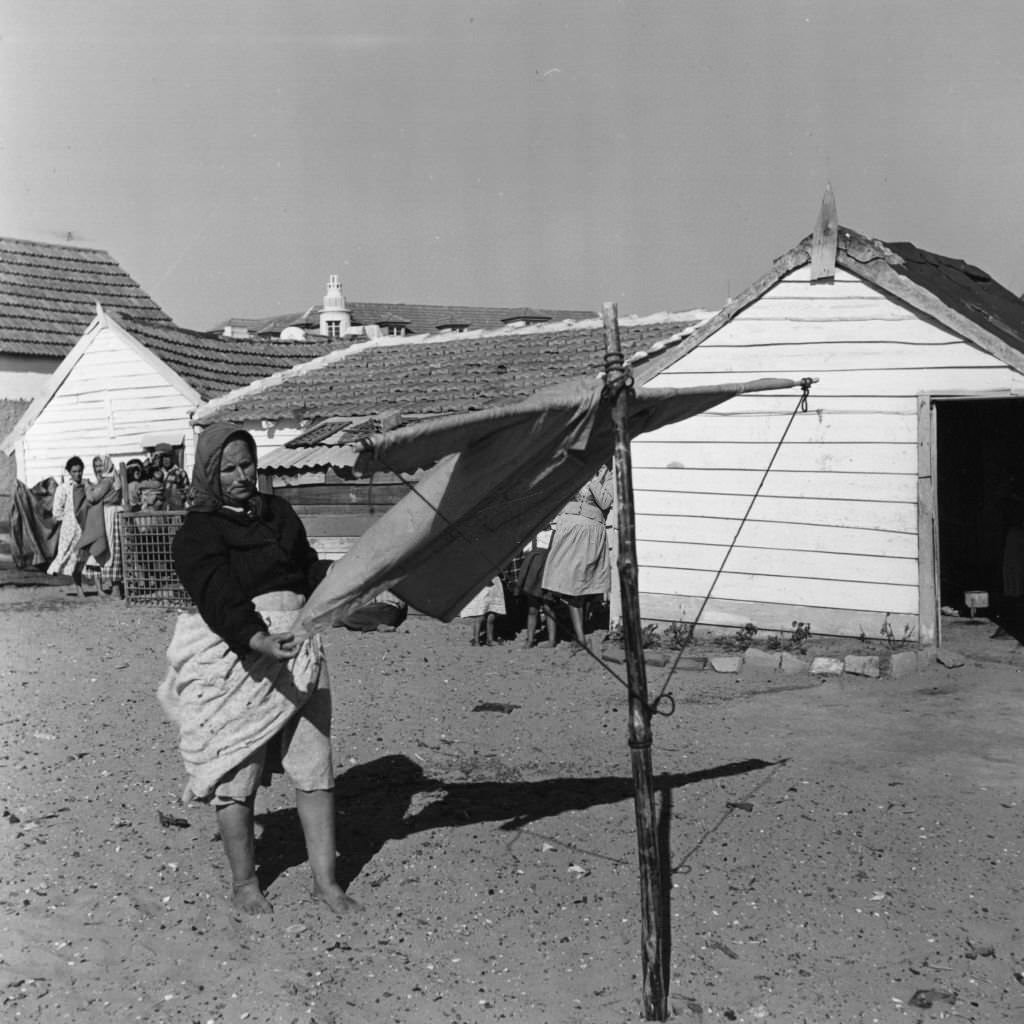
Village life ran alongside the fishing. Women washed clothes in wooden containers and hung laundry to dry while neighbors watched. Children carried water in animal skins. The village wasn’t just where fishermen slept — it was a working community where every task had a place.
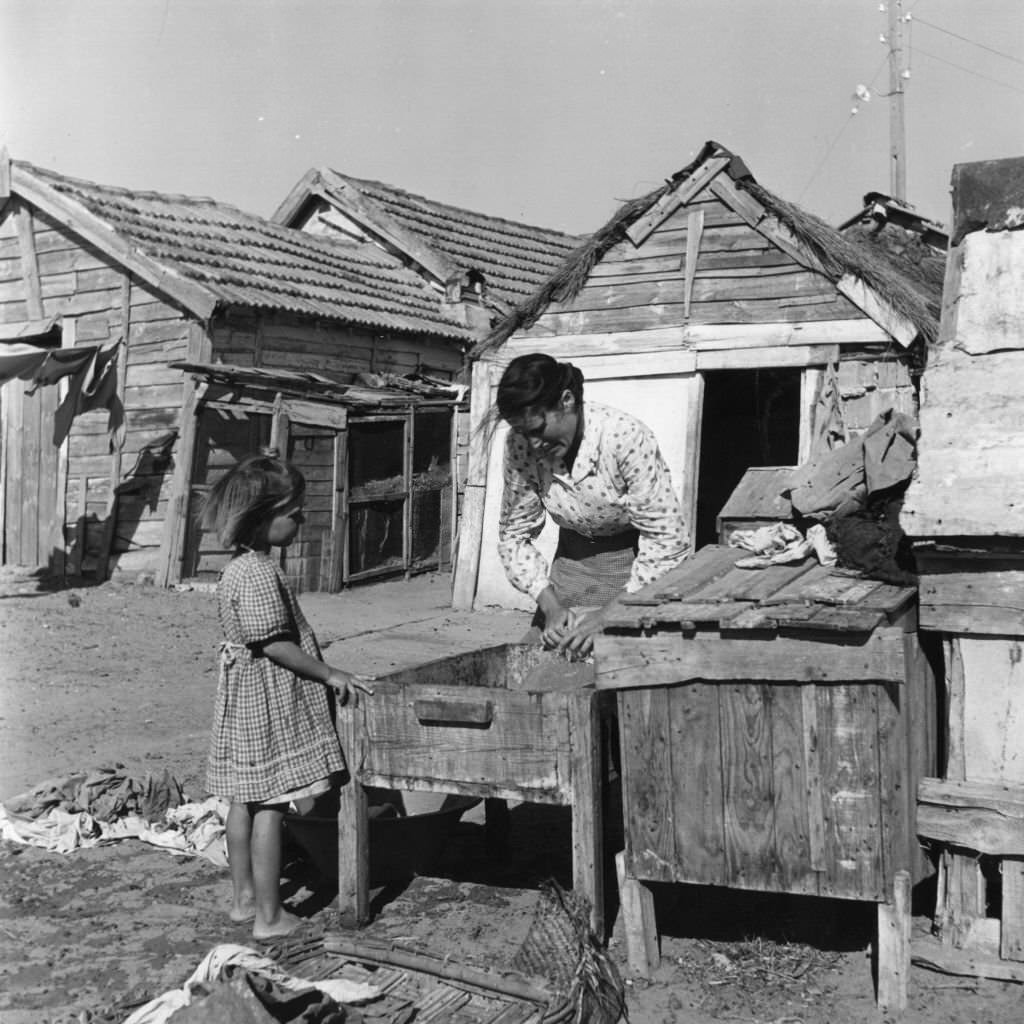
A woman washes clothing in a wooden container in a Portuguese fishing village.
A woman in a Portuguese fishing village hangs out a dress to dry while her neighbours watch.

The beauty of these coastal villages attracted outsiders too. In January 1950, Winston Churchill spent part of his holiday in Madeira painting the fishing village of Câmara de Lobos. It was a scene he found worth capturing — the colored boats, the fishermen at rest, the harbor at low tide.
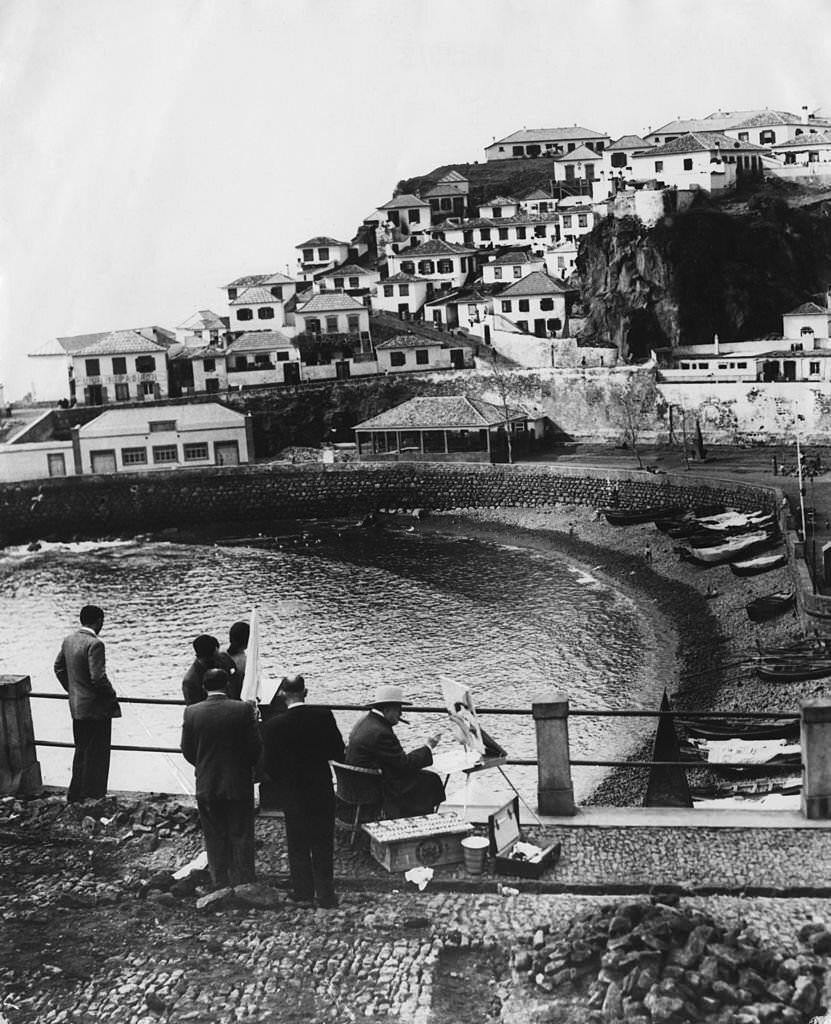
British statesman Winston Churchill (1874 - 1965) paints the fishing village of Camara de Lobos, during a holiday in Madeira, 9th January 1950.
British statesman Winston Churchill (1874 – 1965) paints the fishing village of Camara de Lobos, during a holiday in Madeira, 9th January 1950.

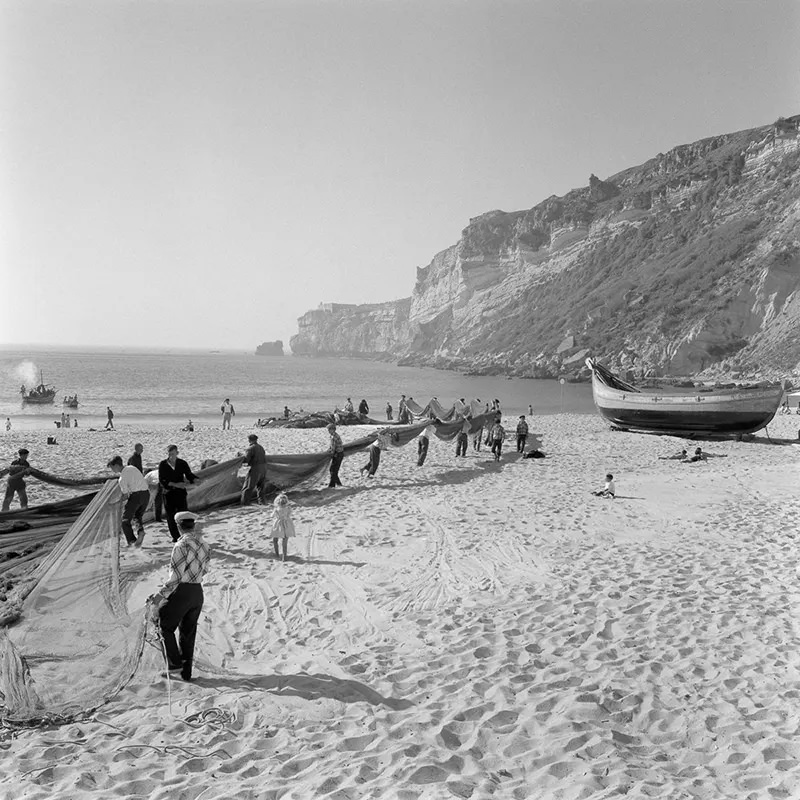
Back on the beaches of Nazaré, the nets spread across the sand in massive formations. Laying them out correctly before a run and recovering them properly afterward took coordination and time. The scale of the nets — large enough to encircle whole schools of fish — made them impossible to handle alone.
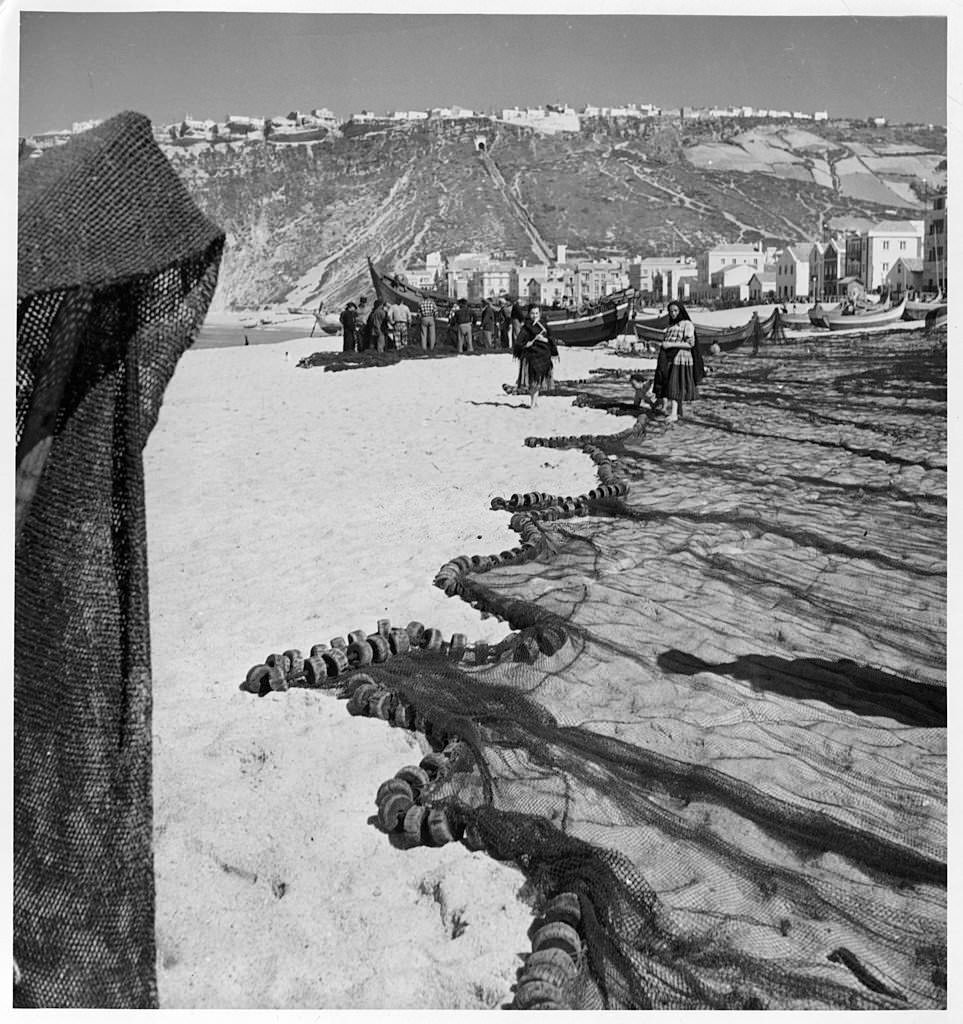
A view as fishermen layout their nets on the beach in Nazare, Portugal.

Tunny fishing — hunting large Atlantic tuna — required a different kind of effort. Men lined up in formation to haul in the tunny net hand over hand. When the fish reached the surface, they were hooked and gaffed one by one. It was brutal, fast, and dangerous work.
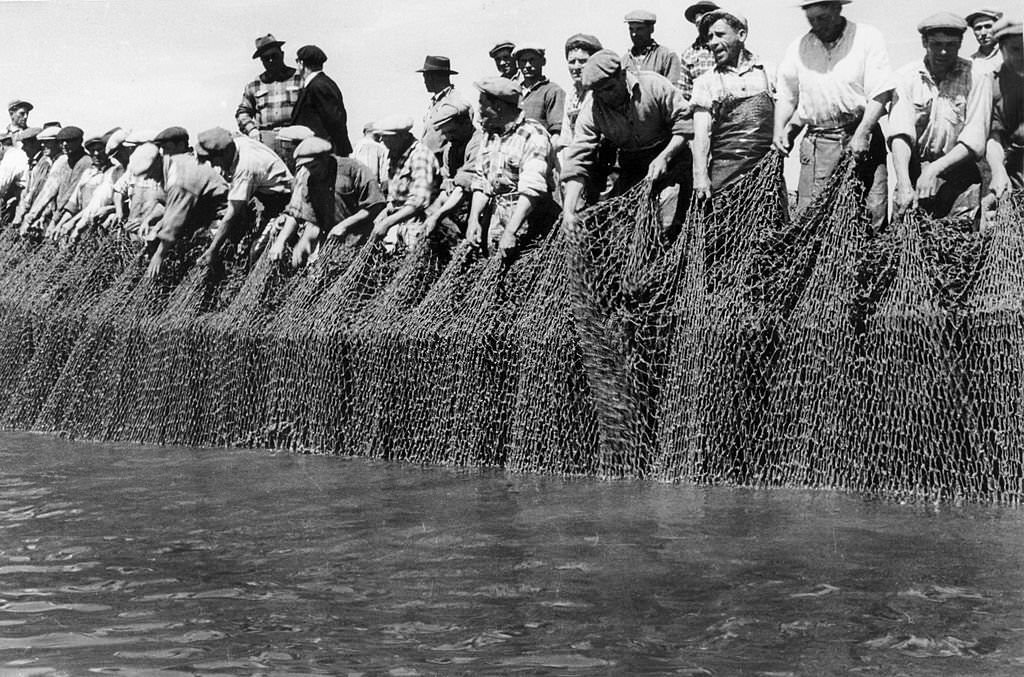
A line of men prepare to haul in the tunny net, and when the fish are brought to the surface they are hooked and and gaffed.

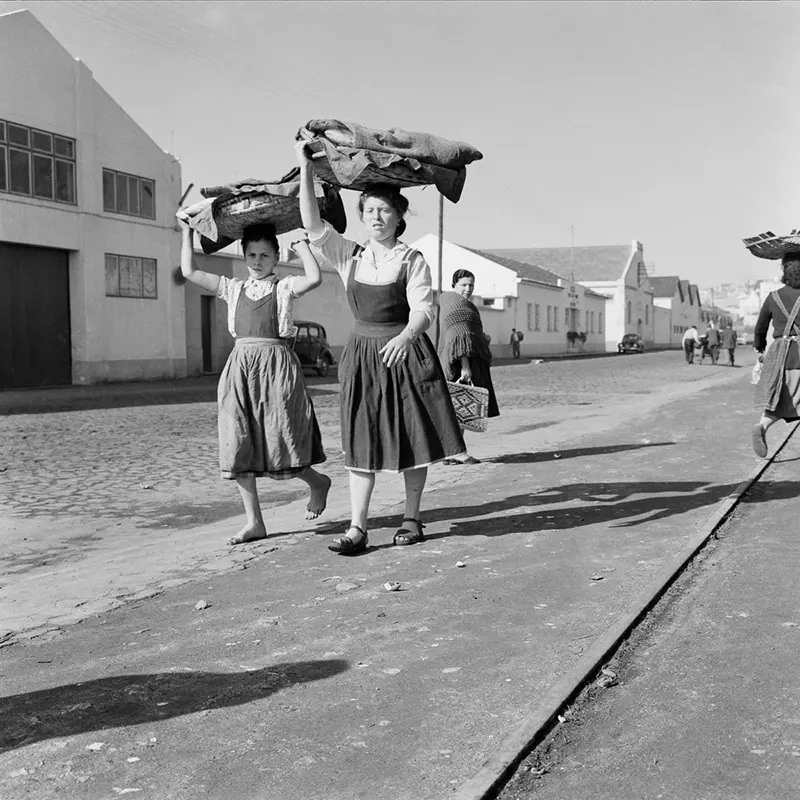
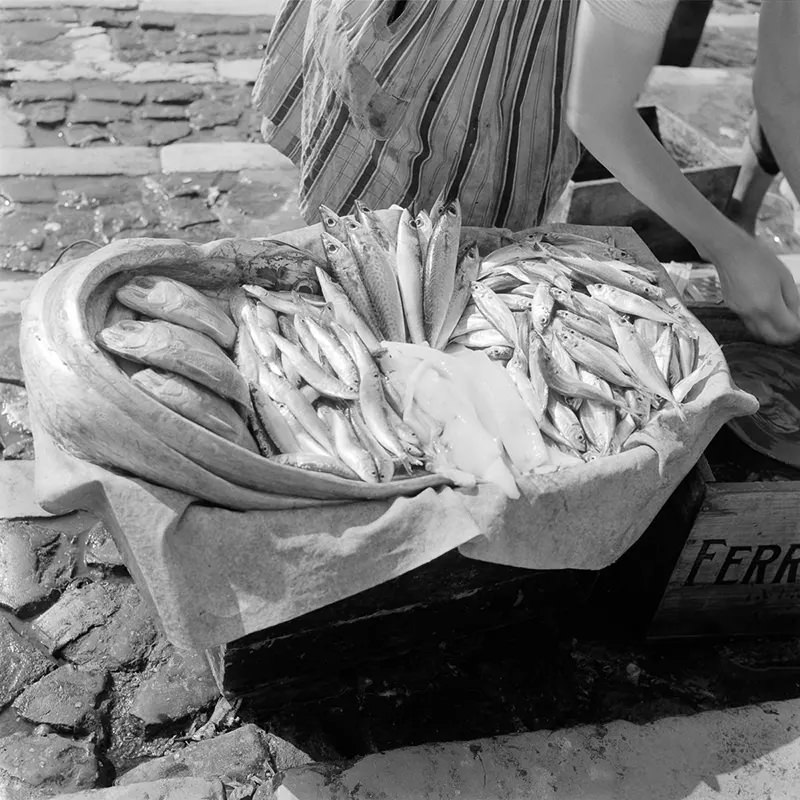
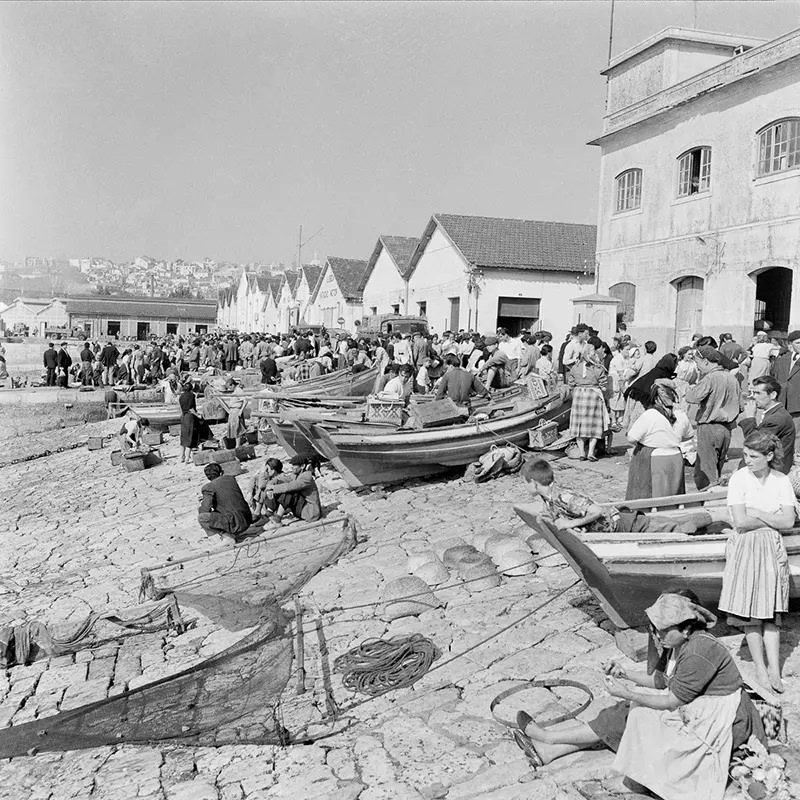
In Lisbon, fish moved through the city in remarkable ways. Along the quays of the Tagus River, fishmongers carried their goods on their heads — including crates of small sharks. The fish markets along the riverfront were noisy, fast-moving, and central to how the city fed itself.
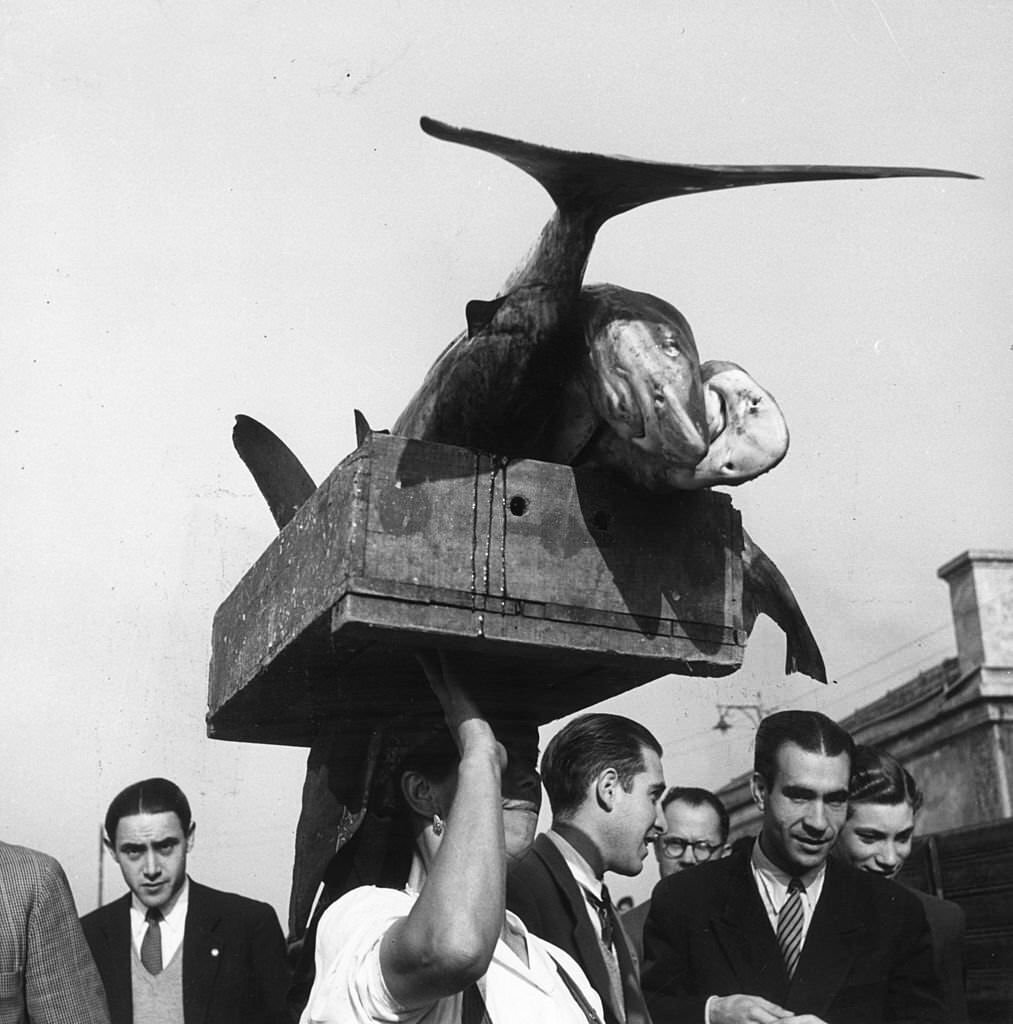
A fishmonger carries her wares, a crate of small sharks, on her head as she walks along the quays of the Tagus River in Lisbon, 1950

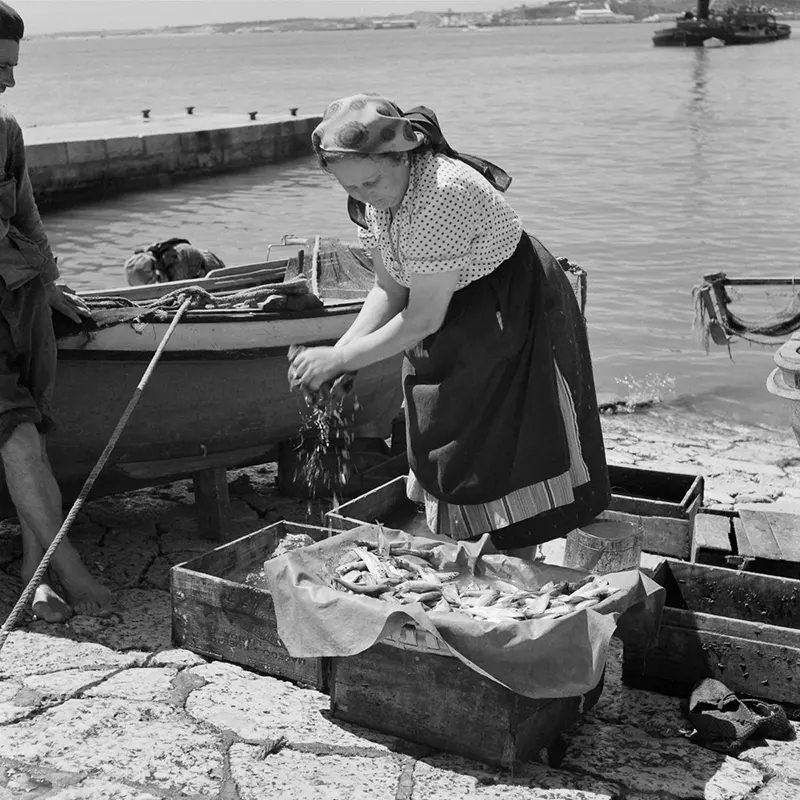
In Nazaré itself, fish was sometimes sold directly from the boat. A fisherman and a woman would offer their catch right there on the beach, the fish still fresh from the morning run. There was no middleman, no refrigeration — just the sea and the buyer a few feet apart.
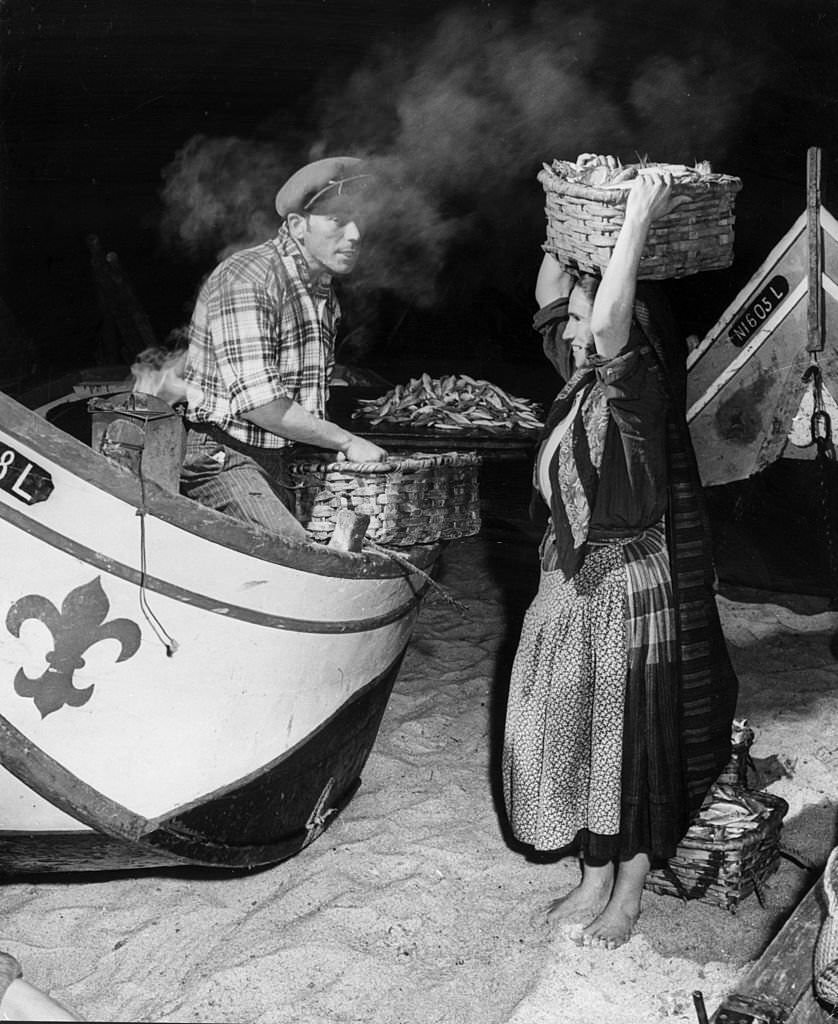
A fisherman and woman sell fresh fish from their boat in Nazare, a Portuguese fishing village.
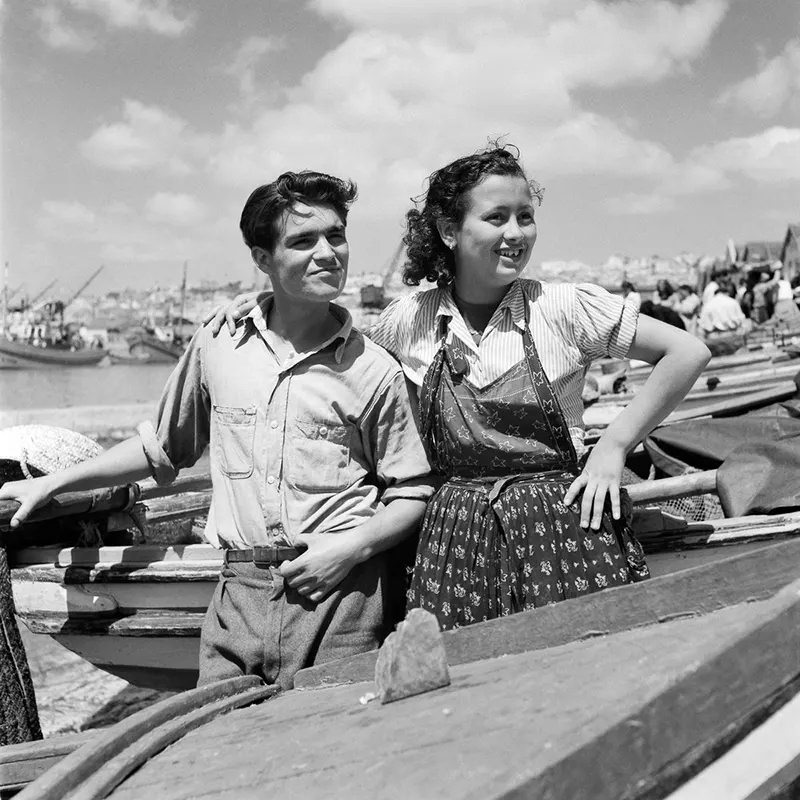
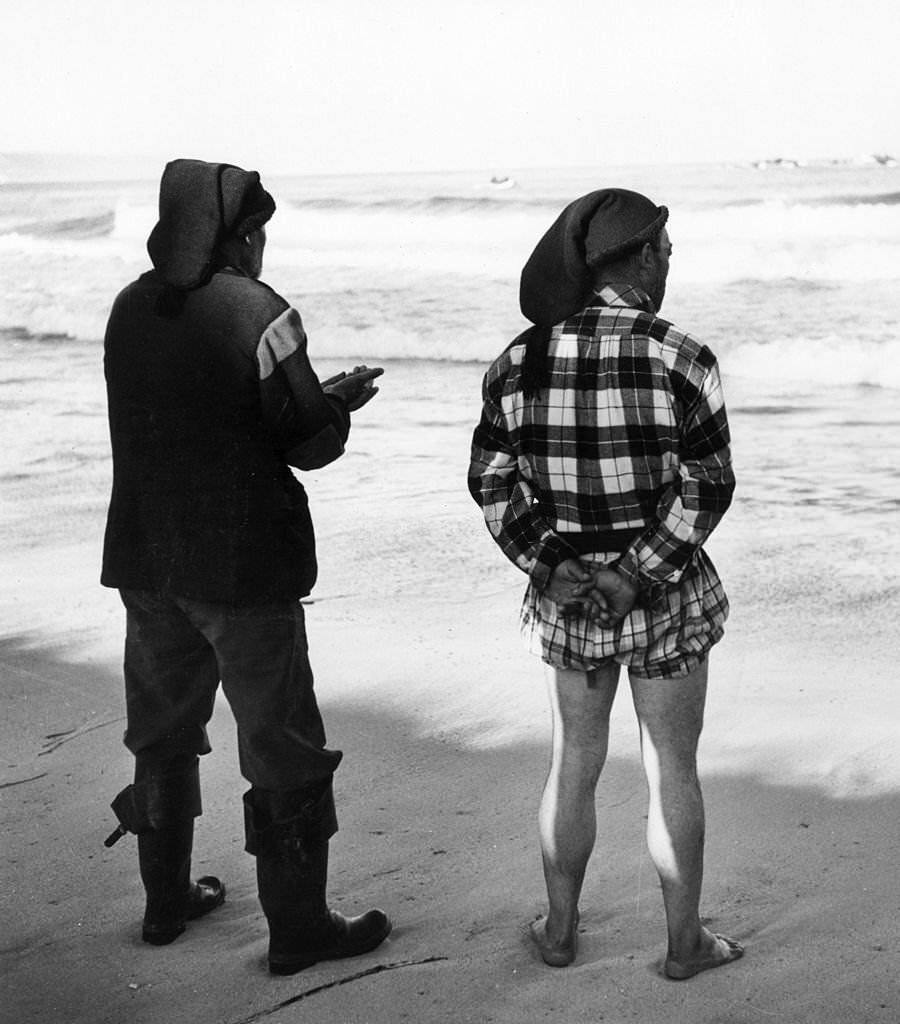
Two fishermen from Nazare in Portugal prepare for the day's fishing.
Two fishermen from Nazare in Portugal prepare for the day’s fishing.
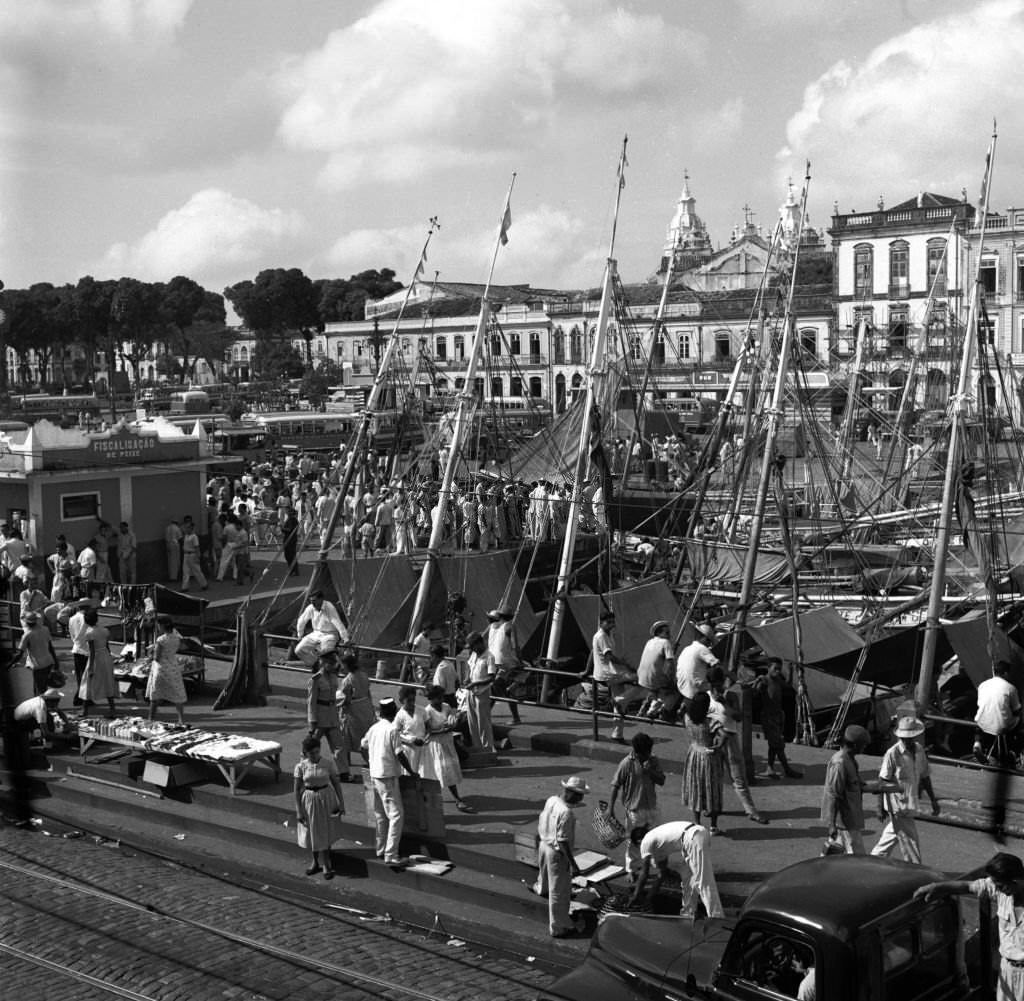
The harbour of Belem in Brazil.
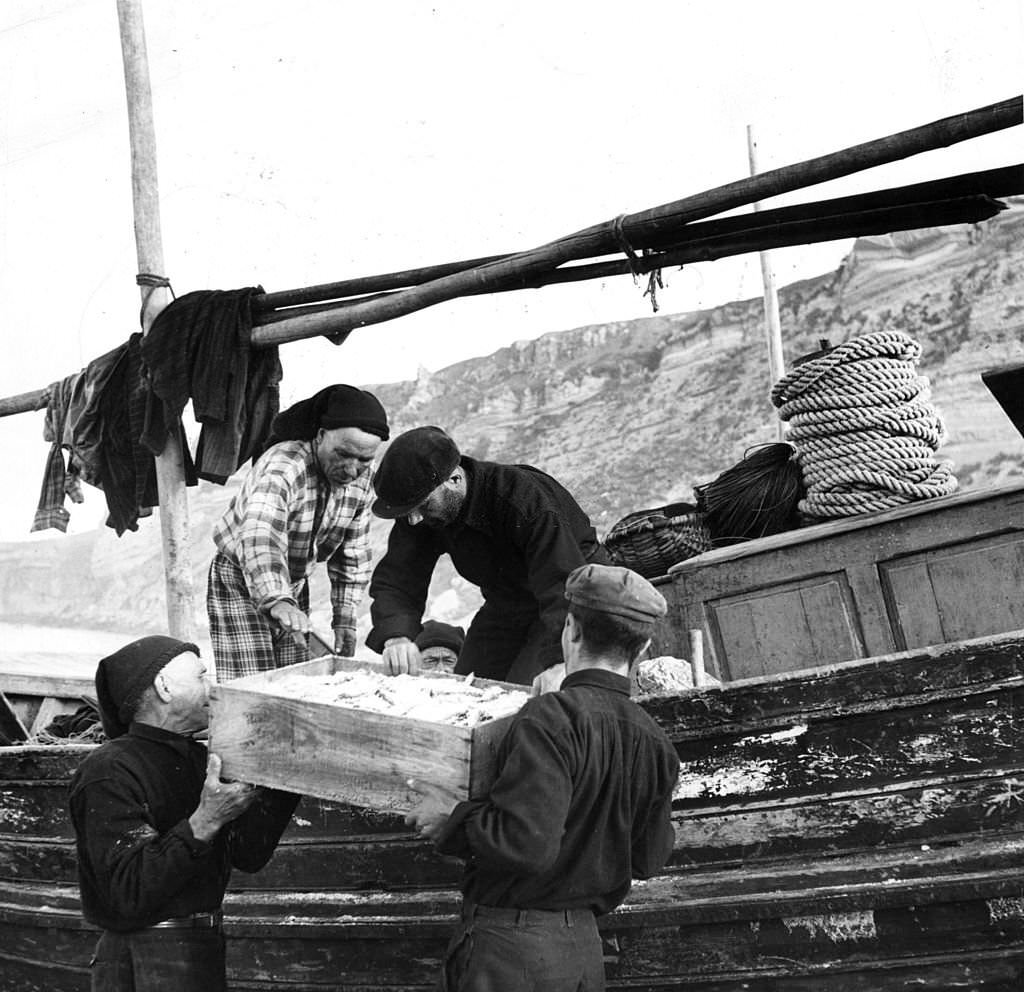
Fishermen in Nazare, Portugal, with their catch.

Once the catch was sorted, it had to move quickly. Women carried fish in baskets across the beach, walking over the drying nets spread out across the sand. Speed mattered — fish spoiled fast, and the market waited for no one.
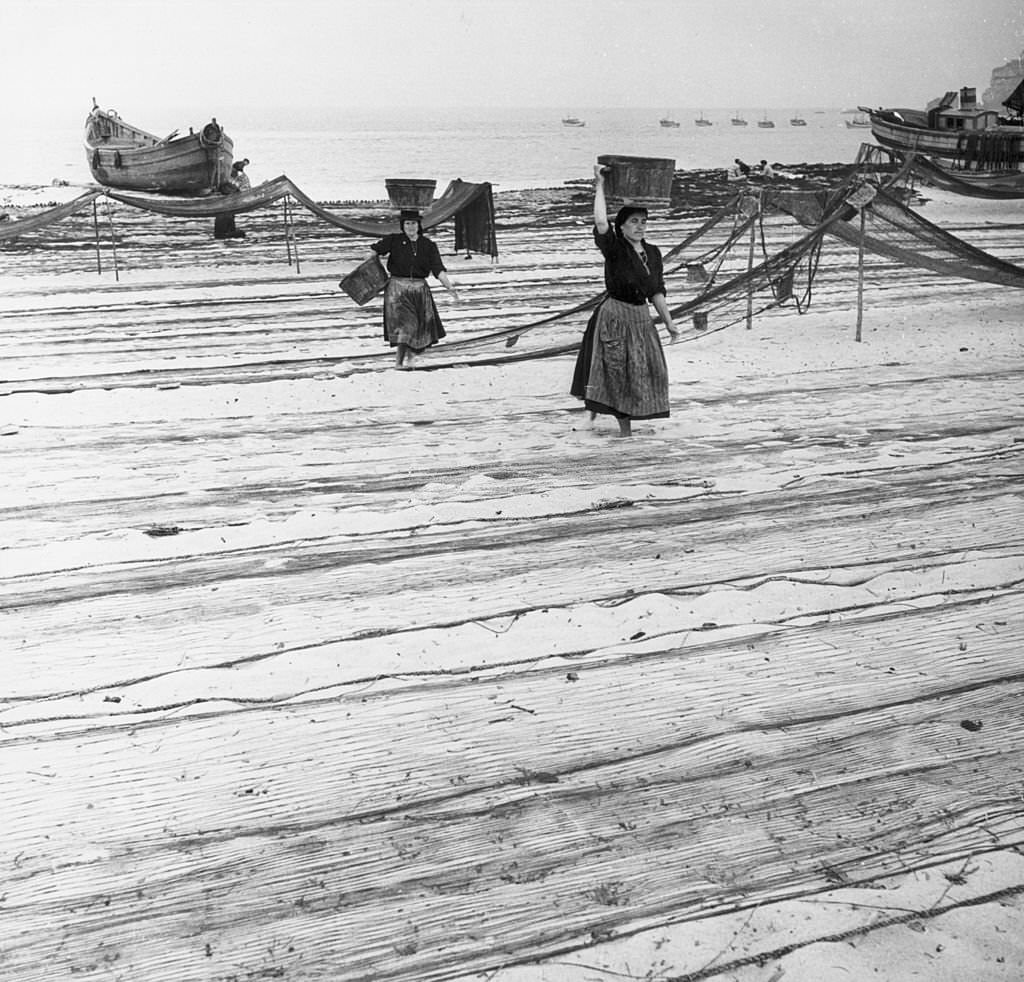
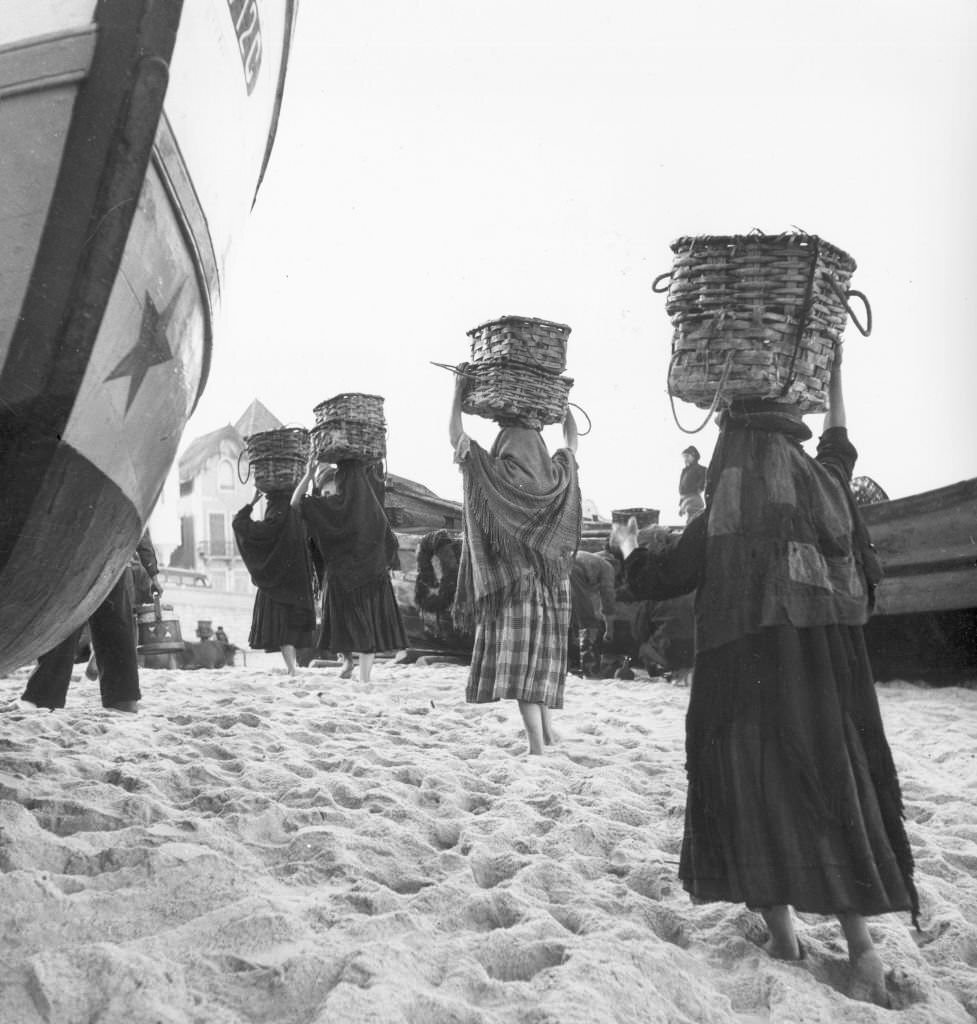
Women carrying fish walk across the drying fishing nets on the beach at Nazare.
Women carrying fish in baskets on the beach at Nazare.
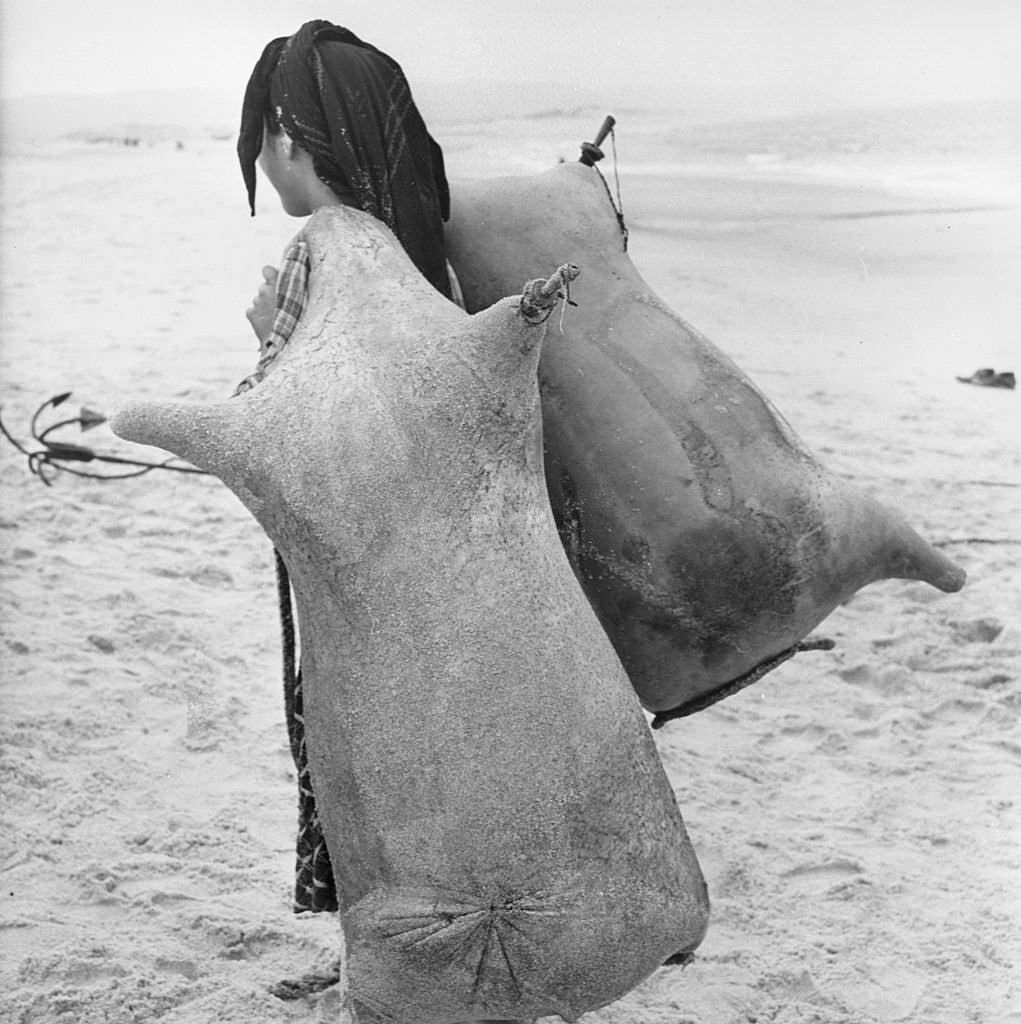
A girl carrying two animal skins full of water in the Portuguese fishing village of Nazare.

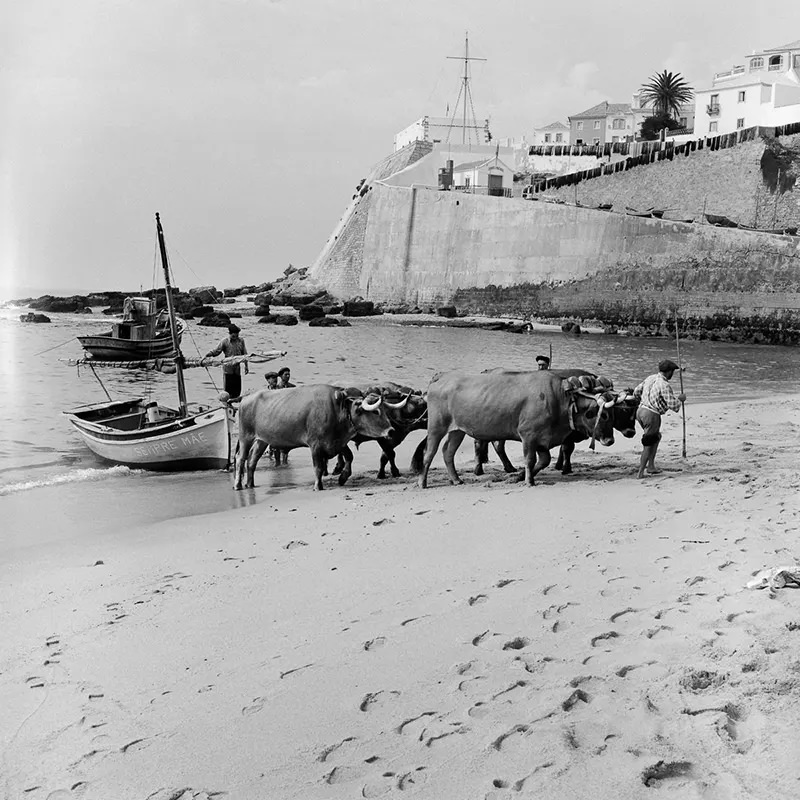
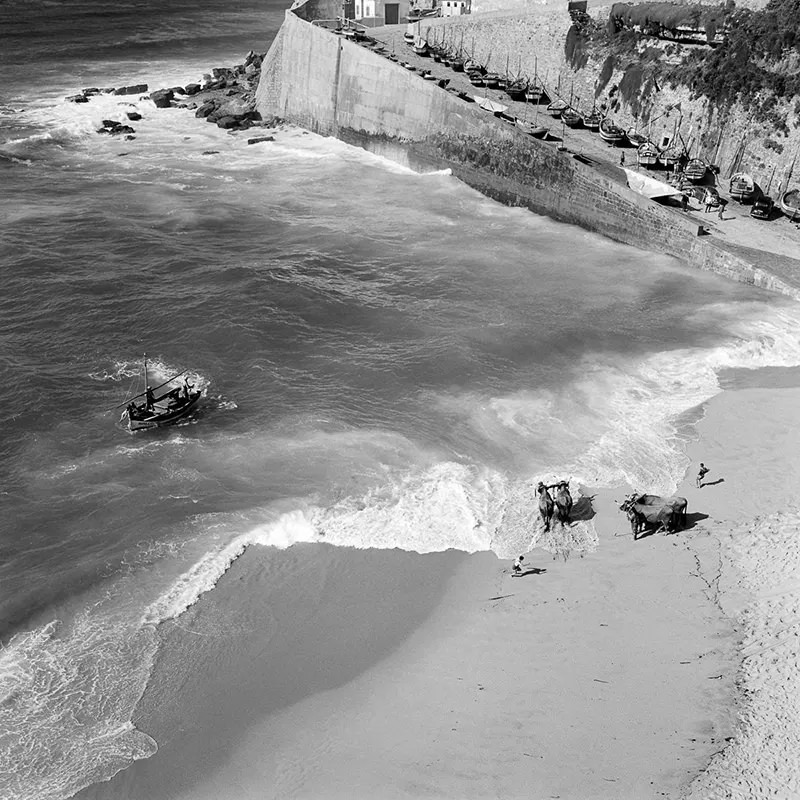
Getting heavy wooden boats in and out of the water was one of the biggest physical challenges of daily life in Nazaré. Oxen were used to drag the boats up the beach after each return. Fishermen drove the animals forward while others guided the hull, a slow and powerful process that required the full strength of both man and beast.
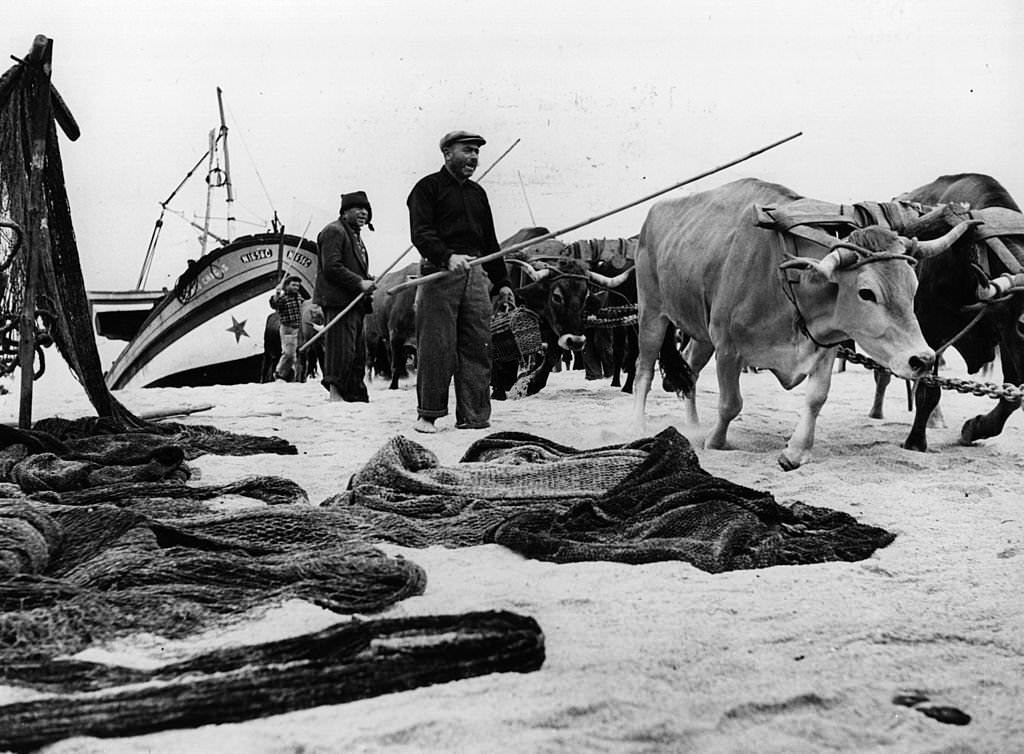
Fishermen driving their oxen forward to pull their fishing boats out of the water, in the town of Nazare 85 miles north of Lisbon.

Even the land around the fishing villages was worked. Coastal communities collected algae from the shore and used it as fertilizer to improve the soil in nearby fields. Nothing from the sea went to waste.
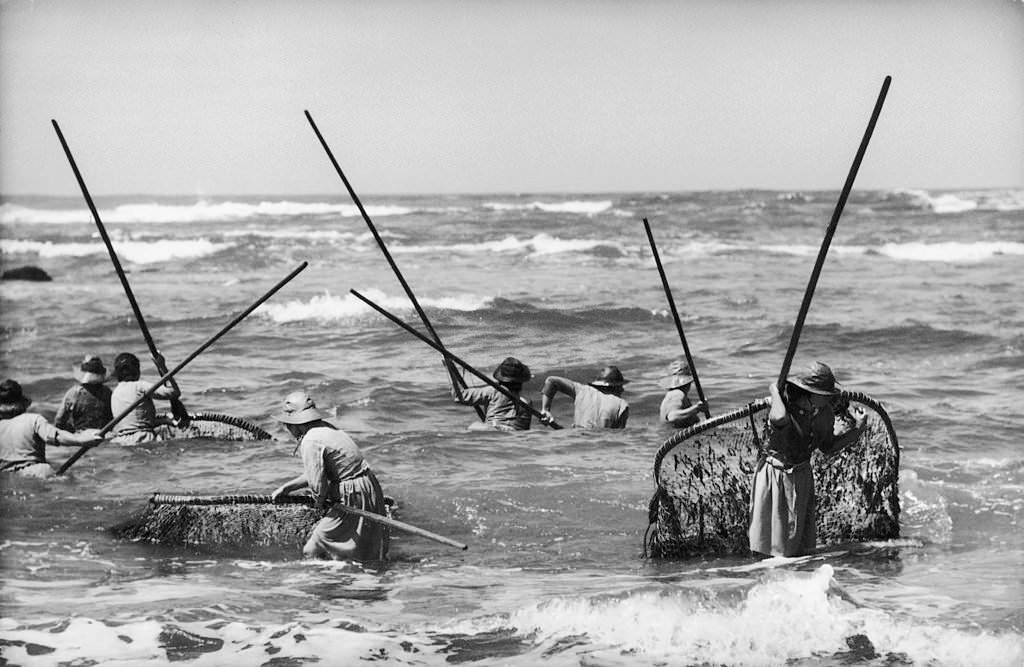
Collecting Algae To Make Manure, 1950s
The Lost Fishing Culture of the 1950s Portugal Through Fascinating Historical Photos
Enjoyed this post? Get new ones in your inbox.

3 thoughts on “The Lost Fishing Culture of the 1950s Portugal Through Fascinating Historical Photos”

  1. Not all of them are lost, but they are dying. If you go to the beaches of Pedrogão and Vieira you can still find fisherman that use the “Arte Xávega”. Today, it’s mostly a tourist attraction. Moreover, some of the photos from Nazaré appear to have been taken recently

  2. It looks beautiful in the photographs but the reality is totally different. The harshness of the work, low wages, and the lives that the sea invariably took, made the living of those poor people a little hell. Therefore, let us stay with the memories, in the hope that the times to come will not take us again to whole lives of misery, where the human condition spills over into suffering and pain.

  3. Avatar of Susan Henriques
    Susan Henriques

    Yes I agree with Liam. Their lives were harsh and poor. My ancestors were from northern rural portugal and it was unfortunately very difficulty life. The portuguese are a very kind, humble, loving and generous people. Nonetheless, the photographer did capture these moments so vividly and for that i am appreciative to now look at these images.

Leave a Comment

Your email address will not be published. Required fields are marked *

Share this Post 🥺

Please take a moment to share this content. Your support is greatly appreciated! 🙌🙏

Share this Post 🥺

Please take a moment to share this content. Your support is greatly appreciated! 🙌🙏
Scroll to Top
 
Hey Friend, Before You Go.. Please like & follow for more interesting content