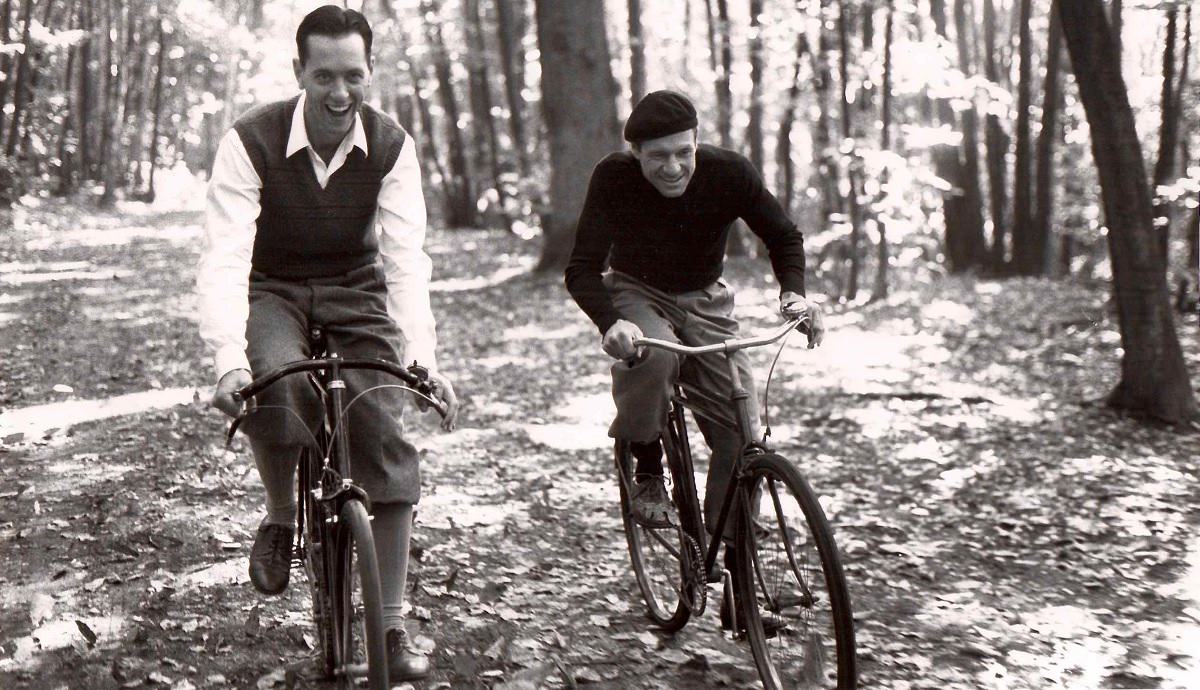
Pocono Raceway sits in the Pocono Mountains of Long Pond, Pennsylvania. Known as “The Tricky Triangle” for its unusual three-cornered shape, the superspeedway has hosted some of the most competitive events in NASCAR Cup Series history, as well as major open-wheel races. The 1975 season brought a packed schedule of racing, and a remarkable set of photographs survived to document nearly every corner of that experience — from the pit lanes to the grandstands.
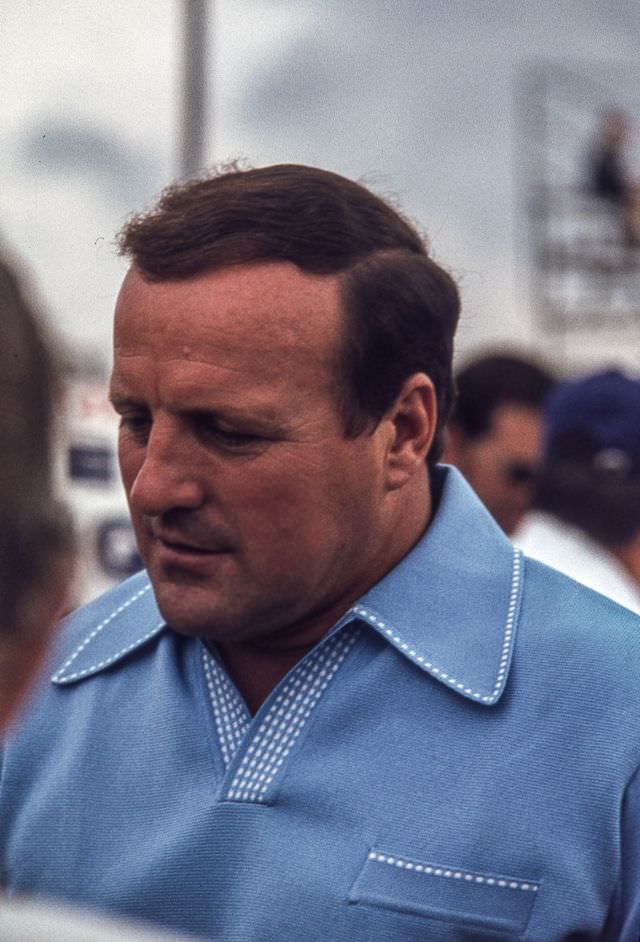
The 1975 Schaefer 500 at Pocono drew drivers, crews, and fans from across the country. The event featured a deep field of competitors running everything from factory-backed machines to independent entries held together by small budgets and big ambitions. Among the notable names in attendance was Al Loquasto, a Pennsylvania-area driver who had a personal connection to the Pocono crowd.
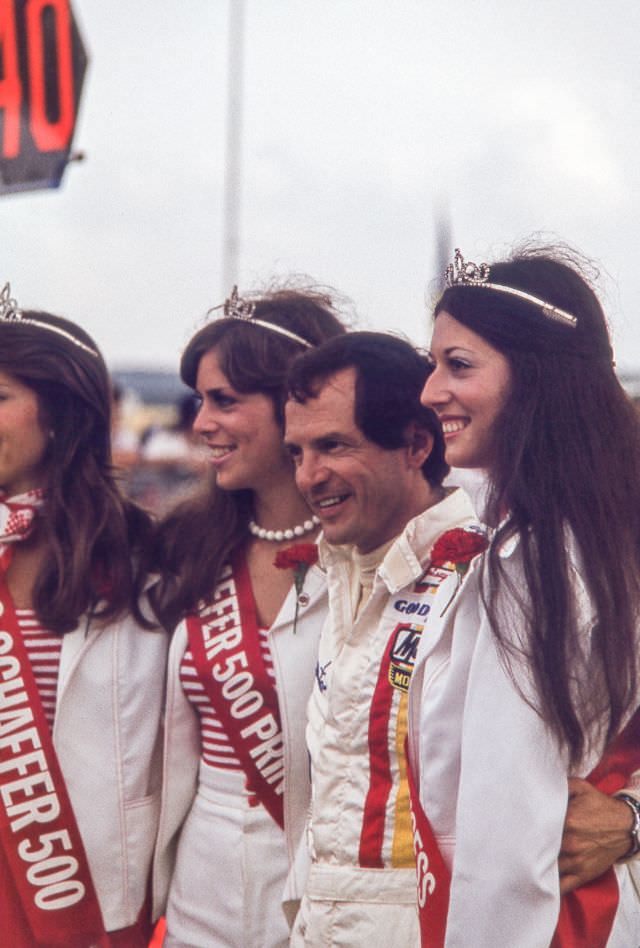
Al Unser was one of the most respected names in open-wheel racing at the time, and his presence at Pocono always drew attention. Before race day, drivers often used two-wheelers to navigate the sprawling infield, keeping their legs fresh while getting a feel for the grounds.
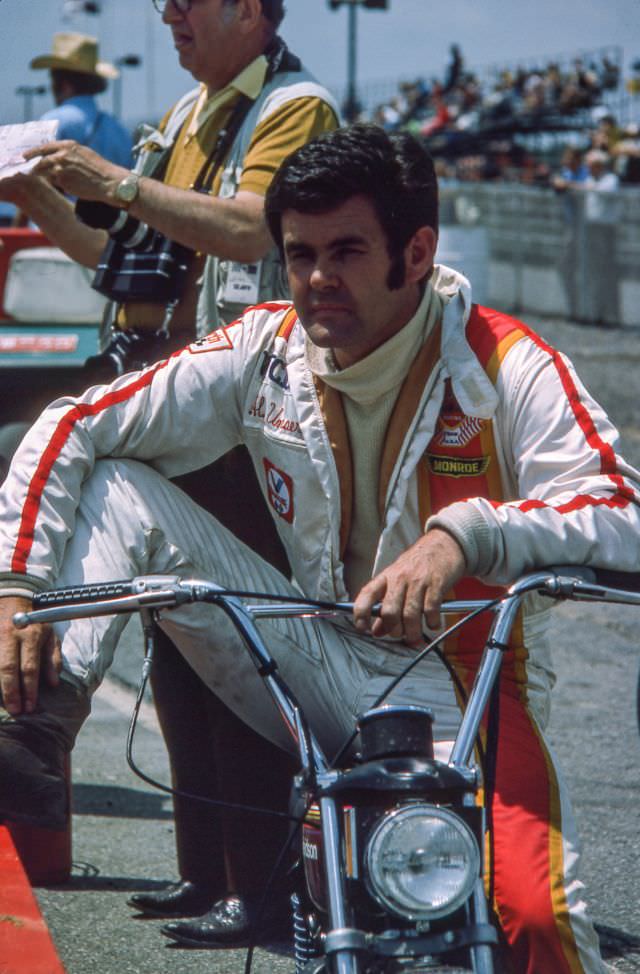
Getting into a racing car is a practiced ritual. Every strap, every buckle, and every connection to the machine has to be exactly right before the engine fires. Unser, a seasoned professional, went through that process with the focus of someone who had done it hundreds of times.
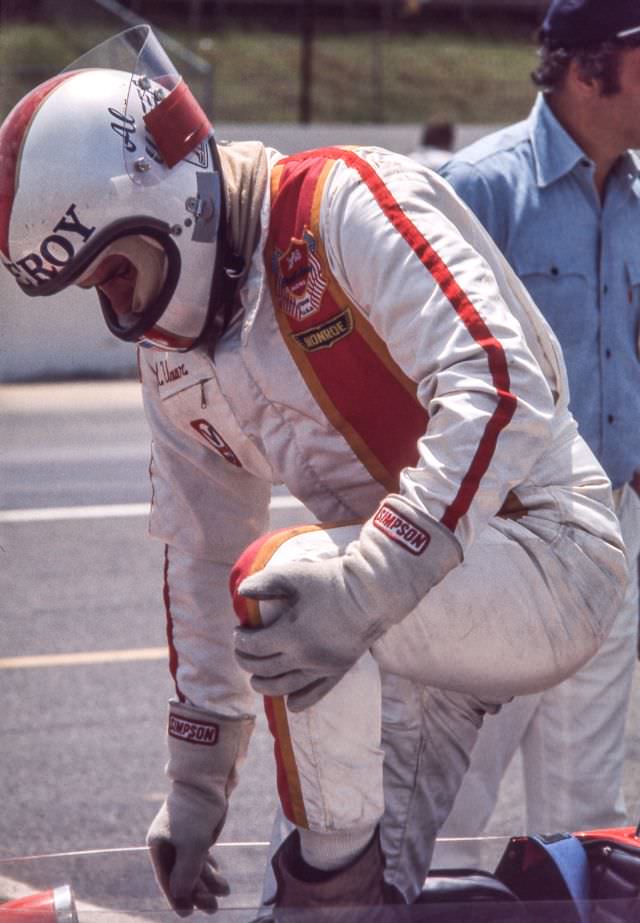
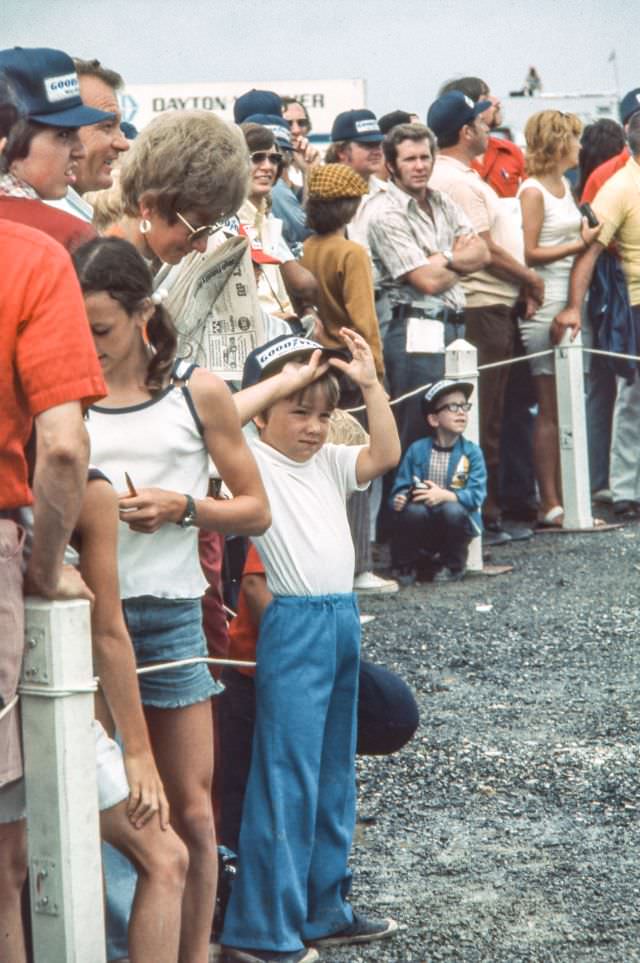
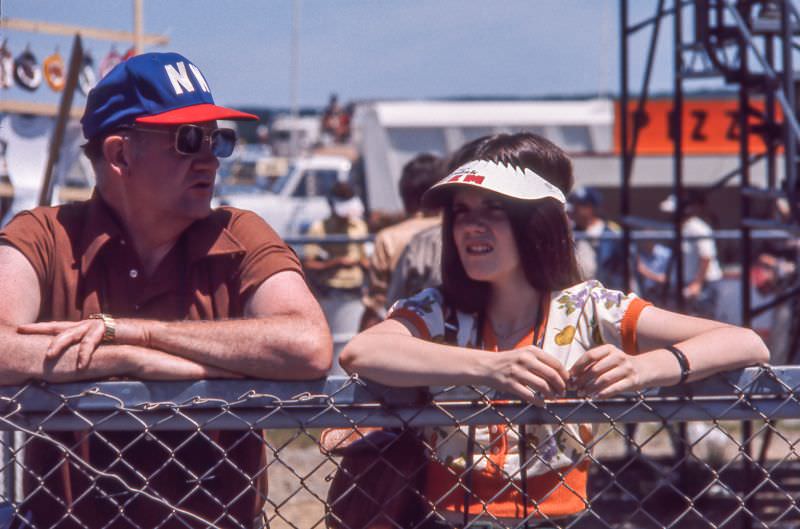
Race weekends at Pocono were social events as much as sporting ones. Spectators dressed up, gathered in groups, and made a full day — sometimes a full weekend — out of the trip. The energy in the stands and along the fences was part of what made Pocono a destination.
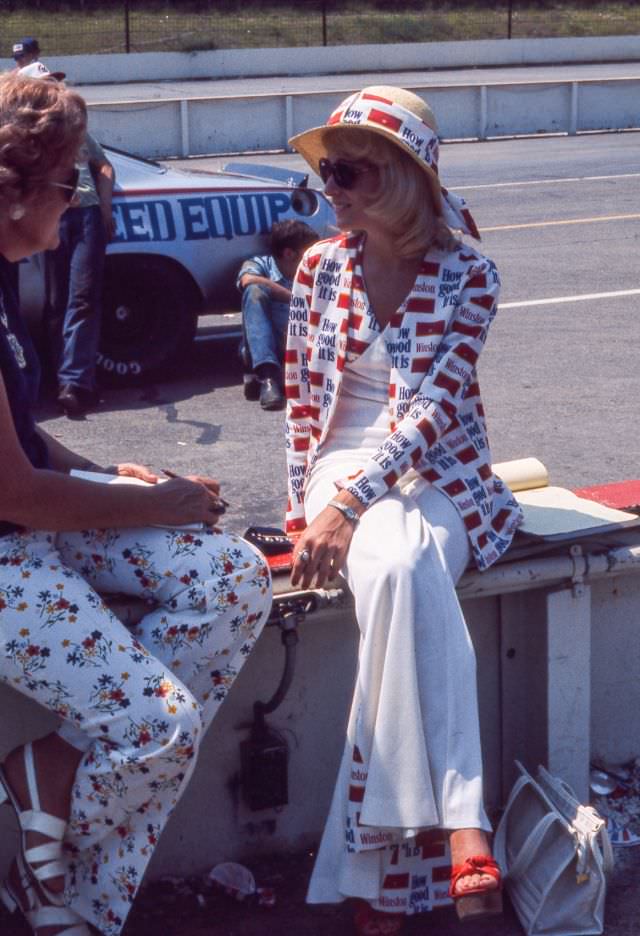
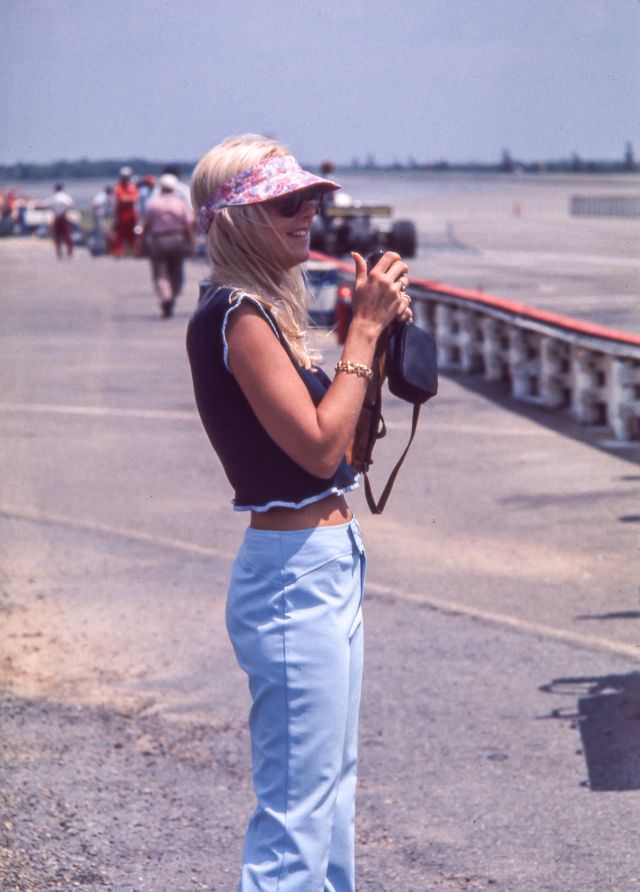
Not every team at Pocono had a corporate sponsor backing their wardrobe, but Bentley Warren’s Bottom Half squad took a different approach. They showed up to the pits dressed sharply and made sure they stood out regardless of where they finished.
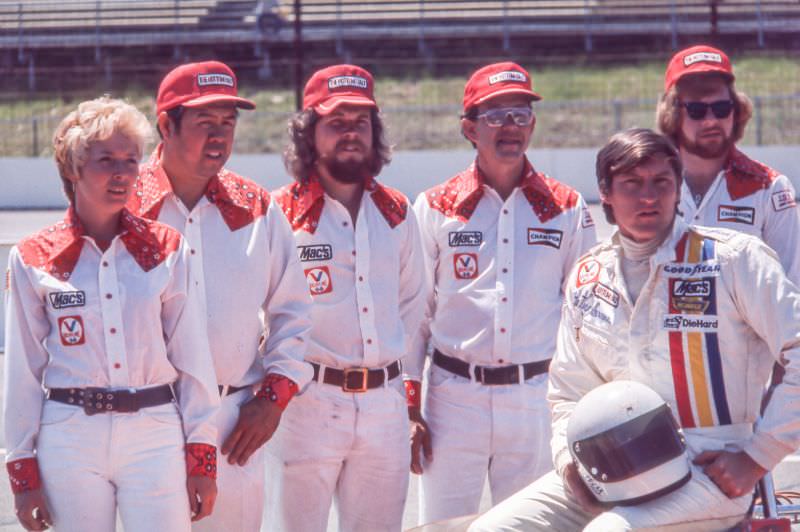
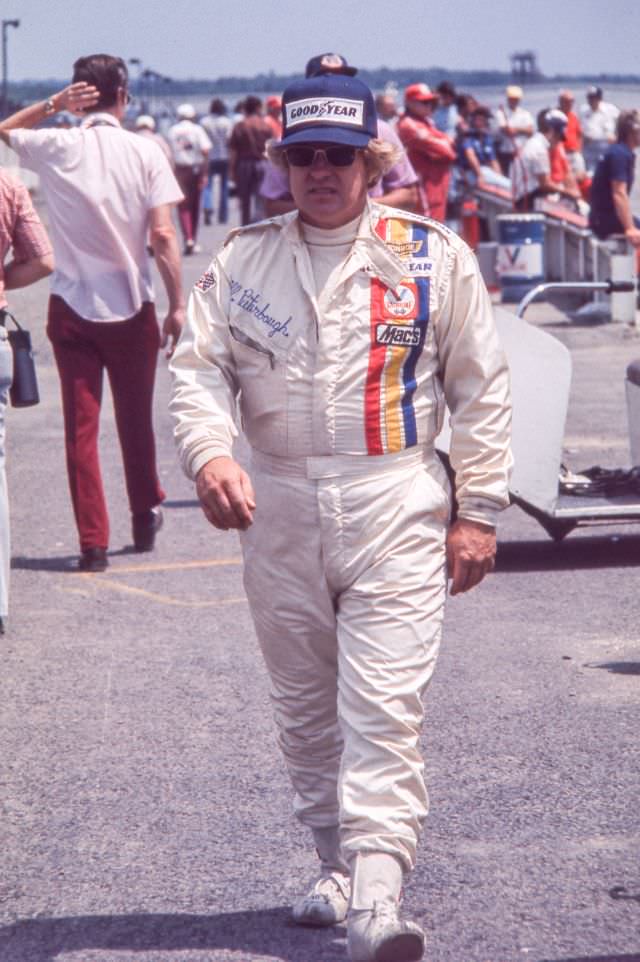
Race day mornings had a distinct atmosphere — part calm, part controlled chaos. Drivers, mechanics, and officials all moved through the pits with purpose. Bill Puterbaugh was among those walking the paddock as the day built toward the green flag.
Between sessions and during breaks, the pits could take on a surprisingly relaxed feel. Golf carts became a common sight throughout the infield, giving crew members and drivers a way to move around without burning energy on foot.
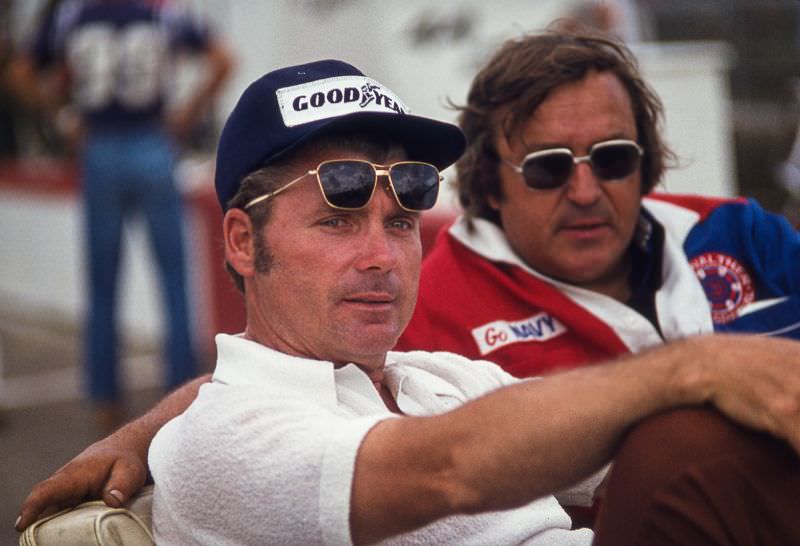
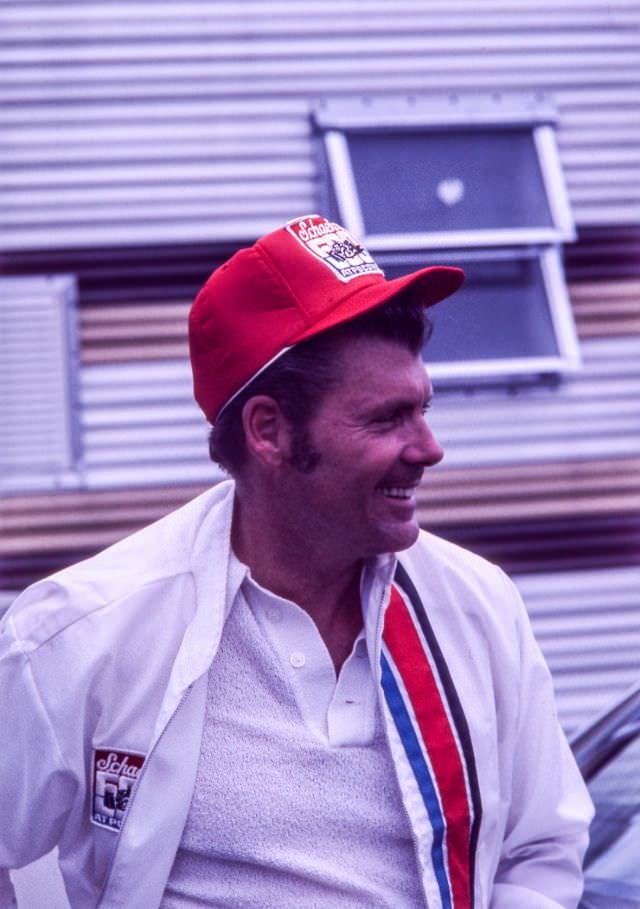
Bobby Allison drove for the Roger Penske organization in the Schaefer 500 that year. Penske’s team was already building a reputation for running well-prepared machinery, and Allison’s experience made him a serious contender whenever he climbed behind the wheel.
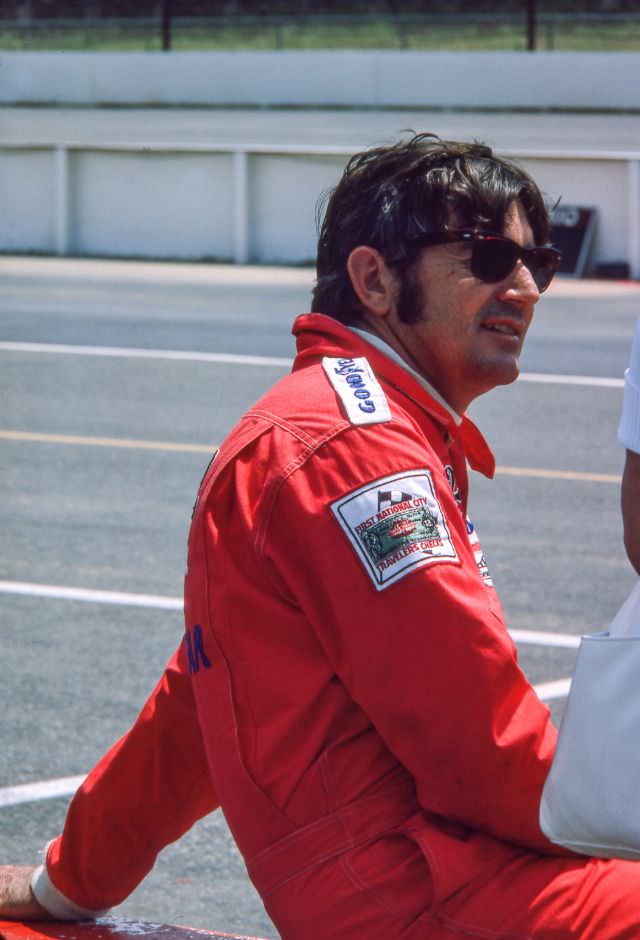
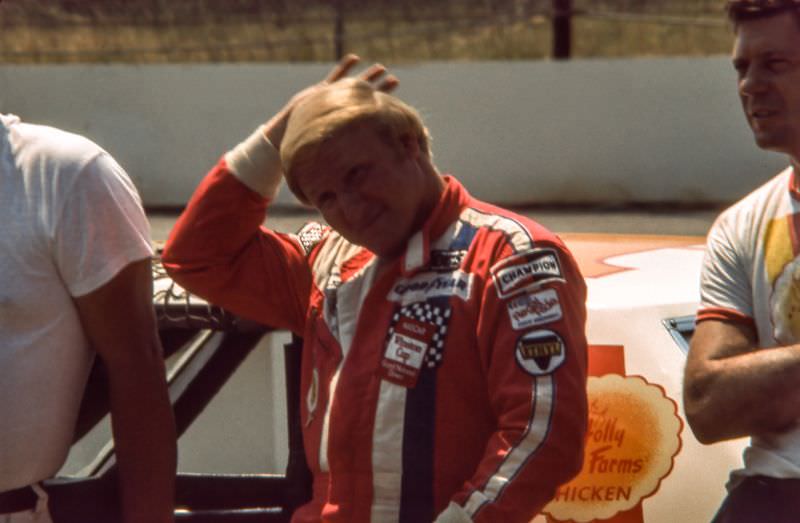
Cale Yarborough was one of the biggest personalities in stock car racing during the mid-1970s. Hard-charging on the track and quick with a grin off it, he was never hard to spot in a paddock full of competitors.
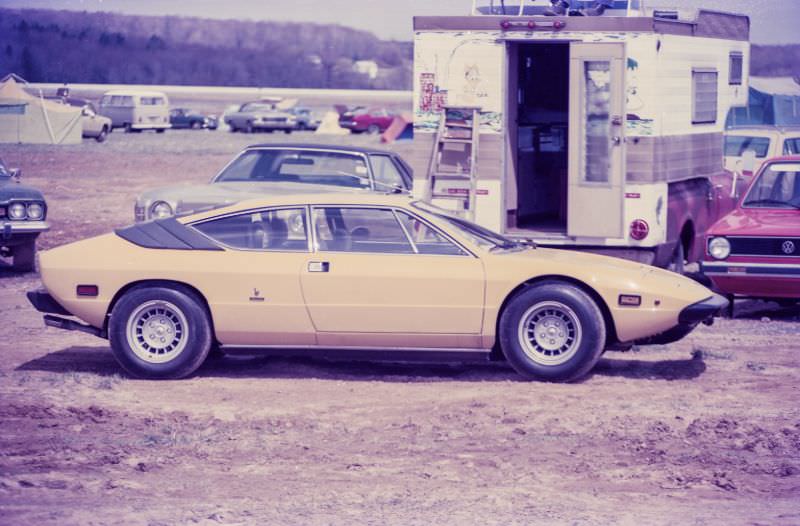
The parking lots surrounding Pocono told their own story about the era. American muscle cars and station wagons lined up in long rows, carrying families and racing fans from across Pennsylvania and neighboring states.
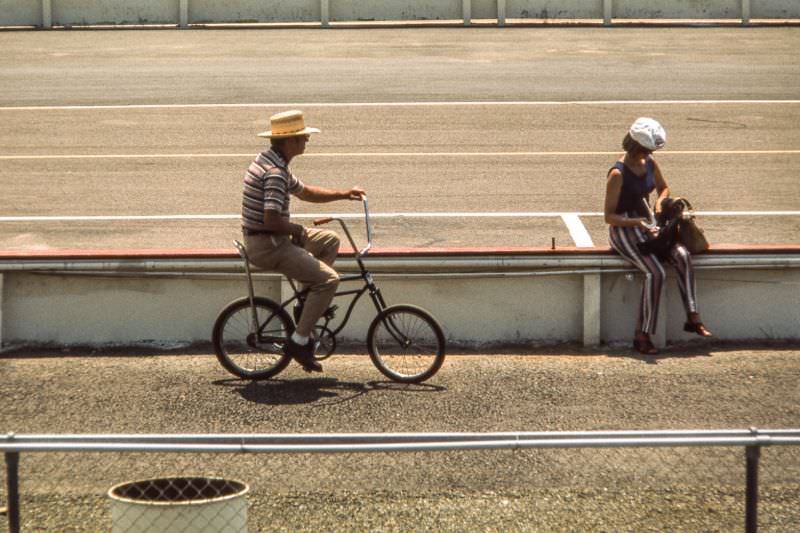
Chief mechanic Clint Brawner was a well-known figure in American open-wheel racing going back decades. By the mid-1970s, he had seen nearly every trend the sport had to offer — and he navigated the paddock at his own pace.
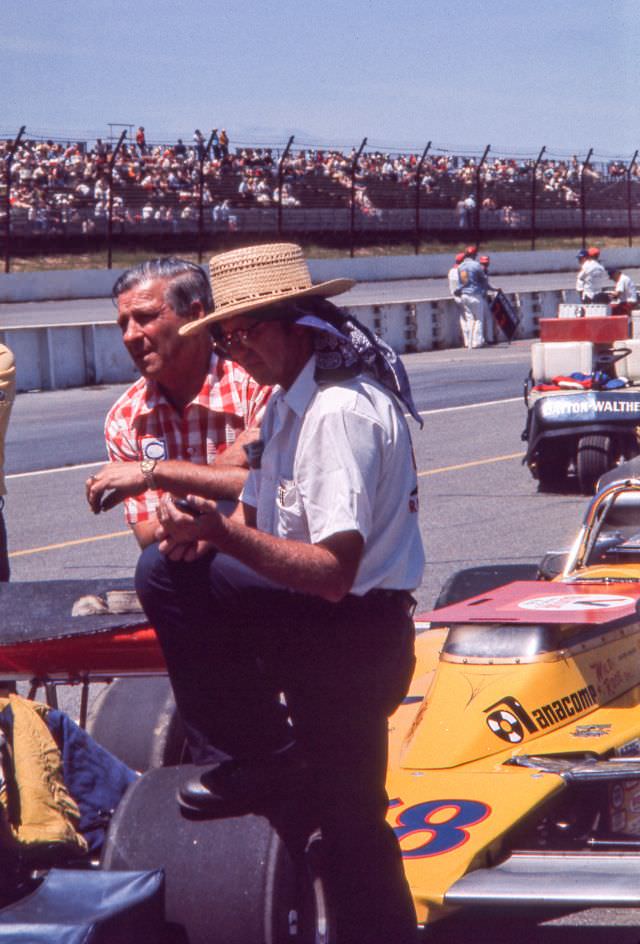
Dan Gurney’s All American Racers operation produced the Eagle chassis that became one of the most recognized designs in USAC racing. Gurney himself was a towering figure — a race winner on multiple continents and a builder whose cars kept showing up in victory lanes long after his own driving days wound down.
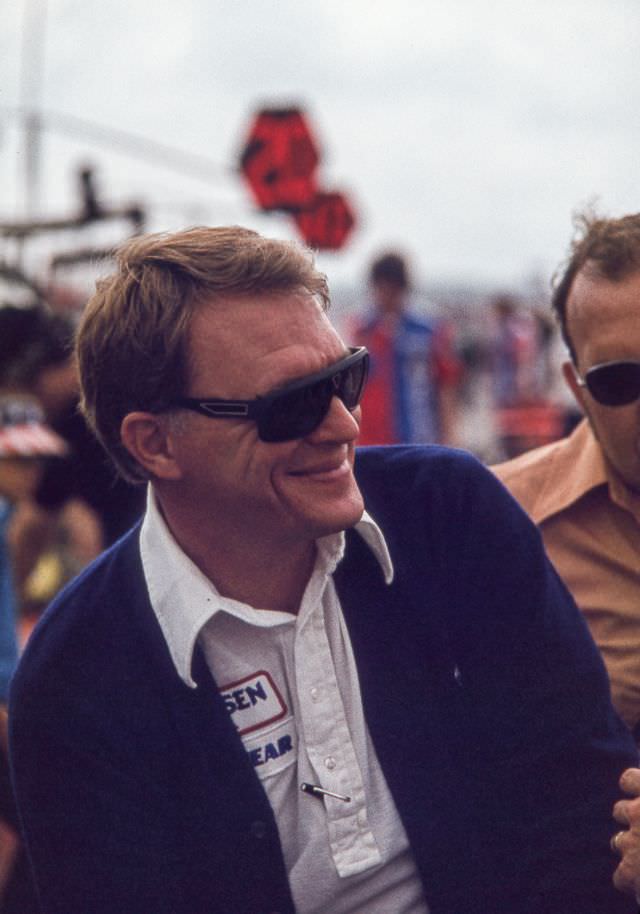
David Pearson took the win at Pocono driving a Woods Brothers 1973 Mercury. The Wood Brothers were one of NASCAR’s most storied teams, and Pearson — nicknamed “The Silver Fox” — was among the most technically precise drivers of his generation. Their partnership produced wins at tracks across the country.
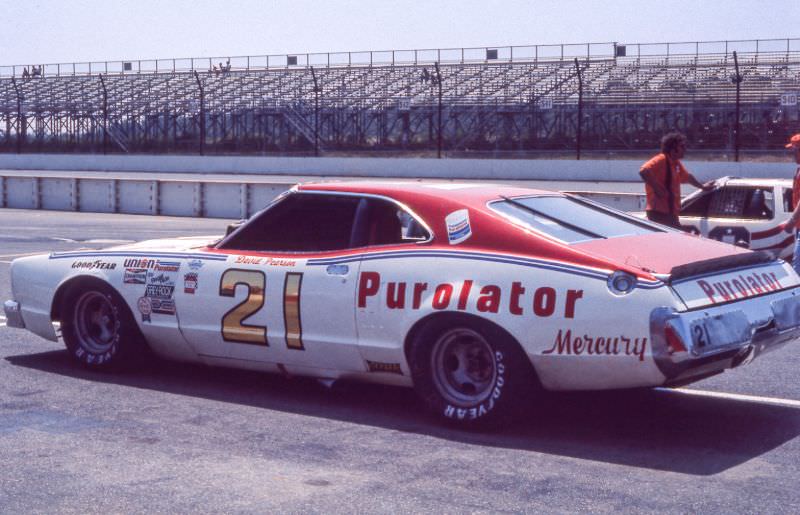
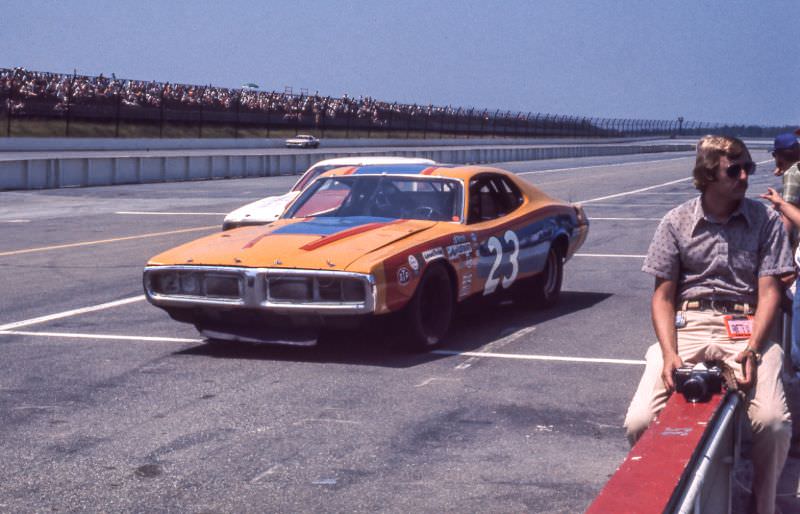
The independent entries at Pocono showed the variety of machinery that filled out the field. Don Robertson brought a 1974 Chevrolet to the race, one of many privately funded cars that made up the back half of the starting grid.
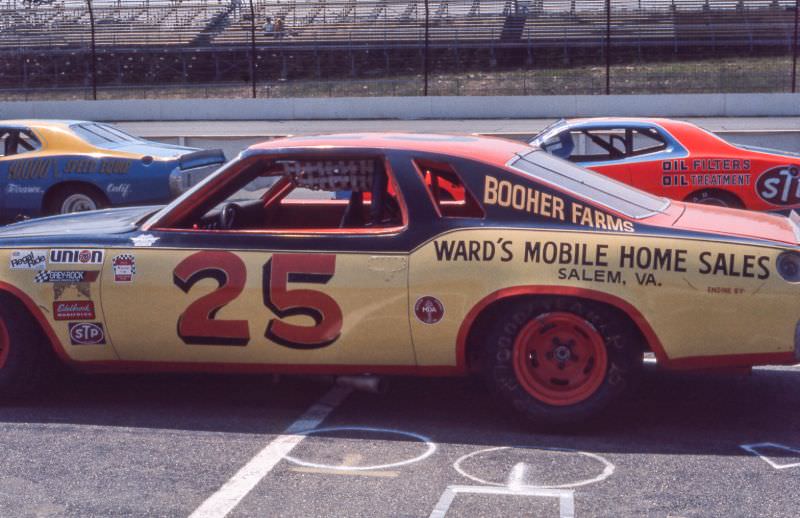
Duane “Pancho” Carter came from a racing family and carried that confidence onto the track. Suited up and focused, Carter was clearly ready when his moment came.
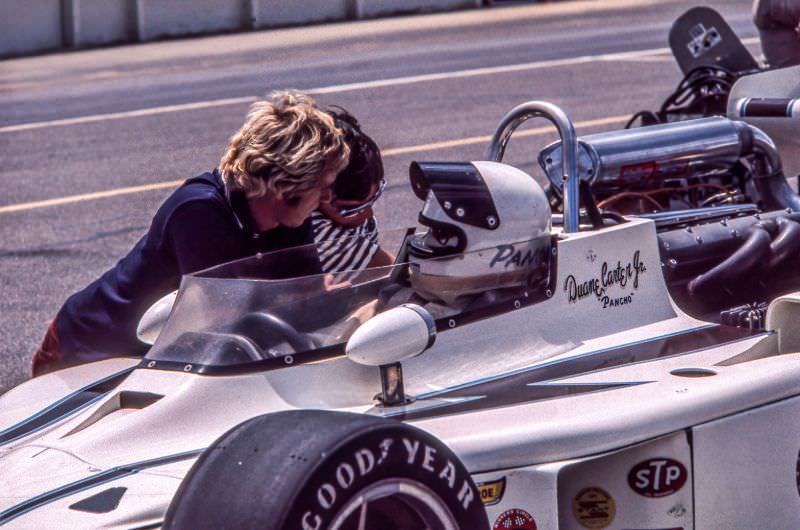
Few things drew fans closer to the action than the autograph lines. Drivers walked through crowds, signing programs and hats, while spectators pressed forward hoping to get a moment with their favorite racer.
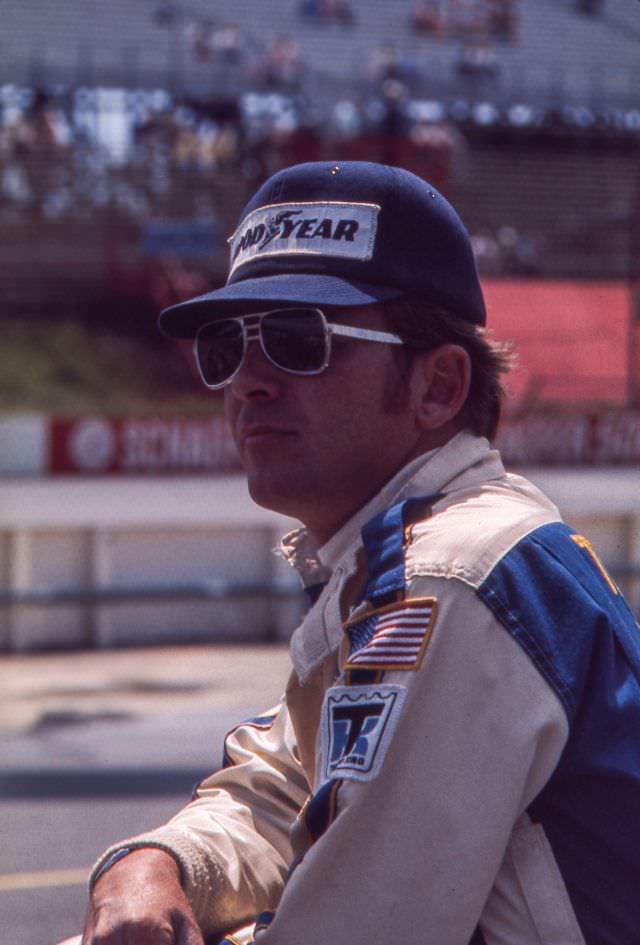
Gary Bettenhausen was part of one of motorsport’s most well-known racing families. His father Tony and brother Merle both raced at the top levels of American open-wheel competition, and Gary carried the family name onto some of the biggest ovals in the country.
The infield at Pocono during the 1975 Schaefer 500 was packed with spectators who set up right alongside the action. Lawn chairs, coolers, and open views of the track made the infield one of the most popular spots for dedicated racing fans.
Jackie Oliver had a long international racing career that included Formula One and sports car endurance events. At Pocono, he was spotted in the pits catching up on correspondence — a quiet moment in the middle of a busy race weekend.
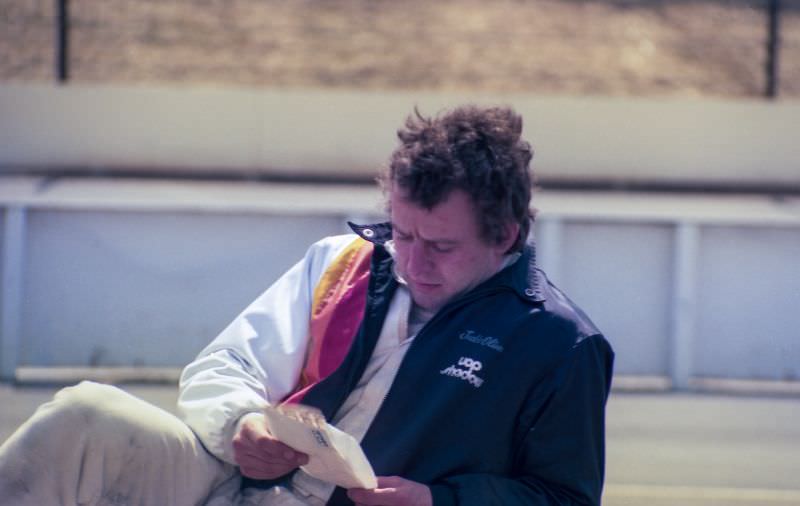
Jerry Grant spent time making final checks before heading out on track. In open-wheel racing, small adjustments in the pits could make a meaningful difference once the speeds climbed past 150 miles per hour on Pocono’s long straightaways.
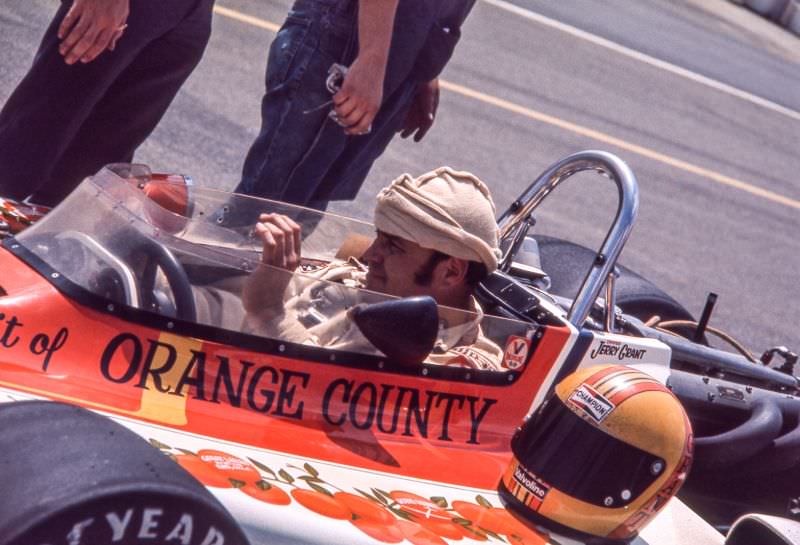
Grant’s Spirit of Orange County team turned heads in the paddock with their coordinated look. Crew uniforms weren’t always a given in 1975, so a team that took the time to dress the part made a statement.
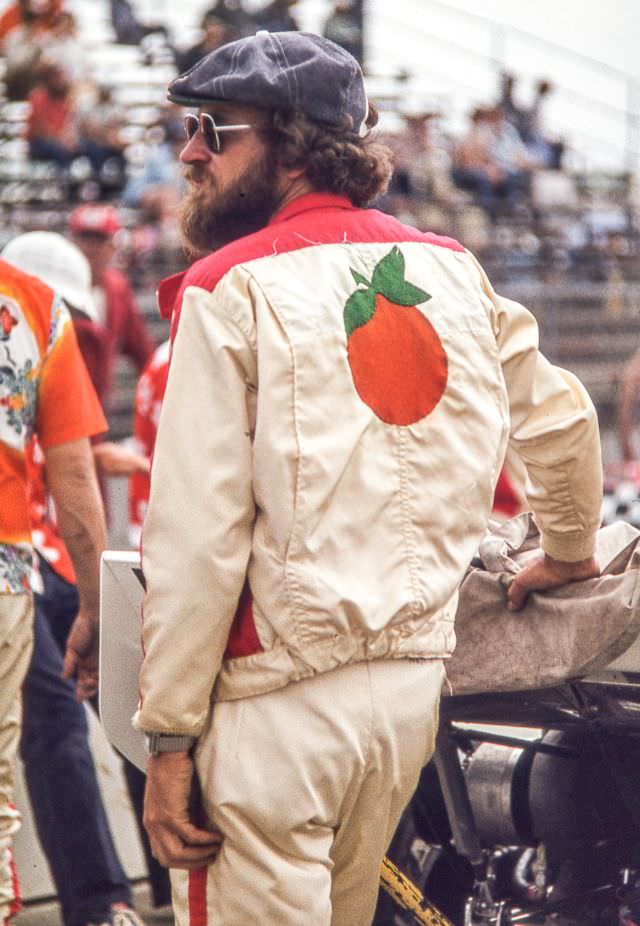
Jimmy Caruthers campaigned the Alex Foods Eagle powered by an Offenhauser engine — one of many Eagle/Offy combinations that competed at open-wheel events across the USAC circuit in the mid-1970s. The Offy was a legendary engine that had powered cars at Indianapolis and other major ovals for decades.
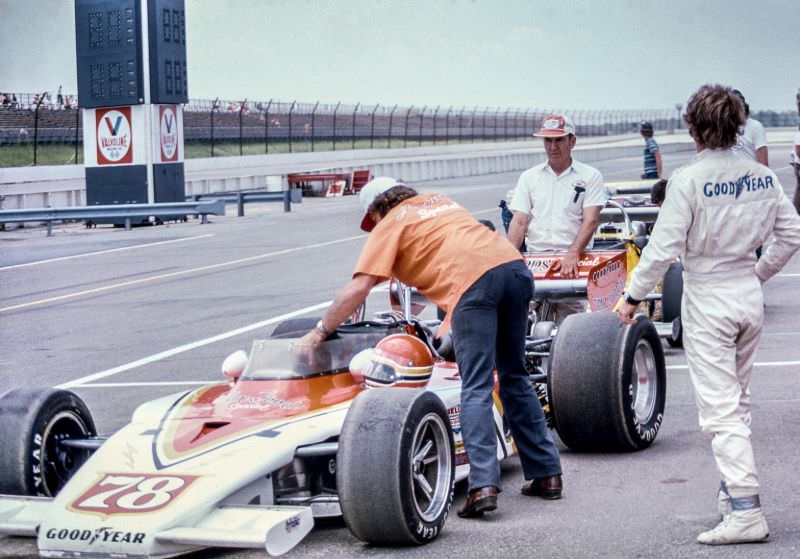
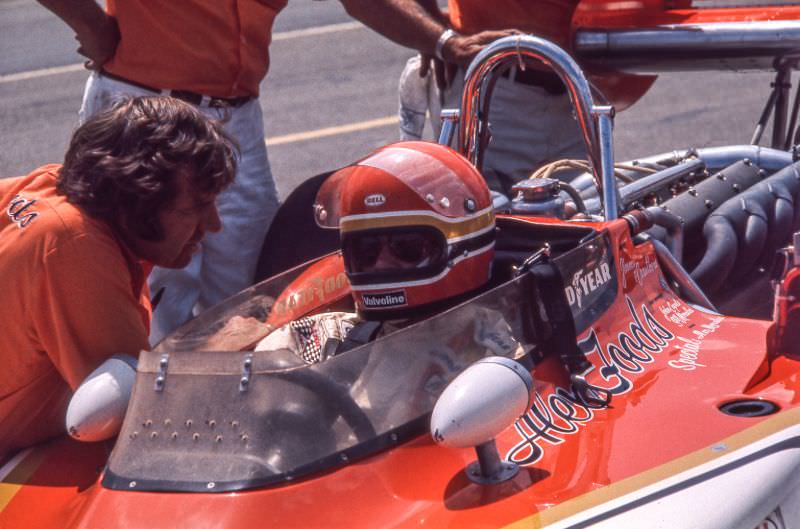
John Gunn was among the drivers working through their pre-race preparations. Getting strapped in and systems-checked before heading onto a superspeedway was a deliberate, methodical process.
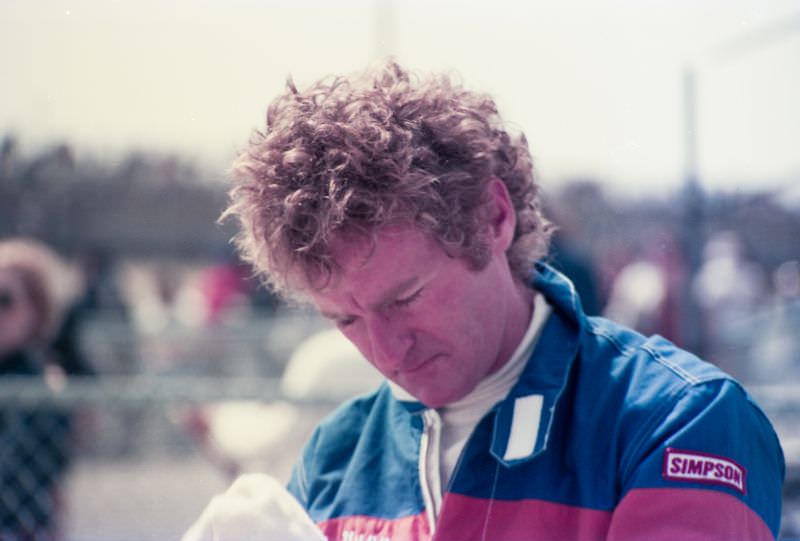
John Martin didn’t rely solely on his crew for every detail. Checking his own tire pressure before a run was the kind of hands-on involvement that many drivers practiced — keeping a personal feel for what the car was sitting on.
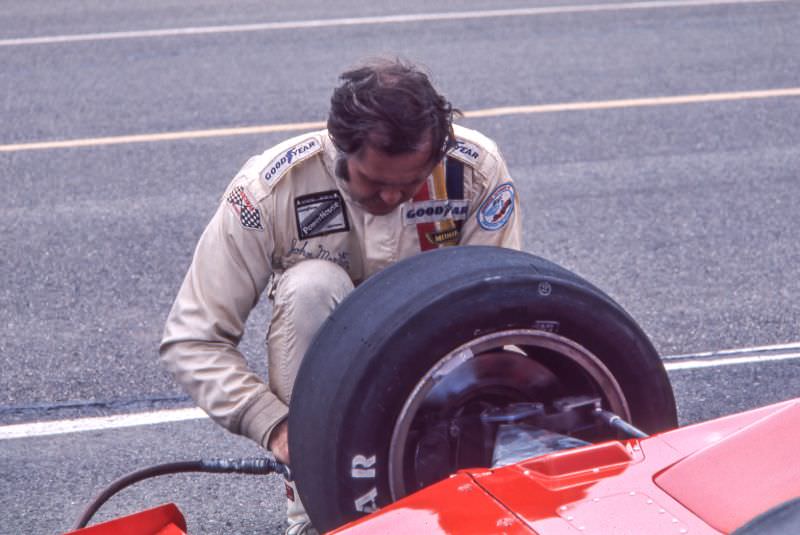
Martin’s McLaren/Offy was prepped and ready on race day. He went on to finish seventh, a solid result for an independent entry competing against heavily funded factory-backed teams.
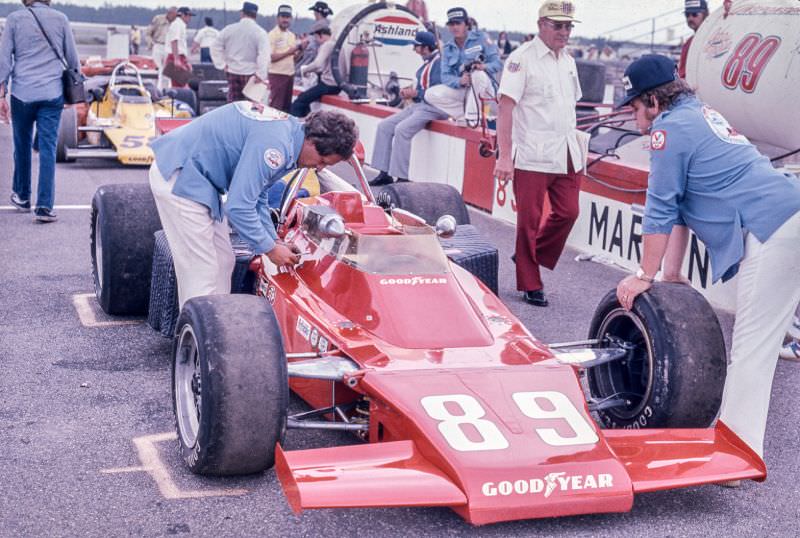
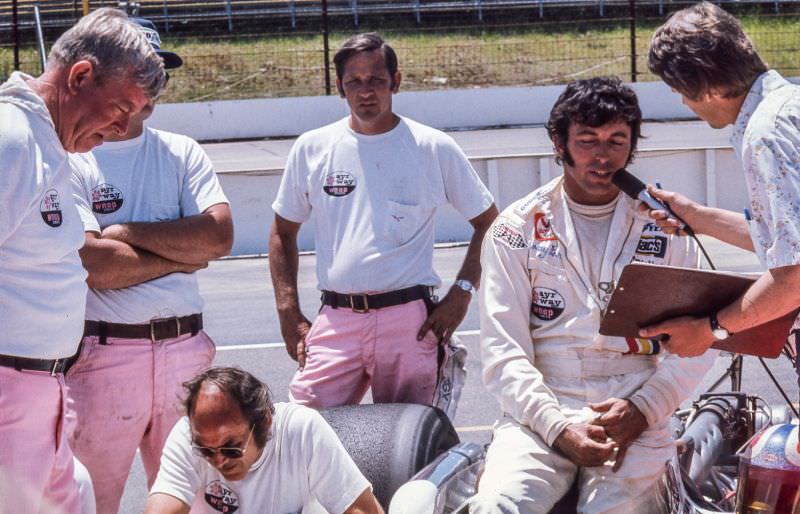
Johnny Parsons qualified ninth on the grid and spoke with reporters after the session wrapped. A front-row result would have been better, but ninth was a strong starting position at a track where consistency over 500 miles mattered as much as raw speed.
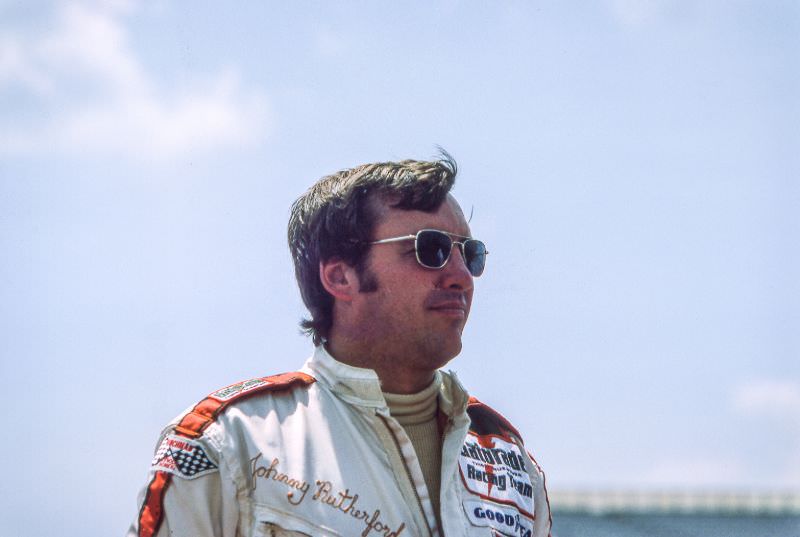
Johnny Rutherford was one of the front-runners in American open-wheel racing during this period. He had won the Indianapolis 500 in 1974 and arrived at Pocono as a driver with real momentum behind him.
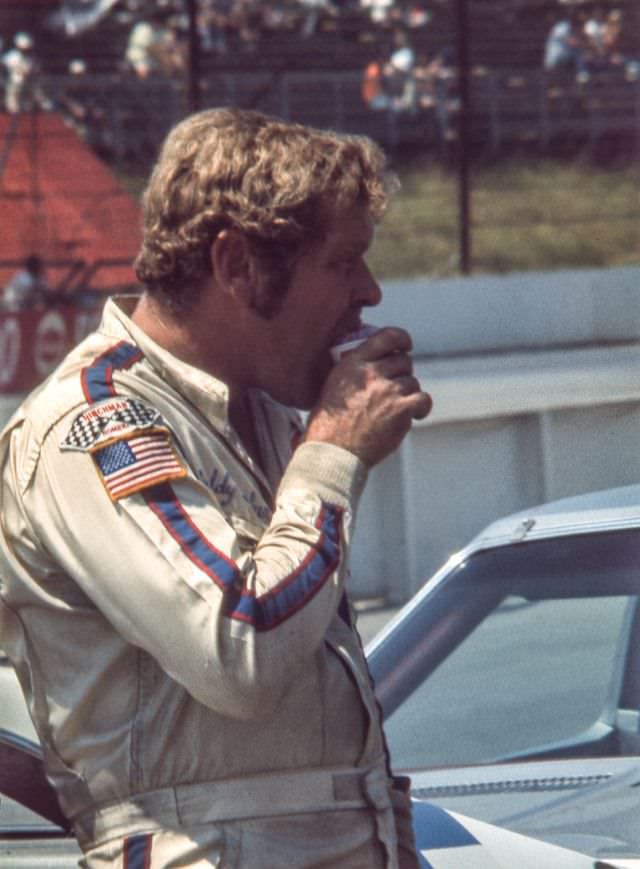
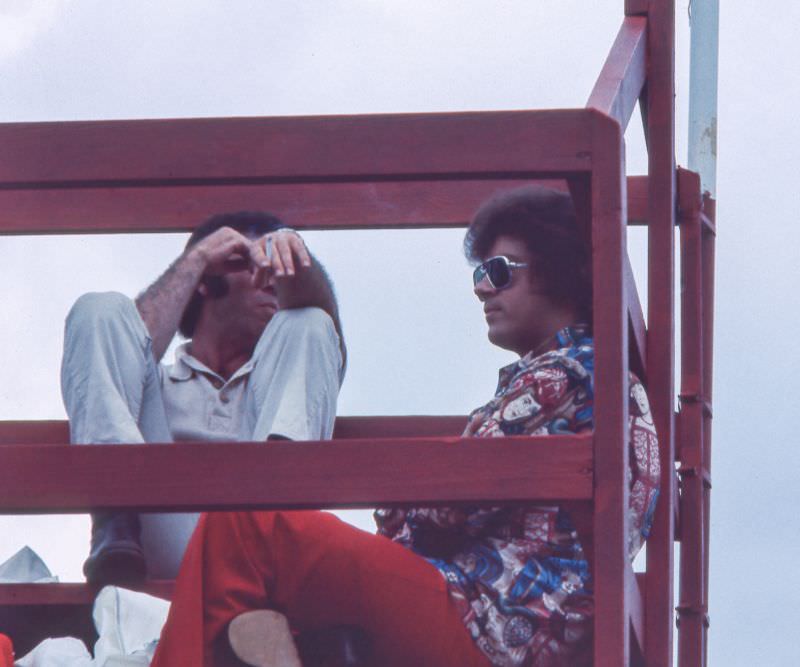
With summer temperatures in Pennsylvania pushing into the upper range on race weekends, staying cool before a race became a priority for drivers and crew members alike. The heavy fireproof suits worn by racing drivers made the heat even harder to manage.
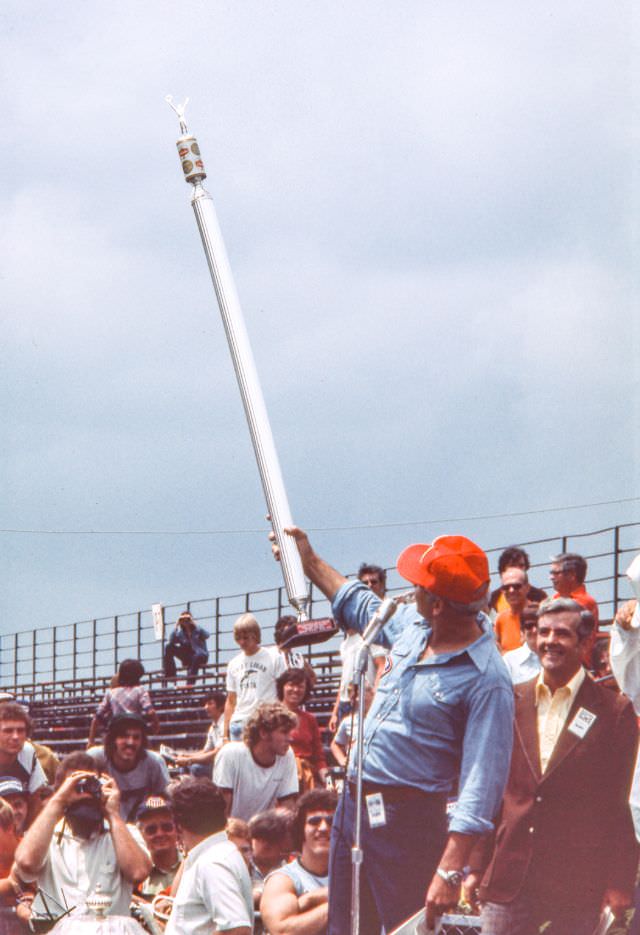
The Pocono Road Racing Drivers Association — PRDA — recognized competitors through its trophy program. Kovaleski was on hand to display the hardware, which represented the organization’s ties to the regional racing community.
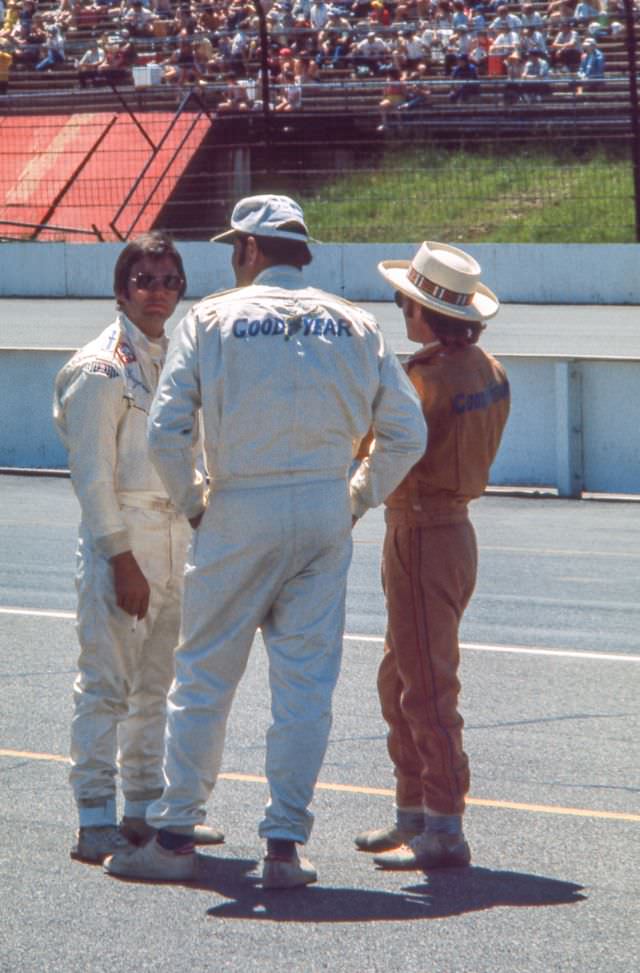
On the morning of race day, drivers and crew members gathered in small groups to go over final strategy. Lee Kunzman, Jerry Grant, and Mike Mosley were photographed in one of those conversations — a quiet moment before the day’s intensity took over.
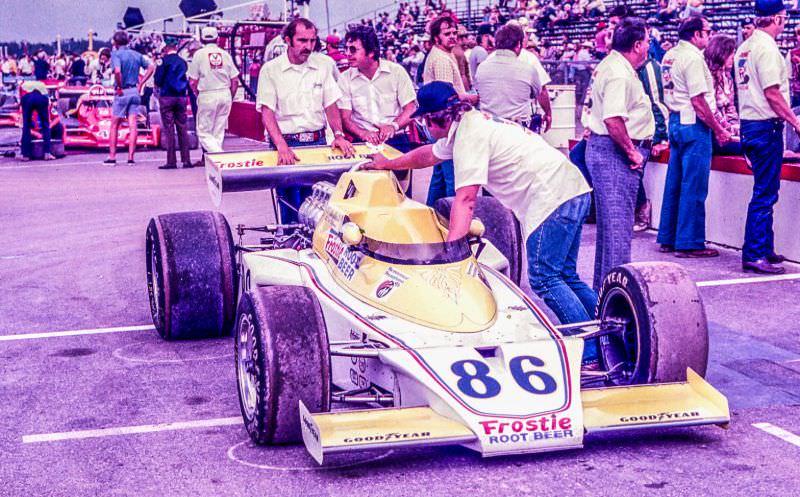
Moving cars around in the paddock required physical effort. Loquasto’s McLaren was pushed back by hand while two crew members leaned against the rear wing — a common sight in the pits when engines were off and the team needed to reposition the car.
Mario Andretti and Al Unser were teammates, two of the biggest names in open-wheel racing sharing a garage and working toward the same goal. Their combined experience gave their team a depth that few other entries could match.
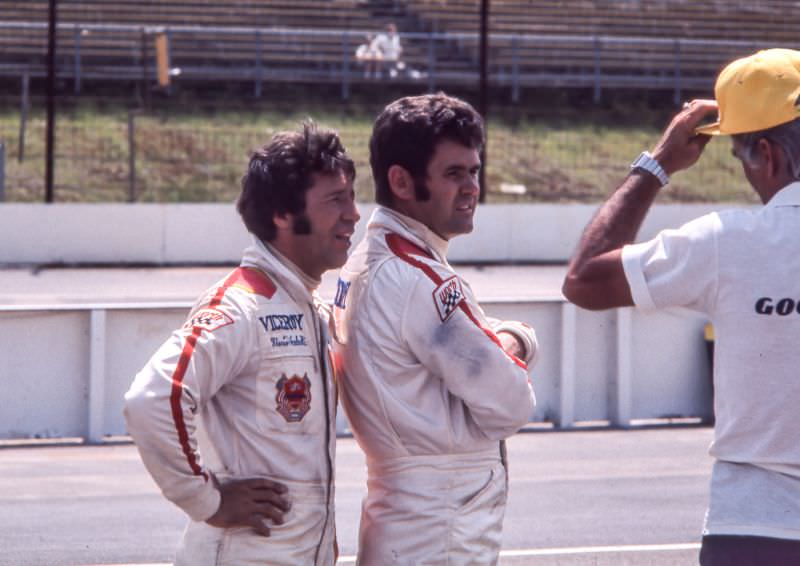
Andretti was rarely still on a race day. Between media obligations, team meetings, and car checks, there was always something demanding his attention — but there were also moments of waiting, where the next task hadn’t arrived yet.
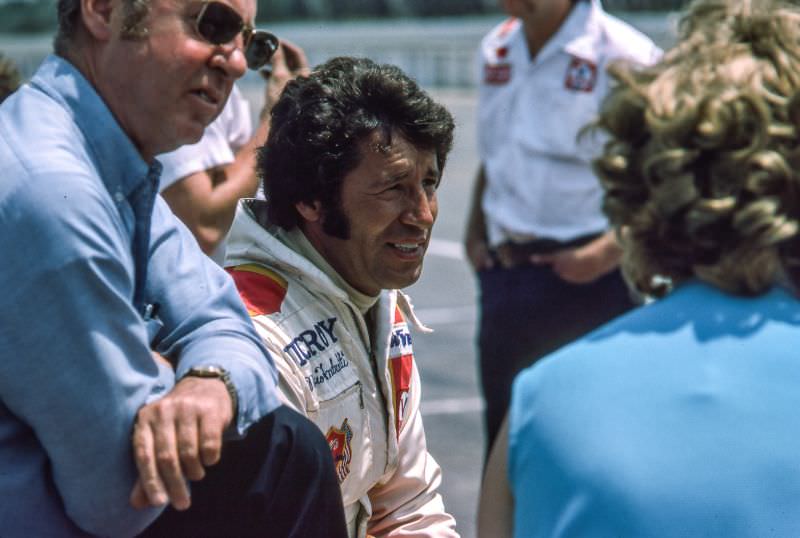
Andretti was recognized formally during the Pocono weekend, receiving special acknowledgment from race officials or sponsors — a reflection of his standing in the sport at that point in his career.
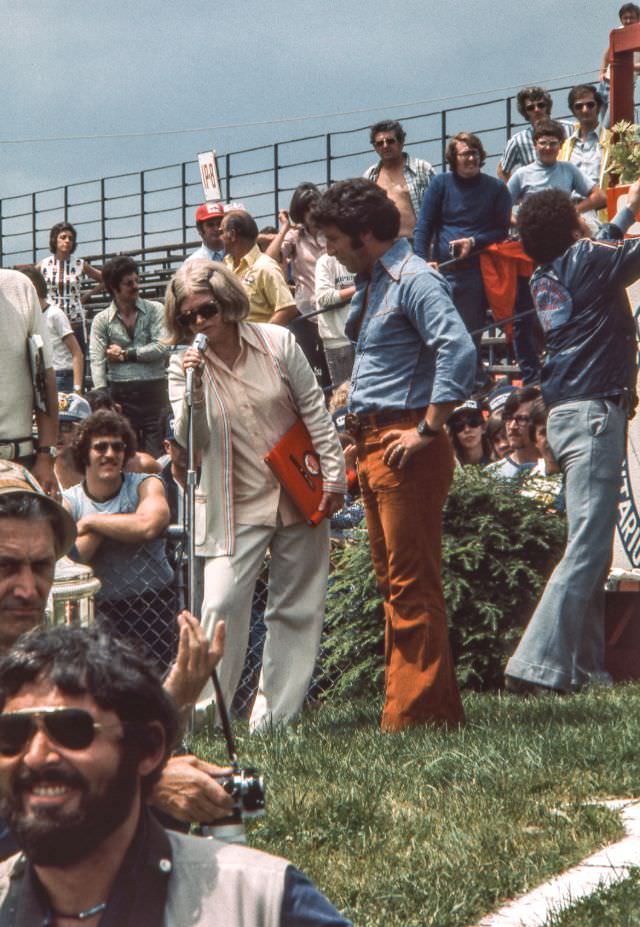
Driver introductions were a key part of the pre-race ceremony at major events. Mario Andretti, Johnny Parsons, and Larry McCoy lined up and waited their turns after qualifying concluded, ready to be presented to the crowd.
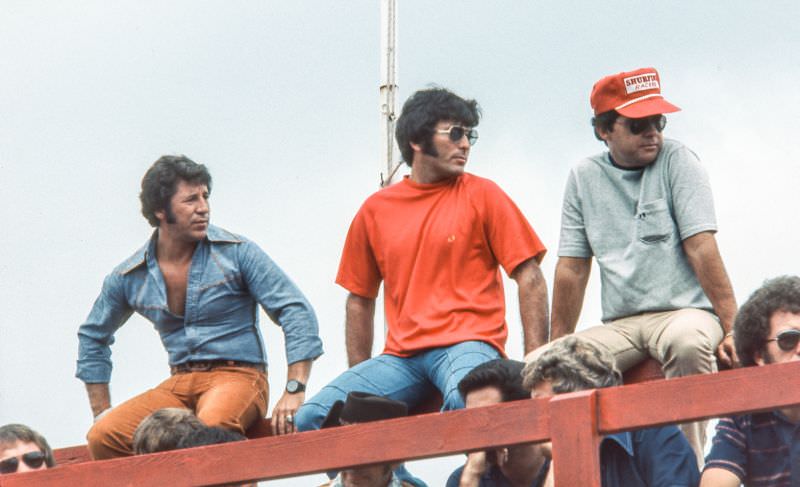
Mike Hiss came in as the race alternate after posting the 34th-fastest qualifying time. Alternates filled in when a primary entry failed to make the race or withdrew, meaning Hiss had to stay ready without knowing for certain whether he’d compete.
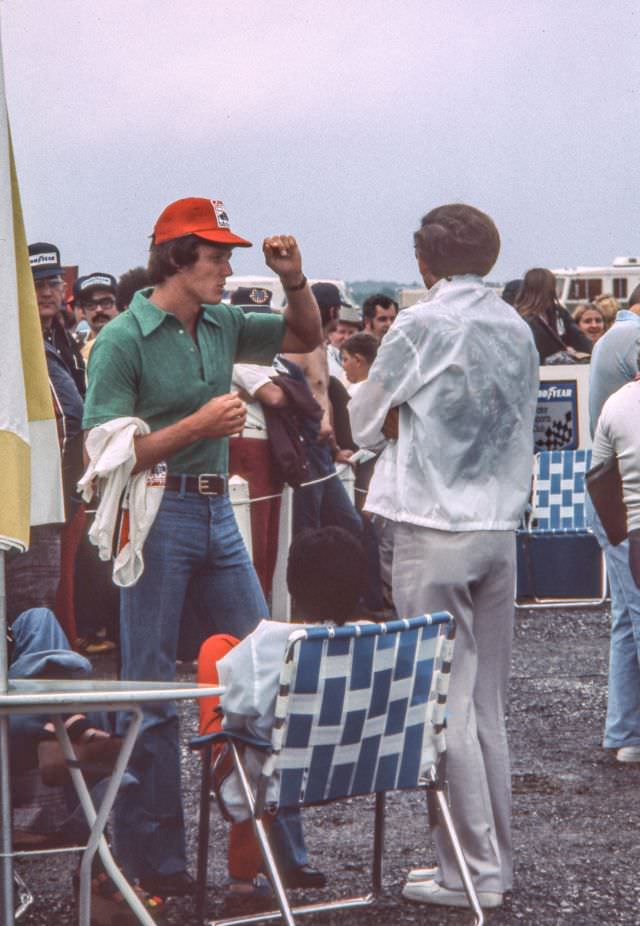
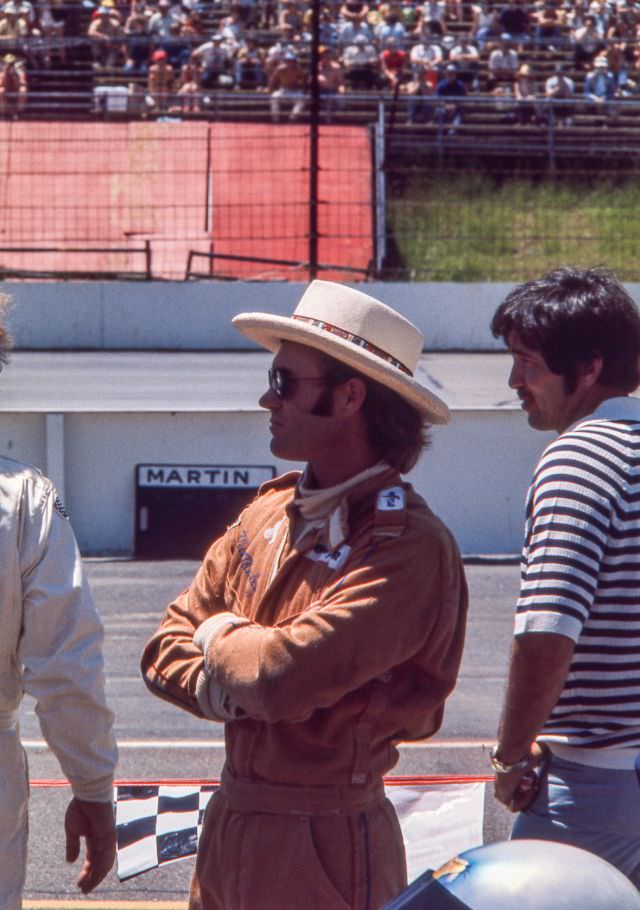
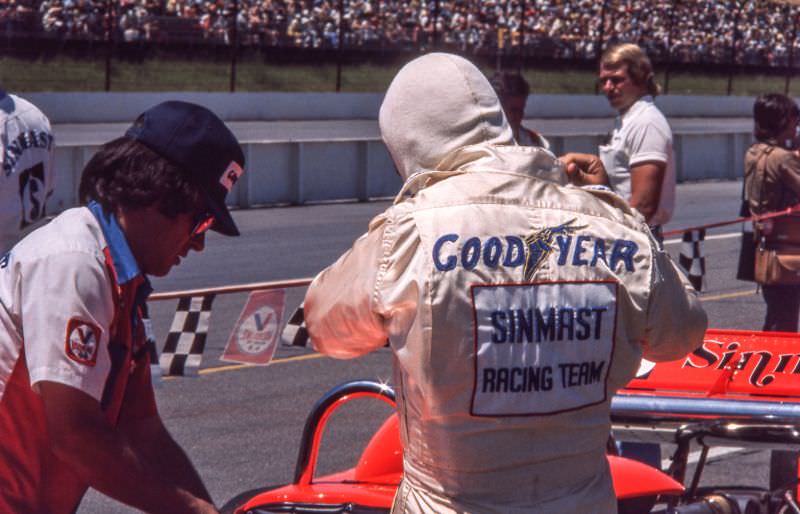
The Sinmast team sent at least one driver out for a qualification run during the session. Qualifying at a superspeedway like Pocono meant reaching top speed quickly on a track where the corners demanded precise car setup and complete driver confidence.
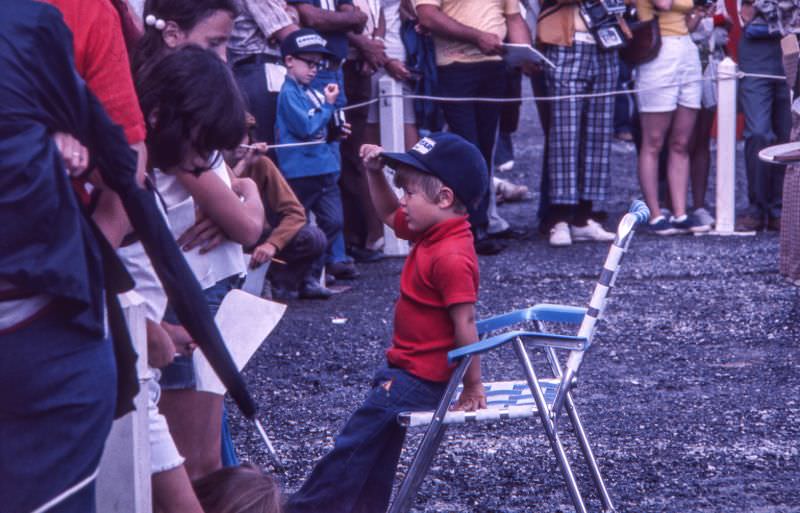
Younger drivers at Pocono drew their own following in the autograph area. Fans were eager to meet up-and-coming names before they became household words in racing.
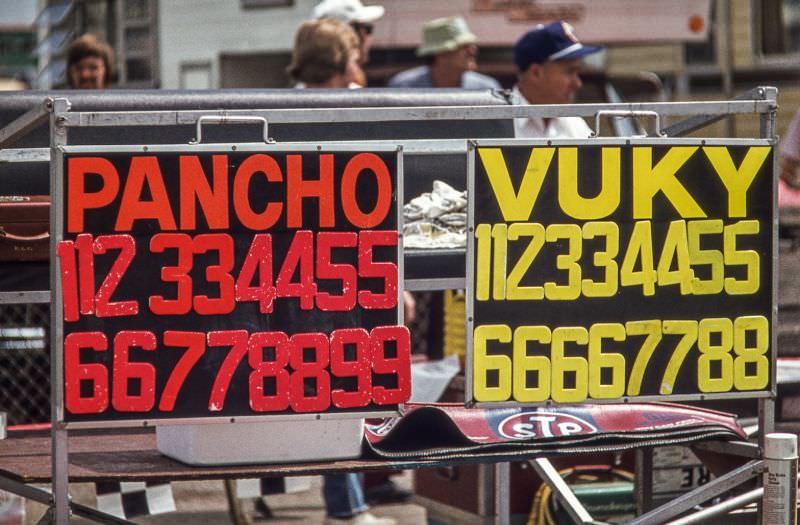
Pit boards were a critical communication tool in 1975. With no radio communication between drivers and crews during the race, hand-held boards held up over the pit wall were the only way to pass lap times, gap information, and instructions to a driver traveling at high speed.
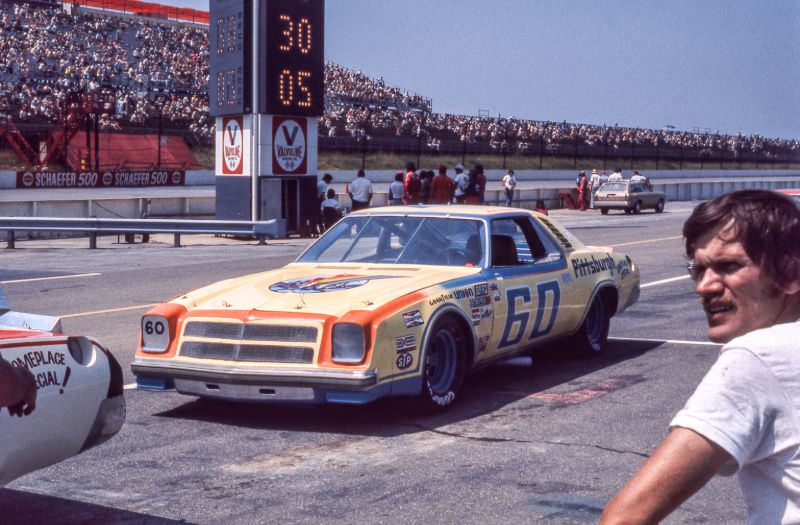
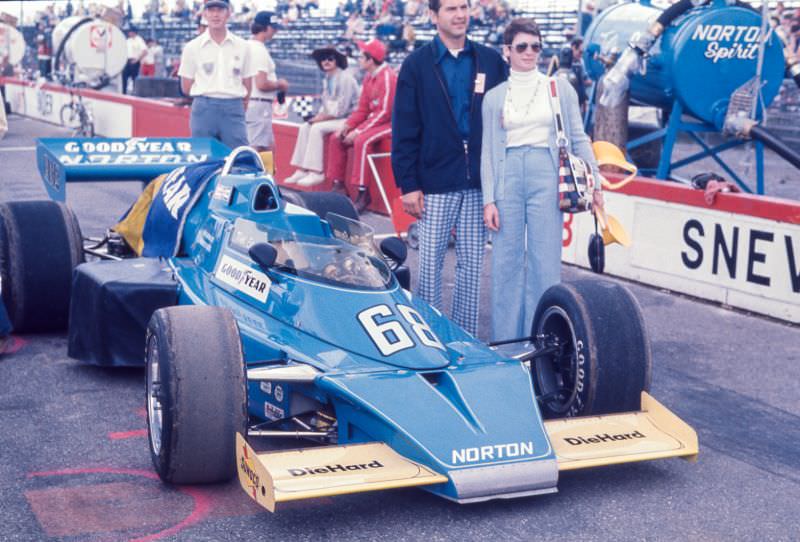
Tom Sneva’s Norton Spirit McLaren/Offy was one of the better-funded and better-prepared entries in the field. A group gathered near the car for a photograph — the kind of moment that race weekends regularly produced for those with access to the paddock.
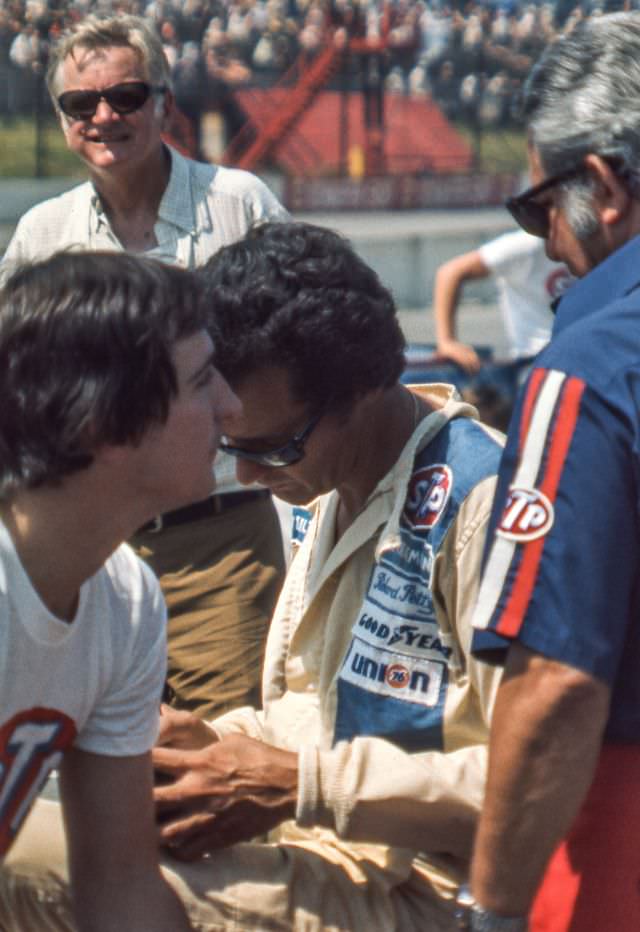
Richard Petty was one of the defining figures in NASCAR Cup racing throughout the 1970s. His blue and red STP Dodge was instantly recognizable, and his presence at Pocono added to the star power of the event.
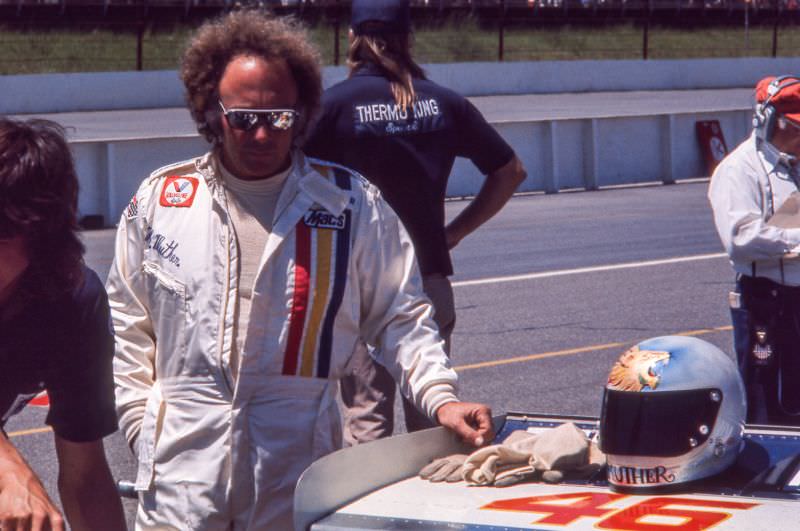
Salt Walther had survived a horrific crash at the 1973 Indianapolis 500 that left him with serious burns across much of his body. By 1975, he was back competing at the top levels of open-wheel racing, and moments like relaxing before a race took on a different weight given what he had been through.
The Schaefer 500 jacket was a piece of race-day merchandise that reflected the event’s sponsorship. Walther tried one on — a small, ordinary moment in the middle of a weekend built around extraordinary speed.
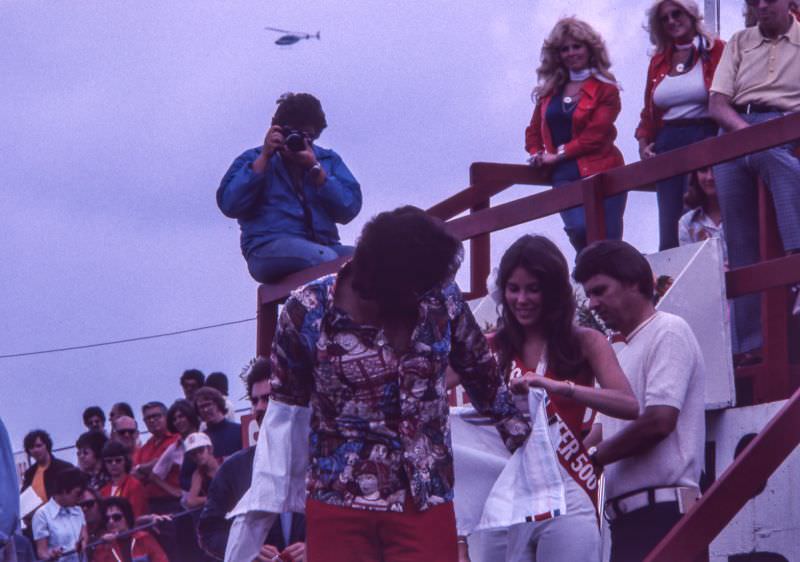
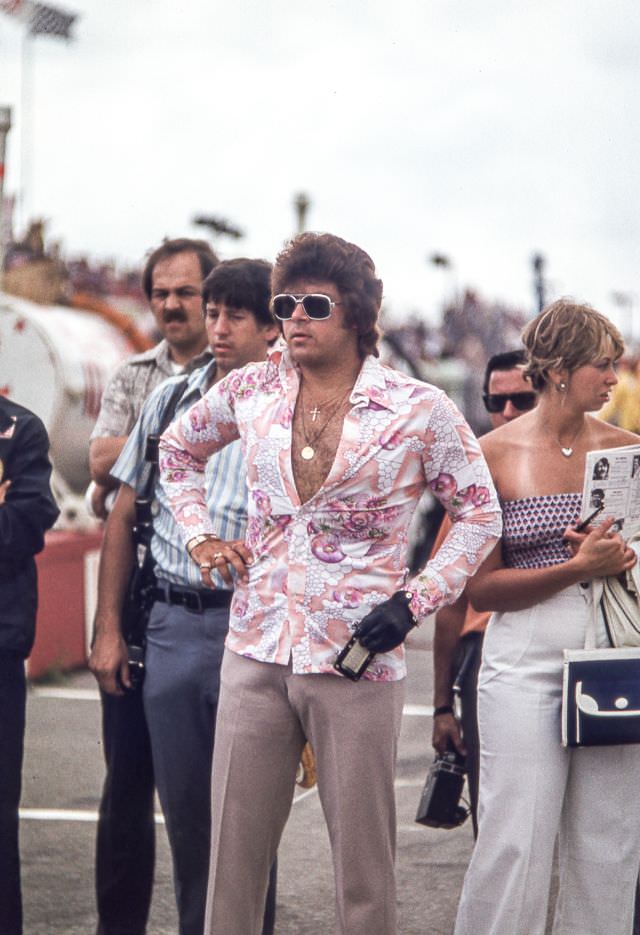
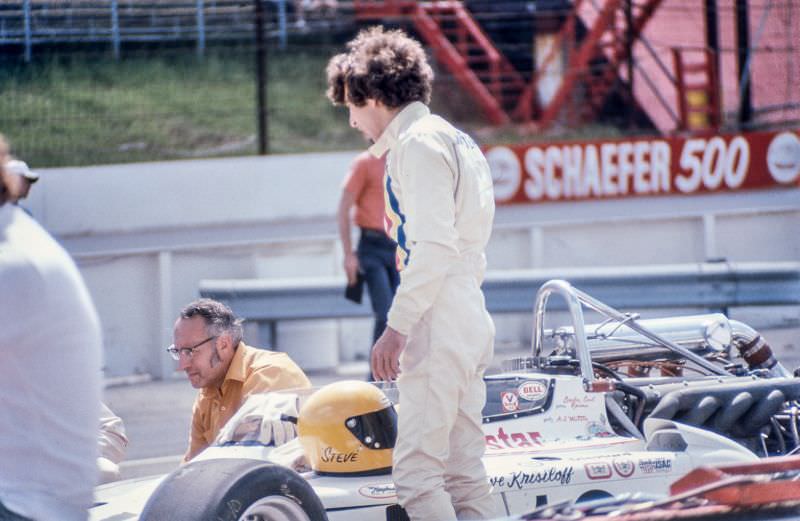
Steve Krisiloff drove for the Leader Card team, one of the established USAC operations that had fielded cars in major open-wheel races for years. Leader Card was known for running disciplined, well-prepared entries.
Billy Vukovich ran under the Cobre Tire banner at Pocono. Vukovich came from a famous racing family — his father Billy Vukovich Sr. had won the Indianapolis 500 twice before dying in the 1955 race — and he carried that name onto the USAC circuit through the 1970s.
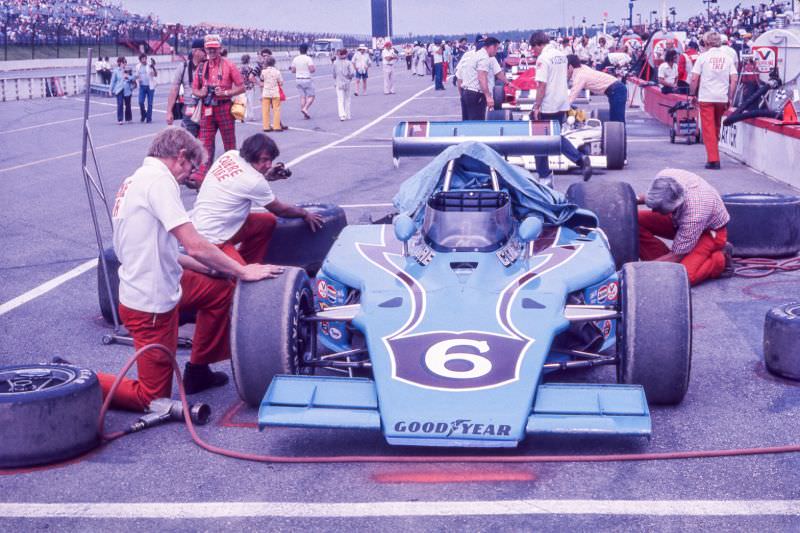
The Orange County crew showed up to Pocono on race day dressed to match. Coordinated team presentation was still a relatively new idea in American open-wheel racing, and crews that put the effort in stood out from those in mismatched or plain clothing.
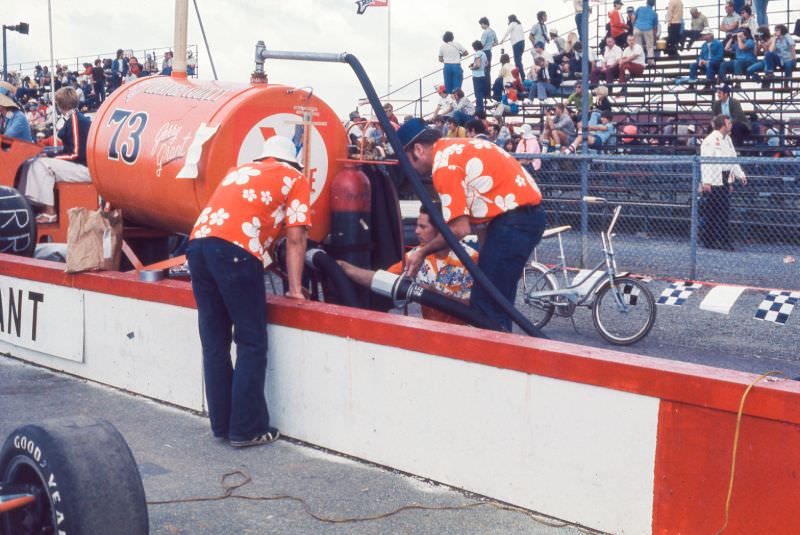
The gear distribution area stayed busy throughout the weekend. Drivers waiting to collect their race jackets and hats lined up patiently, each one moving through before heading back to their crew.
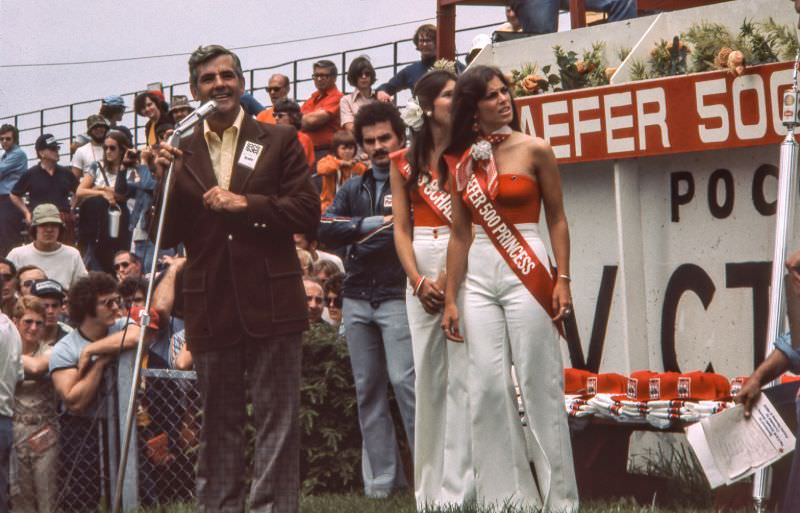
Wally Dallenbach was a reliable presence in USAC competition during this era. Suited up and ready to roll, he represented the working professional racer — the kind of driver who showed up at every event prepared to do the job.
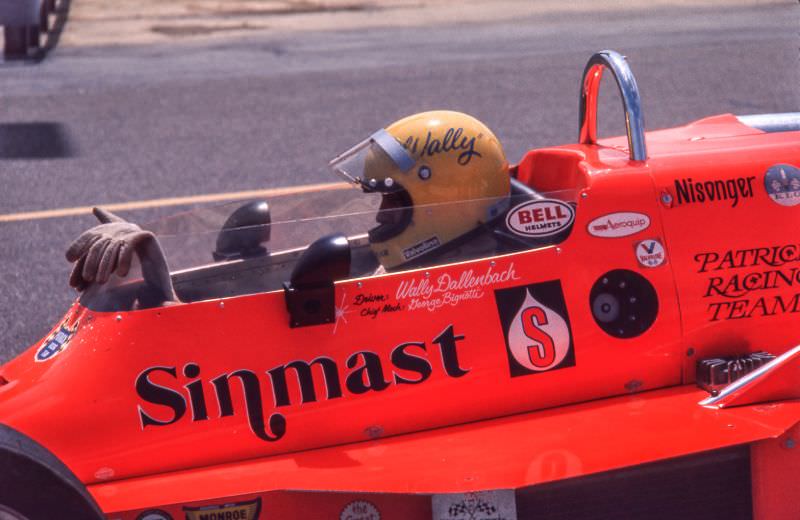
A.J. Foyt needed no introduction at any American racing venue in 1975. A four-time Indianapolis 500 winner and a champion in multiple racing disciplines, Foyt on race day at Pocono was a spectacle in itself. His presence guaranteed that every competitor in the field was measured against him.
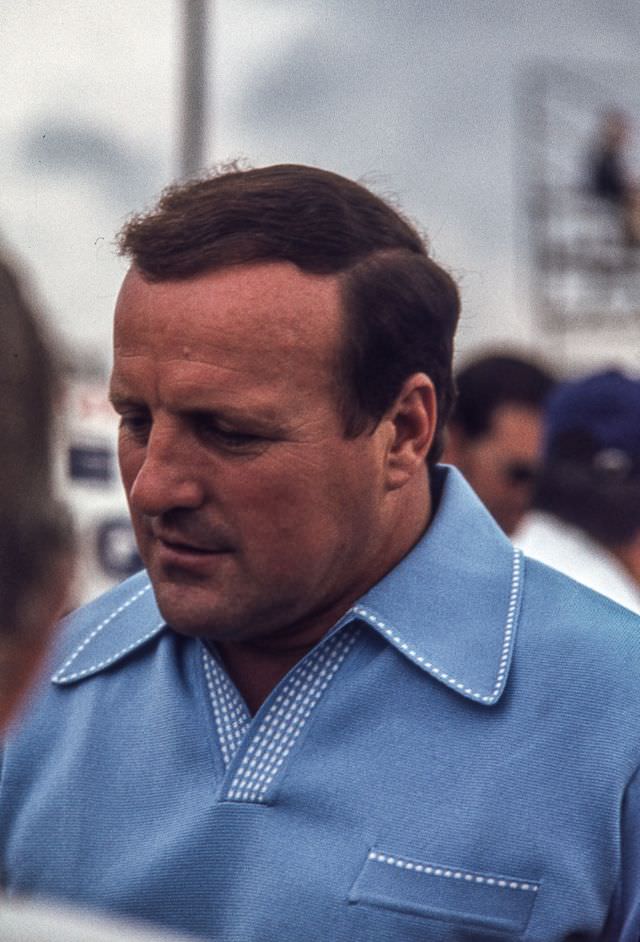
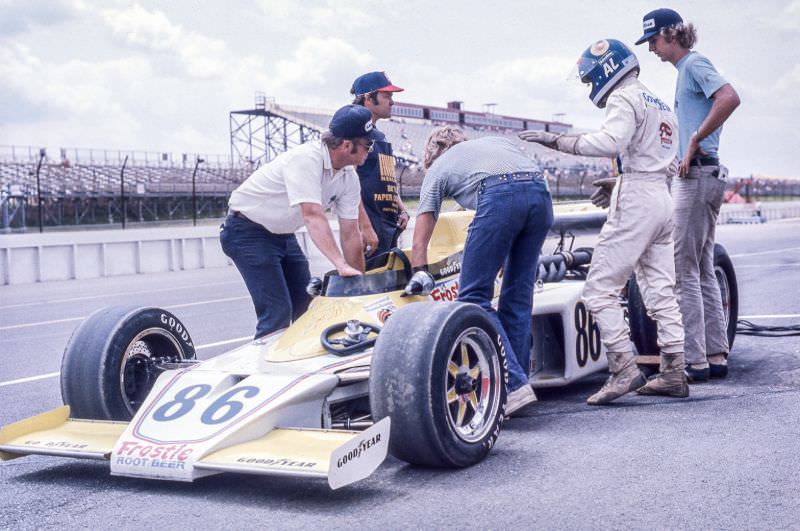
Al Loquasto, the Pennsylvania-bred driver who had a local fan base at Pocono, went through his pre-race routine with care. For a driver competing close to home, the added attention and expectations from the crowd made the preparation even more deliberate.
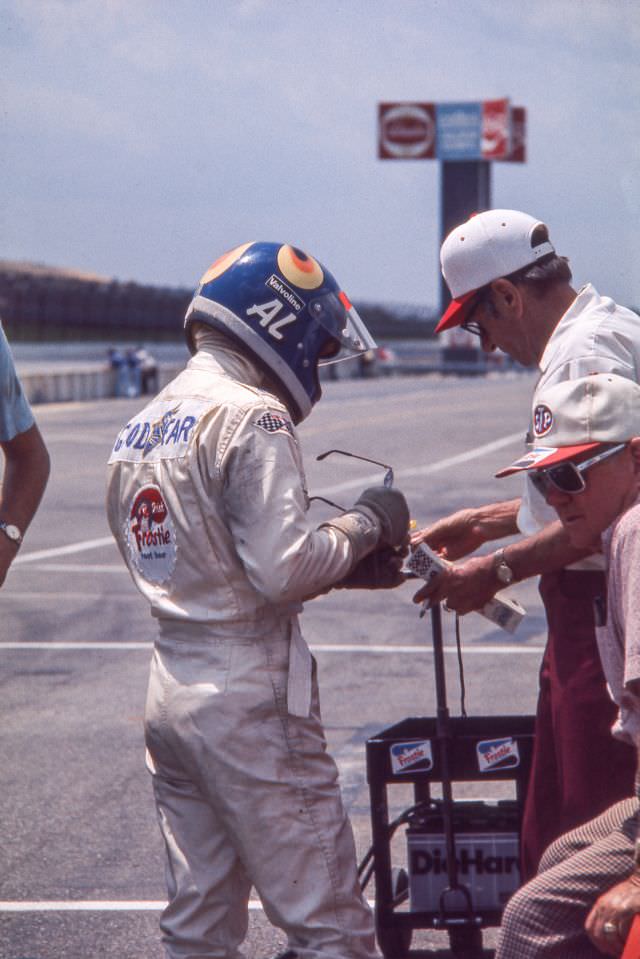
Loquasto’s car for the event was the Frostie Root Beer McLaren/Offy — a distinctive entry that carried its regional sponsorship proudly into one of the year’s biggest races on the USAC circuit. Climbing in and settling into the cockpit was the final act before the focus shifted entirely to the track.