Coca-Cola was born in Atlanta, Georgia, in 1886. Its creator, Dr. John S. Pemberton, was a pharmacist who originally intended the drink as a patent medicine. The recipe combined coca leaf extract and kola nut caffeine — two ingredients that gave the beverage its name. The original formula contained a small amount of cocaine derived from the coca leaf. Pemberton’s bookkeeper, Frank M. Robinson, named the drink and drew its now-iconic script logo. A single glass sold for five cents at Jacob’s Pharmacy in Atlanta.
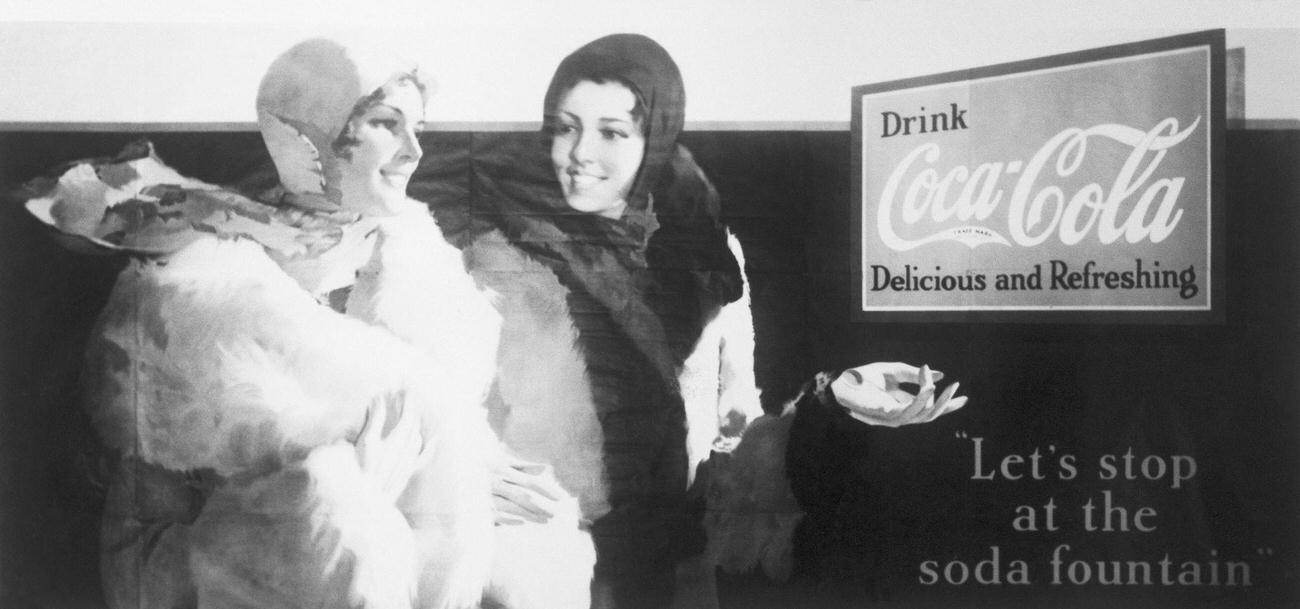
Advertisement for Coca-Cola, featuring a soda fountain invitation.
Early marketing was aggressive and inventive. The company handed out coupons for free samples and ran newspaper advertisements — strategies that were unusual at the time. Coca-Cola was promoted as a tonic that could cure headaches and act as a nerve stimulant. By 1904, mounting health concerns and new regulations forced a formula change: cocaine was removed, and caffeine stayed. The drink shifted from medicine to soft drink, but its reputation for refreshment kept customers coming back.
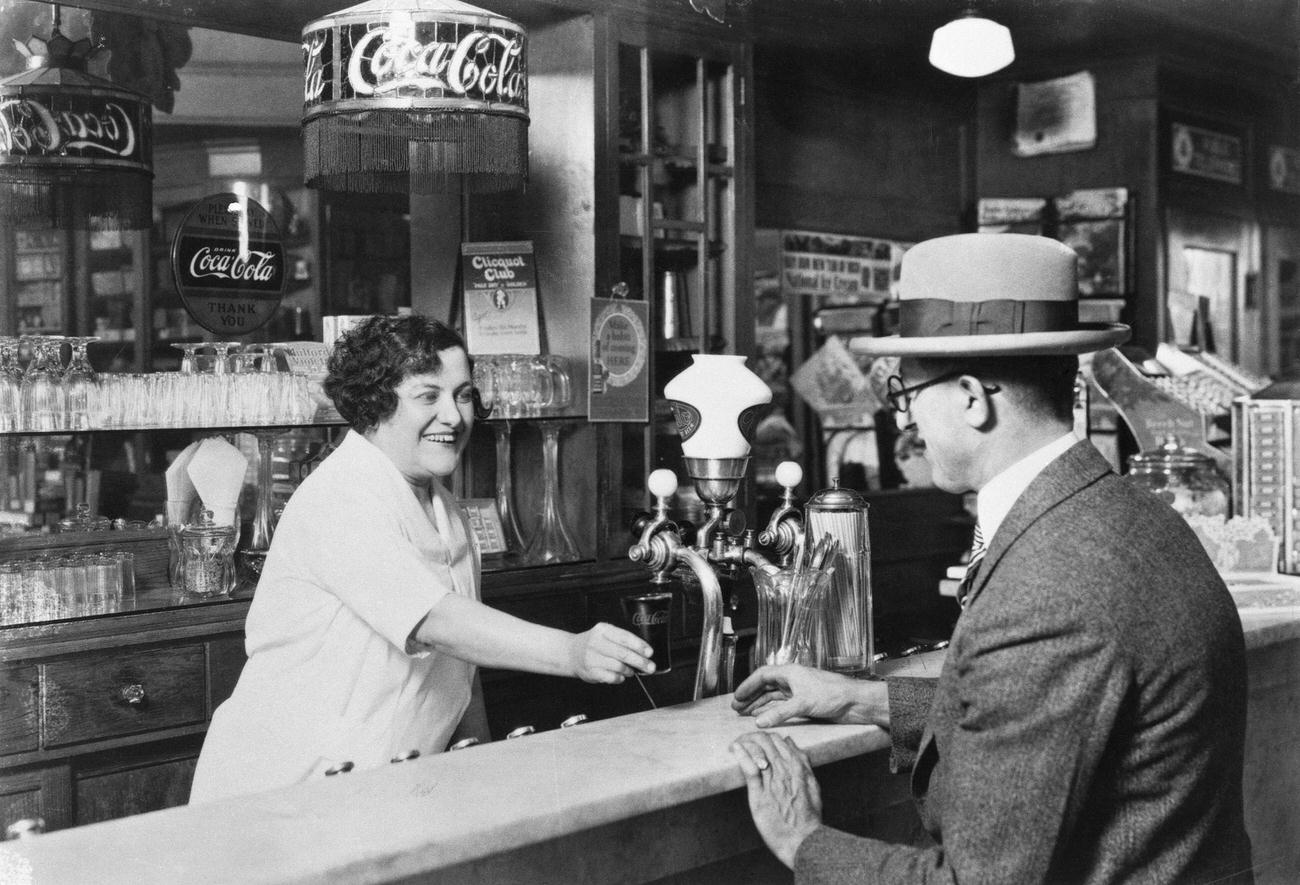
A counter girl serves Coca-Cola at a soda fountain, 1927.
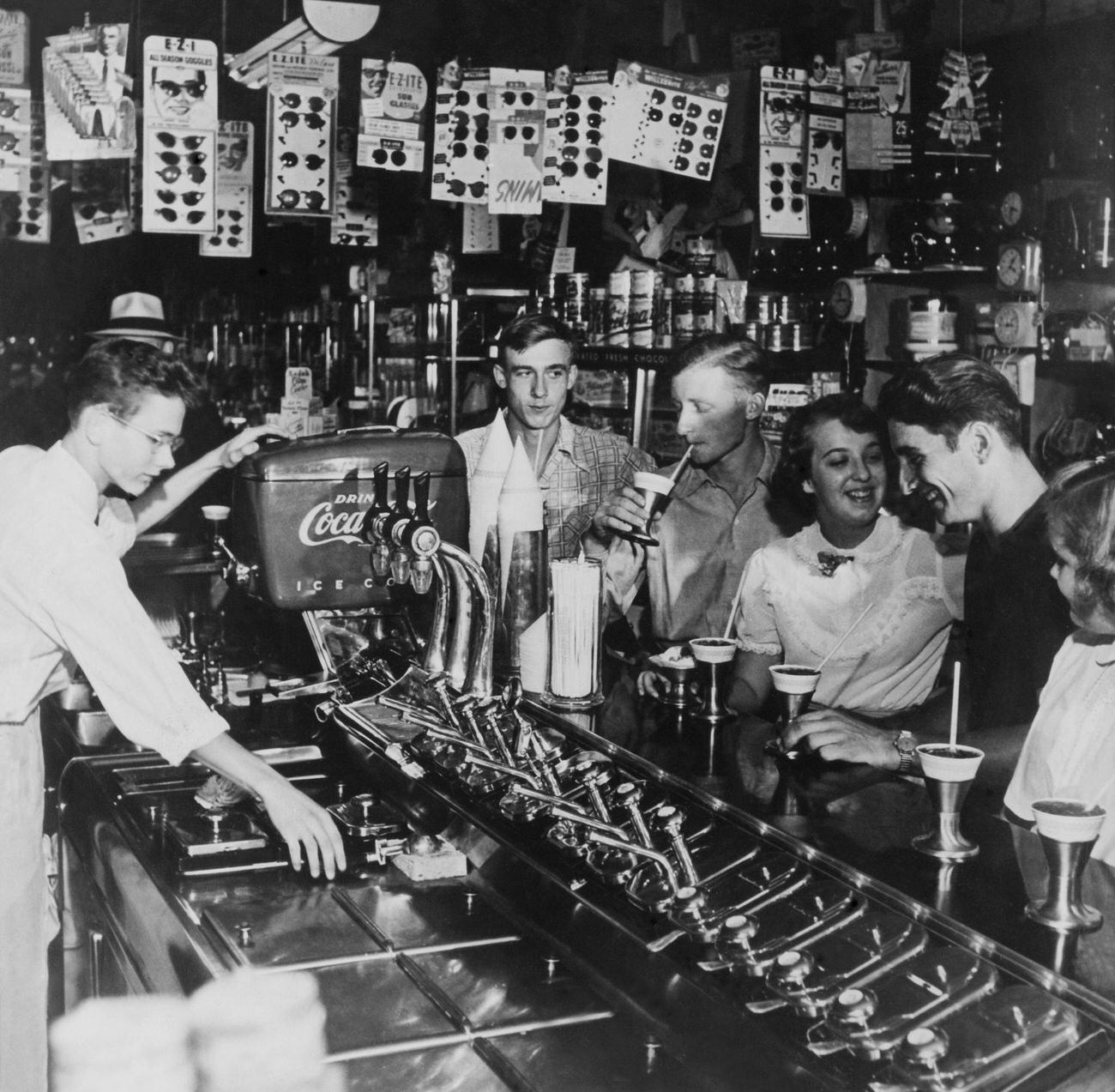
For its first decades, Coca-Cola was sold exclusively at soda fountains. A customer would sit at a counter, and a server would draw the drink fresh. These fountains became social gathering spots in towns and cities across America. The introduction of bottled Coca-Cola changed everything. Now people could take it home or drink it on the move. The contour bottle, introduced in 1915, was designed to be recognizable even in the dark — and it became one of the most iconic shapes in consumer history.
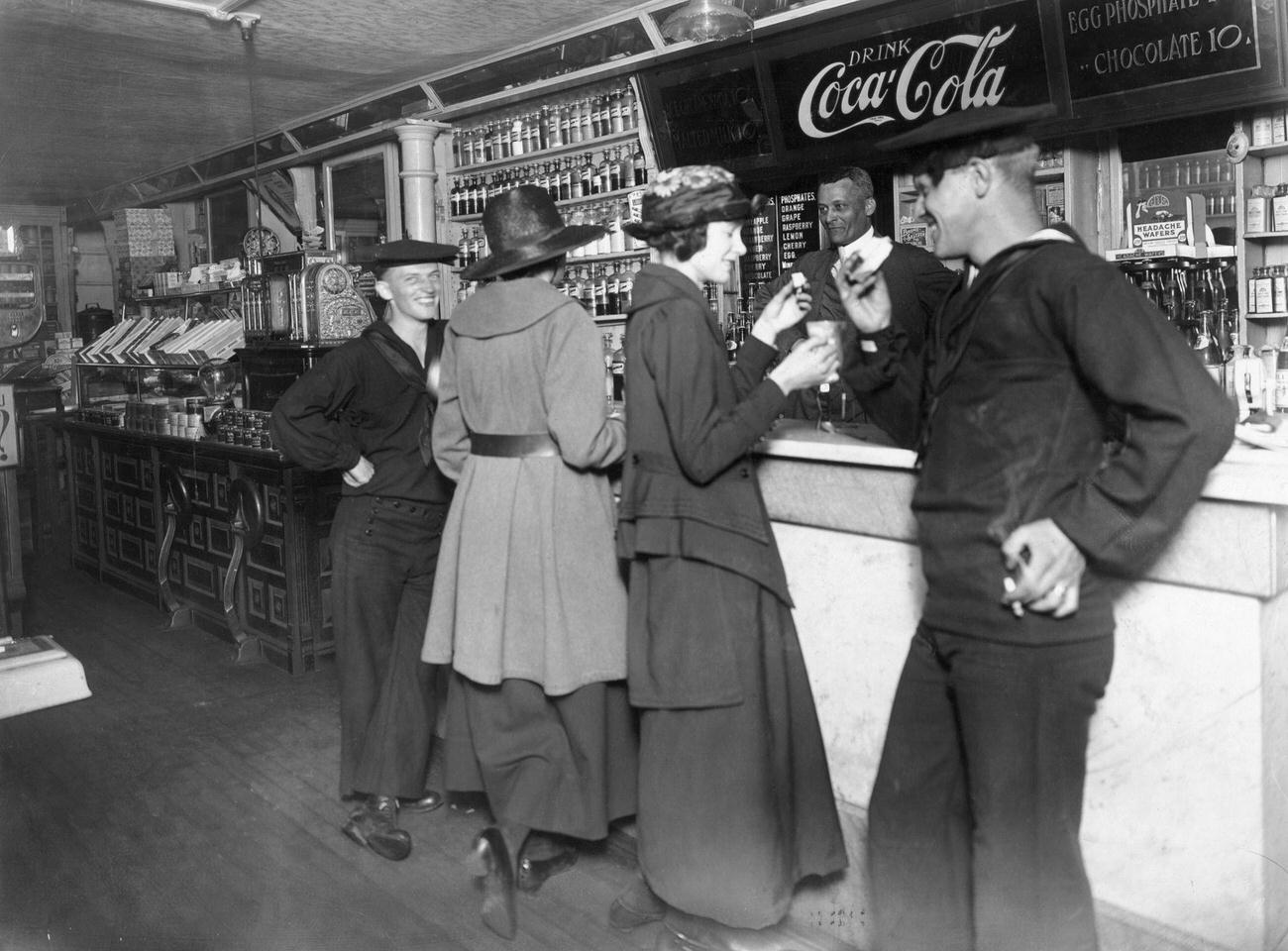
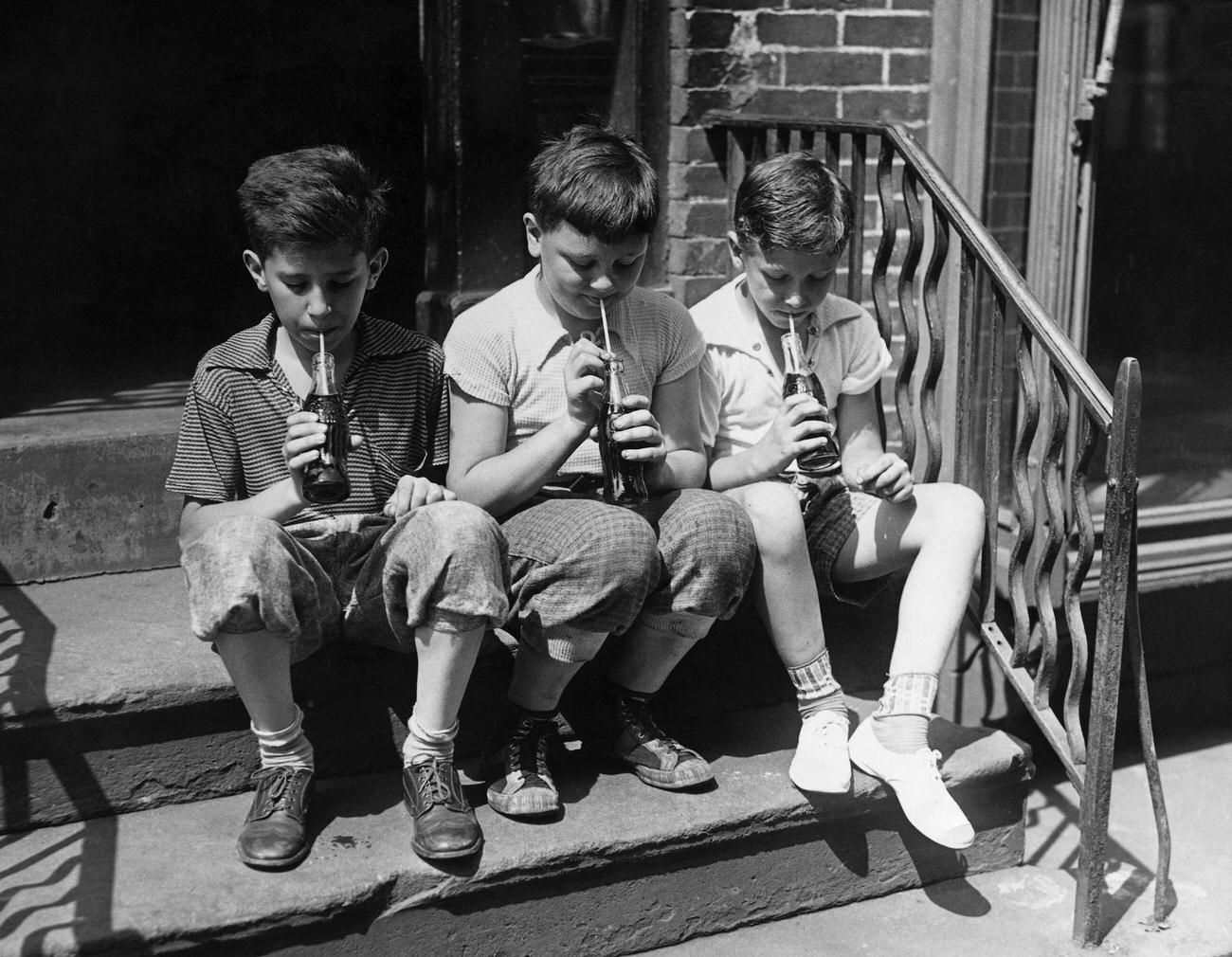
Two sailors and their dates drinking Coca-Cola at a soda fountain, World War I era.Three young boys cooling off with Coca-Cola on a stoop, undated.
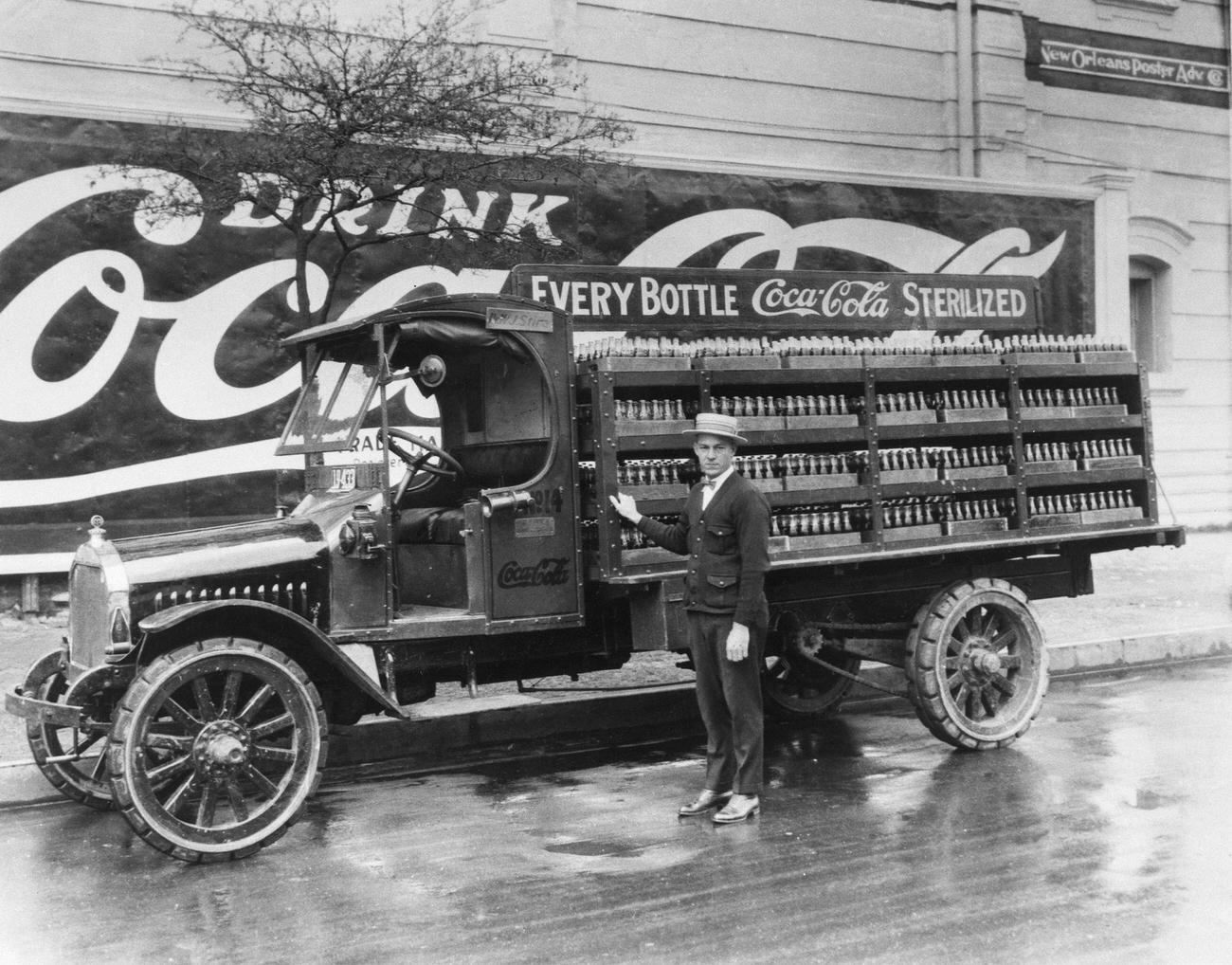
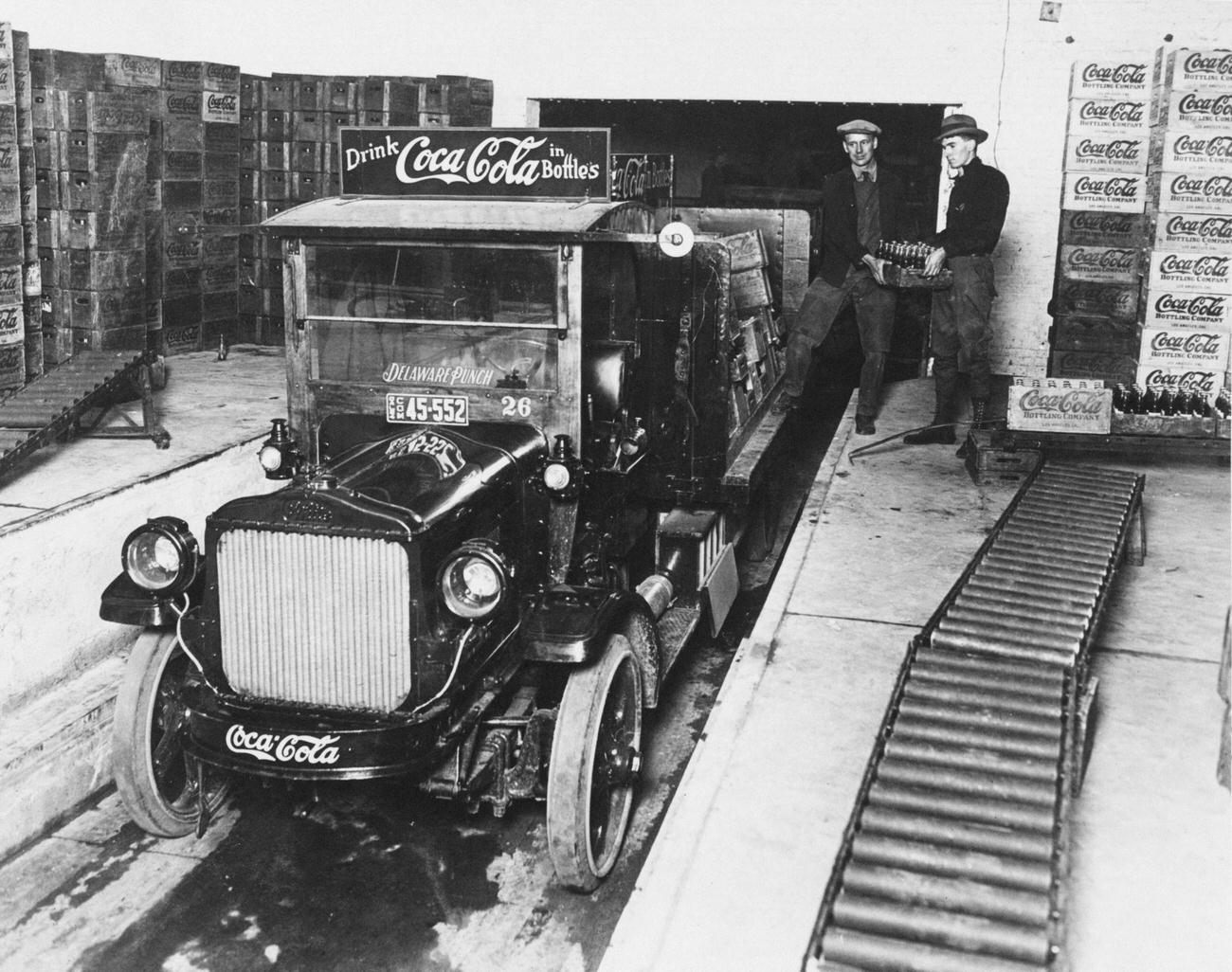
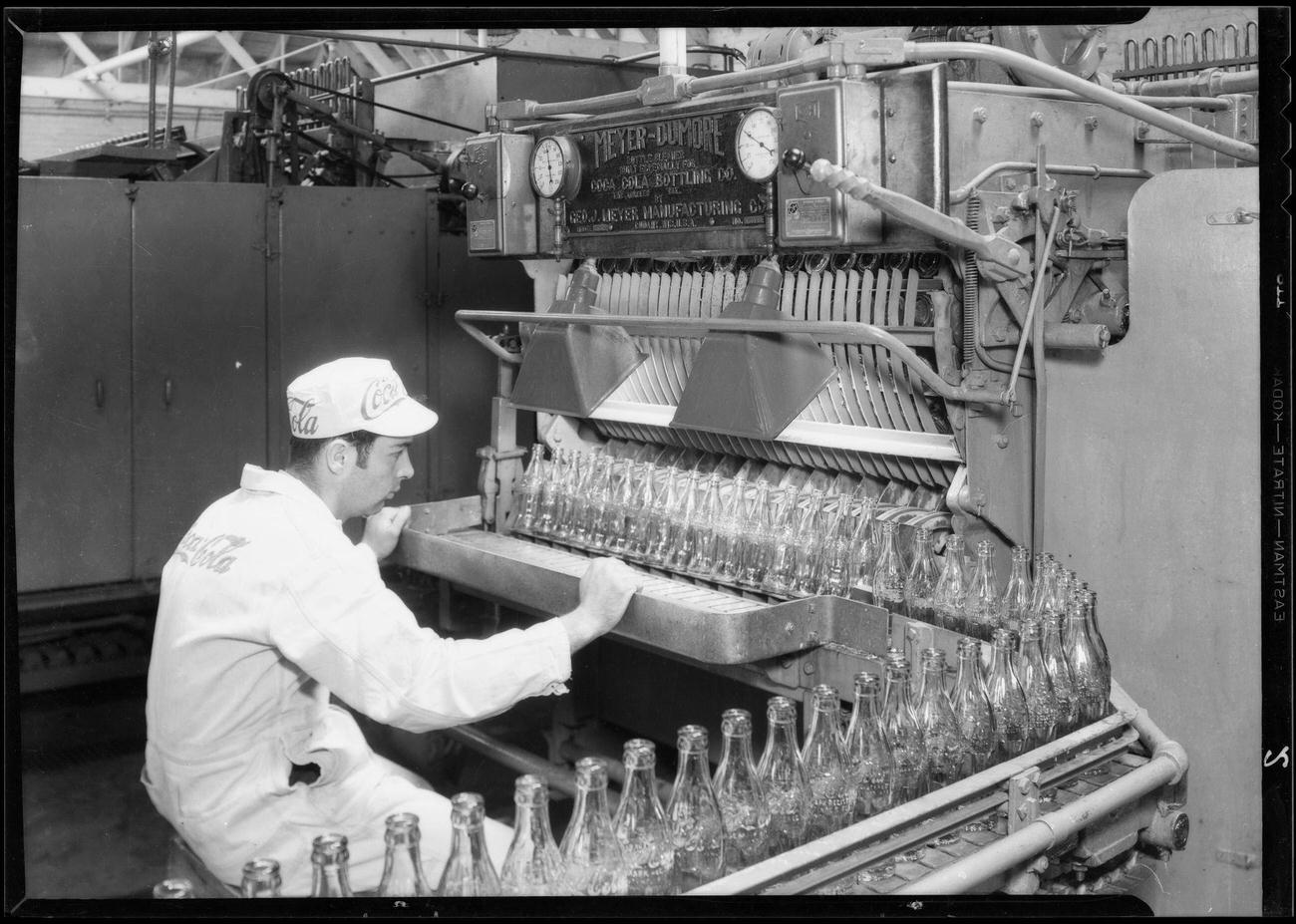
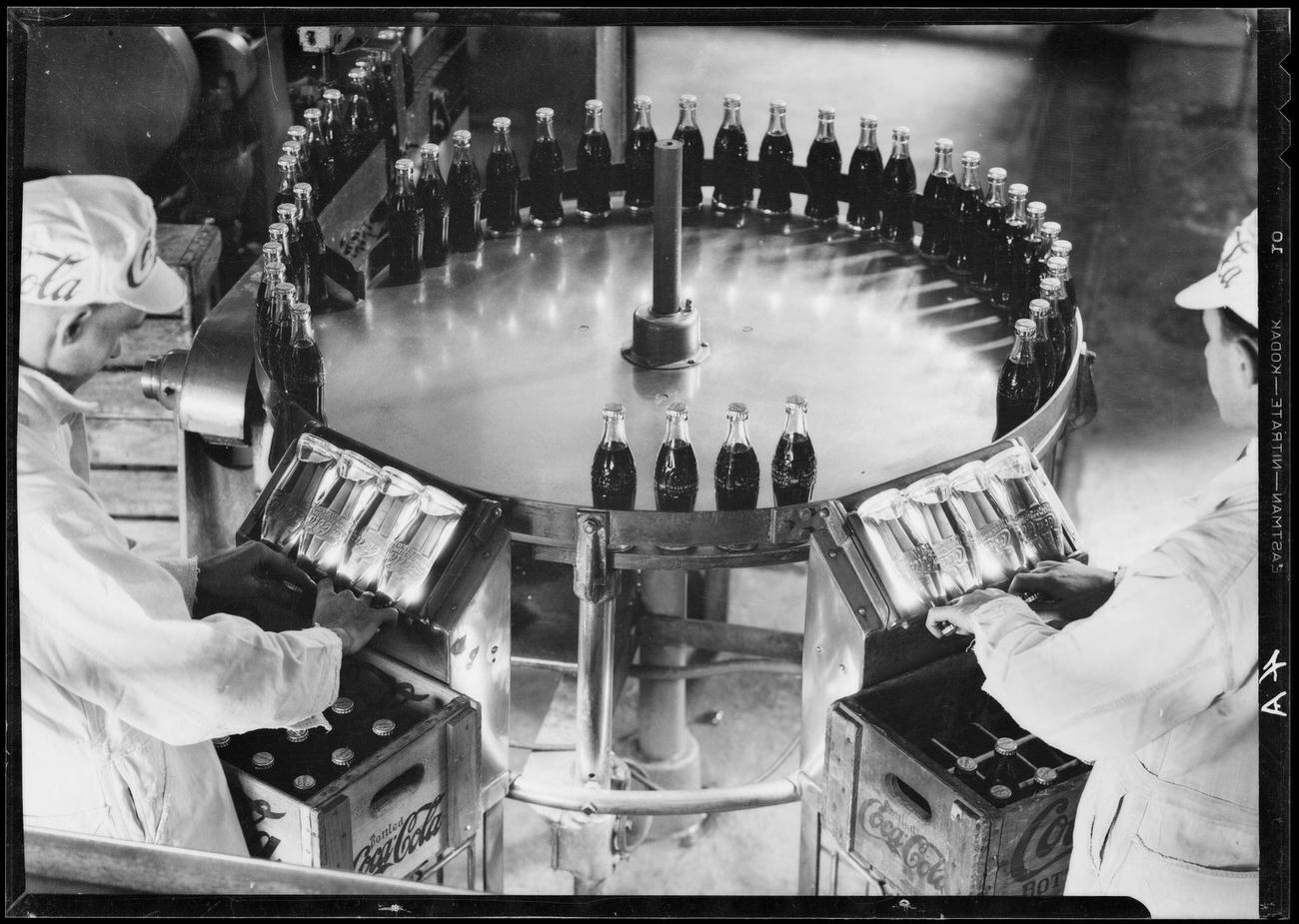
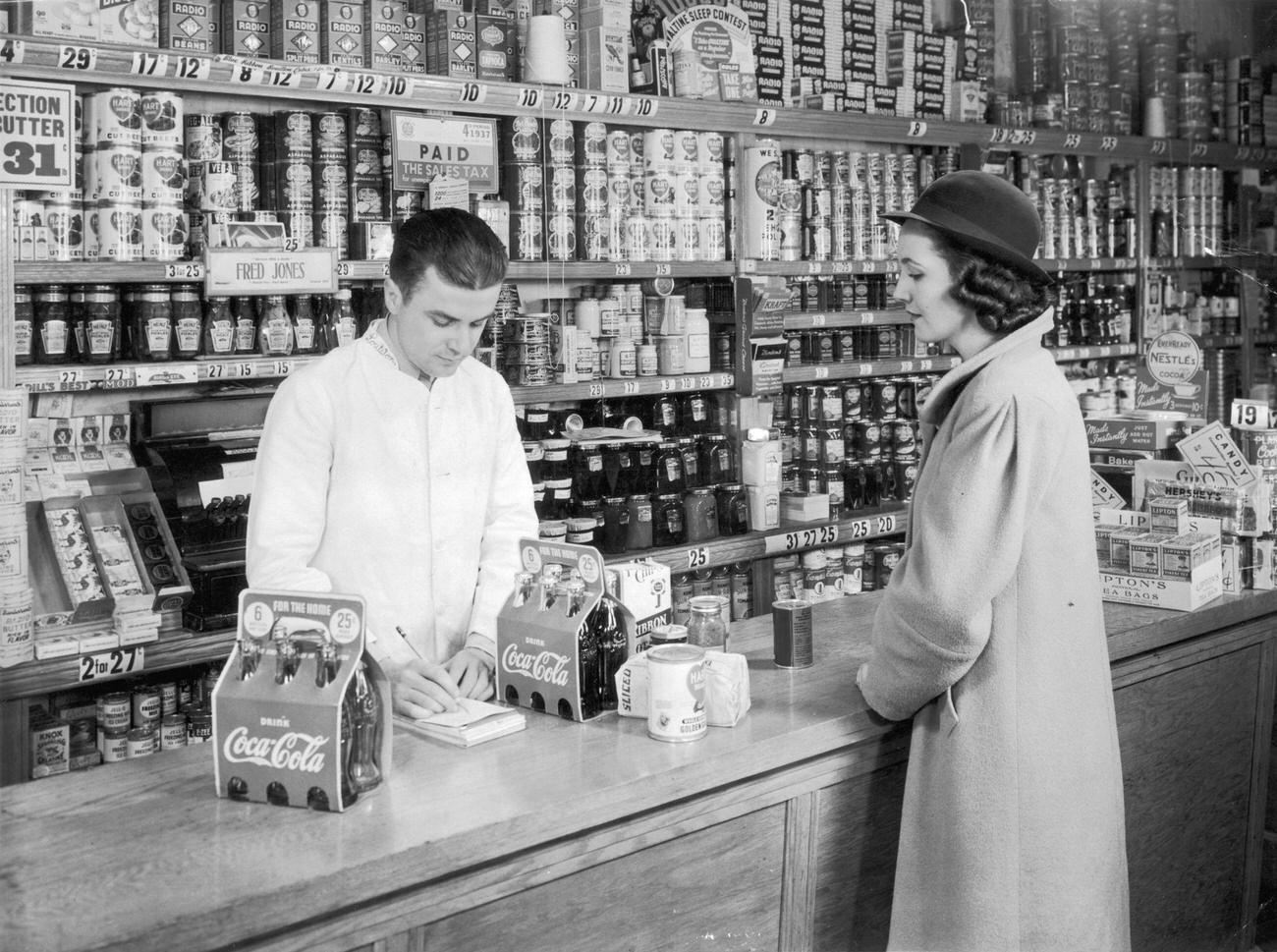
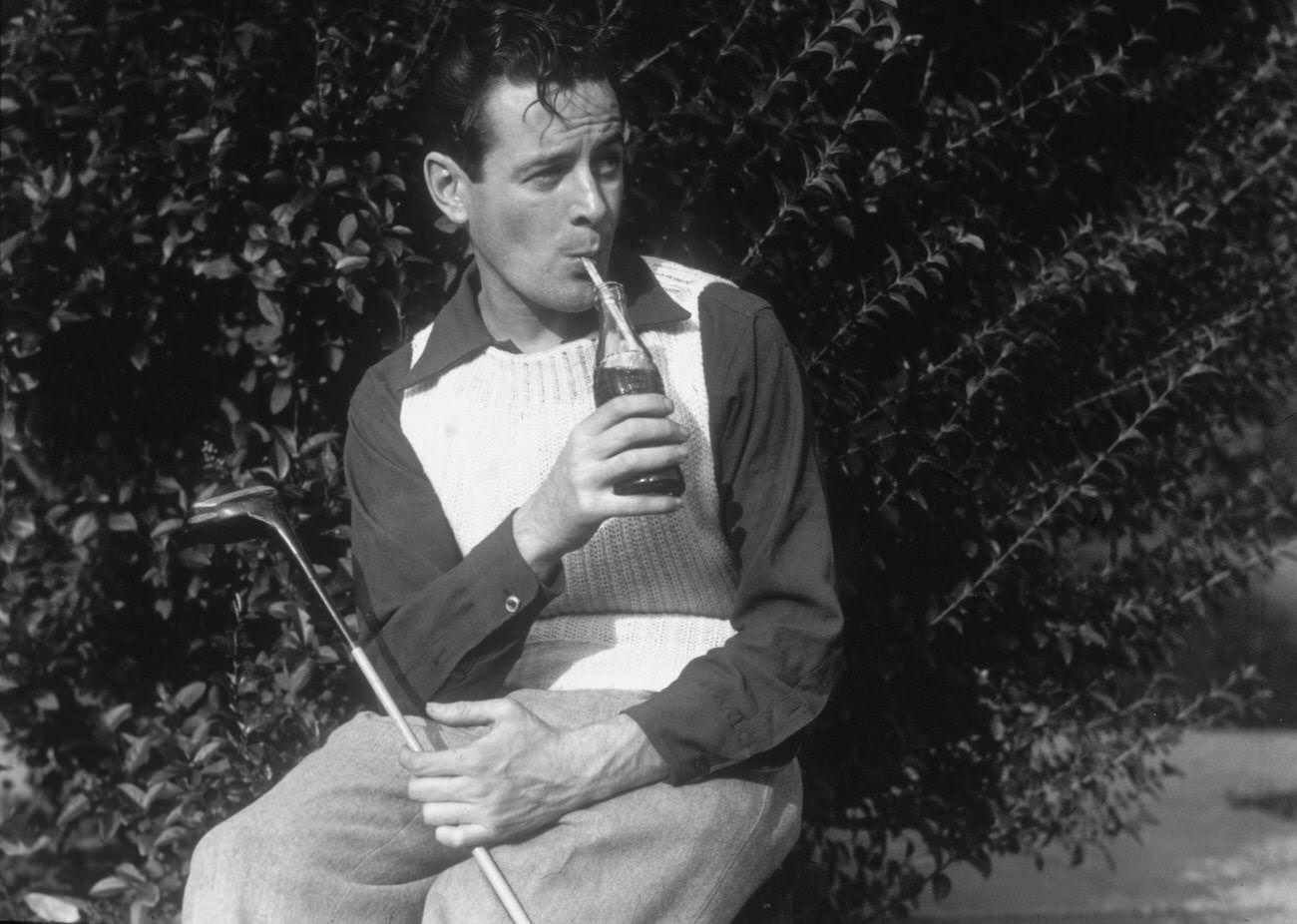
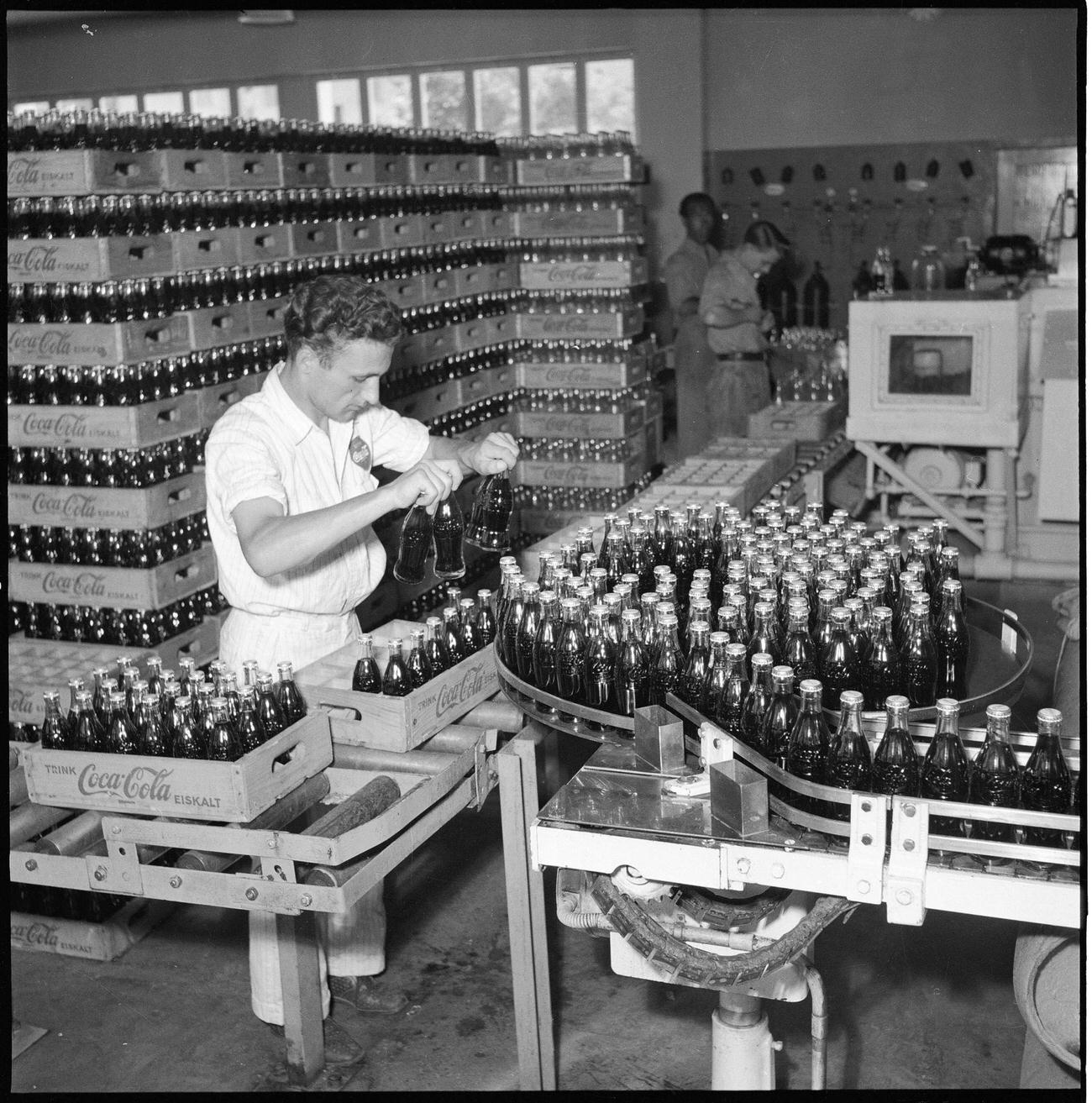
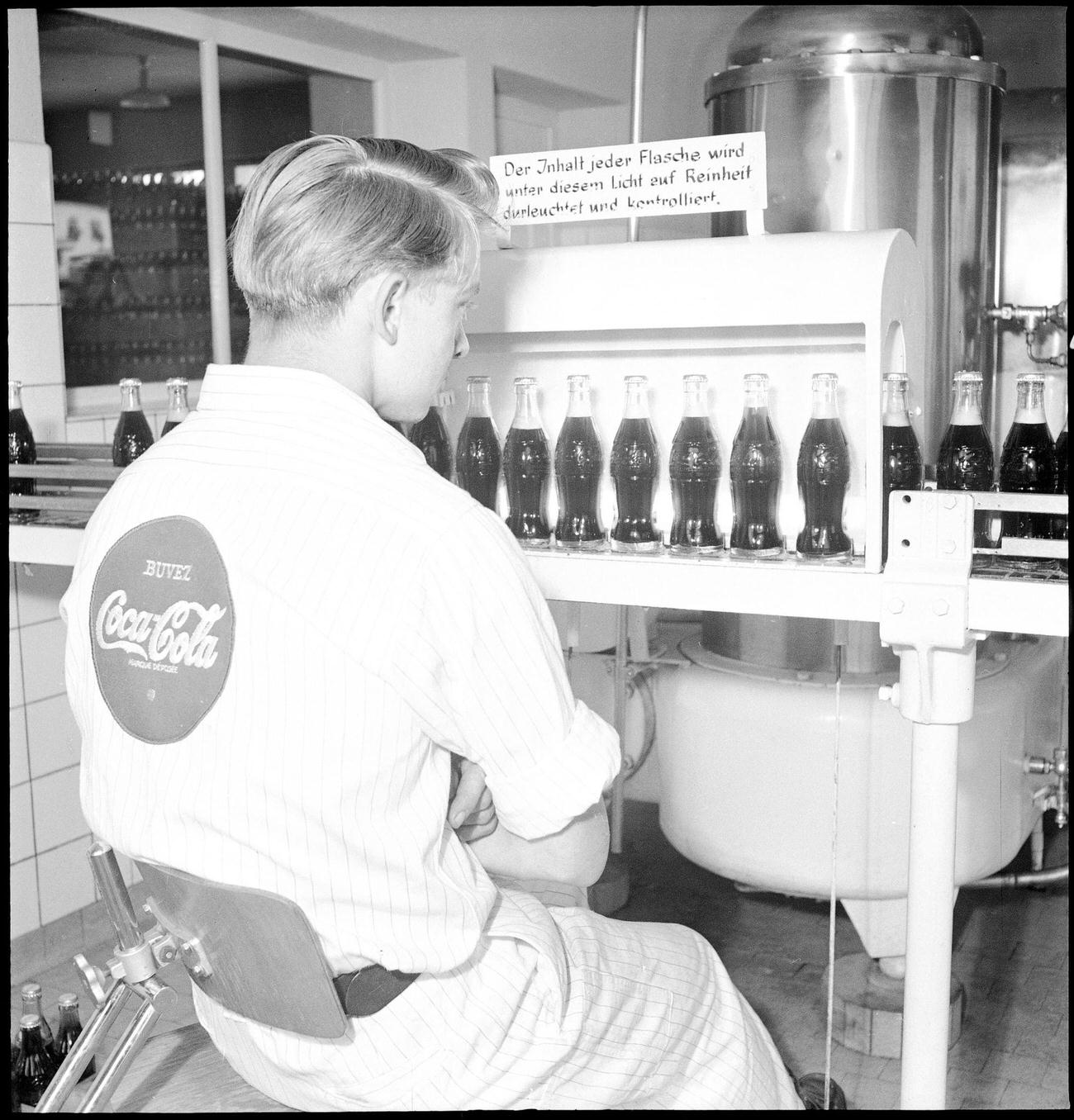
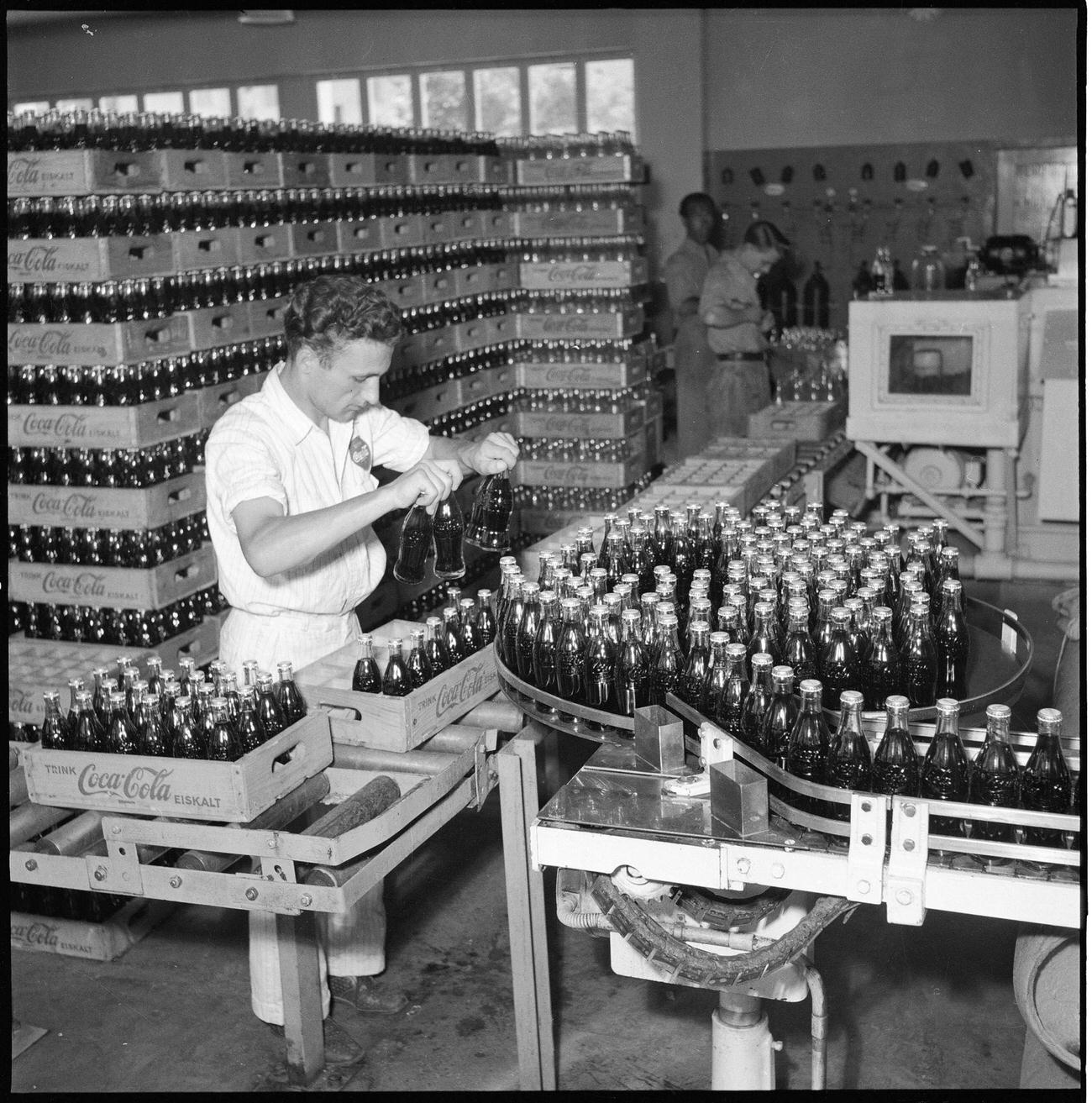
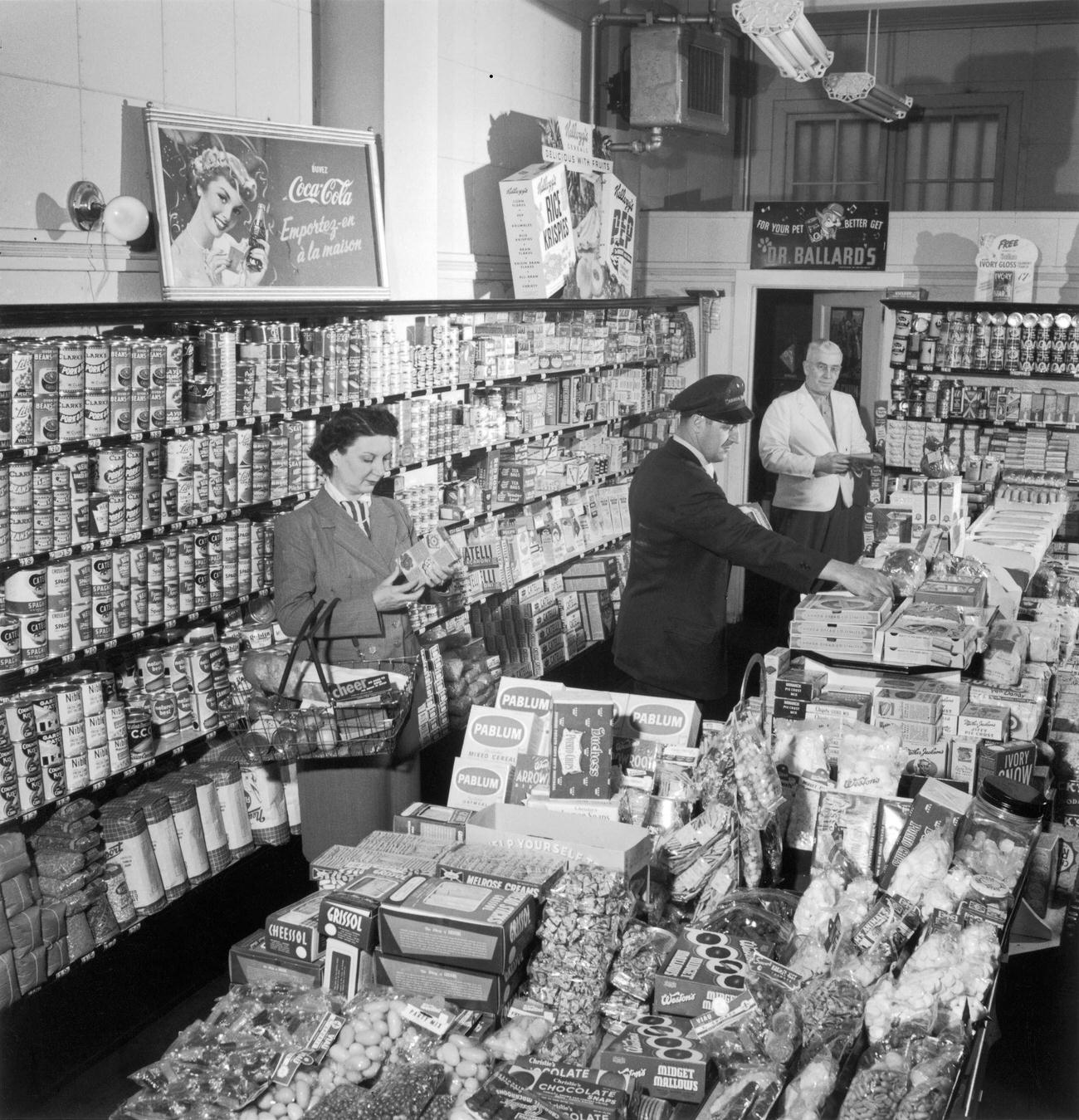
By the 1920s and 1930s, Coca-Cola was woven into everyday American life. Delivery trucks fanned out across cities every morning. Bottling plants operated on tight schedules, inspecting each bottle before it left the facility. The photos from this era show ordinary people — housewives at grocery counters, workers loading crates, young men relaxing outdoors — all with a bottle of Coke nearby.
A driver in New Orleans in front of his Coca-Cola delivery truck, 1929.Workers loading crates of Coca-Cola onto a truck, circa 1930.Bottle inspection operations at a Coca-Cola plant in Southern California, 1933.Men inspecting bottles at a Coca-Cola plant in Los Angeles.A housewife at a grocery counter with two six-packs of Coca-Cola, bread, and canned goods, circa 1935.A young man sipping Coca-Cola with a golf club outdoors, circa 1935.
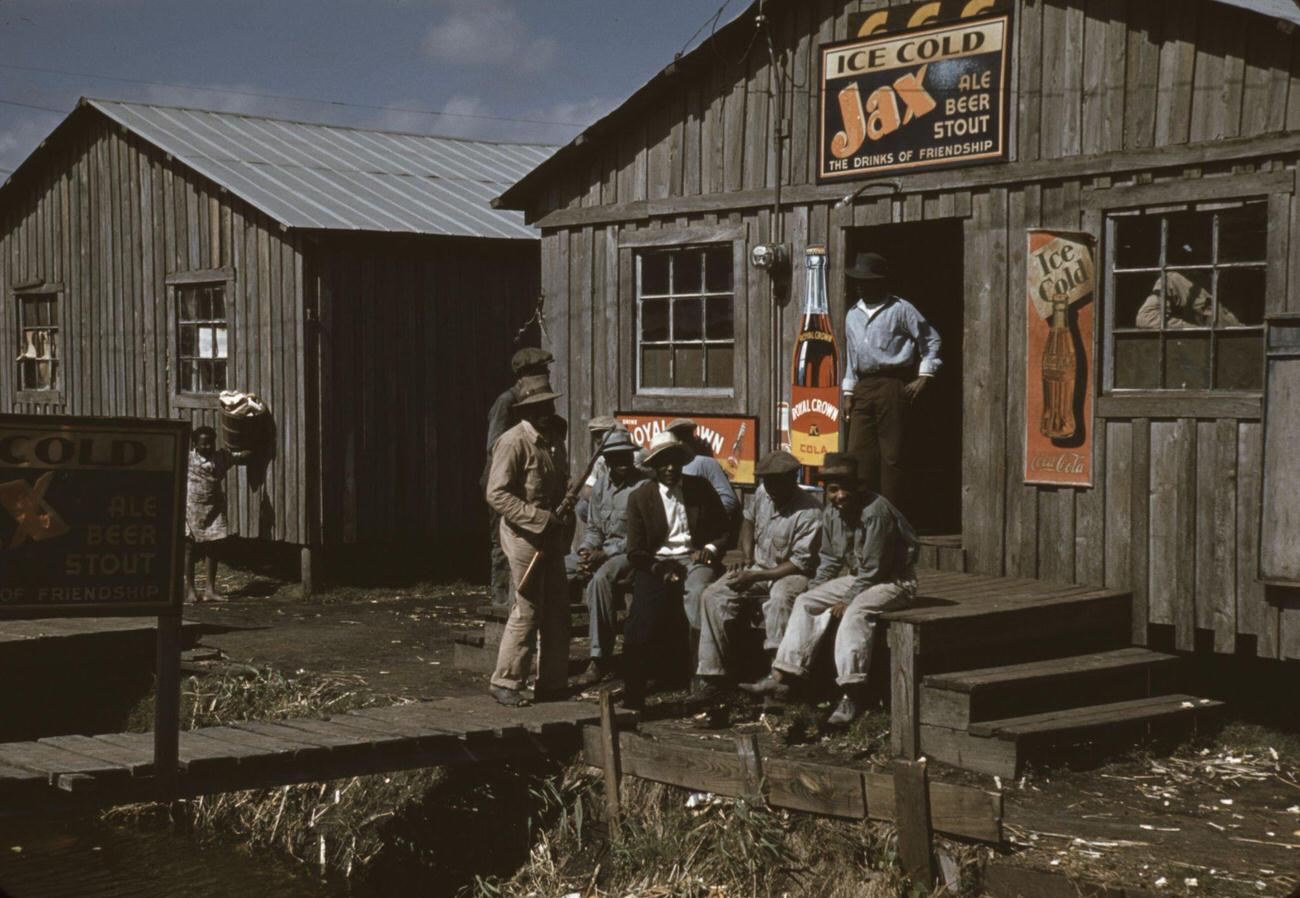
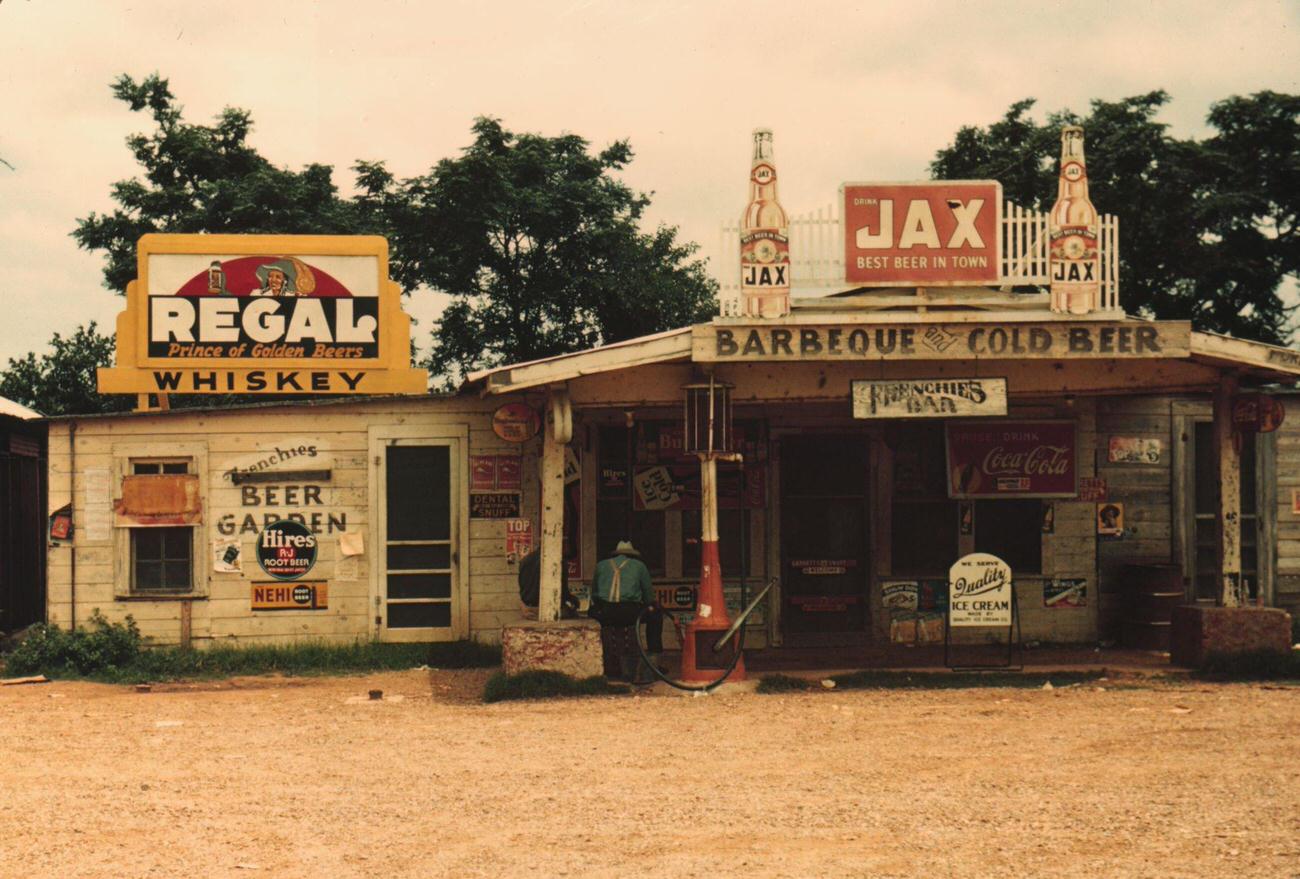
The 1930s also saw Coca-Cola appearing in rural America — on the porches of general stores, outside juke joints, and at crossroads bars. Signs for the drink decorated storefronts from Mississippi to Louisiana. These locations were not just places to buy a drink; they were community hubs, and Coca-Cola was a constant presence in them.
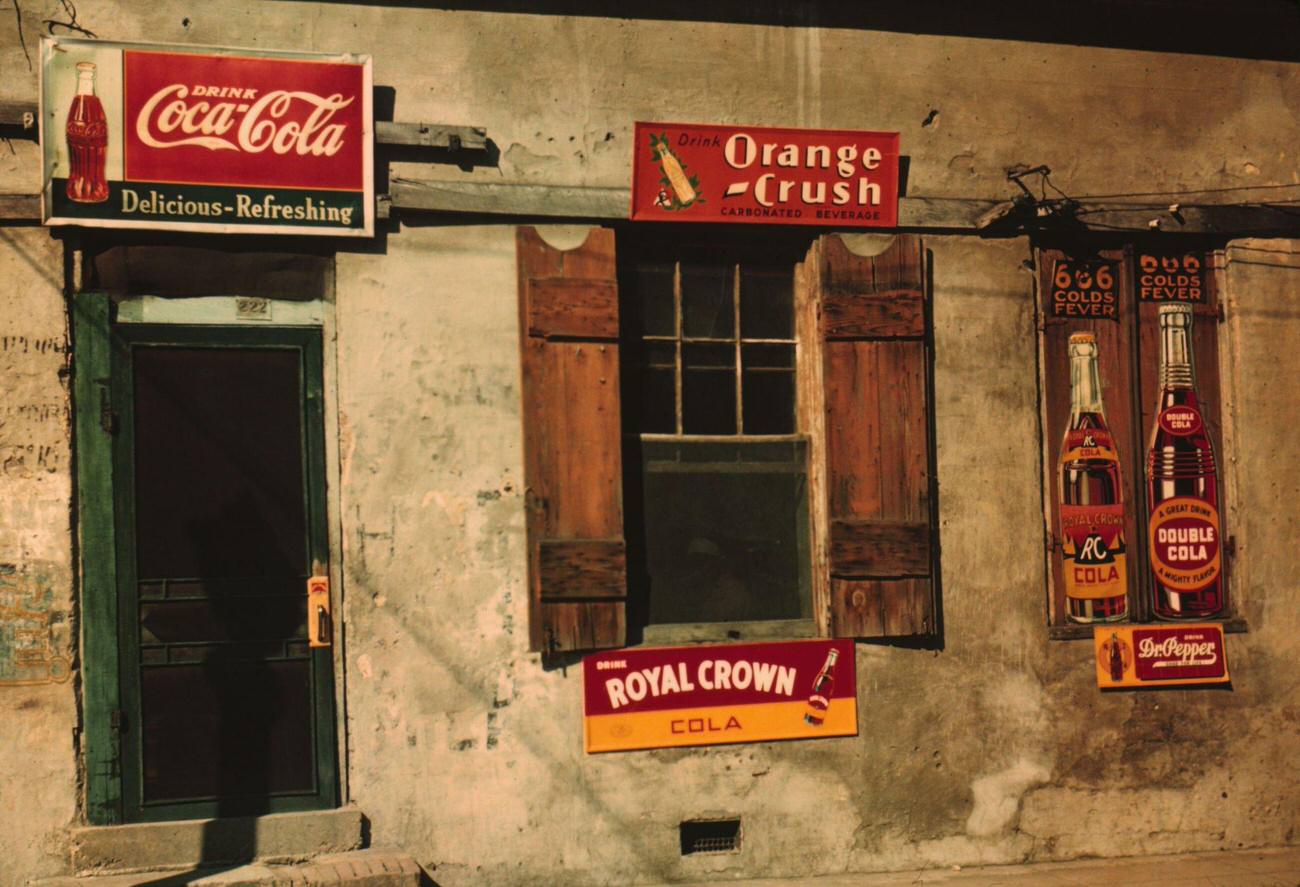
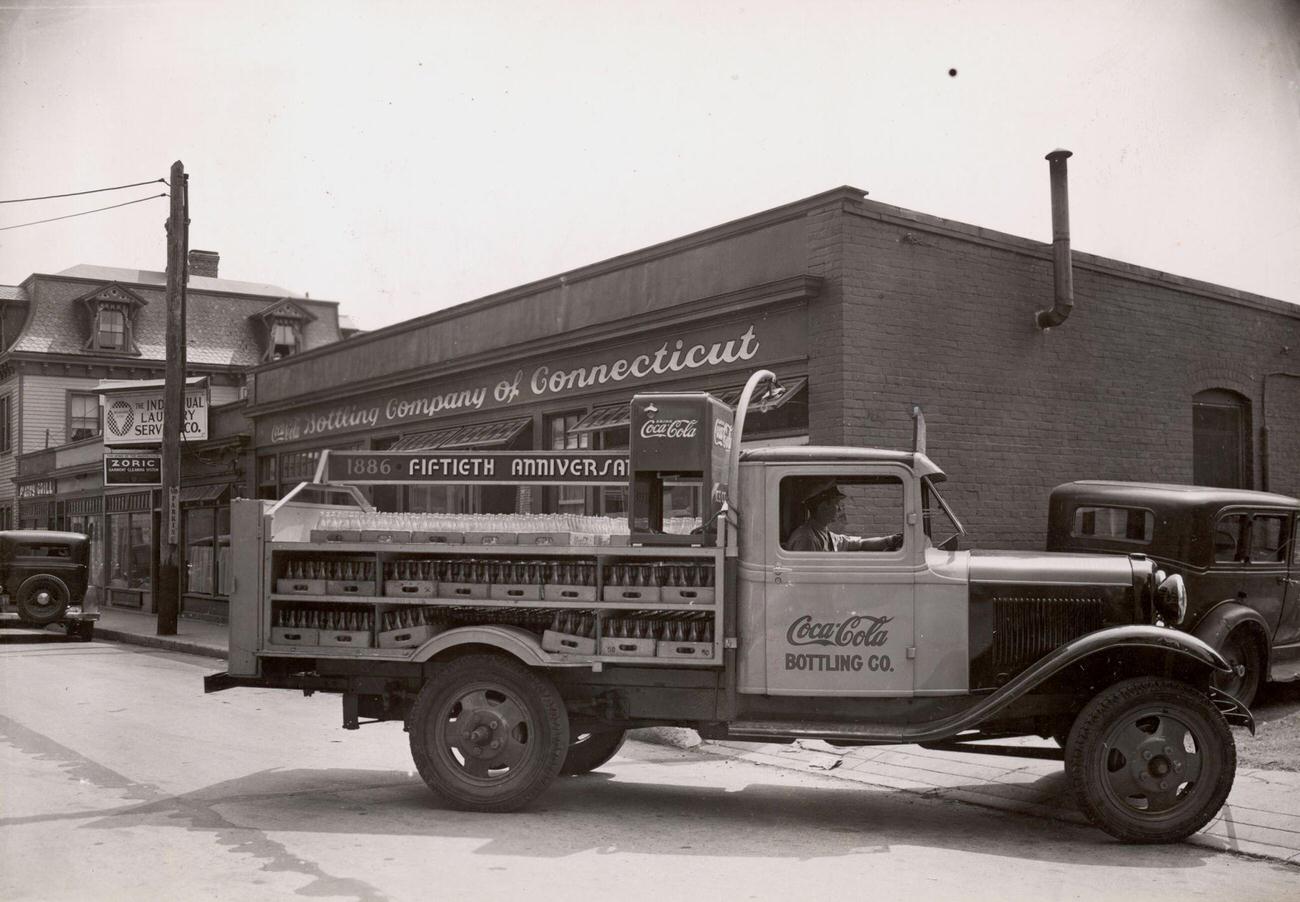
Migratory laborers outside a “juke joint” in Belle Glade, Florida, with various beverage signs.A crossroads store, bar, “juke joint,” and gas station in Melrose, Louisiana, with various beverage signs.Natchez, Mississippi, featuring signs for Coca-Cola, Orange Crush, and Royal Crown cola.Truck loaded with bottles leaving the Coca-Cola Bottling Company of Connecticut on the product’s 50th anniversary, 1936.
World War II marked a turning point for Coca-Cola’s global reach. The company set up bottling plants near military bases overseas, ensuring soldiers could get a cold Coke wherever they were stationed. This wasn’t just a morale boost — it placed Coca-Cola in countries that had never seen the product before. When the war ended, those plants stayed open, and the brand’s international footprint grew rapidly.
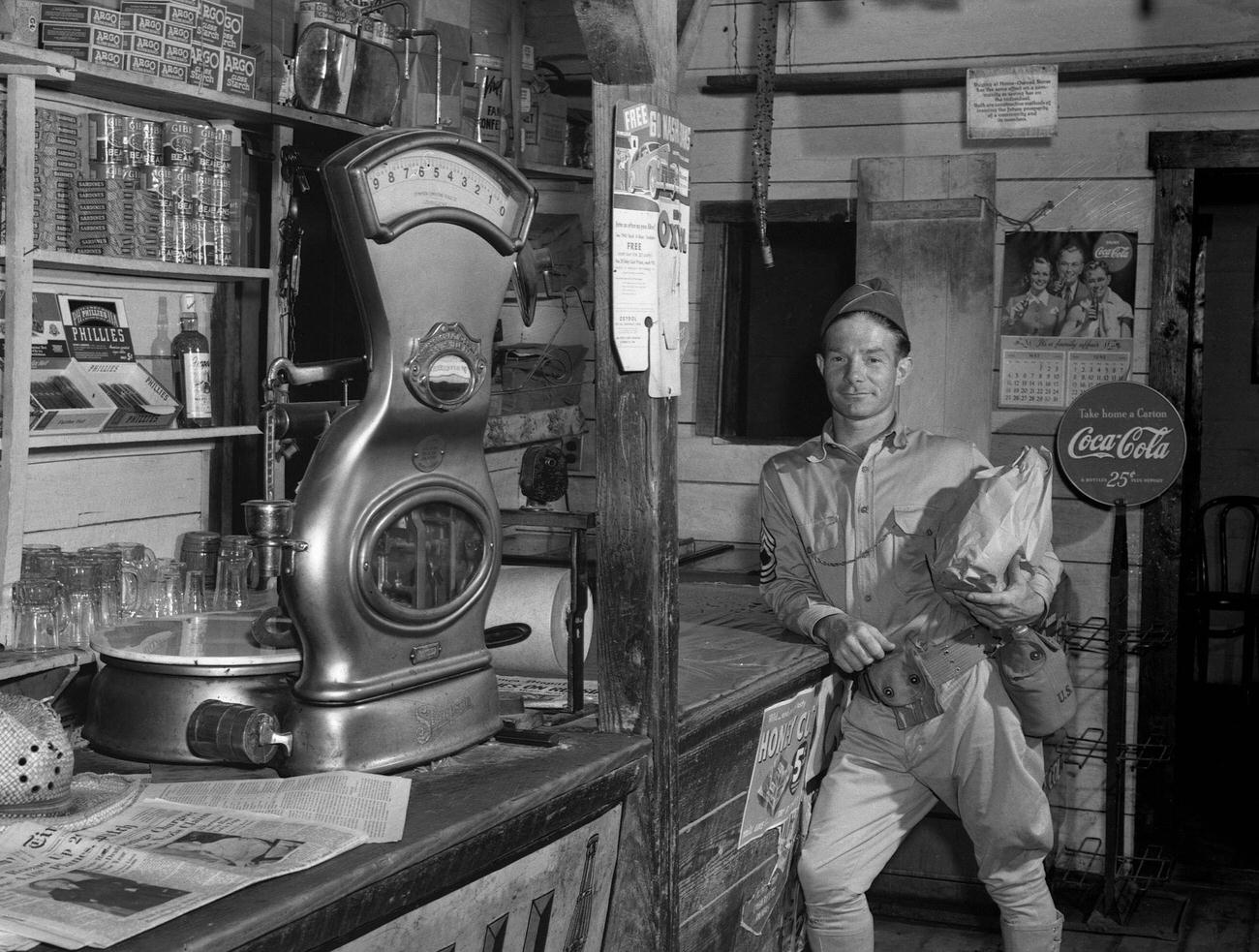
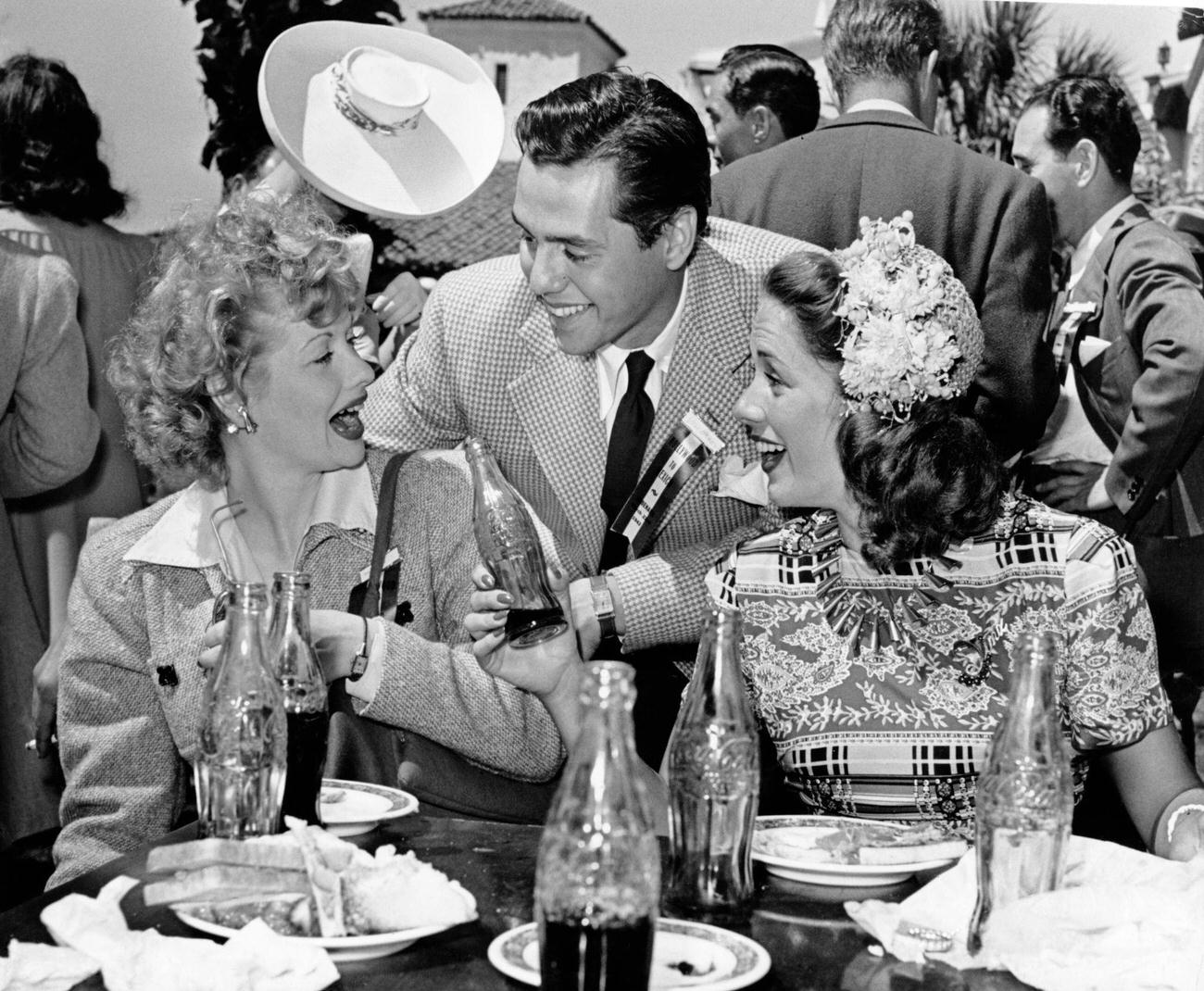
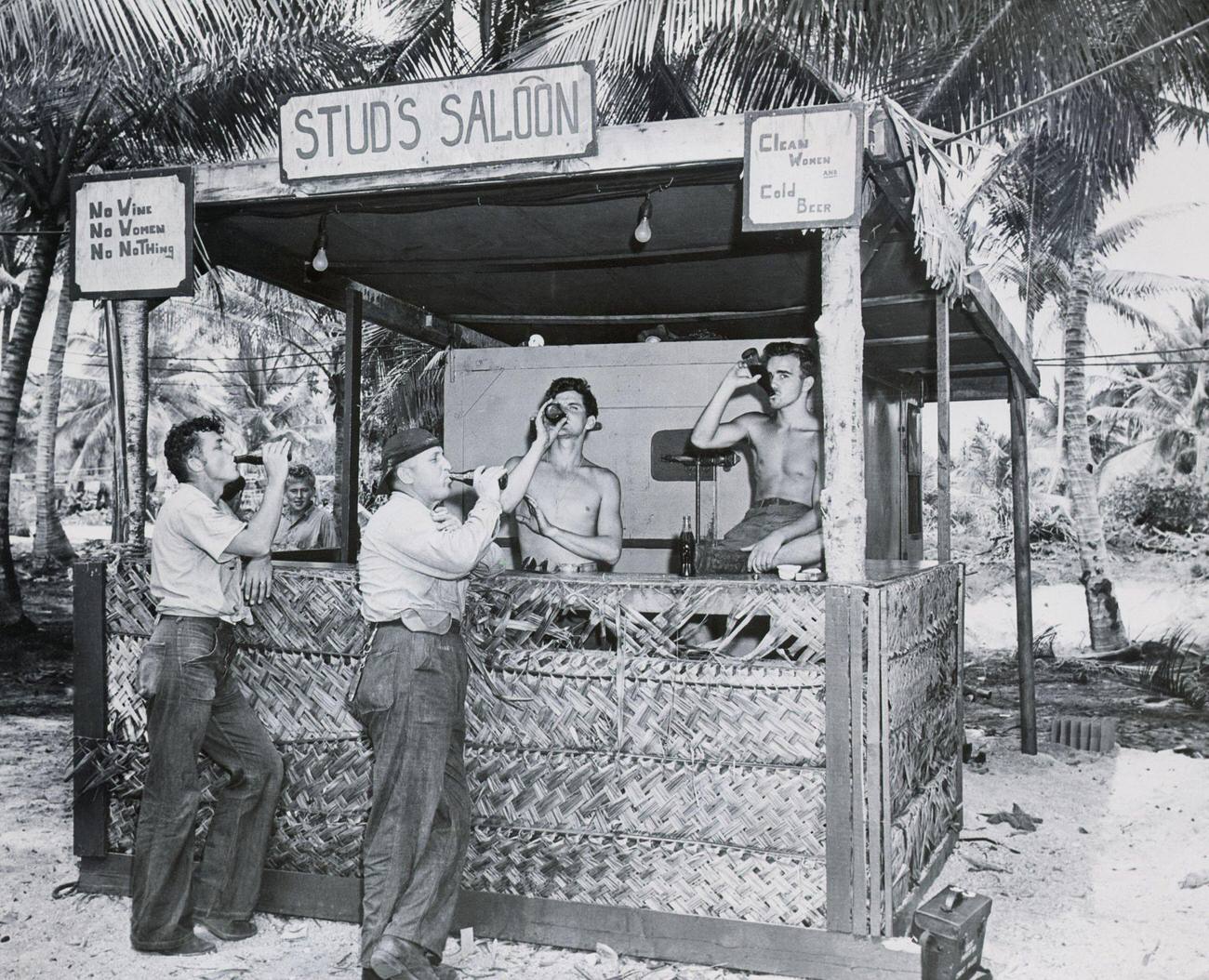
A soldier shopping in a general store in Caroline County, Virginia, June 1941.Married actors Lucille Ball and Desi Arnaz drinking Coca-Cola with actress Jinx Falkenburg, 1942.Seamen and customers enjoying Coca-Colas at a soft drink stand in the Marshall Islands, July 10, 1946.
Post-war America embraced Coca-Cola with enthusiasm. Soda fountains filled with teenagers, nurses grabbed bottles on their breaks, and celebrities posed with the drink on and off camera. The brand ran campaigns featuring people from all walks of life — a deliberate effort to make Coca-Cola feel universal.
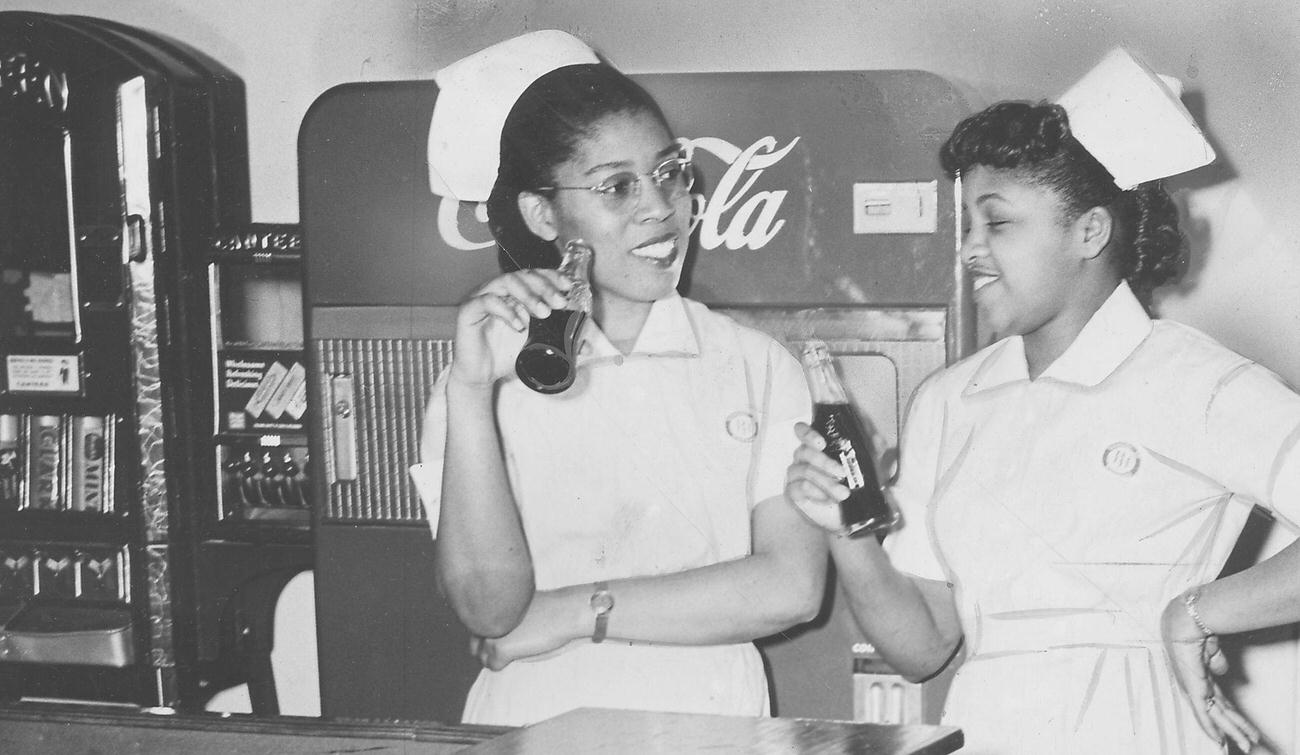
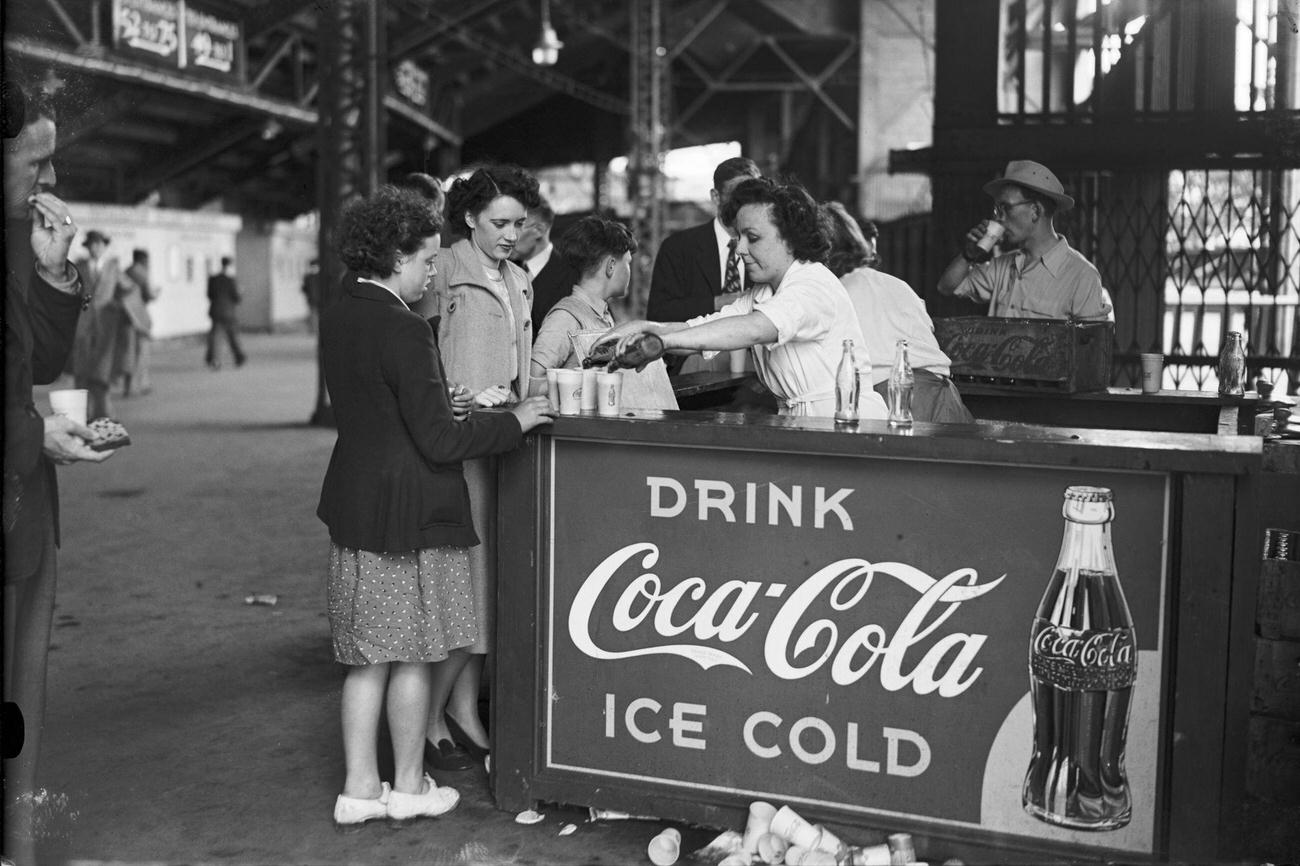
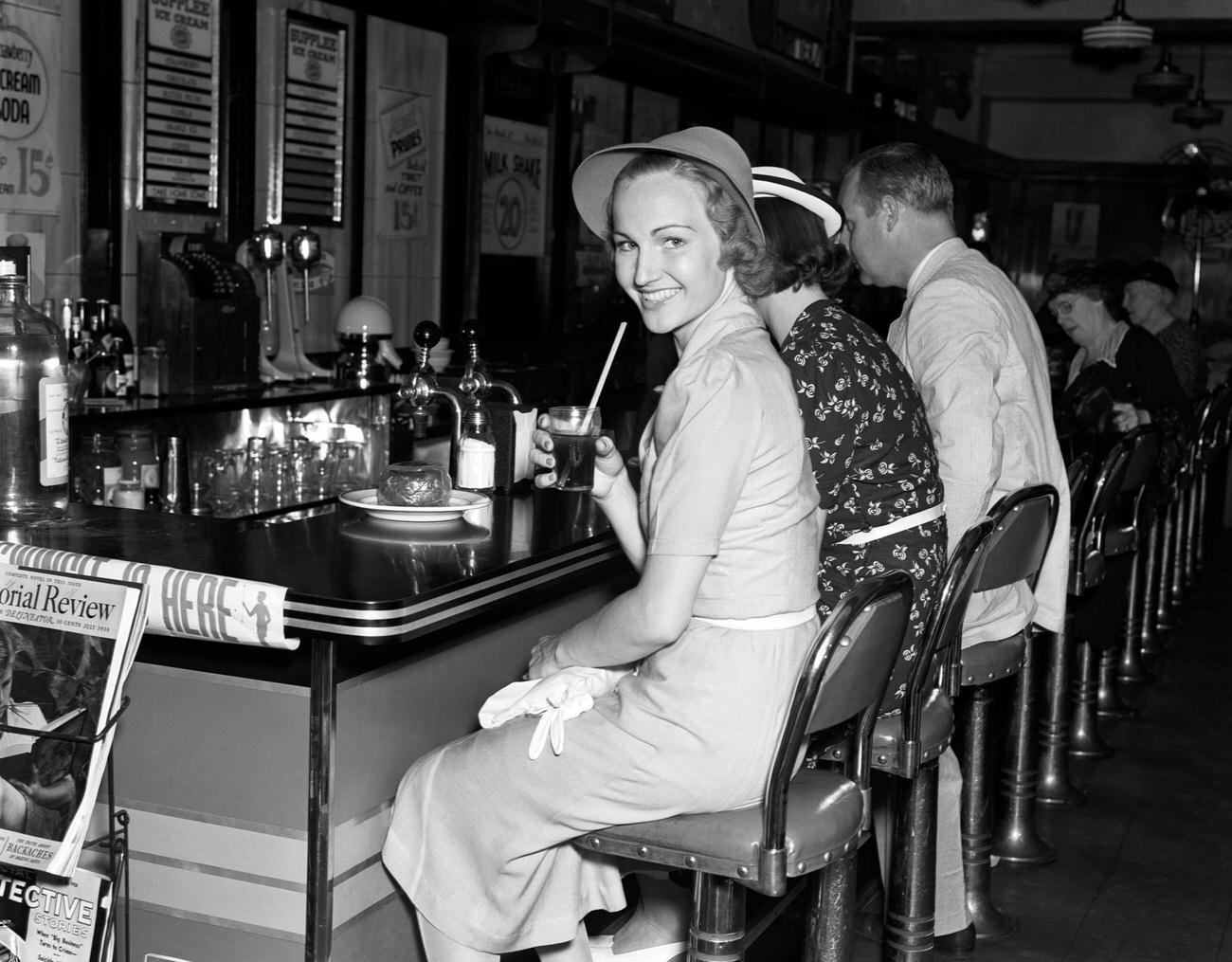
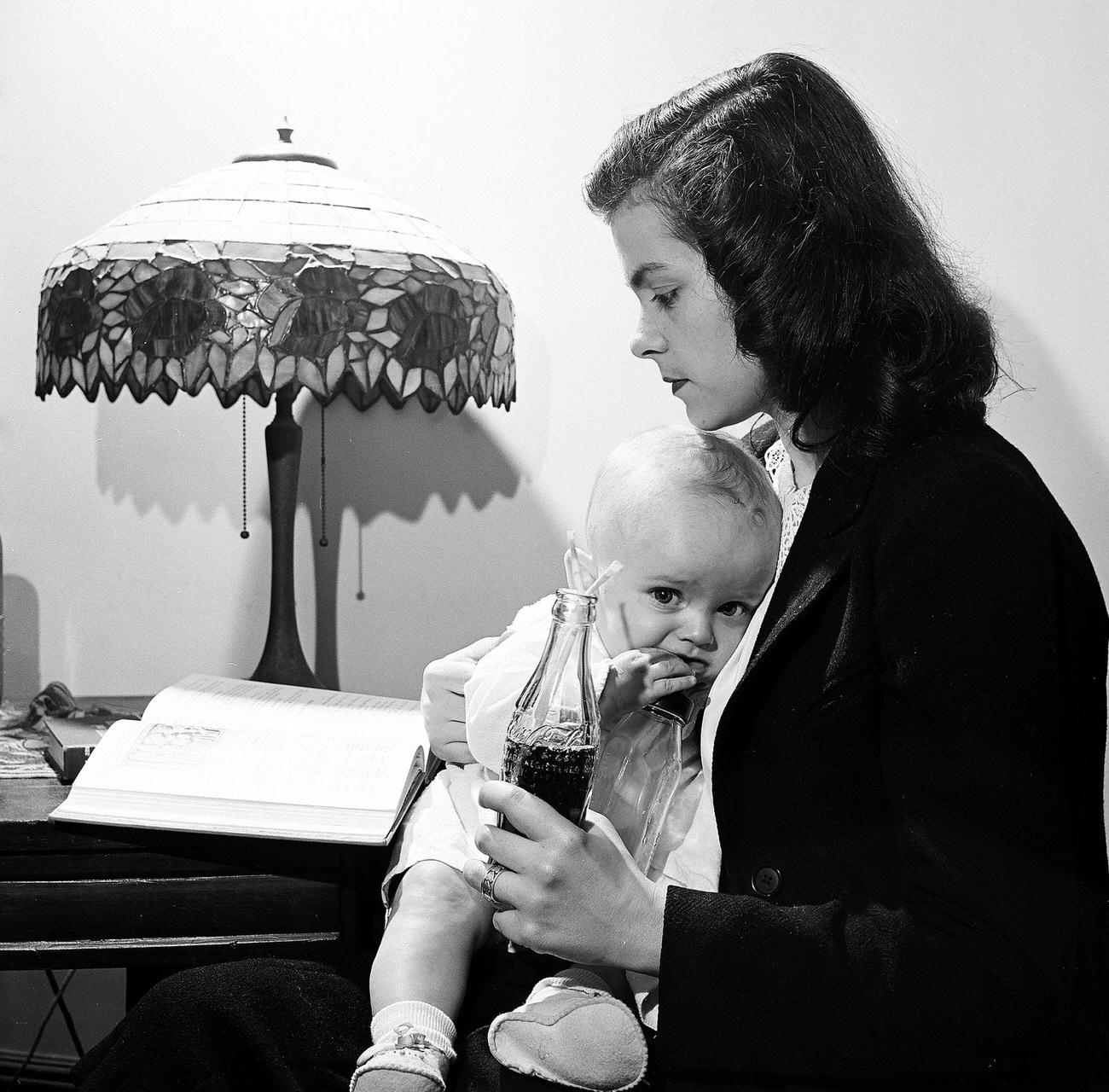
African-American nurses drinking Coca-Cola, 1948.A Coca-Cola stall at Wembley Stadium during the London Olympic Games, August 1948.Smiling women in linen dresses with a glass of cola at a soda fountain, 1940s.A babysitter drinking Coca-Cola while feeding an infant, Madison, New Jersey, 1947.
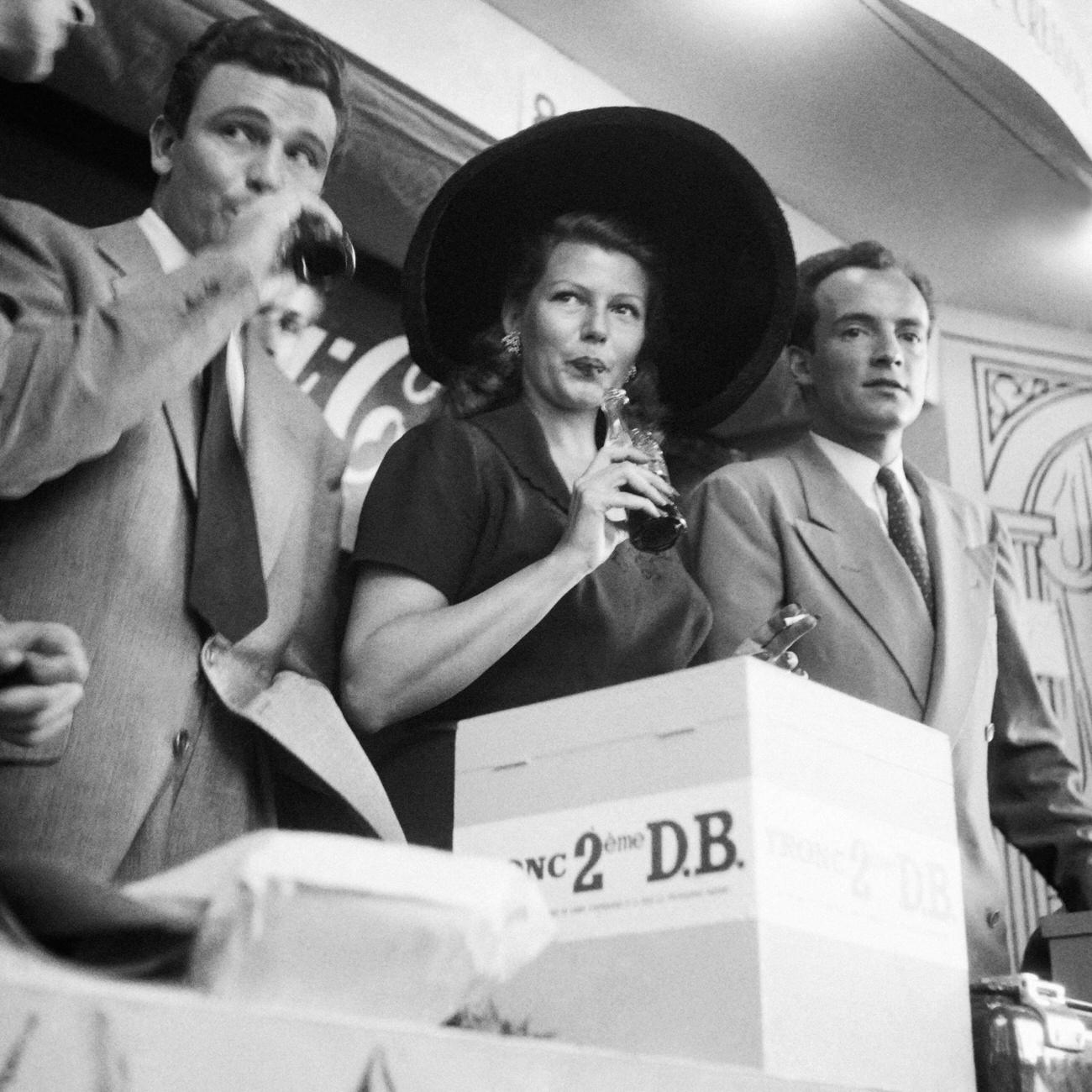
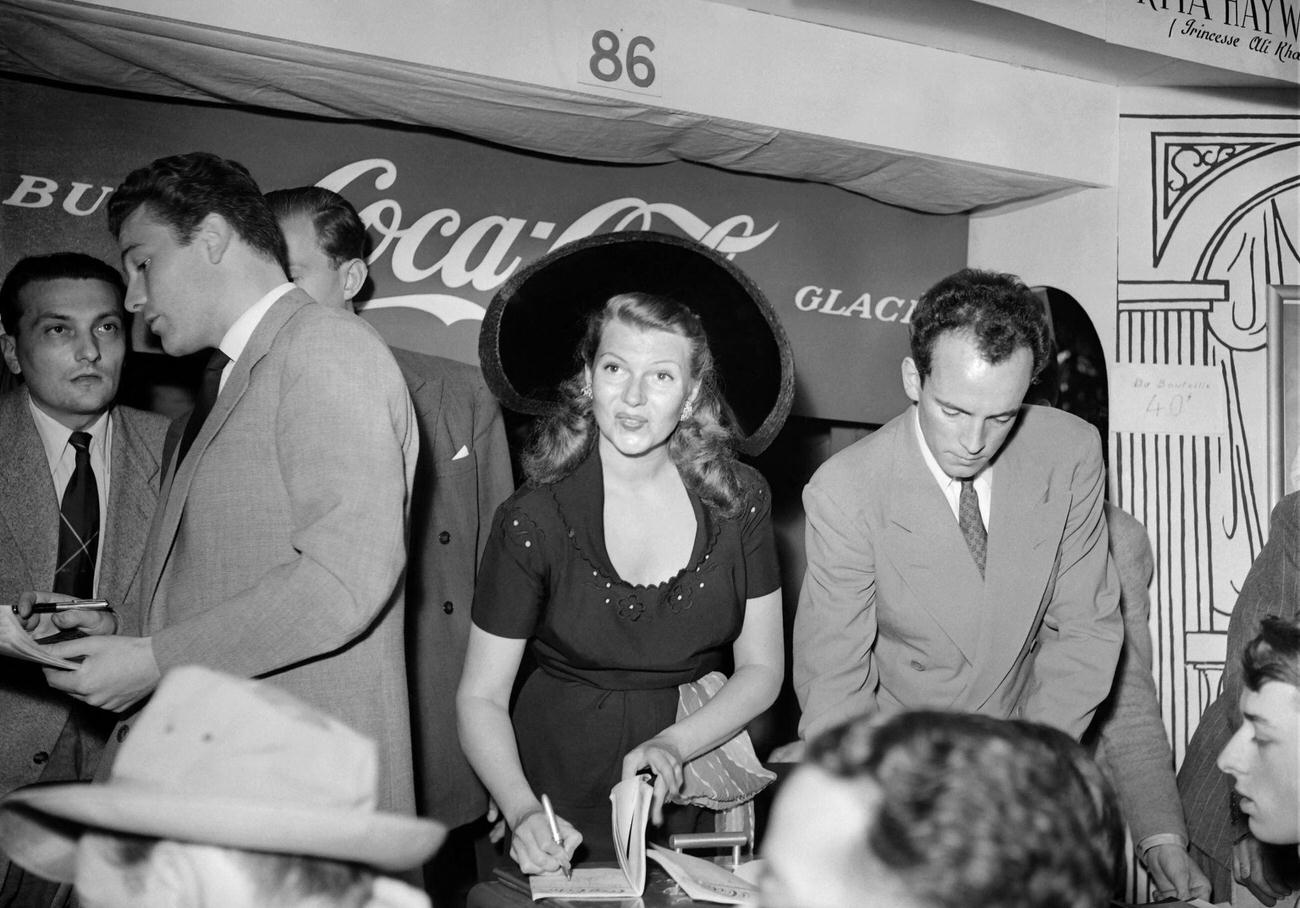
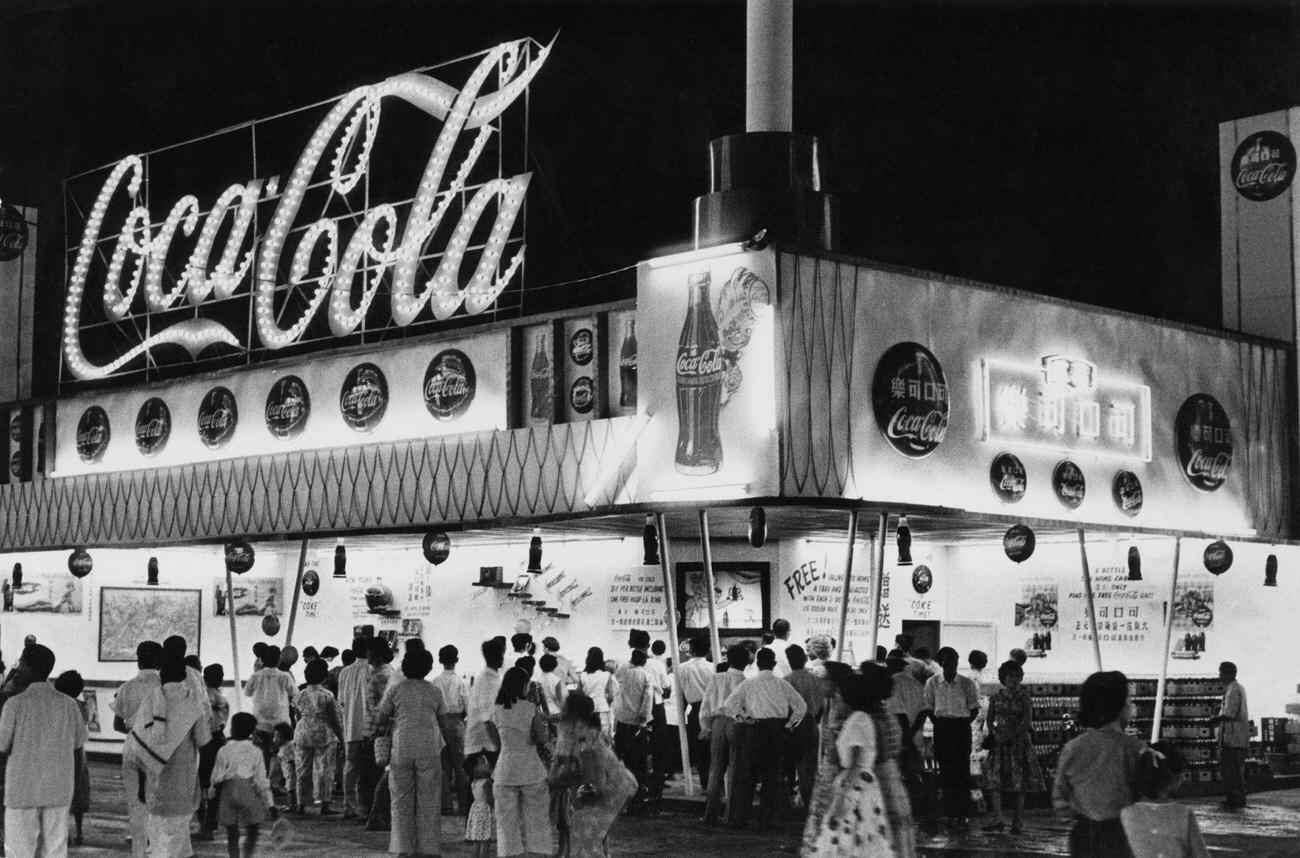
By the 1950s, Coca-Cola was everywhere — at the Grand Ole Opry, on beaches in Australia, at cafés in Italy, and at street stands in Singapore. The 1948 London Olympics featured a Coke stall at Wembley Stadium. In Paris, actress Rita Hayworth was photographed drinking one at a fair and signing autographs at a Coca-Cola stand on the same day.
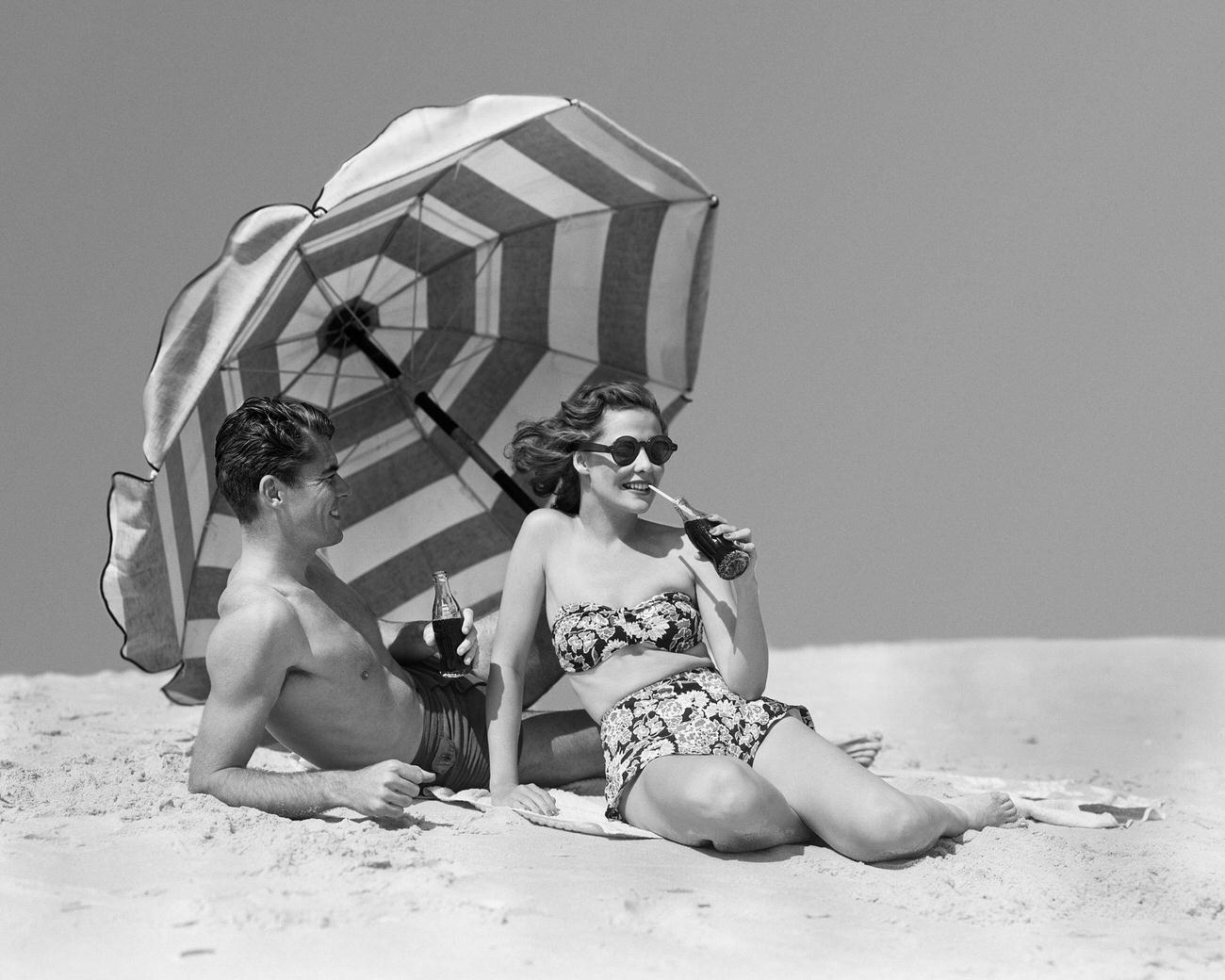
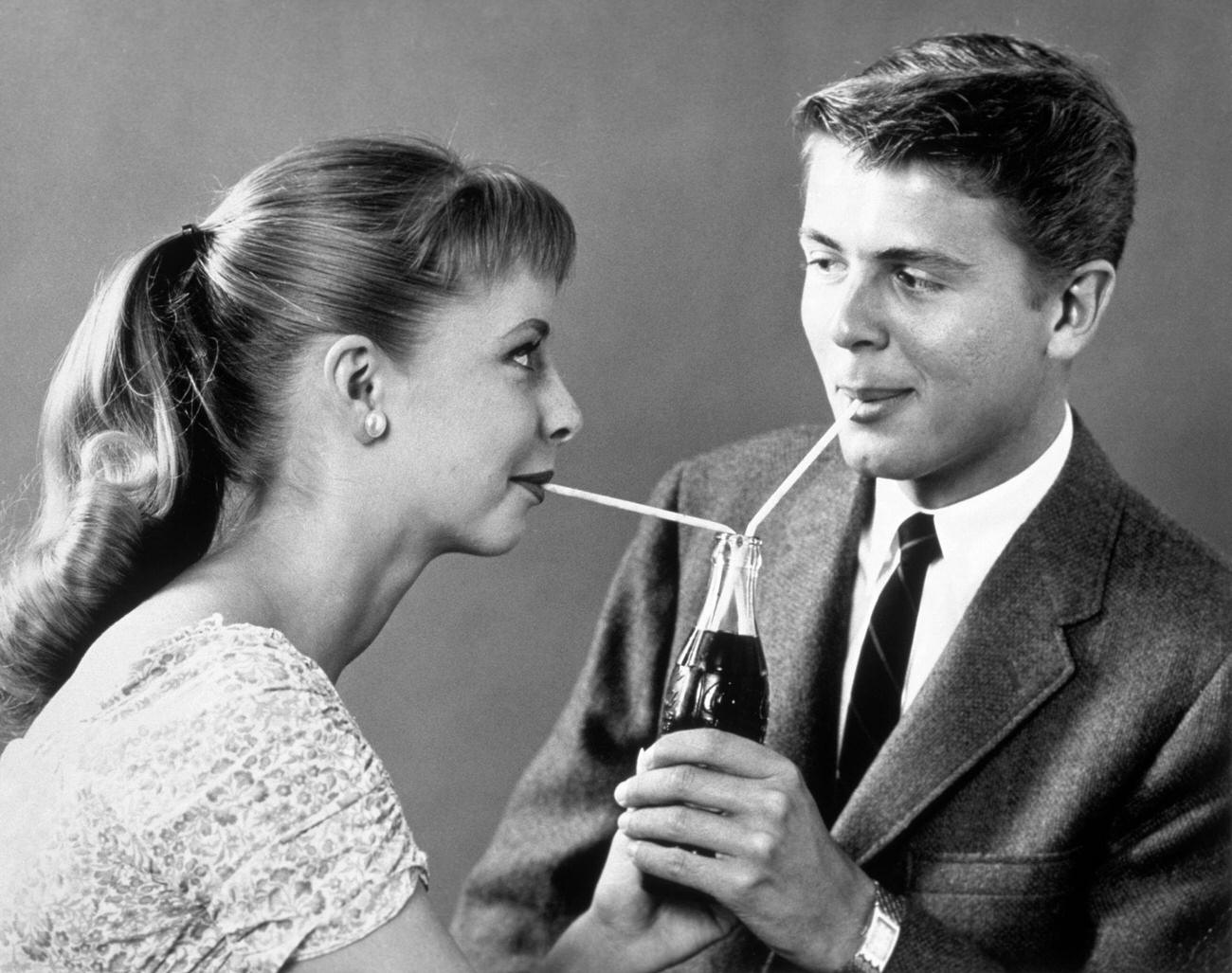
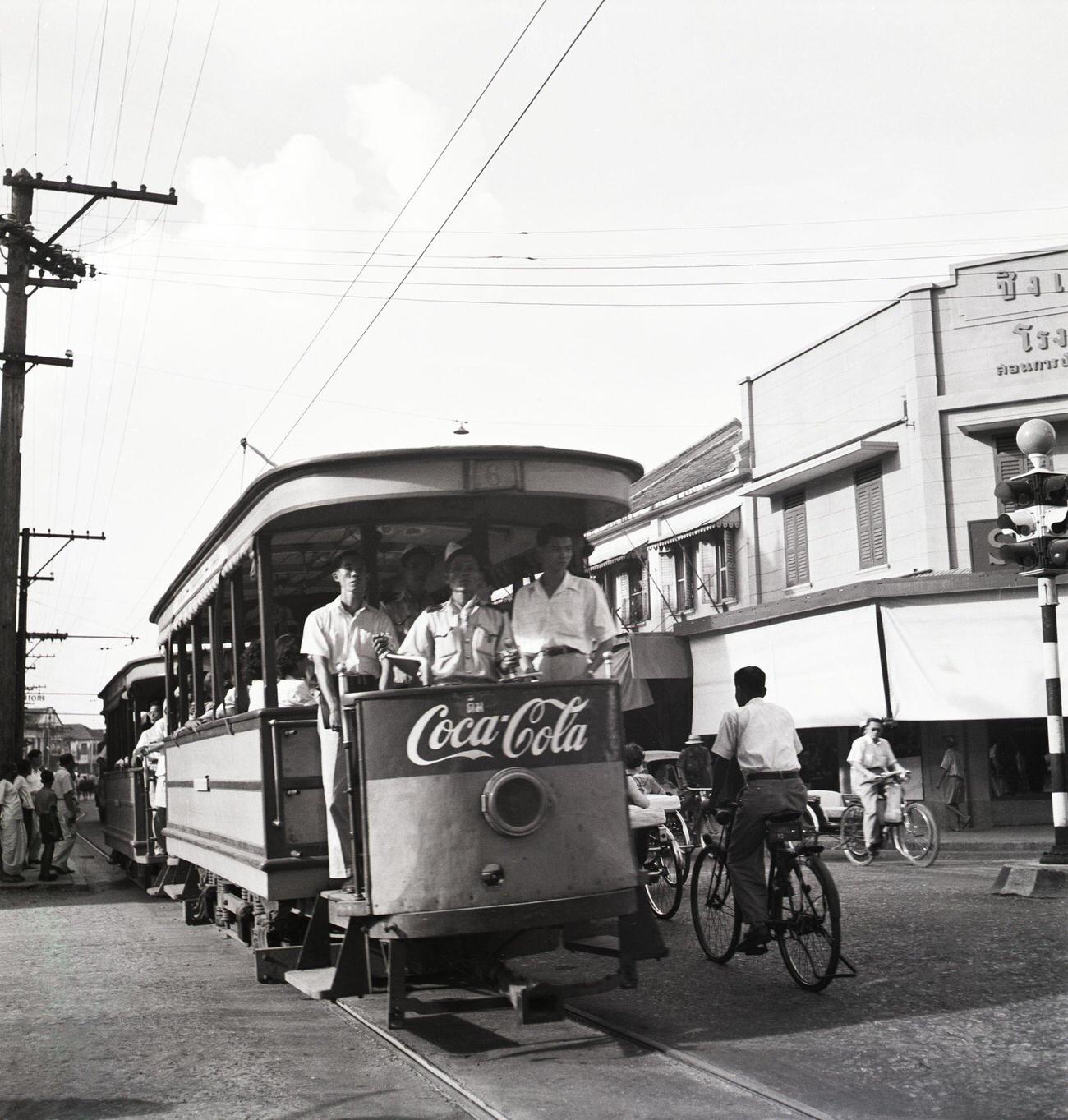
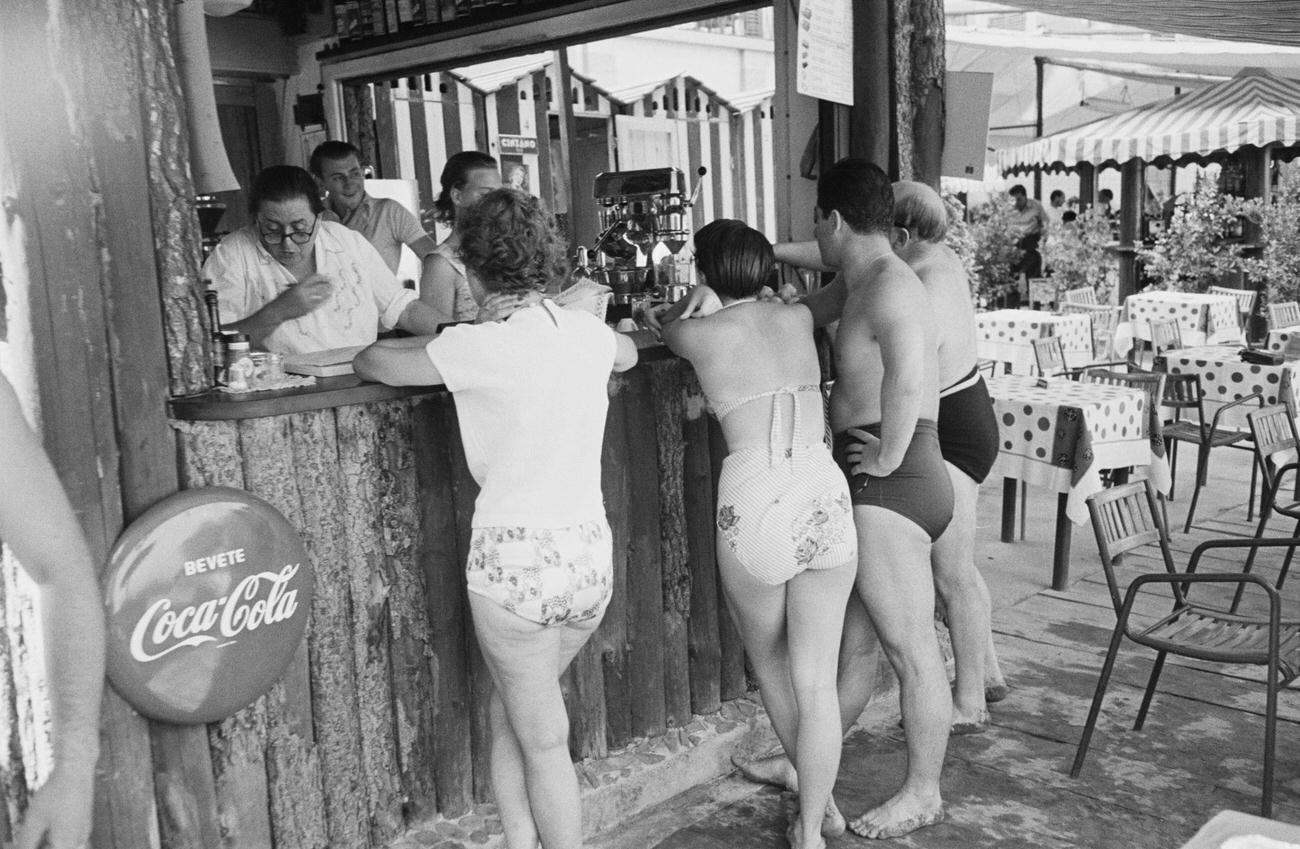
Actress Rita Hayworth drinking Coca-Cola at a fair in Paris, June 10, 1950.Actress Rita Hayworth signing autographs at a Coca-Cola stand in Paris, June 10, 1950.Couple sunbathing and drinking soda by a beach umbrella, 1950s.Teenage couple sharing a single bottle of soda with two straws, 1950s.Cyclists pedaling by trolleys advertising an American soft drink in Siam, May 26, 1950.Customers at a bar on Paraggi Beach near Portofino, Italy, August 1952.
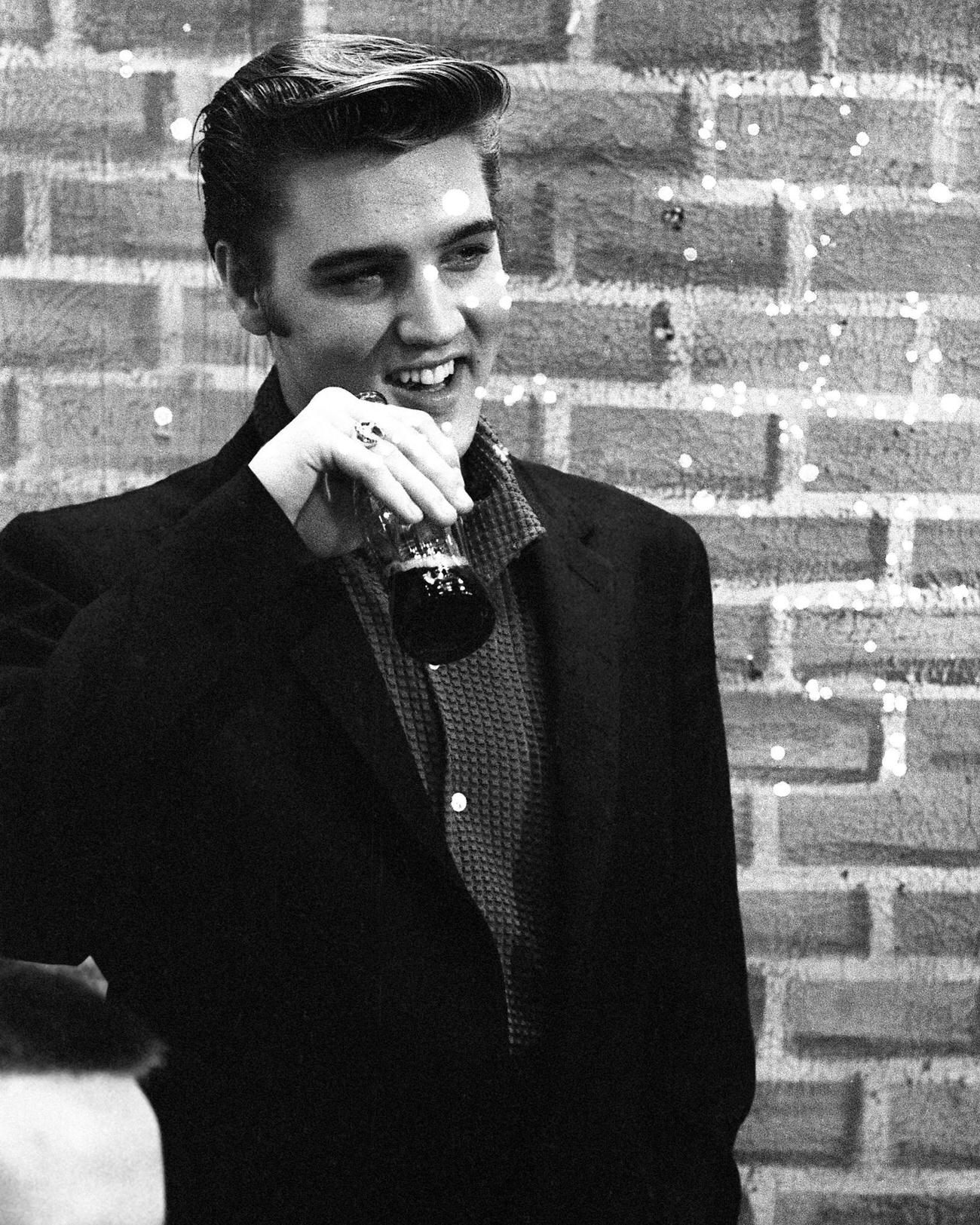
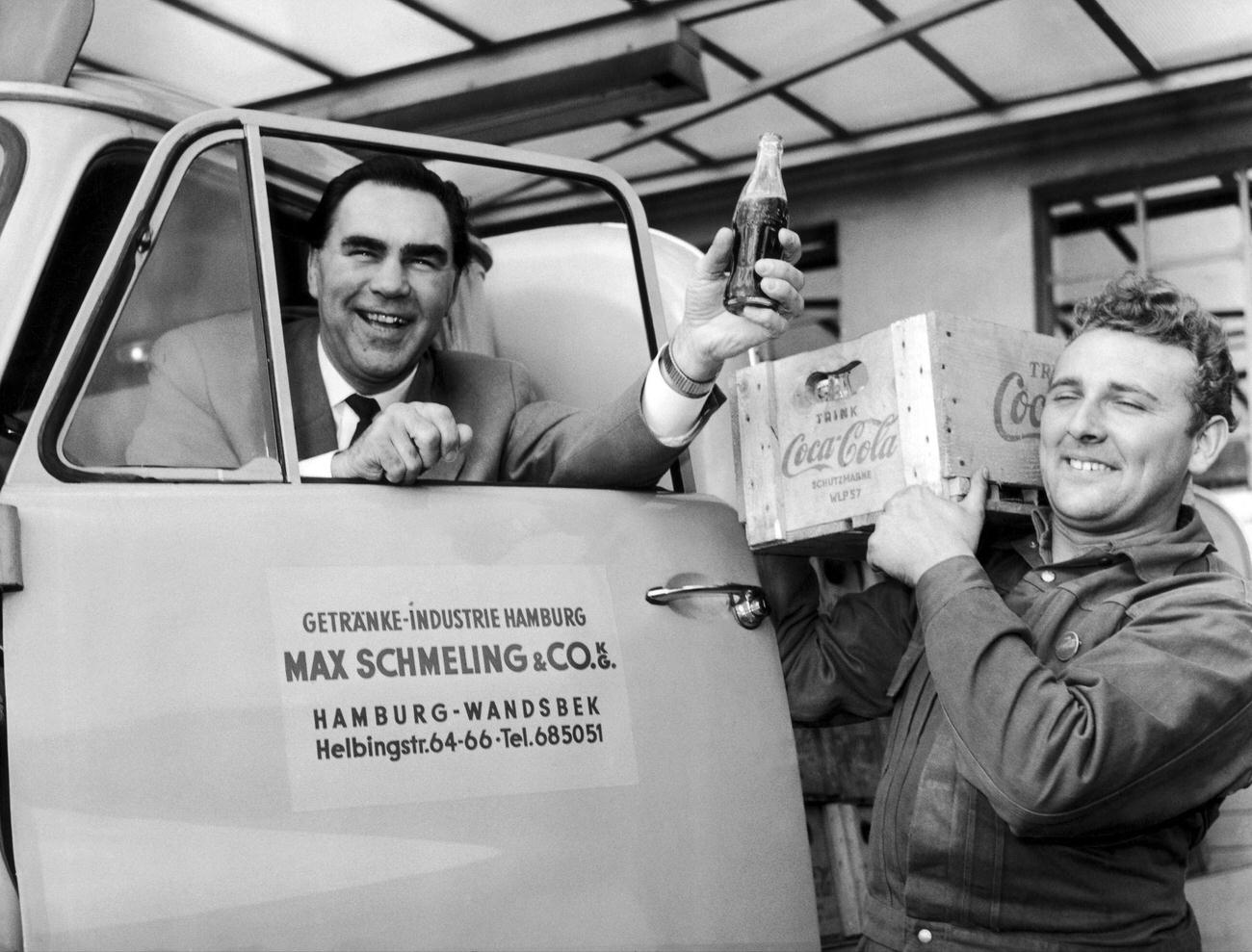
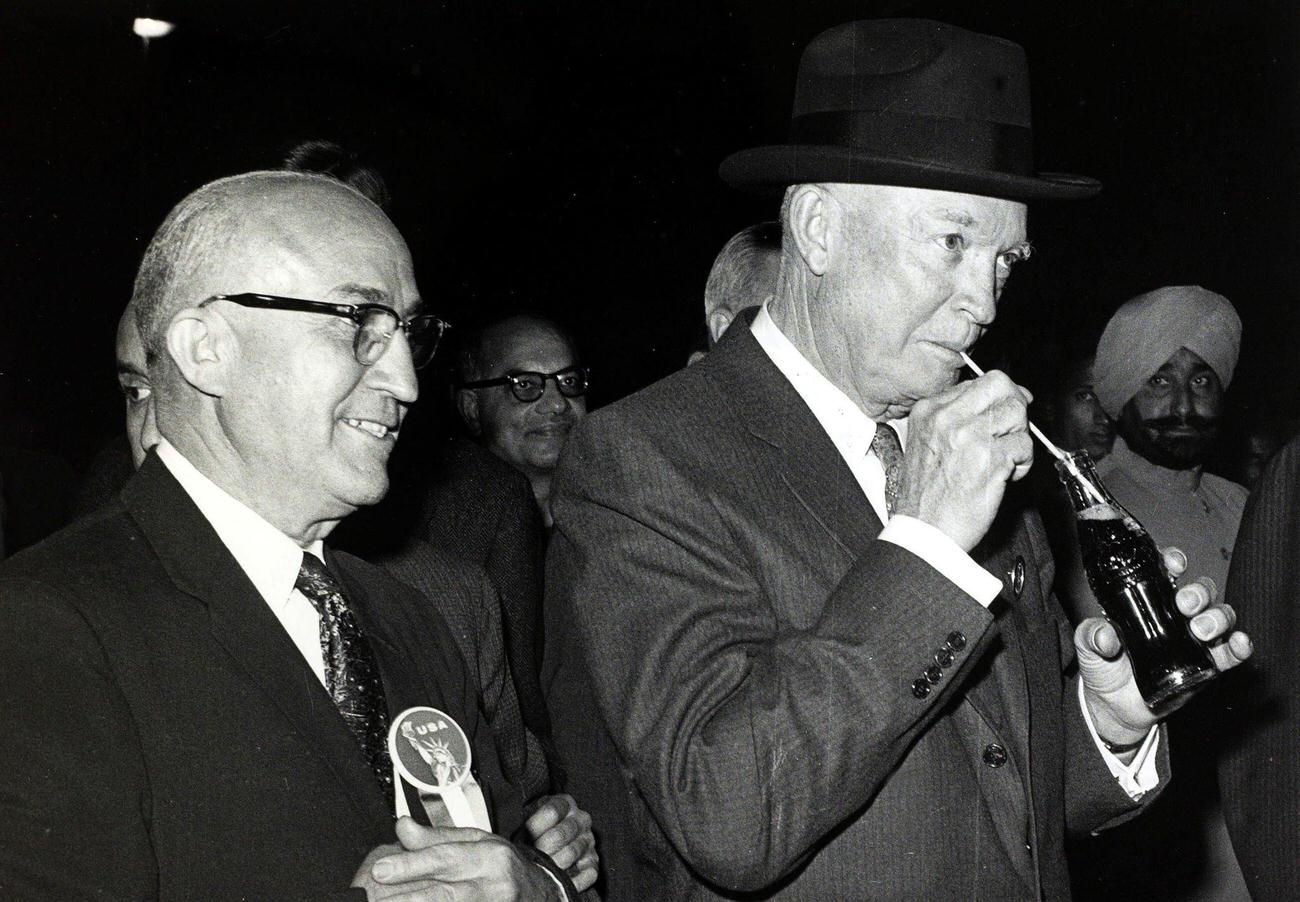
Celebrities and public figures were regularly photographed with a bottle in hand. Elvis Presley was snapped drinking Coca-Cola backstage in Memphis in 1956. Nancy Sinatra held one on her father’s television show in 1957. Boxer Max Schmeling promoted the brand in Germany that same year. President Dwight D. Eisenhower was photographed enjoying one at an exhibition in New Delhi in 1959.
Singer Elvis Presley drinking Coca-Cola backstage on Wink Martindale’s show in Memphis, June 16, 1956.
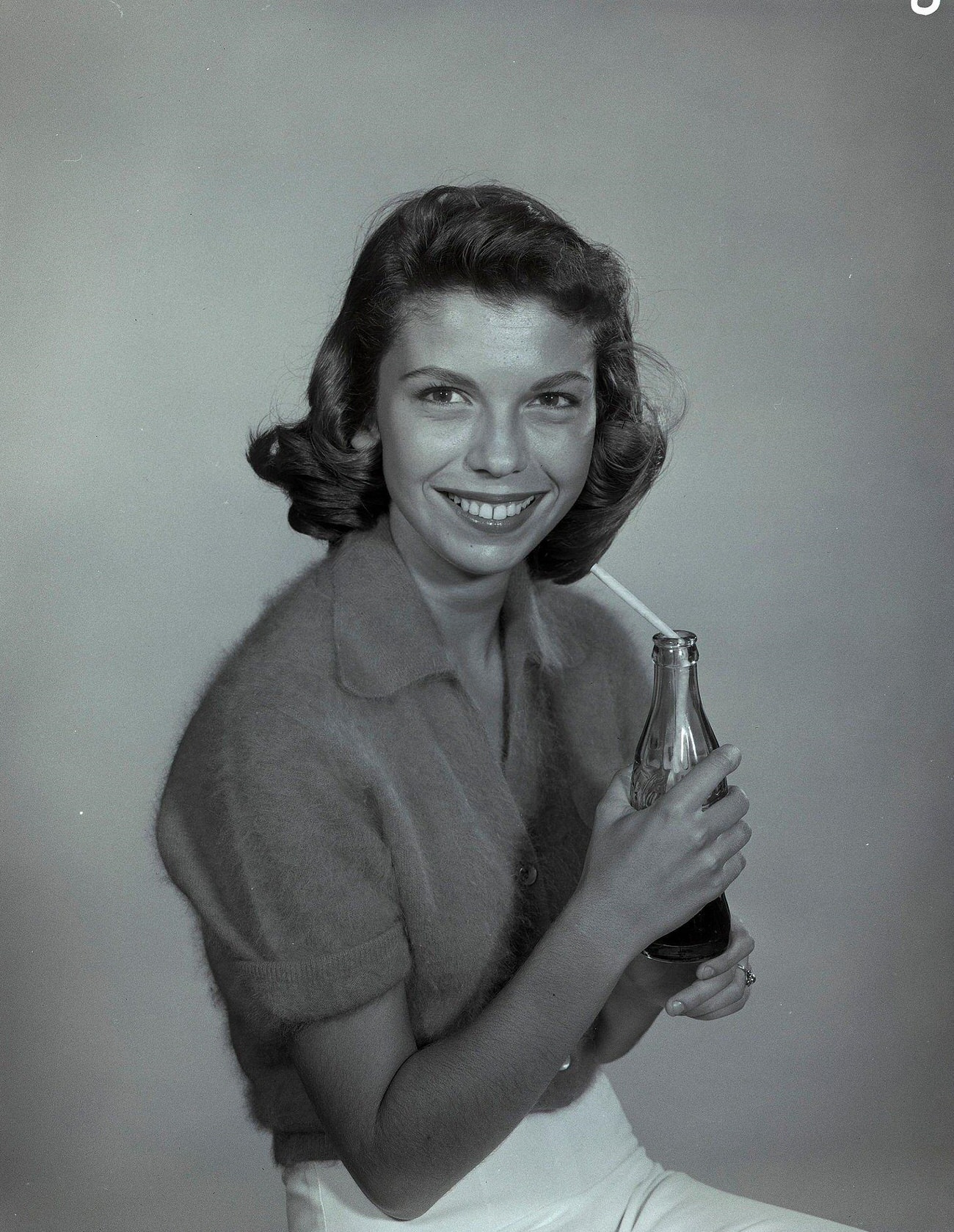
Nancy Sinatra holding a Coca-Cola bottle on “The Frank Sinatra Show,”, 1957.
Boxer Max Schmeling promoting Coca-Cola in Germany,1957.President Dwight D. Eisenhower enjoying Coca-Cola at an exhibition in New Delhi, India, 1959.
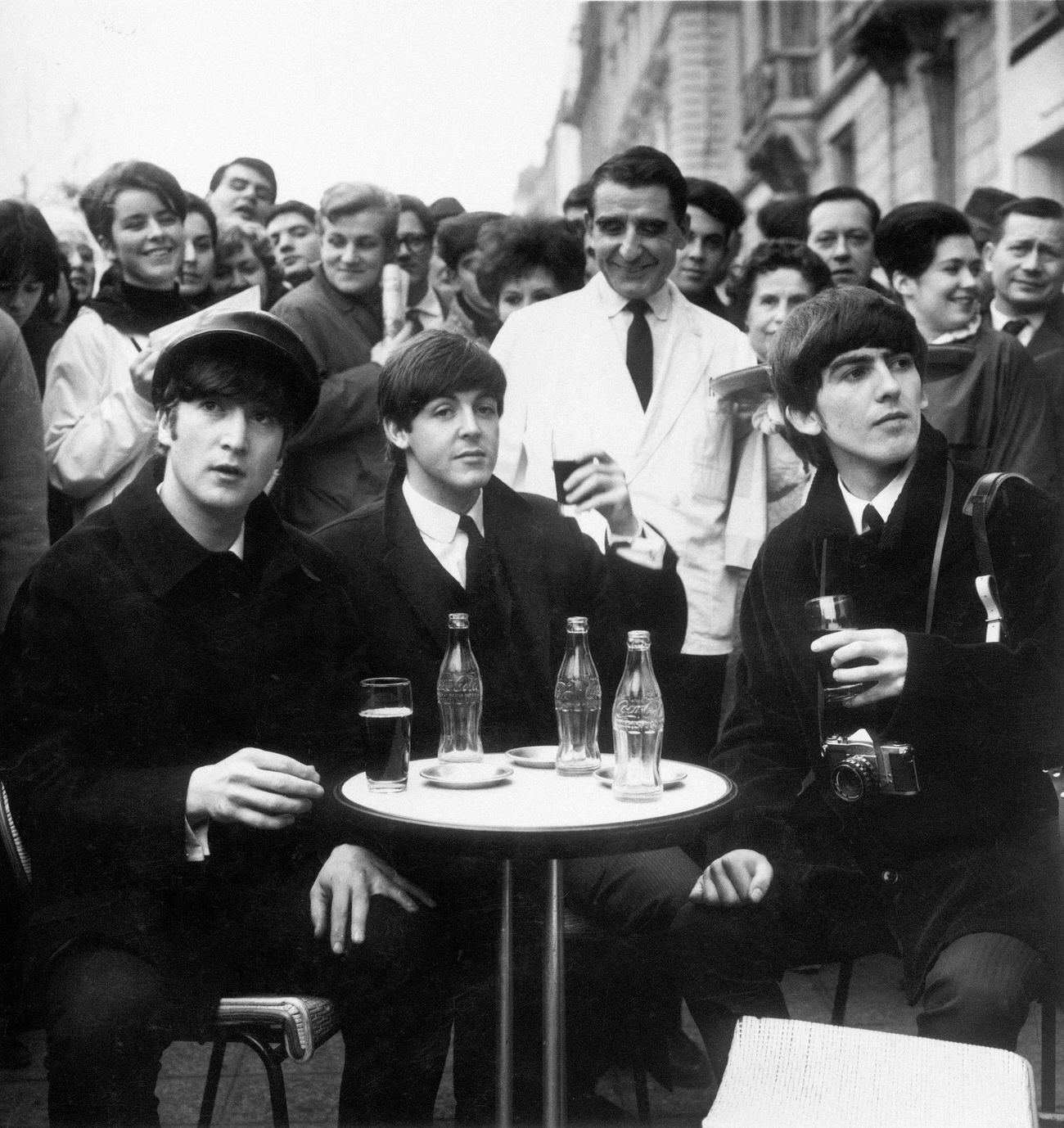
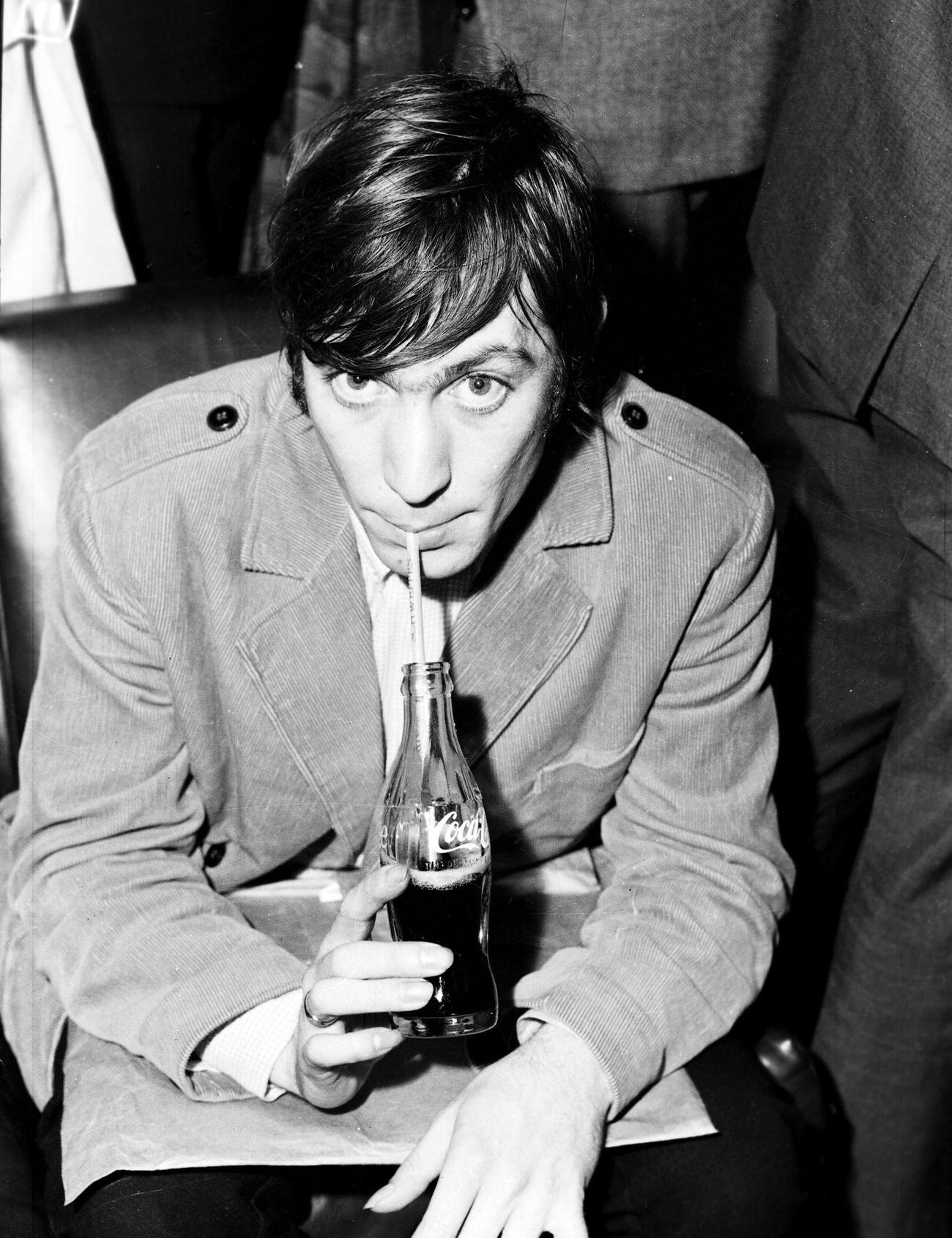
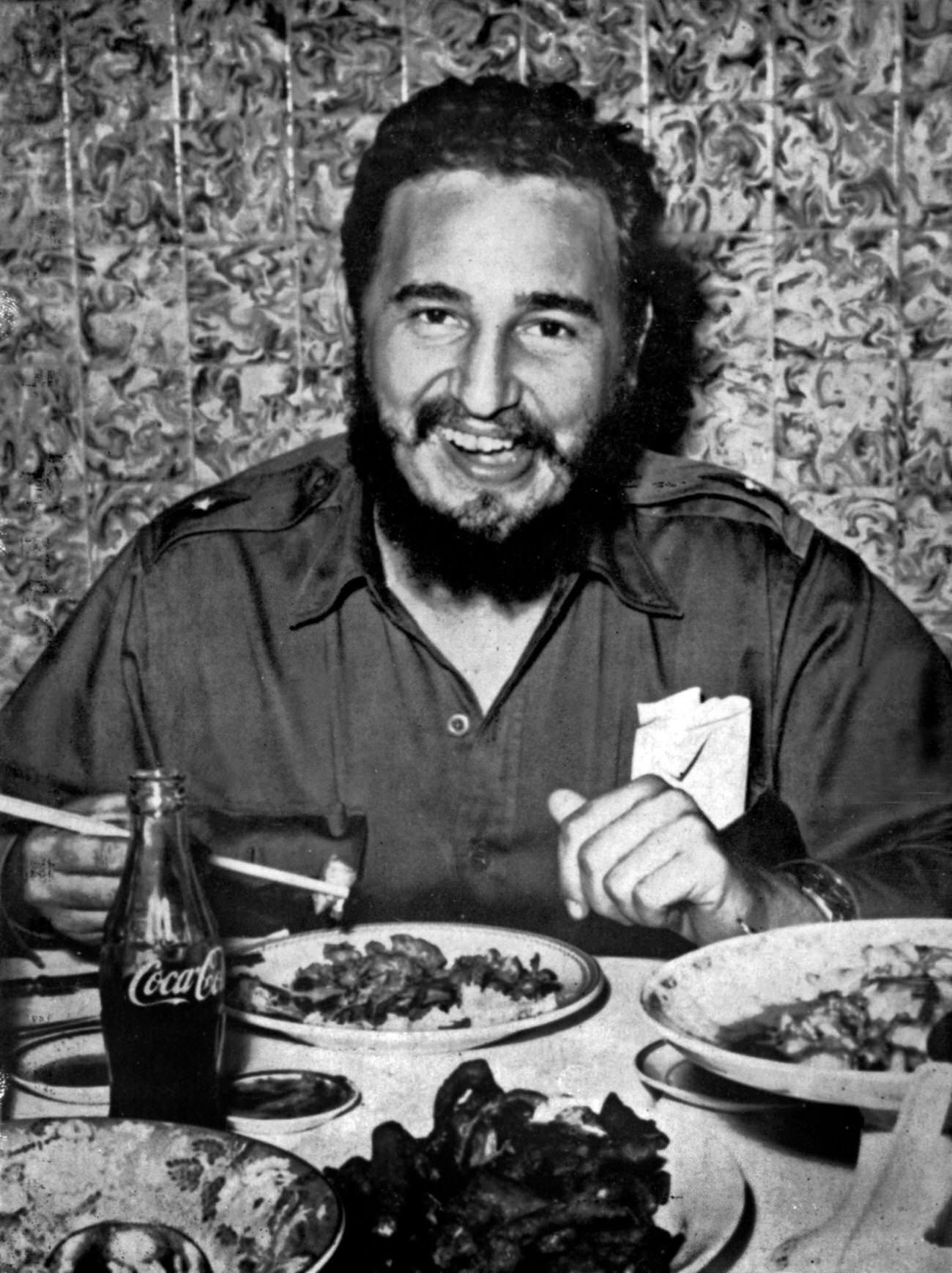
The 1960s brought the brand into contact with a new generation of cultural icons. Three Beatles — John, Paul, and George — were photographed with Cokes at a café in Paris in 1964. The Rolling Stones were seen with bottles after landing at Mascot Airport in 1965. Even Fidel Castro, photographed eating Chinese food with chopsticks around 1960, had a bottle of Coca-Cola on the table.
Beatles John, Paul, and George enjoying Coca-Cola at a cafe in Paris1964.
Rolling Stones interviewed after arriving at Mascot Airport 1965.
Fidel Castro eating a Chinese meal with chopsticks and drinking Coca-Cola, circa 1960.
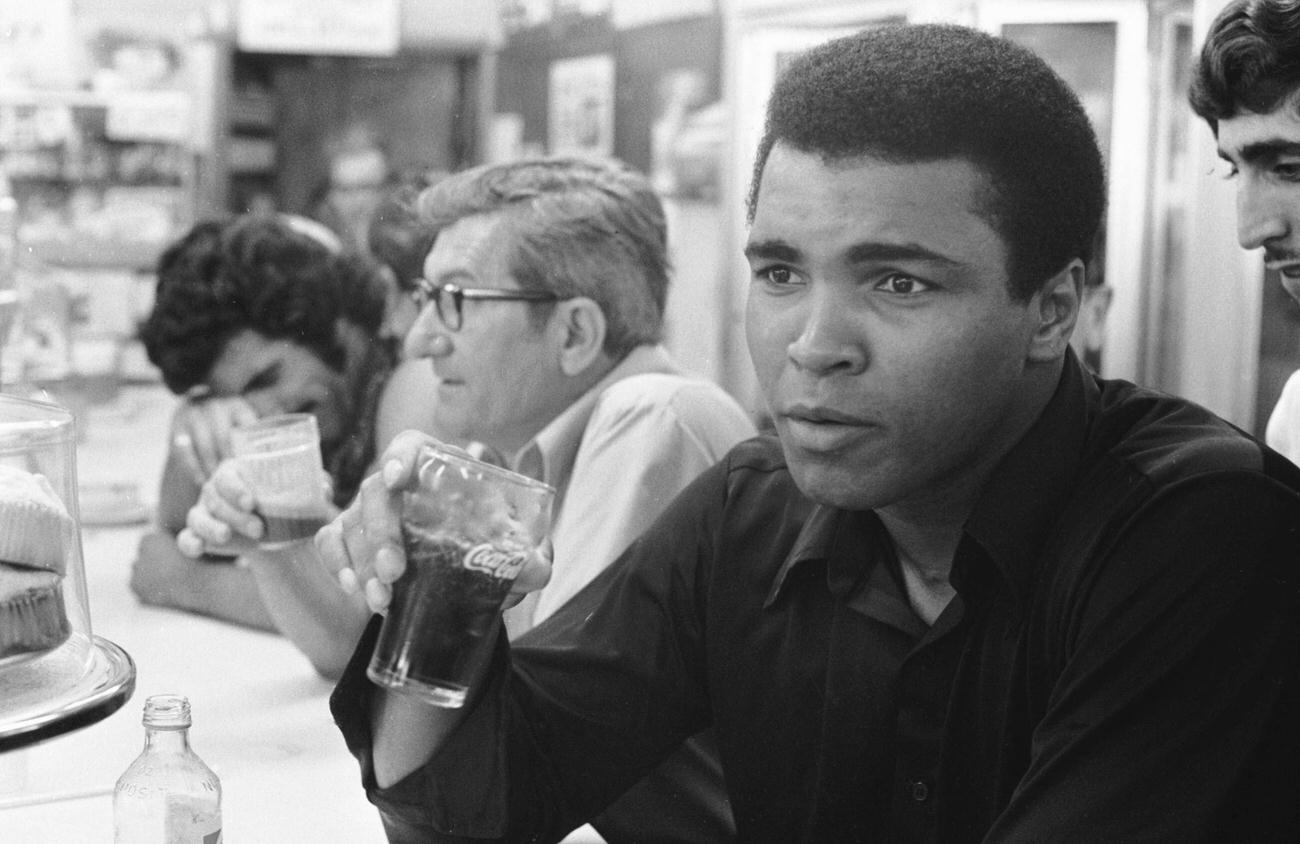
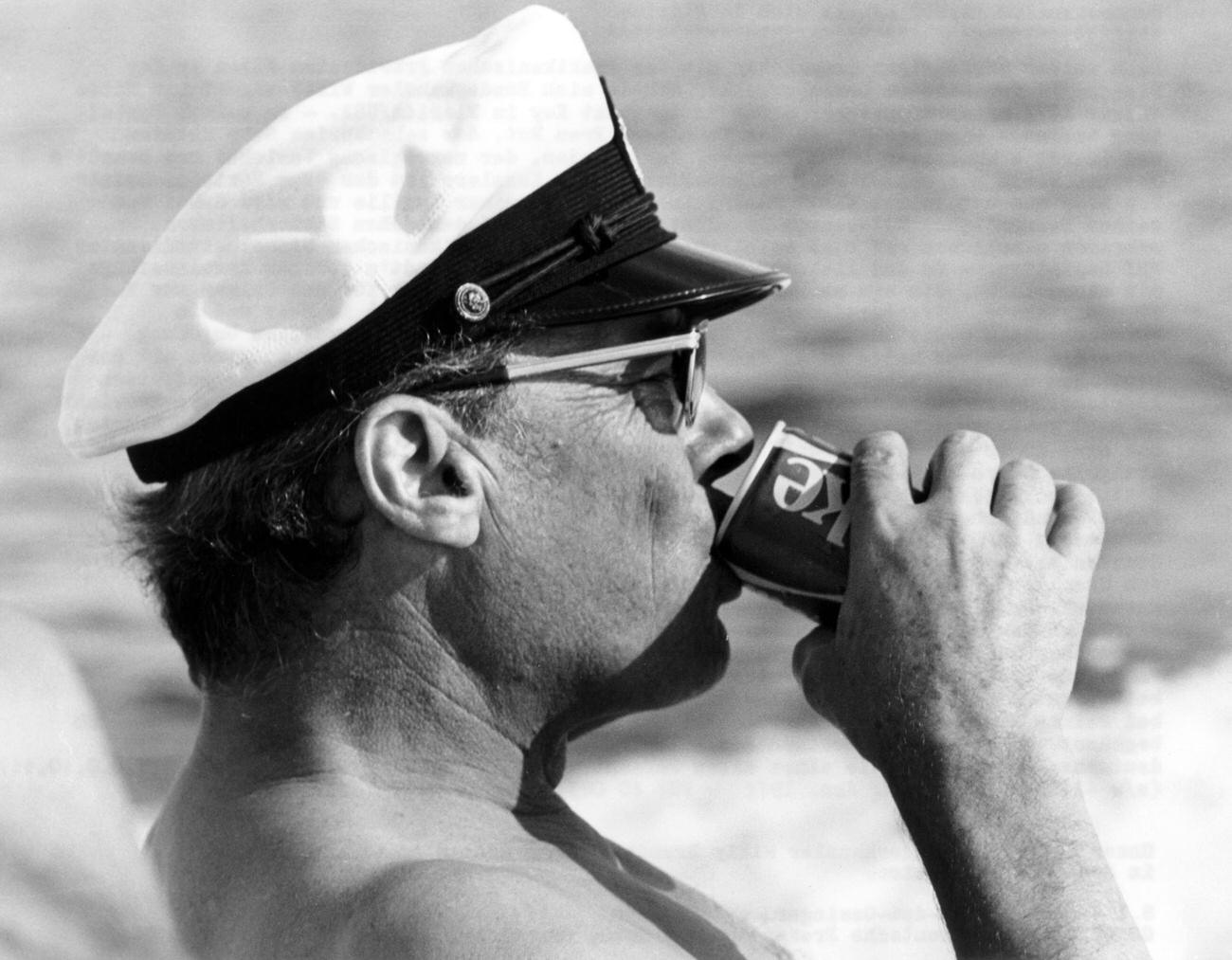
Boxer Muhammad Ali drinking Coca-Cola at a diner in Miami Beach, 1971.Chancellor Willy Brandt relaxing with Coca-Cola in Florida, 1972.
The photos below document the full sweep of Coca-Cola’s 20th-century story — from soda fountain counters to international bottling plants, from rural American storefronts to Olympic stadiums and celebrity dressing rooms. Together, they show a single product appearing across wildly different lives, countries, and decades.
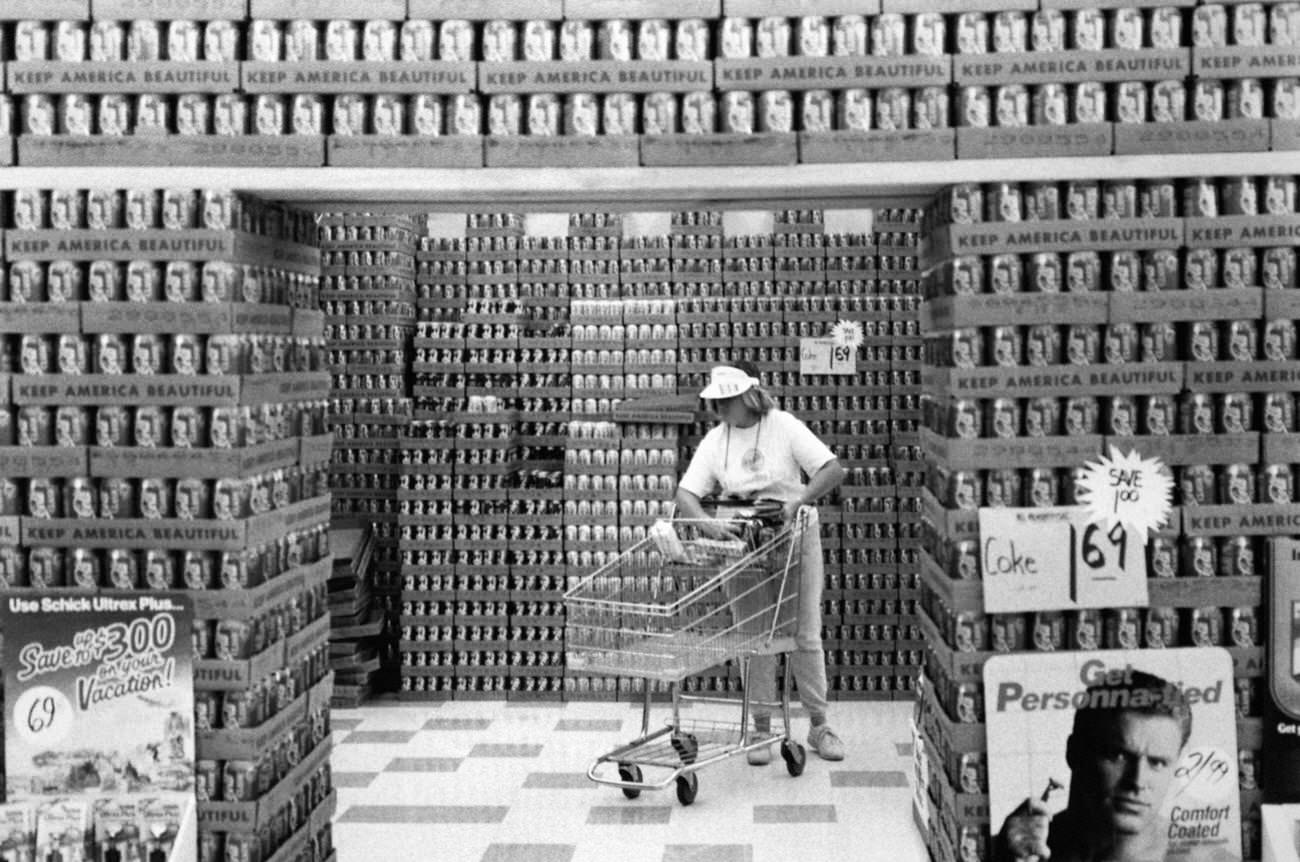
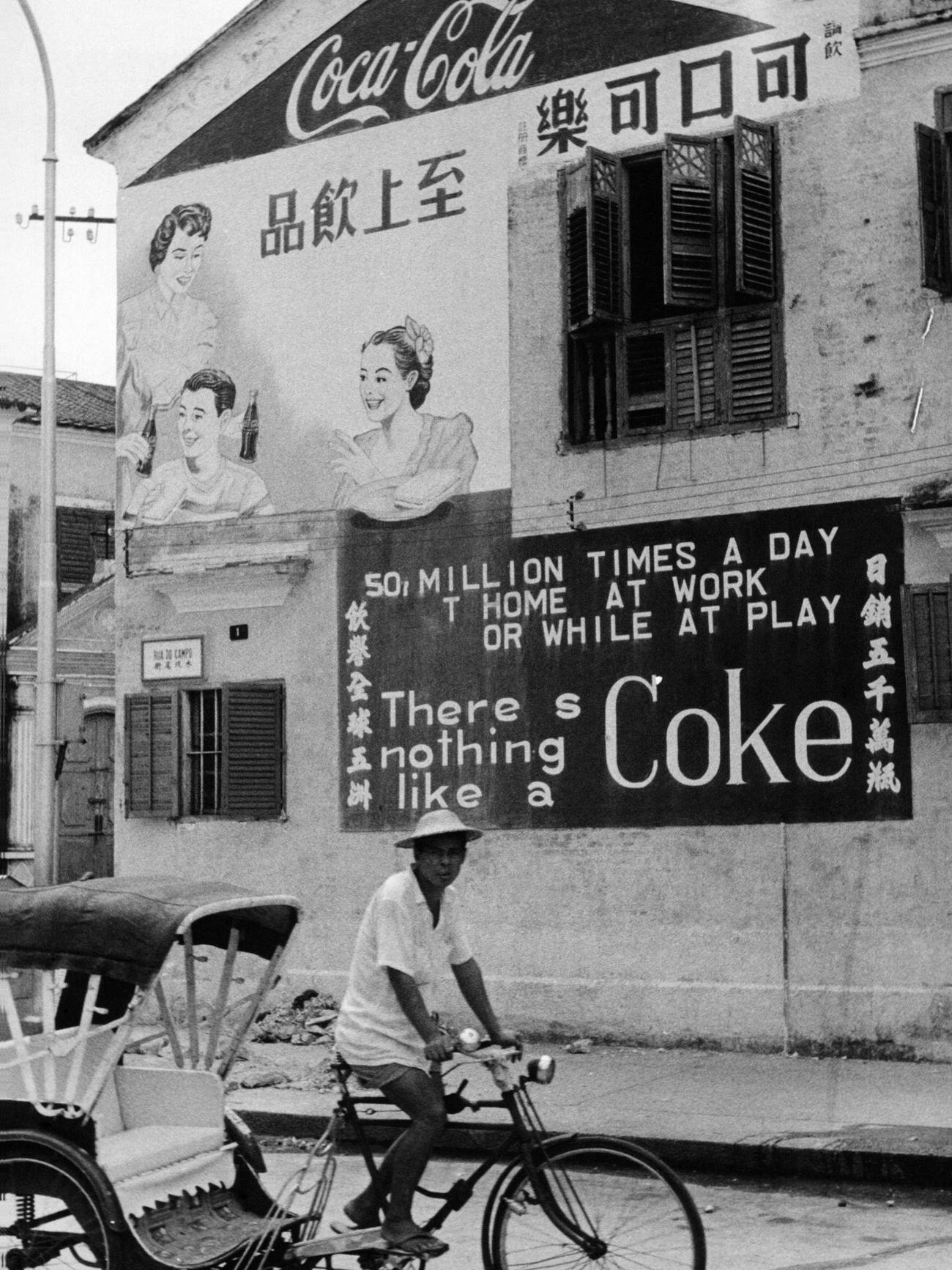
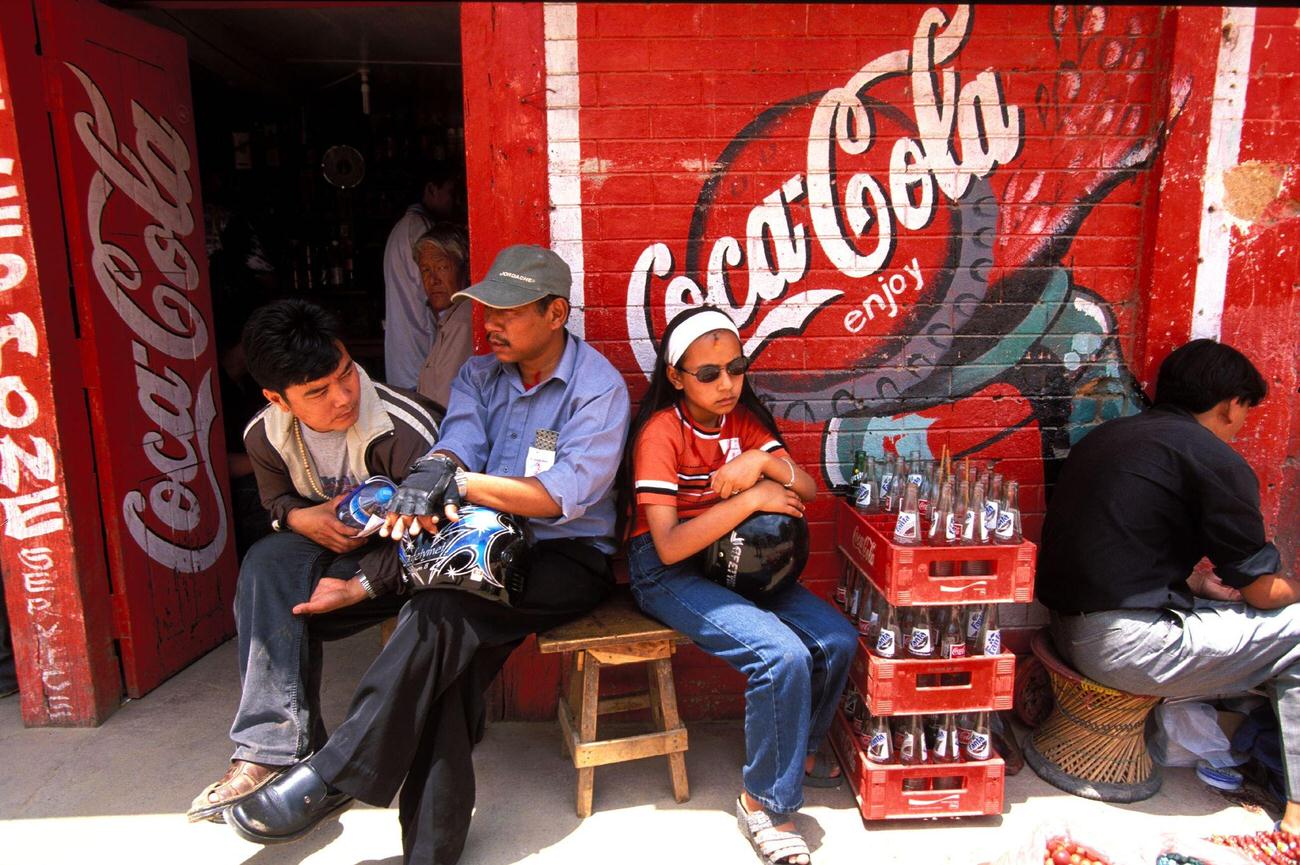
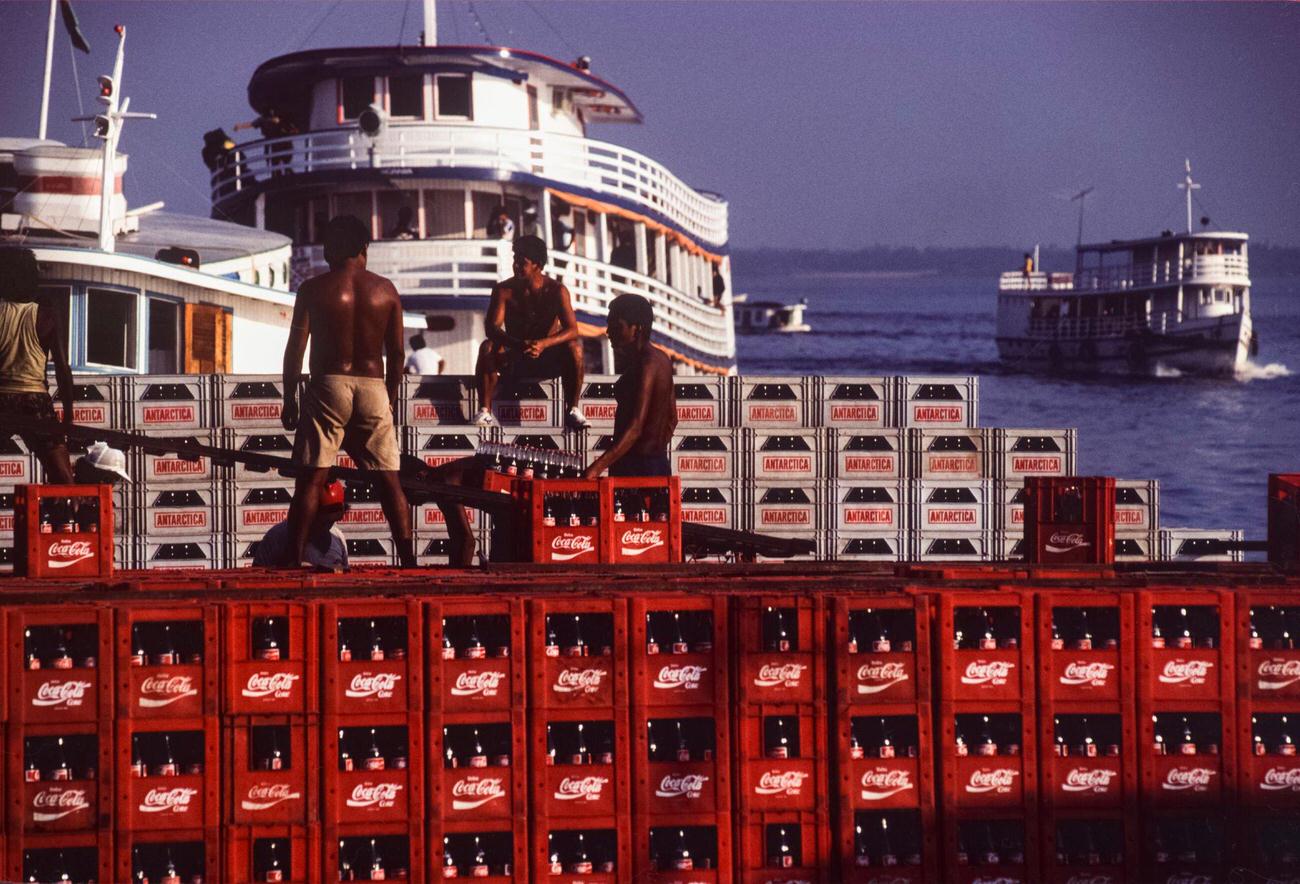
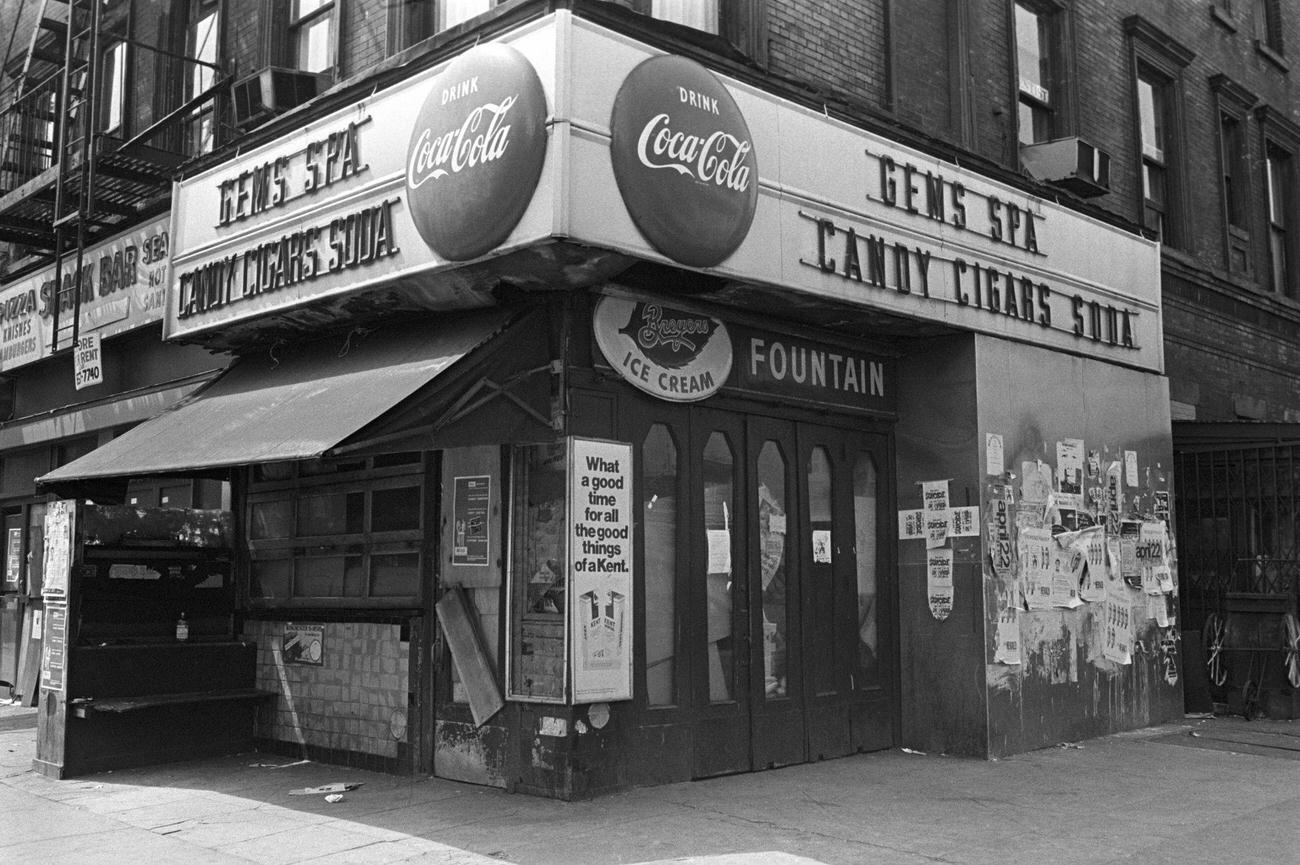
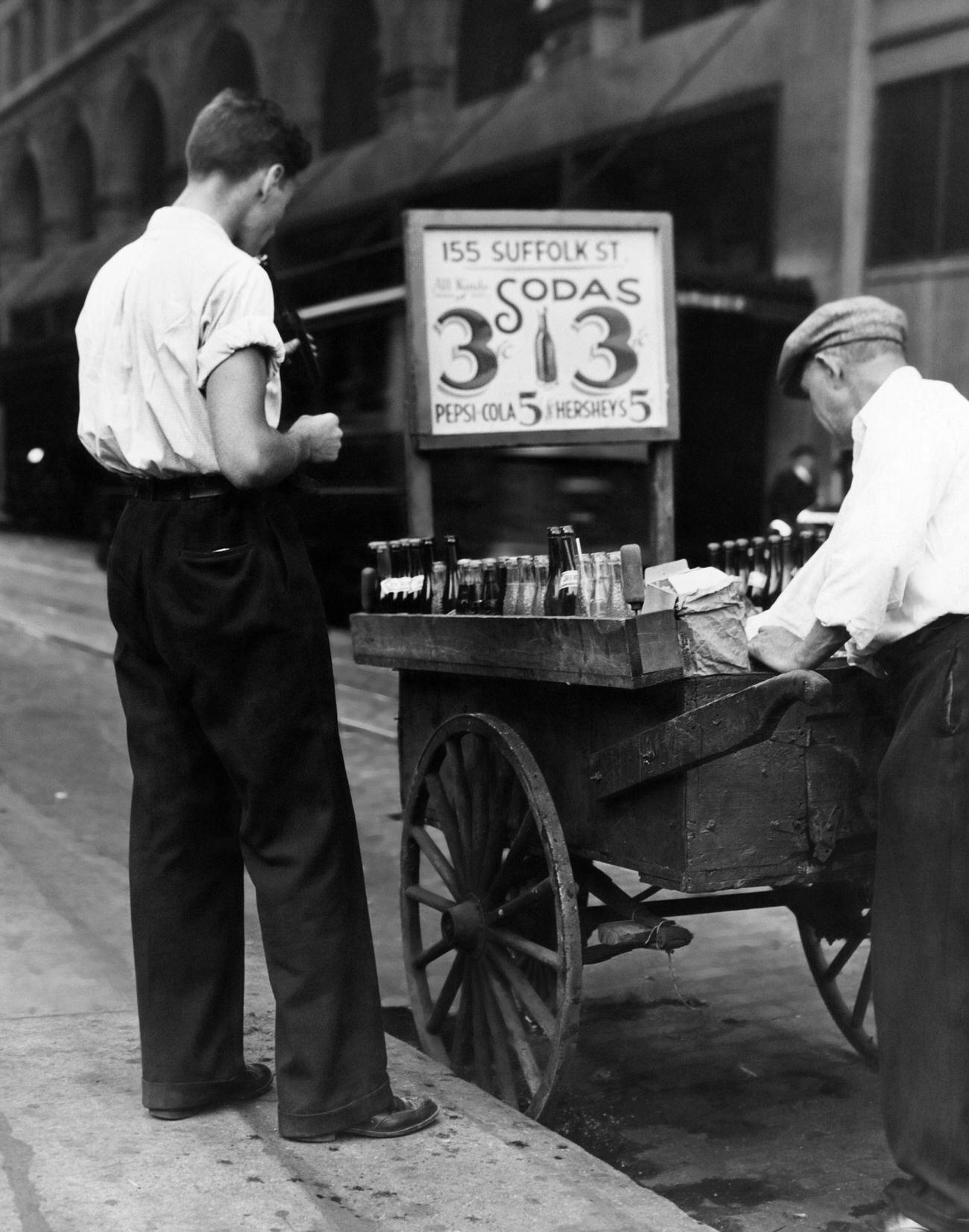
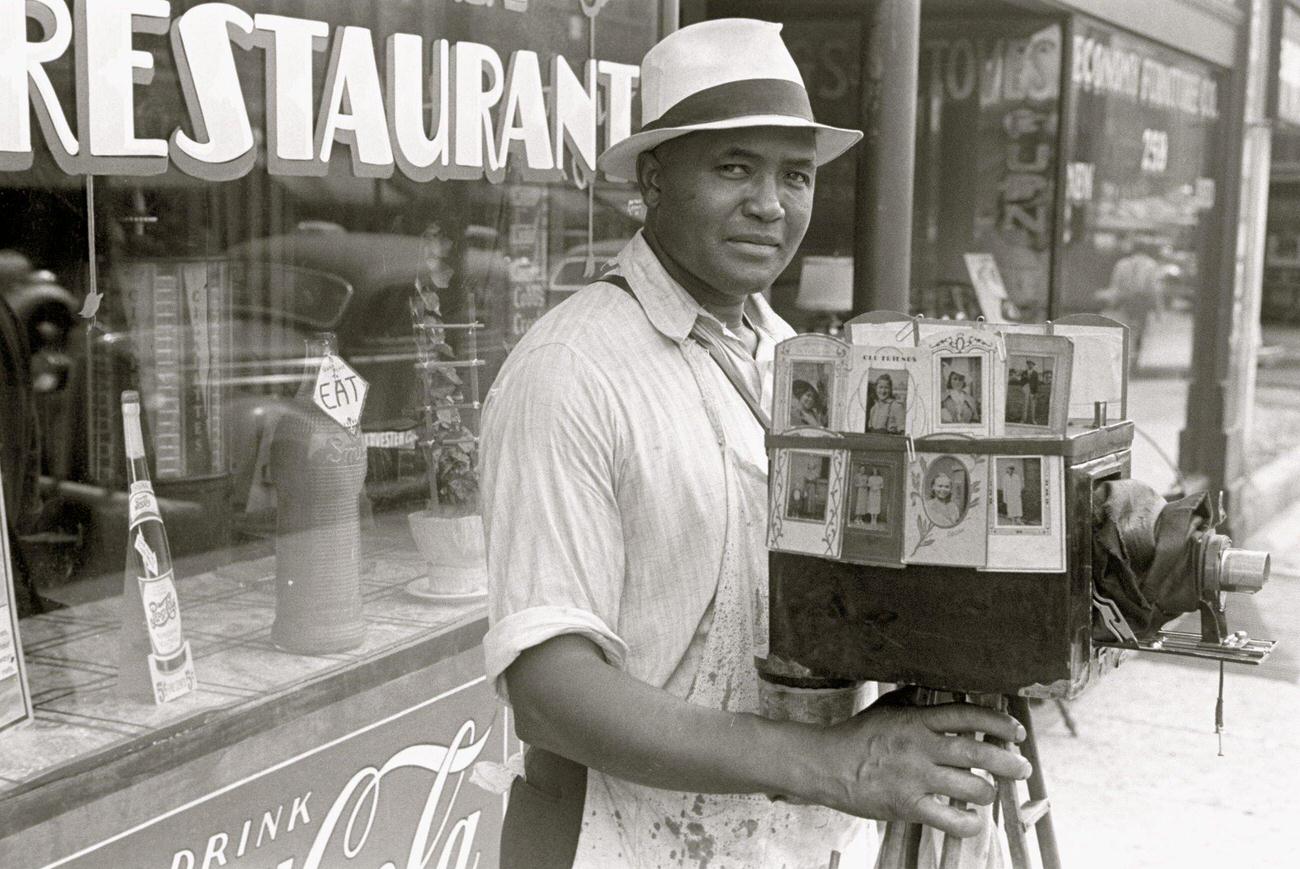
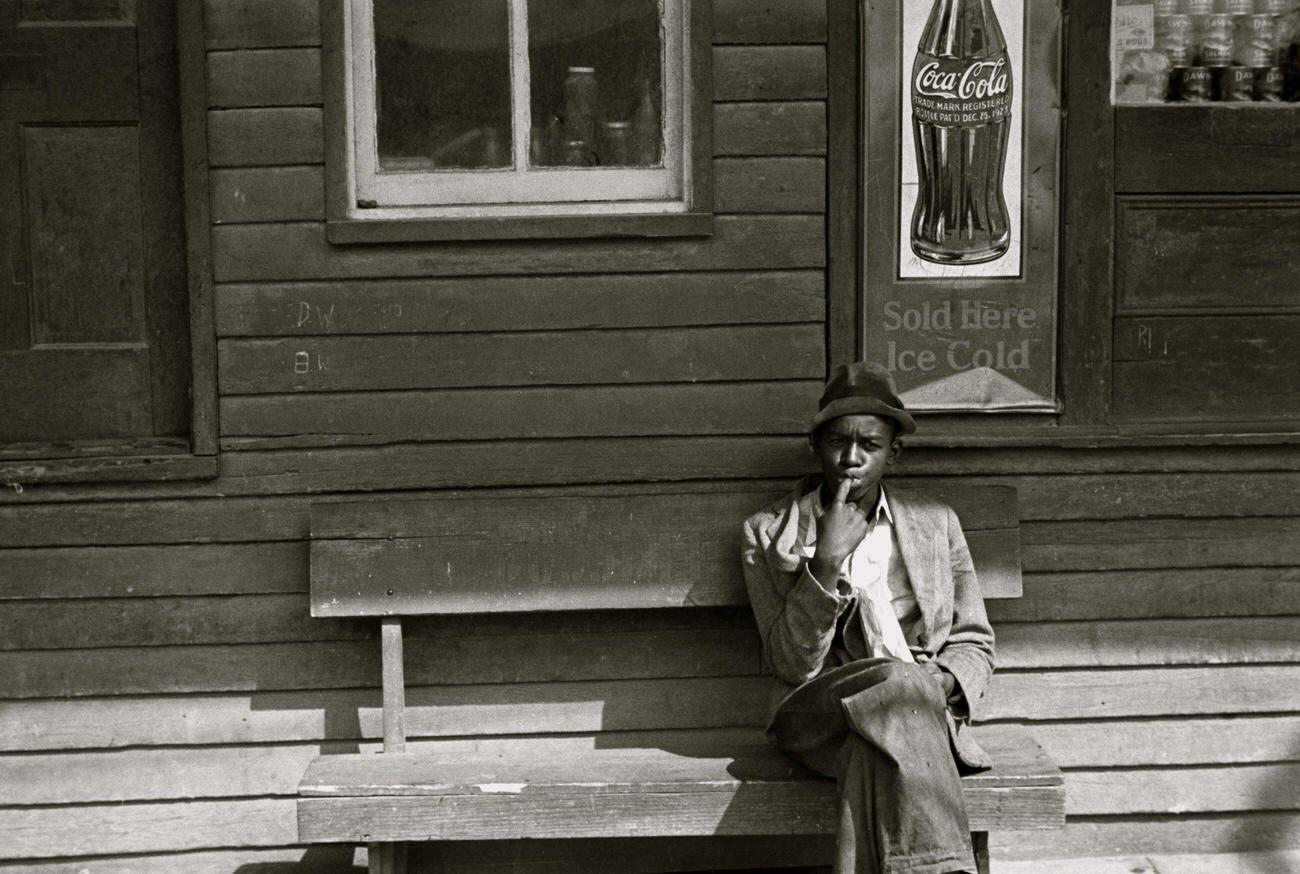
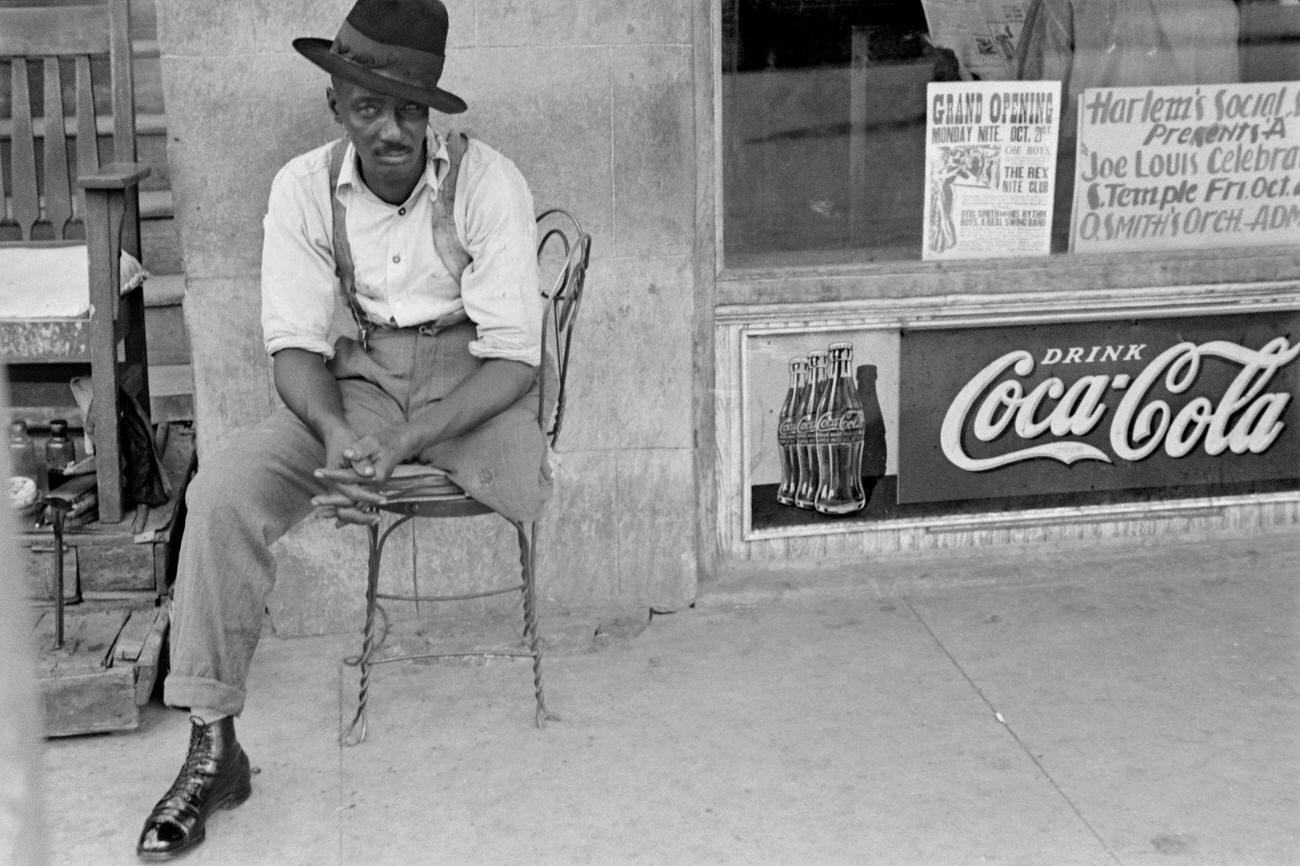
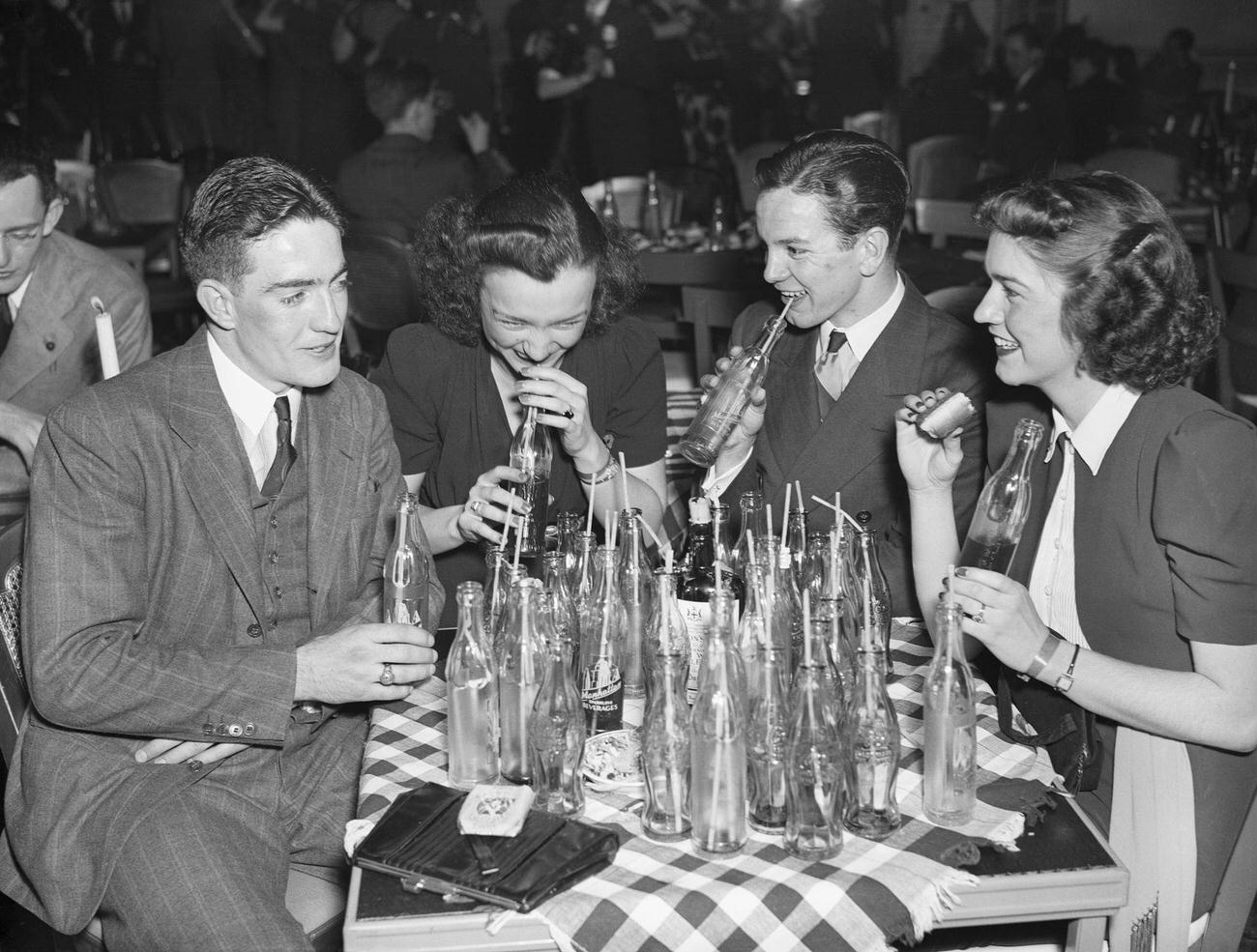
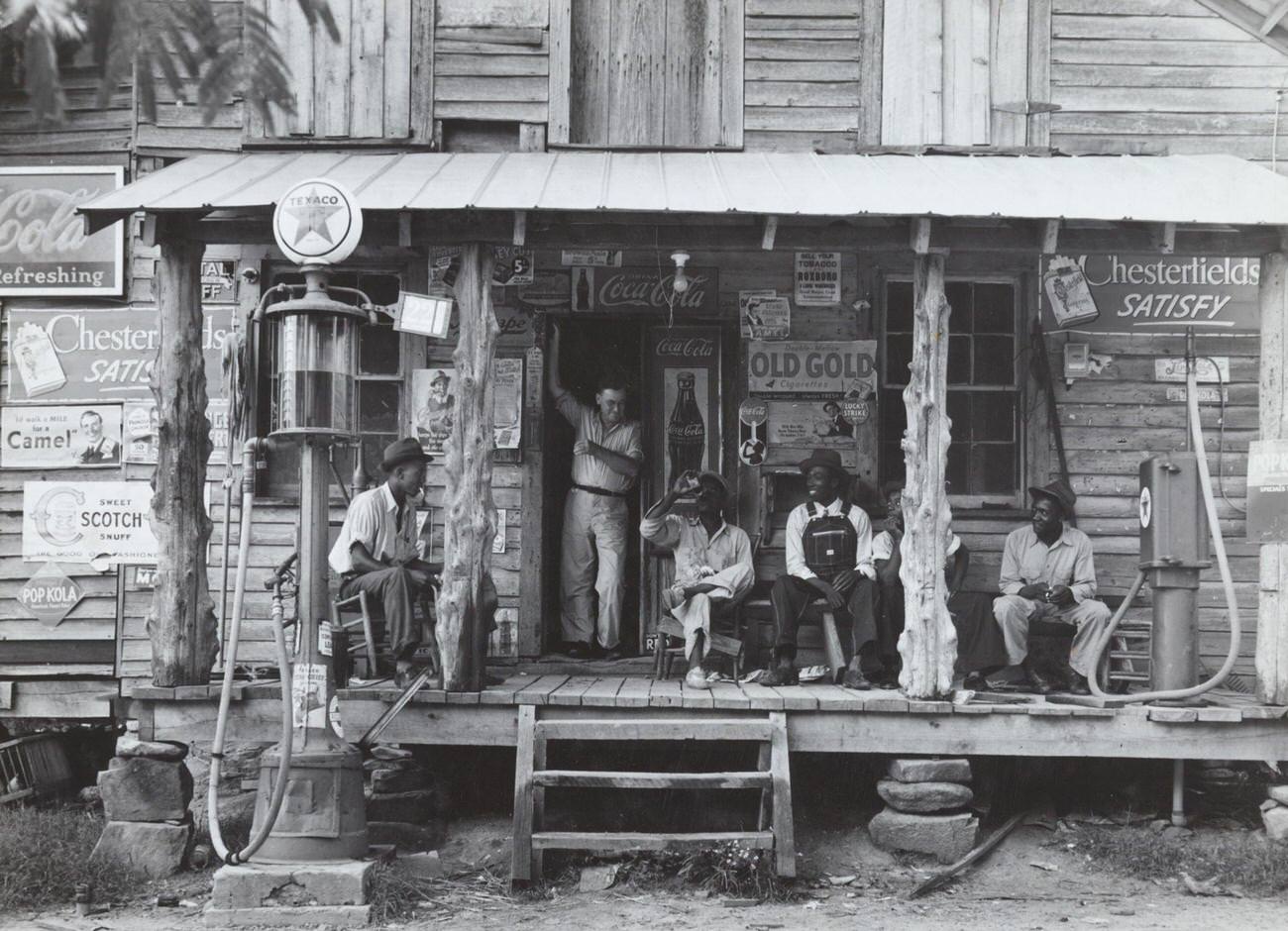
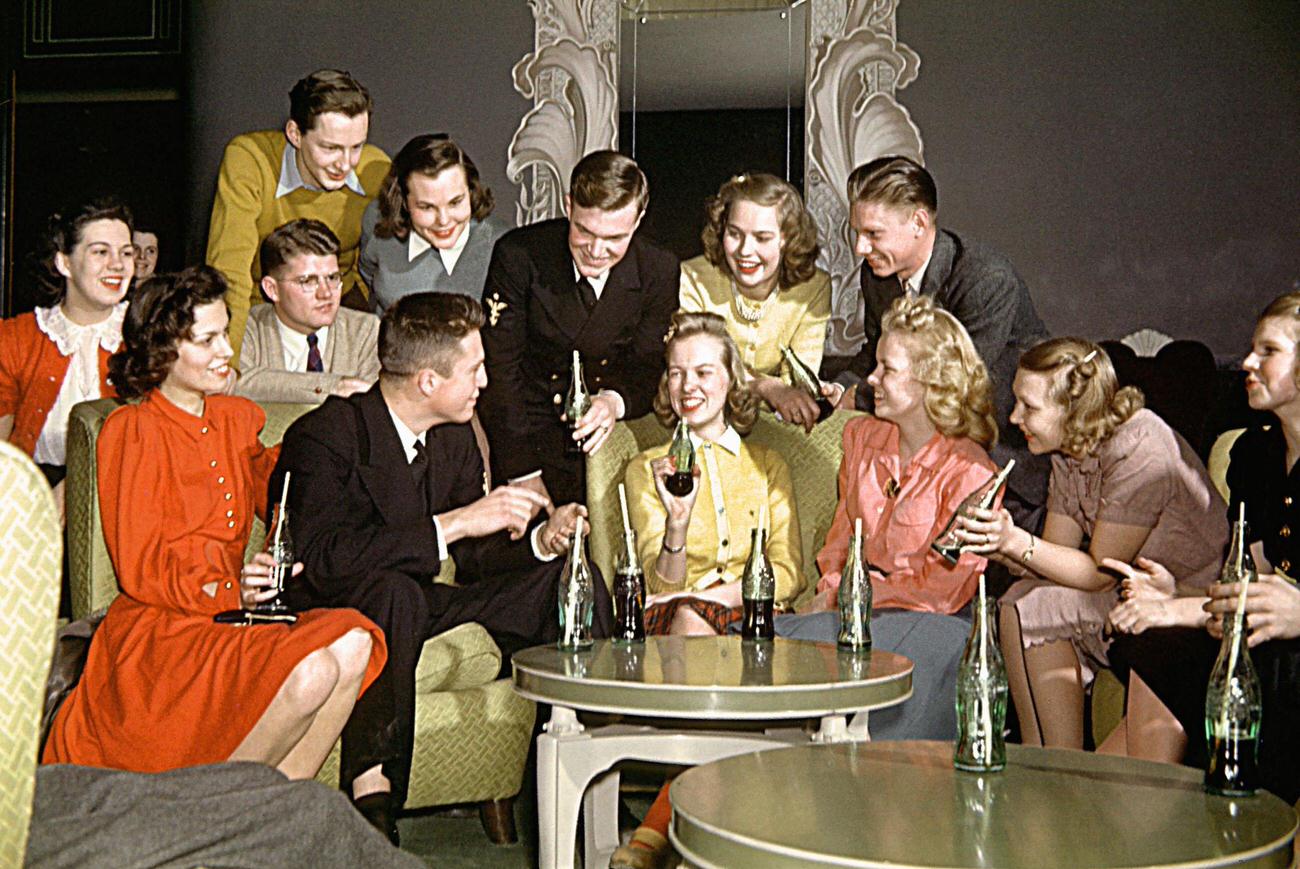
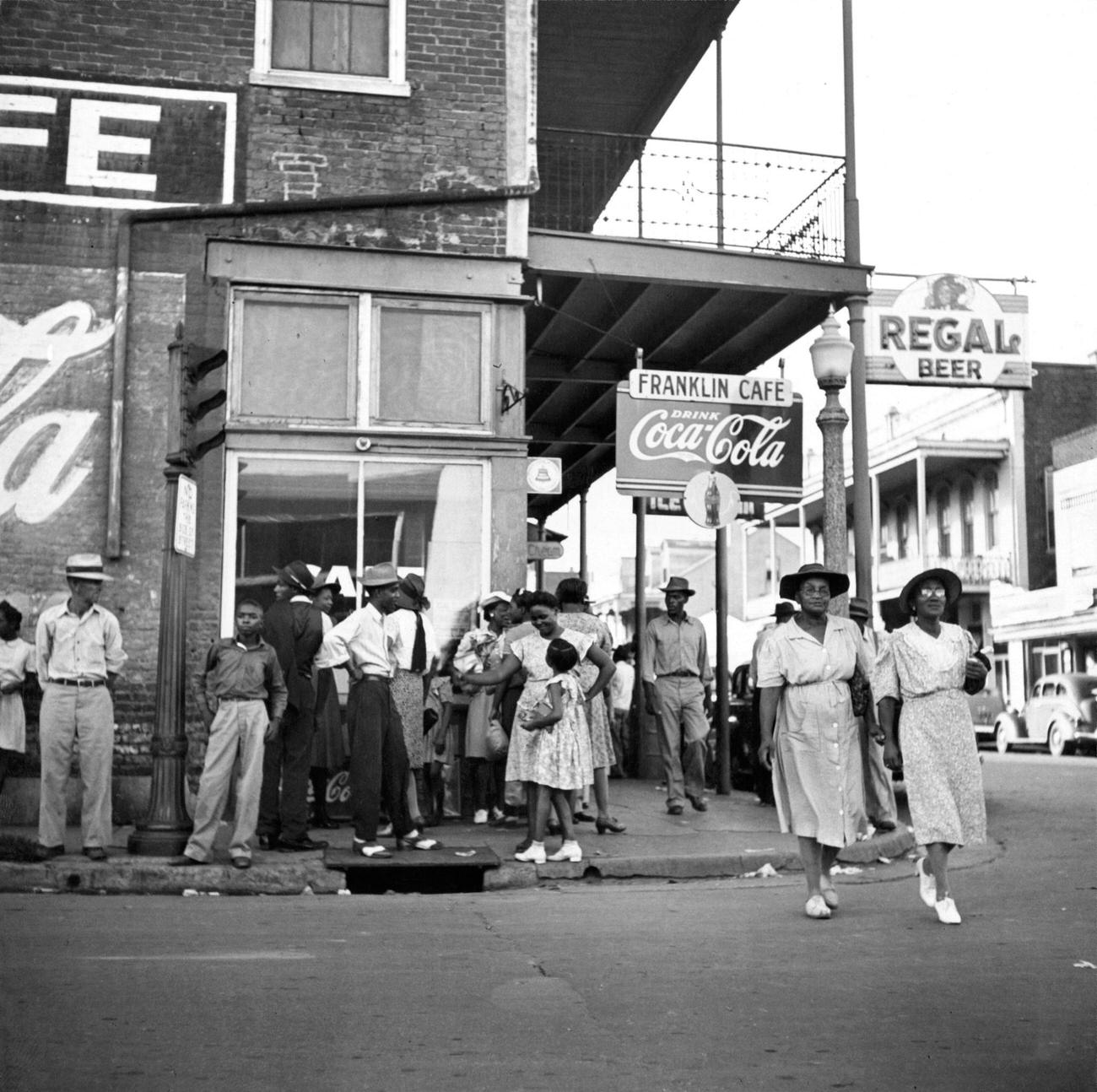
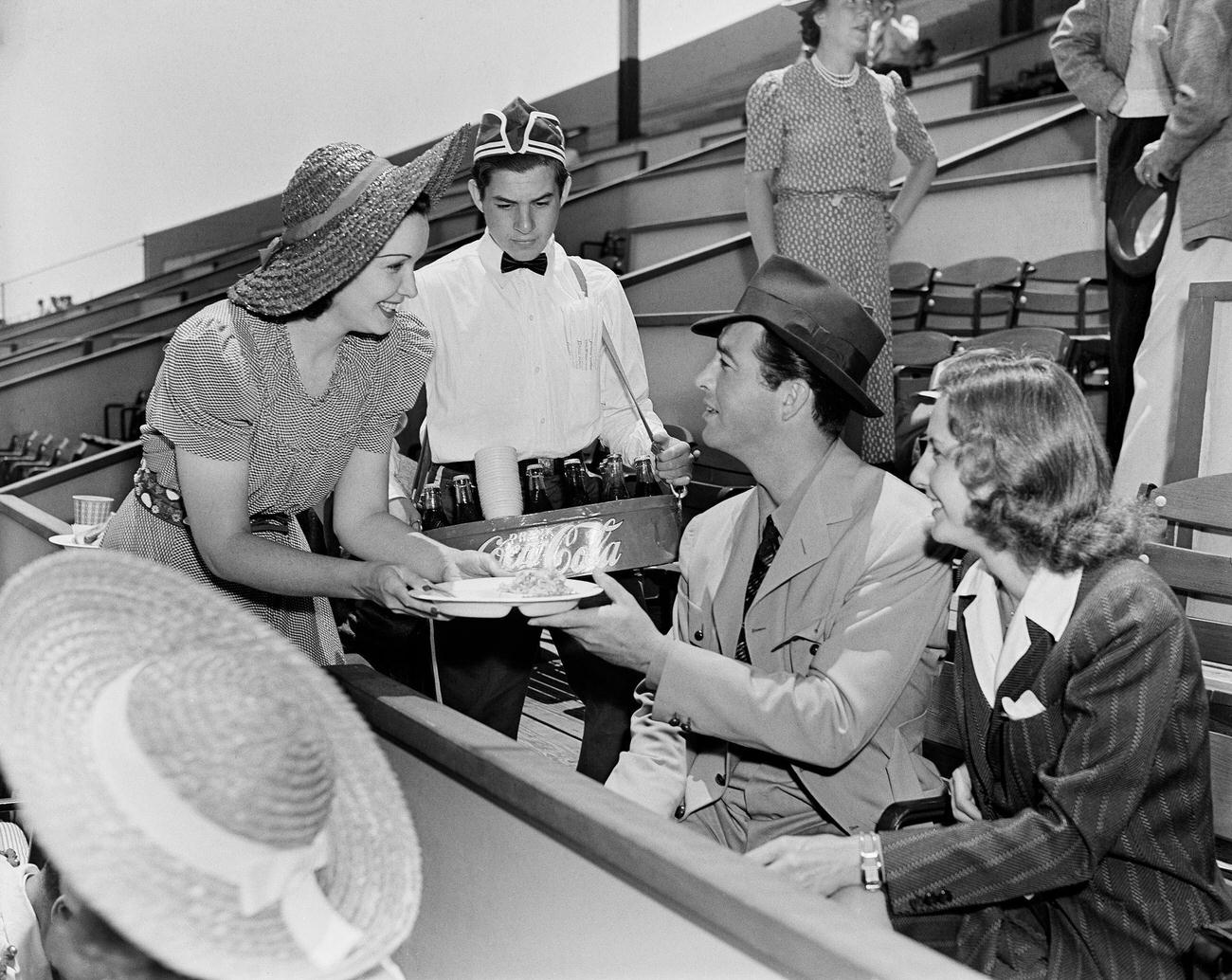
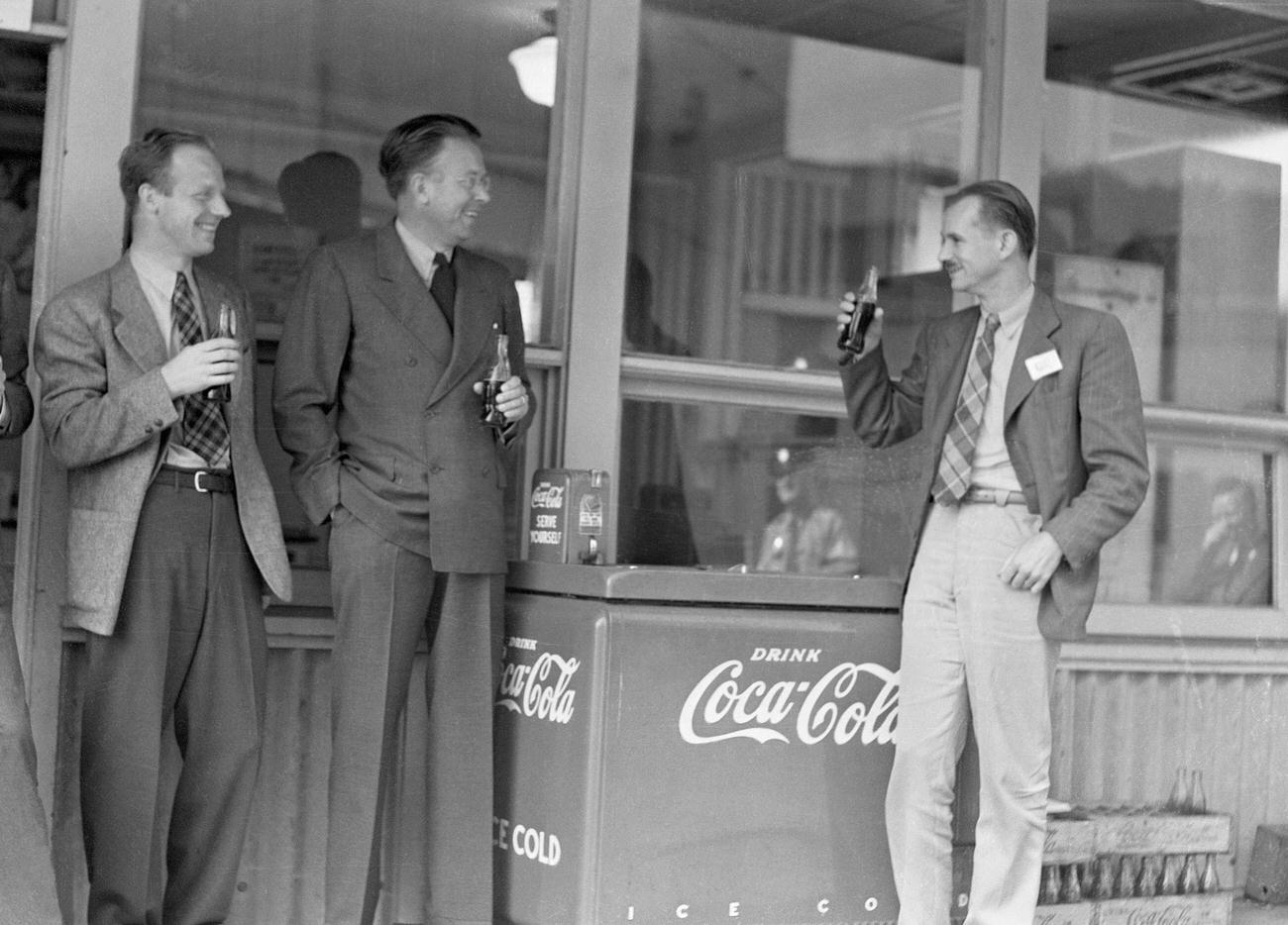
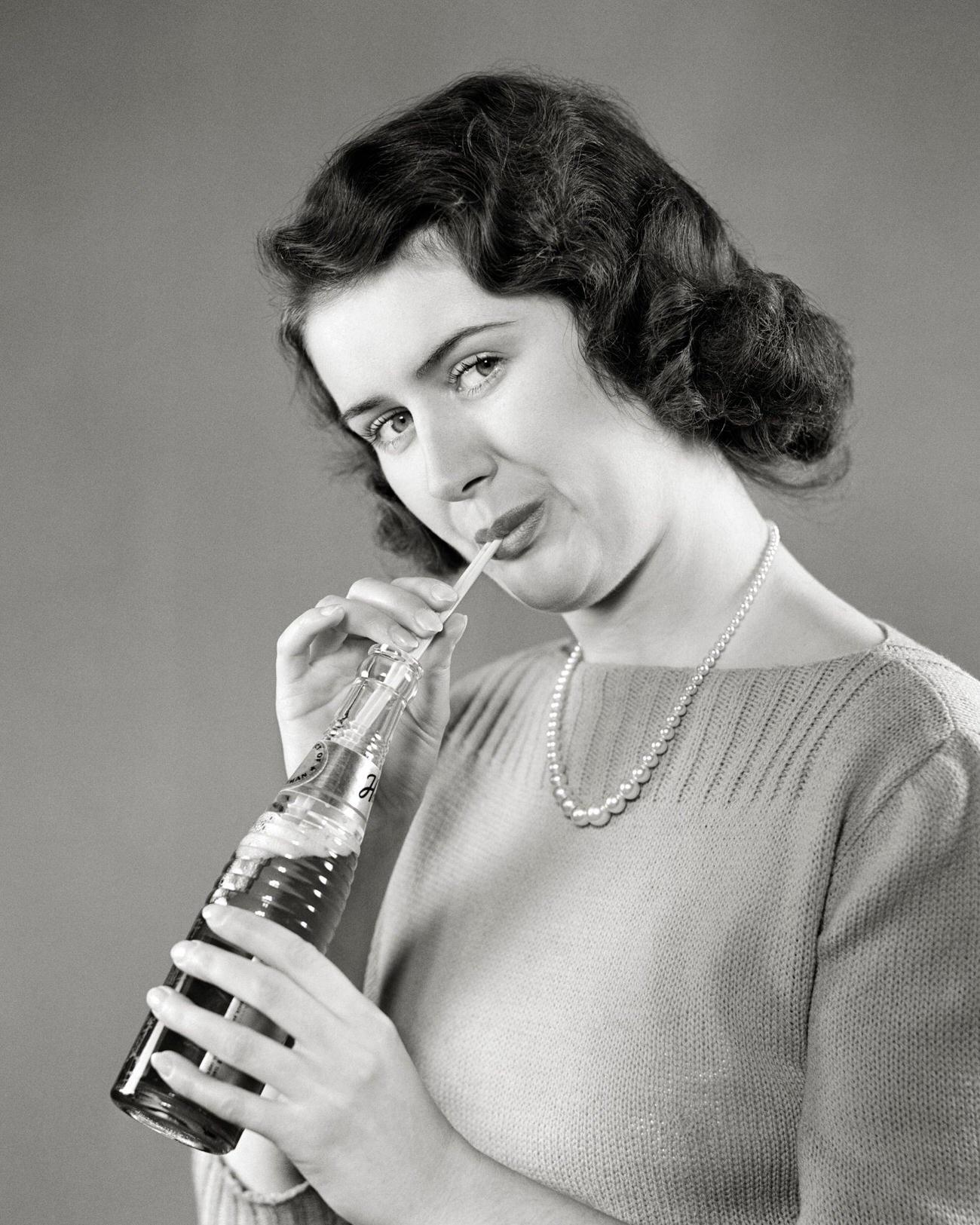
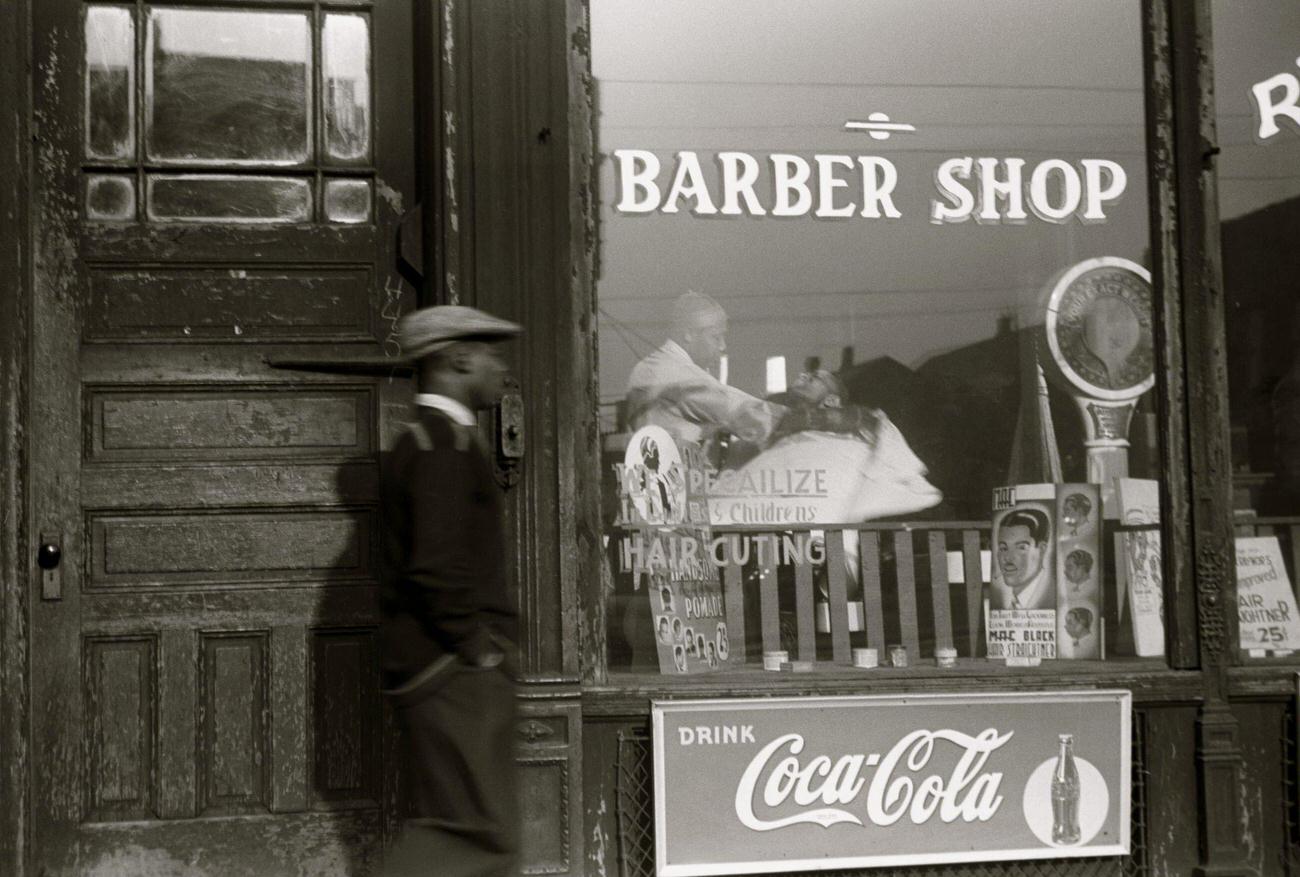
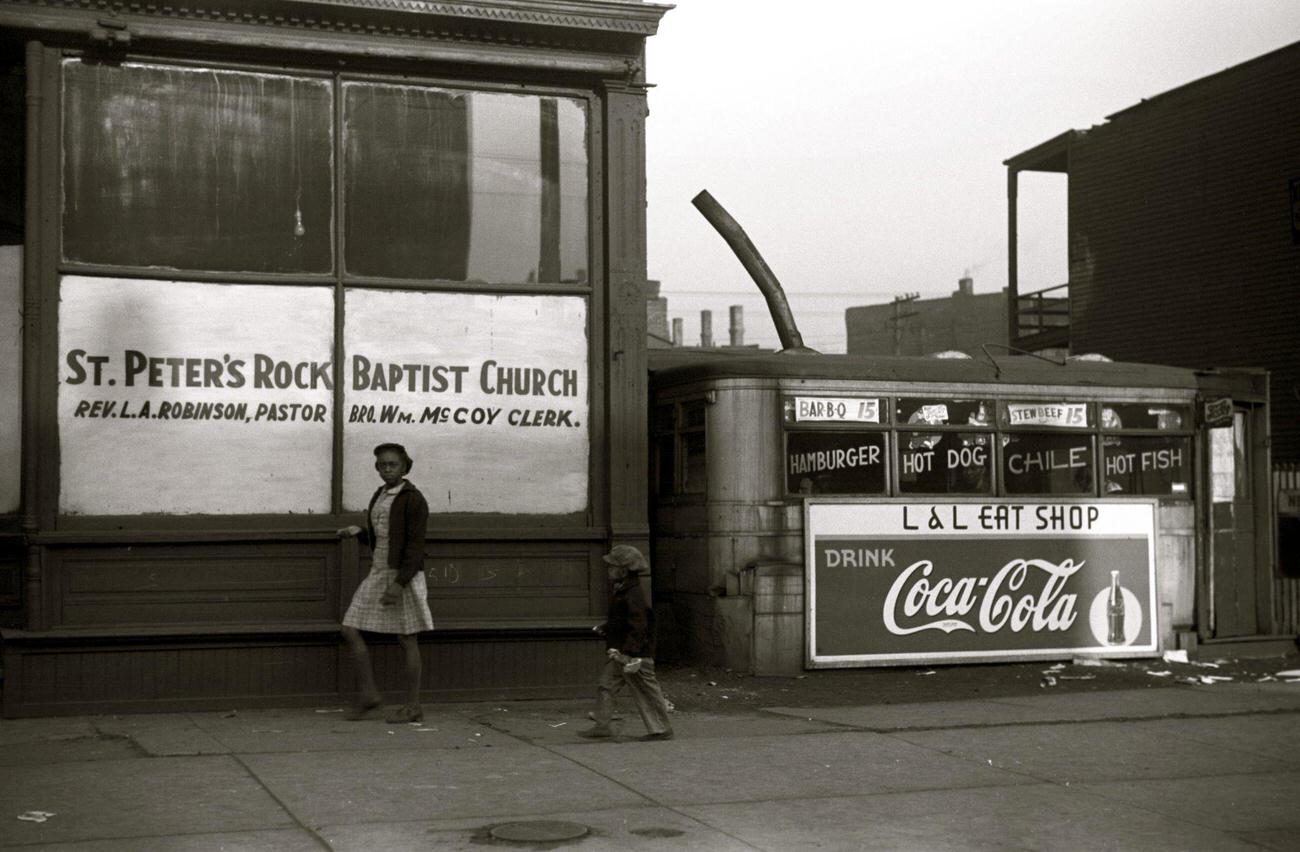
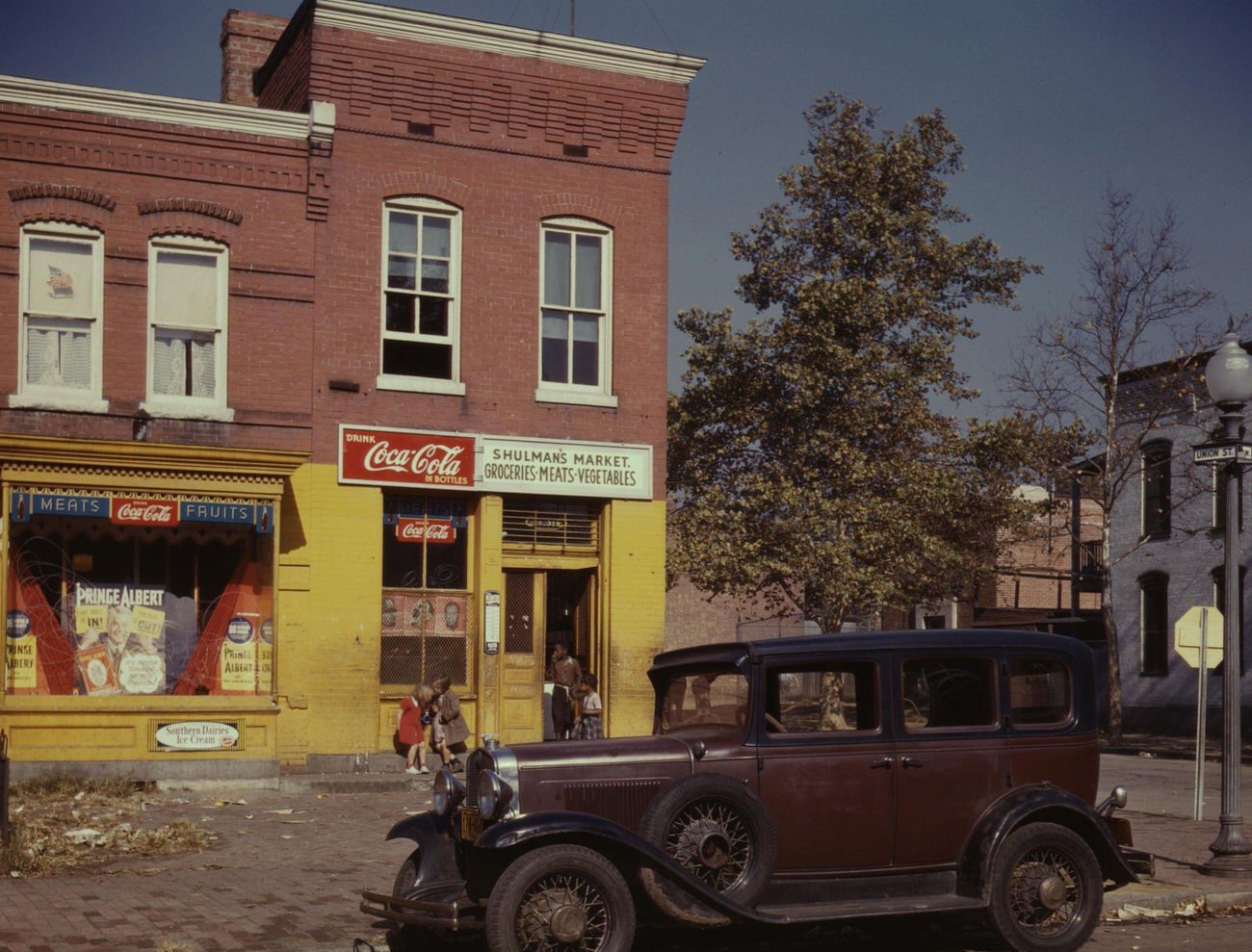
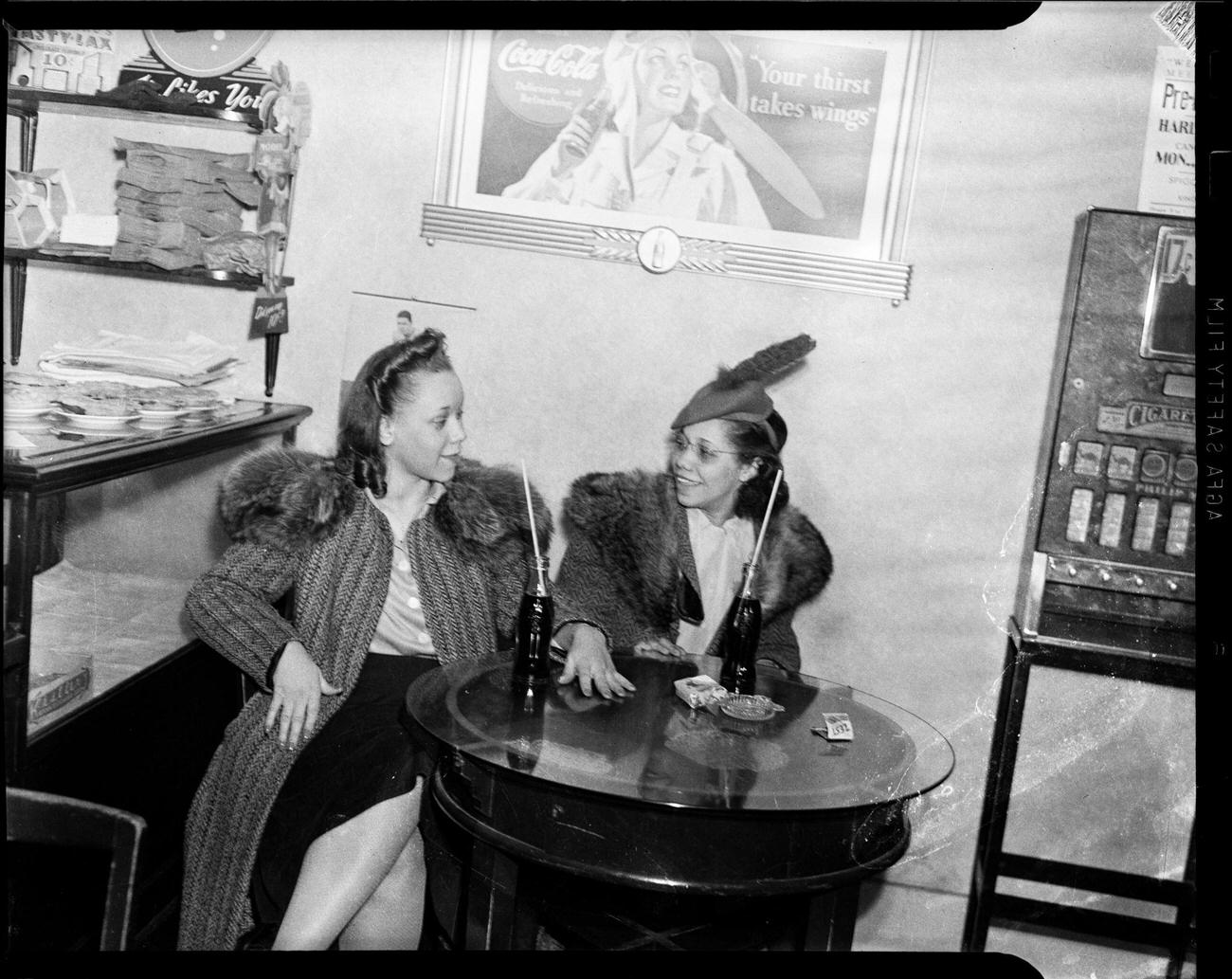
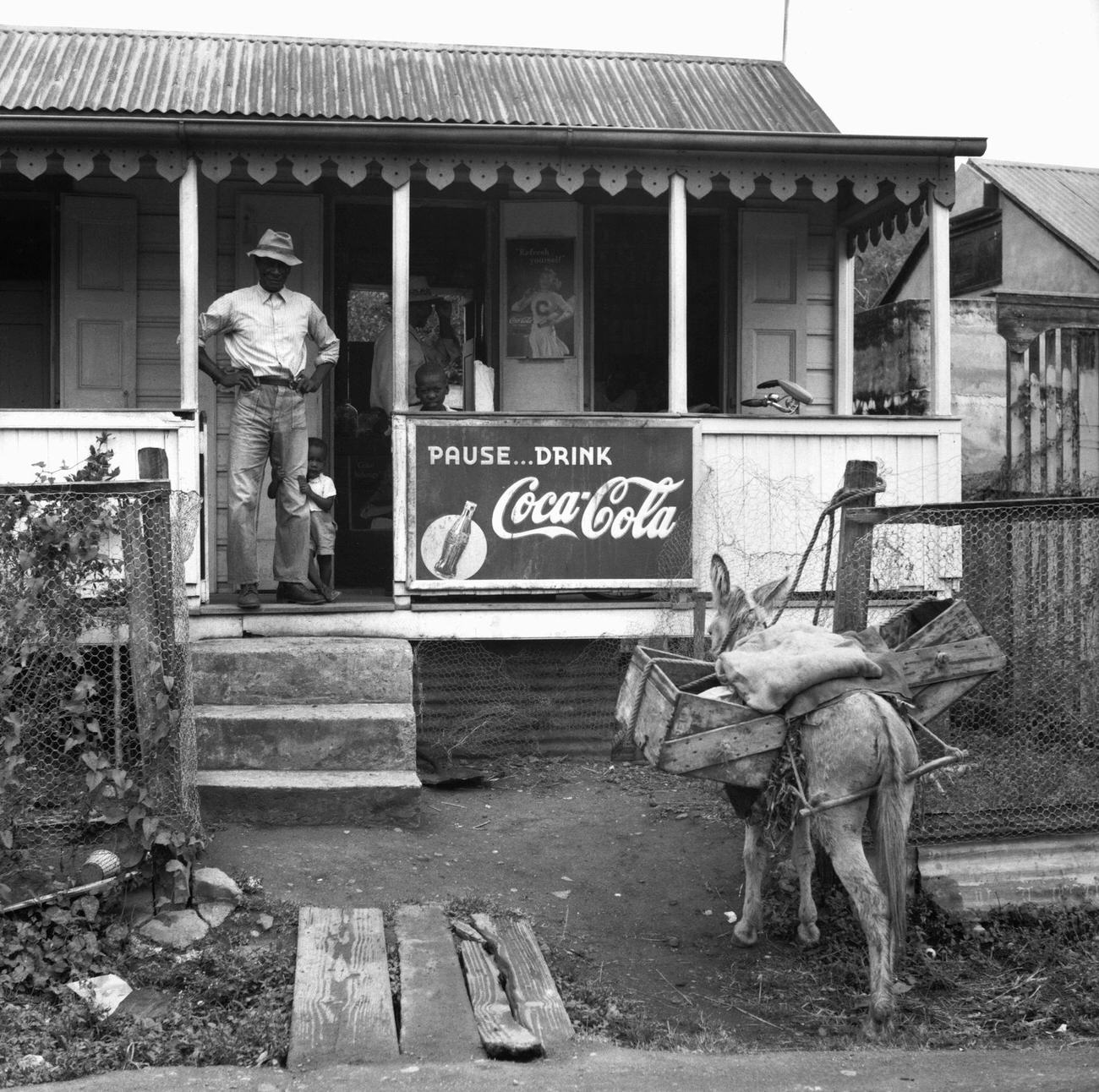
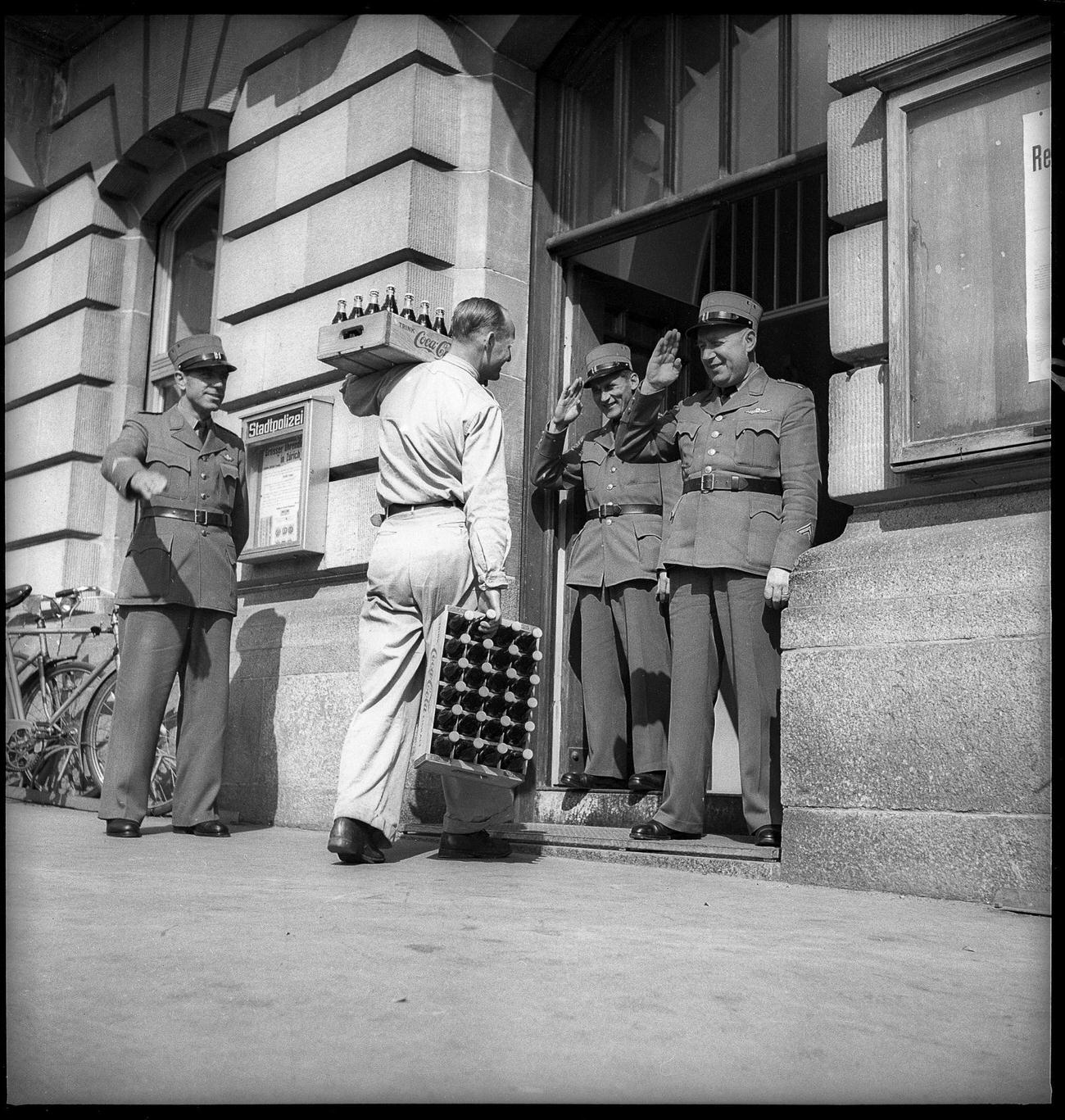
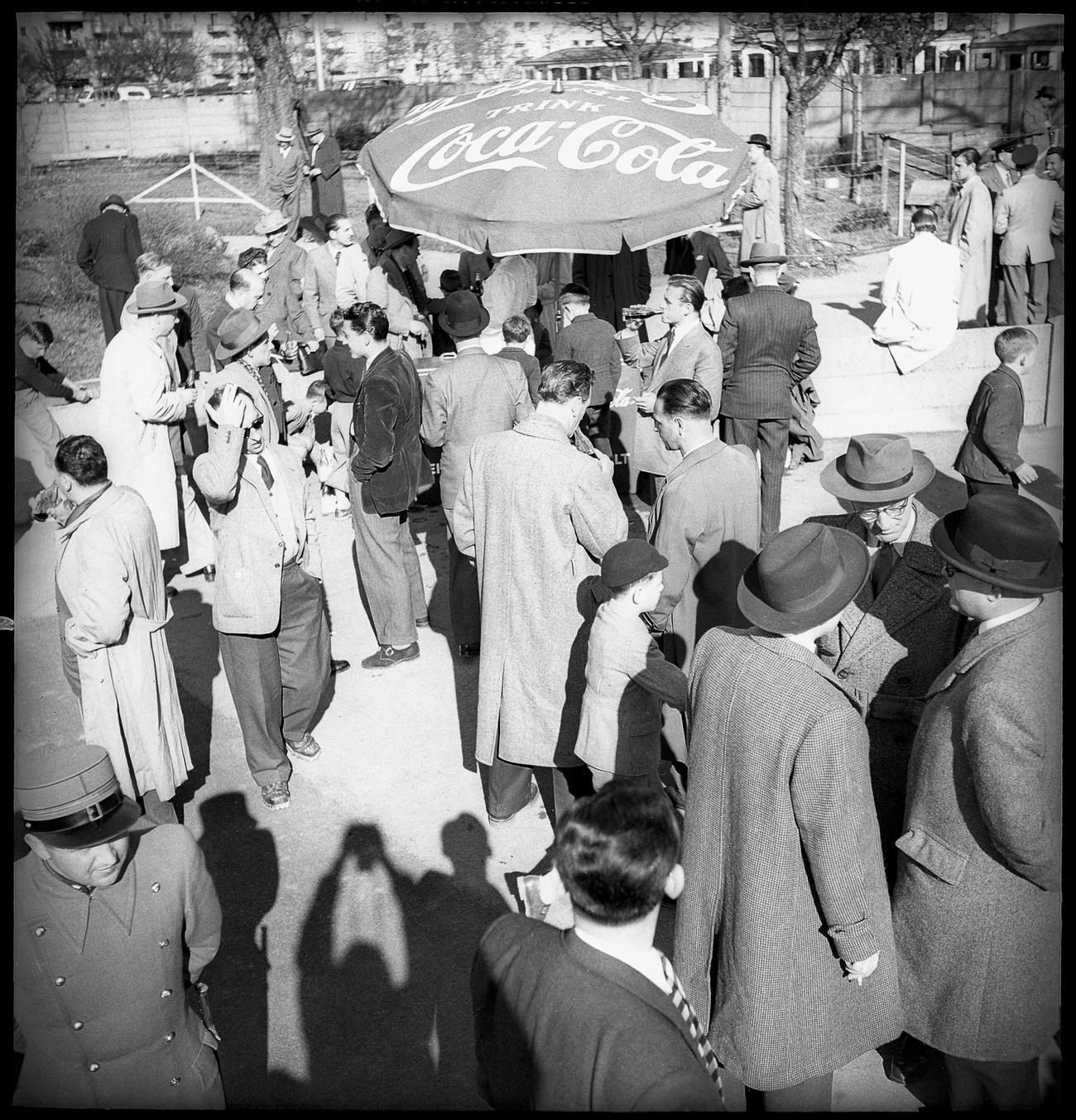
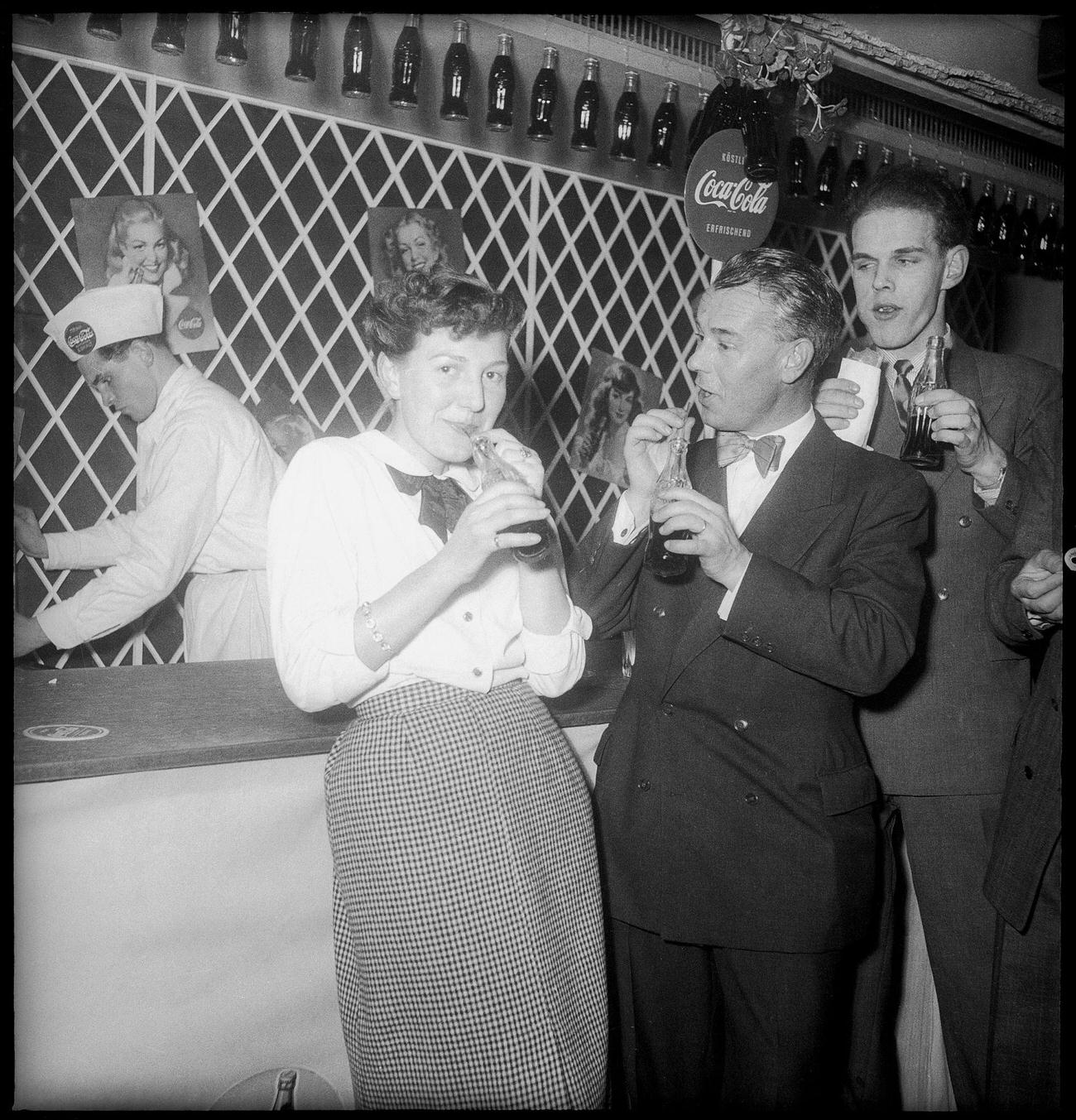
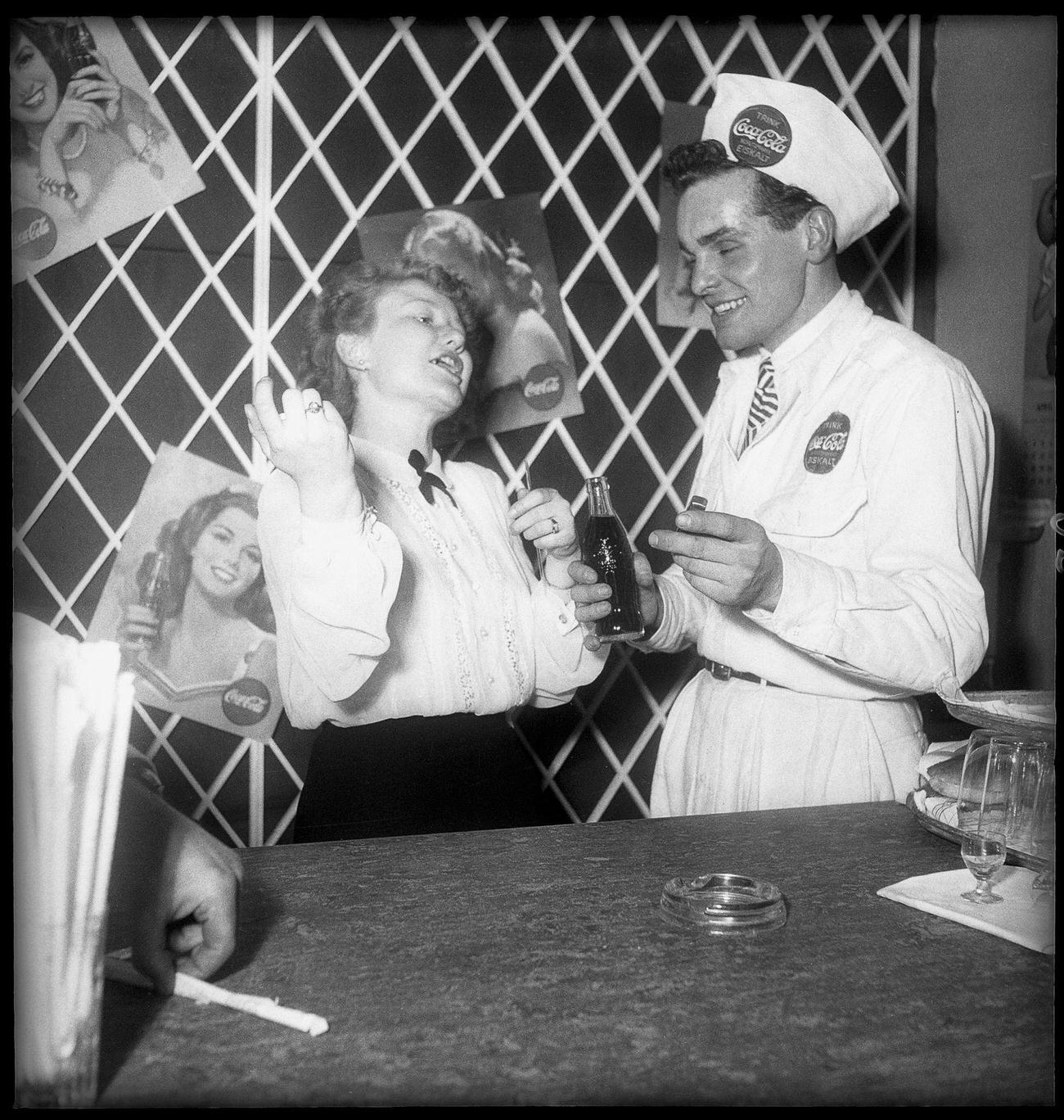
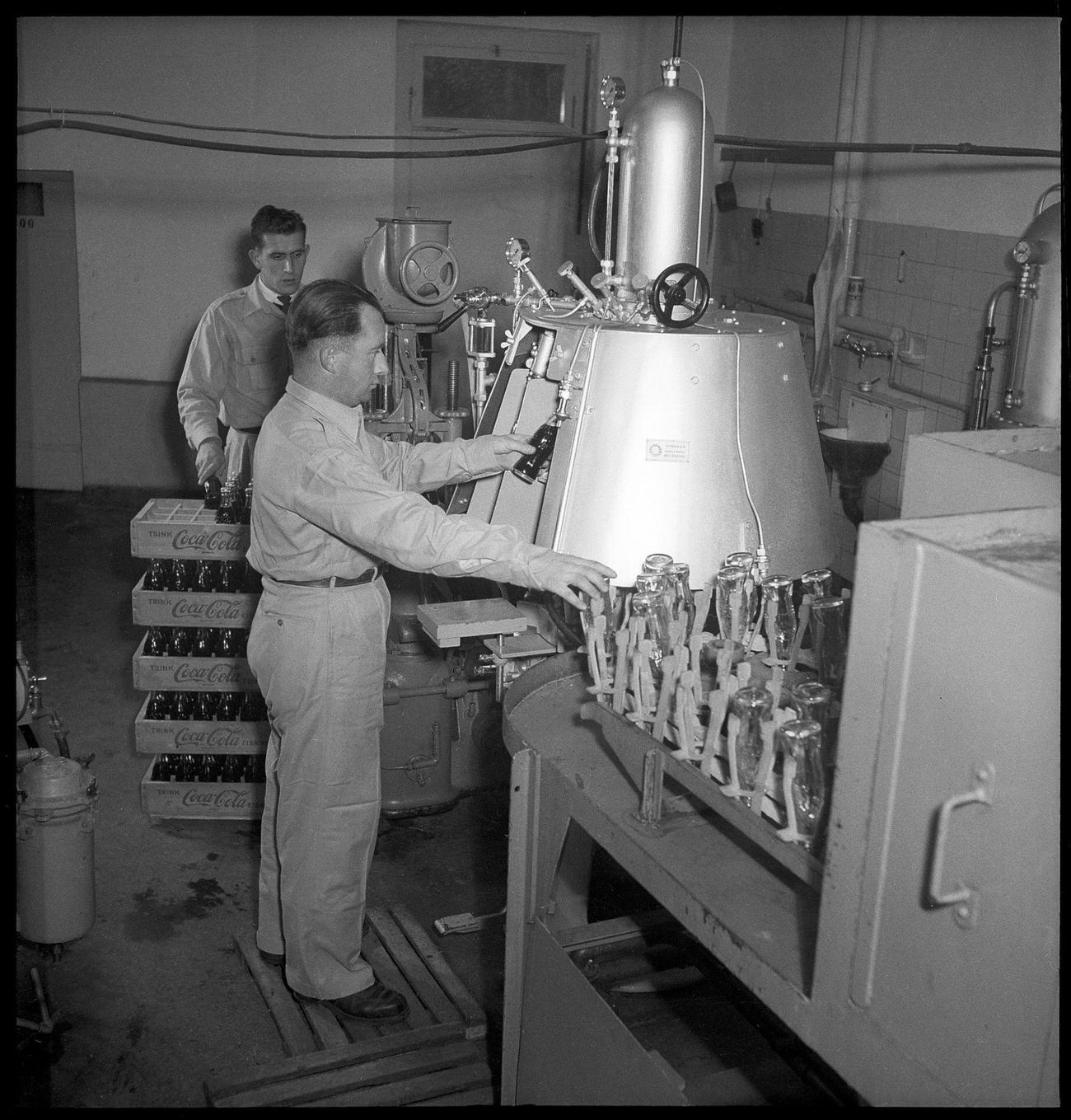
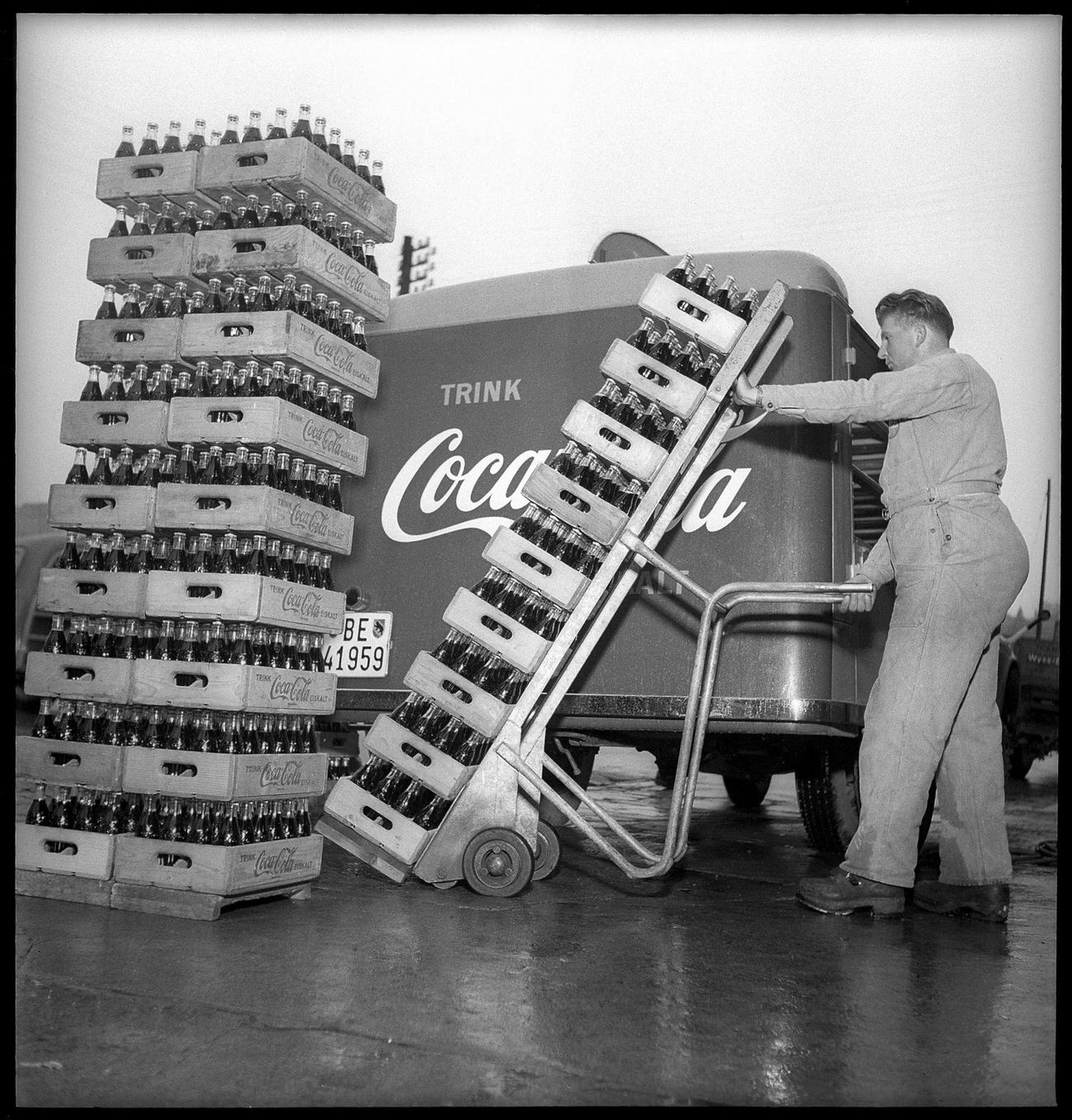
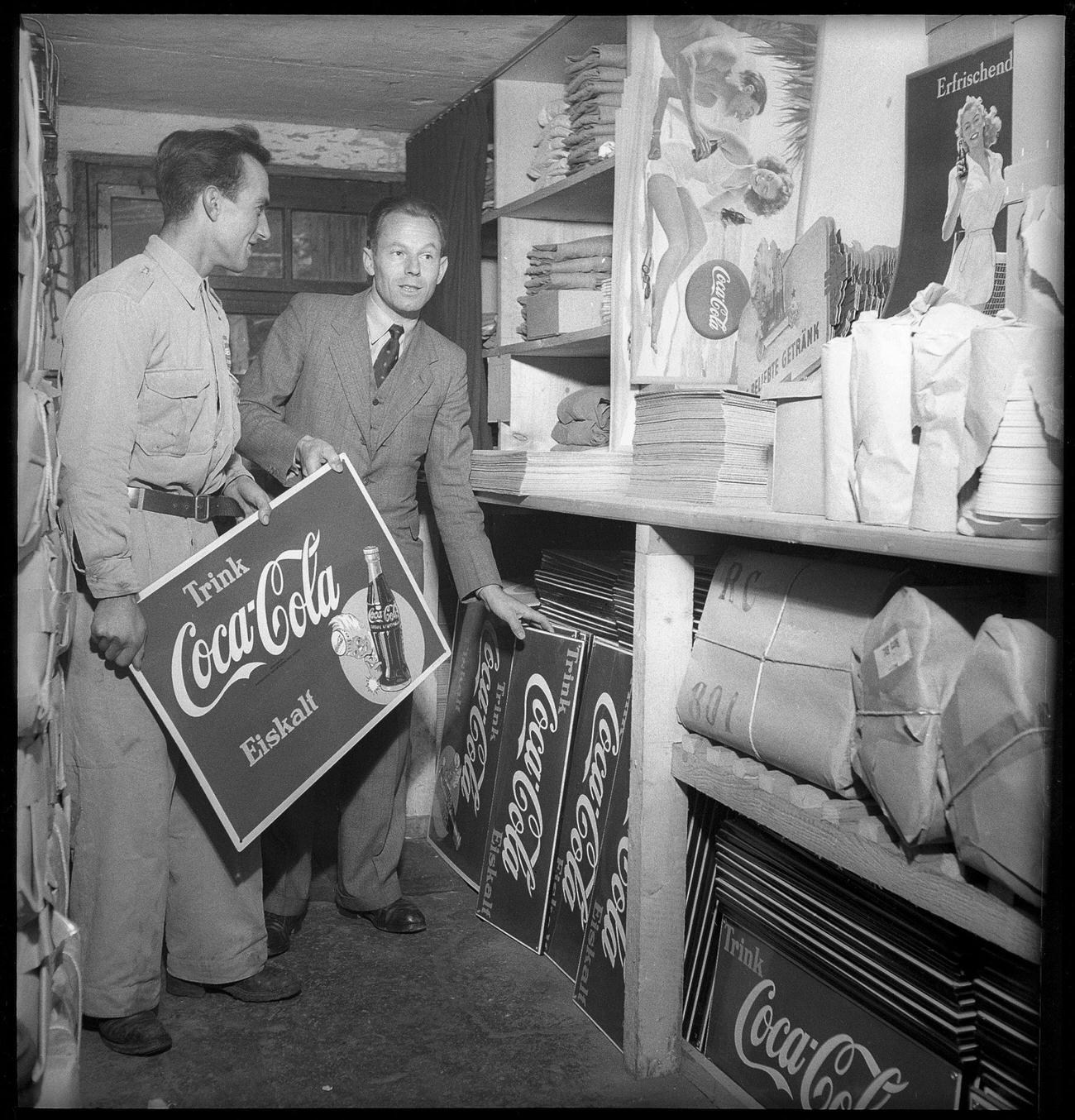
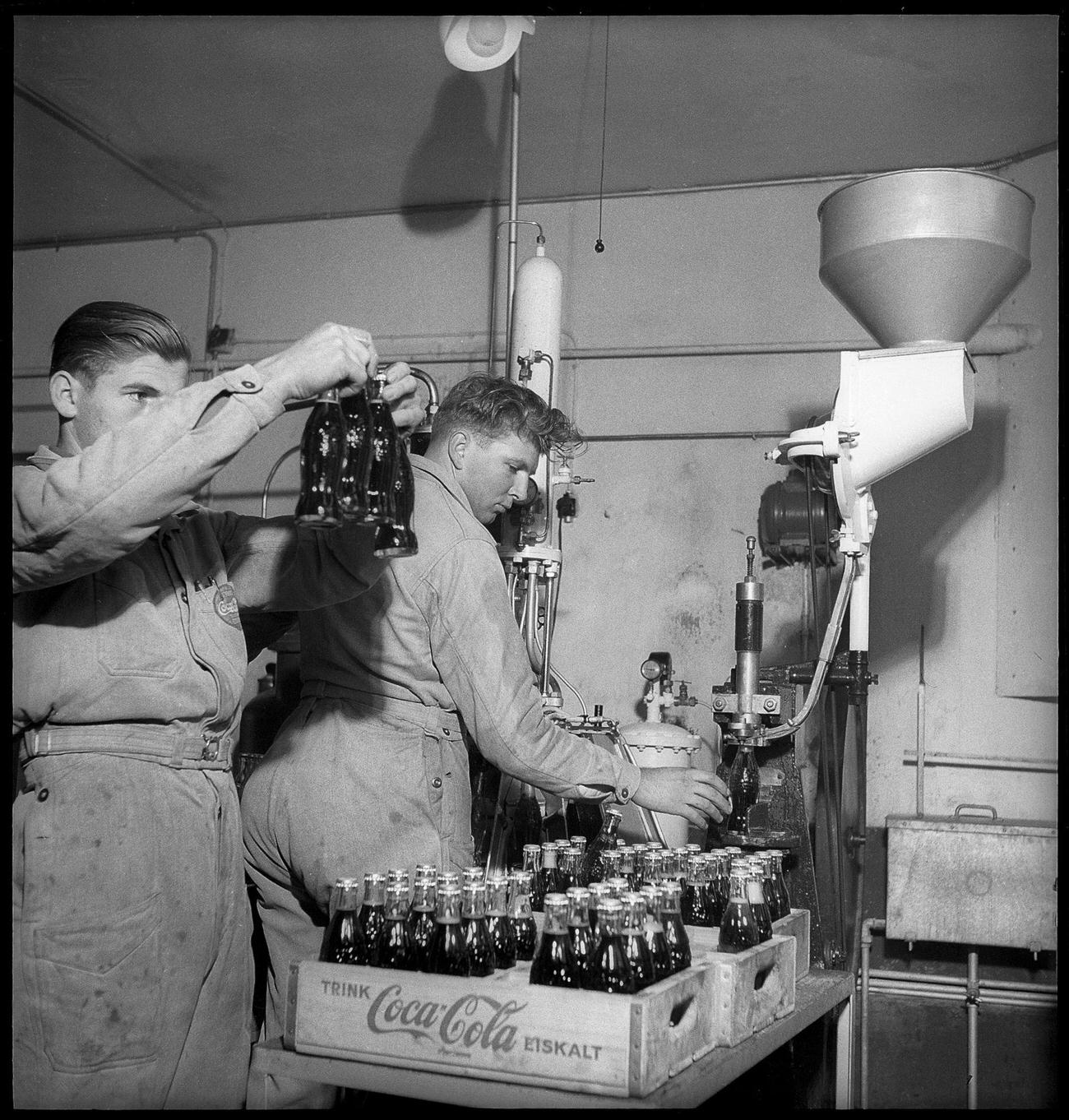
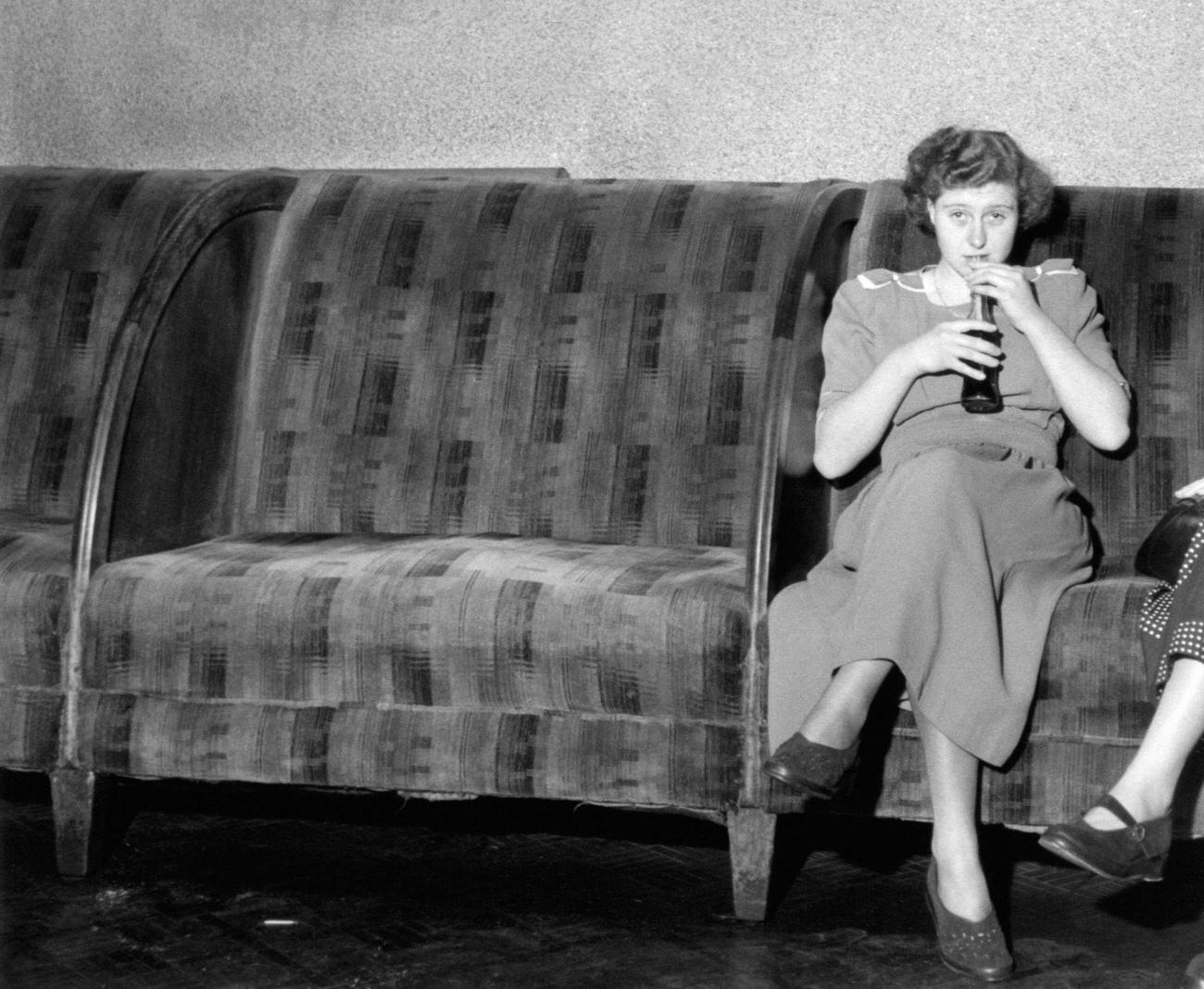
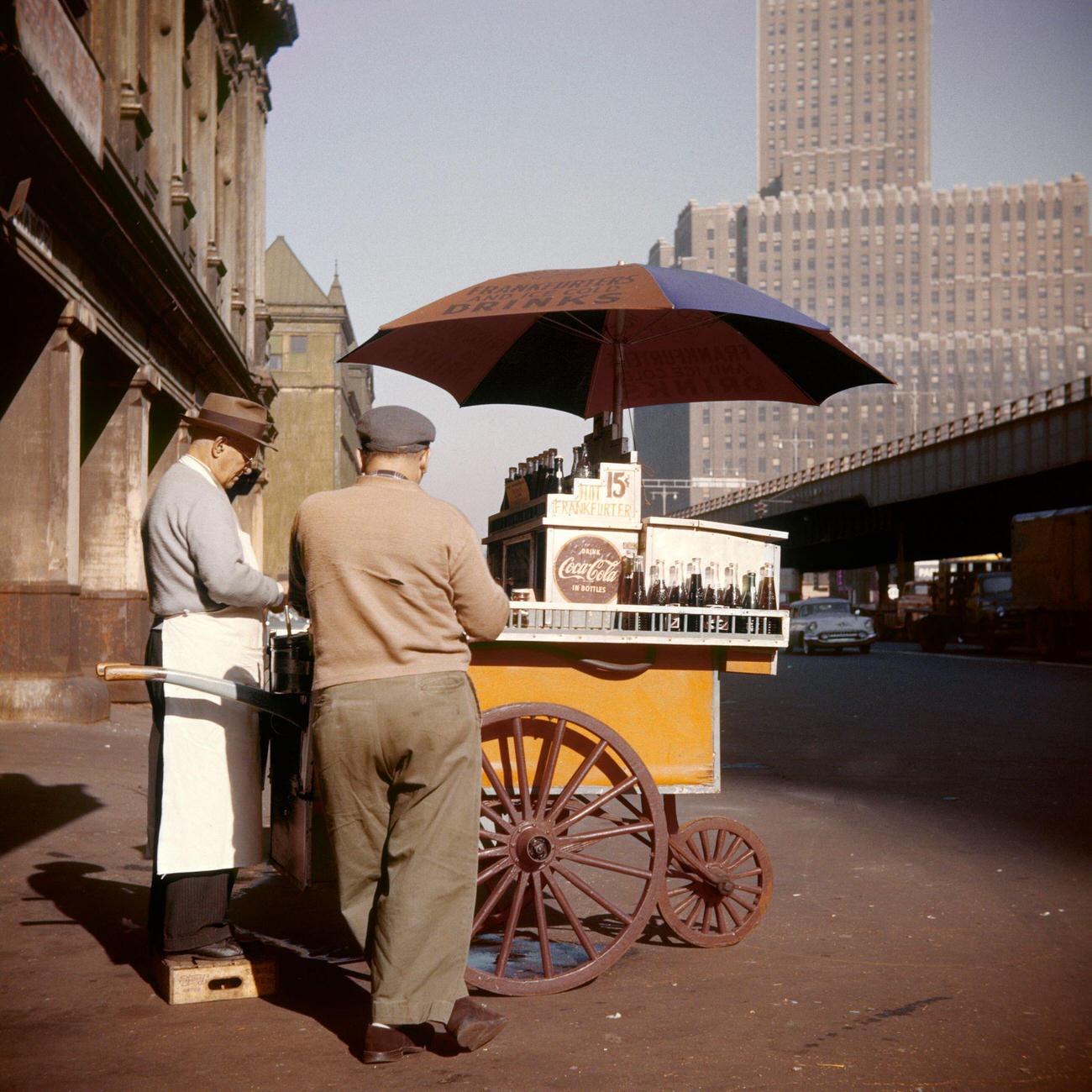
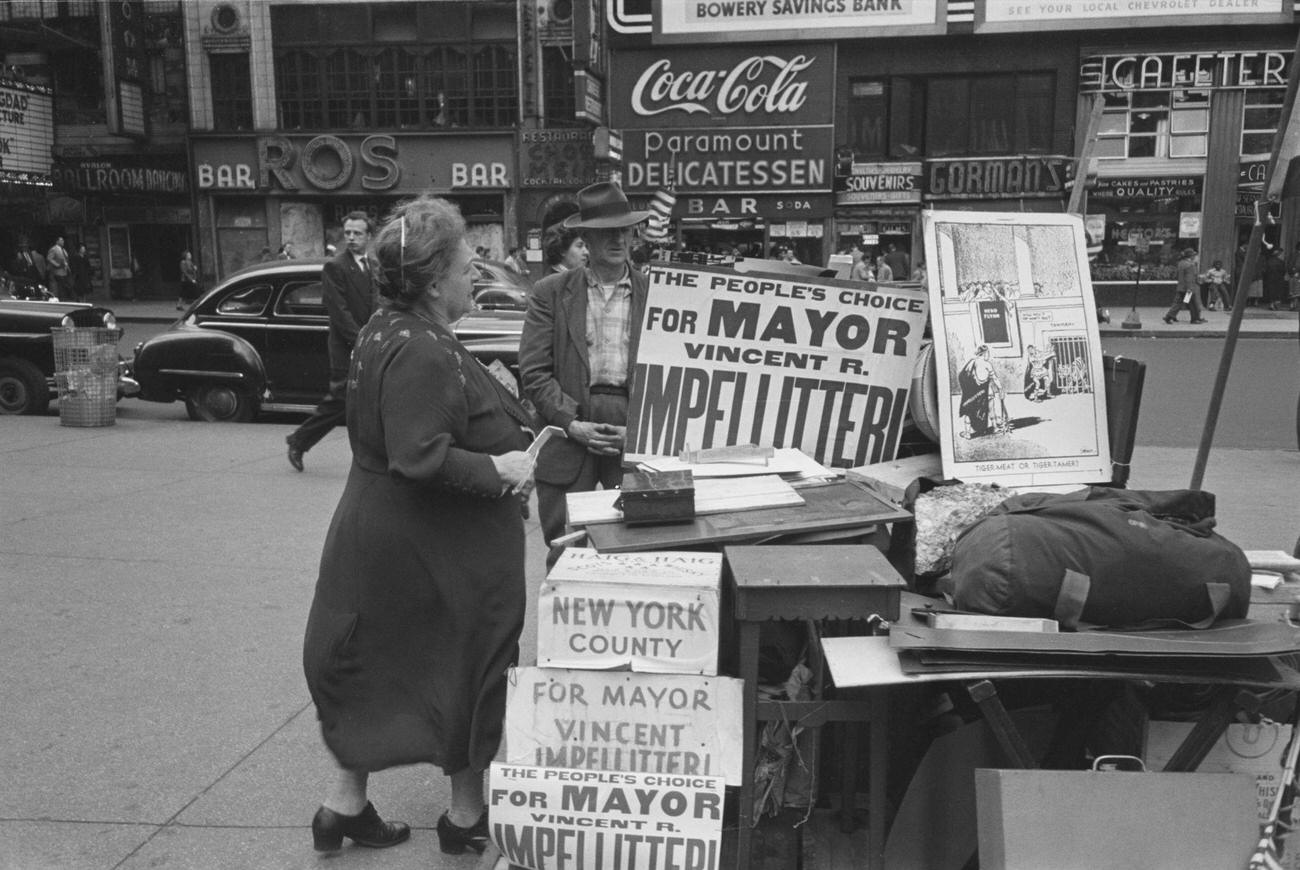
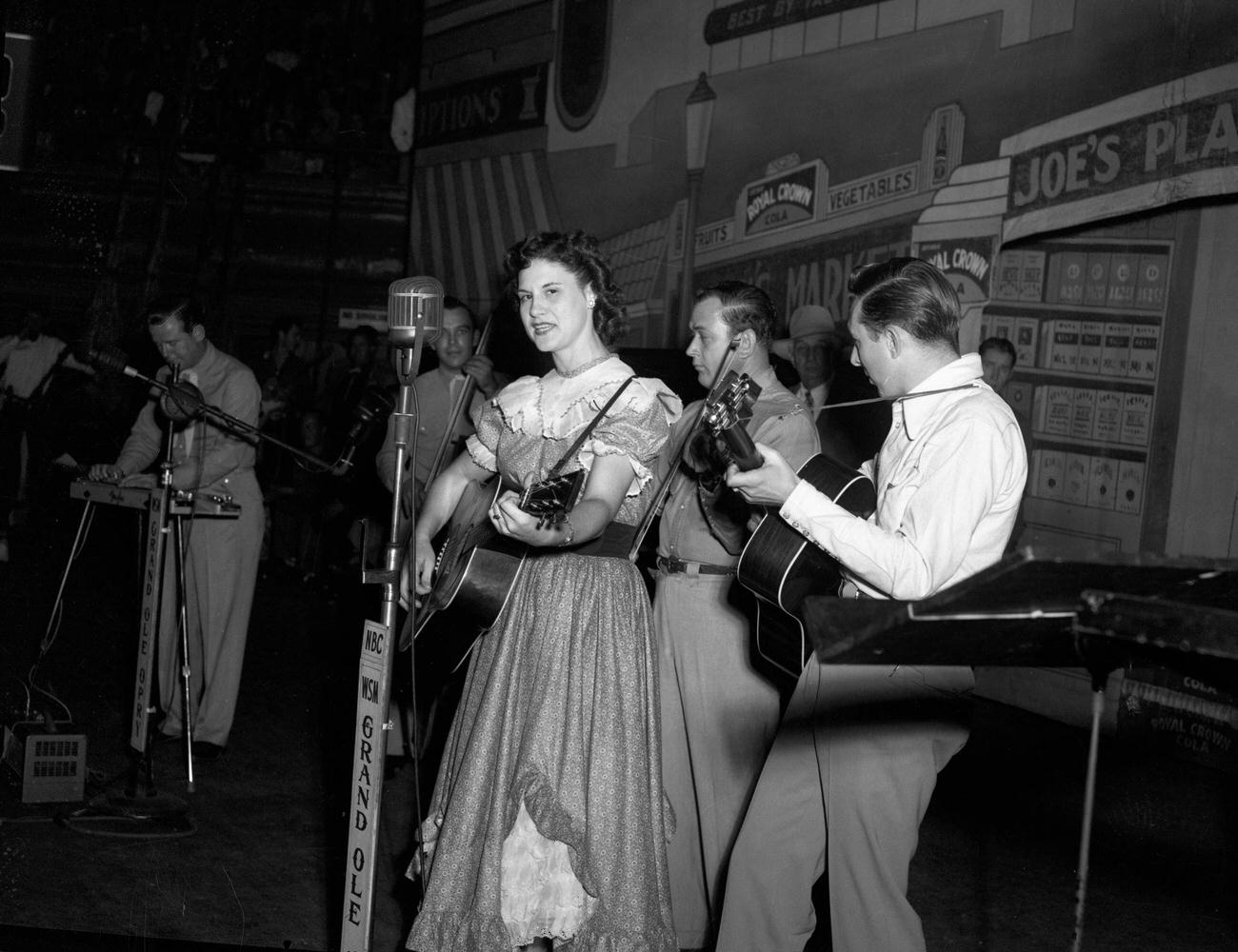
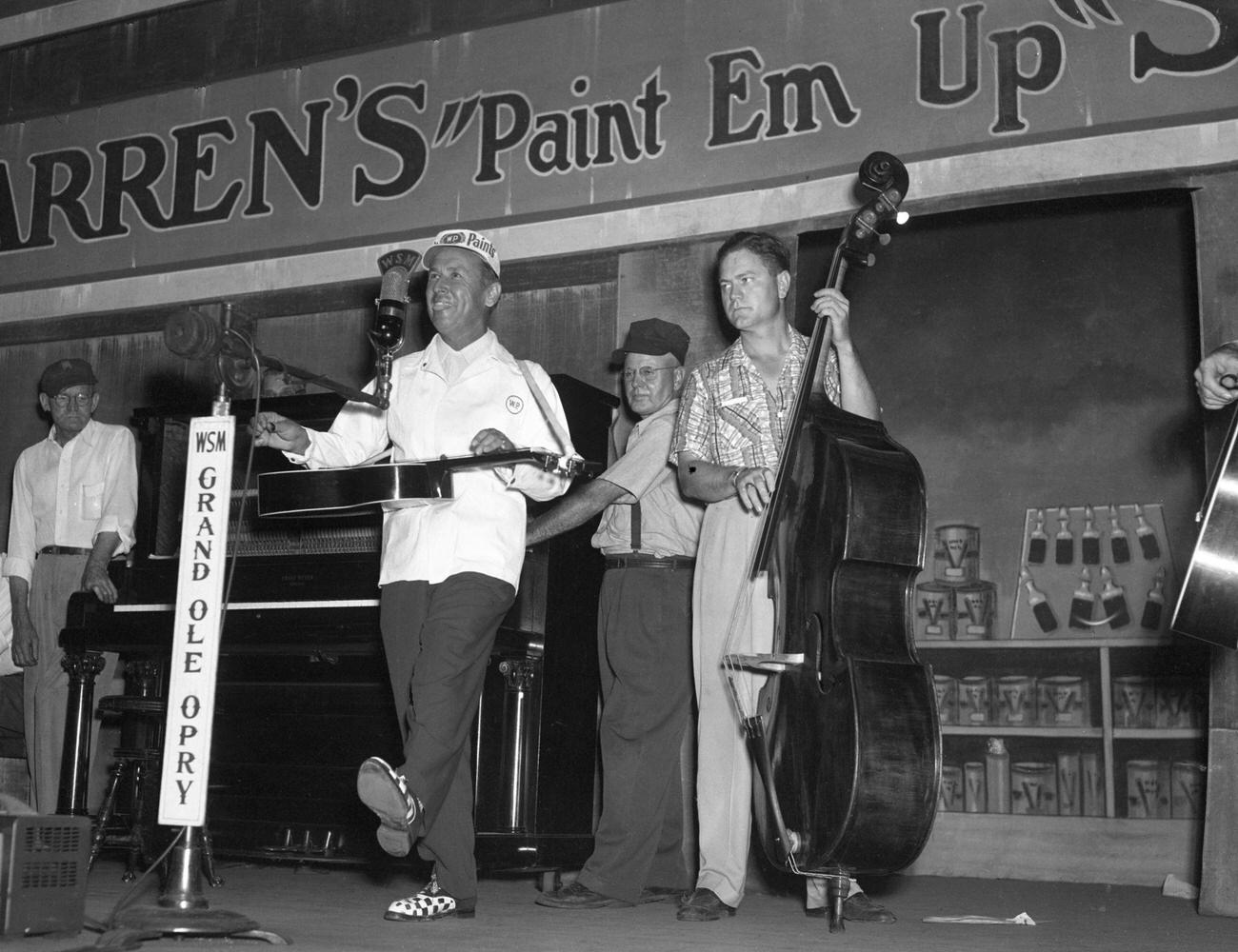
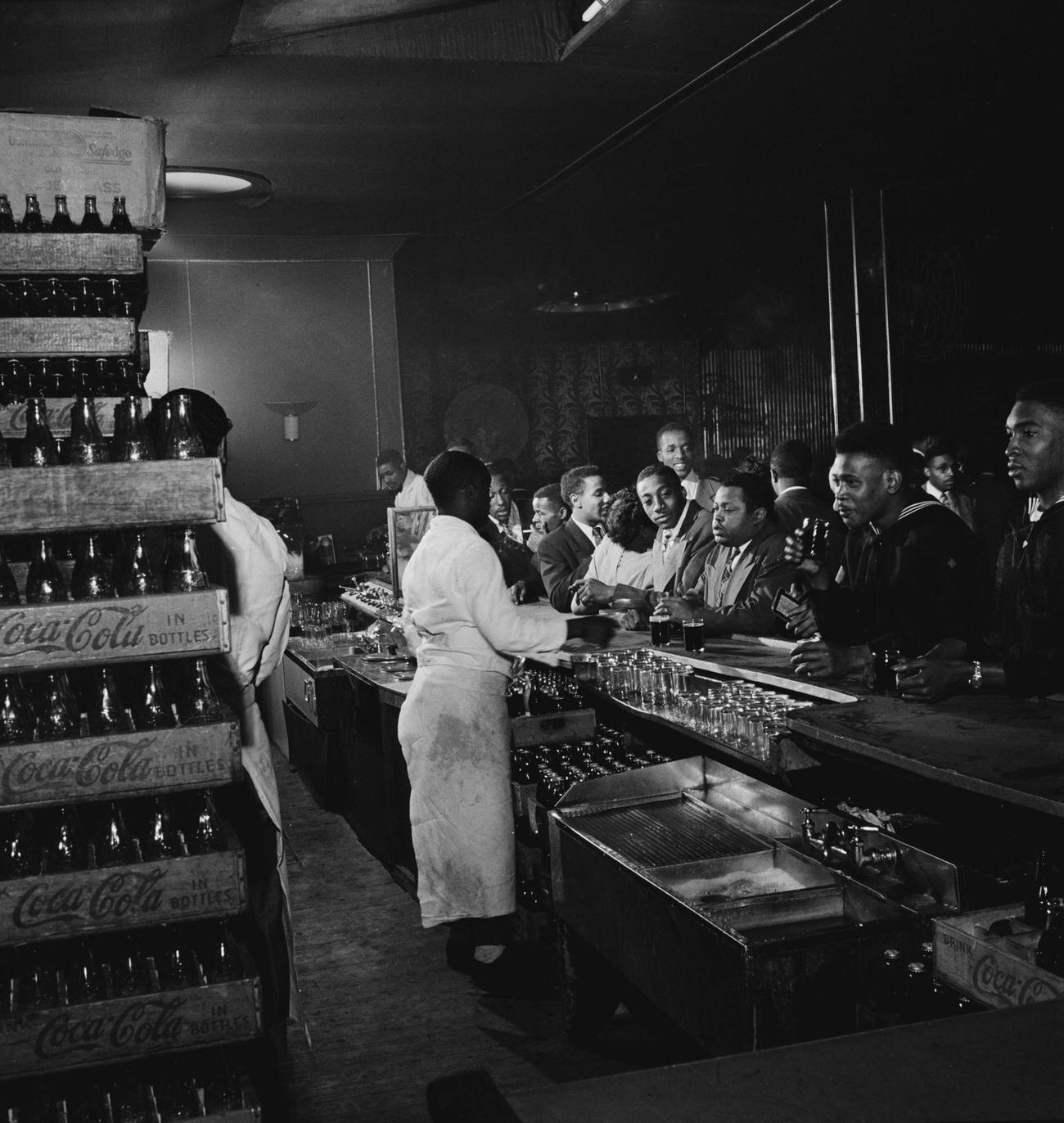
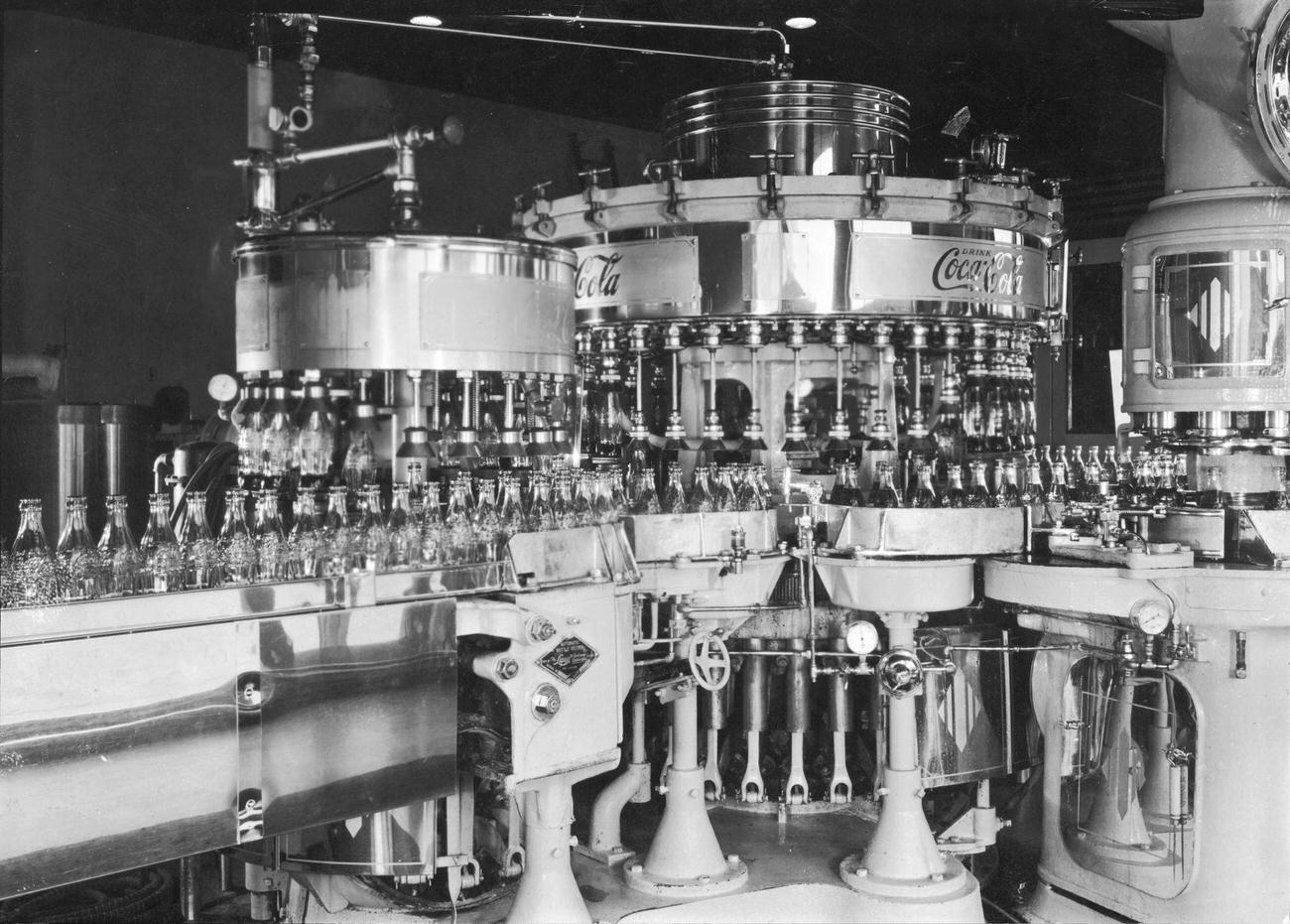
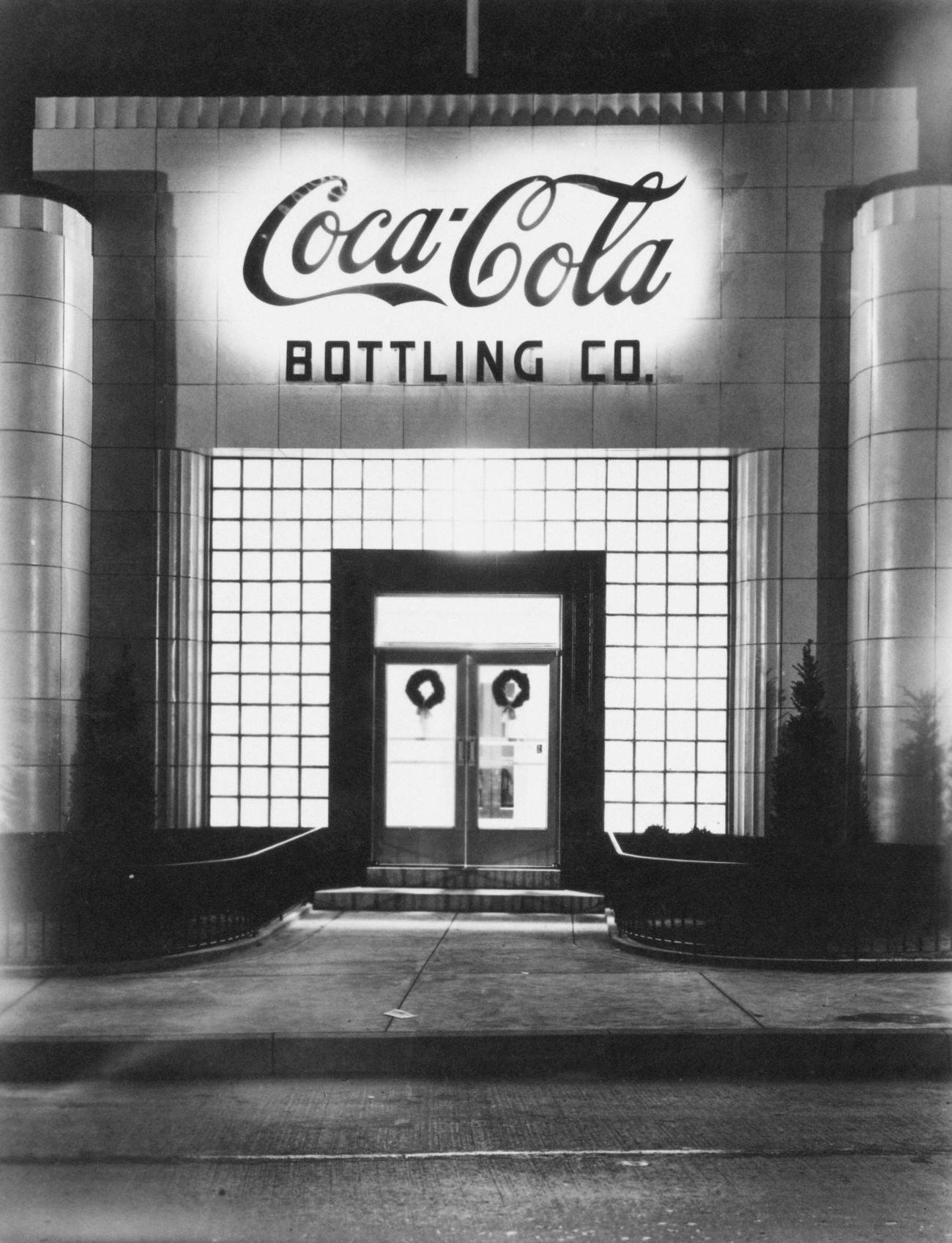
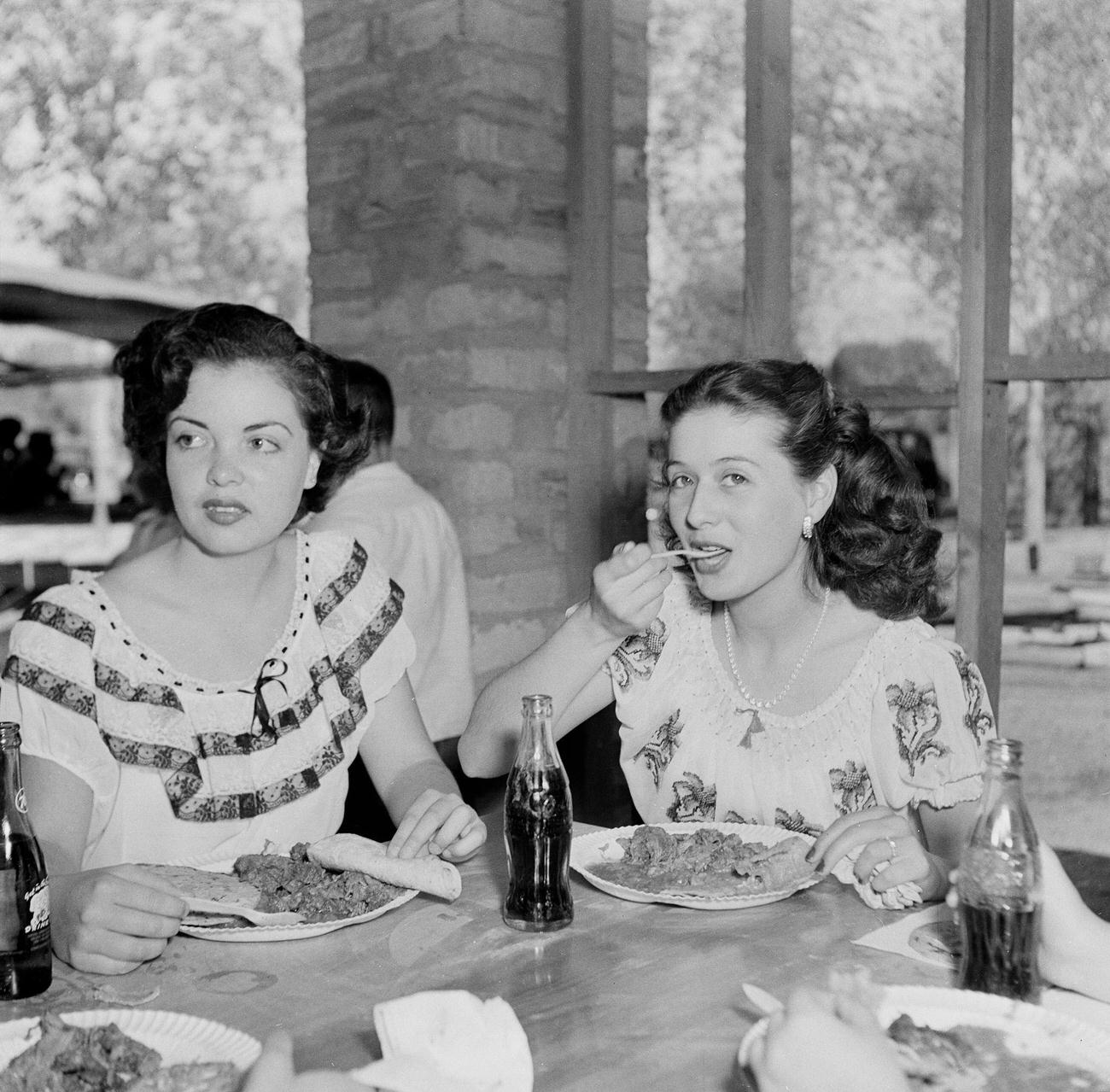
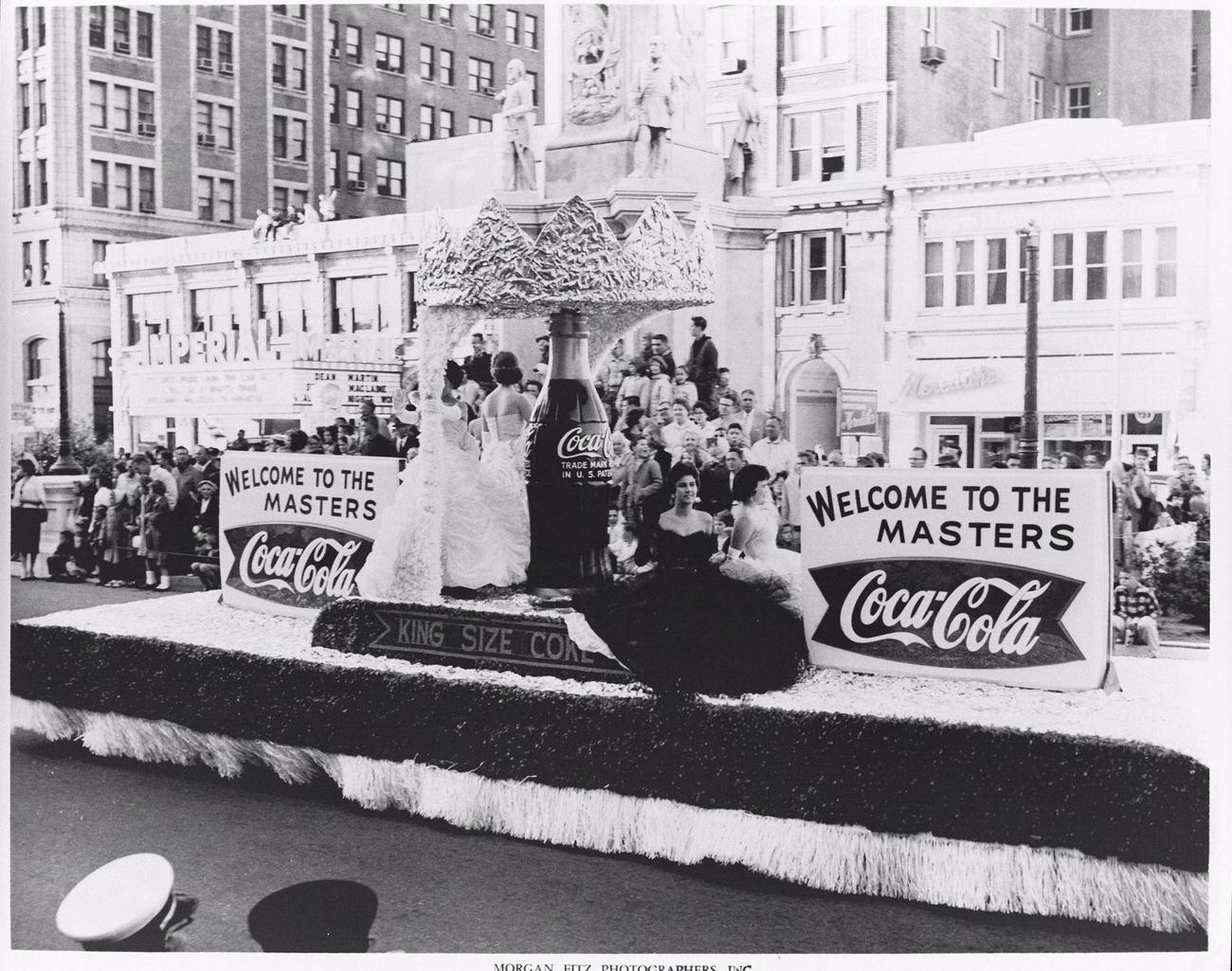
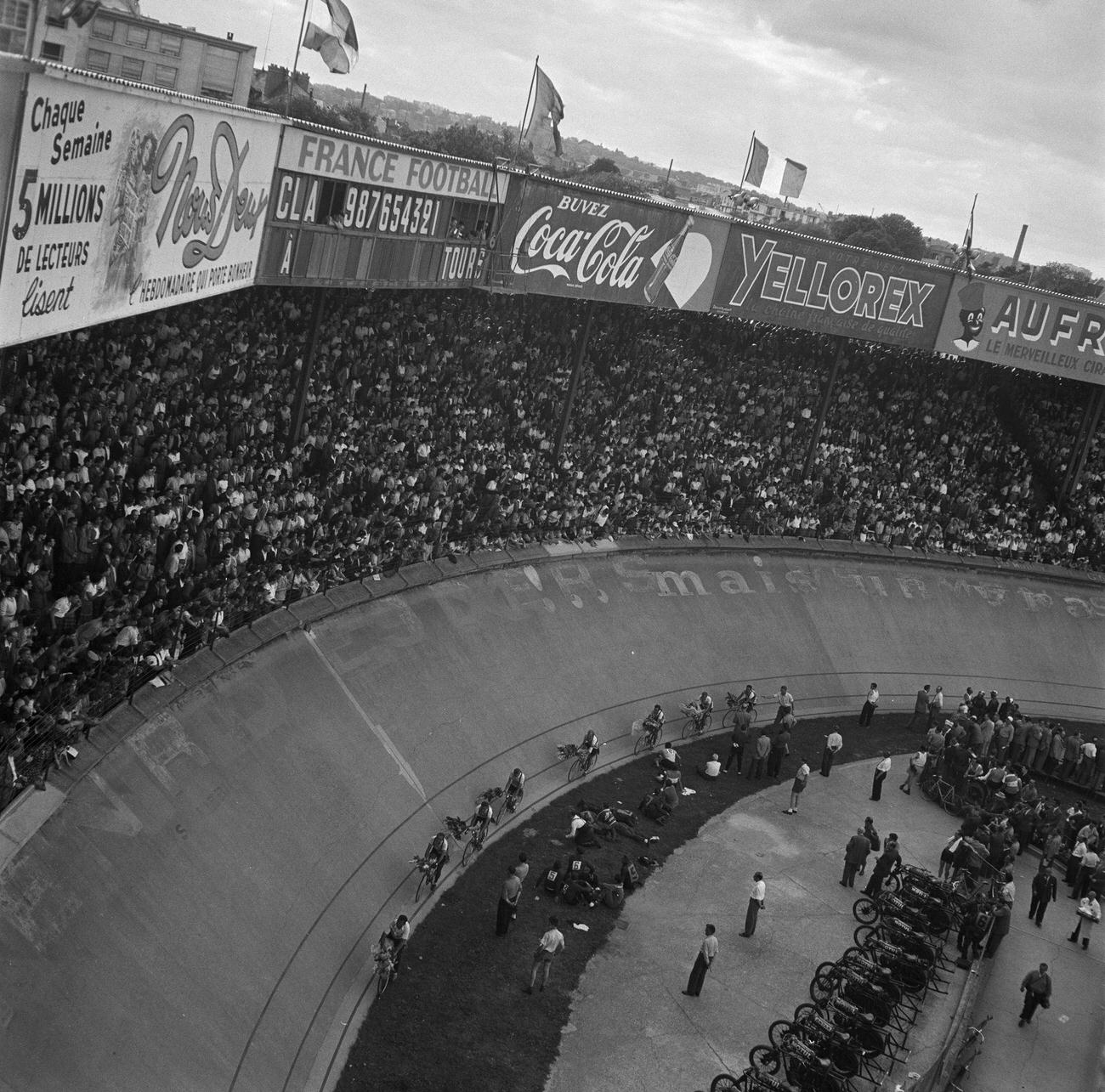
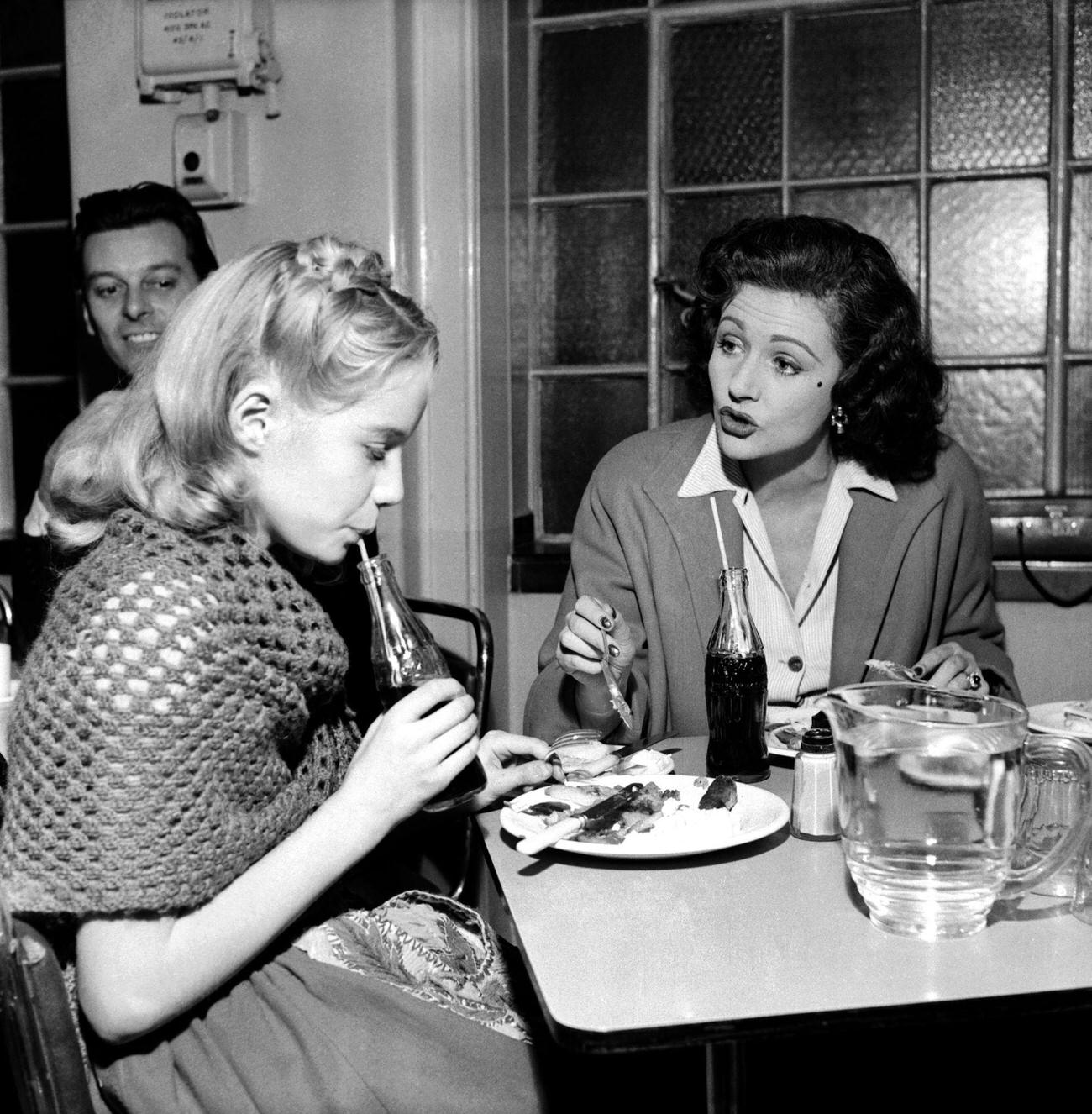
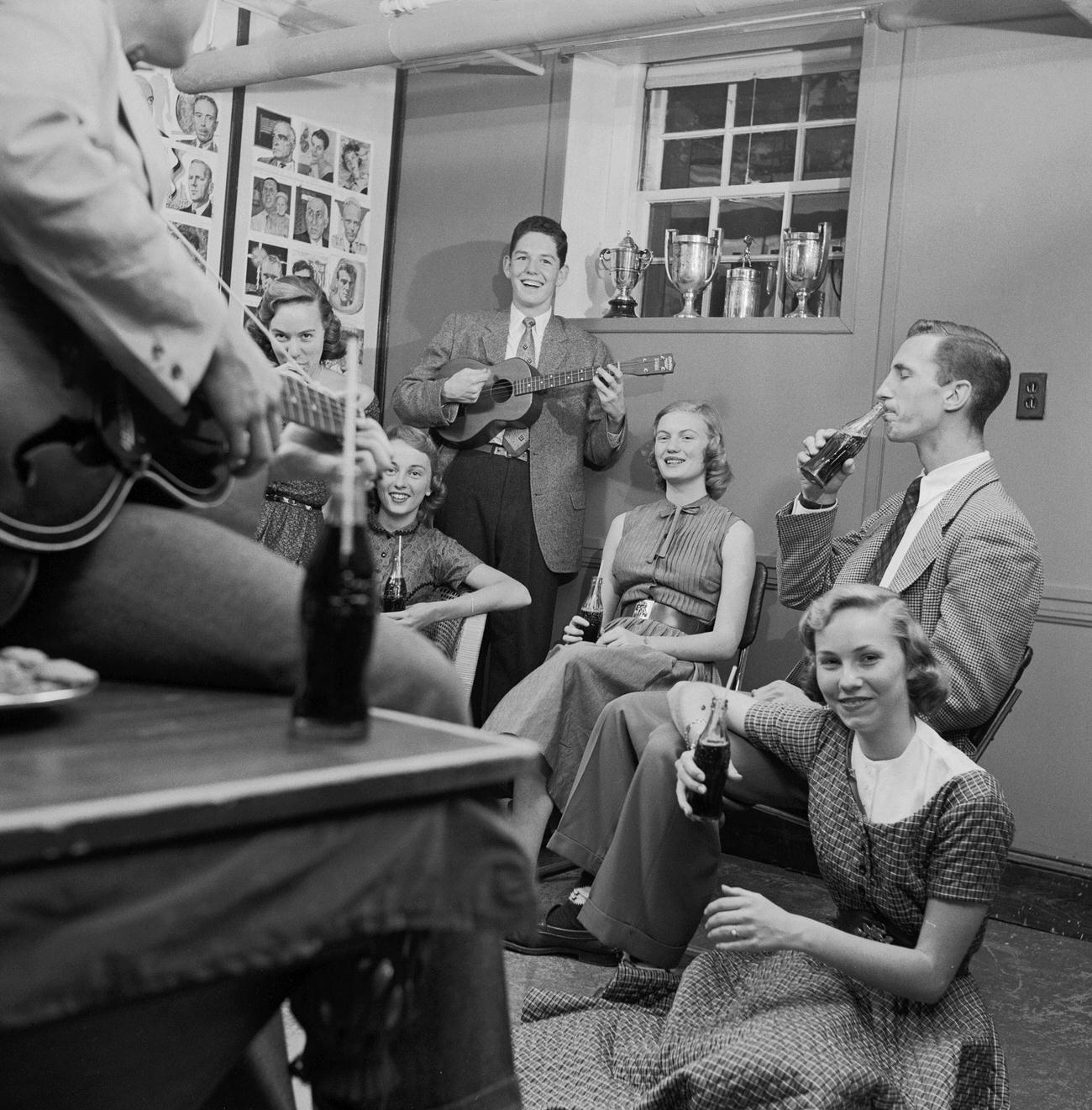
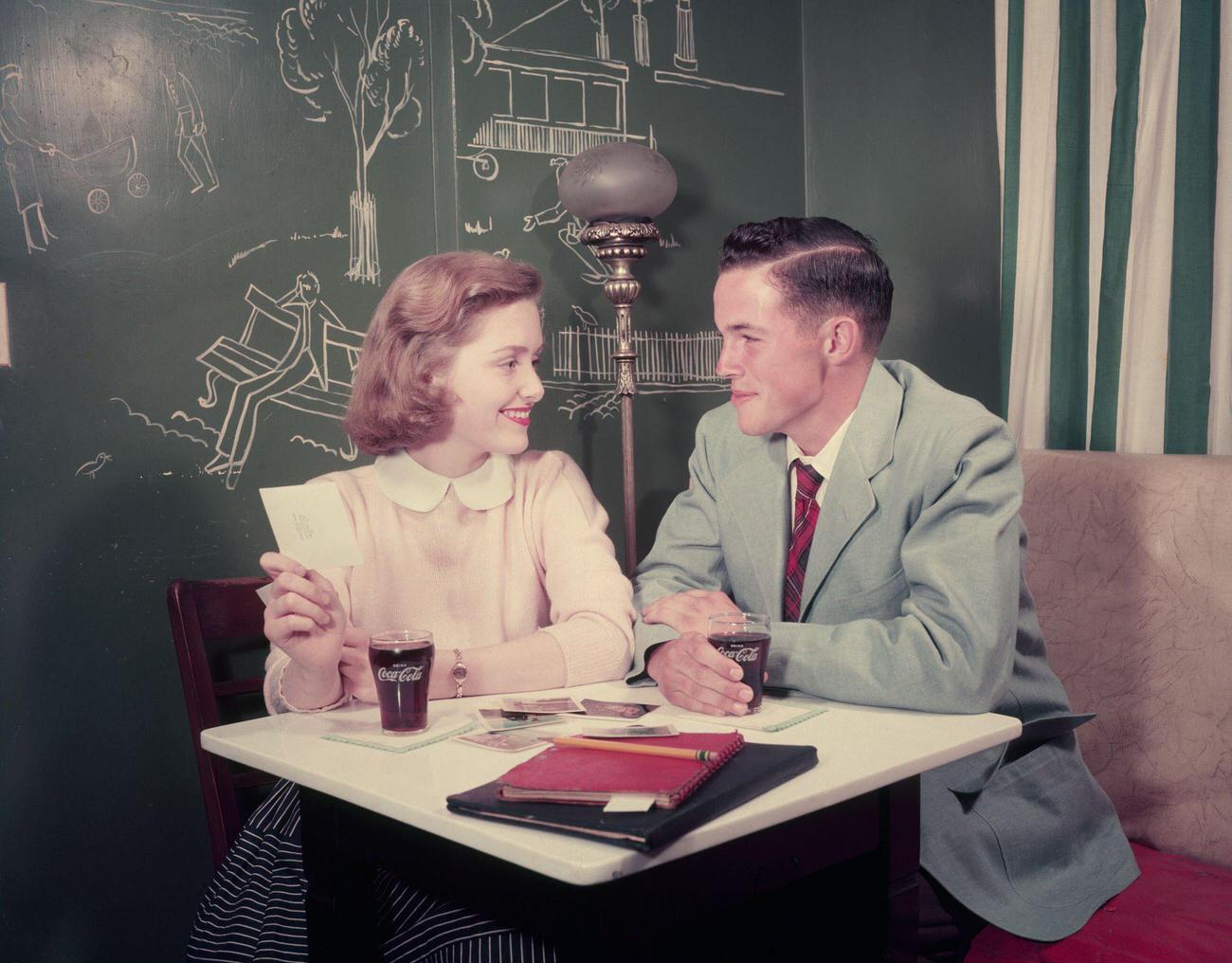
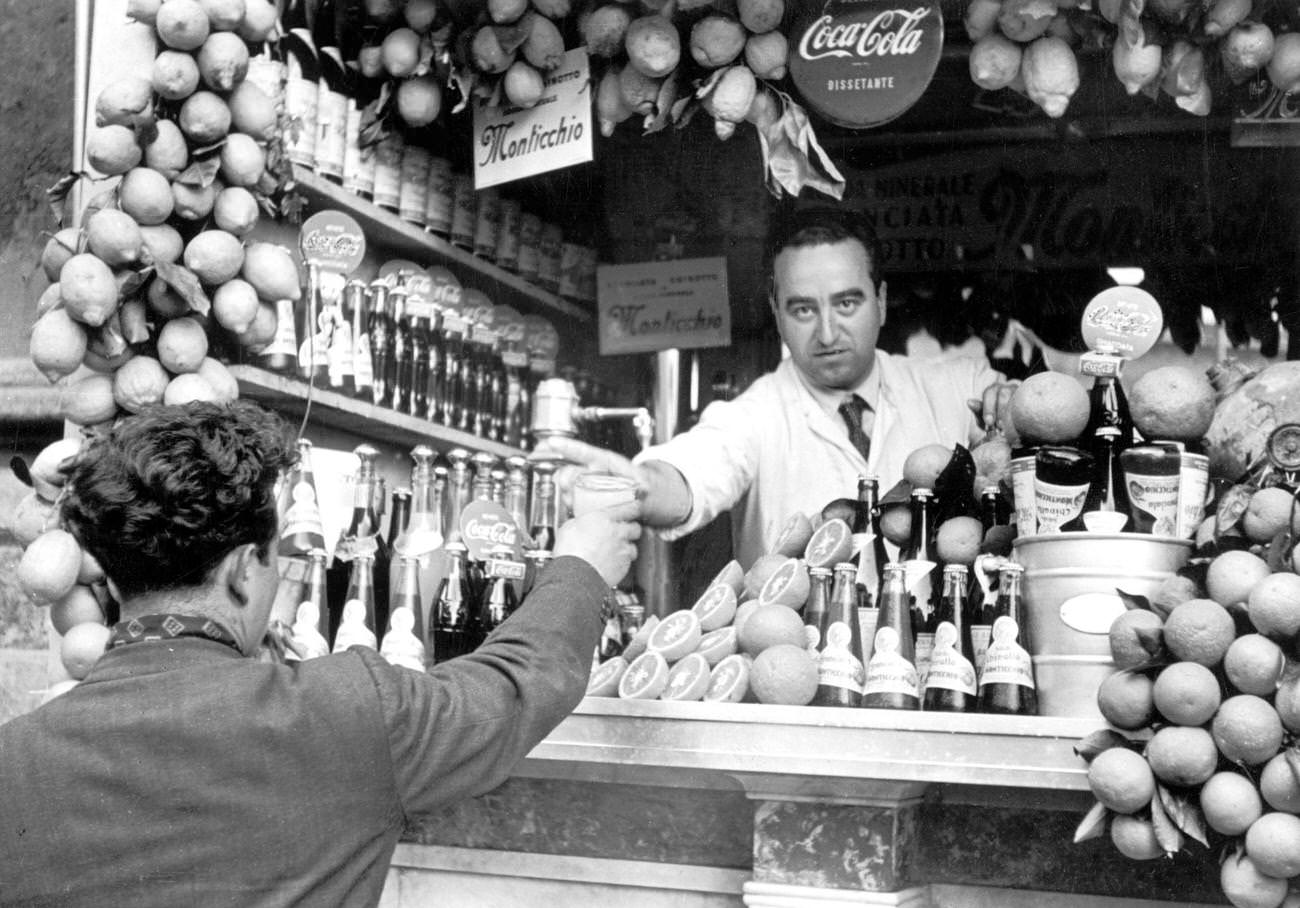
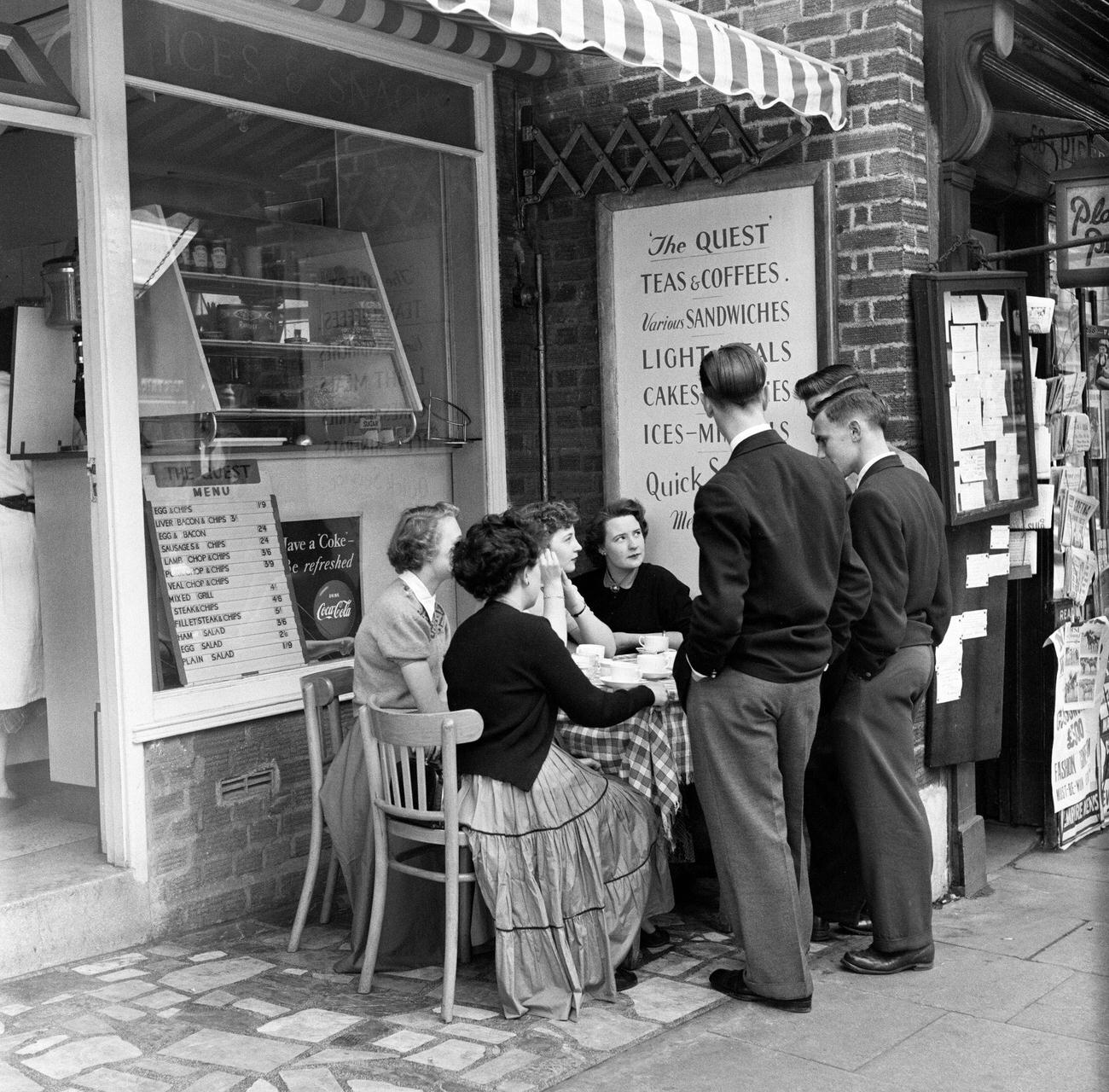
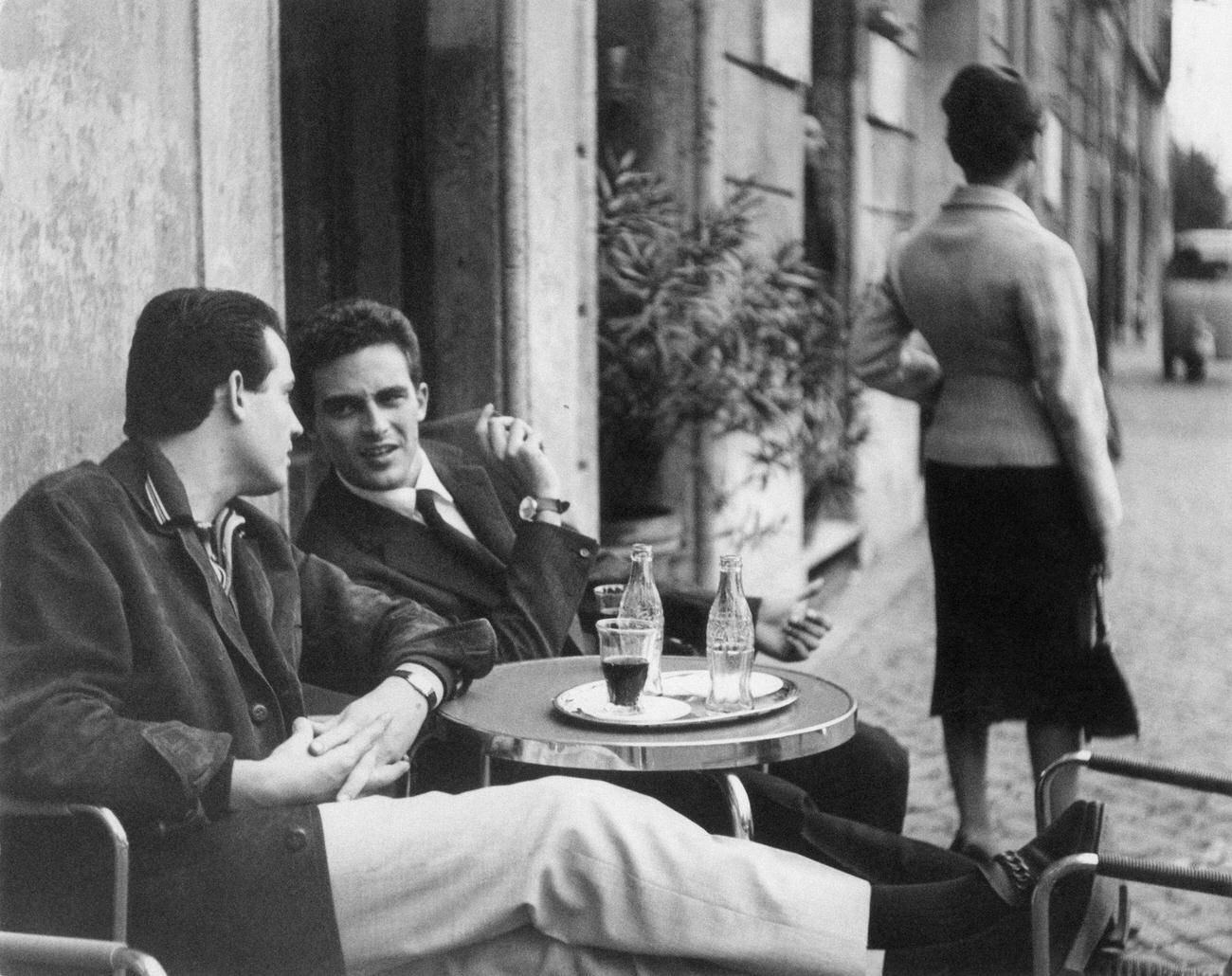
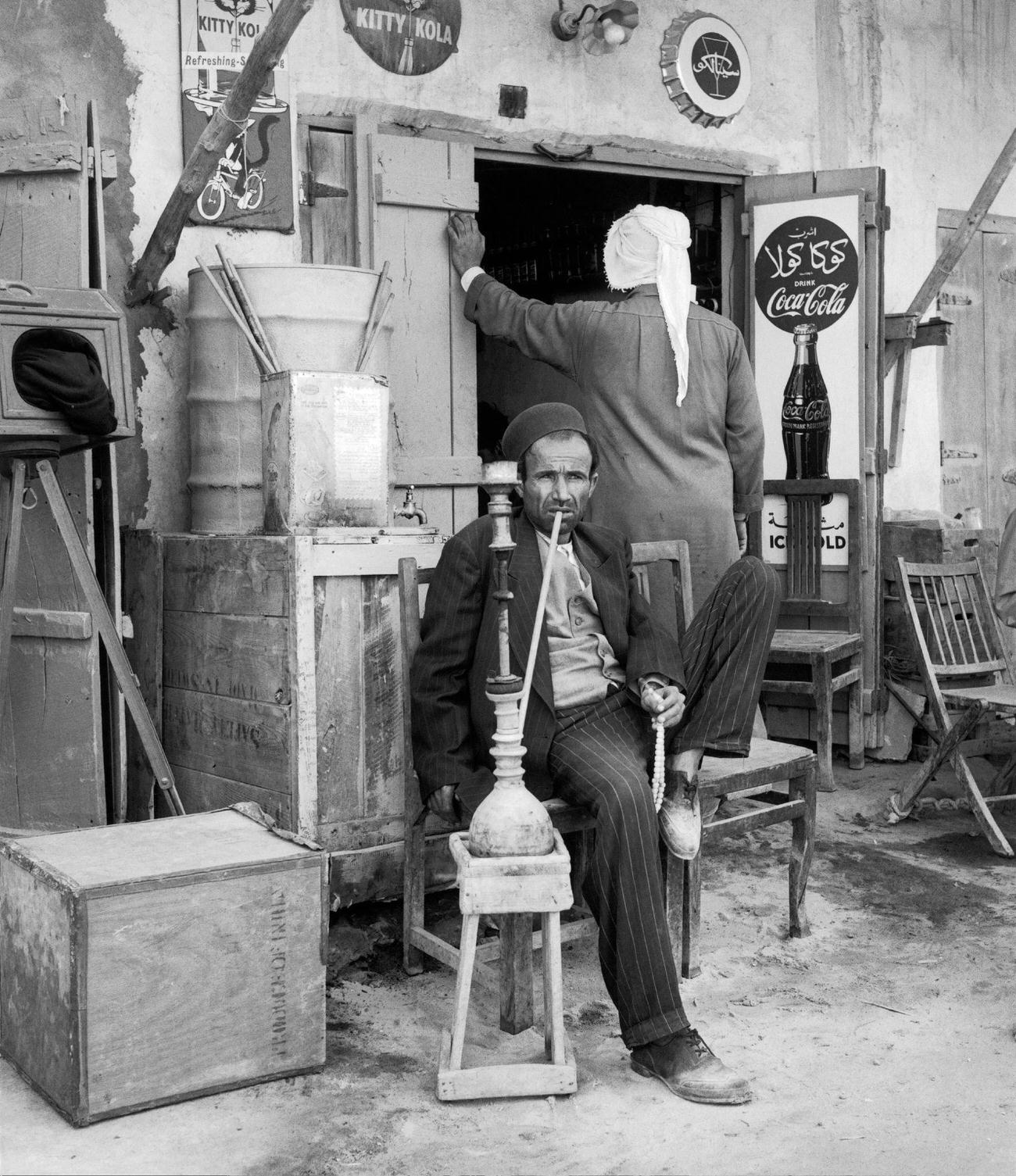
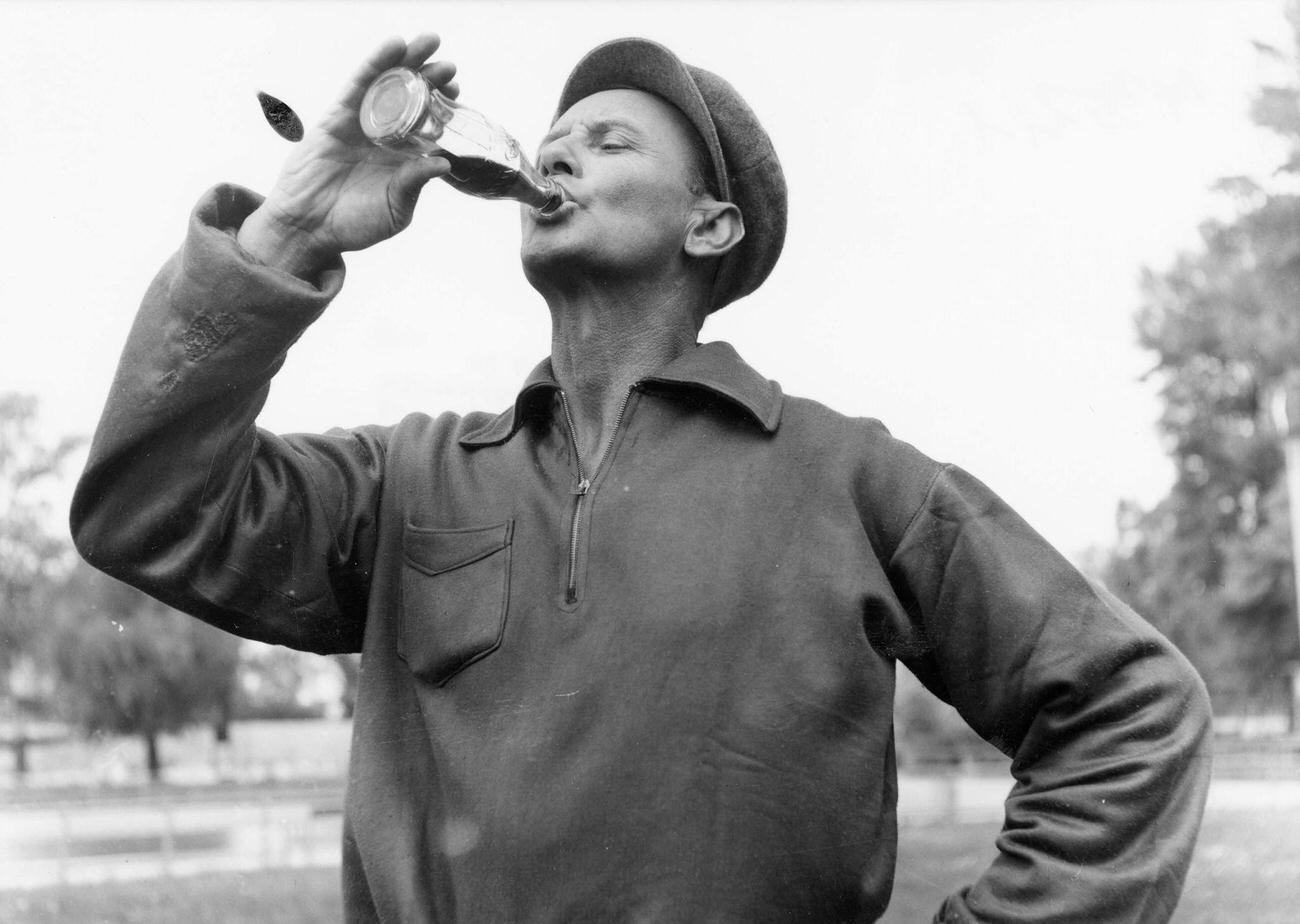
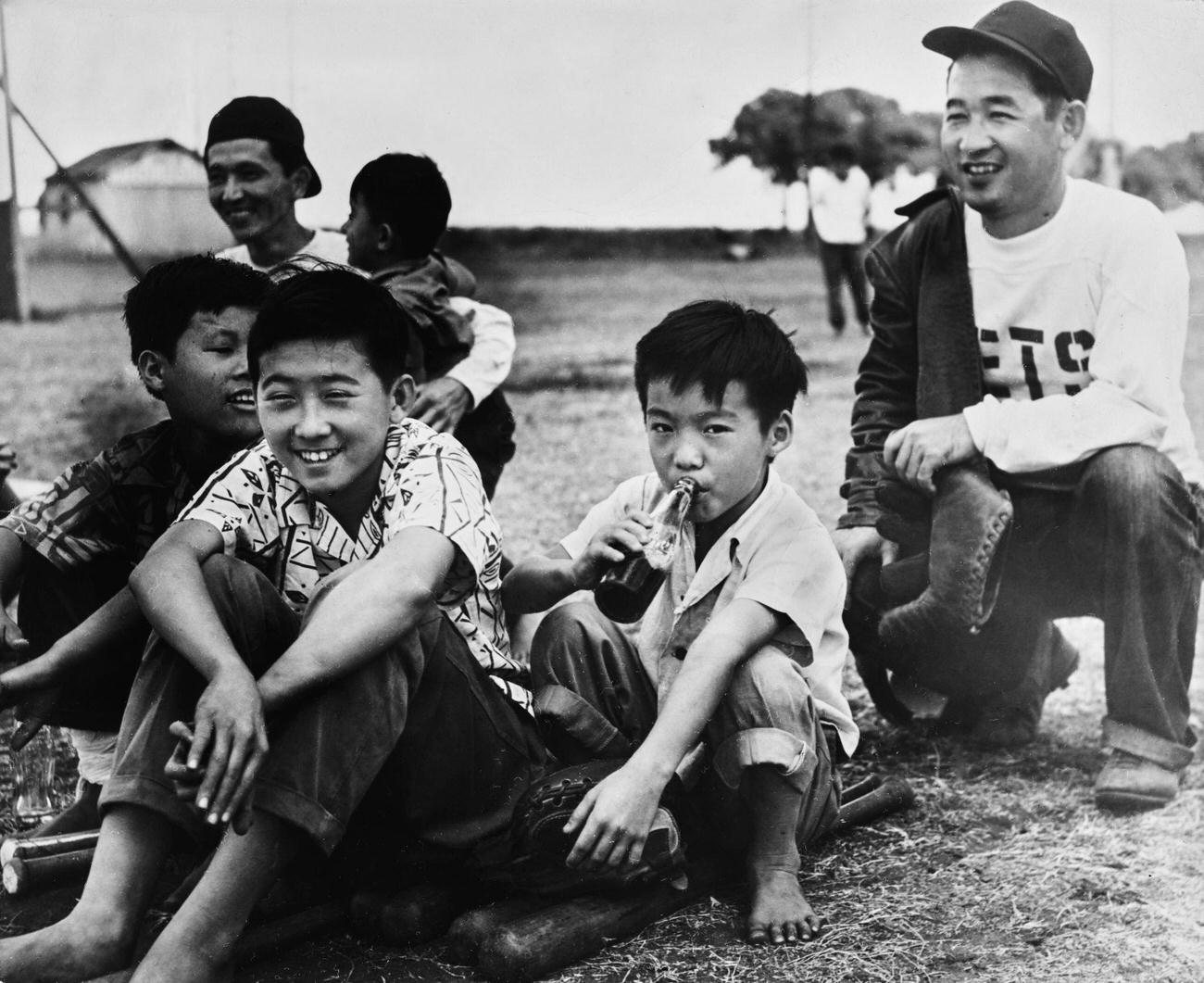
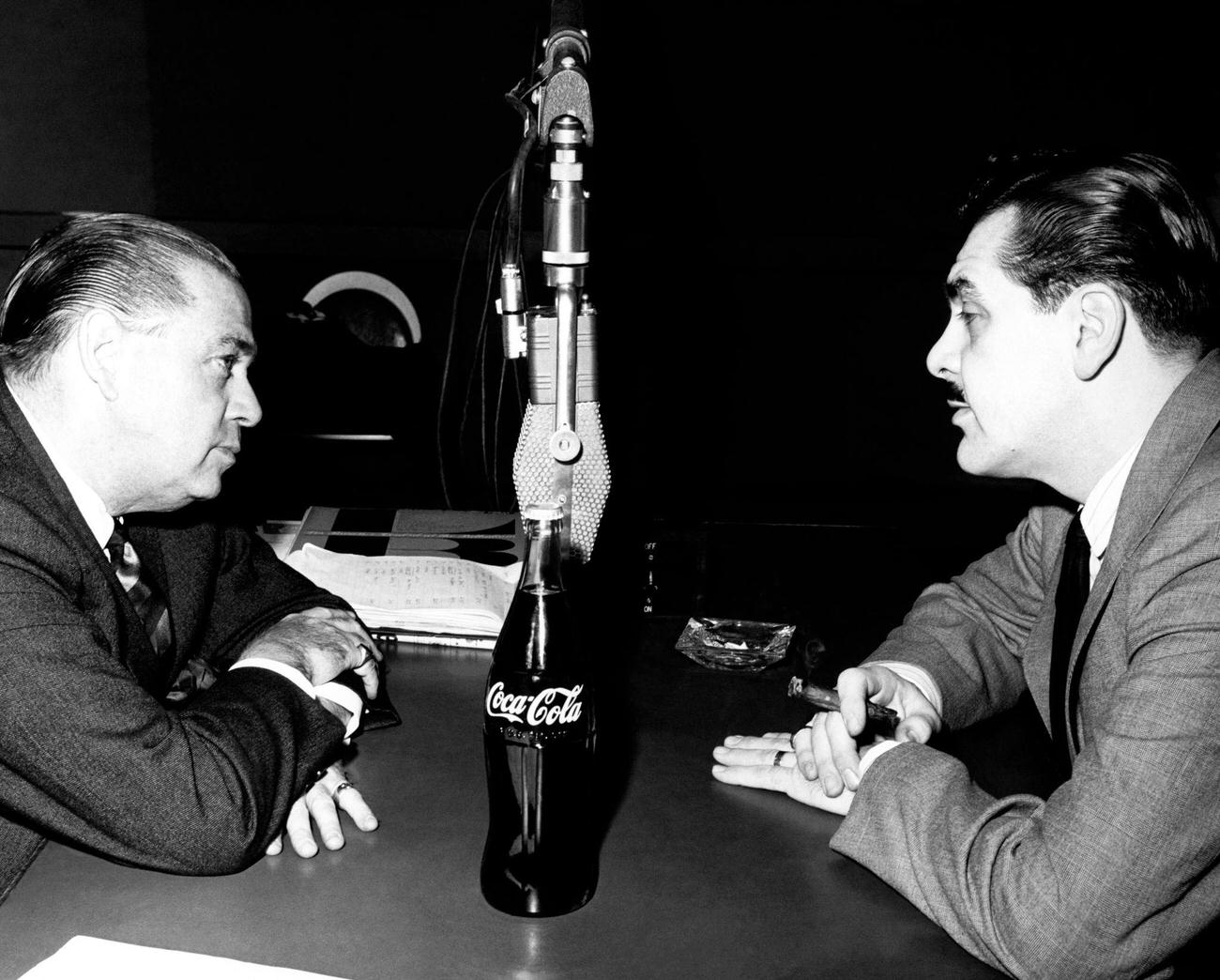
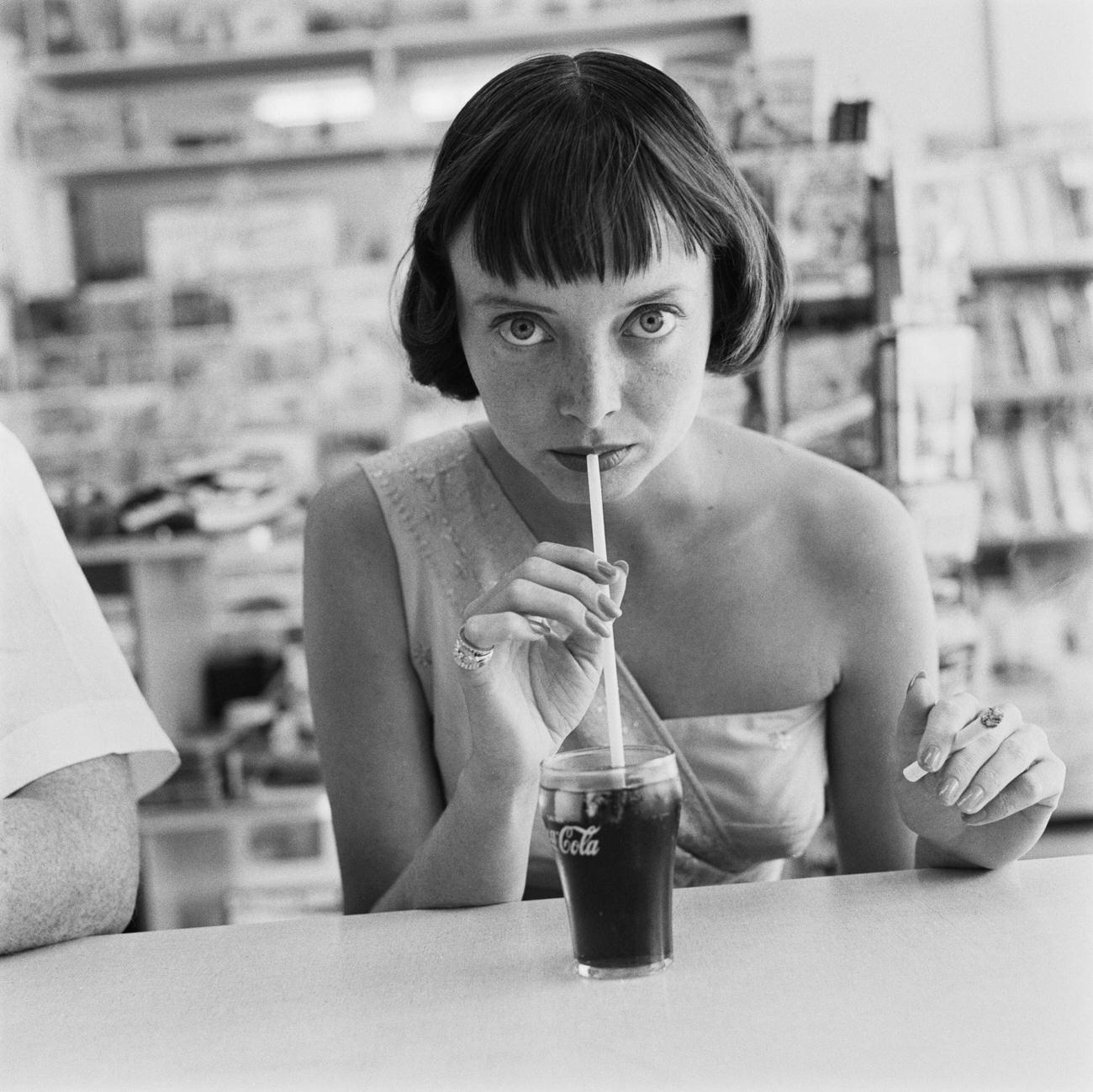
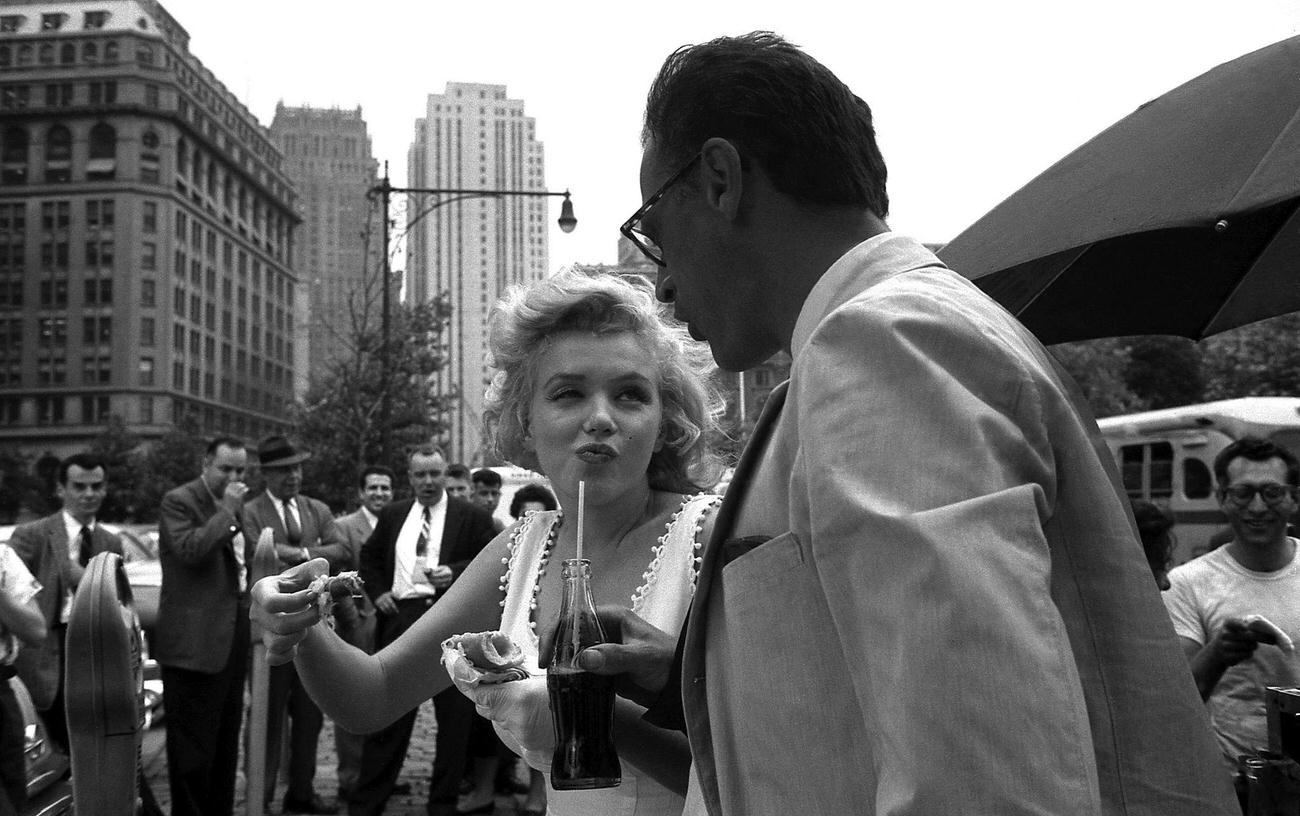
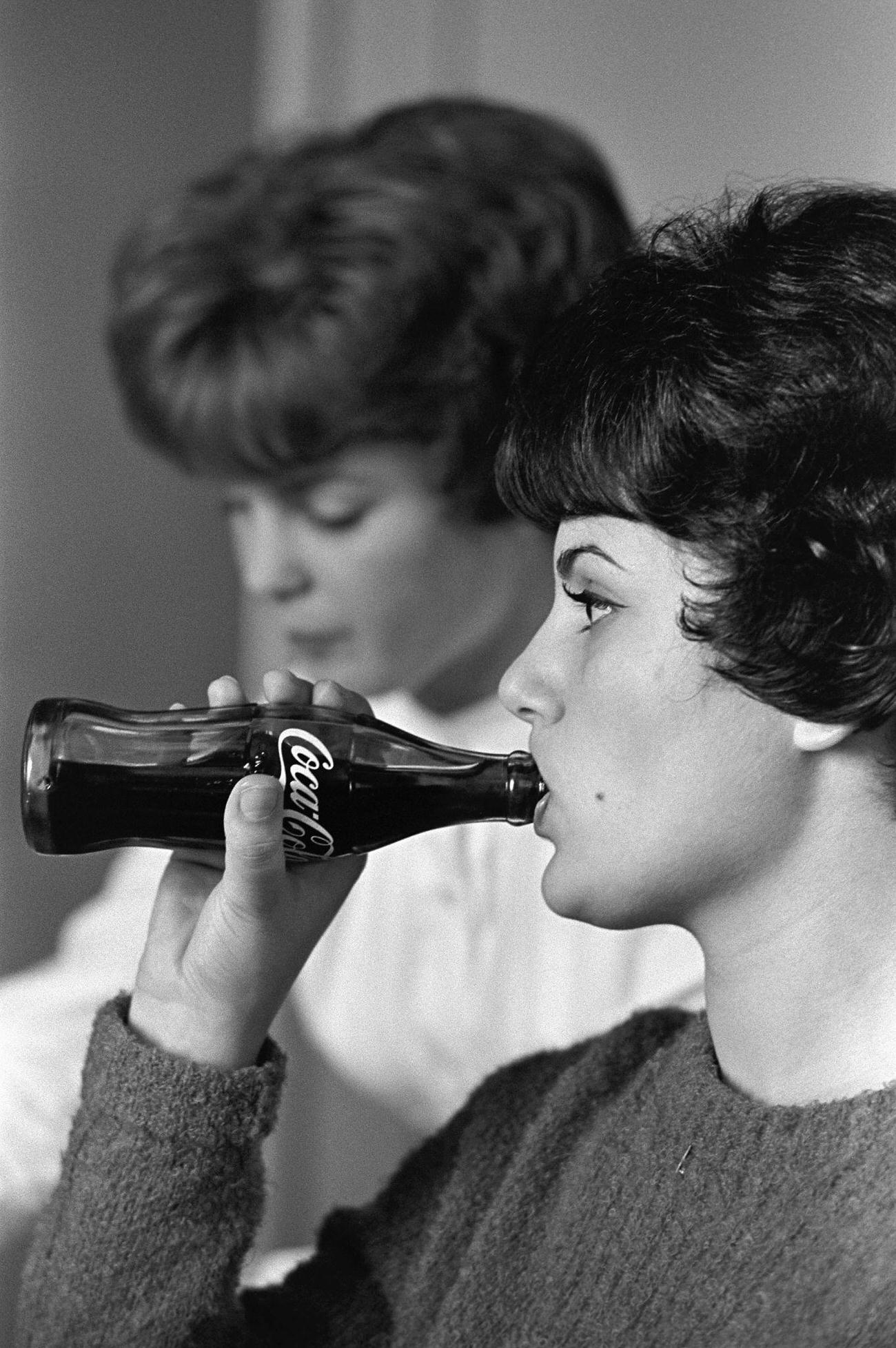
Wall of Coca-Cola cans in a supermarket in New Mexico, United States.Coca-Cola advertisement on a house facade in Macao.Coca-Cola business in Kathmandu, Nepal.Unloading a Coca-Cola cargo at the port of Manaus, Brazil.Interior of a bar in New York, United States, date unspecified.Gems Spa, a candy store in East Village, New York, advertising Coca-Cola.1930s street vendor in New York City selling sodas, including Pepsi-Cola.African American itinerant photographer in Columbus, Ohio, circa 1935.African American resident of Smithland, Kentucky, circa 1935.Man with an amputated leg at a shoe shine stand in Natchez, Mississippi, October 1935.Convivial scene with Coca-Cola bottles at Pop and Ernie’s club, April 6, 1938.African American and a white store owner on the porch of a country store, circa 1939.University of Minnesota students drinking Coca-Colas, circa 1940, in Minneapolis.View of Franklin Street in Natchez, Mississippi, circa 1940.Actors Robert Taylor and Barbara Stanwyck offered food and Coca-Cola at a game in Los Angeles, circa 1940.Ernest Lawrence and Arthur Compton enjoying Coca-Colas, date unspecified.A smiling brunette woman holding a Coca-Cola bottle, 1940s.African American outside a barber shop in the Black Belt, Chicago, Illinois, circa 1941.African American outside a storefront church and lunch wagon in the Black Belt, Chicago, Illinois, circa 1941.Shulman’s Market at N and Union Streets SW, Washington, D.C., with a 1931 Chevrolet, 1941.Ella Mae Lacey and Myrtle Thomas with Coca-Cola bottles in Lincoln Lunch Restaurant, Washington, Pennsylvania, March 1941.A merchant with his young son on the porch of his general store, date unspecified.Coca-Cola delivery to the city police, 1948.Selling Coca-Cola during a football match, 1949.Coca-Cola promotion party, 1949.Coca-Cola employees taking a break, 1949.Coca-Cola worker at a bottling plant with a bottle, 1949.Coca-Cola workers loading a delivery van, 1949.Coca-Cola promotional materials, 1949.Coca-Cola worker at a bottling plant in Bern with a bottle, 1949.Woman sitting and drinking Coca-Cola in London, United Kingdom, 1950.1950s hot dog vendor in downtown Manhattan, New York, USA, selling Cokes.New York City petition for acting Mayor Vincent R. Impellitteri, 1950.Country singer Kitty Wells performing at the Grand Ole Opry, circa 1950, Nashville, Tennessee.Country singer Lew Childre performing at the Grand Ole Opry, circa 1950, Nashville, Tennessee.Coca-Cola crates stacked behind a bar with white-coated bartenders, location unspecified, circa 1950.A Coca-Cola bottling plant, circa 1950.Entrance of the Coca-Cola Bottling Company building, circa 1950.Two Mexican girls at lunch during a festival in Tijuana, Mexico, March 15, 1950.Coca-Cola float at the Masters Parade, Augusta National Golf Club, Augusta, Georgia, 1950s.Coca-Cola worker at a bottling plant in Zurich, 1950.Coca-Cola worker at a bottling plant in Zurich, 1950.Coca-Cola worker at a bottling plant in Zurich, 1950.Madame Bringue, an immigrant, happy to start a new life in Canada with her family, Ottawa, circa 1952.39th Tour De France arrival in Paris, 1952, with painted advertisements.Margaret Lockwood chaperoning her daughter Julia in a TV program, November 1953.College students in an advertisement for Coca-Cola.A couple sitting at a table having a Coca-Cola.Kiosk in Naples, Italy, 1954.Scenes in Hampstead, north London, September 24, 1954.Two men chatting at a café table with Coca-Cola bottles, 1959.A Coca-Cola stand in Singapore, circa 1955.Scene in Kuwait, circa 1955.A man drinking from a Coca-Cola bottle, 1955.Young Hawaiians, one drinking Coca-Cola, waiting to bat during a baseball game in Hawaii, circa 1955.Comedian Ernie Kovacs talking to a disc jockey in New York, circa 1955.Actress Carolyn Jones drinking Coca-Cola, USA, circa 1956.Marilyn Monroe eating a hot dog with husband Arthur Miller in New York, 1957.
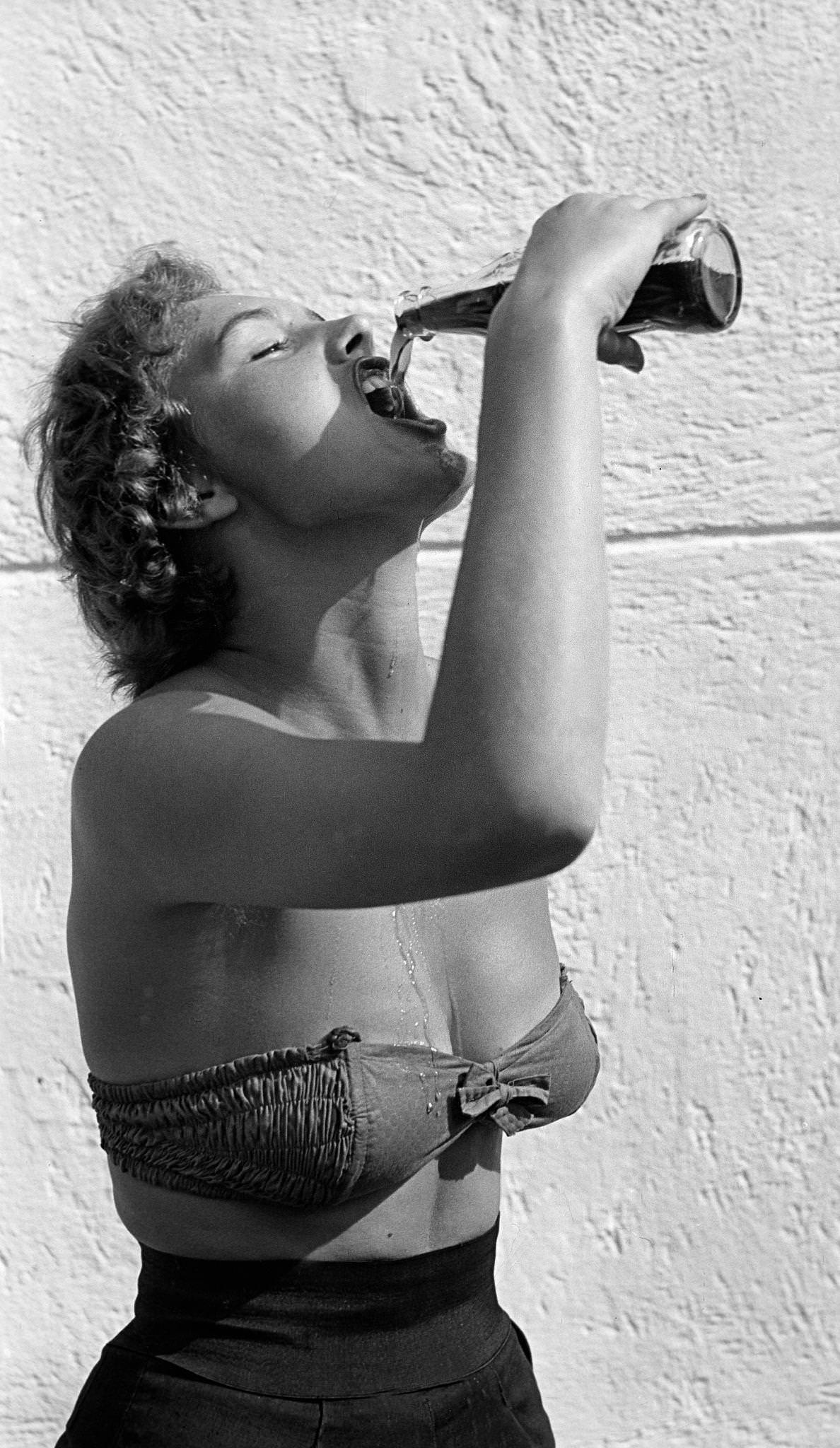
Young woman in a bikini drinking Coca-Cola, 1957.
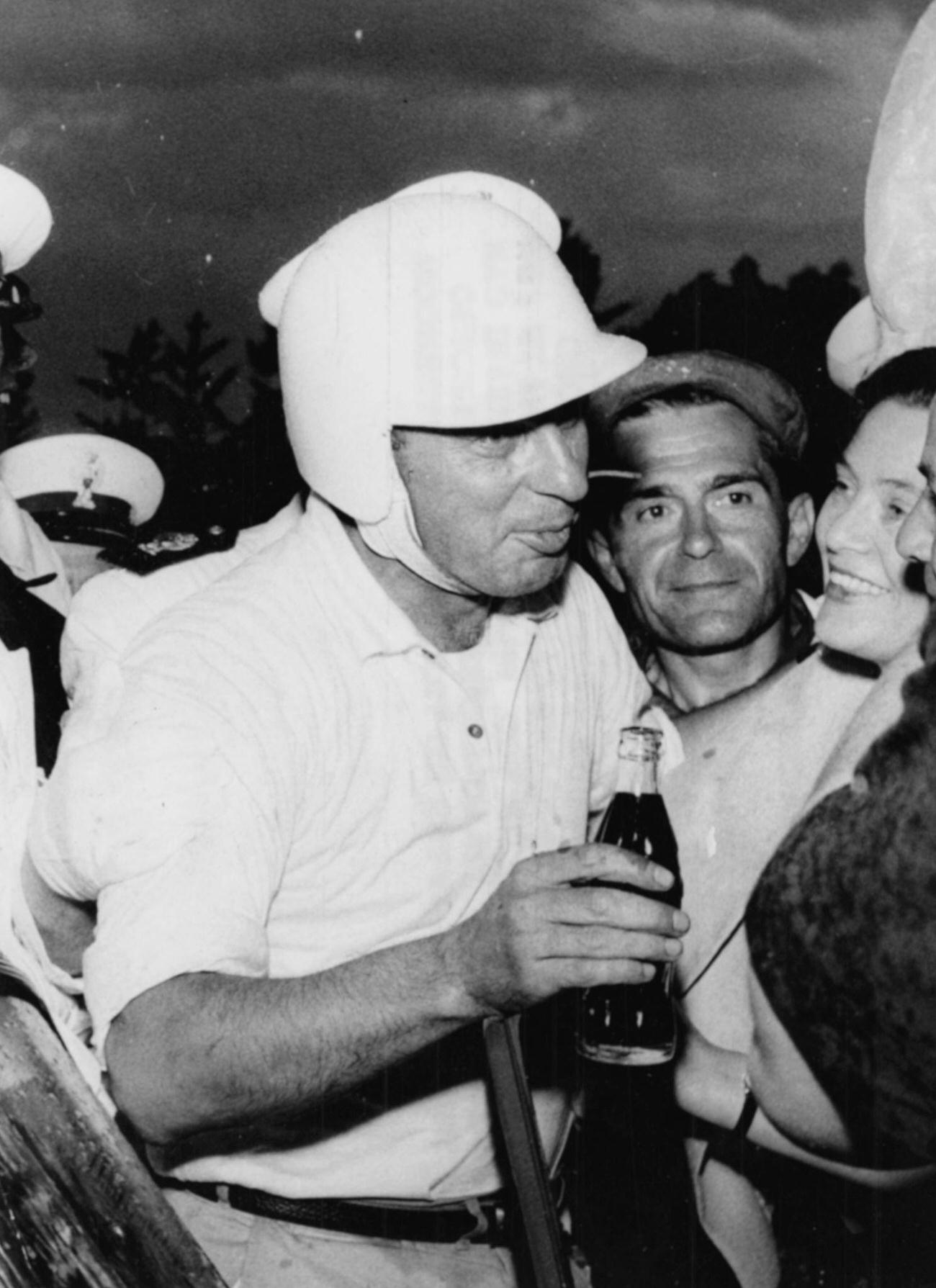
Racing driver Alfonso Thiele with Coca-Cola after winning Monza Grand Prix, June 28, 1959.
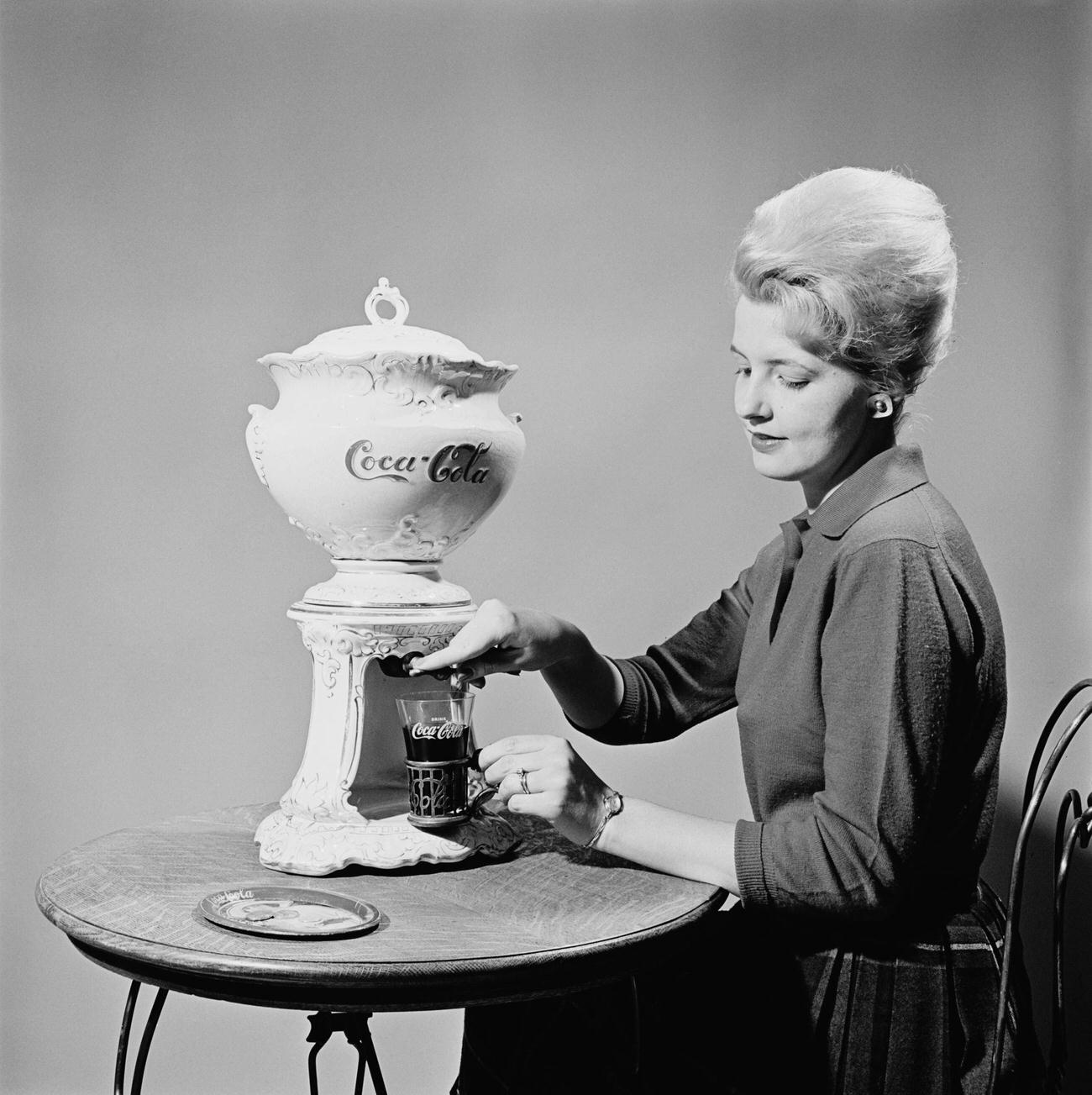
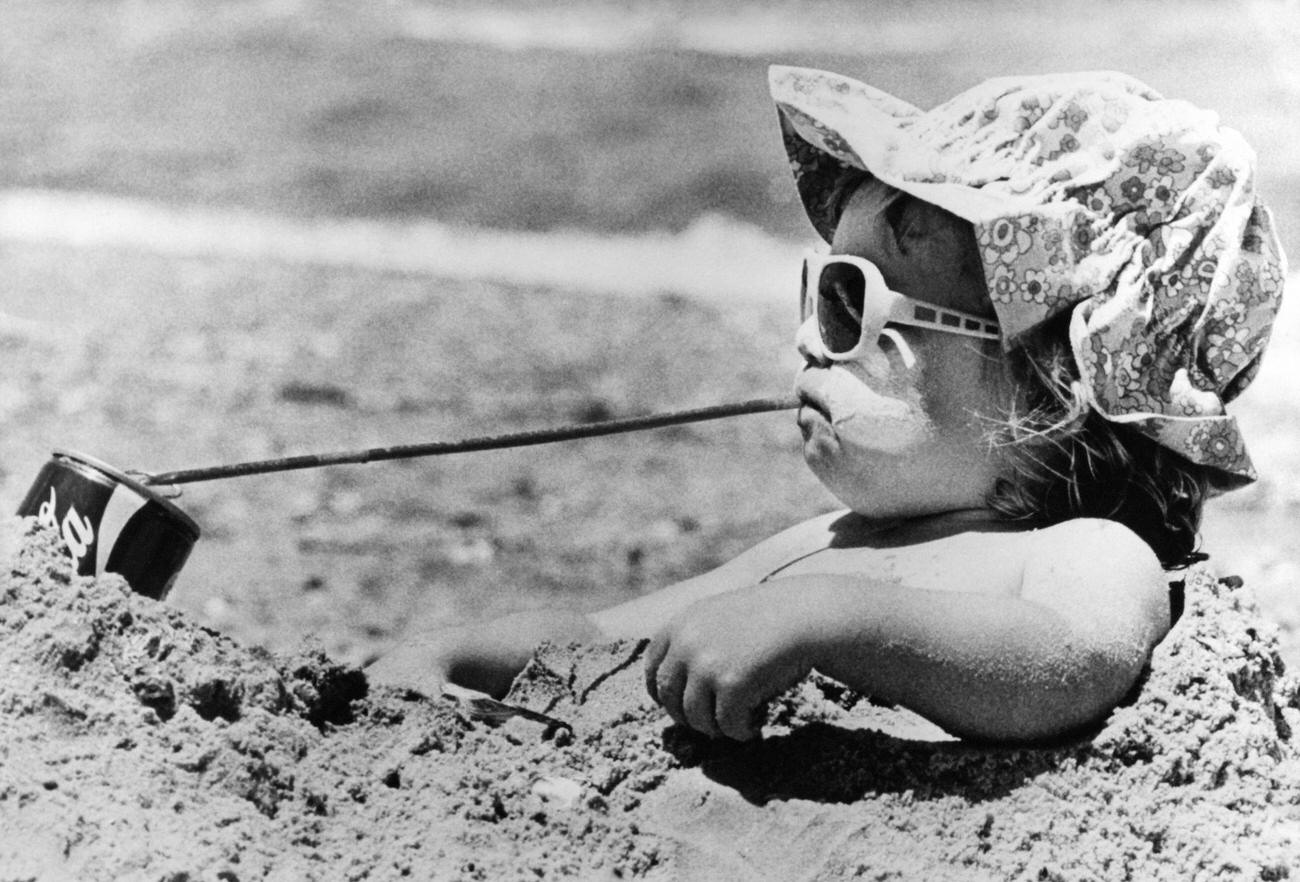
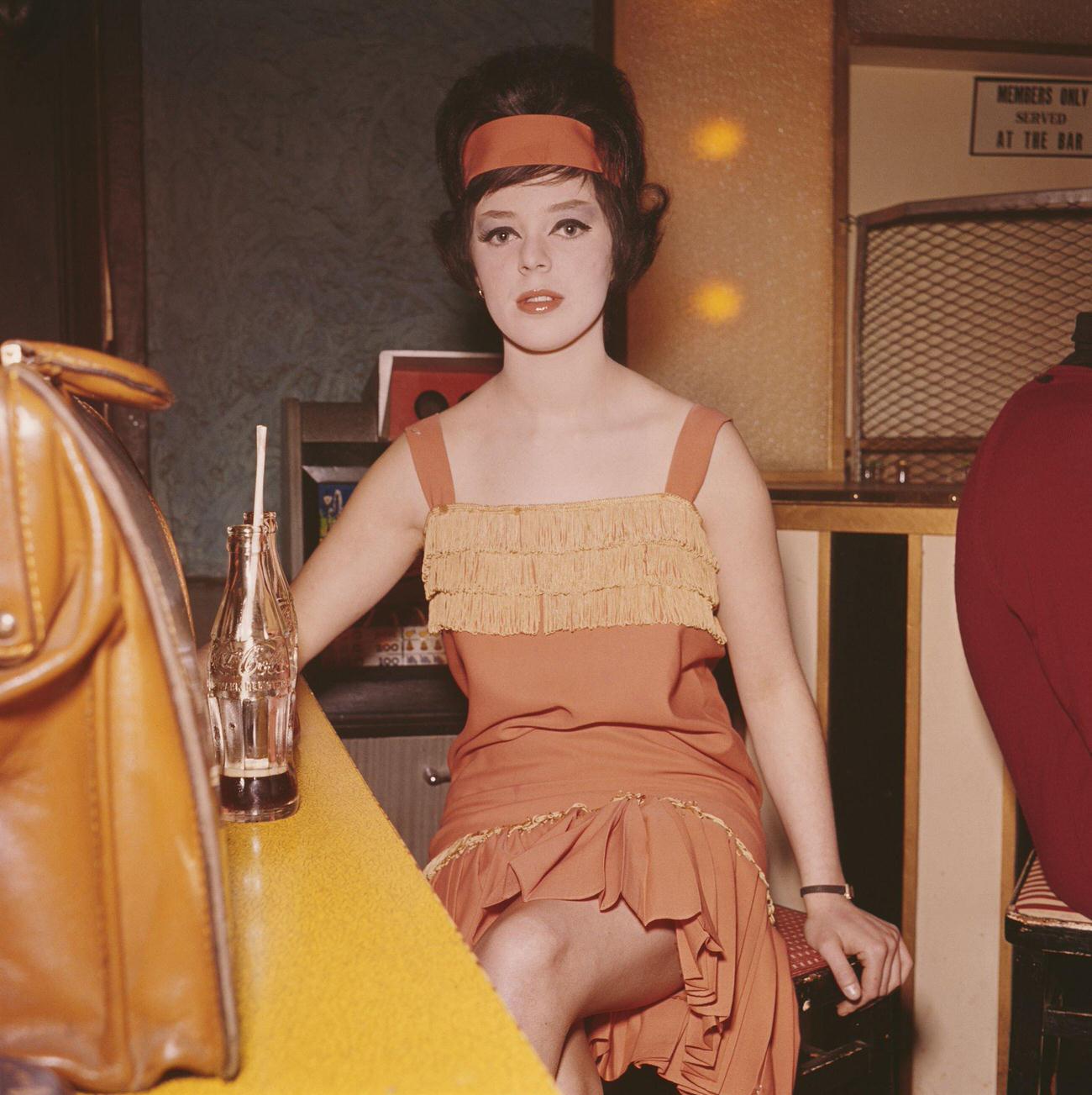
Woman pours Coca-Cola from a samovar at the Coca-Cola Museum in Atlanta, Georgia, circa 1960.Young girl buried in beach sand drinking a cold beverage, Australia, circa 1960.A young girl in an orange dress drinking Coca-Cola at Whisky A Go-Go Club in London, 1962.
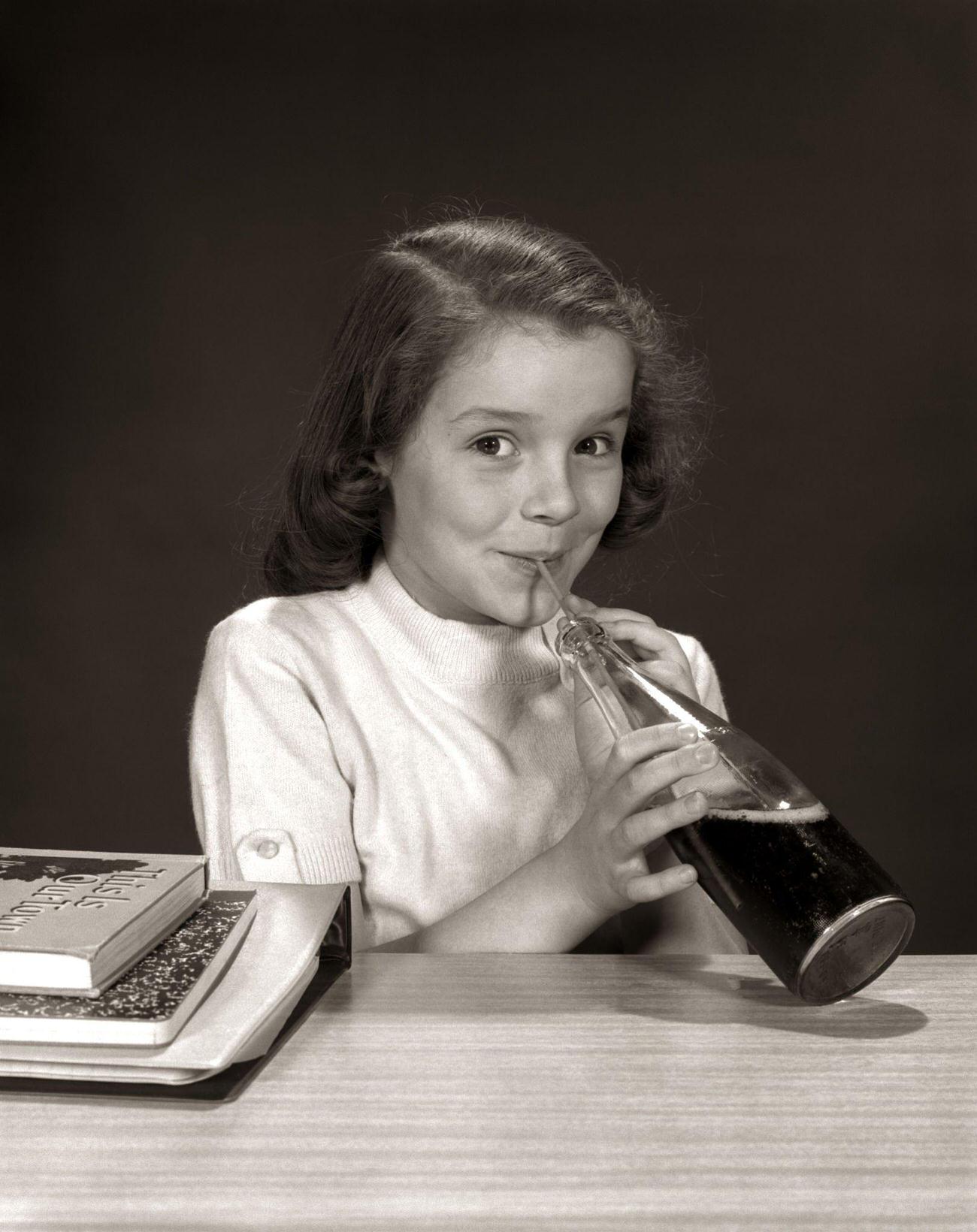
Smiling school girl drinking a carbonated beverage from a bottle, 1950s
Girl drinking Coca-Cola from a bottle, date unspecified.
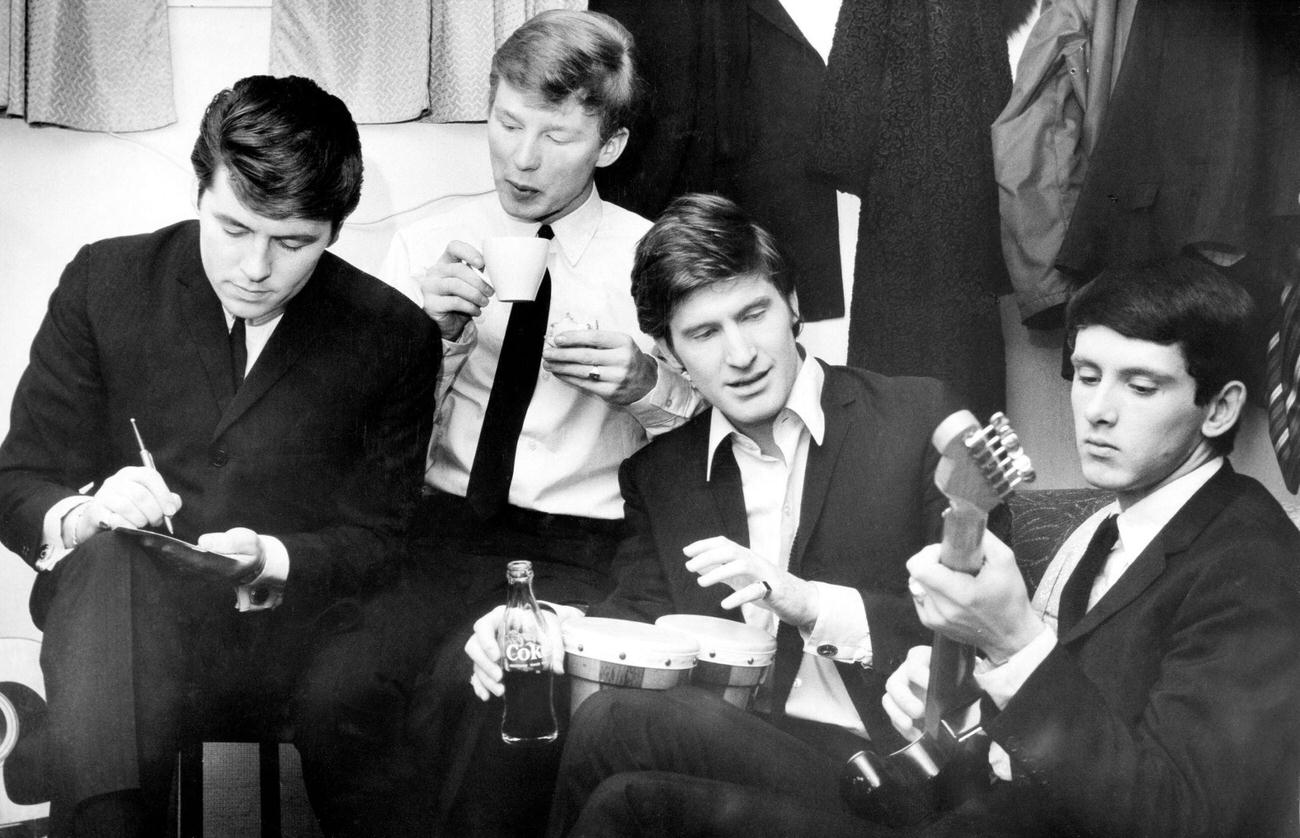
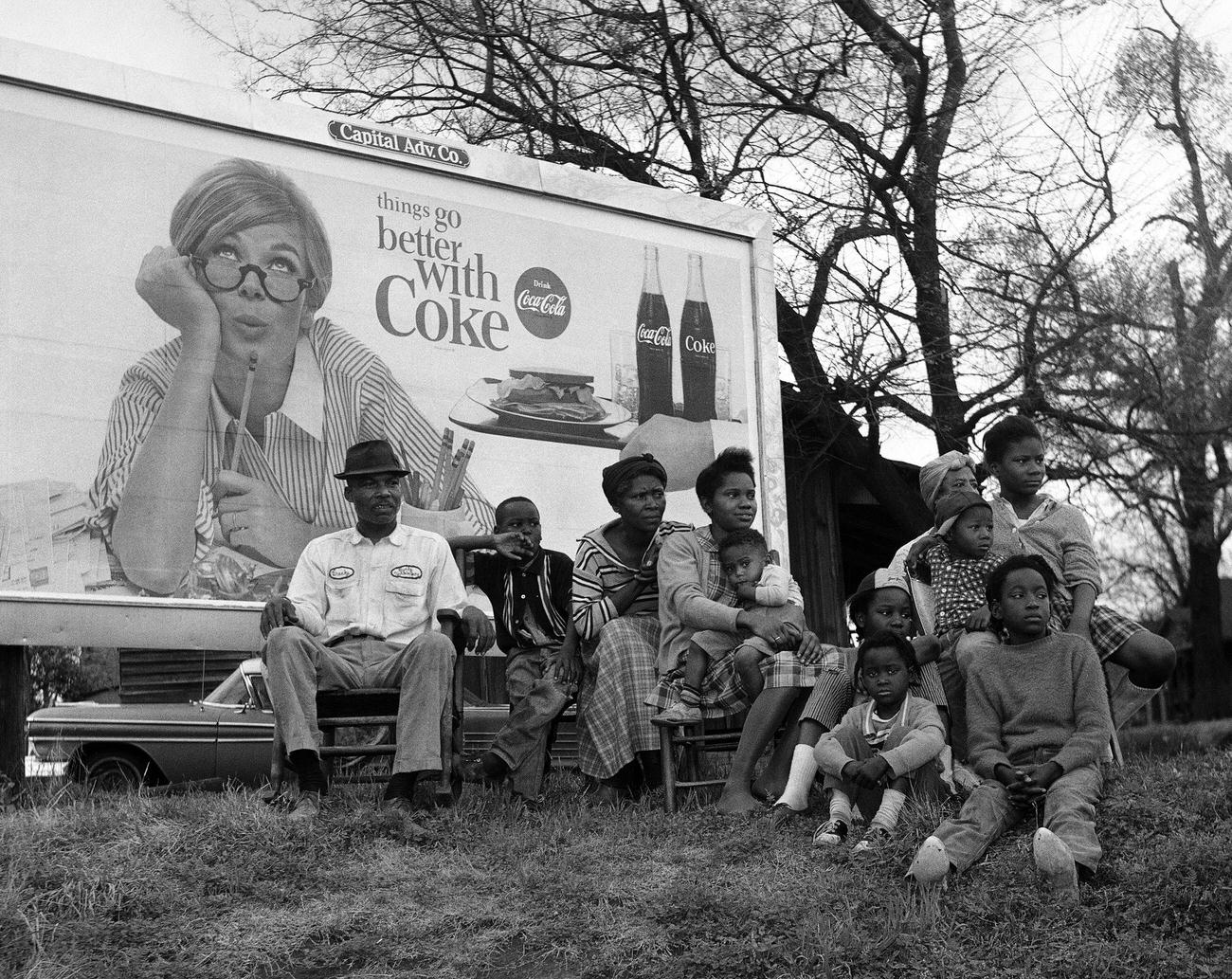
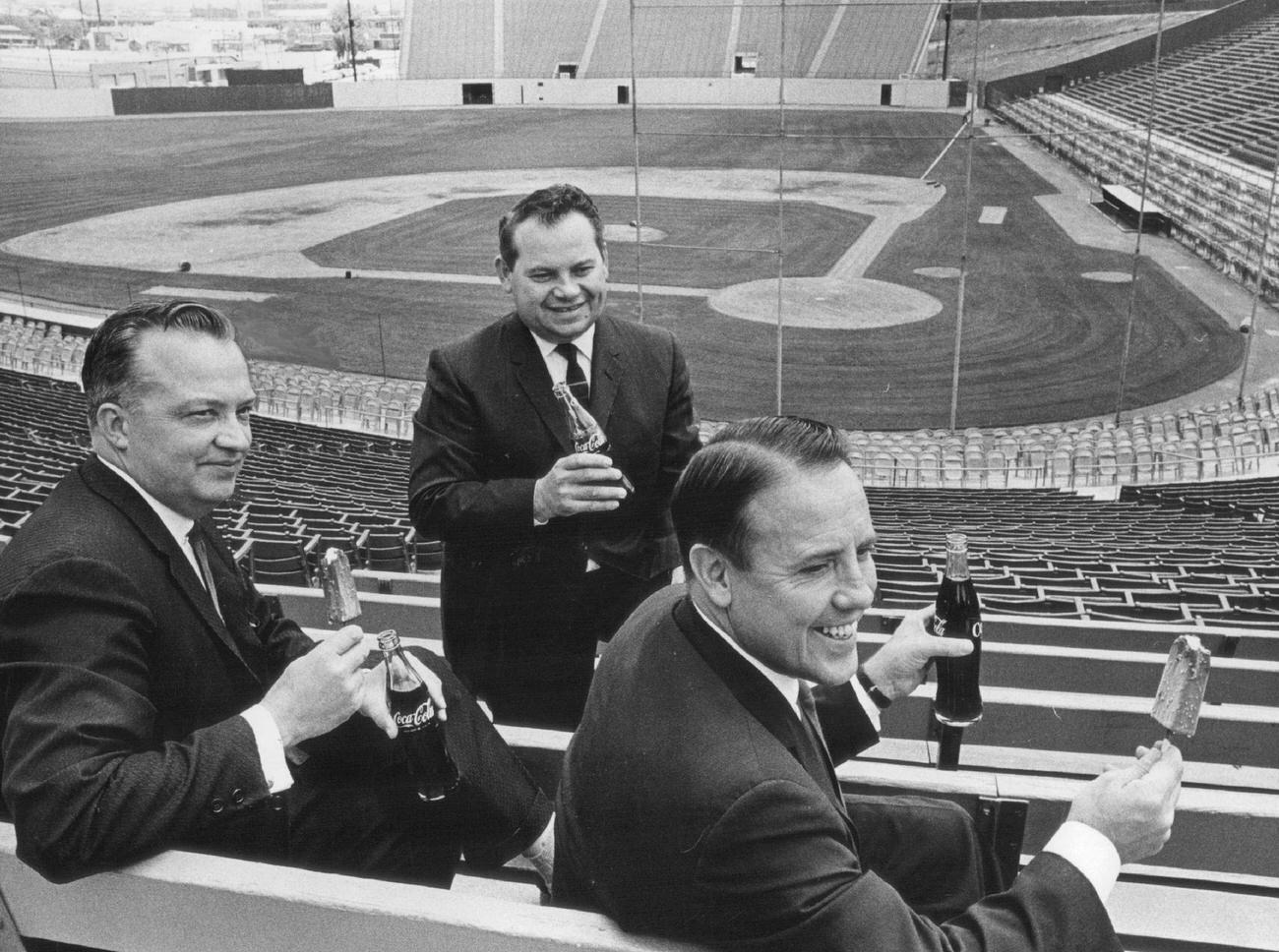
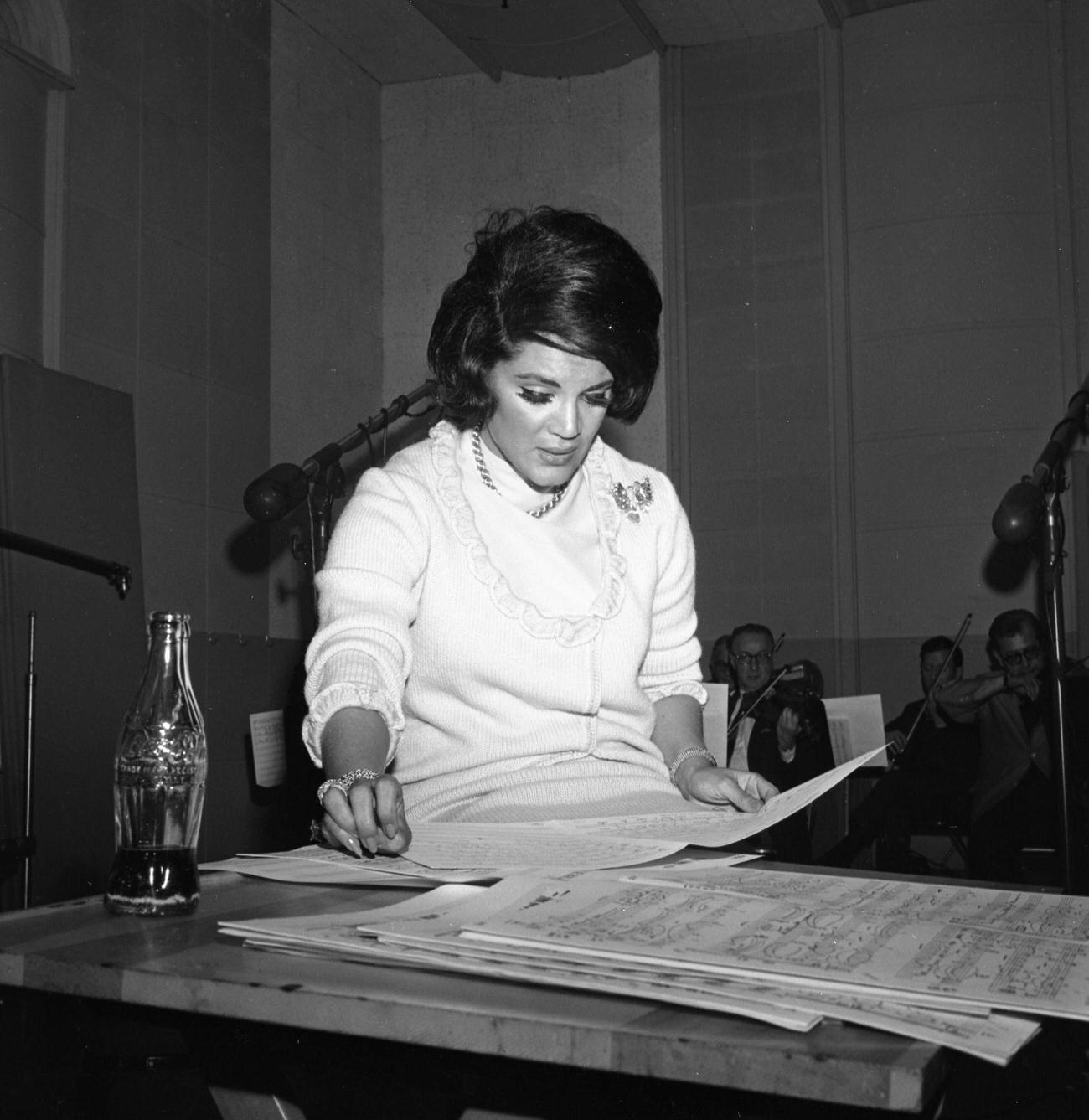
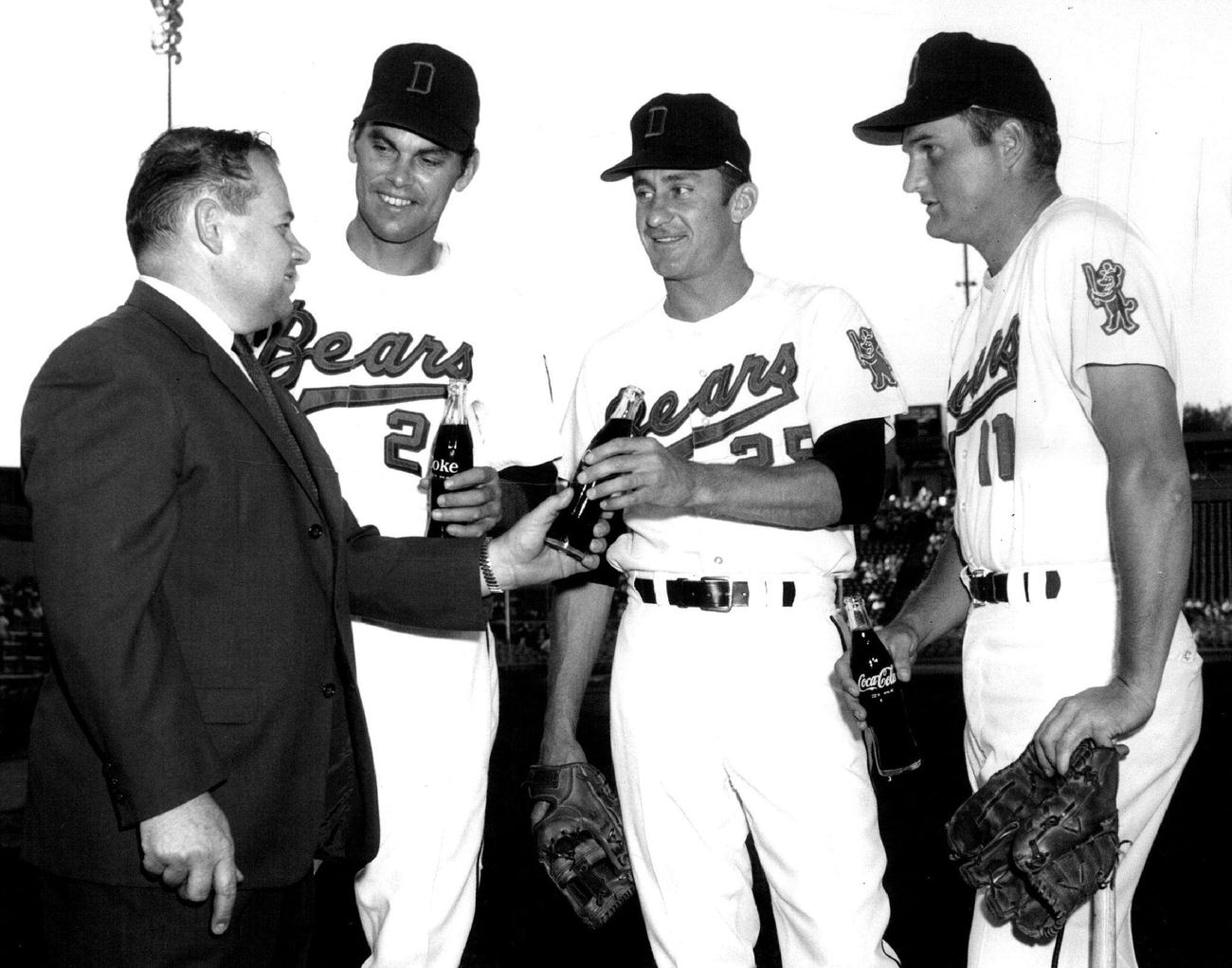
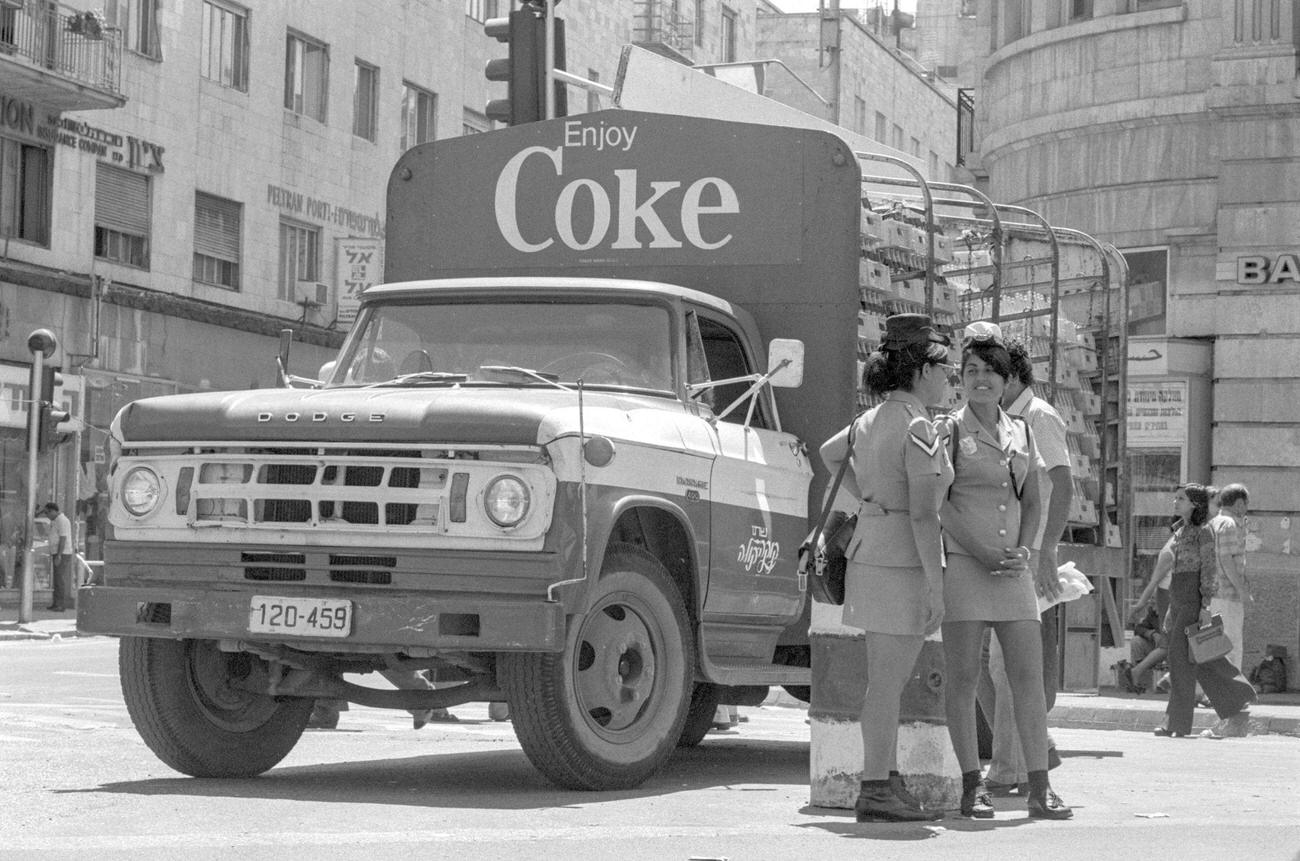
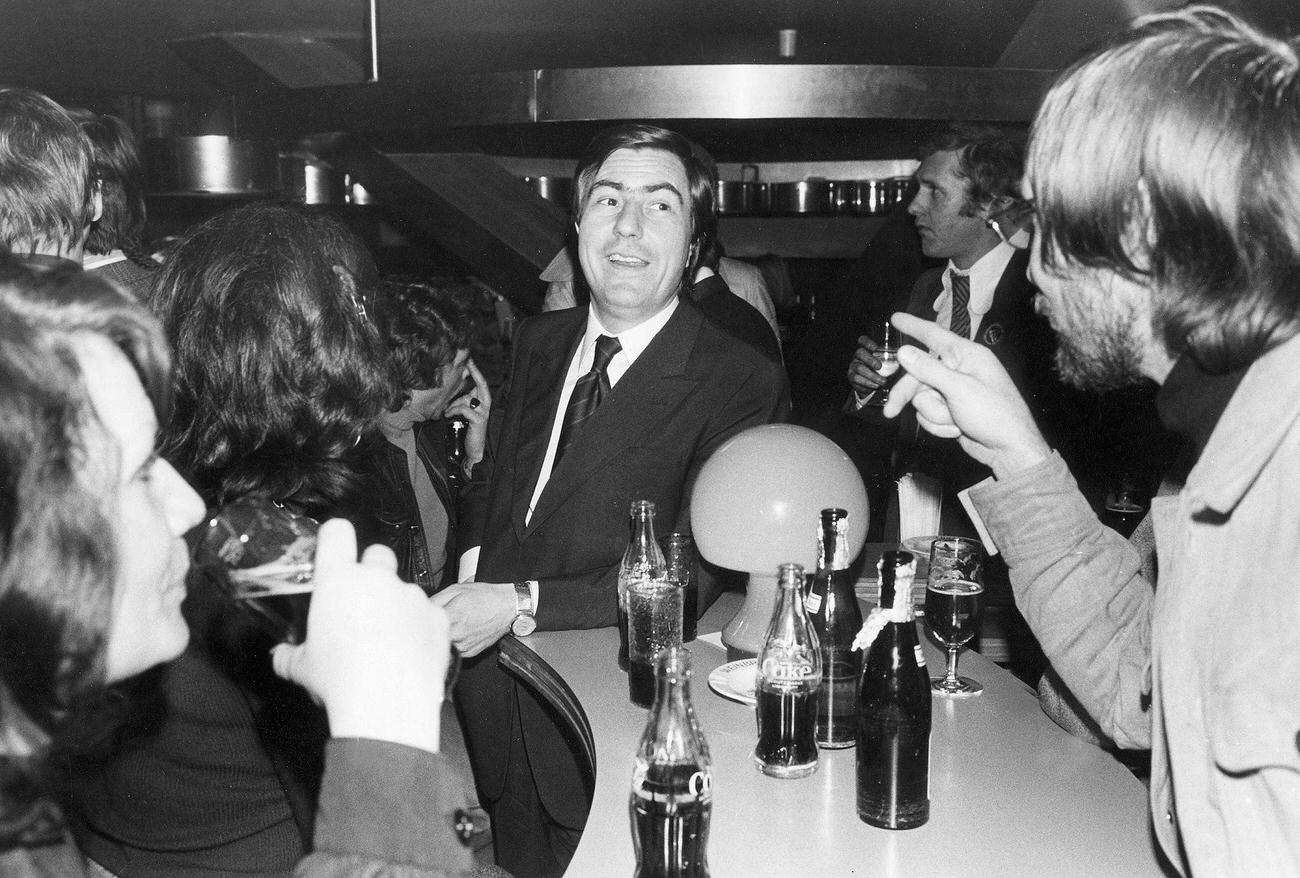
The Searchers band members at the Coventry Theatre show, 1964.African American family watching the Selma To Montgomery Civil Rights March, March 25, 1965.Denver Bears Clinic officials sampling refreshments, 1965.Connie Francis recording with a bottle of Coca-Cola, New York, 1966.Denver Coca-Cola Bottling Co. enjoying a break with Denver Bears’ stars, 1968.Coca-Cola truck in Jerusalem, Palestine, 1974.CDU politician Jürgen Wohlrabe at a party in the ‘Cheetah’ disco, Kreuzberg, February 1975.
Kevin Clark is a historian and writer who is passionate about sharing the stories and significance behind historical photos. He loves to explore hidden histories and cultural contexts behind the images, providing a unique insight into the past.