
After World War I, Paris exhaled. The city that had lived under the shadow of war threw itself into a decade of creative energy, and nowhere was that energy more alive than in its cafes. These weren’t simply places to grab a coffee. They were the living rooms of an entire intellectual class — writers, painters, philosophers, and poets who treated the marble-topped tables of the Left Bank like office desks and debate halls rolled into one.
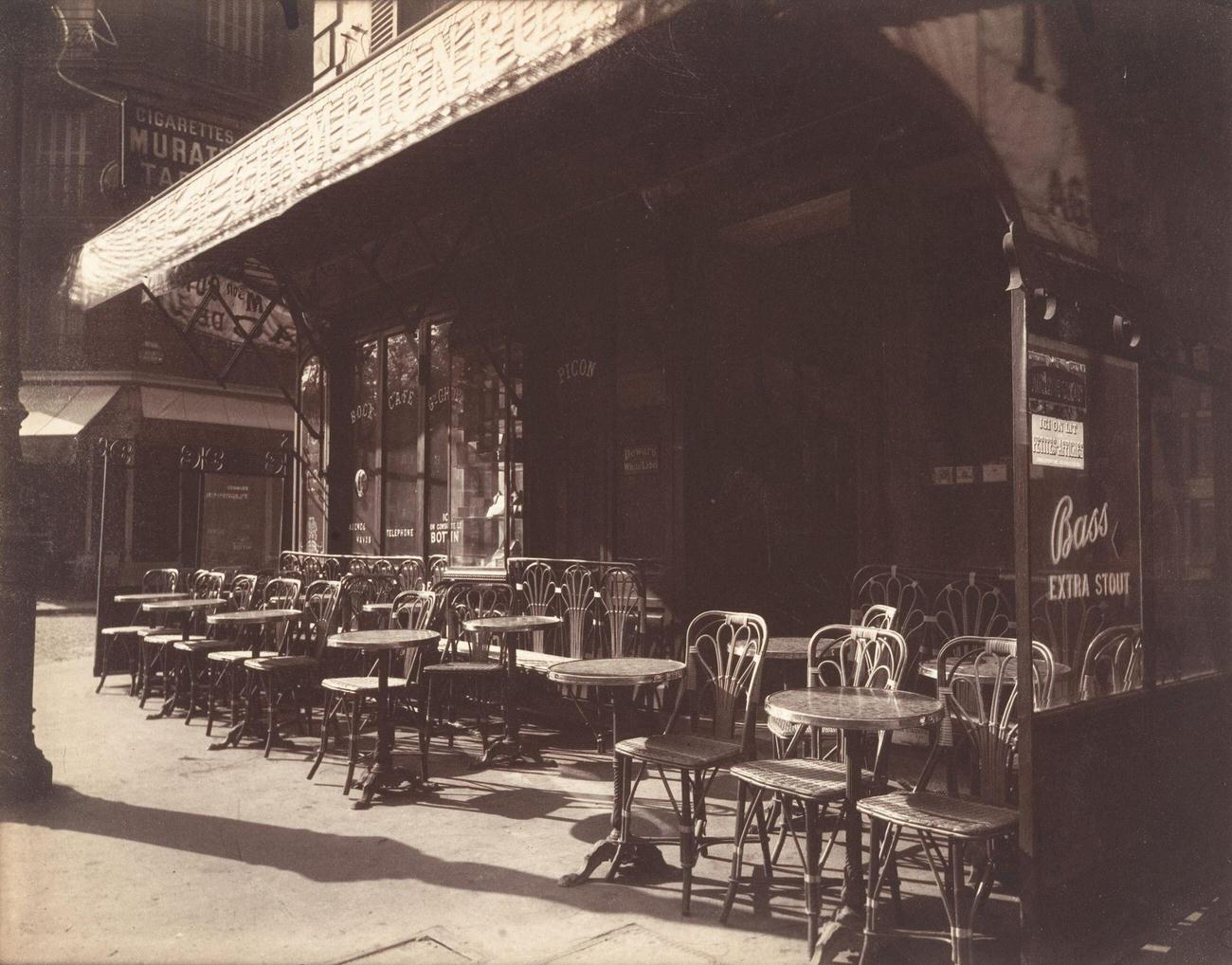
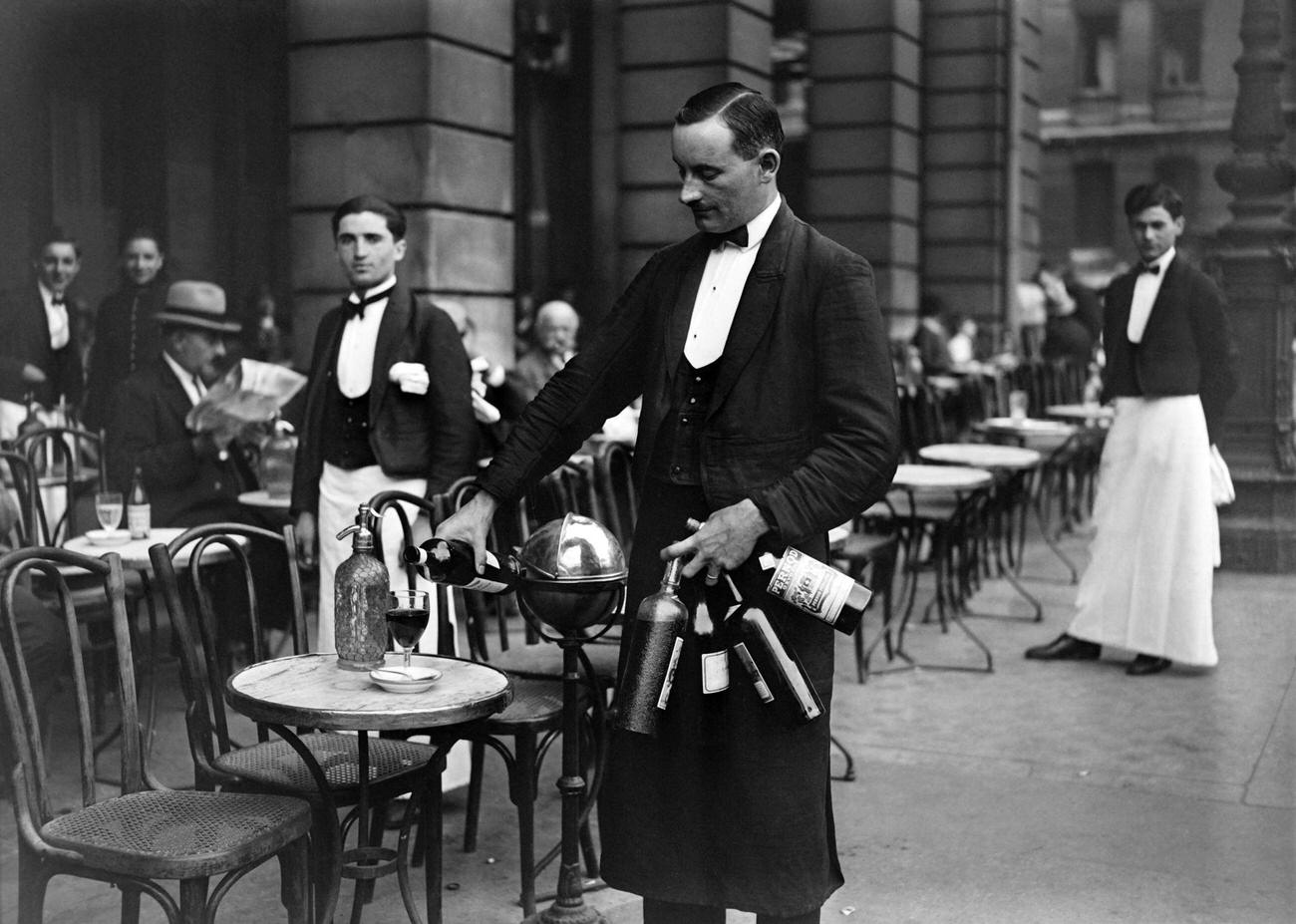
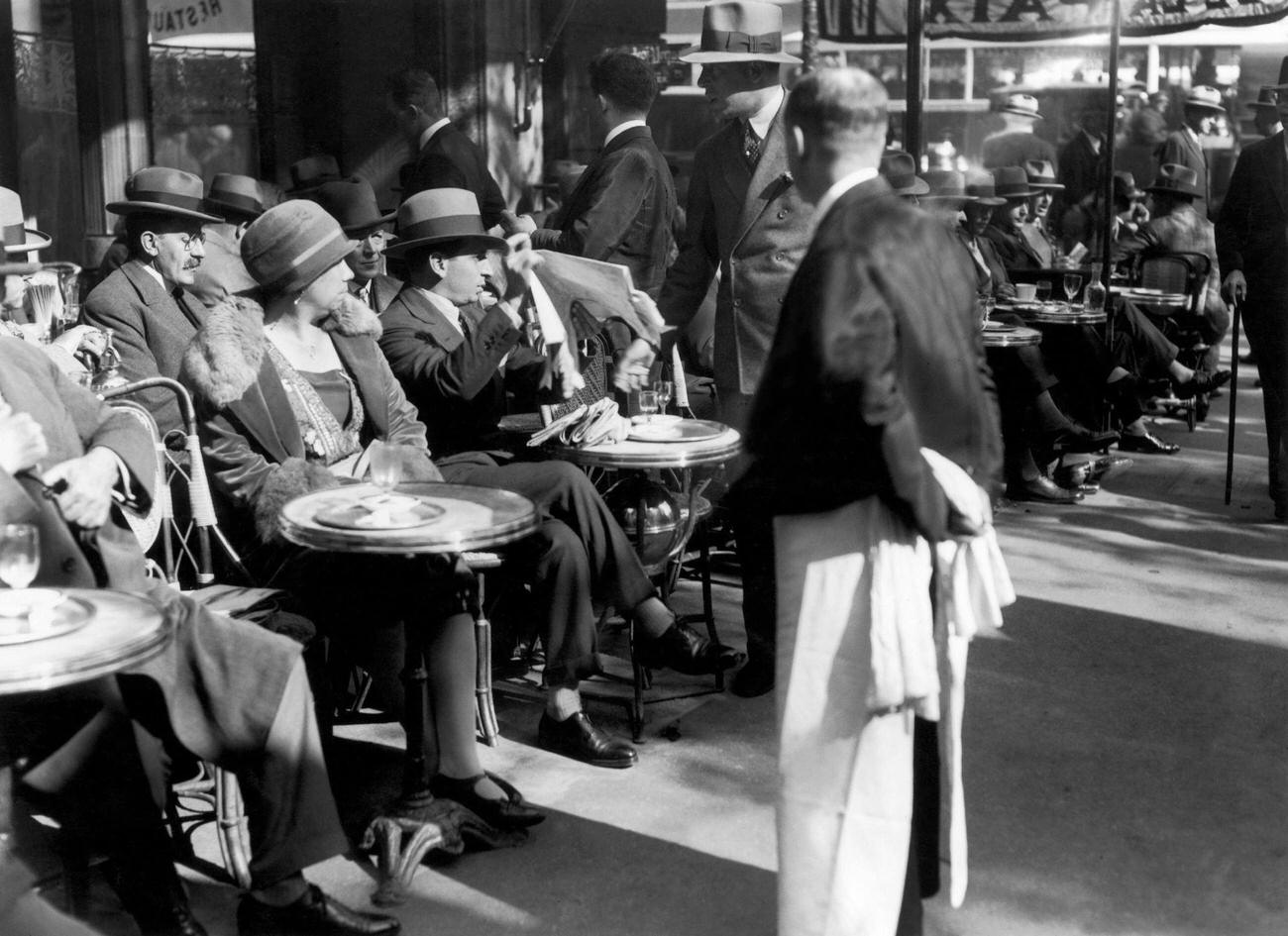
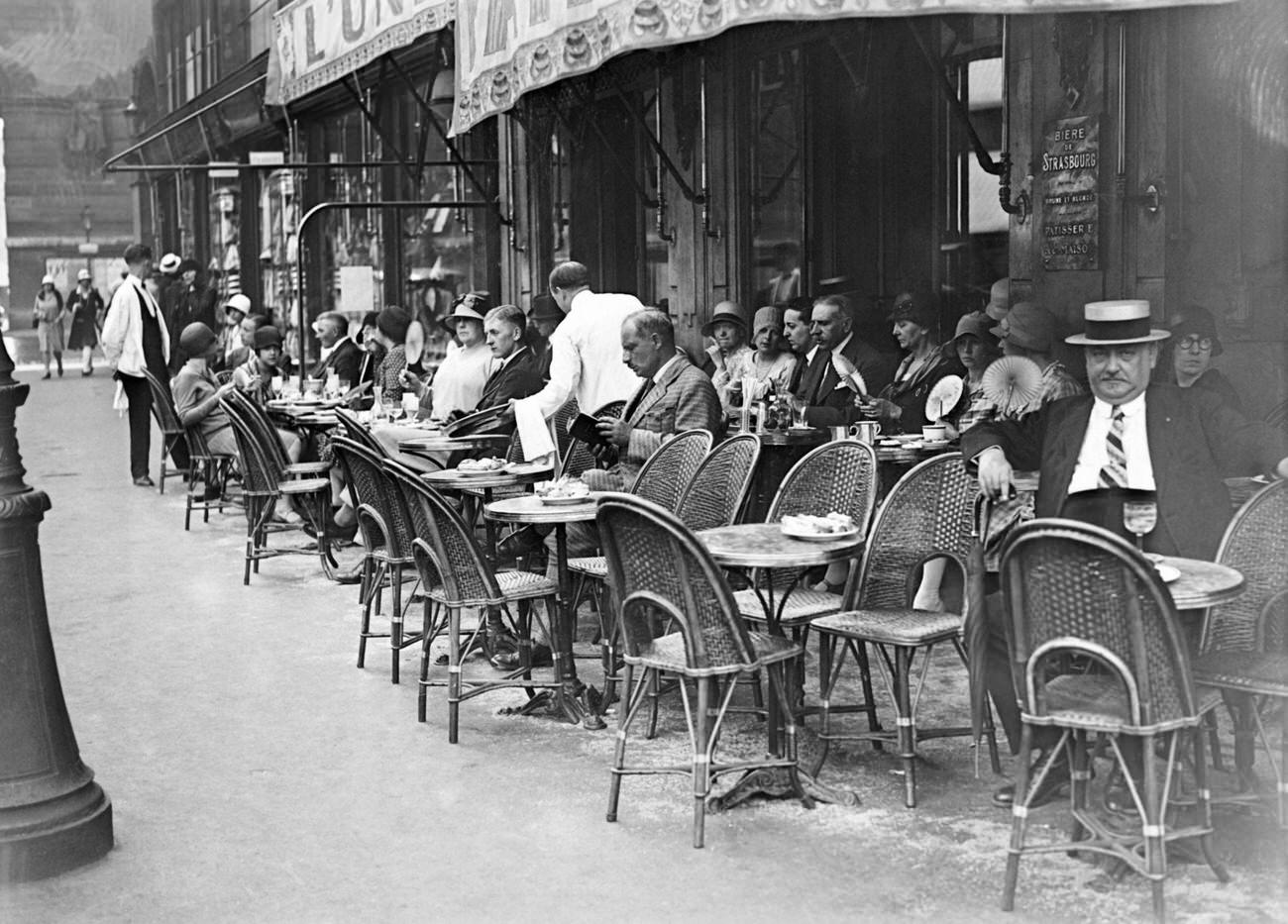
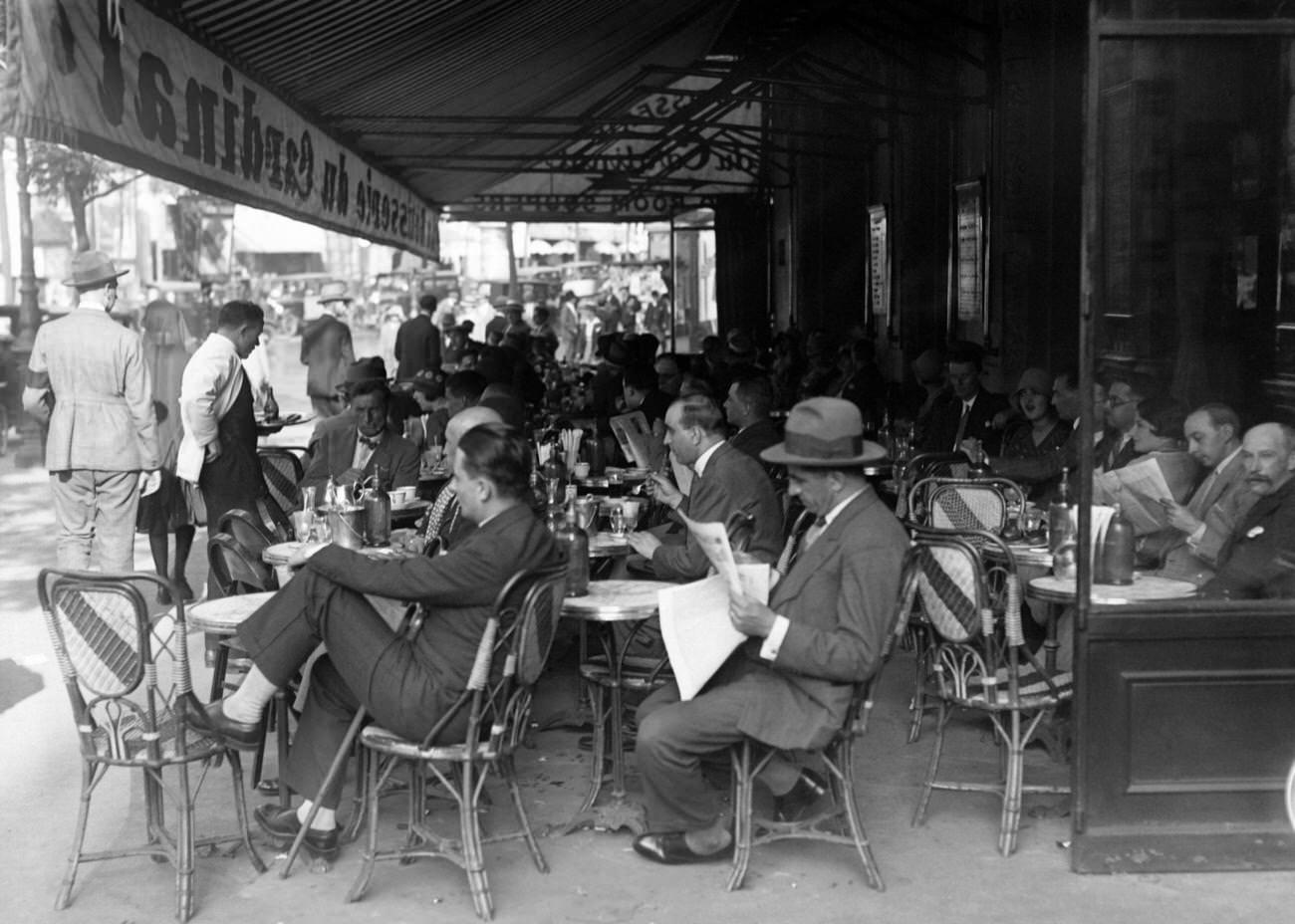
The broad boulevards of Paris were lined with these establishments from Montparnasse to the Opera district. Each one had its own character. Some were grand and ornate, their gilded interiors reflecting gas lamps in floor-to-ceiling mirrors. Others were simple pavement spots with a few chairs spilling onto the sidewalk, where a waiter in a long white apron balanced a tray of drinks through the crowd.
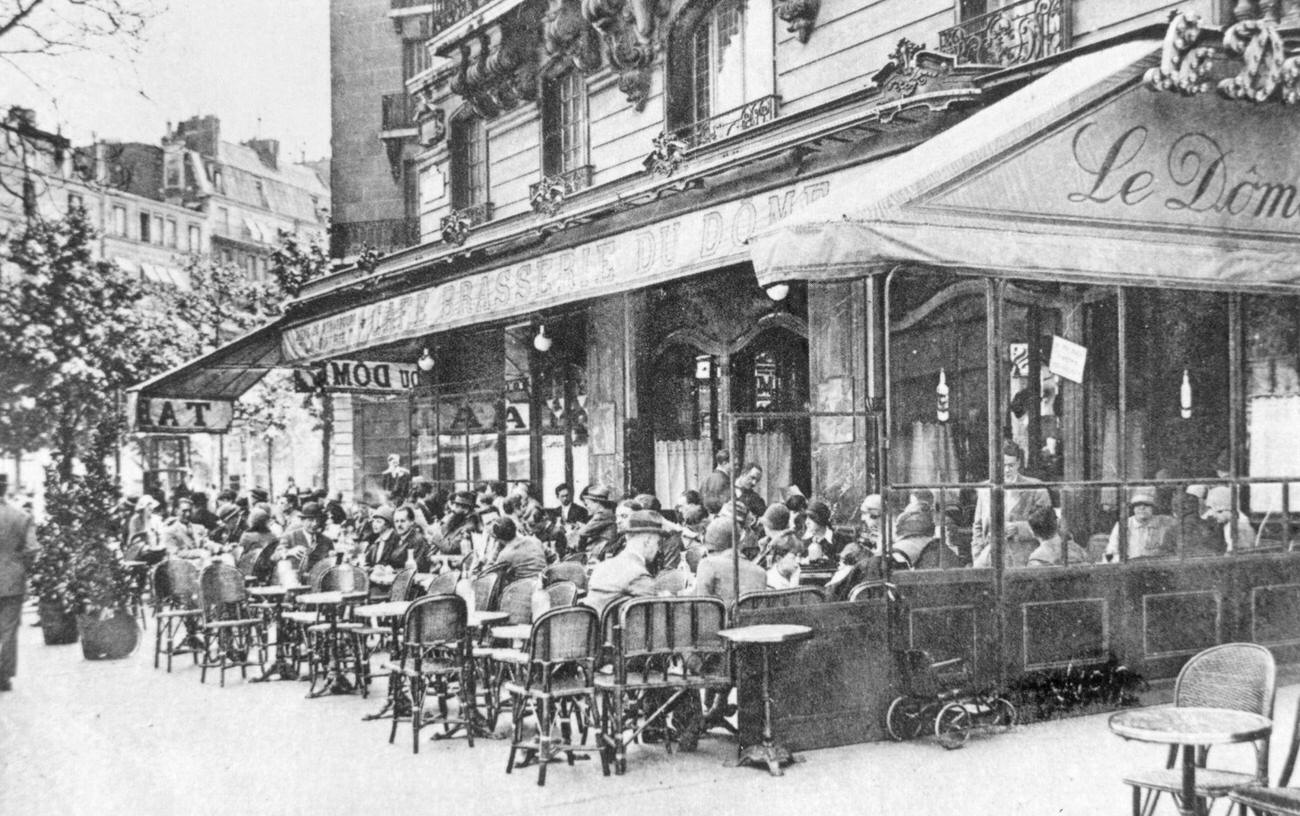
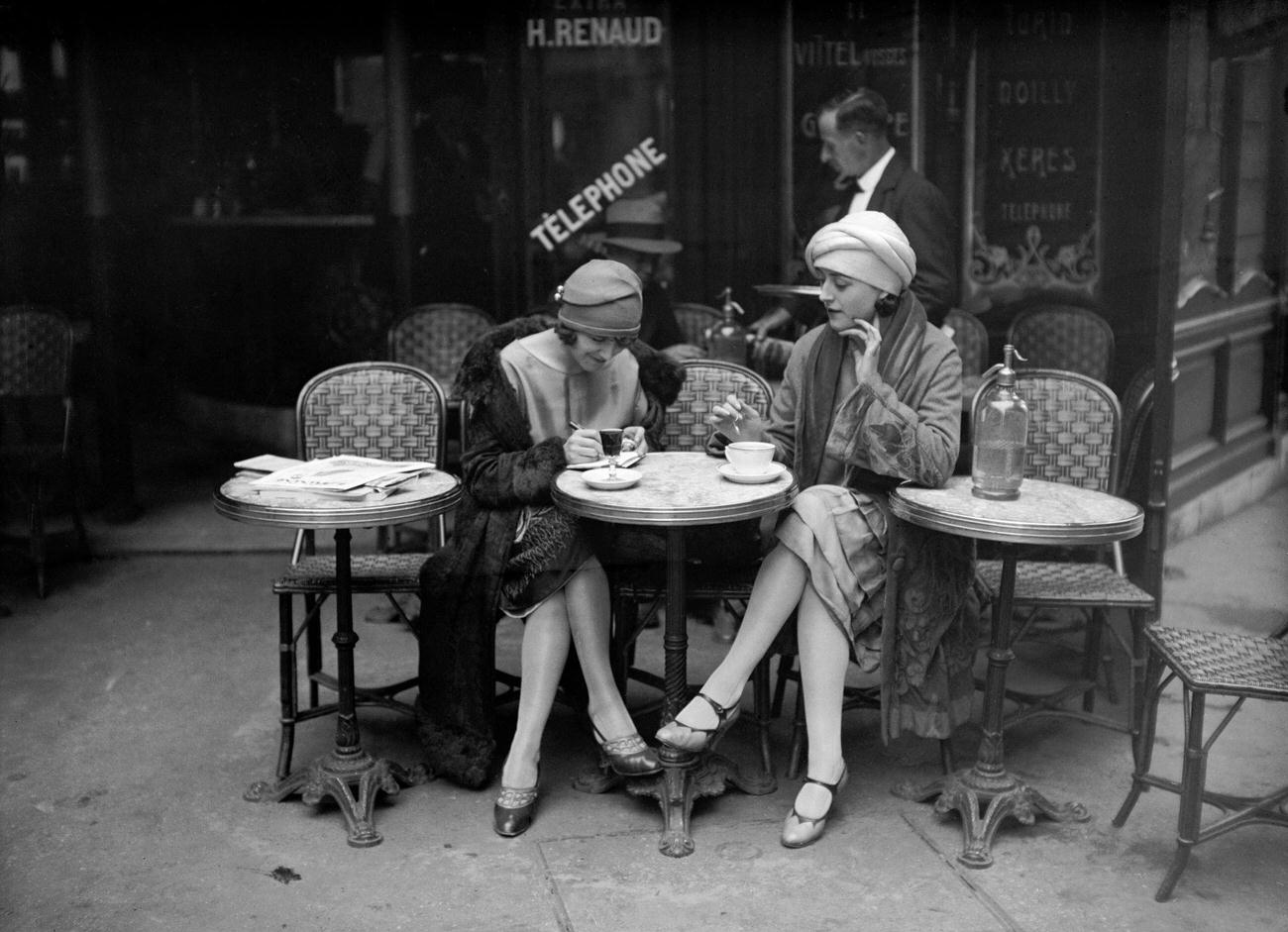
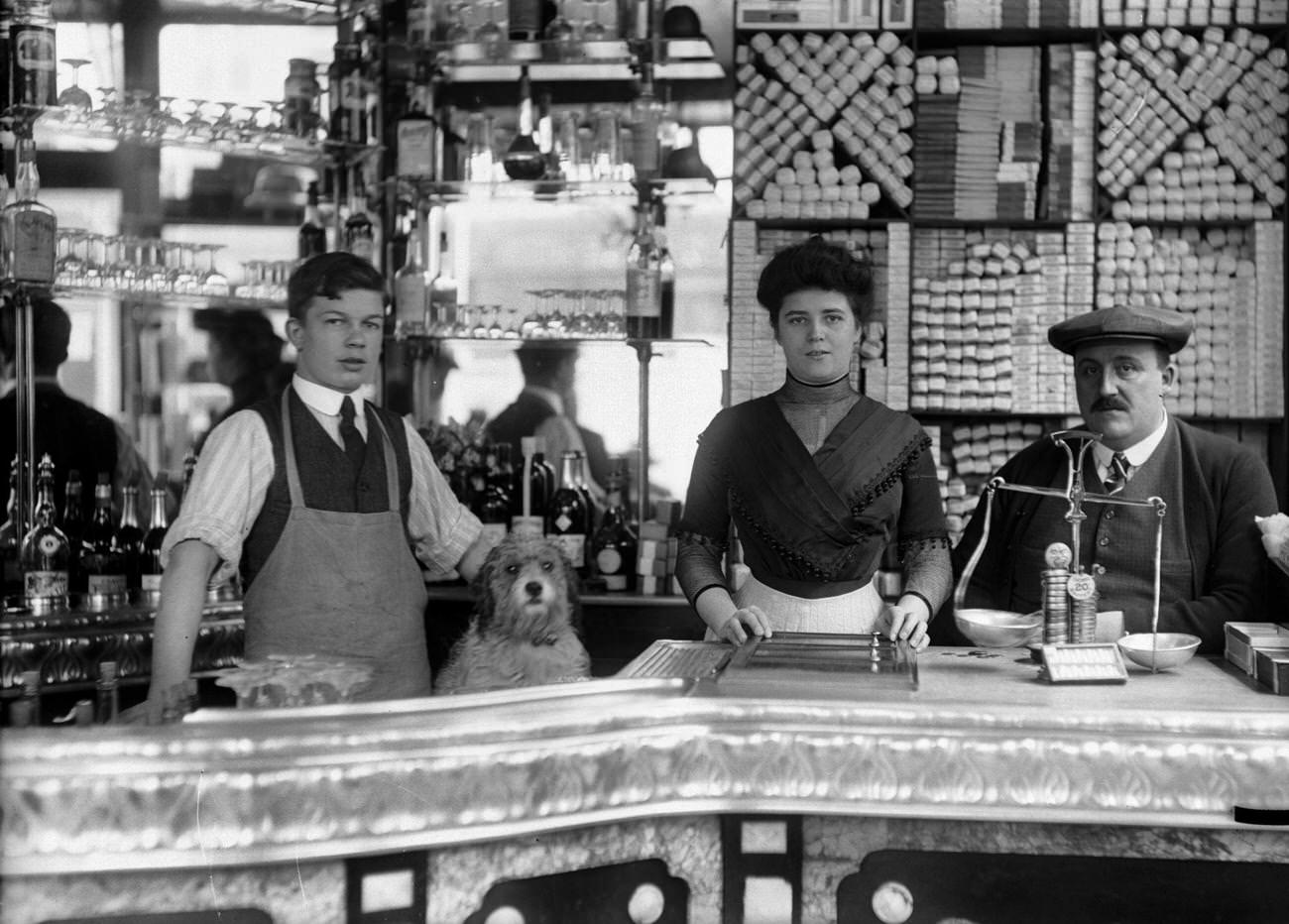
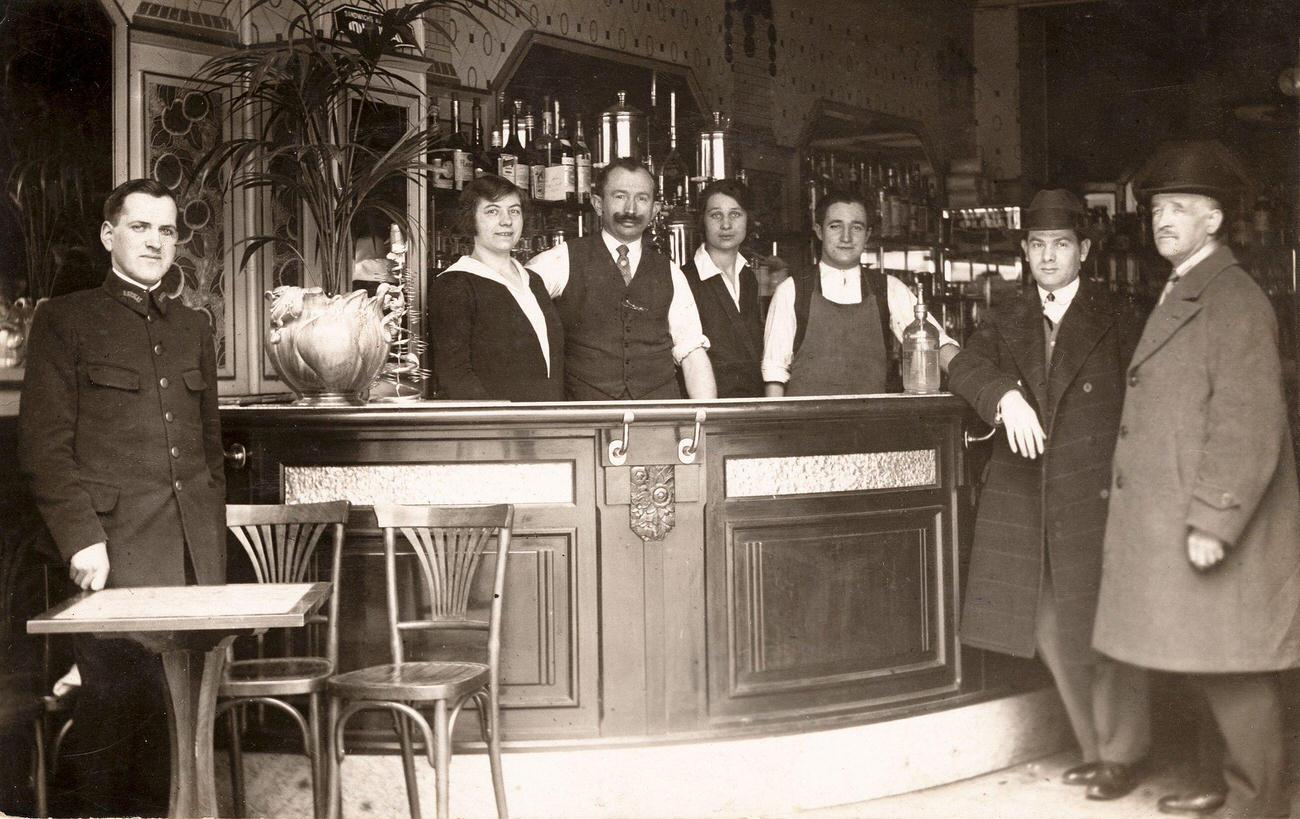
Inside, the atmosphere was equally varied. A cafe-tobacco shop on a side street might serve working-class regulars at a zinc bar, while a few blocks away, a grand brasserie hosted a completely different crowd. The interiors of many of these cafes were built in the Art Nouveau and Art Deco styles that defined the era — ornate tile work, curved woodwork, mirrored walls, and plush seating designed to keep patrons comfortable for hours.
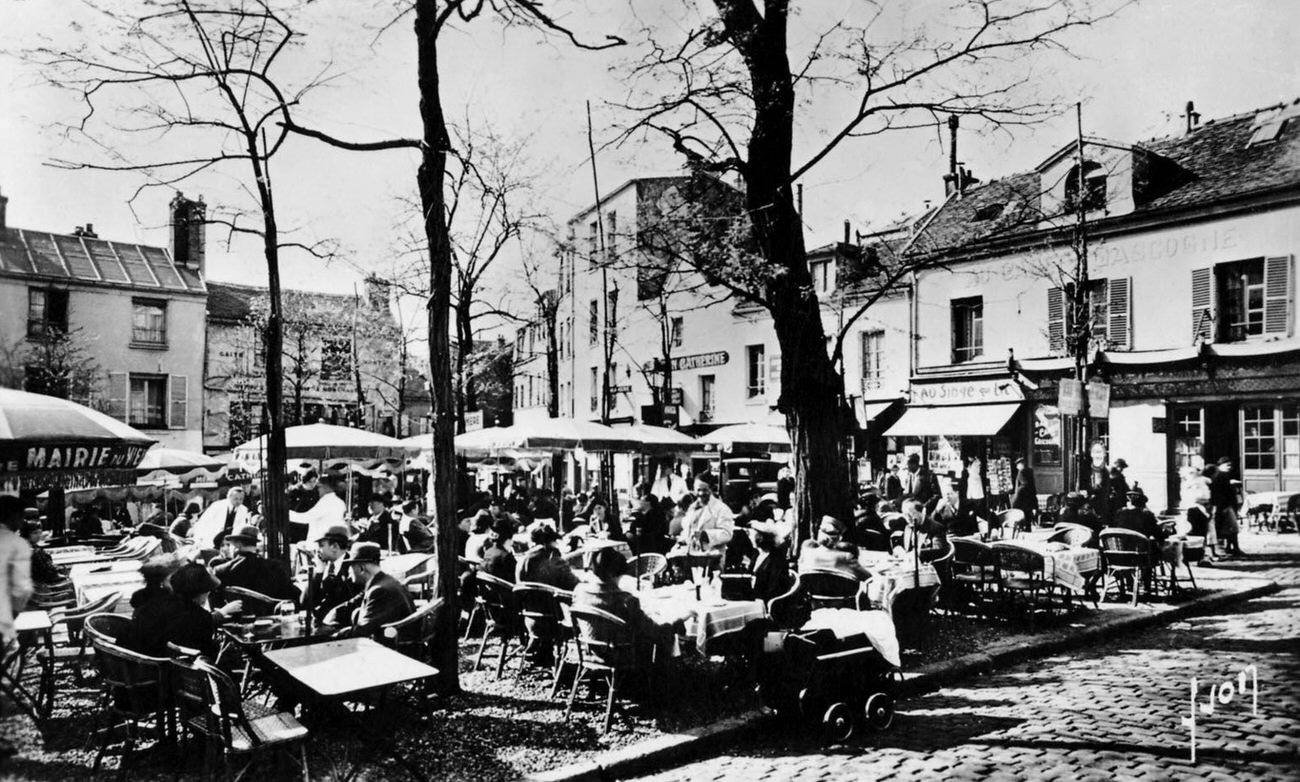
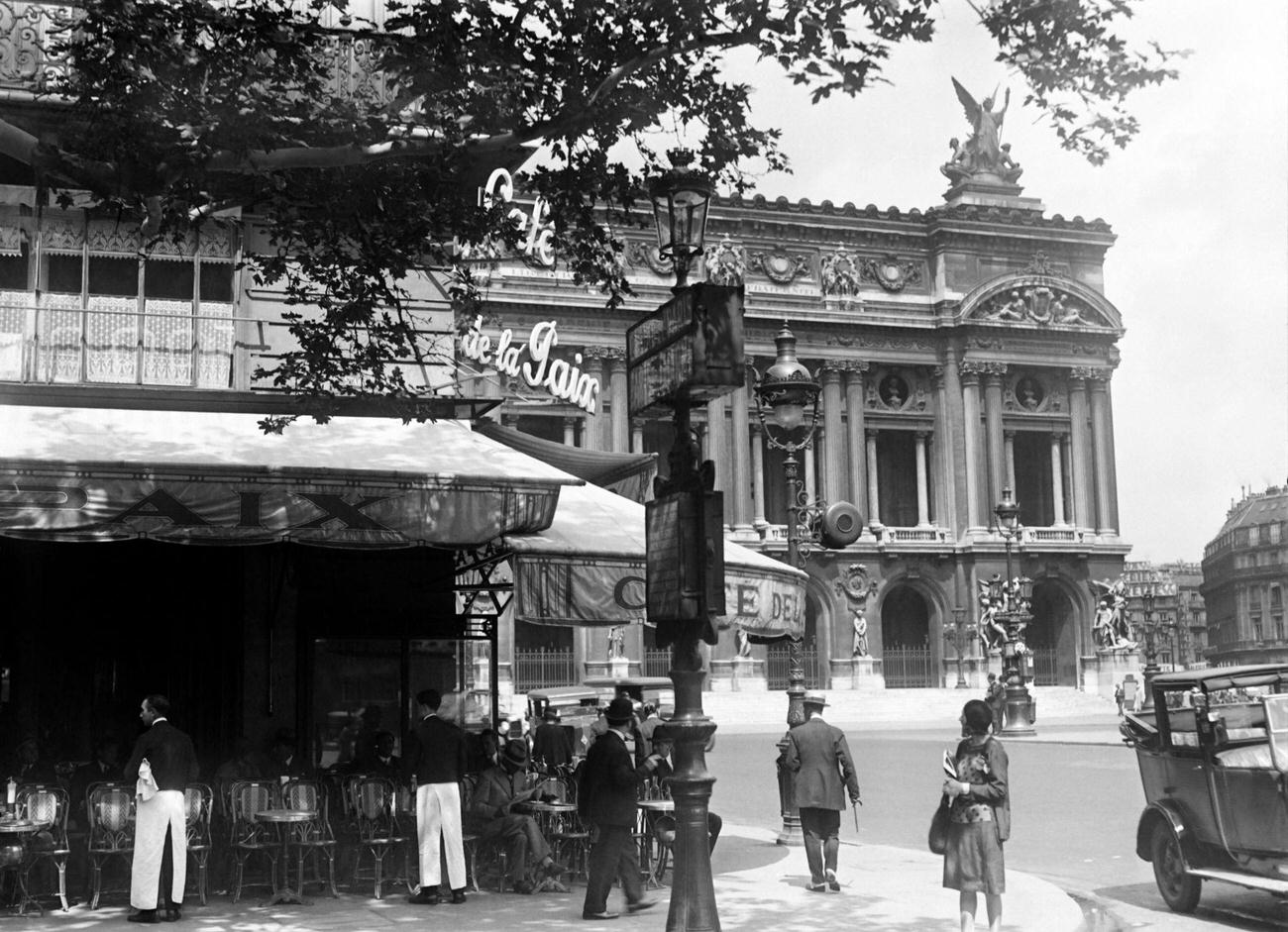
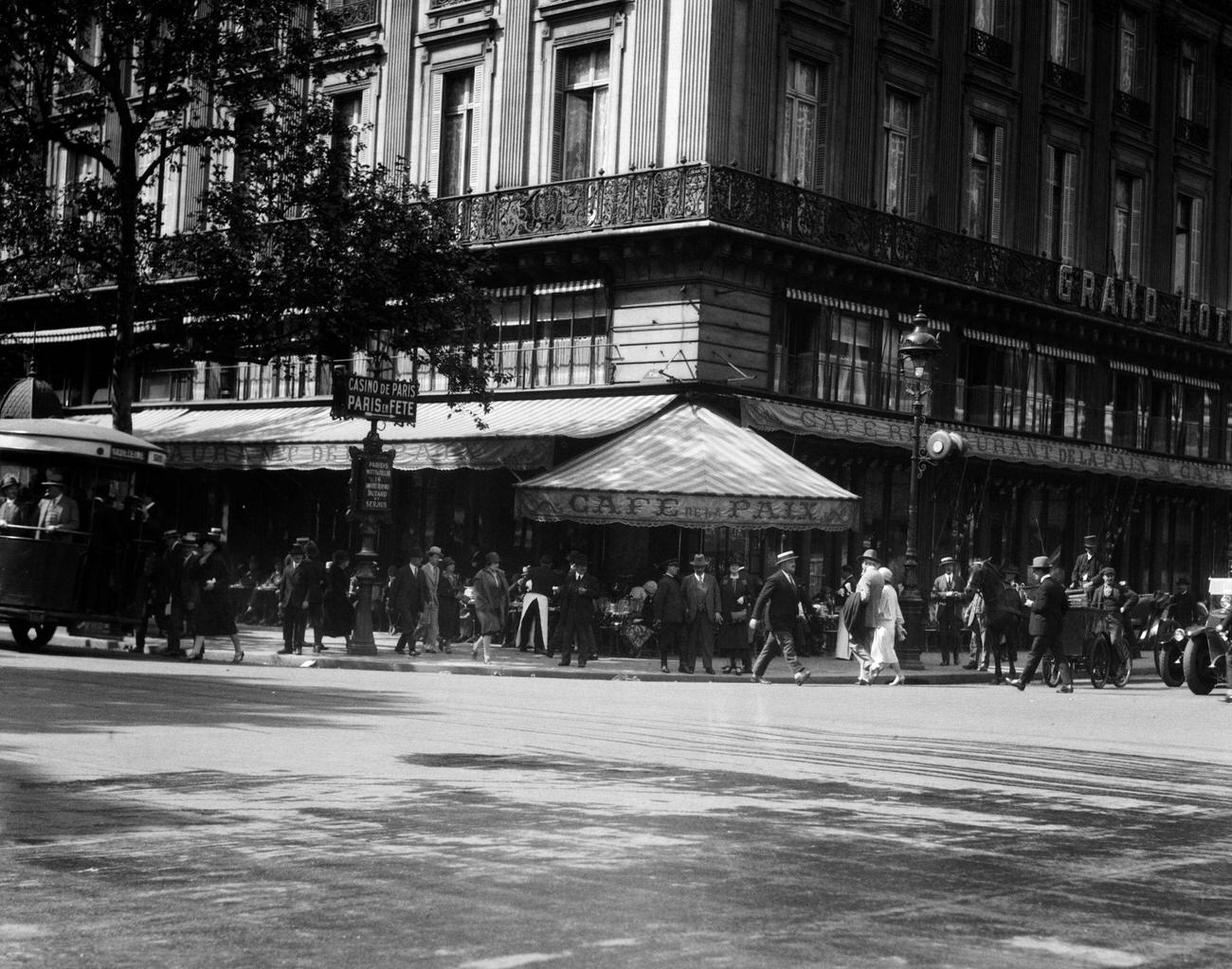
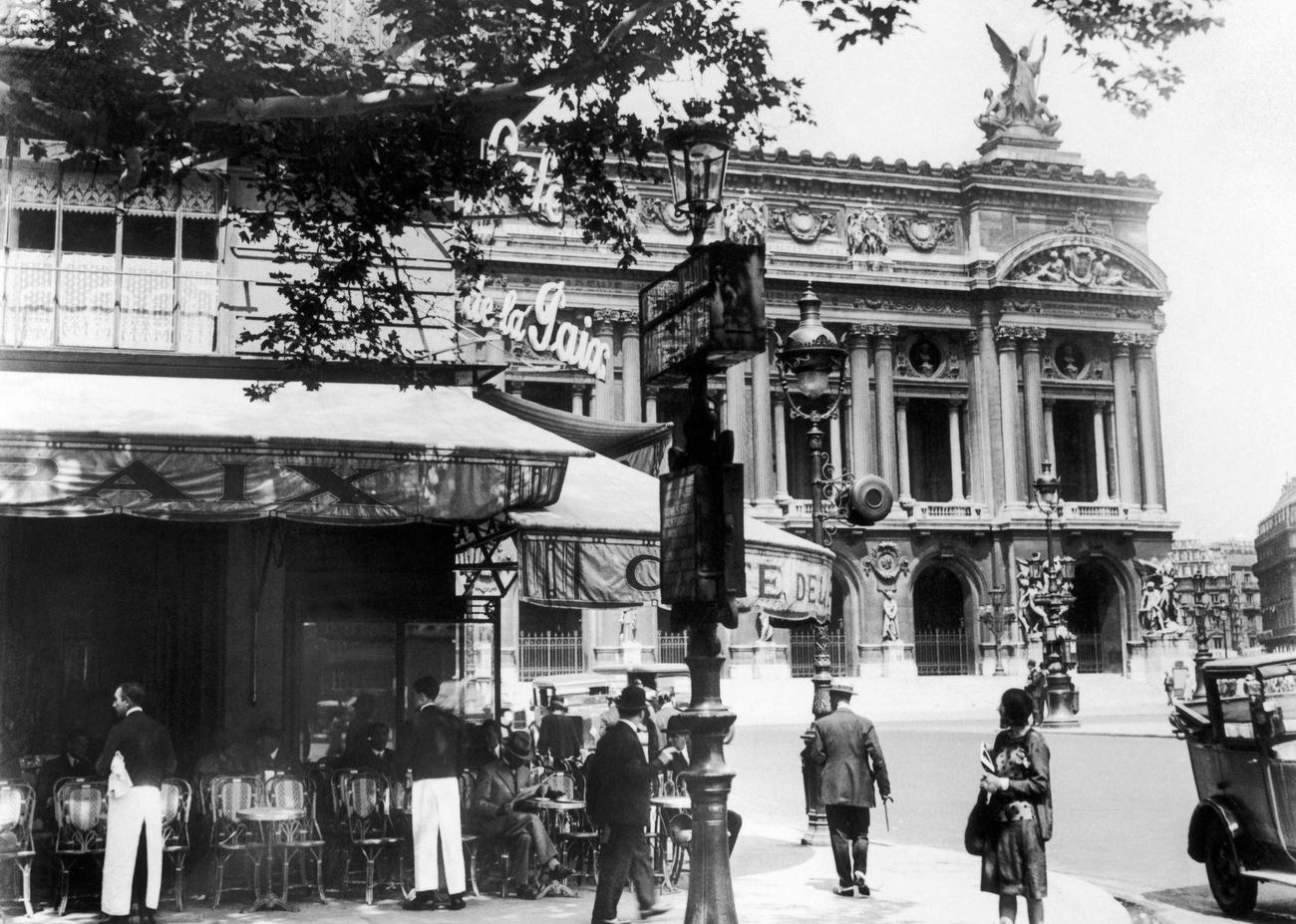
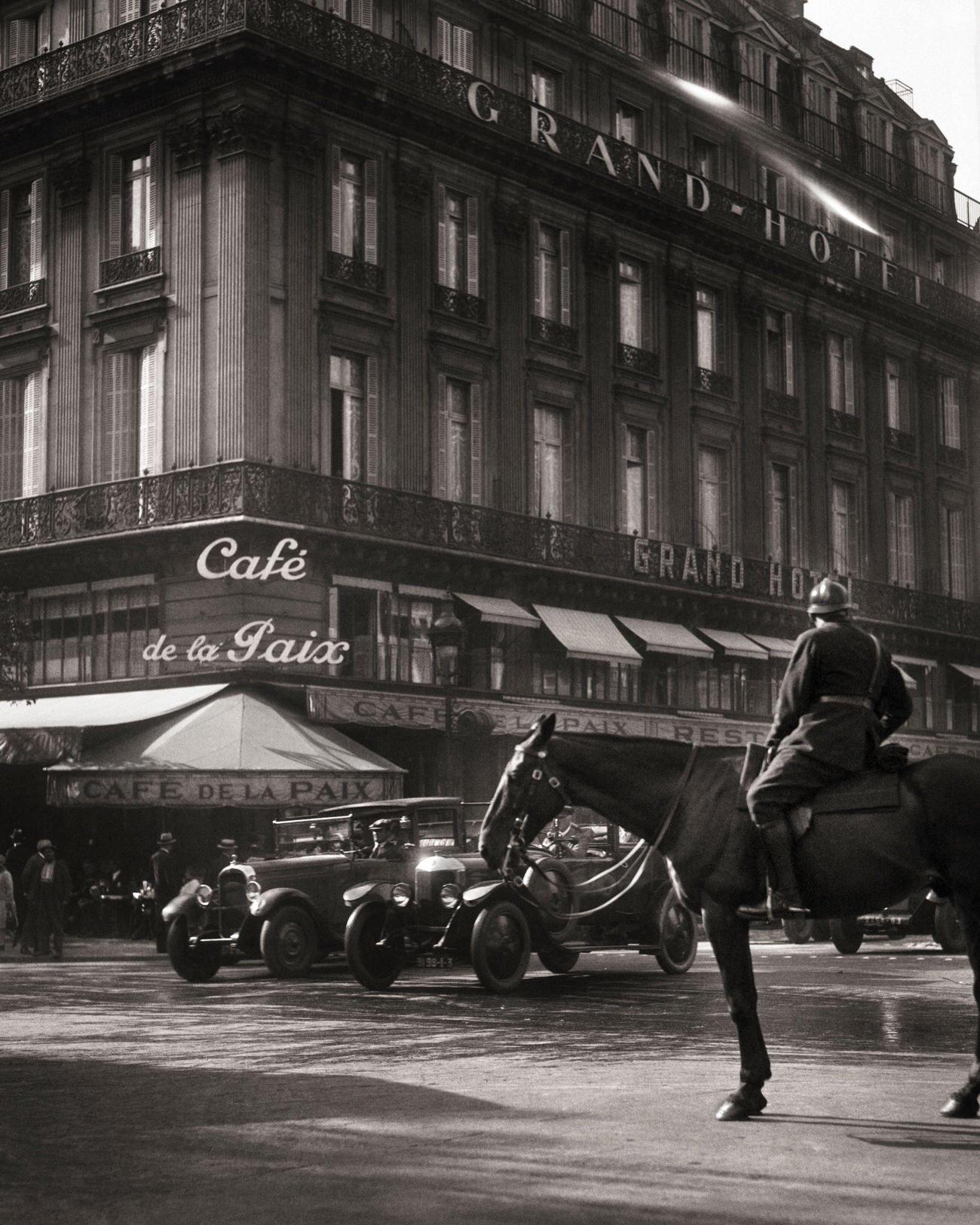
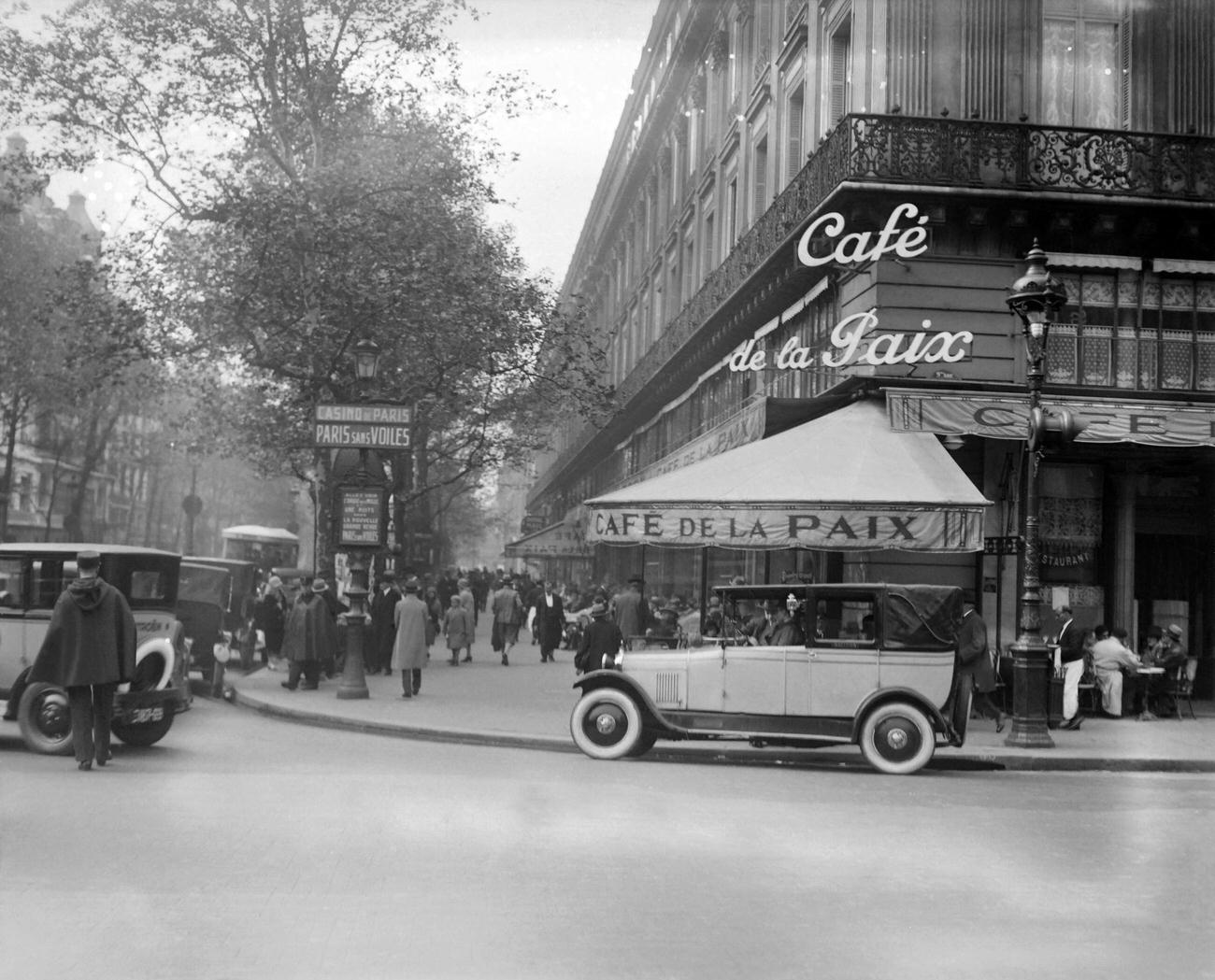
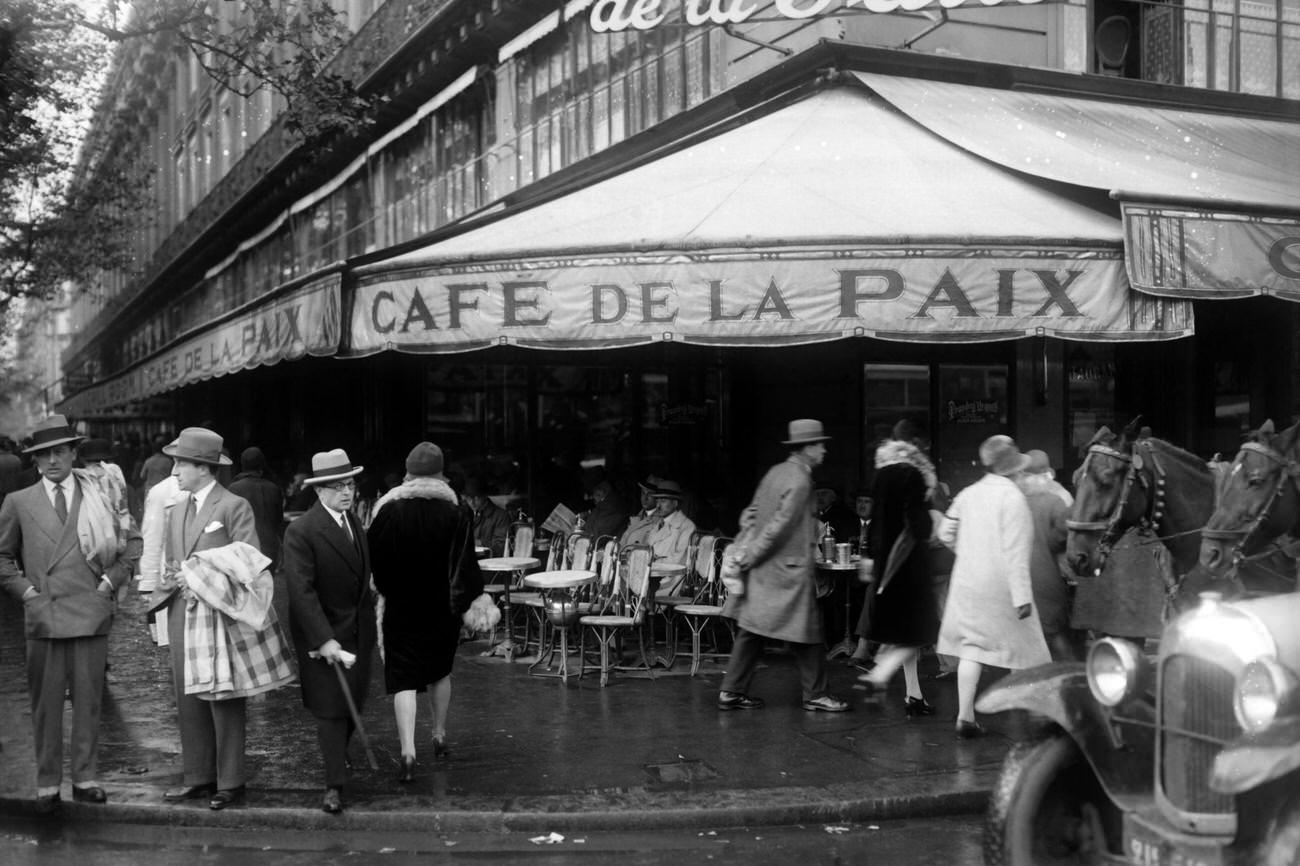
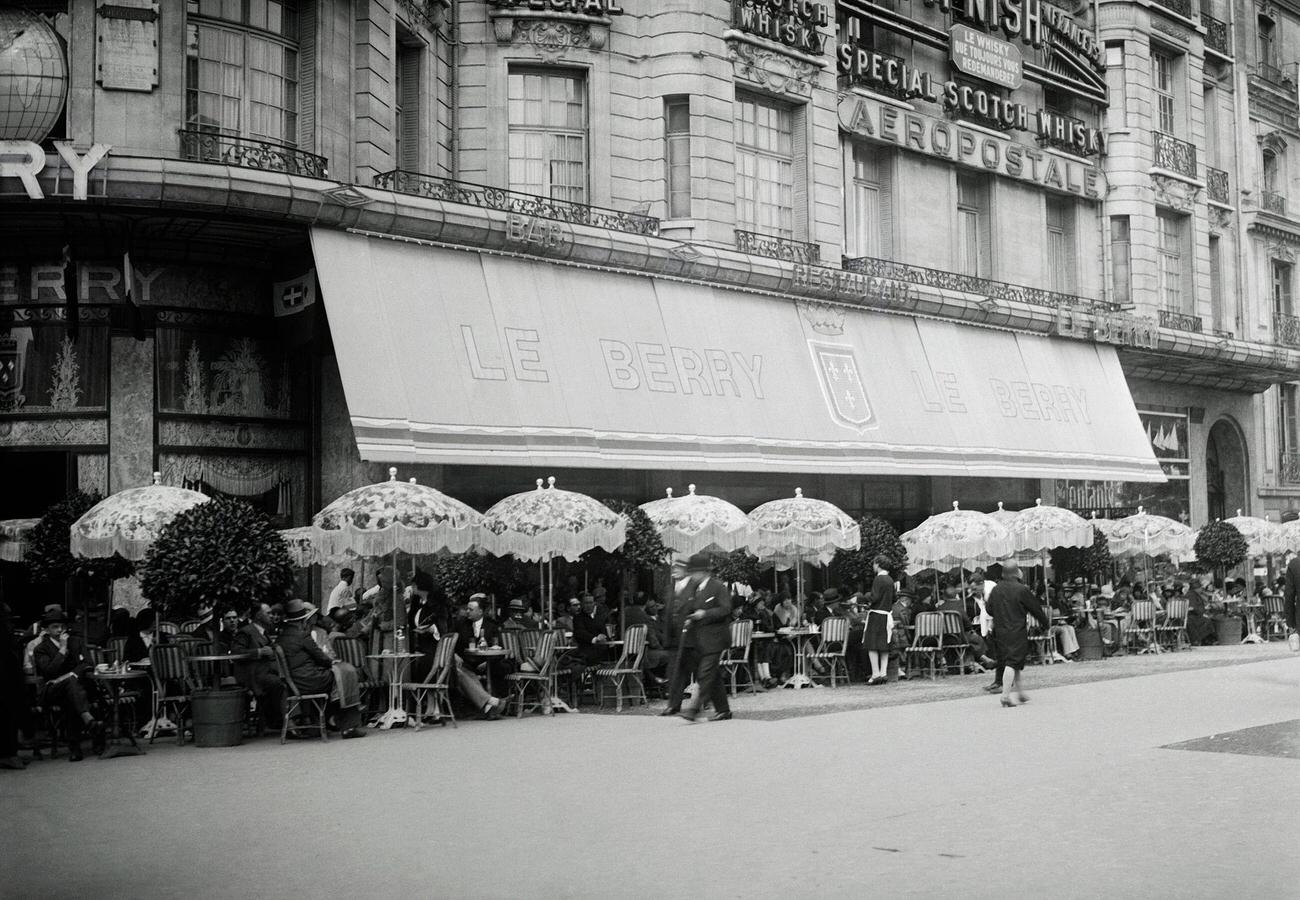
Few cafes in Paris carried more prestige than the Café de la Paix, situated near the Palais Garnier opera house. Its terrace was one of the most watched corners in the city — a place to see and be seen. Opened in 1862 and renovated in the Second Empire style, it drew a constant stream of diplomats, tourists, artists, and socialites throughout the decade.
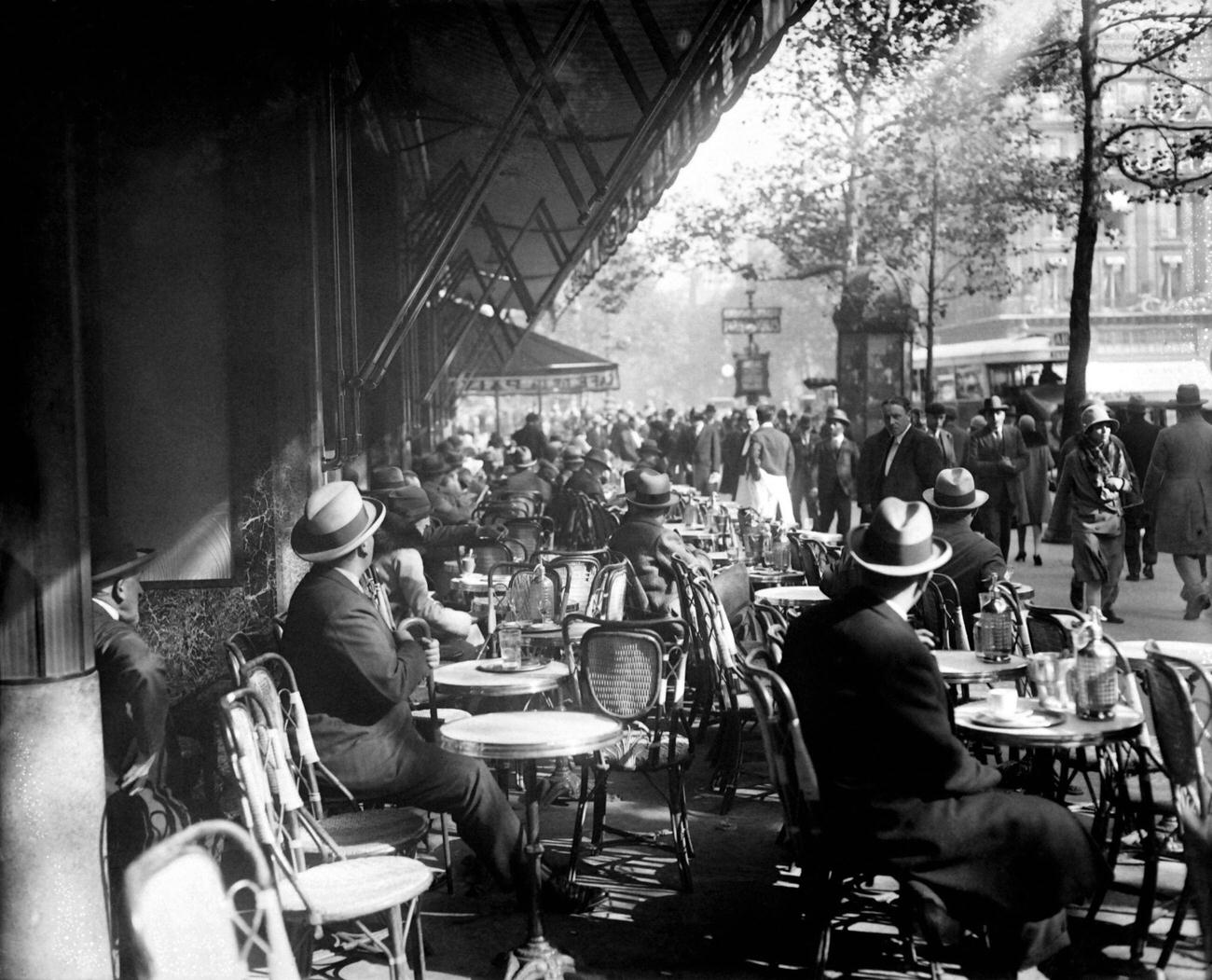
The cafes of the Left Bank were especially important to the artistic community. Surrealism and Dadaism — two of the most radical art movements of the century — were shaped in conversations that took place at these very tables. Surrealist poet Robert Desnos was a regular fixture at cafe terraces, and photos from the period capture him exactly where he did much of his thinking: outdoors, amid the hum of Parisian street life.
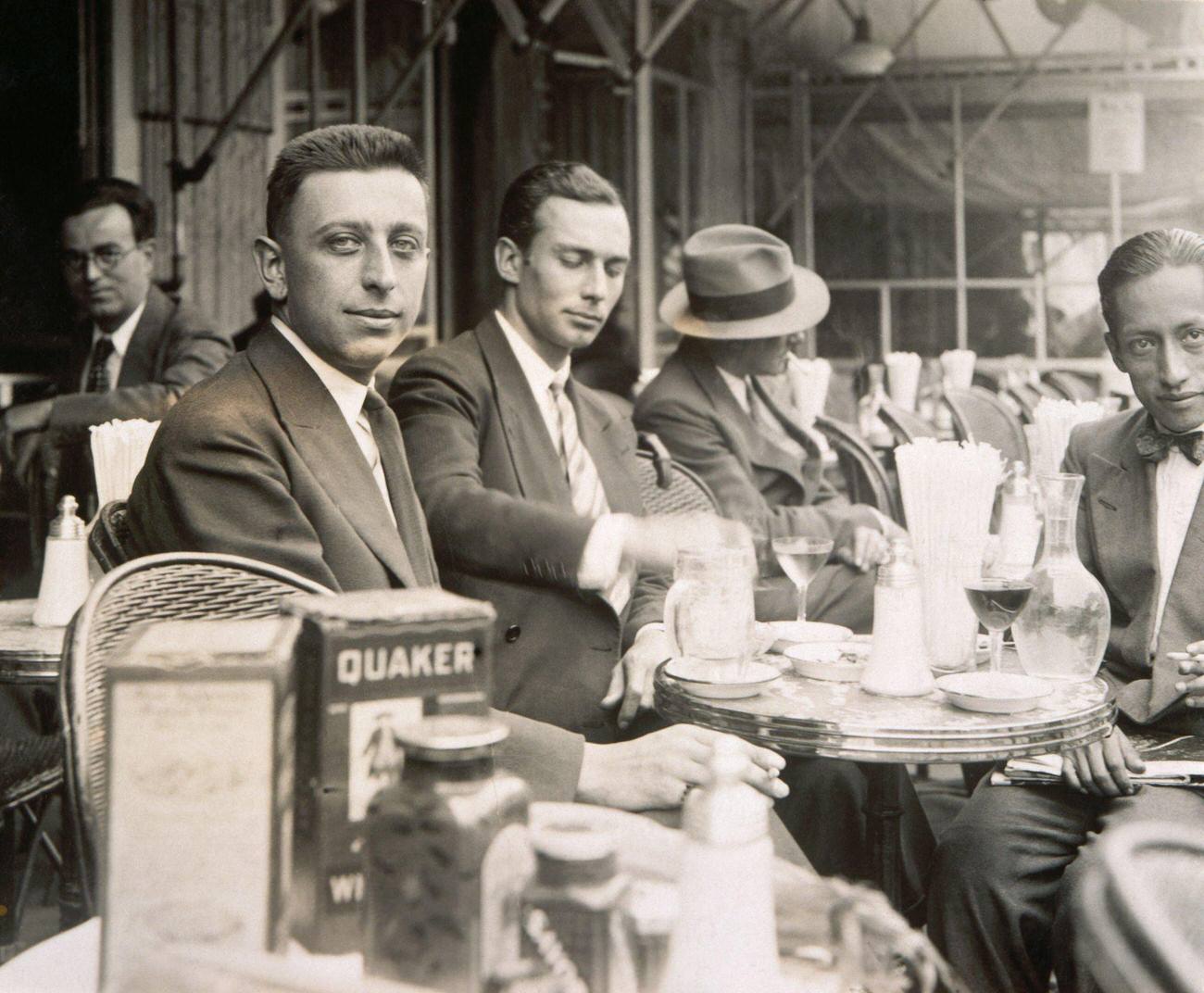
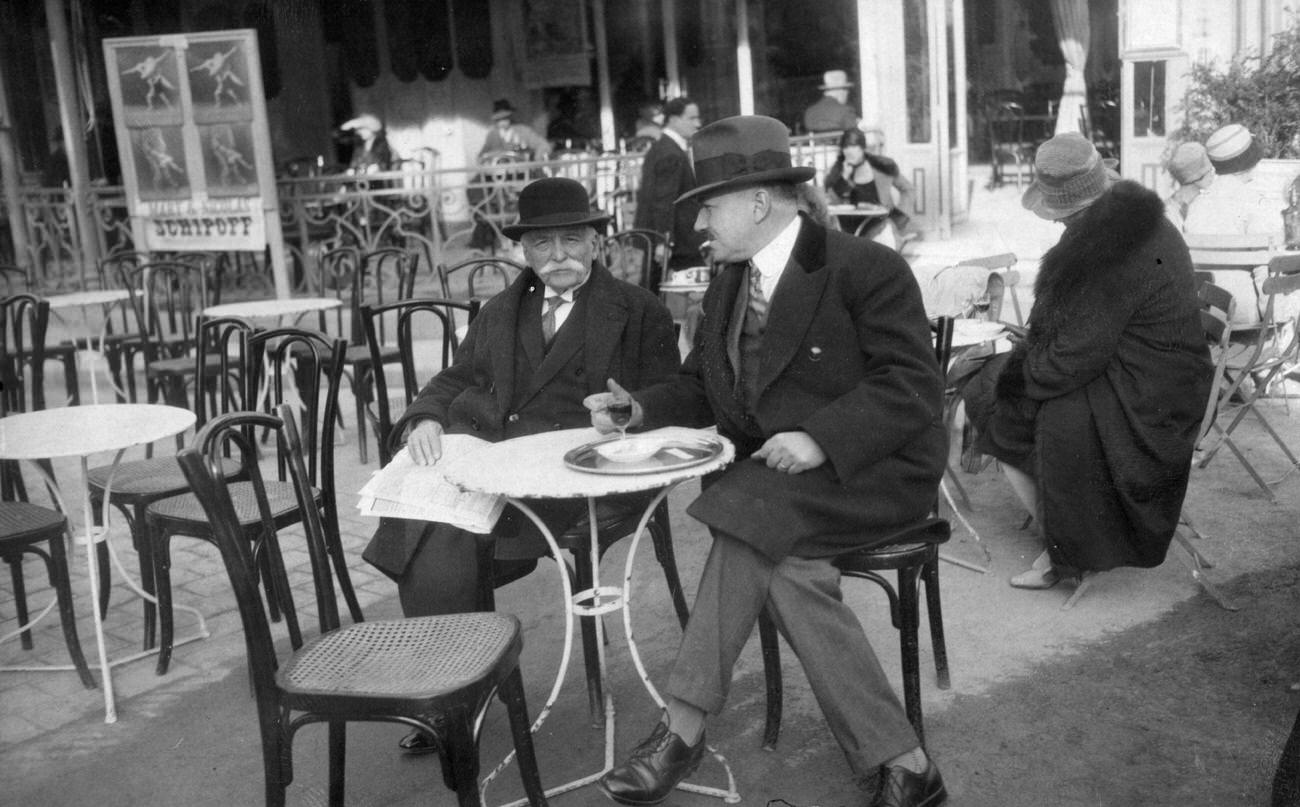
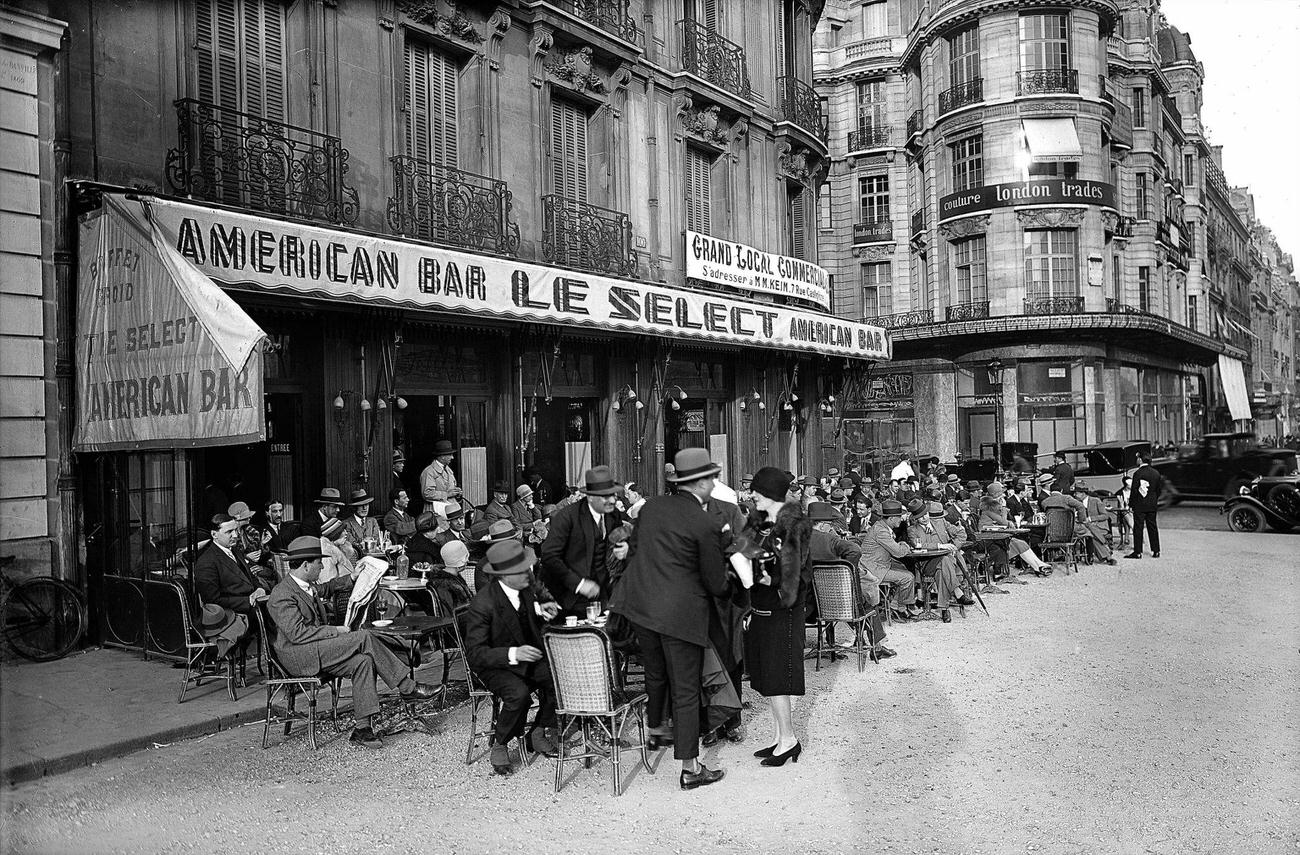
American expatriates flocked to Paris in large numbers during the 1920s, drawn by the favorable exchange rate and the city’s reputation for freedom. Writers like Ernest Hemingway and F. Scott Fitzgerald made Le Select their regular haunt. Street cafes across the city filled with this mix of locals and foreigners, creating an atmosphere unlike anything else in the world at the time.
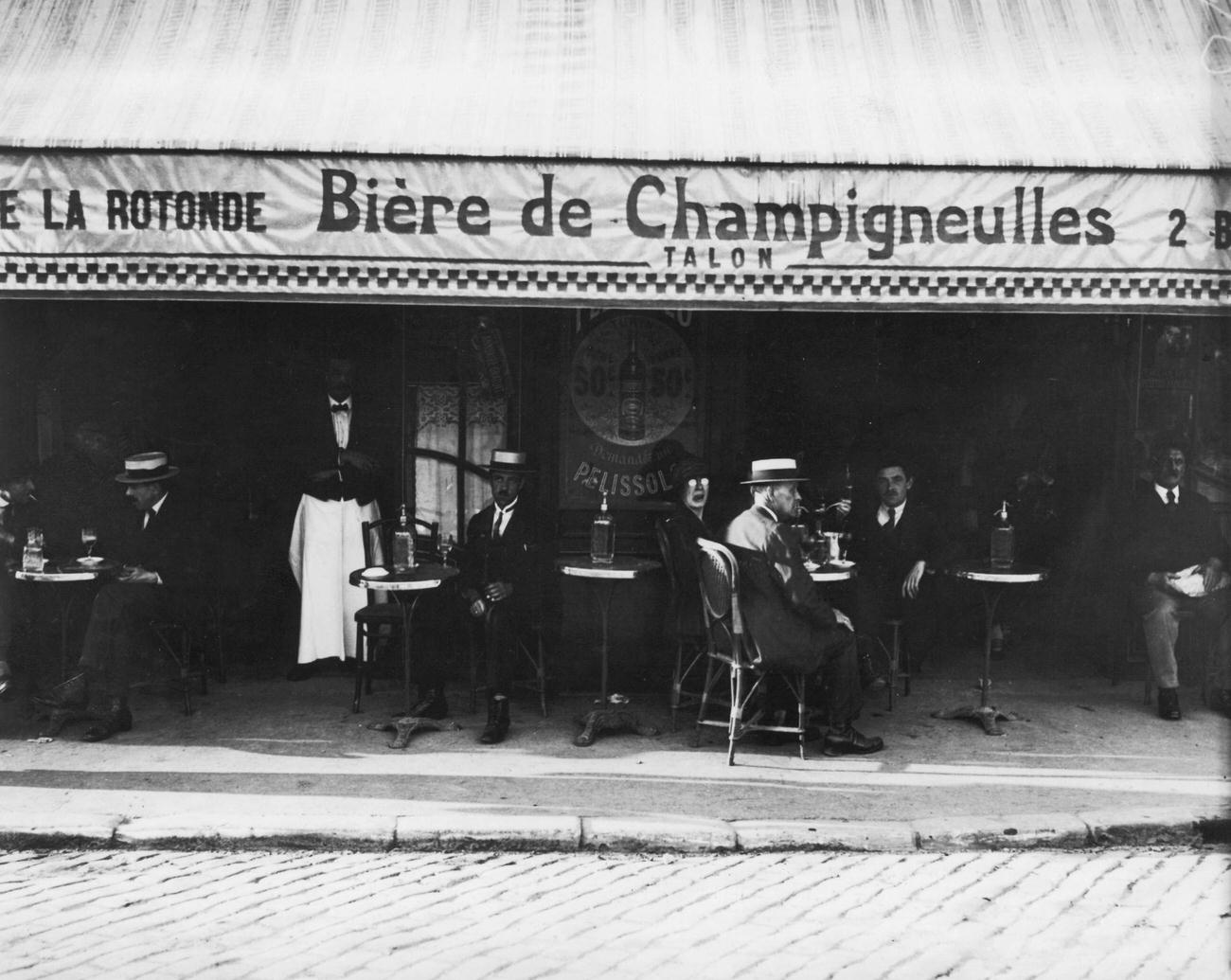
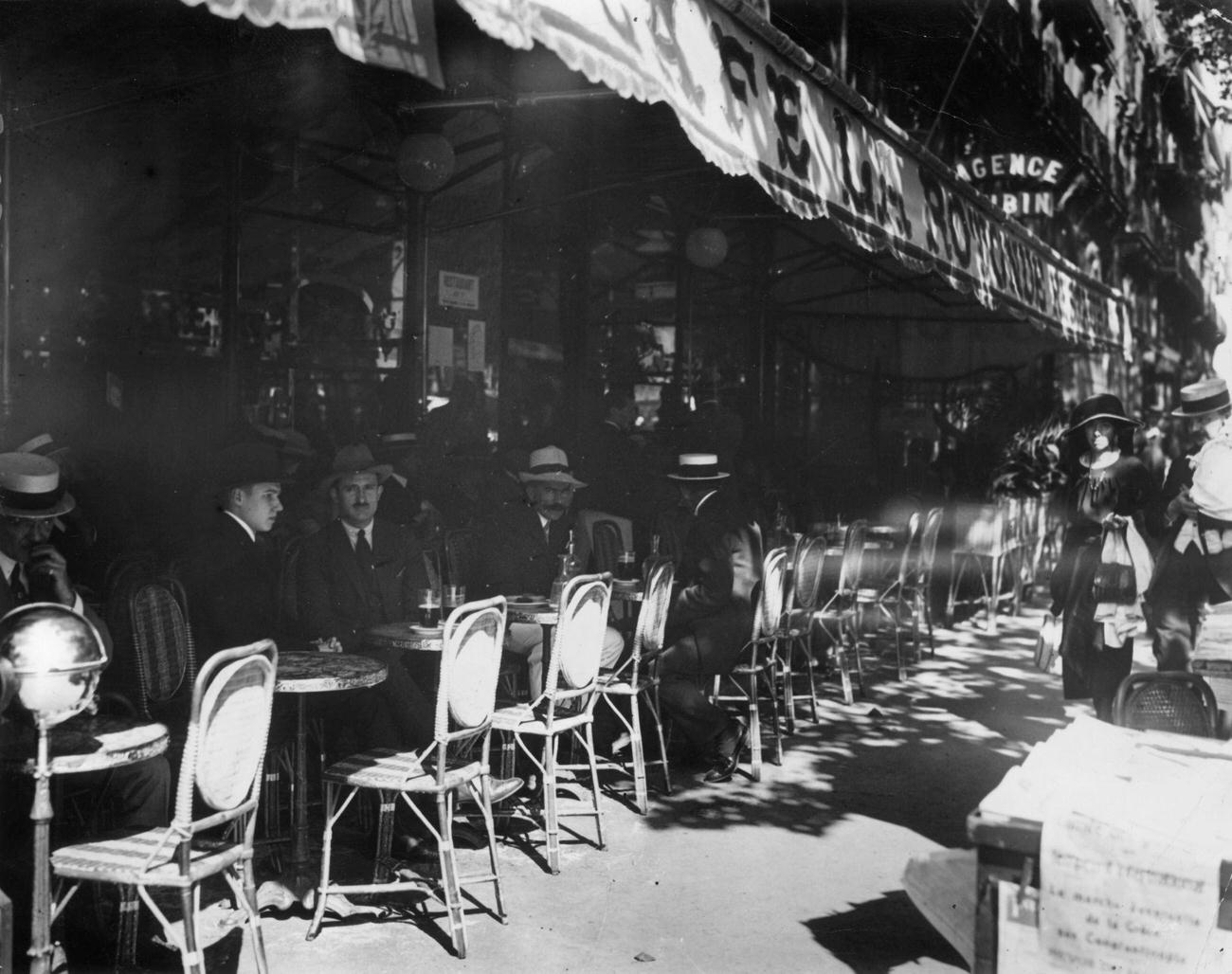
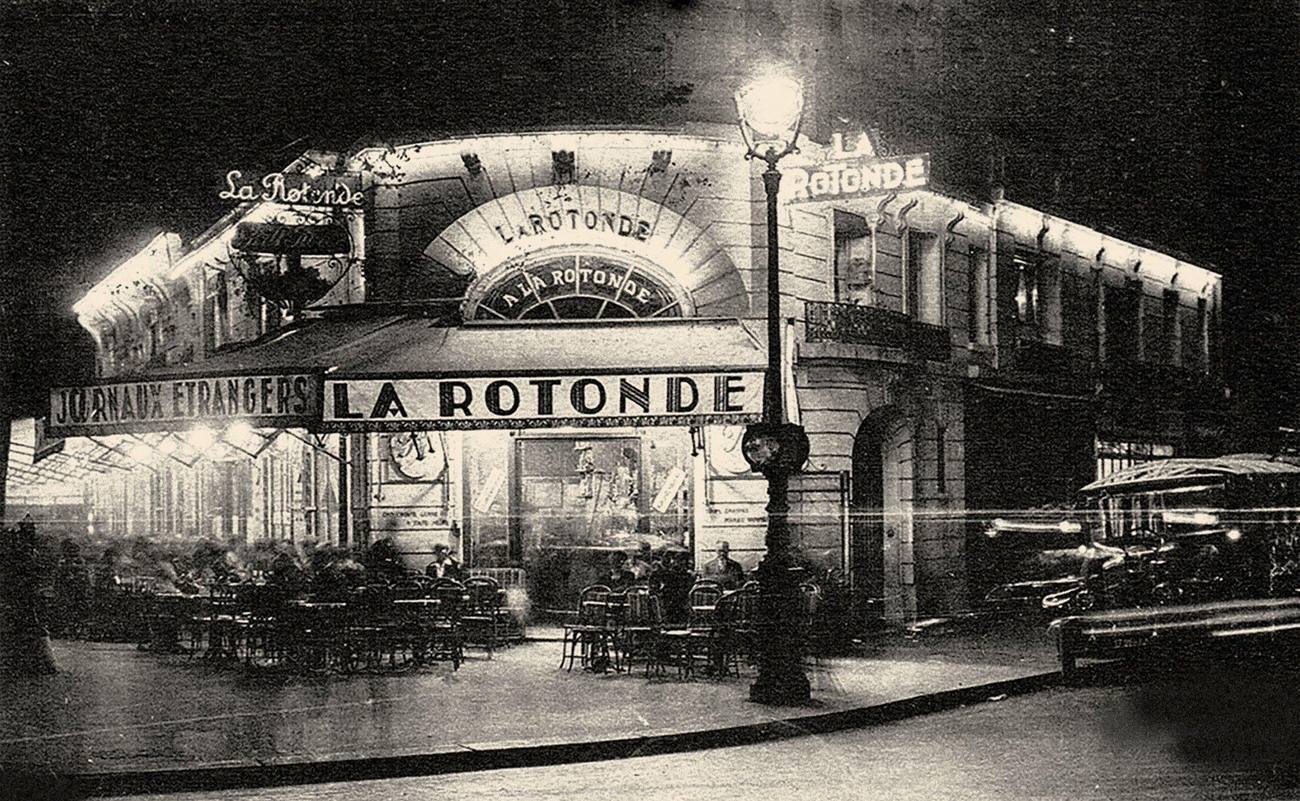
Montparnasse became the beating heart of this expatriate scene. La Rotonde, on the Boulevard du Montparnasse, was one of its most famous addresses. Artists and writers had been gathering there since before the war, and by the early 1920s it was one of the most talked-about cafes in all of Europe.
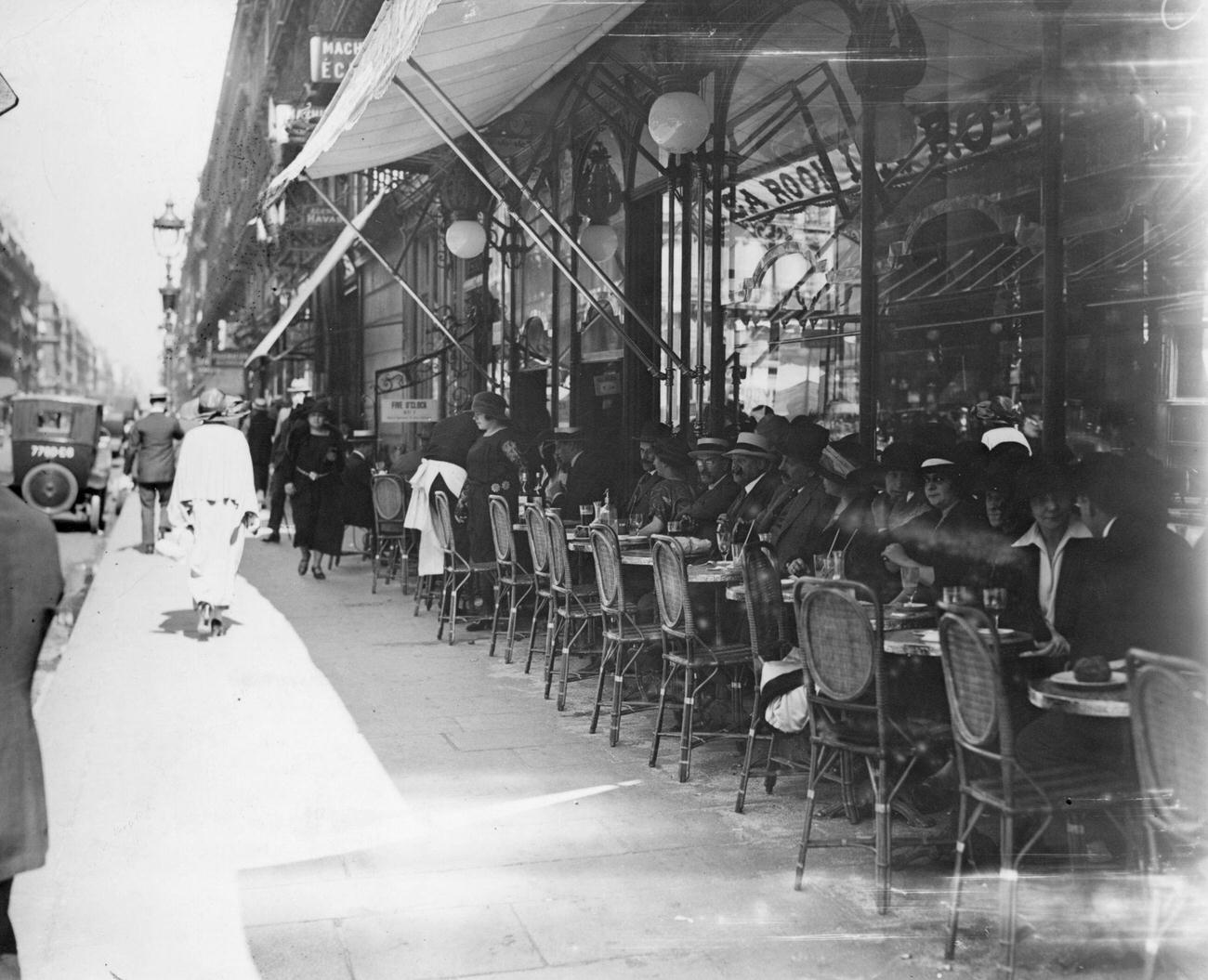
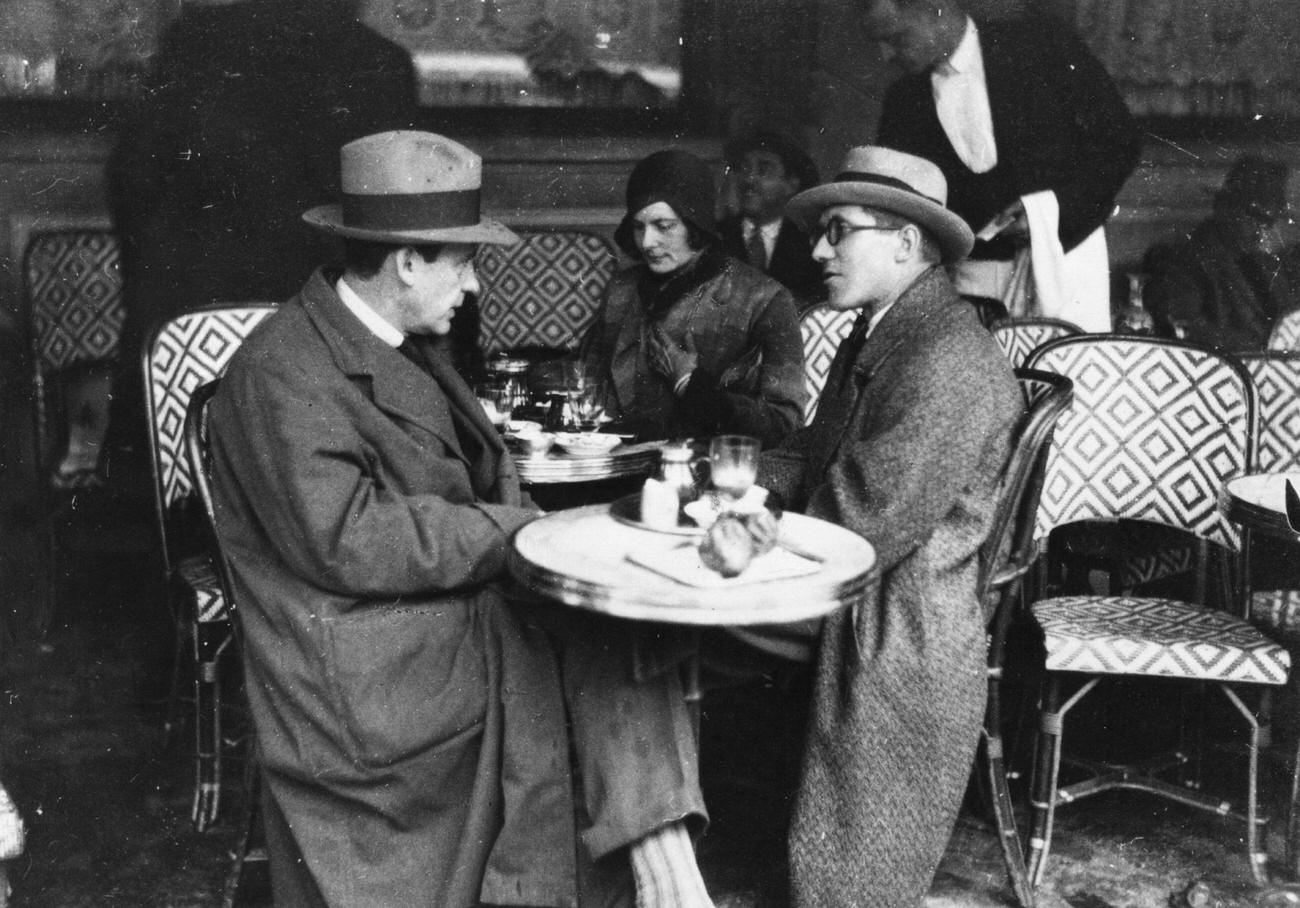
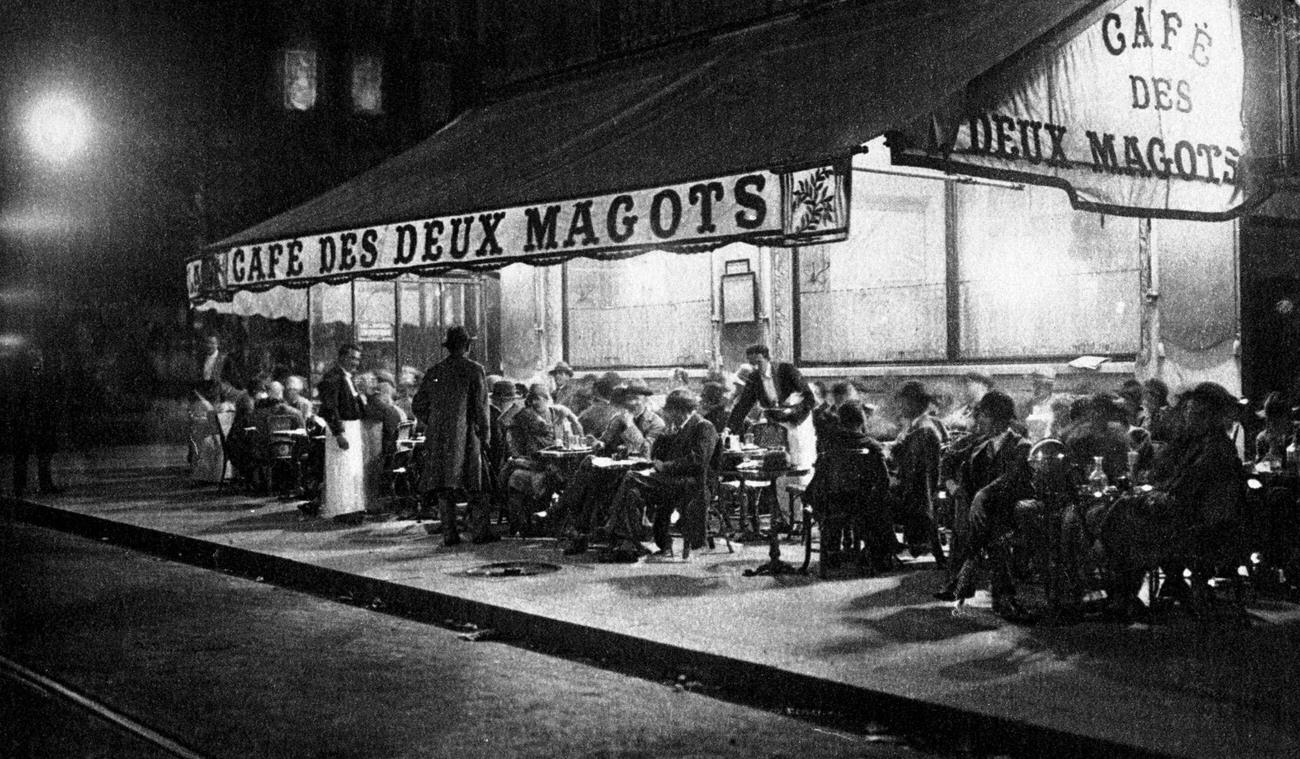
Les Deux Magots, in the Saint-Germain-des-Prés neighborhood, attracted architects and modernist thinkers alongside its literary regulars. Bauhaus founder Walter Gropius was photographed there with his wife and the celebrated architect Le Corbusier — a candid image that captures just how naturally these creative figures gravitated toward the same tables.
Along the Boulevard Saint-Michel, cafes like Dupont-Latin and Capoulade served the student population of the nearby Latin Quarter. These were busier, noisier, and more affordable than the famous establishments of Montparnasse — but no less important as gathering places. Their interiors were lively with argument and laughter from morning until well past midnight.
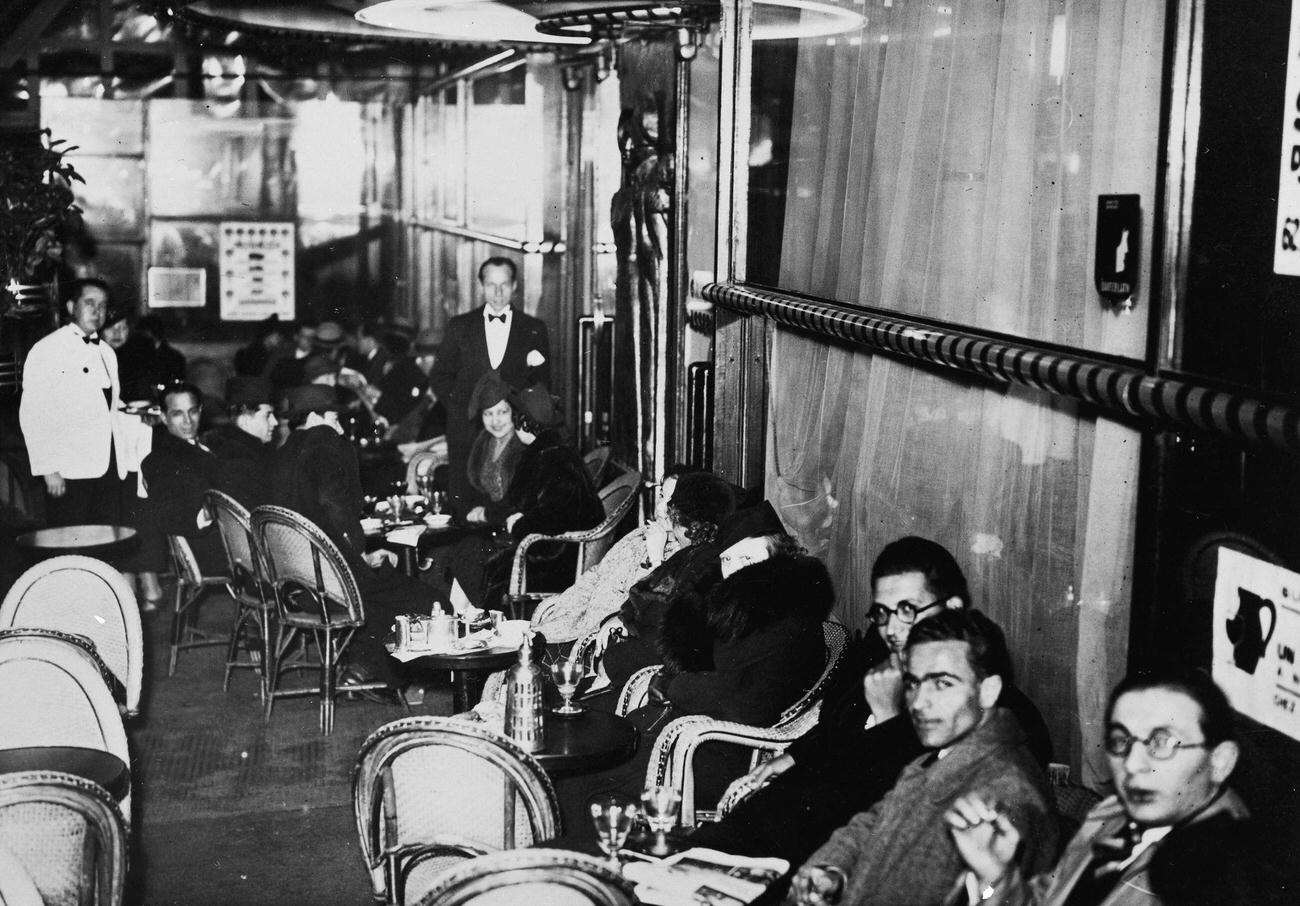
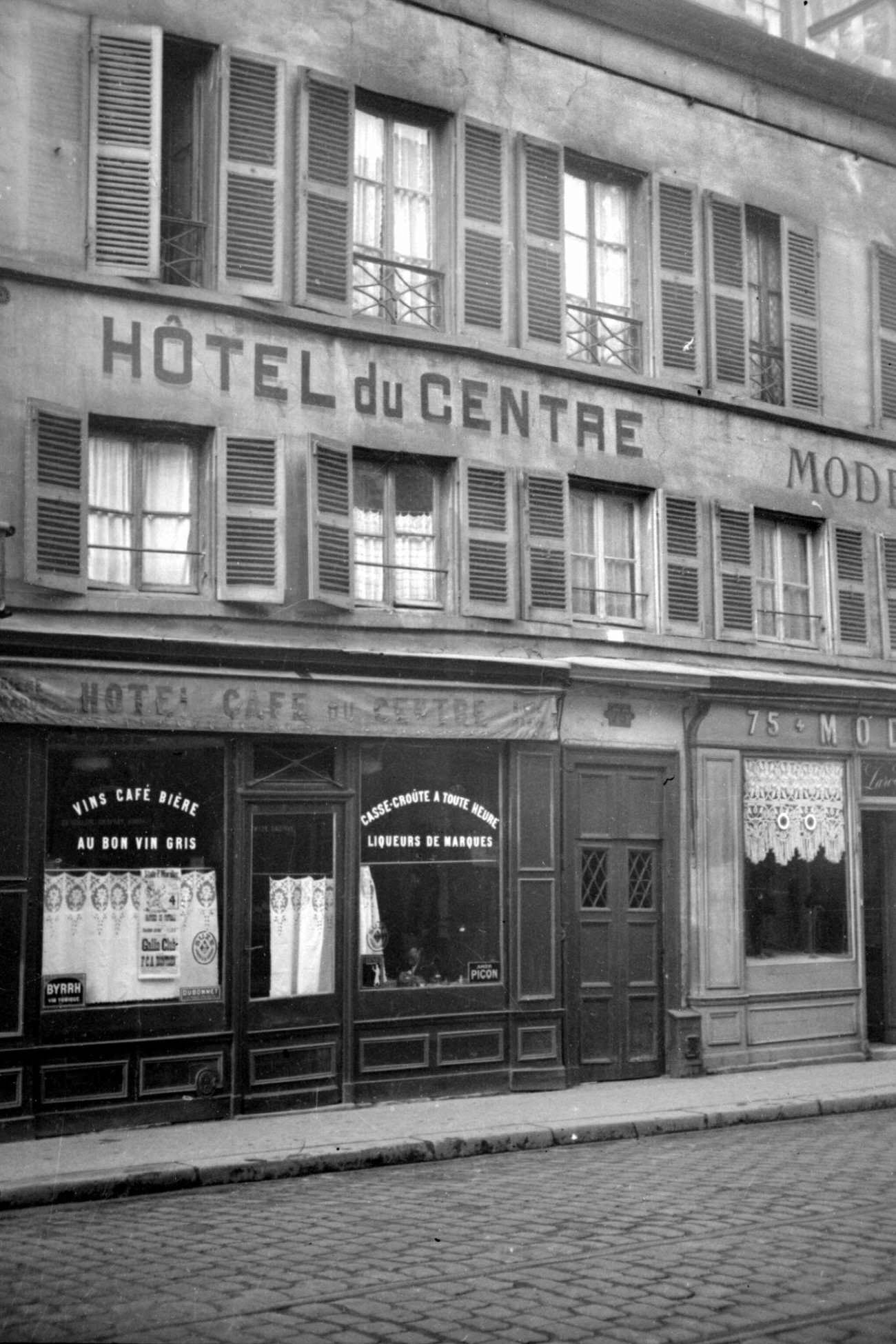
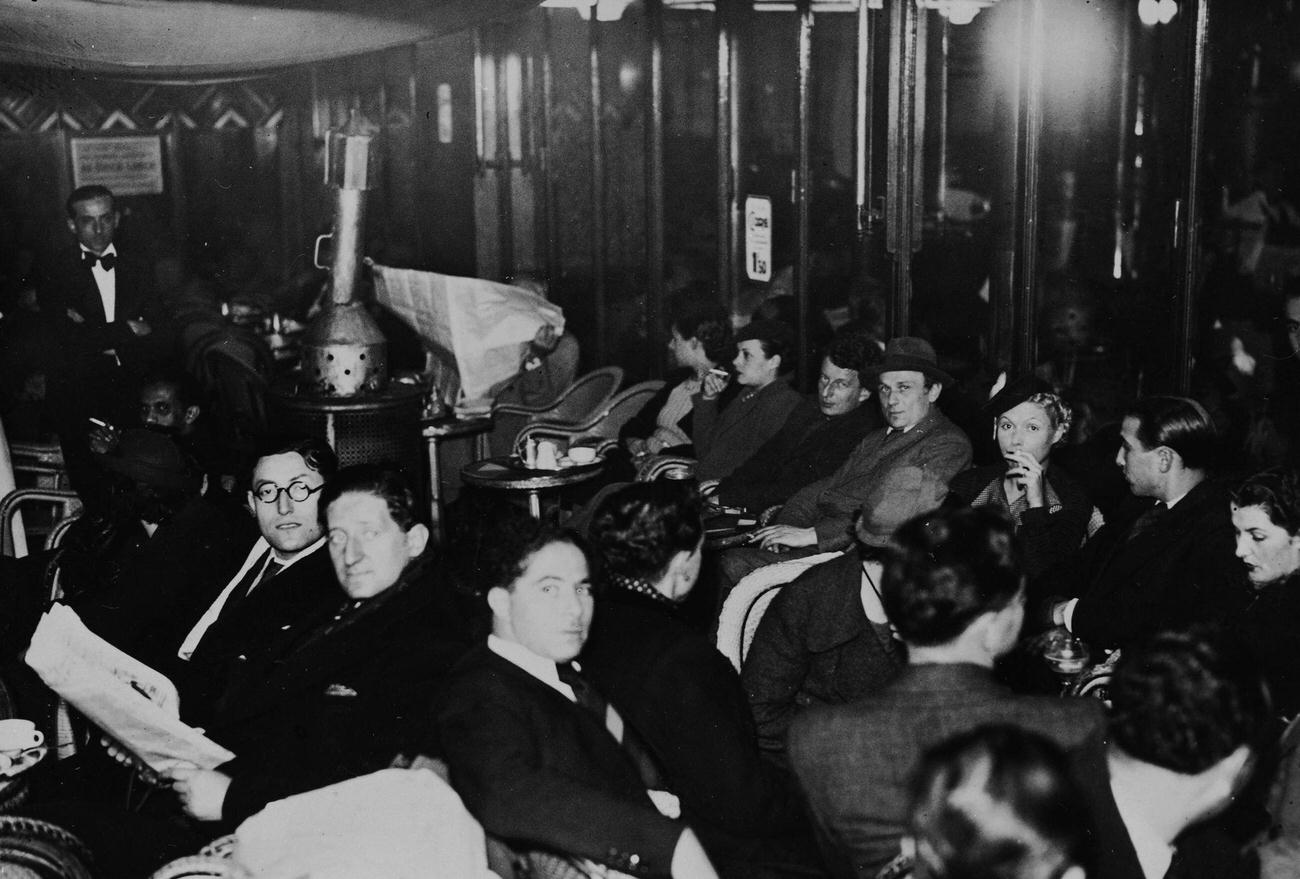
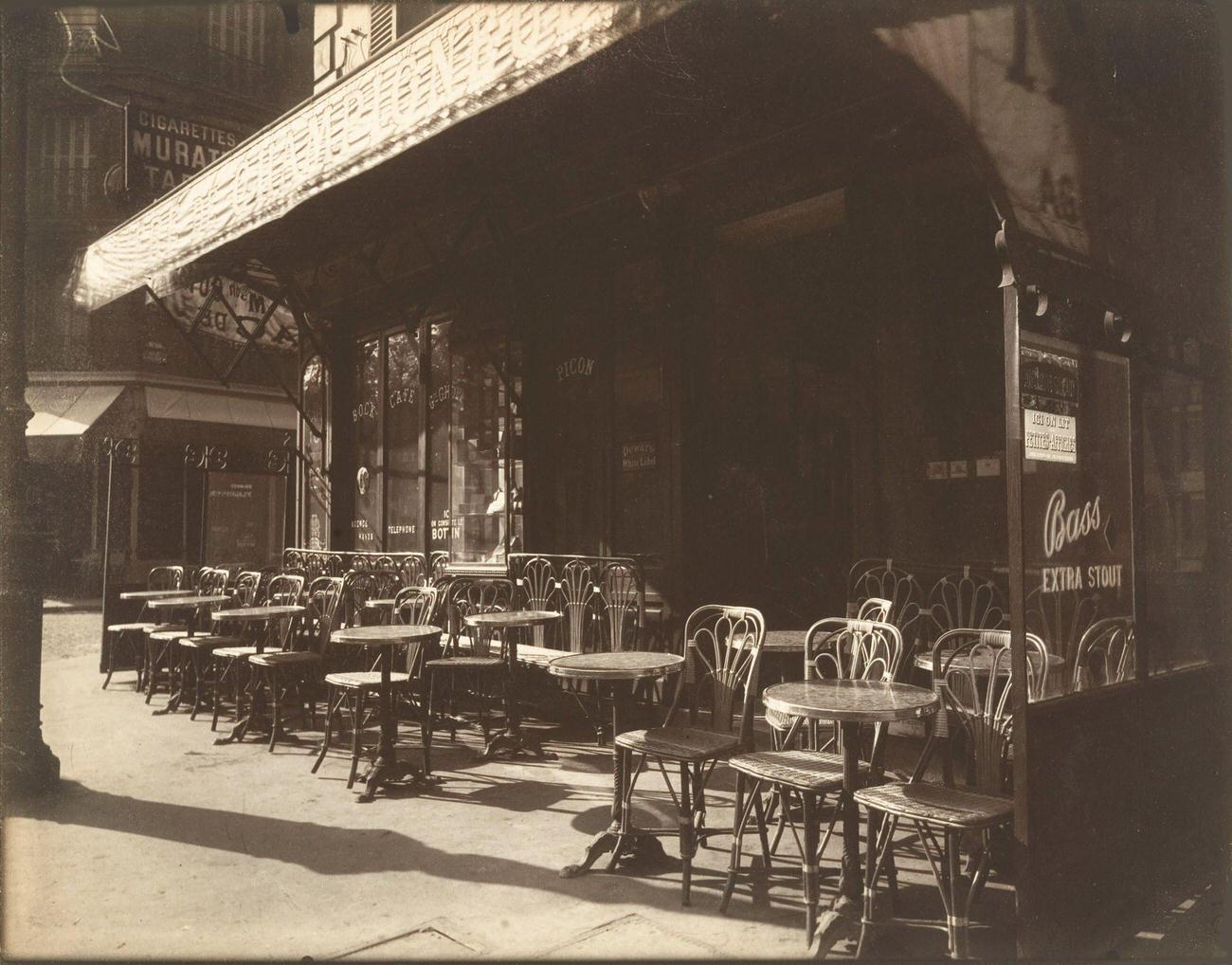
Not every corner of cafe life was crowded. Early mornings and off-season afternoons on the Avenue de la Grande-Armée could leave a cafe nearly empty — chairs stacked, awnings lowered, the street quiet. These deserted scenes are just as telling as the busy ones, showing how deeply the cafe was woven into the rhythm of daily Parisian life at all hours.
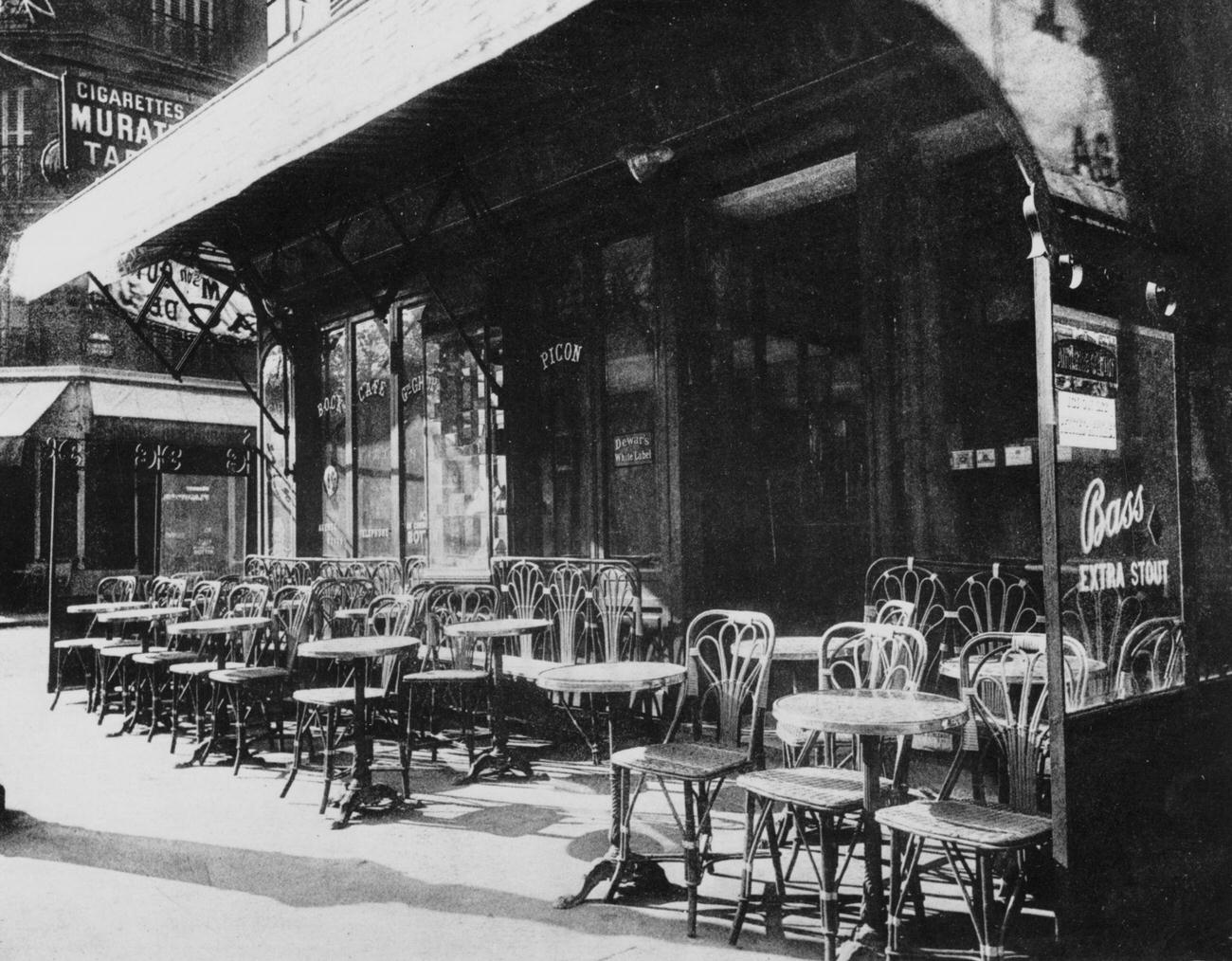
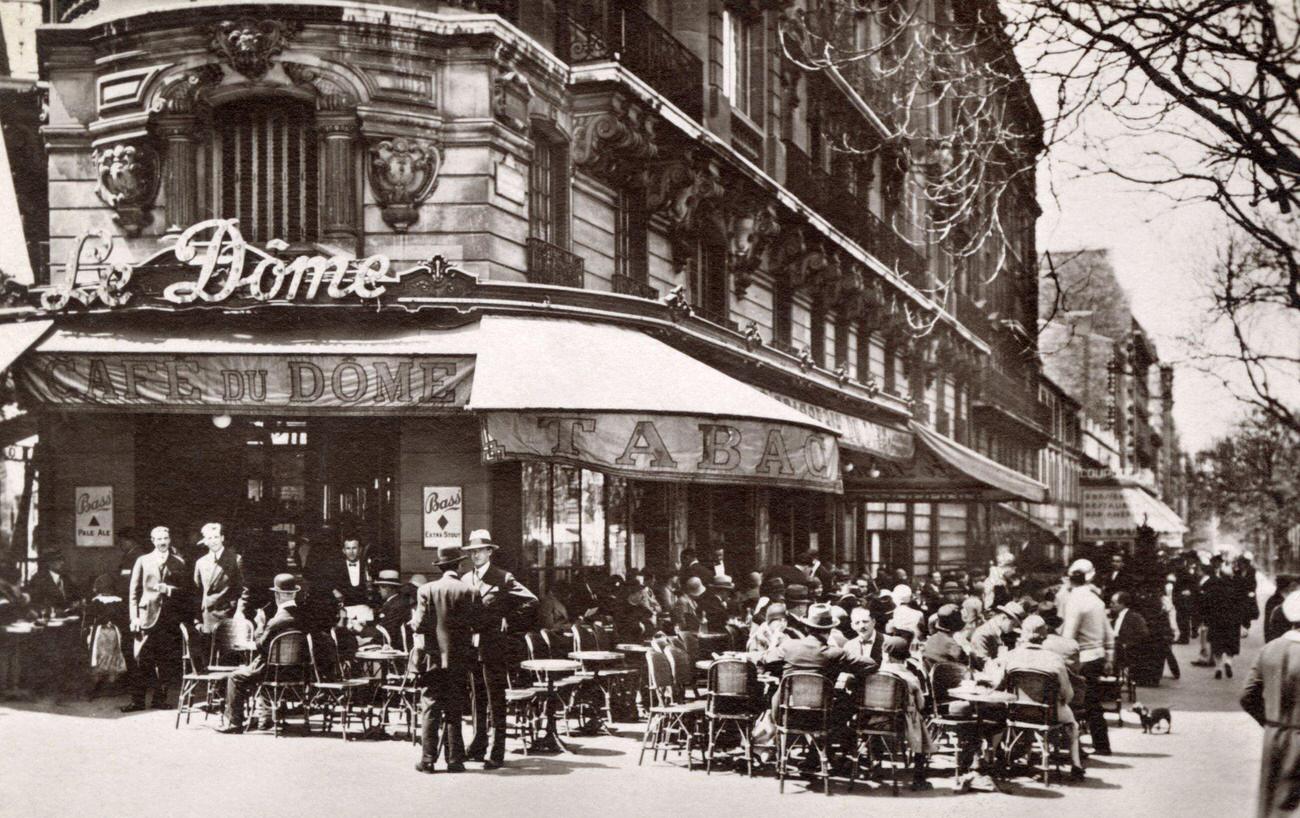
By the mid-1920s, the cafe scene had become so well known internationally that it drew visitors from across the Atlantic specifically to experience it. Café du Dôme, just steps from La Rotonde, was another Montparnasse landmark that featured in the accounts of almost every American writer who passed through Paris during those years.
Le Select, on the Avenue des Champs-Élysées, held a slightly different identity from the Left Bank cafes. It billed itself as an American bar and catered directly to the expatriate crowd. Open late into the night, it was a place where the boundary between a cafe and a bar blurred completely — drinks flowed, conversations stretched on, and the terrace stayed full long after other establishments had closed.
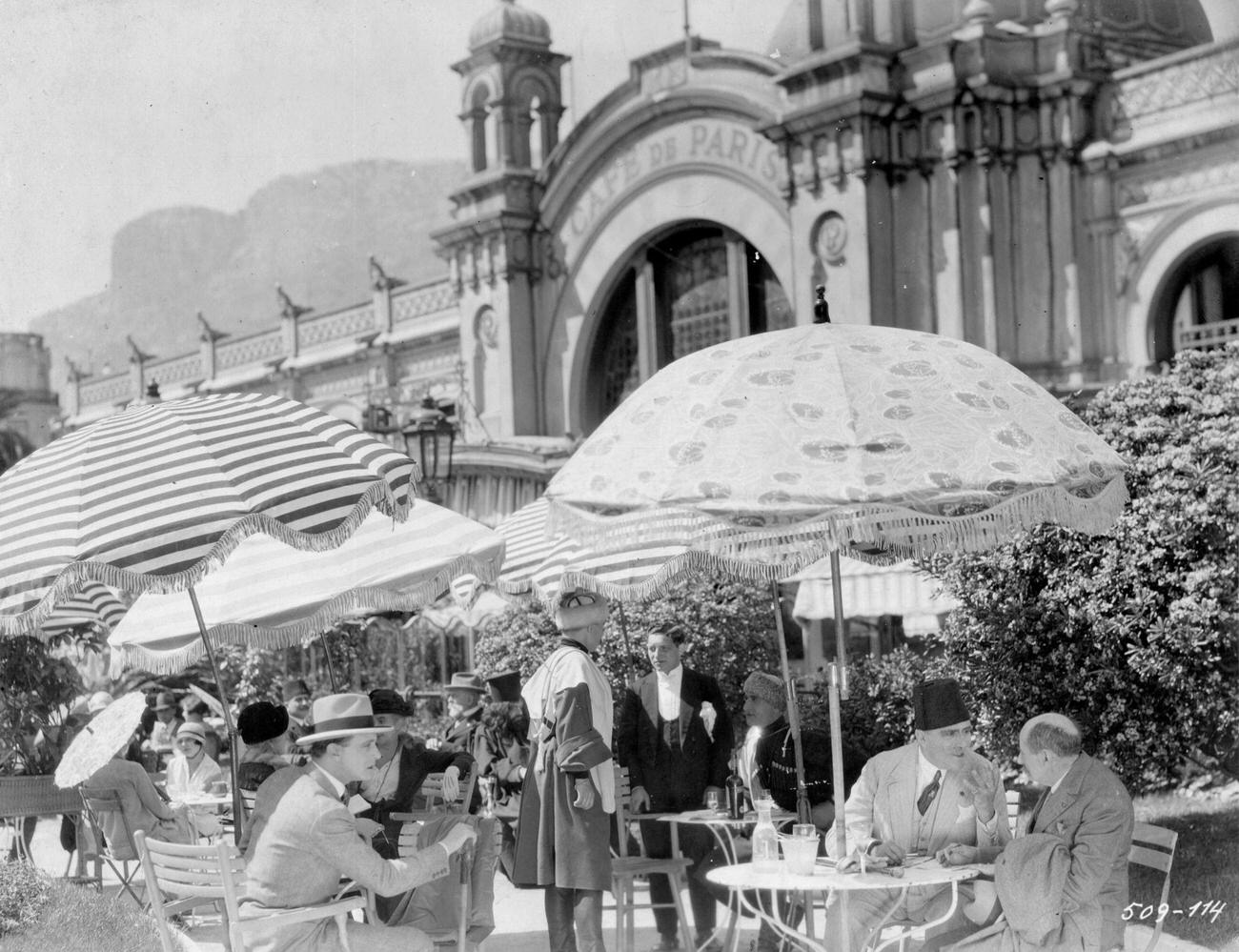
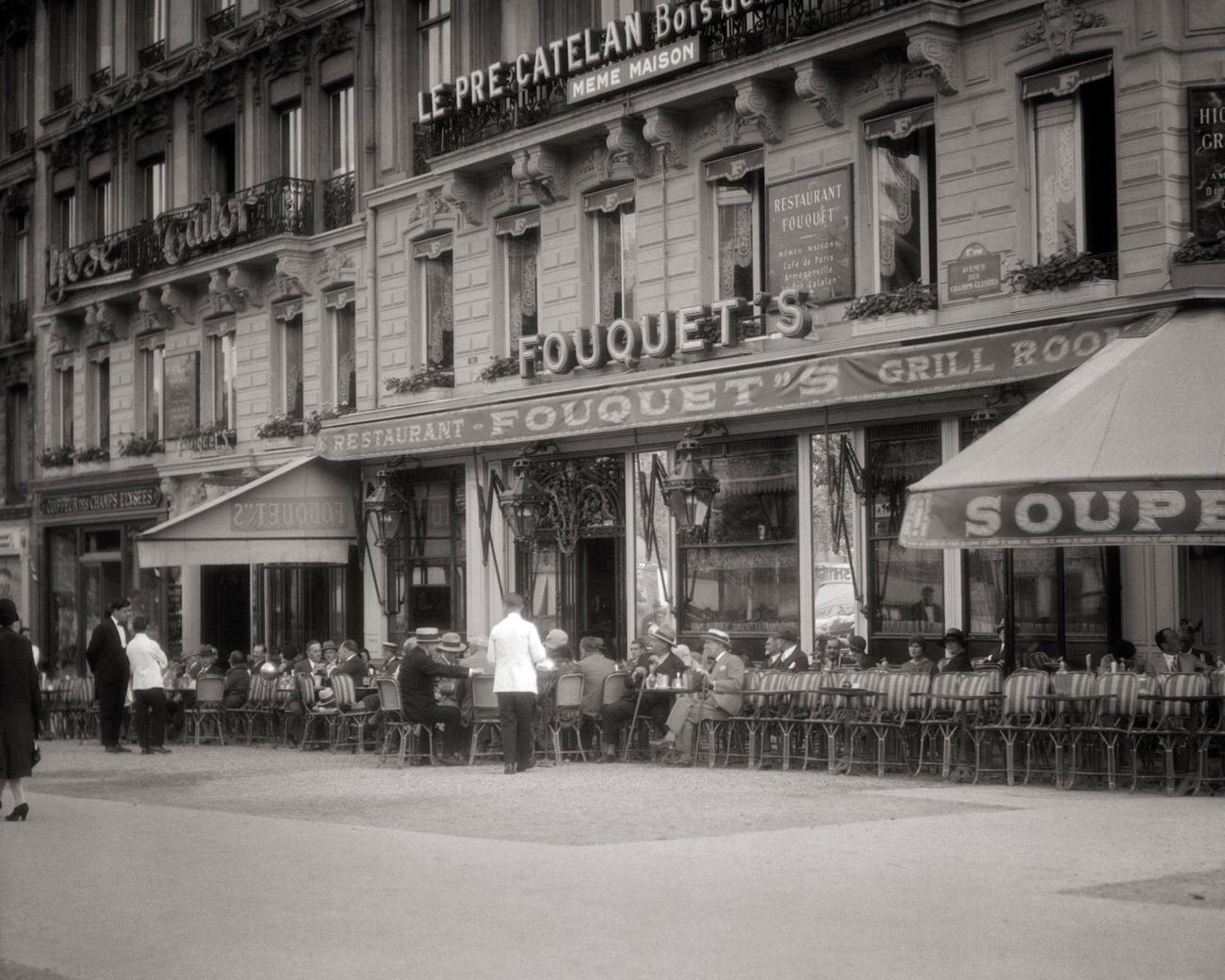
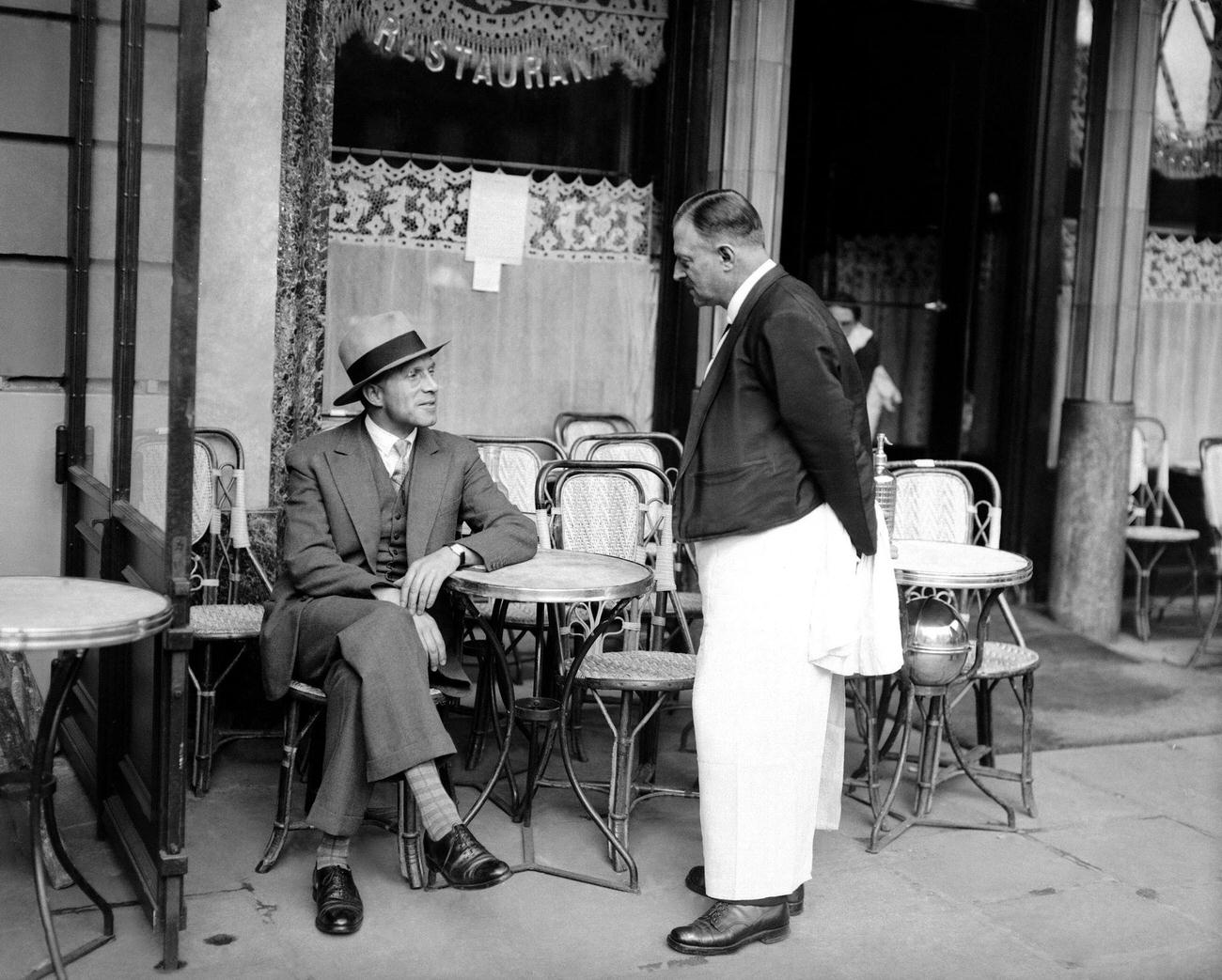
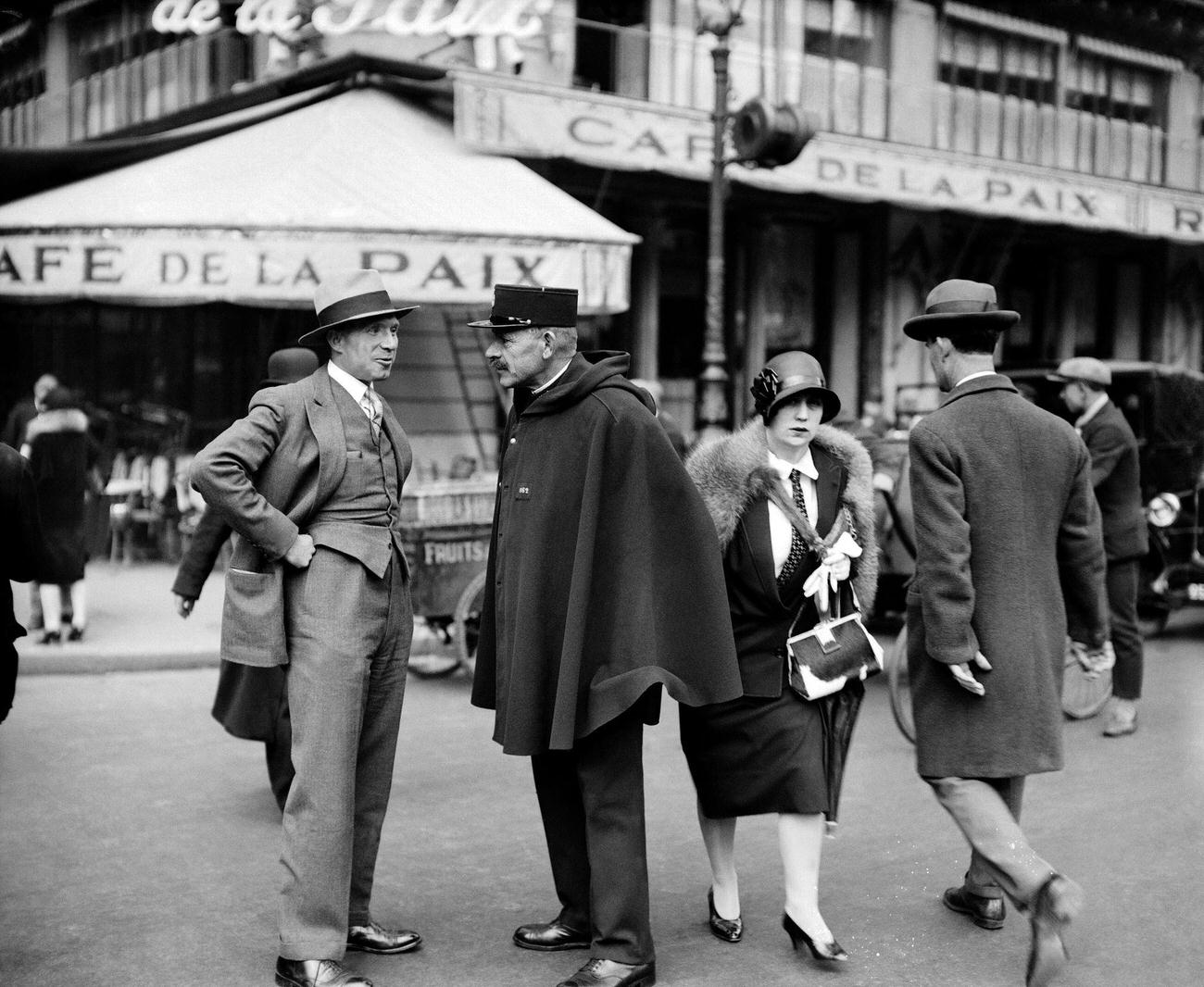
Café de la Paix continued to appear in photographs throughout the decade, its terrace a reliable backdrop for street photography. In 1928, Danish journalist Jorgen Bast was photographed there — both seated at the terrace and in conversation with a local policeman — giving a glimpse into how international figures moved freely through these public spaces.
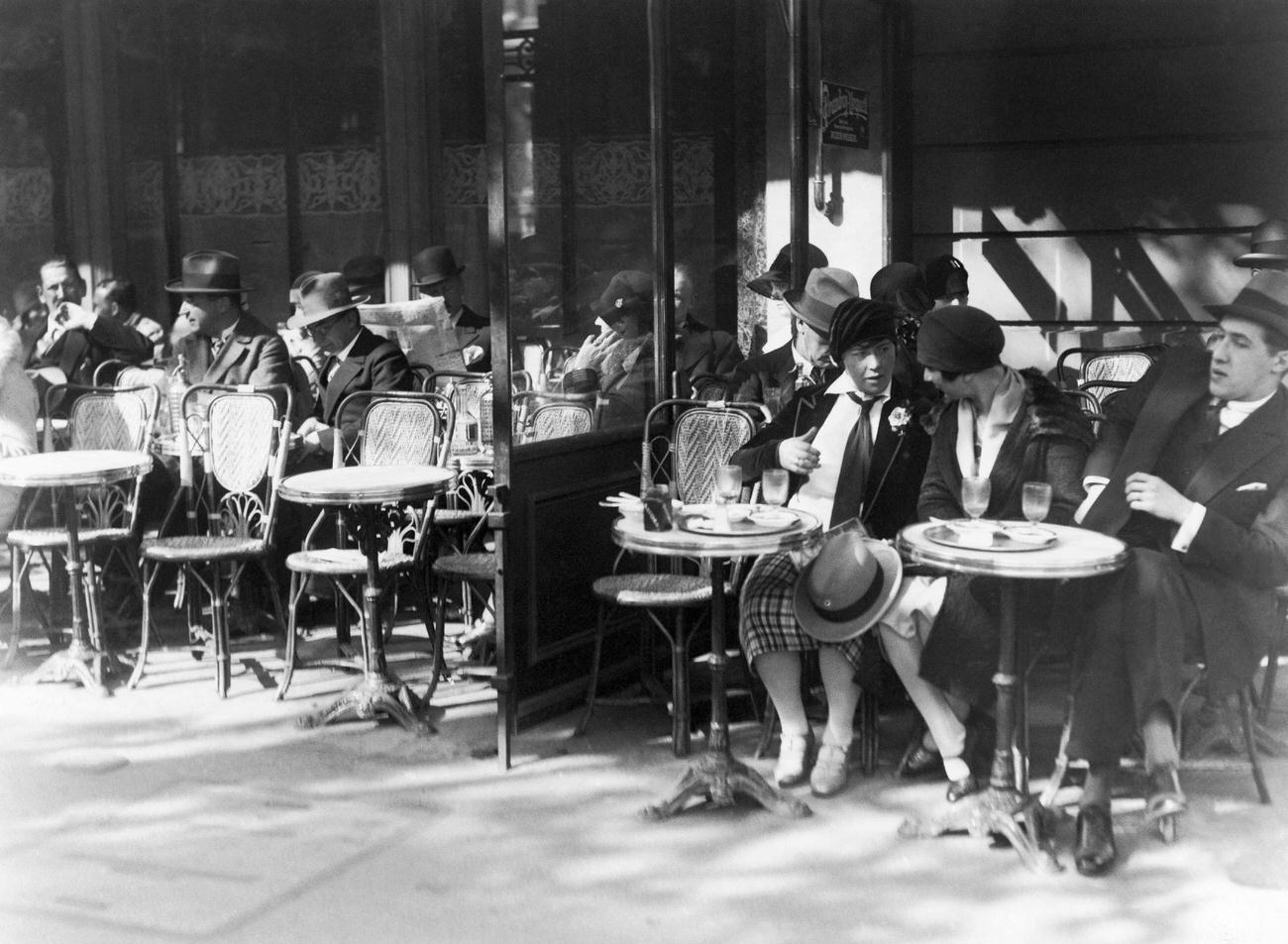
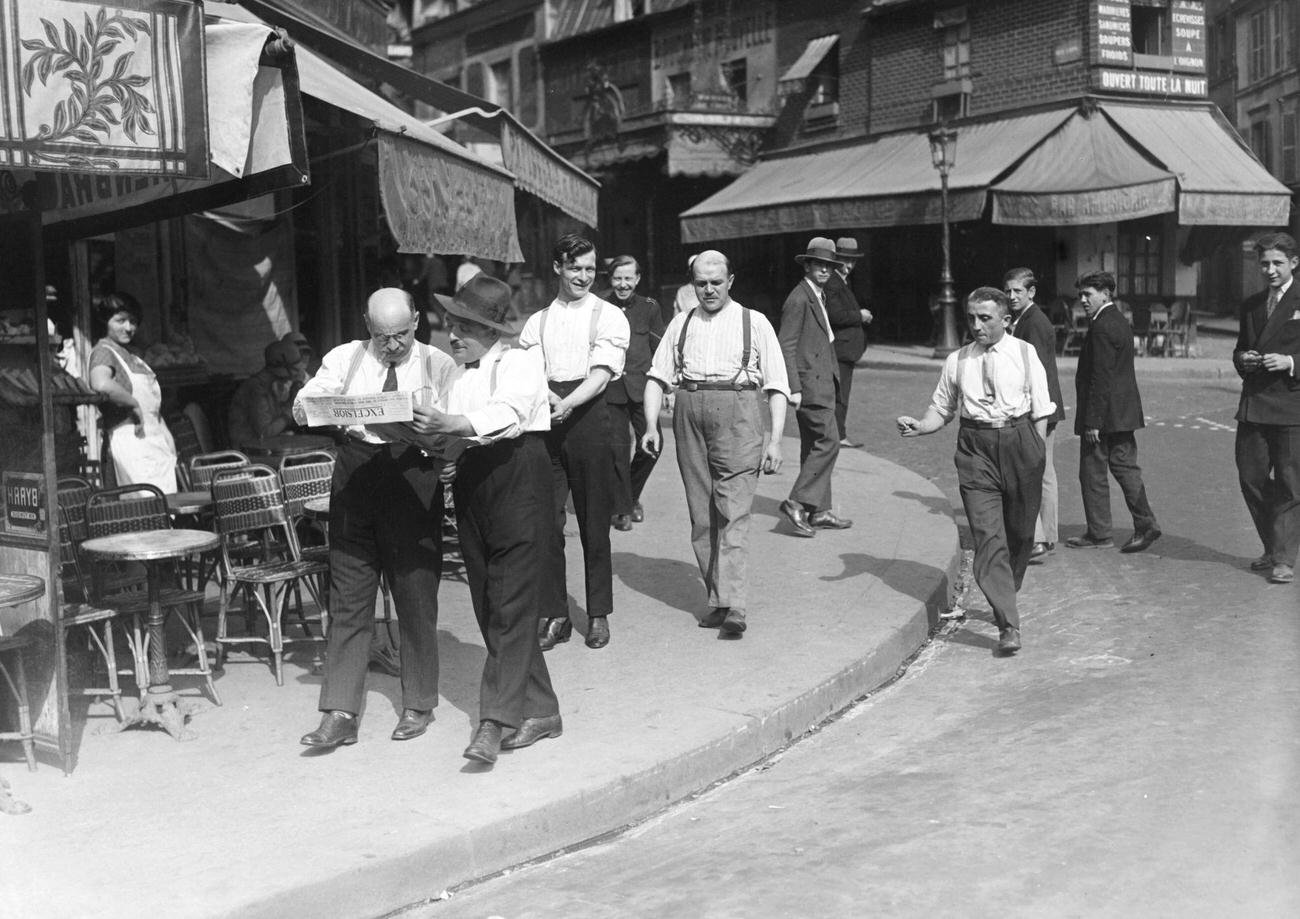
The summer of 1928 brought a fierce heatwave to Paris. Rather than retreat indoors, Parisians responded the way they always did — by heading to the nearest terrace. Waiters worked double-time delivering cold drinks to packed outdoor tables, and the cafes became a kind of refuge from the heat as much as from the ordinary pressures of daily life.
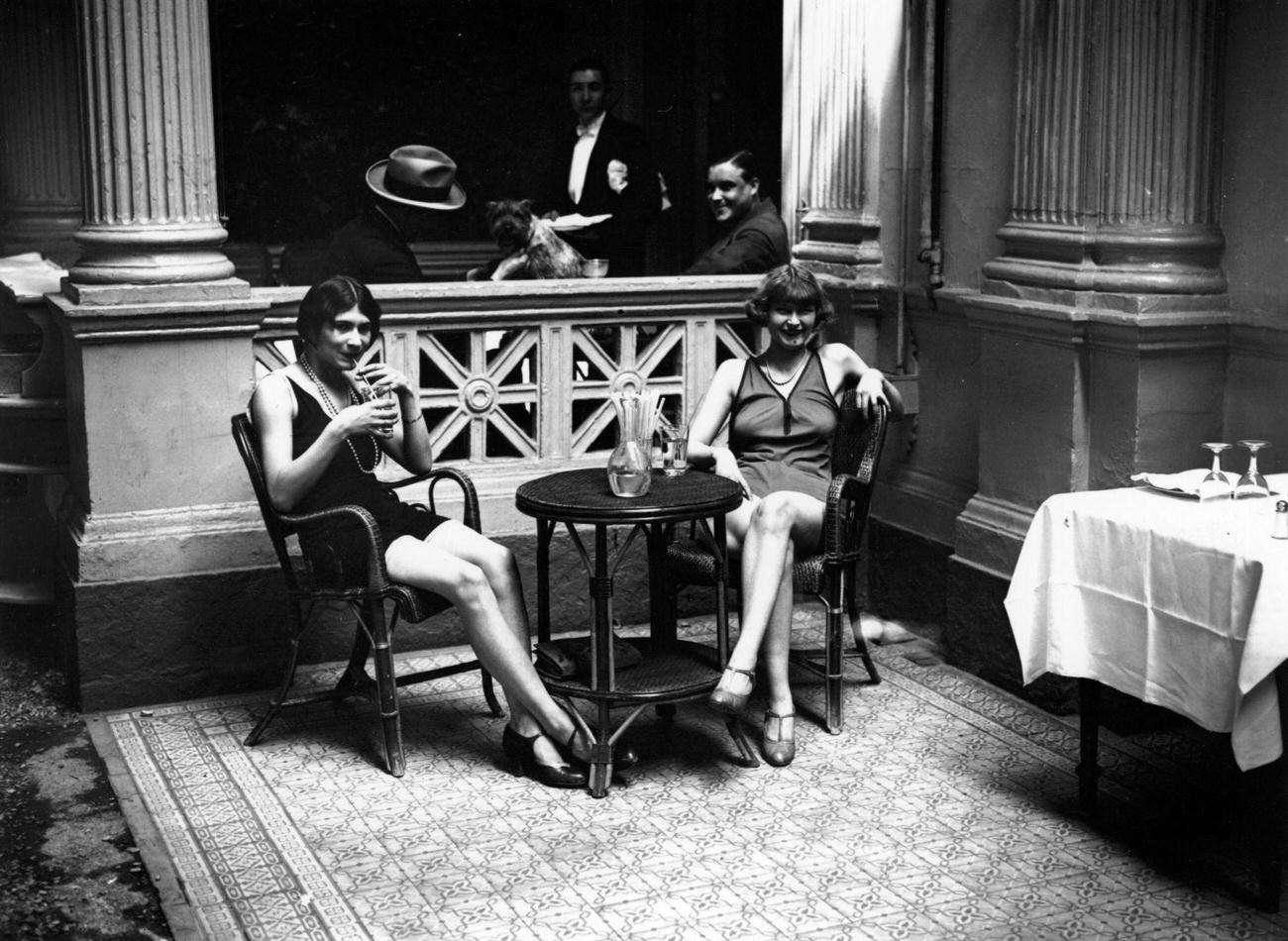
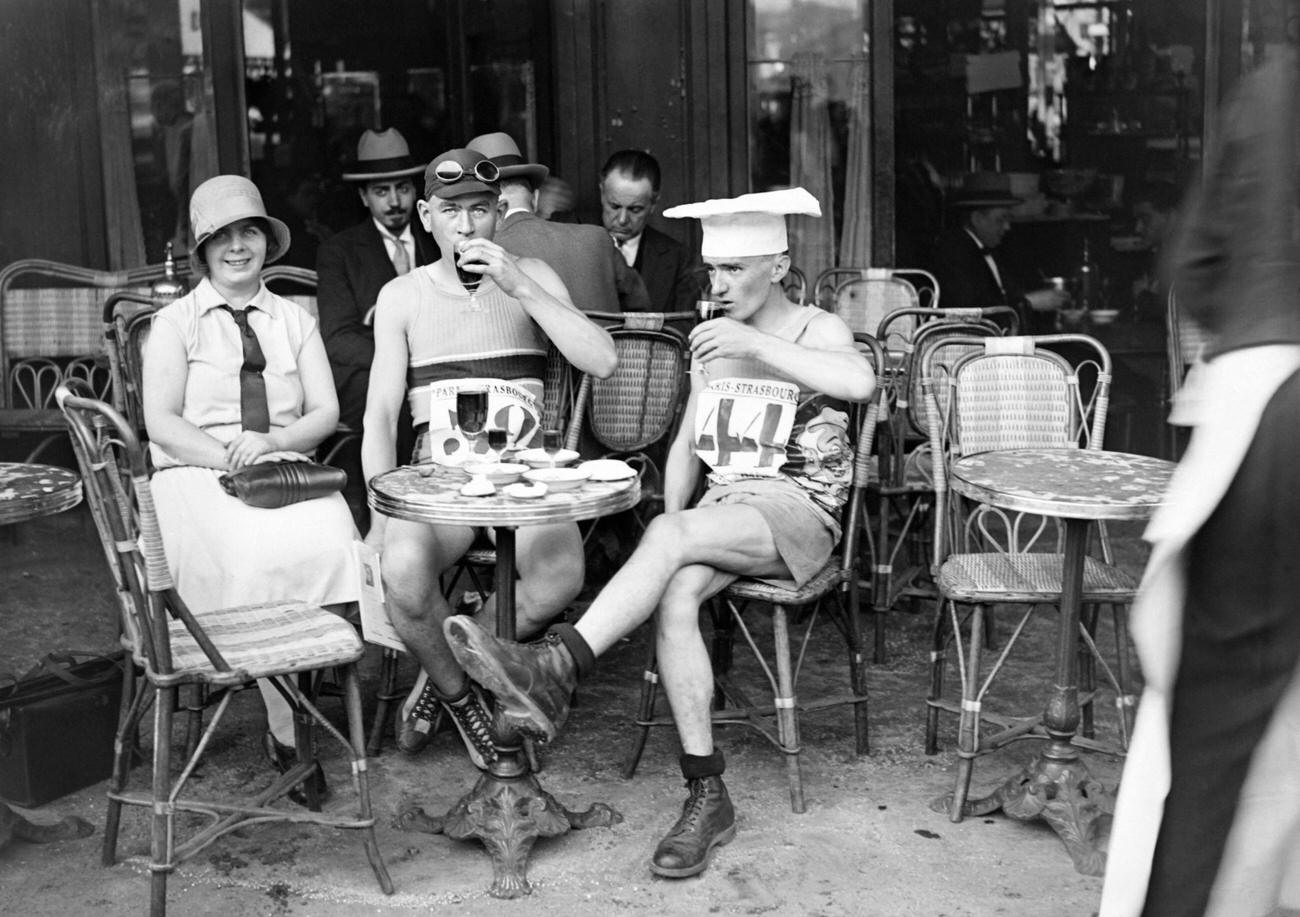
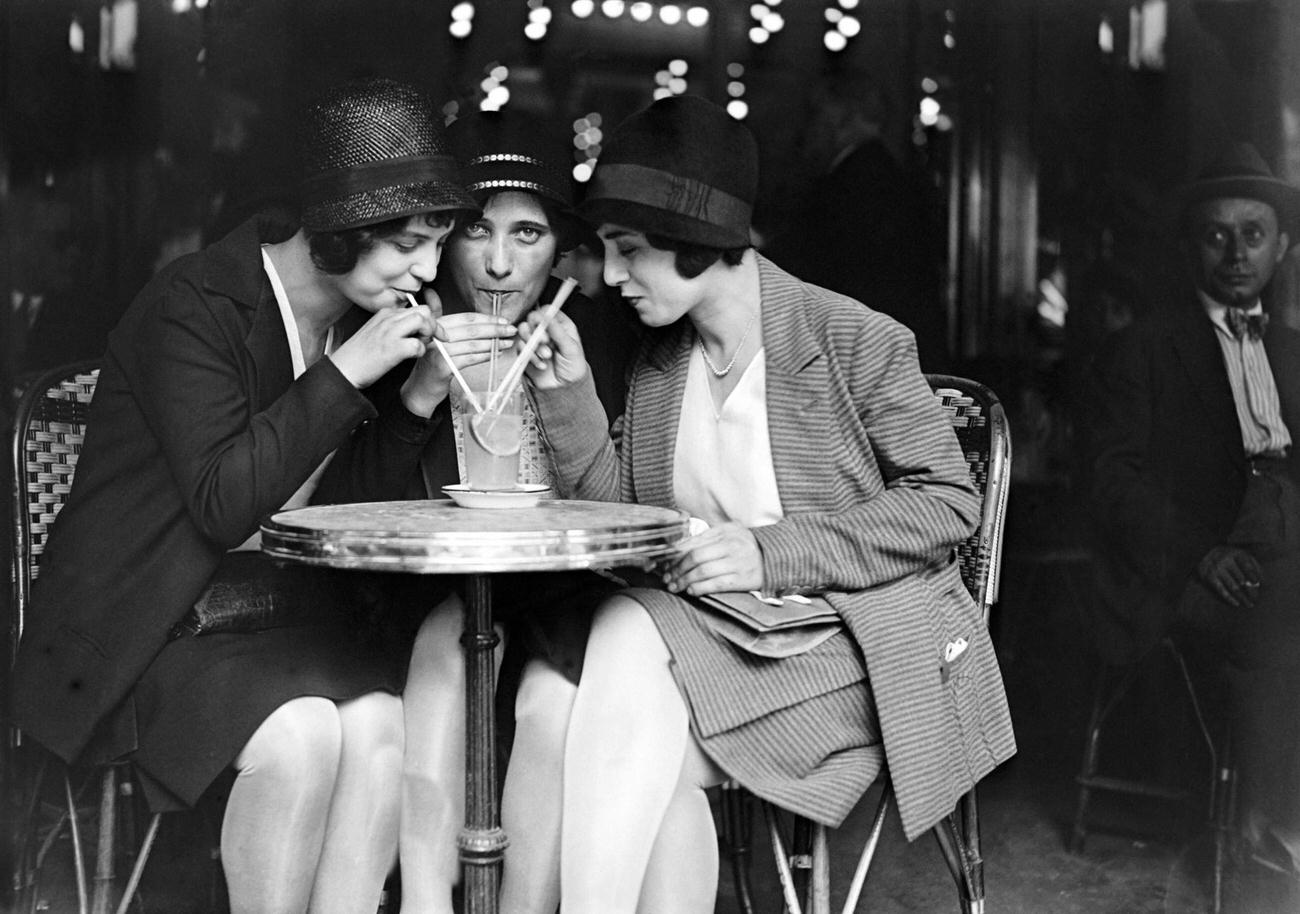
The heat returned the following summer. In July 1929, photographs captured women sitting at cafe terraces in bathing suits, sipping drinks in the open air — an image that showed just how informal and adaptable the cafe could be. Even a Paris-Strasbourg race that same year brought crowds to the cafe terraces along the route, turning a sporting event into yet another reason to gather.
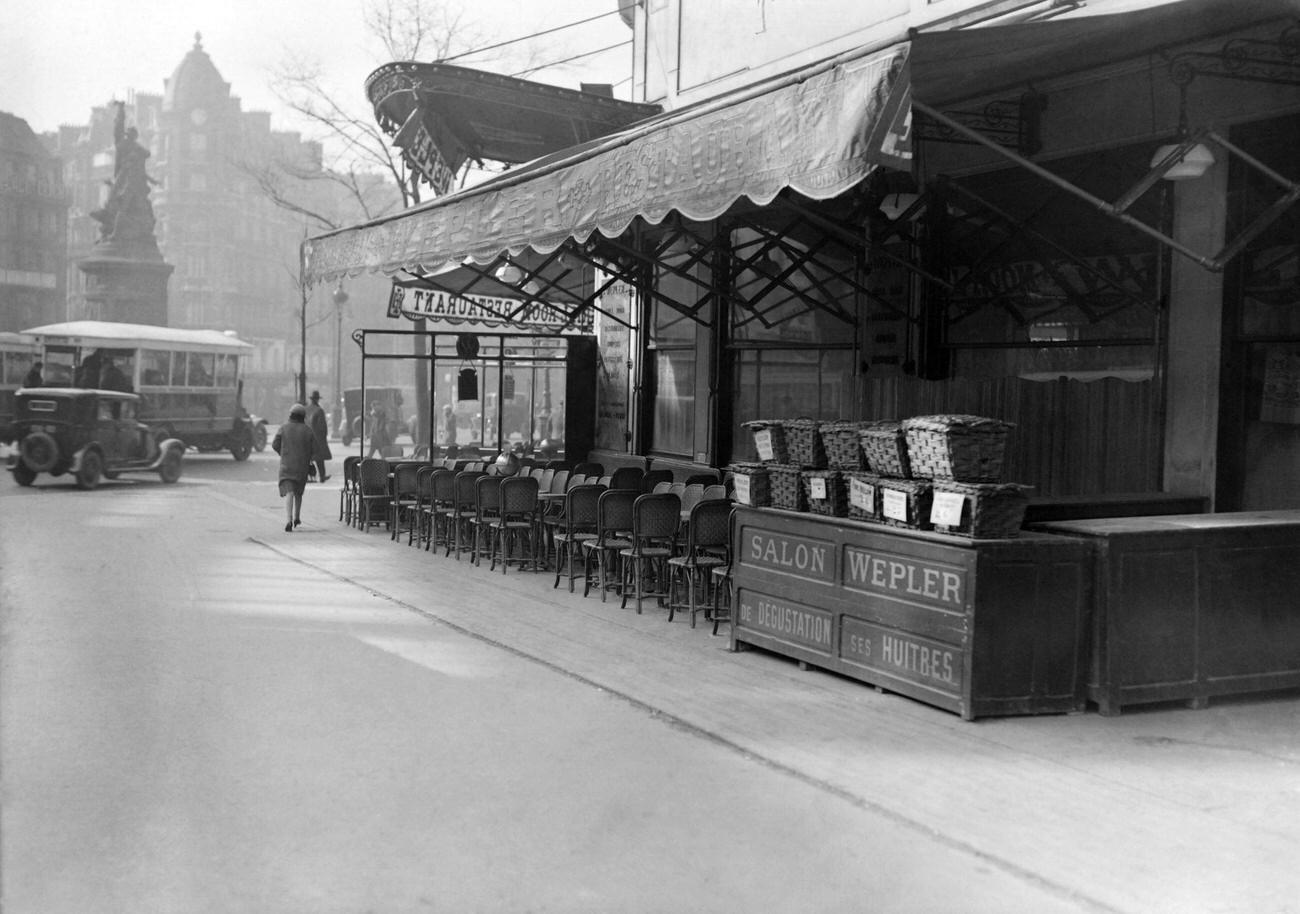
The Brasserie Wepler, near the Place de Clichy, offered something a little different: an oyster stand right at the entrance, where shellfish were shucked to order and served alongside a glass of white wine. It was the kind of detail that made Parisian cafe culture so distinctive — food, drink, conversation, and street life all happening at once, with no clear line between them.
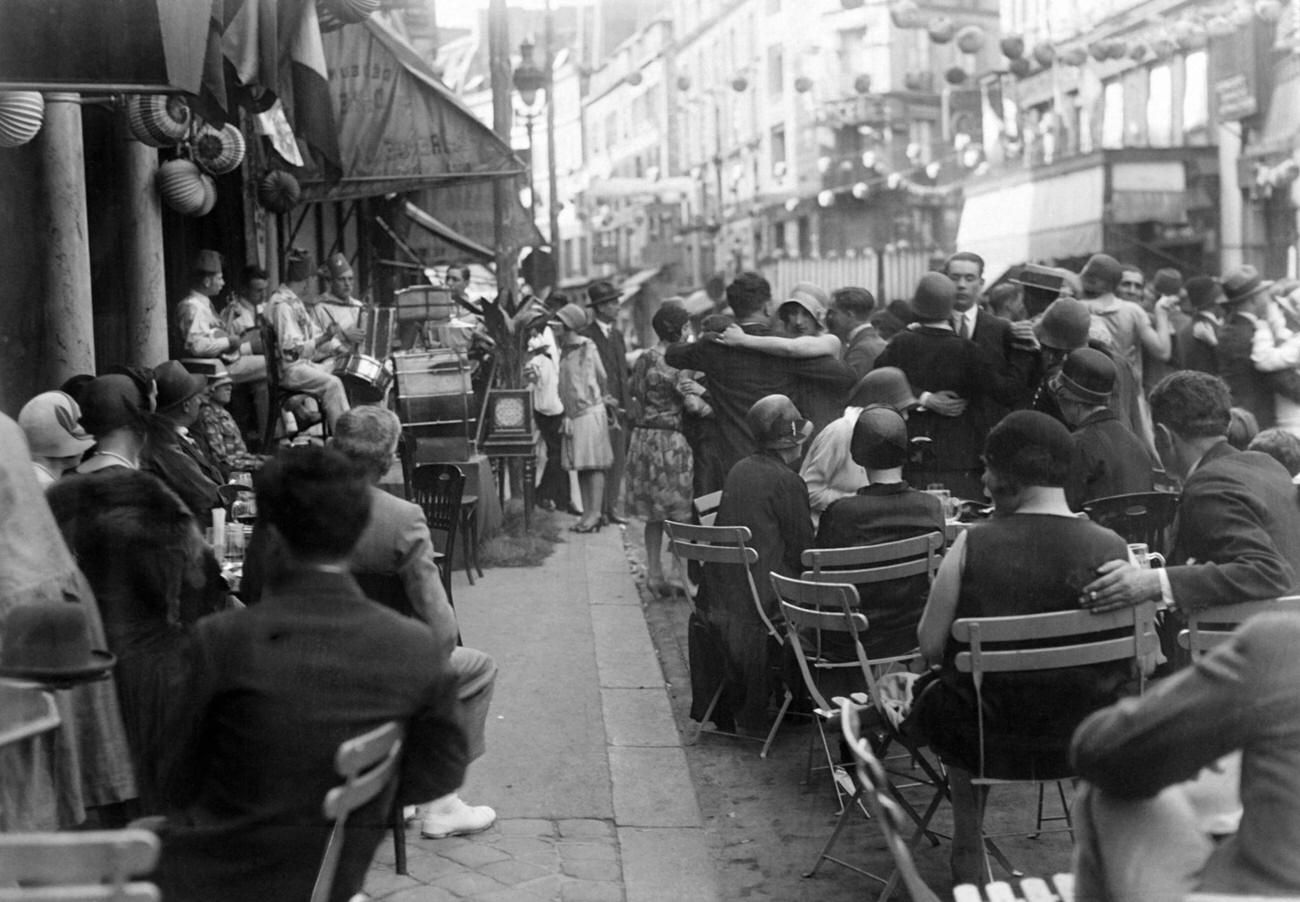
Bastille Day on July 14, 1929 filled cafe terraces across the city as crowds celebrated in the streets. By September, the summer rush had eased and the terraces took on a quieter, more relaxed character — the last warm weeks of the year before the chairs would be pulled inside and the awnings folded away for autumn.





If only the people in those photos could see what Paris has become.