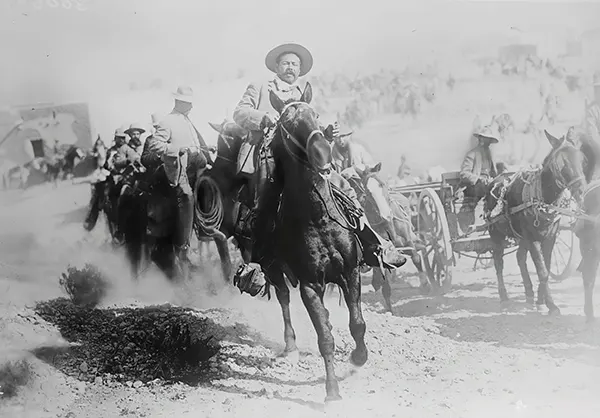
He was born José Doroteo Arango Arámbula on June 5, 1878, in the state of Durango, Mexico — a name almost no one would remember. The world would come to know him as Pancho Villa: outlaw, general, and one of the most talked-about figures of the Mexican Revolution. To millions of poor Mexicans, he was a hero. To the governments of Mexico and the United States, he was a threat they could never fully neutralize.
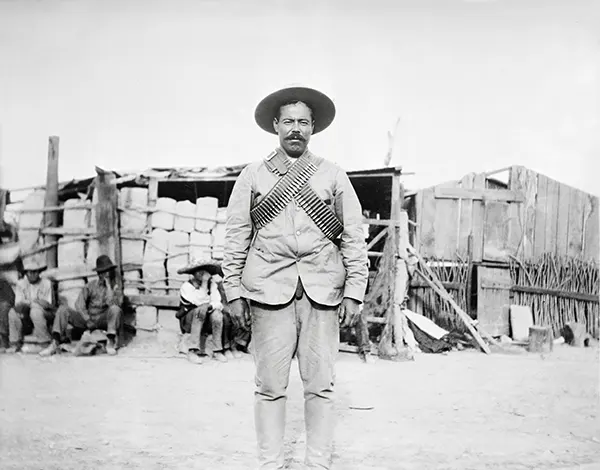
Villa’s early life gave little hint of the legend he would become. His family was desperately poor, and when his father died, Villa was only 15 years old. He took work as a sharecropper and a butcher to keep his family fed. Then, at a young age, everything changed. A wealthy landowner attacked his sister. Villa killed the man and fled into the mountains to escape arrest. That single act set the course of the rest of his life.
In the mountains, he joined a band of outlaws and quickly rose to lead them. He took the name Pancho Villa to hide his real identity. His gang stole from wealthy landowners and distributed goods among the poor — a pattern that earned him the label ‘Mexico’s Robin Hood.’ His reputation for fearlessness and generosity spread fast, and ordinary people across northern Mexico saw him as someone fighting on their behalf.
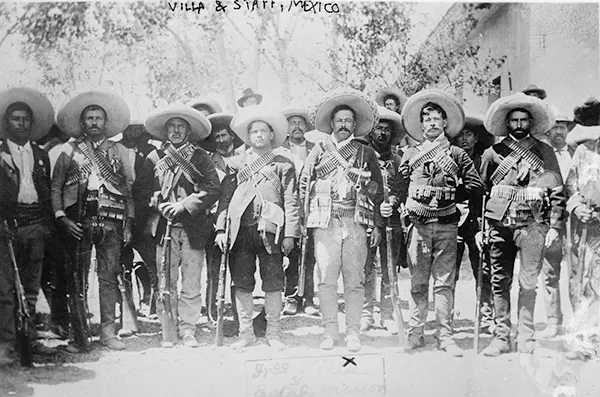
When the Mexican Revolution erupted in 1910, Villa found a cause larger than banditry. The revolution’s goal was to overthrow Porfirio Díaz, a dictator who had ruled Mexico for decades while the poor grew poorer and the rich seized more land. Villa joined forces with Francisco Madero, the opposition leader who challenged Díaz. Villa’s expertise in guerrilla warfare — hit-and-run raids, using rough terrain, moving fast — made him one of Madero’s most effective commanders.
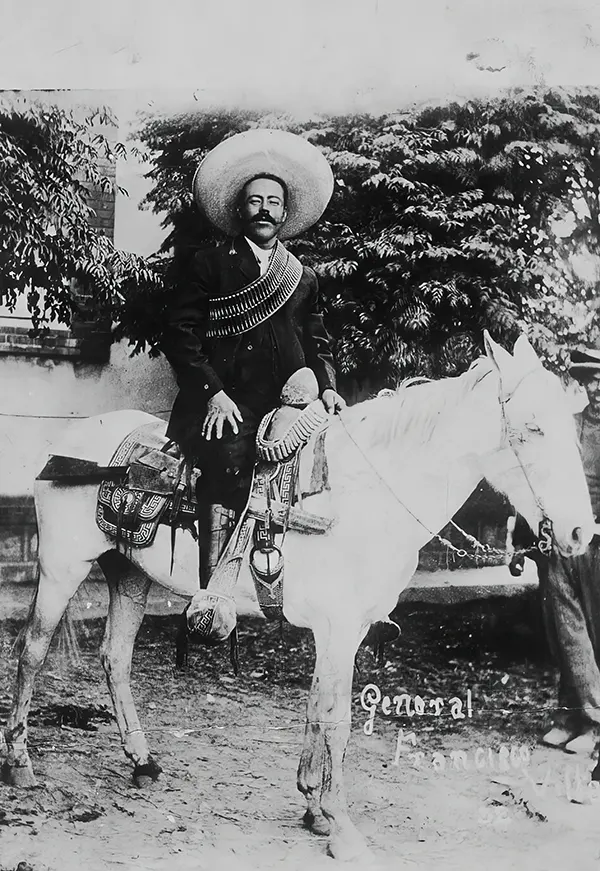
The revolutionary forces scored a decisive early victory. By May 1911, Madero’s coalition — with Villa playing a central role — had taken Ciudad Juárez, a key border city. Díaz resigned and went into exile. Madero became president of Mexico, and for a brief moment, it seemed the revolution had succeeded.
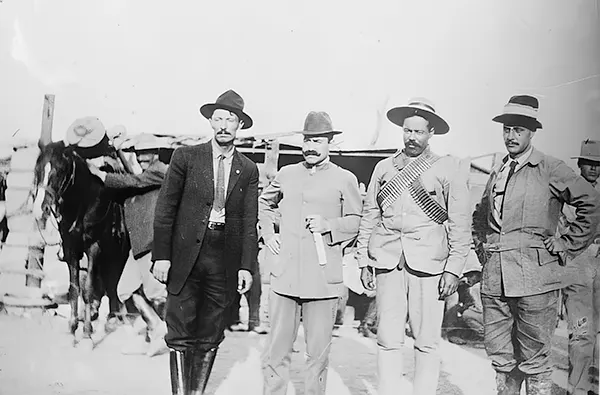
That success did not go unchallenged. In 1912, General Victoriano Huerta — ostensibly an ally — had Villa arrested and sentenced to death by firing squad. Villa stood before that squad in Jiménez, Chihuahua, awaiting execution. At the last possible moment, a telegram from President Madero arrived and halted the order. Villa was imprisoned instead, but he escaped from jail and fled to the United States.
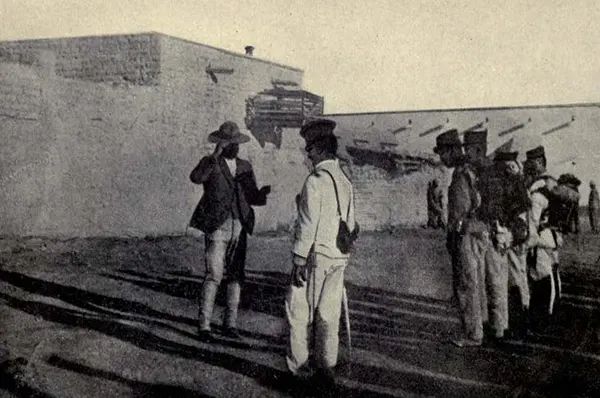
In February 1913, Huerta had Madero betrayed and assassinated, then declared himself president. Villa returned to Mexico and wasted no time. He raised a new army — the División del Norte, or Division of the North — and launched a fierce campaign against Huerta’s government. His forces grew into one of the largest and most disciplined armies in the revolution. Villa supplied his men with food, shelter, and arms, and their loyalty to him was absolute.
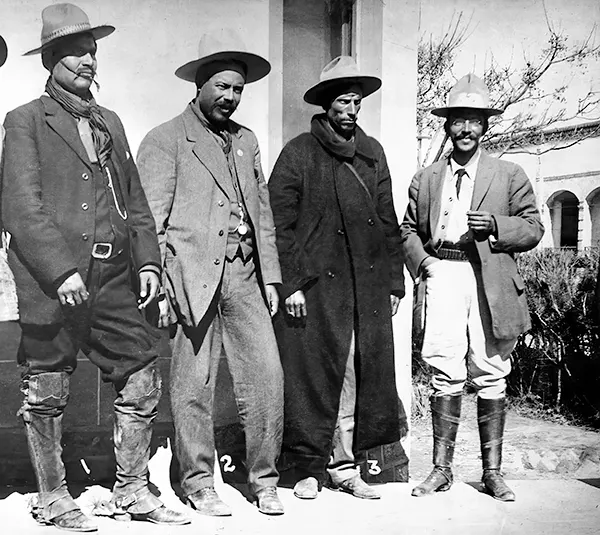
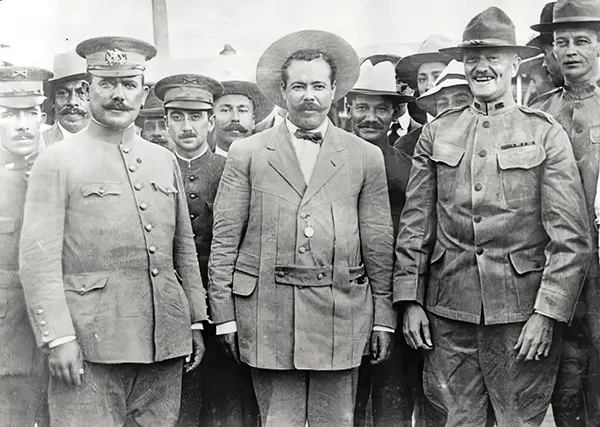
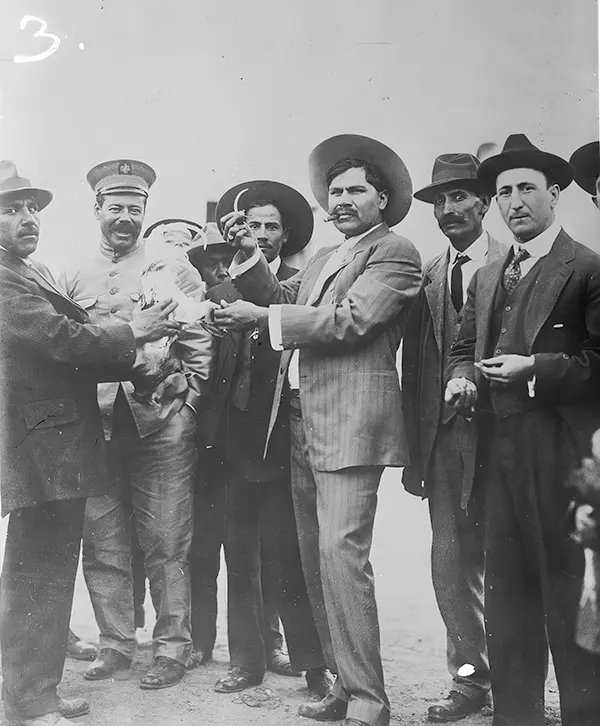
During this period, Villa’s relationship with the United States was complex. American officials initially viewed him as a stabilizing force, and in August 1914, Villa met with U.S. Army General John J. Pershing at Fort Bliss, Texas — a meeting that carried an air of mutual respect. That relationship would not last.
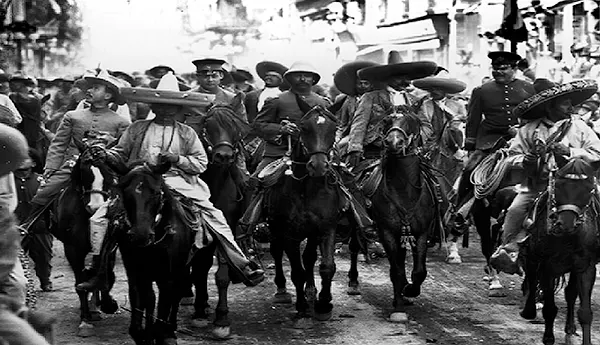
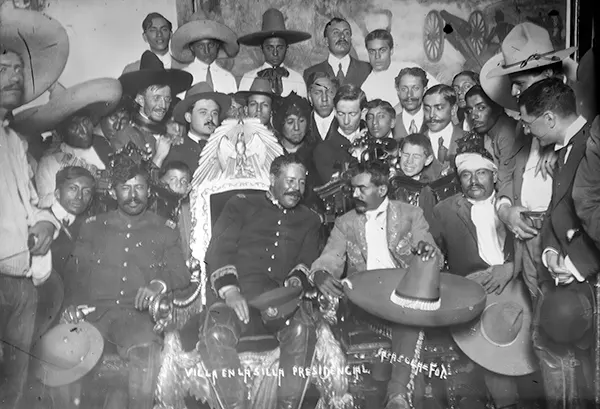
By late 1914, Villa and fellow revolutionary Emiliano Zapata had together amassed enough power to march into Mexico City. The two men, leading armies from opposite ends of the country — Villa from the north, Zapata from the south — met and entered the capital together on December 6, 1914. Villa sat in the presidential chair at the Palacio Nacional. It was the high point of his military career.
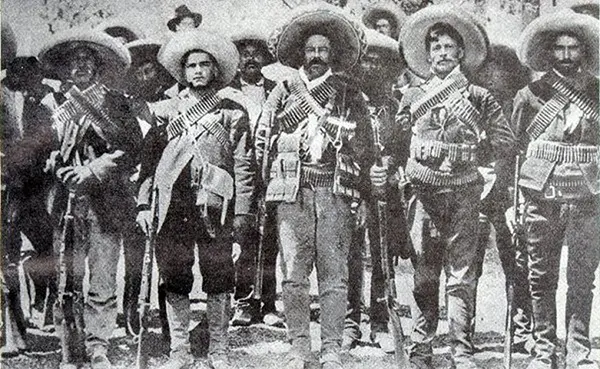
Villa’s reputation was never one-sided. Alongside stories of generosity, there were accounts of brutal executions and violence against enemies and civilians alike. He shot prisoners without trial and punished disloyalty with death. His inner circle included men like Rodolfo Fierro, nicknamed ‘El Carnicero’ — The Butcher — whose cruelty even disturbed some of Villa’s own officers. Villa accepted and used such men because winning required it, in his view.
His military fortunes shifted dramatically in 1915. Rival revolutionary leader Venustiano Carranza, backed by the United States, gained the upper hand. Villa suffered a series of crushing defeats against General Álvaro Obregón, who used modern military tactics — including barbed wire and machine guns — to devastate the División del Norte. Furious at the U.S. government’s support of Carranza, Villa turned against his former supporters.
In March 1916, Villa led roughly 500 men across the U.S. border and attacked Columbus, New Mexico. The raid killed 18 Americans — both soldiers and civilians. It was the first armed attack on American soil by a foreign force since the War of 1812. President Woodrow Wilson ordered General Pershing — the same man who had once posed alongside Villa at Fort Bliss — to lead a punitive expedition into Mexico to capture him. Pershing commanded nearly 10,000 troops and spent 11 months searching. Villa was never caught.
By 1920, the revolution had ground down to a political settlement. Villa negotiated a peace deal with the Mexican government. In exchange for laying down arms, he received the Hacienda de Canutillo in Durango — a large estate where he attempted to build a quiet life as a farmer. He settled there with his wife Luz Corral and, by most accounts, genuinely tried to step back from the violence that had defined his life.
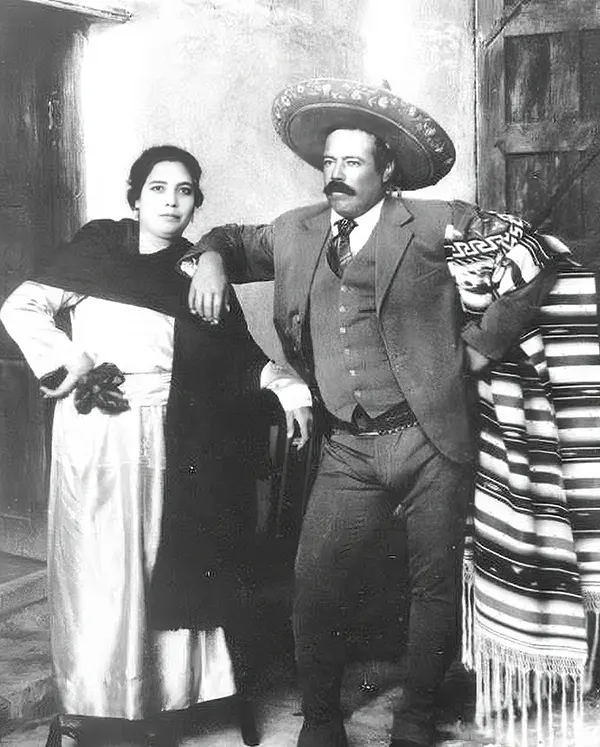
That quieter life ended on July 20, 1923. As Villa drove through the town of Parral, Chihuahua, a group of gunmen opened fire on his car. He was shot multiple times and died at the scene. Seven of his bodyguards were also killed. The identities of the killers were never officially established, but political enemies with connections to the national government were widely believed to be responsible. Villa was 45 years old.
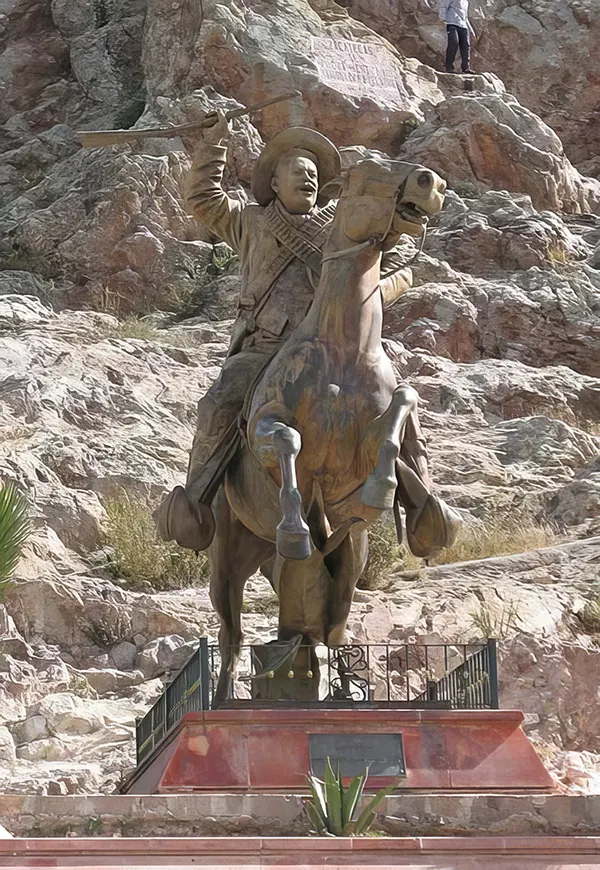
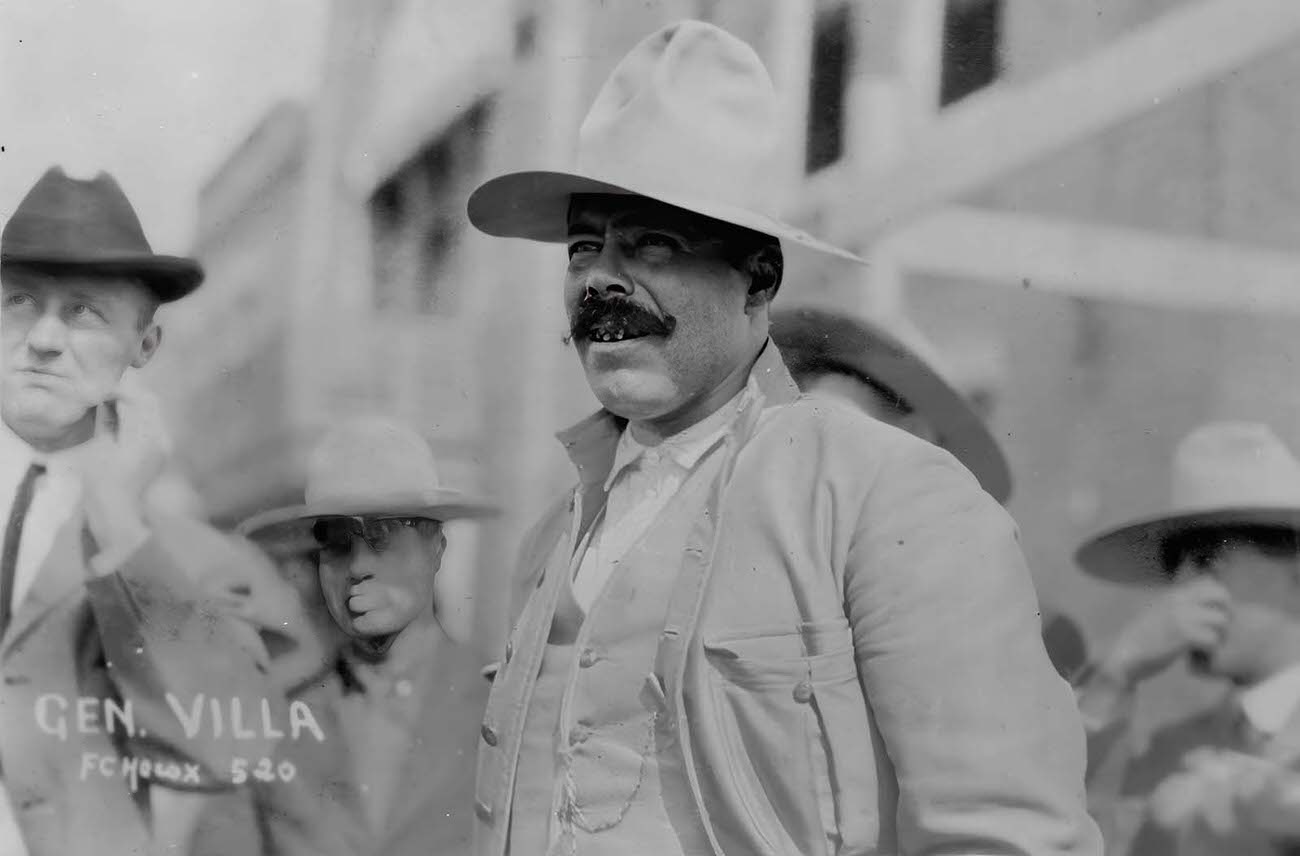
The story of Pancho Villa resists a simple verdict. He championed land reform and risked his life fighting a system that kept millions of Mexicans in poverty. He also ordered executions, tolerated brutality within his ranks, and launched a deadly cross-border raid that pulled the United States into Mexican affairs. Both versions are part of the historical record — and both are why his name still sparks debate more than a century after his death.