
Toledo, Ohio sits on the west bank of the Maumee River and was formally founded in 1833. Its early decades were quiet ones. Growth came slowly, and the city spent its first twenty years as little more than a modest river settlement. That changed in the 1830s when the railroads arrived, threading Toledo into a growing national network of commerce and trade. By 1844, workers had discovered local deposits of petroleum and natural gas, and the city’s future as an industrial center was set.
Factories and workshops multiplied throughout the second half of the 19th century. Toledo became home to furniture makers, carriage manufacturers, railroad equipment producers, and — most famously — glass manufacturers. The glass industry, in particular, put Toledo on the map in ways few other industries could. Word spread across Europe and beyond, and waves of immigrants arrived looking for work. By 1900, Toledo had transformed from a quiet river town into a bustling industrial city with a skyline to match. The photographs in this collection capture that city at its most energetic, a place still in the process of becoming itself.
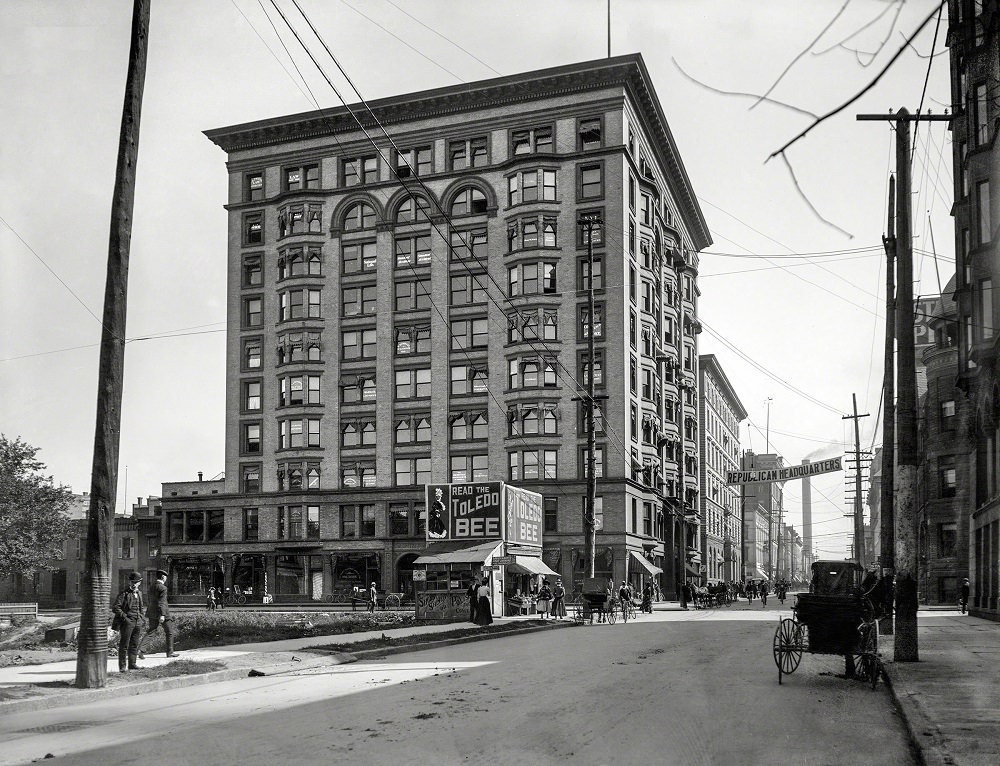
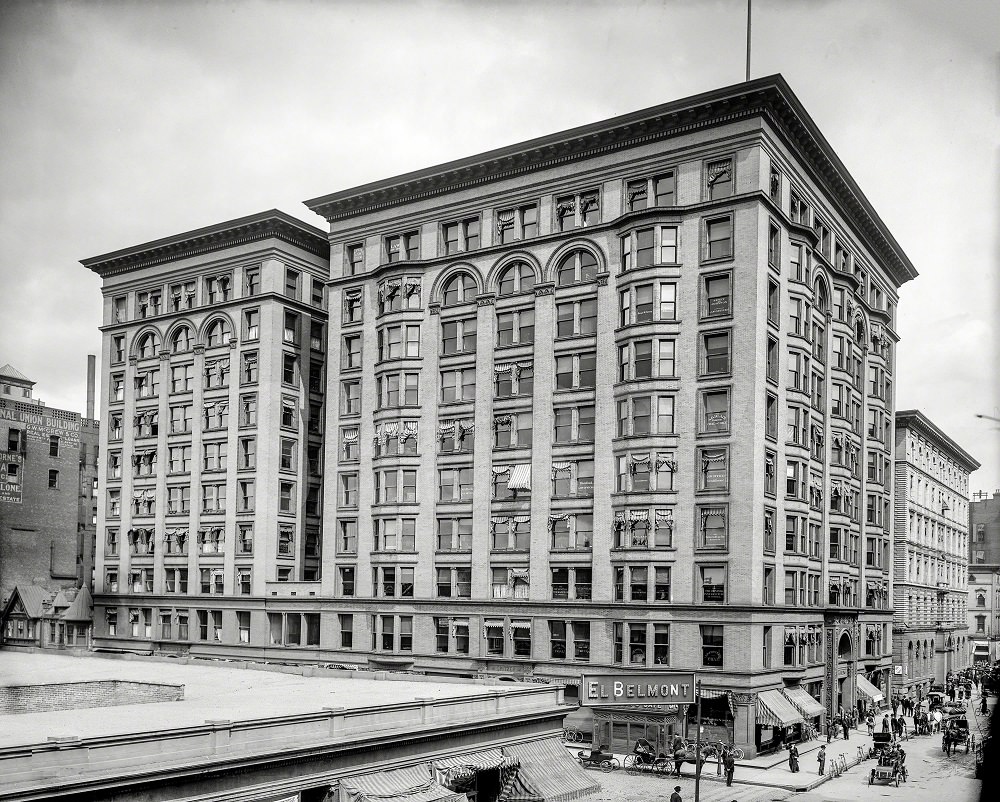
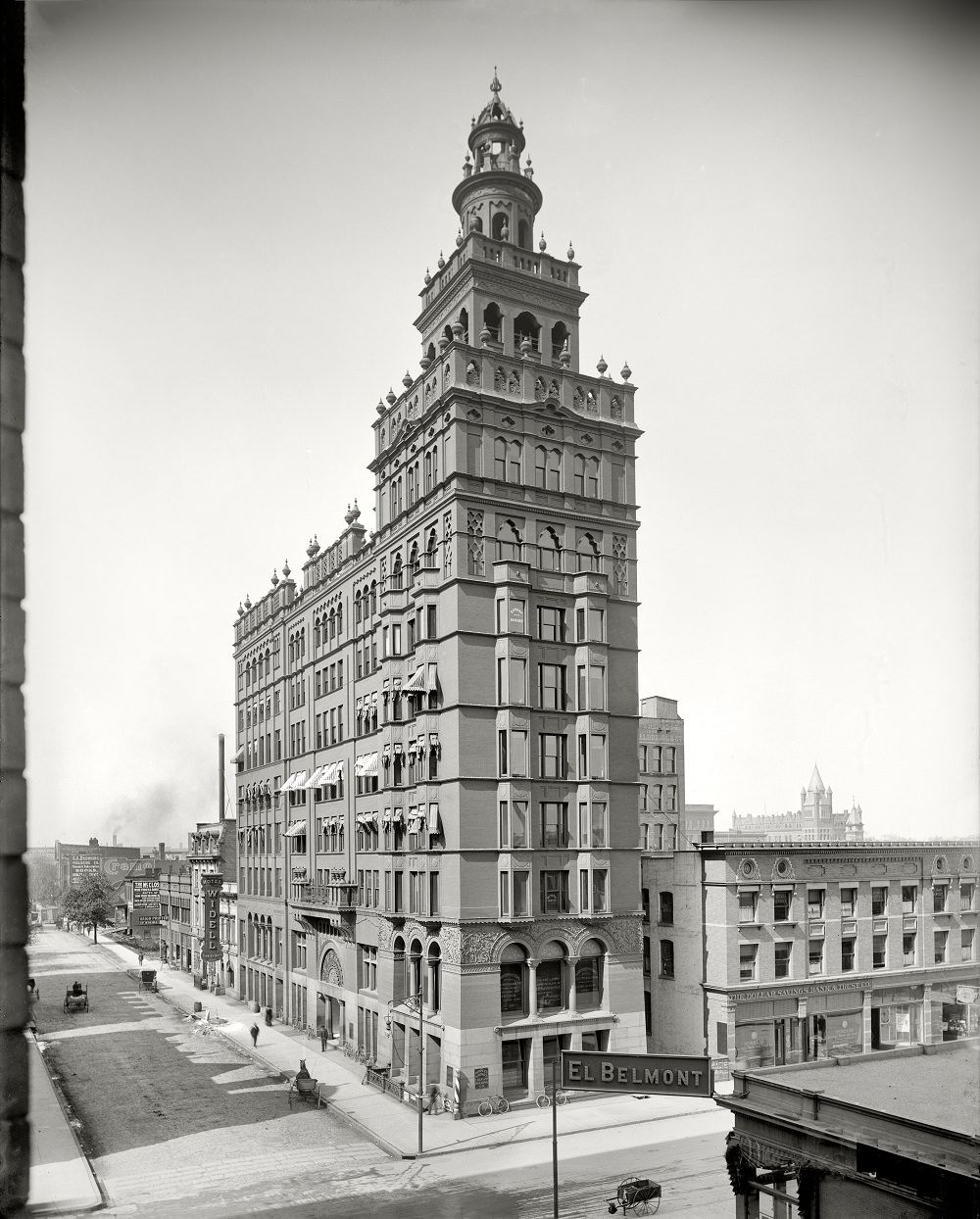
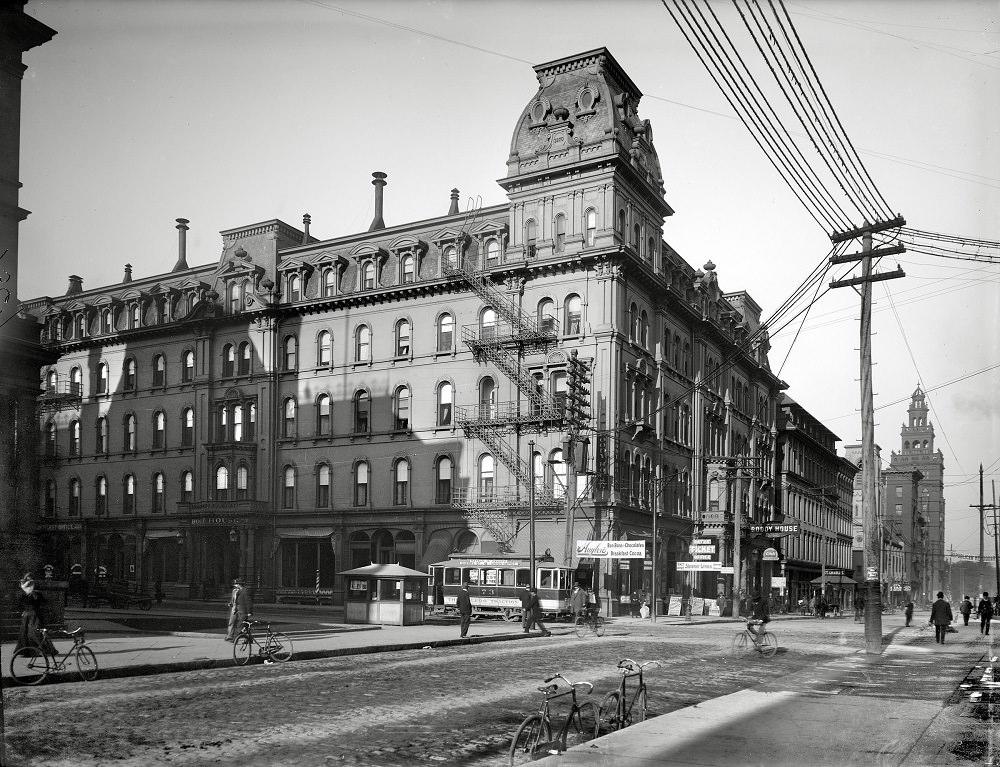
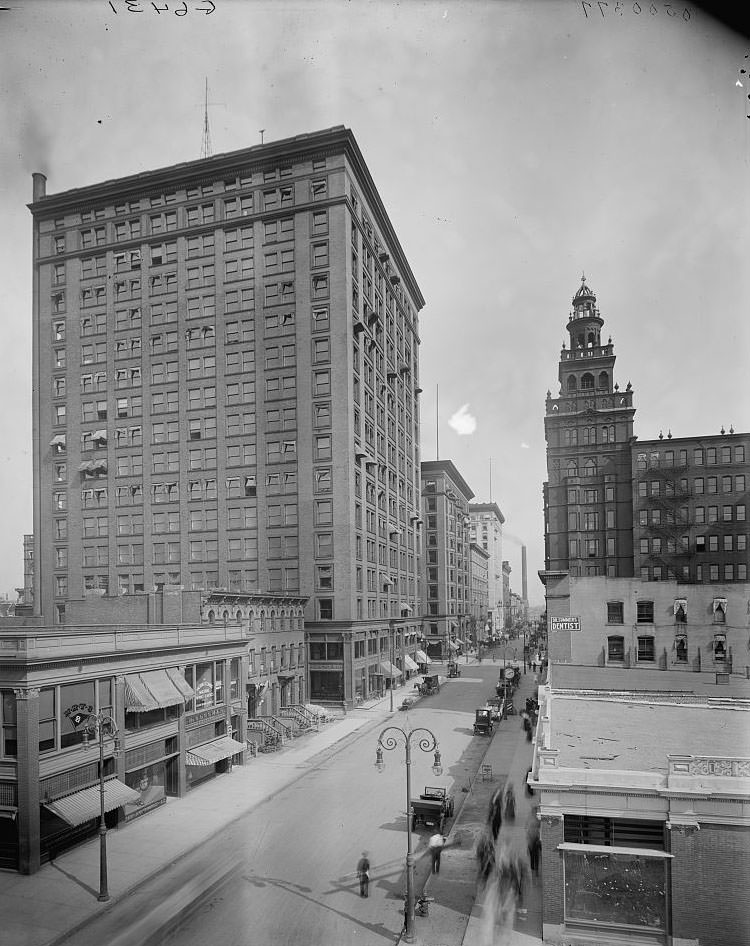
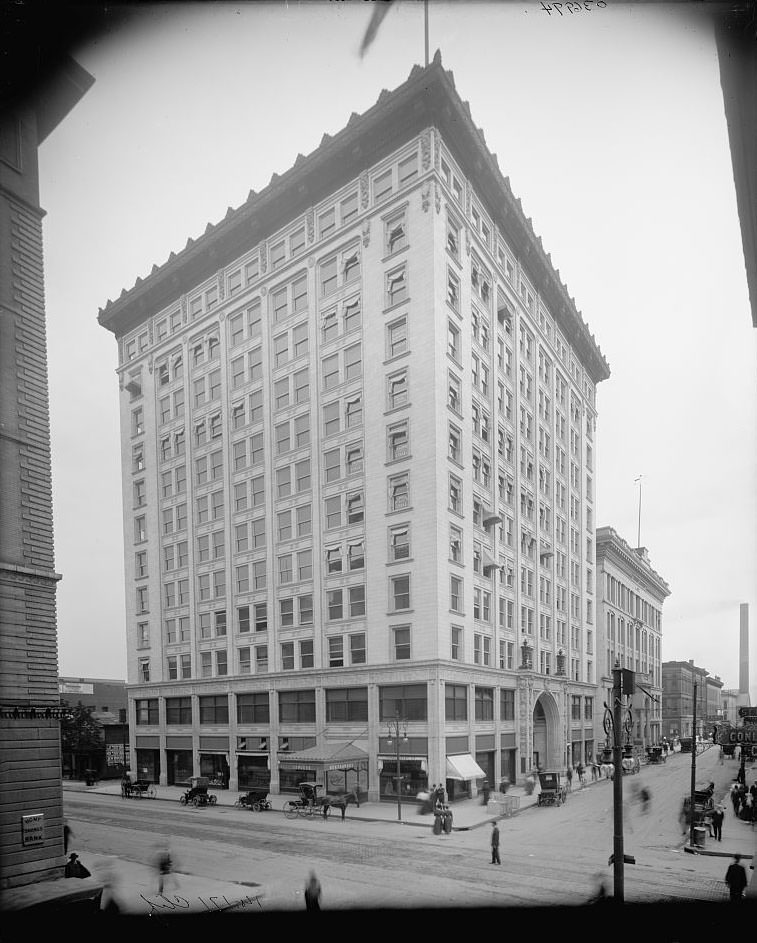
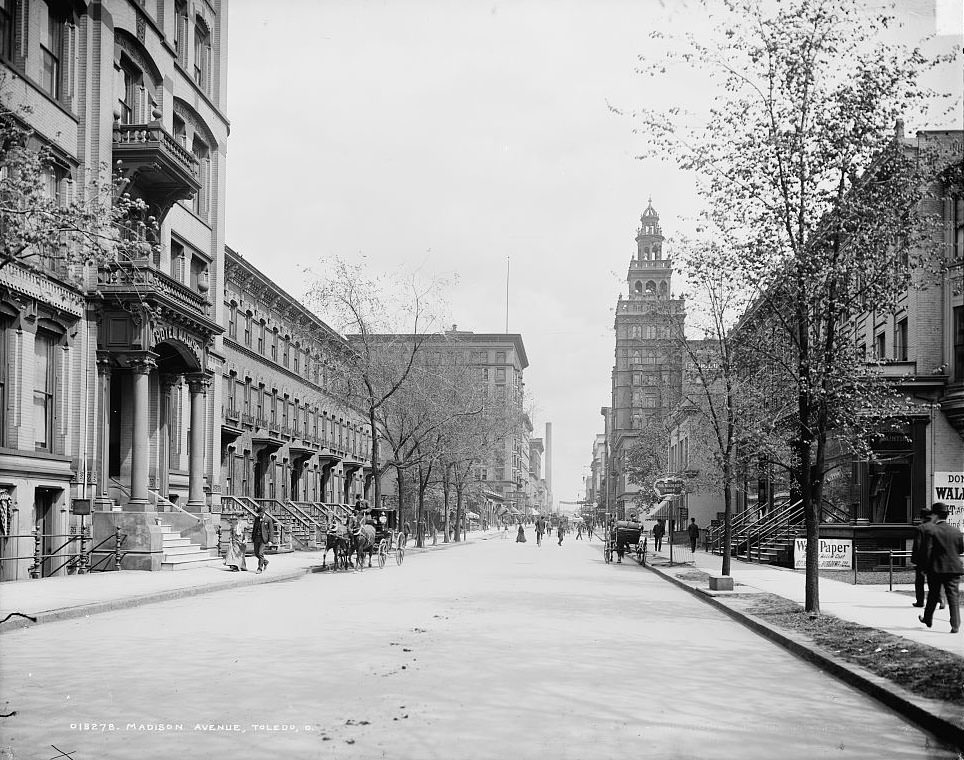
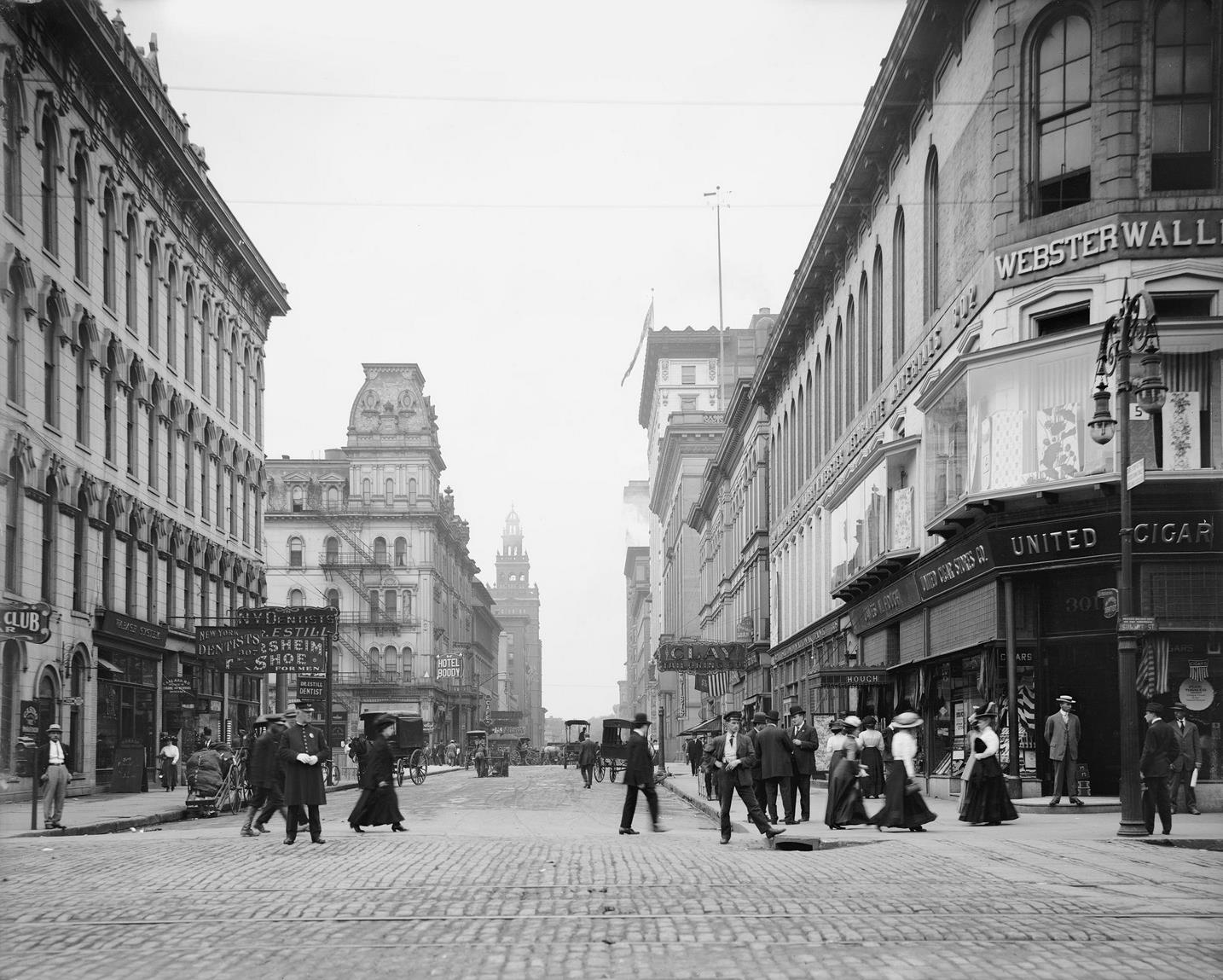
The Spitzer Building stood at the corner of Madison Avenue and Huron Street as one of Toledo’s most recognizable commercial landmarks at the turn of the century. Madison Avenue itself was the city’s commercial spine, lined with brick storefronts, electric streetcar lines, and pedestrians going about daily business. By 1905, the street had taken on a fuller, more developed character.
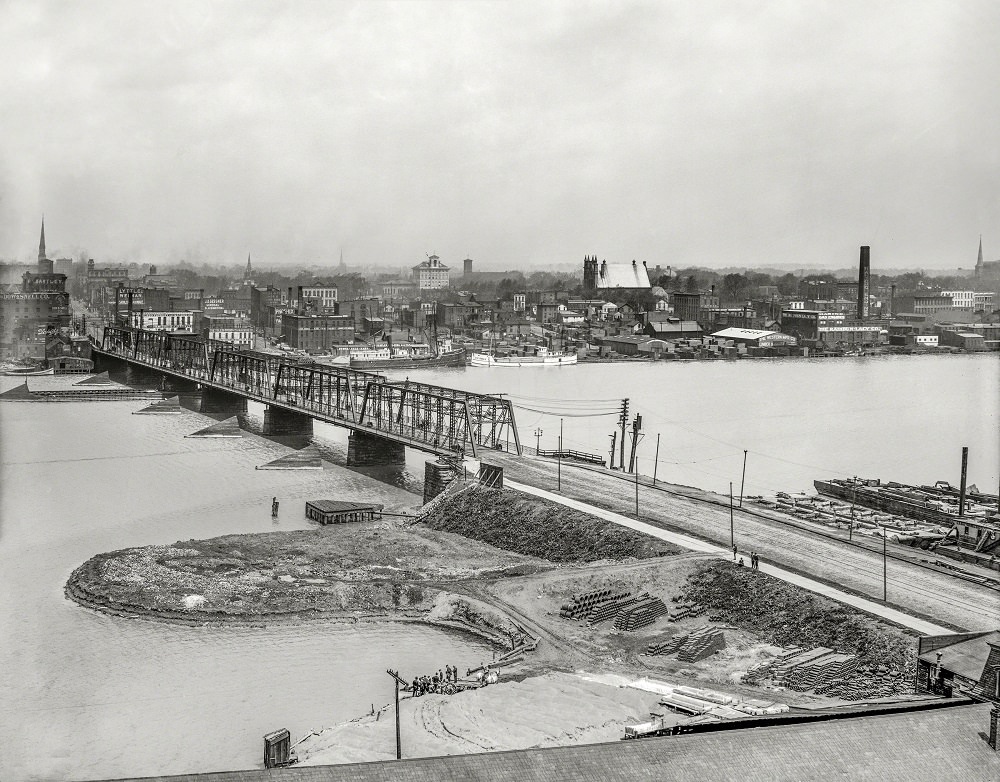
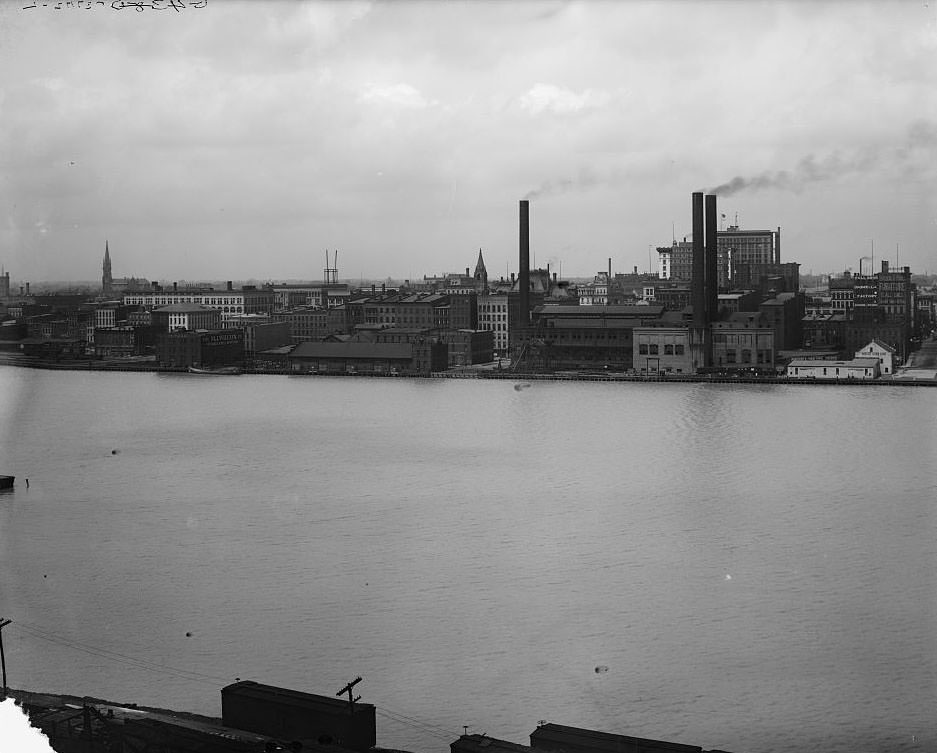
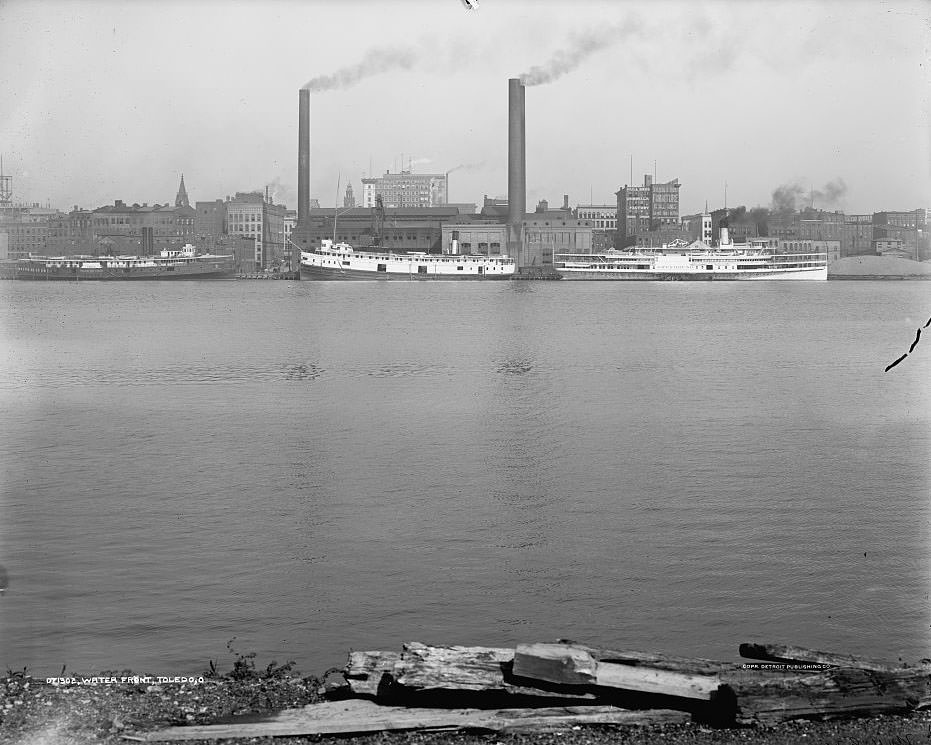
The Maumee River was not just a geographic feature — it was Toledo’s economic lifeline. Coal, grain, and manufactured goods moved along its banks constantly. The river’s waterfront in 1910 was a working landscape of docked vessels, railroad coal cars, and industrial machinery. The Cherry Street Bridge carried the city’s traffic over this busy artery, connecting neighborhoods on both sides of the water.
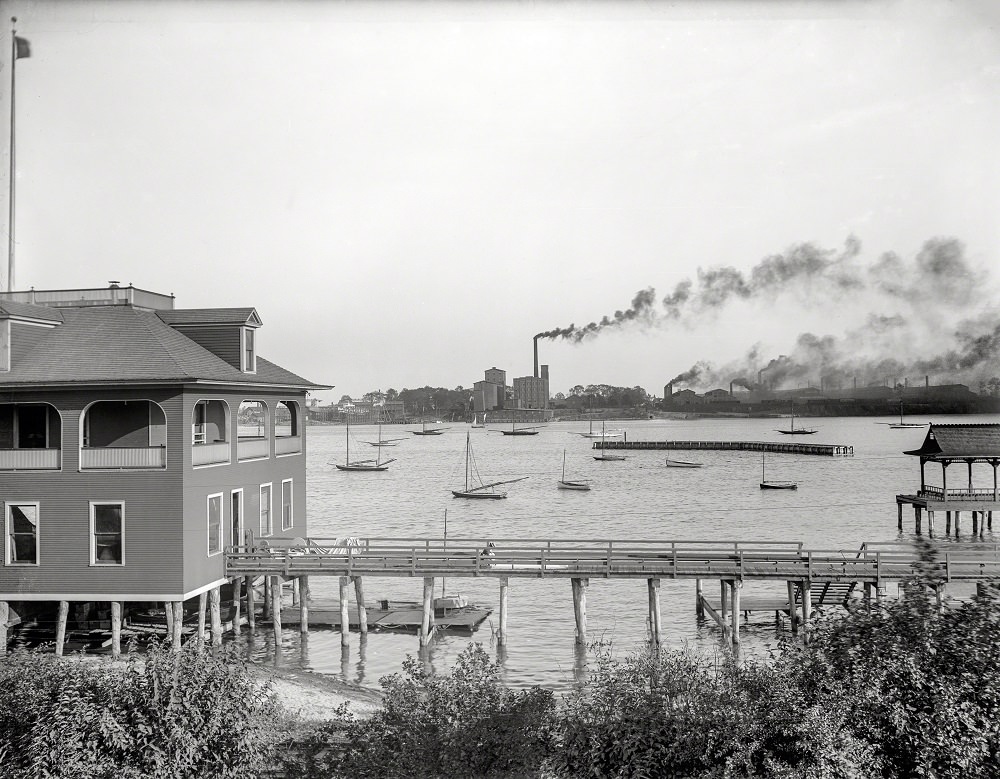
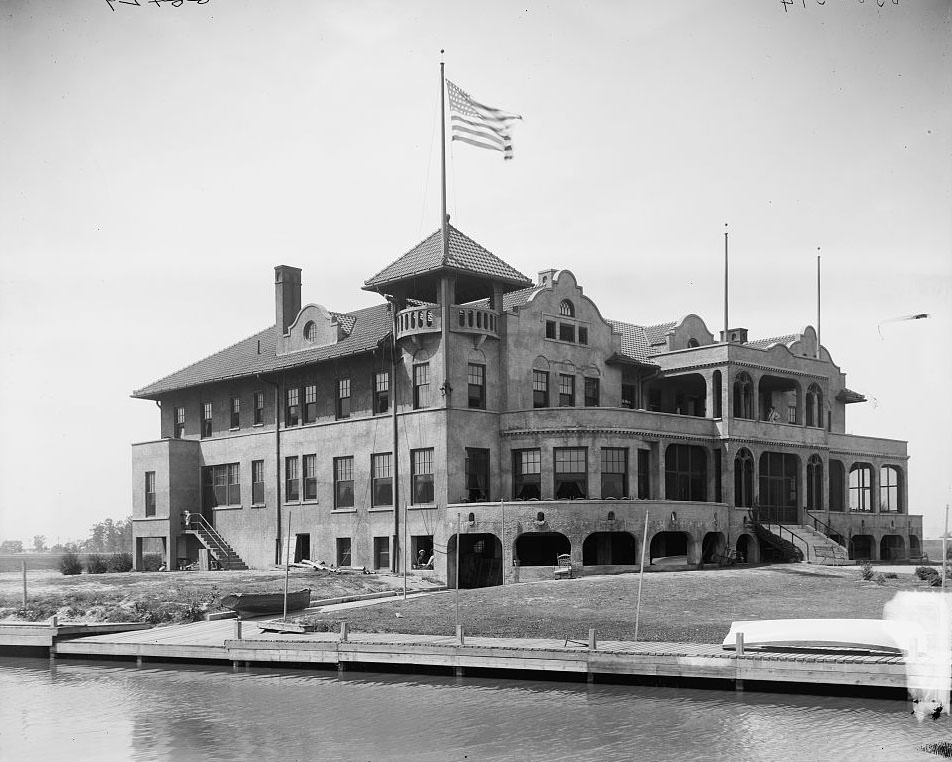
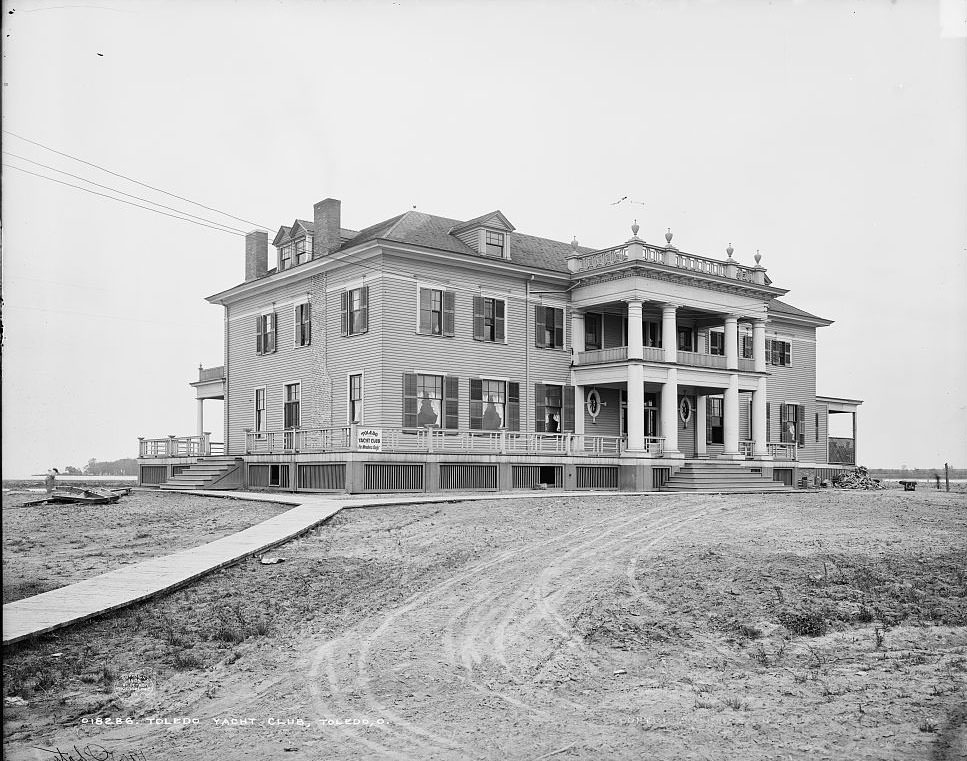
Not all of Toledo’s early 20th-century life revolved around industry. The Toledo Yacht Club, photographed as early as 1899, showed that the city’s residents also made time for leisure along the water. The club reflected a level of civic prosperity — a community wealthy enough to set aside time and resources for recreation.
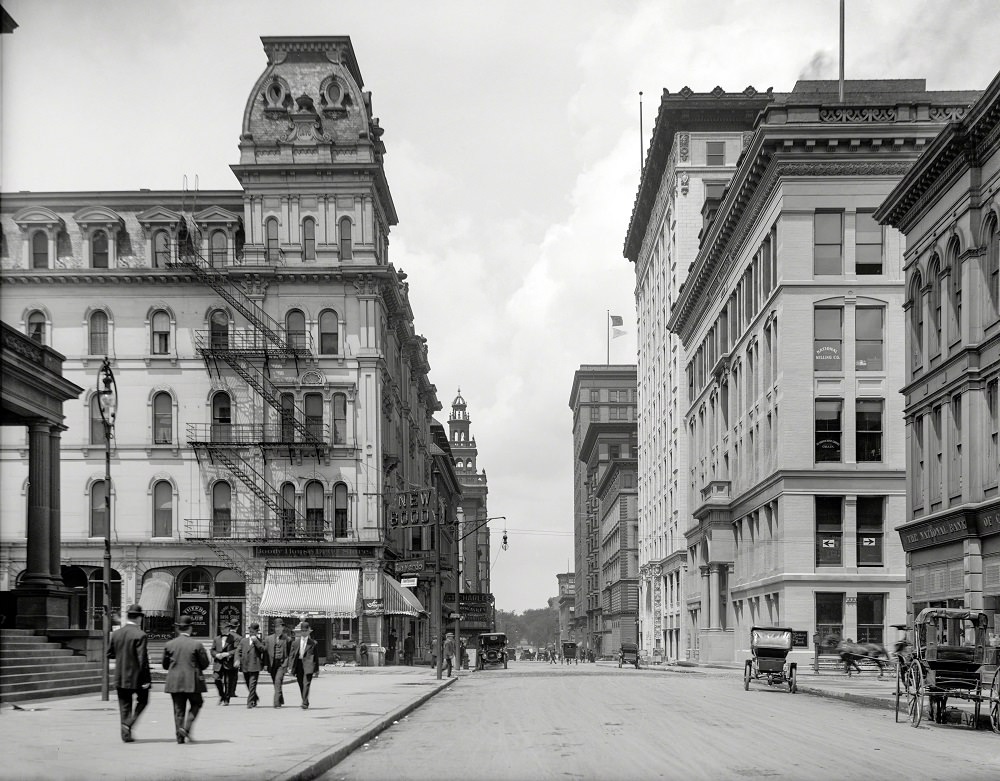
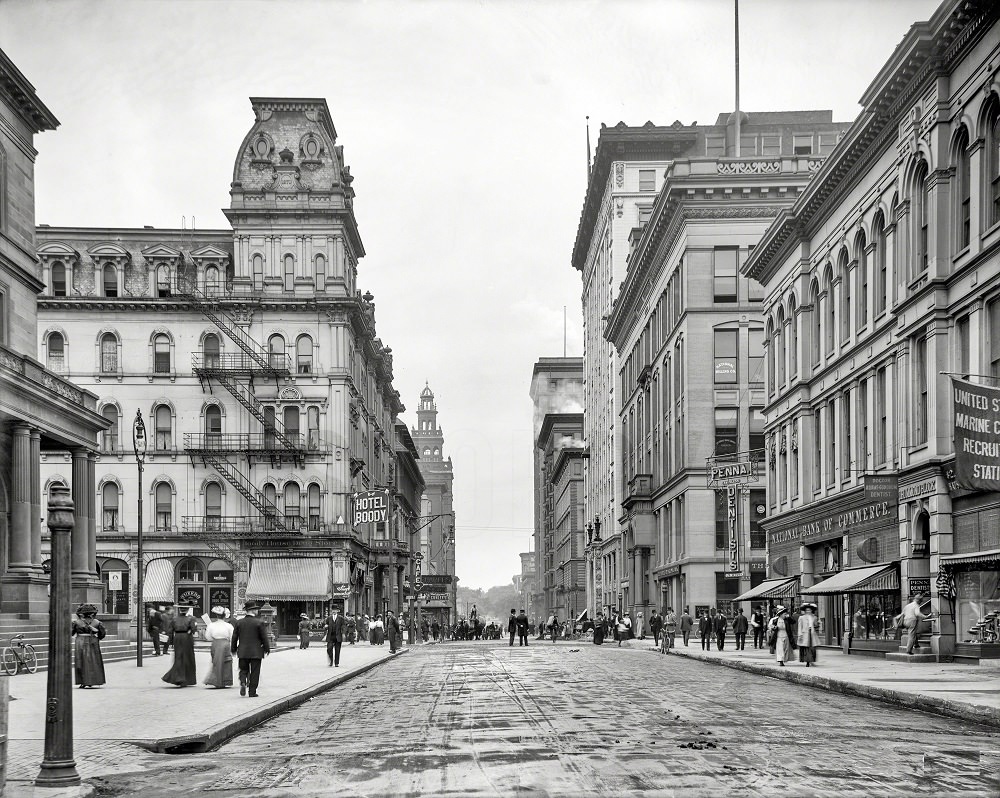
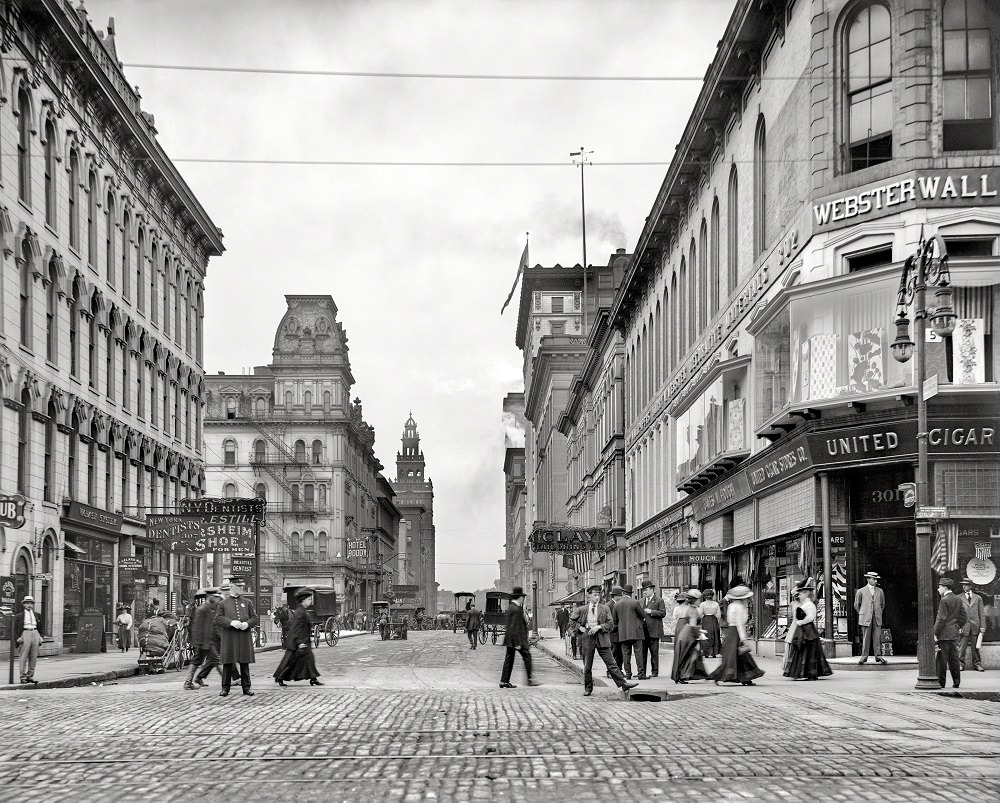
Madison Avenue remained the city’s most photographed street throughout the decade. Looking down it from Summit Street in 1905, the scene shows electric streetcars sharing the road with horse-drawn wagons and early foot traffic. The buildings lining the avenue housed banks, retailers, and professional offices — a compact downtown built on the confidence of a growing industrial economy.
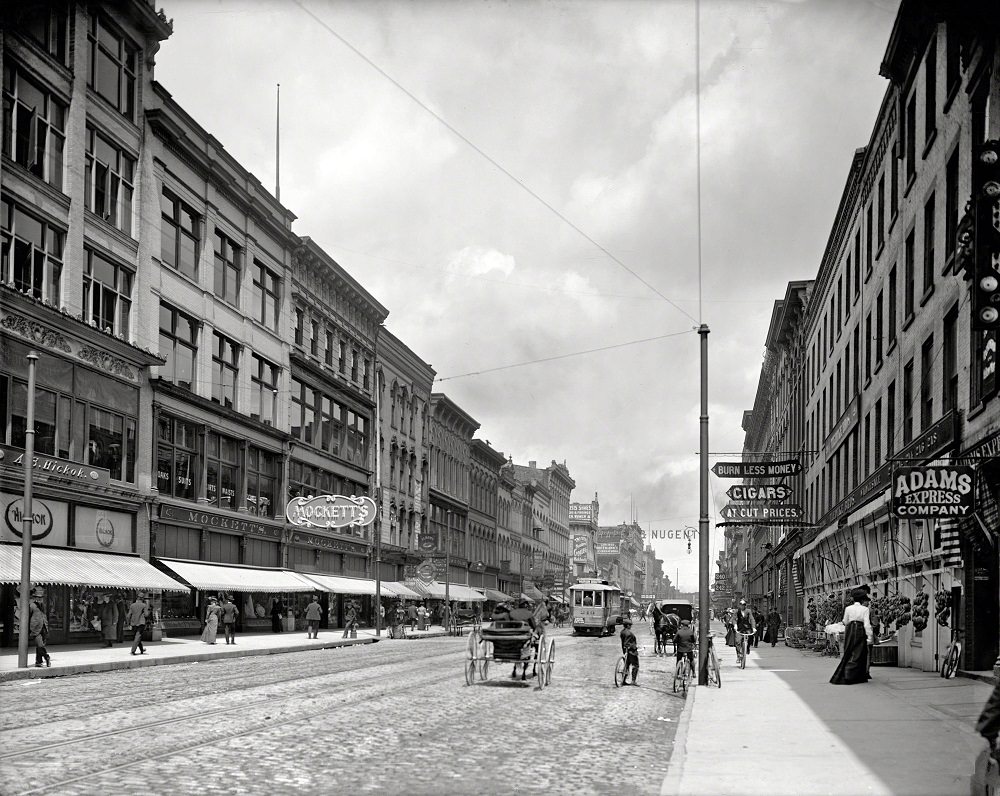
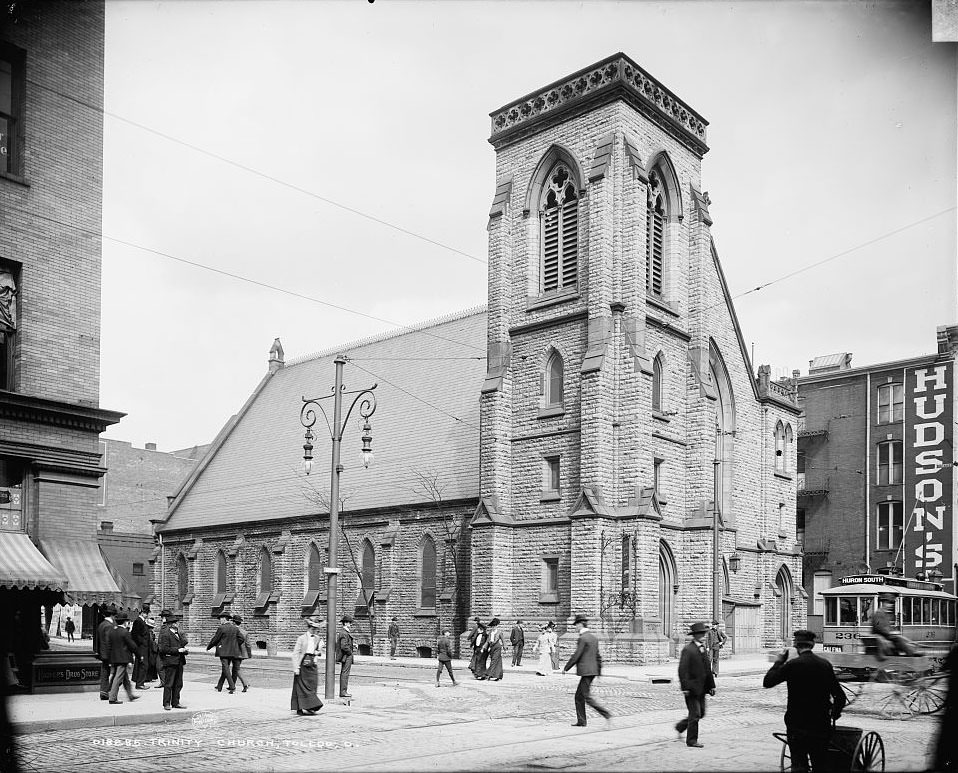
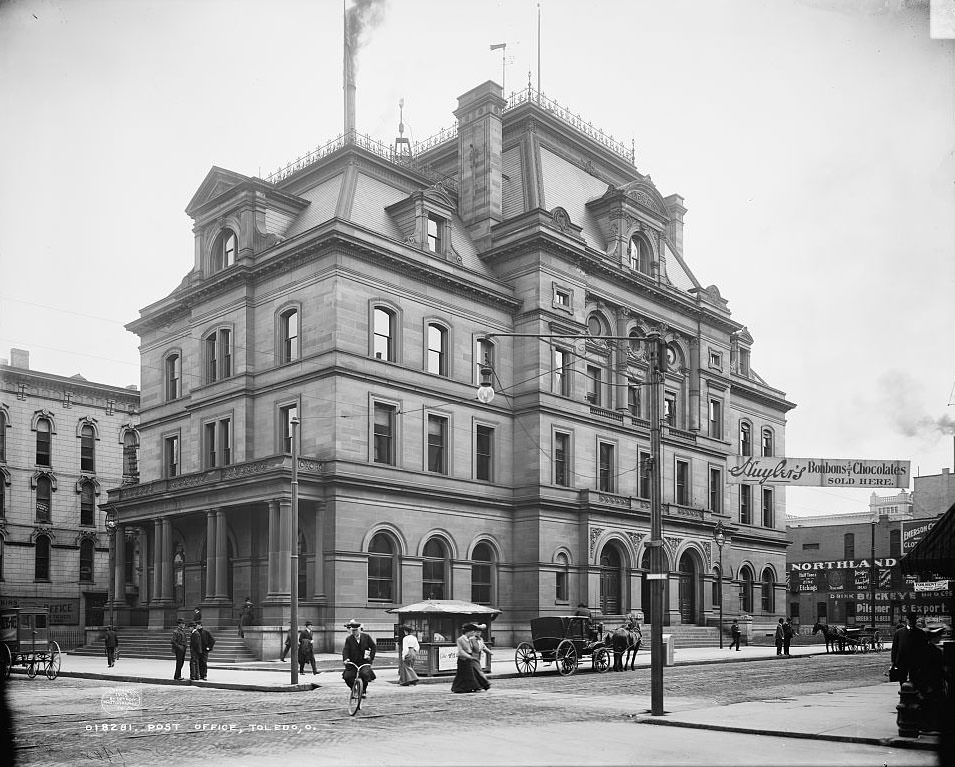
Toledo’s civic infrastructure kept pace with its commercial growth. The Post Office on St. Clair Street, photographed in 1905, was a solid stone structure that projected permanence and federal authority. A block or two away, the city’s public life played out in post offices, courts, and churches that gave neighborhoods their anchor points.
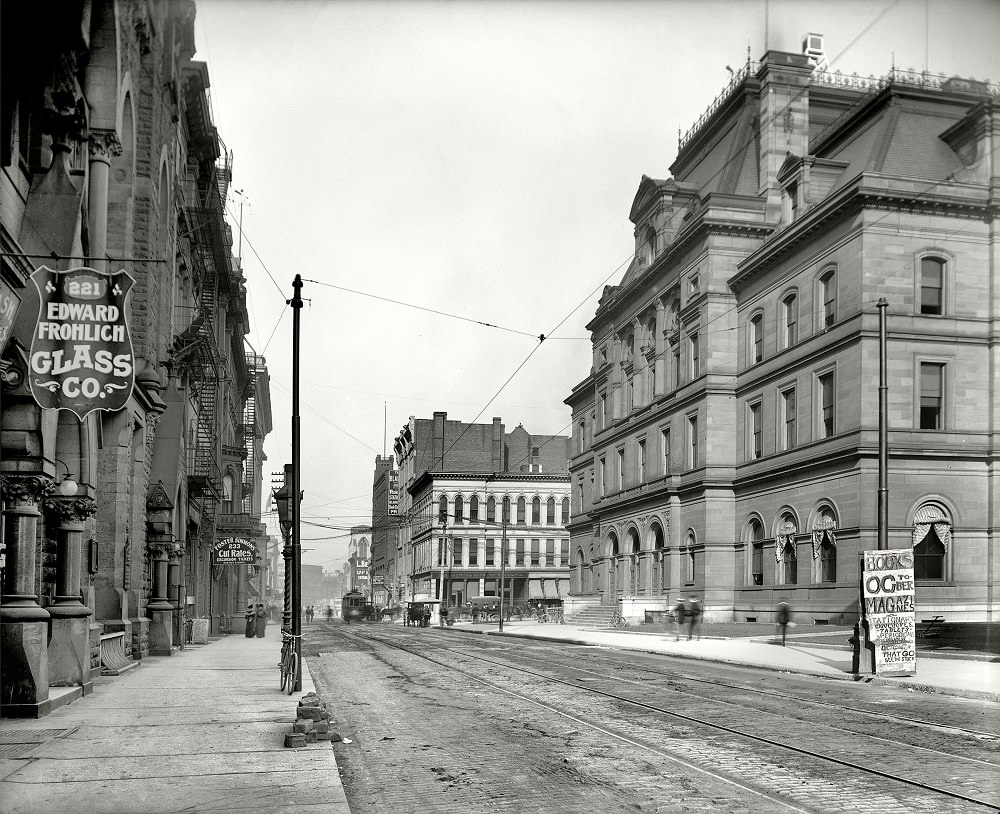

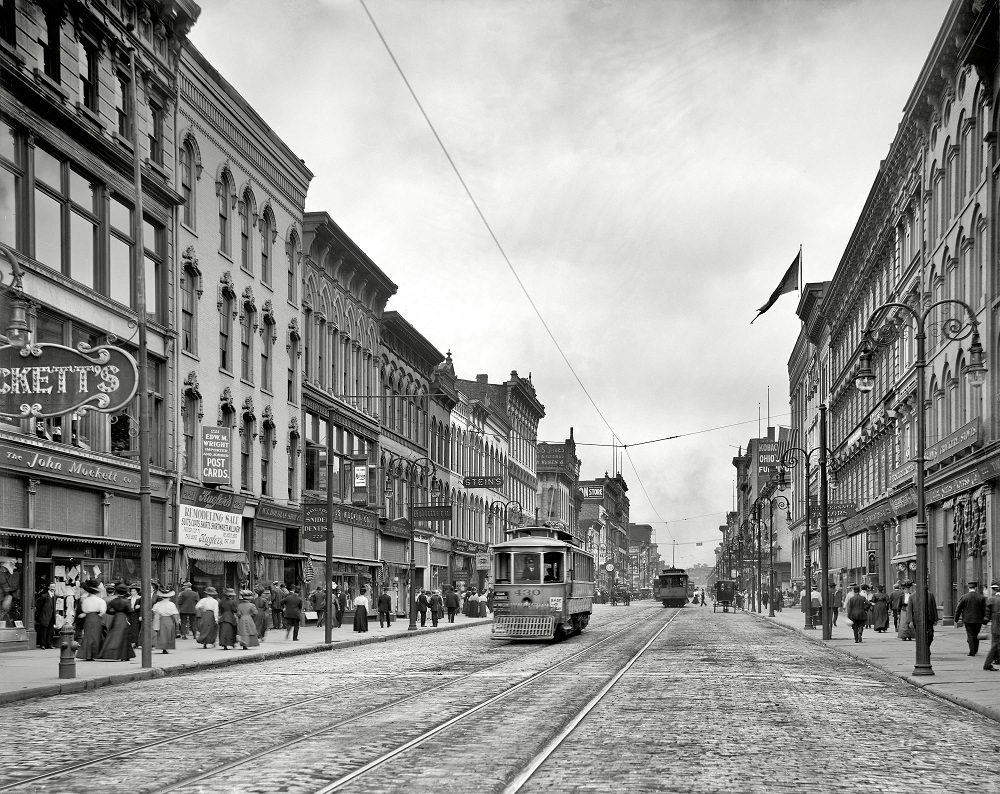
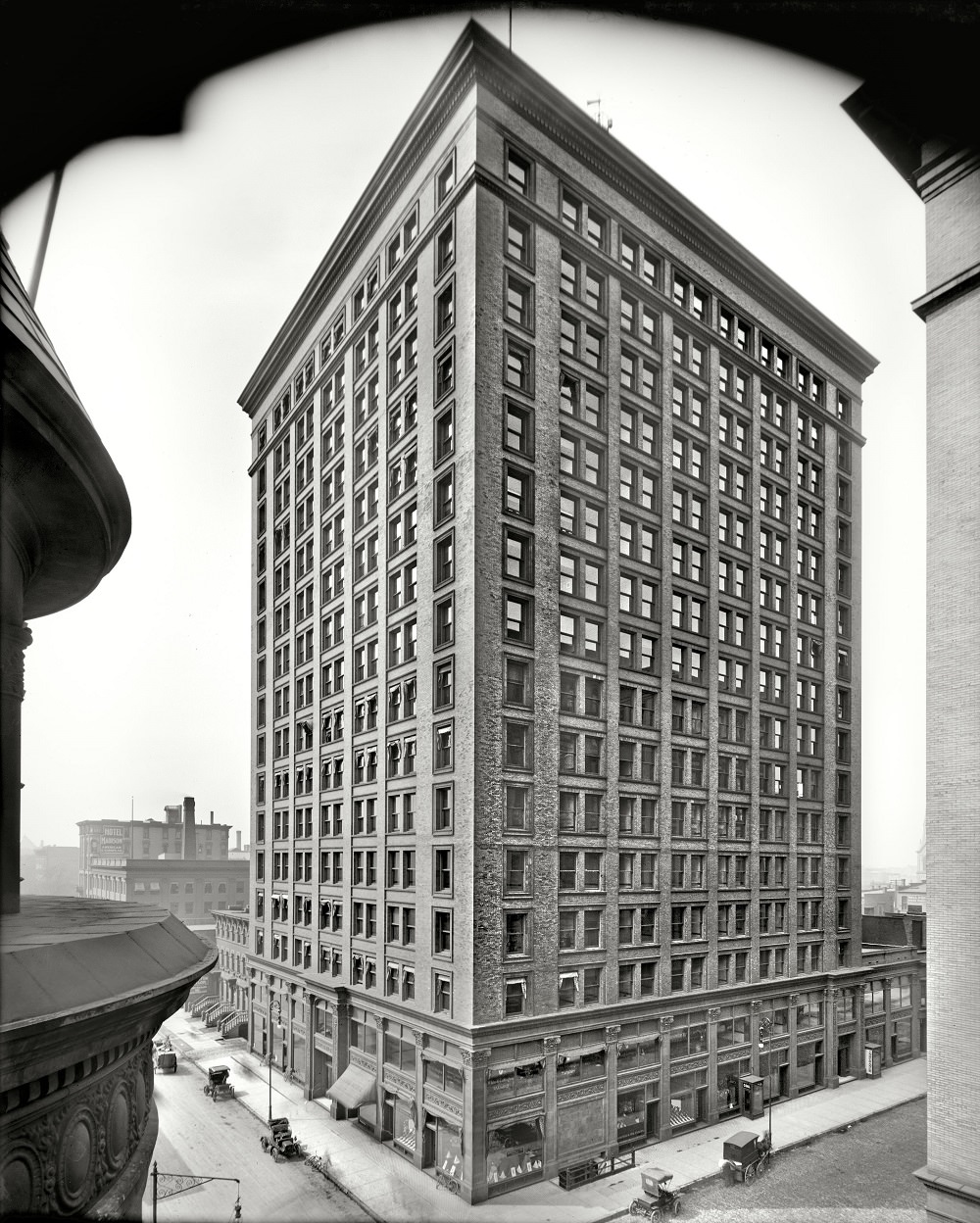
Summit Street appeared repeatedly in photographers’ viewfinders between 1905 and 1909, a sign of how central it was to daily life. By 1909, the street showed the marks of a maturing urban corridor — taller buildings, wider sidewalks, and the steady hum of commercial activity. Around the same time, the Nicholas Building joined Toledo’s downtown skyline as another sign of the city’s architectural ambitions.
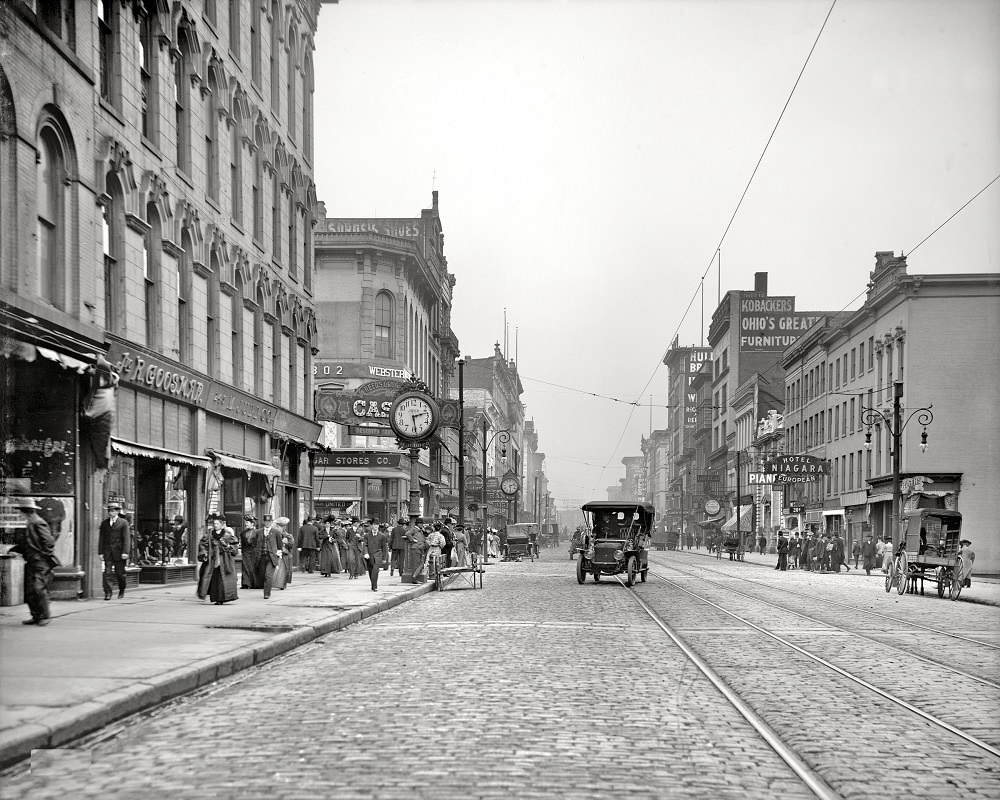
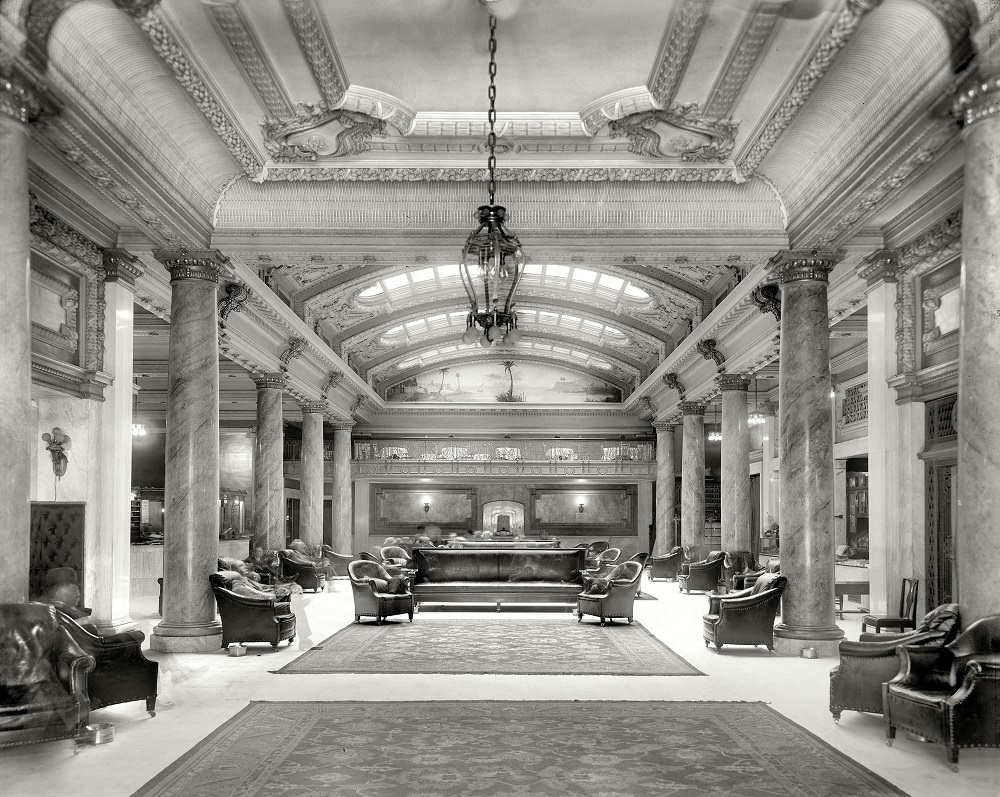
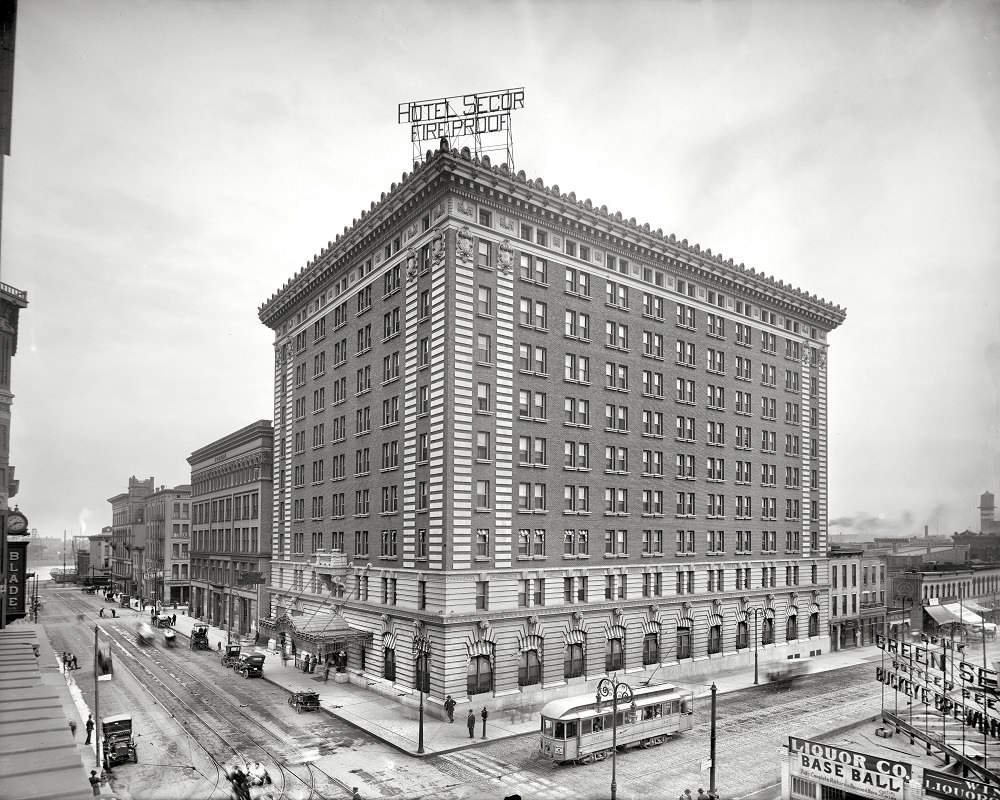
Hotel Secor, located at the corner of Jefferson Avenue and Superior Street, was one of the finest hotels in Toledo when it opened in 1908. Its lobby was an impressive space — high ceilings, polished floors, and furnishings that signaled the hotel’s ambitions to serve a well-heeled clientele. Traveling businessmen, politicians, and visitors to the city passed through those doors regularly.
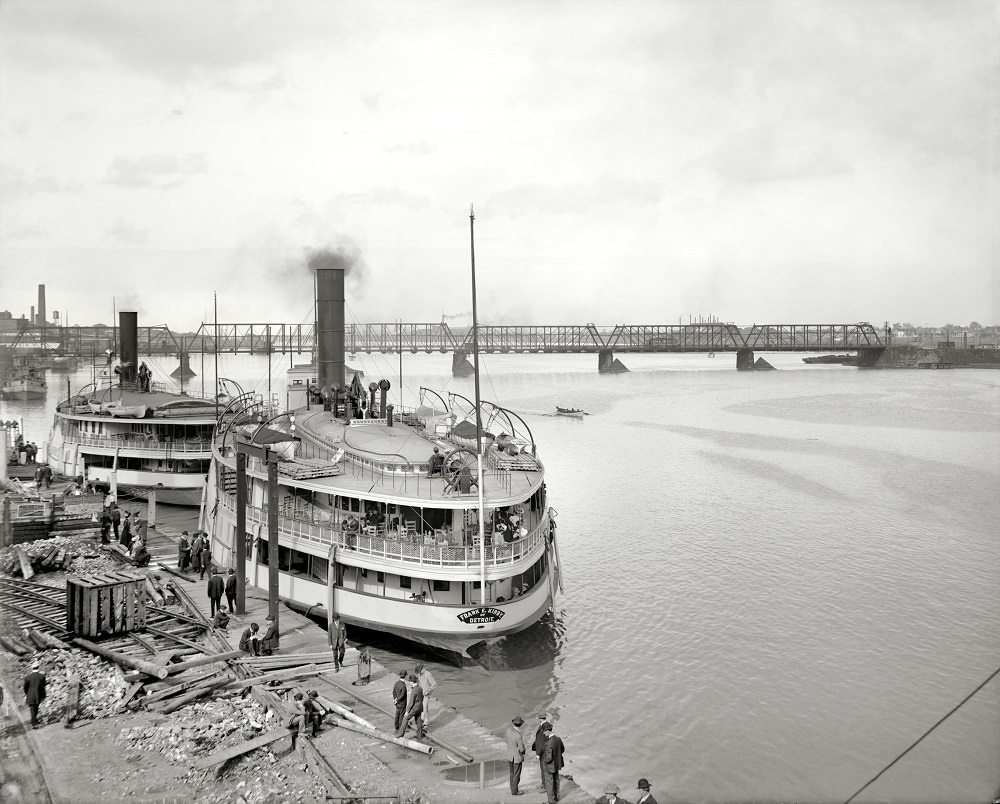
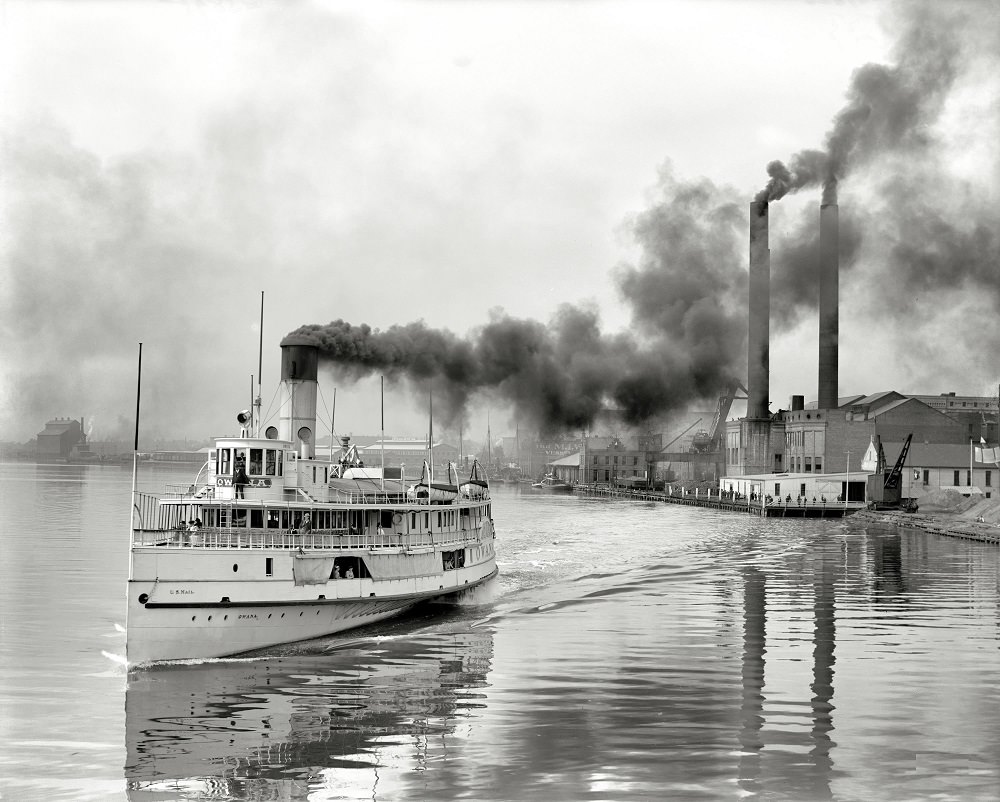
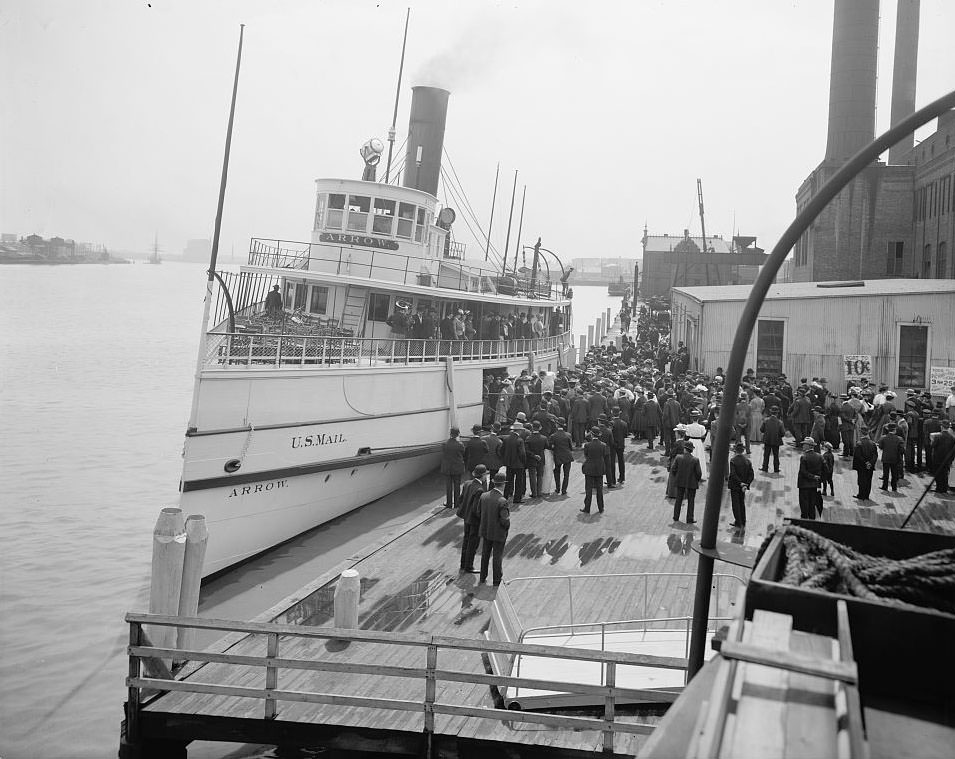
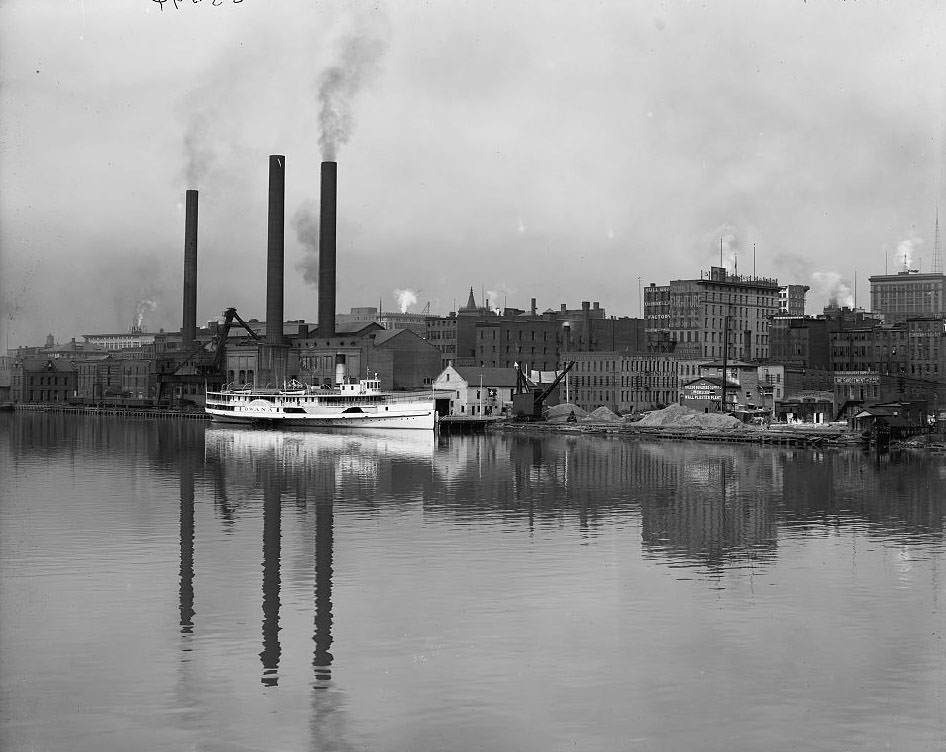
Toledo’s position on the Maumee River and its proximity to Lake Erie made it a natural hub for Great Lakes shipping. Passenger steamers and freight vessels docked regularly at the city’s landing. The sidewheeler Frank E. Kirby was one of the most well-known passenger boats on the lakes, and in 1910 it was photographed at the Toledo steamer landing — a familiar sight to anyone living near the waterfront. Two years later, the White Star steamer Owana was captured leaving Toledo for Detroit, carrying passengers across Lake Erie in a journey that took only a few hours.
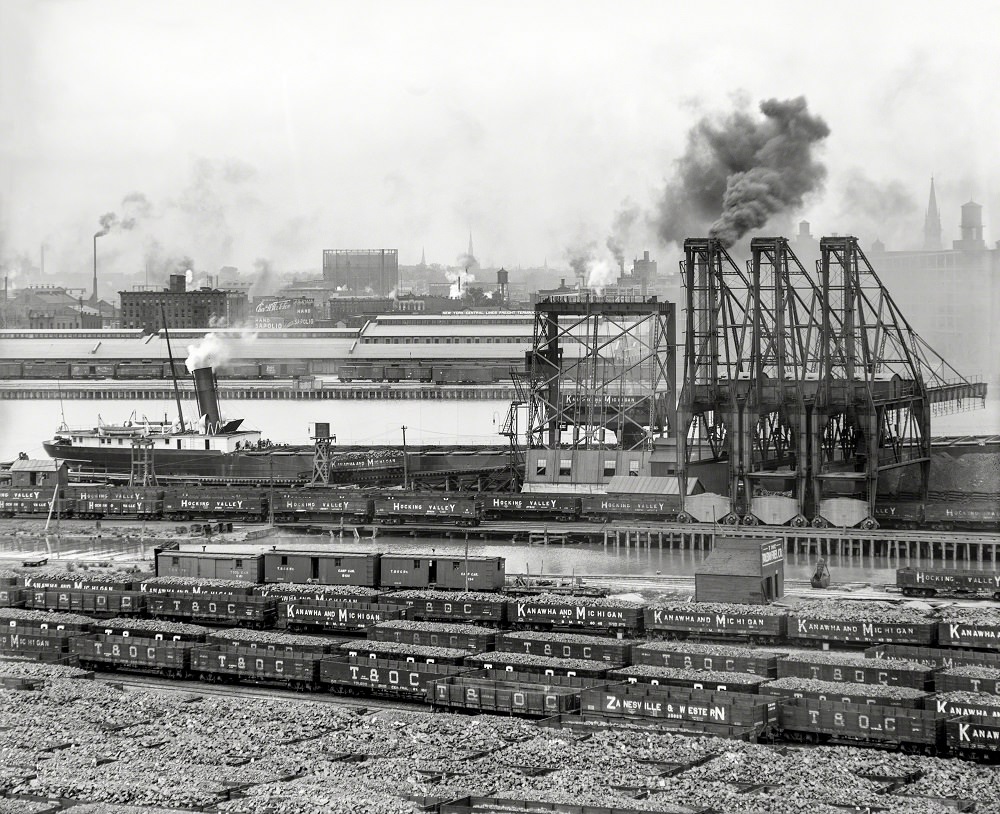
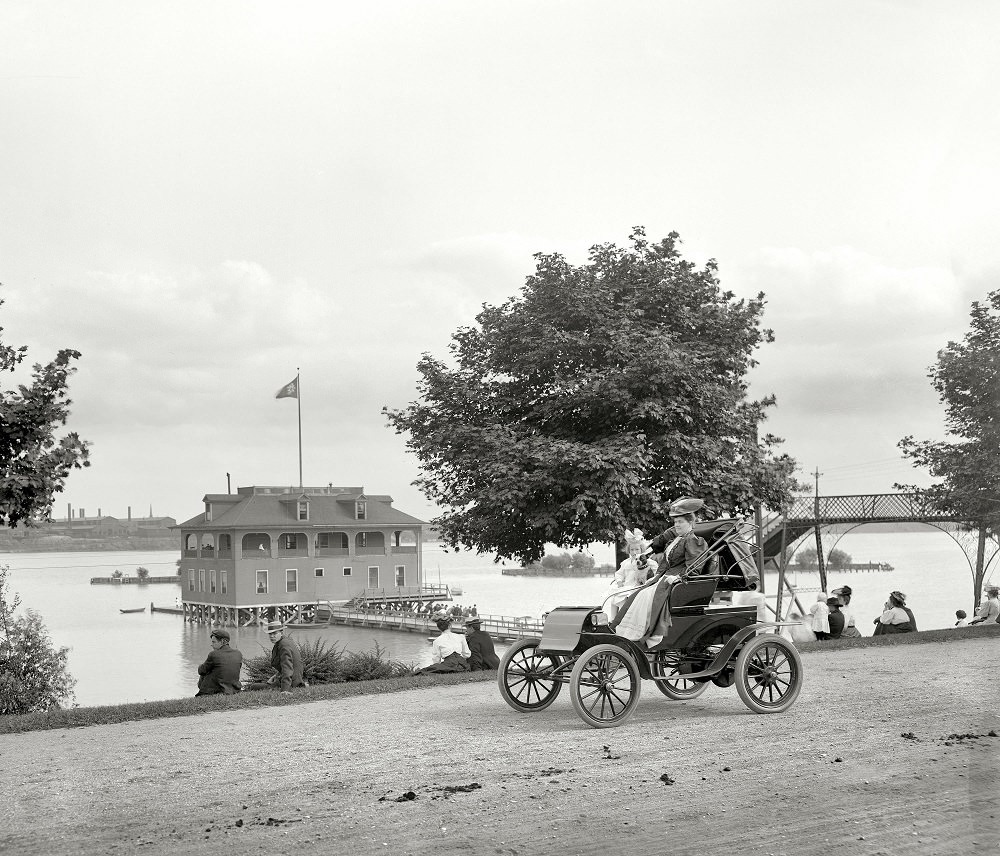
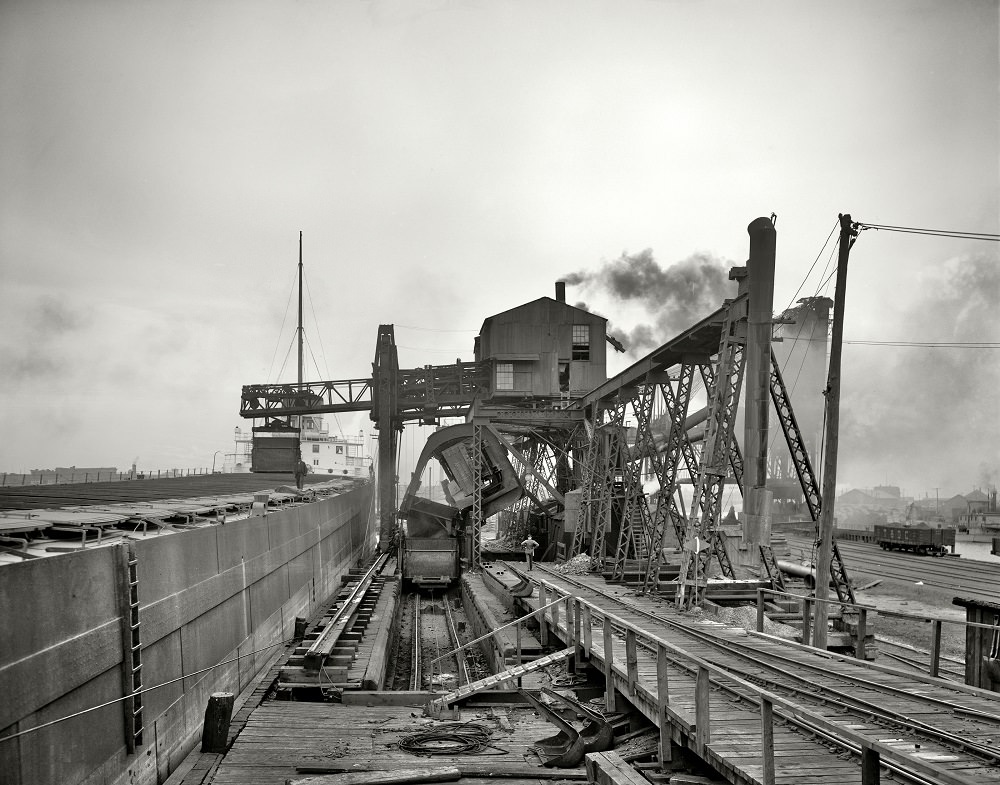
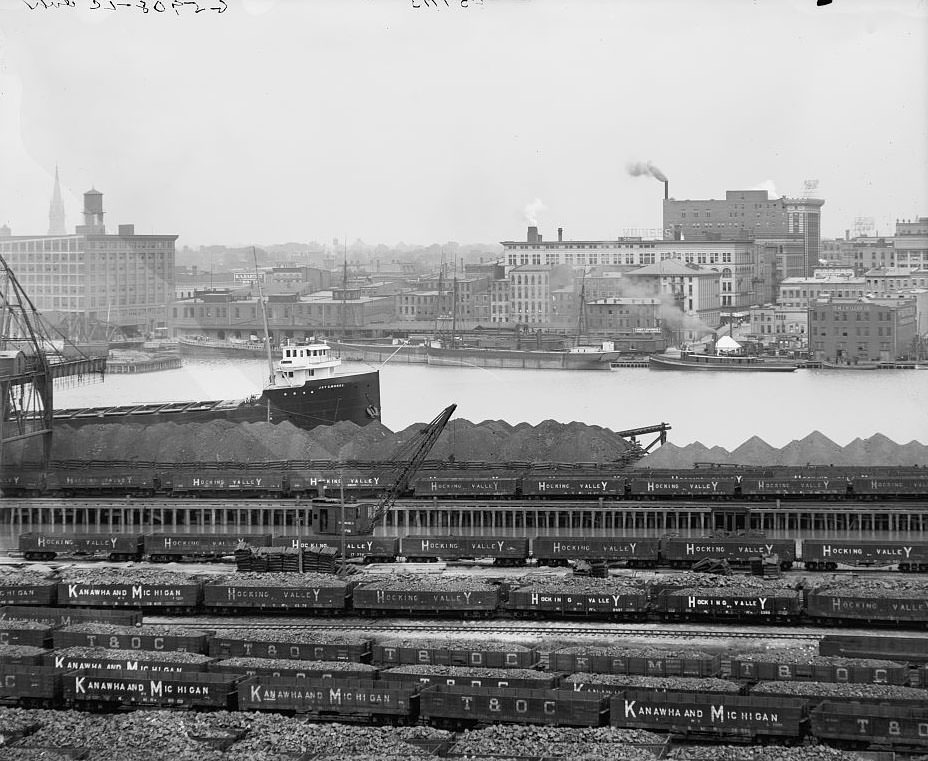
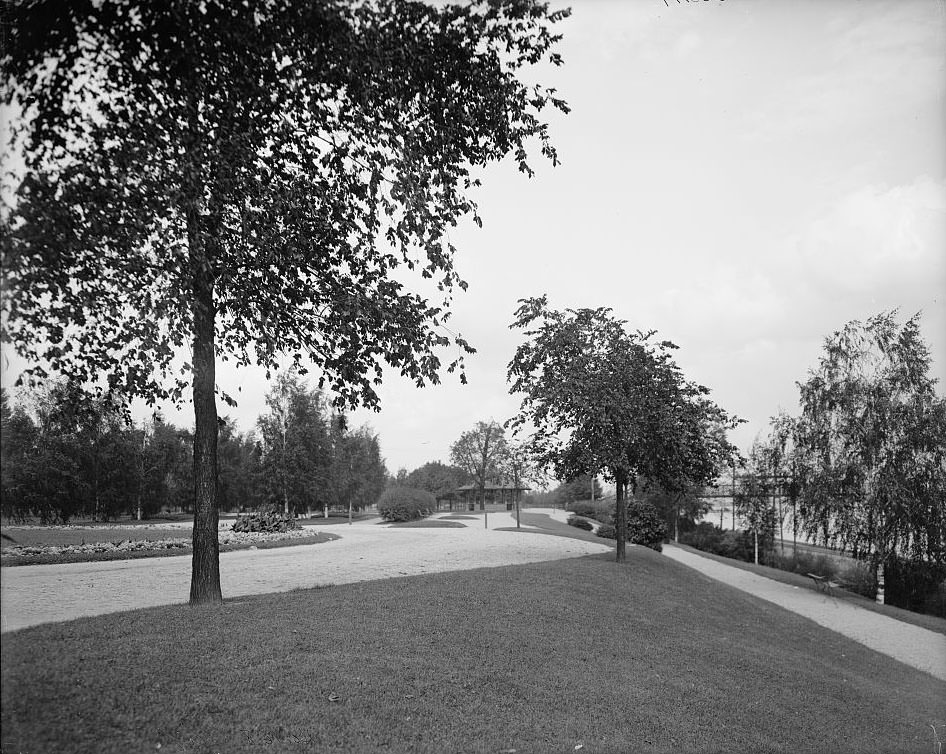
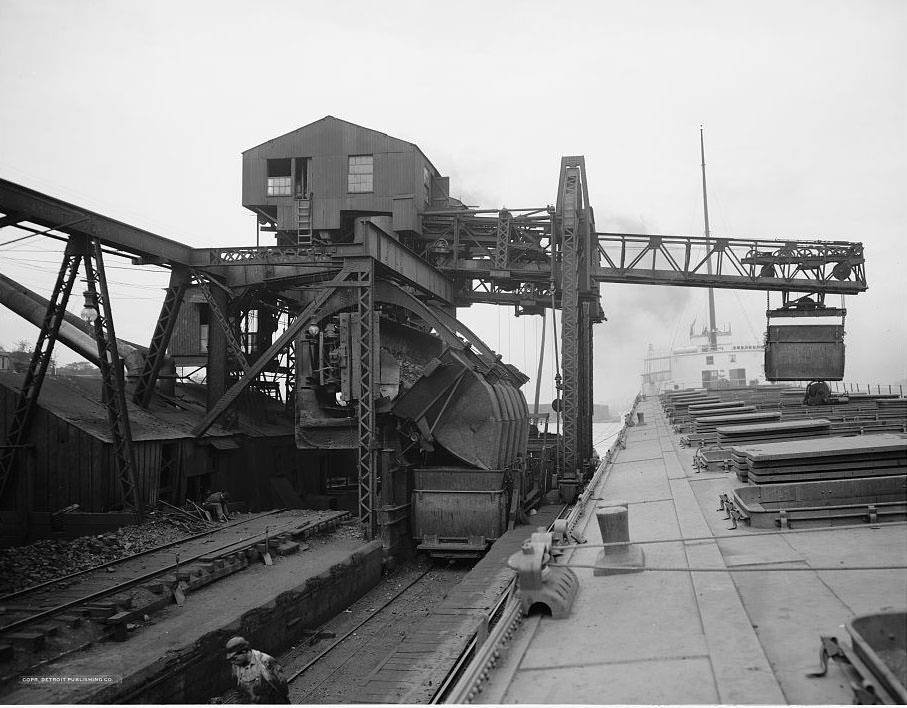
Riverside Park gave Toledo residents a place to escape the noise of the city. Positioned along the Maumee, the park featured a boathouse and open green space that drew families on weekends. The Ohio Central coal dock nearby told a different story — massive Brown hoist cranes transferring tons of coal from rail cars to waiting ships, a mechanical operation that ran day and night.
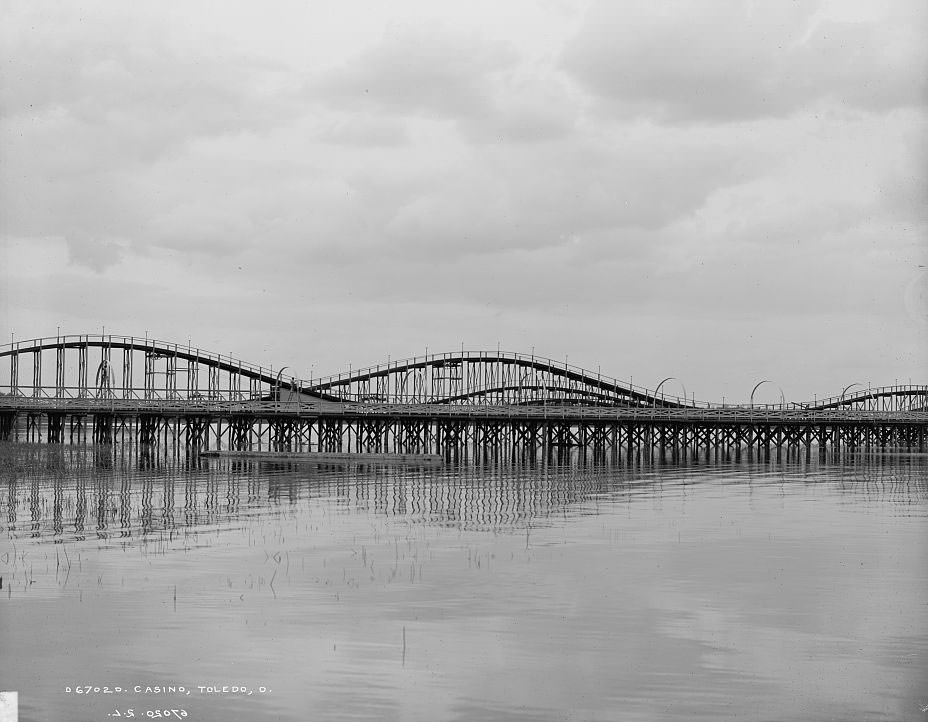
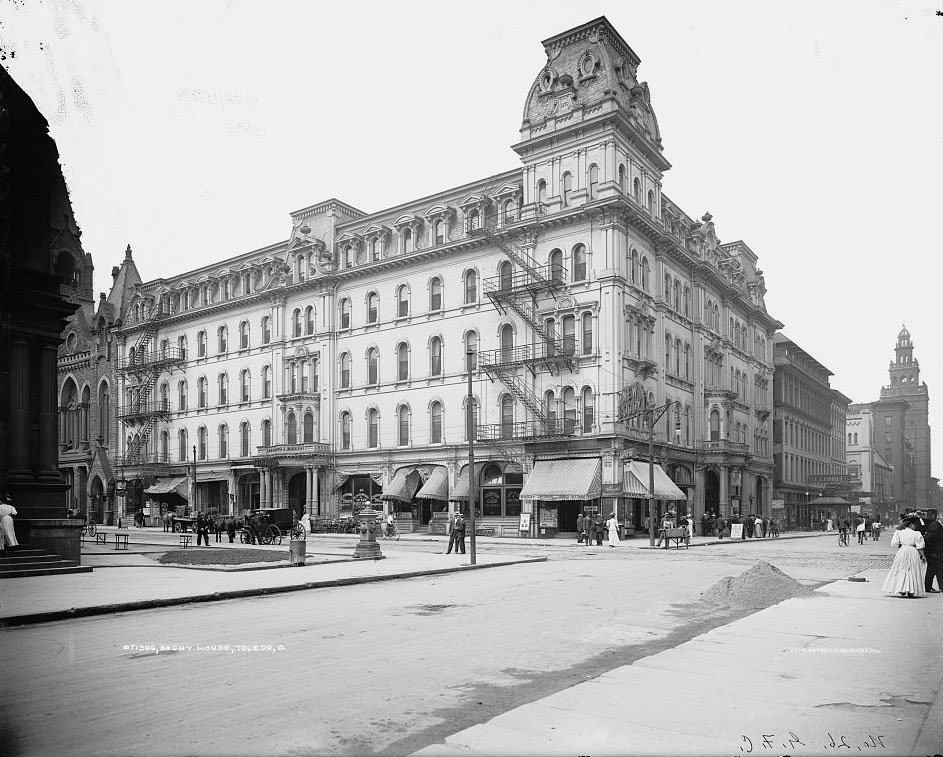
The Boody House was one of Toledo’s most storied hotels, operating for decades as the city’s social center. Photographed in both 1900 and 1908, it anchored a stretch of downtown that also included entertainment venues and gathering places. Nearby, the Casino — a popular amusement and entertainment destination — drew crowds throughout the early 1900s.
Toledo’s waterfront was one of the most active stretches of riverbank in the Midwest during this era. Photographs taken between 1900 and 1908 show docked boats, stacked cargo, and the constant motion of a working port. The city’s trade networks extended deep into the Great Lakes system, connecting Toledo to Cleveland, Detroit, Chicago, and ports further east through the Erie Canal.
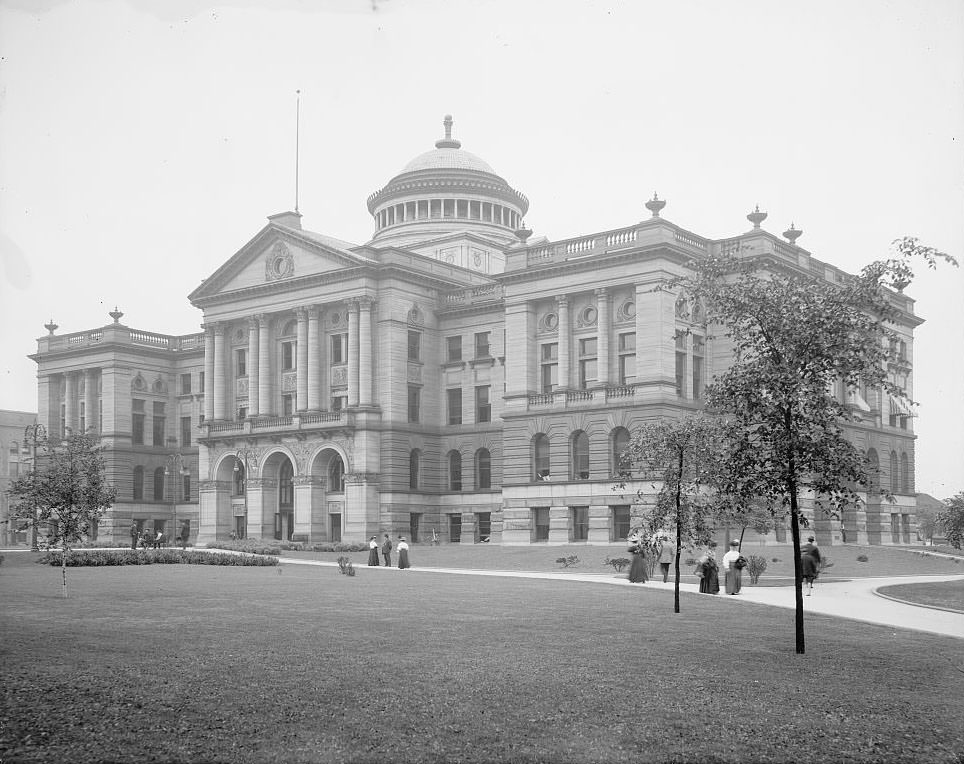
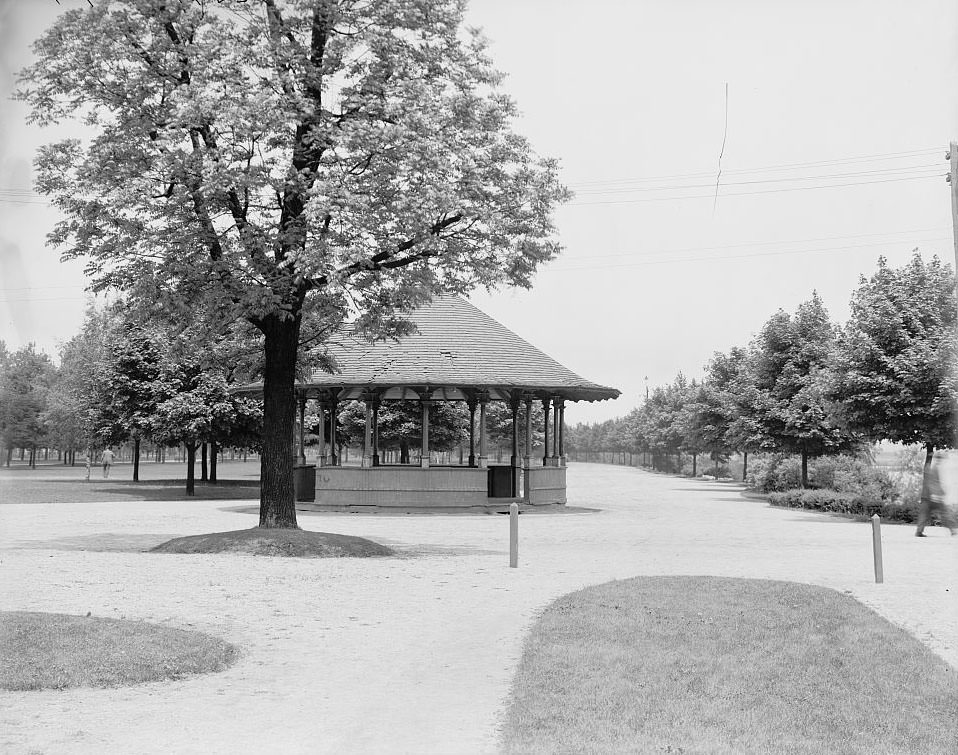
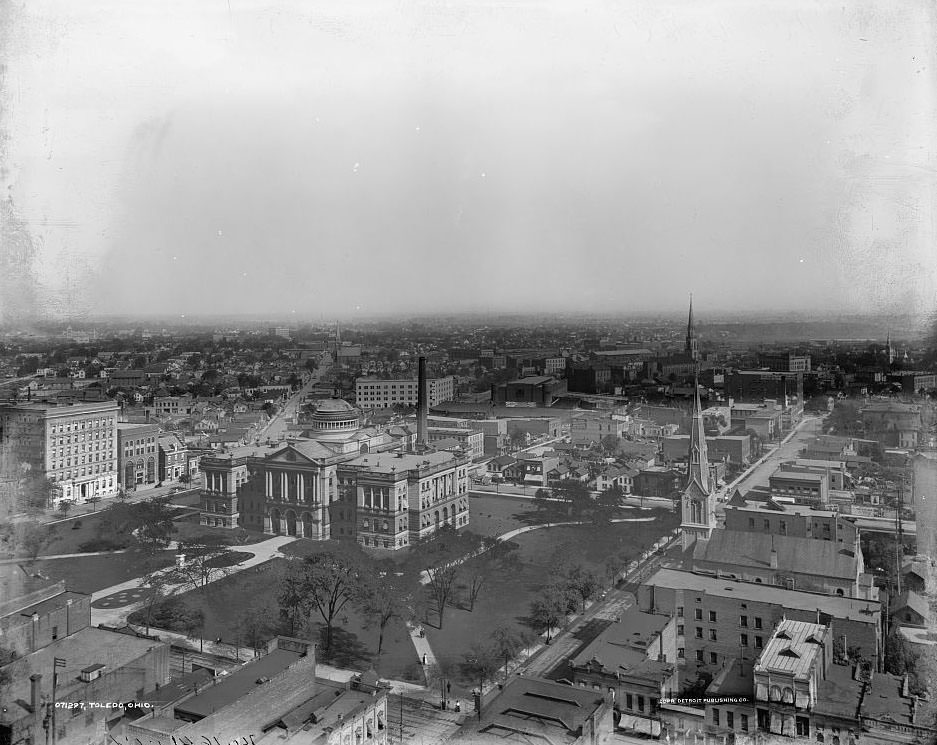
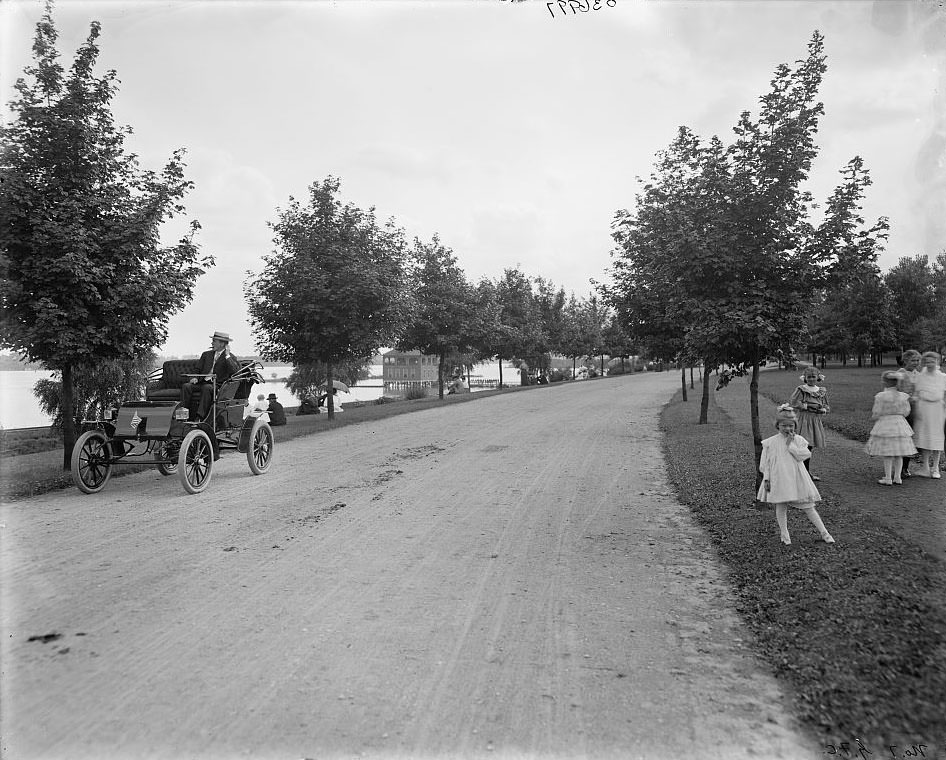
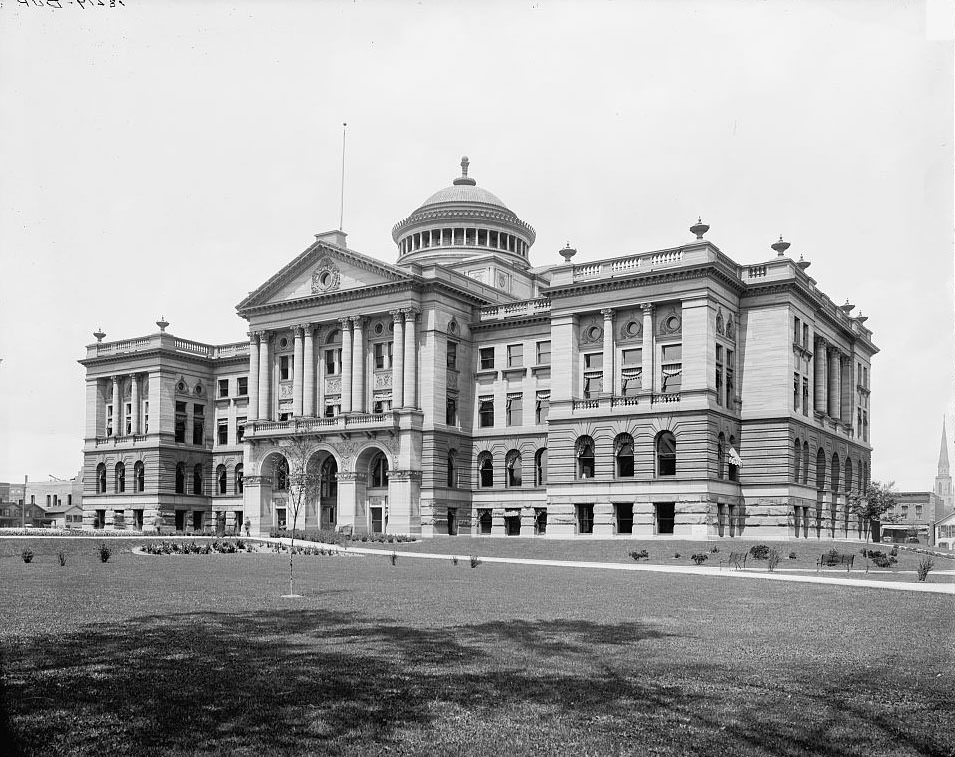
The Lucas County Court House was among the most imposing public buildings in Toledo. Its architecture projected the authority of local government in a city that was expanding its civic functions alongside its industrial ones. Riverside Drive, photographed in 1902, showed the more pastoral side of Toledo — tree-lined and quiet, running along the edge of Riverside Park.
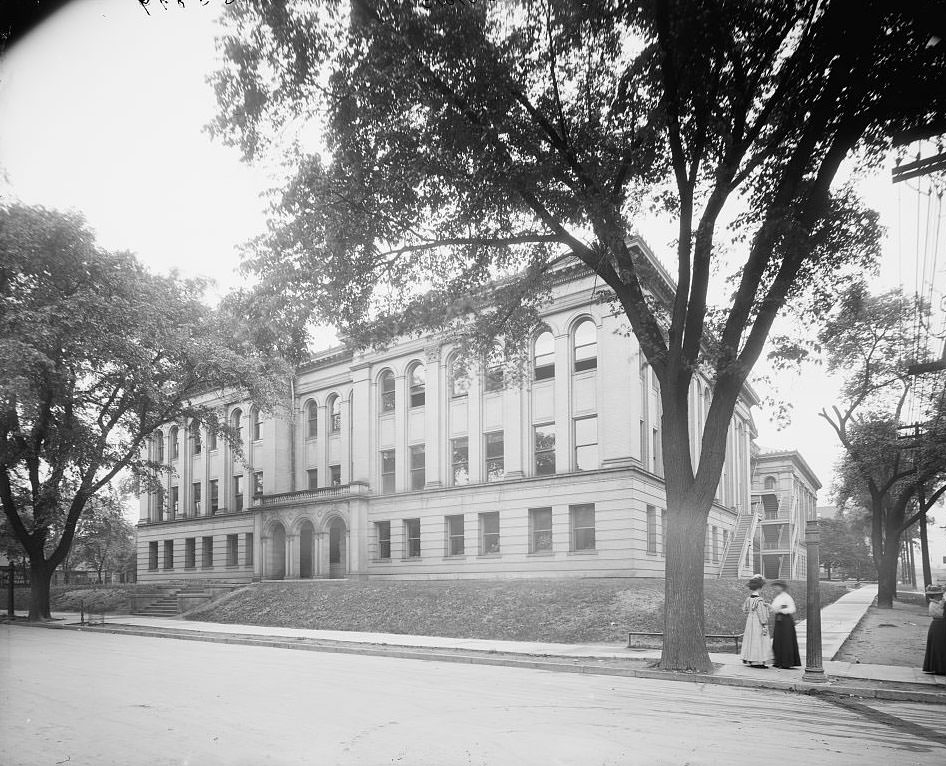
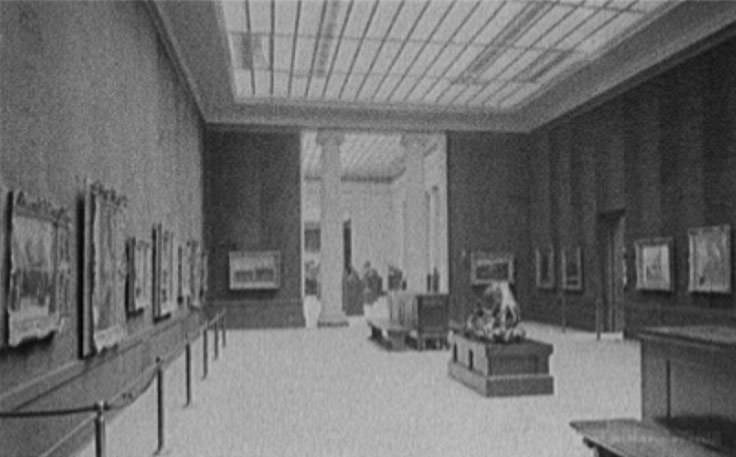
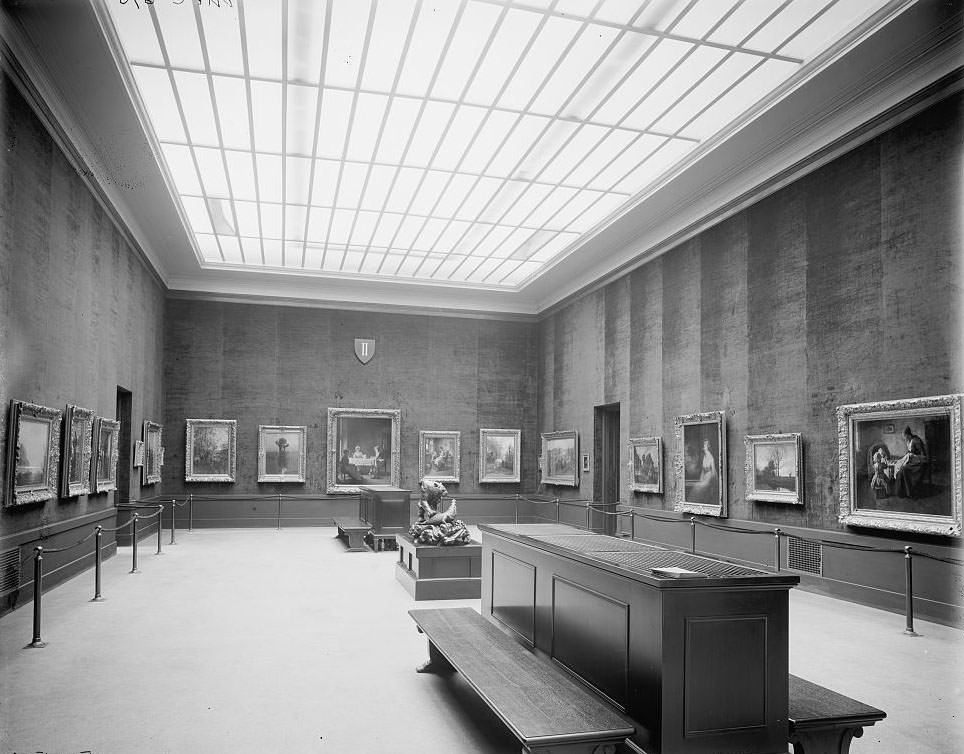
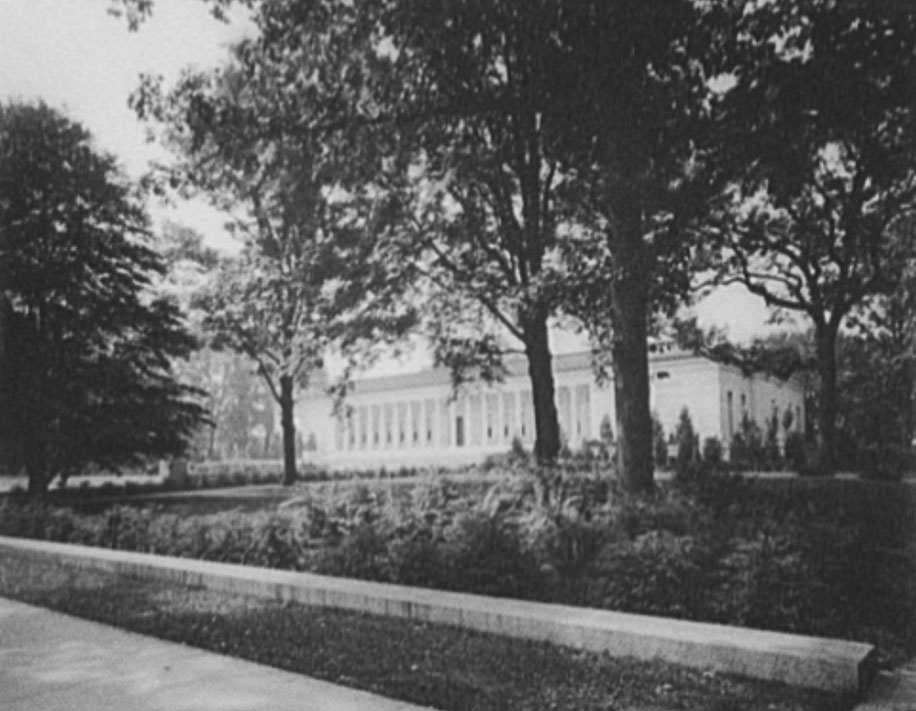
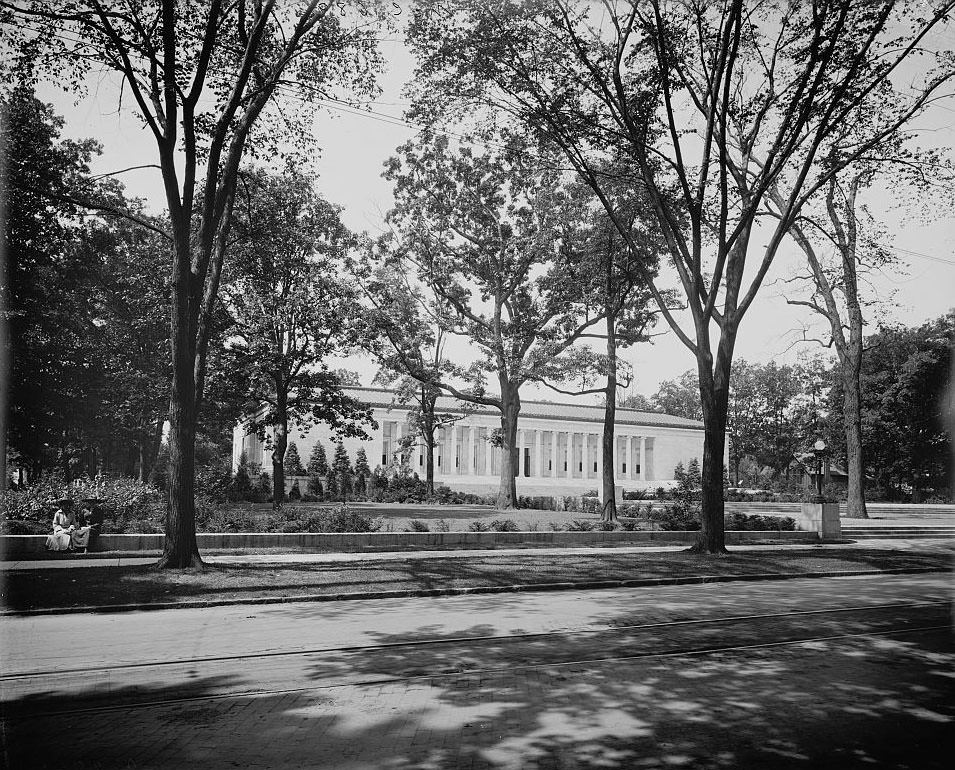
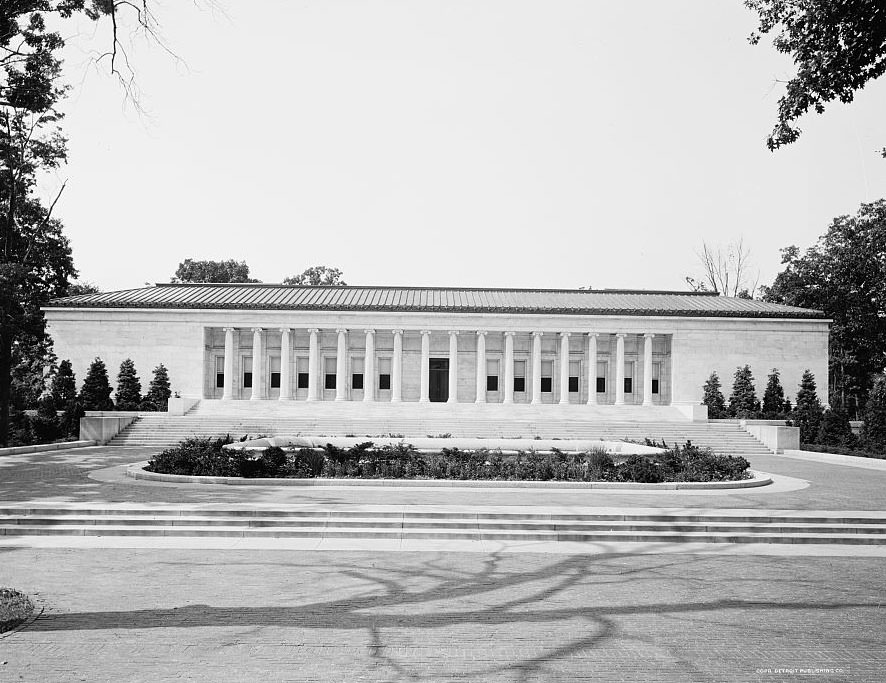
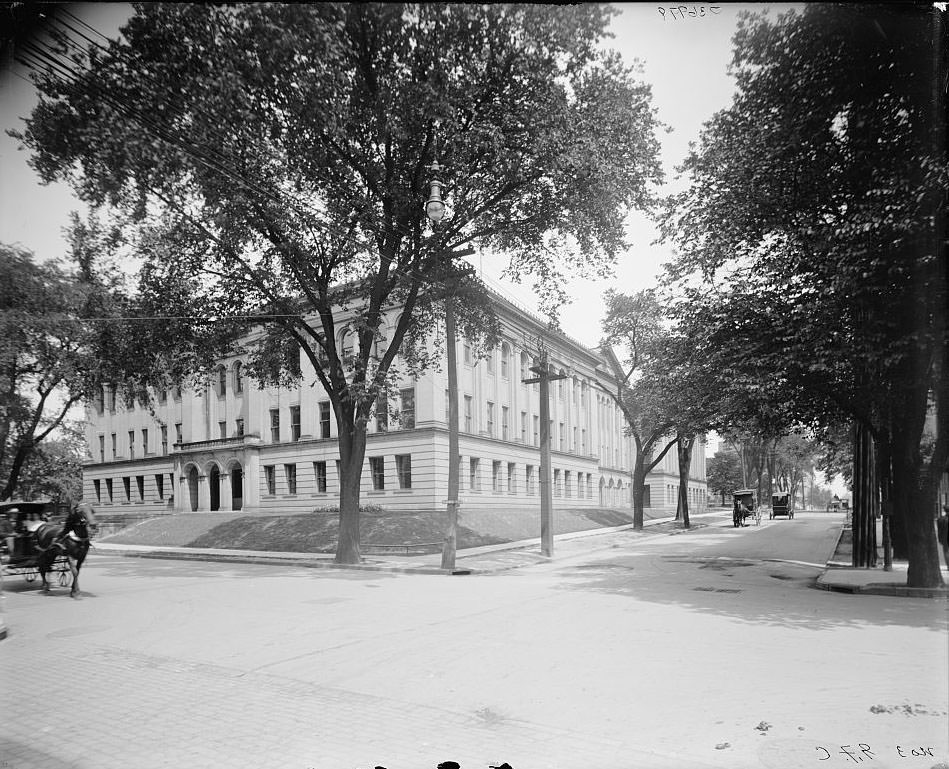
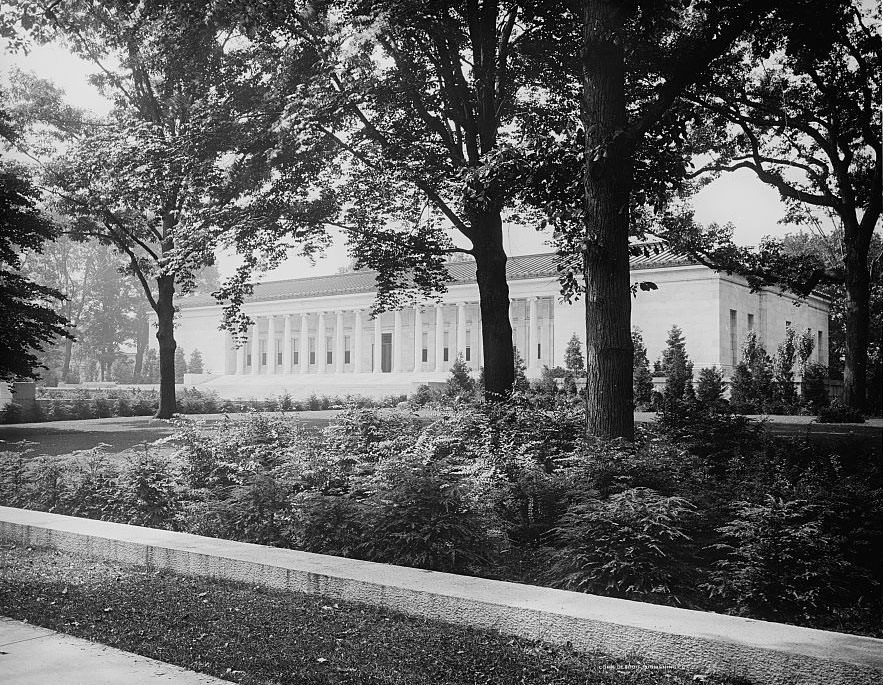
Education was a priority in Toledo even at the start of the 20th century. Central High School, photographed in 1902, was one of the city’s flagship public schools. Its brick facade and formal design reflected the seriousness with which the city approached public education. The Toledo Museum of Art, founded in 1901, was another expression of civic ambition. Its galleries, photographed from as early as 1906, housed a growing collection that would eventually make it one of the finest art museums in the United States.
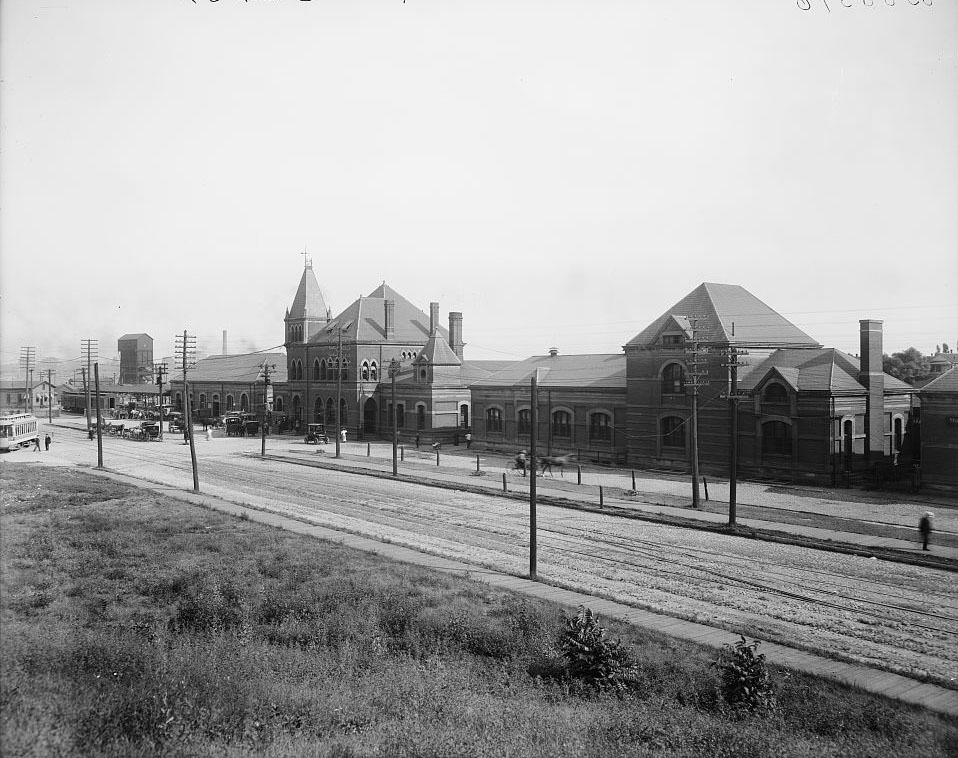
Union Station served as Toledo’s main railroad gateway. Photographed in 1909, the station processed thousands of passengers and vast quantities of freight each week. Toledo’s position at the intersection of several major rail lines made the station one of the busiest in the region. Nearby on Madison Avenue, the Ohio Building added to the city’s growing commercial architecture.
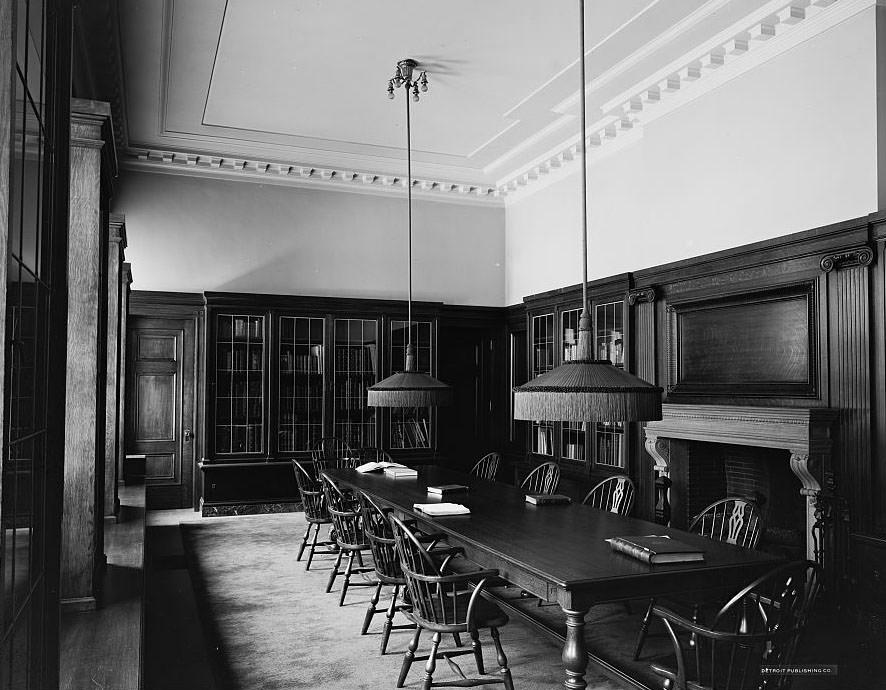
The Toledo Museum of Art appeared in photographs taken across multiple years — 1904, 1906, 1907, 1908, and 1909 — each image documenting its growth. The museum’s north gallery, captured in 1906, showed a space already filling with paintings, sculptures, and decorative objects. The library within the museum, photographed in 1910, offered visitors a reading and research space that doubled as an educational resource for the broader community.
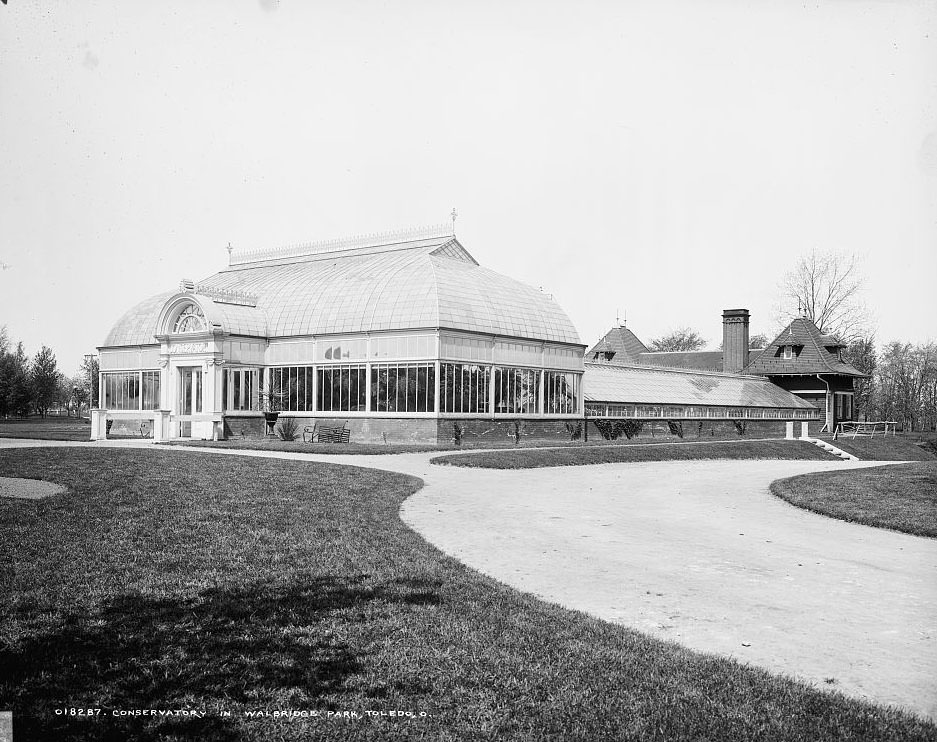
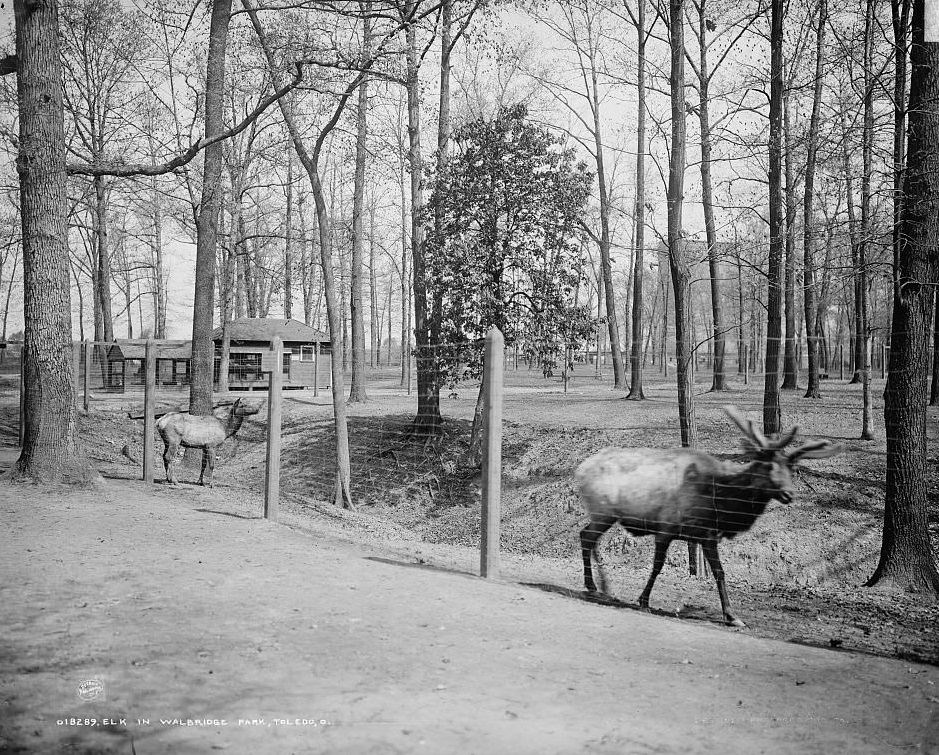
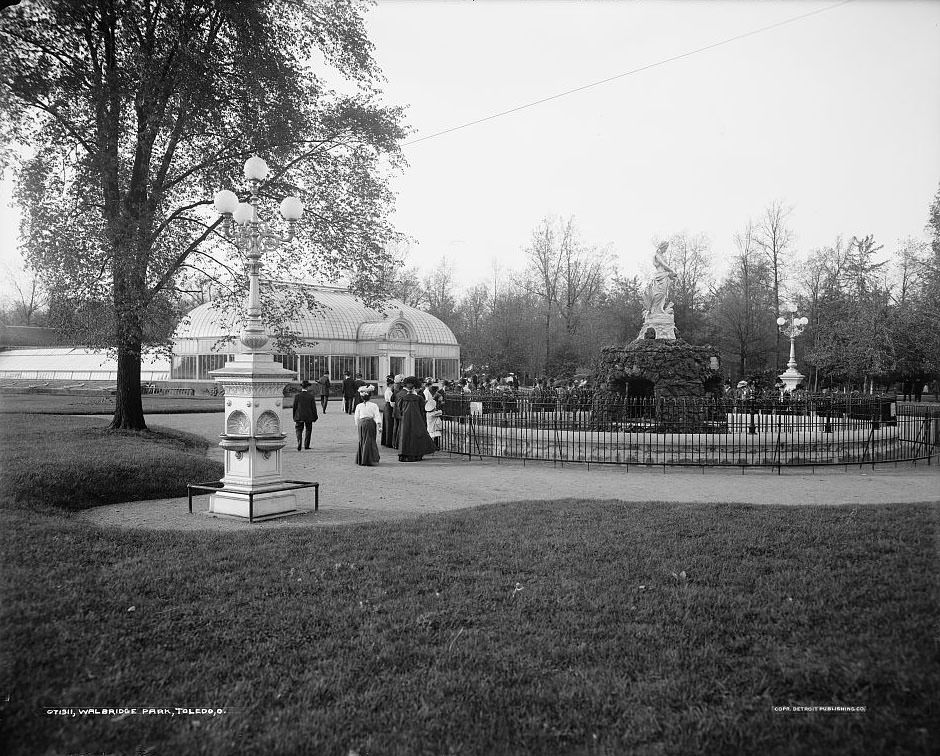
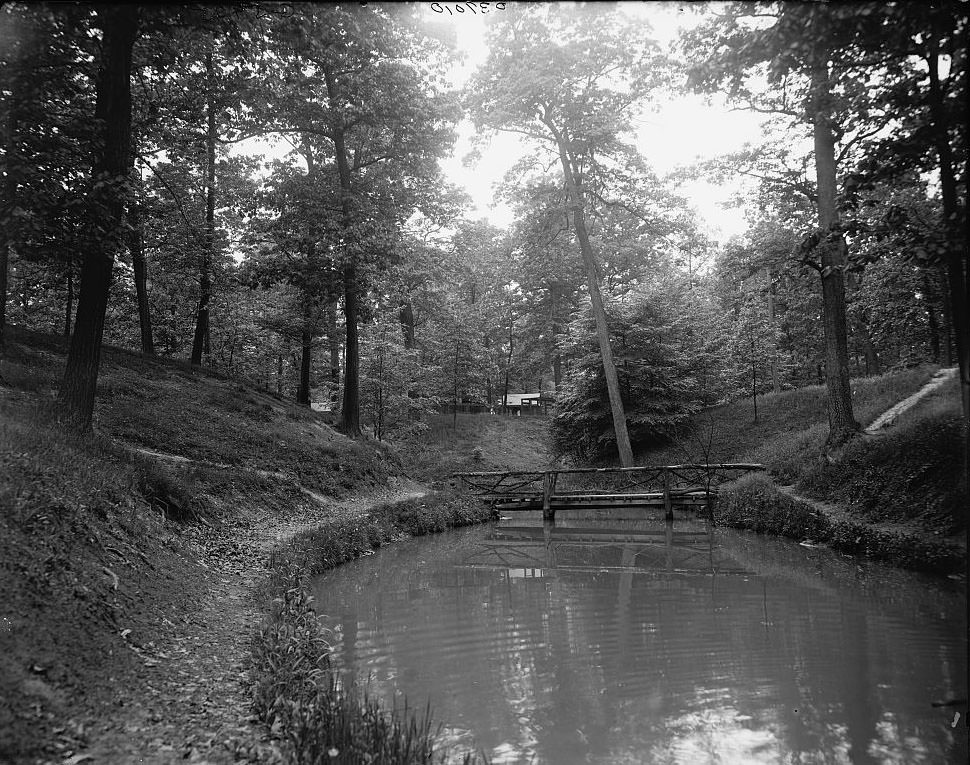
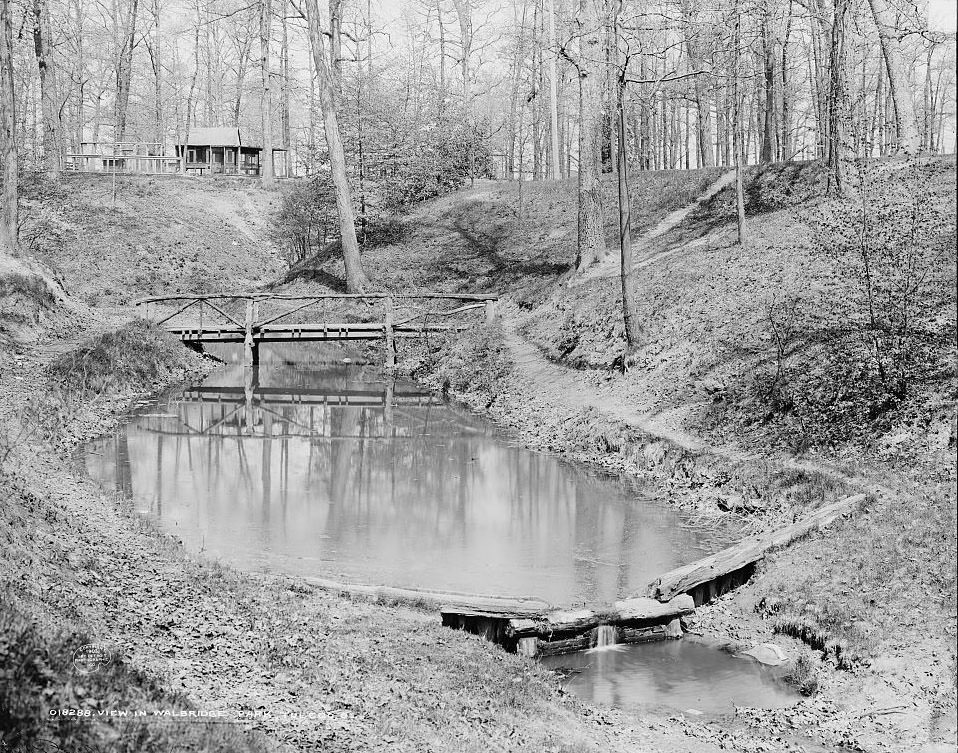
Walbridge Park was Toledo’s largest and most popular public green space during this era. Located along the Maumee River, the park featured a conservatory, manicured grounds, and even a small collection of animals — including elk, photographed in 1905. The conservatory, built in the early 1900s, housed exotic plants and provided a warm refuge for visitors in the colder months.
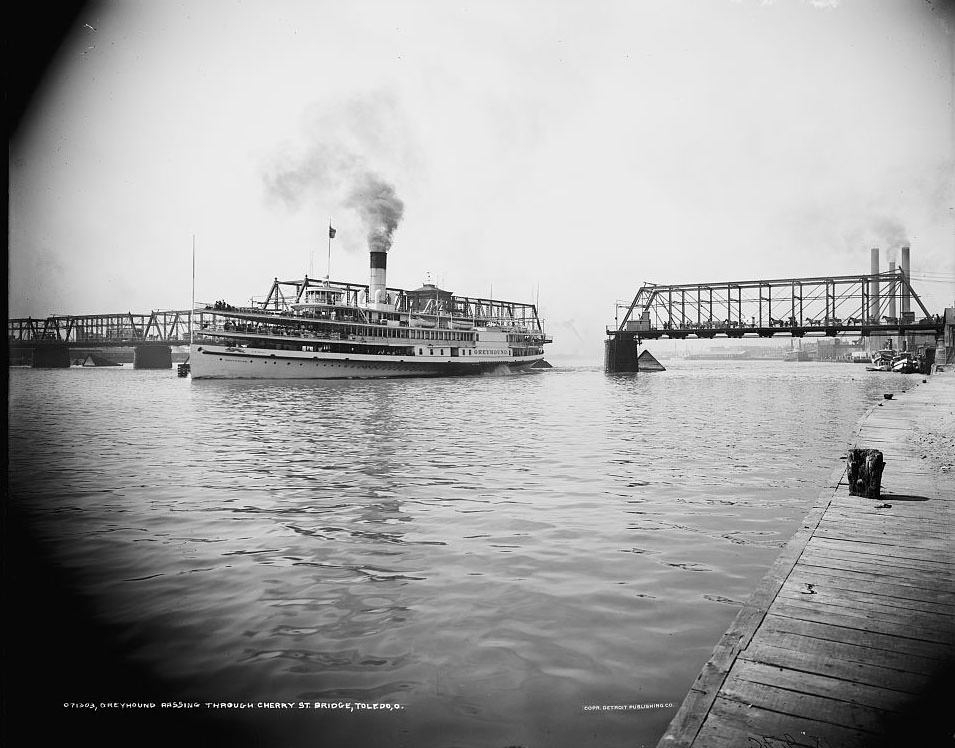
River traffic on the Maumee included more than just freight vessels. The Greyhound, a passenger boat, was photographed in 1909 passing through the Cherry Street Bridge — a striking image of a working waterway woven into the fabric of the city. The bridge itself had to accommodate both street traffic above and river traffic below, a balance that defined life in a port city.
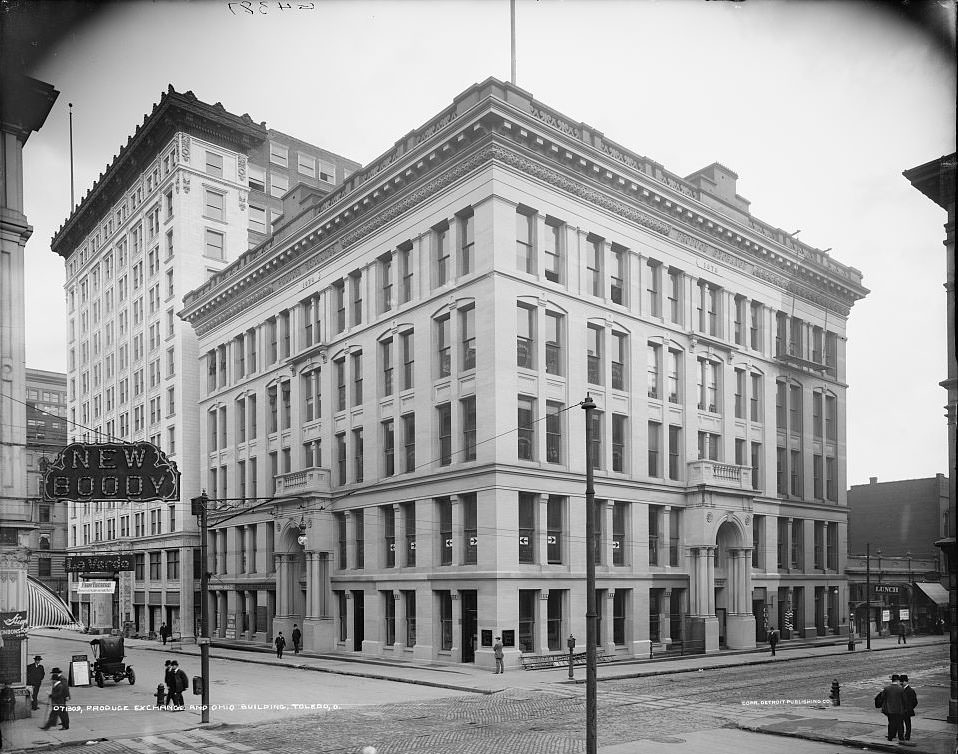
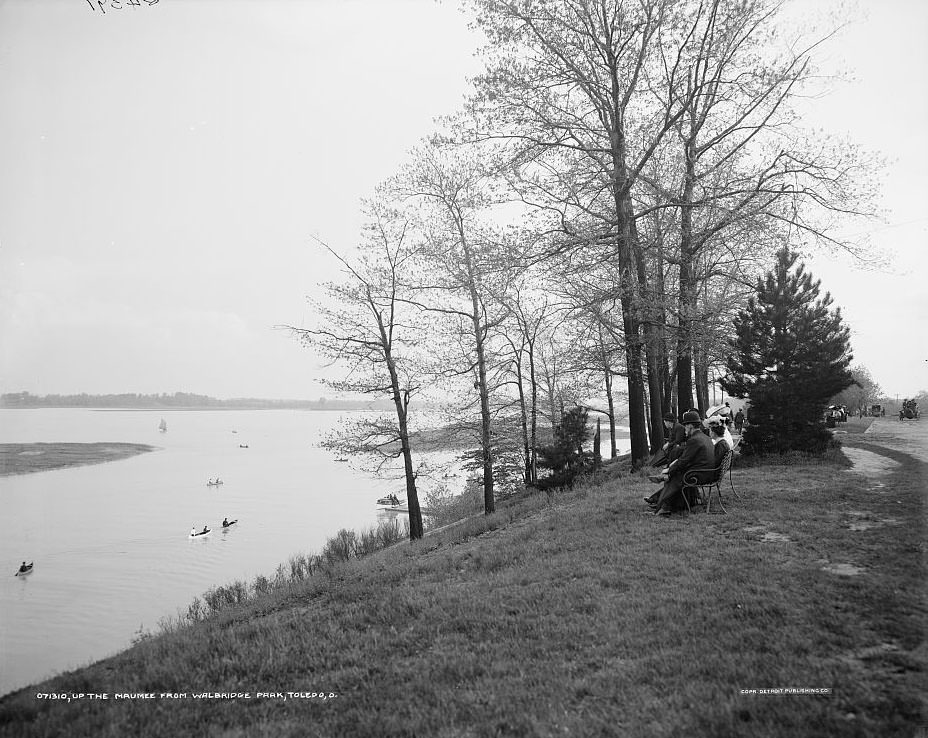
The Produce Exchange and Ohio Building, photographed together in 1909, represented two pillars of Toledo’s economy — agriculture and commerce. The Produce Exchange handled the buying and selling of crops and foodstuffs flowing through the region, while the Ohio Building housed offices and businesses serving the city’s expanding commercial class. Looking up the Maumee from Walbridge Park in 1909, one could see both the natural and industrial forces that shaped the city’s identity.
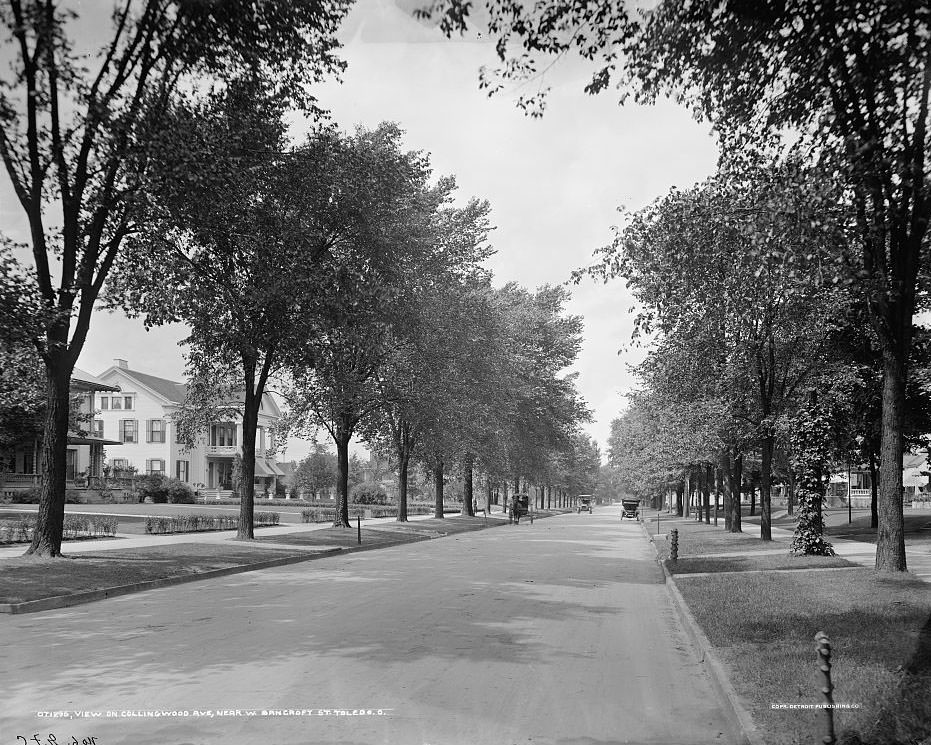
Collingwood Avenue, near West Bancroft Street, was one of Toledo’s more refined residential corridors. Photographed in 1903, its wide, tree-lined streetscape showed a neighborhood built for comfort and permanence. Large homes set back from the sidewalk, broad front yards, and mature trees gave the street a character very different from the industrial zones closer to the river.
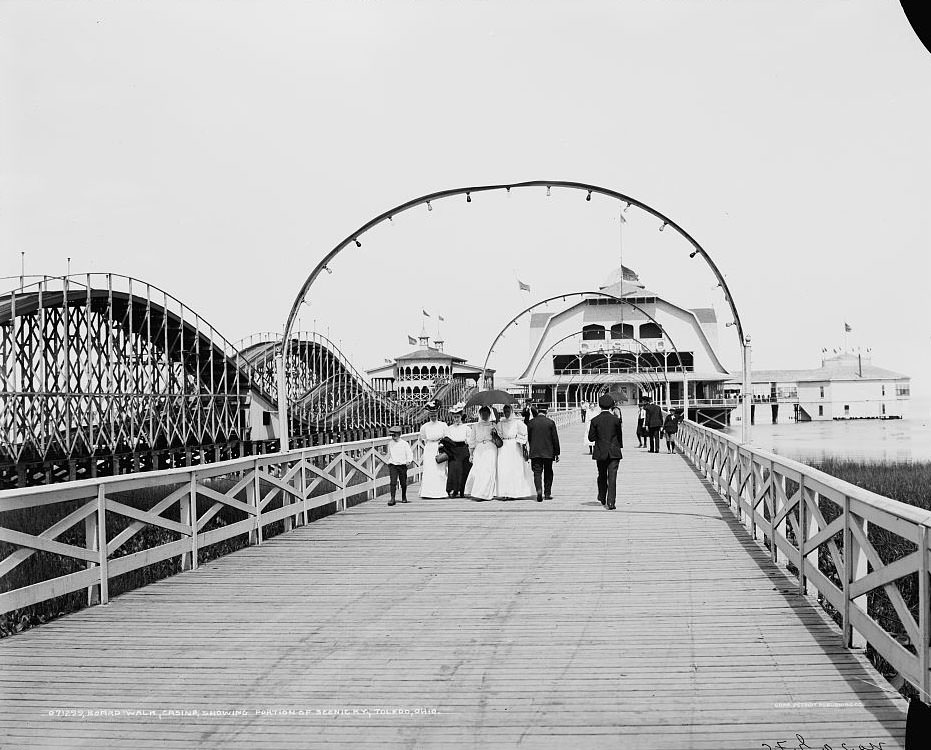
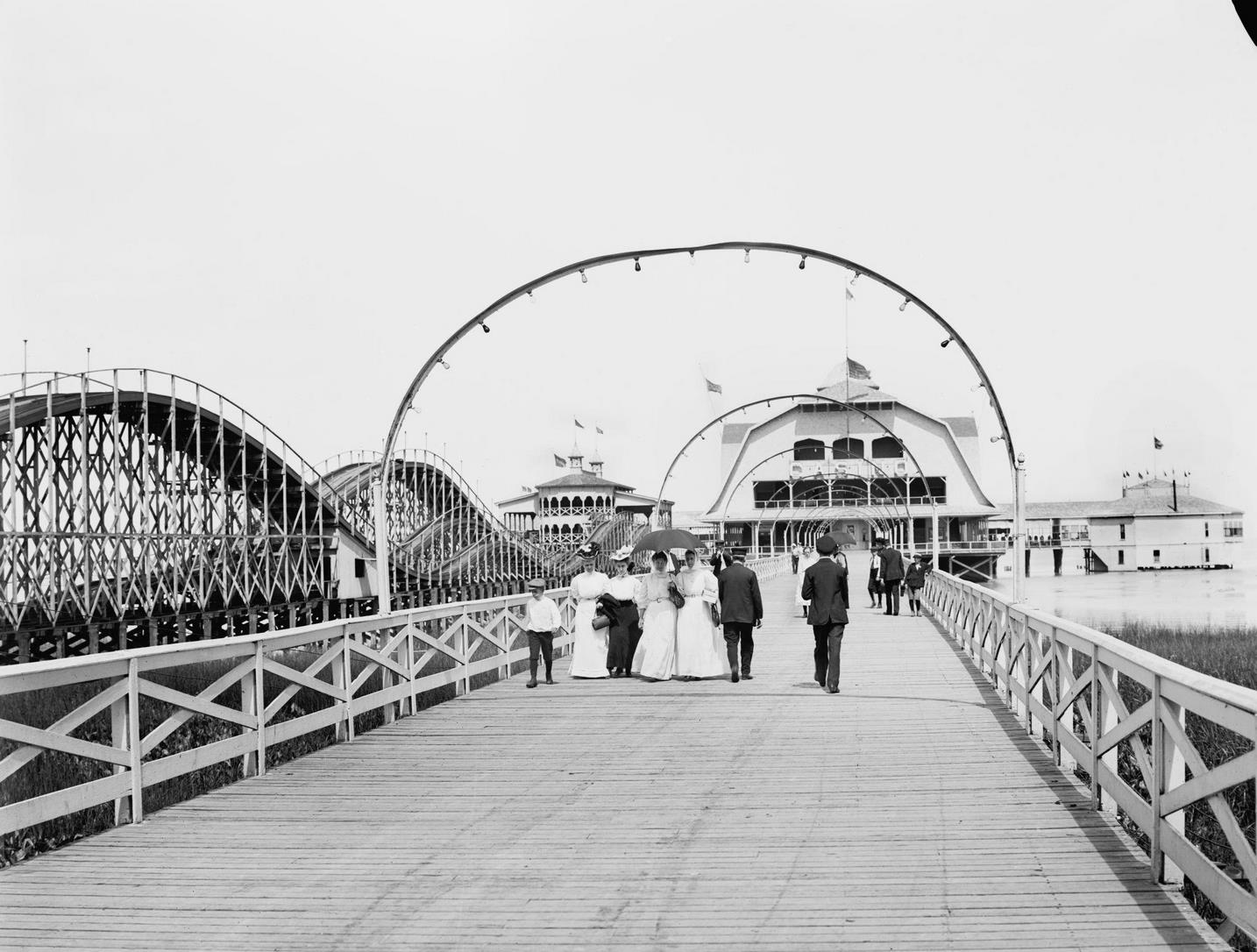
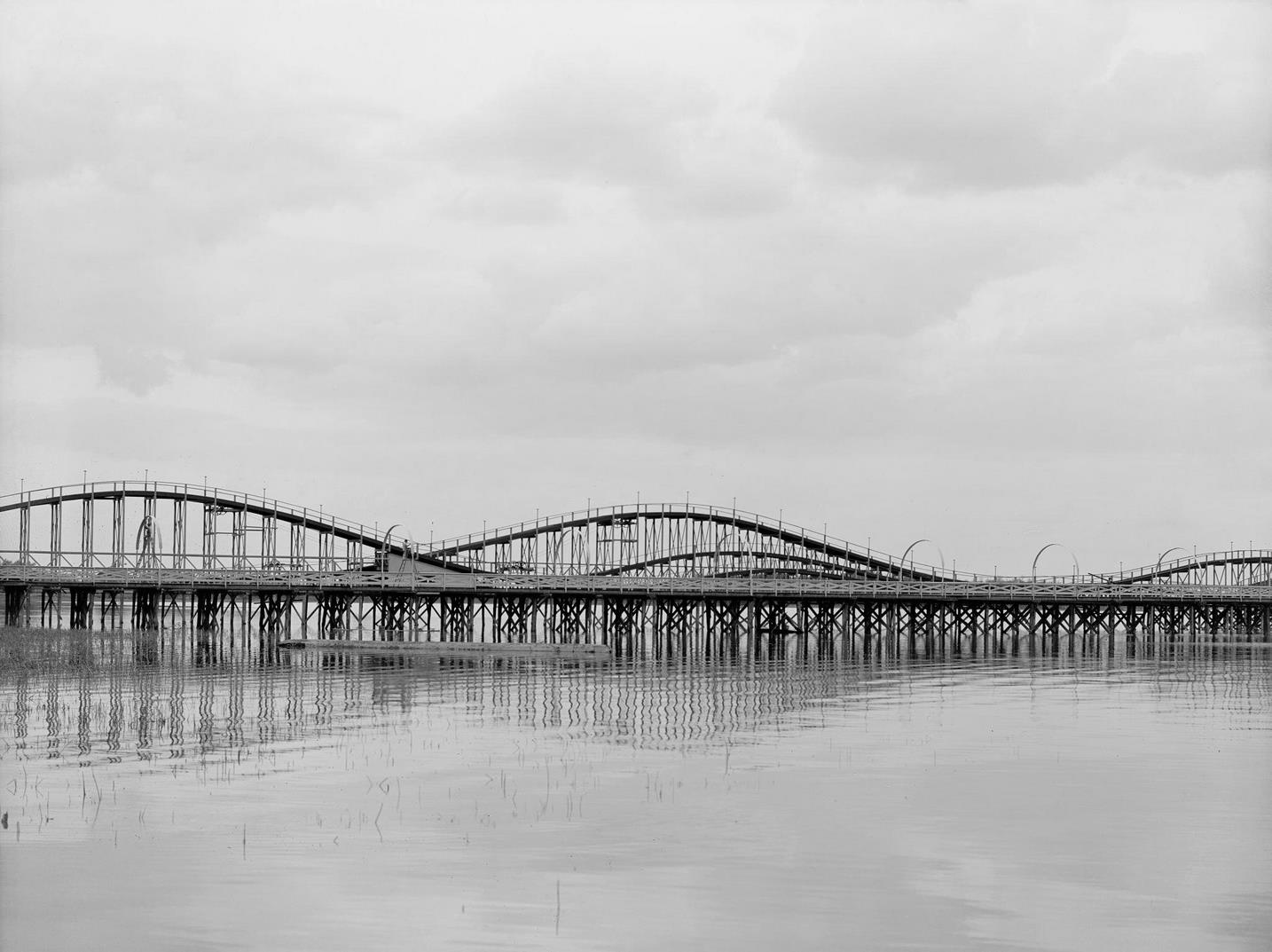
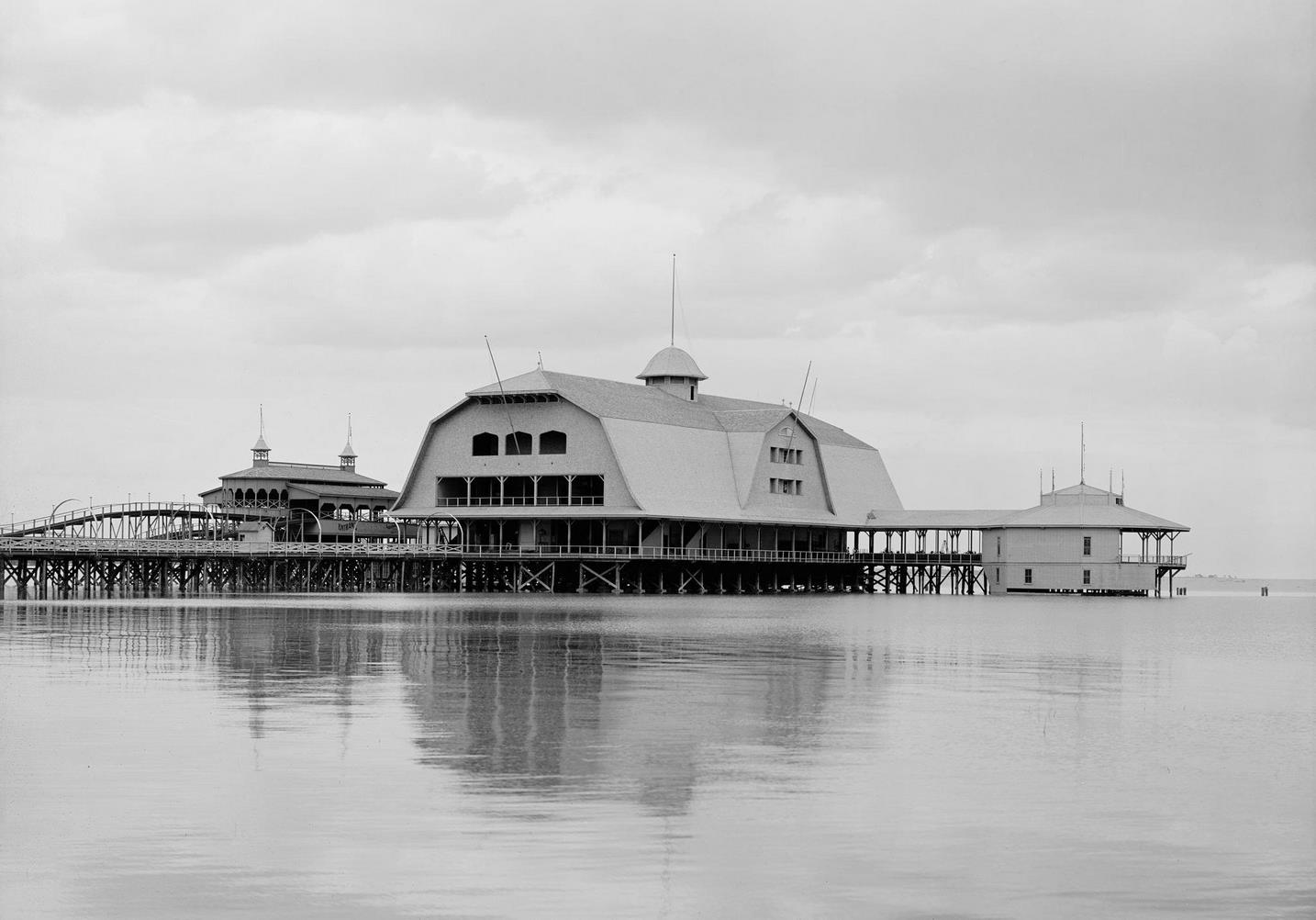
Lake Erie Park and its Casino complex were among Toledo’s most popular entertainment destinations in the early 1900s. A boardwalk led visitors from the street to the casino building, flanked by a roller coaster that was one of the main attractions. Photographs from 1904, 1905, and 1906 show the coaster, the boardwalk, and the casino in various states of activity — a seaside amusement zone that drew crowds from across the region.
![Lucas Co[unty] Court House, Toledo, Ohio, 1903](https://www.bygonely.com/wp-content/uploads/2022/10/old_Toledo_Ohio_1900s_69.jpg)
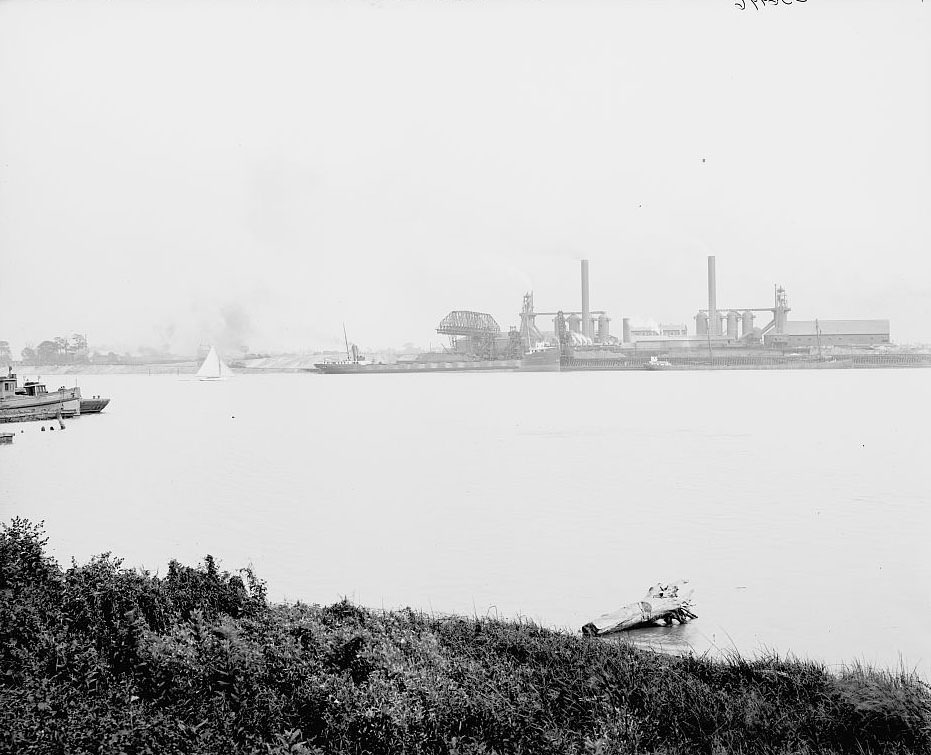
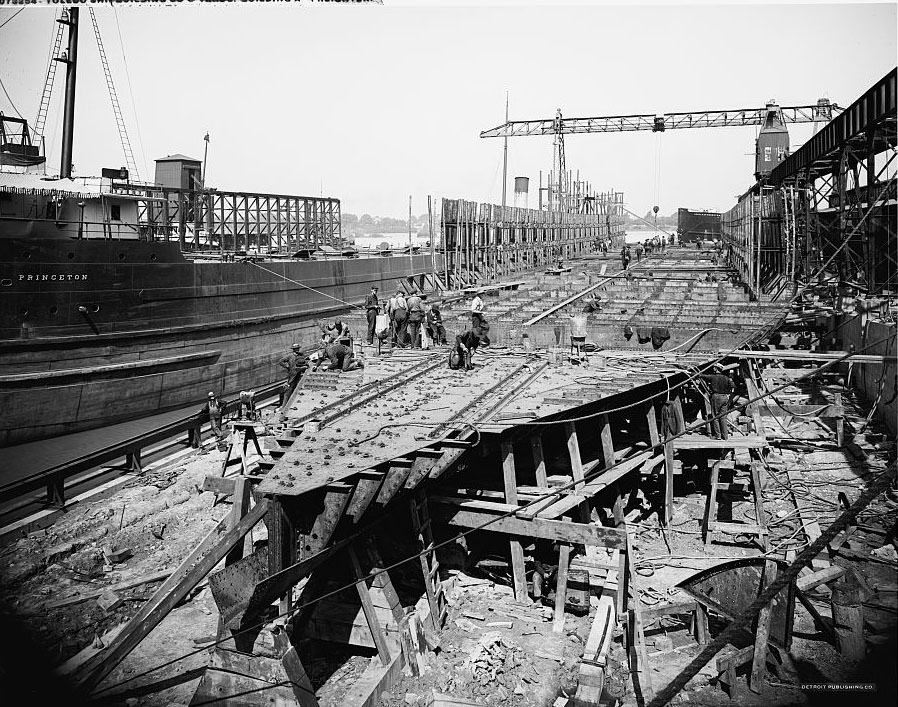
The blast furnaces photographed from the west bank of the Maumee River in 1907 were a raw and powerful symbol of Toledo’s industrial identity. Steel and iron production required enormous heat, and the furnaces operated around the clock, filling the night sky with orange light and smoke. The Toledo Shipbuilding Company’s yards, captured in 1910, showed workers constructing a large freighter — a vessel that would eventually carry cargo across the Great Lakes long after the men who built it had moved on.
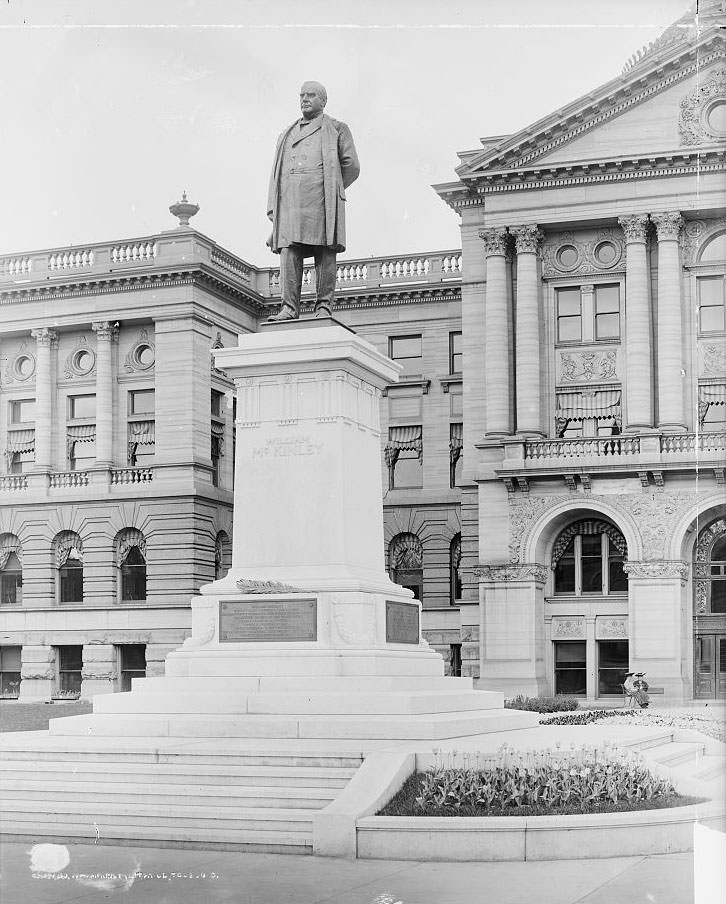
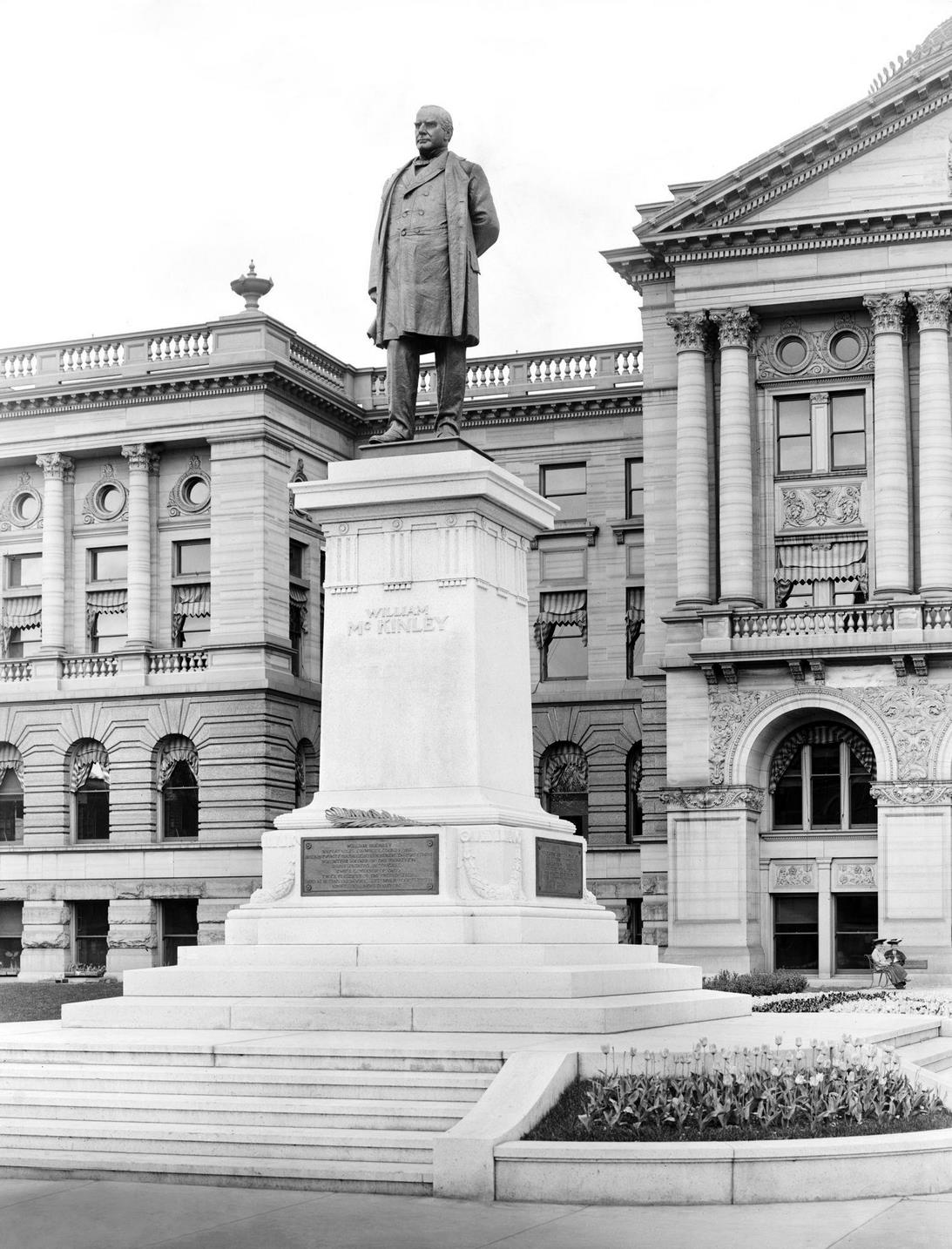
President William McKinley, a native Ohioan, was memorialized in Toledo with a prominent statue photographed multiple times in 1905. McKinley had been assassinated in 1901, and the statue served as a fresh reminder of his connection to the state. The Court House nearby completed the civic tableau — justice, governance, and public memory all concentrated in the same downtown blocks.
![W[illia]m McKinley Statue, Toledo, Ohio, 1905.](https://www.bygonely.com/wp-content/uploads/2022/10/old_Toledo_Ohio_1900s_85.jpg)
Toledo’s coal infrastructure was on full display at the Hocking Valley coal dock, where Brown hoist cranes moved coal from rail cars into the holds of waiting ships. The operation at the Ohio Central dock nearby ran on the same principle — massive mechanical arms swinging loads of coal over the water’s edge. These docks were a direct link between Ohio’s inland coal fields and the Great Lakes shipping network.
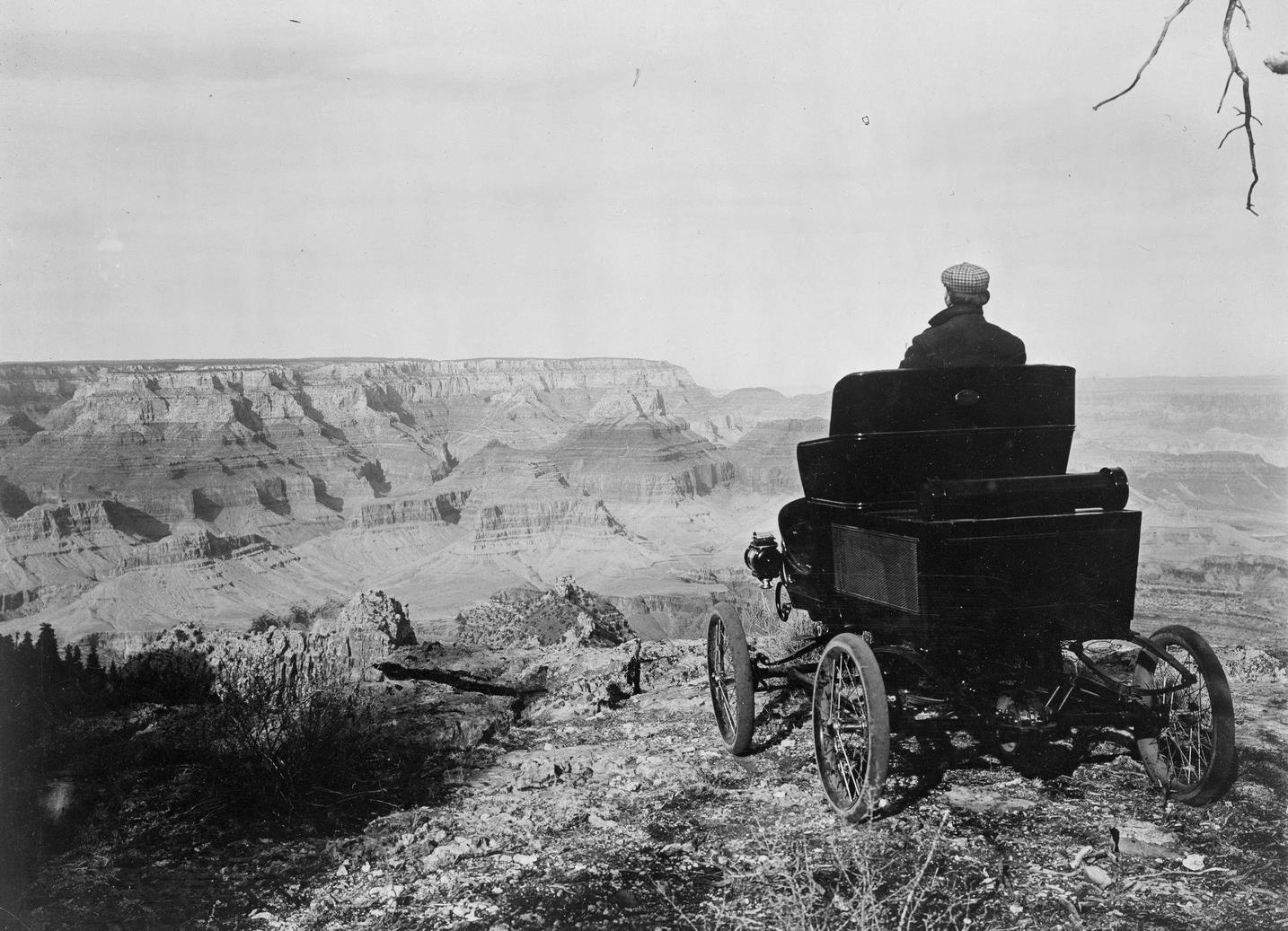
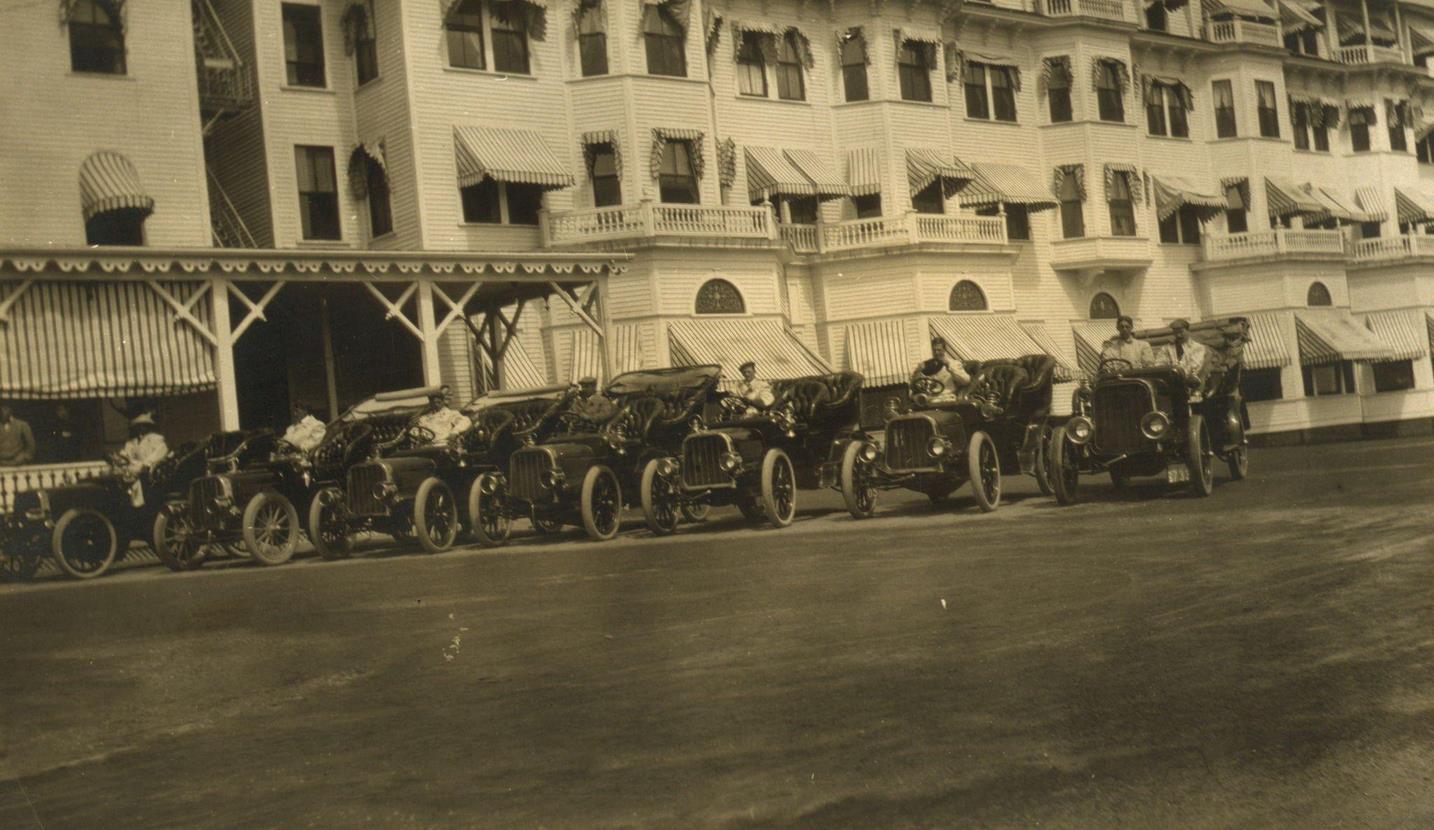
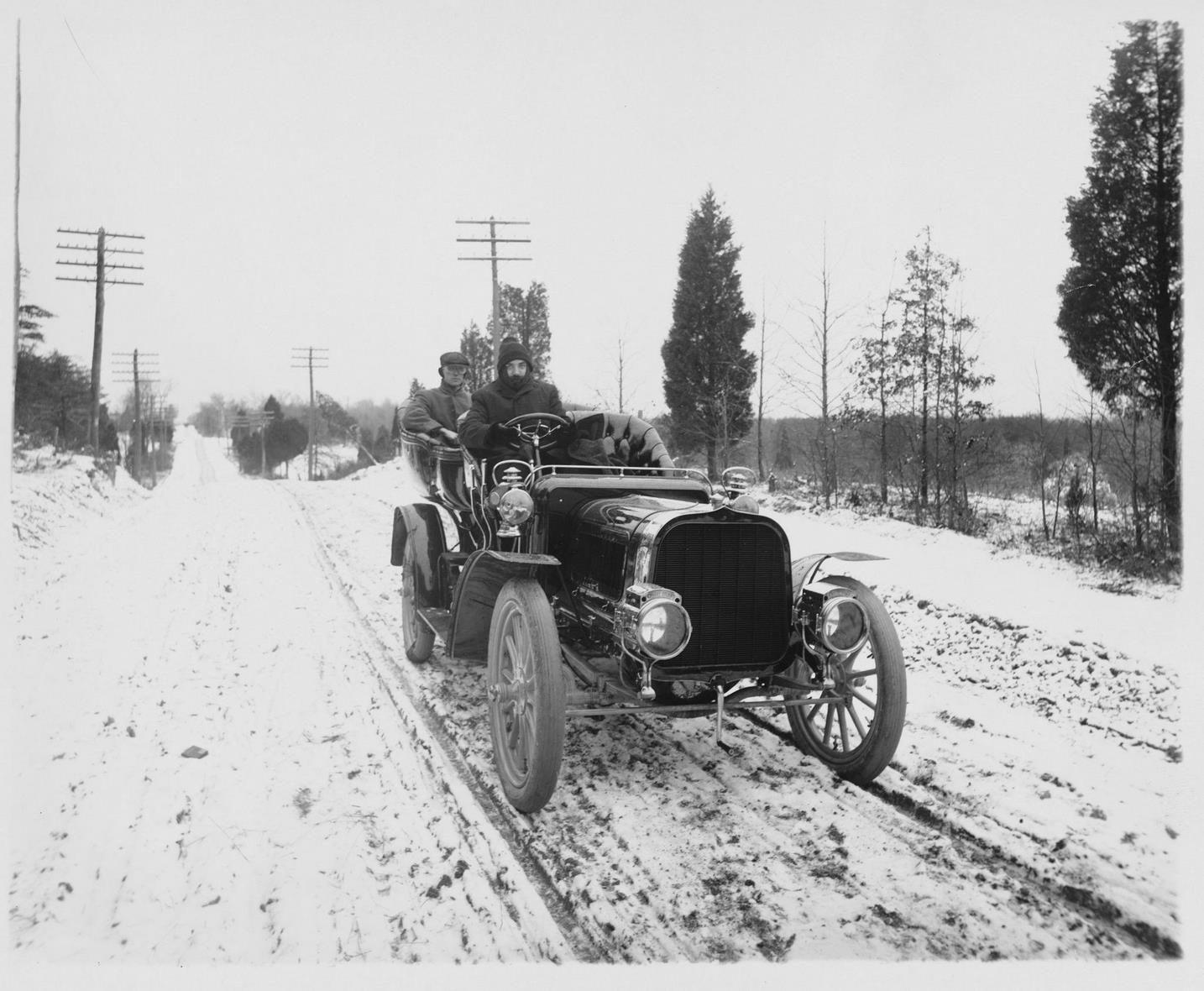
Toledo was also an early center of automobile manufacturing. The Pope-Toledo automobile was produced in the city in the early 1900s, representing one of the country’s first serious attempts at mass-producing a gasoline-powered vehicle. A photograph from 1902 shows a man sitting in a Toledo Steam Carriage on the rim of the Grand Canyon — a remarkable image of early automotive adventure. By 1905, Pope-Toledos were lining up at Hotel Wentworth, and another photograph from the same year captured a man driving a passenger through snow in one of these early machines. The automobile was still a novelty in 1905, but Toledo was already deep in the business of building them.





Actaully a few in there that I haven’t seen before.
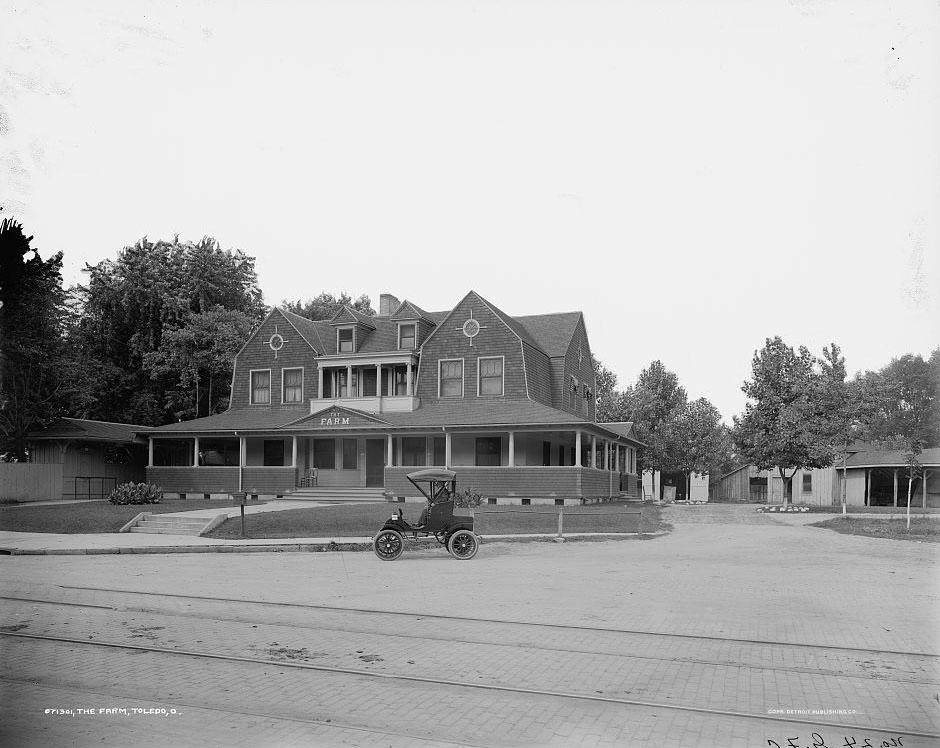
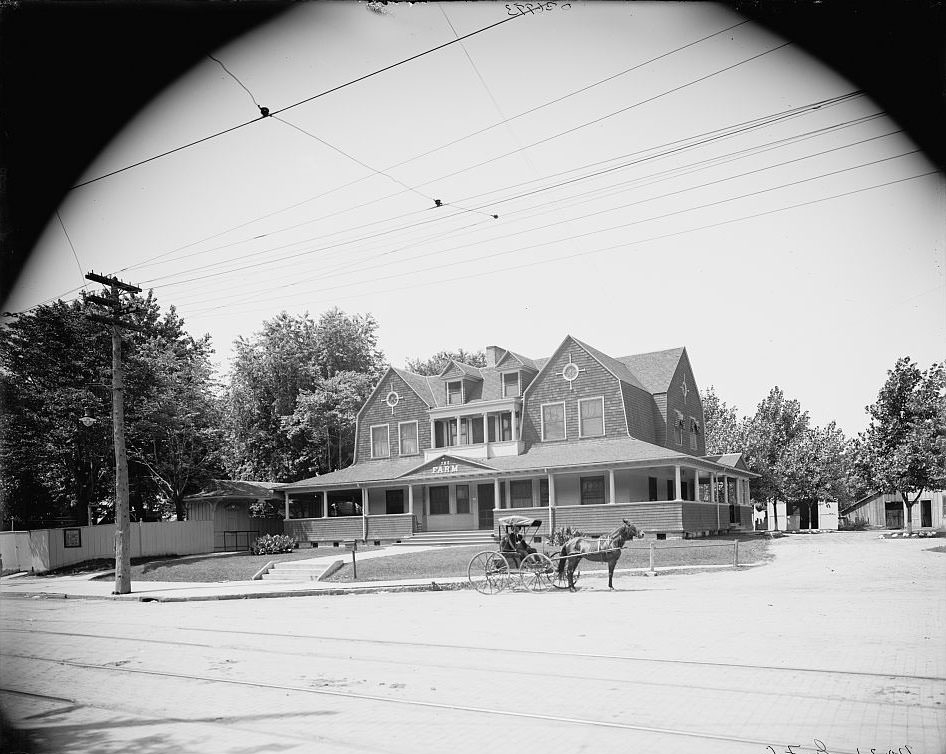
What was “The Farm?” I always see lots of pictures of it.
Nice pics, though Toledo was founded in 1837 not 1883
These are awesome, thank you!!
Outstanding pics. #4 Ted Nugent concert 1905.
If you zoom in on the hotel Secor lobby (picture #6) you can see people sitting in the lobby that look like ghosts.
The boardwalk with casino and row houses next to The Nicholas building were very interesting.