
Okinawa is a small island in southern Japan, covering roughly 640 square kilometers. Despite its modest size, the island has long held enormous importance — both for the people who call it home and for the military powers that have fought over it. After World War II, Okinawa became the center of a massive American military presence in the Pacific. More than 180,000 U.S. Army and Marine Corps troops arrived on the island at the war’s end, and by the 1950s, around 26,000 U.S. military personnel remained stationed there.
During his time serving as a lieutenant in the U.S. military on Okinawa, an American photographer picked up his camera and pointed it not at military operations, but at the people living around him. The result is a rare collection of vivid color photographs that document daily life on the island throughout the 1950s. These images show a society rebuilding itself after one of the most destructive battles of the Second World War — the Battle of Okinawa — while also adapting to a rapidly changing postwar world.
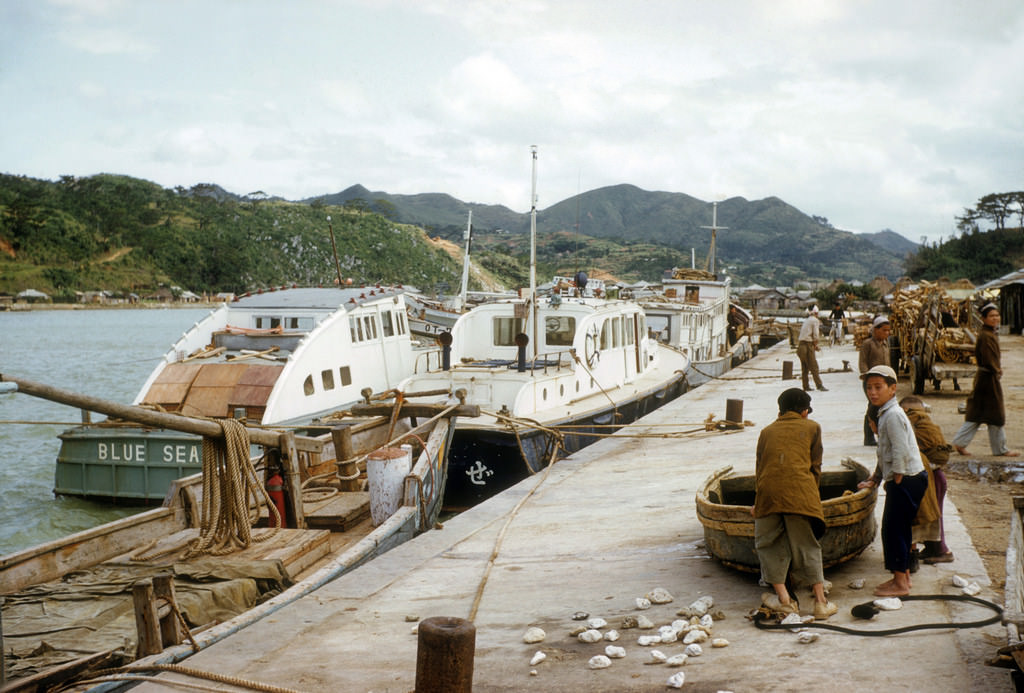
Okinawa’s coastline was a lifeline for its people. Fishing boats dotted the harbors, supplying the island’s markets and families with fresh catches. The sea had always been central to Okinawan life, and even as the postwar years brought rapid change to the island’s towns, the water remained a constant source of food and trade.
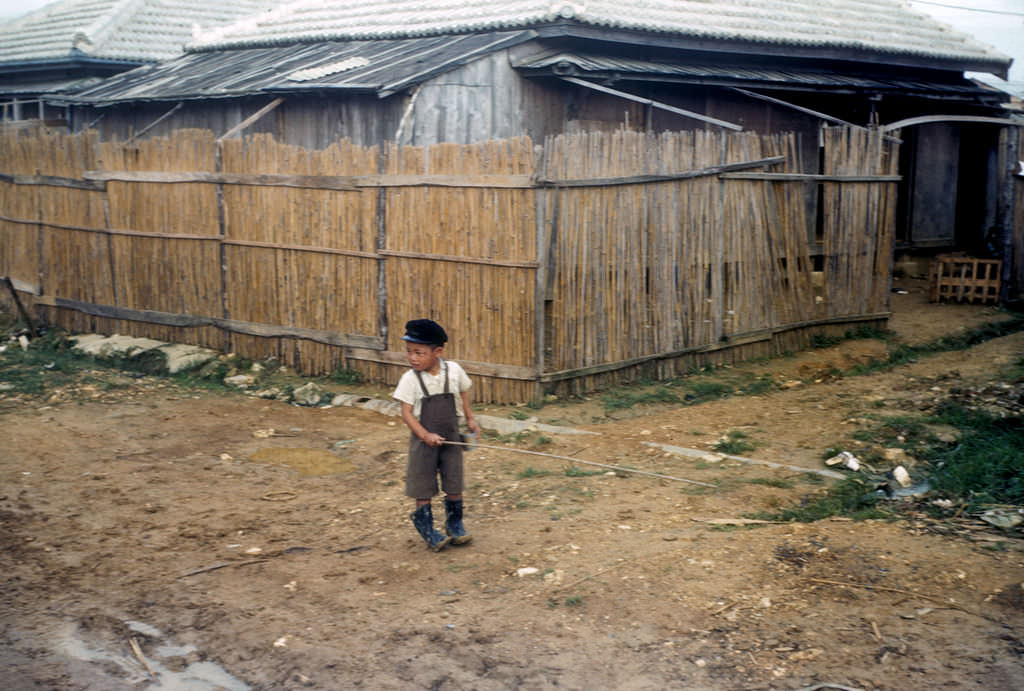
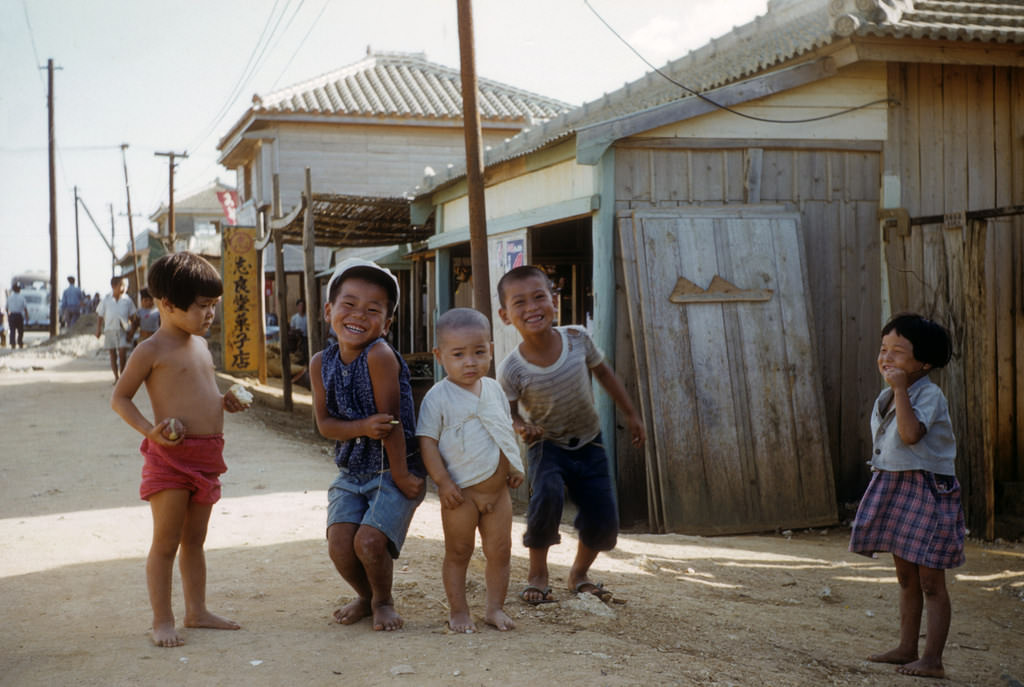
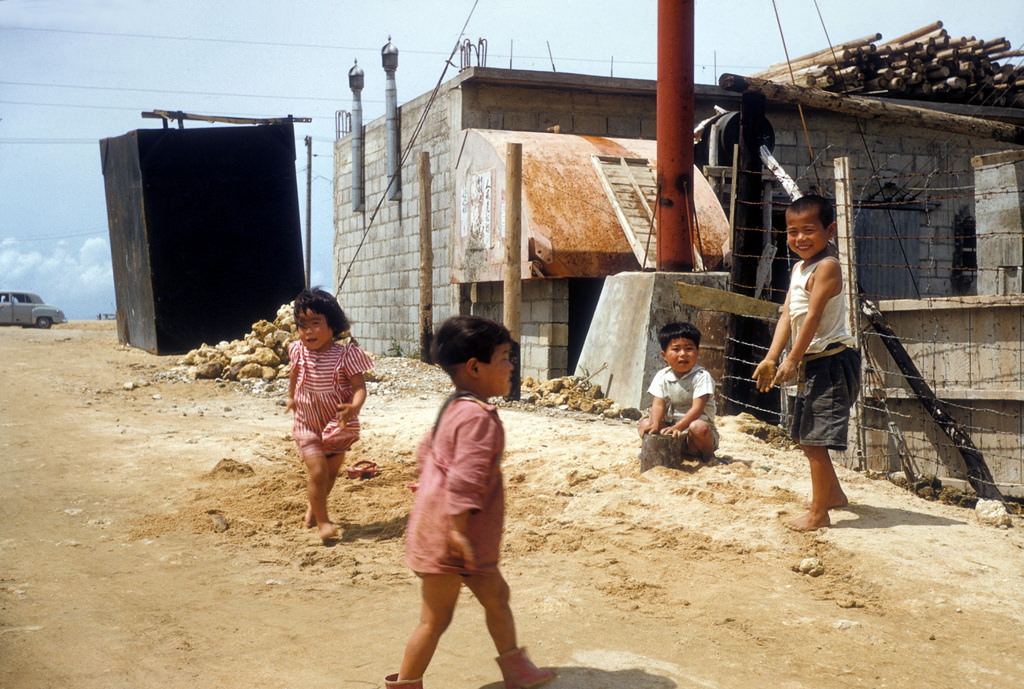
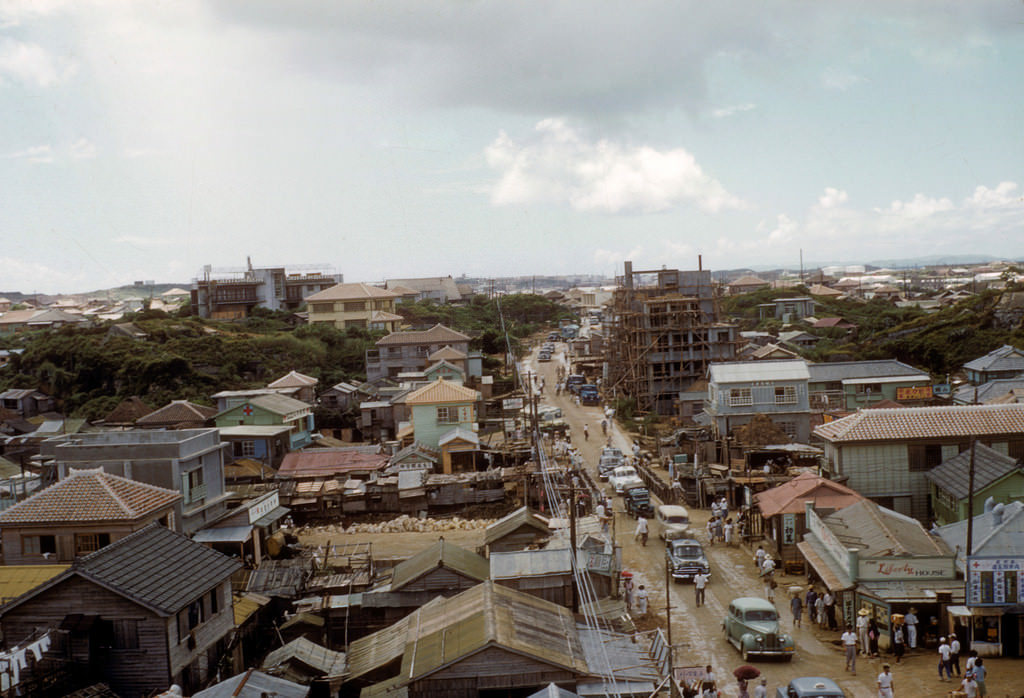
Naha is the capital city of Okinawa Prefecture and home to roughly 60 percent of the island’s population. In the 1950s, the city was a mix of old neighborhood lanes, new construction, and the energy of a place putting itself back together. Children played in the streets and open spaces, largely unbothered by the dramatic changes happening around them.
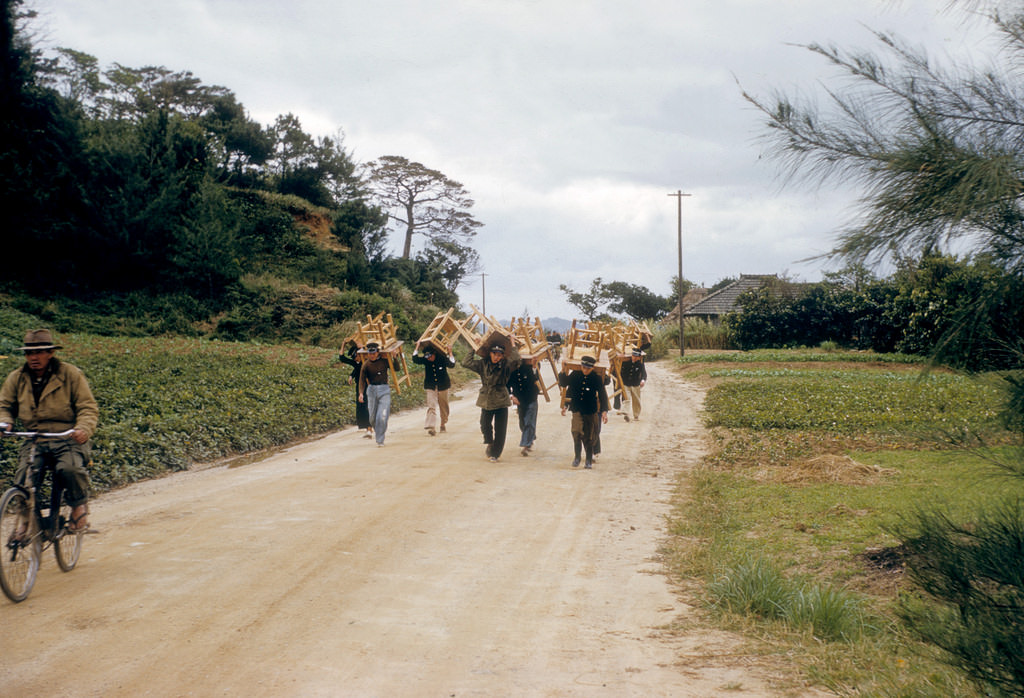
Schools across the island were also changing during this period. In towns like Nago, new educational facilities were being built and classroom practices were being updated. Education had always been valued in Okinawa, and the postwar years brought renewed investment in schools as the island worked to raise a new generation with better resources than those who came before.
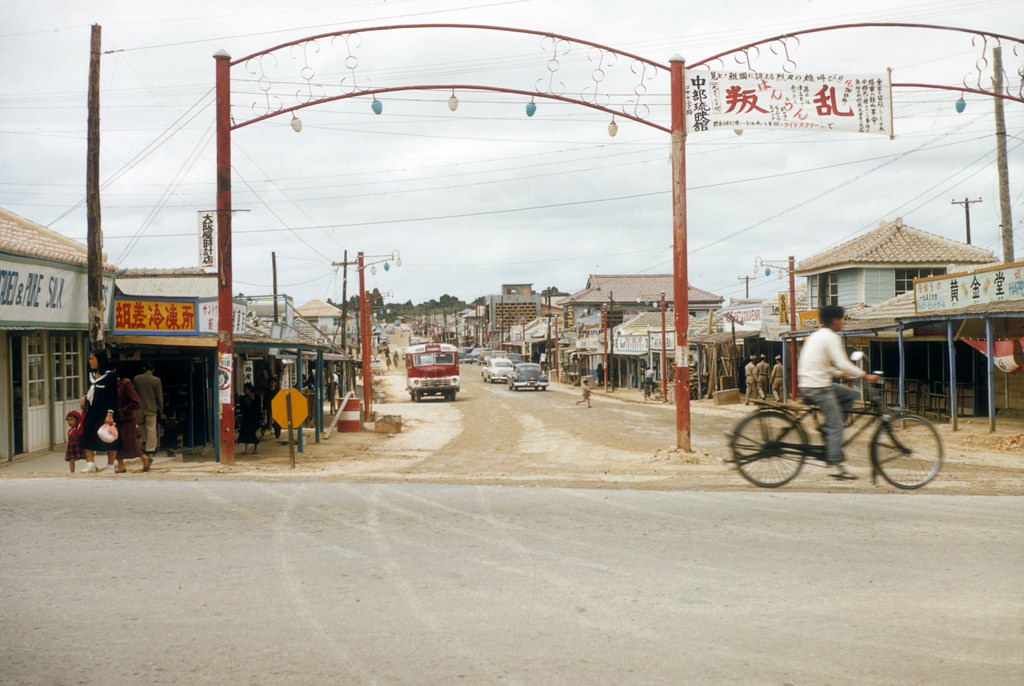
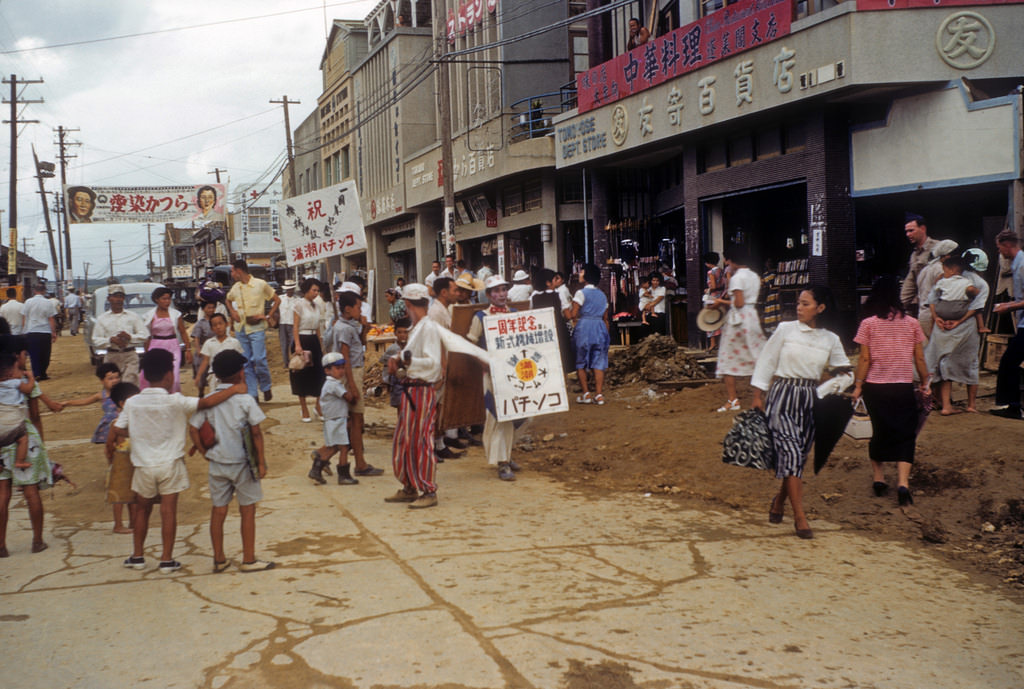
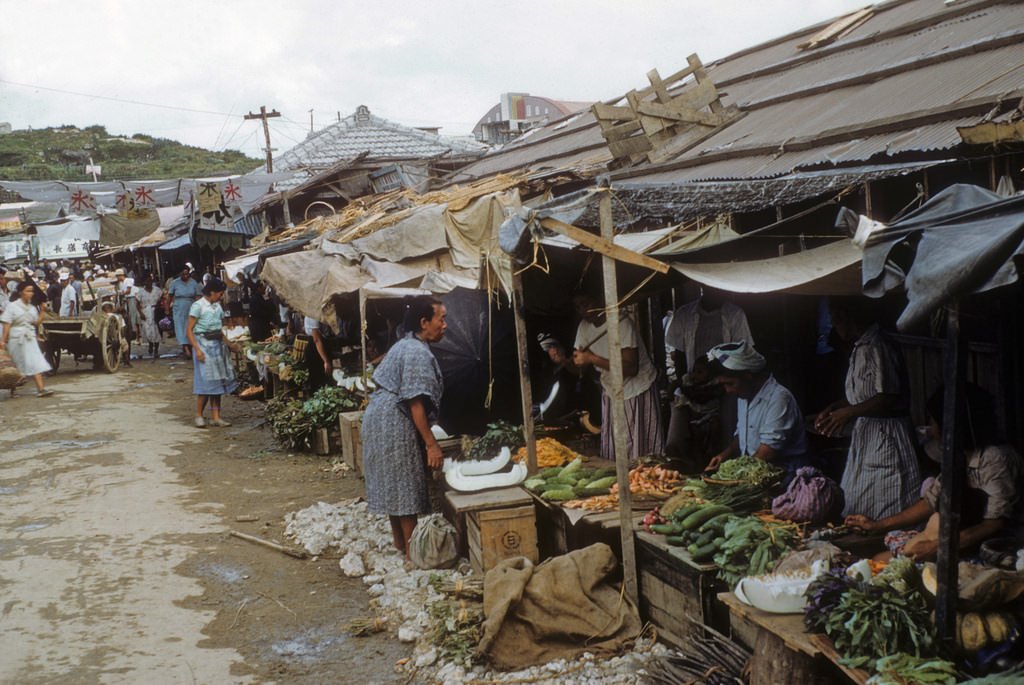
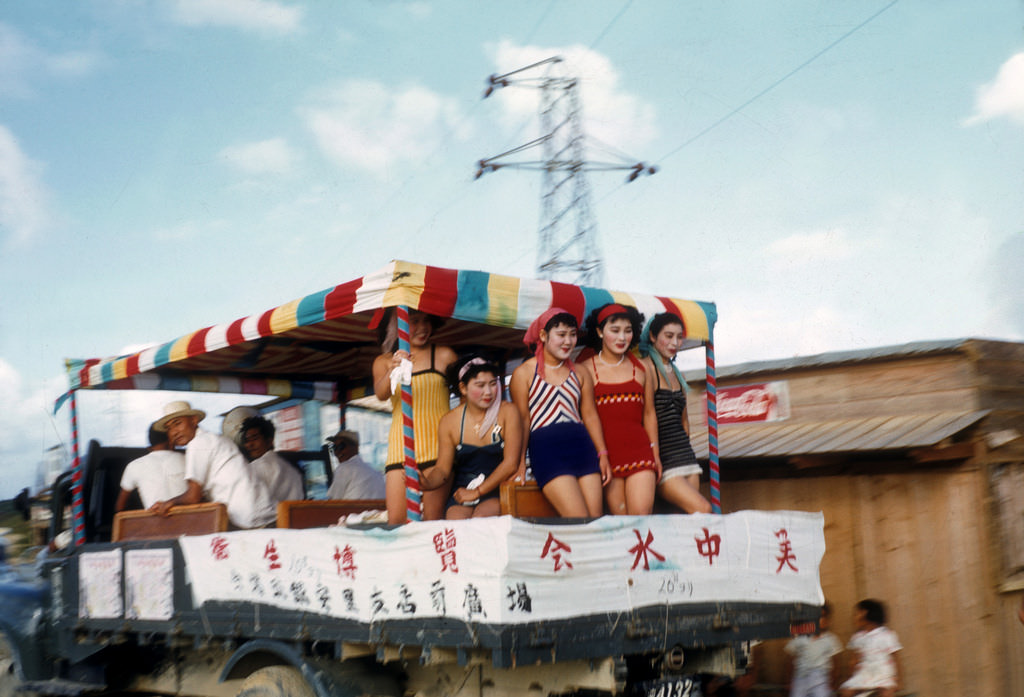
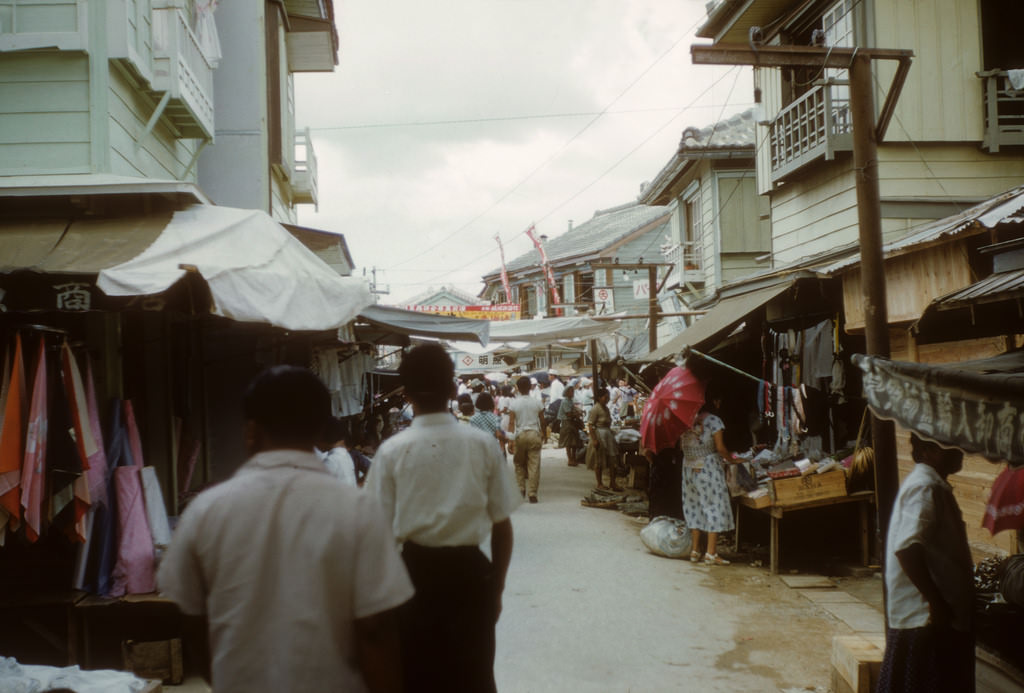
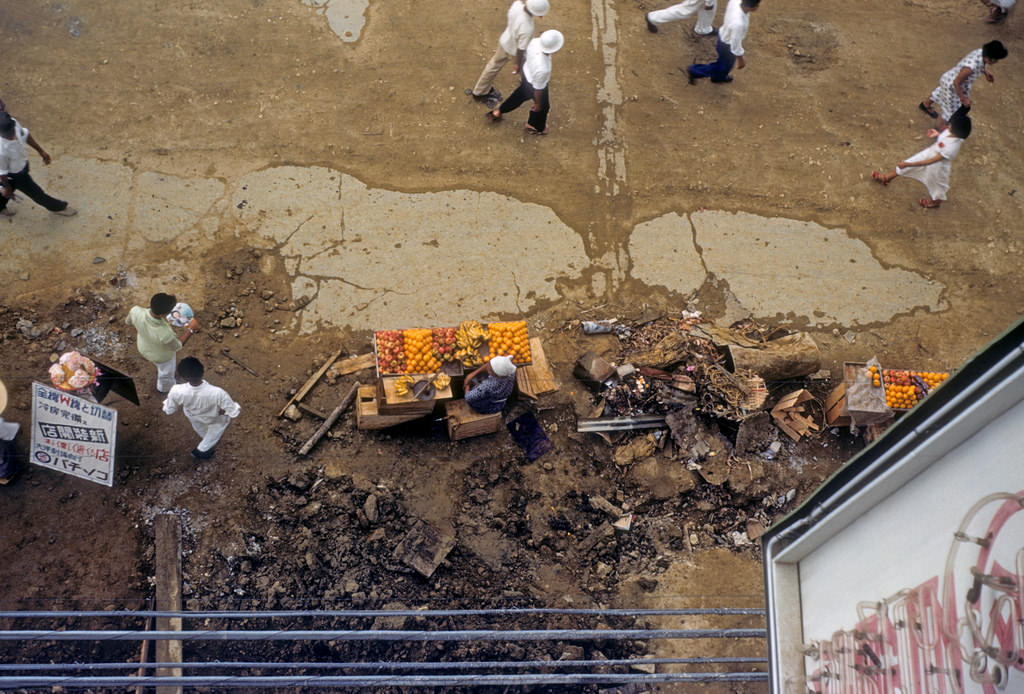
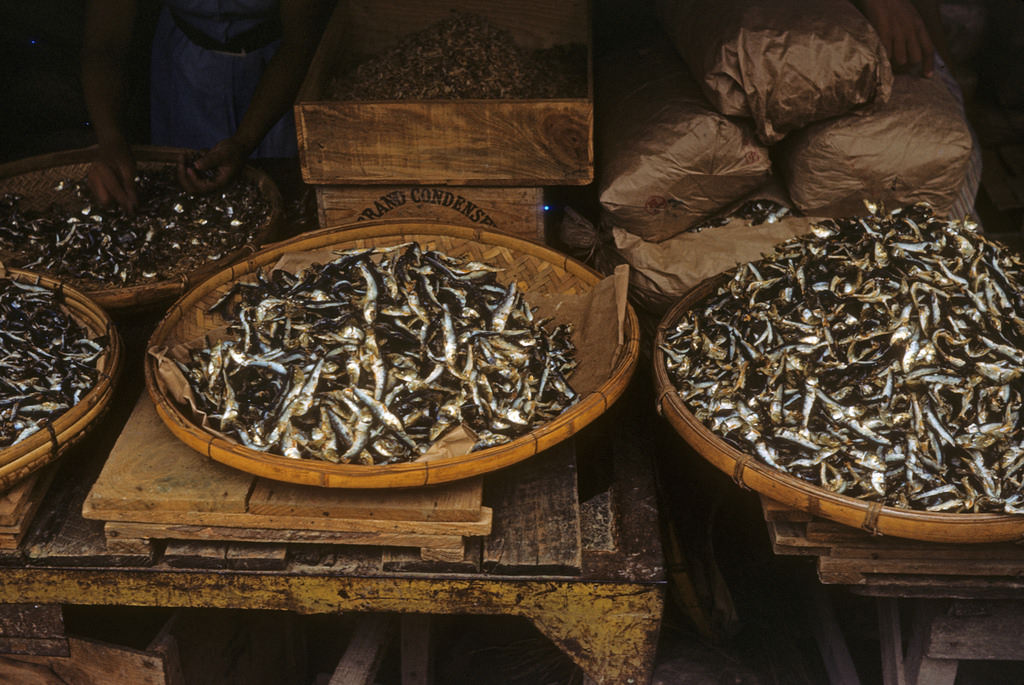
Street-level commerce in Okinawa during the 1950s was lively and inventive. Vendors used creative methods to draw customers, including costumed performers walking the streets to advertise local businesses. Markets buzzed with activity as sellers offered everything from fresh fruit and vegetables to dried fish piled high in woven baskets.
Social movements also had a visible presence on Okinawa’s streets. Groups of young women took part in public marches and campaigns, including one organized by the Society of Preservation of Chastity, Morals & Birth Control. These demonstrations reflected the broader social debates taking place across Japan and its territories during the postwar decade.
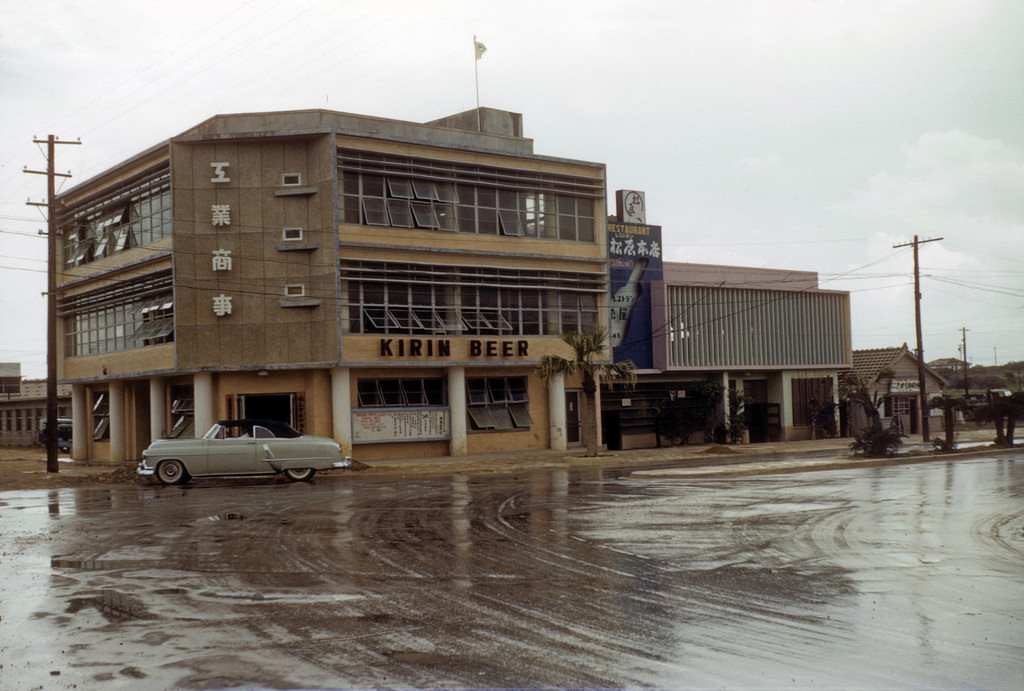
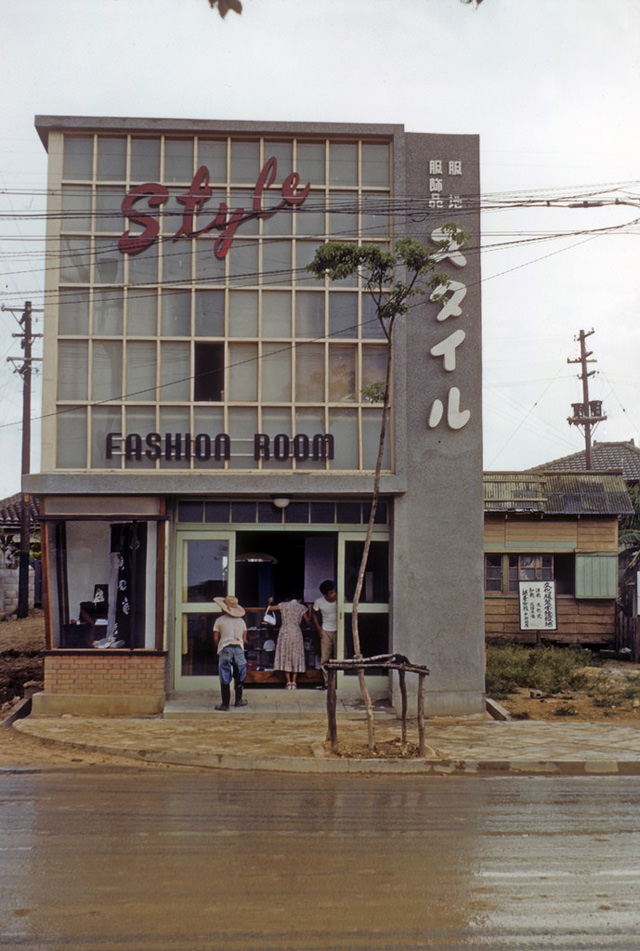
Naha was growing fast. New buildings rose alongside older structures, and the skyline began to reflect the reconstruction efforts that were reshaping the city block by block. Department stores and modern shops opened their doors, offering goods that would have been hard to find just a few years earlier. The contrast between the old city and the new one was sharp and visible on nearly every street.
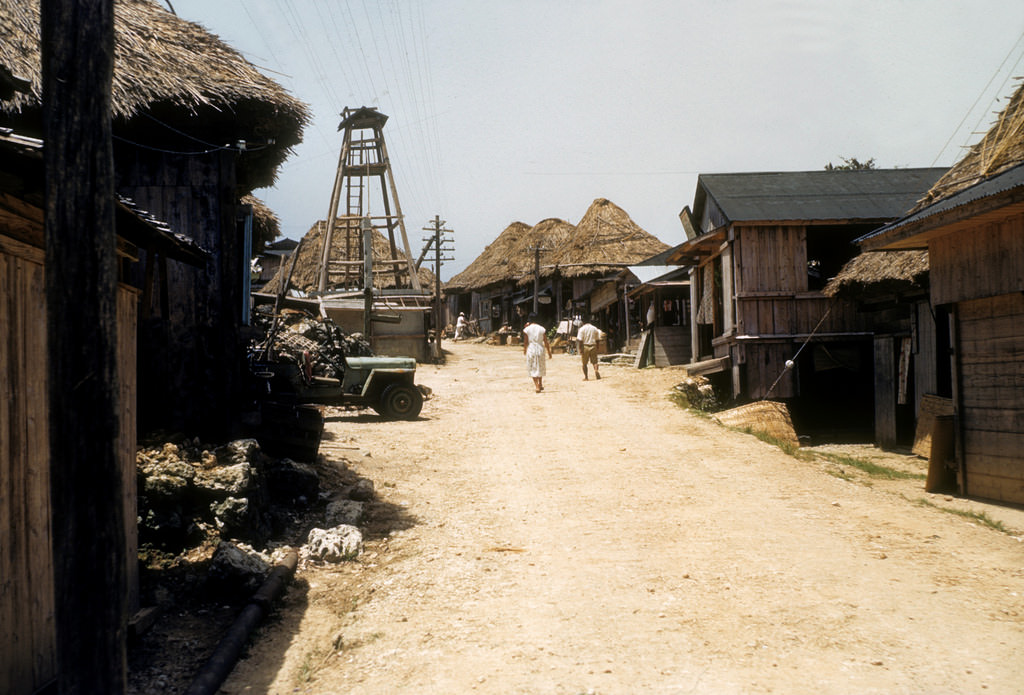
Beyond the capital, smaller villages across Okinawa maintained a quieter pace of life. Communities like Okino continued to follow traditional patterns of work and daily routine, where neighbors knew each other and the rhythms of the day were tied to farming and the sea rather than to the bustle of a growing city.
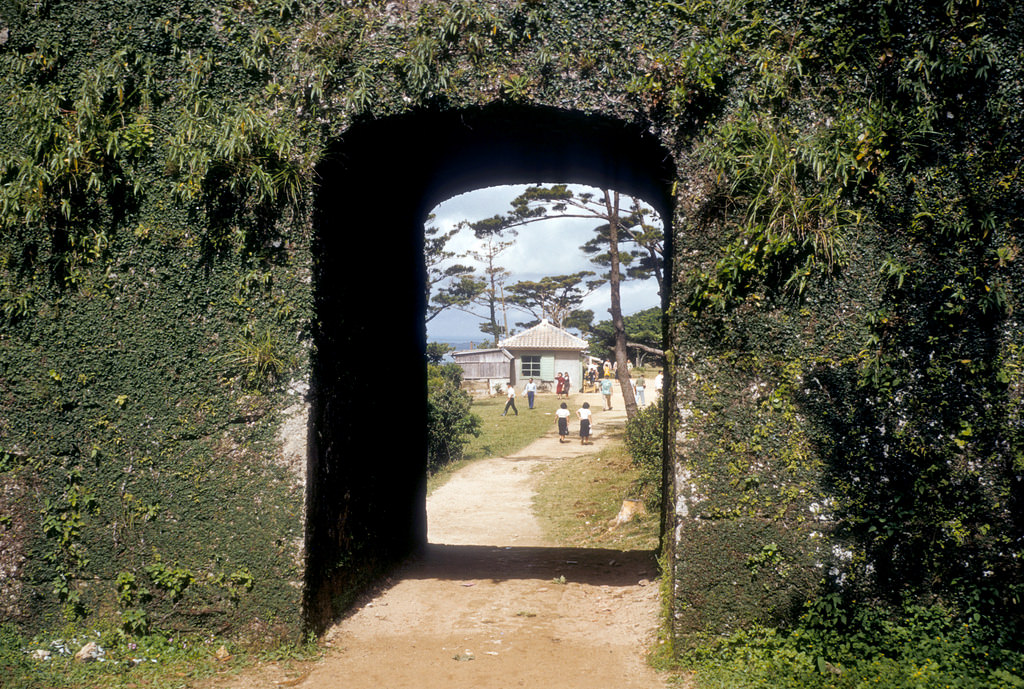
Nakagusuku Castle stands as one of Okinawa’s most enduring landmarks. Built by the Ryukyuan people centuries before the 1950s, the castle’s thick stone walls survived the war and remained an imposing sight on the island’s hillside. The ruins served as a reminder of Okinawa’s long history as the Kingdom of Ryukyu, a sovereign nation before it was absorbed by Japan in 1879.
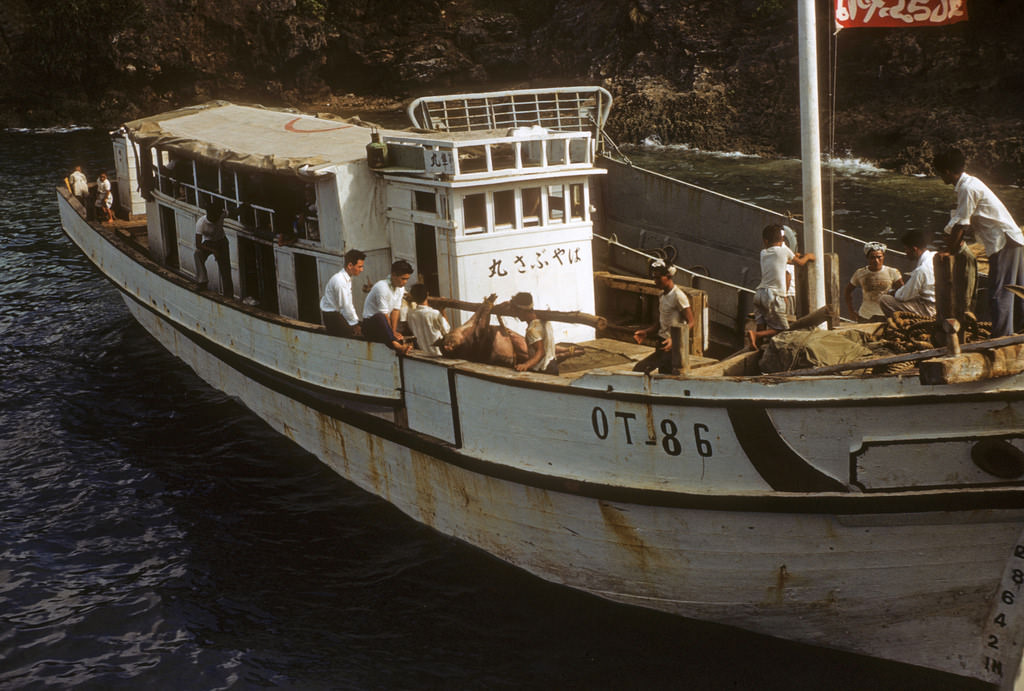
On the smaller island of Kumejima, just west of the Okinawan mainland, life moved at its own pace. Livestock were transported to market in the traditional way, and local workers managed the unloading of supplies and goods brought in by boat. These scenes from Kumejima offer a window into how smaller, more rural Okinawan communities operated during the decade.
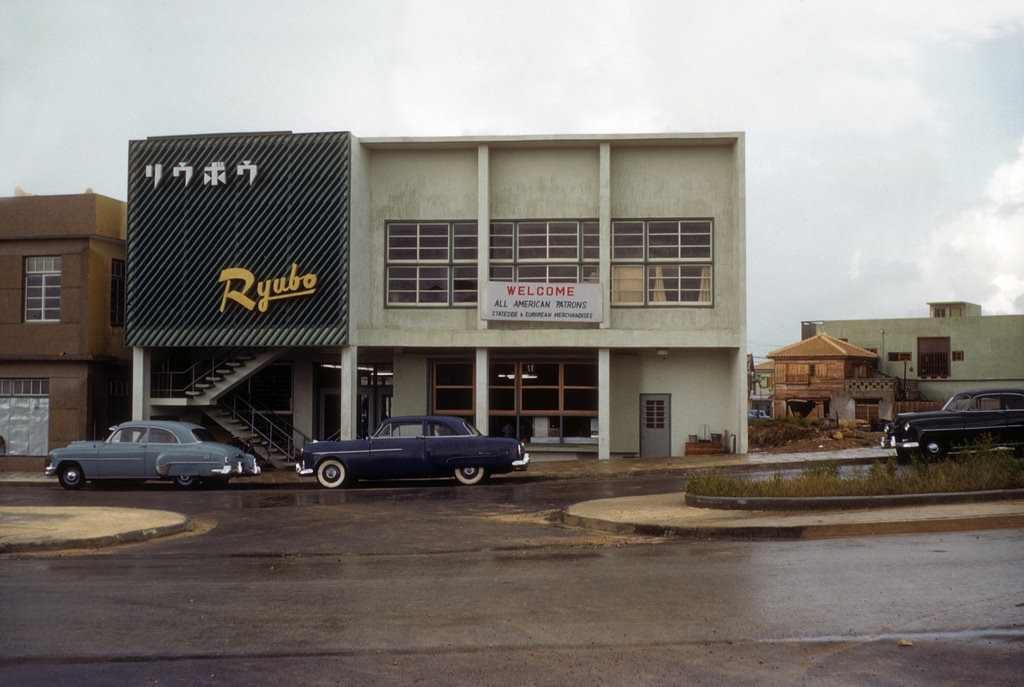
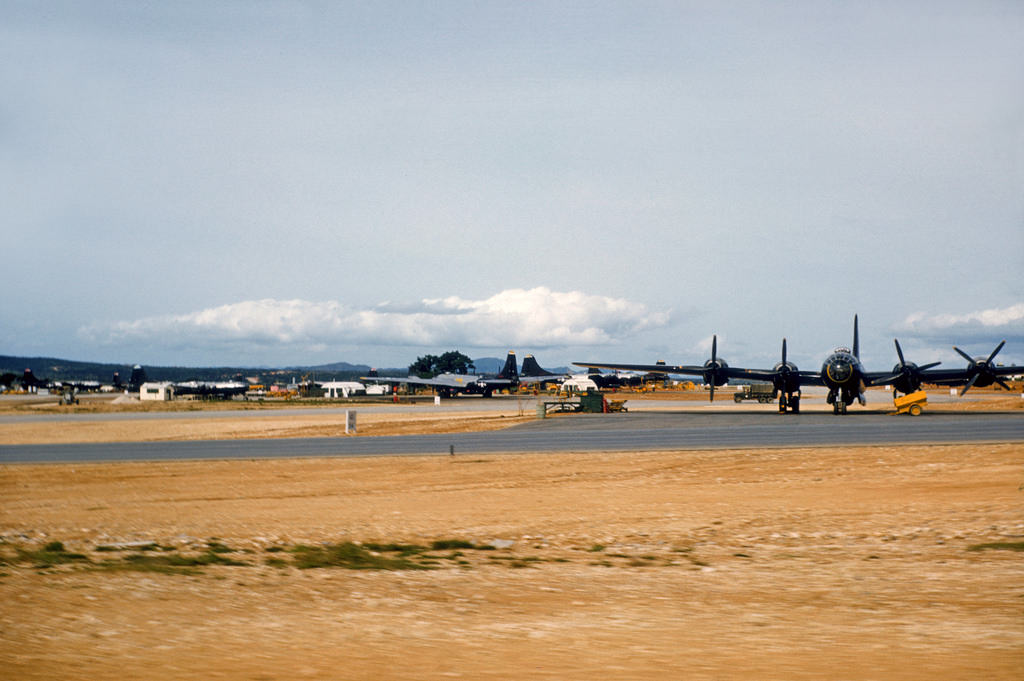
The American military presence shaped certain parts of the island in very direct ways. At Kadena Air Base, B-29 bombers sat on the tarmac — a reminder that the Cold War was very much underway. Shops near the base catered to both local residents and military personnel, creating a commercial zone that blended Okinawan and American influences side by side.
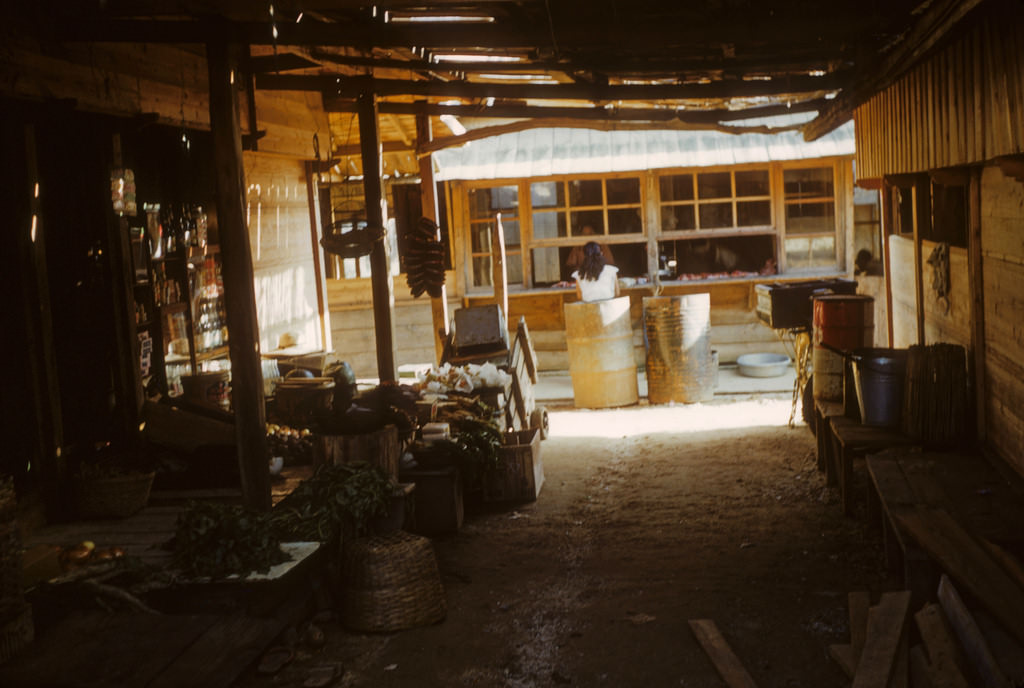
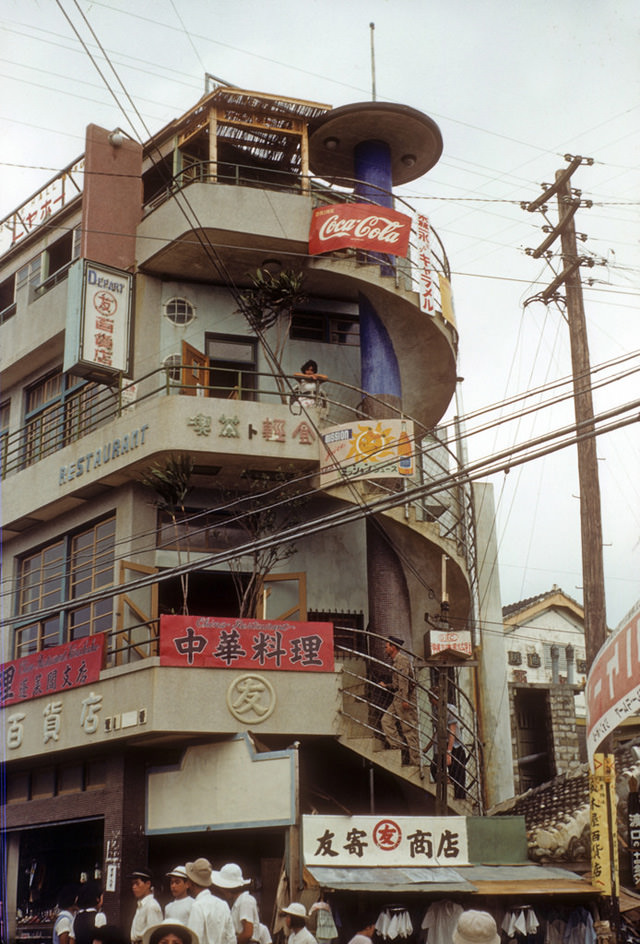
The streets of Okinawa in the 1950s told many stories at once. Narrow lanes in older neighborhoods wound past traditional homes, while wider roads in the city carried the traffic of a modernizing society. In places like Koza and Suckahachi, the old layout of the island’s towns was still intact, giving the photographer a chance to document what those spaces looked like before further development changed them.
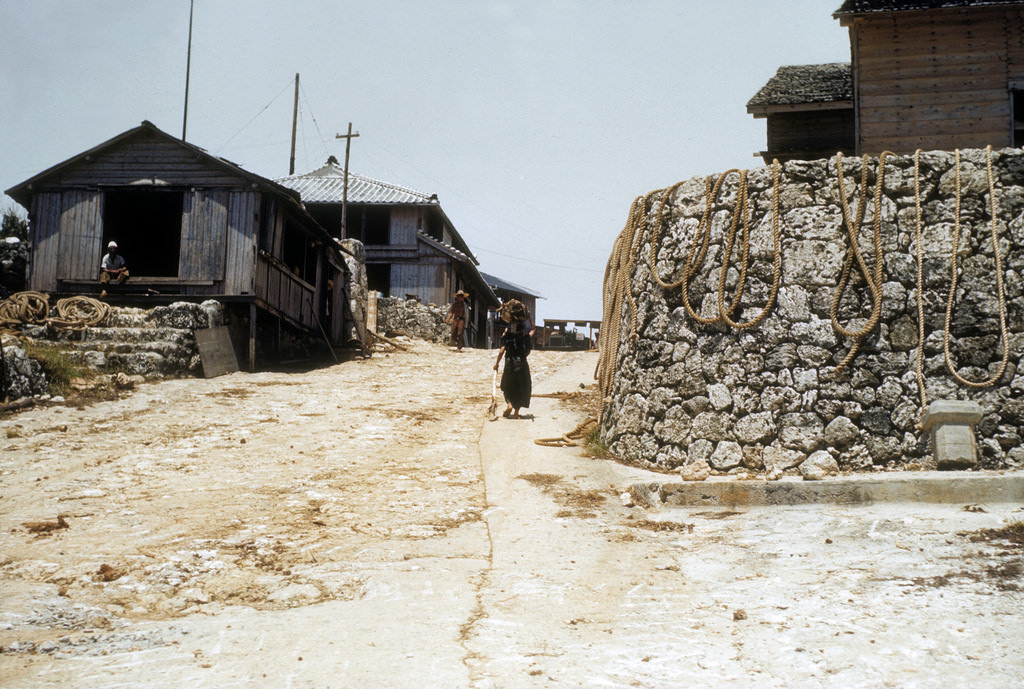
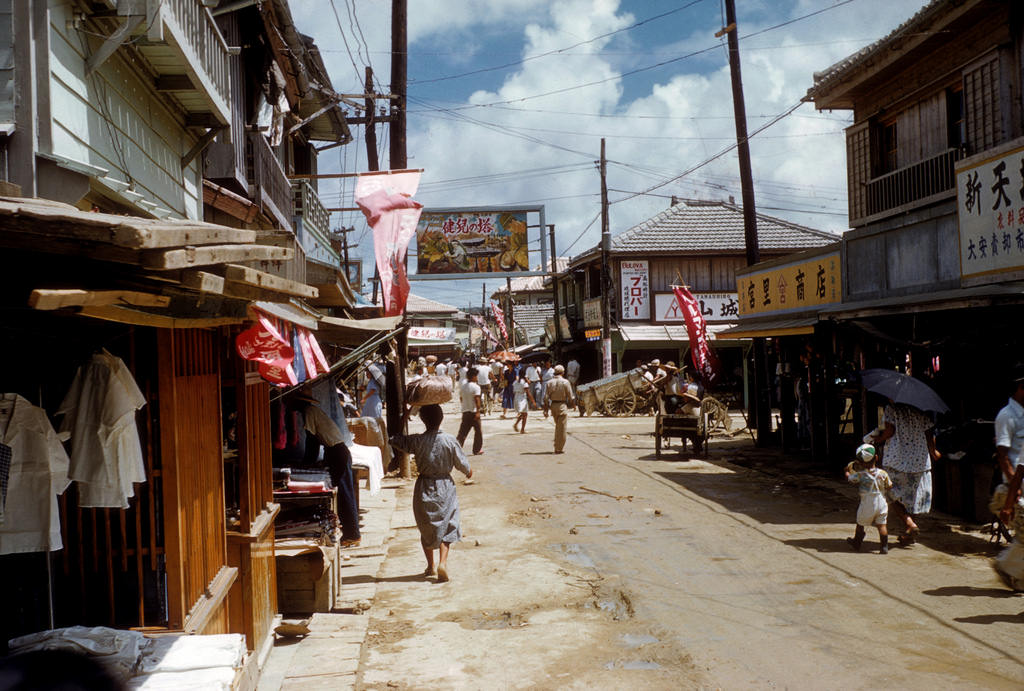
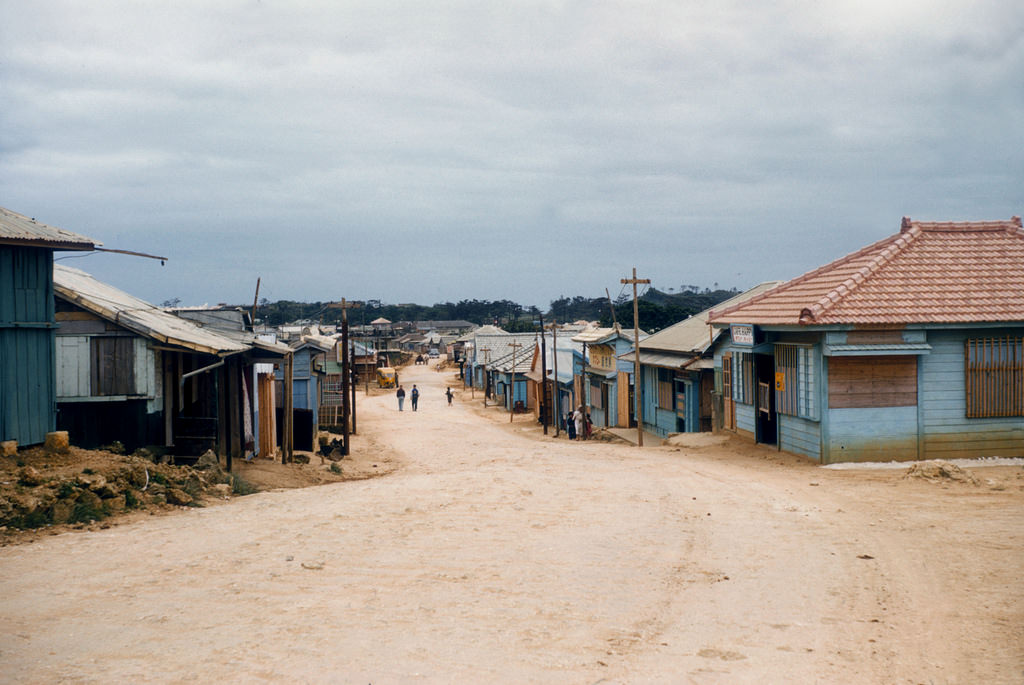
At Nakagusuku, the contrast between old and new was particularly striking. Ancient stone structures from the castle ruins stood within view of modern buildings and roads, illustrating exactly how quickly the island was evolving. From a vantage point above, the nearby U.S.-built community of Bucknerville was clearly visible — a settlement that had grown up in the shadow of the historic ruins.
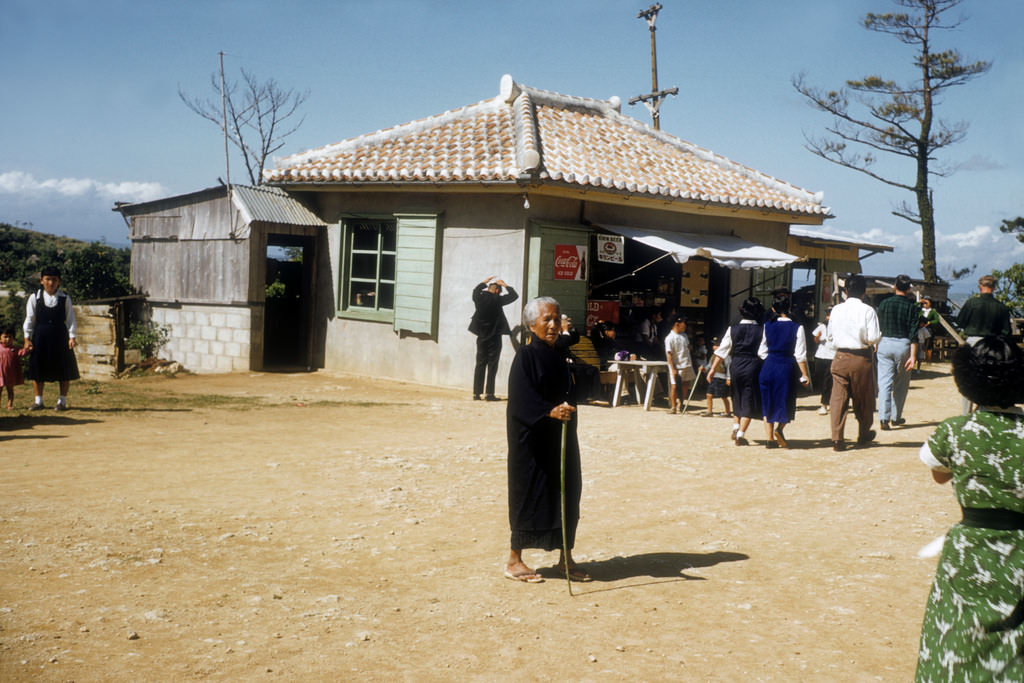
The wreck of the China Maru lay along the Okinawan coast as another artifact of the war years. The sunken vessel was a visible scar from the intense fighting that had ravaged the island, and it remained part of the coastal landscape throughout the 1950s, slowly being reclaimed by the sea.
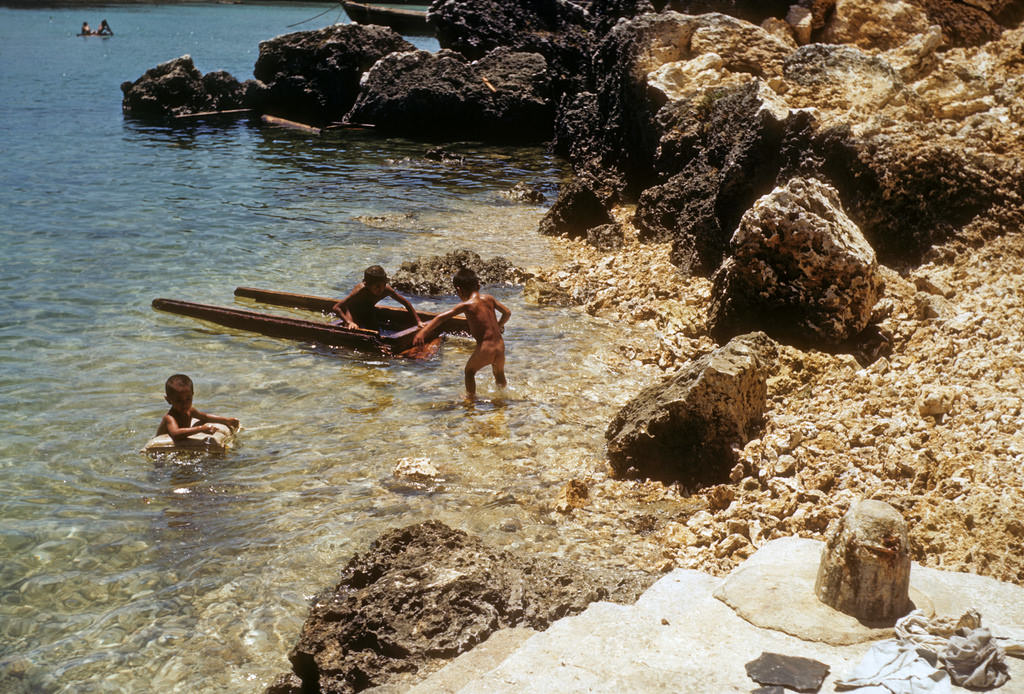
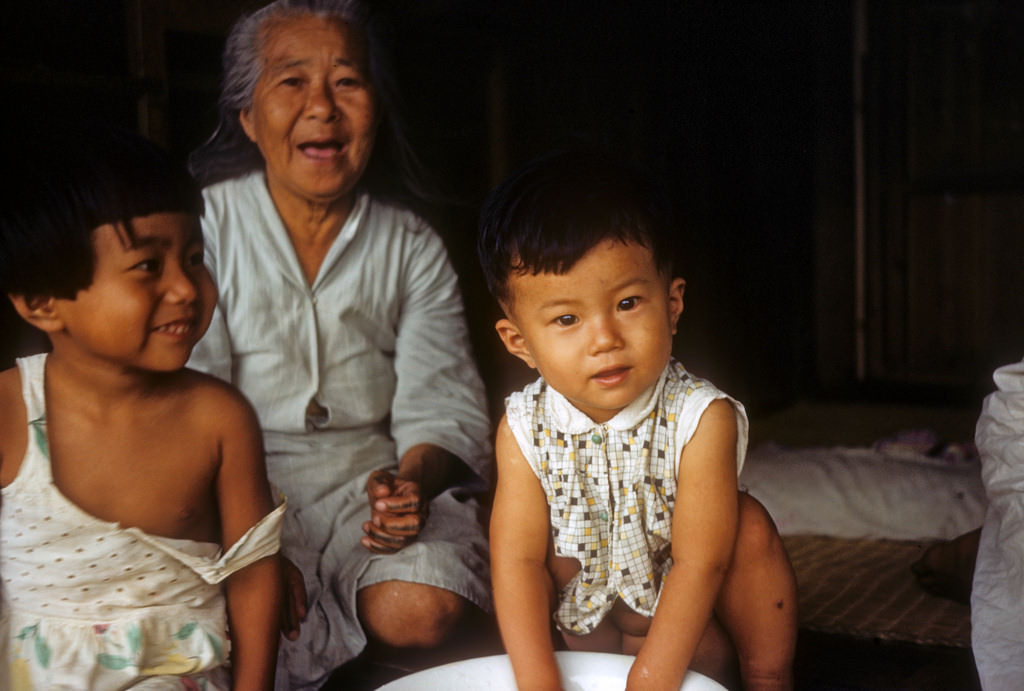
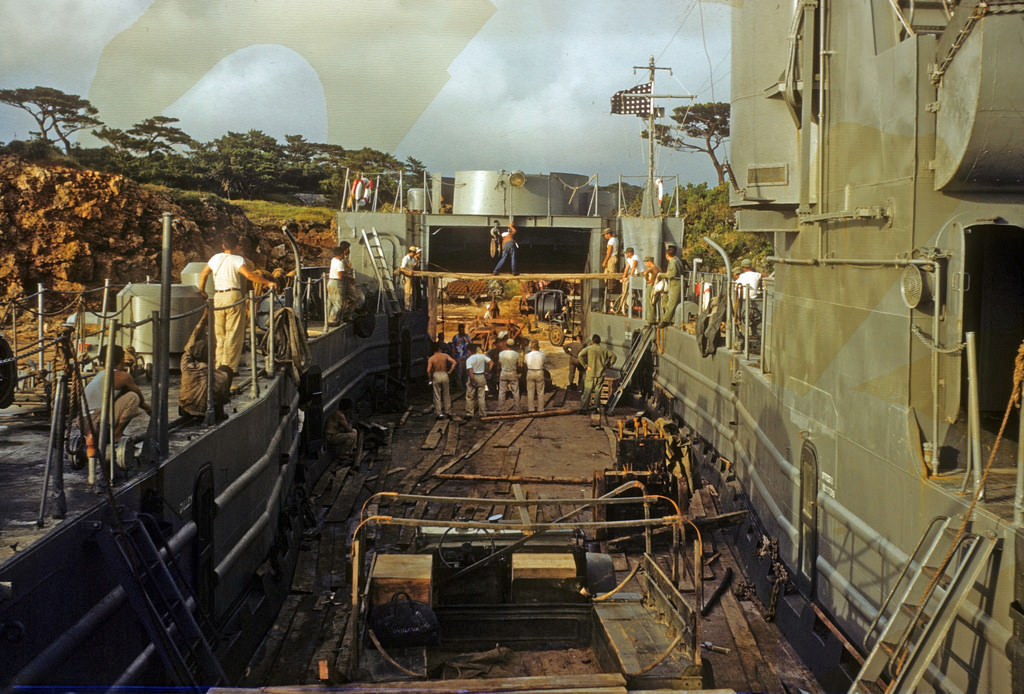
In Koza — a town that grew up largely around American military activity — everyday tasks took on a distinctive character. Residents went about their routines in a place that was simultaneously deeply Okinawan and heavily shaped by its proximity to U.S. bases. The town became known for its mixed cultural environment, where local traditions and American influences met daily.
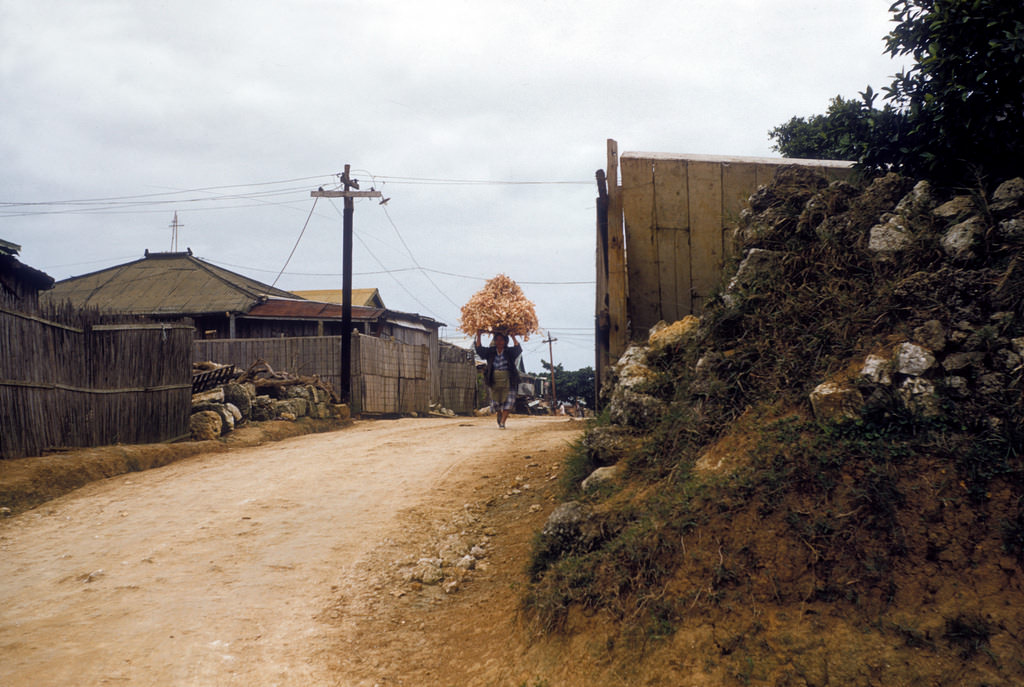
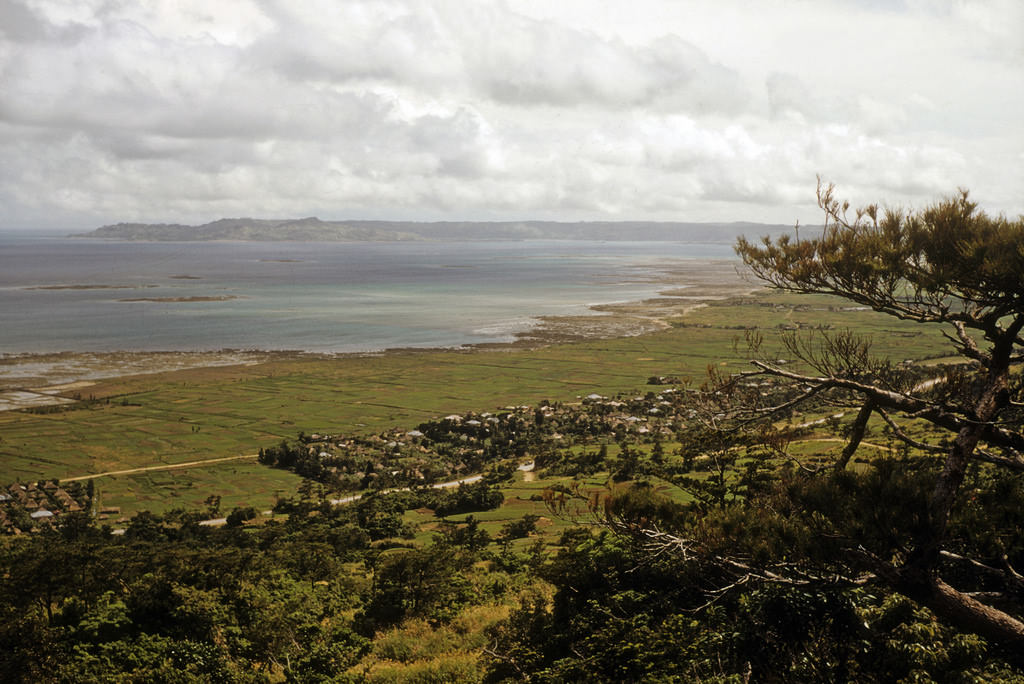
Looking out over Naha from an elevated viewpoint, the scale of the city’s postwar growth becomes clear. Rows of new buildings filled spaces that had been leveled during the Battle of Okinawa, and the city’s streets were alive with movement and commerce. Young girls photographed at Ishikawa and children seen throughout the island’s towns represent the generation that would grow up in this rebuilt Okinawa — knowing the war only through the stories of their elders.
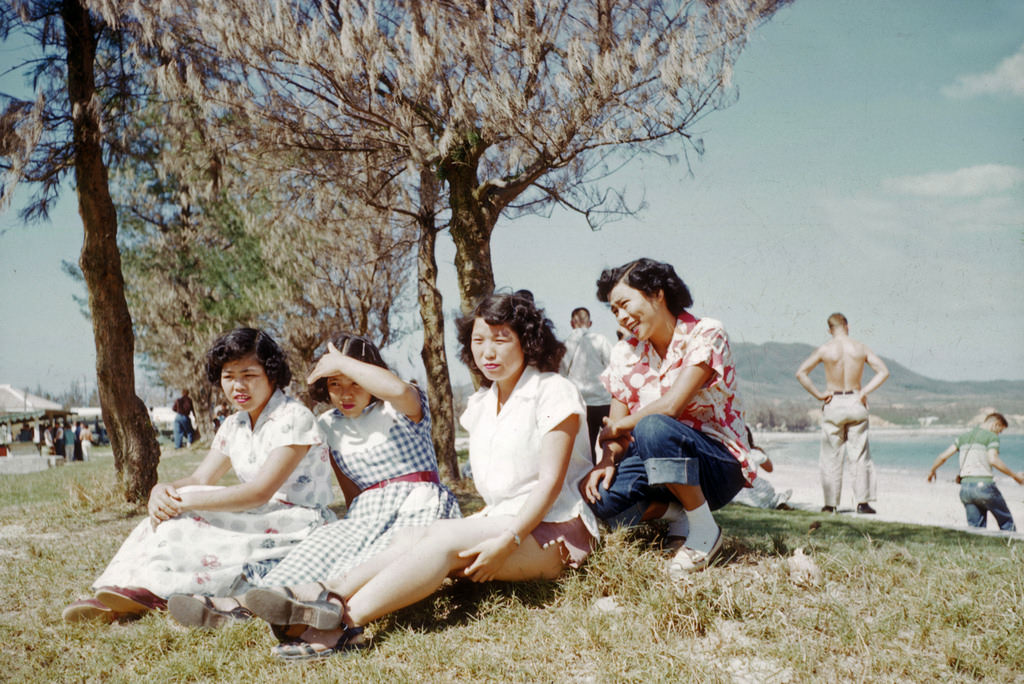
Throughout all of these images, certain constants appear — dried fish stacked in baskets at the market, boats resting in the harbor, and people moving through their days with purpose. The photographer captured these details not as curiosities, but as the fabric of ordinary Okinawan life during a decade of enormous change.





I heard that Okinawa has some cool castles, but couldn’t see any in these photos.
Only one castle, Shuri-jo Castle, in Naha’s capital, has been restored. Although it served as a fortification during the Battle of Okinawa in WWII, today it’s better thought of as a restored palace. During the history of Okinawa, it served as the King’s residence and was (along with the surrounding Shuri district containing nobility and the Kume community of Chinese scholars) the center for business and government administration until 1872, when the Ryukyu Kingdom was abolished and incorporated into the Japanese Empire as a Domain. This palace is a blend of Chinese and Japanese styles, with a lot of red. There are two floors in the main palace hall, and the whole compound is quite a bit smaller than, say, Gyeongbokgung Palace in Korea. A interesting note is that many of the Chinese-style dragons adorning the palace areas have four talons rather than the traditional five to avoid obscuring the authority of the Chinese emperor, to whom the Ryukyu Kingdom paid tribute under suzerainty until it was forced to stop when the Kingdom was abolished.
Many other castles, called gusuku, exist on the islands, all of which (to my knowledge) are stone ruins. If any buildings stood there in 1945, you can be sure they were blown up pretty badly. In general, you can tour these grounds and see pretty large limestone walls and not much else. My favorite is Kitanakagusuku Castle Ruins, which sits on top of a giant ridge dividing the island in half. It is possible to see both sides of the ocean from the highest point on the walls. It was actually used as city hall for a while in the modern era despite being difficult to get to by design.
During Okinawa’s pre-unified era of warring principalities, most of these castles served as homes and fortifications for local warlords, their soldiers, and their people. They were clearly built with military purposes in mind, with looping-back open staircases leading up to the main gates. During the 15th century, after the kingdom was unified, such projects ceased to be necessary, and public works projects often took the form of elaborate and well-constructed bridges, most of which were destroyed by bombing during World War II.
My mother is from Okinawa, and the story of her family is a bit vague and mysterious. My grandfather (an American soldier) was stationed in Okinawa during the 1950s. My grandfather met my grandmother and they got married (I won’t speculate on whether it was because they loved each other or because he got her pregnant). According to my mother, her family was extremely traditional, and they feared actual violence from my grandmother’s family – so much so that they moved back to the United States.
The first year of my mother’s life were spent in Okinawa. At that point, they returned to the states, and six years later, her mother passed away. My mother’s knowledge of the whole event is questionable at best. Since she didn’t know her mother long enough to get the full story, and her father “never talked about it”, she didn’t get the full story from her mother. Unfortunately, he has also passed away, so I cannot ask him. Please shed some light on the plausibility of her story if someone can. Perhaps she exaggerated the whole “we fled Japan in fear” element when she was younger, then just stuck to the story later in life because she couldn’t find anything else to believe, so it’s more likely he simply returned to the U.S. after his time in Japan had expired. In Okinawa at the time, were there really traditional families who would turn murderous if their daughter married an American and had his child?