Norfolk, Virginia is one of the oldest cities on the East Coast, established in 1636 along the shores of the Chesapeake Bay. Its location made it a natural hub for military operations and trade for centuries. After the Civil War, the city grew quickly. New canals and railroads connected Norfolk to the rest of the country, turning it into a major commercial center. By the early twentieth century, the city was expanding its borders through annexation. In 1906, Norfolk absorbed the town of Berkley, pushing its city limits across the Elizabeth River. Then in 1923, a much larger expansion added Sewell’s Point, Willoughby Spit, the town of Campostella, and the Ocean View area. The photographs below capture Norfolk during this period of growth, showing the docks, streets, and people that defined the city in the early 1900s.
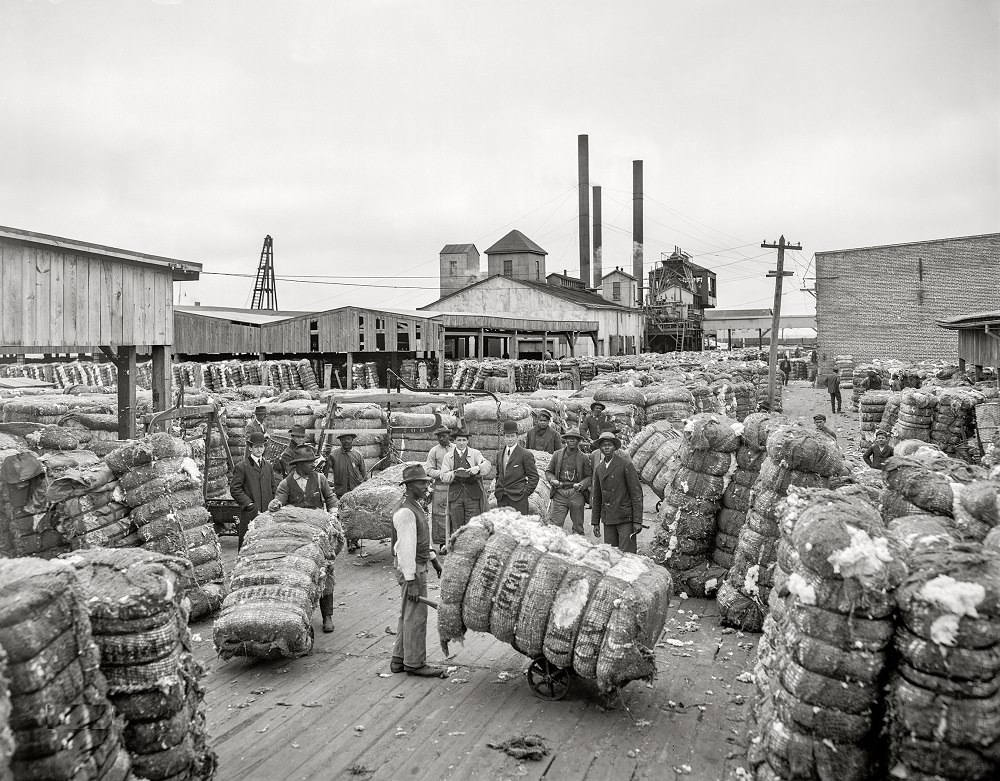
Cotton was a major commodity moving through Norfolk’s waterfront in the early 1900s. Workers weighed and loaded bales directly on the docks, part of a larger Southern export economy that relied heavily on port cities like Norfolk. The waterfront was a constant hub of labor and commerce, with goods arriving and departing by both land and sea. The docks were also home to shipping lines that connected Norfolk to cities up and down the Atlantic seaboard.
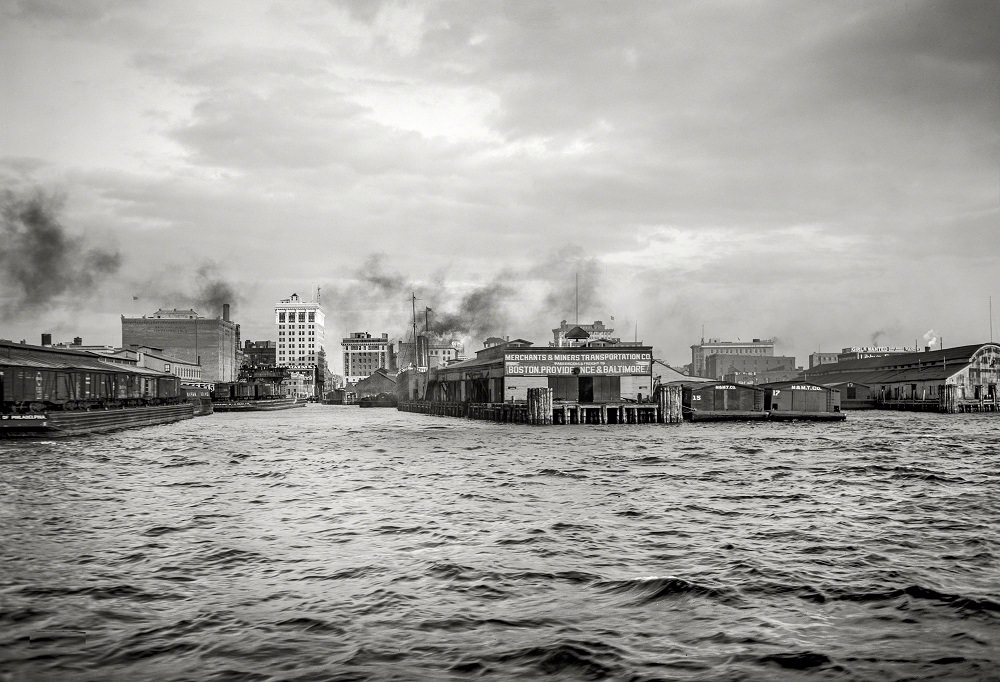
The Merchants and Miners Transportation Company operated a popular passenger and freight line that ran between Norfolk and ports in the Northeast. Their wharf was one of the busiest along the Norfolk waterfront. By 1917, with the United States entering World War I, the port took on even greater strategic importance. Military supplies and personnel moved through Norfolk in large numbers during this period, and the infrastructure that companies like Merchants and Miners had built was central to that effort. Norfolk’s two YMCA branches — one for civilians and one specifically for naval personnel — reflected just how significant the military presence had become in the city.
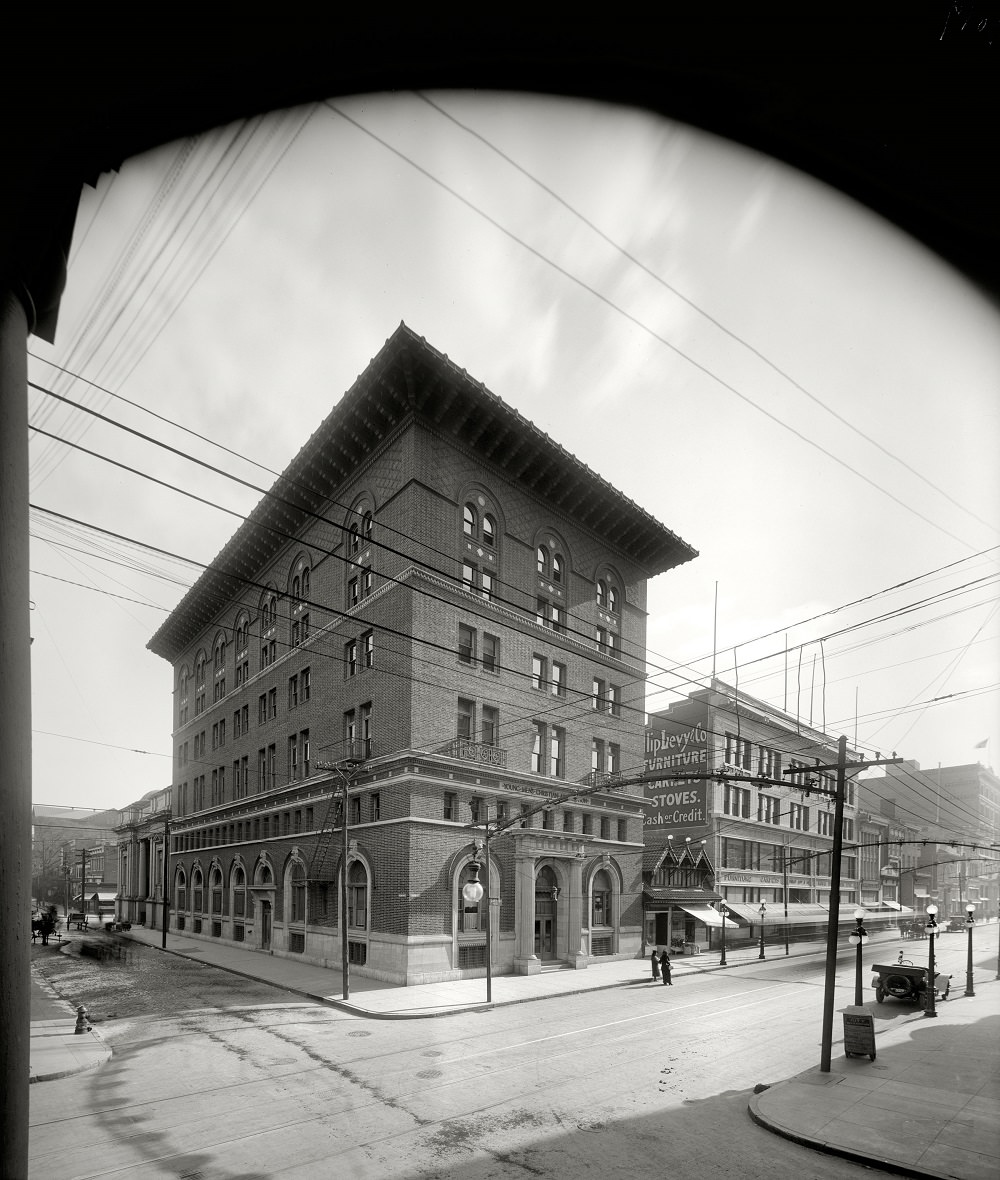
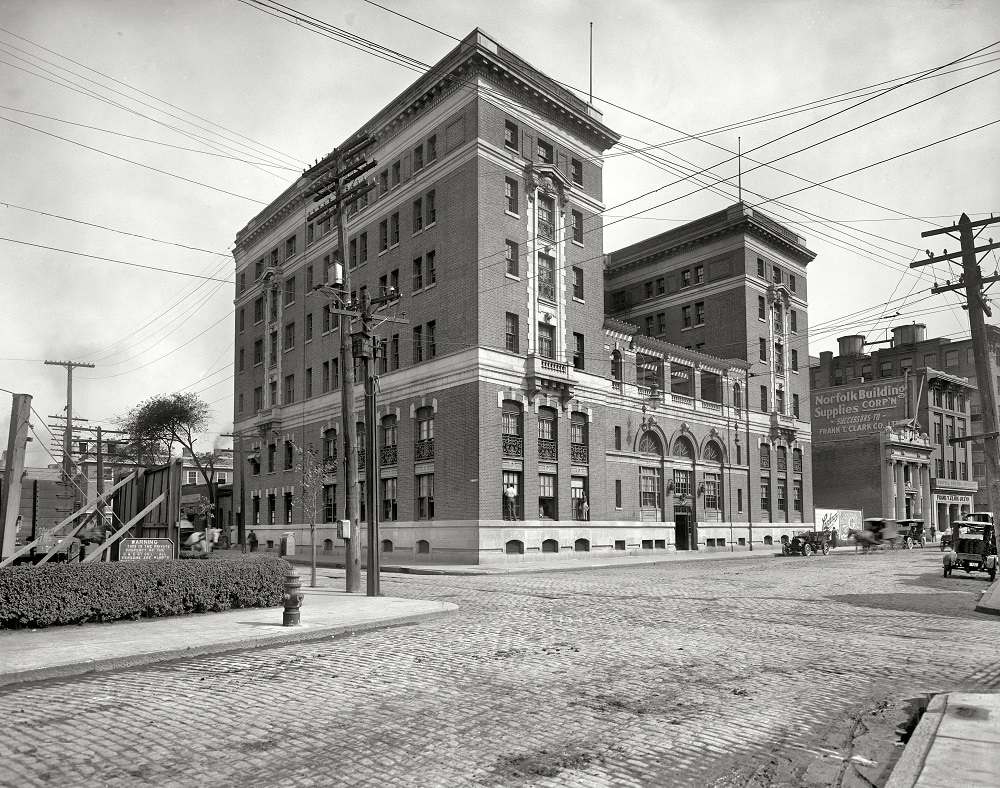
The Central YMCA served the general population of Norfolk and offered meeting rooms, recreational facilities, and lodging. Buildings like this one were important anchors in early twentieth-century American cities, providing social services at a time when few public alternatives existed. Norfolk’s downtown district was becoming increasingly built up by this era, with multi-story brick buildings lining its main commercial corridors.
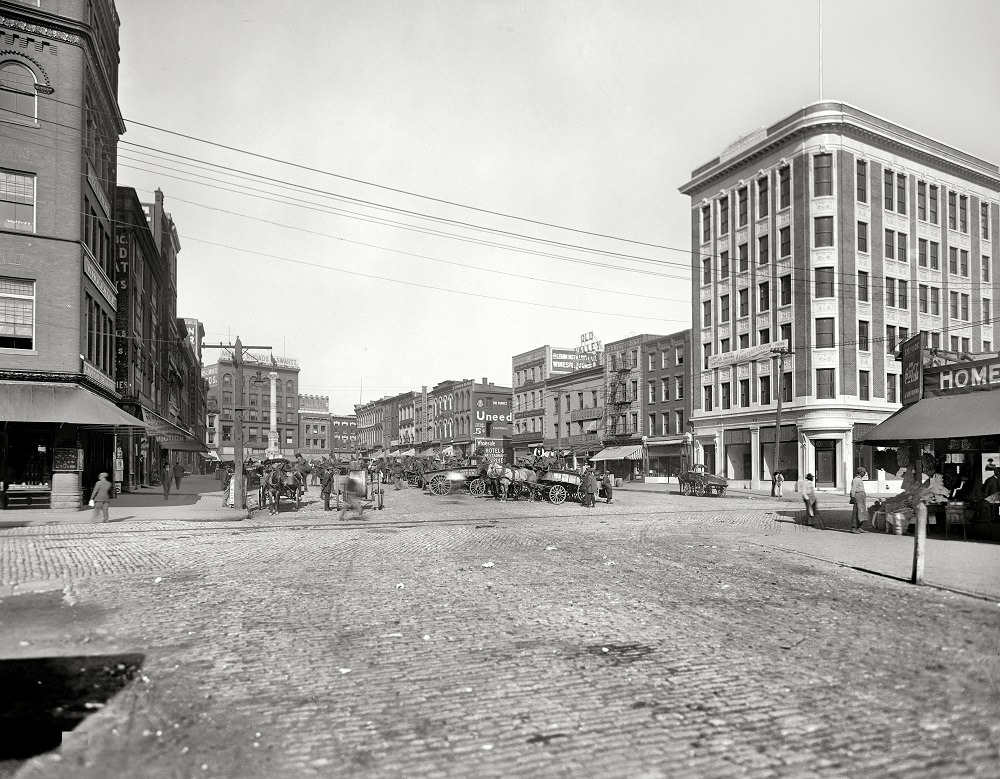
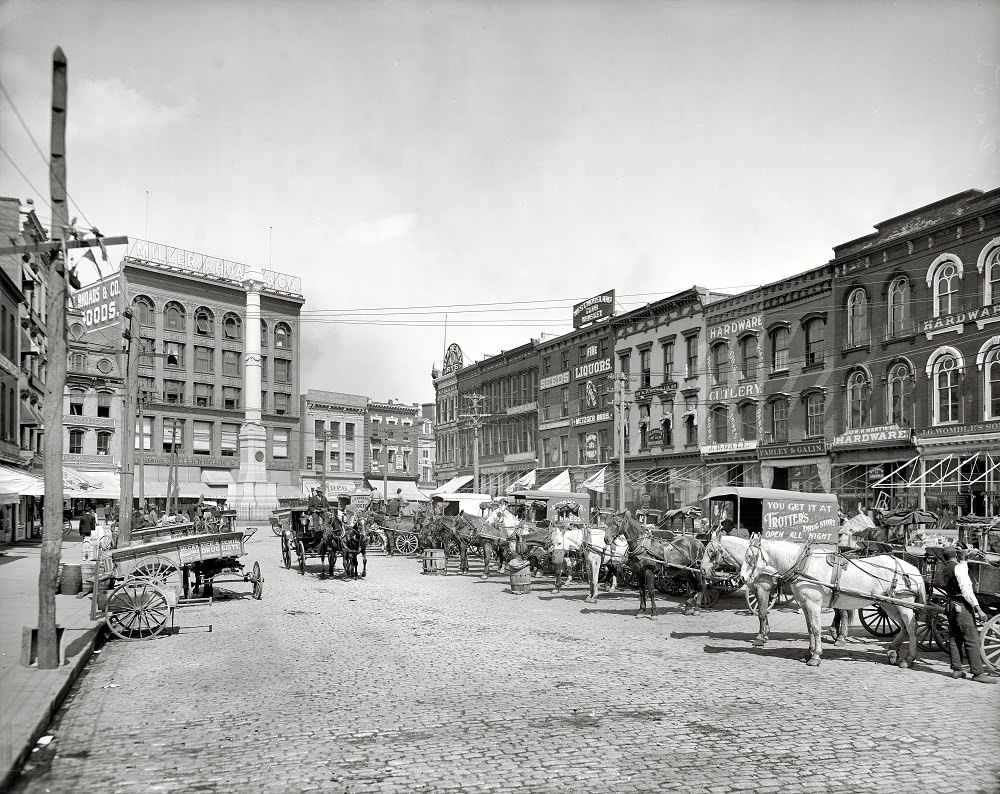
Commercial Place was one of Norfolk’s busiest downtown intersections in the early 1900s. Streetcars, horse-drawn wagons, and pedestrians all shared the same streets. Storefronts packed the surrounding blocks, and the area served as the commercial heart of the city. Norfolk’s Confederate Monument also stood in this part of the city, erected as a memorial to Virginia’s Confederate soldiers following the Civil War.
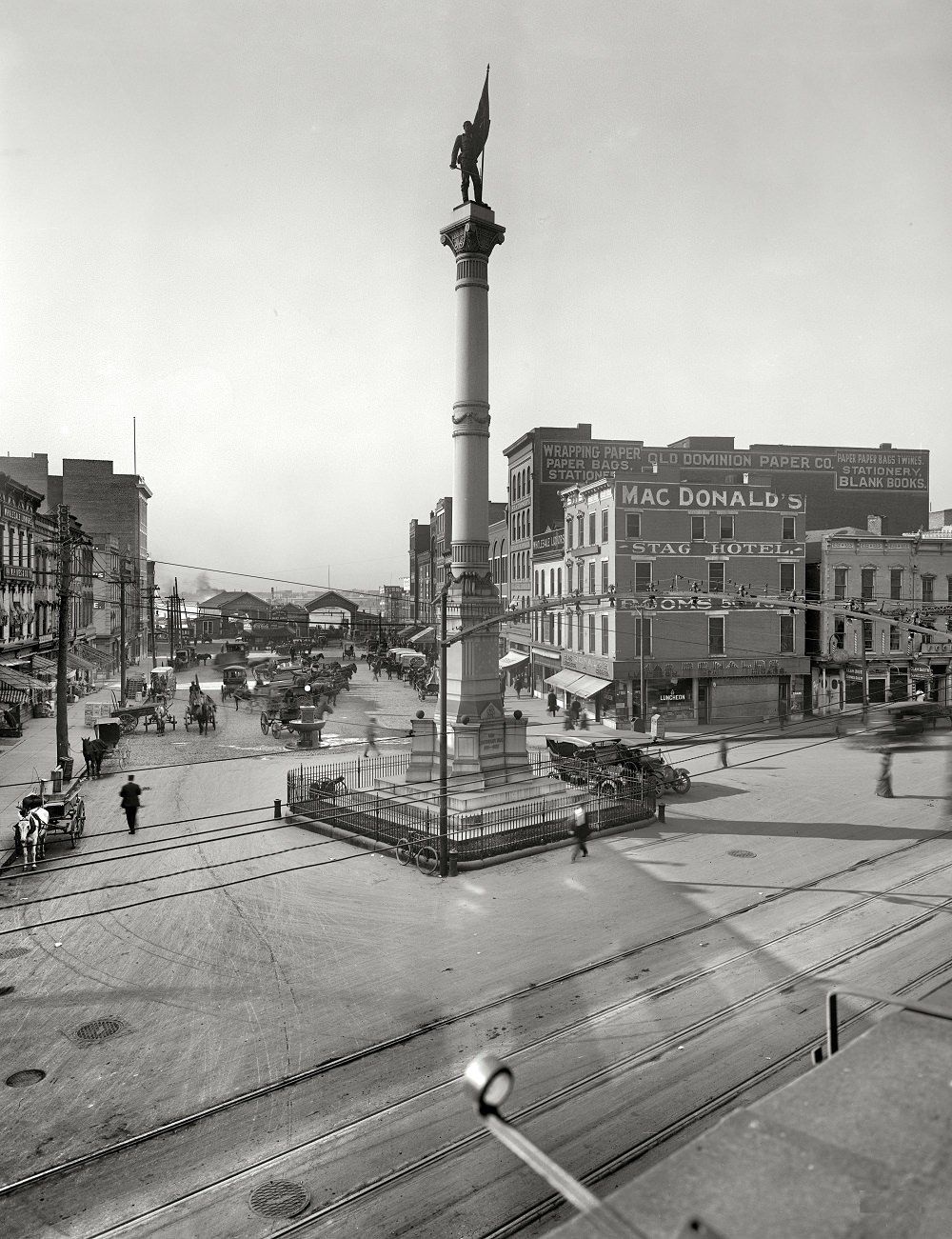
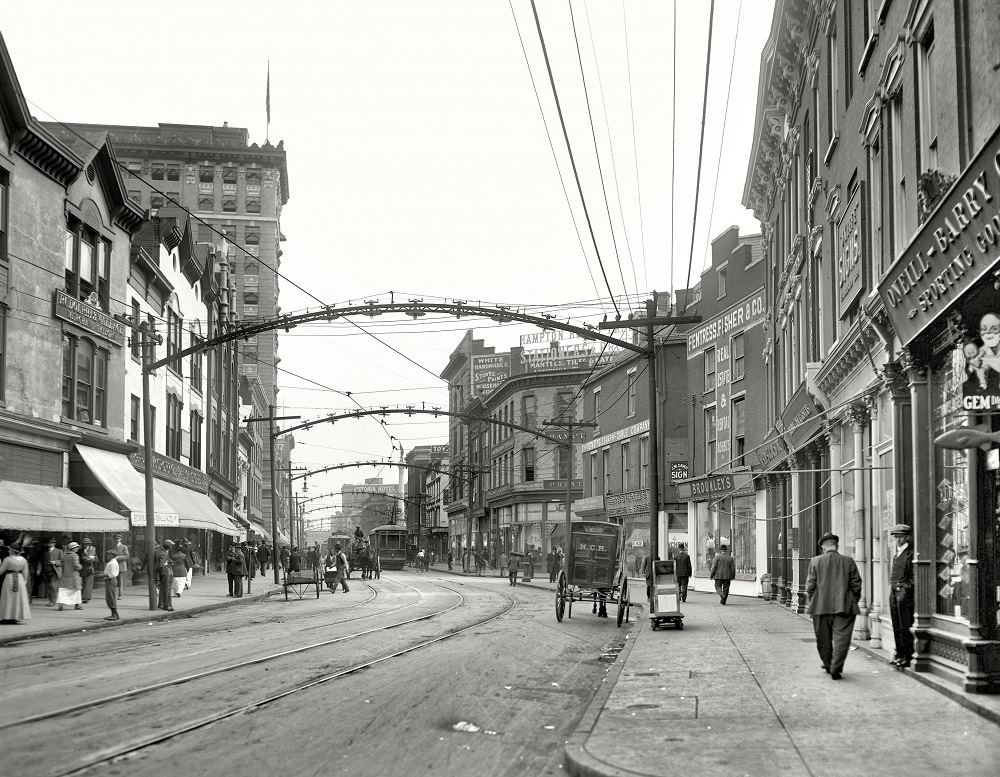
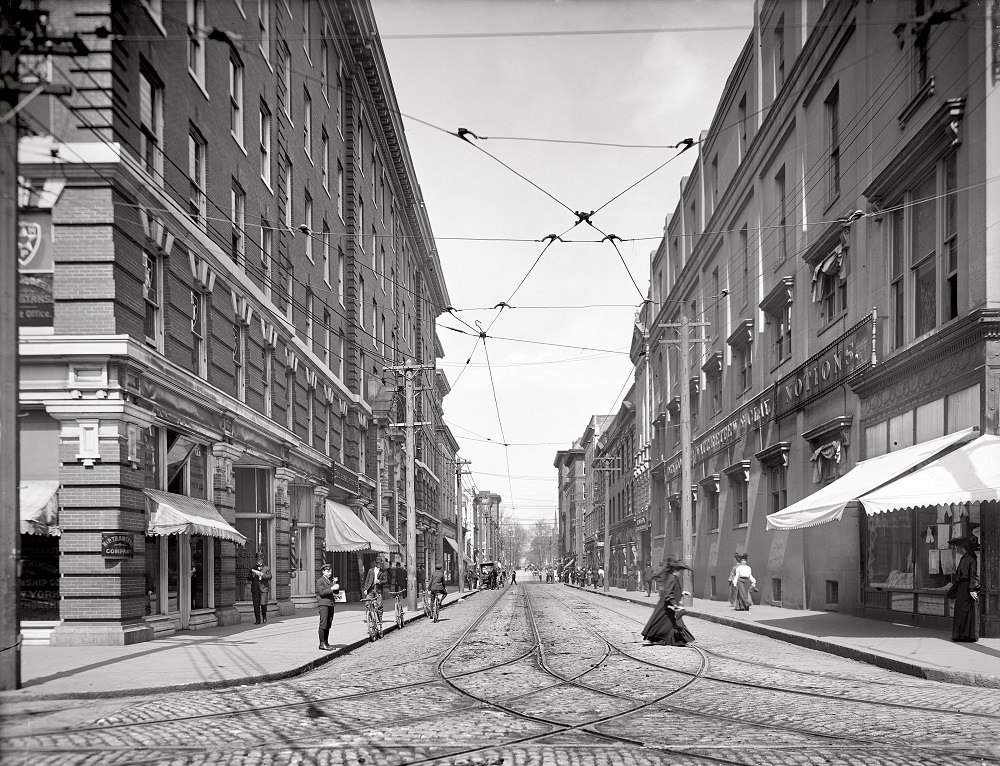
Main Street ran through the core of downtown Norfolk and was lined with banks, shops, and offices by the mid-1910s. Electric streetcar lines made it easier for residents to move through the city, and the street saw heavy foot traffic throughout the day. The Naval YMCA, photographed around the same time, sat nearby and catered specifically to the thousands of sailors stationed at the Norfolk Naval Station, which had grown into one of the largest naval installations in the country.
A decade earlier, around 1905, the same Commercial Place district looked noticeably different. Fewer motor vehicles, simpler storefronts, and a slower pace marked the streetscape of that era. Granby Street, another of Norfolk’s key commercial roads, showed a similar character — wide enough for streetcars and carts, with awning-fronted shops catering to daily shoppers.
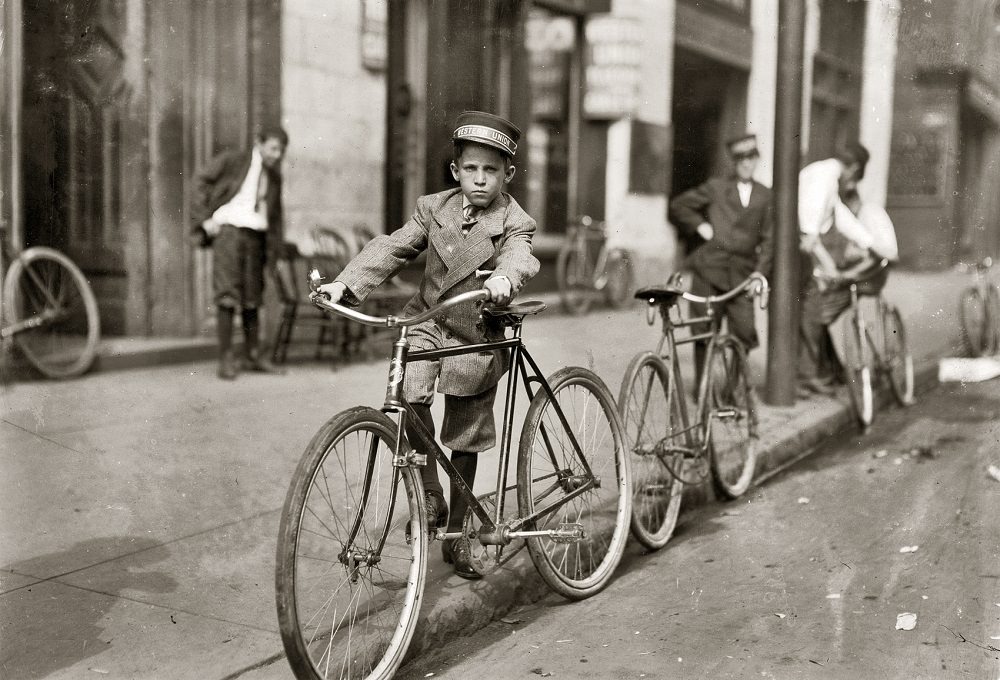
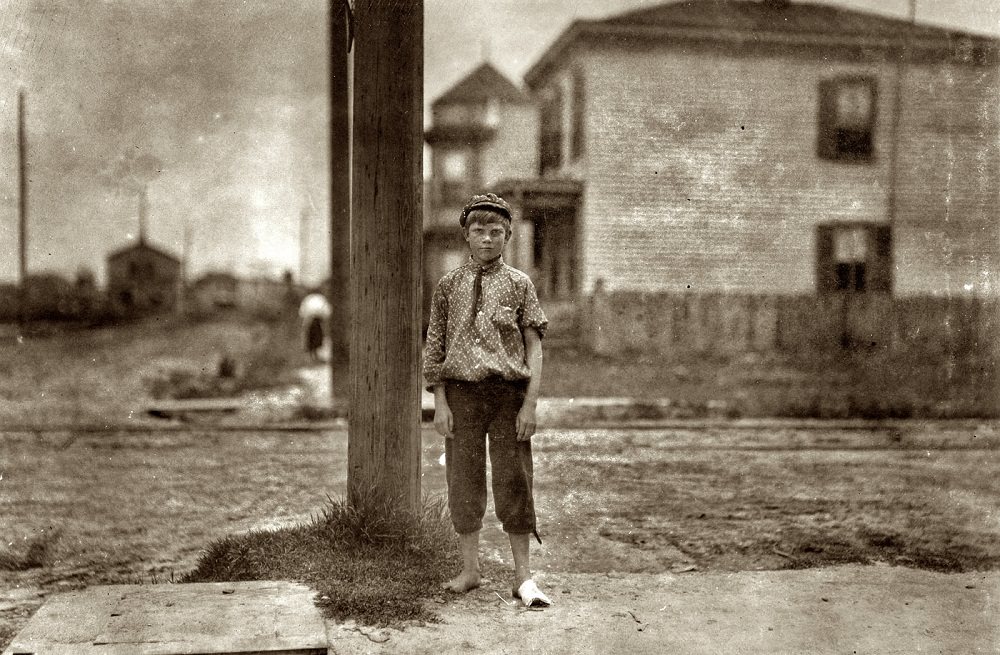
Not everyone photographed in early Norfolk was a landmark or a street scene. Some images recorded the working people of the city by name. Raymond Bykes was a Western Union messenger boy, photographed in 1911 as part of a National Child Labor Committee investigation. Lewis Hine, the photographer behind many of these records, documented child workers across the country to expose the conditions they worked in. Bykes was identified as Western Union messenger No. 23 in Norfolk. Similarly, Oscar Weston was photographed in 1911 at his address on Berkley Avenue in South Norfolk — the same Berkley neighborhood that had only recently been annexed into the city five years earlier.