Newham is a borough in London’s East End with deep roots and a layered history. It came into existence in 1965 when the former Essex county boroughs of West Ham and East Ham were merged into one. The name itself is a nod to that union — a fresh combination built from the compass points of the old borough names. Within its boundaries sit historic districts that each carry their own identity: Silvertown, North Woolwich, Custom House, Canning Town, Beckton, Plaistow, West Ham, East Ham, Upton Park, Stratford, Manor Park, and Forest Gate.
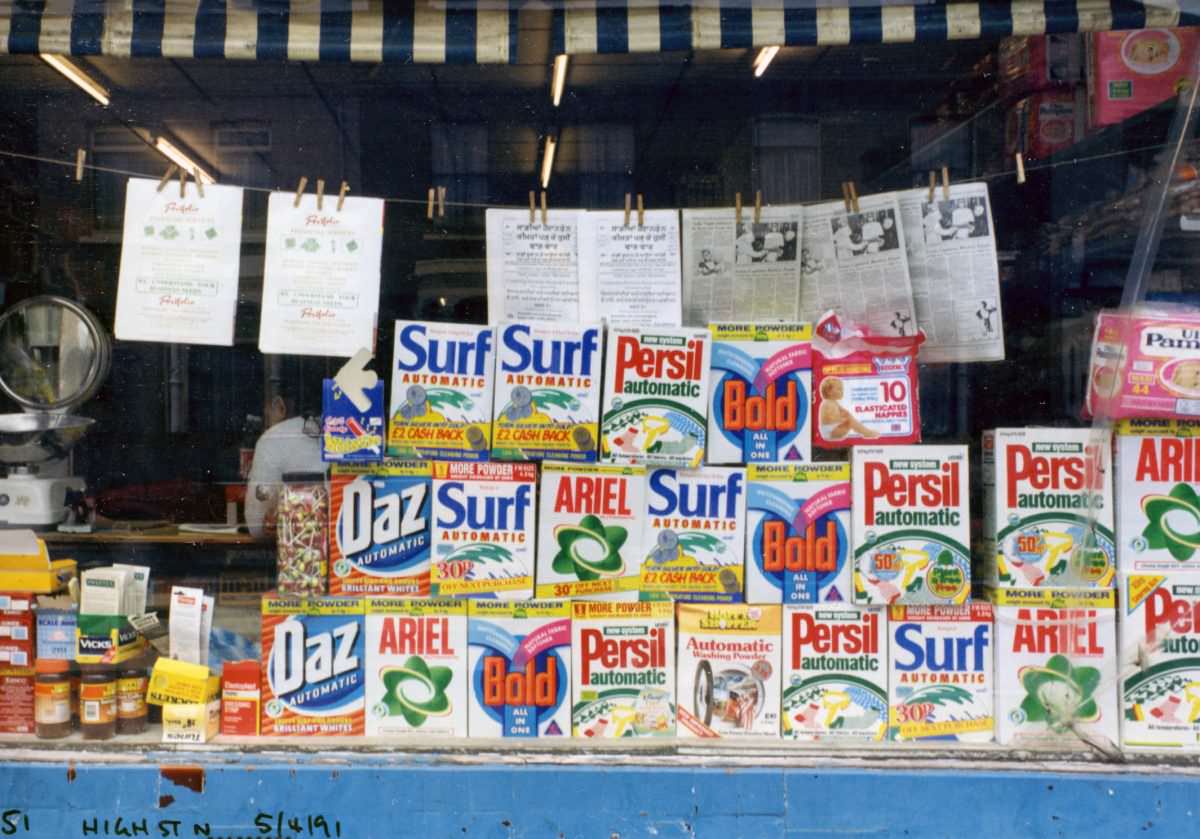
In 1991, photographer Peter Marshall walked the streets of Newham with his camera and documented everyday life across the borough. His work captures shopfronts, street corners, pubs, and people going about their daily routines — a ground-level record of a place on the edge of major change. Marshall also photographed Camden, Deptford, Hull, Shoreditch, and the Royal Borough of Kensington and Chelsea during the 1980s and 1990s, building a wider archive of urban London life. The Newham photographs begin on High Street North in Manor Park.
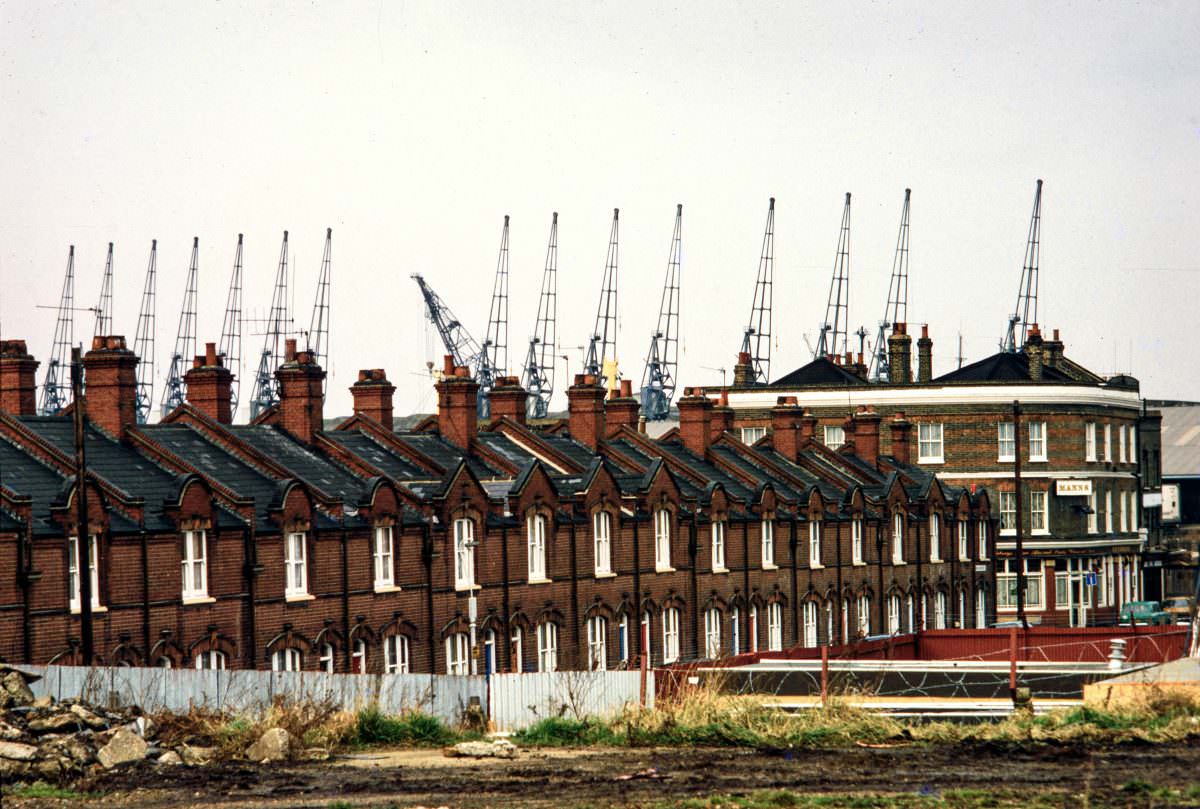
North Woolwich, sitting along the north bank of the Thames, had long been shaped by the river and the industries that depended on it. By 1991, much of that industrial activity had wound down, leaving streets like Barge House Road to tell the story of what remained.
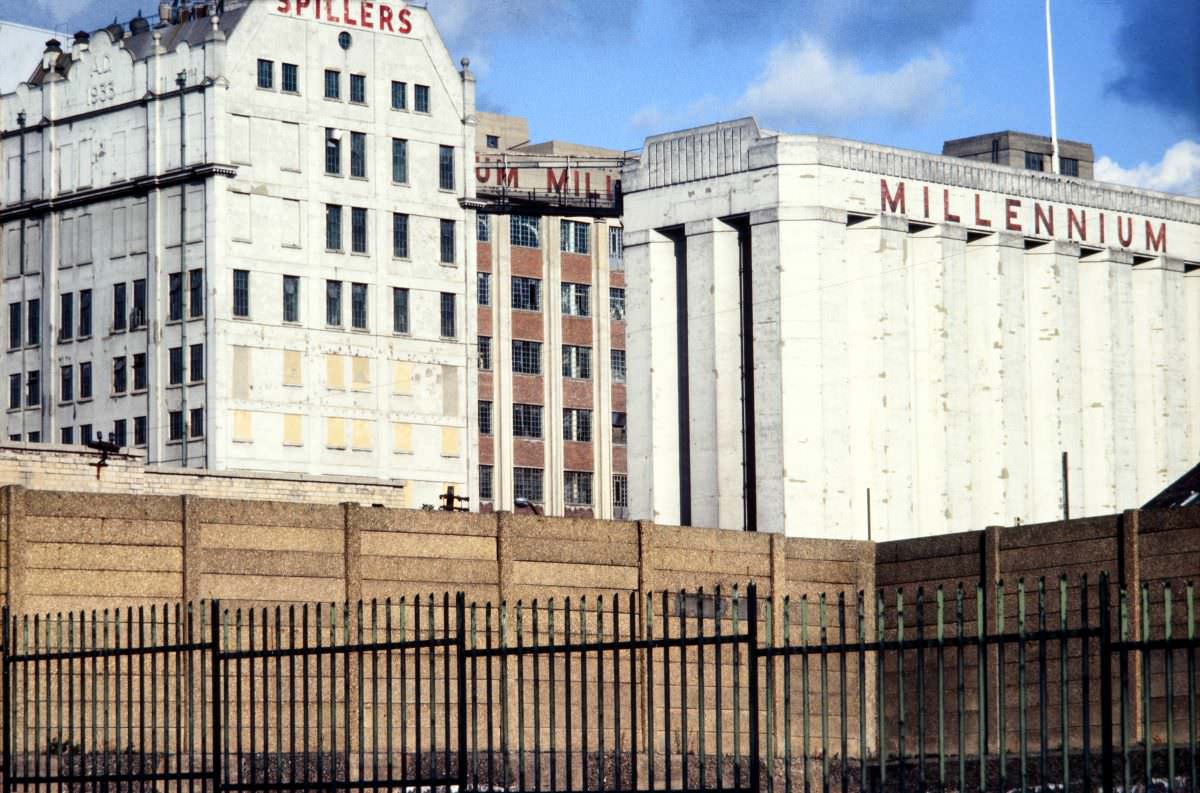
Few buildings in Newham are as striking — or as symbolic of industrial decline — as the Millennium Mills in West Silvertown. The flour mill, built by Spillers, dominated the Victoria Dock area for decades. By the early 1990s it stood largely unused, a massive concrete shell on the waterfront. Its size and presence made it impossible to ignore, even in ruin.
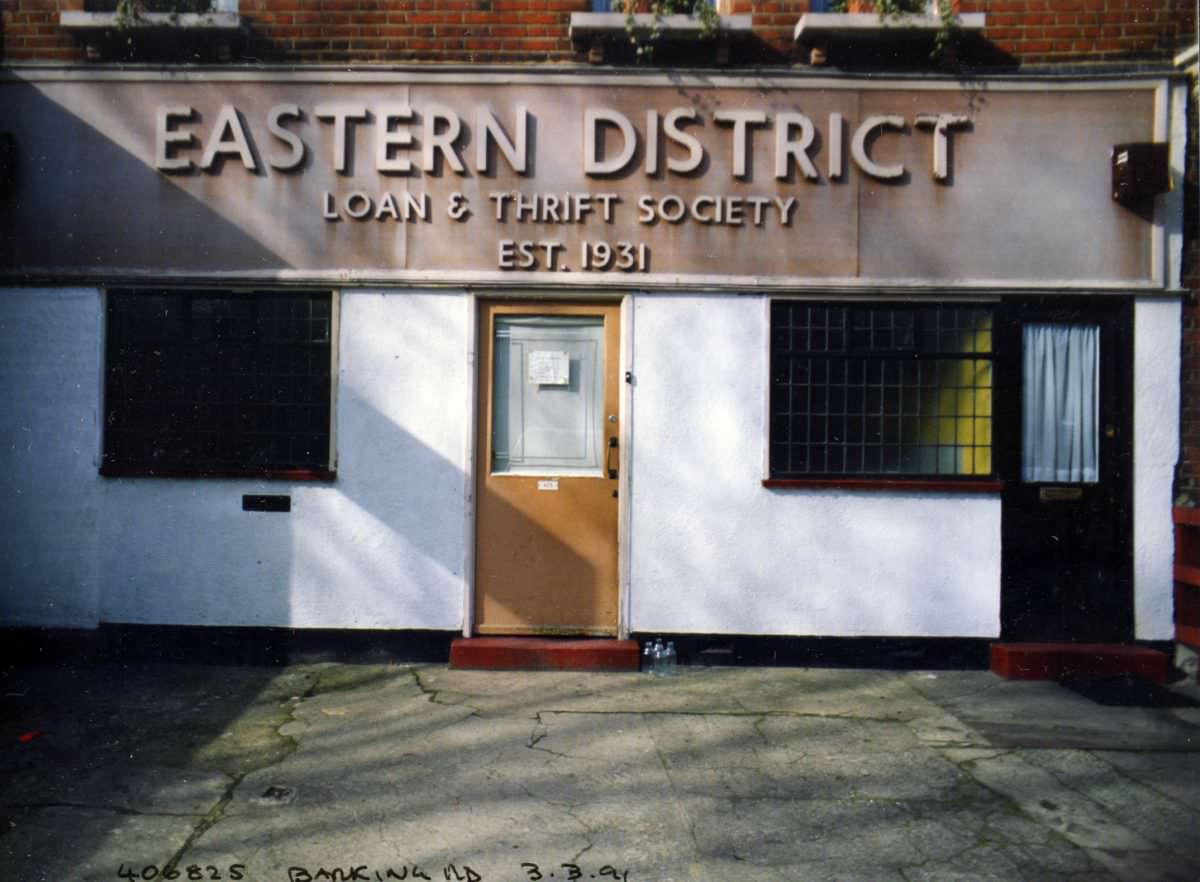
Barking Road in Plaistow was a main artery through the borough, lined with businesses that served the local working-class community. One of the more distinctive storefronts Marshall photographed there was the Eastern District Loan & Thrift Society — the kind of financial institution that catered to ordinary households who needed short-term credit well before payday lending became common.
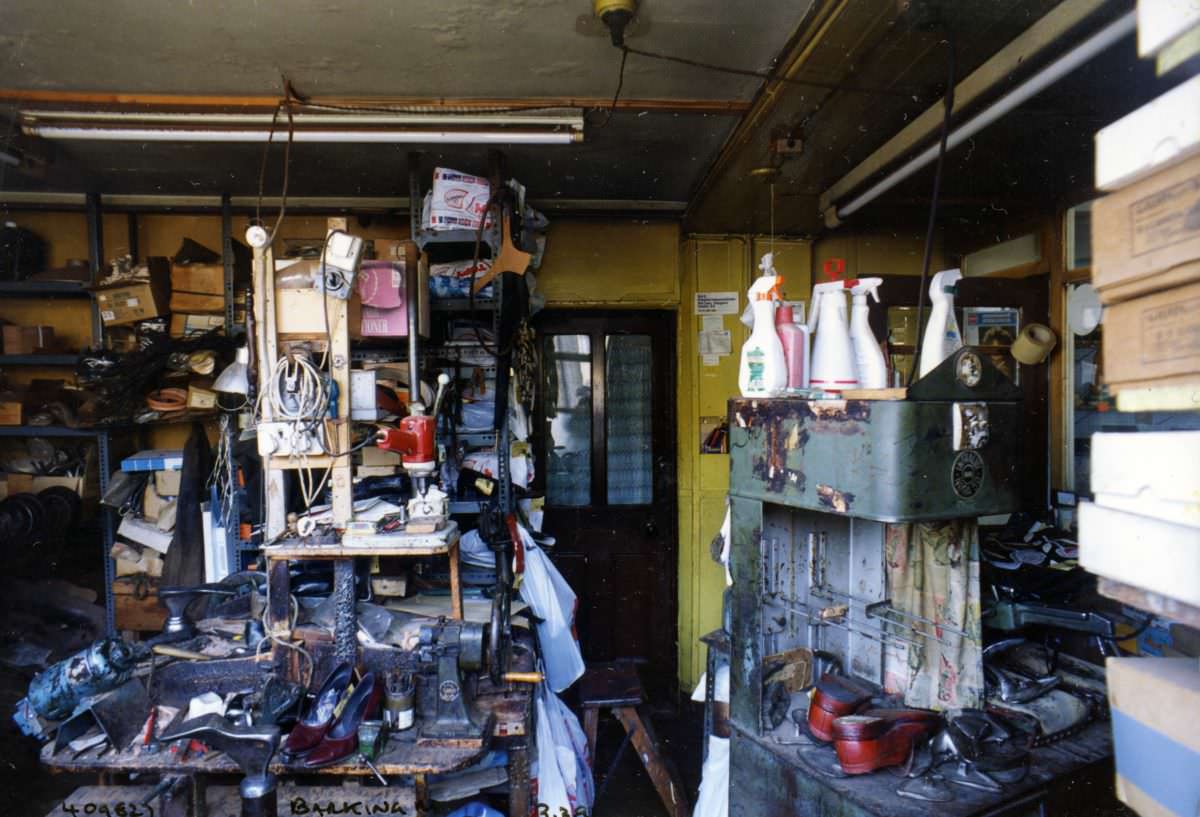
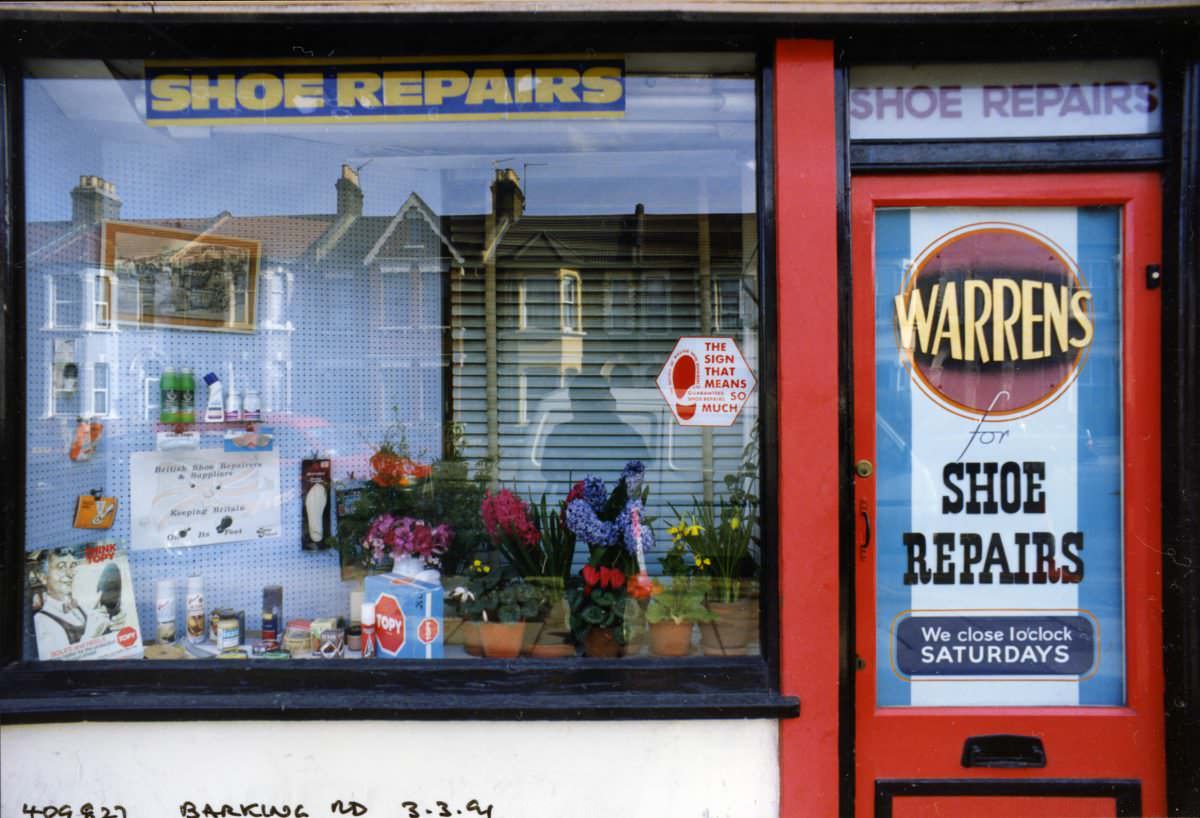
Shoe repair shops were a fixture of working streets in early 1990s London. In Plaistow, Marshall photographed one such business on Barking Road from two angles, capturing the signage, window displays, and the general character of a trade that was still very much in demand.
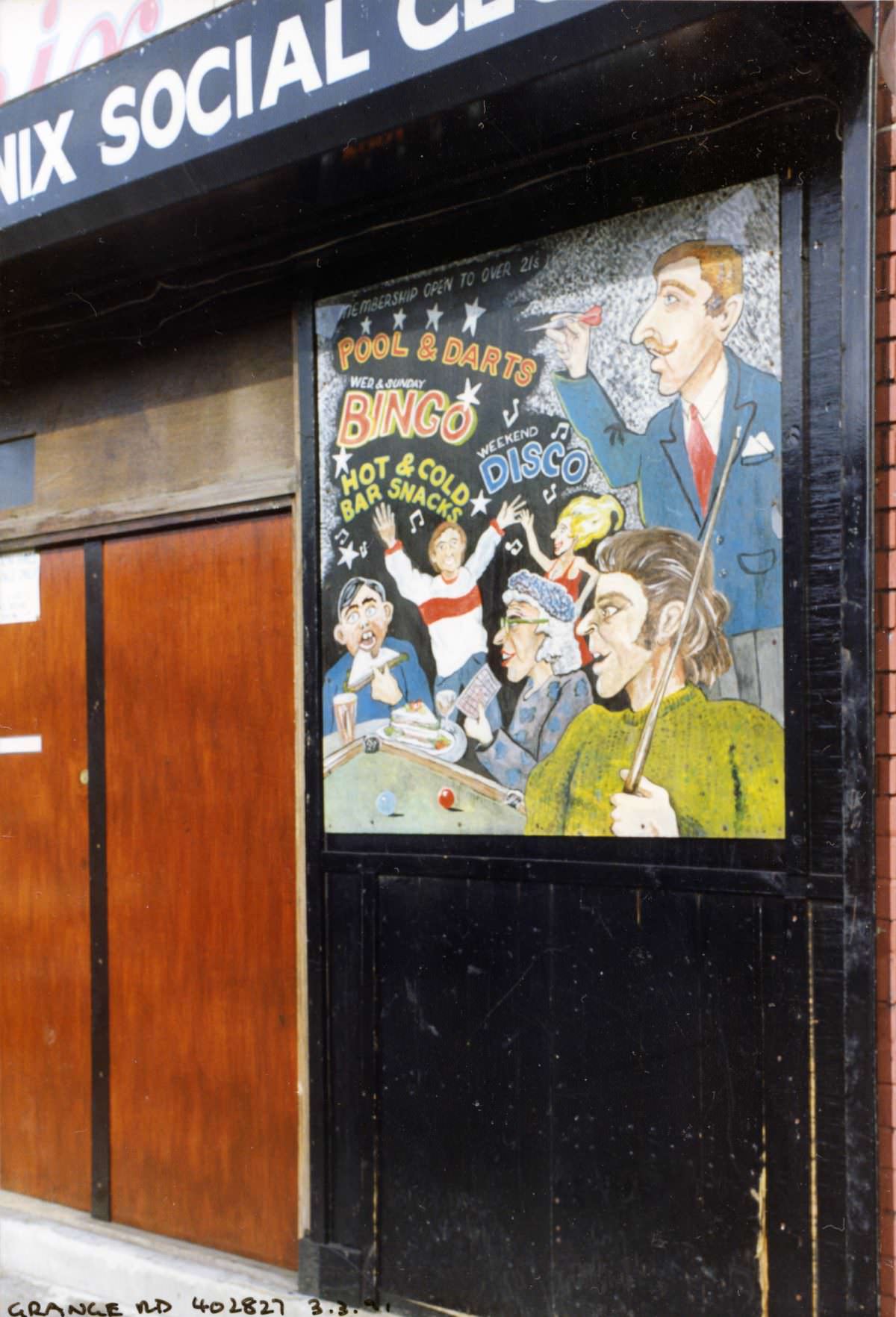
Social clubs were community hubs across East London. They offered a place to gather outside of work and home, and Grange Road in Plaistow had one that Marshall recorded on film. These clubs were tied closely to local industries and trade unions, and many had been operating for decades by the time this photograph was taken.
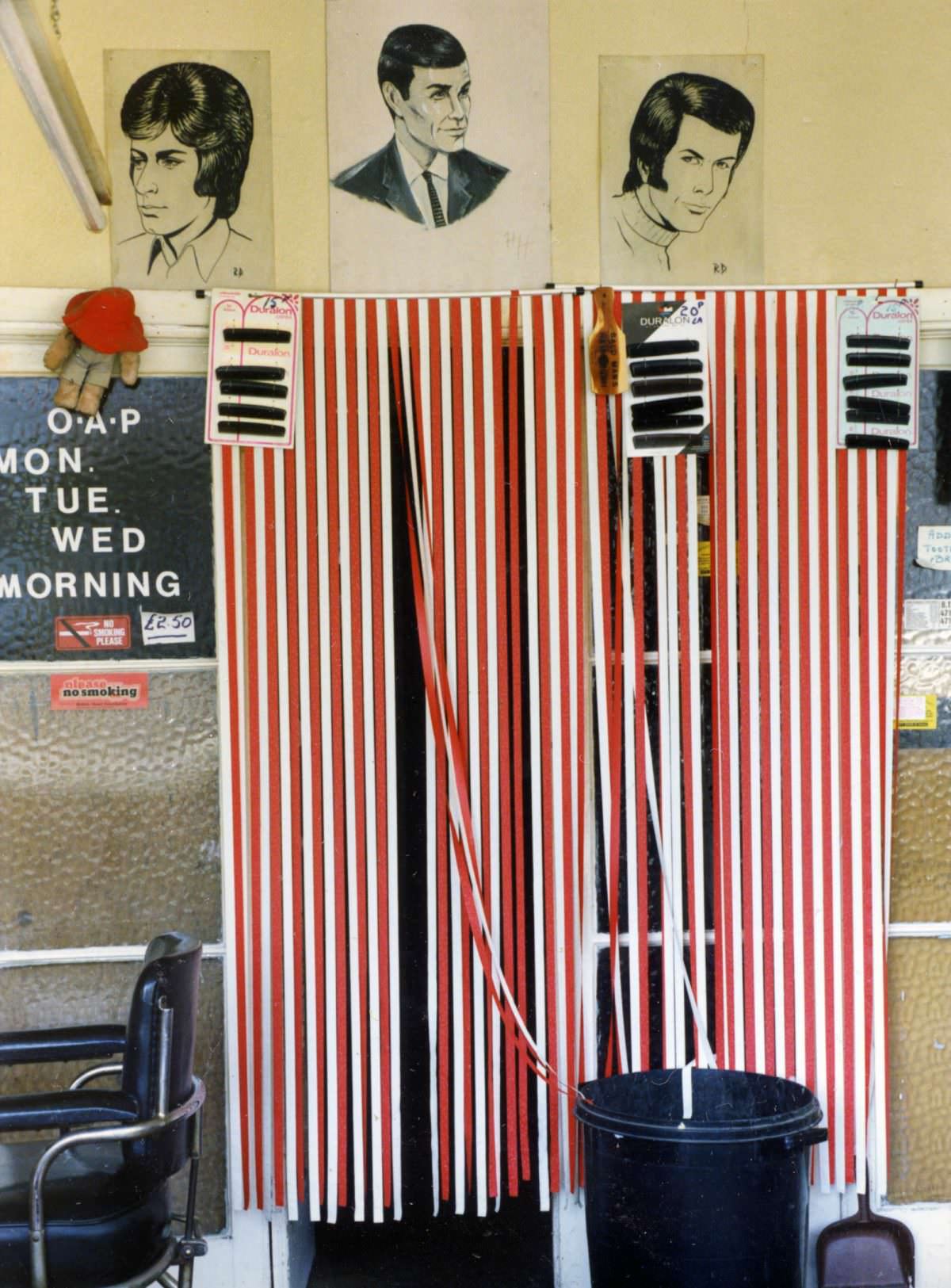
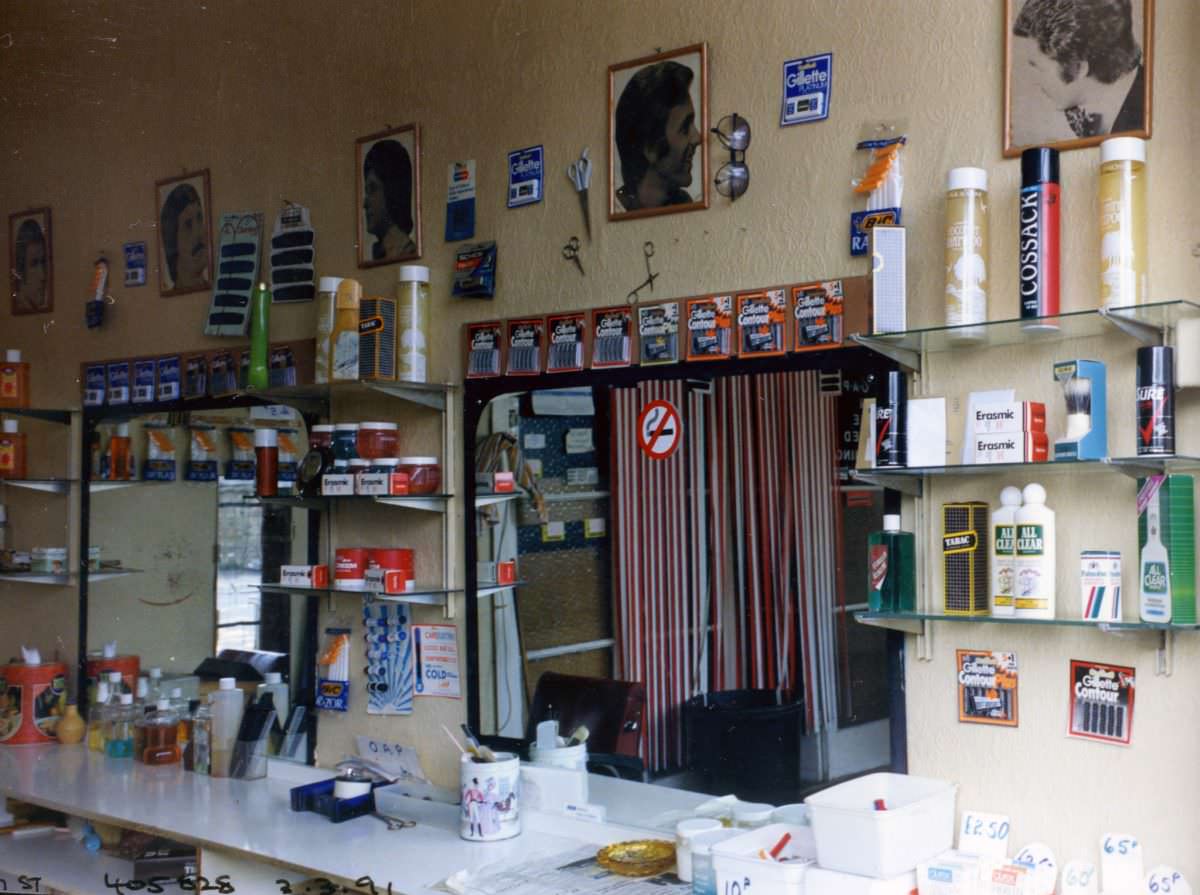
Balaam Street in Plaistow shows up more than once in Marshall’s Newham work. A hairdresser on the street caught his eye — the kind of small, independently run business that anchored local neighbourhoods. These shops were places where people spent time, talked, and kept up with what was happening nearby.
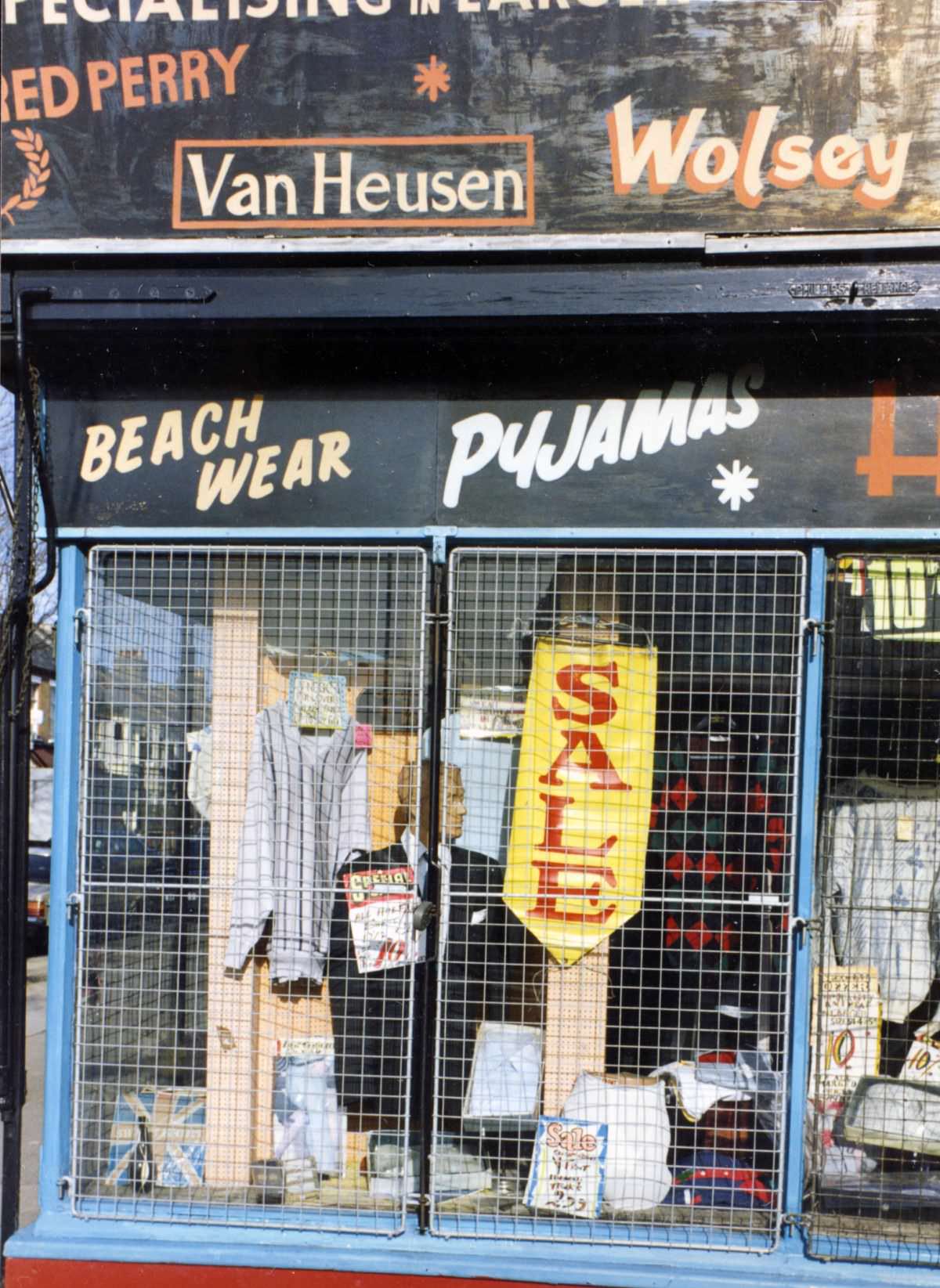
Back on Barking Road, Marshall also photographed a clothes shop — another example of the independent retail that lined the street. These weren’t chain stores. They were individual businesses, often family-run, stocking what local customers actually wanted to buy.
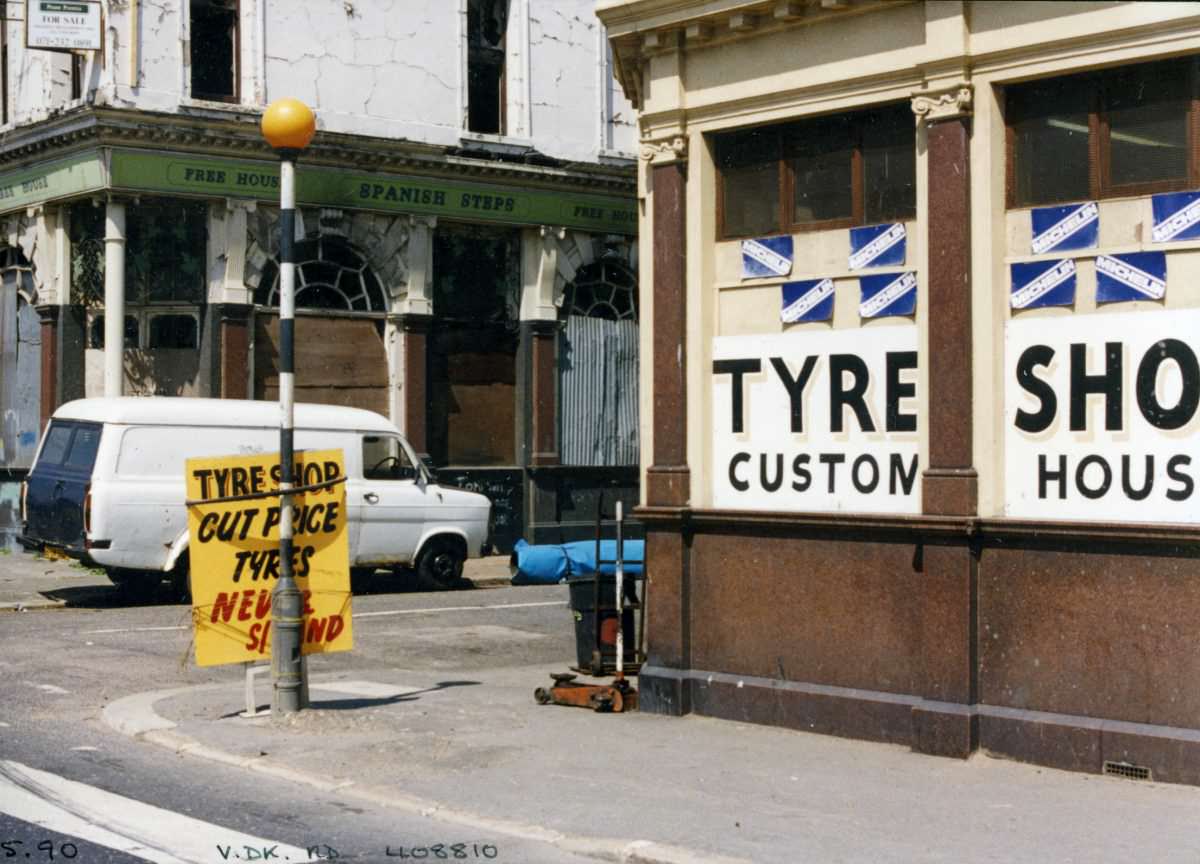
Custom House, sitting between Plaistow and North Woolwich, was named after a customs post that once operated near the docks. On Victoria Dock Road, Marshall photographed a spot known as the Spanish Steps — a local name for a street feature that stood out in an otherwise flat, industrial landscape.
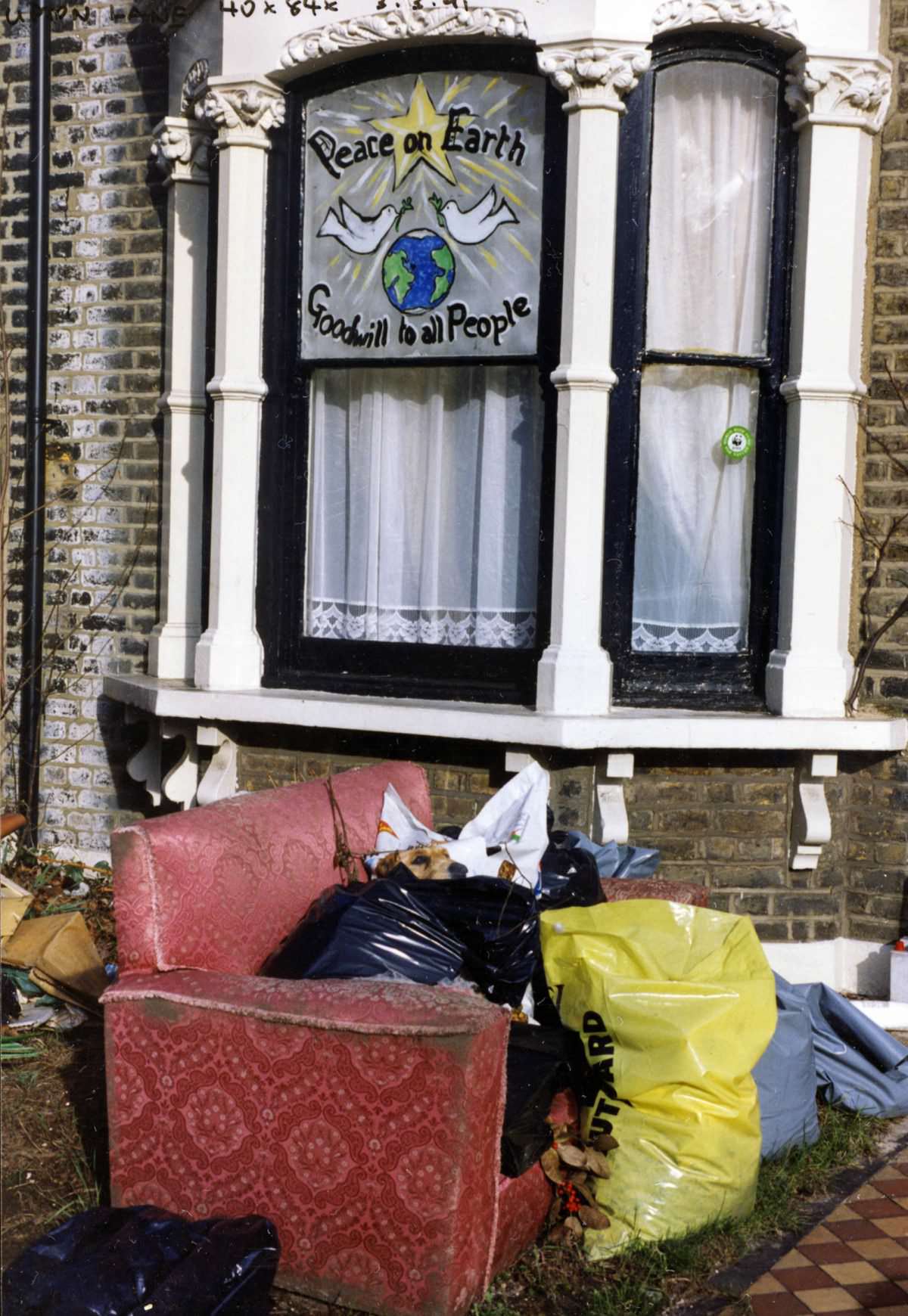
Moving into Upton, Marshall’s photographs shift toward a stretch of Upton Lane where a mix of messages and businesses competed for attention. A painted sign reading “Peace on Earth” appeared on one building — a bold statement on a residential street in a borough that had seen its share of economic hardship through the 1980s.
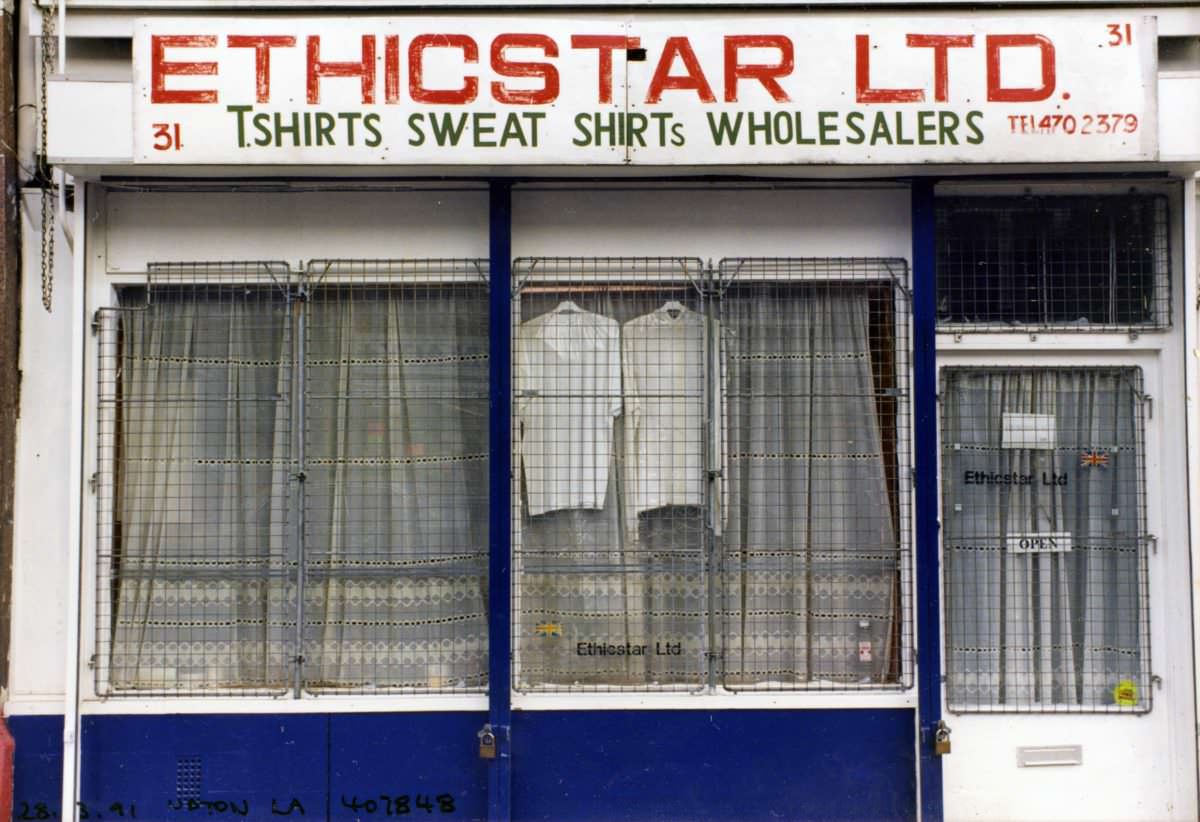
Nearby on Upton Lane, a wholesale clothing business called Ethicstar operated out of what appeared to be a converted ground-floor unit. Wholesale clothing traders were a feature of East London’s commercial streets, supplying smaller retailers across the area.
Green Street in Upton was one of the most commercially active roads in Newham by 1991. It had a strong South Asian retail presence, with hairdressers, grocers, fabric shops, and jewellers catering to the local community. Marshall photographed it from several angles, capturing its energy and variety.
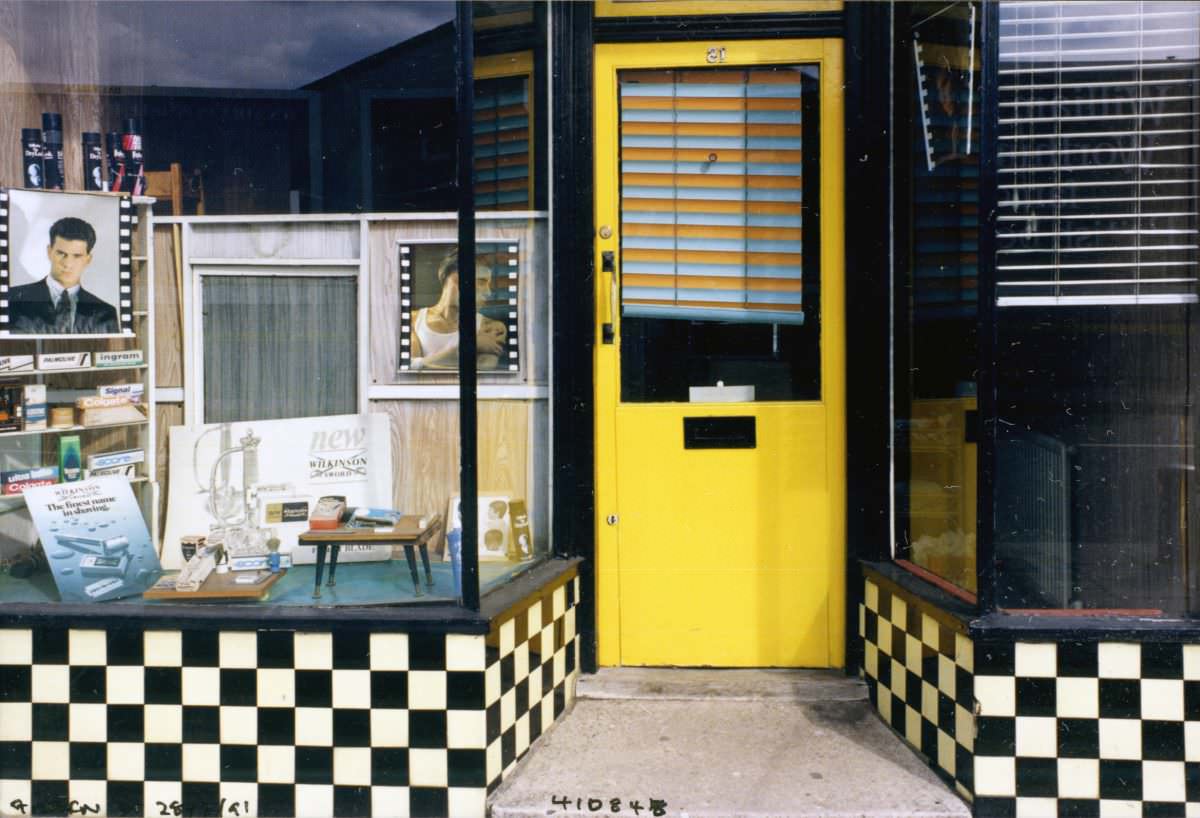
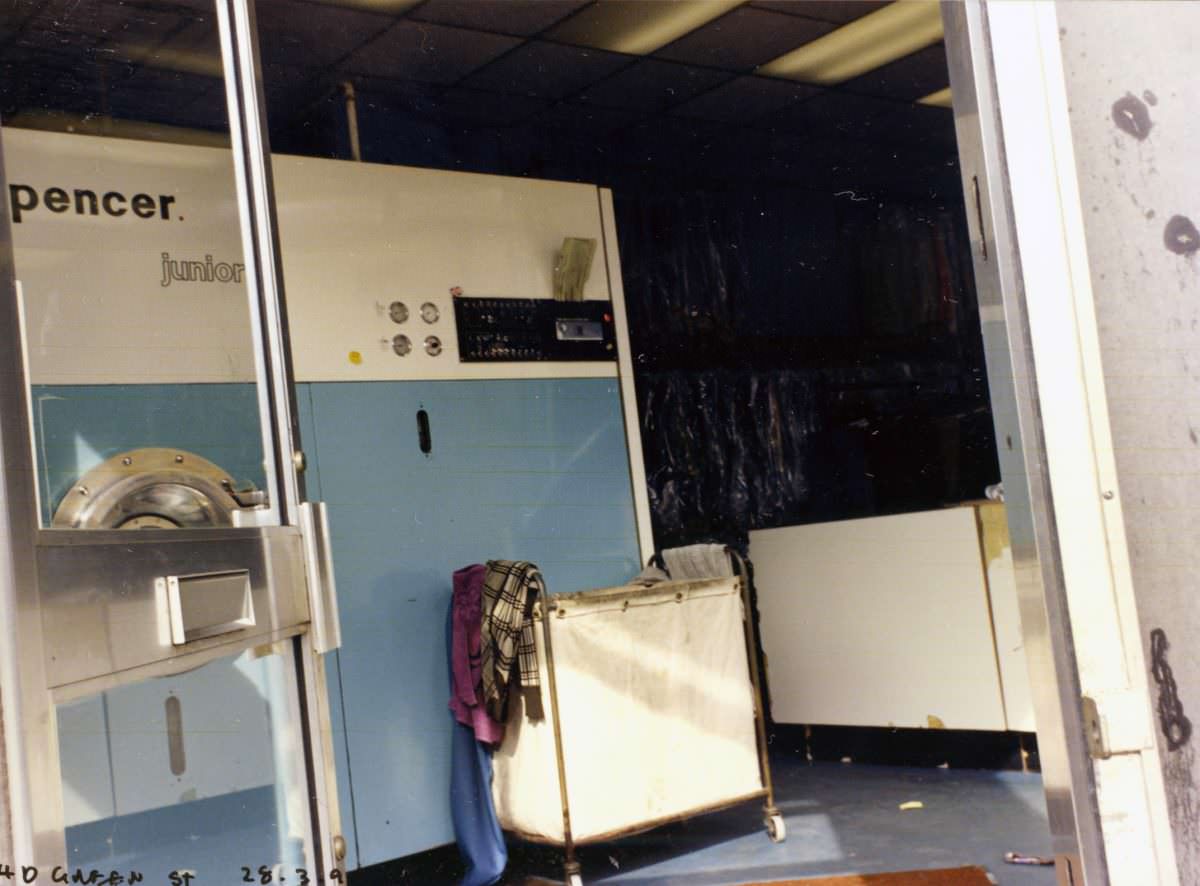
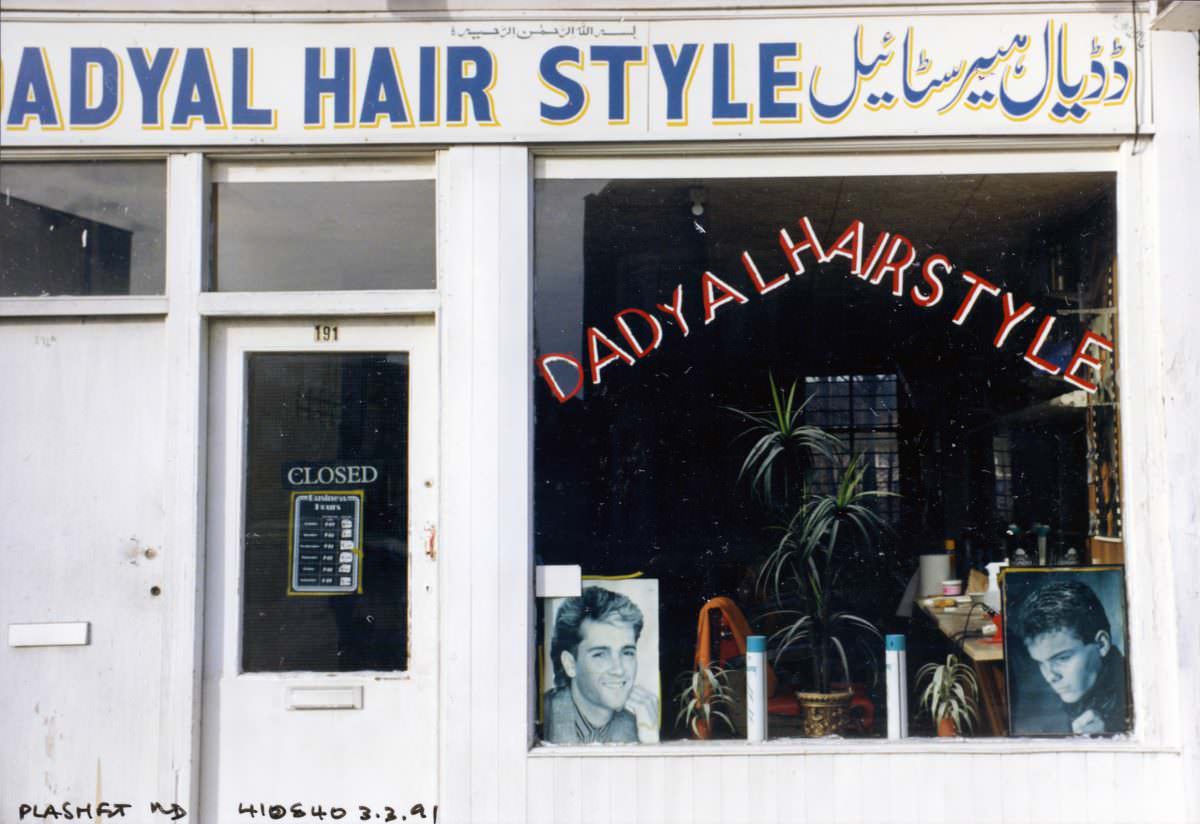
East Ham’s Plashet Road offered another look at the borough’s hairdressing trade. These shops — often small, often brightly signed — were a reliable part of the street scene across Newham, and Marshall made sure they were represented in his documentation.
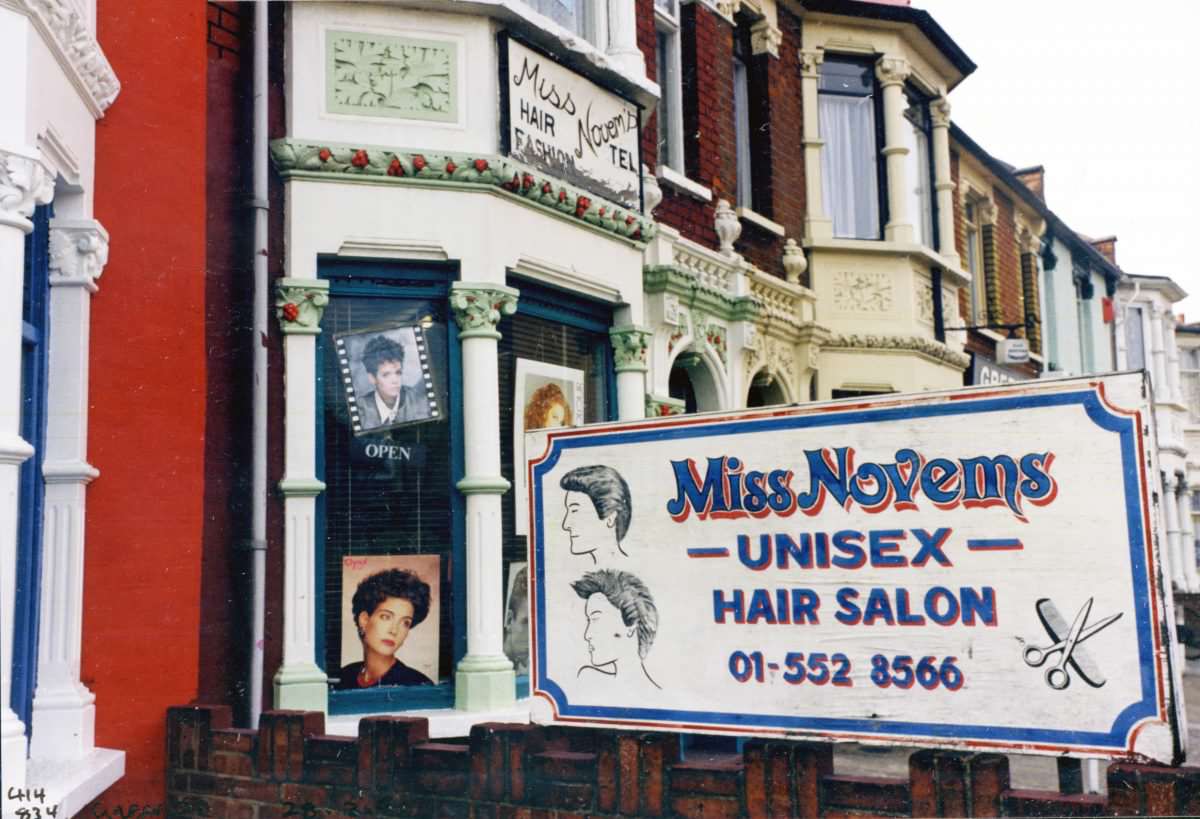
Miss Novems on Green Street was one of the named hairdressers Marshall photographed during his time in Upton. The shop’s frontage, like many others on the street, was bold and direct — designed to be seen from a distance by people passing on foot or by bus.
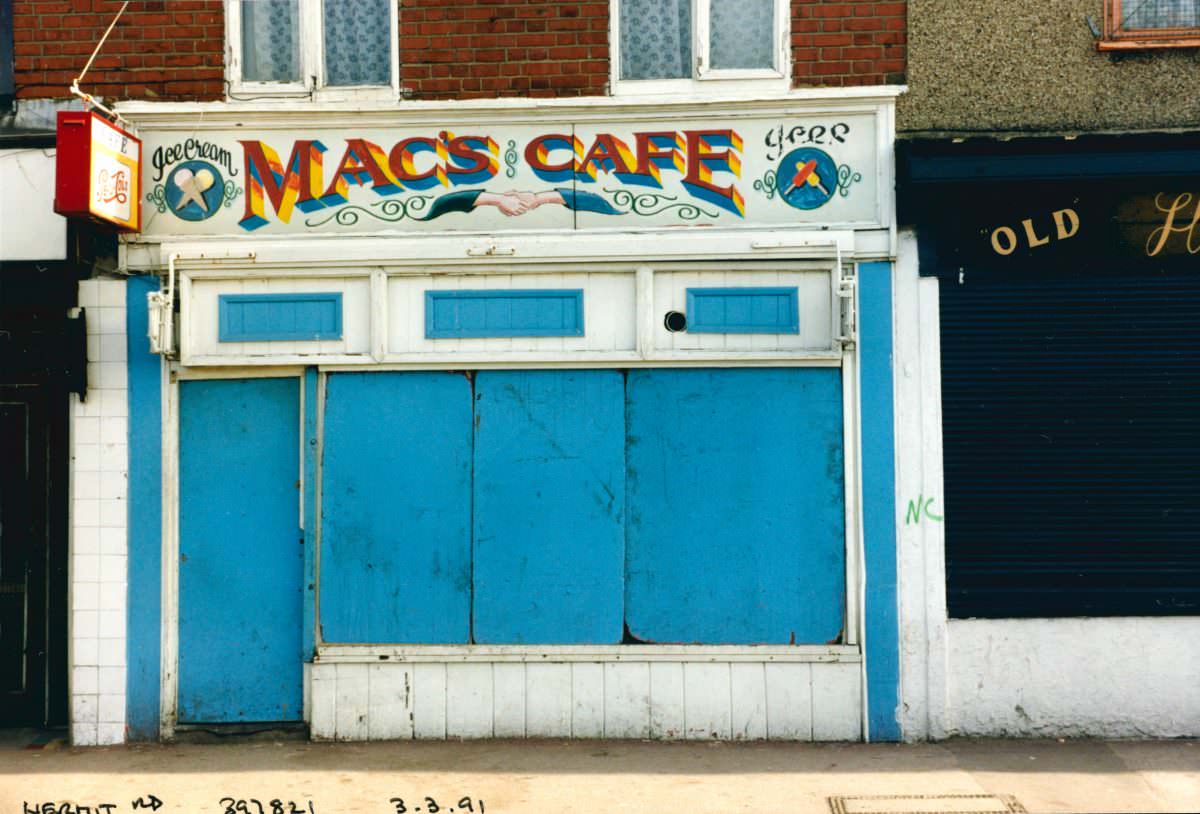
In West Ham, Marshall stepped into a different kind of space. Mac’s Café on Hermit Road represented the traditional working-class caff — a place for a hot meal, a mug of tea, and a break from the day. These cafés were deeply woven into the fabric of East End working life, particularly for labourers and tradespeople.
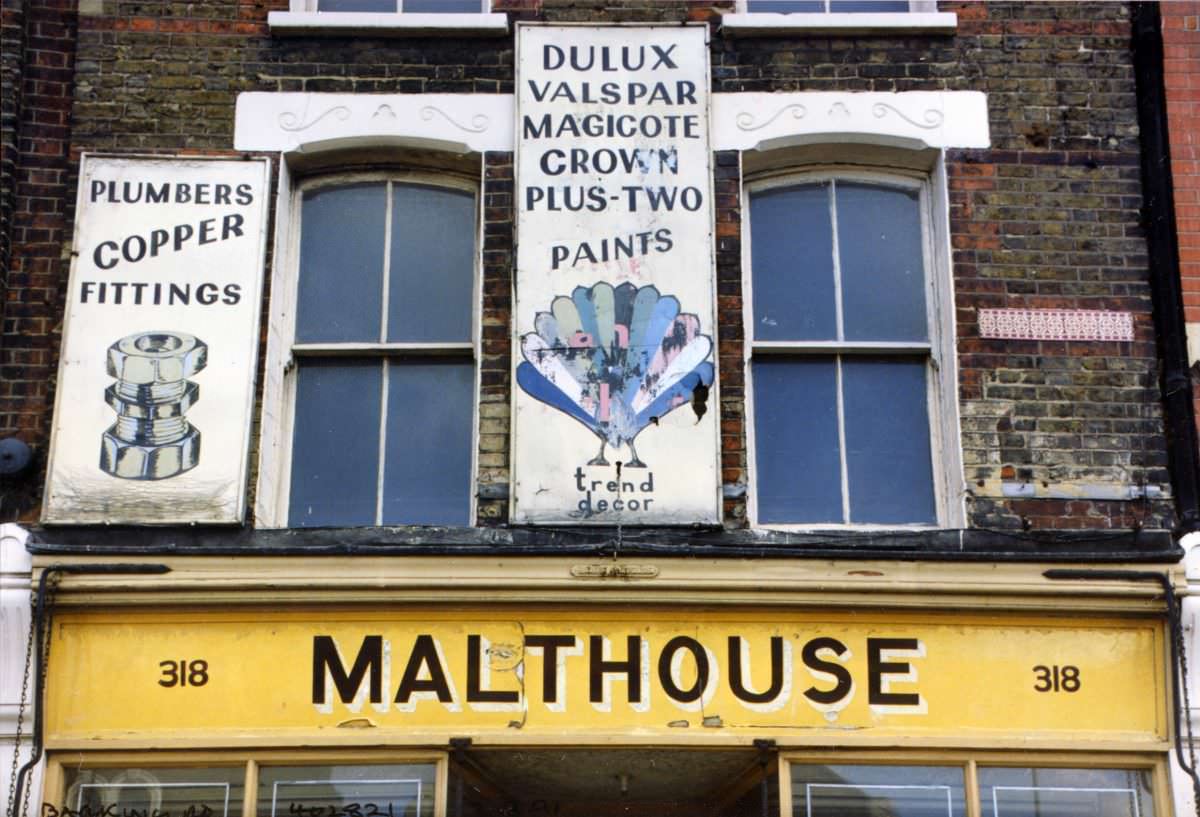
The Malthouse on Barking Road in Plaistow was another building that reflected the area’s older industrial and commercial past. By 1991, many such structures in Newham had been repurposed or were standing in a state of transition as the borough began to feel the first pressures of regeneration.
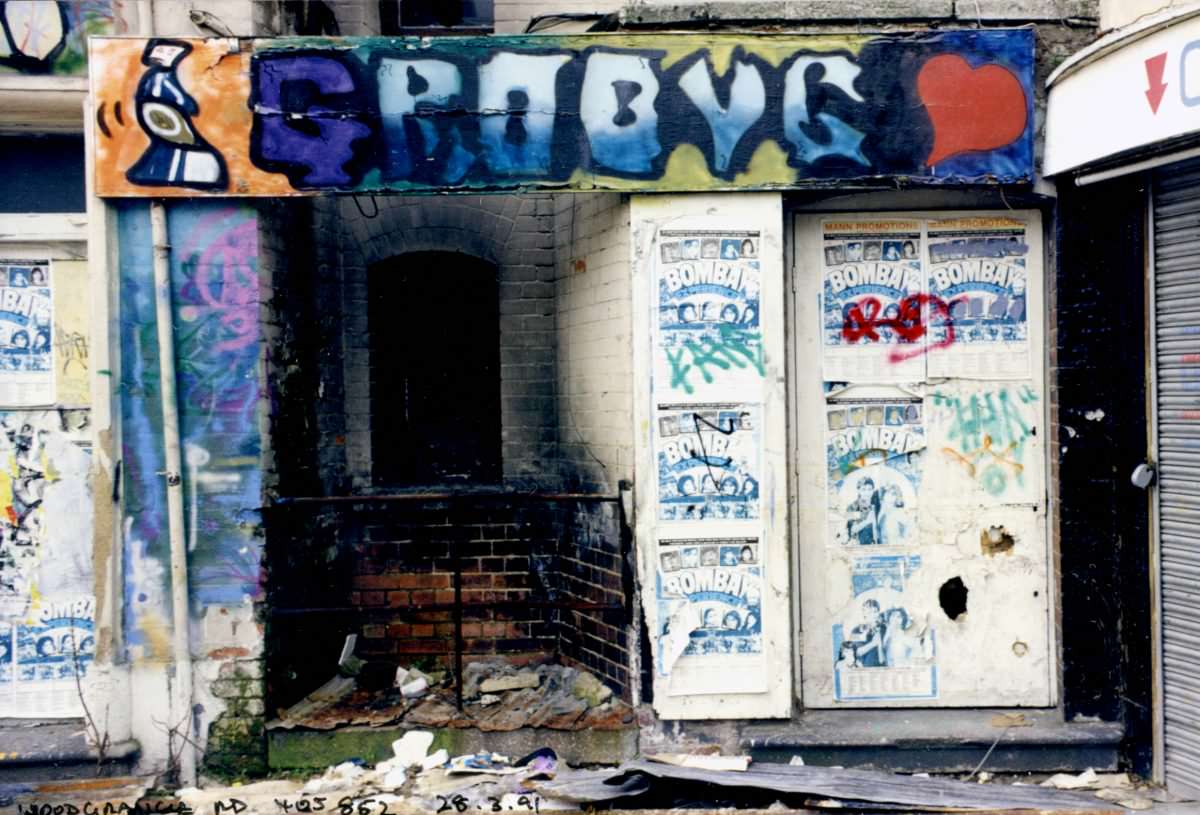
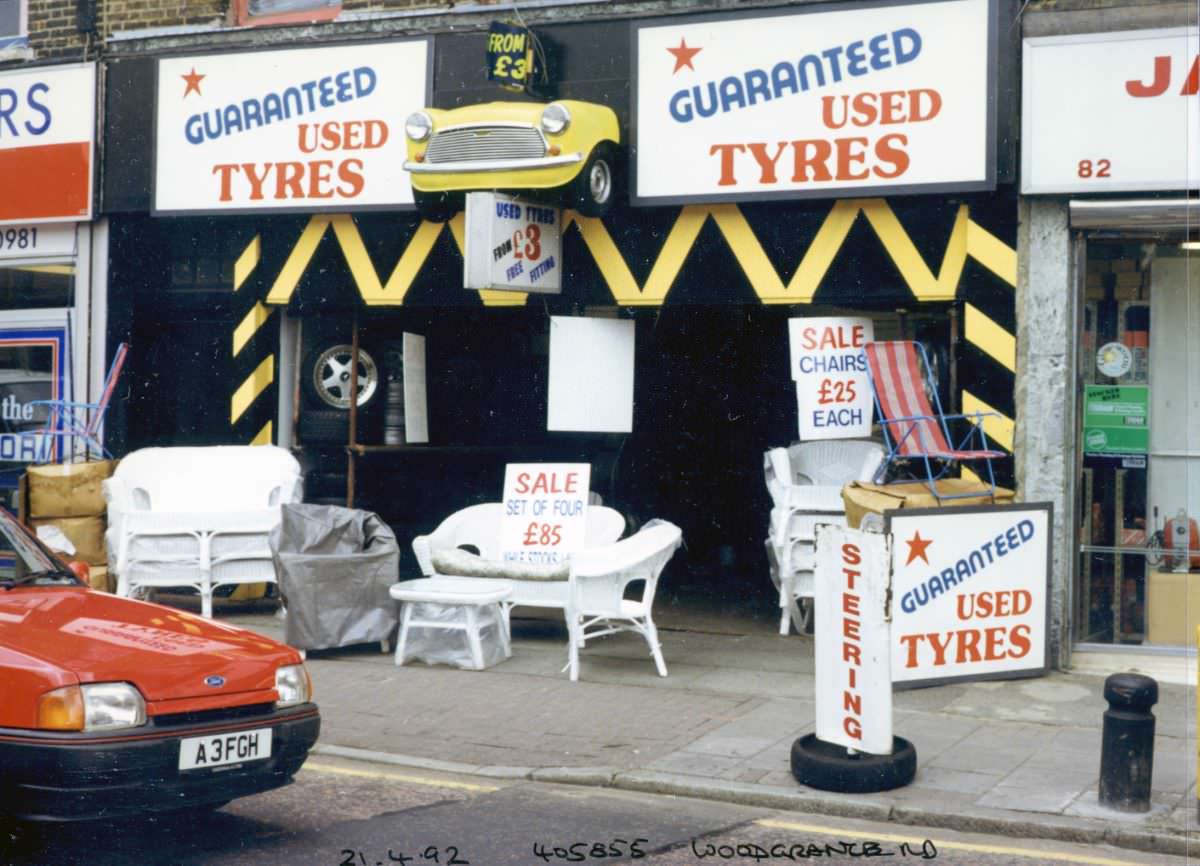
Forest Gate, in the north-east of the borough, provided a slightly different setting. Woodgrange Road was its main shopping street, and Marshall photographed it in detail. Graffiti on one wall, a general shop, and the former Eagle and Child pub all appear in his collection — each image adding another layer to the street-level portrait of Newham.
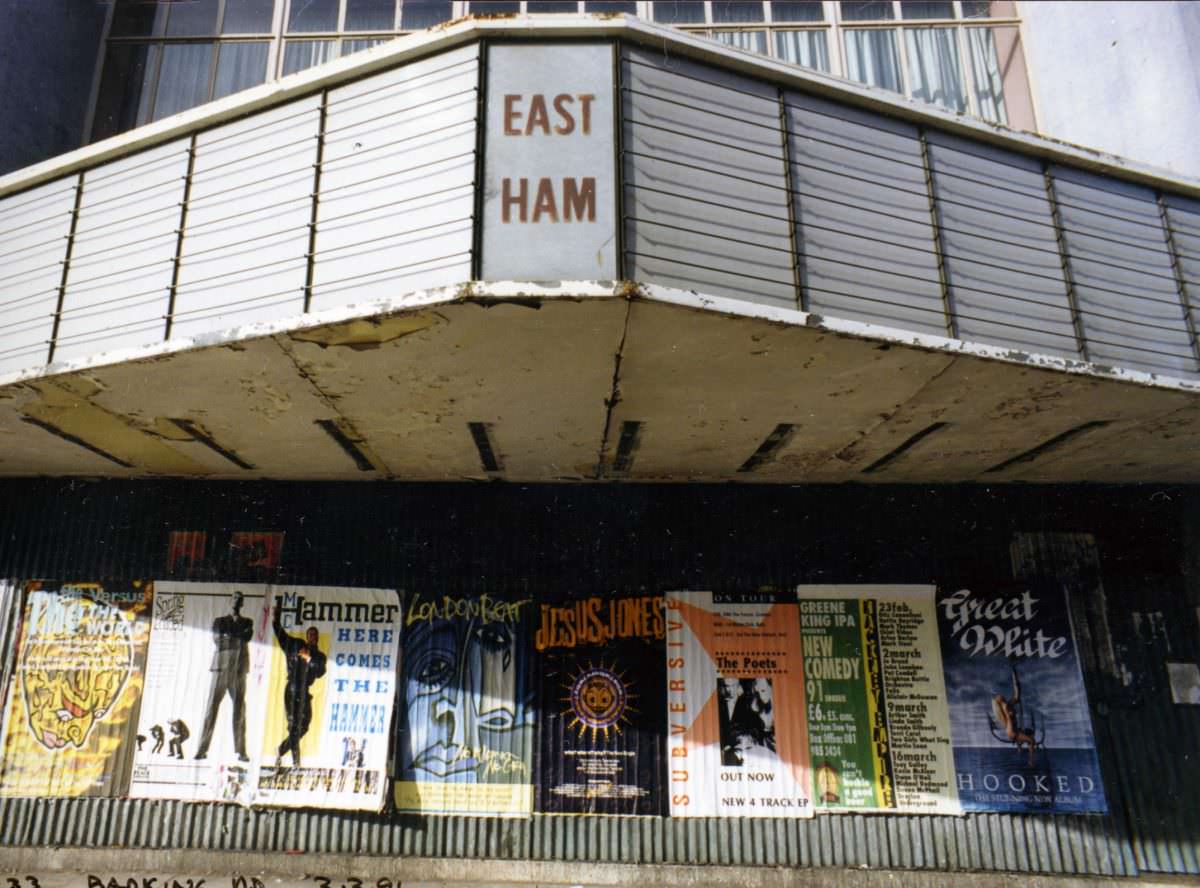
Marshall’s tour of Newham ends at the Odeon Cinema on Barking Road. By 1991, the Odeon was one of the few remaining large entertainment venues in the borough. Cinema chains across East London had been closing or converting throughout the 1970s and 1980s, and the Barking Road Odeon stood as a reminder of when going to the pictures was the main evening entertainment for local families.